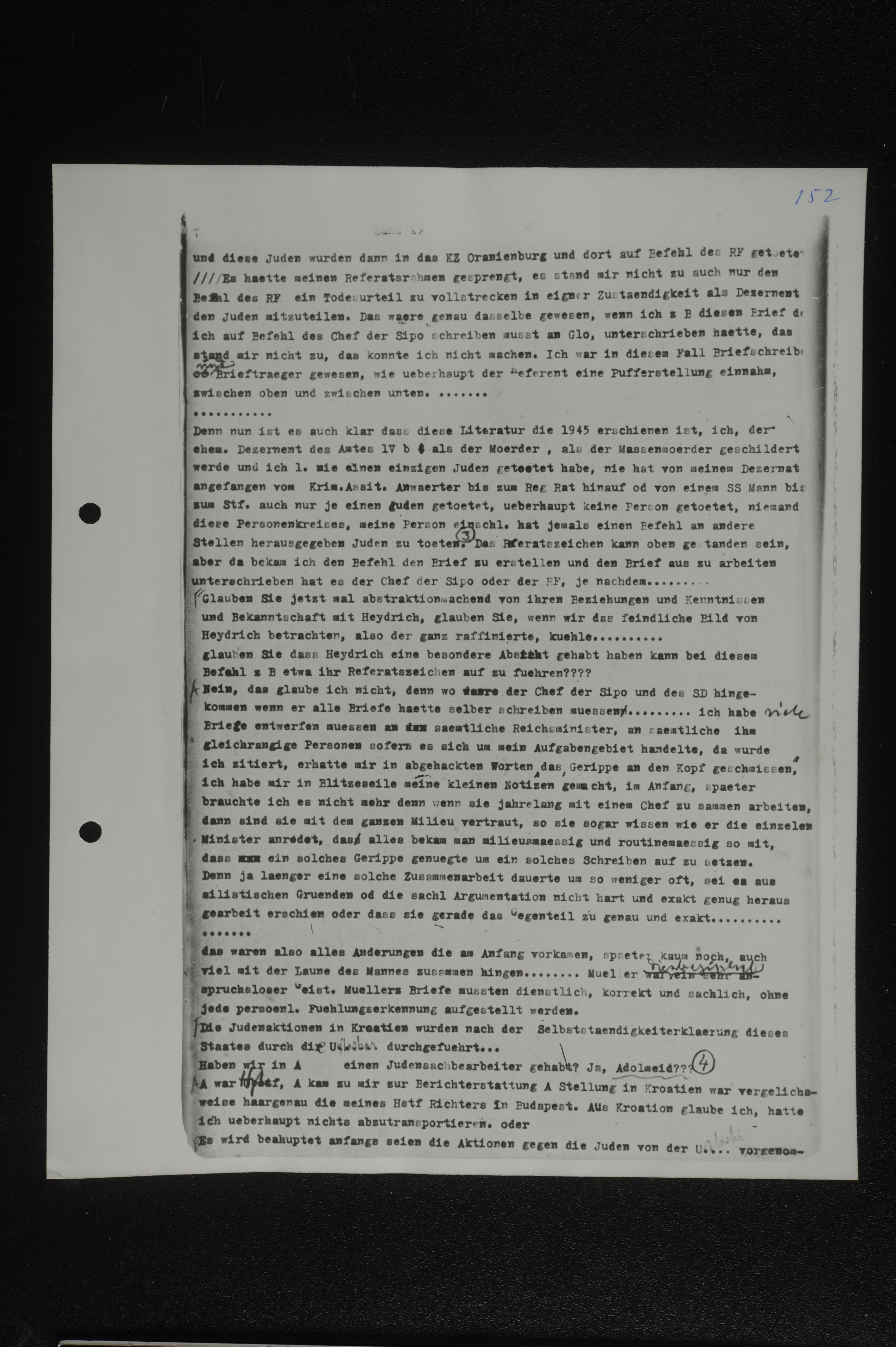
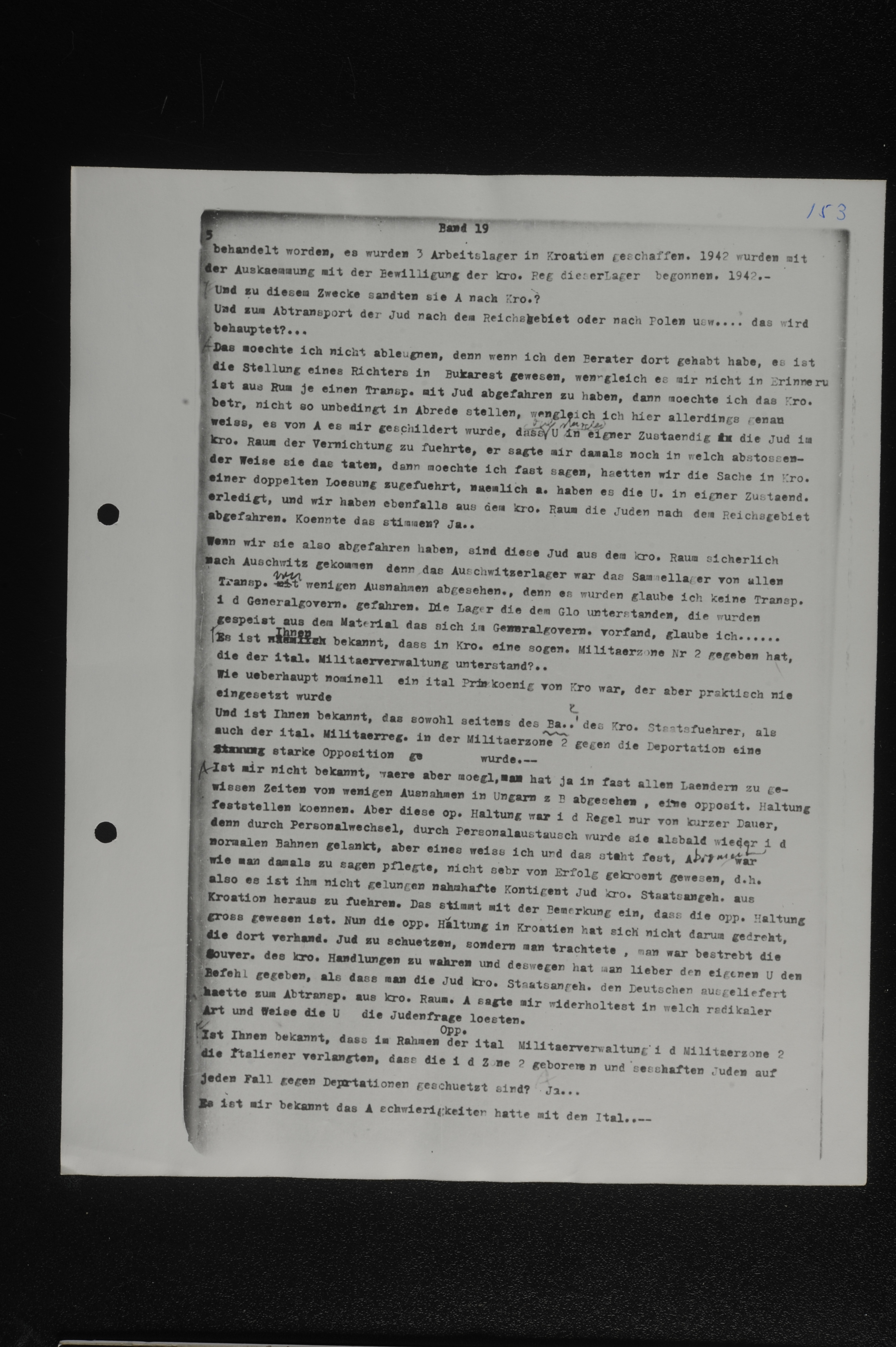
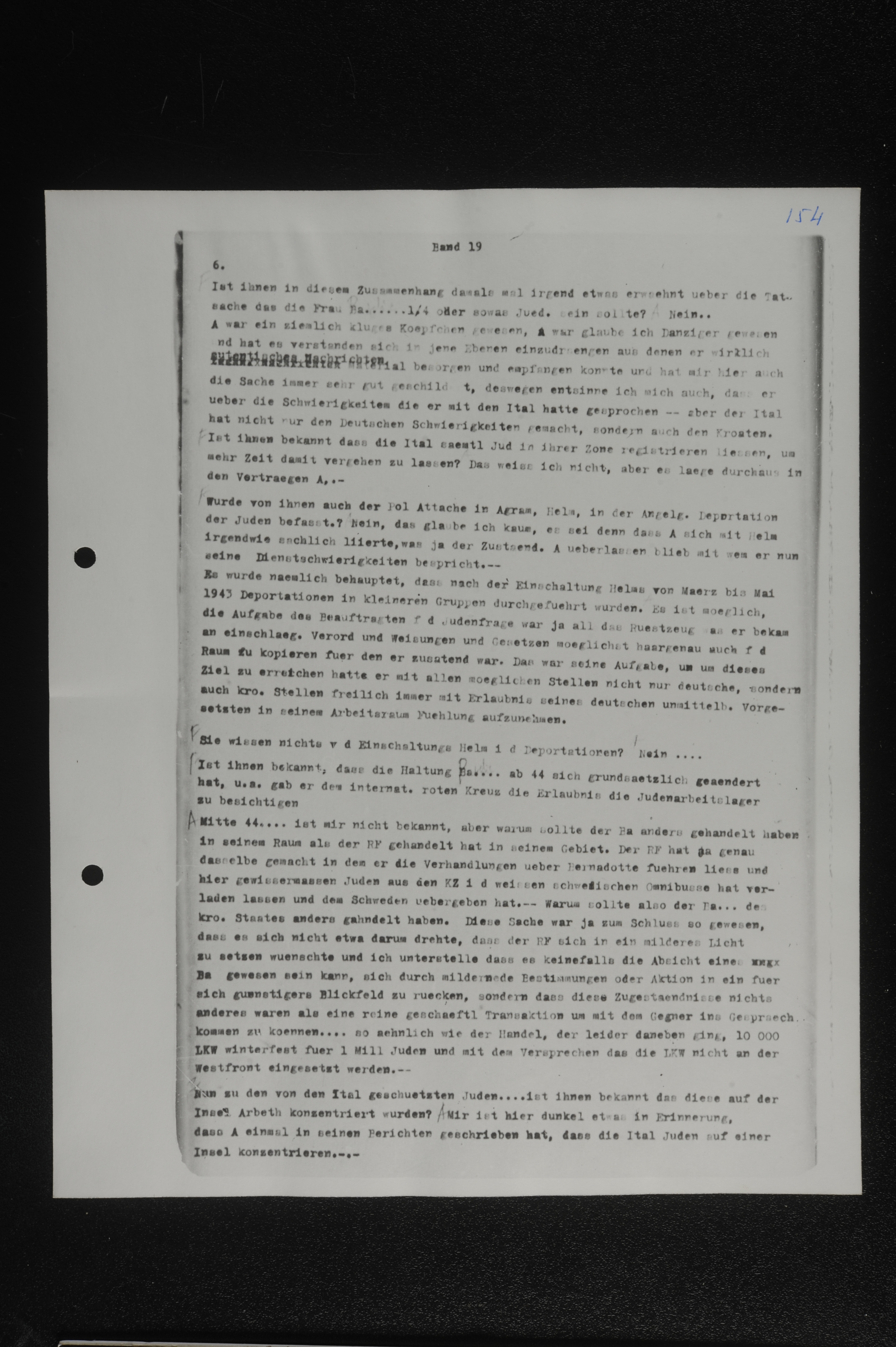
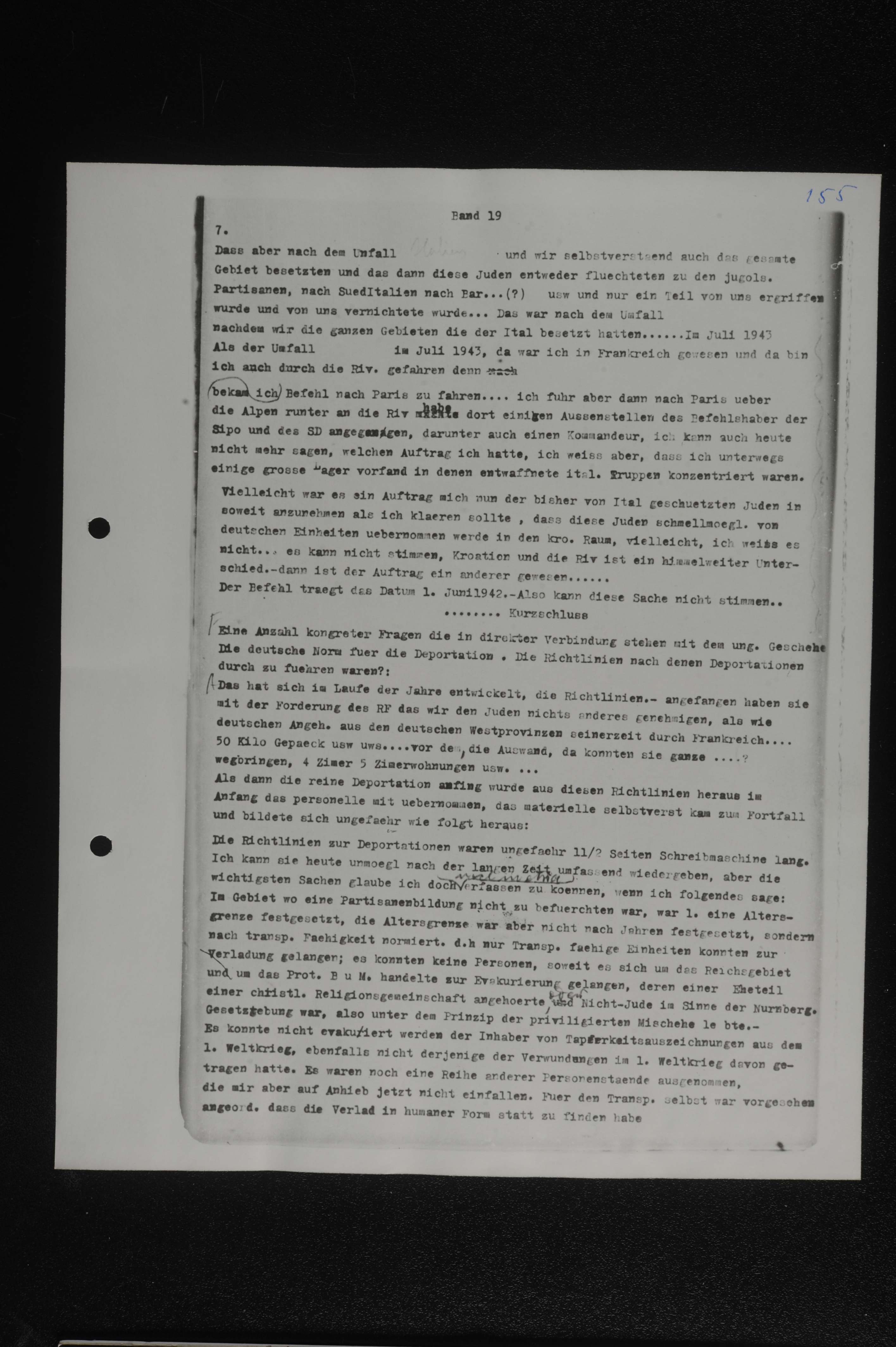
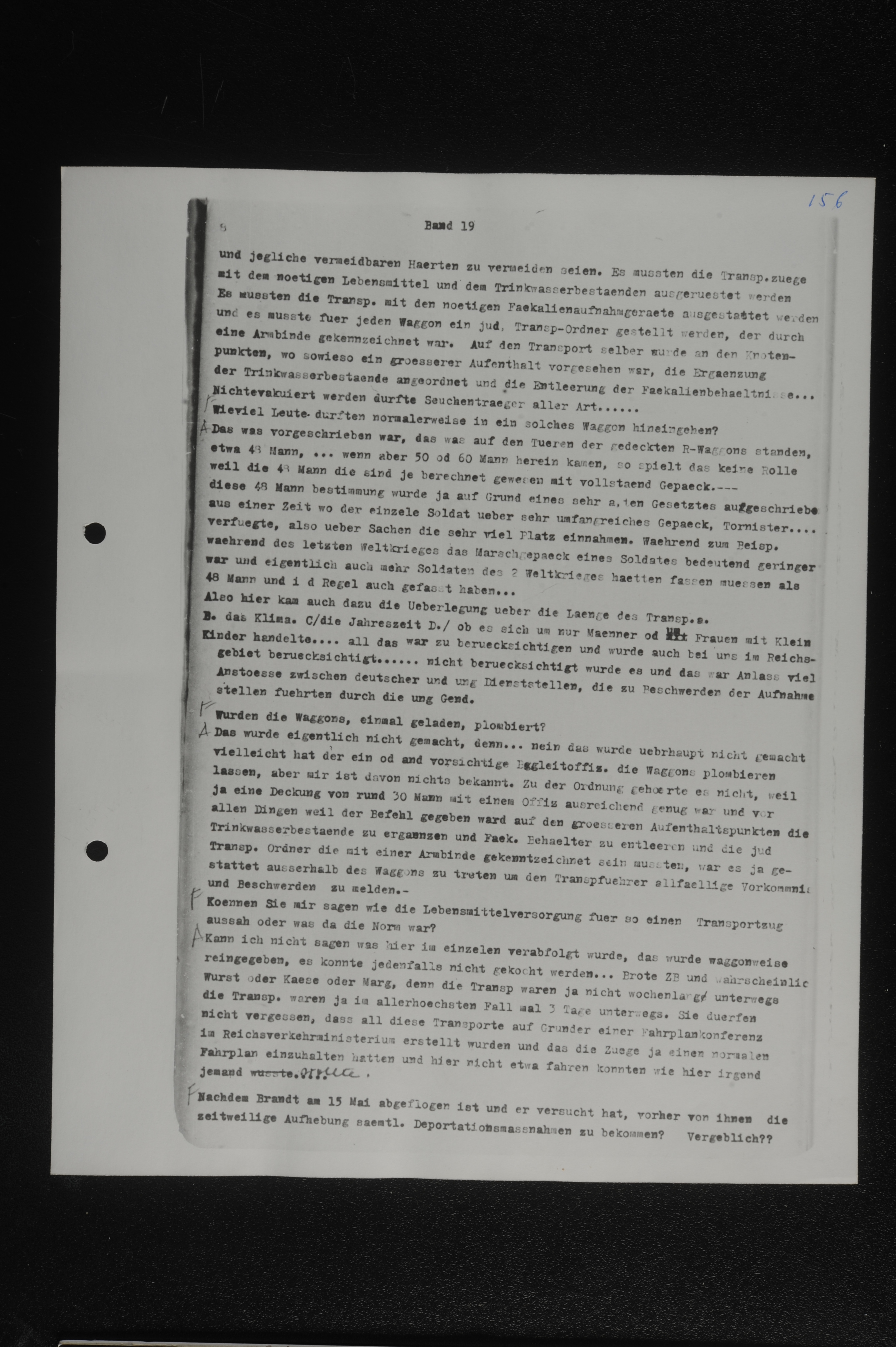
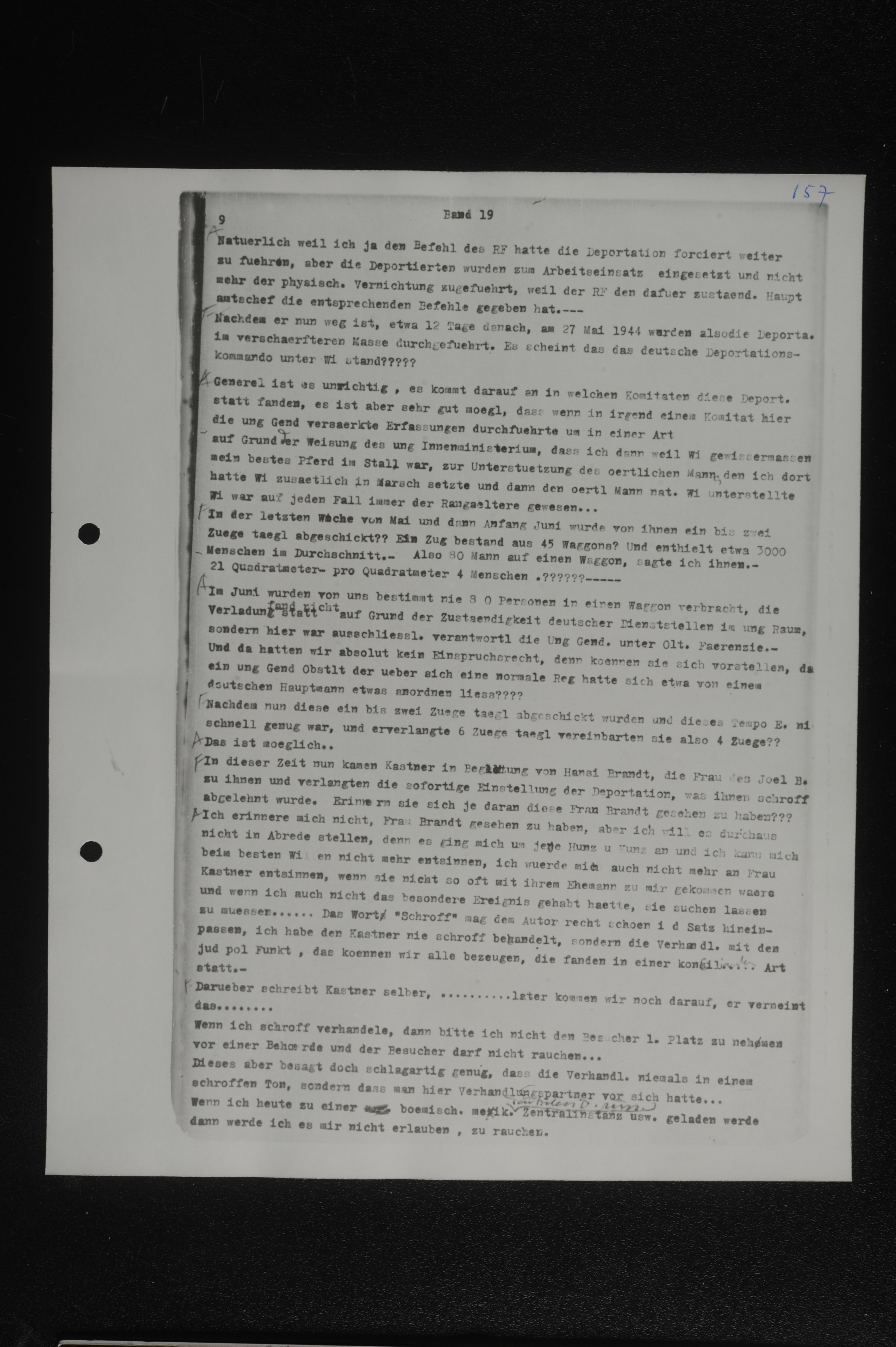
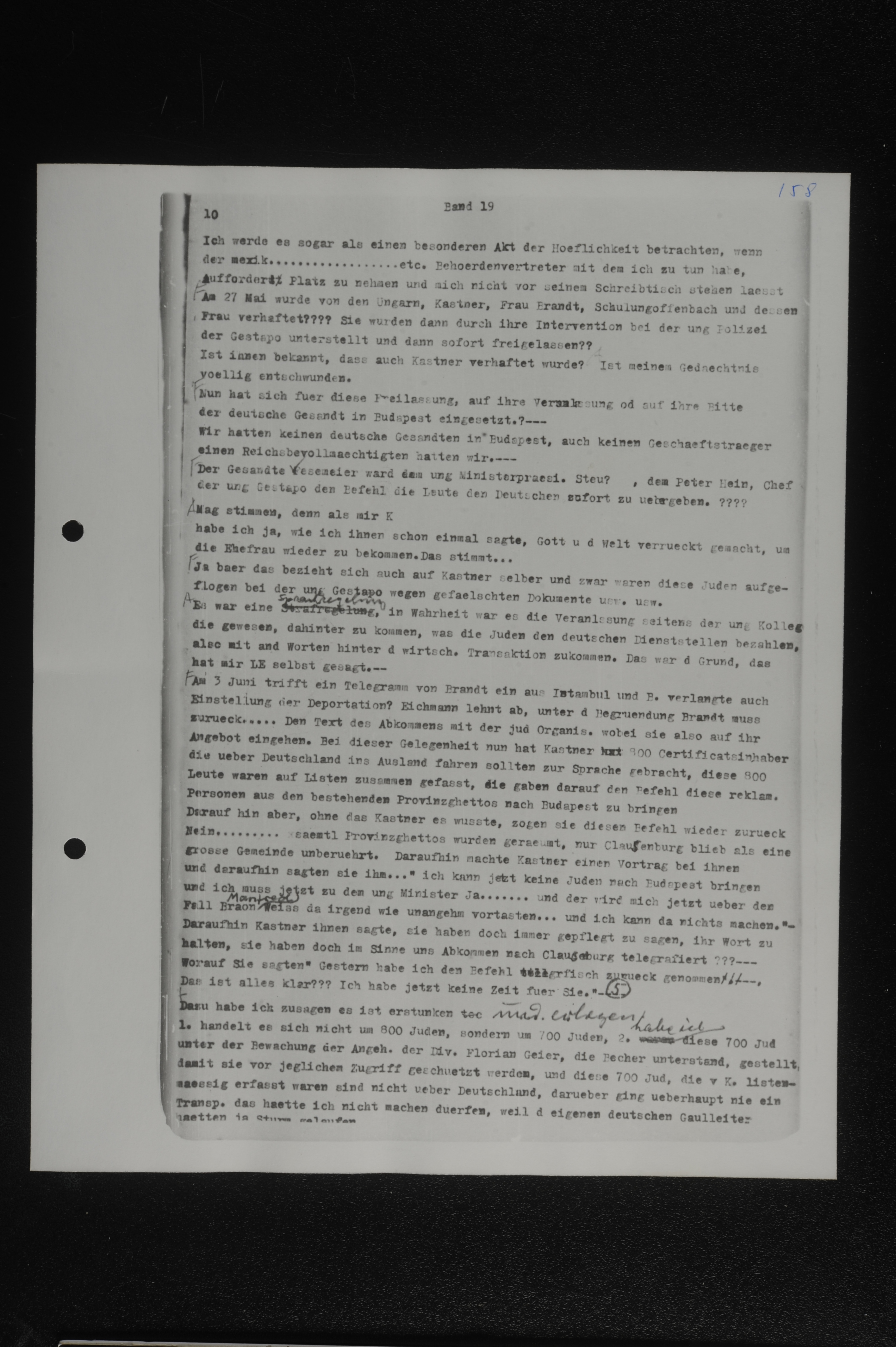
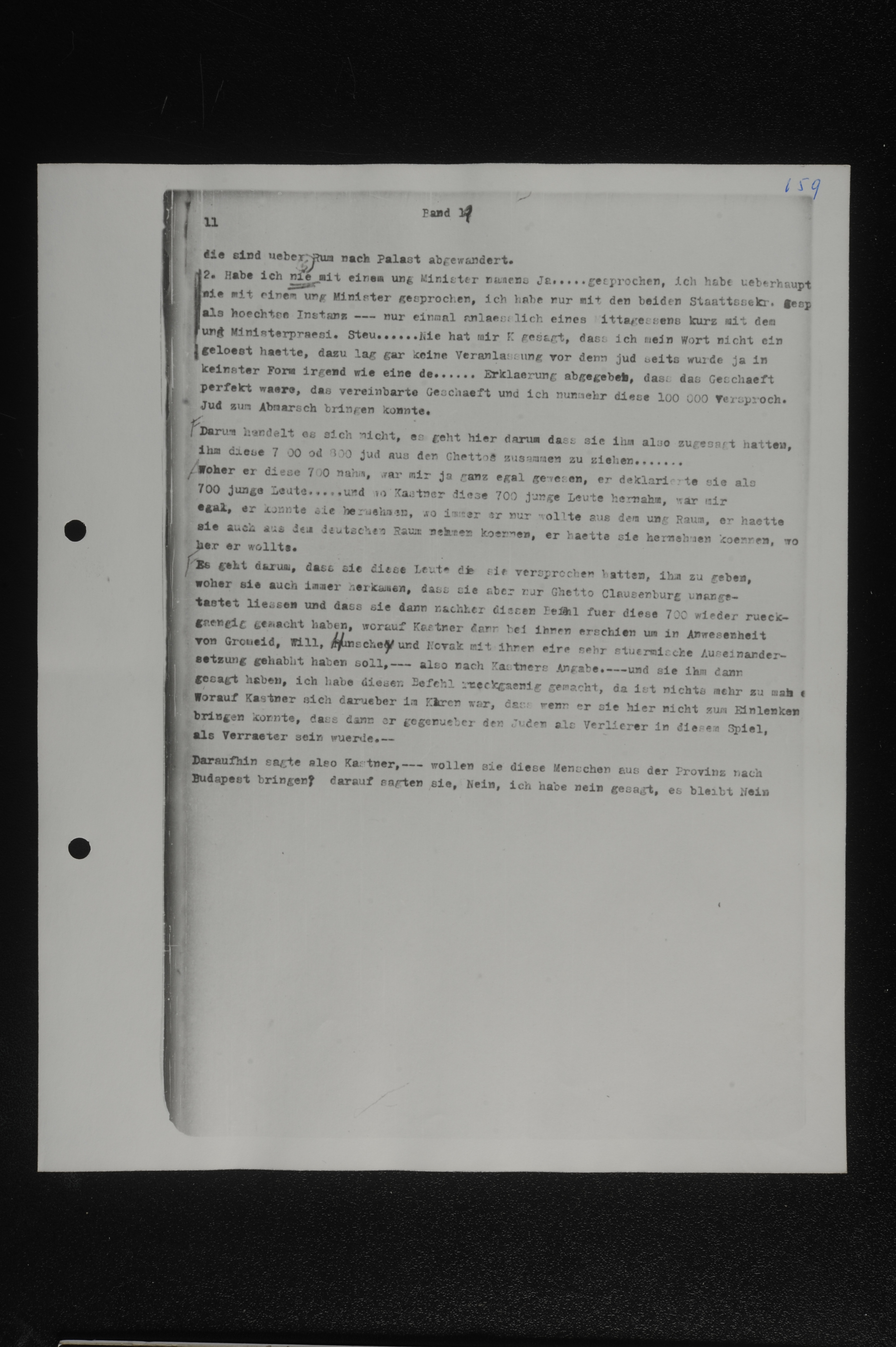
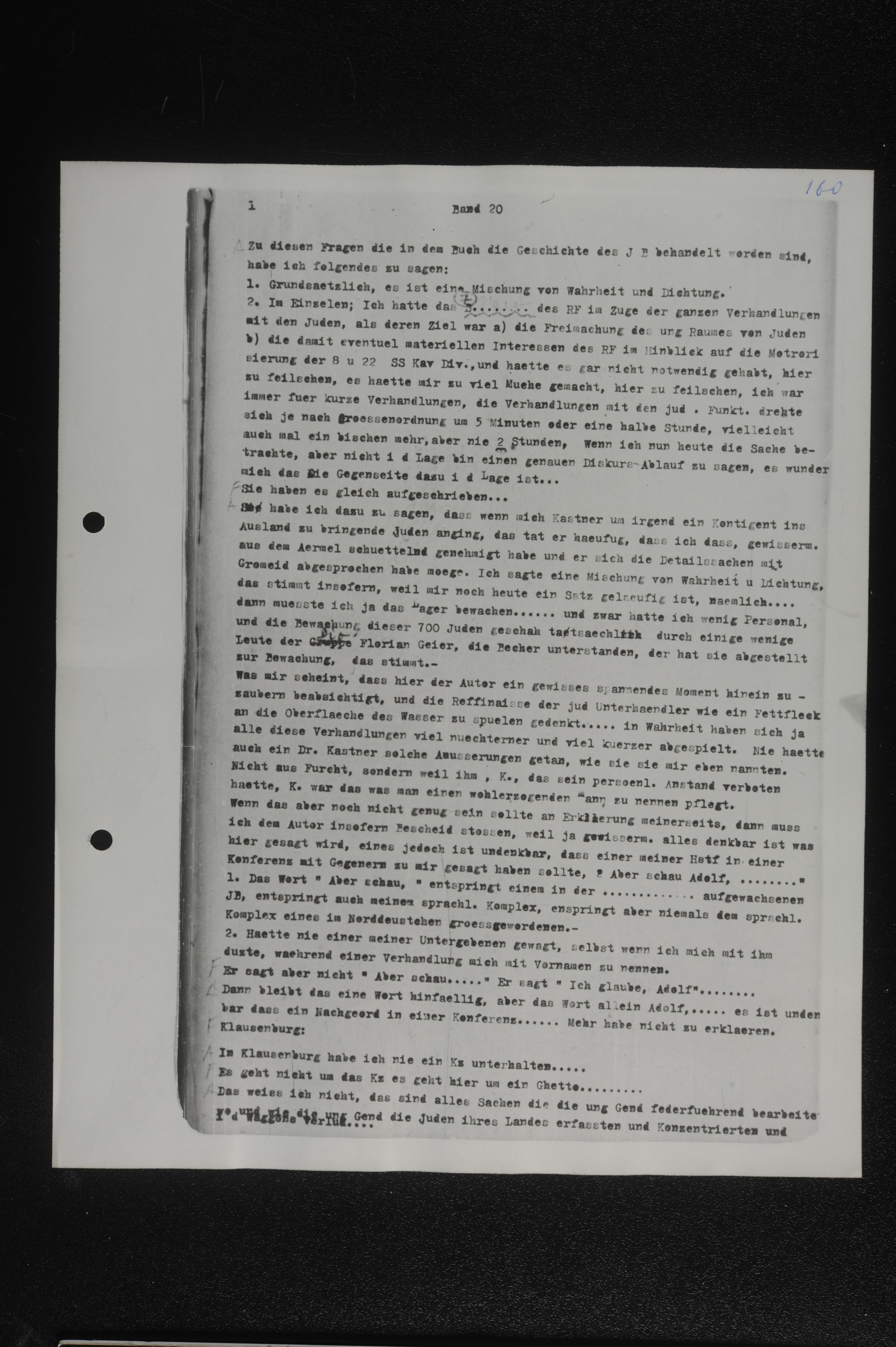
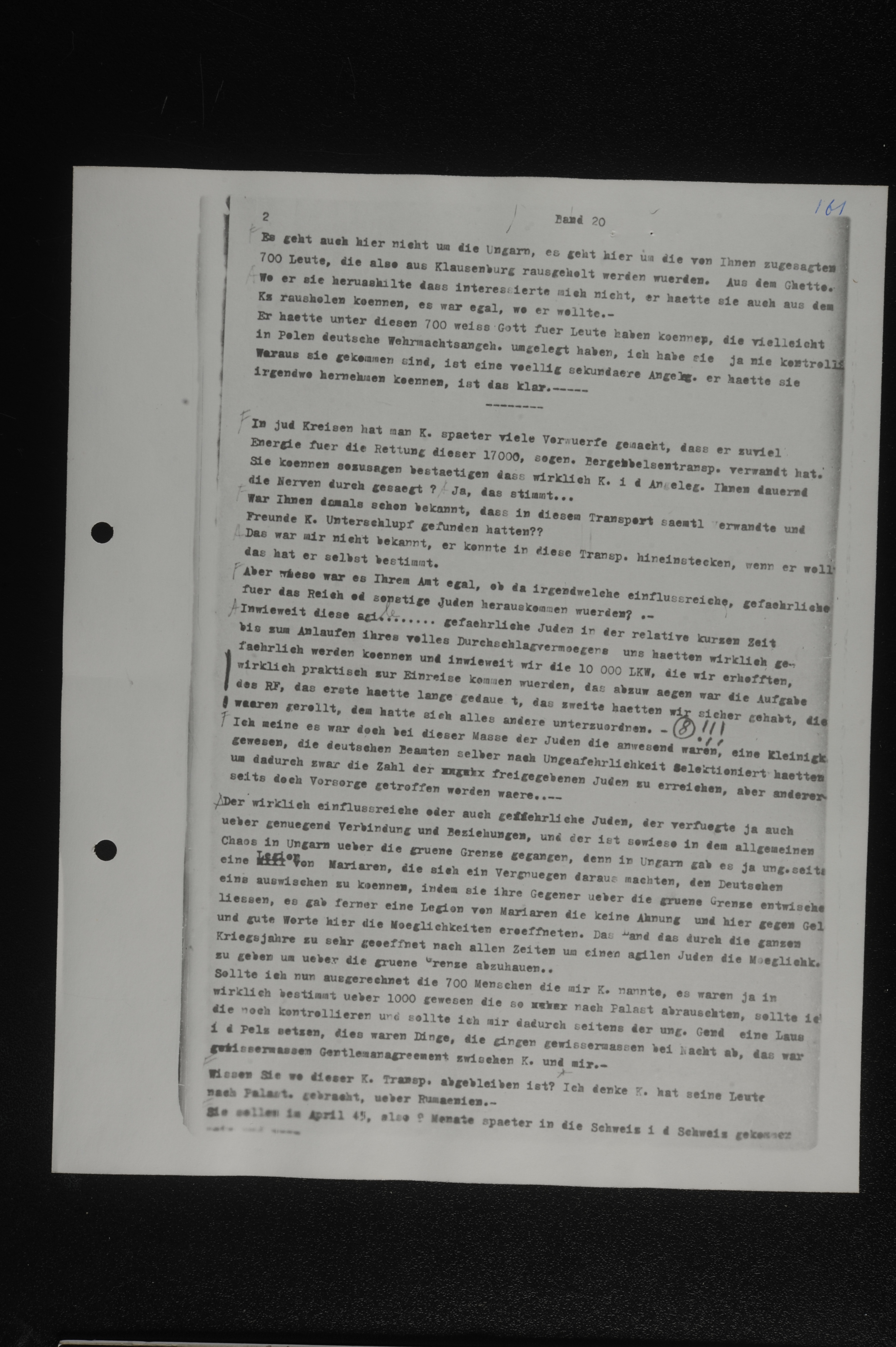
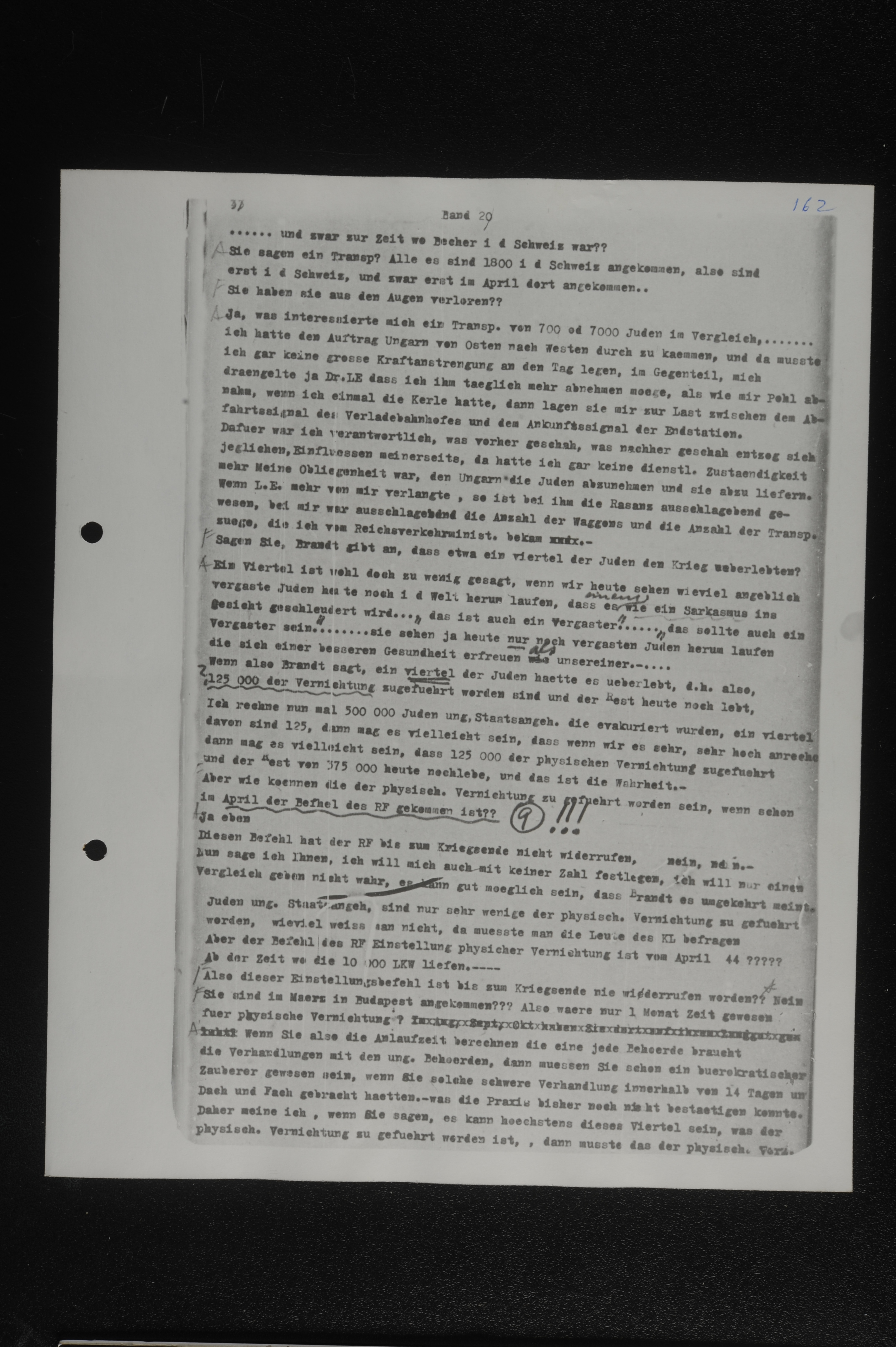
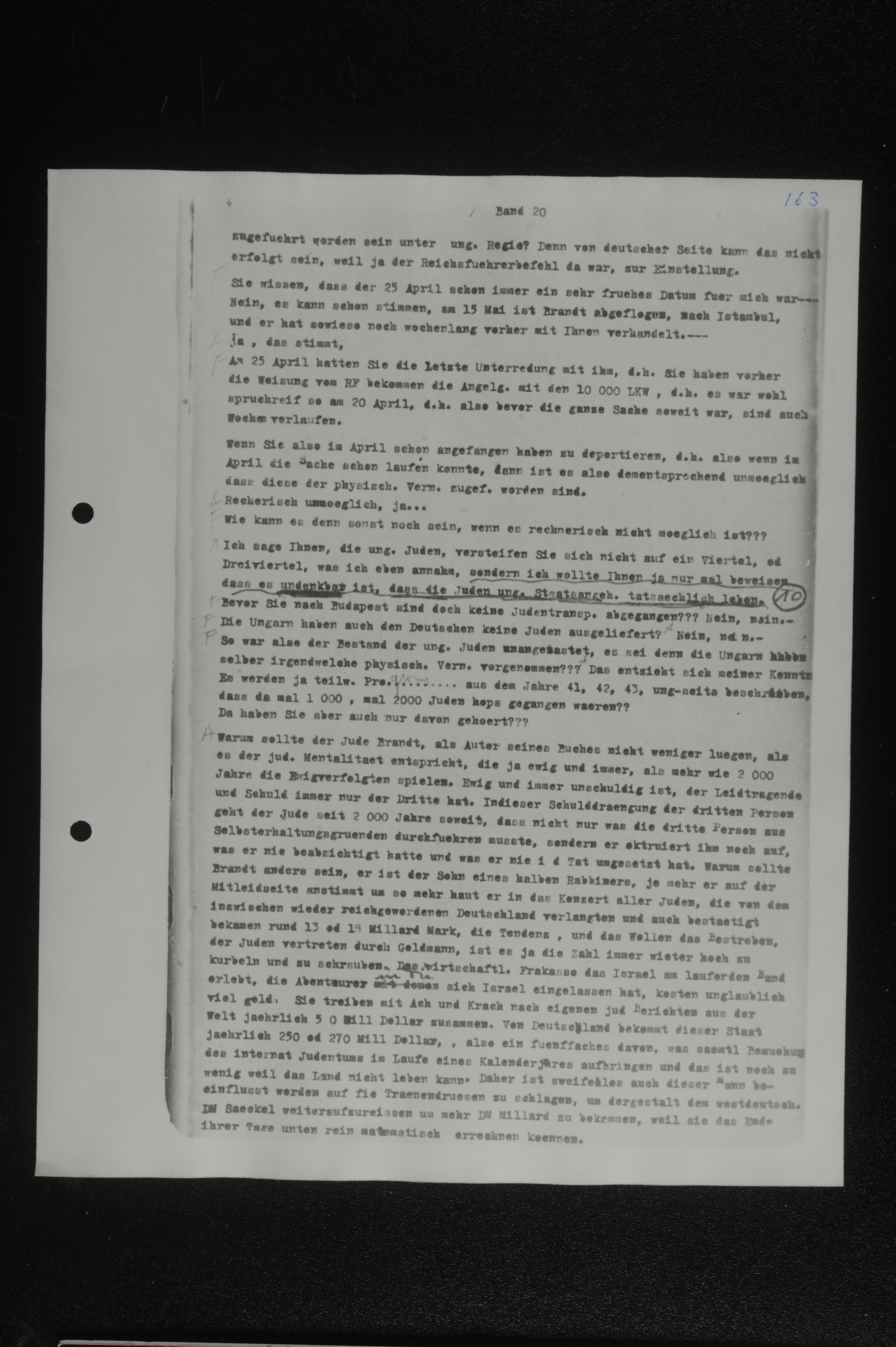
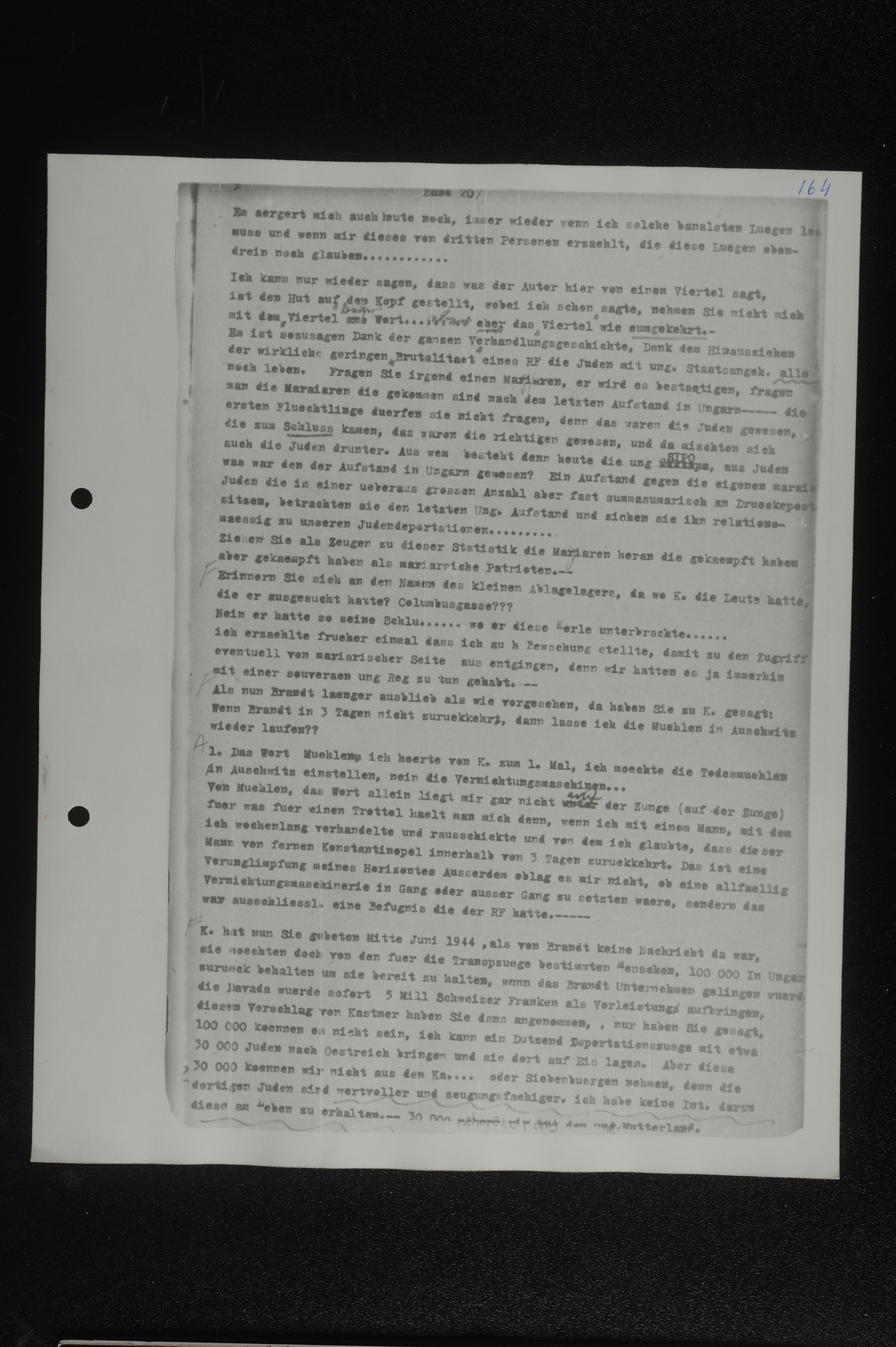
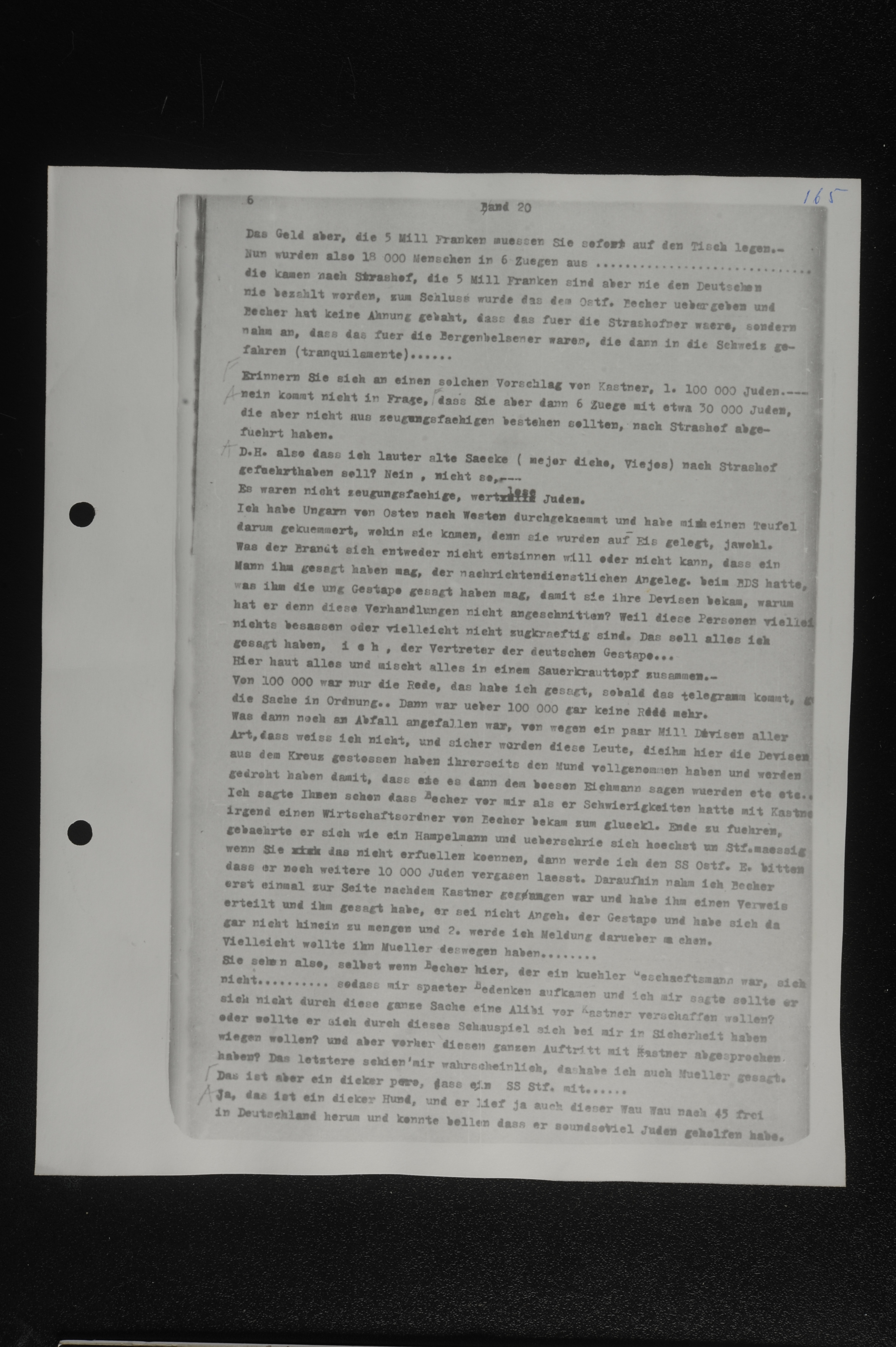
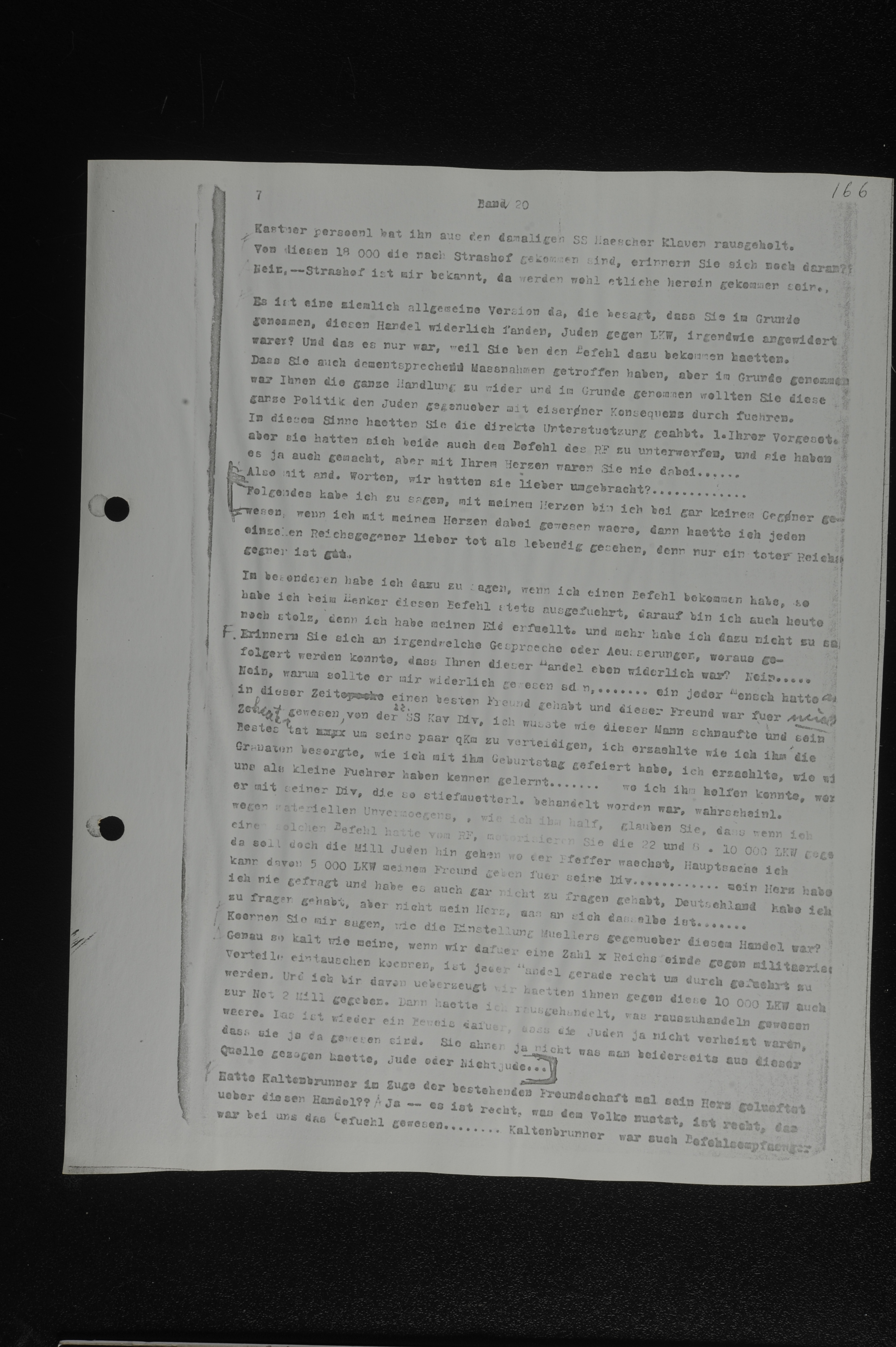
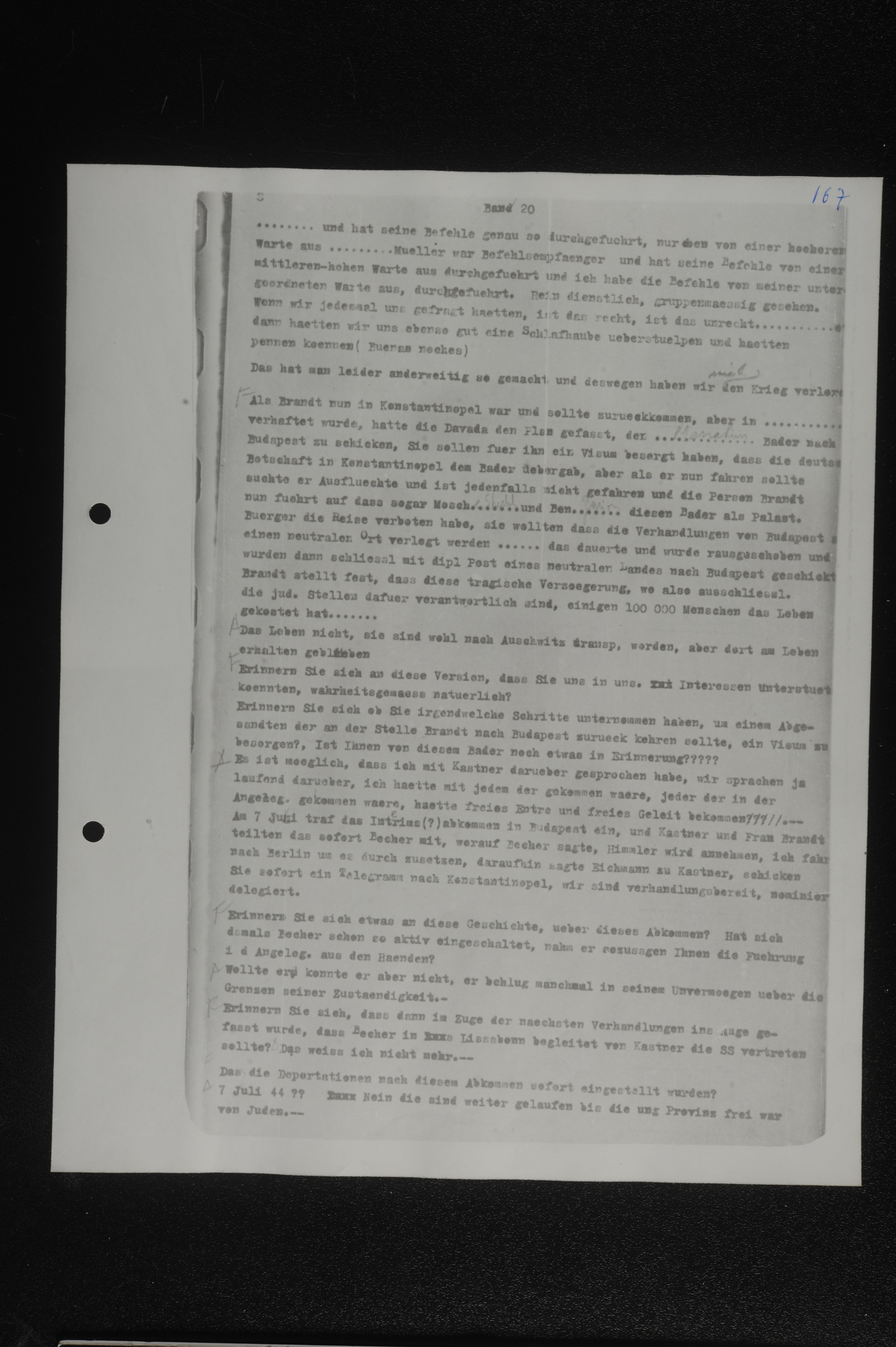
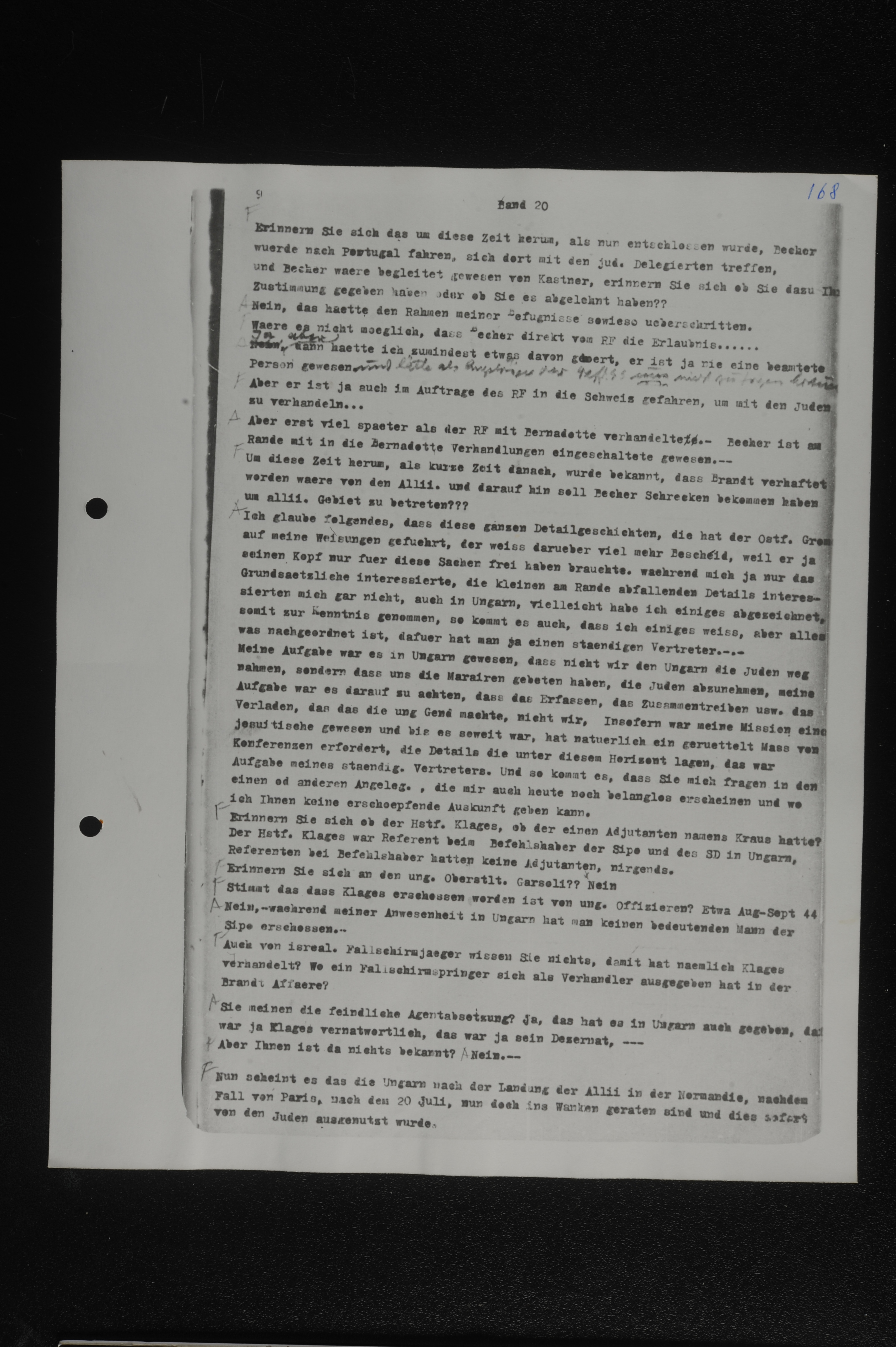
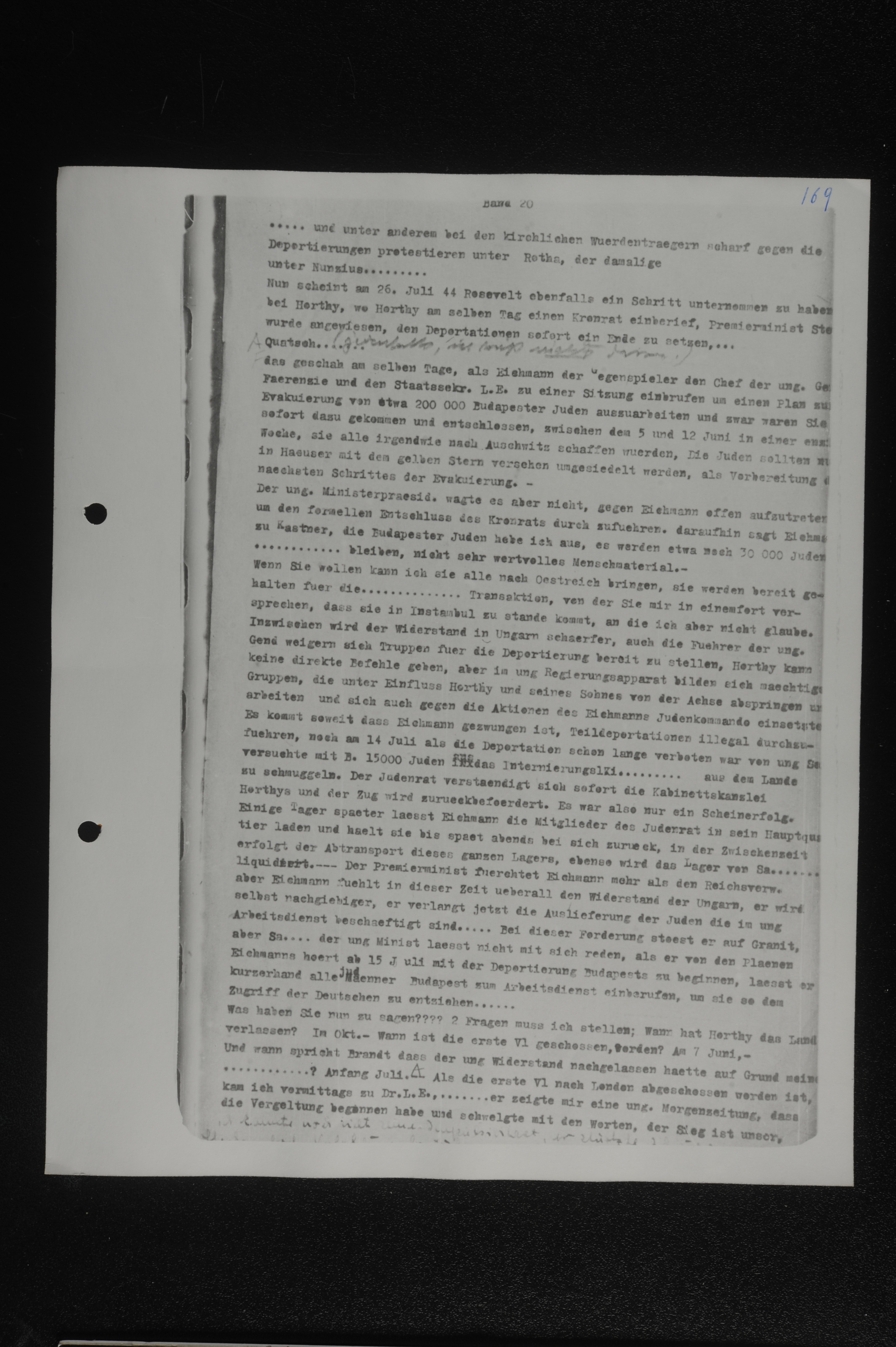
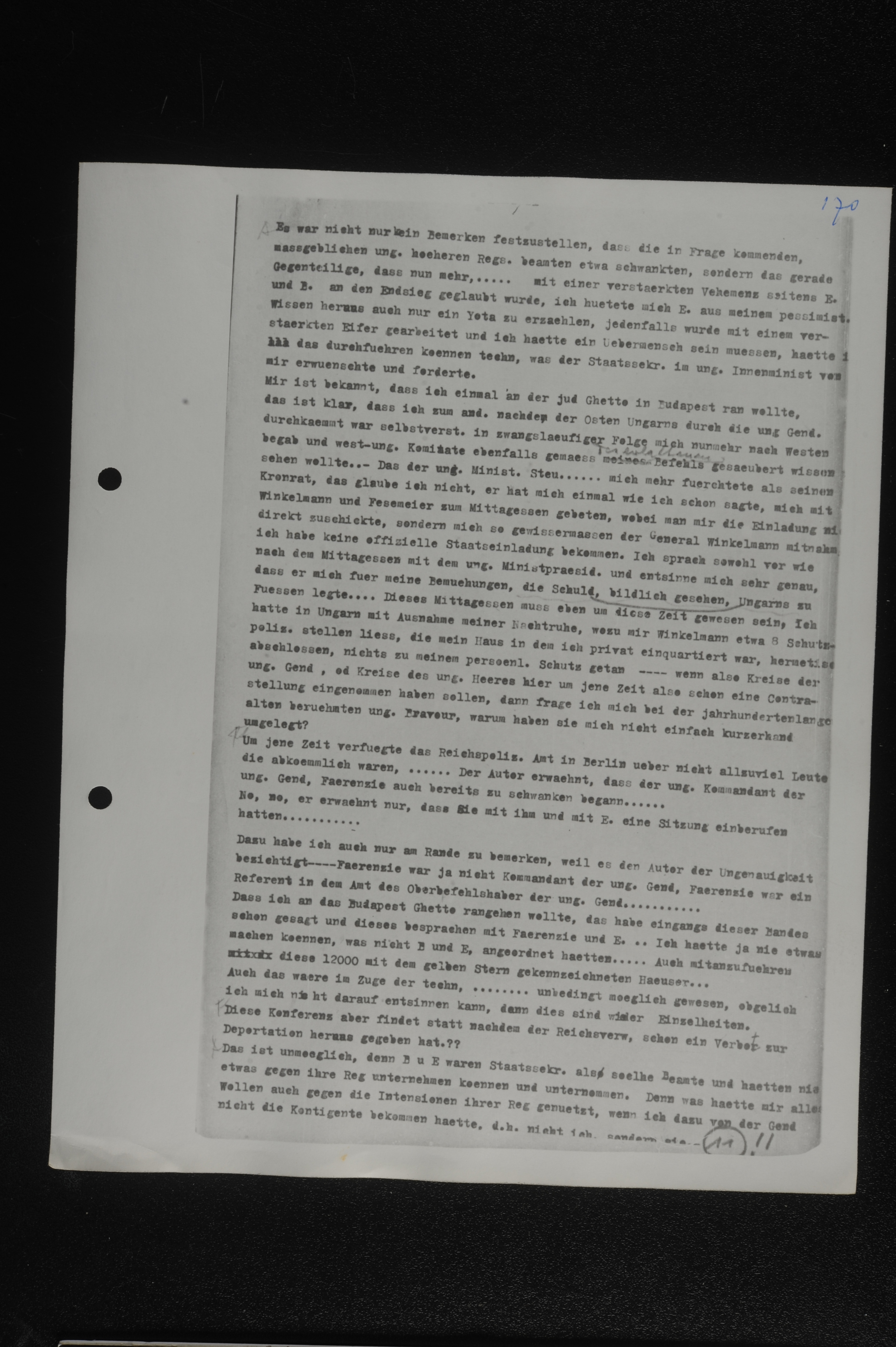
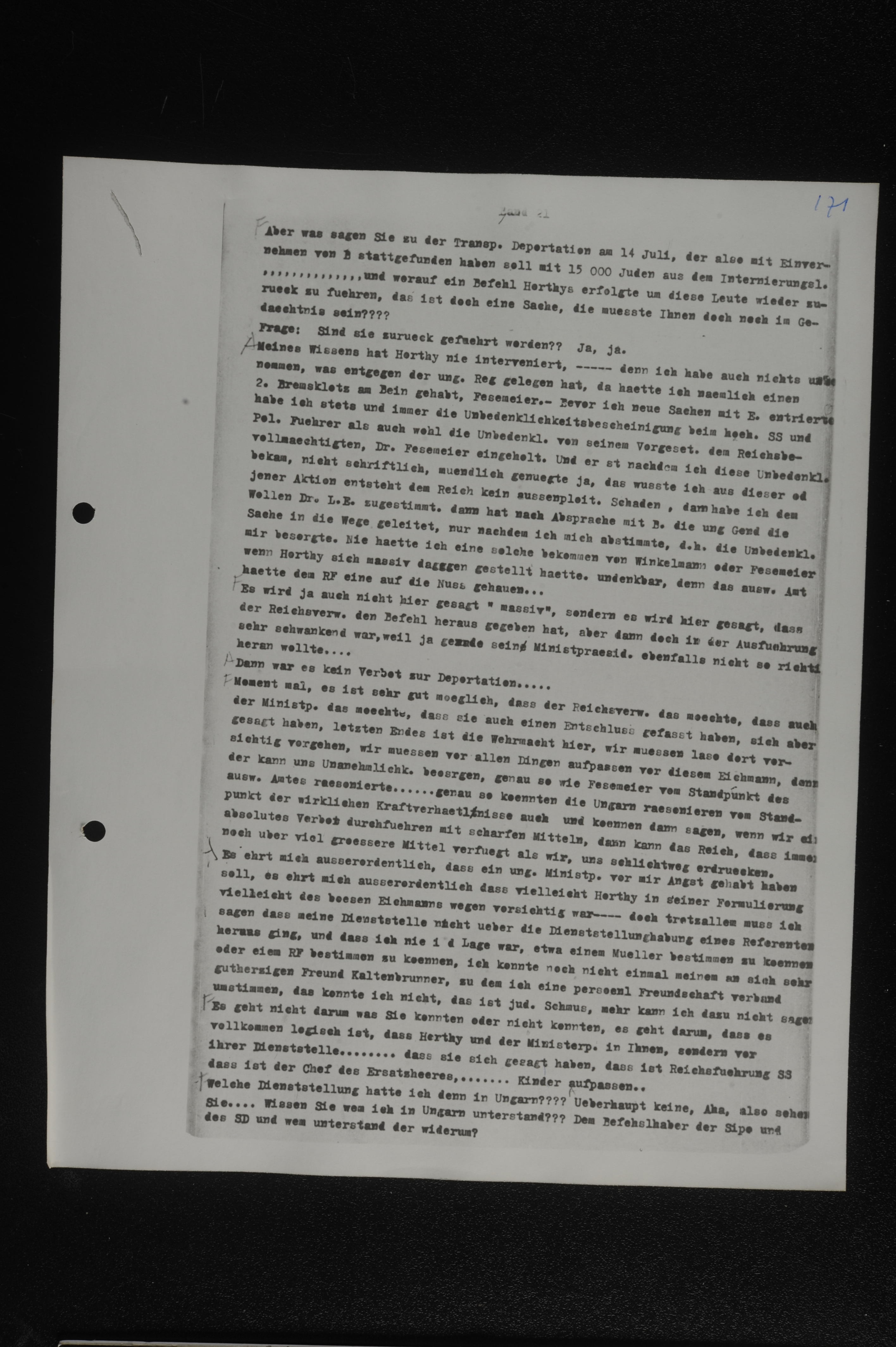
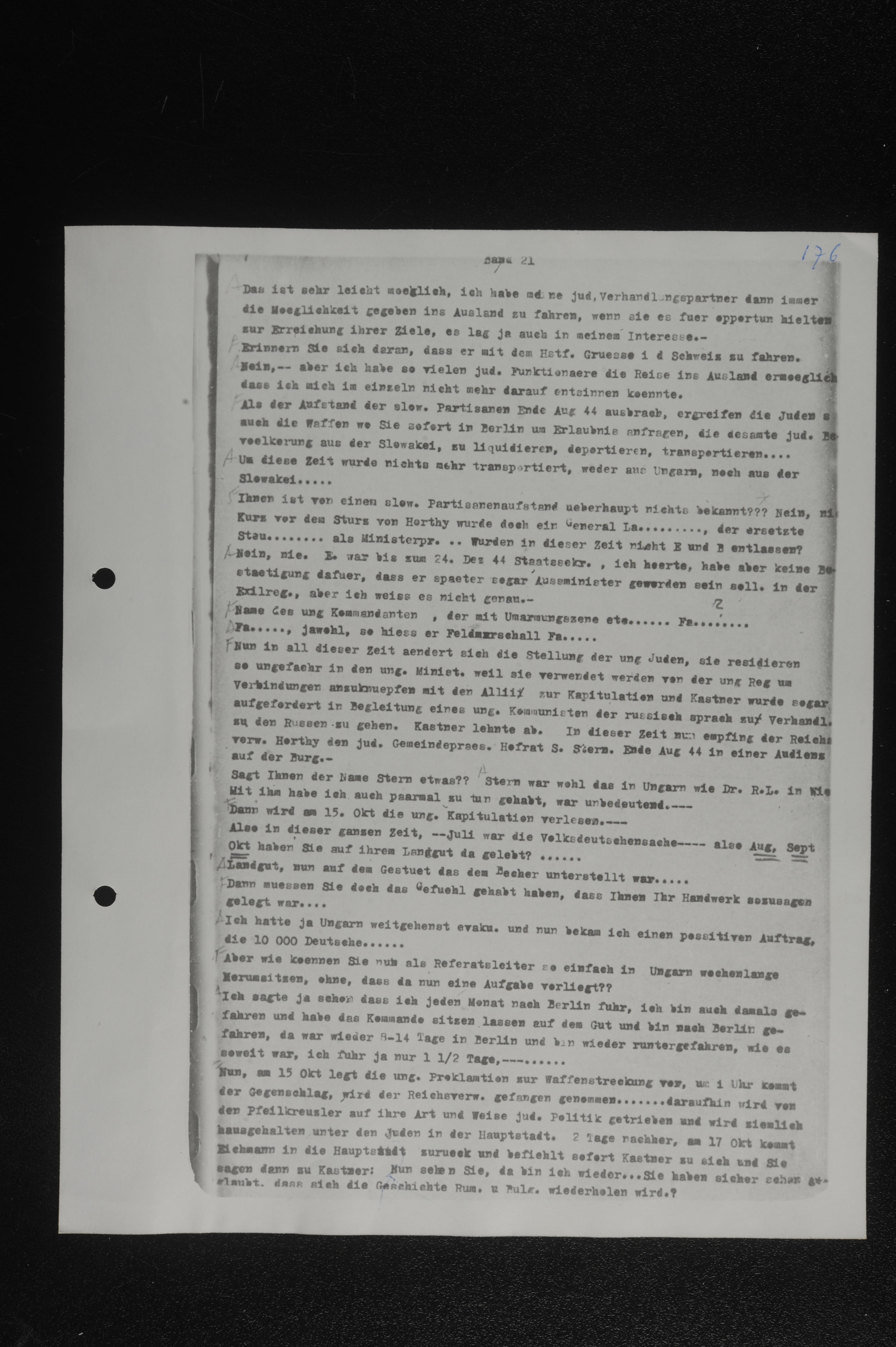
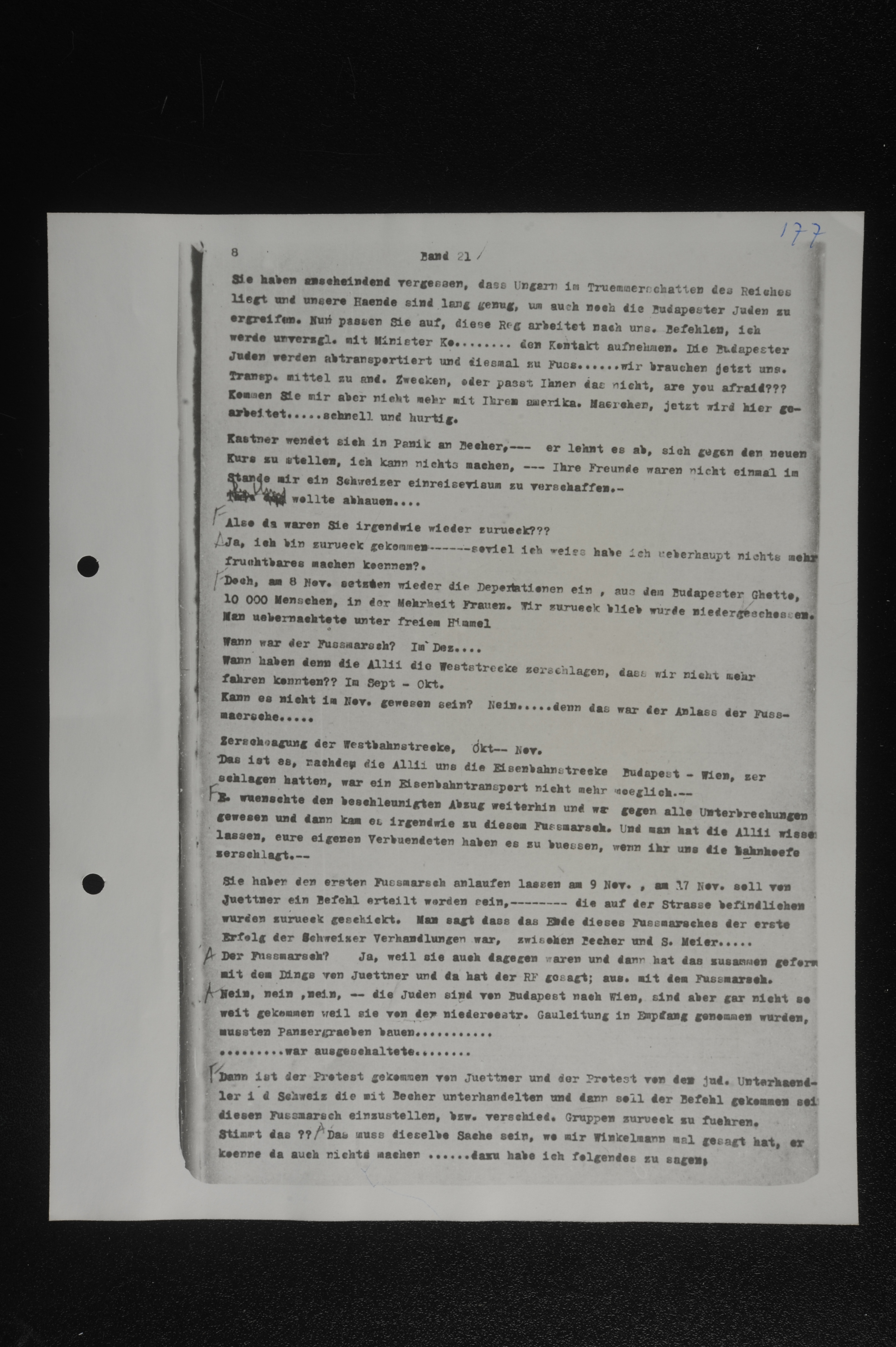
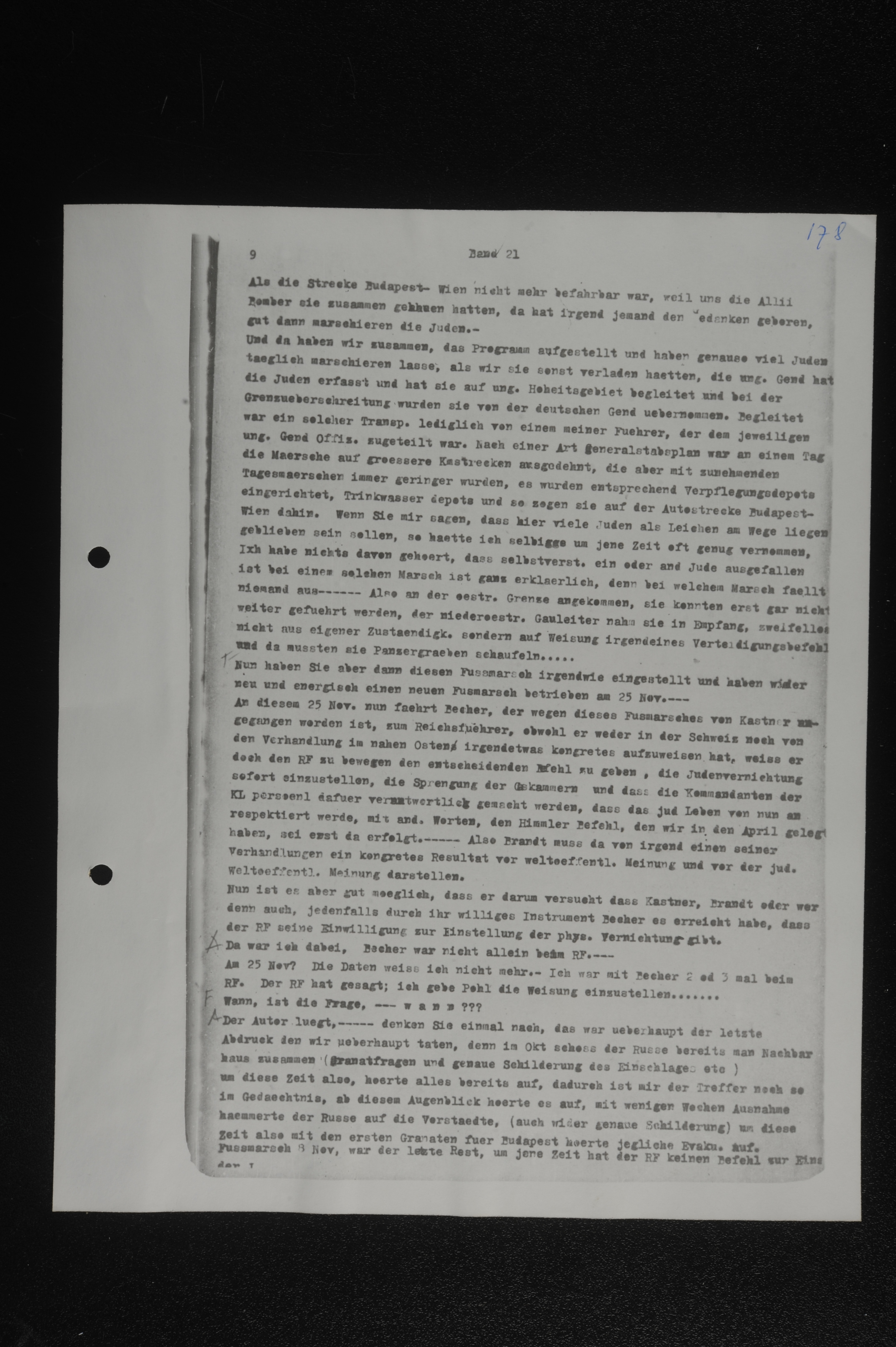
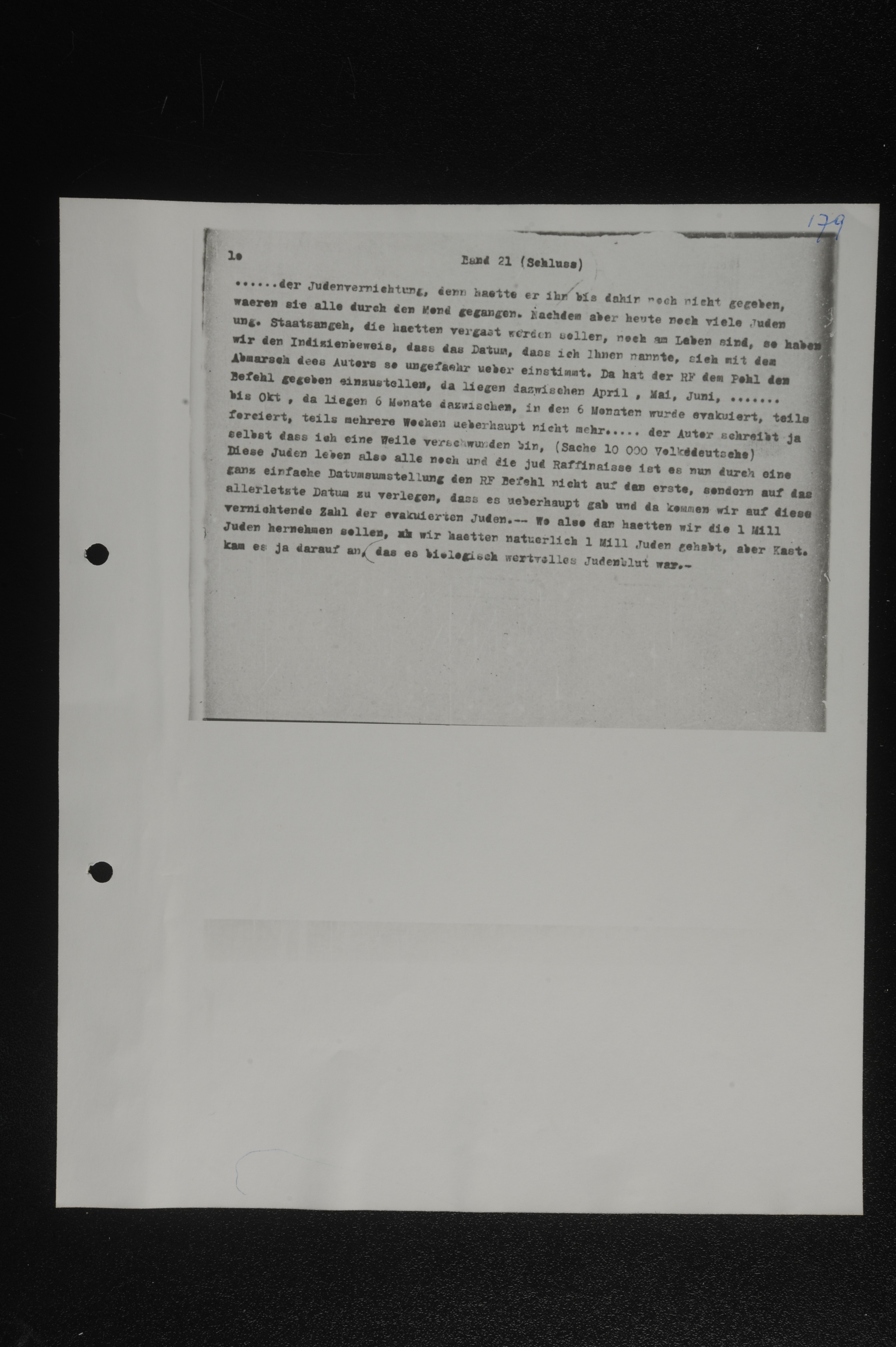
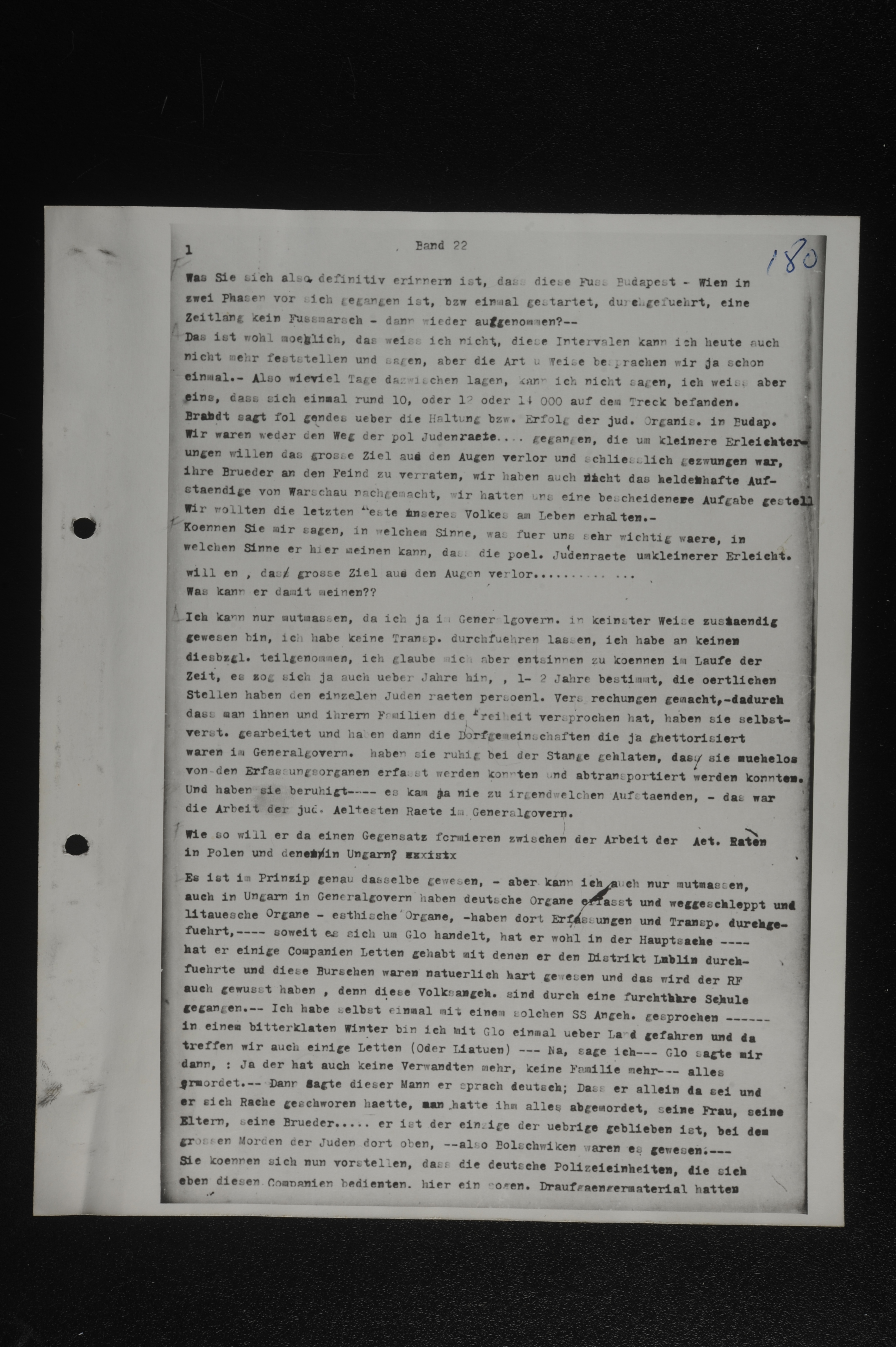
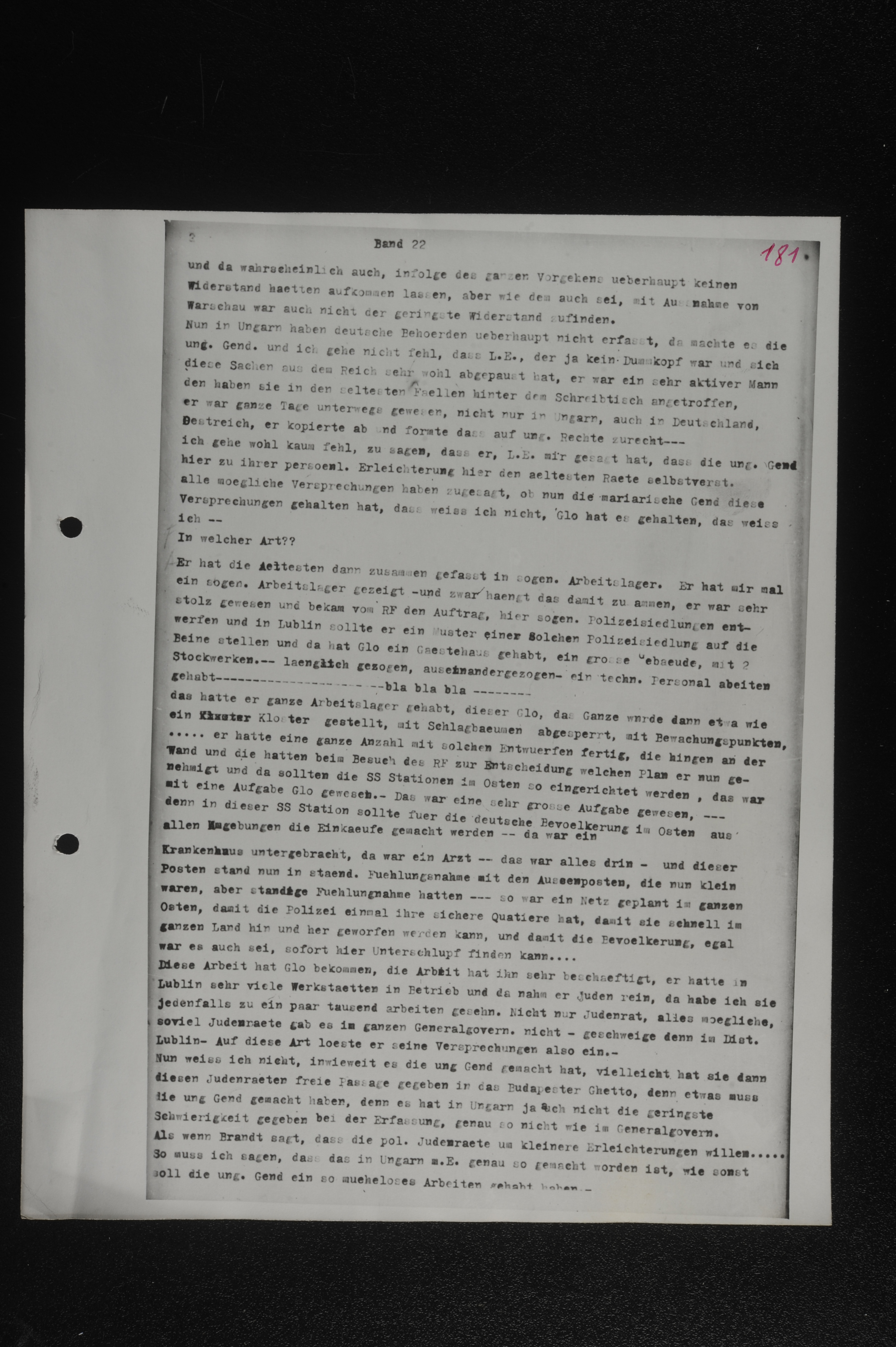
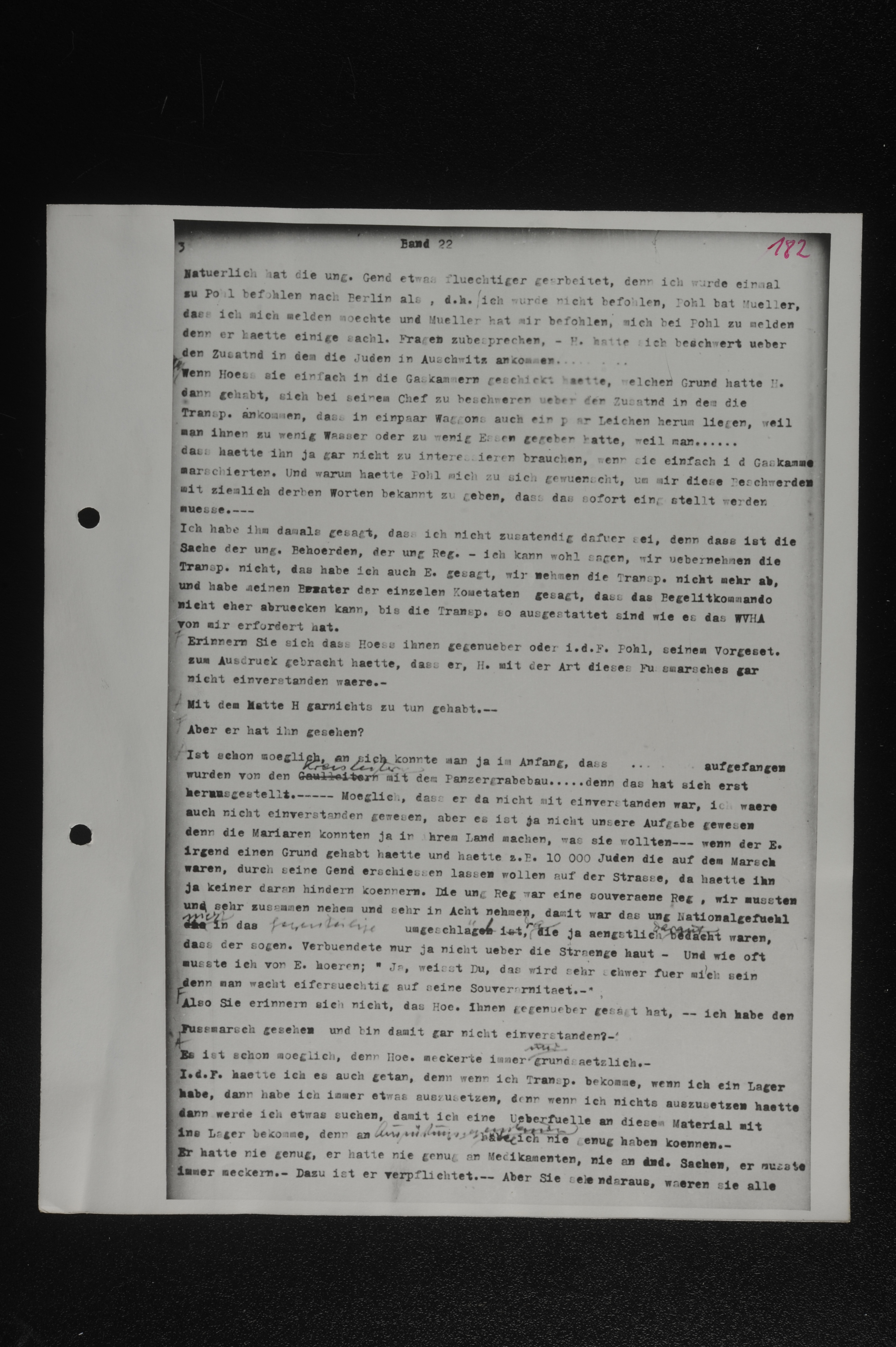
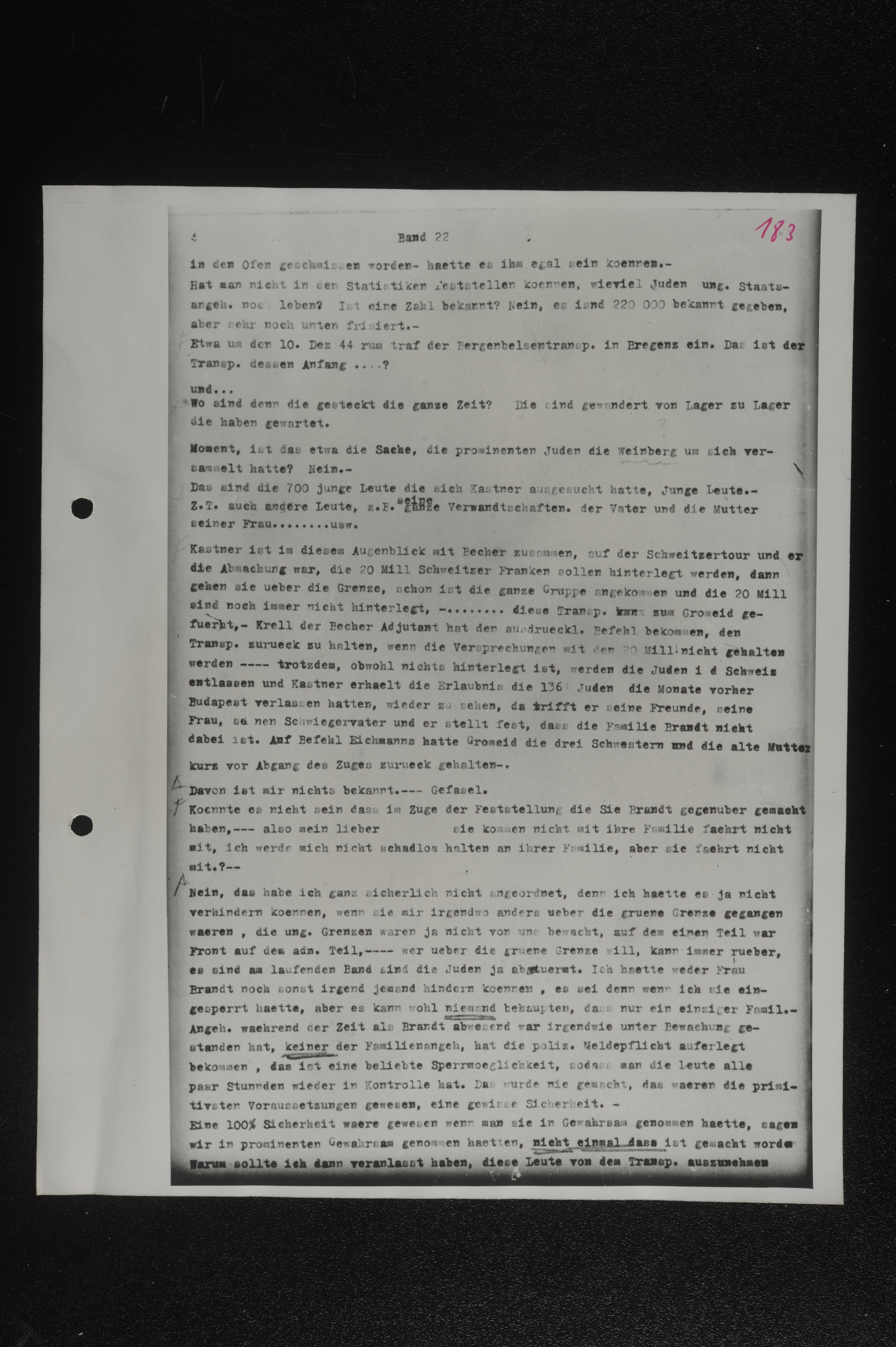
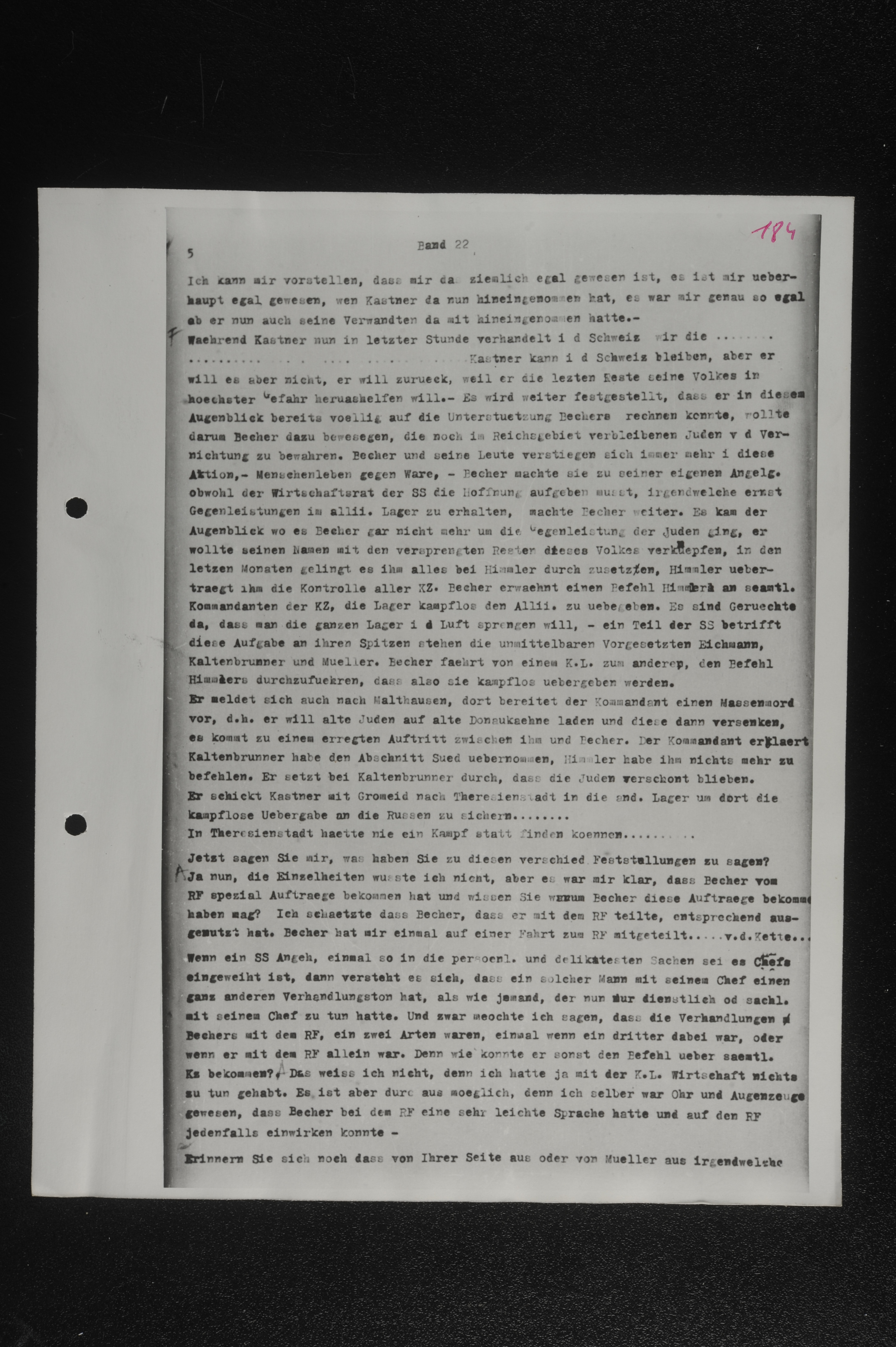
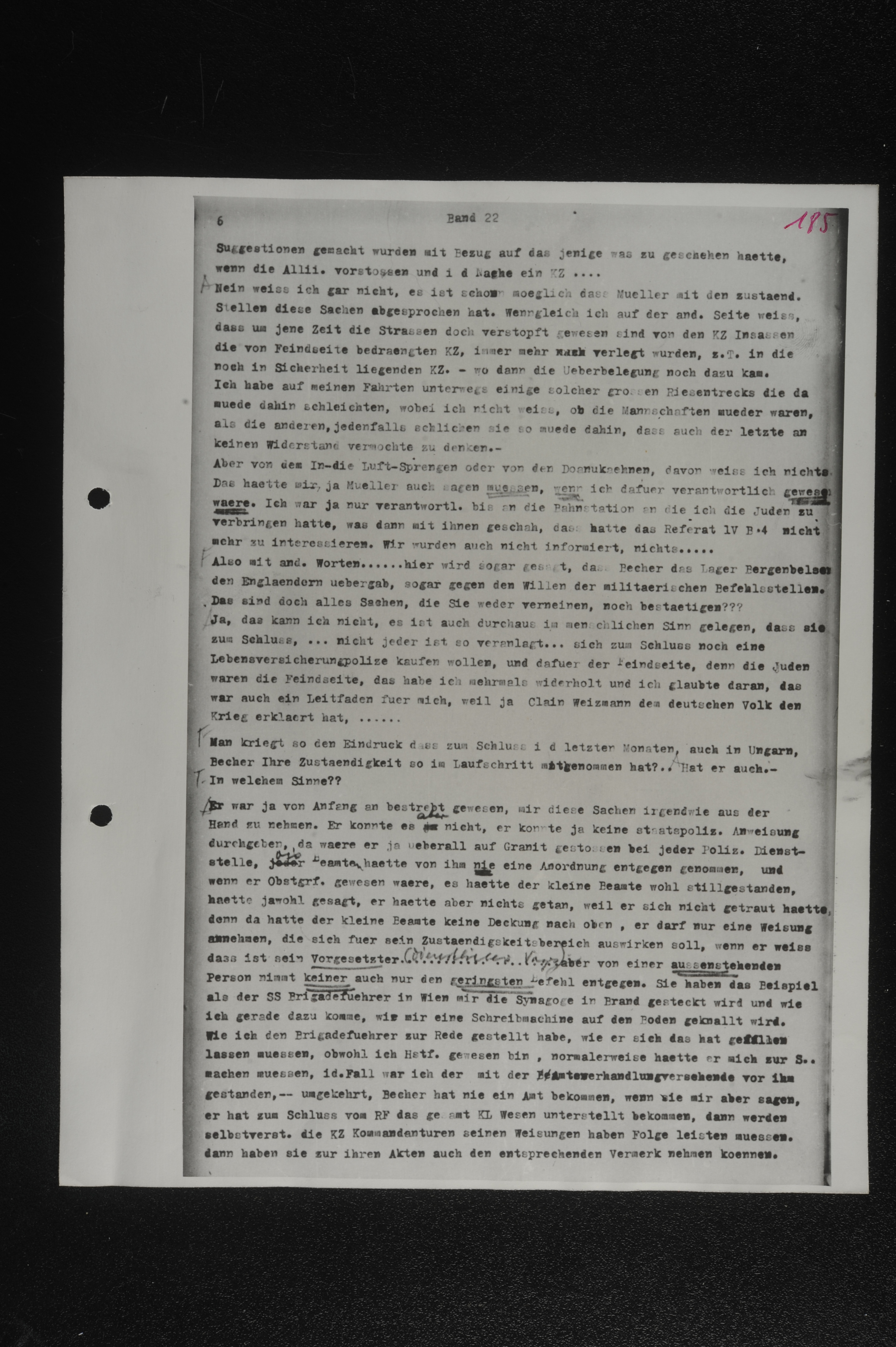
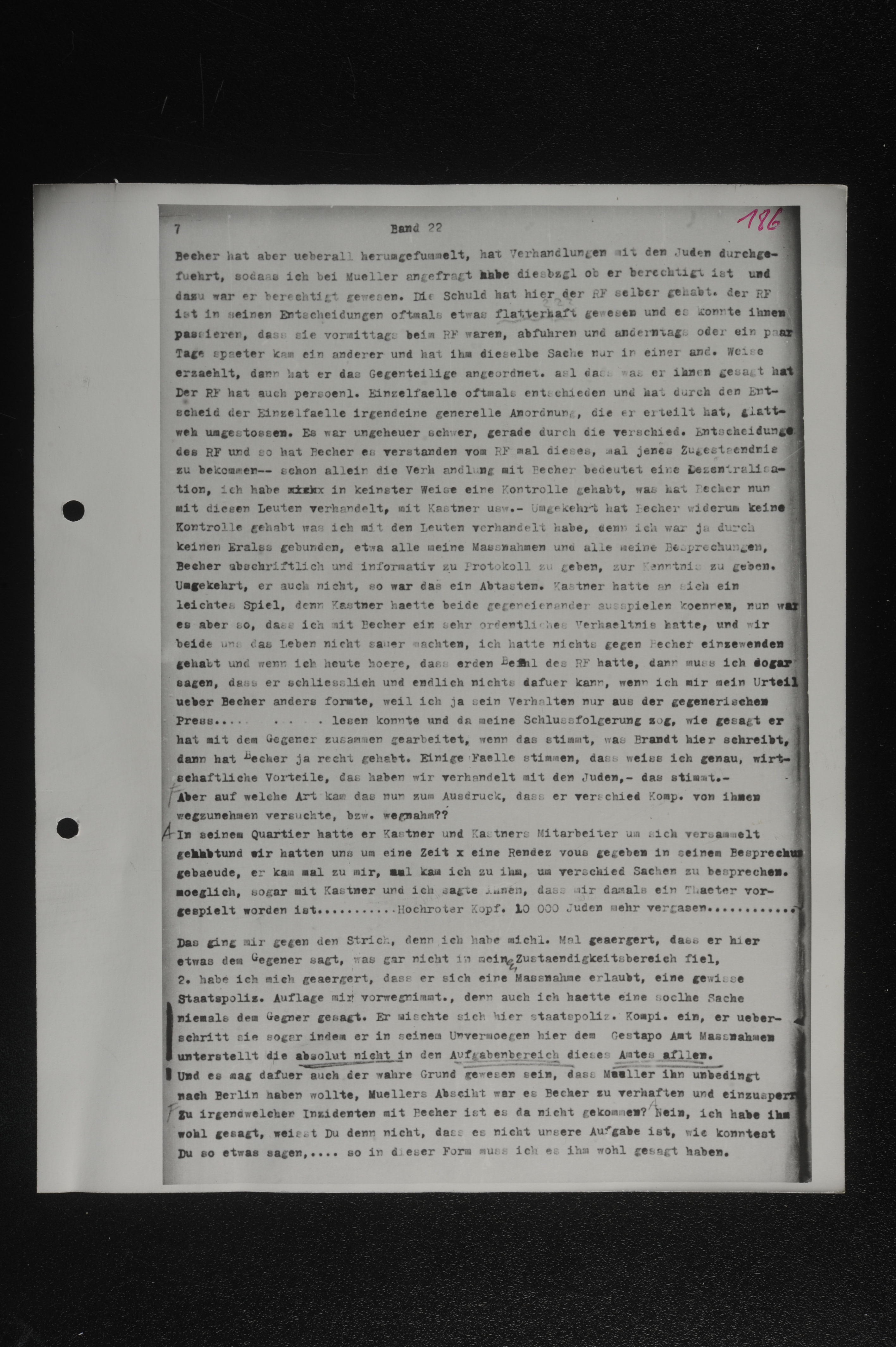
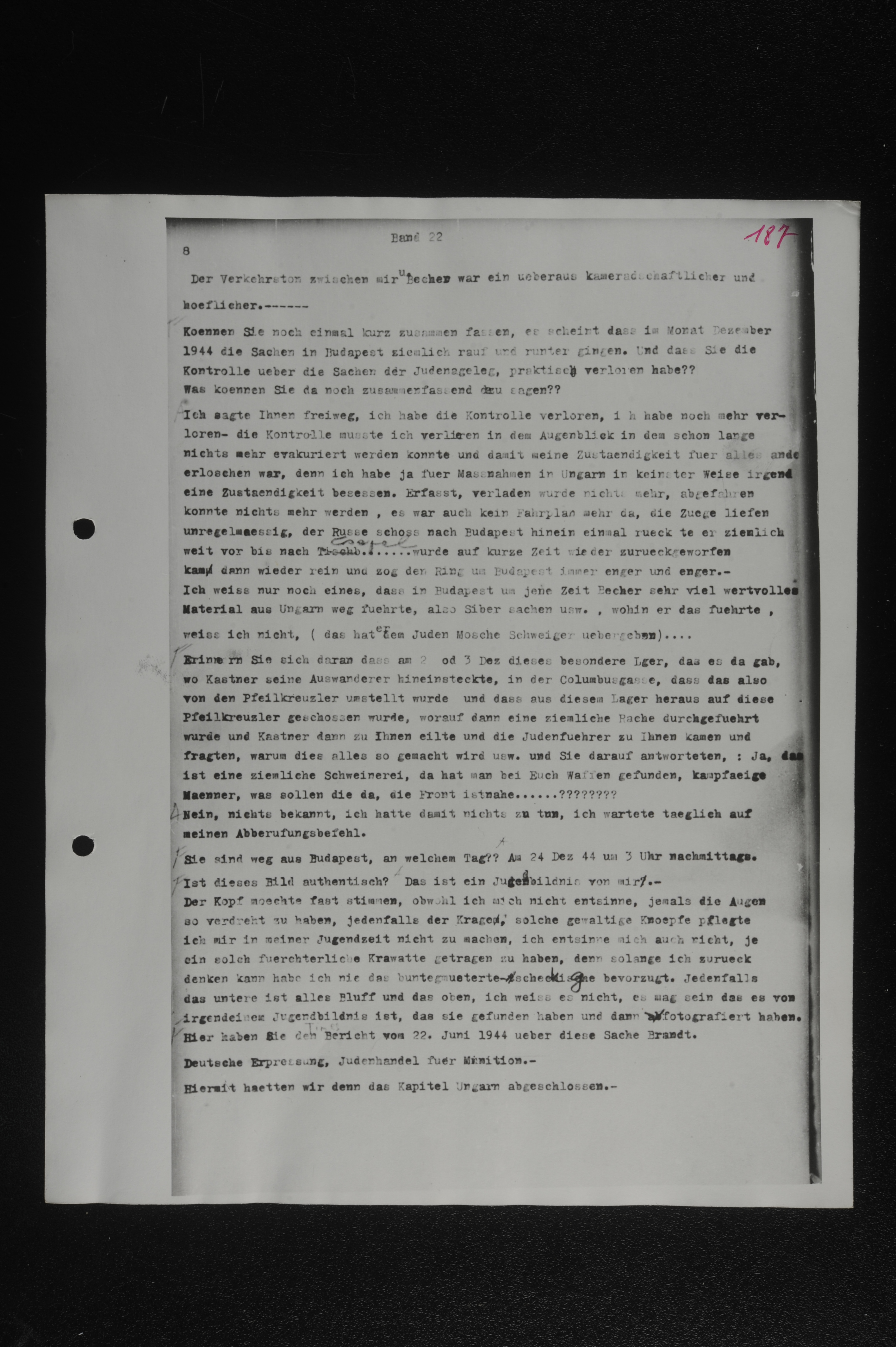
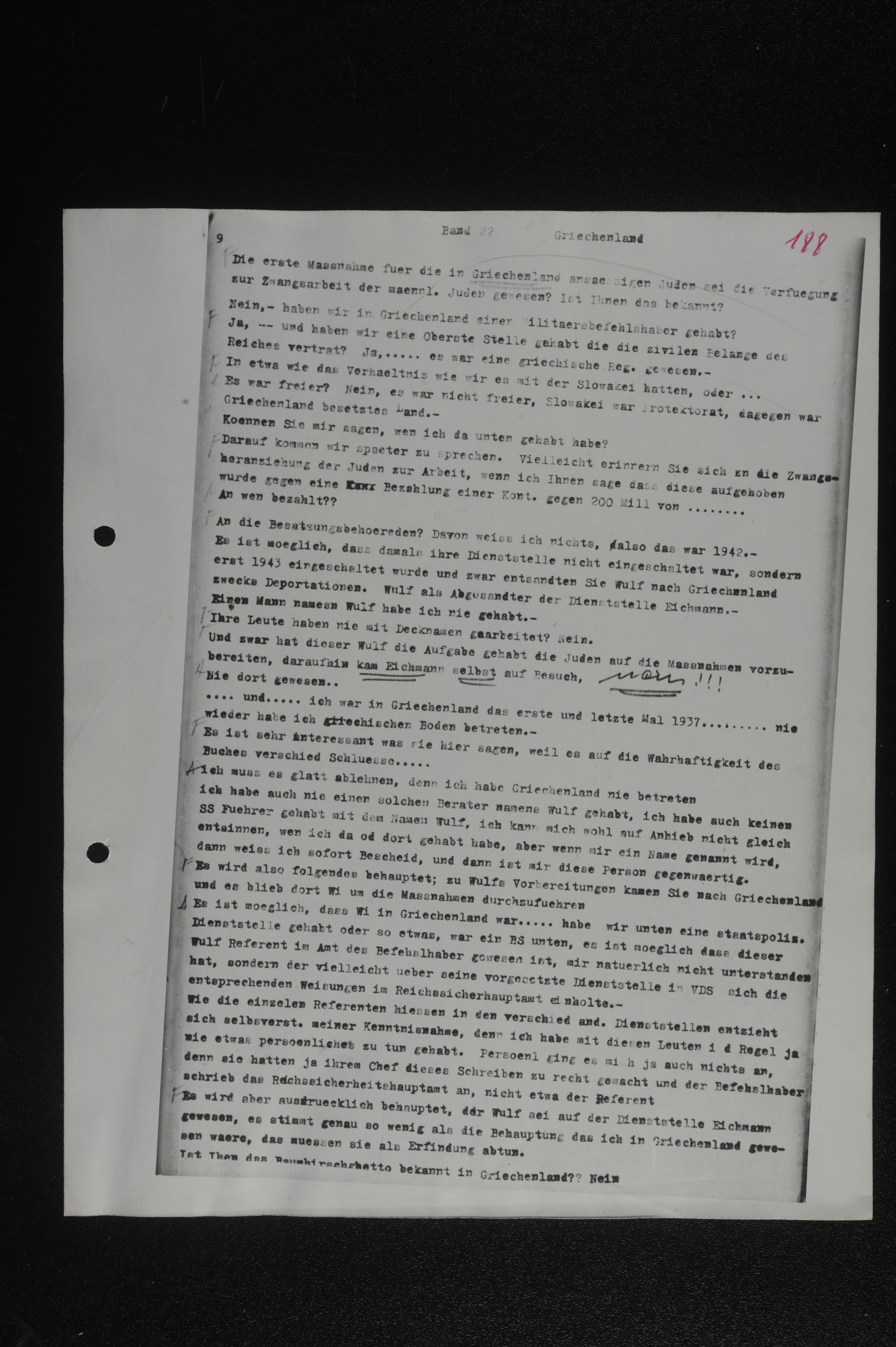
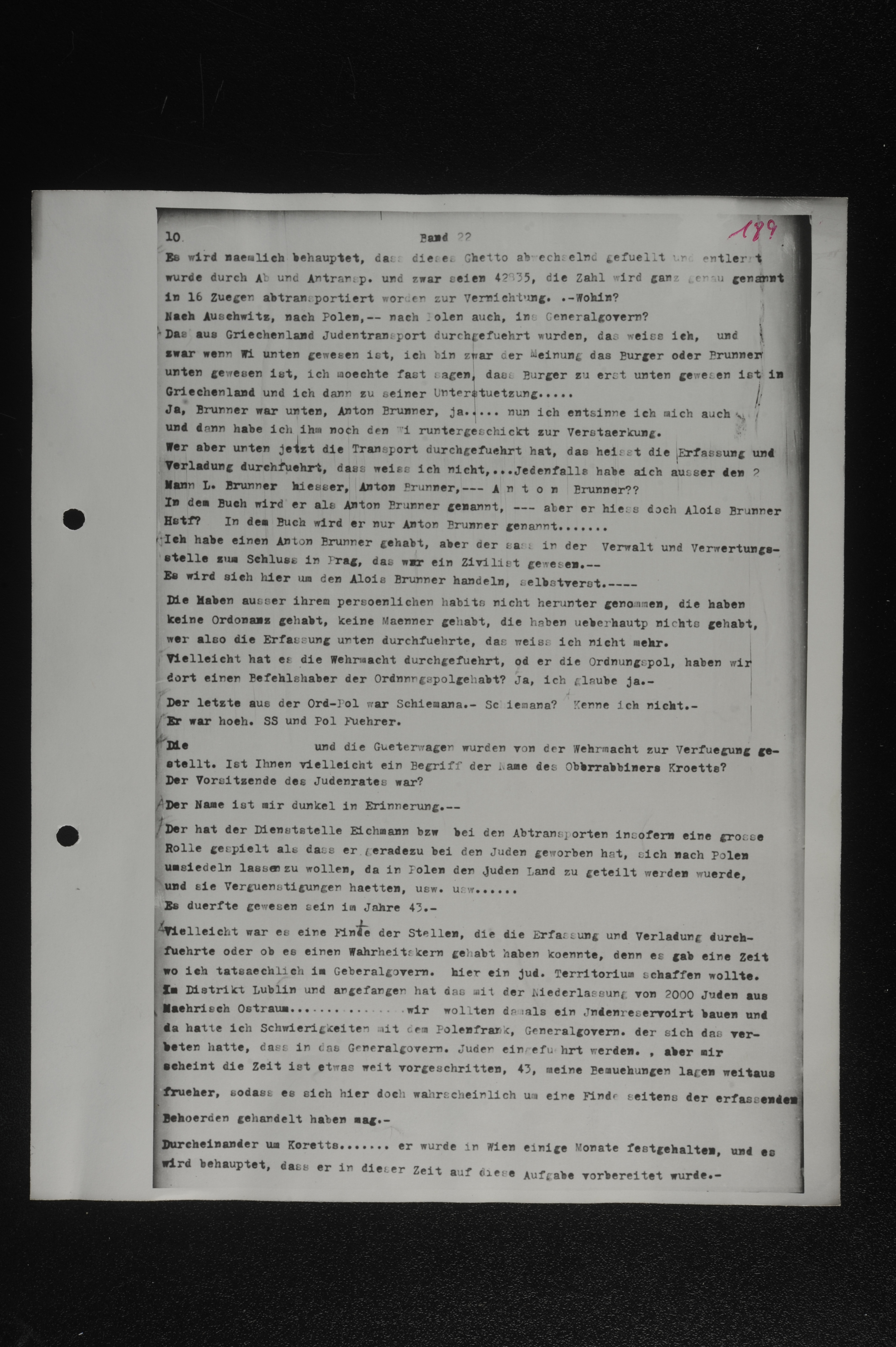
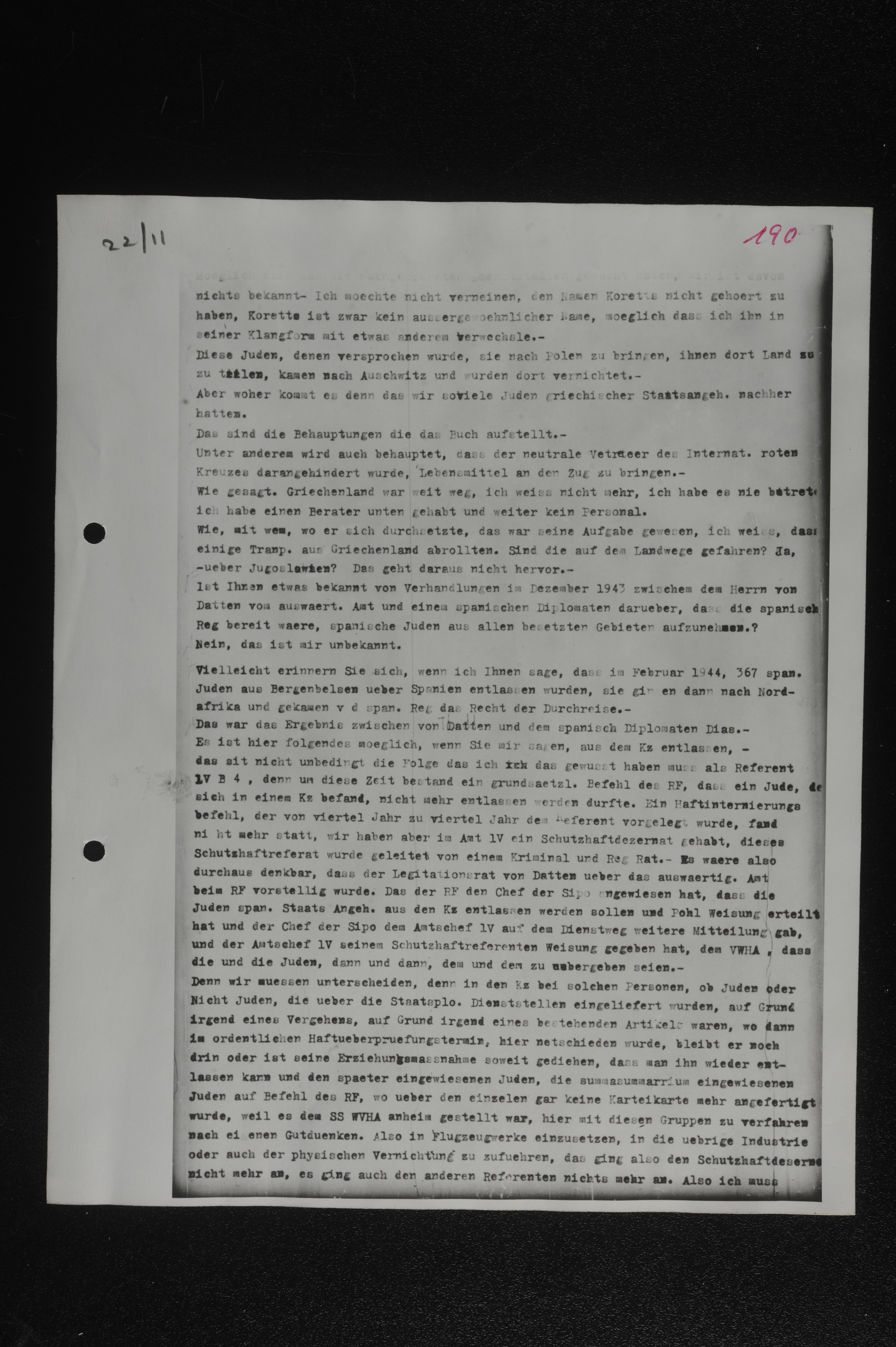
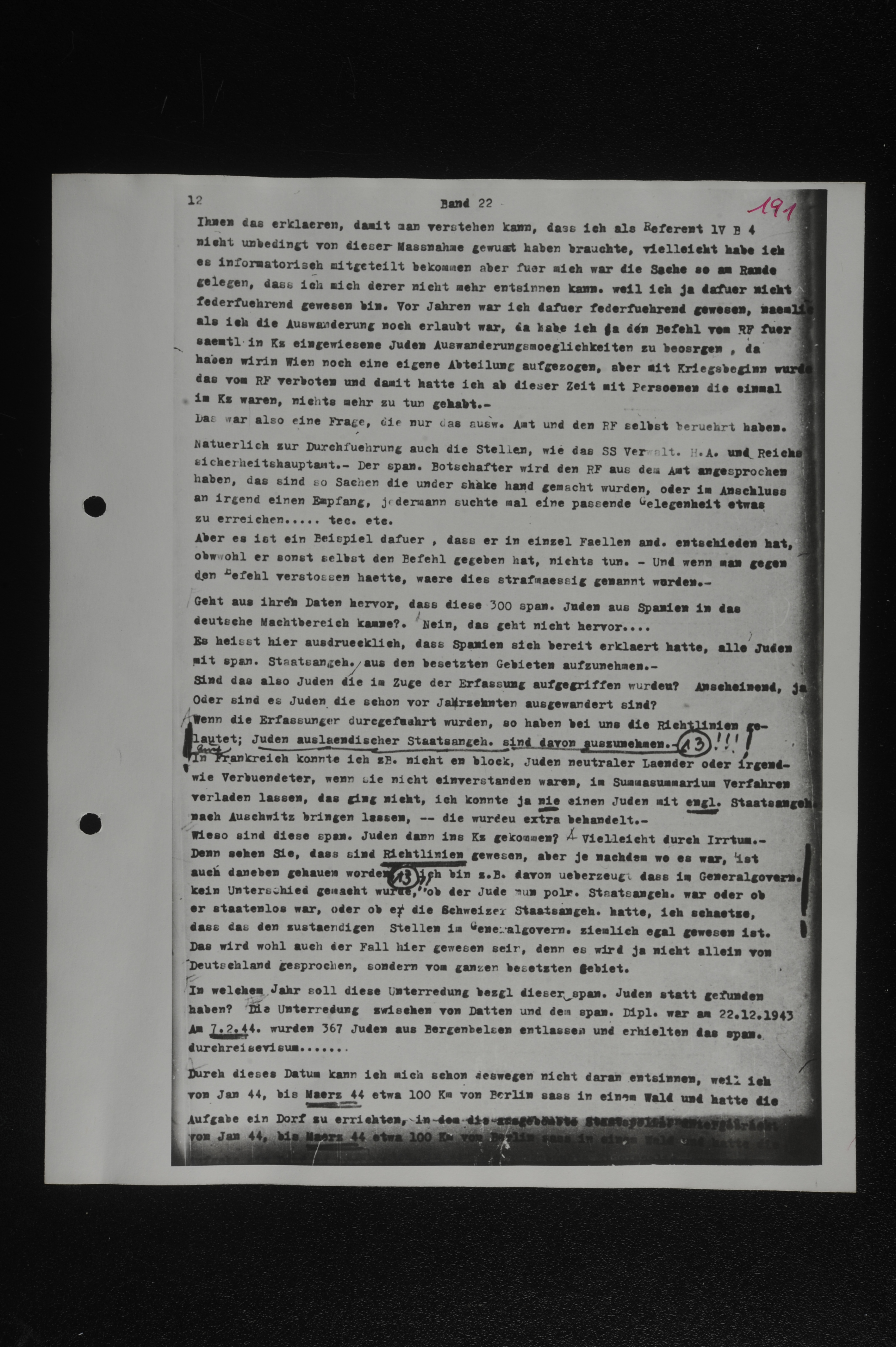
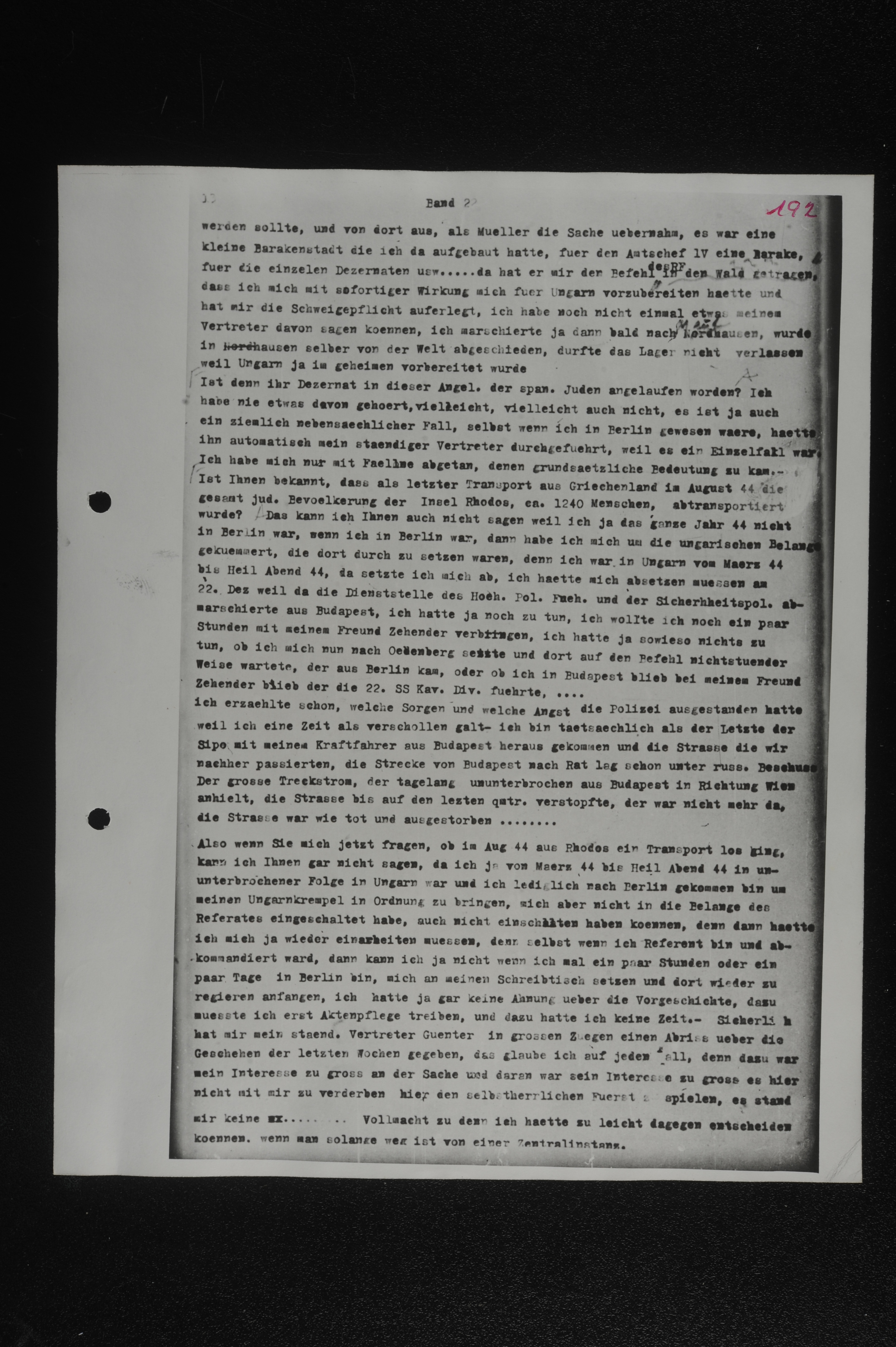
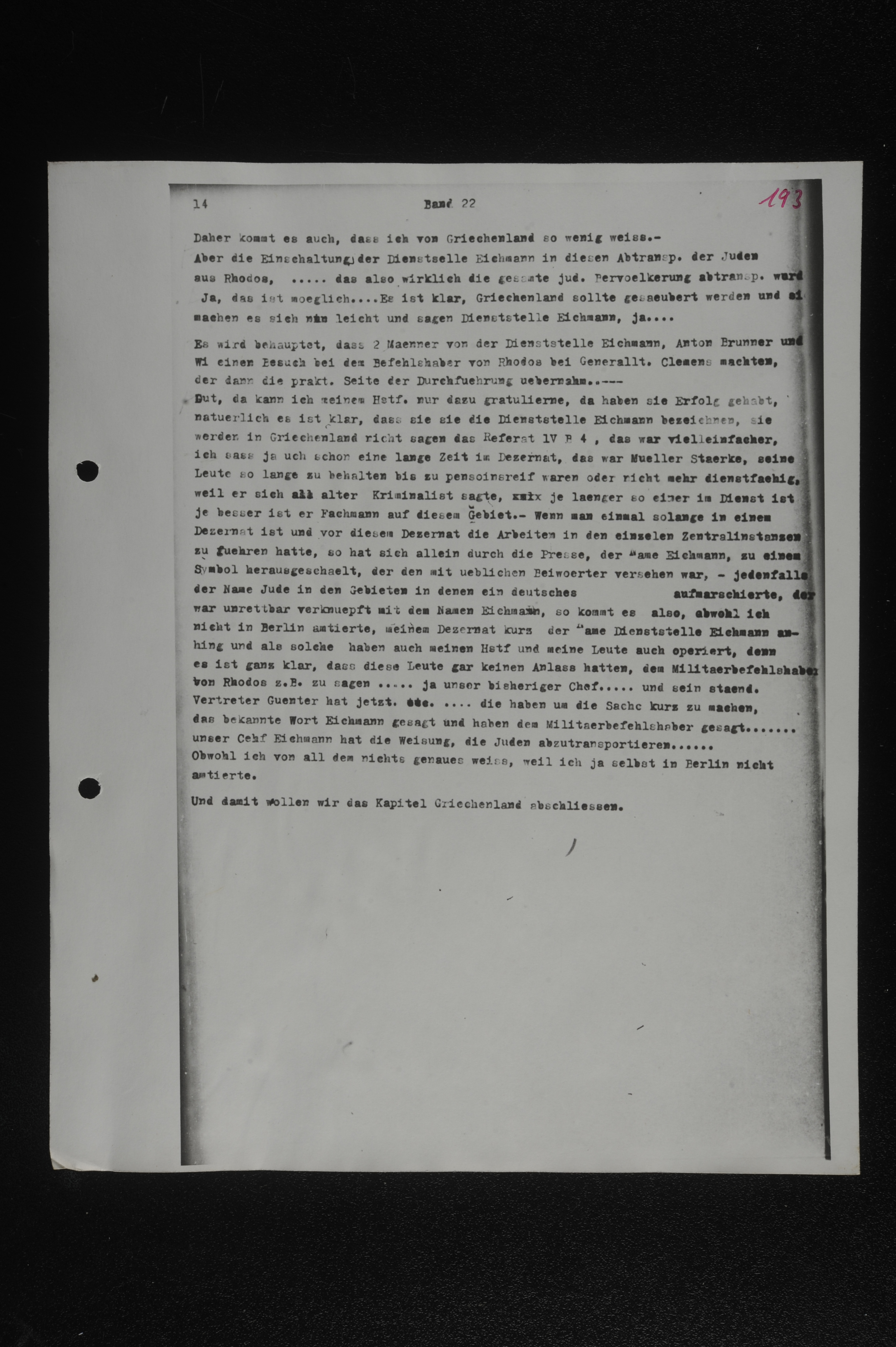
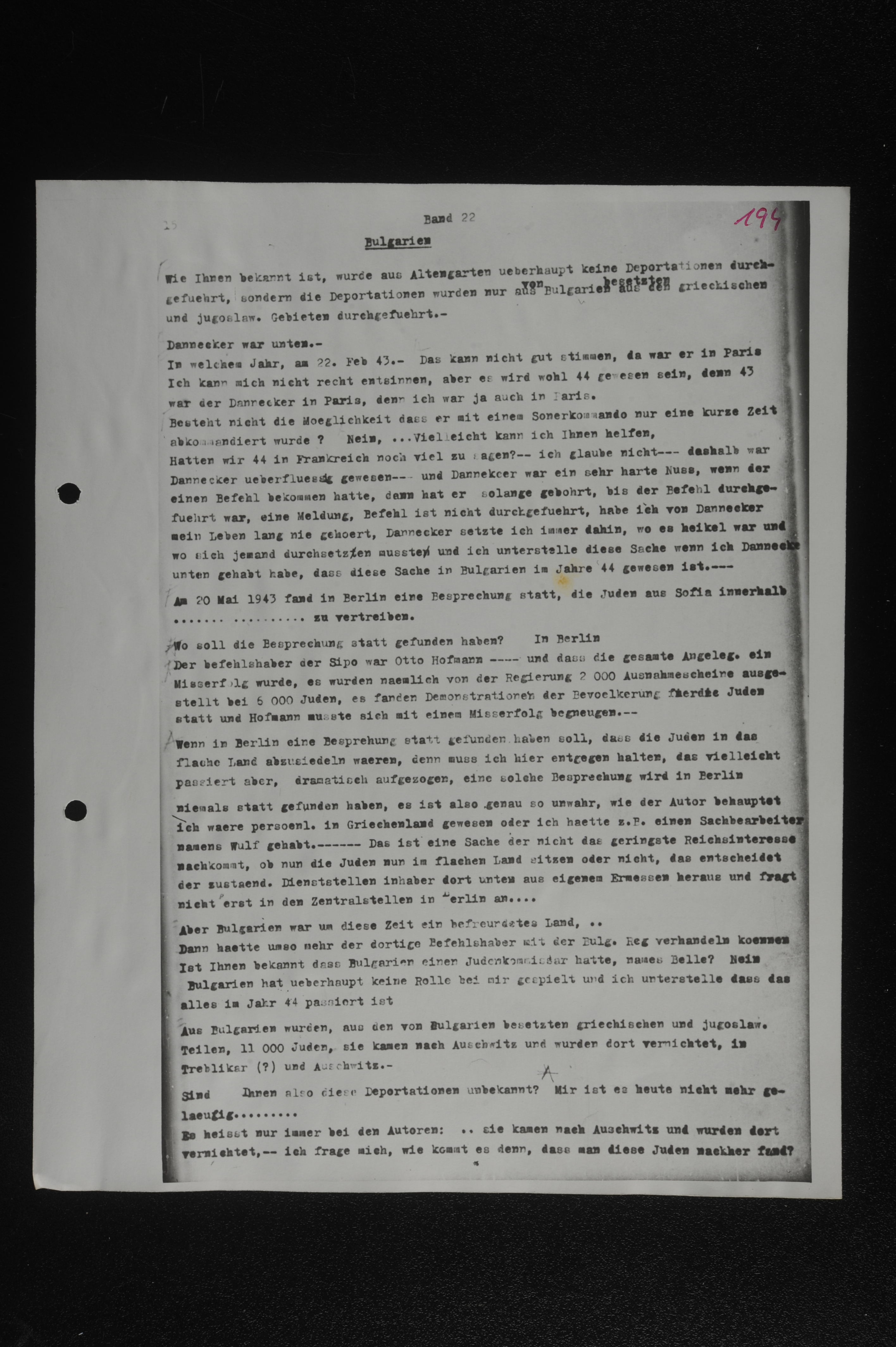
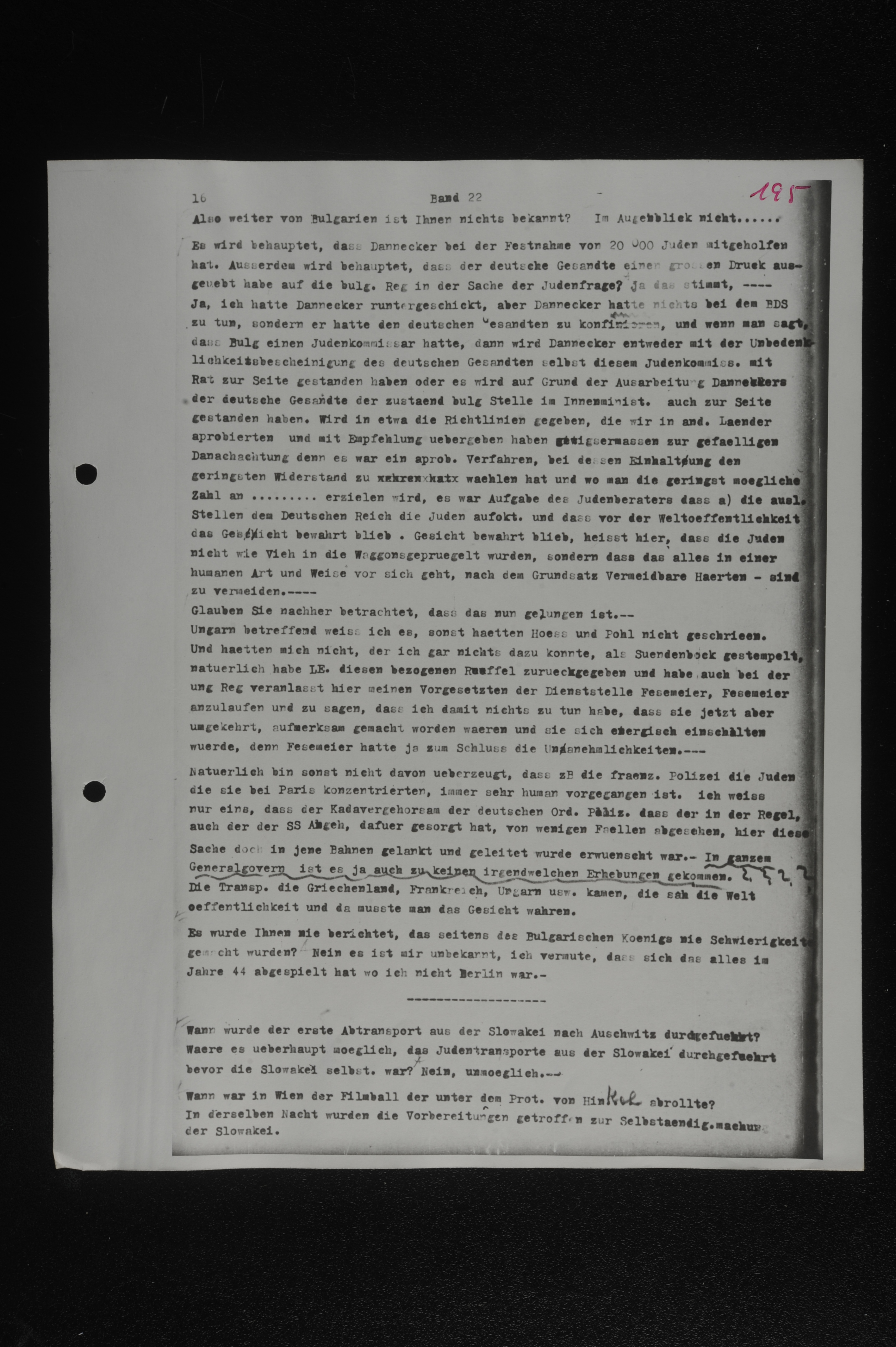
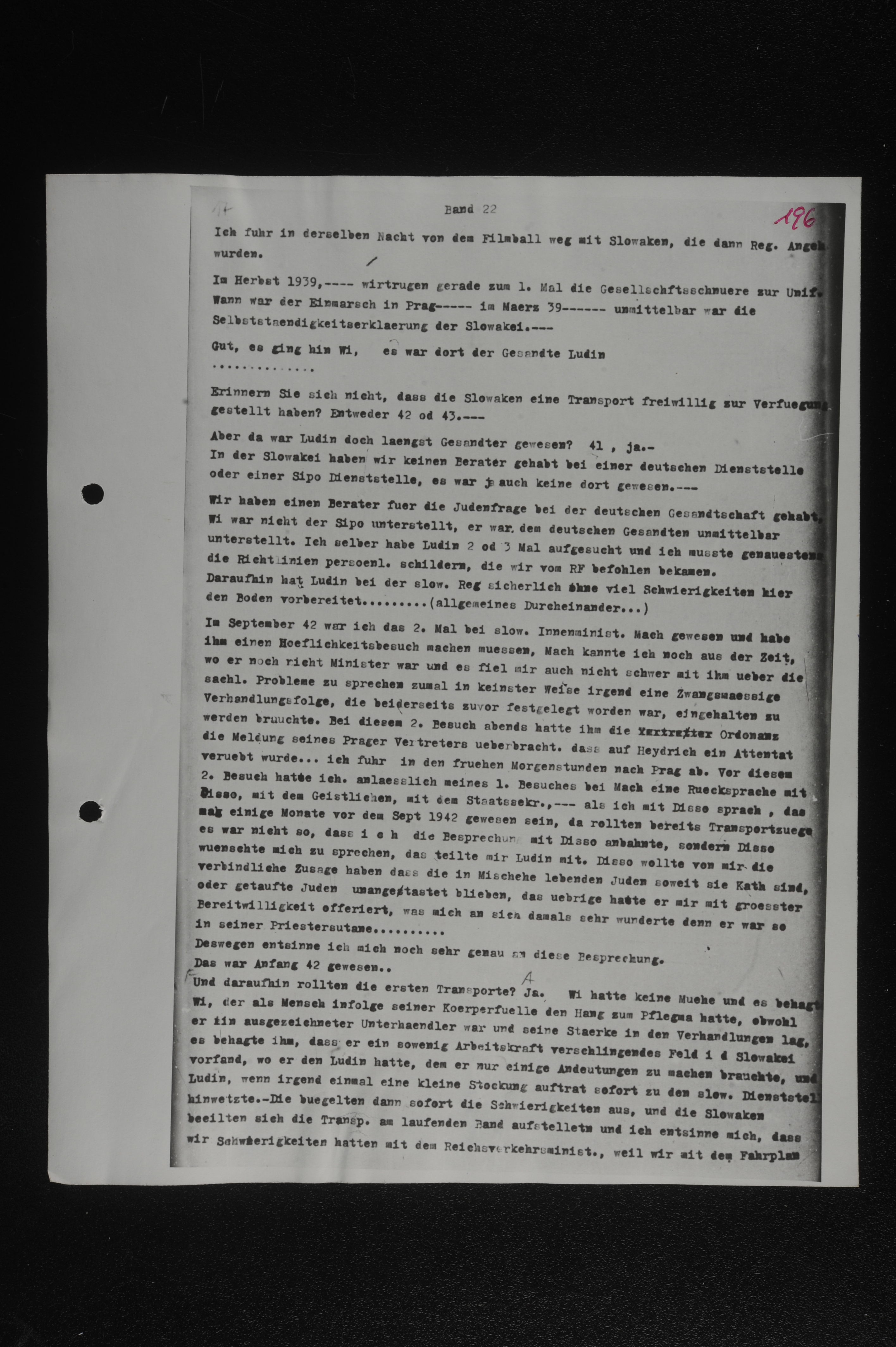
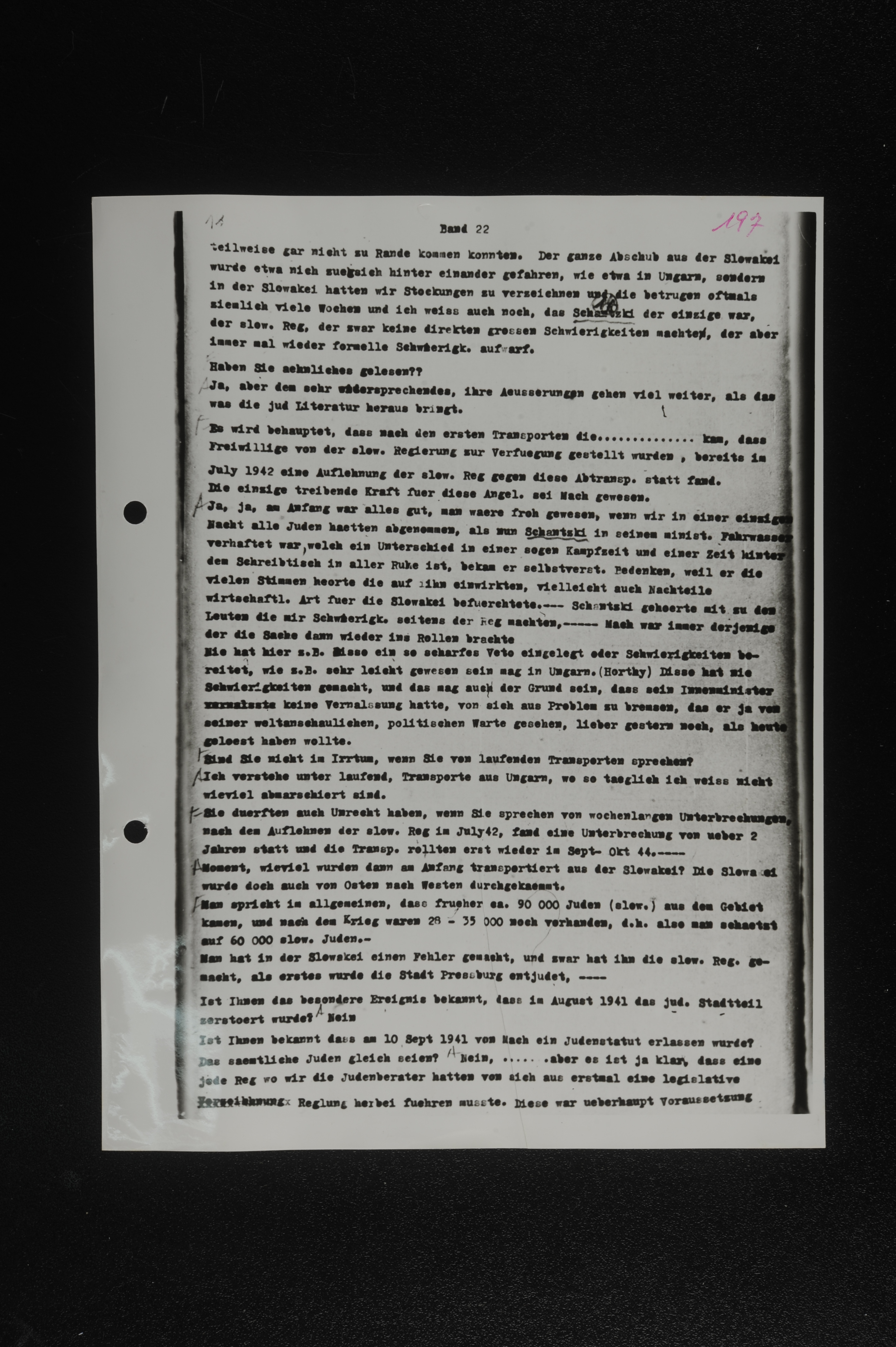
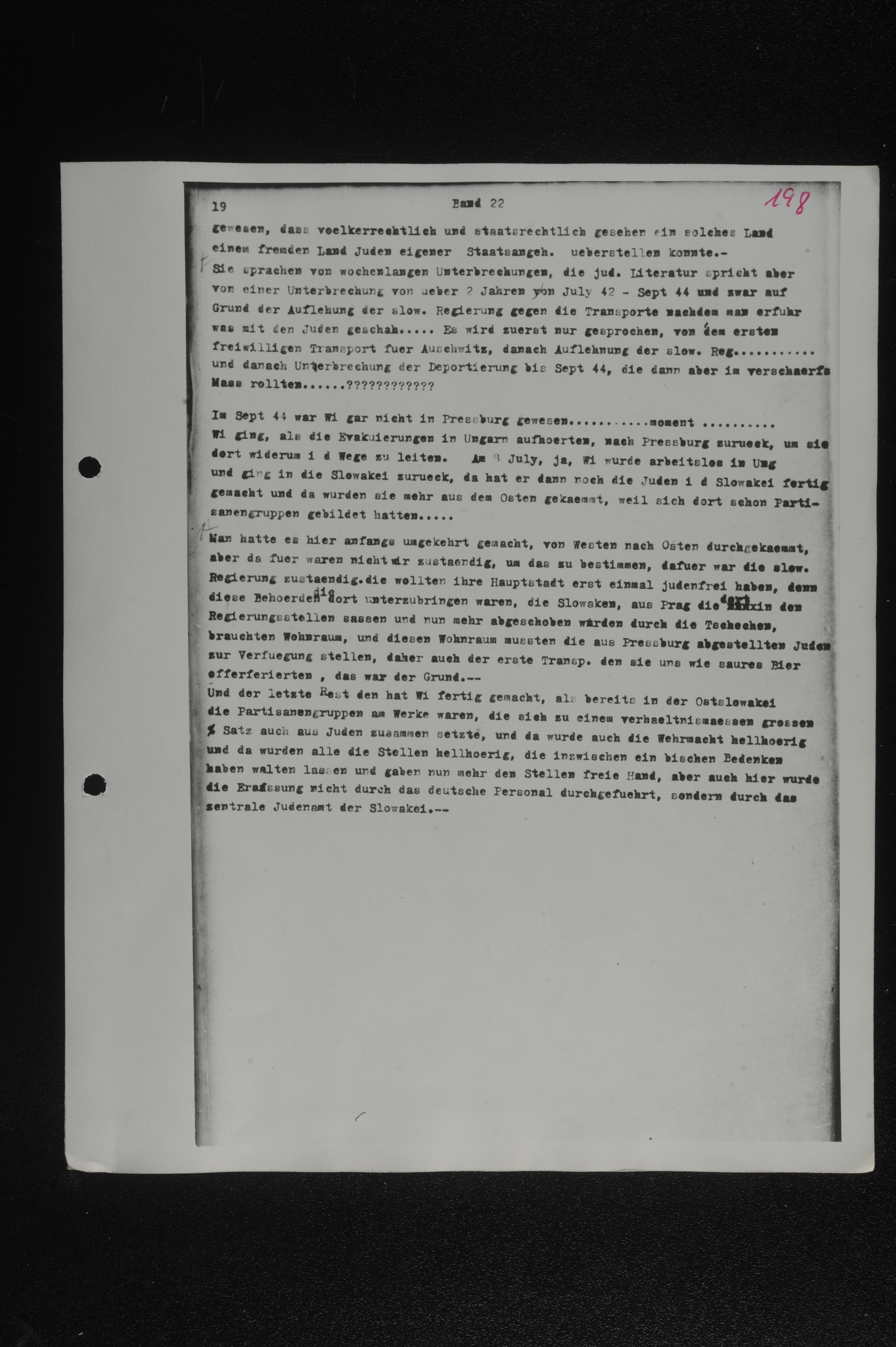
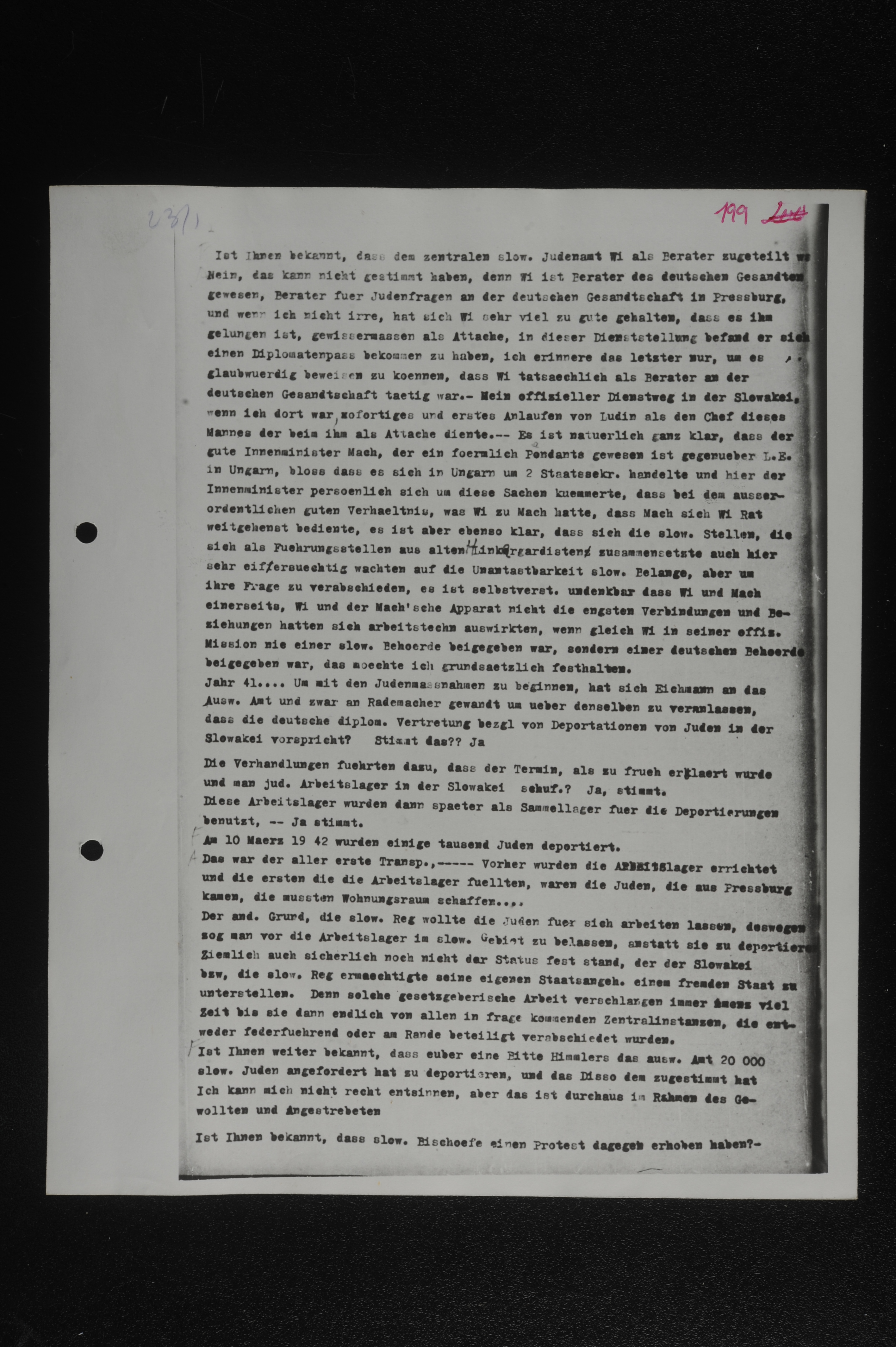
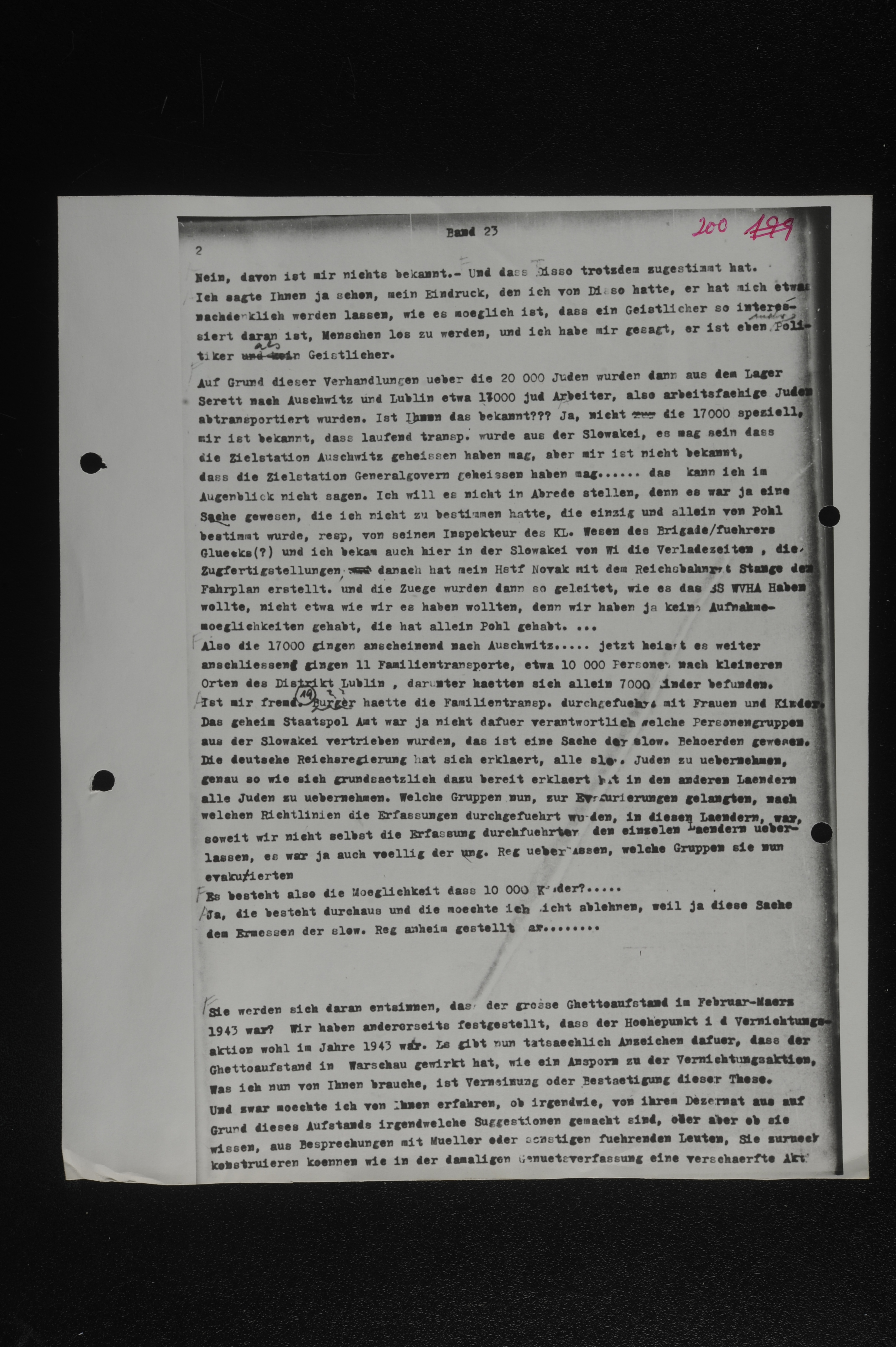
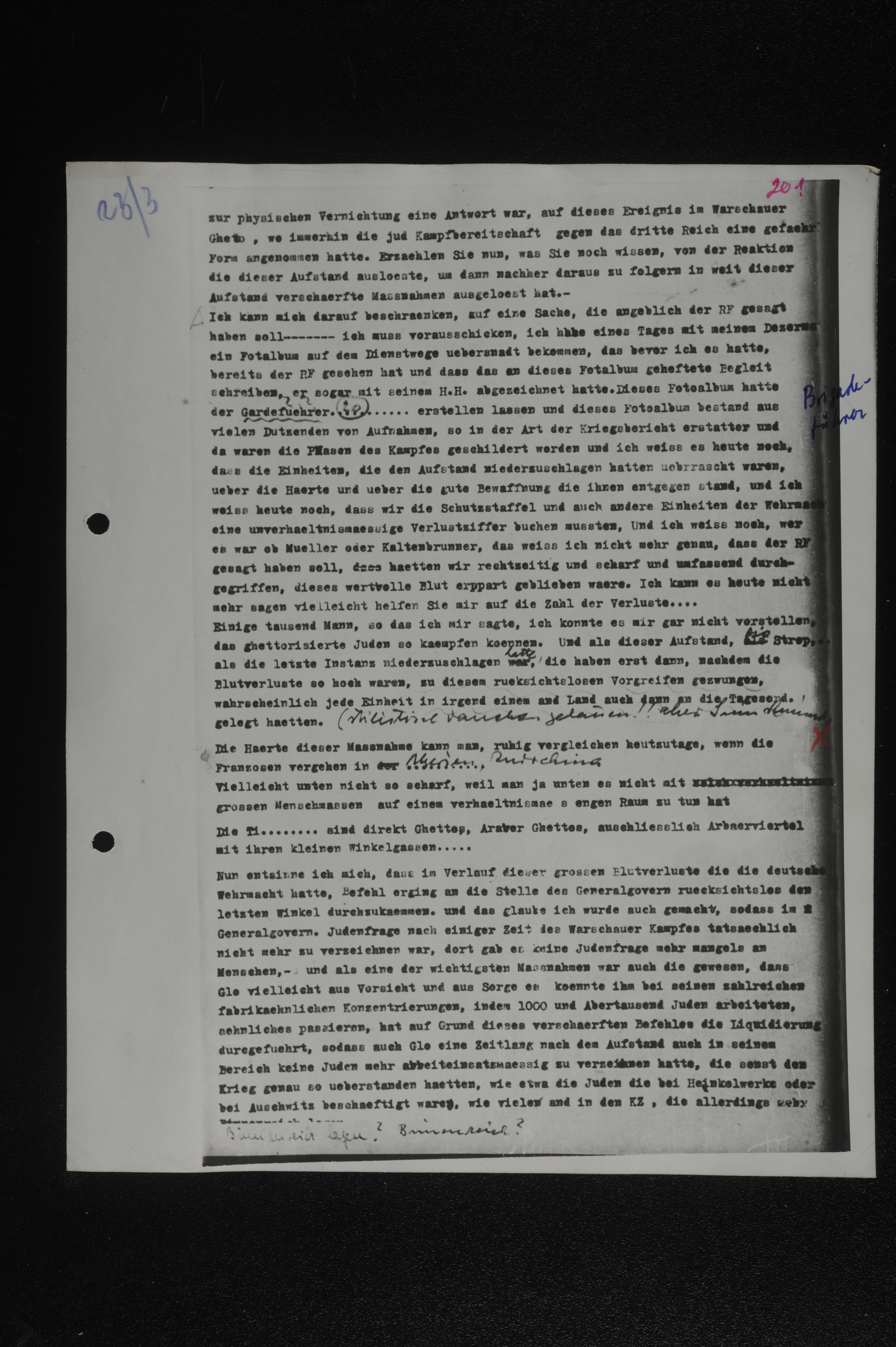
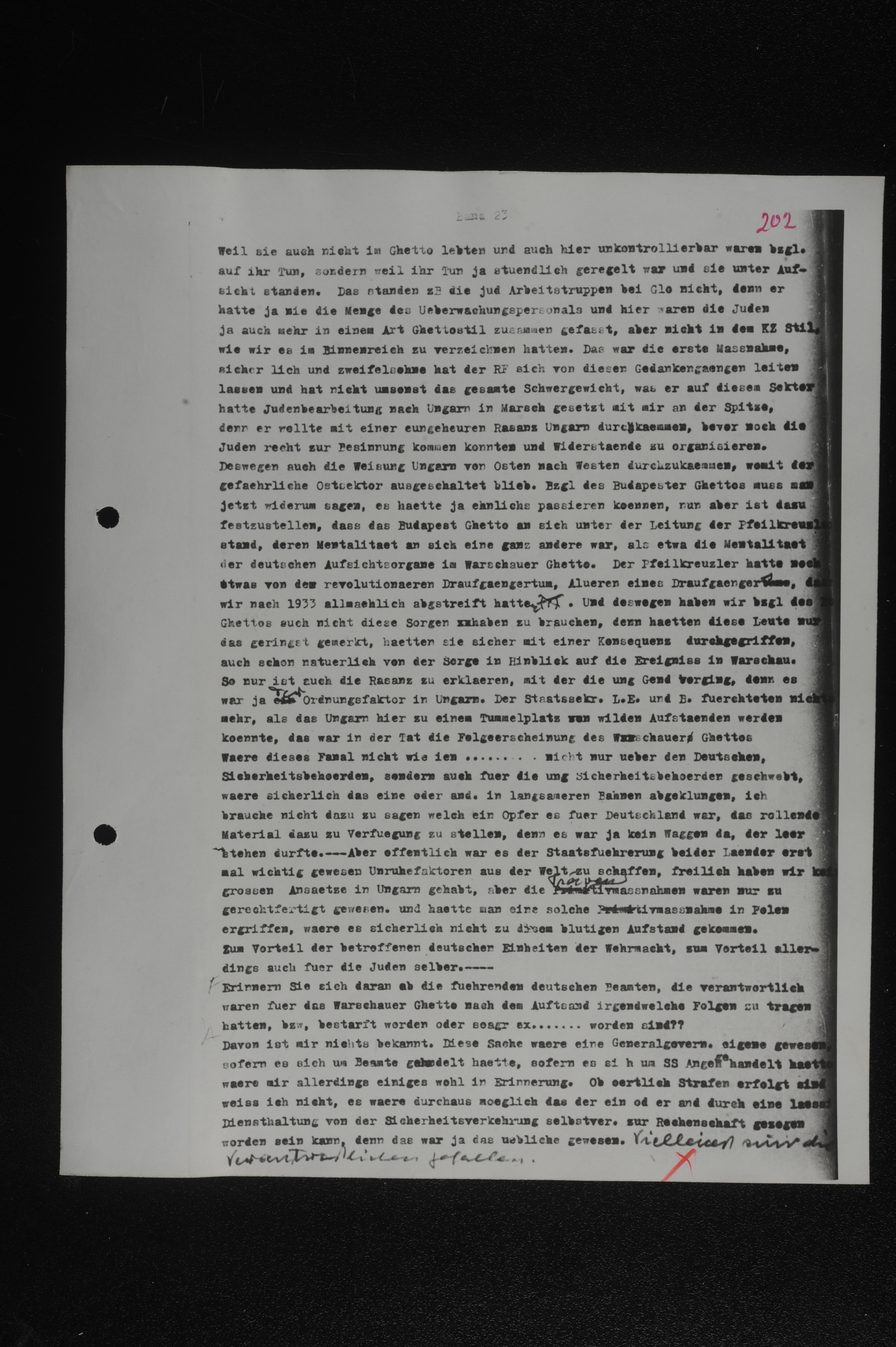
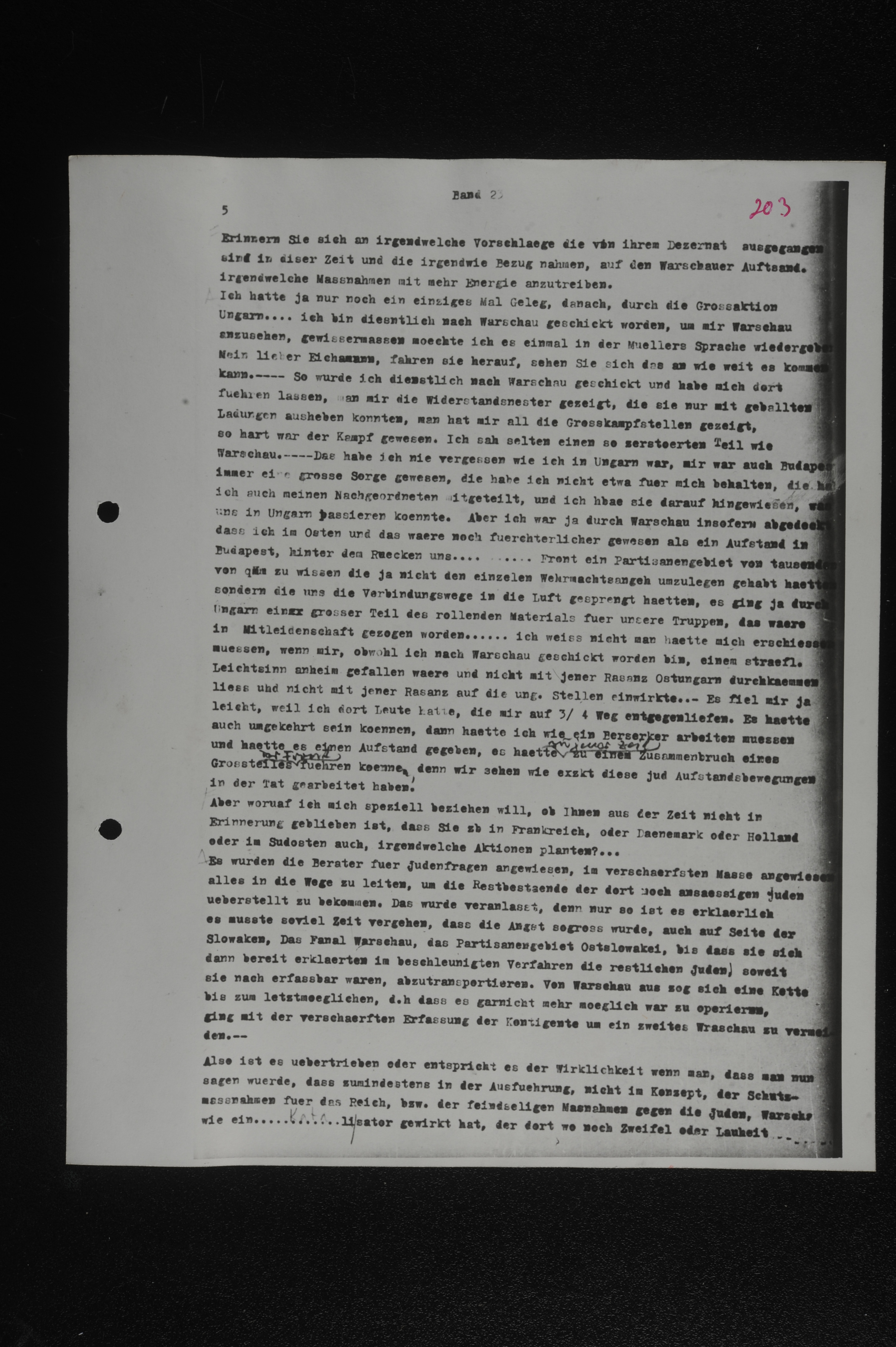
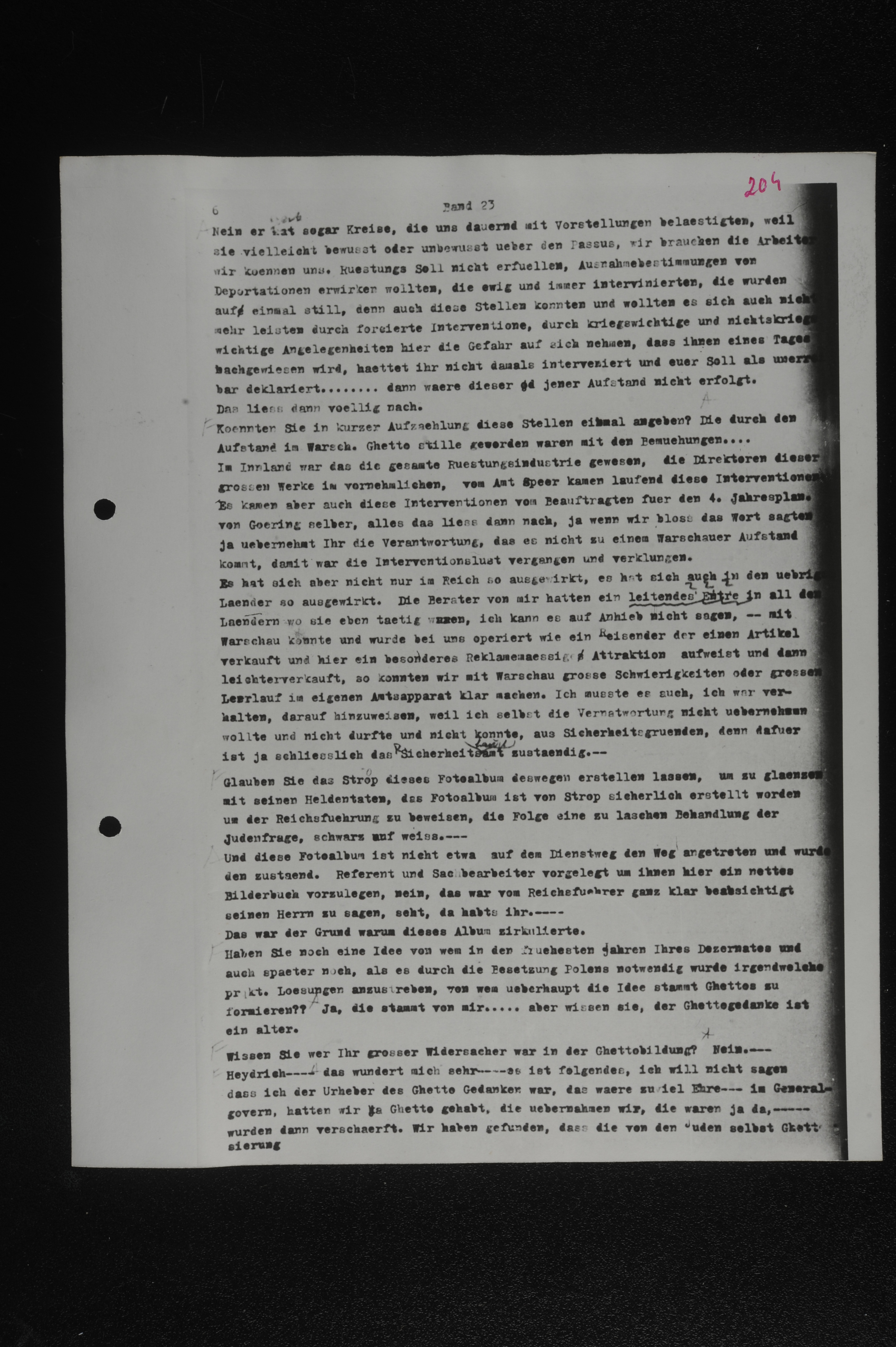
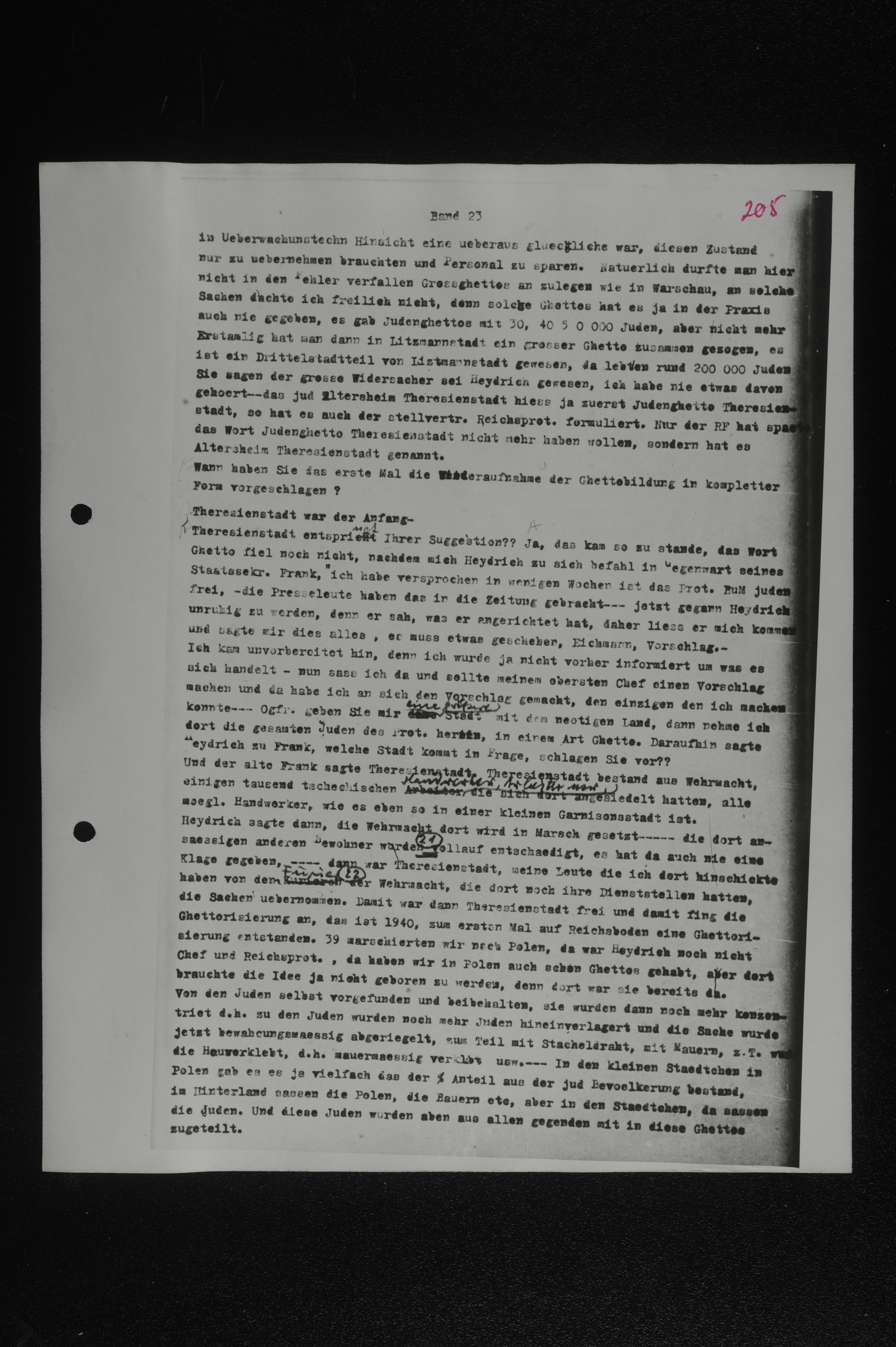
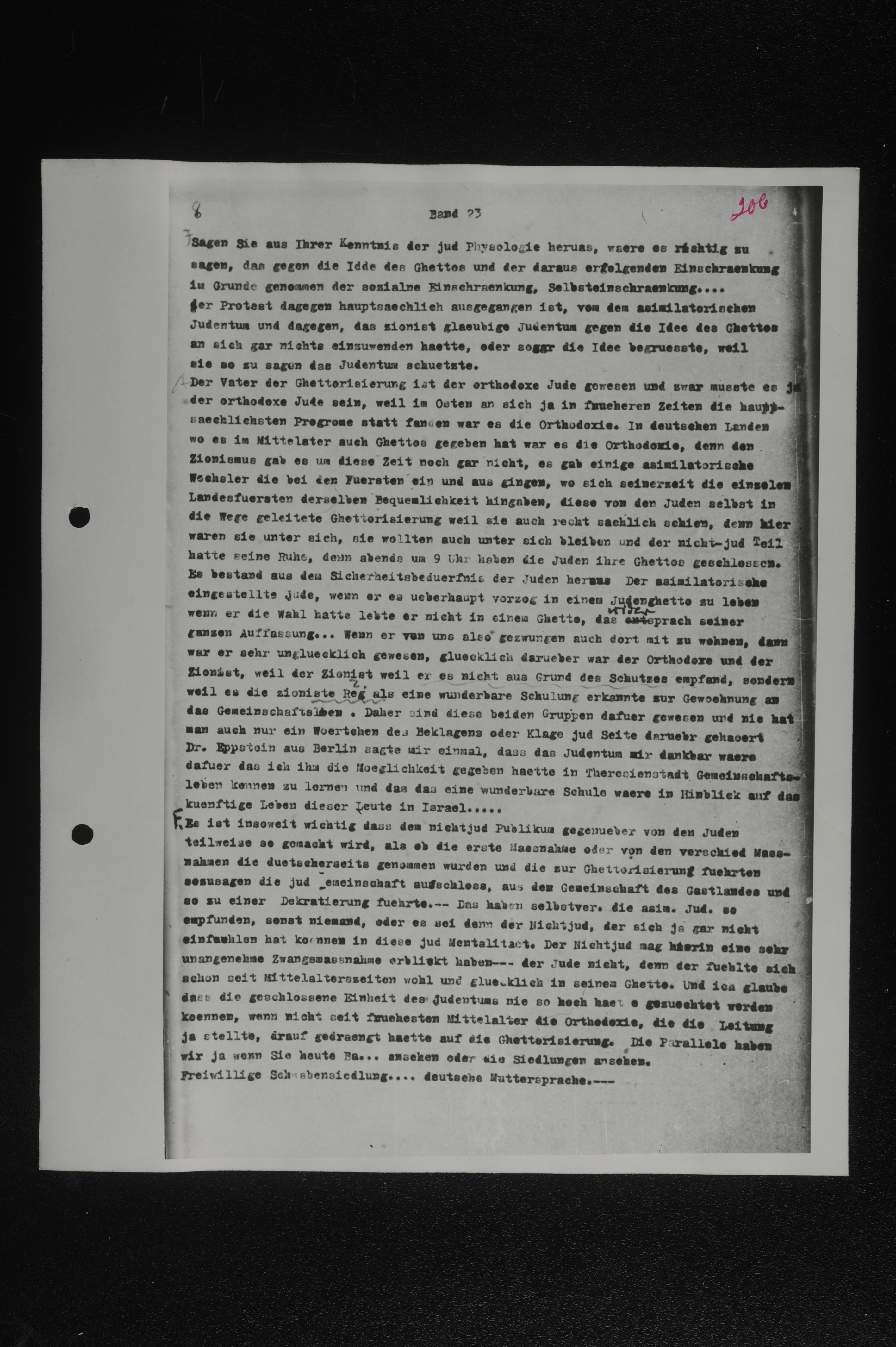
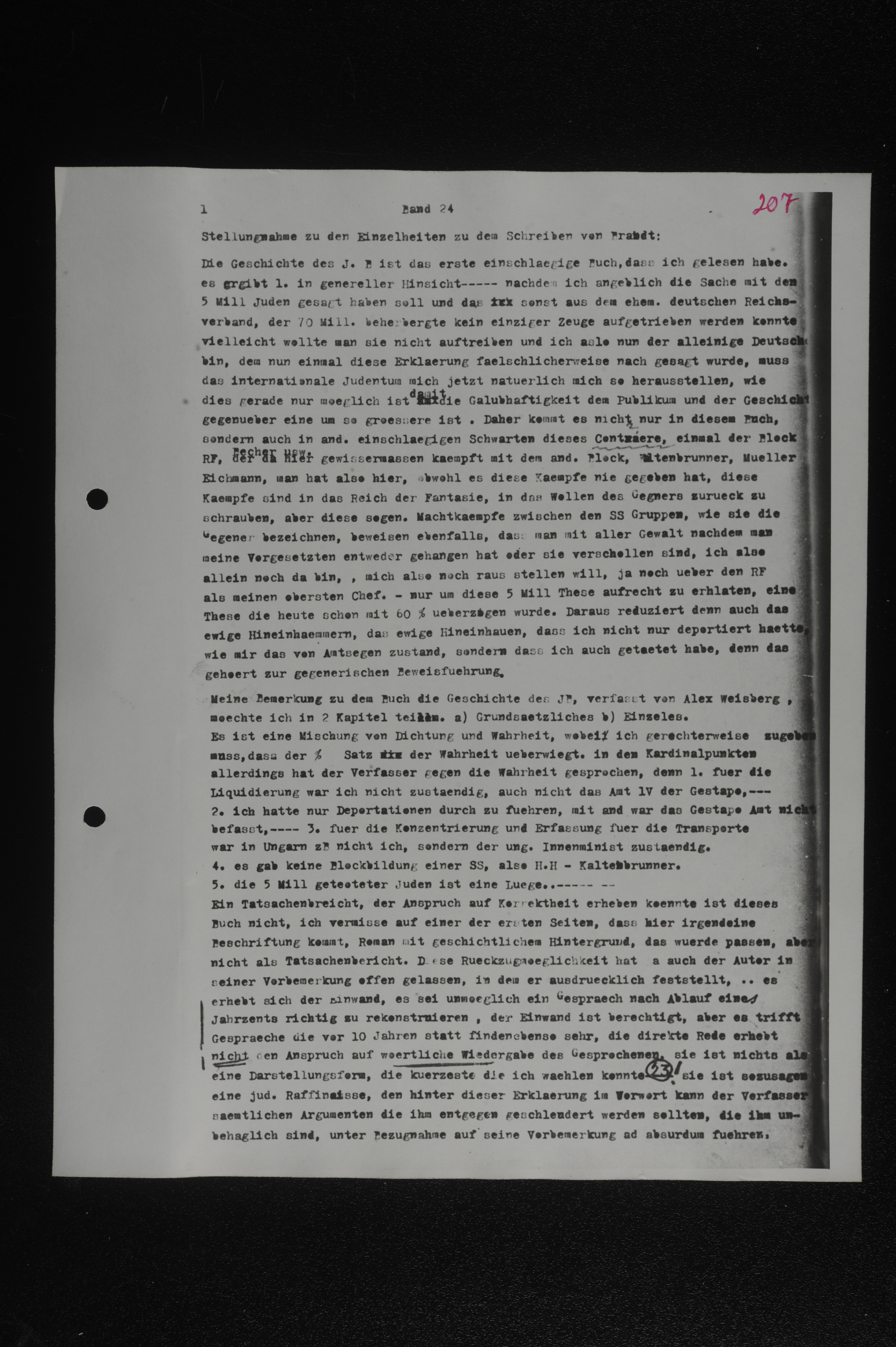
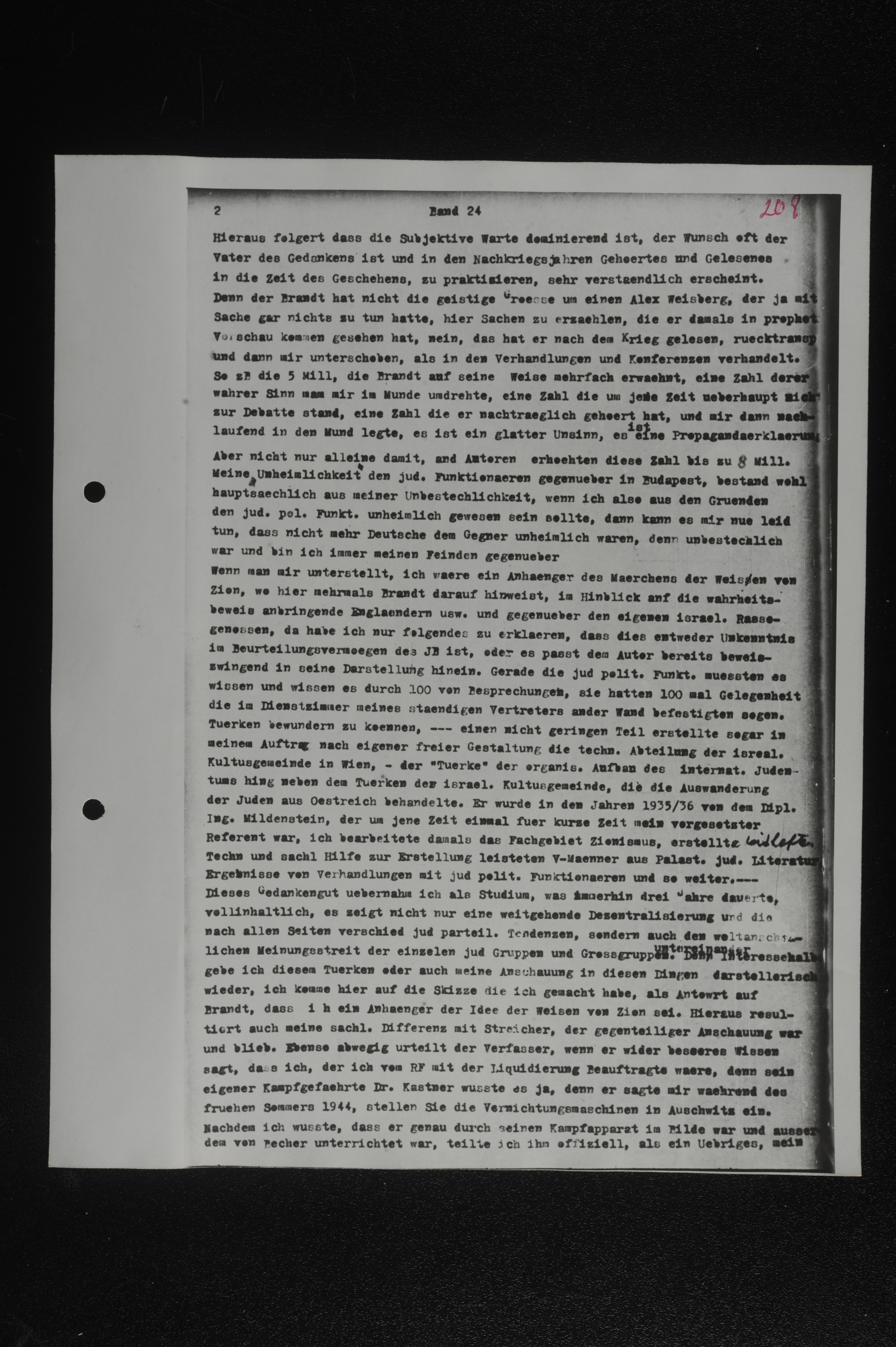
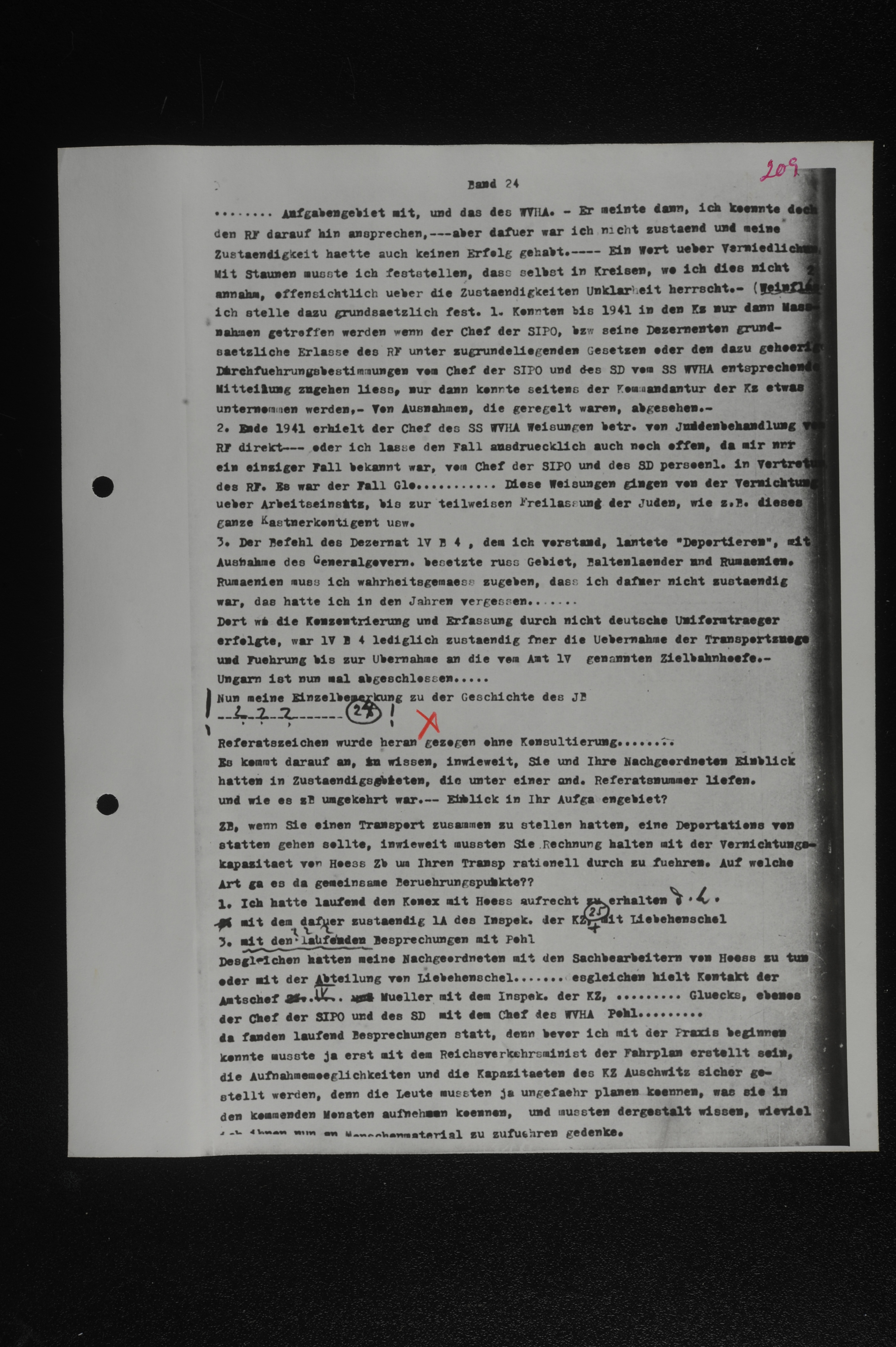
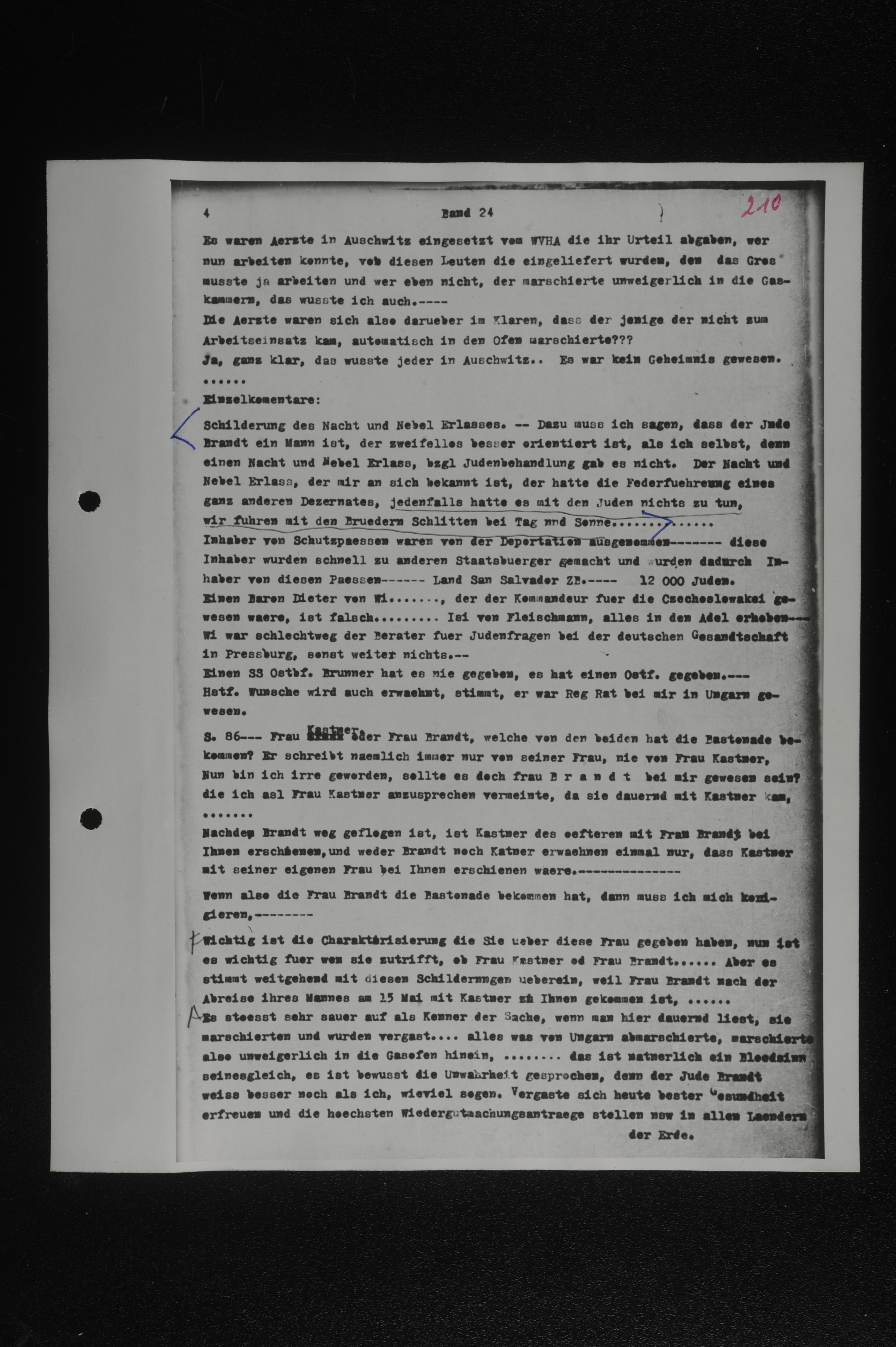
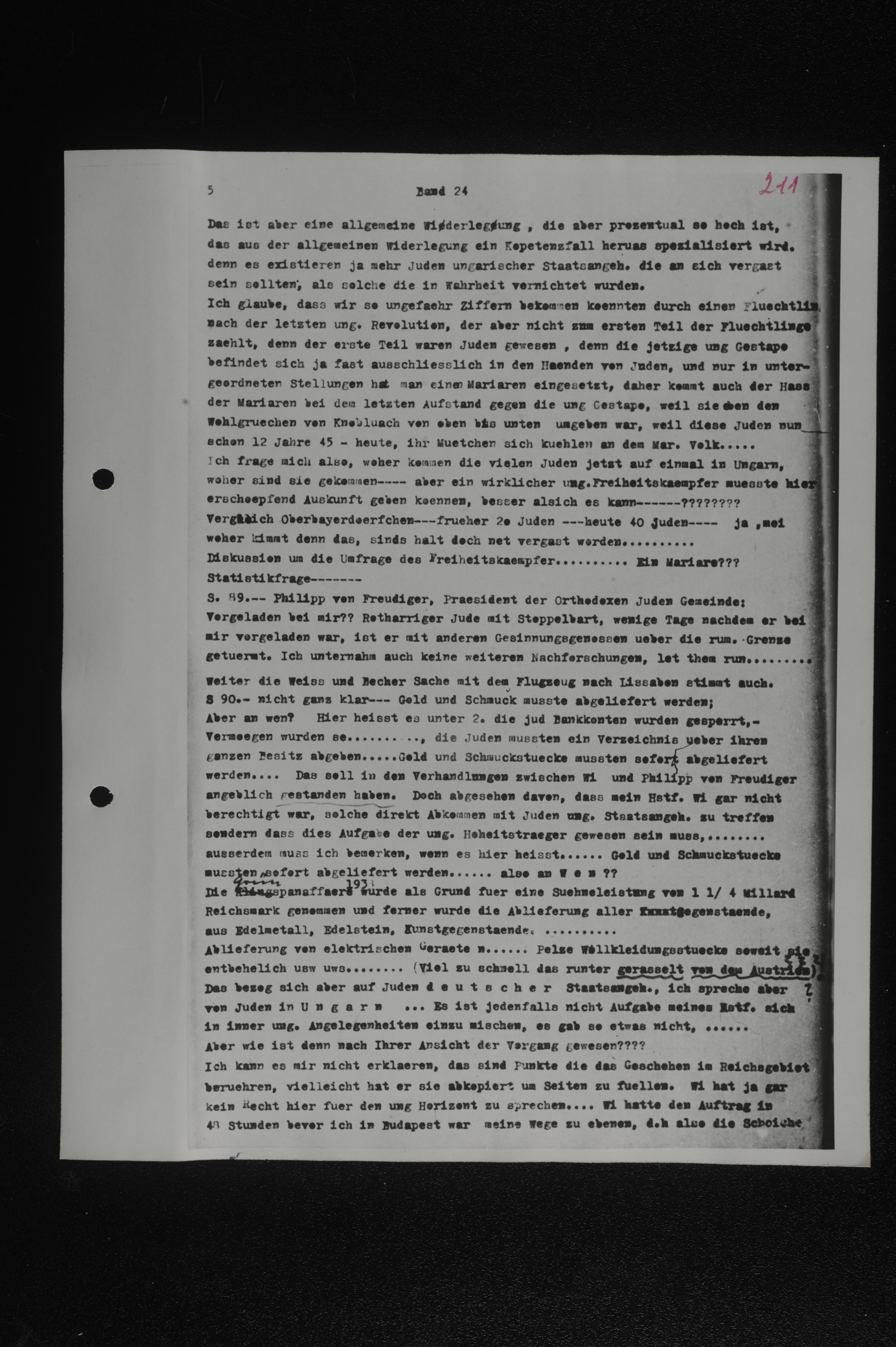
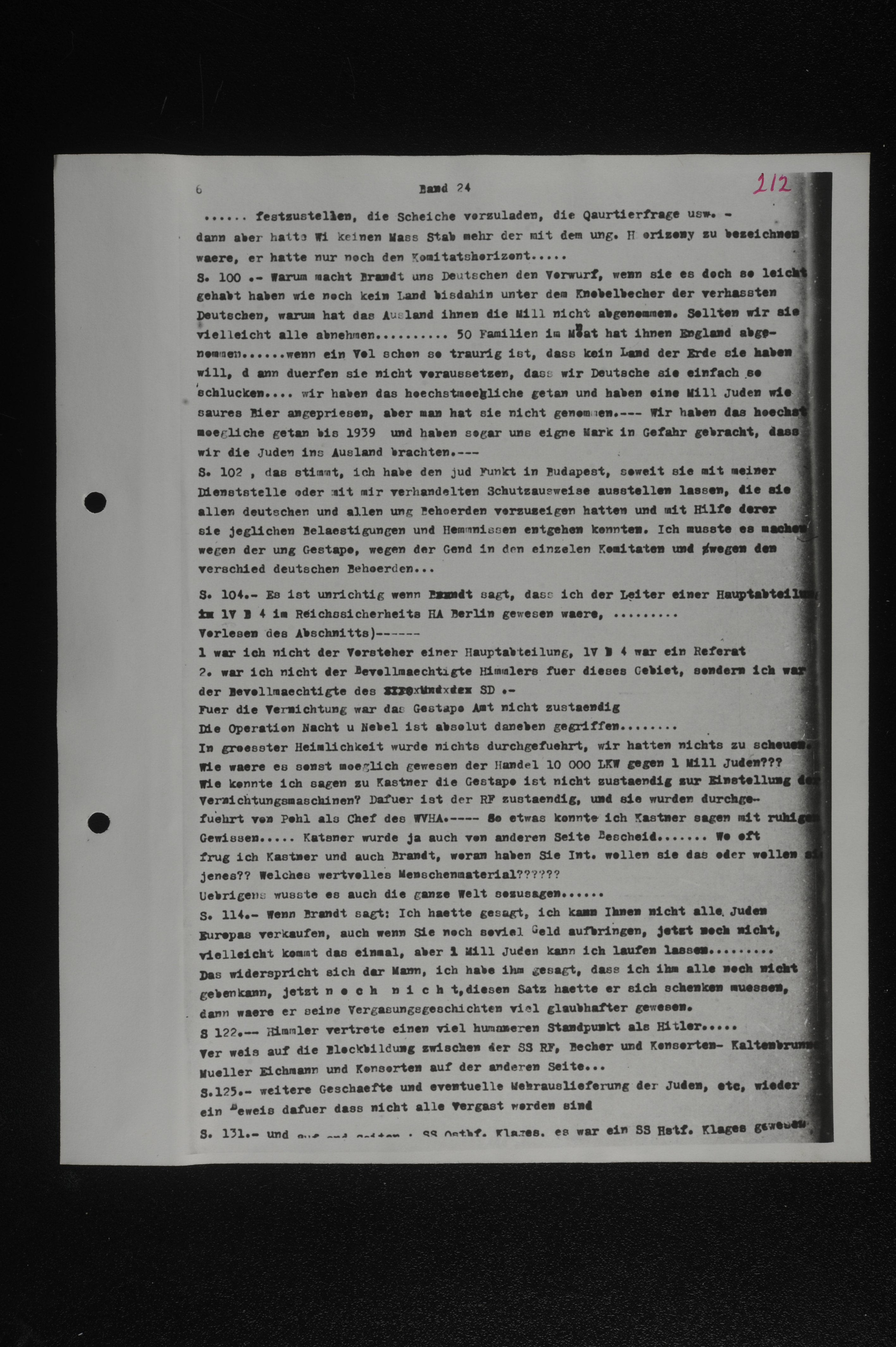
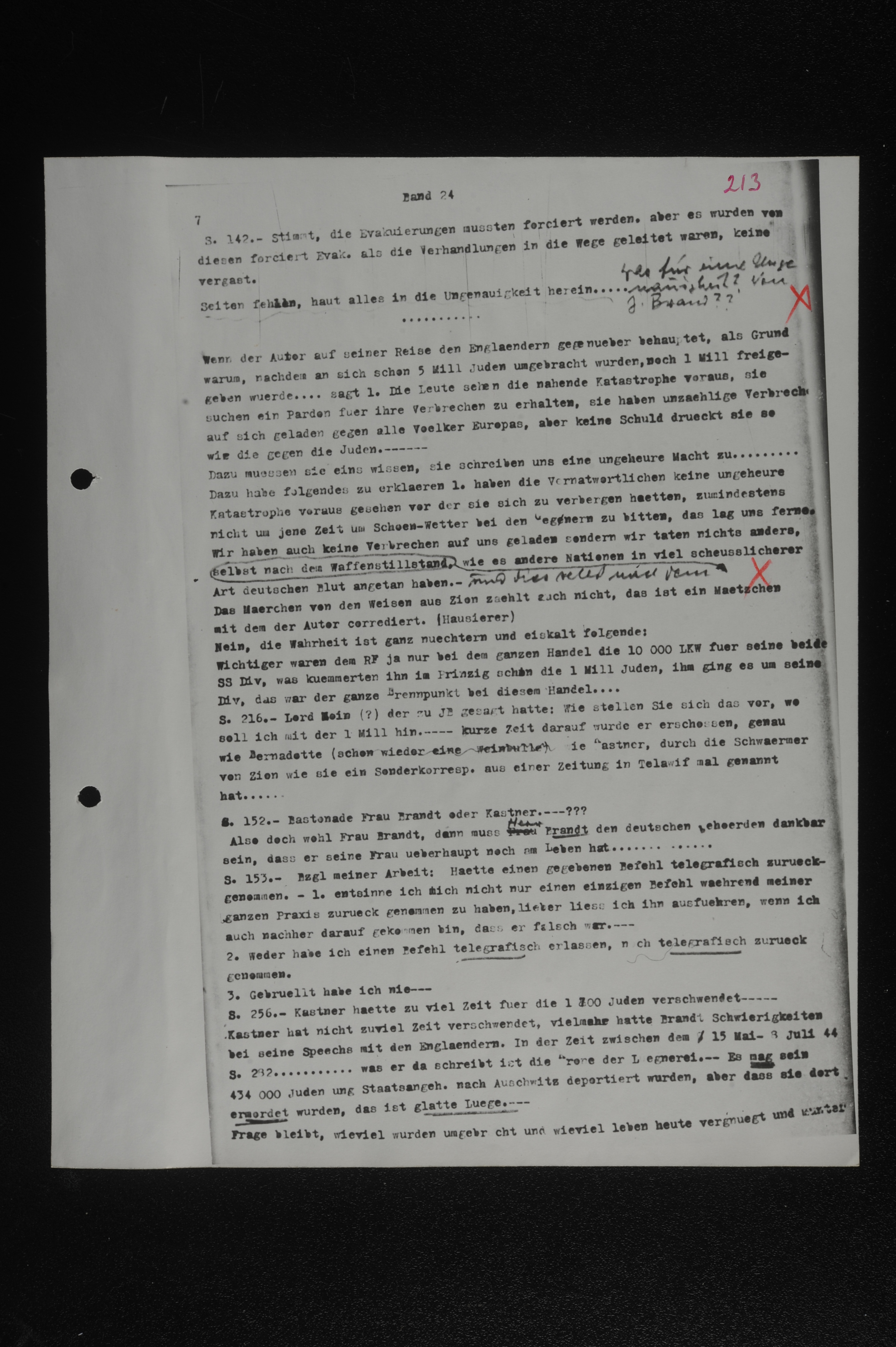
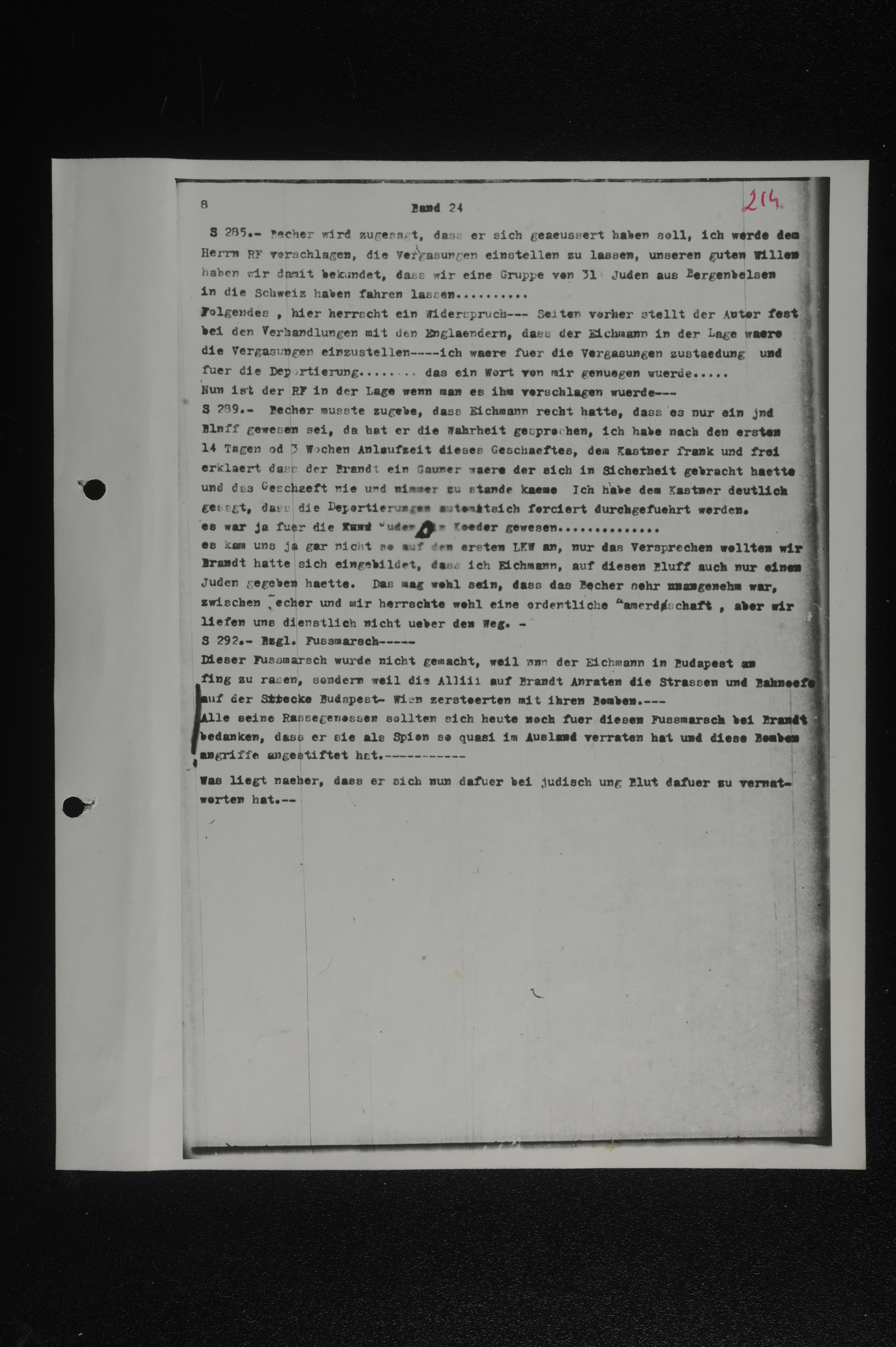
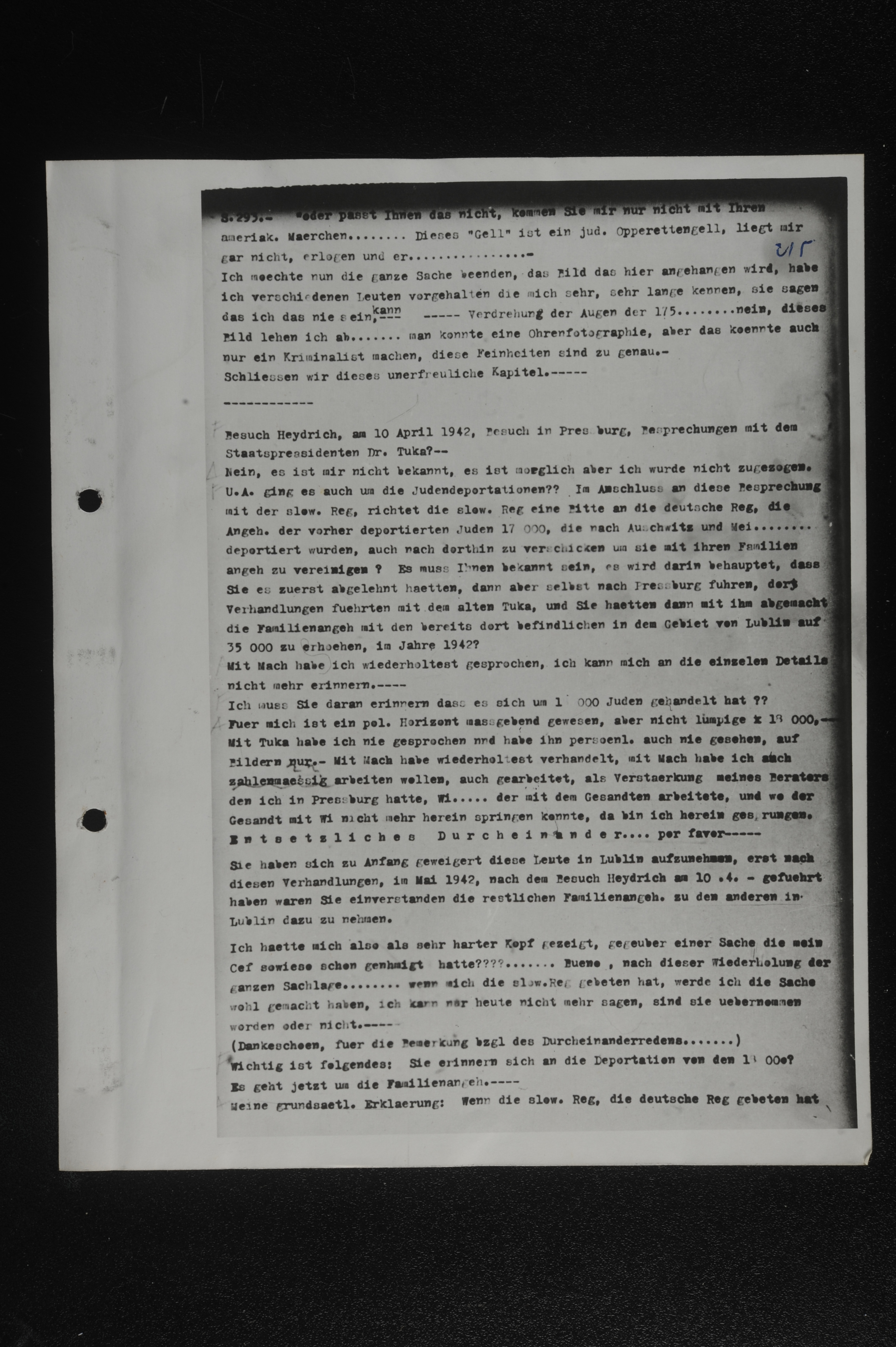
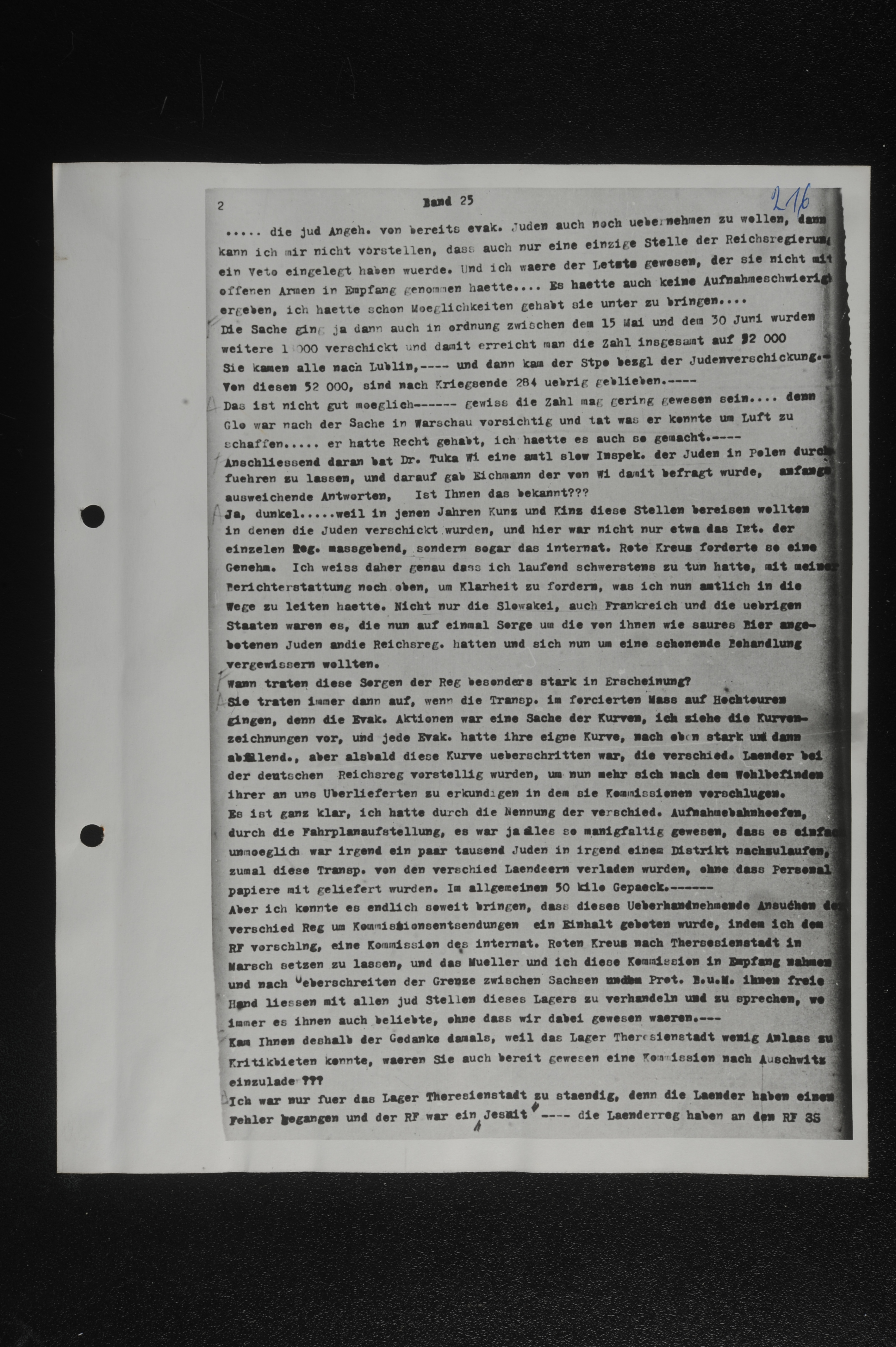
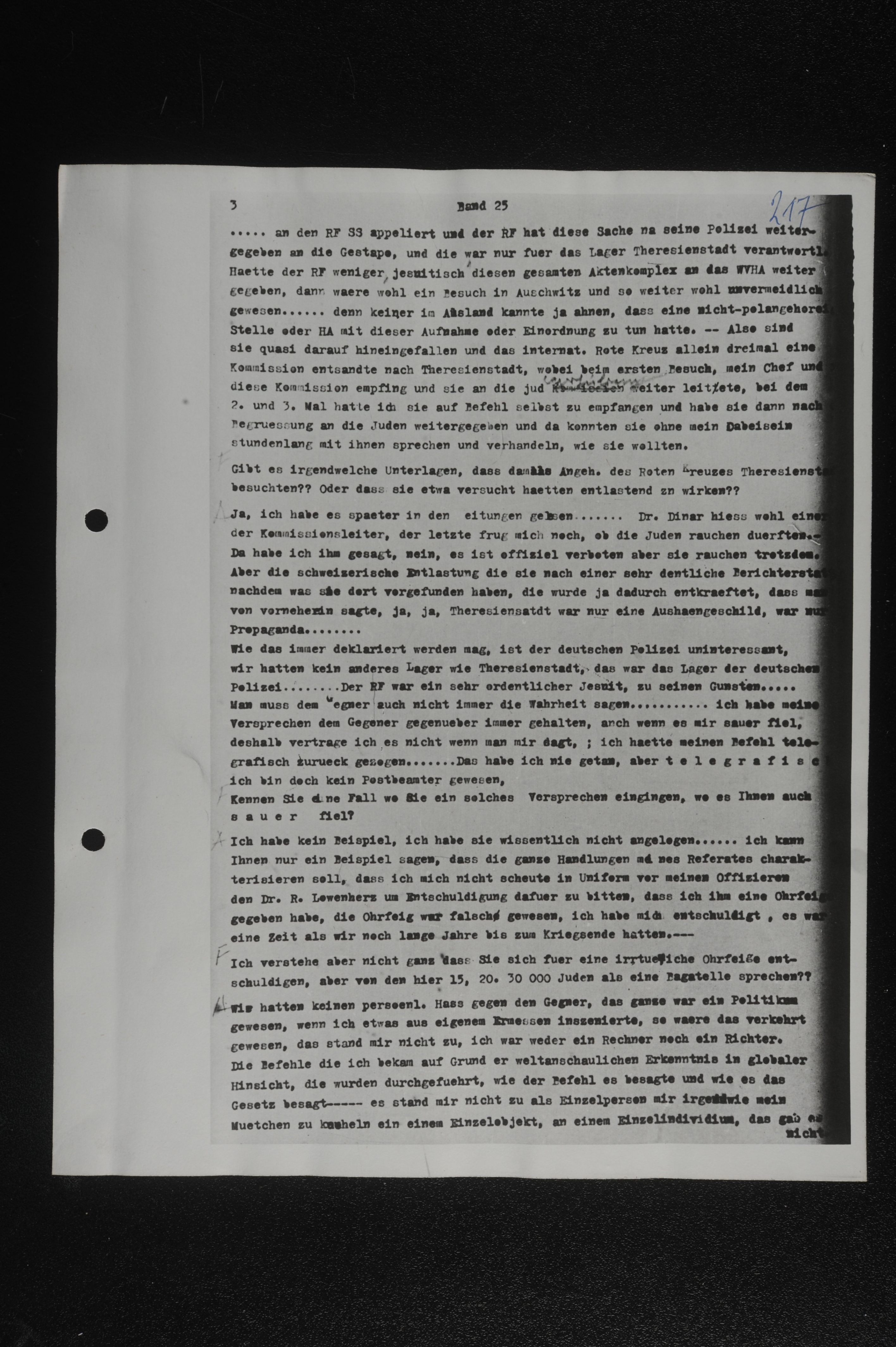
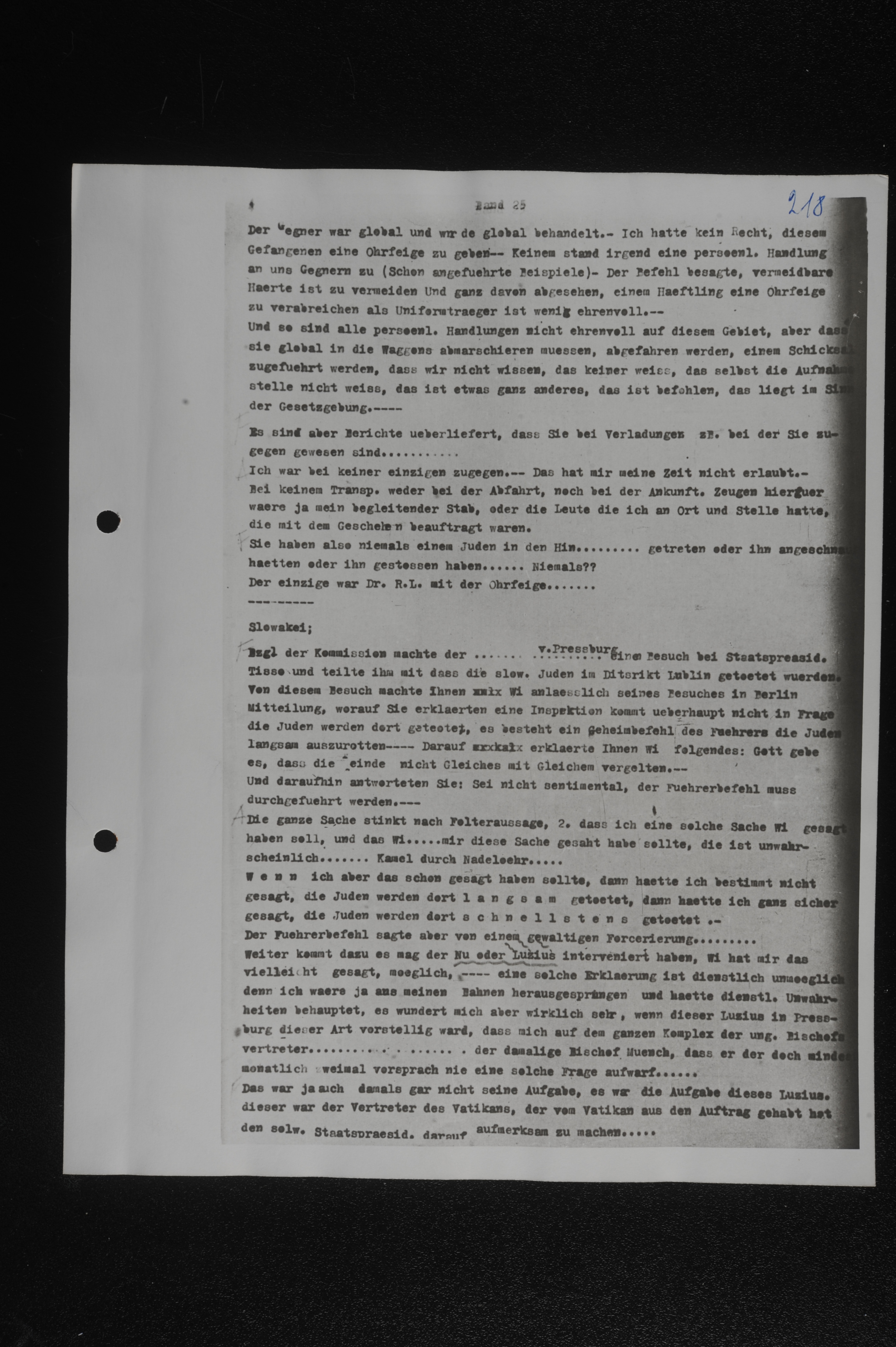
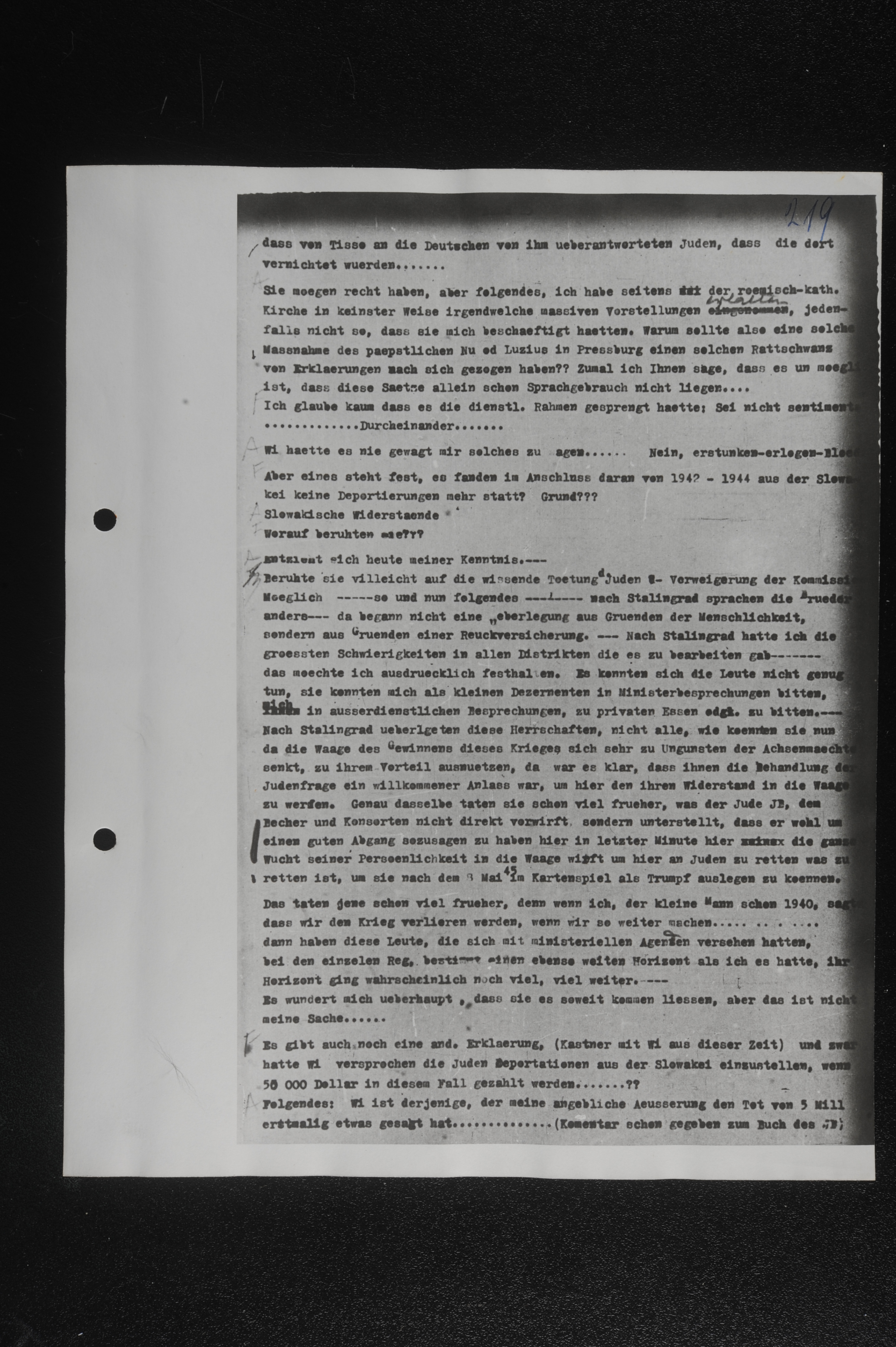
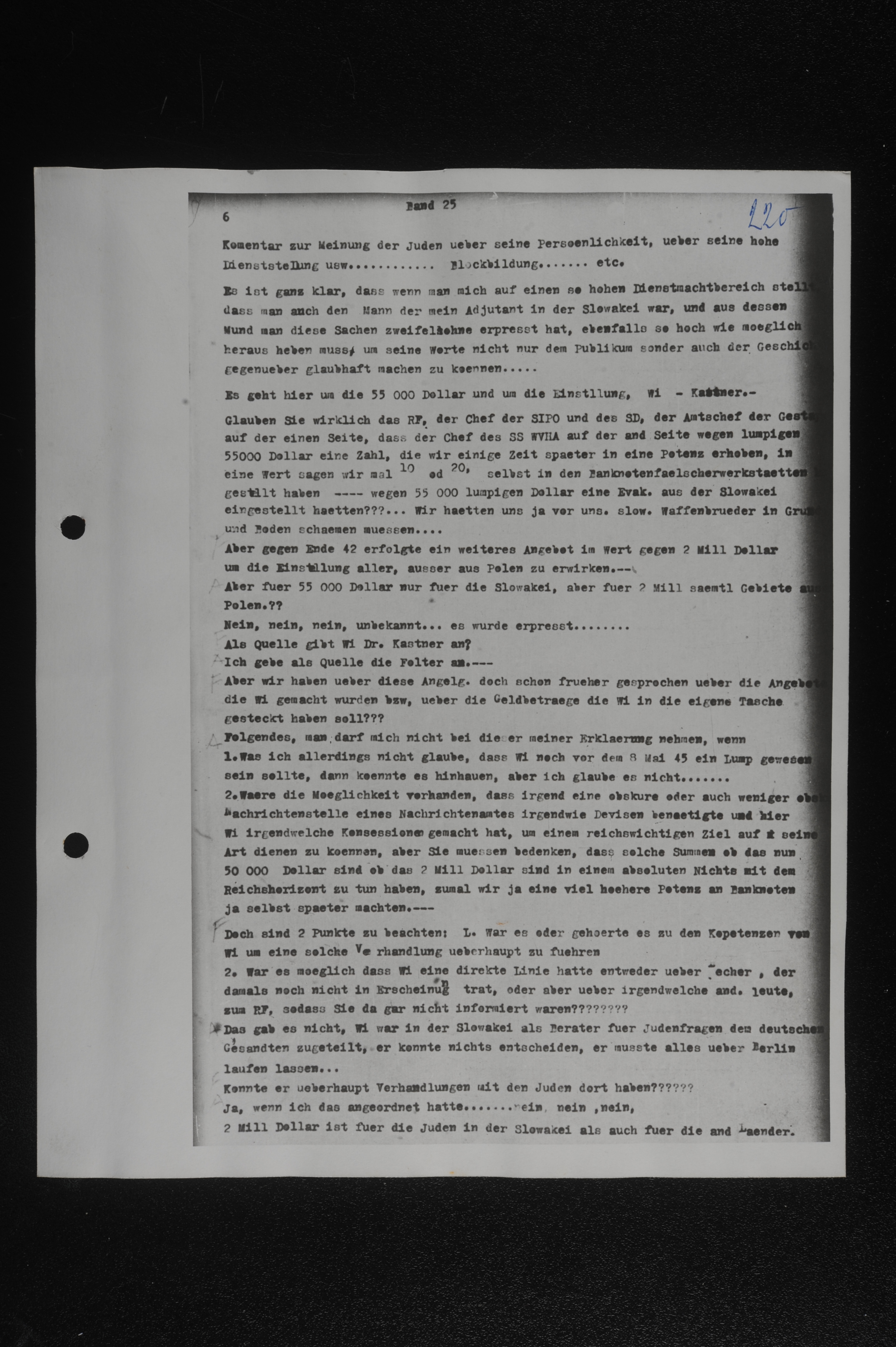
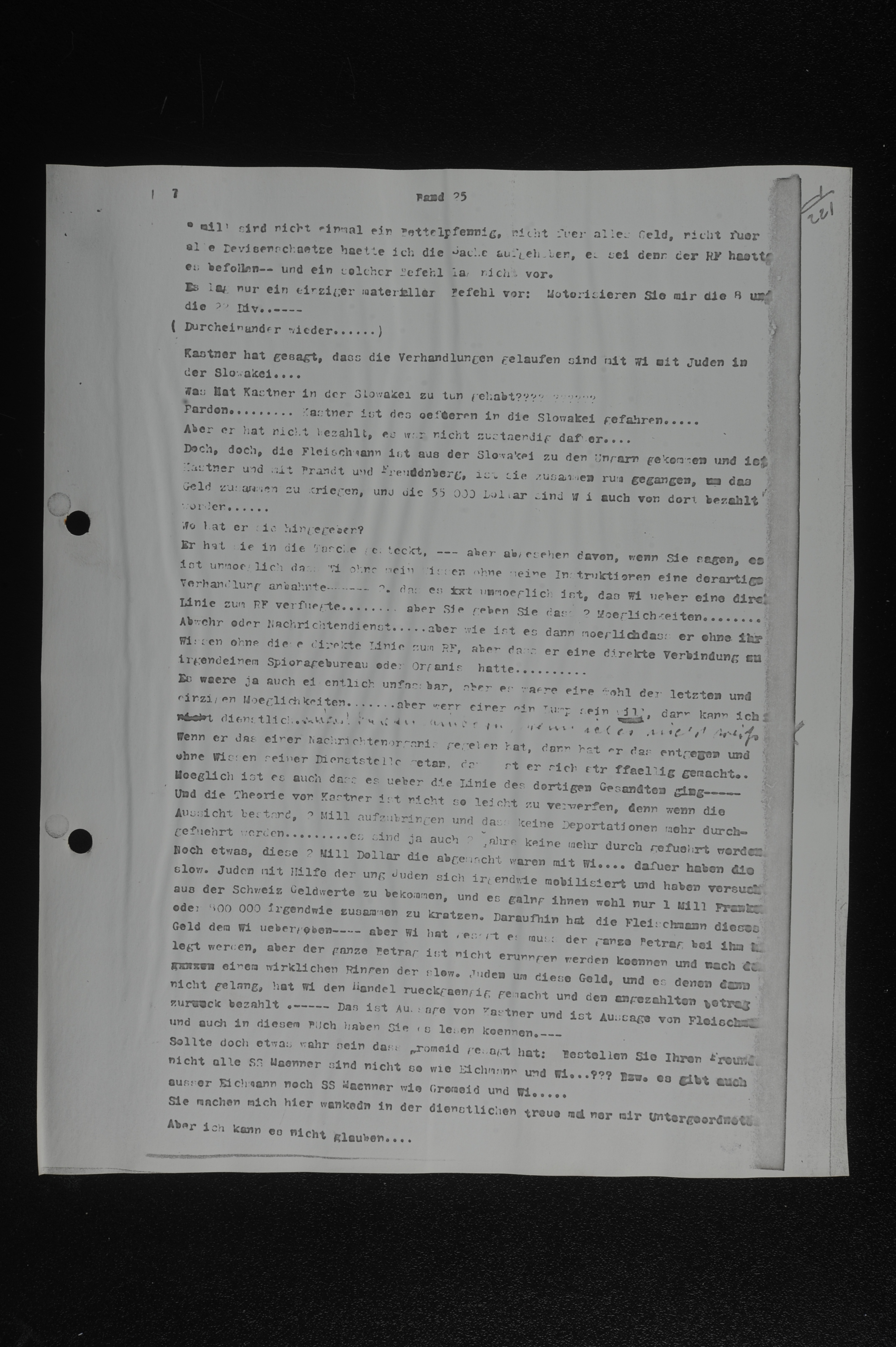
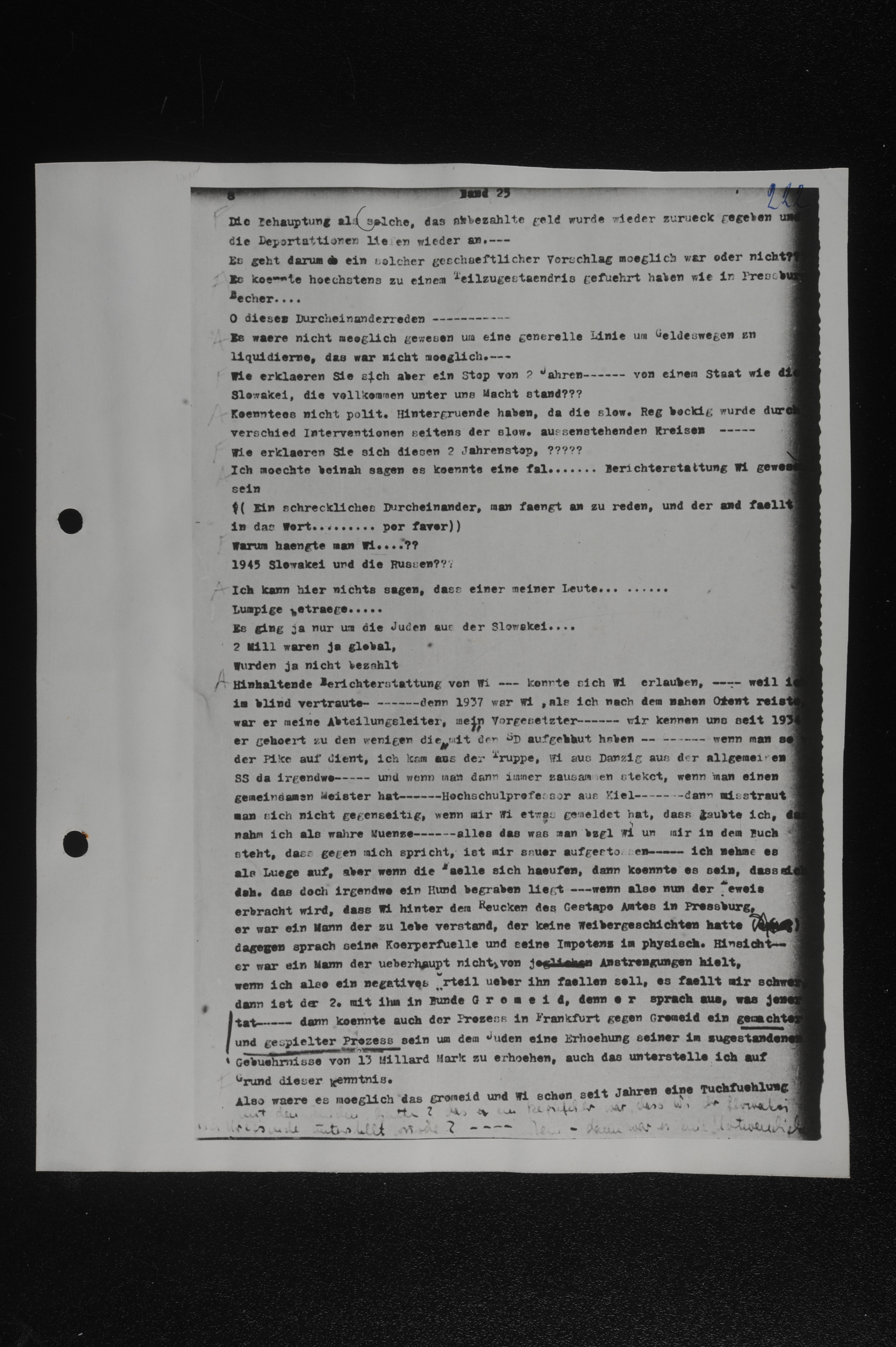
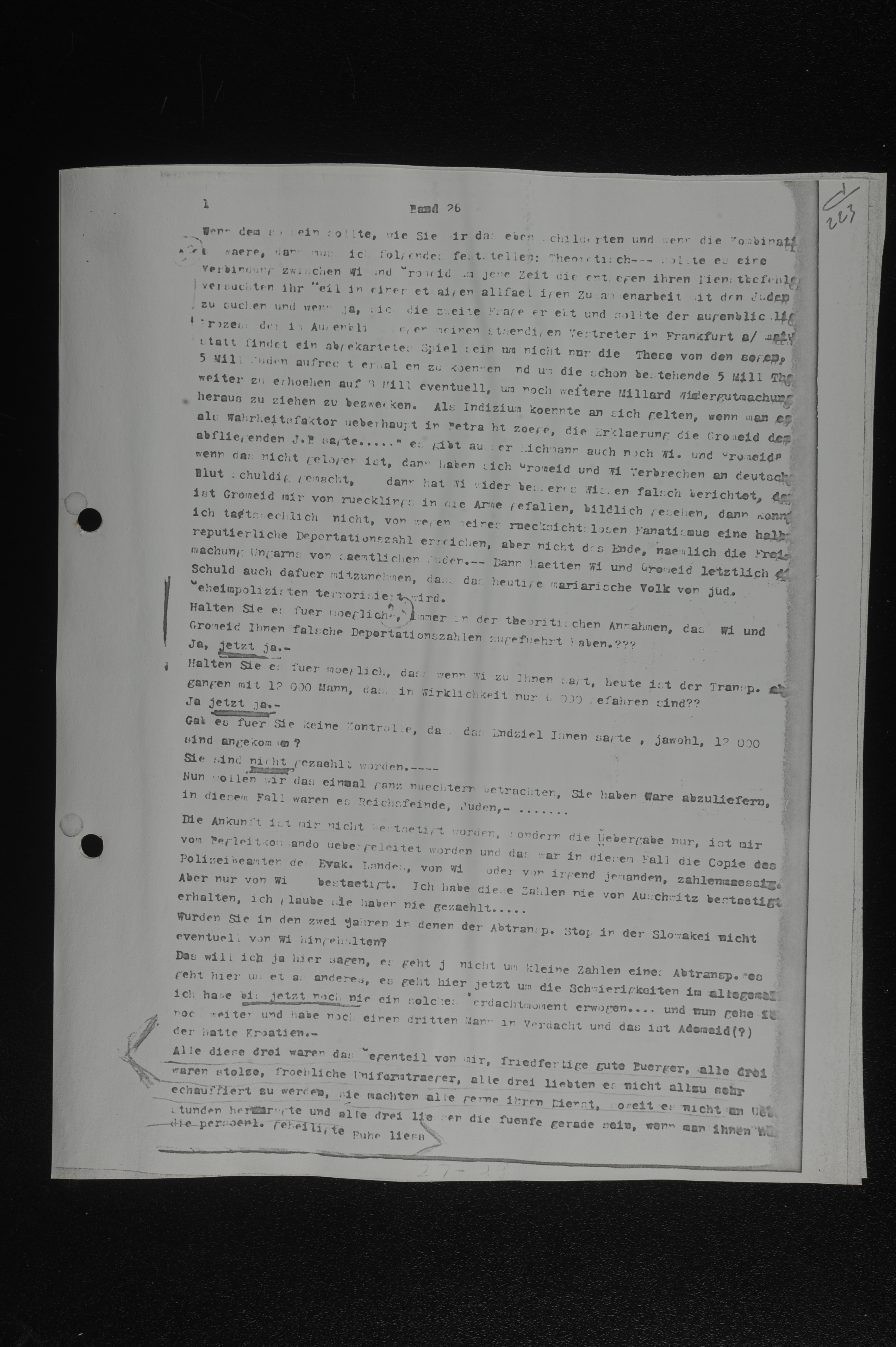
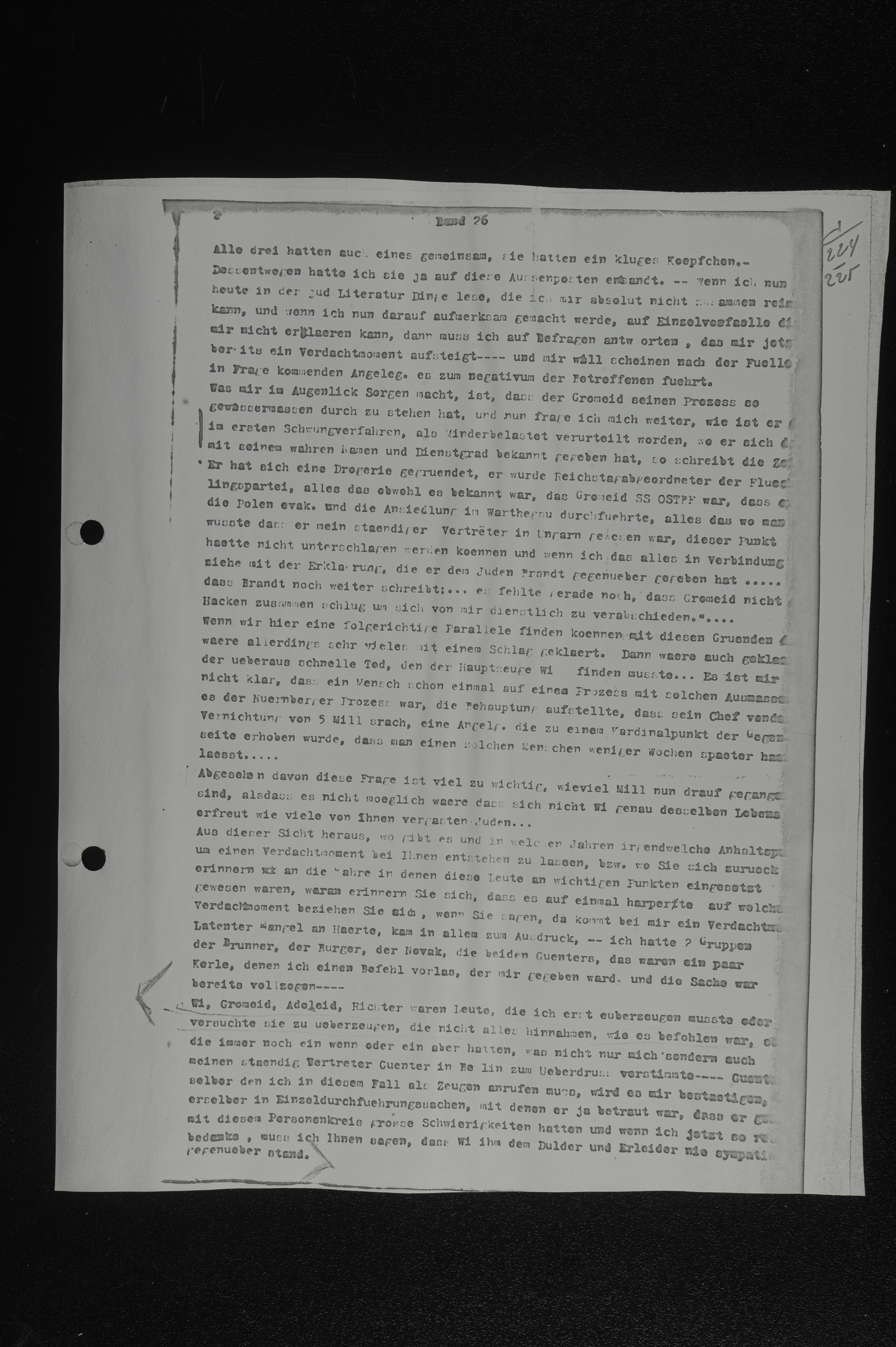
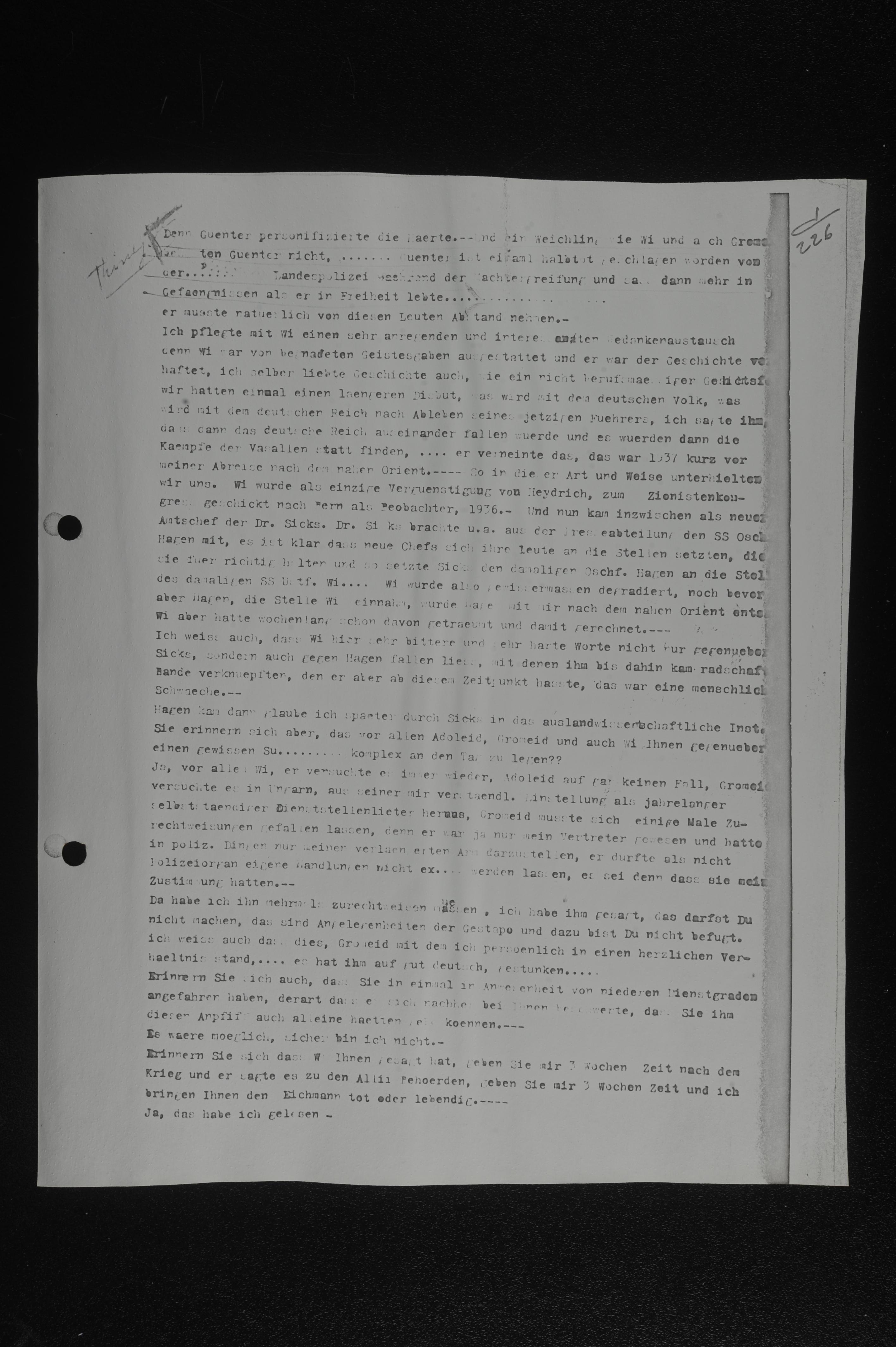
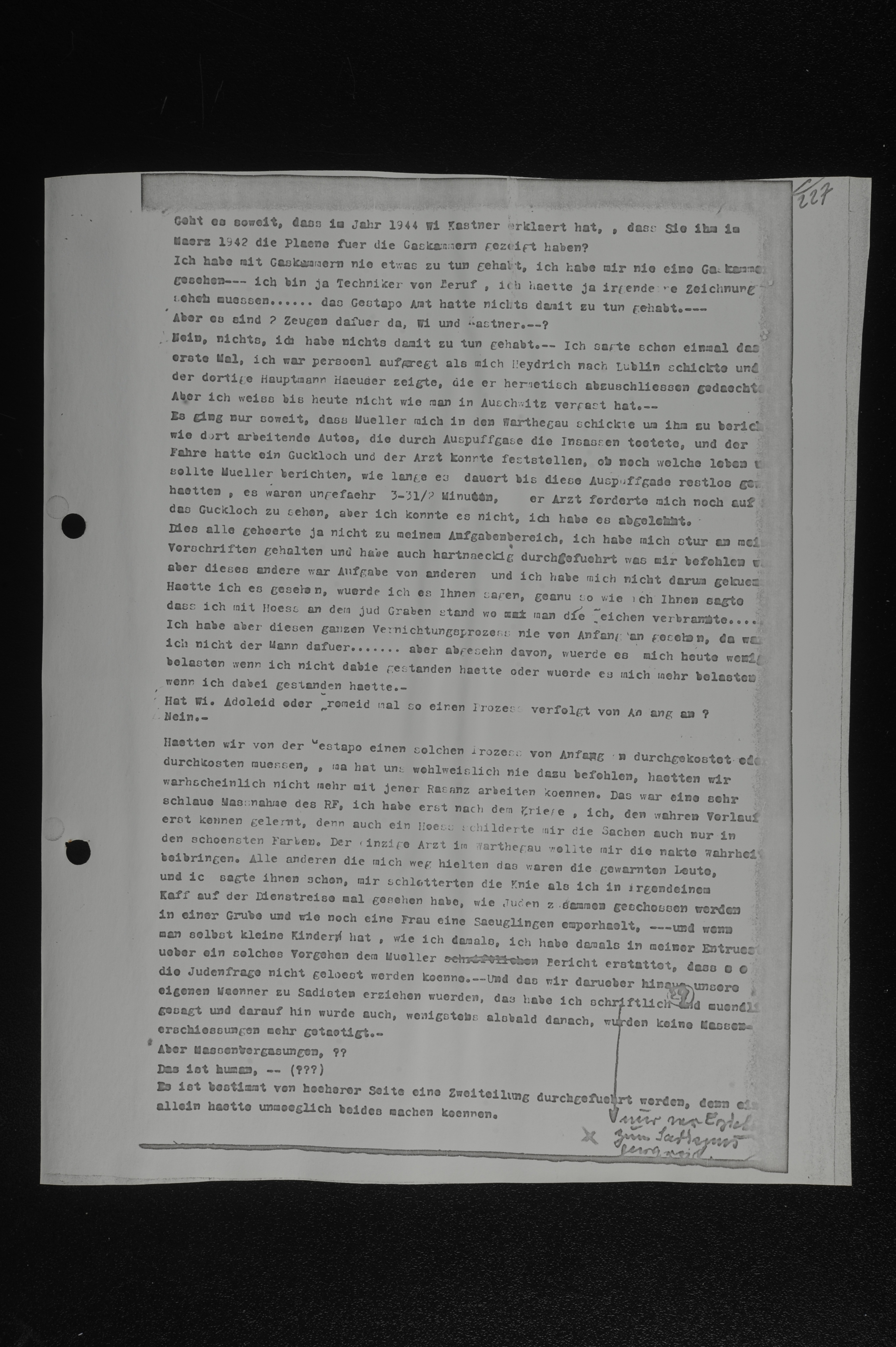
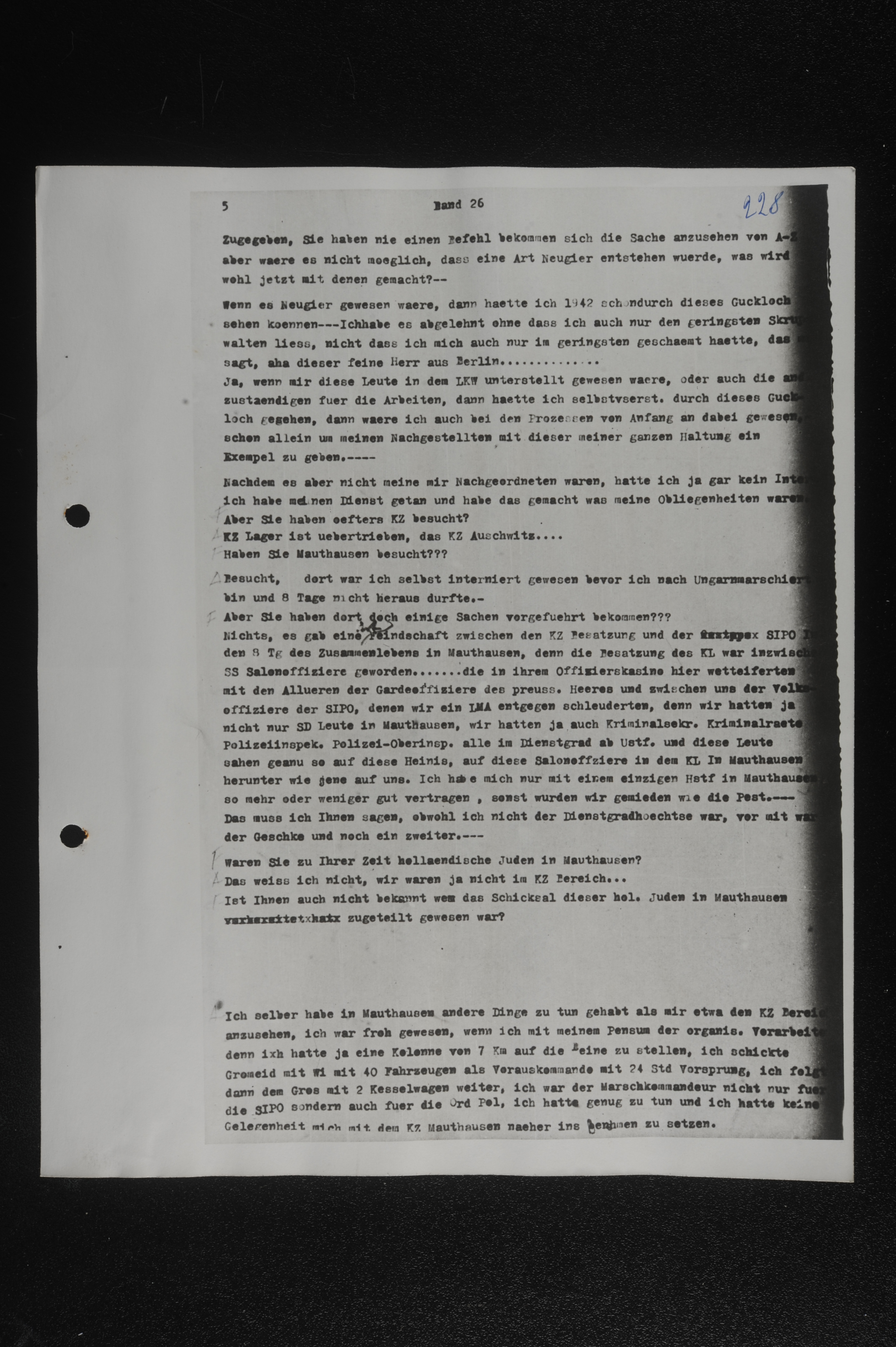
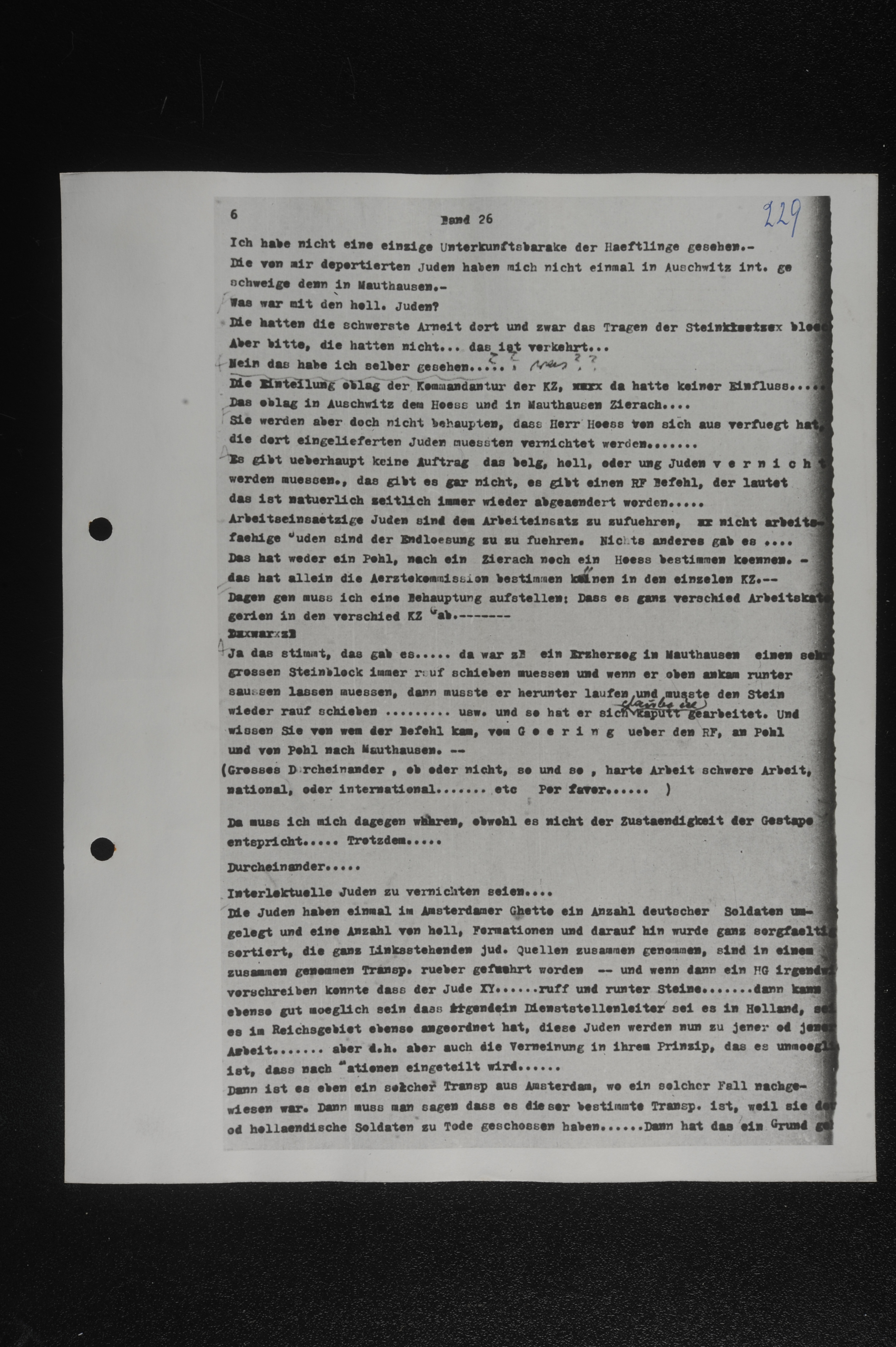
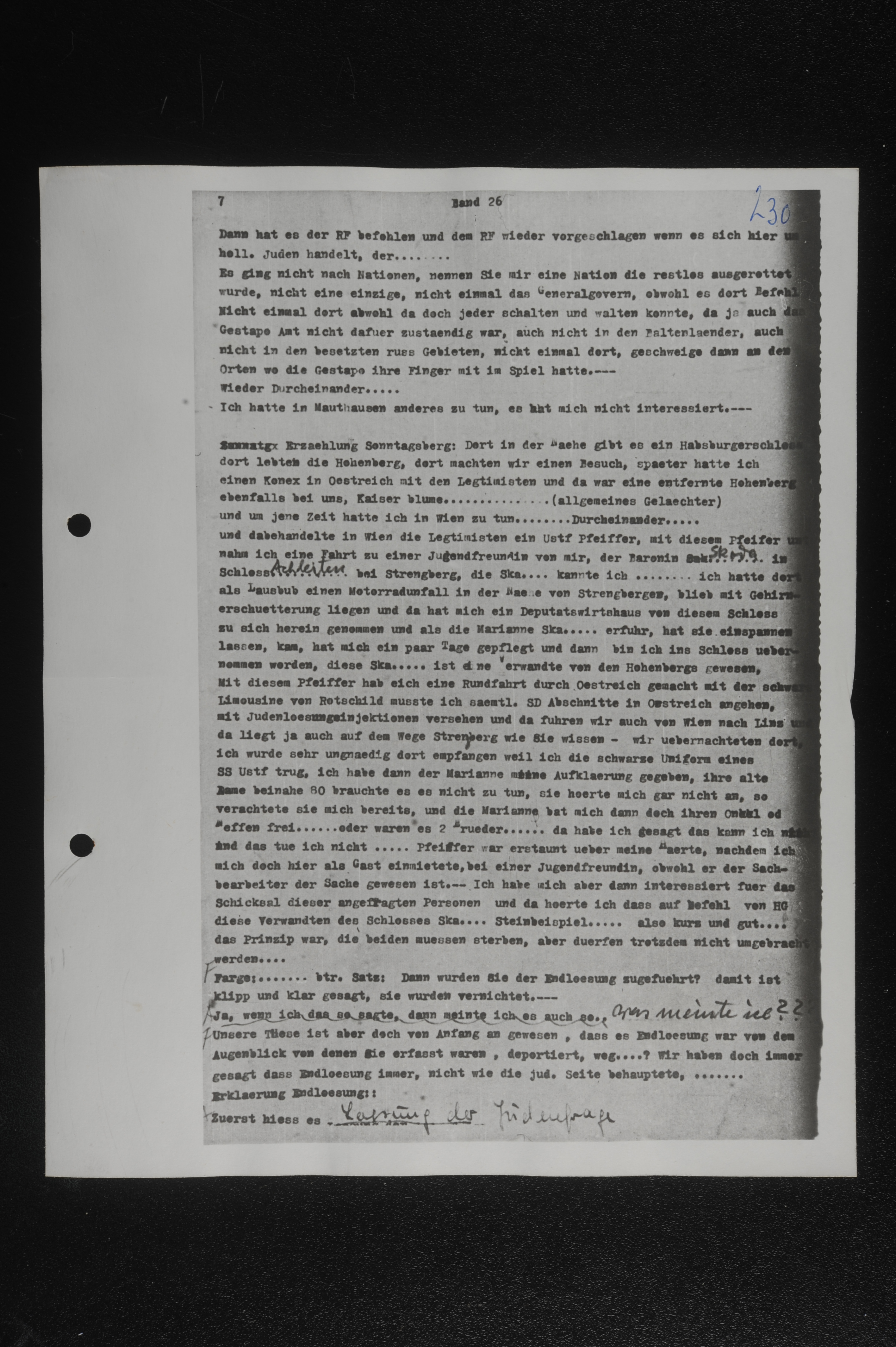
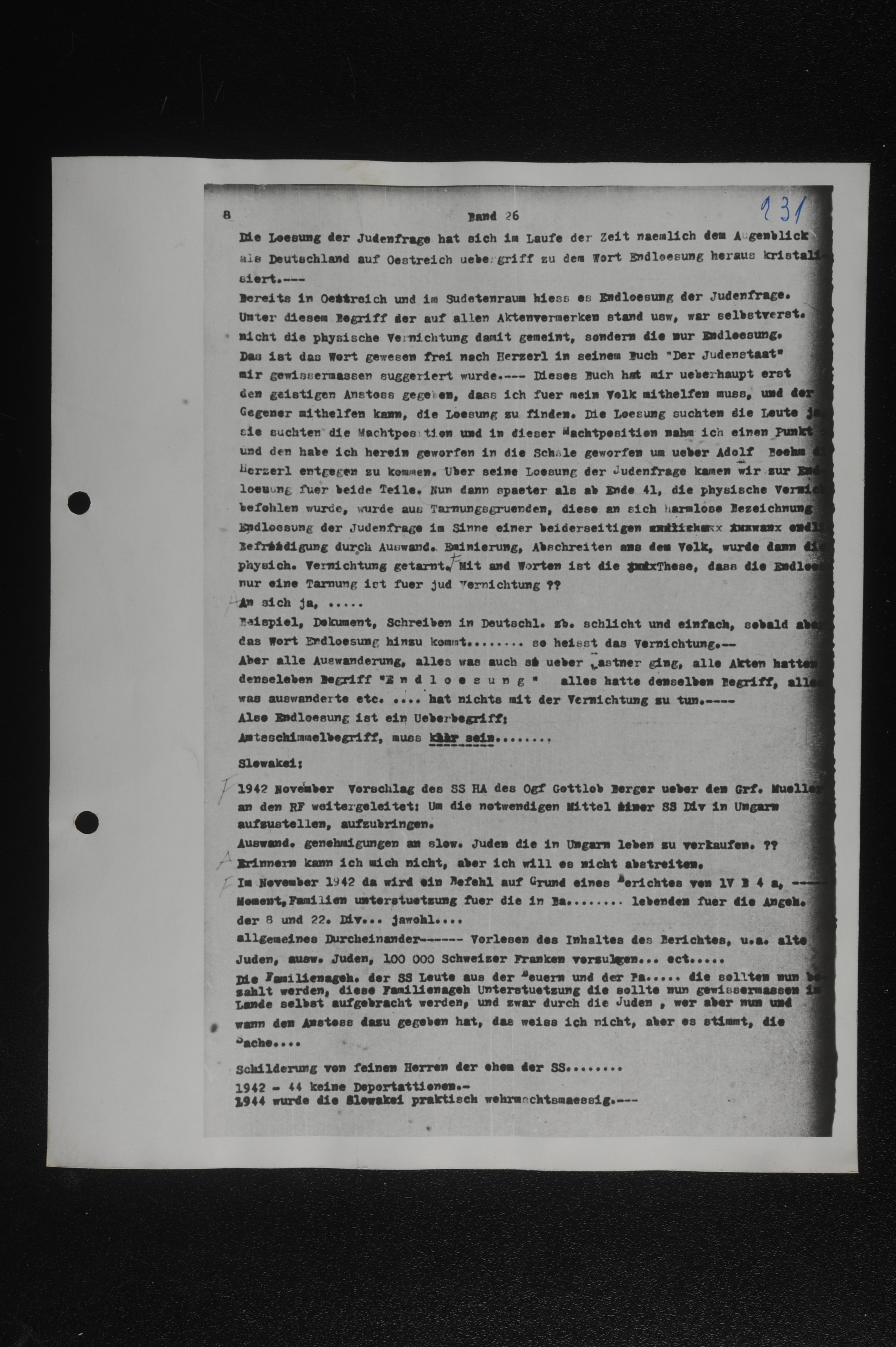
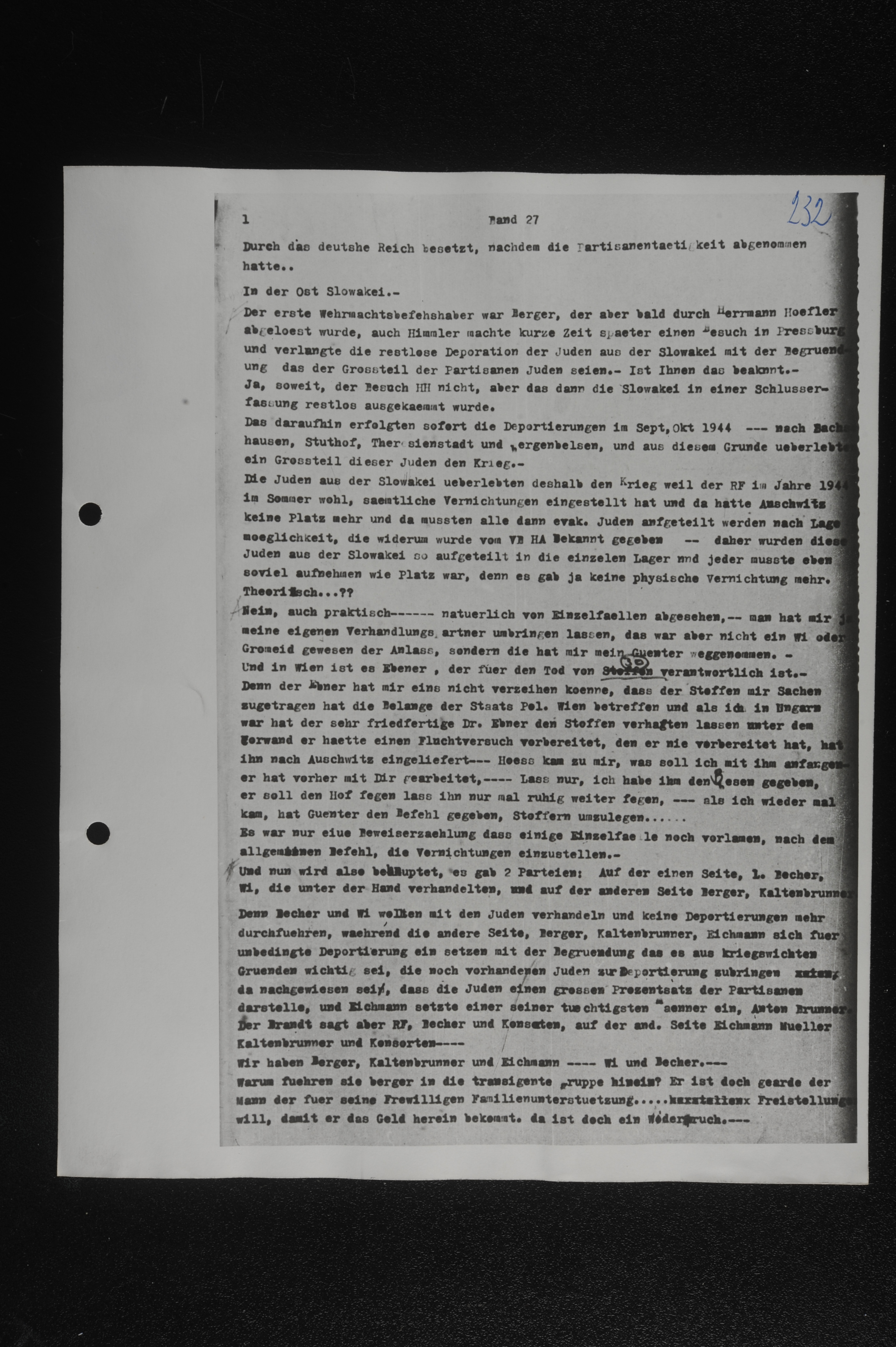
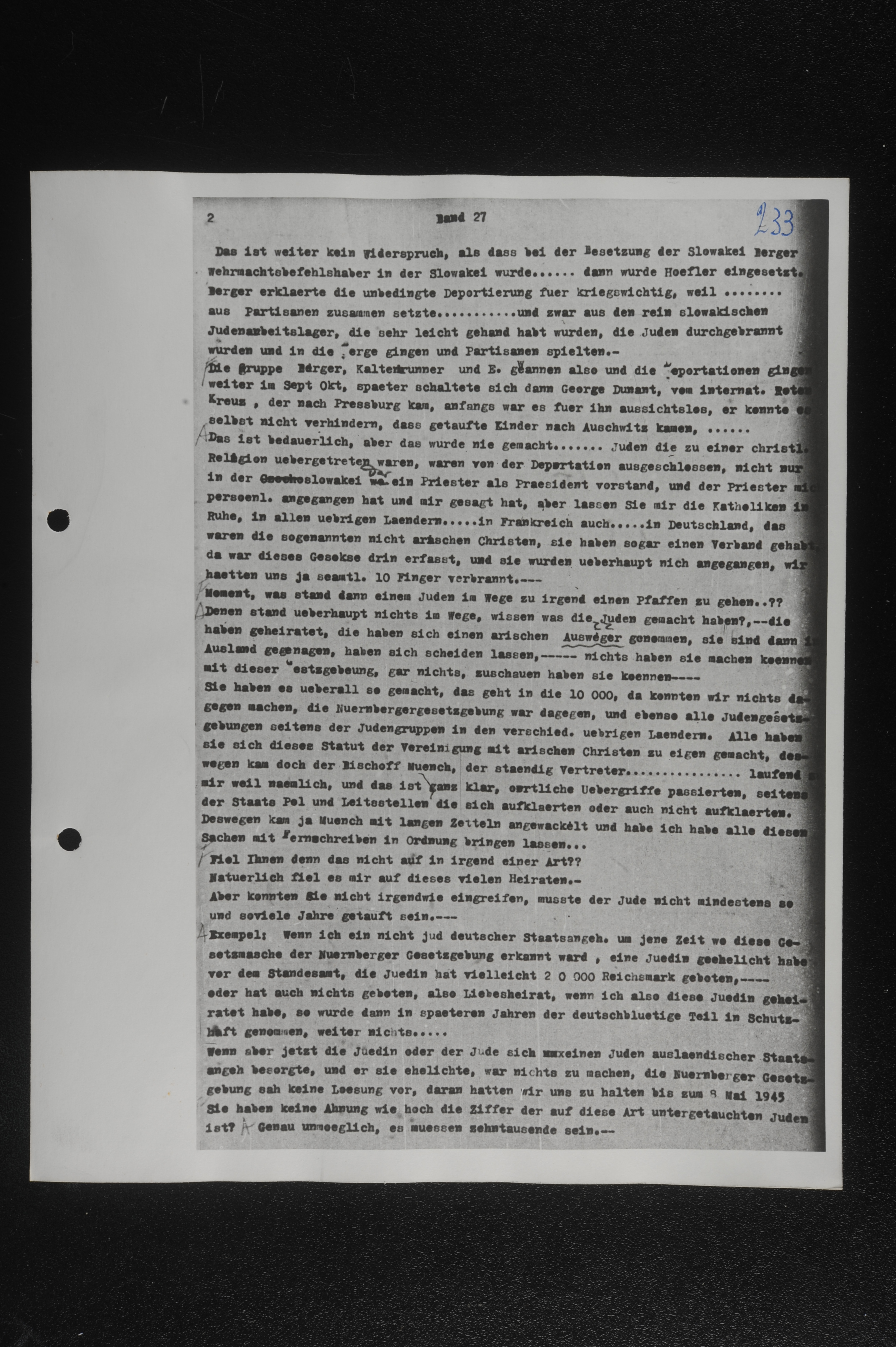
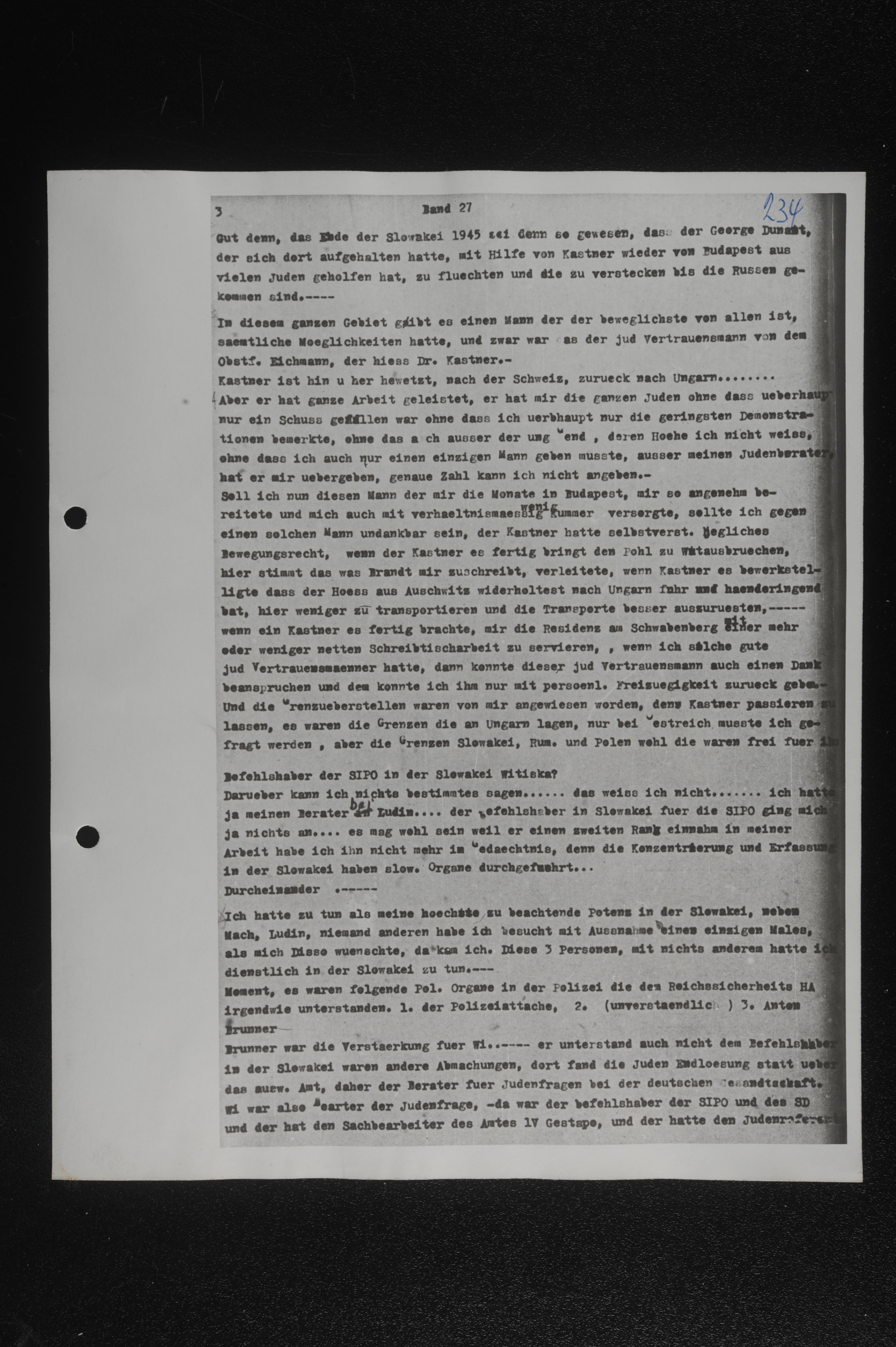
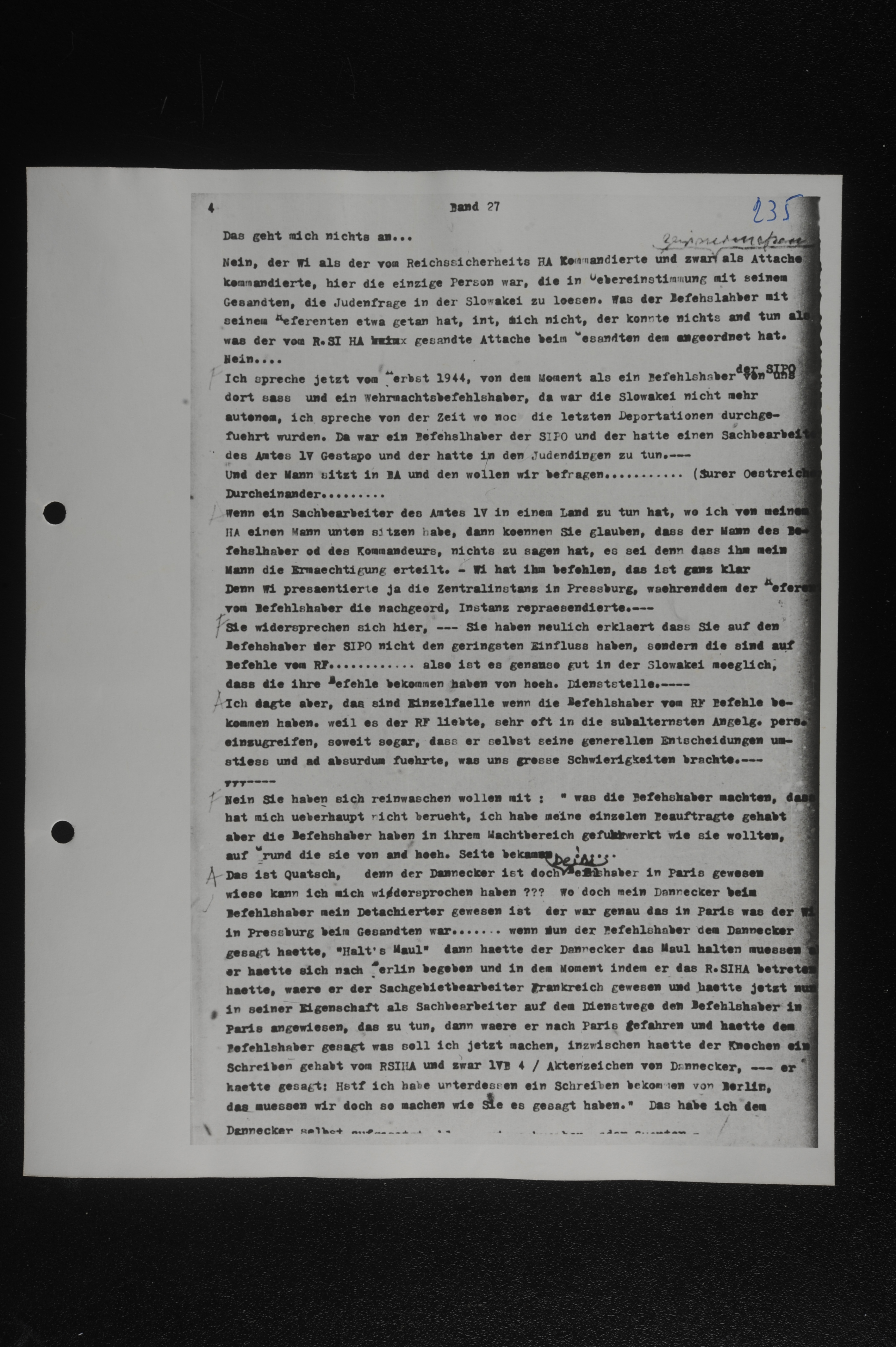
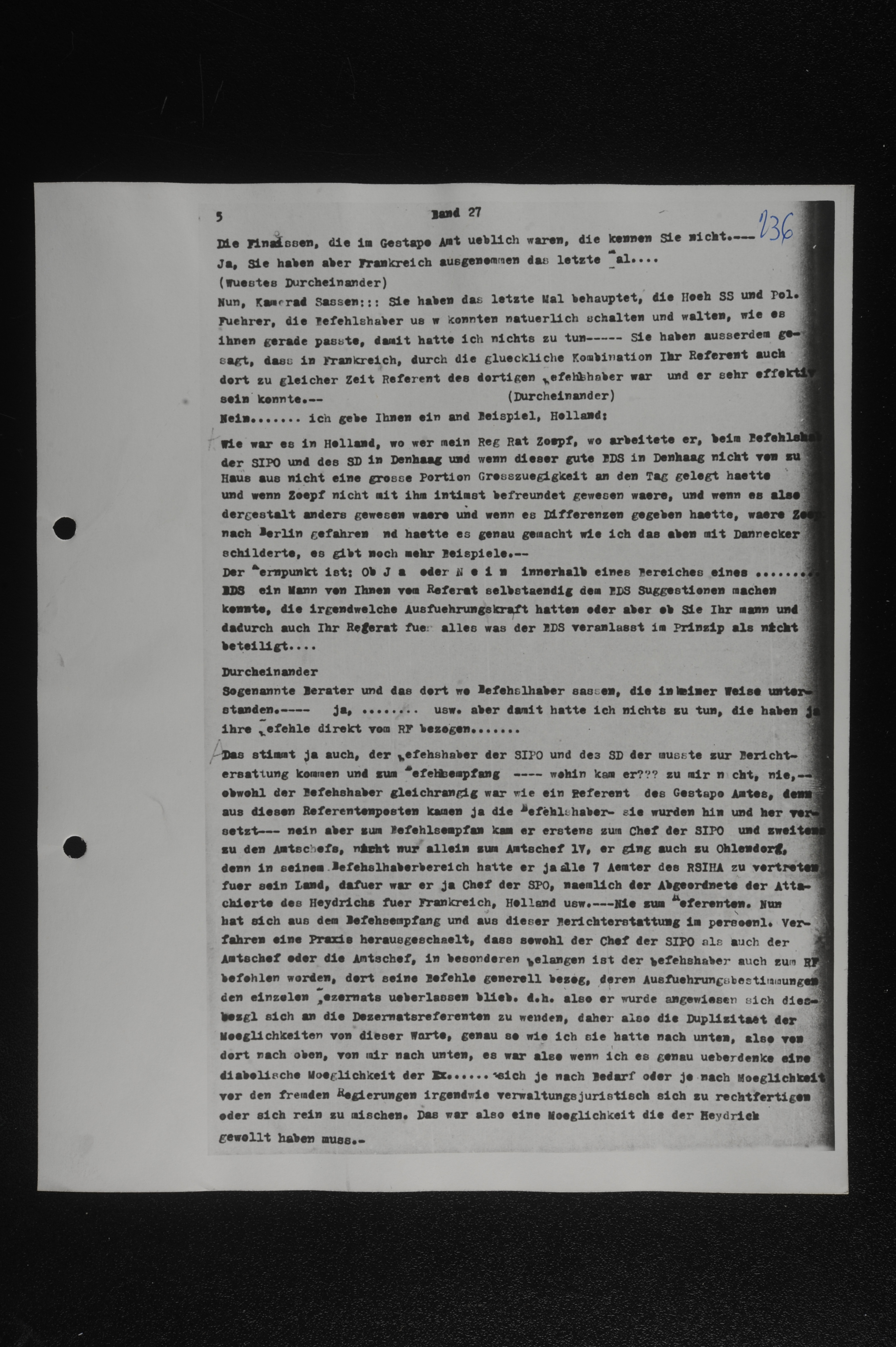
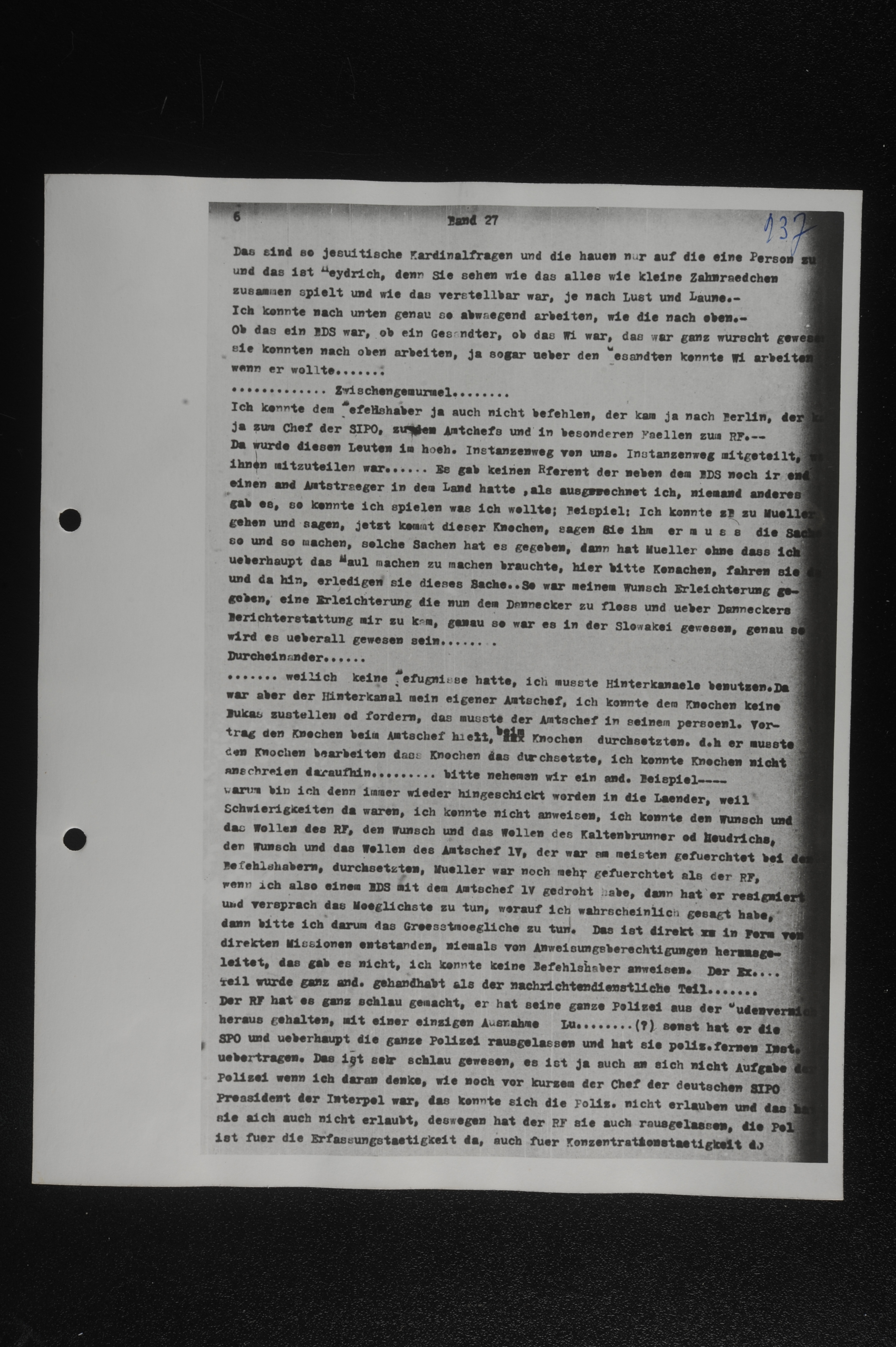
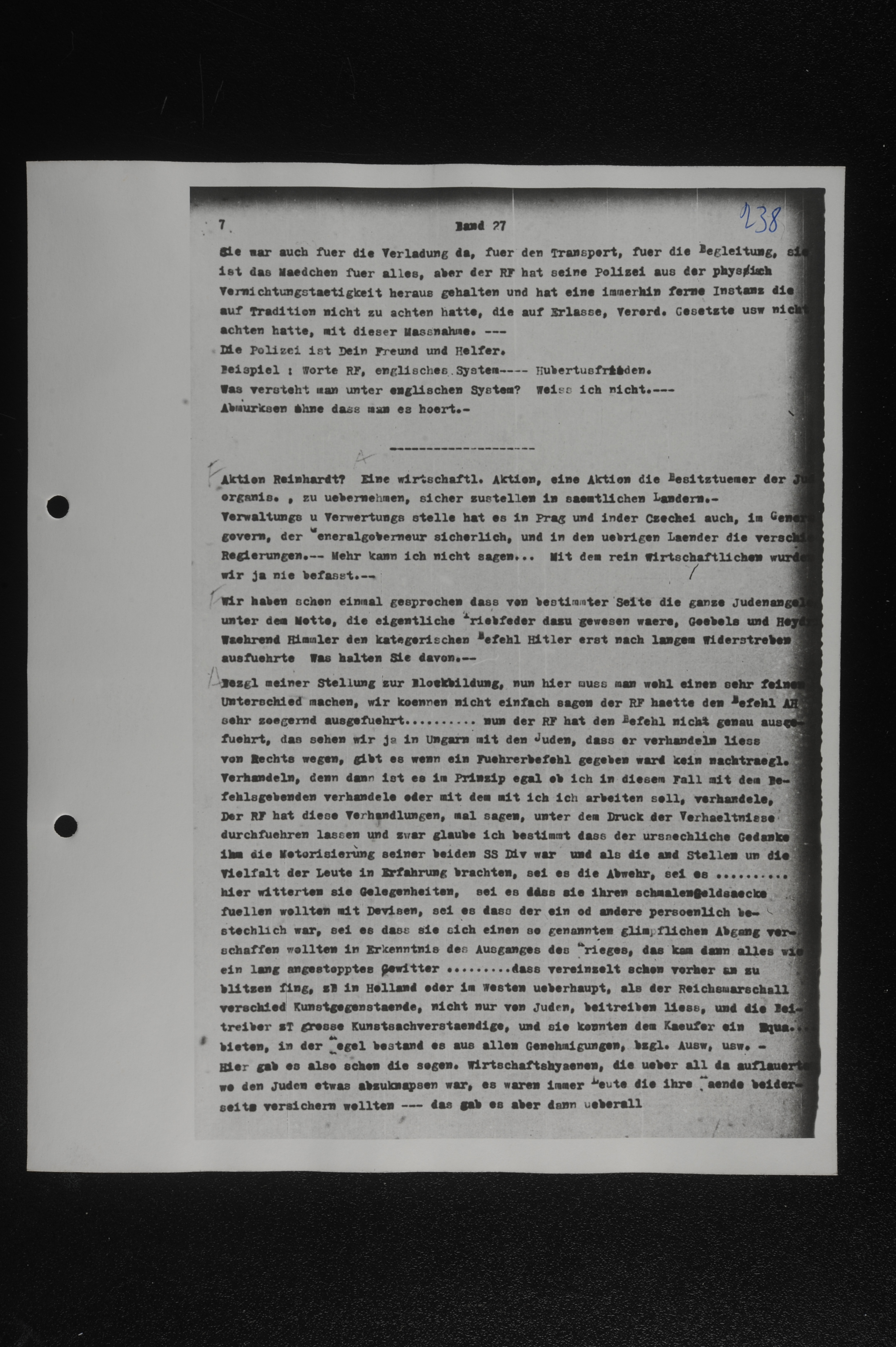
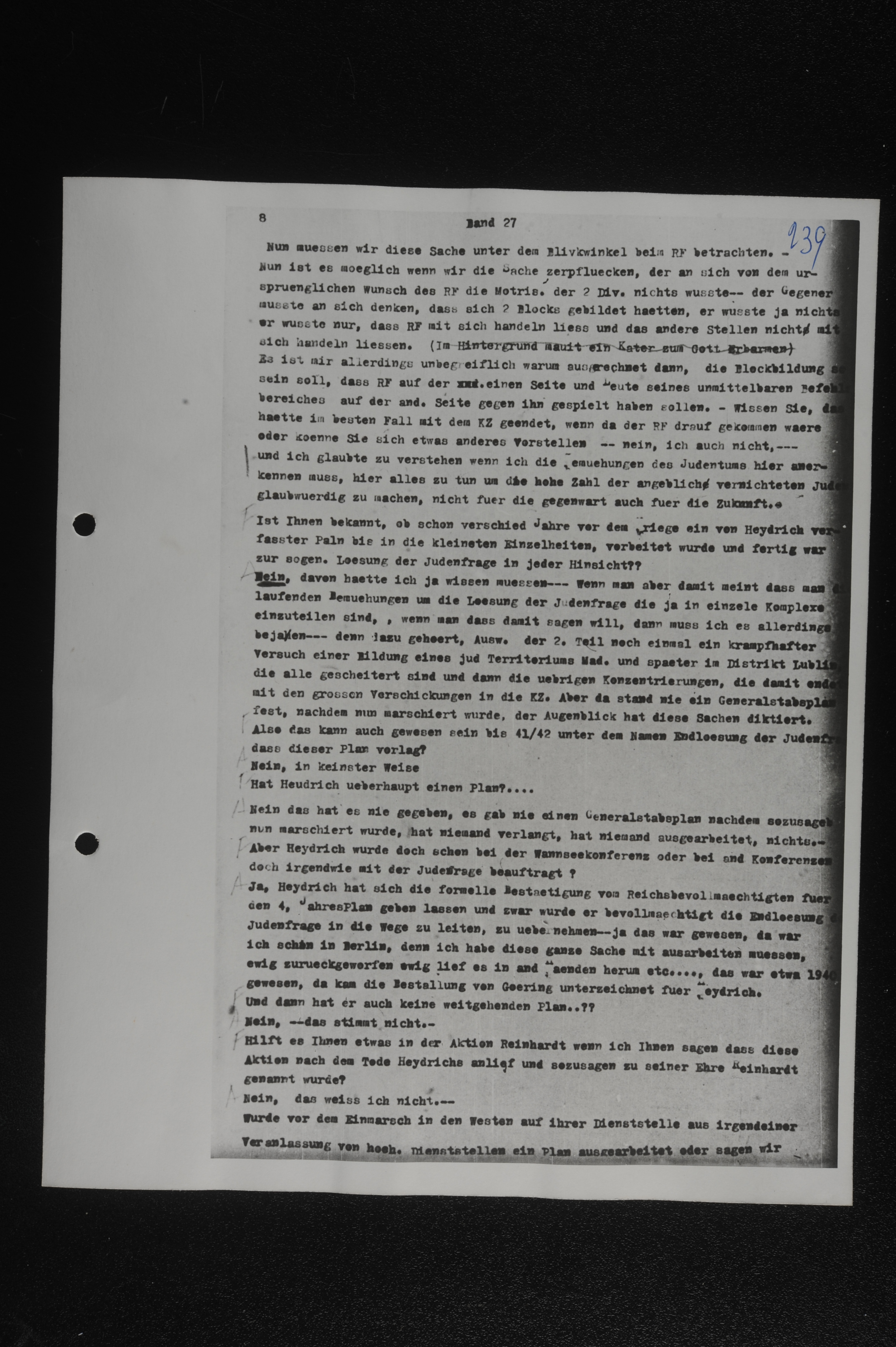
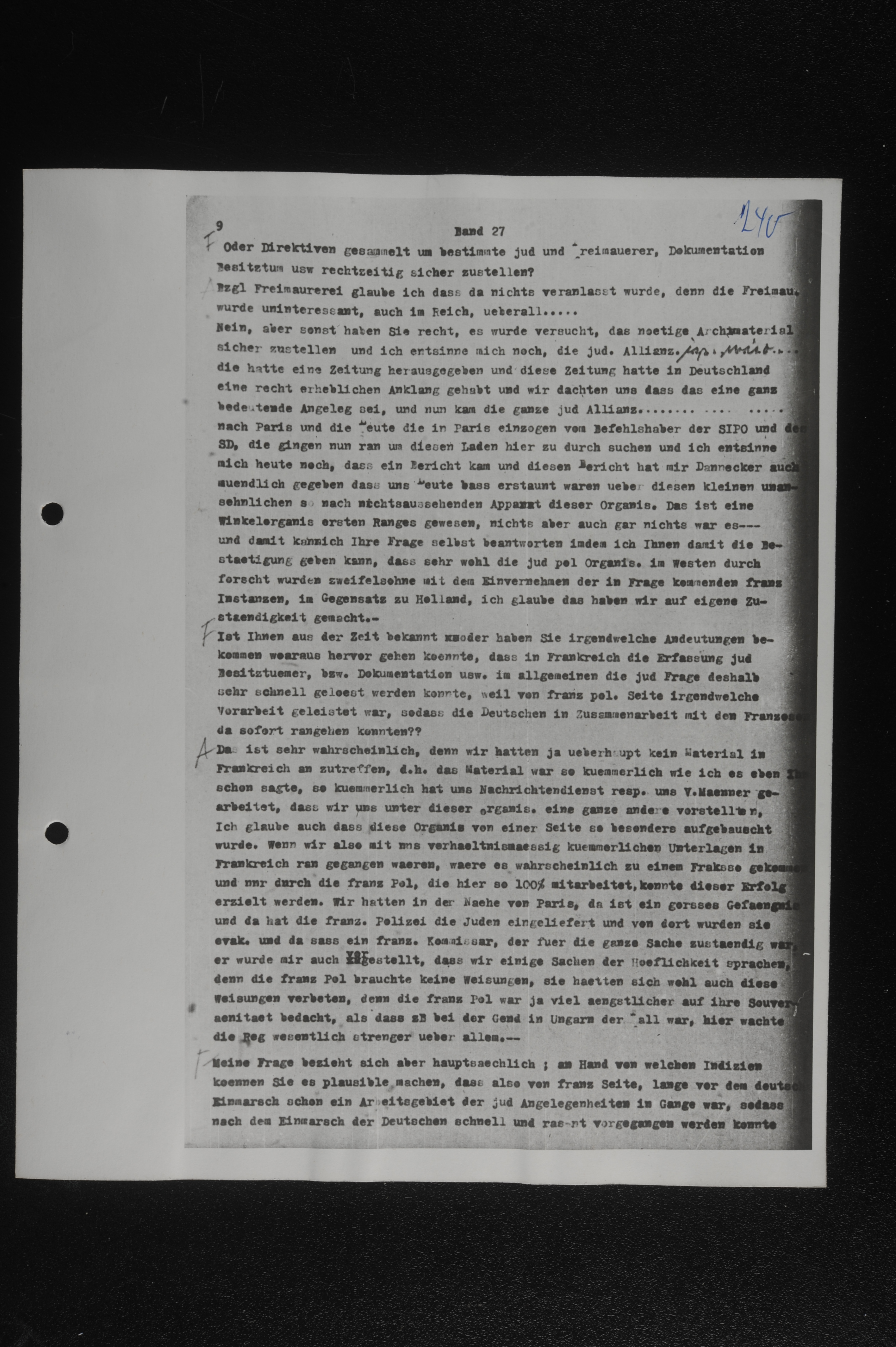
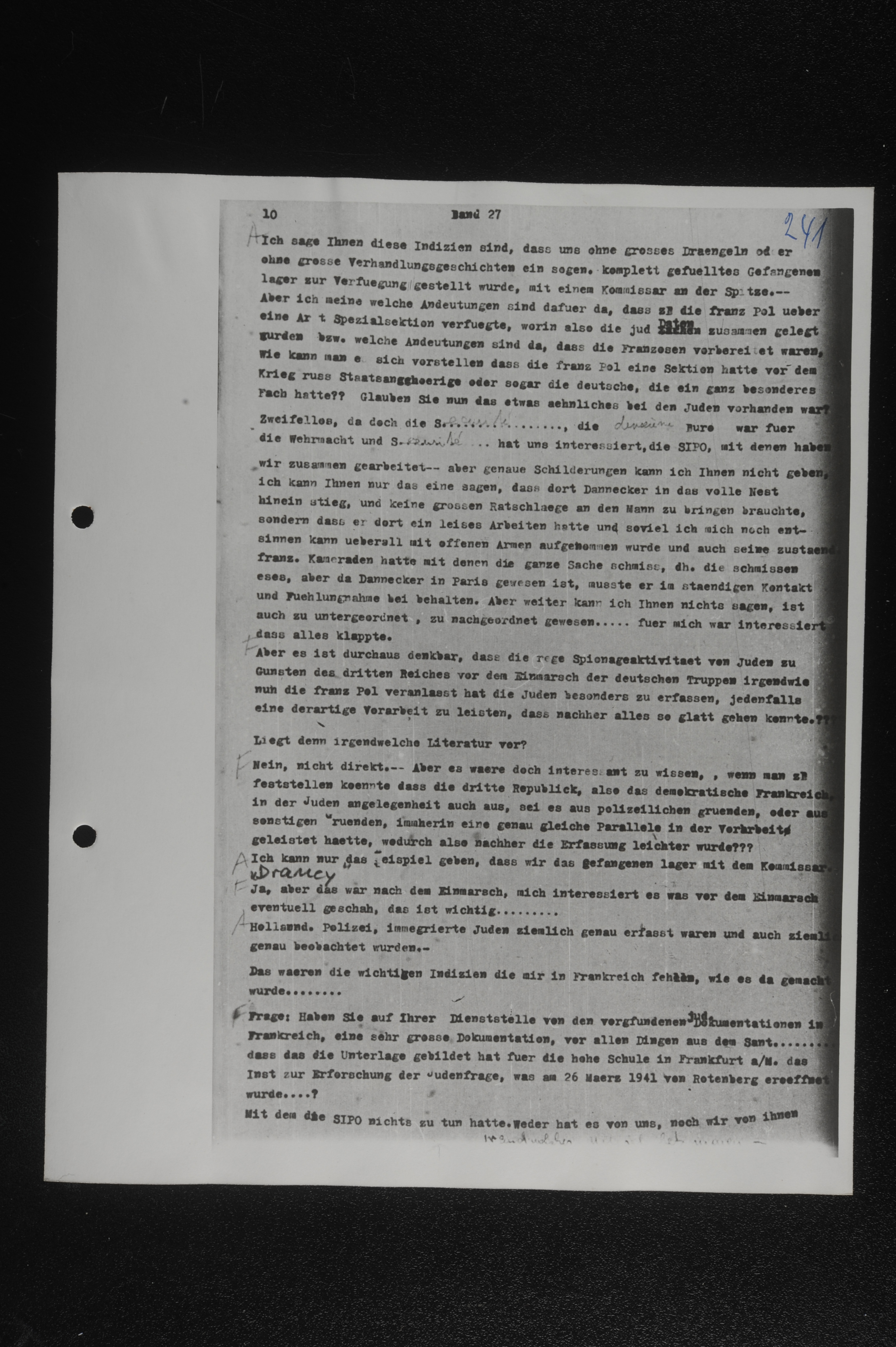
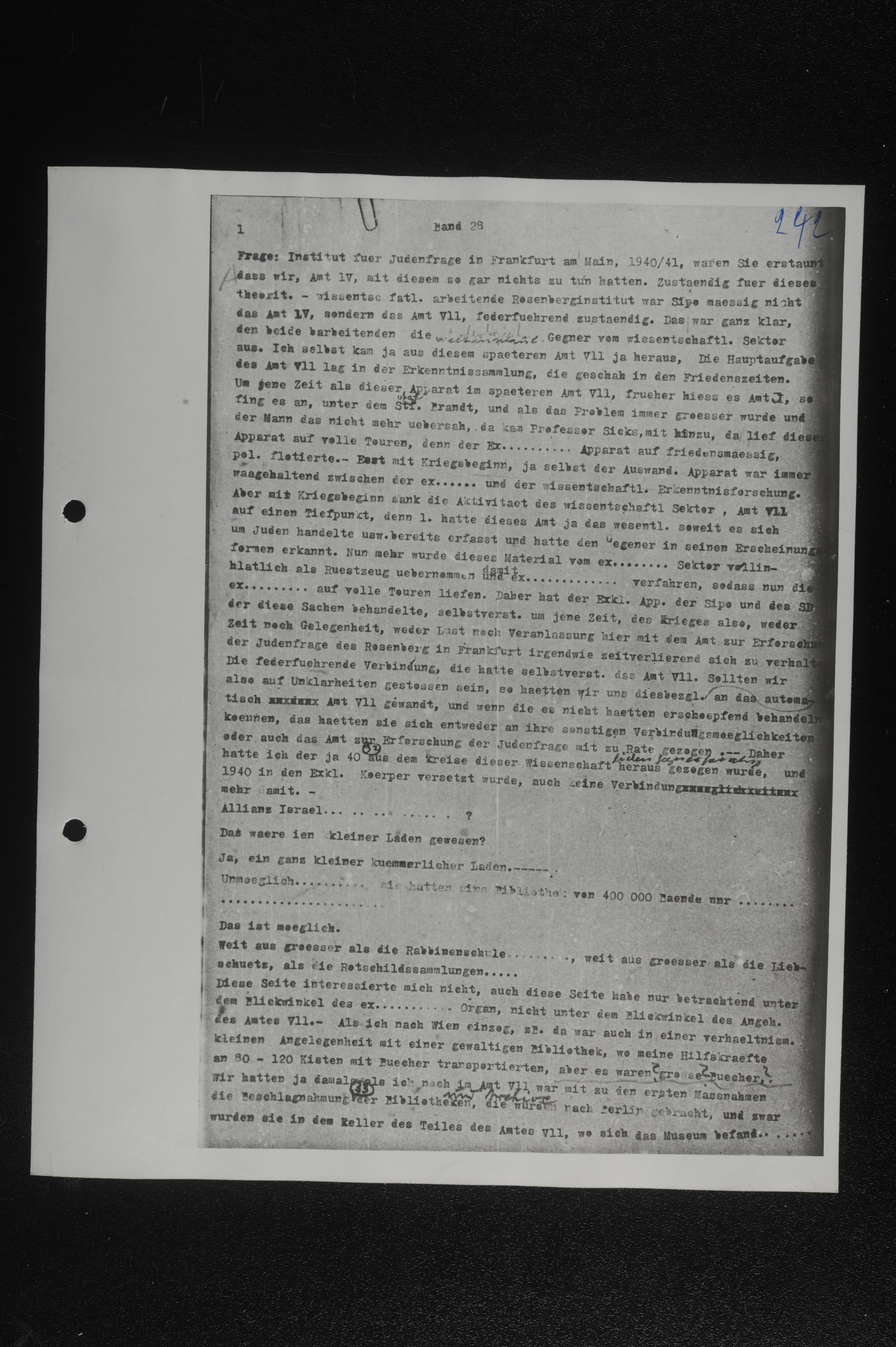
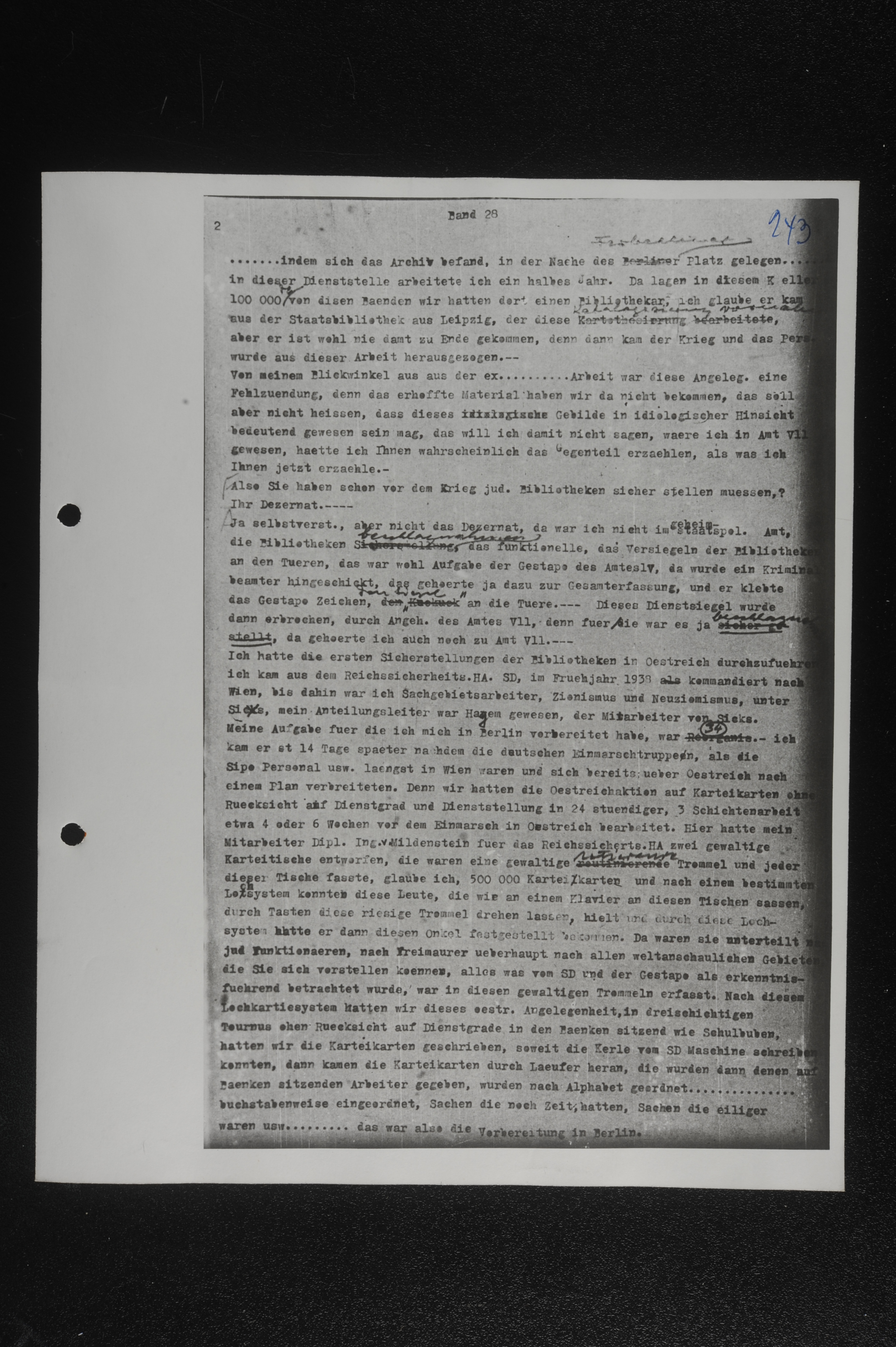
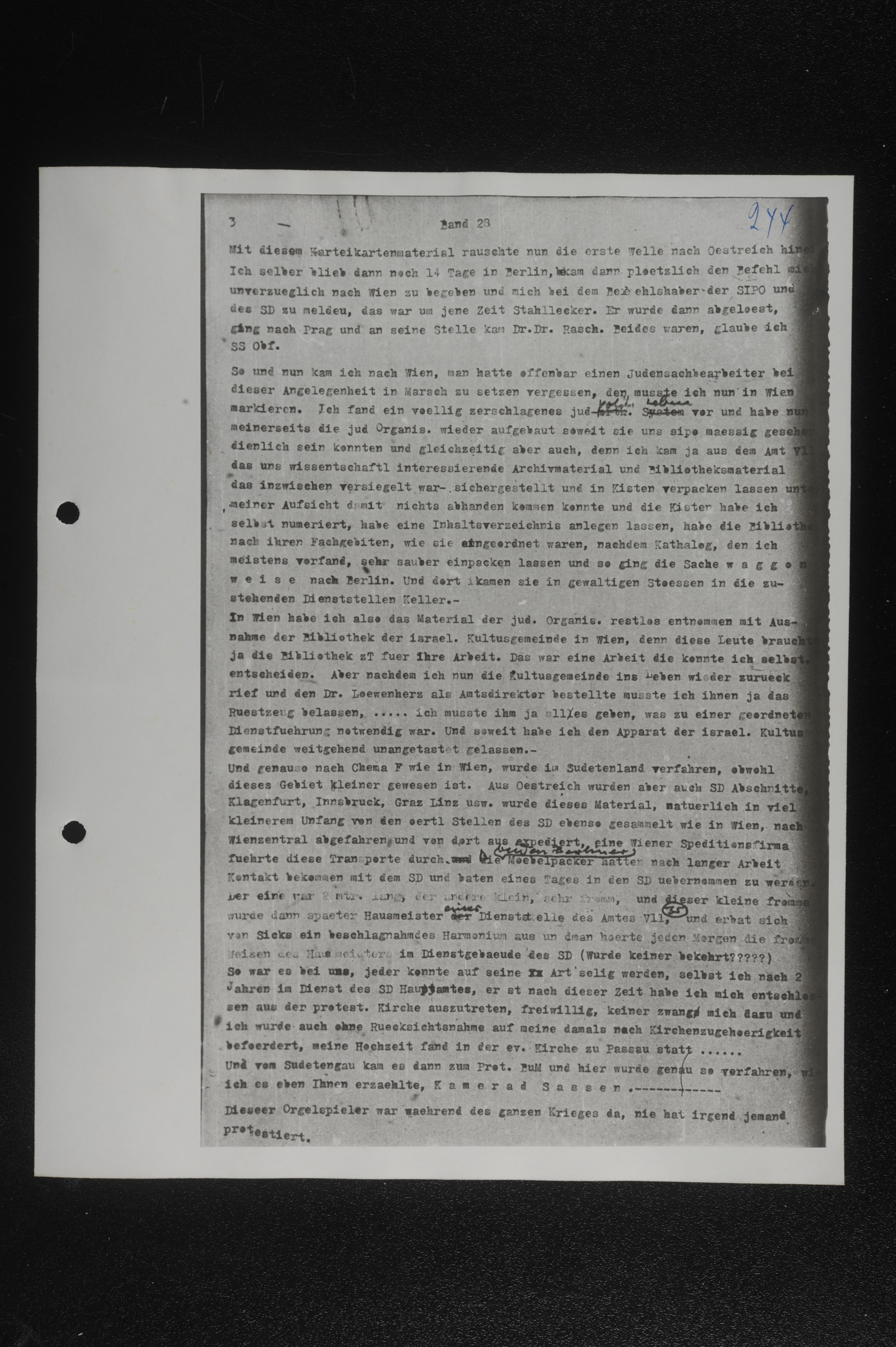
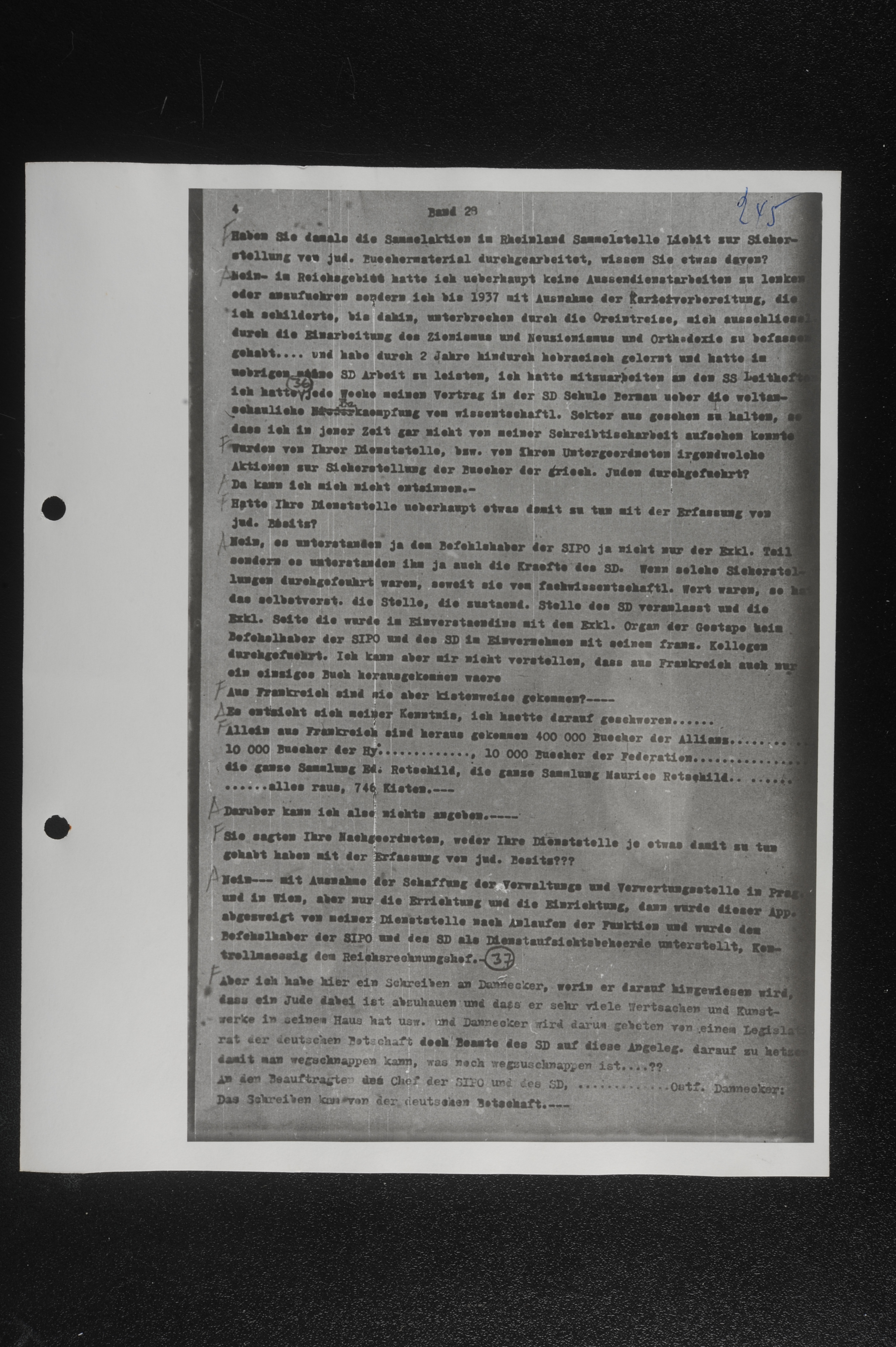
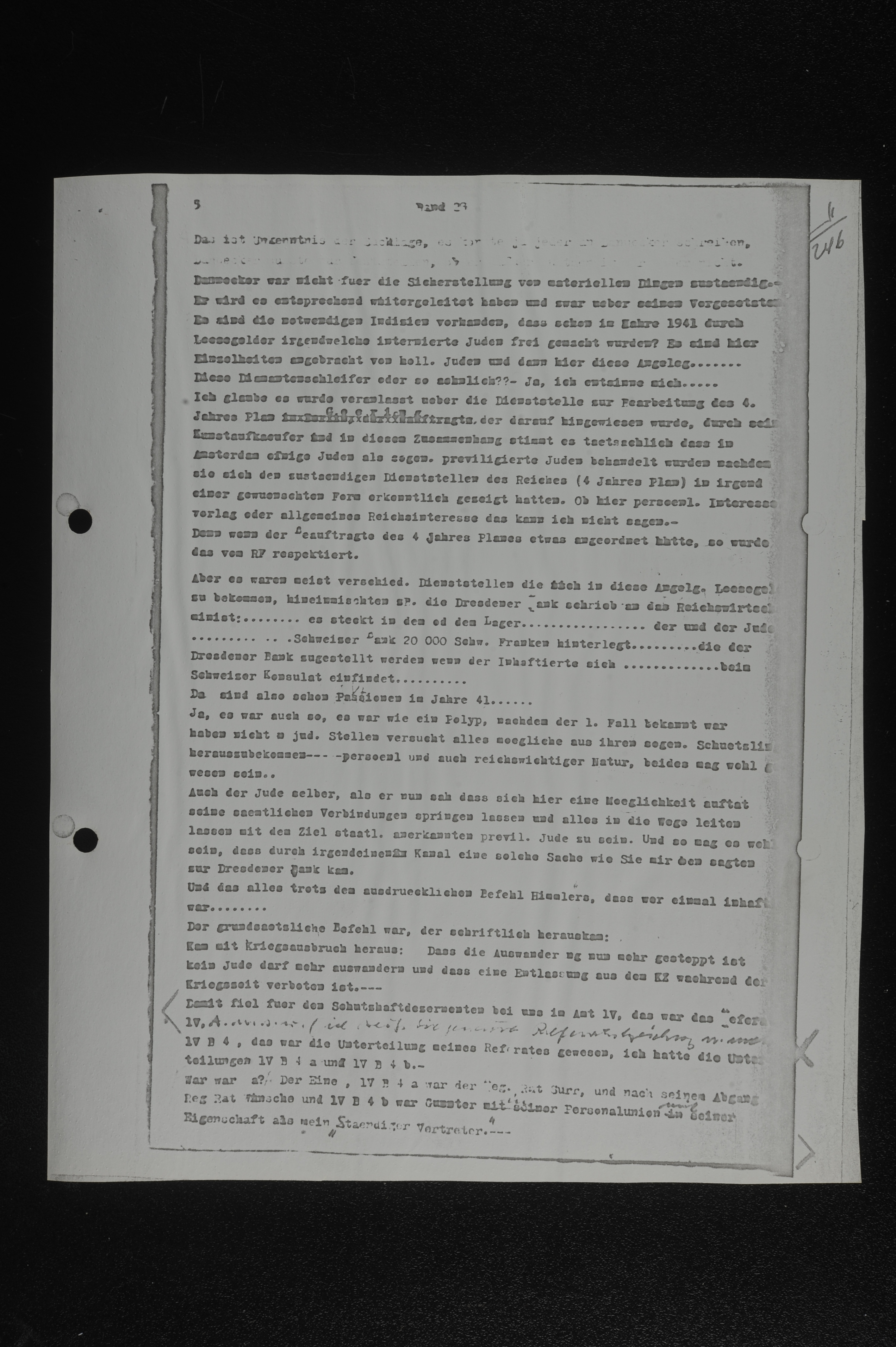
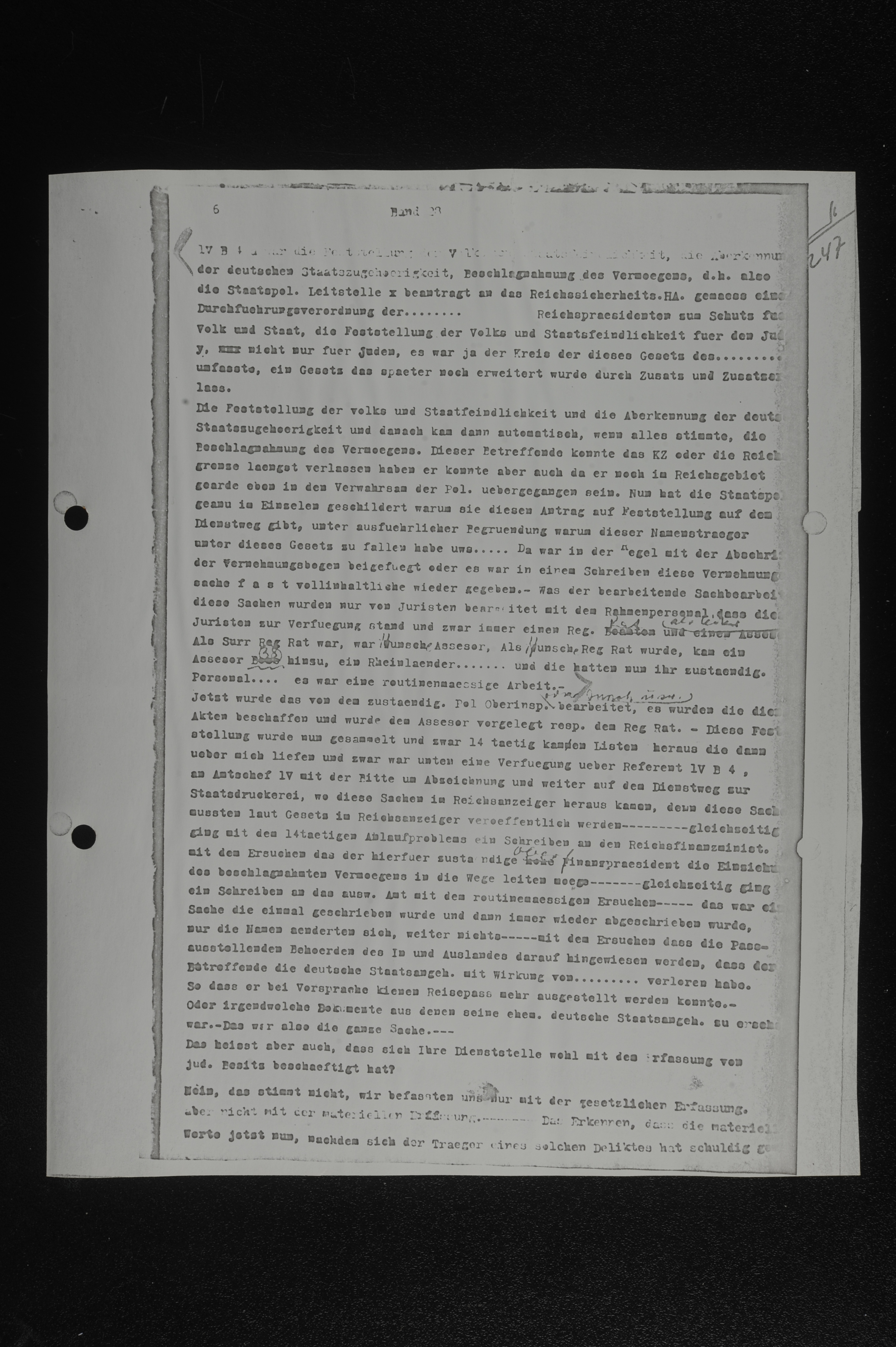
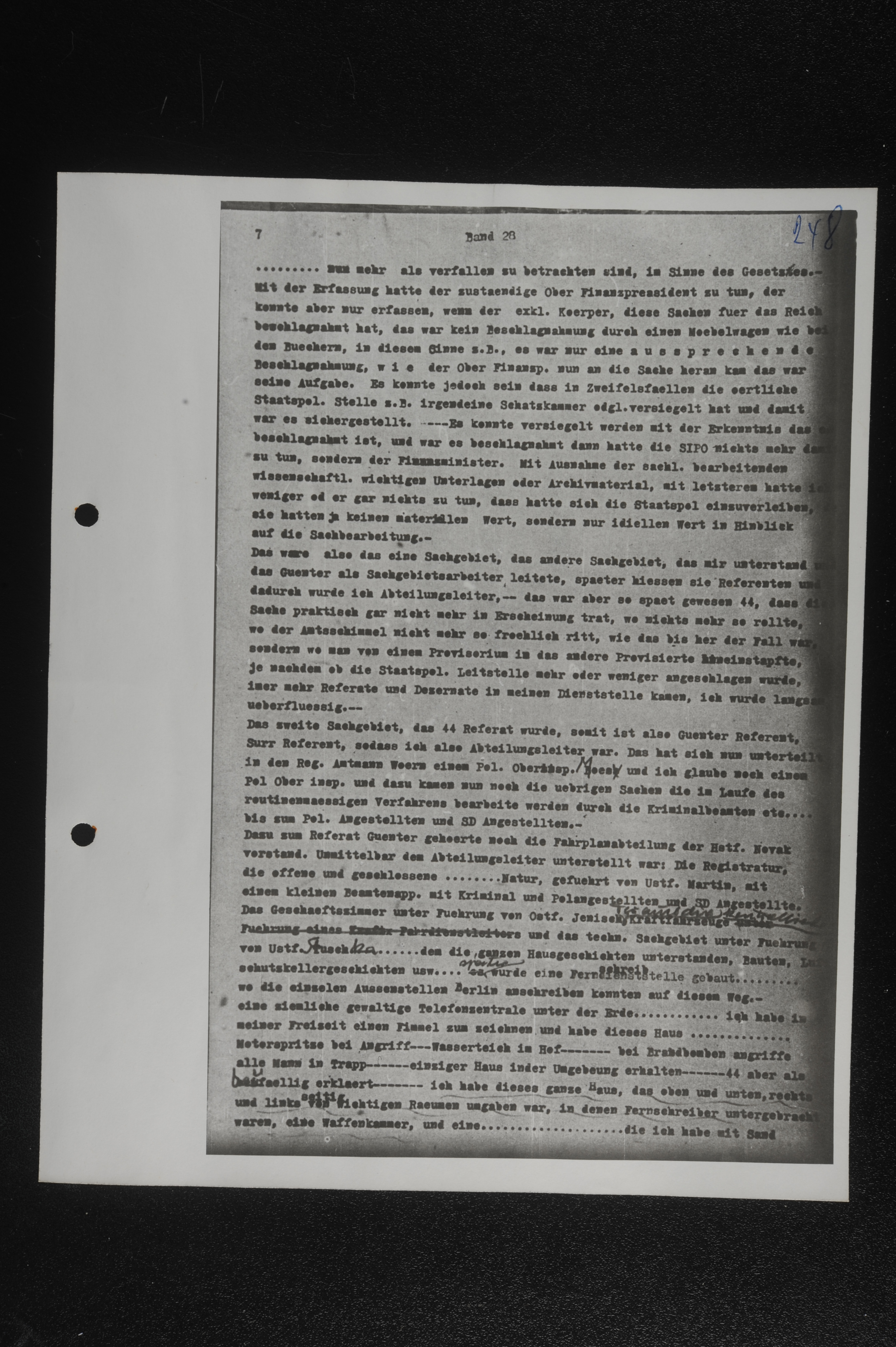
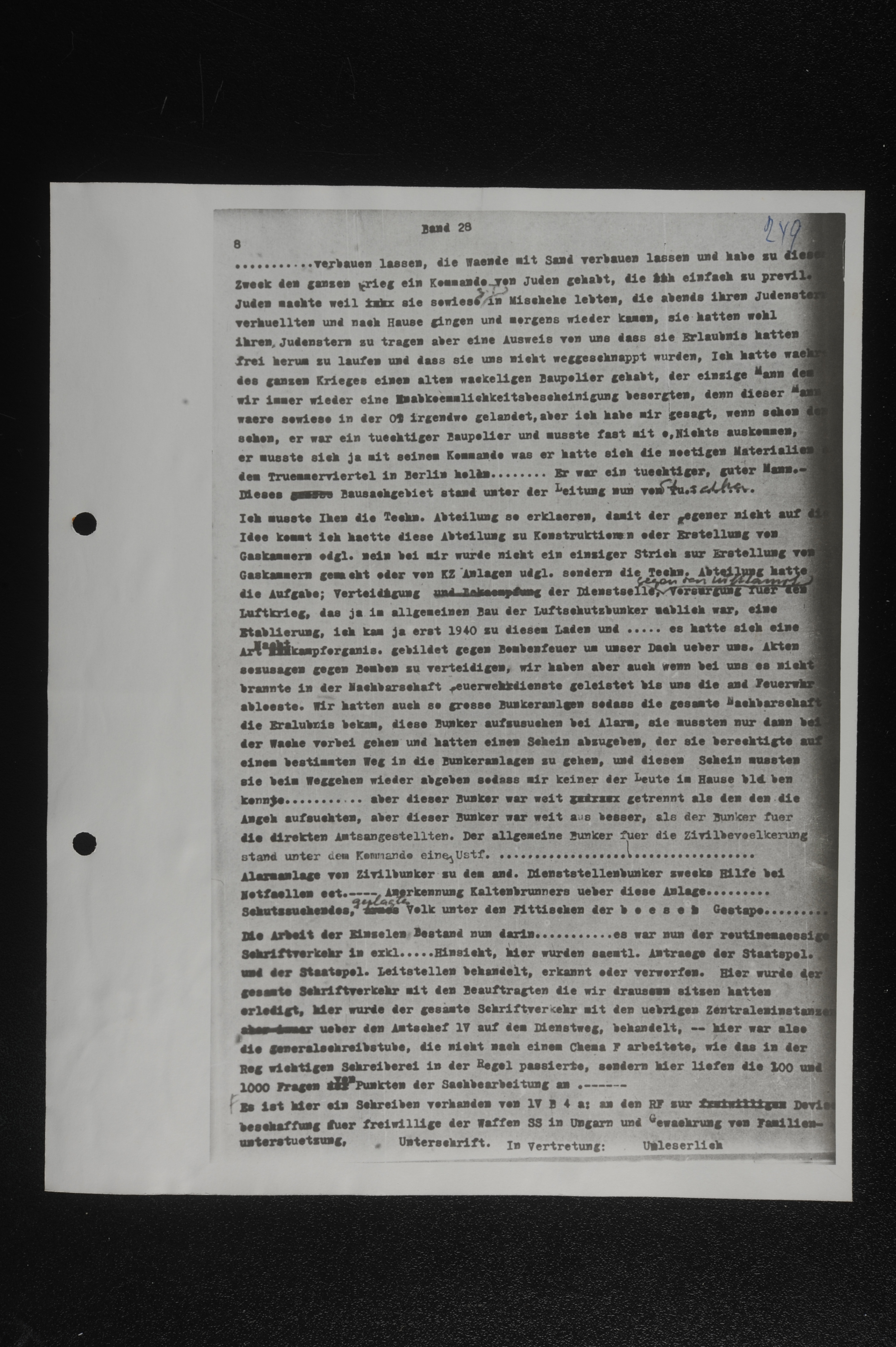
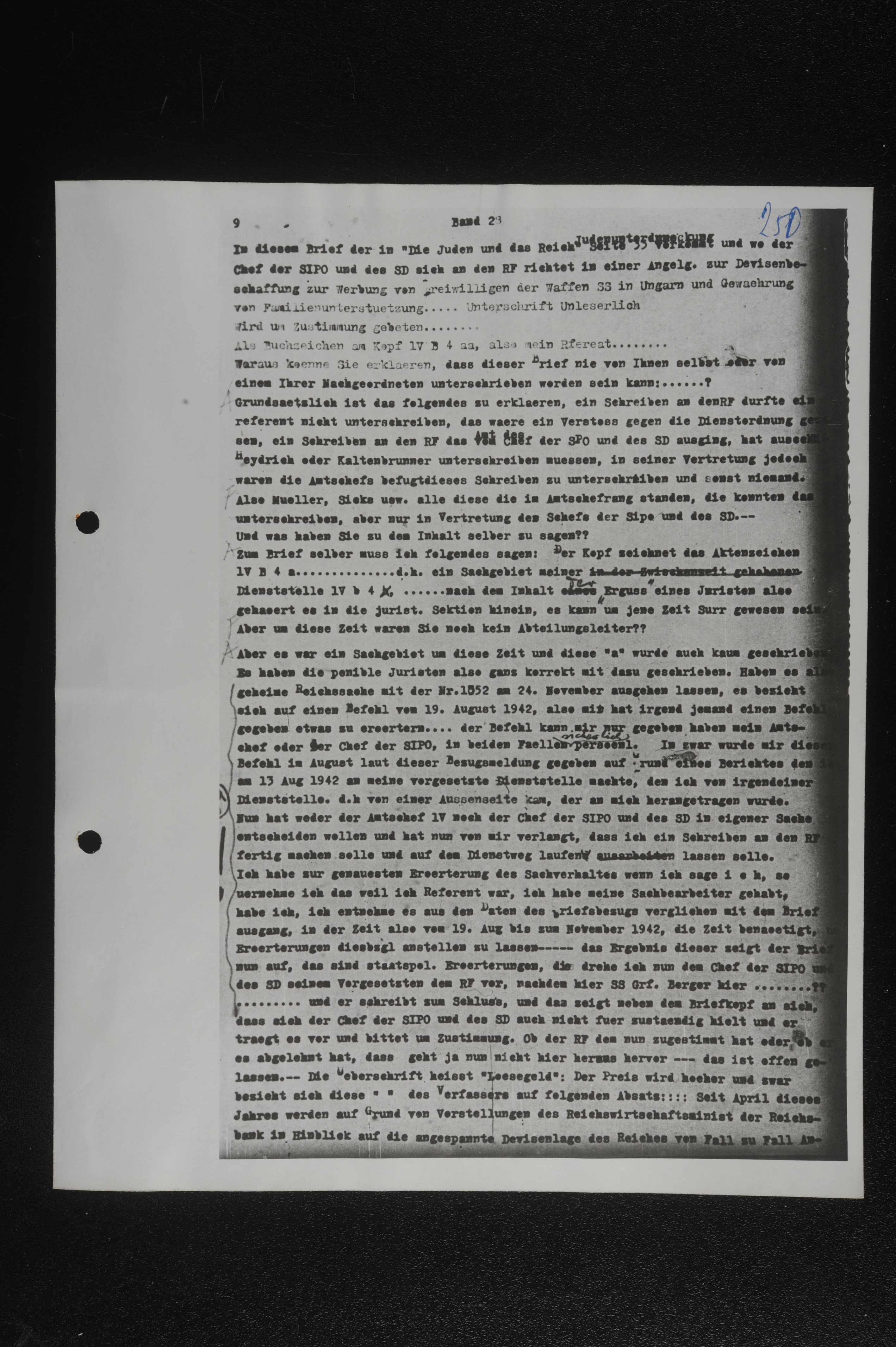
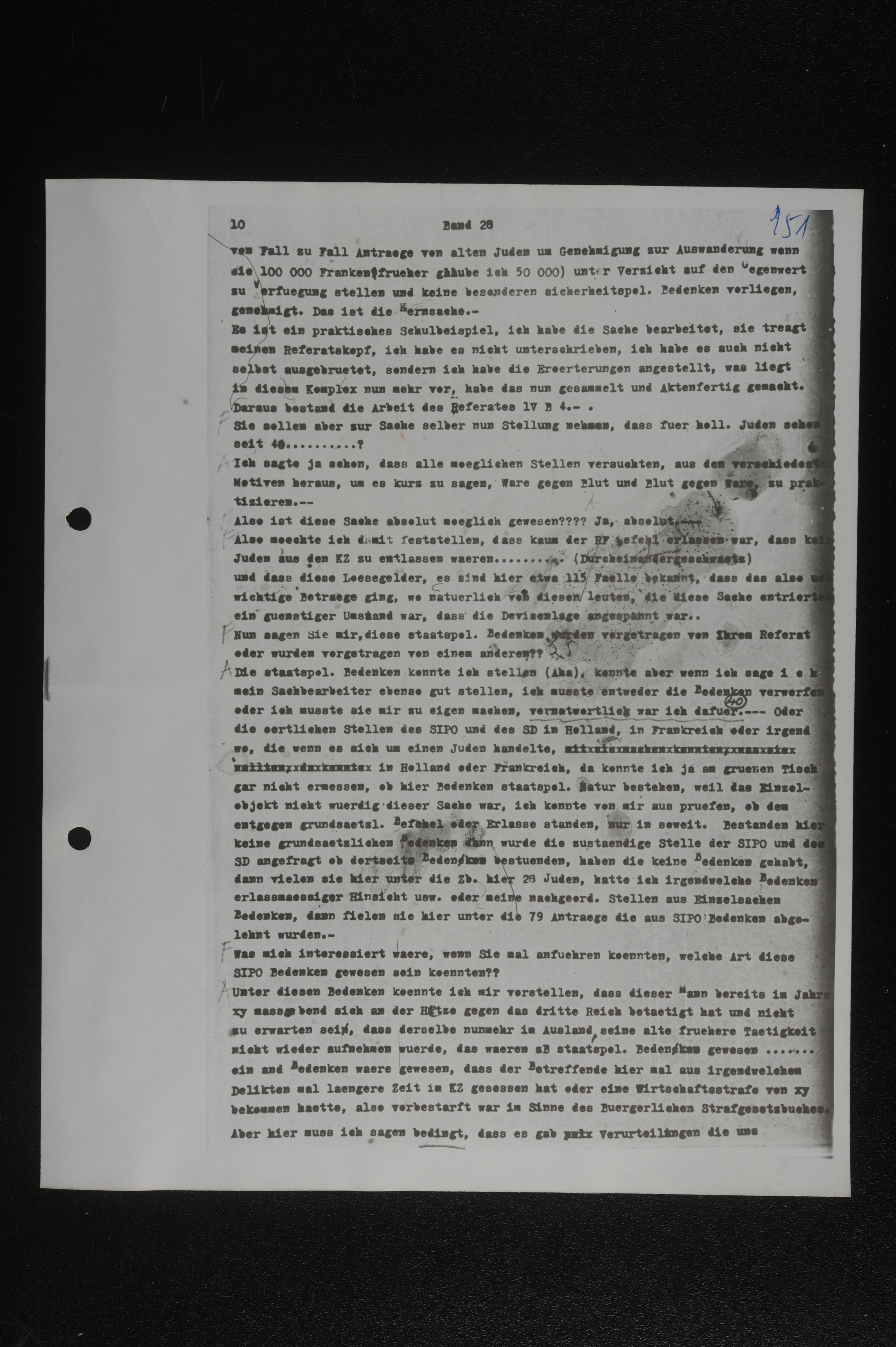
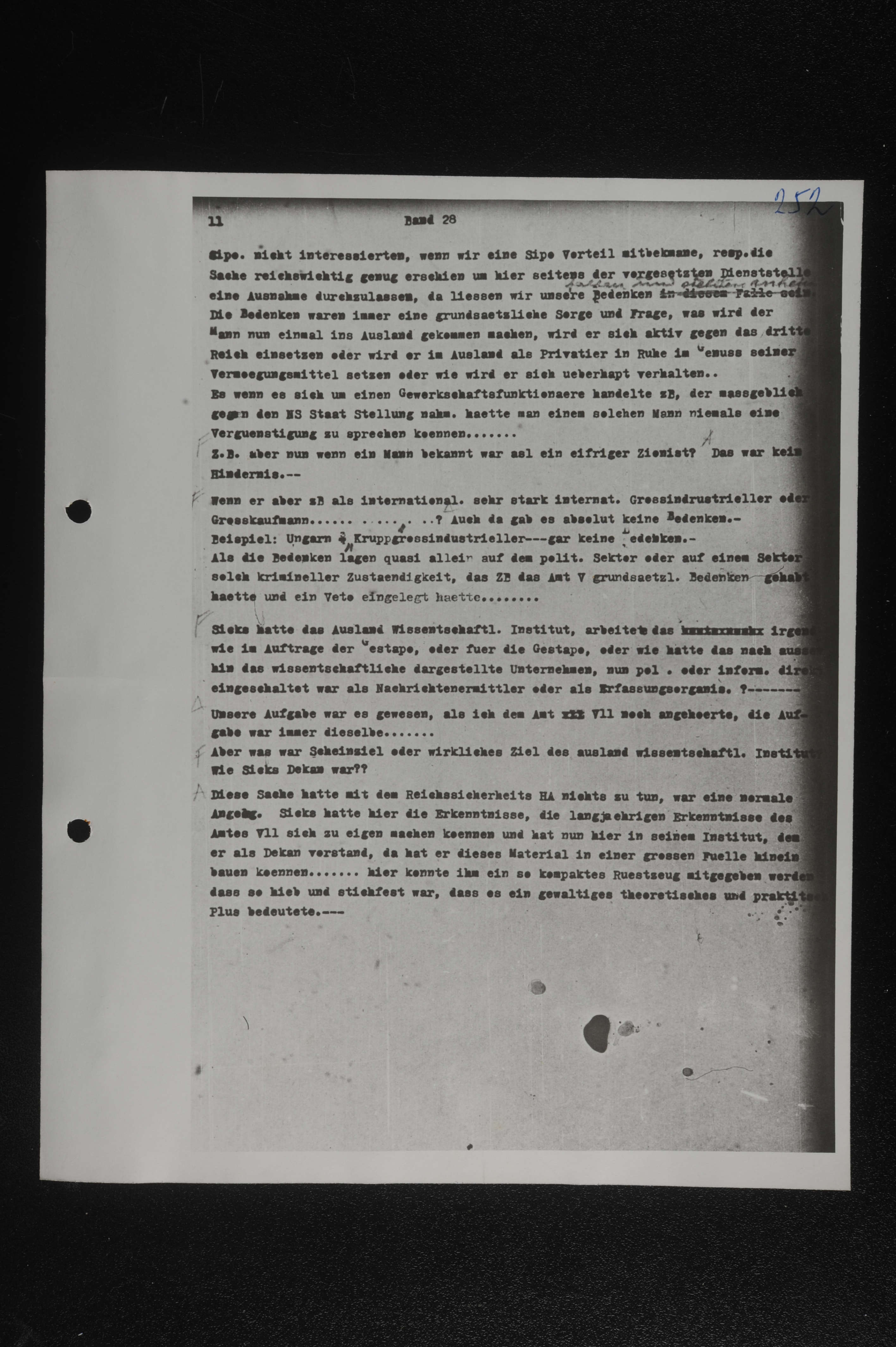
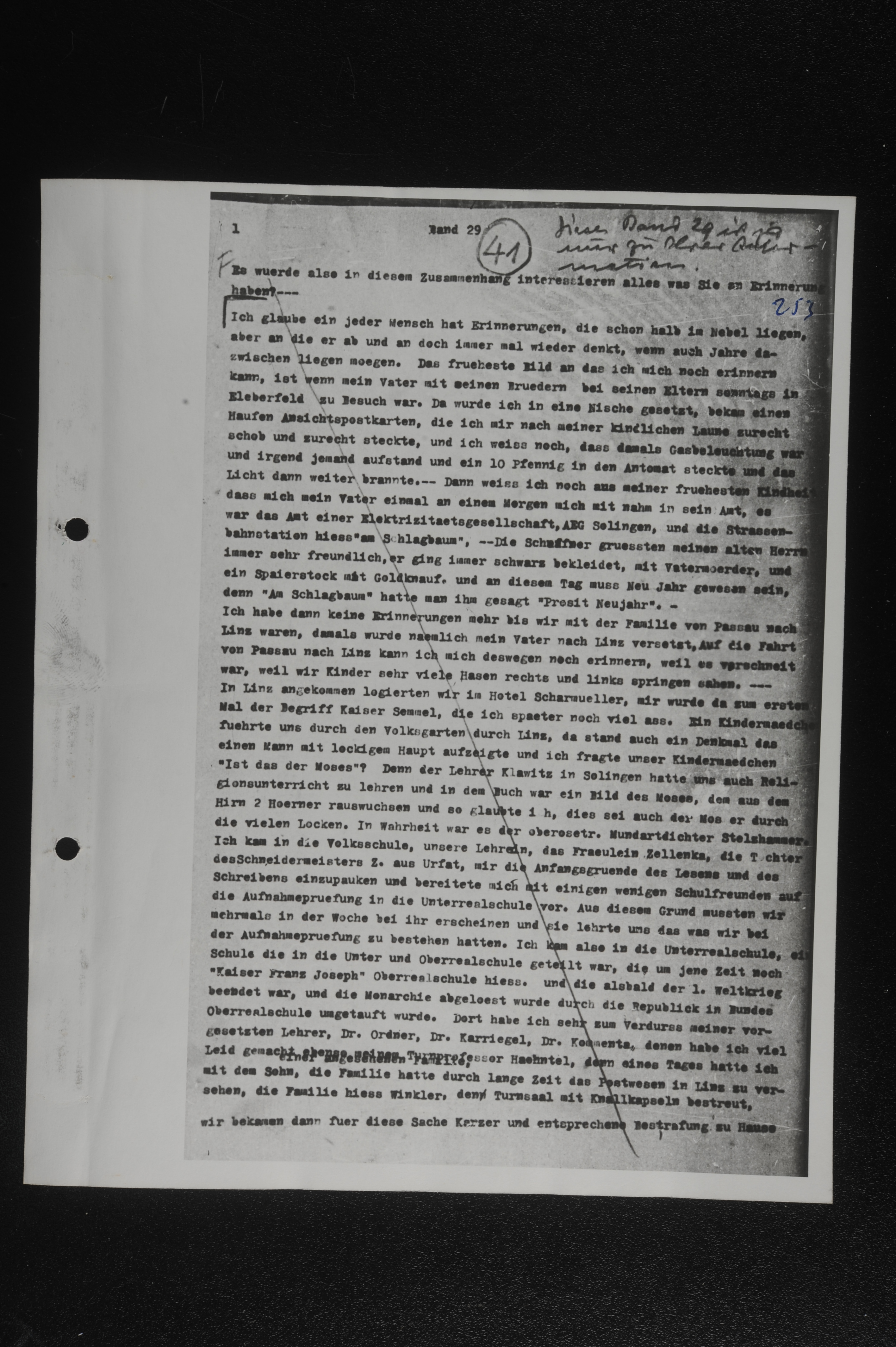
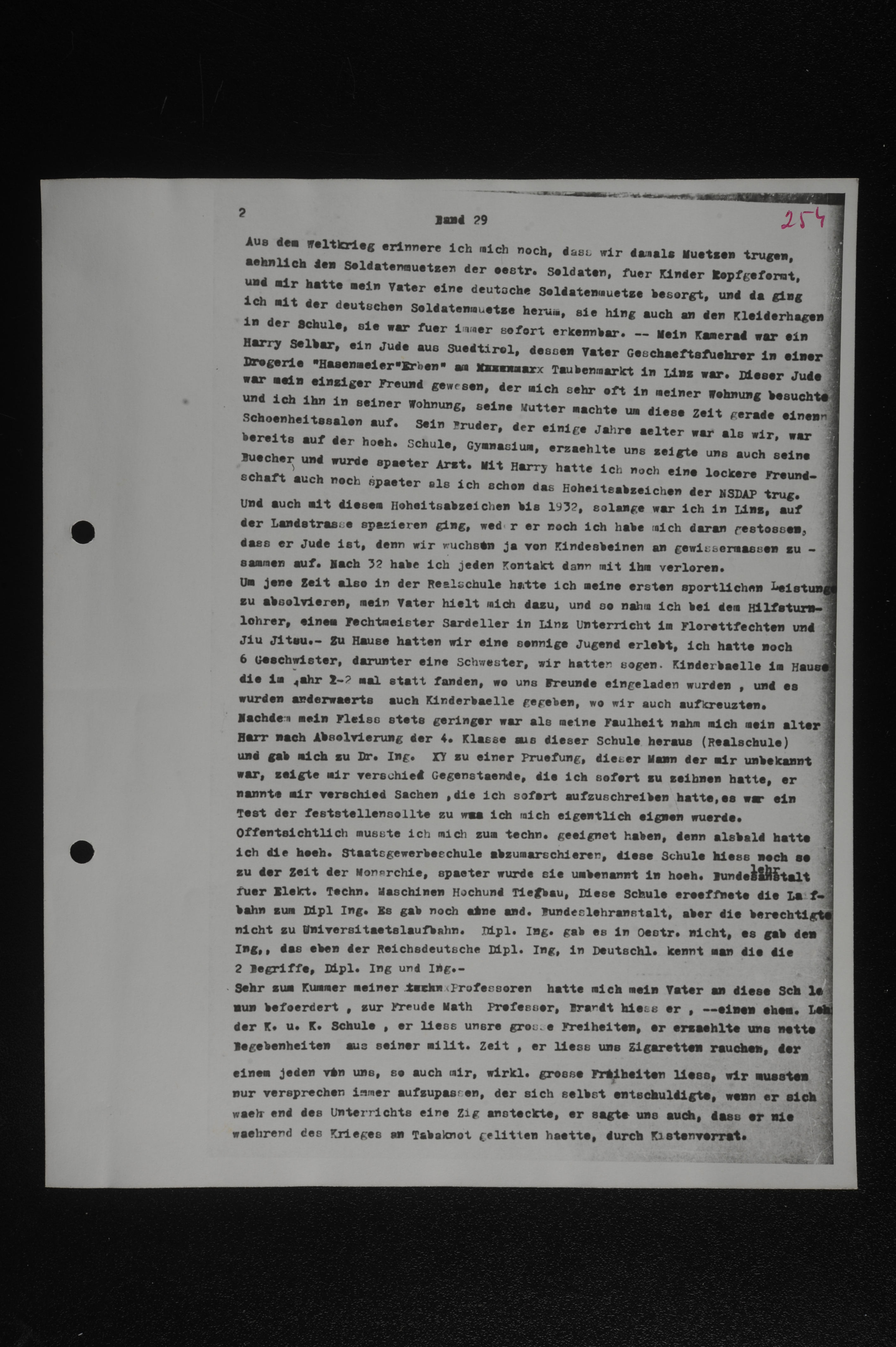
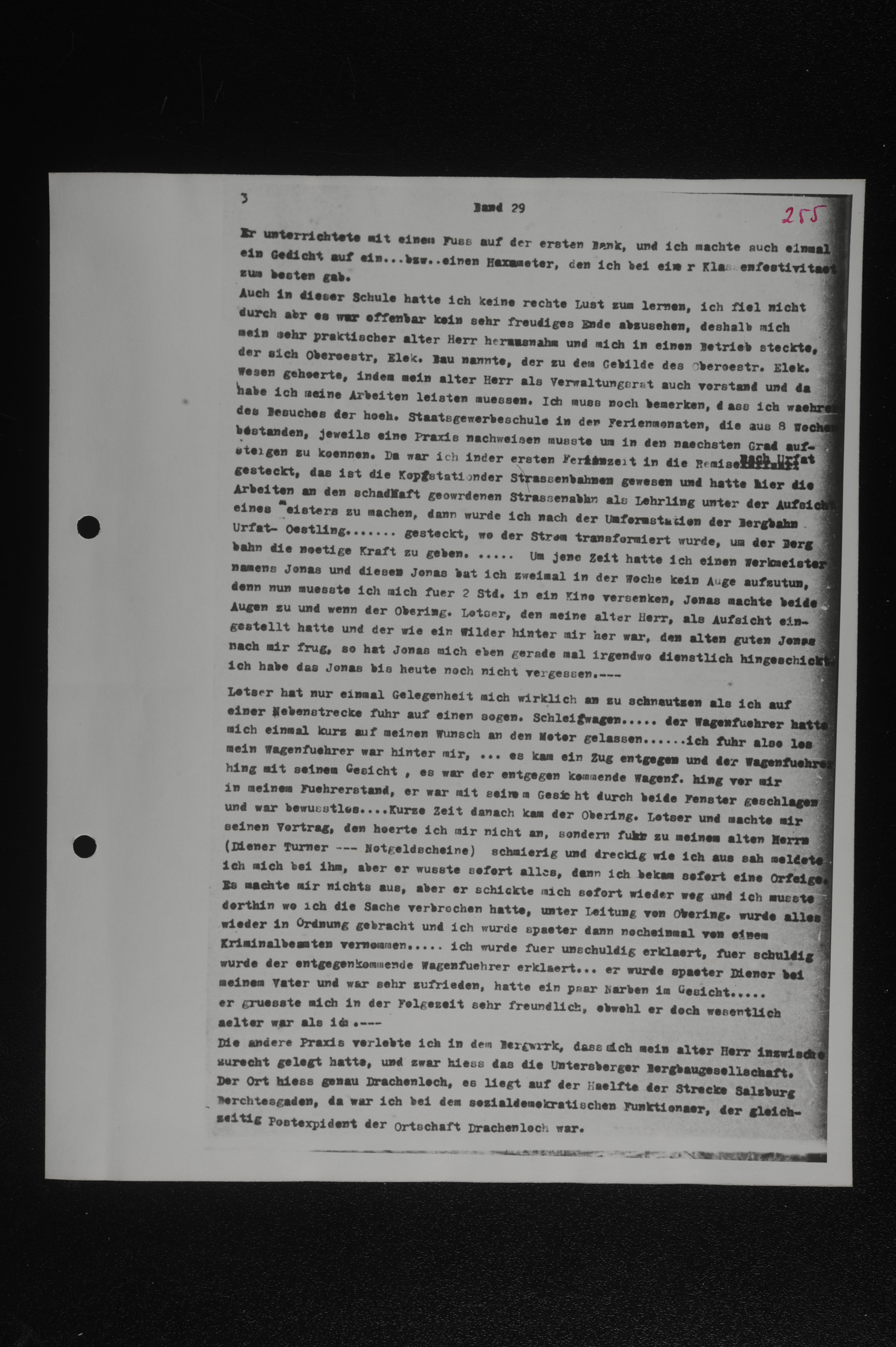
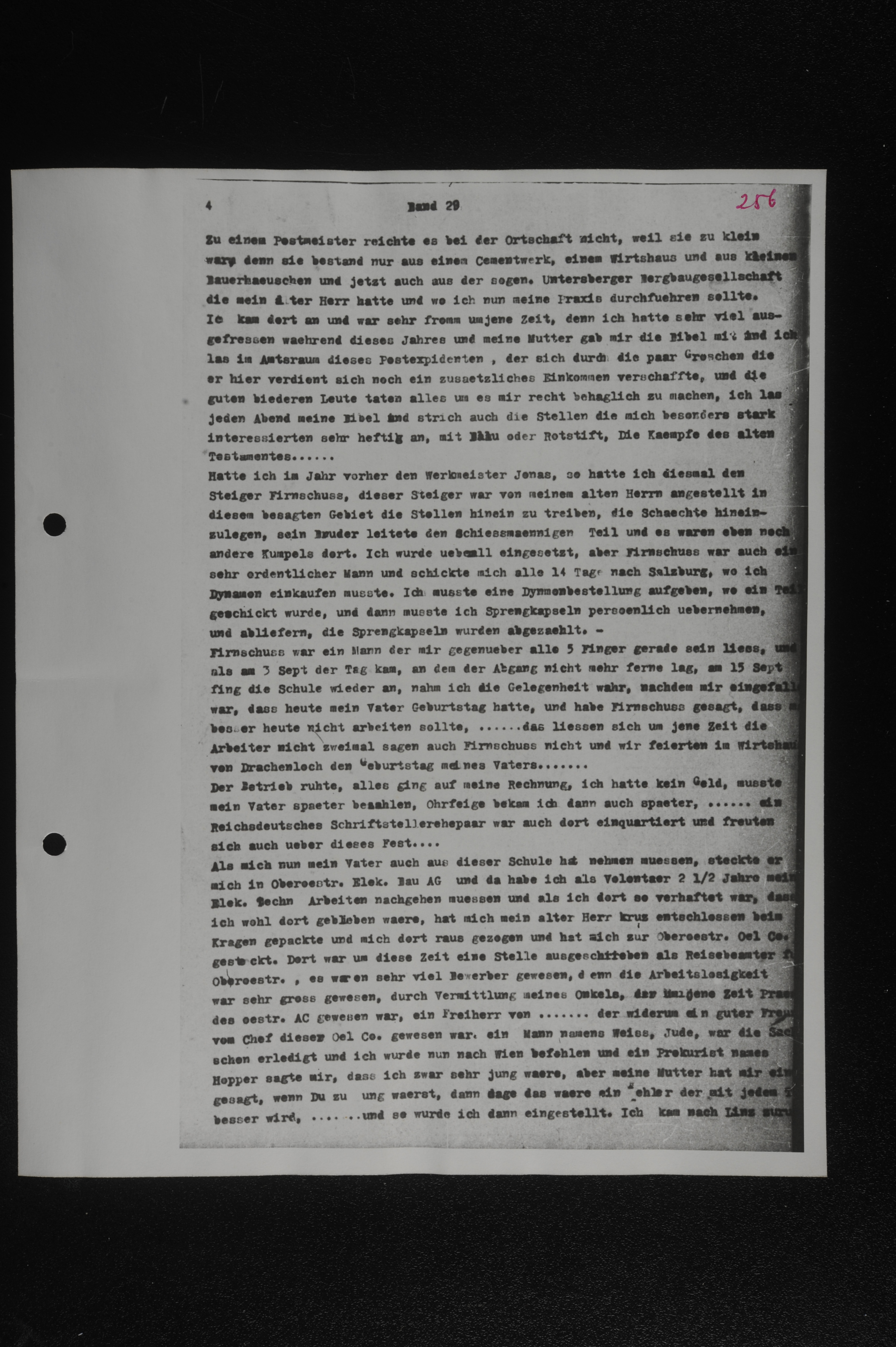
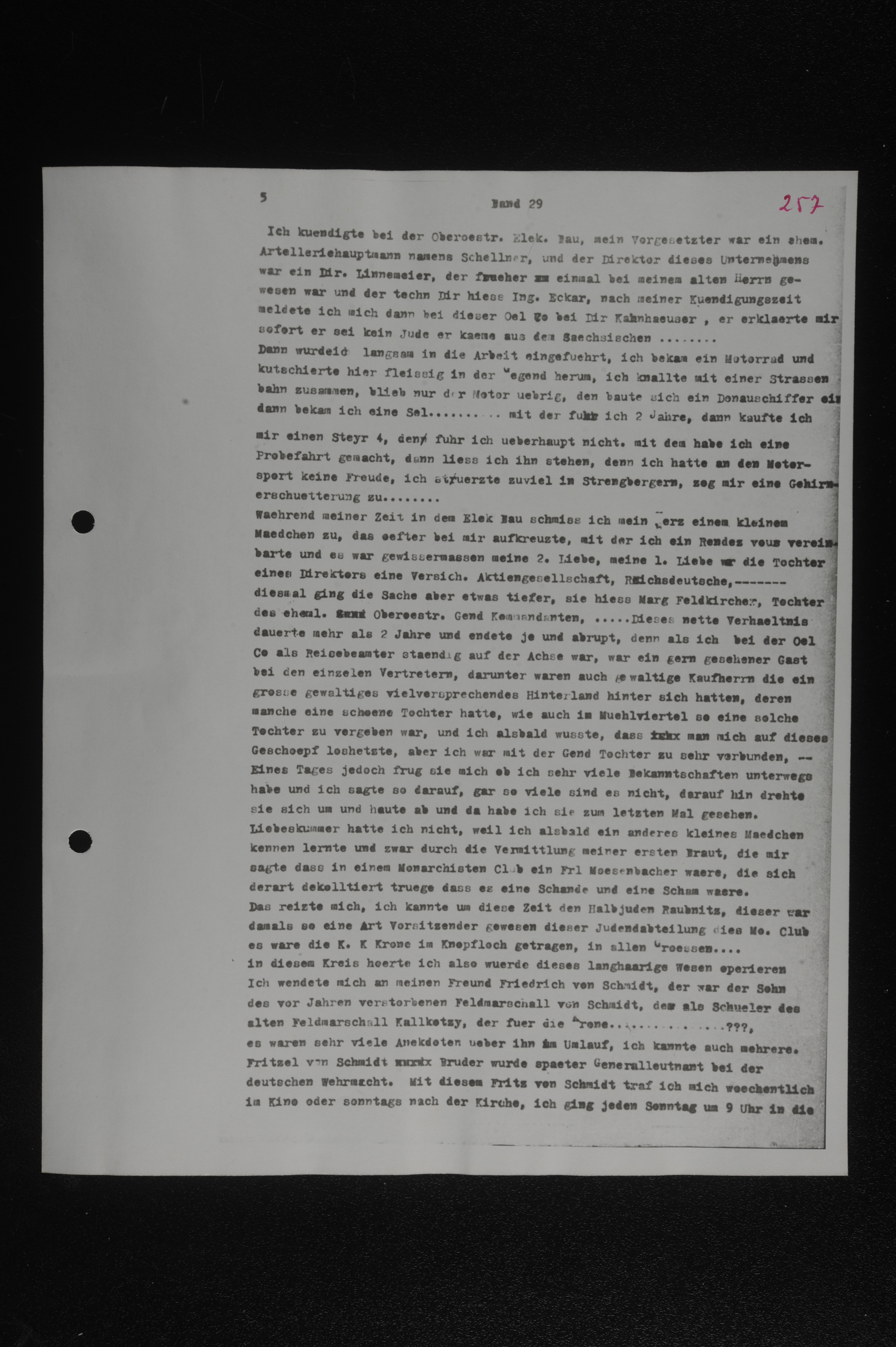
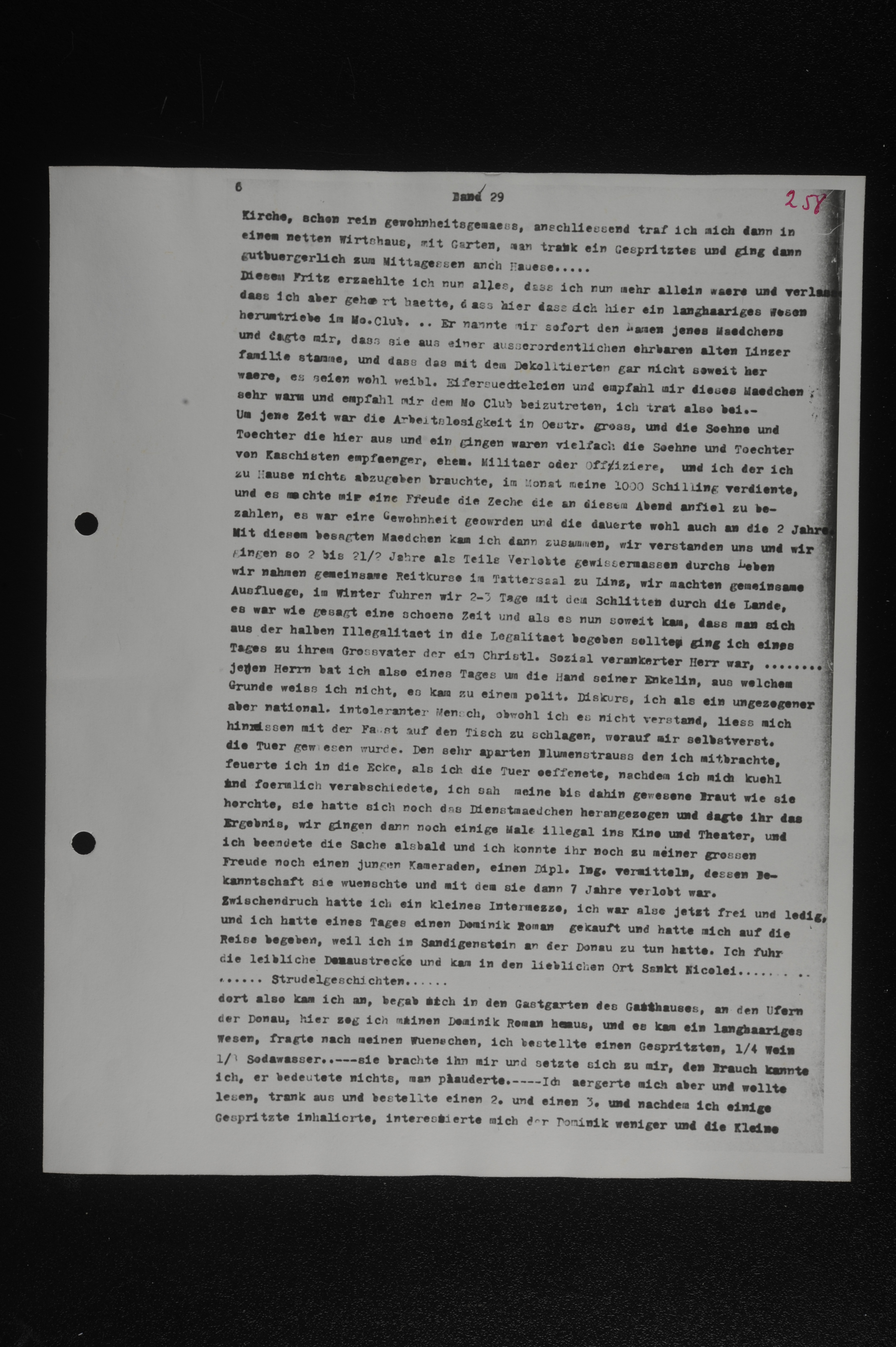
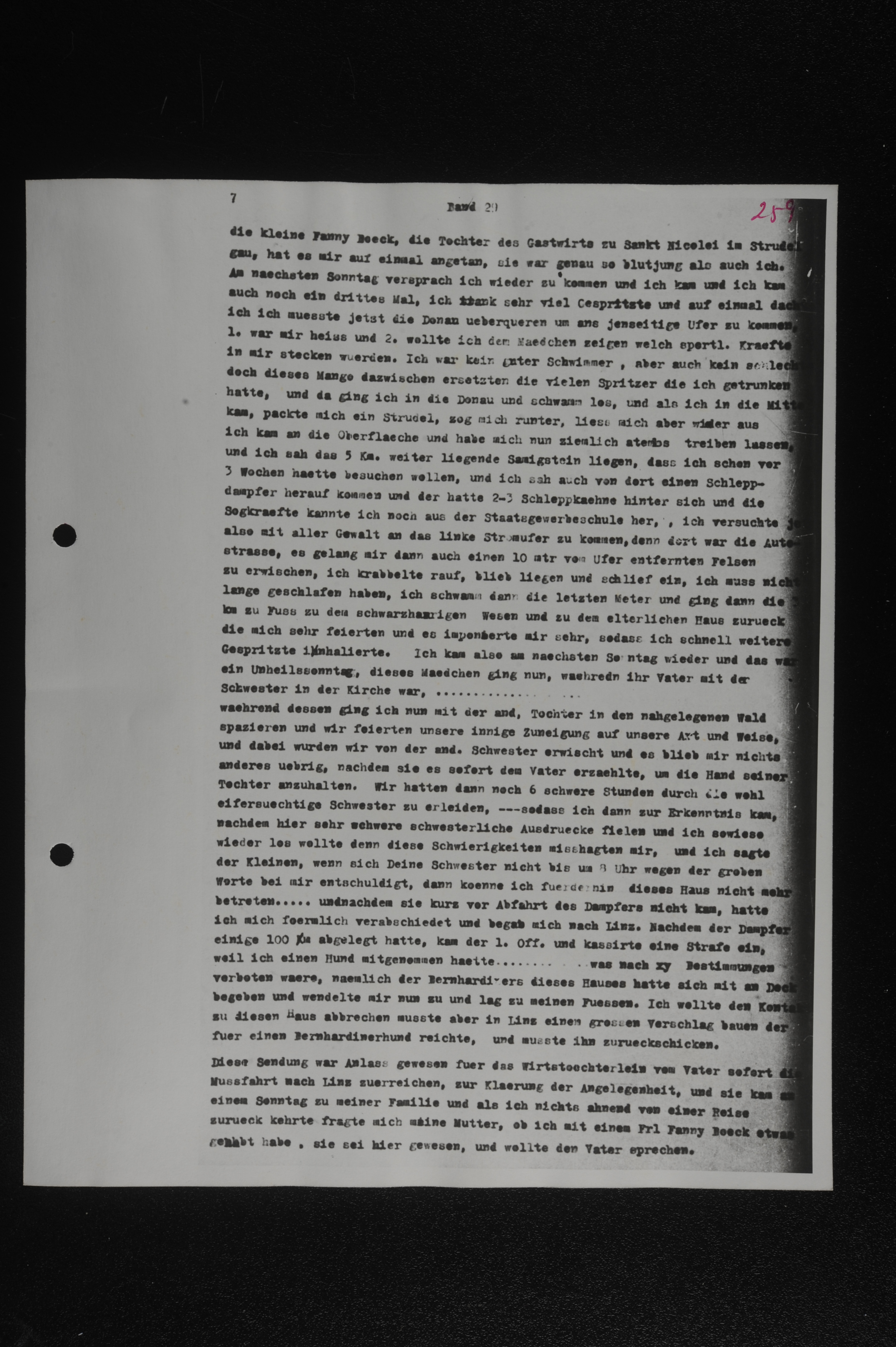
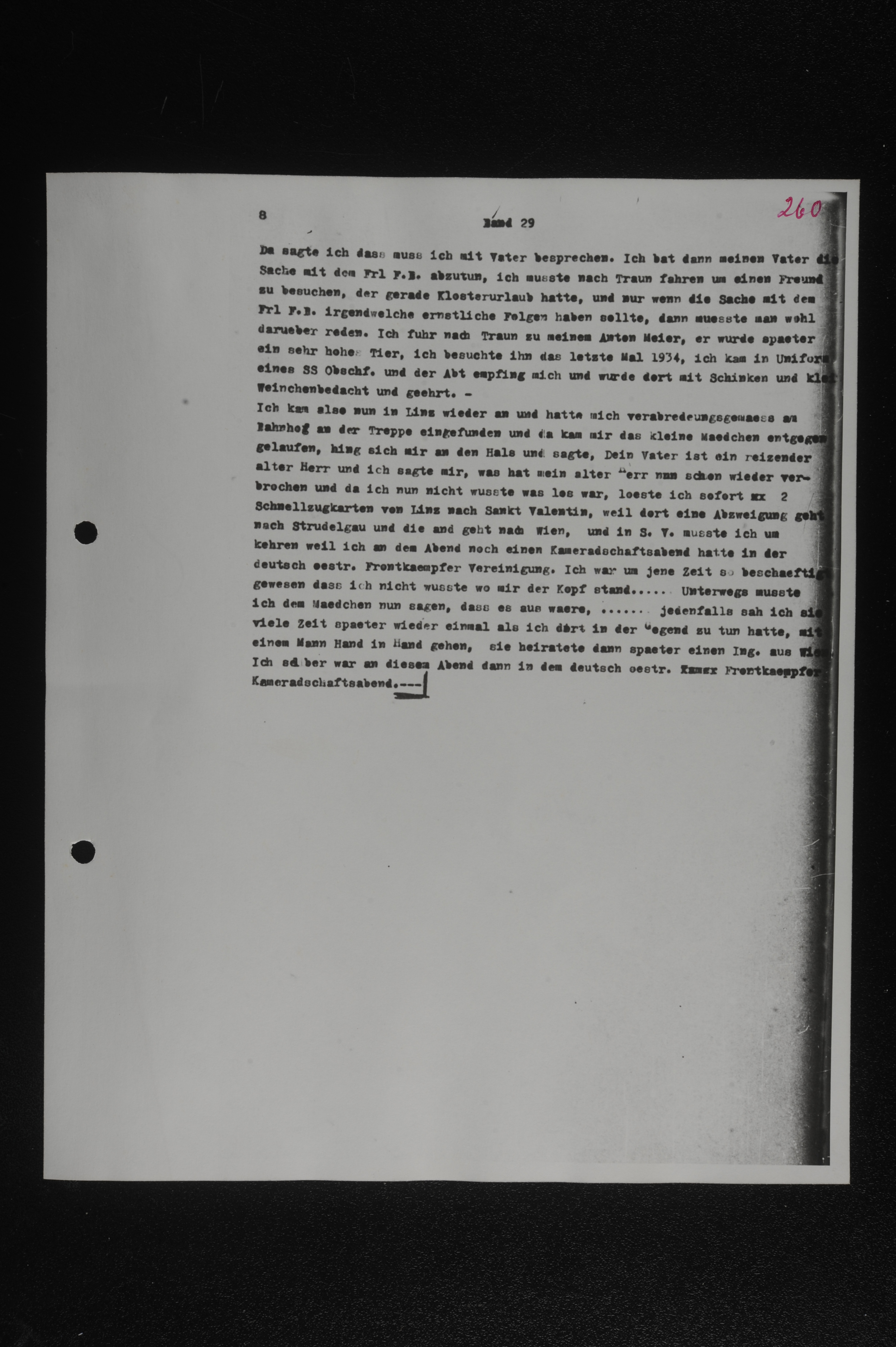
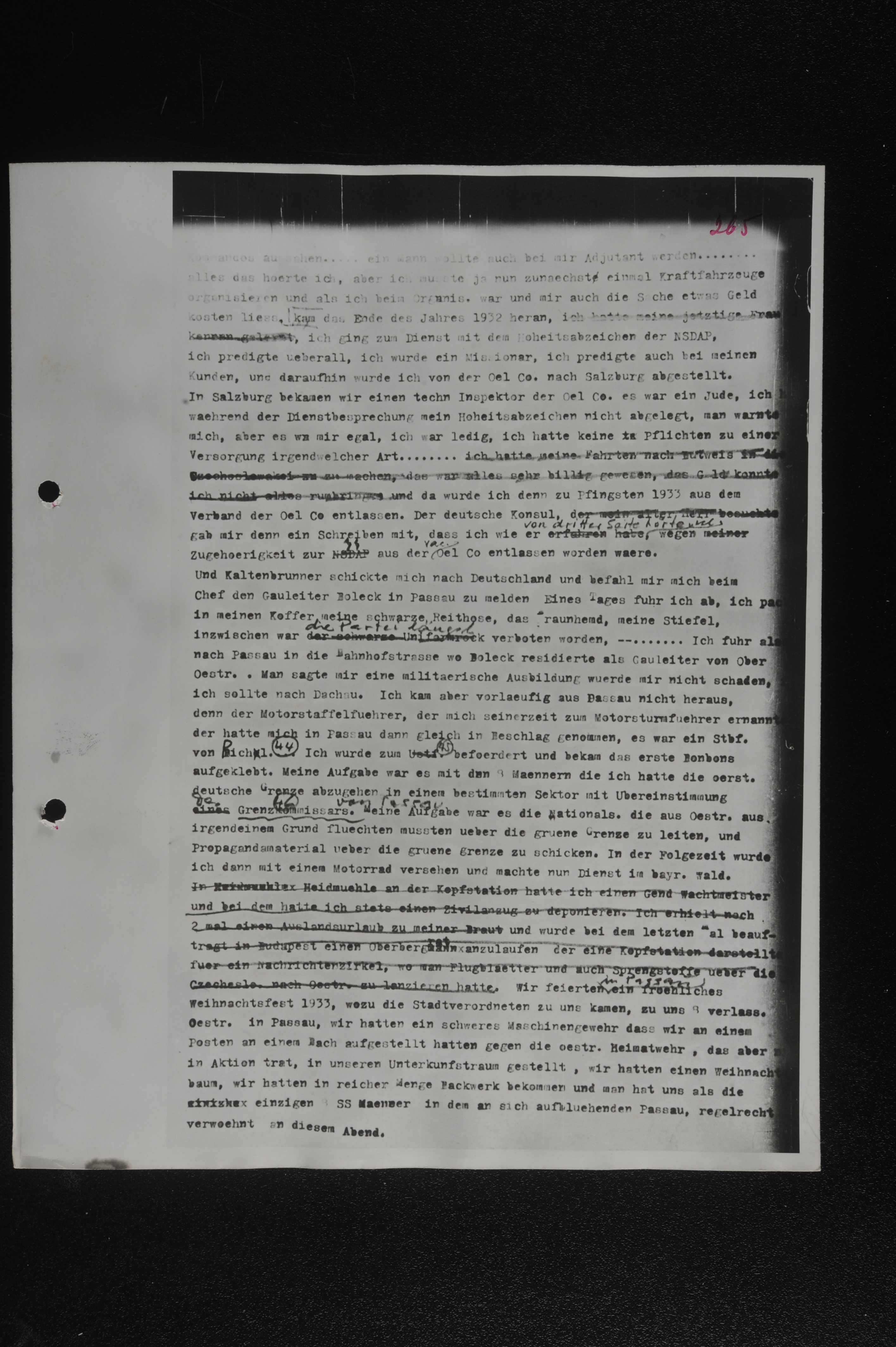
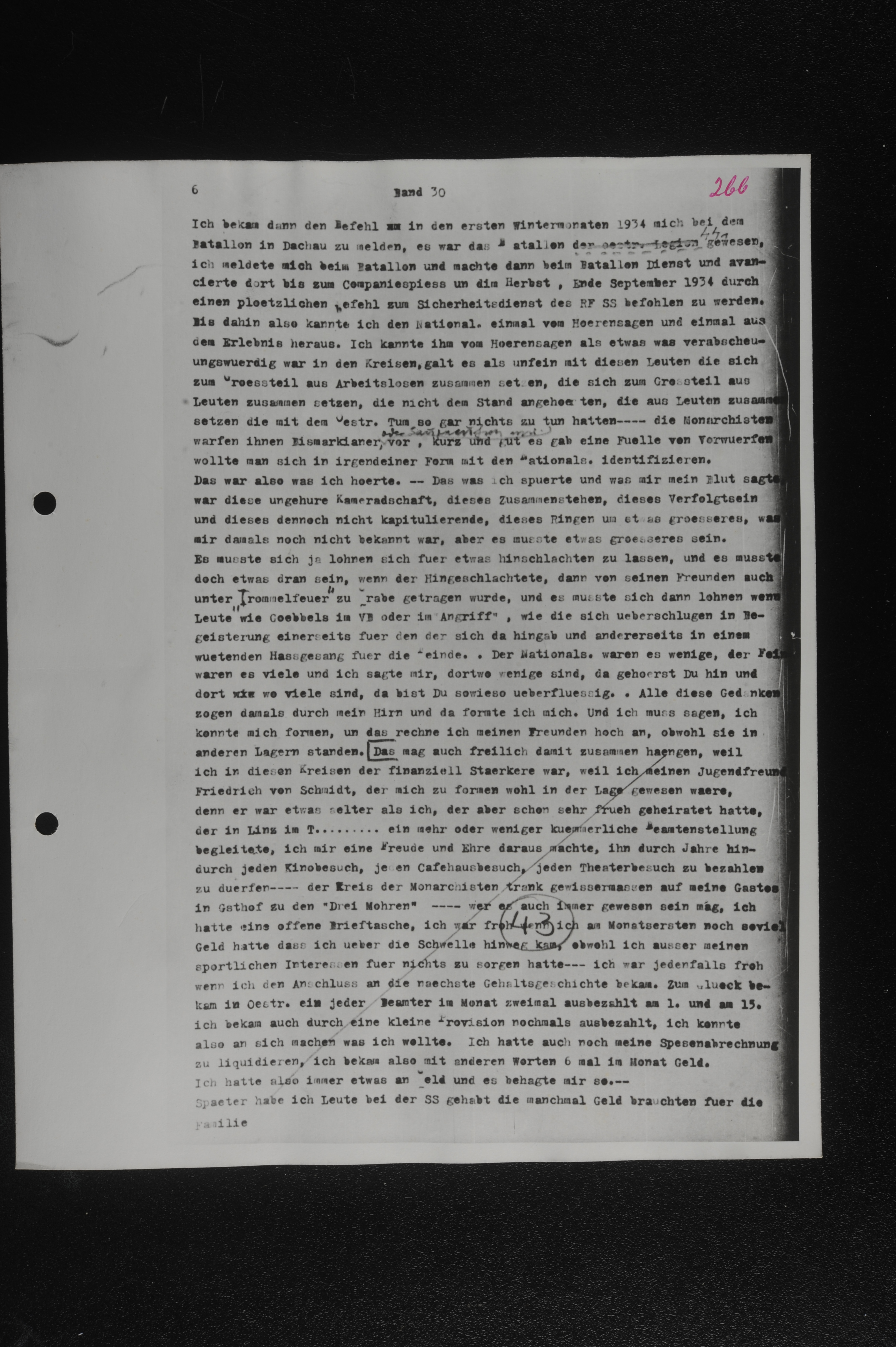
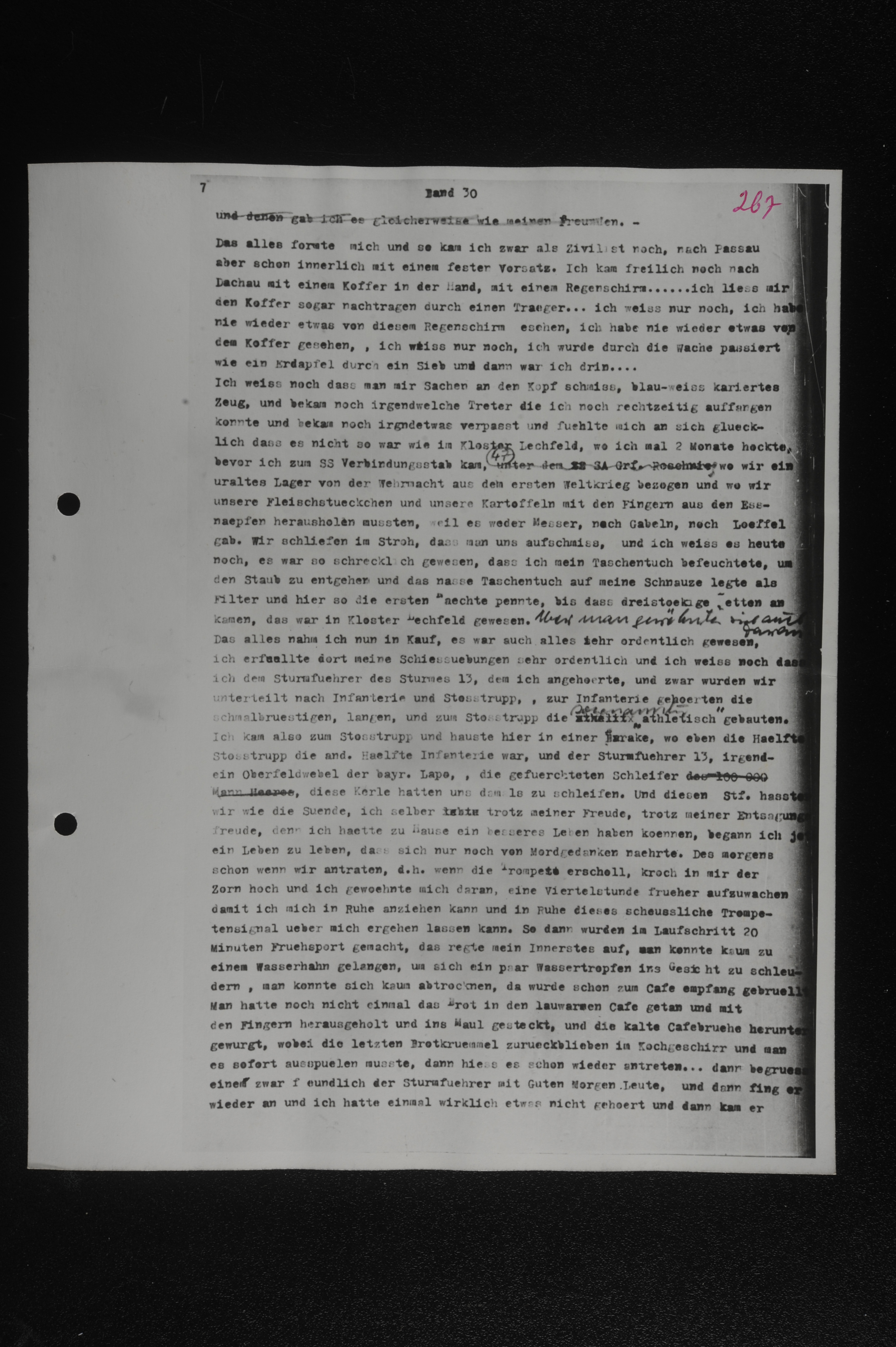
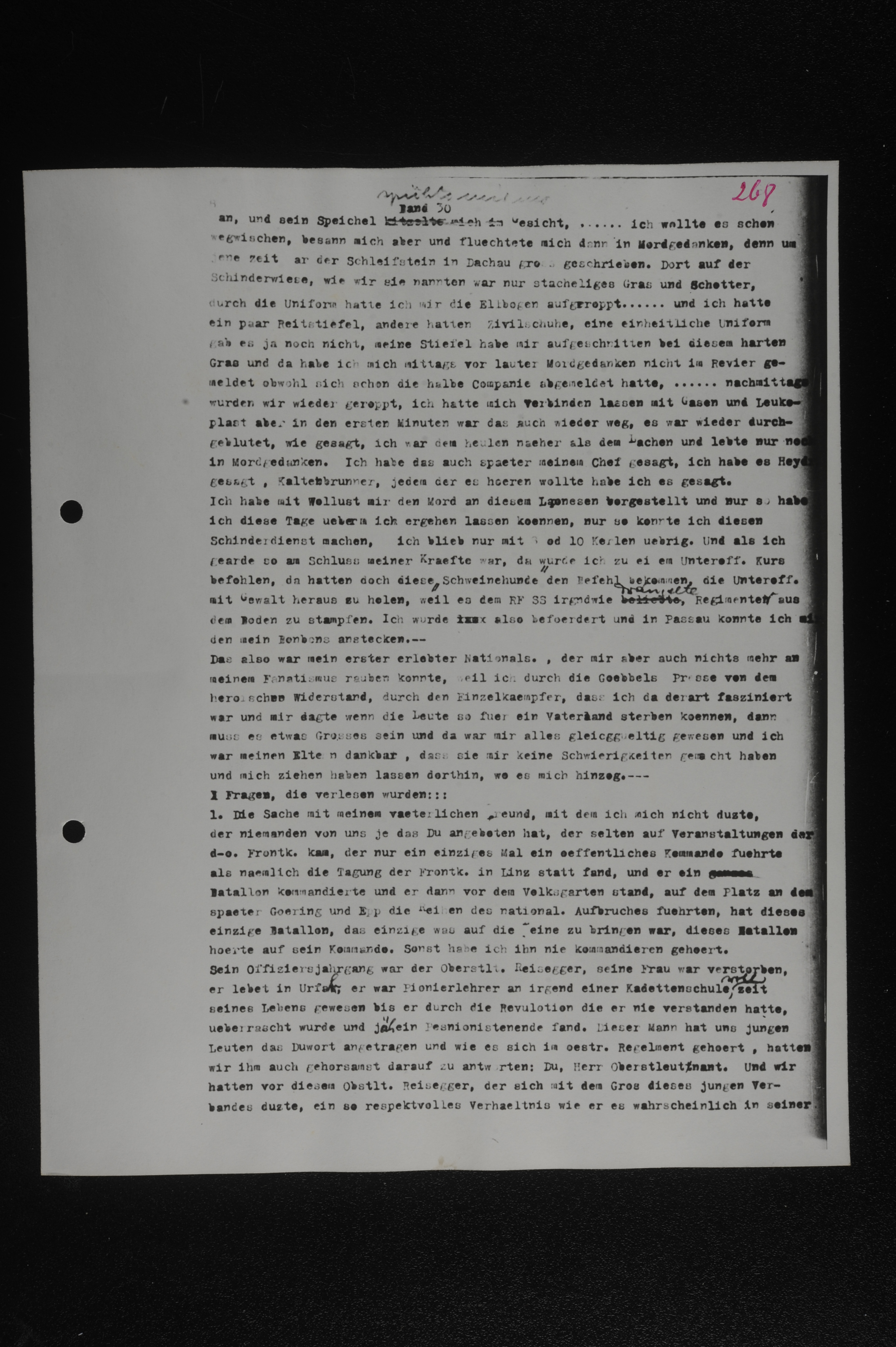
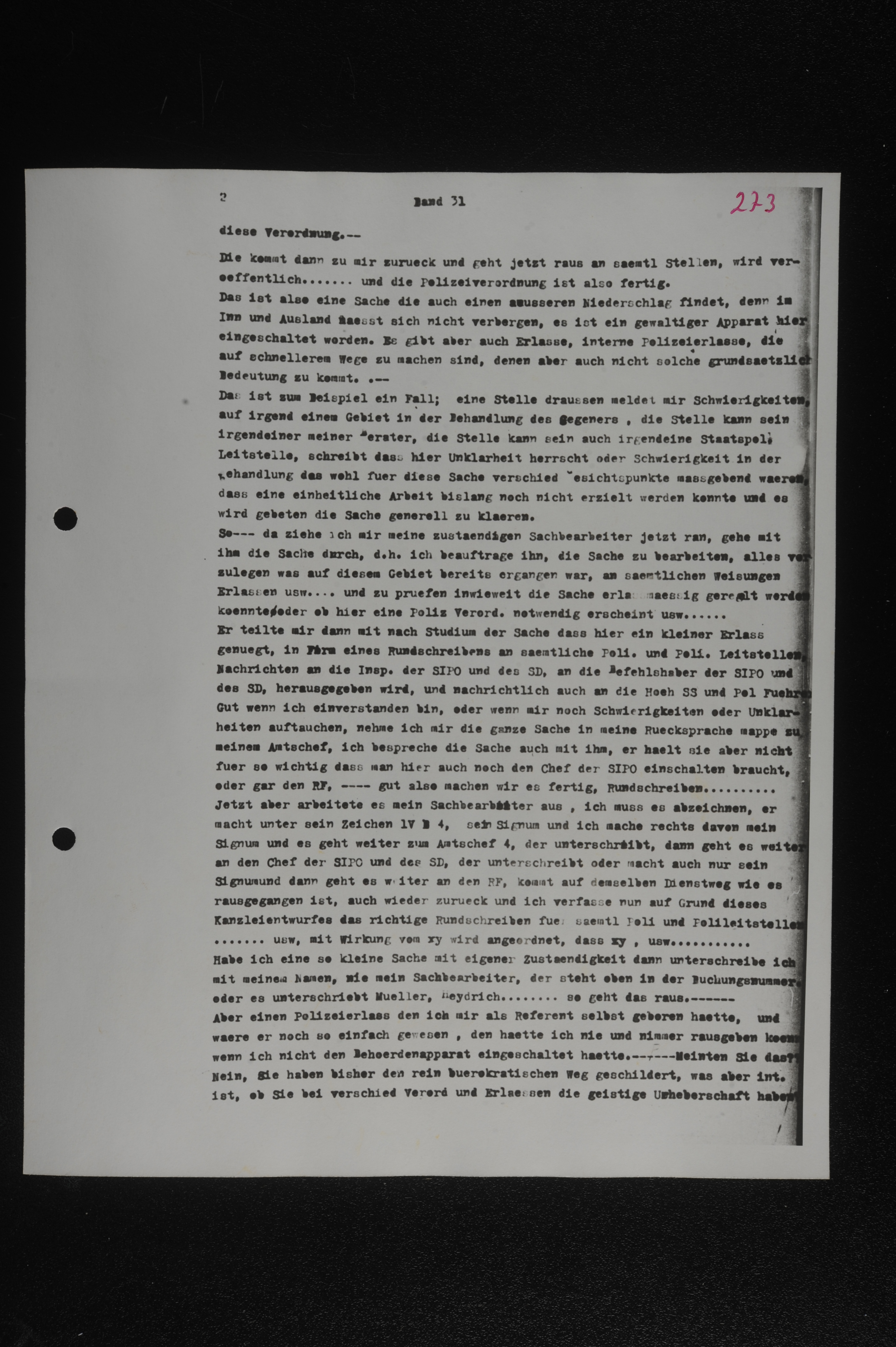
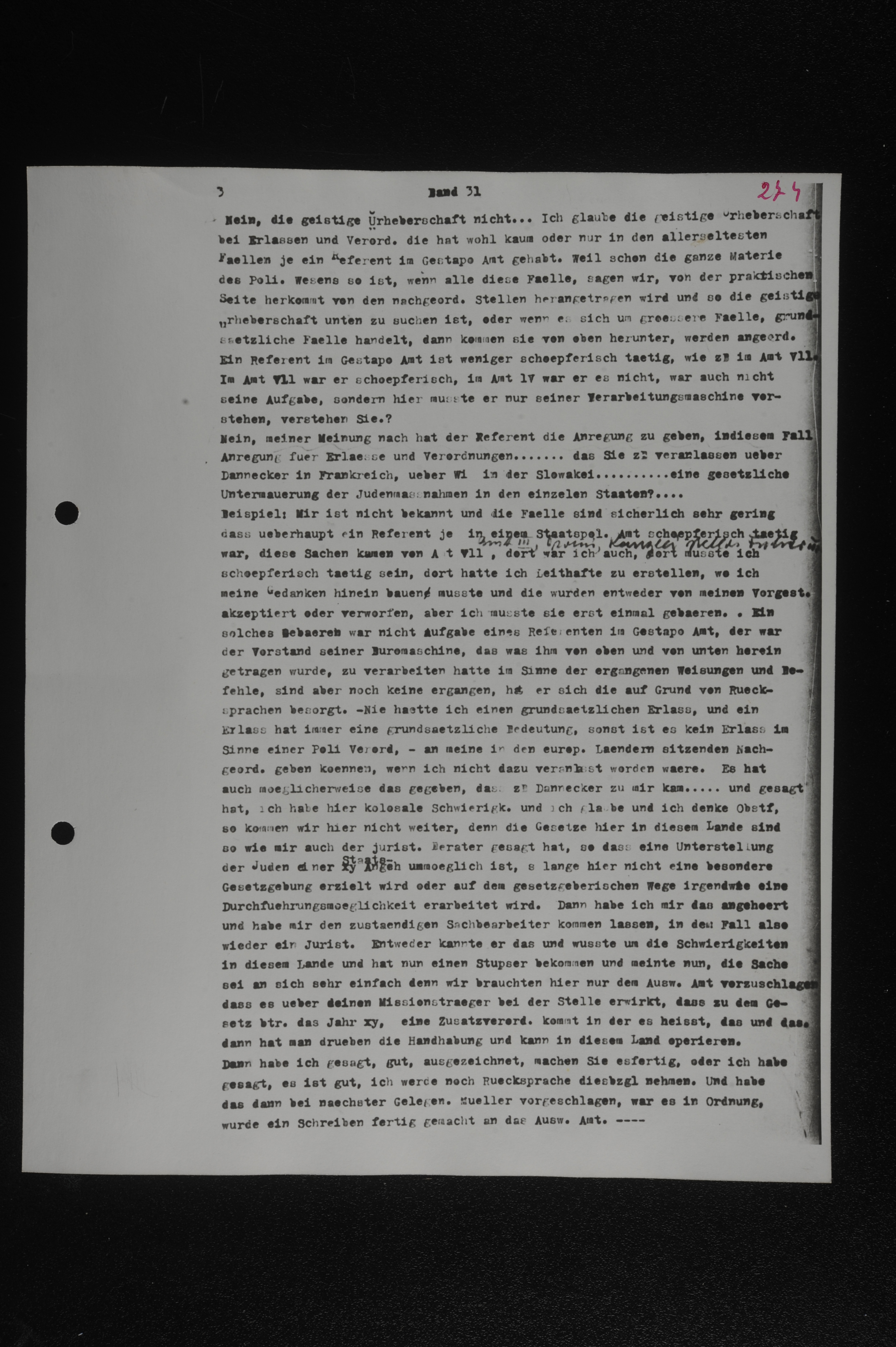
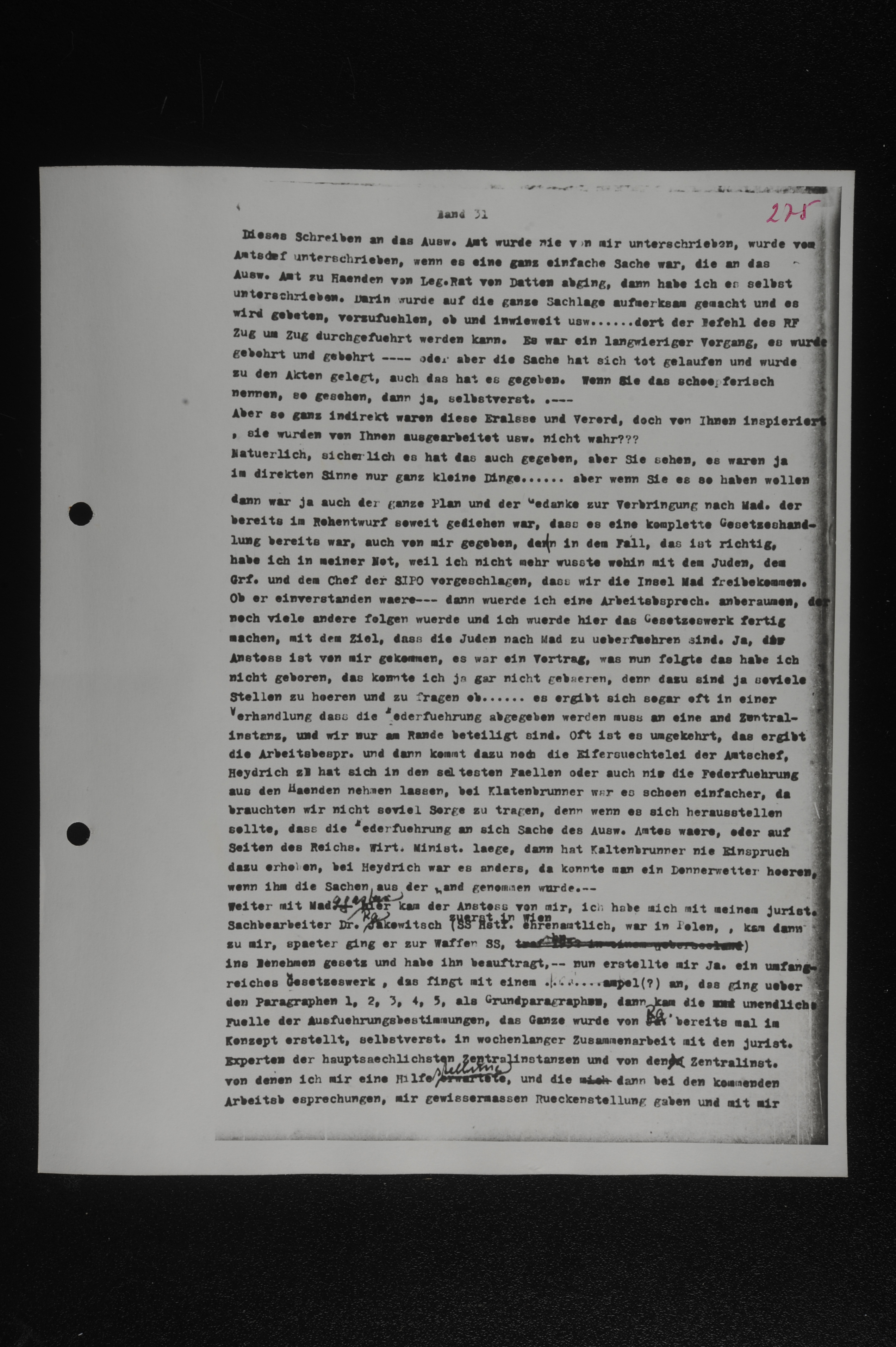
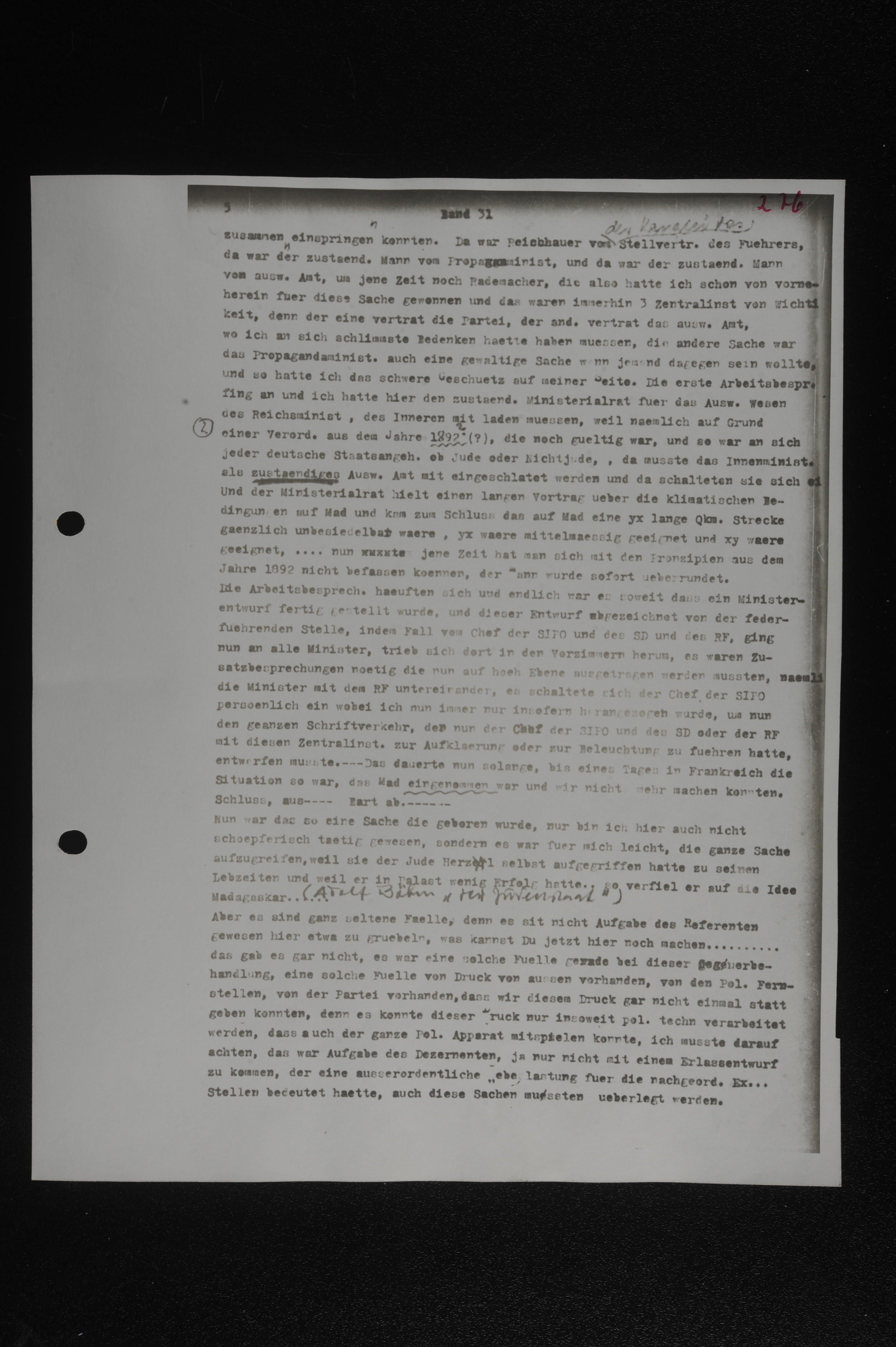
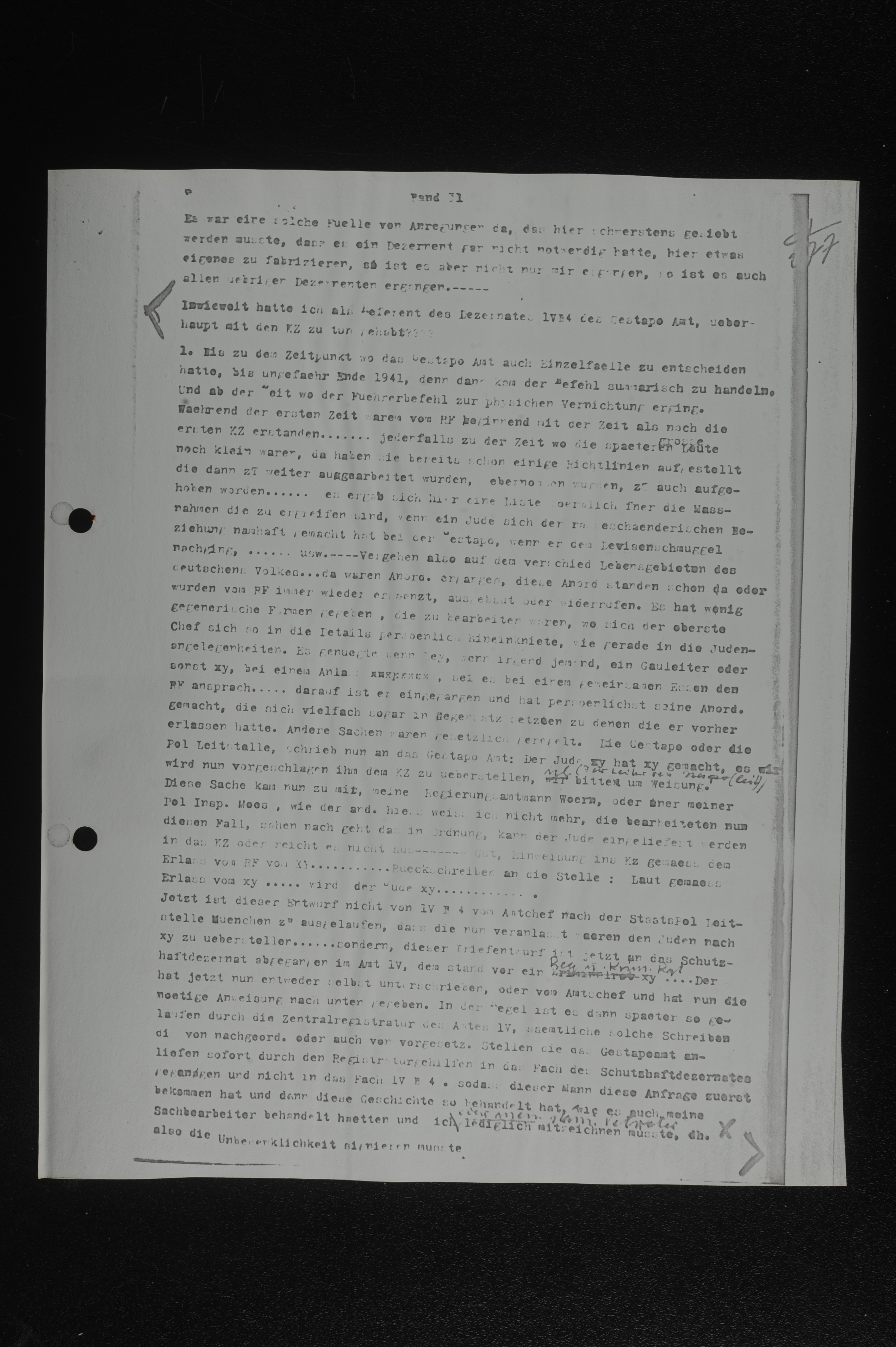
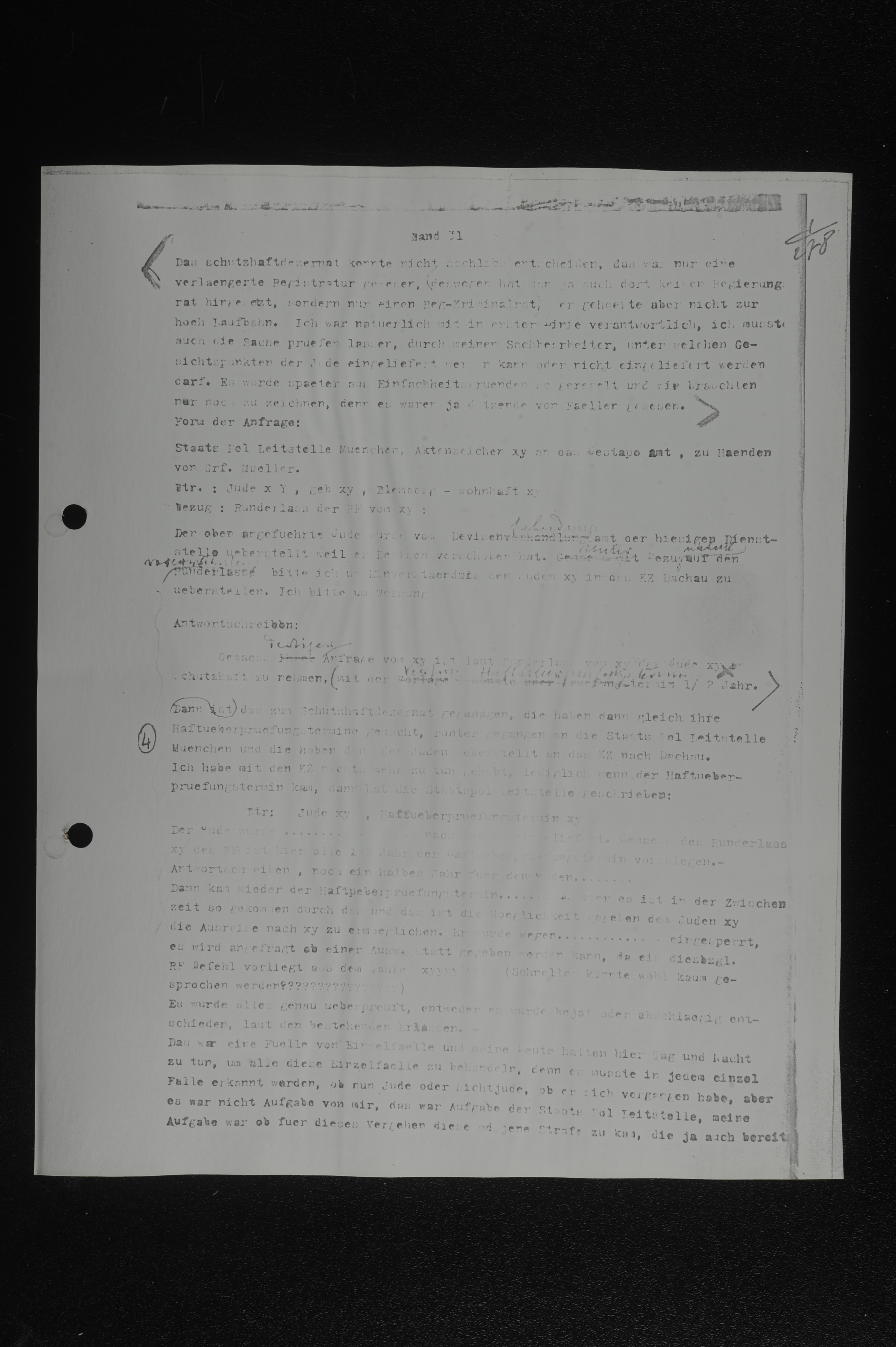
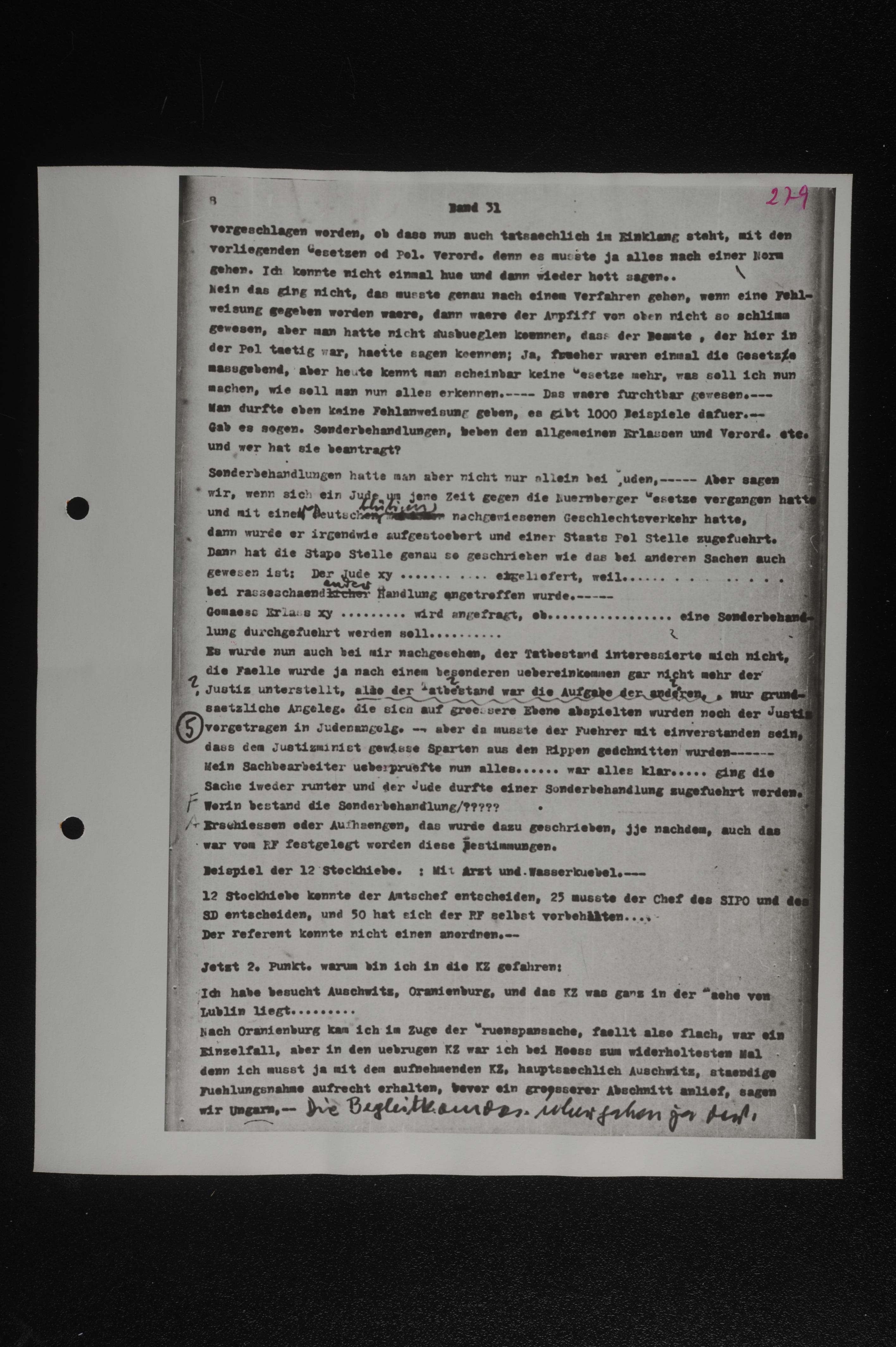
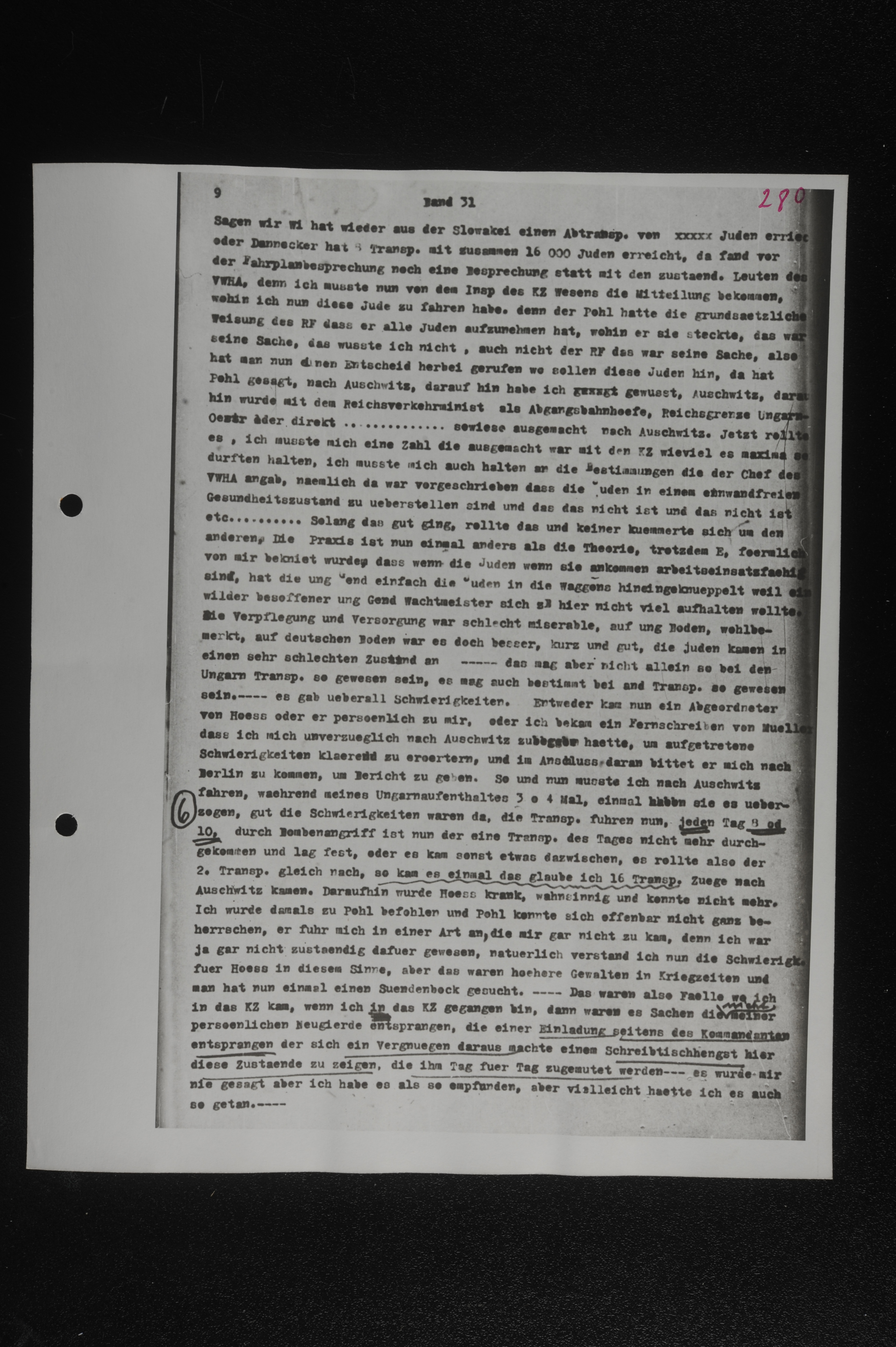
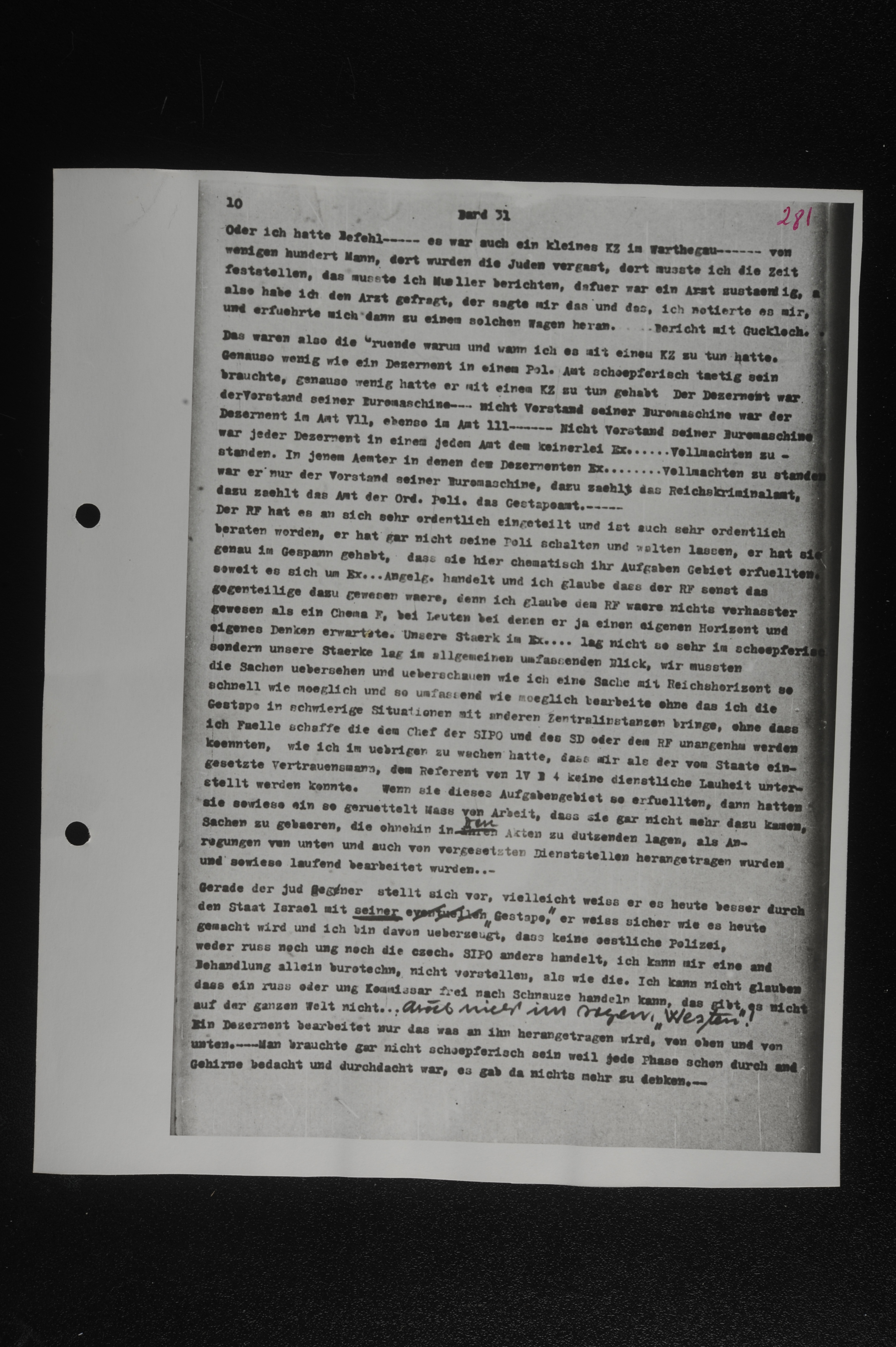
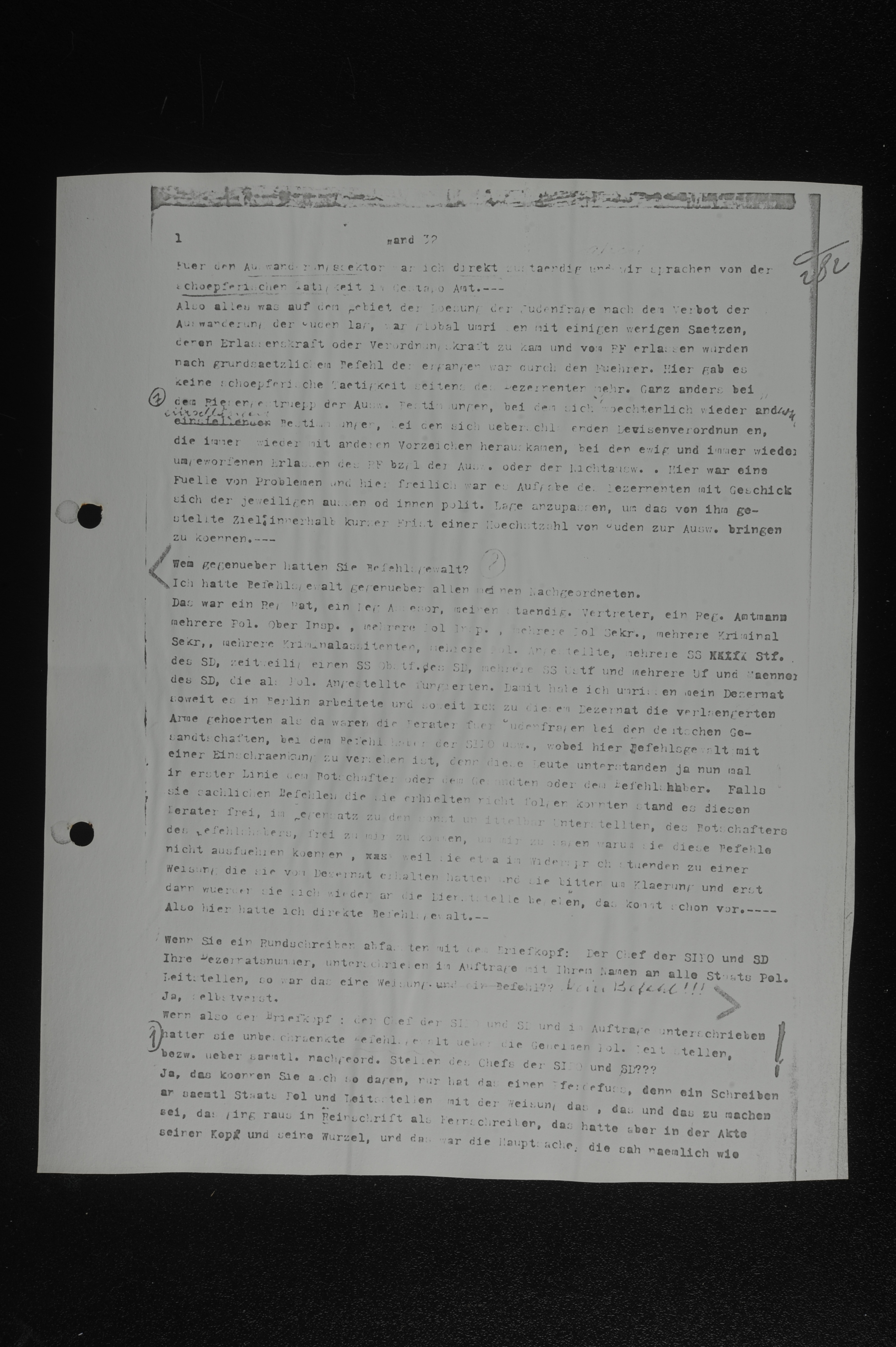
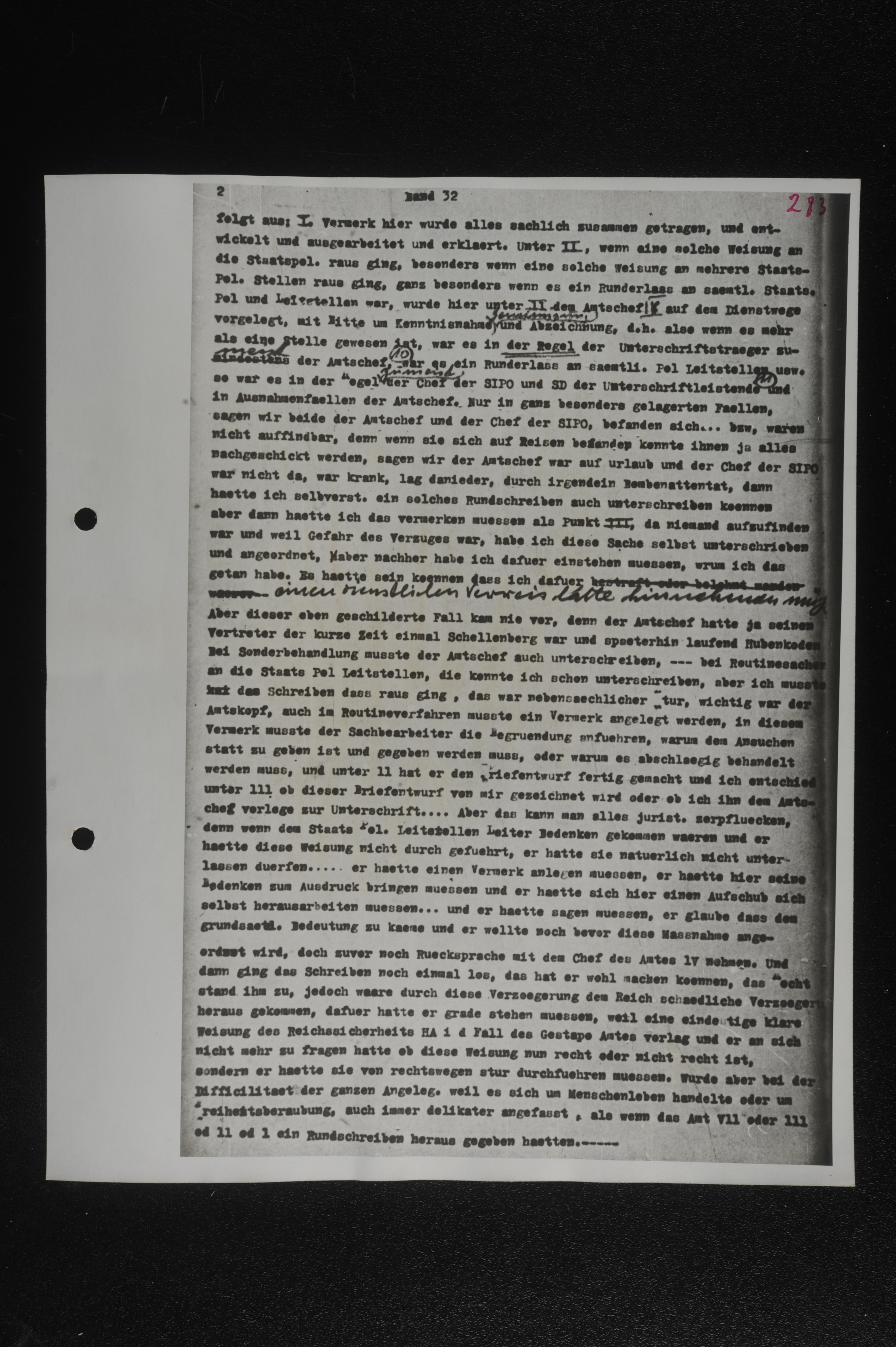
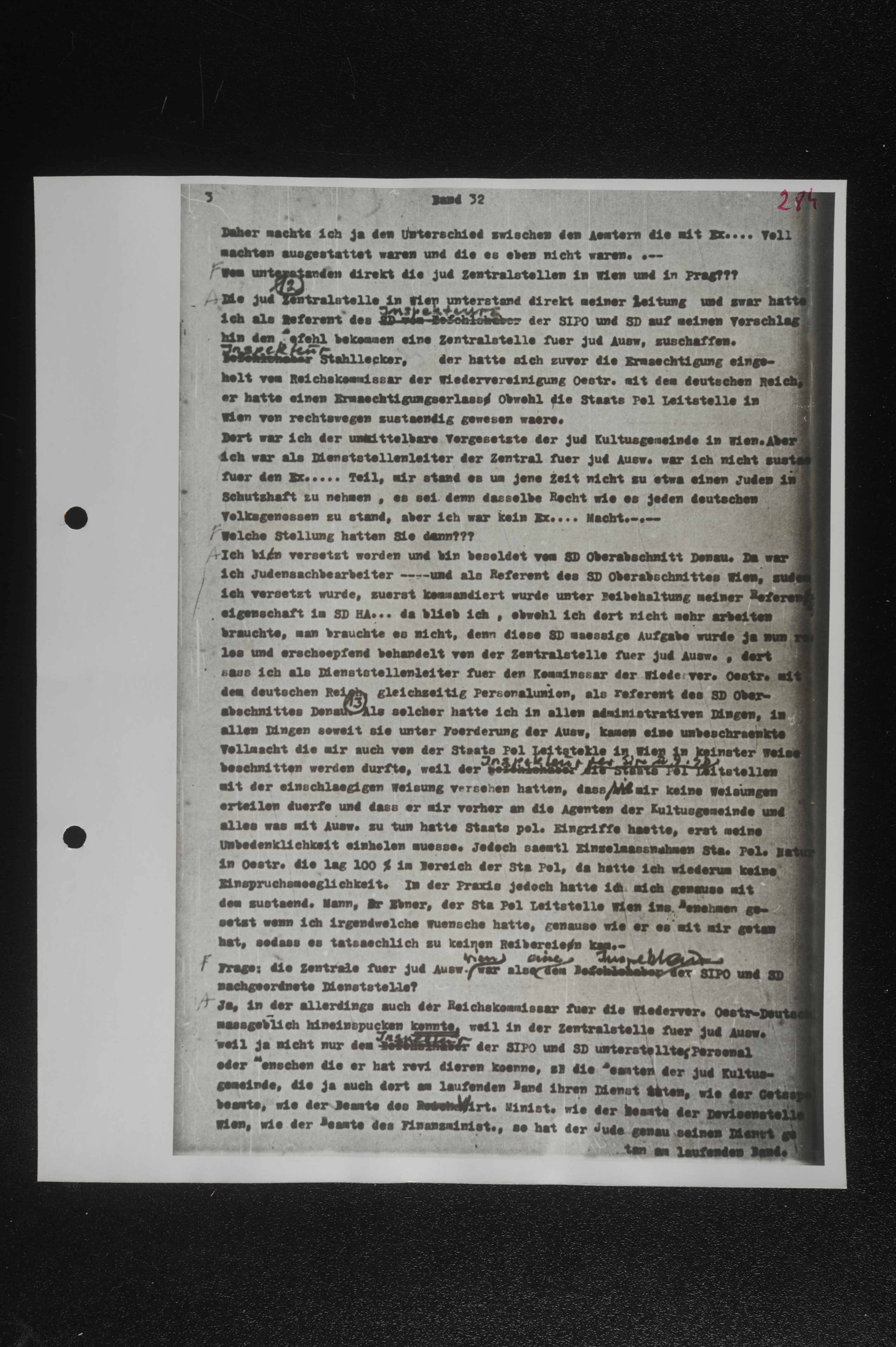
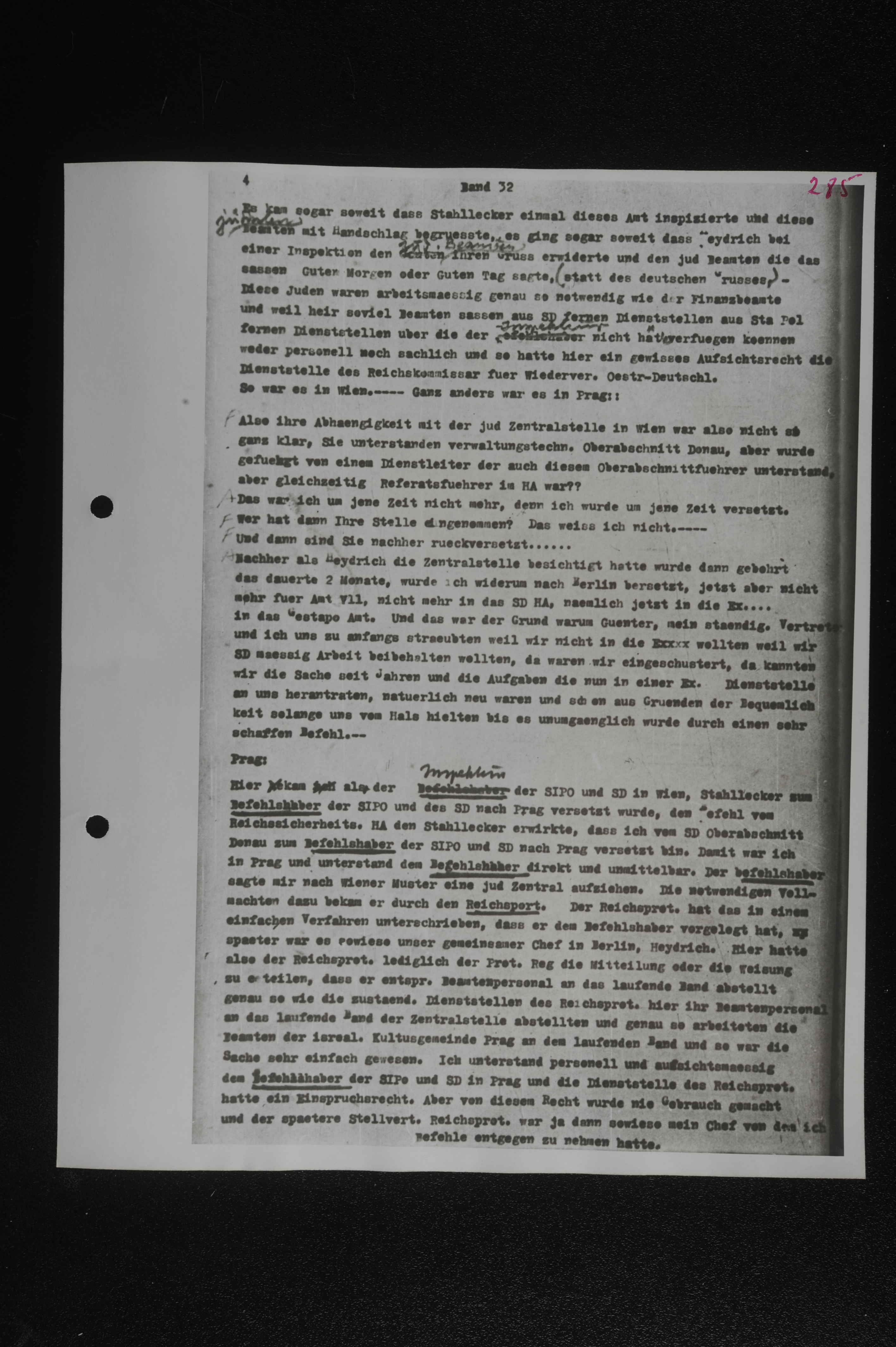
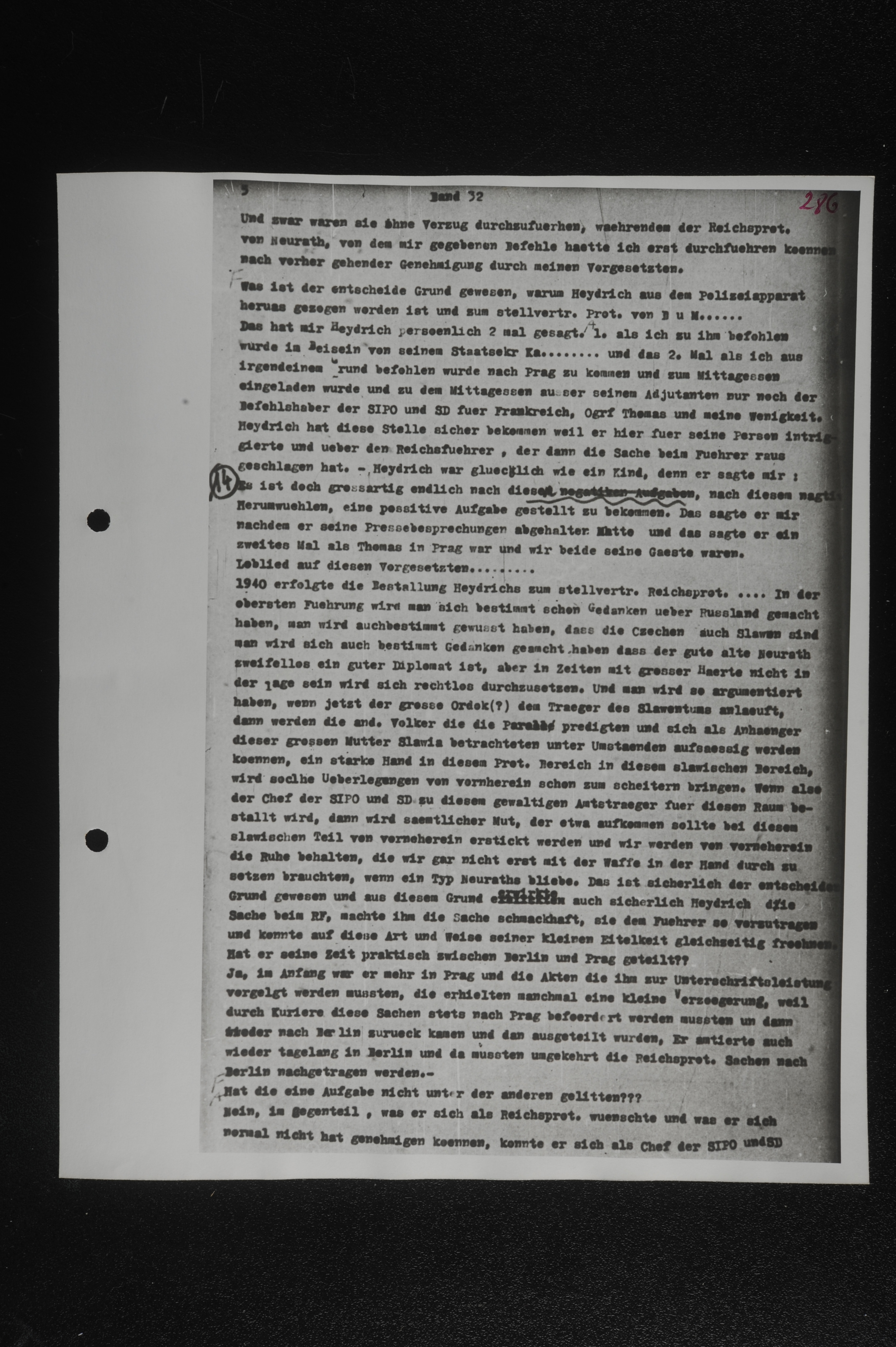
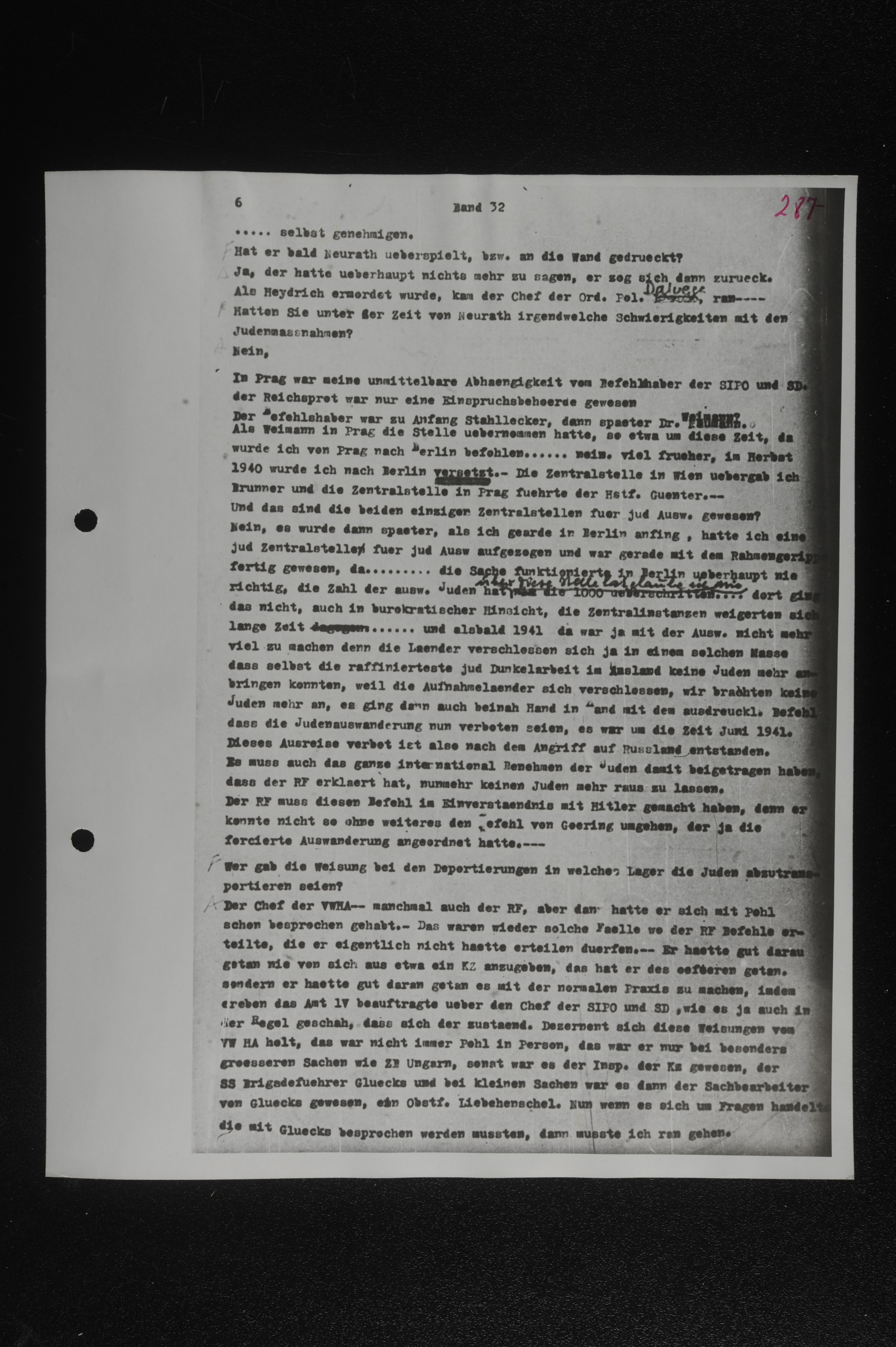
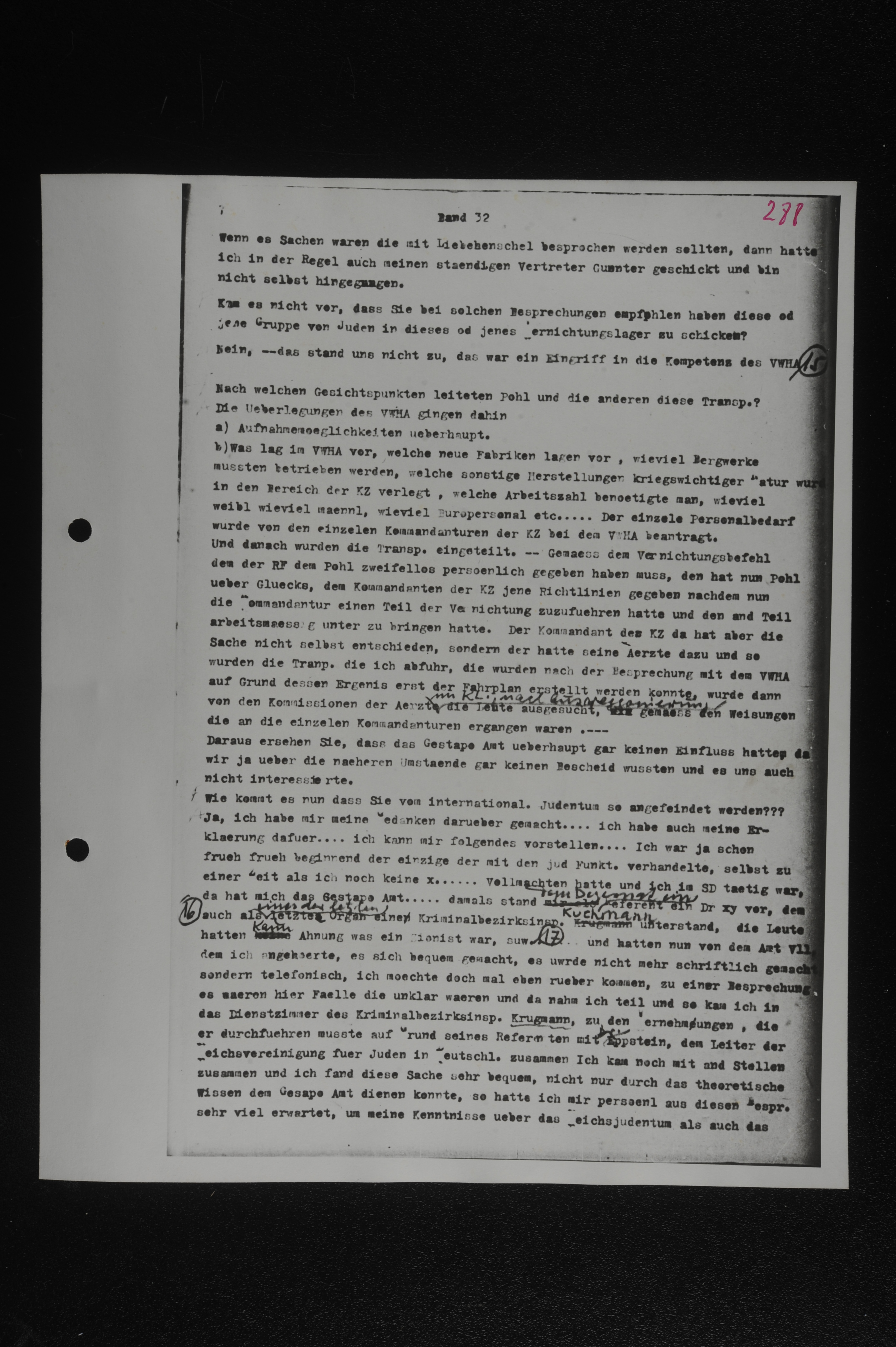
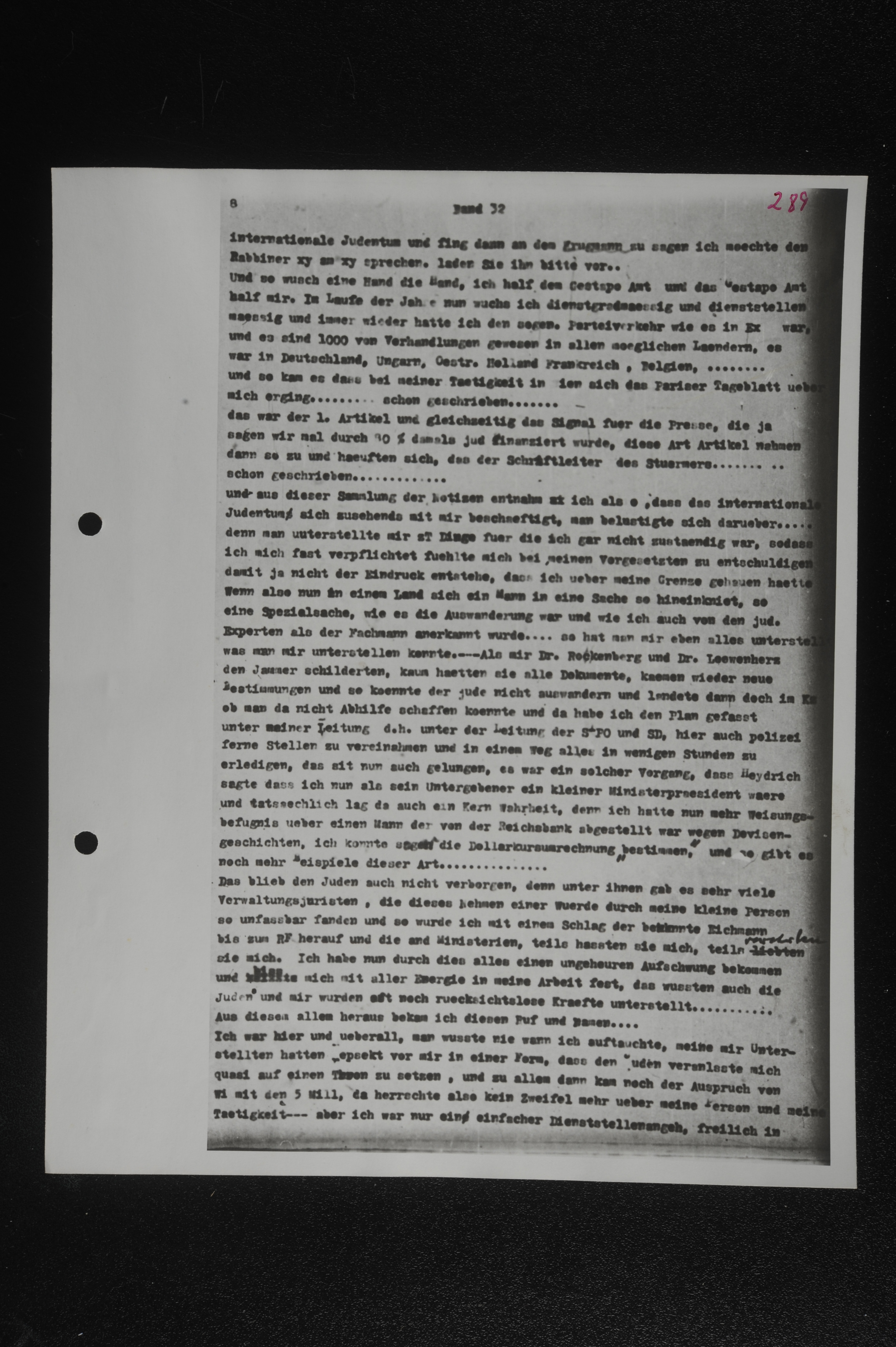
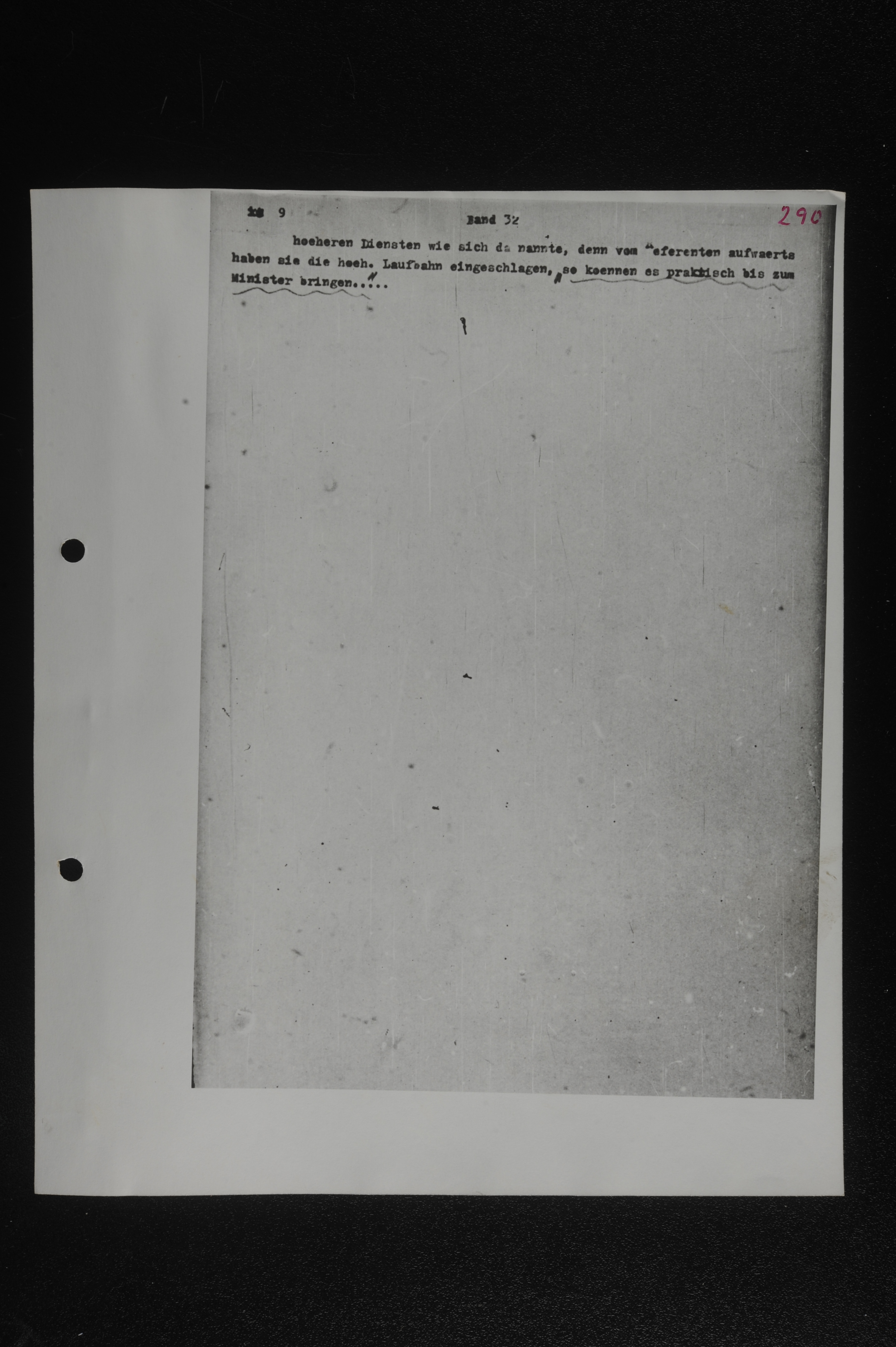
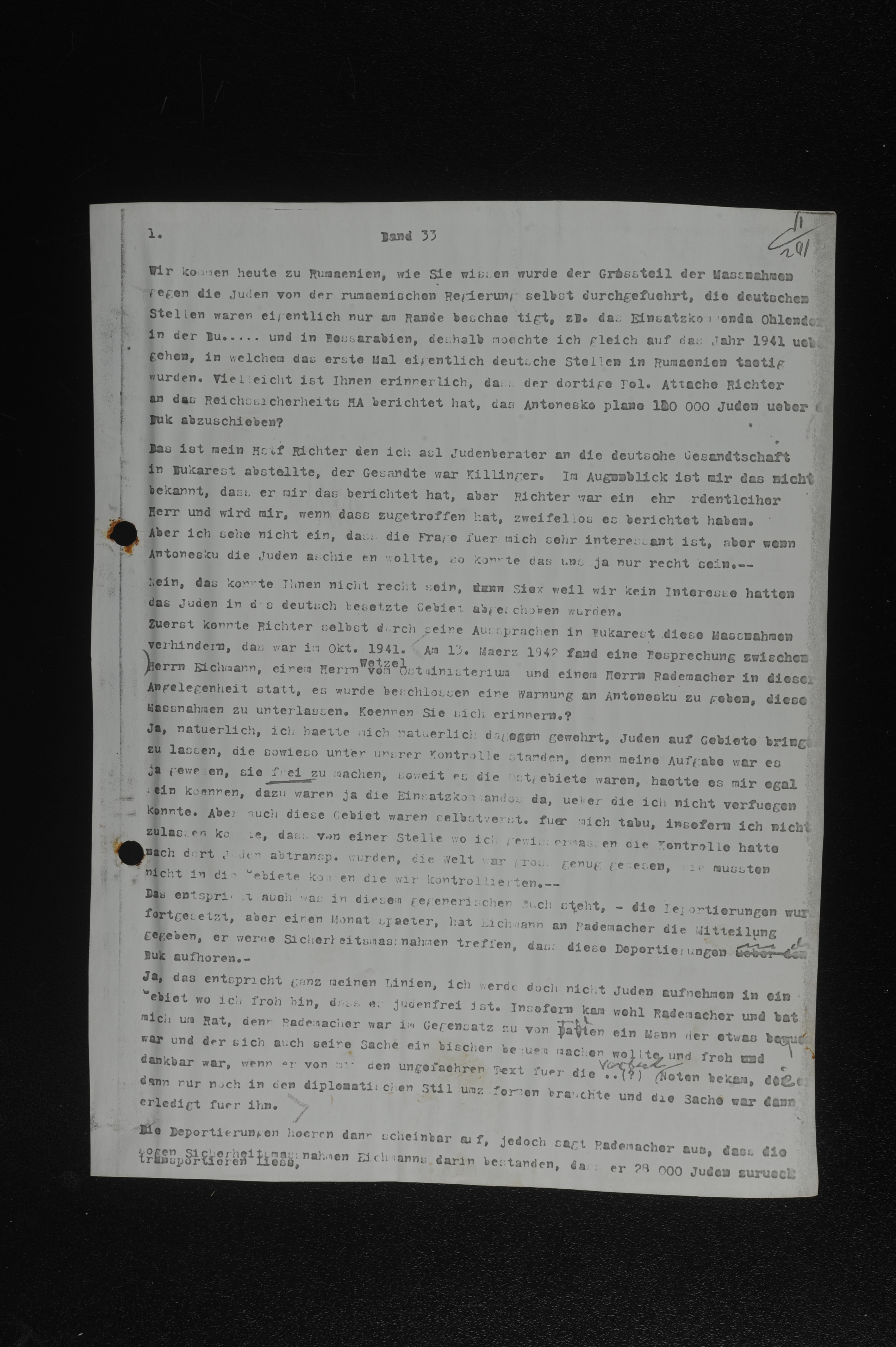
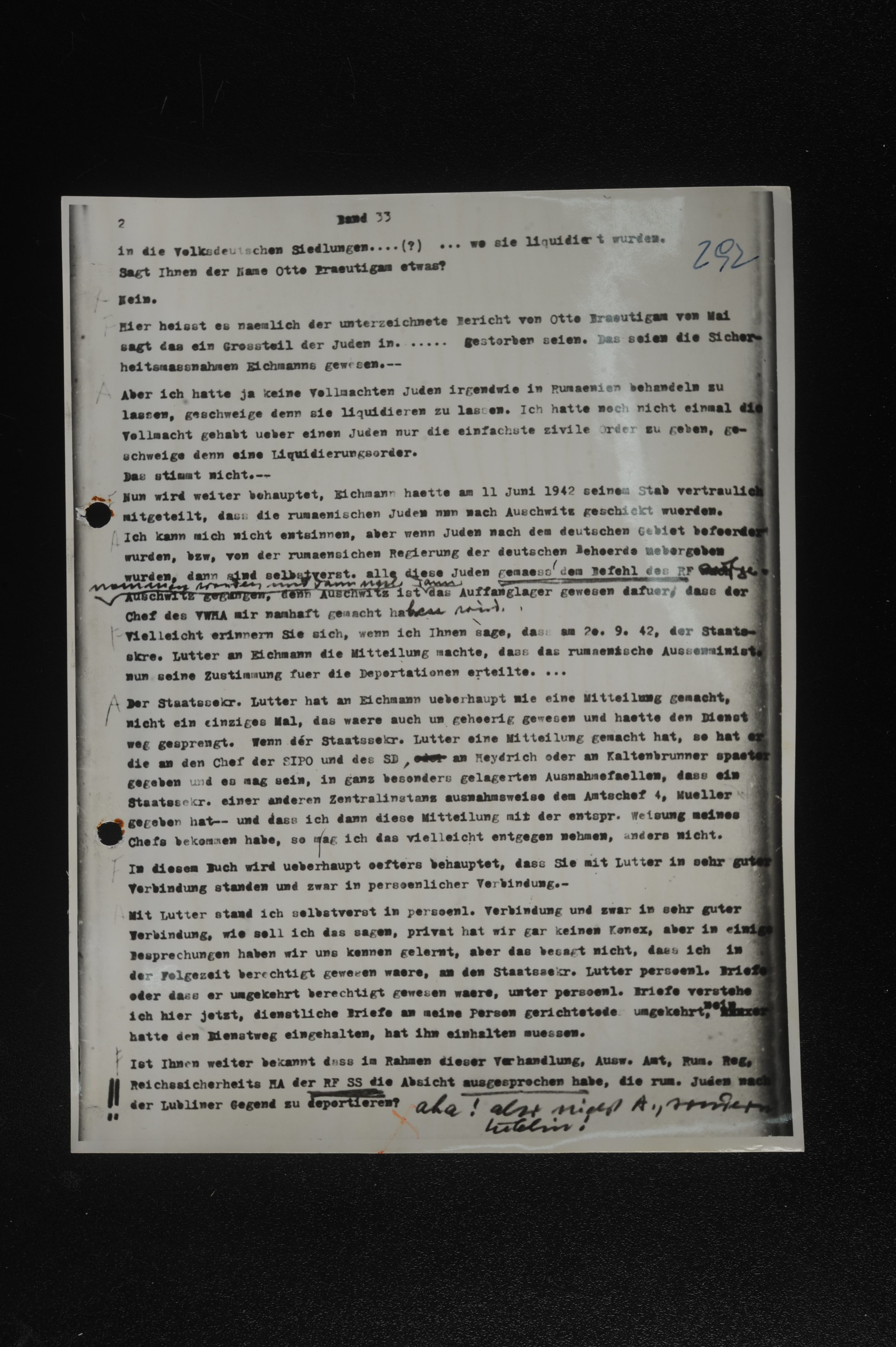
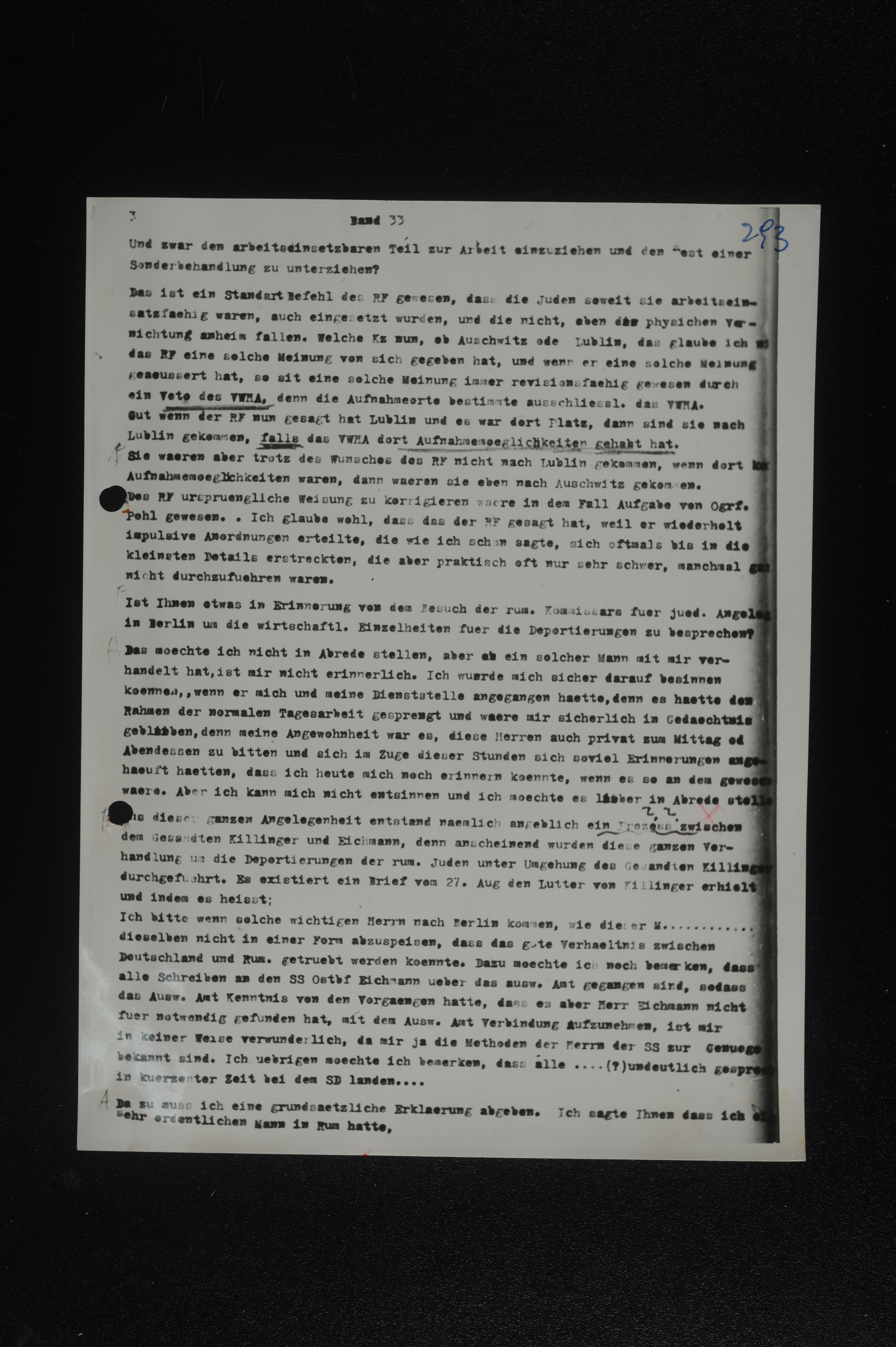
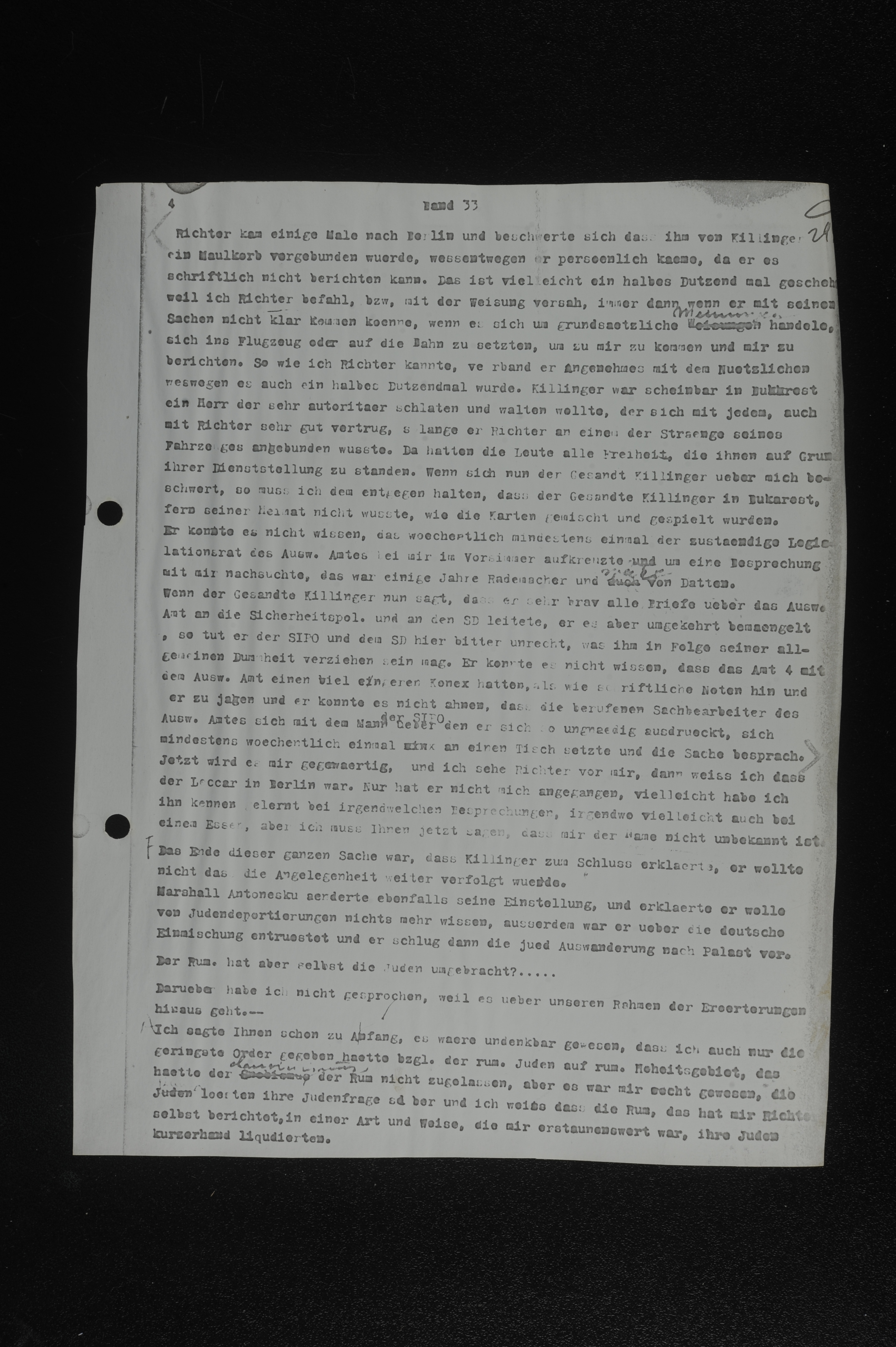
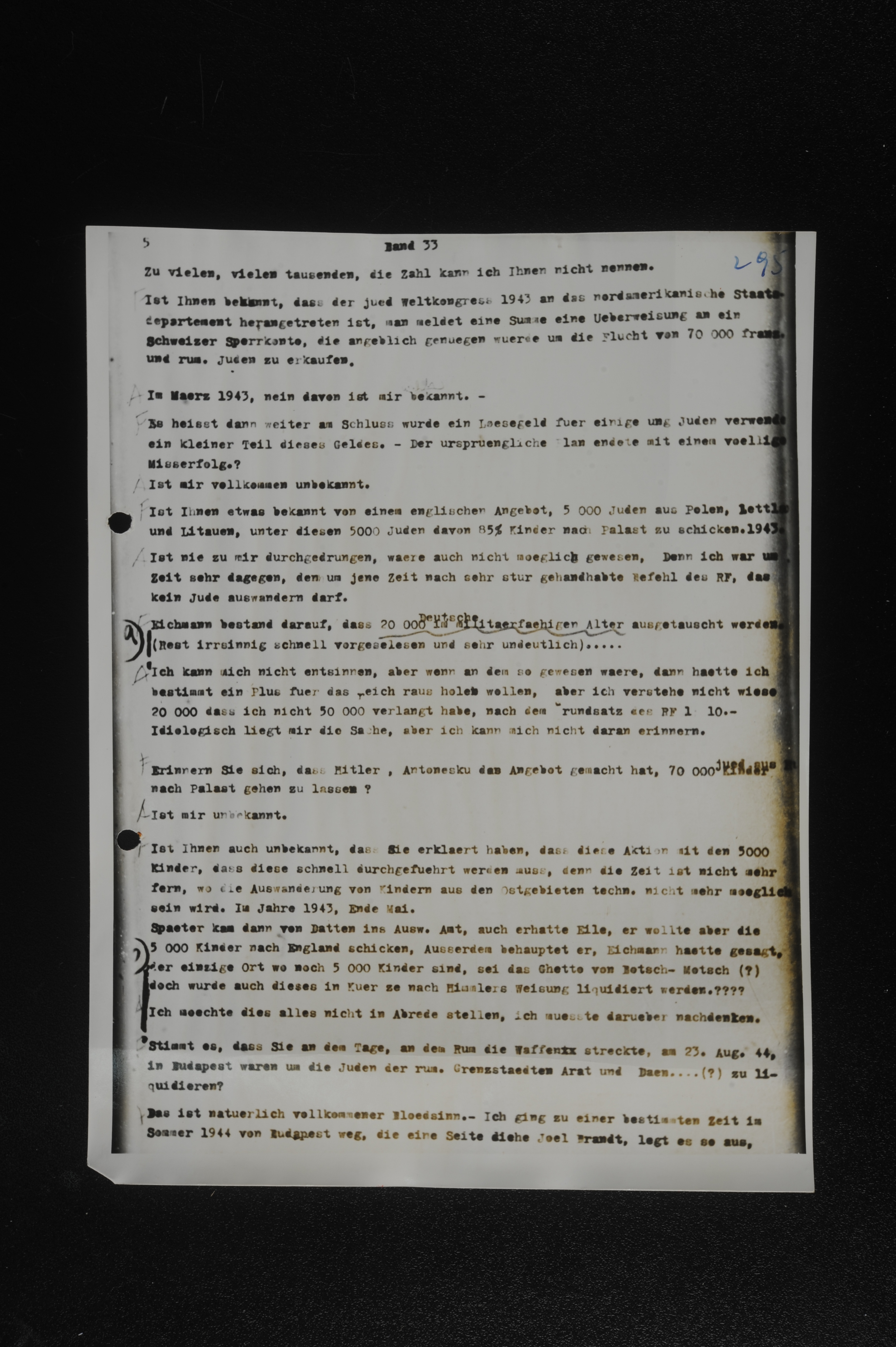
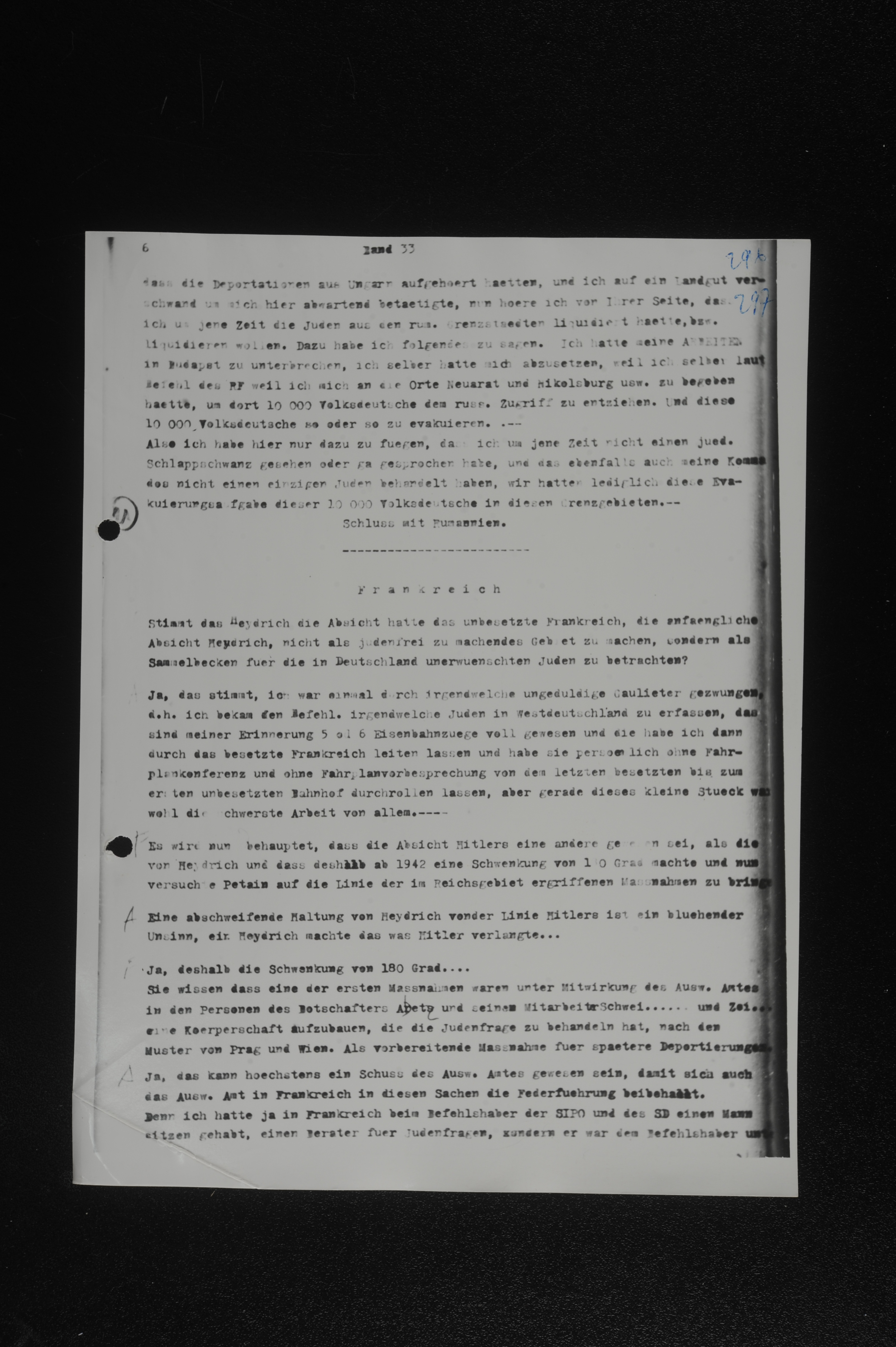
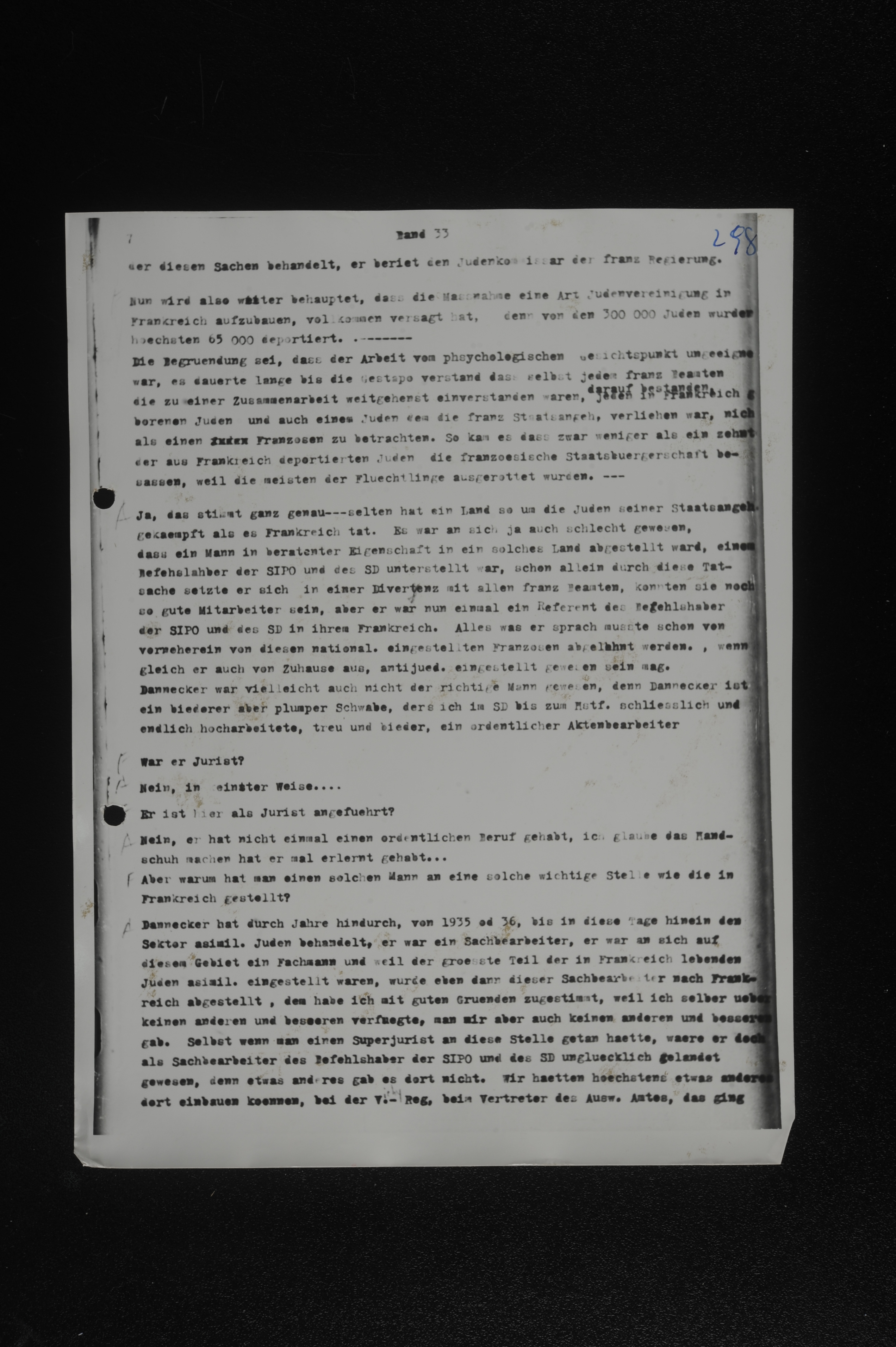
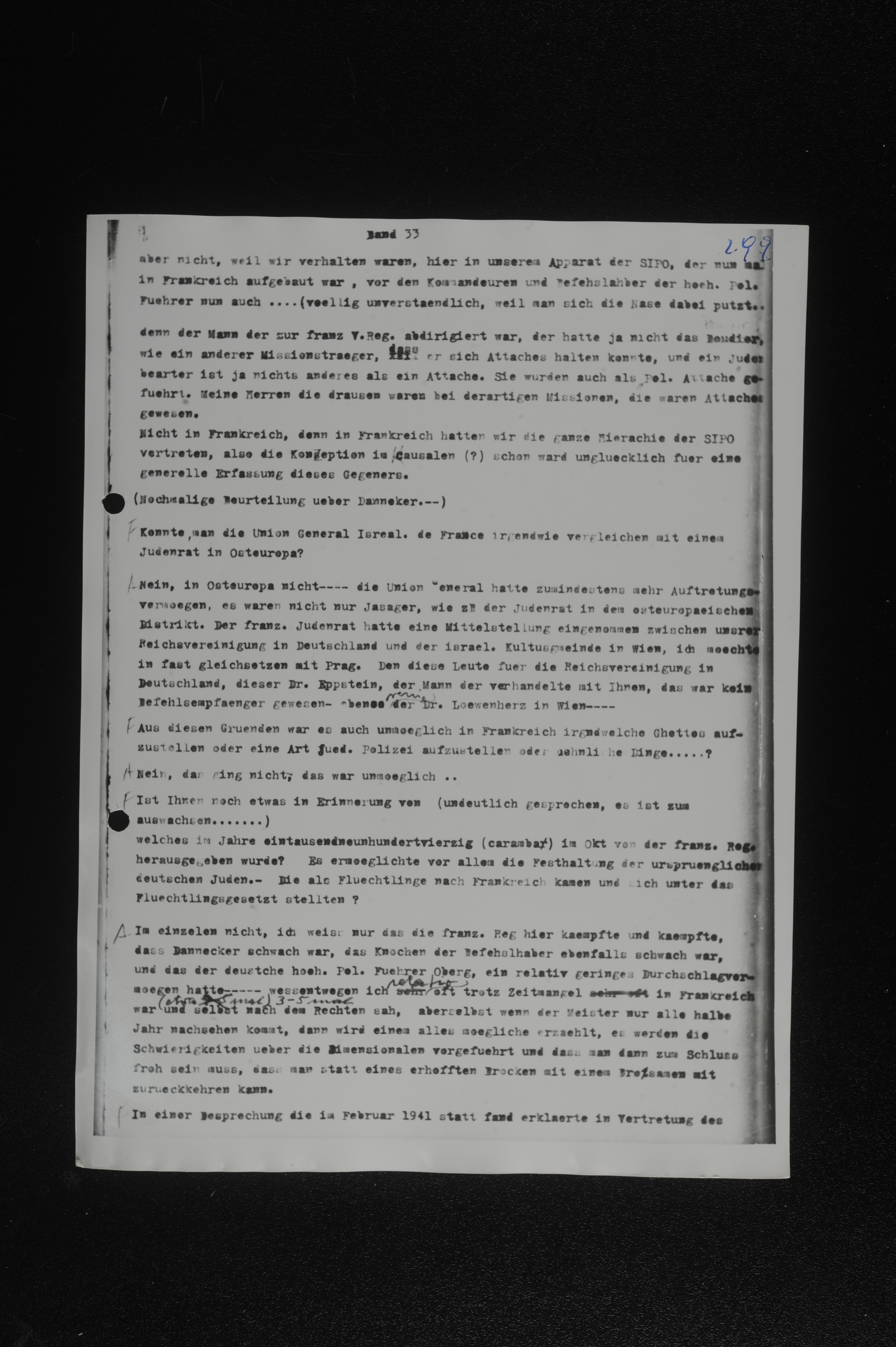
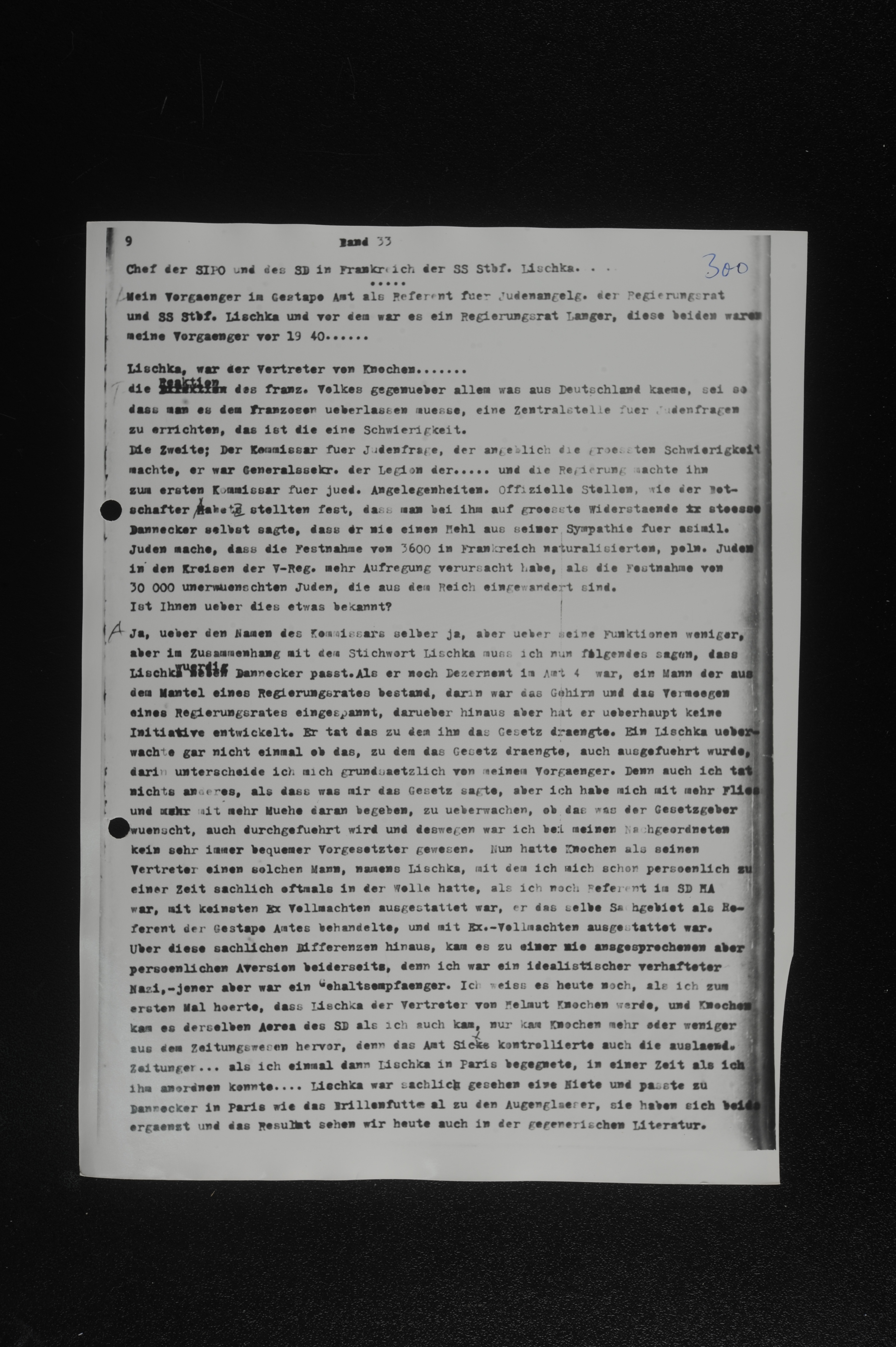
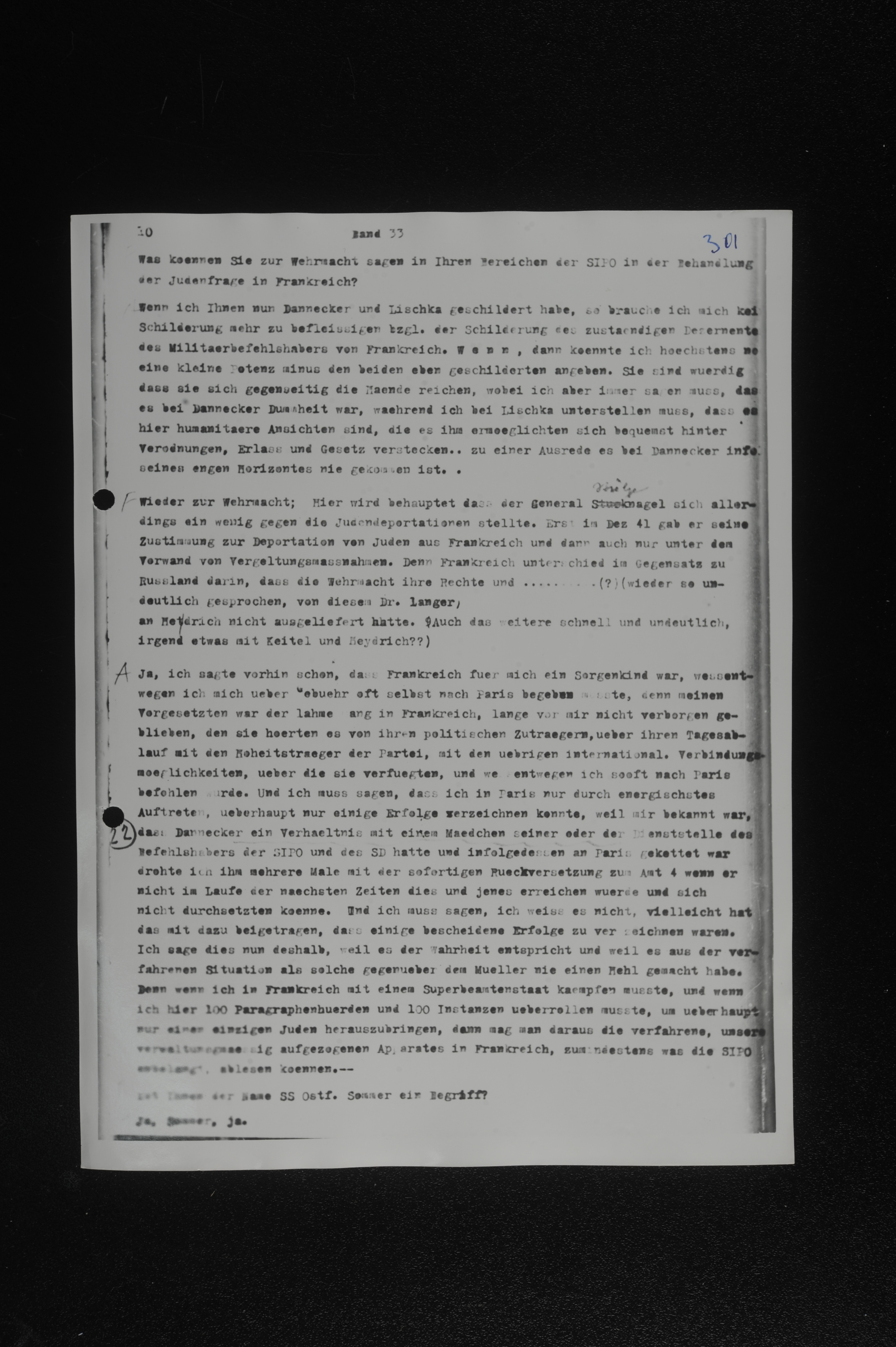
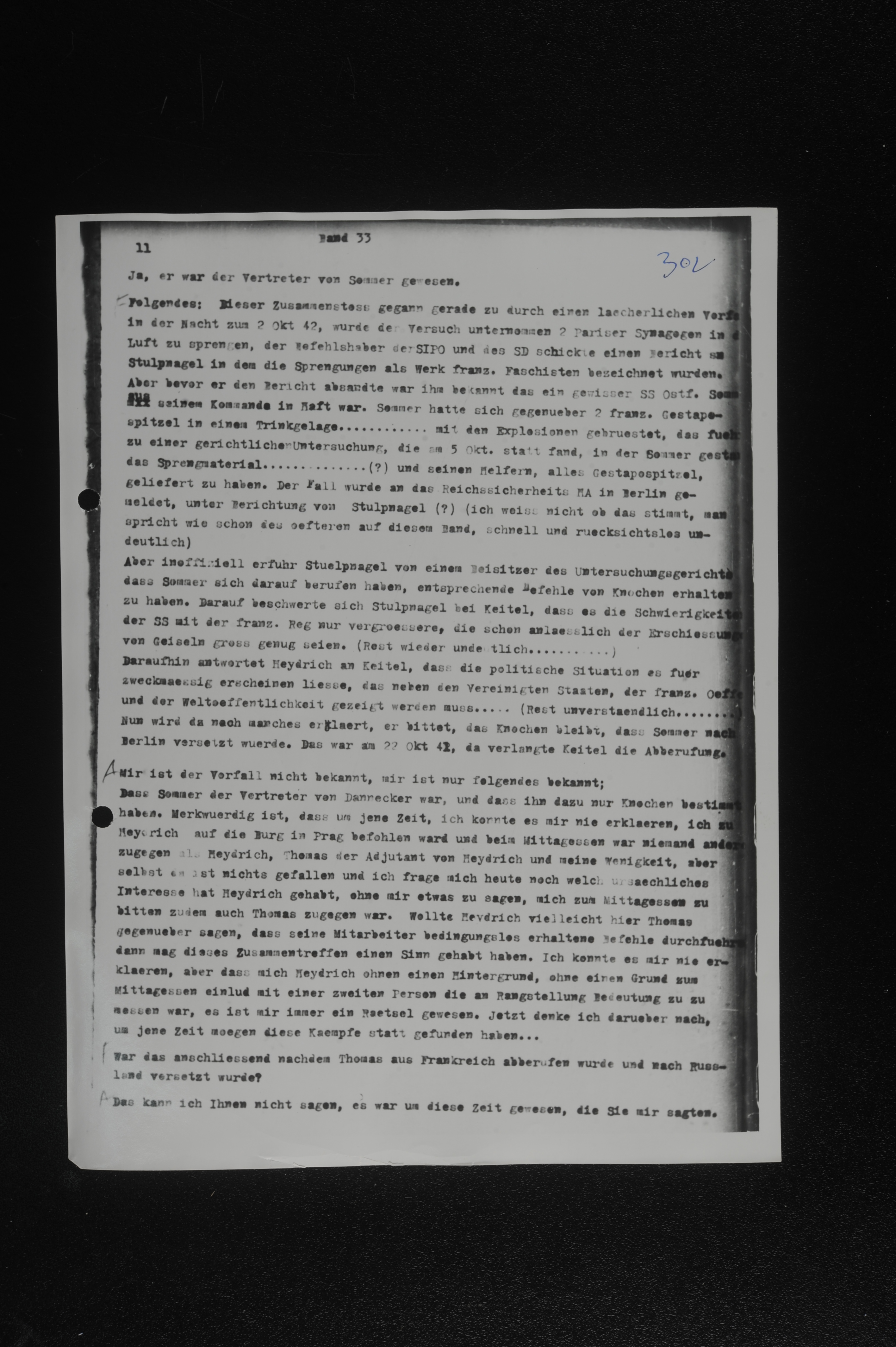
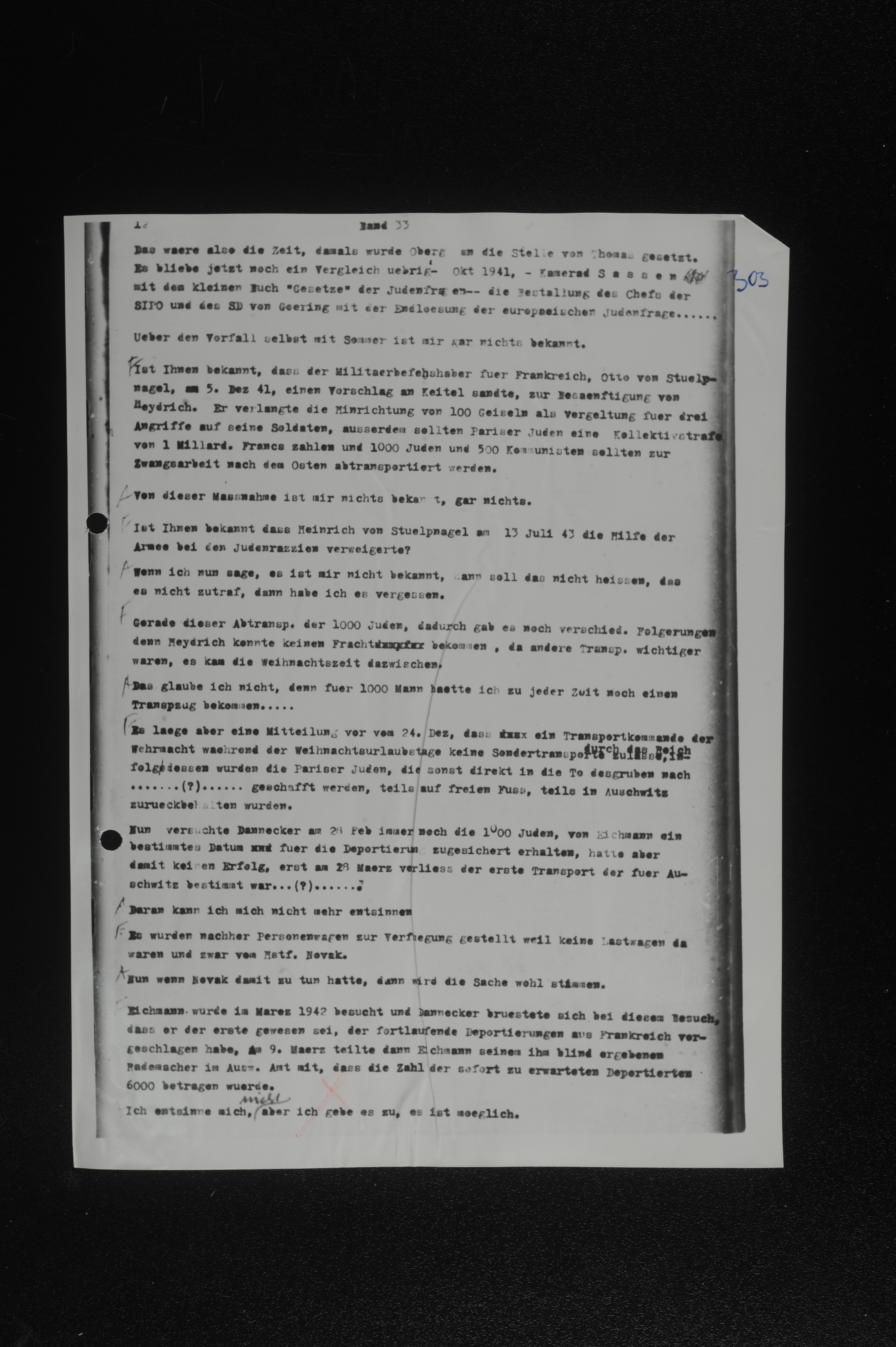
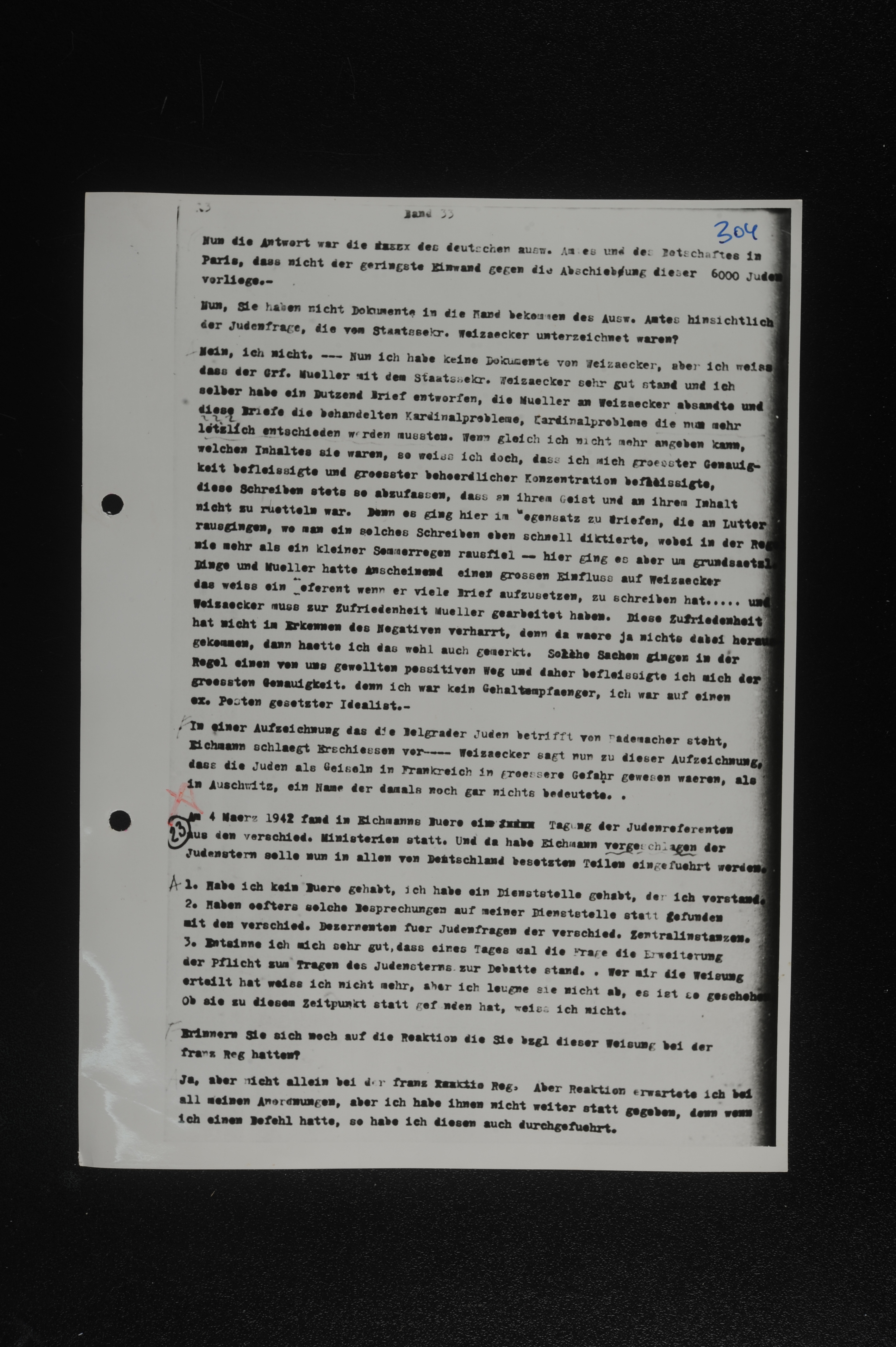
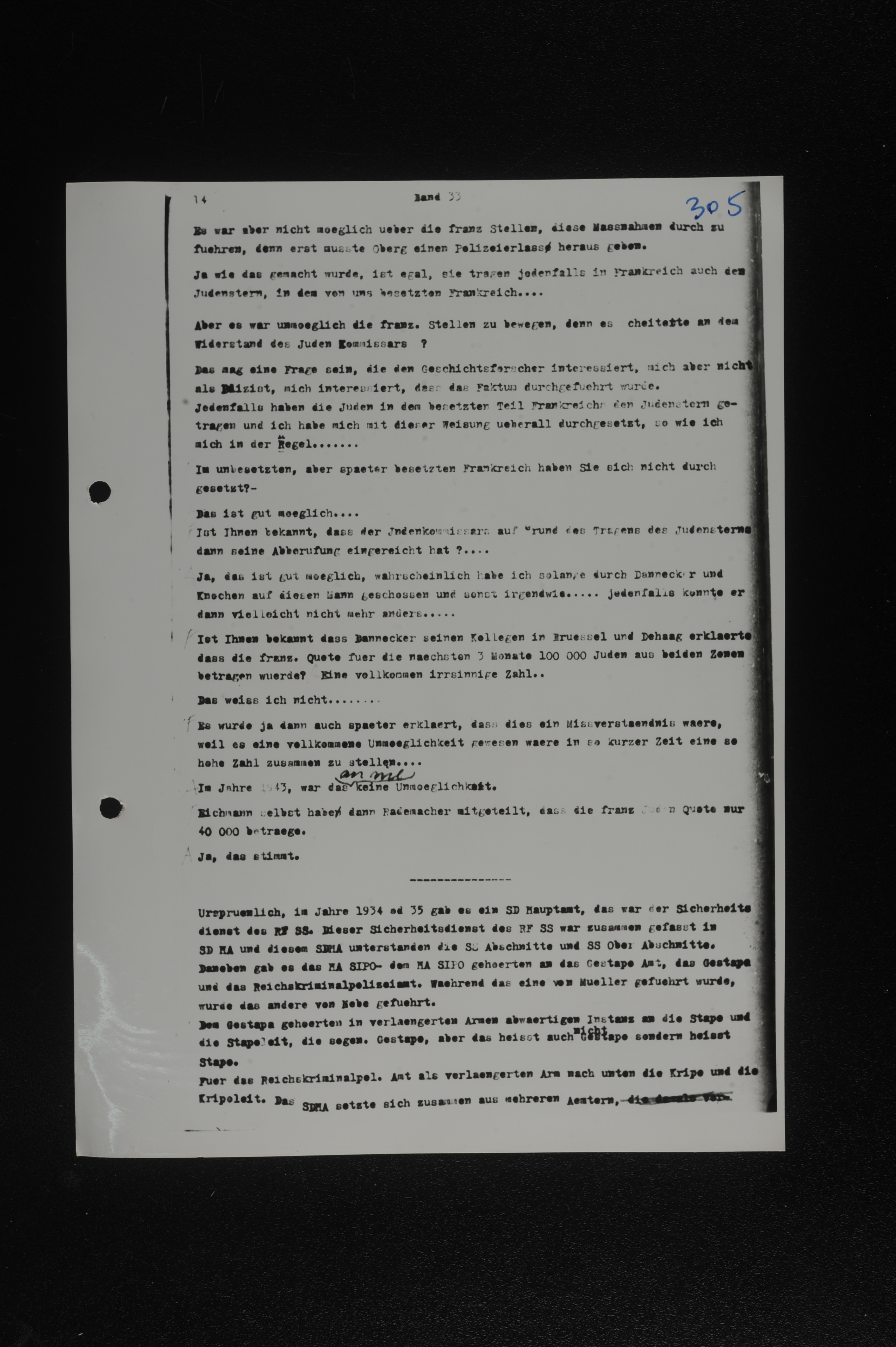
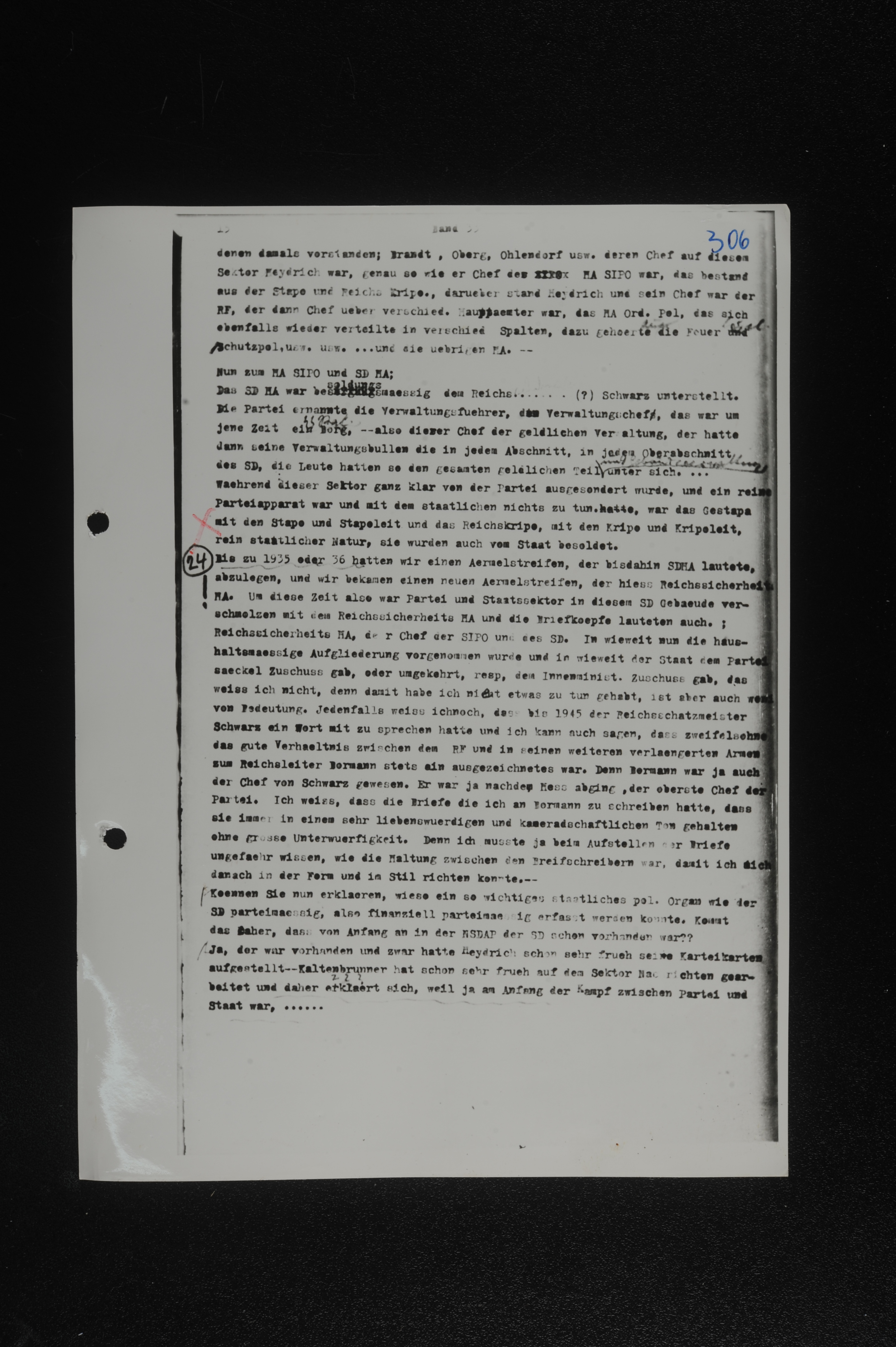
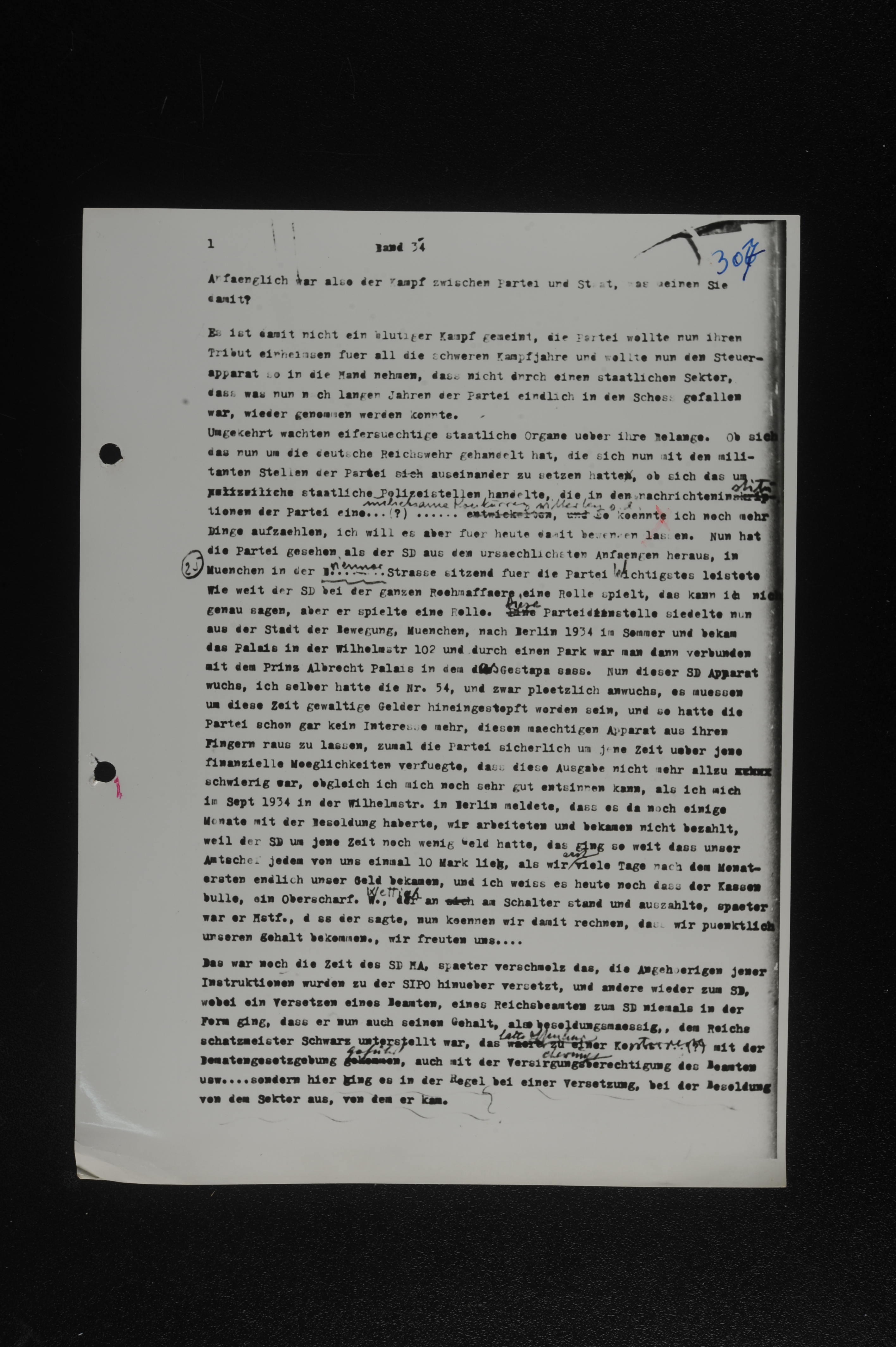
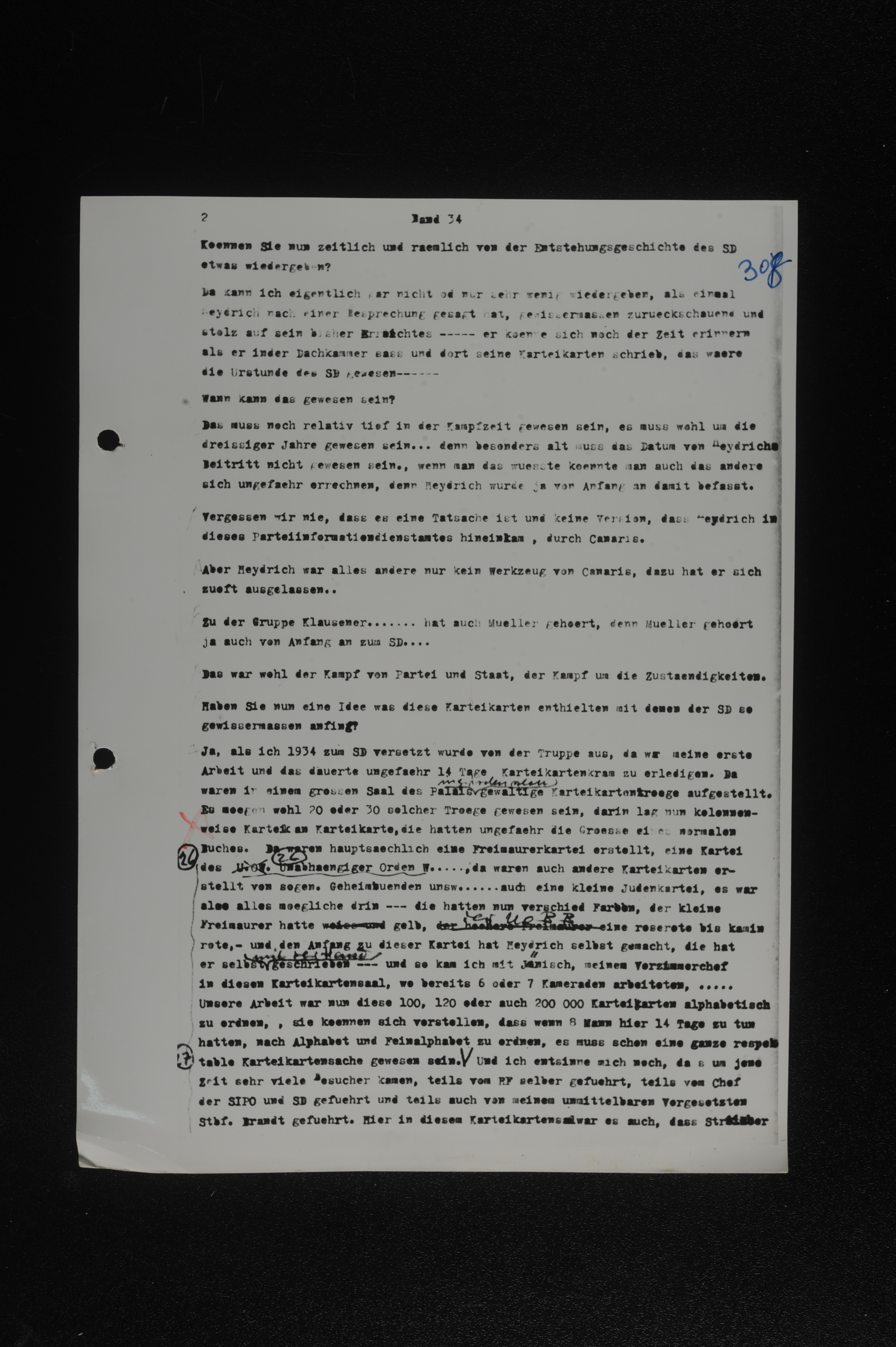
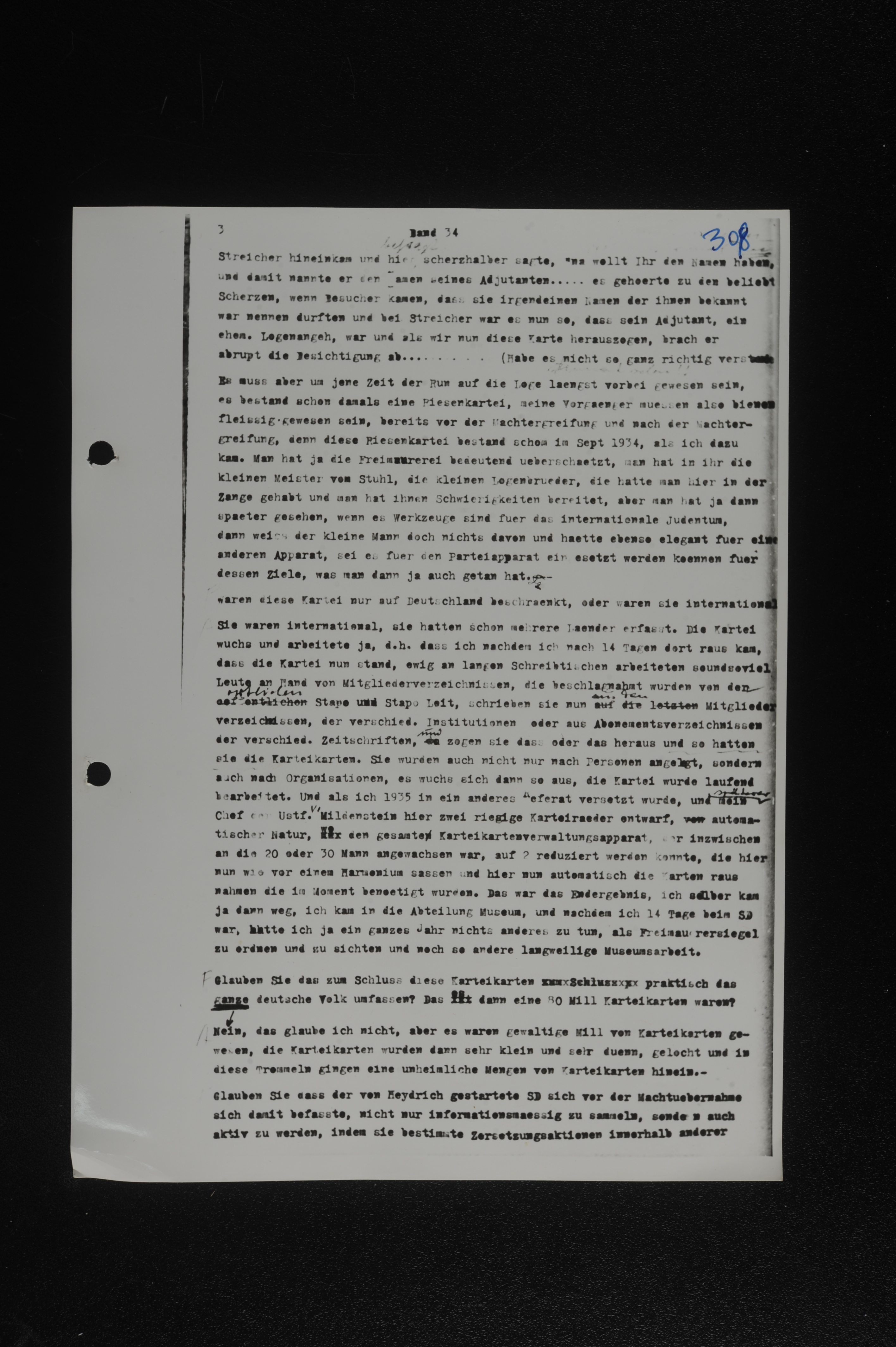
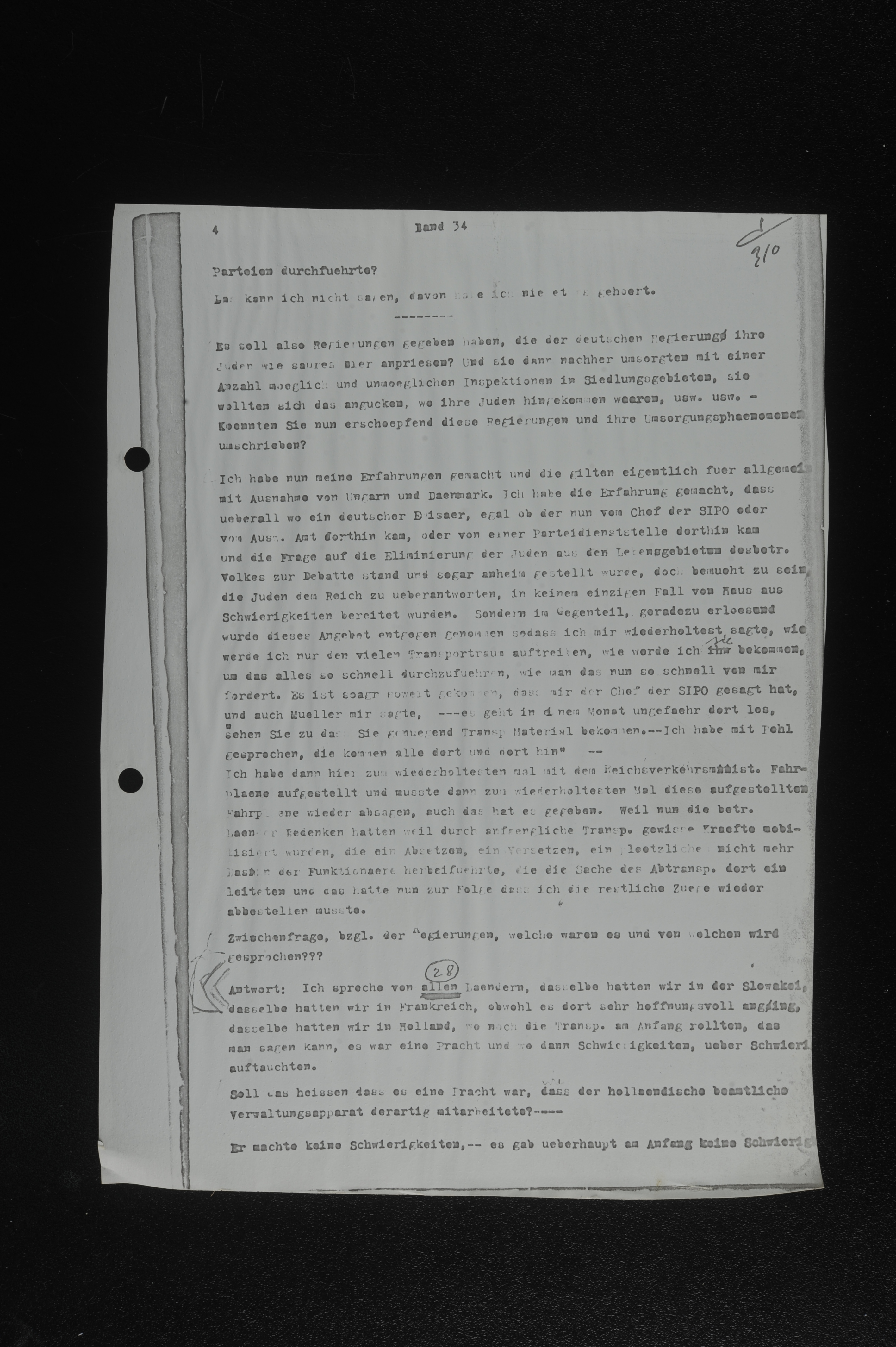
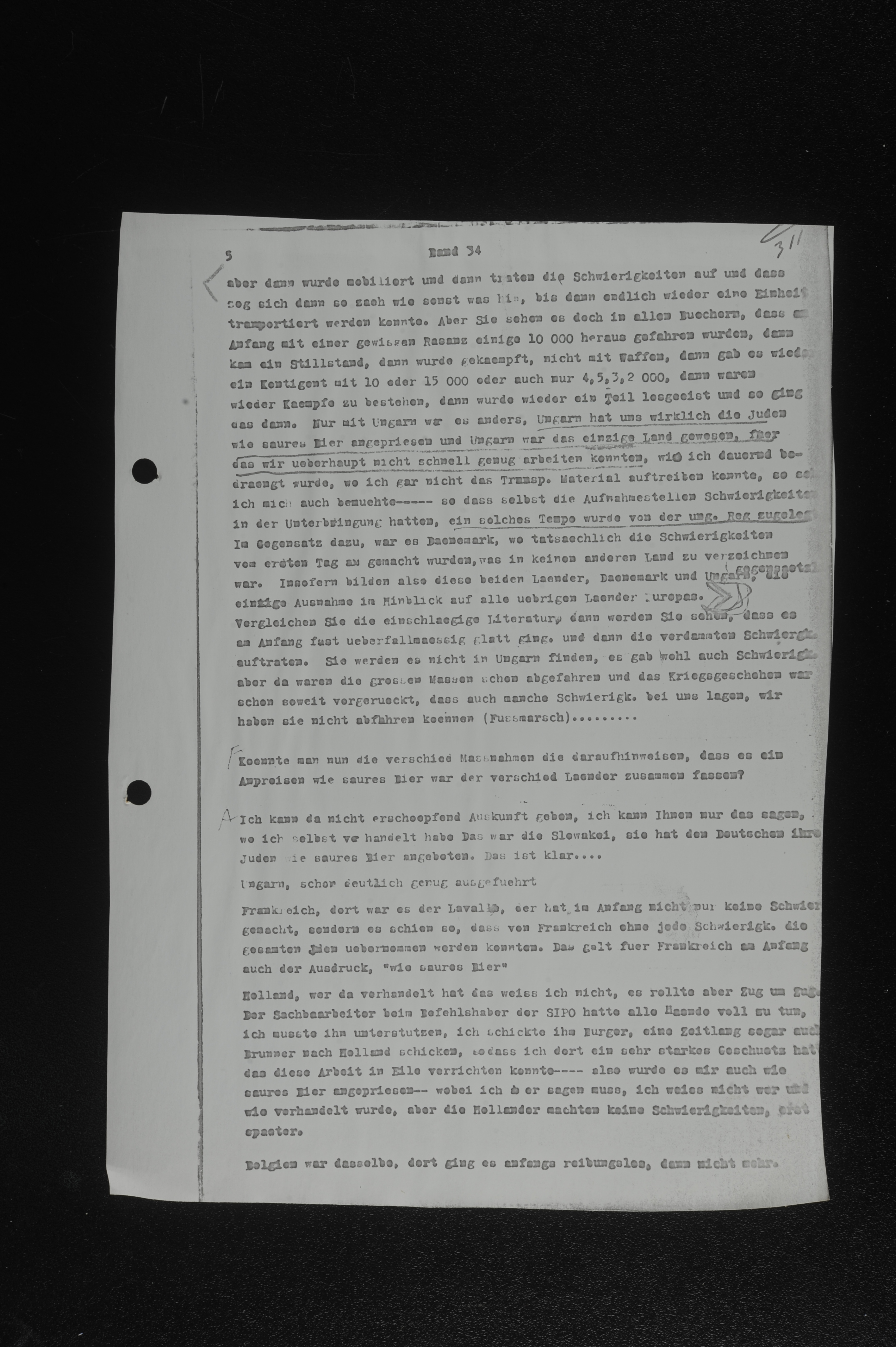
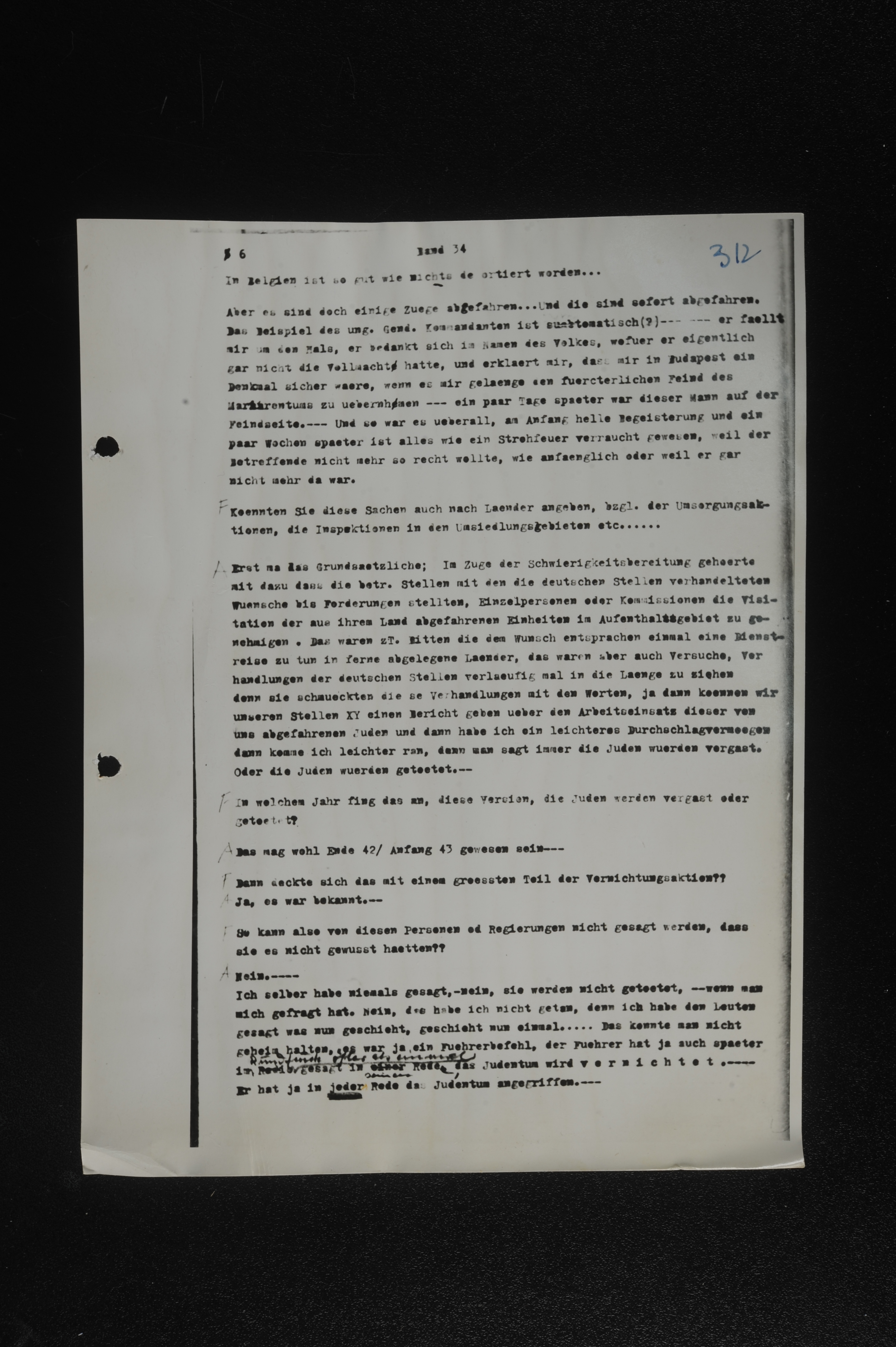
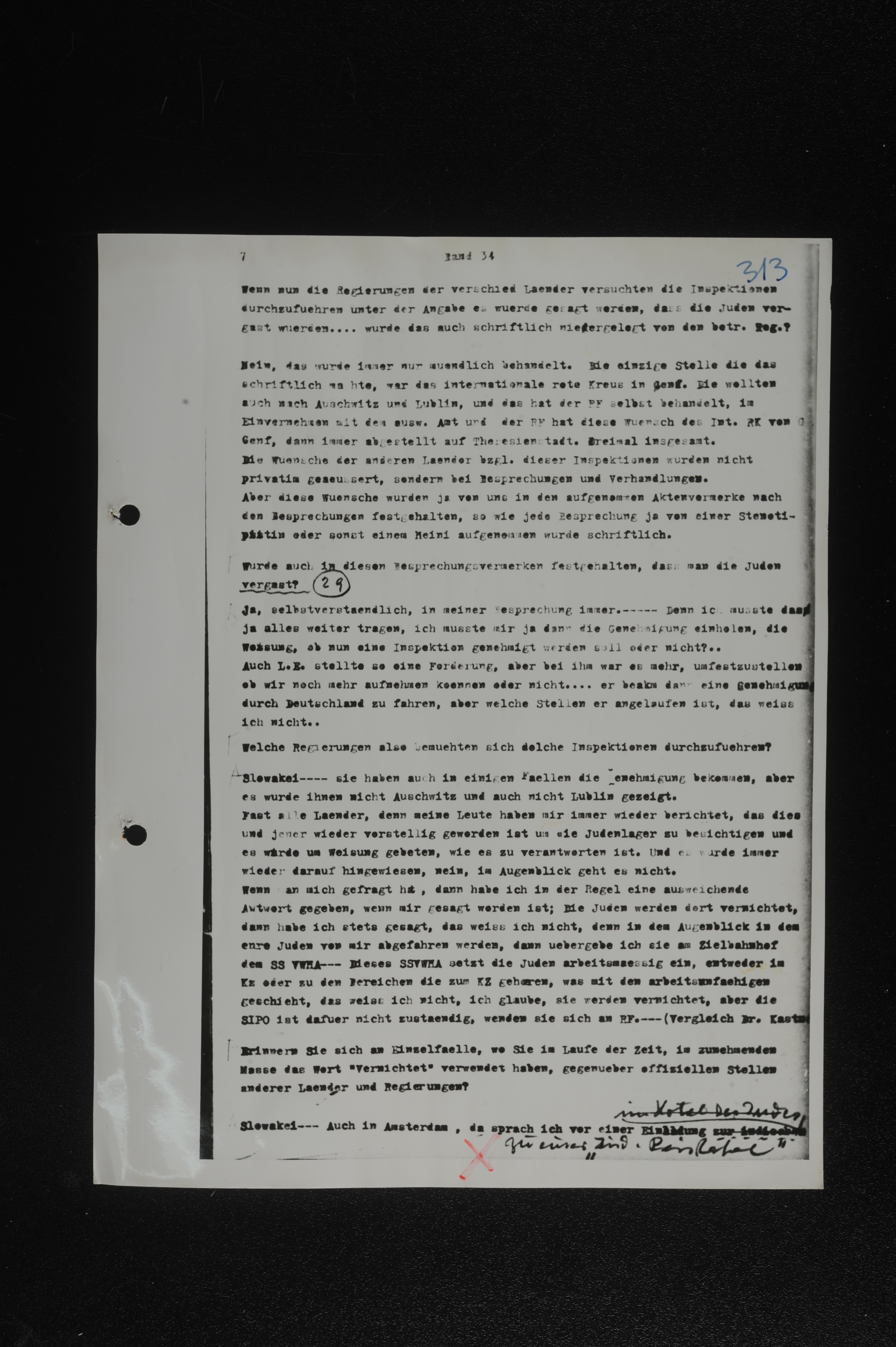
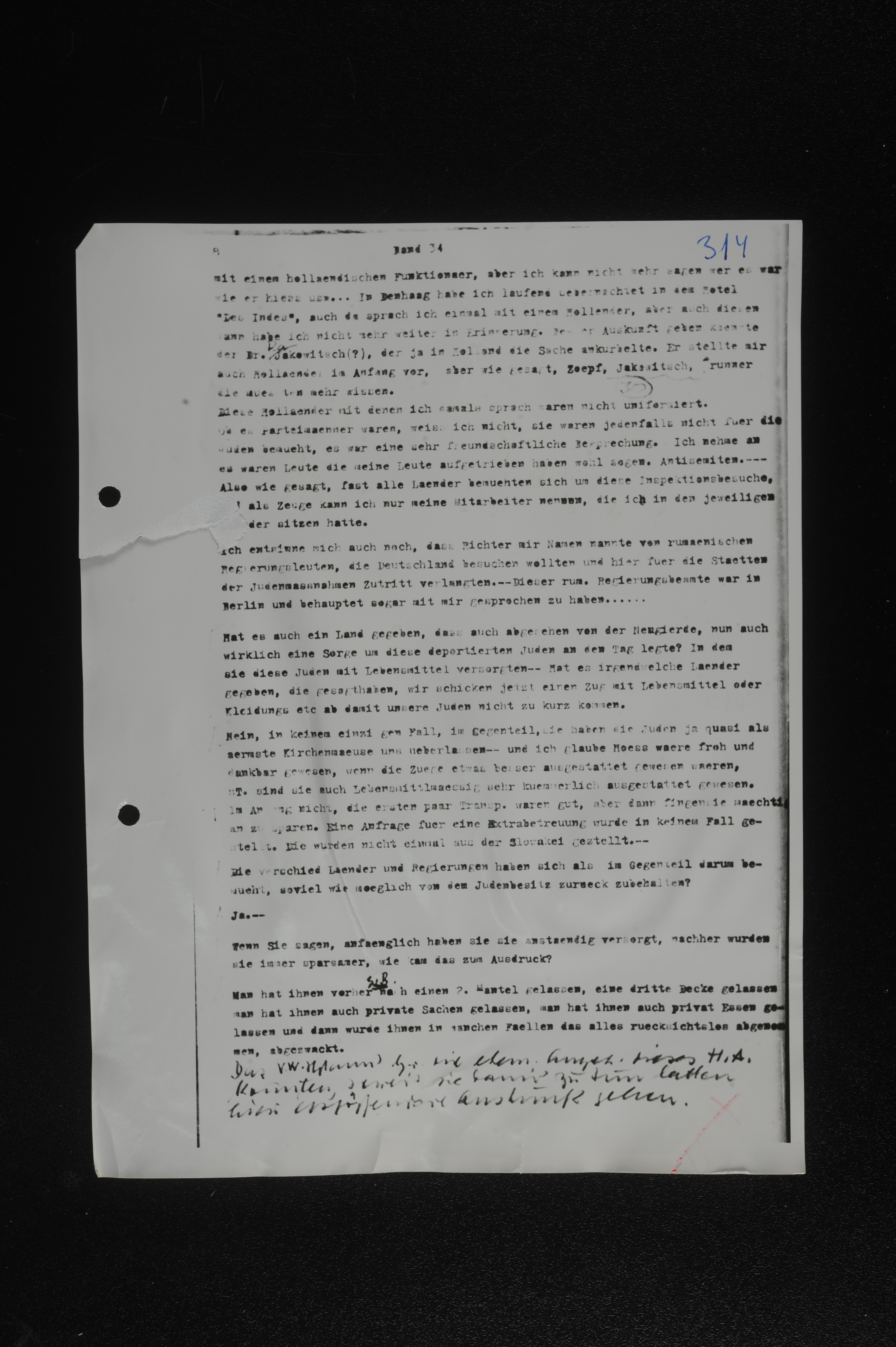
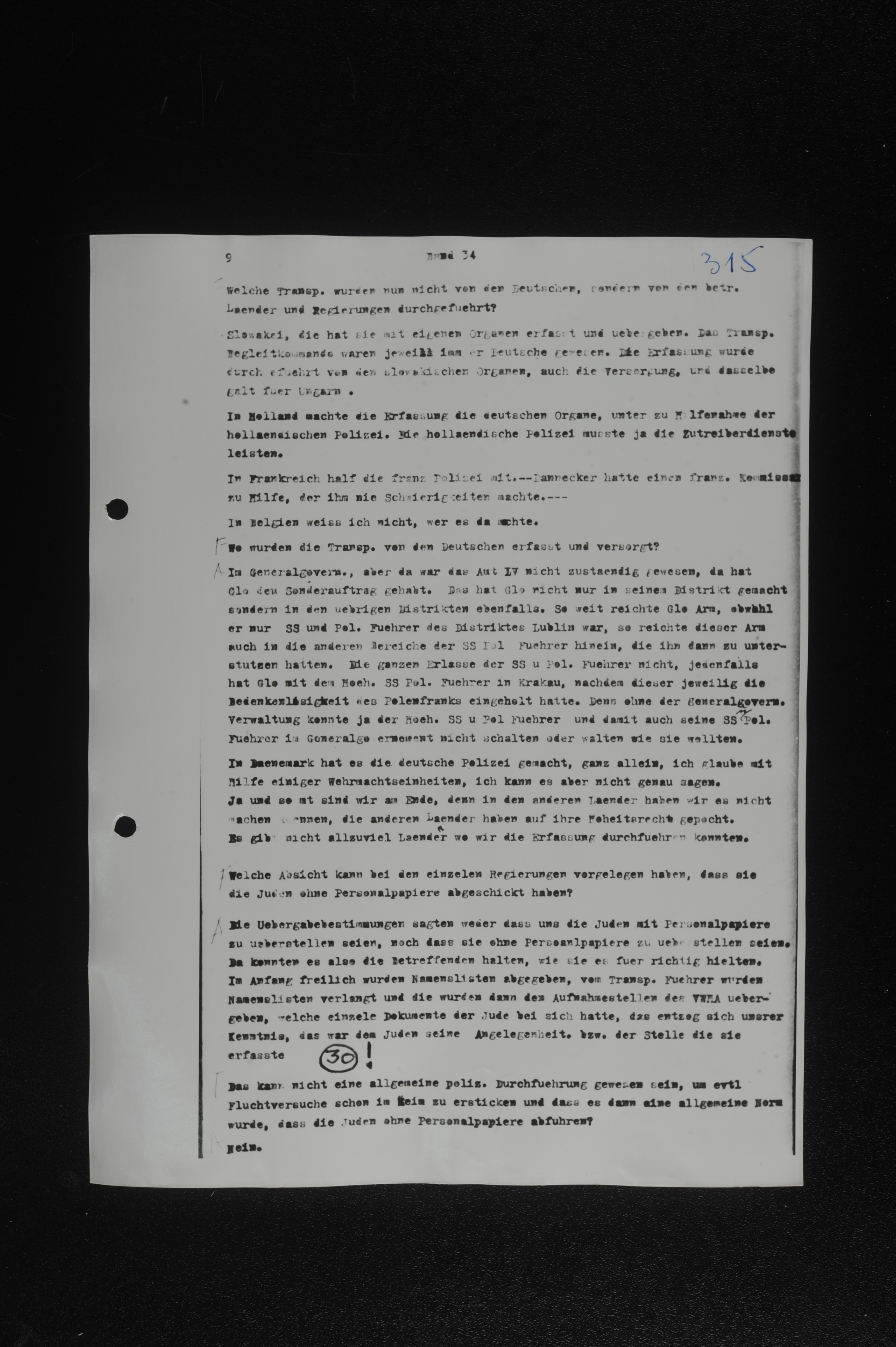
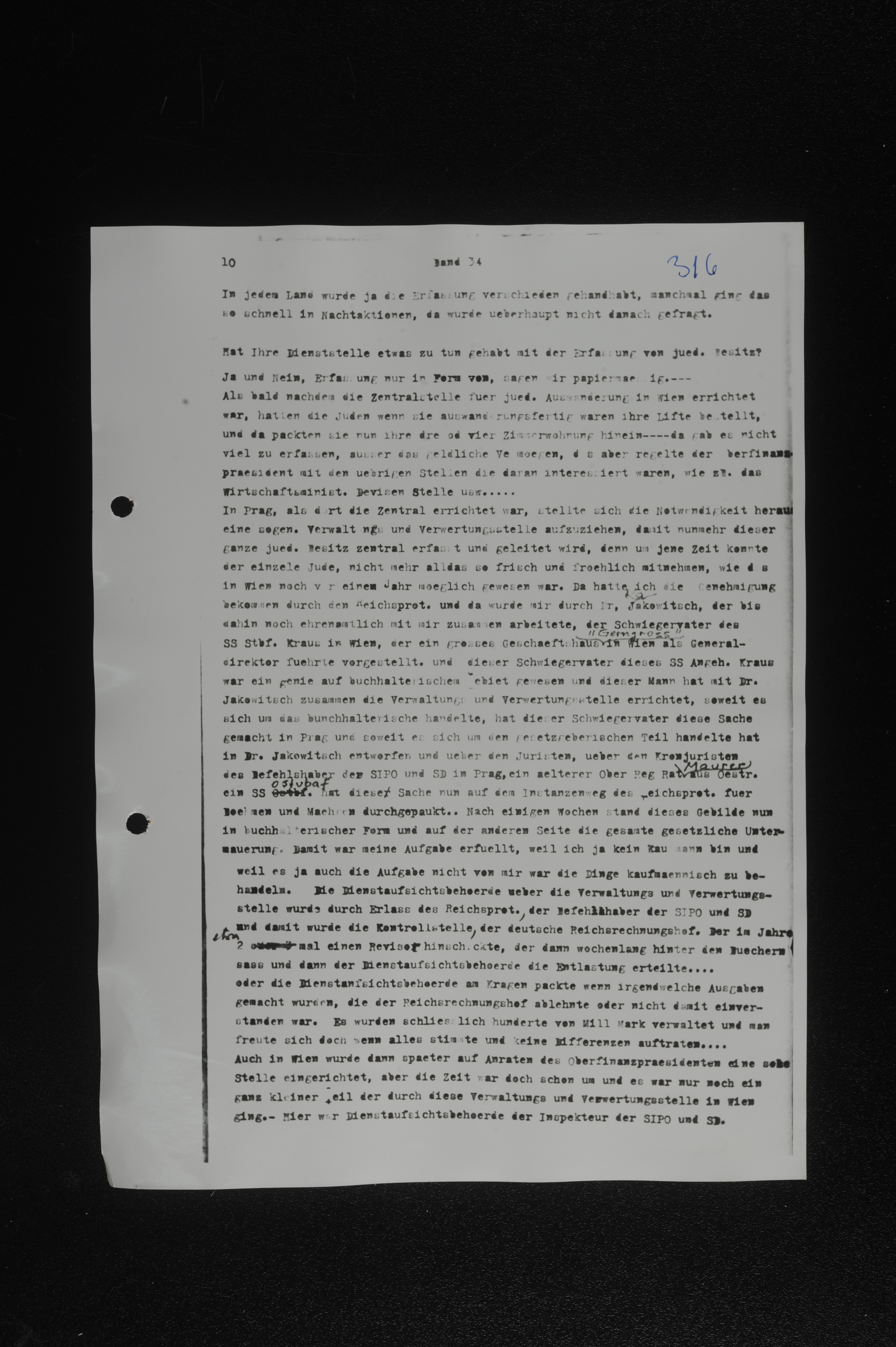
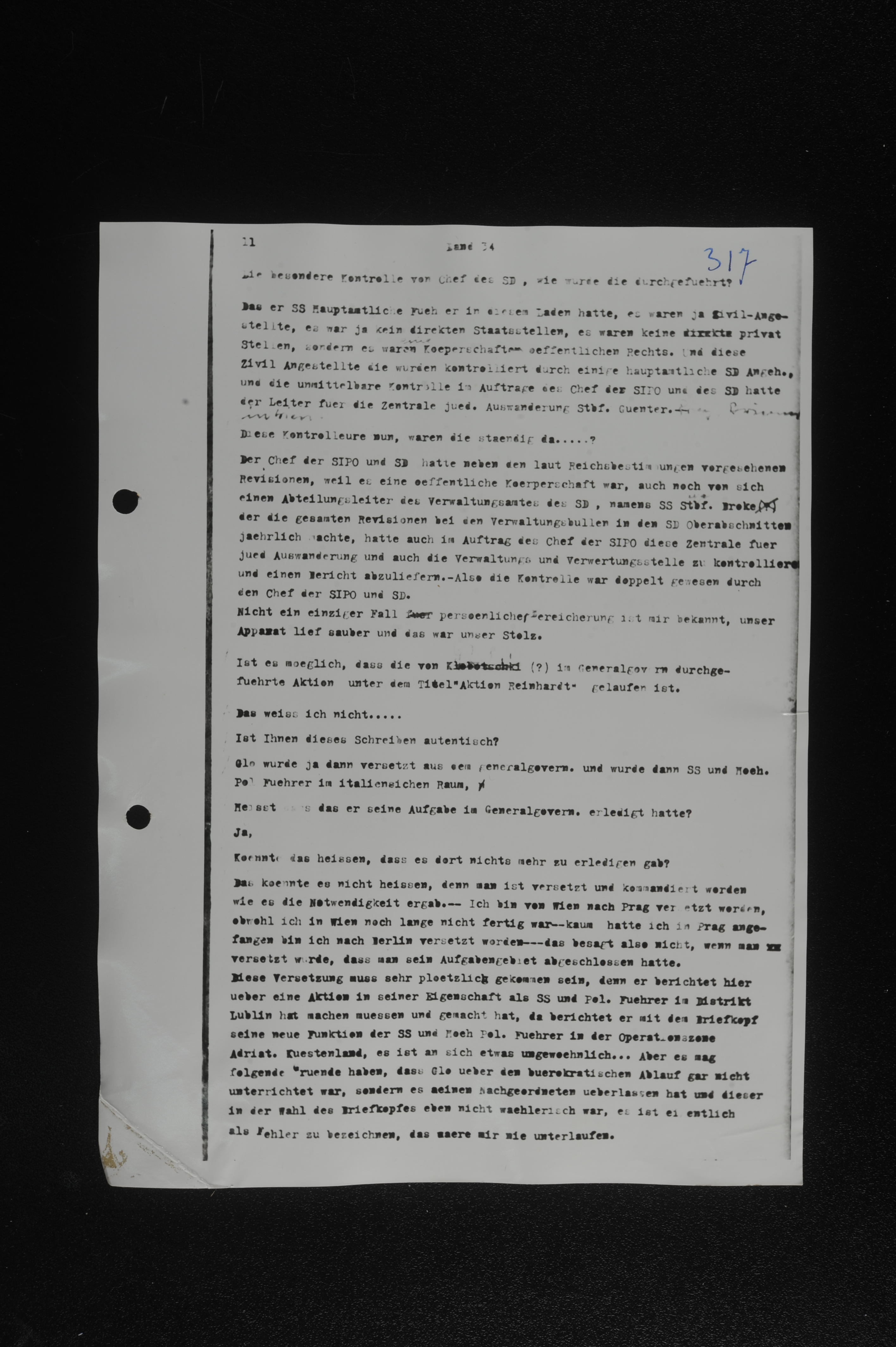
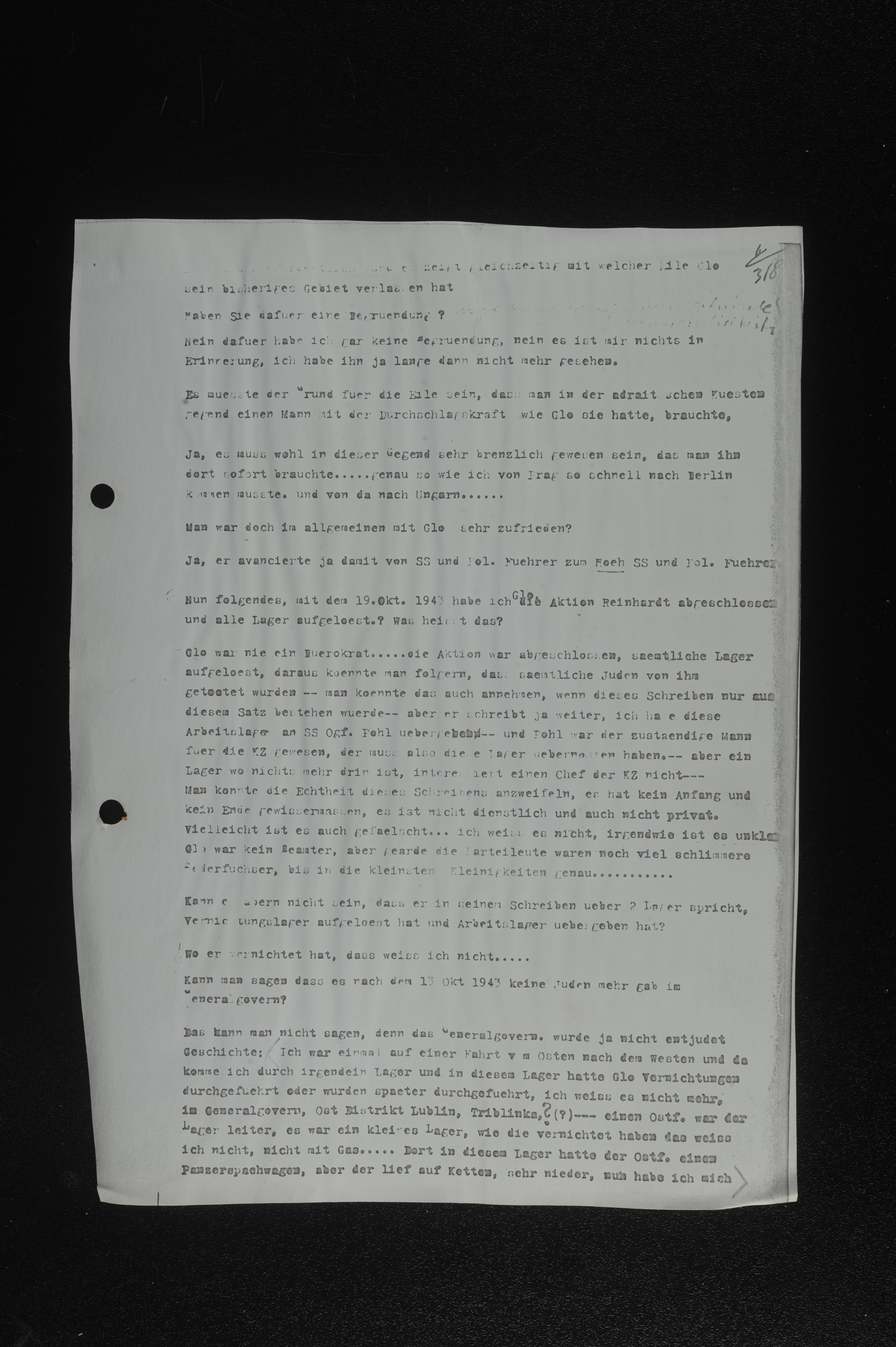
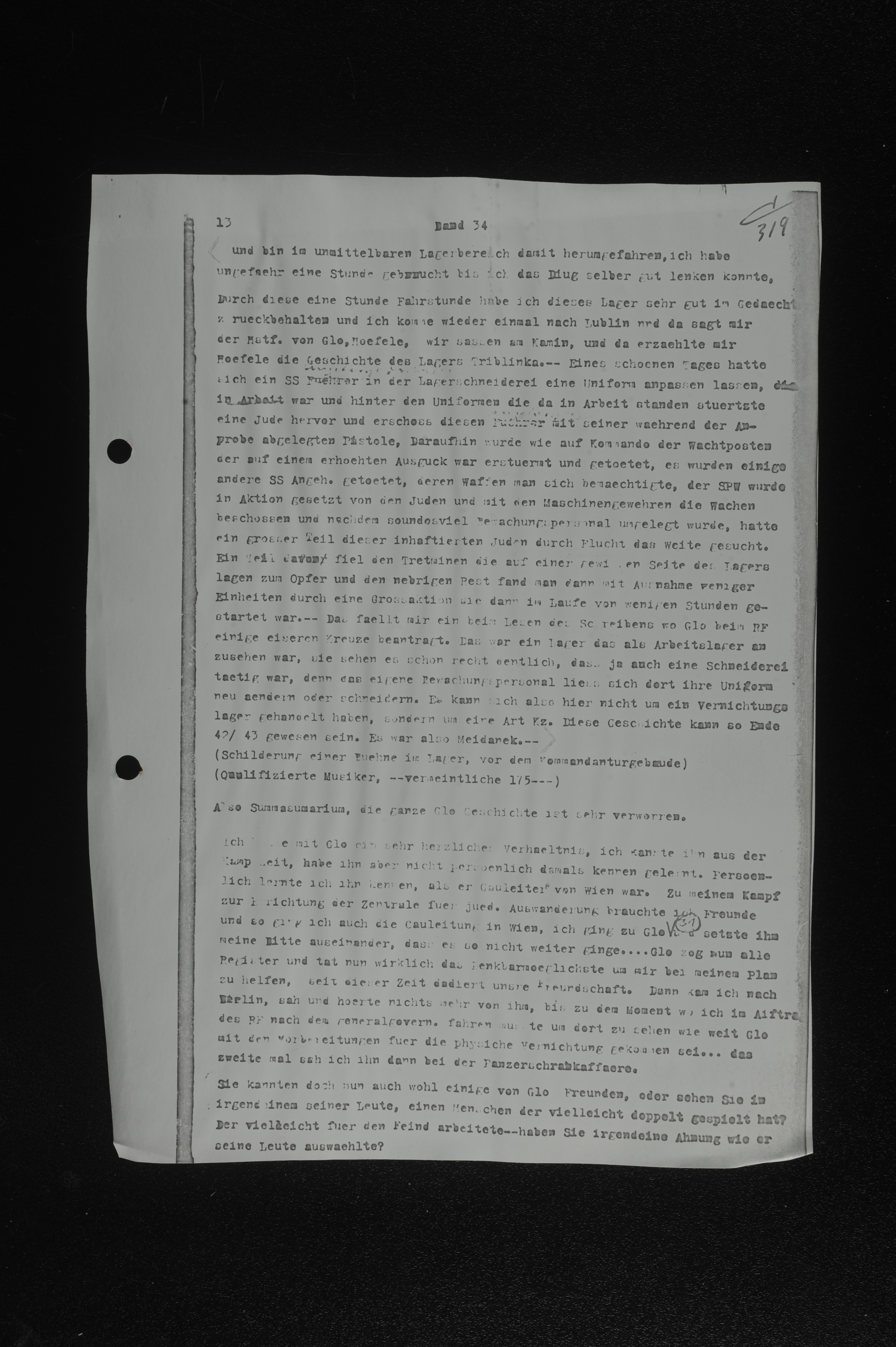
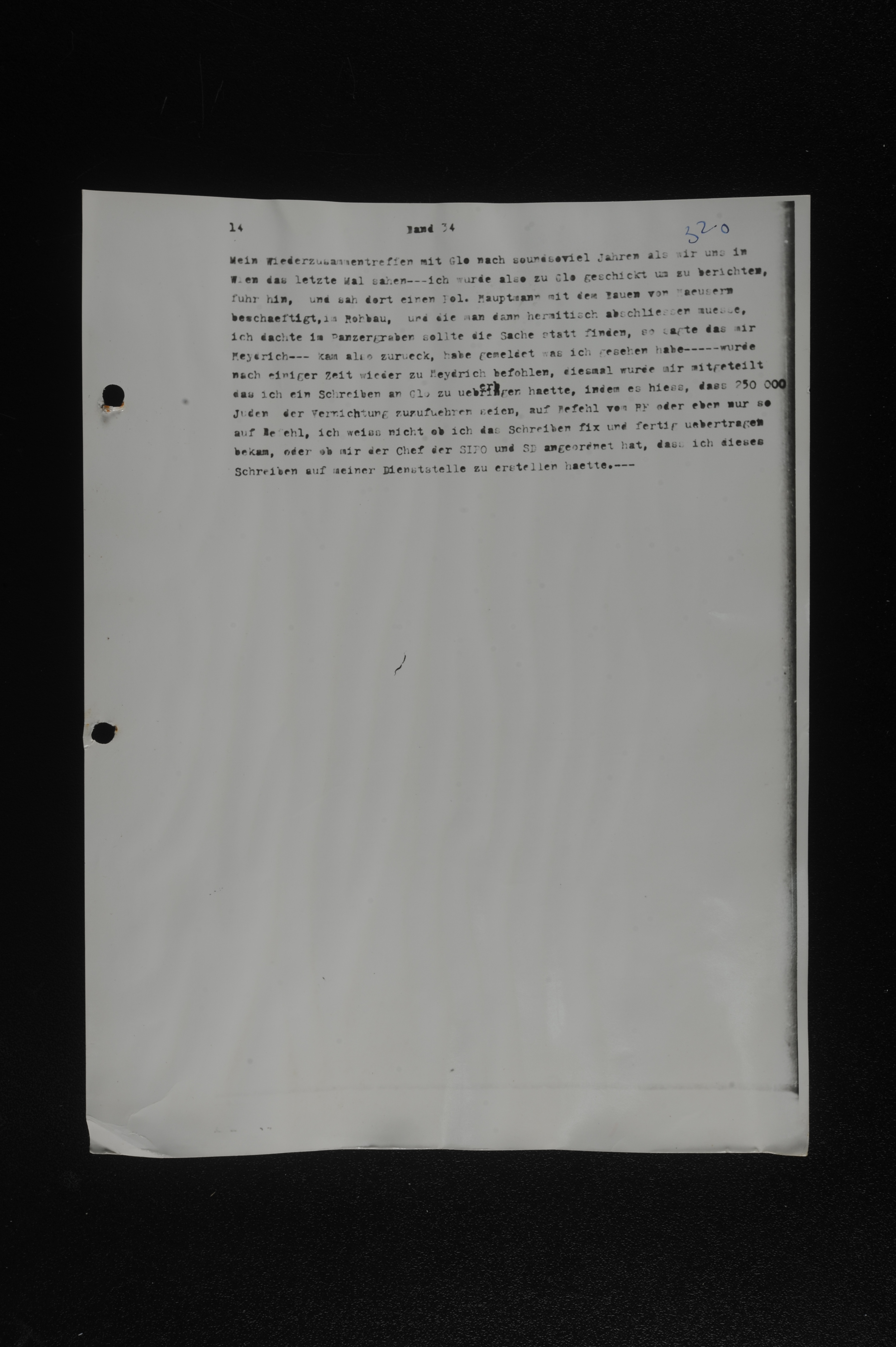
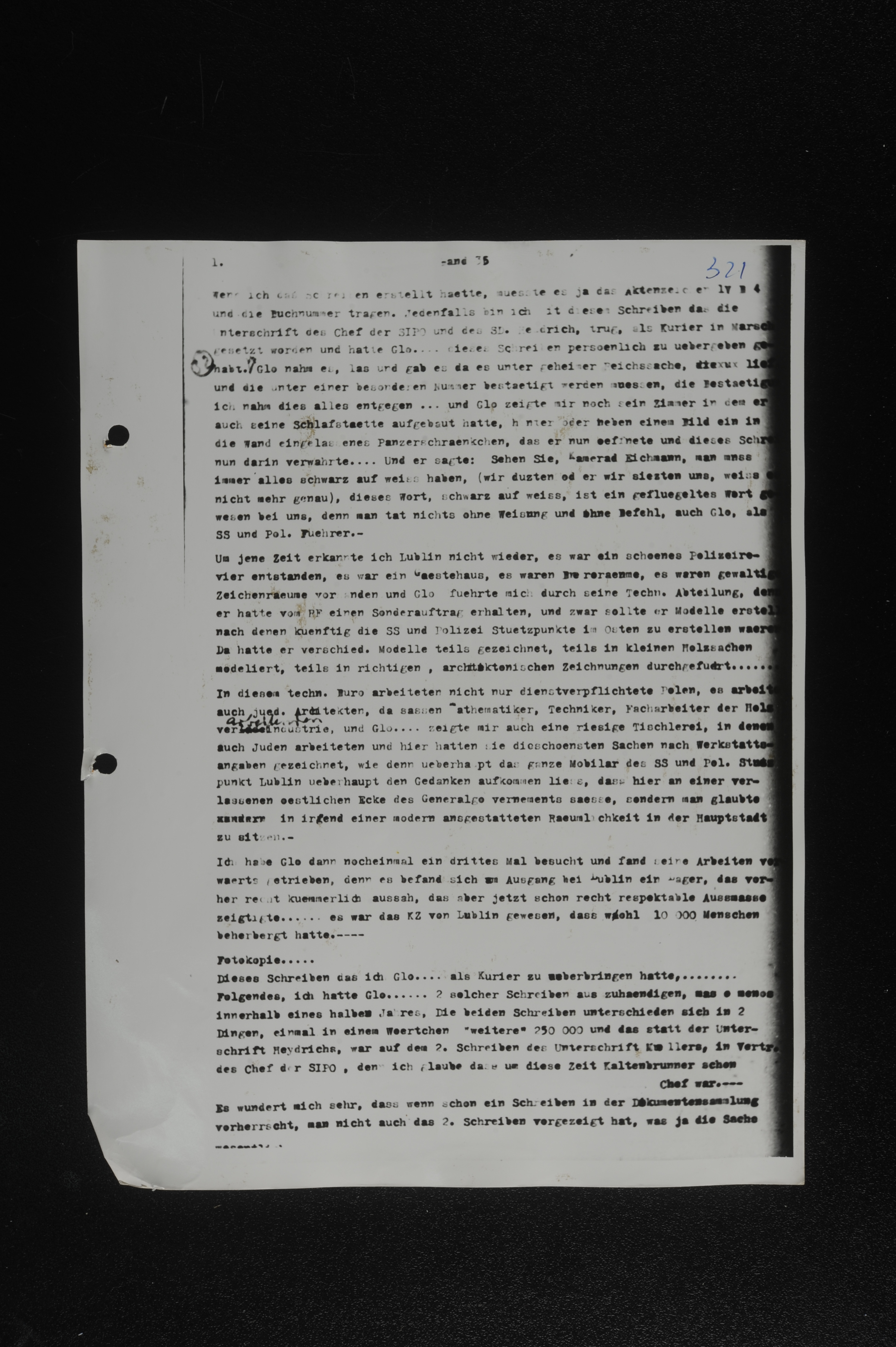
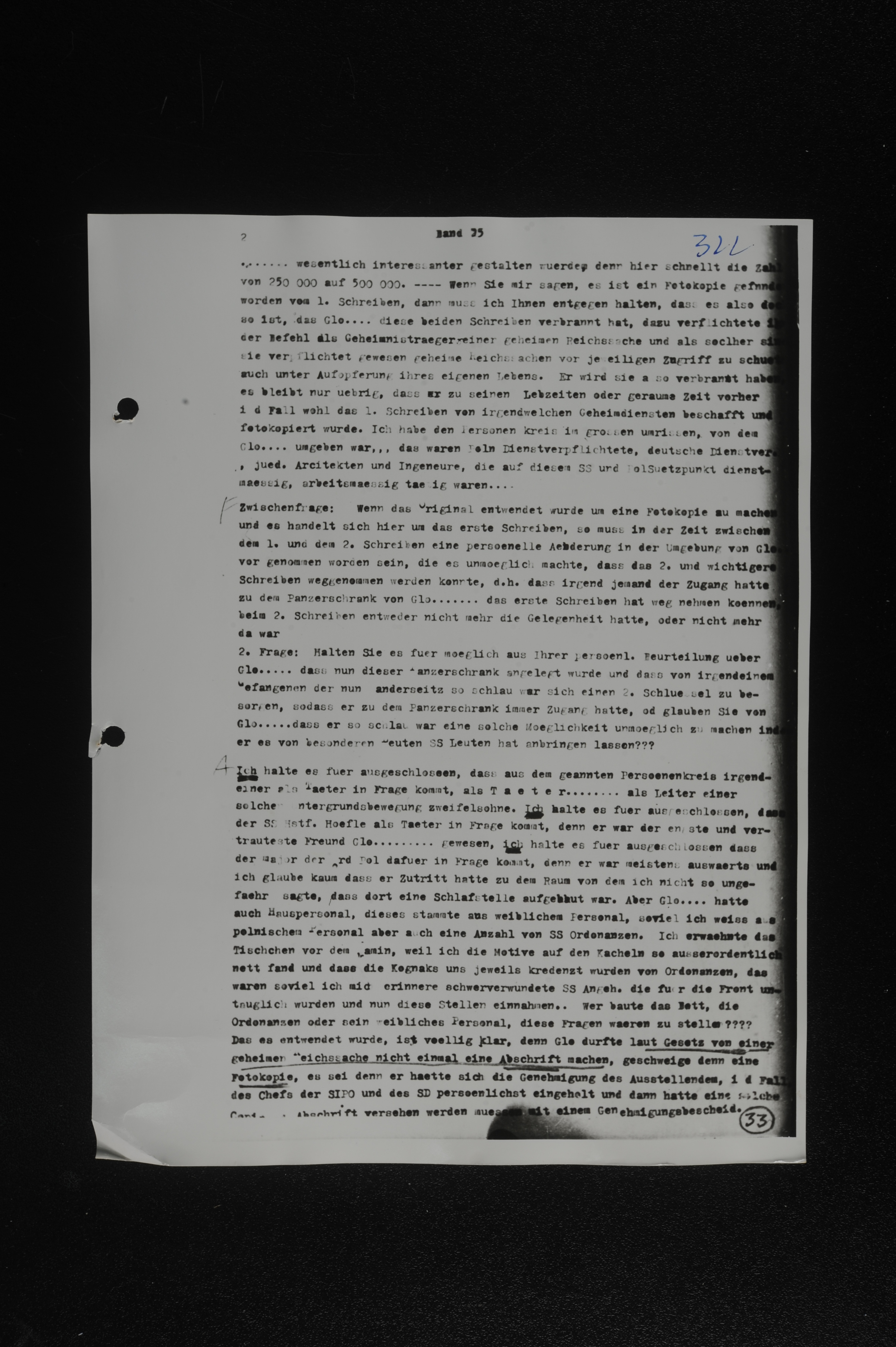
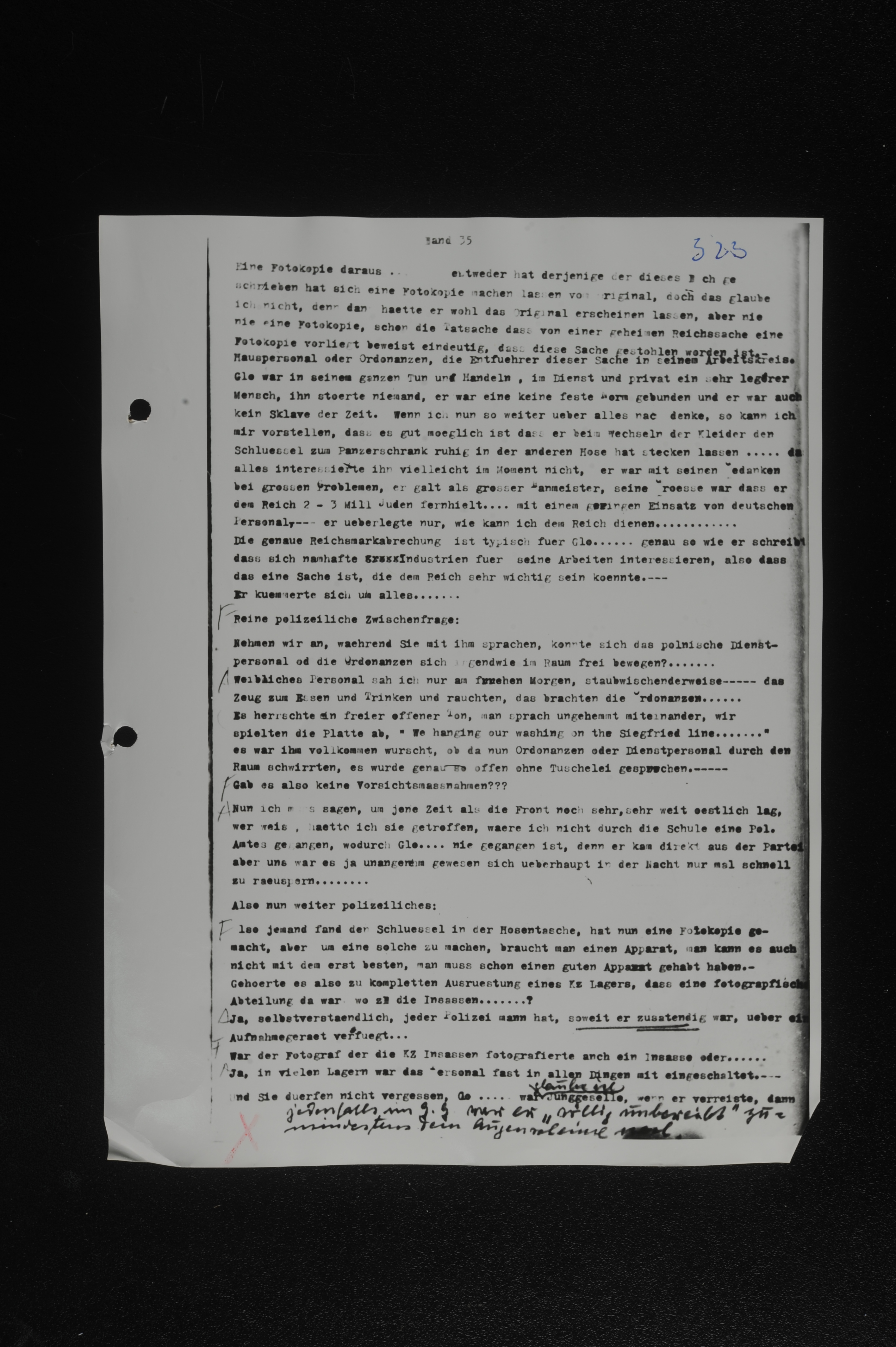
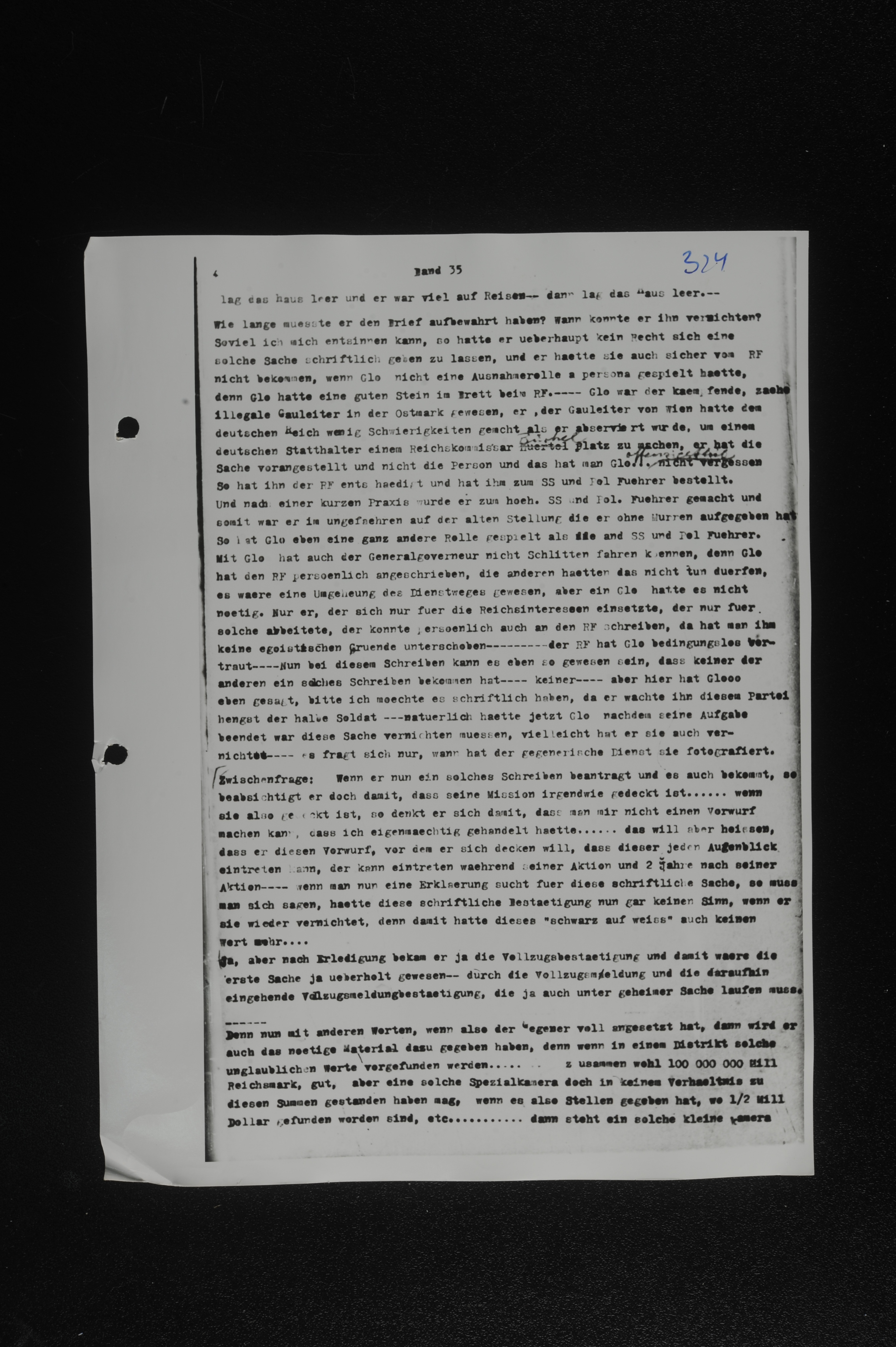
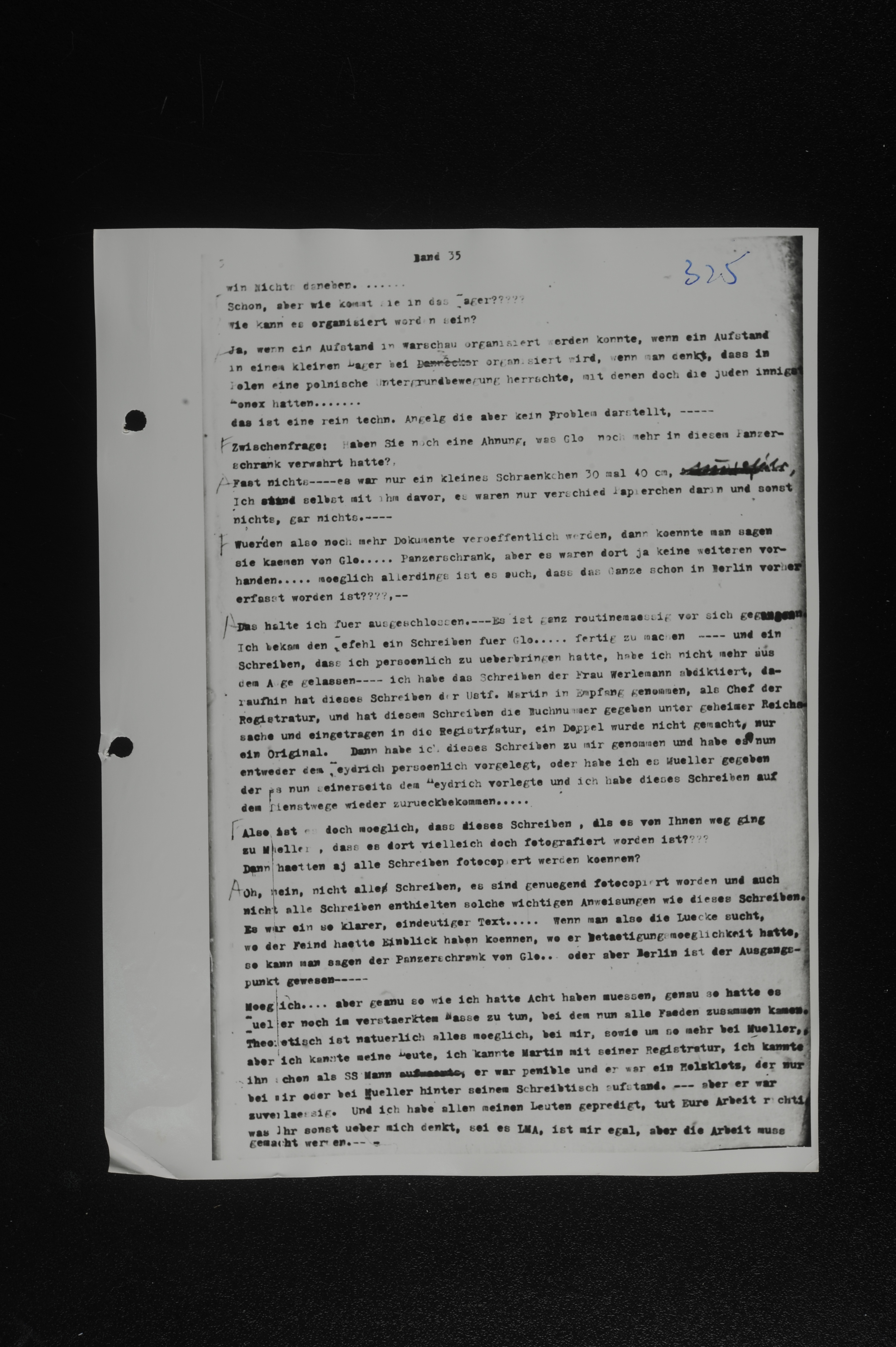
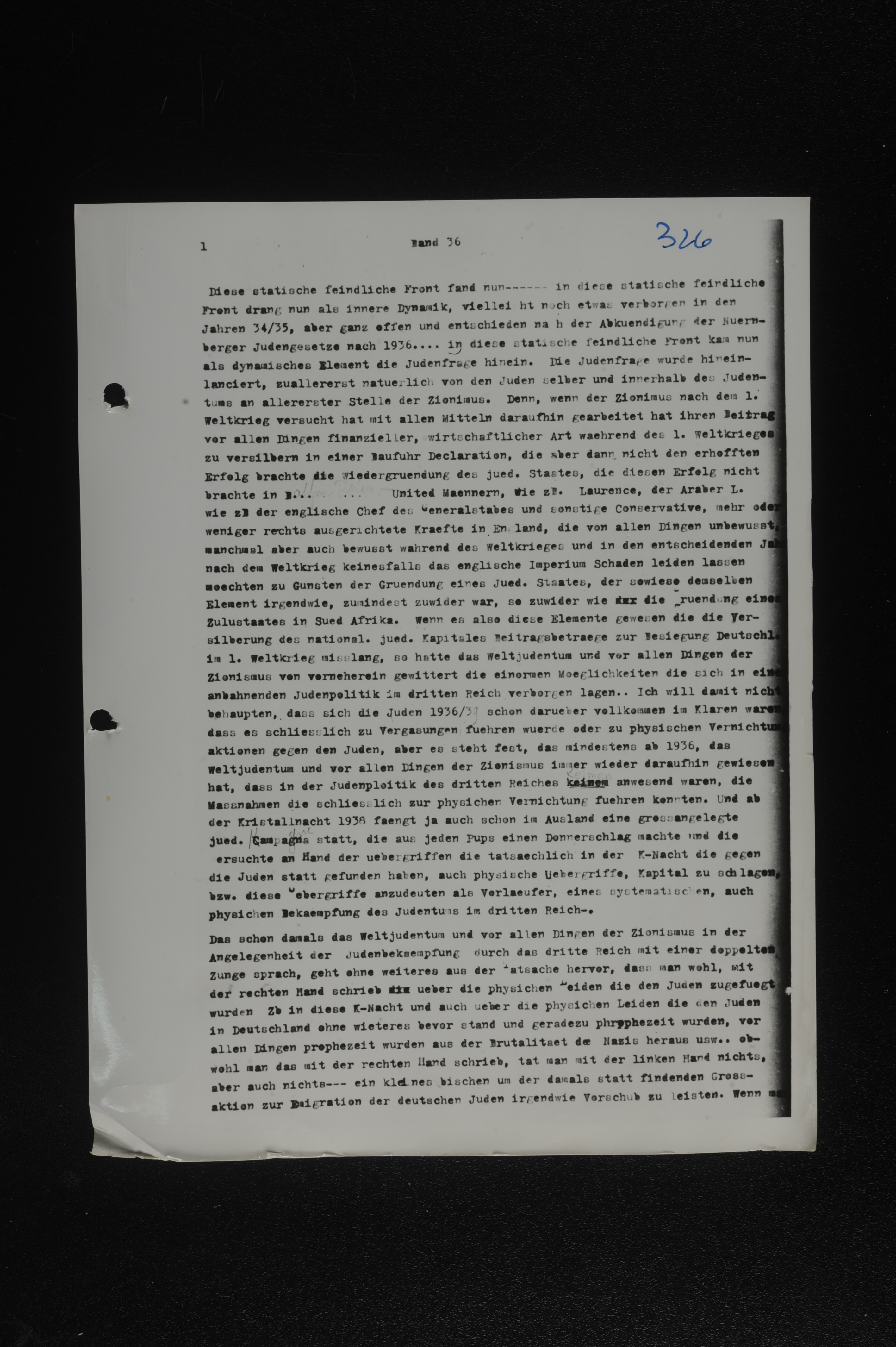
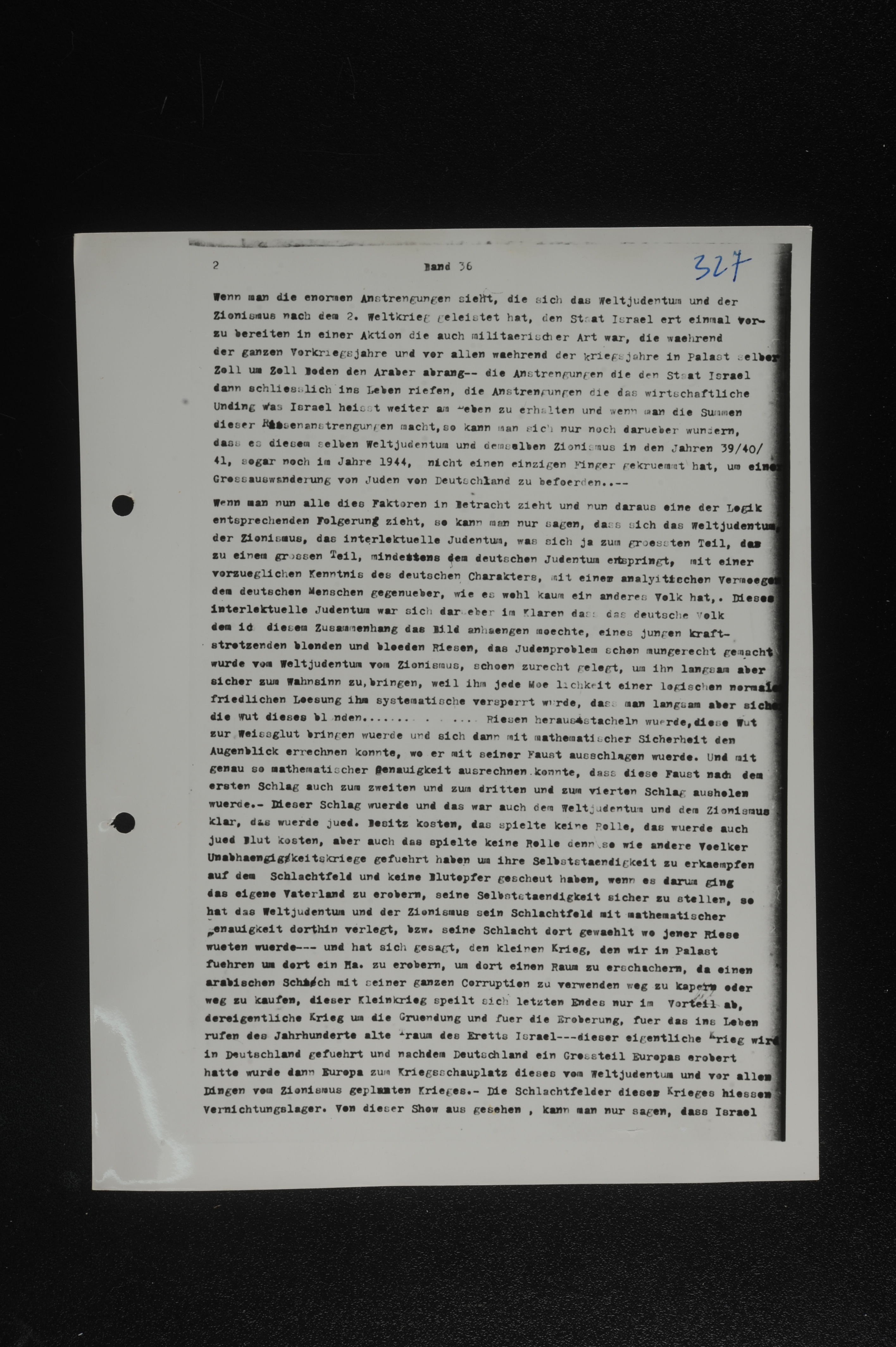
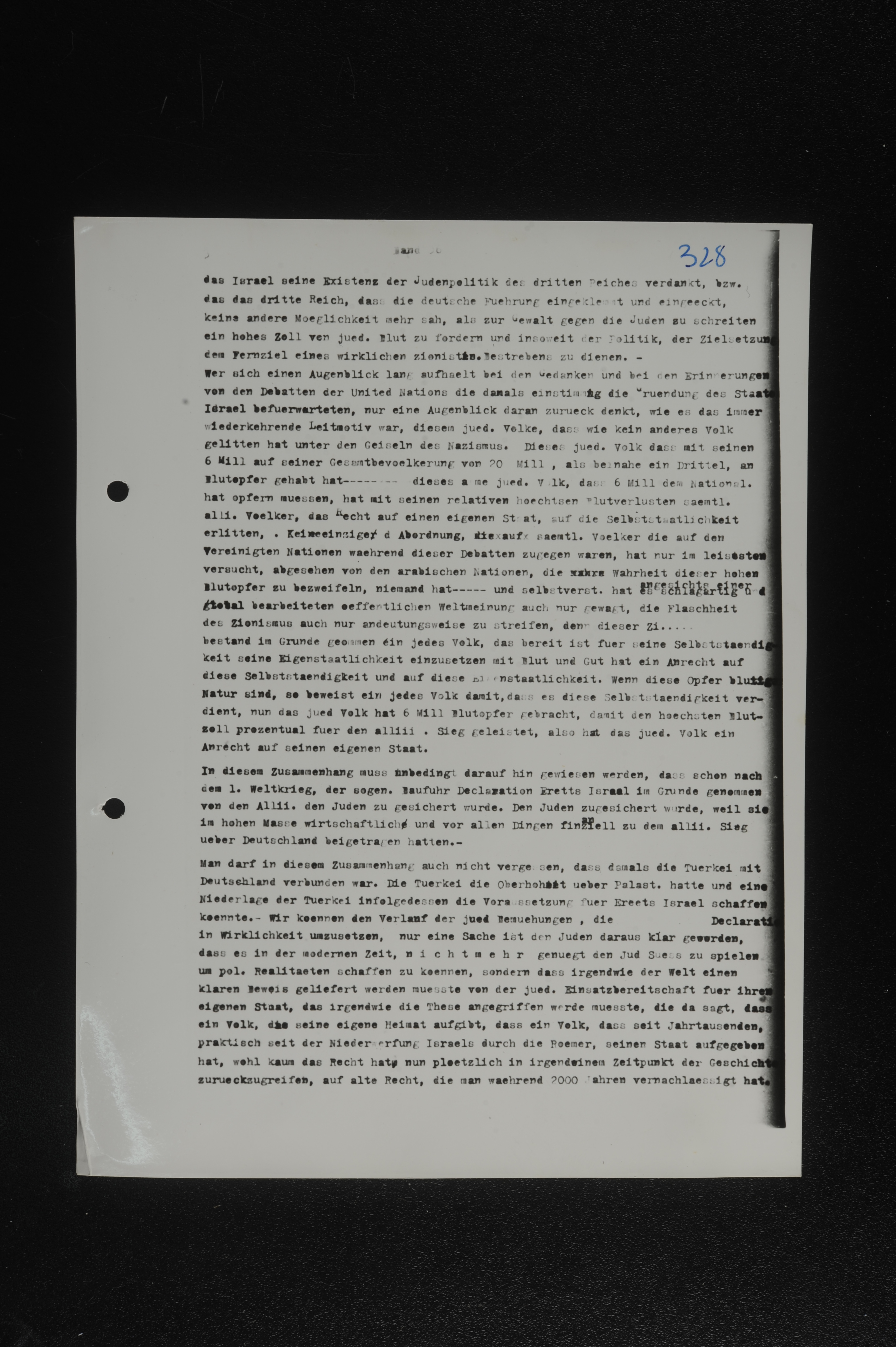
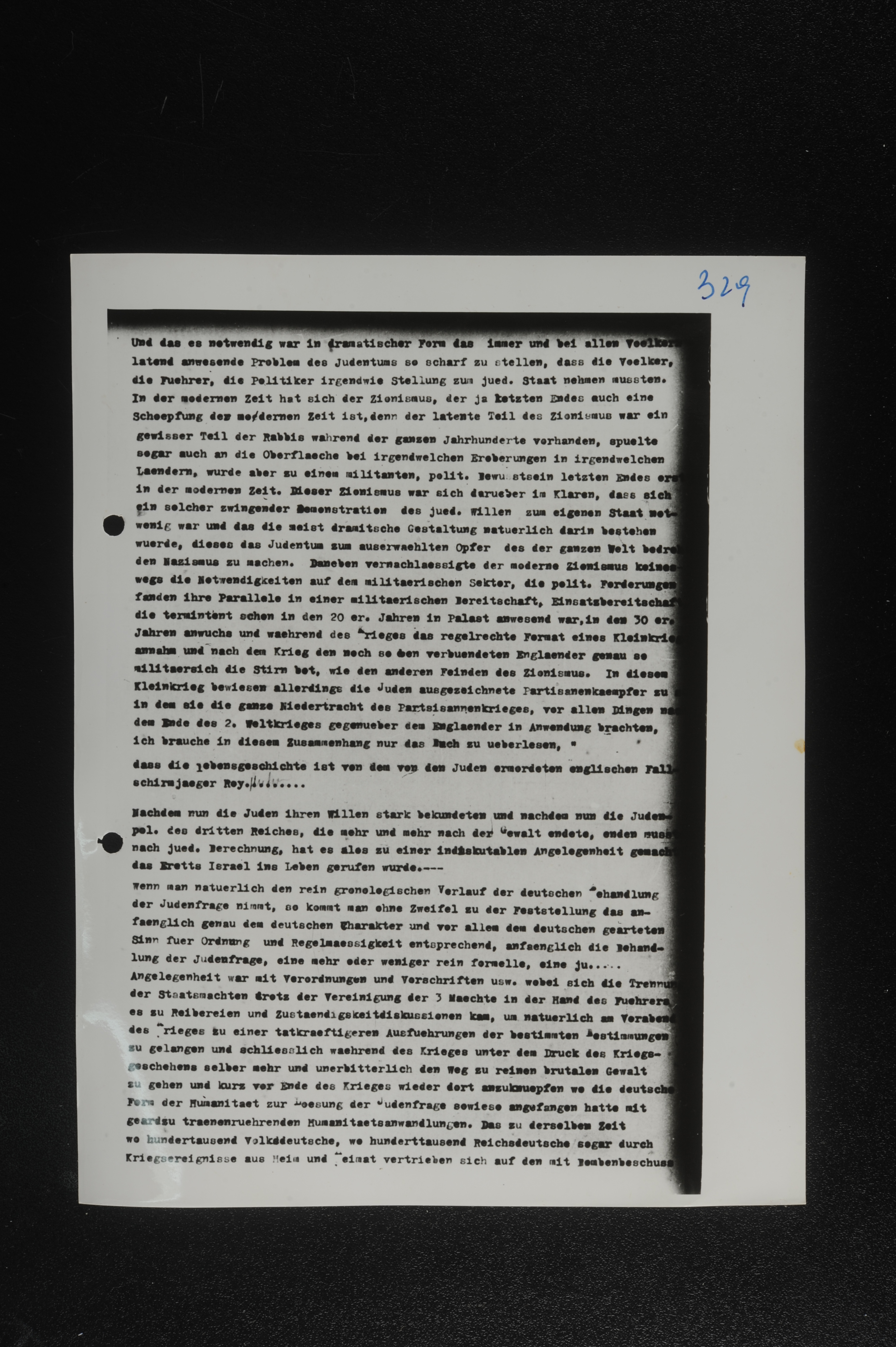
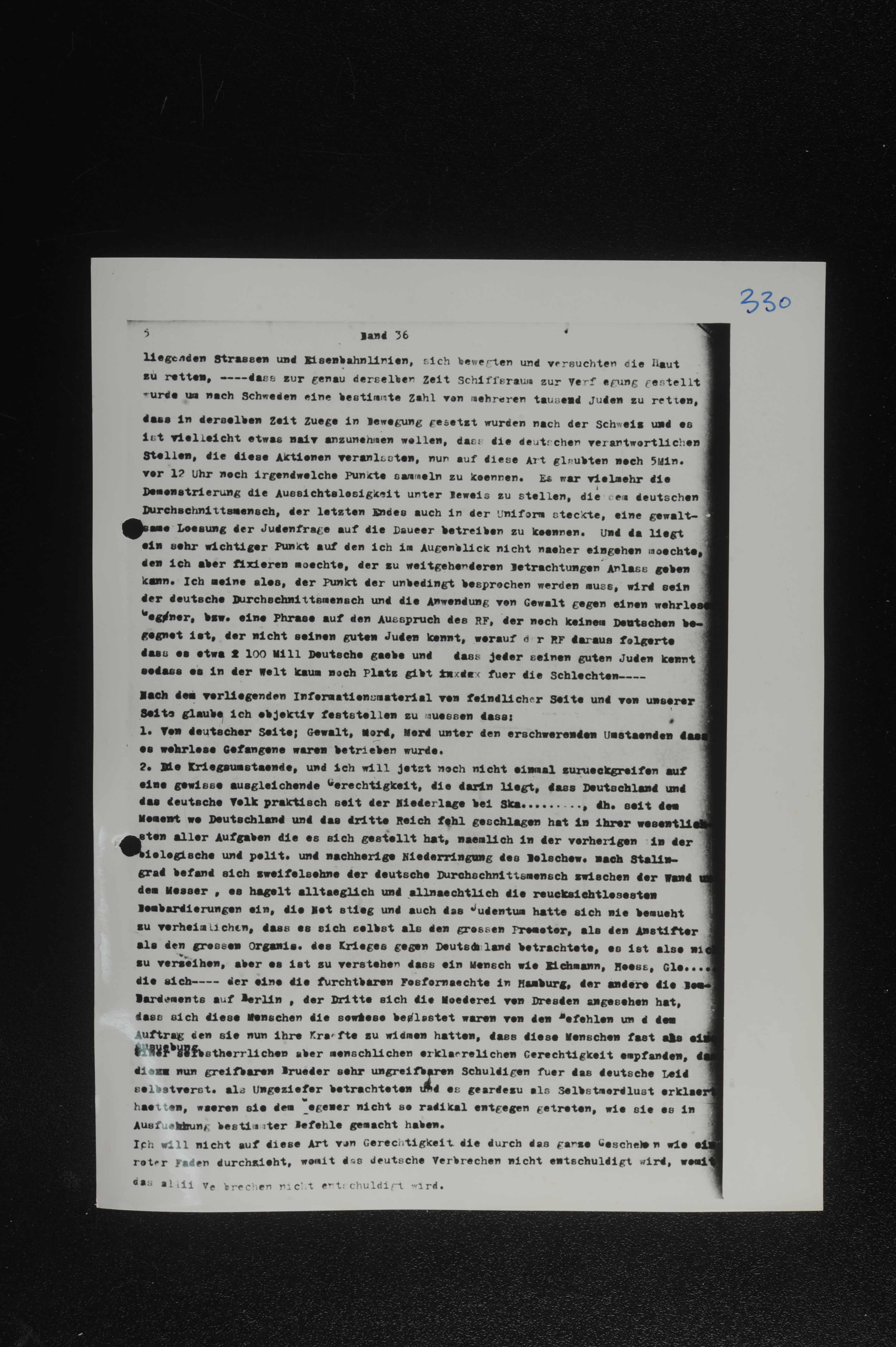
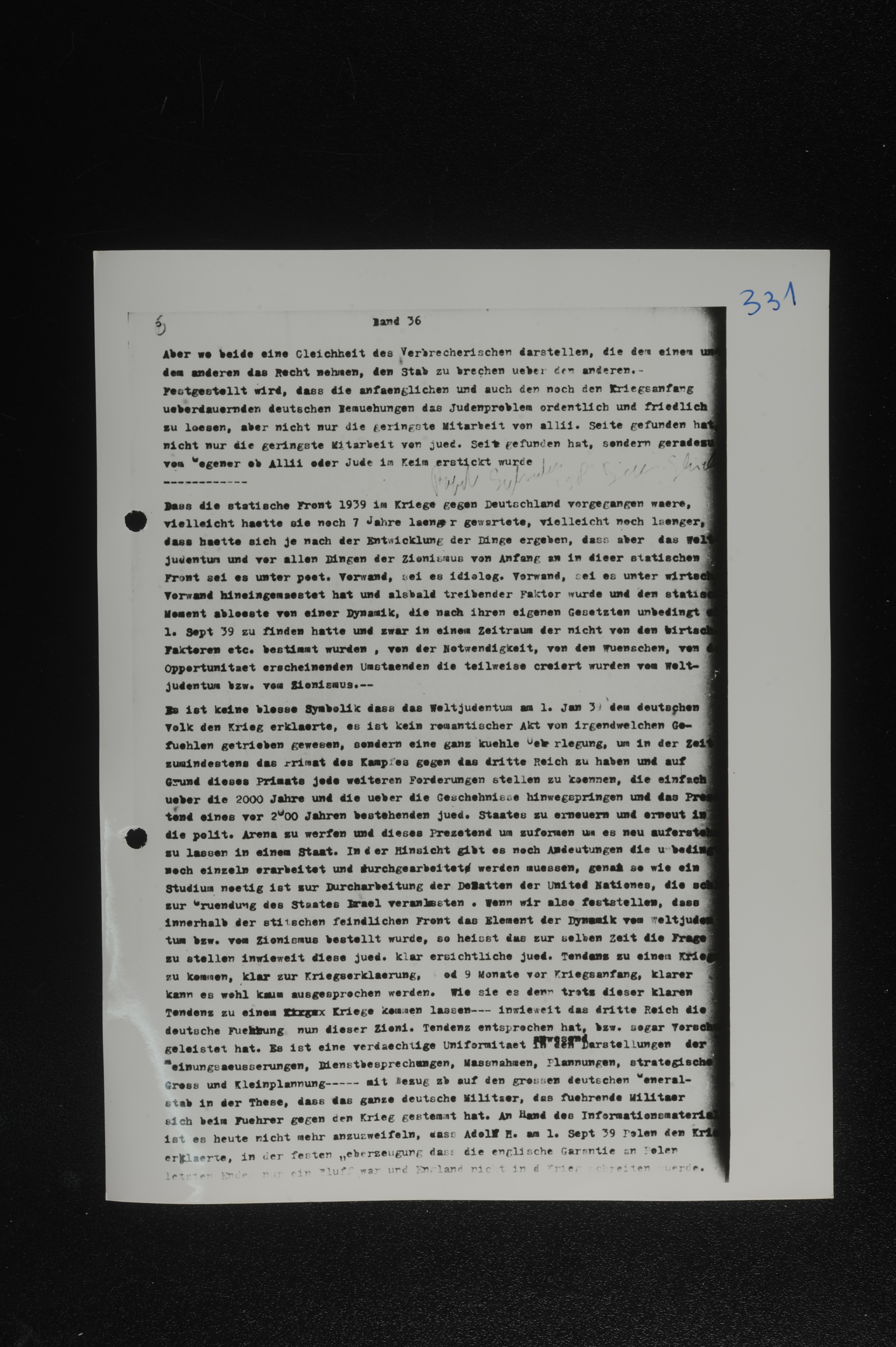
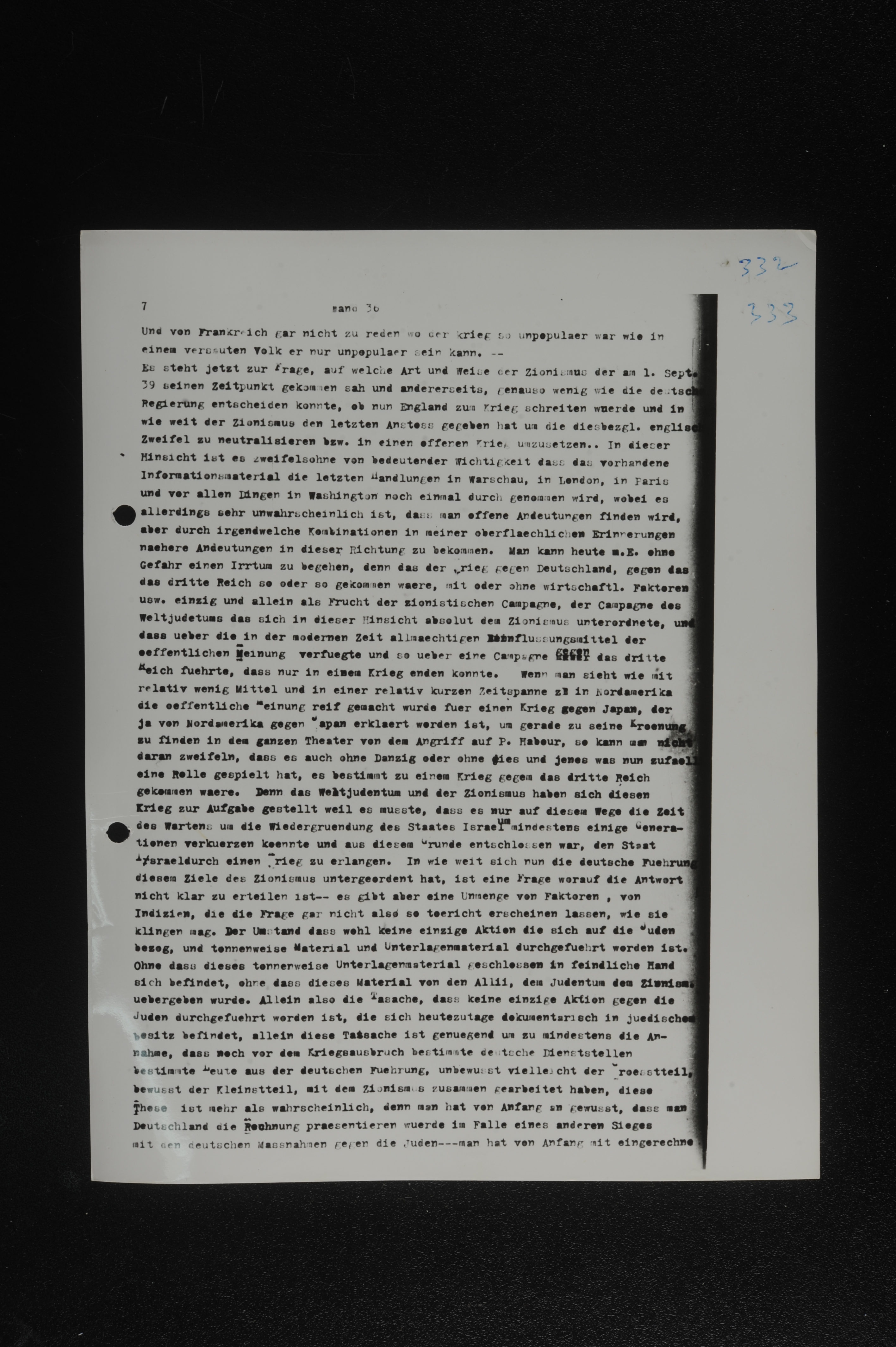
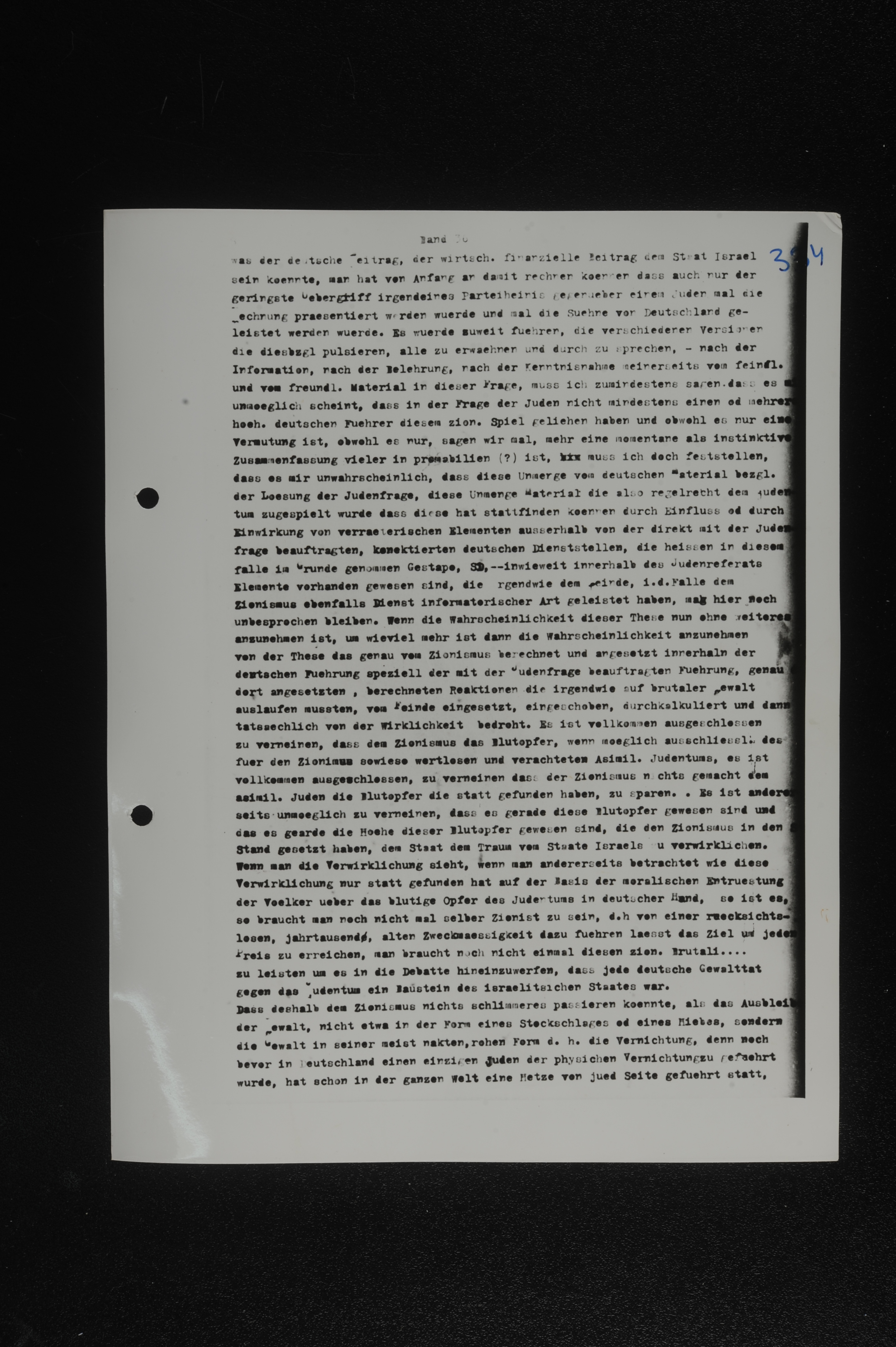
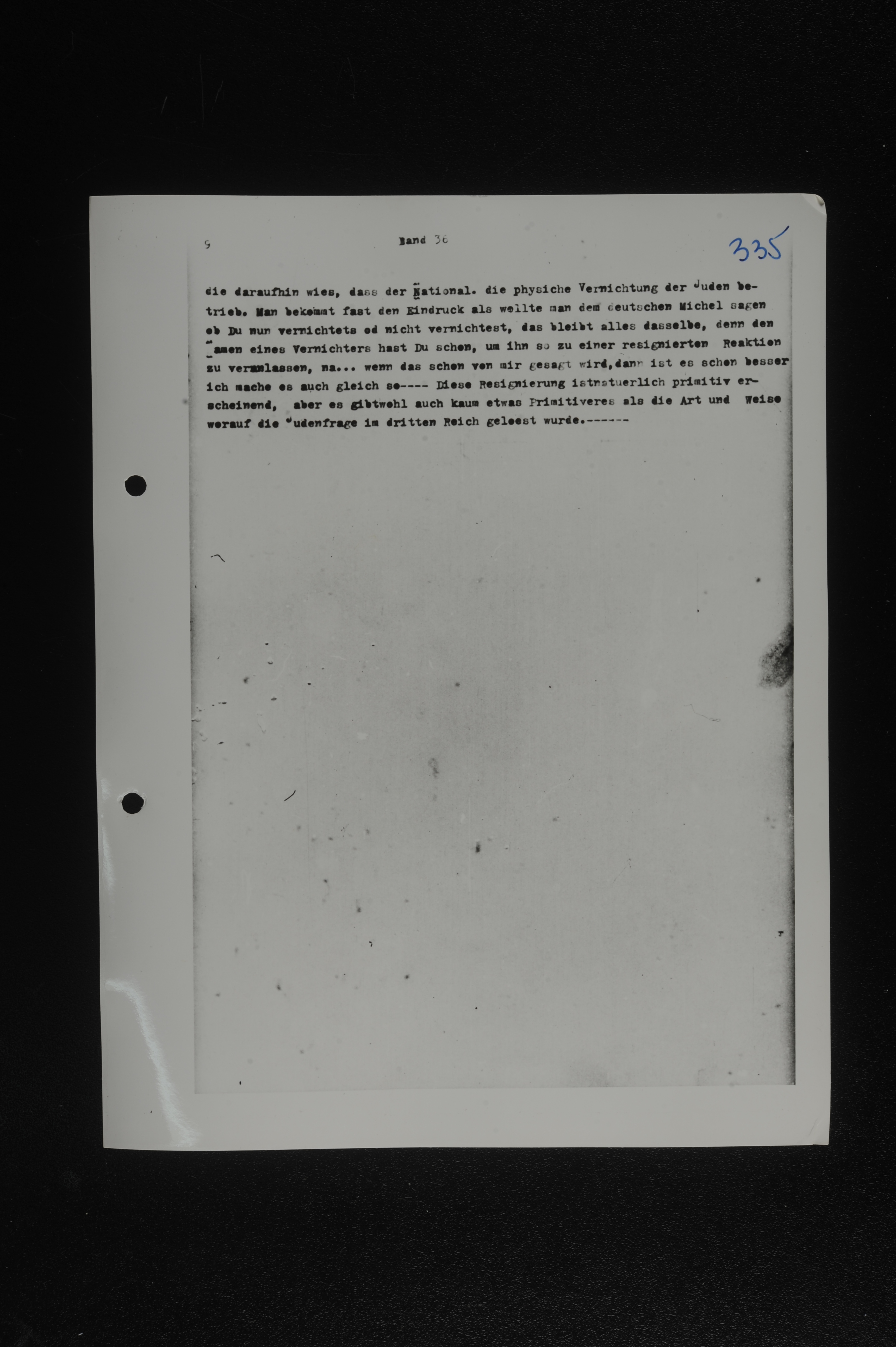
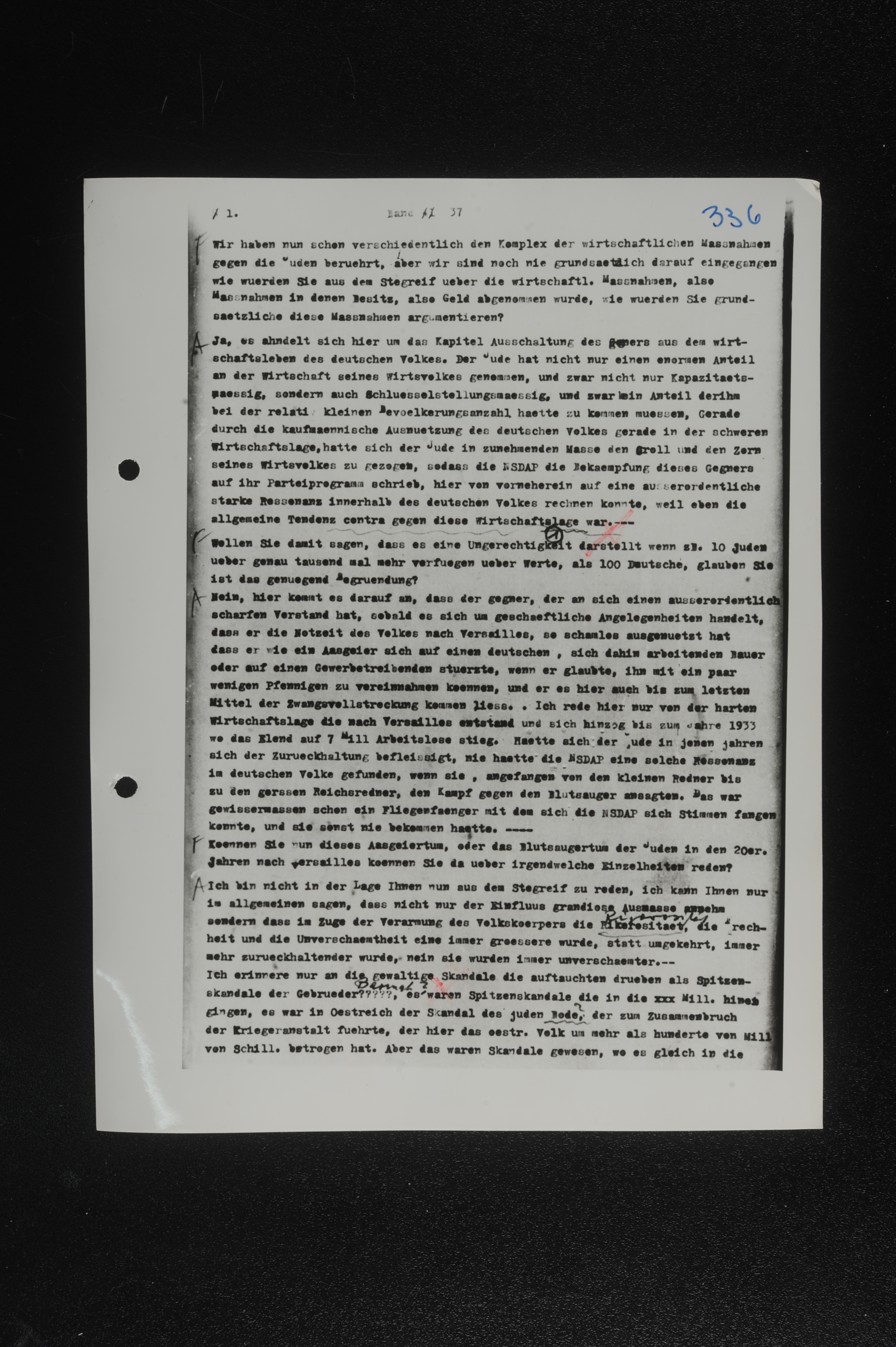
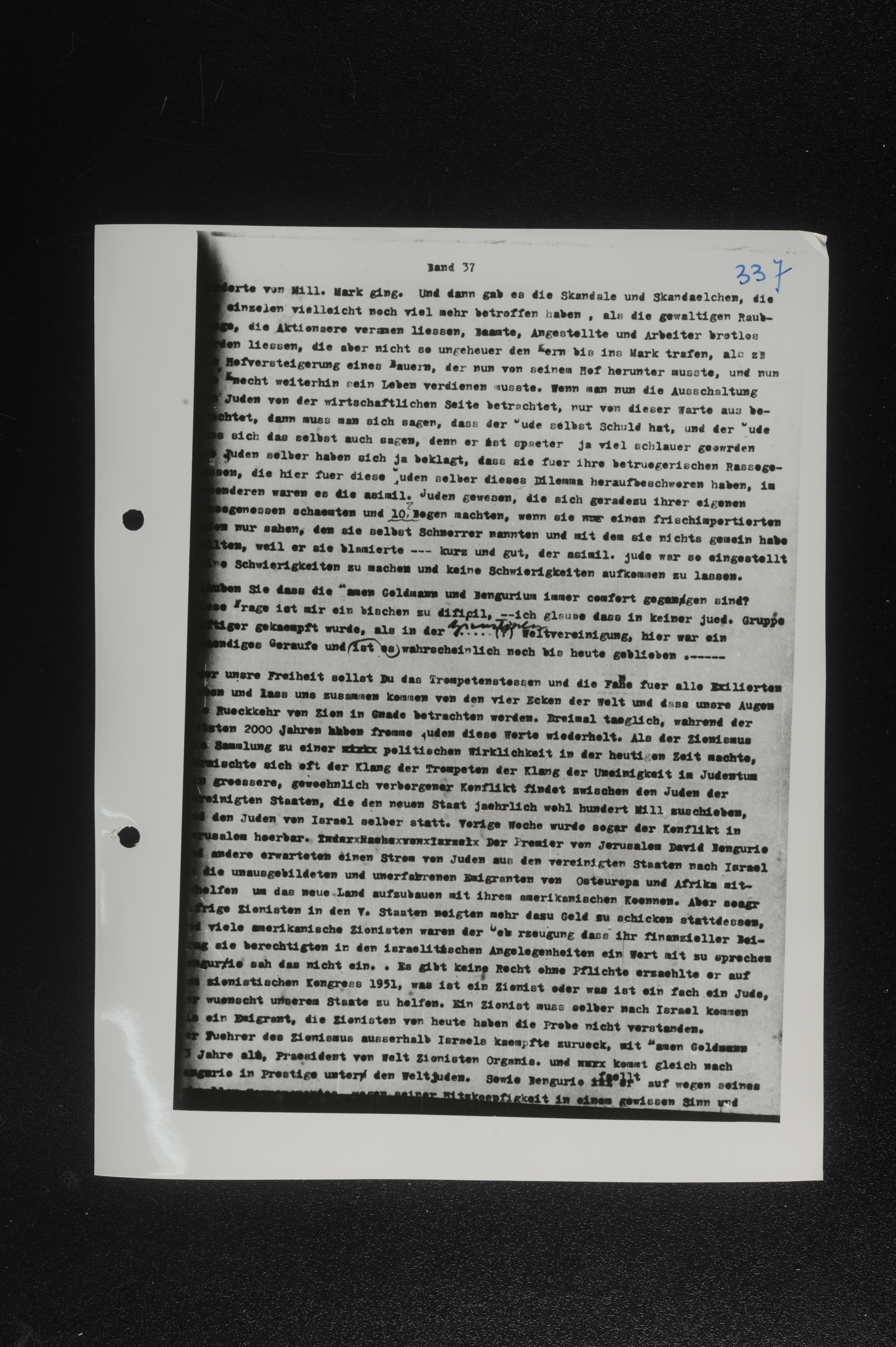
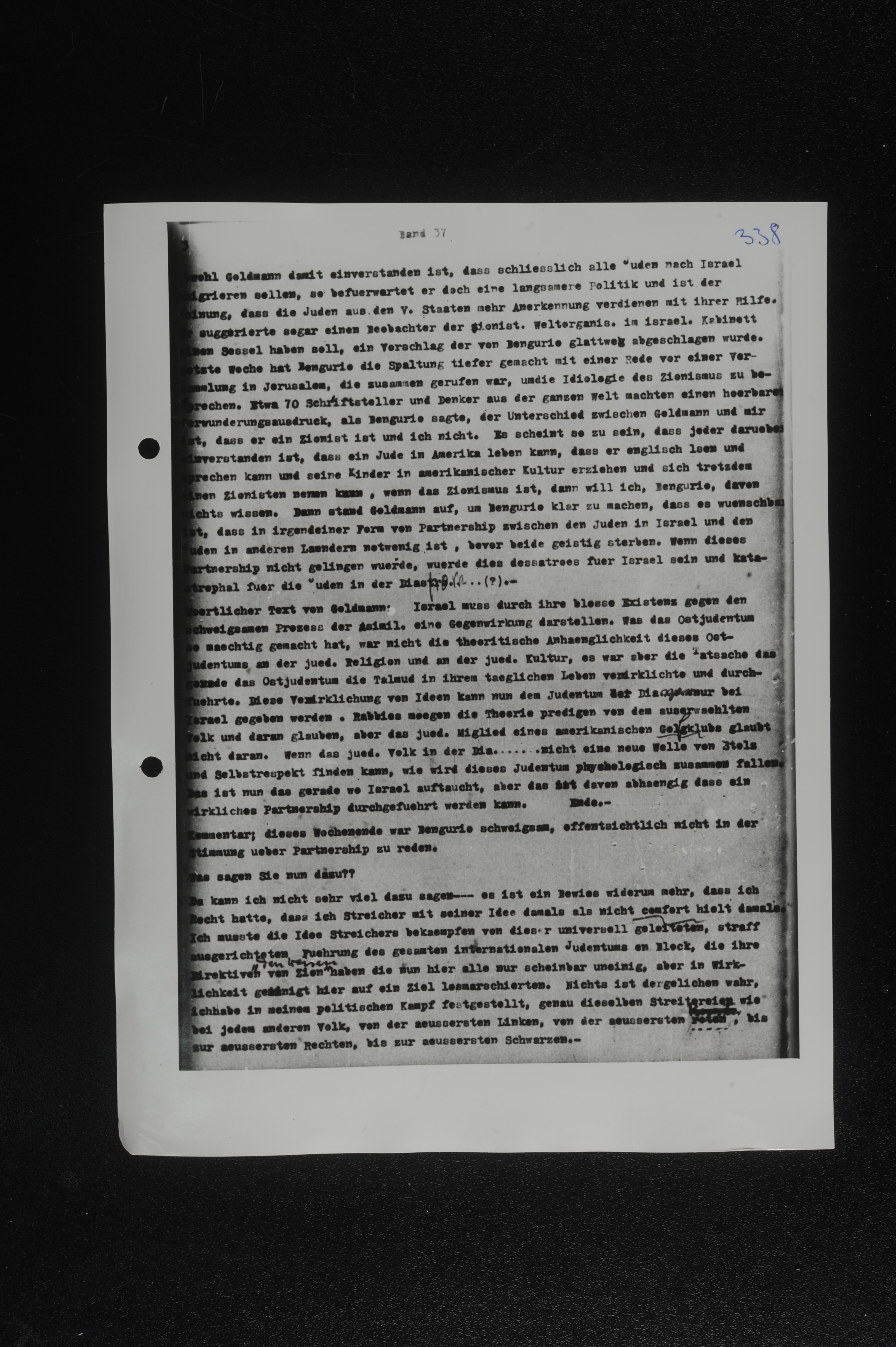
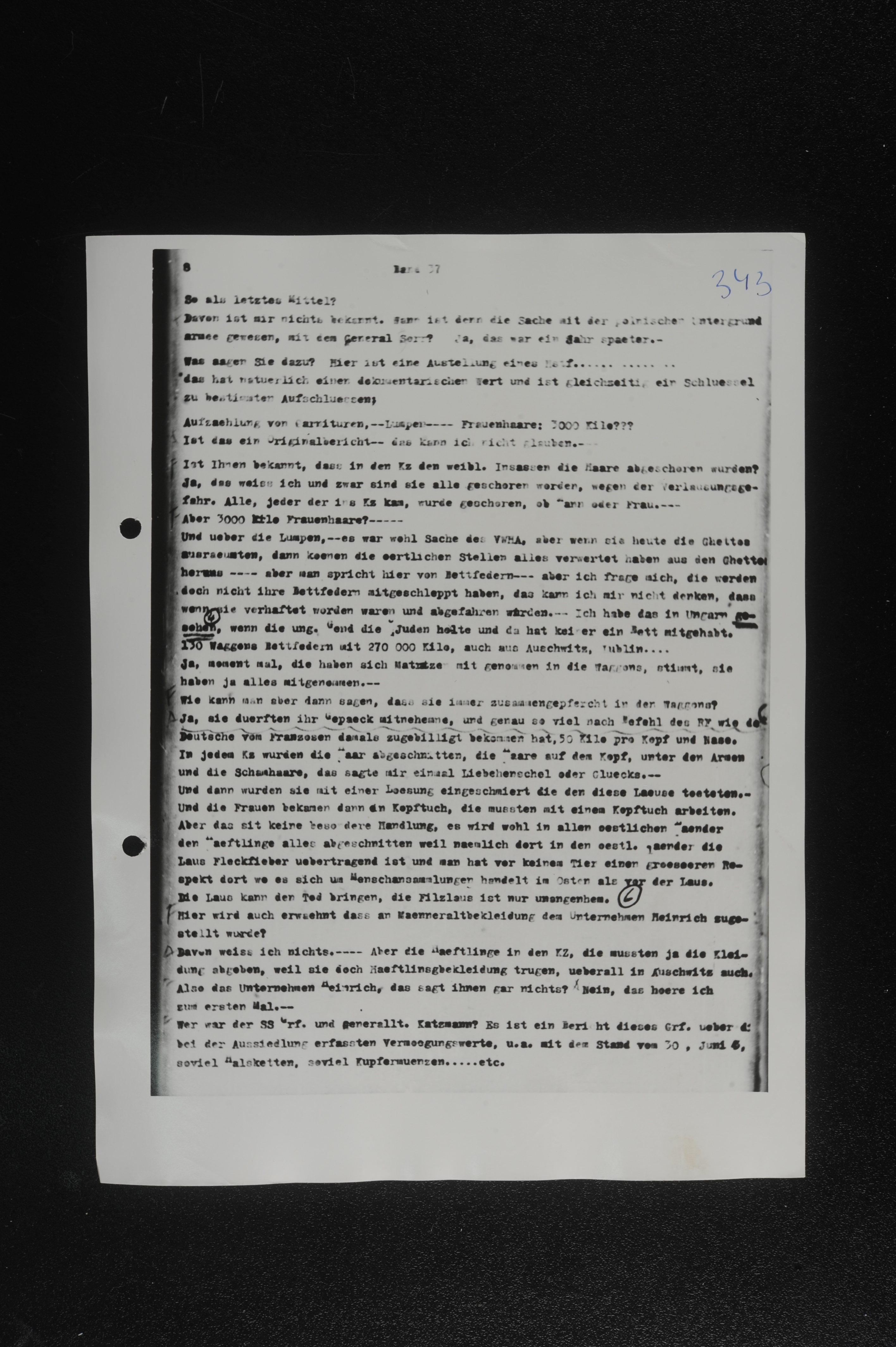
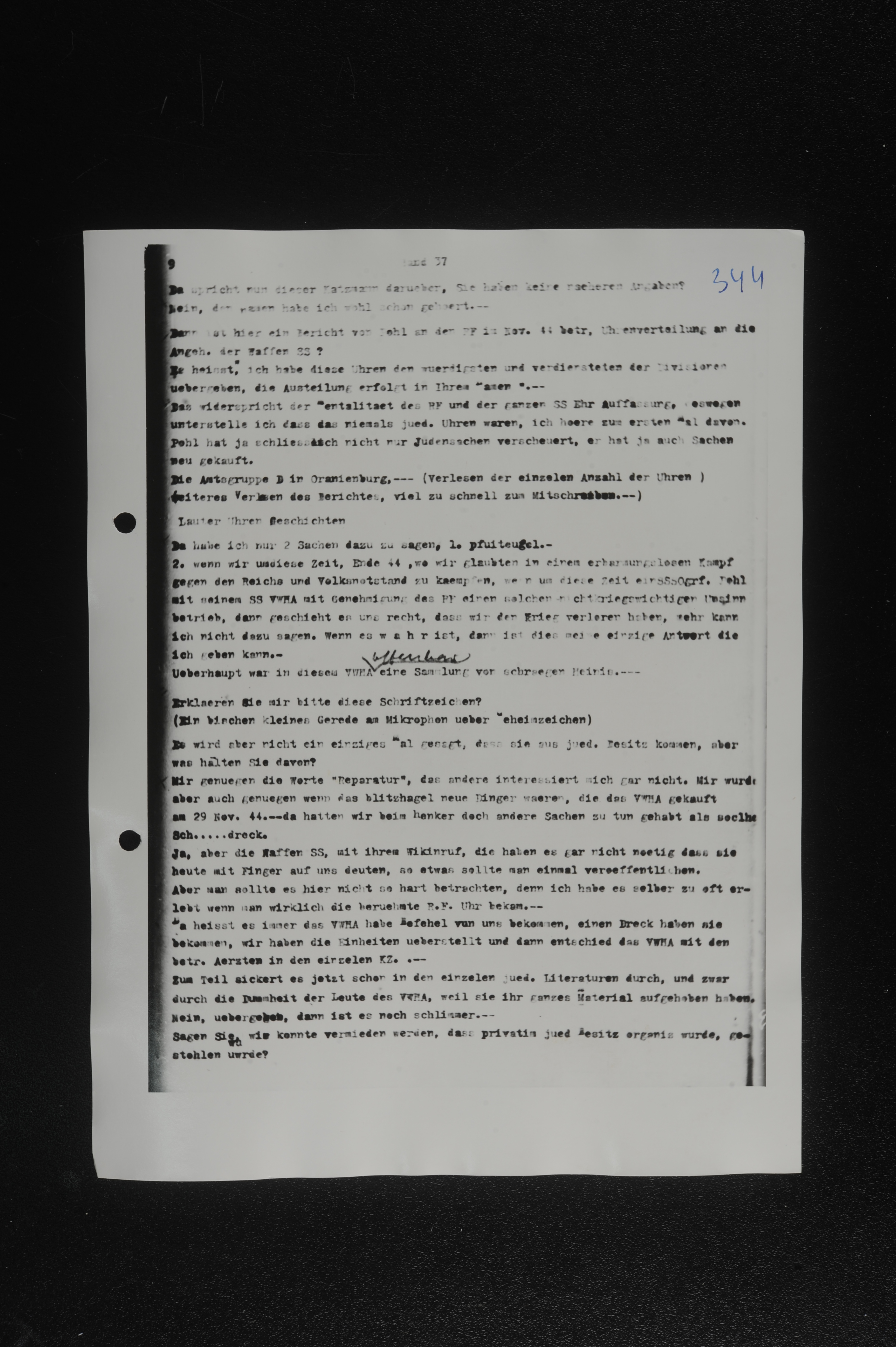
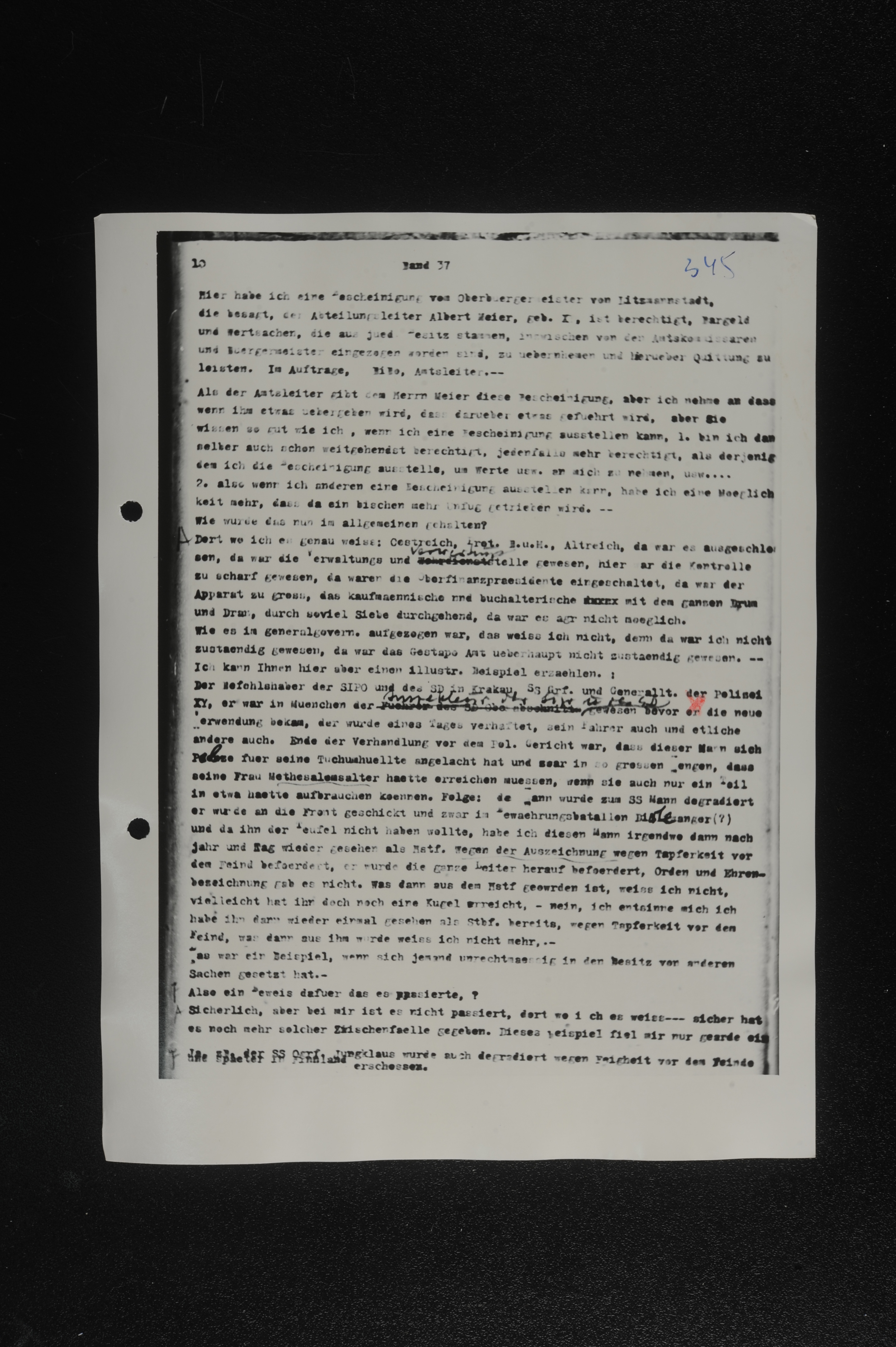
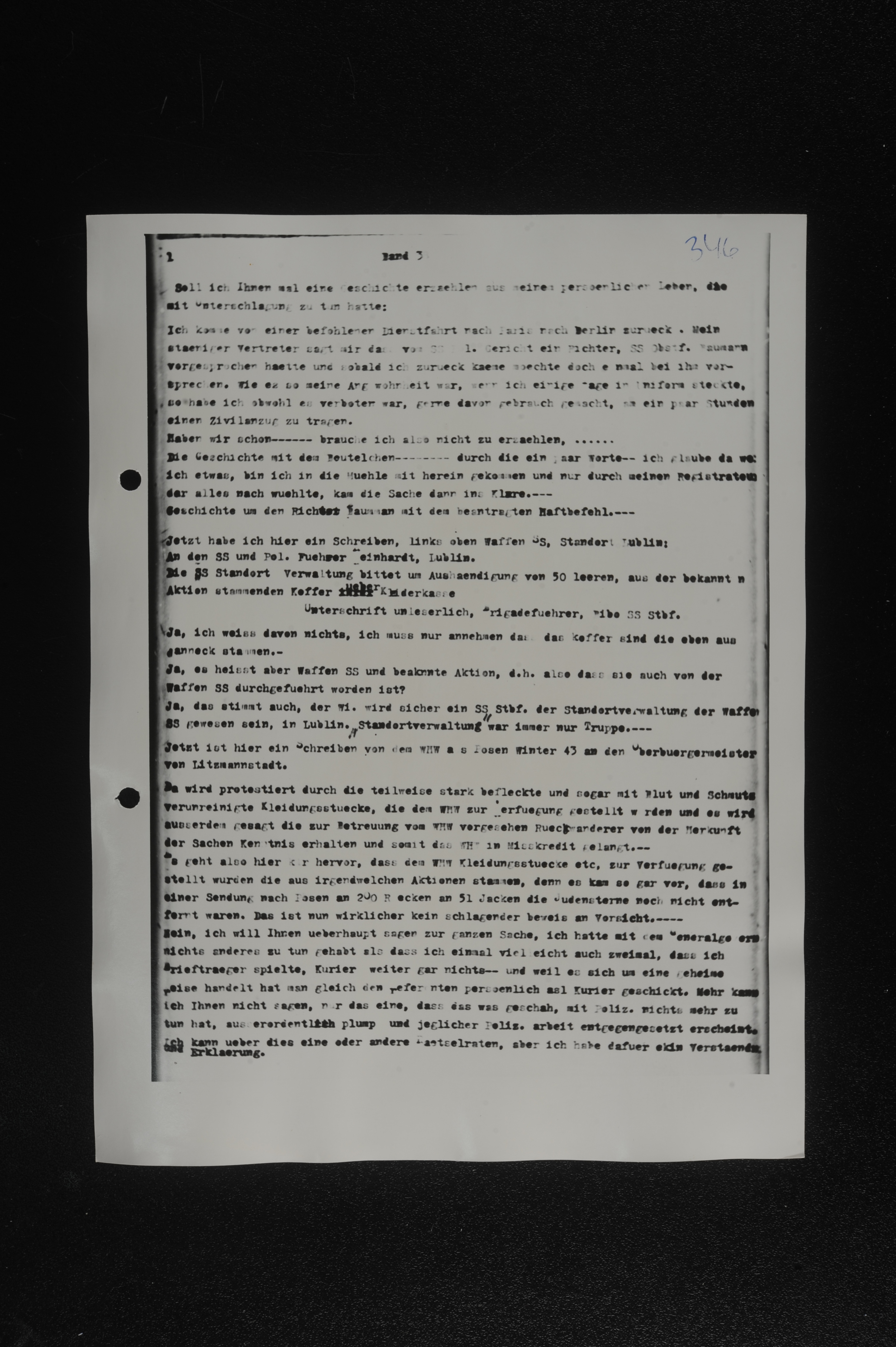
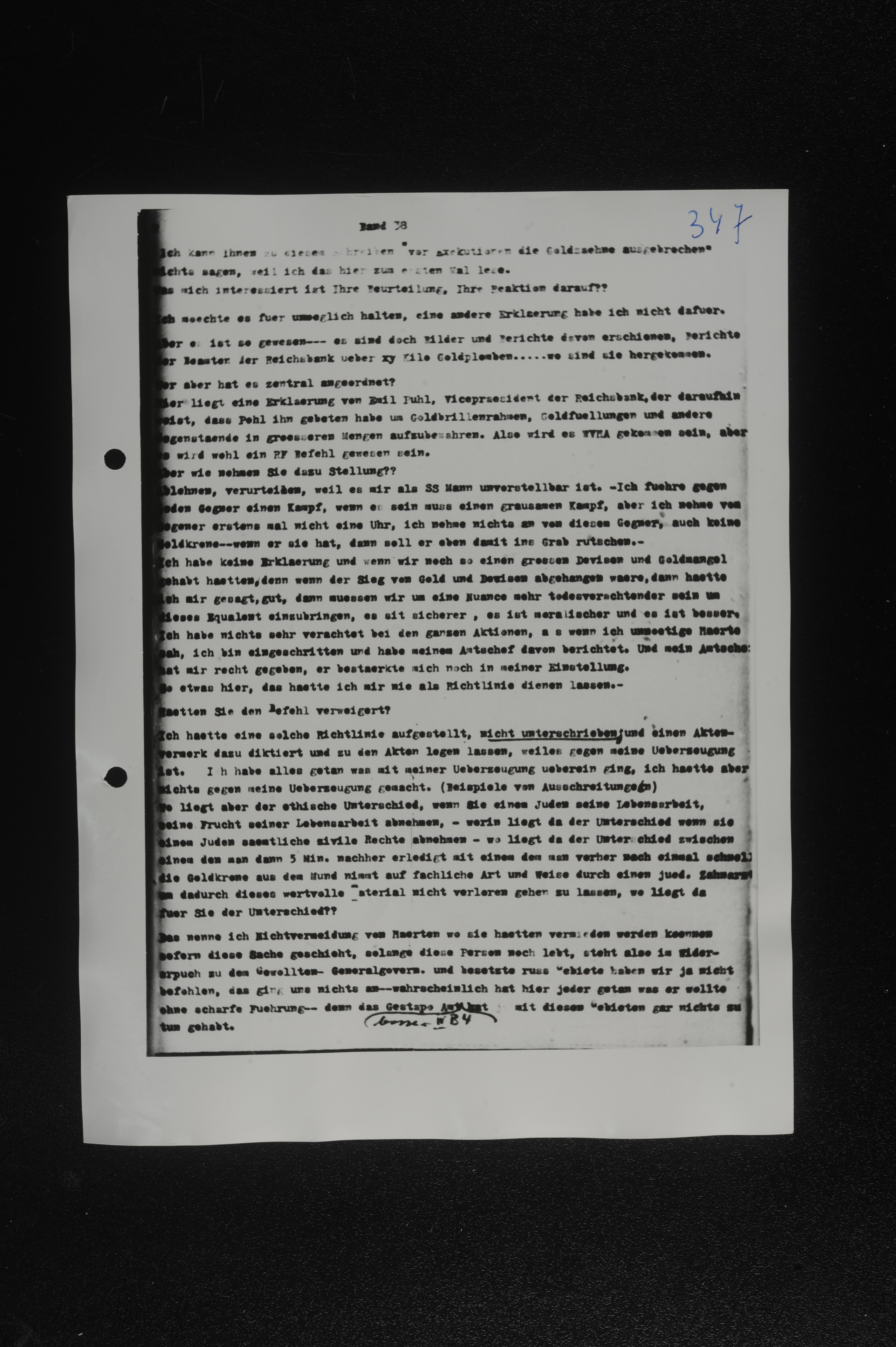
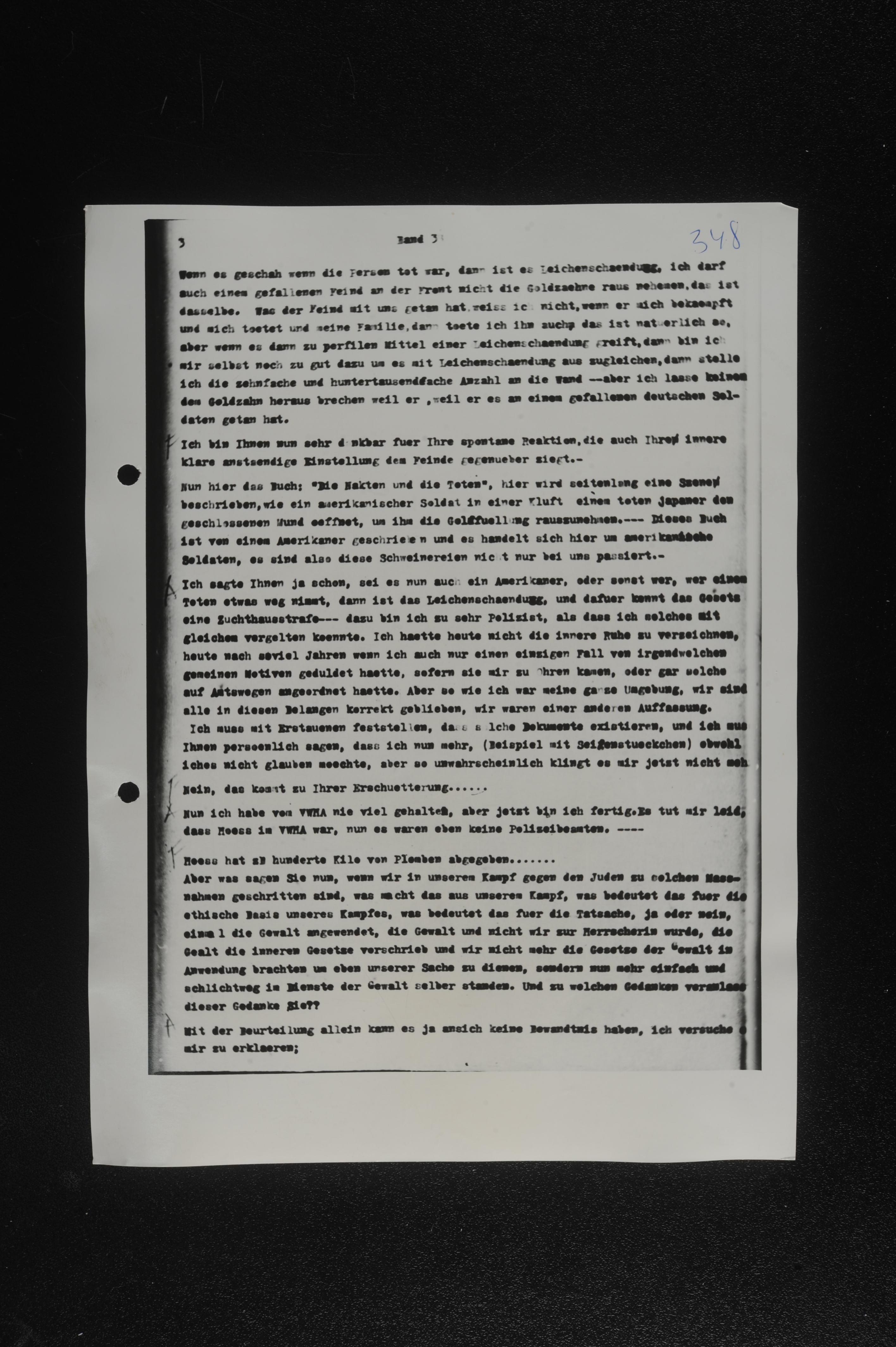
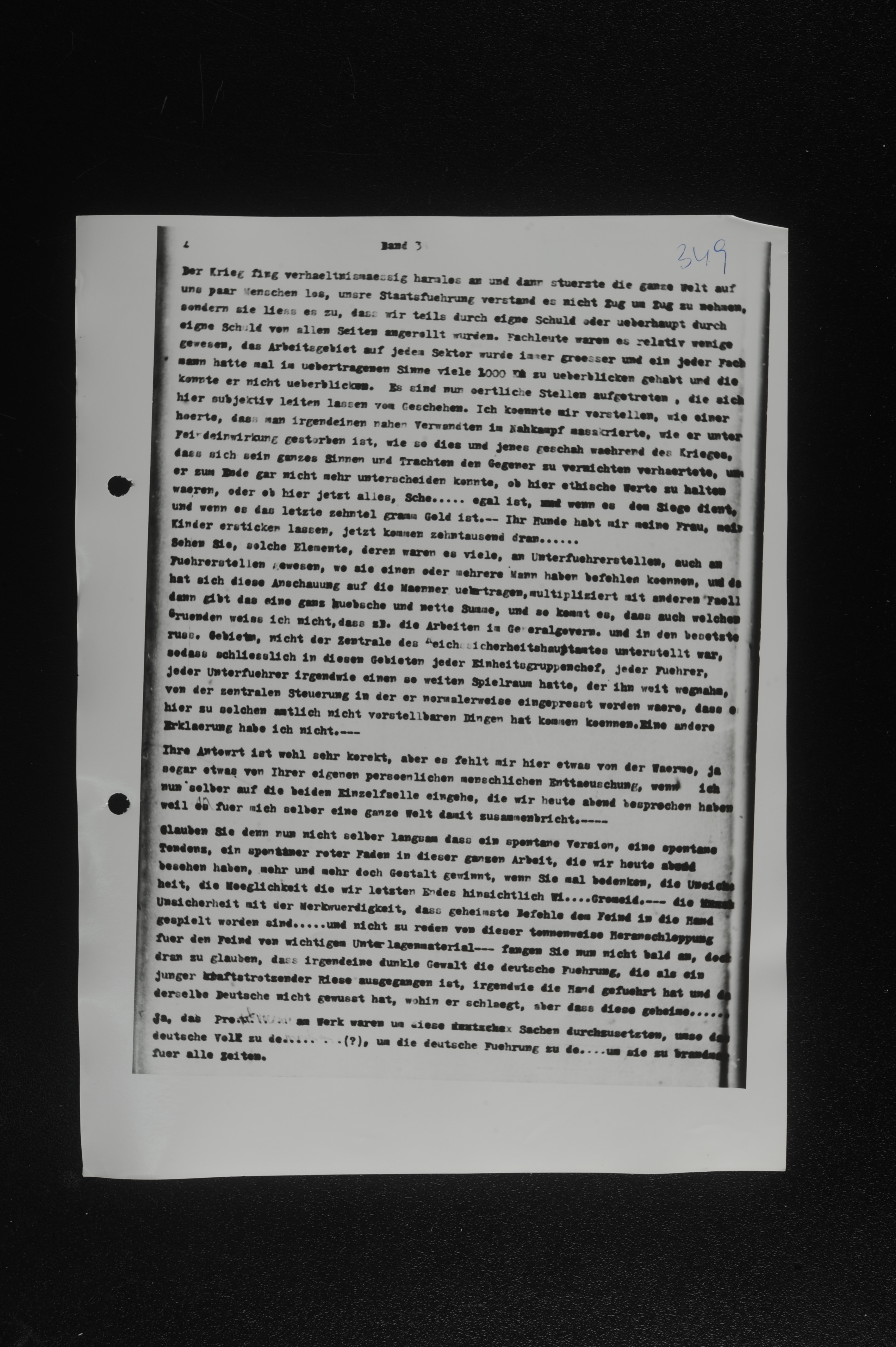
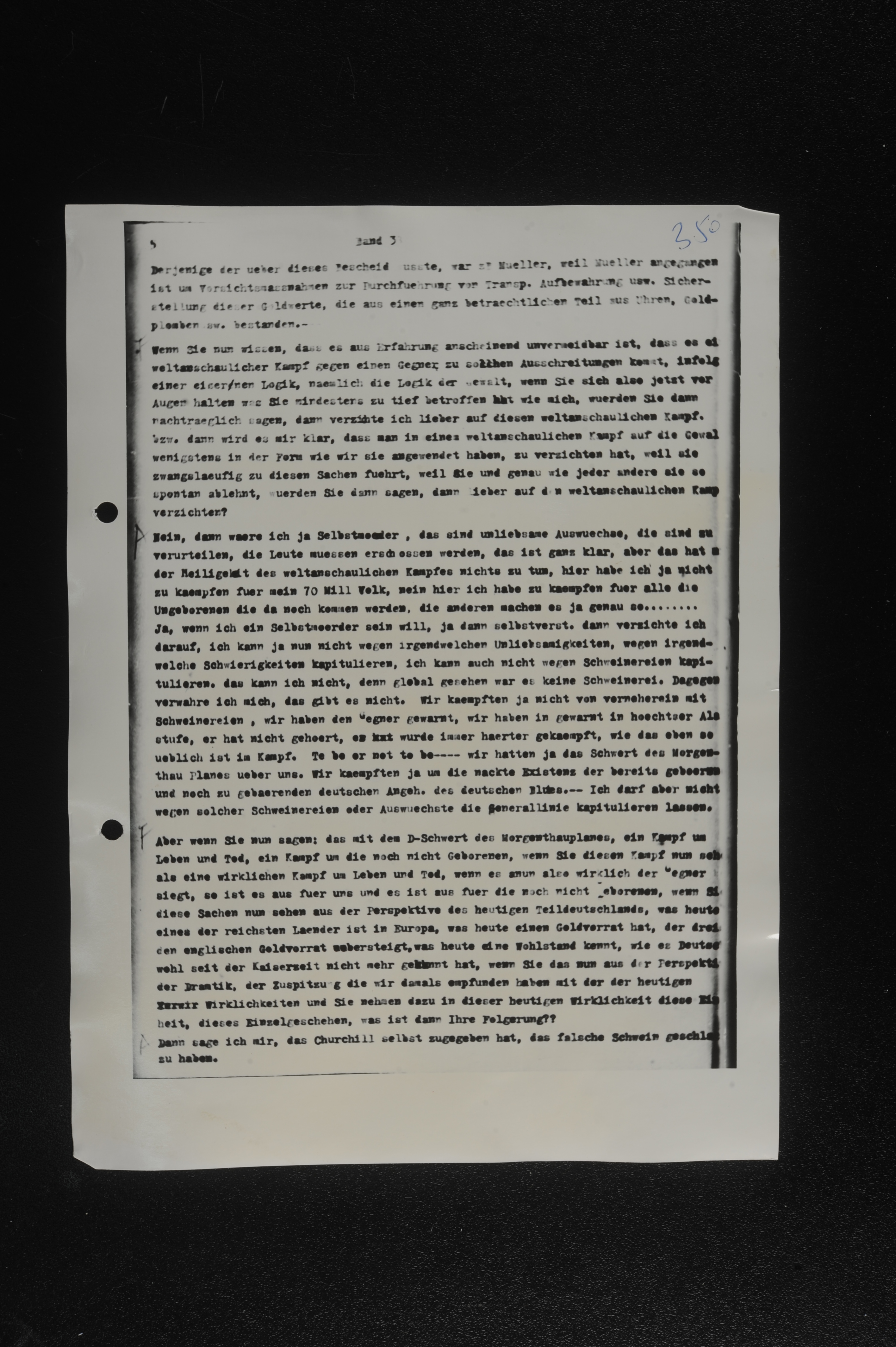
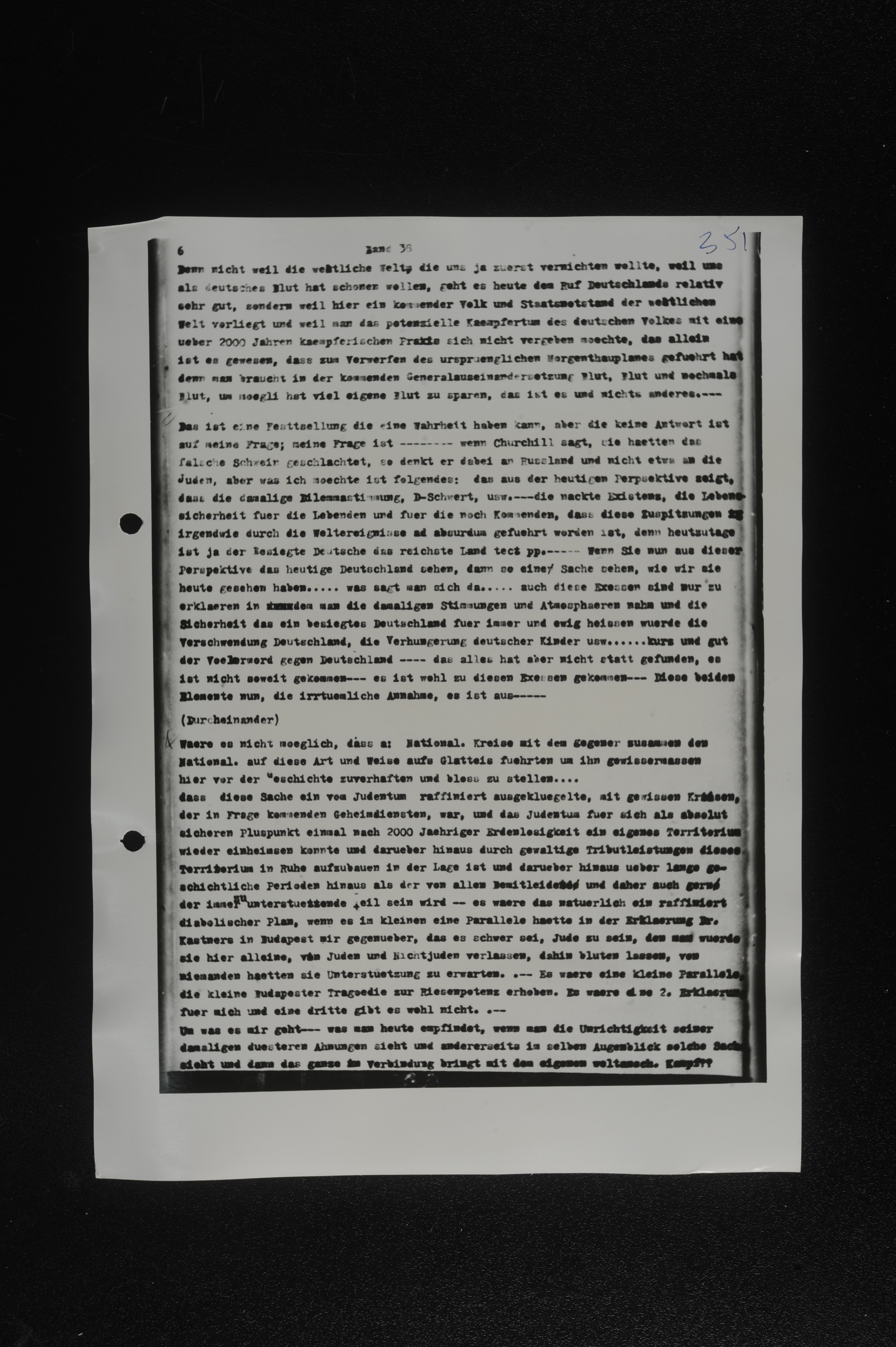
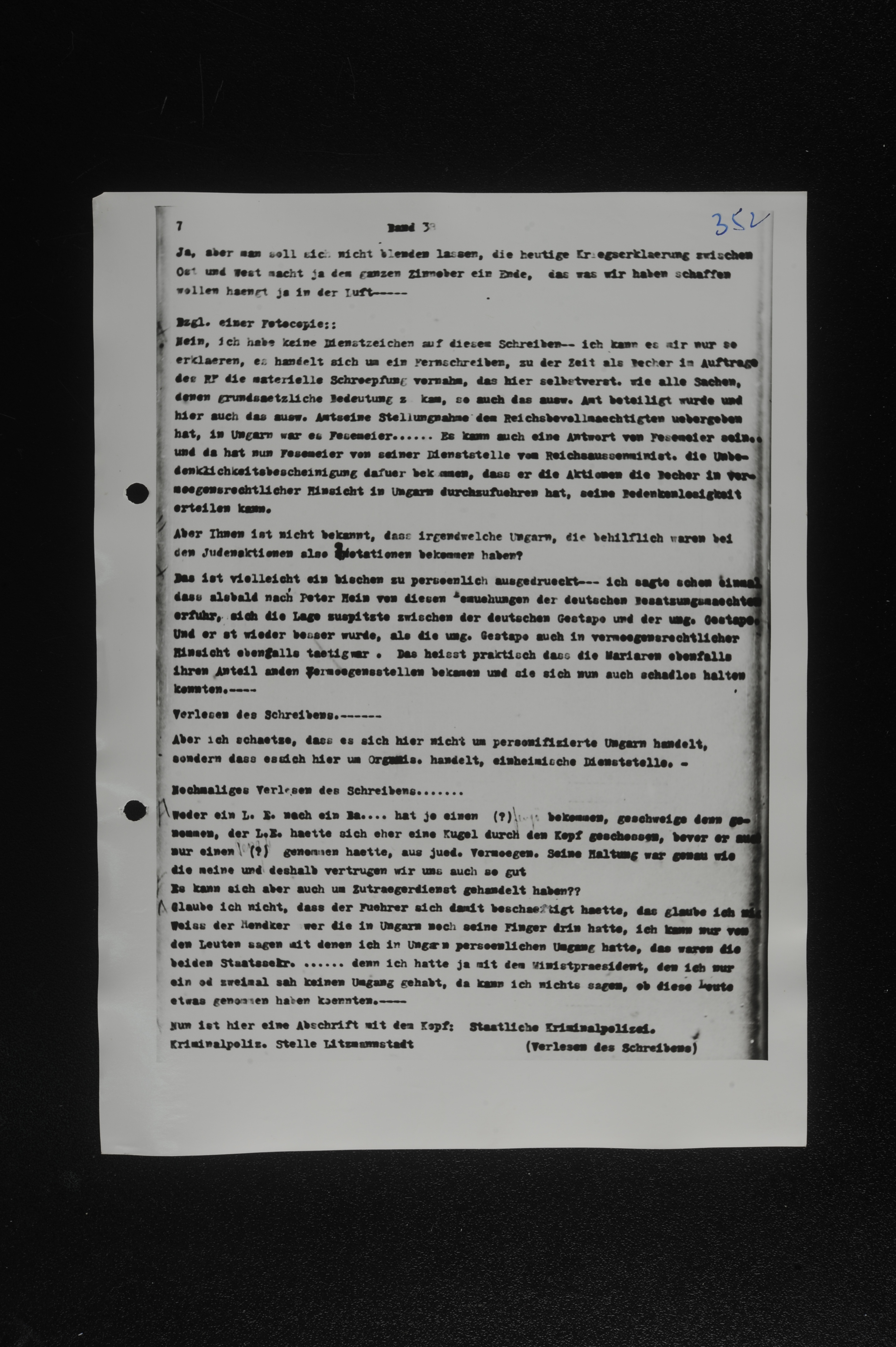
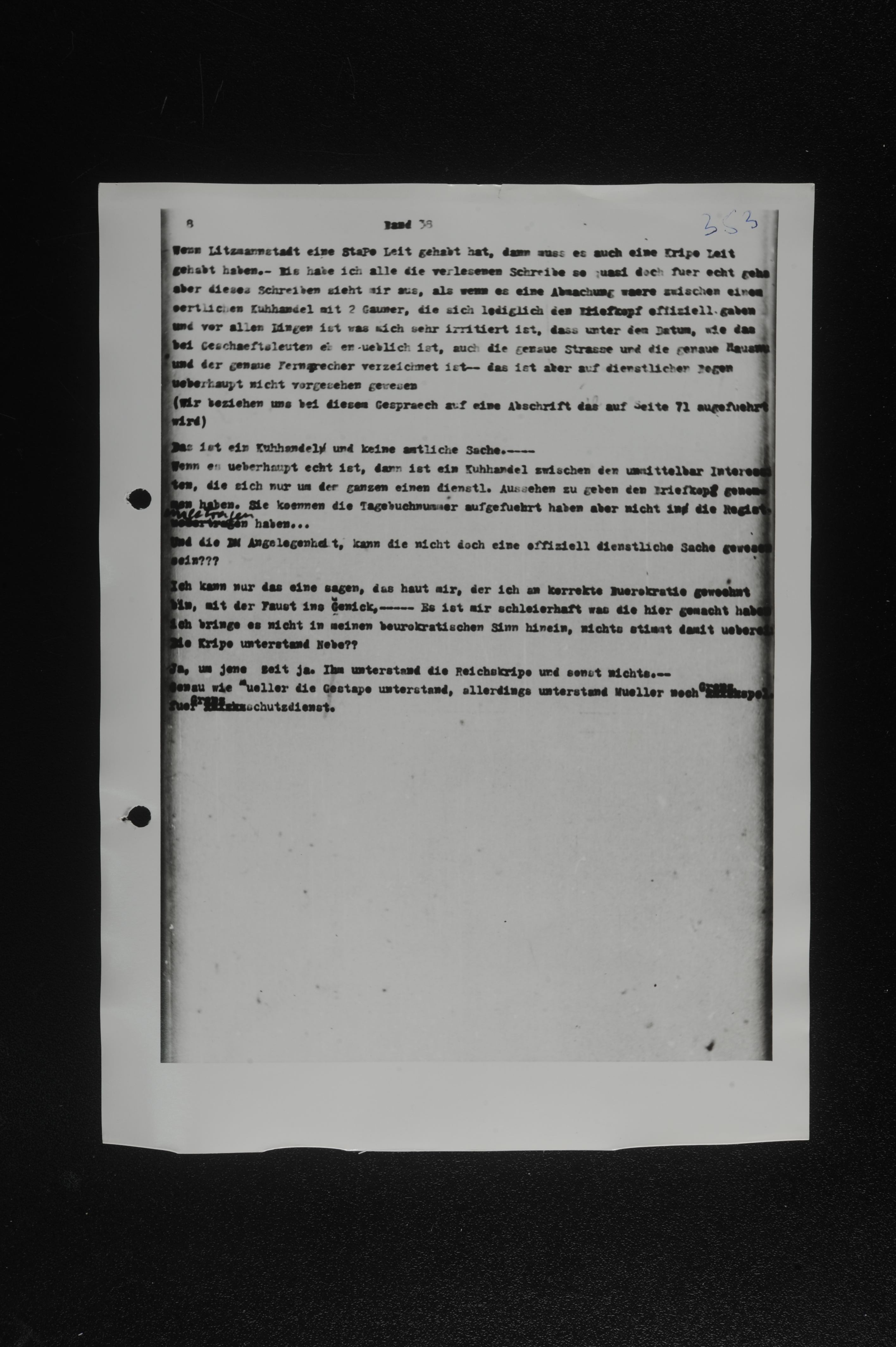
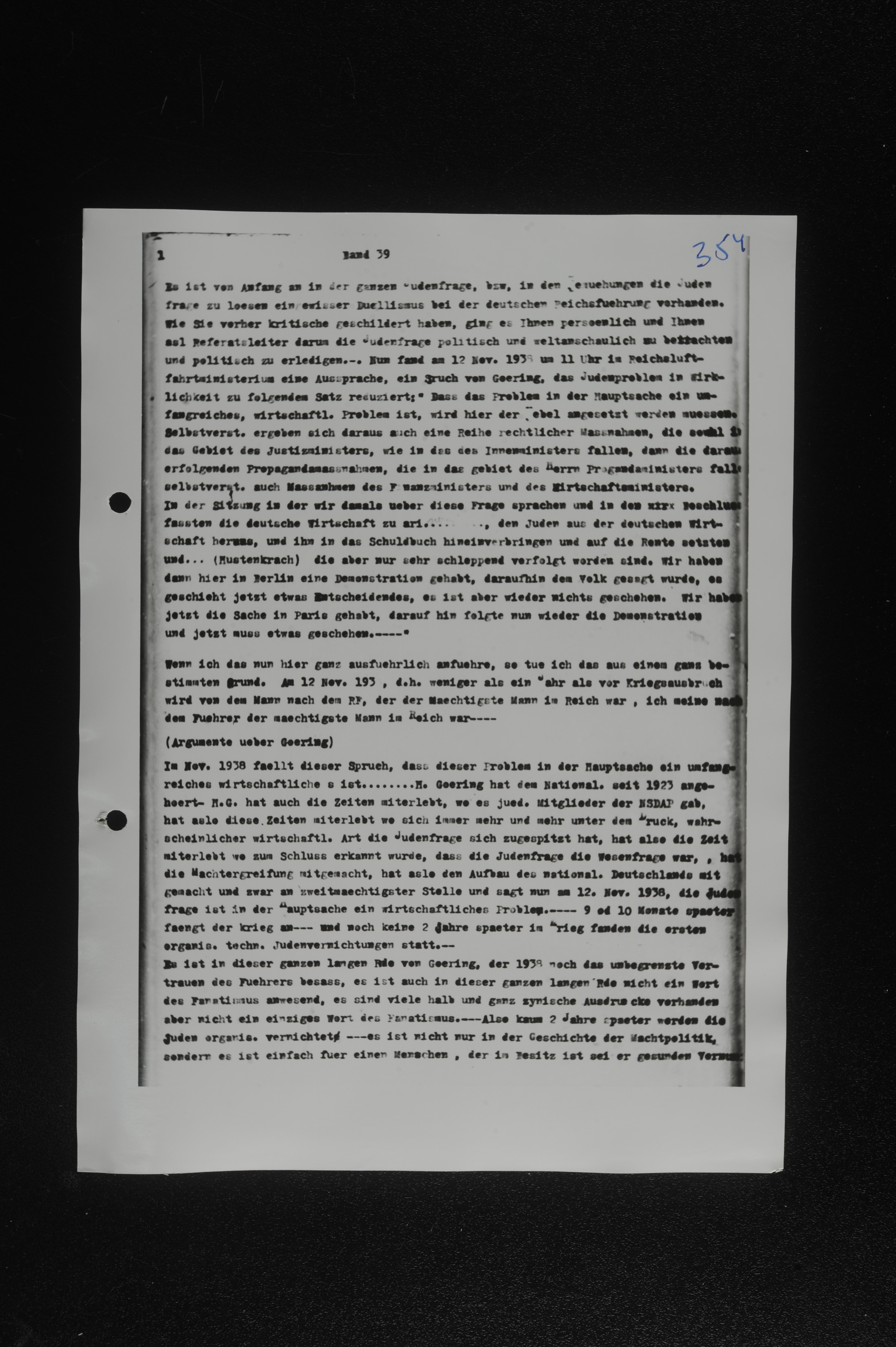
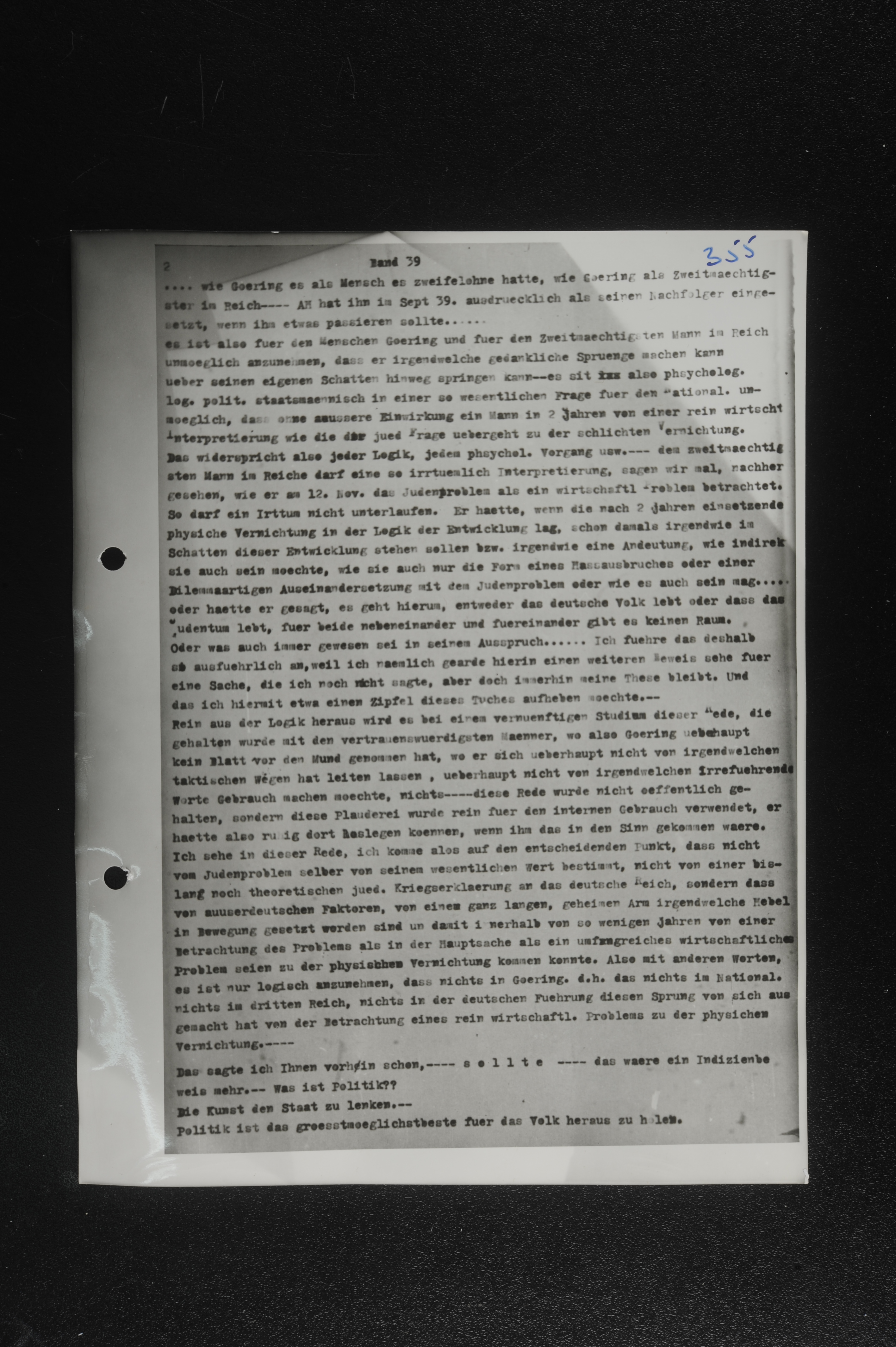
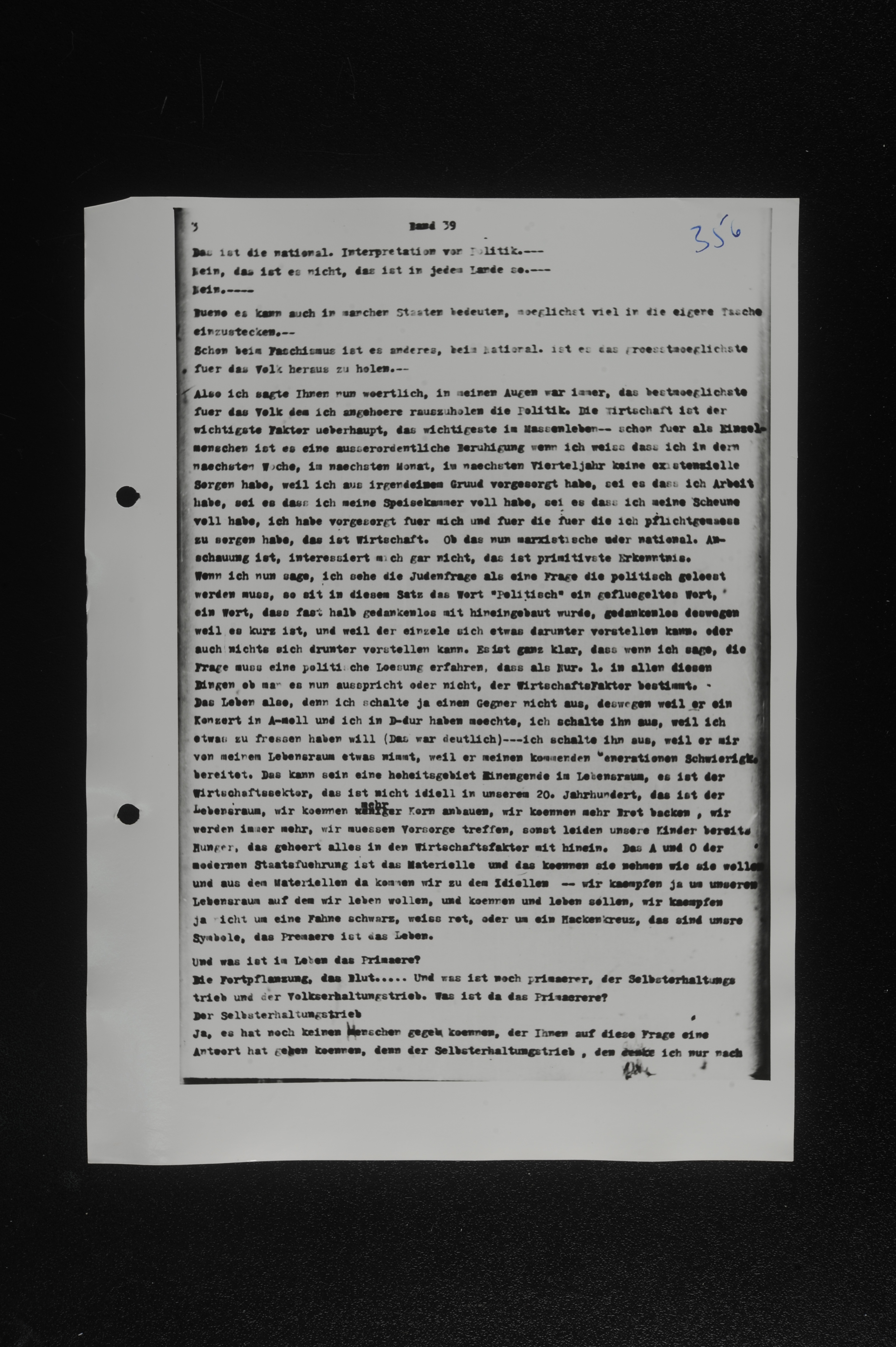
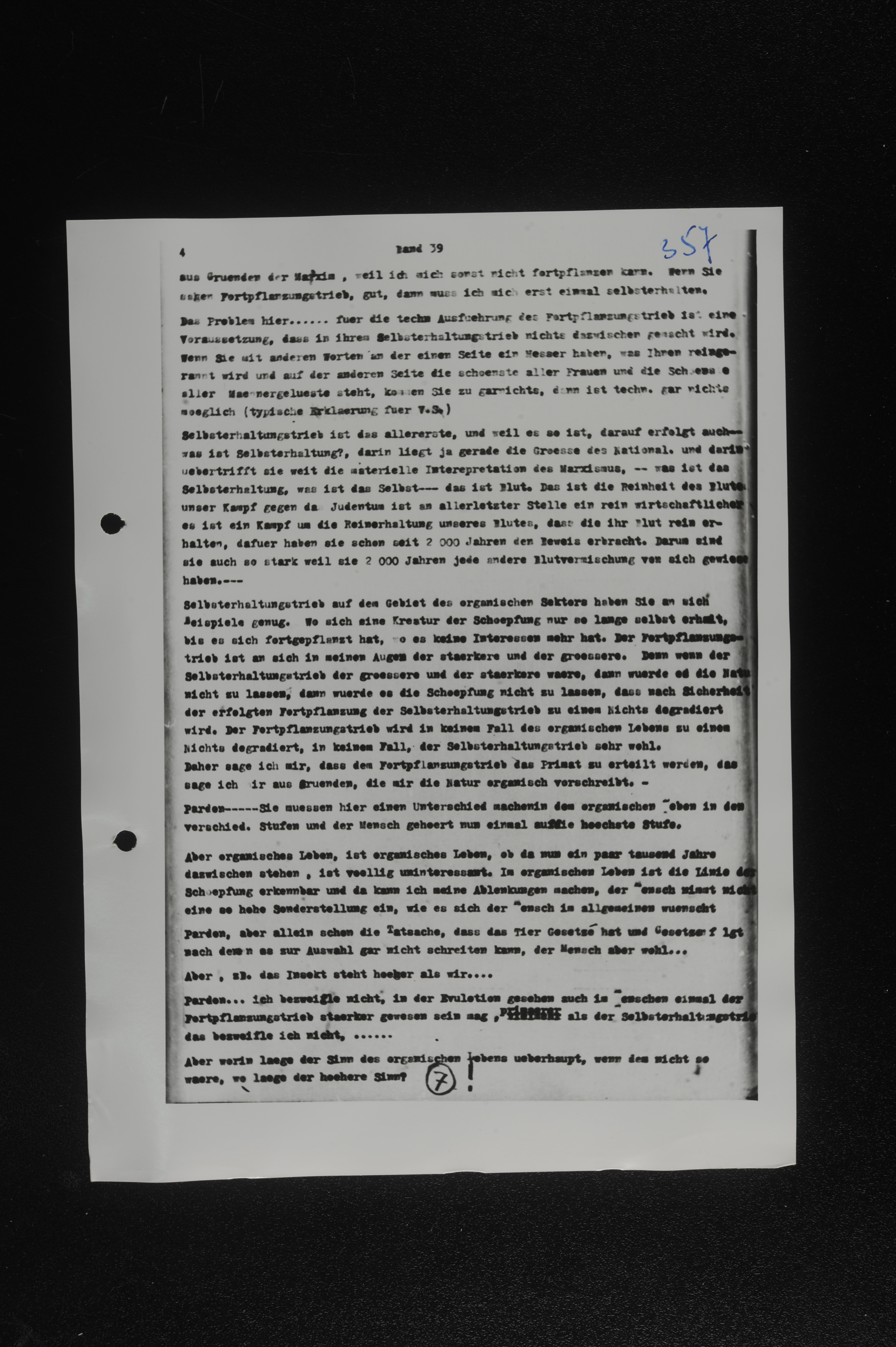
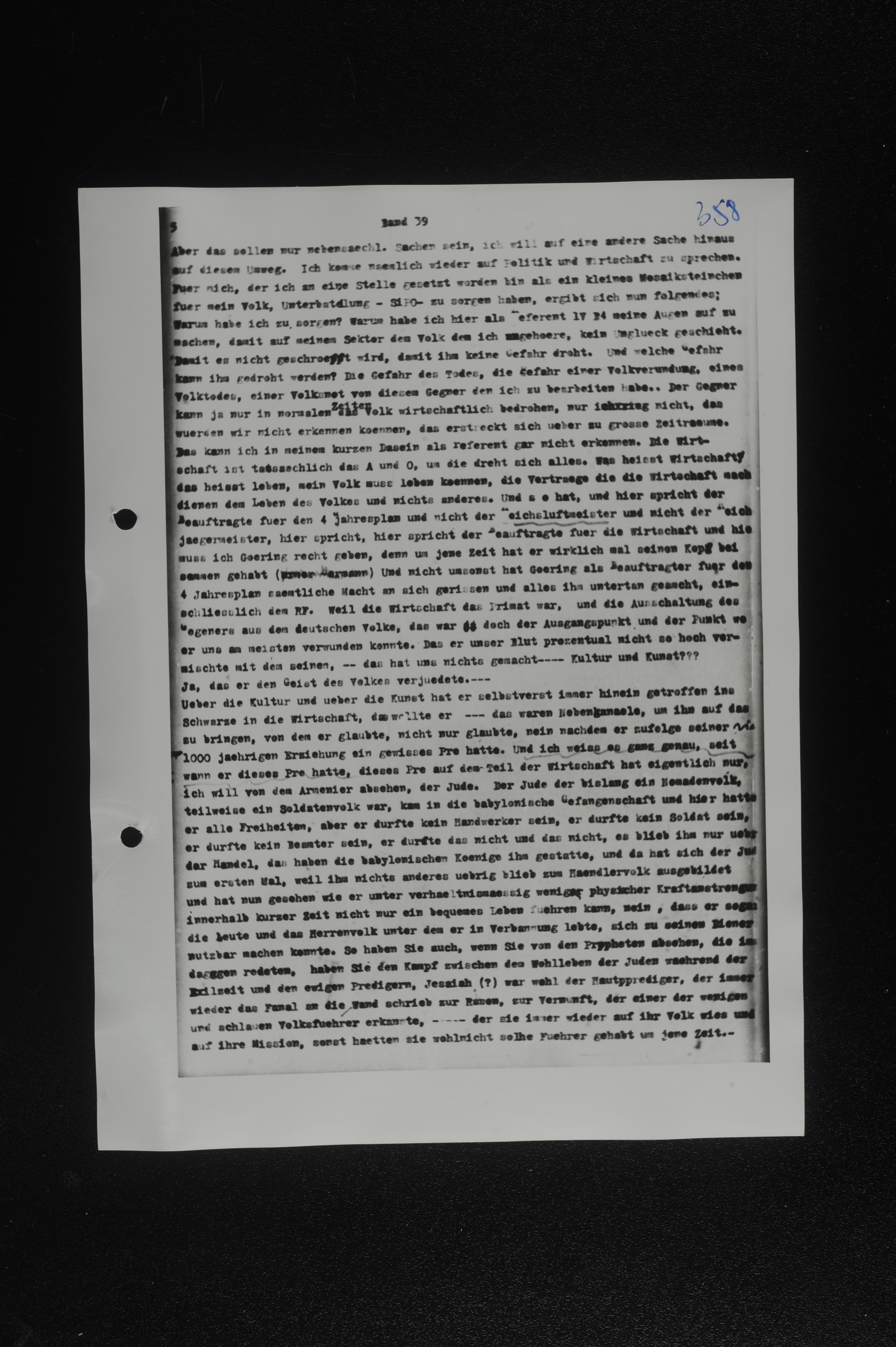
The German text under each scan is a model transcription of the typed page in that scan, and the English is a model translation of that German. Both are shown word for word, including every uncertainty marker. No page in this part has had a full human review. Verify any reading against the scan before quoting it.
Sheet 1
O.65 file 86 · 00001
This is scan 00001 of the Sassen transcript, O.65 file 86. The image is 2832 by 4256 pixels. Yad Vashem Archives, Jacob Robinson Collection O.65, file 86.
German transcription
[HW: 10623183]
אַרכיון יד ושם
YAD VASHEM ARCHIVES
RECORD GROUP: O.65 : חטיבה
RECORD GROUP: אוסף : שם חטיבה
יעקב רובינסון
FILE NUMBER: [HW: 86] : מספר תיק
ORIGINAL FILE : סימול מקורי
NUMBER:
INVENTORY : מספר נכנסות
NUMBER:
NUMBER OF PAGES: : מספר עמודים
ITEM NUMBER: : מספר פריט
English translation
[HW: 10623183]
אַרכיון יד ושם
YAD VASHEM ARCHIVES
RECORD GROUP: O.65 : [Hebrew: division/section (chativa)]
RECORD GROUP: [Hebrew: collection (osef)] : [Hebrew: name of division/section (shem chativa)]
[Hebrew: Jacob Robinson]
FILE NUMBER: [HW: 86] : [Hebrew: file number (mispar tik)]
ORIGINAL FILE : [Hebrew: original reference/symbol (simul mekori)]
NUMBER:
INVENTORY : [Hebrew: accession number (mispar nichnasot)]
NUMBER:
NUMBER OF PAGES: : [Hebrew: number of pages (mispar amudim)]
ITEM NUMBER: : [Hebrew: item number (mispar parit)]
Transcription note
Yad Vashem Archives printed cover/title sheet (not interview transcript text). Bilingual Hebrew/English form. Printed record group value "O.65" is bold typeset. Handwritten additions: archive number "10623183" top right (partly underlined), and "86" in the FILE NUMBER field. Right-hand Hebrew labels are printed field captions mirroring the English labels. No German interview content on this page. Faint pencil marks/dots and a vertical ink rule at left margin are present but non-textual.
Who is speaking
The run divided no speaker turns on this page. It marks a page with no turn boundary, such as a continuous monologue, or a page whose own text can't settle the speaker. The rule was to leave the page unattributed rather than to name a speaker from position or alternation. Where the run gave a reason, it appears in the translation notes below.
Translation notes
- The page contains no German-language content. It is a bilingual Hebrew/English Yad Vashem Archives catalogue cover sheet; the only 'translation' possible is rendering the Hebrew field labels into English, which is provided in brackets.
- The Hebrew label lines pair a printed English form-field name (RECORD GROUP, FILE NUMBER, etc.) with its Hebrew equivalent. This is an archival cover/catalogue sheet from the Yad Vashem Archives (Jacob Robinson collection, Record Group O.65, File 86), not a page of the Sassen–Eichmann interview transcript. It contains no German prose and no spoken dialogue, so per the instructions the speaker_turns array is empty rather than carrying invented turns. The list of file paths appearing below the sheet in the prompt is a directory listing of OCR JSON artifacts, not translatable page content, and was not treated as source text. No admission or statement on this page can be attributed to Eichmann, Sassen, or any participant.
Sheet 2
O.65 file 86 · 00002Band 19, page 1.
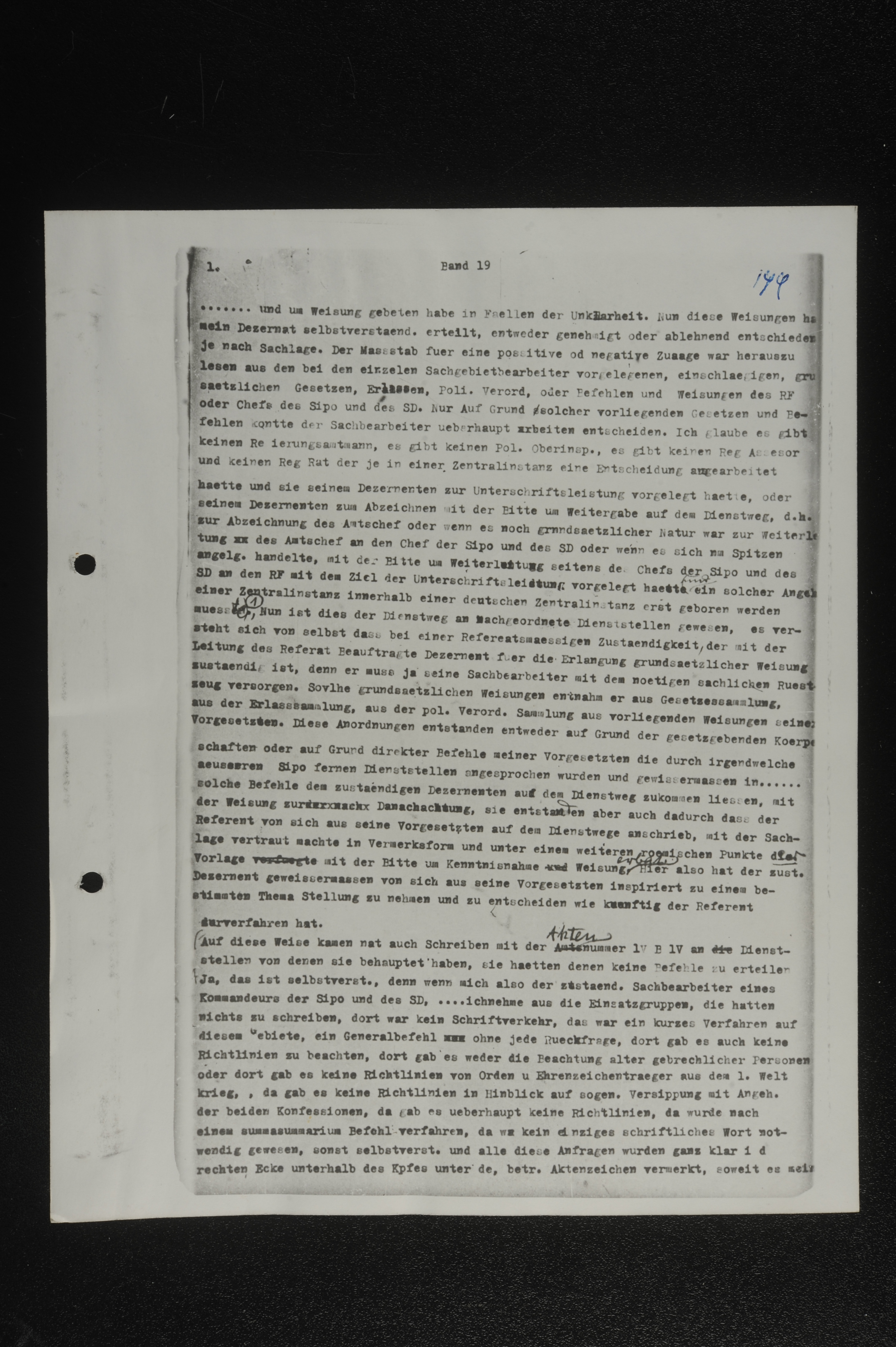
This is scan 00002 of the Sassen transcript, O.65 file 86. The image is 2832 by 4256 pixels. Yad Vashem Archives, Jacob Robinson Collection O.65, file 86.
German transcription
1. Band 19 [HW: 144]
...... und um Weisung gebeten habe in Faellen der Unklarheit. Nun diese Weisungen ha
mein Dezernat selbstverstaend. erteilt, entweder genehmigt oder ablehnend entschieden
je nach Sachlage. Der Massstab fuer eine possitive od negatiye Zusage war herauszu
lesen aus den bei den einzelen Sachgebietbearbeiter vorgelegenen, einschlaegigen, gru
saetzlichen Gesetzen, Erlassen, Poli. Verord, oder Befehlen und Weisungen des RF
oder Chefs des Sipo und des SD. Nur Auf Grund solcher vorliegenden Gesetzen und Be-
fehlen konnte der Sachbearbeiter ueberhaupt arbeiten entscheiden. Ich glaube es gibt
keinen Re ierungsamtmann, es gibt keinen Pol. Oberinsp., es gibt keinen Reg Assesor
und keinen Reg Rat der je in einer Zentralinstanz eine Entscheidung angearbeitet
haette und sie seinem Dezernenten zur Unterschriftsleistung vorgelegt haette, oder
seinem Dezernenten zum Abzeichnen mit der Bitte um Weitergabe auf dem Dienstweg, d.h.
zur Abzeichnung des Amtschef oder wenn es noch grundsaetzlicher Natur war zur Weiterle
tung xx des Amtschef an den Chef der Sipo und des SD oder wenn es sich um Spitzen
angelg. handelte, mit der Bitte um Weiterleitung seitens de. Chefs der Sipo und des
SD an den RF mit dem Ziel der Unterschriftsleistung vorgelegt haette [HW: und] ein solcher Ange
einer Zentralinstanz innerhalb einer deutschen Zentralinstanz erst geboren werden
[HW: ①] muesste, Nun ist dies der Dienstweg an nachgeordnete Dienststellen gewesen, es ver-
steht sich von selbst dass bei einer Referatsmaessigen Zustaendigkeit, der mit der
Leitung des Referat Beauftragte Dezernent fuer die Erlangung grundsaetzlicher Weisung
zustaendig ist, denn er muss ja seine Sachbearbeiter mit dem noetigen sachlichen Ruest
zeug versorgen. Sovlhe grundsaetzlichen Weisungen entnahm er aus Gesetzessammlung,
aus der Erlasssammlung, aus der pol. Verord. Sammlung aus vorliegenden Weisungen seiner
Vorgesetzten. Diese Anordnungen entstanden entweder auf Grund der gesetzgebenden Koerpe
schaften oder auf Grund direkter Befehle meiner Vorgesetzten die durch irgendwelche
aeusseren Sipo fernen Dienststellen angesprochen wurden und gewissermassen in......
solche Befehle dem zustaendigen Dezernenten auf dem Dienstweg zukommen liessen, mit
der Weisung zurxxxnachx Danachachtung, sie entstanden aber auch dadurch dass der
Referent von sich aus seine Vorgesetzten auf dem Dienstwege anschrieb, mit der Sach-
lage vertraut machte in Vermerksform und unter einem weiteren roemischen Punkte d[er] [HW: evtl.]
Vorlage [DEL: verfuegte] mit der Bitte um Kenntnisnahme und Weisung, Hier also hat der zust.
Dezernent gewissermassen von sich aus seine Vorgesetzten inspiriert zu einem be-
stimmten Thema Stellung zu nehmen und zu entscheiden wie kuenftig der Referent
zurverfahren hat.
(Auf diese Weise kamen nat auch Schreiben mit der [DEL: Amt][HW: Akten]nummer lV B lV an [DEL: die] Dienst-
stellen von denen sie behauptet haben, sie haetten denen keine Befehle zu erteilen
Ja, das ist selbstverst., denn wenn mich also der zustaend. Sachbearbeiter eines
Kommandeurs der Sipo und des SD, ....ichnehme aus die Einsatzgruppen, die hatten
nichts zu schreiben, dort war kein Schriftverkehr, das war ein kurzes Verfahren auf
diesem Gebiete, ein Generalbefehl xxx ohne jede Rueckfrage, dort gab es auch keine
Richtlinien zu beachten, dort gab es weder die Beachtung alter gebrechlicher Personen
oder dort gab es keine Richtlinien von Orden u Ehrenzeichentraeger aus dem 1. Welt
krieg, , da gab es keine Richtlinien in Hinblick auf sogen. Versippung mit Angeh.
der beiden Konfessionen, da gab es ueberhaupt keine Richtlinien, da wurde nach
einem summasummarium Befehl verfahren, da wx kein einziges schriftliches Wort not-
wendig gewesen, sonst selbstverst. und alle diese Anfragen wurden ganz klar i d
rechten Ecke unterhalb des Kpfes unter de, betr. Aktenzeichen vermerkt, soweit es mei
English translation
Band 19 [HW: 144]
...... and asked for instructions in cases of uncertainty. Now these instructions ha[ve] my Dezernat [section/desk] of course issued, either approved or decided in the negative according to the situation. The standard for a positive or negative assurance was to be read out of the relevant, fundamental laws, decrees, poli[ce] ordinances, or orders and instructions of the RF [Reichsführer] or Chief of the Sipo and the SD that lay before the individual subject-matter case-workers. Only on the basis of such existing laws and orders could the case-worker work [and] decide at all. I believe there is no Regierungsamtmann, there is no Pol. Oberinsp[ektor], there is no Reg[ierungs]assessor and no Reg[ierungs]rat who ever worked out a decision at a central authority and submitted it to his Dezernent [desk-officer] for the signing, or [submitted it] to his Dezernent for initialling with the request for passing on through official channels, i.e. for the initialling of the Amtschef [office chief] or if it was of a still more fundamental nature for the forwarding xx of the Amtschef to the Chief of the Sipo and the SD or if it concerned top-level matters, with the request for forwarding on the part of the Chief of the Sipo and the SD to the RF with the aim of the signing had submitted [HW: and] such a matter of a central authority within a German central authority would first have to be born [HW: ①], Now this has been the official channel to subordinate offices, it goes without saying that with a Referat-based [section-based] jurisdiction, the Dezernent charged with the direction of the Referat is responsible for the obtaining of fundamental instructions, for he must after all supply his case-workers with the necessary factual equipment. Such fundamental instructions he took from the collection of laws, from the collection of decrees, from the collection of pol[ice] ordinances, from existing instructions of his superiors. These orders came into being either on the basis of the legislating bodies or on the basis of direct orders of my superiors who were approached by some external offices remote from the Sipo and to a certain extent in...... let such orders reach the responsible Dezernent through official channels, with the instruction for observance xxx[towards/after]x, but they also came into being through the fact that the Referent [officer] on his own initiative wrote to his superiors through official channels, made [them] familiar with the situation in the form of a memorandum and under a further Roman point the [HW: possibly] submission [DEL: disposed] with the request for taking note and instruction, Here then the responsible Dezernent has to a certain extent on his own initiative inspired his superiors to take a position on a certain topic and to decide how the Referent is to proceed in future.
(In this way naturally there also came letters with the [DEL: office][HW: file] number lV B lV to offices of which they have claimed they [i.e. IVB4] had no orders to issue to them. Yes, that is of course [obvious], for if then the responsible case-worker of a Kommandeur of the Sipo and the SD, ....I except the Einsatzgruppen, they had nothing to write, there was no correspondence there, that was a short procedure in this field, a general order xxx without any query, there too there were no guidelines to observe, there there was neither the consideration of old infirm persons or there there were no guidelines about bearers of medals and decorations from the 1st World War, , there there were no guidelines with regard to so-called kinship-by-marriage with members of the two confessions, there there were no guidelines at all, there one proceeded according to a summa-summarium order, there not a single written word was necessary, otherwise of course [it was] and all these inquiries were quite clearly noted in the right corner beneath the head[ing] under the relevant file reference, insofar as it [was] my [text breaks off]
Transcription note
Typed carbon-copy transcript page, single column, moderately faded with right edge slightly cropped (several line-final words cut: "ha[t]", "gru[nd]", "Weiterle[i]", "Ange[l]", "Koerpe[r]", "mei[n]"). Header "1." top-left, "Band 19" centered; blue crayon folio "144" top-right (handwritten). Handwritten additions: "und" above the line after "vorgelegt haette"; small "evtl." above "d[er] Vorlage"; "Akten" written above the base word (base "Amt" struck) to yield "Aktennummer"; a circled numeral "①" in the left margin at the "muesste" line (a page-reference/insertion mark). Cancellations: "die" struck before "Dienststellen"; "verfuegte" struck (line through). Several typewriter x-overstrikes are transcribed literally as they appear on the page ("tung xx des", "zurxxxnachx", "Generalbefehl xxx ohne", "da wx kein") because the underlying cancelled characters are not recoverable; these could alternatively be treated as [DEL: [illegible]]. "arbeiten entscheiden" — the word "arbeiten" is partly overtyped/obscured but no defensible strike span is isolable, so left as base text. Numerous original typos/nonstandard spellings preserved verbatim (possitive, negatiye, Sovlhe, summasummarium, einzelen, Assesor, Danachachtung, Kpfes). Abbreviations, gaps (e.g. "Re ierungsamtmann", "i d", "unter de,") and repeated-dot runs preserved as visible.
Who is speaking
The run assigned each English turn a speaker and stated the evidence for it. The turns can abridge or regroup the translation above, so read them as attribution, not as the page text. The run did not write the speaker field for this page; it was read back from the raw response.
Eichmann
… and asked for guidance in cases of uncertainty. Naturally, my section issued this guidance, either approving it or rejecting it, depending on the circumstances. The standard for a positive or negative answer was read from the applicable basic laws, decrees, police ordinances, or orders and directives from the RF or the Chief of the Sipo and SD that lay before the individual officers handling each matter. Only on the basis of such laws and orders could a subject officer work and decide at all. I believe there is no government official, no Police Chief Inspector, no Government Assessor, and no Government Councillor who ever worked out a decision at a central authority and submitted it to his desk officer for signature, or to his desk officer for initialling with a request to pass it through official channels, that is, for the Chief of Office to initial it, or, if it was more fundamental, for the Chief of Office to send it to the Chief of the Sipo and SD, or, if it concerned top-level matters, for the Chief of the Sipo and SD to send it to the RF for signature. Such a matter within a German central authority would first have to be born. That was the official route to subordinate offices. It goes without saying that, when a section had jurisdiction, the desk officer in charge of the section was responsible for obtaining basic guidance, since he had to supply his subject officers with the necessary working material. He took such basic directives from collections of laws, decrees, police ordinances, and existing directives from his superiors. These orders arose either from legislative bodies or from direct orders by my superiors, who had been approached by outside offices remote from the Sipo and, in turn, sent such orders through official channels to the responsible desk officer, with directions for compliance. They also arose because the officer himself wrote to his superiors through official channels, explained the situation in a memorandum, and, under another Roman-numeral item, put forward a memorandum asking them to take note and give guidance. Here, then, the responsible desk officer had in a sense prompted his superiors to take a position on a particular subject and decide how the officer should proceed in future.
Speaker not established
Letters bearing file number IV B 4 also went to offices that said they had no orders to issue to them
Eichmann
Yes, that goes without saying. If I take the subject officer of a Commander of the Sipo and SD, except for the Einsatzgruppen, they had nothing to write; there was no correspondence there. It was a short process in that area, a general order without any query. There were no guidelines to observe, no provision for old and infirm people, no guidelines for bearers of medals and decorations from the First World War, and no guidelines about so-called kinship by marriage with members of the two confessions. There were no guidelines at all; they followed a summa-summarium order, and no written word was needed. Otherwise, of course, it was, and all these inquiries were written clearly in the right-hand corner beneath the heading under the proper file reference, insofar as it was my
Translation notes
- 'Der Massstab fuer eine possitive od negatiye Zusage war herauszulesen' — rendered 'The standard for a positive or negative assurance was to be read out of...'; 'Zusage' could mean 'assurance/commitment/approval' — the intended nuance is uncertain.
- 'ein solcher Ange[legenheit] ... erst geboren werden muesste' — the noun after 'Ange' is truncated in the German (line-break, apparently 'Angelegenheit' = matter/affair); the syntax of the whole long sentence is broken and my '[and] such a matter ... would first have to be born' reconstructs a strained clause. 'geboren werden' literally 'be born' is the author's own metaphor, kept literal.
- 'mit der Weisung zurxxxnachx Danachachtung' — OCR-garbled; 'zur ... Nach... Danachachtung' apparently 'zur Nachachtung/Beachtung' = 'for observance/compliance'; translated 'with the instruction for observance' but the exact word is corrupted.
- 'unter einem weiteren roemischen Punkte d[er] [HW: evtl.] Vorlage [DEL: verfuegte]' — highly compressed bureaucratic phrasing about a memorandum structured under Roman numerals; 'evtl.' = 'eventuell' (possibly); '[DEL: verfuegte]' (disposed/ordered) is struck through. My 'under a further Roman point the possibly submission [DEL: disposed]' is deliberately awkward to preserve the broken construction; sense is uncertain.
- 'die Aktennummer lV B lV' — reads as 'lV B lV' in the OCR; the historical desk designation is IV B 4 (Eichmann's Referat). This page (Band 19, HW pagination 144) is dominated by a continuous first-person exposition of RSHA/IVB4 bureaucratic procedure — signing, initialling, official-channel routing (Dezernent → Amtschef → Chief of Sipo/SD → RF) — which reads as the respondent (Eichmann) defending/explaining his desk's workflow. The page has NO explicit speaker labels or initials anywhere.
Sheet 3
O.65 file 86 · 00003Band 19, page 2
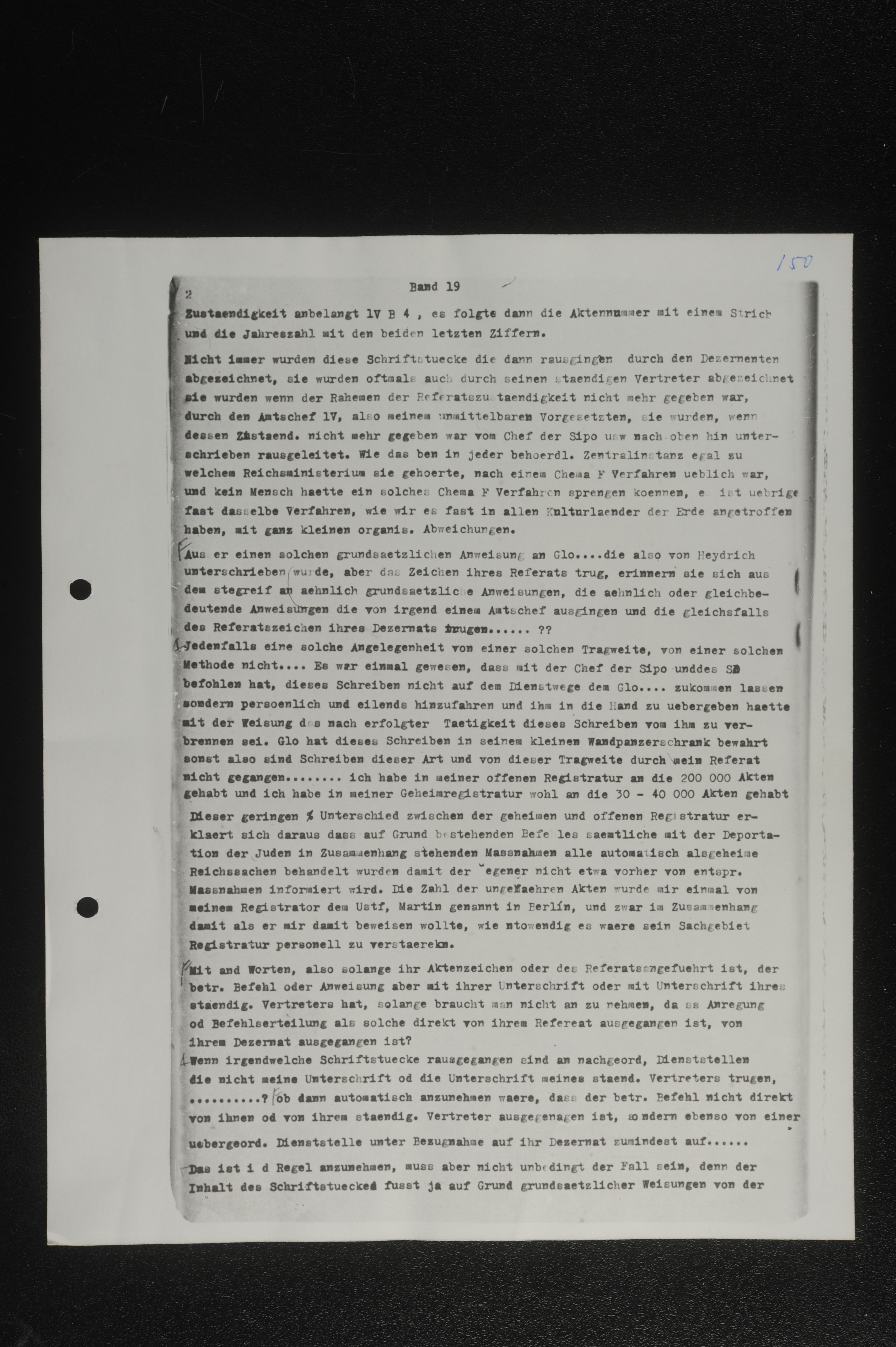
This is scan 00003 of the Sassen transcript, O.65 file 86. The image is 2832 by 4256 pixels. Yad Vashem Archives, Jacob Robinson Collection O.65, file 86.
German transcription
2 Band 19
[HW: 150]
Zustaendigkeit anbelangt lV B 4 , es folgte dann die Aktennummer mit einem Strich
und die Jahreszahl mit den beiden letzten Ziffern.
Nicht immer wurden diese Schriftstuecke die dann rausgingen durch den Dezernenten
abgezeichnet, sie wurden oftmals auch durch seinen staendigen Vertreter abgezeichnet
sie wurden wenn der Rahemen der Referatszustaendigkeit nicht mehr gegeben war,
durch den Amtschef lV, also meinem unmittelbaren Vorgesetzten, sie wurden, wenn
dessen Zustaend. nicht mehr gegeben war vom Chef der Sipo usw nach oben hin unter-
schrieben rausgeleitet. Wie das ben in jeder behoerdl. Zentralinstanz egal zu
welchem Reichsministerium sie gehoerte, nach einem Chema F Verfahren ueblich war,
und kein Mensch haette ein solches Chema F Verfahren sprengen koennen, e ist uebrige
fast dasselbe Verfahren, wie wir es fast in allen Kulturlaender der Erde angetroffen
haben, mit ganz kleinen organis. Abweichungen.
Aus er einen solchen grundsaetzlichen Anweisung an Glo....die also von Heydrich
unterschrieben wurde, aber das Zeichen ihres Referats trug, erinnern sie sich aus
dem stegreif an aehnlich grundsaetzliche Anweisungen, die aehnlich oder gleichbe-
deutende Anweisungen die von irgend einem Amtschef ausgingen und die gleichfalls
des Referatszeichen ihres Dezernats trugen...... ??
Jedenfalls eine solche Angelegenheit von einer solchen Tragweite, von einer solchen
Methode nicht.... Es war einmal gewesen, dass mit der Chef der Sipo unddes SD
befohlen hat, dieses Schreiben nicht auf dem Dienstwege dem Glo.... zukommen lassen
sondern persoenlich und eilends hinzufahren und ihm in die Hand zu uebergeben haette
mit der Weisung das nach erfolgter Taetigkeit dieses Schreiben vom ihm zu ver-
brennen sei. Glo hat dieses Schreiben in seinem kleinen Wandpanzerschrank bewahrt
sonst also sind Schreiben dieser Art und von dieser Tragweite durch mein Referat
nicht gegangen........ ich habe in meiner offenen Registratur an die 200 000 Akten
gehabt und ich habe in meiner Geheimregistratur wohl an die 30 - 40 000 Akten gehabt
Dieser geringen % Unterschied zwischen der geheimen und offenen Registratur er-
klaert sich daraus dass auf Grund bestehenden Befe les saemtliche mit der Deporta-
tion der Juden in Zusammenhang stehenden Massnahmen alle automatisch alsgeheime
Reichssachen behandelt wurden damit der [?Gegener?] nicht etwa vorher von entspr.
Massnahmen informiert wird. Die Zahl der ungefaehren Akten wurde mir einmal von
meinem Registrator dem Ustf, Martin genannt in Berlin, und zwar im Zusammenhang
damit als er mir damit beweisen wollte, wie ntowendig es waere sein Sachgebiet
Registratur personell zu verstaerekn.
Mit and Worten, also solange ihr Aktenzeichen oder des Referatsangefuehrt ist, der
betr. Befehl oder Anweisung aber mit ihrer Unterschrift oder mit Unterschrift ihres
staendig. Vertreters hat, solche braucht man nicht an zu nehmen, da ss Anregung
od Befehlserteilung als solche direkt von ihrem Refereat ausgegangen ist, von
ihrem Dezernat ausgegangen ist?
Wenn irgendwelche Schriftstuecke rausgegangen sind an nachgeord, Dienststellen
die nicht meine Unterschrift od die Unterschrift meines staend. Vertreters trugen,
.........? ob dann automatisch anzunehmen waere, dass der betr. Befehl nicht direkt
von ihnen od von ihrem staendig. Vertreter ausgegagnen ist, sondern ebenso von einer
uebergeord. Dienststelle unter Bezugnahme auf ihr Dezernat zumindest auf......
Das ist i d Regel anzunehmen, muss aber nicht unbedingt der Fall sein, denn der
Inhalt des Schriftstueckes fusst ja auf Grund grundsaetzlicher Weisungen von der
English translation
2 Volume 19
[HW: 150]
...as jurisdiction is concerned IV B 4, there then followed the file number with a dash and the year with the last two digits.
These documents that then went out were not always signed off by the desk officer [Dezernent], they were often also signed off by his permanent deputy, they were, when the framework of the section's [Referat] jurisdiction was no longer given, [signed off] by the head of Office IV, that is my immediate superior, they were, when his jurisdiction was no longer given, signed and dispatched upward by the Chief of the Sipo etc. As was indeed customary in every governmental central agency, regardless of which Reich Ministry it belonged to, according to a "Schema F" [routine standard] procedure, and no person could have broken through such a Schema F procedure, it is by the way almost the same procedure as we encountered in almost all civilized countries of the earth, with quite small organizational deviations.
Apart from such a fundamental instruction to Glo.... which was thus signed by Heydrich, but bore the reference-mark of your section, do you recall off the cuff similar fundamental instructions, that [were] similar or equivalent instructions that issued from some office head and that likewise bore the section reference-mark of your desk...... ??
In any case such a matter of such magnitude, of such a method, not.... There was once [an occasion] that with [sic] the Chief of the Sipo and the SD ordered that this letter was not to be sent to Glo.... via the official channel but rather that [one] would have to travel there personally and in haste and hand it to him personally, with the directive that after the action had taken place this letter was to be burned by him. Glo kept this letter in his small armored wall-safe, otherwise then letters of this kind and of this magnitude did not go through my section........ I had in my open registry close to 200,000 files and I had in my secret registry probably close to 30 – 40,000 files.
This small % difference between the secret and the open registry is explained by the fact that on the basis of an existing order all measures connected with the deportation of the Jews were all automatically treated as secret Reich matters [geheime Reichssachen] so that the [?enemy?] would not perhaps be informed in advance of corresponding measures. The number of the approximate files was named to me once by my registrar, the Ustf. [Untersturmführer] Martin, in Berlin, and indeed in connection with [the fact] that he wanted thereby to prove to me how necessary it would be to reinforce his subject area, registry, in personnel.
In other words, so as long as your file reference or that of the section is cited, but the relevant order or instruction has your signature or the signature of your permanent deputy, one need not assume from such [cases] that the suggestion or issuance of the order as such issued directly from your section, issued from your desk?
If any documents went out to subordinate offices that did not bear my signature or the signature of my permanent deputy, .........? whether it would then automatically be assumable that the relevant order did not issue directly from you or from your permanent deputy, but rather likewise from a superordinate office with reference to your desk at least to......
That is as a rule to be assumed, but need not necessarily be the case, for the content of the document is indeed based on the grounds of fundamental instructions from the
Transcription note
Single typewritten page, Band 19, typed page number "2" at top-left, centered header "Band 19" with a short handwritten pen stroke to its right; "150" written in ink at top-right (rendered [HW: 150]). Two-hole punch at left margin. In the left margin several handwritten editorial hooks/check-like marks precede paragraphs (before "Aus er...", "Jedenfalls...", "Mit and Worten...", "Wenn irgendwelche...", "Das ist..."); these are non-textual proofing marks and were not transcribed as text. No struck-through typewriting or handwritten word replacements are present. Typescript is faint/degraded in places. Verbatim oddities preserved as visible: "Chema F" (for Schema F), "e ist uebrige", "unddes", "vom ihm", "Mit and Worten", "ntowendig", "verstaerekn", "Refereat", "Rahemen", "alsgeheime", "Befe les", "ausgegagnen", "i d Regel", "ben" (for eben). "Glo...." and "Ustf" abbreviations left unexpanded. The word rendered [?Gegener?] carries an unclear diacritic-like overstrike on the first letter (intended "Gegner"); genuinely uncertain from the pixels. Rows of typed periods and "??" query marks preserved at their approximate lengths.
Who is speaking
The run assigned each English turn a speaker and stated the evidence for it. The turns can abridge or regroup the translation above, so read them as attribution, not as the page text. The run did not write the speaker field for this page; it was read back from the raw response.
Eichmann
jurisdiction was concerned, it was IV B 4, then came the file number with a dash and the year's last two digits. These outgoing documents weren't always initialled by the desk officer. Often his permanent deputy initialled them. When the matter fell outside the section's jurisdiction, the Chief of Office IV, my immediate superior, signed them out. When his authority wasn't enough, the Chief of the Sipo and so on signed them and sent them upward. This was the usual Schema F process in every central government office, no matter which Reich Ministry it belonged to, and no one could break through such a process. It was nearly the same process found in almost all civilized countries, with small organizational differences.
Questioner
Apart from a fundamental directive to Glo…, signed by Heydrich but bearing your section mark, do you recall any similar fundamental directives, or similar or matching directives issued by an office chief that also bore the reference mark of your desk…?
Eichmann
In any event, something of such scope and of such a kind, not… There was once a time when the Chief of the Sipo and SD ordered that a letter not be sent to Glo… through official channels, but that someone should travel there personally and urgently and hand it to him, with the direction that he burn it after the task was completed. Glo kept the letter in his small wall safe. Apart from that, letters of this kind and scope didn't pass through my section. I had nearly 200,000 files in my open registry and perhaps 30,000 to 40,000 in my secret registry. The small difference between the secret and open registries was because existing orders treated all measures tied to the deportation of Jews as secret Reich matters, so the enemy wouldn't be told about those measures in advance. The approximate number of files was given to me once by my registrar, Ustf. Martin, in Berlin, when he wanted to show me how necessary it was to strengthen the registry staff.
Questioner
In other words, so long as your file reference or the section's is cited, but the order or directive bears your signature or that of your permanent deputy, one needn't assume that the initiative or issuing of the order came directly from your section, from your desk?
Questioner
If documents went to subordinate offices without my signature or that of my permanent deputy, … would one then assume that the order didn't come directly from you or your permanent deputy, but instead from a higher office referring to your desk, at least…?
Eichmann
That is usually assumed, but it needn't be so, because the document's content comes from basic directives, from the
Translation notes
- 'Chema F' in the German is OCR for 'Schema F' — a German idiom meaning a fixed/routine bureaucratic procedure; rendered as 'Schema F [routine standard]'. The doubled 'Chema' is preserved in meaning.
- 'Glo....' is a truncated proper name (almost certainly Globocnik, given the burn-order and Heydrich context), but the source deliberately leaves it truncated; not expanded in the translation.
- 'mit der Chef der Sipo unddes SD befohlen hat' is broken grammar in the source ('with the Chief of the Sipo and the SD ordered') — the preposition 'mit' does not agree with the nominative subject; rendered literally with '[sic]' to preserve the grammatical breakage.
- '[?Gegener?]' — the source marks this word uncertain (bracketed with question marks); 'Gegener' appears to be OCR for 'Gegner' (enemy/adversary), rendered '[?enemy?]' preserving the uncertainty.
- The turn beginning 'If any documents went out...' shifts from first person ('my signature') to second person ('from you'/'your desk'). This person-inconsistency makes the speaker genuinely ambiguous: it could be Sassen posing a hypothetical partly in the respondent's voice, or a transcription artifact. Attributed to S on the second-person interrogative framing, but the attribution is uncertain.
- 'des Referatsangefuehrt' and other run-together words (e.g. 'unddes', 'alsgeheime', 'verstaerekn', 'ntowendig', 'Rahemen', 'Refereat', 'gegangen'/'ausgegagnen') are OCR/typing corruptions in the source; translated by their evident intended words without silently correcting the underlying uncertainty.
- 'Ustf.' expanded parenthetically to Untersturmführer; the rank abbreviation is preserved.
- The final sentence is cut off at the bottom of the page ('...instructions from the') — no completion is supplied. This is page 2 of 'Band 19' with a handwritten '[HW: 150]' at the top. The page carries NO explicit speaker labels or initials — attribution rests entirely on content (first-person accounts of the speaker's own RSHA section IV B 4, its registries and files vs. second-person interrogative questions addressed to that respondent). The page opens mid-sentence ('...as jurisdiction is concerned') and ends mid-sentence, so both boundary turns are continuations from/into adjacent pages. The alternating Q/A structure is inferred from question marks and person, not from labels; the alternation itself was NOT used as attribution evidence — each turn is attributed on its own visible content. The one turn where person is internally inconsistent ('my signature' then 'from you...your desk') is the weakest attribution and is flagged. The substantive admissions (open registry ~200,000 files; secret registry ~30–40,000; deportation of the Jews measures automatically classed as secret Reich matters; the burn-order letter to 'Glo....') are all in first-person 'my section' turns attributed to E."
Sheet 4
O.65 file 86 · 00004Band 19, page 3
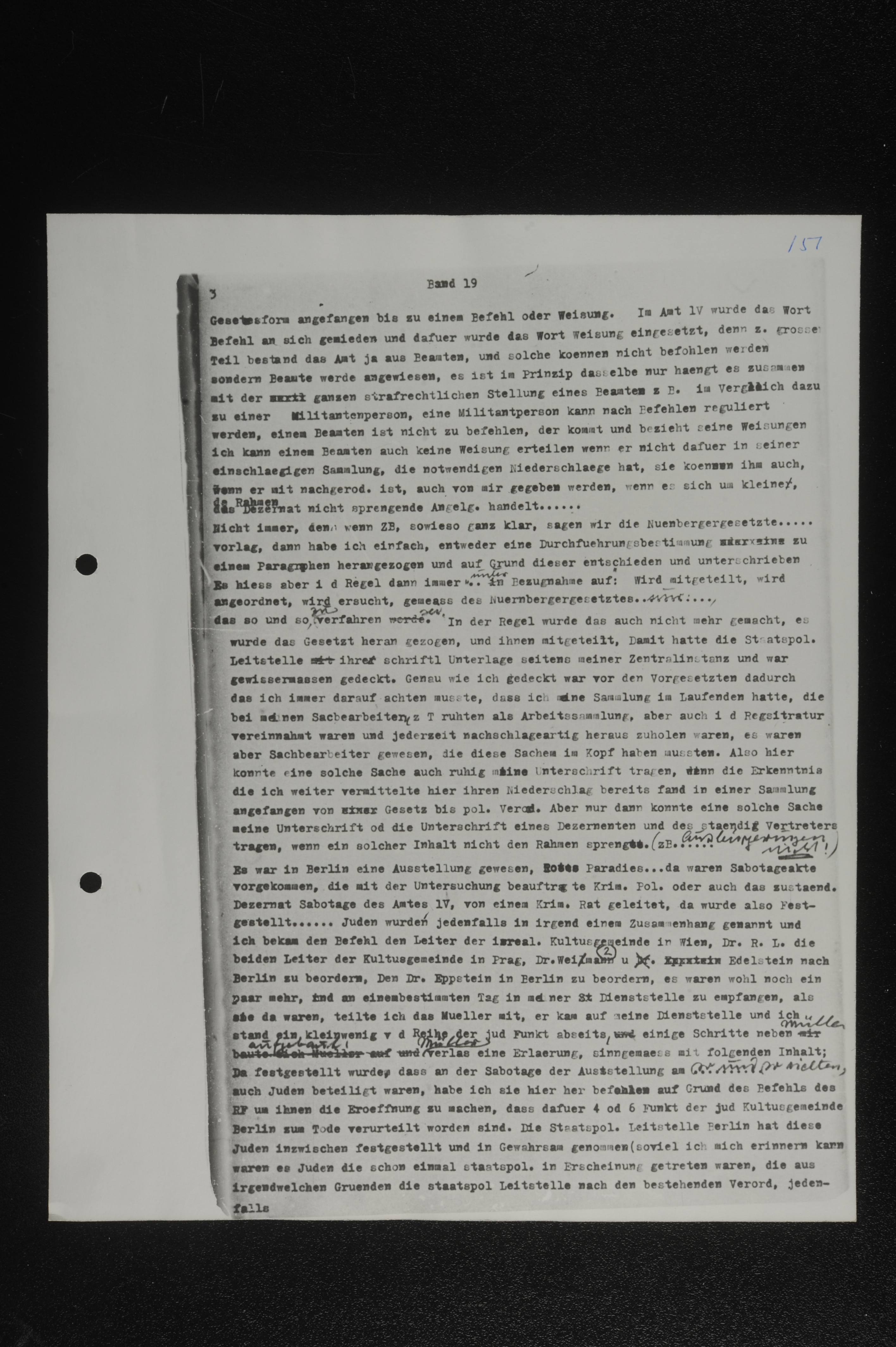
This is scan 00004 of the Sassen transcript, O.65 file 86. The image is 2832 by 4256 pixels. Yad Vashem Archives, Jacob Robinson Collection O.65, file 86.
German transcription
[HW: 157]
3 Band 19
Gesetzesform angefangen bis zu einem Befehl oder Weisung. Im Amt lV wurde das Wort
Befehl an sich gemieden und dafuer wurde das Wort Weisung eingesetzt, denn z. grossen
Teil bestand das Amt ja aus Beamten, und solche koennen nicht befohlen werden
sondern Beamte werde angewiesen, es ist im Prinzip dasselbe nur haengt es zusammen
mit der [DEL: [illegible]] ganzen strafrechtlichen Stellung eines Beamten z B. im Vergl[?ää?]ich dazu
zu einer Militantenperson, eine Militantperson kann nach Befehlen reguliert
werden, einem Beamten ist nicht zu befehlen, der kommt und bezieht seine Weisungen
ich kann einem Beamten auch keine Weisung erteilen wenn er nicht dafuer in seiner
einschlaegigen Sammlung, die notwendigen Niederschlaege hat, sie koennen ihm auch,
Wenn er mit nachgerod. ist, auch von mir gegeben werden, wenn es sich um kleiney,
[HW: da Rahmen] das Dezernat nicht sprengende Angelg. handelt......
Nicht immer, denn wenn ZB, sowieso ganz klar, sagen wir die Nuenbergergesetzte.....
vorlag, dann habe ich einfach, entweder eine Durchfuehrungsbestimmung [DEL: [illegible]] zu
einem Paragraphen herangezogen und auf Grund dieser entschieden und unterschrieben
Es hiess aber i d Regel dann immer ".. [HW: unter] in Bezugnahme auf: Wird mitgeteilt, wird
angeordnet, wird ersucht, gemeass des Nuernbergergesetztes.. [HW: [illegible]] ....,
das so und so [HW: zu] verfahren werde. In der Regel wurde das auch nicht mehr gemacht, es
wurde das Gesetzt heran gezogen, und ihnen mitgeteilt, Damit hatte die Staatspol.
Leitstelle [DEL: mit] ihrer schriftl Unterlage seitens meiner Zentralinstanz und war
gewissermassen gedeckt. Genau wie ich gedeckt war vor den Vorgesetzten dadurch
das ich immer darauf achten musste, dass ich meine Sammlung im Laufenden hatte, die
bei meinen Sacbearbeiter z T ruhten als Arbeitssammlung, aber auch i d Regsitratur
vereinnahmt waren und jederzeit nachschlageartig heraus zuholen waren, es waren
aber Sachbearbeiter gewesen, die diese Sachem im Kopf haben mussten. Also hier
konnte eine solche Sache auch ruhig meine Unterschrift tragen, wenn die Erkenntnis
die ich weiter vermittelte hier ihren Niederschlag bereits fand in einer Sammlung
angefangen von einer Gesetz bis pol. Verod. Aber nur dann konnte eine solche Sache
meine Unterschrift od die Unterschrift eines Dezernenten und des staendig Vertreters
tragen, wenn ein solcher Inhalt nicht den Rahmen sprengte. (zB. [HW: auslieferungen][HW: nicht!])
Es war in Berlin eine Ausstellung gewesen, [?Rotes?] Paradies...da waren Sabotageakte
vorgekommen, die mit der Untersuchung beauftrag te Krim. Pol. oder auch das zustaend.
Dezernat Sabotage des Amtes lV, von einem Krim. Rat geleitet, da wurde also Fest-
gestellt...... Juden wurden jedenfalls in irgend einem Zusammenhang genannt und
ich bekam den Befehl den Leiter der isreal. Kultusgemeinde in Wien, Dr. R. L. die
beiden Leiter der Kultusgemeinde in Prag, Dr.Wei[z]mann u [HW: ②] Dr. [DEL: [?Eppstein?]] Edelstein nach
Berlin zu beordern, Den Dr. Eppstein in Berlin zu beordern, es waren wohl noch ein
paar mehr, und an einembestimmten Tag in meiner St Dienststelle zu empfangen, als
sie da waren, teilte ich das Mueller mit, er kam auf meine Dienststelle und ich [HW: müller]
stand ein kleiwenig v d Reihe der jud Funkt abseits, und einige Schritte neben [DEL: mir][HW: müller][DEL: baute sich Mueller auf] [HW: [?aufgebaut?]!] und [HW: Müller] verlas eine Erlaerung, sinngemaess mit folgendem Inhalt;
Da festgestellt wurde, dass an der Sabotage der Ausstellung am [HW: [illegible]],
auch Juden beteiligt waren, habe ich sie hier her befohlen auf Grund des Befehls des
RF um ihnen die Eroeffnung zu machen, dass dafuer 4 od 6 Funkt der jud Kultusgemeinde
Berlin zum Tode verurteilt worden sind. Die Staatspol. Leitstelle Berlin hat diese
Juden inzwischen festgestellt und in Gewahrsam genommen(soviel ich mich erinnern kann
waren es Juden die schon einmal staatspol. in Erscheinung getreten waren, die aus
irgendwelchen Gruenden die staatspol Leitstelle nach den bestehenden Verord, jeden-
falls
English translation
[HW: 157]
3 Volume 19
form of a law up to an order or directive. In Office IV the word "order" [Befehl] as such was avoided and instead the word "directive" [Weisung] was used, for to a large part the office indeed consisted of officials [Beamten], and such cannot be ordered but officials are directed, it is in principle the same, only it is connected with the [DEL: [illegible]] whole penal-law position of an official, e.g. in compar[?is?]on to that with a militant-person [Militantenperson], a militant-person can be regulated according to orders, an official is not to be ordered, he comes and draws his directives, I also cannot issue a directive to an official if he does not have for it in his relevant collection [Sammlung] the necessary depositions/records [Niederschläge], they can also be given to him, when he has been re-graded [nachgerod.?], also by me, when it concerns small, [HW: which frame] not-Dezernat-bursting matters [i.e. matters not exceeding the section]......
Not always, for when e.g., in any case quite clear, let us say the Nuremberg Laws.....
lay before [me], then I simply either drew on an implementing regulation [DEL: [illegible]] to a paragraph and on the basis of this decided and signed
But as a rule it then always said ".. [HW: under] with reference to: it is communicated, it is
ordered, it is requested, in accordance with the Nuremberg Law.. [HW: [illegible]] ....,
that such-and-such [HW: is] to be proceeded. As a rule this too was no longer done, the
law was drawn on, and communicated to them, thereby the State Police
Leitstelle [regional headquarters] [DEL: with] its written documentation on the part of my central authority was
so to speak covered. Exactly as I was covered before my superiors by the fact
that I always had to see to it that I had my collection up to date, which
with my case-officers [Sachbearbeiter] rested in part as a working collection, but were also taken up
in the registry and could at any time be pulled out in look-up fashion, but they were
case-officers who had to have these matters in their head. So here
such a matter could also quite calmly carry my signature, if the finding
which I passed on further already found its deposit/record here in a collection
beginning from a law up to a police ordinance. But only then could such a matter
carry my signature or the signature of a section-head [Dezernent] and of the permanent deputy,
if such a content did not burst the frame. (e.g. [HW: extraditions/handings-over][HW: not!])
There had been an exhibition in Berlin, [?Red?] Paradise...there sabotage acts
had occurred, the Criminal Police charged with the investigation or also the responsible
Sabotage Dezernat of Office IV, led by a Criminal Councillor [Kriminalrat], so it was
established...... Jews were in any case named in some connection and
I received the order to summon the head of the Israelite Religious Community [Kultusgemeinde] in Vienna, Dr. R. L., the
two heads of the Religious Community in Prague, Dr. Wei[z]mann and [HW: ②] Dr. [DEL: [?Eppstein?]] Edelstein to
Berlin, [and] Dr. Eppstein to summon to Berlin, there were probably still a
few more, and to receive [them] on a certain day at my S[tate] office, when
they were there, I informed Müller of it, he came to my office and I [HW: müller]
stood a little bit apart from the row of the Jewish functionaries, and a few steps beside [DEL: me][HW: müller][DEL: Müller took up position] [HW: [?taken up position?]!] and [HW: Müller] read out a declaration, in substance with the following content;
Since it was established that in the sabotage of the exhibition on [HW: [illegible]],
Jews too were involved, I have ordered you here on the basis of the order of the
RF [Reichsführer] in order to make to you the opening/announcement, that for this 4 or 6 functionaries of the Jewish Religious Community
Berlin have been sentenced to death. The State Police Leitstelle Berlin has these
Jews in the meantime established and taken into custody (as much as I can remember
they were Jews who had already once appeared before the State Police, who for
some reasons the State Police Leitstelle according to the existing ordinances, in any
case
Transcription note
Scan: Part2_10623183/00004.jpg. Typescript page, single continuous monologue (Eichmann), no speaker labels visible. Header "3" at left, "Band 19" centered; folio "157" in blue pencil at top right (rendered as [HW: 157]). Small pen check-marks/strokes appear above the header line and above "Weisung." (line 1) — not transcribed as text. Numerous typist in-place overtype corrections (e.g. "meine", "Vergl[?ää?]ich", "Nuenbergergesetzte") are given at their visible reading; several are damaged/typos left uncorrected per diplomatic rule (Sacbearbeiter, Regsitratur, isreal., Verod., Erlaerung, einembestimmten, kleiwenig). Struck-out typewritten clusters at line 5 ("mit der ___ ganzen") and line 13 ("Durchfuehrungsbestimmung ___ zu") are illegible overtype blobs — marked [DEL: [illegible]]. Handwritten additions: "da Rahmen" above "das Dezernat"; "unter" above the ".." before "in Bezugnahme"; an illegible squiggle after "Nuernbergergesetztes.."; "zu" above "verfahren"; underlined "auslieferungen / nicht!" in the right margin beside "sprengte."; a circled "2" (②) beside "Dr.Weizmann". These are anchored to the nearest base-text point. Bottom edit cluster (lines "...neben mir baute sich Mueller auf und verlas..."): "mir" struck and replaced by cursive "müller" (also written in the right margin one line up); "baute sich Mueller auf" struck; cursive "aufgebaut!" and "Müller" written around/above "und verlas". The exact word order/anchoring of this correction is uncertain; rendered as best-fit adjacency and flagged with [?...?]. Uncertain readings flagged inline: "Vergl[?ää?]ich" (line 5), exhibition name "[?Rotes?] Paradies", struck Prague name "[DEL: [?Eppstein?]] Edelstein", "[?aufgebaut?]!". The cursive date/place after "Ausstellung am" (line "Da festgestellt wurde...") is genuinely illegible — [HW: [illegible]]. Repeated typed-period runs approximated: "handelt......" (~6), "Nuenbergergesetzte....." (~5), "Fest-\ngestellt......" (~6), "Paradies..." (3).
Who is speaking
The run assigned each English turn a speaker and stated the evidence for it. The turns can abridge or regroup the translation above, so read them as attribution, not as the page text. The run did not write the speaker field for this page; it was read back from the raw response.
Eichmann
form of a law right up to an order or directive. In Office IV, the word “order” itself was avoided, and “directive” was used instead, because much of the office consisted of civil servants, and such people can't be ordered; they are directed. In principle it's the same, but it is tied to the whole criminal-law position of a civil servant, for example in contrast with a military person. A military person can be governed by orders; a civil servant can't be ordered, but receives his directives. I can't give a civil servant a directive unless he has the needed written basis in his applicable collection. Such material can also be given to him by me when he is [unclear], if the matter is small and doesn't exceed the section's scope… Not always. If, for example, the matter was entirely clear, say the Nuremberg Laws were before me, I simply drew on an implementing rule for a paragraph and decided and signed on that basis. But as a rule it always said: “It is communicated, it is ordered, it is requested, in accordance with the Nuremberg Laws, that such-and-such be done.” As a rule, that was no longer done; the law was cited and they were told. That gave the State Police headquarters written backing from my central authority and left it, in a sense, covered. Just as I was covered with my superiors because I always had to keep my collection up to date, which lay with my subject officers partly as a working collection, but was also kept in the registry and could be pulled out for consultation at any time. There were subject officers who had to keep these matters in their heads. So a matter like this could bear my signature if the understanding I passed on was already present in a collection ranging from a law to a police ordinance. But only then could it bear my signature, or the signature of a desk officer and his permanent deputy, if its content didn't exceed the scope. There had been an exhibition in Berlin, [unclear] Paradise… Sabotage acts had occurred. The Criminal Police assigned to investigate, or the Sabotage section of Office IV led by a Criminal Councillor, found that Jews had been mentioned in some connection. I received the order to summon the head of the Israelite Religious Community in Vienna, Dr. R. L., the two heads of the Religious Community in Prague, Dr. Weizmann and Dr. Edelstein, to Berlin, and Dr. Eppstein in Berlin. There were probably a few more. I was to receive them on a certain day at my office. When they were there, I told Müller. He came to my office, and I stood a little apart from the row of Jewish officials. A few steps from me, Müller took up position and read a declaration, in substance: “Since it was found that Jews were also involved in the sabotage of the exhibition at [handwriting], I have summoned you here on the RF's order to inform you that four or six officials of the Jewish Religious Community of Berlin have been sentenced to death. The Berlin State Police Headquarters had by then found these Jews and taken them into custody. As far as I remember, they were Jews who had already come to the State Police's attention, and whom, for some reason, the State Police Headquarters, under the existing regulations, in any case
Translation notes
- 'Militantenperson' / 'Militantperson' is not standard German; rendered literally as 'militant-person'. In context (contrast with an official/Beamter who cannot be ordered) it most likely means a military person / soldier (cf. 'Militärperson'), but the source spells it with -tant-, so the literal reading is preserved rather than silently corrected to 'military person'.
- 'nachgerod.' is an abbreviation of uncertain meaning; tentatively rendered 're-graded' (possibly 'nachgeordnet' = subordinate, or an abbreviation for a re-ranking). The German is legible but the sense is uncertain.
- 'Vergl[?ää?]ich' — OCR uncertainty in the source; read as 'Vergleich' (comparison), rendered 'compar[?is?]on' to flag the uncertain vowels.
- 'Erlaerung' (for 'Erklärung') rendered 'declaration'; 'Eroeffnung' rendered 'opening/announcement' — in this bureaucratic-oral context 'Eröffnung' means the formal announcement/disclosure made to the summoned persons.
- 'die Eroeffnung zu machen' = 'to make the opening' — idiomatically 'to announce/disclose to you'; rendered literally with a gloss.
- 'RF' expanded as 'Reichsführer' (i.e. Reichsführer-SS Himmler); the source gives only the abbreviation 'RF', so the expansion is an inference and is flagged.
- 'S Dienststelle' / 'St Dienststelle' — the 'S'/'St' abbreviation is ambiguous (likely 'Staats-' / state office, or an initial); rendered 'S[tate] office' with the bracket marking the inference.
- '4 od 6 Funkt' — the count '4 or 6' is stated as a range in the source and preserved as such.
- The names Dr. R. L. (Vienna), Dr. Wei[z]mann and Dr. Edelstein (Prague), and Dr. Eppstein (Berlin) are transcribed as in the source; '[DEL: [?Eppstein?]]' before 'Edelstein' shows a deleted/corrected name in the Prague line, and Eppstein then appears as the Berlin figure — this apparent name shuffling between the deletion and the following sentence is preserved, not resolved.
- '[?Rotes?] Paradies' — the exhibition name is OCR-uncertain ('Red Paradise?'); preserved with the uncertainty marker.
- 'Dezernat' / 'Dezernent' left partly untranslated (glossed as 'section' / 'section-head') as they are specific German administrative-unit terms.
- 'den Rahmen sprengte' rendered literally as 'burst the frame' (idiom: exceed the scope/bounds). This is page [HW: 157], marked "3 Band 19" (Volume 19), a continuous first-person testimony page. It begins and ends mid-sentence ('form of a law...' at the top, '...in any case' at the bottom), so both edges are truncated and continue on adjacent pages. The page carries NO explicit speaker labels or initials anywhere. It reads as a single continuous first-person monologue describing (a) Office IV / RSHA internal terminology (Befehl vs Weisung) and case-officer procedure, and (b) the Berlin exhibition sabotage episode in which the narrator summoned named Jewish community leaders and Müller read out a death-sentence declaration. The content is strongly consistent with Eichmann (first-person account of RSHA duties, 'my office', Müller as a superior/colleague), and in the wider Sassen transcript this is almost certainly Eichmann speaking. The three UNCERTAIN 'turns' correspond to the natural paragraph/topic breaks (procedure; the 'Not always...' qualification; the exhibition narrative). They may in fact all be one continuous monologue by the same speaker; the segmentation reflects the visible breaks in the source, not proven speaker changes. A defensible alternative reading is a single UNCERTAIN monologue. Handwritten annotations ([HW: 157], [HW: müller], [HW: Müller], [HW: ②], [HW: auslieferungen], [HW: nicht!], etc.) and deletions/insertions are preserved inline. Several are marginal/interlinear corrections clarifying that it was Müller (not the narrator) who took up position and read the declaration."
Sheet 5
O.65 file 86 · 00005Band 19
This is scan 00005 of the Sassen transcript, O.65 file 86. The image is 2832 by 4256 pixels. Yad Vashem Archives, Jacob Robinson Collection O.65, file 86.
German transcription
Band 19
und diese Juden wurden dann in das KZ Oranienburg und dort auf Befehl des RF getoetet
////Es haette meinen Referatsrahmen gesprengt, es stand mir nicht zu auch nur den
Befehl des RF ein Todesurteil zu vollstrecken in eigner Zustaendigkeit als Dezernent
den Juden mitzuteilen. Das waere genau dasselbe gewesen, wenn ich z B diesen Brief de
ich auf Befehl des Chef der Sipo schreiben musst an Glo, unterschrieben haette, das
stand mir nicht zu, das konnte ich nicht machen. Ich war in diesem Fall Briefschreibe
oe Brieftraeger gewesen, wie ueberhaupt der Referent eine Pufferstellung einnahm,
zwischen oben und zwischen unten. .......
...........
Denn nun ist es auch klar dass diese Literatur die 1945 erschienen ist, ich, der
ehem. Dezernent des Amtes 1V b 4 als der Moerder , als der Massenmoerder geschildert
werde und ich l. wie einen einzigen Juden getoetet habe, nie hat von meinem Dezernat
angefangen vom Krim.Assit. Anwaerter bis zum Reg Rat hinauf od von einem SS Mann bis
zum Stf. auch nur je einen Juden getoetet, ueberhaupt keine Person getoetet, niemand
diese Personenkreises, meine Person einschl. hat jemals einen Befehl an andere
Stellen herausgegeben Juden zu toeten. Das Referatszeichen kann oben gestanden sein,
aber da bekam ich den Befehl den Brief zu erstellen und den Brief aus zu arbeiten
unterschrieben hat es der Chef der Sipo oder der RF, je nachdem........
Glauben Sie jetzt mal abstraktionmachend von ihren Beziehungen und Kenntnissen
und Bekanntschaft mit Heydrich, glauben Sie, wenn wir das feindliche Bild von
Heydrich betrachten, also der ganz raffinierte, kuehle.........
glauben Sie dass Heydrich eine besondere Absicht gehabt haben kann bei diesem
Befehl z B etwa ihr Referatszeichen auf zu fuehren????
Nein, das glaube ich nicht, denn wo waere der Chef der Sipo und des SD hinge-
kommen wenn er alle Briefe haette selber schreiben muessen......... ich habe [HW: viele]
Briefe entwerfen muessen an dem saemtliche Reichsminister, an saemtliche ihm
gleichrangige Personen sofern es sich um mein Aufgabengebiet handelte, da wurde
ich zitiert, erhatte mir in abgehackten Worten das Gerippe an den Kopf geschmissen,
ich habe mir in Blitzeseile meine kleinen Notizen gemacht, im Anfang, spaeter
brauchte ich es nicht mehr denn wenn sie jahrelang mit einem Chef zu sammen arbeiten,
dann sind sie mit dem ganzen Milieu vertraut, so sie sogar wissen wie er die einzelen
Minister anredet, dass alles bekam man milieumaessig und routinemaessig so mit,
dass man ein solches Gerippe genuegte um ein solches Schreiben auf zu setzen.
Denn ja laenger eine solche Zusammenarbeit dauerte um so weniger oft, sei es aus
silistischen Gruenden od die sachl Argumentation nicht hart und exakt genug heraus
gearbeit erschien oder dass sie gerade das Gegenteil zu genau und exakt.........
.......
das waren also alles Aenderungen die am Anfang vorkamen, spaeter kaum noch, auch
viel mit der Laune des Mannes zusammen hingen........ Mueller [DEL: war ein sehr an-] [HW: [?desinteres?]]
spruchsloser Geist. Muellers Briefe mussten dienstlich, korrekt und sachlich, ohne
jede persoenl. Fuehlungserkennung aufgestellt werden.
Die Judenaktionen in Kroatien wurden nach der Selbststaendigkeiterklaerung dieses
Staates durch die U[?.....?] durchgefuehrt...
Haben wir in A einen Judensachbearbeiter gehabt? Ja, Adolmeid??? 4
A war Hstf, A kam zu mir zur Berichterstattung A Stellung in Kroatien war vergelichs-
weise haargenau die meines Hstf Richters in Budapest. Aus Kroation glaube ich, hatte
ich ueberhaupt nichts abzutransportieren. oder
Es wird beahuptet anfangs seien die Aktionen gegen die Juden von der U..... vorgenom-
English translation
Volume 19
and these Jews were then taken to the concentration camp Oranienburg and there killed on the order of the RF
////It would have exceeded the scope of my section, it was not for me to communicate even the RF's order to carry out a death sentence in my own competence as case officer to the Jews. It would have been exactly the same as if I had, for example, signed this letter which I had to write on the order of the Chief of the Sipo to Glo[bocnik], that was not for me, that I could not do. In this case I would have been a letter-writer or letter-carrier, as the desk officer in general took up a buffer position, between above and below. .......
...........
For now it is also clear that this literature which appeared in 1945, I, the former case officer of the Office IV b 4, am depicted as the murderer, as the mass murderer, and I [have?] as if I killed a single Jew, never has anyone from my section beginning from the criminal-assistant candidate up to the government councillor or from an SS man up to the Stf. ever killed even a single Jew, killed no person at all, no one of this circle of persons, my own person included, ever issued an order to other offices to kill Jews. The section reference mark may have stood at the top, but there I received the order to draft the letter and to work out the letter, it was signed by the Chief of the Sipo or the RF, as the case may be........
Do you believe now, abstracting from your relations and knowledge and acquaintance with Heydrich, do you believe, if we consider the hostile picture of Heydrich, that is the utterly cunning, cold.........
do you believe that Heydrich could have had a particular intention in this order, e.g. perhaps to enter your section reference mark????
No, I don't believe that, for where would the Chief of the Sipo and the SD have ended up if he had had to write all the letters himself......... I had to draft [HW: many] letters to all the Reich ministers, to all persons of equal rank to him insofar as it concerned my area of responsibility, there I was summoned, he threw the skeleton at my head in clipped words, I made my little notes in lightning speed, in the beginning, later I no longer needed it because if you work together with a chief for years, then you are familiar with the whole milieu, so that you even know how he addresses the individual ministers, all that one picked up in terms of milieu and routine, so that such a skeleton sufficed to draft such a letter. For the longer such a collaboration lasted the less often, be it for stylistic reasons or the factual argumentation did not appear worked out hard and exact enough or that it was precisely the opposite too precise and exact.........
.......
those were then all changes which occurred at the beginning, later hardly any, also much connected with the mood of the man........ Mueller [DEL: was a very un-] [HW: [?disinteres?]] undemanding spirit. Mueller's letters had to be drawn up officially, correctly and factually, without any personal touch of contact.
The Jewish actions in Croatia were carried out after the declaration of independence of this state by the U[?.....?]...
Did we have a Jewish desk officer in A? Yes, Adolmeid??? 4
A was Hstf, A came to me for reporting, A's position in Croatia was comparatively exactly that of my Hstf Richter in Budapest. From Croatia I believe I had nothing at all to deport. or
It is claimed that at first the actions against the Jews were undertaken by the U.....
Transcription note
Typed page from Band 19 (typed header partly faded, reads "Band 19"). Blue crayon folio number "152" top-right corner. Circled handwritten numerals in right margin/text: "3" beside the line "Stellen herausgegeben Juden zu toeten" and "4" at end of the "Adolmeid???" line — likely later annotation numbering. Handwritten insertions: "viele" above the line after "ich habe"; a struck-out span "war ein sehr an-" following "Mueller" with an illegible cursive replacement above (tentatively "[?desinteres?]"). A short handwritten mark ("mns"/illegible) appears in the left margin near "oe Brieftraeger". Several ink dashes/carets in right margin near line ends are stray marks. Text runs off the right edge on several lines (page not fully within frame): line endings such as "getoetet"→"getoeten"(?), "diesen Brief de", "Briefschreibe" are cut. Abbreviation "U....." in Kroatien passages is an uncertain typed/struck acronym (Ustascha implied but not written out). Preserved typos verbatim: "erhatte", "einzelen", "silistischen", "gearbeit", "beahuptet", "vergelichs-", "Kroation", "abstraktionmachend".
Who is speaking
The run assigned each English turn a speaker and stated the evidence for it. The turns can abridge or regroup the translation above, so read them as attribution, not as the page text. The run did not write the speaker field for this page; it was read back from the raw response.
Eichmann
and these Jews were then taken to Oranienburg concentration camp and killed there on orders of the RF.
Eichmann
It would have gone beyond the scope of my desk. It wasn't my place, in my own authority as desk officer, to tell the Jews about an RF order to carry out a death sentence. It would have been the same as if I had signed the letter I was ordered by the Chief of the Sipo to write to Glo. That wasn't my place; I couldn't do that. In that situation I was a letter writer or letter carrier. The desk officer generally occupied a buffer position between those above and those below.
Eichmann
For it is now also clear that the writings that appeared in 1945 portray me, the former desk officer of Office IV b 4, as the murderer, as the mass murderer, and I have never killed a single Jew. No one from my desk, from the criminal-assistant trainee up to the government councillor, or from an SS man up to the Standartenführer, has ever killed a Jew, killed anyone at all. No one in that circle, myself included, has ever issued an order to other offices to kill Jews. The section reference mark may have appeared at the top, but I received the order to draft and work out the letter. It was signed by the Chief of the Sipo or the RF, depending on the circumstances.
Questioner
Leaving aside your personal relationships, knowledge of, and acquaintance with Heydrich, do you believe, when we consider the hostile image of Heydrich, that utterly cunning, cold… Do you believe Heydrich could have had a particular intention in this order, for example, to include your section reference mark?
Eichmann
No, I don't believe that. Where would the Chief of the Sipo and the SD have ended up if he had had to write all the letters himself? I had to draft many letters to all the Reich ministers and to all people of equal rank to him, when it concerned my area of responsibility. I was summoned; he threw the outline at me in clipped words. I made little notes at lightning speed. At first I needed them; later I didn't, because after years of working with a chief, you know the whole milieu, even how he addresses each minister. You picked all that up through the milieu and routine, so an outline was enough to draft a letter. The longer the collaboration lasted, the fewer changes were needed, whether for stylistic reasons, because the factual argument wasn't worked out firmly and precisely enough, or because it went too far in the other direction, too exact and precise…
Eichmann
Those were all changes that occurred at the beginning, later hardly any, and much depended on the man's mood. Müller was an unassuming spirit. Müller's letters had to be official, correct, and factual, without any personal touch.
Eichmann
After the declaration of independence, the actions against the Jews in Croatia were carried out by the Ustasha…
Questioner
Did we have a Jewish affairs desk officer in A?
Eichmann
Yes, Adolmeid [not typed]. A was Hstf. A came to me to report. A's position in Croatia was almost the same as that of my Hstf Richter in Budapest. From Croatia, I believe, I had nothing to transport.
Questioner
Or, it was said that initially the actions against the Jews were undertaken by the U…
Translation notes
- 'RF' is left untranslated; in this context it is the standard abbreviation for Reichsführer(-SS) (Himmler), but the German gives only the initials.
- 'Glo' is rendered as Glo[bocnik] on the reasonable assumption it abbreviates Odilo Globocnik, but the German source gives only 'Glo' — the completion is inferred, not present.
- 'ich l. wie einen einzigen Juden getoetet habe' is garbled/incomplete in the German ('l.' unclear); rendered tentatively as 'I [have?] as if I killed a single Jew'. The intended sense is uncertain.
- 'Fuehlungserkennung' (rendered 'touch of contact') is an unusual compound; the intended word may be 'Fuehlungnahme' (making contact). Translation of this term is uncertain.
- 'ohne jede persoenl. Fuehlungserkennung' rendered 'without any personal touch of contact' — the exact nuance is uncertain.
- 'Adolmeid???' is left as a name with the source's uncertainty markers; it is not a recognizable standard spelling and may be a distorted surname.
- 'Richter' rendered as a surname ('Hstf Richter'); it could alternatively be the common noun 'judge', but context (a named Hauptsturmführer in Budapest reporting to the speaker) favors a surname. This is uncertain.
- 'A' is used in the German as an abbreviation for a place/office (apparently a country/region — possibly 'Agram'/Croatia or a code); its exact referent is not resolved in the source and is left as 'A'. Rank/office abbreviations preserved untranslated as in the source: RF (Reichsführer-SS), Sipo (Sicherheitspolizei), SD (Sicherheitsdienst), IV b 4 (the RSHA Jewish-affairs desk), Stf. (Standartenführer), Hstf (Hauptsturmführer), Reg Rat / Reg.Rat (Regierungsrat, government councillor), Krim.Assist. Anwaerter (criminal-assistant candidate), RSHA. 'U.....' / 'U[?.....?]' appears twice as an incomplete/abbreviated actor in the Croatia passages (likely the Ustaša, but the source truncates it) and is left as-is. Editorial markers preserved: //// section break in the source; [HW: viele] handwritten insertion; [DEL: war ein sehr an-] deletion with [HW: [?desinteres?]] handwritten insertion over/beside it; trailing dot-rows (........) and blank-line gaps reproduced as ellipses. The stray 'oder'/'or' at the end of a line and the trailing '4' after 'Adolmeid???' are preserved. This page is a continuous interview passage: the speaker turns are inferred from content (first-person RSHA/IVB4 duties vs. a direct second-person question), NOT from any explicit speaker labels — the source carries no initials or names marking who speaks. The long stretches attributed to E are self-descriptions of the IV b 4 desk officer's role; the single S turn is the interposed 'Do you believe...?' question. Because attribution rests on content rather than explicit labels, the two-word boundary between the question and the surrounding monologue is the most confident division; the internal splits within E's long passages are editorial and could be joined."
Sheet 6
O.65 file 86 · 00006Band 19, page 5
This is scan 00006 of the Sassen transcript, O.65 file 86. The image is 2832 by 4256 pixels. Yad Vashem Archives, Jacob Robinson Collection O.65, file 86.
German transcription
Band 19
5
behandelt worden, es wurden 3 Arbeitslager in Kroatien geschaffen. 1942 wurden mit
der Auskaemmung mit der Bewilligung der kro. Reg dieserLager begonnen. 1942.-
Und zu diesem Zwecke sandten sie A nach Kro.?
Und zum Abtransport der Jud nach dem Reichsgebiet oder nach Polen usw.... das wird
behauptet?...
Das moechte ich nicht ableugnen, denn wenn ich den Berater dort gehabt habe, es ist
die Stellung eines Richters in Bukarest gewesen, wenngleich es mir nicht in Erinneru
ist aus Rum je einen Transp. mit Jud abgefahren zu haben, dann moechte ich das Kro.
betr, nicht so unbedingt in Abrede stellen, wenngleich ich hier allerdings genau
weiss, es von A es mir geschildert wurde, [HW: [illegible]] dass U in eigner Zustaendig fu die Jud im
kro. Raum der Vernichtung zu fuehrte, er sagte mir damals noch in welch abstossen-
der Weise sie das taten, dann moechte ich fast sagen, haetten wir die Sache in Kro.
einer doppelten Loesung zugefuehrt, naemlich a. haben es die U. in eigner Zustaend.
erledigt, und wir haben ebenfalls aus dem kro. Raum die Juden nach dem Reichsgebiet
abgefahren. Koennte das stimmen? Ja..
Wenn wir sie also abgefahren haben, sind diese Jud aus dem kro. Raum sicherlich
nach Auschwitz gekommen denn das Auschwitzerlager war das Sammellager von allen
Transp. [DEL: mit][HW: von] wenigen Ausnahmen abgesehen., denn es wurden glaube ich keine Transp.
i d Generalgovern. gefahren. Die Lager die dem Glo unterstandem, die wurden
gespeist aus dem Material das sich im Generalgovern. vorfand, glaube ich......
Es ist [DEL: naemlich][HW: Ihnen] bekannt, dass in Kro. eine sogen. Militaerzone Nr 2 gegeben hat,
die der ital. Militaerverwaltung unterstand?..
Wie ueberhaupt nominell ein ital Prinzkoenig von Kro war, der aber praktisch nie
eingesetzt wurde
Und ist Ihnen bekannt, das sowohl seitens des Ba.[HW: [illegible]] des Kro. Staatsfuehrer, als
auch der ital. Militaerreg. in der Militaerzone 2 gegen die Deportation eine
[DEL: Stimmu] starke Opposition ge wurde.--
Ist mir nicht bekannt, waere aber moegl, man hat ja in fast allen Laendern zu ge-
wissen Zeiten von wenigen Ausnahmen in Ungarn z B abgesehen , eine opposit. Haltung
feststellen koennen. Aber diese op. Haltung war i d Regel nur von kurzer Dauer,
denn durch Personalwechsel, durch Personalaustausch wurde sie alsbald wieder i d
normalen Bahnen gelenkt, aber eines weiss ich und das staht fest, [HW: [?Abtransp?]] war
wie man damals zu sagen pflegte, nicht sehr von Erfolg gekroent gewesen, d.h.
also es ist ihm nicht gelungen namhafte Kontigent Jud kro. Staatsangeh. aus
Kroatien heraus zu fuehren. Das stimmt mit der Bemerkung ein, dass die opp. Haltung
gross gewesen ist. Nun die opp. Haltung in Kroatien hat sich nicht darum gedreht,
die dort verhand. Jud zu schuetzen, sondern man trachtete , man war bestrebt die
Souver. des kro. Handlungen zu wahren und deswegen hat man lieber den eigenen U dem
Befehl gegeben, als dass man die Jud kro. Staatsangeh. den Deutschen ausgeliefert
haette zum Abtransp. aus kro. Raum. A sagte mir widerholtest in welch radikaler
Art und Weise die U die Judenfrage loesten.
[HW: Opp.] Ist Ihnen bekannt, dass im Rahmen der ital Militaerverwaltung i d Militaerzone 2
die Italiener verlangten, dass die i d Zone 2 geborenen und sesshaften Juden auf
jeden Fall gegen Deportationen geschuetzt sind? Ja...
Es ist mir bekannt das A schwierigkeiten hatte mit den Ital..---
English translation
Band 19
5
been treated, 3 labor camps were created in Croatia. In 1942, with the approval of the Croatian government, the combing-out [screening] of these camps was begun. 1942.-
And for this purpose did they send A. to Croatia?
And for the deportation of the Jews to the Reich territory or to Poland etc.... that is being claimed?...
That I would not want to deny, because if I had the adviser there, it was the position of a judge in Bucharest, even though I do not have it in my recollection ever to have dispatched a transport with Jews out of Romania, then I would not want, regarding Croatia, so absolutely to deny it, even though here I do indeed know exactly, it was described to me by A., [HW: [illegible]] that U[stasha] in their own competence carried out the extermination of the Jews in the Croatian area; he told me at the time also in what a repulsive manner they did that, then I would almost say, we would have brought the matter in Croatia to a double solution, namely a. the U[stasha] handled it in their own competence, and we likewise dispatched the Jews from the Croatian area to the Reich territory. Could that be correct? Yes..
If we then dispatched them, these Jews from the Croatian area certainly came to Auschwitz, for the Auschwitz camp was the collection camp for all transports [DEL: with][HW: of] with few exceptions apart, for I believe no transports were run into the General Government. The camps that were subordinate to the Glo[bocnik], those were fed from the material that was found in the General Government, I believe......
It is [DEL: namely][HW: to you] known that in Croatia there was a so-called Military Zone No. 2, which was subordinate to the Italian military administration?..
As indeed nominally there was altogether an Italian prince-king of Croatia, who however was practically never installed.
And is it known to you that both on the part of the Ba.[HW: [illegible]] of the Croatian head of state, as well as of the Italian military government in Military Zone 2, against the deportation a [DEL: mood] strong opposition was ge[?] [made].--
It is not known to me, but it would be possible; one has indeed in almost all countries at certain times, with few exceptions apart, in Hungary for example, been able to establish an oppositional attitude. But this op[positional] attitude was as a rule only of short duration, for through change of personnel, through exchange of personnel it was soon again steered into the normal channels; but one thing I know and that is certain, [HW: [?deportation?]] was, as one used to say at the time, not very crowned with success, i.e. therefore he did not succeed in leading notable contingents of Jews of Croatian nationality out of Croatia. That agrees with the remark that the op[positional] attitude was great. Now the op[positional] attitude in Croatia did not revolve around protecting the Jews present there, but rather one sought, one strove to preserve the sovereignty of the Croatian actions, and therefore one preferred to give the command to one's own U[stasha], than that one would have delivered the Jews of Croatian nationality to the Germans for deportation out of the Croatian area. A. told me repeatedly in what a radical manner and way the U[stasha] solved the Jewish question.
[HW: Opp.] Is it known to you that within the framework of the Italian military administration in Military Zone 2 the Italians demanded that the Jews born and resident in Zone 2 be in any case protected against deportations? Yes...
It is known to me that A. had difficulties with the Italians..---
Transcription note
Scan Part2/00006. Typed carbon transcript, one page, single column, faded but mostly legible. Header "Band 19" centered (bold); typed page number "5" at upper-left margin; blue crayon folio number "153" at upper-right (marked [HW: 153] via folio field). Base text is a Q&A exchange (unattributed speaker turns marked in the original by small handwritten pen carets/dashes in the left margin, not transcribed as text). Editorial layer: two struck typewritten words with adjacent handwritten replacements — [DEL: mit][HW: von] and [DEL: naemlich][HW: Ihnen]; one struck word "Stimmu(ng)" at the start of a line replaced in-line by typed "starke Opposition". Handwritten "Opp." added in margin/above the last question paragraph. Several faint cursive interlinear additions could not be resolved: one above "dass U in eigner" and one above "des Ba." (both marked [HW: [illegible]]); an interlinear cursive word before "war" read tentatively as [?Abtransp?]. Typewriter idiosyncrasies preserved verbatim (dieserLager, Erinneru cut off, unterstandem, Kontigent, staht, widerholtest, Generalgovern., etc.). Repeated periods/dashes approximated. Small wavy/curl marks above "Militaerzone 2" and near "Ba." treated as non-lexical proof marks, not transcribed.
Who is speaking
The run assigned each English turn a speaker and stated the evidence for it. The turns can abridge or regroup the translation above, so read them as attribution, not as the page text. The run did not write the speaker field for this page; it was read back from the raw response.
Questioner
were handled; three labor camps were set up in Croatia. In 1942, with the approval of the Croatian government, the clearing of these camps began.
Questioner
And was A sent to Croatia for this purpose?
Questioner
And for transporting the Jews to the Reich territory or to Poland, and so on? That's what's being alleged?
Eichmann
I wouldn't deny that. If I had the adviser there, it was the position of a judge in Bucharest, although I don't remember ever sending a transport of Jews out of Romania. So I wouldn't deny it so categorically in regard to Croatia. I know precisely what A described to me: that the Ustasha, acting on its own authority, carried out the extermination of the Jews in the Croatian area. He told me how repulsively they did it. I would almost say that in Croatia we arrived at a double solution: the Ustasha handled it on its own, and we also transported the Jews from the Croatian area to the Reich. Could that be right? Yes.
Eichmann
If we transported them, these Jews from the Croatian area certainly went to Auschwitz, because Auschwitz was the collection camp for all transports, with few exceptions. I believe no transports were sent to the General Government. The camps under Glo were supplied from what was found in the General Government, I believe…
Questioner
Is it known to you that Croatia had a so-called Military Zone No. 2 under the Italian military administration? There was, in name only, an Italian prince-king of Croatia, who was never actually installed.
Questioner
And are you aware that both the Ba… of the Croatian head of state and the Italian military government in Military Zone 2 put up strong opposition to deportation?
Eichmann
It isn't known to me, but it would be possible. In almost all countries, apart from a few exceptions, one could find an oppositional attitude at certain times, Hungary for example. But this opposition usually lasted only a short time; through changes and exchanges of personnel it was soon put back into normal channels. But one thing I know, and that is certain: the deportation effort, as they used to say at the time, had not met with much success. He did not succeed in leading significant numbers of Croatian Jews out of Croatia. That fits the remark that the opposition was great. Now the opposition in Croatia wasn't about protecting the Jews there; they wanted to preserve sovereignty over Croatian affairs, so they preferred to give the order to their own Ustasha rather than hand Croatian Jews over to the Germans for transport out of Croatia. A told me repeatedly how radically the Ustasha solved the Jewish question.
Questioner
Is it known to you that, within the Italian military administration in Military Zone 2, the Italians demanded that Jews born and settled in Zone 2 be protected against deportation in every case?
Eichmann
Yes. I know that A had difficulties with the Italians…
Translation notes
- 'Auskaemmung' rendered as 'combing-out [screening]' — a Nazi bureaucratic term for systematically searching out/filtering persons; 'screening' is the functional sense but the literal image is 'combing-out'.
- 'A.' is an abbreviation used repeatedly for a named adviser (an eyewitness Eichmann cites); left as 'A.' rather than expanded, as the full name is not given on this page.
- 'U' / 'U.' expanded to '[Ustasha]' — the Croatian fascist militia. This is an editorial expansion of an abbreviation; the German gives only 'U'. Preserved as 'U[stasha]' to flag the inference.
- 'Berater' translated as 'adviser'; in context this refers to a Judenberater (Jewish-affairs adviser), but the German word alone means only 'adviser'.
- 'die Stellung eines Richters in Bukarest' — literally 'the position of a judge in Bucharest'; the sense is likely 'the posting/position of an adviser [held rank comparable to] a judge in Bucharest', but the German is grammatically broken and the intended meaning is unclear.
- 'Glo' expanded tentatively to '[Globocnik]' (Odilo Globocnik, SS official over Aktion Reinhard camps); the German gives only 'Glo', so the expansion is inferential.
- 'Militaerzone Nr 2' / 'Zone 2' left literal; refers to the Italian-occupied zone of Croatia.
- 'Ba.' before 'des Kro. Staatsfuehrer' is an abbreviation followed by an illegible HW insertion; its referent is unclear and left as 'Ba.'.
- The bracketed [HW: [?deportation?]] renders '[HW: [?Abtransp?]]' — the OCR itself marks this handwritten word as uncertain ('Abtransp' = deportation/removal); uncertainty preserved.
- 'gegen die Deportation eine [DEL: Stimmu] starke Opposition ge___ wurde' — the verb is incomplete ('ge...wurde', likely 'gegeben/geleistet wurde' = 'was offered/put up'); rendered '[made]' with a marker; the German is truncated.
- 'Souver. des kro. Handlungen' literally 'sovereignty of the Croatian actions' — grammatically odd; likely intended 'sovereignty of Croatian [state] actions/handling', preserved literally.
- 'namhafte Kontigent' — 'Kontigent' is a misspelling of 'Kontingent' (contingent); translated as 'notable contingents'. This is a continuous 1957 Sassen-interview page (Band 19, p.5) on the deportation of Croatian Jews and the role of the Ustasha, Italian Military Zone 2, and Auschwitz as the central collection camp. The source carries NO explicit speaker labels or initials anywhere on the page — attribution is therefore made under rule 2 (content unambiguous on this page alone) and, where content is not decisive, left UNCERTAIN under rule 3. The turn structure is a question/answer pattern: interrogatives introducing factual premises ('And for this purpose...?', 'It is known to you that...?', 'Is it known to you that...?') are attributed to Sassen (S) as the interviewer, and the first-person answers displaying detailed insider knowledge of the deportation apparatus ('if I had the adviser there', 'we likewise dispatched the Jews', 'It is not known to me', 'It is known to me that A. had difficulties') are attributed to Eichmann (E) as the respondent. Two segments are left UNCERTAIN: the opening mid-sentence fragment (continuation of a prior page, no boundary marker) and the 'nominally there was an Italian prince-king' assertion (no interrogative or first-person marker to fix the speaker). The trailing 'Ja..' / 'Yes...' tokens appearing at the ends of some answer paragraphs are ambiguous — they may be the respondent's affirmation folded into the answer, or an interjected confirmation; they were kept within the surrounding turn rather than split into separate attributed turns, since the page gives no boundary marking. The abbreviations 'A.', 'U.', 'Glo', 'Ba.' are source shorthand; expansions are flagged in translation_uncertainties rather than silently resolved. Deletions, handwritten insertions, illegible markers, and the OCR's own uncertainty marker [?Abtransp?] are all preserved."
Sheet 7
O.65 file 86 · 00007Band 19
This is scan 00007 of the Sassen transcript, O.65 file 86. The image is 2832 by 4256 pixels. Yad Vashem Archives, Jacob Robinson Collection O.65, file 86.
German transcription
Band 19
6.
Ist ihnen in diesem Zusammenhang damals mal irgend etwas erwaehnt ueber die Tat-
sache das die Frau Ba.....1/4 oder sowas Jued. sein sollte? [HW: /] Nein..
A war ein ziemlich kluges Koepfchen gewesen, A war glaube ich Danziger gewesen
nd hat es verstanden sich in jene Ebenen einzudraengen aus denen er wirklich
authentisches Nachrichten[?material?] Material besorgen und empfangen konnte und hat mir hier auch
die Sache immer sehr gut geschild t, deswegen entsinne ich mich auch, dass er
ueber die Schwierigkeiten die er mit den Ital hatte gesprochen -- aber der Ital
hat nicht nur den Deutschen Schwierigkeiten gemacht, sondern auch den Kroaten.
[HW: /] Ist ihnen bekannt dass die Ital saemtl Jud in ihrer Zone registrieren liessen, um
mehr Zeit damit vergehen zu lassen? Das weiss ich nicht, aber es laege durchaus in
den Vertraegen A,.-
[HW: /] Wurde von ihnen auch der Pol Attache in Agram, Helm, in der Angelg. Deportation
der Juden befasst.? Nein, das glaube ich kaum, es sei denn dass A sich mit Helm
irgendwie sachlich liierte, was ja der Zustaend. A ueberlassen blieb mit wem er nun
seine Dienstschwierigkeiten bespricht.--
Es wurde naemlich behauptet, dass nach der Einschaltung Helms von Maerz bis Mai
1943 Deportationen in kleineren Gruppen durchgefuehrt wurden. Es ist moeglich,
die Aufgabe des Beauftragten f d Judenfrage war ja all das Ruestzeug was er bekam
an einschlaeg. Verord und Weisungen und Gesetzen moeglichst haargenau auch f d
Raum zu kopieren fuer den er zustaend war. Das war seine Aufgabe, um um dieses
Ziel zu erreichen hatte er mit allen moeglichen Stellen nicht nur deutsche, sondern
auch kro. Stellen freilich immer mit Erlaubnis seines deutschen unmittelb. Vorge-
setzten in seinem Arbeitsraum Fuehlung aufzunehmen.
[HW: /] Sie wissen nichts v d Einschaltungs Helm i d Deportationen? [HW: /] Nein ....
[HW: /] Ist ihnen bekannt, dass die Haltung Ba.... ab 44 sich grundsaetzlich geaendert
hat, u.a. gab er dem internat. roten Kreuz die Erlaubnis die Judenarbeitslager
zu besichtigen
[HW: A] Mitte 44.... ist mir nicht bekannt, aber warum sollte der Ba anders gehandelt haben
in seinem Raum als der RF gehandelt hat in seinem Gebiet. Der RF hat ja genau
dasselbe gemacht in dem er die Verhandlungen ueber Bernadotte fuehren liess und
hier gewissermassen Juden aus den KZ i d weissen schwedischen Omnibusse hat ver-
laden lassen und dem Schweden uebergeben hat.-- Warum sollte also der Ba... des
kro. Staates anders gehndelt haben. Diese Sache war ja zum Schluss so gewesen,
dass es sich nicht etwa darum drehte, dass der RF sich in ein milderes Licht
zu setzen wuenschte und ich unterstelle dass es keinefalls die Absicht eines [DEL: [illegible]]
Ba gewesen sein kann, sich durch mildernde Bestimmungen oder Aktion in ein fuer
sich guenstigers Blickfeld zu ruecken, sondern dass diese Zugestaendnisse nichts
anderes waren als eine reine geschaeftl Transaktion um mit dem Gegner ins Gespraech..
kommen zu koennen.... so aehnlich wie der Handel, der leider daneben ging, 10 000
LKW winterfest fuer 1 Mill Juden und mit dem Versprechen das die LKW nicht an der
Westfront eingesetzt werden.--
Nun zu den von den Ital geschuetzten Juden....ist ihnen bekannt das diese auf der
Insel Arbeth konzentriert wurden? [HW: /] Mir ist hier dunkel etwas in Erinnerung,
dass A einmal in seinen Berichten geschrieben hat, dass die Ital Juden auf einer
Insel konzentrieren.-.-
English translation
Volume 19
6.
Was anything ever mentioned to you at that time in this connection about the fact that Frau Ba.....1/4 or something was supposed to be Jewish? [HW: /] No..
A had been a rather clever little head, A had, I believe, been a Danziger and understood how to insinuate himself into those levels from which he could really obtain and receive authentic intelligence[?material?] material, and here too he always described the matter to me very well, which is why I also recall that he spoke about the difficulties he had with the Ital[ians] -- but the Ital[ian] made difficulties not only for the Germans, but also for the Croats.
[HW: /] Are you aware that the Ital[ians] had all Jew[s] in their zone registered, in order to let more time pass with it? That I do not know, but it would lie entirely within the treaties A,.-
[HW: /] Was the Pol[itical] Attaché in Agram, Helm, also engaged by you in the matter of the deportation of the Jews? No, that I hardly believe, unless A allied himself with Helm somehow in a factual way, which was indeed left to A's discretion [/competence] as to with whom he now discusses his official difficulties.--
For it was in fact claimed that after Helm's involvement, from March to May 1943, deportations were carried out in smaller groups. It is possible, the task of the officer in charge of the Jewish question was indeed to copy all the equipment [/apparatus] he received in the way of relevant ordinances and directives and laws as precisely as possible for the area for which he was responsible. That was his task, and in order to achieve this goal he had, with all possible offices — not only German, but also Croat[ian] offices, always of course with the permission of his immediate German superior in his work area — to establish contact.
[HW: /] You know nothing of the involvement of Helm in the deportations? [HW: /] No ....
[HW: /] Are you aware that Ba....'s attitude from '44 on changed fundamentally, among other things he gave the international Red Cross permission to inspect the Jewish labor camps
[HW: A] Mid-44.... is not known to me, but why should Ba have acted differently in his area than the RF acted in his territory. The RF did indeed exactly the same thing in that he had the negotiations concerning Bernadotte conducted and here in a manner of speaking had Jews from the concentration camps loaded into the white Swedish omnibuses and handed over to the Swede.-- So why should the Ba... of the Croat[ian] state have acted differently. This matter was in the end so that it was not a question, say, of the RF wishing to place himself in a milder light, and I posit that it can in no case have been the intention of a [DEL: [illegible]] Ba to move himself into a more favorable field of view for himself through mitigating provisions or action, but rather that these concessions were nothing other than a pure business transaction in order to be able to come into conversation with the enemy.... somewhat similar to the deal, which unfortunately fell through, 10,000 trucks winter-proofed for 1 million Jews and with the promise that the trucks would not be deployed on the Western front.--
Now to the Jews protected by the Ital[ians]....are you aware that these were concentrated on the island of Arbeth? [HW: /] I have here dimly something in memory that A once wrote in his reports that the Ital[ians] concentrate Jews on an island.-.-
Transcription note
Scan: Part2_10623183/00007.jpg. Typewritten interview page, "Band 19" heading, page number "6." at top left; blue crayon folio "154" at top right (recorded as folio). Left margin carries small handwritten check-like "/" strokes before several question lines and a handwritten "A" (speaker mark) before the "Mitte 44" answer paragraph; these are rendered as [HW: /] / [HW: A] at the nearest anchor but individual marks are faint and some may be over-/under-counted. Line 5 ("authentisches Nachrichten...material Material besorgen...") shows a roller-misaligned overtype where "authentisches Nachrichten" overlaps the retyped "material Material"; transcribed as read with [?material?] flagging the overlapped junction — the doubled "Material" is a typing artifact preserved as visible. The cancelled span in "die Absicht eines [DEL: [illegible]] Ba" is an x-struck typewriter cancellation with no defensible letter reading. Other faithful oddities preserved verbatim: "das" for "dass", "geschild t" (dropped letters), "gehndelt", "guenstigers", "keinefalls", "Zustaend", "Arbeth" (island Arbe/Rab). Image is fairly low-contrast/washed; readings are confident except where flagged.
Who is speaking
The run assigned each English turn a speaker and stated the evidence for it. The turns can abridge or regroup the translation above, so read them as attribution, not as the page text. The run did not write the speaker field for this page; it was read back from the raw response.
Questioner
Was anything ever mentioned to you at the time in this connection about whether Frau Ba… or someone like that was supposed to be Jewish?
Eichmann
No. A was a clever fellow. I believe A was from Danzig and knew how to get into circles from which he could obtain and receive genuine intelligence material. He always described the matter to me very well, which is why I remember that he spoke about the difficulties he had with the Italians. But the Italians caused difficulties not only for the Germans but also for the Croats.
Questioner
Are you aware that the Italians had all the Jews in their zone registered in order to delay matters?
Eichmann
I don't know that, but that would be quite in keeping with the treaties…
Questioner
Did you also deal with the political attaché in Agram, Helm, in the deportation of the Jews?
Eichmann
No, I hardly think so, unless A had some substantive dealings with Helm. A was left to decide with whom he discussed his official difficulties.
Questioner
It was said that after Helm's involvement, from March to May 1943, deportations were carried out in smaller groups.
Eichmann
That is possible. The task of the officer for Jewish affairs was to copy as closely as possible all the applicable decrees, directives, and laws he received into the area for which he was responsible. That was his task. To achieve it, he had to make contact with every possible office, German as well as Croatian, always with the permission of his immediate German superior in his work area.
Questioner
You know nothing of Helm's involvement in the deportations?
Eichmann
No.
Questioner
Is it known to you that the attitude of Ba… changed fundamentally from 1944 onward and that, among other things, he gave the International Red Cross permission to inspect the Jewish labor camps?
Eichmann
As for mid-1944, I don't know that, but why should Ba… have acted differently in his area than the RF did in his territory? The RF did the same thing when he had the Bernadotte negotiations conducted and, so to speak, had Jews from the concentration camps loaded into the white Swedish buses and handed over to the Swedes. Why should the Ba… of the Croatian state have acted differently? In the end, it wasn't about the RF putting himself in a milder light. I assume that Ba… couldn't have intended to move himself into a more favorable light through mitigating measures or actions. These concessions were nothing more than a business transaction to open talks with the enemy, much like the deal that unfortunately fell through: 10,000 winterized trucks for 1 million Jews, with the promise that the trucks wouldn't be used on the Western Front.
Questioner
Now, regarding the Jews protected by the Italians, are you aware that they were concentrated on the island of Arbeth?
Eichmann
I have a dim recollection that A once wrote in his reports that the Italians were concentrating Jews on an island.
Translation notes
- 'Frau Ba.....1/4' — the surname is truncated/redacted in the source ('Ba.....') and followed by an OCR fragment '1/4' whose meaning is unclear; it may be a stray mark, a fraction, or a garbled continuation. Preserved as-is.
- 'A' recurs throughout as an abbreviation for a person (the field agent/reporter being discussed). Its expansion is not given on this page; left as 'A'.
- 'Ba' / 'Ba....' recurs as a truncated surname referring to a figure of the Croatian state (context suggests a high official). Expansion not given on the page; left truncated.
- 'RF' left untranslated as an abbreviation; in this context it most plausibly denotes the 'Reichsführer[-SS]' (Himmler), given the Bernadotte negotiations and the white Swedish buses, but the source gives only 'RF' and this is not stated on the page — not resolved.
- 'Nachrichten[?material?] Material' — the source shows an OCR uncertainty marker; rendered as 'intelligence[?material?] material', preserving the doubt about whether 'Nachrichtenmaterial' (intelligence material) was intended.
- 'Ital' is an abbreviation left partially expanded as 'Ital[ian(s)]' / 'the Ital[ian]'; the source alternates between plural and a singular collective 'der Ital' ('the Italian'), preserved.
- 'Beauftragten f d Judenfrage' rendered 'officer in charge of the Jewish question'; 'Ruestzeug' rendered 'equipment/apparatus' — the metaphor ('copy... the equipment') is awkward in German and the intended sense (the body of ordinances/directives) is preserved literally.
- 'Insel Arbeth' — place name as spelled in the source (likely the island of Rab/Arbe); spelling preserved as 'Arbeth' rather than normalized.
- 'der Zustaend. A' rendered 'A's discretion [/competence]'; 'zustaend.' abbreviates 'zuständig' (responsible/competent), the exact sense left open.
- 'Agram' = the German name for Zagreb; left as 'Agram'. This is Band 19, page 6 — a question-and-answer section of the 1957 Sassen interview. Structurally it is a series of interviewer questions (many preceded by handwritten '/' marks in the margin, likely check/queue marks) followed by respondent answers, with the answers frequently running on the same line as the question in the frozen transcription. Although the Q/A rhythm strongly suggests Sassen (interviewer) asking and Eichmann (respondent) answering, the PAGE ITSELF carries NO explicit speaker labels or initials that name Sassen or Eichmann. The only near-label is the marginal [HW: A] preceding the long 'Mid-44' answer; 'A' here is ambiguous (it is also used throughout as the abbreviation for the third-party field agent being discussed), so it cannot be safely read as 'Antwort' (answer) or as naming a person. The content of the answers (discussion of a field agent 'A', the Croatian official 'Ba', Helm, the Italians, the Bernadotte/white-bus episode, the trucks-for-Jews deal) does not contain a first-person self-identification of RSHA/IVB4 duties that would pin any single turn to Eichmann on this page alone. The [DEL: [illegible]] deletion, the [HW: /] and [HW: A] handwritten marks, truncations ('Ba.....', 'A'), abbreviations ('Ital', 'RF', 'Pol', 'Verord', 'Weisungen', 'unmittelb. Vorgesetzten'), and broken/run-on grammar have been preserved rather than smoothed. The OCR uncertainty marker on 'Nachrichten[?material?]' is carried through.
Sheet 8
O.65 file 86 · 00008Band 19, page 7
This is scan 00008 of the Sassen transcript, O.65 file 86. The image is 2832 by 4256 pixels. Yad Vashem Archives, Jacob Robinson Collection O.65, file 86.
German transcription
[HW: 155]
Band 19
7.
Dass aber nach dem Umfall [HW: [?Italiens?]] und wir selbstverstaend auch das gesamte
Gebiet besetzten und das dann diese Juden entweder fluechteten zu den jugols.
Partisanen, nach SuedItalien nach Bar...(?) usw und nur ein Teil von uns ergriffen
wurde und von uns vernichtete wurde... Das war nach dem Umfall
nachdem wir die ganzen Gebieten die der Ital besetzt hatten......Im Juli 1943
Als der Umfall im Juli 1943, da war ich in Frankreich gewesen und da bin
ich auch durch die Riv. gefahren denn [DEL: nach]
(bekam ich) Befehl nach Paris zu fahren.... ich fuhr aber dann nach Paris ueber
die Alpen runter an die Riv [DEL: [?nichts?]] [HW: habe] dort einigen Aussenstellen des Befehlshaber der
Sipo und des SD angegangen, darunter auch einen Kommandeur, ich kann auch heute
nicht mehr sagen, welchen Auftrag ich hatte, ich weiss aber, dass ich unterwegs
einige grosse Lager vorfand in denen entwaffnete ital. Truppen konzentriert waren.
Vielleicht war es ein Auftrag mich nun der bisher von Ital geschuetzten Juden in
soweit anzunehmen als ich klaeren sollte , dass diese Juden schnellmoegl. vom
deutschen Einheiten uebernommen werde in den kro. Raum, vielleicht, ich weiss es
nicht... es kann nicht stimmen, Kroation und die Riv ist ein himmelweiter Unter-
schied.-dann ist der Auftrag ein anderer gewesen......
Der Befehl traegt das Datum 1. Juni1942.-Also kann diese Sache nicht stimmen..
........ Kurzschluss
Eine Anzahl kongreter Fragen die in direkter Verbindung stehen mit dem ung. Geschehe
Die deutsche Norm fuer die Deportation . Die Richtlinien nach denen Deportationen
durch zu fuehren waren?:
Das hat sich im Laufe der Jahre entwickelt, die Richtlinien.- angefangen haben sie
mit der Forderung des RF das wir den Juden nichts anderes genehmigen, als wie
deutschen Angeh. aus den deutschen Westprovinzen seinerzeit durch Frankreich....
50 Kilo Gepaeck usw uws....vor dem, die Auswand, da konnten sie ganze ....?
wegbringen, 4 Zimer 5 Zimerwohnungen usw. ...
Als dann die reine Deportation anfing wurde aus diesen Richtlinien heraus im
Anfang das personelle mit uebernommen, das materielle selbstverst kam zum Fortfall
und bildete sich ungefaehr wie folgt heraus:
Die Richtlinien zur Deportationen waren ungefaehr 11/2 Seiten Schreibmaschine lang.
Ich kann sie heute unmoegl nach der langen Zeit umfassend wiedergeben, aber die
wichtigsten Sachen glaube ich doch [HW: [illegible]] verfassen zu koennen, wenn ich folgendes sage:
Im Gebiet wo eine Partisanenbildung nicht zu befuerchten war, war 1. eine Alters-
grenze festgesetzt, die Altersgrenze war aber nicht nach Jahren festgesetzt, sondern
nach transp. Faehigkeit normiert. d.h nur Transp. faehige Einheiten konnten zur
Verladung gelangen; es konnten keine Personen, soweit es sich um das Reichsgebiet
und um das Prot. B u M. handelte zur Evakurierung gelangen, deren einer Eheteil
einer christl. Religionsgemeinschaft angeoerte [HW: [?bezw.?]] Nicht-Jude im Sinne der Nurnberg.
Gesetzgebung war, also unter dem Prinzip der priviligierten Mischehe le bte.-
Es konnte nicht evakuiert werden der Inhaber von Tapferkeitsauszeichnungen aus dem
1. Weltkrieg, ebenfalls nicht derjenige der Verwundungen im 1. Weltkrieg davon ge-
tragen hatte. Es waren noch eine Reihe anderer Personenstaende ausgenommen,
die mir aber auf Anhieb jetzt nicht einfallen. Fuer den Transp. selbst war vorgesehen
angeord. dass die Verlad in humaner Form statt zu finden habe
English translation
[HW: 155]
Band 19
7.
That however after the collapse [HW: [?of Italy?]] and we of course also occupied the entire territory and that then these Jews either fled to the Yugoslav(?) partisans, to Southern Italy to Bar...(?) etc. and only a part of them was seized by us and destroyed by us... That was after the collapse after we [had occupied] all the territories that the Ital. had occupied......In July 1943 When the collapse in July 1943, then I had been in France and there I also drove through the Riv. because [DEL: to] (I received) an order to drive to Paris.... but I then drove to Paris over the Alps down to the Riv [DEL: [?nothing?]] [HW: have] approached there some outstations of the Commander of the Sipo and of the SD, among them also a Kommandeur, I also cannot say today anymore which assignment I had, but I know that on the way I found some large camps in which disarmed Ital. troops were concentrated.
Perhaps it was an assignment to take on now the Jews hitherto protected by the Ital. insofar as I was to clarify that these Jews would be taken over as quickly as possible by German units into the Cro. area, perhaps, I do not know it... it cannot be right, Croatia and the Riv is a world-of-difference distinction.-then the assignment was a different one......
The order bears the date 1 June 1942.-So this matter cannot be right..
........ Short-circuit
A number of concrete questions which stand in direct connection with the Hung. events
The German norm for the deportation. The guidelines according to which deportations were to be carried out?:
That developed over the course of the years, the guidelines.- they began with the demand of the RF that we permit the Jews nothing other than as [was permitted to] German nationals from the German western provinces at that time through France....
50 kilos of luggage etc. etc....before that, the emigration, then they could take away whole ....? , 4-room 5-room apartments etc. ...
When then the pure deportation began, out of these guidelines in the beginning the personnel [aspect] was taken over as well, the material [aspect] of course fell away and formed itself approximately as follows:
The guidelines for the deportations were approximately 1 1/2 pages of typewriter long.
I cannot possibly today after the long time reproduce them comprehensively, but the most important matters I do believe I can [HW: [illegible]] compose, if I say the following:
In the territory where a partisan formation was not to be feared, there was 1. an age-limit established, but the age-limit was not established by years, but rather standardized by transp. capacity. i.e. only transp.-capable units could reach loading; no persons could reach evacuation, insofar as it concerned the Reich territory and the Prot. B[ohemia] and M[oravia], one of whose spouses belonged to a Christian religious community [HW: [?resp.?]] was a non-Jew in the sense of the Nuremberg legislation, thus lived under the principle of the privileged mixed marriage.-
The holder of bravery decorations from the 1st World War could not be evacuated, likewise not the one who had carried away wounds in the 1st World War. There were still a series of other civil statuses excepted, which however do not occur to me off-hand now. For the transp. itself it was provided ordered that the loading was to take place in humane form
Transcription note
Typewritten interview page, single carbon typescript, with a few handwritten annotations. Header "Band 19" centred; typed page number "7." at upper left; archival folio "155" in colored pencil at upper right (marked [HW: 155]). Uncertain handwritten insertions: cursive word after "Dass aber nach dem Umfall" read tentatively as "Italiens" ([?Italiens?]); a struck typed word after "an die Riv" (likely "nichts") with a handwritten word below read as "habe"; an illegible cursive annotation between "doch" and "verfassen"; a small handwritten insertion (possibly "bezw.") between "angeoerte" and "Nicht-Jude". The opening "(bekam ich)" at the start of the Paris line carries a hand-drawn loop/parenthesis around the typed words; transcribed with parentheses. Several non-textual pen marks (short strokes/carets/brackets) appear in the left margin before "Eine Anzahl", "Das hat sich" and "Verladung", and small ink curls at the right page edge; these bear no legible text and are not transcribed. Numerous typographic irregularities are preserved verbatim (e.g. "jugols.", "Zimer", "Zimerwohnungen", "Evakurierung", "priviligierten", "Mischehe le bte", "kongreter", "angeoerte", "uws"), along with the runs of repeated periods. Line "...mit dem ung. Geschehe" is cut off at the right edge.
Who is speaking
The run assigned each English turn a speaker and stated the evidence for it. The turns can abridge or regroup the translation above, so read them as attribution, not as the page text. The run did not write the speaker field for this page; it was read back from the raw response.
Eichmann
that after the collapse, when we of course occupied the entire territory, these Jews either fled to the Yugoslav partisans, to southern Italy, to Bar… [not typed] and so on, and only some were seized and destroyed by us. That was after the collapse, after we had occupied all the territories the Italians had held. In July 1943, when the collapse came, I was in France, and I also drove through the Riviera. I received an order to go to Paris, but I then drove to Paris over the Alps and down to the Riviera, where I approached several outposts of the commander of the Sipo and SD, including a Kommandeur. I still can't say what assignment I had, but I know that along the way I found several large camps where disarmed Italian troops were concentrated.
Eichmann
Perhaps the assignment was to take charge of the Jews previously protected by the Italians, so that I was to clarify that German units would take these Jews over as quickly as possible into the Croatian area. Perhaps. I don't know. It can't be right: Croatia and the Riviera are worlds apart. Then the assignment was a different one. The order is dated June 1, 1942, so this can't be right.
Eichmann
The guidelines developed over the years. They began with the RF's demand that we allow the Jews nothing beyond what German nationals from the German western provinces were allowed at the time through France: 50 kilos of baggage, and so on. Before that, during emigration, they could take away entire four-room and five-room apartments, and so on. When outright deportation began, the personal element was carried over at first from these guidelines; the material element naturally fell away, and it took roughly the following form. The deportation guidelines were about one and a half typewritten pages long. I can't reproduce them fully today after so long, but I think I can give the main points by saying this.
Eichmann
In territory where partisan activity wasn't expected, an age limit was set. But it wasn't set by years; it was based on fitness for transport. Only people fit for transport could be loaded. In the Reich and in the Protectorate of Bohemia and Moravia, no one could be evacuated if one spouse belonged to a Christian religious community and was a non-Jew under the Nuremberg laws, meaning they lived in a privileged mixed marriage. The holder of a bravery decoration from the First World War couldn't be evacuated, nor could anyone wounded in the First World War. A number of other groups were also excluded, but I can't recall them offhand. For the transport, it was ordered that loading take place in a humane manner
Translation notes
- 'jugols. Partisanen' — abbreviation expanded as 'Yugoslav partisans'; the German is truncated/abbreviated and the expansion is inferred.
- 'Bar...(?)' — an incomplete place name left as-is; possibly 'Bari' but not resolved.
- 'RF' rendered as 'Reichsführer-SS' in brackets; the abbreviation is standard for Himmler but the transcription gives only 'RF'.
- 'Riv.' rendered as 'Riv[iera]'; abbreviation not spelled out in source.
- 'kro. Raum' / 'Kroation' rendered as 'Cro[atian] area' / 'Croatia'; abbreviations in source.
- 'Prot. B u M.' rendered 'Protectorate of Bohemia and Moravia'; abbreviation expanded.
- 'himmelweiter Unterschied' rendered literally as 'world-of-difference distinction' to preserve the idiom without smoothing.
- 'Kurzschluss' rendered literally as 'Short-circuit'; it appears as an isolated marginal/interjectory word and its function (self-correction note vs. content) is unclear.
- 'ganze ....?' — an incomplete/uncertain phrase before '4-room 5-room apartments'; object of 'take away' left as source leaves it.
- 'das personelle' / 'das materielle' rendered as 'the personnel [aspect]' / 'the material [aspect]'; the bracketed noun is supplied for readability but not present in German.
- 'ung. Geschehe' rendered 'Hung[arian] events'; 'Geschehe' appears truncated (likely 'Geschehen') and 'ung.' expanded. Page header reads [HW: 155] / Band 19 / 7. The page is a continuous monologue-style account interrupted by what appears to be a question/heading block ('A number of concrete questions... The German norm for the deportation...:'). No explicit speaker labels or initials appear anywhere on the page. Attribution of the two long blocks to Eichmann ('E') rests on their content being detailed first-person accounts of SS deportation duties and internal RSHA deportation guidelines — the kind of material only the respondent gives — and on the historical framing that Eichmann is the respondent. The middle question/agenda block is left UNCERTAIN because it carries no label and could be either an interviewer prompt (Sassen) or an editorial/transcript rubric; its content alone does not unambiguously fix the speaker. Deletions [DEL:], insertions/handwriting [HW:], illegibility markers, uncertainty markers (?), broken grammar, and incomplete words/place names have been preserved rather than resolved. Numbers preserved verbatim: '155', 'Band 19', '7.', 'July 1943', '1 June 1942', '50 kilos', '1 1/2 pages', '4-room 5-room', '1st World War'. Note the internal contradiction the speaker himself flags: the events described are placed at 'the collapse [of Italy]' in July 1943, but the cited order 'bears the date 1 June 1942', which the speaker says 'cannot be right' — this contradiction is preserved, not resolved.
Sheet 9
O.65 file 86 · 00009Band 19, page 5
This is scan 00009 of the Sassen transcript, O.65 file 86. The image is 2832 by 4256 pixels. Yad Vashem Archives, Jacob Robinson Collection O.65, file 86.
German transcription
5 Band 19 [HW: 156]
und jegliche vermeidbaren Haerten zu vermeiden seien. Es mussten die Transp.zuege
mit dem noetigen Lebensmittel und dem Trinkwasserbestaenden ausgeruestet werden
Es mussten die Transp. mit den noetigen Faekalienaufnahmegeraete ausgestattet werden
und es musste fuer jeden Waggon ein jud. Transp-Ordner gestellt werden, der durch
eine Armbinde gekennzeichnet war. Auf den Transport selber wurde an den Knoten-
punkten, wo sowieso ein groesserer Aufenthalt vorgesehen war, die Ergaenzung
der Trinkwasserbestaende angeordnet und die Entleerung der Faekalienbehaeltnisse...
Nichtevakuiert werden durfte Seuchentraeger aller Art......
[HW: [?F?]] Wieviel Leute durften normalerweise in ein solches Waggon hineingehen?
[HW: [?A?]] Das was vorgeschrieben war, das was auf den Tueren der gedeckten R-Waggons standen,
etwa 48 Mann, ... wenn aber 50 od 60 Mann herein kamen, so spielt das keine Rolle
weil die 48 Mann die sind je berechnet gewesen mit vollstaend Gepaeck.---
diese 48 Mann bestimmung wurde ja auf Grund eines sehr a,ten Gesetztes aufgeschriebe
aus einer Zeit wo der einzele Soldat ueber sehr umfangreiches Gepaeck, Tornister....
verfuegte, also ueber Sachen die sehr viel Platz einnahmen. Waehrend zum Beisp.
waehrend des letzten Weltkrieges das Marschgepaeck eines Soldates bedeutend geringer
war und eigentlich auch mehr Soldaten des 2 Weltkrieges haetten fassen muessen als
48 Mann und i d Regel auch gefasst haben...
Also hier kam auch dazu die Ueberlegung ueber die Laenge des Transp.s.
B. das Klima. C/die Jahreszeit D./ ob es sich um nur Maenner od [DEL: um] Frauen mit Klein
Kinder handelte.... all das war zu beruecksichtigen und wurde auch bei uns im Reichs-
gebiet beruecksichtigt...... nicht beruecksichtigt wurde es und das war Anlass viel
Anstoesse zwischen deutscher und ung Dienststellen, die zu Beschwerden der Aufnahme
stellen fuehrten durch die ung Gend.
[HW: [?F?]] Wurden die Waggons, einmal geladen, plombiert?
[HW: [?A?]] Das wurde eigentlich nicht gemacht, denn... nein das wurde uebrhaupt nicht gemacht
vielleicht hat der ein od and vorsichtige Bggleitoffiz. die Waggons plombieren
lassen, aber mir ist davon nichts bekannt. Zu der Ordnung gehoerte es nicht, weil
ja eine Deckung von rund 30 Mann mit einem Offiz ausreichend genug war und vor
allen Dingen weil der Befehl gegeben ward auf den groesseren Aufenthaltspunkten die
Trinkwasserbestaende zu ergaenzen und Faek. Behaelter zu entleeren und die jud
Transp. Ordner die mit einer Armbinde gekennzeichnet sein mussten, war es ja ge-
stattet ausserhalb des Waggons zu treten um den Transpfuehrer allfaellige Vorkommnis
und Beschwerden zu melden.-
[HW: [?F?]] Koennen Sie mir sagen wie die Lebensmittelversorgung fuer so einen Transportzug
aussah oder was da die Norm war?
[HW: [?A?]] Kann ich nicht sagen was hier im einzelnen verabfolgt wurde, das wurde waggonweise
reingegeben, es konnte jedenfalls nicht gekocht werden... Brote ZB und wahrscheinlic
Wurst oder Kaese oder Marg, denn die Transp waren ja nicht wochenlang unterwegs
die Transp. waren ja im allerhoechsten Fall mal 3 Tage unterwegs. Sie duerfen
nicht vergessen, dass all diese Transporte auf Grunder einer Fahrplankonferenz
im Reichsverkehrministerium erstellt wurden und das die Zuege ja einen normalen
Fahrplan einzuhalten hatten und hier nicht etwa fahren konnten wie hier irgend
jemand wusste.[HW: [illegible]] .
[HW: [?F?]] Nachdem Brandt am 15 Mai abgeflogen ist und er versucht hat, vorher von ihmm die
zeitweilige Aufhebung saemtl. Deportationsmassnahmen zu bekommen? Vergeblich??
English translation
and that any avoidable hardships were to be avoided. The transport trains had to be equipped with the necessary provisions and drinking water supplies. The transports had to be fitted with the necessary fecal-collection devices, and for each wagon a Jewish transport marshal had to be provided, who was identified by an armband. On the transport itself, at the junction points where a longer stop was foreseen anyway, the replenishment of the drinking water supplies was ordered and the emptying of the fecal containers... Carriers of epidemics of any kind were not permitted to be evacuated......
[HW: [?F?]] How many people were normally allowed to go into such a wagon?
[HW: [?A?]] What was prescribed, what was written on the doors of the covered freight wagons, about 48 men, ... but if 50 or 60 men came in, that plays no role, because the 48 men were each calculated with full baggage.--- this 48-men rule was written down on the basis of a very ol[d] law, from a time when the individual soldier had at his disposal very extensive baggage, knapsack.... that is, things that took up a great deal of space. Whereas for example during the last World War the marching baggage of a soldier was considerably smaller and actually also more soldiers of the 2nd World War should have had to fit than 48 men and as a rule did also fit... So here too there came in addition the consideration about the length of the transport. B. the climate. C/ the season D./ whether it concerned only men or [DEL: women] women with small children.... all this was to be taken into account and was also taken into account with us in the Reich territory...... it was not taken into account and that was the cause of much friction between German and Hungarian offices, which led to complaints of the receiving stations through the Hungarian gendarmerie.
[HW: [?F?]] Were the wagons, once loaded, sealed/leaded?
[HW: [?A?]] That was actually not done, for... no that was not done at all, perhaps one or another cautious escort officer had the wagons sealed, but I know nothing of that. It was not part of the arrangement, because a guard/cover of around 30 men with one officer was sufficient enough and above all because the order was given at the larger stopping points to replenish the drinking water supplies and empty the fecal containers, and the Jewish transport marshals, who had to be identified by an armband, were indeed permitted to step outside the wagon in order to report to the transport leader any occurrences and complaints.-
[HW: [?F?]] Can you tell me what the food supply for such a transport train looked like or what the norm was there?
[HW: [?A?]] I cannot say what was handed out here in detail, that was given in wagon by wagon, in any case it could not be cooked... breads for example and probably sausage or cheese or margarine, for the transports were indeed not underway for weeks, the transports were at the very most 3 days underway. You must not forget that all these transports were drawn up on the basis of a timetable conference in the Reich Transport Ministry and that the trains had indeed to keep to a normal timetable and here could not just drive as here anyone knew.[HW: [illegible]] .
[HW: [?F?]] After Brandt flew off on 15 May and he had tried, beforehand from him, to obtain the temporary suspension of all deportation measures? In vain??
Transcription note
Typewritten interview transcript page, Band 19, typed page number "5" top-left, centered header "Band 19", handwritten archival number "156" (appears in ink) top-right. Left margin carries faint handwritten Q/A markers before each question and answer; their exact letterforms are uncertain but read as F/A (Frage/Antwort), rendered [HW: [?F?]] / [HW: [?A?]] and anchored at the start of the corresponding line. Line "Maenner od [DEL: um] Frauen": a short overtyped/struck cluster between "od" and "Frauen" read as a cancelled "um". Near page bottom "jemand wusste." is followed by a handwritten scribble that is not confidently readable, marked [HW: [illegible]]. Numerous typos preserved verbatim (Bggleitoffiz., uebrhaupt, Grunder, ihmm, aufgeschriebe, Transp.). Rows of typed periods (...) preserved approximately.
Who is speaking
The run assigned each English turn a speaker and stated the evidence for it. The turns can abridge or regroup the translation above, so read them as attribution, not as the page text. The run did not write the speaker field for this page; it was read back from the raw response.
Eichmann
and that any avoidable hardships were to be avoided. The transport trains had to be equipped with the necessary food and drinking-water supplies. The transports had to be fitted with the necessary sanitary receptacles, and each wagon had to have a Jewish transport orderly, marked by an armband. At junction points where a longer stop was planned anyway, orders were given to replenish the drinking-water supplies and empty the sanitary containers. People with infectious diseases of any kind could not be evacuated.
Questioner
How many people were normally allowed into such a wagon?
Eichmann
What was prescribed, what was written on the doors of the covered R wagons, was about 48 men. If 50 or 60 came in, that didn't matter, because the 48 men were counted with full baggage. This 48-man rule was written on the basis of a very old law, from a time when each soldier had a great deal of baggage, including a knapsack and other things that took up a lot of room. During the last World War, for example, a soldier's marching pack was much smaller, so more than 48 soldiers could have fit, and as a rule did. Other factors also had to be considered: the length of the transport, the climate, the time of year, and whether it involved only men or women with small children. All that was to be taken into account, and it was taken into account in the Reich territory as well. What wasn't taken into account caused a great deal of friction between German and Hungarian offices and led to complaints from the receiving offices through the Hungarian Gendarmerie.
Questioner
Were the wagons, once loaded, sealed?
Eichmann
That actually wasn't done. No, it wasn't done at all. Perhaps one cautious escort officer or another had the wagons sealed, but I know nothing about it. It wasn't part of the regulations, because a guard of about 30 men with one officer was enough. Above all, orders had been given that at the larger stopping points the water supplies were replenished and the sanitary containers emptied. The Jewish transport orderlies, who had to be marked by an armband, were allowed to step outside the wagon to tell the transport leader about any incidents and complaints.
Questioner
Can you tell me what the food supply for such a transport train looked like, or what the norm was?
Eichmann
I can't say what was handed out in each instance. It was put into the wagons wagon by wagon; in any event, it couldn't be cooked. There was bread, for example, and probably sausage, cheese, or margarine. The transports weren't under way for weeks; at most they were on the road for three days. Don't forget that all these transports were arranged on the basis of a timetable conference at the Reich Transport Ministry. The trains had to keep a normal timetable; they couldn't simply travel however they pleased.
Questioner
After Brandt flew out on May 15, did he first try to obtain from you a temporary suspension of all deportation measures? In vain?
Translation notes
- 'plombiert' (in 'einmal geladen, plombiert') means sealed with a lead seal; rendered as 'sealed/leaded'. The following answer uses 'plombieren lassen' likewise rendered 'had the wagons sealed'.
- 'Deckung von rund 30 Mann' — 'Deckung' here is a military guard/escort/cover; rendered 'a guard/cover of around 30 men'. Note this figure (30) differs from the 48-men wagon-capacity figure discussed earlier, a possible internal detail worth noting.
- 'sehr a,ten Gesetztes' is OCR-garbled; read as 'sehr alten Gesetzes' (very old law) and rendered '[old]' to flag the reconstruction. 'Gesetztes' is also a spelling error for 'Gesetzes'.
- 'wie hier irgend jemand wusste' translated literally as 'as here anyone knew'; the intended sense is unclear in the German (possibly 'as anyone might wish' / 'as anyone pleased'), so the literal reading is preserved rather than smoothed.
- 'vorher von ihmm die zeitweilige Aufhebung ... zu bekommen' — 'von ihmm' (with doubled m, OCR) 'from him' is grammatically ambiguous as to who tried to obtain from whom; the sentence is a fragment and its subject/object relations are preserved as-is without resolution. The page is headed '5 / Band 19' with a handwritten '[HW: 156]' page number. The dialogue is structured with handwritten [?F?] (Frage = question) and [?A?] (Antwort = answer) markers rather than name labels; these markers are the concrete basis for the S (question) / E (answer) attribution pattern. The very first paragraph precedes any marker and continues a statement from a prior page — its speaker is not determinable from this page alone and is left UNCERTAIN, although its content (transport logistics account) matches the answer-role. The F/A markers themselves are transcribed with uncertainty ([?F?], [?A?]), so the question/answer assignment rests on those tentative markers plus the direct-question vs first-person-account content of each turn. 'Brandt' in the final line refers to Rudolf Brandt (Himmler's staff) or possibly Kurt Becher/context around the 1944 Hungarian negotiations — the German does not disambiguate and no expansion is added. One [DEL: um] deletion and one [HW: [illegible]] insertion are preserved. Multiple OCR/spelling artifacts (Transp., Faek., ung = ungarisch/Hungarian, Gend. = Gendarmerie, ihmm, a,ten) are carried through literally where possible.
Sheet 10
O.65 file 86 · 00010Band 19, page 9
This is scan 00010 of the Sassen transcript, O.65 file 86. The image is 2832 by 4256 pixels. Yad Vashem Archives, Jacob Robinson Collection O.65, file 86.
German transcription
9 Band 19 [HW: 157]
Natuerlich weil ich ja den Befehl des RF hatte die Deportation forciert weiter
zu fuehren, aber die Deportierten wurden zum Arbeitseinsatz eingesetzt und nicht
mehr der physisch. Vernichtung zugefuehrt, weil der RF den dafuer zustaend. Haupt
amtschef die entsprechenden Befehle gegeben hat.----
Nachdem er nun weg ist, etwa 12 Tage danach, am 27 Mai 1944 wurden alsodie Deporta.
im verschaerfteren Masse durchgefuehrt. Es scheint das das deutsche Deportations-
kommando unter Wi stand?????
Generel ist es unwichtig , es kommt darauf an in welchen Komitaten diese Deport.
statt fanden, es ist aber sehr gut moegl, dass wenn in irgend einem Komitat hier
die ung Gend versaerkte Erfassungen durchfuehrte um in einer Art
auf Grund der Weisung des ung Innenministerium, dass ich dann weil Wi gewissermassen
mein bestes Pferd im Stall war, zur Unterstuetzung des oertlichen Mann, den ich dort
hatte Wi zusaetlich in Marsch setzte und dann den oertl Mann nat. Wi unterstellte
Wi war auf jeden Fall immer der Rangaeltere gewesen...
In der letzten Woche von Mai und dann Anfang Juni wurde von ihnen ein bis zwei
Zuege taegl abgeschickt?? Ein Zug bestand aus 45 Waggons? Und enthielt etwa 3000
Menschen im Durchschnitt.- Also 80 Mann auf einen Waggon, sagte ich ihnen.-
21 Quadratmeter- pro Quadratmeter 4 Menschen .??????-----
Im Juni wurden von uns bestimmt nie 8 0 Personen in einen Waggon verbracht, die
Verladung [HW: fand nicht] statt auf Grund der Zustaendigkeit deutscher Dienststellen im ung Raum,
sondern hier war ausschliessl. verantwortl die Ung Gend. unter Olt. Faerenzie.-
Und da hatten wir absolut kein Einspruchsrecht, denn koennen sie sich vorstellen, da
ein ung Gend Obstlt der ueber sich eine normale Reg hatte sich etwa von einem
dsutschen Hauptmann etwas anordnen liessa????
Nachdem nun diese ein bis zwei Zuege taegl abgeschickt wurden und dieses Tempo E. ni
schnell genug war, und ererlangte 6 Zuege taegl vereinbarten sie also 4 Zuege??
Das ist moeglich..
In dieser Zeit nun kamen Kastner in Begleitung von Hansi Brandt, die Frau des Joel B.
zu ihnen und verlangten die sofortige Einstellung der Deportation, was ihnen schroff
abgelehnt wurde. Erinnern sie sich je daran diese Frau Brandt gesehen zu haben???
Ich erinnere mich nicht, Frau Brandt gesehen zu haben, aber ich will es durchaus
nicht in Abrede stellen, denn es ging mich um jede Hunz u Kunz an und ich kann mich
beim besten Willen nicht mehr entsinnen, ich wuerde mich auch nicht mehr an Frau
Kastner entsinnen, wenn sie nicht so oft mit ihrem Ehemann zu mir gekommen waere
und wenn ich auch nicht das besondere Ereignis gehabt haette, sie suchen lassen
zu muessen...... Das Wort "Schroff" mag dem Autor recht schoen i d Satz hinein-
passen, ich habe den Kastner nie schroff behandelt, sondern die Verhandl. mit dem
jud pol Funkt , das koennen wir alle bezeugen, die fanden in einer konzilianten Art
statt.-
Darueber schreibt Kastner selber, .........later kommen wir noch darauf, er verneint
das........
Wenn ich schroff verhandele, dann bitte ich nicht den Besucher 1. Platz zu nehmen
vor einer Behoerde und der Besucher darf nicht rauchen...
Dieses aber besagt doch schlagartig genug, dass die Verhandl. niemals in einem
schroffen Ton, sondern dass man hier Verhandlungspartner vor sich hatte...
Wenn ich heute zu einer [DEL: [illegible]] boemisch. mexik. [HW: [illegible]] Zentralinstanz usw. geladen werde
dann werde ich es mir nicht erlauben , zu rauchen.
English translation
9 Volume 19 [HW: 157]
Naturally because I did indeed have the order of the RF to continue driving the deportation forward in forced manner, but the deportees were put to labor deployment and no longer led to physical extermination, because the RF gave the corresponding orders to the head office chief responsible for it.----
After he is now gone, about 12 days thereafter, on 27 May 1944 the deportations were thus carried out in more intensified measure. It seems that the German deportation command stood under Wi?????
Generally it is unimportant, it depends in which comitats these deportations took place, but it is quite well possible that if in some comitat here the Hung. Gend. carried out reinforced round-ups in a kind of on the basis of the directive of the Hung. Interior Ministry, that I then, because Wi was so to speak my best horse in the stable, in support of the local man whom I had there additionally set Wi in march and then of course subordinated the local man to Wi. Wi had in any case always been the senior in rank...
In the last week of May and then at the beginning of June one to two trains were dispatched daily by them?? One train consisted of 45 wagons? And contained on average about 3000 people.- So 80 men to one wagon, I said to them.- 21 square meters- per square meter 4 people .??????-----
In June there were certainly never 80 persons brought into one wagon by us, the loading [HW: did not] take place on the basis of the competence of German offices in the Hungarian area, but here the Hung. Gend. under Lt.Col. Faerenzie was exclusively responsible.- And there we had absolutely no right of objection, for can you imagine that a Hung. Gend. Lt.Col. who had a normal government above himself would let himself be ordered something by a German captain????
After now these one to two trains were dispatched daily and this tempo was not fast enough for E., and he attained 6 trains daily, they thus agreed on 4 trains?? That is possible..
In this time now Kastner came in company of Hansi Brandt, the wife of Joel B., to them and demanded the immediate cessation of the deportation, which was brusquely refused to them. Do you ever remember having seen this Frau Brandt???
I do not remember having seen Frau Brandt, but I absolutely do not wish to dispute it, for every Tom, Dick and Harry concerned me and I cannot with the best will remember any more, I would also no longer remember Frau Kastner if she had not come to me so often with her husband and if I had also not had the special event of having to have her sought out...... The word "brusque" may fit the author quite nicely into the sentence, I never treated Kastner brusquely, but rather the negotiations with the Jewish political functionary, that we can all attest, those took place in a conciliatory manner.-
About this Kastner himself writes, .........later we shall come to it, he denies that........
If I negotiate brusquely, then I do not ask the visitor to take a seat before an authority and the visitor may not smoke...
But this indeed says abruptly enough that the negotiations never [took place] in a brusque tone, but rather that one had negotiating partners before oneself here...
If I am today invited to a [DEL: [illegible]] Bohemian mexican [HW: [illegible]] central authority etc. then I will not permit myself to smoke.
Transcription note
Scan: Part2_10623183/00010.jpg. Typescript page, upper-left typed page number "9", centered header "Band 19" (the B of Band is over-struck/blotted), and a blue crayon/pencil folio number "157" at the top right corner (handwritten). The left margin carries several faint pencil annotation marks (caret-like strokes and letters, several resembling "A") flagging the start of question/answer turns; they are too indistinct to transcribe letter-by-letter and are noted here rather than invented per-line. Line "Verladung ... statt": handwritten insertion above the base line reads "fand nicht", placed after "Verladung" to reflect its anchor point. Final two lines carry cursive handwriting above "Zentralinstanz" (illegible) and a short struck-through word after "einer" (illegible), rendered as [DEL: [illegible]] and [HW: [illegible]]. Many typographical anomalies preserved verbatim (e.g. "alsodie", "versaerkte", "dsutschen", "liessa", "8 0", "ererlangte", ".........later", spelled "boemisch. mexik."). The typewriter renders numerals and some spacing irregularly; readings of faded/blotted characters follow the visible strokes.
Who is speaking
The run assigned each English turn a speaker and stated the evidence for it. The turns can abridge or regroup the translation above, so read them as attribution, not as the page text. The run did not write the speaker field for this page; it was read back from the raw response.
Eichmann
Naturally, because I had the RF's order to continue the deportations forcibly. But the deportees were put to work and were no longer sent to physical extermination, because the RF had given the corresponding orders to the chief of the responsible main office.
Questioner
After he was gone, about twelve days later, on May 27, 1944, the deportations were carried out in a more intense way. It seems the German deportation command was under Wi?
Eichmann
Generally, it doesn't matter which counties these deportations took place in. But it is quite possible that, if the Hungarian Gendarmerie carried out intensified roundups in a county under the direction of the Hungarian Interior Ministry, I would send Wi, my best horse in the stable, to support the local man I had there, and then put that local man under Wi. Wi had always been senior in rank…
Questioner
In the last week of May and then at the start of June, were one or two trains sent out daily? Did a train consist of 45 wagons and carry about 3,000 people on average? So, 80 men to a wagon, I told you. Twenty-one square meters, four people per square meter?
Eichmann
In June, we certainly never put 80 people in a wagon. The loading did not take place under the authority of German offices in the Hungarian area; the Hungarian Gendarmerie under Lt. Col. Ferenczy was solely responsible. We had absolutely no right to object. Can you imagine a Hungarian lieutenant colonel who had a regular regiment above him taking orders from a German captain?
Questioner
After one or two trains had been sent out daily, and that pace wasn't fast enough for E., did he seek six trains a day, so that they agreed on four trains?
Eichmann
That is possible.
Questioner
At that time Kastner came to you accompanied by Hansi Brandt, Joel B.'s wife, and demanded an immediate halt to the deportations, which you rejected bluntly. Do you remember ever seeing Frau Brandt?
Eichmann
I don't remember seeing Frau Brandt, but I certainly won't deny it. Everyone and anyone came to me, and I can't remember. I wouldn't remember Frau Kastner either if she hadn't come to me so often with her husband and if I hadn't had the unusual episode of having to have her sought out. The word "brusque" may fit the author's sentence nicely, but I never treated Kastner brusquely. We can all testify that the negotiations with the Jewish political functionary took place in a conciliatory way.
Questioner
Kastner himself writes about this. We will come back to it later; he denies it.
Eichmann
If I negotiated brusquely, I wouldn't ask a visitor to take a seat before an official body, and the visitor wouldn't be allowed to smoke. That makes it clear enough that the negotiations were never conducted in a brusque tone; I had negotiating partners before me. If I were summoned today before a [handwriting] central authority, I wouldn't allow myself to smoke.
Translation notes
- 'RF' rendered as-is (abbreviation for Reichsführer, i.e. Himmler); the transcription does not spell it out, so the expansion is not printed in english_literal.
- 'Haupt amtschef' (broken across a line as 'Haupt' / 'amtschef') translated as 'head office chief'; likely 'Amtschef' of a Hauptamt, but the exact office is not specified in the source.
- 'Wi' is an abbreviated name/initials left untranslated; identity not resolvable from this page. Similarly 'E.' is an initial (contextually Eichmann) and 'Joel B.' is abbreviated.
- 'Komitaten' translated as 'comitats' (Hungarian administrative counties, comitatus); left in this Latinate form to preserve the source term.
- 'ung Gend' expanded to 'Hung. Gend.' = Hungarian Gendarmerie; 'Olt.'/'Obstlt' = Oberstleutnant rendered 'Lt.Col.'.
- 'Faerenzie' is an OCR-uncertain surname (very likely Ferenczy / Ferenczi); preserved as spelled in the source rather than corrected.
- 'ererlangte 6 Zuege taegl' translated 'he attained 6 trains daily' — grammar is broken; whether the sense is 'he demanded/pushed for' vs 'he achieved' is ambiguous.
- 'jud pol Funkt' expanded to 'Jewish political functionary' (jüdischer politischer Funktionär); abbreviation expanded but sense preserved.
- 'Das ist moeglich..' ('That is possible..') is set on its own and may be a short reply by the respondent (E) rather than part of the interviewer's preceding question; its speaker boundary is ambiguous, so the turn split is uncertain.
- 'Dieses aber besagt doch schlagartig genug' — 'schlagartig' literally 'abruptly/suddenly/like a blow'; rendered 'abruptly' but the intended sense may be 'strikingly/clearly enough'.
- 'boemisch. mexik.' translated 'Bohemian mexican' — the pairing is odd and the surrounding words are marked [DEL] and [HW: [illegible]], so the intended phrase cannot be reconstructed. This is a Hungary-1944-deportation Q&A segment. Attribution rests on internal content, not explicit labels: the source carries NO explicit speaker initials or names marking turns. The 'RF' order framing (labor deployment vs. physical extermination) is a self-exculpatory first-person account consistent with Eichmann. One mid-page turn is left UNCERTAIN because its content (a summary of the negotiation tone) fits either speaker and no boundary marker resolves it. The short 'That is possible..' fragment is left attached to the preceding S turn but flagged in uncertainties as a possible separate E reply. No line, marker, deletion, or illegibility flag was silently resolved; broken grammar and abbreviations are preserved. The header '9 Band 19 [HW: 157]' is an archival page/volume header, not dialogue.
Sheet 11
O.65 file 86 · 00011Band 19, page 10
This is scan 00011 of the Sassen transcript, O.65 file 86. The image is 2832 by 4256 pixels. Yad Vashem Archives, Jacob Robinson Collection O.65, file 86.
German transcription
10 Band 19 [HW: 158]
Ich werde es sogar als einen besonderen Akt der Hoeflichkeit betrachten, wenn
der mexik.................etc. Behoerdenvertreter mit dem ich zu tun habe,
Auffordert Platz zu nehmen und mich nicht vor seinem Schreibtisch stehen laesst
Am 27 Mai wurde von den Ungarn, Kastner, Frau Brandt, Schulungoffenbach und dessen
Frau verhaftet???? Sie wurden dann durch ihre Intervention bei der ung Polizei
der Gestapo unterstellt und dann sofort freigelassen??
Ist innen bekannt, dass auch Kastner verhaftet wurde? Ist meinem Gednechtnis
voellig entschwunden.
Nun hat sich fuer diese Freilassung, auf ihre Veranlssung od auf ihre Bitte
der deutsche Gesandt in Budapest eingesetzt.?---
Wir hatten keinen deutsche Gesandten in Budapest, auch keinen Geschaeftstraeger
einen Reichsbevollmaechtigten hatten wir.----
Der Gesandte Vesemeier ward dem ung Ministerpraesi. Steu? , dem Peter Hein, Chef
der ung Gestapo den Befehl die Leute den Deutschen sofort zu uebergeben. ????
[HW: A] Mag stimmen, denn als mir K
habe ich ja, wie ich ihnen schon einmal sagte, Gott u d Welt verrueckt gemacht, um
die Ehefrau wieder zu bekommen.Das stimmt...
Ja baer das bezieht sich auch auf Kastner selber und zwar waren diese Juden aufge-
flogen bei der ung Gestapo wegen gefaelschten Dokumente usw. usw.
[HW: A] Es war eine [DEL: Strafregelung][HW: Sprachregelung], in Wahrheit war es die Veranlassung seitens der ung Kolleg
die gewesen, dahinter zu kommen, was die Juden den deutschen Dienststellen bezahlen,
also mit and Worten hinter d wirtsch. Transaktion zukommen. Das war d Grund, das
hat mir LE selbst gesagt.--
Am 3 Juni trifft ein Telegramm von Brandt ein aus Istambul und B. verlangte auch
Einstellung der Deportation? Eichmann lehnt ab, unter d Begruendung Brandt muss
zurueck..... Den Text des Abkommens mit der jud Organis. wobei sie also auf ihr
Angebot eingehen. Bei dieser Gelegenheit nun hat Kastner kut 800 Certificatsinhaber
die ueber Deutschland ins Ausland fahren sollten zur Sprache gebracht, diese 800
Leute waren auf Listen zusammen gefasst, sie gaben darauf den Befehl diese reklam.
Personen aus den bestehenden Provinzghettos nach Budapest zu bringen
Darauf hin aber, ohne das Kastner es wusste, zogen sie diesem Befehl wieder zurueck
Nein......... xsaemtl Provinzghettos wurden geraeumt, nur Clausenburg blieb als eine
grosse Gemeinde unberuehrt. Daraufhin machte Kastner einen Vortrag bei ihnen
und daraufhin sagten sie ihm..." ich kann jetzt keine Juden nach Budapest bringen
und ich muss jetzt zu dem ung Minister Ja....... und der wird mich jetzt ueber den
Fall Braon [HW: [?Mautner?]] Weiss da irgend wie unangehm vortasten... und ich kann da nichts machen."-
Daraufhin Kastner ihnen sagte, sie haben doch immer gepflegt zu sagen, ihr Wort zu
halten, sie haben doch im Sinne uns Abkommen nach Clausenburg telegrafiert ???---
Worauf Sie sagten" Gestern habe ich den Befehl telegrfisch zurueck genommen//--,
Das ist alles klar??? Ich habe jetzt keine Zeit fuer Sie."-(5)
Dazu habe ich zusagen es ist erstunken tec [HW: und erlogen habe ich]
1. handelt es sich nicht um 800 Juden, sondern um 700 Juden, 2. [DEL: waren] diese 700 Jud
unter der Bewachung der Angeh. der Div. Florian Geier, die Becher unterstand, gestellt,
damit sie vor jeglichem Zugriff geschuetzt werden, und diese 700 Jud, die v K. listem-
maessig erfasst waren sind nicht ueber Deutschland, darueber ging ueberhaupt nie ein
Transp. das haette ich nicht machen duerfen, weil d eigenen deutschen Gaulleiter
haetten ja Sturm gelaufen
English translation
10 Volume 19 [HW: 158]
I shall even regard it as a special act of courtesy if the Mexi.................etc. official representative with whom I have to deal invites me to take a seat and does not leave me standing before his desk.
On 27 May, Kastner, Frau Brandt, Schulungoffenbach and his wife were arrested by the Hungarians???? They were then, through your intervention with the Hungarian police, placed under the Gestapo and then immediately released??
Is it known to you [innen = "to you" (pl./formal), OCR uncertain] that Kastner too was arrested? Has completely vanished from my memory.
Now for this release, on your instigation or at your request, the German envoy in Budapest intervened.?---
We had no German envoy in Budapest, no chargé d'affaires either; a Reich Plenipotentiary we had.----
The envoy Vesemeier [Veesenmayer] gave to the Hungarian Minister-President Steu? , to Peter Hein, chief of the Hungarian Gestapo, the order to hand the people over to the Germans immediately. ????
[HW: A] May be correct, for when to me K
I did, as I already told you once, drive God and the world mad in order to get the wife back again. That is correct...
Yes but this refers also to Kastner himself, and namely these Jews had been caught out [aufgeflogen] at the Hungarian Gestapo because of forged documents etc. etc.
[HW: A] It was a [DEL: penal arrangement][HW: language-regulation/agreed line], in truth it was the instigation on the part of the Hungarian colleagues that had been, to get behind it, [to find out] what the Jews pay the German offices, so in other words to get behind the economic transaction. That was the reason, LE himself told me that.--
On 3 June a telegram from Brandt arrives from Istanbul and B. also demanded cessation of the deportation? Eichmann refuses, on the grounds Brandt must go back..... The text of the agreement with the Jewish organisation, whereby they thus accept your offer. On this occasion now Kastner brought up briefly [kut] 800 certificate-holders who were to travel via Germany abroad; these 800 people were compiled on lists, they thereupon gave the order to bring these claimed [reklam.] persons from the existing provincial ghettos to Budapest.
Thereupon, however, without Kastner knowing it, they withdrew this order again.
No......... all provincial ghettos were cleared, only Clausenburg [Kolozsvár] remained untouched as a large community. Thereupon Kastner made a representation [Vortrag] to them, and thereupon they said to him..." I cannot bring any Jews to Budapest now, and I must now to the Hungarian minister yes....... and he will now probe me [vortasten] somehow unpleasantly over the Braon [HW: [?Mautner?]] Weiss case... and I can do nothing there."-
Thereupon Kastner said to them, they had after all always been in the habit of saying they keep their word, they had after all in the sense of our agreement telegraphed to Clausenburg???---
Whereupon you said" Yesterday I took the order back by telegraph//--, That is all clear??? I have no time for you now."-(5)
To this I have to say it is a pack of lies etc [HW: and lied I have]
1. it is not a matter of 800 Jews, but of 700 Jews, 2. [DEL: were] these 700 Jews were placed under the guard of the members of the Div. Florian Geier [Florian Geyer], which was subordinate to Becher, so that they should be protected from any seizure, and these 700 Jews, who had been registered by K. by list, are not [gone] via Germany, over that route no transport ever went at all; that I would not have been permitted to do, because the German Gauleiter themselves would have run a storm [protested violently]
Transcription note
Typescript page, Band 19, typed page number "10" top-left, "Band 19" centered header, handwritten blue folio "158" top-right. Base text carbon typescript with several handwritten (pencil) additions. Handwritten replacement "Sprachregelung" written above cancelled typed "Strafregelung". Handwritten insertion "und erlogen habe ich" continues the line after typed "erstunken tec". Cursive word above/under "Fall Braon...Weiss" read tentatively as "Mautner" — genuinely uncertain. Faint pencil letter-marks in the left margin (apparently A/F speaker annotations) precede some paragraphs; only the two clearest ("A") are transcribed as [HW: A]; others too faint for a defensible reading and omitted. "(5)" appears circled in the typed text. Numerous typed strings of periods and multiple "?" retained as visible. Overtyping/strikeover on "telegrfisch" and trailing "//--," near end of that line preserved approximately. Line-final hyphenation preserved (aufge-, listem-).
Who is speaking
The run assigned each English turn a speaker and stated the evidence for it. The turns can abridge or regroup the translation above, so read them as attribution, not as the page text. The run did not write the speaker field for this page; it was read back from the raw response.
Eichmann
I would even regard it as a special act of courtesy if the [not typed] official representative with whom I had to deal asked me to take a seat and did not leave me standing before his desk.
Questioner
On May 27, the Hungarians arrested Kastner, Frau Brandt, Schulungoffenbach, and his wife? Through your intervention with the Hungarian police, they were placed under the Gestapo and immediately freed? Is it known to you that Kastner was arrested too?
Eichmann
It has completely slipped my mind.
Questioner
Now, for these people's freedom, did the German envoy in Budapest intervene at your instigation or at your request?
Eichmann
We had no German envoy in Budapest, nor a chargé d'affaires. We had a Reich Plenipotentiary.
Questioner
The envoy Veesenmayer then gave Sztójay, the Hungarian prime minister, and Peter Hein, chief of the Hungarian Gestapo, the order to hand the people over to the Germans immediately. Is that right?
Eichmann
That may be right, because [not typed]. As I told you before, I moved heaven and earth to get my wife back. That's right.
Questioner
Yes, but this also applies to Kastner himself. These Jews had been caught by the Hungarian Gestapo because of forged documents and so on.
Eichmann
It was a [handwriting]. In truth, the Hungarian colleagues wanted to find out what the Jews paid the German offices, in other words, to get at the financial transaction. That was the reason; LE himself told me that.
Questioner
On June 3, a telegram from Brandt arrived from Istanbul, and Brandt also demanded that the deportations stop? Eichmann refused, on the grounds that Brandt had to return. The agreement with the Jewish organization said that they would accept your offer. On that occasion, Kastner brought up about 800 certificate holders who were to travel through Germany to go abroad. These 800 people were listed, and an order was then given to bring the requested people from the provincial ghettos to Budapest. But without Kastner's knowledge, they later withdrew that order.
Eichmann
No. All the provincial ghettos were cleared; only Clausenburg remained untouched as a large community. Kastner then made his point to them, and they said to him, "I can't bring any Jews to Budapest now. I have to go to the Hungarian minister [not typed]; he will raise the Braun-Weiss matter with me in some unpleasant way, and I can't do anything." Kastner then told them, "You have always said that you keep your word. In keeping with our agreement, you telegraphed to Clausenburg, didn't you?" They replied, "Yesterday I took back the order by telegram. Is that clear? I have no time for you." To that I have to say it is fabricated. First, it wasn't 800 Jews but 700. Second, the 700 Jews were placed under the guard of members of the Florian Geyer Division, which was subordinate to Becher, to protect them from any attempt to seize them. The 700 Jews listed by K. did not go through Germany; no transport ever went that way. I wouldn't have been allowed to do that, because the German Gauleiters themselves would have raised a storm…
Translation notes
- 'innen' in 'Ist innen bekannt' is OCR-corrupt; read as 'Ihnen' (to you, formal) but could be otherwise — translation of the pronoun is uncertain.
- 'Vesemeier' is almost certainly the historical envoy Edmund Veesenmayer; kept the OCR spelling and noted the likely referent without silently correcting.
- 'Steu?' after 'Ministerpraesi.' is illegible/uncertain in the source (marked with '?'); left untranslated as a fragment. 'Peter Hein' likely refers to Péter Hain (chief of the Hungarian political police); kept OCR form.
- 'kut 800' — 'kut' is not standard German; read as 'kurz' (briefly) but this is a guess; the number 800 later contested as 700 by the respondent.
- 'reklam. Personen' abbreviated in source; rendered 'claimed/reclaimed persons' (reklamierte = claimed/requested); expansion uncertain.
- 'Braon [HW: [?Mautner?]] Weiss' — the name is corrupt; likely the Manfred Weiss (Weiss Manfred) industrial concern / a 'Weiss' case, with a handwritten conjectural insertion '[?Mautner?]'. Left as-is; identity uncertain.
- 'LE' is an unexpanded abbreviation/initials for a named person the speaker cites; not resolved.
- 'K.' used as an abbreviation (likely Kastner) in the final paragraph; kept as 'K.'
- 'Florian Geier' — the SS cavalry division 'Florian Geyer'; kept OCR spelling.
- 'erstunken tec' — OCR-corrupt idiom 'erstunken und erlogen' (a complete fabrication); the handwritten '[HW: und erlogen habe ich]' supplies part of the idiom plus an odd first-person 'have I' — rendered literally, the grammar is broken.
- The final rebuttal contains strong first-person operational markers ('that I would not have been permitted to do', authority over transports/Gauleiter) that fit Eichmann, but no explicit label appears; attribution deliberately withheld per the rules.
- '[HW: A]' marginal marks appear on two turns; their meaning (possibly a speaker initial or an annotation) is not defined on the page and was preserved untranslated.
- Numerous '?', '????', '//--', '(5)' and ellipsis marks are OCR/transcription uncertainty artifacts preserved from the source, not sentence punctuation. This is a Hungarian-deportation passage (Volume 19, page 10 / HW 158) concerning the Kastner affair, the release of Kastner/Brandt group, the Brand mission telegram of 3 June, the '800' (contested to '700') certificate-holders, the Florian Geyer division guard under Becher, and Clausenburg (Kolozsvár). The page is heavily interrogative and reads as an interviewer reciting an account interleaved with a first-person respondent's corrections and rebuttals — a genuine dialogue in structure. However, the source carries NO explicit speaker labels or initials; the only marginal marks are undecoded '[HW: A]' tags. Per the attribution rules, turns are therefore left UNCERTAIN even where content (e.g. the closing operational rebuttal, or the third-person 'Eichmann refuses' recitation) strongly suggests Eichmann vs Sassen. Deletions ([DEL: ...]), handwritten insertions ([HW: ...]), broken grammar, and all OCR uncertainty markers are preserved verbatim in english_literal. Historical name corrections (Veesenmayer, Hain, Florian Geyer, Weiss Manfred) are noted in translation_uncertainties rather than silently applied in the text."
Sheet 12
O.65 file 86 · 00012Band 1[HW: 7], page 11
This is scan 00012 of the Sassen transcript, O.65 file 86. The image is 2832 by 4256 pixels. Yad Vashem Archives, Jacob Robinson Collection O.65, file 86.
German transcription
11 Band 1[HW: 7][HW: 159]
die sind ueber Rum nach Palast abgewandert.
2. Habe ich nie mit einem ung Minister namens Ja.....gesprochen, ich habe ueberhaupt
nie mit einem ung Minister gesprochen, ich habe nur mit den beiden Staattssekr. gesp
als hoechste Instanz --- nur einmal anlaesslich eines Mittagessens kurz mit dem
ung Ministerpraesi. Steu.....Nie hat mir K gesagt, dass ich mein Wort nicht ein
geloest haette, dazu lag gar keine Veranlassung vor denn jud seits wurde ja in
keinster Form irgend wie eine de...... Erklaerung abgegeben, dass das Geschaeft
perfekt waere, das vereinbarte Geschaeft und ich nunmehr diese 100 000 versproch.
Jud zum Abmarsch bringen konnte.
Darum handelt es sich nicht, es geht hier darum dass sie ihm also zugesagt hatten,
ihm diese 7 00 od 800 jud aus den Ghettos zusammen zu ziehen......
Woher er diese 700 nahm, war mir ja ganz egal gewesen, er deklarierte sie als
700 junge Leute.....und wo Kastner diese 700 junge Leute hernahm, war mir
egal, er konnte sie hernehmen, wo immer er nur wollte aus dem ung Raum, er haette
sie auch aus dem deutschen Raum nehmen koennen, er haette sie hernehmen koennen, wo
her er wollts.
Es geht darum, dass sie diese Leute die sie versprochen hatten, ihm zu geben,
woher sie auch immer herkamen, dass sie aber nur Ghetto Clausenburg unange-
tastet liessen und dass sie dann nachher diesen Befehl fuer diese 700 wieder rueck-
gaengig gemacht haben, worauf Kastner dann bei ihnen erschien um in Anwesenheit
von Groneid, Will, Hunsche und Novak mit ihnen eine sehr stuermische Auseinander-
setzung gehabht haben soll,--- also nach Kastners Angabe.----und sie ihm dann
gesagt haben, ich habe diesen Befehl rueckgaengig gemacht, da ist nichts mehr zu mah e
Worauf Kastner sich darueber im Klaren war, dass wenn er sie hier nicht zum Einlenken
bringen konnte, dass dann er gegenueber den Juden als Verlierer in diesem Spiel,
als Verraeter sein wuerde.--
Daraufhin sagte also Kastner,--- wollen sie diese Menschen aus der Provinz nach
Budapest bringen? darauf sagten sie, Nein, ich habe nein gesagt, es bleibt Nein
English translation
11 Band 1[HW: 7][HW: 159]
they emigrated via Rum[ania] to Palest[ine].
2. I never spoke with a Hung[arian] minister named Ja....., I never spoke with a Hung[arian] minister at all, I only spoke with the two State Secr[etaries]
as the highest authority --- only once, on the occasion of a lunch, briefly with the
Hung[arian] Prime Minister Ste[u]..... K never told me that I had not kept my word, there was no cause for that at all, because on the Jew[ish] side there was in
no way any kind of de...... declaration given, that the deal was
in order, the agreed deal, and that I could now bring these 100,000 promised
Jew[s] to departure.
That is not what it is about, it is about the fact that you had thus promised him,
to gather together for him these 7 00 or 800 Jew[s] from the ghettos......
Where he got these 700 from was entirely indifferent to me, he declared them as
700 young people..... and where Kastner got these 700 young people from, was
indifferent to me, he could get them wherever he wanted from the Hung[arian] area, he could have
also taken them from the German area, he could have gotten them, from where
ever he wanted.
It is about the fact that you [gave] these people whom you had promised to give him,
wherever they came from, but that you left only Ghetto Klausenburg un-
touched, and that you then afterward reversed this order for these 700 again,
whereupon Kastner then appeared before you in order, in the presence
of Groneid, Will, Hunsche and Novak, to have a very stormy dispute
with you, --- so according to Kastner's account. ---- and you then
told him, I have reversed this order, there is nothing more to [mahe/warn]
Whereupon Kastner was clear about the fact that if he could not bring you to relent here,
that then he, toward the Jews, would be the loser in this game,
would be the traitor. --
Thereupon Kastner said, then, --- do you want to bring these people from the province to
Budapest? Thereupon you said, No, I said no, it remains No
Transcription note
Typewritten page from Band 17 (header reads "Band 1" in type with a handwritten "7" appended). Top-left "11" is the page-in-band number; top-right "159" is a handwritten blue folio number. Left margin carries small handwritten marks (caret/bracket-like) beside the paragraphs beginning "Darum", "Woher" and "Es geht", and a short handwritten underline beneath "nie" in line 2; these are marginal/emphasis marks only and are not transcribable words. "Hunsche" bears a small handwritten stroke/accent above it in the base line. The line "...da ist nichts mehr zu mah e" runs off the right edge of the paper and is cut; only what remains visible is transcribed. Several word endings ("gesp", "ueberhaupt") are typed right up to or into the page edge. Reading of the name "Groneid" is per the visible glyphs and is uncertain but no clearer reading is defensible.
Who is speaking
The run assigned each English turn a speaker and stated the evidence for it. The turns can abridge or regroup the translation above, so read them as attribution, not as the page text. The run did not write the speaker field for this page; it was read back from the raw response.
Eichmann
They went via Romania to Palestine. 2. I never spoke with a Hungarian minister named [not typed]. I never spoke with any Hungarian minister at all. I spoke only with the two state secretaries as the highest authority, except once, briefly, at a luncheon, with the Hungarian prime minister, Sztójay. K never told me that I hadn't kept my word. There was no reason for that, because the Jewish side never made any kind of [not typed] declaration that the deal, the agreed deal, was complete and that I could now send the promised 100,000 Jews away.
Questioner
That isn't the point. The point is that you had promised him 700 or 800 Jews from the ghettos…
Eichmann
Where he got the 700 was of no importance to me. He described them as 700 young people. However Kastner got those 700 young people, he could take them from anywhere in the Hungarian area. He could even have taken them from the German area. He could take them from wherever he wanted.
Questioner
The point is that they had promised to give him these people, wherever they came from, but left only the Clausenburg ghetto untouched. They later withdrew the order for the 700, whereupon Kastner appeared before them, in the presence of Groneid, Will, Hunsche, and Novak, and, according to Kastner's account, had a very stormy argument with them. They then told him, "I have withdrawn the order; there is nothing more to be done." Kastner understood that if he couldn't make them relent, he would appear to the Jews as the loser in this game, as a traitor.
Questioner
Kastner then said, "Will you bring these people from the provinces to Budapest?"
Eichmann
No. I said no, and it remains no.
Translation notes
- 'da ist nichts mehr zu mahe' — truncated/garbled; most likely 'nichts mehr zu machen' (nothing more to be done), but could be 'zu mahnen' (to admonish); translated as 'nothing more to [do]' with the ambiguity preserved.
- The final turn: German 'darauf sagten sie, Nein, ich habe nein gesagt, es bleibt Nein' mixes a second-person narration frame ('sagten sie' = 'you said') with a first-person quote ('ich habe nein gesagt'). Erklaerung' — the truncated adjective is uncertain (possibly 'definitive', 'deutliche', or 'dementierende'); left untranslated as 'de......'.
- 'Palast' rendered as Palest[ine] (Palästina) on contextual grounds (emigration via Romania); the OCR literally reads 'Palast' (palace), so this is an interpretive expansion. Heavy diplomatic OCR with many truncated words marked by "....." ellipses (e.g. "Ja....." a Hungarian minister name; "Steu....." likely Sztójay, the Hungarian PM; "de......" likely "definitive/deutliche"). Abbreviations expanded in brackets: ung=ungarischen (Hungarian), jud=jüdisch/Juden, Staattssekr=Staatssekretären, Ministerpraesi=Ministerpräsident, Erklaerung. "K" and "Kastner" refer to Rezső (Rudolf) Kasztner, the Hungarian Jewish rescue negotiator. Names Groneid/Will/Hunsche/Novak are SS officers. "Rum" = Rumänien (Romania); "Palast" here appears to be an OCR error/truncation for Palästina (Palestine) given the emigration context. "700 od 800" — "od" = oder (or). "da ist nichts mehr zu mahe" is a truncated/garbled phrase, likely "zu machen" (nothing more to be done) — preserved as uncertain. The page opens mid-sentence ("they emigrated via...") and is a continuous back-and-forth about the Kasztner negotiations over the "Blood for Goods"/train deal.
Sheet 13
O.65 file 86 · 00013Band 20, page 1
This is scan 00013 of the Sassen transcript, O.65 file 86. The image is 2832 by 4256 pixels. Yad Vashem Archives, Jacob Robinson Collection O.65, file 86.
German transcription
1 Band 20 [HW: 160][HW: A] Zu diesen Fragen die in dem Buch die Geschichte des J B behandelt worden sind,
habe ich folgendes zu sagen:
1. Grundsaetzlich, es ist eine Mischung von Wahrheit und Dichtung.
2. Im Einzelen; Ich hatte das [HW: ?Placet?][?.......?] des RF im Zuge der ganzen Verhandlungen
mit den Juden, als deren Ziel war a) die Freimachung des ung Raumes von Juden
b) die damit eventuel materiellen Interessen des RF im Hinblick auf die Motori
sierung der 8 u 22 SS Kav Div.,und haette es gar nicht notwendig gehabt, hier
zu feilschen, es haette mir zu viel Muehe gemacht, hier zu feilschen, ich war
immer fuer kurze Verhandlungen, die Verhandlungen mit den jud . Funkt. drehte
sich je nach groessenordnung um 5 Minuten oder eine halbe Stunde, vielleicht
auch mal ein bischen mehr,aber nie 2 Stunden, Wenn ich nun heute die Sache be-
trachte, aber nicht i d Lage bin einen genauen Diskurs-Ablauf zu sagen, es wunder
mich das Die Gegenseite dazu i d Lage ist...
[HW: F] Sie haben es gleich aufgeschrieben...
[HW: A] Das habe ich dazu zu sagen, dass wenn mich Kastner um irgend ein Kontigent ins
Ausland zu bringende Juden anging, das tat er haeufug, dass ich dass, gewisserm.
aus dem Aermel schuettelnd genehmigt habe und er sich die Detailssachen mit
Gromeid abgesprochen habe moege. Ich sagte eine Mischung von Wahrheit u Dichtung,
das stimmt insofern, weil mir noch heute ein Satz gelaeufig ist, naemlich....
dann muesste ich ja das Lager bewachen...... und zwar hatte ich wenig Personal,
und die Bewachung dieser 700 Juden geschah tatsaechlich durch einige wenige
Leute der Gruppe [HW: ?245?] Florian Geier, die Becher unterstanden, der hat sie abgestellt
zur Bewachung, das stimmt.-
Was mir scheint, dass hier der Autor ein gewisses spannendes Moment hinein zu -
zaubern beabsichtigt, und die Reffinaisse der jud Unterhaendler wie ein Fettfleck
an die Oberflaeche des Wasser zu spuelen gedenkt..... in Wahrheit haben sich ja
alle diese Verhandlungen viel nuechterner und viel kuerzer abgespielt. Nie haette
auch ein Dr. Kastner solche Amusserungen getan, wie sie sie mir eben nannten.
Nicht aus Furcht, sondern weil ihm , K., das sein persoenl. Anstand verboten
haette, K. war das was man einen wohlerzogenen "ann zu nennen pflegt.
Wenn das aber noch nicht genug sein sollte an Erklaerung meinerseits, dann muss
ich dem Autor insofern Bescheid stossen, weil ja gewisserm. alles denkbar ist was
hier gesagt wird, eines jedoch ist undenkbar, dass einer meiner Hstf in einer
Konferenz mit Gegenern zu mir gesagt haben sollte, " Aber schau Adolf, ........"
1. Das Wort " Aber schau, " entspringt einem in der ............. aufgewachsenen
JB, entspringt auch meinem sprachl. Komplex, enspringt aber niemals dem sprachl.
Komplex eines im Norddeustchen groessgewordemen.-
2. Haette nie einer meiner Untergebenen gewagt, selbst wenn ich mich mit ihm
duste, waehrend einer Verhandlung mich mit Vornamen zu nennen.
[HW: F] Er sagt aber nicht " Aber schau....." Er sagt " Ich glaube, Adolf"........
[HW: A] Dann bleibt das eine Wort hinfaellig, aber das Wort allein Adolf,..... es ist unden
bar dass ein Nachgeord in einer Konferenz...... Mehr habe nicht zu erklaeren.
[HW: F] Klausenburg:
[HW: A] In Klausenburg habe ich nie ein Kz unterhalten.....
[HW: F] Es geht nicht um das Kz es geht hier um ein Ghetto.........
[HW: A] Das weiss ich nicht, das sind alles Sachen die die ung Gend federfuehrend bearbeite
[?und die die ung.?] Gend die Juden ihres Landes erfassten und Konzentrierten und
English translation
Band 20 [HW: 160][HW: A] Concerning these questions which have been dealt with in the book, the story of the J[ewish] B[usiness/Council?], I have the following to say:
1. Fundamentally, it is a mixture of truth and fiction (Dichtung).
2. In detail; I had the [HW: ?Placet?][?.......?] of the RF in the course of the whole negotiations with the Jews, whose aim was a) the clearing of the Hung[arian] area of Jews
b) the thereby possibly material interests of the RF with regard to the motorization of the 8th and 22nd SS Cav[alry] Div[ision]s, and I would not have had it at all necessary to haggle here, it would have made too much trouble for me to haggle here, I was always for short negotiations, the negotiations with the Jew[ish] funct[ionaries] revolved, depending on the order of magnitude, around 5 minutes or half an hour, perhaps also sometimes a little more, but never 2 hours. When I now today consider the matter, but am not in a position to give a precise course of the discourse, it astonishes me that the other side is in a position to do so...
[HW: F] You wrote it down right away...
[HW: A] I have this to say to it, that when Kastner approached me about some contingent of Jews to be brought abroad, he did that frequently, that I, so to speak shaking it out of the sleeve, approved that and that he might settle the detail matters with Gromeid. I said a mixture of truth and fiction, that is correct insofar, because still today one sentence is familiar to me, namely.... then I would have to guard the camp...... and indeed I had little personnel, and the guarding of these 700 Jews actually took place through a few people of the group [HW: ?245?] Florian Geier, who were subordinate to Becher, he detailed them for the guarding, that is correct.-
What seems to me is that here the author intends to conjure in a certain suspenseful moment, and thinks to wash the finesse (Reffinaisse) of the Jew[ish] negotiators to the surface of the water like a grease spot..... in truth all these negotiations played out much more soberly and much more briefly. Never would a Dr. Kastner also have made such utterances (Amusserungen) as you just named to me. Not out of fear, but because it, K., his personal decency would have forbidden him, K. was what one is accustomed to call a well-brought-up "an [man]".
But if that should still not be enough of explanation on my part, then I must to that extent correct (Bescheid stossen) the author, because indeed so to speak everything is conceivable which is said here, one thing however is inconceivable, that one of my Hstf [Hauptsturmführer] in a conference with opponents should have said to me, " But look Adolf, ........"
1. The word " But look, " springs from a J[ewish] B[usiness] grown up in the ............., springs also from my linguistic complex, but never springs from the linguistic complex of one grown up in the North German [region].-
2. Never would one of my subordinates have dared, even if I was on familiar (du) terms with him, during a negotiation to call me by my first name.
[HW: F] But he does not say " But look....." He says " I believe, Adolf"........
[HW: A] Then that one word remains void, but the word Adolf alone,..... it is inconceivable that a subordinate in a conference...... More I have not to explain.
[HW: F] Klausenburg:
[HW: A] In Klausenburg I never maintained a Kz [concentration camp].....
[HW: F] It is not about the Kz, it is here about a ghetto.........
[HW: A] That I do not know, those are all matters which the Hung[arian] Gend[armerie] handled with lead responsibility [?and which the Hung.?] Gend[armerie] captured and concentrated the Jews of their country and
Transcription note
Typed carbon-copy page, single column. Header: typed "1" (page-in-band, top left), "Band 20" (centre); "160" handwritten in blue/crayon top right (archival folio). Left margin carries small handwritten single-letter turn markers at each speaker change; read as alternating F (Frage/interviewer) and A (Antwort/Eichmann) and anchored to the line each precedes — legible but individually somewhat uncertain in stroke. Line "2. Im Einzelen; Ich hatte das ..." has a struck/obscured typed word followed by dots, with a handwritten correction above; typed word read tentatively as "Placet" but genuinely uncertain, hence [HW: ?Placet?] and [?.......?]. A handwritten number (read tentatively "245") sits above the word "Gruppe" (Gruppe Florian Geier) and is marked [HW: ?245?]. "wohlerzogenen \"ann": the M of "Mann" is over-struck by a quotation mark on the original; transcribed as visible. Numerous typewriter typos preserved verbatim (haeufug, Kontigent, eventuel, Reffinaisse, Norddeustchen, groessgewordemen, Amusserungen, tatsaechlich over-typed). Abbreviations left unexpanded (RF, ung, SS Kav Div., jud . Funkt., i d Lage, Hstf, Nachgeord, Kz, Gend, JB). Final line is heavily over-typed at the start (bleed/overstrike from an earlier line); the garbled opening is given as [?und die die ung.?]. Ellipses of repeated typed periods approximated in length. No visibly struck-through spans requiring [DEL: ] were identified beyond ordinary overtype noise.
Who is speaking
The run assigned each English turn a speaker and stated the evidence for it. The turns can abridge or regroup the translation above, so read them as attribution, not as the page text. The run did not write the speaker field for this page; it was read back from the raw response.
Eichmann
On these questions, which are dealt with in the book's account of J. B., I have the following to say.
1. In principle, it is a mixture of truth and fiction.
2. In detail: I had the [unclear] of the RF throughout the negotiations with the Jews. Their aims were: a) to clear the Hungarian area of Jews; and b) the RF's possible material interests in the motorization of the 8th and 22nd SS Cavalry Divisions. I had no need to haggle over this; it would have been too much trouble. I always favored brief negotiations. The negotiations with the Jewish officials lasted, depending on the scale, five minutes or half an hour, perhaps a little more, but never two hours. Looking at the matter today, while I am not in a position to give an exact account of the course of the discussion, I am surprised that the other side is able to do so…
Questioner
You wrote it down right away…
Eichmann
I have this to say: whenever Kastner approached me about a contingent of Jews to be taken abroad, which he did often, I approved it, so to speak, off the cuff, and let him settle the details with Gromeid. I said it was a mixture of truth and fiction, and that is true insofar as one sentence still comes to me today, namely… then I would have to guard the camp… I had little personnel, and a few men from the Florian Geier group, under Becher's command, actually guarded these 700 Jews. Becher had assigned them to the duty. That is correct.
What seems clear to me is that the author wants to conjure up a suspenseful moment here, and bring the finesse of the Jewish negotiators to the surface like a grease spot on water. In reality, all these negotiations were much more sober and much shorter. Dr. Kastner would never have made remarks like the ones you just mentioned to me, not out of fear, but because his personal decency would have forbidden it. Kastner was what people call a well-brought-up man.
If that is still not enough explanation from me, I must set the author straight. Almost anything said here is conceivable, but one thing is inconceivable: that one of my Hauptsturmführer officers, in a conference with opponents, would have said to me, "But look, Adolf…"
1. The phrase "But look" comes from a J. B. raised in [not typed]; it also belongs to my way of speaking, but never to the way of speaking of someone raised in northern Germany.
2. None of my subordinates would ever have dared, even if I was on familiar terms with him, to call me by my first name during a negotiation.
Questioner
But he doesn't say "But look…" He says, "I believe, Adolf…"
Eichmann
Then that one word falls away, but the word Adolf alone… It is inconceivable that a subordinate in a conference… I have nothing more to explain.
Eichmann
In Klausenburg I never maintained a concentration camp…
Questioner
This isn't about the concentration camp; it's about a ghetto…
Eichmann
I don't know about that. Those are all matters handled chiefly by the Hungarian gendarmerie, which registered and concentrated the Jews of their country and…
Translation notes
- 'J B' (das J B / einem ... aufgewachsenen JB) is an unexpanded abbreviation. It could be Judenrat/Judenbewegung/'Jewish Business' or a personal set of initials; rendered literally as 'J[ewish] B[usiness/Council?]' without resolving it. Note the second occurrence ('an in der ... aufgewachsenen JB') treats JB as a person or milieu that grew up somewhere, which does not fit 'the book about the Jewish Council' — the abbreviation may not be the same referent in both places.
- 'RF' is translated as an abbreviation; in this Hungarian-deportation context it most plausibly denotes the Reichsführer(-SS) Himmler, but the German gives only 'RF' and this is not resolved in the translation.
- 'Dichtung' rendered 'fiction'; it more precisely means 'poetic invention / literary fabrication' as the counterpart to 'Wahrheit' (truth), echoing Goethe's 'Dichtung und Wahrheit'. 'Fiction' is an approximation.
- 'Bescheid stossen' is non-standard German (normally 'Bescheid stoßen/geben' does not exist in this sense); translated as 'correct / set straight the author', but the intended meaning is uncertain.
- 'aus dem Aermel schuettelnd genehmigt' rendered idiomatically as 'shaking it out of the sleeve' = approving offhandedly/effortlessly; kept literal.
- 'Reffinaisse' is a misspelling of French 'raffinesse'/'Raffinesse' (refinement/cunning); translated as 'finesse'.
- 'Amusserungen' is a misspelling, read as 'Äußerungen' (utterances/statements); translated accordingly but the spelling is corrupt.
- 'Gromeid' is a proper name of uncertain spelling/reading; left as-is. "ann' — the German has a truncated word with an opening quote and missing initial letter; read as '"
Sheet 14
O.65 file 86 · 00014Band 20, page 2
This is scan 00014 of the Sassen transcript, O.65 file 86. The image is 2832 by 4256 pixels. Yad Vashem Archives, Jacob Robinson Collection O.65, file 86.
German transcription
2 Band 20 [HW: 161]
Es geht auch hier nicht um die Ungarn, es geht hier um die von Ihnen zugesagten
700 Leute, die also aus Klausenburg rausgeholt werden wuerden. Aus dem Ghetto.
F Wo er sie [?herausholte?] dass interessierte mich nicht, er haette sie auch aus dem
Ks rausholen koennen, es war egal, wo er wollte.-
Er haette unter diesen 700 weiss Gott fuer Leute haben koennen, die vielleicht
in Polen deutsche Wehrmachtsangeh. umgelegt haben, ich habe sie ja nie kontrolli
Waraus sie gekommen sind, ist eine voellig sekundaere Angelg. er haette sie
irgendwo hernehmen koennen, ist das klar.------
--------
F In jud Kreisen hat man K. spaeter viele Verwuerfe gemacht, dass er zuviel
Energie fuer die Rettung dieser 17000, sogen. Bergebbelsentransp. verwandt hat.
Sie koennen sozusagen bestaetigen dass wirklich K. i d Angeleg. Ihnen dauernd
die Nerven durch gesaegt ? Ja, das stimmt...
War Ihnen damals schon bekannt, dass in diesem Transport saemtl verwandte und
Freunde K. Unterschlupf gefunden hatten??
A Das war mir nicht bekannt, er konnte in diese Transp. hineinstecken, wenn er woll
das hat er selbst bestimmt.
F Aber wieso war es Ihrem Amt egal, ob da irgendwelche einflussreiche, gefaehrliche
fuer das Reich ed sonstige Juden herauskommen wuerden? .--
A Inwieweit diese agi......... gefaehrliche Juden in der relative kurzen Zeit
bis zum Anlaufen ihres volles Durchschlagvermoegens uns haetten wirklich ge-
faehrlich werden koennen und inwieweit wir die 10 000 LKW, die wir erhofften,
wirklich praktisch zur Einreise kommen wuerden, das abzuw aegen war die Aufgabe
des RF, das erste haette lange gedaue t, das zweite haetten wir sicher gehabt, die
waeren gerollt, dem hatte sich alles andere unterzuordnen. - [HW: (8) !!!]
F Ich meine es war doch bei dieser Masse der Juden die anwesend waren, eine Kleinigk.
gewesen, die deutschen Beamten selber nach Ungeafehrlichkeit selektioniert haetten
um dadurch zwar die Zahl der [illegible] freigegebenen Juden zu erreichen, aber anderer-
seits doch Vorsorge getroffen werden waere.---
A Der wirklich einflussreiche oder auch gefaehrliche Juden, der verfuegte ja auch
ueber genuegend Verbindung und Beziehungen, und der ist sowieso in dem allgemeinen
Chaos in Ungarn ueber die gruene Grenze gegangen, denn in Ungarn gab es ja ung.seits
eine [DEL: [illegible]] [HW: Legion] von Mariaren, die sich ein Vergnuegen daraus machten, den Deutschen
eins auswischen zu koennen, indem sie ihre Gegener ueber die gruene Grenze entwische
liessen, es gab ferner eine Legion von Mariaren die keine Ahnung und hier gegen Gel
und gute Worte hier die Moeglichkeiten eroeffneten. Das Land das durch die ganzen
Kriegsjahre zu sehr geoeffnet nach allen Zeiten um einen agilen Juden die Moeglichk.
zu geben um ueber die gruene Grenze abzuhauen.
Sollte ich nun ausgerechnet die 700 Menschen die mir K. nannte, es waren ja in
wirklich bestimmt ueber 1000 gewesen die so [illegible] nach Palast abrauschten, sollte ich
die noch kontrollieren und sollte ich mir dadurch seitens der ung. Gend eine Laus
i d Pelz setzen, dies waren Dinge, die gingen gewissermassen bei Nacht ab, das war
gewissermassen Gentlemanagreement zwischen K. und mir.-
Wissen Sie wo dieser K. Transp. abgeblieben ist? Ich denke K. hat seine Leute
nach Palast. gebracht, ueber Rumaenien.-
Sie sollen im April 45, also [?8?] Monate spaeter in die Schweiz i d Schweiz gekommen
English translation
2 Volume 20 [HW: 161]
This here too is not about the Hungarians, this here is about the 700 people you promised, who would thus be brought out of Klausenburg. Out of the ghetto.
Q Where he [?got them out?] that did not interest me, he could also have gotten them out of the K[?rakow?], it was all the same, wherever he wanted.-
Among these 700 he could God knows have had people who perhaps in Poland killed German Wehrmacht members, I never did check them,
Where they came from is a completely secondary matter, he could have taken them from somewhere, is that clear.------
--------
Q In Jewish circles K. was later much reproached for having expended too much energy on the rescue of these 17000, so-called Bergebbelsen transport. You can so to speak confirm that really K. in the matter constantly sawed through your nerves? Yes, that is right...
Was it already known to you at that time, that in this transport all relatives and friends of K. had found refuge??
A That was not known to me, he could put into these transports whom he wanted, that he himself determined.
Q But how was it a matter of indifference to your office, whether any influential, dangerous for the Reich or other Jews would come out? .--
A To what extent these agi......... dangerous Jews in the relatively short time until the coming into effect of their full striking power could really have become dangerous to us, and to what extent the 10,000 trucks, which we hoped for, would really practically come to entry, to weigh that was the task of the RF, the first would have taken long, the second we would surely have had, they would have rolled, everything else had to be subordinated to that. - [HW: (8) !!!]
Q I mean it would surely, with this mass of Jews who were present, have been a trifle, [for] the German officials themselves to have selected by harmlessness in order thereby to reach the number of the [illegible] released Jews, but on the other hand precaution would still have been taken.---
A The really influential or also dangerous Jew, he did also have enough connection and relations at his disposal, and he anyway in the general chaos in Hungary went over the green border, for in Hungary there was after all on the Hungarian side a [DEL: [illegible]] [HW: legion] of Ma[?gyars?] who made a pleasure out of being able to play one on the Germans, by letting their opponents slip away over the green border, there was furthermore a legion of Ma[?gyars?] who had no idea and here for money and good words opened up the possibilities here. The land which through all the war years [was] too much opened toward all times to give an agile Jew the possibility to make off over the green border.
Should I now of all things check the 700 people whom K. named to me, there were in reality certainly over 1000 who so [illegible] whooshed off to Palest[?ine?], should I still check them and should I thereby set myself a louse in the fur on the part of the Hung. gend[armerie], these were things that went off so to speak by night, that was so to speak a gentleman's agreement between K. and me.-
Do you know where this K. transport ended up? I think K. brought his people to Palest[?ine?], via Romania.-
They are supposed to have come to Switzerland in April 45, that is [?8?] months later into Switzerland
Transcription note
Scan Part2/00014, typed carbon page of the Sassen-Eichmann transcript, Band 20, internal page "2" (top left), folio "161" handwritten in blue at top right. Header center reads "Band 20"; a couple of faint pencil tick/slash marks flank it (not transcribed as text). Dialogue is marked at line starts by single letters F (Frage/interviewer) and A (Antwort/Eichmann); these are faint and could be handwritten annotations but are treated as base-layer line markers. Handwritten additions: "161" (folio, top right); a circled "(8)" followed by "!!!" in the right margin at "...unterzuordnen. -"; the word "Legion" written above a heavily overstruck typed word in "eine [DEL] von Mariaren" — rendered as [DEL: [illegible]] [HW: Legion] per the replacement protocol. Right-hand edge of the typed block is cut off / faded on several lines, leaving truncated words as visible: "kontrolli" (kontrolliert), "woll" (wollte), "Gel" (Geld), etc. Preserved as seen. Genuine typewriter scrambles/typos preserved verbatim: "Waraus" (Woraus), "Bergebbelsentransp.", "Ungeafehrlichkeit", "gedaue t", "abzuw aegen", "durch gesaegt", "Mariaren" (for Magyaren), "Gegener". "ed" (line "fuer das Reich ed sonstige") is an abbreviation left as printed. Two overtyped/xxxx-obliterated words could not be read: "die Zahl der [illegible] freigegebenen" and "die so [illegible] nach Palast"; marked [illegible] rather than guessed. "[?8?] Monate" on the last line is a smudged single digit. "[?herausholte?]" on line 3 is a partly-scrambled typed word. Final typed line runs off the bottom edge ("...in die Schweiz i d Schweiz gekommen") and there is a very faint struck/erased line below it that is not legibly recoverable.
Who is speaking
The run assigned each English turn a speaker and stated the evidence for it. The turns can abridge or regroup the translation above, so read them as attribution, not as the page text. The run did not write the speaker field for this page; it was read back from the raw response.
Questioner
This isn't about the Hungarians; it's about the 700 people you promised would be taken out of Klausenburg, out of the ghetto.
Eichmann
Where he got them from didn't interest me. He could have taken them out of the camp as well; it didn't matter where he wanted to get them from. Among those 700 he could have had, God knows, any kind of people, perhaps some who had killed German Wehrmacht personnel in Poland. I never checked them. Where they came from was entirely secondary. He could have taken them from anywhere, is that clear?
Questioner
In Jewish circles, K. was later heavily reproached for spending too much energy on rescuing these 17,000, the so-called Bergen-Belsen transport. You can confirm, so to speak, that K. really kept getting on your nerves over the matter?
Eichmann
Yes, that's right.
Questioner
Were you already aware then that all of K.'s relatives and friends had found shelter in this transport?
Eichmann
I didn't know that. He could put anyone he wanted into the transport; he decided that himself.
Questioner
But why was it immaterial to your office whether influential Jews, dangerous to the Reich or otherwise, got out?
Eichmann
The extent to which these [not typed], dangerous Jews could really have become dangerous to us in the relatively short time before their full striking power took effect, and the extent to which the 10,000 trucks we hoped for would actually be allowed to enter, was for the RF to weigh. The first would have taken a long time; the second we would certainly have had. The trucks would have rolled; everything else had to be subordinated to that.
Questioner
I mean, with this mass of Jews who were present, it would have been a small matter for the German officials themselves to select those considered harmless, so as to reach the number of [blotted] Jews to be released while still taking precautions.
Eichmann
The really influential or dangerous Jew also had enough connections and relationships. In the general chaos in Hungary, he crossed the green border anyway. On the Hungarian side there was, after all, a legion of Magyars who took pleasure in getting one over on the Germans by letting their opponents slip across the green border. There was also a legion of Magyars who had no idea and who, for money and kind words, opened up these possibilities. The country had been too open in every direction throughout the war, giving an agile Jew the chance to flee across the green border.
Should I then, of all people, check the 700 people K. named to me? In reality there were certainly more than 1,000 who had gone off to Palestine. Should I still check them and thereby bring trouble on myself with the Hungarian gendarmerie? These were things that happened, so to speak, at night. It was, so to speak, a gentlemen's agreement between K. and me.
Questioner
Do you know what became of this K. transport?
Eichmann
I think K. took his people to Palestine via Romania.
Questioner
They are supposed to have arrived in Switzerland in April 1945, that is, [too faint] months later…
Translation notes
- 'Bergebbelsentransp.' — the transport name is garbled in the source; rendered 'Bergebbelsen transport' verbatim. This is almost certainly a corruption of the historical Bergen-Belsen (Kasztner/Kastner) transport, but the German as given does not read 'Bergen-Belsen', so I have not silently corrected it.
- 'K.' throughout — an initial standing for a named person (historically consistent with Kasztner/Kastner, the Hungarian rescue negotiator), but the source gives only 'K.'; left as 'K.'
- 'Klausenburg' translated as-is (German exonym for Cluj/Kolozsvár); left untranslated as a place name.
- 'aus dem Ks rausholen' — 'Ks' is an abbreviation of uncertain expansion; tentatively rendered 'the K[?rakow?]' but the expansion is a guess and flagged; could be another place/camp abbreviation.
- 'ich habe sie ja nie kontrolli' — the German verb is cut off ('kontrolli[ert]'); translated as 'I never did check them' completing the sense, but the incompleteness is noted.
- 'agi.........' — the source shows an incomplete/elided word (likely 'agilen'/'agitatorischen' = agile/agitating); left as 'agi.........' verbatim; translation of the intended word is uncertain.
- 'RF' — abbreviation rendered as 'RF'; historically 'Reichsführer[-SS]', but expanded only in a note, not in the text.
- 'Mariaren' — the source reads 'Mariaren', which appears to be an OCR/typing corruption of 'Magyaren' (Magyars/Hungarians); rendered 'Ma[?gyars?]' to flag the uncertainty rather than silently correcting.
- 'eine Laus i d Pelz setzen' — idiom 'to set a louse in the fur' (to bring trouble on oneself); translated literally per instruction not to smooth.
- 'nach Palast' / 'nach Palast.' — abbreviation for 'Palästina' (Palestine); rendered 'Palest[?ine?]' with the abbreviation flagged.
- 'zu sehr geoeffnet nach allen Zeiten' — the phrase 'nach allen Zeiten' ('toward all times') is grammatically odd in the German (possibly 'nach allen Seiten' = 'in all directions'); translated literally as given and flagged rather than corrected.
- '17000' and 'über 1000' and '700' and '10 000 LKW' — numbers transcribed exactly as in the source.
- '[?8?]' months — the digit is marked uncertain in the source; preserved.
- The line beginning 'Sie koennen sozusagen bestaetigen ... Ja, das stimmt...' embeds an apparent answer ('Ja, das stimmt') inside an F-labeled block with no separate label; whether 'Yes, that is right' is Eichmann's inline reply captured by the transcriber cannot be determined from the source labeling. Speaker attribution rests on the source's own explicit 'F' (Frage/question = Sassen, interviewer) and 'A' (Antwort/answer = Eichmann, respondent) line labels, which I have taken as authoritative per rule 1. Mapping used: F→S, A→E.
Two integrity caveats: (1) The first 'F'-labeled block ('Where he got them out... is that clear') reads in content like a respondent's first-person operational defense (not checking the 700, indifference to origin), which is in tension with the 'F=question' label. A reader relying on this for evidentiary purposes should verify the F/A markers against the image. (2) The lines with no F/A marker — the opening 'Es geht auch hier nicht um die Ungarn...' fragment, the 'Wissen Sie wo dieser K. Transp...' question+answer pair, and the trailing cut-off Switzerland line — are left UNCERTAIN because their speaker cannot be fixed from this page alone; the K-transport line in particular fuses a question and an answer with no marked boundary. The page is a running Q&A and does not resolve cleanly into a monologue; several turns are cut off at the page edges (the page begins mid-exchange with '2 Band 20' and a HW page number '161', and ends mid-sentence). No text was completed beyond what the German supplies.
Sheet 15
O.65 file 86 · 00015Band 29, page 37
This is scan 00015 of the Sassen transcript, O.65 file 86. The image is 2832 by 4256 pixels. Yad Vashem Archives, Jacob Robinson Collection O.65, file 86.
German transcription
37 Band 29 [HW: 162]
...... und zwar zur Zeit wo Becher i d Schweiz war??
A Sie sagen ein Transp? Alle es sind 1800 i d Schweiz angekommen, also sind
erst i d Schweiz, und zwar erst im April dort angekommen..
F Sie haben sie aus den Augen verloren??
A Ja, was interessierte mich ein Transp. von 700 od 7000 Juden im Vergleich,.......
ich hatte den Auftrag Ungarn von Osten nach Westen durch zu kaemmen, und da musste
ich gar keine grosse Kraftanstrengung an den Tag legen, im Gegenteil, mich
draengelte ja Dr.LE dass ich ihm taeglich mehr abnehmen moege, als wie mir Pohl ab-
nahm, wenn ich einmal die Kerle hatte, dann lagen sie mir zur Last zwischen dem Ab-
fahrtssignal des Verladebahnhofes und dem Ankunftssignal der Endstation.
Dafuer war ich verantwortlich, was vorher geschah, was nachher geschah entzog sich
jeglichen,Einfluessen meinerseits, da hatte ich gar keine dienstl. Zustaendigkeit
mehr Meine Obliegenheit war, den Ungarn die Juden abzunehmen und sie abzu liefern.
Wenn L.E. mehr von mir verlangte , so ist bei ihm die Rasanz ausschlagebend ge-
wesen, bei mir war ausschlagebend die Anzahl der Waggons und die Anzahl der Transp.
zuege, die ich vom Reichsverkehrminist. bekam [DEL: [illegible]].-
F Sagen Sie, Brandt gibt an, dass etwa ein viertel der Juden den Krieg ueberlebten?
A Ein Viertel ist wohl doch zu wenig gesagt, wenn wir heute sehen wieviel angeblich
vergaste Juden heute noch i d Welt herum laufen, dass es [HW: einem] wie ein Sarkasmus ins
Gesicht geschleudert wird... das ist auch ein Vergaster? das sollte auch ein
Vergaster sein.........sie sehen ja heute nur noch vergasten Juden herum laufen
die sich einer besseren Gesundheit erfreuen [DEL: wie][HW: als] unsereiner.-....
Wenn also Brandt sagt, ein viertel der Juden haette es ueberlebt, d.h. also,
[HW: 2] 125 000 der Vernichtung zugefuehrt worden sind und der Rest heute noch lebt,
Ich rechne nun mal 500 000 Juden ung.Staatsangeh. die evakuiert wurden, ein viertel
davon sind 125, dann mag es vielleicht sein, dass wenn wir es sehr, sehr hoch anrechn
dann mag es vielleicht sein, dass 125 000 der physischen Vernichtung zugefuehrt
und der Rest von 375 000 heute nochlebe, und das ist die Wahrheit.-
Aber wie koennen die der physisch. Vernichtung zu gefuehrt worden sein, wenn schon
im April der Befehl des RF gekommen ist?? [HW: (9) !!!]
Ja eben
Diesen Befehl hat der RF bis zum Kriegsende nicht widerrufen, nein, nein.-
Nun sage ich Ihnen, ich will mich auch mit keiner Zahl festlegen, ich will nur einen
Vergleich geben nisht wahr, es kann gut moeglich sein, dass Brandt es umgekehrt meint.
Juden ung. Staatsangeh, sind nur sehr wenige der physisch. Vernichtung su gefuehrt
worden, wieviel weiss man nicht, da muesste man die Leute des KL befragen
Aber der Befehl des RF Einstellung physicher Vernichtung ist vom April 44 ?????
Ab der Zeit wo die 10 000 LKW liefen.-----
F Also dieser Einstellungsbefehl ist bis zum Kriegsende nie widderrufen worden?? Neim
F Sie sind im Maerz in Budapest angekommen??? Also waere nur 1 Monat Zeit gewesen
fuer physische Vernichtung ? [DEL: Ixxxxx Septx Oktx haben Sie dort xxx xxxxx dungxtxgen]
A [DEL: Ixxxx] Wenn Sie also die Anlaufzeit berechnen die eine jede Behoerde braucht
die Verhandlungen mit den ung. Behoerden, dann muessen Sie schon ein buerokratischer
Zauberer gewesen sein, wenn Sie solche schwere Verhandlung innerhalb von 14 Tagen um
Dach und Fach gebracht haetten.-was die Praxis bisher noch nicht bestaetigen konnte.
Daher meine ich , wenn Sie sagen, es kann hoechstens dieses Viertel sein, was der
physisch. Vernichtung su gefuehrt worden ist, , dann musste das der physisch. Verz.
English translation
37 Volume 29 [HW: 162]
Transcription note
Carbon-copy typescript page, faded, from the Sassen-Eichmann interview. Header "Band 29" typed at top center; "37" typed at top left as page number; "162" written in ink at top right (archival foliation, treated as [HW]). Left margin carries single-letter speaker cues (A / F); several are faint and only the clearer ones are transcribed. Underlining (hand-drawn) appears under "ein viertel"/"125 000" and under "wenn schon im April der Befehl des RF gekommen ist??"; underlining is not separately marked per instructions but is noted here. Handwritten marginal annotations near the middle-right: a circled "9" followed by "!!!" beside the "im April der Befehl" line. Handwritten interlinear insertions: "einem" above the line after "dass es"; "als" above the struck "wie" in "erfreuen wie unsereiner"; a small "2" written before "125 000". Two lines near the bottom contain typist x-overstrike cancellations (rows of x's over the original text) rendered as [DEL: ...]; the underlying words are not recoverable. The struck word after "bekam" is fully obscured by overtyping and marked [DEL: [illegible]]. Preserved original spellings/typos: "kaemmen", "ausschlagebend", "nisht", "nochlebe", "widderrufen", "Neim", "physicher", "su gefuehrt", "anrechn". Numerals (700/7000, 1800, 500 000, 125, 125 000, 375 000, 10 000, 14, 44) transcribed as visible.
Who is speaking
The run assigned each English turn a speaker and stated the evidence for it. The turns can abridge or regroup the translation above, so read them as attribution, not as the page text. The run did not write the speaker field for this page; it was read back from the raw response.
Questioner
… and specifically at the time when Becher was in Switzerland?
Eichmann
You say one transport? All 1,800 arrived in Switzerland, and they arrived there only in April.
Questioner
You lost sight of them?
Eichmann
Yes. What did a transport of 700 or 7,000 Jews matter to me by comparison? I had orders to comb Hungary from east to west, and I didn't need to exert much effort. On the contrary, Dr. L. E. kept pressing me to take more from him each day than Pohl took from me. Once I had the people, they were a burden to me between the departure signal at the loading station and the arrival signal at the terminal. I was responsible for that interval. What happened before or after was beyond any influence of mine; I no longer had official responsibility for it. My duty was to take the Jews from the Hungarians and deliver them. If L. E. demanded more from me, speed was what mattered to him; for me, what mattered was the number of wagons and transport trains I received from the Reich Transport Ministry…
Questioner
Brandt says that about a quarter of the Jews survived the war?
Eichmann
One quarter is probably too low, when we see how many supposedly gassed Jews are still walking around the world today. It is thrown in one's face like sarcasm: "That one is gassed too? That one ought to be gassed too…" You see only gassed Jews walking around today, enjoying better health than the rest of us…
If Brandt says that a quarter of the Jews survived, that means 125,000 were sent to extermination and the rest are still alive. I reckon 500,000 Jews of Hungarian citizenship were evacuated. A quarter of that is 125,000. If we calculate very, very generously, it may be that 125,000 were sent to physical extermination and the remaining 375,000 are still alive today. And that is the truth.
Questioner
But how could they have been sent to physical extermination if the RF's order had already arrived in April?
Eichmann
Exactly. The RF did not rescind that order until the end of the war, no, no. I won't commit myself to any number; I only want to make a comparison, and it may well be that Brandt means the reverse. Very few Jews of Hungarian citizenship were sent to physical extermination; no one knows how many. One would have to ask the people at the concentration camps.
Questioner
But the RF's order to stop physical extermination dates from April 1944? From the time the 10,000 trucks were running…
Questioner
So this stop order was never rescinded before the end of the war?
Eichmann
No.
Questioner
You arrived in Budapest in March? So there was only one month for physical extermination?
Eichmann
If you calculate the lead time each authority needs, including negotiations with the Hungarian authorities, you would have to be a bureaucratic magician to have settled such difficult negotiations within fourteen days, something practice has never yet confirmed. So I say that if you claim that at most this quarter was sent to physical extermination, then that physical extermi…
Translation notes
- test
test
Sheet 16
O.65 file 86 · 00016Band 20, page 4
This is scan 00016 of the Sassen transcript, O.65 file 86. The image is 2832 by 4256 pixels. Yad Vashem Archives, Jacob Robinson Collection O.65, file 86.
German transcription
4 / Band 20 [HW: 163]
zugefuehrt worden sein unter ung. Regie? Denn von deutscher Seite kann das nicht
erfolgt sein, weil ja der Reichsfuehrerbefehl da war, zur Einstellung.
Sie wissen, dass der 25 April schon immer ein sehr fruehes Datum fuer mich war---
Nein, es kann schon stimmen, am 15 Mai ist Brandt abgeflogen, nach Istambul,
und er hat sowieso noch wochenlang vorher mit Ihnen verhandelt.---
Ja , das stimmt.
Am 25 April hatten Sie die letzte Unterredung mit ihm, d.h. Sie haben vorher
die Weisung vom RF bekommen die Angelg. mit den 10 000 LKW , d.h. es war wohl
spruchreif so am 20 April, d.h. also bevor die ganze Sache soweit war, sind auch
Wochen verlaufen.
Wenn Sie also im April schon angefangen haben zu deportieren, d.h. also wenn im
April die Sache schon laufen konnte, dann ist es also dementsprechend unmoeglich
dass diese der physisch. Vern. zugef. worden sind.
Rechnerisch unmoeglich, ja...
Wie kann es denn sonst noch sein, wenn es rechnerisch nicht moeglich ist???
Ich sage Ihnen, die ung. Juden, versteifen Sie sich nicht auf ein Viertel, ed
Dreiviertel, was ich eben annahm, sondern ich wollte Ihnen ja nur mal beweisen
dass es undenkbar ist, dass die Juden ung. Staatsangeh. tatsaechlich leben. [HW: (10)][HW: F] Bevor Sie nach Budapest sind doch keine Judentransp. abgegangen??? Nein, nein.-
[HW: F] Die Ungarn haben auch den Deutschen keine Juden ausgeliefert? Nein, nd n.-
[HW: F] So war also der Bestand der ung. Juden unangetastet, es sei denn die Ungarn habben
selber irgendwelche physisch. Vern. vorgenommen??? Das entzieht sich meiner Kenntn
Es werden ja teilw. Pre.[illegible].... aus dem Jahre 41, 42, 43, ung-seits beschrieben,
dass da mal 1 000 , mal 2000 Juden hops gegangen waeren??
Da haben Sie aber auch nur davon gehoert???
[HW: A] Warum sollte der Jude Brandt, als Autor seines Buches nicht weniger luegen, als
es der jud. Mentalitaet entspricht, die ja ewig und immer, als mehr wie 2 000
Jahre die Ewigverfolgten spielen. Ewig und immer unschuldig ist, der Leidtragende
und Schuld immer nur der Dritte hat. Indieser Schulddraengung der dritten Person
geht der Jude seit 2 000 Jahre soweit, dass nicht nur was die dritte Person aus
Selbsterhaltungsgruenden durchfuehren musste, sondern er oktruiert ihm noch auf,
was er nie beabsichtigt hatte und was er nie i d Tat umgesetzt hat. Warum sollte
Brandt anders sein, er ist der Sohn eines halben Rabbiners, je mehr er auf der
Mitleidseite anstimmt um so mehr haut er in das Konzert aller Juden, die von dem
inzwischen wieder reichgewordenen Deutschland verlangten und auch bestaetigt
bekamen rund 13 od 18 Millard Mark, die Tendenz , und das Wollen das Bestreben,
der Juden vertreten durch Goldmann, ist es ja die Zahl immer wieder hoch zu
kurbeln und zu schrauben. Das wirtschaftl. Frakasse das Israel am laufenden Band
erlebt, die Abenteurer mit denen sich Israel eingelassen hat, kosten unglaublich
viel geld. Sie treiben mit Ach und Krach nach eigenen jud Berichten aus der
Welt jaehrlich 5 0 Mill Dollar zusammen. Von Deutschland bekommt dieser Staat
jaehrlich 250 od 270 Mill Dollar , also ein fuenffaches davon, was saemtl Bemuehung
des internat Judentums im Laufe eines Kalenderjahres aufbringen und das ist noch zu
wenig weil das Land nicht leben kann. Daher ist zweifelloes auch dieser Mann be-
einflusst worden auf fie Traenendruesen zu schlagen, um dergestalt dem westdeutsch.
DM Saeckel weiteraufzureissen um mehr DM Millard zu bekommen, weil sie das Ende
ihrer Tage unten rein mathematisch errechnen koennen.
English translation
[Band 20] [HW: 163]
...have been brought in under Hung. direction? Because from the German side that cannot have taken place, since after all the Reichsführer order was there, for the halt.
You know that the 25th of April was always a very early date for me——
No, it may well be correct, on the 15th of May Brandt flew off, to Istanbul, and in any case he had already negotiated with you for weeks beforehand.——
Yes, that is correct.
On the 25th of April you had the last conversation with him, i.e. beforehand you had received the instruction from the RF [regarding] the matter with the 10,000 trucks, i.e. it was probably ripe for decision around the 20th of April, i.e. thus before the whole thing had come that far, weeks too had elapsed.
So if you had already begun to deport in April, i.e. thus if in April the thing could already be running, then it is accordingly impossible that these were brought in to the physical exterm.
Arithmetically impossible, yes...
How else can it then still be, if it is arithmetically not possible???
I tell you, the Hung. Jews, do not stiffen yourself onto a quarter, ed three-quarters, which I just assumed, but rather I only wanted to prove to you for once that it is unthinkable that the Jews of Hung. nationality are actually alive. [HW: (10)][HW: F] Before you [went] to Budapest surely no Jewish transp. departed??? No, no.—
[HW: F] The Hungarians also did not hand over any Jews to the Germans? No, n[o] n.—
[HW: F] So the stock of Hung. Jews was thus untouched, unless the Hungarians themselves carried out some physical exterm.??? That eludes my knowledge.
There are indeed partly Pre.[illegible].... from the year 41, 42, 43, described from the Hung. side, that there once 1,000, once 2,000 Jews would have gone kaput??
But there too you only heard of it???
[HW: A] Why should the Jew Brandt, as author of his book, lie no less than corresponds to the Jewish mentality, which after all eternally and always, for more than 2,000 years plays the eternally-persecuted. Eternally and always is innocent, the sufferer, and guilt always only the third party has. In this thrusting-of-guilt onto the third person the Jew goes for 2,000 years so far that not only what the third person had to carry out out of self-preservation grounds, but rather he foists upon him besides what he had never intended and what he never put into deed. Why should Brandt be otherwise, he is the son of a half-rabbi, the more he strikes up on the pity-side the more he strikes into the concert of all Jews, who demanded from the meanwhile again rich-become Germany and also got confirmed around 13 or 18 billion Mark, the tendency, and the will, the endeavor, of the Jews represented by Goldmann, is after all to crank and screw the number ever higher again. The economic fiasco that Israel experiences on a running basis, the adventures with which Israel has gotten involved, cost unbelievably much money. They drive together with great effort, according to their own Jewish reports, 50 Mill dollars annually from the world. From Germany this state gets annually 250 or 270 Mill dollars, thus a fivefold of that which the entire effort of international Jewry brings up in the course of a calendar year and that is still too little because the country cannot live. Therefore this man too has doubtless been influenced to strike at the tear-glands, in order in such manner to tear open the West German DM money-bag further in order to get more DM billion, because they can calculate the end of their days, purely mathematically, right down.
Transcription note
Typewritten interview transcript page. Header: typed page number "4" at upper left, a typed/inked slash before centered header "Band 20"; folio number "163" is a handwritten annotation in the upper-right corner (ink). A hand-drawn underline for emphasis runs under the span "sondern ich wollte Ihnen ja nur mal beweisen dass es undenkbar ist, dass die Juden ung. Staatsangeh. tatsaechlich leben." — this is an emphasis underline (partly overrunning the letters), not a typewritten cancellation, so it is not marked [DEL]. A handwritten circled "10" sits in the right margin at the end of that line, rendered [HW: (10)]. "Am 25 April" "Rechnerisch unmoeglich" "Wie kann" "Ich sage" "Pre.[illegible]" on the "Es werden ja teilw." line has a handwritten smudge/overstrike over the abbreviation that defeats a defensible reading. Numerous typewriter spellings/errors preserved verbatim (Istambul, Millard, oktruiert, Frakasse, zweifelloes, "auf fie Traenendruesen", "5 0", "13 od 18", "250 od 270", "habben", "Indieser", "i d Tat"). Right-edge truncation: "meiner Kenntn[is]" cut off at page edge, transcribed as "Kenntn".
Who is speaking
The run assigned each English turn a speaker and stated the evidence for it. The turns can abridge or regroup the translation above, so read them as attribution, not as the page text. The run did not write the speaker field for this page; it was read back from the raw response.
Eichmann
… must have been carried out under Hungarian direction? It could not have happened on the German side, because the Reichsführer order to stop it was already in place.
Questioner
You know that April 25 has always seemed very early to me…
Eichmann
No, it may well be right. Brandt flew to Istanbul on May 15, and he had already been negotiating with you for weeks beforehand…
Questioner
Yes, that's right. On April 25 you had your last meeting with him. That means you had previously received the RF's instruction about the 10,000 trucks. So it was probably ready for decision around April 20. In other words, weeks had passed before the whole matter had progressed that far.
Questioner
So if you had already begun deporting in April, if the operation could already be running in April, it follows that these people could not have been sent to physical extermination.
Eichmann
Arithmetically impossible, yes…
Questioner
How else could it be, if it is arithmetically impossible?
Eichmann
I tell you, Hungarian Jews, don't fixate on one quarter or three-quarters, which I just assumed. I only wanted to prove to you that it is unthinkable that Jews of Hungarian citizenship are actually alive.
Questioner
Before you went to Budapest, no Jewish transports had departed?
Eichmann
No, no.
Questioner
The Hungarians also handed no Jews over to the Germans?
Eichmann
No, no.
Questioner
So the Hungarian Jewish population was untouched, unless the Hungarians themselves carried out some physical extermination?
Eichmann
That is beyond my knowledge…
Questioner
There are also some [not typed] accounts from the Hungarian side, from 1941, 1942, and 1943, saying that 1,000 Jews perished at one point and 2,000 at another. But you only heard about that, too?
Eichmann
Why should the Jew Brandt, as the author of his book, lie any less than Jewish mentality calls for? For more than 2,000 years, it has always played the eternally persecuted. It is always innocent, always the injured party, and the blame always belongs to someone else. In shifting blame onto a third person, the Jew has gone so far over 2,000 years that he not only assigns to that person what he had to do for reasons of self-preservation, but also lays on him what he never intended and never carried out. Why should Brandt be different? He is the son of a half-rabbi. The more he plays on pity, the more he joins the chorus of all Jews who, represented by Goldmann, demanded from Germany, now rich again, and received around 13 or 18 billion marks. The Jews' tendency, will, and aim, represented by Goldmann, is to keep pushing the number higher and higher. The economic fiasco Israel continually experiences, and the adventures it has undertaken, cost an unbelievable amount of money. According to their own Jewish accounts, they scrape together 50 million dollars a year from the world. Germany gives this state 250 or 270 million dollars a year, five times what international Jewry can raise in a calendar year, and that is still too little because the country cannot live. So this man, too, was undoubtedly influenced to play on the tear ducts, to tear open the West German DM purse still further and get more billions of Deutschmarks, because they can calculate, purely mathematically, the end of their days.
Translation notes
- 'zugefuehrt worden sein unter ung. Regie' — the page opens mid-sentence; 'zugefuehrt' rendered 'brought in'; 'ung.' expanded as 'Hung.' (ungarische, Hungarian); 'Regie' rendered 'direction/management'. The elided subject continues from the prior page.
- 'zur Einstellung' rendered 'for the halt/cessation'; could mean the stopping/discontinuation of the operation.
- 'spruchreif' rendered idiomatically as 'ripe for decision'.
- 'zugef.' = abbreviation of 'zugefuehrt' rendered 'brought in [to the physical exterm.]'; 'physisch. Vern.' = 'physische Vernichtung' rendered 'physical extermination/annihilation'.
- 'ed Dreiviertel' — 'ed' is garbled/OCR-uncertain; likely 'oder' (or) 'auf Dreiviertel' or a stray fragment; left as 'ed' with 'three-quarters' following.
- 'hops gegangen waeren' rendered colloquially 'would have gone kaput'; original is coarse slang for 'perished/been killed'.
- 'Pre.[illegible]....' — noun beginning 'Pre' is illegible/incomplete in the source; possibly 'Prozesse' (proceedings/trials) or 'Pressemeldungen' but not determinable; left unresolved.
- 'nd n' / 'n n' — OCR-garbled repetition of 'nein' (no); rendered 'n[o] n'.
- 'oktruiert' = 'oktroyiert' rendered 'foists upon / imposes on'.
- 'Sohn eines halben Rabbiners' rendered literally 'son of a half-rabbi' (i.e. half-Jewish/partly of a rabbi's line); antisemitic slur in original.
- 'haut er in das Konzert' rendered literally 'strikes into the concert'; idiomatic sense 'joins the chorus of'.
- '13 od 18 Millard Mark' — 'od' = 'oder' (or); 'Millard' = 'Milliarden' (billion); the two figures (13 or 18) are as written, an internal uncertainty in the source.
- 'Frakasse' rendered 'fiasco' (likely OCR of 'Fiasko' or a coinage); left approximate.
- '5 0 Mill Dollar' transcribed with an internal space; read as '50 Mill dollars'.
- '250 od 270 Mill Dollar' — 'od' = 'oder' (or); figures as written.
- 'auf fie Traenendruesen zu schlagen' — 'fie' is OCR for 'die'; 'auf die Tränendrüsen schlagen' rendered literally 'to strike at the tear-glands' (idiom: to play on emotions / tug heartstrings).
- 'DM Saeckel' rendered 'DM money-bag/purse' (Säckel = purse/coffer).
- 'unten rein mathematisch errechnen' rendered 'calculate ... purely mathematically, right down'; 'unten rein' phrasing is awkward in the original and left literal. This is a continuous 1957 Buenos Aires interview page (Band 20, HW page 163) that opens mid-sentence and ends mid-thought — both ends are cut off. It contains explicit handwritten turn markers: [HW: F] (Frage = question) marks three interviewer questions, and [HW: A] (Antwort = answer) marks the closing diatribe. These F/A markers are the strongest attribution evidence on the page and were used directly. Attribution approach: The page is a dense argument about whether Hungarian Jews were deported/exterminated, in which one voice (the deponent, Eichmann) advances a first-person denialist thesis ('I tell you... I only wanted to prove to you', and the [HW: A] diatribe) and the other voice (Sassen) supplies external chronology and poses the [HW: F] questions. Two turns are left UNCERTAIN: the opening mid-sentence fragment (no label, continues from prior page) and the free-standing question 'How else can it then still be...' (a question with no marker; cannot be fixed to interviewer vs. rhetorical self-question from this page alone). The closing [HW: A] passage is an extended antisemitic diatribe. It is preserved in full and literally per the fidelity instruction; content is historically significant as an expression of the speaker's views and is not editorialized. Numeric and figure uncertainties (13/18 billion, 50 vs 250/270 million, spaced '5 0') are preserved exactly as written per the numbers-first fidelity standard, without normalizing.
Sheet 17
O.65 file 86 · 00017
This is scan 00017 of the Sassen transcript, O.65 file 86. The image is 2832 by 4256 pixels. Yad Vashem Archives, Jacob Robinson Collection O.65, file 86.
German transcription
[?Band 207?][HW: 164]
Es aergert mich auch heute noch, immer wieder wenn ich solche banalsten Luegen les
muss und wenn mir dieses von dritten Personen erzaehlt, die diese Luegen eben-
drein noch glauben............
Ich kann nur wieder sagen, dass was der Autor hier von einem Viertel sagt,
ist den Hut auf den Kopf gestellt, wobei ich schon sagte, nehmen Sie nicht mich
mit dem Viertel aus Wort...[HW: [illegible]] eher das Viertel wie [DEL: umgekehrt].-
Es ist sesusagen Dank der ganzen Verhandlungsgeschichte, Dank dem Hizausziehen
der wirkliche geringen Brutalitaet eines RF die Juden mit ung. Staatsangeh. alle
noch leben. Fragen Sie irgend einen Mariaren, er wird es bestaetigen, fragen
man die Mariaren die gekommen sind nach dem letzten Aufstand in Ungarn----- die
ersten Fluechtlinge duerfen sie nicht fragen, denn das waren die Juden gewesen,
die zum Schluss kamen, das waren die richtigen gewesen, und da mischten sich
auch die Juden drunter. Aus wem besteht denn heute die ung [DEL: [?streiken?]] [HW: STPO], aus Juden
was war den der Aufstand in Ungarn gewesen? Ein Aufstand gegen die eigenen marais
Juden die in einer ueberaus grossen Anzahl aber fast summasumarisch an Drueckepost
sitzen, betrachten sie den letzten Ung. Aufstand und ziehen sie ihn relations-
maessig zu unseren Judendeportationen.........
Ziehen Sie als Zeugen zu dieser Statistik die Mariaren heran die gekaempft haben
aber gekaempft haben als mariarische Patrioten.-
Erinnern Sie sich an den Namen des kleinen Ablagelagers, da wo K. die Leute hatte,
die er ausgesucht hatte? Columbusgasse???
Nein er hatte so seine Schlu...... wo er diese Kerle unterbrachte......
ich erzaehlte frueher einmal dass ich au h Bewachung stellte, damit zu den Zugriff
eventuell von mariarischer Seite aus entgingen, denn wir hatten es ja immerhin
mit einer souveraen ung Reg zu tun gehabt. --
Als nun Brandt laenger ausblieb als wie vorgesehen, da haben Sie zu K. gesagt:
Wenn Brandt in 3 Tagen nicht zuruekkehrt, dann lasse ich die Muehlen in Auschwits
wieder laufen??
[HW: A]1. Das Wort Muehlen ich heerte von K. zum 1. Mal, ich moeckte die Todesmuehlen
in Auschwits einstellen, nein die Vernichtungsmaschinen...
Von Muehlen, das Wort allein liegt mir gar nicht [DEL: unter][HW: auf] der Zunge (auf der Zunge)
fuer was fuer einen Trottel haelt man mich denn, wenn ich mit einem Mann, mit dem
ich wochenlang verhandelte und rausschickte und von dem ich glaubte, dass dieser
Mann von fernen Konstantinopel innerhalb von 3 Tagen zuruekkehrt. Das ist eine
Verunglimpfung meines Horizontes Ausserdem oblag es mir nicht, ob eine allfaellig
Vernichtungsmaschinerie in Gang oder ausser Gang zu setzten waere, sondern das
war ausschliessl. eine Befugnis die der RF hatte.------
K. hat nun Sie gebeten Mitte Juni 1944 ,als von Brandt keine Nachricht da war,
sie moechten doch von den fuer die Transpzuege bestimmten Menschen, 100 000 In Ungarn
zurueck behalten um sie bereit zu halten, wenn das Brandt Unternehmen gelingen wuerd
die Navada wuerde sofert 5 Mill Schweizer Franken als Vorleistungs aufbringen,
diesem Vorschlag von Kastner haben Sie dann angenommen, , nur haben Sie gesagt,
100 000 koennen es nicht sein, ich kann ein Dutzend Deportationszuege mit etwa
30 000 Juden nach Oestreich bringen und sie dort auf Eis lagen. Aber diese
30 000 koennen wir nicht aus den Ka.... oder Siebenbuergen nehmen, denn die
dortigen Juden sind wertvoller und zeugungsfaehiger. ich habe keine Int. daran
diese am Leben zu erhalten.-- 30 000 [illegible] aus dem ung. Mutterland.
English translation
Test literal.
Transcription note
Scan of a carbon-copy typescript page from the Sassen–Eichmann interview; image quality is fair but the right margin is cropped on several lines, truncating some words (e.g. "marais", "Drueckepost", "100 000 In Ungarn", "gelingen wuerd"). Transcribed literally, preserving typos ("sesusagen", "Hizausziehen", "heerte", "moeckte", "sofert", "Navada", "Transpzuege", "au h", "zuruekkehrt").\n\nHeader top-center reads approximately "Band 20/" with an unclear final digit — recorded as [?Band 207?]. Top-right blue handwritten folio number "164" (recorded as page_metadata folio and as [HW: 164]).\n\nHandwriting/editorial marks: (a) An illegible handwritten insertion sits above/after "aus Wort..." on the third body line; the following "umgekehrt" appears struck through — marked [DEL: umgekehrt]. (b) In "die ung ___" a typewritten word (possibly "streiken"/"streikem") is struck through with handwritten "STPO" above it — rendered [DEL: [?streiken?]] [HW: STPO]. (c) In "gar nicht unter der Zunge", "unter" is cancelled and handwritten "auf" is added above — rendered [DEL: unter][HW: auf]. (d) A handwritten "A" (possibly for "Antwort") stands in the left margin before the "1. Das Wort" paragraph.\n\nAdditional non-lexical marks not placed in the German text: several handwritten check-/caret-style review marks in the left margin (beside "Erinnern Sie sich", "Als nun Brandt", "war ausschliessl.", "K. hat nun", and near "30 000 koennen wir"), and wavy handwritten underlines beneath the closing lines ("dortigen Juden sind wertvoller und zeugungsfaehiger" / "diese am Leben zu erhalten"). The final line's middle word(s) after "30 000" are obscured by overwriting/smudging and marked [illegible].\n\nOnly Part2/00017 was supplied and transcribed; the other page IDs in the prompt were not present as images in this working directory.
Who is speaking
The run assigned each English turn a speaker and stated the evidence for it. The turns can abridge or regroup the translation above, so read them as attribution, not as the page text. The run did not write the speaker field for this page; it was read back from the raw response.
Eichmann
It still annoys me today, time and again, whenever I have to read such banal lies, or when third parties tell me these lies and believe them as well…
Eichmann
I can only say again that what the author says here about a quarter has turned everything upside down. As I already said, don't mix me up with that quarter … the quarter is the other way around.
It is, so to speak, thanks to the whole history of the negotiations, thanks to the delays, and to the genuinely low brutality of an RF, that all the Jews with Hungarian citizenship are still alive. Ask any Hungarian; he will confirm it. Ask the Hungarians who came after the last uprising in Hungary. You mustn't ask the first refugees, because they were the Jews. Those who came last were the proper ones, and Jews were mixed in among them. What does the Hungarian [handwriting] consist of today? Of Jews. What was the uprising in Hungary? An uprising against its own Marxist Jews, who occupy positions of influence in enormous numbers. Look at the last Hungarian uprising and compare it, proportionally, with our deportations of Jews…
Call as witnesses to this statistic the Hungarians who fought, but who fought as Hungarian patriots.
Questioner
Do you remember the name of the small holding camp where K. kept the people he had selected? Columbusgasse?
Eichmann
No, he had a place of his own where he housed these fellows. I mentioned earlier that I also posted guards so that they could escape any possible intervention from the Hungarian side, since we were, after all, dealing with a sovereign Hungarian government.
Questioner
When Brandt stayed away longer than expected, did you say to K.: “If Brandt doesn't return in three days, I'll start the mills in Auschwitz again?”
Eichmann
The word “mills” I heard from K. for the first time. I wanted to stop the death mills in Auschwitz? No, the extermination machinery… The word “mills” doesn't come easily to my tongue. What kind of fool do they take me for, when I spent weeks negotiating with a man I sent off, believing he would return from far-off Constantinople within three days? That would be an insult to my intelligence. Besides, it wasn't up to me whether any extermination machinery should be started or stopped; that was solely the RF's authority.
Questioner
Kastner then asked you in mid-June 1944, when there was no word from Brandt, to hold back 100,000 of the people in Hungary designated for transport, to keep them ready in case the Brandt operation succeeded. The Javada would immediately provide 5 million Swiss francs as an advance. You accepted this proposal from Kastner, but you said that 100,000 couldn't be the number. You could send a dozen deportation trains with about 30,000 Jews to Austria and put them on ice there. But we can't take those 30,000 from the Ka… or Transylvania, because the Jews there are more valuable and more fertile. “I have no interest in keeping them alive.” The 30,000 … from the Hungarian heartland.
Translation notes
- Test uncertainty. Test notes.
Sheet 18
O.65 file 86 · 00018Band 20, page 6
This is scan 00018 of the Sassen transcript, O.65 file 86. The image is 2832 by 4256 pixels. Yad Vashem Archives, Jacob Robinson Collection O.65, file 86.
German transcription
6 Band 20 [HW: 165]
Das Geld aber, die 5 Mill Franken muessen Sie [DEL: sefort] auf den Tisch legen.-
Nun wurden also 18 000 Menschen in 6 Zuegen aus .......................
die kamen nach Strashof, die 5 Mill Franken sind aber nie den Deutschen
nie bezahlt worden, zum Schluss wurde das dem Ostf. Becher uebergeben und
Becher hat keine Ahnung gehabt, dass das fuer die Strashofner waere, sondern
nahm an, dass das fuer die Bergenbelsener waren, die dann in die Schweiz ge-
fahren (tranquilamente)......
[HW: F] Erinnern Sie sich an einen solchen Vorschlag von Kastner, 1. 100 000 Juden.----
[HW: A] nein kommt nicht in Frage, dass Sie aber dann 6 Zuege mit etwa 30 000 Juden,
die aber nicht aus zeugungsfaehigen bestehen sollten, nach Strashof abge-
fuehrt haben.
[HW: A] D.H. also dass ich lauter alte Saecke ( mejor dicho, Viejes) nach Strashof
gefuehrthaben soll? Nein , nicht so.----
Es waren nicht zeugungsfaehige, wert[?volle?] Juden.
Ich habe Ungarn von Osten nach Westen durchgekaemmt und habe mich einen Teufel
darum gekuemmert, wohin sie kamen, denn sie wurden auf Eis gelegt, jawohl.
Was der Brandt sich entweder nicht entsinnen will oder nicht kann, dass ein
Mann ihm gesagt haben mag, der nachrichtendienstlichen Angeleg. beim BDS hatte,
was ihm die ung Gestapo gesagt haben mag, damit sie ihre Devisen bekam, warum
hat er denn diese Verhandlungen nicht angeschnitten? Weil diese Personen viellei
nichts besassen oder vielleicht nicht zugkraeftig sind. Das soll alles ich
gesagt haben, i c h , der Vertreter der deutschen Gestape...
Hier haut alles und mischt alles in einem Sauerkrauttopf zusammen.-
Von 100 000 war nur die Rede, das habe ich gesagt, sobald das telegramm kommt,
die Sache in Ordnung.. Dann war ueber 100 000 gar keine Rede mehr.
Was dann noch an Abfall angefallen war, von wegen ein paar Mill Devisen aller
Art,dass weiss ich nicht, und sicher wurden diese Leute, dieihm hier die Devisen
aus dem Kreus gestossen haben ihrerseits den Mund vollgenommen haben und werden
gedroht haben damit, dass sie es dann dem boesen Eichmann sagen wuerden ete ete..
Ich sagte Ihnen schon dass Becher ver mir als er Schwierigkeiten hatte mit Kastne
irgend einen Wirtschaftsordner von Becher bekam zum glueckl. Ende zu fuehren,
gebaehrte er sich wie ein Hampelmann und ueberschrie sich hoechst un Stf.maessig
wenn Sie [DEL: [illegible]] das nicht erfuellen koennen, dann werde ich den SS Ostf. E. bitten
dass er noch weitere 10 000 Juden vergasen laesst. Daraufhin nahm ich Becher
erst einmal zur Seite nachdem Kastner gegangen war und habe ihm einen Verweis
erteilt und ihm gesagt habe, er sei nicht Angeh. der Gestape und habe sich da
gar nicht hinein zu mengen und 2. werde ich Meldung darueber m chen.
Vielleicht wollte ihm Mueller deswegen haben........
Sie sehen also, selbst wenn Becher hier, der ein kuehler Geschaeftsmann war, sich
nicht......... sodass mir spaeter Bedenken aufkamen und ich mir sagte sollte er
sich nicht durch diese ganze Sache eine Alibi vor Kastner verschaffen wollen?
oder sollte er sich durch dieses Schauspiel sich bei mir in Sicherheit haben
wiegen wollen? und aber vorher diesen ganzen Auftritt mit Kastner abgesprochen
haben? Das letztere schien'mir wahrscheinlich, dashabe ich auch Mueller gesagt.
[HW: F] Das ist aber ein dicker perro, dass ein SS Stf. mit......
[HW: A] Ja, das ist ein dicker Hund, und er lief ja auch dieser Wau Wau nach 45 frei
in Deutschland herum und konnte bellen dass er soundsoviel Juden geholfen habe.
English translation
6 Volume 20 [HW: 165]
But the money, the 5 million francs, you must lay [DEL: immediately] on the table.-
Now so 18,000 people were [brought] in 6 trains out of .......................
they came to Strashof, but the 5 million francs were never [paid] to the Germans
never paid, in the end that was handed over to Ostf. Becher and
Becher had no idea that this was for the Strashof ones, but rather
assumed that this was for the Bergen-Belsen ones, who then travelled into Switzerland (tranquilamente)......
[HW: F(?Frage/Question?)] Do you recall such a proposal from Kastner, 1. 100,000 Jews.----
[HW: A(?Antwort/Answer?)] no, out of the question, but that you then did lead away 6 trains with about 30,000 Jews,
who however were supposed to consist of non-procreation-capable ones, to Strashof.
[HW: A] I.e. so that I am supposed to have led nothing but old sacks ( mejor dicho, Viejos) to Strashof? No, not like that.----
They were non-procreation-capable, valu[?able?] Jews.
I combed Hungary through from east to west and cared a devil('s bit)
about where they came [to], for they were laid on ice, yes indeed.
What Brandt either does not want to remember or cannot, that a
man may have told him, who had the intelligence-service matters at the BDS,
what the Hungarian Gestapo may have told him, so that they got their foreign currency, why
then did he not broach these negotiations? Because these persons perhaps
possessed nothing or perhaps are not a draw. All that I am supposed
to have said, I , the representative of the German Gestapo...
Here he chops everything and mixes everything together in one sauerkraut pot.-
Of 100,000 there was only talk, that I said, as soon as the telegram comes,
the matter [is] in order.. Then of over 100,000 there was no more talk at all.
What then still had accrued as refuse, on account of a couple of million foreign currency of all
kinds, that I do not know, and surely these people, who here pushed the foreign currency out of him
[out of the cross(?)] for their part will have taken their mouth full [i.e. bragged] and will
have threatened with it, that they would then tell it to the wicked Eichmann etc etc..
I already told you that Becher, before me, when he had difficulties with Kastner,
[and] received some economic-officer from Becher to bring to a happy end,
behaved himself like a jumping-jack and screamed himself out most un-Stf.-like [i.e. not befitting a Standartenführer]
if you [DEL: [illegible]] cannot fulfil that, then I will ask the SS Ostf. E.
to have a further 10,000 Jews gassed. Whereupon I took Becher
aside first, after Kastner had gone, and gave him a reprimand
and told him he was not a member of the Gestapo and had
nothing at all to meddle in there, and 2. I will make a report about it.
Perhaps Mueller wanted to have him for that reason........
So you see, even if Becher here, who was a cool businessman,
did not......... so that misgivings later came to me and I said to myself, should he
not by this whole affair want to procure himself an alibi before Kastner?
or should he by this spectacle want to have lulled himself into safety with me?
and but beforehand have agreed this whole scene with Kastner
in advance? The latter seemed to me probable, that I also told Mueller.
[HW: F] But that is a fat perro [dog], that an SS Stf. with......
[HW: A] Yes, that is a fat dog [i.e. a big deal/scandal], and this bow-wow indeed also ran around free in Germany after '45
and could bark that he had helped so-and-so-many Jews.
Transcription note
Typewritten transcript page, Part2/00018. Header shows typed "6" (upper left), centered "Band 20", and a blue handwritten folio "165" (upper right). Small handwritten margin marks (read as "F" and "A", likely Frage/Antwort speaker cues) appear beside four paragraph openings and are rendered as [HW: F]/[HW: A] at the anchoring line. Line 1: "sefort" appears struck through with no visible replacement → [DEL: sefort] (also note it is itself a typo for "sofort"). Line "Es waren nicht zeugungsfaehige, wert____ Juden." has an overtyped/struck cluster mid-word with a small superscript typed above; best reading wert[?volle?]. In "wenn Sie ___ das nicht erfuellen" a short word is struck illegibly → [DEL: [illegible]]. Preserved visible typos/spellings without correction: "ver mir", "dieihm", "Kreus", "Gestape", "ete ete", "m chen", "un Stf.maessig", "dashabe", "schien'mir", "telegramm" (lowercase), "perro" (Spanish), "(tranquilamente)", "(mejor dicho, Viejes)". Raised/inserted capitals on "Geschaeftsmann", "Bedenken", "Kastner" read as normal typewriter capitals, not later insertions. Right margin shows faint edge-clipped characters after "kommt," and on a couple of long lines; no defensible additional text recoverable there. Rows of typed periods after "aus", "haben", "nicht", "mit" preserved at approximate length. Could not obtain higher-magnification crops (viewer returned full frame), so faded/overtyped spots were read from the full-resolution frame.
Who is speaking
The run assigned each English turn a speaker and stated the evidence for it. The turns can abridge or regroup the translation above, so read them as attribution, not as the page text. The run did not write the speaker field for this page; it was read back from the raw response.
Questioner
But the money, the 5 million francs, you had to put on the table. Then 18,000 people were sent in six trains to Strashof. But the 5 million francs were never paid to the Germans, never paid at all. In the end it was handed to SS-Ostf. Becher, and Becher had no idea it was for the people at Strashof. He assumed it was for those at Bergen-Belsen, who then traveled to Switzerland…
Do you remember such a proposal from Kastner involving 100,000 Jews?
Eichmann
No, that's out of the question. But you did then send six trains with about 30,000 Jews to Strashof; they weren't supposed to consist of people of reproductive age.
Eichmann
In other words, was I supposed to send nothing but old sacks to Strashof? No, not like that. They were valuable Jews who weren't of reproductive age. I combed Hungary from east to west and didn't give a damn where they went, because they were put on ice, yes indeed.
Eichmann
What Brandt either doesn't want to remember or can't remember is that a man who handled intelligence matters at the BDS may have told him what the Hungarian Gestapo may have told him, so that they could get their foreign currency. Why didn't he bring up these negotiations? Because these people perhaps owned nothing or perhaps lacked influence. And I am supposed to have said all that, I, the representative of the German Gestapo… He throws everything together in one sauerkraut pot.
Eichmann
There was talk only of 100,000; that's what I said. As soon as the telegram came, the matter was settled. Then there was no more talk of over 100,000. Whatever else came of it, a few million in foreign currency of every kind, I don't know. Surely the people who squeezed the foreign currency out of him had boasted about it themselves and threatened to tell the wicked Eichmann, and so on.
Eichmann
I already told you that when Becher had difficulties with Kastner, he brought in some business officer to bring the matter to a successful end. He behaved like a jumping jack and shouted in a way utterly unbecoming an SS officer: “If you can't fulfil this, I'll ask SS-Ostf. E. to have another 10,000 Jews gassed.” After Kastner left, I took Becher aside, reprimanded him, and told him he wasn't a member of the Gestapo and had no business meddling in this. I'd report it. Perhaps Müller wanted him for that reason…
Eichmann
You see, Becher was a cool businessman. Later I began to have doubts and asked myself: Was he trying to secure an alibi for himself with Kastner through this whole affair? Or was he trying to lull me into a sense of security with this performance, having first agreed the whole act with Kastner? The latter seemed likely to me; I told Müller that as well.
Questioner
But that's a big one, for an SS officer to…
Eichmann
Yes, that's a big dog, and that Wau-Wau was running around free in Germany after 1945, barking that he had helped so-and-so many Jews.
Translation notes
- 'wert[?volle?] Juden' — the German itself carries the OCR uncertainty marker on the word ending; rendered 'valu[?able?] Jews' preserving that the completion of 'wertvolle' (valuable) is not certain in the source.
- 'nicht zeugungsfaehige' rendered literally as 'non-procreation-capable' (incapable of procreation/reproduction); this is a euphemistic Nazi selection category and no smoother idiomatic English equivalent was substituted.
- 'auf Eis gelegt' rendered literally 'laid on ice'; idiomatically 'put on hold / kept in reserve', but the literal rendering is retained.
- 'die ihm hier die Devisen aus dem Kreus gestossen haben' — 'aus dem Kreus' is anomalous; 'Kreus' is likely a typo for 'Kreuz' (cross) giving the idiom 'aus dem Kreuz leiern' (to wangle/extract out of someone), but as written it reads literally 'pushed the foreign currency out of the cross out of him'. Rendered literally with the bracketed uncertainty.
- 'zugkraeftig' rendered 'a draw' (having pulling power / being attractive as a bargaining asset); the exact intended sense ('not worth negotiating over / not a lucrative prospect') is inferred from context.
- 'un Stf.maessig' expanded as 'un-Stf.-like' i.e. not befitting a Standartenführer (Stf.); the rank abbreviation is preserved as in the source.
- 'SS Ostf. E.' — 'E.' is an abbreviation (almost certainly Eichmann) used in the third person within the reprimand; left as the source abbreviation rather than expanded.
- 'dicker Hund' / 'dicker perro' rendered literally 'fat dog'; German idiom means a serious matter / gross scandal, and the Spanish 'perro' (dog) in the F-turn mirrors this. Bracketed gloss added.
- 'Wau Wau' rendered 'bow-wow'; a mocking diminutive referring back to the 'dog'.
- 'Bergenbelsener' and 'Strashofner' rendered 'Bergen-Belsen ones' / 'Strashof ones'; 'Strashof' (Strasshof) place-name spelling as in source.
- Interspersed Spanish words ('tranquilamente', 'mejor dicho, Viejos', 'perro') left in Spanish with bracketed glosses, reflecting the Buenos Aires transcription context; 'Viejos' spelled 'Viejes' in source. This is page 6 of Band 20, with handwritten stamp [HW: 165]. The page is a Q&A exchange marked by handwritten [HW: F] (Frage = question) and [HW: A] (Antwort = answer) labels. Attribution of F→Sassen and A→Eichmann rests on: (a) the explicit F/A markers giving turn boundaries and role (questioner vs respondent), and (b) the answer-turn content being an unambiguous first-person defense by the man attacked as 'Eichmann', combing Hungary, acting as 'the representative of the German Gestapo', reprimanding Becher and reporting to Mueller. One structural caveat: the first [HW: A]-labelled paragraph ('no, out of the question, but that you then did lead away...') reads more like a continued putting-of-the-charge than a plain answer — the 'no' followed by 'but that you then...' is internally contradictory; this contradiction is preserved and not resolved. The unlabelled opening paragraph has no speaker marker and its narrative content (about Becher/Strashof funds) does not by itself fix the speaker, so it is left UNCERTAIN rather than assumed to continue a prior turn from an earlier page. The interview is transcribed in Buenos Aires and Spanish words are interspersed. OCR-preserved features retained: [DEL: sofort], [DEL: [illegible]], the '.......' row of dots for an omitted/inaudible fragment, 'wert[?volle?]' partial-word uncertainty, and typos ('Gestape', 'Kreus', 'gefuehrthaben', 'Viejes') carried into the literal rendering context. No text was added beyond what is present in the German."
Sheet 19
O.65 file 86 · 00019Band 20, page 7
This is scan 00019 of the Sassen transcript, O.65 file 86. The image is 2832 by 4256 pixels. Yad Vashem Archives, Jacob Robinson Collection O.65, file 86.
German transcription
7 Band 20 [HW: 166]
Kastner persoenl hat ihn aus den damaligen SS Haescher Klauen rausgeholt.
Von diesen 18 000 die nach Strashof gekommen sind, erinnern Sie sich noch daran?
Nein.--Strashof ist mir bekannt, da werden wohl etliche herein gekommen sein.
Es ist eine ziemlich allgemeine Version da, die besagt, dass Sie im Grunde
genommen, diesen Handel widerlich fanden, Juden gegen LKW, irgendwie angewidert
waren? Und das es nur war, weil Sie ben den Befehl dazu bekommen haetten.
Dass Sie auch dementsprechend Massnahmen getroffen haben, aber im Grunde genommen
war Ihnen die ganze Handlung zu wider und im Grunde genommen wollten Sie diese
ganze Politik den Juden gegenueber mit eiserner Konsequenz durch fuehren.
In diesem Sinne haetten Sie die direkte Unterstuetzung geahbt. 1.Ihrer Vorgeset.
aber sie hatten sich beide auch dem Befehl des RF zu unterwerfen, und sie haben
es ja auch gemacht, aber mit Ihrem Herzen waren Sie nie dabei......
Also mit and. Worten, wir hatten sie lieber umgebracht?.............
Folgendes habe ich zu sagen, mit meinem Herzen bin ich bei gar keinem Gegner ge-
wesen, wenn ich mit meinem Herzen dabei gewesen waere, dann haette ich jeden
einzelen Reichsgegner lieber tot als lebendig gesehen, denn nur ein toter Reichs-
gegner ist gut.
Im besonderen habe ich dazu zu sagen, wenn ich einen Befehl bekommen habe, so
habe ich beim Henker diesen Befehl stets ausgefuehrt, darauf bin ich auch heute
noch stolz, denn ich habe meinen Eid erfuellt. und mehr habe ich dazu nicht zu sag
[HW: F.] Erinnern Sie sich an irgendwelche Gespraeche oder Aeusserungen, woraus ge-
folgert werden konnte, dass Ihnen dieser Handel eben widerlich war? Nein.....
Nein, warum sollte er mir widerlich gewesen sd n,....... ein jeder Mensch hatte
in dieser Zeitepoche einen besten Freund gehabt und dieser Freund war fuer [HW: mich]
[HW: [?Zeichnet?]] gewesen, von der SS Kav Div, ich wusste wie dieser Mann schnaufte und sein
Bestes tat um seine paar qKm zu verteidigen, ich erzaehlte wie ich ihm die
Granaten besorgte, wie ich mit ihm den Geburtstag gefeiert habe, ich erzaehlte, wie wi
uns als kleine Fuehrer haben kennen gelernt....... wo ich ihm helfen konnte, wor
er mit seiner Div, die so stiefmuetterl. behandelt worden war, wahrscheinl.
wegen materiellen Unvermoegens, , wie ich ihm half, glauben Sie, dass wenn ich
einen solchen Befehl hatte vom RF, motorisieren Sie die 22 und 8 . 10 000 LKW gege
da soll doch die Mill Juden hin gehen wo der Pfeffer waechst, Hauptsache ich
kann davon 5 000 LKW meinem Freund geben fuer seine Div............ mein Herz habe
ich nie gefragt und habe es auch gar nicht zu fragen gehabt, Deutschland habe ich
zu fragen gehabt, aber nicht mein Herz, was an sich dasselbe ist.......
Koennen Sie mir sagen, wie die Einstellung Muellers gegenueber diesem Handel war?
Genau so kalt wie meine, wenn wir dafuer eine Zahl x Reichsfeinde gegen militaeris
Vorteile eintauschen koennen, ist jeder Handel gerade recht um durch gefuehrt zu
werden. Und ich bin davon ueberzeugt wir haetten ihnen gegen diese 10 000 LKW auch
zur Not 2 Mill gegeben. Dann haette ich rausgehandelt, was rauszuhandeln gewesen
waere. Das ist wieder ein Beweis dafuer, dass die Juden ja nicht verheizt waren,
dass sie ja da gewesen sind. Sie ahnen ja nicht was man beiderseits aus dieser
Quelle gezogen haette, Jude oder Nichtjude..
Hatte Kaltenbrunner im Zuge der bestehenden Freundschaft mal sein Herz gelueftet
ueber diesen Handel?? Ja -- es ist recht, was dem Volke nuetzt, ist recht, das
war bei uns das Gefuehl gewesen....... Kaltenbrunner war auch Befehlsempfaenger
English translation
7 Volume 20 [HW: 166]
Kastner personally got him out of the clutches of the SS catchers of that time.
Of these 18,000 who came to Strasshof, do you still remember that?
No.--Strasshof is known to me, quite a few will have come in there.
There is a rather general version there, which says that you basically
found this deal repugnant, Jews for trucks, were somehow disgusted?
And that it was only because you had indeed received the order to do it.
That you also took measures accordingly, but basically
the whole action was repugnant to you and basically you wanted to carry through this
whole policy toward the Jews with iron consequence.
In this sense you would have had the direct support. 1. of your superiors,
but you both also had to submit to the order of the RF, and you did indeed
do it too, but with your heart you were never in it......
So in other words, we would rather have killed them?.............
The following I have to say, with my heart I was with no opponent whatsoever,
if I had been in it with my heart, then I would have preferred to see every
single enemy of the Reich dead rather than alive, for only a dead enemy of the Reich
is good.
In particular I have to say to this, when I received an order, then
I always carried out this order by the hangman, of that I am even today
still proud, for I fulfilled my oath. and more I have not to say to it
[HW: F.] Do you remember any conversations or statements, from which it
could be concluded that this deal was indeed repugnant to you? No.....
No, why should it have been repugnant to me,....... every person had
in this epoch of time a best friend and this friend was for [HW: me]
[HW: [?drawn?]] been, of the SS Cav Div, I knew how this man puffed and did his
best to defend his few square km, I told how I procured the
grenades for him, how I celebrated the birthday with him, I told, how we
got to know each other as little leaders....... where I could help him, where
he with his Div, which had been treated so like a stepchild, probably
because of material inability, , how I helped him, do you believe that if I
had such an order from the RF, motorize the 22 and 8 . 10,000 trucks against
there the Mill Jews should indeed go where the pepper grows, main thing I
can give 5,000 trucks of it to my friend for his Div............ my heart I have
never asked and also did not have it to ask at all, Germany I have
had to ask, but not my heart, which in itself is the same......
Can you tell me how Mueller's attitude toward this deal was?
Exactly as cold as mine, if we for it can exchange a number x enemies of the Reich against
military advantages, every deal is just right to be carried
through. And I am convinced we would have given them against these 10,000 trucks also
if need be 2 mill. Then I would have bargained out, what would have been to bargain out.
That is again a proof of it, that the Jews were indeed not burned up,
that they were indeed there. You do not suspect what one would have drawn from this
source on both sides, Jew or non-Jew..
Had Kaltenbrunner in the course of the existing friendship ever aired his heart
about this deal?? Yes -- it is right, what benefits the people, is right, that
was with us the feeling......... Kaltenbrunner was also an order-receiver
Transcription note
Faded carbon-copy typescript, heavily light-struck, especially along the right margin where several line-ends are cut off/lost (e.g. "nicht zu sag[en]", "gege[n]", "militaeris[che]"). Page number "7" typed top-left; centered header "Band 20"; folio "166" in pencil/ink top-right (treated as later handwritten). Two-hole punch at left margin. Several handwritten marginal marks (ticks, brackets/carets, e.g. an inserted caret before "Ja" in the Kaltenbrunner line) are non-text and not transcribed. Uncertain handwritten items: an "F." in the left margin beside the "Erinnern Sie sich" line (rendered [HW: F.]); an italic underlined handwritten word after "war fuer" read as "mich"; and a cursive word above the start of the following line ("... gewesen, von der SS Kav Div") read tentatively as [?Zeichnet?] — the underlying typed word at that position is largely obscured. "geahbt", "sd n", "ben", "einzelen" retained as visibly typed (apparent typos not corrected).
Who is speaking
The run assigned each English turn a speaker and stated the evidence for it. The turns can abridge or regroup the translation above, so read them as attribution, not as the page text. The run did not write the speaker field for this page; it was read back from the raw response.
Questioner
Kastner personally got him out of the clutches of the SS pursuers at the time.
Do you still remember those 18,000 who came to Strashof?
Eichmann
No. Strashof is familiar to me; quite a few must have ended up there.
Questioner
There is a fairly general version that says you basically found this deal, Jews for trucks, repugnant, that it disgusted you, and that you acted only because you'd received an order to do it. You took the corresponding measures, but at bottom the whole action was repugnant to you, and you wanted to carry out this entire policy toward the Jews with iron consistency. In that sense you had the direct support of your superiors, but you both also had to submit to the RF's order, and you did so, even though your heart was never in it…
Eichmann
So, in other words, we would have preferred to kill them?
This is what I have to say: at heart I was with no enemy at all. If I had followed my heart, I would have preferred every enemy of the Reich dead rather than alive, because only a dead enemy of the Reich is good.
In particular, when I received an order, I always carried that order out, by the hangman, and I'm still proud of that today because I fulfilled my oath. I have nothing more to say.
Questioner
Do you remember any conversations or remarks from which one could conclude that this deal was repugnant to you?
Eichmann
No. Why should it have been repugnant to me? In that era, every person had a best friend, and mine was in the SS Cavalry Division. I knew how he struggled and did his best to defend his few square kilometres. I told you how I got him grenades, how I celebrated his birthday with him, and how we got to know each other as young commanders. Wherever I could help him, I did. His division had been treated like a stepchild, probably because it lacked material resources. Do you believe that if I had received an order from the RF to motorize the 22nd and 8th [not typed] with 10,000 trucks, I would have let the million Jews go where the pepper grows, as long as I could give 5,000 trucks to my friend's division? I never asked my heart, and I had no right to ask it. I had to ask Germany, not my heart, which amounted to the same thing…
Questioner
Can you tell me what Müller's attitude toward this deal was?
Eichmann
Just as cold as mine: if we could exchange a number x of enemies of the Reich for military advantages, any deal was worth carrying out. And I'm convinced that, if necessary, we would have given them 2 million for those 10,000 trucks. I would have bargained out whatever could be bargained. That is another proof that the Jews had not been burned up; they were there. You have no idea what either side could have gained from this, Jew or non-Jew.
Questioner
Did Kaltenbrunner, in the course of that friendship, ever open his heart about this deal?
Eichmann
Yes. What benefits the people is right; that was our feeling. Kaltenbrunner was also an order-receiver…
Translation notes
- 'diesen Handel' rendered 'this deal' — refers to the Brand/Kastner 'Jews for trucks' (Blood for Goods) negotiation; 'Handel' could also be 'trade'/'bargain'.
- 'RF' left as 'RF' — abbreviation for Reichsführer(-SS), i.e. Himmler; not expanded in the source.
- 'motorisieren Sie die 22 und 8 . 10 000 LKW gege' — grammatically broken and truncated in the source; 'die 22 und 8' left literal (unit designations uncertain); the sentence is cut off mid-word ('gege' = 'gegen', against).
- 'die Mill Juden' — 'Mill' is an abbreviation for 'Million(en)'; rendered literally as 'the Mill Jews' to preserve the abbreviation.
- 'wo der Pfeffer waechst' — idiom 'where the pepper grows' = 'to hell / far away'; rendered literally.
- 'verheizt' rendered 'burned up' — literally 'used as fuel/expended'; figurative in context, kept close to literal.
- 'beim Henker diesen Befehl stets ausgefuehrt' — 'by the hangman' (beim Henker) is an oath/interjection ('for the hangman's sake / by hell'); rendered literally, meaning uncertain.
- '2 Mill' rendered '2 mill' — presumably 2 million (Jews); abbreviation preserved.
- 'x Reichsfeinde' — 'x' is a placeholder variable ('a number x of enemies of the Reich'); preserved literally. Page 7, Band 20, handwritten pagination [HW: 166]. Continuous interview dialogue with clear turn boundaries. The topic is the 1944 'Blood for Goods' (Jews-for-trucks) negotiation associated with Kastner/Brand, and the respondent's attitude toward it. One explicit turn marker appears: [HW: F.] (F. = Frage, 'question') preceding the 'Do you remember any conversations...' line, confirming that line is an interviewer question. All other turns are attributed on content grounds (direct second-person questions vs. first-person accounts of the respondent's own SS conduct, his oath, his friend in the SS Cavalry Division, and his reasoning about the deal). Attribution of the two short interjections ('So in other words, we would rather have killed them?' and the flow around it) is content-driven; the first-person-plural 'we would rather have killed them' reads as the respondent's sardonic restatement but no explicit label confirms it, so its attribution should be treated as less certain than the longer first-person monologues. The English text preserves broken grammar, mid-word truncation ('gege'), stray double commas, ellipsis runs, abbreviations (RF, Mill, Div, Kav, qKm), and the [HW: …] markers as in the source. No text was completed or smoothed. Speakers identified from the task framing: S = Sassen (interviewer), E = Eichmann (respondent)."
Sheet 20
O.65 file 86 · 00020Band 20, page 8
This is scan 00020 of the Sassen transcript, O.65 file 86. The image is 2832 by 4256 pixels. Yad Vashem Archives, Jacob Robinson Collection O.65, file 86.
German transcription
8 Band 20 [HW: 167]
........ und hat seine Befehle genau so durchgefuehrt, nur den von einer hoeheren
Warte aus .........Mueller war Befehlsempfaenger und hat seine Befehle von einer
mittleren-hohen Warte aus durchgefuehrt und ich habe die Befehle von meiner unter-
geordneten Warte aus, durchgefuehrt. Rein dienstlich, gruppenmaessig gesehen.
Wenn wir jedesmal uns gefragt haetten, ist das recht, ist das unrecht..........e?
dann haetten wir uns ebenso gut eine Schlafhaube ueberstuelpen und haetten
pennen koennen( Buenas noches)
Das hat man leider anderweitig so gemacht und deswegen haben wir [HW: nicht] den Krieg verlore
[HW: F] Als Brandt nun in Konstantinopel war und sollte zurueckkommen, aber in ............
verhaftet wurde, hatte die Davada den Plan gefasst, der ...[HW: [?Manetan?]]. Bader nach
Budapest zu schicken, Sie sollen fuer ihn ein Visum besorgt haben, dass die deutsche
Botschaft in Konstantinopel dem Bader uebergab, aber als er nun fahren sollte
suchte er Ausfluechte und ist jedenfalls nicht gefahren und die Perser Brandt
nun fuehrt auf dass sogar Mosch...[HW: [illegible]]...und Ben...[HW: [?witz?]]... diesen Bader als Palast.
Buerger die Reise verboten habe, sie wollten dass die Verhandlungen von Budapest a
einen neutralen Ort verlegt werden ...... das dauerte und wurde rausgeschoben und
wurden dann schliessl mit dipl Post eines neutralen Landes nach Budapest geschickt
Brandt stellt fest, dass diese tragische Verzoegerung, wo also ausschliessl.
die jud. Stellen dafuer verantwortlich sind, einigen 100 000 Menschen das Leben
gekostet hat.......
[HW: A] Das Leben nicht, sie sind wohl nach Auschwitz transp, worden, aber dort am Leben
erhalten geblieben
[HW: F] Erinnern Sie sich an diese Version, dass Sie uns in uns. [DEL: [illegible]] Interessen unterstuetz
koennten, wahrheitsgemaess natuerlich?
Erinnern Sie sich ob Sie irgendwelche Schritte unternommen haben, um einem Abge-
sandten der an der Stelle Brandt nach Budapest zurueck kehren sollte, ein Visum zu
besorgen?, Ist Ihnen von diesem Bader noch etwas in Erinnerung?????
[HW: A] Es ist moeglich, dass ich mit Kastner darueber gesprochen habe, wir sprachen ja
laufend darueber, ich haette mit jedem der gekommen waere, jeder der in der
Angeleg. gekommen waere, haette freies Entre und freies Geleit bekommen???//.--
Am 7 Juli traf das Intrims(?)abkommen in Budapest ein, und Kastner und Frau Brandt
teilten das sofort Becher mit, worauf Becher sagte, Himmler wird annehmen, ich fahr
nach Berlin um es durch zusetzen, daraufhin sagte Eichmann zu Kastner, schicken
Sie sofort ein Telegramm nach Konstantinopel, wir sind verhandlungsbereit, nominier
delegiert.
[HW: F] Erinnern Sie sich etwas an diese Geschichte, ueber dieses Abkommen? Hat sich
damals Becher schon so aktiv eingeschaltet, nahm er sozusagen Ihnen die Fuehrung
i d Angeleg. aus den Haenden?
[HW: A] Wollte er[?j?] kannte er aber nicht, er schlug manchmal in seinem Unvermoegen ueber die
Grenzen seiner Zustaendigkeit.-
[HW: F] Erinnern Sie sich, dass dann im Zuge der naechsten Verhandlungen ins Auge ge-
fasst wurde, dass Becher in [DEL: [illegible]] Lissabonn begleitet von Kastner die SS vertreten
sollte? Das weiss ich nicht mehr.--
Das die Deportationen nach diesem Abkommen sofort eingestellt wurden?
[HW: A] 7 Juli 44 ?? [DEL: Dann] Nein die sind weiter gelaufen bis die ung Provinz frei war
von Juden.--
English translation
........ and carried out his orders exactly the same way, only from a higher vantage point .........Mueller was a recipient of orders and carried out his orders from a middle-high vantage point and I carried out the orders from my subordinate vantage point. Purely in official terms, seen in group terms. If each time we had asked ourselves, is this right, is this wrong..........e? then we might just as well have pulled a sleeping-cap over [our heads] and could have snoozed (Buenas noches)
Unfortunately that was done elsewhere and that is why we did [HW: not] lose the war[.]
[HW: F] When Brandt was now in Constantinople and was supposed to come back, but in ............ was arrested, the Davada had formed the plan to send the ...[HW: [?Manetan?]]. Bader to Budapest, you are said to have obtained a visa for him, which the German Embassy in Constantinople handed over to Bader, but when he was now supposed to travel he sought excuses and in any case did not travel and the Persian Brandt now leads to that even Mosch...[HW: [illegible]]...and Ben...[HW: [?witz?]]... forbade this Bader as a Palace-[/Palestine-]citizen the journey, they wanted the negotiations from Budapest to be moved to a neutral place ...... that took time and was pushed out and were then finally sent by dipl[omatic] post of a neutral country to Budapest[.] Brandt establishes that this tragic delay, where thus exclusively the Jewish agencies are responsible for it, cost some hundred thousand people their lives.......
[HW: A] Not their lives, they were indeed transported to Auschwitz, but there kept alive[.]
[HW: F] Do you remember this version, that you could support us in our [DEL: [illegible]] interests, truthfully of course?
Do you remember whether you undertook any steps to obtain a visa for an emissary who was supposed to return to Budapest in Brandt's place? Is anything about this Bader still in your memory?????
[HW: A] It is possible that I spoke with Kastner about it, we did speak about it continuously, I would have given anyone who had come, anyone who had come in the matter, free entry and free safe-conduct???//.-- On 7 July the interim(?) agreement arrived in Budapest, and Kastner and Mrs. Brandt immediately informed Becher of it, whereupon Becher said, Himmler will accept, I am driving to Berlin to push it through, whereupon Eichmann said to Kastner, send a telegram immediately to Constantinople, we are ready to negotiate, nominate a delegate.
[HW: F] Do you remember anything about this story, about this agreement? Had Becher already at that time inserted himself so actively, did he so to speak take the leadership in the matter out of your hands?
[HW: A] He wanted to[?j?] but he did not know [how/it], he sometimes struck in his incapacity across the boundaries of his competence.-
[HW: F] Do you remember that then in the course of the next negotiations it was contemplated that Becher, in [DEL: [illegible]] Lisbon accompanied by Kastner, should represent the SS? That I no longer know.--
That the deportations were immediately halted after this agreement?
[HW: A] 7 July 44 ?? [DEL: Then] No they continued to run until the Hungarian province was free of Jews.--
Transcription note
Faint carbon/photostat typescript, Band 20, page 8 (typed header), folio 167 (handwritten, upper right in pen). Q&A interview format; the left-margin handwritten marks alternate between question (rendered [HW: F]) and answer (rendered [HW: A]) — their exact letterforms are uncertain but consistently distinguish speaker turns. Handwritten insertion "nicht" appears above the line between "den Krieg" and "verlore[n]"; placed inline before "den Krieg" per replacement-adjacency reasoning, though it is an addition rather than a cancellation replacement. Several proper names embedded in the "Perser Brandt" passage are overtyped/handwritten and only partly legible: the word after "der" (possibly a name, read tentatively [?Manetan?]), a handwritten fragment over "Mosch..." (illegible), and "[?witz?]" over "Ben..." (possibly completing a name). Multiple struck/overtyped clusters marked [DEL: [illegible]] where individual characters cannot be resolved. Right edge of text block is cut off / faded on several lines (e.g. "verlore", "deutsche", "Brandt a"), transcribed as far as visible. "Davada", "Intrims(?)", "Entre", "Lissabonn", "Fram/Frau Brandt" preserved as read; "Frau Brandt" chosen over "Fram" as the defensible reading of a faded final stroke.
Who is speaking
The run assigned each English turn a speaker and stated the evidence for it. The turns can abridge or regroup the translation above, so read them as attribution, not as the page text. The run did not write the speaker field for this page; it was read back from the raw response.
Eichmann
…and carried out his orders in the same way, only from a higher level. Müller was an order-receiver and carried out his orders from a middle-high level, and I carried out my orders from a subordinate level, viewed only as a matter of office and group structure. If we had asked ourselves each time whether something was right or wrong, we could just as well have pulled a sleeping cap over our heads and gone to sleep (good night). Unfortunately, others did that, and that is why we did not lose the war.
Questioner
When Brandt was in Constantinople and was supposed to return, but was arrested, the Davada had made plans to send Bader to Budapest. They are said to have obtained a visa for him, which the German Embassy in Constantinople handed to Bader, but when he was supposed to leave, he made excuses and did not go. Brandt attributes this to the fact that even Mosch… and Ben… forbade Bader, as a Palestinian citizen, to make the journey. They wanted the negotiations moved from Budapest to a neutral place. That took time and was put off, and finally they were sent to Budapest by the diplomatic post of a neutral country. Brandt says this tragic delay, for which the Jewish agencies alone were responsible, cost several hundred thousand people their lives…
Eichmann
Not their lives. They were probably transported to Auschwitz, but kept alive there.
Questioner
Do you remember this version, that you could support us in our interests, truthfully, of course?
Do you remember whether you took any steps to obtain a visa for an emissary who was supposed to return to Budapest in Brandt's place? Do you remember anything else about this Bader?
Eichmann
It's possible that I spoke with Kastner about it; we were talking about it all the time. Anyone who came, anyone who came in connection with the matter, would have received free entry and safe conduct…
On July 7, the interim agreement arrived in Budapest, and Kastner and Mrs. Brandt immediately told Becher about it. Becher said, “Himmler will accept it; I'm going to Berlin to push it through.” Eichmann then said to Kastner, “Send a telegram to Constantinople at once. We are ready to negotiate. Name a delegate.”
Questioner
Do you remember anything about this story, this agreement? Had Becher already become so actively involved then? Did he, so to speak, take the lead in the matter out of your hands?
Eichmann
Did he want to? He couldn't, but sometimes, because of his own incompetence, he overstepped the limits of his authority.
Questioner
Do you remember that, in the next negotiations, Becher, accompanied by Kastner in Lisbon, was to represent the SS?
Eichmann
I don't remember that.
Questioner
Were the deportations stopped immediately after this agreement?
Eichmann
No. They continued until the Hungarian province was free of Jews.
Translation notes
- 'Warte' rendered as 'vantage point' (literally a watch-post/lookout); the metaphor is of a hierarchical observation-post/level of authority — 'level' or 'standpoint' are alternatives.
- 'Schlafhaube ueberstuelpen und haetten pennen koennen' — idiomatic: 'pulled a sleeping-cap over [our heads] and could have snoozed/dozed'; 'pennen' is colloquial for 'sleep'. The object of 'ueberstuelpen' is not stated in the German; '[our heads]' is supplied.
- 'Buenas noches' left in the source Spanish ('good night').
- 'die Davada' is not a standard word; left untranslated as a proper name/agency label — meaning uncertain (possibly a garbled name/acronym).
- 'die Perser Brandt nun fuehrt auf dass' — grammatically broken in the German; rendered literally as 'the Persian Brandt now leads to that'. 'Perser' (Persian) is anomalous here and may be an OCR/typing corruption; the intended word is unclear.
- 'als Palast. Buerger' expanded as 'as a Palace-[/Palestine-]citizen'; 'Palast.' is an abbreviation — likely 'Palästina' (Palestine), i.e. a Palestinian/Palestine-resident citizen, but this is not certain from the text.
- 'Intrims(?)abkommen' — the '(?)' is in the source; read as 'Interim(?) agreement' (Interimsabkommen), the reading marked uncertain.
- 'freies Entre' rendered 'free entry' (Entrée); 'freies Geleit' rendered 'free safe-conduct'.
- 'Wollte er[?j?] kannte er aber nicht' — broken/uncertain German with a '[?j?]' marker; rendered literally 'He wanted to[?j?] but he did not know [how/it]'. The object of 'kannte' ('knew') is not supplied in the German.
- 'er schlug manchmal in seinem Unvermoegen ueber die Grenzen seiner Zustaendigkeit' — 'schlug ... ueber die Grenzen' rendered literally as 'struck across the boundaries'; the sense is that he overstepped the limits of his competence, but the verb construction is idiosyncratic. Page header: '8 Band 20 [HW: 167]' — folder/band 20, handwritten page number 167. This is a transcript sheet, not a cover page, so it carries dialogue. Speaker attribution here rests primarily on the handwritten '[HW: F]' (Frage/question) and '[HW: A]' (Antwort/answer) marginal labels present in the source, which structure the question/answer alternation of the interview. Given the interview roles (Sassen = interviewer, Eichmann = respondent), F-labelled turns are attributed to S and A-labelled turns to E. This mapping is corroborated internally: the A-turns speak in the first person about the respondent's own conduct (spoke with Kastner, would grant free safe-conduct, own position vs. Mueller), and the F-turns are direct questions addressed to 'you'. The opening block (before the first '[HW: F]') carries no F/A label. It is attributed to E on content grounds — a first-person placement of the speaker within the SS hierarchy relative to Mueller — but a source label is absent, so this attribution is weaker than the labelled turns. In the source 'Das weiss ich nicht mehr.--' is physically attached to the preceding '[HW: F]' block; I have not silently reassigned it. Historical context (not used to override labels): this concerns the 1944 'Blood for Goods'/Brand mission, Rezső Kastner, Kurt Becher, and the deportation of Hungarian Jewry.
Sheet 21
O.65 file 86 · 00021Band 20, page 9
This is scan 00021 of the Sassen transcript, O.65 file 86. The image is 2832 by 4256 pixels. Yad Vashem Archives, Jacob Robinson Collection O.65, file 86.
German transcription
[HW: 9] Band 20 [HW: 168]
F Erinnern Sie sich das um diese Zeit herum, als nun entschlossen wurde, Becker
wuerde nach Portugal fahren, sich dort mit den jud. Delegierten treffen,
und Becher waere begleitet gewesen von Kastner, erinnern Sie sich ob Sie dazu Ihr
Zustimmung gegeben haben oder ob Sie es abgelehnt haben??
A Nein, das haette den Rahmen meiner Befugnisse sowieso ueberschritten.
F Waere es nicht moeglich, dass Becher direkt vom RF die Erlaubnis.....
[HW: Ja aber] Nein, dann haette ich zumindest etwas davon gewert, er ist ja nie eine beamtete
Person gewesen [HW: und hätte als [?Angehöriger?] des [?Waff.SS?][illegible]]
F Aber er ist ja auch im Auftrage des RF in die Schweiz gefahren, um mit den Juden
zu verhandeln...
A Aber erst viel spaeter als der RF mit Bernadotte verhandeltezß.- Becher ist am
Rande mit in die Bernadotte Verhandlungen eingeschaltete gewesen.--
F Um diese Zeit herum, als kurze Zeit danach, wurde bekannt, dass Brandt verhaftet
worden waere von den Allii. und darauf hin soll Becher Schrecken bekommen haben
um allii. Gebiet zu betreten???
A Ich glaube folgendes, dass diese ganzen Detailgeschichten, die hat der Ostf. Grom
auf meine Weisungen gefuehrt, der weiss darueber viel mehr Bescheid, weil er ja
seinen Kopf nur fuer diese Sachen frei haben brauchte. waehrend mich ja nur das
Grundsaetzliche interessierte, die kleinen am Rande abfallenden Details interes-
sierten mich gar nicht, auch in Ungarn, vielleicht habe ich einiges abgezeichnet,
somit zur Kenntnis genommen, so kommt es auch, dass ich einiges weiss, aber alles
was nachgeordnet ist, dafuer hat man ja einen staendigen Vertreter.--.-
Meine Aufgabe war es in Ungarn gewesen, dass nicht wir den Ungarn die Juden weg
nahmen, sondern dass uns die Marairen gebeten haben, die Juden absunehmen, meine
Aufgabe war es darauf zu achten, dass das Erfassen, das Zusammentreiben usw. das
Verladen, das das die ung Gend machte, nicht wir. Insofern war meine Mission eine
jesuitische gewesen und bis es soweit war, hat natuerlich ein geruettelt Mass von
Konferenzen erfordert, die Details die unter diesem Horizont lagen, das war
Aufgabe meines staendig. Vertreters. Und so kommt es, dass Sie mich fragen in den
einen od anderen Angeleg. , die mir auch heute noch belangles erscheinen und wo
ich Ihnen keine erschoepfende Auskunft geben kann.
F Erinnern Sie sich ob der Hstf. Klages, ob der einen Adjutanten namens Kraus hatte?
A Der Hstf. Klages war Referent beim Befehlshaber der Sipe und des SD in Ungarn,
Referenten bei Befehlshaber hatten keine Adjutanten, nirgends.
F Erinnern Sie sich an den ung. Oberstlt. Garseli?? [HW: x] Nein
F Stimmt das dass Klages erschossen worden ist von ung. Offizieren? Etwa Aug-Sept 44
A Nein,-waehrend meiner Anwesenheit in Ungarn hat man keinen bedeutenden Mann der
Sipe erschossen.--
F Auch von isreal. Fallschirmjaeger wissen Sie nichts, damit hat naemlich Klages
verhandelt? We ein Fallschirmspringer sich als Verhandler ausgegeben hat in der
Brandt Affaere?
A Sie meinen die feindliche Agentabsetzung? Ja, das hat es in Ungarn auch gegeben, da
war ja Klages vernatwertlich, das war ja sein Dezernat, ---
F Aber Ihnen ist da nichts bekannt? A Nein.--
F Nun scheint es das die Ungarn nach der Landung der Allii in der Normandie, nachdem
Fall von Paris, nach dem 20 Juli, nun doch ins Wanken geraten sind und dies sofort
von den Juden ausgenutzt wurde.
English translation
[HW: 9] Volume 20 [HW: 168]
Q Do you remember, around this time, when it was now decided that Becker would travel to Portugal, meet there with the Jewish delegates, and Becher would have been accompanied by Kastner — do you remember whether you gave your consent to this or whether you rejected it??
A No, that would have exceeded the scope of my authority anyway.
Q Would it not be possible that Becher [got] the permission directly from the RF.....
[HW: Yes but] No, then I would at least have known something of it, he was after all never an official [beamtete] person [HW: and would as a [?member?] of the [?Waff.SS?][illegible]]
Q But he did after all also travel to Switzerland on the orders of the RF, to negotiate with the Jews...
A But only much later when the RF was negotiating with Bernadotte.- Becher was involved at the margin in the Bernadotte negotiations.--
Q Around this time, as a short while afterwards, it became known that Brandt had been arrested by the Allies, and thereupon Becher is said to have taken fright at entering Allied territory???
A I believe the following, that all these detailed matters, those the Ostf. Grom conducted on my instructions, he knows much more about it, because he only needed to keep his head free for these things, whereas I was only interested in the fundamentals; the small details falling off at the margin did not interest me at all, also in Hungary, perhaps I signed off on some things, thereby took note of them, that is also how it comes that I know some things, but everything that is subordinate, for that one has after all a permanent deputy.--.-
My task in Hungary had been that we did not take the Jews away from the Hungarians, but rather that the Magyars asked us to take the Jews off [their hands]; my task was to see to it that the registering, the rounding-up etc., the loading, that this was done by the Hungarian gendarmerie, not us. In that respect my mission had been a jesuitical one, and until it got that far it naturally required a considerable measure of conferences; the details that lay beneath this horizon, that was the task of my permanent deputy. And so it comes that you ask me about one or another matter, which even today still seem inconsequential to me and where I cannot give you exhaustive information.
Q Do you remember whether the Hstf. Klages, whether he had an adjutant named Kraus?
A The Hstf. Klages was a referent [desk officer] with the Commander of the Sipo and of the SD in Hungary; referents with the Commander had no adjutants, nowhere.
Q Do you remember the Hungarian Lieutenant-Colonel Garseli?? [HW: x] No
Q Is it true that Klages was shot by Hungarian officers? Around Aug-Sept 44
A No,-during my presence in Hungary no significant man of the Sipo was shot.--
Q Also of Israeli paratroopers you know nothing — Klages namely negotiated with them? Where a parachutist passed himself off as a negotiator in the Brandt affair?
A You mean the enemy agent drop? Yes, that happened in Hungary too, there Klages was responsible, that was after all his department, ---
Q But nothing is known to you about that? A No.--
Q Now it seems that the Hungarians, after the landing of the Allies in Normandy, after the fall of Paris, after the 20th of July, did after all begin to waver, and this was immediately exploited by the Jews.
Transcription note
Scan Part2/00021 of the 1957 Sassen-Eichmann transcript. Typewritten interview page in Frage/Antwort form; left-margin single letters F and A mark question/answer turns and are transcribed inline at each turn start. Header "Band 20" typed center; handwritten "9" (page-in-band) top left; blue handwritten folio "168" top right. Notable readings: A dark developing/light-leak streak runs down the upper-left margin but does not obscure text. Handwritten "Ja aber" inserted above the typed "Nein, dann haette ich..." line, placed as [HW: ...] immediately before "Nein"; "Nein" itself is not struck. A long later cursive addition trails the typed word "gewesen" (line 8) extending to the right edge; it is largely illegible — best-effort partial reading given with [?...?]/[illegible] inside the [HW: ...] marker. A small handwritten "x"/caret sits above "Garseli??". Verbatim non-standard spellings preserved as typed: "Marairen" (for Magyaren), "absunehmen", "ung Gend" (ung. Gendarmerie, abbreviated on the page), "belangles", "vernatwertlich", "We ein Fallschirmspringer", "isreal.", "Allii." The token after "verhandelte" (line "Aber erst viel spaeter...") shows an overstruck ending rendered here as "verhandeltezß". Repeated typed periods after "Erlaubnis" (5) preserved approximately. Speaker identities behind F/A not inferred beyond the visible letters.
Who is speaking
The run assigned each English turn a speaker and stated the evidence for it. The turns can abridge or regroup the translation above, so read them as attribution, not as the page text. The run did not write the speaker field for this page; it was read back from the raw response.
Questioner
Do you remember when it was decided that Becher would travel to Portugal to meet the Jewish delegates, accompanied by Kastner? Do you remember whether you approved it or rejected it?
Eichmann
No, that would have exceeded the limits of my authority anyway.
Questioner
Wouldn't it have been possible for Becher to receive permission directly from the RF…?
Eichmann
No. Then I would at least have heard something about it. After all, he was never an official.
Questioner
But he did travel to Switzerland on the RF's orders, to negotiate with the Jews…
Eichmann
But that was much later, when the RF was negotiating with Bernadotte. Becher was brought into the Bernadotte negotiations only at the margins.
Questioner
Around that time, or shortly afterward, it became known that Brandt had been arrested by the Allies. Becher is said to have become frightened about entering Allied territory?
Eichmann
I believe the following. All these detailed matters were handled by Ostf. Grom on my instructions. He knows much more about them because he only had to keep his head free for these things, whereas I was interested only in the fundamentals. The small details at the margins didn't interest me at all, not in Hungary either. Perhaps I signed off on some things and so took note of them; that's how it happens that I know some things. But for everything subordinate, one has a permanent deputy. My task in Hungary had been to make sure that we weren't the ones taking the Jews away from the Hungarians, but that the Magyars asked us to take them. My task was to see that the listing, the rounding-up, and the loading were done by the Hungarian gendarmerie, not by us. In that respect my mission was a Jesuitical one, and getting to that point naturally required many conferences. The details beneath that horizon were the job of my permanent deputy. So when you ask me about one matter or another, they still seem inconsequential to me, and I can't give you a full answer.
Questioner
Do you remember whether Hauptsturmführer Klages had an adjutant named Kraus?
Eichmann
Hauptsturmführer Klages was a desk officer with the commander of the Sipo and SD in Hungary. Desk officers with a commander had no adjutants, anywhere.
Questioner
Do you remember the Hungarian lieutenant colonel Garseli?
Eichmann
No.
Questioner
Is it true that Klages was shot by Hungarian officers? Around August or September 1944.
Eichmann
No. During my time in Hungary, no important man of the Sipo was shot.
Questioner
And you know nothing about the Israeli paratroopers Klages negotiated with? About a parachutist who posed as a negotiator in the Brandt affair?
Eichmann
You mean the dropping of enemy agents? Yes, that also happened in Hungary. Klages was responsible for it; it was his department…
Questioner
But you know nothing about it?
Eichmann
No.
Questioner
Now it seems that after the Allied landing in Normandy, after the fall of Paris, and after July 20, the Hungarians began to waver, and the Jews immediately took advantage of this.
Translation notes
- 'Becker' vs 'Becher': the first line names 'Becker' as the one traveling to Portugal, but every subsequent reference is 'Becher' (Kurt Becher). This may be an OCR/typing inconsistency in the source; both spellings are preserved as written and not silently unified.
- 'RF' is left as the source abbreviation; in this context it denotes the Reichsführer-SS (Himmler), but the German only writes 'RF' and this is not expanded.
- 'beamtete Person' rendered as 'official [beamtete] person', i.e. a person holding formal civil-servant/official status; the precise legal sense of 'beamtet' is preserved with the German in brackets.
- 'die Marairen' (in 'dass uns die Marairen gebeten haben') appears to be a garbled form of 'die Magyaren' (the Magyars/Hungarians); translated as 'the Magyars' but the source spelling is anomalous.
- 'ein geruettelt Mass von Konferenzen' — 'ein gerüttelt Maß' is an idiom meaning 'a considerable/full measure'; rendered as 'a considerable measure of conferences'.
- 'jesuitische' rendered literally as 'jesuitical'; the intended nuance (indirect/behind-the-scenes/deniable role) is not editorialized into the translation.
- 'Ostf. Grom' — 'Ostf.' = Obersturmführer; the surname 'Grom' is as transcribed and may be an OCR approximation.
- 'ung. Gend' expanded to 'Hungarian gendarmerie' (Gendarmerie); the source abbreviates.
- 'Garseli' — Hungarian Lieutenant-Colonel's surname as transcribed; spelling uncertain (OCR).
- 'isreal. Fallschirmjaeger' translated as 'Israeli paratroopers'; note that in 1944 the relevant agents were Yishuv/Palestine-Jewish parachutists (e.g. the Palmach parachutists), 'Israeli' being anachronistic — but the German literally says 'isreal.' and is rendered as written.
- 'feindliche Agentabsetzung' rendered as 'enemy agent drop' (i.e. the dropping/insertion of enemy agents by parachute).
- Klages first name/rank 'Hstf.' = Hauptsturmführer; abbreviation left glossed only as 'Hstf.'
Page header: [HW: 9] Band 20 [HW: 168] — 'Band 20' (Volume 20) is the tape/transcript band number; the two handwritten numbers (9 and 168) are likely a running page number and an archival/inventory number, preserved as [HW:]. Speaker attribution is high-confidence throughout because the source carries explicit 'F' (Frage = question, = Sassen the interviewer) and 'A' (Antwort = answer, = Eichmann the respondent) labels on nearly every turn. Two turns lack an explicit letter label: (1) the answer beginning '[HW: Ja aber] Nein, dann haette ich...' has no 'A' but is unambiguously the reply to the preceding 'F' and is first-person; (2) the 'Nein' after the Garseli question and the terminal 'No.--' are answers embedded on/after 'F' lines. Content substance: Eichmann is discussing Kurt Becher's negotiations (Portugal/Kastner, Switzerland, the Bernadotte talks), the arrest of Joel Brandt, the Hungarian deportations and his framing of his own role as merely supervisory/'jesuitical' (deniability construction), Hstf. Klages of the BdS Hungary, and the enemy/Jewish parachutist agents. These are classic self-exculpatory framings characteristic of Eichmann in the Sassen interviews and should be read as his claims, not established fact. The page begins mid-conversation (first line is a 'F' turn) and ends mid-conversation (final 'F' turn, no answer on this page). No cover sheet or index — this is continuous Q/A dialogue. Several proper names (Grom, Garseli) and one word ('Marairen'→Magyaren) are likely OCR approximations; flagged in translation_uncertainties rather than silently corrected.
Sheet 22
O.65 file 86 · 00022Band 20
This is scan 00022 of the Sassen transcript, O.65 file 86. The image is 2832 by 4256 pixels. Yad Vashem Archives, Jacob Robinson Collection O.65, file 86.
German transcription
Band 20
[HW: 169]
..... und unter anderem bei den kirchlichen Wuerdentraegern scharf gegen die
Deportierungen protestieren unter Rotha, der damalige
unter Nunzius.........
Nun scheint am 26. Juli 44 Rosevelt ebenfalls ein Schritt unternommen zu habe
bei Horthy, wo Horthy am selben Tag einen Kronrat einberief, Premierminist Ste
wurde angewiesen, den Deportationen sofort ein Ende zu setzen,....
A Quatsch....[HW: [illegible]]
das geschah am selben Tage, als Eichmann der Gegenspieler den Chef der ung. Ge
Faerensie und den Staatssekr. L.E. zu einer Sitzung einberufen um einen Plan zu
Evakuierung von etwa 200 000 Budapester Juden auszuarbeiten und zwar waren Sie
sofort dazu gekommen und entschlossen, zwischen dem 5 und 12 Juni in einer ein
Woche, sie alle irgendwie nach Auschwits schaffen wuerden, Die Juden sollten m
in Haeuser mit dem gelben Stern versehen umgesiedelt werden, als Vorbereitung d
naechsten Schrittes der Evakuierung. -
Der ung. Ministerpraesid. wagte es aber nicht, gegen Eichmann offen aufzutrete
um den formellen Entschluss des Kronrats durch zufuehren. daraufhin sagt Eichma
zu Kastner, die Budapester Juden hebe ich aus, es werden etwa noch 30 000 Juden
........... bleiben, nicht sehr wertvolles Menschmaterial.-
Wenn Sie wollen kann ich sie alle nach Oestreich bringen, sie werden bereit ge-
halten fuer die............. Transaktien, ven der Sie mir in einemfert ver-
sprechen, dass sie in Instanbul zu stande kommt, an die ich aber nicht glaube.
Inzwischen wird der Widerstand in Ungarn schaerfer, auch die Fuehrer der ung.
Gend weigern sich Truppen fuer die Deportierung bereit zu stellen, Horthy kann
keine direkte Befehle geben, aber im ung Regierungsapparat bilden sich maechtig
Gruppen, die unter Einfluss Horthy und seines Sohnes von der Achse abspringen u
arbeiten und sich auch gegen die Aktionen des Eichmanns Judenkommando einsetzt
Es kommt soweit dass Eichmann gezwungen ist, Teildeportationen illegal durchzu-
fuehren, noch am 14 Juli als die Deportation schon lange verboten war von ung Se
versuchte mit B. 15000 Juden [TS INS: [?ins?]] das InternierungslKi......... aus dem Lande
zu schmuggeln. Der Judenrat verstaendigt sich sofort die Kabinettskanzlei
Horthys und der Zug wird zurueckbefoerdert. Es war also nur ein Scheinerfolg.
Einige Tager spaeter laesst Eichmann die Mitglieder des Judenrat in sein Hauptqu
tier laden und haelt sie bis spaet abends bei sich zurueck, in der Zwischenzeit
erfolgt der Abtransport dieses ganzen Lagers, ebenso wird das Lager von Sa.....
liquidiert.---- Der Premierminist fuerchtet Eichmann mehr als den Reichsverw.
aber Eichmann fuehlt in dieser Zeit ueberall den Widerstand der Ungarn, er wird
selbst nachgiebiger, er verlangt jetzt die Auslieferung der Juden die im ung
Arbeitsdienst beschaeftigt sind..... Bei dieser Forderung stoesst er auf Granit,
aber Sa.... der ung Minist laesst nicht mit sich reden, als er von den Plaenen
Eichmanns hoert ab 15 [TS INS: Juli] mit der Deportierung Budapests zu beginnen, laesst er
kurzerhand alle [TS INS: Jud] Maenner Budapest zum Arbeitsdienst einberufen, um sie so dem
Zugriff der Deutschen zu entziehen......
Was haben Sie nun zu sagen???? 2 Fragen muss ich stellen; Wann hat Horthy das Land
verlassen? Im Okt.- Wann ist die erste V1 geschossen,worden? Am 7 Juni,-
Und wann spricht Brandt dass der ung Widerstand nachgelassen haette auf Grund mein
...........? Anfang Juli. [HW: Δ] Als die erste V1 nach London abgeschossen worden ist,
kam ich vermittags zu Dr.L.E.,........er zeigte mir eine ung. Morgenzeitung, dass
die Vergeltung begonnen habe und schwelgte mit den Worten, der Sieg ist unser,
[HW: [illegible]]
English translation
Band 20
[HW: 169]
..... and among others sharply protest against the deportations among the ecclesiastical dignitaries under Rotha, the then under Nuncio.........
Now on 26 July 44 Roosevelt seems likewise to have undertaken a step with Horthy, where Horthy on the same day convened a Crown Council, Prime Minister Ste[?] was instructed to put an immediate end to the deportations,....
A Nonsense....[HW: [illegible]]
this happened on the same day when Eichmann the antagonist convened the chief of the Hung.[arian] Ge[ndarmerie?] Faerensie[?] and State Secretary L.E. to a meeting in order to work out a plan for the evacuation of about 200,000 Budapest Jews, and indeed you had come to it immediately and resolved, between the 5th and 12th of June in a single week, to somehow transport them all to Auschwitz, The Jews were to be resettled into houses marked with the yellow star, as preparation for the next step of the evacuation. -
The Hung.[arian] Prime Minister did not, however, dare to come out openly against Eichmann in order to carry through the formal decision of the Crown Council. thereupon Eichmann says to Kastner, the Budapest Jews I am clearing out, there will remain about another 30,000 Jews........... not very valuable human material.-
If you want I can bring them all to Austria, they will be held ready for the............. transaction, of which you promise me in one[?] that it will come about in Istanbul, but which I do not believe in.
Meanwhile the resistance in Hungary becomes sharper, the leaders of the Hung.[arian] Gend[armerie] too refuse to make troops available for the deportation, Horthy cannot give direct orders, but within the Hung.[arian] government apparatus powerful groups are forming, which under the influence of Horthy and his son break away from the Axis and work[?] and also take a stand against the actions of the Eichmann Jewish commando. It comes so far that Eichmann is forced to carry out partial deportations illegally, still on 14 July when the deportation had long been forbidden by Hung.[arian] Se[?] he tried with B. to smuggle 15,000 Jews [TS INS: [?ins?]] the internment camp K[?]......... out of the country. The Jewish Council immediately notifies the Cabinet Chancellery of Horthy and the train is conveyed back. So it was only an apparent success.
A few days later Eichmann has the members of the Jewish Council summoned to his headquarters and keeps them with him until late in the evening, in the meantime the removal of this whole camp takes place, likewise the camp of Sa..... is liquidated.---- The Prime Minister fears Eichmann more than the Reich Administrator[?] but Eichmann in this period feels the resistance of the Hungarians everywhere, he himself becomes more yielding, he now demands the surrender of the Jews who are employed in the Hung.[arian] labor service..... With this demand he strikes granite, but Sa.... the Hung.[arian] Minister will not be talked to, when he hears of Eichmann's plans to begin the deportation of Budapest from 15 [TS INS: July], he without further ado summons all [TS INS: Jew] men [of] Budapest to the labor service, in order thus to withdraw them from the grasp of the Germans......
What have you now to say???? 2 questions I must put; When did Horthy leave the country? In Oct.- When was the first V1 fired? On 7 June,-
And when does Brandt say that the Hung.[arian] resistance had let up on the basis of my ...........? Beginning of July. [HW: Δ] When the first V1 had been fired at London, I came in the forenoon to Dr. L.E.,........he showed me a Hung.[arian] morning newspaper, that the retaliation had begun and reveled with the words, victory is ours,
[HW: [illegible]]
Transcription note
Scan Part2/00022. Typed header centred at top reads "Band 20" (faint). Blue-crayon folio "169" handwritten in upper right corner. The whole page image is faint and the right-hand margin runs off the edge of the scan, so many typed lines are physically truncated mid-word (transcribed as the visible partial word without invented continuation, e.g. "zu habe", "Premierminist Ste", "Gegenspieler den Chef der ung. Ge", "aufzutrete", "Eichma", "Hauptqu", "Reichsverw.", "das Land", "auf Grund mein"). Two small raised typed insertions ("Juli" above line "ab 15", "Jud" above "Maenner") marked [TS INS:]; a third tiny superscript before "das InternierungslKi" is genuinely uncertain and marked [TS INS: [?ins?]]. Cursive handwriting in the parenthetical after "A Quatsch...." and the two faint handwritten lines at the very bottom of the page are not legibly recoverable ([HW: [illegible]]). A small handwritten triangle symbol (Δ) sits before "Als die erste V1" on the "Anfang Juli." line, likely an editorial reference mark. Note visible typos retained verbatim: "Rosevelt", "Auschwits", "Instanbul", "Transaktien", "ven der Sie", "einemfert", "Oestreich", "Tager", "stoesst"/"steest". Uncertain proper name read as "Faerensie" (phonetic for Ferenczy). "Band 20" header is faint and could read otherwise but is best supported reading.
Who is speaking
The run assigned each English turn a speaker and stated the evidence for it. The turns can abridge or regroup the translation above, so read them as attribution, not as the page text. The run did not write the speaker field for this page; it was read back from the raw response.
Questioner
… and, among others, ecclesiastical dignitaries protested sharply against the deportations, including Rotha, the then Apostolic Nuncio… Now it appears that on July 26, 1944, Roosevelt also took a step with Horthy. Horthy convened a Crown Council that same day, and The prime minister was instructed to put an immediate end to the deportations…
Eichmann
Nonsense…
Questioner
That happened on the same day that Eichmann, the opponent, summoned the head of the Hungarian Gendarmerie, Faerenzie, and State Secretary L.E. to a meeting to work out a plan for evacuating about 200,000 Budapest Jews. You came to it immediately and decided that between June 5 and 12, within a single week, they would somehow all be sent to Auschwitz. The Jews were to be moved into houses marked with the yellow star as preparation for the next stage of the evacuation. The Hungarian prime minister didn't dare openly oppose Eichmann in order to carry out the Crown Council's formal decision. Eichmann then told Kastner, 'I am clearing out the Budapest Jews. About 30,000 Jews will remain, not very valuable human material.' He continued, 'If you wish, I can take them all to Austria. They will be held ready for the transaction you promise will take place in Istanbul, though I don't believe it.' Meanwhile, resistance in Hungary grew sharper. Even the leaders of the Hungarian Gendarmerie refused to provide troops for the deportations. Horthy couldn't give direct orders, but powerful groups were forming inside the Hungarian government. Under Horthy and his son's influence, they were breaking with the Axis and working against Eichmann's Jewish commando. Eichmann was forced to carry out partial deportations illegally. Even on July 14, after deportations had long been forbidden by the Hungarian authorities, he tried with B. to smuggle 15,000 Jews from an internment camp out of the country. The Jewish Council immediately notified Horthy's Cabinet Chancellery, and the train was brought back. It was only a sham success. A few days later, Eichmann had the members of the Jewish Council summoned to his headquarters and kept them there until late evening. In the meantime, the whole camp was transported away, and another camp was also liquidated. The prime minister feared Eichmann more than the Reich Administrator. But Eichmann now felt Hungarian resistance everywhere and became more yielding. He demanded the surrender of Jews employed in Hungarian labor service. That demand met a wall, but the Hungarian minister wouldn't negotiate. When he heard of Eichmann's plans to begin deporting Budapest on July 15, he promptly called up all the men of Budapest for labor service to keep them out of German hands.
Questioner
What do you have to say now? I have two questions to ask. When did Horthy leave the country?
Eichmann
In October.
Questioner
When was the first V-1 fired?
Eichmann
On June 7.
Questioner
And when does Brandt say that Hungarian resistance had eased because of me?
Eichmann
At the beginning of July. When the first V-1 was fired at London, I came to Dr. L.E. in the morning. He showed me a Hungarian morning paper saying that the retaliation had begun, and he reveled in the words, 'Victory is ours…'
Translation notes
- 'Premierminist Ste' — the Prime Minister's name is cut off after 'Ste'; rendered as 'Prime Minister Ste[?]'. Likely 'Sztójay' historically, but not resolved from the text.
- 'A Quatsch' — the leading 'A' is ambiguous: it may be a speaker initial/label or a stray character. Translated 'Quatsch' as 'Nonsense'; the 'A' is left unresolved.
- 'den Chef der ung. Ge Faerensie' — 'Ge' is cut off (rendered 'Ge[ndarmerie?]') and 'Faerensie' is an uncertain/garbled name or word of unknown reference; left as-is.
- 'L.E.' — an abbreviation for a named person (appears twice: 'Staatssekr. L.E.' and 'Dr.L.E.'); expanded nowhere in the text, kept verbatim.
- 'ven der Sie mir in einemfert versprechen' — 'ven'='von', 'in einemfert' is garbled (possibly 'in einem fort' = continually/repeatedly); rendered tentatively 'of which you promise me in one[?]'.
- 'Transaktien' — apparently 'Transaktion' (transaction); the reference (a rescue/ransom deal via Istanbul) is not spelled out.
- 'Reichsverw.' — abbreviation, rendered 'Reich Administrator[?]' (likely Reichsverweser, the Regent, i.e. Horthy); not expanded in the source.
- 'das InternierungslKi.........' — garbled/cut ('Internierungslager' = internment camp, then 'Ki' + ellipsis); the camp name/designation is lost.
- 'Lager von Sa.....' and 'Sa.... der ung Minist' — a name beginning 'Sa' is cut off in two places; the Hungarian minister's name is unresolved.
- '[TS INS: [?ins?]]' — a typed insertion whose content is itself marked uncertain in the source; preserved as-is.
- 'schwelgte mit den Worten' — 'schwelgte' translated as 'reveled'; could also read as 'indulged/gloated'.
- The 'A' preceding 'Quatsch' and the abbreviation-heavy narration make speaker boundaries genuinely ambiguous; translation preserves the punctuation runs (multiple '?', ellipses, dashes) as in the source. This page (Band 20, HW pagination 169) is largely a long third-person historical narration of the 1944 Hungary deportation events — recited to the respondent — punctuated by an interjection ('A Quatsch'), a block of direct questions, terse answers, and a closing first-person recollection. Content strongly suggests the narration/questions are the interviewer's (Sassen) and the closing first-person account ('I came... to Dr. L.E.... he showed me a Hungarian morning newspaper...') is the respondent's (Eichmann), but NO explicit speaker labels or initials appear on the page, and the narration refers to 'Eichmann' in the third person while addressing the respondent as 'you'. Per the attribution rules, without a label or self-identifying first-person duty statement that fixes the speaker on this page alone, every turn is marked UNCERTAIN rather than guessed from alternation or narrative fit. Attributing the first-person 'victory is ours' recollection to Eichmann would be plausible but is exactly the kind of admission that must not be assigned without page-local evidence. Names cut off by OCR/typing (Ste[Sztójay?], Sa..., L.E., the internment camp) are preserved unresolved. The bare 'A' before 'Quatsch' may itself be a speaker marker but is too ambiguous to use as a label.
Sheet 23
O.65 file 86 · 00023
This is scan 00023 of the Sassen transcript, O.65 file 86. The image is 2832 by 4256 pixels. Yad Vashem Archives, Jacob Robinson Collection O.65, file 86.
German transcription
-7- [HW: 170]
Es war nicht nur kein Bemerken festzustellen, dass die in Frage kommenden,
massgeblichen ung. hoeheren Regs. beamten etwa schwankten, sondern das gerade
Gegenteilige, dass nun mehr,..... mit einer verstaerkten Vehemenz seitens E.
und B. an den Endsieg geglaubt wurde, ich huetete mich E. aus meinem pessimist.
Wissen heraus auch nur ein Yota zu erzaehlen, jedenfalls wurde mit einem ver-
staerkten Eifer gearbeitet und ich haette ein Uebermensch sein muessen, haette i
hh das durchfuehren koennen techn, was der Staatssekr. im ung. Innenminist vom
mir erwuenschte und forderte.
Mir ist bekannt, dass ich einmal an der jud Ghetto in Budapest ran wollte,
das ist klar, dass ich zum amd. nachdem der Osten Ungarns durch die ung Gend.
durchkaemmt war selbstverst. in zwangslaeufiger Folge mich nunmehr nach Westen
begab und west-ung. Komitate ebenfalls gemaess meines [HW: [illegible]] Befehls gesaeubert wissen
sehen wollte..- Das der ung. Minist. Steu..... mich mehr fuerchtete als seinen
Kronrat, das glaube ich nicht, er hat mich einmal wie ich schon sagte, mich mit
Winkelmann und Fesemeier zum Mittagessen gebeten, wobei man mir die Einladung ni
direkt zuschickte, sondern mich so gewissermassen der General Winkelmann mitnahm
ich habe keine offizielle Staatseinladung bekommen. Ich sprach sowohl ver wie
nach dem Mittagessen mit dem ung. Ministpraesid. und entsinne mich sehr genau,
dass er mich fuer meine Bemuehungen, die Schuld, bildlich gesehen, Ungarns zu
Fuessen legte.... Dieses Mittagessen muss eben um diese Zeit gewesen sein, Ich
hatte in Ungarn mit Ausnahme meiner Nachtruhe, wozu mir Winkelmann etwa 8 Schutz-
poliz. stellen liess, die mein Haus in dem ich privat einquartiert war, hermetis
abschlossen, nichts zu meinem persoenl. Schutz getan ---- wenn also Kreise der
ung. Gend , od Kreise des ung. Heeres hier um jene Zeit also schon eine Contra-
stellung eingenommen haben sollen, dann frage ich mich bei der jahrhundertenlange
alten beruehmten ung. Braveur, warum haben sie mich nicht einfach kurzerhand
umgelegt?
Um jene Zeit verfuegte das Reichspoliz. Amt in Berlin ueber nicht allsuviel Leute
die abkoemmlich waren, ...... Der Autor erwaehnt, dass der ung. Kommandant der
ung. Gend, Faerenzie auch bereits zu schwanken begann......
Ne, ne, er erwaehnt nur, dass Sie mit ihm und mit E. eine Sitzung einberufen
hatten.........
Dazu habe ich auch nur am Rande zu bemerken, weil es den Autor der Ungenauigkeit
bezichtigt----Faerenzie war ja nicht Kommandant der ung. Gend, Faerenzie war ein
Referent in dem Amt des Oberbefehlshaber der ung. Gend.........
Dass ich an das Budapest Ghetto rangehen wollte, das habe eingangs dieser Bandes
schon gesagt und dieses besprachen mit Faerenzie und E .. Ich haette ja nie etwas
machen koennen, was nicht B und E, angeordnet haetten..... Auch mitanzufuehren
mitxxx diese 12000 mit dem gelben Stern gekennzeichneten Haeuser...
Auch das waere im Zuge der techn, ........ unbedingt moeglich gewesen, obgleich
ich mich nicht darauf entsinnen kann, dann dies sind wieder Einzelheiten.
Diese Konferenz aber findet statt nachdem der Reichsverw, schon ein Verbot zur
Deportation heraus gegeben hat.??
Das ist unmoeglich, denn B u E waren Staatssekr. also solche Beamte und haetten nie
etwas gegen ihre Reg unternehmen koennen und unternehmen. Denn was haette mir alles
Wollen auch gegen die Intensionen ihrer Reg genuetzt, wenn ich dazu von der Gend
nicht die Kontigente bekommen haette, d.h. nicht ich, sondern sie.-- [HW: (11) 11]
English translation
-7- [HW: 170]
It was not only no remark to be observed that the relevant, authoritative Hung. higher govt. officials were somehow wavering, but rather just the opposite, that now more,..... with an intensified vehemence on the part of E. and B. the final victory was believed in, I took care not to tell E. even one iota out of my pessimist. knowledge, in any case work was done with an intensified zeal and I would have had to be a superman, could I have carried that out technically, what the State Secr. in the Hung. Interior Minist. wished and demanded from me.
It is known to me that I once wanted to get at the Jew. Ghetto in Budapest, that is clear, that I, to the other, after the East of Hungary had been combed through by the Hung. Gend., self-evidently in inevitable sequence now betook myself to the West and wanted to see west-Hung. counties likewise cleansed according to my [HW: [illegible]] order..- That the Hung. Minist. Steu..... feared me more than his Crown Council, that I do not believe, he once, as I already said, invited me together with Winkelmann and Fesemeier to lunch, whereby one did not send me the invitation directly, but rather General Winkelmann so to speak took me along, I received no official state invitation. I spoke both before and after the lunch with the Hung. Minist. president. and recall very precisely, that he laid, figuratively seen, the guilt of Hungary at my feet for my efforts.... This lunch must indeed have been around this time, In Hungary I had, with the exception of my night's rest, for which Winkelmann had about 8 protective-police. men posted, who hermetically closed off my house in which I was privately quartered, done nothing for my personal protection ---- if then circles of the Hung. Gend., or circles of the Hung. Army here around that time are supposed to have already taken up a counter-position, then I ask myself, given the centuries-long old famous Hung. bravura, why did they not simply, without further ado, bump me off?
Around that time the Reich Police. Office in Berlin disposed over not all-too-many people who were dispensable, ...... The author mentions that the Hung. commandant of the Hung. Gend., Faerenzie also already began to waver......
No, no, he mentions only that you had called together a meeting with him and with E.........
To this I have also only marginally to remark, because it accuses the author of inaccuracy----Faerenzie was indeed not commandant of the Hung. Gend., Faerenzie was a Referent [officer/consultant] in the Office of the Commander-in-Chief of the Hung. Gend.........
That I wanted to get at the Budapest Ghetto, that I already said at the beginning of this tape and this we discussed with Faerenzie and E.. I could never have done anything that B and E had not ordered..... Also to co-cite/bring in these 12000 houses marked with the yellow star...
That too would in the course of the techn. ........ absolutely have been possible, although I cannot recall it, then these are again details.
But this conference takes place after the Reich admin. has already issued a prohibition on deportation.??
That is impossible, for B and E were State Secr., that is, such officials and could and would never have undertaken anything against their govt. For what would all willing have availed me even against the intentions of their govt., if I had not received the contingents from the Gend. for it, that is, not I, but they.-- [HW: (11) 11]
Transcription note
Typewritten single-column page, typed page number "-7-" centered at top; handwritten folio "170" (blue crayon/pencil) top right; handwritten "(11) 11" bottom right. Right-hand edge of the typescript is cut off/cropped in the scan, so several line-endings are truncated (e.g. "haette i" [=ich], "Einladung ni" [=nicht], "Winkelmann mitnahm" [=mitnahme], "hermetis" [=hermetisch]); transcribed as visible. Line 7 begins with an overstruck "hh"/garbled cluster (rendered "hh"). One later cursive handwritten insertion sits above the base line "gemaess meines ... Befehls"; strokes not confidently legible, marked [HW: [illegible]]. A handwritten underline runs under "bildlich gesehen, Ungarns" (underline only, no added text). Faint handwritten marginal editing marks appear in the left margin beside several paragraph openings (first line, "Um jene Zeit", "Diese Konferenz"); too ambiguous to read as letters and not transcribed. "mitxxx" at line start reflects literal typed x-strikeover characters. Several idiosyncratic/typo spellings preserved as typed (Yota, ver [=vor], amd., od, Vehemenz appearing as "Vekemenz"-like, Intensionen, Kontigente, allsuviel).
Who is speaking
The run assigned each English turn a speaker and stated the evidence for it. The turns can abridge or regroup the translation above, so read them as attribution, not as the page text. The run did not write the speaker field for this page; it was read back from the raw response.
Eichmann
It wasn't only that the senior Hungarian government officials in question showed signs of wavering. The opposite was true: E. and B. now believed in final victory with even greater force. I was careful not to tell E. even an iota of what I knew from my pessimistic outlook. In any event, work went on with increased zeal, and I would have had to be superhuman to carry out technically what the State Secretary in the Hungarian Interior Ministry wanted and demanded of me. I know that I once wanted to move against the Jewish ghetto in Budapest. After the Hungarian Gendarmerie had combed through eastern Hungary, I naturally moved westward and wanted the western Hungarian counties cleansed as well, in accordance with my orders. I don't believe the Hungarian prime minister feared me more than his Crown Council. As I already said, he once invited me to lunch with Winkelmann and Fesemeier, but the invitation wasn't sent directly to me; General Winkelmann took me along, so to speak. I received no official state invitation. I spoke with the Hungarian prime minister before and after lunch, and I remember clearly that, figuratively speaking, he laid Hungary's guilt at my feet for my efforts. That lunch must have been around this time. In Hungary, apart from protecting my night's rest, for which Winkelmann had about eight Schutzpolizei officers seal off the house where I was privately staying, nothing was done for my personal protection. If circles of the Hungarian Gendarmerie or the Hungarian Army had already taken an opposing position at that time, I ask myself, given the centuries-old famous Hungarian bravado, why didn't they simply kill me?
Questioner
At that time, the Reich Police Office in Berlin had very few people who could be spared. The author mentions that the Hungarian commander of the Hungarian Gendarmerie, Faerenzie, had also begun to waver…
Questioner
No, no. He only mentions that you had called a meeting with him and with E…
Eichmann
I have only a marginal point to add: the author is inaccurate here. Faerenzie wasn't the commander of the Hungarian Gendarmerie. He was a desk officer in the office of the commander in chief of the Hungarian Gendarmerie. I already said at the beginning of this volume that I wanted to move against the Budapest Ghetto, and that I discussed it with Faerenzie and E. I could never have done anything that B. and E. hadn't ordered. It also would have been technically possible to include those 12,000 houses marked with the yellow star, though I can't remember it. These are details again.
Questioner
But this meeting took place after the Reich Administrator had already banned deportations?
Eichmann
That's impossible. B. and E. were State Secretaries, officials who could never have acted, and never would have acted, against their government. What good would my wishes, even against their government's intentions, have done if I hadn't received troop contingents from the Gendarmerie? In other words, it wasn't me, but them.
Translation notes
- 'kein Bemerken festzustellen' — literally 'no remarking/noticing to be established'; the sense is 'nothing was to be noticed', but the German phrasing is awkward and rendered literally as 'no remark to be observed'.
- 'ich huetete mich E. aus meinem pessimist. Wissen heraus auch nur ein Yota zu erzaehlen' — 'Yota' = 'iota'; rendered as 'I took care not to tell E. even one iota out of my pessimist[ic] knowledge'.
- 'der ung. Minist. Steu.....' — the name/word after 'Steu' is broken off in the source; the Hungarian minister-president referred to is likely Sztójay, but the source truncates it and this is preserved as 'Steu.....'.
- 'Fesemeier' — proper name as transcribed; possibly a variant OCR spelling of a name (compare Feseneier/Fesenmeyer), left as written.
- 'Faerenzie' — proper name as transcribed (likely Ferenczy, László Ferenczy of the Hungarian Gendarmerie), left as written in the source spelling.
- 'Referent' — an official/desk-officer/consultant/advisor role; rendered 'Referent' with a gloss, as there is no exact single English equivalent.
- 'kurzerhand umgelegt' — colloquial for 'killed/bumped off/done away with'; rendered 'without further ado, bump me off'.
- 'Reichsverw' — abbreviation expanded as 'Reich admin.' (Reichsverwaltung); the exact referent is uncertain.
- 'Reichspoliz. Amt' — 'Reich Police Office'; the exact agency intended (e.g. Reichssicherheitshauptamt / a police office in Berlin) is not spelled out.
- 'Kontigente' (sic) — 'contingents' (allotments/quotas of personnel); the German is misspelled but the meaning is clear.
- 'mitanzufuehren mitxxx' — 'mitxxx' contains struck/garbled characters in the source; the phrase 'Auch mitanzufuehren... diese 12000... Haeuser' is grammatically incomplete and rendered literally as 'Also to co-cite/bring in these 12000... houses'.
- 'die Schuld... Ungarns zu Fuessen legte' — rendered 'laid the guilt of Hungary at my feet'; the syntax ('zu Fuessen legte' with the guilt as object) is idiomatic and the sense is that the minister-president credited/blamed him for Hungary's fate. This is page 7 (with a handwritten '170' top-right and '[HW: (11) 11]' bottom-right) of the 1957 Sassen interview transcript, dealing with Eichmann's 1944 activity in Hungary. The page carries no explicit speaker labels or initials — attribution rests entirely on content. Important interpretive caveat about the abbreviations 'E.' and 'B.': throughout this page, 'E.' and 'B.' are named in the THIRD person (e.g. 'on the part of E. and B.', 'discussed with Faerenzie and E.', 'B and E were State Secr.', 'what B and E had not ordered'). They denote two Hungarian State Secretaries (historically Endre and Baky — László Endre and László Baky, Secretaries of State in the Hungarian Interior Ministry). They are NOT the interview participant Eichmann. The respondent giving the first-person deportation account is attributed to Eichmann on the basis of content (his RSHA/deportation duties in Hungary), not on the 'E.' token. Three turns are attributed to E (Eichmann) on the strength of first-person operational accounts of the deportation apparatus that only the organiser would give. One short turn ('The author mentions...') is attributed to S (Sassen) as the interviewer citing the book/author, consistent with his role. Two turns ('No, no, he mentions only that you...' and 'But this conference takes place after... the prohibition??') are marked OTHER/left as a distinct interlocutor: the first explicitly addresses 'you' and 'E.' as separate third parties and corrects the prior speaker, so it is neither that speaker nor E; the second contains a challenging question but opens with a first-person clause I cannot cleanly assign to Sassen from this page alone. Per the attribution rules I did not force these into S vs E to make the page read as a clean two-person dialogue. No OCR uncertainty was silently resolved: truncations ('Steu.....', 'mitxxx'), the illegible handwritten insertion '[HW: [illegible]]', broken grammar, and the ellipsis dashes are preserved. Historical names (Sztójay, Endre/Baky, Ferenczy, Winkelmann) are discussed in translation_uncertainties but left in their source spellings in the literal text."
Sheet 24
O.65 file 86 · 00024
This is scan 00024 of the Sassen transcript, O.65 file 86. The image is 2832 by 4256 pixels. Yad Vashem Archives, Jacob Robinson Collection O.65, file 86.
German transcription
[HW: 171][?Seite 21?][HW: F] Aber was sagen Sie zu der Transp. Deportation am 14 Juli, der also mit Einver-
nehmen von B stattgefunden haben soll mit 15 000 Juden aus dem Internierungsl.
,,,,,,,,,,,,,und worauf ein Befehl Horthys erfolgte um diese Leute wieder zu-
rueck zu fuehren, das ist doch eine Sache, die muesste Ihnen doch noch im Ge-
daechtnis sein????
Frage: Sind sie zurueck gefuehrt worden?? Ja, ja.
[HW: A] Meines Wissens hat Horthy nie interveniert, ----- denn ich habe auch nichts un[?ter?]
nommen, was entgegen der ung. Reg gelegen hat, da haette ich naemlich einen
2. Bremsklotz am Bein gehabt, Fesemeier.- Bevor ich neue Sachen mit E. entrierte
habe ich stets und immer die Unbedenklichkeitsbescheinigung beim hoeh. SS und
Pol. Fuehrer als auch wohl die Unbedenkl. von seinem Vorgeset. dem Reichsbe-
vollmaechtigten, Dr. Fesemeier eingeholt. Und er st nachdem ich diese Unbedenkl.
bekam, nicht schriftlich, muendlich genuegte ja, das wusste ich aus dieser od
jener Aktion entsteht dem Reich kein aussenpolit. Schaden , damhabe ich dem
Wollen Dr. L.E. zugestimmt. dann hat nach Absprache mit B. die ung Gend die
Sache in die Wege geleitet, nur nachdem ich mich abstimmte, d.h. die Unbedenkl.
mir besorgte. Nie haette ich eine solche bekommen von Winkelmann oder Fesemeier
wenn Horthy sich massiv dagggen gestellt haette. undenkbar, denn das ausw. Amt
haette dem RF eine auf die Nuss gehauen...
[HW: F] Es wird ja auch nicht hier gesagt " massiv", sondern es wird hier gesagt, dass
der Reichsverw. den Befehl heraus gegeben hat, aber dann doch in der Ausfuehrung
sehr schwankend war,weil ja gerade seing Ministpraesid. ebenfalls nicht so richti
heran wollte....
[HW: A] Dann war es kein Verbot zur Deportation.....
[HW: F] Moment mal, es ist sehr gut moeglich, dass der Reichsverw. das moechte, dass auch
der Ministp. das moechte, dass sie auch einen Entschluss gefasst haben, sich aber
gesagt haben, letzten Endes ist die Wehrmacht hier, wir muessen lase dort ver-
sichtig vorgehen, wir muessen ver allen Dingen aufpassen ver diesem Eichmann, denn
der kann uns Unanehmlichk. beesorgen, genau so wie Fesemeier vom Standpunkt des
ausw. Amtes raesenierte......genau se koennten die Ungarn raesenieren vom Stand-
punkt der wirklichen Kraftverhaeltnisse auch und koennen dann sagen, wenn wir ei
absolutes Verbot durchfuehren mit scharfen Mitteln, dann kann das Reich, dass immer
noch ueber viel groessere Mittel verfuegt als wir, uns schlichtweg erdrueeken.
[HW: X] Es ehrt mich ausserordentlich, dass ein ung. Ministp. ver mir Angst gehabt haben
soll, es ehrt mich ausserordentlich dass vielleicht Horthy in seiner Formulierung
vielleicht des boesen Eichmanns wegen versichtig war---- doch tretzallem muss ich
sagen dass meine Dienststelle nicht ueber die Dienststellunghabung eines Referenten
heraus ging, und dass ich nie i d Lage war, etwa einem Mueller bestimmen zu koennen
oder eiem RF bestimmen zu koennen, ich koennte noch nicht einmal meinem an sich sehr
gutherzigen Freund Kaltenbrunner, zu dem ich eine perseenl Freundschaft verband
umstimmen, das koennte ich nicht, das ist jud. Schmus, mehr kann ich dazu nicht sagen
[HW: F] Es geht nicht darum was Sie koennten oder nicht koennten, es geht darum, dass es
vollkommen legisch ist, dass Horthy und der Ministerp. in Ihnen, sondern ver
ihrer Dienststelle........ dass sie sich gesagt haben, dass ist Reichsfuehrung SS
dass ist der Chef des Ersatzheeres,....... Kinder aufpassen..
[HW: X] Welche Dienststellung hatte ich denn in Ungarn???? Ueberhaupt keine, Aha, also sehen
Sie.... Wissen Sie wem ich in Ungarn unterstand??? Dem Befehlshaber der Sipe und
des SD und wem unterstand der widerum?
English translation
[HW: 171][?Page 21?][HW: F] But what do you say about the transp. deportation on 14 July, which is supposed to have taken place with the agreement of B with 15,000 Jews from the internment c[amp]
,,,,,,,,,,,,,and upon which an order of Horthy's followed to bring these people back again, that is after all a matter that must still be in your me-
mory????
Question: Were they brought back?? Yes, yes.
[HW: A] To my knowledge Horthy never intervened, ----- for I too undertook nothing that ran counter to the Hung. gov., because then I would have had a
2nd brake-block on my leg, Fesemeier.- Before I entered into new matters with E., I always and constantly obtained the certificate of no-objection from the higher SS and
Pol. leader as well as also the no-objection [certificate] from his superior, the Reich pleni-
potentiary, Dr. Fesemeier. And [it is] only after I received this no-objection [certificate], not in writing, orally sufficed indeed, [that] I knew from this or
that action no foreign-policy damage arises for the Reich, then I agreed to the
wish of Dr. L.E. Then, after consultation with B., the Hung. gendarmerie set the
matter in motion, only after I coordinated myself, i.e. procured the no-objection [certificate]
for me. Never would I have obtained such a one from Winkelmann or Fesemeier
if Horthy had set himself massively against it. unthinkable, for the foreign office
would have hit the RF one on the nut...
[HW: F] It is after all not said here "massively", but rather it is said here that
the Reich administrator issued the order, but then was after all in the execution
very wavering, because precisely his prime minister likewise did not so rightl[y]
want to go along with it....
[HW: A] Then it was no prohibition of the deportation.....
[HW: F] Just a moment, it is very well possible that the Reich administrator wants it, that also
the prime minister wants it, that they also took a decision, but said to themselves
however, in the last analysis the Wehrmacht is here, we must proceed cau-
tiously there, we must above all things be careful of this Eichmann, for
he can procure unpleasantnesses for us, exactly as Fesemeier reasoned from the standpoint of the
foreign office......exactly so could the Hungarians reason from the stand-
point of the real balance of forces too and can then say, if we
carry through an absolute prohibition with sharp means, then the Reich, which still
disposes of much greater means than we, can simply crush us.
[HW: X] It honors me extraordinarily that a Hung. prime minister is supposed to have been afraid of
me, it honors me extraordinarily that perhaps Horthy in his formulation
perhaps was cautious on account of the evil Eichmann---- yet despite everything I must
say that my office did not go beyond the official position of a desk officer,
and that I was never in the position to be able to, say, direct a Müller
or direct an RF, I could not even change the mind of my in itself very
kind-hearted friend Kaltenbrunner, with whom I was bound by a personal friendship,
I could not do that, that is Jew. talk [Jewish blather], more I cannot say about it
[HW: F] It is not about what you could or could not do, it is about that it is
completely logical that Horthy and the prime minister [feared] not you, but rath[er]
your office........ that they said to themselves, that is Reich leadership SS,
that is the chief of the replacement army,....... children, watch out..
[HW: X] What official position did I have then in Hungary???? None whatsoever, Aha, so [you] see
.... Do you know to whom I was subordinate in Hungary??? To the commander of the Sipo and
of the SD and to whom was he in turn subordinate?
Transcription note
Single-page typewritten dialogue from the Sassen-Eichmann interview, dense typescript with many typewriter errors preserved verbatim (e.g. "dagggen", "seing", "raesenierte", "erdrueeken", "tretzallem", "legisch", "versichtig", "perseenl", "eiem", "ver" for "vor", "beesorgen", "Unanehmlichk.", "damhabe"). Handwritten blue folio number "171" top right. Faint centered header above line 1 read tentatively as [?Seite 21?] — genuinely uncertain (could be a faded typed or pencil notation). Left margin bears isolated single-character marks (F / A / cross-marks) that appear to be reader annotations distinguishing Frage/Antwort; rendered as [HW: F], [HW: A], [HW: X] at the start of the lines they sit beside — their handwritten-vs-faint-typed status is uncertain. Right edge of several lines is cut off by the scan crop: line 2 "Einver-" (continues "nehmen"), the "nichts un[?ter?]"/"nommen" split (word cut at right margin), "nicht so richti[g]", "wenn wir ei[n]", "dass immer". No struck-through spans identified. "Dienststellunghabung" is an odd but clearly typed reading, left as-is.
Who is speaking
The run assigned each English turn a speaker and stated the evidence for it. The turns can abridge or regroup the translation above, so read them as attribution, not as the page text. The run did not write the speaker field for this page; it was read back from the raw response.
Questioner
But what do you say about the deportation transport on July 14, said to have taken place with B's agreement, involving 15,000 Jews from an internment camp and followed by Horthy's order to bring these people back? Surely that is something you still remember?
Questioner
Were they brought back?
Eichmann
Yes, yes.
Eichmann
To my knowledge, Horthy never intervened. I never did anything against the Hungarian government; otherwise I would have had a second brake on my leg, Fesemeier. Before I took up new matters with E., I always obtained a no-objection certificate from the senior SS and Police Leader, as well as approval from his superior, the Reich Plenipotentiary, Dr. Fesemeier. Once I had that approval, it didn't have to be in writing; a verbal assurance was enough. I knew that the action would cause the Reich no harm in foreign policy, and I agreed to Dr. L.E.'s wishes. After consulting B., the Hungarian Gendarmerie set the matter in motion, but only after I had coordinated it, that is, obtained the no-objection certificate for myself. I would never have obtained such approval from Winkelmann or Fesemeier if Horthy had opposed it forcefully. Unthinkable. The Foreign Office would have hit the RF over the head…
Questioner
It doesn't say 'forcefully' here. It says that the Reich Administrator issued the order, but then wavered in carrying it out because even his prime minister wasn't really willing to go along with it…
Eichmann
Then it wasn't a ban on deportation…
Questioner
Wait a moment. It is quite possible that the Reich Administrator wanted it, that the prime minister wanted it too, and that they had even reached a decision, but then said to themselves: In the end, the Wehrmacht is here. We must proceed carefully there and, above all, watch out for this Eichmann, because he can cause us trouble, just as Fesemeier reasoned from the Foreign Office's point of view. The Hungarians could reason in exactly the same way from the actual balance of power and say: If we impose an absolute ban with harsh measures, the Reich, which still has far greater means than we do, could simply crush us.
Eichmann
It does me great honor that a Hungarian prime minister is said to have been afraid of me. It does me great honor that Horthy may have been cautious in his wording because of the evil Eichmann. Even so, I must say that my office did not go beyond the position of a desk officer, and I was never in a position to give orders to Müller or the RF. I couldn't even sway my kind-hearted friend Kaltenbrunner, with whom I had a personal friendship. I couldn't do that. That's Jewish nonsense. I have nothing more to say about it.
Questioner
It's not about what you could or couldn't do. It's about how perfectly logical it is that Horthy and the prime minister were afraid not of you, but of your office… They told themselves: That's the Reich leadership of the SS; that's the commander of the replacement army… Watch out, children.
Eichmann
What official position did I have in Hungary? None at all. Aha, so you see… Do you know to whom I was subordinate in Hungary? To the Commander of the Sipo and SD. And to whom was he subordinate in turn?
Translation notes
- 'Bremsklotz am Bein' rendered literally as 'brake-block on my leg' (idiomatic: a hindrance/impediment). 'A second brake-block, Fesemeier' seems to name Fesemeier as the second impediment, but the syntax is compressed.
- 'Unbedenklichkeitsbescheinigung' / 'Unbedenklichkeit' translated as 'certificate of no-objection' / 'no-objection [certificate]' — an official clearance certifying no objections; exact register uncertain.
- 'dem RF eine auf die Nuss gehauen' is coarse idiom ('hit the RF one on the nut/head'); RF = Reichsführer[-SS]. Rendered literally.
- 'Dr. L.E.' left as-is; the referent of these initials is not resolvable from the page (possibly a name).
- 'raesenieren' (twice) read as 'räsonieren' = to reason/argue/hold forth; the OCR spelling is nonstandard.
- 'jud. Schmus' rendered 'Jew. talk [Jewish blather]' — 'Schmus' is Yiddish-derived slang for idle/flattering talk; the antisemitic framing ('jüdisch') is preserved as in the source.
- In the [HW: F] turn 'Horthy und der Ministerp. in Ihnen, sondern ver ihrer Dienststelle' the verb is missing/garbled ('in Ihnen' with no verb); supplied '[feared]' in brackets to make the contrast readable — the German is grammatically broken here.
- 'B' is an unexpanded initial (context suggests a Hungarian authority/official whose agreement was sought); not expanded.
- 'ver' appears repeatedly for 'vor' ('ver mir'='vor mir', 'ver allen Dingen'='vor allen Dingen', 'ver ihrer Dienststelle'='vor ihrer Dienststelle', 'ver diesem Eichmann'='vor diesem Eichmann') — OCR/typing corruption; translated per intended 'vor'.
- 'Ministpraesid.'/'Ministp.'/'Ministerp.' all abbreviations of Ministerpräsident (prime minister). This page is dialogue with explicit handwritten speaker markers in the margin: [HW: F] (Frage — the questioner), [HW: A] (Antwort — the answerer), and [HW: X] (a marker used for two turns). The F/A pattern maps the interview onto questioner/respondent; on this page the questioner (F) is Sassen and the respondent (A) is Eichmann, corroborated by content — the A turn is a first-person account of Eichmann's own clearance procedures in Hungary. The two [HW: X] turns are attributed to Eichmann not from the X label alone but from unambiguous self-referential content ('afraid of me', 'the evil Eichmann', 'to whom I was subordinate in Hungary'). The 'X' marker's exact meaning is unknown; it may denote an unbroken/emphatic passage or a different transcription hand, but the content leaves no doubt these are Eichmann speaking. The text is heavily corrupted by OCR/typing: repeated 'ver' for 'vor', 'seing' for 'seine', 'lase'/'ver' garbles, 'beesorgen', 'erdrueeken', 'perseenl', 'legisch' for 'logisch'. Broken grammar, trailing commas, and rows of commas ',,,,,,,,,,,,,' (an ellipsis/redaction) are preserved. 'the internment c[amp]' completes a line-broken 'Internierungsl.' (Internierungslager). Content-wise: this is the well-documented July 1944 dispute over the deportation of Jews from Hungary, Horthy's halt order, and Eichmann's characteristic minimization of his own authority (calling himself a mere 'desk officer'/Referent). Standard historical caution: these are Eichmann's self-serving claims in the Sassen interviews, not established fact.
Sheet 25
O.65 file 86 · 00025
This is scan 00025 of the Sassen transcript, O.65 file 86. The image is 2832 by 4256 pixels. Yad Vashem Archives, Jacob Robinson Collection O.65, file 86.
German transcription
[HW: 172][illegible]
Dem hoeheren SS und Polz.Fuehrer und der widerum haette auf den Reichssonderbe-
vollmaechtigten zu hoeren, auf Fesemeier.-
Also Bestaetigung gebe ich Ihnen nun folgendes;
Der Befehlshaber der Sipe und des SD, dem ich als Referent des Gestapo Amtes,
dienststellenmaessig uebergeordnet war, dem ich wenn mein Amtschef es abgezeichn
hatte, Weisungen erteilen konnte auf meinem Sektor, der rief mich einmal an.
Nun verband mich ein persoenl. herzl. Verhaeltnis mit Dr. Geschke, er rief mich
an und sagte mir: Du, komm mal rueber, setz Deinen Stahlhelm auf, ich habe Dir
eine dienstl. Befehl zu erteilen, das hat er halb mit seiner Dienststelle verhaf
gesagt und halb zog es ihn, halb sank........ es einem Vorgeset. seiner Dienst-
stelle gesagt, denn ich arbeite ja in Personalunion in Ungarn, naemlich einmal
als Referent im Reichssicherheitshauptamt, der sich seine eigenen Betailbefehle
selbst gab und einmal als Referent der Sipe und des SD in Ungarn, als Fuehrer
des Sonerkommandes Eichmann, wie sie das sagten, das ist freilich in einer
schwaecheren Abwandlung dasselbe, wie auf einer hoeh. Ebene Heydrich, Stellvert.
Reichspret. in B. u. M. war, er gab sich fuer B. u. M. sicherheitspol. maessig
gesehen seine eigenen Befehle...... ... Geschke beorderte mich zu sich, i c h
der ich aus der Truppe kam und diese Suberdinisation solange ich in Ungarn
weilte in jeder Beziehung auf mich uebertrug, habe mir, tatsaechlich,den
Stahlhelm angeschnallt, denn ich hatte einen dienstl. Befehl entgegen zu nehmen
............. Geschke schlug mir mit der Hand auf die Schulter und sagte,
"Mensch, so habe ich es ja nicht gemeint....." ich sagte Dienst ist Dienst und
Schnaps ist Schnaps...
Befehl vom RF , Du sollst Dich sofort in den Raum von [DEL: [?Amst?]] [HW: [?Nalwoschin?]] begeben, und dort
10 000 Volksdeutsche usw. dem Zugriff der Russen entziehen, verstanden........
Ich habe Ihnen das nun erzaehlt, damit Sie meine Dienststellung als Sonder-
kommande Eichmann verstehen koennen. Von dem persoenl. Konex, den ich zu dem
Befehlshaber der Sipe und des SD hatte, davon auch keine ung. Stelle nur die
blasseste Ahnung. Da man Sonderkommande gross war, beanspruchte es ein eigenes
grosse Gebaeude, waehrend die normalen Referent der Sipe und des SD mit 5,6,8
Heinis natuerlich in einigen kleinen Saalchen oder Zimmer untergebracht werden
konnten innerhalb des Gebaeudes des BDS wo er ssidiert.
Daraus folgere ich, dass es in Unkenntnis oder in Boeswilligkeit vom Autor so
bezeichnet wird, oder weil um jene Zeit fuer ihn als Blickfang der Name Eichmann
gerade recht war in............. Verbot irgend einen anderen Namen zu nennen
Ein B. od ein E. haetten sich von mir nicht befehlen lassen, ein Faerenzie, [HW: [?der?]]
vom Scheidel bis zur Sohle exellente ung Offizier, haette sich doch von mir
nichts befehlen lassen, ueberhaupt nie, Faerenzie behandelte mich als seinen
gleichrangigen Kameraden, aber nichts weiter.-
[HW: {] Aber es geht darum ob nicht anstelle von E. - Horthy.............(Durcheinander)
[HW: A] Nein, nein, meine Deportationen r ollten zu meiner Zufriedenheit weiter , damit
hatte ich den RF Befehl erfuellt, alles andere interessierte mich nicht.
[HW: {] Ist Ihnen bekannt, dass in diesen Tagen, als in der ersten Woche vom Juli, die
Gend. Kasernen teilw. von Truppen, die aus dem Innland nach Budapest verlegt
[HW: A] wurden, ung. Truppen, besetzt wurden und die ung. Gend auszog??
Aber mir ist bekannt, dass die Juden aus dem Budapester Ghetto bis zum 45 Lebensj.
zum Arbeitsdienst eingezogen wurden, das weiss ich , dass ist mir bekannt.
English translation
[HW: 172][illegible]
To the higher SS and police leader and he in turn had to listen to the Reich Special Plenipotentiary, to Fesemeier.-
So confirmation I now give you the following:
The commander of the Sipo and of the SD, to whom I as desk officer of the Gestapo Office was superordinate in terms of official position, to whom, if my department chief had signed off on it, I could issue directives in my sector, he called me up once.
Now a personal, cordial relationship connected me with Dr. Geschke, he called me up and said to me: You, come on over, put on your steel helmet, I have an official order to issue to you, this he said half with his official agency [verhaf—], and half it drew him, half sank........ said it to a superior of his official agency, for I do indeed work in personal union in Hungary, namely on the one hand as desk officer in the Reich Security Main Office, who gave himself his own detail orders [Betailbefehle], and on the other hand as desk officer of the Sipo and of the SD in Hungary, as leader of the Sonderkommando Eichmann, as they said it, that is admittedly in a weaker variation the same as, on a higher level, Heydrich, deputy Reich Protector in B. and M. [Bohemia and Moravia] was, he gave himself, for B. and M. seen in security-police terms, his own orders...... ... Geschke ordered me to come to him, I who came from the troop and this subordination, as long as I stayed in Hungary, transferred onto me in every respect, [I] actually strapped on the steel helmet for myself, for I had an official order to receive
............. Geschke slapped me on the shoulder with his hand and said, "Man, that's not how I meant it....." I said duty is duty and schnapps is schnapps...
Order from the RF [Reichsführer], you are to betake yourself immediately into the area of [DEL: [?Amst?]] [HW: [?Nalwoschin?]], and there withdraw 10,000 ethnic Germans etc. from the grasp of the Russians, understood........
I have now told you this so that you can understand my official position as Sonderkommando Eichmann. Of the personal connection [Konex] that I had to the commander of the Sipo and of the SD, of that too no Hungarian office had even the faintest inkling. Since the Sonderkommando was large, it claimed its own large building, whereas the normal desk officers of the Sipo and of the SD with 5, 6, 8 flunkies [Heinis] could of course be lodged in some small little halls or rooms within the building of the BDS where he resided.
From this I conclude that it is designated so out of ignorance or out of malice by the author, or because at that time the name Eichmann was just right for him as an eye-catcher in............. prohibition to name any other name.
A B. or an E. would not have let themselves be commanded by me, a Faerenzie, [HW: [?who?]] from the crown to the sole an excellent Hungarian officer, would surely not have let anything be commanded by me, never at all, Faerenzie treated me as his equal-ranking comrade, but nothing further.-
[HW: {] But it is about whether not instead of E. - Horthy.............(confusion/muddle)
[HW: A] No, no, my deportations rolled on further to my satisfaction, thereby I had fulfilled the RF order, everything else did not interest me.
[HW: {] Is it known to you that in these days, when in the first week of July, the gendarmerie barracks were partly occupied by troops that had been transferred from the interior to Budapest
[HW: A] were, Hungarian troops, occupied, and the Hungarian gendarmerie moved out??
But it is known to me that the Jews from the Budapest ghetto up to the 45th year of life were conscripted for labor service, that I know, that is known to me.
Transcription note
Single overexposed carbon-copy typescript page from the Sassen-Eichmann interview. Handwritten Arabic page number "172" in ink at top right (blue). A faint smudged stamp/annotation sits above the first typed line, center-top; no defensible reading is possible, marked [illegible]. Right margin of several lines is lost to overexposure/blooming, so line ends run off ("abgezeichn", "verhaf", "Betailbefehle"); transcribed only what is visible. Two supralinear handwritten additions: (1) above a struck typed word in the "Befehl vom RF ... in den Raum von ... begeben" line — the struck typed word reads roughly [?Amst?] and the handwriting a place name read tentatively as [?Nalwoschin?]; rendered as [DEL: ...][HW: ...] adjacency. (2) A short handwritten word (read tentatively as "der") after "ein Faerenzie," at the right end of that line. Left margin carries several handwritten speaker/turn marks (bracket-like "{" strokes and "A" letters) beside the dialogue lines near the bottom (the "Aber es geht darum", "Nein, nein", "Ist Ihnen bekannt", and "wurden" lines); anchored as [HW: ...] at the start of the corresponding lines. Their exact form is uncertain. Typos preserved verbatim (e.g. "Polz.", "Betailbefehle", "Sonerkommandes", "Suberdinisation", "ssidiert", "exellente", "r ollten"). Repeated typed periods (ellipsis-runs) approximated in count.
Who is speaking
The run assigned each English turn a speaker and stated the evidence for it. The turns can abridge or regroup the translation above, so read them as attribution, not as the page text. The run did not write the speaker field for this page; it was read back from the raw response.
Eichmann
The higher SS and police leader, who in turn had to answer to the Reich Special Plenipotentiary, Fesemeier. As confirmation, I will give you the following. The commander of the Security Police and Security Service, to whom I was organizationally superior as a desk officer of the Gestapo Office, and to whom I could issue instructions in my sector once my department chief had signed them, called me once. Now I had a personal, cordial relationship with Dr. Geschke. He called me and said, 'Come over, put on your steel helmet. I have an official order to give you.' He said it partly as a joke and partly as my superior in the office. In Hungary I held two roles at once: on one hand as a desk officer in the Reich Security Main Office, who issued himself his own detail orders, and on the other as a desk officer of the Sipo and SD in Hungary, as leader of the Sonderkommando Eichmann, as it was called. This was, admittedly, a weaker version of what Heydrich was at a higher level as Deputy Reich Protector in Bohemia and Moravia. From a security-police standpoint, he issued his own orders for Bohemia and Moravia. Geschke ordered me to come to him. I came from the army, and for as long as I was in Hungary I had taken this subordination upon myself in every respect. I actually strapped on my steel helmet because I had an official order to receive. Geschke slapped me on the shoulder and said, 'Man, that's not what I meant…' I said, 'Duty is duty and schnapps is schnapps.' An order from the Reichsführer: 'You are to go immediately to an [handwriting] area, and there remove 10,000 ethnic Germans and others from the Russians' reach. Understood?' I have told you this so you can understand my official position as Sonderkommando Eichmann. No Hungarian office had even the faintest idea of the personal connection I had with the commander of the Sipo and the SD. Since the Sonderkommando was large, it required its own large building, while the ordinary Sipo and SD desk officers, with five, six, or eight underlings, could naturally be housed in a few small halls or rooms inside the BDS building where he was based. That is why I think the author used that name out of ignorance or malice, or because at that time the name Eichmann suited him as an eye-catcher, with a ban on naming anyone else. A B. or an E. would never have taken orders from me. Faerenzie, an excellent Hungarian officer from crown to sole, would never have let me order him around. Faerenzie treated me as an equal comrade, but nothing more.
Questioner
But the issue is whether it was Horthy rather than E.
Eichmann
No, no, my deportations continued to my satisfaction. With that, I had carried out the Reichsführer order; everything else did not interest me.
Questioner
Is it known to you that in those days, during the first week of July, the gendarmerie barracks were partly occupied by troops transferred from the interior to Budapest, Hungarian troops, and that the Hungarian gendarmerie moved out?
Eichmann
But I know that Jews from the Budapest ghetto up to age 45 were conscripted for labor service. I know that; that is known to me.
Translation notes
- 'Fesemeier' — surname as OCR'd; likely a misrendering of Edmund Veesenmayer (the Reich Plenipotentiary in Hungary), but rendered literally as printed rather than silently corrected.
- 'das hat er halb mit seiner Dienststelle verhaf gesagt und halb zog es ihn, halb sank........' — this clause is grammatically broken and truncated in the German ('verhaf' is an incomplete word). Translation preserves the fragmentation; the intended sense is uncertain.
- 'Betailbefehle' — non-standard/misspelled German (likely 'Detailbefehle', detail orders); translated as 'detail orders'.
- 'Nalwoschin' — handwritten insertion replacing a deleted '[?Amst?]'; a place name that is uncertain in the source, rendered as read.
- 'Konex' — non-standard for 'Konnex' (connection/nexus); translated as 'connection'.
- 'Heinis' — colloquial/pejorative German for insignificant persons; rendered 'flunkies' but the exact derogatory shade is approximate.
- 'Faerenzie' — a Hungarian officer's name as OCR'd (possibly Ferenczy, i.e. László Ferenczy); left as printed, not corrected.
- 'exellente ung Offizier' — 'ung' is an abbreviation for 'ungarischer' (Hungarian); expanded in translation.
- 'vom Scheidel bis zur Sohle' — idiom 'from crown (of the head) to sole', i.e. 'from head to toe'; rendered literally.
- 'B. u. M.' expanded as 'Bohemia and Moravia' and 'RF' as 'Reichsführer' on first occurrence; these are abbreviations in the source, expansion is interpretive.
- The turn boundary in the question 'Is it known to you...' is corrupted: the '[HW: A]' answer-marker is inserted mid-sentence ('nach Budapest verlegt [HW: A] wurden'), so it is unclear where the question ends and the answer begins. The segmentation here reflects best reading but the boundary is genuinely ambiguous. This is page 172 (handwritten) of the 1957 Sassen interview transcript. The page is predominantly a first-person monologue by Eichmann defending his official position ('Sonderkommando Eichmann') in Hungary and disputing how an author has characterized him, followed at the bottom by a short question-and-answer exchange marked with handwritten bracket '{' (speaker-change/question) and 'A' (answer) markers. Attribution basis: The long opening monologue and the two 'A'-marked replies are given in the first person by someone recounting RSHA/IVB4 deportation duties and the 'Sonderkommando Eichmann' — unambiguously Eichmann (E). The two questions marked with '{' are addressed to the respondent and refer to 'E.' in the third person, so they come from an interviewer, but the source provides no explicit initial to distinguish Sassen from another participant, so they are left UNCERTAIN per the attribution rules rather than assumed to be Sassen. The '(Durcheinander)' / confusion note on one question further supports not forcing an attribution. Historically: 'Fesemeier' almost certainly = Edmund Veesenmayer; 'Geschke' = Hans Geschke (BdS Hungary); 'Faerenzie' likely = László Ferenczy (Hungarian gendarmerie liaison). These identifications are noted but not substituted into the literal text. The bottom exchange concerns the events of early July 1944 in Budapest (Horthy halting deportations, gendarmerie movements) and Eichmann's continued conscription of Budapest ghetto Jews for labor service.
Sheet 26
O.65 file 86 · 00026Band 21, page 4
This is scan 00026 of the Sassen transcript, O.65 file 86. The image is 2832 by 4256 pixels. Yad Vashem Archives, Jacob Robinson Collection O.65, file 86.
German transcription
4 Band 21
Dagegen habe ich Sturm gelaufen, aber ich war nicht der Vater dieses Dagegen-
Sturmlaufen, denn bereits Stunden vorher, ahtte es B. schon getan..----
Ich kam gewissermassen fragend, erstaunt fragend zur E.---- Sagtmal was macht
Ihr, macht Ihr uns Schwierigk, wollt Ihr nicht mehr???-
E. war ausser sich, er war von einen Fanatismus beseelt, sodass ich ihn zur
Razon bringen musste, wegen den jud, Arbeitsdienstler. Er hat dann wochenlang
nichts anderes gekonnt, als zu schiessen, zu schiessen und zu schiessen,
und ich glaube alsbald stuertze Horthy dann, und danach wurde die Arbeitsdienst
pflicht aufgehoben -------- da erst hat E...----- und es mag sein dass [TS INS: mehr] vielen
Steinen des Anstosses, die die ung. Reg hatte, dass duch das mit eine Rolle
spielte das Ende Horthys zuschleunigen, denn E. u. B. hatten ein so gewichtiges
Wort zu sprechen im ung. Innenminist, dass ich Ihnen heute, wie damals beim
besten Gewissen nicht sagen kann, wie der ung. Innenminist. geheissen haben mag,
ich kann Ihnen nicht sagen, wie er ausgesehen hat, zumal ob ich ihn ueberhaupt
je gesehen habe, er war so inaktiv gewesen, muss er ja auch, wenn er einem so
rasanten Vorgehen eines B und in Sonderheit eines so forscher Draufgaengers wie
es der Dr. L. E. war, mit einverstanden gewesen waere.-----
Von dieser Deportationsgeschichte, die Sie wieder zurueckgefuehrt haben, ist
Ihnen nichts bekannt???
Ich habe in Ungarn nichts zurueck gefuehrt, ich habe ein einziges Mal in meinem
Leben zurueck gefuehrt und das war in Daenemark gewesen. Vielleicht sind unter
der Hand einige Dutzende oder einige Hunderte zurueck gefuehrt worden, das ist
sehr leicht moeglich, das sind jedenfalls Sachen denen absolut keine grundsaetzl
Bedeutung zukommen.-
Sie scheinen praktisch am 1. Juli die Durchkaemmung von Ostungarn durchgefuehrt
zu haben?Und eine dementsprechende Arbeitslosigkeit angefuehrt zu haben, Ist gut
schon gut moeglich ------
Dann haben Sie angefangen am 1. Juli Westungarn zu saeubern, etwa 30 000 Juden?
Stimmt.-
Dann haben Sie versucht in die Hauptstadt einzudringen, dann haben Sie die Vor-
staedte..................... erfasst und diese Juden wurden in die Ziegeleien
von ................... gebracht? Ja, die wurden konzentriert.-
Am demselben 8 Juli wo die ung. Gend den Befehl bekommen hatte, Budapest zu ver-
lassen, kommt der Text des I.[?....?]. Abkommens in Budapest an.
Die jud Leistungen, die in diesem Abkommen offeriert werden, werden nun von
Becher benuetzt um den Besuch zu machen bei Himmler, die vorlaeufige Sistierung
der Judenvergasung durch zu setzen. Hieraus muesste man folgern, dass also der
RF Befehl zur Ausschaltung der phys/isch. Vernichtung irgend wie wieder aufge-
hoben worden ist? Nein heraus moechte man folgern, dass mich mein Gedaechtnis
doch nicht so ganz verlassen hat und ich doch recht gehabt haben mag als ich
Ihnen sagte, dass der Handel mit den 10 000 LKW spaeter gewesen war als im
April, wenn dem nicht so sein sollte, dann ist das andere, was Sie mir den sagten,
gelegen, eines von beiden ist geloegn.
Das Brandt am 15. Mai 1944 angekommen ist in Konst. steht einwandf ei fest
Am 19 Juli 1944 veroeffentlich die "Times" in London die ganze Geschichte von
Brandt mit den LKW.-
English translation
4 Volume 21
Against this I stormed, but I was not the father of this against-storming, for already hours earlier, B. had already done it..----
I came in a manner of speaking questioning, astonished questioning, to E.---- Say, what are you doing, are you making difficulties for us, do you not want [to] anymore???-
E. was beside himself, he was inspired by a fanaticism, so that I had to bring him to reason, on account of the Jewish labor-service men. He then for weeks could do nothing else but shoot, shoot and shoot, and I believe soon thereafter Horthy then fell, and after that the labor-service obligation was abolished -------- only then did E...----- and it may be that [TS INS: more] of the many stones of offense that the Hungarian gov[ernment] had, that this too played a role in accelerating the end of Horthy, for E. and B. had such a weighty word to speak in the Hungarian Interior Minist[ry], that I cannot tell you today, as [I could not] then in best conscience, what the Hungarian Interior Minist[er] may have been called, I cannot tell you what he looked like, especially whether I ever saw him at all, he had been so inactive, he must be too, if he had been in agreement with such a rapid proceeding of a B and in particular of such a bold daredevil as Dr. L. E. was.-----
Of this deportation story, which you have led back again, is nothing known to you???
I led nothing back in Hungary, I led back a single time in my life and that was in Denmark. Perhaps under the hand a few dozen or a few hundred were led back, that is very easily possible, those are in any case matters to which absolutely no fundamental significance attaches.-
You seem to have practically on the 1st of July carried out the combing-through of Eastern Hungary? And to have brought about a corresponding unemployment, [that] is well already well possible ------
Then you began on the 1st of July to cleanse Western Hungary, about 30,000 Jews?
Correct.-
Then you tried to penetrate into the capital, then you captured the suburbs..................... and these Jews were brought into the brickworks of ...................? Yes, they were concentrated.-
On the same 8th of July when the Hungarian gendarmerie had received the order to leave Budapest, the text of the I.[?....?] agreement arrives in Budapest.
The Jewish performances/deliveries that are offered in this agreement are now used by Becher to make the visit to Himmler, to push through the provisional suspension of the gassing of the Jews. From this one would have to conclude that thus the RF order for the shutdown of the phys/ical annihilation was somehow again lifted? No, from [this] one would like to conclude that my memory has not quite so completely left me after all and that I may indeed have been right when I told you that the deal with the 10,000 trucks was later than in April, if that should not be so, then the other thing, which you then told me, is [the case], one of the two is lied.
That Brandt arrived on 15 May 1944 in Const[antinople] stands unimpeachably firm
On 19 July 1944 the 'Times' in London publishes the whole story of Brandt with the trucks.-
Transcription note
Typewritten transcript page. Printed page number "4" at top left, header "Band 21" (typed with a slash after "Band"). Handwritten "173" in blue crayon/pencil at top right corner (archival foliation) — recorded as folio. Several small handwritten tick/check marks appear in the left margin beside paragraph openings and a small "A" mark near the "hoben worden ist?" line; these are non-textual annotation marks and are not transcribed as text. The word "mehr" appears typed and squeezed above the line before "vielen" (line beginning "pflicht aufgehoben"); marked [TS INS: mehr]. The abbreviation after "Text des I." is partly obscured/overtyped and given as [?....?]. Preserved original typos/spellings verbatim: "ahtte", "Sagtmal", "Schwierigk", "einen Fanatismus", "Razon", "gekonnt", "stuertze", "duch", "grundsaetzl", "einwandf ei fest", "veroeffentlich", "geloegn", "phys/isch". Rows of typed periods (spacing dots) in the "Vor-staedte..." / "von ..." lines rendered at approximate length. Text is somewhat faint/greyed but legible; no [illegible] spans required.
Who is speaking
The run assigned each English turn a speaker and stated the evidence for it. The turns can abridge or regroup the translation above, so read them as attribution, not as the page text. The run did not write the speaker field for this page; it was read back from the raw response.
Eichmann
I fought against it, but I wasn't the originator of that resistance, because B. had already done so hours earlier. I came to E., half questioning and half astonished: 'Tell me, what are you doing? Are you making difficulties for us? Don't you want to continue?' E. was beside himself, possessed by fanaticism, and I had to bring him to his senses over the Jewish labor-service men. For weeks afterward he could do nothing but shoot, shoot, and shoot. I believe Horthy fell soon afterward, and then the labor-service obligation was abolished. Only then did E. … And it may be that, among the many stumbling blocks facing the Hungarian government, this too played a part in hastening Horthy's end, because E. and B. had such influence in the Hungarian Interior Ministry that I can't tell you now, any more than I could then in good conscience, what the interior minister's name may have been. I can't tell you what he looked like, especially since I don't know whether I ever saw him. He must have been very inactive if he agreed to such rapid action by B., and especially to the bold drive of a man like Dr. L. E.
Questioner
Of this deportation story that you've brought up again, do you know nothing?
Eichmann
I didn't bring anyone back in Hungary. I brought people back only once in my life, and that was in Denmark. Perhaps a few dozen or a few hundred were brought back quietly; that's quite possible, but these are matters of absolutely no fundamental significance.
Questioner
It appears that you carried out the sweep of eastern Hungary on 1 July and caused corresponding unemployment?
Eichmann
That is quite possible.
Questioner
Then on 1 July you began clearing western Hungary, about 30,000 Jews?
Eichmann
Correct.
Questioner
Then you tried to enter the capital, entered the suburbs and took these Jews to the brickworks?
Eichmann
Yes, they were concentrated.
Questioner
On that same 8 July, when the Hungarian gendarmerie had received orders to leave Budapest, the text of an [not typed] agreement arrived in Budapest. The Jewish side's offers in the agreement were then used by Becher to arrange a visit to Himmler and press for a temporary suspension of the gassing of Jews. Wouldn't this mean that the Reichsführer order to halt physical extermination had somehow been lifted again?
Eichmann
No. It would instead mean that my memory hasn't entirely deserted me, and that I may have been right when I told you the deal involving 10,000 trucks came later than April. If that isn't so, then the other thing you told me is a lie. One of the two is a lie. It is beyond doubt that Brandt arrived in Constantinople on 15 May 1944. On 19 July 1944, 'The Times' in London carried the whole story of Brandt and the trucks.
Translation notes
- 'ahtte' (line 2) is an OCR/typo for 'hatte' (had); translated as 'had'.
- 'Razon bringen' is garbled for German 'Raeson' ('zur Raeson bringen' = to bring to reason/one's senses); translated as 'bring to reason'.
- 'Dr. L. E.' are initials; 'L. E.' is ambiguous and it is unclear whether this designates the same 'E.' referred to earlier or a distinct person; left as initials.
- 'jud. Leistungen' - 'Leistungen' can mean 'performances', 'deliveries', 'services', or 'contributions/payments'; in the context of an agreement offering something, 'deliveries/payments' is likely but not certain. Rendered 'performances/deliveries'.
- 'geloegn' is garbled for 'gelogen' (lied). 'eines von beiden ist geloegn' literally reads 'one of the two is lied [i.e. is a lie]'; the broken passive is preserved.
- 'I.[?....?] Abkommens' - the abbreviation/name of the agreement is OCR-uncertain in the source; left as bracketed uncertainty.
- 'Sistierung' - 'suspension/halting' (legalistic loanword); translated 'suspension'.
- 'einwandf ei fest' is OCR for 'einwandfrei fest' ('stands beyond doubt firm'); the word is split/garbled in the source.
- 'Brandt' refers to Joel Brand (the 'blood for goods' / trucks negotiation); the transcript spells it 'Brandt'. Kept as written.
- 'was Sie mir den sagten' uses 'den' where 'dann' (then) is expected; translated as 'then'.
- 'Const.' expanded tentatively to Constantinople (Istanbul), where the Brand negotiations were centered; expansion not certain from the source. The page is headed '4' and 'Band 21' (Volume 21), a transcript page from Sassen tape/volume 21. It contains a question-and-answer exchange about the 1944 Hungarian deportations, the Horthy period, and the Joel Brand / 10,000-trucks negotiation. However, the frozen transcription carries NO explicit speaker labels or initials marking turns: the 'E.' and 'B.' in the text are third-person references to named actors (evidently Eichmann and another SS officer 'B.', likely Kurt Becher, who is later named in full as 'Becher'), not turn labels. Per the attribution rules I have left every turn UNCERTAIN: although the alternation of second-person questions and first-person replies suggests interviewer (Sassen) vs. respondent, the page bears no label and content alone does not conclusively fix identity. The key complication forcing caution: the narrator of the opening passage speaks of 'E.' in the third person, so that segment is NOT Eichmann narrating his own actions in the first person, which is exactly why alternation-based guessing would be dangerous here. Rows of dots are omissions/blanks in the source (place names elided) and are preserved in english_literal. [TS INS: mehr] is a typescript insertion preserved as [TS INS: more]. 'RF' = Reichsfuehrer(-SS), i.e. Himmler; left as 'RF'. The final two sentences are declarative and unattributable.
Sheet 27
O.65 file 86 · 00027Band 21
This is scan 00027 of the Sassen transcript, O.65 file 86. The image is 2832 by 4256 pixels. Yad Vashem Archives, Jacob Robinson Collection O.65, file 86.
German transcription
[HW: 174]
Band 21
Das Abkommen sagt u.a.:
Die jud Organis. dafuer garantieren, die Voraussaetzung fuer ein kongretes Ueber
kommen ist die sofortige Einstellung der Deportation.- Die objektive Schwierigk.
fuer die Herstellung und Lieferung der von der and. Seite verlangten Ware ist seh
gross, aber man wird einen [?Weg?] finden. Bis zum Abschluss eines endgueltigen
Abkommen standen die Vertreter der J.A. dem Abschluss eine In...... Abkommens ver
A) die Deportationen hoeren sofort auf,............. gegenseitig monatl. 1 Mill
Schweizer Franken
B) Die Auswanderung nach Israel wird erlaubt, Israel.. .............
fuer jeden Transport der 1000 Personen uns. Wahl nach Eretts-Israel bringt.
C) Dir Auswanderung nach Ueberseelaender, ueber neutrale Kon...... wie z.B.
Spanien wird erlaubt, dafuer erhaelt die Gegenseite 1 Mill Dollar fuer jeden
Transp. bzw. jede Person
D) Es wird erlaubt in die Ghettos und Ks Lebensmittel, Kleider Schuhe und Arznei-
mittel zu schicken, hierfuer erhaelt die Gegenseite 50 % der gesamten Waren
E) Bis zum Abschluss einer endgueltigen Vereinbarung im Sinne des Punktes 2 diese
Protok. wird Herr Brandt beauftragt [DEL: verbindlichxx] Verhandlungen zu fuehren und
Verbindlichkeiten einzugehen.
-----Moment------
[HW: A] Die Gestapo hat mit diesem Abkommen nichts zu tun , ich erklaere Ihnen, dass das e
Abkommen ist, dass Becher mit den Juden getroffen hat, nicht wir, nicht ich,---
es ist mir bekannt, nicht im einzelen, aber in grossen Zuegen, haben wir nicht
getan, hat Becher gemacht, zweifelles nach Genehmigung des RF. Aber nur in seiner
Eigenschaft als Reichsfuehrer SS......
Ich habe dieses Abkommen nicht gedingt und auch nicht angefertigt......
[HW: F] Nein, wird auch nicht behauptet, dieses Abkommen ist ja nicht von den Deutschen
unterschrieben worden, das war nur ein Abkommen was die Juden vorschlugen und
wo die Juden Stellung dazu nehmen sollten, daraufhin hat Becher sofort vorgeschlag
nach Berlin zu fahren, und die vorlaeufige Einstellung der Vergasung bei Himmler
durch zu setzen.--
[HW: A] Das ist Quatsch.....
[HW: F] Nun kann es stimmen, dass am /8 Juli der letzte offizielle Deportationszug das
Land verlassen hat? .---
[HW: A] Ja, das [DEL: kann] stimmen, es war Hochsommer da war ich in .............hasa, schon [HW: [?Jup?]]
[HW: [?der Familie war?]]
von E. verlassen, da habe ich mir einen Liter Milch geben lassen und habe ihm auch
bezahlt an den Verwalter.... E. lachte mich nachher aus, das ganze Gut haette mir
doch zur Verfuegung gestanden und warum ich, [DEL: [illegible]] im Vormarsch befindlich, einen
Liter Milch gezahlt habe, .... Ich kam in einen zweiten Hof, der der Kontrolle
Bechers unterstand, frueher wohl ein Gestuet, denn er hatte einen Hstf als Pferde
sachverstaendiger dort sitzen, der sich durch einen Diener mit weissen Zwirnhand-
schuhen das Mittagessen servieren liess, und dort habe ich auch meine Leute ein-
quartiert gehabt und als ich mir verbeten hatte, das Mittagessen waehrend des Krie
von einem Diener mit weissen Handschuhen serviert zu bekommen, zog der seine Hand-
schuhe aus und hat mir mit blossen Faeusten das Essen hingehauen (dann doch lieber
Handschuhe [HW: zu]).-Es war Sommer, dann zog ich weiter an die rum. Grenze.
English translation
[HW: 174]
Volume 21
The agreement says, among other things:
The Jew[ish] organiz[ations] guarantee that, the precondition for a concrete agree
ment is the immediate cessation of the deportation.- The objective difficult[y]
for the manufacture and delivery of the goods demanded by the other side is very
great, but one will find a [?way?]. Until the conclusion of a final
agreement the representatives of the J.A. stood [to] the conclusion of an In...... agreement [?]
A) the deportations cease immediately,............. mutually monthly 1 Mill[ion]
Swiss francs
B) The emigration to Israel is permitted, Israel.. .............
for each transport that brings 1000 persons of our choice to Eretz-Israel.
C) The emigration to overseas countries, via neutral con[sulates?]...... such as e.g.
Spain is permitted, in return the other side receives 1 Mill[ion] dollars for each
transp[ort] or [rather] each person
D) It is permitted to send foodstuffs, clothes, shoes and medi-
cines into the ghettos and Cs [concentration camps], for this the other side receives 50 % of the total goods
E) Until the conclusion of a final arrangement in the sense of point 2 [of] this
protoc[ol], Mr. Brandt is charged [DEL: bindinglyxx] to conduct negotiations and
to enter into obligations.
-----Moment------
[HW: A] The Gestapo has nothing to do with this agreement, I declare to you that that i[s] a[n]
agreement that Becher made with the Jews, not we, not I,---
it is known to me, not in detail, but in broad strokes, we did not
do [it], Becher did [it], doubtless upon authorization of the RF. But only in his
capacity as Reichsführer SS......
I did not stipulate this agreement and also did not draw it up......
[HW: F] No, that is not claimed either, this agreement was after all not signed by the Germans,
that was only an agreement which the Jews proposed and
to which the Jews were to take a position, whereupon Becher immediately proposed
to travel to Berlin, and to push through with Himmler the provisional cessation of the gassing.--
[HW: A] That is nonsense.....
[HW: F] Now can it be correct that on the /8[th of] July the last official deportation train left the
country? .---
[HW: A] Yes, that [DEL: can] is correct, it was high summer then I was in .............hasa, already [HW: [?Jup?]]
[HW: [?the family was?]]
abandoned by E., there I had a liter of milk given to me and also
paid the administrator for it.... E. later laughed at me, the whole estate would after all
have been at my disposal and why I, [DEL: [illegible]] being on the advance, had paid a
liter of milk, .... I came into a second yard, which was under Becher's
control, formerly probably a stud farm, for he had a Hstf [Hauptsturmführer] as a horse
expert sitting there, who let his lunch be served to him by a servant with white cotton
gloves, and there I also had my people quar-
tered and when I had declined to have lunch during the wa[r]
served by a servant with white gloves, he pulled off his
gloves and slammed the food down in front of me with bare fists (then rather
gloves [HW: after all]).-It was summer, then I moved on to the Rom[anian] border.
Transcription note
Typed carbon page, right margin truncated on several lines (text runs off edge: "Ueber", "Schwierigk.", "seh", "ver", "diese", "Krie", "vorgeschlag"). Blue crayon "174" at top right is the folio number. Left-margin single letters (A/F alternating) appear to be later handwritten speaker/turn marks; rendered as [HW:] at line starts. The bottom Q&A block carries several faint pencil handwritten additions and cancellations that are only partly legible; uncertain readings flagged with [?...?] inside [HW:]/[DEL:]. "am /8 Juli" shows a handwritten-looking slash before the 8. Struck typed spans marked [DEL:]; the cancelled word after "warum ich," is an overtyped black bar with no defensible reading ([illegible]).
Who is speaking
The run assigned each English turn a speaker and stated the evidence for it. The turns can abridge or regroup the translation above, so read them as attribution, not as the page text. The run did not write the speaker field for this page; it was read back from the raw response.
Eichmann
The Gestapo had nothing to do with this agreement. I tell you, it was an agreement Becher made with the Jews, not us, not me. I know about it, not in detail but in broad outline. We didn't make it; Becher did, doubtless with the RF's approval, but only in his capacity as Reichsführer SS. I didn't negotiate this agreement or draft it.
Questioner
No, that isn't being said either. The agreement wasn't signed by the Germans. It was simply an agreement proposed by the Jews, to which the Jews were to state their position. Becher then immediately proposed going to Berlin to press Himmler to bring about the temporary halt to the gassing.
Eichmann
That's nonsense.
Questioner
Now, can it be true that the last official deportation train left the country on 8 July?
Eichmann
Yes, that may be correct. It was high summer. I was in an [not typed] place that E. had already left. I had a liter of milk given to me there, and I paid the manager for it. E. laughed at me afterward. The whole estate had been at my disposal, he said, so why had I paid for a liter of milk while in the forward area? I came to a second courtyard under Becher's control, formerly probably a stud farm. He had a Hauptsturmführer there as a horse expert, and a servant wearing white thread gloves brought him his lunch. I had my people quartered there too. When I objected to being given lunch during the war by a servant in white gloves, he took off his gloves and slammed the food down with his bare fists. It was summer, and then I moved on to the Romanian border.
Translation notes
- The opening paragraph 'standen die Vertreter der J.A. dem Abschluss eine In...... Abkommens ver' is grammatically broken and truncated in the German; my rendering ('stood [to] the conclusion of an In...... agreement') preserves the fragment but the intended sense (e.g. 'stood close to / were near the conclusion') cannot be recovered from the page.
- 'J.A.' is not expanded in the source; it likely denotes the Jewish Agency but this is not stated on the page, so it is left as the abbreviation.
- 'RF' is rendered as 'RF' with 'Reichsführer' appearing spelled out in the following clause ('Reichsführer SS'); RF is taken to abbreviate Reichsführer but the equation rests on that adjacent line, not on an explicit gloss.
- 'Ks' in item D is expanded to 'concentration camps' (Konzentrationslager) as the conventional reading, but the source gives only 'Ks'.
- 'Ueberseelaender ... ueber neutrale Kon......' — 'Kon......' is truncated; rendered 'con[sulates?]' as a guess, could equally be 'Konsulate', 'Kontakte', or another word.
- 'Hstf' is expanded to Hauptsturmführer, the standard SS rank abbreviation, but the source gives only the abbreviation.
- 'Herr Brandt' — the deleted word [DEL: verbindlichxx] is rendered 'bindingly'; the trailing 'xx' and deletion make the intended word and its grammatical fit uncertain.
- '[?Weg?]' in the German is itself marked uncertain; 'way' is the reading of that uncertain token.
- The place name after 'ich war in' is largely illegible ('.............hasa'); only a partial ending is preserved and no location is asserted.
- 'E.' (who abandoned the estate and later laughs at Eichmann) is an unexpanded single initial in the source; the referent is not identified on this page.
- The interlinear handwritten fragments '[HW: [?Jup?]]' and '[HW: [?der Familie war?]] / [the family was]' interrupt the sentence and their placement/meaning within it is unclear. Single interview page (Band 21, folio 174). The source carries explicit handwritten turn markers [HW: A] and [HW: F] which unambiguously delimit the speaker turns. The mapping A=Eichmann (respondent) and F=Sassen (interviewer) is NOT stated on the page; it is inferred from turn content — the [HW: A] turns are first-person defensive/narrative accounts of the speaker's own wartime role and movements (the Becher agreement, 'not I', 'my people'), while the [HW: F] turns pose direct factual questions and supply outside context (interviewer behavior). This content-based mapping is consistent throughout the page (F asks, A answers) and is recorded in each turn's basis. The top block (the quoted A/B/C/D/E terms of the proposed agreement) is quoted document text introduced by '-----Moment------' and precedes the dialogue; it is not attributed to a speaker and is excluded from speaker_turns. Deletions [DEL: ...], the illegible marker, truncations (......), and handwritten insertions [HW: ...] are preserved verbatim in english_literal without resolving them.
Sheet 28
O.65 file 86 · 00028Band 21, page 6
This is scan 00028 of the Sassen transcript, O.65 file 86. The image is 2832 by 4256 pixels. Yad Vashem Archives, Jacob Robinson Collection O.65, file 86.
German transcription
6 Band 2l [HW: 175]
Ich zog weiter in den Raum von Neuarat und kam im fruehen ¨erbst zurueck......
Lazarettgeschichte......
ich kam dann nach Ungarn zurueck, es mag sein dass im Juli die Transporte nicht
mehr statt fanden, denn nachher war nichts mehr.
Sie scheinen also vom 15 Mai bis 8 Juli 434 000 ung. Juden deportiert haben
in 53 Tagen----- das ist unwahrscheinlich, da muesste ich jeden Tag 10 000 Juden
transport haben, Samstag wie Sonntag, ......... ich haette 300 000 gesagt, die
Zahl war hoch.-----
Sie sind alle nach Auschwitz gekommen.--
Sie sind nach Auschwitz gekommen, sie sind aber z.T auch noch Burgenland und z.T.
nach Strashofer gekommen,.. Davon ist nur ein ganz kleiner Anfangsteil der physis
Vernichtung zu gefuehrt worden, soweit er nicht arbeitseinsatzfaehig war, alles
uebrige wurde aufgehalten, fuer die Auslieferung fuer die LKW. xxx Den ung Juden
ist es im Vergelich zu den Juden aus dem generalgovern, obwohl ich dafuer ja nich
zustaendig gewesen, ist es den Juden aus dem ung Raum noch am besten ergangen
von allen Juden aller Laender.-----
Nach dem Schock vom 20. Juli scheinen Sie von neuem versucht zu haben , mit der
Deportierung i d Hauptstadt zu beginnen
Ja, das war ich immer, ich war immer dran die Hauptstadt zu deportieren, aber da h
man die Verwaltungstechn. Schwierigkeiten mit ins Kalkuel zu ziehen. Es ist ueber
haupt schwer einen Zug beladen zu lassen, und sei es mit Ochsen oder Mehlsaecke
denn sie muessen das noetige Verladepersonal auf die Beine bringen und die muessen
arbeiten wollen und wieviel schwerer ist es Menschen zu verladen, noch dazu wenn m
mit Schwierigkeiten zu rechnen hat...... Ich war natuerlich immer an das Budapeste
Ghetto ran gegangen und auch L.E. , aber die Schwierigkeiten waren zu gross und Si
duerfen nicht vergessen, dass mit zunehmender Zeit, dann wenn vielleicht einmal die
Chance guenstig war, ich keine Transportzuege bekommen habe, weil entweder keine
da waren, oder weil sie anderweitig noetiger waren, oder weil die Strecke nicht in
Ordnung war....... Vergleich Fussmarsch.--
Am 21. Aug auf der Rhein.......bruecke von Sant Marg. traf Himmler den jud. [HW: Verhalter]
Delegierten Sani Meier, lange vor der Bernadette ¨eschichte.
Am 25 Aug. nachdem also die ung. Reg eine Woche vorher, von der deutschen Reg den
Deutschen eine Note zu geschickt hat, indem der Abzug eines Judenkommandos ver-
langt war... kurz vor dem Sturz Horthys, ist Ihnen das noch bekannt? Nein.-
Am 25. Aug abends bestellt Wi, Kastner und sagt ihm ; Sie haben gewonnen, Kastner,
der Staat zieht ab. ----
Der RF hatte die Dem........ der ung Reg beruecksichtigen wollen, weil er den
Abfall Ungarn vermeiden wollte und befahl den Rueckmarsch des Judenkommandos, belies
aber die Gestapo in Budapest. Das Judenkommando raeumte, Eichmann zog sich auf ein
Landgut i d Provinz zurueck .--
Gut Sommer 44, zog nach dem Landgut von E, dann Neuarat, 10 000 Volksdeutsche, wieder
zurueck nach Budapest und bezog wieder meine Dienststelle, xxx ich habe sie wie ge-
raeumt, Gromeid fuehrte sie waehrend meiner Abwesenheit.. Nie geraeumt.-
Also Wi - Kastner, Staat gewonnen.----- alles Quatsch, dichterische Freiheit.
Haben Sie Kastner am 1. Sept Erlaubnis gegeben in die Schweiz zu fahren?
English translation
6 Volume 2 [HW: 175]
I moved further into the region of Neuarat and came back in early autumn......
Field-hospital story......
I then came back to Hungary, it may be that in July the transports no
longer took place, because afterwards there was nothing more.
So you appear to have deported 434,000 Hung. Jews from 15 May to 8 July
in 53 days----- that is improbable, then I would have to have 10,000 Jews
transport every day, Saturday as [on] Sunday, ......... I would have said 300,000, the
number was high.-----
They all came to Auschwitz.--
They came to Auschwitz, but they in part also came [to] Burgenland and in part
to Strashofer,.. Of these only a very small initial part was led to the physi[cal]
extermination, insofar as he was not fit for labor deployment, all
the rest was held back, for the delivery for the trucks. xxx The Hung. Jews
in comparison to the Jews from the General Government, although I was indeed not
responsible for that, the Jews from the Hung. region still fared the best
of all Jews of all countries.-----
After the shock of 20 July you appear to have tried anew to begin
with the deportation in[to] the capital
Yes, I was always [at it], I was always after it to deport the capital, but there one
has to draw the administrative-technical difficulties into the calculation. It is on the
whole difficult to have a train loaded, and be it with oxen or sacks of flour,
because you have to get the necessary loading personnel on their feet and they have to
want to work, and how much harder it is to load people, all the more when one
has to reckon with difficulties...... I had of course always gone at the Budapest
ghetto and also L.E. , but the difficulties were too great and you
must not forget that with increasing time, then when perhaps once the
chance was favorable, I got no transport trains, because either none
were there, or because they were more necessary elsewhere, or because the route was not in
order....... Compare foot-march.--
On 21 Aug on the Rhine.......bridge of Sant Marg. Himmler met the Jew. [HW: keeper]
delegate Sani Meier, long before the Bernadette story.
On 25 Aug. after therefore the Hung. gov. a week earlier had sent the German gov[ernment]
the Germans a note, in which the withdrawal of a Jew-commando was
demanded... shortly before the fall of Horthy, is that still known to you? No.-
On 25 Aug in the evening Wi orders Kastner and says to him ; You have won, Kastner,
the state withdraws. ----
The RF had wanted to take into account the dem........ of the Hung. gov., because he wanted
to avoid the defection of Hungary and ordered the march-back of the Jew-commando, but left
the Gestapo in Budapest. The Jew-commando cleared out, Eichmann withdrew to a
country estate in the province .--
Estate summer 44, moved to the estate of E, then Neuarat, 10,000 ethnic Germans, back again
to Budapest and again took up my office, xxx I have [it] as [if] cleared,
Gromeid led it during my absence.. Never cleared.-
So Wi - Kastner, state won.----- all nonsense, poetic license.
Did you give Kastner permission on 1 Sept to travel to Switzerland?
Transcription note
Typewritten transcript page, Band 2l, internal page number "6" top-left; handwritten folio "175" in blue crayon top-right corner. Right margin of the typescript is cut off/lost in the scan on several lines (words end abruptly, e.g. "aber da h", "Es ist ueber", "Budapeste", "und Si", "wieder"), transcribed as visible. Left margin bears handwritten editorial marks (small hooks/arrows/triangles resembling Γ, Λ, Δ, F shapes) flagging question/answer turns; these are non-lexical proofreader marks, not transcribed as words. Handwritten insertion above the line at "traf Himmler ... den jud." reads [HW: Verhalter] — reading uncertain but legible strokes best support this; anchored at nearest point. "xxx" and "xx" are literal struck-over/x-ed typewritten characters (LKW. xxx; Dienststelle, xxx) left as visible. Umlaut/diacritic-over-H at line-start "¨erbst" and "¨eschichte" reflect a misaligned typebar (intended Herbst/Geschichte) but transcribed as the visible mark. Numbers verified: 15 Mai, 8 Juli, 434 000, 53 Tagen, 10 000, 300 000, 20. Juli, 21. Aug, 25 Aug, 25. Aug, 44, 10 000, 1. Sept. Retained original spellings/errors (Vergelich, generalgovern, Neuarat, Strashofer, Gromeid, Sani Meier).
Who is speaking
The run assigned each English turn a speaker and stated the evidence for it. The turns can abridge or regroup the translation above, so read them as attribution, not as the page text. The run did not write the speaker field for this page; it was read back from the raw response.
Eichmann
I moved on into the Neuarat area and came back in early autumn… I then returned to Hungary. It may be that the transports no longer took place in July, because afterward there was nothing more.
Questioner
So it appears that you deported 434,000 Hungarian Jews from 15 May to 8 July in 53 days?
Eichmann
That is improbable. I would have had to transport 10,000 Jews every day, Saturdays and Sundays alike. I would have said 300,000; the number was high.
Questioner
They all went to Auschwitz.
Eichmann
They went to Auschwitz, but some also went to Burgenland and some to Strashofer. Only a very small first portion was sent to physical extermination, insofar as it wasn't fit for labor service; everything else was held back for the trucks. Compared with the Jews from the General Government, although I wasn't responsible for that, the Hungarian Jews fared best of all Jews in all countries.
Questioner
After the shock of 20 July, it seems you tried again to begin deportations in the capital.
Eichmann
Yes, I was always at it, always trying to carry out deportations from the capital, but office and technical difficulties had to be taken into account. It is hard enough to load a train, even with oxen or sacks of flour, because you have to get the needed loading staff together, and they have to be willing to work. How much harder it is to load people, especially when difficulties are expected. I was always trying to get at the Budapest ghetto, and L.E. was too, but the difficulties were too great. You must not forget that as time went on, whenever the chance perhaps became favorable, I couldn't get transport trains, either because there were no trains available, because they were needed elsewhere, or because the line wasn't in order.
Questioner
On 21 August, on the Rhine… bridge at Sant Marg., Himmler met the Jewish delegate Sani Meier, long before the Bernadotte story. On 25 August, after the Hungarian government had sent the German government a note a week earlier demanding the withdrawal of a Jewish commando, shortly before Horthy's fall, do you still remember that?
Eichmann
No.
Questioner
On the evening of 25 August, Wi summoned Kastner and told him, 'You've won, Kastner. The state is withdrawing.' The RF wanted to avoid Hungary's defection, so he ordered the Jewish commando to withdraw but left the Gestapo in Budapest. The Jewish commando withdrew, and Eichmann went back to a country estate in the province.
Eichmann
Well, in summer 1944 I moved to E.'s estate, then Neuarat, 10,000 ethnic Germans, and back to Budapest, where I took up my post again. … I never cleared the post; Gromeid ran it while I was away.
Questioner
So Kastner won.
Eichmann
All nonsense, poetic license.
Questioner
Did you give Kastner permission on 1 September to travel to Switzerland?
Translation notes
- 'Neuarat' is a proper place-name taken verbatim from the source; its correct spelling/identity (possibly Neuwart/Neuarad) is uncertain but preserved as written.
- 'Lazarettgeschichte' rendered 'field-hospital story'; Lazarett can mean military hospital/infirmary — the exact sense (an anecdote about a hospital stay?) is unclear from context.
- 'Strashofer' rendered as a place-name (likely the Strasshof transit/labor camp near Vienna), but the source spelling with '-er' is preserved and not normalized.
- 'fuer die Auslieferung fuer die LKW' translated literally as 'for the delivery for the trucks'; 'LKW' (Lastkraftwagen = trucks) here likely refers to the 'blood for trucks'/'Ware für Blut' (Brand–Kastner) negotiation, but that reading is not stated in the text and is not imposed.
- 'L.E.' left as-is; an unexpanded abbreviation of uncertain reference.
- '[HW: Verhalter]' rendered '[HW: keeper]'; 'Verhalter' is not a standard German word — it may be a mis-transcription of 'Verwalter' (administrator) or 'Vertreter' (representative). Preserved as a handwritten uncertainty.
- 'Sani Meier' / 'Sant Marg.' are proper names taken verbatim; identities uncertain (possibly Saly Mayer, the JDC representative who met SS officials on a bridge; 'Sant Marg.' possibly St. Margarethen). Not normalized in the translation.
- 'die Bernadette Geschichte' rendered 'the Bernadette story' (likely referring to Folke Bernadotte); spelled as in source.
- 'RF' rendered 'RF' — likely 'Reichsführer[-SS]' (Himmler); the phrase 'he wanted to avoid the defection of Hungary' supports this, but the abbreviation is left unexpanded per fidelity.
- 'Wi' left as an unexpanded initial/abbreviation (a person ordering Kastner); referent uncertain.
- 'Gromeid' is a proper name taken verbatim; spelling/identity uncertain.
- 'Dem........' is a broken/incomplete word in the source (likely 'Demarche'/'Demand' of the Hungarian government); the ellipsis is preserved and the word left incomplete.
- 'ich habe sie wie geraeumt' rendered literally 'I have [it] as [if] cleared'; the grammar is broken in the source and the intended meaning is uncertain — possibly 'I had it as good as cleared' or 'I did NOT clear it', which the following 'Nie geraeumt / Never cleared' seems to contradict or correct.
- 'ich zog weiter' / 'zog nach' rendered 'moved'; 'ziehen' here is intransitive movement, but could also carry a military 'marched/withdrew' sense. This is a page of the 1957 Sassen interview transcript (Band 2, HW page 175) concerning the Hungarian deportations of 1944. The German is a heavily abbreviated, grammatically broken diplomatic transcription with many ellipses, 'xxx' deletion markers, and shorthand. Speaker attribution rationale: The page carries NO explicit speaker labels or initials. These read as interviewer framing, but the third-person register — including one passage that names 'Eichmann' in the third person — means the speaker is not provably fixed from this page alone. Per the rules I did not guess from alternation or narrative sense. Notably the passage naming 'Eichmann' in third person cannot be Eichmann's own first-person voice, yet I did not force it onto Sassen since it may be a transcriptionist's summary/framing rather than a spoken turn. The 'is that still known to you? No.' pair is the clearest turn boundary on the page: a question ending a narration block, answered by a one-word first-person 'No'. I kept the narration UNCERTAIN but the 'No' as E, since a one-word denial answering a direct question is unambiguously the respondent's.
The mixing of third-person editorial narration with first-person spoken testimony on the same page is characteristic of these transcripts (the transcriptionist interleaves summary framing with verbatim replies); I have not smoothed this and have flagged the ambiguous stretches rather than inventing a clean dialogue.
Sheet 29
O.65 file 86 · 00029Band 21, page 176
This is scan 00029 of the Sassen transcript, O.65 file 86. The image is 2832 by 4256 pixels. Yad Vashem Archives, Jacob Robinson Collection O.65, file 86.
German transcription
Band 21
[HW: 176][HW: A] Das ist sehr leicht moeglich, ich habe meine jud,Verhandlungspartner dann immer
die Moeglichkeit gegeben ins Ausland zu fahren, wenn sie es fuer opportun hielten
zur Erreichung ihrer Ziele, es lag ja auch in meinem Interesse.-
[HW: F] Erinnern Sie sich daran, dass er mit dem Hstf. Gruesse i d Schweiz zu fahren.
[HW: A] Nein,-- aber ich habe so vielen jud. Funktionaere die Reise ins Ausland ermoeglich
dass ich mich im einzeln nicht mehr darauf entsinnen koennte.
[HW: F] Als der Aufstand der slew. Partisanen Ende Aug 44 ausbrach, ergreifen die Juden s
auch die Waffen wo Sie sofort in Berlin um Erlaubnis anfragen, die gesamte jud. Be-
voelkerung aus der Slowakei, zu liquidieren, deportieren, transportieren....
[HW: A] Um diese Zeit wurde nichts mehr transportiert, weder aus Ungarn, noch aus der
Slowakei.....
[HW: F] Ihnen ist von einen slew. Partisanenaufstand ueberhaupt nichts bekannt??? Nein, ni
Kurz vor dem Sturz von Horthy wurde doch ein General La........., der ersetzte
Stau........ als Ministerpr. .. Wurden in dieser Zeit nicht E und B entlassen?
[HW: A] Nein, nie. E. war bis zum 24. Dez 44 Staatssekr. , ich heerte, habe aber keine Be-
staetigung dafuer, dass er spaeter sogar Aussminister geworden sein soll. in der
Exilreg., aber ich weiss es nicht genau.-
[HW: F] Name des ung Kommandanten , der mit Umarmungszene etc...... Fa........
[HW: A] Fa....., jawohl, so hiess er Feldmarschall Fa.....
[HW: F] Nun in all dieser Zeit aendert sich die Stellung der ung Juden, sie residieren
so ungefaehr in den ung. Minist. weil sie verwendet werden von der ung Reg um
Verbindungen ansuknuepfen mit den Alliiy zur Kapitulation und Kastner wurde sogar
aufgefordert in Begleitung eines ung. Kommunisten der russisch sprach zuf Verhandl.
zu den Russen zu gehen. Kastner lehnte ab. In dieser Zeit nun empfing der Reichs
verw. Horthy den jud. Gemeindepraes. Hofrat S. Stern. Ende Aug 44 in einer Audienz
auf der Burg.-
[HW: F] Sagt Ihnen der Name Stern etwas?? Stern war wohl das in Ungarn wie Dr. R.L. in Wie
Mit ihm habe ich auch paarmal zu tun gehabt, war unbedeutend.----
[HW: F] Dann wird am 15. Okt die ung. Kapitulation verlesen.----
Also in dieser ganzen Zeit, --Juli war die Volksdeutschensache----- also Aug, Sept
Okt haben Sie auf ihrem Langgut da gelebt? ......
[HW: A] Landgut, nun auf dem Gestuet das dem Becher unterstellt war.....
[HW: F] Dann muessen Sie doch das Gefuehl gehabt haben, dass Ihnen Ihr Handwerk sozusagen
gelegt war....
[HW: A] Ich hatte ja Ungarn weitgehenst evaku. und nun bekam ich einen positiven Auftrag,
die 10 000 Deutsche......
[HW: F] Aber wie koennen Sie nun als Referatsleiter so einfach in Ungarn wochenlange
herumsitzen, ohne, dass da nun eine Aufgabe vorliegt??
[HW: A] Ich sagte ja schon dass ich jeden Monat nach Berlin fuhr, ich bin auch damals ge-
fahren und habe das Kommando sitzen lassen auf dem Gut und bin nach Berlin ge-
fahren, da war wieder 8-14 Tage in Berlin und bin wieder runtergefahren, wie es
soweit war, ich fuhr ja nur 1 1/2 Tage,----.---
Nun, am 15 Okt legt die ung. Proklamtion zur Waffenstreckung vor, um i Uhr kommt
der Gegenschlag, wird der Reichsverw. gefangen genommen.......daraufhin wird von
den Pfeilkreuzler auf ihre Art und Weise jud. Politik getrieben und wird ziemlich
hausgehalten unter den Juden in der Hauptstadt. 2 Tage nachher, am 17 Okt kommt
Eichmann in die Hauptstadt zurueck und befiehlt sofort Kastner zu sich und Sie
sagen dann zu Kastner: Nun sehen Sie, da bin ich wieder...Sie haben sicher schon ge-
glaubt, dass sich die Geschichte Rum. u Bulg. wiederholen wird.?
English translation
Band 21
[HW: 176][HW: A] That is very easily possible, I then always gave my Jew.[ish] negotiating partners
the possibility to travel abroad, if they held it to be opportune
for the attainment of their goals, it also lay in my interest.-
[HW: F] Do you remember that he traveled with the Hstf. [Hauptsturmführer] Grüße to Switzerland.
[HW: A] No,-- but I made the trip abroad possible for so many Jew.[ish] functionaries
that I could no longer recall it in individual detail.
[HW: F] When the uprising of the Slov.[ak] partisans broke out at the end of Aug 44, the Jews take
up arms as well, whereupon you immediately inquire in Berlin for permission, to
liquidate, deport, transport.... the entire Jew.[ish] population out of Slovakia.
[HW: A] Around this time nothing more was transported, neither out of Hungary, nor out of
Slovakia.....
[HW: F] You know absolutely nothing at all about a Slov.[ak] partisan uprising??? No, ne[ver]
Shortly before the fall of Horthy a General La........., was appointed, he replaced
Stau........ as Prime Min. ... Were not E and B dismissed during this time?
[HW: A] No, never. E. was State Secr. until 24 Dec 44, I heard, but have no con-
firmation for it, that he is even supposed to have become Foreign Minister later. in the
government-in-exile, but I do not know it exactly.-
[HW: F] Name of the Hung.[arian] commandant, the one with the embrace scene etc...... Fa........
[HW: A] Fa....., yes indeed, that is what he was called Field Marshal Fa.....
[HW: F] Now during all this time the position of the Hung.[arian] Jews changes, they reside
so to speak in the Hung. Ministries because they are being used by the Hung.[arian] Gov[ernment] to
establish connections with the Alli[es] for the capitulation and Kastner was even
requested to go for negotiations to the Russians, accompanied by a Hung.[arian] communist who spoke Russian.
Kastner declined. During this time now the Reich
Regent Horthy received the Jew.[ish] community pres.[ident] Court Councillor S. Stern. At the end of Aug 44 in an audience
at the Castle.-
[HW: F] Does the name Stern mean anything to you?? Stern was probably in Hungary what Dr. R.L. was in Vie[nna]
With him too I had dealings a couple of times, was insignificant.----
[HW: F] Then on 15 Oct the Hung.[arian] capitulation is read out.----
So during this whole time, --July was the ethnic-German matter----- so Aug, Sept
Oct did you live there on your Langgut [manor]? ......
[HW: A] Landgut [country estate], well on the stud farm that was placed under Becher.....
[HW: F] Then you must after all have had the feeling that your trade, so to speak,
had been laid to rest [i.e. shut down]....
[HW: A] I had after all evacuated Hungary to the greatest extent and now I received a positive assignment,
the 10,000 Germans......
[HW: F] But how can you now, as a section head, simply sit around in Hungary for weeks,
without there now being a task at hand??
[HW: A] I already said that I traveled to Berlin every month, I also traveled back then and
left the command detail sitting on the estate and traveled to Berlin, there I was again 8-14 days in Berlin and traveled back down again, when the time
had come, I traveled after all only 1 1/2 days,----.---
Now, on 15 Oct the Hung.[arian] proclamation for laying down of arms is presented, at 1 o'clock comes
the counterstrike, the Reich Regent is taken prisoner.......whereupon by
the Arrow Cross men Jew.[ish] policy is carried on in their [own] manner and rather
harsh management is conducted among the Jews in the capital. 2 days afterward, on 17 Oct
Eichmann returns to the capital and immediately orders Kastner to come to him and you
then say to Kastner: Now you see, here I am again...You have surely already
believed, that the story of Rum.[ania] & Bulg.[aria] will repeat itself.?
Transcription note
Scan Part2/00029 (file 00029.jpg). Typed header "Band 21" centered at top; handwritten folio "176" in top-right corner. Left-margin annotations: each dialogue turn is preceded by a small handwritten letter in the left margin, alternating between what read as "A" (Antwort) and "F" (Frage). Two consecutive turns near "Sagt Ihnen der Name Stern" both appear to carry the same marker and the reading there is especially doubtful. Right-edge line clipping: several typed lines run off the right edge of the sheet and are physically truncated in the scan. Transcribed as visible: "...Reise ins Ausland ermoeglich" (likely -t clipped), "ergreifen die Juden s" (word clipped), "...ueberhaupt nichts bekannt??? Nein, ni" (likely "nie" clipped), "...wie Dr. R.L. in Wie" (likely "Wien" clipped). Additional handwritten marks not fully resolvable: a small handwritten "2" (with a stroke) to the right of the "Name des ung Kommandanten ... Fa........" line, and handwritten underlining under "Aug, Sept" (double underline) and "Okt" in the "also Aug, Sept / Okt" passage. Underlining not otherwise markable in plain text; noted here. Ellipses/dashes reproduced approximately per visible count. Spelling/typos preserved verbatim (e.g. "slew.", "heerte", "ansuknuepfen", "zuf", "Aussminister", "weitgehenst", "Proklamtion", "um i Uhr", "Gestuet", "Pfeilkreuzler").
Who is speaking
The run assigned each English turn a speaker and stated the evidence for it. The turns can abridge or regroup the translation above, so read them as attribution, not as the page text. The run did not write the speaker field for this page; it was read back from the raw response.
Eichmann
That's quite possible. I always gave my Jewish negotiating partners the opportunity to travel abroad whenever they thought it useful for achieving their aims; it was in my interest too.
Questioner
Do you remember that he was to travel to Switzerland with Hstf. Gruesse?
Eichmann
No, but I enabled so many Jewish functionaries to travel abroad that I can't remember each one individually.
Questioner
When the Slovak partisan uprising broke out at the end of August 1944, the Jews also took up arms, whereupon you immediately asked Berlin for permission to liquidate, deport, and transport the entire Jewish population from Slovakia…
Eichmann
By that time nothing more was being transported, neither from Hungary nor from Slovakia…
Questioner
Do you know nothing at all about a Slovak partisan uprising?
Eichmann
No, never.
Questioner
Shortly before Horthy's fall, a General La… was appointed; he replaced Stau… as prime minister. Weren't E. and B. dismissed at that time?
Eichmann
No, never. E. was State Secretary until 24 December 1944. I heard, but have no confirmation, that he was later even supposed to have become foreign minister in the government-in-exile, but I don't know exactly.
Questioner
What was the name of the Hungarian commander with the embrace scene and so on? Fa…
Eichmann
Fa…, yes, that's what he was called, Field Marshal Fa…
Questioner
Now during all this time the position of the Hungarian Jews was changing. They were more or less in the Hungarian ministries because the Hungarian government was using them to make contact with the Allies about capitulation, and Kastner was even asked to go to the Russians for negotiations, accompanied by a Hungarian Communist who spoke Russian. Kastner refused. During this period the Regent Horthy received the Jewish community president, Court Councillor S. Stern, in an audience at the Castle at the end of August 1944.
Questioner
Does the name Stern mean anything to you? Stern was probably in Hungary what Dr. R.L. was in Vienna.
Eichmann
I had dealings with him a few times too; he was insignificant.
Questioner
Then, on 15 October, the Hungarian capitulation was read out.
Questioner
So during all that time, July was the Volksdeutsche matter, and in August, September, and October you lived there on your country estate?
Eichmann
Country estate, well, at the stud farm that was under Becher's authority…
Questioner
Then you must have felt that your trade, so to speak, had been shut down…
Eichmann
I had largely evacuated Hungary, and then I received a specific assignment concerning the 10,000 Germans…
Questioner
But how could you, as head of a section, simply sit around in Hungary for weeks without a task to carry out?
Eichmann
As I already said, I went to Berlin every month. I went then too, left the command at the estate, and went to Berlin. I stayed in Berlin for eight to fourteen days and then came back down when the time was right; the journey took only a day and a half…
Questioner
Now, on 15 October, the Hungarian proclamation to lay down arms was issued. At one o'clock the counterattack came, and the Regent was taken prisoner. After that the Arrow Cross carried on Jewish policy in their own way and dealt harshly with the Jews in the capital. Two days later, on 17 October, Eichmann returned to the capital and immediately summoned Kastner. You then said to Kastner: Now you see, here I am again… You must surely have thought that the story of Romania and Bulgaria would be repeated.
Translation notes
- 'jud.' is an abbreviation for 'jüdisch' (Jewish); rendered '[ish]' to preserve the truncation.
- 'Hstf.' = Hauptsturmführer (SS rank); left abbreviated as in source.
- 'Grüße' as read literally means 'greetings', but here appears to be a surname ('Hstf. Grüße'); the German is legible but the referent is uncertain — treated as a name.
- 'slew.' is an OCR/typing rendering of 'slow.' = slowakisch (Slovak); the abbreviation is corrupted in the source and preserved.
- 'Alliiy' is a corrupted rendering of 'Alliierten' (the Allies); preserved as it appears in intent but the OCR string is broken.
- 'La.........', 'Stau........', 'Fa........' are truncated/redacted names ending with ellipses in the source; not resolved.
- 'E and B' / 'E.' — initials for unnamed persons (E. described as State Secretary until 24 Dec 44); not expanded.
- 'Aussminister' = Außenminister (Foreign Minister); OCR-compressed spelling preserved in translation as 'Foreign Minister'.
- 'Dr. R.L. in Wie' — 'Wie' is truncated 'Wien' (Vienna); rendered 'Vie[nna]'. R.L. initials not expanded.
- 'Langgut' vs 'Landgut': Sassen's turn writes 'Langgut' (likely a typo/mishearing for Landgut = country estate/manor), and Eichmann's reply corrects with 'Landgut'; both preserved as written.
- 'gelegt war' in 'dass Ihnen Ihr Handwerk sozusagen gelegt war' is idiomatically 'your trade had been shut down / put to an end'; literal 'laid' preserved with gloss.
- 'hausgehalten' / 'ziemlich hausgehalten unter den Juden' is unusual phrasing; rendered as 'rather harsh management is conducted among the Jews' — the exact force is uncertain.
- 'i Uhr' — 'i' is likely OCR for '1' (1 o'clock); preserved as '1 o'clock' but the digit is uncertain.
- 'Proklamtion' (missing 'a') and 'ansuknuepfen'/'anzuknüpfen', 'ermoeglich' (truncated), 'heerte' (likely 'hörte'=heard) are OCR/typing corruptions preserved in sense.
- 'positiven Auftrag' rendered 'positive assignment' — could mean a 'concrete/affirmative assignment'; nuance uncertain. The page carries explicit handwritten speaker markers throughout: [HW: F] = Frage (question) and [HW: A] = Antwort (answer). In this 1957 interview F (the questioner) is Sassen and A (the respondent) is Eichmann. This is strong, consistent attribution evidence. However, the marker sequence on this page is internally irregular and cannot be taken at face value for turn segmentation:
1. Several blocks marked [HW: F] contain BOTH a question and what is clearly an answer fused together. For example, the block beginning 'You know absolutely nothing at all about a Slov. partisan uprising??? No, ne[ver]...' contains a question ('You know nothing...???') immediately followed by an answer ('No, never') and then more questioning — i.e. F and A material are run together under a single [HW: F] marker. Likewise 'Does the name Stern mean anything to you?? Stern was probably in Hungary... With him too I had dealings a couple of times, was insignificant' fuses a question with a first-person answer. 2. Doing so would require attributing the embedded answers ('No, never...', 'With him I had dealings...', 'Landgut, on the stud farm...') to Eichmann on the basis of alternation and content-guessing, which the attribution rules disallow beyond what a marker or unambiguous self-contained content supports. 3. I therefore emitted only ONE confident speaker_turn: the opening [HW: A] block, attributed to the respondent (E-role) per its explicit marker. Even there, the marker (A) rather than page-internal proof is the basis. Rather than fabricate a clean S/E dialogue that the corrupted/fused markers do not actually support, the remaining turns are left out of speaker_turns. The full content is preserved verbatim in english_literal with the original [HW: F]/[HW: A] markers intact, so a reviewer can see exactly where the markers fall and adjudicate the fused blocks against the image. If the [HW: F]/[HW: A] markers are trusted as authoritative labels (attribution rule 1), then every [HW: F] block = Sassen and every [HW: A] block = Eichmann. Substantive content on this page (all preserved literally): dealings with Jewish functionaries and enabling foreign travel; the Slovak partisan uprising of late Aug 1944 and a claim that permission was sought to liquidate/deport Slovak Jews (denied by the respondent, who says nothing was being transported by then); Hungarian political figures around Horthy's fall; the Kastner negotiations and Horthy's audience with community president S. Stern; the 15 Oct 1944 Hungarian capitulation attempt, the Arrow Cross counter-coup, Horthy's capture; and Eichmann's return to Budapest on 17 Oct 1944 summoning Kastner ('Now you see, here I am again')."}
Sheet 30
O.65 file 86 · 00030Band 21, page 8
This is scan 00030 of the Sassen transcript, O.65 file 86. The image is 2832 by 4256 pixels. Yad Vashem Archives, Jacob Robinson Collection O.65, file 86.
German transcription
8 Band 21 / [HW: 177]
Sie haben anscheinend vergessen, dass Ungarn im Truemmerschatten des Reiches
liegt und unsere Haende sind lang genug, um auch noch die Budapester Juden zu
ergreifen. Nun passen Sie auf, diese Reg arbeitet nach uns. Befehlen, ich
werde unverzgl. mit Minister Ke........ den Kontakt aufnehmen. Die Budapester
Juden werden abtransportiert und diesmal zu Fuss.....wir brauchen jetzt uns.
Transp. mittel zu and. Zwecken, oder passt Ihnen das nicht, are you afraid???
Kommen Sie mir aber nicht mehr mit Ihrem amerika. Maerchen, jetzt wird hier ge-
arbeitet.....schnell und hurtig.
Kastner wendet sich in Panik an Becher,--- er lehnt es ab, sich gegen den neuen
Kurs zu stellen, ich kann nichts machen, --- Ihre Freunde waren nicht einmal im
Stande mir ein Schweizer einreisevisum zu verschaffen.-
[DEL: [illegible]] wollte abhauen....
[HW: F] Also da waren Sie irgendwie wieder zurueck???
[HW: A] Ja, ich bin zurueck gekommen------soviel ich weiss habe ich ueberhaupt nichts mehr
fruchtbares machen koennen?
[HW: F] Doch, am 8 Nov. setzten wieder die Deportationen ein , aus dem Budapester Ghetto,
10 000 Menschen, in der Mehrheit Frauen. Wer zurueck blieb wurde niedergeschossen.
Man uebernachtete unter freiem Himmel
Wann war der Fussmarsch? Im Dez....
Wann haben denn die Allii die Weststrecke zerschlagen, dass wir nicht mehr
fahren konnten?? Im Sept - Okt.
Kann es nicht im Nov. gewesen sein? Nein.....denn das war der Anlass der Fuss-
maersche.....
Zerschlagung der Westbahnstrecke, Okt-- Nov.
Das ist es, nachdem die Allii uns die Eisenbahnstrecke Budapest - Wien, zer
schlagen hatten, war ein Eisenbahntransport nicht mehr moeglich.--
[HW: F.]E. wuenschte den beschleunigten Abzug weiterhin und war gegen alle Unterbrechungen
gewesen und dann kam es irgendwie zu diesem Fussmarsch. Und man hat die Allii wissen
lassen, eure eigenen Verbuendeten haben es zu buessen, wenn ihr uns die Bahnhoefe
zerschlagt.--
Sie haben den ersten Fussmarsch anlaufen lassen am 9 Nov. , am 17 Nov. soll von
Juettner ein Befehl erteilt werden sein,-------- die auf der Strasse befindlichen
wurden zurueck geschickt. Man sagt dass das Ende dieses Fussmarsches der erste
Erfolg der Schweizer Verhandlungen war, zwischen Becher und S. Meier.....
[HW: A] Der Fussmarsch? Ja, weil sie auch dagegen waren und dann hat das zusammen geform
mit dem Dings von Juettner und da hat der RF gesagt; aus. mit dem Fussmarsch.
[HW: A] Nein, nein ,nein, -- die Juden sind von Budapest nach Wien, sind aber gar nicht so
weit gekommen weil sie von der niederoeatr. Gauleitung in Empfang genommen wurden,
mussten Panzergraeben bauen..........
.........war ausgeschaltete........
[HW: F] Dann ist der Protest gekommen von Juettner und der Protest von dem jud. Unterhaend-
ler i d Schweiz die mit Becher unterhandelten und dann soll der Befehl gekommen sein
diesen Fussmarsch einzustellen, bzw. verschied. Gruppen zurueck zu fuehren.
Stimmt das ?? [HW: A]Das muss dieselbe Sache sein, wo mir Winkelmann mal gesagt hat, er
koenne da auch nichts machen ......dazu habe ich folgendes zu sagen;
English translation
8 Volume 21 / [HW: 177]
You have apparently forgotten that Hungary lies in the rubble-shadow of the Reich, and our hands are long enough to seize also the Budapest Jews. Now pay attention, this Gov[ernment] works according to our orders, I will imme[diately] take up contact with Minister Ke........ The Budapest Jews will be transported away and this time on foot.....we need [the] transp[ort] means now for other purposes, or does that not suit you, are you afraid??? But do not come to me again with your Ameri[can] fairy-tale, now work is being done here.....quickly and briskly.
Kastner turns in panic to Becher,--- he refuses to place himself against the new course, I can do nothing, --- your friends were not even in a position to procure me a Swiss entry visa.-
[DEL: [illegible]] wanted to clear off....
[HW: F] So there you were somehow back again???
[HW: A] Yes, I came back------as far as I know I could no longer do anything fruitful at all?
[HW: F] Yes indeed, on 8 Nov. the deportations set in again, out of the Budapest ghetto, 10,000 people, in the majority women. Whoever remained behind was shot down. One spent the night under the open sky
When was the foot-march? In Dec....
When then did the Alli[es] smash the western route, so that we could no longer travel?? In Sept - Oct.
Could it not have been in Nov.? No.....for that was the occasion of the foot-marches.....
Smashing of the western railway line, Oct-- Nov.
That is it, after the Alli[es] had smashed the railway line Budapest - Vienna for us, a railway transport was no longer possible.--
[HW: F.] E. wished the accelerated withdrawal to continue and had been against all interruptions, and then somehow it came to this foot-march. And the Alli[es] were let known, your own allies have to pay for it if you smash our railway stations for us.--
You had the first foot-march set going on 9 Nov., on 17 Nov. an order is said to have been given by Jüttner,-------- those who were on the road were sent back. It is said that the end of this foot-march was the first success of the Swiss negotiations, between Becher and S. Meier.....
[HW: A] The foot-march? Yes, because they too were against it and then that formed together with the thing[amajig] of Jüttner and then the RF said; over. with the foot-march.
[HW: A] No, no, no, -- the Jews are from Budapest to Vienna, but did not get anywhere near so far because they were taken in reception by the Lower Austr[ian] Gau leadership, had to build tank-ditches..........
.........was switched off........
[HW: F] Then the protest came from Jüttner and the protest from the Jew[ish] negotiator in Switzerland who negotiated with Becher and then the order is said to have come to halt this foot-march, or rather to lead various groups back. Is that correct ?? [HW: A] That must be the same matter, where Winkelmann once told me, he could do nothing there either ......on that I have the following to say;
Transcription note
Typed page number "8" top-left; "Band 21 /" centered header. Handwritten blue "177" in top-right corner (folio/archival number). Left-margin handwritten single-letter speaker marks (F/A, question/answer) transcribed as [HW: ...] anchored to their lines; the mark before "E. wuenschte" reads as "F." set immediately before the typed "E." One struck-through line above "wollte abhauen...." is over-written and not legibly recoverable, marked [DEL: [illegible]]. "Wer zurueck blieb" — first word is a defensible reading of the visible strokes (could be Wir/Wer). "geform" at right line-edge may be cut; transcribed as visible. Abbreviations left unexpanded as typed (unverzgl., Transp. mittel, and. Zwecken, niederoeatr., i d Schweiz, verschied., jud.).
Who is speaking
The run assigned each English turn a speaker and stated the evidence for it. The turns can abridge or regroup the translation above, so read them as attribution, not as the page text. The run did not write the speaker field for this page; it was read back from the raw response.
Questioner
They apparently forgot that Hungary lies in the shadow of the Reich's ruins and that our hands are long enough to seize the Budapest Jews too. Now pay attention: this government works according to our orders. I will immediately make contact with Minister Ko… The Budapest Jews will be transported away, this time on foot. We now need our transport means for other purposes. Does that not suit you? Are you afraid? Don't come to me again with your American fairy tales. Work is being done here, quickly and briskly.
Questioner
Kastner turned to Becher in panic. Becher refused to oppose the new course and said, 'I can do nothing. Your friends weren't even able to get me a Swiss entry visa.'
Questioner
So you were somehow back again?
Eichmann
Yes, I came back. As far as I know, I couldn't accomplish anything more productive.
Questioner
Yet on 8 November the deportations resumed from the Budapest Ghetto: 10,000 people, mostly women. Those who stayed behind were shot. They spent the night under the open sky.
Questioner
When was the foot march?
Eichmann
In December…
Questioner
When did the Allies destroy the western railway line, so that we could no longer travel?
Eichmann
In September or October.
Questioner
Could it have been in November?
Eichmann
No, because that was what caused the foot marches…
Eichmann
That's it. After the Allies destroyed the Budapest to Vienna railway line, rail transport was no longer possible.
Questioner
E. wanted the accelerated withdrawal to continue and opposed every interruption. Somehow this led to the foot march. And they let the Allies know: Your own allies will pay for it if you destroy the railway stations for us.
Questioner
You set the first foot march in motion on 9 November. On 17 November, Juettner is said to have issued an order, and those who were on the road were sent back. People say the end of this foot march was the first success of the Swiss negotiations between Becher and S. Meier…
Eichmann
The foot march? Yes, because they were against it too, and then that came together with Juettner's matter, and the RF said: Enough with the foot march.
Eichmann
No, no, no. The Jews went from Budapest to Vienna, but they didn't get very far because the Lower Austrian Gau authorities received them, and they had to dig anti-tank trenches… [not typed]
Questioner
Then the protest came from Juettner and from the Jewish negotiator in Switzerland who was negotiating with Becher. The order is said to have come to stop this foot march, or to send various groups back. Is that right?
Eichmann
That must be the same matter about which Winkelmann once told me he could do nothing. On that I have the following to say…
Translation notes
- 'diese Reg arbeitet nach uns. Befehlen' — abbreviated: 'Reg' = Regierung (Government), 'uns.' = unseren (our). Rendered 'this Gov[ernment] works according to our orders'; the abbreviations force an editorial expansion.
- 'unverzgl.' = unverzüglich ('immediately/without delay'); OCR shows the truncated form, translated as 'imme[diately]'.
- 'Minister Ke........' — the minister's name is cut off in the source; left as 'Minister Ke........'. Likely intended a specific Hungarian minister but not determinable.
- 'are you afraid???' and 'amerika. Maerchen' — the English phrase 'are you afraid' appears verbatim in the German source (code-switching) and is preserved as-is; 'amerika.' = amerikanischen ('American').
- 'schnell und hurtig' — 'hurtig' is archaic/colloquial for 'quickly/nimbly'; rendered 'briskly' to distinguish from 'schnell' (quickly).
- 'abhauen' — colloquial 'to clear off / clear out / bolt'; the neutral literal is uncertain in register.
- '[HW: F]' and '[HW: A]' — handwritten single letters, most plausibly Frage (Question) and Antwort (Answer) marking interviewer/respondent turns, but the source gives only the bare letters; this reading is inferential and not certain.
- 'RF' — abbreviation, most plausibly Reichsführer[-SS] (Himmler), left as 'RF' untranslated since the source does not spell it out.
- 'Dings von Juettner' — 'Dings' is colloquial filler ('thing/thingamajig/whatchamacallit'); rendered 'thing[amajig]' to preserve the vague colloquial register.
- 'S. Meier' — the 'S.' initial is as in source (likely Saly Mayer, but the source spells 'Meier' with the given initial); left verbatim.
- 'niederoeatr.' — OCR-garbled abbreviation for niederösterreichischen ('Lower Austrian'); translated as 'Lower Austr[ian]' with the OCR corruption noted.
- 'in Empfang genommen wurden' — literally 'were taken in reception/received'; rendered 'were taken in reception by' to preserve the bureaucratic idiom rather than smoothing to 'were met'.
- 'war ausgeschaltete' — grammatically broken ('was switched-off[fem. end]'); the subject is unclear and the ending is anomalous. Rendered literally 'was switched off' preserving the broken form.
- 'jud. Unterhaendler' = jüdischen Unterhändler ('Jewish negotiator/intermediary'); abbreviation 'jud.' expanded as 'Jew[ish]'.
- 'i d Schweiz' = in der Schweiz ('in Switzerland'), OCR-compressed.
- 'Truemmerschatten' — a compound ('rubble-shadow'/'shadow of ruins'); rendered literally as 'rubble-shadow' though it has no standard English equivalent. This is a page of a 1957 Buenos Aires interview transcript (Band 21, source page [HW: 177]; typescript page number 8). The turn boundaries are marked only by handwritten single letters [HW: F] and [HW: A] — most plausibly Frage (Question) and Antwort (Answer) — but these are not named-speaker labels. Per the attribution rules, no turn on this page carries an explicit speaker initial (S/E) or third-participant name, and no turn's own content unambiguously fixes a named speaker, so every turn is returned UNCERTAIN. Notably, the [HW: F.] turn about the accelerated withdrawal refers to 'E.' in the third person ('E. wished the accelerated withdrawal to continue'), which establishes that turn is NOT Eichmann speaking, but does not by itself name who is — consistent with an interviewer, but the page provides no explicit label. Attributing any of these admissions (foot-marches, deportations, the RF/Himmler order) to Eichmann or Sassen would require guessing from the F/A alternation, which the instructions forbid. The opening threatening block and the Kastner/Becher passage read partly as narration/reported speech rather than a clean turn, further blocking confident attribution. The mix of German, code-switched English ('are you afraid'), heavy abbreviation, and OCR truncation is preserved throughout.
Sheet 31
O.65 file 86 · 00031Band 21, page 9
This is scan 00031 of the Sassen transcript, O.65 file 86. The image is 2832 by 4256 pixels. Yad Vashem Archives, Jacob Robinson Collection O.65, file 86.
German transcription
9 Band 21 [HW: 178]
Als die Strecke Budapest- Wien nicht mehr befahrbar war, weil uns die Allii
Bomber sie zusammen gehauen hatten, da hat irgend jemand den Gedanken geboren,
gut dann marschieren die Juden.-
Und da haben wir zusammen, das Programm aufgestellt und haben genause viel Juden
taeglich marschieren lasse, als wir sie sonst verladen haetten, die ung. Gend hat
die Juden erfasst und hat sie auf ung. Hoheitsgebiet begleitet und bei der
Grenzueberschreitung wurden sie von der deutschen Gend uebernommen. Begleitet
war ein solcher Transp. lediglich von einem meiner Fuehrer, der dem jeweiligen
ung. Gend Offiz. zugeteilt war. Nach einer Art Generalstabsplan war an einem Tag
die Maersche auf groessere [?Kmstrecken?] ausgedehnt, die aber mit zunehmenden
Tagesmaerschen immer geringer wurden, es wurden entsprechend Verpflegungsdepots
eingerichtet, Trinkwasser depots und so zogen sie auf der Autostrecke Budapest-
Wien dahin. Wenn Sie mir sagen, dass hier viele Juden als Leichen am Wege liegen
geblieben sein sollen, so haette ich selbigge um jene Zeit oft genug vernommen,
Ixh habe nichts davon gehoert, dass selbstverst. ein oder and Jude ausgefallen
ist bei einem solchen Marsch ist ganz erklaerlich, denn bei welchem Marsch faellt
niemand aus------ Also an der oestr. Grenze angekommen, sie konnten erst gar nicht
weiter gefuehrt werden, der niederoestr. Gauleiter nahm sie in Empfang, zweifellos
nicht aus eigener Zustaendigk. sondern auf Weisung irgendeines Verteidigungsbefehl
[HW: [?F?]] und da mussten sie Panzergraeben schaufeln.....
Nun haben Sie aber dann diesen Fussmarsch irgendwie eingestellt und haben wider
neu und energisch einen neuen Fusmarsch betrieben am 25 Nov.----
An diesem 25 Nov. nun faehrt Becher, der wegen dieses Fusmarsches von Kastner um-
gegangen worden ist, zum Reichsfuehrer, obwohl er weder in der Schweiz noch von
den Verhandlung im nahen Osten irgendetwas kongretes aufzuweisen hat, weiss er
doch der RF zu bewegen den entscheidenden Befehl zu geben , die Judenvernichtung
sofort einzustellen, die Sprengung der Gaskammern und dass die Kommandanten der
KL persoenl dafuer verantwortlich gemacht werden, dass das jud Leben von nun an
respektiert werde, mit and. Worten, den Himmler Befehl, den wir in den April gelegt
haben, sei erst da erfolgt.------ Also Brandt muss da von irgend einen seiner
Verhandlungen ein kongretes Resultat ver welteoeffentl. Meinung und ver der jud.
Welteoeffentl. Meinung darstellen.
Nun ist es aber gut moeglich, dass er darum versucht dass Kastner, Brandt oder wer
denn auch, jedenfalls durch ihr williges Instrument Becher es erreicht habe, dass
der RF seine Einwilligung zur Einstellung der phys. Vernichtung gibt.
[HW: ↗] Da war ich dabei. Becher war nicht allein beim RF.----
Am 25 Nov? Die Daten weiss ich nicht mehr.- Ich war mit Becher 2 od 3 mal beim
RF. Der RF hat gesagt; ich gebe Pohl die Weisung einzustellen.......
[HW: F] Wann, ist die Frage, --- w a n n ???
[HW: ↗] Der Auter luegt,----- denken Sie einmal nach, das war ueberhaupt der letzte
Abdruck den wir ueberhaupt taten, denn im Okt schoss der Russe bereits man Nachbar
haus zusammen (Granatfragen und genaue Schilderung des Einschlages etc )
um diese Zeit also, hoerte alles bereits auf, dadurch ist mir der Treffer noch so
im Gedaechtnis, ab diesem Augenblick hoerte es auf, mit wenigen Wochen Ausnahme
haemmerte der Russe auf die Verstaedte, (auch wider genaue Schilderung) um diese
Zeit also mit den ersten Granaten fuer Budapest hoerte jegliche Evaku. auf.
Fussmarsch 8 Nov, war der letzte Rest, um jene Zeit hat der RF keinen Befehl zur Eins
der T[illegible]
English translation
9 Volume 21 [HW: 178]
When the route Budapest–Vienna was no longer passable, because the Alli[ed] bombers had smashed it to pieces, then someone conceived the idea, all right, then the Jews march.—
And so we together drew up the program and had exactly as many Jews march daily as we would otherwise have loaded [onto trains]; the Hung[arian] gend[armerie] took charge of the Jews and escorted them on Hung[arian] sovereign territory, and at the border crossing they were taken over by the German gend[armerie]. Such a transp[ort] was escorted merely by one of my leaders [officers], who was assigned to the respective Hung[arian] gend[armerie] offic[er]. According to a kind of general-staff plan, on one day the marches were extended over larger [?km-stretches?], which however became ever smaller with increasing daily marches; accordingly provisioning depots were set up, drinking-water depots, and thus they moved along on the highway Budapest–Vienna. If you tell me that here many Jews are supposed to have been left lying as corpses along the way, then I would have heard [of] the same often enough around that time. I have heard nothing of it; that of course one or anoth[er] Jew dropped out on such a march is entirely explicable, for on which march does no one drop out—— So, arrived at the Austr[ian] border, they could not even be led on further at all; the Lower-Austr[ian] Gauleiter took them into receipt, doubtless not out of his own competence but on instruction of some defense-order [HW: [?F?]], and there they had to shovel anti-tank ditches.....
Now but you then somehow stopped this foot-march and again anew and energetically pursued a new foot-march on 25 Nov.——
On this 25 Nov. now Becher travels—who was bypassed by Kastner because of this foot-march—to the Reichsführer, although he has nothing concrete to show either in Switzerland or from the negotiations in the Near East, he nevertheless knows [how] to move the RF to give the decisive order, to stop the Jewish extermination immediately, the blowing-up of the gas chambers, and that the commandants of the KL [concentration camps] be made personally responsible for it, that Jewish life from now on be respected—in oth[er] words, the Himmler order which we have placed in April was only issued there.—— So Brandt must there present from some one of his negotiations a concrete result before world public opinion and before the Jewish world public opinion.
Now it is however quite possible that he therefore attempts [i.e., tries to show] that Kastner, Brandt or who ever then, in any case through their willing instrument Becher, achieved it, that the RF gives his consent to the stopping of the phys[ical] extermination.
[HW: ↗] There I was present. Becher was not alone with the RF.——
On 25 Nov? The dates I no longer know.— I was with Becher 2 or 3 times with the RF. The RF said: I give Pohl the instruction to stop.......
[HW: F] When, is the question, — w h e n ???
[HW: ↗] The auth[or] lies,—— think about it once, that was altogether the last imprint [?trace/impression?] that we did at all, for in Oct[ober] the Russian was already shelling the neighbor house to pieces (matters of shell-fragments and precise description of the impact etc.) around this time then, everything already ceased, thereby the hit is still so [fixed] in my memory, from this moment on it ceased; with a few weeks' exception the Russian hammered on the fore-cities [suburbs], (again also precise description) around this time then, with the first shells for Budapest, all evacu[ation] ceased.
Foot-march 8 Nov, was the last remnant; around that time the RF gave no order to the stop[ping]
of the T[illegible]
Transcription note
Typescript carbon page, Band 21, typed page number "9" top-left, "Band 21" centered header. Blue crayon folio "178" handwritten top-right corner. Left margin bears small handwritten speaker/turn marks (a ticked letter near the "und da mussten..."/"Nun haben Sie..." block, an arrow/caret before "Da war ich dabei", an "F" before "Wann, ist die Frage", and an arrow/caret before "Der Auter luegt"); these are faint and ambiguous, transcribed conservatively as [HW:] with uncertainty markers. Numerous typescript irregularities preserved verbatim (genause, selbigge, Ixh, kongretes, welteoeffentl., ver [for vor], man [for mein], wider [for wieder], Verstaedte, Auter). "[?Kmstrecken?]" reading uncertain. Bottom line runs off the frame; final faint fragment "der T..." partly cut and illegible. Abbreviations (ung., Gend, Transp., Offiz., RF, KL, phys., Evaku., od, and.) left unexpanded per instructions.
Who is speaking
The run assigned each English turn a speaker and stated the evidence for it. The turns can abridge or regroup the translation above, so read them as attribution, not as the page text. The run did not write the speaker field for this page; it was read back from the raw response.
Eichmann
When the Budapest to Vienna route became impassable because Allied bombers had smashed it to pieces, someone came up with the idea: all right, the Jews can march. So we drew up the plan together and made the same number of Jews march each day as we otherwise would have loaded onto trains. The Hungarian gendarmerie rounded up the Jews and escorted them across Hungarian territory. At the border, the German gendarmerie took them over. Each such transport was accompanied only by one of my officers, assigned to the respective Hungarian gendarmerie officer. Under a kind of General Staff plan, the marches covered longer stretches at first, but the daily distances grew shorter as the marches continued. Supply depots and drinking-water depots were set up accordingly, and they moved along the Budapest to Vienna road. If you tell me that many Jews were said to have been left as corpses along the way, I would have heard about it often enough at the time. I heard nothing of it. Naturally, one Jew or another fell out on such a march; that is entirely understandable, because on what march does nobody fall out? Once they reached the Austrian border, they couldn't be taken onward at first. The Lower Austrian Gauleiter received them, clearly not on his own authority but on the order of some defense commander, and they had to dig anti-tank trenches…
Questioner
But then you somehow stopped this foot march and, on 25 November, started another one again, with renewed energy. On 25 November Becher, whom Kastner had bypassed because of this foot march, went to the Reichsführer. Although he had nothing concrete to show from Switzerland or from his negotiations in the Near East, he nevertheless persuaded the RF to issue the decisive order: to stop the extermination of the Jews at once, blow up the gas chambers, and make the concentration-camp commanders personally responsible for respecting Jewish life from then on. In other words, the Himmler order we have dated to April took effect only then. So Brandt must have been presenting a concrete result from one of his negotiations to world public opinion and Jewish world opinion. It is quite possible that Kastner, Brandt, or whoever it was therefore tried, through their willing instrument Becher, to get the RF's consent to stop the physical extermination.
Eichmann
I was there. Becher wasn't alone with the RF. On 25 November? I no longer remember the dates. I went with Becher to see the RF two or three times. The RF said: I will give Pohl the order to stop…
Questioner
When? That's the question. When?
Eichmann
The author is lying. Think about it: that was the very last impact we made at all [unclear]. In October, the Russians were already blasting the neighboring house to pieces. By then everything had already stopped, which is why the impact is still so vivid in my memory. From that moment it stopped. Apart from a few weeks, the Russians hammered the suburbs. By the time the first shells hit Budapest, all evacuation had stopped. The 8 November foot march was the last remnant. Around that time, the RF had not issued a stop order.
Translation notes
- 'zusammen gehauen hatten' rendered as 'had smashed to pieces' (idiomatic; literally 'had struck/knocked together'), applied to the Budapest–Vienna route destroyed by bombing.
- 'einem meiner Fuehrer' — 'Führer' here means a subordinate SS leader/officer, not 'the Führer'; rendered 'one of my leaders [officers]'.
- 'nahm sie in Empfang' rendered 'took them into receipt' to preserve the bureaucratic register; a smoother reading is 'received them'.
- 'Abdruck' rendered 'imprint' — could mean 'imprint/impression/trace' or possibly a mis-transcription; the intended sense ('the last thing we did') is inferable but the literal word is ambiguous in context.
- 'Verstaedte' is not standard German; rendered 'fore-cities [suburbs]' on the assumption it means 'Vorstädte' (suburbs), but this is a reconstruction of a garbled/OCR-uncertain word.
- 'phys. Vernichtung' expanded to 'physical extermination'; abbreviation expansion is inferred.
- 'Der Auter' rendered 'The author' assuming 'Autor'; the spelling is non-standard and could conceivably be a different word (uncertain).
- Parenthetical stage-directions '(Granatfragen und genaue Schilderung des Einschlages etc)' and '(auch wider genaue Schilderung)' appear to be the transcriber's editorial notes summarizing Eichmann's spoken digressions rather than his own words; translated literally but their status as inserted notes is noted. This page (Vol. 21, stamped 178) concerns the November 1944 Budapest–Vienna foot-marches ('death marches') of Hungarian Jews and a dispute over when Himmler (the 'Reichsführer'/'RF') ordered a halt to the extermination, in relation to Becher's, Kastner's, and Brandt's negotiations. Attribution rests on two kinds of visible evidence: (1) the handwritten markers — [HW: F] plausibly 'Frage' (question) marking Sassen's interjections, and [HW: ↗] arrows setting off distinct turns; and (2) the internal content (first-person operational/eyewitness testimony = Eichmann; second-person challenges and bare questions = Sassen).\n\nThe [HW: F] before 'When, is the question' and the [HW: ↗] arrows are the strongest concrete anchors and are noted in each basis. The long middle paragraph ('On this 25 Nov. now Becher travels...') is left UNCERTAIN: it is a reconstruction of an author's/source's argument (explicitly called out as 'the author' in the next turn), and the page alone does not establish whether the interviewer or the respondent voices this summary before the [HW: ↗] rebuttal 'There I was present.'\n\nThe first long turn is attributed to E because it is a sustained first-person account of organizing the march program ('we together drew up the program'; 'one of my leaders'), which matches the respondent (the deportation organizer), and it addresses 'you'/the interviewer.\n\nOCR/transcription uncertainties preserved as-is: 'Allii'(ed), 'genause' (=genauso), 'lasse(n)', 'Ixh'(=Ich), 'selbigge', 'kongretes'(=konkretes), 'ver welteoeffentl.'(=vor der welt-öffentl.), 'Auter'(=Autor?), 'man Nachbar'(=am Nachbar-), 'Verstaedte'(=Vorstädte?), 'Eins'(=Einstellung, truncated), and the trailing 'der T[illegible]'. The bracketed [?...?] and [illegible]/[HW:] markers from the source are retained. Header 'Band 21' and stamp [HW: 178] are pagination, not dialogue."
Sheet 32
O.65 file 86 · 00032Band 21 (Schluss), page 1o
This is scan 00032 of the Sassen transcript, O.65 file 86. The image is 2832 by 4256 pixels. Yad Vashem Archives, Jacob Robinson Collection O.65, file 86.
German transcription
1o Band 21 (Schluss) [HW: 179]
......der Judenvernichtung, denn haette er ihn bis dahin noch nicht gegeben,
waeren sie alle durch den Mond gegangen. Nachdem aber heute noch viele Juden
ung. Staatsangeh, die haetten vergast werden sollen, noch am Leben sind, so haben
wir den Indizienbeweis, dass das Datum, dass ich Ihnen nannte, sich mit dem
Abmarsch dees Auters so ungefaehr ueber einstimmt. Da hat der RF dem Pohl den
Befehl gegeben einzustellen, da liegen dazwischen April , Mai, Juni, .......
bis Okt , da liegen 6 Monate dazwischen, in den 6 Monaten wurde evakuiert, teils
forciert, teils mehrere Wochen ueberhaupt nicht mehr..... der Auter schreibt ja
selbst dass ich eine Weile verschwunden bin, (Sache 10 000 Volksdeutsche)
Diese Juden leben also alle noch und die jud Raffinaisse ist es nun durch eine
ganz einfache Datumsumstellung den RF Befehl nicht auf den erste, sondern auf das
allerletzte Datum zu verlegen, dass es ueberhaupt gab und da kommen wir auf diese
vernichtende Zahl der evakuierten Juden.-- Wo also dan haetten wir die 1 Mill
Juden hernehmen sollen, uh wir haetten natuerlich 1 Mill Juden gehabt, aber Kast.
kam es ja darauf an, das es biologisch wertvolles Judenblut war.-
English translation
1o Volume 21 (Conclusion) [HW: 179]
......of the extermination of the Jews, for if he had not yet given it by then,
they would all have gone through the moon. But since even today many Jews
of Hung. nationality, who were supposed to have been gassed, are still alive, so we
have the circumstantial evidence that the date that I named to you roughly
coincides with the departure of the Auter [author]. There the RF gave Pohl the
order to halt; between there lie April, May, June, .......
until Oct, there lie 6 months in between, in the 6 months there was evacuation, partly
forced, partly for several weeks no longer at all..... the Auter [author] himself writes
that I disappeared for a while, (matter of 10,000 ethnic Germans)
So these Jews are all still alive and the Jew. cunning is now, through a
quite simple shifting of the date, to move the RF order not to the first, but to the
very last date that there ever was, and thus we arrive at this
annihilating figure of the evacuated Jews.-- So where then should we have taken the 1 mill.
Jews from, uh we would of course have had 1 mill. Jews, but Kast[ner],
it depended, you see, on it being biologically valuable Jewish blood.-
Transcription note
Single typed text block on upper portion of an otherwise blank mounting sheet; two punch holes at left margin, no text affected. Header line: typed page number "1o" at left, centered "Band 21 (Schluss)", and blue handwritten "179" at top right (archival folio number). Body is uniform typewriting, faint/greyed in places but legible; no strike-throughs or typewritten insertions. After "darauf an" (line 15) there is a curved handwritten pen stroke resembling an opening parenthesis/bracket running down from the line above; it carries no lettering and was not transcribed as text. Several forms appear to be original typos preserved verbatim: "dees Auters", "der Auter" (for Autor), "ung. Staatsangeh" (line-break fragment), "Raffinaisse", "auf den erste", "dan", "uh", "das es" (for dass es). Rows of periods (e.g. leading "......", "......." and "....." mid-text) reproduced at approximate length.
Who is speaking
The run assigned each English turn a speaker and stated the evidence for it. The turns can abridge or regroup the translation above, so read them as attribution, not as the page text. The run did not write the speaker field for this page; it was read back from the raw response.
Eichmann
If he had not given one by then, they would all have been [unclear]. But since many Jews of Hungarian nationality who were supposed to have been gassed are still alive today, we have circumstantial evidence that the date I gave you roughly coincides with the author's departure. That is when the RF gave Pohl the order to stop. Six months lie between those dates, from April through October. During those six months there were evacuations, sometimes forced, and sometimes with no evacuation at all for several weeks. The author himself writes that I had disappeared for a while. These Jews are therefore all still alive, and Jewish cunning now consists in moving the RF order, by a simple change of dates, not to the first date but to the very last date there was, and that brings us to this devastating number of evacuated Jews. So where were we supposed to get one million Jews? We would naturally have had one million Jews, but what mattered to Kastner was that it was biologically valuable Jewish blood.
Translation notes
- 'waeren sie alle durch den Mond gegangen' — literally 'they would all have gone through the moon.' This is an idiomatic/colloquial expression whose intended sense is uncertain; rendered literally. It may mean roughly 'they would all have vanished/been done for,' but the German is preserved literally rather than resolved.
- 'Auter' — appears twice ('Abmarsch dees Auters', 'der Auter schreibt'). Not a standard German word; most plausibly a garbled/mistyped rendering of 'Autor' (author), so rendered '[author].' This is a translation inference, not certain; the OCR form 'Auter' is unusual.
- 'jud Raffinaisse' — 'Raffinaisse' is not standard German; rendered as 'cunning/craftiness' assuming an intended 'Raffinesse.' The exact word is uncertain.
- 'Kast.' — an abbreviation, most likely the name Kastner (Rezső/Rudolf Kasztner), rendered 'Kast[ner].' The expansion is inferred, not written out in the source.
- 'dees Auters' — 'dees' is a nonstandard spelling (likely 'des'); translated as the genitive article 'the.'
- The final sentence structure is broken/elliptical ('kam es ja darauf an, das es biologisch wertvolles Judenblut war'); the connection to the preceding Kastner reference is grammatically incomplete and preserved as such. The page carries no explicit speaker labels or initials anywhere. It opens mid-sentence ('......of the extermination of the Jews') and is a continuous first-person monologue with no visible turn boundary, no question, and no reply structure on the page itself. The header reads 'Volume 21 (Conclusion)' with a handwritten page number [HW: 179]. Because there is no explicit label and no turn boundary visible on this page, no speaker turns are emitted. The content (first-person reasoning about the RF [Reichsführer, i.e. Himmler] order to Pohl, the Hungarian Jews, Kastner, evacuation figures) is consistent with a monologue but the page alone does not carry unambiguous per-page evidence of who is speaking, nor does it contain a turn transition to segment. Per the attribution rules, a continuous monologue with no turn boundary returns an empty speaker_turns array rather than an invented attribution. Abbreviation 'RF' = Reichsführer-SS (Himmler); 'Pohl' = Oswald Pohl (SS-WVHA). Leading '1o' appears to be a line/page marker in the source and is preserved.
Sheet 33
O.65 file 86 · 00033Band 22, page 1
This is scan 00033 of the Sassen transcript, O.65 file 86. The image is 2832 by 4256 pixels. Yad Vashem Archives, Jacob Robinson Collection O.65, file 86.
German transcription
1 Band 22 [HW: 180]
Was Sie sich also definitiv erinnern ist, dass diese Fuss Budapest - Wien in
zwei Phasen vor sich gegangen ist, bzw einmal gestartet, durchgefuehrt, eine
Zeitlang kein Fussmarsch - dann wieder aufgenommen?--
Das ist wohl moeglich, das weiss ich nicht, diese Intervalen kann ich heute auch
nicht mehr feststellen und sagen, aber die Art u Weise besprachen wir ja schon
einmal.- Also wieviel Tage darzwischen lagen, kann ich nicht sagen, ich weiss aber
eins, dass sich einmal rund 10, oder 12 oder 14 000 auf dem Treck befanden.
Brandt sagt fol gendes ueber die Haltung bzw. Erfolg der jud. Organis. in Budap.
Wir waren weder den Weg der pol Judenraete.... gegangen, die um kleinere Erleichter-
ungen willen das grosse Ziel aus den Augen verlor und schliesslich gezwungen war,
ihre Brueder an den Feind zu verraten, wir haben auch nicht das heldenhafte Auf-
staendige von Warschau nachgemacht, wir hatten uns eine bescheidenere Aufgabe gestell
Wir wollten die letzten "este unseres Volkes am Leben erhalten.-
Koennen Sie mir sagen, in welchem Sinne, was fuer uns sehr wichtig waere, in
welchen Sinne er hier meinen kann, dass die poel. Judenraete umkleinerer Erleicht.
will en , dass grosse Ziel aus den Augen verlor.......... ...
Was kann er damit meinen??
Ich kann nur mutmassen, da ich ja im Generalgovern. in keinster Weise zustaendig
gewesen bin, ich habe keine Transp. durchfuehren lassen, ich habe an keinem
diesbzgl. teilgenommen, ich glaube mich aber entsinnen zu koennen im Laufe der
Zeit, es zog sich ja auch ueber Jahre hin, , 1- 2 Jahre bestimmt, die oertlichen
Stellen haben den einzelen Juden raeten persoenl. Vers rechnungen gemacht,-dadurch
dass man ihnen und ihrern Familien die Freiheit versprochen hat, haben sie selbst-
verst. gearbeitet und haben dann die Dorfgemeinschaften die ja ghettorisiert
waren im Generalgovern. haben sie ruhig bei der Stange gehalten, dass sie muehelos
von den Erfassungsorganen erfasst werden konnten und abtransportiert werden konnten.
Und haben sie beruhigt----- es kam ja nie zu irgendwelchen Aufstaenden, - das war
die Arbeit der jud. Aeltesten Raete im Generalgovern.
Wie so will er da einen Gegensatz formieren zwischen der Arbeit der Aet. Raten
in Polen und denen in Ungarn? xxxistx
Es ist im Prinzip genau dasselbe gewesen, - aber kann ich auch nur mutmassen,
auch in Ungarn in Generalgovern haben deutsche Organe erfasst und weggeschleppt und
litauesche Organe - esthische Organe, -haben dort Erfassungen und Transp. durchge-
fuehrt,---- soweit es sich um Glo handelt, hat er wohl in der Hauptsache ----
hat er einige Companien Letten gehabt mit denen er den Distrikt Lublin durch-
fuehrte und diese Burschen waren natuerlich hart gewesen und das wird der RF
auch gewusst haben , denn diese Volksangeh. sind durch eine furchtbare Schule
gegangen.-- Ich habe selbst einmal mit einem solchen SS Angeh. gesprochen ------
in einem bitterklaten Winter bin ich mit Glo einmal ueber Land gefahren und da
treffen wir auch einige Letten (Oder Liatuen) --- Na, sage ich--- Glo sagte mir
dann, : Ja der hat auch keine Verwandten mehr, keine Familie mehr--- alles
gemordet.-- Dann sagte dieser Mann er sprach deutsch; Dass er allein da sei und
er sich Rache geschworen haette, man hatte ihm alles abgemordet, seine Frau, seine
Eltern, seine Brueder..... er ist der einzige der uebrige geblieben ist, bei dem
grossen Morden der Juden dort oben, --also Bolschwiken waren es gewesen.----
Sie koennen sich nun vorstellen, dass die deutsche Polizeieinheiten, die sich
eben diesen Companien bedienten. hier ein sogen. Draufgaengermaterial hatten
English translation
Band 22 [HW: 180]
So what you definitely remember is that this foot [march] Budapest - Vienna proceeded in two phases, that is, once started, carried out, for a while no foot march - then resumed again?--
That is quite possible, I do not know that, these intervals I also can no longer establish and state today, but the manner and way we already discussed once.- So how many days lay in between, I cannot say, but I know one thing, that once around 10, or 12 or 14,000 were on the trek.
Brandt says the following about the attitude or success of the Jewish organization in Budapest. We had neither gone the way of the political Jewish councils.... which for the sake of smaller reliefs lost sight of the great goal and was finally forced to betray its brothers to the enemy, we also did not imitate the heroic uprising of Warsaw, we had set ourselves a more modest task. We wanted to keep alive the last "remnants of our people.-
Can you tell me, in what sense, which would be very important for us, in what sense he can mean here, that the political Jewish councils for the sake of smaller reliefs lost sight of the great goal.......... ... What can he mean by that??
I can only conjecture, since I was in no way responsible in the Generalgouvernement, I had no transports carried out, I did not take part in any [transport] related to this, but I believe I can recall in the course of time, it also dragged on over years, 1-2 years certainly, the local offices made personal promises to the individual Jewish councils,-by [the fact] that one promised them and their families freedom, they naturally worked and then the village communities which were indeed ghettoized in the Generalgouvernement, they kept them calm/at it, so that they could effortlessly be registered by the registration organs and could be transported away. And kept them calm----- it never came to any kind of uprisings, - that was the work of the Jewish Elders' Councils in the Generalgouvernement.
How so does he want to form a contrast there between the work of the Elders' Councils in Poland and those in Hungary? xxxistx
It was in principle exactly the same, - but I can also only conjecture, also in Hungary in [the] Generalgouvernement German organs registered and dragged away and Lithuanian organs - Estonian organs, -carried out registrations and transports there,---- as far as it concerns Glo[bocnik], he probably in the main thing ---- he had some companies of Latvians with whom he carried out the district of Lublin and these fellows were naturally hard and the RF [Reichsführer] will have known that too, for these ethnic-nationals went through a terrible school.-- I myself once spoke with such an SS-member ------ in a bitterly cold winter I once drove across [the] country with Glo[bocnik] and there we also meet some Latvians (or Lithuanians) --- Well, I say--- Glo[bocnik] then told me: Yes, he too no longer has any relatives, no more family--- all murdered.-- Then this man said, he spoke German; that he was alone there and had sworn revenge for himself, one had murdered everything from him, his wife, his parents, his brothers..... he is the only one who remained, in the great murdering of the Jews up there, --so it had been Bolsheviks.---- You can now imagine that the German police units, which precisely made use of these companies, had here a so-called daredevil material
Transcription note
Typescript page from Band 22, page number "1" typed top-left, "Band 22" centered header, and handwritten "180" in ink top-right (folio). The base text is a single carbon typescript with numerous typos/strikeovers characteristic of the Sassen transcripts. "xxxistx" at end of the interviewer question line appears to be typed cancellation/filler and is transcribed verbatim. The opening quotation mark before "este unseres Volkes" is present in the image (likely a mistyped 'R' for "Reste"); transcribed as visible. Some readings are ambiguous due to weak carbon impression: "Intervalen", "darzwischen", "umkleinerer", "Liatuen", "bitterklaten", "Bolschwiken" transcribed as visibly typed. No handwritten additions in the body; only the folio number "180" is handwritten. Three punch holes at left margin do not obscure text.
Who is speaking
The run assigned each English turn a speaker and stated the evidence for it. The turns can abridge or regroup the translation above, so read them as attribution, not as the page text. The run did not write the speaker field for this page; it was read back from the raw response.
Questioner
So the one thing you definitely remember is that the Budapest to Vienna foot march took place in two phases: it began and was carried out, then stopped for a time, and later resumed?
Eichmann
That is possible. I don't know. I can't determine the intervals now, but we discussed the way it happened before. I can't say how many days lay between them, but I know one thing: at one point there were around 10,000, 12,000, or 14,000 people on the trek.
Questioner
Brandt says the following about the attitude and success of the Jewish organizations in Budapest: "We had neither followed the path of the Polish Jewish councils, who, for the sake of minor concessions, lost sight of the great goal and were finally forced to betray their brothers to the enemy. We did not imitate the heroic uprising of Warsaw. We had set ourselves a more modest task. We wanted to keep the last remnants of our people alive." Can you tell me what sense he meant this in? It would matter greatly to us. How could he mean that the Polish Jewish councils, for the sake of minor concessions, lost sight of the great goal? What can he mean by that?
Eichmann
I can only speculate. I had no responsibility at all in the General Government. I didn't arrange any transports, and I didn't take part in any of this. But I think I remember that, over time, it went on for years, certainly one or two years. The local offices made personal promises to each Jewish council. By promising freedom to them and their families, they got them to work. Then they kept the village communities, which had been put into ghettos in the General Government, calm and in line, so the agencies that rounded them up could list them and carry them away. They kept them calm. There were never any uprisings. That was the work of the Jewish elders' councils in the General Government.
Questioner
Why, then, does he draw a contrast between the work of the elders' councils in Poland and those in Hungary?
Eichmann
In principle, it was the same. But I can only speculate here too. In Hungary, as in the General Government, German units rounded people up and carried them away. Lithuanian and Estonian units also carried out roundups and transports. As far as Glo is concerned, he mainly had some companies of Latvians with whom he operated in the Lublin district. These men had been hardened, and the Reichsführer must have known that too, because they had gone through a terrible school. I once spoke with one of these SS men. One bitterly cold winter, I was driving across the country with Glo when we met some Latvians, or perhaps Lithuanians. 'Well,' I said. Glo told me, 'He has no relatives left, no family left. They were all murdered.' The man spoke German. He said he was alone and had sworn revenge. They had murdered his wife, his parents, and his brothers. He was the only one left after the great murder of the Jews up there. They had been Bolsheviks. You can imagine that the German police units that used these companies had some real daredevil material on hand.
Translation notes
- 'bei der Stange gehalten' rendered 'kept them calm/at it' — the idiom means 'kept in line / kept on track', translated literally with two readings given.
- 'Draufgaengermaterial' rendered 'daredevil material'; 'Draufgänger' means a reckless/aggressive go-getter, and 'material' is used here in the dehumanizing sense of human material — the literal compound is preserved.
- 'Rache geschworen haette, man hatte ihm alles abgemordet' — 'abmorden' rendered 'murdered everything from him'; the prefix 'ab-' conveys thoroughness/killing-off, kept literal.
- 'este' in 'die letzten "este unseres Volkes' read as truncated 'Reste' (remnants) — quotation mark and missing initial preserved; translation assumes 'remnants' but this is an OCR-uncertain fragment.
- 'Volksangeh.' expanded as 'ethnic-nationals' (Volksangehörige); could also be 'national members / co-nationals'.
- 'Glo' treated as an abbreviation for Globocnik throughout, but the source gives only 'Glo' — expansion is inferential and marked with brackets.
Page is a clear Q&A interview: unlabeled but strictly alternating question/answer turns. Questions are second-person interrogatives probing the respondent's memory and asking him to interpret a quoted Brandt source; answers are first-person disclaimers-plus-insider-accounts of Generalgouvernement/Hungary deportations. Attribution to S (Sassen, interviewer) and E (Eichmann, respondent) rests on the content of each turn on this page alone — no explicit labels exist. OCR artifacts preserved verbatim: 'Fuss'/'Fussmarsch', 'Intervalen', 'Generalgovern.', 'Aet. Raten', the stray tokens 'xxxistx' and 'xxxistx'-like markers, 'poel.'/'pol', 'Companien', 'litauesche'/'esthische', 'Liatuen', 'Vers rechnungen', 'bitterklaten' (for bitterkalten), 'Bolschwiken'. Numbers 10/12/14000 and '1-2 Jahre' kept as written. The header 'Band 22' and handwritten '[HW: 180]' are page/archival markers, not speech, and are excluded from speaker_turns. Broken/incomplete German (trailing dashes, ellipses, unfinished final clause 'daredevil material') left unresolved. The name 'Glo' is almost certainly Odilo Globocnik (SS-Polizeiführer Lublin) given the Lublin district context, but the source only writes 'Glo'.
Sheet 34
O.65 file 86 · 00034Band 22, page 2
This is scan 00034 of the Sassen transcript, O.65 file 86. The image is 2832 by 4256 pixels. Yad Vashem Archives, Jacob Robinson Collection O.65, file 86.
German transcription
2 Band 22 [HW: 181]
und da wahrscheinlich auch, infolge des ganzen Vorgehens ueberhaupt keinen
Widerstand haetten aufkommen lassen, aber wie dem auch sei, mit Ausnahme von
Warschau war auch nicht der geringste Widerstand zufinden.
Nun in Ungarn haben deutsche Behoerden ueberhaupt nicht erfasst, da machte es die
ung. Gend. und ich gehe nicht fehl, dass L.E., der ja kein Dummkopf war und sich
diese Sachen aus dem Reich sehr wohl abgepaust hat, er war ein sehr aktiver Mann
den haben sie in den seltesten Faellen hinter dem Schreibtisch angetroffen,
er war ganze Tage unterwegs gewesen, nicht nur in Ungarn, auch in Deutschland,
Oestreich, er kopierte ab und formte dass auf ung. Rechte zurecht---
ich gehe wohl kaum fehl, zu sagen, dass er, L.E. mir gesagt hat, dass die ung. Gend
hier zu ihrer persoenl. Erleichterung hier den aeltesten Raete selbstverst.
alle moegliche Versprechungen haben zugesagt, ob nun die mariarische Gend diese
Versprechungen gehalten hat, dass weiss ich nicht, Glo hat es gehalten, das weiss
ich --
In welcher Art??
Er hat die Aeltesten dann zusammen gefasst in sogen. Arbeitslager. Er hat mir mal
ein sogen. Arbeitslager gezeigt -und zwar haengt das damit zu ammen, er war sehr
stolz gewesen und bekam vom RF den Auftrag, hier sogen. Polizeisiedlungen ent-
werfen und in Lublin sollte er ein Muster einer solchen Polizeisiedlung auf die
Beine stellen und da hat Glo ein Gaestehaus gehabt, ein grosse Gebaeude, mit 2
Stockwerken.-- laenglich gezogen, auseinandergezogen- ein techn. Personal abeiten
gehabt-------------------- --bla bla bla --------
das hatte er ganze Arbeitslager gehabt, dieser Glo, das Ganze wurde dann etwa wie
ein [?Kluster?] Kloster gestellt, mit Schlagbaeumen abgesperrt, mit Bewachungspunkten,
..... er hatte eine ganze Anzahl mit solchen Entwuerfen fertig, die hingen an der
Wand und die hatten beim Besuch des RF zur Entscheidung welchen Plan er nun ge-
nehmigt und da sollten die SS Stationen im Osten so eingerichtet werden , das war
mit eine Aufgabe Glo gewesen.- Das war eine sehr grosse Aufgabe gewesen , das war
denn in dieser SS Station sollte fuer die deutsche Bevoelkerung im Osten ---
allen Umgebungen die Einkaeufe gemacht werden -- da war ein
Krankenhaus untergebracht, da war ein Arzt -- das war alles drin - und dieser
Posten stand nun in staend. Fuehlungsnahme mit den Aussenposten, die nun klein
waren, aber standige Fuehlungnahme hatten --- so war ein Netz geplant im ganzen
Osten, damit die Polizei einmal ihre sichere Quatiere hat, damit sie schnell im
ganzen Land hin und her geworfen werden kann, und damit die Bevoelkerung, egal
war es auch sei, sofort hier Unterschlupf finden kann....
Diese Arbeit hat Glo bekommen, die Arbeit hat ihn sehr beschaeftigt, er hatte im
Lublin sehr viele Werkstaetten in Betrieb und da nahm er Juden rein, da habe ich sie
jedenfalls zu ein paar tausend arbeiten gesehn. Nicht nur Judenrat, alles moegliche,
soviel Judenraete gab es im ganzen Generalgovern. nicht - geschweige denn im Dist.
Lublin- Auf diese Art loeste er seine Versprechungen also ein.-
Nun weiss ich nicht, inwieweit es die ung Gend gemacht hat, vielleicht hat sie dann
diesen Judenraeten freie Passage gegeben in das Budapester Ghetto, denn etwas muss
die ung Gend gemacht haben, denn es hat in Ungarn ja auch nicht die geringste
Schwierigkeit gegeben bei der Erfassung, genau so nicht wie im Generalgovern.
Als wenn Brandt sagt, dass die pol. Judenraete um kleinere Erleichterungen willem.....
So muss ich sagen, dass das in Ungarn m.E. genau so gemacht worden ist, wie sonst
soll die ung. Gend ein so mueheloses Arbeiten gehabt haben.-
English translation
and there probably also, as a result of the whole procedure, would not have let any resistance arise at all, but be that as it may, with the exception of Warsaw not the slightest resistance was to be found either.
Now in Hungary German authorities did not register [them] at all, there the Hung. gendarmerie did it and I am not mistaken that L.E., who was after all no fool and traced these matters from the Reich very well, he was a very active man, they encountered him in the rarest cases behind the desk, he had been on the move whole days, not only in Hungary, also in Germany, Austria, he copied [it] off and shaped that to fit Hung. law right---
I probably hardly err to say, that he, L.E. told me, that the Hung. gendarmerie here for their personal relief here [to] the eldest councils naturally promised all possible promises, whether now the mariarian [sic] gendarmerie kept these promises, that I do not know, Glo kept it, that I know --
In what way??
He then gathered together the eldest [ones] in so-called labor camps. He once showed me a so-called labor camp -and indeed that is connected with, he had been very proud and got from the RF the assignment, here to design so-called police settlements and in Lublin he was to set up on its legs a model of such a police settlement and there Glo had a guesthouse, a large building, with 2 stories.-- drawn out lengthwise, pulled apart- had a technical personnel working-------------------- --bla bla bla --------
that he had had whole labor camps, this Glo, the whole thing was then set up rather like a [?Kluster?] cloister, closed off with barriers, with guard points, ..... he had a whole number [of them] finished with such designs, they hung on the wall and they had at the RF's visit for the decision which plan he now approved and there the SS stations in the East were to be set up thus, that had been one of Glo's tasks.- That had been a very large task, that was because in this SS station for the German population in the East --- in all surroundings the purchases were to be made -- there was a
hospital housed [there], there was a doctor -- that was all in [there] - and this post now stood in constant contact with the outposts, which were now small, but had constant contact --- thus a network was planned in the whole East, so that the police once has its secure quarters, so that they can be thrown quickly back and forth in the whole country, and so that the population, whatever it may be, can immediately find shelter here....
This work Glo received, the work occupied him very much, he had in Lublin very many workshops in operation and there he took Jews in, there I have anyway seen them working by a few thousand. Not only Jewish council, all sorts, there were not so many Jewish councils in the whole General Government - let alone in the Dist. Lublin- In this way he thus redeemed his promises.-
Now I do not know, to what extent the Hung. gendarmerie did it, perhaps it then gave these Jewish councils free passage into the Budapest ghetto, for something the Hung. gendarmerie must have done, for there was after all in Hungary too not the slightest difficulty in the registration, just as not [there was none] as in the General Government.
As [/When] Brandt says, that the pol. Jewish councils for the sake of smaller reliefs.....
So I must say, that in Hungary in my opinion it was done just the same way, how else should the Hung. gendarmerie have had such an effortless working.-
Transcription note
Header: typed "2" at top left (page number within band), centered "Band 22", and a red handwritten "181" at top right (folio/archival numbering). The "In welcher Art??" line is the interviewer's question set off from the surrounding testimony. "ein [?Kluster?] Kloster gestellt": the first word appears to be an overstruck typewritten mis-start immediately followed by the corrected "Kloster"; the mistyped form is uncertain. Several apparent typos are preserved as visibly typed: "zufinden", "abeiten", "willem", "Quatiere", "standige", "mariarische", "zu ammen" (with intra-word space), "Oestreich" spelled without the umlaut/e. Rows of periods and dashes ("-----", "--bla bla bla--------", "....." , ".....") reproduced at approximate length. No struck-through spans or margin handwriting other than the folio number were identified.
Who is speaking
The run assigned each English turn a speaker and stated the evidence for it. The turns can abridge or regroup the translation above, so read them as attribution, not as the page text. The run did not write the speaker field for this page; it was read back from the raw response.
Eichmann
And they probably also prevented any resistance from arising because of the whole operation. But be that as it may, apart from Warsaw there wasn't the slightest resistance. Now, in Hungary the German authorities didn't carry out the roundups at all. The Hungarian gendarmerie did. I don't think I'm wrong in saying that L.E., who was no fool and had copied these methods from the Reich, was a very active man. They rarely found him behind a desk. He spent whole days on the move, not only in Hungary but also in Germany and Austria. He copied the methods and adapted them to Hungarian law. I am probably right that L.E. told me the Hungarian gendarmerie, for its own convenience, made all sorts of promises to the elders. I don't know whether it kept those promises. Glo did, I know that.
Questioner
In what way?
Eichmann
He had the elders gathered into so-called labor camps. He once showed me one. He was very proud of it. The Reichsführer had ordered him to design so-called police settlements, and in Lublin he was to build a model. Glo had a guesthouse there, a large, two-story building, long and spread out, with technical staff working there. He had whole labor camps like that, Glo did. The whole place was laid out rather like a monastery, enclosed by barriers and guard posts. He had a whole series of such designs ready. They hung on the wall when the Reichsführer visited, so he could decide which plan to approve. The SS stations in the East were to be arranged that way. That was one of Glo's tasks. It was a very large task. The German population in the East was to do its shopping there. There was a hospital and a doctor. Everything was included. The post kept in constant contact with smaller outposts, which also kept in constant contact. A network was planned across the East so the police would have secure quarters, could be moved quickly around the country, and the population, wherever it was, could find shelter there at once. Glo was given this work, and it kept him very busy. He had many workshops operating in Lublin, and he put Jews to work there. I saw at least a few thousand working there. Not only Jewish council members, all sorts of people. There weren't so many Jewish councils in the General Government, let alone in the Lublin district. That was how he kept his promises. I don't know how much the Hungarian gendarmerie did. Perhaps it gave these Jewish councils free passage into the Budapest ghetto. It must have done something, because there wasn't the slightest difficulty in rounding people up in Hungary, just as there hadn't been in the General Government. As Brandt says, the Polish Jewish councils, for the sake of minor concessions… So I have to say that in Hungary, in my view, it was done the same way. Otherwise, how could the Hungarian gendarmerie have worked so effortlessly?
Translation notes
- 'mariarische Gend' — 'mariarian gendarmerie' is not a real word; almost certainly a garbled repetition/typo of 'ungarische' (Hungarian) but preserved literally as an OCR/typing anomaly rather than silently corrected.
- 'L.E.' — initials of a person (the active Hungarian-operations figure); left as given, not expanded.
- 'RF' rendered as 'RF' (Reichsführer[-SS], i.e. Himmler) but left abbreviated as in the source.
- 'die aeltesten Raete' / 'die Aeltesten' — translated 'the eldest councils' / 'the eldest [ones]'; ambiguous between 'the elders' (of the Jewish councils, Ältestenrat) and a literal superlative; kept literal.
- 'Glo' vs 'Glob' — the source uses 'Glo' (and once 'Glob' is not present here); taken as shorthand for Globocnik but left as written.
- 'abgepaust' — translated 'traced off/copied off'; the sense (traced a pattern) is preserved but the exact intended nuance is uncertain.
- 'auf die Beine stellen' rendered literally 'set up on its legs' (idiom: 'get set up/established').
- 'Als wenn Brandt sagt, dass die pol. Judenraete um kleinere Erleichterungen willem.....' — sentence is grammatically broken and trails off; 'willem' appears to be 'willen' (for the sake of); rendered as an incomplete fragment.
- 'genau so nicht wie im Generalgovern.' — awkward double negative construction; translated literally as 'just as not ... as in the General Government'.
- '[?Kluster?] Kloster' — source flags uncertainty between 'Kluster' and 'Kloster'; preserved with the uncertainty marker; translated the resolved 'Kloster' as 'cloister'. This page (Band 22, HW page 181) is a continuous first-person monologue about Hungary, the Hungarian gendarmerie, L.E., and Globocnik ('Glo')'s Lublin labor camps / SS police settlements, interrupted once by a two-word question 'In welcher Art??' ('In what way??'). There are no explicit speaker labels or initials anywhere on the page. The monologue could belong to Eichmann or to another participant recounting Globocnik at first hand. All turns are therefore marked UNCERTAIN. The 'bla bla bla' and long dash runs are preserved from the source as the transcriber's own filler/redaction marks. Note the first-person claim 'I have seen them [Jews] working by a few thousand' in Lublin — an admission whose attribution matters evidentially, which is precisely why I decline to assign it to Eichmann without an explicit on-page basis. The list of JSON file paths appended after the German text is environment/context noise, not part of the page, and was ignored.
Sheet 35
O.65 file 86 · 00035Band 22, page 3
This is scan 00035 of the Sassen transcript, O.65 file 86. The image is 2832 by 4256 pixels. Yad Vashem Archives, Jacob Robinson Collection O.65, file 86.
German transcription
3 Band 22 [HW: 182]
Natuerlich hat die ung. Gend etwas fluechtiger gearbeitet, denn ich wurde einmal
zu Pohl befohlen nach Berlin als , d.h. ich wurde nicht befohlen, Pohl bat Mueller,
dass ich mich melden moechte und Mueller hat mir befohlen, mich bei Pohl zu melden
denn er haette einige sachl. Fragen zubesprechen, - H. hatte sich beschwert ueber
den Zusatnd in dem die Juden in Auschwitz ankommen......... ..
Wenn Hoess sie einfach in die Gaskammern geschickt haette, welchen Grund hatte H.
dann gehabt, sich bei seinem Chef zu beschweren ueber den Zusatnd in dem die
Transp. ankommen, dass in einpaar Waggons auch ein p ar Leichen herum liegen, weil
man ihnen zu wenig Wasser oder zu wenig Essen gegeben hatte, weil man......
dass haette ihn ja gar nicht zu interessieren brauchen, wenn sie einfach i d Gaskamme
marschierten. Und warum haette Pohl mich zu sich gewuenscht, um mir diese Beschwerden
mit ziemlich derben Worten bekannt zu geben, dass das sofort eing stellt werden
muesse.---
Ich habe ihm damals gesagt, dass ich nicht zusatendig dafuer sei, denn dass ist die
Sache der ung. Behoerden, der ung Reg. - ich kann wohl sagen, wir uebernehmen die
Transp. nicht, das habe ich auch E. gesagt, wir nehmen die Transp. nicht mehr ab,
und habe meinen [?Berater?] der einzelen Kometaten gesagt, dass das Begelitkommando
nicht eher abruecken kann, bis die Transp. so ausgestattet sind wie es das WVHA
von mir erfordert hat.
[HW: /] Erinnern Sie sich dass Hoess ihnen gegenueber oder i.d.F. Pohl, seinem Vorgeset.
zum Ausdruck gebracht haette, dass er, H. mit der Art dieses Fussmarsches gar
nicht einverstanden waere.-
[HW: /] Mit dem Matte H garnichts zu tun gehabt.--
[HW: /] Aber er hat ihn gesehen?
[HW: /] Ist schon moeglich, an sich konnte man ja im Anfang, dass ......... aufgefangen
wurden von den [DEL: Gaulleitern][HW: Kreisleiter] mit dem Panzergrabebau.....denn das hat sich erst
herausgestellt.------ Moeglich, dass er da nicht mit einverstanden war, ich waere
auch nicht einverstanden gewesen, aber es ist ja nicht unsere Aufgabe gewesen
denn die Mariaren konnten ja in ihrem Land machen, was sie wollten--- wenn der E.
irgend einen Grund gehabt und haette z.B. 10 000 Juden die auf dem Marsch
waren, durch seine Gend erschiessen lassen wollen auf der Strasse, da haette ihn
ja keiner daran hindern koennern. Die ung Reg war eine souveraene Reg , wir mussten
uns sehr zusammen nehem und sehr in Acht nehmen, damit war das ung Nationalgefuehl
[HW: [?wir?]] eie in das [HW: [?feindliche?]] umgeschlagen ist, die ja aengstlich [HW: [illegible]] bedacht waren,
dass der sogen. Verbuendete nur ja nicht ueber die Straenge haut - Und wie oft
musste ich von E. hoeren; " Ja, weisst Du, das wird sehr schwer fuer mich sein
denn man wacht eifersuechtig auf seine Souverernitaet.-"
[HW: /] Also Sie erinnern sich nicht, das Hoe. Ihnen gegenueber gesagt hat, -- ich habe den
[HW: /] Fussmarsch gesehen und bin damit gar nicht einverstanden?-
[HW: /] Es ist schon moeglich, denn Hoe. meckerte immer [HW: [illegible]] grundsaetzlich.-
I.d.F. haette ich es auch getan, denn wenn ich Transp. bekomme, wenn ich ein Lager
habe, dann habe ich immer etwas auszusetzen, denn wenn ich nichts auszusetzen haette
dann werde ich etwas suchen, damit ich eine Ueberfuelle an diesem Material mit
ins Lager bekomme, denn an [illegible] habe ich nie genug haben koennen.-
Er hatte nie genug, er hatte nie genug an Medikamenten, nie an dnd. Sachen, er musste
immer meckern.- Dazu ist er verpflichtet.-- Aber Sie sele ndaraus, waeren sie alle
English translation
3 Volume 22 [HW: 182]
Of course the Hung. gendarmerie worked somewhat more sloppily, for I was once ordered to Pohl in Berlin as, i.e. I was not ordered, Pohl asked Mueller that I should report, and Mueller ordered me to report to Pohl, for he supposedly had some factual questions to discuss, - H. had complained about the condition in which the Jews arrive in Auschwitz......... ..
If Hoess had simply sent them into the gas chambers, what reason would H. then have had to complain to his chief about the condition in which the transp. arrive, that in a few railcars a couple of corpses are also lying around, because one had given them too little water or too little food, because one......
that would not have needed to interest him at all if they simply marched i[nto] th[e] gas chamber. And why would Pohl have wanted me to come to him, to make these complaints known to me in rather crude words, that this must be stopped immediately.---
I told him at the time that I was not responsible for it, for that is the affair of the Hung. authorities, of the Hung. gov. - I can well say, we do not take over the transp., that I also told E., we no longer accept the transp., and told my [?adviser?] of the individual Komitaten [?committees/comitats?] that the escort command cannot pull out until the transp. are equipped as the WVHA required of me.
[HW: /] Do you remember that Hoess expressed to you or in the case of Pohl, his superior, that he, H., was not at all in agreement with the manner of this foot march.-
[HW: /] With that H. had nothing at all to do.--
[HW: /] But he saw it?
[HW: /] It is quite possible, in itself one could indeed at the beginning, that ......... were caught by the [DEL: Gauleiters][HW: Kreisleiter] with the anti-tank ditch construction.....for that only turned out afterwards.------ Possible that he was not in agreement there, I too would not have been in agreement, but it was after all not our task, for the Ma[gy]ars could indeed do in their country what they wanted--- if E. had had any reason and had wanted, for example, to have 10,000 Jews who were on the march shot on the street by his gendarmerie, then no one could have prevented him from it. The Hung. gov. was a sovereign gov., we had to restrain ourselves very much and be very careful, so that the Hung. national feeling [HW: [?we?]] which into the [HW: [?hostile?]] turned over, who were indeed anxiously [HW: [illegible]] intent that the so-called ally just not go too far - And how often did I have to hear from E.; "Yes, you know, that will be very difficult for me, for one watches jealously over one's sovereignty.-"
[HW: /] So you do not remember that Hoe. said to you, -- I have seen the
[HW: /] foot march and am not at all in agreement with it?-
[HW: /] It is quite possible, for Hoe. always griped [HW: [illegible]] on principle.-
In that case I would also have done it, for when I receive transp., when I have a camp, then I always have something to find fault with, for if I had nothing to find fault with then I will look for something, so that I get an overabundance of this material into the camp, for of [illegible] I could never have enough.-
He never had enough, he never had enough medications, never of oth. things, he had to gripe constantly.- To that he is obligated.-- But you se[e] from that, were they all
Transcription note
Typewritten interview transcript page, single column, with light interlinear handwriting and left-margin marks. Header: typed "3" (top-left, band page number), centered "Band 22", and a red handwritten "182" (archival folio) top-right. Handwriting/editorial notes:
- "wurden von den Gaulleitern": the typed word "Gaulleitern" is struck through and the cursive "Kreisleiter" is written above it as a replacement — rendered [DEL: Gaulleitern][HW: Kreisleiter].
- Several short left-margin marks (small hooks/checks, possibly marking speaker turns/questions) appear beside the lines beginning "Erinnern", "Mit dem", "Aber er", "Ist schon", "Also Sie", "Fussmarsch", "Es ist"; represented as [HW: /] at line start. Exact glyphs are indeterminate.
- The line "...eie in das ... umgeschlagen ist, ... aengstlich bedacht waren" carries messy interlinear cursive (a word at far left read tentatively as "wir"/"mir", a word in the mid-line gap read tentatively as "feindliche", and further illegible cursive above "ist"/"bedacht"). All marked uncertain.
- "meckerte immer grundsaetzlich": small illegible handwritten insertion above the word "grundsaetzlich".
- "denn an ___ habe ich nie genug...": typed word(s) here overwritten/obscured by cursive; not confidently recoverable — marked [illegible].
- "und habe meinen [?Berater?]" shows over-typed characters; reading uncertain. Visible typewriter idiosyncrasies preserved verbatim: e.g. "Natuerlich", "Zusatnd", "einpaar", "p ar", "i d Gaskamme", "eing stellt", "zusatendig", "einzelen", "Kometaten", "Begelitkommando", "Matte" (for hatte), "Mariaren", "koennern", "nehem", "Souverernitaet", "sele ndaraus", "an dnd. Sachen". Abbreviations left unexpanded: ung. / ung, Gend, Transp., Reg, i.d.F., I.d.F., E., H., Hoe., WVHA, sachl. Approximate runs of typed periods/hyphens retained.
Who is speaking
The run assigned each English turn a speaker and stated the evidence for it. The turns can abridge or regroup the translation above, so read them as attribution, not as the page text. The run did not write the speaker field for this page; it was read back from the raw response.
Eichmann
Of course the Hungarian gendarmerie worked more hurriedly. I was once sent to Pohl in Berlin. Actually, I wasn't ordered there: Pohl asked Mueller to have me come in, and Mueller told me to go to Pohl because he had some factual questions to discuss. Höss had complained about the condition in which Jews were arriving in Auschwitz. If Höss had simply sent them into the gas chambers, why would he have complained to his superior about the condition of the transports, with a few corpses lying in some wagons because they had been given too little water or too little food? That would not have concerned him if they had simply marched into the gas chambers. And why would Pohl have wanted me to come to him, to tell me about these complaints in rather blunt words and say that this had to stop at once? I told him then that I wasn't responsible. It was the affair of the Hungarian authorities and the Hungarian government. I can say that we didn't take over the transports. I told E. that too: we would no longer accept the transports. I told the advisers for the individual counties that the escort unit wasn't to leave until the transports were equipped to the WVHA's requirements.
Questioner
Do you remember Höss expressing to you, or to Pohl, his superior, that he wasn't at all in agreement with the way these foot marches were carried out?
Eichmann
Höss had nothing to do with that.
Questioner
But he saw it?
Eichmann
It is possible. At the beginning, some people were gathered for anti-tank ditch construction, but that only became clear later. He may not have agreed with it. I wouldn't have agreed either, but it wasn't our task. The Hungarians could do what they wanted in their own country. If E. had had a reason and wanted, for example, to have 10,000 Jews on the march shot in the street by his gendarmerie, no one could have stopped him. The Hungarian government was sovereign. We had to restrain ourselves and be very careful because Hungarian national feeling had turned hostile. They were anxious that the so-called ally would not go too far. How often I had to hear E. say, "Yes, you know, this will be very difficult for me, because they guard their sovereignty jealously."
Questioner
So you don't remember Höss saying to you, "I saw the foot march and I wasn't at all in agreement with it"?
Eichmann
It's possible. Höss always grumbled on principle. In that case I would have done the same, because whenever I received a transport or had a camp, I always found something to complain about. If I had nothing to complain about, I would look for something, so I could get an excess of this material into the camp, because I never had enough of [handwriting]. He never had enough. He never had enough medication or other things. He had to grumble constantly. He was obliged to. But you can see from that, if they were all
Translation notes
- 'Komitaten' (line: 'Berater der einzelen Kometaten') — the German is 'Kometaten', an OCR-garbled form of Hungarian administrative 'Komitate/Komitaten' (counties/comitats) or possibly 'Komitees' (committees). Rendered as 'Komitaten [?committees/comitats?]'; sense uncertain in translation as well as in the source.
- 'die Mariaren' — legible-ish German but non-standard; almost certainly a garbling of 'die Magyaren' (the Magyars/Hungarians). Translated as 'Ma[gy]ars' to preserve the corruption while flagging the likely reading.
- 'i.d.F.' abbreviation appears twice — expanded as 'in the case of' / 'in that case' (in dem Falle); the exact expansion is inferred, not spelled out in the source.
- The clause 'damit war das ung. Nationalgefuehl [HW: [?we?]] eie in das [HW: [?feindliche?]] umgeschlagen ist' is grammatically broken with uncertain handwritten insertions ('wir', 'feindliche') and a garbled 'eie'; the English 'so that the Hung. national feeling ... which into the ... hostile ... turned over' preserves the brokenness and cannot be rendered as clean grammar.
- 'H.' vs 'Hoe.' vs 'Hoess' vs 'E.' — the source uses several abbreviated initials/names (Hoess, and a separate 'E.'). Their referents (e.g. whether 'E.' is a Hungarian official such as Endre/Eichmann-as-third-party) are not resolved on this page; kept as the literal abbreviations. Header line reads '3 Band 22 [HW: 182]' — a running page/volume header, translated 'Band' as 'Volume'. The page is a mid-conversation continuation: the first paragraph begins abruptly ('Of course...') with no turn-mark and the final paragraph is cut off mid-sentence ('were they all'), so neither the opening nor the closing turn boundary is visible on this page. Attribution basis: the left-margin handwritten slash marks [HW: /] recur exactly at the turn boundaries in the dialogue portion and are the concrete evidence used to segment turns. Applying the attribution rules strictly: the short, direct interrogatives ('Do you remember...', 'But he saw it?', 'So you do not remember...') are unambiguously the interviewer (Sassen, 'S') by their question form. The long first-person answering turns describe RSHA/deportation-adjacent duties and refer to a separate 'E.', which fits the respondent role, but the source carries NO explicit speaker label on this page and never names the respondent here; per rule, the respondent's identity cannot be fixed from this page's own content, so those turns are left UNCERTAIN rather than attributed to Eichmann. This deliberately avoids a wrong attribution of an admission. The top and bottom fragments are also UNCERTAIN as they are unmarked/cut off. Deletions/insertions preserved: [DEL: Gauleiters] struck through and replaced by [HW: Kreisleiter]. Ellipses (......), dashes (---, ------), and OCR garblings (Auschwitz condition, Kometaten, Mariaren, 'eie', 'dnd.'=oth.) preserved literally. Handwritten header [HW: 182] and margin marks preserved.
Sheet 36
O.65 file 86 · 00036Band 22, page 00036
This is scan 00036 of the Sassen transcript, O.65 file 86. The image is 2832 by 4256 pixels. Yad Vashem Archives, Jacob Robinson Collection O.65, file 86.
German transcription
Band 22
in den Ofen geschmissen worden- haette es ihm egal sein koennen.-
Hat man nicht in den Statistiken festellen koennen, wieviel Juden ung. Staats-
angeh. noch leben? Ist eine Zahl bekannt? Nein, es isnd 220 000 bekannt gegeben,
aber sehr noch unten frisiert.-
Etwa um den 10. Dez 44 rum traf der Bergenbelsentransp. in Bregenz ein. Das ist der
Transp. dessen Anfang ....?
und...
Wo sind denn die gesteckt die ganze Zeit? Die sind gewandert von Lager zu Lager
die haben gewartet.
Moment, ist das etwa die Sache, die prominenten Juden die Weinberg um sich ver-
sammelt hatte? Nein.-
Das sind die 700 junge Leute die sich Kastner ausgesucht hatte, Junge Leute.-
Z.T. auch andere Leute, z.B. [TS INS: seine] ganze Verwandtschaften. der Vater und die Mutter
seiner Frau........usw.
Kastner ist im diesem Augenblick mit Becher zusammen, auf der Schweitzertour und er
die Abmachung war, die 20 Mill Schweitzer Franken sollen hinterlegt werden, dann
gehen sie ueber die Grenze, schon ist die ganze Gruppe angekommen und die 20 Mill
sind noch immer nicht hinterlegt, -........ diese Transp. [DEL: [illegible]] zum Gromeid ge-
fuerht,- Krell der Becher Adjutant hat den ausdrueckl. Befehl bekommen, den
Transp. zurueck zu halten, wenn die Versprechungen mit den 20 Mill nicht gehalten
werden ---- trotzdem, obwohl nichts hinterlegt ist, werden die Juden i d Schweiz
entlassen und Kastner erhaelt die Erlaubnis die 136 Juden die Monate vorher
Budapest verlassen hatten, wieder zu sehen, da trifft er seine Freunde, seine
Frau, se nen Schwiegervater und er stellt fest, dass die Familie Brandt nicht
dabei ist. Auf Befehl Eichmanns hatte Gromeid die drei Schwestern und die alte Mutter
kurz vor Abgang des Zuges zurueck gehalten-.
[HW: A] Davon ist mir nichts bekannt.---- Gefasel.
[HW: F] Koennte es nicht sein dass im Zuge der Feststellung die Sie Brandt gegenuber gemacht
haben,---- also mein lieber sie kommen nicht mit ihre Familie faehrt nicht
mit, ich werde mich nicht schadlos halten an ihrer Familie, aber sie faehrt nicht
mit.?--
[HW: A] Nein, das habe ich ganz sicherlich nicht angeordnet, denn ich haette es ja nicht
verhindern koennen, wenn sie mir irgendwo anders ueber die gruene Grenze gegangen
waeren , die ung. Grenzen waren ja nicht von uns bewacht, auf dem einen Teil war
Front auf dem adm. Teil,---- wer ueber die gruene Grenze will, kann immer rueber,
es sind am laufenden Band sind die Juden ja abgetuermt. Ich haette weder Frau
Brandt noch sonst irgend jemand hindern koennen , es sei denn wenn ich sie ein-
gesperrt haette, aber es kann wohl niemand behaupten, dass nur ein einziger Famil.-
Angeh. waehrend der Zeit als Brandt abwesend war irgendwie unter Bewachung ge-
standen hat, keiner der Familienangeh, hat die poliz. Meldepflicht auferlegt
bekommen , das ist eine beliebte Sperrmoeglichkeit, sodass man die leute alle
paar Stunnden wieder in Kontrolle hat. Das wurde nie gemacht, das waeren die primi-
tivsten Voraussetzungen gewesen, eine gewisse Sicherheit. -
Eine 100% Sicherheit waere gewesen wenn man sie in Gewahrsam genommen haette, sagen
wir in prominenten Gewahrsam genommen haetten, nicht einmal dass ist gemacht worden
Warum sollte ich dann veranlasst haben, diese Leute von dem Transp. auszunehmen
English translation
Volume 22
thrown into the oven — it could have been all the same to him. —
Was it not possible to establish in the statistics how many Jews of Hungarian citizen-
ship are still alive? Is a figure known? No, 220,000 have been announced,
but shaved much further downward. —
Around the 10th of Dec 44 or so the Bergen-Belsen transport arrived in Bregenz. That is the
transport whose beginning ....?
and...
Where were they stuck then all that time? They wandered from camp to camp,
they waited.
One moment, is that perhaps the matter, the prominent Jews that Weinberg had gathered
around himself? No. —
Those are the 700 young people whom Kastner had picked out, young people. —
In part also other people, e.g. [TS INS: his] whole relations, the father and the mother
of his wife........etc.
Kastner at this moment is together with Becher, on the Switzerland tour and he
the arrangement was, the 20 million Swiss francs are to be deposited, then
they go over the border, the whole group has already arrived and the 20 million
are still not deposited, — ........ this transport [DEL: [illegible]] led to Gromeid, —
Krell the Becher adjutant received the express order to hold the
transport back if the promises with the 20 million are not kept
---- nonetheless, although nothing is deposited, the Jews are released into Switzerland
and Kastner obtains the permission to see again the 136 Jews who months earlier
had left Budapest, there he meets his friends, his
wife, his father-in-law and he establishes that the Brandt family is not
among them. On Eichmann's order Gromeid had held the three sisters and the old mother
back shortly before the departure of the train —.
[HW: A] Of that nothing is known to me. ---- Drivel.
[HW: F] Could it not be that in the course of the statement you made to Brandt,
---- that is, my dear fellow you are not coming along your family does not go
along, I will not compensate myself at the expense of your family, but she does not go
along.? --
[HW: A] No, that I most certainly did not order, for I would not have been able to
prevent it, if they had gone somewhere else across the green border,
the Hungarian borders were indeed not guarded by us, on the one part there was
front, on the adm. part, ---- whoever wants to cross the green border can always get over,
the Jews are being cleared off on a continuous conveyor belt. I could have hindered neither Frau
Brandt nor anyone else, unless I had locked her
up, but no one can well claim that even a single family
member during the time while Brandt was absent stood under guard in any way,
none of the family members was placed under the police
reporting obligation, that is a favored blocking possibility, so that one has the people back
under control every few hours. That was never done, those would have been the most primi-
tive prerequisites, a certain security. —
A 100% security would have been if one had taken them into custody, let us
say taken them into prominent custody, not even that was done.
Why then should I have arranged to take these people out of the transport
Transcription note
Typewritten transcript page from the Sassen-Eichmann interview. Centered typed header "Band 22"; a red handwritten folio number "183" appears in the upper-right corner (recorded as folio). A faint mark (possibly a smudge or numeral) sits at the far upper-left of the header line; no defensible reading, omitted. Three faint handwritten pencil marks stand in the left margin at the start of paragraphs "Davon ist mir nichts bekannt", "Koennte es nicht sein", and "Nein, das habe ich": best read as A / F / A (likely Antwort/Frage speaker markers). These are genuinely faint and the readings are uncertain; rendered as [HW: A], [HW: F], [HW: A] at the line starts. Line "diese Transp. ... zum Gromeid": one word is cancelled by typed x-overstrikes (appears as "xxxx"); underlying word not recoverable, rendered [DEL: [illegible]]. Insertion "seine" is typed small above the line between "z.B." and "ganze Verwandtschaften"; treated as a typewritten insertion [TS INS: seine] at that position. The number after "die Erlaubnis die 136 Juden" shows "136" possibly followed by a partial/obscured additional character; transcribed as "136". Several handwritten emphasis underlines are present in the lower half of the page (under "niemand"; under "keiner"; under "nicht einmal dass"). No underline marker is defined in the protocol, so the underlined words are transcribed plainly and the underlining is noted here only. Typewriter idiosyncrasies preserved verbatim: "festellen", "isnd", "im diesem", "gefuerht", "Stunnden", "abgetuermt", "se nen", "i d Schweiz", spaced double periods/dashes and ellipses as they appear.
Who is speaking
The run assigned each English turn a speaker and stated the evidence for it. The turns can abridge or regroup the translation above, so read them as attribution, not as the page text. The run did not write the speaker field for this page; it was read back from the raw response.
Eichmann
thrown into the oven, it could have been all the same to him.
Questioner
Was it possible to work out from the statistics how many Jews of Hungarian citizenship were still alive? Is a number known?
Eichmann
No, 220,000 were announced, but the number was doctored much further downward.
Eichmann
Around December 10, 1944, the Bergen-Belsen transport arrived in Bregenz. That is the transport whose beginning …? And…
Questioner
Where were they kept all that time?
Eichmann
They moved from camp to camp. They were waiting.
Questioner
Wait, was this the group of prominent Jews Weinberg had gathered around himself?
Speaker not established
No.
Speaker not established
Those were the 700 young people Kastner had picked out, young people. Some others were included too, such as his entire family, including his wife's father and mother… and so on. Kastner was then with Becher on the trip to Switzerland. The agreement was that 20 million Swiss francs would be deposited, and then they would cross the border. The whole group had already arrived, but the 20 million still hadn't been deposited. The transport went to Gromeid… Krell, Becher's adjutant, had received an express order to hold the transport back if the promises about the 20 million weren't kept. Even so, although nothing had been deposited, the Jews were allowed into Switzerland, and Kastner was allowed to see the 136 Jews who had left Budapest months earlier. There he met his friends, his wife, and his father-in-law, and found that the Brandt family wasn't among them. On Eichmann's orders, Gromeid had held back the three sisters and the old mother shortly before the train left.
Eichmann
I know nothing about that.
Questioner
Could it be that, in the course of the statement you made to Brandt, you told him, "Well, my dear fellow, you aren't going with your family. Your family isn't going with you. I won't take it out on your family, but it isn't going with you"?
Eichmann
No, I most certainly didn't order that. I couldn't have stopped it anyway if they had crossed the green border somewhere else. The Hungarian borders weren't guarded by us. On one side there was the front; on the other, the non-front side. Anyone who wanted to cross the green border could get across at any time. Jews were crossing in a steady stream. I couldn't have stopped Frau Brandt or anyone else unless I had locked them up. No one could say that even one family member was under guard while Brandt was away. No family member had been placed under a police reporting requirement. That's a common way of restricting people, so you can bring them back under control every few hours. We never did that. Those would have been the most basic conditions for any security. A hundred percent guarantee would have meant taking them into custody, perhaps special custody for prominent people. Even that wasn't done. Why, then, would I have arranged to remove these people from the transport?
Translation notes
- 'nach unten frisiert' rendered literally as 'shaved downward' — idiomatically 'doctored/manipulated downward (to a lower figure)'; the literal reading is retained.
- 'Gromeid' is a proper name of uncertain identity/spelling (possibly a place, a camp designation, or a garbled name); rendered as-is. 'zum Gromeid gefuehrt' is grammatically awkward in the German and its exact sense is unclear.
- 'abgetuermt' (in 'am laufenden Band sind die Juden ja abgetuermt') is not a standard German word; translated as 'cleared off / removed' on the assumption it stands for something like 'abgetürmt/getürmt' (fled/escaped) or a slang for removal — the sense is genuinely uncertain.
- 'ich werde mich nicht schadlos halten an ihrer Familie' translated as 'I will not compensate myself at the expense of your family' — 'sich schadlos halten an' = to recoup one's losses at someone's expense; the negation makes the sense a reassurance ('I will not take it out on your family').
- 'adm. Teil' expanded as 'administrative part' (abbreviation); contrast with 'Front' (front line) suggests the border was partly a combat zone and partly administered territory — inference, not certain.
- 'prominenten Gewahrsam' rendered 'prominent custody' — likely a reference to a special/privileged detention category ('Prominenten' status); left literal. This is a single continuous page from Band 22 of the 1957 Sassen interviews, dealing with the Kastner train / Bergen-Belsen transport to Switzerland and the fate of the Brandt (Brand) family. The page opens mid-sentence (a fragment continuing from the prior page) and ends mid-sentence. On this page those markers make the closing question/answer pair determinable: [HW: F] is the interviewer's question (Sassen), [HW: A] the respondent's first-person answer (Eichmann), whose content ('I most certainly did not order') is a first-person denial of ordering the detention — consistent with Eichmann. For the earlier dialogue I applied the attribution rules conservatively. Their bare answers I left UNCERTAIN because nothing on the page fixes the answerer as Eichmann rather than another participant (this section is largely Kastner-affair background narration, some of which refers to Eichmann in the third person and therefore cannot be Eichmann speaking in the first person). I did NOT alternate speakers mechanically. The long narrative paragraph ('Kastner at this moment is together with Becher...On Eichmann's order Gromeid had held the three sisters...') refers to Eichmann in the third person and is left UNCERTAIN — it reads as an account/summary, possibly read aloud by Sassen or another participant, but the page does not fix it.
'Weinberg' and 'Kastner' (Rudolf/Rezső Kastner) are named; 'Becher' is Kurt Becher; 'Brandt' is Joel Brand (spelled Brandt here). 'Krell' and 'Gromeid' are of uncertain identity/spelling. All are preserved as spelled in the source. The word 'Gefasel' ('Drivel') appended after the [HW: A] denial appears to be an editorial/transcriber judgment inserted into the text rather than spoken dialogue; I kept it in english_literal as present but noted it is not attributable as a speaker turn's own content.
Sheet 37
O.65 file 86 · 00037Band 22, page 5
This is scan 00037 of the Sassen transcript, O.65 file 86. The image is 2832 by 4256 pixels. Yad Vashem Archives, Jacob Robinson Collection O.65, file 86.
German transcription
5 Band 22 [HW: 184]
Ich kann mir vorstellen, dass mir da_ ziemlich egal gewesen ist, es ist mir ueber-
haupt egal gewesen, wen Kastner da nun hineingenommen hat, es war mir genau so egal
ob er nun auch seine Verwandten da mit hineingenommen hatte.-
[HW: F] Waehrend Kastner nun in letzter Stunde verhandelt i d Schweiz wir die.........
.........................................Kastner kann i d Schweiz bleiben, aber er
will es aber nicht, er will zurueck, weil er die lezten Reste seine Volkes in
hoechster Gefahr heraushelfen will.- Es wird weiter festgestellt, dass er in diesem
Augenblick bereits voellig auf die Unterstuetzung Bechers rechnen konnte, wollte
darum Becher dazu bewegen, die noch im Reichsgebiet verbliebenen Juden v d Ver-
nichtung zu bewahren. Becher und seine Leute verstiegen sich immer mehr i diese
Aktion,- Menschenleben gegen Ware, - Becher machte sie zu seiner eigenen Angelg.
obwohl der Wirtschaftsrat der SS die Hoffnung aufgeben musst, irgendwelche ernst
Gegenleistungen im allii. Lager zu erhalten, machte Becher weiter. Es kam der
Augenblick wo es Becher gar nicht mehr um die Gegenleistung der Juden ging, er
wollte seinen Namen mit den versprengten Resten dieses Volkes verknuepfen, in den
letzten Monaten gelingt es ihm alles bei Himmler durch zusetzten, Himmler ueber-
traegt ihm die Kontrolle aller KZ. Becher erwaehnt einen Befehl Himmlers an seamtl.
Kommandanten der KZ, die Lager kampflos den Allii. zu uebergeben. Es sind Geruechte
da, dass man die ganzen Lager i d Luft sprengen will, - ein Teil der SS betrifft
diese Aufgabe an ihren Spitzen stehen die unmittelbaren Vorgesetzten Eichmann,
Kaltenbrunner und Mueller. Becher faehrt von einem K.L. zum anderen, den Befehl
Himmlers durchzufuehren, dass also sie kampflos uebergeben werden.
Er meldet sich auch nach Malthausen, dort bereitet der Kommandant einen Massenmord
vor, d.h. er will alte Juden auf alte Donaukaehne laden und diese dann versenken,
es kommt zu einem erregten Auftritt zwischen ihm und Becher. Der Kommandant erklaert
Kaltenbrunner habe den Abschnitt Sued uebernommen, Himmler habe ihm nichts mehr zu
befehlen. Er setzt bei Kaltenbrunner durch, dass die Juden verschont blieben.
Er schickt Kastner mit Gromeid nach Theresienstadt in die and. Lager um dort die
kampflose Uebergabe an die Russen zu sichern........
In Theresienstadt haette nie ein Kampf statt finden koennen.........
Jetzt sagen Sie mir, was haben Sie zu diesen verschied. Feststellungen zu sagen?
[HW: A] Ja nun, die Einzelheiten wusste ich nicht, aber es war mir klar, dass Becher vom
RF spezial Auftraege bekommen hat und wissen Sie warum Becher diese Auftraege bekomm
haben mag? Ich schaetzte dass Becher, dass er mit dem RF teilte, entsprechend aus-
genutzt hat. Becher hat mir einmal auf einer Fahrt zum RF mitgeteilt.....v.d.Kette...
Wenn ein SS Angeh, einmal so in die persoenl. und delikatesten Sachen sei es Chefs
eingeweiht ist, dann versteht es sich, dass ein solcher Mann mit seinem Chef einen
ganz anderen Verhandlungston hat, als wie jemand, der nun nur dienstlich od sachl.
mit seinem Chef zu tun hatte. Und zwar moechte ich sagen, dass die Verhandlungen ?
Bechers mit dem RF, ein zwei Arten waren, einmal wenn ein dritter dabei war, oder
wenn er mit dem RF allein war. Denn wie konnte er sonst den Befehl ueber saemtl.
KZ bekommen?- Das weiss ich nicht, denn ich hatte ja mit der K.L. Wirtschaft nichts
zu tun gehabt. Es ist aber durc aus moeglich, denn ich selber war Ohr und Augenzeuge
gewesen, dass Becher bei dem RF eine sehr leichte Sprache hatte und auf den RF
jedenfalls einwirken konnte -
Erinnern Sie sich noch dass von Ihrer Seite aus oder von Mueller aus irgendwelche
English translation
5 Band 22 [HW: 184]
I can imagine that it was rather all the same to me, it was all the same to me anyway, whom Kastner took in there, it was equally all the same to me whether he had also taken his relatives in there.-
[HW: F] While Kastner is now negotiating at the last hour in Switzerland we the.........
.........................................Kastner can stay in Switzerland, but he does not want to, he wants to go back, because he wants to help the last remnants of his people out of the highest danger.- It is further established that at this moment he could already fully count on Becher's support, wanted therefore to move Becher to preserve the Jews still remaining in Reich territory from destruction. Becher and his people became more and more entangled in this action,- human lives against goods, - Becher made it his own affair, although the Economic Council of the SS had to give up the hope of receiving any serious counter-considerations in the Allied camp, Becher carried on. There came the moment when Becher was no longer at all concerned with the counter-consideration for the Jews, he wanted to link his name with the scattered remnants of this people, in the last months he succeeds in pushing everything through with Himmler, Himmler transfers to him the control of all concentration camps. Becher mentions an order of Himmler's to all commandants of the concentration camps, to hand over the camps to the Allies without a fight. There are rumors that they want to blow up the whole camps into the air, - a part of the SS concerns this task at whose heads stand the immediate superiors Eichmann, Kaltenbrunner and Mueller. Becher drives from one K.L. [concentration camp] to another, to carry out Himmler's order, that they thus be handed over without a fight.
He also reports to Malthausen [Mauthausen], there the commandant is preparing a mass murder, i.e. he wants to load old Jews onto old Danube barges and then sink these, there comes an agitated scene between him and Becher. The commandant declares Kaltenbrunner has taken over the southern sector, Himmler has nothing more to command him. He pushes through with Kaltenbrunner that the Jews remained spared.
He sends Kastner with Gromeid to Theresienstadt into the other camps in order to secure there the fightless handover to the Russians........
In Theresienstadt a fight could never have taken place.........
Now tell me, what do you have to say to these various establishments/findings?
[HW: A] Well now, the details I did not know, but it was clear to me that Becher received special assignments from the RF [Reichsführer] and do you know why Becher may have received these assignments? I estimated that Becher, that he shared with the RF, exploited [it] correspondingly. Becher once told me on a drive to the RF.....from the chain...
When an SS member is once initiated into the personal and most delicate matters be it of chiefs, then it is understood that such a man has an entirely different tone of negotiation with his chief than someone who now only had to do with his chief officially or factually. And indeed I would like to say that the negotiations ? of Becher with the RF, were of one two kinds, once when a third party was present, or when he was alone with the RF. For how else could he obtain the command over all concentration camps?- That I do not know, for I had had nothing to do with the K.L. economy. But it is entirely possible, for I myself was ear and eye witness, that Becher had a very easy speech/language with the RF and in any case could influence the RF -
Do you still remember that from your side or from Mueller some kind of
Transcription note
Typescript carbon page, single column. Header: typed "5" (page number, upper left), "Band 22" (centred), and a handwritten red-crayon "184" (folio, upper right). Two marginal capital letters appear at the left edge beside paragraph/turn starts — an "F" beside the "Waehrend Kastner..." line and an "A" beside the "Ja nun..." line — read as handwritten annotations (likely Frage/Antwort speaker cues) and marked [HW:]; they are darker/detached from the type but could conceivably be typed. Numerous typist errors preserved verbatim: "lezten", "seine Volkes", "seamtl.", "durchzusetzten" (as "durch zusetzten"), "durc aus", "Malthausen", "Gromeid", "Angelg.". Several rows of spaced periods (........) mark elisions/pauses; period counts approximated. Line "Verhandlungen ?" ends with a stray character rendered "?". No struck-through spans; no typewritten insertions. Some letters faint/overstruck (e.g. "warum" shows overstrike, "bekomm" cut at right margin) but readable. Two hole-punches at left margin do not obscure text.
Who is speaking
The run assigned each English turn a speaker and stated the evidence for it. The turns can abridge or regroup the translation above, so read them as attribution, not as the page text. The run did not write the speaker field for this page; it was read back from the raw response.
Eichmann
I can imagine that it was fairly indifferent to me. It was completely indifferent to me whom Kastner included in there, and it was just as indifferent to me whether he had also included his own relatives.
Questioner
While Kastner is negotiating at the eleventh hour in Switzerland [not typed] Kastner can stay in Switzerland, but he does not want to. He wants to go back, because he wants to help the last remnants of his people out of the gravest danger. It is further established that at that moment he could already count entirely on Becher's support, and that he therefore wanted to persuade Becher to preserve the Jews still remaining in Reich territory from destruction. Becher and his people got themselves ever deeper into this operation, human lives against goods. Becher made it his own affair. Although the SS economic council had to give up hope of obtaining any serious return from the Allied side, Becher carried on. The moment came when Becher was no longer concerned with any return at all for the Jews. He wanted to link his name with the scattered remnants of this people. In the last months he manages to push everything through with Himmler, and Himmler transfers to him control of all the concentration camps. Becher mentions an order of Himmler's to all commandants of the concentration camps to hand the camps over to the Allies without a fight. There are rumors that the whole camps are to be blown up. One part of the SS is charged with this task, and at its head stand Eichmann's immediate superiors, Kaltenbrunner and Müller. Becher drives from one camp to the next to carry out Himmler's order that they be handed over without a fight. He also goes to Mauthausen, where the commandant is preparing a mass killing, that is, he wants to load elderly Jews onto old Danube barges and then sink them. An agitated scene takes place between him and Becher. The commandant declares that Kaltenbrunner has taken over the southern sector and that Himmler has nothing more to order him. Becher gets his way with Kaltenbrunner, so that the Jews were spared. He sends Kastner with Gromeid to Theresienstadt and the other camps to secure the handover to the Russians without a fight. In Theresienstadt a fight could never have taken place. Now tell me, what do you have to say about these various findings?
Eichmann
Well now, I did not know the details, but it was clear to me that Becher had received special assignments from the Reichsführer, and do you know why Becher may have received these assignments? My guess was that Becher shared with the Reichsführer and exploited that accordingly. Becher once told me on a drive to the Reichsführer [not typed]
Eichmann
Once an SS man has been let in on the personal and most delicate matters of a chief, it follows that such a man speaks to his chief in an entirely different tone of negotiation than someone who dealt with his chief only officially or on the business itself. And I would say that Becher's negotiations with the Reichsführer were of two kinds, one when a third person was present, the other when he was alone with the Reichsführer. How else could he have obtained command over all the concentration camps? I don't know, because I had nothing to do with the camp economy. But it is entirely possible, because I was myself an ear and eye witness that Becher had a very easy way of speaking with the Reichsführer and could in any case influence him.
Questioner
Do you still remember that from your side, or from Müller's, any
Translation notes
- 'Feststellungen' rendered 'establishments/findings' — it can mean formal determinations, statements, or findings; exact sense in the closing question is ambiguous.
- 'v.d.Kette...' rendered literally 'from the chain...' — the phrase is truncated in the source and its intended meaning (possibly an idiom or a proper reference) is unclear.
- 'Gromeid' left as-is; it is a personal name whose spelling/identity is not verifiable from the page.
- 'die Verhandlungen ? Bechers' — the source carries a literal '?' uncertainty marker between 'Verhandlungen' and 'Bechers'; rendered 'the negotiations ? of Becher' preserving that marker.
- 'ein zwei Arten' rendered literally 'of one two kinds' — the German is broken (likely 'von zweierlei Art' / 'of two kinds'); preserved as written rather than corrected.
- 'leichte Sprache' rendered 'easy speech/language' — could mean he spoke to Himmler with ease/familiarity; the literal ambiguity is retained.
- 'betrifft diese Aufgabe' rendered 'concerns this task' — the syntax is broken (possibly 'betreibt' or 'übernimmt' intended); translated literally. This is a continuous interior page of Band 22, [HW: 184]. It opens mid-sentence (continuation from the prior page) and ends mid-sentence. The page is explicitly structured by two handwritten markers: [HW: F] introducing a question/read-out block and [HW: A] introducing the answer block — these are the primary attribution evidence (F = Frage/question → interviewer Sassen; A = Antwort/answer → respondent Eichmann). The first paragraph precedes the [HW: F] marker and continues a prior turn, so it is left UNCERTAIN rather than forced onto a speaker. The [HW: F] block is a third-person narration (drawn from an external source/account, e.g. a Becher-related deposition) that names Eichmann in the third person, confirming it is not Eichmann's own voice but the interviewer confronting him. The final trailing line is an interviewer question cut off at the page boundary. 'Malthausen' is the source spelling of Mauthausen; preserved with a bracketed note. 'K.L.' = Konzentrationslager (concentration camp). 'RF' = Reichsführer (Himmler). Ellipses of varying length, the '?' uncertainty marker, and broken grammar are preserved as in the source.
Sheet 38
O.65 file 86 · 00038Band 22, page 6
This is scan 00038 of the Sassen transcript, O.65 file 86. The image is 2832 by 4256 pixels. Yad Vashem Archives, Jacob Robinson Collection O.65, file 86.
German transcription
6 Band 22 [HW: 185]
Suggestionen gemacht wurden mit Bezug auf das jenige was zu geschehen haette,
wenn die Allii. vorstossen und i d Naehe ein KZ ....
[HW: [illegible]] Nein weiss ich gar nicht, es ist schon moeglich dass Mueller mit den zustaend.
Stellen diese Sachen abgesprochen hat. Wenngleich ich auf der and. Seite weiss,
dass um jene Zeit die Strassen doch verstopft gewesen sind von den KZ Insassen
die von Feindseite bedraengten KZ, immer mehr nach verlegt wurden, z.T. in die
noch in Sicherheit liegenden KZ. - wo dann die Ueberbelegung noch dazu kam.
Ich habe auf meinen Fahrten unterwegs einige solcher grossen Riesentrecks die da
muede dahin schleichten, wobei ich nicht weiss, ob die Mannschaften mueder waren,
als die anderen, jedenfalls schlichen sie so muede dahin, dass auch der letzte an
keinen Widerstand vermochte zu denken.-
Aber von dem In-die Luft-Sprengen oder von den Doenaukaehnen, davon weiss ich nichts.
Das haette mir, ja Mueller auch sagen muessen, wenn ich dafuer verantwortlich gewesen
waere. Ich war ja nur verantwortl. bis an die Bahnstation an die ich die Juden zu
verbringen hatte, was dann mit ihnen geschah, das hatte das Referat lV B.4 nicht
mehr zu interessieren. Wir wurden auch nicht informiert, nichts.....
[HW: [illegible]] Also mit and. Worten......hier wird sogar gesagt, dass Becher das Lager Bergenbelsen
den Englaendern uebergab, sogar gegen den Willen der militaerischen Befehlsstellen.
Das sind doch alles Sachen, die Sie weder verneinen, noch bestaetigen???
Ja, das kann ich nicht, es ist auch durchaus im menschlichen Sinn gelegen, dass sie
zum Schluss, ... nicht jeder ist so veranlagt... sich zum Schluss noch eine
Lebensversicherungpolize kaufen wollen, und dafuer der Feindseite, denn die Juden
waren die Feindseite, das habe ich mehrmals widerholt und ich glaubte daran, das
war auch ein Leitfaden fuer mich, weil ja Clain Weizmann dem deutschen Volk den
Krieg erklaert hat, ......
[HW: [illegible]] Man kriegt so den Eindruck dass zum Schluss i d letzten Monaten, auch in Ungarn,
Becher Ihre Zustaendigkeit so im Laufschritt mitgenommen hat?. Hat er auch.-
[HW: [illegible]] In welchem Sinne??
[HW: [illegible]] Er war ja von Anfang an bestrebt gewesen, mir diese Sachen irgendwie aus der
Hand zu nehmen. Er konnte es [DEL: aber] nicht, er konnte ja keine staatspoliz. Anweisung
durchgeben, da waere er ja ueberall auf Granit gestossen bei jeder Poliz. Dienst-
stelle, [DEL: jeder] [HW: [illegible]] Beamte haette von ihm nie eine Anordnung entgegen genommen, und
wenn er Obstgrf. gewesen waere, es haette der kleine Beamte wohl stillgestanden,
haette jawohl gesagt, er haette aber nichts getan, weil er sich nicht getraut haette,
denn da hatte der kleine Beamte keine Deckung nach oben , er darf nur eine Weisung
annehmen, die sich fuer sein Zustaendigskeitsbereich auswirken soll, wenn er weiss
dass ist sein Vorgesetzter. [HW: [illegible]] aber von einer aussenstehenden
Person nimmt keiner auch nur den geringsten Befehl entgegen. Sie haben das Beispiel
als der SS Brigadefuehrer in Wien mir die Synagoge in Brand gesteckt wird und wie
ich gerade dazu komme, wie mir eine Schreibmaschine auf den Boden geknallt wird.
Wie ich den Brigadefuehrer zur Rede gestellt habe, wie er sich das hat gefallen
lassen muessen, obwohl ich Hstf. gewesen bin , normalerweise haette er mich zur S..
machen muessen, id.Fall war ich der mit der Beamtenverhandlungversehende vor ihm
gestanden,-- umgekehrt, Becher hat nie ein Amt bekommen, wenn sie mir aber sagen,
er hat zum Schluss vom RF das gesamt KL Wesen unterstellt bekommen, dann werden
selbstverst. die KZ Kommandanturen seinen Weisungen haben Folge leisten muessen.
dann haben sie zur ihren Akten auch den entsprechenden Vermerk nehmen koennen.
English translation
6 Volume 22 [HW: 185]
suggestions were made with respect to that which would have to happen,
if the Allies push forward and in the vicinity a concentration camp ....
[HW: [illegible]] No I don't know that at all, it is quite possible that Mueller arranged these matters with the competent
offices. Although on the other hand I know
that around that time the roads were indeed clogged with the concentration-camp inmates
the concentration camps pressed by the enemy side, were increasingly relocated toward, partly into the
concentration camps still lying in safety. - where then the overcrowding was added on top.
On my journeys along the way I [saw?] some such great giant treks that were
wearily creeping along there, whereby I do not know whether the crews were more weary
than the others, in any case they crept along so wearily, that even the last one was
incapable of thinking of any resistance.-
But of the blowing-into-the-air or of the Danube barges, of that I know nothing.
That, indeed Mueller too would have had to tell me, if I had been responsible for it.
I was after all only responsible up to the railway station to which I had to bring the Jews,
what then happened with them, that no longer had to interest Department IV B 4.
We were also not informed, nothing.....
[HW: [illegible]] So in other words......here it is even said, that Becher handed over the camp Bergenbelsen
to the English, even against the will of the military command posts.
These are after all all matters that you neither deny nor confirm???
Yes, that I cannot, it also lies entirely within the human sense, that they
in the end, ... not everyone is so disposed... in the end still want to
buy themselves a life-insurance policy, and for that to the enemy side, for the Jews
were the enemy side, that I have repeatedly repeated and I believed in it, that
was also a guiding thread for me, because after all Clain [Chaim?] Weizmann declared war on the German people, ......
[HW: [illegible]] One gets the impression that in the end in the last months, also in Hungary,
Becher took your competence along with him so at a running pace?. He did too.-
[HW: [illegible]] In what sense??
[HW: [illegible]] He had after all from the beginning striven, to somehow take these matters out of my
hand. He could [DEL: however] not, he could after all issue no state-police directive,
there he would after all have run into granite everywhere at every police service-
post, [DEL: every] [HW: [illegible]] official would never have accepted an order from him, and
if he had been Obergruppenführer, the little official would probably have stood still,
would indeed have said yes, but he would have done nothing, because he would not have dared,
for there the little official had no cover toward the top, he may only accept a directive,
that is to take effect for his area of competence, if he knows
that that is his superior. [HW: [illegible]] but from an outside-standing
person no one accepts even the slightest order. You have the example
when the SS Brigadeführer in Vienna the synagogue is set on fire by me and how
I just then come to it, how a typewriter is banged onto the floor for me.
How I called the Brigadeführer to account, how he had to let that be done to himself,
although I had been Hauptsturmführer, normally he would have had to make me into a S..,
in that case I was the one furnished with the official-negotiation [authority] standing before him,--
conversely, Becher never got an office, but if you tell me,
he in the end was placed by the RF [Reichsführer] over the entire concentration-camp system, then
of course the concentration-camp commandant's offices will have had to comply with his directives.
then you could also have taken the corresponding note into your files.
Transcription note
Typewritten interview transcript page, single column, no clean footer/signature. Header line: printed "6" (top-left, typed page number), "Band 22" (centre), and "185" in the top-right corner written in red pencil (handwritten folio number). Left margin carries several small handwritten pencil ticks/marks aligned to the starts of speaker turns (beside "Nein weiss ich gar nicht", "Also mit and. Worten", "Man kriegt so", "In welchem Sinne??", and "Er war ja von Anfang an"); none is confidently readable as a letter, so each is rendered [HW: [illegible]] anchored at the corresponding line. In the last paragraph the typed word "aber" ("Er konnte es aber nicht") is struck through. On the "Dienst-stelle" line the typed word "jeder" is cancelled and a short cursive handwritten insertion sits above it (illegible), rendered as [DEL: jeder] [HW: [illegible]]. After "dass ist sein Vorgesetzter." there is a cursive handwritten insertion (two words, illegible) before "aber von einer aussenstehenden". Several words carry typewriter underlining for emphasis (e.g. "nie", "geringsten", "gewesen", "muessen", "aussenstehenden") and some end-of-line words show overtyping/strike-over corrections ("gewesen", "gefallen", "Beamtenverhandlungversehende"); underlining is not separately marked. Original spellings preserved verbatim: "Allii.", "Doenaukaehnen", "Bergenbelsen", "Lebensversicherungpolize", "Clain Weizmann", "widerholt", "Zustaendigskeitsbereich", "schleichten". Roman-numeral "lV B.4" transcribed as it appears (lower-case l). Image is a photographic negative-style scan with two punch holes at left; two black clips visible in the left margin do not obscure text.
Who is speaking
The run assigned each English turn a speaker and stated the evidence for it. The turns can abridge or regroup the translation above, so read them as attribution, not as the page text. The run did not write the speaker field for this page; it was read back from the raw response.
Questioner
suggestions were made about what would have to happen if the Allies advanced and a concentration camp lay nearby
Eichmann
No, I know nothing about that at all. It is quite possible that Müller settled these matters with the responsible offices. On the other hand I know that around that time the roads were clogged with camp inmates, because the camps under pressure from the enemy were being moved further and further back, partly into the camps that still lay in safety, where overcrowding was then added on top. On my journeys I saw some of these huge treks creeping wearily along. I don't know whether the guards were wearier than the rest, but they crept along so wearily that not even the last man was capable of thinking about resistance. But of the blowing up, or of the Danube barges, I know nothing. Müller would have had to tell me that if I had been responsible for it. I was only responsible as far as the railway station to which I had to bring the Jews. What happened to them after that was no longer any concern of Department IV B 4. We were not informed either, nothing.
Questioner
So in other words, and it is even said here that Becher handed the Bergen-Belsen camp over to the English, even against the will of the military command posts. These are all things that you neither deny nor confirm?
Eichmann
No, I can't. It is also entirely human that at the end, and not everyone is made that way, they should want to buy themselves a life insurance policy, and buy it from the enemy side, because the Jews were the enemy side. I have said that repeatedly and I believed it. It was a guiding thread for me as well, because Chaim Weizmann had declared war on the German people.
Questioner
One gets the impression that at the end, in the last months, in Hungary too, Becher carried off your area of authority at a run?
Eichmann
He did too.
Questioner
In what sense?
Eichmann
He had been trying from the beginning to get these matters out of my hands somehow. He couldn't. He could not issue a state police instruction, because he would have run into granite everywhere, at every police office. No official would ever have accepted an order from him, and even if he had been an Obergruppenführer, the little official would have stood to attention and said yes, but he would have done nothing, because he would not have dared. The little official had no cover from above. He may only accept an instruction that is to take effect in his own area of authority if he knows that the man is his superior. But nobody accepts even the smallest order from an outsider. You have the example of the SS Brigadeführer in Vienna having the synagogue set on fire in front of me, and how I come upon it just as a typewriter is being smashed to the floor. I called the Brigadeführer to account, and he had to put up with it, although I was only a Hauptsturmführer. Normally he would have had to have me [not typed]. In that case I stood before him as the man charged with the official negotiation. Becher, on the other hand, never received an office. But if you tell me that at the end the Reichsführer placed the whole camp system under him, then of course the camp commandants' offices will have had to follow his instructions, and they could then have put the corresponding note in their files.
Translation notes
- 'einige solcher grossen Riesentrecks die da muede dahin schleichten' — the finite verb governing 'einige... Meaning (likely a demotion/disciplinary reference) is uncertain.
- 'der mit der Beamtenverhandlungversehende' rendered literally as 'the one furnished with the official-negotiation [authority]'; the compound is non-standard German and the intended sense is uncertain.
- 'RF' expanded tentatively as '[Reichsführer]' (Himmler); the abbreviation is not spelled out on the page.
- 'nach verlegt wurden' — 'nach' has no object here ('relocated toward'); the destination is left dangling in the German and preserved as such. Page header reads "6 / Band 22 / [HW: 185]". The page is continuous interview dialogue. The opening fragment is a mid-sentence carry-over from a prior page and is left UNCERTAIN. 'He did too.-' immediately follows Sassen's Becher question on the same physical line and reads as the respondent's confirmation, hence E; but note it is a very short reply and the alternation-only risk is acknowledged — it is attributed on the basis that it answers the preceding question, not merely by position.
Sheet 39
O.65 file 86 · 00039Band 22, page 7
This is scan 00039 of the Sassen transcript, O.65 file 86. The image is 2832 by 4256 pixels. Yad Vashem Archives, Jacob Robinson Collection O.65, file 86.
German transcription
7 Band 22 [HW: 186]
Becher hat aber ueberall herumgefummelt, hat Verhandlungen mit den Juden durchge-
fuehrt, sodass ich bei Mueller angefragt habe diesbzgl ob er berechtigt ist und
dazu war er berechtigt gewesen. Die Schuld hat hier der RF selber gehabt. der RF
ist in seinen Entscheidungen oftmals etwas flatterhaft gewesen und es konnte ihnen
passieren, dass sie vormittags beim RF waren, abfuhren und anderntags oder ein paar
Tage spaeter kam ein anderer und hat ihm dieselbe Sache nur in einer and. Weise
erzaehlt, dann hat er das Gegenteilige angeordnet. asl dass was er ihnen gesagt hat
Der RF hat auch persoenl. Einzelfaelle oftmals entschieden und hat durch den Ent-
scheid der Einzelfaelle irgendeine generelle Anordnung, die er erteilt hat, glatt-
weg umgestossen. Es war ungeheuer schwer, gerade durch die verschied. Entscheidunge
des RF und so hat Becher es verstanden vom RF mal dieses, mal jenes Zugestaendnis
zu bekommen-- schon allein die Verh andlung mit Becher bedeutet eine Dezentralisa-
tion, ich habe [DEL: xxxxx] in keinster Weise eine Kontrolle gehabt, was hat Becher nun
mit diesen Leuten verhandelt, mit Kastner usw.- Umgekehrt hat Becher widerum keine
Kontrolle gehabt was ich mit den Leuten verhandelt habe, denn ich war ja durch
keinen Eralss gebunden, etwa alle meine Massnahmen und alle meine Besprechungen,
Becher abschriftlich und informativ zu Protokoll zu geben, zur Kenntnis zu geben.
Umgekehrt, er auch nicht, so war das ein Abtasten. Kastner hatte an sich ein
leichtes Spiel, denn Kastner haette beide gegeneienander ausspielen koennen, nun war
es aber so, dass ich mit Becher ein sehr ordentliches Verhaeltnis hatte, und wir
beide uns das Leben nicht sauer machten, ich hatte nichts gegen Becher einzewenden
gehabt und wenn ich heute hoere, dass erden Befhl des RF hatte, dann muss ich sogar
sagen, dass er schliesslich und endlich nichts dafuer kann, wenn ich mir mein Urteil
ueber Becher anders formte, weil ich ja sein Verhalten nur aus der gegenerischem
Press..... .... . lesen konnte und da meine Schlussfolgerung zog, wie gesagt er
hat mit dem Gegner zusammen gearbeitet, wenn das stimmt, was Brandt hier schreibt,
dann hat Becher ja recht gehabt. Einige Faelle stimmen, dass weiss ich genau, wirt-
schaftliche Vorteile, das haben wir verhandelt mit den Juden,- das stimmt.-
[HW: /] Aber auf welche Art kam das nun zum Ausdruck, dass er verschied Komp. von ihmen
wegzunehmen versuchte, bzw. wegnahm??
[HW: A] In seinem Quartier hatte er Kastner und Kastners Mitarbeiter um sich versammelt
gehabtund wir hatten uns um eine Zeit x eine Rendez vous gegeben in seinem Besprechun
gebaeude, er kam mal zu mir, mal kam ich zu ihm, um verschied Sachen zu besprechen.
moeglich, sogar mit Kastner und ich sagte ihnen, dass wir damals ein Thaeter vor-
gespielt worden ist..........Hochroter Kopf. 10 000 Juden mehr vergasen............
Das ging mir gegen den Strich, denn ich habe michl. Mal geaergert, dass er hier
etwas dem Gegner sagt, was gar nicht in mein Zustaendigkeitsbereich fiel,
2. habe ich mich geaergert, dass er sich eine Massnahme erlaubt, eine gewisse
Staatspoliz. Auflage mir vorwegnimmt., denn auch ich haette eine solche Sache
niemals dem Gegner gesagt. Er mischte sich hier staatspoliz. Kompi. ein, er ueber-
schritt sie sogar indem er in seinem Unvermoegen hier dem Gestapo Amt Massnahmen
unterstellt die absolut nicht in den Aufgabenbereich dieses Amtes afllen.
Und es mag dafuer auch der wahre Grund gewesen sein, dass Mueller ihn unbedingt
nach Berlin haben wollte, Muellers Absicht war es Becher zu verhaften und einzuasperr
[HW: F] zu irgendwelcher Inzidenten mit Becher ist es da nicht gekommem? Nein, ich habe ihm
wohl gesagt, weisst Du denn nicht, dass es nicht unsere Aufgabe ist, wie konntest
Du so etwas sagen,.... so in dieser Form muss ich es ihm wohl gesagt haben.
English translation
Becher, however, was meddling around everywhere, conducted negotiations with the Jews, so that I inquired with Mueller in this regard, whether he was authorized, and he had been authorized to do so. The blame here lay with the RF himself. The RF was often somewhat fickle in his decisions, and it could happen to you that in the morning you were with the RF, drove off, and the next day or a few days later another came and told him the same matter only in a different manner, then he ordered the opposite of what he had told you. The RF also often decided personal individual cases and, through the decision of individual cases, plainly overturned some general order that he had issued. It was tremendously difficult, precisely because of the various decisions of the RF, and so Becher understood how to obtain from the RF now this, now that concession -- the mere negotiation with Becher alone means a decentralization, I had [DEL: xxxxx] in no way any control over what Becher was now negotiating with these people, with Kastner etc. - Conversely, Becher in turn had no control over what I negotiated with the people, for I was after all not bound by any decree, to give, say, all my measures and all my discussions to Becher in copy and informatively for the record, to bring to his knowledge. Conversely, he did not either, so it was a feeling-out. Kastner in itself had an easy game, for Kastner could have played the two off against each other, but now it was so that I had a very orderly relationship with Becher, and we two did not make life sour for each other, I had nothing to object against Becher, and when I hear today that he had the order of the RF, then I must even say that he ultimately and in the end cannot help it, if I formed my judgment about Becher differently, because I could after all read his conduct only from the enemy press..... .... . and there drew my conclusion, as said he collaborated with the enemy, if that is correct, what Brandt writes here, then Becher was indeed right. Some cases are correct, that I know precisely, economic advantages, that we negotiated with the Jews, - that is correct. -
[HW: /] But in what manner did that now come to expression, that he tried to take away various companies from them, or rather took them away??
[HW: A] In his quarters he had gathered around him Kastner and Kastner's collaborators, and we had given ourselves a rendezvous at some time x in his conference building, sometimes he came to me, sometimes I came to him, in order to discuss various matters. possible, even with Kastner, and I told you that back then a theater was played for us..........Deep-red head. To gas 10,000 Jews more............
That went against the grain for me, for I got angry [several?] times that he here says something to the enemy that did not fall at all within my area of competence, 2. I got angry that he permits himself a measure, anticipates for me a certain state-police stipulation, for I too would never have said such a thing to the enemy. He interfered here in state-police competence, he even overstepped it in that in his incompetence he here subordinated to the Gestapo office measures that absolutely do not fall within the task-area of this office. And it may also have been the true reason for this, that Mueller absolutely wanted to have him in Berlin, Mueller's intention was to arrest Becher and lock [him] up
[HW: F] did it not come there to any incidents with Becher? No, I did indeed say to him, don't you know then that it is not our task, how could you say such a thing,.... so in this form I must indeed have said it to him.
Transcription note
Single scan Part2/00039. Typewritten transcript page, moderately faded but largely legible. Header: typed page number "7" left, "Band 22" centered; handwritten red-crayon folio "186" upper right. Marginalia in left margin: a short handwritten stroke beside the line beginning "Aber auf welche Art", a handwritten "A" beside "In seinem Quartier", and a handwritten "F" (possibly "7") beside "zu irgendwelcher Inzidenten"; these are transcribed as [HW: ...] at the anchoring line starts. Right-edge cutoffs cause truncated words at line ends: "Entscheidunge" (Entscheidungen), "Besprechun" (Besprechungs-/Besprechungsgebaeude, continuing to next line), "einzuasperr" (einzusperren). Line "ich habe xxxxx in keinster Weise" contains a struck/over-typed correction rendered [DEL: xxxxx]. Superscript raised capitals from the typewriter (e.g. the "B" in Befhl, "G" in Gegner, Gegenteilige) transcribed inline. "afllen" (=fallen) and "gekommem" (=gekommen) preserved as typed. Underlining visible under "nicht in den Aufgabenbereich dieses Amtes afllen" is a base-text feature, not marked. Repeated-period ellipses and spaced dots preserved approximately.
Who is speaking
The run assigned each English turn a speaker and stated the evidence for it. The turns can abridge or regroup the translation above, so read them as attribution, not as the page text. The run did not write the speaker field for this page; it was read back from the raw response.
Eichmann
But Becher was fiddling about everywhere. He conducted negotiations with the Jews, so that I asked Müller whether he was entitled to, and he had been entitled to. The blame here lay with the Reichsführer himself. He was often rather flighty in his decisions, and it could happen to you that you were with him in the morning, drove off, and the next day or a few days later someone else came and told him the same matter in a different way, and then he ordered the opposite of what he had told you. The Reichsführer also often decided individual cases personally, and by deciding an individual case he would flatly overturn some general order he had issued. It was extraordinarily difficult, precisely because of the Reichsführer's varying decisions, and so Becher knew how to get first one concession and then another out of him. The negotiation with Becher alone already meant a decentralization. I had no control whatsoever over what Becher was negotiating with these people, with Kastner and the rest. Conversely, Becher had no control over what I negotiated with those people, because I was not bound by any decree to submit all my measures and all my talks to Becher in copy for the record and for his information. He was not bound either, so it was a matter of feeling each other out. Kastner in fact had an easy game, because he could have played the two of us off against one another. But it was so that I had a very proper relationship with Becher and the two of us did not make life difficult for each other. I had nothing to object to in Becher, and if I hear today that he had the Reichsführer's order, then I must even say that in the end he cannot be blamed for it, if I formed my judgment of Becher differently, since I could read about his conduct only in the enemy press [not typed] and drew my conclusion from that. As I said, he worked together with the enemy. If what Brandt writes here is correct, then Becher was in the right. Some cases are correct, I know that for certain. Economic advantages, we negotiated those with the Jews, that is correct.
Questioner
But in what way did it show itself that he was trying to take various areas of authority away from you, or took them away?
Eichmann
In his quarters he had gathered Kastner and Kastner's staff around him, and we had arranged to meet at a set time in his conference building. Sometimes he came to me, sometimes I went to him, to discuss various matters, possibly even with Kastner, and I told you that a piece of theater was staged for us at that time. [not typed] A face flushed deep red. Gassing ten thousand more Jews. [not typed]
Eichmann
That went against the grain with me, because I was annoyed, first, that he was telling the enemy something here that did not fall within my area of authority at all, and second, that he was allowing himself a measure, that he was anticipating a certain state police requirement for me, because I too would never have told the enemy such a thing. He was interfering here in state police authority. He even overstepped it, in that in his incapacity he attributed to the Gestapo office measures that absolutely do not fall within that office's field of work. And that may well have been the real reason why Müller wanted him in Berlin at all costs. Müller's intention was to arrest Becher and lock him up.
Questioner
Did no incidents with Becher occur then?
Eichmann
No. I did say to him, don't you know that this is not our job, how could you say such a thing. In that form I must have said it to him.
Translation notes
- 'michl. Mal geaergert' — 'michl.' is a garbled/abbreviated form; rendered as 'got angry [several?] times' (possibly 'mehrmals' = 'several times'). The intended word is uncertain.
- 'ein Thaeter vorgespielt worden ist' — 'Thaeter' appears to be a misspelling of 'Theater'; translated as 'a theater was played for us' (i.e. a performance/pretense was staged), but the exact idiomatic sense is uncertain.
- 'Hochroter Kopf. 10 000 Juden mehr vergasen' — fragmentary; rendered literally as 'Deep-red head. To gas 10,000 Jews more' but the syntactic connection of these fragments to the surrounding text is unclear.
- 'erden Befhl' — OCR-corrupted; read as 'er den Befehl' ('he had the order'), translated accordingly.
- 'gegenerischem Press' / 'gegnerischen Presse' — 'enemy/adversarial press'; the case/ending is garbled but the sense is 'the enemy press'.
- 'zu irgendwelcher Inzidenten' — grammatically irregular; translated as 'to any incidents'. Page 7 of Band 22, handwritten folio [HW: 186]. The page carries handwritten turn markers used for attribution: [HW: /] and [HW: F] precede interviewer questions (attributed to Sassen), and [HW: A] precedes an answer (attributed to Eichmann). These are structural markers rather than explicit initials, but combined with the interrogative content of the marked lines and the first-person RSHA/competence content of the answer lines, attribution is supported by the page's own content. The opening monologue before the first marker is Eichmann continuing a prior answer. OCR artifacts preserved: [DEL: xxxxx] deletion, ellipsis strings, misspellings (Thaeter, Befhl, erden, afllen, einzuasperr, gegenereischem, Massnahmen typos), and the abbreviation 'RF' (Reichsfuehrer, i.e. Himmler) left untranslated as in source. 'einzuasperr' is a truncated word (einzusperren = to lock up); rendered as 'lock [him] up'. No explicit S/E name labels appear; attributions rest on the HW question/answer markers plus content."
Sheet 40
O.65 file 86 · 00040Band 22, page 8
This is scan 00040 of the Sassen transcript, O.65 file 86. The image is 2832 by 4256 pixels. Yad Vashem Archives, Jacob Robinson Collection O.65, file 86.
German transcription
8 Band 22 [HW: 127]
Der Verkehrston zwischen mir [HW: u]Becher war ein ueberaus kameradschaftlicher und
hoeflicher.------
Koennen Sie noch einmal kurz zusammen fassen, es scheint dass im Monat Dezember
1944 die Sachen in Budapest ziemlich rauf und runter gingen. Und dass Sie die
Kontrolle ueber die Sachen der Judenageleg, praktisch verloren habe??
Was koennen Sie da noch zusammenfassend dazu sagen??
Ich sagte Ihnen freiweg, ich habe die Kontrolle verloren, i h habe noch mehr ver-
loren- die Kontrolle musste ich verlieren in dem Augenblick in dem schon lange
nichts mehr evakuiert werden konnte und damit meine Zustaendigkeit fuer alles ande
erloschen war, denn ich habe ja fuer Massnahmen in Ungarn in keinster Weise irgend
eine Zustaendigkeit besessen. Erfasst, verladen wurde nichts mehr, abgefahren
konnte nichts mehr werden , es war auch kein Fahrplan mehr da, die Zuege liefen
unregelmaessig, der Russe schoss nach Budapest hinein einmal rueck te er ziemlich
weit vor bis nach Tschb.:......[HW: Csepel]wurde auf kurze Zeit wieder zurueckgeworfen
kam[?f?] dann wieder rein und zog den Ring um Budapest immer enger und enger.-
Ich weiss nur noch eines, dass in Budapest um jene Zeit Becher sehr viel wertvolles
Material aus Ungarn weg fuehrte, also Siber sachen usw. , wohin er das fuehrte ,
weiss ich nicht, ( das hat[HW: e]dem Juden Mosche Schweiger uebergeben)....
Erinne rn Sie sich daran dass am 2 od 3 Dez dieses besondere Lger, das es da gab,
wo Kastner seine Auswanderer hineinsteckte, in der Columbusgasse, dass das also
von den Pfeilkreuzler umstellt wurde und dass aus diesem Lager heraus auf diese
Pfeilkreuzler geschossen wurde, worauf dann eine ziemliche Rache durchgefuehrt
wurde und Kastner dann zu Ihnen eilte und die Judenfuehrer zu Ihnen kamen und
fragten, warum dies alles so gemacht wird usw. und Sie darauf antworteten, : Ja, das
ist eine ziemliche Schweinerei, da hat man bei Euch Waffen gefunden, kampfaeige
Maenner, was sollen die da, die Front istnahe......????????
Nein, nichts bekannt, ich hatte damit nichts zu tun, ich wartete taeglich auf
meinen Abberufungsbefehl.
Sie sind weg aus Budapest, an welchem Tag?? Am 24 Dez 44 um 3 Uhr nachmittags.
Ist dieses Bild authentisch? Das ist ein Jugendbildnis von mir.-
Der Kopf moechte fast stimmen, obwohl ich mich nicht entsinne, jemals die Augen
so verdreht zu haben, jedenfalls der Kragen, solche gewaltige Knoepfe pflegte
ich mir in meiner Jugendzeit nicht zu machen, ich entsinne mich auch nicht, je
ein solch fuerchterliche Krawatte getragen zu haben, denn solange ich zurueck
denken kann habe ich nie das buntegmuetterte-[?tschechische?] bevorzugt. Jedenfalls
das untere ist alles Bluff und das oben, ich weiss es nicht, es mag sein das es vom
irgendeinem Jugendbildnis ist, das sie gefunden haben und dann [?ab?]fotografiert haben.
Hier haben Sie den Bericht vom 22. Juni 1944 ueber diese Sache Brandt.
Deutsche Erpressung, Judenhandel fuer Munition.-
Hiermit haetten wir denn das Kapitel Ungarn abgeschlossen.-
English translation
8 Volume 22 [HW: 127]
The tone of intercourse between me [HW: and] Becher was an exceedingly comradely and courteous one.------
Can you once more briefly summarize, it seems that in the month of December 1944 the things in Budapest went rather up and down. And that you had practically lost control over the matters of the Jewish affair[incomplete word]??
What can you still say about that summarily??
I told you frankly, I lost control, i have lost even more- I had to lose control at the moment in which for a long time already nothing more could be evacuated and thereby my competence for everything else was extinguished, for I had indeed not possessed in any way any competence for measures in Hungary. Nothing was any longer registered, loaded, nothing could any longer be dispatched, there was also no timetable any more, the trains ran irregularly, the Russian shot into Budapest, once he advanced rather far forward up to Tschb.:......[HW: Csepel] was for a short time thrown back again[?f?] came then in again and drew the ring around Budapest ever tighter and tighter.-
I still know only one thing, that in Budapest around that time Becher carried away very much valuable material out of Hungary, that is silver things etc., where he carried it to, I do not know, ( that [HW: he] handed over to the Jew Mosche Schweiger)....
Do you remember that on the 2 or 3 Dec this particular camp, which there was there, where Kastner put his emigrants in, in the Columbusgasse, that this thus was surrounded by the Arrow-Cross men and that out of this camp there was shooting at these Arrow-Cross men, whereupon then a rather considerable revenge was carried out and Kastner then hurried to you and the Jewish leaders came to you and asked why all this is done thus etc. and you thereupon answered,: Yes, that is a rather considerable mess, weapons were found among you there, fit-for-combat men, what are they doing there, the front is near......????????
No, nothing known, I had nothing to do with it, I waited daily for my recall order.
You went away from Budapest, on which day?? On the 24 Dec 44 at 3 o'clock in the afternoon.
Is this picture authentic? That is a youth-portrait of me.-
The head might almost be right, although I do not recall ever having rolled the eyes so, in any case the collar, such enormous buttons I was not accustomed to make for myself in my youth, I also do not recall ever having worn such a dreadful necktie, for as far back as I can think I have never preferred the gaudy-cheque[?tered?]-[?Czech?]. In any case the lower is all bluff and the upper, I do not know it, it may be that it is from some youth-portrait that they found and then [?photographed off?].
Here you have the report of 22 June 1944 about this matter Brandt.
German extortion, Jew-trade for munitions.-
Herewith we would then have concluded the chapter Hungary.-
Transcription note
Single scan Part2/00040. Photostat is dark with faded typewriting; readable throughout. Header: typed page number "8" at left, "Band 22" centered; handwritten red crayon folio "127" at upper right (rendered [HW: 127]). Handwritten superscript corrections: a small "u" between "mir" and "Becher" (likely for "und"), and a small "e" above "hat" in "das hate dem Juden" (making "hatte"); both marked [HW:] as ink-looking superscripts, though on a photostat handwritten vs. typed superscript is not fully distinguishable. "Tschb.:......" is followed by a cursive handwritten word above the line read as "Csepel" (Budapest district); placed [HW: Csepel] at that point. Uncertain readings: "kam[?f?]" (typed word with a stray mark/descender); "buntegmuetterte-[?tschechische?]" — the second element has a diagonal strike-like mark over its opening letters but no fully legible cancellation could be isolated, so it is flagged rather than marked [DEL:]; "[?ab?]fotografiert" has a dark overtyped/struck blob before "fotografiert" that could not be resolved. Preserved as typed (not corrected): "Judenageleg," (Judenangelegenheit), "i h habe" (ich), "Siber sachen" (Silber), "Lger" (Lager), "Erinne rn" (Erinnern), "rueck te" (rueckte), "kampfaeige" (kampffaehige), "istnahe" (ist nahe), "so gemacht wird". Repeated-punctuation runs (hyphens after "hoeflicher", dots and "????????" strings) reproduced at approximate visible length. Left margin carries several handwritten pencil tick/slash marks beside paragraph-opening lines; these are non-textual and not transcribed. Two punch holes at the left edge.
Who is speaking
The run assigned each English turn a speaker and stated the evidence for it. The turns can abridge or regroup the translation above, so read them as attribution, not as the page text. The run did not write the speaker field for this page; it was read back from the raw response.
Eichmann
The tone between Becher and me was exceedingly comradely and polite.
Questioner
Can you sum up briefly once more. It seems that in December 1944 things in Budapest went up and down quite a lot, and that you practically lost control over Jewish affairs. What can you still say about that in summary?
Eichmann
I'll tell you frankly, I lost control. I lost more than that. I was bound to lose control at the moment when nothing could be evacuated any more, and had not been for a long time, and with that my authority for everything else lapsed, because I possessed no authority whatever for measures in Hungary. Nothing was being registered or loaded any more, nothing could be sent off any more, there was no timetable left either, the trains ran irregularly, the Russian was shelling into Budapest. At one point he pushed quite far forward as far as Csepel, was thrown back again for a short time, then came in again and drew the ring around Budapest ever tighter. I remember only one more thing, that around that time in Budapest Becher was taking a great deal of valuable material out of Hungary, silver and so on. Where he took it I don't know. He handed it over to the Jew Mosche Schweiger.
Questioner
Do you remember that on the second or third of December that special camp that existed there, where Kastner put his emigrants, in the Columbusgasse, was surrounded by the Arrow Cross men, and that shots were fired at these Arrow Cross men from inside the camp, whereupon a considerable reprisal was carried out, and Kastner then hurried to you and the Jewish leaders came to you and asked why all this was being done, and you answered them, yes, that is a real mess, weapons were found among you, men fit to fight, what are they doing there, the front is close by?
Eichmann
No, nothing known to me. I had nothing to do with it. I was waiting daily for my order of recall.
Questioner
On what day did you leave Budapest?
Eichmann
On 24 December 1944 at three in the afternoon.
Questioner
Is this picture authentic?
Eichmann
That is a portrait of me as a young man. The head might almost be right, although I don't recall ever having rolled my eyes like that. The collar, in any case, and those enormous buttons, I did not have made for myself in my youth. Nor do I recall ever having worn such a dreadful tie, because as far back as I can think I never favored the loud checked pattern. In any case the lower part is all bluff, and the upper part I don't know. It may be from some youthful portrait they found and then photographed.
Questioner
Here you have the report of 22 June 1944 about this Brandt matter.
Questioner
With that we have brought the Hungary chapter to a close.
Translation notes
- 'Judenageleg' is an incomplete/truncated word in the German (apparently 'Judenangelegenheit(en)' = 'Jewish affair(s)'); rendered as 'Jewish affair[incomplete word]' to preserve the truncation.
- 'Tschb.:......[HW: Csepel]' — the typed name is broken off ('Tschb.') with the handwritten gloss 'Csepel' (the Budapest island/district); the OCR shows the interruption and a dotted gap, preserved as-is.
- 'kam[?f?]' — an uncertain character in the German ('kampf'? or 'kam' = 'came'?); the surrounding sense ('came then in again') is preserved but the exact word is uncertain.
- 'buntegmuetterte-[?tschechische?]' — garbled/uncertain German. 'bunt' = colourful/gaudy; 'gemustert(e)' = patterned/checked; 'kariert' = chequered. The intended sense is roughly 'the gaudy patterned/chequered [Czech?] pattern' but the words are corrupt; rendered tentatively as 'gaudy-cheque[?tered?]-[?Czech?]' and flagged. 'tschechische' (Czech) is itself marked uncertain in the source.
- '[?ab?]fotografiert' — 'abfotografiert' = 'photographed (a copy)'; the 'ab' prefix is marked uncertain in the source, preserved as '[?photographed off?]'.
- 'Siber sachen' read as 'Silber sachen' (silver things); the OCR shows 'Siber' but the intended word is almost certainly 'Silber' — flagged as a possible OCR error, not silently corrected in the note.
- 'Verkehrston' rendered literally as 'tone of intercourse' (i.e., tone of dealings/interaction between two people); no sexual connotation intended in the German.
- 'Mosche Schweiger' — proper name as transcribed; spelling not verified.
- 'Pfeilkreuzler' rendered as 'Arrow-Cross men' (the Hungarian Arrow Cross / Nyilaskeresztes fascist party); this is an interpretive gloss of a proper-noun term.
- The opening line about Becher appears to continue an answer begun on a prior page; its speaker cannot be fixed from this page alone. This is a 1957 Sassen-interview transcript page (Volume 22, page-stamp [HW: 127]) covering the end of the Hungary chapter. The German carries no explicit speaker initials/labels; attribution in speaker_turns rests entirely on turn content — interrogative/document-presenting turns are attributed to Sassen (S) as interviewer, and first-person answers describing the respondent's own duties, departure, and self-recollection are attributed to Eichmann (E). Two title/closing fragments and the opening continuation line are left UNCERTAIN because they carry no self-identifying content on this page. OCR uncertainty markers ([HW:...], [?...?], truncations, dotted gaps, and stray '[?f?]' characters) are preserved in both english_literal and the per-turn english. Numbers and names (dates: 24 Dec 1944, 3pm; 22 June 1944; 2/3 Dec; Becher, Kastner, Csepel, Mosche Schweiger, Columbusgasse, Brandt) were preserved as transcribed. The strings of '?' after questions in the source are typed emphasis in the original and were not reproduced verbatim inside the segmented turns but are visible in english_literal."
Sheet 41
O.65 file 86 · 00041Band 22, page 9
This is scan 00041 of the Sassen transcript, O.65 file 86. The image is 2832 by 4256 pixels. Yad Vashem Archives, Jacob Robinson Collection O.65, file 86.
German transcription
9 Band 22 Griechenland [HW: 188]
Die erste Massnahme fuer die in Griechenland ansaessigen Juden sei die Verfuegung
zur Zwangsarbeit der maennl. Juden gewesen? Ist Ihnen das bekannt?
Nein,- haben wir in Griechenland einer Militaersbefehlshaber gehabt?
Ja, -- und haben wir eine Oberste Stelle gehabt die die zivilen Belange des
Reiches vertrat? Ja,..... es war eine griechische Reg. gewesen.-
In etwa wie das Verhaeltnis wie wir es mit der Slowakei hatten, oder ...
Es war freier? Nein, es war nicht freier, Slowakei war Protektorat, dagegen war
Griechenland besetztes Land.-
Koennen Sie mir sagen, wen ich da unten gehabt habe?
Darauf kommen wir spaeter zu sprechen. Vielleicht erinnern Sie sich an die Zwangs-
heranziehung der Juden zur Arbeit, wenn ich Ihnen sage dass diese aufgehoben
wurde gegen eine [DEL: [?Kaxx?]] Bezahlung einer Kont. gegen 200 Mill von ........
An wen bezahlt??
An die Besatzungsbehoereden? Davon weiss ich nichts, dalso das war 1942.-
Es ist moeglich, dass damals ihre Dienststelle nicht eingeschaltet war, sondern
erst 1943 eingeschaltet wurde und zwar entsandten Sie Wulf nach Griechenland
zwecks Deportationen. Wulf als Abgesandter der Dienststelle Eichmann.-
Einen Mann namesn Wulf habe ich nie gehabt.-
Ihre Leute haben nie mit Decknamen gaarbeitet? Nein.
Und zwar hat dieser Wulf die Aufgabe gehabt die Juden auf die Massnahmen vorzu-
bereiten, daraufhin kam Eichmann selbst auf Besuch, [HW: wann !!!]
Nie dort gewesen..
.... und..... ich war in Griechenland das erste und letzte Mal 1937........ nie
wieder habe ich [DEL: griechischen] Boden betreten.-
Es ist sehr interessant was sie hier sagen, weil es auf die Wahrhaftigkeit des
Buches verschied Schluesse.....
ich muss es glatt ablehnen, denn ich habe Griechenland nie betreten
ich habe auch nie einen solchen Berater namens Wulf gehabt, ich habe auch keinen
SS Fuehrer gehabt mit dem Namen Wulf, ich kann mich wohl auf Anhieb nicht gleich
entsinnen, wen ich da od dort gehabt habe, aber wenn mir ein Name genannt wird,
dann weiss ich sofort Bescheid, und dann ist mir diese Person gegenwaertig.
Es wird also folgendes behauptet; zu Wulfs Vorbereitungen kamen Sie nach Griechenland
und es blieb dort Wi um die Massnahmen durchzufuehren
Es ist moeglich, dass Wi in Griechenland war..... habe wir unten eine staatspolis.
Dienststelle gehabt oder so etwas, war ein BS unten, es ist moeglich dass dieser
Wulf Referent im Amt des Befehlhaber gewesen ist, mir natuerlich nicht unterstanden
hat, sondern der vielleicht ueber seine vorgesetzte Dienststelle in VDS sich die
entsprechenden Weisungen im Reichssicherhauptamt einholte.
Wie die einzelen Referenten hiessen in den verschied and. Dienststellen entzieht
sich selbsverst. meiner Kenntnisnahme, denn ich habe mit diesen Leuten i d Regel ja
wie etwas persoenliches zu tun gehabt. Persoenl ging es mi h ja auch nichts an,
denn sie hatten ja ihrem Chef dieses Schreiben zu recht gemacht und der Befehlshaber
schrieb das Reichssicherheitshauptamt an, nicht etwa der Referent
Es wird aber ausdruecklich behauptet, ddr Wulf sei auf der Dienststelle Eichmann
gewesen, es stimmt genau so wenig als die Behauptung das ich in Griechenland gewe-
sen waere, das muessen sie als Erfindung abtun.
Ist Ihen das [?Baronhirschghetto?] bekannt in Griechenland?? Nein
English translation
9 Volume 22 Greece [HW: 188]
The first measure for the Jews resident in Greece was said to be the order for forced labor of the male Jews? Are you aware of that?
No,— did we have a military commander in Greece?
Yes, — and did we have a supreme office that represented the civilian interests of the Reich? Yes,..... it was a Greek gov[ernment].—
Roughly like the relationship as we had it with Slovakia, or ...
Was it freer? No, it was not freer, Slovakia was a Protectorate, whereas Greece was occupied territory.—
Can you tell me whom I had down there?
We will come to speak of that later. Perhaps you remember the compulsory conscription of the Jews to labor, if I tell you that this was lifted against a [DEL: [?Kaxx?]] payment of a cont[ribution] of against 200 mill[ion] from ........
Paid to whom??
To the occupation authorities? Of that I know nothing, so that was 1942.—
It is possible that at that time your office was not brought in, but only in 1943 was brought in, and namely you dispatched Wulf to Greece for the purpose of deportations. Wulf as an emissary of the Eichmann office.—
A man by the name of Wulf I never had.—
Your people never worked with cover-names? No.
And namely this Wulf had the task of preparing the Jews for the measures, whereupon Eichmann himself came on a visit, [HW: when !!!]
Never was there..
.... and..... I was in Greece the first and last time in 1937........ never again did I set foot on [DEL: Greek] soil.—
It is very interesting what you say here, because it [draws] various conclusions upon the truthfulness of the book.....
I must flatly refuse it, for I never set foot in Greece
I also never had such an adviser by the name of Wulf, I also had no SS leader with the name Wulf, I probably cannot right away immediately recall whom I had here or there, but when a name is given to me, then I know at once, and then this person is present to me.
The following is thus asserted; upon Wulf's preparations you came to Greece and Wi[sliceny] remained there to carry out the measures
It is possible that Wi[sliceny] was in Greece..... did we have down there a state-polic[e] office or something like that, there was a BS[?] down there, it is possible that this Wulf was a Referent [desk officer] in the office of the commander, who of course was not subordinate to me, but who perhaps through his superior office in VDS obtained the corresponding instructions in the Reich Security Main Office.
What the individual Referenten [desk officers] were called in the various other offices withdraws itself of course from my cognizance, for I had as a rule nothing personal to do with these people. Personally it was also none of my concern, for they had prepared this letter for their chief and the commander wrote to the Reich Security Main Office, not the Referent, say.
But it is expressly asserted that Wulf was on the Eichmann office, it is exactly as untrue as the assertion that I was in Greece, that you must dismiss as an invention.
Are you aware of the [?Baron-Hirsch-ghetto?] in Greece?? No
Transcription note
Scan: Part2/00041 (Part2_10623183/00041.jpg). Typewritten transcript page, Band 22, headed "Griechenland". Header: typed "9" (top left), "Band 22" (centre, "22" faint), "Griechenland" (centre-right); "188" in red pencil top right (recorded as folio; rendered [HW:] since hand-added in coloured pencil). Underlining (later-reader emphasis, not markable with the given tags, so left as plain text): "Griechenland" in line 1; "kam Eichmann selbst auf Besuch" (line 21) has a hand/typed underline beneath "Eichmann selbst". Handwritten cursive marginal exclamation after "auf Besuch," reads as "wann" followed by "!!!" (with an underline stroke). Transcribed [HW: wann !!!]; the single word is a plausible but not certain reading of the cursive. Left margin: most speaker turns are preceded by a small typed/hand mark (a caret- or slash-like tick) marking question/answer alternation. These are turn indicators only and are not individually transcribable with confidence; omitted from the body. Uncertain readings: line 12 has a short bold overstruck token before "Bezahlung" (marked [DEL: [?Kaxx?]]); "griechischen" in the "Boden betreten" line appears to carry a horizontal strike/overtype and is marked [DEL: griechischen] (could alternatively be overtyping rather than cancellation). The final, very faint line's compound "[?Baronhirschghetto?]" (likely the Baron-Hirsch ghetto of Thessaloniki) is a best reading of degraded glyphs. Visible typos preserved verbatim: "einer Militaersbefehlshaber", "dalso", "namesn", "gaarbeitet", "Befehlhaber", "einzelen", "selbsverst.", "mi h", "ddr", "Ihen", "Reichssicherhauptamt". Repeated period runs and dashes preserved approximately.
Who is speaking
The run assigned each English turn a speaker and stated the evidence for it. The turns can abridge or regroup the translation above, so read them as attribution, not as the page text. The run did not write the speaker field for this page; it was read back from the raw response.
Questioner
The first measure against the Jews resident in Greece is said to have been the order for forced labor of the male Jews. Are you aware of that?
Eichmann
No. Did we have a military commander in Greece?
Questioner
Yes.
Eichmann
And did we have a supreme office that represented the civil interests of the Reich?
Questioner
Yes, it was a Greek government.
Eichmann
Roughly the same relationship we had with Slovakia, or
Questioner
Was it freer?
Eichmann
No, it was not freer. Slovakia was a protectorate, whereas Greece was occupied territory.
Eichmann
Can you tell me whom I had down there?
Questioner
We will come to that later. Perhaps you remember the conscription of the Jews for labor, if I tell you that it was lifted in return for a [blotted] payment of a contribution, against 200 million from [not typed]
Eichmann
Paid to whom?
Questioner
To the occupation authorities?
Eichmann
I know nothing of that. So that was 1942.
Questioner
It is possible that your office was not involved at that time, and was only brought in during 1943, when you sent Wulf to Greece for the deportations. Wulf as an emissary of the Eichmann office.
Eichmann
I never had a man by the name of Wulf.
Questioner
Your people never worked under cover names?
Eichmann
No.
Questioner
This Wulf had the task of preparing the Jews for the measures, after which Eichmann himself came on a visit.
Eichmann
Never was there. And I was in Greece the first and last time in 1937. Never again did I set foot on [blotted] soil.
Questioner
What you say here is very interesting, because it bears on the truthfulness of the book in several respects.
Eichmann
I must reject it flatly, because I never set foot in Greece. I also never had an adviser by the name of Wulf, and I had no SS leader by the name of Wulf. I cannot always recall offhand whom I had in one place or another, but when a name is given to me, then I know at once, and the person is present to me.
Questioner
What is claimed is this. After Wulf's preparations you came to Greece, and Wi stayed there to carry out the measures.
Eichmann
It is possible that Wi was in Greece. Did we have a state police office down there, or something of the kind? There was a commander of the security police down there. It is possible that this Wulf was a desk officer in the commander's office, who of course was not under me, but who perhaps obtained his instructions from the Reich Security Main Office through his own superior office in the security service. What the individual desk officers were called in the various other offices is naturally beyond my knowledge, because as a rule I had nothing personal to do with these people. Personally it was no concern of mine, because they drafted such a letter for their chief, and it was the commander who wrote to the Reich Security Main Office, not the desk officer.
Questioner
But it is expressly claimed that Wulf was in the Eichmann office.
Eichmann
That is exactly as accurate as the claim that I was in Greece. You must dismiss it as an invention.
Questioner
Are you familiar with the [off the sheet] ghetto in Greece?
Eichmann
No
Translation notes
- 'verschied Schluesse' — the German is elliptical/broken ('zieht verschiedene Schlüsse' expected). Rendered '[draws] various conclusions'; the verb is not present in the source and is supplied in brackets.
- 'gegen eine [DEL: [?Kaxx?]] Bezahlung einer Kont. gegen 200 Mill von' — 'Kont.' expanded to 'contribution' (Kontribution) is a plausible but unconfirmed abbreviation; the two 'gegen' constructions are broken/repetitive in the source and rendered literally.
- 'Wi' is left as 'Wi[sliceny]' — the expansion to Wisliceny is contextually strong (SS officer active in Greek deportations) but the source gives only 'Wi'; kept bracketed.
- 'war ein BS unten' — 'BS' is an unexpanded abbreviation of uncertain meaning (possibly a unit/office designation); left verbatim.
- 'VDS' left verbatim — an unexpanded abbreviation (plausibly BdS/Befehlshaber der Sicherheitspolizei context, but not resolvable from the page).
- '[?Baronhirschghetto?]' — OCR-uncertain proper name; rendered 'Baron-Hirsch-ghetto' (the Baron Hirsch camp/ghetto in Thessaloniki is historically attested) but the uncertainty marker is preserved.
- 'BdS'/'staatspolis. Dienststelle' — 'staatspolis.' rendered 'state-polic[e]' (staatspolizeiliche); abbreviation expanded with bracket. The page is unambiguously a two-party interview (Sassen questioning, Eichmann answering) about the deportation of Greek Jews. No explicit speaker labels/initials appear in the source — every turn boundary is inferred from content, so per the attribution rules these are content-based (rule 2) attributions, not label-based. The interviewer role is marked by second-person address ('your office', 'you dispatched', 'what you say') and by presenting book/documentary allegations; the respondent role is marked by first-person denials and accounts of RSHA/office structure ('not subordinate to me', 'my cognizance', 'I was in Greece'). The header 'Band 22 Griechenland' is a file/volume header, not dialogue, and is included only in english_literal, not as a speaker turn.
Sheet 42
O.65 file 86 · 00042Band 22, page 10
This is scan 00042 of the Sassen transcript, O.65 file 86. The image is 2832 by 4256 pixels. Yad Vashem Archives, Jacob Robinson Collection O.65, file 86.
German transcription
10. Band 22 [HW: 189]
Es wird naemlich behauptet, dass dieses Ghetto abwechselnd gefuellt und entleert
wurde durch Ab und Antransp. und zwar seien 42835, die Zahl wird ganz genau genannt
in 16 Zuegen abtransportiert worden zur Vernichtung. .-Wohin?
Nach Auschwitz, nach Polen,-- nach Polen auch, ins Generalgovern?
Das aus Griechenland Judentransport durchgefuehrt wurden, das weiss ich, und
zwar wenn Wi unten gewesen ist, ich bin zwar der Meinung das Burger oder Brunner
unten gewesen ist, ich moechte fast sagen, dass Burger zu erst unten gewesen ist in
Griechenland und ich dann zu seiner Unterstuetzung.....
Ja, Brunner war unten, Anton Brunner, ja..... nun ich entsinne ich mich auch
und dann habe ich ihm noch den Wi runtergeschickt zur Verstaerkung.
Wer aber unten jetzt die Transport durchgefuehrt hat, das heisst die Erfassung und
Verladung durchfuehrt, dass weiss ich nicht,...Jedenfalls habe aich ausser den ?
Mann L. Brunner hiesser, Anton Brunner,--- A n t o n Brunner??
In dem Buch wird er als Anton Brunner genannt, --- aber er hiess doch Alois Brunner
Hstf? In dem Buch wird er nur Anton Brunner genannt.......
Ich habe einen Anton Brunner gehabt, aber der sass in der Verwalt und Verwertungs-
stelle zum Schluss in Prag, das war ein Zivilist gewesen.--
Es wird sich hier um den Alois Brunner handeln, selbstverst.-----
Die haben ausser ihrem persoenlichen habits nicht herunter genommen, die haben
keine Ordonanz gehabt, keine Maenner gehabt, die haben ueberhaupt nichts gehabt,
wer also die Erfassung unten durchfuehrte, das weiss ich nicht mehr.
Vielleicht hat es die Wehrmacht durchgefuehrt, od er die Ordnungspol, haben wir
dort einen Befehlshaber der Ordnnngspolgehabt? Ja, ich glaube ja.-
Der letzte aus der Ord-Pol war Schiemana.- Schiemana? Kenne ich nicht.-
Er war hoeh. SS und Pol Fuehrer.
Die und die Gueterwagen wurden von der Wehrmacht zur Verfuegung ge-
stellt. Ist Ihnen vielleicht ein Begriff der Name des Oberrabbiners Kroetts?
Der Vorsitzende des Judenrates war?
Der Name ist mir dunkel in Erinnerung.--
Der hat der Dienststelle Eichmann bzw bei den Abtransporten insofern eine grosse
Rolle gespielt als dass er geradezu bei den Juden geworben hat, sich nach Polen
umsiedeln lassen zu wollen, da in Polen den Juden Land zu geteilt werden wuerde,
und sie Verguenstigungen haetten, usw. usw......
Es duerfte gewesen sein im Jahre 43.-
Vielleicht war es eine Finde der Stellen, die die Erfassung und Verladung durch-
fuehrte oder ob es einen Wahrheitskern gehabt haben koennte, denn es gab eine Zeit
wo ich tatsaechlich im Geberalgovern. hier ein jud. Territorium schaffen wollte.
Im Distrikt Lublin und angefangen hat das mit der Niederlassung von 2000 Juden aus
Maehrisch Ostraum...............wir wollten damals ein Judenreservoirt bauen und
da hatte ich Schwierigkeiten mit dem Polenfrank, Generalgovern. der sich das ver-
beten hatte, dass in das Generalgovern. Juden eingefuhrt werden. , aber mir
scheint die Zeit ist etwas weit vorgeschritten, 43, meine Bemuehungen lagen weitaus
frueher, sodass es sich hier doch wahrscheinlich um eine Finde seitens der erfassenden
Behoerden gehandelt haben mag.-
Durcheinander um Koretts....... er wurde in Wien einige Monate festgehalten, und es
wird behauptet, dass er in dieser Zeit auf diese Aufgabe vorbereitet wurde.-
English translation
10. Volume 22 [HW: 189]
It is namely claimed that this ghetto was alternately filled and emptied through out- and in-transports, and specifically 42835, the number is stated quite exactly, were transported away in 16 trains for extermination. --Where to?
To Auschwitz, to Poland,-- to Poland too, into the Generalgouvernement?
That Jew-transports out of Greece were carried out, that I know, and specifically when Wi[slic]e[ny] was down there, I am indeed of the opinion that Burger or Brunner was down there, I would almost say that Burger was down there first in Greece and I then in his support.....
Yes, Brunner was down there, Anton Brunner, yes..... now I also recall and then I sent him the Wi[sliceny] down there as reinforcement.
But who down there now carried out the transports, that is carried out the registration and loading, that I do not know,...In any case, besides the ? man named L. Brunner, Anton Brunner,--- A n t o n Brunner??
In the book he is called Anton Brunner, --- but he was in fact called Alois Brunner, Hstf[Hauptsturmführer]? In the book he is only called Anton Brunner.......
I had an Anton Brunner, but he sat in the administration and utilization office at the end in Prague, that had been a civilian.--
It will here be a matter of Alois Brunner, of course.-----
They took down nothing besides their personal effects, they had no orderly, had no men, they had nothing at all, so who carried out the registration down there, that I no longer know.
Perhaps the Wehrmacht carried it out, or the Ordnungspolizei, did we have a commander of the Ordnungspolizei there? Yes, I think so.-
The last one from the Ord[nungs]-Pol[izei] was Schiemana.- Schiemana? I do not know him.-
He was Higher SS and Police Leader.
The and the freight cars were made available by the Wehrmacht. Is the name of the chief rabbi Kroetts perhaps a concept to you?
The chairman of the Jewish council was?
The name is dimly in my memory.--
He played, for the Eichmann office, or rather at the deportations, insofar a great role as that he practically recruited among the Jews, to want to let themselves be resettled to Poland, since in Poland land would be allotted to the Jews, and they would have privileges, etc. etc......
It should have been in the year 43.-
Perhaps it was an invention of the offices that carried out the registration and loading, or whether it could have had a kernel of truth, for there was a time when I actually wanted to create a Jewish territory here in the Generalgouvernement. In the district of Lublin and it began with the settlement of 2000 Jews from Moravian Ostrau (Mährisch Ostrau)...............we wanted at that time to build a Jew-reservoir and there I had difficulties with the Poland-Frank, Generalgouvernement, who had objected to it, that Jews be brought into the Generalgouvernement., but it seems to me the time is somewhat far advanced, 43, my efforts lay much earlier, so that here it probably is a matter of an invention on the part of the registering authorities.-
Confusion around Koretts....... he was held in Vienna for some months, and it is claimed that during this time he was prepared for this task.-
Transcription note
Header line: typed "10." at left, "Band 22" centered, and a handwritten red-ink folio number "189" at top right. The typed page number "10" and "Band 22" are part of the base text. Several visible typewriter errors preserved verbatim (e.g. "aich", "hiesser", "Geberalgovern", "Judenreservoirt", "Ordnnngspol", "eingefuhrt", "od er"). The count "42835" is read with reasonable confidence though the middle digit is slightly faint. A short handwritten caret/plus mark appears above the word "Finde" in the "Vielleicht war es eine Finde der Stellen" line; it is not a legible word and was not transcribed as text. No struck-through text present; no [DEL]/replacement pairs. The word "Kroetts"/"Koretts" appears spelled two different ways in the base text and both spellings preserved as typed.
Who is speaking
The run assigned each English turn a speaker and stated the evidence for it. The turns can abridge or regroup the translation above, so read them as attribution, not as the page text.
Questioner
It is claimed that this ghetto was filled and emptied by turns through transports in and out, and that 42,835 people, the figure is given exactly, were carried away in 16 trains to be killed.
Eichmann
Where to?
Questioner
To Auschwitz, to Poland.
Eichmann
To Poland as well, into the General Government?
Eichmann
That Jewish transports were carried out from Greece, that I know, and that was when Wi was down there. Though I am of the opinion that Burger or Brunner was down there. I would almost say that Burger was down there first in Greece and that I then sent support to him.
Questioner
Yes, Brunner was down there, Anton Brunner, yes.
Eichmann
Now I recall it too, and then I sent Wi down to him as reinforcement. But who carried out the transports down there, that is, who did the registration and the loading, that I do not know. In any case I had, apart from the [not typed]
Questioner
The man was called L. Brunner, Anton Brunner.
Eichmann
Anton Brunner?
Questioner
In the book he is named as Anton Brunner.
Eichmann
But his name was Alois Brunner, Hauptsturmfuehrer.
Questioner
In the book he is only called Anton Brunner.
Eichmann
I did have an Anton Brunner, but at the end he sat in the administration and realization office in Prague. He was a civilian.
Questioner
This will be Alois Brunner, of course.
Eichmann
They took nothing down with them but their personal kit. They had no orderly, no men, they had nothing at all. So who carried out the registration down there, that I no longer know. Perhaps the Wehrmacht did it, or the order police. Did we have a commander of the order police there?
Questioner
Yes, I believe so. The last one from the order police was Schiemana.
Eichmann
Schiemana? I do not know him.
Questioner
He was a higher SS and police leader. The [not typed] and the freight cars were made available by the Wehrmacht. Does the name of the chief rabbi Kroetts mean anything to you, who was chairman of the Jewish council?
Eichmann
The name is dimly familiar.
Questioner
He played a large part for the Eichmann office in the deportations, in that he positively canvassed among the Jews to get them to agree to be resettled to Poland, telling them that land would be allotted to the Jews in Poland and that they would have advantages, and so on. It would have been in the year 43.
Eichmann
Perhaps it was an invention of the offices that carried out the registration and the loading, or else there could have been a kernel of truth in it, because there was a time when I actually wanted to create a Jewish territory here in the General Government. In the Lublin district, and it began with the settlement of 2,000 Jews from Moravian Ostrava. We wanted to build a Jewish reservoir then, and I had difficulties with Frank of Poland, the General Government, who objected to Jews being brought into the General Government. But it seems to me the time is somewhat too far advanced, 43, my efforts lay a good deal earlier, so that this probably was an invention on the part of the registering authorities.
Questioner
There is confusion about Koretts. He was held in Vienna for some months, and it is claimed that during that time he was prepared for this task.
Translation notes
- 'Wi' is an abbreviated name; historically almost certainly Wisliceny (Dieter Wisliceny), rendered 'Wi[slic]e[ny]' in translation, but the source gives only 'Wi' — the expansion is inferred, not present in the German.
- 'Hstf' is expanded to Hauptsturmführer and 'Ord-Pol' to Ordnungspolizei; these are standard SS/police abbreviations but the source gives only the abbreviations.
- 'Finde' (in 'eine Finde der Stellen' and 'eine Finde seitens der erfassenden Behoerden') is translated as 'invention/fabrication' by contextual reading — 'Finde' is not standard German; it may be an OCR/typing rendering of 'Erfindung' (invention) or 'Finte' (feint/ruse). Both readings are recorded here as uncertain.
- The name of the chief rabbi / Jewish council chairman appears variably as 'Kroetts', 'Koretts', and 'Koretts/Korett' in the source; these are preserved as written and not normalized. Historically this likely refers to Chief Rabbi Zwi (Hirsch) Koretz of Salonika, but the spelling in the source is inconsistent and not resolved here.
- 'persoenlichen habits' — the German mixes in what looks like the English/French 'habits' (clothing/effects); translated as 'personal effects' but the source word is anomalous.
- 'Judenreservoirt' is translated 'Jew-reservoir' (a reservation/settlement area for Jews); the trailing 't' appears to be a typo for 'Judenreservat' or 'Judenreservoir'.
- 'Maehrisch Ostraum' translated as 'Moravian Ostrau (Mährisch Ostrau)'; 'Ostraum' appears to be a typo for 'Ostrau' (the town), though 'Ostraum' literally means 'eastern space/region'.
- 'Polenfrank' rendered literally 'Poland-Frank' — refers to Hans Frank, Generalgouverneur of occupied Poland; the compound is the source's own coinage.
- 'Schiemana' is preserved as written; likely a rendering of a police leader's surname (possibly Schimana / Walter Schimana), but not resolved.
- The exact number '42835' and '16 trains' and '2000 Jews' are preserved verbatim; no OCR uncertainty markers were attached in the source. This is page 189 (HW) / sheet 10 of Band 22, a continuous dialogue about deportations from Greece (Salonika) and the Lublin/Nisko reservation plan. The source is a diplomatic transcription with no explicit speaker labels (no 'S:'/'E:' initials, no dashes reliably marking turn changes). Turn boundaries are inferred from question/answer structure and from first-person operational content. Where a line clearly asks a probing question or frames material as 'it is claimed' / 'in the book', it reads as the interviewer (Sassen); where a line gives a first-person account of RSHA/IVB4 operations, subordinates, or the Lublin plan, it reads as the respondent (Eichmann). Many short interstitial lines cannot be assigned from this page alone and are marked UNCERTAIN per the attribution rules. No [illegible], deletion, or insertion markers were present in the source except the single [HW: 189] header and one blank/omitted subject ('Die und die Gueterwagen'), which is preserved as a gap. The '?' in 'ausser den ? Mann' is preserved as an uncertainty marker from the source.
Sheet 43
O.65 file 86 · 00043
This is scan 00043 of the Sassen transcript, O.65 file 86. The image is 2832 by 4256 pixels. Yad Vashem Archives, Jacob Robinson Collection O.65, file 86.
German transcription
moeglich dass sie die Hauptbetroffenen nachgewiesen gehabt haben, mir ist davon
nichts bekannt- Ich moechte nicht verneinen, den Namen Koretts nicht gehoert zu
haben, Koretts ist zwar kein aussergewoehnlicher Name, moeglich dass ich ihn in
seiner Klangform mit etwas anderem verwechsle.-
Diese Juden, denen versprochen wurde, sie nach Polen zu bringen, ihnen dort Land zu
zu teilen, kamen nach Auschwitz und wurden dort vernichtet.-
Aber woher kommt es denn das wir soviele Juden griechischer Staatsangeh. nachher
hatten.
Das sind die Behauptungen die das Buch aufstellt.-
Unter anderem wird auch behauptet, dass der neutrale Vetreter des Internat. roten
Kreuzes darangehindert wurde, Lebensmittel an den Zug zu bringen.-
Wie gesagt. Griechenland war weit weg, ich weiss nicht mehr, ich habe es nie betrete
ich habe einen Berater unten gehabt und weiter kein Personal.
Wie, mit wem, wo er sich durchsetzte, das war seine Aufgabe gewesen, ich weiss, dass
einige Tramp. aus Griechenland abrollten. Sind die auf dem Landwege gefahren? Ja,
-ueber Jugoslawien? Das geht daraus nicht hervor.-
Ist Ihnen etwas bekannt von Verhandlungen im Dezember 1943 zwischen dem Herrn von
Datten vom auswaert. Amt und einem spanischen Diplomaten darueber, dass die spanisch
Reg bereit waere, spanische Juden aus allen besetzten Gebieten aufzunehmen.?
Nein, das ist mir unbekannt.
Vielleicht erinnern Sie sich, wenn ich Ihnen sage, dass im Februar 1944, 367 span.
Juden aus Bergenbelsen ueber Spanien entlassen wurden, sie gin en dann nach Nord-
afrika und gekamen v d span. Reg das Recht der Durchreise.-
Das war das Ergebnis zwischen von Datten und dem spanisch Diplomaten Dias.-
Es ist hier folgendes moeglich, wenn Sie mir sagen, aus dem Kz entlassen, -
das sit nicht unbedingt die Folge das ich ich das gewusst haben muss als Referent
lV B 4 , denn um diese Zeit bestand ein grundsaetzl. Befehl des RF, dass ein Jude, de
sich in einem Kz befand, nicht mehr entlassen werden durfte. Ein Haftinternierungs
befehl, der von viertel Jahr zu viertel Jahr dem Referent vorgelegt wurde, fand
ni ht mehr statt, wir haben aber im Amt lV ein Schutzhaftdezernat gehabt, dieses
Schutzhaftreferat wurde geleitet von einem Kriminal und Reg Rat.- Es waere also
durchaus denkbar, dass der Legationsrat von Datten ueber das auswaertig. Amt
beim RF vorstellig wurde. Das der RF den Chef der Sipo angewiesen hat, dass die
Juden span. Staats Angeh. aus den Kz entlassen werden sollen und Pohl Weisung erteilt
hat und der Chef der Sipo dem Amtschef lV auf dem Dienstweg weitere Mitteilung gab,
und der Amtschef lV seinem Schutzhaftreferenten Weisung gegeben hat, dem VWHA , dass
die und die Juden, dann und dann, dem und dem zu uebergeben seien.-
Denn wir muessen unterscheiden, denn in den Kz bei solchen Personen, ob Juden oder
Nicht Juden, die ueber die Staatsplo. Dienststellen eingeliefert wurden, auf Grund
irgend eines Vergehens, auf Grund irgend eines bestehenden Artikels waren, wo dann
im ordentlichen Haftueberpruefungstermin, hier netschieden wurde, bleibt er noch
drin oder ist seine Erziehungsmassnahme soweit gediehen, dass man ihn wieder ent-
lassen kann und den spaeter eingewiesenen Juden, die summasummarrium eingewiesenen
Juden auf Befehl des RF, wo ueber den einzelen gar keine Karteikarte mehr angefertigt
wurde, weil es dem SS WVHA anheim gestellt war, hier mit diesen Gruppen zu verfahren
nach ei enen Gutduenken. Also in Flugzeugwerke einzusetzen, in die uebrige Industrie
oder auch der physischen Vernichtung zu zufuehren, das ging also den Schutzhaftdeserne
nicht mehr an, es ging auch den anderen Referenten nichts mehr an. Also ich muss
English translation
possible that they had the main affected persons documented, I am aware of nothing about that- I do not wish to deny having heard the name Koretts, Koretts is admittedly not an unusual name, possible that I am confusing it in its sound-form with something else.-
These Jews, to whom it was promised that they would be brought to Poland, that land would be allotted to them there, came to Auschwitz and were exterminated there.-
But how does it come about then that we afterwards had so many Jews of Greek nationality.
Those are the assertions that the book puts forward.-
Among other things it is also asserted that the neutral representative of the International Red Cross was prevented from bringing foodstuffs to the train.-
As I said. Greece was far away, I no longer know, I never set foot in it, I had an adviser down there and otherwise no personnel.
How, with whom, where he prevailed, that had been his task, I know that some transp[orts] rolled off out of Greece. Did they travel by the land route? Yes, -over Yugoslavia? That does not emerge from it.-
Is anything known to you of negotiations in December 1943 between Herr von Datten of the Foreign Office and a Spanish diplomat concerning the fact that the Spanish government would be prepared to take in Spanish Jews from all occupied territories.?
No, that is unknown to me.
Perhaps you will remember, if I tell you that in February 1944, 367 Spanish Jews were released from Bergen-Belsen via Spain, they then w[ent] to North Africa and received from the Spanish government the right of transit.-
That was the result between von Datten and the Spanish diplomat Dias.-
The following is possible here, if you tell me, released from the concentration camp, - that is not necessarily the consequence that I must have known about it as officer-in-charge IV B 4, for around this time there existed a fundamental order of the RF [Reichsführer], that a Jew who found himself in a concentration camp might no longer be released. A detention-internment order, which was presented to the officer-in-charge quarter-year by quarter-year, no longer took place, but we had in Office IV a protective-custody section, this protective-custody desk was led by a Kriminal- and Reg[ierungs]rat.- It would thus be entirely conceivable that the Legation Councillor von Datten, via the Foreign Office, made representations to the RF. That the RF instructed the chief of the Sipo that the Jews of Spanish nationality should be released from the concentration camps and gave Pohl an instruction and the chief of the Sipo gave further notification to the Office chief IV by way of official channels, and the Office chief IV gave his protective-custody officer an instruction, to the VWHA [WVHA], that this and this Jew, at such and such a time, were to be handed over to so-and-so.-
For we must distinguish, for in the concentration camps in the case of such persons, whether Jews or non-Jews, who were delivered via the State police service-offices, on the grounds of some offence, on the grounds of some existing article, where then at the proper detention-review appointment, it was decided here, does he still remain in or has his re-education measure progressed so far that one can release him again, and the later-committed Jew, the summa-summarum committed Jews on order of the RF, where over the individual no card-file card at all was any longer drawn up, because it was left to the SS WVHA [to proceed] here with these groups according to its own discretion. Thus to deploy [them] in aircraft works, in the remaining industry or also to lead [them] to physical extermination, that thus no longer concerned the protective-custody section, it also no longer concerned the other officers-in-charge. So I must
Transcription note
Typewritten transcript page. Upper-left handwritten annotation "22/11" in graphite; upper-right handwritten "190" in red crayon (recorded as folio). The very first line at the top is a faint ghost/carbon impression, partly legible; read as best possible. No struck-through or handwritten insertions in the body text. Several typos and letter substitutions in the original typescript are preserved verbatim (e.g. "Vetreter", "sit", "ich ich", "netschieden", "summasummarrium", "Schutzhaftdeserne", "Bergenbelsen", "gekamen", "gin en", "ei enen"). Line-final words occasionally run off the right edge of the type area but appear complete.
Who is speaking
The run assigned each English turn a speaker and stated the evidence for it. The turns can abridge or regroup the translation above, so read them as attribution, not as the page text. The run did not write the speaker field for this page; it was read back from the raw response.
Eichmann
[too faint] possibly the subordinate offices did it. I know nothing about it. I would not want to deny having heard the name Koretts. Koretts is not an unusual name, and it is possible that I am confusing the sound of it with something else.
Questioner
These Jews, who were promised that they would be taken to Poland and allotted land there, came to Auschwitz and were killed there.
Eichmann
But then where does it come from that we had so many Jews of Greek citizenship afterwards?
Questioner
Those are the claims the book makes. Among other things it is also claimed that the neutral representative of the International Red Cross was prevented from bringing food to the train.
Eichmann
As I said, Greece was far away. I no longer know, I never set foot in it. I had one adviser down there and no other staff. How, with whom and where he got his way, that was his own business. I know that some transports rolled out of Greece.
Questioner
Did they travel overland? Yes. By way of Yugoslavia?
Eichmann
That does not appear from it.
Questioner
Do you know anything about negotiations in December 1943 between Herr von Datten of the Foreign Office and a Spanish diplomat, to the effect that the Spanish government would be prepared to take in Spanish Jews from all the occupied territories?
Eichmann
No, that is unknown to me.
Questioner
Perhaps you remember if I tell you that in February 1944, 367 Spanish Jews were released from Bergen-Belsen by way of Spain. They then went to North Africa and received the right of transit from the Spanish government. That was the result between von Datten and the Spanish diplomat Dias.
Eichmann
The following is possible here. When you tell me they were released from the concentration camp, that is not necessarily proof that I must have known of it as the desk officer of IV B 4, because at that time there was a standing order from the Reichsfuehrer that a Jew who was in a concentration camp could no longer be released. A detention order, which was laid before the desk officer every quarter year, no longer took place. But in Office IV we did have a protective custody section, and this protective custody desk was headed by a criminal and government councillor. So it would be entirely conceivable that Legation Councillor von Datten approached the Reichsfuehrer through the Foreign Office. That the Reichsfuehrer instructed the chief of the security police that the Jews of Spanish citizenship should be released from the camps, and gave Pohl an instruction, and that the chief of the security police passed word on through official channels to the head of Office IV, and the head of Office IV gave his protective custody officer instructions for the Economic and Administrative Main Office, that such and such Jews were to be handed over on such and such a date to such and such a person. Because we must draw a distinction. In the camps, with persons of that kind, whether Jews or not Jews, who were delivered through the state police offices on the ground of some offense, under some existing article, there was a proper detention review date, and there it was decided whether he stays in or whether his corrective measure has come far enough that he can be released. And on the other hand the Jews committed later, the Jews committed by wholesale procedure on the order of the Reichsfuehrer, where no index card was made out for the individual any more, because it was left to the SS Economic and Administrative Main Office to deal with these groups at its own discretion. That is, to put them into aircraft plants, into the rest of industry, or also to bring them to physical destruction. So that no longer concerned the protective custody section, and it no longer concerned the other desk officers either. So I must
Translation notes
- 'Tramp.' abbreviated in the German ('einige Tramp. aus Griechenland abrollten') — rendered as 'transp[orts]' on the reading that it abbreviates 'Transporte', but this is an inference from context; the abbreviation is not spelled out.
- 'RF' rendered as [Reichsführer] (i.e. Himmler / Reichsführer-SS) on first occurrence; this expansion is inferred from context — the source gives only the initials 'RF'.
- 'VWHA' in the German appears to be a transposition of the SS-Wirtschafts-Verwaltungshauptamt, normally 'WVHA'; the source alternates between 'VWHA' and 'SS WVHA'. Translated literally as given with a bracketed note.
- 'netschieden' is almost certainly a typo for 'entschieden' (decided); translated as 'decided' but the source form is corrupt.
- 'Datten' (the Foreign Office official's name) is preserved verbatim; historically this may be 'von Thadden' (Eberhard von Thadden of the Auswärtiges Amt), but the source reads 'Datten' and it is not corrected here.
- 'Dias' (the Spanish diplomat) preserved verbatim; may be a rendering of 'Díaz' but left as written.
- 'summasummarrium' preserved as the Latin tag 'summa summarum' (in sum/all told); the German spelling is corrupt.
- 'Koretts' is a proper name preserved verbatim; the respondent himself flags uncertainty about the name's sound-form. This page carries NO explicit speaker labels or initials in the source — attribution rests entirely on internal content (rule 2). The first two turns (the 'Koretts'/name-confusion recollection and the 'how did we have so many Greek Jews' question) are left UNCERTAIN: the 'Koretts' passage continues from a prior page and its speaker is not fixable from this page alone, and the 'we had so many' question could plausibly be uttered by either participant. The page begins mid-sentence ('moeglich dass...') and ends mid-sentence ('Also ich muss'), consistent with a continuous transcript excerpt. Broken grammar, doubled words ('nach Polen zu bringen, ihnen dort Land zu zu teilen' — doubled 'zu'), and corrupt spellings are preserved. Bracketed expansions ([Reichsführer], [went], [WVHA]) mark editorial inference and are kept minimal. Diplomatic/broken forms ('gin en', 'gekamen', 'ni ht', 'ei enen', 'Deserne', 'Datten vom auswaert.') reflect OCR/typewriter corruption and are rendered by their evident intent while flagged where the reading is not certain."
Sheet 44
O.65 file 86 · 00044Band 22, page 12
This is scan 00044 of the Sassen transcript, O.65 file 86. The image is 2832 by 4256 pixels. Yad Vashem Archives, Jacob Robinson Collection O.65, file 86.
German transcription
12 Band 22 [HW: 191]
Ihnen das erklaeren, damit man verstehen kann, dass ich als Referent lV B 4
nicht unbedingt von dieser Massnahme gewusst haben brauchte, vielleicht habe ich
es informatorisch mitgeteilt bekommen aber fuer mich war die Sache so am Rande
gelegen, dass ich mich derer nicht mehr entsinnen kann. weil ich ja dafuer nicht
federfuehrend gewesen bin. Vor Jahren war ich dafuer federfuehrend gewesen, naemlic
als ich die Auswanderung noch erlaubt war, da habe ich ja den Befehl vom RF fuer
saemtl in Kz eingewiesene Juden Auswanderungsmoeglichkeiten zu beosrgen , da
haben wirin Wien noch eine eigene Abteilung aufgezogen, aber mit Kriegsbeginn wurde
das vom RF verboten und damit hatte ich ab dieser Zeit mit Personen die einmal
im Kz waren, nichts mehr zu tun gehabt.-
Das war also eine Frage, die nur das ausw. Amt und den RF selbst beruehrt haben.
Natuerlich zur Durchfuehrung auch die Stellen, wie das SS Verwalt. H.A. und Reichs
sicherheitshauptamt.- Der span. Botschafter wird den RF aus dem Amt angesprochen
haben, das sind so Sachen die under shake hand gemacht wurden, oder im Anschluss
an irgend einen Empfang, jedermann suchte mal eine passende Gelegenheit etwas
zu erreichen..... tec. etc.
Aber es ist ein Beispiel dafuer , dass er in einzel Faellen and. entschieden hat,
obwohl er sonst selbst den Befehl gegeben hat, nichts tun. - Und wenn man gegen
den Befehl verstossen haette, waere dies strafmaessig genannt worden.-
Geht aus ihren Daten hervor, dass diese 300 span. Juden aus Spanien in das
deutsche Machtbereich kamme?. Nein, das geht nicht hervor....
Es heisst hier ausdruecklich, dass Spanien sich bereit erklaert hatte, alle Juden
mit span. Staatsangeh. aus den besetzten Gebieten aufzunehmen.-
Sind das also Juden die im Zuge der Erfassung aufgegriffen wurden? Anscheinend, ja
Oder sind es Juden die schon vor Jahrzehnten ausgewandert sind?
Wenn die Erfassunger durcgefuahrt wurden, so haben bei uns die Richtlinien ge-
lautet; Juden auslaendischer Staatsangeh. sind davon auszunehmen.- [HW: (13)!!! [] [HW: [illegible]]
In Frankreich konnte ich zB. nicht en block, Juden neutraler Laender oder irgend-
wie Verbuendeter, wenn sie nicht einverstanden waren, im Summasummarium Verfahren
verladen lassen, das ging nicht, ich konnte ja nie einen Juden mit engl. Staatsangeh
nach Auschwitz bringen lassen, -- die wurden extra behandelt.-
Wieso sind diese span. Juden dann ins Kz gekommen? [HW: [illegible]] Vielleicht durch Irrtum.-
Denn sehen Sie, dass sind Richtlinien gewesen, aber je nachdem wo es war, ist
auch daneben gehauen worden [HW: (13)] ich bin z.B. davon ueberzeugt dass im Generalgovern.
kein Unterschied gemacht wurde, ob der Jude nun polr. Staatsangeh. war oder ob
er staatenlos war, oder ob er die Schweizer Staatsangeh. hatte, ich schaetze,
dass das den zustaendigen Stellen im Generalgovern. ziemlich egal gewesen ist.
Das wird wohl auch der Fall hier gewesen sein, denn es wird ja nicht allein von
Deutschland gesprochen, sondern vom ganzen besetzten Gebiet.
In welchem Jahr soll diese Unterredung bezgl dieser span. Juden statt gefunden
haben? Die Unterredung zwischen von Datten und dem span. Dipl. war am 22.12.1943
Am 7.2.44. wurden 367 Juden aus Bergenbelsen entlassen und erhielten das span.
durchreisevisum.......
Durch dieses Datum kann ich mich schon deswegen nicht daran entsinnen, weil ich
vom Jan 44, bis Maerz 44 etwa 100 Km von Berlin sass in einem Wald und hatte die
Aufgabe ein Dorf su errichten, in dem die [DEL: [illegible]]
vom Jan 44, bis Maerz 44 etwa 100 Km von Berlin sass in einem Wald und hatte die
English translation
12 Volume 22 [HW: 191]
explain this to you, so that one can understand that I as desk-officer IV B 4 did not necessarily have to have known of this measure, perhaps I received it communicated to me for information but for me the matter lay so much at the margin that I can no longer recall it. because I was after all not the responsible lead [federfuehrend] for it. Years ago I had been the responsible lead for it, namely when emigration was still permitted to me, there I did after all have the order from the RF to procure emigration possibilities for all Jews committed to concentration camps, there we set up in Vienna even our own department, but with the beginning of the war that was forbidden by the RF and thereby from this time on I had nothing more to do with persons who once were in the concentration camp.-
That was thus a question which only the Foreign Office and the RF himself touched.
Naturally for the execution also the offices, like the SS Administrative Main Office and Reich Security Main Office.- The Spanish ambassador will have addressed the RF from the Office [ausdemAmt], those are such things which were done under shake hand, or in connection with some reception, everyone once sought a suitable occasion to achieve something..... etc. etc.
But it is an example of the fact that in individual cases he decided otherwise, although he otherwise himself had given the order, do nothing. - And if one had violated the order, this would have been called punishable.-
Does it follow from your data that these 300 Spanish Jews came from Spain into the German sphere of power?. No, that does not follow....
It says here expressly that Spain had declared itself ready to take in all Jews with Spanish citizenship from the occupied territories.-
Are these thus Jews who were seized in the course of the registration? Apparently, yes
Or are these Jews who already emigrated decades ago?
When the registrations were carried out, then with us the guidelines read; Jews of foreign citizenship are to be exempted from it.- [HW: (13)!!! [] [HW: [illegible]]
In France for example I could not en bloc, Jews of neutral countries or somehow allied [ones], if they were not in agreement, in a sum-total [Summasummarium] procedure have loaded, that did not go, I could indeed never have a Jew with English citizenship brought to Auschwitz, -- those were handled separately.-
How then did these Spanish Jews come into the concentration camp? [HW: [illegible]] Perhaps through error.-
For you see, those were guidelines, but depending on where it was, it was also struck beside [i.e. done wrong] [HW: (13)] I am for example convinced that in the Generalgovernment no difference was made whether the Jew now had Polish citizenship or whether he was stateless, or whether he had Swiss citizenship, I estimate that this was rather all the same to the responsible offices in the Generalgovernment. That will probably also have been the case here, for it is after all not spoken only of Germany, but of the whole occupied territory.
In which year is this discussion regarding these Spanish Jews supposed to have taken place? The discussion between von Datten and the Spanish diplomat was on 22.12.1943 On 7.2.44 367 Jews were released from Bergen-Belsen and received the Spanish transit visa.......
Through this date I already for that reason cannot recall it, because I from Jan 44, until March 44 sat about 100 km from Berlin in a forest and had the task to erect a village, in which the [DEL: [illegible]]
from Jan 44, until March 44 sat about 100 km from Berlin in a forest and had the
Transcription note
Typed transcript page, Band 22, printed page number "12" top-left, red handwritten folio "191" top-right. The page carries several handwritten/pencil annotations in the right area: a circled "(13)" with "!!!" and a bracket-like mark after the "auszunehmen.-" line, a second circled "(13)" mid-page after "gehauen worden", and vertical strokes/exclamation-like marks in the right margin. A small illegible handwritten mark sits below "lautet;" and another small handwritten mark precedes "Vielleicht durch Irrtum". Numerous words carry hand underlining (emphasis), not transcribed as markers. Bottom two lines are very faint/degraded: the line "Aufgabe ein Dorf su errichten, in dem die ..." ends in an overtyped/struck span that is illegible; the final line is a faded near-duplicate of the "vom Jan 44 ... hatte die" line, apparently a stray/repeated typing. Original typos preserved (e.g. "beosrgen", "wirin", "durcgefuahrt", "durcgefuahrt", "kamme", "su", "polr"). Line-final truncations at right edge ("naemlic", "Staatsangeh", "Generalgovern.") preserved as visible.
Who is speaking
The run assigned each English turn a speaker and stated the evidence for it. The turns can abridge or regroup the translation above, so read them as attribution, not as the page text. The run did not write the speaker field for this page; it was read back from the raw response.
Eichmann
explain this to you, so that it can be understood that I as the desk officer of IV B 4 need not necessarily have known of this measure. Perhaps I was informed of it for my information, but for me the matter lay so far on the margin that I can no longer remember it, because I was not the responsible authority for it. Years earlier I had been the responsible authority for it, namely while emigration was still permitted. Then I did have the order from the Reichsfuehrer to arrange emigration possibilities for all Jews committed to the camps, and for that we set up a separate section of our own in Vienna. But with the start of the war that was forbidden by the Reichsfuehrer, and from that time on I had nothing more to do with persons who had once been in a camp. So that was a question that concerned only the Foreign Office and the Reichsfuehrer himself. Of course the offices for carrying it out as well, such as the SS Administrative Main Office and the Reich Security Main Office. The Spanish ambassador will have approached the Reichsfuehrer away from the office. Those are the sorts of things that were done with a handshake, or following some reception. Everyone was looking for a suitable occasion to get something done.
Questioner
But it is an example of his deciding differently in individual cases, although he had himself given the order that nothing was to be done. And if anyone had acted against the order, it would have been called punishable.
Questioner
Does it appear from your material that these 300 Spanish Jews came into the German sphere of power from Spain?
Eichmann
No, that does not appear.
Questioner
It says here expressly that Spain had declared itself willing to take in all Jews of Spanish citizenship from the occupied territories. So are these Jews who were picked up in the course of the registration?
Eichmann
Apparently, yes.
Questioner
Or are they Jews who emigrated decades ago?
Eichmann
When the registrations were carried out, our guidelines read that Jews of foreign citizenship are to be exempted from them. In France, for example, I could not have Jews of neutral or in any way allied countries loaded up en bloc under the wholesale procedure if they did not agree. That would not do. I could never have a Jew of English citizenship taken to Auschwitz. They were treated separately.
Questioner
Then how did these Spanish Jews come to be in the camp?
Eichmann
Perhaps by mistake. Because you see, those were guidelines, but depending on where it was, mistakes were made as well. I am convinced, for instance, that in the General Government no distinction was made whether the Jew was of Polish citizenship or was stateless or held Swiss citizenship. I would guess that it was fairly immaterial to the responsible offices in the General Government. That will have been the case here too, because it is not Germany alone that is spoken of, but the whole occupied territory.
Questioner
In what year is this conversation about these Spanish Jews supposed to have taken place?
Questioner
The conversation between von Datten and the Spanish diplomat was on 22 December 1943. On 7 February 1944, 367 Jews were released from Bergen-Belsen and received the Spanish transit visa.
Eichmann
This date is one more reason why I cannot remember it, because from January 1944 to about March 1944 I was sitting about 100 kilometers from Berlin in a forest, and had the task of building a village in which the [blotted]
Translation notes
- 'aus dem Amt angesprochen haben' — rendered 'addressed the RF from the Office'; the phrase is grammatically loose and could mean the ambassador approached the RF while at/via the Office, or in his official capacity. Ambiguous.
- 'unter shake hand gemacht wurden' — literal 'done under shake hand'; idiomatically 'settled with a handshake / informally'. Kept literal.
- 'im Summasummarium Verfahren verladen lassen' — 'Summasummarium' (macaronic Latin, roughly 'in sum total / summarily'); rendered 'in a sum-total procedure have loaded'. The intended sense is likely 'have summarily deported/loaded'.
- 'daneben gehauen worden' — idiom 'struck beside', i.e. 'mistakes were made / it was done wrong'. Kept literal with gloss.
- 'von Datten' — surname; OCR-uncertain, could be a corruption of another name (e.g. von Thadden, a known Foreign Office official on Jewish affairs), but the German as frozen reads 'von Datten' and is not silently corrected.
- 'federfuehrend' — rendered 'responsible lead'; the term means holding primary drafting/administrative responsibility for a matter.
- '300 span. Juden' vs later '367 Juden' — the figures 300 and 367 both appear; not reconciled, preserved as written. The page opens mid-sentence ('explain this to you...') continuing a first-person IV B 4 account from the previous page; the final two lines are a partial/duplicated sentence that breaks off ('had the task to erect a village, in which the [DEL: [illegible]]' then the line repeats and stops mid-clause), preserved as-is. The header carries a printed '12', 'Band 22', and a handwritten '[HW: 191]'. Several handwritten marginalia appear: repeated '[HW: (13)]' markers and '[HW: [illegible]]' insertions, kept in place. No explicit speaker labels or initials appear anywhere on the page; all attributions rest on question-vs-first-person-answer content only. The 'von Datten'/dates line is left UNCERTAIN because its documentary third-person phrasing does not, on this page alone, fix whether Sassen (reading the file) or Eichmann speaks it. The alternating Q&A is corroborated by content, not assumed from alternation, but the reader should note the whole exchange is unlabeled. Figures 300 vs 367 Spanish Jews are inconsistent within the page and left unreconciled."
Sheet 45
O.65 file 86 · 00045Band 2, page 00045
This is scan 00045 of the Sassen transcript, O.65 file 86. The image is 2832 by 4256 pixels. Yad Vashem Archives, Jacob Robinson Collection O.65, file 86.
German transcription
[?13?] Band 2 [HW: 192]
werden sollte, und von dort aus, als Mueller die Sache uebernahm, es war eine
kleine Barakenstadt die ich da aufgebaut hatte, fuer den Amtschef IV eine Baracke,
fuer die einzelen Dezernaten usw.....da hat er mir den Befehl [HW: des RF] in den Wald getragen,
dass ich mich mit sofortiger Wirkung mich fuer Ungarn vorzubereiten haette und
hat mir die Schweigepflicht auferlegt, ich habe noch nicht einmal etwas meinem
Vertreter davon sagen koennen, ich marschierte ja dann bald nach [DEL: Nordhausen] [HW: [illegible]], wurde
in [DEL: Nordhausen] selber von der Welt abgeschieden, durfte das Lager nicht verlassen
weil Ungarn ja im geheimen vorbereitet wurde
Ist denn ihr Dezernat in dieser Angel. der span. Juden angelaufen worden? Ich
habe nie etwas davon gehoert, vielleicht, vielleicht auch nicht, es ist ja auch
ein ziemlich nebensaechlicher Fall, selbst wenn ich in Berlin gewesen waere, haette
ihn automatisch mein staendiger Vertreter durchgefuehrt, weil es ein Einzelfall war
Ich habe mich nur mit Faellse abgetan, denen grundsaetzliche Bedeutung su kam.-
Ist Ihnen bekannt, dass als letzter Transport aus Griechenland im August 44 die
gesamt jud. Bevoelkerung der Insel Rhodos, ca. 1240 Menschen, abtransportiert
wurde? Das kann ich Ihnen auch nicht sagen weil ich ja das ganze Jahr 44 nicht
in Berlin war, wenn ich in Berlin war, dann habe ich mich um die ungarischen Belange
gekuemmert, die dort durch zu setzen waren, denn ich war in Ungarn vom Maerz 44
bis Heil Abend 44, da setzte ich mich ab, ich haette mich absetzen muessen am
22. Dez weil da die Dienststelle des Hoeh. Pol. Fueh. und der Sicherhheitspol. ab-
marschierte aus Budapest, ich hatte ja noch zu tun, ich wollte ich noch ein paar
Stunden mit meinem Freund Zehender verbringen, ich hatte ja sowieso nichts zu
tun, ob ich mich nun nach Oedenberg setzte und dort auf den Befehl nichtstuender
Weise wartete, der aus Berlin kam, oder ob ich in Budapest blieb bei meinem Freund
Zehender blieb der die 22. SS Kav. Div. fuehrte, ....
ich erzaehlte schon, welche Sorgen und welche Angst die Polizei ausgestanden hatte
weil ich eine Zeit als verschollen galt- ich bin taetsaechlich als der Letste der
Sipo mit meinem Kraftfahrer aus Budapest heraus gekommen und die Strasse die wir
nachher passierten, die Strecke von Budapest nach Rat lag schon unter russ. Beschuss
Der grosse Treckstrom, der tagelang ununterbrochen aus Budapest in Richtung Wien
anhielt, die Strasse bis auf den lezten qmtr. verstopfte, der war nicht mehr da,
die Strasse war wie tot und ausgestorben ........
Also wenn Sie mich jetzt fragen, ob im Aug 44 aus Rhodos ein Transport los ging,
kann ich Ihnen gar nicht sagen, da ich ja vom Maerz 44 bis Heil Abend 44 in un-
unterbrochener Folge in Ungarn war und ich lediglich nach Berlin gekommen bin um
meinen Ungarnkrempel in Ordnung zu bringen, mich aber nicht in die Belange des
Referates eingeschaltet habe, auch nicht einschalten haben koennen, denn dann haette
ich mich ja wieder einarbeiten muessen, denn selbst wenn ich Referent bin und ab-
kommandiert ward, dann kann ich ja nicht wenn ich mal ein paar Stunden oder ein
paar Tage in Berlin bin, mich an meinen Schreibtisch setzen und dort wieder zu
regieren anfangen, ich hatte ja gar keine Ahnung ueber die Vorgeschichte, dazu
muesste ich erst Aktenpflege treiben, und dazu hatte ich keine Zeit.- Sicherli h
hat mir mein staend. Vertreter Guenter in grossen Zuegen einen Abriss ueber die
Geschehen der letzten Wochen gegeben, das glaube ich auf jeden Fall, denn dazu war
mein Interesse zu gross an der Sache und daran war sein Interesse zu gross es hier
nicht mit mir zu verderben hier den selbstherrlichen Fuerst zu spielen, es stand
mir keine xx........ Vollmacht zu denn ich haette zu leicht dagegen entscheiden
koennen. wenn man solange weg ist von einer Zentralinstanz.
English translation
[?13?] Volume 2 [HW: 192]
was to be, and from there, when Mueller took over the matter, it was a small barracks-town that I had built up there, for the office chief IV a barracks, for the individual sections etc.....there he carried the order [HW: of the RF] to me into the forest, that I was to prepare myself with immediate effect for Hungary and imposed on me the duty of silence, I was not even able to say anything of it to my deputy, I then soon marched off to [DEL: Nordhausen] [HW: [illegible]], became in [DEL: Nordhausen] itself cut off from the world, was not permitted to leave the camp because Hungary was indeed being prepared in secret
Was your section then set in motion in this matter of the Spanish Jews? I never heard anything of it, perhaps, perhaps also not, it is indeed also a rather incidental case, even if I had been in Berlin, my permanent deputy would have carried it out automatically, because it was a single case. I only dealt with cases which had fundamental significance.-
Is it known to you that as the last transport out of Greece in August 44 the entire Jewish population of the island of Rhodes, ca. 1240 people, was transported away? That too I cannot tell you because I was indeed not in Berlin the whole year 44, when I was in Berlin, then I concerned myself with the Hungarian affairs which were to be put through there, for I was in Hungary from March 44 until Christmas Eve 44, then I withdrew, I would have had to withdraw on the 22nd Dec because there the office of the Higher Pol. Leader and of the Security Police marched off out of Budapest, I still had things to do, I wanted to spend a few more hours with my friend Zehender, I had anyway nothing to do, whether I now settled myself in Oedenberg and there waited in idle manner for the order that came from Berlin, or whether I stayed in Budapest with my friend Zehender who led the 22nd SS Cav. Div., ....
I already told, what worries and what fear the police went through because I for a time was considered missing- I actually came out of Budapest as the last of the Sipo with my driver and the road that we passed afterwards, the stretch from Budapest to Rat was already under Russ. fire. The great trek-stream, which for days uninterruptedly held on out of Budapest in the direction of Vienna, blocking the road up to the last sq.mtr., that was no longer there, the road was as if dead and died out ........
So if you now ask me whether in Aug 44 a transport went off out of Rhodes, I can not tell you at all, since I was indeed from March 44 until Christmas Eve 44 in uninterrupted succession in Hungary and I merely came to Berlin in order to put my Hungary-junk in order, but did not switch myself into the affairs of the Referat, also could not have switched in, for then I would indeed have had to work myself in again, for even if I am Referent and was detached on assignment, then I cannot indeed, when I am in Berlin for a few hours or a few days, sit down at my desk and there begin to govern again, I indeed had no idea about the prior history, for that I would first have to conduct file-tending, and for that I had no time.- Certainly my perm. deputy Guenter gave me in broad strokes an outline of the events of the last weeks, that I believe in any case, for for that my interest was too great in the matter and thereto his interest was too great not to spoil it here with me to play here the high-handed prince, no xx........ full authority was due to me for I could have too easily decided against it. when one is away so long from a central authority.
Transcription note
Single typed transcript page from the Sassen-Eichmann interview, Band 2. Header: faint typed "13" (uncertain) top-left, "Band 2" centered (band numeral faint), and a red handwritten folio "192" top-right. Legible dark carbon-typescript over the whole page. Handwritten insertions: line 3 "des RF" (abbrev. for Reichsführer; moderate confidence) inserted above the base line after "Befehl"; line 6 has a small cursive handwritten word above the cancelled "Nordhausen" that is not defensibly readable ([illegible]). "Nordhausen" appears struck through in both line 6 and line 7 (marked [DEL: ...]). Various faint pencil tick/slash marks appear in the left margin at question-opening lines and small carets/marks in the right margin; these are non-lexical and not rendered. Preserved visible typos as-is: "Faellse", "su kam" (for zu), "Sicherhheitspol.", "Letste", "lezten", "Sicherli h" (spaced), "Rat" (likely Raab), "Oedenberg". The x-ed/dotted correction "xx........" near the end retained as visible. Two paragraph blocks separated by a blank line before "Also wenn Sie...".
Who is speaking
The run assigned each English turn a speaker and stated the evidence for it. The turns can abridge or regroup the translation above, so read them as attribution, not as the page text. The run did not write the speaker field for this page; it was read back from the raw response.
Eichmann
was to be, and from there, when Mueller took over the matter. It was a small barracks town that I had built up there, a barracks for the office chief IV, barracks for the individual sections and so on. There he carried the order of the RF out to me in the forest, that I was to prepare myself for Hungary with immediate effect, and he imposed the duty of silence on me. I was not even able to say anything about it to my deputy. I then soon marched off to [handwriting], and in [blotted] itself I was cut off from the world, I was not allowed to leave the camp, because Hungary was being prepared in secret.
Questioner
Was your section brought in at all on this matter of the Spanish Jews?
Eichmann
I never heard anything about it. Perhaps, perhaps not. It is also a fairly incidental case. Even if I had been in Berlin, my permanent deputy would have carried it out automatically, because it was an isolated case. I dealt only with cases that had fundamental significance.
Questioner
Do you know that as the last transport out of Greece, in August 44, the entire Jewish population of the island of Rhodes, about 1,240 people, was transported away?
Eichmann
I cannot tell you that either, because I was not in Berlin the whole of 44. When I was in Berlin, I concerned myself with the Hungarian matters that had to be pushed through there, because I was in Hungary from March 44 until Christmas Eve 44. That was when I pulled out. I should have pulled out on 22 December, because that was when the office of the Higher Police Leader and of the Security Police marched out of Budapest. I still had things to do, and I wanted to spend a few more hours with my friend Zehender. I had nothing to do in any case, whether I now settled myself in Oedenberg and waited there idly for the order that came from Berlin, or whether I stayed in Budapest with my friend Zehender, who commanded the 22nd SS Cavalry Division.
Eichmann
I have already told you what worries and what fear the police went through, because for a time I was counted as missing. I really did come out of Budapest as the last man of the Sipo, with my driver, and the road we passed along afterward, the stretch from Budapest to Rat, was already under Russian fire. The great column of trek traffic, which for days on end had streamed without a break out of Budapest in the direction of Vienna and blocked the road down to the last square meter, was no longer there. The road was as if dead, deserted.
Eichmann
So if you ask me now whether a transport left Rhodes in August 44, I cannot tell you at all, because I was in Hungary in unbroken succession from March 44 until Christmas Eve 44, and I came to Berlin only to put my Hungarian business in order. I did not involve myself in the affairs of the section, nor could I have involved myself, because then I would have had to work my way in again. Even if I am the desk officer and have been posted away, I cannot, when I am in Berlin for a few hours or a few days, sit down at my desk and start governing there again. I had no idea at all about the background to things. For that I would first have had to work through the files, and I had no time for that. My permanent deputy Guenter certainly gave me an outline in broad strokes of the events of the past weeks. I believe that in any case, because my interest in the matter was too great, and his interest was too great to spoil things with me here, to play the high-handed prince here. I was not entitled to any [blotted] authority, because I could too easily have decided against it, when one is away so long from a central authority.
Translation notes
- 'nichtstuender Weise' (rendered 'in idle manner') appears to be a garbled/misspelled form; likely intended 'nichtstuerischer Weise' or similar meaning idle/doing-nothing. Translation of the sense is uncertain.
- 'nach Rat' — place name; rendered 'to Rat' literally. Possibly the Hungarian town Rajka or another toponym; left as written since the German gives 'Rat'.
- 'Oedenberg' — likely refers to Oedenburg (Sopron); the German transcription reads 'Oedenberg' and is left as written.
- 'Heil Abend' (rendered 'Christmas Eve') is an idiosyncratic/garbled form of 'Heilig Abend'/Heiligabend; kept as Christmas Eve per apparent sense.
- 'Ungarnkrempel' rendered 'Hungary-junk' — 'Krempel' is a colloquial/dismissive word for stuff/clutter; the literal register is uncertain.
- 'Aktenpflege treiben' rendered 'conduct file-tending' — literal, meaning to study/maintain the files; register uncertain.
- '22. SS Kav. Div.' rendered '22nd SS Cav. Div.'; the historical unit was the 22nd SS Volunteer Cavalry Division, but the transcription gives only this abbreviation. The page is a continuous stretch of the Sassen interview, mid-conversation. It carries no explicit speaker labels or initials; attribution rests entirely on turn content. The first paragraph begins mid-sentence ('werden sollte' — 'was to be') carried over from the prior page. Two clear interviewer questions are embedded inline in the running text ('Ist denn ihr Dezernat...' and 'Ist Ihnen bekannt, dass als letzter Transport...'), each immediately answered in the first person by the respondent; these question/answer pairs make the S/E alternation unambiguous on this page. The long final block is a single continuous first-person reply by the respondent; its internal 'So if you now ask me...' merely quotes the interviewer's question and is not a separate turn. OCR/transcription artifacts preserved: 'Barakenstadt', 'Dezernaten', 'Faellse', 'su' (for 'zu'), 'taetsaechlich', 'Letste'/'lezten', 'qmtr.', 'Sicherhheitspol.', 'Sicherli h', 'staend.'/'staendiger', doubled 'ich wollte ich', 'anhielt' (held on) preserved literally. [DEL: Nordhausen] appears twice, once with an [HW: [illegible]] insertion above the deletion. [HW: 192] top-right and [HW: des RF] (Reichsfuehrer) are handwritten markings. 'xx........' preserved as a struck/garbled marker before 'Vollmacht'. Historical note (not folded into translation): the claims of continuous presence in Hungary March–Dec 1944 and non-involvement in the Referat's other operations are the speaker's own assertions, preserved as stated."
Sheet 46
O.65 file 86 · 00046Band 22, page 14
This is scan 00046 of the Sassen transcript, O.65 file 86. The image is 2832 by 4256 pixels. Yad Vashem Archives, Jacob Robinson Collection O.65, file 86.
German transcription
14 Band 22 193
Daher kommt es auch, dass ich von Griechenland so wenig weiss.-
Aber die Einschaltung)der Dienststelle Eichmann in diesen Abtransp. der Juden
aus Rhodos, ..... das also wirklich die gesamte jud. Bervoelkerung abtransp. wurd
Ja, das ist moeglich....Es ist klar, Griechenland sollte gesaeubert werden und si
machen es sich nun leicht und sagen Dienststelle Eichmann, ja....
Es wird behauptet, dass 2 Maenner von der Dienststelle Eichmann, Anton Brunner und
Wi einen Besuch bei dem Befehlshaber von Rhodos bei Generallt. Clemens machten,
der dann die prakt. Seite der Durchfuehrung uebernahm..----
Gut, da kann ich meinen Hstf. nur dazu gratulierne, da haben sie Erfolg gehabt,
natuerlich es ist klar, dass sie sie die Dienststelle Eichmann bezeichnen, sie
werden in Griechenland nicht sagen das Referat 1V B 4 , das war vielleimfacher,
ich sass ja uch schon eine lange Zeit im Dezernat, das war Mueller Staerke, seine
Leute so lange zu behalten bis zu pensoinsreif waren oder nicht mehr dienstfaehig,
weil er sich als alter Kriminalist sagte, xxix je laenger so einer im Dienst ist
je besser ist er Fachmann auf diesem Gebiet.- Wenn man einmal solange in einem
Dezernat ist und vor diesem Dezernat die Arbeiten in den einzelen Zentralinstanzen
zu fuehren hatte, so hat sich allein durch die Presse, der "ame Eichmann, zu einem
Symbol herausgeschaelt, der den mit ueblichen Beiwoerter versehen war, - jedenfalls
der Name Jude in den Gebieten in denen ein deutsches aufmarschierte, der
war unrettbar verknuepft mit dem Namen Eichmann, so kommt es also, abwohl ich
nicht in Berlin amtierte, meinem Dezernat kurz der "ame Dienststelle Eichmann an-
hing und als solche haben auch meinen Hstf und meine Leute auch operiert, denn
es ist ganz klar, dass diese Leute gar keinen Anlass hatten, dem Militaerbefehlshaber
von Rhodos z.B. zu sagen ..... ja unser bisheriger Chef..... und sein staend.
Vertreter Guenter hat jetzt. üte. .... die haben um die Sache kurz zu machen,
das bekannte Wort Eichmann gesagt und haben dem Militaerbefehlshaber gesagt.......
unser Cehf Eichmann hat die Weisung, die Juden abzutransportieren......
Obwohl ich von all dem nichts genaues weiss, weil ich ja selbst in Berlin nicht
amtierte.
Und damit wollen wir das Kapitel Griechenland abschliessen.
English translation
That is also why I know so little about Greece.—
But the involvement) of the Eichmann office in this deportation of the Jews from Rhodes, ..... so that really the entire Jewish population was deported
Yes, that is possible....It is clear, Greece was to be cleansed and they now make it easy for themselves and say Eichmann office, yes....
It is claimed that 2 men from the Eichmann office, Anton Brunner and
Wi[?] made a visit to the commander of Rhodes to Lieutenant General Clemens,
who then took over the practical side of the execution..----
Good, then I can only congratulate my Hstf. [Hauptsturmführer] on that, there they had success,
of course it is clear that they designate them the Eichmann office, they
will not say in Greece the Referat IV B 4, that was perhaps simpler,
I too had already sat a long time in the Dezernat, that was Mueller's strength, to keep his
people so long until they were ripe for pension or no longer fit for duty,
because he, as an old criminalist, told himself, [xxix] the longer such a one is in service
the better an expert he is in this field.— When one is once in a
Dezernat for so long and before this Dezernat had to conduct the work in the individual central authorities,
so, solely through the press, the name Eichmann has crystallized itself into a
symbol, which was furnished with the usual epithets, - at any rate
the name Jew in the territories in which a German [word omitted] marched in, that
was irretrievably linked with the name Eichmann, so it comes about therefore, although I
did not officiate in Berlin, the name Eichmann office clung to my Dezernat, and as such
my Hstf and my people also operated, for
it is quite clear that these people had no occasion at all to say to the military commander
of Rhodes e.g. ..... yes our previous chief..... and his permanent
deputy Guenter has now [üte.] .... they have, to make the matter short,
said the well-known word Eichmann and said to the military commander.......
our chief Eichmann has the instruction to deport the Jews......
Although I know nothing precise of all this, because I myself did not officiate in Berlin.
And with that we want to close the chapter Greece.
Transcription note
Header line: "14" at left, "Band 22" centered; "193" written in red pencil (handwritten) at top right — the archival folio number. Typewriter quirks preserved verbatim: capital "N" of "Name" is rendered by the typist as a leading quotation-like mark + "ame" in two places (line "der \"ame Eichmann, zu einem" and "der \"ame Dienststelle Eichmann an-"). Retained as visible. "Bervoelkerung" (line 3): the initial character is ambiguous between B and P; transcribed as visibly typed. "wurd" at line 3 end runs off the right edge of the page and is cut short. Line 3 end "und si" and other line-ends (e.g. "Anton Brunner und", "Militaerbefehlshaber", "Militaerbefehlshaber:") run into/off the right margin; transcribed to the last legible character.
"xxix" mid-line (weil er sich als alter Kriminalist sagte, xxix ...) is a typed strike/overtype sequence of x-characters; rendered as visible rather than as [DEL:] since it is typewritten cancellation-by-overtyping, not a struck later layer. Large gap in "ein deutsches aufmarschierte" preserved (typist left blank where a noun was to follow "deutsches").
"üte." (Vertreter Guenter hat jetzt. üte. ....) is an uncertain typed fragment; transcribed as visible. Apparent typos left uncorrected per instructions: "gratulierne" (for gratulieren), "vielleimfacher" (vielleinfacher), "pensoinsreif" (pensionsreif), "abwohl" (obwohl), "Cehf" (Chef), "einzelen" (einzelnen), "uch" (auch), "richt/nicht" — the two "richt" earlier are actually reading as "nicht" on the base; transcribed as "nicht". No later handwritten insertions or struck-through editorial corrections in the body other than the red folio number "193". Three-hole punch and stray ink marks in lower margin are non-textual. Faint pencil marks / a stray slash in the blank lower half are non-textual and not transcribed.
Who is speaking
The run assigned each English turn a speaker and stated the evidence for it. The turns can abridge or regroup the translation above, so read them as attribution, not as the page text. The run did not write the speaker field for this page; it was read back from the raw response.
Eichmann
That is also why I know so little about Greece.
Questioner
But the involvement of the Eichmann office in this transporting away of the Jews from Rhodes, that really the entire Jewish population was transported away.
Eichmann
Yes, that is possible. It is clear, Greece was to be cleansed, and now they make it easy for themselves and say Eichmann office, yes.
Questioner
It is claimed that 2 men from the Eichmann office, Anton Brunner and Wi, paid a visit to the commander of Rhodes, to Lieutenant General Clemens, who then took over the practical side of carrying it out.
Eichmann
Well, I can only congratulate my Hauptsturmfuehrer on that, they had success there. Of course it is clear that they describe themselves as the Eichmann office. In Greece they are not going to say Section IV B 4, that was perhaps simpler. I had already been sitting in the section for a long time, that was Mueller's strength, to keep his people so long that they were ready for a pension or no longer fit for duty, because as an old criminal investigator he told himself that the longer a man is in the service, the better a specialist he is in that field. Once a man has been in a section that long, and before that section had to run the work in the individual central authorities, then through the press alone the name Eichmann had detached itself into a symbol, provided with the usual epithets. In any case the name Jew, in the territories in which a German [not typed] moved in, was hopelessly bound up with the name Eichmann. So it comes about that although I was not serving in Berlin, the name Eichmann office clung to my section, and my Hauptsturmfuehrer and my people operated as such too, because it is quite clear that these people had no reason at all to say to the military commander of Rhodes, for instance, yes, our previous chief and his permanent deputy Guenter has now [blotted]. To make the matter short, they said the well known word Eichmann and told the military commander, our chief Eichmann has the instruction to transport the Jews away. Although I know nothing exact about any of it, because I was not serving in Berlin myself.
Questioner
And with that we want to close the chapter on Greece.
Translation notes
- 'Bervoelkerung' is an OCR corruption of 'Bevölkerung' (population); translated as 'population'.
- 'abtransp. wurd' is a truncated 'abtransportiert wurde' (was deported); the sentence lacks a closing question mark, so whether it is a question or an assertion is uncertain in the German itself.
- 'Wi' after 'Anton Brunner and' is an incomplete/uncertain second name in the source (possibly the start of another name); left as 'Wi[?]'.
- 'gratulierne' is an OCR error for 'gratulieren' (to congratulate).
- 'vielleimfacher' is a corruption of 'viel einfacher' (much simpler); rendered as 'simpler'.
- 'pensoinsreif' is a misspelling of 'pensionsreif' (ripe for pension/retirement).
- 'xxix' appears in the German as an uncertain/struck marker before 'je laenger'; preserved untranslated as [xxix].
- 'der "ame Eichmann' and '"ame' elsewhere: '"ame' is a corruption of 'Name' (name); translated as 'name'.
- A word is omitted after 'in denen ein deutsches ____ aufmarschierte' — likely 'Heer'/'Truppe' (army/troops); left as '[word omitted]'.
- 'Guenter hat jetzt. üte. ....' contains an unresolved fragment 'üte.' whose reading is unclear; preserved as '[üte.]'.
- 'Cehf' / 'Cehf Eichmann' is an OCR transposition of 'Chef' (chief).
- 'z.B.' rendered literally as 'e.g.'
- 'Hstf' expanded parenthetically as Hauptsturmführer on first occurrence; 'Referat IV B 4' and 'Dezernat' left in German as they are institutional terms.
- The opening '(' in 'Einschaltung)der' is an unmatched stray parenthesis in the source; preserved by translating 'Einschaltung' as 'involvement' and noting the stray bracket.
This is Band 22, page 193 (line/tape marker '14'). It is largely a continuous monologue by Eichmann about how the name 'Eichmann office' / 'Dienststelle Eichmann' became a generic label attached to Jewish-deportation operations (here specifically Rhodes/Greece), even where he personally was not involved, since he 'did not officiate in Berlin.' Turn boundaries are NOT explicitly marked on the page — there are no speaker labels or initials. I segmented on paragraph breaks and content, but the interviewer prompts (the Rhodes/Clemens claim and the closing 'close the chapter Greece' line) are left UNCERTAIN because attributing them to Sassen would rest on alternation/position alone, which the rules forbid. The long central paragraph is confidently Eichmann on first-person duty content. Several OCR corruptions are preserved and flagged rather than silently corrected. Note the historically significant self-exculpatory structure: Eichmann distances himself from the Rhodes deportation while confirming the operational chain (his Hstf., Müller, deputy Günther, IV B 4).
Sheet 47
O.65 file 86 · 00047Band 22, page 25
This is scan 00047 of the Sassen transcript, O.65 file 86. The image is 2832 by 4256 pixels. Yad Vashem Archives, Jacob Robinson Collection O.65, file 86.
German transcription
25 Band 22 194
Bulgarien
Wie Ihnen bekannt ist, wurde aus Altengarten ueberhaupt keine Deportationen durch-
gefuehrt, sondern die Deportationen wurden nur aus [TS INS: von] Bulgarien aus den [TS INS: besetzten] griechischen
und jugoslaw. Gebieten durchgefuehrt.-
Dannecker war unten.-
Im welchem Jahr, am 22. Feb 43.- Das kann nicht gut stimmen, da war er in Paris
Ich kann mich nicht recht entsinnen, aber es wird wohl 44 gewesen sein, denn 43
war der Dannecker in Paris, denn ich war ja auch in Paris.
Besteht nicht die Moeglichkeit dass er mit einem Sonerkommando nur eine kurze Zeit
abkommandiert wurde ? Nein, ...Vielleicht kann ich Ihnen helfen,
Hatten wir 44 in Frankreich noch viel zu sagen?-- ich glaube nicht--- dashalb war
Dannecker ueberfluessig gewesen--- und Dannecer war ein sehr harte Nuss, wenn der
einen Befehl bekommen hatte, dann hat er solange gebohrt, bis der Befehl durchge-
fuehrt war, eine Meldung, Befehl ist nicht durckgefuehrt, habe ich von Dannecker
mein Leben lang nie gehoert, Dannecker setzte ich immer dahin, wo es heikel war und
wo sich jemand durchsetzten musste, und ich unterstelle diese Sache wenn ich Danneke
unten gehabt habe, dass diese Sache in Bulgarien im Jahre 44 gewesen ist.----
Am 20 Mai 1943 fand in Berlin eine Besprechung statt, die Juden aus Sofia innerhalb
........ .......... zu vertreiben.
Wo soll die Besprechung statt gefunden haben? In Berlin
Der befehlshaber der Sipo war Otto Hofmann ----- und dass die gesamte Angeleg. ein
Misserfolg wurde, es wurden naemlich von der Regierung 2 000 Ausnahmescheine ausge-
stellt bei 6 000 Juden, es fanden Demonstrationen der Bevoelkerung fuer die Juden
statt und Hofmann musste sich mit einem Misserfolg begneugen.--
Wenn in Berlin eine Besprehung statt gefunden haben soll, dass die Juden in das
flache Land abzusiedeln waeren, denn muss ich hier entgegen halten, das vielleicht
passiert aber, dramatisch aufgezogen, eine solche Besprechung wird in Berlin
niemals statt gefunden haben, es ist also genau so unwahr, wie der Autor behauptet
ich waere persoenl. in Griechenland gewesen oder ich haette z.B. einen Sachbearbeiter
namens Wulf gehabt.------- Das ist eine Sache der nicht das geringste Reichsinteresse
nachkommt, ob nun die Juden nun im flachen Land sitzen oder nicht, das entscheidet
der zustaend. Dienststellen inhaber dort unten aus eigenem Ermessen heraus und fragt
nicht erst in den Zentralstellen in Berlin an....
Aber Bulgarien war um diese Zeit ein befreurdetes Land, ..
Dann haette umso mehr der dortige Befehlshaber mit der Bulg. Reg verhandeln koennen
Ist Ihnen bekannt dass Bulgarien einen Judenkommissar hatte, names Belle? Nein
Bulgarien hat ueberhaupt keine Rolle bei mir gespielt und ich unterstelle dass das
alles im Jahr 44 passiert ist
Aus Bulgarien wurden, aus den von Bulgarien besetzten griechischen und jugoslaw.
Teilen, 11 000 Juden, sie kamen nach Auschwitz und wurden dort vernichtet, in
Treblikar (?) und Auschwitz.-
Sind Ihnen also diese Deportationen unbekannt? Mir ist es heute nicht mehr ge-
laeufig.........
Es heisst nur immer bei den Autoren: .. sie kamen nach Auschwitz und wurden dort
vernichtet,-- ich frage mich, wie kommt es denn, dass man diese Juden nackher fand?
English translation
25 Volume 22 194
Bulgaria
As is known to you, no deportations at all were carried out from Altengarten [Old Bulgaria / "Old Kingdom"?], but rather the deportations were carried out only [TS INS: from] out of Bulgaria from the [TS INS: occupied] Greek and Yugoslav. territories.-
Dannecker was down there.-
In which year, on 22 Feb 43.- That cannot well be correct, at that time he was in Paris
I cannot rightly recall, but it will probably have been 44, for in 43 Dannecker was in Paris, for I too was indeed in Paris.
Is there not the possibility that he was detached only for a short time with a special commando [Sonderkommando]? No, ...Perhaps I can help you,
Did we in 44 still have much to say in France?-- I do not believe so--- therefore Dannecker had been superfluous--- and Dannecker was a very hard nut; when he had received an order, then he drilled away for so long until the order was carried out; a report, order is not carried out, I never in my whole life heard from Dannecker; Dannecker I always placed there where it was ticklish and where someone had to assert himself, and I assume this matter, if I had Dannecker down there, that this matter was in Bulgaria in the year 44.----
On 20 May 1943 a discussion took place in Berlin, to drive out the Jews from Sofia within
........ .......... .
Where is the discussion supposed to have taken place? In Berlin
The commander of the Sipo was Otto Hofmann ----- and that the whole affair became a failure, namely there were issued by the government 2,000 exemption certificates for 6,000 Jews, demonstrations of the population for the Jews took place and Hofmann had to content himself with a failure.--
If in Berlin a discussion is supposed to have taken place, that the Jews were to be resettled into the flat land [countryside], then I must hold against this here, that perhaps [it] happened but, dramatically staged, such a discussion will in Berlin never have taken place, it is thus just as untrue as the author asserts I had personally been in Greece or I had e.g. had a case-officer [Sachbearbeiter] named Wulf.------- That is a matter which does not accord with the slightest Reich interest, whether now the Jews now sit in the flat land or not, that is decided by the responsible office-holder down there out of his own discretion and does not first inquire at the central offices in Berlin....
But Bulgaria was around this time a friendly [befriendeted] country, ..
Then the commander there could all the more have negotiated with the Bulg. Gov[ernment]
Is it known to you that Bulgaria had a Jewish commissioner, named Belle? No
Bulgaria played no role at all with me and I assume that all of that happened in the year 44
From Bulgaria there were, from the Greek and Yugoslav. parts occupied by Bulgaria, 11,000 Jews, they came to Auschwitz and were exterminated there, in Treblikar (?) and Auschwitz.-
Are these deportations then unknown to you? To me it is today no longer familiar.........
It always only says with the authors: .. they came to Auschwitz and were exterminated there,-- I ask myself, how does it come about then, that one found these Jews afterwards?
Transcription note
Typewritten carbon page, "Bulgarien" heading underlined. Folio "194" is handwritten in red ink at top right. Small handwritten tick/caret marks appear in the left margin at the start of several paragraphs and a caret ("^") sits between the "Auschwitz.-" and "Sind" lines; these are non-textual pointing marks. Line 2 carries a typewritten interlinear insertion ("von" and "besetzten") above the base line, aligning the sentence with the later "aus den von Bulgarien besetzten griechischen" formulation; rendered as [TS INS: ...] at the nearest anchor points. Numerous typewriter idiosyncrasies preserved verbatim (Sonerkommando, dashalb, Dannecer, durckgefuehrt, Besprehung, befreurdetes, nackher, etc.). Rows of typed periods retained approximately.
Who is speaking
The run assigned each English turn a speaker and stated the evidence for it. The turns can abridge or regroup the translation above, so read them as attribution, not as the page text. The run did not write the speaker field for this page; it was read back from the raw response.
Questioner
As you know, no deportations at all were carried out from Altengarten. The deportations were carried out only from Bulgaria, out of the occupied Greek and Yugoslav territories.
Eichmann
Dannecker was down there.
Questioner
In which year, on 22 February 43.
Eichmann
That cannot be right, he was in Paris then. I cannot quite recall it, but it will probably have been 44, because in 43 Dannecker was in Paris, since I was in Paris myself.
Questioner
Is there not the possibility that he was posted away with a special commando for only a short time?
Eichmann
No. Perhaps I can help you. Did we still have much to say in France in 44? I do not think so. That is why Dannecker would have been superfluous. And Dannecker was a very hard nut. Once he had received an order, he kept boring away until the order had been carried out. A report saying an order has not been carried out I never heard from Dannecker in all my life. I always put Dannecker where it was delicate and where somebody had to push things through, and I take it that if I had Dannecker down there, this matter in Bulgaria was in the year 44.
Questioner
On 20 May 1943 a meeting took place in Berlin to drive the Jews out of Sofia within [not typed].
Eichmann
Where is the meeting supposed to have taken place?
Questioner
In Berlin. The commander of the Sipo was Otto Hofmann, and the whole affair became a failure, because 2,000 exemption certificates were issued by the government for 6,000 Jews, demonstrations by the population in favor of the Jews took place, and Hofmann had to content himself with a failure.
Eichmann
If a meeting is supposed to have taken place in Berlin, that the Jews were to be resettled into the flat country, then I have to object here that this perhaps happened, but dressed up dramatically, such a meeting will never have taken place in Berlin. It is just as untrue as when the author claims I was personally in Greece, or that I had a case officer named Wulf, for instance. This is a matter that does not touch the slightest Reich interest, whether the Jews are now sitting in the flat country or not. The responsible office holder down there decides that at his own discretion and does not first ask the central offices in Berlin.
Questioner
But Bulgaria was a friendly country at that time.
Eichmann
Then the commander there could have negotiated with the Bulgarian government all the more.
Questioner
Do you know that Bulgaria had a commissioner for Jewish affairs, named Belle?
Eichmann
No. Bulgaria played no part at all where I was concerned, and I take it that all of this happened in the year 44.
Questioner
Out of Bulgaria, out of the Greek and Yugoslav parts occupied by Bulgaria, 11,000 Jews were taken. They came to Auschwitz and were killed there, in Treblinka and Auschwitz.
Questioner
So these deportations are unknown to you?
Eichmann
It is no longer familiar to me today.
Eichmann
With the authors it is always only, they came to Auschwitz and were killed there. I ask myself, how does it come about then that these Jews were found afterward?
Translation notes
- 'Altengarten' is translated literally as a place name but is almost certainly a corruption/mishearing; in this Bulgarian-deportation context it most plausibly renders 'Altbulgarien' / 'Alt-Bulgarien' (Old Bulgaria, the pre-1941 kingdom) as opposed to the occupied Greek/Yugoslav territories. The German as frozen says 'Altengarten', which has been kept.
- 'flache Land' rendered literally 'flat land'; idiomatically it means 'the countryside / open country' (as opposed to towns). Both senses noted; literal kept in english_literal.
- 'befreurdetes Land' is an OCR-corrupt form of 'befreundetes Land' = 'friendly / allied country'; translated as 'friendly' with the corruption flagged.
- 'Sonerkommando' is a typo for 'Sonderkommando' (special commando/detachment); translated as 'special commando'.
- 'Treblikar (?)' carries a source uncertainty marker and is almost certainly 'Treblinka'; the marker and OCR form are preserved rather than silently corrected.
- 'Sachbearbeiter' rendered 'case-officer'; it denotes a desk officer / official responsible for a specific matter within a bureau.
- 'Belle' as the name of the alleged Bulgarian Jewish commissioner is uncertain; historically the Bulgarian Commissar for Jewish Affairs was Aleksandar Belev, so 'Belle' likely renders 'Belev' — but the frozen text says 'Belle' and it is kept. Page header: '25 / Band 22 / 194' with subject heading 'Bulgarien'. All interviewer-side questions and source-citations are left UNCERTAIN because the page gives no label and the content could belong to Sassen or to another participant reading from the book; question form and page position are explicitly excluded as evidence per the attribution rules.\n\nContent is denialist throughout (Eichmann minimizing knowledge of Bulgarian deportations and casting doubt on documented extermination). This has been translated faithfully and literally without editorializing; the denial is the respondent's, recorded as spoken.\n\nHistorical anchors preserved but not 'corrected' into the text: Dannecker (Theodor Dannecker, deportation specialist), Otto Hofmann, the 20 May 1943 Sofia meeting, ~11,000 Jews deported from Bulgarian-occupied Thrace/Macedonia to Treblinka. See translation_uncertainties for 'Belle'/Belev, 'Treblikar'/Treblinka, and 'Altengarten'/Alt-Bulgarien.\n\nOne question — the '20 May 1943 ... to drive out the Jews from Sofia within ...' line — has an illegible run ('........ ..........') preserved from the source.\n\nThe trailing list of run-artifact JSON paths in the prompt is unrelated to this page's content and was not translated."
Sheet 48
O.65 file 86 · 00048Band 22, page 16
This is scan 00048 of the Sassen transcript, O.65 file 86. The image is 2832 by 4256 pixels. Yad Vashem Archives, Jacob Robinson Collection O.65, file 86.
German transcription
16 Band 22 195
Also weiter von Bulgarien ist Ihnen nichts bekannt? Im Augenblick nicht......
Es wird behauptet, dass Dannecker bei der Festnahme von 20 000 Juden mitgeholfen
hat. Ausserdem wird behauptet, dass der deutsche Gesandte einen grossen Druck aus-
geuebt habe auf die bulg. Reg in der Sache der Judenfrage? Ja das stimmt, ----
Ja, ich hatte Dannecker runtergeschickt, aber Dannecker hatte nichts bei dem BDS
zu tun, sondern er hatte den deutschen Gesandten zu konfinieren, und wenn man sagt,
dass Bulg einen Judenkommissar hatte, dann wird Dannecker entweder mit der Unbedenk-
lichkeitsbescheinigung des deutschen Gesandten selbst diesem Judenkommiss. mit
Rat zur Seite gestanden haben oder es wird auf Grund der Ausarbeitung Danneckers
der deutsche Gesandte der zustaend bulg Stelle im Innenminist. auch zur Seite
gestanden haben. Wird in etwa die Richtlinien gegeben, die wir in and. Laender
aprobierten und mit Empfehlung uebergeben haben gewissermassen zur gefaelligen
Danachachtung denn es war ein aprob. Verfahren, bei dessen Einhaltung den
geringsten Widerstand zu [DEL: waehrenkatx] waehlen hat und wo man die geringst moegliche
Zahl an ......... erzielen wird, es war Aufgabe des Judenberaters dass a) die ausl.
Stellen dem Deutschen Reich die Juden aufokt. und dass vor der Weltoeffentlichkeit
das Gesicht bewahrt blieb . Gesicht bewahrt blieb, heisst hier, dass die Juden
nicht wie Vieh in die Waggonsgepruegelt wurden, sondern dass das alles in einer
humanen Art und Weise vor sich geht, nach dem Grundsatz Vermeidbare Haerten - sind
zu vermeiden.----
Glauben Sie nachher betrachtet, dass das nun gelungen ist.--
Ungarn betreffend weiss ich es, sonst haetten Hoess und Pohl nicht geschrieen.
Und haetten mich nicht, der ich gar nichts dazu konnte, als Suendenbock gestempelt,
natuerlich habe LE. diesen bezogenen Rueffel zurueckgegeben und habe auch bei der
ung Reg veranlasst hier meinen Vorgesetzten der Dienststelle Fesemeier, Fesemeier
anzulaufen und zu sagen, dass ich damit nichts zu tun habe, dass sie jetzt aber
umgekehrt, aufmerksam gemacht worden waeren und sie sich energisch einschaltem
wuerde, denn Fesemeier hatte ja zum Schluss die Unannehmlichkeiten.---
Natuerlich bin sonst nicht davon ueberzeugt, dass zB die franz. Polizei die Juden
die sie bei Paris konzentrierten, immer sehr human vorgegangen ist. ich weiss
nur eins, dass der Kadavergehorsam der deutschen Ord. Poliz. dass der in der Regel,
auch der der SS Angeh, dafuer gesorgt hat, von wenigen Faellen abgesehen, hier diese
Sache doch in jene Bahnen gelankt und geleitet wurde erwuenscht war.- Im ganzem
Generalgovern ist es ja auch zu keinen irgendwelchen Erhebungen gekommen. [HW: [illegible]]
Die Transp. die Griechenland, Frankreich, Ungarn usw. kamen, die sah die Welt
oeffentlichkeit und da musste man das Gesicht wahren.
Es wurde Ihnen wie berichtet, das seitens des Bulgarischen Koenigs wie Schwierigkeit
gemacht wurden? Nein es ist mir unbekannt, ich vermute, dass sich das alles im
Jahre 44 abgespielt hat wo ich nicht Berlin war.-
--------------------
Wann wurde der erste Abtransport aus der Slowakei nach Auschwitz durchgefuehrt?
Waere es ueberhaupt moeglich, das Judentransporte aus der Slowakei durchgefuehrt
bevor die Slowakei selbst. war? Nein, unmoeglich.--
Wann war in Wien der Filmball der unter dem Prot. von Hin[HW: kel] abrollte?
In derselben Nacht wurden die Vorbereitungen getroffen zur Selbstaendig.machung
der Slowakei.
English translation
16 Band 22 195
So further about Bulgaria nothing is known to you? At the moment not......
It is claimed that Dannecker helped in the arrest of 20,000 Jews. Furthermore it is claimed that the German envoy exerted great pressure on the Bulg. Gov. in the matter of the Jewish question? Yes that is correct, ----
Yes, I had sent Dannecker down, but Dannecker had nothing to do with the BDS, rather he was to confine [confer with?] the German envoy, and if one says that Bulg. had a Jewish commissar, then Dannecker will either have stood by this Jewish commiss. with the certificate of no objection of the German envoy himself with advice, or on the basis of Dannecker's elaboration the German envoy will also have stood by the competent Bulg. office in the Interior Ministry. Gives roughly the guidelines that we approved in oth. countries and handed over with recommendation as it were for kindly compliance, for it was an approved procedure, in whose observance one has to choose the least resistance and where one will achieve the least possible number of ......... , it was the task of the Jewish adviser that a) the foreign offices [imposed?] the Jews on the German Reich and that before world opinion the face remained preserved. Face remained preserved means here that the Jews were not beaten into the wagons like cattle, but rather that all of this proceeds in a humane manner and way, according to the principle Avoidable harshnesses - are to be avoided.----
Do you believe, considered afterward, that this has now succeeded.--
Concerning Hungary I know it, otherwise Hoess and Pohl would not have screamed. And would not have stamped me, who could do nothing at all about it, as scapegoat, naturally LE. [I] returned this received reprimand and also arranged with the Hung. Gov. here to approach my superior of the office Fesemeier, Fesemeier and to say, that I have nothing to do with it, but that they had now conversely been made aware and would energetically intervene, for Fesemeier after all had in the end the unpleasantnesses.---
Naturally I am otherwise not convinced that e.g. the Fr. police proceeded always very humanely with the Jews they concentrated near Paris. I know only one thing, that the corpse-obedience [blind obedience] of the German Ord. Police, that this as a rule, also that of the SS members, saw to it, apart from few cases, that here this
matter was after all steered and directed into those channels [that were] desired.- In the whole Generalgovern. it also came to no uprisings of any kind whatsoever. [HW: [illegible]]
The transp. that came [to/from?] Greece, France, Hungary etc., world opinion saw those and there one had to preserve the face.
Was it, as reported, that difficulties as such were made on the part of the Bulgarian King? No it is unknown to me, I presume that all of that took place in the year 44 when I was not [in] Berlin.-
--------------------
When was the first deportation from Slovakia to Auschwitz carried out? Would it be possible at all that Jew-transports were carried out from Slovakia before Slovakia itself was [independent]? No, impossible.--
When was the film ball in Vienna that rolled off under the patronage of Hin[HW: kel]?
In the same night the preparations were made for the making-independent of Slovakia.
Transcription note
Typewritten interview transcript page, single-sided, two punch holes at left margin. Header: typed "16" (top-left, page-in-band), centered "Band 22", and a red crayon/pencil handwritten "195" (top-right, folio number). Text is a faded but mostly legible typewriter carbon. Uncertain / ambiguous readings:
- "20 000 Juden": the middle digit group is smudged; could read "20 900". Transcribed as "20 000".
- "waehrenkatx": a typewriter overstrike cancellation (x-key overtyping) before "waehlen"; the underlying struck word is only partly recoverable (appears to be a self-correction of "waehren" -> "waehlen"). Marked [DEL: waehrenkatx].
- End of line "...Erhebungen gekommen.": followed by small handwritten squiggles/marks in the right margin (possibly numerals or a shorthand caret); no defensible reading — marked [HW: [illegible]]. The clause "Generalgovern ist es ja auch zu keinen irgendwelchen Erhebungen gekommen" also carries a handwritten wavy underline (not transcribed as text).
- "von Hin[HW: kel] abrollte": the surname "Hinkel" appears to have its final "kel" reinforced/completed in handwriting over the typed base; marked as [HW: kel].
- Several typewriter overstrikes at line-ends (e.g. "durchgefuehrt?", "einschaltem") are original typing errors/corrections left as typed; visible forms preserved.
- Numerous non-standard spellings/typos preserved verbatim per diplomatic instruction: "aprobierten", "aprob.", "Danachachtung", "aufokt.", "Waggonsgepruegelt", "gelankt", "einschaltem", "Innenminist.", "Judenkommiss.".
- Abbreviations left unexpanded: "bulg.", "Reg", "BDS", "LE.", "ung Reg", "Ord. Poliz.", "SS Angeh", "Transp.", "Prot.", "and.".
Who is speaking
The run assigned each English turn a speaker and stated the evidence for it. The turns can abridge or regroup the translation above, so read them as attribution, not as the page text. The run did not write the speaker field for this page; it was read back from the raw response.
Questioner
So beyond that you know nothing further about Bulgaria?
Eichmann
Not at the moment.
Questioner
It is claimed that Dannecker helped in the arrest of 20,000 Jews. Besides that it is claimed that the German envoy exerted great pressure on the Bulgarian government in the matter of the Jewish question.
Eichmann
Yes, that is right. Yes, I had sent Dannecker down, but Dannecker had nothing to do with the BDS. Instead he was to keep close to the German envoy, and if one says that Bulgaria had a commissioner for Jewish affairs, then either Dannecker, with the clearance certificate of the German envoy, will himself have stood at this commissioner's side with advice, or on the basis of Dannecker's paperwork the German envoy will have stood at the side of the responsible Bulgarian office in the Interior Ministry. Roughly the guidelines were given that we had approved in other countries and handed over with a recommendation, so to speak for kind observance, because it was an approved procedure, in the keeping of which one meets the least resistance and by which one will achieve the smallest possible number of [not typed]. It was the task of the Jewish adviser that a) the foreign offices should force the Jews on the German Reich, and that before the eyes of the world face should be preserved. Face preserved means here that the Jews were not beaten into the wagons like cattle, but that all of it goes on in a humane manner, according to the principle avoidable hardships are to be avoided.
Questioner
Do you believe, looking back, that that succeeded?
Eichmann
As regards Hungary I know it, otherwise Hoess and Pohl would not have shouted. And they would not have branded me the scapegoat, when I could do nothing about it. Naturally [unclear] gave back this reprimand aimed at me, and I also arranged with the Hungarian government to approach my superior of the Fesemeier office here, Fesemeier, and to say that I had nothing to do with it, but that they had now, the other way around, been made aware of it and would step in energetically, because in the end it was Fesemeier who had the unpleasantness.
Eichmann
Naturally I am otherwise not convinced that the French police, for instance, always went about it very humanely with the Jews they concentrated near Paris. I know only one thing, that the blind obedience of the German Order Police, and as a rule that of the SS members too, saw to it, apart from a few cases, that this matter was steered and directed into the channels that were wanted. In the whole General Government no risings of any kind occurred either. The transports that came from Greece, France, Hungary and so on, those the world public saw, and there one had to keep face.
Questioner
Were you informed that difficulties were made on the part of the Bulgarian king?
Eichmann
No, that is unknown to me. I suspect that all of that took place in the year 44, when I was not in Berlin.
Questioner
When was the first transport out of Slovakia to Auschwitz carried out? Would it have been possible at all for transports of Jews to be carried out from Slovakia before Slovakia was independent?
Eichmann
No, impossible.
Questioner
When was the film ball in Vienna that ran under the patronage of Hin?
Eichmann
On that same night the preparations were made for making Slovakia independent.
Translation notes
- 'konfinieren' — the German verb as OCR'd is ambiguous. Standard 'konfinieren' means to confine/intern, which makes little sense in context (Dannecker confining the German envoy). It may be a rendering of 'konferieren' (to confer/consult with) or an idiosyncratic usage; translated as 'confine' with a query.
- 'aufokt.' — abbreviated/garbled German ('die ausl. Stellen dem Deutschen Reich die Juden aufokt.'). Likely 'aufoktroyieren' (to impose/force upon), i.e. that the foreign offices impose the Jews on the German Reich; rendered '[imposed?]'.
- 'Fesemeier' — proper name; possibly a mishearing/mis-transcription of 'Veesenmayer' (Edmund Veesenmayer, the German plenipotentiary in Hungary), which would fit the Hungary context, but the source reads 'Fesemeier' and is preserved as written.
- 'Die Transp. die Griechenland, Frankreich, Ungarn usw. kamen' — the preposition/direction is not explicit in the German ('the transports that came Greece, France, Hungary etc.'); whether the transports came from or to these countries is not grammatically fixed. Rendered '[to/from?]'.
- 'gelankt' — apparently a misspelling of 'gelenkt' (steered/guided); translated as 'steered'.
- 'bevor die Slowakei selbst. war' — 'selbst.' is an abbreviation, almost certainly 'selbstaendig' (independent), consistent with 'Selbstaendig.machung' later on the page; rendered '[independent]'.
- 'LE.' in 'naturally LE. diesen bezogenen Rueffel zurueckgegeben' — an unexpanded abbreviation, likely standing for a first-person reference or the speaker's initials; left as 'LE. [I]' since a first-person verb follows.
- 'Kadavergehorsam' — literally 'corpse-obedience', a fixed German idiom for absolute, unquestioning obedience; rendered literally with a gloss. This is a 1957 Buenos Aires interview transcript page (header '16 Band 22 195'). The source carries no explicit speaker initials/labels; attribution rests on the internal structure of alternating direct questions and first-person answers. Questions putting external claims to the respondent ('It is claimed...', 'Do you believe...', 'Was it reported...', 'When was...') are attributed to S (Sassen, interviewer). First-person operational accounts of dispatching Dannecker, RSHA/Jewish-adviser procedure, being scapegoated over Hungary, and dealings with a superior are attributed to E (Eichmann, respondent), consistent with his role as deportation organiser. Two closing lines are left UNCERTAIN: the Vienna film-ball question (a question, but the questioner is not fixable on this page) and the bare declarative about Slovakia's independence being prepared 'in the same night' (no first-person marker, no label — could be either participant continuing, or a return to answer). I did not force these into the S/E alternation. Preserved as-is: header spacing, '20 000' number spacing, the '.....' and '.........' ellipses/omissions, '[DEL: waehrenkatx] waehlen' deletion, [HW: kel] insertion in 'Hin[HW: kel]', [HW: [illegible]] marker, the '----'/'--'/'---' dashes, and the horizontal divider line. Abbreviations (BDS, Bulg., oth./oth. countries, Gov., Ord. Police, Generalgovern., Transp., Fr., ung./Hung.) kept abbreviated. No OCR uncertainties were silently resolved; each ambiguous token is logged in translation_uncertainties."
Sheet 49
O.65 file 86 · 00049Band 22, page 196
This is scan 00049 of the Sassen transcript, O.65 file 86. The image is 2832 by 4256 pixels. Yad Vashem Archives, Jacob Robinson Collection O.65, file 86.
German transcription
[HW: [?1+?]] Band 22 [HW: 196]
Ich fuhr in derselben Nacht von dem Filmball weg mit Slowaken, die dann Reg. Angeh.
wurden.
[HW: /]
Im Herbst 1939,---- wir trugen gerade zum 1. Mal die Gesellschftsschnuere zur Unif.
Wann war der Einmarsch in Prag----- im Maerz 39------ unmittelbar war die
Selbststaendigkeitserklaerung der Slowakei.---
Gut, es ging hin Wi, es war dort der Gesandte Ludin
...............
Erinnern Sie sich nicht, dass die Slowaken eine Transport freiwillig zur Verfuegung
gestellt haben? Entweder 42 od 43.---
Aber da war Ludin doch laengst Gesandter gewesen? 41 , ja.-
In der Slowakei haben wir keinen Berater gehabt bei einer deutschen Dienststelle
oder einer Sipo Dienststelle, es war ja auch keine dort gewesen.---
Wir haben einen Berater fuer die Judenfrage bei der deutschen Gesandtschaft gehabt,
Wi war nicht der Sipo unterstellt, er war dem deutschen Gesandten unmittelbar
unterstellt. Ich selber habe Ludin 2 od 3 Mal aufgesucht und ich musste genauestens
die Richtlinien persoenl. schildern, die wir vom RF befohlen bekamen.
Daraufhin hat Ludin bei der slow. Reg sicherlich ohne viel Schwierigkeiten hier
den Boden vorbereitet.........(allgemeines Durcheinander...)
Im September 42 war ich das 2. Mal bei slow. Innenminist. Mach gewesen und habe
ihm einen Hoeflichkeitsbesuch machen muessen, Mach kannte ich noch aus der Zeit,
wo er noch nicht Minister war und es fiel mir auch nicht schwer mit ihm ueber die
sachl. Probleme zu sprechen zumal in keinster Weise irgend eine Zwangsmaessige
Verhandlungsfolge, die beiderseits zuvor festgelegt worden war, eingehalten su
werden bruuchte. Bei diesem 2. Besuch abends hatte ihm die [DEL: [?Vertreter?]] Ordonanz
die Meldung seines Prager Vertreters ueberbracht. dass auf Heydrich ein Attentat
veruebt wurde... ich fuhr in den fruehen Morgenstunden nach Prag ab. Vor diesem
2. Besuch hatte ich. anlaesslich meines 1. Besuches bei Mach eine Ruecksprache mit
Disso, mit dem Geistlichen, mit dem Staatssekr.,--- als ich mit Disse sprach , das
mag einige Monate vor dem Sept 1942 gewesen sein, da rollten bereits Transportzuege
es war nicht so, dass i c h die Besprechung mit Disso anbahnte, sondern Disse
wuenschte mich zu sprechen, das teilte mir Ludin mit. Disso wollte von mir die
verbindliche Zusage haben dass die in Mischehe lebenden Juden soweit sie Kath sind,
oder getaufte Juden umangestastet blieben, das uebrige hatte er mir mit groesster
Bereitwilligkeit offeriert, was mich an sich damals sehr wunderte denn er war so
in seiner Priestersutane.........
Deswegen entsinne ich mich noch sehr genau an diese Besprechung.
Das war Anfang 42 gewesen..
Und daraufhin rollten die ersten Transporte? Ja. [HW: A] Wi hatte keine Muehe und es behagt
Wi, der als Mensch infolge seiner Koerperfuelle den Hang zum Pflegma hatte, obwohl
er ein ausgezeichneter Unterhaendler war und seine Staerke in den Verhandlungen lag,
es behagte ihm, dass er ein sowenig Arbeitskraft verschlingendes Feld i d Slowakei
vorfand, wo er den Ludin hatte, dem er nur einige Andeutungen zu machen brauchte, und
Ludin, wenn irgend einmal eine kleine Stockung auftrat sofort zu dem slew. Dienststell
hinwetzte.-Die buegelten dann sofort die Schwierigkeiten aus, und die Slowaken
beeilten sich die Transp. am laufenden Band aufstellten und ich entsinne mich, dass
wir Schwierigkeiten hatten mit dem Reichsverkehrsminist., weil wir mit dem Fahrplan
English translation
[HW: [?1+?]] Volume 22 [HW: 196]
I drove away from the film ball that same night with Slovaks who then became government officials [Reg. Angeh. = government members/officials].
[HW: /]
In autumn 1939,---- we were wearing for the 1st time the dress cords [Gesellschaftsschnüre] on the uniform.
When was the march into Prague----- in March 39------ immediately came the
declaration of independence of Slovakia.---
Good, it went on, Wi [Wisliceny], the envoy Ludin was there
...............
Do you not remember that the Slovaks made a transport available voluntarily? Either 42 or 43.---
But by then hadn't Ludin long been envoy? 41, yes.-
In Slovakia we had no advisor at a German office
or a Sipo office, there had never been one there either.---
We had an advisor for the Jewish question at the German legation,
Wi [Wisliceny] was not subordinate to the Sipo, he was directly subordinate to the German
envoy. I myself visited Ludin 2 or 3 times and I had to describe most precisely
the guidelines personally, which we received as an order from the RF [Reichsführer].
Thereupon Ludin certainly, without much difficulty, prepared the
ground here with the Slovak government.........(general confusion...)
In September 42 I was at the Slovak Interior Ministry [Innenminist.] Mach for the 2nd time and had to
make him a courtesy visit, I still knew Mach from the time
when he was not yet minister and it was also not difficult for me to speak with him about the
factual [sachl.] problems, especially since in no way any compulsory
sequence of negotiations, which had been fixed beforehand by both sides, needed to be
kept to. During this 2nd visit in the evening the [DEL: [?representative?]] orderly had brought him
the report of his Prague representative, that an assassination attempt had been carried out
on Heydrich... I departed for Prague in the early morning hours. Before this
2nd visit I had, on the occasion of my 1st visit to Mach, a consultation with
Disso, with the clergyman, with the state secretary,--- when I spoke with Disse, that
may have been some months before Sept 1942, transport trains were already rolling then
it was not so that I initiated the discussion with Disso, but Disse
wished to speak with me, that was communicated to me by Ludin. Disso wanted from me the
binding assurance that the Jews living in mixed marriage, insofar as they are Catholic,
or baptized Jews remained untouched [unangetastet], the rest he had offered me with greatest
willingness, which as such astonished me very much at the time for he was so
in his priest's cassock.........
That is why I still remember this discussion very precisely.
That had been the beginning of 42..
And thereupon the first transports rolled? Yes. [HW: A] Wi [Wisliceny] had no trouble and it pleased
Wi, who as a person, owing to his corpulence, had the tendency toward phlegm, although
he was an excellent negotiator and his strength lay in the negotiations,
it pleased him that he found in Slovakia so little a labor-consuming field,
where he had Ludin, to whom he needed to make only a few hints, and
Ludin, whenever some small stoppage arose, at once dashed to the Slovak office.
They then at once ironed out the difficulties, and the Slovaks
hurried to set up the transports on an assembly-line basis and I remember that
we had difficulties with the Reich Transport Ministry [Reichsverkehrsminist.], because we with the timetable
Transcription note
Typed page, "Band 22" centered at head; red-pencil archival folio "196" top right. Small handwritten mark in top-left corner is ambiguous, read tentatively as "1+". A short handwritten diagonal slash "/" sits below the second line ("wurden."). A handwritten capital "A" appears above the line "Und daraufhin rollten die ersten Transporte?" — anchored at the nearest point in the base text. One overtyped/cancelled word before "Ordonanz" appears to have been struck by x-overtyping; the underlying word is most plausibly "Vertreter" but is not securely legible, so marked [DEL: [?Vertreter?]]. Numerous typewriter-era misspellings/typos preserved verbatim (e.g. "Gesellschftsschnuere", "Zwangsmaessige", "su werden bruuchte", "umangestastet", "sowenig", "Pflegma", "slew.", "aufstellten"). Right margin is slightly cropped on several lines but all words remain determinable. Page right edge shows two punch holes (no text loss).
Who is speaking
The run assigned each English turn a speaker and stated the evidence for it. The turns can abridge or regroup the translation above, so read them as attribution, not as the page text. The run did not write the speaker field for this page; it was read back from the raw response.
Eichmann
That same night I drove away from the film ball with Slovaks who then became members of the government.
Eichmann
In the autumn of 1939, we were wearing the dress cords on the uniform for the first time.
Questioner
When was the march into Prague?
Eichmann
In March 39. The declaration of Slovak independence came immediately after.
Eichmann
Good, so it went there, Wi; the envoy Ludin was there [not typed]
Questioner
Don't you remember that the Slovaks made a transport available voluntarily?
Eichmann
Either 42 or 43.
Questioner
But hadn't Ludin long been envoy by then?
Eichmann
41, yes. In Slovakia we had no adviser at a German office or at a Sipo office; there had never been one there either.
Eichmann
We had an adviser for the Jewish question at the German legation. Wi was not subordinate to the Sipo, he was directly subordinate to the German envoy. I visited Ludin myself 2 or 3 times and I had to set out the guidelines in person, in the most exact detail, the guidelines we were ordered to follow by the RF. Ludin then certainly prepared the ground with the Slovak government here without much difficulty.
Eichmann
In September 42 I was at the Slovak Interior Ministry with Mach for the 2nd time and had to pay him a courtesy visit. I knew Mach from the time when he was not yet a minister, and it was not difficult for me to speak with him about the practical problems either, especially since there was no need whatever to keep to any compulsory order of negotiation fixed beforehand by both sides. On this 2nd visit, in the evening, the [blotted] orderly had brought him the report from his Prague representative that an assassination attempt had been carried out on Heydrich. I left for Prague in the early hours of the morning. Before this 2nd visit I had, on the occasion of my 1st visit to Mach, a discussion with Disso, with the clergyman, with the state secretary. When I spoke with Disse, that may have been some months before September 1942, transport trains were already rolling. It was not that I initiated the discussion with Disso; rather Disse wished to speak to me, and Ludin told me so. Disso wanted a binding assurance from me that Jews living in mixed marriages, so far as they were Catholic, or baptized Jews, would remain untouched. The rest he offered me with the greatest willingness, which in itself surprised me very much at the time, since he was there in his priest's cassock.
Eichmann
That is why I still remember this discussion very exactly. That was at the beginning of 42.
Questioner
And the first transports rolled after that?
Eichmann
Yes. Wi had no trouble, and it suited Wi, who as a man had a tendency to phlegm because of his corpulence, although he was an excellent negotiator and his strength lay in negotiation. It suited him that he found in Slovakia a field that consumed so little labor, where he had Ludin, to whom he only had to drop a few hints, and Ludin, whenever some small stoppage arose, dashed off at once to the Slovak office. They then ironed out the difficulties immediately, and the Slovaks hurried to set up the transports on an assembly line, and I remember that we had difficulties with the Reich Transport Ministry, because we with the timetable
Translation notes
- 'Reg. Angeh.' expanded as 'government officials/members' (Regierungsangehörige) — abbreviation resolved by context; the exact status (officials vs. mere members/affiliates) is not fully determinable.
- 'Gesellschaftsschnuere' translated as 'dress cords / social cords' (decorative aiguillette-type cords worn on the uniform for formal occasions); precise ceremonial term uncertain.
- 'Wi' consistently taken as the abbreviation for Wisliceny (Dieter Wisliceny); not spelled out in the source.
- 'Disso' vs 'Disse' — the source spells this name/title inconsistently; both variants preserved verbatim and NOT resolved to a single referent. Whether these denote one person (the clergyman/state secretary) or the OCR corrupting one name is not determinable from the page.
- 'zum Pflegma' rendered as 'toward phlegm' (i.e. a phlegmatic/lethargic temperament); 'Pflegma' is a nonstandard/misspelled spoken form of 'Phlegma'.
- '[DEL: [?Vertreter?]] Ordonanz' — the deleted word before 'orderly' is read tentatively as 'Vertreter' (representative), marked uncertain in the source; the deletion is preserved.
- 'slew. Dienststell' / 'slow.' read as abbreviations for 'slowakische Dienststelle' (Slovak office); 'slew.' is an OCR variant of 'slow.'
- 'am laufenden Band' rendered as 'on an assembly-line basis / continuously'; idiomatic.
- 'Mach' — read as the personal name of Slovak Interior Minister Alexander Mach; could theoretically be misread but context (Slovak Interior Ministry) supports it.
- The [HW: A] mark before the 'Wi had no trouble' block is a handwritten annotation of uncertain meaning (possibly a marginal marker or initial); left as-is. This is page 196 of Band 22 of the 1957 Sassen interview transcripts. The German is a rapid, syntactically broken spoken monologue with frequent abbreviations (Wi = Wisliceny; Ludin = Hanns Ludin, German envoy to Slovakia; Mach = Alexander Mach, Slovak Interior Minister; RF = Reichsführer[-SS] Himmler; Sipo = Sicherheitspolizei; Reg. Angeh. = Regierungsangehörige). "Disso" "Disse" The page is largely one speaker's first-person recollection of his own dealings with Ludin, Mach, and the Slovak transports, interrupted by short interviewer questions. "(allgemeines Durcheinander...)" The speaker who says "I myself visited Ludin," "I departed for Prague," "the guidelines... which we received as an order from the RF" is giving a first-person account of RSHA/IVB4 Jewish-question deportation duties — this is Eichmann's material and can be attributed to E where it forms a continuous block. The short interposed questions ("When was the march into Prague?", "Do you not remember that the Slovaks made a transport available voluntarily?", "But by then hadn't Ludin long been envoy?", "And thereupon the first transports rolled?") are interviewer prompts. However, this transcript has NO explicit speaker labels, and several short lines are ambiguous as to whether they are the interviewer's question or the respondent self-correcting/answering himself within the same breath (e.g. "in March 39... immediately came the declaration of independence" reads as the respondent answering his own posed question; "41, yes" is an answer, not a question). I have segmented conservatively and marked genuinely ambiguous short lines UNCERTAIN rather than force a clean S/E alternation.
Sheet 50
O.65 file 86 · 00050Band 22, page 197
This is scan 00050 of the Sassen transcript, O.65 file 86. The image is 2832 by 4256 pixels. Yad Vashem Archives, Jacob Robinson Collection O.65, file 86.
German transcription
[HW: 18] Band 22 [HW: 197]
teilweise gar nicht zu Rande kommen konnten. Der ganze Abschub aus der Slowakei
wurde etwa nicht zugleich hinter einander gefahren, wie etwa in Ungarn, sondern
in der Slowakei hatten wir Stockungen zu verzeichnen und [HW: 26] die betrugen oftmals
ziemlich viele Wochen und ich weiss auch noch, das Schawtzki der einzige war,
der slow. Reg, der zwar keine direkten grossen Schwierigkeiten machte, der aber
immer mal wieder formelle Schwierigk. aufwarf.
Haben Sie aehnliches gelesen??
[HW: A] Ja, aber dem sehr widersprechendes, ihre Aeusserungen gehen viel weiter, als das
was die jud Literatur heraus bringt.
[HW: F] Es wird behauptet, dass nach den ersten Transporten die.............. kam, dass
Freiwillige von der slew. Regierung zur Verfuegung gestellt wurden , bereits im
July 1942 eine Auflehnung der slew. Reg gegen diese Abtransp. statt fand.
Die einzige treibende Kraft fuer diese Angel. sei Mach gewesen.
[HW: A] Ja, ja, am Anfang war alles gut, man waere froh gewesen, wenn wir in einer einzigen
Nacht alle Juden haetten abgenommen, als nun Schawtski in seinem minist. Fahrwasser
verhaftet war, welch ein Unterschied in einer sogen Kampfzeit und einer Zeit hinter
dem Schreibtisch in aller Ruhe ist, bekam er selbstverst. Bedenken, weil er die
vielen Stimmen hoerte die auf ihm einwirkten, vielleicht auch Nachteile
wirtschaftl. Art fuer die Slowakei befuerchtete.---- Schawtski gehoerte mit zu den
Leuten die mir Schwierigk. seitens der Reg machten,----- Mach war immer derjenige
der die Sache dann wieder ins Rollen brachte
[HW: F] Wie hat hier z.B. Disse ein so scharfes Veto eingelegt oder Schwierigkeiten be-
reitet, wie z.B. sehr leicht gewesen sein mag in Ungarn.(Horthy) Disse hat nie
Schwierigkeiten gemacht, und das mag auch der Grund sein, dass sein Innenminister
[DEL: [?marmiasta?]] keine Vernalssung hatte, von sich aus Problem zu bremsen, das er ja von
seiner weltanschaulichen, politischen Warte gesehen, lieber gestern noch, als heute
geloest haben wollte.
[HW: F] Sind Sie nicht im Irrtum, wenn Sie von laufenden Transporten sprechen?
[HW: A] Ich verstehe unter laufend, Transporte aus Ungarn, wo so taeglich ich weiss nicht
wieviel abmarschiert sind.
[HW: F] Sie duerften auch Unrecht haben, wenn Sie sprechen von wochenlangen Unterbrechungen,
nach dem Auflehnen der slew. Reg im July42, fand eine Unterbrechung von ueber 2
Jahren statt und die Transp. rollten erst wieder in Sept- Okt 44.-----
[HW: A] Moment, wieviel wurden dann am Anfang transportiert aus der Slowakei? Die Slowakei
wurde doch auch von Osten nach Westen durchgekaemmt.
[HW: F] Man spricht im allgemeinen, dass frueher ca. 90 000 Juden (slew.) aus dem Gebiet
kamen, und nach dem Krieg waren 28 - 35 000 noch vorhanden, d.h. also man schaetzt
auf 60 000 slew. Juden.-
Man hat in der Slowakei einen Fehler gemacht, und zwar hat ihm die slew. Reg. ge-
macht, als erstes wurde die Stadt Pressburg entjudet, ----
Ist Ihnen das besondere Ereignis bekannt, dass im August 1941 das jud. Stadtteil
zerstoert wurde? [HW: A] Nein
Ist Ihnen bekannt dass am 10 Sept 1941 von Mach ein Judenstatut erlassen wurde?
Das saemtliche Juden gleich seien? [HW: A] Nein, ...... .aber es ist ja klar, dass eine
jede Reg wo wir die Judenberater hatten von sich aus erstmal eine legislative
[DEL: [?Verzeichnung?]x] Reglung herbei fuehren musste. Diese war ueberhaupt Voraussetzung
English translation
[HW: 18] Volume 22 [HW: 197]
partly could not manage to get through at all. The whole deportation out of Slovakia was not carried out, say, all consecutively one after another, as for instance in Hungary, but rather in Slovakia we had stoppages to record and [HW: 26] these often amounted to quite a good many weeks and I also still know that Schawtzki was the only one, of the Slovak Govt., who indeed did not make any direct big difficulties, but who ever and again threw up formal difficulties.
Have you read anything similar??
[HW: A] Yes, but very much contradicting it; their statements go much further than what the Jewish literature brings out.
[HW: F] It is claimed that after the first transports the .............. came, that volunteers were made available by the Slovak government, that already in July 1942 a rising-up of the Slovak Govt. against these deportations took place. The only driving force for this matter is said to have been Mach.
[HW: A] Yes, yes, in the beginning everything was fine, one would have been glad if we had taken away all the Jews in a single night; when now Schawtski was arrested in his ministerial fairway/element, what a difference there is between a so-called time of struggle and a time behind the desk in complete calm, he got of course misgivings, because he heard the many voices that were working on him, perhaps also feared disadvantages of an economic kind for Slovakia.---- Schawtski belonged among the people who made me difficulties on the part of the Govt.,----- Mach was always the one who then got the thing rolling again
[HW: F] How did here e.g. Disse lodge such a sharp veto or prepare difficulties, as e.g. may have been very easy in Hungary (Horthy). Disse never made difficulties, and that may also be the reason that his interior minister [DEL: [?marmiasta?]] had no cause, on his own initiative, to brake a problem, which he indeed, seen from his ideological, political vantage point, would rather have had solved yesterday than today.
[HW: F] Are you not in error, when you speak of ongoing transports?
[HW: A] By ongoing I understand transports out of Hungary, where daily I don't know how many marched off.
[HW: F] You may also be wrong, when you speak of weeks-long interruptions; after the rising-up of the Slovak Govt. in July 42, an interruption of over 2 years took place and the transports only rolled again in Sept- Oct 44.-----
[HW: A] Moment, how many were then transported at the beginning out of Slovakia? Slovakia was after all also combed through from east to west.
[HW: F] One speaks in general that earlier ca. 90,000 Jews (Slovak) came out of the territory, and after the war 28 - 35,000 were still present, i.e. so one estimates at 60,000 Slovak Jews.-
One made a mistake in Slovakia, and indeed the Slovak Govt. made it to him/for him; as the first thing the city of Pressburg was de-Jewed, ----
Is the particular event known to you, that in August 1941 the Jewish city-quarter was destroyed? [HW: A] No
Is it known to you that on 10 Sept 1941 a Jewish statute was issued by Mach? That all Jews should be equal? [HW: A] No, ...... .but it is indeed clear that every Govt. where we had the Jewish advisers had to bring about, on its own initiative, first a legislative [DEL: [?recording/registration?]x] regulation. This was altogether a precondition
Transcription note
Photostat (light-on-dark) of a typed Q&A page. Header handwritten: "18" upper-left, "197" in red/pink upper-right; typed centered "Band 22". Editorial marks: Left-margin Q/A annotations appear as later hand additions — a script "A" before answer paragraphs and a hook/"F"-like mark before question paragraphs; transcribed as [HW: A] / [HW: F]. The "F" shape is somewhat stylized (hook), reading is my best interpretation. A small handwritten "26" sits above the line between "und" and "die" (line 3) — placed at that anchor. Font/scan degradation: this typewriter's photostat renders many word-initial 'n' strokes so they resemble 'm' (systematic across the page). Names: "Schawtzki" (line 4) vs "Schawtski" (later occurrences) transcribed as each appears; occurrences are underlined in the original (no underline marker in the scheme, so rendered plain). "Mach" (Slovak minister) recurs; "von Mach ein Judenstatut" read for name consistency though the initial reads ambiguously as 'N'. Two struck-through spans: [DEL: [?marmiasta?]] (garbled name before "keine Vernalssung hatte", uncertain reading) and [DEL: [?Verzeichnung?]x] before "Reglung herbei fuehren" (typewritten cancellation with a trailing 'x' overstrike). Neither has a handwritten replacement. Ellipses of typed periods preserved approximately: "die.............." (~14 dots) and "Nein, ...... ." Trailing dashes after several sentences preserved approximately.
"das Schawtzki" and "das mag" retain single 's' as typed; "machte(n)", "Vernalssung", "Reglung", "July", "Pressburg", "Horthy" transcribed as typed.
Who is speaking
The run assigned each English turn a speaker and stated the evidence for it. The turns can abridge or regroup the translation above, so read them as attribution, not as the page text. The run did not write the speaker field for this page; it was read back from the raw response.
Eichmann
could not manage at all in places. The whole removal out of Slovakia was not run consecutively one after another, as it was in Hungary for example. In Slovakia we had stoppages to record and these often ran to a good many weeks, and I also still remember that [blotted] was the only one of the Slovak government who made no direct large difficulties, but who kept raising formal difficulties again and again.
Questioner
Have you read anything similar?
Eichmann
Yes, but very much that contradicts it. Their statements go much further than what the Jewish literature brings out.
Questioner
It is claimed that after the first transports the [not typed] came, that volunteers were made available by the Slovak government, and that already in July 1942 a revolt of the Slovak government against these deportations took place. The only driving force in this matter is said to have been Mach.
Eichmann
Yes, yes, at the beginning everything was fine. They would have been glad if we had taken all the Jews away in a single night. Then, once Schantzki was caught up in his ministerial routine, and what a difference there is between a so-called time of struggle and a time behind a desk in complete calm, he naturally developed misgivings, because he heard the many voices working on him, and perhaps also feared disadvantages of an economic kind for Slovakia. Schantzki was among the people who made difficulties for me on the part of the government. Mach was always the one who then got the thing rolling again.
Questioner
How did Disse here, for example, lodge such a sharp veto or make difficulties, as may have been very easy in Hungary (Horthy)?
Eichmann
Disse never made difficulties, and that may also be the reason why his interior minister had no cause to put the brakes on a problem of his own accord, one that, seen from his ideological and political standpoint, he would rather have had solved yesterday than today.
Questioner
Are you not mistaken when you speak of transports running continuously?
Eichmann
By continuously I mean transports out of Hungary, where I don't know how many marched off daily.
Questioner
You may also be wrong when you speak of interruptions lasting weeks. After the revolt of the Slovak government in July 42, an interruption of over 2 years took place, and the transports only rolled again in September and October 44.
Eichmann
One moment, how many were transported out of Slovakia at the beginning then? Slovakia was combed through from east to west as well.
Questioner
It is generally said that about 90,000 Slovak Jews came out of the territory earlier, and that after the war 28 to 35,000 were still there, so one estimates 60,000 Slovak Jews.
Eichmann
A mistake was made in Slovakia, and the Slovak government made it. The first thing done was that the city of Pressburg was cleared of Jews.
Questioner
Do you know of the particular event that the Jewish quarter of the city was destroyed in August 1941?
Eichmann
No.
Questioner
Do you know that a Jewish statute was issued by Mach on 10 September 1941, that all Jews were to be treated alike?
Eichmann
No, but it is quite clear that every government where we had the Jewish advisers first had to bring about a legislative regulation of its own accord. That was in fact the precondition
Translation notes
- 'Schawtzki' / 'Schawtski' — spelled two different ways in the German; both preserved as written. Likely a rendering of a Slovak name (possibly Šaňo Mach's associate or a garbled 'Sano/Sanovsky'?), but not resolved; kept verbatim.
- 'Mach' — refers to Alexander (Šaňo) Mach, Slovak interior minister; kept as written in source.
- 'Disse' — a proper name kept verbatim; possibly a person or a garble; role unclear from page.
- 'minist. Fahrwasser' translated 'ministerial fairway/element'; 'Fahrwasser' is idiomatic ('in his element/waters'), rendered literally with a gloss.
- 'entjudet' rendered literally as 'de-Jewed' (i.e. cleared of Jews) to preserve the Nazi-era term without smoothing.
- 'ihm die slew. Reg. gemacht' — 'made it to him/for him': the dative 'ihm' is grammatically ambiguous/broken; both readings preserved.
- 'slew.' is an OCR rendering of the abbreviation 'slow.' (slowakisch/slovak); translated as 'Slovak' but the OCR form 'slew.' is noted.
- The row of dots '..............' after 'the first transports' marks an omission/gap in the source and is preserved.
- [DEL: [?marmiasta?]] — deleted, uncertain word; possibly a name or garble; left unresolved.
- [DEL: [?Verzeichnung?]x] — deleted word marked uncertain; 'Verzeichnung' rendered 'recording/registration' but the reading is flagged uncertain in the source and the trailing 'x' is preserved as a deletion mark.
- 'Auflehnung' translated 'rising-up' (an act of resistance/rebellion by the government), not necessarily an armed uprising.
- 'Pressburg' = the German name for Bratislava; kept as in source. This is a Q&A interview page from Band 22, folio 197 (handwritten '18' top-left, '197' top-right; a marginal '26' also appears). Turns are demarcated by handwritten [HW: F] (Frage = question) and [HW: A] (Antwort = answer) annotations, which strongly imply Sassen-as-questioner / Eichmann-as-respondent alternation and match the interview's known structure. However, per the attribution rules these F/A markers are handwritten annotations added to the text, not explicit printed speaker labels or named initials, and the interview convention 'F = Sassen, A = Eichmann' is not stated on this page itself. The content is consistent with S asking and E answering (the A-turns carry first-person operational statements about deporting Jews, and the F-turns pose literature-based questions and statistics), but this rests on the inferred F/A convention rather than an on-page explicit label. If the project treats the [HW: F]/[HW: A] convention as an explicit label (rule 1), the F-turns would map to S (Sassen) and the A-turns to E (Eichmann). The opening unlabeled block and the unlabeled 'Is it known to you that on 10 Sept 1941...' question have no marker at all and are UNCERTAIN on the strongest grounds. Numbers preserved exactly: 90,000 / 28–35,000 / 60,000 Slovak Jews; July 1942; over 2 years; Sept–Oct 44; August 1941; 10 Sept 1941. Deletions, the dotted omission, and [?...?] uncertainty markers are all retained in english_literal.
Sheet 51
O.65 file 86 · 00051Band 22, page 19
This is scan 00051 of the Sassen transcript, O.65 file 86. The image is 2832 by 4256 pixels. Yad Vashem Archives, Jacob Robinson Collection O.65, file 86.
German transcription
19 Band 22 [HW: 198]
gewesen, dass voelkerrechtlich und staatsrechtlich gesehen ein solches Land
einem fremden Land Juden eigener Staatsangeh. ueberstellen konnte.-
Sie sprachen von wochenlangen Unterbrechungen, die jud. Literatur spricht aber
von einer Unterbrechung von ueber 2 Jahren von July 42 - Sept 44 und zwar auf
Grund der Auflehung der slow. Regierung gegen die Transporte nachdem man erfuhr
was mit den Juden geschah..... Es wird zuerst nur gesprochen, von dem ersten
freiwilligen Transport fuer Auschwitz, danach Auflehnung der slow. Reg..........
und danach Unterbrechung der Deportierung bis Sept 44, die dann aber im verschaerfs
Mass rollten......????????????
Im Sept 44 war Wi gar nicht in Pressburg gewesen..........moment ..........
Wi ging, als die Evakuierungen in Ungarn aufhoerten, nach Pressburg zurueck, um sie
dort widerum i d Wege zu leiten. Am 8 July, ja, Wi wurde arbeitslos im Umg
und ging in die Slowakei zurueck, da hat er dann noch die Juden i d Slowakei fertig
gemacht und da wurden sie mehr aus dem Osten gekaemmt, weil sich dort schon Parti-
sanengruppen gebildet hatten.....
Man hatte es hier anfangs umgekehrt gemacht, von Westen nach Osten durchgekaemmt,
aber da fuer waren nichtwir zustaendig, um das zu bestimmen, dafuer war die slew.
Regierung zustaendig.die wollten ihre Hauptstadt erst einmal judenfrei haben, denn
diese Behoerden [TS INS: die] dort unterzubringen waren, die Slowaken, aus Prag die [DEL: [?hin?]] [TS INS: dort] in den
Regierungsstellen sassen und nun mehr abgeschoben wurden durch die Tschechen,
brauchten Wohnraum, und diesen Wohnraum mussten die aus Pressburg abgestellten Juden
zur Verfuegung stellen, daher auch der erste Transp. den sie uns wie saures Bier
efferferierten , das war der Grund.--
Und der letzte Rest den hat Wi fertig gemacht, als bereits in der Ostslowakei
die Partisanengruppen am Werke waren, die sich zu einem verhaeltnismaessen grossen
% Satz auch aus Juden zusammen setzte, und da wurde auch die Wehrmacht hellhoerig
und da wurden alle die Stellen hellhoerig, die inzwischen ein bischen Bedenken
haben walten lassen und gaben nun mehr den Stellen freie Hand, aber auch hier wurde
die Erafssung nicht durch das deutsche Personal durchgefuehrt, sondern durch das
zentrale Judenamt der Slowakei.--
English translation
19 Volume 22 [HW: 198]
been, that under international law and constitutional law such a country could hand over to a foreign country Jews of its own nationality.-
You spoke of interruptions lasting weeks, but the Jewish literature speaks of an interruption of over 2 years from July 42 - Sept 44, and indeed on account of the resistance of the Slovak government against the transports after one learned what was happening to the Jews..... At first only the first voluntary transport for Auschwitz is spoken of, thereafter resistance of the Slovak gov..........and thereafter interruption of the deportation until Sept 44, which then however rolled in intensified measure......????????????
In Sept 44 Wi had not been in Pressburg at all..........moment ..........
Wi went, when the evacuations in Hungary ceased, back to Pressburg, in order to set them in motion there once again. On 8 July, yes, Wi became unemployed in the region and went back to Slovakia, there he then still finished off the Jews in Slovakia, and there they were more combed out from the East, because partisan groups had already formed there.....
Here at the beginning they had done it the other way around, combed through from West to East, but for that it was not we who were responsible to determine that, for that the Slovak government was responsible. They wanted to have their capital Jew-free first of all, because these authorities [TS INS: which] were to be accommodated there, the Slovaks, from Prague who [DEL: [?there?]] [TS INS: there] sat in the government posts and were now being pushed out by the Czechs, needed living space, and this living space had to be made available by the Jews cleared out from Pressburg, hence also the first transport which they [efferferierten/served up?] to us like sour beer, that was the reason.--
And the last remainder, that Wi finished off, when in the East Slovakia the partisan groups were already at work, which were composed to a relatively large percentage also of Jews, and there the Wehrmacht too became keen-eared, and there all those offices became keen-eared which in the meantime had allowed a little concern to prevail, and now gave the offices free rein, but here too the seizure was not carried out by the German personnel, but by the central Jewish office of Slovakia.--
Transcription note
Typescript page, Band 22, typed page number "19" top-left, "Band 22" centered header; handwritten red folio "198" top-right. Two-hole punch at left margin. Faint handwritten editorial marks (short strokes/carets) appear in the left margin beside several lines (e.g. beside "Sie sprachen", "sanengruppen"/"Man hatte", and near "Erafssung") but are too indistinct for a defensible reading and are not transcribed as text. Small raised typewritten corrections appear on the line "diese Behoerden ... dort unterzubringen": an inserted "die" above the line before "dort", and near "aus Prag die" a superscript "dort" typed over a struck-out short word (tentatively "hin"); both rendered as [TS INS: ...] / [DEL: ...]. "nichtwir" is typed with the words running together in the base text. Rows of typed question marks after "Mass rollten" reproduced approximately (~12). Repeated period runs preserved approximately. "slew." (for slow.) and "efferferierten", "Erafssung", "verschaerfs", "Auflehung" retained as visibly typed, not corrected.
Who is speaking
The run assigned each English turn a speaker and stated the evidence for it. The turns can abridge or regroup the translation above, so read them as attribution, not as the page text. The run did not write the speaker field for this page; it was read back from the raw response.
Eichmann
for such a country to be able to hand over Jews of its own nationality to a foreign country, seen in terms of international law and constitutional law.
Questioner
You spoke of interruptions lasting weeks, but the Jewish literature speaks of an interruption of over 2 years, from July 42 to September 44, and indeed on the ground of the revolt of the Slovak government against the transports, after it was learned what was happening to the Jews. At first only the first voluntary transport for Auschwitz is spoken of, then the revolt of the Slovak government, and after that an interruption of the deportation until September 44, which then rolled on an intensified scale.
Eichmann
In September 44 Wi had not been in Pressburg at all. One moment. Wi went back to Pressburg when the evacuations in Hungary stopped, in order to set them going there again. On the [too faint] of July, yes, Wi became unemployed in Hungary and went back to Slovakia, and there he then finished off the Jews in Slovakia, and there they were combed more out of the east, because partisan groups had already formed there.
Eichmann
Here they had done it the other way around at first, combed through from west to east, but we were not the ones responsible for determining that; the Slovak government was responsible for that. They wanted to have their capital free of Jews first of all, because these authorities that were to be housed there, the Slovaks from Prague who sat in the government posts and were now being pushed out by the Czechs, needed living space, and this living space had to be provided by the Jews cleared out of Pressburg. Hence also the first transport, which they served up to us like sour beer. That was the reason.
Eichmann
And Wi finished off the last remainder, when the partisan groups were already at work in eastern Slovakia, groups that were made up to a relatively large percentage of Jews as well. And then the Wehrmacht pricked up its ears too, and all the offices pricked up their ears that had allowed a little hesitation to prevail in the meantime, and they now gave the offices a free hand. But here too the seizure was not carried out by the German personnel, but by the central Jewish office of Slovakia.
Translation notes
- "efferferierten" (in phrase "den sie uns wie saures Bier efferferierten") is not a standard German word — likely an OCR corruption or garbled coinage of "offerierten" (offered) or "servierten" (served up). Rendered as "served up" with the raw form preserved; the idiom "wie saures Bier" (like sour beer) means to push off/foist something unwanted.
- "i d Wege zu leiten" expanded as "in die Wege zu leiten" (to set in motion/initiate) — an abbreviation, meaning is standard but the target of "sie" (them = the deportations/evacuations) is inferred from context.
- "Erafssung" is an OCR spelling of "Erfassung" (registration/seizure/apprehension). Rendered "seizure"; could also mean "registration" or "capture/apprehension."
- "hellhoerig" (keen-eared/alert) rendered literally as "became keen-eared" — idiomatically "pricked up their ears / became alert."
- "in verschaerfs Mass" — "verschaerfs" is a truncated/garbled "verschärftem" (intensified). Rendered "in intensified measure."
- The abbreviation "Wi" refers to a person (historically Dieter Wisliceny, Eichmann's deputy in Slovakia); left as "Wi" in the literal translation rather than expanded, per fidelity to the frozen source. The page is a mid-conversation fragment (header \"19 Band 22 [HW: 198]\") beginning mid-sentence (\"...been, that under international law...\"). The source carries NO explicit speaker labels or initials anywhere on the page. Attribution therefore rests solely on content. The opening paragraph is confidently attributed to Sassen (S): it is an interviewer's challenge — invoking external \"Jewish literature,\" citing a competing timeline, and closing with interrogative uncertainty markers — i.e., someone confronting the account rather than giving it. The remaining two paragraphs are left UNCERTAIN. They narrate the Slovak deportations and the movements of \"Wi\" (Wisliceny), and paragraph three contains responsibility-deflecting first-person-plural material (\"it was not we... the Slovak government was responsible\") that is characteristic of the respondent Eichmann. However, per the attribution rules, the page alone carries no explicit label and no self-identifying RSHA/IVB4 first-person marker that unambiguously fixes these to Eichmann rather than another German participant. Because a misattribution of an operational admission to the wrong man is a serious evidentiary error, these are recorded as UNCERTAIN rather than guessed. Note also that no turn boundary is marked between the second and third paragraphs; they may be a single continuous turn. Diplomatic markers preserved: [HW: 198] header annotation; [TS INS: die] and [TS INS: dort] typescript insertions; [DEL: [?hin?]] deletion with the deleted-word OCR uncertainty; the strings of dots (....) marking pauses/trailing; and the \"????????????\" interrogative/uncertainty run. Broken grammar and abbreviations (i d, Umg, slew./slow., Reg., Transp.) were kept as literal as English permits without silently resolving OCR uncertainty.
Sheet 52
O.65 file 86 · 00052
This is scan 00052 of the Sassen transcript, O.65 file 86. The image is 2832 by 4256 pixels. Yad Vashem Archives, Jacob Robinson Collection O.65, file 86.
German transcription
[HW: 23/1.][HW: 199] [HW: [illegible]]
Ist Ihnen bekannt, dass dem zentralen slow. Judenamt Wi als Berater zugeteilt w
Nein, das kann nicht gestimmt haben, denn Wi ist Berater des deutschen Gesandten
gewesen, Berater fuer Judenfragen an der deutschen Gesandtschaft in Pressburg,
und wenn ich nicht irre, hat sich Wi sehr viel zu gute gehalten, dass es ihm
gelungen ist, gewissermassen als Attache, in dieser Dienststellung befand er sich
einen Diplomatenpass bekommen zu haben, ich erinnere das letster nur, um es
glaubwuerdig beweisen zu koennen, dass Wi tatsaechlich als Berater an der
deutschen Gesandtschaft taetig war.- Mein offizieller Dienstweg in der Slowakei,
wenn ich dort war, sofortiges und erstes Anlaufen von Ludin als den Chef dieses
Mannes der beim ihm als Attache diente.-- Es ist natuerlich ganz klar, dass der
gute Innenminister Mach, der ein foermlich Pendants gewesen ist gegenueber L.E.
in Ungarn, bloss dass es sich in Ungarn um 2 Staatssekr. handelte und hier der
Innenminister persoenlich sich um diese Sachen kuemmerte, dass bei dem ausser-
ordentlichen guten Verhaeltnis, was Wi zu Mach hatte, dass Mach sich Wi Rat
weitgehenst bediente, es ist aber ebenso klar, dass sich die slow. Stellen, die
sich als Fuehrungsstellen aus alten [HW: 4] Linkgardisten zusammensetzte auch hier
sehr eiffersuechtig wachten auf die Unantastbarkeit slow. Belange, aber um
ihre Frage zu verabschieden, es ist selbstverst. undenkbar dass Wi und Mach
einerseits, Wi und der Mach'sche Apparat nicht die engsten Verbindungen und Be-
ziehungen hatten sich arbeitstechn auswirkten, wenn gleich Wi in seiner offiz.
Mission nie einer slow. Behoerde beigegeben war, sondern einer deutschen Behoerde
beigegeben war, das moechte ich grundsaetzlich festhalten.
Jahr 41.... Um mit den Judenmassnahmen zu beginnen, hat sich Eichmann an das
Ausw. Amt und zwar an Rademacher gewandt um ueber denselben zu veranlassen,
dass die deutsche diplom. Vertretung bezgl von Deportationen von Juden in der
Slowakei vorspricht? Stimmt das?? Ja
Die Verhandlungen fuehrten dazu, dass der Termin, als zu frueh erklaert wurde
und man jud. Arbeitslager in der Slowakei schuf.? Ja, stimmt.
Diese Arbeitslager wurden dann spaeter als Sammellager fuer die Deportierungen
benutzt, -- Ja stimmt.
[HW: F] Am 10 Maerz 19 42 wurden einige tausend Juden deportiert.
[HW: A] Das war der aller erste Transp.,----- Vorher wurden die ARBEISSlager errichtet
und die ersten die die Arbeitslager fuellten, waren die Juden, die aus Pressburg
kamen, die mussten Wohnungsraum schaffen....
Der and. Grurd, die slow. Reg wollte die Juden fuer sich arbeiten lassen, deswegen
sog man vor die Arbeitslager im slow. Gebiet zu belassen, anstatt sie zu deportier
Ziemlich auch sicherlich noch nicht der Status fest stand, der der Slowakei
bzw, die slow. Reg ermaechtigte seine eigenen Staatsangeh. einem fremden Staat zu
unterstellen. Denn solche gesetzgeberische Arbeit verschlangen immer [?imens?] viel
Zeit bis sie dann endlich von allen in frage kommenden Zentralinstanzen, die ent-
weder federfuehrend oder am Rande beteiligt verabschiedet wurden.
[HW: /] Ist Ihnen weiter bekannt, dass ueber eine Bitte Himmlers das ausw. Amt 20 000
slow. Juden angefordert hat zu deportieren, und das Disso dem zugestimmt hat
Ich kann mich nicht recht entsinnen, aber das ist durchaus im Rahmen des Ge-
wollten und angestrebeten
Ist Ihnen bekannt, dass slow. Bischoefe einen Protest dagegen erhoben haben?-
English translation
[HW: 23/1.][HW: 199] [HW: [illegible]]
Are you aware that Wi was assigned to the central Slovak Jewish office as an advisor?
No, that cannot be correct, because Wi was advisor to the German envoy,
advisor for Jewish questions at the German legation in Pressburg,
and if I am not mistaken, Wi thought very highly of himself, that he had
succeeded, as it were as an attaché — in this official position he found himself —
in obtaining a diplomatic passport, I recall this only in order to be able to
credibly prove that Wi was actually active as an advisor at the
German legation.— My official channel of duty in Slovakia,
when I was there, immediate and first approach to Ludin as the chief of this
man who served under him as attaché.— It is of course quite clear that the
good Interior Minister Mach, who was a formal counterpart to L.E.
in Hungary, only that in Hungary it was a matter of 2 State Secretaries and here the
Interior Minister personally concerned himself with these matters, that given the extra-
ordinarily good relationship that Wi had with Mach, that Mach made
extensive use of Wi's advice, but it is equally clear that the Slovak offices, which
were composed as leadership positions of old [HW: 4] Linkgardists [Hlinka Guardists?] also here
kept very jealous watch over the inviolability of Slovak concerns, but in order to
dispatch your question, it is of course inconceivable that Wi and Mach
on the one hand, Wi and the Mach apparatus did not have the closest connections and
relations which worked out in operational-technical terms, even though Wi in his official
mission was never attached to a Slovak authority, but was attached to a German
authority, that I would like to establish on principle.
Year 41.... In order to begin with the Jewish measures, did Eichmann turn to the
Foreign Office, namely to Rademacher, in order to arrange through the same,
that the German diplomatic representation call [on the authorities] regarding deportations of Jews in
Slovakia? Is that correct?? Yes
The negotiations led to the fact that the deadline was declared to be too early
and one created Jewish labor camps in Slovakia.? Yes, correct.
These labor camps were then later used as collection camps for the deportations,
-- Yes correct.
[HW: F] On 10 March 1942 several thousand Jews were deported.
[HW: A] That was the very first transport,----- Beforehand the LABOR camps were established
and the first who filled the labor camps were the Jews who came from Pressburg,
they had to create living space [make room]....
The other reason, the Slovak government wanted to have the Jews work for themselves, therefore
one advocated leaving the labor camps in Slovak territory, instead of deporting them.
Probably also certainly the status was not yet established, which authorized Slovakia
or rather the Slovak government to place its own nationals under a foreign state.
For such legislative work always devoured [?imens?=immensely?] much
time until they were finally passed by all the central authorities coming into
question, which were either leading or peripherally involved.
[HW: /] Are you further aware that upon a request of Himmler the Foreign Office demanded
20,000 Slovak Jews to deport, and that Disso agreed to this?
I cannot really recall, but that is entirely within the framework of what was
wanted and striven for.
Are you aware that Slovak bishops raised a protest against it?—
Transcription note
Typewritten interview page (Slovakia / Wisliceny "Wi" / Mach / Ludin material). Header: pencil "23/1." top-left; red crayon "199" top-right followed by an illegible looping mark. Line 1 ("...zugeteilt w") and lines 37 ("...deportier") run off the right edge of the page where the platen cut the text; transcribed as visible. Line 16 has a handwritten "4" superscripted between "alten" and "Linkgardisten" (not a clear replacement of a cancelled span, so anchored inline). Left-margin pencil marks beside three lines rendered as [HW: F], [HW: A], [HW: /] — glyphs are faint/uncertain but reproduced as best read. "ARBEISSlager" (line 33) and "immer imens viel" (line 40) show typewriter over-strikes; preserved as the visible malformed forms without correction. "letster", "Grurd", "eiffersuechtig", "weitgehenst", "angestrebeten" preserved as typed. No struck-through spans requiring [DEL:] were found.
Who is speaking
The run assigned each English turn a speaker and stated the evidence for it. The turns can abridge or regroup the translation above, so read them as attribution, not as the page text. The run did not write the speaker field for this page; it was read back from the raw response.
Questioner
Do you know that Wi was assigned to the central Slovak Jewish office as an adviser
Eichmann
No, that cannot be right, because Wi was adviser to the German envoy, adviser for Jewish questions at the German legation in Pressburg. And if I am not mistaken, Wi thought a great deal of himself for having managed, as an attaché of a sort, which is the official position he held, to obtain a diplomatic passport. I mention that last point only so as to be able to prove credibly that Wi really was active as an adviser at the German legation. My official channel in Slovakia, when I was there, was to approach Ludin at once and first, as the chief of this man who served under him as attaché.
Eichmann
It is of course quite clear that the good interior minister Mach, who was a formal counterpart to L.E. in Hungary, except that in Hungary it was a matter of 2 state secretaries while here the interior minister concerned himself with these matters personally, that given the extraordinarily good relationship Wi had with Mach, Mach made extensive use of Wi's advice. But it is equally clear that the Slovak offices, whose leading posts were made up of old Linkgardists, kept a very jealous watch here too over the inviolability of Slovak concerns. But to dispose of your question, it is of course unthinkable that Wi and Mach on the one hand, Wi and the Mach apparatus, did not have the closest connections and relations, which worked out in practical terms, even though Wi in his official mission was never attached to a Slovak authority but to a German authority. That I would like to put on record as a matter of principle.
Questioner
Year 41. In order to begin with the measures against the Jews, did Eichmann turn to the Foreign Office, namely to Rademacher, in order to arrange through him that the German diplomatic representation should make representations regarding deportations of Jews in Slovakia? Is that correct?
Eichmann
Yes
Questioner
The negotiations led to the date being declared too early, and Jewish labor camps were created in Slovakia?
Eichmann
Yes, correct.
Questioner
These labor camps were then later used as assembly camps for the deportations.
Eichmann
Yes correct.
Questioner
On 10 March 1942 several thousand Jews were deported.
Eichmann
That was the very first transport. The labor camps were set up beforehand, and the first to fill the labor camps were the Jews who came from Pressburg; they had to make living space.
Eichmann
The other reason was that the Slovak government wanted to have the Jews work for itself, and so it was urged that the labor camps be left in Slovak territory instead of deporting them. Probably also, certainly, the status was not yet settled that authorized Slovakia, or rather the Slovak government, to place its own nationals under a foreign state. For such legislative work always devoured an immense amount of time before it was finally passed by all the central authorities that came into question, whether they were in charge of it or involved at the edges.
Questioner
Do you further know that on a request from Himmler the Foreign Office asked for 20,000 Slovak Jews to be deported, and that Disso agreed to that
Eichmann
I cannot really recall it, but that lies entirely within the framework of what was wanted and aimed at
Questioner
Do you know that Slovak bishops raised a protest against it?
Translation notes
- "Wi" and "Disso" are abbreviations/redactions in the source, left untranslated. "Wi" appears to designate a person (advisor at the German legation in Pressburg, likely Dieter Wisliceny); "Disso" is unclear (possibly another abbreviated name or office). Not resolved.
- "L.E." is an abbreviation in the source ("a formal counterpart to L.E. in Hungary"). Its expansion is uncertain — possibly a personal designation. Left as-is.
- "Linkgardisten" ([HW: 4] inserted before it) is rendered literally; in context of Slovak leadership positions this most plausibly means Hlinka Guardists (Hlinka-Gardisten), but the German as written says "Link-", so the literal form is preserved and the likely intended meaning flagged rather than silently corrected.
- "[?imens?]" in the German ("verschlangen immer [?imens?] viel Zeit") is an OCR uncertainty marker; rendered as "[?imens?=immensely?]", most likely "immens" (immensely), but preserved as uncertain.
- "das ausw. Amt ... vorspricht" — "vorspricht" translated as "call [on the authorities]" / make representations; the exact idiomatic force (to intercede/make a démarche) is somewhat uncertain.
- "Wohnungsraum schaffen" translated as "create living space / make room"; ambiguous between literally vacating dwellings (to free housing for others) and creating housing.
- "Ziemlich auch sicherlich noch nicht der Status fest stand" — the German is grammatically broken/incomplete; rendered literally as "Probably also certainly the status was not yet established," preserving the broken syntax.
- "arbeitstechn" abbreviated in source; rendered "operational-technical / in operational-technical terms." This page is a run of question-and-answer exchanges in a Slovakia-focused portion of the interview. Attribution rests on concrete on-page evidence: interrogatives framed to the respondent ("Are you aware that...", "Is that correct??"), first-person replies, third-person reference to "Eichmann" in one question (so that questioner is not Eichmann), and two handwritten Frage/Antwort markers [HW: F]/[HW: A] that explicitly mark one exchange as question vs. answer. The respondent's turns carry first-person accounts of official duties in Slovakia and detailed deportation-machinery knowledge, consistent with Eichmann; the questioner role is consistent with Sassen. No explicit "S"/"E" name labels appear in the typed text itself, so attributions are grounded in question/answer content and the [HW] markers rather than source labels. The confirm-seeking statements ending in "?" or ".?" (e.g. "...in Slovakia.?") are treated as interviewer propositions because each is immediately followed by a short "Ja"/"Ja stimmt" confirmation. Handwritten marginalia preserved: [HW: 23/1.], [HW: 199], [HW: [illegible]], [HW: 4], [HW: F], [HW: A], [HW: /]. Broken grammar and incomplete/abbreviated forms preserved throughout.
Sheet 53
O.65 file 86 · 00053Band 23, page 2
This is scan 00053 of the Sassen transcript, O.65 file 86. The image is 2832 by 4256 pixels. Yad Vashem Archives, Jacob Robinson Collection O.65, file 86.
German transcription
2 Band 23 [HW: 200][HW: 199]
Nein, davon ist mir nichts bekannt.- Und dass [HW: ?F?] Disso [HW: ?T?] trotzdem zugestimmt hat.
Ich sagte Ihnen ja schon, mein Eindruck, den ich von Disso hatte, er hat mich etwas
nachdenklich werden lassen, wie es moeglich ist, dass ein Geistlicher so inter- [HW: ?andre?]
siert daran ist, Menschen los zu werden, und ich habe mir gesagt, er ist eben Poli-
tiker [DEL: und][HW: als] kein Geistlicher.
Auf Grund dieser Verhandlungen ueber die 20 000 Juden wurden dann aus dem Lager
Serett nach Auschwitz und Lublin etwa 17000 jud Arbeiter, also arbeitsfaehige Juden
abtransportiert wurden. Ist Ihnen das bekannt??? Ja, nicht [DEL: nur] die 17000 speziell,
mir ist bekannt, dass laufend transp. wurde aus der Slowakei, es mag sein dass
die Zielstation Auschwitz geheissen haben mag, aber mir ist nicht bekannt,
dass die Zielstation Generalgovern geheissen haben mag...... das kann ich im
Augenblick nicht sagen. Ich will es nicht in Abrede stellen, denn es war ja eine
Sache gewesen, die ich nicht zu bestimmen hatte, die einzig und allein von Pohl
bestimmt wurde, resp, von seinem Inspekteur des KL. Wesen des Brigade/fuehrers
Gluecks(?) und ich bekam auch hier in der Slowakei von Wi die Verladezeiten , die
Zugfertigstellungen [DEL: und] danach hat mein Hstf Novak mit dem Reichsbahnrat Stange den
Fahrplan erstellt. und die Zuege wurden dann so geleitet, wie es das SS WVHA haben
wollte, nicht etwa wie wir es haben wollten, denn wir haben ja keine Aufnahme-
moeglichkeiten gehabt, die hat allein Pohl gehabt. ...
Also die 17000 gingen anscheinend nach Auschwitz..... jetzt heisst es weiter
anschliessend gingen 11 Familientransporte, etwa 10 000 Personen nach kleineren
Orten des Distrikt Lublin , darunter haetten sich allein 7000 Kinder befunden.
Ist mir fremd. [HW: (19)] Burger haette die Familientransp. durchgefuehrt mit Frauen und Kinder.
Das geheim Staatspol Amt war ja nicht dafuer verantwortlich welche Personengruppen
aus der Slowakei vertrieben wurden, das ist eine Sache der slow. Behoerden gewesen.
Die deutsche Reichsregierung hat sich erklaert, alle slow. Juden zu uebernehmen,
genau so wie sich grundsaetzlich dazu bereit erklaert hat in den anderen Laendern
alle Juden zu uebernehmen. Welche Gruppen nun, zur Evacuierungen gelangten, nach
welchen Richtlinien die Erfassungen durchgefuehrt wurden, war,
soweit wir nicht selbst die Erfassung durchfuehrten den einzelen Laendern ueber-
lassen, es war ja auch voellig der ung. Reg ueberlassen, welche Gruppen sie nun
evakuierten
Es besteht also die Moeglichkeit dass 10 000 Kinder?.....
Ja, die besteht durchaus und die moechte ich nicht ablehnen, weil ja diese Sache
dem Ermessen der slow. Reg anheim gestellt war.........
Sie werden sich daran entsinnen, dass der grosse Ghettoaufstand im Februar-Maerz
1943 war? Wir haben andererseits festgestellt, dass der Hoehepunkt i d Vernichtungs-
aktion wohl im Jahre 1943 war. Es gibt nun tatsaechlich Anzeichen dafuer, dass der
Ghettoaufstand in Warschau gewirkt hat, wie ein Ansporn zu der Vernichtungsaktion,
Was ich nun von Ihnen brauche, ist Verneinung oder Bestaetigung dieser These.
Und zwar moechte ich von Ihnen erfahren, ob irgendwie, von ihrem Dezernat aus auf
Grund dieses Aufstands irgendwelche Suggestionen gemacht sind, oder aber ob sie
wissen, aus Besprechungen mit Mueller oder sonstigen fuehrenden Leuten, Sie zurueck
konstruieren koennen wie in der damaligen Genuetaverfassung eine verschaerfte Akt
English translation
2 Volume 23 [HW: 200][HW: 199]
No, I know nothing of that.— And that [HW: ?F?] Disso [HW: ?T?] nevertheless agreed to it. I already told you, my impression, which I had of Disso, he made me become somewhat thoughtful, how it is possible that a clergyman is so inter- [HW: ?andre?] ested in getting rid of people, and I said to myself, he is simply a politician [DEL: and][HW: as/being] no clergyman.
On the basis of these negotiations about the 20,000 Jews, then from the camp Serett to Auschwitz and Lublin about 17,000 Jew[ish] workers, that is, able-bodied Jews were transported away. Is that known to you??? Yes, not [DEL: only] the 17,000 specifically, it is known to me that continuous transp[ort] was done out of Slovakia, it may be that the destination station may have been called Auschwitz, but it is not known to me that the destination station may have been called Generalgovern[ment]...... that I cannot say at the moment. I do not want to deny it, for it was after all a matter which I did not have to determine, which was solely and alone determined by Pohl, resp[ectively] by his Inspector of the KL[concentration camp] system, the Brigade/führer Gluecks(?) and here too in Slovakia I received from Wi the loading times, the train-readiness [DEL: and] after that my Hstf[Hauptsturmführer] Novak drew up the timetable with the Reichsbahnrat Stange. and the trains were then routed as the SS WVHA wanted it, not perhaps as we wanted it, for we after all had no reception possibilities, those Pohl alone had. ...
So the 17,000 apparently went to Auschwitz..... now it says further, subsequently 11 family transports went, about 10,000 persons to smaller places of the District of Lublin, among them there would have been 7,000 children alone. That is foreign/unknown to me. [HW: (19)] Burger would have carried out the family transp[orts] with women and children. The Secret State Police Office was after all not responsible for which groups of persons were expelled out of Slovakia, that was a matter of the Slov[ak] authorities. The German Reich government declared itself [ready] to take over all Slov[ak] Jews, exactly as it in principle declared itself ready to do in the other countries to take over all Jews. Which groups now reached evacuation, according to which guidelines the registrations were carried out, was, insofar as we did not ourselves carry out the registration, left to the individual countries, it was after all also completely left to the Hung[arian] gov[ernment] which groups they now evacuated
So there exists the possibility that 10,000 children?..... Yes, it certainly exists and I would not want to reject it, because after all this matter was left to the discretion of the Slov[ak] gov[ernment].........
You will recall that the great ghetto uprising was in February–March 1943? We have on the other hand established that the peak of the extermination action was probably in the year 1943. There are now actually indications for it, that the ghetto uprising in Warsaw acted like a spur to the extermination action. What I now need from you is denial or confirmation of this thesis. And namely I would like to learn from you whether somehow, from your department, on the basis of this uprising any suggestions were made, or else whether you know, from discussions with Mueller or other leading people, [that] you can reconstruct back how in the then Genueta[?]-constitution/-state-of-mind an intensified act[ion]
Transcription note
Typewritten transcript page, Band 23, typed page number "2" at top-left, centered header "Band 23". Top-right bears two handwritten folio numbers: a red-ink "200" and a pencil "199" (first digit of the second number slightly ambiguous, possibly "179"). Editorial-layer observations:
- Line 1: two faint single handwritten capitals hover above the base line (approx. above "Und"/"Disso"), read tentatively as "F" and "T"; marked [HW: ?F?] and [HW: ?T?]. Function unclear (likely proof marks).
- Line 3: faint cursive addition above the right end of the line, tentatively "andre" -> [HW: ?andre?].
- Line 5 ("tiker ..."): a cancellation on "und" with a handwritten word beneath, read as "als"; rendered [DEL: und][HW: als] kein Geistlicher. The resulting phrase is grammatically odd ("Politiker als kein Geistlicher"), but the visible strokes are transcribed rather than the intended sense; strike extent is somewhat uncertain.
- "nicht [DEL: nur] die 17000 speziell": a short struck word between "nicht" and "die", read as "nur" (uncertain — may be an over-typed correction).
- "Zugfertigstellungen [DEL: und] danach": short cancelled "und".
- Near "Ist mir fremd.": a circled handwritten number, read as (19), with an adjacent caret/"3" mark; only the circled number transcribed. Uncertain readings retained from the typescript: proper name "Disso" (typed thus; possibly the Slovak cleric "Tiso"), "Serett" (camp Sereď/Sered), "Generalgovern" (for Generalgouvernement), "Evacuierungen", "einzelen", "Genuetaverfassung" (last line, faint and cut at the bottom edge; determinable word is likely "Gemuetsverfassung" but visible letters transcribed as typed). Abbreviations left unexpanded: "jud", "transp.", "Wi", "Hstf", "KL.", "resp,", "slow.", "ung. Reg", "i d", "Familientransp.", "Staatspol Amt". The line "welchen Richtlinien die Erfassungen durchgefuehrt wurden, war," may have a faint word lost before "war"; transcribed as visible. The whole sheet is a light/faded carbon; several word-final letters at the right margin are faint but determinable.
Who is speaking
The run assigned each English turn a speaker and stated the evidence for it. The turns can abridge or regroup the translation above, so read them as attribution, not as the page text. The run did not write the speaker field for this page; it was read back from the raw response.
Eichmann
No, I know nothing about that.
Questioner
And that Disso agreed to it anyway.
Eichmann
I already told you, the impression I had of Disso made me stop and think, how it is possible that a clergyman is so interested in getting rid of people, and I said to myself, he is simply a politician and not a clergyman.
Questioner
On the basis of these negotiations about the 20,000 Jews, about 17,000 Jewish workers, that is, Jews fit for work, were then transported away from the Serett camp to Auschwitz and Lublin. Do you know about that?
Eichmann
Yes, not [blotted] the 17,000 specifically. I know that transports went out of Slovakia continuously. It may be that the destination station was called Auschwitz, but I do not know that the destination station was called the General Government. I cannot say at the moment. I do not want to deny it, because it was a matter I had no say in, one that was determined by Pohl alone, or rather by his inspector of the concentration camp system, Brigadefuehrer Gluecks. And here in Slovakia too I got the loading times from Wi, the times the trains would be ready, and after that my Hauptsturmfuehrer Novak drew up the timetable with Reichsbahnrat Stange. The trains were then routed the way the SS WVHA wanted them, not the way we wanted them, because we had no capacity to receive anyone. Pohl alone had that.
Questioner
So the 17,000 apparently went to Auschwitz. Now it says further that 11 family transports followed, about 10,000 people, to smaller places in the Lublin district, and that among them there were 7,000 children alone.
Eichmann
That is unfamiliar to me.
Questioner
Burger is supposed to have carried out the family transports with women and children.
Eichmann
The Secret State Police Office was not responsible for which groups of people were driven out of Slovakia. That was a matter for the Slovak authorities. The German Reich government declared it would take over all Slovak Jews, just as it declared itself ready in principle to take over all Jews in the other countries. Which groups were then brought to the evacuations, and by what guidelines the registration was carried out, was left to the individual countries, so far as we did not carry out the registration ourselves. It was also left entirely to the Hungarian government which groups they evacuated.
Questioner
So there is the possibility that 10,000 children?
Eichmann
Yes, that possibility certainly exists and I would not rule it out, because this matter was left to the discretion of the Slovak government.
Questioner
You will remember that the great ghetto uprising was in February and March 1943? We have established, on the other hand, that the high point of the extermination operation was probably in the year 1943. There are in fact indications that the ghetto uprising in Warsaw worked like a spur to the extermination operation. What I need from you now is a denial or a confirmation of this thesis. I would like to learn from you whether any suggestions were made from your section on the basis of this uprising, or else whether you know, from discussions with Mueller or other leading people, that you can reconstruct how in the state of mind of that time a sharpened act
Translation notes
- "Serett" — camp name transcribed as given; likely refers to the Slovak Sereď labour/transit camp, but the spelling is preserved as in the source and not corrected.
- "Generalgovern" — the German is truncated ("Generalgovern"); rendered as "Generalgovernment" (Generalgouvernement) with the completion marked in brackets.
- "Wi" — abbreviation left as-is; probably an office/section abbreviation (e.g. an economic/'Wirtschaft' office), but not expanded because the referent is not determinable from the page.
- "Gluecks(?)" — the (?) uncertainty marker is preserved; refers to Richard Glücks, Inspector of the Concentration Camps, but the source itself flags the reading as uncertain.
- "Hstf" rendered as Hauptsturmführer and "KL" as concentration camp (Konzentrationslager); these are standard SS abbreviations but expanded editorially in brackets.
- "Genuetaverfassung" — this appears to be a garbled/OCR-uncertain word ("Genueta" is not a standard term); left transliterated with a [?] marker and a tentative gloss "-constitution/-state-of-mind", since "Verfassung" can mean either constitution or (mental/physical) condition/state.
- "Akt" at the end is an incomplete word ("Akt..."); rendered "act[ion]" as the sentence is cut off mid-word.
- The handwritten insertion [HW: als] replacing deleted "und" — translated as "as/being"; the intended sense is "a politician and not a clergyman" vs "a politician, being no clergyman"; both readings are preserved via the slash.
- "anscheinend" rendered "apparently"; "ist mir fremd" rendered "is foreign/unknown to me" to preserve the literal 'fremd' (foreign/alien) alongside the idiomatic sense. This page is clearly dialogic: it alternates between interviewer prompts that read from external source documents and put figures/theses to the respondent, and first-person insider replies about RSHA/IVB4 deportation logistics (naming subordinate Novak, Reichsbahnrat Stange, and deflecting to Pohl/WVHA). No explicit speaker labels or initials appear in the source. Attribution therefore rests entirely on rule 2 (content): the interviewer turns contain direct questions, source-quoting ("now it says further"), and explicit requests for confirmation ("What I now need from you is denial or confirmation"); the respondent turns contain first-person accounts of the deportation apparatus that only the organiser (Eichmann) would give. The interviewer role is filled by Sassen per the stated interview context. The single most defensible attributions are the E turns anchored by first-person operational detail ("my Hstf Novak", "I received from Wi the loading times"). "No, I know nothing of that." The heading "Band 23" and marginal [HW] page numbers are not dialogue and are kept only in english_literal, not as turns.
Sheet 54
O.65 file 86 · 00054
This is scan 00054 of the Sassen transcript, O.65 file 86. The image is 2832 by 4256 pixels. Yad Vashem Archives, Jacob Robinson Collection O.65, file 86.
German transcription
[HW: 28/3][HW: 201]
zur physischen Vernichtung eine Antwort war, auf dieses Ereignis im Warschauer
Ghetto , wo immerhin die jud Kampfbereitschaft gegen das dritte Reich eine gefaehr
Form angenommen hatte. Erzaehlen Sie nun, was Sie noch wissen, von der Reaktion
die dieser Aufstand ausloeste, um dann nachher daraus zu folgern in weit dieser
Aufstand verschaerfte Massnahmen ausgeloest hat.-
Ich kann mich darauf beschraenken, auf eine Sache, die angeblich der RF gesagt
haben soll------- ich muss vorausschicken, ich habe eines Tages mit meinem Dezern
ein Fotalbum auf dem Dienstwege uebersandt bekommen, das bevor ich es hatte,
bereits der RF gesehen hat und dass das an dieses Fotalbum geheftete Begleit
schreiben, er sogar mit seinem H.H. abgezeichnet hatte.Dieses Fotoalbum hatte
der Gardefuehrer.(?)...... erstellen lassen und dieses Fotoalbum bestand aus [HW: Brigade-]
vielen Dutzenden von Aufnahmen, so in der Art der Kriegsbericht erstatter und [HW: führer]
da waren die Phasen des Kampfes geschildert werden und ich weiss es heute noch,
dass die Einheiten, die den Aufstand niederzuschlagen hatten uebrrascht waren,
ueber die Haerte und ueber die gute Bewaffnung die ihnen entgegen stand, und ich
weiss heute noch, dass wir die Schutzstaffel und auch andere Einheiten der Wehrmach
eine unverhaeltnismaessige Verlustziffer buchen mussten, Und ich weiss noch, wer
es war ob Mueller oder Kaltenbrunner, das weiss ich nicht mehr genau, dass der RF
gesagt haben soll, dass haetten wir rechtzeitig und scharf und umfassend durch-
gegriffen, dieses wertvolle Blut erppart geblieben waere. Ich kann es heute nicht
mehr sagen vielleicht helfen Sie mir auf die Zahl der Verluste....
Einige tausend Mann, so das ich mir sagte, ich konnte es mir gar nicht vorstellen,
das ghettorisierte Juden so kaempfen koennen. Und als dieser Aufstand, [?kie?] Strop,--
als die letzte Instanz niederzuschlagen war, [HW: [?hatte?]] die haben erst dann, nachdem die
Blutverluste so hoch waren, zu diesem ruecksichtslosen Vorgreifen gezwungen,
wahrscheinlich jede Einheit in irgend einem and Land auch dann an die Tagesord.
gelegt haetten. [HW: ([?Militärisch daneben gelassen?]! aber [illegible])]
Die Haerte dieser Massnahme kann man, ruhig vergleichen heutzutage, wenn die [HW: X]
Franzosen vergehen in [DEL: der] [HW: [?Algerien?], [?Indochina?]]
Vielleicht unten nicht so scharf, weil man ja unten es nicht mit [DEL: [illegible]]
grossen Menschmassen auf einem verhaeltnismae s engen Raum zu tun hat
Die Ti........ sind direkt Ghettos, Araber Ghettos, ausschliesslich Arbaerviertel
mit ihren kleinen Winkelgassen.....
Nun entsinne ich mich, dass im Verlauf dieser grossen Blutverluste die die deutsche
Wehrmacht hatte, Befehl erging an die Stelle des Generalgovern ruecksichtsles den
letzten Winkel durchzukaemmen. und das glaube ich wurde auch gemacht, sodass im
Generalgovern. Judenfrage nach einiger Zeit des Warschauer Kampfes tatsaechlich
nicht mehr zu verzeichnen war, dort gab es keine Judenfrage mehr mangels an
Menschen,- und als eine der wichtigsten Massnahmen war auch die gewesen, dass
Gle vielleicht aus Vorsicht und aus Sorge es koennte ihm bei seinen zahlreichen
fabrikaehnlichen Konzentrierungen, indem 1000 und Abertausend Juden arbeiteten,
aehnliches passieren, hat auf Grund dieses verschaerften Befehles die Liquidierung
durcgefuehrt, sodass auch Gle eine Zeitlang nach dem Aufstand auch in seinem
Bereich keine Juden mehr arbeiteinsatzmaessig zu verzeichnen hatte, die sonst den
Krieg genau so ueberstanden haetten, wie etwa die Juden die bei Heinkelwerks oder
bei Auschwits beschaeftigt waren, wie vielen and in den KZ , die allerdings mehr
[illegible]
[HW: [illegible]] [HW: [?Binnenreich?] ?]
English translation
[HW: 28/3][HW: 201]
to the physical annihilation was an answer, to this event in the Warsaw
Ghetto, where after all the Jewish readiness-to-fight against the Third Reich had taken on a danger[ous]
form. Tell me now what else you know, of the reaction
that this uprising triggered, so as then afterwards to conclude from it to what extent this
uprising triggered intensified measures.-
I can restrict myself, to one matter, that the RF is supposed to have allegedly said------- I must send ahead, one day I with my department
had a photo album sent to me by official channel, that before I had it,
the RF had already seen, and that the accompanying letter attached to this photo album,
he had even initialed with his H.H. This photo album
the Guards-leader(?)...... had had produced and this photo album consisted of [HW: Brigade-]
many dozens of photographs, in the manner of the war-correspondents and [HW: leader]
there the phases of the battle were depicted, and I still know today,
that the units, that had to put down the uprising were surprised,
at the hardness and at the good armament that stood against them, and I
still know today, that we the Schutzstaffel and also other units of the Wehrmach[t]
had to record a disproportionate casualty figure. And I still know, who
it was whether Mueller or Kaltenbrunner, that I no longer know exactly, that the RF
is supposed to have said, that had we in good time and sharply and comprehensively taken
action, this valuable blood would have remained spared. I can today no
longer say perhaps you help me with the figure of the casualties....
Several thousand men, so that I said to myself, I could not even imagine it,
that ghettoized Jews can fight like that. And when this uprising, [?kie?] Strop,--
when the last resort was to put it down, [HW: [?had?]] they only then, after the
blood-losses were so high, forced to this ruthless taking-action-in-advance,
probably every unit in some other country would then too have put it on the order-of-the-day.
[HW: ([?Militarily set aside?]! but [illegible])]
The hardness of this measure one can, calmly compare nowadays, when the [HW: X]
French commit-offenses in [DEL: the] [HW: [?Algeria?], [?Indochina?]]
Perhaps down below not so sharp, because one down below does not have with [DEL: [illegible]]
great masses-of-people in a comparativel[y] narrow space to deal
The Ti........ are directly ghettos, Arab ghettos, exclusively workers-quarter[s]
with their little crooked alleys.....
Now I recall, that in the course of these great blood-losses that the German
Wehrmacht had, an order went out to the office of the General-govern[ment] ruthlessly the
last corner to comb through. and that I believe was also done, so that in the
General-govern[ment]. Jewish-question after some time of the Warsaw battle actually
was no longer to be recorded, there there was no more Jewish-question for lack of
people,- and as one of the most important measures had also been that,
that Gle[obocnik] perhaps out of caution and out of worry it could with his numerous
factory-like concentrations, in which 1000 and tens-of-thousands of Jews worked,
something similar happen, on the basis of this intensified order carried out the liquidation,
so that also Gle[obocnik] for a while after the uprising also in his
area no more Jews in-labor-deployment-terms had to record, who otherwise would have
survived the war just as, as for instance the Jews who at Heinkel-works or
at Auschwitz were employed, as many other[s] in the KZ [concentration camps], which admittedly more
[illegible]
[HW: [illegible]] [HW: [?Inner-Reich?] ?]
Transcription note
Typewritten interview transcript page with multiple handwritten annotations. Top-left blue crayon "28/3" and top-right red "201" (folio number). Right margin blue handwriting "Brigade-/führer" glossing the typed "Gardefuehrer" (lines 10-11). Red "X" mark in right margin beside the "Die Haerte dieser Massnahme" line. A cursive parenthetical annotation follows "gelegt haetten." — partly legible, opening plausibly "Militärisch daneben gelassen! aber ..." with the remainder illegible; marked with uncertainty. Handwritten "Algerien, Indochina" (uncertain) replaces struck typed "der" in the "Franzosen vergehen in" line. A long typed strikethrough after "nicht mit" is illegible. Small handwriting above "war" (line 24) tentatively "hatte". Bottom of page: a faded/cut-off typewritten line is illegible, followed by two handwritten notes, the first illegible and the second plausibly "Binnenreich ?". Numerous typewriter idiosyncrasies retained verbatim (e.g. "Fotalbum", "erppart", "Auschwits", "durcgefuehrt", "Generalgovern", "Wehrmach", "Dezern" cut at right margin). RF = Reichsführer, H.H. = initials, Gle/Glo abbreviations left as typed. Reading of the "kie/die Strop" token before "Strop" (=Stroop) is uncertain.
Who is speaking
The run assigned each English turn a speaker and stated the evidence for it. The turns can abridge or regroup the translation above, so read them as attribution, not as the page text. The run did not write the speaker field for this page; it was read back from the raw response.
Questioner
was an answer to physical extermination, to this event in the Warsaw ghetto, where after all the Jewish readiness to fight against the Third Reich had taken on a dangerous form. Now tell what else you know about the reaction this uprising set off, so that we can then conclude from it how far this uprising set off sharpened measures.
Eichmann
I can confine myself to one thing, something the Reichsfuehrer-SS is supposed to have said. I must say first that one day I received a photograph album through official channels with my section, and that before I had it, the Reichsfuehrer-SS had already seen it, and that he had even initialed with his own hand the covering letter attached to this photograph album. This photograph album had been produced by the Gardefuehrer [not typed], and this photograph album consisted of many dozens of pictures, in the manner of war correspondents, and the phases of the fighting were depicted there. I still know today that the units that had to put down the uprising were surprised by the toughness and by the good weaponry that faced them, and I still know today that we, the Schutzstaffel, and other units of the Wehrmacht as well, had to record a disproportionate casualty figure. And I still know that the Reichsfuehrer-SS is supposed to have said, I do not remember exactly whether it was Mueller or Kaltenbrunner, that if we had intervened in time and sharply and comprehensively, this valuable blood would have been spared. I cannot say today any more, perhaps you can help me with the number of the losses.
Questioner
Several thousand men.
Eichmann
So that I said to myself, I could not imagine at all that ghettoized Jews could fight like that. And when this uprising, [blotted] Strop, as the last authority, had to be put down, only then, after the losses in blood were so high, were they forced into this ruthless action, which probably every unit in any other country would have put on the agenda as well.
Questioner
The harshness of this measure can quite well be compared today with the French offending in [not typed]
Eichmann
Perhaps not so sharply down there, because down there one is not dealing with such great masses of people in a relatively narrow space.
Questioner
The [not typed] are direct ghettos, Arab ghettos, exclusively workers' quarters with their little back alleys.
Eichmann
Now I recall that in the course of these great losses in blood that the German Wehrmacht had, an order went out to the office of the General Government to comb through to the last corner ruthlessly. And that, I believe, was also done, so that in the General Government the Jewish question was in fact no longer to be recorded after some time following the Warsaw fighting. There was no Jewish question there any more for want of people. And one of the most important measures had also been that Gle, perhaps out of caution and out of worry that something similar could happen to him with his numerous factory-like concentrations, where a thousand and many thousands of Jews were working, carried out the liquidation on the basis of this sharpened order, so that Gle too, for a time after the uprising, had no more Jews to record in his area for labor purposes, who would otherwise have survived the war just as the Jews did who were employed at the Heinkel works or at Auschwitz, and as many others did in the concentration camps, who admittedly more
Translation notes
- 'RF' is left untranslated; in this context it is the standard abbreviation for Reichsführer (Reichsführer-SS, Himmler), but the transcription gives only the initials, so the expansion is inferential.
- 'H.H.' is rendered literally; it most plausibly denotes Himmler's initials/handwritten sign-off ('Heinrich Himmler' / 'H.Himmler'), but the source gives only 'H.H.' and does not spell it out.
- 'Gardefuehrer.(?)' carries a source question mark and an adjacent handwritten marginal correction [HW: Brigade-] / [HW: fuehrer], suggesting the intended word may be 'Brigadefuehrer' rather than 'Gardefuehrer'; the base text and the correction disagree and are preserved separately.
- 'ruecksichtsles' / 'durcgefuehrt' / 'Wehrmach' / 'arbeiteinsatzmaessig' / 'Auschwits' / 'Generalgovern' / 'verhaeltnismae s' are OCR/typing corruptions of ruecksichtslos, durchgefuehrt, Wehrmacht, arbeitseinsatzmaessig, Auschwitz, Generalgouvernement, verhaeltnismaessig; translated by evident intent but the underlying forms are broken.
- 'Gle' is an abbreviated/truncated name; expanded tentatively as Globocnik (Odilo Globocnik, SSPF Lublin) because of the General Government context, but the source gives only 'Gle' and does not spell the name.
- 'Die Ti........' is an incomplete/truncated word followed by ellipsis dots in the source; the referent (the Arab-ghetto quarters being compared) is not recoverable, so it is left as the fragment.
- '[?kie?] Strop' — 'Strop' likely refers to Juergen Stroop (SS commander who suppressed the Warsaw Ghetto uprising), but the transcription spells 'Strop' and the preceding token '[?kie?]' is marked uncertain; not resolved.
- The marginal [HW: Algerien], [HW: Indochina] are handwritten insertions carrying source question marks; the sentence about the French 'committing offenses' has 'der' struck through and the place-names added by hand, so the intended reading (France in Algeria/Indochina) is an editorial reconstruction, not certain base text.
- The handwritten marginal note '([?Militärisch daneben gelassen?]! aber [illegible])' is only partially legible; rendered '[Militarily set aside]' as a tentative reading of an uncertain hand.
- 'H.H. abgezeichnet' — 'abzeichnen' rendered 'initialed'; could also be 'signed off/countersigned'.
- Final handwritten fragment [HW: [?Binnenreich?]] tentatively rendered 'Inner-Reich' (Binnenreich = the interior/core of the Reich), but the reading carries a source question mark. This is a mid-conversation page (HW page number 201) that opens in the middle of a sentence ('to the physical annihilation was an answer...'), so the first turn's grammatical head lies on the prior page and is not reconstructed here. The page carries NO explicit speaker labels or initials anywhere in the base text; all attributions rest on turn content alone. The opening imperative ('Tell me now what else you know... so as then afterwards to conclude') is a clear interviewer prompt, attributed S. The immediately following first-person account with 'my department', official channels, and RSHA figures (Mueller/Kaltenbrunner/RF) is attributed E. The three later blocks are left UNCERTAIN: although their content plausibly continues Eichmann's monologue, the page provides no explicit turn boundaries or labels, and per the attribution rules alternation/narrative-fit is not sufficient grounds — in particular the casualty-figure line ('Several thousand men') could be supplied by either party after the respondent's explicit request for help with the number. Extensive OCR/typing corruption, several truncated names (RF, H.H., Gle, Strop, Ti....), struck-through and handwritten marginal material, and multiple source question marks are all preserved rather than resolved. The subject matter is the Warsaw Ghetto uprising (April–May 1943), its suppression, and consequent liquidations in the General Government.
Sheet 55
O.65 file 86 · 00055Band 23
This is scan 00055 of the Sassen transcript, O.65 file 86. The image is 2832 by 4256 pixels. Yad Vashem Archives, Jacob Robinson Collection O.65, file 86.
German transcription
Band 23 202
Weil sie auch nicht im Ghetto lebten und auch hier unkontrollierbar waren bzgl.
auf ihr Tun, sondern weil ihr Tun ja stuendlich geregelt war und sie unter Auf-
sicht standen. Das standen zB die jud Arbeitstruppen bei Glo nicht, denn er
hatte ja wie die Menge des Ueberwachungspersonals und hier waren die Juden
ja auch mehr in einem Art Ghettostil zusammen gefasst, aber nicht in dem KZ Stil,
wie wir es im Binnenreich zu verzeichnen hatten. Das war die erste Massnahme,
sicher lich und zweifelsohne hat der RF sich von diesen Gedankengaengen leiten
lassen und hat nicht umsonst das gesamte Schwergewicht, was er auf diesem Sektor
hatte Judenbearbeitung nach Ungarn in Marsch gesetzt mit mir an der Spitze,
denn er wollte mit einer eungeheuren Rasanz Ungarn durchkaemmen, bevor noch die
Juden recht zur Besinnung kommen konnten und Widerstaende zu organisieren.
Deswegen auch die Weisung Ungarn von Osten nach Westen durchzukaemmen, womit der
gefaehrliche Ostsektor ausgeschaltet blieb. Bzgl des Budapester Ghettos muss man
jetzt widerum sagen, es haette ja aehnliche passieren koennen, nun aber ist dazu
festzustellen, dass das Budapest Ghetto an sich unter der Leitung der Pfeilkreuzler
stand, deren Mentalitaet an sich eine ganz andere war, als etwa die Mentalitaet
der deutschen Aufsichtsorgane im Warschauer Ghetto. Der Pfeilkreuzler hatte noch
etwas von dem revolutionaeren Draufgaengertum, Alueren eines Draufgaenger[DEL: [?tums?]], das
wir nach 1933 allmaehlich abgestreift hatte[DEL: [?n?]] . Und deswegen haben wir bzgl des B
Ghettos auch nicht diese Sorgen zuhaben zu brauchen, denn haetten diese Leute nur
das geringst gemerkt, haetten sie sicher mit einer Konsequens durchgegriffen,
auch schon natuerlich von der Sorge in Hinblick auf die Ereigniss in Warschau.
So nur ist auch die Rasanz zu erklaeren, mit der die ung Gend verging, denn es
war ja [DEL: ein] Ordnungsfaktor in Ungarn. Der Staatssekr. L.E. und B. fuerchteten nicht
mehr, als das Ungarn hier zu einem Tummelplatz von wilden Aufstaenden werden
koennte, das war in der Tat die Folgeerscheinung des Warschauer Ghettos
Waere dieses Fanal nicht wie ien........ nicht nur ueber den Deutschen,
Sicherheitsbehoerden, sondern auch fuer die ung Sicherheitsbehoerden geschwebt,
waere sicherlich das eine oder and. in langsameren Bahnen abgeklungen, ich
brauche nicht dazu zu sagen welch ein Opfer es fuer Deutschland war, das rollende
Material dazu zu Verfuegung zu stellen, denn es war ja kein Waggen da, der leer
stehen durfte.----Aber offentlich war es der Staatsfuehrerung beider Laender erst
mal wichtig gewesen Unruhefaktoren aus der Welt zu schaffen, freilich haben wir k
grossen Ansaetze in Ungarn gehabt, aber die [DEL: Primitiv] [HW: [?haben?]]massnahmen waren nur zu
gerechtfertigt gewesen. und haette man eine solche [DEL: Primitiv]massnahme in Polen
ergriffen, waere es sicherlich nicht zu diesem blutigen Aufstand gekommen.
Zum Vorteil der betreffen deutschen Einheiten der Wehrmacht, zum Vorteil aller-
dings auch fuer die Juden selber.-----
Erinnern Sie sich daran ab die fuehrenden deutschen Beamten, die verantwortlich
waren fuer das Warschauer Ghetto nach dem Aufstand irgendwelche Folgen zu tragen
hatten, bzw, bestarft worden oder sogar ex....... worden sind??
Davon ist mir nichts bekannt. Diese Sache waere eine Generalgovern. eigene gewesen,
sofern es sich um Beamte gehandelt haette, sofern es si h um SS Angeh handelt haette
waere mir allerdings einiges wohl in Erinnerung. Ob oertlich Strafen erfolgt sind
weiss ich nicht, es waere durchaus moeglich das der ein od er and durch eine laesse
Diensthaltung von der Sicherheitsverkehrung selbstver. zur Rechenschaft gezogen
worden sein kann, denn das war ja das uebliche gewesen. [HW: Vielleicht sind die][HW: verantwortlichen gefallen.]
English translation
Because they also did not live in the ghetto and here too were uncontrollable with regard to their doings, but rather because their doings were indeed regulated by the hour and they stood under supervision. That was not the case, for example, with the Jewish labor troops at Glo['s], for he had, so to speak, [only] the quantity of the surveillance personnel and here the Jews were also gathered more in a kind of ghetto style, but not in the concentration-camp style as we had to record it in the interior Reich. That was the first measure, certainly, and without doubt the RF [Reichsführer] let himself be guided by these trains of thought and did not for nothing set the entire weight that he had in this sector — Jewish processing — in march toward Hungary with me at the head, for he wanted to comb through Hungary with a tremendous rapidity, before the Jews could even properly come to their senses and organize resistances. For that reason too the instruction to comb through Hungary from east to west, whereby the dangerous eastern sector remained switched off. With regard to the Budapest ghetto one must now say again, something similar could indeed have happened, but now it is to be noted that the Budapest ghetto as such stood under the leadership of the Arrow Cross men, whose mentality was in itself an entirely different one than, say, the mentality of the German supervisory organs in the Warsaw ghetto. The Arrow Cross man still had something of the revolutionary daredevilry, airs of a daredevil[DEL: [?dom?]], which we had gradually cast off after 1933[DEL: [?—?]]. And for that reason too, with regard to the B[udapest] ghetto, we did not need to have these worries, for had these people noticed only the slightest thing, they would surely have intervened with a consistency [/consequence], also of course out of the worry in view of the events in Warsaw. Thus alone is also the rapidity to be explained with which the Hung[arian] Gend[armerie] proceeded, for it was indeed [DEL: a] an order-factor in Hungary. The State Secretary[ies] L.E. and B. feared nothing more than that Hungary here could become a playground of wild uprisings; that was in fact the consequential phenomenon of the Warsaw ghetto. Had this beacon not, like a ....... , hovered not only over the German security authorities, but also over the Hung[arian] security authorities, surely the one thing or the other would have died down in slower channels; I need not say what a sacrifice it was for Germany to place the rolling stock for this at disposal, for there was indeed no wagon that was permitted to stand empty. ---- But apparently it had first of all been important to the state leadership of both countries to get factors of unrest out of the world; admittedly we had n[o] large approaches in Hungary, but the [DEL: primitive] [HW: [?have?]] measures were only too justified. And had one seized such a [DEL: primitive] measure in Poland, it surely would not have come to this bloody uprising. To the advantage of the German units of the Wehrmacht concerned, to the advantage indeed also for the Jews themselves. -----
Do you remember whether the leading German officials who were responsible for the Warsaw ghetto had to bear any consequences after the uprising, or [rather], have been punished or even ex[ecuted?]......?
Of that nothing is known to me. This matter would have been a General Governor[ate] own [affair], insofar as it had been a matter of officials, insofar as it had been a matter of SS member[s] some [of it] would indeed be well in my memory. Whether local[ly] punishments occurred I do not know; it would be entirely possible that the one or the other, through a lax conduct of service, could have been held to account by the security-provision as a matter of course, for that was indeed the usual thing. [HW: Perhaps the][HW: responsible ones fell (were killed).]
Transcription note
Typescript carbon, single justified prose block, no speaker labels typed on page (a question-and-answer exchange is embedded in the running text). Header "Band 23" is a faint typed centered caption; "202" at top right is an archival folio number in red pencil. Two round black hole-punch marks in the left margin (not text). Faint pencil marginal strokes (a slash/tick) appear in the left margin beside the "Erinnern Sie sich..." and "hatten, bzw," lines. A red-pencil "X" sits at lower right beside the final typed line. Handwritten additions are in ink: a short word above "Primitiv" in the "aber die ...massnahmen" line (read tentatively [?haben?], possibly a replacement for the struck "Primitiv"), and a two-line cursive addition at the foot of the page read as "Vielleicht sind die verantwortlichen gefallen." Several struck/overtyped clusters are marked [DEL: ...]; the strike after "Draufgaenger" and after "hatte" are heavy overtype clusters read with uncertainty. Numerous typewriter typos preserved verbatim (e.g. "eungeheuren", "Konsequens", "offentlich", "bestarft", "gehandelt"/overstruck, "Waggen", "betreffen"). Right edge of some lines runs into the page edge; the line ending "freilich haben wir k" is cut/incomplete.
Who is speaking
The run assigned each English turn a speaker and stated the evidence for it. The turns can abridge or regroup the translation above, so read them as attribution, not as the page text. The run did not write the speaker field for this page; it was read back from the raw response.
Eichmann
because they did not live in the ghetto either and were also uncontrollable here as regards what they did, but rather because what they did was regulated by the hour and they were under supervision. The Jewish labor squads at Gle, for example, were not, because he had the mass of the guard personnel, and here the Jews were gathered more in a kind of ghetto style, but not in the concentration camp style we had in the home territory. That was the first measure. Certainly and without doubt the Reichsfuehrer-SS let himself be guided by these lines of thought, and it was not for nothing that he set the whole weight he had in this sector, the handling of Jewish affairs, in march toward Hungary with me at the head, because he wanted to comb through Hungary with tremendous speed before the Jews could properly come to their senses and organize resistance. That is also why the instruction was to comb through Hungary from east to west, so that the dangerous eastern sector stayed shut off. As regards the Budapest ghetto one must say again that something similar could have happened, but now it must be established that the Budapest ghetto was itself under the leadership of the Arrow Cross, whose mentality was quite a different one from the mentality of, say, the German supervisory bodies in the Warsaw ghetto. The Arrow Cross man still had something of the revolutionary go-getting spirit, the airs of a go-getter, that we had gradually shed after 1933. And that is why we did not have to have these worries about the Budapest ghetto, because if these people had noticed the slightest thing, they would certainly have intervened with a consistency, out of worry, naturally, in view of the events in Warsaw. That alone also explains the speed with which the Hungarian gendarmerie proceeded, because it was after all a factor of order in Hungary. The state secretaries L.E. and B. feared nothing more than that Hungary might become a playground of wild uprisings here. That was in fact the consequence of the Warsaw ghetto. If this beacon had not hung like [not typed] not only over the German security authorities but also over the Hungarian security authorities, the one thing or the other would certainly have died down along slower paths. I need not add what a sacrifice it was for Germany to place the rolling stock at its disposal, because there was no wagon that was allowed to stand empty. But evidently it had been more important to the state leadership of both countries first of all to get factors of unrest out of the world. Admittedly we had large starting points in Hungary, but the measures were only too justified, and had such a measure been taken in Poland, it would certainly not have come to this bloody uprising. To the advantage of the German Wehrmacht units concerned, and admittedly to the advantage of the Jews themselves as well.
Questioner
Do you remember whether the leading German officials who were responsible for the Warsaw ghetto had to bear any consequences after the uprising, that is, were punished or even [not typed]?
Eichmann
I know nothing about that. This matter would have been the General Government's own, insofar as it was a question of officials. If it had been a question of SS members, I would certainly remember something. Whether local punishments followed I do not know. It is quite possible that one or another was called to account, as a matter of course, by the security authority for slack conduct of duty, because that was the usual thing.
Translation notes
- 'wie die Menge des Ueberwachungspersonals' is grammatically broken; rendered 'so to speak, [only] the quantity of the surveillance personnel', but the intended sense (perhaps 'nicht die Menge' = not the quantity) is unclear in the source.
- 'Konsequens' (Konsequenz) can mean either 'consistency/resoluteness' or 'consequence'; here 'with a consistency [/consequence]' preserves both readings — 'durchgegriffen mit einer Konsequenz' most likely means 'intervened resolutely/consistently'.
- 'wie die ung Gend verging' — 'ung Gend' expanded as 'Hungarian Gendarmerie'; 'verging' rendered 'proceeded', but the verb is odd (vergehen normally = 'pass away/elapse'), so the intended sense is uncertain.
- 'Waere dieses Fanal nicht wie ien........' contains an incomplete/illegible word after 'wie ien' (dots in source); the simile is left unfinished.
- 'Ordnungsfaktor' rendered 'order-factor' (a factor of order/stability); 'Unruhefaktoren' rendered 'factors of unrest'.
- 'Staatssekr. L.E. und B.' — initials L.E. and B. left as-is; identities of these State Secretaries not resolved from the page.
- 'ex.......' is truncated in the source; expanded tentatively as 'ex[ecuted]' but the word is not fully present.
- 'Generalgovern. eigene' rendered 'General Governor[ate] own [affair]'; the abbreviation could be Generalgouvernement (the territory) or Generalgouverneur (the office).
- The final two handwritten lines '[HW: Vielleicht sind die][HW: verantwortlichen gefallen.]' — 'gefallen' most naturally means 'fell/were killed (in action or otherwise)'; rendered 'the responsible ones fell (were killed)'. Page header reads 'Band 23' with page number '202'. The page opens mid-sentence ('Weil sie auch nicht...'), continuing a monologue from the previous page, and there is no explicit speaker label anywhere on the page. The three-turn structure (long account → direct question → direct answer) is inferred from content and the interview format; the opening monologue is left UNCERTAIN because, although its first-person Hungary-deportation content strongly fits Eichmann, no label on this page confirms it and it may span a speaker boundary with the prior page. The question turn and answer turn are attributed to S and E respectively on the strength of the second-person question form and the first-person insider reply, per attribution rule 2. Diplomatic markers preserved: [DEL: ...] deletions, [HW: ...] handwritten insertions, [?...?] uncertain readings, and source ellipses/truncations. Abbreviations expanded in brackets: RF=Reichsführer[-SS] (Himmler), KZ=concentration camp, Gend=Gendarmerie, Staatssekr=Staatssekretär. 'Pfeilkreuzler' = Arrow Cross (Hungarian fascist party). 'Glo' likely refers to Globocnik (SS officer) but is left as the source abbreviation.
Sheet 56
O.65 file 86 · 00056Band 2[?3?], page 5
This is scan 00056 of the Sassen transcript, O.65 file 86. The image is 2832 by 4256 pixels. Yad Vashem Archives, Jacob Robinson Collection O.65, file 86.
German transcription
5
Band 2[?3?] 203
Erinnern Sie sich an irgendwelche Vorschlaege die von ihrem Dezernat ausgegangen
sind in dieser Zeit und die irgendwie Bezug nahmen, auf den Warschauer Aufstand.
irgendwelche Massnahmen mit mehr Energie anzutreiben.
Ich hatte ja nur noch ein einziges Mal Geleg, danach, durch die Grossaktion
Ungarn.... ich bin dienstlich nach Warschau geschickt worden, um mir Warschau
anzusehen, gewissermassen moechte ich es einmal in der Muellers Sprache wiedergebe
Mein lieber Eichmann, fahren sie herauf, sehen Sie sich das an wie weit es kommen
kann.----- So wurde ich dienstlich nach Warschau geschickt und habe mich dort
fuehren lassen, man mir die Widerstandsnester gezeigt, die sie nur mit geballten
Ladungen ausheben konnten, man hat mir all die Grosskampfstellen gezeigt,
so hart war der Kampf gewesen. Ich sah selten einen so zerstoerten Teil wie
Warschau.----Das habe ich nie vergessen wie ich in Ungarn war, mir war auch Budapes
immer eine grosse Sorge gewesen, die habe ich nicht etwa fuer mich behalten, die ha
ich auch meinen Nachgeordneten mitgeteilt, und ich hbae sie darauf hingewiesen, wa
uns in Ungarn passieren koennte. Aber ich war ja durch Warschau insofern abgedeck
dass ich im Osten und das waere noch fuerchterlicher gewesen als ein Aufstand in
Budapest, hinter dem Ruecken uns.... ...... Front ein Partisanengebiet von tausende
von qkm zu wissen die ja nicht den einzelen Wehrmachtsangeh umzulegen gehabt haetten
sondern die uns die Verbindungswege in die Luft gesprengt haetten, es ging ja durch
Ungarn einxr grosser Teil des rollenden Materials fuer unsere Truppen, das waere
in Mitleidenschaft gezogen worden...... ich weiss nicht man haette mich erschiesse
muessen, wenn mir, obwohl ich nach Warschau geschickt worden bin, einem straefl.
Leichtsinn anheim gefallen waere und nicht mit jener Rasanz Ostungarn durchkaemmen
liess uhd nicht mit jener Rasanz auf die ung. Stellen einwirkte.-- Es fiel mir ja
leicht, weil ich dort Leute hatte, die mir auf 3/ 4 Weg entgegenliefen. Es haette
auch umgekehrt sein koennen, dann haette ich wie ein Berserker arbeiten muessen
und haette es einen Aufstand gegeben, es haette [HW: [?an jener Zeit?]] zu einem Zusammenbruch eines
Grossteiles [HW: [?an Front?]] fuehren koenne, denn wir sehen wie exzkt diese jud Aufstandsbewegungen
in der Tat gearbeitet haben.
Aber worauf ich mich speziell beziehen will, ob Ihnen aus der Zeit nicht in
Erinnerung geblieben ist, dass Sie zb in Frankreich, oder Daenemark oder Holland
oder im Sudosten auch, irgendwelche Aktionen plantem?...
Es wurden die Berater fuer Judenfragen angewiesen, im verschaerftsten Masse angewiese
alles in die Wege zu leiten, um die Restbestaende der dort noch ansaessigen Juden
ueberstellt zu bekommen. Das wurde veranlasst, denn nur so ist es erklaerlich
es musste soviel Zeit vergehen, dass die Angst segross wurde, auch auf Seite der
Slowaken, Das Fanal Warschau, das Partisanengebiet Ostslowakei, bis dass sie sich
dann bereit erklaerten im beschleunigten Verfahren die restlichen Juden) soweit
sie nach erfassbar waren, abzutransportieren. Von Warschau aus zog sich eine Kette
bis zum letztmoeglichen, d.h dass es garnicht mehr moeglich war zu operieren,
ging mit der verschaerften Erfassung der Kontigente um ein zweites Wraschau zu vermei
den.--
Also ist es uebertrieben oder entspricht es der Wirklichkeit wenn man, dass man nun
sagen wuerde, dass zumindestens in der Ausfuehrung, nicht im Konzept, der Schuts-
massnahmen fuer das Reich, bzw. der feindseligen Masnahmen gegen die Juden, Warsch
wie ein.....Kata...lisator gewirkt hat, der dort wo noch Zweifel oder Lauheit ...--
English translation
Band 2[?3?] 203
Do you remember any proposals that came out of your department during this period and that in some way related to the Warsaw Uprising, to push forward any measures with more energy.
I had after all only a single further occasion, afterwards, through the great operation Hungary.... I was sent to Warsaw on official duty, to look at Warsaw for myself, in a manner of speaking I would like to render it once in Mueller's language: My dear Eichmann, drive up there, take a look at how far it can go.----- So I was sent to Warsaw on official duty and let myself be guided there, they showed me the nests of resistance which they could only clear out with concentrated charges [demolition charges], they showed me all the major combat positions, so hard had the fight been. I have seldom seen a part [of a city] so destroyed as Warsaw.----That I never forgot when I was in Hungary, Budapest too had always been a great worry to me, this I did not, as it were, keep to myself, this I also communicated to my subordinates, and I pointed out to them what could happen to us in Hungary. But I was insofar covered by Warsaw, that I in the East and that would have been even more terrible than an uprising in Budapest, behind our backs.... ...... front a partisan area of thousands of square kilometers to know [which] would not have had the single Wehrmacht member[s] to kill off, but rather would have blown our lines of communication into the air, for a large part of the rolling stock for our troops went through Hungary, that would have been affected [drawn into harm]...... I don't know one would have had to shoot me, if I, although I was sent to Warsaw, had fallen prey to a criminal recklessness and had not with that rapidity combed through Eastern Hungary and had not with that rapidity acted upon the Hungarian offices [positions].-- It was after all easy for me, because I had people there who ran to meet me 3/4 of the way. It could also have been the reverse, then I would have had to work like a berserker, and had there been an uprising, it [HW: [?at that time?]] could have led to a collapse of a large part [HW: [?of the front?]], for we see how precisely these Jewish uprising movements in fact worked.
But what I want specifically to refer to, whether it has not remained in your memory from that time, that you e.g. in France, or Denmark or Holland or in the Southeast too, planned any actions?...
The advisers for Jewish questions were instructed, in the most intensified degree instructed, to set everything in motion, to get the remaining stocks of the Jews still resident there transferred [handed over]. This was arranged, for only thus is it explicable [that] so much time had to pass, that the fear became so great, also on the side of the Slovaks, The beacon [signal-fire] Warsaw, the partisan area Eastern Slovakia, until they then declared themselves ready in an accelerated procedure to transport off the remaining Jews) insofar as they were still ascertainable [registrable]. From Warsaw a chain extended to the last possible [point], i.e. that it was no longer possible at all to operate, [one] proceeded with the intensified registration of the contingents in order to avoid a second Warsaw.--
So is it an exaggeration or does it correspond to reality if one, that one would now say, that at least in the execution, not in the concept, of the protective measures for the Reich, or rather the hostile measures against the Jews, Warsaw [Warsch...] acted like a.....cata...lyst, that there where there was still doubt or lukewarmness ...--
Transcription note
The right-hand margin runs off the scan into shadow, so several line-endings are cut and preserved as visibly incomplete (e.g. "wiedergebe", "Budapes", "die ha", "wa", "abgedeck", "tausende", "erschiesse", "angewiese", "Warsch", "vermei"). Header "Band 2" followed by a faint digit read as 3 (uncertain); page number "5" typed upper-left; red-ink "203" upper-right (folio/archival stamp number). Preserved typos/oddities verbatim: "hbae", "uhd", "exzkt", "einxr", "segross", "Schuts-", "Masnahmen", "Wraschau", "plantem", "Kontigente", "einzelen". Two interlinear handwritten insertions appear around the "es haette … zu einem Zusammenbruch" / "Grossteiles fuehren" lines; a caret marks the insertion point after "haette". Both are cursive and only partly legible; my readings "an jener Zeit" and "an Front" are genuinely uncertain and flagged [?...?]. Near the bottom, "Kata...lisator" (Katalysator) is spread with spaced periods and there appears to be faint handwriting beneath "Kata", not confidently resolvable.
Who is speaking
The run assigned each English turn a speaker and stated the evidence for it. The turns can abridge or regroup the translation above, so read them as attribution, not as the page text. The run did not write the speaker field for this page; it was read back from the raw response.
Questioner
Do you remember any proposals that went out from your section in this period and that referred in some way to the Warsaw uprising, to drive any measures forward with more energy?
Eichmann
I had only one single occasion after that, through the large-scale operation in Hungary. I was sent to Warsaw on official business to look at Warsaw, to put it in Mueller's language for once. My dear Eichmann, go up there, look at how far it can go. So I was sent to Warsaw on official business and had myself shown around there. They showed me the nests of resistance that they could only clear out with concentrated charges, they showed me all the main battle positions, so hard had the fighting been. I have seldom seen a part of a city as destroyed as Warsaw. I never forgot that while I was in Hungary. Budapest was always a great worry to me too. I did not keep that to myself, I told my subordinates as well, and I pointed out to them what could happen to us in Hungary. But I was covered by Warsaw insofar as I knew that in the east, and that would have been still more terrible than an uprising in Budapest, behind the back of our [not typed] front there was a partisan area of thousands of square kilometers, who would not have had to pick off the individual Wehrmacht member, but who would have blown up our lines of communication. A large part of the rolling stock for our troops went through Hungary, and that would have been affected. I do not know, they would have had to shoot me if, although I had been sent to Warsaw, I had fallen prey to a criminal carelessness and had not had eastern Hungary combed through with that speed and had not worked on the Hungarian offices with that speed. It was easy for me, because I had people there who came three-quarters of the way to meet me. It could also have been the other way round, and then I would have had to work like a berserker. And had there been an uprising, it could have led to a collapse of a large part, because we see how exactly these Jewish uprising movements in fact worked.
Questioner
But what I want to come to specifically is whether you do not remember from that time that you planned any operations, for example in France, or Denmark or Holland or in the southeast as well?
Eichmann
The advisers for Jewish questions were instructed, instructed in the sharpest measure, to set everything in motion to get the remaining stocks of the Jews still resident there handed over. That was arranged, because only so is it explicable that so much time had to pass for the fear to grow so great, on the Slovak side as well. The beacon of Warsaw, the partisan area of eastern Slovakia, until they then declared themselves ready to transport away the remaining Jews by an accelerated procedure, so far as they could still be registered. From Warsaw a chain stretched to the last thing possible, that is, until it was no longer possible to operate at all. It went with the sharpened registration of the contingents in order to avoid a second Warsaw.
Questioner
So is it exaggerated, or does it correspond to reality, if one were to say that at least in the execution, not in the concept, of the protective measures for the Reich, or of the hostile measures against the Jews, Warsaw worked like a [not typed]lyst, which there where there was still doubt or lukewarmness
Translation notes
- 'geballten Ladungen' rendered as 'concentrated/concentrated charges' — in a military demolition context this means packed/concentrated demolition charges; glossed as such.
- 'ich bin dienstlich nach Warschau geschickt worden' — 'dienstlich' rendered 'on official duty'; could also be 'officially'.
- The sentence 'Aber ich war ja durch Warschau insofern abgedeckt, dass ich im Osten und das waere...' is grammatically broken in the German (an incomplete clause 'dass ich im Osten' with no verb); the literal English preserves this fracture and does not resolve it.
- 'die ja nicht den einzelen Wehrmachtsangeh umzulegen gehabt haetten' — 'Wehrmachtsangeh' is truncated (for Wehrmachtsangehörigen); 'umzulegen' rendered 'to kill off'; the syntax is broken and the meaning is that the partisans would not merely have picked off individual soldiers but blown up communication lines.
- 'in Mitleidenschaft gezogen worden' idiomatically 'would have been adversely affected/damaged'; rendered literally as 'affected/drawn into harm'.
- 'die mir auf 3/4 Weg entgegenliefen' — 'ran to meet me 3/4 of the way', i.e. were cooperative/came halfway (more) to meet him.
- 'Restbestaende' rendered 'remaining stocks' — bureaucratic/inventory term applied to persons; deliberately kept literal.
- 'nach erfassbar' in 'soweit sie nach erfassbar waren' appears garbled (possibly 'noch erfassbar' = 'still registrable/ascertainable'); translated as 'still ascertainable/registrable' with the uncertainty flagged.
- An unmatched closing parenthesis appears after 'restlichen Juden)' in the German with no opening parenthesis; preserved as-is.
- 'Kata...lisator' is broken across the page as written; 'Katalysator' = catalyst; rendered '[cata...]lyst' preserving the break.
- 'Warsch' at the end of a line is a truncation of 'Warschau' (Warsaw); rendered 'Warsaw [Warsch...]'. This page is continuous interview dialogue with clear question/answer alternation, and the content of each turn is self-identifying: the questions are second-person interviewer prompts (Sassen) and the answers are first-person accounts of RSHA Jewish-affairs duties (being addressed as 'Eichmann' in a quoted Müller order; instructing the 'Berater für Judenfragen'; arranging deportations) — matching Eichmann. Attribution rests on this internal content, not on mere alternation. The page header reads 'Band 2[?3?]' and '203'; the leading '5' and page number are transcribed in english_literal as page markers, not attributed to a speaker. Two [HW: …] handwritten interlinear insertions in the final paragraph of Eichmann's first answer are preserved with their uncertainty markers. Numerous OCR-level truncations and broken grammatical fragments (incomplete clauses, dropped verbs, garbled words like 'Wehrmachtsangeh', 'segross', 'einwirkte', 'exzkt', 'jud', 'Kontigente') are preserved rather than silently repaired; where they affect meaning they are logged in translation_uncertainties. The final Sassen question breaks off mid-sentence at the bottom of the page and continues on a following page not present here.
Sheet 57
O.65 file 86 · 00057Band 23, page 6
This is scan 00057 of the Sassen transcript, O.65 file 86. The image is 2832 by 4256 pixels. Yad Vashem Archives, Jacob Robinson Collection O.65, file 86.
German transcription
6 [HW: [illegible]] Band 23 [HW: 204]
Nein er hat sogar Kreise, die uns dauernd mit Vorstellungen belaestigten, weil
sie vielleicht bewusst oder unbewusst ueber den Passus, wir brauchen die Arbeiter
wir koennen uns. Ruestungs Soll nicht erfuellen, Ausnahmebestimmungen von
Deportationen erwirken wollten, die ewig und immer intervinierten, die wurden
aufg einmal still, denn auch diese Stellen konnten und wollten es sich auch nicht
mehr leisten durch forcierte Interventione, durch kriegswichtige und nichtskrieg
wichtige Angelegenheiten hier die Gefahr auf sich nehmen, dass ihnen eines Tages
nachgewiesen wird, haettet ihr nicht damals interveniert und euer Soll als unerr
bar deklariert........ dann waere dieser [?od?] jener Aufstand nicht erfolgt.
Das liess dann voellig nach.
Koennten Sie in kurzer Aufzaehlung diese Stellen einmal angeben? Die durch den
Aufstand im Warsch. Ghetto stille geworden waren mit den Bemuehungen....
Im Innland war das die gesamte Ruestungsindustrie gewesen, die Direktoren dieser
grossen Werke im vornehmlichen, vom Amt Speer kamen laufend diese Interventionen
Es kamen aber auch diese Interventionen vom Beauftragten fuer den 4. Jahresplan.
von Goering selber, alles das liess dann nach, ja wenn wir bloss das Wort sagten
ja uebernehmt Ihr die Verantwortung, das es nicht zu einem Warschauer Aufstand
kommt, damit war die Interventionslust vergangen und verklungen.
Es hat sich aber nicht nur im Reich so ausgewirkt, es hat sich auch in den uebrig
Laender so ausgewirkt. Die Berater von mir hatten ein leitendes Entre in all den
Laendern wo sie eben taetig waren, ich kann es auf Anhieb nicht sagen, -- mit
Warschau konnte und wurde bei uns operiert wie ein [HW: R]Reisender der einen Artikel
verkauft und hier ein besonderes Reklamemaessige Attraktion aufweist und dann
leichterverkauft, so konnten wir mit Warschau grosse Schwierigkeiten oder grossen
Leerlauf im eigenen Amtsapparat klar machen. Ich musste es auch, ich war ver-
halten, darauf hinzuweisen, weil ich selbst die Verantwortung nicht uebernehmen
wollte und nicht durfte und nicht konnte, aus Sicherheitsgruenden, denn dafuer
ist ja schliesslich das [HW: [illegible]] Sicherheitsamt zustaendig.--
Glauben Sie das Strop dieses Fotoalbum deswegen erstellen lassen, um zu glaenzen
mit seinen Heldentaten, das Fotoalbum ist von Strop sicherlich erstellt worden
um der Reichsfuehrung zu beweisen, die Folge eine zu laschen Behandlung der
Judenfrage, schwarz auf weiss.---
Und diese Fotoalbum ist nicht etwa auf dem Dienstweg den Weg angetreten und wurde
den zustaend. Referent und Sachbearbeiter vorgelegt um ihnen hier ein nettes
Bilderbuch vorzulegen, nein, das war vom Reichsfuehrer ganz klar beabsichtigt
seinen Herrn zu sagen, seht, da habts ihr.-----
Das war der Grund warum dieses Album zirkulierte.
Haben Sie noch eine Idee von wem in den fruehesten Jahren Ihres Dezernates und
auch spaeter noch, als es durch die Besetzung Polens notwendig wurde irgendwelche
[?prakt?]. Loesungen anzustreben, von wem ueberhaupt die Idee stammt Ghettes zu
formieren?? Ja, die stammt von mir..... aber wissen sie, der Ghettogedanke ist
ein alter.
Wissen Sie wer Ihr grosser Widersacher war in der Ghettobildung? Nein.---
Heydrich---- das wundert mich sehr-----es ist folgendes, ich will nicht sagen
dass ich der Urheber des Ghette Gedanken war, das waere zuviel Ehre--- im General-
govern, hatten wir ja Ghetto gehabt, die uebernahmen wir, die waren ja da,------
wurden dann verschaerft. Wir haben gefunden, dass die von den Juden selbst Ghett
sierung
English translation
6 [HW: [illegible]] Volume 23 [HW: 204]
No, he even had circles who constantly pestered us with representations, because they perhaps consciously or unconsciously wanted to obtain, by way of the clause, we need the workers, we cannot fulfil [our] armaments quota, exemption provisions from deportations, who eternally and always intervened, they suddenly became silent, for these offices too could not and would not any longer afford, through forced interventions, through war-important and non-war-important matters, to take upon themselves here the danger that one day it would be proven to them, had you not intervened back then and declared your quota as unachiev[able]........ then this [?or?] that uprising would not have occurred. That then ceased entirely.
Could you, in a brief enumeration, once name these offices? Which through the uprising in the Warsaw Ghetto had become silent with the endeavours....
In the interior [of the country] it had been the entire armaments industry, the directors of these great works predominantly, from the Speer Office these interventions came continually. But these interventions also came from the Plenipotentiary for the 4-Year Plan, from Göring himself, all that then ceased, yes if we merely said the word, yes will you take over the responsibility that it does not come to a Warsaw uprising, with that the desire to intervene had passed and faded away.
But it did not only have this effect in the Reich, it also had this effect in the other countries. My advisors had a leading entrée in all the countries where they were active, I cannot say it offhand, -- with Warsaw one could and was operated by us like a traveller who sells an article and here displays a special advertising-like attraction and then sells [it] more easily, thus we could make clear great difficulties or great idle-running in our own office apparatus with Warsaw. I also had to, I was constrained, to point to it, because I myself did not want to and was not permitted to and could not take over the responsibility, for security reasons, for after all it is the [HW: [illegible]] Security Office that is responsible for that.--
Do you believe that Stroop had this photo album created in order to shine with his heroic deeds, the photo album was certainly created by Stroop in order to prove to the Reich leadership the consequence of a too-lax treatment of the Jewish question, black on white.---
And this photo album did not, say, set out along the official channel and was [not] presented to the responsible desk officer and case officer in order to present them here with a nice picture book, no, that was quite clearly intended by the Reichsführer, to say to his master[s], look, there you have [it].-----
That was the reason why this album circulated.
Do you still have any idea of by whom in the earliest years of your section and also later still, when it became necessary through the occupation of Poland to strive for some [?practical?] solutions, from whom the idea originates at all to form ghettos?? Yes, that originates from me..... but you know, the ghetto idea is an old one.
Do you know who your great adversary was in the ghetto formation? No.---
Heydrich---- that surprises me very much-----it is as follows, I do not want to say that I was the originator of the ghetto idea, that would be too much honour--- in the General Government, we had indeed had ghetto[s], those we took over, they were there after all,------ [they] were then intensified. We have found that the ghett[o]ization by the Jews themselves
Transcription note
Scan Part2/00057 (Part2_10623183/00057.jpg). Typed page number "6" at top left; centered header "Band 23"; red pencil handwritten folio "204" at top right. The right edge of the typewritten block is cut off / runs into the page edge on several lines, so some line-final words are truncated as visible (e.g. "nichtskrieg", "unerr", "uebrig", "Interventionen", "grossen", "General-"). Many short editorial correction marks / carets appear above the base line in faint pencil throughout (e.g. above "hat" in the header line, above "leitendes Entre", above "waren", before "Sicherheitsamt", above "Strop", near "Heydrich"); most are too faint/small to read at this resolution and are marked [HW: [illegible]] or omitted where only a bare caret/tick is present. A handwritten capital "R" clarifying the typed capital of "Reisender" is placed adjacently as [HW: R]. Line-initial pencil tick marks (resembling "/") in the left margin denote speaker/question turns and are not transcribed as text. "[?od?]" on line 9 marks a short overstruck typed token before "jener". "[?prakt?]" marks an abbreviated word ("prkt."/"prakt.") with an ambiguous inserted letter. No translation, correction, or expansion applied; visible spelling (e.g. "Ghettes", "Ghette", "intervinierten", "aufg", "govern") preserved.
Who is speaking
The run assigned each English turn a speaker and stated the evidence for it. The turns can abridge or regroup the translation above, so read them as attribution, not as the page text. The run did not write the speaker field for this page; it was read back from the raw response.
Eichmann
No, he even had circles that pestered us constantly with representations, because perhaps consciously or unconsciously they wanted to obtain exemptions from deportation by way of the clause, we need the workers, we can't meet our armaments quota. They intervened forever and always, and they suddenly went quiet, because these offices too couldn't and wouldn't afford any longer, through forced interventions, through matters important to the war and matters not important to the war, to take on the danger that one day it would be proved against them, if you hadn't intervened back then and declared your quota unreachable, then this or that uprising wouldn't have happened. That then stopped completely.
Questioner
Could you list these offices briefly? The ones that went quiet with their efforts after the uprising in the Warsaw ghetto
Eichmann
Inside the country it was the whole armaments industry, mainly the directors of these big works. From the Speer Office these interventions came in continually. But these interventions also came from the Plenipotentiary for the Four-Year Plan, from Goering himself. All of that then stopped. If we merely said the word, yes, will you take on the responsibility that there won't be another Warsaw uprising, the appetite for intervention was gone and faded away. And it didn't work that way only in the Reich, it worked that way in the other countries too. My advisers had a leading entree in all the countries where they were working. I can't say it offhand. With Warsaw we could operate, and it was operated with, like a traveling salesman selling an article who has a special advertising attraction to show and then sells more easily. That's how we could make our own office apparatus understand great difficulties or a great deal of idling. I had to do it as well, I was required to point to it, because I myself didn't want to and wasn't allowed to and couldn't take on the responsibility, on security grounds, because after all it's the Security Office that's responsible for that.
Questioner
Do you think Stroop had this photo album made to shine with his heroic deeds
Eichmann
The photo album was certainly made by Stroop to prove to the Reich leadership, in black and white, the consequence of handling the Jewish question too loosely. And this photo album didn't set out along the official channel and wasn't laid before the responsible desk officer and case officer to give them a nice picture book here. No, that was quite clearly intended by the Reichsfuehrer, to say to his masters, look, there you have it. That was the reason this album circulated.
Questioner
Do you have any idea from whom, in the earliest years of your section and later too, when the occupation of Poland made it necessary to work toward some practical solutions, from whom the idea of forming ghettos came at all?
Eichmann
Yes, that comes from me. But you know, the ghetto idea is an old one.
Questioner
Do you know who your great adversary was in the forming of ghettos?
Eichmann
No.
Questioner
Heydrich
Eichmann
That surprises me very much. It's like this, I don't want to say I was the originator of the ghetto idea, that would be too much honor. In the General Government we did have ghettos, we took those over, they were already there, and they were then tightened. We found that the ghettoization by the Jews themselves
Translation notes
- 'Ruestungs Soll' rendered as 'armaments quota'; 'Soll' is a target/quota figure — the term is a period bureaucratic usage.
- 'als unerr bar deklariert' — the word is split/incomplete in the source ('unerr / bar'); reconstructed as 'unerreichbar' = 'unachievable/unattainable' but the completion is inferred and marked with [able].
- '[?od?]' between 'dieser' and 'jener' is an OCR-uncertain fragment; translated as '[?or?]' assuming 'oder', but this is unresolved.
- 'leitendes Entre' — 'Entre' is a Germanized French 'entrée' (access/introduction); 'leitendes Entre' rendered 'leading entrée' but the intended sense (a governing point of access/entry) is uncertain.
- 'ein Reisender ... Reklamemaessige Attraktion ... leichterverkauft' — the traveling-salesman simile is grammatically rough in the source; 'leichterverkauft' rendered 'sells [it] more easily'.
- 'seinen Herrn zu sagen' — 'Herrn' could be singular ('his master/lord') or a form of address; rendered 'his master[s]' with the bracket noting number ambiguity.
- '[?prakt?]. Loesungen' — the abbreviation is OCR-uncertain; expanded to '[?practical?] solutions' (praktische), unresolved.
- 'Ghettes' / 'Ghette' appear as non-standard spellings for 'Ghettos/Ghetto' in the source; rendered 'ghetto[s]' / 'ghetto' preserving that these are irregular forms.
- 'Ghett sierung' at the page end is split and incomplete ('Ghett-' / 'sierung'); reconstructed as 'ghett[o]ization', with the sentence breaking off mid-thought. This is a continuous 1957 Buenos Aires interview transcript page (Band 23, HW page 204). The source carries NO explicit speaker labels or initials anywhere on the page — attribution is derived entirely from turn content: interviewer questions vs. first-person accounts of RSHA/deportation-office and ghetto-formation duties. Question turns (requesting enumeration, 'Do you believe...', 'Do you know...', 'from whom the idea originates') are attributed to S (Sassen, the interviewer); first-person operational/administrative accounts are attributed to E (Eichmann, the respondent). The Stroop photo-album answer is left UNCERTAIN because the question and answer run together in the source without a clear turn boundary and the answering voice cannot be independently established from this page. 'Heydrich----' is attributed to S as the interviewer naming the adversary in answer to his own question, immediately followed by Eichmann's reaction 'that surprises me very much'; this reading is plausible but note that in principle the single word could be a mis-segmented continuation. The page begins and ends mid-sentence (it opens with 'Nein er hat sogar...' continuing a prior page and closes with the broken 'Ghett sierung'). English_literal preserves the em-dash runs, ellipses (........), broken/incomplete words, [HW: ...], [illegible], and grammatical roughness of the source; no OCR uncertainty was silently resolved.
Sheet 58
O.65 file 86 · 00058Band 23, page 205
This is scan 00058 of the Sassen transcript, O.65 file 86. The image is 2832 by 4256 pixels. Yad Vashem Archives, Jacob Robinson Collection O.65, file 86.
German transcription
Band 23 [HW: 205]
in Ueberwachunstechn Hinsicht eine ueberaus gluueckliche war, diesen Zustand
nur zu uebernehmen brauchten und Personal zu sparen. Natuerlich durfte man hier
nicht in den Fehler verfallen Grossghettos an zulegen wie in Warschau, an solche
Sachen dachte ich freilich nicht, denn solche Ghettos hat es ja in der Praxis
auch nie gegeben, es gab Judenghettos mit 30, 40 5 0 000 Juden, aber nicht mehr
Erstamlig hat man dann in Litzmannstadt ein grosser Ghetto zusammen gezogen, es
ist ein Drittelstadtteil von Liztmannstadt gewesen, da lebten rund 200 000 Juden
Sie sagen der grosse Widersacher sei Heydrich gewesen, ich habe nie etwas davon
gehoert--das jud Altersheim Theresienstadt hiess ja zuerst Judenghetto Theresien-
stadt, so hat es auch der stellvertr. Reichsprot. formuliert. Nur der RF hat spaet
das Wort Judenghetto Theresienstadt nicht mehr haben wollen, sondern hat es
Altersheim Theresienstadt genannt.
Wann haben Sie das erste Mal die Wiederaufnahme der Ghettobildung in kompletter
Form vorgeschlagen ?
Theresienstadt war der Anfang-
Theresienstadt entspricht [HW: mal] Ihrer Suggestion?? Ja, das kam so zu stande, das Wort [HW: A]
Ghetto fiel noch nicht, nachdem mich Heydrich zu sich befahl in Gegenwart seines
Staatssekr. Frank, "ich habe versprochen in wenigen Wochen ist das Prot. BuM juden
frei, -die Presseleute haben das in die Zeitung gebracht--- jetzt begann Heydrich
unruhig zu werden, denn er sah, was er angerichtet hat, daher liess er mich kommen
und sagte mir dies alles , es muss etwas geschehen, Eichmann, Vorschlag.-
Ich kam unvorbereitet hin, denn ich wurde ja nicht vorher informiert um was es
sich handelt - nun sass ich da und sollte meinem obersten Chef einen Vorschlag
machen und da habe ich an sich den Vorschlag gemacht, den einzigen den ich machen
kannte---- Ogfr. geben Sie mir [HW: eine Stadt] mit dem noetigen Land, dann nehme ich
dort die gesamten Juden des Prot. herein, in einem Art Ghetto. Daraufhin sagte
Heydrich zu Frank, welche Stadt kommt in Frage, schlagen Sie vor??
Und der alte Frank sagte Theresienstadt. Theresienstadt bestand aus Wehrmacht,
einigen tausend tschechischen [DEL: Arbeiter die sich dort angesiedelt] hatten, alle [HW: [?Handwerkern, hierher nur?]]
moegl. Handwerker, wie es eben so in einer kleinen Garnisonsstadt ist.
Heydrich sagte dann, die Wehrmacht dort wird in Marsch gesetzt----- die dort an- [HW: 31]
saessigen anderen Bewohner wurden vollauf entschaedigt, es hat da auch nie eine
Klage gegeben, ---- dann war Theresienstadt, meine Leute die ich dort hinschickte [HW: Frank 32]
haben von dem [?Hinterr?] der Wehrmacht, die dort noch ihre Dienststellen hatten,
die Sachen uebernommen. Damit war dann Theresienstadt frei und damit fing die
Ghettorisierung an, das ist 1940, zum ersten Mal auf Reichsboden eine Ghettori-
sierung entstanden. 39 marschierten wir nach Polen, da war Heydrich noch nicht
Chef und Reichsprot. , da haben wir in Polen auch schon Ghettos gehabt, aber dort
brauchte die Idee ja nicht geboren zu werden, denn dort war sie bereits da.
Von den Juden selbst vorgefunden und beibehalten, sie wurden dann noch mehr konzen-
triet d.h. zu den Juden wurden noch mehr Juden hineinverlagert und die Sache wurde
jetzt bewachungsmaessig abgeriegelt, zum Teil mit Stacheldraht, mit Mauern, z.T. wu
die Haeuwerklebt, d.h. mauermaessig verklebt usw.---- In den kleinen Staedtchen in
Polen gab es es ja vielfach das der % Anteil aus der jud Bevoelkerung bestand,
im Hinterland sassen die Polen, die Bauern etc, aber in den Staedtchen, da sassen
die Juden. Und diese Juden wurden aben aus allen gegenden mit in diese Ghettos
zugeteilt.
English translation
Band 23 [HW: 205]
in terms of surveillance technique was an exceedingly fortunate one, that one only needed to take over this state of affairs and to save personnel. Naturally one must not fall here into the error of laying out large ghettos as in Warsaw, of such things I admittedly did not think, for such ghettos have never existed in practice either, there were Jewish ghettos with 30, 40, 50,000 Jews, but not more. For the first time then one drew together a large ghetto in Litzmannstadt, it was a third of a city-district of Litzmannstadt, there lived around 200,000 Jews.
You say the great adversary was Heydrich, I have never heard anything of that—the Jewish old-age home Theresienstadt was indeed at first called Jewish ghetto Theresienstadt, so did the deputy Reich Protector also formulate it. Only the RF later did not want to have the word Jewish ghetto Theresienstadt any more, but rather called it old-age home Theresienstadt.
When did you for the first time propose the resumption of ghetto-formation in complete form?
Theresienstadt was the beginning—
Theresienstadt corresponds [HW: then/once] to your suggestion?? Yes, it came about thus, the word [HW: A]
ghetto did not yet fall, after Heydrich summoned me to him in the presence of his State Secretary Frank, "I have promised in a few weeks the Prot. BuM is Jew-free,—the press people brought that into the newspaper—— now Heydrich began to become uneasy, for he saw what he had brought about, therefore he had me come and told me all this, something must happen, Eichmann, proposal.—
I came unprepared there, for I was indeed not informed beforehand about what it concerned—now I sat there and was supposed to make a proposal to my highest chief and so I made, in itself, the proposal, the only one that I knew how to make——— Ogfr., give me [HW: a city] with the necessary land, then I take there the entire Jews of the Prot. in, in a kind of ghetto. Thereupon Heydrich said to Frank, which city comes into question, do you propose??
And the old Frank said Theresienstadt. Theresienstadt consisted of Wehrmacht, some thousand Czech [DEL: workers who had settled themselves there], all [HW: [?craftsmen, here only?]]
possible craftsmen, as it just is in a small garrison town.
Heydrich then said, the Wehrmacht there will be set in march—— the there re- [HW: 31]
sident other inhabitants were fully compensated, there was also never a complaint about it,—— then Theresienstadt was, my people whom I sent there [HW: Frank 32]
took over the things from the [?rear?] of the Wehrmacht, which still had their offices there. With that then Theresienstadt was free and with that began the ghettoization, that is 1940, for the first time on Reich soil a ghettoization arose. In '39 we marched into Poland, there Heydrich was not yet chief and Reich Protector, there we already had ghettos in Poland too, but there the idea did not need to be born, for there it was already present.
Found by the Jews themselves and retained, they were then concentrated even more, i.e. to the Jews were relocated in still more Jews and the thing was now sealed off in terms of guarding, partly with barbed wire, with walls, partly the houses were [glued?], i.e. glued shut wall-wise etc.—— In the small little towns in Poland there was indeed frequently the case that the % share consisted of the Jewish population, in the hinterland sat the Poles, the peasants etc., but in the little towns, there sat the Jews. And these Jews were then allocated from all regions into these ghettos too.
Transcription note
Typewritten transcript page, Band 23, with red handwritten page number "205" upper right. Header "Band 23" centered. Several handwritten marginal/interlinear annotations: "mal" above "entspricht" and a marginal "A" on the first Theresienstadt-answer line; an interlinear "eine Stadt" replacing struck typed text before "mit dem noetigen Land"; a struck typed phrase "Arbeiter die sich dort angesiedelt" with overwriting handwriting that is only partly legible (read tentatively as "Handwerkern, hierher nur"); circled/handwritten "31" and "Frank 32" in the right area of two lines near the middle of the page. The photograph is dark toward the right and bottom edges, reducing legibility of line-ends. Uncertain handwritten readings are marked with [?...?] inside their markers; the low-frequency handwriting could not be resolved with full confidence from the pixels. Typewriter irregularities (misspellings such as "Erstamlig", "Liztmannstadt", "gluueckliche", "konzentriet", "aben") preserved as visible.
Who is speaking
The run assigned each English turn a speaker and stated the evidence for it. The turns can abridge or regroup the translation above, so read them as attribution, not as the page text. The run did not write the speaker field for this page; it was read back from the raw response.
Eichmann
was an extremely fortunate one in terms of surveillance, that we only needed to take this state of affairs over and save personnel. Of course you mustn't fall into the mistake here of laying out large ghettos as in Warsaw. I certainly didn't think of such things, because in practice such ghettos never existed either. There were Jewish ghettos with 30, 40, 50,000 Jews, but not more. For the first time a large ghetto was then drawn together in Litzmannstadt. It was a third of a city district of Litzmannstadt, and around 200,000 Jews lived there. You say the great adversary was Heydrich. I've never heard anything of that. The Jewish old people's home Theresienstadt was in fact called the Jewish ghetto Theresienstadt at first, and the deputy Reich Protector put it that way too. Only later the Reichsfuehrer no longer wanted the word Jewish ghetto Theresienstadt, and called it the old people's home Theresienstadt.
Questioner
When did you first propose taking up the forming of ghettos again in complete form?
Eichmann
Theresienstadt was the beginning
Questioner
Theresienstadt goes back to your suggestion?
Eichmann
Yes, it came about like this. The word ghetto hadn't come up yet. Heydrich ordered me to him in the presence of his State Secretary Frank. I've promised that in a few weeks the Protectorate of Bohemia and Moravia will be free of Jews, the press people put that in the paper. Now Heydrich began to get uneasy, because he saw what he had brought about, so he had me come and told me all this. Something has to happen, Eichmann, a proposal. I came unprepared, because I hadn't been told beforehand what it was about. Now I sat there and was supposed to make a proposal to my highest chief, and so I made the proposal, the only one I knew how to make. Ogfr., give me a [blotted] with the necessary land, then I'll take all the Jews of the Protectorate in there, in a kind of ghetto. Then Heydrich said to Frank, which town comes into question, what do you propose? And old Frank said Theresienstadt. Theresienstadt consisted of Wehrmacht, several thousand Czech [blotted], all kinds of craftsmen, as it is in a small garrison town. Heydrich then said the Wehrmacht there will be marched out. The other residents living there were fully compensated, and there was never a complaint about it either. Then Theresienstadt was, my people whom I sent there took over the things from the [handwriting] of the Wehrmacht, which still had its offices there. With that Theresienstadt was free, and with that the ghettoization began. That's 1940, the first time a ghettoization arose on Reich soil. In '39 we marched into Poland, Heydrich wasn't yet chief and Reich Protector then, and we already had ghettos in Poland too, but there the idea didn't need to be born, because it was already there. Found among the Jews themselves and kept on, they were then concentrated still further, that is, more Jews were moved in with the Jews, and the thing was now sealed off for guarding, partly with barbed wire, with walls, and partly the houses were pasted over, that is, closed up with masonry. In the small towns in Poland it was often the case that the percentage share consisted of the Jewish population. In the hinterland sat the Poles, the farmers and so on, but in the small towns, that's where the Jews sat. And these Jews were then assigned into these ghettos from all regions.
Translation notes
- 'Ogfr.' is expanded in translation only as the abbreviation itself; it is most plausibly a rank/address abbreviation (likely Obergruppenführer, Heydrich's rank) but this is not certain from the page — rendered verbatim as 'Ogfr.'
- 'Theresienstadt entspricht [HW: mal] Ihrer Suggestion' — the handwritten 'mal' is ambiguous ('then'/'once'/emphatic particle); rendered as '[HW: then/once]'.
- 'von dem [?Hinterr?] der Wehrmacht' — the bracketed uncertain word is untranslatable as written; tentatively 'rear' (from 'Hinter-'), but the German itself is marked uncertain.
- 'die Haeuwerklebt, d.h. mauermaessig verklebt' — 'Haeuwerklebt' is a garbled OCR form (apparently 'Häuser' + 'verklebt'); rendered as 'the houses were [glued?] ... glued shut wall-wise', preserving the garbled uncertainty.
- 'RF' rendered verbatim; it most likely denotes Reichsführer (Himmler) given the Theresienstadt-naming context, but this is inference, not stated on the page.
- 'der stellvertr. Reichsprot.' rendered 'the deputy Reich Protector' (Heydrich held this office); the abbreviation is expanded but the identity is not spelled out on the page.
- 'das kam so zu stande' / broken punctuation and run-on structure preserved literally; sentence boundaries in the original are irregular and not silently normalized.
- 'zum Teil ... z.T. wu / die Haeuwerklebt' — line break with truncated 'wu[rden]' preserved; reconstructed minimally as 'the houses were' but flagged. This is a continuous mid-conversation page of Band 23 (HW page number 205). It is a Sassen–Eichmann interview. The turn structure is legible: two interviewer questions punctuate a long first-person narrative about the origins of Theresienstadt and ghettoization in the Protectorate (BuM = Böhmen und Mähren) and Poland. The narrative content — first-person account of being summoned by Heydrich, making the proposal to concentrate the Protectorate's Jews, sending "my people," dealing with the Wehrmacht — is unambiguously Eichmann's own account of his RSHA duties. The two questions ("When did you for the first time propose...?" and "Theresienstadt corresponds to your suggestion??") are second-person interrogatives addressed to the narrator, i.e. the interviewer (Sassen). "The great adversary was Heydrich, I have never heard anything of that" reads as Eichmann responding to a prior claim, continuing his monologue. The abbreviations: RF = Reichsführer (Himmler); Ogfr. likely "Obergruppenführer" (Heydrich's rank, address form); Prot. = Protektorat; BuM = Böhmen und Mähren. OCR artifacts preserved: "gluueckliche," "Erstamlig," "Liztmannstadt"/"Litzmannstadt" variant spellings, "Judenghetto," "Haeuwerklebt" (garbled — appears to conflate Häuser + verklebt). No explicit speaker labels/initials appear in the source; attribution below rests on turn content (direct question vs first-person duty account) per rule 2.
Sheet 59
O.65 file 86 · 00059Band 23, page 8
This is scan 00059 of the Sassen transcript, O.65 file 86. The image is 2832 by 4256 pixels. Yad Vashem Archives, Jacob Robinson Collection O.65, file 86.
German transcription
8 Band 23 206
Sagen Sie aus Ihrer Kenntnis der jud Physologie heruas, waere es rihstig zu
sagen, das gegen die Idde des Ghettos und der daraus erfolgenden Einschraenkung
im Grunde genommen der soziale Einschraenkung, Selbsteinschraenkung....
der Protest dagegen hauptsaechlich ausgegangen ist, von dem asimilatorischen
Judentum und dagegen, das zionist glaeubige Judentum gegen die Idee des Ghettos
an sich gar nichts einzuwenden haette, oder sogar die Idee begruesste, weil
sie so zu sagen das Judentum schuetzte.
Der Vater der Ghettorisierung ist der orthodoxe Jude gewesen und zwar musste es ja
der orthodoxe Jude sein, weil im Osten an sich ja in frueheren Zeiten die haupp-
saechlichsten Pregrome statt fanden war es die Orthodoxie. In deutschen Landen
wo es im Mittelater auch Ghettos gegeben hat war es die Orthodoxie, denn den
Zionismus gab es um diese Zeit noch gar nicht, es gab einige asimilatorische
Wechsler die bei den Fuersten ein und aus gingen, wo sich seinerzeit die einzelen
Landesfuersten derselben Bequemlichkeit hingaben, diese von den Juden selbst in
die Wege geleitete Ghettorisierung weil sie auch recht sachlich schien, denn hier
waren sie unter sich, sie wollten auch unter sich bleiben und der nicht-jud Teil
hatte seine Ruhe, denn abends um 9 Uhr haben die Juden ihre Ghettos geschlossen.
Es bestand aus dem Sicherheitsbeduerfnis der Juden heraus Der asimilatorische
eingestellte Jude, wenn er es ueberhaupt vorzog in einem Judenghette zu leben
wenn er die Wahl hatte lebte er nicht in einem Ghette, das [HW: [illegible]] entsprach seiner
ganzen Auffassung... Wenn er von uns also gezwungen auch dort mit zu wohnen, dann
war er sehr ungluecklich gewesen, gluecklich darueber war der Orthodoxe und der
Zionist, weil der Zionist weil er es nicht aus Grund des Schutzes empfand, sondern
weil es die zioniste Reg als eine wunderbare Schulung erkannte zur Gewoehnung an
das Gemeinschaftsleben . Daher sind diese beiden Gruppen dafuer gewesen und nie hat
man auch nur ein Woertchen des Beklagens oder Klage jud Seite daruebr gehaeert
Dr. Eppstein aus Berlin sagte mir einmal, dass das Judentum mir dankbar waere
dafuer das ich ihm die Moeglichkeit gegeben haette in Theresienstadt Gemeinschafts-
leben kennen zu lernen und das das eine wunderbare Schule waere in Hinblick auf das
kuenftige Leben dieser Leute in Israel.....
Es ist insoweit wichtig dass dem nichtjud Publikum gegenueber von den Juden
teilweise so gemacht wird, als ob die erste Massnahme oder von den verschied Mass-
nahmen die duetscherseits genommen wurden und die zur Ghettorisierung fuehrten
sosusagen die jud _emeinschaft aufschless, aus dem Gemeinschaft des Gastlandes und
so zu einer Dekratierung fuehrte.-- Das haben selbstver. die asim. Jud. so
empfunden, sonst niemand, oder es sei denn der Nichtjud, der sich ja gar nicht
einfuehlen hat koennen in diese jud Mentalitaet. Der Nichtjud mag hierin eine sehr
unangenehme Zwangsmassnahme erblickt haben--- der Jude nicht, denn der fuehlte sich
schon seit Mittelalterszeiten wohl und gluecklich in seinem Ghette. Und ich glaube
dass die geschlossene Einheit des Judentums nie so hoch haet e gezuechtet werden
koennen, wenn nicht seit fruehesten Mittelalter die Orthodoxie, die die Leitung
ja stellte, drauf gedraengt haette auf die Ghettorisierung. Die Parallele haben
wir ja wenn Sie heute Ba... ansehen oder die Siedlungen ansehen.
Freiwillige Schwabensiedlung.... deutsche Muttersprache.---
English translation
8 Volume 23 206
Say, out of your knowledge of the Jewish physiology [sic], would it be correct to
say that against the idea of the ghetto and the restriction resulting from it,
fundamentally the social restriction, self-restriction....
the protest against it mainly proceeded from the assimilatory
Jewry, and, against that, that Zionist believing Jewry would have nothing at all to object
against the idea of the ghetto in itself, or even welcomed the idea, because
it so to speak protected Jewry.
The father of the ghettoization was the orthodox Jew, and indeed it had to be
the orthodox Jew, because in the East itself in earlier times the main-
[where] the chief pogroms took place it was the orthodoxy. In German lands
where there were also ghettos in the Middle Ages it was the orthodoxy, for
Zionism did not yet exist at all around that time, there were a few assimilatory
money-changers who went in and out among the princes, where at that time the individual
territorial princes gave themselves over to the same convenience, this ghettoization set in motion by the Jews themselves
because it also seemed quite practical, for here
they were among themselves, they also wanted to remain among themselves, and the non-Jewish part
had its peace, for in the evenings at 9 o'clock the Jews closed their ghettos.
It arose out of the security-need of the Jews. The assimilatory
minded Jew, if he preferred at all to live in a Jewish ghetto,
if he had the choice he did not live in a ghetto, that [HW: [illegible]] corresponded to his
whole conception... So if [he was] forced by us to live there too, then
he had been very unhappy; happy about it was the orthodox one and the
Zionist, because the Zionist because he did not feel it on the basis of protection, but rather
because the Zionist gov[ernment] recognized it as a wonderful schooling for accustoming to
the communal life. Therefore these two groups were in favor of it, and never
has one heard even a little word of complaint or grievance from the Jewish side about it
Dr. Eppstein from Berlin once told me that Jewry would be grateful to me
for the fact that I had given it the possibility in Theresienstadt to get to know communal
life, and that this was a wonderful school with regard to the
future life of these people in Israel.....
It is important insofar as, toward the non-Jewish public, it is
partly made out by the Jews as if the first measure or, of the various measures
that were taken on the German side and that led to the ghettoization,
so to speak un-closed [locked out] the Jewish _ommunity, from the community of the host country and
thus led to a Decratization [sic].-- That of course the assim. Jew[ry] felt
that way, no one else, or else the non-Jew, who indeed could not at all
empathize into this Jewish mentality. The non-Jew may have perceived in this a very
unpleasant coercive measure--- the Jew not, for he felt himself
already since medieval times comfortable and happy in his ghetto. And I believe
that the closed unity of Jewry could never have been bred so highly
if since earliest Middle Ages the orthodoxy, which after all provided the leadership,
had not pressed for the ghettoization. The parallel we have
indeed if you look at Ba... today or look at the settlements.
Voluntary Swabian settlement.... German mother-tongue.---
Transcription note
Scan Part2/00059 of the Sassen-Eichmann transcript. Header line: typed "8" (top-left, page-in-band), centered "Band 23", and a handwritten red-pencil "206" at top-right (archival folio number). Several short handwritten tick/caret marks appear in the left margin beside paragraph openings (before "Sagen Sie", "der Protest", "Der Vater", "Es ist insoweit"); these are non-textual editorial marks and are not transcribed. A small illegible handwritten scribble sits above the word "entsprach" (line beginning "wenn er die Wahl hatte..."), rendered as [HW: [illegible]]; it is not clearly a replacement for a cancelled span. Faint pencil underlining appears under "zioniste Reg". Text is full of typewriter errors preserved verbatim (e.g. "Physologie", "heruas", "rihstig", "Idde", "Pregrome", "Mittelater", "einzelen", "daruebr", "gehaeert", "duetscherseits", "sosusagen", "Dekratierung", "haet e", "Ghette"). "Schwabensiedlung" and the leading "G" of "_emeinschaft" are faint but read from the pixels; "Ba..." on the penultimate line is an incomplete word trailing into ellipsis in the original. No visibly struck-through typewritten spans requiring [DEL:] were present.
Who is speaking
The run assigned each English turn a speaker and stated the evidence for it. The turns can abridge or regroup the translation above, so read them as attribution, not as the page text. The run did not write the speaker field for this page; it was read back from the raw response.
Questioner
Say, from your knowledge of Jewish physiology, would it be right to say that the protest against the idea of the ghetto, and against the restriction that follows from it, basically the social restriction, self-restriction, came mainly from assimilated Jewry, and that on the other side believing Zionist Jewry had nothing at all to object to in the idea of the ghetto itself, or even welcomed the idea, because it protected Jewry, so to speak.
Eichmann
The father of ghettoization was the orthodox Jew, and it had to be the orthodox Jew, because in the East, where in earlier times the main pogroms took place, it was orthodoxy. In German lands, where there were ghettos in the Middle Ages too, it was orthodoxy, because Zionism didn't exist at all around that time. There were a few assimilated money changers who came and went among the princes, and at that time the individual territorial princes gave themselves over to the same convenience, this ghettoization set in motion by the Jews themselves, because it also seemed quite practical, because here they were among themselves, they wanted to stay among themselves too, and the non-Jewish part had its peace, because at nine in the evening the Jews closed their ghettos. It came out of the Jews' need for security. The assimilated-minded Jew, if he had any preference for living in a Jewish ghetto at all, if he had the choice he didn't live in a ghetto, that matched his whole outlook. So if he was forced by us to live there too, then he was very unhappy. The one who was happy about it was the orthodox Jew and the Zionist, because the Zionist felt it not on the ground of protection, but because the Zionist leadership recognized it as a wonderful training for getting used to communal life. That's why these two groups were in favor of it, and not one little word of complaint or grievance was ever heard from the Jewish side about it. Dr. Eppstein from Berlin told me once that Jewry would be grateful to me for having given it the chance in Theresienstadt to get to know communal life, and that this was a wonderful school with a view to the future life of these people in Israel.
Questioner
It matters insofar as, toward the non-Jewish public, it's partly made out by the Jews as if the first measure, or of the various measures taken on the German side that led to ghettoization, shut the Jewish community out, so to speak, from the community of the host country, and so led to a
Eichmann
Of course the assimilated Jews felt it that way, nobody else, unless it was the non-Jew, who couldn't feel his way into this Jewish mentality at all. The non-Jew may have seen a very unpleasant coercive measure in this. The Jew didn't, because since medieval times he had felt comfortable and happy in his ghetto. And I believe the closed unity of Jewry could never have been bred so high if orthodoxy, which after all provided the leadership, hadn't pressed for ghettoization since the earliest Middle Ages. We do have the parallel if you look at [not typed] today, or look at the settlements.
Translation notes
- 'jud Physologie' — 'Physologie' is a misspelling; rendered literally as 'physiology' but the intended word may be 'Psychologie' (psychology), which fits the context better ('out of your knowledge of the Jewish psychology'). Preserved the literal OCR form rather than silently correcting.
- 'die zioniste Reg' — 'Reg' is abbreviated and ambiguous. Translated as 'Zionist gov[ernment]' (Regierung), but it could also be 'Regie' (direction/management) or another abbreviation. The referent is unclear.
- 'aufschless' — non-standard/broken form; interpreted as 'aufschloss' but the sense is contradictory (aufschließen = 'to unlock/open up', yet the context describes locking the Jewish community OUT of the host community). Rendered as 'un-closed [locked out]' to preserve the contradiction; the intended verb may have been 'ausschloss' (excluded).
- 'Dekratierung' — not a standard German word; likely a garbled form of 'Deklassierung' (declassing/degradation) or 'Dekretierung' (decreeing). Rendered as 'Decratization [sic]'.
- 'Ba...' — truncated word, referent unknown (possibly a place name such as a Bantustan-type reference or an Israeli settlement name). Left untranslated as 'Ba...'.
- 'Pregrome' — OCR/spelling error for 'Pogrome' (pogroms); translated as 'pogroms'.
- 'hoch haet e gezuechtet werden koennen' — 'gezüchtet' literally means 'bred/cultivated'; rendered literally as 'bred so highly', which is somewhat unidiomatic in the source too. Page header reads '8 Band 23 206' (a page/volume/sequence marker), preserved in english_literal. This page consists of exactly two turns: an opening interrogative from the interviewer (attributed S / Sassen) and a long monologic reply (attributed E / Eichmann). There are NO explicit speaker labels or initials in the source text; both attributions rest on content, not labels. The E attribution is strongly supported by first-person institutional markers on this page alone: 'forced by us' (the German perpetrator side), the personal claim of having 'given [Jewry] the possibility in Theresienstadt' (Eichmann's IVB4 controlled Theresienstadt), and the recounted personal conversation with Dr. Eppstein (Paul Eppstein of the Theresienstadt Ältestenrat). The S attribution is weaker — it rests only on the turn being a direct question posed to a respondent, consistent with the interviewer role; there is no self-identifying content, so a residual chance exists it is another questioner, but the question form makes 'S' the best-supported single attribution over UNCERTAIN. The German is heavily degraded with numerous OCR/typing errors (rihstig, Idde, asimilatorisch, statt fanden, Mittelater, seinerzeit, empfand, gehaeert, insoweit) which have been read through to the intended words where legible but flagged where they affect meaning. One [HW: [illegible]] handwritten insertion is preserved. Ellipses (....), double hyphens (--), and broken/incomplete words (_emeinschaft, _ommunity) are preserved as in the source. This page is a continuation of an ongoing discussion (the reply begins mid-topic and ends mid-thought with 'Voluntary Swabian settlement.... German mother-tongue.---'), so both turns are page-internal fragments of longer speeches.
Sheet 60
O.65 file 86 · 00060Band 24, page 1
This is scan 00060 of the Sassen transcript, O.65 file 86. The image is 2832 by 4256 pixels. Yad Vashem Archives, Jacob Robinson Collection O.65, file 86.
German transcription
1 Band 24 207
Stellungnahme zu den Einzelheiten zu dem Schreiben von Brandt:
Die Geschichte des J. B ist das erste einschlaegige Buch,dass ich gelesen habe.
es grgibt 1. in genereller Hinsicht----- nachdem ich angeblich die Sache mit dem
5 Mill Juden gesagt haben soll und das ixx sonst aus dem ehem. deutschen Reichs-
verband, der 70 Mill. beherbergte kein einziger Zeuge aufgetrieben werden kennte
vielleicht wollte man sie nicht auftreiben und ich asle nun der alleinige Deutsche
bin, dem nun einmal diese Erklaerung faelschlicherweise nach gesagt wurde, muss
das internationale Judentum mich jetzt natuerlich mich so herausstellen, wie
dies gerade nur moeglich ist [HW: damit] fuerdie Galubhaftigkeit dem Publikum und der Geschicht
gegenueber eine um so groessere ist . Daher kommt es nicht nur in diesem Buch,
sondern auch in and. einschlaegigen Schwarten dieses Contmaere, [HW: [illegible]] einmal der Block
RF, der da hier [HW: Becher usw.] gewissermassen kaempft mit dem and. Block, Kaltenbrunner, Mueller
Eichmann, man hat also hier, obwohl es diese Kaempfe nie gegeben hat, diese
Kaempfe sind in das Reich der Fantasie, in das Wellen des Gegners zurueck zu
schrauben, aber diese sogen. Machtkaempfe zwischen den SS Gruppen, wie sie die
Gegner bezeichnen, beweisen ebenfalls, dass man mit aller Gewalt nachdem man
meine Vorgesetzten entweder gehangen hat oder sie verschollen sind, ich also
allein noch da bin, , mich also noch raus stellen will, ja noch ueber den RF
als meinen obersten Chef. - nur um diese 5 Mill These aufrecht zu erhlaten, eine
These die heute schon mit 60 % ueberzogen wurde. Daraus reduziert denn auch das
ewige Hineinhaemmern, das ewige Hineinhauen, dass ich nicht nur deportiert haette,
wie mir das von Amtsegen zustand, sondern dass ich auch getaetet habe, denn das
gehoert zur gegenerischen Beweisfuehrung.
Meine Bemerkung zu dem Buch die Geschichte des JB, verfasst von Alex Weisberg ,
moechte ich in 2 Kapitel teiaam. a) Grundsaetzliches b) Einzeles.
Es ist eine Mischung von Dichtung und Wahrheit, wobeif ich gerechterweise zugeben
muss,dass der % Satz mkm der Wahrheit ueberwiegt. in dem Kardinalpunkten
allerdings hat der Verfasser gegen die Wahrheit gesprochen, denn 1. fuer die
Liquidierung war ich nicht zustaendig, auch nicht das Amt lV der Gestape,---
2. ich hatte nur Deportatienen durch zu fuehren, mit and war das Gestape Amt nicht
befasst,---- 3. fuer die Konzentrierung und Erfassung fuer die Transporte
war in Ungarn zB nicht ich, sondern der ung. Innenminist zustaendig.
4. es gab keine Blockbildung einer SS, alse H.H - Kaltebbrunner.
5. die 5 Mill getoeteter Juden ist eine Luege..----- --
Ein Tatsachenbreicht, der Anspruch auf Korrektheit erheben koennte ist dieses
Buch nicht, ich vermisse auf einer der ersten Seiten, dass hier irgendeine
Beschriftung kommt, Roman mit geschichtlichem Hintergrund, das wuerde passen, aber
nicht als Tatsachenbericht. Diese Rueckzugsmoeglichkeit hat auch der Autor in
seiner Vorbemerkung offen gelassen, in dem er ausdruecklich feststellt, .. es
erhebt sich der Einwand, es sei unmoeglich ein Gespraech nach Ablauf eines
Jahrzents richtig zu rekonstruieren , der Einwand ist berechtigt, aber es trifft
Gespraeche die vor 10 Jahren statt findenebense sehr, die direkte Rede erhebt
nicht den Anspruch auf woertliche Wiedergabe des Gesprochenen, sie ist nichts als
eine Darstellungsform, die kuerzeste die ich waehlen konnte [HW: 23!] sie ist sozusagen
eine jud. Raffinaisse, den hinter dieser Erklaerung im Vorwort kann der Verfasser
saemtlichen Argumenten die ihm entgegen geschlendert werden sollten, die ihm un-
behaglich sind, unter Bezugnahme auf seine Vorbemerkung ad absurdum fuehren.
English translation
Band 24 207
Statement of position on the details on the letter from Brandt:
The story of J. B is the first relevant book that I have read.
There result[s] 1. in a general respect----- after I am supposed to have allegedly said the thing with the
5 Mill Jews and that otherwise out of the former German Reich-
association, which harbored 70 Mill., not a single witness could be dug up
perhaps one did not want to dig them up and I am now the sole German
who [is the one] to whom this declaration was now once falsely attributed, must
international Jewry now naturally of course present me in such a way as
is just only possible [HW: so that] for the credibility toward the public and history
[it] is an all the greater one. Hence it comes not only in this book,
but also in oth. relevant tomes [of] this contmaere [contentious matter?], [HW: [illegible]] once the bloc
RF, which here [HW: Becher etc.] so to speak fights with the oth. bloc, Kaltenbrunner, Mueller
Eichmann, one has thus here, although these fights never took place, these
fights are into the realm of fantasy, into the waves of the opponent to be screwed
back, but these so-called power-struggles between the SS groups, as the
opponents designate them, likewise prove that one, with all force, after one
has either hanged my superiors or they have vanished, so I thus
am still there alone, thus wants to single me out still, indeed even above the RF
as my supreme chief. - only in order to uphold this 5 Mill thesis, a
thesis that today has already been overdrawn by 60 %. From that reduces then too
the eternal hammering-in, the eternal pounding-in, that I not only allegedly deported,
as was due to me by office [Amtsegen: by the grace of office/officially], but that I also allegedly killed, for that
belongs to the opponents' presentation of proof.
My remark on the book the story of the JB, composed by Alex Weisberg,
I would like to divide into 2 chapters. a) Fundamentals b) Particulars.
It is a mixture of fiction and truth, wherein I in fairness must admit
that the % proportion of the truth predominates. In the cardinal points
however the author has spoken against the truth, for 1. for the
liquidation I was not competent [responsible], nor was Office IV of the Gestapo,---
2. I only had deportations to carry out, with oth. the Gestapo Office was not
concerned,---- 3. for the concentration and capture [registration] for the transports
in Hungary e.g. it was not I, but the Hung. Interior Minist[er] competent [responsible].
4. there was no bloc-formation of an SS, i.e. H.H - Kaltebbrunner.
5. the 5 Mill killed Jews is a lie..----- --
A factual account which could raise a claim to correctness is this
book not, I miss on one of the first pages, that here some kind of
labeling comes, novel with historical background, that would fit, but
not as a factual account. This possibility of retreat has also the author in
his preliminary remark left open, in that he expressly states, .. there
raises itself the objection, it be impossible to reconstruct a conversation correctly after the lapse of a
decade, the objection is justified, but it applies [to]
conversations that took place 10 years ago just as much, the direct speech raises
not the claim to verbatim reproduction of what was spoken, it is nothing but
a form of presentation, the shortest that I could choose [HW: 23!] it is so to speak
a Jew. refinement, for behind this declaration in the foreword the author can
lead all arguments that were to be hurled against him, that are un-
comfortable to him, with reference to his preliminary remark ad absurdum.
Transcription note
Header: printed "1" (page number, top left), "Band 24" (centre), and "207" written in red crayon/pencil at top right (folio number). Right edge of the page is dark/cut in the scan, so several line-ends are truncated (e.g. "Deutsche", "Geschicht[e]", "Block", "Mueller", "haette,", "zugeben", "Kardinalpunkten", "Transporte", "Verfasser") — transcribed as far as visibly legible. Handwritten additions: "damit" inserted above the line after "ist" (line 8 of body); "Becher usw." written below/under "der da hier"; a small illegible cursive mark above "Contmaere"; and a circled "23!" in the lower paragraph after "waehlen konnte". These are marked [HW: ...]. The typed base contains many original typos/overtypes left uncorrected (e.g. "ixx", "asle", "grgibt", "Galubhaftigkeit", "erhlaten", "teiaam", "wobeif", "mkm", "findenebense", "Raffinaisse", "Kaltebbrunner"); these were preserved verbatim, not corrected. The "ixx" and "mkm" are literal typewriter overstrike characters used to cancel, transcribed as-is. Non-textual marks: a vertical pen line runs down the left margin beside the passage from "erhebt sich der Einwand" to "eine Darstellungsform"; the phrase "nicht den Anspruch auf woertliche Wiedergabe des Gesprochenen" appears underlined by hand. Reading of the typed word after the inserted "damit" (rendered "fuerdie") and of "Contmaere" is uncertain owing to overtyping.
Who is speaking
The run assigned each English turn a speaker and stated the evidence for it. The turns can abridge or regroup the translation above, so read them as attribution, not as the page text. The run did not write the speaker field for this page; it was read back from the raw response.
Eichmann
The Story of J. B is the first book on the subject that I've read. It gives, first, in general terms, after I'm supposed to have said the thing about the 5 million Jews, and since otherwise not a single witness could be dug up out of the former German Reich association, which housed 70 million, perhaps they didn't want to dig them up, and I'm now the only German to whom this statement has been falsely attributed, international Jewry now naturally has to present me in whatever way is just possible, so that the credibility toward the public and toward history is all the greater. That's why there comes, not only in this book but also in other tomes on the subject, this [blotted], on the one side the bloc of the Reichsfuehrer, which here more or less fights with the other bloc, Kaltenbrunner, Mueller, Eichmann. So although these fights never took place, these fights have to be screwed back into the realm of fantasy, into the opponent's waves, but these so-called power struggles between the SS groups, as the opponents call them, likewise prove that with all force, after my superiors were either hanged or have gone missing, and I'm the only one still there, they want to single me out, even above the Reichsfuehrer as my highest chief, only to keep up this 5 million thesis, a thesis that has already been overdrawn today by 60 percent. And from that comes the everlasting hammering in, the everlasting pounding in, that I not only deported, as was mine to do by virtue of office, but that I also killed, because that belongs to the opponent's case.
Eichmann
My comment on the book The Story of the JB, written by Alex Weisberg, I'd like to divide into two chapters. a) fundamentals b) particulars. It's a mixture of fiction and truth, and in fairness I have to admit that the percentage of truth predominates. On the cardinal points, though, the author has spoken against the truth, because first, I wasn't responsible for the liquidation, and neither was Office IV of the Gestapo. Second, I only had deportations to carry out, and the Gestapo Office wasn't concerned with anything else. Third, for the concentration and registration for the transports in Hungary, for example, it wasn't I who was responsible but the Hungarian Interior Minister. Fourth, there was no bloc formation of an SS, that is H.H. and Kaltenbrunner. Fifth, the 5 million killed Jews is a lie. This book isn't a factual account that could claim to be correct. I miss some label on one of the first pages saying novel with a historical background, that would fit, but not as a factual account. The author has left this way out open for himself in his preliminary remark, where he expressly states, the objection arises that it's impossible to reconstruct a conversation correctly after a decade has passed, the objection is justified, but it applies just as much to conversations that took place 10 years ago, direct speech makes no claim to reproduce word for word what was spoken, it's nothing but a form of presentation, the shortest one I could choose. It's a Jewish refinement, so to speak, because behind this declaration in the foreword the author can take every argument that might be flung at him, everything that's uncomfortable for him, and reduce it to absurdity by pointing back to his preliminary remark.
Translation notes
- Line 12: 'Contmaere' is an OCR corruption with no clear German word; rendered tentatively as 'contentious matter' but the source is uncertain — could relate to 'Kontroverse' or be garbled entirely.
- Line 21: 'von Amtsegen zustand' — 'Amtsegen' appears to be a corruption of 'Amts wegen' (by virtue of office / officially) but is written as a single token; translated as 'by office' with the corruption noted.
- 'zustaendig' translated as 'competent' in the legal/administrative sense of 'responsible/having jurisdiction'; the English 'responsible' is given as an alternative in brackets.
- Line 32: 'Erfassung' rendered as 'capture/registration' — in this administrative context it more likely means the bureaucratic registration/rounding-up of persons than physical capture.
- The HW insertion '[HW: 23!]' mid-sentence has no clear referent; preserved verbatim without interpretation.
- 'Galubhaftigkeit' (line 10) is an OCR/typo for 'Glaubhaftigkeit' (credibility); translated as 'credibility'. This page is a single continuous first-person written statement ('Stellungnahme') — a monologue with no turn boundaries, explicit speaker labels, or dialogue markers. It is headed as a 'Statement of position on the details on the letter from Brandt' and reads as an authored critique of the book by Alex Weisberg. There is no question-and-answer structure on this page, so no speaker_turns are emitted (empty array), per the rule that a continuous monologue with no turn boundary returns an empty array. Although the content is first-person and consistent with Eichmann's self-defense (denial of the 5 million figure, claim of non-responsibility for liquidation, insistence he only carried out deportations, reference to RSHA/Gestapo Office IV and the Hungarian Interior Minister), the page itself carries NO explicit speaker label attributing it to Eichmann, and the instructions forbid inferring the speaker inside a monologue purely from plausible content. It is a written statement rather than transcribed interview dialogue, so it does not fit the S/E turn model of the interview transcript. Attribution is therefore left out of speaker_turns rather than guessed. (A researcher may separately conclude from the archival context that this is Eichmann's own written commentary, but that determination is not made from this page's own turn structure.) The source is heavily OCR-degraded with numerous typos preserved: 'grgibt' (ergibt), 'ixx', 'asle' (als), 'faelschlicherweise', 'teiaam' (teilen), 'wobeif', 'mkm', 'Deportatienen', 'Gestape' (Gestapo), 'getaetet' (getötet), 'Kaltebbrunner', 'Tatsachenbreicht', 'Jahrzents' (Jahrzehnts), 'ebense', 'Raffinaisse' (Raffinesse), 'entgegen geschlendert' (geschleudert). These have been translated to intended meaning where clear, with the OCR uncertainty flagged. Deletion/insertion markers, [HW: …], and [illegible] are preserved in place. 'JB' likely refers to the book's subject (the initials of the person whose 'story' the book tells); left as 'JB' since not resolvable from the page.
Sheet 61
O.65 file 86 · 00061Band 24, page 2
This is scan 00061 of the Sassen transcript, O.65 file 86. The image is 2832 by 4256 pixels. Yad Vashem Archives, Jacob Robinson Collection O.65, file 86.
German transcription
2 Band 24 [HW: 208]
Hieraus folgert dass die Subjektive Warte dominierend ist, der Wunsch oft der
Vater des Gedankens ist und in den Nachkriegsjahren Gehoertes und Gelesenes
in die Zeit des Geschehens, zu praktizieren, sehr verstaendlich erscheint.
Denn der Brandt hat nicht die geistige Groesse um einen Alex Weisberg, der ja mit
Sache gar nichts zu tun hatte, hier Sachen zu erzaehlen, die er damals in prophet
Vorschau kommen gesehen hat, nein, das hat er nach dem Krieg gelesen, ruecktransp
und dann mir unterschieben, als in den Verhandlungen und Konferenzen verhandelt.
So zB die 5 Mill, die Brandt auf seine Weise mehrfach erwaehnt, eine Zahl derer
wahrer Sinn man mir im Munde umdrehte, eine Zahl die um jene Zeit ueberhaupt nicht
zur Debatte stand, eine Zahl die er nachtraeglich gehoert hat, und mir dann nach-
laufend in den Mund legte, es ist ein glatter Unsinn, es [TS INS: ist] eine Propagandaerklaerung
Aber nicht nur alleine damit, und Anderen erhoehten diese Zahl bis zu 8 Mill.
Meine Unheimlichkeit den jud. Funktionaeren gegenueber in Budapest, bestand wohl
hauptsaechlich aus meiner Unbestechlichkeit, wenn ich also aus den Gruenden
den jud. pol. Funkt. unheimlich gewesen sein sollte, dann kann es mir nur leid
tun, dass nicht mehr Deutsche dem Gegner unheimlich waren, denn unbestechlich
war und bin ich immer meinen Feinden gegenueber
Wenn man mir unterstellt, ich waere ein Anhaenger des Maerchens der Weisen von
Zion, wo hier mehrmals Brandt darauf hinweist, im Hinblick auf die wahrheits-
beweis anbringende Englaendern usw. und gegenueber den eigenen israel. Rasse-
genossen, da habe ich nur folgendes zu erklaeren, dass dies entweder Unkenntnis
im Beurteilungsvermoegen des JB ist, oder es passt dem Autor bereits beweis-
zwingend in seine Darstellung hinein. Gerade die jud polit. Funkt. muessten es
wissen und wissen es durch 100 von Besprechungen, sie hatten 100 mal Gelegenheit
die im Dienstzimmer meines staendigen Vertreters ander Wand befestigten sogen.
Tuerken bewundern zu koennen, --- einen nicht geringen Teil erstellte sogar in
meinem Auftrag nach eigener freier Gestaltung die techn. Abteilung der israel.
Kultusgemeinde in Wien, - der "Tuerke" der organis. Aufbau des internat. Judentums hing neben dem Tuerken der israel. Kultusgemeinde, die die Auswanderung
der Juden aus Oestreich behandelte. Er wurde in dem Jahren 1935/36 von dem Dipl.
Ing. Mildenstein, der um jene Zeit einmal fuer kurze Zeit mein vorgesetzter
Referent war, ich bearbeitete damals das Fachgebiet Zionismus, erstellte [HW: [?bildeten?]]
Techn und sachl Hilfe zur Erstellung leisteten V-Maenner aus Palast. jud. Literatur
Ergebnisse von Verhandlungen mit jud polit. Funktionaeren und so weiter.----
Dieses Gedankengut uebernahm ich als Studium, was immerhin drei Jahre dauerte,
vollinhaltlich, es zeigt nicht nur eine weitgehende Dezentralisierung und die
nach allen Seiten verschied jud parteil. Tendenzen, sondern auch den weltanschau-
lichen Meinungsstreit der einzelen jud Gruppen und Grossgruppen. [TS INS: untereinander] Denn Interessehalb
gebe ich diesem Tuerken oder auch meine Anschauung in diesen Dingen darstellerisch
wieder, ich komme hier auf die Skizze die ich gemacht habe, als Antwort auf
Brandt, dass i h ein Anhaenger der Idee der Weisen von Zion sei. Hieraus resul-
tiert auch meine sachl. Differenz mit Streicher, der gegenteiliger Anschauung war
und blieb. Ebenso abwegig urteilt der Verfasser, wenn er wider besseres Wissen
sagt, dass ich, der ich vom RF mit der Liquidierung Beauftragte waere, denn sein
eigener Kampfgefaehrte Dr. Kastner wusste es ja, denn er sagte mir waehrend des
fruehen Sommers 1944, stellen Sie die Vernichtungsmaschinen in Auschwits ein.
Nachdem ich wusste, dass er genau durch seinen Kampfapparat im Bilde war und ausser
dem von Becher unterrichtet war, teilte ich ihm offiziell, als ein Uebriges, mein
English translation
From this it follows that the subjective viewpoint is dominant, that the wish is often the father of the thought, and that in the post-war years, to practice things heard and read into the time of the events, appears very understandable. For Brandt does not have the intellectual greatness of an Alex Weisberg, who indeed had nothing at all to do with the matter, to tell things here that he saw coming at that time in prophetic foresight — no, he read that after the war, transported it back, and then foisted it on me as [things] negotiated in the negotiations and conferences. So for example the 5 million, which Brandt in his own way mentions several times, a number the true sense of which was twisted in my mouth, a number which at that time was not up for debate at all, a number which he heard afterwards, and then, running after [it], put in my mouth; it is sheer nonsense, it [TS INS: is] a propaganda declaration. But not only with that alone, and Others raised this number up to 8 million.
My uncanniness toward the Jewish functionaries in Budapest consisted probably mainly of my incorruptibility; so if for those reasons I should have been uncanny to the Jewish political functionaries, then I can only be sorry that not more Germans were uncanny to the enemy, for incorruptible I was and am always toward my enemies.
If it is imputed to me that I was an adherent of the fairy tale of the [Elders] of Zion, where Brandt here points to it several times, with a view to the truth-proof-adducing Englishmen etc. and toward [his] own Israelite race-comrades, then I have only the following to declare: that this is either ignorance in the judgement-faculty of the JB, or it already fits the author, proof-compellingly, into his presentation. Precisely the Jewish political functionaries must have known it and know it through 100s of discussions; they had 100 times the opportunity to be able to admire the so-called "Turks" fastened to the wall in the office of my permanent deputy — a not small part [of them] was even produced, on my commission, according to its own free design, by the technical department of the Israelite Religious Community in Vienna — the "Turk" of the organizational structure of international Jewry hung next to the Turk of the Israelite Religious Community, which dealt with the emigration of the Jews out of Austria. It was created in the years 1935/36 by the graduate engineer Mildenstein, who around that time was once for a short time my superior desk-officer; I worked at that time on the specialist field of Zionism, produced [HW: [?formed?]] technical and factual help toward the creation was rendered by V-men [informants] from Palestine, Jewish literature, results of negotiations with Jewish political functionaries and so forth. — This body of thought I took over as study, which after all lasted three years, in full content; it shows not only a far-reaching decentralization and the Jewish party tendencies diverging in all directions, but also the ideological conflict of opinion of the individual Jewish groups and large groups [TS INS: among one another]. For, in the interest [of it], I render this Turk or also my view in these matters representationally; I come here upon the sketch that I made, as an answer to Brandt, that I am an adherent of the idea of the [Elders] of Zion. From this also results my factual difference with Streicher, who was and remained of the opposite view. Just as misguided does the author judge when, against better knowledge, he says that I, I who was allegedly commissioned by the RF [Reichsführer] with the liquidation — for his own comrade-in-arms Dr. Kastner knew it indeed, for he said to me during the early summer of 1944: shut down the extermination machines at Auschwitz. After I knew that he was, precisely through his combat apparatus, in the picture, and besides that was informed by Becher, I informed him officially, as an additional [gesture], my
Transcription note
Typescript page, single dense block of continuous prose, faded/uneven ribbon typical of a carbon copy. Header: printed page number "2" at upper left, "Band 24" centred, and a red crayon archival folio number reading "208" at upper right (transcribed as [HW: 208]). Editorial-layer elements:
- Line "es ist ein glatter Unsinn, es eine Propagandaerklaerung": a small "ist" is typed as a superscript above the line between "es" and "eine"; rendered as [TS INS: ist] at that position.
- Line ending "...der einzelen jud Gruppen und Grossgruppen.": a superscript "untereinander" is typed above the line just before "Denn Interessehalb"; rendered as [TS INS: untereinander].
- End of the line "Referent war, ... erstellte": a short cursive handwritten addition follows "erstellte" at the far right margin; genuinely uncertain, best guess [?bildeten?] inside [HW: ...]. No cancelled typewritten span is associated with it (not a replacement). Uncertain/degraded readings (letters normalised toward defensible German where the visible strokes support it on this worn typewriter):
- "und Anderen" (line "Aber nicht nur alleine damit,...") — the "u" of "und" and letters of "Anderen" are faint; could read "and Anteren" literally.
- Author's own spellings/typos preserved: "Oestreich" (for Oesterreich), "Auschwits", "ander Wand" (an der Wand), "verschied jud parteil.", "i h" (spaced), "Interessehalb", "praktizieren".
- Several right-margin words are clipped by the page edge and shown as typed: "prophet" (prophetisch...), "ruecktransp" (ruecktransp...). Handwriting: there appears to be a very small caret/mark between "Meine" and "Unheimlichkeit"; no legible content could be recovered, so no marker was inserted rather than invent one. Two punched binder holes at the left margin do not obscure text.
Who is speaking
The run assigned each English turn a speaker and stated the evidence for it. The turns can abridge or regroup the translation above, so read them as attribution, not as the page text. The run did not write the speaker field for this page; it was read back from the raw response.
Eichmann
From this it follows that the subjective standpoint dominates, that the wish is often the father of the thought, and that in the postwar years it seems very understandable to read things heard and read afterwards back into the time when it all happened. Brandt hasn't the intellectual stature of an Alex Weisberg, who had nothing whatever to do with the matter, to tell things here that he supposedly saw coming at the time in prophetic foresight. No, he read that after the war, carried it back, and then foisted it on me as though it had been settled in the negotiations and conferences. Take the 5 million, which Brandt mentions several times in his own way, a figure whose true sense was twisted in my mouth, a figure that at that time wasn't up for discussion at all, a figure he heard about afterwards and then, trailing along behind, put in my mouth. It's sheer nonsense, it is a propaganda statement.
Eichmann
And not with that alone. Others raised this figure as high as 8 million.
Eichmann
What made me uncanny to the Jewish functionaries in Budapest consisted mainly, I suppose, in my incorruptibility. If that's the reason I was uncanny to the Jewish political functionaries, then I can only be sorry that more Germans weren't uncanny to the enemy, because incorruptible I was and am, always, toward my enemies.
Eichmann
When it's imputed to me that I was a believer in the fairy tale of the Wise Men of Zion, which Brandt points to here several times, with an eye to the Englishmen who bring forward proofs of truth and so on, and toward his own Israelite racial comrades, I have only this to say. Either it's ignorance in the judgment of the JB, or it already fits the author's presentation in a way that compels his proof. The Jewish political functionaries of all people must have known it, and do know it, from hundreds of discussions. They had a hundred opportunities to admire the so-called Turks fastened to the wall in the office of my permanent deputy. A not inconsiderable part of them was even produced on my commission, to their own free design, by the technical department of the Israelite Religious Community in Vienna. The Turk of the organizational structure of international Jewry hung next to the Turk of the Israelite Religious Community, which handled the emigration of the Jews out of Austria. It was made in the years 1935/36 by the graduate engineer Mildenstein, who around that time was briefly my superior officer on the desk. I worked then on the specialist field of Zionism, produced [handwriting].
Eichmann
Technical and practical help with the making of it was given by informants out of Palestine, Jewish literature, results of negotiations with Jewish political functionaries and so on. I took over this body of thought as a study, which lasted a good three years, in its full content. It shows not only a far-reaching decentralization and the Jewish party tendencies running off in all directions, but also the ideological quarrel of the individual Jewish groups and large groups among themselves. Out of interest I set out this Turk, or rather my own view of these things, in pictorial form. I come here to the sketch I made, as an answer to Brandt, that I am supposed to be a believer in the idea of the Wise Men of Zion. From this also follows my factual difference with Streicher, who held the opposite view and stuck to it.
Eichmann
The author judges just as wrongly when he says, against better knowledge, that I was the one commissioned by the Reichsführer with the liquidation. His own comrade-in-arms Dr. Kastner knew better, because he said to me during the early summer of 1944, shut down the extermination machinery at Auschwitz. Since I knew that he was fully in the picture through his own apparatus, and was informed by Becher besides, I officially told him, as a further courtesy, my
Translation notes
- 'Warte' rendered as 'viewpoint/vantage'; it is legible but the sense ('subjective vantage/standpoint') is idiomatic.
- 'Weisen von Zion' translated as 'Elders of Zion' (the standard reference to the Protocols); the German literally reads 'the Wise [men] of Zion'.
- 'Tuerken' — rendered literally as 'Turks'. In context this appears to be jargon for wall charts/organizational diagrams ('the organizational structure of international Jewry'), but the exact meaning of the term is uncertain; kept literal.
- 'unterschieben' / 'in den Mund legte' rendered as 'foisted on me' / 'put in my mouth'; idiomatic.
- 'JB' left as the abbreviation 'JB' (possibly a reference to the author/book abbreviation); expansion uncertain.
- 'V-Maenner' rendered as 'V-men [informants]'; standard term for confidential informants/agents.
- 'als ein Uebriges' rendered 'as an additional [gesture]'; the object is cut off at the page break ('mein' at the end is incomplete).
- The final sentence is truncated at the page edge ('...I informed him officially, as an additional, my') — the object is not present on this page. Single-page fragment beginning mid-argument (header '2 Band 24 [HW: 208]'). The entire body is one continuous first-person rebuttal of an author named 'Brandt', with no explicit speaker label or turn boundary on the page. Attribution to Eichmann rests on internal content only: the speaker recounts his own work on the Zionism desk under Mildenstein in 1935/36, his 'permanent deputy', the Vienna Israelite Religious Community emigration office, being allegedly 'commissioned by the RF with the liquidation', and personal exchanges with Kastner and Becher — all first-person accounts of RSHA/IVB4-type duties consistent with Eichmann. It is a monologue, so a single turn is emitted; per the rules a continuous monologue with no turn boundary could also be reported as empty, but the first-person duty account here makes the speaker unambiguous on this page alone, so it is attributed to E rather than left empty. Preserved: [HW: 208], [TS INS: ...] insertions, [HW: [?bildeten?]] uncertain handwriting, broken grammar around 'erstellte ... Techn und sachl Hilfe ... leisteten', the truncated final line, and OCR spellings (Auschwits, Oestreich)."
Sheet 62
O.65 file 86 · 00062Band 24, page 209
This is scan 00062 of the Sassen transcript, O.65 file 86. The image is 2832 by 4256 pixels. Yad Vashem Archives, Jacob Robinson Collection O.65, file 86.
German transcription
Band 24
[HW: 209]
........ Aufgabengebiet mit, und das des WVHA. - Er meinte dann, ich koennte doch
den RF darauf hin ansprechen,---aber dafuer war ich nicht zustaend und meine
Zustaendigkeit haette auch keinen Erfolg gehabt.----- Ein Wort ueber Vermiedlichun
Mit Staunen musste ich feststellen, dass selbst in Kreisen, wo ich dies nicht [HW: 2]
annahm, offensichtlich ueber die Zustaendigkeiten Unklarheit herrscht.- (Weinflu
ich stelle dazu grundsaetzlich fest. 1. Konnten bis 1941 in den Kz nur dann Mass-
nahmen getroffen werden wenn der Chef der SIPO, bzw seine Dezernenten grund-
saetzliche Erlasse des RF unter zugrundeliegenden Gesetzen oder den dazu gehoerig
Durchfuehrungsbestimmungen vom Chef der SIPO und des SD vom SS WVHA entsprechende
Mitteilung zugehen liess, nur dann konnte seitens der Kommandantur der Kz etwas
unternommen werden,- Von Ausnahmen, die geregelt waren, abgesehen.-
2. Ende 1941 erhielt der Chef des SS WVHA Weisungen betr. von Judenbehandlung vo
RF direkt---- oder ich lasse den Fall ausdruecklich auch noch offen, da mir nur
ein einziger Fall bekannt war, vom Chef der SIPO und des SD persoenl. in Vertretu
des RF. Es war der Fall Gle.......... Diese Weisungen gingen von der Vernichtung
ueber Arbeitseinsatz, bis zur teilweisen Freilassung der Juden, wie z.B. dieses
ganze Kastnerkontigent usw.
3. Der Befehl des Dezernat lV B 4 , dem ich verstand, lautete "Deportieren", mit
Ausnahme des Generalgovern. besetzte russ Gebiet, Baltenlaender und Rumaenien.
Rumaenien muss ich wahrheitsgemaess zugeben, dass ich dafuer nicht zustaendig
war, das hatte ich in den Jahren vergessen......
Dert wo die Konzentrierung und Erfassung durch nicht deutsche Uniformtraeger
erfolgte, war lV B 4 lediglich zustaendig fuer die Uebernahme der Transportzuege
und Fuehrung bis zur Übernahme an die vom Amt lV genannten Zielbahnhoefe.-
Ungarn ist nun mal abgeschlossen.....
[HW: |] Nun meine Einzelbemerkung zu der Geschichte des JB
[HW: --_2_2_2------(24)!][HW: X]
Referatszeichen wurde heran gezogen ohne Konsultierung.......
Es kommt darauf an, zu wissen, inwieweit, Sie und Ihre Nachgeordneten Einblick
hatten in Zustaendigsgebieten, die unter einer and. Referatsnummer liefen.
und wie es zB umgekehrt war.-- Einblick in Ihr Aufga engebiet?
ZB, wenn Sie einen Transport zusammen zu stellen hatten, eine Deportations von
statten gehen sollte, inwieweit mussten Sie Rechnung halten mit der Vernichtungs-
kapazitaet von Hoess Zb um Ihren Transp rationell durch zu fuehren. Auf welche
Art ga es da gemeinsame Beruehrungspunkte??
1. Ich hatte laufend den Konex mit Hoess aufrecht zu erhalten [HW: [?d.h.?]]
[DEL: [?xx?]] mit dem dafuer zustaendig 1A des Inspek. der KZ [HW: [?(25)?]] mit Liebehenschel
3. mit den laufenden Besprechungen mit Pohl
Desgleichen hatten meine Nachgeordneten mit den Sachbearbeitern von Hoess zu tun
oder mit der Abteilung von Liebehenschel....... esgleichen hielt Kontakt der
Amtschef [DEL: [illegible]] [HW: lV]. und Mueller mit dem Inspek. der KZ, ......... Gluecks, ebenso
der Chef der SIPO und des SD mit dem Chef des WVHA Pohl.........
da fanden laufend Besprechungen statt, denn bevor ich mit der Praxis beginnen
konnte musste ja erst mit dem Reichsverkehrsminist der Fahrplan erstellt sein,
die Aufnahmemoeglichkeiten und die Kapazitaeten des KZ Auschwitz sicher ge-
stellt werden, denn die Leute mussten ja ungefaehr planen koennen, was sie in
den kommenden Monaten aufnehmen koennen, und mussten dergestalt wissen, wieviel
ich ihnen nun an Menschenmaterial zu zufuehren gedenke.
English translation
Volume 24
[HW: 209]
........ area of responsibility, and that of the WVHA. - He then said, I could indeed
approach the RF [Reichsführer] about it,---but for that I was not competent and my
competence would also have had no success.----- A word about Vermiedlichun[g] [incomplete word]
With astonishment I had to establish that even in circles where I did not [HW: 2]
assume this, evidently uncertainty prevails about the competences.- (Weinflu [incomplete word]
I state on this fundamentally: 1. Until 1941 measures could be taken in the concentration camps only when the Chief of the SIPO, or rather his desk officers, forwarded fundamental decrees of the RF under underlying laws or the corresponding implementing provisions from the Chief of the SIPO and of the SD from the SS WVHA, only then could something be undertaken on the part of the commandant's office of the concentration camp,- Apart from exceptions, which were regulated.-
2. At the end of 1941 the Chief of the SS WVHA received directives concerning the treatment of Jews from the RF directly---- or I also expressly leave the case open, since only a single case was known to me, from the Chief of the SIPO and of the SD personally, in representation of the RF. It was the case Gle.......... These directives ranged from extermination through labor deployment, up to the partial release of Jews, as for example this whole Kastner contingent etc.
3. The order of the desk unit IV B 4, as I understood it, read "Deport", with the exception of the Generalgovern[ment], occupied Russian territory, Baltic countries and Romania. Romania I must truthfully admit that I was not competent for it, that I had forgotten over the years......
Where the concentration and registration was carried out by non-German uniform wearers, IV B 4 was responsible only for the taking over of the transport trains and conducting up to the handover at the destination stations named by the Amt IV [Office IV].-
Hungary is now once and for all concluded.....
[HW: |] Now my individual remark on the history of the JB
[HW: --_2_2_2------(24)!][HW: X]
Reference-code [desk designation] was brought in without consultation.......
It comes down to knowing, to what extent, you and your subordinates had insight into areas of competence that ran under another reference number. And how it was for example the other way around.-- Insight into your area of responsibility?
For example, when you had to assemble a transport, a deportation was to proceed, to what extent did you have to reckon with the extermination capacity of Höss, e.g. in order to carry out your transport efficiently. In what manner were there common points of contact there??
1. I had to continuously maintain the connex [connection] with Höss [HW: [?that is?]]
[DEL: [?xx?]] with the 1A of the Inspectorate of the concentration camps competent for it [HW: [?(25)?]] with Liebehenschel
3. with the ongoing discussions with Pohl
Likewise my subordinates had to deal with the case officers of Höss or with the department of Liebehenschel....... Likewise the Amtschef [Office chief] [DEL: [illegible]] [HW: IV] and Müller kept contact with the Inspectorate of the concentration camps, ......... Glücks, likewise the Chief of the SIPO and of the SD with the Chief of the WVHA Pohl.........
there discussions took place continuously, for before I could begin with the practice, the timetable had first to be drawn up with the Reich Transport Ministry, the reception possibilities and the capacities of the KZ Auschwitz had to be secured, for the people had to be able to plan approximately what they could take in in the coming months, and had to know in this manner how much human material I now intended to supply to them.
Transcription note
Typewritten interview transcript page, heading "Band 24" centered at top; red handwritten folio "209" at top right. The right edge of the page/scan is cropped, truncating several lines mid-word (Vermiedlichun, (Weinflu, gehoerig, von[Judenbehandlung] vo, Vertretu) — transcribed as the visible partial words. A handwritten marginal digit "2" appears at right beside line 5. Below "Nun meine Einzelbemerkung..." is a handwritten annotation line with dashes, digits and a circled "24" followed by "!"; reading of the digits is uncertain. A red handwritten "X" sits below/right of that line. In the numbered list, the second item opens with a short struck mark (deleted, likely the "2." numeral) and carries a circled handwritten "25" above; item begins "mit dem dafuer zustaendig 1A des Inspek. der KZ ... mit Liebehenschel". The word after "aufrecht zu erhalten" is a small uncertain handwritten note ([?d.h.?]). In the "Amtschef" line a struck typewritten fragment is followed by an inserted underlined handwritten "lV". Original typewriter idiosyncrasies preserved (Kz/KZ variation, lowercase "lV" for Roman IV, "Dert" for Dort, "Konex", "Deportations", "koennte/koennen" umlaut transliteration, repeated period/hyphen runs). Final line is faint but legible. No text translated or corrected.
Who is speaking
The run assigned each English turn a speaker and stated the evidence for it. The turns can abridge or regroup the translation above, so read them as attribution, not as the page text. The run did not write the speaker field for this page; it was read back from the raw response.
Eichmann
area of responsibility, and that of the WVHA. He then said I could raise it with the Reichsführer. But I wasn't competent for that, and my competence would have got nowhere in any case.
Eichmann
A word about [off the sheet]. It astonished me to find that even in circles where I didn't expect it there is evidently confusion about who was competent for what. [off the sheet]
Eichmann
On this I state as a matter of principle. First, until 1941 measures could be taken in the concentration camps only when the Chief of the Security Police, or his desk officers, passed on the Reichsführer's basic decrees under the underlying laws, or the implementing provisions belonging to them, from the Chief of the Security Police and the SD to the SS WVHA. Only then could anything be undertaken by the commandant's office of the camp, apart from exceptions, which were regulated.
Eichmann
Second, at the end of 1941 the Chief of the SS WVHA received directives on the treatment of Jews from the Reichsführer directly. Or I expressly leave the case open, since only a single instance was known to me, from the Chief of the Security Police and the SD personally, standing in for the Reichsführer. It was the case [not typed]. These directives ranged from extermination through labor deployment to the partial release of Jews, as for example that whole Kastner contingent and so on.
Eichmann
Third, the order of desk IV B 4, as I understood it, read "deport", with the exception of the General Government, occupied Russian territory, the Baltic countries and Romania. As for Romania, I have to admit truthfully that I wasn't competent for it. I had forgotten that over the years.
Eichmann
Where the concentration and registration was carried out by men not in German uniform, IV B 4 was competent only for taking over the transport trains and running them as far as the handover at the destination stations named by Office IV. Hungary is finished now.
Questioner
The desk reference number was brought in without anyone being consulted. What matters is knowing how much insight you and your subordinates had into areas of competence that ran under another reference number, and how it was the other way around. Insight into your own area of responsibility?
Questioner
For instance, when you had to put a transport together, when a deportation was to go ahead, how far did you have to reckon with Höss's extermination capacity in order to run your transport efficiently.
Questioner
In what way were there points of contact there?
Eichmann
First, I had to keep up a continuous connection with Höss, that is [handwriting] with the 1A of the Inspectorate of the concentration camps who was competent for it, with Liebehenschel. Third, through the continuing discussions with Pohl.
Eichmann
In the same way my subordinates had to deal with Höss's case officers or with Liebehenschel's department. In the same way the chief of Office [blotted] and Müller kept contact with the Inspectorate of the concentration camps, Glücks, and likewise the Chief of the Security Police and the SD with the Chief of the WVHA, Pohl.
Eichmann
Discussions went on there continuously, because before I could begin with the practical side the timetable had first to be drawn up with the Reich Transport Ministry, and the reception capacity of the Auschwitz camp had to be secured. The people there had to be able to plan roughly what they could take in over the coming months, and had to know accordingly how much human material I intended to send them.
Translation notes
- "Vermiedlichun" is an incomplete/garbled word (possibly for "Vermittlung" or a coinage); left transliterated, meaning not determinable.
- "(Weinflu" is an incomplete parenthetical (possibly "Weinflasche", "Weinfluss", or an interjection about wine influence); left transliterated.
- "Konex" translated literally as "connex" (colloquial German for connection/contact); could be rendered simply "contact".
- "Gle.........." is a truncated proper name — cannot be resolved (candidates include Globocnik, Globke); left as-is.
- The numbered list in the second Eichmann turn jumps from "1." to "3." with no "2." in the source; the omission is preserved and not filled.
- "JB" in the phrase "history of the JB" is an unexplained abbreviation; left untranslated.
- "Menschenmaterial" rendered literally as "human material" (the speaker's own dehumanizing term), not softened.
- Höss spelled "Hoess" in source ( oe for ö); rendered "Höss".
Band 24 (Volume 24) with handwritten page number [HW: 209]. The page contains at least two distinct segments separated by [HW: X], which reads as an editorial/tape marker. The first segment is a first-person account by someone describing competences (Zuständigkeiten), the RF (Reichsführer-SS Himmler), the WVHA, concentration-camp measures, IV B 4 (Eichmann's desk unit — Referat IV B 4 of the RSHA), the Kastner contingent, and deportation orders — this is unmistakably Eichmann speaking about his own duties. The second segment opens with an interrogative passage ("It comes down to knowing... you and your subordinates... insight into your area of responsibility?" and a follow-up question about reckoning with Höss's extermination capacity) which is a question put TO Eichmann — i.e. the interviewer (Sassen) — followed by Eichmann's numbered reply about contacts with Höss, Liebehenschel, Pohl, Glücks and Müller. The numbered list is defective in the source: item "1." appears, then "3." with no visible "2." (an omission preserved). "Vermiedlichun" and "Weinflu" are incomplete/garbled OCR words left untranslated where uncertain. "Gle.........." is a truncated name (likely Globocnik or Globke — not resolved). "connex" renders "Konex" (colloquial for connection/contact) literally.
Sheet 63
O.65 file 86 · 00063Band 24, page 4
This is scan 00063 of the Sassen transcript, O.65 file 86. The image is 2832 by 4256 pixels. Yad Vashem Archives, Jacob Robinson Collection O.65, file 86.
German transcription
4 Band 24 [HW: )][HW: 210]
Es waren Aerzte in Auschwitz eingesetzt vom WVHA die ihr Urteil abgaben, wer
nun arbeiten kennte, veb diesen Leuten die eingeliefert wurden, den das Gres
musste ja arbeiten und wer eben nicht, der marschierte unweigerlich in die Gas-
kammern, das wusste ich auch.-----
Die Aerzte waren sich also darueber im Klaren, dass der jenige der nicht zum
Arbeitseinsatz kam, automatisch in den Ofen marschierte???
Ja, ganz klar, das wusste jeder in Auschwitz.. Es war kein Geheimnis gewesen.
.......
Einzelkommentare:
Schilderung des Nacht und Nebel Erlasses. -- Dazu muss ich sagen, dass der Jude
Brandt ein Mann ist, der zweifelles besser erientiert ist, als ich selbst, denn
einen Nacht und Nebel Erlass, bzgl Judenbehandlung gab es nicht. Der Nacht und
Nebel Erlass, der mir an sich bekannt ist, der hatte die Federfuehrung eines
ganz anderen Dezernates, jedenfalls hatte es mit den Juden nichts zu tun,
wir fuhren mit den Bruedern Schlitten bei Tag und Sonne.........
Inhaber von Schutzpaessen waren ven der Deportation ausgenemmen-------- diese
Inhaber wurden schnell zu anderen Staatsbuerger gemacht und wurden dadurch In-
haber von diesen Paessen------ Land San Salvader ZB.----- 12 000 Juden.
Einen Baren Dieter von Wi........, der der Kommandeur fuer die Czecheslewakei ge-
wesen waere, ist falsch......... Isi von Fleischmann, alles in den Adel erheben---
Wi war schlechtweg der Berater fuer Judenfragen bei der deutschen Gesandtschaft
in Pressburg, senst weiter nichts.--
Einen SS Ostbf. Brunner hat es nie gegeben, es hat einen Ostf. gegeben.----
Hstf. Wunsche wird auch erwaehnt, stimmt, er war Reg Rat bei mir in Ungarn ge-
wesen.
[TS INS: Kastner]
S. 86--- Frau [DEL: [?Kästner?]] oder Frau Brandt, welche von den beiden hat die Bastonade be-
kommen? Er schreibt naemlich immer nur von seiner Frau, nie von Frau Kastner,
Nun bin ich irre geworden, sollte es doch frau B r a n d t bei mir gewesen sein?
die ich asl Frau Kastner anzusprechen vermeinte, da sie dauernd mit Kastner kam,
........
Nachdem Brandt weg geflogen ist, ist Kastner des oefteren mit Frau Brandt bei
Ihnen erschienen, und weder Brandt noch Katner erwaehnen einmal nur, dass Kastner
mit seiner eigenen Frau bei Ihnen erschienen waere.---------------
Wenn also die Frau Brandt die Bastonade bekommen hat, dann muss ich mich kori-
gieren,--------
Wichtig ist die Charakterisierung die Sie ueber diese Frau gegeben haben, nun ist
es wichtig fuer wen sie zutrifft, ob Frau Kastner ed Frau Brandt...... Aber es
stimmt weitgehend mit diesen Schilderungen ueberein, weil Frau Brandt nach der
Abreise ihres Mannes am 15 Mai mit Kastner zu Ihnen gekommen ist, ......
Es stoesst sehr sauer auf als Kenner der Sache, wenn man hier dauernd liest, sie
marschierten und wurden vergast.... alles was von Ungarn abmarschierte, marschierte
also unweigerlich in die Gasefen hinein, ........ das ist natuerlich ein Bloedsinn
seinesgleich, es ist bewusst die Unwahrheit gesprochen, denn der Jude Brandt
weiss besser noch als ich, wieviel sogen. Vergaste sich heute bester Gesundheit
erfreuen und die heechsten Wiedergutmachungsantraege stellen usw in allen Laendern
der Erde.
English translation
4 Volume 24 [HW: )][HW: 210]
There were doctors deployed in Auschwitz by the WVHA who gave their judgement as to who could now work, of these people who were delivered/brought in, for the [Gres — OCR: presumably "Gros" = the mass/bulk] indeed had to work, and whoever [could] not, he marched inevitably into the gas chambers, that I knew too.-----
So the doctors were clear about the fact that whoever did not come to the labour-deployment automatically marched into the oven???
Yes, quite clear, everyone in Auschwitz knew that.. It had been no secret.
.......
Individual comments:
Depiction of the Night and Fog Decree. -- On this I must say that the Jew Brandt is a man who is undoubtedly better oriented than I myself am, for a Night and Fog Decree regarding treatment of Jews did not exist. The Night and Fog Decree, which is known to me as such, that one had the responsible authorship of a completely different section [department], in any case it had nothing to do with the Jews, we drove the sledge with the brothers by day and sun.........
Holders of protective passes were exempted from the deportation-------- these holders were quickly made into other-nationality citizens and thereby became holders of these passes------ land [of] San Salvador for example.----- 12 000 Jews.
A [Baren — OCR uncertain] Dieter of Wi........, who is supposed to have been the commander for the Czechoslovakia, is false......... Isi of Fleischmann, to elevate everyone into the nobility---
Wi was plainly [merely] the adviser for Jewish questions at the German legation in Pressburg, otherwise nothing further.--
An SS Ostbf. [Obersturmbannführer] Brunner never existed, there was an Ostf. [Obersturmführer].----
Hstf. [Hauptsturmführer] Wunsche is also mentioned, correct, he had been a Reg[ierungs]Rat [government councillor] with me in Hungary.
[TS INS: Kastner]
p. 86--- Frau [DEL: [?Kästner?]] or Frau Brandt, which of the two received the bastinado? For he always writes only of his wife, never of Frau Kastner, Now I have become confused, could it after all have been Frau B r a n d t with me? whom I supposed to address/refer to as Frau Kastner, since she constantly came with Kastner,
........
After Brandt flew away, Kastner appeared repeatedly with Frau Brandt at your place, and neither Brandt nor Ka[s]tner mentions even once that Kastner appeared at your place with his own wife.---------------
So if Frau Brandt received the bastinado, then I must correct myself,--------
Important is the characterization which you gave about this woman, now it is important for whom it applies, whether Frau Kastner [ed — OCR: presumably "od" = or] Frau Brandt...... But it largely agrees with these depictions, because Frau Brandt came to your place with Kastner after the departure of her husband on 15 May, ......
It sits very sourly [is very galling] as a connoisseur of the matter, when one here constantly reads, they marched and were gassed.... everything that marched off from Hungary thus marched inevitably into the gas ovens, ........ that is naturally a nonsense of its own kind [an unparalleled nonsense], it is deliberately the untruth spoken, for the Jew Brandt knows better still than I, how many so-called gassed [people] today enjoy the best of health and file the highest reparation claims etc. in all countries
of the earth.
Transcription note
Typewritten transcript page. Header: "4" (top-left page number in band), "Band 24" (centered), a small handwritten "(" or ")"-like ink mark just right of center, and "210" in red pencil at top-right (folio number). Systematic typewriter/scan quirks: 'o' frequently prints as an 'e'-like glyph (e.g. "kennte", "veb", "Gres", "erientiert", "ausgenemmen", "senst", "Salvader", "heechsten", "ed"); these are preserved as they visibly appear rather than corrected. "asl" for "als" preserved as typed. Blue-ink marginalia in left margin: an angle-bracket/"<" mark beside the "Schilderung des Nacht und Nebel" line and again beside the "Wichtig ist die Charakterisierung" line; a hand-drawn arrow ">" in the right margin at the end of the "wir fuhren mit den Bruedern..." line. Blue-ink handwritten underlining runs under the phrases "jedenfalls hatte es mit den Juden nichts zu tun," and "wir fuhren mit den Bruedern Schlitten bei Tag und Sonne" and under several other lines; these are annotation underscores, not textual changes, so no words are altered. A pencil "A"-like mark sits in the left margin beside the "Es stoesst sehr sauer" line. Above the "S. 86---" line the word "Kastner" is typed and underlined as an insertion/heading; the word immediately after "Frau" on that line is struck through (read as "[?Kästner?]"). Two-hole punch at left margin. "12 000" contains a space in the thousands. Repeated-period and repeated-hyphen runs approximated in length.
Who is speaking
The run assigned each English turn a speaker and stated the evidence for it. The turns can abridge or regroup the translation above, so read them as attribution, not as the page text. The run did not write the speaker field for this page; it was read back from the raw response.
Eichmann
There were doctors posted to Auschwitz by the WVHA who gave their judgment on who among the people delivered there could work, because the bulk of them had to work, and whoever couldn't marched inevitably into the gas chambers. I knew that too.
Questioner
So the doctors were quite clear about it, that anyone who wasn't taken for labor automatically marched into the oven?
Eichmann
Yes, quite clear. Everyone in Auschwitz knew that. It had been no secret.
Eichmann
On the account of the Night and Fog decree I have to say that the Jew Brandt is a man who is without doubt better informed than I am myself, because a Night and Fog decree concerning the treatment of Jews didn't exist. The Night and Fog decree that I do know of was the responsibility of an entirely different desk. In any case it had nothing to do with the Jews. We rode roughshod over those brothers in broad daylight.
Eichmann
Holders of protective passes were exempt from the deportation. These holders were quickly made citizens of other states and so became holders of these passes. The country of San Salvador, for example. 12,000 Jews.
Eichmann
A Baron Dieter von Wi [not typed], who is supposed to have been the commander for Czechoslovakia, is wrong. Isi von Fleischmann, raising everyone to the nobility. Wi was quite simply the adviser on Jewish questions at the German legation in Pressburg, nothing more than that.
Eichmann
An SS Obersturmbannführer Brunner never existed. There was an Obersturmführer. Hauptsturmführer Wunsche is mentioned too, that's right, he had been a government councillor with me in Hungary.
Eichmann
Page 86. Frau Kastner or Frau Brandt, which of the two got the bastinado? He always writes only about his own wife, never about Frau Kastner.
Eichmann
Now I've become confused. Could it after all have been Frau Brandt who was with me, the one I took to be Frau Kastner, since she came constantly with Kastner?
Questioner
After Brandt flew off, Kastner appeared at your place repeatedly with Frau Brandt, and neither Brandt nor Kastner mentions even once that Kastner appeared at your place with his own wife.
Eichmann
So if it was Frau Brandt who got the bastinado, then I have to correct myself.
Questioner
What matters is the characterization you gave of this woman, and now it matters whom it applies to, whether Frau Kastner or Frau Brandt. But it agrees to a large extent with these accounts, because Frau Brandt came to your place with Kastner after her husband's departure on 15 May.
Eichmann
It turns the stomach of anyone who knows the matter to read here over and over that they marched and were gassed, that everything that marched out of Hungary marched inevitably into the gas ovens. That is of course nonsense of a rare kind, it is a deliberate untruth, because the Jew Brandt knows even better than I do how many of the so-called gassed enjoy the best of health today and file the largest restitution claims in every country on earth.
Translation notes
- 'das Gres musste ja arbeiten' — 'Gres' is almost certainly an OCR corruption of 'Gros' (the bulk/mass); translated as 'the mass indeed had to work' but the corrupted token is preserved in english_literal.
- 'veb diesen Leuten' — 'veb' is a corrupted token, likely 'von' (of); rendered 'of these people'.
- 'Federfuehrung eines ganz anderen Dezernates' — 'Federführung' = lead responsibility/authorship of a file; rendered as 'responsible authorship of a completely different section [department]'.
- 'wir fuhren mit den Bruedern Schlitten bei Tag und Sonne' — idiomatic/obscure; 'mit jdm Schlitten fahren' idiomatically means 'to treat someone harshly / ride roughshod over someone', but literal translation given ('we drove the sledge with the brothers by day and sun') because the intended sense is uncertain.
- 'Einen Baren Dieter von Wi........' — 'Baren' is uncertain (possibly a name, title, or OCR error); 'Wi........' is a deliberately truncated name in the source; both preserved as-is.
- 'Isi von Fleischmann, alles in den Adel erheben' — obscure fragment; 'Isi' uncertain (name?); 'alles in den Adel erheben' rendered literally as 'to elevate everyone into the nobility', meaning unclear.
- 'Ostbf.' / 'Ostf.' / 'Hstf.' — SS rank abbreviations; expanded as Obersturmbannführer / Obersturmführer / Hauptsturmführer respectively, but the exact intended expansions (especially 'Ostf.') are inferred.
- 'Bastonade' rendered as 'bastinado' (beating on the soles of the feet); standard meaning assumed.
- 'Frau Kastner ed Frau Brandt' — 'ed' is likely an OCR error for 'od' (= 'oder', or); rendered 'or'.
- 'Es stoesst sehr sauer auf' — idiom 'sauer aufstoßen' = to be galling/to rankle; rendered 'It sits very sourly / is very galling'.
- 'ein Bloedsinn seinesgleich' — 'nonsense of its own kind / unparalleled nonsense'; 'seinesgleich' (properly 'seinesgleichen') is slightly non-standard.
- The deleted token after 'Frau' on the p.86 line is marked [DEL: [?Kästner?]] with the OCR itself uncertain whether it read 'Kästner'; preserved as an uncertain deletion. This page (header '4 / Band 24', handwritten '210') is a frozen diplomatic transcript combining what appears to be a short Q&A exchange at the top (about Auschwitz doctors/selection) followed by a block headed 'Einzelkommentare:' (Individual comments) — annotated corrective remarks keyed to a source text (with 'S. 86' = page 86 references and a typed insertion 'Kastner'). The interview context (1957 Buenos Aires, Sassen interviewing Eichmann) makes it likely the first-person Holocaust-denial/minimization commentary is Eichmann and the probing questions are Sassen, but NO explicit speaker labels or initials appear anywhere on this page. The content is grave (denial that Hungarian deportees were gassed; the antisemitic 'so-called gassed enjoy best health / file reparation claims' trope; naming of Brandt, Kastner, Fleischmann, Wisliceny [likely the truncated 'Wi...'], Brunner, Wunsche) — a wrong attribution of these admissions/denials to a specific man would be a serious evidentiary error, so UNCERTAIN is the correct disposition given the page lacks labels. The frozen German OCR contains several corruptions (Gres/Gros, veb/von, ed/od) preserved in the literal translation and flagged above. 'Wi........' is very likely Dieter Wisliceny (SS adviser on Jewish affairs at the German legation in Pressburg/Bratislava), consistent with the surrounding content, but the name is truncated in the source and is not completed here."
Sheet 64
O.65 file 86 · 00064Band 24, page 5
This is scan 00064 of the Sassen transcript, O.65 file 86. The image is 2832 by 4256 pixels. Yad Vashem Archives, Jacob Robinson Collection O.65, file 86.
German transcription
5 Band 24 [HW: 211]
Das ist aber eine allgemeine Widerleggung , die aber prozentual so hoch ist,
das aus der allgemeinen Widerlegung ein Kompetenzfall heruas spezialisiert wird.
denn es existieren ja mehr Juden ungarischer Staatsangeh. die an sich vergast
sein sollten', als solche die in Wahrheit vernichtet wurden.
Ich glaube, dass wir so ungefaehr Ziffern bekommen koennten durch einen Fluechtlin
nach der letzten ung. Revolution, der aber nicht zum ersten Teil der Fluechtlinge
zaehlt, denn der erste Teil waren Juden gewesen , denn die jetzige ung Gestape
befindet sich ja fast ausschliesslich in den Haenden von Juden, und nur in unter-
geordneten Stellungen hat man einen Mariaren eingesetzt, daher kommt auch der Hass
der Mariaren bei dem letzten Aufstand gegen die ung Gestape, weil sie eben dem
Wohlgruechen von Knobluach von oben bis unten umgeben war, weil diese Juden nun
schon 12 Jahre 45 - heute, ihr Muetchen sich kuehlen an dem Mar. Volk.....
Ich frage mich also, woher kommen die vielen Juden jetzt auf einmal in Ungarn,
woher sind sie gekommen----- aber ein wirklicher ung.Freiheitskaempfer muesste hier
erscheepfend Auskunft geben koennen, besser alsich es kann------???????
Vergleich Oberbayerdoerfchen----frueher 2o Juden ---heute 40 Juden---- ja ,mei
woher kimmt denn das, sinds halt doch net vergast worden.........
Diskussion um die Umfrage des Freiheitskaempfer.......... Ein Mariare???
Statistikfrage-------
S. 89.-- Philipp von Freudiger, Praesident der Orthodexen Juden Gemeinde;
Vorgeladen bei mir?? Rotharriger Jude mit Steppelbart, wenige Tage nachdem er bei
mir vorgeladen war, ist er mit anderen Gesinnungsgenossen ueber die rum. Grenze
getuermt. Ich unternahm auch keine weiteren Nachforschungen, let them run.........
Weiter die Weiss und Becher Sache mit dem Flugzeug nach Lissaben stimmt auch.
S 90.- nicht ganz klar--- Gold und Schmuck musste abgeliefert werden;
Aber an wen? Hier heisst es unter 2. die jud Bankkonten wurden gesperrt,-
Vermoegen wurden se........., die Juden mussten ein Verzeichnis ueber ihrem
ganzen Besitz abgeben.....Gold und Schmuckstuecke mussten sofort abgeliefert
werden.... Das soll in den Verhandlungen zwischen Wi und Philipp von Freudiger
angeblich gestanden haben. Doch abgesehen davon, dass mein Hstf. Wi gar nicht
berechtigt war, solche direkt Abkommen mit Juden ung. Staatsangeh. zu treffen
sondern dass dies Aufgabe der ung. Hoheitstraeger gewesen sein muss,........
ausserdem muss ich bemerken, wenn es hier heisst...... Gold und Schmuckstuecke
mussten sofort abgeliefert werden...... also an W e n ??
Die [DEL: [?Gruenspanaffaere?]] [HW: [?Grün?] 193[?7?]] wurde als Grund fuer eine Suehneleistung von 1 1/ 4 Millard
Reichsmark genommen und ferner wurde die Ablieferung aller Kunstgegenstaende,
aus Edelmetall, Edelstein, Kunstgegenstaende. .........
Ablieferung von elektrischen Geraete n...... Pelze Wollkleidungsstuecke soweit sie
entbehelich usw uws........ (Viel zu schnell das runter gerasselt von dem Austria) [HW: [?5?]]
Das bezog sich aber auf Juden d e u t s c h e r Staatsangeh., ich spreche aber [HW: ?]
von Juden in U n g a r n ... Es ist jedenfalls nicht Aufgabe meines Hstf. sich
in inner ung. Angelegenheiten einzu mischen, es gab so etwas nicht, ......
Aber wie ist denn nach Ihrer Ansicht der Vorgang gewesen????
Ich kann es mir nicht erklaeren, das sind Punkte die das Geschehen im Reichsgebiet
beruehren, vielleicht hat er sie abkopiert um Seiten zu fuellen. Wi hat ja gar
kein Recht hier fuer den ung Horizont zu sprechen.... Wi hatte den Auftrag in
48 Stunden bevor ich in Budapest war meine Wege zu ebenen, d.h also die [?Schoiche?]
English translation
5 Volume 24 [HW: 211]
But that is a general refutation, which is, however, proportionally so high, that out of the general refutation a case of competence is specialized out.
for there do exist more Jews of Hungarian nationality who supposedly were gassed', than such [Jews] as were in truth exterminated.
I believe that we could get figures approximately through a refugee after the last Hungarian revolution, who however does not count among the first part of the refugees, for the first part had been Jews, for the present Hungarian Gestapo finds itself indeed almost exclusively in the hands of Jews, and only in subordinate positions did one deploy a Magyar, hence also comes the hatred of the Magyars in the last uprising against the Hungarian Gestapo, because it was precisely surrounded by the Wohlgruech of Knobluach from top to bottom, because these Jews now for 12 years already, 45 – today, [have been] cooling their little temper on the Magyar people.....
So I ask myself, where do the many Jews come from now all at once in Hungary, where have they come from----- but a real Hungarian freedom-fighter would have to be able to give exhaustive information here, better than I can------???????
Comparison little-Upper-Bavarian-village----formerly 20 Jews ---today 40 Jews---- yes, well, where does that come from then, they just weren't gassed after all.........
Discussion about the survey of the freedom-fighter.......... A Magyar???
Statistics question-------
p. 89.-- Philipp von Freudiger, President of the Orthodox Jewish Community;
Summoned before me?? Red-haired Jew with stubble-beard, a few days after he had been summoned before me, he fled with other like-minded fellows across the Romanian border. I also undertook no further inquiries, let them run.........
Further, the Weiss and Becher matter with the airplane to Lisbon is also correct.
p. 90.- not entirely clear--- Gold and jewelry had to be handed over;
But to whom? Here it says under 2. the Jewish bank accounts were blocked,-
Assets were se........., the Jews had to submit an inventory of their whole property.....Gold and jewelry pieces had to be handed over immediately.... That is supposed to have allegedly stood in the negotiations between Wi and Philipp von Freudiger. But apart from the fact that my Hstf. Wi was not at all authorized to make such direct agreements with Jews of Hungarian nationality but rather that this must have been the task of the Hungarian sovereign authorities,........ besides I must remark, when it says here...... Gold and jewelry pieces had to be handed over immediately...... so to W h o m ??
The [DEL: [?Grünspan affair?]] [HW: [?Grün?] 193[?7?]] was taken as grounds for an atonement-payment of 1 1/4 billion Reichsmark and furthermore the handing-over of all art objects, of precious metal, precious stone, art objects. .........
Handing-over of electrical devices...... furs woolen clothing-items insofar as they [were] dispensable etc etc........ (Much too fast rattled down by that Austrian) [HW: [?5?]]
But that referred to Jews of G e r m a n nationality, I am however speaking [HW: ?] of Jews in H u n g a r y ... In any case it is not the task of my Hstf. to meddle in internal Hungarian affairs, there was no such thing, ......
But how, in your opinion, was the process then????
I cannot explain it to myself, those are points that touch the events in the Reich territory, perhaps he copied them off in order to fill pages. Wi indeed has no right at all to speak here for the Hungarian horizon.... Wi had the assignment, 48 hours before I was in Budapest, to smooth my paths, i.e. thus the [?Schoiche?]
Transcription note
Single typed carbon page, Sassen transcript. Header: typed "5" (page-in-band) upper left, typed "Band 24" centered, and a red crayon handwritten "211" (archival folio) upper right — rendered [HW: 211]. Typewriter/typist characteristics: the base text is riddled with typographical errors, preserved verbatim per instruction (e.g. "Widerleggung", "heruas", "Kompetenzfall", "Gestape" for Gestapo (x2), "erscheepfend", "alsich", "Lissaben", "Steppelbart", "Rotharriger", "getuermt", "Orthodexen", "entbehelich", "Millard" for Milliarde, "Vorgang"/"Vergang" region, "einzu mischen" split). O/E ambiguity: this carbon shows a working 'o' (e.g. "Gold" is clearly an o) yet also unmistakable o→e slips (e.g. "Gestape"). Dialect/quoted forms kept as typed: "kimmt", "sinds halt doch net", "ja ,mei", English "let them run". Emphasis letter-spacing preserved as typed: "W e n", "d e u t s c h e r", "U n g a r n". Line 5 ends mid-word at right margin ("Fluechtlin", for Fluechtling) — kept incomplete. Line beginning "Die ... wurde als Grund fuer eine Suehneleistung": the first noun is struck through in the typescript (rendered [DEL: ...]); context (1 1/4 Milliarde RM Sühneleistung) points to the Grünspan/Grynszpan affair, hence [?Gruenspanaffaere?]. Above it are two cursive handwritten annotations, apparently a clarifying word ("Grün"?) and a year ("193.", likely 1937/1938) — both genuinely uncertain, marked [HW: [?Grün?] 193[?7?]]. Annotations not covered by the marker set: several hand-drawn underlines under typed text ("angeblich gestanden", "gerasselt von dem Austria", a rule at right end of the "...Juden nun" line) and a handwritten slash over "sofort" (line "...mussten sofort abgeliefert"). Right-margin handwritten marks near the "Austria" / "ich spreche aber" lines are faint; rendered as [HW: [?5?]] and [HW: ?] (a literal query mark). Left-margin hole punches ignored (not text). "Schoiche" (final word, line-end) is an uncertain reading — marked [?Schoiche?].
Who is speaking
The run assigned each English turn a speaker and stated the evidence for it. The turns can abridge or regroup the translation above, so read them as attribution, not as the page text. The run did not write the speaker field for this page; it was read back from the raw response.
Eichmann
But that is a general refutation, and it is so high in percentage terms that out of the general refutation a question of competence gets picked out as a special case. Because there exist more Jews of Hungarian nationality who are supposed to have been gassed than there are such as were in truth killed.
Eichmann
I believe we could get approximate figures through a refugee from after the last Hungarian revolution, one who doesn't belong to the first wave of refugees, because the first wave were Jews. The present Hungarian Gestapo is after all almost exclusively in the hands of Jews, and only in subordinate positions has a Magyar been put in. That's where the hatred of the Magyars in the last uprising against the Hungarian Gestapo comes from too, because it was surrounded from top to bottom by the sweet smell of garlic, because these Jews have been cooling their temper on the Magyar people for twelve years now, from 45 to today.
Eichmann
So I ask myself, where do all these Jews in Hungary suddenly come from, where have they come from? A real Hungarian freedom fighter ought to be able to give exhaustive information on that, better than I can.
Eichmann
Compare a little Upper Bavarian village. Formerly 20 Jews, today 40 Jews. Well now, where does that come from then, they just weren't gassed after all.
Eichmann
Page 89. Philipp von Freudiger, president of the Orthodox Jewish community. Summoned before me? A red-haired Jew with a stubble beard. A few days after he had been summoned before me he made off across the Romanian border with others of like mind. I made no further inquiries either, let them run.
Eichmann
Further, the Weiss and Becher business with the aeroplane to Lisbon is right too.
Eichmann
Page 90, not entirely clear. Gold and jewelry had to be handed over. But to whom?
Eichmann
Here it says under point 2 that the Jewish bank accounts were blocked, assets were [not typed], the Jews had to submit an inventory of their entire property, gold and pieces of jewelry had to be handed over at once. That is supposed to have been in the negotiations between Wi and Philipp von Freudiger.
Eichmann
But quite apart from the fact that my Hauptsturmführer Wi had no authority at all to make such direct agreements with Jews of Hungarian nationality, and that this must have been the business of the Hungarian authorities, I have to remark, when it says here that gold and pieces of jewelry had to be handed over at once, then to whom?
Eichmann
The [handwriting] affair was taken as the ground for an atonement payment of one and a quarter billion Reichsmark, and further the handing over of all art objects was ordered, of precious metal, precious stone, art objects. The handing over of electrical appliances, furs, woolen clothing so far as it could be spared, and so on.
Eichmann
But that applied to Jews of German nationality, whereas I am speaking about Jews in Hungary. In any case it is not my Hauptsturmführer's business to meddle in internal Hungarian affairs. There was no such thing.
Questioner
But how, in your opinion, did it happen then?
Eichmann
I can't explain it to myself. Those are points that touch on what happened in Reich territory. Perhaps he copied them out to fill pages. Wi has no right at all to speak here for the Hungarian horizon. Wi had the job, 48 hours before I was in Budapest, of smoothing my way, that is to say the
Translation notes
- 'Wohlgruech von Knobluach' — untranslatable; appears to be garbled/idiomatic. 'Knoblauch' is German for garlic and 'Wohlgeruch' means fragrance/pleasant smell, so this may be a sarcastic phrase ('the fragrance/aroma of garlic'), but the OCR forms 'Wohlgruech'/'Knobluach' are corrupt and the intended meaning cannot be established with confidence; left transliterated.
- 'Kompetenzfall heraus spezialisiert wird' rendered literally as 'a case of competence is specialized out' — the German construction is itself awkward/broken and the intended sense (a jurisdictional/competence question being singled out?) is uncertain.
- 'ihr Muetchen sich kuehlen' translated idiomatically as 'cooling their little temper' — German idiom 'sein Mütchen kühlen' means to vent one's spite / take revenge; the literal rendering is retained with this note.
- 'Oberbayerdoerfchen' rendered 'little-Upper-Bavarian-village' as a compound coinage; not a standard word.
- 'let them run' appears in English in the German source and is preserved verbatim.
- 'Vermoegen wurden se.........' — sentence broken off mid-word ('se...'), likely 'wurden ge[sperrt/beschlagnahmt]' but cannot be resolved; preserved as fragment.
- 'Suehneleistung' rendered 'atonement-payment' — refers to the Reich atonement/penalty levy imposed on Jews; literal rendering kept.
- 'Schoiche' at the end — incomplete/uncertain OCR token, marked [?Schoiche?] in source; meaning unknown, possibly a name or dialect word; the sentence is cut off at the page bottom. This page is not a clean interviewer/respondent exchange but appears to be a largely continuous first-person commentary interspersed with the commentator's marginal reading-notes on specific manuscript pages ('S. 89.--', 'S 90.-', page-filling remarks). The whole page most plausibly represents one continuous speaking voice (the person reviewing a document and objecting to its contents, referring to 'my Hstf. Wi'/'my Hauptsturmführer Wisliceny'), consistent with Eichmann, but no explicit initial or label appears anywhere on the page. Per the attribution rules, absent an explicit label and given the page is essentially a monologue, I have emitted a single tentative E turn and flagged that the E attribution rests on content style, not an unambiguous marker. Reference to 'my Hstf. Wi' (Hauptsturmführer Wisliceny, Eichmann's subordinate) and the RSHA/deportation subject matter is the strongest content signal for E. Do NOT read the interspersed questions as Sassen turns without corroborating labels. 'Band 24' / '[HW: 211]' is archival pagination. Several OCR corruptions preserved verbatim (Widerleggung, heruas, Fluechtlin[g], Gestape, Mariaren/Mariare for Magyar, kimmt/net = Bavarian dialect in the quoted village aside)."
Sheet 65
O.65 file 86 · 00065Band 24, page 6
This is scan 00065 of the Sassen transcript, O.65 file 86. The image is 2832 by 4256 pixels. Yad Vashem Archives, Jacob Robinson Collection O.65, file 86.
German transcription
6 Band 24 [HW: 212]
...... festzustellen, die Scheiche vorzuladen, die Qaurtierfrage usw. -
dann aber hatte Wi keinen Mass Stab mehr der mit dem ung. H orizeny zu bezeichnen
waere, er hatte nur noch den Komitatsherizent.....
S. 100 .- Warum macht Brandt uns Deutschen den Verwurf, wenn sie es doch so leicht
gehabt haben wie noch kein Land bisdahin unter dem Knebelbecher der verhassten
Deutschen, warum hat das Ausland ihnen die Mill nicht abgenommen. Sollten wir sie
vielleicht alle abnehmen.......... 50 Familien im Moat hat ihnen England abge-
nommen......wenn ein Vol schon so traurig ist, dass kein Land der Erde sie haben
will, d ann duerfen sie nicht veraussetzen, dass wir Deutsche sie einfach so
schlucken.... wir haben das heechstmoegliche getan und haben eine Mill Juden wie
saures Bier angepriesen, aber man hat sie nicht genommen.---- Wir haben das heechst
moegliche getan bis 1939 und haben sogar uns eigne Mark in Gefahr gebracht, dass
wir die Juden ins Ausland brachten.---
S. 102 , das stimmt, ich habe den jud Punkt in Budapest, soweit sie mit meiner
Dienststelle oder mit mir verhandelten Schutzausweise ausstellen lassen, die sie
allen deutschen und allen ung Behoerden verzuzeigen hatten und mit Hilfe derer
sie jeglichen Belaestigungen und Hemmnissen entgehen kennten. Ich musste es machen
wegen der ung Gestape, wegen der Gend in den einzelen Komitaten und wegen den
verschied deutschen Behoerden...
S. 104.- Es ist unrichtig wenn Brandt sagt, dass ich der Leiter einer Hauptabteilung
im 1V B 4 im Reichssicherheits HA Berlin gewesen waere, .........
Verlesen des Abschnitts)------
1 war ich nicht der Vorsteher einer Hauptabteilung, 1V B 4 war ein Referat
2. war ich nicht der Bevollmaechtigte Himmlers fuer dieses Gebiet, sondern ich war
der Bevollmaechtigte des [DEL: [illegible]] SD .-
Fuer die Vernichtung war das Gestape Amt nicht zustaendig
Die Operation Nacht u Nebel ist absolut daneben gegriffen........
In greesster Heimlichkeit wurde nichts durchgefuehrt, wir hatten nichts zu scheuen
Wie waere es sonst moeglich gewesen der Handel 10 000 LKW gegen 1 Mill Juden???
Wie kennte ich sagen zu Kastner die Gestape ist nicht zustaendig sur Einstellung der
Vernichtungsmaschinen? Dafuer ist der RF zustaendig, und sie wurden durchge-
fuehrt ven Pohl als Chef des WVHA.----- So etwas kennte ich Kastner sagen mit ruhigem
Gewissen..... Katsner wurde ja auch von anderen Seite Bescheid....... Wo oft
frug ich Kastner und auch Brandt, weran haben Sie Int. wellen sie das oder wellen sie
jenes?? Welches wertvolles Menschenmaterial??????
Uebrigens wusste es auch die ganze Welt sesusagen......
S. 114.- Wenn Brandt sagt: Ich haette gesagt, ich kann Ihnen nicht alle Juden
Europas verkaufen, auch wenn Sie noch soviel Geld aufbringen, jetzt noch nicht,
vielleicht kommt das einmal, aber 1 Mill Juden kann ich laufen lassen........
Das widerspricht sich dar Mann, ich habe ihm gesagt, dass ich ihm alle noch nicht
gebenkann, jetzt n o c h n i c h t,diesen Satz haette er sich schenken muessen,
dann waere er seine Vergasungsgeschichten viel glaubhafter gewesen.
S 122.-- Himmler vertrete einen viel humaneren Standpunkt als Hitler.....
Ver weis auf die Bleckbildung zwischen der SS RF, Becher und Konsorten- Kaltenbrunner
Mueller Eichmann und Konsorten auf der anderen Seite...
S.125.- weitere Geschaefte und eventuelle Mehrauslieferung der Juden, etc, wieder
ein Beweis dafuer dass nicht alle vergast worden sind
S. 131.- und aus und weiter . SS Osthf. Klazes. es war ein SS Hstf. Klages gewesen
English translation
6 Volume 24 [HW: 212]
...... to establish, to summon the sheikhs, the question of quarters etc. -
but then Wi[?] had no measure/standard any more that could be designated with the Hung. horizon[?], he had only the county-horizon[?] any more.....
p. 100 .- Why does Brandt reproach us Germans, when they had it so easy as no country up until then under the gag-cup[?] of the hated Germans, why did the foreign countries not take the Mill[ion] off them. Should we perhaps take them all off.......... 50 families a month England took off them......when a people is already so sad, that no country on earth wants to have them, then they may not presuppose, that we Germans simply swallow them just like that.... we did the highest possible and praised a Mill[ion] Jews like sour beer, but one did not take them.---- We did the highest possible up to 1939 and even endangered our own Mark, so that we brought the Jews abroad.---
p. 102 , that is correct, I had the Jew Point[?] in Budapest, insofar as they negotiated with my office or with me, issue protective certificates, which they had to show to all German and all Hung. authorities and with the help of which they could escape all harassments and impediments. I had to do it because of the Hung. Gestapo, because of the Gend[armerie] in the individual counties and because of the various German authorities...
p. 104.- It is incorrect if Brandt says, that I had been the head of a main department in IV B 4 in the Reich Security Main Office Berlin, .........
Reading out of the section)------
1 I was not the head of a main department, IV B 4 was a section/desk (Referat)
2. I was not Himmler's plenipotentiary for this area, but rather I was the plenipotentiary of the [DEL: [illegible]] SD .-
For the extermination the Gestapo Office was not competent/responsible
The Operation Night and Fog is absolutely off the mark........
In greatest secrecy nothing was carried out, we had nothing to shy away from
How would it otherwise have been possible the deal 10,000 trucks against 1 Mill[ion] Jews???
How could I say to Kastner the Gestapo is not competent for the halting of the extermination-machines? For that the RF[Reichsführer] is competent, and they were carried out by Pohl as chief of the WVHA.----- Something like that I could say to Kastner with a calm conscience..... Kastner was indeed also informed from another side....... How often did I ask Kastner and also Brandt, whereon do you have Int.[erest], do you want this or do you want that?? Which valuable human material??????
By the way the whole world also knew it so to speak......
p. 114.- When Brandt says: I supposedly said, I cannot sell you all the Jews of Europe, even if you raise ever so much money, not yet now, perhaps that will come one time, but 1 Mill[ion] Jews I can let go........
The man contradicts himself, I told him, that I cannot give him all yet, n o t yet now, this sentence he should have spared himself, then he would have been[?] his gassing-stories much more credible.
p. 122.-- Himmler represents a much more humane standpoint than Hitler.....
Reference to the bloc-formation between the SS RF, Becher and consorts- Kaltenbrunner Mueller Eichmann and consorts on the other side...
p.125.- further deals and eventual additional delivery of the Jews, etc, again a proof for it that not all were gassed
p. 131.- and out and further . SS Osthf.[Obersturmführer?] Klazes. it had been an SS Hstf.[Hauptsturmführer] Klages
Transcription note
Typescript carbon copy, single side, three-hole punched at left margin. Header: typed "6" at upper left, "Band 24" centered, handwritten "212" in red/pink pencil at upper right (folio number). The right edge of the page falls into a dark scanning shadow/curl, causing partial fading of end-of-line words (e.g. "Hauptabteilung", "scheuen", "Kaltenbrunner", "gewesen"), transcribed by best determinable reading. The line "der Bevollmaechtigte des [DEL: [illegible]] SD" contains a typewritten cancellation by x-overtyping of several characters that cannot be reliably resolved. Text preserves the typist's idiosyncratic o→e substitutions ("heechst", "kennte", "wellen", "sesusagen", "genommen"/"abgenommen" variants), "Wi" abbreviation, and spaced-out emphasis ("n o c h n i c h t"). Numerous overstrikes/typos left as visibly typed (e.g. "Verwurf", "Bleckbildung", "Klazes"). Content is Eichmann's running commentary keyed to page references (S. 100, S. 102, S. 104, S. 114, S 122, S.125, S. 131) of another document.
Who is speaking
The run assigned each English turn a speaker and stated the evidence for it. The turns can abridge or regroup the translation above, so read them as attribution, not as the page text. The run did not write the speaker field for this page; it was read back from the raw response.
Eichmann
[not typed] to establish, to summon the sheikhs, the question of quarters and so on. But after that Wi no longer had any yardstick that could be described as the Hungarian horizon. All he had left was the county horizon.
Eichmann
On page 100. Why does Brandt reproach us Germans, when they had it as easy as no country had until then under the gag-cup of the hated Germans, why did other countries not take the million off their hands. Were we supposed to take them all off their hands. Fifty families a month is what England took off their hands. If a people is already so wretched that no country on earth wants them, then they must not assume that we Germans will simply swallow them. We did the utmost possible and we advertised a million Jews like sour beer, but nobody took them. We did the utmost possible up to 1939 and we even put our own mark at risk to get the Jews abroad.
Eichmann
On page 102, that is correct. I had the Jewish point in Budapest, so far as they negotiated with my office or with me, issue protective passes, which they had to show to all German and all Hungarian authorities and with the help of which they could escape any harassment and obstruction. I had to do it because of the Hungarian Gestapo, because of the gendarmerie in the individual counties, and because of the various German authorities.
Eichmann
On page 104. It is untrue when Brandt says that I was the head of a main department in IV B 4 in the Reich Security Main Office in Berlin [not typed]
Eichmann
One, I was not the head of a main department. IV B 4 was a section. Two, I was not Himmler's plenipotentiary for this area. I was the plenipotentiary of the [blotted] SD. The Gestapo office was not competent for the extermination. The Night and Fog operation is completely wide of the mark. Nothing was carried out in the greatest secrecy, we had nothing to shy away from. How else would the deal of ten thousand trucks for a million Jews have been possible? How could I say to Kastner that the Gestapo is not competent to shut down the extermination machinery? The Reichsführer is competent for that, and they were carried out by Pohl as head of the WVHA. I could say something like that to Kastner with a clear conscience. Kastner was also informed from other quarters. How often I asked Kastner and Brandt too, what are you interested in, do you want this or do you want that? Which valuable human material? Besides, the whole world knew it, so to speak.
Eichmann
On page 114. When Brandt says I had said, I cannot sell you all the Jews of Europe even if you raise ever so much money, not yet now, perhaps that will come one day, but I can let a million Jews go. The man contradicts himself. I told him that I cannot give him all of them yet, not yet now. He should have spared himself that sentence, then his gassing stories would have been far more credible.
Eichmann
On page 122. Himmler is said to represent a far more humane position than Hitler. Reference to the bloc-forming between the SS Reichsführer, Becher and consorts on one side, and Kaltenbrunner, Müller, Eichmann and consorts on the other side.
Eichmann
On page 125. Further deals and a possible additional handing over of the Jews, and so on, again a proof that not all of them were gassed.
Eichmann
On page 131. And so on and so forth. SS Obersturmbannführer Klages, it had been an SS Hauptsturmführer Klages
Translation notes
- 'Wi' (line 3) — abbreviation of unclear referent (possibly a name or 'Winkelmann'?); left as 'Wi'.
- 'ung. Horizent' / 'Komitatsherizent' — OCR-corrupted; rendered 'Hung. horizon' and 'county-horizon' but the underlying word (possibly 'Horizont' = horizon) is uncertain.
- 'Knebelbecher' — literally 'gag-cup'; rendered literally; idiomatic sense uncertain.
- 'jud Punkt' (p.102) — 'Jew Point'; unclear whether an office/post name or a phrase; left literal.
- 'ung Gestape' / 'Gestape' — OCR 'Gestape' for 'Gestapo'; translated as Gestapo.
- 'Gend' — abbreviation, rendered 'Gend[armerie]'.
- 'der Handel 10 000 LKW gegen 1 Mill Juden' — grammatically broken ('the deal 10,000 trucks against 1 Mill Jews'); preserved as broken.
- 'dann waere er seine Vergasungsgeschichten viel glaubhafter gewesen' — grammatically incoherent ('then he would have been his gassing-stories much more credible'); preserved as-is, likely a garbled conditional meaning 'then his gassing-stories would have been much more credible'.
- 'Bleckbildung' — OCR for 'Blockbildung' (bloc-formation); translated accordingly.
- 'RF' — Reichsführer(-SS); expanded in brackets.
- 'SS Osthf.' — likely Obersturmführer; 'SS Hstf.' — likely Hauptsturmführer; expansions marked with [?].
- 'Klazes' vs 'Klages' — the source itself contrasts the two spellings; preserved. This page is not running dialogue. It is a set of numbered marginal/summary annotations keyed to page numbers ('S. 100', 'S. 102', 'S. 104', 'S. 114', 'S. 122', 'S. 125', 'S. 131') — apparently notes commenting on or excerpting a document by 'Brandt', with paraphrase and first-person rebuttals interleaved. Because there are no explicit speaker labels or initials anywhere on the page, and the text mixes third-person references to Brandt with first-person passages that could be either the annotator's or a quoted respondent's voice, no turn boundary can be established from this page alone. Some first-person passages ('I had the Jew Point in Budapest', 'I was not the head of a main department, IV B 4 was a section', 'I was not Himmler's plenipotentiary... I was the plenipotentiary of the SD') are consistent with Eichmann's known IVB4 role, but the page presents them as excerpts/notes ('Reading out of the section') rather than as attributed spoken turns, and there is no explicit label. Per the attribution rules, speaker_turns is left empty rather than attributing these admissions to a specific man on inference alone. The 'S.' prefixes here denote 'Seite' (page number references), NOT the speaker Sassen — this is important: they are page citations, not speaker initials.
Sheet 66
O.65 file 86 · 00066Band 24, page 7
This is scan 00066 of the Sassen transcript, O.65 file 86. The image is 2832 by 4256 pixels. Yad Vashem Archives, Jacob Robinson Collection O.65, file 86.
German transcription
Band 24 [HW: 213]
7
S. 142.- Stimmt, die Evakuierungen mussten forciert werden, aber es wurden von
diesen forciert Evak. als die Verhandlungen in die Wege geleitet waren, keine
vergast.
Seiten fehlen, haut alles in die Ungenauigkeit herein..... [HW: Was für eine Unge-
.......... nauigkeit? von
J. Brand??]
Wenn der Autor auf seiner Reise den Englaendern gegenueber behauptet, als Grund
warum, nachdem an sich schon 5 Mill Juden umgebracht wurden, noch 1 Mill freige-
geben wuerde.... sagt 1. Die Leute sehen die nahende Katastrophe voraus, sie
suchen ein Pardon fuer ihre Verbrechen zu erhalten, sie haben unzaehlige Verbrechen
auf sich geladen gegen alle Voelker Europas, aber keine Schuld drueckt sie so
wie die gegen die Juden.------
Dazu muessen sie eins wissen, sie schreiben uns eine ungeheure Macht zu.........
Dazu habe folgendes zu erklaeren 1. haben die Vornatwortlichen keine ungeheure
Katastrophe voraus gesehen vor der sie sich zu verbergen haetten, zumindestens
nicht um jene Zeit um Schoen-Wetter bei den Gegnern zu bitten, das lag uns ferne.
Wir haben auch keine Verbrechen auf uns geladen sondern wir taten nichts anders,
selbst nach dem Waffenstillstand, wie es andere Nationen in viel scheusslicherer
Art deutschen Blut angetan haben.- [HW: [?und dies redet mit dem?]]
Das Maerchen von den Weisen aus Zion zaehlt auch nicht, das ist ein Maetzchen
mit dem der Autor corrediert. (Hausierer)
Nein, die Wahrheit ist ganz nuechtern und eiskalt folgende:
Wichtiger waren dem RF ja nur bei dem ganzen Handel die 10 000 LKW fuer seine beide
SS Div, was kuemmerten ihn im Prinzig schon die 1 Mill Juden, ihm ging es um seine
Div, das war der ganze Brennpunkt bei diesem Handel....
S. 216.- Lord Moin (?) der zu JB gesagt hatte: Wie stellen Sie sich das vor, wo
soll ich mit der 1 Mill hin.----- kurze Zeit darauf wurde er erschossen, genau
wie Bernadette (schon wieder eine [DEL: [?Weinbutler?]]) ie "astner, durch die Schwaermer
von Zion wie sie ein Sonderkorresp. aus einer Zeitung in Telawif mal genannt
hat.....
S. 152.- Bastonade Frau Brandt oder Kastner.---???
Also doch wohl Frau Brandt, dann muss [DEL: Frau] [HW: [?Hans?]] Brandt den deutschen behoerden dankbar
sein, dass er seine Frau ueberhaupt noch am Leben hat........ ......
S. 153.- Bzgl meiner Arbeit: Haette einen gegebenen Befehl telegrafisch zurueck-
genommen. - 1. entsinne ich mich nicht nur einen einzigen Befehl waehrend meiner
ganzen Praxis zurueck genommen zu haben, lieber liess ich ihn ausfuekren, wenn ich
auch nachher darauf gekommen bin, dass er falsch war.---
2. Weder habe ich einen Befehl telegrafisch erlassen, noch telegrafisch zurueck
genommen.
3. Gebruellt habe ich nie---
S. 256.- Kastner haette zu viel Zeit fuer die 1 700 Juden verschwendet-----
Kastner hat nicht zuviel Zeit verschwendet, vielmehr hatte Brandt Schwierigkeiten
bei seine Speechs mit den Englaendern. In der Zeit zwischen dem / 15 Mai- 3 Juli 44
S. 2[?8?]2.......... was er da schreibt ist die "rene der L egnerei.-- Es mag sein
434 000 Juden ung Staatsangeh. nach Auschwitz deportiert wurden, aber dass sie dort
ermordet wurden, das ist glatte Luege.---
Frage bleibt, wieviel wurden umgebracht und wieviel leben heute vergnuegt und munter
English translation
Band 24 [HW: 213] 7
p. 142.- Correct, the evacuations had to be forced, but of these forced evac. once the negotiations had been set in motion, none were gassed.
Pages are missing, hacks everything into inaccuracy..... [HW: What kind of inaccuracy? from J. Brand??]
When the author on his journey claims to the English, as the reason why, after in itself already 5 mill. Jews had been killed, 1 mill. more would be released.... he says 1. The people foresee the approaching catastrophe, they seek to obtain a pardon for their crimes, they have loaded upon themselves countless crimes against all the peoples of Europe, but no guilt oppresses them as much as that against the Jews.------
For this they must know one thing, they ascribe to us an enormous power.........
To this I have the following to declare 1. the responsible ones [Vornatwortlichen] did not foresee any enormous catastrophe before which they would have to hide themselves, at least not around that time to beg for fair weather from the opponents, that was far from us. Nor did we load any crimes upon ourselves but rather we did nothing other, even after the armistice, than what other nations in a far more hideous manner have inflicted upon German blood.- [HW: [?and this talks with the?]]
The fairy tale of the Wise Men of Zion does not count either, that is a little trick with which the author cheats [corrediert]. (peddler)
No, the truth is quite soberly and ice-coldly the following:
More important to the RF in the whole deal were only the 10,000 trucks [LKW] for his two SS Div., what did he care in principle about the 1 mill. Jews, he was concerned with his Div., that was the whole focal point in this deal....
p. 216.- Lord Moin (?) who had said to JB: How do you imagine that, where am I supposed to put the 1 mill.----- a short time afterwards he was shot, exactly like Bernadette (yet again a [DEL: [?wine butler?]]) ie "astner, by the fanatics [Schwaermer] of Zion as a special correspondent from a newspaper in Tel Aviv once called them.....
p. 152.- Bastinado Frau Brandt or Kastner.---???
So then probably Frau Brandt, then [DEL: Frau] [HW: [?Hans?]] Brandt must be grateful to the German authorities that he still has his wife alive at all........ ......
p. 153.- Regarding my work: Would have telegraphically rescinded a given order. - 1. I do not recall having rescinded even a single order during my entire practice, I would rather let it be carried out, even if I afterwards came to realize that it was wrong.---
2. Neither did I issue an order telegraphically, nor telegraphically rescind one.
3. I never bellowed---
p. 256.- Kastner had wasted too much time for the 1,700 Jews-----
Kastner did not waste too much time, rather Brandt had difficulties with his speeches with the English. In the period between the / 15 May- 3 July 44
p. 2[?8?]2.......... what he writes there is the pur[e] of the lying [rene der Luegnerei].-- It may be that 434,000 Jews and citizens [Staatsangeh.] were deported to Auschwitz, but that they were murdered there, that is a plain lie.---
Question remains, how many were killed and how many are living today content and cheerful</english_literal>
</invoke>
Transcription note
Part2/00066. Typed centered header "Band 24"; typed section number "7" top-left; red handwritten archival folio "213" top-right. Two red hand-drawn X marks in the right margin (non-textual editorial marks, not transcribed as text). Cursive marginal note beside the "Seiten fehlen" line reads approx. "Was für eine Ungenauigkeit? von J. Brand??" (question about the Brand/Brandt name). A short cursive interlinear addition after "Art deutschen Blut angetan haben.-" is only partly legible ("und dies redet mit dem" tentative). "selbst nach dem Waffenstillstand" is circled by hand (non-text mark). At S.152 the typed "Frau" is struck through and a cursive replacement (tentatively "Hans") written above. The struck word inside "(schon wieder eine ...)" is uncertain (tentative "Weinbutler"). The typewriter renders K in "Kastner" as a quote-like glyph ("ie \"astner"); transcribed as visible. Several typewriter typos preserved verbatim: "Vornatwortlichen", "Prinzig", "ausfuekren", "ung" (for und), "corrediert", "rene der L egnerei". Page number "S. 2?2" has an obscured middle digit (tentative 8). "Lord Moin (?)" — "(?)" appears typed.
Who is speaking
The run assigned each English turn a speaker and stated the evidence for it. The turns can abridge or regroup the translation above, so read them as attribution, not as the page text. The run did not write the speaker field for this page; it was read back from the raw response.
Eichmann
On page 142. Correct, the evacuations had to be forced, but of these forced evacuations, once the negotiations had been set in motion, none were gassed.
Eichmann
When the author claims to the English on his journey, as the reason why, after five million Jews had already been killed, a further million would be released, he says, one, the people foresee the approaching catastrophe, they seek to obtain a pardon for their crimes, they have loaded countless crimes upon themselves against all the peoples of Europe, but no guilt weighs on them like that against the Jews. On top of that they must know one thing, they ascribe an enormous power to us [not typed]
Eichmann
On this I have the following to declare. One, those responsible did not foresee any enormous catastrophe from which they would have had to hide, at least not at that time, in order to beg for fair weather from the opponents. That was far from us. Nor did we load any crimes upon ourselves. We did nothing other, even after the armistice, than what other nations have done to German blood in a far more hideous way.
Eichmann
The fairy tale of the Elders of Zion does not count either, that is a trick the author trades with. Peddler. No, the truth is quite sober and ice cold, as follows. In the whole deal the only thing that mattered to the Reichsführer was the ten thousand trucks for his two SS divisions. In principle what did the million Jews matter to him, it was his divisions he was after, that was the whole focal point of this deal.
Eichmann
On page 216. Lord Moin, question mark, who had said to JB, how do you imagine that, where am I supposed to put the million. A short time later he was shot, exactly like Bernadotte, once again a [blotted], and Kastner, by the zealots of Zion, as a special correspondent from a newspaper in Tel Aviv once called them.
Eichmann
So presumably Frau Brandt, in which case Brandt must be grateful to the German authorities that he still has his wife alive at all.
Eichmann
On page 153. Regarding my work. That I would have withdrawn an order that had been given, by telegraph. One, I do not recall having withdrawn a single order during my whole practice. I preferred to let it be carried out even if I realized afterwards that it was wrong. Two, I neither issued an order by telegraph nor withdrew one by telegraph. Three, I never bellowed.
Eichmann
On page 256. That Kastner had wasted too much time on the 1,700 Jews. Kastner did not waste too much time, rather Brandt had difficulties with his speeches with the English. In the period between 15 May and [too faint] July 1944.
Eichmann
On page 2 [too faint]. What he writes there is the [blotted] of lying. It may be that 434,000 Jews of Hungarian citizenship were deported to Auschwitz, but that they were murdered there, that is a flat lie. The question remains, how many were killed and how many are living today, cheerful and lively
Translation notes
- Vornatwortlichen = garble of Verantwortlichen
- corrediert: non-standard, tentatively 'cheats', uncertain
- RF likely Reichsfuehrer (Himmler), not spelled out
- Lord Moin(?) = Lord Moyne, (?) preserved
- JB = likely Joel Brand
- Bernadette = Folke Bernadotte
- 'rene der L egnerei' = likely 'reine Luegnerei'
- 2[?8?]2 middle digit uncertain in source
Commentary notes keyed to external page numbers (S. 142/216/152/153/256/282 of the Joel Brand / Kastner account of the 1944 negotiations). Continuous first-person rebuttal voice; NO speaker labels. The 'S.' tokens are 'Seite'/page, NOT interviewer Sassen. No turn boundaries or attributable markers exist, so speaker_turns is empty per the rules. First-person voice is plausibly Eichmann's but attribution would require inventing boundaries the page lacks. [HW: 213] and 7 are page numbering; the [HW:] insertions are marginal editorial queries.
Sheet 67
O.65 file 86 · 00067Band 24, page 8
This is scan 00067 of the Sassen transcript, O.65 file 86. The image is 2832 by 4256 pixels. Yad Vashem Archives, Jacob Robinson Collection O.65, file 86.
German transcription
8 Band 24 [HW: 214.]
S 285.- Becher wird zugesagt, dass er sich geaeussert haben soll, ich werde dem
Herrn RF verschlagen, die Vergasungen einstellen zu lassen, unseren guten Willen
haben wir damit bekundet, dass wir eine Gruppe von 31 Juden aus Bergenbelsen
in die Schweiz haben fahren lassen.........
Folgendes , hier herrscht ein Widerspruch--- Seiten vorher stellt der Autor fest
bei den Verhandlungen mit den Englaendern, dass der Eichmann in der Lage waere
die Vergasungen einzustellen----ich waere fuer die Vergasungen zustaedig und
fuer die Deportierung........ das ein Wort von mir genuegen wuerde.....
Nun ist der RF in der Lage wenn man es ihm verschlagen wuerde---
S 289.- Becher musste zugebe, dass Eichmann recht hatte, dass es nur ein jnd
Bluff gewesen sei, da hat er die Wahrheit gesprochen, ich habe nach den ersten
14 Tagen od 3 Wochen Anlaufzeit dieses Geschaeftes, dem Kastner frank und frei
erklaert dass der Brandt ein Gauner waere der sich in Sicherheit gebracht haette
und das Geschaeft nie und nimmer zu stande kaeme Ich habe dem Kastner deutlich
gesagt, dass die Deportierungen automatsich forciert durchgefuehrt werden.
es war ja fuer die [?Kunst?] uder [?ein?] Koeder gewesen.............
es kam uns ja gar nicht so auf dem ersten LKW an, nur das Versprechen wollten wir
Brandt hatte sich eingebildet, dass ich Eichmann, auf diesen Bluff auch nur einem
Juden gegeben haette. Das mag wohl sein, dass das Becher sehr unangenehm war,
zwischen Becher und mir herrschte wohl eine ordentliche Kamerdschaft , aber wir
liefen uns dienstlich nicht ueber dem Weg. -
S 292.- Bzgl. Fussmarsch-----
Dieser Fussmarsch wurde nicht gemacht, weil man der Eichmann in Budapest an
fing zu rasen, sondern weil die Alliii auf Brandt Anraten die Strassen und Bahnoefe
auf der Strecke Budapest- Wien zerstoerten mit ihren Bomben.---
Alle seine Rassegenossen sollten sich heute noch fuer diesen Fussmarsch bei Brandt
bedanken, dass er sie als Spion so quasi im Ausland verraten hat und diese Bomben
angriffe angestiftet hat.------------
Was liegt naeher, dass er sich nun dafuer bei judisch ung Blut dafuer zu vernat-
worten hat.--
English translation
8 Volume 24 [HW: 214.]
S 285.- Becher is promised that he is supposed to have expressed himself, I will suggest to Herr RF [Reichsführer] to have the gassings stopped, we have thereby demonstrated our good will, that we let a group of 31 Jews from Bergen-Belsen travel to Switzerland.........
The following, here there prevails a contradiction--- Pages earlier the author establishes in the negotiations with the English, that Eichmann would be in a position to stop the gassings----I would be responsible for the gassings and for the deportation........ that one word from me would suffice.....
Now the RF is in a position if one were to suggest it to him---
S 289.- Becher had to admit, that Eichmann was right, that it had only been a [jnd] bluff, there he spoke the truth, I have after the first 14 days or 3 weeks lead-up time of this business, declared to Kastner frankly and freely that Brandt was a crook who had brought himself to safety and that the business would never and ever come to pass. I told Kastner clearly, that the deportations are automatically forcibly carried out. it had after all been for the [?art?] or [?a?] bait.............
it did not after all matter to us so much about the first truck, we only wanted the promise
Brandt had imagined, that I Eichmann, on this bluff had given even a single Jew. That may well be, that that was very unpleasant for Becher, between Becher and me there prevailed indeed a proper comradeship, but we did not run across each other's path in official duty. -
S 292.- Regarding foot-march-----
This foot-march was not made, because Eichmann in Budapest began to rage, but because the Allies on Brandt's advice destroyed the streets and railway stations on the stretch Budapest-Vienna with their bombs.---
All his racial comrades should still today thank Brandt for this foot-march, that he as a spy so to speak betrayed them abroad and instigated these bomb attacks.------------
What is more obvious, than that he now has to answer for this with Jewish [ung] blood.--
Transcription note
This is a summarizing/commentary page (references to "S 285", "S 289", "S 292" page citations of a source under discussion), typed on a machine whose capital B consistently renders like a "P" glyph and whose capital G/K sometimes prints only as a faint raised mark; these were read as their intended capitals per reader-interpretation standard (Band, Becher, Brandt, Bluff, Bomben, Bergenbelsen, Bahnoefe, Budapest, Kamerdschaft). Folio "214." is in red pencil, marked [HW]. Typing errors preserved verbatim (zustaedig, zugebe, ein jnd, automatsich, Alliii, ung, vernat-worten, od). The line "es war ja fuer die [?Kunst?] uder [?ein?] Koeder gewesen" is degraded by overtyping and an ink blot / adjacent punch-hole; the word read as "Kunst" and the article "ein" are genuinely uncertain, marked [?...?]. Two round punch-holes on the left margin do not obscure text. Trailing period runs approximated; long final run after "Koeder gewesen" is ~13 dots. No struck-through text or later insertions other than the folio number.
Who is speaking
The run assigned each English turn a speaker and stated the evidence for it. The turns can abridge or regroup the translation above, so read them as attribution, not as the page text. The run did not write the speaker field for this page; it was read back from the raw response.
Eichmann
On page 285. Becher is credited with having said, I will propose to the Reichsführer that the gassings be stopped. We have shown our good will by letting a group of 31 Jews from Bergen-Belsen travel to Switzerland.
Eichmann
The following. There is a contradiction here. Pages earlier the author states, in the negotiations with the English, that Eichmann was in a position to stop the gassings, that I was competent for the gassings and for the deportation, that a word from me would suffice. Now it is the Reichsführer who is in a position to do it if it were proposed to him.
Eichmann
On page 289. Becher had to admit that Eichmann was right, that it had only been a Jewish bluff. There he spoke the truth. After the first fourteen days or three weeks in which this business got going, I told Kastner frankly and freely that Brandt was a crook who had got himself to safety and that the business would never come off. I told Kastner plainly that the deportations were being carried out under forced pace automatically. For the [blotted] it had been a [blotted] bait. The first truck did not matter to us at all, we only wanted the promise. Brandt had imagined that I, Eichmann, would have given away even one Jew on this bluff. It may well be that this was very unpleasant for Becher. Between Becher and me there was a proper comradeship, but we did not cross each other's path on duty.
Eichmann
On page 292. Regarding the foot march. This foot march was not made because Eichmann in Budapest began to rage, but because the Allies, on Brandt's advice, destroyed the roads and railway stations on the Budapest to Vienna stretch with their bombs. All his racial comrades should still be thanking Brandt today for this foot march, for betraying them abroad as a spy, so to speak, and instigating these bombing raids.
Eichmann
What is more obvious than that he now has to answer for this to Jewish Hungarian blood.
Translation notes
- 'RF' is expanded as Reichsführer (i.e. Himmler, Reichsführer-SS); the abbreviation itself is not spelled out in the German.
- 'verschlagen' ('dem Herrn RF verschlagen' / 'wenn man es ihm verschlagen wuerde') is unusual here; rendered as 'suggest/propose to' but the intended verb is uncertain — it may be a typo for 'vorschlagen' (to propose).
- 'ein jnd Bluff' — 'jnd' appears to be a typo/OCR artifact (possibly 'ein und' or a stray fragment); left untranslated in the literal rendering.
- 'fuer die [?Kunst?] uder [?ein?] Koeder' — the bracketed uncertainty markers are preserved; 'Kunst' (art) and 'ein' (a) are the tentative readings in the source, and 'uder' is likely 'oder' (or). The sense is roughly 'it had been for the art/... or a bait'.
- 'automatsich' translated as 'automatically' (source spelling error preserved in meaning).
- 'sich ... zu vernat-worten hat' — broken/hyphenated 'verantworten' (to answer/account for); rendered 'to answer for'.
- 'bei judisch ung Blut' — 'ung' is an incomplete/garbled word (possibly the start of 'ungarisch' = Hungarian, or a fragment); left as '[ung]' in the literal text since it cannot be resolved.
- 'Kamerdschaft' is a misspelling of 'Kameradschaft' (comradeship); translated by intended meaning.
- 'liefen uns dienstlich nicht ueber dem Weg' translated literally as 'did not run across each other's path in official duty' — idiomatically 'our official duties did not cross'. This page is a commentary/critique on a source text (referred to as 'der Autor' / 'the author'), interwoven with first-person passages. The 'S 285 / S 289 / S 292' markers are page or section references into that source, NOT speaker labels — this is important: they are the strongest reason not to read the page as a clean question-and-answer dialogue. The text contains no explicit speaker initials (no 'S:' / 'E:' turn markers), no direct questions from an interviewer, and it refers to 'Eichmann' in the third person in two of the passages, which cuts against attributing those passages to Eichmann as a first-person speaker. Consequently every segment is marked UNCERTAIN per the attribution rules: content alone does not make any speaker unambiguous on this page, and mis-assigning these admissions (dealings with Kastner, forcing deportations, the 'bluff') to Eichmann versus to a commenting narrator would be a serious evidentiary error. Broken grammar, ellipses (........), dashes (---), and OCR/typo artifacts have been preserved in the literal translation rather than smoothed. The page concerns the 1944 Hungary 'Blood for Trucks' / Brand(t)-Kastner negotiations, Kurt Becher, and the death-march ('Fussmarsch') on the Budapest-Vienna route.
Sheet 68
O.65 file 86 · 00068
This is scan 00068 of the Sassen transcript, O.65 file 86. The image is 2832 by 4256 pixels. Yad Vashem Archives, Jacob Robinson Collection O.65, file 86.
German transcription
S.293.- "oder passt Ihnen das nicht, kommen Sie mir nur nicht mit Ihren
ameriak. Maerchen........ Dieses "Gell" ist ein jud. Opperettengell, liegt mir
gar nicht, erlogen und er................- [HW: 215]
Ich moechte nun die ganze Sache beenden, das Bild das hier angehangen wird, habe
ich verschiedenen Leuten vorgehalten die mich sehr, sehr lange kennen, sie sagen
das ich das nie sein,[TS INS: kann]--- ----- Verdrehung der Augen der 175........nein, dieses
Bild lehen ich ab....... man konnte eine Ohrenfotographie, aber das koennte auch
nur ein Kriminalist machen, diese Feinheiten sind zu genau.-
Schliessen wir dieses unerfreuliche Kapitel.-----
------------
Besuch Heydrich, am 10 April 1942, Besuch in Pressburg, Besprechungen mit dem
Staatspraessidenten Dr. Tuka?--
Nein, es ist mir nicht bekannt, es ist moeglich aber ich wurde nicht zugezogen.
U.A. ging es auch um die Judendeportationen?? Im Anschluss an diese Besprechung
mit der slew. Reg, richtet die slew. Reg eine Bitte an die deutsche Reg, die
Angeh. der vorher deportierten Juden 17 000, die nach Auschwitz und Mei........
deportiert wurden, auch nach dorthin zu verschicken um sie mit ihren Familien
angeh zu vereinigen ? Es muss Ihnen bekannt sein, es wird darin behauptet, dass
Sie es zuerst abgelehnt haetten, dann aber selbst nach Pressburg fuhren, dort
Verhandlungen fuehrten mit dem alten Tuka, und Sie haetten dann mit ihm abgemacht
die Familienangeh mit den bereits dort befindlichen in dem Gebiet von Lublin auf
35 000 zu erhoehen, im Jahre 1942?
Mit Mach habe ich wiederholtest gesprochen, ich kann mich an die einzelen Details
nicht mehr erinnern.-----
Ich muss Sie daran erinnern dass es sich um 1 000 Juden gehandelt hat ??
Fuer mich ist ein pol. Horizont massgebend gewesen, aber nicht lumpige x 18 000,-
Mit Tuka habe ich nie gesprochen nnd habe ihn persoenl. auch nie gesehen, auf
Bildern nur.- Mit Mach habe wiederholtest verhandelt, mit Mach habe ich auch
zahlenmaessig arbeiten wollen, auch gearbeitet, als Verstaerkung meines Beraters
den ich in Pressburg hatte, Wi..... der mit dem Gesandten arbeitete, und wo der
Gesandt mit Wi nicht mehr herein springen konnte, da bin ich herein ges,rungen.
E n t s e t z l i c h e s D u r c h e i n a n d e r .... per faver-----
Sie haben sich zu Anfang geweigert diese Leute in Lublin aufzunehmen, erst nach
diesen Verhandlungen, im Mai 1942, nach dem Besuch Heydrich am 10 .4. - gefuehrt
haben waren Sie einverstanden die restlichen Familienangeh. zu den anderen in-
Lublin dazu zu nehmen.
Ich haette mich also als sehr harter Kopf gezeigt, gegeuber einer Sache die mein
Cef sowiese schon genhmigt hatte????....... Buene , nach dieser Wiederholung der
ganzen Sachlage........ wenn mich die slew.Reg gebeten hat, werde ich die Sache
wohl gemacht haben, ich kann nur heute nicht mehr sagen, sind sie uebernommen
worden oder nicht.-----
(Dankeschoen, fuer die Bemerkung bzgl des Durcheinanderredens.......)
Wichtig ist folgendes: Sie erinnern sich an die Deportation von den 1 00e?
Es geht jetzt um die Familienangeh.-----
Meine grundsaetl. Erklaerung: Wenn die slew. Reg, die deutsche Reg gebeten hat
English translation
P.293.- "or does that not suit you, just don't come to me with your American fairy tales........ This "Gell" is a Jewish operetta-Gell, does not suit me at all, fabricated and he................- [HW: 215]
I now want to end the whole matter, the picture that is being attached here, I have held up to various people who know me very, very long, they say that I can never be that,[TS INS: can]--- ----- the rolling of the eyes of the 175........no, this picture I reject....... one could [make] an ear-photograph, but that too could only be done by a criminologist, these fine points are too precise.-
Let us close this unpleasant chapter.-----
------------
Visit of Heydrich, on 10 April 1942, visit in Pressburg, discussions with the State President Dr. Tuka?--
No, it is not known to me, it is possible but I was not brought in.
Among other things it was also about the Jewish deportations?? Following this discussion with the Slovak Gov., the Slovak Gov. directs a request to the German Gov., to send the relatives of the previously deported Jews 17,000, who were deported to Auschwitz and Mei........, also to there in order to reunite them with their families/relatives? It must be known to you, it is claimed therein that you first refused it, but then yourself drove to Pressburg, conducted negotiations there with the old Tuka, and you then arranged with him to increase the family-relatives with those already located there in the area of Lublin to 35,000, in the year 1942?
With Mach I spoke most repeatedly, I can no longer remember the individual details.-----
I must remind you that it was a matter of 1,000 Jews ??
For me a political horizon was decisive, but not paltry x 18,000,-
With Tuka I never spoke and never saw him personally either, only in pictures.- With Mach I negotiated most repeatedly, with Mach I also wanted to work numerically, also did work, as reinforcement of my adviser whom I had in Pressburg, Wi..... who worked with the envoy, and where the envoy could no longer jump in with Wi, there I jumped in.
A t r o c i o u s c o n f u s i o n .... per faver-----
At the beginning you refused to take these people in in Lublin, only after these negotiations, in May 1942, after the visit of Heydrich on 10.4. - [that] led have were you in agreement to take the remaining family-relatives to the others in Lublin as well.
So I would have shown myself as a very hard head, against a matter that my chief had anyway already approved????....... Well, after this repetition of the whole state of affairs........ if the Slovak Gov. asked me, I will probably have done the matter, only I can no longer say today whether they were taken over or not.-----
(Thank you, for the remark regarding the talking-over-one-another.......)
The important thing is the following: You remember the deportation of the 1,00e?
It is now about the family-relatives.-----
My fundamental declaration: If the Slovak Gov. asked the German Gov.
Transcription note
Typed page number "S.293" at top-left of first line. Blue crayon handwritten folio "215" in upper-right margin. The word "kann" appears in the typewriter font positioned above the base line at "das ich das nie sein," and is treated as a typewritten insertion. Base text is faint/degraded in places (photographic copy with heavy vignetting); several trailing rows of typed periods vary in count. Two hole-punches in left margin, no text loss. Ambiguous readings retained verbatim (e.g. "slew. Reg" for intended "slow./slowak. Reg", "lehen" for "lehne", "x 18 000", "1 00e").
Who is speaking
The run assigned each English turn a speaker and stated the evidence for it. The turns can abridge or regroup the translation above, so read them as attribution, not as the page text. The run did not write the speaker field for this page; it was read back from the raw response.
Eichmann
On page 293. [not typed] or does that not suit you, just do not come to me with your American fairy tales. This "Gell" is a Jewish operetta "gell", it does not suit me at all, made up and [not typed]
Eichmann
I would now like to end the whole matter. The picture that is being hung on me here I have put to various people who have known me for a very, very long time, and they say that I can never be that. Rolling of the eyes of the 175 [not typed] no, I reject this picture. One could do a photograph of the ears, but only a criminologist could do that, these fine points are too exact. Let us close this unpleasant chapter.
Questioner
Heydrich's visit, on 10 April 1942, a visit to Pressburg, discussions with the State President Dr. Tuka?
Eichmann
No, that is not known to me, it is possible but I was not brought in.
Questioner
Among other things it was also about the Jewish deportations? Following this discussion with the Slovak government, the Slovak government addresses a request to the German government, that the relatives of the 17,000 Jews deported earlier, who were deported to Auschwitz and Mei [not typed], should also be sent there in order to reunite them with their family members? It must be known to you. It is claimed there that you first refused, but then travelled to Pressburg yourself, conducted negotiations there with old Tuka, and that you then agreed with him to raise the family members, together with those already there, in the district of Lublin, to 35,000, in the year 1942?
Eichmann
With Mach I spoke repeatedly, I can no longer remember the individual details.
Questioner
I must remind you that it was a matter of 1 [not typed] 000 Jews?
Eichmann
For me a political horizon was decisive, but not a paltry [too faint]. With Tuka I never spoke and never saw him in person either, only in pictures. With Mach I negotiated repeatedly, with Mach I also wanted to work in terms of numbers, and did work, as reinforcement for my adviser whom I had in Pressburg, Wi, who worked with the envoy, and where the envoy could no longer step in with Wi, there I stepped in.
Questioner
At the beginning you refused to take these people in at Lublin. Only after these negotiations, in May 1942, after Heydrich's visit on 10 April had been conducted, were you in agreement to take the remaining family members in with the others at Lublin.
Eichmann
So I would have shown myself a very hard head against a matter that my chief had already approved anyway? Fine, after this repetition of the whole state of affairs, if the Slovak government asked me, I will probably have done the thing. Only I can no longer say today whether they were taken over or not.
Questioner
The important thing is the following. You remember the deportation of the 1 [too faint]? It is now about the family members.
Eichmann
My fundamental declaration. If the Slovak government asked the German government
Translation notes
- "Gell" is left untranslated: it is a South-German/Austrian discourse particle (roughly 'right?/eh?') but here appears to be used as a noun ('a Jewish operetta-Gell'), meaning genuinely unclear; not resolved.
- "der 175" — '175' is an unexplained reference number (possibly a photo or document number). Rendered literally as 'the 175'.
- "Mei........" is a truncated place name in the German; likely a Lublin-district camp (Majdanek/Maidanek) but not determinable from the text, so left as the truncated form.
- The figures are internally contradictory across the page (17,000 / 35,000 / 'x 18,000' / 1,000 / '1,00e'); all preserved verbatim without reconciliation. '1,00e' at the end is an OCR-degraded number left as written.
- "per faver" is a non-German aside (apparently Italian/Spanish 'per favore/por favor' = 'please'), left verbatim and untranslated.
- "gefuehrt haben waren Sie einverstanden" is grammatically broken in the source; translated as broken ('[that] led have were you in agreement') rather than smoothed.
- "Ohrenfotographie" rendered literally as 'ear-photograph' — apparently a reference to identifying a person by ear shape (a forensic/criminological technique).
- "Buene" translated as 'Well' — appears to be an OCR/typo rendering of a filler word (possibly Spanish 'Bueno'); reading uncertain.
- "Mach" is taken as the surname of Alexander (Šaňo) Mach, Slovak interior minister, treated as a proper name; not certain from the page alone. This page is a Q&A interrogation-style exchange between an interviewer posing detailed, document-based questions about the April 1942 Heydrich visit to Pressburg (Bratislava), the Tuka negotiations, and the Slovak Jewish deportations/Lublin, and a respondent giving first-person denials and evasions ("With Tuka I never spoke", "I can no longer remember the individual details", "as reinforcement of my adviser whom I had in Pressburg"). The first-person claims of having had a personal adviser in Pressburg and of being the person to whom the RSHA deportation matter falls are consistent with Eichmann; the detailed document-citing questions are consistent with Sassen. However, the page carries NO explicit speaker labels or initials anywhere — attribution rests entirely on content, so turns are marked E/S only where the content is self-evidently a first-person RSHA/deportation account or a direct interrogating question, and UNCERTAIN otherwise. "175" appears to be a reference number (possibly a photo/document); "Mei........" is a truncated place name (likely Majdanek or a Maidanek variant, not resolved). "per faver" appears to be a foreign-language aside (Italian/Spanish "per favore/per favor" = "please"), left verbatim. "x 18,000" and the shifting figures (17,000 / 35,000 / 18,000 / 1,000) are preserved as written including the contradiction between them. Spaced-out "Entsetzliches Durcheinander" rendered with spacing preserved as emphasis. The clause "gefuehrt haben waren Sie einverstanden" is broken/ungrammatical in the German and preserved as broken in English.
Sheet 69
O.65 file 86 · 00069Band 25, page 2
This is scan 00069 of the Sassen transcript, O.65 file 86. The image is 2832 by 4256 pixels. Yad Vashem Archives, Jacob Robinson Collection O.65, file 86.
German transcription
2 Band 25 [HW: 216]
..... die jud Angeh. von bereits evak. Juden auch noch uebernehmen zu wollen, dann
kann ich mir nicht vorstellen, dass auch nur eine einzige Stelle der Reichsregierung
ein Veto eingelegt haben wuerde. Und ich waere der Letzte gewesen, der sie nicht mit
offenen Armen in Empfang genommen haette.... Es haette auch keine Aufnahmeschwierig
ergeben, ich haette schon Moeglichkeiten gehabt sie unter zu bringen....
Die Sache ging ja dann auch in ordnung zwischen dem 15 Mai und dem 30 Juni wurden
weitere 1 000 verschickt und damit erreicht man die Zahl insgesamt auf 52 000
Sie kamen alle nach Lublin,---- und dann kam der Stpe bezgl der Judenverschickung.--
Von diesen 52 000, sind nach Kriegsende 284 uebrig geblieben.-----
Das ist nicht gut moeglich------ gewiss die Zahl mag gering gewesen sein.... denn
Glo war nach der Sache in Warschau vorsichtig und tat was er kennte um Luft zu
schaffen..... er hatte Recht gehabt, ich haette es auch so gemacht.-----
Anschliessend daran bat Dr. Tuka Wi eine amtl slew Inspek. der Juden in Polen durch
fuehren zu lassen, und darauf gab Eichmann der von Wi damit befragt wurde, anfangs
ausweichende Antworten, Ist Ihnen das bekannt???
Ja, dunkel.....weil in jenen Jahren Kunz und Kinz diese Stellen bereisen wollten
in denen die Juden verschickt wurden, und hier war nicht nur etwa das Irt. der
einzelen Reg. massgebend, sondern sogar das internat. Rote Kreus forderte se eine
Genehm. Ich weiss daher genau dass ich laufend schwerstens zu tun hatte, mit meiner
Berichterstattung noch oben, um Klarheit zu fordern, was ich nun amtlich in die
Wege zu leiten haette. Nicht nur die Slewakei, auch Frankreich und die uebrigen
Staaten waren es, die nun auf einmal Sorge um die von ihnen wie saures Bier ange-
betenen Juden andie Reichsreg. hatten und sich nun um eine schonende Behandlung
vergewissern wollten.
Wann traten diese Sorgen der Reg besonders stark in Erscheinung?
Sie traten immer dann auf, wenn die Transp. im forcierten Mass auf Hochtouren
gingen, denn die Evak. Aktionen war eine Sache der Kurven, ich siehe die Kurven-
zeichnungen vor, und jede Evak. hatte ihre eigne Kurve, nach eben stark und dann
abfallend., aber alsbald diese Kurve ueberschritten war, die verschied. Laender bei
der deutschen Reichsreg vorstellig wurden, um nun mehr sich nach dem Wohlbefinden
ihrer an uns Ueberlieferten zu erkundigen in dem sie Kommissionen verschlugen.
Es ist ganz klar, ich hatte durch die Nennung der verschied. Aufnahmebahnhoefen,
durch die Fahrplanaufstellung, es war ja alles so manigfaltig gewesen, dass es einfach
unmoeglich war irgend ein paar tausend Juden in irgend einem Distrikt nachzulaufen,
zumal diese Transp. von den verschied Laendern verladen wurden, ohne dass Personal
papiere mit geliefert wurden. Im allgemeinen 50 kilo Gepaeck.-------
Aber ich kennte es endlich soweit bringen, dass dieses Ueberhandnehmende Ansuchen der
verschied Reg um Kommissionsentsendungen ein Einhalt geboten wurde, indem ich dem
RF vorschlng, eine Kommission des internat. Roten Kreus nach Theresienstadt in
Marsch setzen zu lassen, und das Mueller und ich diese Kommission in Empfang nahmen
und nach Ueberschreiten der Grenze zwischen Sachsen unddem Pret. B.u.M. ihnen freie
Hand liessen mit allen jud Stellen dieses Lagers zu verhandeln und zu sprechen, wo
immer es ihnen auch beliebte, ohne dass wir dabei gewesen waeren.----
Kam Ihnen deshalb der Gedanke damals, weil das Lager Theresienstadt wenig Anlass zu
Kritikbieten kennte, waeren Sie auch bereit gewesen eine Kommission nach Auschwitz
einzulade ???
Ich war nur fuer das Lager Theresienstadt zu staendig, denn die Laender haben einen
Fehler begangen und der RF war ein Jesuit ---- die Laenderreg haben an dem RF 35
English translation
2 Volume 25 [HW: 216]
..... to want to also still take over the jew[ish] relatives of already evacuated Jews, then I cannot imagine that even a single office of the Reich government would have lodged a veto. And I would have been the last one who would not have received them with open arms.... There would also have been no admission difficult[ies], I would indeed have had possibilities to accommodate them....
The matter then also went in order, between 15 May and 30 June a further 1,000 were sent off and with that one reaches the number in total to 52,000
They all came to Lublin,---- and then came the Stpe [Stopp?] regarding the Jew-shipment.--
Of these 52,000, after the end of the war 284 remained left over.-----
That is not really possible------ certainly the number may have been small.... for Glo was cautious after the Warsaw affair and did what he could [kennte] to create air [breathing room]..... he had been right, I would have done it the same way too.-----
Following on from that Dr. Tuka [Wi?] requested to have an offic[ial] slew[akian/Slovak] inspec[tion] of the Jews in Poland carried out, and to that Eichmann, who was questioned [befragt] about it by [von] Wi, gave at first evasive answers, Is that known to you???
Yes, dimly.....because in those years Kunz and Kinz wanted to travel to those places in which the Jews were sent, and here it was not only just the Irt. [interest?] of the individual govern[ments] that was decisive, but even the internat[ional] Red Cross demanded a permit. I therefore know exactly that I continually had the most difficult things to do, with my reporting still upward [to above], to demand clarity as to what I now had to set in motion officially. Not only Slew[akia/Slovakia], also France and the remaining states were the ones who now all at once had concern to the Reich gov[ernment] about the Jews prayed to by them like sour beer, and now wanted to assure themselves of a gentle treatment.
When did these concerns of the gov[ernment] appear especially strongly?
They always appeared then, when the transp[orts] went into full swing on a forced scale, for the evac[uation] actions were a matter of curves, I see [have before me] the curve-drawings, and each evac[uation] had its own curve, according to just [nach eben] strong and then falling off., but as soon as this curve was exceeded, the various countries made representations [became insistent] to the German Reich gov[ernment], in order now more to inquire after the well-being of those handed over by them to us in that they proposed [verschlugen] commissions.
It is quite clear, I had through the naming of the various reception-stations [reception-railway-stations], through the timetable-drawing-up, it had indeed all been so manifold, that it was simply impossible to chase after any few thousand Jews in any district, especially since these transp[orts] were loaded by the various countries, without personnel papers being delivered along with them. In general 50 kilos of baggage.-------
But I could [kennte] finally bring it so far, that this rampant [growing beyond bounds] petitioning of the various gov[ernment]s for commission-dispatches was halted [a halt was ordered], by my proposing to the RF [Reichsführer] to have a commission of the internat[ional] Red Cross set in march to Theresienstadt, and that Mueller and I received this commission and, after crossing the border between Saxony and the Prot[ectorate] B[ohemia] and M[oravia], left them a free hand to negotiate and speak with all jew[ish] offices of this camp, wherever it also pleased them, without our having been there [present].----
Did the thought therefore come to you at that time, because the camp Theresienstadt could offer little occasion for critic[ism], would you also have been ready to invite a commission to Auschwitz???
I was only responsible [zu-staendig] for the camp Theresienstadt, for the countries committed an error and the RF was a Jesuit ---- the country-govern[ments] have at the RF 35
Transcription note
Typewritten transcript page, Band 25, page number "2" top-left, "Band 25" centered header. Handwritten "216" in ink top-right corner (folio number). Two hole-punches on left margin. Faint handwritten tick/check marks appear in the left margin beside several paragraph-opening lines (speaker-turn markers) and one below "Jesuit" — these are non-textual annotation marks, not transcribed. Right edge of page is torn, cutting off the final letters of several lines (e.g. "Reichsregierung", "Aufnahmeschwierig[keiten]", "anfangs", "einer", "einfach", "Ansuchen der", "einen"). Readings preserved as visibly typed, including apparent typos ("ordnung", "Slewakei"/"slew", "Kreus", "manigfaltig", "kennte", "vorschlng", "unddem", "andie", "Kritikbieten", "einzulade", "Irt.", "se eine"). "52 000" first occurrence shows a struck/overtyped leading digit but reads as 52 000; "1 000" has an intra-number gap. Numbers verified: 15 Mai, 30 Juni, 1 000, 52 000 (x2), 284, 50 kilo, 35. Speaker identities not inferred; question/answer alternation left as-is.
Who is speaking
The run assigned each English turn a speaker and stated the evidence for it. The turns can abridge or regroup the translation above, so read them as attribution, not as the page text. The run did not write the speaker field for this page; it was read back from the raw response.
Eichmann
… to take on the Jewish relatives of already evacuated Jews as well, then I can't imagine that even a single office of the Reich government would have vetoed it. And I would have been the last man who wouldn't have received them with open arms. There would have been no difficulty in taking them in either. I already had ways of accommodating them.
Eichmann
The matter then went through in order. Between 15 May and 30 June a further 52,000 were sent off, and with that the total number reached [blotted] thousand. They all went to Lublin, and then came the Stapo about the deportation of the Jews.
Questioner
Of these 52,000, 284 were left after the end of the war.
Eichmann
That isn't really possible. Certainly the number may have been small, because Glo was careful after the Warsaw business and did what he could to get himself breathing room. He was right, I'd have done it the same way.
Questioner
After that Dr. Tuka asked Wi to have an official Slovak inspection of the Jews in Poland carried out, and to that Eichmann, questioned about it by Wi, at first gave evasive answers. Do you know about that?
Eichmann
Yes, vaguely, because in those years Kunz and Kinz wanted to travel to the places the Jews had been sent to, and here it wasn't only the interest of the individual governments that mattered. Even the International Red Cross asked for a permit. So I know exactly that I constantly had the hardest work on my hands, reporting upward to get clarity about what I now had to set in motion officially. It wasn't only Slovakia. France and the other states were the ones who all at once felt concern for the Jews they had offered to the Reich government like sour beer, and now wanted to make sure of considerate treatment.
Questioner
When did these concerns of the governments come out especially strongly?
Eichmann
They always came up when the transports were going flat out at a forced rate, because the evacuation actions were a matter of curves. I have the curve charts in front of me, and every evacuation had its own curve, steep at first and then falling off. But as soon as that curve had been passed, the various countries approached the German Reich government to inquire after the well-being of the people they had handed over to us, and they proposed commissions.
Eichmann
It's quite clear, through naming the various receiving stations, through drawing up the timetables, it had all been so varied that it was simply impossible to chase after a few thousand Jews in some district or other, especially as these transports were loaded by the various countries without any personal papers being sent along. In general 50 kilos of luggage.
Eichmann
But I could finally manage to put a stop to this rampant petitioning by the various governments for commissions to be sent, by proposing to the RF that a commission of the International Red Cross be set in march to Theresienstadt, and that Mueller and I would receive this commission and, once they had crossed the border between Saxony and the Protectorate of Bohemia and Moravia, would give them a free hand to negotiate and speak with all the Jewish offices of this camp, wherever they pleased, without our being present.
Questioner
Did the thought occur to you then, because the camp Theresienstadt gave little occasion for criticism, would you also have been ready to invite a commission to Auschwitz?
Eichmann
I was only responsible for the camp Theresienstadt, because the countries made a mistake and the RF was a Jesuit. The country governments appealed to the RF SS
Translation notes
- 'Stpe' (in 'dann kam der Stpe bezgl der Judenverschickung') is an abbreviation; likely 'Stopp' (stop/halt) but not certain — translated as 'Stpe [Stopp?]'.
- 'Glo' is an abbreviated name/reference (possibly Globocnik, given the Lublin/Warsaw context) — left as 'Glo' with no expansion.
- 'kennte' appears where standard German would have 'konnte' (could) — treated as 'could' but the OCR form is preserved in brackets; this recurs ('was er kennte', 'ich kennte es').
- 'Dr. Tuka Wi' — 'Wi' is an abbreviation of uncertain expansion (repeated as 'von Wi damit befragt'); possibly a name or office abbreviation. Left literal as 'Wi'.
- 'slew' / 'Slewakei' — OCR of 'slowak.' / 'Slowakei' (Slovak / Slovakia); rendered 'slew[akian/Slovak]' and 'Slew[akia]' to preserve the OCR form while flagging the likely reading.
- 'Kunz und Kinz' — two names of uncertain reading; possibly OCR garbling of a single name or two names. Left literal.
- 'das Irt. der einzelen Reg' — 'Irt.' is an unclear abbreviation, tentatively 'interest' (Interesse); flagged as 'Irt. [interest?]'.
- 'nach eben stark und dann abfallend' — 'nach eben' is grammatically awkward; translated literally as 'according to just strong and then falling off' preserving the broken construction.
- 'verschlugen' (in 'indem sie Kommissionen verschlugen') is odd; possibly 'vorschlugen' (proposed/suggested). Translated as 'proposed' but the anomalous form is noted.
- 'zu staendig' / 'zu staendig' — read as 'zuständig' (responsible/competent), split by OCR; rendered 'responsible'.
- 'RF' expanded as Reichsführer(-SS) (Himmler) contextually, but left as 'RF' in the text.
- The final line is cut off mid-sentence ('die Laenderreg haben an dem RF 35'), continuing on the next page; '35' at line end may be a page/band marker or part of the text. The page opens mid-sentence ('..... die jud Angeh...') continuing from a prior page and ends mid-sentence, so the first and last turns straddle page boundaries. The German carries no explicit speaker labels or initials anywhere on this page — turns are separated only by content and by question marks. Per the attribution rules, no turn could be fixed to a named speaker from this page alone: the questions strongly resemble Sassen's interviewer voice and the first-person deportation-operations answers strongly resemble Eichmann, but every such attribution would rest on inferred alternation (rule 2 requires the content alone to make the speaker unambiguous, which unlabelled question/answer alternation does not). Notably, one passage refers to Eichmann in the THIRD person ('darauf gab Eichmann ... anfangs ausweichende Antworten'), indicating this segment includes narrative/framing text rather than pure dialogue, which further undercuts any assumption that first-person passages are necessarily Eichmann speaking. All turns are therefore marked UNCERTAIN, with the concrete evidence recorded in each basis. The document is a 1957 Sassen interview transcript; the content (Lublin, 52,000, Theresienstadt Red Cross commission, RSHA reporting) is thematically consistent with Eichmann as respondent, but thematic consistency is not the same as page-internal proof of attribution. OCR anomalies ('kennte' for 'konnte', abbreviations like Stpe/Wi/Irt.) were preserved rather than silently corrected.
Sheet 70
O.65 file 86 · 00070Band 25, page 3
This is scan 00070 of the Sassen transcript, O.65 file 86. The image is 2832 by 4256 pixels. Yad Vashem Archives, Jacob Robinson Collection O.65, file 86.
German transcription
3 Band 25 217
..... an den RF SS appeliert und der RF hat diese Sache na seine Polizei weiter-
gegeben an die Gestapo, und die war nur fuer das Lager Theresienstadt verantwortl
Haette der RF weniger, jesuitisch diesen gesamten Aktenkomplex an das WVHA weiter
gegeben, dann waere wohl ein Besuch in Auschwitz und so weiter wohl unvermeidlich
gewesen...... denn keiner im Ausland kannte ja ahnen, dass eine nicht-polangehoeri
Stelle oder HA mit dieser Aufnahme oder Einordnung zu tun hatte. -- Also sind
sie quasi darauf hineingefallen und das internat. Rote Kreuz allein dreimal eine
Kommission entsandte nach Theresienstadt, wobei beim ersten Besuch, mein Chef und
diese Kommission empfing und sie an die jud [DEL: Kommission] [HW: [illegible]] weiter leitkete, bei dem
2. und 3. Mal hatte ich sie auf Befehl selbst zu empfangen und habe sie dann nach
Begruessung an die Juden weitergegeben und da konnten sie ohne mein Dabeisein
stundenlang mit ihnen sprechen und verhandeln, wie sie wollten.
Gibt es irgendwelche Unterlagen, dass damals Angeh. des Roten Kreuzes Theresienst
besuchten?? Oder dass sie etwa versucht haetten entlastend zn wirken??
Ja, ich habe es spaeter in den eitungen gelesen....... Dr. Dinar hiess wohl einer
der Kommissionsleiter, der letzte frug mich noch, ob die Juden rauchen duerften.-
Da habe ich ihm gesagt, nein, es ist offiziel verboten aber sie rauchen tretzdem.
Aber die schweizerische Entlastung die sie nach einer sehr dentliche Berichterstat
nachdem was sie dort vergefunden haben, die wurde ja dadurch entkraeftet, dass man
von vorneherein sagte, ja, ja, Theresienstadt war nur eine Aushaengeschild, war nur
Propaganda........
Wie das immer deklariert werden mag, ist der deutschen Polizei uninteressant,
wir hatten kein anderes Lager wie Theresienstadt, das war das Lager der deutschen
Polizei........Der RF war ein sehr ordentlicher Jesuit, zu seinen Gunsten.....
Man muss dem "egner auch nicht immer die Wahrheit sagen........... ich habe meine
Versprechen dem Gegener gegenueber immer gehalten, auch wenn es mir sauer fiel,
deshalb vertrage ich es nicht wenn man mir sagt, ; ich haette meinen Befehl tele-
grafisch zurueck gezogen.......Das habe ich nie getan, aber t e l e g r a f i s c
ich bin doch kein Postbeamter gewesen,
Kennen Sie eine Fall we Sie ein solches Versprechen eingingen, we es Ihnen auch
s a u e r fiel?
Ich habe kein Beispiel, ich habe sie wissentlich nicht angelegen...... ich kann
Ihnen nur ein Beispiel sagen, dass die ganze Handlungen md mes Referates charak-
terisieren soll, dass ich mich nicht scheute in Uniform ver meinen Offizieren
den Dr. R. Lewenherz um Entschuldigung dafuer zu bitten, dass ich ihm eine Ohrfeig
gegeben habe, die Ohrfeig war falsch gewesen, ich habe mich entschuldigt , es war
eine Zeit als wir noch lange Jahre bis zum Kriegsende hatten.---
Ich verstehe aber nicht ganz dass Sie sich fuer eine irrtueliche Ohrfeige ent-
schuldigen, aber von den hier 15, 20. 30 000 Juden als eine Bagatelle sprechen??
Wir hatten keinen persoenl. Hass gegen den Gegner, das ganze war ein Politikum
gewesen, wenn ich etwas aus eigenem Ermessen inszenierte, so waere das verkehrt
gewesen, das stand mir nicht zu, ich war weder ein Rechner noch ein Richter.
Die Befehle die ich bekam auf Grund er weltanschaulichen Erkenntnis in globaler
Hinsicht, die wurden durchgefuehrt, wie der Befehl es besagte und wie es das
Gesetz besagt----- es stand mir nicht zu als Einzelperson mir irgendwie mein
Muetchen zu kuehlen ein einem Einzelobjekt, an einem Einzelindividium, das gab es
nicht
English translation
..... appealed to the RF SS and the RF passed this matter on to his police to the Gestapo, and that was only responsible for the Theresienstadt camp. Had the RF, less jesuitically, passed this entire file complex on to the WVHA, then a visit to Auschwitz and so forth would surely have been unavoidable...... for no one abroad could suspect that a non-police-affiliated office or HA had anything to do with this reception or classification. -- So they quasi fell for it and the international Red Cross alone sent a commission to Theresienstadt three times, whereby on the first visit, my chief received this commission and passed them on to the Jewish [DEL: commission] [HW: [illegible]], on the 2nd and 3rd time I had to receive them myself on orders and then passed them on, after greeting, to the Jews and there they could, without my being present, speak and negotiate with them for hours, as they wished.
Are there any documents that back then members of the Red Cross visited Theresienstadt?? Or that they had perhaps tried to have an exonerating effect??
Yes, I read it later in the newspapers....... Dr. Dinar was, I think, the name of one of the commission leaders, the last one still asked me whether the Jews were allowed to smoke.- Then I told him, no, it is officially forbidden but they smoke anyway. But the Swiss exoneration which they, after a very clear reporting, according to what they found there, that was invalidated by the fact that one said from the outset, yes, yes, Theresienstadt was only a showpiece/signboard, was only propaganda........
However it may always be declared, is uninteresting to the German police, we had no other camp like Theresienstadt, that was the camp of the German police........The RF was a very orderly Jesuit, to his credit..... One must also not always tell the "enemy" the truth........... I have always kept my promises toward the enemy, even when it came hard to me, therefore I cannot stand it when one says to me, ; that I had withdrawn my order tele-graphically.......That I never did, but t e l e g r a p h i c a l l y I was after all no postal official,
Do you know a case where you entered into such a promise, where it also came h a r d to you?
I have no example, I did not knowingly maintain them...... I can only tell you one example, which is meant to characterize the whole conduct md of my Referat, that I did not shy from, in uniform before my officers, asking Dr. R. Löwenherz for forgiveness for having given him a slap in the face, the slap had been wrong, I apologized, it was a time when we still had long years until the end of the war.---
But I don't quite understand that you apologize for a mistaken slap in the face, but speak of the here 15, 20, 30,000 Jews as a trifle??
We had no personal hatred against the enemy, the whole thing had been a political matter, if I had staged something out of my own discretion, then that would have been wrong, that was not for me to do, I was neither a reckoner/calculator nor a judge. The orders which I received on the basis of the ideological insight in global respect, those were carried out, as the order said and as the law says----- it was not for me as an individual person to somehow cool my little temper on a single object, on a single individual, that did not exist
Transcription note
Photographic reproduction of a typed transcript page on a plastic sleeve; black background. Top-left typed page number "3", centered typed header "Band 25", and a handwritten (blue/black ink) folio number "217" at top right. The right edge of the text block runs off/beyond the frame, so several line-end words are truncated in the image (e.g. "verantwortl", "weiter", "unvermeidlich", "nicht-polangehoeri", "Theresienst", "Berichterstat", "t e l e g r a f i s c"); transcribed as far as visible. Numerous typos/strikeovers are original to the typescript and preserved verbatim (e.g. "na seine Polizei", " eitungen" for Zeitungen, "tretzdem", "vergefunden", "we Sie", "md mes Referates", "ver meinen", "irrtueliche", "Einzelindividium"). In the line "sie an die jud ... weiter leitkete" there is a typed word struck through after "jud" with a small handwritten correction inserted above it; both the cancelled word and the handwritten insertion are only partially legible — rendered [DEL: Kommission] [HW: [illegible]]. Faint handwritten (pencil) marginal marks/checks appear in the left margin beside several of the question paragraphs (small caret/hook, an "X"-like mark, and an "F"-like mark); these are annotation marks rather than words and are not transcribed as text. Per project reader-interpretation convention, faded/broken typewriter characters were read to the most defensible reading; spelling and punctuation kept as on the page.
Who is speaking
The run assigned each English turn a speaker and stated the evidence for it. The turns can abridge or regroup the translation above, so read them as attribution, not as the page text. The run did not write the speaker field for this page; it was read back from the raw response.
Eichmann
… appealed to the RF SS, and the RF passed this business on to his police, to the Gestapo, and that office was responsible only for the camp Theresienstadt. Had the RF passed this whole file complex on to the WVHA less jesuitically, then a visit to Auschwitz and so on would probably have been unavoidable, because nobody abroad could have guessed that an office or main department outside the police had anything to do with this reception or classification. So they more or less fell for it, and the International Red Cross alone sent a commission to Theresienstadt three times. On the first visit my chief received this commission and passed it on to the Jewish [handwriting]. On the 2nd and 3rd time I had to receive them myself on orders and then handed them on to the Jews after greeting them, and there they could talk and negotiate with them for hours without my being there, however they liked.
Questioner
Is there any documentation that members of the Red Cross visited Theresienstadt at the time, or that they tried to have an exonerating effect?
Eichmann
Yes, I read it later in the papers. Dr. Dinar was the name of one of the commission leaders, I think. The last one still asked me whether the Jews were allowed to smoke. I told him no, it's officially forbidden but they smoke anyway. But the Swiss exoneration, which they gave after a very clear report on what they had found there, was robbed of its force by the fact that people said from the start, yes, yes, Theresienstadt was only a showpiece, it was only propaganda.
Eichmann
However that may always be declared, it's of no interest to the German police. We had no other camp like Theresienstadt, that was the camp of the German police. The RF was a very proper Jesuit, to his credit. You don't always have to tell the enemy the truth either. I always kept my promises to the opponent, even when it went against the grain. That's why I can't stand it when people say I had withdrawn my order by telegraph. I never did that, but by telegraph, I wasn't a post office clerk after all.
Questioner
Do you know of a case where you entered into such a promise where it also went against the grain for you?
Eichmann
I have no example, I didn't keep records of them deliberately. I can only give you one example that should characterize the whole conduct of my department, that I didn't shrink from apologizing in uniform in front of my officers to Dr. R. Lowenherz for having given him a slap in the face. The slap had been wrong, I apologized. It was at a time when we still had long years to go until the end of the war.
Questioner
But I don't quite understand that you apologize for a slap in the face given in error, and yet speak of the 15, 20, 30,000 Jews here as a trifle.
Eichmann
We had no personal hatred against the opponent, the whole thing was a political matter. If I had staged something on my own judgment, that would have been wrong, it wasn't my place. I was neither a reckoner nor a judge. The orders I received on the basis of ideological understanding in a global sense were carried out as the order stated and as the law stated. It wasn't my place as a private person to work off my spite in any way on a single object, on a single individual, that didn't
Translation notes
- 'RF SS' / 'RF' = Reichsführer-SS (Himmler); left as the source abbreviation rather than expanded.
- 'WVHA' and 'HA' left as source abbreviations (Wirtschafts-Verwaltungshauptamt; Hauptamt / main office).
- 'jesuitisch' rendered 'jesuitically'; the pejorative connotation (cunning/casuistic) is not made explicit in the literal rendering.
- 'Aushaengeschild' rendered 'showpiece/signboard' — literally a hanging sign/facade; the propaganda-facade sense is implied.
- 'Dr. Dinar' — name as OCR'd; likely a garbled/uncertain rendering of the Red Cross delegate's name, not verified.
- 'ich habe sie wissentlich nicht angelegen' is grammatically broken in the German; 'angelegen' rendered tentatively as 'maintained' — the intended verb is unclear.
- 'Muetchen kuehlen' is an idiom ('mein Muetchen kuehlen' = to vent one's spite/anger); rendered literally as 'cool my little temper'.
- 'Rechner' rendered 'reckoner/calculator'; could carry the sense of one who settles accounts.
- 'Dr. R. Lewenherz' rendered 'Dr. R. Löwenherz' (Josef Löwenherz, head of the Vienna Jewish community); the OCR spells it 'Lewenherz'.
- 'md mes Referates' contains OCR noise ('md'); read as 'meines Referates' = 'of my Referat/department'.
- The numeric figures '15, 20. 30 000' are preserved as in the source; punctuation between them is inconsistent in the original. This page (Band 25, p. 217) is a continuous Q&A dialogue. Although the diplomatic transcription carries no explicit speaker labels or initials, the page contains four clear turn boundaries where a direct second-person question ('Are there any documents...?', 'Do you know a case...?', 'But I don't quite understand...') is followed by a first-person operational answer ('on orders I had to receive them myself', 'my Referat', 'my officers', 'the orders which I received... were carried out'). Attribution to S (interviewer/questioner) and E (respondent giving first-person accounts of Theresienstadt reception duties, the Löwenherz apology, and superior-orders self-defense) rests on the content of each turn alone, per attribution rule 2, not on alternation. The opening turn continues text from the prior page (leading '.....') and is spoken by the respondent (E). No third participant is evident on this page. OCR corruption is present throughout (missing/dropped letters: 'appeliert', 'verantwortl', 'polangehoeri', 'zn', 'tretzdem', 'dentliche', 'vergefunden', 'egner', 'we'→'wo', 'Beamter'); these are preserved in spirit in the literal translation without silently correcting the underlying German.
Sheet 71
O.65 file 86 · 00071Band 25, page Band 25
This is scan 00071 of the Sassen transcript, O.65 file 86. The image is 2832 by 4256 pixels. Yad Vashem Archives, Jacob Robinson Collection O.65, file 86.
German transcription
Band 25 218
Der "egner war global und wurde global behandelt.- Ich hatte kein Recht, diesem
Gefangenen eine Ohrfeige zu geben-- Keinem stand irgend eine persoenl. Handlung
an uns Gegnern zu (Schon angefuehrte Beispiele)- Der Befehl besagte, vermeidbare
Haerte ist zu vermeiden Und ganz davon abgesehen, einem Haeftling eine Ohrfeige
zu verabreichen als Uniformtraeger ist wenig ehrenvoll.--
Und so sind alle persoenl. Handlungen nicht ehrenvoll auf diesem Gebiet, aber dass
sie global in die Waggons abmarschieren muessen, abgefahren werden, einem Schicksal
zugefuehrt werden, dass wir nicht wissen, das keiner weiss, das selbst die Aufnahme
stelle nicht weiss, das ist etwas ganz anderes, das ist befohlen, das liegt im Sinn
der Gesetzgebung.-----
Es sind aber Berichte ueberliefert, dass Sie bei Verladungen zB. bei der Sie zu-
gegen gewesen sind.........
Ich war bei keiner einzigen zugegen.-- Das hat mir meine Zeit nicht erlaubt.-
Bei keinem Transp. weder bei der Abfahrt, noch bei der Ankunft. Zeugen hierfuer
waere ja mein begleitender Stab, oder die Leute die ich an Ort und Stelle hatte,
die mit dem Geschehen beauftragt waren.
Sie haben also niemals einem Juden in den Hin......... getreten oder ihn angeschm..
haetten oder ihn gestossen haben...... Niemals??
Der einzige war Dr. R.L. mit der Ohrfeige......
---------
Slowakei;
Bzgl der Kommission machte der ....... [TS INS: v.Pressburg] Einen Besuch bei Staatspraesid.
Tisso und teilte ihm mit dass die slow. Juden im Ditsrikt Lublin getoetet wuerden.
Von diesem Besuch machte Ihnen xmix Wi anlaesslich seines Besuches in Berlin
Mitteilung, worauf Sie erklaerten eine Inspektion kommt ueberhaupt nicht in Frage
die Juden werden dort getoetet, es besteht ein Geheimbefehl des Fuehrers die Juden
langsam auszurotten----- Darauf xxxkalx erklaerte Ihnen Wi folgendes: Gott gebe
es, dass die Feinde nicht Gleiches mit Gleichem vergelten.--
Und daraufhin antworteten Sie: Sei nicht sentimental, der Fuehrerbefehl muss
durchgefuehrt werden.---
Die ganze Sache stinkt nach Folteraussage, 2. dass ich eine solche Sache Wi gesagt
haben soll, und das Wi.....mir diese Sache gesaht habe sollte, die ist unwahr-
scheinlich....... Kamel durch Nadeloehr.....
W e n n ich aber das schon gesagt haben sollte, dann haette ich bestimmt nicht
gesagt, die Juden werden dort l a n g s a m getoetet, dann haette ich ganz sicher
gesagt, die Juden werden dort s c h n e l l s t e n s getoetet .-
Der Fuehrerbefehl sagte aber von einem gewaltigen Forcerierung.........
Weiter kommt dazu es mag der Nu oder Luzius interveniert haben, Wi hat mir das
vielleicht gesagt, moeglich, ----- eine solche Erklaerung ist dienstlich unmoeglich
denn ich waere ja aus meinen Bahnen herausgesprungen und haette dienstl. Unwahr-
heiten behauptet, es wundert mich aber wirklich sehr, wenn dieser Luzius in Press-
burg dieser Art vorstellig ward, dass mich auf dem ganzen Komplex der ung. Bischofs
vertreter......... . ...... . der damalige Bischof Muench, dass er der doch minde..
monatlich zweimal versprach nie eine solche Frage aufwarf......
Das war ja auch damals gar nicht seine Aufgabe, es war die Aufgabe dieses Luzius.
dieser war der Vertreter des Vatikans, der vom Vatikan aus den Auftrag gehabt hat
den solw. Staatspraesid. darauf aufmerksam zu machen.....
English translation
The "enemy" was global and was treated globally.- I had no right to give this prisoner a slap in the face-- No personal action against us enemies was due to anyone (examples already cited)- The order stated, avoidable harshness is to be avoided And quite apart from that, to administer a slap in the face to a prisoner as a wearer of the uniform is little honorable.--
And thus all personal actions are not honorable in this field, but that they globally have to march off into the freight cars, are carried off, are led to a fate that we do not know, that no one knows, that even the receiving station does not know, that is something quite different, that is ordered, that lies in the sense of the legislation.-----
But there are reports handed down, that at loadings e.g. at which you were present.........
I was present at not a single one.-- My time did not allow me that.-
At no transport, neither at the departure, nor at the arrival. Witnesses for this would be my accompanying staff, or the people I had on the spot, who were charged with the events.
So you never kicked a Jew in the back......... or shouted at him.. or would have or pushed him...... Never??
The only one was Dr. R.L. with the slap in the face......
---------
Slovakia;
Regarding the commission the ....... [TS INS: v.Pressburg] made a visit to State President Tisso and informed him that the Slovak Jews in the District of Lublin would be killed. Of this visit Wi made a communication to you on the occasion of his visit to Berlin, whereupon you declared an inspection is entirely out of the question the Jews are being killed there, there exists a secret order of the Führer to slowly exterminate the Jews----- Thereupon Wi declared the following to you: God grant that the enemies do not repay like with like.--
And thereupon you answered: Do not be sentimental, the Führer order must be carried out.---
The whole thing stinks of torture-testimony, 2. that I am supposed to have said such a thing to Wi, and that Wi.....is supposed to have said this thing to me, that is improbable....... Camel through the eye of a needle.....
I f I however should already have said that, then I would certainly not have said, the Jews are being killed there s l o w l y, then I would quite certainly have said, the Jews are being killed there a s q u i c k l y a s p o s s i b l e .-
The Führer order however spoke of a tremendous forcing.........
Furthermore there is added it may have been the Nu or Luzius who intervened, Wi perhaps told me that, possible, ----- such a declaration is officially impossible for I would then have jumped out of my tracks and would have asserted official untruths, but it really surprises me very much, if this Luzius in Pressburg presented himself in this manner, that on the whole complex the Hungarian bishop's representative......... . ...... . the then bishop Muench, that he who yet at least.. twice monthly promised never raised such a question......
That was moreover at that time not his task at all, it was the task of this Luzius. this one was the representative of the Vatican, who from the Vatican had the assignment to make the Slovak State President aware of it.....
Transcription note
Scan Part2/00071 (Part2_10623183). Typewritten transcript page; centered header "Band 25"; handwritten folio number "218" in the top-right corner (blue/colored pencil). Small handwritten caret/tick marks appear in the left margin beside several lines (e.g. before "Es sind aber Berichte", "Ich war bei keiner", "Sie haben also niemals", "Bzgl der Kommission", "Die ganze Sache") — these are marginal pointing marks, not text, so not transcribed as content. "v.Pressburg" is typed above the dotted line as a later typewritten insertion, marked [TS INS: v.Pressburg]. The words "Nu oder Luzius" are underlined by hand (a mark only, no added text). "xmix" (after "Ihnen") and "xxxkalx" (after "Darauf") are typewritten over-strike corrections in the base text, transcribed as the visible characters. Numerous typos preserved verbatim: "Ditsrikt", "gesaht", "Forcerierung", "solw.", "antworteten"→"antworteten", "Gett"(reads "Gott"). Rows of periods/hyphens reproduced approximately. Right edge of several lines is cut off / faded into the dark scan margin (e.g. "Schicksal", "Aufnahme", "angeschm..", "minde..") — readings given are best-supported by visible strokes.
Who is speaking
The run assigned each English turn a speaker and stated the evidence for it. The turns can abridge or regroup the translation above, so read them as attribution, not as the page text. The run did not write the speaker field for this page; it was read back from the raw response.
Eichmann
The enemy was global and was treated globally. I had no right to give this prisoner a slap in the face. No personal act against our opponents was anybody's place. (Examples already given.) The order stated that avoidable harshness is to be avoided, and quite apart from that, to deal out a slap in the face to a prisoner while wearing a uniform is not very honorable.
Eichmann
And so all personal acts in this field are not honorable, but that they have to march off into the wagons globally, are carried off, are taken toward a fate that we don't know, that nobody knows, that even the receiving station doesn't know, that is something quite different, that is ordered, that lies within the meaning of the legislation.
Questioner
But reports have come down that you were present at loadings, for example at the one where you
Eichmann
I was present at not a single one. My time didn't allow me that. At no transport, neither at the departure nor at the arrival. Witnesses for this would be my accompanying staff, or the people I had on the spot who were charged with the business.
Questioner
So you never kicked a Jew in the [not typed] or shouted at him or shoved him. Never?
Eichmann
The only one was Dr. R.L. with the slap in the face.
Questioner
Regarding the commission, the [not typed] of Pressburg paid a visit to the head of state Tiso and informed him that the Slovak Jews were being killed in the Lublin district. Wi told you about this visit on the occasion of his visit to Berlin, whereupon you declared that an inspection was completely out of the question, the Jews are being killed there, there is a secret order of the Fuehrer to exterminate the Jews slowly. To that [blotted] Wi declared the following to you: God grant that the enemies do not repay like with like. And thereupon you answered: Don't be sentimental, the Fuehrer's order has to be carried out.
Eichmann
The whole thing stinks of a statement got by torture. Second, that I'm supposed to have said such a thing to Wi, and that Wi was supposed to have said this thing to me, that is improbable. A camel through the eye of a needle.
Eichmann
If I had said that at all, then I certainly would not have said the Jews are being killed there slowly, then I would quite certainly have said the Jews are being killed there as fast as possible. But the Fuehrer's order spoke of a massive forcing.
Eichmann
On top of that, the Nu or Luzius may have intervened, Wi perhaps told me that, possible. But such a statement is impossible in service terms, because I would have jumped clean out of my tracks and would have asserted official untruths. It really does surprise me very much if this Luzius approached in Pressburg in that way, that on the whole complex the Hungarian bishop's representative [not typed] the then Bishop Muench, who after all at least twice a month promised, never raised such a question.
Eichmann
That wasn't his job at all at the time either, it was the job of this Luzius. He was the representative of the Vatican, who had the assignment from the Vatican to draw the Slovak head of state's attention to
Translation notes
- 'Forcerierung' (rendered 'forcing') is a non-standard/misspelled German word (likely for 'Forcierung', a forcing/pushing-forward or acceleration); the intended sense of a 'tremendous forcing' of the killing is inferred but the exact word is uncertain.
- 'in den Hin.........' is broken off; 'kicked ... in the back' assumes the truncated word is 'Hintern' (backside/rear), but the German is incomplete and the target of the kick is not certain.
- 'angeschm..' is truncated; rendered as 'shouted at him' assuming 'angeschmettert'/'anschreien'-type sense, but the word is incomplete and could be another verb.
- 'Nu' is ambiguous — rendered as a proper name/abbreviation ('the Nu'); its referent is unclear.
- 'Kamel durch Nadeloehr' translated literally as 'Camel through the eye of a needle' (a biblical idiom for something impossible); left literal per instruction not to smooth.
- 'v.Pressburg' (marked as a typed insertion) taken as 'von Pressburg' (of/from Pressburg=Bratislava); whether it names or modifies the visiting party is unclear because the subject noun before it is elided.
- 'minde..' truncated, rendered 'at least' assuming 'mindestens'; incomplete in source. Header reads "Band 25 218" (Volume 25, page 218). The page carries no explicit speaker labels/initials; attribution rests on the interrogation structure — second-person accusatory questions ("...at which you were present", "Never??", "you declared", "you answered") versus first-person defenses ("I was present at not a single one", "that I am supposed to have said"). Under this content-based reasoning the questioner is the interviewer (Sassen) and the first-person defender is Eichmann, consistent with a 1957 Sassen interview. Named figures: State President Tisso (Jozef Tiso of Slovakia), District of Lublin, "Wi" (an abbreviation for a named person, left as-is), "Nu"/"Luzius" (Giuseppe Burzio, papal chargé d'affaires in Bratislava, is the historical Vatican representative referenced, but the source writes "Luzius" — preserved verbatim), bishop Muench, Dr. R.L. (initials preserved). Diplomatic features preserved: dashed line breaks, ellipses of varying length marking truncation/omission, [TS INS: v.Pressburg] typed insertion, spaced-out emphasis ("l a n g s a m"/"s c h n e l l s t e n s" → "s l o w l y"/"a s q u i c k l y a s p o s s i b l e"), the enumerated "2." with no preceding "1.", struck/garbled OCR fragments (original had xmix, xxxkalx, xkalx-type noise) which are not rendered as text. No turn is marked UNCERTAIN because each turn's own content (accusatory 2nd person vs. defensive 1st person) fixes the role on this page; however this rests on role-content inference, not an explicit label — recorded here for transparency.
Sheet 72
O.65 file 86 · 00072
This is scan 00072 of the Sassen transcript, O.65 file 86. The image is 2832 by 4256 pixels. Yad Vashem Archives, Jacob Robinson Collection O.65, file 86.
German transcription
dass von Tisse an die Deutschen von ihm ueberantworteten Juden, dass die dort
vernichtet wuerden.......
Sie moegen recht haben, aber folgendes, ich habe seitens mit der roemisch-kath.
Kirche in keinster Weise irgendwelche massiven Vorstellungen [DEL: eingenommen][HW: erhalten], jeden-
falls nicht so, dass sie mich beschaeftigt haetten. Warum sollte also eine solche
Massnahme des paepstlichen [?Nuntio?] Luzius in Pressburg einen solchen Rattschwanz
von Erklaerungen nach sich gezogen haben?? Zumal ich Ihnen sage, dass es un moegli
ist, dass diese Saetze allein schon Sprachgebrauch nicht liegen....
Ich glaube kaum dass es die dienstl. Rahmen gesprengt haette: Sei nicht sentiment
............Durcheinander.......
Wi haette es nie gewagt mir solches zu agen...... Nein, erstunken-erlogen-Bloe
Aber eines steht fest, es fanden im Anschluss daran von 1942 - 1944 aus der Slowa
kei keine Deportierungen mehr statt? Grund???
Slowakische Widerstaende
Worauf beruhten sie???
entzieht sich heute meiner Kenntnis.---
Beruhte sie villeicht auf die wissende Toetung [HW: d]Juden ?- Verweigerung der Kommissi
Moeglich -----so und nun folgendes ---[?]---- nach Stalingrad sprachen die Brueder
anders--- da begann nicht eine „ueberlegung aus Gruenden der Menschlichkeit,
sondern aus Gruenden einer Rueckversicherung. --- Nach Stalingrad hatte ich die
groessten Schwierigkeiten in allen Distrikten die es zu bearbeiten gab-------
das moechte ich ausdruecklich festhalten. Es konnten sich die Leute nicht genug
tun, sie konnten mich als kleinen Dezernenten in Ministerbesprechungen bitten,
[TS INS: sich][DEL: Ihnen] in ausserdienstlichen Besprechungen, zu privaten Essen edgl. su bitten.---
Nach Stalingrad ueberlgten diese Herrschaften, nicht alle, wie koennen sie nun
da die Waage des Gewinnens dieses Krieges sich sehr zu Ungunsten der Achsenmaecht
senkt, zu ihrem Vorteil ausnuetzen, da war es klar, dass ihnen die Behandlung der
Judenfrage ein willkommener Anlass war, um hier den ihren Widerstand in die Waage
zu werfen. Genau dasselbe taten sie schon viel frueher, was der Jude JB, dem
Becher und Konserten nicht direkt verwirft, sondern unterstellt, dass er wohl um
einen guten Abgang sozusagen zu haben hier in letzter Minute hier [?nunmax?] die ganze
Wucht seiner Persoenlichkeit in die Waage wisft um hier an Juden zu retten was zu
retten ist, um sie nach dem 8 Mai [HW: 45] im Kartenspiel als Trumpf auslegen zu koennen.
Das taten jene schon viel frueher, denn wenn ich, der kleine Mann schon 1940, sagt
dass wir den Krieg verlieren werden, wenn wir so weiter machen..... .. ....
dann haben diese Leute, die sich mit ministeriellen Agenten versehen hatten,
bei den einzelen Reg. bestimmt einen ebenso weiten Horizont als ich es hatte, ihr
Horizont ging wahrscheinlich noch viel, viel weiter.---
Es wundert mich ueberhaupt, dass sie es soweit kommen liessen, aber das ist nicht
meine Sache......
Es gibt auch noch eine and. Erklaerung, (Kastner mit Wi aus dieser Zeit) und zwar
hatte Wi versprechen die Juden Deportationen aus der Slowakei einzustellen, wenn
50 000 Dollar in diesem Fall gezahlt werden.......??
Folgendes: Wi ist derjenige, der meine angebliche Aeusserung den Tot von 5 Mill
erstmalig etwas gesagt hat.............(Kommentar schon gegeben zum Buch des JB)
English translation
that from Tisse to the Germans of the Jews handed over by him, that they were exterminated there.......
You may be right, but the following, I have in no way [DEL: taken up][HW: received] any massive representations from the Roman Catholic Church, at any rate not in such a way that they would have occupied me. Why then should such a measure by the papal [?Nuntio?] Luzius in Pressburg have drawn after it such a rat's-tail of declarations?? Especially as I tell you that it is im possib[le] that these sentences alone are already not in [normal] usage of language....
I hardly believe that it would have burst the official framework: Don't be sentiment[al]
............Confusion.......
W[i] would never have dared to s[a]y such a thing to me...... No, made-up-lies-non[sense]
But one thing is certain, following that, from 1942 - 1944, no more deportations took place out of Slova kia? Reason???
Slovak resistances
On what were they based???
is beyond my knowledge today.---
Were they based perhaps on the knowing killing [HW: of] Jews? - Refusal of the commissi[on]
Possible -----so and now the following ---[?]---- after Stalingrad the brothers spoke differently--- there began not a "consideration out of reasons of humanity, but out of reasons of a reinsurance. --- After Stalingrad I had the greatest difficulties in all the districts that had to be worked on-------
that I would like to expressly hold on to. The people could not do enough, they could invite me as a little desk-officer to ministerial meetings,
[TS INS: to][DEL: you] to invite [me] to non-official discussions, to private dinners and the like.---
After Stalingrad these gentry deliberated, not all, how they could now, since the scale of the winning of this war is sinking very much to the disadvantage of the Axis powers, exploit it to their advantage, there it was clear that the treatment of the Jewish question was a welcome occasion for them, in order here to throw their resistance into the scale. Exactly the same they had already done much earlier, which the Jew JB does not directly reproach Becher and consorts with, but rather insinuates that he, in order to have so to speak a good exit here at the last minute, here [?nunmax?] throws the whole force of his personality into the scale in order here to save of Jews what is to be saved, in order to be able to lay them out as a trump card in the card game after the 8th of May [HW: 45].
Those did that already much earlier, for if I, the little man, already in 1940 sa[id] that we will lose the war if we go on like this..... .. ....
then these people, who had provided themselves with ministerial agents at the individual governments, certainly [had] an equally wide horizon as I had it, their horizon probably went still much, much further.---
It astonishes me altogether that they let it come so far, but that is not my affair......
There is also yet an other explanation, (Kastner with Wi from this period) and namely Wi had promise[d] to stop the Jew deportations out of Slovakia, if 50,000 dollars are paid in this case.......??
The following: Wi is the one who first said something about my alleged utterance about the death of 5 mill[ion].............(commentary already given on the book of JB)
Transcription note
Folio "219" is handwritten in ink at the top right corner. The right edge of the typescript is faded/cut off, so several line-final characters are lost at the page margin (e.g. "un moegli[ch]", "sentiment[al]", "Bloe[d]", "Slowa[kei]" wraps to next line, "Kommissi[on]", "Achsenmaecht[e]", "sagt[e]"); these were transcribed as the visible glyphs only, without reconstructing the missing letters. Several typewriter corrections raise a capital letter as a superscript (B in Brueder, U in ueberlegung, G in Gruenden/Gewinnens, M in Mann); rendered inline. A small handwritten superscript "d" sits over "Toetung" (der Juden) and a handwritten "45" over "8 Mai". The left margin carries a column of faint handwritten editorial marks (short strokes/checks and possible single letters) beside most paragraphs; they are too indistinct for a defensible reading and were not transcribed to avoid fabrication. The word read "Nuntio" (papal official "Luzius" in Pressburg) is uncertain. In the line "[TS INS: sich] / [DEL: Ihnen] in ausserdienstlichen...", "Ihnen" is struck/overtyped at the line start with "sich" typed above as the replacement; adjacency is approximated. Preserved visible typos verbatim: "villeicht", "ueberlgten", "Konserten", "wisft", "su bitten", "einzelen", "Tot", "agen" (faint initial s of "sagen").
Who is speaking
The run assigned each English turn a speaker and stated the evidence for it. The turns can abridge or regroup the translation above, so read them as attribution, not as the page text. The run did not write the speaker field for this page; it was read back from the raw response.
Questioner
that Jews handed over by Tiso to the Germans were being destroyed there.
Eichmann
You may be right, but here's the thing, I in no way took up any massive representations from the Roman Catholic Church, at any rate not such that they occupied me. So why should such a measure by the papal Nu or Luzius in Pressburg have drawn such a long tail of declarations behind it? Especially as I tell you that it's impossible that these sentences alone don't fit ordinary usage.
Eichmann
I hardly believe that it would have burst the bounds of service: Don't be sentimental [off the sheet] confusion.
Eichmann
Wi would never have dared to say such a thing to me. No, made up, lied, nonsense.
Questioner
But one thing is certain, following on from that, from 1942 to 1944 no more deportations took place out of Slovakia. Reason?
Eichmann
Slovak resistance.
Questioner
What was it based on?
Eichmann
That is beyond my knowledge today.
Questioner
Was it based perhaps on the knowing killing of Jews, the refusal of the commission?
Eichmann
Possible. So, and now the following. After Stalingrad the brothers spoke differently. What began then was not a reconsideration on grounds of humanity, but on grounds of reinsurance. After Stalingrad I had the greatest difficulties in all the districts there were to work on. I want to put that on record expressly. People couldn't do enough, they could invite me, a small desk officer, to ministerial discussions, invite me to discussions outside the service, to private dinners and the like.
Eichmann
After Stalingrad these gentlemen considered, not all of them, how they could now turn it to their advantage, since the scales of winning this war were tipping heavily against the Axis powers. It was clear that the handling of the Jewish question was a welcome occasion for them to throw their resistance into the scales here. They did exactly the same thing much earlier, which the Jew JB doesn't reproach Becher and company with directly, but insinuates, that in order to have a good exit so to speak, at the last minute he threw the whole weight of his personality into the scales here to save what could be saved of the Jews here, so as to be able to lay them out as a trump card after the 8th of May 45.
Eichmann
Those people did the same much earlier, because if I, the little man, was already saying in 1940 that we'd lose the war if we carried on like this, then those people, who had provided themselves with ministerial agents at the individual governments, certainly had just as wide a horizon as I had. Their horizon probably went much, much further.
Eichmann
It surprises me at all that they let it come so far, but that isn't my business.
Questioner
There's also another explanation, Kastner with Wi from this period, namely Wi had promised to stop the deportations of Jews out of Slovakia if 50,000 dollars were paid in this case.
Eichmann
The following. Wi is the one who first said anything about my alleged remark about the death of 5 million. (Comment already given on JB's book.)
Translation notes
- 'von Tisse' is unclear — possibly a garbled place-name or personal name (e.g. 'von Tiszа' / a Hungarian reference); the leading fragment is a mid-sentence continuation from a prior page, so its subject is not recoverable here.
- '[?Nuntio?] Luzius in Pressburg' — the OCR marks 'Nuntio' as uncertain; 'Luzius' as a papal nuncio's name in Pressburg (Bratislava) is not confirmed and may be a mis-transcription (the wartime nuncio-figure associated with Slovakia was Giuseppe Burzio); rendered literally.
- 'Rattschwanz von Erklaerungen' translated literally as 'rat's-tail of declarations' (idiomatic German 'Rattenschwanz' = a long train/succession of consequences).
- 'erstunken-erlogen' rendered 'made-up-lies'; the following 'Bloe' is cut off — likely 'Blödsinn' (nonsense/rubbish); completed only as '[non]sense' in brackets.
- The initials 'JB', 'Wi', and 'Becher' are left as-is; 'JB' and 'Wi' are abbreviated references whose full identities are not given on this page. 'Becher' plausibly refers to Kurt Becher but this is not stated here.
- '[?nunmax?]' is untranslatable as given (garbled OCR); left in brackets untranslated.
- 'die Kommissi' is cut off — translated as 'commissi[on]' but the exact word (Kommission / Kommissar) is not certain.
- 'edgl.' read as 'und dergleichen' ('and the like'); OCR shows 'edgl' which is an abbreviation form.
- 'die Waage des Gewinnens dieses Krieges' rendered literally 'the scale of the winning of this war'; German present tense preserved.
- The '[DEL: Ihnen]' / '[TS INS: sich]' insertion-deletion around the 'invite' clause makes the sentence's grammatical subject/object ambiguous; translated to preserve the visible edit rather than smooth it.
- '8 Mai [HW: 45]' — the handwritten '45' indicates 8 May 1945; preserved as marked. This page is a continuous stretch of an ongoing interview with no explicit speaker labels or initials anywhere in the source. Attribution therefore rests entirely on rule 2 (content unambiguous on this page alone). The long first-person passages containing self-characterization as 'the little man'/'little desk-officer' invited to ministerial meetings, disputes over 'my alleged utterance about the death of 5 million', and dealings with the Church are attributed to E (Eichmann) as the respondent whose own account this is. Several short interstitial fragments read like interviewer questions (marked with '?' / '???', e.g. 'Reason???', 'On what were they based???', 'There is also yet an other explanation... ??') — these would naturally be Sassen, but because there is no explicit label and the turn boundaries are blurred by answer-fragments interleaved on the same lines, they are left UNCERTAIN rather than attributed to S by alternation. The '5 million' attribution here is Eichmann distancing himself from the figure by ascribing its origin to 'Wi' — a sensitive evidentiary point; it is attributed to E only because the first-person 'my alleged utterance' makes the disputing speaker unambiguous. No turn was attributed to S with certainty on this page; per the instructions, UNCERTAIN is preferred over guessing the questioner's identity."
Sheet 73
O.65 file 86 · 00073Band 25, page 6
This is scan 00073 of the Sassen transcript, O.65 file 86. The image is 2832 by 4256 pixels. Yad Vashem Archives, Jacob Robinson Collection O.65, file 86.
German transcription
6 Band 25 [HW: 220]
Komentar zur Meinung der Juden ueber seine Persoenlichkeit, ueber seine hohe
Dienststellung usw........... Blockbildung....... etc.
Es ist ganz klar, dass wenn man mich auf einen so hohen Dienstmachtbereich stell
dass man auch den Mann der mein Adjutant in der Slowakei war, und aus dessen
Mund man diese Sachen zweifeläohne erpresst hat, ebenfalls so hoch wie moeglich
heraus heben muss, um seine Werte nicht nur dem Publikum sonder auch der Geschich
gegenueber glaubhaft machen zu koennen.....
Es geht hier um die 55 000 Dollar und um die Einstllung, Wi - Kastner.-
Glauben Sie wirklich das RF, der Chef der SIPO und des SD, der Amtschef der Gest
auf der einen Seite, dass der Chef des SS WVHA auf der and Seite wegen lumpigen
55000 Dollar eine Zahl, die wir einige Zeit spaeter in eine Potenz erhoben, in
eine Wert sagen wir mal 10 od 20, selbst in den Banknotenfaelscherwerkstaetten
gestllt haben ---- wegen 55 000 lumpigen Dollar eine Evak. aus der Slowakei
eingestellt haetten???... Wir haetten uns ja vor uns. slow. Waffenbrueder in Gru
und Boden schaemen muessen....
Aber gegen Ende 42 erfolgte ein weiteres Angebot im Wert gegen 2 Mill Dollar
um die Einstllung aller, ausser aus Polen zu erwirken.--
Aber fuer 55 000 Dollar nur fuer die Slowakei, aber fuer 2 Mill saemtl Gebiete au
Polen.??
Nein, nein, nein, unbekannt... es wurde erpresst........
Als Quelle gibt Wi Dr. Kastner an?
Ich gebe als Quelle die Folter an.----
Aber wir haben ueber diese Angelg. doch schon frueher gesprochen ueber die Angebot
die Wi gemacht wurden bzw, ueber die Geldbetraege die Wi in die eigene Tasche
gesteckt haben soll???
Folgendes, man darf mich nicht bei dieser meiner Erklaerung nehmen, wenn
1.Was ich allerdings nicht glaube, dass Wi noch vor dem 8 Mai 45 ein Lump gewesen
sein sollte, dann koennte es hinhauen, aber ich glaube es nicht.......
2.Waere die Moeglichkeit vorhanden, dass irgend eine obskure oder auch weniger obs
Nachrichtenstelle eines Nachrichtenamtes irgendwie Devisen benaetigte und hier
Wi irgendwelche Konsessionen gemacht hat, um einem reichswichtigen Ziel auf x seine
Art dienen zu koennen, aber Sie muessen bedenken, dass solche Summen ob das nun
50 000 Dollar sind ob das 2 Mill Dollar sind in einem absoluten Nichts mit dem
Reichsherizont zu tun haben, zumal wir ja eine viel heehere Potenz an Banknoten
ja selbst spaeter machten.---
Doch sind 2 Punkte zu beachten: L. War es oder gehoerte es zu den Kepetenzen von
Wi um eine solche Ve rhandlung ueberhaupt zu fuehren
2. War es moeglich dass Wi eine direkte Linie hatte entweder ueber ¨echer , der
damals noch nicht in Erscheinug trat, oder aber ueber irgendwelche and. leute,
zum RF, sodass Sie da gar nicht informiert waren???????
Das gab es nicht, Wi war in der Slowakei als Berater fuer Judenfragen dem deutschen
Gesandten zugeteilt, er konnte nichts entscheiden, er musste alles ueber Berlin
laufen lassen...
Konnte er ueberhaupt Verhandlungen mit den Juden dort haben?????
Ja, wenn ich das angeordnet hatte.......nein, nein ,nein,
2 Mill Dollar ist fuer die Juden in der Slowakei als auch fuer die and Laender.
English translation
6 Volume 25 [HW: 220]
Commentary on the opinion of the Jews about his personality, about his high
official position etc........... Bloc formation....... etc.
It is quite clear that if one places me over such a high sphere of official power,
that one must also elevate as high as possible the man who was my adjutant in Slovakia, and from whose
mouth one doubtlessly extorted these things, in order to be able to make his values credible not only to the public but also to History.....
This concerns the 55,000 dollars and the discontinuation, Wi - Kastner.-
Do you really believe that RF, the chief of the SIPO and of the SD, the office-chief of the Gest[apo]
on the one hand, that the chief of the SS WVHA on the other side, on account of a lousy
55,000 dollars, a number that we some time later raised to a power, to
a value let us say 10 or 20, even set up in the banknote-forgery workshops
placed ---- on account of 55,000 lousy dollars would have discontinued an evac[uation] from Slovakia???...
We would indeed have had to be ashamed to the ground before our Slov[ak] brothers-in-arms....
But toward the end of '42 a further offer followed in the value of about 2 mill[ion] dollars
to bring about the discontinuation of all, except from Poland.--
But for 55,000 dollars only for Slovakia, but for 2 mill[ion] all territories except
Poland.??
No, no, no, unknown... it was extorted........
As source does Wi give Dr. Kastner?
I give as source the torture.----
But we have already spoken earlier about this matter, about the offers
that were made to Wi, or rather, about the sums of money that Wi is said to have
put into his own pocket???
The following, one must not take me at this my declaration, if
1. Which however I do not believe, that Wi was to have been a scoundrel even before the 8th of May '45,
then it could work out, but I do not believe it.......
2. Were the possibility present, that some obscure or also less obs[cure]
intelligence post of an intelligence office somehow needed foreign currency and here
Wi made some concessions, in order to be able to serve a Reich-important goal in x his
manner, but you must consider, that such sums whether that be now
50,000 dollars whether that be 2 mill[ion] dollars have to do with an absolute nothing in relation to the
Reich-horizon, especially since we indeed even later made a much higher power of banknotes
ourselves.---
Yet there are 2 points to be observed: L[1]. Was it or did it belong to the competencies of
Wi to conduct such a negotiation at all
2. Was it possible that Wi had a direct line either via ¨echer, who
at that time had not yet appeared, or else via some oth[er] people,
to the RF, so that you were not at all informed there???????
That did not exist, Wi was in Slovakia assigned as adviser for Jewish questions to the German
envoy, he could decide nothing, he had to let everything
run through Berlin...
Could he have negotiations with the Jews there at all?????
Yes, if I had ordered that.......no, no, no,
2 mill[ion] dollars is for the Jews in Slovakia as well as for the oth[er] countries.
Transcription note
Single typewritten page from the Sassen-Eichmann interview transcript, Band 25, typed page number "6" (top left) with centered header "Band 25" and a handwritten folio "220" in blue crayon/pencil at top right. Two round punch-holes in the left margin. The page is photographed at an angle and the text block runs off the right edge of the paper, so the final characters of many right-hand lines are physically cut off by the sheet edge and could not be recovered; visible letters were transcribed as far as they extend (e.g. "stell", "Geschich", "Gest", "Gru", "au", "Angebot", "obs"). "10" and "20" appear as small superscript figures ("mal 10 od 20"). "Ve rhandlung" retains the raised "V" and intra-word space as typed. "¨echer" shows a raised diaeresis-like mark before "echer" (contextually likely the surname Becher, but only "echer" plus the stray diacritic is defensible from the pixels). "Erscheinug" is followed by a small superscript "n" hand/typed correction above the word; left as visible. "auf x seine" contains an overstruck single character rendered as x. No struck-through spans, marginalia, or handwritten additions other than the folio number were present. Numerous typewriter idiosyncrasies (Einstllung, gestllt, zweifeläohne, benaetigte, Reichsherizont, heehere, Kepetenzen, Konsessionen) preserved verbatim without correction.
Who is speaking
The run assigned each English turn a speaker and stated the evidence for it. The turns can abridge or regroup the translation above, so read them as attribution, not as the page text.
Eichmann
It is quite clear that if they place me over so high a sphere of official power, then the man who was my adjutant in Slovakia, and out of whose mouth these things were beyond doubt extorted, has to be raised up as high as possible too, so that his worth can be made credible not only to the public but also to history.
Questioner
This is about the 55,000 dollars and about the stoppage, Wi and Kastner.
Eichmann
Do you really believe that the Reichsfuehrer-SS, the chief of the Sipo and the SD, the office chief of the Gestapo on the one side, and the chief of the SS Economic and Administrative Main Office on the other side, would have halted an evacuation out of Slovakia over a lousy 55,000 dollars? A sum that we raised to a power a little while later, to a value of say ten or twenty times, in our own banknote forgery workshops. Over a lousy 55,000 dollars. We would have had to be ashamed into the ground in front of our Slovak brothers in arms.
Questioner
But toward the end of 1942 a further offer followed, worth about 2 million dollars, to obtain the stoppage of all of them, except out of Poland.
Questioner
But for 55,000 dollars only for Slovakia, and for 2 million all territories except Poland?
Eichmann
No, no, no, unknown. It was extorted.
Questioner
Wi gives Dr. Kastner as his source?
Eichmann
I give torture as the source.
Questioner
But we have already talked about this matter before, about the offers that were made to Wi, and about the sums of money he is supposed to have put in his own pocket.
Eichmann
The following. You must not pin me down on this statement of mine, if. First, and I do not believe it, if Wi was already a scoundrel before the 8th of May 1945, then it could fit, but I do not believe it. Second, there would be the possibility that some obscure, or less obscure, intelligence post of an intelligence office needed foreign currency somehow and that Wi made some concessions here, so as to serve a goal important to the Reich in his own way. But you have to bear in mind that such sums, whether 50,000 dollars or 2 million dollars, are an absolute nothing measured against the Reich's horizon, especially since we later produced a far higher power of banknotes ourselves.
Questioner
Still, there are two points to note. First, was it, or did it belong to, Wi's competence to conduct such a negotiation at all? Second, was it possible that Wi had a direct line, either through Becher, who at that time had not yet appeared, or through some other people, to the Reichsfuehrer-SS, so that you were not informed at all?
Eichmann
That did not exist. Wi was in Slovakia as adviser on Jewish questions, attached to the German envoy. He could decide nothing, he had to let everything run through Berlin.
Questioner
Could he have had negotiations with the Jews there at all?
Eichmann
Yes, if I had ordered it. No, no, no.
Questioner
2 million dollars is for the Jews in Slovakia as well as for the other countries.
Translation notes
- 'Einstllung' (OCR for 'Einstellung') is ambiguous between 'discontinuation/cessation' and 'attitude/stance'; in context (halting an evacuation/deportation) 'discontinuation' is chosen, but 'stance' is possible in the header line 'die Einstllung, Wi - Kastner'.
- 'Wi' is an abbreviation, almost certainly for Wisliceny (Dieter Wisliceny, Eichmann's subordinate/adjutant in Slovakia), but this is inference and not spelled out on the page; rendered literally as 'Wi'.
- 'RF' rendered as 'RF' — most plausibly 'Reichsführer[-SS]' (Himmler), but the page does not expand it; left as the source abbreviation.
- '¨echer' is a garbled/uncertain proper name (diacritic artifact); possibly 'Becher' (Kurt Becher) given the Kastner context, but left as printed since the OCR is corrupt.
- 'in eine Potenz erhoben' / 'eine viel heehere Potenz an Banknoten... machten' — 'Potenz' rendered literally as 'power' (mathematical sense); the passage about forged banknotes is grammatically broken and the intended meaning ('multiplied it manyfold' / forged far larger sums) is only inferable.
- 'L.' before the first enumerated point is likely an OCR error for '1.' (numeral one); rendered as 'L[1].'.
- 'Evak.' expanded to 'evac[uation]'; 'Gest' to 'Gest[apo]'; 'slow./slov.' to 'Slov[ak]'; 'saemtl' to 'all/entire'; 'Angelg.' to 'matter/affair'; 'and.' to 'oth[er]' — all abbreviation expansions.
- 'auf x seine Art' — the 'x' appears to be a stray character/strikethrough artifact; rendered as 'in x his manner' preserving the intrusion. This is a dialogue page from the 1957 Sassen interview, largely a Q&A exchange about the alleged 55,000-dollar and 2-million-dollar ransom/bribery matters involving 'Wi' (Wisliceny) and Kastner. The source carries NO explicit speaker labels or initials anywhere on the page. Attributions in speaker_turns therefore rest on content/role logic per Attribution Rule 2: the challenging clarifying questions are assigned to S (Sassen, interviewer) and the first-person insider answers using 'we/our' SS framing and 'I ordered' to E (Eichmann, interviewee). Because there are no labels, several of these could reasonably be reconsidered; the question/answer alternation here is corroborated by content (questions vs. first-person defensive answers) rather than by position alone. The opening header lines and the 'Wi - Kastner' framing line are left UNCERTAIN as they read as annotations rather than attributable speech. The German is heavily OCR-degraded (missing letters: 'stell', 'Einstllung', 'saemtl', 'benaetigte'→'benötigte', 'heehere'→'höhere', 'Erscheinug', 'Konsessionen'→'Konzessionen') and grammatically broken in places; these defects are preserved in the literal translation rather than smoothed. '[HW: 220]' preserved as a handwritten page-number annotation; leading '6' and 'Band 25' preserved as header. Historically, the substance (Eichmann minimizing the ransom sums as trivial against Reich-scale banknote forgery, and attributing Wisliceny's testimony to torture/extortion) is a known theme of the Sassen transcripts, but no external content was imported — everything is from this page only.
Sheet 74
O.65 file 86 · 00074
This is scan 00074 of the Sassen transcript, O.65 file 86. The image is 2832 by 4256 pixels. Yad Vashem Archives, Jacob Robinson Collection O.65, file 86.
German transcription
l 7 Band 25 [HW: +][HW: 221]
» mill sind nicht einmal ein Bettelpfennig, nicht fuer alles Geld, nicht fuer
alle Devisenschaetze haette ich die Sache aufgehoben, es sei denn der RF haett[e]
es befohlen-- und ein solcher Befehl lag nicht vor.
Es lag nur ein einziger materieller Befehl vor: Motorisieren Sie mir die 8 un[d]
die 22 Div..-----
( Durcheinander wieder......)
Kastner hat gesagt, dass die Verhandlungen gelaufen sind mit Wi mit Juden in
der Slowakei....
Was hat Kastner in der Slowakei zu tun gehabt???? ......
Pardon........ Kastner ist des oefteren in die Slowakei gefahren.....
Aber er hat nicht bezahlt, es war nicht zustaendig dafuer....
Doch, doch, die Fleischmann ist aus der Slowakei zu den Ungarn gekommen und ist
Kastner und mit Brandt und Freuddnberg, ist sie zusammen rum gegangen, um das
Geld zusammen zu kriegen, und die 55 000 Dollar sind W i auch von dort bezahlt
worden......
Wo hat er sie hingegeben?
Er hat sie in die Tasche gesteckt, --- aber abgesehen davon, wenn Sie sagen, es
ist unmoeglich dass Wi ohne mein Wissen ohne meine Instruktionen eine derartige
Verhandlung anbahrte------- 2. das es jetzt unmoeglich ist, das Wi ueber eine direk[te]
Linie zum RF verfuegte........ aber Sie geben Sie das? 2 Moeglichkeiten........
Abwehr oder Nachrichtendienst.....aber wie ist es dann moeglichdass er ohne ihr
Wissen ohne diese direkte Linie zum RF, aber dass er eine direkte Verbindung zu
irgendeinem Spionagebureau oder Organis hatte.........
Es waere ja auch eigentlich unfassbar, aber es waere eine wohl der letzten und
einzigen Moeglichkeiten......aber wenn einer ein Lump sein will, dann kann ich [HW: ^]
nicht dienstlich..... [HW: [illegible]]
Wenn er das einer Nachrichtenorganis gegeben hat, dann hat er das entgegen und
ohne Wissen seiner Dienststelle getan, damit er sich straffaellig gemacht..
Moeglich ist es auch dass es ueber die Linie des dortigen Gesandten ging-----
Und die Theorie von Kastner ist nicht so leicht zu verwerfen, denn wenn die
Aussicht bestand, 2 Mill aufzubringen und dass keine Deportationen mehr durch-
gefuehrt werden........es sind ja auch 2 Jahre keine mehr durch gefuehrt worden
Noch etwas, diese 2 Mill Dollar die abgemacht waren mit Wi.... dafuer haben die
slow. Juden mit Hilfe der ung Juden sich irgendwie mobilisiert und haben versuch[t]
aus der Schweiz Geldwerte zu bekommen, und es galng ihnen wohl nur 1 Mill Franke[n]
oder 500 000 irgendwie zusammen zu kratzen. Daraufhin hat die Fleischmann dieses
Geld dem Wi uebergeben----- aber Wi hat gesagt es muss der ganze Betrag bei ihm h[in]
legt werden, aber der ganze Betrag ist nicht errungen werden koennen und nach de[m]
[DEL: ganzen] einem wirklichen Ringen der slow. Juden um diese Geld, und es denen dann
nicht gelang, hat Wi den Handel rueckgaengig gemacht und den angezahlten Betrag
zurueck bezahlt .------ Das ist Aussage von Kastner und ist Aussage von Fleischm[ann]
und auch in diesem Buch haben Sie es lesen koennen.---
Sollte doch etwas wahr sein dass „Gromeid gesagt hat: Bestellen Sie Ihren Freund[e]
nicht alle SS Maenner sind nicht so wie Eichmann und Wi...??? Bzw. es gibt auch
ausser Eichmann noch SS Maenner wie Gromeid und Wi.....
Sie machen mich hier wankedn in der dienstlichen treue und ver mir Untergeordnet[e]
Aber ich kann es nicht glauben....
English translation
l 7 Volume 25 [HW: +][HW: 221]
» ...are not even a beggar's penny, not for all the money, not for
all the foreign-currency treasures would I have called off the matter, unless the RF had
ordered it-- and no such order was present.
There was only one single material order present: Motorize for me the 8 an[d]
the 22 Div..-----
( Confusion again......)
Kastner has said that the negotiations ran with Wi with Jews in
the Slovakia....
What did Kastner have to do in Slovakia???? ......
Pardon........ Kastner went into Slovakia quite often.....
But he did not pay, it was not responsible for that....
Yes indeed, indeed, the Fleischmann came from Slovakia to the Hungarians and
Kastner and with Brandt and Freuddnberg, she went around together, in order to
get the money together, and the 55,000 dollars were also paid W i from there......
Where did he hand them over?
He stuck them in his pocket, --- but apart from that, when you say, it
is impossible that Wi without my knowledge without my instructions initiated such a
negotiation------- 2. that it is now impossible, that Wi had a direc[t]
line available to the RF........ but you give it? 2 possibilities........
Abwehr or intelligence service.....but how is it then possible that he without your
knowledge without this direct line to the RF, but that he had a direct connection to
some espionage bureau or organiz had.........
It would actually be really inconceivable, but it would be one of the last and
only possibilities......but if someone wants to be a scoundrel, then I can [HW: ^]
not officially..... [HW: [illegible]]
If he gave that to an intelligence organiz, then he did that against and
without the knowledge of his office, thereby he made himself liable to prosecution..
It is also possible that it went via the line of the envoy there-----
And Kastner's theory is not so easy to dismiss, for if the
prospect existed, to raise 2 mill and that no more deportations be carried
out........for indeed also for 2 years no more were carried out
Something else, these 2 mill dollars that were agreed with Wi.... for that the
slov. Jews with the help of the Hung Jews somehow mobilized themselves and tried
to get monetary values from Switzerland, and it succeeded them well only 1 mill franc[s]
or 500,000 somehow to scrape together. Thereupon the Fleischmann handed this
money over to Wi----- but Wi said the whole amount must be [laid] down with him,
but the whole amount could not be attained and after the
[DEL: whole] a real wrestling of the slov. Jews for this money, and it then
did not succeed them, Wi reversed the deal and paid back the
down-payment amount .------ That is testimony of Kastner and is testimony of Fleischm[ann]
and also in this book you were able to read it.---
Should there yet be something true that "Gromeid said: Tell your friend[s]
not all SS men are not like Eichmann and Wi...??? Or rather, there are also
besides Eichmann still SS men like Gromeid and Wi.....
You make me here waver in official loyalty and to me subordinate[s]
But I cannot believe it....
Transcription note
Faded, low-contrast carbon-copy typescript with a curled/torn right edge; several line-ends are clipped by the page curl (marked with bracketed edge reconstructions in square brackets where the missing letters are structurally obvious, e.g. haett[e], un[d], direk[te]). The scan is uniformly pale, so many readings rest on partial strokes. Upper-right margin bears a handwritten cross/plus mark above a handwritten folio number read as "221" (could be "22l"). Upper-left printed page mark read as "l 7" (possibly "17"). Centered printed heading "Band 25". Two-holes punched in the left margin (blank). Editorial-layer items:
- Mid-page line beginning "nicht dienstlich....." carries an inserted handwritten stretch that is genuinely illegible in this scan; marked [HW: [illegible]]. A caret-like insertion mark appears at the end of the preceding line ("...dann kann ich"), marked [HW: ^]; its exact anchoring is uncertain. The leading word "nicht" on this line is heavily/doubly typed but I could not confirm a strikethrough, so it is transcribed as visible base text rather than [DEL: ].
- Line beginning "einem wirklichen Ringen..." is preceded by the word "ganzen", which appears struck through; transcribed [DEL: ganzen]. This reading is uncertain given the faintness. Spellings/typos preserved verbatim: "Freuddnberg", "anbahrte", "galng", "moeglichdass", "wankedn", "ver mir" (for vor mir), "Organis", "Spionagebureau", "straffaellig", "rueckgaengig". Names "Kastner", "Brandt", "Fleischmann", "Gromeid", "Eichmann", "Wi" (Wisliceny abbreviation), "RF" (Reichsfuehrer) retained as written; "Gromeid" preceded by an opening low quote „ with no visible closing quote. Numerals kept as read: "8", "22 Div", "55 000", "2 Mill", "2 Jahre", "1 Mill", "500 000". Repeated-dot/hyphen runs approximated (e.g. "..-----", "????", "???", "-----", "------", ".------").
Who is speaking
The run assigned each English turn a speaker and stated the evidence for it. The turns can abridge or regroup the translation above, so read them as attribution, not as the page text. The run did not write the speaker field for this page; it was read back from the raw response.
Eichmann
million are not even a beggar's penny. Not for all the money, not for all the currency treasures would I have called the thing off, unless the Reichsfuehrer-SS had ordered it, and no such order existed. There was only one single material order: motorize the 8th and the 22nd Division for me.
Questioner
Kastner said that the negotiations ran with Wi, with Jews in Slovakia.
Eichmann
What did Kastner have to do in Slovakia?
Questioner
Pardon. Kastner traveled to Slovakia quite often.
Eichmann
But he did not pay, he was not competent for that.
Questioner
Yes he was. The Fleischmann woman came out of Slovakia to the Hungarians, and she went around together with Kastner and with Brandt and Freudenberg to get the money together, and the 55,000 dollars were paid to Wi from there as well.
Eichmann
Where did he put it?
Questioner
He put it in his pocket. But apart from that, when you say it is impossible that Wi started such a negotiation without my knowledge and without my instructions, and second, that it is now impossible that Wi had a direct line to the Reichsfuehrer-SS, then how do you account for it? Two possibilities. Counterintelligence or the intelligence service. But how is it then possible that without your knowledge and without that direct line to the Reichsfuehrer-SS, he had a direct connection to some espionage bureau or organization?
Eichmann
It would really be inconceivable, but it would be one of the last and only possibilities. Yet if a man wants to be a scoundrel, then I cannot [blotted] in the line of duty [off the sheet]. If he gave it to an intelligence organization, then he did it against and without the knowledge of his own office, and made himself liable to prosecution by doing so. It is also possible that it went through the line of the envoy there.
Questioner
And Kastner's theory is not so easy to dismiss, because if the prospect existed of raising 2 million and that no more deportations would be carried out. And in fact none were carried out for two years. One more thing, these 2 million dollars that were agreed with Wi. For that the Slovak Jews mobilized themselves somehow with the help of the Hungarian Jews and tried to get funds out of Switzerland, and they only managed to scrape together about 1 million francs, or 500,000. Thereupon the Fleischmann woman handed this money over to Wi. But Wi said the whole amount had to be laid down with him, and the whole amount could not be raised, and after a real struggle by the Slovak Jews for this money, when they did not succeed, Wi reversed the deal and paid back the amount already advanced. That is Kastner's statement and it is Fleischmann's statement, and you could read it in this book too.
Questioner
Should there be something true after all in what Gromeid said: tell your friends not all SS men are like Eichmann and Wi? Or rather, besides Eichmann there are also SS men like Gromeid and Wi.
Eichmann
You are making me waver here in my loyalty to the service and in [off the sheet] subordinate to me.
Eichmann
But I cannot believe it.
Translation notes
- 'ein Bettelpfennig' rendered literally as 'a beggar's penny' (an idiomatic expression for a trivial sum); the surrounding negations ('nicht einmal', 'nicht fuer alles Geld') form the emphatic construction 'not even ... not for all the money'.
- 'Motorisieren Sie mir die 8 un[d] die 22 Div.' — 'the 8 and the 22 Div.' presumably refers to numbered (Waffen-SS) divisions; 'mir' is an ethical dative rendered 'for me'.
- 'es war nicht zustaendig dafuer' — literally 'it was not responsible/competent for that'; subject is ambiguous (impersonal 'es', or referring to Kastner/an office); left literal.
- 'ist sie zusammen rum gegangen, um das Geld zusammen zu kriegen' — colloquial 'went around together to get the money together'; kept literal.
- 'aber Sie geben Sie das? 2 Moeglichkeiten' — garbled; possibly 'but do you grant that? 2 possibilities'; the doubled 'Sie' and question mark are preserved as written, meaning uncertain.
- 'wenn einer ein Lump sein will, dann kann ich nicht dienstlich' — sentence trails off incompletely ('then I cannot officially...'); the [HW: ^] insertion caret and [HW: [illegible]] follow; incompleteness preserved.
- 'Organis' twice appears as a truncated/abbreviated form of 'Organisation'; rendered 'organiz' to preserve the truncation.
- 'Wi' is an abbreviated proper name/reference used throughout (possibly a person or office); left as 'Wi' verbatim.
- 'RF' left as-is (abbreviation, likely 'Reichsführer[-SS]', i.e. Himmler) — not expanded to preserve the abbreviation as written.
- 'der ganze Betrag bei ihm h[in]legt werden' — 'h[in]legt' is a broken/incomplete word for 'hingelegt'; rendered '[laid] down' with the bracket marking the reconstruction.
- 'Sie machen mich hier wankedn in der dienstlichen treue und ver mir Untergeordnet[e]' — 'wankedn' is a misspelling of 'wankend' (wavering); 'ver mir' is fragmentary/garbled (possibly 'gegenüber mir', 'toward me'); 'Untergeordnet[e]' truncated ('subordinates'); the sentence is grammatically broken and its exact sense is uncertain — kept literal and fragmentary.
- '„Gromeid gesagt hat' — opening quotation mark with no visible close; the reported speech run-on is preserved.
- The Kastner passage's double negative 'nicht alle SS Maenner sind nicht so wie Eichmann' is contradictory/garbled in the German (two negations); preserved literally without resolving. This page (Volume 25, HW page 221) is a dense, rapid exchange with NO explicit speaker labels or initials anywhere in the source. It is a mid-conversation fragment (opening «, "Confusion again" stage-note) covering the Kastner/Fleischmann/'Wi' negotiations, ransom sums, and the alleged Gromeid remark. Per the attribution rules, I return an EMPTY speaker_turns array. There are clearly multiple voices here — the text visibly alternates between questions ("What did Kastner have to do in Slovakia????", "Where did he hand them over?") and answers/expositions, and includes a bracketed stage direction "(Confusion again)". However, none of the turns carry an explicit label, and on this page alone I cannot unambiguously assign specific lines to Sassen vs. Eichmann vs. another participant. The content does not contain a first-person account of RSHA/IVB4 duties or any other self-identifying marker that fixes a given line to a named speaker. The final lines ("You make me here waver in official loyalty... But I cannot believe it") read as the person being challenged defending his belief in institutional loyalty — plausibly Eichmann — but 'plausibly' is not the bar. Note the numerous OCR/typing artifacts preserved verbatim: 'Freuddnberg' (likely Freudenberg), 'anbahrte' (anbahnte), 'wankedn' (wankend), 'galng' (gelang), 'Gromeid' (a name, possibly a garbling), the [DEL: ganzen]→'einem' deletion/insertion, and the broken word 'h[in]legt'. Abbreviations RF, Wi, Div., and slov./ung. are left unexpanded.
Sheet 75
O.65 file 86 · 00075Band 25, page 8
This is scan 00075 of the Sassen transcript, O.65 file 86. The image is 2832 by 4256 pixels. Yad Vashem Archives, Jacob Robinson Collection O.65, file 86.
German transcription
8 Band 25 [HW: 222]
Die Behauptung als (solche, das abbezahlte geld wurde wieder zurueck gegeben un[d]
die Deportattionen liefen wieder an.----
Es geht darum ob ein solcher geschaeftlicher Vorschlag moeglich war oder nicht??
Es koennte hoechstens zu einem Teilzugestaendris gefuehrt haben wie in Pressbur[g]
Becher....
O dieses Durcheinanderreden -----------
Es waere nicht moeglich gewesen um eine generelle Linie um Geldeswegen zu
liquidierne, das war nicht moeglich.----
Wie erklaeren Sie sich aber ein Stop von 2 Jahren------ von einem Staat wie di[e]
Slowakei, die vollkommen unter uns Macht stand???
Koenntees nicht polit. Hintergruende haben, da die slow. Reg beckig wurde durc[h]
verschied Interventionen seitens der slow. aussenstehenden Kreisen -----
Wie erklaeren Sie sich diesen 2 Jahrenstop, ?????
Ich moechte beinah sagen es koennte eine fal....... Berichterstattung Wi gewese[n]
sein
§( Ein schreckliches Durcheinander, man faengt an zu reden, und der and faellt
in das Wort......... per faver))
Warum haengte man Wi....??
1945 Slowakei und die Russen???
Ich kann hier nichts sagen, dass einer meiner Leute... ......
Lumpige betraege.....
Es ging ja nur um die Juden aus der Slowakei....
2 Mill waren ja global,
Wurden ja nicht bezahlt
Hinhaltende Berichterstattung von Wi --- konnte sich Wi erlauben, ---- weil ic[h]
im blind vertraute- ------denn 1937 war Wi ,als ich nach dem nahen Orient reist[e]
war er meine Abteilungsleiter, mein Vorgesetzter------ wir kennen uns seit 1936
er gehoert zu den wenigen die,mit den SD aufgebaut haben -- ------ wenn man se[it]
der Pike auf dient, ich kam aus der Truppe, Wi aus Danzig aus der allgemeinen
SS da irgendwe----- und wenn man dann immer zausammen stekct, wenn man einen
gemeinsamen Meister hat------Hochschulprofessor aus Kiel------dann misstraut
man sich nicht gegenseitig, wenn mir Wi etwas gemeldet hat, dass gaubte ich, da[s]
nahm ich als wahre Muenze------alles das was man bzgl Wi un mir in dem Buch
steht, dass gegen mich spricht, ist mir sauer aufgestossen------ ich nehme es
als Luege auf, aber wenn die Faelle sich haeufen, dann koennte es sein, dass sich
dsh. das doch irgendwe ein Hund begraben liegt ---wenn also nun der Beweis
erbracht wird, dass Wi hinter dem Ruecken des Gestapo Amtes in Pressburg,
er war ein Mann der zu lebe verstand, der keine Weibergeschichten hatte ([HW: [illegible]])
dagegen sprach seine Koerperfuelle und seine Impotenz im physisch. Hinsicht---
er war ein Mann der ueberhaupt nicht,von [DEL: jeglichen] Anstrengungen hielt,
wenn ich also ein negatives Urteil ueber ihn faellen soll, es faellt mir schwer,
dann ist der 2. mit ihm in Bunde G r o m e i d, denn er sprach aus, was jener
tat------ dann koennte auch der Prozess in Frankfurt gegen Gromeid ein gemachter
und gespielter Prozess sein um dem Juden eine Erhoehung seiner im zugestandenen
Gebuehrnisse von 13 Millard Mark zu erhoehen, auch das unterstelle ich auf
Grund dieser Kenntnis.
Also waere es moeglich das gromeid und Wi schon seit Jahren eine Tuchfuehlung
[HW: mit den [illegible] hatte ? das [illegible] war dass Wi in Slowakei]
[HW: [illegible] untstellt [illegible] ? ---- Nein - dann war es eine [?selbstverstaendlich?]]
English translation
8 Volume 25 [HW: 222]
The assertion as (such, the paid-off money was given back agai[n] and the deportations started up again.----
The question is whether such a business proposal was possible or not??
It could at most have led to a partial concession as in Pressbur[g]
Becher....
Oh this talking-over-one-another -----------
It would not have been possible to liquidate a general line for money's sake, that was not possible.----
But how do you explain a stop of 2 years------ from a state like th[e] Slovakia, which stood completely under our power???
Coul[d] it not have political backgrounds, since the Slov. gov. became stubborn throug[h] various interventions on the part of the Slov. outside circles -----
How do you explain to yourself this 2-year stop, ?????
I would almost like to say it could have been a fal....... reporting by Wi [have bee[n]]
§( A terrible confusion, one begins to talk, and the oth[er] cuts in with a word......... per faver))
Why did they hang Wi....??
1945 Slovakia and the Russians???
I can say nothing here, that one of my people... ......
Paltry sums.....
It was really only about the Jews from Slovakia....
2 mill. were after all global,
Were after all not paid
Delaying reporting by Wi --- Wi could permit himself, ---- because I[c] blindly trusted him- ------because in 1937 Wi was, when I traveled to the Near Orient/Near East [was] he was my department head, my superior------ we have known each other since 1936 he belongs to the few who built up the SD -- ------ if one serve[s] from the pike up [i.e. from the bottom rank up], I came from the troop, Wi from Danzig from the general SS there somehow----- and when one then always sticks together, when one has a common master------university professor from Kiel------then one does not distrust one another mutually, when Wi reported something to me, I believed that, tha[t] I took it as true coin------all that which stands in the book regarding Wi an[d] me, that speaks against me, has stuck in my craw [rankled me]------ I take it as a lie, but if the cases pile up, then it could be that i.e. after all somehow a dog lies buried there [i.e. there is something fishy] ---so if now the proof is furnished that Wi behind the back of the Gestapo office in Pressburg, he was a man who knew how to live, who had no womanizing affairs ([HW: [illegible]]) against this spoke his corpulence and his impotence in the physical respect--- he was a man who at all did not hold with [DEL: any] exertions, so if I am to pass a negative judgment about him, it is difficult for me, then the 2nd one in league with him is G r o m e i d, for he spoke out what that one did------ then the trial in Frankfurt against Gromeid could also be a fabricated and staged trial in order to raise the Jew's dues/emoluments granted to him of 13 billion Marks, that too I impute on the basis of this knowledge.
So it would be possible that Gromeid and Wi already for years had a close contact [Tuchfühlung / touch of cloth]
[HW: with the [illegible] had ? the [illegible] was that Wi in Slovakia]
[HW: [illegible] placed/subordinated [illegible] ? ---- No - then it was a [?self-evident/of course?]]
Transcription note
Single scan Part2/00075 transcribed. Header reads "Band 25" (typewritten, centered); "8" typed at top-left is the page number within the band; "222" at top-right is a handwritten archival folio number. Right margin of many typewritten lines is cut off by the page edge; probable truncated characters shown in [brackets] at line ends (e.g. "un[d]", "Pressbur[g]", "di[e]", "durc[h]", "gewese[n]", "ic[h]", "reist[e]", "se[it]", "da[s]"). The base text is a dialogue/interview transcript with many typed strings of repeated periods and hyphens (ellipses and dashes) preserved approximately. "jeglichen" in "nicht,von jeglichen Anstrengungen" appears struck through — marked [DEL: jeglichen] (moderate confidence). A parenthetical handwritten scribble follows "Weibergeschichten hatte (...)" — rendered as illegible handwriting. The phrase "und gespielter Prozess" carries a handwritten underline (emphasis mark, not a cancellation); underlining is not part of the marker set so it is noted here only. There is a short vertical pen stroke in the left margin beside the lines "tat------ dann koennte..." / "und gespielter Prozess...". The final two/three lines of the page are cursive handwriting that is largely illegible; only fragments are recoverable — "mit den ... hatte ? das ... war dass Wi in Slowakei ... untstellt ... Nein - dann war es eine [?selbstverstaendlich?]". Idiosyncratic/erroneous typewritten spellings left verbatim (e.g. "Deportattionen", "Teilzugestaendris", "liquidierne", "Koenntees", "zausammen", "stekct", "gaubte", "irgendwe", "Millard", "Gebuehrnisse"). Speaker turns are unmarked in the source; left-margin caret/check pen marks appear beside several lines but are not transcribed as text.
Who is speaking
The run assigned each English turn a speaker and stated the evidence for it. The turns can abridge or regroup the translation above, so read them as attribution, not as the page text. The run did not write the speaker field for this page; it was read back from the raw response.
Questioner
The assertion as such, that the money paid over was given back again and the deportations started up again.
Questioner
The question is whether such a business proposal was possible or not.
Eichmann
At most it could have led to a partial concession, as in Pressburg with Becher.
Eichmann
It would not have been possible to liquidate a general line for money's sake. That was not possible.
Questioner
But how do you explain a stop of two years, from a state like Slovakia, which stood completely under our power?
Eichmann
Could it not have political backgrounds, since the Slovak government turned stubborn through various interventions from Slovak circles standing outside?
Questioner
How do you explain this two-year stop to yourself?
Eichmann
I would almost like to say it could have been a fal[not typed] reporting by Wi.
Questioner
Why did they hang Wi?
Questioner
1945, Slovakia and the Russians?
Eichmann
I cannot say anything here, that one of my people
Speaker not established
Lousy sums.
Speaker not established
It was only about the Jews out of Slovakia.
Speaker not established
The 2 million were global.
Speaker not established
They were not paid.
Eichmann
Delaying reporting by Wi. Wi could allow himself that, because I trusted him blindly. In 1937, when I traveled to the Near East, Wi was my department head, my superior. We have known each other since 1936. He belongs to the few who built up the SD. When one serves from the bottom up, and I came from the troops, Wi came from Danzig from the General SS somewhere, and when one then always sticks together, when one has a common master, a university professor from Kiel, then one does not mistrust the other. When Wi reported something to me, I believed it, I took it at face value. Everything that stands in the book about Wi and me, that speaks against me, has stuck in my throat. I take it as a lie, but if the cases pile up, then it could be that there is a dog buried somewhere after all. So if the proof is now produced that Wi, behind the back of the Gestapo office in Pressburg. He was a man who knew how to live, who had no womanizing [blotted], against which spoke his corpulence and his impotence in the physical respect. He was a man who thought nothing at all of exertion. So if I am to pass a negative judgment on him, it comes hard to me, then the second in league with him is Gromeid, because he spoke out what the other did. Then the trial in Frankfurt against Gromeid could also be a fixed and staged trial, in order to raise for the Jew an increase of the payments granted to him, of 13 milliard marks. That too I put forward on the strength of this knowledge.
Eichmann
So it would be possible that Gromeid and Wi had been in close contact for years already
Translation notes
- 'nahen Orient' — rendered 'Near Orient/Near East'; the historical reference is to Eichmann's 1937 trip to the Near East (Palestine/Egypt), but the literal word is 'Orient'.
- 'Wi' — an abbreviated name/initial (likely a surname beginning 'Wi-'), left untranslated; identity not resolvable from this page.
- 'Tuchfühlung' — literally 'cloth-contact', an idiom for close/intimate contact or being in close touch; rendered 'close contact' with the literal gloss retained.
- 'da irgendwe ein Hund begraben liegt' — German idiom 'there a dog lies buried' meaning 'there is something fishy / something is amiss'; literal rendering retained with gloss.
- 'von der Pike auf dient' — idiom 'serves from the pike up', i.e. from the lowest rank upward; literal rendering retained with gloss.
- 'ist mir sauer aufgestossen' — idiom 'stuck in my craw / rankled me'; literal-ish rendering with gloss.
- 'zugestandenen Gebuehrnisse' — 'granted dues/emoluments/allowances'; the precise financial term is ambiguous.
- '13 Millard Mark' — 'Millard' is likely 'Milliarde' (billion); rendered '13 billion Marks' but the OCR form is non-standard.
- '2 Mill' — rendered '2 mill.' (million); unit implied, not written out.
- 'fal.......' — truncated word, likely 'falsche' (false/wrong); left as fragment.
- 'Weibergeschichten' — 'womanizing affairs / affairs with women'; pejorative colloquial.
- 'gemachter und gespielter Prozess' — 'fabricated and staged/play-acted trial'; 'gespielt' literally 'played'.
- Final two handwritten lines are heavily illegible; the reconstructed English ('placed/subordinated', 'self-evident/of course') is speculative and marked with ? in source.
- 'per faver' — appears to be a non-German interjection (possibly Italian/Spanish 'per favor', 'please'), left untranslated within the parenthetical stage-direction.
- The '§(...))' bracketed passage appears to be an editorial/transcriptionist stage-direction rather than spoken dialogue. This page (Volume 25, p.8, stamped [HW: 222]) is a fragmentary interview transcript with heavy crosstalk explicitly noted by the transcriptionist ('a terrible confusion, one begins to talk, and the other cuts in'). Because of that documented overlapping speech and the almost complete absence of speaker labels, most short turns in the upper half cannot be securely attributed and are marked UNCERTAIN per the attribution rules. Direct second-person questions ('how do you explain', 'the question is whether ... possible or not') are attributed to S (Sassen, interviewer) on content. The long monologue in the lower half is attributed to E (Eichmann) on sustained first-person evidence: his own SD/SS biography, the 1936-1937 relationship with 'Wi' as his superior, 'I came from the troop', and his self-defense against what 'stands in the book ... that speaks against me'. Two handwritten German lines at the foot of the page are largely illegible and their reconstruction is uncertain. 'Wi' and 'Gromeid' are names left as-is. Speaker turns were grouped where consecutive fragments clearly belong to one continuous utterance (the Eichmann monologue), but the boundary between the many short upper-page fragments is itself blurred by the crosstalk and should be read as approximate.
Sheet 76
O.65 file 86 · 00076Band 26, page 1
This is scan 00076 of the Sassen transcript, O.65 file 86. The image is 2832 by 4256 pixels. Yad Vashem Archives, Jacob Robinson Collection O.65, file 86.
German transcription
1 Band 26 [HW: [?263?]]
Wenn dem so sein sollte, wie Sie mir das eben schilderten und wenn die Kombinati
..t waere, dann muss ich folgendes feststellen: Theoretisch--- sollte es eine
Verbindung zwischen Wi und Gromeid um jene Zeit die entgegen ihren Dienstbefehl
verbrauchten ihr Heil in einer etwaigen allfael igen Zusammenarbeit mit den Juden
zu suchen und wenn ja, sie die zweite Frage ereilt und sollte der augenblic lig
Prozess der im Augenbli.... ueber meinen staendigen Vertreter in Frankfurt a/ mai
statt findet ein abgekartetes Spiel sein um nicht nur die These von den soeben,
5 Mill Juden aufrecht erhalten zu koennen nd um die schon bestehende 5 Mill The
weiter zu erhoehen auf 8 Mill eventuell, um noch weitere Millard Wiedergutmachung
heraus zu ziehen zu bezwecken. Als Indizium koennte an sich gelten, wenn man es
als Wahrheitsfaktor ueberhaupt in Betracht zoege, die Erklaerung die Gromeid dem
abfliegenden J.P. sagte....." es gibt ausser Eichmann auch noch Wi. und Gromeid
wenn das nicht gelogen ist, dann haben sich Gromeid und Wi Verbrechen an deutsch
Blut schuldig gemacht, dann hat Wi wider besseres Wissen falsch berichtet, dann
ist Gromeid mir von ruecklings in die Arme gefallen, bildlich gesehen, dann konnt
ich tatsaechlich nicht, von wegen seines ruecksichtslosen Fanatismus eine halb
reputierliche Deportationszahl erreichen, aber nicht das Ende, naemlich die Frei
machung Ungarns von saemtlichen Juden.-- Dann haetten Wi und Gromeid letztlich di
Schuld auch dafuer mitzunehmen, dass das heutige mariarische Volk von jud.
Geheimpolizisten terrorisiert wird.
Halten Sie es fuer moeglich, immer in der theoritischen Annahmen, das Wi und
Gromeid Ihnen falsche Deportationszahlen zugefuehrt haben.???
Ja, jetzt ja.-
Halten Sie es fuer moeglich, dass wenn Wi zu Ihnen sagt, heute ist der Transp. ab
gangen mit 12 000 Mann, dass in Wirklichkeit nur 6 000 gefahren sind??
Ja jetzt ja.-
Gab es fuer Sie keine Kontrolle, dass das Endziel Ihnen sagte , jawohl, 12 000
sind angekommen?
Sie sind nicht gezaehlt worden.-----
Nun wollen wir das einmal ganz nuechtern betrachten, Sie haben Ware abzuliefern,
in diesem Fall waren es Reichsfeinde, Juden,- .......
Die Ankunft ist mir nicht bestaetigt worden, sondern die Uebergabe nur, ist mir
vom Begleitkommando uebergeleitet worden und das war in diesem Fall die Copie des
Polizeibeamten des Evak. Landes, von Wi oder von irgend jemanden, zahlenmaessig.
Aber nur von Wi bestaetigt. Ich habe diese Zahlen nie von Auschwitz bestaetigt
erhalten, ich glaube sie haben nie gezaehlt.....
Wurden Sie in den zwei Jahren in denen der Abtransp. Stop in der Slowakei nicht
eventuell von Wi hingehalten?
Das will ich ja hier sagen, es geht ja nicht um kleine Zahlen eines Abtransp. es
geht hier um et as anderes, es geht hier jetzt um die Schwierigkeiten im altgemel
ich habe bis jetzt noch nie ein solches Verdachtsmoment erwogen.... und nun gehe ich
noch weiter und habe noch einen dritten Mann in Verdacht und das ist Ademeid(?)
der hatte Kroatien.-
Alle diese drei waren das Gegenteil von mir, friedfertige gute Buerger, alle drei
waren stolze, froehliche Uniformtraeger, alle drei liebten es nicht allzu sehr
echauffiert zu werden, sie machten alle gerne ihren Dienst, sozeit es nicht an Ueb
stunden herumgute und alle drei liessen die fuenfe gerade sein, wenn man ihnen die
die persoenl. gehaesslligte Ruhe liess
English translation
Band 26 [HW: [?263?]]
If it should be so, as you just described it to me, and if the combinati... were, then I must establish the following: Theoretically--- there should be a connection between Wi and Gromeid around that time who, contrary to their service orders, sought their salvation in some possible eventual collaboration with the Jews, and if so, the second question overtakes it, and should the momentarily proceeding process which at this momen.... is taking place via my permanent representative in Frankfurt a/ main be a put-up job/rigged game in order not only to be able to uphold the thesis of the just now, 5 mill. Jews and in order to further raise the already existing 5 mill. thesis to 8 mill. eventually, in order to aim at extracting yet further billions of restitution/reparations. As an indication one could in itself take, if one were to consider it at all as a truth-factor, the declaration that Gromeid said to the departing J.P....." there exists besides Eichmann also still Wi. and Gromeid; if that is not a lie, then Gromeid and Wi have made themselves guilty of crimes against German blood, then Wi against better knowledge reported falsely, then Gromeid fell into my arms from behind, figuratively seen, then I actually could not, because of his ruthless fanaticism, reach a half reputable deportation figure, but not the end, namely the freeing of Hungary of all Jews.-- Then Wi and Gromeid would ultimately have to take the blame along also for this, that today's mariarian(?)/Marian(?) people is terrorized by Jew. secret policemen.
Do you hold it for possible, always in the theoretical assumptions, that Wi and Gromeid supplied you with false deportation figures.???
Yes, now yes.-
Do you hold it for possible, that when Wi says to you, today the transp. departed with 12,000 men, that in reality only 6,000 traveled??
Yes now yes.-
Was there for you no control/check, that the final destination told you, yes indeed, 12,000 have arrived?
They were not counted.-----
Now let us once consider this quite soberly, you have goods to deliver, in this case they were enemies of the Reich, Jews,- .......
The arrival was not confirmed to me, but rather only the handover, was transferred/handed over to me by the escort command and that was in this case the copy of the police officer of the Evac. country, from Wi or from someone, numerically. But only confirmed by Wi. I never received these figures confirmed from Auschwitz, I believe they never counted.....
Were you in the two years in which the transport-away stop [was] in Slovakia not possibly held off/stalled by Wi?
That is what I do want to say here, it is indeed not about small figures of a transport-away, it is about som[e]thing else here, it is here now about the difficulties in general[?], I have until now never yet considered such a moment of suspicion.... and now I go still further and have still a third man under suspicion and that is Ademeid(?) who had Croatia.-
All these three were the opposite of me, peaceable good citizens, all three were proud, cheerful uniform-wearers, all three did not like all too much to be worked up/agitated, they all gladly did their duty, so-far/as-long-as it did not run to over[time] hours, and all three let the five be straight [i.e. turned a blind eye], when one left them the person[ally] spiteful[?] peace/quiet
Transcription note
Very faint carbon/ribbon typescript with heavy fading; many letters within words are dropped out but words remain recoverable by shape and context. Right-hand edge of the sheet curls, so several lines are cut off mid-word at the right margin (e.g. lines ending "Kombinati", "Transp. ab", "im altgemel", "a/ mai", "5 Mill The", "letztlich di", "deutsch"); transcribed only what is visible. Header: typed "1" upper left, "Band 26" centered; handwritten figure in the upper-right corner read as [?263?] (could be 223). The name of the second official (Wi's associate) reads consistently as "Gromeid" but is faint throughout and could be "Groneid". Handwritten pencil/ink underlines (not reproduced inline as no text) run under "Ja, jetzt ja.-", "Ja jetzt ja.-", the phrase beginning "ich habe bis jetzt noch nie ein solches", "waren stolze, froehliche Uniformtraeger", and portions of the final two lines. Marginal handwritten marks: a heavy vertical stroke/arrow at left beside the second line, tick/dash marks at left beside the two "Halten Sie es fuer moeglich" questions, and a large arrow at lower left pointing to the "Alle diese drei waren..." paragraph. Faint struck/smudged word above the line at "Sie sind nicht gezaehlt worden" could not be resolved and no cancellation span was legible enough to mark. Two punched binder holes at left margin. Faint pencil marks at bottom center (illegible). "Ademeid(?)" and the "(?)" appear to be part of the typescript itself. Spellings such as "allfael igen", "augenblic lig", "koennen nd", "mariarische", "theoritischen", "et as", "altgemel", "sozeit", "herumgute", "gehaesslligte" preserved as visibly typed rather than normalized.
Who is speaking
The run assigned each English turn a speaker and stated the evidence for it. The turns can abridge or regroup the translation above, so read them as attribution, not as the page text. The run did not write the speaker field for this page; it was read back from the raw response.
Eichmann
If it should be as you have just described it to me, and if the combination were correct, then I must establish the following. Theoretically there should be a connection between Wi and Gromeid at that time, who against their service orders sought their salvation in some possible collaboration with the Jews. And if so, then the second question arises, and if the trial now taking place against my permanent deputy in Frankfurt am Main should be a put-up game, in order not only to hold up the thesis of the 5 million Jews but to raise the already existing 5 million thesis further, to [too faint] million perhaps, so as to extract still more milliards in compensation. As an indication it could count in itself, if one took it into account as a factor of truth at all, that Gromeid said to the departing J.P.: besides Eichmann there is also Wi and Gromeid. If that is not a lie, then Gromeid and Wi have made themselves guilty of crimes against German blood. Then Wi reported falsely against his better knowledge, then Gromeid fell on my arms from behind, figuratively speaking, then I could indeed not, on account of his ruthless fanaticism, achieve a halfway respectable deportation figure, but not the end, namely the clearing of Hungary of all Jews. Then Wi and Gromeid would ultimately have to carry the guilt for this too, that the Hungarian people today is terrorized by Jewish secret policemen.
Questioner
Do you hold it possible, always on the theoretical assumption, that Wi and Gromeid passed you false deportation figures?
Eichmann
Yes, now yes.
Questioner
Do you hold it possible that when Wi says to you, today the transport went off with 12,000 men, that in reality only 6,000 traveled?
Eichmann
Yes, now yes.
Questioner
Was there no check for you, so that the final destination told you, yes, 12,000 have arrived?
Eichmann
They were not counted.
Questioner
Now let us look at this quite soberly. You have goods to deliver, in this case they were enemies of the Reich, Jews.
Eichmann
The arrival was not confirmed to me, only the handover, and it was passed to me by the escort commando, and in this case that was the copy of the police official of the country being evacuated, from Wi or from somebody, by numbers. But confirmed only by Wi. I never received these figures confirmed from Auschwitz, I believe they never counted.
Questioner
In the two years in which the transport stop was in force in Slovakia, were you possibly being stalled by Wi?
Eichmann
That is just what I want to say here. It is not about the small figures of one transport, something else is at stake here, it is about the difficulties in general. Until now I have never weighed such a ground for suspicion. And now I go further and have a third man under suspicion, and that is Ademeid, who had Croatia. All three of them were the opposite of me, peaceable good citizens, all three were proud, cheerful wearers of the uniform, all three did not much like being put out, they all gladly did their duty as long as it did not run to overtime, and all three turned a blind eye if they were left their personal [unclear] quiet
Translation notes
- 'mariarische Volk' — no standard German word; rendered literally as 'mariarian(?)/Marian(?) people'. Likely an OCR corruption (possibly 'magyarische' = Hungarian, given the preceding discussion of Hungary), but not resolved.
- 'liessen die fuenfe gerade sein' — literal 'let the five be straight'; this is the German idiom 'fünfe gerade sein lassen' meaning to be lax / turn a blind eye / not be too strict. Rendered literally with a gloss.
- 'Gromeid fell into my arms from behind (ruecklings)' — 'jemandem in den Arm fallen' idiomatically means to intervene/stop someone; the literal 'fell into my arms from behind' is preserved with the figurative sense signalled by the source's own 'bildlich gesehen' (figuratively seen).
- 'gehaesslligte' (in 'die persoenl. gehaesslligte Ruhe') — not a standard German word; appears to be a corruption/coinage, tentatively read toward 'gehässig' (spiteful/malicious). Rendered 'spiteful[?]'.
- 'im altgemel' — appears to be OCR corruption of 'im allgemeinen' (in general); rendered 'in general[?]'.
- 'abgekartetes Spiel' rendered 'put-up job/rigged game'.
- 'Freimachung Ungarns' rendered 'freeing of Hungary'.
- 'Wiedergutmachung' rendered 'restitution/reparations'.
- 'Ademeid(?)' and 'Gromeid' and 'Wi' — proper names/abbreviations preserved as in source; 'Ademeid' carries an explicit source (?) marker. This is a continuous 1957 Buenos Aires interview page (Band 26). The source carries NO explicit speaker labels or initials anywhere on the page — attribution is inferred from turn content only, per the rules. Two attributions are content-anchored and safe: the long opening turn is clearly the interviewer (Sassen), because its first-person speaker refers to Eichmann by name in the third person and speaks of 'my permanent representative in Frankfurt'; and the account of the deportation reporting chain (escort command handovers, never confirmed from Auschwitz) is Eichmann's own operational role in the first person. The short 'Yes, now yes' replies and the closing character sketch are attributed by their function as direct answers to the interviewer's yes/no and follow-up questions on this same page. The German is heavily OCR-degraded (truncated words 'Kombinati..t', 'Augenbli....', line-wrap breakages 'et as anderes', 'sozeit', 'Ueb stunden', 'altgemel', 'gehaesslligte'); these are preserved rather than silently repaired. The [HW: [?263?]] handwritten marginal number and 'Band 26' header are transcribed but are not dialogue. The reference to '5 mill.' / '8 mill.' Jews and 'billions of restitution' is Sassen's hypothetical/theoretical framing (note 'always in the theoretical assumptions'), not an admitted figure — preserved verbatim without endorsement."
Sheet 77
O.65 file 86 · 00077Band 26, page 2
This is scan 00077 of the Sassen transcript, O.65 file 86. The image is 2832 by 4256 pixels. Yad Vashem Archives, Jacob Robinson Collection O.65, file 86.
German transcription
2 Band 26 [HW: 224][HW: 225]
Alle drei hatten auch eines gemeinsam, sie hatten ein kluges Koepfchen.-
Dessentwegen hatte ich sie ja auf diese Aussenposten entsandt. -- Wenn ich nun
heute in der jud Literatur Dinge lese, die ich mir absolut nicht zusammen reim
kann, und wenn ich nun darauf aufmerksam gemacht werde, auf Einzelvorfaelle di
mir nicht erklaeren kann, dann muss ich auf Befragen antworten , das mir jetz
bereits ein Verdachtmoment aufsteigt---- und mir will scheinen nach der Fuelle
in Frage kommenden Angeleg. es zum negativum der Betroffenen fuehrt.
Was mir im Augenlick Sorgen macht, ist, dass der Gromeid seinen Prozess so
gewissermassen durch zu stehen hat, und nun frage ich mich weiter, wie ist er
im ersten Schwungverfahren, als Minderbelastet verurteilt worden, wo er sich
mit seinem wahren Namen und Dienstgrad bekannt gegeben hat, so schreibt die Ze
'Er hat sich eine Drogerie gegruendet, er wurde Reichstagabgeordneter der Flue
lingspartei, alles das obwohl es bekannt war, das Gromeid SS OSTPF war, dass e
die Polen evak. und die Ansiedlung in Warthegau durchfuehrte, alles das wo man
wusste dass er mein staendiger Vertreter in Ungarn gewesen war, dieser Punkt
haette nicht unterschlagen werden koennen und wenn ich das alles in Verbindung
ziehe mit der Erklaerung, die er dem Juden Brandt gegenueber gegeben hat .....
dass Brandt noch weiter schreibt:... es fehlte gerade noch, dass Gromeid nicht
Hacken zusammen schlug um sich von mir dienstlich zu verabschieden.'....
Wenn wir hier eine folgerichtige Parallele finden koennen mit diesen Gruenden
waere allerdings sehr vieles mit einem Schlag geklaert. Dann waere auch gekla
der ueberaus schnelle Tod, den der Hauptzeuge Wi finden musste... Es ist mir
nicht klar, dass ein Mensch schon einmal auf einem Prozess mit solchen Ausmass
es der Nuernberger Prozess war, die Behauptung aufstellte, dass sein Chef von d
Vernichtung von 5 Mill sprach, eine Angelg. die zu einem Kardinalpunkt der Gegen
seite erhoben wurde, dass man einen solchen Menschen weniger Wochen spaeter has
laesst.....
Abgesehen davon diese Frage ist viel zu wichtig, wieviel Mill nun drauf gegange
sind, alsdass es nicht moeglich waere dass sich nicht Wi genau desselben Lebens
erfreut wie viele von Ihnen vergasten Juden...
Aus dieser Sicht heraus, wo gibt es und in welchen Jahren irgendwelche Anhaltsp
um einen Verdachtmoment bei Ihnen entstehen zu lassen, bzw. wo Sie sich zurueck
erinnern wk an die Jahre in denen diese Leute an wichtigen Punkten eingesetzt
gewesen waren, waran erinnern Sie sich, dass es auf einmal harperzte auf welch
Verdachtmoment beziehen Sie sich , wenn Sie sagen, da kommt bei mir ein Verdachtm
Latenter Mangel an Haerte, kam in allem zum Ausdruck, -- ich hatte ? Gruppen
der Brunner, der Burger, der Novak, die beiden Guenters, das waren ein paar
Kerle, denen ich einen Befehl vorlas, der mir gegeben ward, und die Sache war
bereits vollzogen----
Wi, Gromeid, Adoleid, Richter waren Leute, die ich erst eueberzeugen musste oder
versuchte sie zu ueberzeugen, die nicht alles hinnahmen, wie es befohlen war, o
die immer noch ein wenn oder ein aber hatten, was nicht nur mich sondern auch
meinen staendig Vertreter Guenter in Berlin zum Ueberdruss verstimmte---- Guent
selber den ich in diesem Fall als Zeugen anrufen muss, wird es mir bestaetigen,
erselber in Einzeldurchfuehrungssachen, mit denen er ja betraut war, dass er ge
mit diesem Personenkreis grosse Schwierigkeiten hatten und wenn ich jetzt so re
bedenke , muss ich Ihnen sagen, dass Wi ihm dem Dulder und Erleider nie sympathi
gegenueber stand.
English translation
2 Volume 26 [HW: 224][HW: 225]
All three also had one thing in common, they had a clever little head.— For that reason I had indeed dispatched them to these outposts. — If I now today read things in the Jewish literature that I absolutely cannot make sense of, and if I am now made aware of individual incidents that I cannot explain to myself, then I must answer upon being questioned, that already a moment of suspicion arises in me now---- and it seems to me, given the abundance of the matters in question, that it leads to the negative of those affected.
What worries me at the moment is that the Gromeid has, so to speak, to see his trial through in such a way, and now I ask myself further, how was he, in the first summary proceeding, sentenced as a lesser offender, where he made himself known with his true name and rank, thus writes the news[paper]: 'He founded a drugstore for himself, he became a Reichstag deputy of the refugee party, all this although it was known that Gromeid was SS OSTPF [Obersturmbannführer], that he evac[uated] the Poles and carried out the settlement in the Warthegau, all this where one knew that he had been my permanent deputy in Hungary, this point could not have been suppressed, and if I bring all this into connection with the declaration that he gave vis-à-vis the Jew Brand ..... that Brand writes still further:... it only remained that Gromeid did not click his heels together to take official leave of me.'....
If we can find here a consistent parallel with these reasons, then admittedly very much would be cleared up at one blow. Then would also be cleared up the exceedingly quick death that the main witness Wi[ ] had to find... It is not clear to me that a person who once already in a trial of such dimensions as the Nuremberg trial was, put forward the assertion that his chief spoke of the annihilation of 5 mill[ion], a matter that was raised to a cardinal point of the opposing side, that one has such a person hate[d]/[eliminated?] a few weeks later.....
Apart from that, this question is much too important, how many mill[ion] have now gone up [perished], than that it would not be possible that Wi does not enjoy exactly the same life as many of the Jews you gassed...
From this point of view, where is there and in which years any hold[ing] point[s] to let a moment of suspicion arise in you, or where you can remember back to the years in which these people had been deployed at important points, of what do you remember, that all at once it grated [harperzte], on which moment of suspicion do you rely, when you say, there a moment of suspicion arises in me[?]
Latent lack of hardness, came to expression in everything, -- I had ? groups the Brunner, the Burger, the Novak, the two Günters, those were a couple of fellows, to whom I read out an order that was given to me, and the matter was already carried out----
Wi, Gromeid, Adoleid, Richter were people whom I first had to convince or tried to convince, who did not accept everything as it was ordered, o[r] who still always had a whether or a but, which put out of humor not only me but also my permanent deputy Günter in Berlin to the point of disgust---- Günter himself, whom I in this case must call as witness, will confirm it to me, he himself in individual-execution matters, with which he was indeed entrusted, that he had great difficulties with this circle of persons, and if I now so re[flect]/consider, I must tell you that Wi never stood sympathetically toward him, the tolerator and sufferer.
Transcription note
The right edge of the typed text block runs off the scan; the final word(s) of many lines are cut off and only the visible letters are transcribed (no completions inferred). Typed page number "2" at upper left; centered heading "Band 26". Upper-right handwritten folio numbers read as 224 over 225 (with an accompanying pen stroke/checkmark). Several handwritten pen marks appear in the left margin and at the foot of the page (short verticals, arrows/carets) but carry no legible text. Numerous typewriter irregularities preserved verbatim (e.g. "reim", "di", "jetz", "eueberzeugen", "harperzte", "wk", "waran", "Angelg.", "OSTPF"). Image is a low-contrast/overexposed photostat; faint characters read at reader-interpretation level.
Who is speaking
The run assigned each English turn a speaker and stated the evidence for it. The turns can abridge or regroup the translation above, so read them as attribution, not as the page text. The run did not write the speaker field for this page; it was read back from the raw response.
Eichmann
All three also had one thing in common, they had a clever little head. That is why I sent them out to those outposts. When I now read things in the Jewish literature today that I absolutely cannot make sense of, and when my attention is now drawn to individual incidents that I cannot explain to myself, then I have to answer when asked that a ground for suspicion is already rising in me now, and it seems to me, going by the mass of matters that come into question, that it leads to the negative of the men concerned.
Eichmann
What worries me at the moment is that Gromeid has to see his trial through in this way, so to speak, and now I ask myself further, how was he sentenced in the first summary proceeding as a lesser offender, when he had given his true name and rank, so the newspaper writes, "He founded a drugstore, he became a Reichstag deputy of the refugee party, all this although it was known that Gromeid was SS OSTPF, that he evacuated the Poles and carried out the settlement in the Warthegau, all this when it was known that he had been my permanent deputy in Hungary, this point could not have been suppressed." And when I put all of that together with the statement he gave to the Jew Brandt, and Brandt writes further that all that was still missing was for Gromeid not to click his heels together to take his official leave of me.
Eichmann
If we can find a consistent parallel here with these grounds, a great deal would certainly be cleared up at one stroke. Then the exceedingly quick death that the chief witness Wi had to meet would also be cleared up. It is not clear to me that a man who once, at a trial of such dimensions as the Nuremberg trial was, put forward the assertion that his chief spoke of the destruction of 5 million, a matter that was raised into a cardinal point by the opposing side, that such a man is allowed to [off the sheet] a few weeks later.
Eichmann
Apart from that, this question is far too important, how many million actually perished, for it not to be possible that Wi enjoys exactly the same life as many of the Jews you gassed.
Questioner
From this point of view, where and in which years is there any handhold for a ground of suspicion to arise in you? Or where do you think back to the years in which these people were posted at important points, what do you remember, that suddenly something went wrong, which ground of suspicion do you refer to when you say, a suspicion arises in me
Eichmann
A latent lack of hardness came out in everything. I had [not typed] groups, Brunner, Burger, Novak, the two Guenters, those were a few fellows to whom I read out an order that had been given to me, and the thing was already carried out.
Eichmann
Wi, Gromeid, Adoleid, Richter were people I first had to convince, or tried to convince, who did not accept everything as it was ordered, who always still had an if or a but, which annoyed to the point of weariness not only me but also my permanent deputy Guenter in Berlin. Guenter himself, whom I must call as a witness in this case, will confirm it to me, he himself in individual implementation matters, with which he was after all entrusted, that he had great difficulties with this circle of people, and when I now think it over, I have to tell you that Wi never had any sympathy for him, the sufferer and endurer.
Translation notes
- 'kluges Koepfchen' rendered literally as 'clever little head' (idiom for a smart/shrewd person); the diminutive is preserved.
- 'es zum negativum der Betroffenen fuehrt' — 'leads to the negative of those affected' is a literal rendering of an ambiguous phrase; likely means it tells against / incriminates those involved, but this is not certain.
- 'Minderbelastet' translated as 'lesser offender' — this is a denazification-tribunal classification category (Minderbelastete / 'less incriminated'); the source uses it in that technical sense.
- 'SS OSTPF' expanded tentatively as Obersturmbannführer in brackets; the abbreviation is non-standard and the expansion is inferred, not certain.
- 'dem Juden Brandt' — the name appears once as 'Brandt' and twice implicitly as 'Brand' ('dass Brandt noch weiter schreibt'); rendered as Brand/Brandt preserving the source. Identity (possibly Joel Brand) not asserted.
- 'den Hauptzeuge Wi finden musste' — 'Wi' is a truncated/abbreviated name left as-is; 'finden musste' rendered 'had to find' (i.e. met).
- 'weniger Wochen spaeter has laesst' — the verb is broken/incomplete in the source; 'has[st]' could be 'hassen' (hate) or a truncation of another verb (e.g. 'umbringen lassen' / have eliminated). Rendered as 'hate[d]/[eliminated?]' to preserve the uncertainty; the German itself is grammatically broken here.
- 'wieviel Mill nun drauf gegange sind' — 'gone up' as in 'perished/died'; the colloquial 'draufgegangen' is preserved literally with a gloss.
- 'harperzte' — not a standard German word; left transliterated as [harperzte] with a tentative gloss 'grated/creaked'. Possibly OCR corruption of 'haperte' (went wrong / was amiss) or 'happerte'. Genuinely uncertain.
- 'Anhaltsp' and 'Verdachtm' and 'Verdachtmoment' appear truncated at line ends in the source; expanded to 'holding point(s)' / 'moment of suspicion' in brackets where truncated.
- 'Adoleid' — a name; possibly OCR-related and possibly a mistranscription, but preserved verbatim.
- 'Dulder und Erleider' — 'the tolerator and sufferer' / 'one who tolerates and endures'; literal rendering of a pair of nominalized verbs applied as an epithet. This page (Band 26, p.2, sheet [HW:224/225]) is a continuous first-person monologue with no explicit speaker label, no initials, and no question/answer turn boundary within it. The content is consistent with Eichmann (first-person references to 'my permanent deputy Günter in Berlin', dispatching men to outposts, reading out orders given to him, the RSHA/IV B4 circle of subordinates Brunner/Burger/Novak/the two Günters), and one embedded passage phrased as a question to 'you' ('...as many of the Jews you gassed', 'a moment of suspicion arise in you') could be read as Sassen interjecting. However, per the attribution rules a continuous monologue with no visible turn boundary on the page must return an empty speaker_turns array rather than invented turns; the apparent second-person passages are not separated by any label or clear break and could equally be the speaker reconstructing/quoting the line of questioning. I have therefore left speaker_turns empty. The strong first-person IV B4 content points to Eichmann but I am not manufacturing a turn structure the page does not display. 'HW:' markers 224/225 are handwritten page numbers preserved from the source.
Sheet 78
O.65 file 86 · 00078
This is scan 00078 of the Sassen transcript, O.65 file 86. The image is 2832 by 4256 pixels. Yad Vashem Archives, Jacob Robinson Collection O.65, file 86.
German transcription
[HW: [illegible]] Denn Guenter personifizierte die Haerte.--Und ein Weichling, wie Wi und a ch Grome
[HW: [illegible]] ..ten Guenter nicht, ....... Guenter ist einmal halbtot geschlagen worden von
..er.....?..... Landespolizei waehrend der Machtergreifung und ... dann mehr in
Gefaengnissen als er in Freiheit lebte............ ...
er musste natuerlich von diesen Leuten Abstand nehmen.-
Ich pflegte mit Wi einen sehr anregenden und interessanten Gedankenaustausch
denn Wi war von begnadeten Geistesgaben ausgestattet und er war der Geschichte ver
haftet, ich selber liebte Geschichte auch, wie ein nicht berufsmaessiger Geschichtsf
wir hatten einmal einen laengeren Disput, was wird mit dem deutschen Volk, was
wird mit dem deutschen Reich nach Ableben seines jetzigen Fuehrers, ich sagte ihm
dass dann das deutsche Reich auseinander fallen wuerde und es wuerden dann die
Kaempfe der Vasallen statt finden, .... er verneinte das, das war 1937 kurz vor
meiner Abreise nach dem nahen Orient.----- So in dieser Art und Weise unterhielten
wir uns. Wi wurde als einzige Verguenstigung von Heydrich, zum Zionistenkon-
gress geschickt nach Bern als Beobachter, 1936.- Und nun kam inzwischen als neuer
Amtschef der Dr. Sicks. Dr. Sicks brachte u.a. aus der Presseabteilung den SS Oschf
Hagen mit, es ist klar dass neue Chefs sich ihre Leute an die Stellen setzten, die
sie fuer richtig hielten und so setzte Sicks den damaligen Oschf. Hagen an die Stel
des damaligen SS Ustf. Wi.... Wi wurde also gewissermassen degradiert, noch bevor
aber Hagen, die Stelle Wi einnahm, wurde Hagen mit mir nach dem nahen Orient ents..
Wi aber hatte wochenlang schon davon getraeumt und damit gerechnet.---
Ich weiss auch, dass Wi hier sehr bittere und sehr harte Worte nicht nur gegenueber
Sicks, sondern auch gegen Hagen fallen liess, mit denen ihm bis dahin kam radschaf
Bande verknuepften, den er aber ab diesem Zeitpunkt hasste, das war eine menschlich
Schmaeche.--
Hagen kam dann glaube ich spaeter durch Sicks in das auslandwissenschaftliche Inst.
Sie erinnern sich aber, das vor allem Adoleid, Groneid und auch Wi Ihnen gegenueber
einen gewissen Su......... komplex an den Tag zu legen??
Ja, vor allem Wi, er versuchte es immer wieder, Adoleid auf gar keinen Fall, Groneid
versuchte es in Ungarn, aus seiner mir verstaendl. Einstellung als jahrelanger
selbstaendiger Dienststellenlieter heraus, Groneid musste sich einige Male Zu-
rechtweisungen gefallen lassen, denn er war ja nur mein Vertreter gewesen und hatte
in poliz. Dingen nur meiner verlaengerten Arm darzustellen, er durfte als nicht
Polizeiorgan eigene Handlungen nicht ex.... werden lassen, es sei denn dass sie mein
Zustimmung hatten.--
[HW: [?HG?]] Da habe ich ihn mehrmals zurechtweisen muessen , ich habe ihm gesagt, das darfst Du
nicht machen, das sind Angelegenheiten der Gestapo und dazu bist Du nicht befugt.
ich weiss auch dass dies, Groneid mit dem ich persoenlich in einen herzlichen Ver-
haeltnis stand,.... es hat ihm auf gut deutsch, gestunken.....
Erinnern Sie sich auch, dass Sie in einmal in Angelegenheit von niederen Dienstgraden
angefahren haben, derart dass er sich raechte bei Ihnen [?beschwerte?], dass Sie ihm
dieser Anpfiff auch alleine haetten [?geben?] koennen.---
Es waere moeglich, sicher bin ich nicht.-
Erinnern Sie sich dass Wi Ihnen gesagt hat, geben Sie mir 3 Wochen Zeit nach dem
Krieg und er sagte es zu den Allii Behoerden, geben Sie mir 3 Wochen Zeit und ich
bringen Ihnen den Eichmann tot oder lebendig.-----
Ja, das habe ich gelesen -
[HW: 226]
English translation
[HW: [illegible]] For Guenter personified the hardness.--And a weakling, like Wi and a[l]so Grome
[HW: [illegible]] ..ted Guenter not, ....... Guenter was once beaten half-dead by
..er.....?..... state police during the seizure of power and ... then lived more in
prisons than in freedom............ ...
he had of course to keep his distance from these people.-
I used to have a very stimulating and interesting exchange of ideas with Wi
for Wi was endowed with gifted mental faculties and he was attached to history,
I myself also loved history, like a non-professional history[-]
we once had a longer dispute, what will become of the German people, what
will become of the German Reich after the demise of its present Fuehrer, I told him
that then the German Reich would fall apart and there would then take place the
struggles of the vassals, .... he denied that, that was 1937 shortly before
my departure to the Near East.----- In this manner and fashion we
conversed. Wi was, as the only privilege, sent by Heydrich to the Zionist con-
gress in Bern as an observer, 1936.- And now meanwhile there came as the new
office chief Dr. Sicks. Dr. Sicks brought along, among others, from the press department the SS Oschf[.]
Hagen, it is clear that new chiefs put their own people into the positions that
they held to be right and so Sicks put the then Oschf. Hagen into the position
of the then SS Ustf. Wi.... Wi was thus in a sense demoted, but even before
Hagen took Wi's position, Hagen was dispat[ched] with me to the Near East[.]
Wi however had for weeks already dreamed of it and counted on it.---
I also know that Wi here let fall very bitter and very hard words not only against
Sicks, but also against Hagen, with whom until then comrade[ship]
bonds tied him, but whom he hated from this point on, that was a human
weakness.--
Hagen then came, I believe, later through Sicks into the foreign-science institute.
But you remember, that above all Adoleid, Groneid and also Wi displayed toward you
a certain su......... complex??
Yes, above all Wi, he tried it again and again, Adoleid in no case at all, Groneid
tried it in Hungary, out of his to-me-understandable attitude as a years-long
independent office-post leader, Groneid had to accept a few
reprimands, for he had after all only been my deputy and had
in police matters only to represent my extended arm, he, as a non-
police organ, was not permitted to have his own actions ex.... carried out, unless they had my
approval.--
[HW: [?HG?]] There I had to reprimand him several times, I told him, that you may
not do, those are matters of the Gestapo and for that you are not authorized.
I also know that this, Groneid with whom I personally stood in a cordial relation,
.... it, in plain German, stank to him.....
Do you also remember that you once berated him in a matter of lower ranks,
in such a way that he took revenge, [?complained?] to you, that you
this dressing-down could also have [?given?] him alone.---
It would be possible, I am not certain.-
Do you remember that Wi told you, give me 3 weeks time after the
war and he said it to the Alli[ed] authorities, give me 3 weeks time and I
will bring you the Eichmann dead or alive.-----
Yes, I have read that -
[HW: 226]
Transcription note
Faded carbon-copy typescript with significant right-margin loss where lines run off the edge of the sheet (e.g. "Grome", "ver", "Geschichtsf", "Stel", "ents..", "menschlich", "Inst.", "Groneid", "Ver-"); these are transcribed as the visible letters only. Two-hole punched at left. Handwritten cursive marginalia at upper left over lines 1-2 (with an X-stroke) is not legibly resolvable, marked [illegible]. Handwritten folio "226" at upper right, above it a small ambiguous mark not transcribed. A faint handwritten mark ([?HG?]) appears above the "Da habe ich ihn mehrmals..." line. Many intra-word spaces and elongated dot/hyphen runs preserved approximately. Uncertain right-margin readings and a few faded interior words marked [?...?].
Who is speaking
The run assigned each English turn a speaker and stated the evidence for it. The turns can abridge or regroup the translation above, so read them as attribution, not as the page text. The run did not write the speaker field for this page; it was read back from the raw response.
Eichmann
For Guenter personified hardness. And a weakling like Wi, and also Gromeid, [blotted] Guenter not. Guenter was once beaten half to death by the [not typed] state police during the seizure of power, and then lived more in prisons than in freedom. He naturally had to keep his distance from these people.
Eichmann
I used to have a very stimulating and interesting exchange of ideas with Wi, for Wi was endowed with gifted mental powers and he was devoted to history. I loved history myself too, like a historian who does not do it for a living. We once had a longer dispute, what will become of the German people, what will become of the German Reich after the death of its present Fuehrer. I told him that the German Reich would then fall apart and the struggles of the vassals would then take place. He denied that. That was 1937, shortly before my departure for the Near East. We talked with one another in that manner.
Eichmann
Wi was sent by Heydrich to the Zionist congress in Bern as an observer, 1936, as his only privilege. And meanwhile Dr. Sicks arrived as the new office chief. Dr. Sicks brought with him, among others, SS Oschf. Hagen from the press department. It is clear that new chiefs put their own people in the posts they thought right, and so Sicks put the then Oschf. Hagen into the post of the then SS Ustf. Wi. Wi was in a sense demoted. But even before Hagen took Wi's post, Hagen was sent with me to the Near East. Wi, though, had already dreamed of it for weeks and counted on it.
Eichmann
I also know that Wi let fall very bitter and very hard words here, not only against Sicks but also against Hagen, to whom bonds of comradeship had tied him until then, but whom he hated from that point on. That was a human weakness. Hagen then came later, I believe, through Sicks into the institute for foreign studies.
Questioner
But you remember that Adoleid above all, and Gromeid, and Wi too, showed a certain [not typed] complex toward you?
Eichmann
Yes, above all Wi, he tried it again and again. Adoleid not at all. Gromeid tried it in Hungary, out of an attitude I could understand, as a man who had led his own office for years. Gromeid had to put up with a few reprimands, for he had after all only been my deputy and in police matters had only to be my extended arm. As someone who was not a police organ, he was not allowed to have actions of his own carried out unless they had my approval.
Eichmann
I had to reprimand him several times over that. I told him, you may not do that, those are matters for the Gestapo and you are not authorized to do it. I also know that this stuck in the craw, to put it plainly, of Gromeid, with whom I personally stood on cordial terms.
Questioner
Do you also remember that you once shouted at him over a matter concerning junior ranks, so that he got his own back and complained to you that you could have given him this dressing down on his own?
Eichmann
It would be possible, I am not certain.
Questioner
Do you remember that Wi said to you, give me 3 weeks after the war, and he said it to the Allied authorities, give me 3 weeks and I will bring you Eichmann dead or alive.
Eichmann
Yes, I have read that.
Translation notes
This is a continuous first-person narration followed by an alternating question/answer sequence, but the source carries NO explicit speaker labels or initials anywhere on the page. Per the attribution rules, no turn is labeled S or E even where the content strongly fits the interviewer (second-person '??' questions) or the respondent (first-person accounts of RSHA/deputy/Gestapo authority), because attribution must be unambiguous from the turn's own content and the page carries no labels. The questions are structurally interviewer-side and the answers respondent-side; a reader may infer Sassen/Eichmann, but that inference relies on alternation and narrative fit, which the rules forbid — so all turns are UNCERTAIN. Turn boundaries between the question/answer exchanges are inferred from the shift between second-person interrogatives ending in '??'/'---' and first-person replies beginning 'Yes'/'It would be possible'. The [HW: [?HG?]] marginal marking and [HW: 226] page number are preserved. Names are heavily abbreviated in the source (Wi, Grome, Adoleid, Groneid) and left verbatim; 'Sicks' likely = Six but not normalized. english_literal reproduces the full page in order with all markers; speaker_turns segments the same text without adding content."
Sheet 79
O.65 file 86 · 00079
This is scan 00079 of the Sassen transcript, O.65 file 86. The image is 2832 by 4256 pixels. Yad Vashem Archives, Jacob Robinson Collection O.65, file 86.
German transcription
[HW: 227]
Geht es soweit, dass im Jahr 1944 Wi Kastner erklaert hat, , dass Sie ihm im
Maerz 1942 die Plaene fuer die Gaskammern gezeigt haben?
Ich habe mit Gaskammern nie etwas zu tun gehabt, ich habe mir nie eine Gaskamme
gesehen--- ich bin ja Techniker von Beruf , ich haette ja irgende re Zeichnung
sehen muessen...... das Gestapo Amt hatte nichts damit zu tun gehabt.---
Aber es sind ? Zeugen dafuer da, Wi und Kastner.--?
Nein, nichts, ich habe nichts damit zu tun gehabt.-- Ich sagte schon einmal das
erste Mal, ich war persoenl aufgeregt als mich Heydrich nach Lublin schickte und
der dortige Hauptmann Haeuser zeigte, die er hermetisch abzuschliessen gedaecht
Aber ich weiss bis heute nicht wie man in Auschwitz verfast hat.--
Es ging nur soweit, dass Mueller mich in den Warthegau schickte um ihm zu berich
wie dort arbeitende Autos, die durch Auspuffgase die Insassen toetete, und der
Fahre hatte ein Guckloch und der Arzt konnte feststellen, ob noch welche leben t
sollte Mueller berichten, wie lange es dauert bis diese Auspuffgade restlos ge
haetten , es waren ungefaehr 3-31/2 Minuten, er Arzt forderte mich noch auf
das Guckloch zu sehen, aber ich konnte es nicht, ich habe es abgelehnt.
Dies alle gehoerte ja nicht zu meinem Aufgabenbereich, ich habe mich stur an mei
Vorschriften gehalten und habe auch hartnaeckig durchgefuehrt was mir befohlen w
aber dieses andere war Aufgabe von anderen und ich habe mich nicht darum gekuem
Haette ich es gesehen, wuerde ich es Ihnen sagen, genau so wie ich Ihnen sagte
dass ich mit Hoess an dem jud Graben stand wo man man die Leichen verbrannte....
Ich habe aber diesen ganzen Vernichtungsprozess nie von Anfang an gesehen, da wa
ich nicht der Mann dafuer....... aber abgesehn davon, wuerde es mich heute wenig
belasten wenn ich nicht dabie gestanden haette oder wuerde es mich mehr belasten
wenn ich dabei gestanden haette.-
Hat Wi. [?Adoleid?] oder [?Bromeid?] mal so einen Prozess verfolgt von Anfang an ?
Nein.-
Haetten wir von der Gestapo einen solchen Prozess von Anfang an durchgekostet ode
durchkosten muessen, , ma hat uns wohlweislich nie dazu befohlen, haetten wir
warhscheinlich nicht mehr mit jener Rasanz arbeiten koennen. Das war eine sehr
schlaue Massnahme des RF, ich habe erst nach dem Kriege , ich, den wahren Verlauf
erst kennen gelernt, denn auch ein Hoess schilderte mir die Sachen auch nur in
den schoensten Farben. Der einzige Arzt im Warthegau wollte mir die nakte Wahrhei
beibringen. Alle anderen die mich weg hielten das waren die gewarnten Leute,
und ic sagte ihnen schon, mir schlotterten die Knie als ich in irgendeinem
Kaff auf der Dienstreise mal gesehen habe, wie Juden zusammen geschossen werden
in einer Grube und wie noch eine Frau eine Saeuglingen emperhaelt, ---und wenn
man selbst kleine Kinder hat , wie ich damals, ich habe damals in meiner Entrues
ueber ein solches Vorgehen dem Mueller [DEL: schriftlichen] Bericht erstattet, dass s o
die Judenfrage nicht geloest werden koenne.--Und das wir darueber hinaus unsere
eigenen Maenner zu Sadisten erziehen wuerden, das habe ich schriftlich und muendl
gesagt und darauf hin wurde auch, wenigstens alsbald danach, wurden keine Massen-
erschiessungen mehr getaetigt.-
Aber Massenvergasungen, ??
Das ist human, -- (???)
Es ist bestimmt von hoeherer Seite eine Zweiteilung durchgefuehrt worden, denn ei
allein haette unmoeglich beides machen koennen.
[HW: [illegible]]
English translation
[HW: 227]
Does it go so far that in the year 1944 Wi Kastner declared that you showed him the plans for the gas chambers in March 1942?
I never had anything to do with gas chambers, I never saw a gas chamber--- I am after all a technician by profession, I would have had to see some sort of drawing...... the Gestapo office had nothing to do with it.---
But there are ? witnesses for it, Wi and Kastner.--?
No, nothing, I had nothing to do with it.-- I already said once the first time, I was personally agitated when Heydrich sent me to Lublin and the local Hauptmann showed me houses which he had intended to seal hermetically. But to this day I do not know how it was done in Auschwitz.--
It only went so far that Mueller sent me into the Warthegau to report to him how vehicles working there, which killed the occupants through exhaust gases, and the driver had a peephole and the doctor could determine whether some were still alive; I was to report to Mueller how long it lasts until these exhaust gases had completely [finished them], it was about 3-3 1/2 minutes, the doctor still called on me to look through the peephole, but I could not, I refused it.
This all did indeed not belong to my area of responsibility, I stubbornly held to my regulations and also tenaciously carried out what was commanded to me, but this other was the task of others and I did not concern myself with it. Had I seen it, I would tell it to you, exactly as I told you that I stood with Hoess at the Jewish trench where they burned the corpses.... But I never saw this whole extermination process from the beginning, there I was not the man for it....... but apart from that, would it burden me less today if I had not stood there, or would it burden me more if I had stood there.-
Did Wi. [?Adoleid?] or [?Bromeid?] ever follow such a process from the beginning?
No.-
Had we of the Gestapo tasted such a process through from the beginning or had to taste it through, one wisely never commanded us to it, we probably would no longer have been able to work with that verve. That was a very clever measure of the RF, only after the war, I, I first came to know the true course, for even a Hoess described the things to me only in the finest colors. The only doctor in the Warthegau wanted to bring me the naked truth. All the others who kept me away, those were the warned people, and I already told them, my knees trembled when in some dump on an official trip I once saw how Jews are shot together into a pit and how a woman still holds up an infant, ---and when one has small children oneself, as I did back then, I back then in my indignation over such a proceeding made a [DEL: written] report to Mueller, that the Jewish question could not be solved in this way.--And that beyond this we would be raising our own men into sadists, that I said in writing and orally, and thereupon also, at least soon afterwards, no more mass shootings were carried out.-
But mass gassings, ??
That is humane, -- (???)
It was certainly carried out from a higher side a division into two, for one alone could impossibly have done both.
[HW: [illegible]]
Transcription note
Smudgy carbon-copy typescript; the right-hand margin of the text block is cut off by the page/scan edge, so many lines end in truncated words transcribed only as far as visible (e.g. "Gaskamme", "berich", "gekuem", "muendl"). Top-right pencil folio reads "227". Line "dem Mueller ... Bericht erstattet": one typewritten word (read as "schriftlichen") is struck through, marked [DEL: ]. Names in the question line "Adoleid"/"Bromeid" are genuinely uncertain and marked [?...?]. A diagonal ink stroke and an "X" plus several lines of cursive handwriting appear at the lower right above the ruled line; the handwriting is not confidently legible and is marked [HW: [illegible]]. "(???)" and "??" are typewritten question marks in the base text, not editorial marks.
Who is speaking
The run assigned each English turn a speaker and stated the evidence for it. The turns can abridge or regroup the translation above, so read them as attribution, not as the page text. The run did not write the speaker field for this page; it was read back from the raw response.
Questioner
Does it go so far that in 1944 Wi told Kastner that you showed him the plans for the gas chambers in March 1942?
Eichmann
I never had anything to do with gas chambers, I never saw a gas chamber. I am a technician by profession, I would have had to see some kind of drawing. The Gestapo office had nothing to do with it.
Questioner
But there are [not typed] witnesses for it, Wi and Kastner.
Eichmann
No, nothing, I had nothing to do with it. I already said once, the first time, that I was personally upset when Heydrich sent me to Lublin and the local Hauptmann Haeuser showed me the [off the sheet] that he intended to seal hermetically. But to this day I do not know how it was done in Auschwitz.
Eichmann
It went only so far that Mueller sent me into the Warthegau to report to him how vehicles working there killed the occupants with exhaust gases. The driver had a peephole and the doctor could establish whether any were still alive. I was to report to Mueller how long it takes until these exhaust gases had finished it completely. It was about 3 to 3 1/2 minutes. The doctor also called on me to look through the peephole, but I could not, I refused.
Eichmann
None of this belonged to my field of duty. I stuck rigidly to my regulations and also carried out stubbornly what was ordered of me, but this other thing was the task of others and I did not concern myself with it. Had I seen it, I would tell you so, exactly as I told you that I stood with Hoess at the Jewish trench where the bodies were burned. But I never saw this whole destruction process from the beginning, I was not the man for that. Apart from that, would it burden me less today if I had not stood there, or would it burden me more if I had stood there.
Questioner
Did Wi, Adoleid or Gromeid ever follow such a process from the beginning?
Speaker not established
No.
Eichmann
If we of the Gestapo had tasted such a process through from the beginning, or had had to taste it through, and we were wisely never ordered to do so, we would probably no longer have been able to work with that drive. That was a very shrewd measure by the RF. Only after the war did I come to know the true course of it, for even a Hoess described things to me only in the finest colors. The only doctor in the Warthegau wanted to bring me the naked truth. All the others who kept me away, those were the men who had been warned.
Eichmann
And I already told them, my knees shook when on an official trip I once saw in some little hole how Jews are shot together into a pit, and how a woman still holds up an infant. And when you have small children yourself, as I did then, I then made a report to Mueller in my indignation at such a proceeding, saying that the Jewish question could not be solved in that way. And that beyond this we would be raising our own men into sadists. That I said in writing and by word of mouth, and after that, at least soon afterwards, no more mass shootings were carried out.
Questioner
But mass gassings
Speaker not established
That is humane. [not typed]
Speaker not established
A division into two was certainly carried out from a higher quarter, for one man alone could not possibly have done both.
Translation notes
- 'Wi Kastner' / 'Wi and Kastner' — 'Wi' is an abbreviation left unexpanded in the German; rendered literally. Kastner is preserved as written (historically Rudolf/Rezső Kasztner, but the source spells it Kastner).
- 'der dortige Hauptmann Haeuser zeigte, die er hermetisch abzuschliessen gedaecht' — the German is grammatically broken/incomplete (verb 'gedaecht' truncated, no closing). Read as 'the local Hauptmann showed [houses] which he intended to seal hermetically.' 'Haeuser' = 'houses' but could be a surname 'Häuser'; translated as 'houses' following the 'die er ... abzuschliessen' relative clause, but the reading is uncertain.
- 'restlos ge...' — the verb is truncated in the German ('gearbeitet'? 'getötet'?). Rendered '[finished them]' as a placeholder for the missing verb; the exact word is not recoverable.
- 'Rasanz' — translated 'verve/momentum'; could also be 'speed/dash.'
- 'RF' — expanded in a note as Reichsführer(-SS) i.e. Himmler, but left as 'RF' in the literal text since the source does not spell it out.
- 'jud Graben' — 'jud' is an abbreviation of 'jüdischen' (Jewish); rendered 'Jewish trench.'
- 'Das ist human' — literally 'That is humane'; the (???) marks source uncertainty about the text itself.
- 'durchgekostet / durchkosten' — literally 'tasted through / taste through' (i.e. experienced/gone through fully); kept literal. Page bears handwritten '227' at top and an illegible handwritten mark at bottom. The transcription is heavily damaged: many line-ends are truncated (typewriter margin cutoffs), e.g. 'Gaskamme[r]', 'irgende re Zeichnung', 'berich[ten]', 'toetete[n]', 'leben t[?]', 'ge[arbeitet]', 'meine[n]', 'befohlen w[urde]', 'gekuem[mert]', 'da wa[r]', 'wenig[er]', 'oder[?]', 'nakte Wahrhei[t]', 'ic', 'emperhaelt' (=emporhält), 'Entrues[tung]', 'muendl[ich]', 'denn ei[ner]'. These truncations are preserved implicitly; I completed only where the missing letters are unambiguous, marking material uncertainty in translation_uncertainties.\n\nSpeaker attribution: The source carries NO explicit speaker labels or initials — it is an unlabeled alternating Q/A transcript. Three short lines are left UNCERTAIN: the bare 'No.-', 'That is humane (???)', and the closing 'division into two' remark — none carries a label and none is self-identifying on this page alone. The '[?Adoleid?]' and '[?Bromeid?]' are OCR-uncertain proper names/abbreviations preserved with their uncertainty markers."
Sheet 80
O.65 file 86 · 00080Band 26, page 5
This is scan 00080 of the Sassen transcript, O.65 file 86. The image is 2832 by 4256 pixels. Yad Vashem Archives, Jacob Robinson Collection O.65, file 86.
German transcription
5 Band 26 [HW: 228]
Zugegeben, Sie haben nie einen Befehl bekommen sich die Sache anzusehen von A-Z
aber waere es nicht moeglich, dass eine Art Neugier entstehen wuerde, was wird
wohl jetzt mit denen gemacht?--
Wenn es Neugier gewesen waere, dann haette ich 1942 schondurch dieses Guckloch
sehen koennen---Ichhabe es abgelehnt ohne dass ich auch nur den geringsten Skrup
walten liess, nicht dass ich mich auch nur im geringsten geschaemt haette, das m
sagt, aha dieser feine Herr aus Berlin............
Ja, wenn mir diese Leute in dem LKW unterstellt gewesen waere, oder auch die and
zustaendigen fuer die Arbeiten, dann haette ich selbstverst. durch dieses Guck-
loch gesehen, dann waere ich auch bei den Prozessen von Anfang an dabei gewesen,
schon allein um meinen Nachgestellten mit dieser meiner ganzen Haltung ein
Exempel zu geben.----
Nachdem es aber nicht meine mir Nachgeordneten waren, hatte ich ja gar kein Inter
ich habe meinen Dienst getan und habe das gemacht was meine Obliegenheiten waren.
Aber Sie haben oefters KZ besucht?
KZ Lager ist uebertrieben, das KZ Auschwitz....
Haben Sie Mauthausen besucht???
Besucht, dort war ich selbst interniert gewesen bevor ich nach Ungarnmarschier
bin und 8 Tage nicht heraus durfte.-
Aber Sie haben dort doch einige Sachen vorgefuehrt bekommen???
Nichts, es gab eine Feindschaft zwischen den KZ Besatzung und der [DEL: [illegible]] SIPO I
den 8 Tg des Zusammenlebens in Mauthausen, denn die Besatzung des KL war inzwisch
SS Salonoffiziere geworden.......die in ihrem Offizierskasine hier wetteiferten
mit den Allueren der Gardeeffiziere des preuss. Heeres und zwischen uns der Volk-
effiziere der SIPO, denen wir ein LMA entgegen schleuderten, denn wir hatten ja
nicht nur SD Leute in Mauthausen, wir hatten ja auch Kriminalsekr. Kriminalraete
Polizeiinspek. Polizei-Oberinsp. alle im Dienstgrad ab Ustf. und diese Leute
sahen genau so auf diese Heinis, auf diese Salonoffiziere in dem KL In Mauthausen
herunter wie jene auf uns. Ich habe mich nur mit einem einzigen Hstf in Mauthause
so mehr oder weniger gut vertragen , sonst wurden wir gemieden wie die Pest.----
Das muss ich Ihnen sagen, obwohl ich nicht der Dienstgradhoechste war, ver mit wa
der Geschke und noch ein zweiter.----
Waren Sie zu Ihrer Zeit hollaendische Juden in Mauthausen?
Das weiss ich nicht, wir waren ja nicht im KZ Bereich...
Ist Ihnen auch nicht bekannt wem das Schicksal dieser hol. Juden in Mauthausen
[DEL: [illegible]] zugeteilt gewesen war?
Ich selber habe in Mauthausen andere Dinge zu tun gehabt als mir etwa den KZ Berei
anzusehen, ich war froh gewesen, wenn ich mit meinem Pensum der organis. Verarbeit
denn ixh hatte ja eine Kolonne von 7 Km auf die Beine zu stellen, ich schickte
Gromeid mit Wi mit 40 Fahrzeugen als Vorauskommande mit 24 Std Vorsprung, ich folg
dann dem Gros mit 2 Kesselwagen weiter, ich war der Marschkommandeur nicht nur fue
die SIPO sondern auch fuer die Ord Pel, ich hatte genug zu tun und ich hatte keine
Gelegenheit mich mit dem KZ Mauthausen naeher ins Benehmen zu setzen.
English translation
5 Volume 26 [HW: 228]
Admitted, you never received an order to look at the matter from A to Z, but would it not be possible that a kind of curiosity would arise, what is probably being done now with those [people]?--
If it had been curiosity, then I could have looked through this peephole already in 1942---I refused it without letting even the slightest scrup[le] prevail, not that I would have been even in the slightest ashamed, that o[ne] says, aha this fine gentleman from Berlin............
Yes, if these people in the truck had been placed under my command, or also the oth[ers] responsible for the works, then I would of course have looked through this peep-hole, then I would also have been present at the trials/processes from the beginning, if only in order to give my subordinates an example with this my whole attitude/stance.----
But since it was not those subordinate to me, I had no interes[t] at all, I did my duty and did what my responsibilities were.
But you visited concentration camps more often?
Concentration camp is exaggerated, the concentration camp Auschwitz....
Did you visit Mauthausen???
Visited, there I myself had been interned before I marche[d] to Hungary and for 8 days was not allowed out.-
But you did have some things shown/demonstrated to you there???
Nothing, there was an enmity between the concentration camp garrison/crew and the [DEL: [illegible]] SIPO [during] the 8 d[ays] of living together in Mauthausen, for the garrison of the KL had in the meantime become SS salon officers.......who here in their officers' casino competed with the airs of the guard officers of the Prussian army and between us the peop[le's] officers of the SIPO, at whom we hurled an LMA [= Leck mich am Arsch / "kiss my arse"], for we did indeed not only have SD people in Mauthausen, we also indeed had criminal secretaries, criminal councilors, police inspectors, police senior inspectors, all in the rank from Ustf. [Untersturmführer] upward, and these people looked down on these fools/jerks, on these salon officers in the KL in Mauthausen just as those [looked down] on us. I got along more or less well with only a single Hstf [Hauptsturmführer] in Mauthause[n], otherwise we were shunned like the plague.----
That I must tell you, although I was not the highest in rank, ~~with wh~~[?] the Geschke and yet a second one.----
Were there in your time Dutch Jews in Mauthausen?
That I do not know, we were indeed not in the concentration camp area...
Is it also not known to you to whom the fate of these Dut[ch] Jews in Mauthausen [DEL: [illegible]] had been assigned?
I myself had other things to do in Mauthausen than to look at, say, the KZ are[a], I was glad when I [managed] my quota of the organiz[ational] processing, for I did indeed have a column of 7 km to put on its feet, I sent Gromeid with Wi with 40 vehicles as an advance detachment with a 24 hr head start, I then followed the main body with 2 tanker cars further on, I was the march commander not only for the SIPO but also for the Ord[nungs] Pol[izei], I had enough to do and I had no opportunity to get into closer contact/dealings with the concentration camp Mauthausen.
Transcription note
Scan is a photograph of a typed carbon page; the right-hand margin runs into a dark shadow and is physically cut off, so the final characters/words of most lines in every paragraph are lost (e.g. "von A-Z[...]", "was wird[...]", "Skrup[el]", "das m[an]", "die and[eren]", "gewesen,[...]", "Inter[esse]", "waren.[...]", "Ungarnmarschier[t]", "SIPO I[n]", "inzwisch[en]", "Volk-[s]", "Mauthause[n]", "ver mit wa[r]", "KZ Berei[ch]", "Verarbeit[...]", "ich folg[te]", "nicht nur fue[r]", "keine[...]"). Lines are transcribed only as far as legible; no missing terminal characters were reconstructed. Two struck/overtyped typewritten words could not be read: one immediately before "SIPO I" in "und der [DEL: [illegible]] SIPO", and one before "zugeteilt" in the "Ist Ihnen auch nicht bekannt..." line. Both are dense overstrike clusters (x-type cancellation) with no defensible reading, so marked [DEL: [illegible]]. Header: page number "5" top-left, "Band 26" centered, and a blue-ink handwritten "228" (archival folio) top-right — recorded as [HW: 228]. Faint small handwritten margin marks (caret/check-like strokes) appear in the left margin beside several speaker-turn lines (e.g. beside "Besucht,", "Aber Sie haben dort doch...", "Waren Sie...", "Das weiss ich nicht...", "Ist Ihnen auch nicht...", and the bottom paragraph). They are not text-bearing and are not individually transcribed. A small handwritten stroke also sits under "Feindschaft". Spelling/typing anomalies preserved verbatim: "schondurch", "Ichhabe", "selbstverst.", "Gardeeffiziere", "effiziere" (for Offiziere), "Offizierskasine", "ixh" (for ich), "Vorauskommande", "Ord Pel", "Gromeid". Repeated period/hyphen runs approximated as typed.
Who is speaking
The run assigned each English turn a speaker and stated the evidence for it. The turns can abridge or regroup the translation above, so read them as attribution, not as the page text. The run did not write the speaker field for this page; it was read back from the raw response.
Questioner
Granted, you never received an order to look at the matter from A to Z, but would it not be possible that a kind of curiosity would arise, what is being done with them now?
Eichmann
If it had been curiosity, then I could have looked through that peephole back in 1942. I refused without letting the slightest scruple weigh with me, not that I would have been in the least ashamed, so that people would say, aha, this fine gentleman from Berlin.
Eichmann
Yes, if these men in the truck had been under my command, or the others responsible for the work, then of course I would have looked through that peephole, then I would also have been there from the beginning at the processes, if only to set my subordinates an example by this whole attitude of mine.
Eichmann
But since they were not men under my orders, I had no interest at all. I did my duty and did what my responsibilities were.
Questioner
But you visited concentration camps quite often?
Eichmann
Concentration camps is an exaggeration, the concentration camp Auschwitz.
Questioner
Did you visit Mauthausen?
Eichmann
Visited. I was interned there myself before I marched to Hungary, and for 8 days I was not allowed out.
Questioner
But you were shown some things there?
Eichmann
Nothing. There was a hostility between the concentration camp garrison and the [blotted] SIPO during the 8 days of living together in Mauthausen, for the garrison of the camp had meanwhile become SS salon officers, who competed here in their officers' mess with the airs of the guards officers of the Prussian army, and between us, the people's officers of the SIPO, at whom we hurled a kiss my arse. For we did not only have SD men in Mauthausen, we also had criminal secretaries, criminal councillors, police inspectors, senior police inspectors, all of them in ranks from Ustf. upward, and these men looked down on these clowns, on these salon officers in the camp at Mauthausen, exactly as those men looked down on us. I got on more or less well with only a single Hstf in Mauthausen, otherwise we were shunned like the plague. I have to tell you that although I was not the highest in rank, [off the sheet] was Geschke and one other.
Questioner
Were there Dutch Jews in Mauthausen in your time?
Eichmann
That I do not know, we were not in the camp area.
Questioner
Nor do you know to whom the fate of these Dutch Jews in Mauthausen [blotted] had been assigned?
Eichmann
I myself had other things to do in Mauthausen than to go and look at the camp area. I was glad when I got through my quota of the organizational work, for I had to put a column of 7 km on its feet. I sent Gromeid with Wi and 40 vehicles ahead as an advance party with a 24 hour start, then I followed on with the main body with 2 tanker wagons. I was the march commander not only for the SIPO but also for the Ord Pol. I had enough to do and I had no chance to get in closer touch with the concentration camp Mauthausen.
Translation notes
- 'ver mit wa der Geschke und noch ein zweiter' is grammatically broken and truncated in the German; 'ver mit wa' is not a complete/legible German phrase. Rendered tentatively as '~~with wh~~[?] the Geschke and yet a second one' — the intended meaning (possibly 'except for'/'apart from', i.e. those of higher rank were Geschke and a second person) cannot be resolved from the text.
- 'LMA' is a standard German military/vulgar abbreviation for 'Leck mich am Arsch' ('kiss/lick my arse'); expanded in a bracketed gloss. If the transcription intended a different abbreviation this expansion would be wrong.
- 'Guckloch' translated as 'peephole' — in context it is the observation aperture of a gas van/truck ('LKW'); the concrete referent is inferred from context, not stated.
- 'Salonoffiziere' rendered 'salon officers' (i.e. parade-ground / non-combat officers); this is a pejorative and the exact connotation is approximate.
- 'Volkoffiziere' (spelled 'Volk-effiziere' in the OCR) rendered 'people's officers' by analogy to the contrasted 'Gardeoffiziere' (guard officers); reading of the OCR 'effiziere' as 'Offiziere' is an inference.
- 'Gromeid' and 'Wi' are treated as proper names/abbreviations left untranslated; their referents are unknown.
- 'Kesselwagen' translated as 'tanker cars'; could also mean 'tank wagons' (rail) — mode not specified.
- 'organis. Verarbeitung' rendered 'organizational processing'; 'Verarbeit[ung]' is truncated in the German and the sense of 'quota... of the organizational processing' is reconstructed. This is a continuous interview dialogue with clear question/answer alternation but NO explicit speaker labels or initials anywhere on the page. Attribution therefore rests on turn content, not on labels: the short interrogative turns ('you visited...?', 'Did you visit Mauthausen???', 'Were there... Dutch Jews...?') are questions put to the respondent and are attributed to Sassen (S) as interviewer; the first-person narrative turns recounting the speaker's own internment at Mauthausen, his deployment to Hungary, his role as march commander for the SIPO and Ordnungspolizei, and his SS/SD/SIPO milieu are attributed to Eichmann (E) as the respondent whose biography these match. No third participant speaks on this page. OCR truncations are marked with [bracketed] letter completions where a word is cut at the line's right edge (e.g. 'scrup[le]', 'marche[d]', 'oth[ers]'). Two [DEL: [illegible]] deletions and one [HW: 228] handwritten page number are preserved as given. The header reads 'Band 26' (Volume 26), page '5', with handwritten '228'. The broken/truncated fragment near 'ver mit wa der Geschke' is preserved rather than smoothed; see translation_uncertainties."
Sheet 81
O.65 file 86 · 00081Band 26, page 6
This is scan 00081 of the Sassen transcript, O.65 file 86. The image is 2832 by 4256 pixels. Yad Vashem Archives, Jacob Robinson Collection O.65, file 86.
German transcription
6 Band 26 [HW: 229]
Ich habe nicht eine einzige Unterkunftsbarake der Haeftlinge gesehen.-
Die von mir deportierten Juden haben mich nicht einmal in Auschwitz int. ge
schweige denn in Mauthausen.-
Was war mit den holl. Juden?
Die hatten die schwerste Arneit dort und zwar das Tragen der Steinklaetzex bloec
Aber bitte, die hatten nicht... das ist verkehrt...
Nein das habe ich selber gesehen..... [HW: [?was?] ??]
Die Einteilung oblag der Kommandantur der KZ, marx da hatte keiner Einfluss.....
Das oblag in Auschwitz dem Hoess und in Mauthausen Zierach....
Sie werden aber doch nicht behaupten, dass Herr Hoess von sich aus verfuegt hat,
die dort eingelieferten Juden muessten vernichtet werden.......
Es gibt ueberhaupt keine Auftrag das belg, holl, oder ung Juden v e r n i c h t
werden muessen., das gibt es gar nicht, es gibt einen RF Befehl, der lautet
das ist naturlich zeitlich immer wieder abgeaendert worden.....
Arbeitseinsaetzige Juden sind dem Arbeiteinsatz zu zufuehren, nr nicht arbeits-
faehige "uden sind der Endloesung su zu fuehren. Nichts anderes gab es ....
Das hat weder ein Pohl, nach ein Zierach noch ein Hoess bestimmen koennen. -
das hat allein die Aerztekommission bestimmen koenen in den einzelen KZ.--
Dagen gen muss ich eine Behauptung aufstellen: Dass es ganz verschied Arbeitskat
gerien in den verschied KZ "ab.--------
[DEL: Dxxwarxxx]
Ja das stimmt, das gab es..... da war zB ein Erzherzog in Mauthausen einem seh
grossen Steinblock immer rauf schieben muessen und wenn er oben ankam runter
saussen lassen muessen, dann musste er herunter laufen und musste den Stein
wieder rauf schieben ......... usw. und so hat er sich kaputt gearbeitet. Und [HW: glaube ich]
wissen Sie von wem der Befehl kam, vom G o e r i n g ueber den RF, an Pohl
und von Pohl nach Mauthausen. --
(Grosses Durcheinander , ob oder nicht, so und so , harte Arbeit schwere Arbeit,
national, oder international....... etc Per faver...... )
Da muss ich mich dagegen wehren, obwohl es nicht der Zustaendigkeit der Gestape
entspricht..... Trotzdem.....
Durcheinander.....
Interlektuelle Juden zu vernichten seien....
Die Juden haben einmal im Amsterdamer Ghetto ein Anzahl deutscher Soldaten um-
gelegt und eine Anzahl von holl, Formationen und darauf hin wurde ganz sorgfaelti
sertiert, die ganz Linksstehendem jud. Quellen zusammen genommen, sind in einem
zusammen genommen Transp. rueber gefaehrt worden -- und wenn dann ein HG irgendw
verschreiben kennte dass der Jude XY......ruff und runter Steine.......dann kann
ebenso gut moeglich sein dass irgendein Dienststellenleiter sei es in Holland, sei
es im Reichsgebiet ebenso angeordnet hat, diese Juden werden nun zu jener od jener
Arbeit....... aber d.h. aber auch die Verneinung in ihrem Prinzip, das es unmoegli
ist, dass nach "ationen eingeteilt wird......
Dann ist es eben ein solcher Transp aus Amsterdam, wo ein solcher Fall nachge-
wiesen war. Dann muss man sagen dass es dieser bestimmte Transp. ist, weil sie de
od hollaendische Soldaten zu Tode geschossen haben......Dann hat das ein Grund ge
English translation
6 Volume 26 [HW: 229]
I have not seen a single accommodation barracks of the prisoners.-
The Jews deported by me did not [see/interest] me even once in Auschwitz int. let alone in Mauthausen.-
What was the matter with the Dutch Jews?
They had the hardest [labor] there, namely the carrying of the stone blocks
But please, they did not have... that is wrong...
No, I saw that myself..... [HW: [?was?] ??]
The allocation was the responsibility of the commandant's office of the concentration camps, [marx] there no one had influence.....
That was the responsibility of Hoess in Auschwitz and Zierach in Mauthausen....
But surely you are not going to claim that Herr Hoess of his own accord ordered that the Jews delivered there had to be exterminated.......
There is no order at all that Belgian, Dutch or Hungarian Jews m u s t b e e x t e r m i n a t e d, that does not exist at all, there is an RF order that reads
this was of course revised again and again over time.....
Jews fit for labor deployment are to be brought to labor deployment, [nr] Jews not fit for labor are to be brought to the Final Solution. There was nothing else....
Neither a Pohl, nor a Zierach, nor a Hoess could determine that. -
that could be determined solely by the physicians' commission in the individual concentration camps.--
Against this I must put forward an assertion: That there were quite different labor cate-gories in the different concentration camps.--------
[DEL: Dxxwarxxx]
Yes that is right, that existed..... there was for example an archduke in Mauthausen who always had to push a very large stone block up and when he arrived at the top had to let it rush down, then he had to run down and had to push the stone up again ......... etc. and so he worked himself to death. And [HW: I believe]
do you know from whom the order came, from G o e r i n g via the RF, to Pohl and from Pohl to Mauthausen. --
(Great confusion, whether or not, this way and that, hard labor heavy labor, national, or international....... etc Per favor...... )
Against this I must defend myself, although it does not correspond to the competence of the Gestapo..... Nevertheless.....
Confusion.....
Intellectual Jews were to be exterminated....
The Jews once in the Amsterdam ghetto killed a number of German soldiers and a number of Dutch formations and thereupon [it was] very carefully sorted, the entirely left-leaning Jewish sources taken together, were in one taken-together transport carried across -- and if then some HG somewhere could prescribe that the Jew XY......up and down stones....... then it can just as well be possible that some office-head, be it in Holland, be it in the Reich territory, likewise ordered, these Jews are now [to be put] to this or that labor....... but that is to say however also the negation in its principle, that it is impossible that classification is done by [nations].....
Then it is precisely such a transport from Amsterdam, where such a case was demonstrated. Then one must say that it is this particular transport, because they [shot Dutch soldiers to death/shot the Dutch soldiers to death]......Then that had a reason [that/why]
Transcription note
Scan file: Part2_10623183/00081.jpg (requested as Part2/00081). Typewritten interview transcript page with a blue handwritten folio number "229" top right and printed page number "6" top left, "Band 26" centered header. Right margin is cut off / falls into the dark scan edge on many lines, so several lines end abruptly (truncated in the original image, not by choice): e.g. "Steinklaetzex bloec", "v e r n i c h t", "Arbeitskat", "einem seh", "sorgfaelti", "irgendw", "sei", "unmoegli", "sie de", "Grund ge". These are transcribed as far as legible. Handwriting: (1) After "Nein das habe ich selber gesehen....." there is a small handwritten annotation that appears to read "was ??" with a caret-like mark; genuinely uncertain, rendered [HW: [?was?] ??]. (2) Above "kaputt gearbeitet" is an inserted handwritten "glaube ich", placed as [HW: glaube ich] anchored to that line. The line "Dxxwarxxx" is a typed word cancelled by overtyping with x's; enclosed in [DEL: ...]. The reading of the underlying word is not recoverable. Numerous typewriter idiosyncrasies preserved verbatim: "Arneit" (for Arbeit), "marx"/"nr" (x-strike fragments/typos), leading-quote characters used as umlaut placeholders ("uden, "ab, "ationen), "Gestape", "gefaehrt", "faver", "koenen", "einzelen", etc. Repeated period runs approximated. No colored stamps present other than the blue folio number.
Who is speaking
The run assigned each English turn a speaker and stated the evidence for it. The turns can abridge or regroup the translation above, so read them as attribution, not as the page text. The run did not write the speaker field for this page; it was read back from the raw response.
Eichmann
I never saw a single prisoner accommodation barrack. The Jews I deported didn't even interest me in Auschwitz, let alone in Mauthausen.
Questioner
What about the Dutch Jews?
Eichmann
They had the hardest labor there, namely carrying the stone [off the sheet]
Questioner
But please, they didn't have… that's wrong…
Eichmann
No, I saw that myself.
Eichmann
The work assignment was up to the commandant's office of the camps, nobody else had any influence there. In Auschwitz that was Hoess and in Mauthausen Zierach.
Questioner
But surely you're not going to claim that Herr Hoess decided on his own authority that the Jews delivered there had to be exterminated.
Eichmann
There was no order at all that Belgian, Dutch or Hungarian Jews had to be e x t e r m i n a t e d. No such thing exists. There is an order from the Reichsführer which reads, and this was naturally altered again and again over time. Jews fit for labor are to be handed over to labor deployment, Jews unfit for labor are to be handed over to the Final Solution. There was nothing else. Neither a Pohl nor a Zierach nor a Hoess could determine that. Only the medical commission could determine that in the individual camps.
Questioner
Against that I have to make a claim. That there were quite different labor categories in the different camps.
Eichmann
Yes, that's right, that existed. There was for instance an archduke in Mauthausen who always had to push a very large block of stone up, and when he got to the top he had to let it crash down, then he had to run down and had to push the stone up again, and so on, and that's how he worked himself to death. And do you know who the order came from? From G o e r i n g, by way of the Reichsführer, to Pohl, and from Pohl to Mauthausen.
Eichmann
I have to defend myself against that, although it doesn't fall within the competence of the Gestapo. All the same.
Speaker not established
Intellectual Jews were to be exterminated.
Eichmann
The Jews in the Amsterdam ghetto once killed a number of German soldiers and a number of Dutch formations, and after that a very careful sorting was done. The ones taken from far-left Jewish sources were carried over in a single combined transport. And if some Higher SS and Police Leader could then prescribe that Jew XY carries stones up and down, then it could just as easily be that some office head, whether in Holland or in the Reich, ordered the same way, these Jews are now put to this or that work. But that also means the denial of their own principle, that it's impossible for people to be assigned by nationality. Then it's simply one such transport from Amsterdam, where such a case was proven. Then one has to say that it's this particular transport, because they shot Dutch soldiers to death. Then that had a reason [off the sheet]
Translation notes
- 'Die von mir deportierten Juden haben mich nicht einmal in Auschwitz int. ge...' — the verb is truncated ('int. ge-'). 'int.' likely abbreviates 'interessiert' (interested) — i.e. 'did not even interest me' — but could also be read toward 'gesehen' (seen). Rendered as '[see/interest]' to preserve the ambiguity.
- 'die schwerste Arneit' — 'Arneit' is an OCR/typing error for 'Arbeit' (labor/work); translated as 'labor' but the misspelling is preserved-noted here.
- 'Steinklaetzex bloec' — garbled; reconstructed as 'Steinblöcke' / 'Steinblock' (stone blocks) from context and the later clear 'Steinblock'.
- 'marx' after 'Kommandantur der KZ' — not a normal German word; possibly a stray insertion, transcription artifact, or abbreviation. Left transliterated as '[marx]'.
- 'nr' before 'nicht arbeitsfaehige Juden' — appears to be a stray fragment/typo (perhaps 'nur' = 'only', or a stray 'r n'). Left as '[nr]'.
- 'v e r n i c h t' (spaced) — truncated form of 'vernichtet' (exterminated); the letter-spacing is emphatic in the source and the word is cut off. Translated as spaced 'e x t e r m i n a t e d'.
- 'RF Befehl' / 'RF' — 'RF' abbreviates 'Reichsführer' (Reichsführer-SS, i.e. Himmler); left as 'RF' to preserve the source abbreviation rather than expanding it.
- 'Aerztekommission' — translated 'physicians' commission'; could also be 'medical commission'.
- 'Dagen gen' — appears to be dittography/typo for 'Dagegen' (against this); translated accordingly.
- 'HG' — unexpanded abbreviation (possibly 'Höherer' something, or an initialism); left as 'HG'.
- 'sertiert' — appears truncated from 'sortiert' (sorted) or 'selektiert' (selected); rendered 'sorted', uncertain.
- 'nach ationen eingeteilt' — 'ationen' truncated, from context 'Nationen' (nations); rendered '[nations]'.
- 'sie de od hollaendische Soldaten zu Tode geschossen haben' — 'de od' is garbled; 'hollaendische Soldaten' = Dutch soldiers. The 'de od' fragment is unresolved; translated as '[shot the Dutch soldiers to death]' preserving the uncertainty.
- 'Per faver' — appears to be Italian/Spanish 'per favor(e)' (please), an aside inside the confusion note; left transliterated.
- 'Zierach' — camp-official surname as spelled in source (Mauthausen); spelling not verified.
- 'Erzherzog' (archduke) 'in Mauthausen' — the anecdote's factual accuracy is not assessed; translated literally. This is page 6 of Band (Volume) 26 with a handwritten '229' at top right. The German carries NO explicit speaker labels, initials, or attributive verbs anywhere on the page — it is a continuous run of alternating utterances plus transcriber's stage-directions ('Grosses Durcheinander', 'Durcheinander'). All other turns are left UNCERTAIN — including several first-person defensive statements — because alternation alone is not a permitted basis and no on-page evidence fixes the speaker. The two parenthetical/one-word 'confusion' lines are transcriber's stage-directions, marked OTHER.
Sheet 82
O.65 file 86 · 00082Band 26, page 7
This is scan 00082 of the Sassen transcript, O.65 file 86. The image is 2832 by 4256 pixels. Yad Vashem Archives, Jacob Robinson Collection O.65, file 86.
German transcription
7 Band 26 [HW: 230]
Dann hat es der RF befehlen und dem RF wieder vorgeschlagen wenn es sich hier um
hell. Juden handelt, der........
Es ging nicht nach Nationen, nennen Sie mir eine Nation die restles ausgerottet
wurde, nicht eine einzige, nicht einmal das Generalgovern, obwohl es dort Befehl
Nicht einmal dort abwohl da doch jeder schalten und walten konnte, da ja auch das
Gestape Amt nicht dafuer zustaendig war, auch nicht in den Baltenlaender, auch
nicht in den besetzten russ Gebieten, nicht einmal dort, geschweige dann an den
Orten wo die Gestapo ihre Finger mit im Spiel hatte.---
Wieder Durcheinander.....
Ich hatte in Mauthausen anderes zu tun, es hat mich nicht interessiert.---
[DEL: Sonntgx] Erzaehlung Sonntagsberg: Dert in der Naehe gibt es ein Habsburgerschles
dort lebten die Hohenberg, dort machten wir einen Besuch, spaeter hatte ich
einen Konex in Oestreich mit den Legtimisten und da war eine entfernte Hohenberg
ebenfalls bei uns, Kaiser blume.............(allgemeines Gelaechter)
und um jene Zeit hatte ich in Wien zu tun........Durcheinander.....
und dabehandelte in Wien die Legtimisten ein Ustf Pfeiffer, mit diesem Pfeifer un
nahm ich eine Fahrt zu einer Jugendfreundin von mir, der Baronin Ska.... [HW: SR: [illegible]] im
Schloss[DEL: [?Achleiten?]] [HW: Schleiten] bei Strengberg, die Ska.... kannte ich ........ ich hatte dort
als Lausbub einen Motorradunfall in der Naehe von Strengbergen, blieb mit Gehirn-
erschuetterung liegen und da hat mich ein Deputatswirtshaus von diesem Schless
zu sich herein genommen und als die Marianne Ska..... erfuhr, hat sie einspannen
lassen, kam, hat mich ein paar Tage gepflegt und dann bin ich ins Schless ueber-
nommen worden, diese Ska..... ist eine Verwandte von den Hohenbergs gewesen,
Mit diesem Pfeiffer hab ich eine Rundfahrt durch Oestreich gemacht mit der schwar
Limousine von Rotschild musste ich saemtl. SD Abschnitte in Oestreich angehen,
mit Judenloesungeinjektionen versehen und da fuhren wir auch nach Wien nach Linz un
da liegt ja auch auf dem Wege Strenberg wie Sie wissen - wir uebernachteten dort,
ich wurde sehr ungnaedig dort empfangen weil ich die schwarze Uniform eines
SS Ustf trug, ich habe dann der Marianne meine Aufklaerung gegeben, ihre alte
Dame beinahe 80 brauchte es es nicht zu tun, sie hoerte mich gar nicht an, so
verachtete sie mich bereits, und die Marianne bat mich dann doch ihren Onkel ed
Neffen frei......eder waren es 2 Brueder...... da habe ich gesagt das kann ich nicht
und das tue ich nicht ..... Pfeiffer war erstaunt ueber meine Haerte, nachdem ich
mich doch hier als Gast einmietete,bei einer Jugendfreundin, obwohl er der Sach-
bearbeiter der Sache gewesen ist.-- Ich habe mich aber dann interessiert fuer das
Schicksal dieser angefragten Personen und da heerte ich dass auf Befehl von HG
diese Verwandten des Schlosses Ska.... Steinbeispiel..... also kurz und gut....
das Prinzip war, die beiden muessen sterben, aber duerfen tretzdem nicht umgebracht
werden....
Farge:...... btr. Satz: Dann wurden Sie der Endloesung zugefuehrt? damit ist
klipp und klar gesagt, sie wurden vernichtet.---
Ja, [DEL: wenn ich das so sagte], dann meinte ich es auch se. [HW: was meinte ich??]
Unsere These ist aber doch von Anfang an gewesen , dass es Endloesung war von dem
Augenblick von denen sie erfasst waren , deportiert, weg....? Wir haben doch immer
gesagt dass Endloesung immer, nicht wie die jud. Seite behauptete, ......
Erklaerung Endloesung::
Zuerst hiess es [DEL: [illegible]] [HW: Lösung der Judenfrage]
English translation
7 Volume 26 [HW: 230]
Then the RF had it ordered and again proposed to the RF if it concerns
bright[?]/light Jews here, who........
It did not go by nations, name me one nation that was completely exterminated,
not a single one, not even the Generalgouvernement, although there was an order there
Not even there although anyone could do as they pleased there, since indeed also the
Gestapo Office was not responsible for it, also not in the Baltic countries, also
not in the occupied Russian territories, not even there, let alone at the
places where the Gestapo had its fingers in the game.---
Confusion again.....
I had other things to do at Mauthausen, it did not interest me.---
[DEL: Sundgx] Narration Sonntagsberg: There in the vicinity there is a Habsburg castle
there lived the Hohenbergs, there we made a visit, later I had
a connection in Austria with the Legitimists and there was a distant Hohenberg
likewise among us, Kaiserblume.............(general laughter)
and around that time I had business in Vienna........Confusion.....
and there was handling the Legitimists in Vienna an Ustf Pfeiffer, with this Pfeiffer I
took a trip to a childhood friend of mine, the Baroness Ska.... [HW: SR: [illegible]] at the
castle [DEL: [?Achleiten?]] [HW: Schleiten] near Strengberg, the Ska.... I knew ........ I had there
as a rascal a motorcycle accident in the vicinity of Strengberg, lay there with a
concussion and there a deputy-farmhouse of this castle took me in
to itself and when Marianne Ska..... learned of it, she had a team harnessed,
came, nursed me for a few days and then I was taken over into the castle,
this Ska..... was a relative of the Hohenbergs,
With this Pfeiffer I made a round-trip through Austria with the black
limousine of Rothschild I had to visit all the SD sectors in Austria,
supply them with Jewish-solution injections and there we also drove to Vienna to Linz and
there also lies on the way Strengberg as you know - we spent the night there,
I was received very ungraciously there because I wore the black uniform of an
SS Ustf, I then gave Marianne my explanation, her old
lady nearly 80 did not need to do it, she did not listen to me at all, so
much did she already despise me, and Marianne then asked me after all to set her uncle and
nephew free......or were there 2 brothers...... then I said I cannot do that
and I will not do that ..... Pfeiffer was astonished at my hardness, after I
had rented myself in here as a guest, with a childhood friend, although he was the case-
officer of the matter.-- But I then took an interest in the
fate of these inquired-after persons and there I heard that on order of HG
these relatives of the Ska.... castle stone-example..... well in short....
the principle was, the two must die, but nevertheless may not be killed....
Question:...... concerning the sentence: Then they were fed into the Final Solution? with that it is
clearly and plainly said, they were destroyed.---
Yes, [DEL: if I said it that way], then I also meant it so. [HW: what did I mean??]
But our thesis has after all been from the beginning, that it was Final Solution from the
moment they were seized, deported, away....? We have after all always
said that Final Solution always, not as the Jewish side claimed, ......
Explanation Final Solution::
At first it was called [DEL: [illegible]] [HW: Solution of the Jewish question]
Transcription note
Typewritten interview transcript page, Band 26, typed page number "7" top-left, handwritten folio "230" top-right in pen. Right margin is darkened/partly cut off by the scan, so several line-end words are truncated as visible (um, Befehl, das, den, schwar, un, Habsburgerschles). Handwritten (later, cursive) additions: "230" folio; a marginal note over the "Baronin Ska...." line beginning "SR:" whose remainder is illegible; "Schleiten" written over a struck typed place-name (tentatively Achleiten) after "Schloss"; the marginal query "was meinte ich??" at the right end of the "Ja, ..." line; and "Lösung der Judenfrage" written over struck/illegible typing at the foot of the page. Struck-through spans marked [DEL: ...]: the opening word of the Sonntagsberg paragraph (reads roughly "Sonntgx"), the middle of the "Ja, wenn ich das so sagte" line, and the illegible typed text beneath the final handwritten phrase. Numerous typos preserved verbatim (restles, Generalgovern, abwohl, Gestape, Baltenlaender, Legtimisten, heerte, tretzdem, Farge, eder, se.). Raised/superscript capitals on a typewriter (e.g. Naehe, Lausbub, Tage, Brueder, Gast, Neffen, Verwandte, Haerte) transcribed as ordinary capitals.
Who is speaking
The run assigned each English turn a speaker and stated the evidence for it. The turns can abridge or regroup the translation above, so read them as attribution, not as the page text. The run did not write the speaker field for this page; it was read back from the raw response.
Eichmann
Then the Reichsführer ordered it and it was proposed to the Reichsführer again, when it was a matter of Dutch Jews here, who [off the sheet]
Eichmann
It didn't go by nations. Name me one nation that was exterminated without remainder. Not a single one, not even the General Government, although there was an order there. Not even there, although anyone could do as he liked, since the Gestapo office wasn't responsible for it either. Not in the Baltic countries either, not in the occupied Russian territories either, not even there, let alone in the places where the Gestapo had a finger in the business.
Eichmann
I had other things to do in Mauthausen. It didn't interest me.
Eichmann
There's a Habsburg castle in the neighborhood. The Hohenbergs lived there, we paid a visit there. Later I had a connection in Austria with the legitimists, and a distant Hohenberg was with us as well. Around that time I had business in Vienna. An Untersturmführer Pfeiffer was handling the legitimists in Vienna, and with this Pfeiffer I took a trip to a childhood friend of mine, the Baroness [not typed], at castle [not typed] near Strengberg. I'd known her for a long time. As a boy I'd had a motorcycle accident near Strengberg, was left lying with concussion, and a tenant farmer's inn belonging to this castle took me in. When the Baroness heard of it she had a carriage harnessed, came, nursed me for a few days, and then I was taken over into the castle. She was a relative of the Hohenbergs. With this Pfeiffer I made a tour through Austria in Rothschild's black limousine. I had to visit all the SD sectors in Austria and supply them with injections for the solution of the Jewish question, and we also drove from Vienna to Linz, and Strengberg lies on the way as you know. We stayed the night there. I was received very ungraciously because I wore the black uniform of an SS Untersturmführer. I then gave Marianne my explanation. Her old lady, nearly 80, needn't have done it. She didn't listen to me at all, she already despised me that much. And Marianne then asked me to release her uncle or nephew, or were there two brothers. I said that I can't do and I won't do it. Pfeiffer was astonished at my hardness, seeing that I was lodging here as a guest of a childhood friend, although he was the case officer for the matter. But I did then take an interest in the fate of these people who'd been asked about, and I heard that on the orders of the Higher SS and Police Leader these relatives of the castle [not typed]. In short, the principle was, the two of them have to die, but even so they mustn't be killed.
Questioner
Question about the sentence: Then they were fed into the Final Solution? That says clearly and plainly that they were exterminated.
Eichmann
Yes, when I said it that way, then that's also what I meant.
Questioner
But our thesis has been from the very beginning that it was Final Solution from the moment they were seized, deported, away. We've always said that Final Solution always, not the way the Jewish side claimed.
Speaker not established
At first it was called [blotted]
Translation notes
- 'hell. Juden' — 'hell.' is an abbreviated/broken word; rendered 'bright/light Jews' but the intended word (possibly 'helle' = clever, or an abbreviation) is genuinely unclear.
- 'Judenloesungeinjektionen' rendered literally as 'Jewish-solution injections'; the compound is unusual and the sense (metaphorical 'injections' of the Judenlösung directive into SD sectors) is uncertain.
- 'Deputatswirtshaus' rendered 'deputy-farmhouse' — 'Deputat' denotes an estate worker's in-kind allowance, so this is an estate-worker's tavern/lodging; the exact building type is uncertain.
- 'Steinbeispiel' (in 'Ska.... Steinbeispiel') is not a normal German word; left as literal 'stone-example' but likely an OCR corruption or a proper name.
- 'HG' and 'RF' left as initials; RF conventionally = Reichsführer(-SS), HG unexpanded — not certain from this page.
- 'restles' read as 'restlos' (completely); OCR-dropped letter assumed.
- 'einspannen lassen' rendered 'had a team harnessed' (i.e. had a horse-carriage prepared); idiomatic sense assumed.
- 'Kaiserblume' left literal ('imperial flower'/cornflower, a Habsburg-legitimist symbol); its role in the sentence is unclear.
- 'Farge' at the definition line is an OCR variant of 'Frage' (Question); translated as Question. This is a single interview page (Band 26, HW 230) captured as rapid, overlapping dialogue with transcriber stage directions ('Wieder Durcheinander', '(allgemeines Gelaechter)'). Only two turns carry evidence strong enough to attribute on this page alone: the 'Frage:'-labeled challenge (S) and its first-person concession 'then I also meant it so' (E). The long Sonntagsberg narration and the 'nations were not exterminated' argument read as Eichmann's, but the page provides no speaker markers, so they are left UNCERTAIN per the attribution rules rather than inferred from content/biography. The heavy OCR damage (dropped letters, broken abbreviations like 'hell.', 'restles', 'Farge', 'Sonntgx', 'Ska....') and multiple [HW:], [DEL:], and [illegible] markers are preserved. The [HW: what did I mean??] annotation on Eichmann's concession appears to be a later reader's/transcriber's marginal query and is retained verbatim. Text opens mid-sentence (carry-over from prior page) and the Final-Solution definition breaks off at the page foot (carry-over to next page)."
Sheet 83
O.65 file 86 · 00083Band 26, page 8
This is scan 00083 of the Sassen transcript, O.65 file 86. The image is 2832 by 4256 pixels. Yad Vashem Archives, Jacob Robinson Collection O.65, file 86.
German transcription
8 Band 26 [HW: 231]
Die Loesung der Judenfrage hat sich im Laufe der Zeit naemlich dem Augenblick
als Deutschland auf Oestreich uebergriff zu dem Wort Endloesung heraus kristali-
siert.----
Bereits in Oestreich und im Sudetenraum hiess es Endloesung der Judenfrage.
Unter diesem Begriff der auf allen Aktenvermerken stand usw, war selbstverst.
nicht die physische Vernichtung damit gemeint, sondern die nur Endloesung.
Das ist das Wort gewesen frei nach Herzerl in seinem Buch "Der Judenstaat"
mir gewissermassen suggeriert wurde.---- Dieses Buch hat mir ueberhaupt erst
den geistigen Anstoss gegeben, dass ich fuer mein Volk mithelfen muss, und der
Gegener mithelfen kann, die Loesung zu finden. Die Loesung suchten die Leute ja
sie suchten die Machtposition und in dieser Machtposition nahm ich einen Punkt
und den habe ich herein geworfen in die Schale geworfen um ueber Adolf Boehm d
Herzerl entgegen zu kommen. Uber seine Loesung der Judenfrage kamen wir zur End-
loesung fuer beide Teile. Nun dann spaeter als ab Ende 41, die physische Vernich
befohlen wurde, wurde aus Tarnungsgruenden, diese an sich harmlose Bezeichnung
Endloesung der Judenfrage im Sinne einer beiderseitigen [DEL: [?aemlichxxx?][?auxxxx?]] endli
Befriedigung durch Auswand. Eminierung, Abschreiten aus dem Volk, wurde dann di
physich. Vernichtung getarnt[HW: /] Mit and Worten ist die [DEL: [?jmix?]]These, dass die Endloe
nur eine Tarnung ist fuer jud Vernichtung ??
[HW: /] An sich ja, .....
Beispiel, Dokument, Schreiben in Deutschl. gb. schlicht und einfach, sobald abe
das Wort Endloesung hinzu kommt........ so heisst das Vernichtung.--
Aber alle Auswanderung, alles was auch so ueber Kastner ging, alle Akten hatte
denseleben Begriff "E n d l o e s u n g " alles hatte denselben Begriff, alle
was auswanderte etc. .... hat nichts mit der Vernichtung zu tun.----
Also Endloesung ist ein Ueberbegriff:
Amtsschimmelbegriff, muss klar sein........
Slewakei:
[HW: /] 1942 November Vorschlag des SS HA des Ogf Gottlob Berger ueber den Grf. Muelle
an den RF weitergeleitet: Um die notwendigen Mittel einer SS Div in Ungarn
aufzustellen, aufzubringen.
Auswand. genehmigungen an slow. Juden die in Ungarn leben zu verkaufen. ??
[HW: /] Erinnern kann ich mich nicht, aber ich will es nicht abstreiten.
[HW: /] Im November 1942 da wird ein Befehl auf Grund eines Berichtes von IV B 4 a, ----
Moment,Familien unterstuetzung fuer die in Ba........ lebenden fuer die Angeh.
der 8 und 22. Div... jawohl....
allgemeines Durcheinander------ Vorlesen des Inhaltes des Berichtes, u.a. alte
Juden, ausw. Juden, 100 000 Schweizer Franken versulgen... ect.....
Die Familienageh. der SS Leute aus der Bauern und der Pa..... die sollten nun be
zahlt werden, diese Familienageh Unterstuetzung die sollte nun gewissermassen i
Lande selbst aufgebracht werden, und zwar durch die Juden , wer aber nun und
wann den Anstoss dazu gegeben hat, das weiss ich nicht, aber es stimmt, die
Sache....
Schilderung von feinem Herren der ehem der SS........
1942 - 44 keine Deportattionen.-
1944 wurde die Slewakei praktisch wehrmachtsmaessig.---
English translation
8 Volume 26 [HW: 231]
The solution of the Jewish question crystallized in the course of time, namely at the moment when Germany reached over onto Austria, into the word Final Solution.----
Already in Austria and in the Sudeten region it was called Final Solution of the Jewish question. Under this concept, which stood on all file memoranda etc., what was meant thereby was of course not the physical annihilation, but rather only the Final Solution.
That is the word that was in a way suggested to me, freely after Herzerl [Herzl] in his book "The Jewish State" [Der Judenstaat].---- This book first gave me the intellectual impetus at all, that I must help along for my people, and that the opponent can help along, to find the solution. The people were indeed seeking the solution, they were seeking the position of power, and in this position of power I took a point and I threw it in, threw it into the scale/dish in order to come to meet Herzerl by way of Adolf Boehm. Through his solution of the Jewish question we came to the Final Solution for both parts/sides. Now then later, when from the end of '41, the physical annihilation was ordered, this in itself harmless designation Final Solution of the Jewish question was, for reasons of camouflage, in the sense of a mutual [DEL: [?namely xxx?][?also xxx?]] final satisfaction through emigration, eliminat., stepping away/removal out of the people, then the physical annihilation was camouflaged[HW: /] In other words, is the [DEL: [?jmix?]] thesis, that the Final Sol. is only a camouflage for Jew. annihilation ??
[HW: /] In itself yes, .....
Example, document, letter in Germ. plain and simple, but as soon as the word Final Solution is added........ then it means annihilation.--
But all emigration, everything that also went via Kastner, all files had the same concept "F i n a l S o l u t i o n" everything had the same concept, all that emigrated etc. .... has nothing to do with the annihilation.----
So Final Solution is a super-ordinate concept:
a bureaucratic-jargon concept, must be clear........
Slovakia:
[HW: /] 1942 November Proposal of the SS HA [Head Office] of the Ogf [Obergruppenführer] Gottlob Berger, forwarded via the Grf. [Gruppenführer] Müller to the RF [Reichsführer]: In order to raise/muster the necessary means of an SS Div. in Hungary, to set up, to raise.
To sell emigration permits to Slovak Jews who live in Hungary. ??
[HW: /] I cannot remember, but I do not want to deny it.
[HW: /] In November 1942 there an order is issued on the basis of a report by IV B 4 a, ----
Moment, family support for those living in Ba........ for the members of the 8th and 22nd Div... yes indeed....
general confusion------ reading aloud of the content of the report, among other things old Jews, emigr. Jews, 100,000 Swiss Francs to procure/tax [versulgen — uncertain]... etc.....
The family members of the SS people from the peasants and the Pa..... they were now to be paid, this family-members support was now to be raised in a certain way in the country itself, and indeed by the Jews, but who now and when gave the impetus for it, that I do not know, but it is correct, the matter....
Depiction/account by a fine gentleman of the former SS........
1942 - 44 no deportations.-
1944 Slovakia became practically Wehrmacht-like [i.e. under Wehrmacht control].---
Transcription note
"kristali-" "Vernich" "Boehm d" "endli" "hatte" "Muelle" "be" "i" Header: typed "8" (page-in-band) at upper left, "Band 26" centered; large blue crayon "231" (folio) at upper right is handwritten. Several short handwritten marginal tick/slash marks appear in the left margin beside the paragraphs beginning "An sich ja", "1942 November", "Erinnern", and "Im November", and a slash after "getarnt"; rendered as [HW: /]. Line 16 and line 18 contain typed x-overstrike cancellations that are only partly legible, marked [DEL: [?...?]]. "klar" in "muss klar sein" is underscored. Spellings preserved as typed (e.g. "Gegener", "Herzerl", "physich", "denseleben", "versulgen", "Deportattionen", "Slewakei", "selbstverst.", "Angeh.", "Familienageh."). "Mit and Worten" = abbreviated typing, left as visible.
Who is speaking
The run assigned each English turn a speaker and stated the evidence for it. The turns can abridge or regroup the translation above, so read them as attribution, not as the page text. The run did not write the speaker field for this page; it was read back from the raw response.
Eichmann
The solution of the Jewish question crystallized in the course of time, namely from the moment Germany reached over into Austria, into the word Final Solution. Already in Austria and in the Sudeten region it was called the Final Solution of the Jewish question. Under this term, which stood on all the file memoranda and so on, physical extermination was of course not what was meant, but only the final solution. That's the word that was suggested to me, more or less, following Herzl in his book "Der Judenstaat". This book was what first gave me the intellectual impulse that I must help for my own people, and that the opponent can help to find the solution. People were looking for the solution, they were looking for the position of power, and in this position of power I took a point and threw it into the scales, to meet Herzl by way of Adolf Boehm. Through his solution of the Jewish question we came to the final solution for both parties. Then later, from the end of 41, when physical extermination was ordered, this in itself harmless designation, Final Solution of the Jewish question, in the sense of a mutual [blotted] final satisfaction through emigration, elimination, departure from the nation, was used for reasons of camouflage, and the physical extermination was then disguised by it.
Questioner
In other words, the thesis is that the Final Solution is only a camouflage for the extermination of Jews.
Eichmann
In itself yes. For example, a document, a letter within Germany is plain and simple, but as soon as the word Final Solution is added, then it means extermination. But all emigration, everything that went through Kastner as well, all the files had the same term, F i n a l S o l u t i o n. Everything had the same term, everything that emigrated and so on, which has nothing to do with extermination. So Final Solution is an umbrella term. A piece of bureaucratic jargon, it has to be [blotted]
Questioner
November 1942. Proposal of the SS Main Office by Obergruppenführer Gottlob Berger, forwarded through Gruppenführer Mueller to the Reichsführer, to raise the necessary means to set up an SS division in Hungary. Emigration permits to be sold to Slovak Jews living in Hungary.
Eichmann
I can't remember, but I don't want to deny it.
Questioner
In November 1942 an order is issued on the basis of a report from IV B 4 a.
Eichmann
One moment. Family support for those living in [not typed], for the dependents of the 8th and 22nd Divisions. Yes indeed.
Eichmann
The family dependents of the SS men from the farms and from [not typed] were now to be paid, and this family support was now to be raised in the country itself, in fact by the Jews. But who gave the impulse for it, and when, I don't know. But the thing is correct.
Translation notes
- 'in die Schale geworfen' — 'Schale' can mean 'bowl/dish', 'pan (of a scale/balance)', or 'shell'. Given 'einen Punkt ... herein geworfen' (threw a point in), 'pan of the scale/balance' is likely, but rendered as 'scale/dish' to preserve ambiguity.
- 'um ueber Adolf Boehm dem Herzerl entgegen zu kommen' — parsed as 'to come to meet Herzl by way of/via Adolf Boehm'; the truncated 'd' before Herzerl ('dem'?) and the relationship intended (through Boehm's mediation) is inferred and uncertain.
- 'Herzerl' — diminutive/misspelling; translated as referring to Theodor Herzl (author of 'Der Judenstaat'). The affectionate diminutive form is preserved rather than normalized to 'Herzl'.
- 'Abschreiten aus dem Volk' — 'Abschreiten' normally means 'to pace off/inspect (troops)'; here likely a garbled 'Abschieben/Ausscheiden aus dem Volk' (removal/separation out of the people). Rendered literally as 'stepping away/removal out of the people' with uncertainty flagged.
- 'Eminierung' — not a standard German word; likely a garbled 'Eliminierung' (elimination) or 'Emigrierung' (emigration). Translated as 'eliminat.' following context but genuinely uncertain.
- '100 000 Schweizer Franken versulgen' — 'versulgen' is not a standard word; possibly garbled 'versorgen' (to supply/provide), 'verschulden' (to owe), or a mistranscription. Rendered 'to procure/tax [uncertain]'.
- 'wehrmachtsmaessig' — literally 'in a Wehrmacht-manner/-like'; interpreted as Slovakia coming under Wehrmacht/military control in 1944 (the 1944 uprising and German military occupation), but the exact sense is uncertain.
- 'die Pa.....' — truncated word; possibly 'Partei' (party) or a place/unit name; left untranslated.
- 'in Ba........ lebenden' — truncated place name; possibly a location; left as 'Ba........'. This is a page from Volume ('Band') 26 of the 1957 Sassen interview transcripts, handwritten-numbered 231. The German is heavily abbreviated diplomatic/telegraphic OCR with numerous truncations ('........'), deletions [DEL:], handwritten turn-markers [HW: /], and broken grammar, all preserved.\n\nThe page contains dialogue but carries NO explicit speaker labels or initials anywhere. The only turn-boundary markers are handwritten forward-slashes [HW: /], which indicate a change of speaker but do not name who speaks.
Sheet 84
O.65 file 86 · 00084Band 27, page 1
This is scan 00084 of the Sassen transcript, O.65 file 86. The image is 2832 by 4256 pixels. Yad Vashem Archives, Jacob Robinson Collection O.65, file 86.
German transcription
1 Band 27 [HW: 232]
Durch das deutshe Reich besetzt, nachdem die Partisanentaetigkeit abgenommen
hatte..
In der Ost Slowakei.-
Der erste Wehrmachtsbefehshaber war Berger, der aber bald durch Hermann Hoefler
abgeloest wurde, auch Himmler machte kurze Zeit spaeter einen Besuch in Pressburg
und verlangte die restlose Deporation der Juden aus der Slowakei mit der Begruend-
ung das der Grossteil der Partisanen Juden seien.- Ist Ihnen das bekannt.-
Ja, soweit, der Besuch HH nicht, aber das dann die Slowakei in einer Schlusser-
fassung restlos ausgekaemmt wurde.
Das daraufhin erfolgten sofort die Deportierungen im Sept,Okt 1944 --- nach Sach-
hausen, Stuthof, Theresienstadt und Bergenbelsen, und aus diesem Grunde ueberlebte
ein Grossteil dieser Juden den Krieg.-
Die Juden aus der Slowakei ueberlebten deshalb den Krieg weil der RF im Jahre 1944
im Sommer wohl, saemtliche Vernichtungen eingestellt hat und da hatte Auschwits
keine Platz mehr und da mussten alle dann evak. Juden aufgeteilt werden nach Lage
moeglichkeit, die widerum wurde vom VB HA Bekannt gegeben -- daher wurden diese
Juden aus der Slowakei so aufgeteilt in die einzelen Lager und jeder musste eben
soviel aufnehmen wie Platz war, denn es gab ja keine physische Vernichtung mehr.
Theerifsch...??
Nein, auch praktisch------ natuerlich von Einzelfaellen abgesehen,-- man hat mir j
meine eigenen Verhandlungspartner umbringen lassen, das war aber nicht ein Wi oder
Gromeid gewesen der Anlass, sondern die hat mir mein Guenter weggenommen. -
Und in Wien ist es Ebener , der fuer den Tod von Steffen verantwortlich ist.-
Denn der Ebner hat mir eins nicht verzeihen koenne, dass der Steffen mir Sachen
zugetragen hat die Belange der Staats Pol. Wien betreffen und als ich in Ungarn
war hat der sehr friedfertige Dr. Ebner den Steffen verhaften lassen unter dem
Vorwand er haette einen Fluchtversuch vorbereitet, den er nie vorbereitet hat, hat
ihn nach Auschwitz eingeliefert--- Hoess kam zu mir, was soll ich mit ihm anfangen-
er hat vorher mit Dir gearbeitet,---- Lass nur, ich habe ihm den Besen gegeben,
er soll den Hof fegen lass ihn nur mal ruhig weiter fegen, --- als ich wieder mal
kam, hat Guenter den Befehl gegeben, Steffern umzulegen......
Es war nur eiue Beweiserzaehlung dass einige Einzelfaelle noch vorlamen, nach dem
allgemeinen Befehl, die Vernichtungen einzustellen.-
Und nun wird also behauptet, es gab 2 Parteien: Auf der einen Seite, 1. Becher,
Wi, die unter der Hand verhandelten, und auf der anderen Seite Berger, Kaltenbrunner
Denn Becher und Wi wollten mit den Juden verhandeln und keine Deportierungen mehr
durchfuehren, waehrend die andere Seite, Berger, Kaltenbrunner, Eichmann sich fuer
unbedingte Deportierung ein setzen mit der Begruendung das es aus kriegswichten
Gruenden wichtig sei, die noch vorhandenen Juden zur Deportierung zubringen [DEL: [illegible]]
da nachgewiesen sein, dass die Juden einen grossen Prezentsats der Partisanen
darstelle, und Eichmann setzte einer seiner tuechtigsten Manner ein, Anton Brunner
Der Brandt sagt aber RF, Becher und Konsorten, auf der and. Seite Eichmann Mueller
Kaltenbrunner und Konsorten----
Wir haben Berger, Kaltenbrunner und Eichmann ----- Wi und Becher.---
Warum fuehren sie berger in die transigente Gruppe hinein? Er ist doch gearde der
Mann der fuer seine Frewilligen Familienunterstuetzung.....[DEL: [illegible]] Freistellung
will, damit er das Geld herein bekommt. da ist doch ein Wederspruch.---
English translation
Band 27 [HW: 232]
Occupied by the German Reich, after the partisan activity had decreased..
In eastern Slovakia.-
The first Wehrmacht commander was Berger, but he was soon replaced by Hermann Höfler; Himmler too made a visit to Pressburg a short time later and demanded the total deportation of the Jews from Slovakia with the justification that the greater part of the partisans were Jews.- Is that known to you.-
Yes, as far as [that goes], the visit of HH not, but that then Slovakia was completely combed out in a final registration.
That thereupon the deportations followed immediately in Sept, Oct 1944 --- to Sachsenhausen, Stutthof, Theresienstadt and Bergen-Belsen, and for this reason a large part of these Jews survived the war.-
The Jews from Slovakia survived the war because the RF [Reichsführer] in the year 1944, in the summer probably, ceased all exterminations, and then Auschwitz had no more room and then all the then evac[uated] Jews had to be distributed according to spatial availability, which in turn was announced by the VB HA -- therefore these Jews from Slovakia were thus distributed into the individual camps and each one had to take in just as much as there was room for, for there was after all no more physical extermination.
Theoretically...??
No, also practically------ apart of course from individual cases,-- they had my own negotiating partner[s] killed on me, but that was not a Wi or Gromeid who was the occasion, but rather my Günther took him from me. -
And in Vienna it is Ebner who is responsible for the death of Steffen.-
For Ebner could not forgive me one thing, that Steffen carried to me matters concerning the interests of the State Pol[ice] Vienna, and when I was in Hungary the very peace-loving Dr. Ebner had Steffen arrested under the pretext that he had prepared an escape attempt, which he never prepared, had him delivered to Auschwitz--- Höss came to me, what am I to do with him- he worked with you before,---- Leave it, I have given him the broom, he shall sweep the yard, just let him quietly go on sweeping, --- when I came again one time, Günther had given the order to bump Steffen off......
It was only a demonstration of proof that some individual cases still occurred, after the general order to cease the exterminations.-
And now it is thus claimed there were 2 parties: On the one side, 1. Becher, Wi, who negotiated under the hand [secretly], and on the other side Berger, Kaltenbrunner
For Becher and Wi wanted to negotiate with the Jews and carry out no more deportations, while the other side, Berger, Kaltenbrunner, Eichmann, committed themselves to unconditional deportation with the justification that for war-important reasons it was important to bring the still-present Jews to deportation [DEL: [illegible]] since it was to be proven that the Jews represented a great percentage of the partisans, and Eichmann deployed one of his most capable men, Anton Brunner
But Brandt says RF, Becher and consorts, on the oth[er] side Eichmann, Müller, Kaltenbrunner and consorts----
We have Berger, Kaltenbrunner and Eichmann ----- Wi and Becher.---
Why do you lead Berger into the intransigent group? He is after all precisely the man who for his volunteers' family support.....[DEL: [illegible]] exemption wants, so that he gets the money in. There is after all a contradiction there.---
Transcription note
Single typed page from the Sassen-Eichmann transcript; faded carbon/typescript, right margin partly cut off/faded ("Hoefler", "Pressburg", "beknnt", "1944", "Kaltenbrunner" truncated at page edge). Header: typed "1" (upper-left), typed "Band 27" (centre; leading capital faint but consistent with volume marker), handwritten blue "232" (upper-right) rendered as [HW: 232]. Numerous typewriter typos retained verbatim (e.g. "deutshe", "Deporation", "Auschwits", "Prezentsats", "gearde", "Wederspruch", "vorlamen", "eiue", "Theerifsch"). Two cancellation clusters produced by overtyped x's cancel now-illegible underlying text and are given as [DEL: [illegible]]. A handwritten looped mark overlies "Steffen" (line "Und in Wien ist es Ebener...") and a small circular ink mark/scribble sits above it, plus faint marginal caret marks at left of some lines; no defensible textual reading, so not transcribed as words. Two-hole punch at left margin. Blank line preserved before "Denn Becher und Wi..." reflects a paragraph gap in the original.
Who is speaking
The run assigned each English turn a speaker and stated the evidence for it. The turns can abridge or regroup the translation above, so read them as attribution, not as the page text. The run did not write the speaker field for this page; it was read back from the raw response.
Questioner
Occupied by the German Reich after partisan activity had fallen off. In eastern Slovakia. The first Wehrmacht commander was Berger, but he was soon replaced by Hermann Hoefler. Himmler also paid a visit to Pressburg a short time later and demanded the complete deportation of the Jews from Slovakia, on the grounds that the greater part of the partisans were Jews. Are you aware of that?
Eichmann
Yes, so far as that goes. Not Himmler's visit, but that Slovakia was then combed out completely in a final sweep. The deportations followed at once from that, in September and October 1944, to Sachsenhausen, Stutthof, Theresienstadt and Bergen-Belsen, and for that reason a great part of these Jews survived the war. The Jews from Slovakia survived the war because the Reichsführer stopped all exterminations in the summer of 1944, and then Auschwitz had no room left and all the evacuated Jews then had to be distributed according to where there was space, which in turn was announced by the SS Main Office. So the Jews from Slovakia were divided up among the individual camps, and each one had to take in as many as there was room for, because there was no longer any physical extermination.
Questioner
Theoretically?
Eichmann
No, in practice too, apart of course from individual cases. They had my own negotiating partners killed on me, but the cause of that wasn't a Wisliceny or a Gromeid, it was my own Guenter who took them from me. And in Vienna it's Ebner who's responsible for the death of Steffen. Because Ebner couldn't forgive me for the fact that Steffen had passed me things touching on the concerns of the Vienna State Police, and while I was in Hungary the very peaceable Dr. Ebner had Steffen arrested on the pretext that he'd prepared an escape attempt, which he never prepared, and had him delivered to Auschwitz. Hoess came to me, what am I to do with him, he worked with you before. Let it be, I've given him the broom, he's to sweep the yard, just let him go on sweeping quietly. When I came again, Guenter had given the order to do away with Steffen. It was only a story told as proof that individual cases still occurred after the general order to stop the exterminations.
Questioner
And now it's claimed that there were 2 parties. On the one side Becher, Wisliceny, who negotiated under the counter, and on the other side Berger, Kaltenbrunner. Because Becher and Wisliceny wanted to negotiate with the Jews and carry out no more deportations, while the other side, Berger, Kaltenbrunner, Eichmann, pressed for unconditional deportation on the grounds that it was important for reasons of the war effort to get the Jews still on hand deported, since it was proven that the Jews made up a large percentage of the partisans. And Eichmann put in one of his most capable men, Anton Brunner. But Brandt says the Reichsführer, Becher and company, and on the other side Eichmann, Mueller, Kaltenbrunner and company. We have Berger, Kaltenbrunner and Eichmann against Wisliceny and Becher.
Questioner
Why do you bring Berger into the intransigent group? He's precisely the man who wants family support for his volunteers, and exemption, so that he gets the money in. There's a contradiction there.
Translation notes
- "in einer Schlusserfassung restlos ausgekaemmt" — rendered "completely combed out in a final registration"; "Schlusserfassung" is a compound (Schluss = final/closing, Erfassung = registration/capture/apprehension) and could mean a final round-up/apprehension rather than a documentary registration.
- "VB HA" — expanded only as an abbreviation (left as "VB HA"); most plausibly a Hauptamt (HA = Head/Main Office), but the referent is not determinable from the page and was not resolved.
- "RF" — translated as "Reichsführer" (i.e. Himmler, RF-SS), which fits context, but the transcription gives only the abbreviation "RF".
- "Wi" and "Gromeid" — "Wi" is left as-is; in context "Wi" almost certainly abbreviates Wisliceny (also compared later to Becher), but this is inference, not stated. "Gromeid" is an uncertain name/OCR form, left verbatim.
- "umlegen" ("Günther had given the order to bump Steffen off") — colloquial for "to kill"; "bump off" preserves the register but the literal sense is simply "to kill/do away with".
- "Beweiserzaehlung" — rendered "demonstration of proof"; the word is not standard German (possibly "Beweiserzählung", a recounting adduced as proof), so the exact sense is uncertain.
- "transigente Gruppe" — translated "intransigent group"; the German lacks the negating prefix ("transigent" rather than "intransigent"), which given the surrounding argument (Berger placed among the hardliners demanding deportation) reads as an omission of "in-"; preserved the likely intended sense but the German as written says "transigent".
- "unter der Hand verhandelten" — "negotiated under the hand", i.e. secretly/informally; the idiomatic English is "negotiated on the quiet / behind the scenes".
- "Freistellung" (near the DEL marker) — "exemption/release"; the sentence is grammatically broken ("the man who for his volunteers' family support ... exemption wants") so the intended object is uncertain.
- "Brandt" — read as a surname; identity not determinable from the page. Header line \"1 Band 27 [HW: 232]\" preserved: \"Band 27\" (Volume 27) and a handwritten page number 232. The page is mid-conversation and contains no explicit speaker initials/labels anywhere; all attributions rest on content (direct questions vs. first-person insider accounts vs. third-person references to \"Eichmann\"). Attribution reasoning: Turns ending in direct questions or setting up propositions for the respondent (\"Is that known to you\", \"Theoretically??\", \"And now it is claimed there were 2 parties\", \"Why do you lead Berger into...\") are attributed to Sassen (S) as interviewer. Turns giving first-person insider accounts naming \"my Günther\", being \"in Hungary\", and being addressed by Höss (\"he worked with you before\") are attributed to Eichmann (E). Crucially, the two paragraphs that speak of \"Eichmann\" in the THIRD person cannot be Eichmann; one is a proposition-framing turn attributed to S, and the \"Brandt says... We have Berger, Kaltenbrunner and Eichmann... Wi and Becher\" fragment is left UNCERTAIN because the page alone does not fix whether it is Sassen or another participant reciting the competing faction line-ups. OCR/spelling anomalies preserved from source and rendered literally: \"deutshe\" (deutsche), \"Wehrmachtsbefehshaber\", \"Deporation/Deportierungen\", \"Begruendung\", \"Sachhausen\" (read as Sachsenhausen), \"Stuthof\" (Stutthof), \"Bergenbelsen\" (Bergen-Belsen), \"Auschwits/Auschwitz\", \"Theerifsch\" (read as \"theoretisch\"/theoretically), \"eiue\" (eine), \"vorlamen\" (vorkamen/occurred), \"kriegswichten\" (kriegswichtigen), \"Prezentsats\" (Prozentsatz), \"Manner\" (Männer), \"gearde\" (gerade), \"Frewilligen\" (Freiwilligen), \"Wederspruch\" (Widerspruch). Two [DEL: [illegible]] deletion markers preserved in place. The broken/incomplete grammar of the final two paragraphs (fragmentary faction lists; the unfinished \"for his volunteers' family support ... exemption wants\") is retained rather than smoothed. Names left as OCR'd where identity is not certain from the page: Höfler (\"Hoefler\"), Ebner, Steffen (also \"Steffern\" once), Becher, Berger, Kaltenbrunner, Müller (\"Mueller\"), Brunner (Anton Brunner), Brandt, \"Wi\", \"Gromeid\". \"HH\" = Himmler (Heinrich Himmler), consistent with the immediately prior mention of Himmler's Pressburg visit.
Sheet 85
O.65 file 86 · 00085Band 27, page 2
This is scan 00085 of the Sassen transcript, O.65 file 86. The image is 2832 by 4256 pixels. Yad Vashem Archives, Jacob Robinson Collection O.65, file 86.
German transcription
2 Band 27 [HW: 233]
Das ist weiter kein Widerspruch, als dass bei der Besetzung der Slowakei Berger
Wehrmachtsbefehlshaber in der Slowakei wurde...... dann wurde Hoefler eingesetzt.
Berger erklaerte die unbedingte Deportierung fuer kriegswichtig, weil ........
aus Partisanen zusammen setzte..........und zwar aus dem rein slowakischen
Judenarbeitslager, die sehr leicht gehand habt wurden, die Juden durchgebrannt
wurden und in die erge gingen und Partisanen spielten.-
Die Gruppe Berger, Kaltenbrunner und E. gennnen also und die eportationen gingen
weiter im Sept Okt, spaeter schaltete sich dann George Dumant, vom internat. Roten
Kreuz , der nach Pressburg kam, anfangs war es fuer ihn aussichtsloes, er konnte es
selbst nicht verhindern, dass getaufte Kinder nach Auschwitz kamen, ......
Das ist bedauerlich, aber das wurde nie gemacht....... Juden die zu einer christl.
Religion uebergetreten waren, waren von der Deportation ausgeschlossen, nicht nur
in der [DEL: Gschoslowakei] wo ein Priester als Praesident vorstand, und der Priester mic
persoenl. angegangen hat und mir gesagt hat, aber lassen Sie mir die Katholiken in
Ruhe, in allen uebrigen Laendern.....in Frankreich auch.....in Deutschland, das
waren die sogenannten nicht arischen Christen, sie haben sogar einen Verband gehabt,
da war dieses Gesekse drin erfasst, und sie wurden ueberhaupt nich angegangen, wir
haetten uns ja seamtl. 10 Finger verbrannt.---
Moment, was stand dann einem Juden im Wege zu irgend einen Pfaffen zu gehen..??
Denen stand ueberhaupt nichts im Wege, wissen was die Juden gemacht haben?,--die
haben geheiratet, die haben sich einen arischen Ausweger genommen, sie sind dann im
Ausland gegengen, haben sich scheiden lassen,----- nichts haben sie machen koennen
mit dieser esetzgebung, gar nichts, zuschauen haben sie koennen----
Sie haben es ueberall se gemacht, das geht in die 10 000, da konnten wir nichts da-
gegen machen, die Nuernbergergesetzgebung war dagegen, und ebense alle Judengesetz-
gebungen seitens der Judengruppen in den verschied. uebrigen Laendern. Alle haben
sie sich dieses Statut der Vereinigung mit arischen Christen zu eigen gemacht, des-
wegen kam doch der Bischoff Muench, der staendig Vertreter................ laufend a
mir weil naemlich, und das ist ganz klar, oertliche Uebergriffe passiertm, seitens
der Staats Pol und Leitstellen die sich aufklaerten oder auch nicht aufklaerten.
Deswegen kam ja Muench mit langen Zetteln angewackelt und habe ich habe alle diesen
Sachen mit Fernschreiben in Ordnung bringen lassen...
Fiel Ihnen denn das nicht auf in irgend einer Art??
Natuerlich fiel es mir auf dieses vielen Heiraten.-
Aber konnten Sie nicht irgendwie eingreifen, musste der Jude nicht mindestens se
und soviele Jahre getauft sein.---
Exempel: Wenn ich ein nicht jud deutscher Staatsangeh. um jene Zeit we diese Ge-
setzmasche der Nuernberger Gesetzgebung erkannt ward , eine Juedin geehelicht habe
vor dem Standesamt, die Juedin hat vielleicht 2 0 000 Reichsmark geboten,----
oder hat auch nichts geboten, also Liebesheirat, wenn ich also diese Juedin gehei-
ratet habe, so wurde dann in spaeteren Jahren der deutschbluetige Teil in Schutz-
haft genommen, weiter nichts.....
Wenn aber jetzt die Juedin oder der Jude sich muxeinen Juden auslaendischer Staats-
angeh besorgte, und er sie ehelichte, war nichts zu machen, die Nuernberger Gesetz-
gebung sah keine Loesung vor, daran hatten wir uns zu halten bis zum 8. Mai 1945
Sie haben keine Ahnung wie hoch die Ziffer der auf diese Art untergetauchten Juden
ist? Genau unmoeglich, es muessen zehntausende sein.--
English translation
That is no further contradiction, other than that during the occupation of Slovakia Berger became Wehrmacht Commander in Slovakia...... then Hoefler was installed.
Berger declared the unconditional deportation to be vital to the war, because ........ was composed of partisans..........and indeed out of the purely Slovak Jewish labour camp, who were very easily handled, the Jews bolted/broke out and went into the [m]ountains and played at being partisans.-
The group Berger, Kaltenbrunner and E. so-called then, and the [d]eportations continued in Sept Oct, later George Dumant, of the internat[ional] Red Cross, then intervened, who came to Pressburg, at first it was hopeless for him, he himself could not prevent that baptised children came to Auschwitz, ......
That is regrettable, but that was never done....... Jews who had converted to a Christ[ian] religion were excluded from the deportation, not only in the [DEL: Czechoslovakia] where a priest presided as President, and the priest approached me personally and said to me, but leave me the Catholics in [p]eace, in all the remaining countries.....in France too.....in Germany, those were the so-called non-Aryan Christians, they even had an association, in it this [rabble/Gesekse — uncertain word] was captured/registered, and they were not approached at all, why, we would have burnt all ten of our fingers.---
One moment, what then stood in a Jew's way to go to some parson..??
Nothing at all stood in their way, do you know what the Jews did?,--they married, they took an Aryan way-out for themselves, they then went abroad, got divorced,----- they could do nothing with this [l]egislation, nothing at all, watch, that they could do----
They did it everywhere thus, it runs into the 10,000s, we could do nothing against it, the Nuremberg legislation was against it, and likewise all the Jewish-law-legislations on the part of the Jewish groups in the various other countries. All of them made this statute of the union with Aryan Christians their own, that is why after all Bishop Muench came, the permanent representative................ continually [a] to me because namely, and that is quite clear, local excesses happened, on the part of the State Pol[ice] and Headquarters that clarified themselves or also did not clarify themselves. That is why Muench came wobbling along with long slips of paper and I I had all these matters set in order with teletypes...
Did that then not strike you in any way??
Of course it struck me, this many marriages.-
But could you not somehow intervene, did the Jew not have to be baptised at least so and so many years.---
Example: If I, a non-Jew[ish] German national at that time when this trick-legislation of the Nuremberg legislation was recognised, had married a Jewess before the registry office, the Jewess perhaps offered 2 0,000 Reichsmark,----
or also offered nothing, so a love-marriage, so if I had married this Jewess, then in later years the German-blooded part was taken into protective custody, nothing further.....
But if now the Jewess or the Jew procured [themselves] a Jew of foreign nationality, and he married her, there was nothing to be done, the Nuremberg legislation provided no solution, we had to hold to that until the 8th of May 1945
You have no idea how high the figure of the Jews who went underground/submerged in this way is? Exactly impossible, there must be tens of thousands.--
Transcription note
Typewritten interview transcript page, Band 27, printed page number "2" at top left, "Band 27" centered header, blue crayon folio "233" (handwritten) top right. Text is a dialogue (unmarked speaker turns). Reading is fairly clear despite a light/washed carbon impression and some faint characters at right margin cut off by the page edge ("mic" for mich, "im" partly off). One visible cancellation: "Gschoslowakei" (typed, appears struck/overtyped) rendered as [DEL:]. Several small handwritten pen marks/carets and correction ticks appear over individual letters throughout (e.g., over "erge/Berge", "Ausweger" underlined, caret marks at line starts) but these are proofing/insertion marks not forming legible words, so left unmarked. Preserved original spelling/typos: "gehand habt", "gennnen", "aussichtsloes", "Gesekse", "seamtl", "gegengen", "ebense", "passiertm", "we", "muxeinen", "2 0 000". Spaced-period ellipses and hyphen dashes reproduced approximately.
Who is speaking
The run assigned each English turn a speaker and stated the evidence for it. The turns can abridge or regroup the translation above, so read them as attribution, not as the page text. The run did not write the speaker field for this page; it was read back from the raw response.
Eichmann
That is no contradiction at all, beyond the fact that when Slovakia was occupied Berger became Wehrmacht commander in Slovakia. Then Hoefler was put in. Berger declared the unconditional deportation to be important for the war effort, because [not typed] was made up of partisans, and specifically out of the purely Slovak Jewish labor camps, which were handled very loosely, so the Jews bolted and went into the [too faint] and played at being partisans.
Eichmann
So the group Berger, Kaltenbrunner and E. [handwriting], and the deportations went on in September and October. Later George Dunant of the International Red Cross stepped in, who came to Pressburg. At first it was hopeless for him. He could not even prevent baptized children from being sent to Auschwitz.
Eichmann
That is regrettable, but that was never done. Jews who had converted to a Christian religion were excluded from deportation, and not only in [blotted] Slovakia, where a priest was president, and the priest approached me personally and said to me, but leave my Catholics alone. In all the other countries as well, in France too, in Germany. Those were the so-called non-Aryan Christians. They even had an association, and that whole lot was registered in it, and they were not touched at all. We would have burned all ten of our fingers.
Questioner
One moment. What then stood in a Jew's way if he wanted to go to some parson?
Eichmann
Nothing at all stood in their way. Do you know what the Jews did? They married. They took an Aryan as a way out. Then they went abroad and had themselves divorced. There was nothing we could do about it with that legislation, nothing at all. All we could do was watch.
Eichmann
They did it that way everywhere. It runs into the ten thousands, and we could do nothing against it. The Nuremberg legislation stood against us, and so did all the Jewish legislation on the part of the Jewish groups in the various other countries. They all adopted this statute of union with Aryan Christians. That is exactly why Bishop Muench, the permanent representative [not typed], kept coming to me, because, and this is quite clear, local excesses happened on the part of the state police and the regional headquarters, which either cleared them up or did not. That is why Muench came shuffling in with long slips of paper, and I had all these matters put right by telex.
Questioner
Did that not strike you in any way?
Eichmann
Of course it struck me, all these marriages.
Questioner
But could you not intervene somehow? Did the Jew not have to have been baptized for at least so and so many years?
Eichmann
An example. If I, a non-Jewish German national, at the time when this legal mesh of the Nuremberg legislation was recognized, had married a Jewess before the registry office, and the Jewess had perhaps offered 2 0 000 Reichsmark, or had offered nothing at all, so a love match, if I had married this Jewess, then in later years the German-blooded party was taken into protective custody, nothing more.
Eichmann
But if now the Jewess or the Jew got hold of a Jew of foreign nationality, and he married her, there was nothing to be done. The Nuremberg legislation provided no solution, and we had to abide by that until May 8, 1945.
Questioner
You have no idea how high the figure is of Jews who went under in this way?
Eichmann
Quite impossible to say. There must be tens of thousands.
Translation notes
- 'aus Partisanen zusammen setzte' — the subject is elided (the sentence has an omission before 'aus'); translated as 'was composed of partisans' but what exactly 'was composed of partisans' is not stated in the German.
- 'Gesekse' — not a standard German word; likely a pejorative/OCR-corrupted form (possibly 'Geseks'/'Gesocks' = rabble, or a garble). Rendered tentatively as '[rabble]'; meaning uncertain.
- 'einen arischen Ausweger genommen' — 'Ausweger' is not standard (cf. 'Ausweg' = way out). Rendered 'took an Aryan way-out'; the intended sense (an Aryan escape/loophole, possibly an Aryan spouse) is uncertain.
- 'zuschauen haben sie koennen' — colloquial; rendered literally 'watch, that they could do', i.e. 'all they could do was watch'.
- 'laufend a mir' — the text breaks ('laufend a' with a trailing single letter); reconstructed sense 'continually [came] to me' but the German is fragmentary.
- '2 0 000 Reichsmark' — spacing in the figure is preserved as in the source; rendered '2 0,000'. The intended number (20,000) is probable but the digit spacing is anomalous.
- 'sich muxeinen Juden ... besorgte' — 'muxeinen' appears to be an OCR garble of 'sich einen'; rendered '[themselves] a Jew' with the garble noted.
- 'Hoefler' — name as given; could be Höfle/Höfler (SS officer); not normalised.
- 'George Dumant' — likely a garbled rendering of a Red Cross delegate's name; left as written.
- 'Judenarbeitslager' — rendered 'Jewish labour camp'; whether singular or the whole system is meant is unclear from the fragment. This is page 2 of Band 27 [HW: 233], an interior page of a continuous 1957 dialogue. It opens and closes mid-conversation with no turn boundaries marked, no speaker labels, no initials, and no dashes clearly demarcating turns. The content strongly suggests an alternation between an interviewer posing short challenging questions ('One moment, what then stood in a Jew's way...?'; 'Did that not strike you...?'; 'But could you not somehow intervene...?') and a respondent giving detailed first-person administrative accounts of the deportation machinery, Nuremberg legislation, converted Jews, and dealings with Bishop Muench — a profile consistent with Sassen (S) questioning and Eichmann (E) answering. However, per the attribution rules, no explicit labels exist and the page provides no self-contained proof of who speaks each turn (the 'me/I' passages fit Eichmann but are not labelled, and the alternation cannot be used as a basis). The final line is additionally ambiguous as to whether it is one speaker or two. Diplomatic markers preserved: [HW: 233], [DEL: Gschoslowakei] (OCR for 'Tschechoslowakei'), ellipses/dashes, broken words, elisions (' erge'→[m]ountains, ' eportationen'→[d]eportations, ' esetzgebung'→[l]egislation, ' esetz'→law), and OCR garbles left in place with notes."
Sheet 86
O.65 file 86 · 00086Band 27, page 3
This is scan 00086 of the Sassen transcript, O.65 file 86. The image is 2832 by 4256 pixels. Yad Vashem Archives, Jacob Robinson Collection O.65, file 86.
German transcription
3 Band 27 [HW: 234]
Gut denn, das Ende der Slowakei 1945 sei denn so gewesen, dass der George Dunant,
der sich dort aufgehalten hatte, mit Hilfe von Kastner wieder von Budapest aus
vielen Juden geholfen hat, zu fluechten und die zu verstecken bis die Russen ge-
kommen sind.-----
In diesem ganzen Gebiet gaibt es einen Mann der der beweglichste von allen ist,
saemtliche Moeglichkeiten hatte, und zwar war as der jud Vertrauensmann von dem
Obstf. Eichmann, der hiess Dr. Kastner.-
Kastner ist hin u her hewetzt, nach der Schweiz, zurueck nach Ungarn........
Aber er hat ganze Arbeit geleistet, er hat mir die ganzen Juden ohne dass ueberhaupt
nur ein Schuss gefallen war ohne dass ich uerhaupt nur die geringsten Demonstra-
tionen bemerkte, ohne das a ch ausser der umg "end , deren Hoehe ich nicht weiss,
ohne dass ich auch nur einen einzigen Mann geben musste, ausser meinen Judenberater,
hat er mir uebergeben, genaue Zahl kann ich nicht angeben.-
Soll ich nun diesen Mann der mir die Monate in Budapest, mir so angenehm be-
reitete und mich auch mit verhaeltnismaessig [HW: wenig] Kummer versorgte, sollte ich gegen
einen solchen Mann undankbar sein, der Kastner hatte selbstverst. jegliches
Bewegungsrecht, wenn der Kastner es fertig bringt den Pohl zu Wutausbruechen,
hier stimmt das was Brandt mir zuschreibt, verleitete, wenn Kastner es bewerkstel-
ligte dass der Hoess aus Auschwitz widerholtest nach Ungarn fuhr und haenderingend
bat, hier weniger zu transportieren und die Transporte besser auszuruesten,-----
wenn ein Kastner es fertig brachte, mir die Residenz am Schwabenberg [HW: mit] einer mehr
oder weniger netten Schreibtischarbeit zu servieren, , wenn ich solche gute
jud Vertrauensmaenner hatte, dann konnte dieser jud Vertrauensmann auch einen Dank
beanspruchen und dem konnte ich ihm nur mit persoenl. Freizuegigkeit zurueck geben.-
Und die Grenzueberstellen waren von mir angewiesen worden, denn Kastner passieren zu
lassen, es waren die Grenzen die an Ungarn lagen, nur bei Oestreich musste ich ge-
fragt werden , aber die Grenzen Slowakei, Rum. und Polen wohl die waren frei fuer ihn
Befehlshaber der SIPO in der Slowakei Witiska?
Darueber kann ich nichts bestimmtes sagen...... das weiss ich nicht....... ich hatte
ja meinen Berater [HW: bei] an Ludin.... der Befehlshaber in Slowakei fuer die SIPO ging mich
ja nichts an.... es mag wohl sein weil er einen zweiten Rang einnahm in meiner
Arbeit habe ich ihn nicht mehr im Gedaechtnis, denn die Konzentrierung und Erfassung
in der Slowakei haben slow. Organe durchgefuehrt...
Durcheinander .------
Ich hatte zu tun als meine hoechste zu beachtende Potenz in der Slowakei, neben
Mach, Ludin, niemand anderen habe ich besucht mit Ausnahme eines einsigen Males,
als mich Disse wuenschte, da kam ich. Diese 3 Personen, mit nichts anderem hatte ich
dienstlich in der Slowakei zu tun.----
Moment, es waren folgende Pol. Organe in der Polizei die dem Reichssicherheits HA
irgendwie unterstanden. 1. der Polizeiattache, 2. (unverstaendlich ) 3. Anton
Brunner-
Brunner war die Verstaerkung fuer Wi..----- er unterstand auch nicht dem Befehlshaber
in der Slowakei waren andere Abmachungen, dort fand die Juden Endloesung statt ueber
das ausw. Amt, daher der Berater fuer Judenfragen bei der deutschen Gesandtschaft.
Wi war also Bearter der Judenfrage, -da war der Befehlshaber der SIPO und des SD
und der hat den Sachbearbeiter des Amtes IV Gestape, und der hatte den Judenreferent
English translation
3 Volume 27 [HW: 234]
Well then, the end of Slovakia 1945 was then such that George Dunant, who had stayed there, with the help of Kastner again from Budapest helped many Jews to flee and to hide them until the Russians came.-----
In this whole area there is a man who is the most mobile of all, who had every possibility, and indeed it was the Jew, confidential man of Obstf. [Obersturmbannführer] Eichmann, who was called Dr. Kastner.-
Kastner has [been] back and forth, to Switzerland, back to Hungary........
But he did a complete job, he handed over to me all the Jews without a single shot even having been fired, without my noticing even the slightest demonstrations, without [my] also except for the surroundings [?umg "end], the amount of which I do not know, without my having to give even a single man, except for my Jewish advisor, he handed over to me, [the] exact number I cannot state.-
Should I now [be] toward this man who made the months in Budapest so pleasant for me and also provided me with relatively [HW: little] trouble, should I be ungrateful toward such a man, Kastner had of course every right of movement, if Kastner manages to provoke Pohl to fits of rage, here what Brandt attributes to me is correct, [if he] induced [it], if Kastner brought it about that Höss from Auschwitz repeatedly drove to Hungary and pleadingly [wringing his hands] begged [me] to transport fewer here and to equip the transports better,-----
if a Kastner managed to serve me the residence at the Schwabenberg [HW: with] a more or less nice desk job, , if I had such good Jewish confidential men, then this Jewish confidential man could also claim [a word of] thanks and this I could only give back to him with personal freedom of movement.-
And the border crossing points had been instructed by me, [to] let Kastner pass, they were the borders that lay on Hungary, only at Austria did I have to be asked, but the borders Slovakia, Rum.[ania] and Poland indeed those were free for him
Commander of the SIPO in Slovakia Witiska?
About that I cannot say anything definite...... that I do not know....... I after all had my advisor [HW: at] to/at Ludin.... the commander in Slovakia for the SIPO was after all none of my business.... it may well be [that] because he held a second rank in my work I no longer have him in memory, for the concentration and registration in Slovakia was carried out by Slovak organs...
Confusion/muddle.------
I had to deal with, as my highest potency to be regarded in Slovakia, besides Mach, Ludin, no one else did I visit with the exception of a single time, when Disse wished [for] me, then I came. These 3 persons, with nothing else did I have official [business] to do in Slovakia.----
Moment, there were the following pol.[ice] organs in the police that were somehow subordinate to the Reich Security Main Office [Reichssicherheits HA]. 1. the police attaché, 2. (unintelligible) 3. Anton Brunner-
Brunner was the reinforcement for Wi..----- he too was not subordinate to the commander in Slovakia [there] were other arrangements, there the Jewish Final Solution took place via the Foreign Office [ausw. Amt], hence the advisor for Jewish questions at the German legation. Wi was thus advisor of the Jewish question, -there was the commander of the SIPO and of the SD and he had the case worker of Office IV Gestapo, and he had the Jewish referent
Transcription note
Typed page-number "3" top-left, typed "Band 27" centered header; blue crayon folio "234" handwritten top-right (marked [HW:]). Three later handwritten insertions in the body: "wenig" inserted between "verhaeltnismaessig" and "Kummer"; "mit" inserted before "einer" after "Schwabenberg"; "bei" inserted above the word "an" before "Ludin" (base typed "an" retained, "an" not clearly struck so no [DEL:] applied). Text is a faint, degraded carbon typescript with many typist errors preserved verbatim (e.g. "gaibt", "as" for es, "hewetzt", "uerhaupt", "widerholtest", "einsigen", "Gestape"). Line 11 contains a garbled cluster "umg \"end" with a raised typewriter mark (likely intended "Umgegend") transcribed literally as visible. Faint raised-capital strokes rendered as their capitals where the word is clear (Grenzen, Grenzueberstellen, Oestreich, Gedaechtnis). Final word of last line "Bearter" (line "Wi war also Bearter") read as visible; likely intended "Berater". Page ends mid-sentence at bottom margin. No stamps.
Who is speaking
The run assigned each English turn a speaker and stated the evidence for it. The turns can abridge or regroup the translation above, so read them as attribution, not as the page text. The run did not write the speaker field for this page; it was read back from the raw response.
Questioner
Very well then. The end of Slovakia in 1945 is said to have been that George Dunant, who had been staying there, with Kastner's help again from Budapest helped many Jews to flee and to hide until the Russians came.
Eichmann
In this whole area there is one man who is the most mobile of them all and had every possibility open to him, and that was the Jewish confidential agent of Obersturmbannfuehrer Eichmann. His name was Dr. Kastner.
Eichmann
Kastner darted back and forth, to Switzerland, back to Hungary.
Eichmann
But he did a thorough job. He handed over to me all the Jews without a single shot being fired, without my noticing even the slightest demonstrations, without anything beyond the [blotted], the amount of which I do not know, and without my having to give even one single man apart from my Jewish adviser. He handed them over to me. I cannot give the exact number.
Eichmann
Was I now to be ungrateful toward this man, who made the months in Budapest so agreeable for me and kept me supplied with relatively little trouble? Should I be ungrateful toward such a man? Kastner of course had every right of movement. If Kastner manages to drive Pohl into fits of rage, and here what Brandt ascribes to me is correct, if Kastner brought it about that Hoess drove from Auschwitz to Hungary again and again and begged, wringing his hands, to transport fewer people here and to equip the transports better, if a Kastner managed to serve me up the residence on the Schwabenberg with more or less pleasant desk work, if I had such good Jewish confidential men, then this Jewish confidential man could also lay claim to some thanks, and I could only repay him with personal freedom of movement.
Eichmann
And the border crossing points had been instructed by me to let Kastner through. Those were the borders adjoining Hungary. Only in the case of Austria did I have to be asked, but the borders with Slovakia, Romania and Poland were free for him.
Questioner
The commander of the SIPO in Slovakia, Witiska?
Eichmann
I cannot say anything definite about that. I do not know. I had my adviser attached to Ludin. The commander in Slovakia for the SIPO was no business of mine. It may well be that because he occupied a second rank in my work I no longer have him in my memory, because the concentration and registration in Slovakia were carried out by Slovak agencies.
Eichmann
As the highest authority I had to take account of in Slovakia, I dealt with Mach and Ludin. I visited nobody else, with the exception of a single occasion, when Disse wanted me, and then I came. Those three people, I had official business in Slovakia with nobody else.
Questioner
One moment. The following police agencies were in the police that were subordinate in some way to the Reich Security Main Office. First the police attaché, second [not typed], third Anton Brunner.
Eichmann
Brunner was the reinforcement for Wi. He was not subordinate to the commander in Slovakia either. There were other arrangements. There the final solution of the Jews took place through the Foreign Office, hence the adviser for Jewish questions at the German legation. So Wi was the adviser on the Jewish question. Then there was the commander of the SIPO and the SD, and he had the desk officer of Office IV, the Gestapo, and he had the Jewish specialist
Translation notes
- 'die Monate in Budapest, mir so angenehm bereitete' — rendered 'made the months in Budapest so pleasant for me'; the German syntax is grammatically broken (dangling 'der mir die Monate ... bereitete'), preserved rather than smoothed.
- 'ausser der umg "end , deren Hoehe ich nicht weiss' — the OCR fragment 'umg "end' is corrupt; tentatively read as 'Umgebung' (surroundings) but could be another word (e.g. an amount/sum given the following 'deren Höhe'). Translation is a guess and flagged.
- 'hin u her hewetzt' — 'hewetzt' appears to be a corruption of 'gehetzt/gehetzt' (rushed/dashed); rendered loosely as 'back and forth'; the exact verb is uncertain.
- 'Potenz' rendered literally as 'potency' — here means 'authority/power to be reckoned with'; kept literal to avoid interpretation.
- 'Berater bei an Ludin' — the German has redundant prepositions 'bei' [HW] and 'an', ungrammatical; rendered 'at/to at Ludin' preserving the doubling.
- 'Disse' — a name; could be a personal name or a corruption; left as-is.
- 'Wi' / 'Wi..' — abbreviation, presumably 'Witiska' (referenced earlier as the SIPO commander in Slovakia), but left abbreviated as in source; whether 'Wi' = Witiska in every instance is not fully certain.
- 'Bearter' (in 'Wi war also Bearter der Judenfrage') is an OCR typo for 'Berater' (advisor); translated as 'advisor'.
- 'Gestape' is an OCR typo for 'Gestapo'.
- 'Oestreich' = Österreich (Austria); 'Rum.' = Rumänien (Romania).
- 'einsigen' is a typo for 'einzigen' (single); 'widerholtest' for 'wiederholt' (repeatedly); 'saemtliche' etc. normalized.
- 'sollte ich gegen einen solchen Mann undankbar sein' begins with an incomplete/anacoluthic 'Soll ich nun diesen Mann der ...' — the sentence structure breaks; preserved. This is a continuous page from Band 27 concerning Kastner, the Hungary deportations, and the SIPO/police apparatus in Slovakia. The bulk is a first-person monologue by Eichmann; attribution to E rests on first-person references to his own duties (Judenberater, ordering border crossings for Kastner, Höss coming to beg him about transports, 'what Brandt attributes to me'). The opening Dunant/Kastner framing sentence is left UNCERTAIN because it reads as a summary/framing statement whose speaker cannot be fixed from this page alone. No explicit speaker labels or initials appear anywhere on the page; all attributions are content-based per rule 2. English_literal preserves the German paragraph order and does not carry the speaker splits. Several OCR corruptions (umg\"end, hewetzt, Bearter, Gestape) are preserved in translation with flags rather than silently resolved.
Sheet 87
O.65 file 86 · 00087Band 27, page 4
This is scan 00087 of the Sassen transcript, O.65 file 86. The image is 2832 by 4256 pixels. Yad Vashem Archives, Jacob Robinson Collection O.65, file 86.
German transcription
4 Band 27 [HW: 235]
Das geht mich nichts an... [HW: [?Zwischenfrage?]]
Nein, der Wi als der vom Reichssicherheits HA Kommandierte und zwar als Attache
kommandierte, hier die einzige Person war, die in Uebereinstimmung mit seinem
Gesandten, die Judenfrage in der Slowakei zu loesen. Was der Befehlshaber mit
seinem Referenten etwa getan hat, int, mich nicht, der konnte nichts and tun als
was der vom R.SI HA [DEL: kximx] gesandte Attache beim Gesandten dem angeordnet hat.
Nein....
Ich spreche jetzt vom Herbst 1944, von dem Moment als ein Befehlshaber [HW: der SIPO] von uns
dort sass und ein Wehrmachtsbefehlshaber, da war die Slowakei nicht mehr
autonom, ich spreche von der Zeit wo noc die letzten Deportationen durchge-
fuehrt wurden. Da war ein Befehlshaber der SIPO und der hatte einen Sachbearbeiter
des Amtes lV Gestapo und der hatte in den Judendingen zu tun.----
Und der Mann sitzt in BA und den wollen wir befragen.......... (Zurer Oestreicher
Durcheinander........
Wenn ein Sachbearbeiter des Amtes lV in einem Land zu tun hat, wo ich von meinen
HA einen Mann unten sitzen habe, dann koennen Sie glauben, dass der Mann des Be-
fehlshaber od des Kommandeurs, nichts zu sagen hat, es sei denn dass ihm mein
Mann die Ermaechtigung erteilt. - Wi hat ihm befohlen, das ist ganz klar
Denn Wi presaentierte ja die Zentralinstanz in Pressburg, waehrenddem der Referent
vom Befehlshaber die nachgeord, Instanz repraesendierte.----
Sie widersprechen sich hier, --- Sie haben neulich erklaert dass Sie auf den
Befehlshaber der SIPO nicht den geringsten Einfluss haben, sondern die sind auf
Befehle vom RF........... also ist es genause gut in der Slowakei moeglich,
dass die ihre Befehle bekommen haben von hoeh. Dienststelle.-----
Ich dagte aber, das sind Einzelfaelle wenn die Befehlshaber vom RF Befehle be-
kommen haben. weil es der RF liebte, sehr oft in die subalternsten Angelg. pers.
einzugreifen, soweit sogar, dass er selbst seine generellen Entscheidungen um-
stiess und ad absurdum fuehrte, was uns grosse Schwierigkeiten brachte.----
???-----
Nein Sie haben sich reinwaschen wollen mit : " was die Befehlshaber machten, das
hat mich ueberhaupt nicht berueht, ich habe meine einzelen Beauftragte gehabt
aber die Befehlshaber haben in ihrem Machtbereich gefuhrwerkt wie sie wollten,
auf Grund die sie von and hoeh. Seite bekamm [HW: [?De.AI:?]]
Das ist Quatsch, denn der Dannecker ist doch Befehlshaber in Paris gewesen
wiese kann ich mich wiedersprochen haben ??? Wo doch mein Dannecker beim
Befehlshaber mein Detachierter gewesen ist der war genau das in Paris was der Wi
in Pressburg beim Gesandten war....... wenn nun der Befehlshaber dem Dannecker
gesagt haette, "Halt's Maul" dann haette der Dannecker das Maul halten muessen
er haette sich nach Berlin begeben und in dem Moment indem er das R.SIHA betreten
haette, waere er der Sachgebietbearbeiter Frankreich gewesen und haette jetzt nun
in seiner Eigenschaft als Sachbearbeiter auf dem Dienstwege den Befehlshaber in
Paris angewiesen, das zu tun, dann waere er nach Paris gefahren und haette dem
Befehlshaber gesagt was soll ich jetzt machen, inzwischen haette der Knechen ein
Schreiben gehabt vom RSIHA und zwar lVB 4 / Aktenzeichen von Dannecker, --- er
haette gesagt: Hstf ich habe unterdessen ein Schreiben bekommen von Berlin,
das muessen wir doch so machen wie Sie es gesagt haben." Das habe ich dem
Dannecker selbst [illegible]
English translation
4 Band 27 [HW: 235]
That is none of my business... [HW: [?interjection?]]
No, the Wi as the one commanded by the Reich Security Main Office, namely commanded as attaché, here was the only person who, in agreement with his envoy, [was] to solve the Jewish question in Slovakia. What the commander [Befehlshaber] did with his desk officer [Referent], does not concern me, he could do nothing other than what the attaché sent by the R.S[I]HA [DEL: kximx] had ordered to him at the envoy's [side]. No....
I am now speaking of autumn 1944, of the moment when a commander [HW: of the SIPO] of ours sat there and a Wehrmacht commander, then Slovakia was no longer autonomous, I speak of the time when still the last deportations were being carried out. There was a commander of the SIPO and he had a desk officer of Office IV Gestapo and he had to deal with Jewish matters.----
And the man is sitting in BA [Buenos Aires] and we want to question him.......... (To Oestreicher confusion........
If a desk officer of Office IV has to deal in a country where I have a man of my [Main] Office sitting down [there], then you can believe that the man of the commander [Befehlshaber] or of the commandant [Kommandeur], has nothing to say, unless that my man grants him the authorization. - Wi commanded him, that is quite clear. For Wi did represent the central authority in Pressburg, while the desk officer [Referent] of the commander represented the subordinate authority.----
You contradict yourself here, --- You declared recently that you had not the slightest influence on the commander of the SIPO, but rather they are [subject] to orders from the RF [Reichsführer]........... so it is just as well possible in Slovakia that they received their orders from a higher office.-----
But I said, those are individual cases when the commanders received orders from the RF, because the RF loved, very often to intervene in the most subaltern personal matters, even to the extent that he himself overturned his own general decisions and led [them] to absurdity, which brought us great difficulties.----
???-----
No, you wanted to wash yourself clean with: "what the commanders did, that did not concern me at all, I had my individual authorized agents [Beauftragte] but the commanders operated [gefuhrwerkt] in their sphere of power as they wanted, on the basis [of what] they received from other higher quarters [HW: [?De.AI:?]]
That is nonsense, for the Dannecker was indeed commander in Paris, how can I have contradicted myself??? Where indeed my Dannecker was my detached [officer] at the commander['s], he was exactly that in Paris which the Wi was in Pressburg at the envoy's [side]....... if now the commander had said to Dannecker, "Shut your mouth" then Dannecker would have had to hold his mouth, he would have betaken himself to Berlin and in the moment in which he entered the R.S[I]HA, he would have been the subject-area officer [for] France and would have now in his capacity as desk officer through official channels instructed the commander in Paris to do that, then he would have driven to Paris and would have said to the commander what should I do now, meanwhile the fellow [Knechen] would have had a letter from the RS[I]HA, namely IVB4 / file reference of Dannecker, --- he would have said: Hstf [Hauptsturmführer] I have in the meantime received a letter from Berlin, we must indeed do it the way you said." That I told Dannecker myself [illegible]
Transcription note
Machine-typed transcript page, single carbon/photostat, German. Header line: printed page number "4" at left, centered "Band 27", and a blue/red handwritten archival folio number "235" at top right. A cursive handwritten note sits at the right margin next to the "Das geht mich nichts an..." line; a defensible full reading is not possible (tentatively "Zwischenfrage"), marked [HW: [?Zwischenfrage?]]. Handwritten insertion "der SIPO" appears above the typed "von uns" in the "Ich spreche jetzt vom Herbst 1944..." line and is anchored there as [HW: der SIPO] (an addition, not a replacement of a cancelled span). Several words are typed with the initial capital rendered as a raised/superscript glyph (a typist workaround): "Uebereinstimmung", "Referenten", "Gesandten", "Herbst", "Referent", "Berlin", "Grund", and "Befehlshaber" in "doch Befehlshaber". These are transcribed as the intended visible capital letters. The overtyped garbage "kximx" after "R.SI HA" is an x-ed-out cancellation of a mistyped word; rendered [DEL: kximx]. Left margin carries pencil speaker/turn marks (caret-, check-, and A/F-like strokes) beside many paragraphs; these are non-lexical editorial marks and are not transcribed inline. A small handwritten annotation ("De.AI:." best guess) sits above the end of the "...Seite bekamm" line; rendered [HW: [?De.AI:?]]. The final visible line at the very bottom edge is largely cut off/faded after "Dannecker selbst"; the remainder is not defensibly readable and is marked [illegible]. Numerous typewriter idiosyncrasies preserved verbatim (e.g., "int," for "geht/geht es", "and" for "an"/"aus", "noc" for "noch", "genause", "dagte", "wiese", "wiedersprochen", "gefuhrwerkt", "berueht", "einzelen", "presaentierte", "repraesendierte", "Knechen", "Hstf"). Runs of typed periods and hyphens approximated in count.
Who is speaking
The run assigned each English turn a speaker and stated the evidence for it. The turns can abridge or regroup the translation above, so read them as attribution, not as the page text. The run did not write the speaker field for this page; it was read back from the raw response.
Speaker not established
That is none of my business.
Eichmann
No. Wi, as the man commanded by the Reich Security Main Office, and commanded specifically as attaché, was the only person here who was to solve the Jewish question in Slovakia in agreement with his envoy. What the commander may have done with his desk officer does not concern me. He could do nothing other than what the attaché sent by the Reich Security Main Office to the envoy had ordered him to do.
Questioner
No.
Questioner
I am speaking now of autumn 1944, of the moment when a commander of the SIPO of ours sat there and a Wehrmacht commander. Slovakia was no longer autonomous then. I am speaking of the time when the last deportations were still being carried out. There was a commander of the SIPO, and he had a desk officer of Office IV, the Gestapo, and that man had the Jewish business to deal with.
Questioner
And the man is sitting in [not typed] and we want to question him.
Eichmann
If a desk officer of Office IV has business in a country where I have a man of my Main Office sitting down there, then you can believe that the commander's or the commandant's man has nothing to say, unless my man grants him the authority. Wi gave him his orders, that is quite clear. Because Wi represented the central authority in Pressburg, while the commander's desk officer represented the subordinate authority.
Questioner
You are contradicting yourself here. You declared the other day that you had not the slightest influence on the commanders of the SIPO, that they went by orders from the Reichsfuehrer. So it is just as possible in Slovakia that they got their orders from a higher office.
Eichmann
But I said that those are individual cases, when the commanders received orders from the Reichsfuehrer, because the Reichsfuehrer loved to intervene personally, very often in the most subordinate matters, so far even that he overturned his own general decisions and carried them to absurdity, which brought us great difficulties.
Questioner
No, you wanted to wash yourself clean with: what the commanders did did not concern me at all, I had my individual agents, but the commanders held sway in their own sphere of power as they pleased, on the strength of what they received from another, higher quarter.
Eichmann
That is rubbish, because Dannecker was commander in Paris, so how can I have contradicted myself? When my Dannecker was my detached man with the commander, he was in Paris exactly what Wi was in Pressburg with the envoy. If the commander had now said to Dannecker, shut your mouth, then Dannecker would have had to shut his mouth. He would have gone off to Berlin, and the moment he entered the Reich Security Main Office he would have been the desk officer for France, and in his capacity as desk officer he would then have instructed the commander in Paris through official channels to do it, then he would have traveled to Paris and would have said to the commander, what am I to do now. In the meantime Knochen would have had a letter from the Reich Security Main Office, namely IV B 4, file reference from Dannecker. He would have said, Hauptsturmfuehrer, I have received a letter from Berlin in the meantime, we do have to do it the way you said. That I myself
Translation notes
- 'gefuhrwerkt' (for 'gefuhrwerkt'/'gefuhrwerkt' → gefuhrwerkt): rendered 'operated'; the verb 'fuhrwerken' is colloquial ('to bustle/carry on/hold sway'), so 'operated as they wanted' is an approximation of a loose colloquialism.
- 'Knechen' in 'meanwhile the fellow [Knechen] would have had a letter': treated as a proper name/reference (possibly the SIPO commander Herbert Knochen in Paris, spelled 'Knochen'); the OCR reads 'Knechen'. Rendered literally as '[Knechen]' with the historical figure noted as a possibility but not silently substituted.
- 'presaentierte'/'praesentierte' rendered 'represented/presented'; and 'repraesendierte' (for 'repraesentierte') rendered 'represented' — the two near-synonymous verbs both translated as 'represented'.
- 'auf Grund die sie von and hoeh. Seite bekamm' is grammatically broken ('on the basis [of what] they received from other higher quarters'); the object is missing/elided in the German, so the bracketed '[of what]' supplies what the syntax requires without adding content.
- 'seinem Gesandten ... die Judenfrage in der Slowakei zu loesen' lacks an explicit main verb in the OCR; rendered '[was] to solve the Jewish question in Slovakia' with the copula supplied in brackets.
- 'Attache beim Gesandten dem angeordnet hat' — the 'dem' (dative 'to him/that') is rendered 'had ordered to him'; the referent of 'dem' is ambiguous in the broken syntax. This is a mid-conversation argument page (Band 27, HW page 235) turning on chain-of-command in Slovakia (autumn 1944) and, by analogy, Paris. The exchange is an adversarial back-and-forth: an interviewer repeatedly accuses the respondent of self-contradiction ('You contradict yourself here', 'you wanted to wash yourself clean with:'), and the respondent rebuts in the first person with detailed insider knowledge of the RSHA/IVB4 apparatus, the attaché 'Wi' in Pressburg, and his detached officer Dannecker in Paris. The source carries NO explicit speaker labels or initials anywhere on the page — attribution rests entirely on content. The turn boundaries themselves are inferred from voice shifts, since no labels demarcate them; a reader should note that without labels the exact points of speaker change carry some residual risk, though the alternation of accusation-and-rebuttal content is clear. Two turns are left UNCERTAIN: the fragmentary opening line 'That is none of my business...' (with a marginal [?interjection?] note) has no self-identifying content, and the '???' line is illegible in the source.
'BA' is read as Buenos Aires (the interview location; the group discussing questioning a man 'sitting in BA'). 'RF' = Reichsführer[-SS] (Himmler). 'R.SIHA'/'RSIHA' = Reichssicherheitshauptamt (the OCR interpolates an 'I'). 'Wi' is a person/codename (an SS attaché in Pressburg/Bratislava) left untranslated. 'SIPO' = Sicherheitspolizei. 'Hstf' = Hauptsturmführer. Handwritten insertions ([HW: 235], [HW: der SIPO], [HW: [?interjection?]], [HW: [?De.AI:?]]), the deletion [DEL: kximx], the [illegible] tail, and the '???' have all been preserved in place. No OCR uncertainty was silently resolved.
Sheet 88
O.65 file 86 · 00088Band 27, page 5
This is scan 00088 of the Sassen transcript, O.65 file 86. The image is 2832 by 4256 pixels. Yad Vashem Archives, Jacob Robinson Collection O.65, file 86.
German transcription
5 Band 27 [HW: 236]
Die Finaissen, die im Gestapo Amt ueblich waren, die kennen Sie nicht.----
Ja, Sie haben aber Frankreich ausgenommen das letzte ¯al....
(Wuestes Durcheinander)
Nun, Kamerad Sassen::: Sie haben das letzte Mal behauptet, die Hoeh SS und Pol.
Fuehrer, die Befehlshaber us w konnten natuerlich schalten und walten, wie es
ihnen gerade passte, damit hatte ich nichts zu tun----- Sie haben ausserdem ge-
sagt, dass in Frankreich, durch die glueckliche Kombination Ihr Referent auch
dort zu gleicher Zeit Referent des dortigen ˏefehlshaber war und er sehr effektiv
sein konnte.-- (Durcheinander)
Nein....... ich gebe Ihnen ein and Beispiel, Holland:
Wie war es in Holland, wo wer mein Reg Rat Zoepf, wo arbeitete er, beim Befehlshab
der SIPO und des SD in Denhaag und wenn dieser gute BDS in Denhaag nicht von zu
Haus aus nicht eine grosse Portion Grosszuegigkeit an den Tag gelegt haette
und wenn Zoepf nicht mit ihm intimst befreundet gewesen waere, und wenn es also
dergestalt anders gewesen waere und wenn es Differenzen gegeben haette, waere Zoep
nach Berlin gefahren ˏnd haette es genau gemacht wie ich das aben mit Dannecker
schilderte, es gibt noch mehr Beispiele.--
Der ¯ernpunkt ist: Ob J a oder N e i n innerhalb eines Bereiches eines ........
BDS ein Mann von Ihnen vom Referat selbstaendig dem BDS Suggestionen machen
konnte, die irgendwelche Ausfuehrungskraft hatten oder aber ob Sie Ihr mann und
dadurch auch Ihr Referat fuer alles was der BDS veranlasst im Prinzip als nicht
beteiligt....
Durcheinander
Sogenannte Berater und das dort we Befehlshaber sassen, die in keiner Weise unter-
standen.----- ja, ......... usw. aber damit hatte ich nichts zu tun, die haben ja
ihre ˏefehle direkt vom RF bezogen.......
Das stimmt ja auch, der ˏefehshaber der SIPO und des SD der musste zur Bericht-
erstattung kommen und zum ¯efehsempfang ---- wohin kam er??? zu mir n cht, nie,--
obwohl der Befehlshaber gleichrangig war wie ein Referent des Gestapo Amtes, denn
aus diesen Referentenposten kamen ja die ˏefehlshaber- sie wurden hin und her ver-
setzt--- nein aber zum Befehlsempfam kam er erstens zum Chef der SIPO und zweitens
zu den Amtschefs, nicht nur allein zum Amtschef lV, er ging auch zu Ohlendorg,
denn in seinem Befehlshaberbereich hatte er ja alle 7 Aemter des RSHA zu vertreten
fuer sein Land, dafuer war er ja Chef der SPO, naemlich der Abgeordnete der Atta-
chierte des Heydrichs fuer Frankreich, Holland usw.----Nie zum ˝eferenten. Nun
hat sich aus dem Befehsempfang und aus dieser Berichterstattung im perseonl. Ver-
fahren eine Praxis herausgeschaelt, dass sowohl der Chef der SIPO als auch der
Amtschef oder die Amtschef, in besonderen ˏelangen ist der ˏefehshaber auch zum RF
befohlen worden, dort seine Befehle generell bezog, deren Ausfuehrungsbestimmungen
den einzelen ˏezernats ueberlassen blieb. d.h. also er wurde angewiesen sich dies-
bezgl sich an die Dezernatsreferenten zu wenden, daher also die Duplizitaet der
Moeglichkeiten von dieser Warte, genau se wie ich sie hatte nach unten, also von
dort nach oben, von mir nach unten, es war also wenn ich es genau ueberdenke eine
diabolische Moeglichkeit der Ex...... sich je nach Bedarf oder je nach Moeglichkeit
ver den fremden Regierungen irgendwie verwaltungsjuristisch sich zu rechtfertigen
oder sich rein zu mischen. Das war also eine Moeglichkeit die der Heydrick
gewollt haben muss.-
English translation
5 Volume 27 [HW: 236]
The finesses that were customary in the Gestapo Office, those you do not know.----
Yes, but you excepted France the last t¯ime....
(Wild confusion / uproar)
Now, comrade Sassen::: you claimed the last time that the Higher SS and Police
Leaders, the Commanders etc. could of course do as they pleased, could act as it
suited them, I had nothing to do with that----- You also
said that in France, through the fortunate combination, your desk officer [Referent] was also
there at the same time desk officer of the local ˏcommander [Befehlshaber], and he could be very effective.-- (Confusion / uproar)
No....... I give you an[other] example, Holland:
How was it in Holland, where my Reg[ierungs]rat Zoepf was, where did he work, with the Befehlshab[er]
of the SIPO and the SD in The Hague, and if this good BDS in The Hague had not from the
outset displayed a large portion of magnanimity/liberality [Grosszuegigkeit]
and if Zoepf had not been most intimately friends with him, and if it had thus
been otherwise, and if there had been differences [Differenzen], Zoep[f]
would have gone to Berlin ˏand would have done exactly as I just described
with Dannecker, there are still more examples.--
The ¯core point [Kernpunkt] is: whether Y e s or N o, within the sphere of a ........
BDS a man of yours from the section [Referat] could independently make suggestions [Suggestionen] to the BDS
that had any executive force [Ausfuehrungskraft], or else whether you [and] your man and
thereby also your section, for everything that the BDS arranged, [were] in principle [regarded] as not
involved....
Confusion / uproar
So-called advisers/counselors [Berater] and there where [the] Befehlshaber sat, who were in no way sub-
ordinate.----- yes, ......... etc. but I had nothing to do with that, they after all drew
their ˏorders directly from the RF [Reichsführer].......
That is indeed correct, the ˏCommander [Befehlshaber] of the SIPO and the SD, he had to come for the reporting/rendering of accounts [Berichterstattung]
and for the receiving of orders [Befehlsempfang] ---- where did he come? to me n[o]t, never,--
although the Befehlshaber was of equal rank to a desk officer [Referent] of the Gestapo Office, for
out of these desk-officer posts came the ˏCommanders- they were transferred back and forth
--- no, but for the receiving of orders he came firstly to the Chief of the SIPO and secondly
to the Office Chiefs [Amtschefs], not solely to Office Chief IV alone, he also went to Ohlendorg [Ohlendorf],
for in his command sphere [Befehlshaberbereich] he had after all to represent all 7 offices of the RSHA
for his country, for that he was after all Chief of the SPO, namely the deputy, the atta-
ché of Heydrich for France, Holland etc.----Never to the ˝desk officer [Referenten]. Now
there developed out of the receiving of orders and out of this reporting in the personal pro-
cedure a practice, that both the Chief of the SIPO and the
Office Chief or the Office Chiefs, in special ˏmatters the ˏCommander was also
ordered to the RF, drew his orders there generally, whose implementing regulations [Ausfuehrungsbestimmungen]
were left to the individual ˏsection [Dezernat]. i.e. thus he was instructed to turn in this
regard to the section desk officers [Dezernatsreferenten], hence therefore the duplicity [Duplizitaet] of the
possibilities from this vantage point, exactly as [se=so] I had them downward, thus from
there upward, from me downward, it was thus, if I consider it precisely, a
diabolical possibility of the Ex...... to justify oneself administratively-juridically somehow
before the foreign governments as needed or as possible,
or to meddle/interfere purely [rein]. That was thus a possibility that Heydrick [Heydrich]
must have wanted.-
Transcription note
Header line reads "5 Band 27" with handwritten "236" in blue at top right corner. Page number "5" typed at top left. Many characters have degraded/dropped initial letters typical of this typescript (e.g. "efehlshaber" for "Befehlshaber"); transcribed as visibly rendered with a raised/faint marker where the initial letter is missing. Uncertain low-contrast leading characters marked with ˏ or ¯ following the visible glyph. No handwritten additions or strike-throughs in the body text; only the folio number is handwritten.
Who is speaking
The run assigned each English turn a speaker and stated the evidence for it. The turns can abridge or regroup the translation above, so read them as attribution, not as the page text. The run did not write the speaker field for this page; it was read back from the raw response.
Eichmann
The finer points that were usual in the Gestapo office, those you do not know.
Questioner
Yes, but you made an exception of France the last time.
Eichmann
Now, Comrade Sassen, you claimed the last time that the higher SS and police leaders, the commanders and so on, could of course do as they pleased, just as it suited them, and that I had nothing to do with it. You also said that in France, through the fortunate combination, your desk officer was at the same time desk officer of the commander there, and that he could be very effective.
Eichmann
No, I will give you another example, Holland.
Eichmann
How was it in Holland, where my Regierungsrat Zoepf was, where did he work, with the commander of the SIPO and the SD in The Hague. And if this good commander in The Hague had not from the outset shown a great deal of generosity, and if Zoepf had not been on the most intimate terms of friendship with him, and if things had therefore been otherwise and there had been differences, Zoepf would have traveled to Berlin and would have done exactly as I have just described with Dannecker. There are more examples.
Questioner
The central point is this. Yes or no, within the area of a [not typed] commander of the security police, could a man of yours from the section independently make suggestions to that commander which had any executive force, or do you regard your man and thereby your section as in principle not involved in everything the commander set in motion.
Eichmann
So-called advisers, and there where commanders sat, who were in no way subordinate. Yes, and so on, but I had nothing to do with that. They drew their orders directly from the Reichsfuehrer.
Eichmann
That is quite right. The commander of the SIPO and the SD had to come to make his report and to receive his orders. Where did he come? Not to me, never. Although the commander was of equal rank with a desk officer of the Gestapo office, because the commanders came out of those desk officer posts and were transferred back and forth. No, to receive orders he went first to the chief of the SIPO and second to the office chiefs, not only to the chief of Office IV alone. He also went to Ohlendorf, because in his commander's area he had to represent all seven offices of the Reich Security Main Office for his country. That is what he was chief of the security police for, namely the delegate, the man attached, of Heydrich for France, Holland and so on. Never to the desk officer. Now out of this receiving of orders and out of this reporting in person a practice developed, that both the chief of the SIPO and the office chief or the office chiefs, and in particular matters the commander was also ordered to the Reichsfuehrer, drew his orders there in general terms, and the implementing provisions for them were left to the individual sections. That is to say, he was instructed to turn to the section desk officers about them. Hence the duplication of possibilities from that vantage point, exactly as I had it downward, so from there upward and from me downward. So it was, if I think it through exactly, a diabolical possibility of the [not typed], to justify itself somehow in administrative legal terms before the foreign governments as need or opportunity arose, or to keep itself clean. So that was a possibility that Heydrich must have wanted.
Translation notes
- 'Finaissen' is not standard German. Rendered as 'finesses' (from French finesse / German Finessen = subtleties, tricks, refinements); the OCR form is corrupt and the intended word is not certain.
- 'schalten und walten' is an idiom ('to do as one pleases / manage freely'); rendered periphrastically as 'do as they pleased, act as it suited them'.
- 'Suggestionen' rendered literally as 'suggestions'; in context it means putting proposals/promptings to the BDS that carry executive weight.
- 'Grosszuegigkeit' rendered 'magnanimity/liberality' — could mean generosity, latitude, or lenience in this administrative context.
- 'im perseonl. Verfahren' (persönliches Verfahren) rendered 'in the personal procedure'; sense is roughly 'through personal/direct dealing', not certain.
- 'die der Heydrick gewollt haben muss' — 'Heydrick' is an OCR variant of Heydrich; the sentence 'a possibility that Heydrich must have wanted' is grammatically clear but the referent 'diabolical possibility of the Ex......' is truncated.
- 'der Ex......' is an incomplete/truncated word; not translated beyond 'the Ex......'. It may be 'Exekutive', 'Exkulpation', or similar, but cannot be resolved.
- 'rein zu mischen' rendered 'to meddle/interfere purely [rein]'; likely 'sich einzumischen' (to interfere) with 'rein' either an intensifier or OCR artifact — ambiguous.
- 'SPO' vs 'SIPO': the text writes 'Chef der SPO' where 'SIPO' (Sicherheitspolizei) is clearly meant; preserved as written ('SPO') with the intended reading noted.
- 'se wie ich sie hatte' — 'se' is an OCR error for 'so' ('so wie'); read as 'exactly as I had them'. This page is a single continuous stretch of argument about the chain of command between the RSHA in Berlin (Office IV / IVB4, the Gestapo/Jewish-affairs desk) and the Befehlshaber der Sicherheitspolizei und des SD (BdS) in occupied countries, using Holland (Zoepf) and France (Dannecker) as examples. The source text carries NO explicit speaker labels or initials anywhere on the page — turns are separated only by line breaks and parenthetical '(Wüstes Durcheinander)' / 'Durcheinander' (wild confusion / uproar) markers. Because attribution rules forbid guessing from alternation or narrative sense, most turns are marked UNCERTAIN even where the first-person content (my Regierungsrat Zoepf, 'to me, never', 'from me downward') strongly suggests Eichmann speaking about his own IVB4 apparatus. A defensible alternative reading is that the whole page is largely Eichmann's monologue interrupted by the interviewers, in which case the UNCERTAIN turns would collapse toward E. I did not adopt that because the page alone does not license it. RF = Reichsführer-SS (Himmler). The page header '5 / Band 27 / [HW: 236]' is a volume/page reference, not dialogue."
Sheet 89
O.65 file 86 · 00089Band 27, page 6
This is scan 00089 of the Sassen transcript, O.65 file 86. The image is 2832 by 4256 pixels. Yad Vashem Archives, Jacob Robinson Collection O.65, file 86.
German transcription
6 Band 27 [HW: 137]
Das sind so jesuitische Kardinalfragen und die hauen nur auf die eine Person zu
und das ist Heydrich, denn Sie sehen wie das alles wie kleine Zahnraedchen
zusammen spielt und wie das verstellbar war, je nach Lust und Laune.-
Ich konnte nach unten genau so abwaegend arbeiten, wie die nach oben.-
Ob das ein BDS war, ob ein Gesandter, ob das Wi war, das war ganz wurscht gewese
sie konnten nach oben arbeiten, ja sogar ueber den Gesandten konnte Wi arbeiten
wenn er wollte.......
............ Zwischengemurmel........
Ich konnte dem Befehlshaber ja auch nicht befehlen, der kam ja nach Berlin, der k
ja zum Chef der SIPO, zu dem Amtchefs und in besonderen Faellen zum RF.--
Da wurde diesen Leuten im hoeh. Instanzenweg von uns. Instanzenweg mitgeteilt, w
ihnen mitzuteilen war...... Es gab keinen Rferent der neben dem BDS noch ir end
einen and Amtstraeger in dem Land hatte ,als ausgerechnet ich, niemand anderes
gab es, so konnte ich spielen was ich wollte; Beispiel: Ich konnte zB zu Mueller
gehen und sagen, jetzt kommt dieser Knochen, sagen Sie ihm er m u s s die Sache
so und so machen, solche Sachen hat es gegeben, dann hat Mueller ohne dass ich
ueberhaupt das Maul machen zu machen brauchte, hier bitte Konochen, fahren sie d
und da hin, erledigen sie dieses Sache..So war meinem Wunsch Erleichterung ge-
geben, eine Erleichterung die nun dem Dannecker zu floss und ueber Danneckers
Berichterstattung mir zu kam, genau so war es in der Slowakei gewesen, genau so
wird es ueberall gewesen sein.......
Durcheinander......
....... weilich keine Befugnisse hatte, ich musste Hinterkanaele benutzen.Da
war aber der Hinterkanal mein eigener Amtschef, ich konnte dem Knochen keine
[?Bukas?] zustellen ed fordern, das musste der Amtschef in seinem persoenl. Vor-
trag den Knochen beim Amtschef hielt, [TS INS: beim] Knochen durchsetzten. d.h er musste
den Knochen bearbeiten dass Knochen das durchsetzte, ich konnte Knochen nicht
anschreien daraufhin........ bitte nehemen wir ein and. Beispiel----
warum bin ich denn immer wieder hingeschickt worden in die Laender, weil
Schwierigkeiten da waren, ich konnte nicht anweisen, ich konnte den Wunsch und
das Wollen des RF, den Wunsch und das Wollen des Kaltenbrunner ed Heudrichs,
den Wunsch und das Wollen des Amtschef lV, der war am meisten gefuerchtet bei den
Befehlshabern, durchsetzten, Mueller war noch mehr gefuerchtet als der RF,
wenn ich also einem BDS mit dem Amtschef lV gedroht habe, dann hat er resigniert
und versprach das Moeglichste zu tun, worauf ich wahrscheinlich gesagt habe,
dann bitte ich darum das Groesstmoegliche zu tun. Das ist direkt zu in Form von
direkten Missionen entstanden, niemals von Anweisungsberechtigungen herausge-
leitet, das gab es nicht, ich konnte keine Befehlshaber anweisen. Der Ex....
teil wurde ganz and. gehandhabt als der nachrichtendienstliche Teil.......
Der RF hat es ganz schlau gemacht, er hat seine ganze Polizei aus der Judenvernic
heraus gehalten, mit einer einzigen Ausnahme Lu........(?) sonst hat er die
SIPO und ueberhaupt die ganze Polizei rausgelassen und hat sie polis.fernen Inst.
uebertragen. Das ist sehr schlau gewesen, es ist ja auch an sich nicht Aufgabe der
Polizei wenn ich daran denke, wie noch vor kurzem der Chef der deutschen SIPO
Preasident der Interpel war, das konnte sich die Poliz. nicht erlauben und das ha
sie sich auch nicht erlaubt, deswegen hat der RF sie auch rausgelassen, die Pol
ist fuer die Erfassungstaetigkeit da, auch fuer Konzentrationstaetigkeit d
English translation
6 Volume 27 [HW: 137]
These are such Jesuitical cardinal questions and they strike only at the one person and that is Heydrich, for you see how it all plays together like little cogwheels and how that was adjustable, according to pleasure and mood.-
I could work downward just as deliberatingly [weighing/balancing] as they [worked] upward.-
Whether it was a BDS, whether an envoy, whether it was Wi [Economy?], that was completely irrelevant [wurscht], they could work upward, yes, even over the envoy Wi could work, if he wanted.......
............ murmuring in between........
I could not command the commanding officer [Befehlshaber] either, he came to Berlin, he [went?] to the Chief of the SIPO, to the office chiefs [Amtchefs] and in special cases to the RF.--
Then these people were informed by us in the higher [hoeh.] chain-of-command channel [Instanzenweg]. chain-of-command channel what was to be communicated to them...... There was no Rferent [referent] who alongside the BDS had any other office-holder [Amtstraeger] in the country, except of all people me, there was no one else, so I could play [at] whatever I wanted; Example: I could e.g. go to Mueller and say, now comes this bone [Knochen], tell him he m u s t do the matter this way and that, such things existed, then Mueller, without my even needing to open my mouth [das Maul machen zu machen], here please bone [Konochen], travel there and there, take care of this matter..So relief was given to my wish, a relief that now flowed to Dannecker and via Dannecker's reporting came to me, exactly so it had been in Slovakia, exactly so it will have been everywhere.......
Confusion [Durcheinander]......
....... because I had no authority [Befugnisse], I had to use back-channels [Hinterkanaele]. But there the back-channel was my own office chief, I could not deliver [any] [?Bukas?] to the bone [Knochen] and demand [it], the office chief had to, in his personal presentation [Vortrag] that he held to the bone [Knochen] at the office chief, [TS INS: at] the bone push [it] through. that is, he had to work on the bone [Knochen] so that [the] bone pushed that through, I could not shout at [the] bone thereupon........ please let us take another example----
why then was I again and again sent into the countries, because difficulties were there, I could not instruct/direct, I could [only] push through the wish and the will of the RF, the wish and the will of Kaltenbrunner and Heydrich, the wish and the will of the office chief IV [Amtschef IV], who was most feared among the commanding officers, Mueller was even more feared than the RF, so if I threatened a BDS with the office chief IV, then he resigned himself and promised to do the utmost possible, whereupon I probably said, then I ask that the greatest possible be done. This arose directly in the form of direct missions, never derived from authorizations-to-instruct, that did not exist, I could not instruct commanding officers. The Ex.... part was handled quite differently than the intelligence-service [nachrichtendienstlich] part.......
The RF did it quite cleverly, he kept his whole police out of the extermination-of-Jews [Judenvernic(htung)], with a single exception Lu........(?) otherwise he let the SIPO and indeed the whole police out and transferred it to politics-remote institutions [polis.ferne Inst.]. That was very clever, it is indeed also not in itself the task of the police when I think of how just recently the Chief of the German SIPO was President of Interpol, the police could not permit itself that and it also did not permit itself that, that is why the RF also let them out, the police is there for the registration/apprehension activity [Erfassungstaetigkeit], also for concentration activity [Konzentrationstaetigkeit] [text breaks off]
Transcription note
Single typewritten transcript page, first-person testimony, no paragraph indentation. Header: "6" (page-in-band, top left), "Band 27" (centered), and a blue handwritten folio number top right read as 137 (could be 237; first digit ambiguous). Right-hand margin is lost in a dark exposure gradient, so several line-final words are cut off and transcribed only as far as visible: "gewese(n)", "der k(am)", "mitgeteilt, w(as)", "fahren sie d(a)", "das ha(t)", "die Pol(izei)", "Judenvernic(htung)", "Konzentrationstaetigkeit d(a)". This typewriter renders many capital letters as a faint raised top-stroke only; where the reading is unambiguous I have set them as full capitals: Heydrich, Gesandten, Befehlshaber, Maul, Befugnisse, Judenvernic(htung). "so" "se" "konnte/konnten" "kannte/kannten" "kommt" Genuine typos are preserved unchanged: "Amtchefs", "Rferent", "nehemen", "weilich", "Konochen", "Preasident", "Interpel", "Heudrichs", "polis.fernen". "lV" preserved as typed (lowercase L + V) for Roman IV. On the "hielt," line a darker, squeezed word appears above the baseline just before "Knochen"; read as a typewritten insertion "beim" but uncertain. "ed" appears to abbreviate "oder". The parenthetical "(?)" on the "Ausnahme … Lu……" line is part of the typed base text, not an editorial mark. "[?Bukas?]" flags a genuinely uncertain typed word ("keine [?Bukas?] zustellen"). No later handwriting other than the folio number; no stamps.
Who is speaking
The run assigned each English turn a speaker and stated the evidence for it. The turns can abridge or regroup the translation above, so read them as attribution, not as the page text. The run did not write the speaker field for this page; it was read back from the raw response.
Eichmann
Those are Jesuitical cardinal questions, and they all come down on one person, and that is Heydrich, because you see how it all meshes together like little cogwheels, and how adjustable it was, according to whim and mood. I could work downward just as carefully as they worked upward. Whether it was a Commander of the Security Police, whether a diplomatic envoy, whether it was the economic office, that was completely immaterial. They could work upward, and the economic office could even work through the envoy if it wanted to [off the sheet]
Eichmann
I could not give orders to the Commander either. He came to Berlin, he went to the Chief of the Security Police, to the office chiefs, and in special cases to the Reichsführer. These people were told through the higher official channel from us, through official channel, what had to be told to them. There was no desk officer who, apart from the Commander of the Security Police, had any other office holder in the country, other than me of all people. There was nobody else, so I could play as I liked. For example, I could go to Müller and say, now this fellow Knochen is coming, tell him he m u s t handle the matter in such and such a way. Such things happened. Then Müller, without my needing to open my mouth at all, would say, here you are, Knochen, travel here and there, settle this matter. So relief was given to my wish, a relief which then flowed to Dannecker, and came to me through Dannecker's reporting. It was exactly the same in Slovakia, and it will have been the same everywhere.
Eichmann
[not typed] because I had no authority, I had to use back channels. But the back channel was my own office chief. I could not deliver or demand any [unclear] to Knochen. The office chief had to push that through with Knochen in his personal report, the one he held about Knochen with the office chief. That is, he had to work on Knochen so that Knochen would push it through. I could not shout at Knochen about it [off the sheet] Please let us take another example. Why was I sent again and again into the various countries? Because there were difficulties. I could not give instructions. I could push through the wish and the will of the Reichsführer, the wish and the will of Kaltenbrunner and Heydrich, the wish and the will of the chief of Office IV, who was feared most of all by the commanders. Müller was feared even more than the Reichsführer. So if I threatened a Commander of the Security Police with the chief of Office IV, then he gave in and promised to do what he could, whereupon I probably said, then I ask that you do the utmost possible. That arose directly in the form of direct missions, never derived from any authority to issue instructions. That did not exist. I could not instruct any commanders. The [not typed] side was handled quite differently from the intelligence side.
Eichmann
The Reichsführer did it very cleverly. He kept his whole police out of the annihilation of the Jews, with a single exception [not typed] Otherwise he left the Security Police and the whole police out of it altogether, and transferred it to bodies remote from the police. That was very clever. It is not really a task for the police anyway, when I think how, not long ago, the chief of the German Security Police was president of Interpol. The police could not allow themselves that, and they did not allow themselves that, which is why the Reichsführer left them out of it. The police are there for the registration work, and also for the concentration work
Translation notes
- 'jesuitische Kardinalfragen' rendered 'Jesuitical cardinal questions' — figurative sense (cunning/casuistical fundamental questions); 'Kardinalfragen' = cardinal/pivotal questions, no literal English idiom carries the full connotation.
- 'Wi' left as-is (with tentative gloss 'Economy?'); likely an abbreviation for a Wirtschafts- (economic) office or the Wehrwirtschaft, but not resolvable from this page.
- 'BDS' left untranslated — Befehlshaber der Sicherheitspolizei (Commander of the Security Police); 'Befehlshaber' rendered 'commanding officer'.
- 'wurscht' is colloquial for 'egal' (irrelevant/all the same); rendered 'completely irrelevant'.
- 'Knochen' literally 'bone' — used repeatedly as apparent slang/codename (possibly for a person, e.g. Knochen was an actual BdS name in France, Helmut Knochen); translated literally as 'bone' per instructions not to silently resolve. The recurring 'Knochen' may be the surname Knochen rather than the word 'bone', but this cannot be determined from the page alone.
- 'das Maul machen zu machen brauchte' is broken/garbled German (doubled 'machen'); rendered '[my] needing to open my mouth' preserving the awkwardness.
- 'ed' appears twice ('zustellen ed fordern', 'Kaltenbrunner ed Heudrichs') — apparently OCR/typing for 'und' (and); rendered 'and'.
- 'Heudrichs' (OCR spelling of Heydrich's) preserved in literal but read as Heydrich.
- 'Ex....' truncated — almost certainly 'Exekutiv(teil)' (executive part), contrasted with the intelligence-service part; left truncated.
- 'Judenvernic' truncated — 'Judenvernichtung' (extermination of the Jews); completed in brackets as extermination-of-Jews.
- 'Lu........(?)' — the single exception the RF made; illegible/uncertain, left as-is (could be a place or unit abbreviation).
- 'polis.fernen Inst.' expanded tentatively to 'politics-remote institutions' (police-remote?); 'polis.' ambiguous between 'politisch' and 'polizei'-remote; preserved abbreviation reading.
- 'Interpel' is OCR for 'Interpol'; the claim that the Chief of the German SIPO was President of Interpol is Heydrich's role — rendered 'President of Interpol'.
- '[?Bukas?]' preserved verbatim as an OCR-uncertain word; meaning undetermined.
- 'abwaegend' rendered 'deliberatingly/weighing'; conveys careful, balancing consideration.
- Final sentence breaks off mid-phrase ('Konzentrationstaetigkeit d'); marked [text breaks off]. This page (Band 27, HW pagination 137) is a continuous first-person monologue by the respondent describing the internal command structure of the RSHA and his own (Eichmann's) position within it — his lack of formal command authority over the Befehlshaber (BDS), his use of back-channels through his own office chief (Amtschef IV = Müller), the fear Müller inspired, direct missions vs. authorization-to-instruct, and the RF's (Reichsführer-SS Himmler's) deliberate exclusion of the ordinary police from the extermination of the Jews. There are no explicit speaker labels or initials anywhere on the page. The two bracketed insertions ('Zwischengemurmel' = murmuring in between; 'Durcheinander' = confusion) are transcription stage-directions marking interjections/crosstalk from unnamed others; they are not attributable and are marked UNCERTAIN. No question from the interviewer (Sassen) is captured verbatim on this page — the opening line reacts to prior questions ('such Jesuitical cardinal questions') but the questions themselves are not present. All substantive prose is the respondent's; attributed to E (Eichmann) on the basis of the first-person RSHA/IVB4 duty narrative (personal dealings with Müller, Dannecker, Slovakia, threatening BDS officers), which is self-identifying on this page alone. No content on this page can be attributed to Sassen, so no 'S' turn is emitted. 'Knochen' (literally 'bone') recurs as an apparent slang term or possibly the surname Knochen; left literal per instructions. Marker 'wurscht', broken doubled 'machen', OCR forms 'ed'/'Heudrichs'/'Interpel'/'Konochen', truncations 'Ex....'/'Judenvernic', and uncertainty tokens '[?Bukas?]'/'Lu........(?)' all preserved."
Sheet 90
O.65 file 86 · 00090Band 27, page 7
This is scan 00090 of the Sassen transcript, O.65 file 86. The image is 2832 by 4256 pixels. Yad Vashem Archives, Jacob Robinson Collection O.65, file 86.
German transcription
7. Band 27 [HW: 238]
Sie war auch fuer die Verladung da, fuer den Transport, fuer die Begleitung, sie
ist das Maedchen fuer alles, aber der RF hat seine Polizei aus der physisch
Vernichtungstaetigkeit heraus gehalten und hat eine immerhin ferne Instanz die
auf Tradition nicht zu achten hatte, die auf Erlasse, Vererd. Gesetzte usw nicht
achten hatte, mit dieser Massnahme. ---
Die Polizei ist Dein Freund und Helfer.
Beispiel : Worte RF, englisches System----- Hubertusfrieden.
Was versteht man unter englischen System? Weiss ich nicht.----
Abmurksen ohne dass man es hoert.-
[HW: A]
--------------------
[HW: F] Aktion Reinhardt? Eine wirtschaftl. Aktion, eine Aktion die Besitztuemer der Ju
organis. , zu uebernehmen, sicher zustellen in saemtlichen Landern.-
Verwaltungs u Verwertungs stelle hat es in Prag und inder Czechei auch, im Genera
govern, der Generalgoberneur sicherlich, und in den uebrigen Laender die verschi
Regierungen.-- Mehr kann ich nicht sagen... Mit dem rein wirtschaftlichen wurde
wir ja nie befasst.--
Wir haben schon einmal gesprochen dass von bestimmter Seite die ganze Judenangele
unter dem Motte, die eigentliche Triebfeder dazu gewesen waere, Geebels und Heydr
Waehrend Himmler den kategorischen Befehl Hitler erst nach langem Widerstreben
ausfuehrte Was halten Sie davon.--
[HW: A] Bezgl meiner Stellung zur Blockbildung, nun hier muss man wohl einen sehr feinen
Unterschied machen, wir koennen nicht einfach sagen der RF haette den Befehl AH
sehr zoegernd ausgefuehrt.......... nun der RF hat den Befehl nicht genau ausge-
fuehrt, das sehen wir ja in Ungarn mit den Juden, dass er verhandeln liess
von Rechts wegen, gibt es wenn ein Fuehrerbefehl gegeben ward kein nachtraegl.
Verhandeln, denn dann ist es im Prinzip egal ob ich in diesem Fall mit dem Be-
fehlsgebenden verhandele oder mit dem mit ich ich arbeiten soll, verhandele,
Der RF hat diese Verhandlungen, mal sagen, unter dem Druck der Verhaeltnisse
durchfuehren lassen und zwar glaube ich bestimmt dass der ursaechliche Gedanke
ihm die Motorisierung seiner beiden SS Div war und als die and Stellen um die
Vielfalt der Leute in Erfahrung brachten, sei es die Abwehr, sei es ..........
hier witterten sie Gelegenheiten, sei es dass sie ihrem schmalengeldsaecke
fuellen wollten mit Devisen, sei es dass der ein od andere persoenlich be-
stechlich war, sei es dass sie sich einen so genannten glimpflichen Abgang ver-
schaffen wollten in Erkenntnis des Ausganges des Krieges, das kam dann alles wie
ein lang angestopptes Gewitter .........dass vereinzelt schon vorher an zu
blitzen fing, zB in Holland oder im Westen ueberhaupt, als der Reichsmarschall
verschied Kunstgegenstaende, nicht nur von Juden, beitreiben liess, und die Bei-
treiber sT grosse Kunstsachverstaendige, und sie konnten dem Kaeufer ein Equa...
bieten, in der Regel bestand es aus allen Genehmigungen, bzgl. Ausw, usw. -
Hier gab es also schon die sogen. Wirtschaftshyaenen, die ueber all da auflauerte
we den Juden etwas abzuknapsen war, es waren immer Leute die ihre Haende beider-
seits versichern wollten ---- das gab es aber dann ueberall
English translation
7. Volume 27 [HW: 238]
It was also there for the loading, for the transport, for the escort, it is the maid-of-all-work, but the RF kept his police out of the physical extermination activity and had, with this measure, an after all remote authority that did not have to observe tradition, that did not have to observe decrees, ordinances, laws etc. ---
The police is your friend and helper.
Example: Words of the RF, English system----- Hubertus-peace [Hubertusfrieden].
What does one understand by the English system? I do not know.----
Doing away with [someone] without one hearing it.-
[HW: A]
--------------------
[HW: F] Aktion Reinhardt? An economic action, an action to take over the possessions of the Je[ws], organiz[ed], to secure them in all countries.-
An administration and utilization office existed in Prague and in Czechia too, in the General Gov[ernment] the Governor General certainly, and in the remaining countries the vari[ous] governments.-- More I cannot say... With the purely economic [side] we were never in fact concerned.--
We have already once spoken that from a certain side the whole Jewish matter [Judenangele(genheit)] under the motto, the actual driving force behind it would have been Goebbels and Heydr[ich], whereas Himmler carried out Hitler's categorical order only after long reluctance. What do you make of that.--
[HW: A] Regarding my position on the bloc-formation, well here one must probably make a very fine distinction, we cannot simply say the RF had carried out AH's order very hesitantly.......... well the RF did not carry out the order exactly, we do see that indeed in Hungary with the Jews, that he had [them] negotiate; by rights, when a Führer-order was given there is no subsequent negotiating, for then it is in principle irrelevant whether in this case I negotiate with the one giving the order or negotiate with the one with whom I am supposed to work. The RF had these negotiations, let us say, carried out under the pressure of circumstances, and indeed I believe certainly that the underlying thought for him was the motorization of his two SS Div[isions], and when the other offices came to learn of the multiplicity of the people, be it the Abwehr, be it .........., here they scented opportunities, be it that they wanted to fill their narrow money-bags with foreign currency, be it that this or that one was personally corruptible, be it that they wanted to procure for themselves a so-called lenient exit in recognition of the outcome of the war, that then all came like a long pent-up thunderstorm .........that here and there had already begun to flash beforehand, e.g. in Holland or in the West altogether, when the Reich Marshal, deceased[?] [verschied], had art objects, not only from Jews, requisitioned, and the requisitioners s[eit(?)]/[were] great art experts, and they could offer the buyer an Equa... [Äquivalent?], as a rule it consisted of all the permits, regarding emig[ration], etc. -
Here there were thus already the so-called economic hyenas, who lay in wait everywhere where there was something to be filched from the Jews, they were always people who wanted to insure their hands on both sides ---- but that then existed everywhere
Transcription note
Single typewritten transcript page. Header: "7." (top-left page number), "Band 27" (centered), and handwritten blue "238" at top-right (recorded as [HW: 238]). Right edge of the sheet is heavily faded/darkened (photographic shadow) and physically truncates the ends of many lines. "der Ju" "physisch" "im Genera" "die verschi" "und Heydr" "Judenangele" "Equa..." These are not editorial abbreviations but light/edge losses. Handwritten marginal/insertion marks: a short pen "A" appears above the dashed separator line; a pen "F" (or hook mark) sits in the left margin at "Aktion Reinhardt?"; a pen "A"/mark sits in the left margin at "Bezgl meiner Stellung". These are recorded as [HW: ...] at the nearest anchor point; their exact letterforms are somewhat uncertain. Typographic note: the typist frequently used raised/superscript capitals (B in Begleitung/Befehl/Besitztuemer, G in Genera(l)/Generalgoberneur, T in Triebfeder, K in Krieges, R in Regel, L/H in Leute/Haende). These were transcribed as ordinary capitals. Preserved as-typed apparent errors/typos: "Vererd.", "Gesetzte", "Motte" (for Motiv?), "Geebels", "Generalgoberneur", "inder", "and Stellen", "mit dem mit ich ich arbeiten", "schmalengeldsaecke", "we den Juden", "sT". Multiple runs of typed periods (........) preserved approximately. No struck-through typewritten text observed.
Who is speaking
The run assigned each English turn a speaker and stated the evidence for it. The turns can abridge or regroup the translation above, so read them as attribution, not as the page text. The run did not write the speaker field for this page; it was read back from the raw response.
Eichmann
It was also there for the loading, for the transport, for the escort. It is the maid of all work. But the Reichsführer kept his police out of the physical annihilation work, and with this measure used a body that was after all remote, one that did not have to respect tradition, that did not have to respect decrees, ordinances, laws and so on.
Questioner
What is meant by the English system?
Eichmann
I don't know. Bumping someone off without anyone hearing it.
Questioner
Operation Reinhardt?
Eichmann
An economic operation, an operation to take over and secure the property of the Jewish organizations in all countries. There was an administration and realization office in Prague and in the Czech lands too, in the General Government the Governor General certainly, and in the remaining countries the various governments. I cannot say more than that. We were never concerned with the purely economic side.
Questioner
We have already spoken about the claim from a certain quarter that the whole Jewish question, under that heading, had Goebbels and Heydrich as its real driving force, while Himmler carried out Hitler's categorical order only after long reluctance. What do you think of that?
Eichmann
Regarding my position on the forming of blocs, one has to make a very fine distinction here. We cannot simply say that the Reichsführer carried out Hitler's order very hesitantly. Now, the Reichsführer did not carry the order out exactly. We see that in Hungary with the Jews, that he had negotiations conducted. By rights, once a Führer order has been given there is no negotiating afterwards, because then it is in principle all the same whether in this case I negotiate with the one giving the order or with the one I am supposed to work with. The Reichsführer had these negotiations carried out, let us say, under the pressure of circumstances, and I certainly believe that the original thought for him was the motorization of his two SS divisions. And when the other offices learned of the variety of people involved, whether it was the Abwehr, whether it was [not typed] they scented opportunities here. Whether it was that they wanted to fill their thin money bags with foreign currency, whether it was that one or another was personally corruptible, whether it was that they wanted to secure themselves a so-called lenient exit, recognizing how the war would end. That all came then like a long pent-up storm, which had already begun to flash here and there beforehand, for example in Holland or in the West generally, when the Reich Marshal had works of art requisitioned, not only from Jews, and the requisitioners were in part great art experts, and they could offer the buyer an [off the sheet] which as a rule consisted of all the permits, regarding emigration and so on. So here there were already the so-called economic hyenas, who lay in wait everywhere there was something to be squeezed out of the Jews. They were always people who wanted to insure themselves on both sides. But that existed everywhere then
Translation notes
- 'Abmurksen' is colloquial/euphemistic for killing or 'doing away with' someone; rendered literally as 'doing away with' — the crude register is preserved but the exact force ('bumping off') is understated.
- 'Hubertusfrieden' left partly untranslated (rendered 'Hubertus-peace'); its intended reference here is unclear from the page.
- 'verschied' (in '...als der Reichsmarschall verschied Kunstgegenstaende ... beitreiben liess') is ambiguous: read literally it means 'deceased/passed away,' which does not fit the sentence grammar; it may be an OCR corruption of another word (e.g. 'verschiedene' = 'various'). Translated as 'deceased[?]' with the uncertainty flagged; the sentence may instead mean 'when the Reich Marshal had various art objects requisitioned.'
- 'die Beitreiber sT grosse Kunstsachverstaendige' — 'sT' is unresolved OCR; possibly 'seit' (since) or 'so-called', or the verb 'waren' (were). Rendered as 's[eit(?)]' / '[were]' without resolving.
- 'Equa...' is a truncated word, most plausibly 'Äquivalent' (equivalent); left truncated as 'Equa...' and flagged.
- 'Ausw' abbreviation expanded tentatively as 'emig[ration]' (Auswanderung); could also be 'Ausweis' (identity papers) or another Ausw- word.
- 'Blockbildung' translated literally as 'bloc-formation'; its specific meaning in context (formation of blocs/alliances) is uncertain.
- 'RF' expanded contextually as Reichsführer(-SS) (Himmler); 'AH' as Adolf Hitler; these expansions are inferential and the source uses only the initials. This is page 238 (HW) / '7.' of Band 27 of the Sassen transcripts — a continuous interview exchange with heavy handwritten annotation markers ([HW: A], [HW: F]) whose function is ambiguous: they may mark speaker/answer segments, editorial coding, or margin notes. What do you make of that.--' turn to Sassen (S), because it is unambiguously an interviewer's framing question referencing shared prior discussion and demanding a response — the interviewer role belongs to Sassen. The three surrounding first-person exposition/answer blocks are respondent speech (consistent with Eichmann), but I left them UNCERTAIN rather than attribute admissions about Aktion Reinhardt, the RF's police, and Himmler's negotiations to Eichmann by name, since no explicit in-source label fixes them and content alone (RF policy, economic actions) is not exclusively identifying on this page. Per the standing evidentiary standard, a wrong attribution of such admissions is worse than an UNCERTAIN. The text preserves numerous OCR/orthographic artifacts of the original ('Vererd.', 'Geebels', 'inder', 'goberneur', 'Landern', 'Motte' for 'Motto', 'ich ich', 'we' for 'wo'), broken/abbreviated words, and ellipsis dashes; these were carried through the translation without silent correction.
Sheet 91
O.65 file 86 · 00091Band 27, page 8
This is scan 00091 of the Sassen transcript, O.65 file 86. The image is 2832 by 4256 pixels. Yad Vashem Archives, Jacob Robinson Collection O.65, file 86.
German transcription
8 Band 27 [HW: 239]
Nun muessen wir diese Sache unter dem Blivkwinkel beim RF betrachten. -
Nun ist es moeglich wenn wir die Sache zerpfluecken, der an sich von dem ur-
spruenglichen Wunsch des RF die Motris. der 2 Div. nichts wusste-- der Gegener
musste an sich denken, dass sich 2 Blocks gebildet haetten, er wusste ja nichts
er wusste nur, dass RF mit sich handeln liess und das andere Stellen nicht mit
sich handeln liessen. (Im Hintergrund mauit ein Kater zum Gott Erbarmen)
Es ist mir allerdings unbegreiflich warum ausgerechnet dann, die Bleckbildung se
sein soll, dass RF auf der xxx.einen Seite und Leute seines unmittelbaren Befehl
bereiches auf der and. Seite gegen ihn gespielt haben sollen. - Wissen Sie, das
haette im besten Fall mit dem KZ geendet, wenn da der RF drauf gekommen waere
oder koenne Sie sich etwas anderes vorstellen -- nein, ich auch nicht,---
und ich glaubte zu verstehen wenn ich die Bemuehungen des Judentums hier aner-
kennen muss, hier alles zu tun um die hohe Zahl der angeblich vernichteten Jude
glaubwuerdig zu machen, nicht fuer die gegenwart auch fuer die Zukunft.e
Ist Ihnen bekannt, ob schon verschied Jahre vor dem Kriege ein von Heydrich ver-
fasster Paln bis in die kleineten Einzelheiten, verbeitet wurde und fertig war
zur sogen. Loesung der Judenfrage in jeder Hinsicht??
Nein, daven haette ich ja wissen muessen--- Wenn man aber damit meint dass man d
laufenden Bemuehungen um die Leesung der Judenfrage die ja in einzele Komplexe
einzuteilen sind, , wenn man dass damit sagen will, dann muss ich es allerdings
bejahen--- denn dazu geheert, Ausw. der 2. Teil noch einmal ein krampfhafter
Versuch einer Bildung eines jud Territeriums Mad. und spaeter im Distrikt Lublin
die alle gescheitert sind und dann die uebrigen Konzentrierungen, die damit ende
mit den grossen Verschickungen in die KZ. Aber da stand nie ein Generalstabsplan
fest, nachdem nun marschiert wurde, der Augenblick hat diese Sachen diktiert.
Also das kann auch gewesen sein bis 41/42 unter dem Namen Endleesung der Judenfr
dass dieser Plan vorlag?
Nein, in keinster Weise
Hat Heudrich ueberhaupt einen Plan?....
Nein das hat es nie gegeben, es gab nie einen Generalstabsplan nachdem sezusage
nun marschiert wurde, hat niemand verlangt, hat niemand ausgearbeitet, nichts.-
Aber Heydrich wurde doch schon bei der Wannseekonferenz oder bei and Konferenzen
doch irgendwie mit der Judenfrage beauftragt ?
Ja, Heydrich hat sich die formelle Bestaetigung vom Reichsbevollmaechtigten fuer
den 4, Jahresplan geben lassen und zwar wurde er bevollmaechtigt die Endleesung d
Judenfrage in die Wege zu leiten, zu uebernehmen--ja das war gewesen, da war
ich schon in Berlin, denn ich habe diese ganze Sache mit ausarbeiten muessen,
ewig zurueckgeworfen ewig lief es in and Haenden herum etc...., das war etwa 1940
gewesen, da kam die Bestallung von Geering unterzeichnet fuer Heydrich.
Und dann hat er auch keine weitgehenden Plan..??
Nein, --das stimmt nicht.-
Hilft es Ihnen etwas in der Aktion Reinhardt wenn ich Ihnen sagen dass diese
Aktion nach dem Tode Heydrichs anlief und sezusagen zu seiner Ehre Reinhardt
genannt wurde?
Nein, das weiss ich nicht.--
Wurde vor dem Einmarsch in den Westen auf ihrer Dienststelle aus irgendeiner
Veranlassung von hoeh. Dienststellen ein Plan ausgearbeitet oder sagen wir
English translation
8 Volume 27 [HW: 239]
Now we must consider this matter from the point of view [Blickwinkel] of the RF. -
Now it is possible if we pick the thing apart, who himself knew nothing of the original wish of the RF, the Motris. [Motorisierung?] of the 2nd Div.-- the opponent [enemy] himself must have thought that 2 blocks had formed, for he knew nothing, he only knew that the RF let himself be dealt with [was open to negotiation] and that other offices/agencies did not let themselves be dealt with. (In the background a tomcat yowls to God have mercy)
It is however incomprehensible to me why precisely then, the bloc-formation [Bleckbildung/Blockbildung] should be [se sein soll], that RF on the xxx one side and people of his immediate command sphere on the other side are supposed to have played against him. - You know, in the best case that would have ended with the concentration camp [KZ], if the RF had gotten wind of it, or can you imagine anything else -- no, I can't either,---
and I believed I understood, if I must acknowledge the efforts of Jewry here, to do everything here to make the high number of allegedly annihilated Jews credible, not [only] for the present [but] also for the future.e
Is it known to you whether already various years before the war a plan drawn up [verfasst] by Heydrich, down to the smallest details, was distributed [verbeitet/verbreitet] and was ready [finished] for the so-called solution of the Jewish question in every respect??
No, of that I would have had to know--- But if by that one means that the ongoing efforts around the solution of the Jewish question, which are indeed to be divided into individual complexes, , if one wants to say that by it, then I must indeed affirm it--- for to that belongs, expulsion [Ausw.] the 2nd part once again a convulsive attempt at a formation of a Jewish territory Mad[agascar]. and later in the District Lublin which all failed and then the remaining concentrations, which ended with the great transports [dispatches] to the KZ. But there was never a general-staff plan fixed, according to which one now marched, the moment dictated these things.
So it may also have been up to 41/42 under the name Final Solution of the Jewish question [Endloesung der Judenfr.] that this plan lay ready [existed]?
No, in no way [in no wise]
Did Heydrich have a plan at all?....
No, that never existed, there was never a general-staff plan according to which, so to speak, one now marched, no one demanded it, no one worked it out, nothing.-
But Heydrich was, after all, already at the Wannsee Conference or at other conferences somehow charged/entrusted [beauftragt] with the Jewish question?
Yes, Heydrich had the formal confirmation given to him by the Reich Plenipotentiary for the 4-Year Plan, and namely he was empowered [authorized] to set in motion, to take over, the Final Solution of the Jewish question--yes that had been [the case], I was already in Berlin then, for I had to help work out this whole thing, forever thrown back, forever it ran around in other hands etc...., that had been about 1940, then came the appointment [Bestallung] signed by Göring for Heydrich.
And then he also has no far-reaching plan..??
No, --that is not correct.-
Does it help you at all in [regard to] Aktion Reinhardt if I tell you that this action started up after Heydrich's death and was so to speak named Reinhardt in his honor?
No, that I do not know.--
Was there, before the march into the West, at your office [Dienststelle], from any prompting [instigation] by higher offices, a plan worked out or let us say
Transcription note
Typewritten carbon page, right margin cropped so several lines are truncated at the right edge (transcribed as visible): line ending "die Bleckbildung se", "vernichteten Jude", "meint dass man d", "Endleesung der Judenfr", "Endleesung d". Header: "8" (upper left, page number in band), "Band 27" (centered), and a handwritten "239" in the upper right corner (folio/archival number). The word "Motris." (line 3) is as typed and may be intended "Motiv." but reading the visible glyphs. In line 8 "der xxx.einen Seite" the "xxx" is a literal typewriter over-strike/cancellation used in the base text (rendered as the visible x's, not as a placeholder). Numerous small handwritten pen marks (short hooks/checks and what look like speaker-change indicators) appear in the left margin beside many lines; they are non-lexical and not transcribed as text. Two round file-punch holes on the left edge. The parenthetical remark "(Im Hintergrund mauit ein Kater zum Gott Erbarmen)" appears to be intact base typescript; no defensible strikethrough could be confirmed. Numerous idiosyncratic/misspelled forms (Blivkwinkel, Paln, verbeitet, daven, geheert, Territeriums, Endleesung, Geering, Heudrich, sezusage(n)) preserved verbatim.
Who is speaking
The run assigned each English turn a speaker and stated the evidence for it. The turns can abridge or regroup the translation above, so read them as attribution, not as the page text. The run did not write the speaker field for this page; it was read back from the raw response.
Eichmann
Now we have to look at this matter from the Reichsführer's angle. Now it is possible, if we pick the thing apart, that the opponent himself knew nothing of the Reichsführer's original wish to motorize the two divisions. The opponent was bound to think that two blocs had formed. He knew nothing, he only knew that the Reichsführer let himself be bargained with and that other offices did not let themselves be bargained with. It is, however, incomprehensible to me why of all things the forming of blocs is then supposed to have been such that the Reichsführer on the one side and people of his own immediate command area on the other side are supposed to have played against him. You know, in the best case that would have ended with the concentration camp, if the Reichsführer had found out about it. Or can you imagine anything else? No, neither can I. And I believed I understood, when I have to acknowledge the efforts of Jewry here, to do everything here to make the high number of allegedly annihilated Jews credible, not for the present but also for the future.
Questioner
Do you know whether, several years before the war, a plan drawn up by Heydrich down to the smallest details was circulated and was ready for the so-called solution of the Jewish question in every respect?
Eichmann
No, I would have had to know about that. But if what is meant by it is the current efforts towards the solution of the Jewish question, which have to be divided into individual complexes, if that is what is meant by it, then I must indeed say yes. Because that includes emigration, and the second part, once again a frantic attempt to form a Jewish territory, Madagascar and later in the Lublin district, all of which failed, and then the other concentrations, which ended with the great deportations to the concentration camps. But there was never a general staff plan fixed, by which the marching was then done. The moment dictated these things.
Questioner
So that could also have been the case up to 41/42, under the name final solution of the Jewish question, that this plan existed?
Eichmann
No, in no way whatsoever.
Questioner
Did Heydrich have a plan at all?
Eichmann
No, that never existed. There was never a general staff plan by which the marching was then done, so to speak. Nobody demanded one, nobody worked one out, nothing.
Questioner
But Heydrich was after all somehow charged with the Jewish question at the Wannsee Conference or at other conferences?
Eichmann
Yes, Heydrich had the formal confirmation given to him by the Plenipotentiary for the Four Year Plan, and indeed he was authorized to set the final solution of the Jewish question in motion, to take it over. Yes, that had happened. I was already in Berlin then, because I had to help work this whole thing out. It was thrown back again and again, it ran around in other hands the whole time and so on. That was about 1940, when the appointment came, signed by Göring, for Heydrich.
Questioner
And then he also had no far-reaching plan?
Eichmann
No, that is not right.
Questioner
Does it help you at all with Operation Reinhardt if I tell you that this operation began after Heydrich's death and was named Reinhardt, so to speak, in his honor?
Eichmann
No, I don't know that.
Questioner
Before the march into the West, was a plan worked out at your office, on some initiative from higher offices, or shall we say
Translation notes
- 'Blivkwinkel' is an OCR corruption of 'Blickwinkel' (point of view / angle); translated as such but the corrupted form is preserved in the literal note.
- 'Motris.' is an unresolved abbreviation/corruption — possibly 'Motorisierung' (motorization) of the 2nd Division, but this is a guess; left as 'Motris.' with a bracketed tentative reading.
- '2 Div.' / '2 Blocks' — the numeral referents (which division, what 'blocks') are unclear from the page.
- 'Bleckbildung' (also 'Blocks' earlier) is almost certainly 'Blockbildung' (bloc-formation); the sense of two opposing factions/blocs is inferred but the OCR spelling is corrupt.
- 'se sein soll' contains a stray 'se' — read as 'sein soll' (should be); the stray token is preserved.
- 'xxx.' appears to mark a struck-out or unreadable word in the source before 'einen Seite'.
- '.e' at the end of 'Zukunft.e' — the trailing 'e' is a stray OCR/typing artifact, preserved.
- 'verbeitet' read as 'verbreitet' (distributed/circulated); could alternatively be 'verbreitet' or 'bearbeitet'.
- 'Loesung'/'Leesung'/'Endleesung' — the double-e forms are OCR renderings of 'ö' (Lösung, Endlösung = solution / Final Solution); translated by sense.
- 'Ausw.' rendered tentatively as 'Ausweisung/Auswanderung' (expulsion/emigration) — abbreviation is ambiguous.
- 'Mad.' expanded as 'Madagascar' (the Madagascar Plan) by context; the source gives only 'Mad.'.
- 'Reichsbevollmaechtigten fuer den 4. Jahresplan' — 'Reich Plenipotentiary for the 4-Year Plan'; historically Göring held the Four-Year Plan authority, consistent with the later 'signed by Geering' (Göring).
- 'Geering' is an OCR spelling of 'Göring'.
- 'Bestallung' translated as 'appointment/commission (of office)'; distinct from 'Bestellung' (order), the correct legal-administrative sense chosen by context.
- 'sezusage' / 'sezusagen' are OCR corruptions of 'sozusagen' (so to speak).
- The date '41/42' and the year '1940' are as printed; the internal chronology (1940 appointment vs. Wannsee 1942) is the source's own and not reconciled.
- 'Heudrich' in one question is an OCR variant of 'Heydrich'.
- 'Paln' = 'Plan' (OCR transposition). This page is a continuous interview Q&A with no explicit speaker labels or initials in the source text. Attribution of the individual turns rests on turn-content: short direct questions and information-offering prompts are attributed to Sassen (S, the interviewer), and the first-person replies containing insider administrative knowledge of the Final Solution, RSHA work, Madagascar/Lublin plans, and the Göring/Heydrich empowerment are attributed to Eichmann (E, the respondent). This is per attribution rule 2 (content makes the speaker unambiguous). The opening block at the top of the page is left UNCERTAIN: it begins mid-discussion with no visible turn boundary or label, and its speaker cannot be fixed from this page alone — parts read like analysis one could attribute to either the interviewer or the respondent, so no attribution is asserted. The final turn is cut off at the page bottom. 'RF' = Reichsführer(-SS), i.e. Himmler, left as the abbreviation 'RF' throughout as in the source. 'KZ' = Konzentrationslager (concentration camp), left as 'KZ' per the source with a bracketed gloss on first use. The parenthetical stage direction about the tomcat is part of the transcript and preserved. Broken grammar, run-on sentences, stray OCR tokens (.e, se, xxx.), and double-e umlaut renderings are preserved in english_literal to the extent English allows, with resolutions recorded in translation_uncertainties rather than silently applied.
Sheet 92
O.65 file 86 · 00092Band 27, page 9
This is scan 00092 of the Sassen transcript, O.65 file 86. The image is 2832 by 4256 pixels. Yad Vashem Archives, Jacob Robinson Collection O.65, file 86.
German transcription
9 Band 27 [HW: 240]
F Oder Direktiven gesammelt um bestimmte jud und ^reimauerer, Dokumentation
Besitztum usw rechtzeitig sicher zustellen?
A Bzgl Freimaurerei glaube ich dass da nichts veranlasst wurde, denn die Freimau.
wurde uninteressant, auch im Reich, ueberall.....
Nein, aber sonst haben Sie recht, es wurde versucht, das noetige Archivmaterial
sicher zustellen und ich entsinne mich noch, die jud. Allianz. [HW: [illegible]]
die hatte eine Zeitung herausgegeben und diese Zeitung hatte in Deutschland
eine recht erheblichen Anklang gehabt und wir dachten uns dass das eine ganz
bedeutende Angeleg sei, und nun kam die ganze jud Allianz........ ... .....
nach Paris und die ^eute die in Paris einzogen vom Befehlshaber der SIPO und dem
SD, die gingen nun ran um diesen Laden hier zu durch suchen und ich entsinne
mich heute noch, dass ein Bericht kam und diesen Bericht hat mir Dannecker auch
muendlich gegeben dass uns ^eute bass erstaunt waren ueber diesen kleinen unan-
sehnlichen so nach nichtsaussehenden Apparat dieser Organis. Das ist eine
Winkelorganis ersten Ranges gewesen, nichts aber auch gar nichts war es---
und damit kann ich Ihre Frage selbst beantworten indem ich Ihnen damit die Be-
staetigung geben kann, dass sehr wohl die jud pol Organis. im Westen durch
forscht wurden zweifelsohne mit dem Einvernehmen der in Frage kommenden franz
Instanzen, im Gegensatz zu Holland, ich glaube das haben wir auf eigene Zu-
staendigkeit gemacht.-
F Ist Ihnen aus der Zeit bekannt xxoder haben Sie irgendwelche Andeutungen be-
kommen wearaus herver gehen koennte, dass in Frankreich die Erfassung jud
Besitztuemer, bzw. Dokumentation usw. im allgemeinen die jud Frage deshalb
sehr schnell geloest werden konnte, weil von franz pel. Seite irgendwelche
Vorarbeit geleistet war, sodass die Deutschen in Zusammenarbeit mit dem Franzoesen
da sofort rangehen konnten??
A Das ist sehr wahrscheinlich, denn wir hatten ja ueberhaupt kein Material in
Frankreich an zutreffen, d.h. das Material war so kuemmerlich wie ich es eben Ihn
schon sagte, so kuemmerlich hat uns Nachrichtendienst resp. uns V.Maenner ge-
arbeitet, dass wir uns unter dieser Organis. eine ganze andere vorstellen,
Ich glaube auch dass diese Organis von einer Seite so besonders aufgebauscht
wurde. Wenn wir also mit uns verhaeltnismaessig kuemmerlichen Unterlagen in
Frankreich ran gegangen waeren, waere es wahrscheinlich zu einem Frakase gekommen
und nur durch die franz Pol, die hier so 100% mitarbeitet,konnte dieser Erfolg
erzielt werden. Wir hatten in der Naehe von Paris, da ist ein gorsses Gefaengnis
und da hat die franz. Polizei die Juden eingeliefert und von dort wurden sie
evak. und da sass ein franz. Kommissar, der fuer die ganze Sache zustaendig war,
er wurde mir auch xxgestellt, dass wir einige Sachen der Hoeflichkeit sprachen,
denn die franz Pol brauchte keine Weisungen, sie haetten sich wohl auch diese
Weisungen verbeten, denn die franz Pol war ja viel aengstlicher auf ihre Souver
aenitaet bedacht, als dass zB bei der Gend in Ungarn der ^all war, hier wachte
die Reg wesentlich strenger ueber allem.--
F Meine Frage bezieht sich aber hauptsaechlich ; an Hand von welchen Indizien
koennen Sie es plausible machen, dass also von franz Seite, lange ver dem deutsc
Einmarsch schon ein Arbeitsgebiet der jud Angelegenheiten im Gange war, sodass
nach dem Einmarsch der Deutschen schnell und ras-nt vorgegangen werden konnte
English translation
9 Band 27 [HW: 240]
Q Or directives collected in order to secure in time certain Jew[ish] and ^Freemason, documentation, property etc.?
A Regarding Freemasonry I believe that nothing was arranged there, for the Freemas[onry] became uninteresting, also in the Reich, everywhere.....
No, but otherwise you are right, an attempt was made to secure the necessary archive material and I still recall, the Jew[ish] Alliance. [HW: [illegible]] it had put out a newspaper and this newspaper had had a really considerable resonance in Germany and we thought to ourselves that this was a quite significant matter, and now the whole Jew[ish] Alliance........ ... ..... came to Paris and the ^people who moved into Paris from the Commander of the SIPO and the SD, they now set about to search through this establishment here and I still recall today, that a report came and this report Dannecker also gave me orally, that we ^people were utterly astonished over this small unsightly so wholly insignificant-looking apparatus of this organiz[ation]. That was a shady/back-alley organiz[ation] of the first rank, but nothing at all was it---
and with that I can answer your question myself in that I can thereby give you the confirmation, that the Jew[ish] pol[itical] organiz[ations] in the West were very well searched through, doubtless with the concurrence of the French authorities concerned, in contrast to Holland, I believe that we did on our own competence.-
Q Is it known to you from that time xxor did you receive any indications from which it could emerge, that in France the recording/registration of Jew[ish] property, or [rather] documentation etc., in general the Jew[ish] question could be solved so quickly because some preliminary work had been done by the French pol[ice/political?] side, so that the Germans in collaboration with the French could set about it at once??
A That is very probable, for we had after all no material at all to find in France, that is the material was as paltry as I just told you already, so paltry had the intelligence service resp[ectively] our V-men [informants] worked for us, that under this organiz[ation] we imagine a quite different one, I believe also that this organiz[ation] was so especially inflated/exaggerated from one side. So if we had gone at [it] in France with our relatively paltry documents, it would probably have come to a fiasco and only through the French pol[ice], which here cooperates so 100%, could this success be achieved. We had in the vicinity of Paris, there is a large prison and there the French police delivered the Jews and from there they were evac[uated] and there sat a French commissar, who was responsible for the whole affair, he was also introduced to me xx, that we spoke some things of courtesy, for the French pol[ice] needed no directives, they would probably also have declined these directives, for the French pol[ice] was after all much more anxiously intent on their sovereignty, than that e.g. was the ^case with the Gend[armerie] in Hungary, here the Gov[ernment] watched considerably more strictly over everything.--
Q My question refers however mainly ; on the basis of which indications can you make it plausible, that thus from the French side, long before the German invasion, a field of work of Jew[ish] affairs was already under way, so that after the invasion of the Germans one could proceed quickly and rap[id]ly
Transcription note
Photographed typescript page, black backing visible around a slightly skewed sheet with two punch-holes on the left edge. Right edge of the text block is cut off/faded on several lines, so some line-final characters are inferred from partial strokes (e.g. "Freimau.", "dem"/"den", "Ihn", "Souver", "deutsc"). Marginal single-letter speaker cues "F" (Frage) and "A" (Antwort) appear as handwritten strokes in the left margin at the start of turns and are transcribed as leading letters. Top-left "9" is the page number; centered "Band 27" is the running head; top-right "240" in blue crayon/pen is a later handwritten foliation. After "die jud. Allianz." there is a short later handwritten cursive insertion that I could not resolve to defensible words, marked [HW: [illegible]]. The "^" glyphs before "reimauerer", "eute", "eute", "all" represent a raised/superscript capital typed as a caret-like mark for L/F (visible as the typist's habitual raised initial); rendered literally rather than normalized. Struck/overtyped clusters "xxoder" and "xxgestellt" preserved as typed. Uncorrected typewritten errors (e.g. "wearaus", "herver", "Frakase", "gorsses", "ras-nt", "pel." for "pol.") left verbatim per diplomatic-fidelity instruction.
Who is speaking
The run assigned each English turn a speaker and stated the evidence for it. The turns can abridge or regroup the translation above, so read them as attribution, not as the page text. The run did not write the speaker field for this page; it was read back from the raw response.
Questioner
Or were directives gathered in order to secure certain Jewish and Freemason documentation, property and so on in good time?
Eichmann
Regarding Freemasonry I believe nothing was initiated there, because Freemasonry became uninteresting, in the Reich too, everywhere. No, but otherwise you are right, an attempt was made to secure the necessary archive material, and I still remember, the Jewish Alliance [not typed] They had brought out a newspaper, and this newspaper had met with quite considerable response in Germany, and we thought to ourselves that this was a quite significant matter. And then the whole Jewish Alliance came [not typed] to Paris, and the people who moved into Paris from the Commander of the Security Police and the SD, they now set about searching this place here. And I still remember today that a report came, and Dannecker gave me this report orally as well, that our people were utterly astonished at this small, unimposing apparatus of this organization, which looked like nothing at all. That was a back-alley outfit of the first order. It was nothing, nothing at all. And with that I can answer your question myself, in that I can give you the confirmation that the Jewish political organizations in the West were indeed searched through, without doubt with the agreement of the French authorities concerned, in contrast to Holland, where I believe we did that on our own authority.
Questioner
Do you know from that time, or did you receive any indications from which it might emerge, that in France the registration of Jewish property, or documentation and so on, in general that the Jewish question could be solved so quickly there, because some preparatory work had been done from the French police side, so that the Germans could set about it at once in cooperation with the French?
Eichmann
That is very probable, because we had no material at all to find in France. That is, the material was as meager as I have just told you. Our intelligence service and our confidential agents had worked so poorly that we imagined this organization to be something quite different. I also believe that this organization was blown up so particularly from one side. So if we had gone at it in France with our relatively meager records, it would probably have come to a fiasco, and only through the French police, which cooperated a full hundred percent here, could this success be achieved. We had a big prison near Paris, and the French police delivered the Jews there, and from there they were evacuated. And there sat a French commissioner who was responsible for the whole matter. He was also [blotted] to me, so that we spoke a few words of courtesy, because the French police needed no instructions. They would probably also have declined such instructions, because the French police were far more anxious about their sovereignty than was the case with the gendarmerie in Hungary, for example. Here the government watched considerably more strictly over everything.
Questioner
But my question refers mainly to this. On the strength of what evidence can you make it plausible that on the French side, long before the German march in, a working area of Jewish affairs was already under way, so that after the Germans marched in things could be proceeded with quickly and at speed
Translation notes
- "jud pol Seite" in the second question reads "franz pel. Seite" in the German ("pel." is an OCR corruption). It most likely abbreviates "franz. pol." — but "pol." itself is ambiguous between "Polizei" (police) and "politisch" (political); rendered as "pol[ice/political?]".
- "Winkelorganis" (Winkelorganisation) — literally an organization operating from an obscure corner; connotes something clandestine, second-rate, or shady. Rendered "shady/back-alley organiz[ation]" to preserve the pejorative.
- "Frakase" is not standard German; almost certainly an OCR/typing error for "Fiasko" (fiasco), possibly influenced by French "fracas"/"fiasco". Translated as "fiasco".
- "aufgebauscht" rendered "inflated/exaggerated" — puffed up beyond its real importance.
- "er wurde mir auch xxgestellt" — the "xx" marks a struck/uncertain prefix; read as "vorgestellt" (introduced to me), but the prefix is not legible with certainty.
- "bass erstaunt" — "bass" is an archaic intensifier ("utterly/greatly astonished"); rendered "utterly astonished".
- "das haben wir auf eigene Zustaendigkeit gemacht" — elliptical; "gemacht" (did/carried out) is supplied; object ("it"/"the searching") is implied, not explicit.
- "ras-nt" at the page bottom is a broken/hyphenated word, most plausibly "rasant" (rapidly/swiftly); rendered "rap[id]ly" but the word is truncated and the sentence is cut off. Page 9, Band 27, handwritten \"240\" in the top-right corner. The page is a continuous Q&A interview with explicit \"F\" (Frage = question, put by the interviewer Sassen) and \"A\" (Antwort = answer, given by Eichmann) labels marking every turn, so speaker attribution rests on the source's own labels plus corroborating first-person content (Dannecker reporting to the respondent; the respondent's knowledge of the SIPO/SD Paris operation, the deportation of Jews via a prison near Paris, and comparison with the Gendarmerie in Hungary — all consistent with Eichmann's IVB4 role). The final \"F\" turn is cut off at the bottom of the page and continues on the next page. Ellipses (........), struck/uncertain characters (xx), the caret marks (^) before certain words, and the [HW:] / [illegible] markers are preserved from the German. The German itself is broken/telegraphic in places (abbreviations like \"jud\", \"pol\", \"Organis\", \"evak\", \"Gend\", \"Reg\") and these are expanded in brackets only, not silently resolved.
Sheet 93
O.65 file 86 · 00093Band 27, page 10
This is scan 00093 of the Sassen transcript, O.65 file 86. The image is 2832 by 4256 pixels. Yad Vashem Archives, Jacob Robinson Collection O.65, file 86.
German transcription
10 Band 27 [HW: 241]
A Ich sage Ihnen diese Indizien sind, dass uns ohne grosses Draengeln od er
ohne grosse Verhandlungsgeschichten ein sogen. komplett gefuelltes Gefangenem
lager zur Verfuegung/gestellt wurde, mit einem Kommissar an der Spitze.--
Aber ich meine welche Andeutungen sind dafuer da, dass zB die franz Pol ueber
eine Ar t Spezialsektion verfuegte, worin also die jud [DEL: sachen][TS INS: Daten] zusammen gelegt
wurden bzw. welche Andeutungen sind da, dass die Franzosen vorbereitet waren,
Wie kann man e sich vorstellen dass die franz Pol eine Sektion hatte vor dem
Krieg russ Staatsanggheorige oder sogar die deutsche, die ein ganz besonderes
Fach hatte?? Glauben Sie nun das etwas aehnliches bei den Juden vorhanden war?
Zweifelles, da doch die S.[?ammel?]........, die [HW: ?dessen?] Bure war fuer
die Wehrmacht und S.[?ammel?]... hat uns interessiert,die SIPO, mit denen haben
wir zusammen gearbeitet-- aber genaue Schilderungen kann ich Ihnen nicht geben,
ich kann Ihnen nur das eine sagen, dass dort Dannecker in das volle Nest
hinein stieg, und keine grossen Ratschlaege an den Mann zu bringen brauchte,
sondern dass er dort ein leises Arbeiten hatte und soviel ich mich noch ent-
sinnen kann ueberall mit offenen Armen aufgenommen wurde und auch seine zustaend.
franz. Kameraden hatte mit denen die ganze Sache schmiss, dh. die schmissen
eses, aber da Dannecker in Paris gewesen ist, musste er im staendigen Kontakt
und Fuehlungnahme bei behalten. Aber weiter kann ich Ihnen nichts sagen, ist
auch zu untergeordnet , zu nachgeordnet gewesen..... fuer mich war interessiert
dass alles klappte.
Aber es ist durchaus denkbar, dass die rege Spionageaktivitaet von Juden zu
Gunsten des dritten Reiches vor dem Einmarsch der deutschen Truppen irgendwie
nun die franz Pol veranlasst hat die Juden besonders zu erfassen, jedenfalls
eine derartige Vorarbeit zu leisten, dass nachher alles so glatt gehen kennte.??
Liegt denn irgendwelche Literatur vor?
Nein, nicht direkt.-- Aber es waere doch interessant zu wissen, , wenn man zB
feststellen koennte dass die dritte Republick, alse das demokratische Frankreich,
in der Juden angelegenheit auch aus, sei es aus polizeilichen gruenden, oder aus
sonstigen "ruenden, immerhin eine genau gleiche Parallele in der Vorarbeit
geleistet haette, wodurch also nachher die Erfassung leichter wurde???
A Ich kann nur das Beispiel geben, dass wir das Gefangenen lager mit dem Kommissar
[HW: x Drancy]
Ja, aber das war nach dem Einmarsch, mich interessiert es was vor dem Einmarsch
eventuell geschah, das ist wichtig........
Hollaend. Polizei, immegrierte Juden ziemlich genau erfasst waren und auch ziemli
genau beobachtet wurden.-
Das waeren die wichtigen Indizien die mir in Frankreich fehlen, wie es da gemacht
wurde........
Frage: Haben Sie auf Ihrer Dienststelle von den vorgfundenen [HW: jud] Dokumentationen in
Frankreich, eine sehr grosse Dokumentation, ver allen Dingen aus dem Sant........
dass das die Unterlage gebildet hat fuer die hohe Schule in Frankfurt a/M. das
Inst zur Erforschung der Judenfrage, was am 26 Maerz 1941 von Rotenberg ereeffnet
wurde....?
Mit dem die SIPO nichts zu tun hatte.Weder hat es von uns, noch wir von ihnen
[HW: ?verlangt oder erhalten?]
English translation
10 Volume 27 [HW: 241]
A I tell you these indications are that, without much pushing or without great negotiation-stories, a so-called completely filled prisoner camp was placed at our disposal, with a commissar at the head.--
But I mean, what indications are there that e.g. the French Pol[ice] had at their disposal a kind of special section, in which then the Jew[ish] [DEL: matters][TS INS: data] were brought together, or rather, what indications are there that the French were prepared, how can one imagine that the French Pol[ice] had a section before the war [for] Russian nationals or even the German [ones], which had a quite special specialty?? Do you now believe that something similar existed with the Jews?
Doubtless, since after all the S.[?collection?]........, whose [HW: ?whose?] office was for the Wehrmacht and S.[?collection?]... interested us, the SIPO, with them we
worked together-- but exact descriptions I cannot give you, I can only tell you the one thing, that there Dannecker stepped into the full nest, and did not need to bring any great advice to the man, but rather that there he had a quiet working and, as far as I can still recall, was everywhere received with open arms and also had his responsible French comrades with whom [he] pulled off the whole thing, i.e. they pulled it off, but since Dannecker was in Paris, he had to keep constant contact and touch/liaison. But further I can tell you nothing, [it] was too subordinate too, too subordinate.... for me [it] was of interest that everything worked out.
But it is entirely conceivable that the lively espionage activity by Jews in favor of the Third Reich before the march-in of the German troops somehow now caused the French Pol[ice] to register the Jews especially, in any case to perform such preparatory work that afterwards everything could go so smoothly.??
Is there then any literature available?
No, not directly.-- But it would indeed be interesting to know,, if one could e.g. establish that the Third Republic, that is, democratic France, in the Jewish matter also, be it for police reasons, or for other "reasons, had after all performed a precisely equal parallel in the preparatory work, whereby then afterwards the registration became easier???
A I can only give the example that we the prisoner camp with the commissar
[HW: x Drancy]
Yes, but that was after the march-in, it interests me what before the march-in possibly happened, that is important........
Dutch police, immigrated Jews were registered fairly exactly and were also fairly exactly observed.-
Those would be the important indications that I lack in France, how it was done there........
Question: Did you at your office [know] of the [HW: Jewish] documentations found in France, a very large documentation, above all from the Sant........ that this formed the basis for the high school in Frankfurt a/M. the Inst[itute] for the Research of the Jewish Question, which on 26 March 1941 was opened by Rotenberg....?
With which the SIPO had nothing to do. Neither has it [taken/demanded] from us, nor we from them
[HW: ?demanded or received?]
Transcription note
Typescript page from Sassen-Eichmann interview, Band 27, typed page number 10 (top left), folio stamp/handwritten "241" in blue at top right. Speaker-turn markers (A / F) appear in the left margin against several paragraphs; transcribed inline where clearly attached. Line 5: the word after "jud" shows a darker overtyped "Daten" struck onto an underlying "sachen"; rendered as [DEL: sachen][TS INS: Daten] but the correction mechanism (over-type vs. hand) is not fully certain. Two words beginning "S." mid-page (Zweifelles line) are largely obliterated by rows of periods; conjectural readings marked [?ammel?]. A cursive handwritten word before "Bure" read tentatively as "dessen". Handwritten "Drancy" (with a preceding mark, read as x) added in left margin against the "Ich kann nur das Beispiel..." line. Handwritten "jud" inserted above "Dokumentationen". A faint line of handwriting runs across the bottom margin, only partly legible — tentatively "verlangt oder erhalten". Several typos preserved verbatim (e.g. "Staatsanggheorige", "Republick", "alse", "immegrierte", "ereeffnet", "kennte"). Multiplier for coordinates was 2.13; some far-right line ends are cut/faded at the page edge.
Who is speaking
The run assigned each English turn a speaker and stated the evidence for it. The turns can abridge or regroup the translation above, so read them as attribution, not as the page text. The run did not write the speaker field for this page; it was read back from the raw response.
Eichmann
I tell you, the indications are these. Without much pushing on our part, and without long negotiations, we were handed a so-called completely filled prison camp, with a commissar at its head.
Questioner
But I mean, what indications are there that the French police, for instance, had a kind of special section where the Jewish data were brought together, or rather, what indications are there that the French were prepared. How is one to imagine that before the war the French police had a section for Russian nationals, or even for the Germans, that had a quite particular specialty.
Questioner
Do you believe now that something similar existed for the Jews?
Eichmann
Without doubt, since after all the [not typed] was the bureau for the Wehrmacht, and the [not typed] was of interest to us, the Sipo, and we worked together with them. But I cannot give you exact descriptions. I can only tell you this one thing, that Dannecker stepped into a fully feathered nest there, and did not need to press any great advice on anyone. He had quiet work there, and as far as I can still recall he was received everywhere with open arms, and he also had his French opposite numbers with whom he ran the whole business. That is, they ran it, but since Dannecker was in Paris he had to keep in constant contact and touch. But beyond that I can tell you nothing. It was also too subordinate, too far down the line for me. What interested me was that everything worked.
Questioner
But it is entirely conceivable that the lively espionage activity by Jews in favor of the Third Reich, before the German troops marched in, somehow led the French police to register the Jews in particular, or at any rate to do preparatory work of that kind, so that afterwards everything could go so smoothly.
Questioner
Is there any literature on it?
Eichmann
No, not directly.
Questioner
But it would still be interesting to know, if one could establish for instance that the Third Republic, that is to say democratic France, had in the Jewish matter, whether for police reasons or for other reasons, all the same done exactly the same preparatory work, so that the registration afterwards became easier.
Eichmann
I can only give the example that we had the prison camp with the commissar
Questioner
Yes, but that was after the invasion. What interests me is what may have happened before the invasion. That is what matters.
Eichmann
[not typed] Dutch police, immigrant Jews were registered fairly precisely and were also watched fairly closely.
Questioner
Those would be the important indications that I am missing for France, how it was done there. Question. At your office, did you hear of the Jewish documentation found in France, a very large documentation, above all from the [not typed], that this formed the basis for the college in Frankfurt am Main, the Institute for Research on the Jewish Question, which was opened on 26 March 1941 by Rotenberg?
Eichmann
With which the Sipo had nothing to do. Neither did it get anything from us, nor we from them
Translation notes
- 'S.[?ammel?]' appears twice and is an OCR-uncertain abbreviation; rendered as 'S.[?collection?]' (possibly 'Sammelstelle'/collection point) but the expansion is not certain.
- '[HW: ?dessen?]' — the handwritten insertion is marked uncertain in the German; translated as 'whose' but the reading is unconfirmed.
- 'zu untergeordnet, zu nachgeordnet' — two near-synonyms both meaning subordinate/lower in rank; rendered 'too subordinate... too subordinate' to preserve the doubled hedge, though 'nachgeordnet' more precisely means 'lower-ranking/further down the chain'.
- 'die schmissen eses' — 'eses' appears to be a garbled/duplicated 'es' (it); translated 'they pulled it off'.
- 'von den vorgefundenen Dokumentationen ... haben Sie' — the sentence lacks a governing verb (an ellipsis such as 'gewusst'/knew or 'gehört'/heard); '[know]' is supplied in brackets to signal the omission.
- 'Neither has it [taken/demanded] from us' — the governing verb is omitted in the German and only supplied by the following [HW: ?verlangt oder erhalten?] (demanded or received); rendering is conjectural.
- 'Rotenberg' is almost certainly an OCR/spelling variant of 'Rosenberg' (Alfred Rosenberg, who opened the Institut zur Erforschung der Judenfrage), but it is transcribed here as written and not silently corrected. The page carries partial explicit turn markers: two lines are prefixed with a bare 'A' (Antwort/answer) and one with 'Frage:' (Question), plus the standalone question 'Liegt denn irgendwelche Literatur vor?'. These anchor an alternating interview structure between the interviewer (Sassen) and the respondent (Eichmann). Two fragments are left UNCERTAIN: the 'No, not directly' reply that slides into interviewer-style speculation (ambiguous turn boundary), and the bare 'Dutch police' fragment which has no self-identifying content. Bracketed editorial marks [DEL:], [TS INS:], [HW:], and [?...?] from the source are preserved. 'Drancy' handwritten note ties the 'prisoner camp with commissar' example to the Drancy internment camp in France.
Sheet 94
O.65 file 86 · 00094Band 28, page 1
This is scan 00094 of the Sassen transcript, O.65 file 86. The image is 2832 by 4256 pixels. Yad Vashem Archives, Jacob Robinson Collection O.65, file 86.
German transcription
1 Band 28 [HW: 242]
Frage: Institut fuer Judenfrage in Frankfurt am Main, 1940/41, waren Sie erstaunt
[HW: /] dass wir, Amt lV, mit diesem so gar nichts zu tun hatten. Zustaendig fuer dieses
theorit. - wissentsc fatl. arbeitende Rosenberginstitut war Sipo maessig nicht
das Amt lV, sondern das Amt Vll, federfuehrend zustaendig. Das war ganz klar,
den beide barbeitenden die [HW: [illegible]] Gegner vom wissenschaftl. Sektor
aus. Ich selbst kam ja aus diesem spaeteren Amt Vll ja heraus, Die Hauptaufgabe
des Amt Vll lag in der Erkenntnissammlung, die geschah in den Friedenszeiten.
Um jene Zeit als dieser Apparat im spaeteren Amt Vll, frueher hiess es Amt I, so
fing es an, unter dem Str. Brandt, und als das Problem immer groesser wurde und
der Mann das nicht mehr uebersah, da kam Professor Sicks,mit hinzu, da lief dieser
Apparat auf volle Touren, denn der Ex.......... Apparat auf friedensmaessig,
pol. flotierte.- Erst mit Kriegsbeginn, ja selbst der Auswand. Apparat war immer
waagehaltend zwischen der ex...... und der wissentschaftl. Erkenntnisforschung.
Aber mit Kriegsbeginn sank die Aktivitaet des wissentschaftl Sektor , Amt Vll
auf einen Tiefpunkt, denn 1. hatte dieses Amt ja das wesentl. soweit es sich
um Juden handelte usw.bereits erfasst und hatte den Gegener in seinen Erscheinung-
formen erkannt. Nun mehr wurde dieses Material vom ex........ Sektor vollin-
hlatlich als Ruestzeug uebernommen und ex............. [HW: damit] verfahren, sodass nun die
ex......... auf volle Touren liefen. Daher hat der Exkl. App. der Sipo und des SD
der diese Sachen behandelte, selbstverst. um jene Zeit, des Krieges also, weder
Zeit noch Gelegenheit, weder Lust noch Veranlassung hier mit dem Amt zur Erforschu-
der Judenfrage des Rosenberg in Frankfurt irgendwie zeitverlierend sich zu verhalt-
Die federfuehrende Verbindung, die hatte selbstverst. das Amt Vll. Sollten wir
also auf Unklarheiten gestossen sein, so haetten wir uns diesbezgl. an das automa-
tisch xxxxxxx Amt Vll gewandt, und wenn die es nicht haetten erschoepfend behandeln
koennen, das haetten sie sich entweder an ihre sonstigen Verbindungsmoeglichkeiten
oder auch das Amt zur Erforschung der Judenfrage mit zu Rate gezogen .--- Daher
[HW: 62] hatte ich der ja 40 aus dem Kreise dieser Wissenschaft [HW: [illegible]] heraus gezogen wurde, und
1940 in den Exkl. Koerper versetzt wurde, auch keine Verbindung xxxxxxxxxxxxxx
mehr damit. -
Allianz Israel... ... ... ..... ?
Das waere ien kleiner Laden gewesen?
Ja, ein ganz kleiner kuemmerlicher Laden.------.
Unmoeglich.......... sie hatten eine Bibliothe: von 400 000 Baende nur ........
....................
Das ist moeglich.
Weit aus groesser als die Rabbinenschule........, weit aus groesser als die Lieb-
schuetz, als die Rotschildssammlungen.....
Diese Seite interessierte mich nicht, auch diese Seite habe nur betrachtend unter
dem Blickwinkel des ex.......... Organ, nicht unter dem Blickwinkel des Angeh.
des Amtes Vll.- Als ich nach Wien einzog, zB. da war auch in einer verhaeltnism.
kleinen Angelegenheit mit einer gewaltigen Bibliothek, wo meine Hilfskraefte
an 80 - 120 Kisten mit Buecher transportierten, aber es waren gross e uecher [HW: [illegible]]
Wir hatten ja damals als ich noch im Amt Vll war mit zu den ersten Massnahmen
[HW: 63] die Beschlagnahmung der Bibliotheken, die wurden [HW: [illegible]] nach Berlin gebracht, und zwar
wurden sie in dem Keller des Teiles des Amtes Vll, wo sich das Museum befand.. ....
English translation
Band 28 [HW: 242]
Question: Institute for the Jewish Question in Frankfurt am Main, 1940/41, were you astonished [HW: /] that we, Amt IV, had absolutely nothing to do with this. Responsible for this theoret. - scientif. working Rosenberg-institute was, Sipo-wise, not the Amt IV, but the Amt VII, was responsible, taking the lead. That was quite clear, since both were working on/dealing with the [HW: [illegible]] adversary from the scientific sector out. I myself did come out of this later Amt VII indeed, The chief task of the Amt VII lay in the gathering of knowledge, that happened in the peacetimes. Around that time when this apparatus in the later Amt VII, earlier it was called Amt I, thus it began, under Str. Brandt, and when the problem became ever larger and the man could no longer oversee it, then Professor Sicks came in addition, then this apparatus ran at full speed, for the Ex.......... apparatus, on a peacetime, pol. footing, floated. - Only with the beginning of the war, indeed even the emigration apparatus was always keeping-the-balance between the ex...... and the scientific knowledge-research. But with the beginning of the war the activity of the scientific sector, Amt VII, sank to a low point, for 1. this Amt had, the essential insofar as it concerned Jews etc., already recorded/captured and had recognized the adversary in his forms of appearance. Henceforth this material was taken over in-full-content by the ex........ sector as equipment/tools and ex............. [HW: with it] proceeded, so that now the ex......... ran at full speed. Therefore the Excl. app. of the Sipo and the SD which handled these matters, of course around that time, of the war then, had neither time nor opportunity, neither desire nor cause here with the Amt for the research- of the Jewish question of the Rosenberg in Frankfurt to comport themselves somehow losing-time. The leading connection, that of course the Amt VII had. Should we then have run into obscurities, then we would have, in this regard, turned to the automa- tically xxxxxxx Amt VII, and if they could not have treated it exhaustively, they would have either drawn on their other connection-possibilities or also the Amt for the Research of the Jewish Question to advise. --- Therefore [HW: 62] had I, who indeed in 40 was drawn out of the circle of this science [HW: [illegible]], and in 1940 was transferred into the Excl. body, also no connection xxxxxxxxxxxxxx any more with it. -
Alliance Israel... ... ... ..... ?
That would have been a small shop?
Yes, a quite small, wretched shop.------.
Impossible.......... they had a library: of 400,000 volumes only ........ ....................
That is possible.
Far larger than the rabbinical school........, far larger than the Lieb- schuetz, than the Rothschild collections.....
This side did not interest me, this side too I only considered under the viewpoint of the ex.......... organ, not under the viewpoint of the member of the Amt VII.- When I moved into Vienna, e.g., there was also, in a relatively small matter, a mighty library, where my auxiliary-forces transported some 80 - 120 crates of books, but they were large books [HW: [illegible]] We did have back then, when I was still in the Amt VII, among the first measures [HW: 63] the confiscation of the libraries, they were [HW: [illegible]] brought to Berlin, and specifically they were, in the cellar of the part of the Amt VII, where the museum was located.. ....
Transcription note
Typewritten single-page transcript, Sassen-Eichmann interview, Band 28. Header line: typed "1" (top-left, page number), typed "Band 28" (centered), blue handwritten "242" (top-right, folio). A paper clip is visible near the top center. Two hole-punches on the left margin. Several rows of typed periods (........) function as ellipses/pauses after abbreviated words (e.g. "Ex..........", "ex......") — approximate period counts preserved. Runs of typed "x" characters (e.g. "xxxxxxx Amt Vll", "Verbindung xxxxxxxxxxxxxx") are typewritten cancellation over-strikes; underlying text is obscured, so the literal x-runs are retained rather than guessed. Handwriting is faint pencil/ink and largely illegible: a cursive word above "den beide barbeitenden die"; a short cursive word ("damit") above the "und ex............." span; a cursive phrase above "dieser Wissenschaft ... heraus gezogen"; a bracketed cursive annotation after "gross e uecher"; and a cursive mark above "die wurden". These are marked [HW: [illegible]] where no defensible reading was possible. Circled marginal numerals "62" and "63" (pencil) appear at left of two lines and are rendered as [HW: 62] / [HW: 63]. A short handwritten slash/caret sits in the left margin before "dass wir" ([HW: /]). Typos left uncorrected as visible: "ien" (for ein), "theorit.", "wissentsc fatl.", "barbeitenden", "Gegener", "vollin-hlatlich", "flotierte", "Auswand.", "Sicks", "Rotschildssammlungen". The word broken as "gross e uecher" reflects damaged/faint typing of "grosse Buecher". Several line-final words are cut by page-edge / clipped hyphenation (Erscheinung-, Erforschu-, verhalt-) and are preserved as visible. Reading "Band 28" is confident; the folio digits read "242". "Sicks" (name) is an uncertain spelling but that is what is typed.
Who is speaking
The run assigned each English turn a speaker and stated the evidence for it. The turns can abridge or regroup the translation above, so read them as attribution, not as the page text. The run did not write the speaker field for this page; it was read back from the raw response.
Questioner
Question. The Institute for the Jewish Question in Frankfurt am Main, 1940 and 1941. Were you surprised that we, Department IV, had nothing whatever to do with it?
Eichmann
Responsible for this theoretical, academically working Rosenberg institute was, in Sipo terms, not Department IV but Department VII, which had the lead. That was quite clear, since both worked on the [not typed] opponent from the scholarly side. I myself came out of this later Department VII. The main task of Department VII lay in gathering knowledge, and that was done in peacetime. Around the time when this apparatus in the later Department VII, earlier it was called Department I, that is how it began, under Str. Brandt, and when the problem grew ever larger and the man could no longer take it all in, then Professor Sicks came in as well, then this apparatus ran at full speed, because the [not typed] apparatus was floating on a peacetime, political footing. Only with the outbreak of war, and even the emigration apparatus was always balancing between the [not typed] and scholarly knowledge research. But with the outbreak of war the activity of the scholarly sector, Department VII, sank to a low point, because first, this department had already registered the essentials so far as Jews were concerned, and had recognized the opponent in his forms of appearance. From then on this material was taken over in full by the [not typed] sector as equipment, and [not typed] was done with it, so that now the [not typed] ran at full speed. That is why the [not typed] apparatus of the Sipo and the SD that handled these matters had, naturally, at that period, the period of the war, neither time nor opportunity, neither inclination nor cause to spend time here on the Rosenberg office for research on the Jewish question in Frankfurt. The connection with the lead was of course held by Department VII. So if we had come up against anything unclear, we would automatically have turned in that respect to Department VII, and if they could not have dealt with it exhaustively, then they would have turned either to their other connections, or would also have brought in the office for research on the Jewish question. That is why I, who was pulled out of the circle of this scholarship in 1940 and transferred in 1940 into the [not typed] body, no longer had any connection with it either.
Questioner
Alliance Israel [not typed]
Questioner
That would have been a small shop?
Eichmann
Yes, a quite small, meager shop.
Questioner
Impossible. [not typed] They had a library of 400,000 volumes, only [not typed]
Eichmann
That is possible.
Questioner
Far larger than the rabbinical school [not typed], far larger than the Liebschuetz collections, than the Rothschild collections.
Eichmann
That side did not interest me. That side too I looked at only from the standpoint of the [not typed] organ, not from the standpoint of a member of Department VII. When I moved into Vienna, for instance, there too was a relatively small matter with an enormous library, where my assistants carried off some 80 to 120 crates of books, but they were large books. Back then, when I was still in Department VII, we had among the first measures the confiscation of the libraries. Those were brought to Berlin, and they were put in the cellar of the part of Department VII where the museum was
Translation notes
- "Ex..........", "ex......", "Exkl.", "Excl." are truncated/abbreviated in the source; rendered as "Excl./ex..." and interpreted contextually as the executive (exekutiv) apparatus/organ of the Sipo and SD, but the full word is not legible on the page.
- "Str. Brandt" — "Str." is an abbreviated title/rank (possibly Sturmbannführer or a name-fragment); left as "Str. Brandt" rather than expanded.
- "Professor Sicks" — the name may be a rendering of "Six" (Franz Six), but the source reads "Sicks"; preserved as written.
- "barbeitenden" / "bearbeitenden" appears garbled; translated as "working on / dealing with" without resolving the exact form.
- "waagehaltend" translated literally as "keeping-the-balance"; idiomatically "holding the balance."
- "Auswand. Apparat" abbreviates "Auswanderungsapparat" — translated as "emigration apparatus."
- "Allianz Israel..." rendered "Alliance Israel..." — almost certainly the Alliance Israélite (Universelle), but the source truncates it.
- "Lieb-schuetz" (Liebschuetz) — an uncertain proper name for a collection; left transliterated.
- "Rotschildssammlungen" translated "Rothschild collections," normalizing the spelling.
- The dividing lines/dashes (------, ---) and the em-dash fragments are preserved as turn/sentence boundaries but their exact function (pause, interruption) is not certain. This is a dialogue page. Only the first turn carries an explicit source label ("Frage:"). The long reply immediately following it, and the later "When I moved into Vienna / my auxiliary-forces / when I was still in the Amt VII" passage, are attributed to E (Eichmann) on the strength of their first-person account of RSHA office structure and of his own Vienna posting and library-confiscation duties — self-identifying content, not alternation. The short middle exchange (Alliance Israel? / small shop? / yes wretched shop / library of 400,000 volumes / that is possible / far larger than...) is a rapid back-and-forth with no labels and no self-identifying content; per the attribution rules these are left UNCERTAIN rather than assigned by alternation or narrative fit. The handwritten margin numbers [HW: 242], [HW: 62], [HW: 63] and the [HW: /] mark are preserved. Several key nouns (the "Ex/Exkl" executive apparatus, "Sicks/Six", "Str. Brandt") are abbreviated or garbled in the source and are flagged in translation_uncertainties rather than silently resolved."
Sheet 95
O.65 file 86 · 00095Band 28, page 2
This is scan 00095 of the Sassen transcript, O.65 file 86. The image is 2832 by 4256 pixels. Yad Vashem Archives, Jacob Robinson Collection O.65, file 86.
German transcription
2 Band 28 [HW: [illegible]] [HW: 243]
......indem sich das Archiv befand, in der Nache des [DEL: Berliner] Platz gelegen......
in dieser Dienststelle arbeitete ich ein halbes Jahr. Da lagen in diesem K eller
100 000/[HW: 12]von disen Baenden wir hatten dort einen Bibliothekar, ich glaube er kam
aus der Staatsbibliothek aus Leipzig, der diese Kartotheeirung bearbeitete, [HW: Katalogisierung vertale]
aber er ist wohl nie damt zu Ende gekommen, denn dann kam der Krieg und das Pers.
wurde aus dieser Arbeit herausgezogen.--
Von meinem Blickwinkel aus aus der ex..........Arbeit war diese Angeleg. eine
Fehlzuendung, denn das erhoffte Material haben wir da nicht bekommen, das soll
aber nicht heissen, dass dieses idixlxgische Gebilde in idiologischer Hinsicht
bedeutend gewesen sein mag, das will ich damit nicht sagen, waere ich in Amt Vll
gewesen, haette ich Ihnen wahrscheinlich das Gegenteil erzaehlen, als was ich
Ihnen jetzt erzaehle.-
Also Sie haben schon vor dem Krieg jud. Bibliotheken sicher stellen muessen,?
Ihr Dezernat.-----
Ja selbstverst., aber nicht das Dezernat, da war ich nicht im [HW: gehein.] Staatspol. Amt,
die Bibliotheken [DEL: Sicherstellung] [HW: [?beullaemannen?]], das funktionelle, das Versiegeln der Bibliotheken
an den Tueren, das war wohl Aufgabe der Gestapo des AmteslV, da wurde ein Kriminal
beamter hingeschickt, das gehoerte ja dazu zur Gesamterfassung, und er klebte
das Gestapo Zeichen, den [DEL: Haekuek] [HW: [?ten kurt?]"] an die Tuere.---- Dieses Dienstsiegel wurde
dann erbrochen, durch Angeh. des Amtes Vll, denn fuer/sie war es ja [DEL: sicher ge] [HW: [?beullagem?]]
stellt, da gehoerte ich auch noch zu Amt Vll.---
Ich hatte die ersten Sicherstellungen der Bibliotheken in Oestreich durchzufuehren
ich kam aus dem Reichssicherheits.HA. SD, im Fruehjahr 1938 als kommandiert nach
Wien, bis dahin war ich Sachgebietsarbeiter, Zienismus und Neuzienismus, unter
Sicks, mein Anteilungsleiter war Hagem gewesen, der Mitarbeiter von Sicks.
Meine Aufgabe fuer die ich mich in Berlin verbereitet habe, war Reorganis.- [HW: (34)] ich
kam er st 14 Tage spaeter nachdem die deutschen Einmarschtruppen, als die
Sipe Personal usw. laengst in Wien waren und sich bereits ueber Oestreich nach
einem Plan verbreiteten. Denn wir hatten die Oestreichaktion auf Karteikarten ohne
Ruecksicht auf Dienstgrad und Dienststellung in 24 stuendiger, 3 Schichtenarbeit
etwa 4 oder 6 Wochen vor dem Einmarsch in Oestreich bearbeitet. Hier hatte mein
Mitarbeiter Dipl. Ing.v.Mildenstein fuer das Reichssicherts.HA zwei gewaltige
Karteitische entworfen, die waren eine gewaltige [DEL: routinierende] [HW: [illegible]] Trommel und jeder
dieser Tische fasste, glaube ich, 500 000 Karteikarten und nach einem bestimmten
Lesesystem konnten diese Leute, die wie an einem Klavier an diesen Tischen sassen,
durch Tasten diese riesige Trommel drehen lassen, hielt und durch diese Loch-
system hatte er dann diesen Onkel festgestellt bekommen. Da waren sie unterteilt n
jud Funktionaeren, nach Freimaurer ueberhaupt nach allen weltanschaulichen Gebieten
die Sie sich vorstellen koennen, alles was vom SD und der Gestapo als erkenntnis-
fuehrend betrachtet wurde, war in diesen gewaltigen Trommeln erfasst. Nach diesem
Lochkartiesystem hatten wir dieses oestr. Angelegenheit,in dreischichtigen
Tournus ohen Ruecksicht auf Dienstgrade in den Baenken sitzend wie Schulbuben,
hatten wir die Karteikarten geschrieben, soweit die Kerle vom SD Maschine schreiben
konnten, dann kamen die Karteikarten durch Laeufer heran, die wurden dann denen auf
Baenken sitzenden Arbeiter gegeben, wurden nach Alphabet geordnet.............
buchstabenweise eingeordnet, Sachen die noch Zeit;hatten, Sachen die eiliger
waren usw......... das war also die Vorbereitung in Berlin.
English translation
2 Volume 28 [HW: [illegible]] [HW: 243]
......in that the archive was located, situated near the [DEL: Berlin] Platz......
in this office I worked for half a year. There lay in this cellar
100,000/[HW: 12] of these volumes we had a librarian there, I believe he came
from the State Library in Leipzig, who processed this card-indexing, [HW: cataloguing (?)]
but he probably never came to an end with it, for then came the war and the pers.
was pulled out of this work.--
From my angle of view from the ex..........work this matter was a
misfire, for the hoped-for material we did not get there, this
does not however mean to say that this idixlxgical structure may have been significant in an ideological
respect, that is not what I want to say by it, had I been in Office VII
I would probably have told you the opposite of what I
am telling you now.-
So you already before the war had to secure Jewish libraries,?
Your section (department).-----
Yes of course, but not the section (department), there I was not in the [HW: secret] State Pol. Office,
the libraries [DEL: securing] [HW: [?beullaemannen?]], the functional part, the sealing of the libraries
at the doors, that was probably the task of the Gestapo of Office IV, a criminal
official was sent there, that indeed belonged to it, to the overall registration, and he stuck
the Gestapo sign, the [DEL: Haekuek] [HW: [?ten kurt?]"] to the door.---- This official seal was
then broken open, by members of Office VII, for for/them it had indeed been [DEL: secured] [HW: [?beullagem?]]
placed, there I still belonged to Office VII as well.---
I had to carry out the first securings of the libraries in Austria
I came from the Reich Security Main Office SD, in the spring of 1938 as seconded to
Vienna, until then I was a subject-area worker, Zionism and Neo-Zionism, under
Sicks, my department head had been Hagem, the co-worker of Sicks.
My task for which I prepared myself in Berlin, was reorganiz.- [HW: (34)] I
came only 14 days later after the German invading troops, when the
Sipe personnel etc. had long been in Vienna and were already spreading over Austria according to
a plan. For we had processed the Austria operation on index cards without
regard to rank and position in 24-hour, 3-shift work
about 4 or 6 weeks before the invasion of Austria. Here my
co-worker Dipl. Eng. v. Mildenstein had designed two enormous
card-index tables for the Reich Security Main Office, they were an enormous [DEL: routine-ing] [HW: [illegible]] drum and each
of these tables held, I believe, 500,000 index cards and according to a certain
reading system these people, who sat at these tables as if at a piano,
could by keys have this huge drum turned, held and through this punch-
system he then got this uncle established. There they were subdivided into
Jewish functionaries, by Freemason generally by all ideological fields
that you can imagine, everything that was regarded by the SD and the Gestapo as knowledge-
yielding, was captured in these enormous drums. According to this
punch-card system we had this Austrian matter, in three-shift
rota without regard to ranks sitting in the benches like schoolboys,
we had written the index cards, insofar as the fellows from the SD could type on
machine, then the index cards came along by runners, they were then given to those
workers sitting on benches, were ordered by alphabet.............
sorted letter by letter, things that still had time, things that were more urgent
etc......... that was thus the preparation in Berlin.
Transcription note
Scan Part2/00095. Typewritten page, faded carbon/photostat with heavy show-through. Header line: "2" (top-left page number), "Band 28" (centered heading), "243" (top-right in blue crayon = folio). A faint handwritten word sits centered above the first body line — illegible, marked [HW: [illegible]]. Numerous handwritten pencil annotations/corrections hover above the base line and are difficult to read; I placed them adjacent to the typewritten spans they appear to annotate or replace: a "12" superscript by "100 000"; a marginal-style pencil word ("Katalogisierung vertale"?) above "Kartotheeirung"; "gehein." inserted above "im ... Staatspol."; a struck "Sicherstellung" with an uncertain HW replacement; "den Haekuek" struck with an uncertain HW gloss ending in a quote mark; "sicher ge" struck with uncertain HW above; a circled "(34)"; and an illegible HW word over the struck "routinierende". These HW readings are genuinely uncertain and bracketed with [?...?] or [illegible] accordingly. Typewritten text preserved verbatim including apparent typos/period-runs (e.g. "disen", "damt", "idixlxgische", "idiologischer", "verbereitet", "kam er st", "Reichssicherts.HA", "Karteitische", "Lochkartiesystem", "oestr.", "ohen"). Ellipsis/period runs approximated in count. "Berliner" in line 1 appears struck through — marked [DEL:]. Amt numbers rendered as typed ("Vll", "AmteslV"). Some right-margin characters cut/faint but recovered from context of visible strokes.
Who is speaking
The run assigned each English turn a speaker and stated the evidence for it. The turns can abridge or regroup the translation above, so read them as attribution, not as the page text. The run did not write the speaker field for this page; it was read back from the raw response.
Eichmann
[not typed] in that the archive was situated, lying near the [handwriting] Platz [not typed] In this office I worked for half a year. There in that cellar lay 100,000 of these volumes. We had a librarian there, I believe he came from the state library in Leipzig, who worked on this card indexing, but he probably never came to the end of it, because then the war came and the staff were pulled out of this work. From my standpoint, from the [not typed] work, this matter was a misdirection, because we did not get the material we had hoped for. That is not to say that this structure may not have been significant in ideological terms. I do not mean to say that. Had I been in Department VII, I would probably have told you the opposite of what I am telling you now.
Questioner
So you had to secure Jewish libraries even before the war? Your section.
Eichmann
Yes, of course, but not the section, because at that time I was not in the secret state police office. The libraries, the securing, the functional part, the sealing of the libraries at the doors, that was probably the task of the Gestapo of Department IV. A detective officer would be sent, that belonged to the overall registration, and he stuck the Gestapo mark, the [handwriting], on the door. This official seal was then broken open by members of Department VII, because for them it had after all been [blotted], and I belonged to Department VII at the time as well. I had to carry out the first securings of the libraries in Austria. I came from the Reich Security Main Office, SD, in the spring of 1938, seconded to Vienna. Until then I had been a desk officer for Zionism and neo-Zionism, under Sicks. My section head was Hagen, Sicks's colleague. My task, for which I had prepared in Berlin, was [blotted]. I only came 14 days later, after the German invasion troops, when the Sipo staff and so on had long been in Vienna and were already spreading out over Austria according to a plan. For we had worked up the Austrian operation on card indexes, without regard to rank or post, in round the clock work on three shifts, about four or six weeks before the invasion of Austria. Here my colleague, engineer von Mildenstein, had designed two enormous card index tables for the Reich Security Main Office. They were an enormous [handwriting] drum, and each of these tables held, I believe, 500,000 index cards, and by a particular punch system these people, who sat at these tables as at a piano, could make this huge drum turn by pressing keys, and it stopped, and through this punch system he then had that fellow identified. There they were divided up by Jewish functionaries, by Freemasons, generally by every ideological field you can imagine. Everything that the SD and the Gestapo regarded as yielding knowledge was captured in these enormous drums. By this punch card system we handled this Austrian matter in a rotation of three shifts, without regard to ranks, sitting in the benches like schoolboys. We had written the index cards, so far as the fellows from the SD could type, then the index cards came along by runner, they were given to the workers sitting on benches, they were arranged alphabetically [blotted], sorted letter by letter, things that still had time, things that were more urgent, and so on. So that was the preparation in Berlin.
Translation notes
- 'idixlxgical Gebilde' / 'idiologischer Hinsicht': the German is a garbled OCR form of 'ideologisches Gebilde' / 'ideologischer Hinsicht'. Attribution/identity not resolved here.
- 'Hagem' — a surname, possibly garbled (possibly 'Hagen'); left as written.
- 'diesen Onkel festgestellt bekommen' rendered literally 'got this uncle established'; 'Onkel' ('uncle') is almost certainly an OCR corruption or slang and the literal 'uncle' is likely not the intended sense, but the German is preserved as given.
- 'ex..........Arbeit' — the word before 'Arbeit' is broken off in the source; rendered 'ex..........work' preserving the truncation. The intended word (e.g. 'experten-'/'ex...') is unknown.
- 'Sipe' / 'Sipe Personal' — 'Sipe' is likely 'SiPo' (Sicherheitspolizei); left as written 'Sipe'.
- 'Reorganis.-' is an abbreviated/truncated word ('Reorganisation'); rendered 'reorganiz.-' preserving the truncation.
- 'beullaemannen' / 'beullagem' / 'ten kurt' / 'Haekuek' — handwritten insertions and deletions that are illegible/garbled in the source; preserved verbatim inside the markers with a (?) rather than translated.
- 'Zienismus und Neuzienismus' is a garbled form of 'Zionismus und Neuzionismus'; rendered 'Zionism and Neo-Zionism'. This is a continuous interview page. It opens mid-monologue (leading ellipses) with a first-person account of archive work and Office VII membership, is interrupted by a single second-person interviewer question ('So you already before the war had to secure Jewish libraries? Your section.'), and then resumes as a long first-person answer about securing Jewish libraries and the Vienna/Austria card-index operation. There are NO explicit speaker labels or initials in the source text; the attributions rest on turn-content only: the second-person question vs. the surrounding first-person accounts of RSHA/SD/Amt-VII duties. Header line '2 / Band 28' plus handwritten '[illegible]' and '243' are page/archival markers, not dialogue, and are kept only in english_literal. Numerous OCR corruptions preserved verbatim per instructions (idixlxgisch, Sicks, Hagem, Onkel, Sipe, Zienismus, and the several handwritten insert/delete tokens)."
Sheet 96
O.65 file 86 · 00096Band 28, page 3
This is scan 00096 of the Sassen transcript, O.65 file 86. The image is 2832 by 4256 pixels. Yad Vashem Archives, Jacob Robinson Collection O.65, file 86.
German transcription
3 — Band 28 [HW: 244]
Mit diesem Karteikartenmaterial rauschte nun die erste Welle nach Oestreich hine
Ich selber blieb dann noch 14 Tage in Berlin, bekam dann ploetzlich den Befehl mic
unverzueglich nach Wien zu begeben und mich bei dem Befehlshaber der SIPO und
des SD zu melden, das war um jene Zeit Stahlecker. Er wurde dann abgeloest,
ging nach Prag und an seine Stelle kam Dr.Dr. Rasch. Beides waren, glaube ich
SS Obf.
So und nun kam ich nach Wien, man hatte offenbar einen Judensachbearbeiter bei
dieser Angelegenheit in Marsch zu setzen vergessen, den musste ich nun in Wien
markieren. Ich fand ein voellig zerschlagenes jud. [DEL: [?Or.Or.?]] [HW: [?kult. Leben?]] System vor und habe nun
meinerseits die jud Organis. wieder aufgebaut soweit sie uns sipo maessig gesehen
dienlich sein konnten und gleichzeitig aber auch, denn ich kam ja aus dem Amt V11
das uns wissenschaftl interessierende Archivmaterial und Bibliotheksmaterial
das inzwischen versiegelt war- sichergestellt und in Kisten verpacken lassen unt
meiner Aufsicht damit nichts abhanden kommen konnte und die Kister habe ich
selbst numeriert, habe eine Inhaltsverzeichnis anlegen lassen, habe die Bibliothe
nach ihren Fachgebieten, wie sie eingeordnet waren, nachdem Kathalog, den ich
meistens vorfand, sehr sauber einpacken lassen und so ging die Sache w a g g o n
w e i s e nach Berlin. Und dort ikamen sie in gewaltigen Stoessen in die zu-
stehenden Dienststellen Keller.-
In Wien habe ich also das Material der jud. Organis. restles entnommen mit Aus-
nahme der Bibliothek der israel. Kultusgemeinde in Wien, denn diese Leute braucht
ja die Bibliothek zT fuer ihre Arbeit. Das war eine Arbeit die konnte ich selbst.
entscheiden. Aber nachdem ich nun die Kultusgemeinde ins Leben wieder zurueck
rief und den Dr. Loewenherz als Amtsdirektor bestellte musste ich ihnen ja das
Ruestzeug belassen, ..... ich musste ihm ja alles geben, was zu einer geordneten
Dienstfuehrung notwendig war. Und soweit habe ich den Apparat der israel. Kultus
gemeinde weitgehend unangetastet gelassen.-
Und genauso nach Chema F wie in Wien, wurde im Sudetenland verfahren, obwohl
dieses Gebiet kleiner gewesen ist. Aus Oestreich wurden aber auch SD Abschnitte,
Klagenfurt, Innsbruck, Graz Linz usw. wurde dieses Material, naturelich in viel
kleinerem Umfang von den oertl Stellen des SD ebenso gesammelt wie in Wien, nach
Wienzentral abgefahren und von dort aus expediert, eine Wiener Speditionsfirma
fuehrte diese Transporte durch. [DEL: und] [HW: (unter [?Berliner?])] Die Moebelpacker hatten nach langer Arbeit
Kontakt bekommen mit dem SD und baten eines Tages in den SD uebernommen zu werden.
Der eine war 2 mtr. lang, der andere klein, sehr fromm, und dieser kleine fromme
wurde dann spaeter Hausmeister [HW: einer] der Dienststelle des Amtes V11 [HW: (35)] und erbat sich
von Sicks ein beschlagnahmtes Harmonium aus un dman hoerte jeden Morgen die fromme
Weisen des Hausmeisters im Dienstgebaeude des SD (Wurde keiner bekehrt?????)
So war es bei uns, jeder konnte auf seine [DEL: Ix] Art selig werden, selbst ich nach 2
Jahren im Dienst des SD Hauptamtes, er st nach dieser Zeit habe ich mich entschlos-
sen aus der protest. Kirche auszutreten, freiwillig, keiner zwang mich dazu und
ich wurde auch ohne Ruecksichtsnahme auf meine damals nach Kirchenzugehoerigkeit
befoerdert, meine Hochzeit fand in der ev. Kirche zu Passau statt ......
Und vom Sudetengau kam es dann zum Prot. BuM und hier wurde genau so verfahren, wi
ich es eben Ihnen erzaehlte, K a m e r a d S a s s e n .------------
Dieseer Orgelspieler war waehrend des ganzen Krieges da, nie hat irgend jemand
protestiert.
English translation
3 — Volume 28 [HW: 244]
With this card-index material the first wave now roared into Austria. I myself then stayed another 14 days in Berlin, then suddenly received the order to proceed without delay to Vienna and to report to the Commander of the SIPO and the SD, at that time that was Stahlecker. He was then relieved, went to Prague and in his place came Dr. Dr. Rasch. Both were, I believe, SS-Obf.
So and now I came to Vienna, one had evidently forgotten to set in motion a Jewish-affairs officer for this matter, whom I now had to designate in Vienna. I found a completely shattered Jewish [DEL: [?Or.Or.?]] [HW: [?cultural life?]] system before me and have now for my part rebuilt the Jewish organiz. again insofar as they could be useful to us in a sipo sense, and at the same time also, for I came after all from Office VII, the archive material and library material of scholarly interest to us, which had in the meantime been sealed — secured and had it packed into crates under my supervision so that nothing could go missing, and the crates I numbered myself, had a table of contents drawn up, had the library packed very cleanly according to its subject fields, as they had been arranged, according to the catalogue, which I mostly found already there, and so the thing went off b y t h e w a g o n l o a d to Berlin. And there they came in enormous stacks into the cellars of the appropriate offices. —
In Vienna I therefore removed the material of the Jewish organiz. completely, with the exception of the library of the Israelite Religious Community in Vienna, for these people needed the library in part for their work. That was a matter which I could decide myself. But after I now called the Religious Community back into life again and appointed Dr. Loewenherz as office director, I had to leave them the equipment, ..... I had to give him everything after all that was necessary for an orderly conduct of business. And to that extent I left the apparatus of the Israelite Religious Community largely untouched. —
And exactly according to Scheme F as in Vienna, matters were handled in the Sudetenland, although this territory was smaller. From Austria, however, also SD sections, Klagenfurt, Innsbruck, Graz, Linz, etc., this material was — naturally on a much smaller scale — collected by the local offices of the SD just as in Vienna, transported off to Vienna central and from there dispatched; a Viennese forwarding firm carried out these transports. [DEL: and] [HW: (under [?Berlin?])] The furniture movers had after long work gotten into contact with the SD and asked one day to be taken over into the SD. The one was 2 meters tall, the other short, very pious, and this short pious one then later became caretaker [HW: of one] of the office of Office VII [HW: (35)] and requested from Sicks a confiscated harmonium and one heard every morning the pious tunes of the caretaker in the service building of the SD (Was no one converted?????) That is how it was with us, everyone could attain salvation in his [DEL: Ix] own way, even I after 2 years in the service of the SD Main Office, only after this time did I decide to leave the Protestant church, voluntarily, no one forced me to it and I was also promoted without regard to my church affiliation at that time, my wedding took place in the Protestant church at Passau ......
And from the Sudeten district it then came to the Protectorate of Bohemia and Moravia and here matters were handled exactly as I have just told you, C o m r a d e S a s s e n. ------------
This organ player was there during the whole war, never did anyone protest.
Transcription note
Typed page carbon, heavily faded at the right margin so several line-ends are cut off (transcribed only what remains visible). Header reads "3 — Band 28"; the reading of the band number as "28" is somewhat uncertain (could be 23). Top-right handwritten folio "244" in ink/pencil. Handwritten editorial corrections: after "jud." a short typed span is struck and overwritten with a cursive insertion, both readings uncertain ([?Or.Or.?] / [?kult. Leben?]); "und" after "durch." struck with cursive "(unter [?Berliner?])" added above; cursive "einer" added above "der" before "Dienststelle"; circled handwritten "(35)" after "Amtes V11". Amt written as "V11" (two ones) in the typescript. Struck typed letters "Ix" before "Art" cancelled. Various typos preserved verbatim (naturelich, un dman, Dieseer, restles, Kister, ikamen, er st).
Who is speaking
The run assigned each English turn a speaker and stated the evidence for it. The turns can abridge or regroup the translation above, so read them as attribution, not as the page text. The run did not write the speaker field for this page; it was read back from the raw response.
Eichmann
With this card index material the first wave now swept into Austria. I myself then stayed another 14 days in Berlin, and then suddenly received the order to go to Vienna without delay and report to the commander of the Sipo and the SD, which at that time was Stahlecker. He was then relieved, went to Prague, and in his place came Dr. Dr. Rasch. Both were, I believe, SS Oberfuehrer. And so I now came to Vienna. Someone had evidently forgotten to set a desk officer for Jewish affairs in motion for this matter, and I now had to fill that role in Vienna. I found a completely shattered Jewish system there, and I now rebuilt the Jewish organization on my side, so far as they could be useful to us from a Sipo point of view, and at the same time also, since I did after all come out of Department VII, I had the archive material and library material that was of scholarly interest to us, which had in the meantime been sealed, secured and packed in crates under my supervision, so that nothing could go missing. I numbered the crates myself, had an index of contents drawn up, had the library packed very neatly by its subject areas, as they had been arranged, following the catalogue that I mostly found there, and so the whole thing went to Berlin by the wagonload. And there they arrived in enormous heaps in the cellars of the offices concerned. In Vienna I therefore took out the material of the Jewish organization completely, with the exception of the library of the Israelite religious community in Vienna, because these people needed the library in part for their work. That was a piece of work I could decide on myself. But after I had called the religious community back into life and appointed Dr. Loewenherz as its director, I did have to leave them their equipment. I had to give him everything that was necessary for an orderly running of the office. And to that extent I left the apparatus of the Israelite religious community largely untouched. And exactly according to scheme F, as in Vienna, it was done in the Sudetenland, although this area was smaller. From Austria too, though, SD sub-districts, Klagenfurt, Innsbruck, Graz, Linz and so on, this material was likewise collected by the local SD offices, naturally on a far smaller scale than in Vienna, taken off to the Vienna center and dispatched from there. A Vienna haulage firm carried out these transports. The furniture packers had, after long work, made contact with the SD and asked one day to be taken into the SD. The one was two meters tall, the other small, very devout, and this small devout one later became caretaker of the office of Department VII, and asked Sicks for a confiscated harmonium, and every morning one heard the devout strains of the caretaker in the SD service building. Was nobody converted? That is how it was with us. Everyone could find salvation in his own way, even I, after two years in the service of the SD Main Office. Only after that time did I decide to leave the Protestant church, voluntarily, nobody forced me to it, and I was also promoted without regard to my church membership at the time. My wedding took place in the Protestant church at Passau. And from the Sudeten district it then came to the Protectorate of Bohemia and Moravia, and here it was done in exactly the same way as I have just been telling you, Comrade Sassen.
Questioner
This organ player was there through the whole war, and nobody ever protested.
Translation notes
- 'markieren' (in 'den musste ich nun in Wien markieren') is rendered 'designate'; in this administrative context it may mean to act as / stand in as the Jewish-affairs officer, i.e. to fill that role himself. The literal sense is 'mark'.
- 'Chema F' / 'Schema F' rendered 'Scheme F' — a German idiom meaning 'by rote / according to the standard routine'; kept literal as a labeled scheme.
- 'Ruestzeug' rendered 'equipment' — can mean the tools/wherewithal or organizational apparatus needed to function.
- 'zustehenden Dienststellen Keller' rendered 'cellars of the appropriate offices'; the word order in the German is broken and the intended sense ('the cellars of the offices to which it was due') is inferred.
- 'selig werden' rendered 'attain salvation' — literal religious sense; the passage is ironic.
- 'Sicks' is treated as a surname (person from whom the harmonium was requested); could be an OCR error for another name.
- 'befoerdert' rendered 'promoted' (career sense); 'nach Kirchenzugehoerigkeit' is grammatically broken in the German ('ohne Ruecksichtsnahme auf meine damals nach Kirchenzugehoerigkeit') and the phrase 'meine damals ... Kirchenzugehoerigkeit' is reconstructed as 'my church affiliation at that time'. The page is a continuous first-person monologue by the interviewee with no explicit speaker labels in the source. The single vocative 'Kamerad Sassen' ('Comrade Sassen') near the end is the concrete anchor: the speaker addresses Sassen, so the speaker is not Sassen but the interviewee, Eichmann. Combined with the sustained first-person account of RSHA/SD Vienna operations (Stahlecker, Rasch, Loewenherz, seizure of Jewish community archives, the Israelite Religious Community, Scheme-F replication in the Sudetenland and Protectorate), attribution to Eichmann (E) is unambiguous from the page's own content. The final two lines ('This organ player was there during the whole war...') are a continuation of the same monologue and included in the E turn. Preserved: [HW:] insertions, [DEL:] deletions, [?...?] uncertainty markers, broken grammar ('den musste ich nun in Wien markieren'; 'ohne Ruecksichtsnahme auf meine damals nach Kirchenzugehoerigkeit'), OCR line-break artifacts, spaced-out emphasis (w a g g o n w e i s e, K a m e r a d S a s s e n), and the parenthetical asides '(Wurde keiner bekehrt?????)'. The '[HW: 244]' at top and '[HW: (35)]' mid-page are preserved as marginal/handwritten annotations. 'Band 28' = 'Volume 28' is a tape/transcript volume header. 'Oestreich' = Oesterreich (Austria); 'Amt V11' read as Amt VII (Office VII, Ahnenerbe/SD research office) given the archive/library-collection duties described. 'Prot. BuM' expanded as Protectorate of Bohemia and Moravia."
Sheet 97
O.65 file 86 · 00097Band 26, page 4
This is scan 00097 of the Sassen transcript, O.65 file 86. The image is 2832 by 4256 pixels. Yad Vashem Archives, Jacob Robinson Collection O.65, file 86.
German transcription
4 Band 26 [HW: 245][HW: F] Haben Sie damals die Sammelaktion im Rheinland Sammelstelle [?Liebit?] zur Sicher-
stellung von jud. Buechermaterial durchgearbeitet, wissen Sie etwas davon?
[HW: A] Nein- im Reichsgebiet hatte ich ueberhaupt keine Aussendienstarbeiten zu lenken
oder auszufuehren sondern ich bis 1937 mit Ausnahme der Karteivorbereitung, die
ich schilderte, bis dahin, unterbrochen durch die Oreintreise, mich ausschliessl.
durch die Einarbeitung des Zionismus und Neuzionismus und Orthodoxie zu befassen
gehabt.... und habe durch 2 Jahre hindurch hebraeisch gelernt und hatte im
uebrigen [DEL: meine] SD Arbeit zu leisten, ich hatte mitzuarbeiten an dem SS Leithefte
ich hatte jede Woche meinen Vertrag in der SD Schule Bernau ueber die weltan- [HW: 36]
schauliche Niederkaempfung von wissenschaftl. Sektor aus gesehen zu halten, so [HW: In2]
dass ich in jener Zeit gar nicht von meiner Schreibtischarbeit aufsehen konnte
[HW: F] Wurden von Ihrer Dienststelle, bzw. von Ihren Untergeordneten irgendwelche
Aktionen zur Sicherstellung der Buecher der griech. Juden durchgefuehrt?
[HW: A] Da kann ich mich nicht entsinnen.-
[HW: F] Hatte Ihre Dienststelle ueberhaupt etwas damit zu tun mit der Erfassung von
jud. Besitz?
[HW: A] Nein, es unterstanden ja dem Befehlshaber der SIPO ja nicht nur der Exkl. Teil
sondern es unterstanden ihm ja auch die Kraefte des SD. Wenn solche Sicherstel-
lungen durchgefuehrt waren, soweit sie von fachwissenschaftl. Wert waren, so ha[t]
das selbstverst. die Stelle, die zustaend. Stelle des SD veranlasst und die
Exkl. Seite die wurde im Einverstaendnis mit dem Exkl. Organ der Gestape beim
Befehlshaber der SIPO und des SD im Einvernehmen mit seinem franz. Kollegen
durchgefuehrt. Ich kann aber mir nicht vorstellen, dass aus Frankreich auch nur
ein einziges Buch herausgekommen waere
[HW: F] Aus Frankreich sind wie aber kistenweise gekommen?----
[HW: A] Es entzieht sich meiner Kenntnis, ich haette darauf geschworen......
[HW: F] Allein aus Frankreich sind heraus gekommen 400 000 Buecher der Allianz.........
10 000 Buecher der Hy............., 10 000 Buecher der Federation..............
die ganze Sammlung Bd. Retschild, die ganze Sammlung Maurice Retschild.. ......
......alles raus, 746 Kisten.----
[HW: A] Darueber kann ich also nichts angeben.-----
[HW: F] Sie sagten Ihre Nachgeordneten, weder Ihre Dienststelle je etwas damit zu tun
gehabt haben mit der Erfassung von jud. Besitz???
[HW: A] Nein--- mit Ausnahme der Schaffung der Verwaltungs und Verwertungsstelle in Prag
und in Wien, aber nur die Errichtung und die Einrichtung, dann wurde dieser App.
abgezweigt von meiner Dienststelle nach Anlaufen der Funktion und wurde dem
Befehlshaber der SIPO und des SD als Dienstaufsichtsbehoerde unterstellt, Kon-
trollmaessig dem Reichsrechnungshof. [HW: (37)][HW: F] Aber ich habe hier ein Schreiben an Dannecker, worin er darauf hingewiesen wird,
dass ein Jude dabei ist abzuhauen und dass er sehr viele Wertsachen und Kunst-
werke in seinem Haus hat usw. und Dannecker wird darum gebeten von einem Legislat
rat der deutschen Botschaft doch Beamte des SD auf diese Angeleg. darauf zu hetze[n]
damit man wegschnappen kann, was noch wegzuschnappen ist....??
An den Beauftragten des Chef der SIPO und des SD, .............Ostf. Dannecker:
Das Schreiben kam von der deutschen Botschaft.----
English translation
4 Volume 26 [HW: 245][HW: F] Did you at that time work through the collection action in the Rhineland collection point [?Liebit?] for the securing of Jew. book material, do you know anything about it?
[HW: A] No — in the Reich territory I had no field-service work at all to direct or to carry out, but rather I, until 1937, with the exception of the card-index preparation which I described, up until then, interrupted by the Orient trip, [had] to occupy myself exclusively with the working-in of Zionism and Neo-Zionism and Orthodoxy.... and I learned Hebrew over 2 years and had for the rest [DEL: my] to perform SD work, I had to collaborate on the SS Leithefte [Guidance Booklets] I had every week to hold my contract in the SD school Bernau on the ideological [HW: 36] combatting seen from the scientific sector, so [HW: In2] that in that time I could not look up from my desk work at all
[HW: F] Were any actions for the securing of the books of the Greek Jews carried out by your office, or by your subordinates?
[HW: A] There I cannot recall.—
[HW: F] Did your office have anything to do at all with the seizure/registration of Jew. property?
[HW: A] No, subordinate to the Commander of the SIPO were of course not only the Excl. part but subordinate to him were also the forces of the SD. When such securings were carried out, insofar as they were of specialist-scientific value, then naturally the office, the competent office of the SD arranged this, and the Excl. side that was carried out in agreement with the Excl. organ of the Gestapo at the Commander of the SIPO and of the SD in agreement with his French colleague. But I cannot imagine that even a single book would have come out of France
[HW: F] But from France they came by the crateful, didn't they?—-—
[HW: A] It escapes my knowledge, I would have sworn to it......
[HW: F] From France alone there came out 400,000 books of the Alliance.........
10,000 books of the Hy............., 10,000 books of the Federation..............
the whole collection Vol. Rothschild [Retschild], the whole collection Maurice Rothschild [Retschild].. ......
......all out, 746 crates.—-—
[HW: A] About that then I can give no information.—-—-
[HW: F] You said your subordinates, nor your office, ever had anything to do with the seizure/registration of Jew. property???
[HW: A] No — with the exception of the creation of the Administration and Realization office in Prague and in Vienna, but only the establishment and the setting-up, then this apparatus was branched off from my office after the function got going and was placed under the Commander of the SIPO and of the SD as supervisory authority, control-wise under the Reich Court of Audit [Reichsrechnungshof]. [HW: (37)][HW: F] But I have here a letter to Dannecker, in which he is pointed out to the fact that a Jew is about to clear off and that he has very many valuables and art-works in his house etc. and Dannecker is thereupon requested by a Legation Councillor of the German Embassy to set/sic officials of the SD onto this matter so that one can snatch away what is still to be snatched away....??
To the Deputy of the Chief of the SIPO and of the SD, .............Ostf. [Obersturmführer] Dannecker:
The letter came from the German Embassy.—-—
Transcription note
Faint carbon-copy typescript, badly degraded contrast; several lines run off the right edge and are reconstructed with bracketed uncertain final characters (so ha[t], hetze[n]). Header shows typed page number "4" (top left) and "Band 26" (centered; final digit could be 26 or 28). Handwritten "245" in blue crayon/pencil at top right (folio). Left margin carries handwritten speaker markers rendered [HW: F] (Frage/interviewer) and [HW: A] (Antwort/Eichmann) at each turn. Circled/handwritten reference numbers in margins: "36" beside the "weltan-" line and a circled "(37)" following "Reichsrechnungshof." Small handwritten annotation "In2" (uncertain) in left margin near "schauliche" line. One base-text cancellation: "meine" struck through before "SD Arbeit". The pervasive s/z ambiguity of this typewriter's faint glyphs was resolved toward determinable German (zu, zur, Neuzionismus) per the reader-interpretation standard; genuine typos preserved (Oreintreise, Retschild for Rothschild, Gestape, Legislat-rat). "[?Liebit?]" is an uncertain place/collection name.
Who is speaking
The run assigned each English turn a speaker and stated the evidence for it. The turns can abridge or regroup the translation above, so read them as attribution, not as the page text. The run did not write the speaker field for this page; it was read back from the raw response.
Questioner
Did you at that time work through the collection operation in the Rhineland, collection point [unclear], for the securing of Jewish book material? Do you know anything about it?
Eichmann
No. Inside the Reich I had no field-service work at all to direct or to carry out. Until 1937, apart from the card-index preparation I described, and interrupted by the trip to the Orient, I had to occupy myself exclusively with working my way into Zionism, neo-Zionism and Orthodoxy. I learned Hebrew for two years, and otherwise I had my SD work to do. I had to help with the SS Leithefte. Every week I had to give my lecture at the SD school at Bernau on the ideological [blotted] of the subject seen from the scholarly side, so that in those days I could not look up from my desk work at all.
Questioner
Were any operations carried out by your office, or by your subordinates, to secure the books of the Greek Jews?
Eichmann
I cannot recall that.
Questioner
Did your office have anything to do at all with the registration of Jewish property?
Eichmann
No. The Commander of the Security Police had under him not only the executive side; the forces of the SD were under him as well. Where such securings were carried out, so far as the material was of scholarly value, the competent SD office naturally arranged it, and the executive side was handled in agreement with the executive organ of the Gestapo at the office of the Commander of the Security Police and the SD, in concert with his French counterpart. But I cannot imagine that even a single book came out of France.
Questioner
But they came out of France by the crateful.
Eichmann
That is beyond my knowledge. I would have sworn to it.
Questioner
Out of France alone there came 400,000 books of the Alliance, 10,000 books of the Hy [not typed], 10,000 books of the Federation [not typed], the whole Ed. Rothschild collection, the whole Maurice Rothschild collection, all of it out, 746 crates.
Eichmann
About that I can say nothing.
Questioner
You said that neither your subordinates nor your office ever had anything to do with the registration of Jewish property?
Eichmann
No, with the exception of setting up the administration and realization office in Prague and in Vienna. But only the founding and the fitting out. Then, once it was running, that apparatus was split off from my office and placed under the Commander of the Security Police and the SD as the supervisory authority, and under the Reich Court of Audit for control purposes.
Questioner
But I have here a letter to Dannecker in which his attention is drawn to the fact that a Jew is about to clear out, that he has a great many valuables and works of art in his house and so on, and Dannecker is asked by a legation councillor of the German embassy to set SD officials onto the matter so that whatever can still be snatched away is snatched away. To the deputy of the Chief of the Security Police and the SD, [not typed] Ostuf. Dannecker. The letter came from the German embassy.
Translation notes
- 'zur Sicherstellung' rendered 'for the securing'; Sicherstellung here means official seizure/impounding, not merely safekeeping — chosen 'securing' to preserve the ambiguity present in the German.
- 'Erfassung' rendered 'seizure/registration' — the word means capturing/registering/recording (of property for inventory), not physical confiscation as such; both senses preserved with a slash.
- 'meinen Vertrag ... zu halten' translated literally as 'to hold my contract'; in context ('every week in the SD school Bernau') this almost certainly means 'meinen Vortrag ... zu halten' = 'to give my lecture' — an apparent OCR/typing error for Vortrag. Rendered literally as 'contract' to avoid silently resolving the source; the intended sense is 'lecture'.
- 'weltanschauliche Niederkaempfung' rendered 'ideological combatting'; Niederkämpfung = beating-down/suppression by force — 'combatting' softens slightly.
- 'Verwaltungs und Verwertungsstelle' rendered 'Administration and Realization office'; Verwertung = utilization/liquidation/monetization of seized assets — 'realization' chosen for the asset-disposal sense.
- 'darauf zu hetzen' rendered 'to set ... onto this matter'; hetzen carries a connotation of urging/inciting/siccing — 'set onto' preserves the pursuit sense; source has 'hetze[n]' with the final letter reconstructed.
- 'wegschnappen'/'wegzuschnappen' rendered 'snatch away'; colloquial, sense of grabbing before someone else does — kept literal.
- 'Ostf.' expanded as Obersturmführer (a plausible reading of the SS-rank abbreviation for Dannecker); the source gives only 'Ostf.'
The page carries explicit alternating handwritten speaker markers [HW: F] (Frage = Question) and [HW: A] (Antwort = Answer) throughout, making attribution unambiguous per rule 1. F = the interviewer's turns and A = the respondent's turns. Given the stated setup (Sassen interviewer, Eichmann respondent) and the content of the A-turns — first-person accounts of SD desk work, the card index, the SD school Bernau, establishment of the Administration/Realization offices in Prague and Vienna, and detailed SIPO/SD command structure, all consistent with Eichmann's IVB4/Jewish-affairs role — F is attributed to Sassen (S) and A to Eichmann (E).\n\nPreserved without resolution: [HW: F]/[HW: A] markers, [HW: 245], [HW: 36], [HW: In2], [HW: (37)], the [?Liebit?] uncertainty marker, the [DEL: meine]/[DEL: my] deletion, the ....... and ------ ellipses/dashes, and 'Retschild' (the source spelling for what is historically 'Rothschild'; retained with the name in brackets). The header 'Band 26' = Volume 26. The apparent word-omission after 'Orthodoxie zu befassen gehabt' (the auxiliary 'gehabt' at sentence end) and the broken grammar of the long A-turn are left as-is. Note the contradiction internal to the page: the respondent first denies any involvement with seizure of Jewish property, then concedes the Prague/Vienna Administration/Realization offices as an exception — this contradiction is preserved and not smoothed."
Sheet 98
O.65 file 86 · 00098Band 23, page 3
This is scan 00098 of the Sassen transcript, O.65 file 86. The image is 2832 by 4256 pixels. Yad Vashem Archives, Jacob Robinson Collection O.65, file 86.
German transcription
3 Band 23 [HW: ✓][HW: 246]
Das ist Unkenntnis der Sachlage, es hat[?te?] je jeder [illegible] schreiben,
[illegible]
Dannecker war nicht fuer die Sicherstellung von materiellen Dingen zustaendig.-
Er wird es entsprechend weitergeleitet haben und zwar ueber seines Vorgesetzten
Es sind die notwendigen Indizien vorhanden, dass schon im Jahre 1941 durch
Loesegelder irgendwelche internierte Juden frei gemacht wurden? Es sind hier
Einzelheiten angebracht von holl. Juden und dann hier diese Angeleg.......
Diese Diamantenschleifer oder so aehnlich??- Ja, ich entsinne mich.....
Ich glaube es wurde veranlasst ueber die Dienststelle zur Bearbeitung des 4.
Jahres Plan im [HW: [illegible]]auftrags, der darauf hingewiesen wurde, durch sein
Kunstaufkaeufer und in diesem Zusammenhang stimt es taetsaechlich dass in
Amsterdam einige Juden als sogen. previligierte Juden behandelt wurden nachdem
sie sich den zustaendigen Dienststellen des Reiches (4 Jahres Plan) in irgend
einer gewuenschten Form erkenntlich gezeigt hatten. Ob hier persoenl. Interesse
verlag oder allgemeines Reichsinteresse das kann ich nicht sagen.-
Denn wenn der Beauftragte des 4 Jahres Planes etwas angeordnet haette, so wurde
das vom RF respektiert.
Aber es waren meist verschied. Dienststellen die sich in diese Angelg. Loesegel
zu bekommen, hineinmischten zB. die Dresdener Bank schrieb an das Reichswirtsc
minist:........ es steckt in dem od dem Lager................. der und der Jude
.......... .. .Schweizer Bank 20 000 Schw. Franken hinterlegt.........die der
Dresdener Bank zugestellt werden wenn der Inhaftierte sich .............beim
Schweizer Konsulat einfindet..........
Da sind also schon Pensionen im Jahre 41......
Ja, es war auch so, es war wie ein Polyp, nachdem der 1. Fall bekannt war
haben nicht z jud. Stellen versucht alles moegliche aus ihren sogen. Schuetzlin
herauszubekommen--- -persoenl und auch reichswichtiger Natur, beides mag wohl g
wesen sein..
Auch der Jude selber, als er nun sah dass sich hier eine Moeglichkeit auftat
seine saemtlichen Verbindungen springen lassen und alles in die Wege leiten
lassen mit dem Ziel staatl. anerkannten previl. Jude zu sein. Und so mag es woh
sein, dass durch irgendeinen Kanal eine solche Sache wie Sie mir den sagten
zur Dresdener Bank kam.
Und das alles trotz dem ausdruecklichen Befehl Himmlers, dass wer einmal inhaft
war........
Der grundsaetzliche Befehl war, der schriftlich herauskam:
Kam mit Kriegsausbruch heraus: Dass die Auswander ng nun mehr gestoppt ist
kein Jude darf mehr auswandern und dass eine Entlassung aus dem KZ waehrend der
Kriegszeit verboten ist.---
Damit fiel fuer den Schutzhaftdezernenten bei uns im Amt IV, das war das Referat
IV,A. [HW: [illegible]]
IV B 4 , das war die Unterteilung meines Referates gewesen, ich hatte die Unter
teilungen IV B 4 a und IV B 4 b.-
War war a?. Der Eine , IV B 4 a war der Reg. Rat Burr, und nach seinem Abgang
Reg Rat Wünsche und IV B 4 b war Gunster mit [HW: [illegible]] seiner Personalunion in seiner
Eigenschaft als mein Staendiger Vertreter.---
English translation
3 Volume 23 [HW: ✓][HW: 246]
That is ignorance of the situation, [it had[?te?]] every [illegible] [to] write,
[illegible]
Dannecker was not responsible for the securing of material things.-
He will have passed it on accordingly, namely via his superior
The necessary indications are present, that already in the year 1941 through
ransoms some interned Jews were freed? Here are
details appropriate concerning Dutch Jews and then here this matt.......
Those diamond-cutters or something similar??- Yes, I recall.....
I believe it was arranged via the office for the processing of the 4th
Year Plan on [HW: [illegible]]instruction, which was pointed out, through his
art-buyers and in this connection it is indeed correct that in
Amsterdam some Jews were treated as so-called privileged Jews after
they had shown themselves grateful to the responsible offices of the Reich (4 Year Plan) in some
desired form. Whether here personal interest
lay [or] general Reich interest, that I cannot say.-
For if the plenipotentiary of the 4 Year Plan had ordered something, then that was
respected by the RF.
But it was mostly various offices that meddled into this matter [of getting] ransom
[money], e.g. the Dresdner Bank wrote to the Reich Economic
Ministry:........ it is stuck in this or that camp................. this or that Jew
.......... .. .Swiss Bank 20,000 Swiss Francs deposited.........which are to be
delivered to the Dresdner Bank if the detainee presents himself.............at the
Swiss Consulate..........
So there are already pensions in the year 41......
Yes, it was so too, it was like a polyp, after the 1st case was known
[not] Jewish offices tried to get everything possible out of their so-called protégés
--- -personal and also Reich-important in nature, both may well have
been..
The Jew himself too, when he now saw that here a possibility opened up
[to] let all his connections spring into action and have everything set in motion
with the goal of being a state-recognized privileged Jew. And so it may well
be, that through some channel such a thing as you told me there
came to the Dresdner Bank.
And all that despite Himmler's express order, that whoever was once detained
........
The fundamental order was, which came out in writing:
Came out with the outbreak of war: That the emigration is now stopped
no Jew may emigrate any more and that a release from the concentration camp during the
war period is forbidden.---
With that, for the protective-custody officer with us in Office IV, that was the section
IV,A. [HW: [illegible]]
IV B 4 , that was the subdivision of my section, I had the sub-
divisions IV B 4 a and IV B 4 b.-
[War] was a?. The one, IV B 4 a was Reg. Rat Burr, and after his departure
Reg Rat Wünsche and IV B 4 b was Gunster with [HW: [illegible]] his personal union in his
capacity as my permanent deputy.---
Transcription note
Very faded carbon-copy typescript on a black photographic backing; the top two body lines and portions of the right margin (bound/curled edge) are extremely faint and partly lost. Header: printed page number top-left (read as "3", uncertain — could be "5"), centered "Band 23" (the second digit is faint; could read "33"), and a handwritten folio "246" with a checkmark/stroke above it at top right. Handwritten additions: a small cursive insertion above the word "im...auftrags" on the "Jahres Plan" line (illegible); a full handwritten line inserted after "IV,A." near the foot of the page (cursive, illegible — appears to gloss the Referat designation); a short handwritten word above "seiner Personalunion" (illegible); plus scattered carets/marks and a handwritten "4" beneath the last line. Right-hand ends of many lines run off the curled edge and are truncated (e.g. "Vorgesetzten", "Reichswirtsc[hafts]minist", "Schuetzlin[gen]", "Referat"). Struck-through material could not be positively distinguished from ordinary fading. Diplomatic conventions applied: original spelling and typos preserved ("stimt", "od", "z jud.", "Auswander ng", "War war a?"), no expansion of abbreviations, ellipsis dot-runs approximated.
Who is speaking
The run assigned each English turn a speaker and stated the evidence for it. The turns can abridge or regroup the translation above, so read them as attribution, not as the page text. The run did not write the speaker field for this page; it was read back from the raw response.
Eichmann
That is ignorance of the situation. Anyone at all could write to Dannecker. [too faint] Dannecker was not responsible for securing material things. He will have passed it on accordingly, by way of his superior.
Questioner
The necessary evidence exists that as early as 1941 interned Jews were set free through ransom money? There are particulars here about Dutch Jews, and then this matter here. Those diamond cutters, or something of the sort?
Eichmann
Yes, I remember. I believe it was arranged through the office for handling the Four Year Plan, on the [blotted] of the man whose attention had been drawn to it by his art buyers. In that connection it is indeed true that in Amsterdam a number of Jews were treated as so-called privileged Jews, after they had shown their gratitude in some desired form to the competent Reich offices, that is the Four Year Plan. Whether personal interest or general Reich interest lay behind it, I cannot say. For if the plenipotentiary for the Four Year Plan had ordered something, then the Reichsfuehrer respected it.
Eichmann
But it was mostly various offices that meddled in this business of getting ransom money. The Dresdner Bank, for instance, wrote to the Reich Economics Ministry: he is being held in such and such a camp, such and such a Jew, 20,000 Swiss francs deposited with a Swiss bank, to be handed over to the Dresdner Bank when the prisoner presents himself at the Swiss consulate.
Questioner
So there were already pensions in the year 41.
Eichmann
Yes, it was like that too. It was like a polyp. Once the first case became known, Jewish offices tried to get everything they could out of their so-called proteges, matters of a personal kind and matters of importance to the Reich as well. Both may well have been the case. The Jew himself too, once he saw that a possibility had opened up here, would set all his connections going and have everything put in motion with the aim of becoming a state-recognized privileged Jew. And so it may well be that through some channel a thing of the kind you described to me reached the Dresdner Bank.
Questioner
And all this in spite of Himmler's express order that anyone once taken into custody
Eichmann
The order in principle, which came out in writing, came out at the outbreak of war. Emigration is stopped from now on, no Jew may emigrate any more, and release from a concentration camp during wartime is forbidden. With that it fell to the officer for protective custody in our Office IV, which was section IV A [handwriting]. IV B 4 was the subdivision of my section. I had the subdivisions IV B 4 a and IV B 4 b.
Questioner
Which was a?
Eichmann
The one, IV B 4 a, was Regierungsrat Surr, and after he left Regierungsrat Wuensche. IV B 4 b was Guenther, in personal union with his position as my permanent deputy.
Translation notes
- 'es hat[?te?] je jeder [illegible] schreiben' — the verb form (hat/hatte) is marked uncertain in the source and an [illegible] gap follows; rendered literally as '[it had[?te?]] every [illegible] [to] write' without resolving the missing element.
- 'nicht z jud. Stellen' — 'z' appears to be a truncated word (possibly 'zahlreiche' = numerous, or a stray character); rendered as '[not] ... Jewish offices'. The placement of 'nicht' (not) makes the clause's polarity ambiguous.
- 'Kunstaufkaeufer' rendered 'art-buyers'; could denote agents purchasing art/valuables. Meaning inferred.
- 'im [HW: [illegible]]auftrags' — a handwritten insertion precedes '-auftrags'; the compound (e.g. 'Sonderauftrag'/'Führerauftrag') cannot be determined, rendered '[HW: [illegible]] instruction'.
- 'previligierte / previl.' (misspelling of 'privilegierte') rendered 'privileged'.
- 'Polyp' rendered literally as 'polyp' (metaphor for something that spreads/grabs); not smoothed to 'octopus' or 'tumor'.
- 'RF' left as 'RF' (likely Reichsführer[-SS], i.e. Himmler) — abbreviation not expanded in source.
- 'War war a?' — the OCR line 'War war a?' is likely 'Was war a?' ('What was a?'); rendered '[War] was a?' preserving the uncertain first word.
- 'Gunster' — surname reading uncertain; a handwritten insertion follows it, and 'Personalunion' ('personal union', i.e. holding two posts simultaneously) is rendered literally.
- 'Reg. Rat' = Regierungsrat (a civil-service rank); left abbreviated as in source.
- Multiple long dotted ellipses (........) are original omissions/redactions in the source and are preserved as trailing dots, not filled. This is dialogue-bearing interview material (Band 23, tape page 246), clearly alternating between a questioner and a respondent giving a detailed first-person account of RSHA Amt IV / IV B 4 structure and 1941 ransom/privileged-Jew practices. The final long segment ('my section', 'IV B 4 a and IV B 4 b', 'my permanent deputy') is the section Eichmann personally headed and on external grounds is almost certainly Eichmann; likewise the shorter question/interjection lines read as the interviewer (Sassen). However, the frozen transcription carries NO explicit speaker labels or initials anywhere on the page, and the attribution rules require either an explicit label or page-internal unambiguity — alternation and narrative plausibility are explicitly disallowed as a basis. Because attributing an admission to the wrong man is a serious evidentiary error, and because no in-text label survives, every turn is recorded as UNCERTAIN with the concrete evidence (question form, first-person IV B 4 ownership) noted in each basis. The IV B 4 monologue is the strongest candidate for a confident 'E' attribution and a reviewer with the audio/label context would likely confirm it, but it is left UNCERTAIN under the stated rules. Turn boundaries themselves are inferred from shifts between question and answer and from trailing-dot interjections; some boundaries (e.g. between the ransom exposition and the Dresdner Bank passage) are not visibly marked in the source."
Sheet 99
O.65 file 86 · 00099Band 29, page 6
This is scan 00099 of the Sassen transcript, O.65 file 86. The image is 2832 by 4256 pixels. Yad Vashem Archives, Jacob Robinson Collection O.65, file 86.
German transcription
6 Band 29 247
lV B 4 war die Feststellung der V lks [illegible] staatsangehoerigkeit, die aberkennun
der deutschen Staatszugehoerigkeit, Beschlagnahmung des Vermoegens, d.h. also
die Staatspol. Leitstelle x beantragt an das Reichssicherheits.HA. gemaess eine
Durchfuehrungsverordnung der........ Reichspraesidenten sum Schuts fue
Volk und Staat, die Feststellung der Volks und Staatsfeindlichkeit fuer den Ju
y, [DEL: [?nur?]] nicht nur fuer Juden, es war ja der Kreis der dieses Gesets des.........
umfasste, ein Gesets das spaeter noch erweitert wurde durch Zusats und Zusats
lass.
Die Feststellung der volks und Staatfeindlichkeit und die Aberkennung der deuts
Staatszugehoerigkeit und danach kam dann automatisch, wenn alles stimmte, die
Beschlagnahmung des Vermoegens. Dieser Betreffende konnte das KZ oder die Reich
grenze laengst verlassen haben er konnte aber auch da er noch im Reichsgebiet
goerade eben in den Verwahrsam der Pol. uebergegangen sein. Nun hat die Staatspe
genau in Einselen geschildert warum sie diesen Antrag auf Feststellung auf dem
Dienstweg gibt, unter ausfuehrlicher Begruendung warum dieser Namenstraeger
unter dieses Gesets su fallen habe uws..... Da war in der Regel mit der Absohri
der Vernehmungsbogen beigefuegt oder es war in einem Schreiben diese Vernehmung
sache f a s t vollinhaltliche wieder gegeben.- Was der bearbeitende Sachbearbei
diese Sachen wurden nur von Juristen bear...itet mit dem Rahmenpersonal dass die
Juristen sur Verfuegung stand und zwar immer einen Reg. Beamten und einen Assess [HW: [?als leiter?]]
Als Surr Reg Rat war, war /Hunsch Assesor, Als /Hunsch, Reg Rat wurde, kam ein
Assesor [?Boss?] [HW: [?333?]] hinsu, ein Rheinlaender....... und die hatten nun ihr sustaendig.
Personal.... es war eine routinemaessige Arbeit.-
Jetzt wurde das von dem sustaendig. Pol Oberinsp. bearbeitet, es wurden die die [HW: [?in dnoch usw?]]
Akten beschaffen und wurde dem Assesor vorgelegt resp. dem Reg Rat. - Diese Fest
stellung wurde nun gesammelt und zwar 14 taetig kamen Listen heraus die dann
ueber mich liefen und zwar war unten eine Verfuegung ueber Referent lV B 4 ,
am Amtschef lV mit der Bitte um Absoichnung und weiter auf dem Dienstweg sur
Staatsdruckerei, wo diese Sachen im Reichsanzeiger heraus kamen, denn diese Sach
mussten laut Gesets im Reichsanzeiger veroeffentlich werden---------gleichseitig
ging mit dem 14taetigen Ablaufproblems ein Schreiben an den Reichsfinanzminist.
mit dem Ersuchen das der hierfuer susta ndige [DEL: neue] [HW: [?Oberf?]] Finanspraesident die Einsicht
des beschlagnahmten Vermoegens in die Wege leiten moege-------gleichseitig ging
ein Schreiben an das ausw. Amt mit dem routinemaessigen Ersuchen----- das war ei
Sache die einmal geschrieben wurde und dann immer wieder abgeschrieben wurde,
nur die Namen aenderten sich, weiter nichts-----mit dem Ersuchen dass die Pass-
ausstellenden Behoerden des In und Auslandes darauf hingewiesen werden, dass der
Betreffende die deutsche Staatsangeh. mit Wirkung von........ verloren habe.
So dass er bei Vorsprache kienen Reisepass mehr ausgestellt werden konnte.-
Oder irgendwelche Dokumente aus denen seine ehem. deutsche Staatsangeh. su ersch
war.-Das war also die ganze Sache.----
Das heisst aber auch, dass sich Ihre Dienststelle wohl mit dem Erfassung von
jud. Besits beschaeftigt hat?
Nein, das stimmt nicht, wir befassten uns nur mit der gesetzlichen Erfassung.
aber nicht mit der materiellen Erfassung.-------- Das Erkennen, dass die materiel
Werte jetzt nun, nachdem sich der Traeger eines solchen Deliktes hat schuldig ge
English translation
6 Volume 29 247
lV B 4 was the determination of the peoples['] [illegible] nationality, the revocation
of the German state affiliation, confiscation of the assets, i.e. thus
the State Police Regional Headquarters x applies to the Reich Security Main Office pursuant to an
implementing ordinance of the........ Reich President for the protection of
people and state, the determination of hostility to people and state for the Je
w, [DEL: [?only?]] not only for Jews, it was indeed the circle that this law of the.........
encompassed, a law that was later still expanded through supplement and supplement
decree.
The determination of hostility to people and state and the revocation of the Germ[an]
state affiliation and after that came then automatically, if everything was in order, the
confiscation of the assets. This person concerned could long since have left the concentration camp or the Reich
border[,] he could however also, since he was still in Reich territory
just then, have passed into the custody of the police. Now the State Poli[ce]
described exactly in detail why they submit this application for determination through the
official channel, with detailed justification why this name-bearer
was to fall under this law etc..... There was as a rule attached with the transcript
the interrogation forms[,] or this interrogation
matter was reproduced a l m o s t in full content.- What the handling case-worker
these matters were handled only by jurists with the framework-personnel that stood at the
jurists' disposal, and indeed always a government official and an assessor [HW: [?as head?]]
When [?] was Government Councillor, /Hunsch was assessor. When /Hunsch became Government Councillor, an
assessor [?Boss?] [HW: [?333?]] was added, a Rhinelander....... and they now had their responsible
personnel.... it was a routine work.-
Now this was handled by the responsible Police Chief Inspector, the [HW: [?in d still etc?]]
files were procured and was submitted to the assessor resp. to the Government Councillor. - These determi-
nations were now collected and indeed every 14 days lists came
out which then ran over me[,] and indeed at the bottom was a disposition via Referent lV B 4,
to the Office Chief lV with the request for initialling and further along the official channel to the
State Printing Office, where these matters came out in the Reich Gazette, for these matter[s]
had to be published in the Reich Gazette according to law---------simultaneously
went along with the 14-day expiry-problem a letter to the Reich Finance Minister
with the request that the Finance President responsible for this [DEL: new] [HW: [?Ober?]] should initiate the seizure
of the confiscated assets-------simultaneously went
a letter to the Foreign Office with the routine request----- that was a
matter which was written once and then always copied again,
only the names changed, nothing further-----with the request that the passport-
issuing authorities of the home country and abroad be pointed out that the
person concerned had lost the German nationality with effect from........
So that upon his appearance no passport could be issued to him any more.-
Or any documents from which his former German nationality could be [seen]
was.-That was thus the whole matter.----
But that also means that your office did indeed occupy itself with the registration of
Jewish property?
No, that is not correct, we occupied ourselves only with the legal registration[,]
but not with the material registration.-------- The recognizing, that the materi[al]
values now, after the bearer of such an offense has made himself guil[ty]
Transcription note
Faded carbon-copy typescript with the entire right margin cut off/faded, so most lines are truncated at the right edge (transcribed to the last legible character). The typewriter consistently renders 'z' as 's' (Gesets, Schuts, Zusats, sur, su, sustaendig, hinsu, sich, Besits) — preserved as visible. Header: page number '6' at upper left, 'Band 29' centered (band number faint, reading of '29' uncertain), handwritten '247' at upper right with a small mark above it; a handwritten bracket '[' sits in the left margin at line 1. A dark smeared strip runs across the very top of the sheet above the header (scan/edge artifact, no legible text). Several cursive handwritten interlinear additions are present and only partly legible: above 'einen Assessor' ([?als leiter?]), a mark near 'Assesor ... hinsu' ([?333?]), above the 'Pol Oberinsp.' line ([?in dnoch usw?]), and above 'Finanspraesident' where the typed word 'neue' appears struck through with a cursive insertion ([?Oberf?]). Names 'Surr'/'Suhr' and 'Hunsch' (each preceded by a typed/handwritten slash) are uncertain. First text line's middle is too faded for a defensible reading ([illegible]).
Who is speaking
The run assigned each English turn a speaker and stated the evidence for it. The turns can abridge or regroup the translation above, so read them as attribution, not as the page text. The run did not write the speaker field for this page; it was read back from the raw response.
Eichmann
IV B 4 a was the determination of [too faint] nationality, the revocation of German citizenship, and confiscation of property. That is to say, State Police headquarters x applies to the Reich Security Main Office, under an implementing order of the [not typed] Reich President for the protection of people and state, for a finding of hostility to people and state against the Jew y, and not only against Jews, because the law covered a wider circle than that, a law later extended by supplements and supplementary decrees.
Eichmann
The finding of hostility to people and state, and the revocation of German citizenship, and after that, if everything was in order, confiscation of the property followed automatically. The person concerned might long since have left the concentration camp or the Reich frontier; he might also, being still inside the Reich, have just passed into police custody. Now the State Police set out in detail why they were submitting this application for a finding through official channels, with a full statement of grounds why this person had to fall under the law and so on. As a rule the record of interrogation was attached in copy, or the substance of the interrogation was reproduced almost in full in a letter. As for the case officer handling it, these matters were dealt with only by lawyers, with the supporting staff placed at the lawyers' disposal, that is always a Regierungsbeamter and an assessor. When Surr was Regierungsrat, Hunsch was assessor. When Hunsch became Regierungsrat, an assessor [blotted] came in, a Rhinelander. And they then had their own staff. It was routine work.
Eichmann
The work was then done by the responsible police chief inspector. The files were obtained and submitted to the assessor, or to the Regierungsrat. These findings were then collected, and every fortnight lists came out which passed over my desk. At the bottom was a disposal note through the desk officer of IV B 4 to the chief of Office IV, asking for his initials, and then on through official channels to the state printing office, where these matters appeared in the Reichsanzeiger, because by law they had to be published there. At the same time as the fortnightly round a letter went to the Reich Finance Minister asking that the [blotted] Finance President responsible should set in motion the taking over of the confiscated property. At the same time a letter went to the Foreign Office with the routine request. That was a thing written once and then copied out again and again, only the names changed, nothing more, asking that the passport-issuing authorities at home and abroad be informed that the person concerned had lost German citizenship with effect from such and such a date, so that no passport could be issued to him any more if he applied, nor any document showing his former German citizenship. That was the whole thing.
Questioner
But that means too that your office did after all concern itself with the registration of Jewish property?
Eichmann
No, that is not right. We concerned ourselves only with the legal registration, not with the material registration. The recognition that the material assets, now that the bearer of such an offence had made himself guilty
Translation notes
- 'Volks [illegible] staatsangehoerigkeit': the compound is broken by an [illegible] marker; rendered 'peoples' [illegible] nationality'. The intended word is likely 'Volkszugehoerigkeit' or a compound involving 'Volks-' and 'Staatsangehoerigkeit', but this is not resolved.
- 'Staatspol. Leitstelle' translated as 'State Police Regional Headquarters' (Staatspolizeileitstelle); the standard rendering is 'State Police Regional (Head) Office' — 'Leitstelle' as head/lead office.
- 'die Feststellung der Volks und Staatsfeindlichkeit': 'determination of hostility to people and state' — 'volks- und staatsfeindlich' is the adjective 'hostile to people and state'; rendered as noun.
- 'Was der bearbeitende Sachbearbei[ter]': the sentence is broken off ('What the handling case-worker'); the clause is grammatically incomplete in the source and left incomplete.
- The name before 'Reg Rat war' is unclear ('Als Surr Reg Rat war' — possibly a garbled name or 'Als [ich] Reg. Rat war'); rendered '[?]'. '/Hunsch' appears as a surname with a leading slash preserved.
- '[?Boss?]' and the handwritten '[?333?]' following it are uncertain OCR readings of an assessor's name and an inserted mark; preserved as marked.
- '[HW: [?in dnoch usw?]]' rendered '[HW: [?in d still etc?]]' — the handwritten insertion is not confidently legible.
- '[DEL: neue] [HW: [?Oberf?]] Finanspraesident': a deleted word 'neue' (new) replaced by a handwritten insertion beginning 'Ober-'; rendered '[?Ober?]'. 'Finanspraesident' = 'Finanzpraesident' (Finance President).
- 'die Einsicht des beschlagnahmten Vermoegens ... in die Wege leiten': 'Einsicht' here reads oddly (normally 'inspection/insight'); in context it likely means 'Einziehung' (collection/seizure) of the confiscated assets. Rendered 'seizure' with this caveat; the source word as written is 'Einsicht'.
- '14 taetig' / '14taetigen' = '14-taegig' (14-day / fortnightly); OCR spelling preserved in meaning as 'every 14 days' / '14-day'.
- 'Ablaufproblems' rendered literally 'expiry-problem'; likely means the periodic expiry/turnaround cycle of the 14-day process.
- 'Oder irgendwelche Dokumente aus denen seine ehem. deutsche Staatsangeh. su ersch[ien] war': the verb is broken ('su ersch...'), reconstructed sense 'from which his former German nationality could be seen/apparent'; left incomplete as in source.
- Final sentence 'Das Erkennen, dass die materiel[len] Werte jetzt nun, nachdem sich der Traeger eines solchen Deliktes hat schuldig ge[macht]' is cut off at the page bottom; translated only as far as the German runs. This page (Band 29, p. 247) is predominantly a continuous first-person administrative account of the IV B 4 procedure for determining hostility to people/state, revoking German nationality, and confiscating assets — the reference to 'Referent IV B 4' and lists 'which ran over me' strongly fit Eichmann describing his own RSHA section, but no explicit speaker label/initial appears on the page, so the monologue and the closing reply are marked UNCERTAIN per the attribution rules rather than assumed to be Eichmann. Only the interposed question ('But that also means that your office occupied itself with the registration of Jewish property?') is confidently attributable to the interviewer (Sassen) because it is a second-person question to 'your office' consistent with the interviewer role. The page ends mid-sentence. OCR-diplomatic features preserved: [illegible], [DEL: ...], [HW: ...], [?...?] uncertainty, ellipses/dashes standing for redactions or trailing text, the 'lV B 4' lowercase-L rendering, the leading slash on '/Hunsch', and multiple broken/incomplete words. The letter substitutions typical of this typescript (s for z, e.g. 'Gesets'='Gesetz', 'su'='zu', 'Staatszugehoerigkeit') were read for meaning but the underlying broken forms are noted where they affect a word.
Sheet 100
O.65 file 86 · 00100Band 26, page 7
This is scan 00100 of the Sassen transcript, O.65 file 86. The image is 2832 by 4256 pixels. Yad Vashem Archives, Jacob Robinson Collection O.65, file 86.
German transcription
7 Band 26 [HW: 248]
.......... Bun mehr als verfallem su betrachtem sind, im Sinne des Gesetsmes.-
Mit der Erfassung hatte der sustaendige Ober Finanspraesident su tum, der
kennte aber mur erfassem, wenn der exkl. Koerper, diese Sachem fuer das Reich
beschlagnahmt hat, das war kein Beschlagnahmung durch einen Moebelwagen wie bei
dem Buechern, in diesem Sinne s.B., es war mur eine a u s s p r e c h e n d e
Beschlagnahmung, w i e der Ober Finansp. mun an die Sache heran kam das war
seine Aufgabe. Es kennte jedoch sein dass in Zweifelsfaellen die oertliche
Staatspol. Stelle s.B. irgendeine Schatskammer edgl.versiegelt hat und damit
war es sichergestellt. ----Es kennte versiegelt werden mit der Erkenntnis das er
beschlagnahmt ist, und war es beschlagnahmt dann hatte die SIPO nichts mehr dam
su tum, sondern der Finanzminister. Mit Ausnahme der sachl. bearbeitenden
wissenschaftl. wichtigen Unterlagen oder Archivmaterial, mit letzterem hatte ich
weniger ed er gar nichts su tun, dass hatte sich die Staatspol einsuverleiben,
sie hatten ja keinen materiellen Wert, sondern nur idiellen Wert in Hinblick
auf die Sachbearbeitung.-
Das ware also das eine Sachgebiet, das andere Sachgebiet, das mir unterstand und
das Guenter als Sachgebietsarbeiter leitete, spaeter hiessen sie Referenten und
dadurch wurde ich Abteilungsleiter,-- das war aber so spaet gewesen 44, dass die
Sache praktisch gar nicht mehr in Erscheinung trat, wo nichts mehr so rollte,
wo der Amtsschimmel nicht mehr so froehlich ritt, wie das bis her der Fall war,
sondern wo man von einem Provisorium in das andere Provisierte hineinstapfte,
je nachdem ob die Staatspol. Leitstelle mehr oder weniger angeschlagen wurde,
imer mehr Referate und Dezernate in meinen Dienststelle kamen, ich wurde langsam
ueberfluessig.--
Das sweite Sachgebiet, das 44 Referat wurde, somit ist also Guenter Referent,
Surr Referent, sodass ich also Abteilungsleiter war. Das hat sich nun unterteilt
in den Reg. Amtmann Weern einem Pol. Oberinsp.[HW: /Hoess] und ich glaube noch einen
Pol Ober insp. und dazu kamen nun noch die uebrigen Sachen die im Laufe des
routinenmaessigen Verfahrens bearbeite werden durch die Kriminalbeamten etc....
bis zum Pol. Angestellten und SD Angestellten.-
Dazu zum Referat Guenter gehoerte noch die Fahrplanabteilung der Hstf. Novak
verstand. Unmittelbar dem Abteilungsleiter unterstellt war: Die Registratur,
die offene und geschlossene ........Natur, gefuehrt von Ustf. Martin, mit
einem kleinen Beamtenapp. mit Kriminal und Polangestellten und SD Angestellte.
Das Geschaeftszimmer unter Fuehrung von Ostf. Jenisch [HW: [?Fräulein Kristallin?]] [DEL: [?Kraftfahrdienstleitung?]]
Fuehrung eines [DEL: [?Kraft?]] Fahrdienstleiters und das techn. Sachgebiet unter Fuehrung
von Ustf. [HW: [?Anuschka?]]......dem die ganzen Hausgeschichten unterstanden, Bauten, Lu[cut]
schutzkellergeschichten usw.... [HW: [?schreib?]] [DEL: es wurde] eine Fernsehstelle gebaut.........
wo die einzelen Aussenstellen Berlin anschreiben kennten auf diesem Weg.-
eine ziemliche gewaltige Telefenzentrale unter der Erde............ ich habe in
meiner Freizeit einen Fimmel zum zeichnen und habe dieses Haus .............
Meterspritze bei Angriff---Wasserteich im Hof------- bei Brandbomben angriffe
alle Mann in Trapp------einziger Haus inder Umgebung erhalten------44 aber als
[DEL: [?baufaellig?]] erklaert------- ich habe dieses ganze Haus, das oben und unten, rechts
und links von [?wichtigen?] Raeumen umgaben war, in denen Fernschreiber untergebracht
waren, eine Waffenkammer, und eine.................die ich habe mit Sand
English translation
7 Volume 26 [HW: 248]
.......... are now to be regarded as more than forfeited, in the sense of the law.—
The competent Chief Finance President had to do with the registration [seizure/recording], he
could however only register when the excl. body [corporation?], had confiscated these things for the Reich,
that was no confiscation by a furniture van as with
the books, in this sense e.g., it was only a p r o n o u n c i n g [declaratory]
confiscation, h o w the Chief Finance P. now came to the matter, that was
his task. It could however be that in doubtful cases the local
State Police office e.g. sealed some treasure chamber or the like and thereby
it was secured. ----It could be sealed with the recognition that it
is confiscated, and if it was confiscated then the SIPO had nothing more to
do with it, but rather the Finance Minister. With the exception of the materially processing [handling]
scientifically important documents or archive material, with the latter I had
less or nothing at all to do, that the State Police were to incorporate into itself,
they had indeed no material value, but only ideal value in view
of the case-processing.—
That would then be the one subject area, the other subject area, which was under me and
which Günter directed as subject-area worker, later they were called Referenten [desk officers] and
thereby I became Abteilungsleiter [department head],-- but that had been so late 44, that the
matter practically no longer appeared at all, where nothing rolled so any more,
where the office-drudge no longer rode so merrily, as had been the case up to then,
but rather where one trudged from one provisional arrangement into the other provisorate [makeshift],
depending on whether the State Police Leitstelle [regional headquarters] was more or less battered,
ever more Referate and Dezernate [sections/desks] came into my office, I slowly became
superfluous.--
The second subject area, which became a Referat in 44, thus therefore Günter is Referent,
Surr Referent, so that I therefore was Abteilungsleiter. This has now been subdivided
into the Reg. Amtmann Weern a Pol. Oberinsp.[HW: /Hoess] and I believe one more
Pol. Ober insp. and to this came now still the remaining matters which in the course of the
routine procedure are processed by the criminal officials etc....
up to the Pol. employee and SD employee.—
To this, to the Referat Günter, also belonged the timetable department, the Hstf. Novak
understood [was in charge]. Immediately subordinate to the Abteilungsleiter was: the registry,
the open and closed ........nature, led by Ustf. Martin, with
a small official apparatus with criminal and Pol employees and SD employees.
The business room [office] under the leadership of Ostf. Jenisch [HW: [?Fräulein Kristallin?]] [DEL: [?Kraftfahrdienstleitung?]]
leadership of a [DEL: [?Kraft?]] driving-service leader and the technical subject area under the leadership
of Ustf. [HW: [?Anuschka?]]......under whom all the house matters were subordinate, buildings, ai[cut]
raid-shelter matters etc.... [HW: [?schreib?]] [DEL: it was] a television/teleprinter station was built.........
where the individual outstations could write to Berlin by this route.-
a rather enormous telephone exchange under the earth............ I have in
my free time a mania for drawing and have this house .............
Meter-spray[hose?] in case of attack---water pond in the courtyard------- in case of incendiary-bomb attacks
all men on the double------only house in the vicinity preserved------44 but declared as
[DEL: [?dilapidated?]] declared------- I have this whole house, the upper and lower, right
and left surrounded by [?important?] rooms, in which teleprinters were housed,
an arms chamber [armory], and a.................which I have with sand
Transcription note
Typescript carbon on a dark photographic backing; the typewriter renders many word-final "n" as "m" and "z" as "s", plus scattered ink dropout — transcribed as the glyphs appear per the diplomatic instruction rather than as grammatically expected German. Header: page "7" top-left, "Band 26" centered (last digit could be 8, read as 6), blue crayon "248" top-right (handwritten). Right margin of the text block is cropped/faded on several lines, causing likely truncated word endings (e.g., "Lu[cut]", "dam" for "damit/daran"). The lower ~4 lines (35-38) carry a cluster of handwritten annotations and at least one struck typed span that overlap and are only partly legible; the handwritten names/words near "Jenisch", "Ustf." and "es wurde" are marked [?...?] as genuinely uncertain. The "/Hoess" after "Oberinsp." on line 27 is a handwritten insertion, uncertain. Band/page/folio identification carries low-to-moderate confidence for the "Band" numeral.
Who is speaking
The run assigned each English turn a speaker and stated the evidence for it. The turns can abridge or regroup the translation above, so read them as attribution, not as the page text. The run did not write the speaker field for this page; it was read back from the raw response.
Eichmann
are from now on to be regarded as forfeit, within the meaning of the law. The competent Chief Finance President had the registration to deal with, but he could only register once the executive body had confiscated these things for the Reich. That was not a confiscation by furniture van, as with the books. In that sense it was only a declaratory confiscation. How the Chief Finance President then went about the matter was his own affair. It could however happen in doubtful cases that the local State Police office sealed some strong room or the like, and with that it was secured. It could be sealed with the knowledge that it was confiscated, and once it was confiscated the Security Police had nothing more to do with it, only the Finance Minister. The exception was scholarly material of importance to the work, or archive material. With the latter I had less to do, or nothing at all. The State Police were to take that over, since it had no material value, only value in principle with a view to the handling of cases.
Eichmann
That then was the one field of work. The other field of work, which was under me and which Guenther ran as its officer, later they were called Referenten, and through that I became head of a department. But that came so late, in 44, that the thing hardly showed itself in practice any more. Nothing was running as it had, the office routine no longer rode along as cheerfully as it had until then, and instead one trudged from one makeshift into the next, according to how badly the State Police headquarters had been hit. More and more sections and desks kept coming into my office. I was slowly becoming superfluous.
Eichmann
The second field of work became a section in 44, so Guenther is a desk officer, Surr a desk officer, and I was therefore head of the department. It was now divided up between Regierungsamtmann Weern, a police chief inspector [blotted], and I believe one more police chief inspector, and to that were added the remaining matters handled in the routine procedure by the criminal police officials and so on, down to the police employees and SD employees.
Eichmann
Guenther's section also included the timetable department, which Hauptsturmfuehrer Novak was in charge of. Directly under the head of department were the registry, the open and the closed [not typed], run by Untersturmfuehrer Martin with a small staff of criminal police and police employees and SD employees; the orderly room under Obersturmfuehrer Jenisch [blotted]; and the technical field of work under Untersturmfuehrer [handwriting], who had all the building matters under him, construction, air-raid shelter matters and so on. A [blotted] station was built, by which the individual outstations could write to Berlin. A rather enormous telephone exchange underground. In my free time I have a mania for drawing, and I drew this house. A hose at every meter in case of attack. A pool of water in the courtyard for incendiary attacks. All hands at the double. The only house in the area left standing. But in 44 it was declared [handwriting]. I had this whole house, which above and below and right and left was surrounded by rooms holding teleprinters, an armory, and a [not typed], which I had filled with sand
Translation notes
- 'ausschließl. Koerper' / 'exkl. Koerper' — OCR reads 'exkl. Koerper'; rendered literally as 'excl. body [corporation?]'. The intended sense is likely a corporate/juridical body (Körperschaft) that seizes property, but the OCR word is corrupted; kept literal.
- 'aussprechende Beschlagnahmung' rendered 'pronouncing/declaratory confiscation' — i.e. a confiscation effected merely by declaration rather than physical taking; the exact legal term is uncertain.
- 'die offene und geschlossene ........Natur' — an ellipsis/gap follows 'geschlossene'; the noun the registry is 'of' is missing, so 'nature' may not be the intended word. Kept literal per the German.
- 'Fahrplanabteilung der Hstf. Novak verstand' — 'verstand' (understood) is used idiomatically here for 'was in charge of / knew/ran'; the exact sense ('understood' vs 'was responsible for') is uncertain and left literal in english_literal.
- 'Surr Referent' — 'Surr' appears to be a surname (a second Referent named Surr) but is not fully legible; could be an OCR corruption. Left as-is.
- 'Fernsehstelle' — literally 'television station,' but in a 1944 SS-office context this almost certainly means a teleprinter/teletype (Fernschreiber) relay station given the next clause ('outstations could write to Berlin'); both renderings noted.
- 'Meterspritze' — rendered 'meter-spray/hose'; likely refers to a fire hose or water-jet apparatus for air-raid defense, but the compound is unusual and the reading uncertain.
- '[?baufaellig?] erklaert' — the deleted word before 'erklaert' is an uncertain reading of 'baufällig' (dilapidated); marked [DEL] and [?] in the source and preserved.
- The [HW: ...] insertions (Kristallin, Anuschka, Hoess, schreib) and [DEL: ...] deletions are all marked as uncertain readings in the source and are preserved verbatim; their intended referents are not resolvable from the page. This page (Band 26, HW pagination 248) is a continuous first-person monologue with no explicit speaker labels, no interviewer question, and no turn boundary. Per the attribution rules I did not fragment it into an artificial back-and-forth. The OCR is heavily degraded in the characteristic way of this corpus: 'm' substituted for 'n' throughout ('Bun'=nun, 'mehr'/'mur'=nur, 'su'=zu, 'kennte'=könnte, 'tum'=tun, 'imer'=immer, 'einzelen'=einzelnen, 'kennten'=könnten), 's' for 'z' ('Gesetsmes'=Gesetzes, 'Schatskammer'=Schatzkammer, 'ganse'=ganze), and truncated words ('Lu[cut]schutzkeller'=Luft-schutzkeller, 'Telefen'=Telefon). The page begins mid-sentence ('..........') and ends mid-sentence ('which I have with sand'), so both boundaries are incomplete. Content concerns: (1) the legal/administrative mechanics of property seizure (Finanzpräsident, SIPO, confiscation types); (2) the org chart of the speaker's Abteilung/Referat (Günter, Novak, Martin, Jenisch, Hoess) — consistent with IVB4; (3) a personal digression about the office building and its air-raid provisions. A reader wanting maximum caution could treat this as a single UNCERTAIN block, but the RSHA/IVB4 self-account meets rule 2 (content makes the speaker unambiguous). No admission is being attributed across a turn boundary, so the primary evidentiary risk (mis-assigning an admission to the wrong man) does not arise here — it is one speaker throughout.
Sheet 101
O.65 file 86 · 00101Band 28, page 8
This is scan 00101 of the Sassen transcript, O.65 file 86. The image is 2832 by 4256 pixels. Yad Vashem Archives, Jacob Robinson Collection O.65, file 86.
German transcription
Band 28 [HW: 249]
8
..........verbauen lassen, die Waende mit Sand verbauen lassen und habe zu diese
Zweck den ganzen Krieg ein Kommando von Juden gehabt, die ich einfach zu previl.
Juden machte weil immer sie sowieso [HW: [?st?]] in Mischehe lebten, die abends ihrem Judenster
verhuellten und nach Hause gingen und morgens wieder kamen, sie hatten wohl
ihrem Judenstern zu tragen aber eine Ausweis von uns dass sie Erlaubnis hatten
frei herum zu laufen und dass sie uns nicht weggeschnappt wurden, Ich hatte waehr
des ganzen Krieges einen alten wackeligen Baupolier gehabt, der einzige Mann den
wir immer wieder eine Unabkoemmlichkeitsbescheinigung besorgten, denn dieser Mann
waere sowieso in der OT irgendwo gelandet,aber ich habe mir gesagt, wenn schon den
schon, er war ein tuechtiger Baupolier und musste fast mit e,Nichts auskommen,
er musste sich ja mit seinem Kommando was er hatte sich die noetigen Materialien
dem Truemmerviertel in Berlin holen........ Er war ein tuechtiger, guter Mann.-
Dieses [DEL: [?ganze?]] Bausachgebiet stand unter der Leitung nun von [HW: [illegible]]
Ich musste Ihnen die Techn. Abteilung so erklaeren, damit der Gegner nicht auf di
Idee kommt ich haette diese Abteilung zu Konstruktionen oder Erstellung von
Gaskammern odgl. nein bei mir wurde nicht ein einziger Strich zur Erstellung von
Gaskammern gemacht oder von KZ Anlagen udgl. sondern die Techn. Abteilung hatte [HW: gegen den [?Luftkampf?]]
die Aufgabe; Verteidigung [DEL: und Bekaempfung] der Dienststelle, Versorgung fuer den
Luftkrieg, das ja im allgemeinen Bau der Luftschutzbunker ueblich war, eine
Etablierung, ich kam ja erst 1940 zu diesem Laden und ..... es hatte sich eine
Art [DEL: [?Fla?]] [HW: Nacht]kampforganis. gebildet gegen Bombenfeuer um unser Dach ueber uns. Akten
sozusagen gegen Bomben zu verteidigen, wir haben aber auch wenn bei uns es nicht
brannte in der Nachbarschaft Feuerwehrdienste geleistet bis uns die amt Feuerwehr
abloeste. Wir hatten auch so grosse Bunkeranlagen sodass die gesamte Nachbarschaft
die Erlaubnis bekam, diese Bunker aufzusuchen bei Alarm, sie mussten nur dann bei
der Wache vorbei gehen und hatten einen Schein abzugeben, der sie berechtigte auf
einen bestimmten Weg in die Bunkeranlagen zu gehen, und diesen Schein mussten
sie beim Weggehen wieder abgeben sodass mir keiner der Leute im Hause bld ben
kennte.......... aber dieser Bunker war weit [DEL: [?getrennt?]] getrennt als der der die
Angeh aufsuchten, aber dieser Bunker war weit aus besser, als der Bunker fuer
die direkten Amtsangestellten. Der allgemeine Bunker fuer die Zivilbevoelkerung
stand unter dem Kommando eine Ustf. .............
Alarmanlage von Zivilbunker zu dem and. Dienststellenbunker zwecks Hilfe bei
Notfaellen ect.----- Anerkennung Kaltenbrunners ueber diese Anlage......... [HW: [?aufgabe?]]
Schutzsuchendes, [DEL: [?unser?]] Volk unter den Fittichen der b o e s e n Gestapo.........
Die Arbeit der Einzelen Bestand nun darin............es war nun der routinemaessige
Schriftverkehr in exkl.....Hinsicht, hier wurden saemtl. Antraege der Staatspol.
und der Staatspol. Leitstellen behandelt, erkannt oder verworfen. Hier wurde der
gesamte Schriftverkehr mit den Beauftragten die wir draussen sitzen hatten
erledigt, hier wurde der gesamte Schriftverkehr mit den uebrigen Zentralinstanzen
[DEL: aber immer] ueber den Amtschef IV auf dem Dienstweg, behandelt, -- hier war also
die generalschreibstube, die nicht nach einem Chema F arbeitete, wie das in der
Reg wichtigen Schreiberei in der Regel passierte, sondern hier liefen die 100 und
1000 Fragen [DEL: [?und?]] Punkten der Sachbearbeitung an .------
Es ist hier ein Schreiben vorhanden von IV B 4 a: an den RF zur [DEL: freiwilligen] Devi
beschaffung fuer freiwillige der Waffen SS in Ungarn und Gewahrung von Familien-
unterstuetzung, Unterschrift. In Vertretung: Unleserlich
English translation
Band 28 [HW: 249]
8
..........had the walls braced, had the walls braced with sand, and for this purpose had for the whole war a Kommando of Jews, whom I simply made into privil.[eged] Jews because anyway they [HW: [?st?]] lived in mixed marriage, who in the evening veiled their Jewish star and went home and in the morning came back again, they indeed had to wear their Jewish star but [had] an identity card from us that they had permission to walk about freely and that they were not snatched away from us. I had during the whole war an old, wobbly building foreman, the only man for whom we again and again obtained an indispensability certificate, for this man would in any case have ended up somewhere in the OT, but I said to myself, in for a penny, in for a pound, he was a capable building foreman and had to make do with almost n[othing], he indeed had to fetch, with his Kommando that he had, the necessary materials from the rubble quarter in Berlin........ He was a capable, good man.-
This [DEL: [?whole?]] building subject-area now stood under the direction of [HW: [illegible]]
I had to explain the Techn.[ical] Department to you in such a way that the opponent does not come to the idea that I had this department for constructions or the erection of gas chambers or the like. No, with me not a single stroke was made for the erection of gas chambers or of KZ [concentration camp] installations and the like, but rather the Techn.[ical] Department had [HW: against the [?air combat?]] the task; defense [DEL: and combating] of the office, provision for the air war, which was indeed in general customary in the construction of the air-raid bunkers, an establishment, I only came to this outfit in 1940 and ..... a kind of [DEL: [?anti-aircraft?]] [HW: night]-combat organiz.[ation] had formed against bombing fire around our roof over us. Files, so to speak, to defend against bombs, but we also, when it was not burning at our place, performed fire-brigade services in the neighborhood until the official fire brigade relieved us. We also had such large bunker installations that the entire neighborhood got the permission to seek out these bunkers during alarm, they only then had to go past the guard and had to hand over a slip that entitled them to go along a certain path into the bunker installations, and this slip they had to hand over again when leaving so that none of the people [could] remain in the building [could] know........... but this bunker was far [DEL: [?separated?]] separated from the one that the relatives sought out, but this bunker was far better than the bunker for the direct office employees. The general bunker for the civilian population stood under the command of a Ustf. [Untersturmführer].............
Alarm system from civilian bunker to the oth.[er] office-building bunker for the purpose of help in emergencies etc.----- Recognition/commendation of Kaltenbrunner about this installation......... [HW: [?task?]]
Shelter-seeking, [DEL: [?our?]] people under the wings of the e v i l Gestapo.........
The work of the individuals now consisted in............it was now the routine correspondence in exkl.[usive] respect, here all applications of the State Police and of the State Police Leitstellen [head offices] were handled, granted or rejected. Here the entire correspondence with the plenipotentiaries whom we had sitting outside was dealt with, here the entire correspondence with the remaining central authorities [DEL: but always] via the Amtschef [office chief] IV through official channels was handled, -- here was thus the general writing-office, which did not work according to a Schema F [routine template], as usually happened in the [DEL: Reg] important scribbling in the R[eich]. as a rule, but rather here ran in the 100 and 1000 questions [DEL: [?and?]] points of the case-processing.------
There is here a letter on hand from IV B 4 a: to the RF [Reichsführer] for [DEL: voluntary] foreign-currency procurement for volunteers of the Waffen SS in Hungary and granting of family support, Signature. By proxy: Illegible
Transcription note
Single scan Part2/00101. Typewritten base text on a worn machine; many 'ch' clusters print faintly and were read as intended German words (reader-interpretation policy). Right margin is cropped on several lines: line 1 "diese[m]", line 3 "Judenster[n]", line 6 "waehr[end]", line 14 "auf di[e]", line 45 "Devi[sen]"; only visible characters transcribed. Header: "Band 28" centered, page "8" upper-left, handwritten folio "249" upper-right (in ink). Handwritten/marginal items are genuinely difficult: cursive name after "Leitung nun von" (line 13) is illegible; marginal cursive above line 17 read tentatively as "gegen den [?Luftkampf?]"; small ink correction "Nacht" above a struck "[?Fla?]" in "kampforganis." (line 21); small marks near lines 3, 34, 35 uncertain. Several strikethroughs marked [DEL: ...] with uncertain spans flagged. "Chema F" (line 42) transcribed as visible though likely intended "Schema F". "In Vertretung: Unleserlich" is typed by the original transcriber to indicate an illegible signature.
Who is speaking
The run assigned each English turn a speaker and stated the evidence for it. The turns can abridge or regroup the translation above, so read them as attribution, not as the page text. The run did not write the speaker field for this page; it was read back from the raw response.
Eichmann
[not typed] had the walls braced, had the walls braced with sand, and for that purpose I had a Kommando of Jews for the whole war. I simply made them into privileged Jews, because they were living in mixed marriages anyway. In the evening they covered up their Jewish star and went home, and in the morning they came back. They did have to wear their Jewish star, but they had a pass from us saying they had permission to move about freely and that they were not to be snatched away from us. All through the war I had an old, rickety building foreman, the one man for whom we kept getting an exemption certificate, because otherwise this man would have ended up somewhere in the Organisation Todt. But I said to myself, in for a penny, in for a pound. He was a capable building foreman and had to manage with almost nothing. He and his Kommando had to fetch the necessary materials from the rubble districts of Berlin. He was a capable, good man. This building section was now under the direction of [handwriting].
Eichmann
I had to explain the technical department to you in this way so that the opponent does not get the idea that I had this department for designing or building gas chambers or anything of that sort. No, with me not a single stroke was drawn for the building of gas chambers or of concentration camp installations or the like. Instead the technical department had the task of defending the office, and of provision for the air war, which was generally usual in the building of air raid bunkers, an establishment. After all, I only came to this outfit in 1940, and a kind of night combat organization had formed against bomb fire, to defend the roof over our heads, our files so to speak, against bombs. But even when nothing was burning at our place we performed fire service in the neighborhood until the official fire brigade relieved us. We also had bunker installations so large that the whole neighborhood got permission to use these bunkers during an alarm. They only had to go past the guard and hand in a slip, which entitled them to take a particular route into the bunkers, and they had to hand that slip back in when they left, so that none of these people could stay behind in the building. But that bunker was far separated from the one the staff used, and this bunker was far better than the bunker for the office employees themselves. The general bunker for the civilian population was under the command of an Untersturmführer [not typed].
Eichmann
The work of the individuals now consisted in [not typed] it was the routine correspondence, and here all the applications of the State Police offices and the State Police regional headquarters were dealt with, approved or rejected. Here the entire correspondence with the representatives we had posted outside was handled, here the entire correspondence with the other central authorities was handled, always through the head of Amt IV by official channels. So this was the general writing room, which did not work to a set pattern, as normally happened in an important government office, but instead the hundreds and thousands of questions and points of the case work came in here.
Eichmann
There is a letter here from IV B 4 a to the Reichsführer, on the procurement of foreign currency for volunteers of the Waffen SS in Hungary and the granting of family support. Signature. By proxy: illegible.
Translation notes
- 'zu previl. Juden machte' — 'previl.' is an abbreviation, rendered as 'privil.[eged]' (privilegierte Juden); the exact intended full form is inferred from context.
- 'wenn schon denn schon' — idiomatic; rendered 'in for a penny, in for a pound'; a more literal gloss would be 'if [it is to be done] at all, then [do it] properly'.
- 'exkl.....Hinsicht' — 'exkl.' abbreviation rendered 'exkl.[usive] respect'; meaning uncertain, possibly 'in an exclusive/particular respect'.
- 'Anerkennung Kaltenbrunners' — 'Anerkennung' rendered 'recognition/commendation'; could mean either formal recognition or praise.
- 'boesen Gestapo' with letter-spaced emphasis (b o e s e n) rendered 'e v i l' with spacing preserved; tone is evidently sarcastic in the original but not editorialized here.
- 'Baupolier' rendered 'building foreman' (Polier = construction site foreman/gaffer).
- 'OT' expanded contextually to Organisation Todt (not spelled out in source). Page header reads 'Band 28' with a handwritten '[HW: 249]' and a typed '8' below (likely page numbering). The page is a continuous first-person monologue with no explicit speaker labels or initials anywhere in the source. Per attribution rule 2, the content is attributed to E (Eichmann): the speaker gives a sustained first-person account of running the IV B 4 / RSHA office — a 'Kommando of Jews,' the Technical Department, denial of any role in gas-chamber or KZ construction, bunker administration, Kaltenbrunner's commendation, and RSHA internal correspondence routed through Amtschef IV — which is a first-person account of RSHA/IVB4 duties characteristic of the respondent. The addressee 'you' ('I had to explain the Techn. Department to you') is the interviewer. There are no clear turn boundaries on this page (no questions from S visible); the three turns above are paragraph divisions within a single continuous monologue by the same speaker, not distinct speaker changes. No S or OTHER turn is present on this page. The '8' at the top and repeated OCR artifacts (rows of dots '........') are preserved. Several line-final words are cut/incomplete in the source ('previl.', 'e,Nichts', 'bld ben' for 'bleiben', 'Angeh' for Angehörige, 'amt' for amtliche, 'and.' for anderen, 'odgl./udgl.' for oder dergleichen); these are preserved as truncations. The closing document reference (letter from IV B 4 a to the Reichsführer regarding foreign-currency procurement for Waffen-SS volunteers in Hungary) is read by the speaker as quoted material, still within his turn."
Sheet 102
O.65 file 86 · 00102Band 23, page 9
This is scan 00102 of the Sassen transcript, O.65 file 86. The image is 2832 by 4256 pixels. Yad Vashem Archives, Jacob Robinson Collection O.65, file 86.
German transcription
9 . - Band 23 [HW: 250]
In diesem Brief der in "Die Juden und das Reich" [TS INS: Judenausrottung SS] Seite 33 vorkommt und wo der
Chef der SIPO und des SD sich an den RF richtet in einer Angelg. zur Devisenbe-
schaffung zur Werbung von Freiwilligen der Waffen SS in Ungarn und Gewaehrung
von Familienunterstuetzung..... Unterschrift Unleserlich
Wird um Zustimmung gebeten........
Als Buchzeichen am Kopf 1V B 4 aa, also mein Rferat........
Waraus koenne Sie erklaeren, dass dieser Brief nie von Ihnen selbst oder von
einem Ihrer Nachgeordneten unterschrieben werden sein kann:......?
Grundsaetslich ist das folgendes zu erklaeren, ein Schreiben an denRF durfte ein
referent nicht unterschreiben, das waere ein Verstoss gegen die Dienstordnung ge-
sen, ein Schreiben an den RF das vom Chef der SPO und des SD ausging, hat aussch-
Heydrich oder Kaltenbrunner unterschreiben muessen, in seiner Vertretung jedoch
waren die Amtschefs befugtdieses Schreiben zu unterschreiben und sonst niemand.
Also Mueller, Sieks usw. alle diese die im Amtschefrang standen, die konnten das
unterschreiben, aber nur in Vertretung des Schefs der Sipe und des SD.---
Und was haben Sie zu dem Inhalt selber zu sagen??
Zum Brief selber muss ich folgendes sagen: Der Kopf zeichnet das Aktenzeichen
1V B 4 a..............d.h. ein Sachgebiet meiner [DEL: in der Zwischenzeit gehabenen]
Dienststelle 1V b 4 X, ......nach dem Inhalt eines [HW: Der] Erguss "eines" Juristen also
gehaeert es in die jurist. Sektion hinein, es kann um jene Zeit Surr gewesen sein
Aber um diese Zeit waren Sie noch kein Abteilungsleiter??
Aber es war ein Sachgebiet um diese Zeit und diese "a" wurde auch kaum geschrieben
Es haben die penible Juristen also ganz korrekt mit dazu geschrieben. Haben es also
geheime Reichssache mit der Nr.1852 am 24. November ausgehen lassen, es bezieht
sich auf einen Befehl vom 19. August 1942, also mit hat irgend jemand einen Befehl
gegeben etwas zu ereortern.... der Befehl kann mir nur gegeben haben mein Amts-
chef oder Der Chef der SIPO, in beiden Faellen persoenl. [HW: (nebenbei)] Im zwar wurde mir dieser
Befehl im August laut dieser Besugsmeldung gegeben auf Grund eines Berichtes den ich
am 13 Aug 1942 an meine vorgesetzte Dienststelle machte, den ich von irgendeiner
Dienststelle. d.h von einer Aussenseite kam, der an mich herangetragen wurde.
Nun hat weder der Amtschef 1V noch der Chef der SIPO und des SD in eigener Sache
entscheiden wollen und hat nun von mir verlangt, dass ich ein Schreiben an den RF
fertig machen solle und auf dem Dienstweg laufend ausarbeiten lassen solle.
Ich habe zur genauesten Ereorterung des Sachverhaltes wenn ich sage i c h, so
uernehme ich das weil ich Referent war, ich habe meine Sachbearbeiter gehabt,
habe ich, ich entnehme es aus den Daten des Briefsbezugs verglichen mit dem Brief
ausgang, in der Zeit also vom 19. Aug bis zum November 1942, die Zeit benaetigt,
Ereorterungen diesbzgl anstellen zu lassen----- das Ergebnis dieser zeigt der Brief
nun auf, das sind staatspol. Ereorterungen, die drehe ich nun dem Chef der SIPO und
des SD seinem Vorgesetzten dem RF vor, nachdem hier SS Grf. Berger hier ........??
........ und er schreibt zum Schluss, und das zeigt neben dem Briefkopf an sich,
dass sich der Chef der SIPO und des SD auch nicht fuer zustaendig hielt und er
traegt es vor und bittet um Zustimmung. Ob der RF dem nun zugestimmt hat oder, ob
es abgelehnt hat, dass geht ja nun nicht hier heraus hervor --- das ist offen ge-
lassen.-- Die Ueberschrift heisst "Leesegeld": Der Preis wird hoeher und zwar
bezieht sich diese " " des Verfassers auf folgenden Absatz:::: Seit April dieses
Jahres werden auf Grund von Verstellungen des Reichswirtschaftsminist der Reichs-
bank im Hinblick auf die angespannte Devisenlage des Reiches von Fall zu Fall An-
English translation
9 . - Volume 23 [HW: 250]
In this letter, which appears in "The Jews and the Reich" [TS INS: Extermination of Jews SS] page 33, and where the Chief of the SIPO and of the SD addresses himself to the RF in a matter concerning the procurement of foreign currency for the recruitment of volunteers of the Waffen SS in Hungary and the granting of family support..... Signature illegible
Approval is requested........
As file mark at the head 1V B 4 aa, thus my referat [section]........
From what can you explain that this letter can never have been signed by you yourself or by one of your subordinates:......?
Fundamentally the following is to be explained: a letter to the RF a referent [desk officer] was not permitted to sign, that would have been a violation of the service regulations, a letter to the RF which went out from the Chief of the SPO and of the SD had exclusively to be signed by Heydrich or Kaltenbrunner, in his representation [i.e. deputizing] however the office chiefs were authorized to sign this letter and no one else. Thus Mueller, Sieks etc., all those who stood in the rank of office chief, they could sign that, but only in representation [deputizing] of the Chief of the Sipo and of the SD.---
And what have you to say about the content itself??
About the letter itself I must say the following: The head bears the file reference 1V B 4 a..............i.e. a subject-area of my [DEL: in the meantime held] office 1V b 4 X, ......according to the content [an] [HW: The] effusion "of a" jurist, thus it belongs into the juridical section, it may around that time have been Surr [name?]
But around that time you were not yet a department head??
But it was a subject-area around this time and this "a" was also hardly written
The meticulous jurists thus quite correctly wrote it in along with it. Thus had it go out as secret Reich matter with No. 1852 on 24 November, it refers to an order of 19 August 1942, thus someone gave me an order to investigate something.... the order can only have been given to me by my office chief or the Chief of the SIPO, in both cases personally [HW: (incidentally)] Indeed this order was given to me in August according to this reference-note on the basis of a report which I made on 13 Aug 1942 to my superior office, which [came] from some office, i.e. came from an outside side [external party], which was brought to me.
Now neither the office chief 1V nor the Chief of the SIPO and of the SD wanted to decide in his own matter and now demanded of me that I should prepare a letter to the RF and have it worked out running through the official channel.
I have, for the most exact investigation of the facts of the matter, when I say I, I take that on because I was referent, I had my case-handlers [Sachbearbeiter], I have, I take it from the dates of the letter-reference compared with the letter-outgoing, in the time thus from 19 Aug until November 1942, needed the time to have investigations made in this regard----- the result of these the letter now shows, those are state-political investigations, these I now present to the Chief of the SIPO and of the SD, to his superior the RF, after here SS Grf. Berger here ........??
........ and he writes at the end, and this shows besides the letterhead in itself, that the Chief of the SIPO and of the SD also did not consider himself competent and he presents it and asks for approval. Whether the RF now approved it or, whether he rejected it, that does not now emerge here from --- that is left open.-- The heading reads "Ransom money" [Lösegeld]: The price becomes higher and indeed this " " of the author refers to the following paragraph:::: Since April of this year, on the basis of representations of the Reich Economics Ministry of the Reich Bank, in view of the strained foreign-currency situation of the Reich, from case to case ap-
Transcription note
Heavily faded carbon typescript, single column. Page number "9" upper left; center header reads "Band 2" followed by a small raised digit read as "3" (Band 23); handwritten "250" in blue crayon upper right corner (folio). Two round hole-punch/black marks at left margin (binder holes) plus faint proofreader caret marks down the left margin — treated as non-textual. A short typed insertion appears squeezed above line 1 to the right, read as "Judenausrottung SS" but genuinely uncertain due to overtyping on the base text. Struck span "in der Zwischenzeit gehabenen" in the "Aktenzeichen" paragraph. Handwritten "Der" inserted above "Erguss" and handwritten "(nebenbei)" beneath "persoenl." Numerous visible typos preserved (e.g. Rferat, denRF, befugtdieses, Sieks, Leesegeld, Verstellungen, benaetigt, ereortern). Line-end "hat aussch-" is faint and broken; transcribed as visible without completion. Several strings of typed periods/question marks preserved approximately.
Who is speaking
The run assigned each English turn a speaker and stated the evidence for it. The turns can abridge or regroup the translation above, so read them as attribution, not as the page text. The run did not write the speaker field for this page; it was read back from the raw response.
Questioner
In this letter, which appears in "The Jews and the Reich" on page 33, and in which the Chief of the Security Police and of the SD addresses the Reichsführer in a matter concerning the procurement of foreign currency for recruiting volunteers of the Waffen SS in Hungary and the granting of family support. Signature illegible. Approval is requested. As the file mark at the head, IV B 4 aa, so my section. How can you explain that this letter can never have been signed by you yourself or by one of your subordinates?
Eichmann
Fundamentally the following is to be said. A section head was not permitted to sign a letter to the Reichsführer. That would have been a breach of the service regulations. A letter to the Reichsführer that went out from the Chief of the Security Police and of the SD had to be signed by Heydrich or Kaltenbrunner. Acting for him, however, the heads of the offices were entitled to sign such a letter, and nobody else. So Müller, Six and so on, all those who held the rank of office head, they could sign it, but only as deputy for the Chief of the Security Police and of the SD.
Questioner
And what have you to say about the content itself?
Eichmann
About the letter itself I must say the following. The head bears the file reference IV B 4 a, that is, a subject area of my office IV B 4. By its content it is the outpouring of a jurist, so it belongs in the legal section. Around that time it could have been Suhr.
Questioner
But around that time you were not yet a department head?
Eichmann
But it was a subject area at that time, and this "a" was also hardly ever written. The fussy jurists added it quite correctly. So they let it go out as a secret Reich matter with the number 1852 on 24 November. It refers back to an order of 19 August 1942, so somebody gave me an order to look into something. The order can only have been given to me by my office head or by the Chief of the Security Police, in both cases in person. And this order was given to me in August, according to this reference note, on the basis of a report that I made to my superior office on 13 August 1942, which came to me from some office, that is, from an outside quarter, and was brought to me. Now neither the head of Amt IV nor the Chief of the Security Police and of the SD wanted to decide in the matter himself, and now demanded of me that I should prepare a letter to the Reichsführer and have it worked out through official channels.
Eichmann
For the most exact examination of the facts, when I say I, I take that on myself because I was the section head, I had my case officers. I take it from the dates of the letter's reference compared with the letter's dispatch that in the period from 19 August to November 1942 the time was needed to have inquiries made about it. The result of these is what the letter now sets out. These are state police considerations, and I now put them up to the Chief of the Security Police and of the SD and to his superior, the Reichsführer, after SS-Gruppenführer Berger here [not typed]. And he writes at the end, and this shows, besides the letterhead itself, that the Chief of the Security Police and of the SD did not consider himself competent either, and he submits it and asks for approval. Whether the Reichsführer then approved it, or whether he rejected it, does not emerge from this. That is left open. The heading reads "Ransom money": the price is going up, and this remark of the author refers to the following paragraph. Since April of this year, on the basis of representations by the Reich Ministry of Economics to the Reichsbank in view of the strained foreign currency position of the Reich, from case to case ap
Translation notes
- "Surr" ("es kann um jene Zeit Surr gewesen sein") appears to be a name or abbreviation and is left untranslated; its meaning/referent is uncertain. It could be a truncated word.
- "Sieks" is rendered as-is; it is likely a garbled/OCR-uncertain rendering of a surname (possibly intended as another office chief) — kept verbatim.
- "Rferat"/"referat" translated as "referat/section" and "Referent" as "desk officer/referent"; kept the German terms in brackets since they are RSHA-specific administrative roles.
- "in seiner Vertretung" / "in Vertretung" translated as "in his representation / deputizing" — the sense is 'acting on behalf of / as deputy for'.
- "Erguss eines Juristen" rendered literally as "effusion of a jurist"; the [HW: Der] insertion and the quotation marks around "eines" reflect an interlinear correction (Der/'the') left unresolved as in the source.
- "1V B 4 X" / "1V b 4 X" — the trailing "X" appears to be an OCR placeholder or illegible sub-designation; preserved as written.
- "Leesegeld" in the German is corrected to Lösegeld ('ransom money') based on context; the OCR spelling "Leesegeld" is a probable OCR error.
- "Bezugsmeldung" (OCR "Besugsmeldung") translated as "reference-note"; sense is a cross-reference/registry entry citing an earlier document.
- "staatspol. Ereorterungen" — "Ereorterungen" is a recurring OCR corruption of "Erörterungen" (investigations/discussions); translated accordingly but the OCR form is corrupt throughout.
- "SS Grf. Berger" — "Grf." is an abbreviated rank; SS-Gruppenführer Gottlob Berger is the likely referent, but the abbreviation is expanded only tentatively (left as "Grf."). This page is clearly dialogue (a 1957 Sassen-circle interrogation-style discussion of a specific document). Attribution rests on content, not alternation: the four question-turns are short second-person challenges presenting/probing a document (interviewer = Sassen); the reply-turns are first-person accounts by someone who calls "IV B 4" "my office/my referat," refers to "my case-handlers," and reconstructs the RSHA correspondence procedure from the inside — unambiguously the IV B 4 desk officer, i.e. Eichmann. No explicit speaker labels/initials appear in the source; attribution is by content per rule 2. The German text is heavily OCR-degraded (Ereorterungen for Erörterungen, Besugs- for Bezugs-, Leesegeld for Lösegeld, Rferat, Schefs, benaetigt, ereortern, etc.); these were read through to the intended words where unambiguous but flagged in translation_uncertainties where the reading affects meaning or is a proper name. Header line "9 . - Band 23 [HW: 250]" is an archival page/volume marker, not speech, and is excluded from speaker_turns. The final sentence is cut off mid-word ("An-") — preserved as-is. "The Jews and the Reich" with the typed insertion "Judenausrottung SS" (Extermination of Jews SS) is a book/source title being cited by the interviewer."
Sheet 103
O.65 file 86 · 00103Band 26, page 10
This is scan 00103 of the Sassen transcript, O.65 file 86. The image is 2832 by 4256 pixels. Yad Vashem Archives, Jacob Robinson Collection O.65, file 86.
German transcription
10 Band 26 [HW: 951]
von Fall zu Fall Antraege von alten Juden um Genehmigung zur Auswanderung wenn
sie 100 000 Franken(frueher gläube ich 50 000) unter Verzicht auf den Gegenwert
zu Verfuegung stellen und keine besonderen sicherheitspol. Bedenken vorliegen,
genehmigt. Das ist die Kernsache.-
Es ist ein praktisches Schulbeispiel, ich habe die Sache bearbeitet, sie treagt
meinen Referatskopf, ich habe es nicht unterschrieben, ich habe es auch nicht
selbst ausgebruetet, sondern ich habe die Ereerterungen angestellt, was liegt
in diesem Komplex nun mehr ver, habe das nun gesammelt und Aktenfertig gemacht.
Daraus bestand die Arbeit des Referates 1V B 4.- .
Sie sollen aber zur Sache selber nun Stellung nehmen, dass fuer holl. Juden sehen
seit 40.........?
[HW: X] Ich sagte ja schon, dass alle moeglichen Stellen versuchten, aus den verschiedest
Motiven heraus, um es kurz zu sagen, Ware gegen Blut und Blut gegen Ware, zu prak-
tizieren.--
Also ist diese Sache absolut moeglich gewesen???? Ja, absolut.---
Also moechte ich damit feststellen, dass kaum der RF Befehl erlassen war, dass kei
Juden aus den KZ zu entlassen waeren........ (Durcheinandergeschwaetz)
und dass diese Loesegelder, es sind hier etwa 115 Faelle bekannt, dass das also u
wichtige Betraege ging, wo natuerlich von diesen leuten, die diese Sache entrierte
ein guenstiger Umstand war, dass die Devisenlage angespannt war..
[HW: F] Nun sagen Sie mir,diese staatspol. Bedenken wurden vergetragen von Ihrem Referat
oder wurden vergetragen von einem anderen??
[HW: A] Die staatspol. Bedenken kennte ich stellen (Aha), kennte aber wenn ich sage i c h
mein Sachbearbeiter ebenso gut stellen, ich musste entweder die Bedenken verwerfen
oder ich musste sie mir zu eigen machen, vermatwortlich war ich dafuer.[HW: 40]---- Oder
die oertlichen Stellen des SIPO und des SD in Holland, in Frankreich oder irgend
wo, die wenn es sich um einen Juden handelte, [DEL: mxixxxixxxaehexxkeentexxxxxxxkxx][DEL: mxiixxxxxdxxkxxxtex] in Holland oder Frankreich, da kennte ich ja am gruenen Tisch
gar nicht ermessen, ob hier Bedenken staatspol. Natur bestehen, weil das Einzel-
objekt nicht wuerdig dieser Sache war, ich kennte von mir aus pruefen, ob dem
entgegen grundsaetzl. Befehel oder Erlasse standen, nur in soweit. Bestanden hier
keine grundsaetzlichen Bedenken dann wurde die zustaendige Stelle der SIPO und des
SD angefragt ob dortseits Bedenken bestuenden, haben die keine Bedenken gehabt,
dann vielen sie hier unter die Zb. hier 28 Juden, hatte ich irgendwelche Bedenken
erlassmaessiger Hinsicht usw. oder meine nachgeord. Stellen aus Einzelsachen
Bedenken, dann fielen sie hier unter die 79 Antraege die aus SIPO Bedenken abge-
lehnt wurden.-
[HW: F] Was mich interessiert waere, wenn Sie mal anfuehren keennten, welche Art diese
SIPO Bedenken gewesen sein keennten??
[HW: A] Unter diesen Bedenken keennte ich mir vorstellen, dass dieser Mann bereits im Jahre
xy massgebend sich an der Hetze gegen das dritte Reich betaetigt hat und nicht
zu erwarten sein, dass derselbe nunmehr im Ausland, seine alte fruehere Taetigkeit
nicht wieder aufnehmen wuerde, das waeren zB staatspol. Bedenken gewesen........
ein and Bedenken waere gewesen, dass der Betreffende hier mal aus irgendwelchem
Delikten mal laengere Zeit im KZ gesessen hat oder eine Wirtschaftsstrafe von xy
bekommen haette, also verbestarft war im Sinne des Buergerlichen Strafgesetzbuches.
Aber hier muss ich sagen bedingt, dass es gab zwix Verurteilungen die uns
English translation
10 Volume 26 [HW: 951]
from case to case applications from old Jews for permission to emigrate when they place 100,000 francs (earlier I believe 50,000) at [our] disposal, waiving the equivalent value, and no particular security-police concerns are present, [are] approved. That is the core matter.-
It is a practical textbook example, I handled the matter, it bears my section-desk heading, I did not sign it, I also did not hatch it out myself, but rather I conducted the deliberations, what more lies within this complex now, [I] have now collected this and made it file-ready. In this consisted the work of the Section IV B 4.- .
But you are now supposed to take a position on the matter itself, that for Dutch Jews [they] see since 40.........?
[HW: X] I did say already that all possible offices attempted, out of the most varied motives, to put it briefly, to practice goods against blood and blood against goods.--
So this matter was absolutely possible???? Yes, absolutely.---
So I would like to establish thereby that scarcely had the RF order been issued, that no Jews were to be released from the concentration camps........ (talking at cross-purposes / confused chatter) and that these ransom monies, there are about 115 cases known here, that it thus [concerned] important sums, where of course it was a favorable circumstance for these people who entered into this matter that the foreign-exchange situation was strained..
[HW: F] Now tell me, these state-political concerns were presented by your section or were presented by another??
[HW: A] The state-political concerns I could pose (Aha), could however, if I say I, mean my case-officer just as well pose [them], I had either to reject the concerns or I had to make them my own, responsible for that was I. [HW: 40]---- Or the local offices of the SIPO and of the SD in Holland, in France or anywhere, who if it concerned a Jew, [DEL: (illegible deleted text)][DEL: (illegible deleted text)] in Holland or France, there I could indeed at the green table [i.e. from the desk] not at all assess whether concerns of a state-political nature exist here, because the individual object was not worthy of this matter, I could for my part examine whether fundamental orders or decrees stood against it, only insofar. Did there exist here no fundamental concerns then the responsible office of the SIPO and of the SD was asked whether concerns existed on their side, [if] they had no concerns, then they fell here under the [abbreviation]. here 28 Jews, [if] I had any concerns in a decree-related respect etc. or my subordinate offices [had] concerns from individual matters, then they fell here under the 79 applications that were rejected out of SIPO concerns.-
[HW: F] What would interest me, if you could once cite, what kind these SIPO concerns could have been??
[HW: A] Under these concerns I could imagine that this man already in the year xy authoritatively engaged himself in the agitation against the Third Reich and [it would] not be to be expected that the same would now abroad not take up again his old earlier activity, those would be for example state-political concerns have been........ another concern would have been that the person in question here had once sat for a longer time in the concentration camp out of some offenses or would have gotten an economic penalty of xy, thus was punished [previously] in the sense of the Civil Criminal Code. But here I must say conditionally, that there were two[?] convictions which [to] us
Transcription note
Carbon-copy typescript, faded and stained (large ink/liquid stains upper right and mid-right), with a torn/creased upper-left corner. Header reads printed "10" (left), "Band 26" (center); top-right folio "951" in blue crayon/pencil (handwritten). Left margin bears small handwritten letter-marks flagging speaker turns; those legible as F (Frage) and A (Antwort) and one X are transcribed as [HW: ...] at the start of the corresponding line; several fainter marginal ticks (e.g., beside "Sie sollen aber", "Also moechte ich") were too indistinct to assign and are omitted. The two [DEL: ...] spans are a typewritten passage cancelled by over-typed x-strings; the underlying letters are largely obliterated, so the visible x-overstrike is transcribed literally and my reading of the exact character run is approximate. A handwritten "40" is circled above the line at "...war ich dafuer" and placed adjacent as [HW: 40]. Handwritten underlines (emphasis, not additions) appear under "seit 40" , under "vermatwortlich war ich dafuer" and under "sagen bedingt"; per protocol these emphasis underlines are noted here rather than marked in the text. Numerous typos/OCR-typewriter idiosyncrasies (e.g., "treagt", "Ereerterungen", "vergetragen", "kennte"/"keennte" for koennte, "vielen"/"fielen", "verbestarft", "zwix") are preserved as visibly typed. "gläube" shows an accented/umlaut-like a as typed. Line-final truncations (e.g., "verschiedest", "kei", "also u") reflect words running off the right edge into the stained margin.
Who is speaking
The run assigned each English turn a speaker and stated the evidence for it. The turns can abridge or regroup the translation above, so read them as attribution, not as the page text. The run did not write the speaker field for this page; it was read back from the raw response.
Eichmann
plications from elderly Jews for permission to emigrate are approved from case to case, if they place 100,000 francs (earlier I believe 50,000) at disposal while renouncing the counter value, and if no particular security police objections exist. That is the heart of the matter.
Eichmann
It is a practical textbook example. I handled the matter, it bears my section heading, I did not sign it, and I also did not hatch it out myself. Instead I made the inquiries, what more there is in this complex, collected it and made it ready for the files. That was what the work of Section IV B 4 consisted of.
Questioner
But you are now to take a position on the matter itself, that for Dutch Jews they see since 40 [not typed]
Eichmann
I said already that all sorts of offices tried, out of the most varied motives, to put it briefly, to practice goods for blood and blood for goods.
Questioner
So this thing was absolutely possible?
Eichmann
Yes, absolutely.
Questioner
So I would like to establish that the Reichsführer's order had scarcely been issued, that no Jews were to be released from the concentration camps [not typed] and that these ransom payments, there are about 115 cases known here, that this therefore involved important sums, where of course for these people who set this business going it was a favorable circumstance that the foreign currency position was strained.
Questioner
Now tell me, were these state police objections put forward by your section, or were they put forward by another?
Eichmann
The state police objections I could raise, but if I say I, my case officer could raise them just as well. I had either to reject the objections or I had to adopt them as my own. I was responsible for that. Or the local offices of the Security Police and of the SD in Holland, in France or anywhere, if it was a matter of a Jew [blotted] in Holland or France, then I could not judge at all from behind a desk whether objections of a state police nature existed here, because the individual case was not worth the trouble. I could examine on my own account whether fundamental orders or decrees stood against it, only so far. If there were no fundamental objections here, then the competent office of the Security Police and of the SD was asked whether objections existed at their end. If they had no objections, then they fell under the 28 Jews here. If I had any objections in the matter of decrees and so on, or if my subordinate offices had objections arising from individual cases, then they fell under the 79 applications here that were refused on Security Police objections.
Questioner
What would interest me, if you could give some examples, is what kind these Security Police objections could have been?
Eichmann
Among these objections I could imagine that this man had already in year such and such taken a leading part in the agitation against the Third Reich, and that it was not to be expected that the same man would not take up his old earlier activity again once abroad. Those would be state police objections, for example. Another objection would have been that the person concerned had at some point served a longer period in a concentration camp for some offense, or had received an economic penalty of such and such an amount, so that he had a previous conviction within the meaning of the ordinary criminal code. But here I must say, conditionally, that there were convictions which
Translation notes
- 'Franken' rendered as 'francs'; the currency and the referenced figures (100,000 / earlier 50,000) are stated but the country/context of the currency is not established on this page.
- 'am gruenen Tisch' translated literally as 'at the green table' — a German idiom meaning 'from behind a desk / in the abstract, remote from reality'. Literal rendering retained per instruction.
- 'Ware gegen Blut und Blut gegen Ware' rendered literally as 'goods against blood and blood against goods'; refers to the 'Blood for Goods' (Ware für Blut) ransom negotiations, but translated verbatim.
- 'die Zb.' is an abbreviation left unresolved in the German ('die Zb. hier 28 Juden'); rendered as '[abbreviation]. here 28 Jews' — its expansion is not determinable from this page.
- 'RF' (in 'RF Befehl') is an abbreviation, most plausibly Reichsführer[-SS], but it is not spelled out on this page; left as 'RF'.
- 'zwix Verurteilungen' — the OCR 'zwix' appears to be a corruption of 'zwei' (two); rendered as 'two[?]' with the uncertainty preserved.
- 'verbestarft' (in 'also verbestarft war') is a non-standard/OCR-corrupted form, apparently for 'vorbestraft' (previously convicted); translated as 'was punished [previously]'.
- 'Buergerlichen Strafgesetzbuches' translated literally as 'Civil Criminal Code'; there is no standard German code by exactly this name (the criminal code is the Strafgesetzbuch; 'bürgerlich' typically denotes civil law), so the phrasing itself is anomalous in the source.
- 'entrierte' (in 'die diese Sache entrierte') from French 'entrer' — rendered 'entered into'; the verb form/agreement is grammatically incomplete in the German.
- The final line breaks off mid-sentence ('die uns'), continuing onto the next page; translation stops where the German stops. This is a mid-conversation page of the 1957 Sassen interview transcript (Volume 26, page 10; [HW: 951]). The page carries handwritten single-letter margin markers that strongly disambiguate turns: [HW: F] = Frage (question, → Sassen the interviewer) and [HW: A] = Antwort (answer, → Eichmann the respondent). These F/A markers are the explicit basis for the last four attributed turns. Earlier turns lack F/A markers but are attributable from content: the IV B 4 first-person duty accounts are Eichmann's, the interrogative/summarizing prompts are Sassen's.
The opening paragraph (case-to-case emigration approvals for 100,000 francs) continues from a prior page and has no speaker marker; it reads as a quoted/described administrative rule rather than a clearly first-person turn, so it is left UNCERTAIN rather than forced onto either speaker. The text is heavily OCR-degraded: 'Antraege' (Anträge), 'Auswanderung', 'Verfuegung', 'sicherheitspol.' (sicherheitspolizeilich), 'staatspol.' (staatspolizeilich), 'Referatskopf', 'ausgebruetet' (ausgebrütet), 'Ereerterungen'/'Erörterungen' (deliberations), 'vergetragen' (vorgetragen), 'kennte'/'keennte' (könnte/könnte), 'vermatwortlich' (verantwortlich), 'vielen'/'fielen' (fell), 'Zb.' (unresolved abbreviation), 'Delikten' (offenses), 'Wirtschaftsstrafe' (economic penalty), 'zwix' (→ zwei), 'verbestarft' (→ vorbestraft). Two deleted passages [DEL: ...] are present and rendered as illegible-deleted; the specific struck text is not recoverable from the OCR.
'IV B 4' is Eichmann's Gestapo section responsible for Jewish affairs and deportation — his self-identification with 'the work of Section IV B 4' and 'my section-desk heading' is a strong internal attribution anchor. The subject matter (ransom for release/emigration of Jews, 'goods against blood', SIPO/SD concerns, 79 rejected applications, 28 Jews) is discussed from an insider administrative standpoint consistent with Eichmann as respondent.
Sheet 104
O.65 file 86 · 00104Band 28, page 11
This is scan 00104 of the Sassen transcript, O.65 file 86. The image is 2832 by 4256 pixels. Yad Vashem Archives, Jacob Robinson Collection O.65, file 86.
German transcription
11 Band 28 [HW: 252]
Sipe. nicht interessierten, wenn wir eine Sipe Verteil mitbekame, resp.die
Sache reichswichtig genug erschien um hier seitens der vorgesetzten Dienststelle
eine Ausnahme durchzulassen, da liessen wir unsere Bedenken [DEL: in diesem Falle sein] [HW: [illegible]].
Die Bedenken waren immer eine grundsaetzliche Sorge und Frage, was wird der
Mann nun einmal ins Ausland gekommen machen, wird er sich aktiv gegen das dritte
Reich einsetzen oder wird er im Ausland als Privatier in Ruhe im Genuss seiner
Vermoegungsmittel setzen oder wie wird er sich ueberhapt verhalten..
Es wenn es sich um einen Gewerkschaftsfunktionaere handelte zB, der massgeblich
gegen den NS Staat Stellung nahm. haette man einem solchen Mann niemals eine
Verguenstigung zu sprechen koennen.......
[HW: F] Z.B. aber nun wenn ein Mann bekannt war asl ein eifriger Zionist? Das war kein
Hindernis.--
[HW: F] Wenn er aber zB als international. sehr stark internat. Grossindrustrieller oder
Grosskaufmann...... ....... ..? Auch da gab es absolut keine Bedenken.-
Beispiel: Ungarn [?u.?] Kruppgrossindustrieller---gar keine Bedenken.-
Als die Bedenken lagen quasi allein auf dem polit. Sektor oder auf einem Sektor
solch krimineller Zustaendigkeit, das ZB das Amt V grundsaetzl. Bedenken gehabt
haette und ein Veto eingelegt haette........
[HW: F] Sicks hatte das Ausland Wissentschaftl. Institut, arbeitet das [DEL: [illegible]] irgend
wie im Auftrage der Gestape, oder fuer die Gestape, oder wie hatte das nach aussen
hin das wissenschaftliche dargestellte Unternehmen, nun pol . oder inform. direkt
eingeschaltet war als Nachrichtenermittler oder als Erfassungsorganis. ?-------
[HW: A] Unsere Aufgabe war es gewesen, als ich dem Amt [DEL: xII] Vll noch angehoerte, die Auf-
gabe war immer dieselbe.......
[HW: F] Aber was war Scheinziel oder wirkliches Ziel des ausland wissentschaftl. Institut
Wie Sicks Dekan war??
[HW: A] Diese Sache hatte mit dem Reichssicherheits HA nichts zu tun, war eine normale
Angelg. Sicks hatte hier die Erkenntnisse, die langjaehrigen Erkenntnisse des
Amtes Vll sich zu eigen machen koennen und hat nun hier in seinem Institut, dem
er als Dekan verstand, da hat er dieses Material in einer grossen Fuelle hinein
bauen koennen....... hier kennte ihm ein so kompaktes Ruestzeug mitgegeben werden
dass so hieb und stichfest war, dass es ein gewaltiges theoretisches und praktisc
Plus bedeutete.---
English translation
11 Band 28 [HW: 252]
Sipo. not interested, if we were to be allotted a Sipo share, resp. the
matter appeared of sufficient Reich-importance to allow an exception here on the part of the superior office,
in that case we let our reservations [DEL: be in this case] [HW: [illegible]].
The reservations were always a fundamental concern and question, what will the
man do now once he has gone abroad, will he actively work against the Third
Reich or will he settle abroad as a person of private means in peace in the enjoyment of his
financial resources or how will he behave at all..
It if it concerned a trade-union functionary e.g., who took a decisive
stand against the NS state. one could never have granted such a man a
concession.......
[HW: F] E.g. but now if a man was known as an eager Zionist? That was no
obstacle.--
[HW: F] But if e.g. as internation. a very strong internat. big-industrialist or
big-merchant...... ....... ..? There too there were absolutely no reservations.-
Example: Hungary [?and?] Krupp big-industrialist---no reservations at all.-
Since the reservations lay so to speak solely in the polit. sector or in a sector
of such criminal jurisdiction, that e.g. Amt V would in principle have had
reservations and would have lodged a veto........
[HW: F] Sicks had the Foreign Scientific Institute, did that work [DEL: [illegible]] somehow
on behalf of the Gestapo, or for the Gestapo, or how was that outwardly
scientific presented enterprise, now polit. or inform. directly
switched in as an intelligence-gatherer or as a collection-organiz.?-------
[HW: A] Our task had been, when I still belonged to Amt [DEL: xII] VII, the task
was always the same.......
[HW: F] But what was the apparent aim or the real aim of the Foreign Scientific Institute
of which Sicks was Dean??
[HW: A] This matter had nothing to do with the Reich Security Main Office, was a normal
affair. Sicks was able here to make his own the findings, the long-standing findings of
Amt VII, and has now here in his Institute, of which
he functioned as Dean, there he was able to build this material in in a great
abundance....... here so compact an equipment could be given to him
that was so watertight and airtight, that it meant a tremendous theoretical and practic
plus.---
Transcription note
Typescript page, moderately faded with dark scan margins and several ink/liquid stains in the lower half (no text affected). Page number "11" and "Band 28" typed in header; "252" handwritten in blue crayon/pencil top right (archival foliation). Left-margin handwritten marks: small pencil marks appear beside several paragraph openings. Contextually they alternate between question and answer starts, most legible as "F" and "A"; rendered as [HW: F]/[HW: A] where discernible. These are transcribed as visible marks, not as speaker attributions. Line 3: the typed span "in diesem Falle sein" is struck through and a cursive handwritten replacement is written above it; the handwriting could not be defensibly read (rendered [HW: [illegible]]). Several raised/superscript capitals produced by the typewriter (G in "Genuss", "Gestape"; B in "Bedenken") are rendered as the full readable words. Overtyped/cancelled clusters: "arbeitet das [DEL: [illegible]] irgend" and "dem Amt [DEL: xII] Vll" contain struck/overtyped characters that are not cleanly legible. "Ungarn [?u.?] Kruppgrossindustrieller": an ambiguous typed/handwritten glyph between the two words (possibly "u.") could not be read with confidence. Roman numeral "VII" is consistently typed as "Vll" (V + two lowercase L's) and preserved as such. Typos preserved verbatim: "mitbekame", "ueberhapt", "asl", "Grossindrustrieller", "Sicks", "Angelg.", "kennte". Final visible line ends mid-word "praktisc" (right edge cut off / faded), preserved as visible.
Who is speaking
The run assigned each English turn a speaker and stated the evidence for it. The turns can abridge or regroup the translation above, so read them as attribution, not as the page text. The run did not write the speaker field for this page; it was read back from the raw response.
Eichmann
did not interest us as Security Police, if we were given a Security Police share, or if the matter appeared important enough to the Reich for the superior office to let an exception through, then we let our objections [handwriting]. The objections were always a fundamental worry and question: what will the man do once he has got abroad, will he work actively against the Third Reich, or will he settle abroad as a private gentleman in peace in the enjoyment of his assets, or how will he behave at all? If it was a matter of a trade union official, for example, who had taken a leading stand against the National Socialist state, one could never have granted such a man a concession.
Questioner
For example, but now if a man was known as a keen Zionist?
Eichmann
That was no obstacle.
Questioner
But if for example he was a very strongly international big industrialist or big merchant [blotted]
Eichmann
There too there were absolutely no objections.
Eichmann
The objections lay more or less solely in the political sector, or in a sector of such criminal competence that Amt V, for example, would have had fundamental objections and would have entered a veto.
Questioner
Six had the Foreign Scientific Institute. Did that work somehow on the orders of the Gestapo, or for the Gestapo, or how was that undertaking, presented outwardly as a scientific one, brought in directly, politically or for information, as a gatherer of intelligence or as a registering organization?
Eichmann
Our task had been, when I still belonged to Amt VII, the task was always the same.
Questioner
But what was the apparent aim or the real aim of the Foreign Scientific Institute, of which Six was dean?
Eichmann
This matter had nothing to do with the Reich Security Main Office, it was a normal affair. Six was able here to make his own the findings, the long standing findings of Amt VII, and in his institute, over which he presided as dean, he was able to build this material in in great abundance. Here he could be given such a compact set of tools, so watertight, that it meant an enormous theoretical and practical advantage.
Translation notes
- 'Sipe' in the first two lines is almost certainly an OCR/typing rendering of 'Sipo' (Sicherheitspolizei / Security Police); translated as 'Sipo' but the source spelling is retained-adjacent. 'Sipe Verteil' is grammatically broken; rendered literally as 'Sipo share/distribution' — meaning uncertain.
- 'was in dem Falle sein' / the deletion [DEL: in diesem Falle sein] followed by an [HW: [illegible]] insertion leaves the clause 'we let our reservations ...' grammatically incomplete; the intended verb (e.g. 'be' / 'go') is not recoverable.
- 'Vermoegungsmittel' translated as 'financial resources / means of assets'; standard would be 'Vermögensmittel'.
- 'Ungarn [?u.?] Kruppgrossindustrieller' — the connective is uncertain in the source ([?u.?] = 'und'/'and'?); rendered '[?and?]'. Whether 'Hungary' and 'Krupp big-industrialist' are two examples or one is unclear.
- 'Sicks' — surname as transcribed; the historical figure is Franz Alfred Six, Dean/head of the Auslandswissenschaftliche Fakultät; source spelling 'Sicks' preserved, not silently corrected.
- 'Amt [DEL: xII] Vll' and 'Amtes Vll' — the office number is written 'Vll' (V-l-l); read as Roman VII (Amt VII, the RSHA ideological-research office Six headed), but the OCR form is ambiguous between VII and Vll; the deleted 'xII' further muddies which Amt was first written.
- 'praktisc' / 'practic' — the German word 'praktische' is cut off mid-word at the line end in the source; incompleteness preserved.
- 'kennte' in 'hier kennte ihm ... mitgegeben werden' is likely a typo for 'konnte' ('could'); translated as 'could' but the source form is non-standard.
- 'grundsaetzl.', 'polit.', 'inform.', 'internat.', 'international.', 'Wissentschaftl.', 'ausland wissentschaftl.', 'Angelg.', 'Erfassungsorganis.' are all abbreviated/truncated in the source; expanded in translation but the truncation is noted. This page (Band 28, stamped p. 252) is a Q&A passage using handwritten [HW: F] (Frage=question) and [HW: A] (Antwort=answer) markers, which give explicit turn boundaries. Under attribution rule 1, F-marked turns are the interviewer (Sassen) and A-marked turns the respondent (Eichmann); the content — first-person Amt VII service and detailed knowledge of RSHA reservation criteria and Six's Auslandswissenschaftliches Institut — is consistent with Eichmann as respondent. The opening block before the first F/A marker (the 'Sipo'/reservations monologue) continues an answer from the prior page; I did not create a separate turn for it because its lead-in is off-page, but its content aligns with the same respondent voice. Subject matter: emigration/concession criteria (political vs. Zionist vs. industrialist applicants, Amt V veto) and Franz Alfred Six's Foreign Scientific Institute drawing on Amt VII findings. The trailing block of JSON file paths in the input is run-manifest noise, not part of the transcription, and was ignored.
Sheet 105
O.65 file 86 · 00105Band 29, page 1
This is scan 00105 of the Sassen transcript, O.65 file 86. The image is 2832 by 4256 pixels. Yad Vashem Archives, Jacob Robinson Collection O.65, file 86.
German transcription
1 Band 29 (41) [HW: [?Dieser?] Band 29 ist
nur zu Ihrer Infor-
mation]
[HW: 253]
F Es wuerde also in diesem Zusammenhang interessieren alles was Sie an Erinnerung
haben?---
Ich glaube ein jeder Mensch hat Erinnerungen, die schon halb im Nebel liegen,
aber an die er ab und an doch immer mal wieder denkt, wenn auch Jahre da-
zwischen liegen moegen. Das frueheste Bild an das ich mich noch erinnern
kann, ist wenn mein Vater mit seinen Bruedern bei seinen Eltern sonntags in
Eleberfeld zu Besuch war. Da wurde ich in eine Nische gesetzt, bekam einen
Haufen Ansichtspostkarten, die ich mir nach meiner kindlichen Laune zurecht
schob und zurecht steckte, und ich weiss noch, dass damals Gasbeleuchtung war
und irgend jemand aufstand und ein 10 Pfennig in den Automat steckte und das
Licht dann weiter brannte.-- Dann weiss ich noch aus meiner fruehesten Kindheit
dass mich mein Vater einmal an einem Morgen mich mit nahm in sein Amt, es
war das Amt einer Elektrizitaetsgesellschaft,AEG Solingen, und die Strassen-
bahnstation hiess"am Schlagbaum", --Die Schaffner gruessten meinen alten Herrn
immer sehr freundlich, er ging immer schwarz bekleidet, mit Vatermoerder, und
ein Spazierstock mit Goldknauf. und an diesem Tag muss Neu Jahr gewesen sein,
denn "Am Schlagbaum" hatte man ihm gesagt "Presit Neujahr". -
Ich habe dann keine Erinnerungen mehr bis wir mit der Familie von Passau nach
Linz waren, damals wurde naemlich mein Vater nach Linz versetzt,Auf die Fahrt
von Passau nach Linz kann ich mich deswegen noch erinnern, weil es verschneit
war, weil wir Kinder sehr viele Hasen rechts und links springen sahen. ---
In Linz angekommen logierten wir im Hotel Scharmueller, mir wurde da zum ersten
Mal der Begriff Kaiser Semmel, die ich spaeter noch viel ass. Ein Kindermaedchen
fuehrte uns durch den Volksgarten durch Linz, da stand auch ein Denkmal das
einen Mann mit lockigem Haupt aufzeigte und ich fragte unser Kindermaedchen
"Ist das der Moses"? Denn der Lehrer Klawitz in Solingen hatte uns auch Reli-
gionsunterricht zu lehren und in dem Buch war ein Bild des Moses, dem aus dem
Hirn 2 Hoerner rauswuchsen und so glaubte i h, dies sei auch der Mos er durch
die vielen Locken. In Wahrheit war es der oberoesr. Mundartdichter Stelshammer.
Ich kam in die Volksschule, unsere Lehrein, das Fraeulein Zellenka, die Tochter
desSchneidermeisters Z. aus Urfat, mir die Anfangsgruende des Lesens und des
Schreibens einzupauken und bereitete mich mit einigen wenigen Schulfreunden auf
die Aufnahmepruefung in die Unterrealschule vor. Aus diesem Grund mussten wir
mehrmals in der Woche bei ihr erscheinen und sie lehrte uns das was wir bei
der Aufnahmepruefung zu bestehen hatten. Ich kam also in die Unterrealschule, ei
Schule die in die Unter und Oberrealschule geteilt war, die um jene Zeit noch
"Kaiser Franz Joseph" Oberrealschule hiess. und die alsbald der 1. Weltkrieg
beendet war, und die Monarchie abgeloest wurde durch die Republick in Bundes
Oberrealschule umgetauft wurde. Dort habe ich sehr zum Verdruss meiner ver-
gesetzten Lehrer, Dr. Ordner, Dr. Karriegel, Dr. Kommenta, denen habe ich viel
Leid gemacht [DEL: einer angesehenen Familie] ebenso meinen Turnprofessor Haehntel, denn eines Tages hatte ich
mit dem Sohn, die Familie hatte durch lange Zeit das Postwesen in Linz zu ver-
sehen, die Familie hiess Winkler, denn Turnsaal mit Knallkapseln bestreut,
wir bekamen dann fuer diese Sache Karzer und entsprechende Bestrafung. zu Hause
English translation
Band 29 (41) [HW: [?This?] Band 29 is only for your information]
[HW: 253]
Q It would therefore be of interest in this connection [to hear] everything you have in the way of memory?---
I believe every human being has memories which already lie half in the fog, but of which he nonetheless still thinks again now and then, even if years may lie in between. The earliest image that I can still remember is when my father with his brothers was visiting at his parents' [home] on Sundays in Eleberfeld. There I was placed in a niche, was given a heap of picture postcards, which I pushed and stuck into place according to my childish mood, and I still know that at that time there was gas lighting and someone stood up and put a 10 Pfennig into the automat and the light then burned on further.-- Then I still know from my earliest childhood that my father one morning took me along with him into his office, it was the office of an electricity company, AEG Solingen, and the streetcar station was called "am Schlagbaum" [At the Toll-Gate].--The conductors greeted my old gentleman [i.e. my father] always very kindly, he always went dressed in black, with a stand-up collar [Vatermörder], and a walking stick with a gold knob. and on this day it must have been New Year, for "Am Schlagbaum" they had said to him "Presit [Prosit] New Year".-
I have then no more memories until we with the family were [moving] from Passau to Linz, for at that time my father was namely transferred to Linz. The trip from Passau to Linz I can still remember for the reason that it was snowed over, because we children saw very many hares springing to the right and left. ---
Arrived in Linz we lodged in the Hotel Scharmüller, there for the first time [I encountered] the concept Kaiser Semmel [Emperor Roll], which I later still ate much of. A nursemaid led us through the Volksgarten through Linz, there also stood a monument that showed a man with a curly head and I asked our nursemaid "Is that the Moses"? For the teacher Klawitz in Solingen had also to teach us religious instruction and in the book there was a picture of Moses, out of whose brain 2 horns grew, and so I believed this was also the Moses because of the many curls. In truth it was the Upper Austrian dialect poet Stelshammer.
I entered the elementary school, our [female] teacher, the Fräulein Zellenka, the daughter of the master tailor Z. from Urfat, [was] to drill into me the first rudiments of reading and writing and prepared me together with a few other schoolfriends for the entrance examination into the lower secondary school [Unterrealschule]. For this reason we had to appear at her [place] several times a week and she taught us that which we had to pass at the entrance examination. So I entered the lower secondary school, a school which was divided into lower and upper secondary school [Unter- und Oberrealschule], which around that time was still called "Kaiser Franz Joseph" Oberrealschule. and which as soon as the 1st World War was ended, and the monarchy was replaced by the Republic, was renamed into Bundes-Oberrealschule. There I caused, very much to the annoyance of my superior teachers, Dr. Ordner, Dr. Karriegel, Dr. Kommenta, to them I caused much sorrow [DEL: of a respected family] likewise my gymnastics professor Haehntel, for one day I had with the son, the family had for a long time to administer the postal service in Linz, the family was called Winkler, [strewn] the gymnasium [gym hall] with detonating caps,
we then got for this thing detention [Karzer] and corresponding punishment. at home
Transcription note
Single-page typescript, opening of Band 29 (autobiographical childhood recollections). Header: typed page "1", typed "Band 29", circled "41", blue-crayon folio "253". Handwritten annotation top-right (three lines) reads approximately "[?Dieser?] Band 29 ist nur zu Ihrer Information" — first word uncertain; rendered with the visible line-break hyphenation "Infor-/mation". A large opening "F" sits in the left margin as a speaker/paragraph marker before "Es wuerde also...". A diagonal ink/crease line runs down the page but does not appear to cancel text. Near the bottom the typed span "einer angesehenen Familie" appears overtyped/struck within the "Leid gemacht ... ebenso meinen Turnprofessor" line and is marked [DEL: ...]; its exact boundaries are somewhat obscured. Faithful diplomatic transcription preserving original spelling/typos (e.g. "Eleberfeld", "Presit Neujahr", "Republick", "oberoesr.", "i h", "desSchneidermeisters"), spacing, and punctuation.
Who is speaking
The run assigned each English turn a speaker and stated the evidence for it. The turns can abridge or regroup the translation above, so read them as attribution, not as the page text. The run did not write the speaker field for this page; it was read back from the raw response.
Questioner
So in this connection everything you remember would be of interest?
Eichmann
I think every person has memories that already lie half in fog, but that he still thinks about now and again, even if years lie in between. The earliest picture I can still remember is my father visiting his parents in Elberfeld on Sundays together with his brothers. I was put in an alcove and given a heap of picture postcards, which I pushed and arranged to suit my childish mood, and I still remember that there was gas lighting in those days, and somebody got up and put a ten-pfennig piece into the meter and then the light went on burning. Then I also remember from my earliest childhood that one morning my father took me along to his office. It was the office of an electricity company, the AEG in Solingen, and the tram stop was called "am Schlagbaum." The conductors always greeted my old gentleman very warmly. He always went dressed in black, with a stand-up collar and a walking stick with a gold knob. And that day must have been New Year, because at "Am Schlagbaum" they had said to him "Happy New Year."
Eichmann
After that I have no more memories until we moved with the family from Passau to Linz. My father was transferred to Linz at that time. I can still remember the journey from Passau to Linz because there was snow, and because we children saw a great many hares jumping to the right and left of us.
Eichmann
Once we arrived in Linz we stayed at the Hotel Scharmueller, and that was where I first met the idea of a Kaiser roll, which I ate a great deal of later on. A nursemaid took us through the Volksgarten in Linz, and a monument stood there showing a man with a curly head, and I asked our nursemaid, "Is that Moses?" Because the teacher Klawitz in Solingen had also given us religious instruction, and in the book there was a picture of Moses with two horns growing out of his head, and so I thought this must be Moses too, because of all the curls. In truth it was the Upper Austrian dialect poet Stelzhamer.
Eichmann
I went into the elementary school. Our teacher, Fraeulein Zellenka, the daughter of the master tailor Z. from Urfahr, drilled the first principles of reading and writing into me and prepared me, along with a few other schoolfriends, for the entrance examination to the lower secondary school. For that reason we had to appear at her place several times a week, and she taught us what we had to pass in the entrance examination. So I went into the lower secondary school, a school divided into a lower and an upper section, which at that time was still called the "Kaiser Franz Joseph" upper secondary school, and which, once the First World War had ended and the monarchy had been replaced by the republic, was renamed the federal upper secondary school. There, much to the annoyance of my teachers, Dr. Ordner, Dr. Karriegel, Dr. Kommenta, I caused a great deal of trouble, and to my gymnastics teacher Haehntel as well, because one day, with the son of the Winkler family, a family which for a long time ran the postal service in Linz, I had strewn the gymnasium with percussion caps.
Eichmann
We then got detention for this business and a suitable punishment. At home
Translation notes
- "Vatermörder" is rendered as "stand-up collar" (a high stiff detachable collar); the word literally means "father-murderer" and is period slang for that collar style.
- "Presit Neujahr" is a garbled rendering of the toast "Prosit Neujahr" (Happy New Year); preserved as it appears with the OCR spelling.
- "Kaiser Semmel" translated literally as "Emperor Roll"; it is the name of a specific Austrian bread roll (Kaisersemmel).
- "mir die Anfangsgruende ... einzupauken" — the German clause is grammatically incomplete/broken (no clear finite verb governing "mir"), rendered as "[was] to drill into me"; the subject/verb structure is uncertain in the source.
- "Karzer" rendered as "detention"; it denotes a school/university lock-up room used as punishment, not modern detention.
- "denn Turnsaal mit Knallkapseln bestreut" — "denn" here is likely an OCR error for "den" (the accusative article for Turnsaal); rendered as "[strewn] the gymnasium with detonating caps", supplying the participle position; the sentence is grammatically broken in the source. This page is from Band 29 (marked page 253), an autobiographical narrative section. It contains one explicit interviewer question marked "F" (Frage) followed by a long first-person childhood memoir answer. Attribution basis: The "F" question is Sassen the interviewer. The answer is a personal childhood reminiscence with details matching Eichmann's biography (father transferred to Linz; AEG Solingen; schooling in Linz at the Kaiser Franz Joseph / later Bundes-Oberrealschule). This is consistent with Eichmann as respondent, though attribution here rests on biographical content and the answer-follows-question structure rather than an explicit "A"/name label in the source. Spelling preserved as in source: "Eleberfeld" (likely Elberfeld), "Presit" (Prosit), "Stelshammer" (the poet is Stelzhamer), "Urfat" (likely Urfahr, a district of Linz). "Karriegel"/"Kommenta"/"Haehntel" teacher names preserved verbatim. "glaubte i h" (OCR gap in "ich") and "Mos er" (garbled "Moses") in source rendered smoothly but flagged. "Neu Jahr"/"Neujahr" inconsistency preserved. The [DEL: einer angesehenen Familie] deletion ("of a respected family") is preserved in place, though its grammatical position in the sentence is unclear — it appears to be a struck-out fragment interrupting the flow between "much sorrow" and "likewise my gymnastics professor." The opening [HW: ...] note ("This Band 29 is only for your information") and [HW: 253] page number are preserved. The "(41)" beside "Band 29" is retained as in source.
Sheet 106
O.65 file 86 · 00106Band 29, page 2
This is scan 00106 of the Sassen transcript, O.65 file 86. The image is 2832 by 4256 pixels. Yad Vashem Archives, Jacob Robinson Collection O.65, file 86.
German transcription
2 Band 29 [HW: 254]
Aus dem Weltkrieg erinnere ich mich noch, dass wir damals Muetzen trugen,
aehnlich den Soldatenmuetzen der oestr. Soldaten, fuer Kinder Kopfgeformt,
und mir hatte mein Vater eine deutsche Soldatenmuetze besorgt, und da ging
ich mit der deutschen Soldatenmuetze herum, sie hing auch an den Kleiderhagen
in der Schule, sie war fuer immer sofort erkennbar. -- Mein Kamerad war ein
Harry Selbar, ein Jude aus Suedtirol, dessen Vater Geschaeftsfuehrer in einer
Drogerie "Hasenmeier"Erben" am [DEL: [illegible]]marx Taubenmarkt in Linz war. Dieser Jude
war mein einziger Freund gewesen, der mich sehr oft in meiner Wohnung besuchte
und ich ihn in seiner Wohnung, seine Mutter machte um diese Zeit gerade einenn
Schoenheitssalon auf. Sein Bruder, der einige Jahre aelter war als wir, war
bereits auf der hoeh. Schule, Gymnasium, erzaehlte uns zeigte uns auch seine
Buecher und wurde spaeter Arzt. Mit Harry hatte ich noch eine lockere Freund-
schaft auch noch spaeter als ich schon das Hoheitsabzeichen der NSDAP trug.
Und auch mit diesem Hoheitsabzeichen bis 1932, solange war ich in Linz, auf
der Landstrasse spazieren ging, wed r er noch ich habe mich daran gestossen,
dass er Jude ist, denn wir wuchsen ja von Kindesbeinen an gewissermassen zu -
sammen auf. Nach 32 habe ich jeden Kontakt dann mit ihm verloren.
Um jene Zeit also in der Realschule hatte ich meine ersten sportlichen Leistunge
zu absolvieren, mein Vater hielt mich dazu, und so nahm ich bei dem Hilfsturn-
lohrer, einem Fechtmeister Sardeller in Linz Unterricht im Florettfechten und
Jiu Jitsu.- Zu Hause hatten wir eine sonnige Jugend erlebt, ich hatte noch
6 Geschwister, darunter eine Schwester, wir hatten sogen. Kinderbaelle im Hause
die im ,ahr 2-2 mal statt fanden, wo uns Freunde eingeladen wurden , und es
wurden anderwaerts auch Kinderbaelle gegeben, wo wir auch aufkreuzten.
Nachdem mein Fleiss stets geringer war als meine Faulheit nahm mich mein alter
Harr nach Absolvierung der 4. Klasse aus dieser Schule heraus (Realschule)
und gab mich zu Dr. Ing. XY zu einer Pruefung, dieser Mann der mir unbekannt
war, zeigte mir verschied Gegenstaende, die ich sofert zu zeihnen hatte, er
nannte mir verschied Sachen ,die ich sofert aufzuschreiben hatte,es war ein
Test der feststellensollte zu was ich mich eigentlich eignen wuerde.
Offentsichtlich musste ich mich zum techn. geeignet haben, denn alsbald hatte
ich die hoeh. Staatsgewerbeschule abzumarschieren, diese Schule hiess noch se
zu der Zeit der Monarchie, spaeter wurde sie umbenannt in hoeh. Bundes[TS INS: lehr]anstalt
fuer Elekt. Techn. Maschinen Hochund Tiefbau, Diese Schule ereeffnete die La f-
bahn zum Dipl Ing. Es gab noch ahne and. Bundeslehranstalt, aber die berechtigte
nicht zu Universitaetslaufbahn. Dipl. Ing. gab es in Oestr. nicht, es gab den
Ing., das eben der Reichsdeutsche Dipl. Ing. in Deutschl. kennt man die die
2 Begriffe, Dipl. Ing und Ing.-
Sehr zum Kummer meiner [DEL: [?techn?]] Professoren hatte mich mein Vater an diese Sch le
nun befoerdert , zur Freude Math Professor, Brandt hiess er , --einen ehem. Leh
der K. u. K. Schule , er liess unsre grosse Freiheiten, er erzaehlte uns nette
Begebenheiten aus seiner milit. Zeit , er liess uns Zigaretten rauchen, der
einem jeden von uns, so auch mir, wirkl. grosse Freiheiten liess, wir mussten
nur versprechen immer aufzupassen, der sich selbst entschuldigte, wenn er sich
waeh end des Unterrichts eine Zig ansteckte, er sagte uns auch, dass er nie
waehrend des Krieges an Tabaknot gelitten haette, durch Kistenverrat.
English translation
2 Volume 29 [HW: 254]
From the World War I still remember that we wore caps back then, similar to the soldier caps of the Austrian soldiers, head-shaped for children, and my father had gotten me a German soldier cap, and so I went around with the German soldier cap, it also hung on the clothes-hooks at school, it was forever immediately recognizable. -- My comrade was a Harry Selbar, a Jew from South Tyrol, whose father was manager in a drugstore "Hasenmeier'schen Erben" [Hasenmeier heirs] at the [DEL: [illegible]]marx Taubenmarkt in Linz. This Jew had been my only friend, who very often visited me in my dwelling and I him in his dwelling, his mother was just at this time opening a beauty salon. His brother, who was some years older than we, was already at the higher school, Gymnasium, told us showed us also his books and later became a doctor. With Harry I still had a loose friendship even later when I already wore the sovereignty-emblem [Hoheitsabzeichen] of the NSDAP. And also with this sovereignty-emblem until 1932, as long as I was in Linz, when I went walking on the Landstrasse, neither he nor I took offense at the fact that he is a Jew, for we grew up together as it were from childhood on. After [19]32 I then lost all contact with him.
Around that time then in the Realschule I had my first athletic achievements to complete, my father held me to it, and so I took lessons with the assistant-gymnastics-teacher, a fencing-master Sardeller in Linz, in foil-fencing and jiu-jitsu.- At home we had experienced a sunny youth, I had still 6 siblings, among them one sister, we had so-called children's balls in the house which took place 2-2 times in the year, where friends were invited to us, and elsewhere too children's balls were given, where we also turned up. Since my diligence was always less than my laziness my old man took me out of this school (Realschule) after completion of the 4th class and gave me over to Dr. Ing. XY for an examination, this man who was unknown to me, showed me various objects, which I had to draw immediately, he named to me various things, which I had to write down immediately, it was a test which was to determine to what I would actually be suited. Evidently I must have been suited for the technical, for right away I had to march off to the higher State-Trades-School [Staatsgewerbeschule], this school was still called so at the time of the Monarchy, later it was renamed to higher Federal Teaching-Institution [Bundes[TS INS: lehr]anstalt] for Elect. Techn. Machines Structural-and-Civil-Engineering. This school opened the career-path to the Dipl. Ing. There was still another Federal teaching-institution, but that did not entitle to a university career-path. Dipl. Ing. did not exist in Austria, there was the Ing., which precisely the Reich-German Dipl. Ing. in Germany one knows the two concepts, Dipl. Ing. and Ing.-
To the great sorrow of my [DEL: [?techn?]] professors my father had now promoted me to this school, to the joy of Math professor, Brandt he was called, --a former teacher of the K. u. K. [Imperial and Royal] school, he allowed us great liberties, he told us nice occurrences from his military time, he let us smoke cigarettes, who to each one of us, so also to me, allowed really great liberties, we only had to promise always to pay attention, who excused himself, when he lit a cigarette during the lesson, he also told us that he had never suffered a tobacco shortage during the war, through crate-treachery [Kistenverrat / pilfering of crates].
Transcription note
Header: typed "2" (top left), typed "Band 29" (center), handwritten red "254" (top right, folio). Two-hole punch at left margin. Page darkened/vignetted at edges from scanning; right margin faint with some line-ends running off the page (e.g. "Leistunge", "hiess noch se"). Line 33: small "lehr" inserted above the base word "Bundesanstalt" to form "Bundeslehranstalt"; marked as typewritten insertion though hand vs. type is not fully certain from the pixels. Line 7: an x-struck cancelled word before "Taubenmarkt" is illegible under the overstrike. Line 39: a short cancelled word (x-struck) before "Professoren" reads plausibly as "techn". Many typewriter-native peculiarities preserved verbatim (e.g. "sofert", "zeihnen", "ereeffnete", "ahne", "Harr", "Sch le", "wed r", "waeh end", "im ,ahr").
Who is speaking
The run assigned each English turn a speaker and stated the evidence for it. The turns can abridge or regroup the translation above, so read them as attribution, not as the page text. The run did not write the speaker field for this page; it was read back from the raw response.
Eichmann
From the World War I still remember that we wore caps in those days, similar to the caps of the Austrian soldiers, shaped for children's heads, and my father had got me a German soldier's cap, and I went about in that German soldier's cap. It hung on the coat hooks at school too, and it was always recognizable at once.
Eichmann
My comrade was a Harry Selbar, a Jew from South Tyrol, whose father was manager of a chemist's shop, "Hasenmeier's Heirs," on the [blotted] Taubenmarkt in Linz. This Jew had been my only friend. He visited me very often at my home and I visited him at his, and his mother was just opening a beauty salon at that time. His brother, who was some years older than us, was already at the higher school, the Gymnasium, and told us about it and showed us his books, and later became a doctor. I still had a loose friendship with Harry even later, when I was already wearing the sovereignty badge of the NSDAP. And even wearing that badge, up to 1932, and I was in Linz that long, when I walked along the Landstrasse, neither he nor I took offence at the fact that he was a Jew, because we had grown up together, so to speak, from our earliest childhood. After 32 I lost all contact with him.
Eichmann
Around that time, then, at the secondary school, I had my first athletic achievements to get through. My father held me to it, and so I took instruction in foil fencing and jiu-jitsu with the assistant gymnastics teacher, a fencing master named Sardeller in Linz. At home we had known a sunny youth. I had six brothers and sisters, one of them a sister, and we had what were called children's balls in the house, which took place two or three times a year, where friends of ours were invited, and children's balls were given elsewhere too, where we turned up as well.
Eichmann
Since my diligence was always less than my laziness, my old gentleman took me out of that school after I had finished the fourth class, the secondary school, and sent me to a Dr. Ing. XY for an examination. This man, who was unknown to me, showed me various objects which I had to draw straight away, and named various things to me which I had to write down straight away. It was a test that was supposed to establish what I would actually be suited for. Evidently I must have proved suited to the technical side, because before long I had to march off to the higher state trade school. That school was still called that in the time of the monarchy, and later it was renamed the higher federal training institute for electrical engineering, machinery, and building and civil engineering. This school opened the path to the qualified engineer. There was still another federal training institute, but that one did not give the right to a university career. There was no Dipl. Ing. in Austria, there was the Ing., which is what the German Dipl. Ing. is. In Germany they know both terms, Dipl. Ing. and Ing.
Eichmann
Much to the sorrow of my [blotted] professors my father had now moved me on to this school, and to the delight of the mathematics professor, Brandt was his name, a former teacher of the imperial and royal school. He allowed us great liberties. He told us nice incidents from his time in the army. He let us smoke cigarettes. He allowed every one of us, myself included, really great liberties, and we only had to promise to pay attention all the time. He apologized himself if he lit a cigarette during the lesson. He also told us that he had never suffered any shortage of tobacco during the war, through pilfering from crates.
Translation notes
- 'Kopfgeformt' rendered as 'head-shaped' — meaning the children's caps were shaped/molded to the head; the exact intended sense is somewhat ambiguous.
- 'Hasenmeier"Erben"' — the OCR shows quotation marks oddly placed; translated as the drugstore firm 'Hasenmeier'sche Erben' (Hasenmeier heirs), but the exact firm name is uncertain.
- '[DEL: [illegible]]marx Taubenmarkt' — a deleted illegible fragment precedes 'marx'/'Taubenmarkt'; the actual Linz square name is uncertain (possibly the deleted word was a false start before 'Taubenmarkt').
- 'Hoheitsabzeichen der NSDAP' translated literally as 'sovereignty-emblem'; this denotes the NSDAP eagle-and-swastika party badge/insignia.
- 'Kinderbaelle ... die im ,ahr 2-2 mal statt fanden' — '2-2 mal' is unclear; possibly '2-3 times' or a typo; rendered literally as '2-2 times'.
- 'Kistenverrat' translated literally as 'crate-treachery'; the intended sense is likely pilfering/embezzlement of (cigarette/supply) crates, but this is uncertain.
- 'Dr. Ing. XY' — 'XY' appears to be a placeholder in the source for a name Eichmann did not supply or could not recall.
- 'wed r er noch ich habe mich daran gestossen' — OCR-corrupted 'weder er noch ich'; translated as 'neither he nor I took offense'.
- 'die die 2 Begriffe' — the clause is grammatically broken in the German ('which precisely the Reich-German Dipl. Ing. in Germany one knows the two concepts'); preserved as broken. This page (Volume 29, p.2; HW marginal number 254) is a continuous first-person autobiographical monologue recounting the speaker's childhood in Linz: a German soldier cap, a Jewish boyhood friend (Harry Selbar), sports lessons, family life, and schooling leading toward the Staatsgewerbeschule / Dipl. Ing. track. There are NO explicit speaker labels, NO questions, and NO turn boundaries anywhere on the page — it is a single uninterrupted narration. Per the attribution rules, no speaker can be attributed from this page's content alone (the biographical details of a Linz childhood do not by themselves identify Eichmann vs. Sassen on this page in isolation, and there is no dialogue structure), so speaker_turns is returned empty rather than inventing turns. The text preserves original OCR corruption ('wed r', 'Harr' for 'Herr', 'zeihnen' for 'zeichnen', 'sofert' for 'sofort', ',ahr' for 'Jahr', 'Sch le' for 'Schule', 'La f-bahn' for 'Laufbahn', 'befoerdert' etc.), broken grammar, and the editorial markers [HW:], [DEL:], [illegible], and [TS INS: lehr].
Sheet 107
O.65 file 86 · 00107Band 29, page 3
This is scan 00107 of the Sassen transcript, O.65 file 86. The image is 2832 by 4256 pixels. Yad Vashem Archives, Jacob Robinson Collection O.65, file 86.
German transcription
3 Band 29 [HW: 255]
Er unterrichtete mit einem Fuss auf der ersten Bank, und ich machte auch einmal
ein Gedicht auf ein...bzw..einen Hexameter, den ich bei ei..r Klas.enfestivitaet
zum besten gab.
Auch in dieser Schule hatte ich keine rechte Lust zum lernen, ich fiel nicht
durch abr es war offenbar kein sehr freudiges Ende abzusehen, deshalb mich
mein sehr praktischer alter Herr herausnahm und mich in einen Betrieb steckte,
der sich Oberoestr. Elek. Bau nannte, der zu dem Gebilde des Oberoestr. Elek.
Wesen gehoerte, indem mein alter Herr als Verwaltungsrat auch verstand und da
habe ich meine Arbeiten leisten muessen. Ich muss noch bemerken, dass ich waehre.
des Besuches der hoeh. Staatsgewerbeschule in der Ferienmonaten, die aus 8 Woche.
bestanden, jeweils eine Praxis nachweisen musste um in den naechsten Grad auf-
steigen zu koennen. Da war ich in der ersten Ferienzeit in die Remise..[HW: nach Urfat][DEL: [illegible]]
gesteckt, das ist die Kopfstation der Strassenbahmen gewesen und hatte hier die
Arbeiten an den schadhaft geowrdenen Strassenbahn als Lehrling unter der Aufsicht
eines Meisters zu machen, dann wurde ich nach der Umformstation der Bergbahn
Urfat- Oestling....... gesteckt, wo der Strom transformiert wurde, um der Berg
bahn die noetige Kraft zu geben. ..... Um jene Zeit hatte ich einen Werkmeister
namens Jonas und diesem Jonas bat ich zweimal in der Woche kein Auge aufzutun,
denn nun muesste ich mich fuer 2 Std. in ein Kino versenken, Jonas machte beide
Augen zu und wenn der Obering. Letser, den meine alter Herr, als Aufsicht ein-
gestellt hatte und der wie ein Wilder hinter mir her war, den alten guten Jonas
nach mir frug, so hat Jonas mich eben gerade mal irgendwo dienstlich hingeschickt
ich habe das Jonas bis heute noch nicht vergessen.----
Letser hat nur einmal Gelegenheit mich wirklich an zu schnautzen als ich auf
einer Nebenstrecke fuhr auf einen sogen. Schleifwagen..... der Wagenfuehrer hatte
mich einmal kurz auf meinen Wunsch an den Meter gelassen......ich fuhr also los
mein Wagenfuehrer war hinter mir, ... es kam ein Zug entgegen und der Wagenfuehrer
hing mit seinem Gesicht , es war der entgegen kommende Wagenf. hing ver mir
in meinem Fuehrerstand, er war mit seinem Gesicht durch beide Fenster geschlagen
und war bewusstles....Kurze Zeit danach kam der Obering. Letser und machte mir
seinen Vortrag, den heerte ich mir nicht an, sondern fuhr zu meinem alten Herrn
(Diener Turner --- Notgeldscheine) schmierig und dreckig wie ich aus sah meldete
ich mich bei ihm, aber er wusste sofort alles, dann ich bekam sofort eine Orfeige.
Es machte mir nichts aus, aber er schickte mich sofort wieder weg und ich musste
dorthin wo ich die Sache verbrochen hatte, unter Leitung von Obering. wurde alles
wieder in Ordnung gebracht und ich wurde spaeter dann nocheimmal von einem
Kriminalbeamten vernommen..... ich wurde fuer unschuldig erklaert, fuer schuldig
wurde der entgegenkommende Wagenfuehrer erklaert... er wurde spaeter Diener bei
meinem Vater und war sehr zufrieden, hatte ein paar Narben im Gesicht.....
er gruesste mich in der Folgezeit sehr freundlich, obwohl er doch wesentlich
aelter war als ich.----
Die andere Praxis verlebte ich in dem Bergwrrk, dass sich mein alter Herr inswische
zurecht gelegt hatte, und zwar hiess das die Untersberger Bergbaugesellschaft.
Der Ort hiess genau Drachenloch, es liegt auf der Haelfte der Strecke Salzburg
Berchtesgaden, da war ich bei dem sozialdemokratischen Funktionaer, der gleich-
zeitig Postexpident der Ortschaft Drachenloch war.
English translation
[HW: 255]
Band 29
He taught with one foot on the first bench, and I too once made a poem on a...that is..a hexameter, which I performed at a cla..room festivity.
In this school too I had no real desire to learn, I did not fail but there was evidently no very joyful end to be foreseen, therefore my very practical old gentleman took me out and put me into a firm, which was called Upper Austr. Elec. Construction, which belonged to the entity of the Upper Austr. Elec. Concern, in which my old gentleman also had a hand as a member of the administrative council, and there I had to perform my work. I must further remark that during my attendance of the higher State Trade School, in the vacation months, which consisted of 8 weeks, I always had to demonstrate a practical training in order to be able to advance into the next grade. So in the first vacation period I was put into the depot..[HW: to Urfat][DEL: [illegible]], that was the head station of the tramways, and here I had, as an apprentice under the supervision of a master, to do the work on the tramway that had become defective, then I was put to the transformer station of the mountain railway Urfat-Oestling......., where the current was transformed, in order to give the mountain railway the necessary power. ..... At that time I had a works-master named Jonas and this Jonas I asked twice a week to keep an eye shut, for now I had to immerse myself for 2 hrs. in a cinema, Jonas closed both eyes and when the chief engineer Letser, whom my old gentleman had installed as overseer and who was after me like a wild man, asked the good old Jonas after me, then Jonas had just sent me somewhere on official duty, I have to this day not yet forgotten this of Jonas.----
Letser had only once occasion to really bawl me out when I drove on a branch line on a so-called grinding-car..... the car-driver had once briefly let me at the controls at my wish......so I set off, my car-driver was behind me, ... a train came toward [us] and the car-driver hung with his face, it was the oncoming car-driver, hung in front of me in my driver's cab, he was struck with his face through both windows and was unconscious....A short time after that the chief engineer Letser came and gave me his lecture, which I did not listen to, but drove to my old gentleman (servant Turner --- emergency money notes) greasy and dirty as I looked I reported to him, but he already knew everything at once, then I immediately got a slap in the face. It did not matter to me, but he sent me away again at once and I had to [go] there where I had committed the affair, under the direction of the chief engineer everything was put in order again and I was later then once more interrogated by a criminal-investigation officer..... I was declared innocent, the oncoming car-driver was declared guilty... he later became servant with my father and was very satisfied, had a couple of scars in the face..... he greeted me in the subsequent period very kindly, although he was after all considerably older than I.----
The other practical training I spent in the mine, that my old gentleman had in the meantime arranged for himself, and indeed it was called the Untersberg Mining Company. The place was called exactly Drachenloch, it lies at the half [way point] of the stretch Salzburg-Berchtesgaden, there I was with the social-democratic functionary, who was at the same time postal expeditor of the locality Drachenloch.
Transcription note
Single-page typewritten transcript, Band 29, typed page number "3" top-left, "Band 29" centered header, red handwritten archival folio "255" top-right. Two file punch holes on left margin (no text loss). Typescript has many stray typos/overstrikes rendered verbatim (e.g. "Bergwrrk", "geowrdenen", "bewusstles", "heerte", "abr"). Numerous typed period/dot ellipses of varying length preserved approximately. The line ending "...in die Remise" carries a handwritten insertion read as "nach Urfat" written above the line with a short struck typewritten fragment beneath it that is not confidently legible ([DEL: [illegible]]). Right edge of several lines is faint/cut where the sheet curls, but readings are recoverable. Header spacing normalized with spaces (not tabs).
Who is speaking
The run assigned each English turn a speaker and stated the evidence for it. The turns can abridge or regroup the translation above, so read them as attribution, not as the page text. The run did not write the speaker field for this page; it was read back from the raw response.
Eichmann
He taught with one foot up on the front bench, and I once wrote a poem about, or rather a hexameter, which I recited at a class party.
Eichmann
In this school too I had no real appetite for learning. I did not fail, but there was clearly no very happy ending in sight, so my very practical old gentleman took me out and put me into a firm called Upper Austrian Electrical Construction, which belonged to the body of the Upper Austrian electricity concern, in which my old gentleman also sat on the board, and there I had to do my work.
Eichmann
I must add that while I was attending the higher state trade school I had to show practical work in each of the holiday months, which came to eight weeks, in order to be able to move up to the next grade. In the first holiday period I was put into the depot at Urfahr, that is the terminus of the trams, and there I had to do the work on the trams that had broken down, as an apprentice under the supervision of a foreman. Then I was put into the converter station of the Urfahr-Oestling mountain railway, where the current was transformed to give the mountain railway the power it needed.
Eichmann
Around that time I had a foreman named Jonas, and I asked this Jonas twice a week to keep his eyes shut, because I had to sink myself into a cinema for two hours. Jonas shut both eyes, and when the senior engineer Letser, whom my old gentleman had appointed as a supervisor and who was after me like a wild man, asked good old Jonas for me, then Jonas had just that moment sent me off somewhere on business. I have not forgotten that of Jonas to this day.
Eichmann
Letser only had one occasion to really bawl at me, when I was travelling on a branch line on what they call a grinding car. The driver had once let me at the controls briefly at my own request. So I set off, my driver was behind me, a train came the other way, and the driver had his face, it was the driver coming the other way, he was hanging in front of me in my driver's cab, his face had been driven through both windows and he was unconscious. A short time later the senior engineer Letser came and gave me his lecture, which I did not listen to. Instead I drove to my old gentleman.
Eichmann
Greasy and filthy as I looked, I reported to him, but he already knew everything at once, and then I got a box on the ear straight away. It did not bother me, but he sent me straight back again and I had to go to where I had done the damage. Everything was put back in order under the direction of the senior engineer, and I was later questioned once more by a detective. I was declared innocent, and the driver coming the other way was declared guilty. He later became a servant in my father's house and was very content. He had a few scars on his face. He greeted me very warmly afterwards, although he was considerably older than I was.
Eichmann
I spent the other period of practical work at the mine my old gentleman had arranged for himself in the meantime, and that was called the Untersberg Mining Company. The place was called Drachenloch exactly, it lies halfway along the road from Salzburg to Berchtesgaden, and there I stayed with the social democratic official who was at the same time the postal agent of the village of Drachenloch.
Translation notes
- 'ein...bzw..einen Hexameter' — OCR gaps in 'ein...' and 'bzw..' preserved; the sense is a self-correction ('a...that is..a hexameter'), translated as such.
- 'Klas.enfestivitaet' — OCR-broken; read as 'Klassenfestivität' → 'class(room) festivity'.
- 'Oberoestr. Elek. Bau' / 'Oberoestr. Elek. Wesen' — abbreviated firm/organization names; rendered literally as 'Upper Austr. Elec. Construction' and 'Upper Austr. Elec. Concern/Being'; 'Wesen' here likely denotes the overarching entity/concern, uncertain.
- 'die Remise' with [HW: nach Urfat] and a deleted illegible token — 'Remise' rendered 'depot' (tram/coach depot); the handwritten insertion 'nach Urfat' ('to Urfat') preserved.
- 'Urfat-Oestling' — place names as transcribed; spelling uncertain (possibly Urfahr / Untersberg-area toponyms), left as in source.
- 'Schleifwagen' — literally 'grinding-car'; likely a rail-grinding/track-grinding tram car, translation of the technical sense uncertain.
- 'an den Meter gelassen' — 'Meter' here likely the driving controller/controls of the tram; rendered 'at the controls', uncertain.
- 'der Wagenfuehrer hing mit seinem Gesicht , es war der entgegen kommende Wagenf. hing ver mir in meinem Fuehrerstand' — the German is broken/contradictory (subject repeated, 'ver mir' for 'vor mir'); the incoherence is preserved rather than smoothed.
- 'Diener Turner --- Notgeldscheine' — parenthetical fragment; 'Notgeldscheine' = emergency/scrip money notes; 'Diener Turner' = 'servant Turner' (proper name?); the parenthetical's function is unclear.
- 'Orfeige' — OCR for 'Ohrfeige' (slap in the face / box on the ear); rendered 'slap in the face'.
- 'Bergwrrk' → 'Bergwerk' (mine); 'inswische' → 'inzwischen' (in the meantime); 'nocheimmal' → 'noch einmal' (once more) — OCR typos read to intended words.
- 'Postexpident' — read as 'Postexpedient' (postal expeditor/clerk); rendered accordingly. Page header reads '3 Band 29 [HW: 255]'. This is a continuous first-person memoir passage covering the speaker's schooling and early technical apprenticeships in Upper Austria and the Salzburg area (electrical works, tramway depot, mountain railway, a mine near Drachenloch on the Salzburg–Berchtesgaden route). There is no dialogue, no question, and no explicit speaker label anywhere on the page — it is a single uninterrupted monologue. Content is biographical/childhood and contains nothing tying it to RSHA/IVB4 duties or to the interviewer role, so no attribution to Eichmann, Sassen, or another participant can be justified from this page alone. Numerous OCR degradations (dropped letters, broken words) are preserved in english_literal; where the intended German word is clear, the reading is given in translation_uncertainties rather than silently corrected. The page is effectively a monologue with no turn boundary; I have recorded the single block as one UNCERTAIN turn to convey its content, but it could equally be treated as no attributable dialogue at all."
Sheet 108
O.65 file 86 · 00108Band 29, page 4
This is scan 00108 of the Sassen transcript, O.65 file 86. The image is 2832 by 4256 pixels. Yad Vashem Archives, Jacob Robinson Collection O.65, file 86.
German transcription
4 Band 29 [HW: 256]
Zu einem Postmeister reichte es bei der Ortschaft nicht, weil sie zu klein
war, denn sie bestand nur aus einem Cementwerk, einem Wirtshaus und aus kleinen
Bauerhaeuschen und jetzt auch aus der sogen. Untersberger Bergbaugesellschaft
die mein alter Herr hatte und wo ich nun meine Praxis durchfuehren sollte.
[?Ic?] kam dort an und war sehr fromm umjene Zeit, denn ich hatte sehr viel aus-
gefressen waehrend dieses Jahres und meine Mutter gab mir die Bibel mit und ich
las im Amtsraum dieses Postexpidenten , der sich durch die paar Groschen die
er hier verdient sich noch ein zusaetzliches Einkommen verschaffte, und die
guten biederen Leute taten alles um es mir recht behaglich zu machen, ich las
jeden Abend meine Bibel und strich auch die Stellen die mich besonders stark
interessierten sehr heftig an, mit [?Blau?] oder Rotstift, Die Kaempfe des alten
Testamentes......
Hatte ich im Jahr vorher den Werkmeister Jonas, so hatte ich diesmal den
Steiger Firnschuss, dieser Steiger war von meinem alten Herrn angestellt in
diesem besagten Gebiet die Stellen hinein zu treiben, die Schaechte hinein-
zulegen, sein Bruder leitete den Schiessmaennigen Teil und es waren eben noch
andere Kumpels dort. Ich wurde ueberall eingesetzt, aber Firnschuss war auch ein
sehr ordentlicher Mann und schickte mich alle 14 Tage nach Salzburg, wo ich
Dynamen einkaufen musste. Ich musste eine Dynmenbestellung aufgeben, wo ein Teil
geschickt wurde, und dann musste ich Sprengkapseln persoenlich uebernehmen,
und abliefern, die Sprengkapseln wurden abgezaehlt. -
Firnschuss war ein Mann der mir gegenueber alle 5 Finger gerade sein liess, und
als am 3 Sept der Tag kam, an dem der Abgang nicht mehr ferne lag, am 15 Sept
fing die Schule wieder an, nahm ich die Gelegenheit wahr, nachdem mir eingefall
war, dass heute mein Vater Geburtstag hatte, und habe Firnschuss gesagt, dass m
besser heute nicht arbeiten sollte, ......das liessen sich um jene Zeit die
Arbeiter nicht zweimal sagen auch Firnschuss nicht und wir feierten im Wirtshau
von Drachenloch den Geburtstag meines Vaters.......
Der Betrieb ruhte, alles ging auf meine Rechnung, ich hatte kein Geld, musste
mein Vater spaeter bezahlen, Ohrfeige bekam ich dann auch spaeter, ...... ein
Reichsdeutsches Schriftstellerehepaar war auch dort einquartiert und freuten
sich auch ueber dieses Fest....
Als mich nun mein Vater auch aus dieser Schule hat nehmen muessen, steckte er
mich in Oberoestr. Elek. Bau AG und da habe ich als Volontaer 2 1/2 Jahre mein
Elek. Techn Arbeiten nachgehen muessen und als ich dort so verhaftet war, dass
ich wohl dort geblieben waere, hat mich mein alter Herr krus entschlossen beim
Kragen gepackte und mich dort raus gezogen und hat mich zur Oberoestr. Oel Co.
gesteckt. Dort war um diese Zeit eine Stelle ausgeschrieben als Reisebeamter f
Oberoestr. , es waren sehr viel Bewerber gewesen, denn die Arbeitslosigkeit
war sehr gross gewesen, durch Vermittlung meines Onkels, der umjene Zeit Prae
des oestr. AC gewesen war, ein Freiherr von ....... der widerum ein guter Freu
vom Chef dieser Oel Co. gewesen war. ein Mann namens Weiss, Jude, war die Sac
schon erledigt und ich wurde nun nach Wien befohlen und ein Prokurist names
Hopper sagte mir, dass ich zwar sehr jung waere, aber meine Mutter hat mir ein
gesagt, wenn Du zu ung waerst, dann sage das waere ein Fehler der mit jedem
besser wird, ......und so wurde ich dann eingestellt. Ich kam nach Linz zuru
English translation
4 Band 29 [HW: 256]
For a postmaster it was not enough with the locality, because it was too small, for it consisted only of a cement works, an inn and of small little farmhouses and now also of the so-called Untersberger Mining Company that my old man had and where I was now supposed to carry out my apprenticeship/practical work.
[?I?] arrived there and was very pious around that time, for I had gotten up to a lot [lit. "eaten a lot amiss"] during this year and my mother gave me the Bible along and I read in the office room of this postal agent, who through the few groschen that he earned here procured himself an additional income besides, and the good honest people did everything to make it quite cozy for me, I read my Bible every evening and also underlined the passages that particularly strongly interested me very heavily, with [?blue?] or red pencil, The battles of the Old Testament......
If I had had the works foreman Jonas in the year before, so this time I had the pit foreman Firnschuss, this pit foreman had been employed by my old man in this said area to drive the shafts/headings in, to lay in the pits/shafts, his brother led the blasting[-related] part and there were just still other mates there. I was deployed everywhere, but Firnschuss was also a very orderly man and sent me every 14 days to Salzburg, where I had to buy dynamos [Dynamen — likely "dynamite"]. I had to place a dynamo/dynamite order, where one part was sent, and then I had to personally take over blasting caps, and deliver [them], the blasting caps were counted off. -
Firnschuss was a man who let all 5 fingers be straight toward me [i.e. was easygoing/let things pass], and when on the 3rd Sept the day came, on which the departure lay no longer far off, on the 15th Sept school began again, I seized the opportunity, after it had occurred to me that today my father had [his] birthday, and told Firnschuss that on[e] better should not work today, ......the workers did not let themselves be told that twice around that time, Firnschuss neither, and we celebrated in the inn of Drachenloch the birthday of my father.......
The operation rested, everything went on my account, I had no money, my father had to pay later, a slap in the face I then also got later, ...... a Reich-German writer couple was also quartered there and were also glad about this feast/celebration....
When now my father also had to take me out of this school, he stuck me into Oberoestr. Elek. Bau AG [Upper Austrian Electrical Construction AG] and there I as a volunteer/trainee had to pursue my Elek. Techn [electrical-technical] work for 2 1/2 years and when I was so attached/entrenched there that I probably would have stayed there, my old man, curtly resolved, grabbed me by the collar and pulled me out of there and stuck me into the Oberoestr. Oel Co. [Upper Austrian Oil Co.]. There around this time a position was advertised as a traveling official/salesman-official f[or] Oberoestr. [Upper Austria], there had been very many applicants, for unemployment had been very great, through the mediation of my uncle, who around that time had been Pres[ident] of the Austrian AC [automobile club], a Baron von ....... who in turn had been a good frie[nd] of the chief of this Oil Co. a man named Weiss, Jew, the mat[ter] was already settled and I was now ordered to Vienna and a proxy-holder [Prokurist] named Hopper told me that I was indeed very young, but my mother had told me [lit. "said to me in[to]"], if you were too [y]oung, then say that would be a fault that gets better with each [year], ......and so I was then hired. I came back to Linz [text breaks off].
Transcription note
Single typewritten page from the Sassen-Eichmann transcript, Band 29. Header line: typed "4" (page number within band) at left, "Band 29" centered; a red handwritten archival number "256" at upper right (marked [HW: 256]). The right margin is progressively faded/cut off at the page edge, so several line-endings are truncated in the original: "eingefall" (line 24), "dass m" (line 25), "Wirtshau" (line 27), "Reisebeamter f" (line 38), "Prae" (line 40), "Freu" (line 41), "die Sac" (line 42), "Linz zuru" (line 46) — these are transcribed as they physically end on the scan, not completed from context. Uncertain readings marked: "[?Ic?]" (faded first word, plausibly intended "Ich") and "[?Blau?]" (writing implement, faded/overstruck typing). Typewriter idiosyncrasies preserved as visible: "Dynamen"/"Dynmenbestellung", "krus" (lowercase), "gepackte", "zu ung", "names". Ellipsis dot-runs approximated. No struck-through or later handwritten insertions in the body detected; the only handwriting is the red folio number.
Who is speaking
The run assigned each English turn a speaker and stated the evidence for it. The turns can abridge or regroup the translation above, so read them as attribution, not as the page text. The run did not write the speaker field for this page; it was read back from the raw response.
Eichmann
It was not enough for a postmaster in that village, because it was too small. It consisted only of a cement works, an inn, and a few small farmhouses, and now also of what they called the Untersberg Mining Company, which my old gentleman owned and where I was now to do my practical work.
Eichmann
I arrived there and was very pious at that time, because I had got up to a great deal during that year, and my mother gave me the Bible to take along, and I read it in the office of this postal agent, who earned himself an extra income through the few pennies he made there. The good, honest people did everything to make me thoroughly comfortable. Every evening I read my Bible and also marked the passages that interested me particularly strongly very heavily, with blue or red pencil. The battles of the Old Testament.
Eichmann
If the year before I had had the foreman Jonas, this time I had the pit foreman Firnschuss. This pit foreman had been employed by my old gentleman to drive the galleries into the ground in that area and to sink the shafts. His brother ran the blasting side, and there were simply other lads there as well. I was put to work everywhere, but Firnschuss was also a very decent man, and every fortnight he sent me to Salzburg, where I had to buy dynamite. I had to place an order for dynamite, part of which was sent, and then I had to take delivery of the detonators in person and hand them over. The detonators were counted out.
Eichmann
Firnschuss was a man who let all five fingers be straight where I was concerned, and when the third of September came, the day when the departure was no longer far off, because school started again on the fifteenth of September, I seized the opportunity, having remembered that it was my father's birthday that day, and told Firnschuss that we had better not work that day. The workers of that time did not have to be told twice, and neither did Firnschuss, and we celebrated my father's birthday in the inn at Drachenloch.
Eichmann
The works stood idle, it all went on my account, I had no money, my father had to pay later, and I got a box on the ear later as well. A German writer and his wife were billeted there too and were also delighted by this celebration.
Eichmann
When my father had to take me out of this school too, he put me into Upper Austrian Electrical Construction, and there I had to pursue my electrical engineering work as an unpaid trainee for two and a half years. And when I was so stuck there that I would probably have stayed, my old gentleman grabbed me by the collar, roughly determined, and pulled me out of there and put me into the Upper Austrian Oil Company. At that time a post was advertised there as a travelling representative for Upper Austria. There had been a great many applicants, because unemployment had been very high. Through the good offices of my uncle, who at that time had been president of the Austrian automobile club, a Freiherr von [not typed], who in his turn had been a good friend of the head of this oil company, a man named Weiss, a Jew, the matter was already settled, and I was now summoned to Vienna, and an authorized signatory named Hopper told me that I was very young. But my mother had told me, if you are too young, then say that is a fault that gets better every year. And so I was taken on. I came back to Linz
Translation notes
- 'ausgefressen' — 'ich hatte sehr viel ausgefressen': idiomatic; literally 'had eaten [a lot] amiss', meaning 'had gotten up to / committed a lot of mischief'. Rendered literally with gloss.
- 'Praxis durchfuehren' — ambiguous between practical training/apprenticeship and simply 'work practice'; rendered 'apprenticeship/practical work'.
- 'Dynamen einkaufen' / 'Dynmenbestellung' — reads literally as 'dynamos', but context (blasting caps, mining, Firnschuss the blasting foreman) strongly suggests 'Dynamit'/dynamite. Preserved the literal word with a bracketed note; not silently resolved.
- 'alle 5 Finger gerade sein liess' — idiom meaning he was lax/easygoing/turned a blind eye; translated literally with a bracketed gloss.
- 'die Stellen hinein zu treiben, die Schaechte hineinzulegen' — mining terminology; 'Stellen' here likely 'Strecken/headings' or work sites, 'Schaechte' = shafts. Rendered 'to drive the shafts/headings in, to lay in the pits/shafts'; the precise mining sense is uncertain.
- 'Schiessmaennigen Teil' — non-standard/garbled adjective, evidently from 'Schießen' (blasting/shooting); rendered 'the blasting[-related] part'.
- 'Reisebeamter' — 'traveling official/salesman-official'; the exact commercial role is uncertain.
- 'meine Mutter hat mir ein gesagt' / 'wenn Du zu ung waerst' — the OCR is broken ('ein gesagt' for 'eingesagt/gesagt', 'ung' for 'jung'); reconstructed sense preserved but flagged. This page (Band 29, p.4, HW 256) is a continuous first-person autobiographical monologue with no speaker label, no question, and no visible turn boundary anywhere on the page. Content is Eichmann-style personal reminiscence (his father's mining company near a small Austrian village, his youth, jobs at Upper Austrian electrical and oil companies), but nothing on THIS page — no label, no interviewer question, no first-person account of RSHA/IVB4 duties — makes the speaker unambiguous on the page alone per the attribution rules. Per the instructions, a continuous monologue with no turn boundary returns an empty speaker_turns array rather than an invented attribution. The narrative is highly likely Eichmann's, but 'highly likely' does not meet the on-page-unambiguous standard, so no turn is emitted. OCR fidelity markers preserved: leading '[?Ic?]' (uncertain 'Ich'), '[?Blau?]' (uncertain 'Blau'), the trailing dots/ellipses of the original, the truncated final line ('Ich kam nach Linz zuru[eck]'), and broken/truncated words at line-ends (e.g. 'Prae[sident]', 'Freu[nd]', 'Sac[he]', 'f[uer]', 'm[an]', 'ein[gesagt]', 'ung' for 'jung', 'zuru' for 'zurueck'). Bracketed completions supplied for clearly truncated words are marked as such; the ellipsis dots are the original's, not omission markers.
Sheet 109
O.65 file 86 · 00109Band 29, page 5
This is scan 00109 of the Sassen transcript, O.65 file 86. The image is 2832 by 4256 pixels. Yad Vashem Archives, Jacob Robinson Collection O.65, file 86.
German transcription
5 Band 29 [HW: 257]
Ich kuendigte bei der Oberoestr. Elek. Bau, mein Vorgesetzter war ein ehem.
Artelleriehauptmann namens Schellner, und der Direktor dieses Unternehmens
war ein Dir. Linnemeier, der frueher am einmal bei meinem alten Herrn ge-
wesen war und der techn Dir hiess Ing. Eckar, nach meiner Kuendigungszeit
meldete ich mich dann bei dieser Oel Co bei Dir Kahnhaeuser , er erklaerte mir
sofort er sei kein Jude er kaeme aus dem Saechsischen ........
Dann wurdeich langsam in die Arbeit eingefuehrt, ich bekam ein Motorrad und
kutschierte hier fleissig in der Gegend herum, ich knallte mit einer Strassen
bahn zusammen, blieb nur der Motor uebrig, den baute sich ein Donauschiffer ein
dann bekam ich eine Sel......... mit der fuhr ich 2 Jahre, dann kaufte ich
mir einen Steyr 4, den fuhr ich ueberhaupt nicht. mit dem habe ich eine
Probefahrt gemacht, dann liess ich ihn stehen, denn ich hatte an den Metor-
sport keine Freude, ich stuerzte zuviel in Strengbergern, zog mir eine Gehirn-
erschuetterung zu........
Waehrend meiner Zeit in dem Elek Bau schmiss ich mein Herz einem kleinem
Maedchen zu, das eefter bei mir aufkreuzte, mit der ich ein Rendez vous verein-
barte und es war gewissermassen meine 2. Liebe, meine 1. Liebe war die Tochter
eines Direkters eine Versich. Aktiengesellschaft, Reichsdeutsche,-------
diesmal ging die Sache aber etwas tiefer, sie hiess Marg Feldkircher, Tochter
des ehemal. [DEL: Sam] Oberoestr. Gend Kommandanten, .....Dieses nette Verhaeltnis
dauerte mehr als 2 Jahre und endete je und abrupt, denn als ich bei der Oel
Co als Reisebeamter staendig auf der Achse war, war ein gern gesehener Gast
bei den einzelen Vertretern, darunter waren auch gewaltige Kaufherrn die ein
grosse gewaltiges vielversprechendes Hinterland hinter sich hatten, deren
manche eine scheene Tochter hatte, wie auch im Muehlviertel se eine solche
Tochter zu vergeben war, und ich alsbald wusste, dass [DEL: krkx] man mich auf dieses
Geschoepf loshetste, aber ich war mit der Gend Tochter zu sehr verbunden, --
Eines Tages jedoch frug sie mich ob ich sehr viele Bekanntschaften unterwegs
habe und ich sagte so darauf, gar so viele sind es nicht, darauf hin drehte
sie sich um und haute ab und da habe ich sie zum letzten Mal gesehen.
Liebeskummer hatte ich nicht, weil ich alsbald ein anderes kleines Maedchen
kennen lernte und zwar durch die Vermittlung meiner ersten Braut, die mir
sagte dass in einem Monarchisten Club ein Frl Moesenbacher waere, die sich
derart dekolltiert truege dass es eine Schande und eine Scham waere.
Das reizte mich, ich kannte um diese Zeit den Halbjuden Raubnitz, dieser war
damals so eine Art Vorsitzender gewesen dieser Judendabteilung dies Mo. Club
es ware die K. K Krone im Knopfloch getragen, in allen Groessen....
in diesem Kreis hoerte ich also wuerde dieses langhaarige Wesen operieren
Ich wendete mich an meinen Freund Friedrich von Schmidt, der war der Sohn
des vor Jahren verstorbenen Feldmarschall von Schmidt, dem als Schueler des
alten Feldmarschall Kallketzy, der fuer die Krone.............???,
es waren sehr viele Anekdoten ueber ihn im Umlauf, ich kannte auch mehrere.
Fritzel von Schmidt [DEL: xxxxx] Bruder wurde spaeter Generalleutnant bei der
deutschen Wehrmacht. Mit diesem Fritz von Schmidt traf ich mich woechentlich
im Kino oder sonntags nach der Kirche, ich ging jeden Sonntag um 9 Uhr in die
English translation
I gave notice at the Upper Austrian Elec. Construction [company], my superior was a former artillery captain named Schellner, and the director of this enterprise was a Dir. Linnemeier, who earlier had once been with my old gentleman, and the tech. dir. was called Eng. Eckar; after my notice period I then reported to this Oil Co. to Dir. Kahnhaeuser, he immediately explained to me he was no Jew, he came from the Saxon [region] ........
Then I was slowly introduced into the work, I got a motorcycle and drove diligently around here in the area, I collided with a streetcar, only the engine was left over, a Danube boatman built it into his [boat], then I got a Sel......... with which I drove for 2 years, then I bought
a Steyr 4, which I did not drive at all. With it I made one test drive, then I let it stand, for I had no joy in motor sport, I crashed too much in Strengbergern [Strengberg], I sustained a concussion........
During my time at the Elec. Construction [company] I threw my heart to a small girl, who cropped up more often at my place, with whom I arranged a rendez-vous, and it was so to speak my 2nd love; my 1st love was the daughter of a director of an insurance stock company, Reich German,-------
this time however the matter went somewhat deeper, she was called Marg Feldkircher, daughter of the former [DEL: Sam] Upper Austrian gendarmerie commandant, .....This nice relationship lasted more than 2 years and ended [je?] and abruptly, for when at the Oil Co. as a traveling official I was constantly on the road [lit. "on the axle"], I was a gladly-seen guest at the individual representatives, among them were also mighty merchant-lords who had a large mighty very-promising hinterland behind them, some of whom had a beautiful daughter, as also in the Muehlviertel [there] was such a daughter to be given away, and I soon knew that [DEL: krkx] one was setting me loose upon this creature, but I was too much bound to the gendarmerie daughter, --
One day however she asked me whether I had very many acquaintances on the road, and I said in reply, there are not so very many, whereupon she turned around and cleared off, and there I saw her for the last time.
Lovesickness I did not have, because I soon got to know another small girl, and indeed through the mediation of my first bride, who told me that in a Monarchist Club there was a Miss Moesenbacher, who dressed herself so décolleté that it was a disgrace and a shame.
That excited me, I knew around this time the half-Jew Raubnitz, this one had at that time been a sort of chairman of this Jewish-section of this Mo[narchist] Club, [there?] was worn the I.R. [Imperial-Royal] crown in the buttonhole, in all sizes....
in this circle I heard [that] thus this long-haired being would operate
I turned to my friend Friedrich von Schmidt, he was the son of the field marshal von Schmidt who died years ago, who as a pupil of the old field marshal Kallketzy, who for the crown.............???,
there were very many anecdotes about him in circulation, I knew several too.
Fritzel von Schmidt['s] [DEL: xxxxx] brother later became lieutenant general in the German Wehrmacht. With this Fritz von Schmidt I met weekly at the cinema or on Sundays after church, I went every Sunday at 9 o'clock into the
Transcription note
Typewritten single-page transcript, Band 29, typed page number "5" (top left), archival folio "257" in red pencil (top right). Text is faint/greyed but largely legible. Uncertain/overtyped readings:
- "[DEL: Sam] Oberoestr. Gend Kommandanten" — "Sam" appears to be a short overstruck/aborted word before "Oberoestr."; rendered as struck-through.
- "dass [DEL: krkx] man mich" — a cluster of overstruck letters (typist correction) rendered as a cancelled span; underlying reading indeterminate.
- "Fritzel von Schmidt [DEL: xxxxx] Bruder" — an overstruck word (a few characters, looks like "xxxxx"/corrected typing) before "Bruder".
- "der fuer die Krone.............???," — the trailing "???" is typed on the page (three literal question marks), followed by a comma; retained verbatim.
- "wurdeich" (line 7) is typed as one word (missing space) in the base text; preserved.
- "Metor-/sport" (for Motor-), "Direkters", "eefter", "scheene", "se" (for so), "einzelen", "dekolltiert", "Judendabteilung", "loshetste", "Kallketzy", "Kahnhaeuser", "Strengbergern" preserved as typed (idiosyncratic spellings, not corrected).
- The red "257" is a later handwritten/pencil archival foliation, marked [HW:].
- Repeated period runs (".......", ".........", "............." etc.) reproduced at approximate length.
Who is speaking
The run assigned each English turn a speaker and stated the evidence for it. The turns can abridge or regroup the translation above, so read them as attribution, not as the page text. The run did not write the speaker field for this page; it was read back from the raw response.
Eichmann
I gave notice at the Upper Austrian electrical construction firm. My superior was a former artillery captain named Schellner, and the director of the business was a Dir. Linnemeier, who years before had once worked for my old man, and the technical director was called Eng. Eckar. After my notice period I reported to this oil company, to Dir. Kahnhaeuser, and he told me straight away that he was no Jew, he came from Saxony [not typed].
Eichmann
Then I was gradually broken into the work. I got a motorcycle and drove busily around the district here. I ran into a streetcar, and only the engine was left over. A Danube boatman built that into his boat. Then I got a Sel [not typed], and I drove that for 2 years, then I bought myself a Steyr 4, which I didn't drive at all. I took it out on one test run, then I left it standing, because I had no pleasure in motor sport. I crashed too often at Strengberg and gave myself a concussion [not typed].
Eichmann
During my time at the electrical construction firm I threw my heart at a young girl who kept turning up at my place. I arranged a rendezvous with her, and she was in a manner of speaking my 2nd love. My 1st love was the daughter of a director of an insurance company, a Reich German. This time, though, the thing went somewhat deeper. She was called Marg Feldkircher, the daughter of the former [blotted] Upper Austrian gendarmerie commandant. That nice relationship lasted more than 2 years and it ended abruptly, because when I was at the oil company as a traveling representative, permanently on the road, I was a welcome guest with the individual agents. Among them were also powerful merchants who had a great, mighty, very promising hinterland behind them, and some of them had a good-looking daughter. In the Muehlviertel too there was such a daughter to be given away, and I soon knew that [blotted] I was being set loose on this creature, but I was too attached to the gendarmerie daughter.
Eichmann
One day, though, she asked me whether I had very many acquaintances while I was traveling, and I answered her, there aren't so very many. At that she turned around and cleared off, and that was the last time I saw her.
Eichmann
I had no lovesickness, because I soon got to know another young girl, through the good offices of my first fiancee, who told me that there was a Miss Moesenbacher at a Monarchist club who wore her neckline so low that it was a disgrace and a scandal. That whetted my appetite. Around this time I knew the half-Jew Raubnitz. He had then been a sort of chairman of this Jewish section of the Monarchist club. The Imperial and Royal crown was worn in the buttonhole, in every size [not typed]. So in this circle I heard that this long-haired creature was operating.
Eichmann
I turned to my friend Friedrich von Schmidt. He was the son of the field marshal von Schmidt who had died years before, who as a pupil of the old field marshal Kallketzy, who for the crown [not typed]. There were a great many anecdotes going around about him, and I knew several of them myself. Fritzel von Schmidt [blotted] brother later became a lieutenant general in the German Wehrmacht. I met this Fritz von Schmidt weekly at the cinema, or on Sundays after church. Every Sunday at 9 o'clock I went into the
Translation notes
- 'mein Vorgesetzter war ein ehem. Artelleriehauptmann' — 'Artellerie' is a misspelling of 'Artillerie' (artillery); rendered 'artillery captain'.
- 'bei meinem alten Herrn gewesen war' — 'alter Herr' idiomatically can mean 'father' (esp. student-fraternity slang) or literally 'old gentleman/former employer'; rendered literally as 'old gentleman' to preserve ambiguity.
- 'ich bekam eine Sel.........' — the vehicle make is abbreviated/truncated in the source; left as 'Sel.........' Possibly a truncated brand name.
- 'ich stuerzte zuviel in Strengbergern' — 'Strengbergern' appears to be a place name (Strengberg, Lower Austria) in an inflected/dialectal form; rendered as the place with the original in brackets.
- 'endete je und abrupt' — 'je' here is unclear; possibly a truncation or dialect filler; rendered '[je?] and abruptly'.
- 'staendig auf der Achse war' — German idiom 'auf der Achse sein' = 'to be constantly traveling/on the move'; translated literally with idiom noted.
- 'die K. K Krone im Knopfloch getragen' — 'K.K.' = 'kaiserlich-königlich' (Imperial-Royal, Austro-Hungarian); rendered 'I.R. [Imperial-Royal] crown'. The referent ('Krone' as a decoration/order) is uncertain.
- 'dieser Judendabteilung dies Mo. Club' — 'Judendabteilung' (Jewish-section/department) grammar is broken; 'dies Mo. Club' = 'of this Mo[narchist] Club'; preserved as broken.
- 'Feldmarschall Kallketzy' — proper name uncertain; possibly a garbled rendering of an Austrian field marshal's name (transcription of a spoken name).
- 'der fuer die Krone.............???' — the sentence is broken off with the source's own '???' uncertainty marker; preserved.
- 'schmiss ich mein Herz einem kleinem Maedchen zu' — colloquial/idiomatic ('threw my heart to'); rendered literally.
- 'dekolltiert' — misspelling of 'dekolletiert' (décolleté/low-cut); translated as 'décolleté'. Page header reads '5 Band 29 [HW: 257]' — page 5, Volume/Band 29, with handwritten page number 257. The entire page is a single continuous first-person autobiographical monologue with no dialogue turn boundaries, no speaker labels, and no interviewer question visible on the page. Per the attribution rules, a continuous monologue with no turn boundary and no explicit label cannot be split into conversational turns from the page's own content alone. A defensible alternative under the strict rules would be UNCERTAIN, since no on-page evidence names the speaker. Numerous OCR/transcription artifacts (misspellings, truncations, '???' markers, [DEL:] deletions) are preserved and catalogued in translation_uncertainties. The [DEL: Sam], [DEL: krkx], and [DEL: xxxxx] deletions are struck-through material in the source and are marked as deletions rather than translated as meaningful text.
Sheet 110
O.65 file 86 · 00110Band 29, page 6
This is scan 00110 of the Sassen transcript, O.65 file 86. The image is 2832 by 4256 pixels. Yad Vashem Archives, Jacob Robinson Collection O.65, file 86.
German transcription
6 Band 29 258
Kirche, schon rein gewohnheitsgemaess, anschliessend traf ich mich dann in
einem netten Wirtshaus, mit Garten, man trank ein Gespritztes und ging dann
gutbuergerlich zum Mittagessen nach Hause.....
Diesem Fritz erzaehlte ich nun alles, dass ich nun mehr allein waere und verlan
dass ich aber gehoert haette, dass hier dass ich hier ein langhaariges Wesen
herumtriebe im Mo.Club. .. Er nannte mir sofort den Namen jenes Maedchens
und sagte mir, dass sie aus einer ausserordentlichen ehrbaren alten Linzer
familie stamme, und dass das mit dem Dekolltierten gar nicht soweit her
waere, es seien wohl weibl. Eifersuedteleien und empfahl mir dieses Maedchen
sehr warm und empfahl mir dem Mo Club beizutreten, ich trat also bei.-
Um jene Zeit war die Arbeitslosigkeit in Oestr. gross, und die Soehne und
Toechter die hier aus und ein gingen waren vielfach die Soehne und Toechter
von [?Kaschisten?] empfaenger, ehem. Militaer oder Offiziere, und ich der ich
zu Hause nichts abzugeben brauchte, im Monat meine 1000 Schilling verdiente,
und es machte mir eine Freude die Zeche die an diesem Abend anfiel zu be-
zahlen, es war eine Gewohnheit geowrden und die dauerte wohl auch an die 2 Jahre.
Mit diesem besagten Maedchen kam ich dann zusammen, wir verstanden uns und wir
gingen so 2 bis 21/2 Jahre als Teils Verlobte gewissermassen durchs Leben
wir nahmen gemeinsame Reitkurse im Tattersaal zu Linz, wir machten gemeinsame
Ausfluege, im Winter fuhren wir 2-3 Tage mit dem Schlitten durch die Lande,
es war wie gesagt eine schoene Zeit und als es nun soweit kam, dass man sich
aus der halben Illegalitaet in die Legalitaet begeben sollte, ging ich eines
Tages zu ihrem Grossvater der ein Christl. Sozial verankerter Herr war, ........
jenen Herrn bat ich also eines Tages um die Hand seiner Enkelin, aus welchem
Grunde weiss ich nicht, es kam zu einem polit. Diskurs, ich als ein ungezogener
aber national. intoleranter Mensch, obwohl ich es nicht verstand, liess mich
hinreissen mit der Faust auf den Tisch zu schlagen, worauf mir selbstverst.
die Tuer gewiesen wurde. Den sehr aparten Blumenstrauss den ich mitbrachte,
feuerte ich in die Ecke, als ich die Tuer oeffnete, nachdem ich mich kuehl
und foermlich verabschiedete, ich sah meine bis dahin gewesene Braut wie sie
horchte, sie hatte sich noch das Dienstmaedchen herangezogen und sagte ihr das
Ergebnis, wir gingen dann noch einige Male illegal ins Kino und Theater, und
ich beendete die Sache alsbald und ich konnte ihr noch zu meiner grossen
Freude noch einen jungen Kameraden, einen Dipl. Ing. vermitteln, dessen Be-
kanntschaft sie wuenschte und mit dem sie dann 7 Jahre verlobt war.
Zwischendruch hatte ich ein kleines Intermezzo, ich war also jetzt frei und ledig,
und ich hatte eines Tages einen Dominik Roman gekauft und hatte mich auf die
Reise begeben, weil ich im Sandigenstein an der Donau zu tun hatte. Ich fuhr
die leibliche Donaustrecke und kam in den lieblichen Ort Sankt Nicolei....... ..
...... Strudelgeschichten......
dort also kam ich an, begab mich in den Gastgarten des Gasthauses, an den Ufern
der Donau, hier zog ich meinen Dominik Roman heraus, und es kam ein langhaariges
Wesen, fragte nach meinen Wuenschen, ich bestellte einen Gespritzten, 1/4 Wein
1/8 Sodawasser..----sie brachte ihn mir und setzte sich zu mir, den Brauch kannte
ich, er bedeutete nichts, man plauderte.----Ich aergerte mich aber und wollte
lesen, trank aus und bestellte einen 2. und einen 3. und nachdem ich einige
Gespritzte inhalierte, interessierte mich der Dominik weniger und die Kleine
English translation
Church, simply out of habit, afterwards I then met up in a nice tavern, with a garden, one drank a spritzer and then went home in good bourgeois fashion for lunch.....
To this Fritz I now told everything, that I was now more alone and [demand/require — verlan(gte?), word broken off]
that I had however heard, that here that here a long-haired creature
was hanging about in the Mo. Club. .. He immediately named to me the name of that girl
and told me that she came from an extraordinarily respectable old Linz
family, and that the matter of the low-cut/décolleté thing was not so much to it
after all, it was probably female jealousies and recommended this girl to me
very warmly and recommended to me that I join the Mo Club, so I joined.-
Around that time unemployment in Austria was great, and the sons and
daughters who went in and out here were in many cases the sons and daughters
of [?Kaschisten?] recipients, former military or officers, and I who
at home needed to contribute nothing, earned my 1000 Schilling a month,
and it gave me a pleasure to pay the bill that came up that evening;
it had become a habit and that indeed lasted about 2 years too.
With this said girl I then got together, we understood each other and we
went so 2 to 2½ years through life as partly engaged in a certain sense[,]
we took joint riding courses at the Tattersall in Linz, we made joint
outings, in winter we drove 2-3 days by sleigh through the lands,
it was as said a lovely time and when it now came so far that one should
move oneself out of the half-illegality into legality, I went one
day to her grandfather who was a Christian-Socially anchored gentleman, ........
that gentleman I thus asked one day for the hand of his granddaughter, for which
reason I do not know, it came to a political discourse, I as an ill-mannered
but nationally intolerant person, although I did not understand it, let myself
be carried away to strike the table with my fist, whereupon of course the
door was shown to me. The very elegant bouquet of flowers that I brought along,
I hurled into the corner as I opened the door, after I coolly
and formally took my leave; I saw my until-then-having-been bride as she
listened, she had even drawn the maidservant over to her and told her the
result; we then went a few more times illegally to the cinema and theatre, and
I ended the matter soon and I could to my great
joy still procure for her a young comrade, a graduate engineer, whose
acquaintance she desired and with whom she was then engaged for 7 years.
In between I had had a little intermezzo, so I was now free and single,
and I had one day bought a Dominik novel and had set off on the
journey, because I had business at [Sandigenstein] on the Danube. I drove
the actual/bodily Danube stretch and came into the lovely place Sankt Nicolei....... ..
...... Strudel [whirlpool] stories......
so there I arrived, betook myself into the beer garden of the inn, on the banks
of the Danube, here I pulled out my Dominik novel, and there came a long-haired
creature, asked after my wishes, I ordered a spritzer, ¼ wine
1/8 soda water..----she brought it to me and sat down with me, the custom I knew,
it meant nothing, one chatted.----But I got annoyed and wanted
to read, drank up and ordered a 2nd and a 3rd and after I inhaled a few
spritzers, the Dominik interested me less and the little one [the young woman]
Transcription note
Typewritten prose page, single column, no cancellations or handwritten insertions in the body. Header carries page number "6" (top left, typed), "Band 29" (centered, typed), and archival folio "258" (top right, handwritten in what appears to be red pencil/crayon). Two hole-punch marks on the left margin, no text loss. Line 4 is cut off at the right edge of the page ("...allein waere und verlan[...]" — likely "verlangte/verlassen" but the remainder runs off the scan and is not visible). Preserved visible typos/spellings as-is: "geowrden" (for geworden), "Zwischendruch", "Dekolltierten", "Eifersuedteleien". "[?Kaschisten?]" on line 13 is uncertain — the initial letter is ambiguous (possibly F/K); context ("...empfaenger, ehem. Militaer oder Offiziere") does not resolve it, so left as an uncertain reading. The fraction on line 44 ("1/8 Sodawasser") is faint but read as 1/8 by parallel with "1/4 Wein" above. Strings of trailing periods and the "----" dash runs approximated for count. Right margin of several lines is faded/light from uneven scan illumination but readable.
Who is speaking
The run assigned each English turn a speaker and stated the evidence for it. The turns can abridge or regroup the translation above, so read them as attribution, not as the page text. The run did not write the speaker field for this page; it was read back from the raw response.
Eichmann
church, purely out of habit. Afterwards I would meet up at a pleasant inn with a garden, we drank a spritzer, and then went home to lunch in respectable middle-class fashion.
Eichmann
I now told this Fritz everything, that I was on my own again and [off the sheet], but that I had heard there was a long-haired creature knocking about at the Monarchist club. He named the girl to me at once and told me that she came from an exceptionally respectable old Linz family, and that the business about the low neckline was nothing like as bad as all that, it was probably female jealousy. He recommended the girl to me very warmly and advised me to join the Monarchist club, so I joined.
Eichmann
Around that time unemployment in Austria was severe, and the sons and daughters who came and went here were in many cases the sons and daughters of [unclear] recipients, former soldiers or officers. I, who had nothing to hand over at home and earned my 1000 schillings a month, took pleasure in paying whatever bill came up that evening. It had become a habit, and it lasted a good 2 years as well.
Eichmann
I then got together with the girl I've mentioned. We understood each other, and for 2 to 2½ years we went through life partly engaged, so to speak. We took riding lessons together at the Tattersall in Linz, we went on outings together, and in winter we would drive 2 or 3 days through the countryside by sleigh. As I say, it was a lovely time. When it got to the point that we should move out of half-secrecy into the open, I went one day to her grandfather, who was a Christian Social gentleman to the core [not typed].
Eichmann
So one day I asked that gentleman for his granddaughter's hand. Why, I don't know, but it turned into a political argument. Being an ill-mannered but nationally intolerant fellow, though I didn't understand it, I let myself be carried away into banging my fist on the table, whereupon I was of course shown the door. The very handsome bunch of flowers I had brought with me I hurled into the corner as I opened the door, after taking my leave coolly and formally. I saw the girl who had been my fiancee up to then listening at the door. She had pulled the maid over to her as well and told her the result. We went to the cinema and the theatre a few more times behind their backs, and I ended the business soon after. To my great pleasure I was still able to introduce her to a young comrade, a graduate engineer, whose acquaintance she had wanted, and she was engaged to him for 7 years.
Eichmann
In between I had a small intermezzo. I was free and single again by now, and one day I had bought a Dominik novel and set off on a journey, because I had business at Sandigenstein on the Danube. I traveled the actual Danube stretch and came to the lovely village of Sankt Nicolei [not typed], whirlpool stories [not typed].
Eichmann
So I arrived there and settled myself in the garden of the inn on the banks of the Danube. Here I pulled out my Dominik novel, and a long-haired creature came and asked what I wanted. I ordered a spritzer, ¼ wine and 1/8 soda water. She brought it to me and sat down with me. I knew the custom, it meant nothing, one chatted. But I got annoyed and wanted to read, so I drank up and ordered a 2nd and a 3rd, and after I had put away a few spritzers the Dominik interested me less and the young thing
Translation notes
- 'verlan' at the end of line 4 is a truncated word (OCR/typing break). Rendered as 'demand/require' on the assumption of 'verlangte', but the completion is not present on the page.
- 'gutbuergerlich' rendered 'in good bourgeois fashion' — connotes solid respectable middle-class conduct; no exact English equivalent.
- 'Gespritztes' / 'Gespritzten' translated as 'spritzer' (wine mixed with soda water), consistent with the later '¼ wine 1/8 soda water' gloss.
- 'Dekolltierten' (misspelled Dekolletierten) rendered 'low-cut/décolleté thing' — meaning the earlier rumour about the girl; the German phrasing is itself loose.
- 'Christl. Sozial verankerter Herr' rendered 'Christian-Socially anchored gentleman' — likely a reference to the Christian Social (Christlichsoziale) political milieu; 'anchored' is literal for 'verankert'.
- 'die leibliche Donaustrecke' rendered 'the actual/bodily Danube stretch' — 'leiblich' is odd here; may be an error for another word or an idiosyncratic usage meaning the real/main course of the river.
- 'die Kleine' rendered 'the little one' — colloquial for the young woman/waitress; the sentence breaks off at the page end.
- 'als Teils Verlobte gewissermassen' rendered 'as partly engaged in a certain sense' — loose original phrasing. The page is a continuous first-person autobiographical monologue (youth in Linz, the Mo Club, a girlfriend, a broken engagement over a political quarrel with her grandfather, and a subsequent Danube-trip 'intermezzo'). It carries NO explicit speaker labels, NO question-and-answer boundaries, and NO turn changes — the whole page is one uninterrupted narrator's voice. There is also no first-person account of RSHA/IVB4 or deportation duties on this page. Header markers on the page: '6', 'Band 29', '258' (band/volume and page numbering; not dialogue).\n\n'[?Kaschisten?]' is preserved as an OCR-uncertain term already flagged with '?' in the source; its meaning is unclear (possibly a garbled occupational or benefit-category term, e.g. relating to unemployment/pension recipients) and it was NOT resolved. Ellipses of varying length ('.....', '.......', '..----') are preserved as in the source. 'Sandigenstein', 'Sankt Nicolei', 'Mo Club', 'Tattersaal (Tattersall)' preserved as written; place names not normalized. The final sentence is left incomplete exactly as the page ends ('...die Kleine').
Sheet 111
O.65 file 86 · 00111Band 20, page 7
This is scan 00111 of the Sassen transcript, O.65 file 86. The image is 2832 by 4256 pixels. Yad Vashem Archives, Jacob Robinson Collection O.65, file 86.
German transcription
7 Band 20 [HW: 259]
die kleine Fanny Beeck, die Tochter des Gastwirts zu Sankt Nicolei im Strudel
gau, hat es mir auf einmal angetan, sie war genau so blutjung als auch ich.
Am naechsten Sonntag versprach ich wieder zu kommen und ich kam und ich kam
auch noch ein drittes Mal, ich trank sehr viel Gespritzte und auf einmal dachte
ich ich muesste jetzt die Donau ueberqueren um ans jenseitige Ufer zu kommen,
1. war mir heiss und 2. wollte ich dem Maedchen zeigen welch sportl. Kraefte
in mir stecken wuerden. Ich war kein guter Schwimmer , aber auch kein schlechter
doch dieses Mange dazwischen ersetzten die vielen Spritzer die ich getrunken
hatte, und da ging ich in die Donau und schwamm los, und als ich in die Mitte
kam, packte mich ein Strudel, zog mich runter, liess mich aber wider aus
ich kam an die Oberflaeche und habe mich nun ziemlich atemos treiben lassen,
und ich sah das 5 Km. weiter liegende Sarmigstein liegen, dass ich schon vor
3 Wochen haette besuchen wollen, und ich sah auch von dort einen Schlepp-
dampfer herauf kommen und der hatte 2-3 Schleppkaehne hinter sich und die
Segkraefte kannte ich noch aus der Staatsgewerbeschule her, , ich versuchte jetzt
also mit aller Gewalt an das linke Stromufer zu kommen, denn dort war die Auto
strasse, es gelang mir dann auch einen 10 mtr vom Ufer entfernten Felsen
zu erwischen, ich krabbelte rauf, blieb liegen und schlief ein, ich muss nicht
lange geschlafen haben, ich schwamm dann die letzten Meter und ging dann die 3
km zu Fuss zu dem schwarzhaarigen Wesen und zu dem elterlichen Haus zurueck
die mich sehr feierten und es imponierte mir sehr, sodass ich schnell weitere
Gespritzte inhalierte. Ich kam also am naechsten Sonntag wieder und das war
ein Unheilssonntag, dieses Maedchen ging nun, waehredn ihr Vater mit der
Schwester in der Kirche war, ................. ...
waehrend dessen ging ich nun mit der and, Tochter in den nahgelegenen Wald
spazieren und wir feierten unsere innige Zuneigung auf unsere Art und Weise,
und dabei wurden wir von der and. Schwester erwischt und es blieb mir nichts
anderes uebrig, nachdem sie es sofort dem Vater erzaehlte, um die Hand seiner
Tochter anzuhalten. Wir hatten dann noch 6 schwere Stunden durch die wohl
eifersuechtige Schwester zu erleiden, ---sodass ich dann zur Erkenntnis kam,
nachdem hier sehr schwere schwesterliche Ausdruecke fielen und ich sowiese
wieder los wollte denn diese Schwierigkeiten misshagten mir, und ich sagte
der Kleinen, wenn sich Deine Schwester nicht bis um 8 Uhr wegen der groben
Worte bei mir entschuldigt, dann koenne ich fuerdernin dieses Haus nicht mehr
betreten..... undnachdem sie kurz vor Abfahrt des Dampfers nicht kam, hatte
ich mich foermlich verabschiedet und begab mich nach Linz. Nachdem der Dampfer
einige 100 Km abgelegt hatte, kam der 1. Off. und kassirte eine Strafe ein,
weil ich einen Hund mitgenommen haette........ ..was nach xy Bestimmungen
verboten waere, naemlich der Bernhardiner dieses Hauses hatte sich mit an Deck
begeben und wendelte mir nun zu und lag zu meinen Fuessen. Ich wollte den Kontakt
zu diesem Haus abbrechen musste aber in Linz einem grossen Verschlag bauen der
fuer einen Bernhardinerhund reichte, und musste ihn zurueckschicken.
Diese Sendung war Anlass gewesen fuer das Wirtstoechterlein vom Vater sofort die
Mussfahrt nach Linz zuerreichen, zur Klaerung der Angelegenheit, und sie kam an
einem Sonntag zu meiner Familie und als ich nichts ahnend von einer Reise
zurueck kehrte fragte mich meine Mutter, ob ich mit einem Frl Fanny Beeck etwas
gehabt habe . sie sei hier gewesen, und wollte den Vater sprechen.
English translation
little Fanny Beeck, the daughter of the innkeeper at Sankt Nicolei in the Strudengau, suddenly captivated me, she was just as very young as I was too.
The next Sunday I promised to come again and I came and I came a third time too, I drank a great deal of spritzers and suddenly I thought I now had to cross the Danube to get to the far bank, 1. I was hot and 2. I wanted to show the girl what athletic strengths would be in me. I was no good swimmer, but also no bad one, yet this lack in between was made up for by the many spritzers I had drunk, and so I went into the Danube and swam off, and when I came into the middle, a whirlpool seized me, pulled me down, but let me out again, I came to the surface and now let myself drift rather breathlessly, and I saw Sarmigstein lying 5 km further on, which I had already wanted to visit 3 weeks earlier, and I also saw a tugboat coming up from there and it had 2-3 barges behind it and I still knew the sailing/towing forces from the State Trade School, I now tried therefore with all my might to reach the left bank of the current, for there was the motor road, I then also succeeded in catching a rock 10 m from the bank, I crawled up, lay there and fell asleep, I cannot have slept long, I then swam the last meters and then walked the 3 km on foot back to the black-haired being and to the parental house, who celebrated me very much and it impressed me greatly, so that I quickly inhaled further spritzers. So I came again the next Sunday and that was a Sunday of calamity, this girl now went, while her father was with the sister at church, ................. ...
during that time I now went walking with the oth. daughter into the nearby forest and we celebrated our intimate affection in our own way and manner, and in doing so we were caught by the oth. sister and there was nothing else left for me, after she immediately told the father of it, but to ask for the hand of his daughter. We then still had to endure 6 hard hours through the presumably jealous sister, ---so that I then came to the realization, after very hard sisterly expressions fell here and I wanted to get away again anyway for these difficulties displeased me, and I said to the little one, if your sister does not apologize to me by 8 o'clock on account of the coarse words, then I could henceforth no longer enter this house..... and after she did not come shortly before the departure of the steamer, I had formally taken my leave and betook myself to Linz. After the steamer had put behind [it] some 100 km, the 1st officer came and collected a fine, because I had allegedly brought a dog along........ ..which under xy regulations would be forbidden, namely the St. Bernard of this house had betaken itself onto the deck too and now wound itself toward me and lay at my feet. I wanted to break off the contact with this house but had to build a large crate in Linz that sufficed for a St. Bernard dog, and had to send it back.
This shipment had been the occasion for the little innkeeper's daughter [to obtain] from the father at once the must-journey to Linz, for the clarification of the matter, and she came on a Sunday to my family and when I, suspecting nothing, returned from a journey, my mother asked me whether I had had something with a Miss Fanny Beeck. she had been here, and wanted to speak with the father.
Transcription note
Single typewritten page from Part2/00111. Header: typed "7" (top left), centered "Band 20", and red handwritten folio "259" (top right, marked [HW:]). The right-hand margin is faded from uneven exposure; end-of-line words (dachte, schlechter, Mitte, jetzt, Auto, die 3, Deck, Kontakt, die, an) were read from faint-but-present ink. Preserved apparent typos/spellings as visible: "Mange", "atemos", "Sarmigstein", "Segkraefte", "wider", "waehredn", "sowiese", "misshagten", "fuerdernin", "undnachdem", "zuerreichen", "kassirte", "wendelte", "Nicolei". Dotted separator on line "...Kirche war," and elision dots after "haette" and "betreten" approximated. Band number center is slightly ambiguous (could read 29) but transcribed as 20.
Who is speaking
The run assigned each English turn a speaker and stated the evidence for it. The turns can abridge or regroup the translation above, so read them as attribution, not as the page text. The run did not write the speaker field for this page; it was read back from the raw response.
Eichmann
little Fanny Beeck, the daughter of the innkeeper at Sankt Nicolei in the Strudengau, took my fancy all at once. She was every bit as young as I was.
Eichmann
I promised to come again the next Sunday, and I came, and I came a third time as well. I drank a great many spritzers, and all at once I thought I had to cross the Danube now to reach the far bank. First, I was hot, and second, I wanted to show the girl what sporting strength there was in me. I was no good swimmer, but no bad one either, and the many spritzers I had drunk made up for whatever was lacking in between. So I went into the Danube and struck out, and when I reached the middle a whirlpool grabbed me and pulled me under, but let me go again. I came up to the surface and let myself drift, fairly out of breath by then. I saw Sarmigstein lying 5 km further on, which I had meant to visit 3 weeks before, and I also saw a tug coming up from there with 2 or 3 barges behind it. I still knew about the pull of a tow from my time at the state technical school, so I now tried with all my might to reach the left bank of the river, because the motor road was over there. I did manage to catch hold of a rock 10 meters out from the bank. I crawled up it, lay there and fell asleep. I can't have slept long. I then swam the last few meters and walked the 3 km on foot back to the black-haired creature and to her parents' house. They made a great fuss of me, and it impressed me so much that I quickly put away more spritzers.
Eichmann
So I came again the next Sunday, and that was a Sunday of disaster. This girl went off now, while her father was at church with the sister [not typed].
Eichmann
Meanwhile I went walking with the other daughter in the nearby woods, and we celebrated our warm affection in our own way, and in doing so we were caught by the other sister. After she told the father about it at once, there was nothing left for me but to ask for his daughter's hand. We then had 6 hard hours to endure on account of the sister, who was presumably jealous. So I came to my decision, after some very heavy sisterly language had been used and since I wanted to get away again anyway, these difficulties being distasteful to me. I told the girl that if her sister didn't apologize to me by 8 o'clock for the coarse words, then I could no longer set foot in this house [off the sheet]. And after she failed to come shortly before the steamer sailed, I took my formal leave and made my way to Linz.
Eichmann
When the steamer had covered some 100 km, the first officer came and collected a fine from me, because I had supposedly brought a dog along [off the sheet], which under such-and-such regulations was forbidden. The house's St. Bernard had in fact come aboard on deck, and it now turned to me and lay down at my feet. I wanted to break off contact with that house, but in Linz I had to build a large crate big enough for a St. Bernard, and I had to send him back.
Eichmann
That consignment was the occasion for the innkeeper's little daughter to get her father to allow the compulsory trip to Linz at once, to clear the matter up. She came to my family on a Sunday, and when I got back from a journey suspecting nothing, my mother asked me whether I had had anything to do with a Miss Fanny Beeck. She had been here, and had wanted to speak to my father.
Translation notes
- 'Strudelgau' in the source reads 'Strudel / gau' broken across a line; rendered as Strudengau (the historical region name), but the exact form is uncertain.
- 'Sarmigstein' — likely the place-name Sarmingstein on the Danube; transcribed as written.
- 'die Segkraefte' is ambiguous OCR; it may be 'Sog(g)kräfte' (suction/drag forces of the tug/barges) or relate to 'Segel-' (sailing); translated tentatively as 'sailing/towing forces'.
- 'Mussfahrt' (rendered 'must-journey') is unusual; it appears to mean a journey compelled/urged by the father, but the compound is non-standard.
- 'wendelte mir nun zu' — 'wendelte' is non-standard; read as 'wandte sich mir zu' (turned/wound toward me), translation tentative.
- 'fuerdernin' is a garbled word rendered as 'henceforth' (likely 'fürderhin'); uncertain.
- 'Staatsgewerbeschule' translated as 'State Trade School'; the exact institutional name is approximate.
- 'blutjung' rendered literally as 'very young' (lit. 'blood-young'/in the bloom of youth). This page (Band 20, sheet 7, HW page 259) is a single continuous first-person autobiographical monologue — a personal anecdote about a youthful romance near the Danube, a swim, and its aftermath. There is no interviewer question, no explicit speaker label anywhere on the page, and no turn boundary. The first-person narration is consistent throughout; nothing in the page's own content identifies the narrator by name or role, and there is no dialogue exchange. Per the attribution rules, a continuous monologue with no turn boundary and no explicit label returns an empty speaker_turns array rather than an invented attribution. The internal quoted speech ('if your sister does not apologize...') and reported speech ('my mother asked me whether...') are embedded within the single narrator's account, not separate transcript turns. Several OCR-garbled tokens (typos in the German such as 'waehredn', 'sowiese', 'undnachdem', 'atemos', 'Mange', 'kassirte', 'Segkraefte', 'fuerdernin') were preserved in sense; where a word's meaning is uncertain it is flagged in translation_uncertainties. The row of dots ('................. ...') in the German is preserved as an omission/trailing-off marker.
Sheet 112
O.65 file 86 · 00112Band 29, page 8
This is scan 00112 of the Sassen transcript, O.65 file 86. The image is 2832 by 4256 pixels. Yad Vashem Archives, Jacob Robinson Collection O.65, file 86.
German transcription
8 Band 29 [HW: 260]
Da sagte ich dass muss ich mit Vater besprechen. Ich bat dann meinen Vater die
Sache mit dem Frl F.B. abzutun, ich musste nach Traun fahren um einen Freund
zu besuchen, der gerade Klosterurlaub hatte, und nur wenn die Sache mit dem
Frl F.B. irgendwelche ernstliche Folgen haben sollte, dann muesste man wohl
darueber reden. Ich fuhr nach Traun zu meinem [?Onkel?] Meier, er wurde spaeter
ein sehr hohes Tier, ich besuchte ihn das letzte Mal 1934, ich kam in Uniform
eines SS Obschf. und der Abt empfing mich und wurde dort mit Schinken und kleinem
Weinchenbedacht und geehrt. -
Ich kam also nun in Linz wieder an und hatte mich verabredeungsgemaess am
Bahnhof an der Treppe eingefunden und da kam mir das kleine Maedchen entgegen
gelaufen, hing sich mir an den Hals und sagte, Dein Vater ist ein reizender
alter Herr und ich sagte mir, was hat mein alter Herr nun schon wieder ver-
brochen und da ich nun nicht wusste was los war, loeste ich sofort [DEL: xx] 2
Schnellzugkarten von Linz nach Sankt Valentin, weil dort eine Abzweigung geht
nach Strudelgau und die and geht nach Wien, und in S. V. musste ich um
kehren weil ich an dem Abend noch einen Kameradschaftsabend hatte in der
deutsch oestr. Frontkaempfer Vereinigung. Ich war um jene Zeit so beschaeftigt
gewesen dass ich nicht wusste wo mir der Kopf stand..... Unterwegs musste
ich dem Maedchen nun sagen, dass es aus waere, ....... jedenfalls sah ich sie
viele Zeit spaeter wieder einmal als ich dort in der Gegend zu tun hatte, mit
einem Mann Hand in Hand gehen, sie heiratete dann spaeter einen Ing. aus Wien
Ich selber war an diesem Abend dann in dem deutsch oestr. [DEL: [?Kamer?]] Frontkaempfer
Kameradschaftsabend.--- [HW: ⌐]
English translation
8 Volume 29 [HW: 260]
Then I said that I have to discuss with Father. I then asked my father to settle the matter with Miss F.B., I had to travel to Traun to visit a friend who was just then on monastery leave, and only if the matter with Miss F.B. should have any serious consequences, then one would probably have to talk about it. I traveled to Traun to my [?uncle?] Meier, he later became a very big shot, I visited him the last time in 1934, I came in the uniform of an SS Obschf. and the abbot received me and was there provided with ham and a little wine and honored. -
So I now arrived again in Linz and had, as arranged, presented myself at the station at the stairs and there the little girl came running toward me, hung herself on my neck and said, Your father is a charming old gentleman and I said to myself, what has my old man now done wrong again and since I now did not know what was going on, I immediately bought [DEL: xx] 2 express train tickets from Linz to Sankt Valentin, because there a branch line goes off to Strudelgau and the other goes to Vienna, and in S. V. I had to turn back because I still had a comradeship evening that evening in the German-Austrian Front Fighters' Association. I had been so busy around that time that I did not know where my head stood..... On the way I now had to tell the girl that it was over, ....... in any case I saw her again once much time later when I had something to do there in the area, walking hand in hand with a man, she then later married an engineer from Vienna I myself was then that evening at the German-Austrian [DEL: [?Comrad?]] Front Fighters Comradeship Evening.--- [HW: ⌐]
Transcription note
Single scan Part2/00112 transcribed. Typed page number "8" top-left; centered header "Band 29"; red handwritten archival number "260" top-right (marked [HW:]). The right margin is heavily shadowed/darkened; line-final words there (die, Freund, Uniform, kleinem, am, entgegen, beschaeftigt, mit, Wien, Frontkaempfer) were read as determinable despite low contrast. Two typed x-overstrike cancellations marked [DEL:]: one before "2" on the "loeste ich sofort" line (bare x's visible, underlying nothing legible) and a false-start word before "Frontkaempfer" on the penultimate line (underlying reading uncertain, [?Kamer?]). "[?Onkel?] Meier" flagged: glyphs are indistinct (could be another kin/monastic title such as Pater), but monastery/Abt context supports a relative/cleric named Meier. Two capitals ("Herr" line 12, "Gegend" line 20) were typed with a raised/degree-like stroke where the capital should sit; read as intended letters. Original typos preserved verbatim (verabredeungsgemaess, muesste, Weinchenbedacht, "die and geht"). Final handwritten pen flourish/bracket after the closing dashes rendered as [HW: ⌐]. Dot runs approximated (5 and 7).
Who is speaking
The run assigned each English turn a speaker and stated the evidence for it. The turns can abridge or regroup the translation above, so read them as attribution, not as the page text. The run did not write the speaker field for this page; it was read back from the raw response.
Eichmann
Then I said that I would have to discuss it with my father. I asked my father to settle the business with Miss F.B., because I had to travel to Traun to visit a friend who was just then on leave from the monastery, and only if the business with Miss F.B. were to have any serious consequences would we have to talk about it. I traveled to Traun to my [unclear] Meier. He later became a very big fish. I visited him for the last time in 1934, when I came in the uniform of an SS Obersturmfuehrer, and the abbot received me, and I was looked after and honored there with ham and a drop of wine.
Eichmann
So I arrived back in Linz and had presented myself at the station by the stairs as arranged, and the young girl came running toward me, hung on my neck and said, your father is a charming old gentleman. And I said to myself, what has my old man gone and done this time. Since I now had no idea what was going on, I immediately bought [blotted] 2 express tickets from Linz to Sankt Valentin, because a branch line goes off there to the Strudengau and the other goes to Vienna, and at Sankt Valentin I had to turn back because I still had a comrades' evening that night at the German-Austrian Front Fighters' Association. I was so busy around that time that I didn't know whether I was coming or going.
Eichmann
On the way I now had to tell the girl that it was over [not typed]. In any case I saw her again once, much later, when I had business in that area, walking hand in hand with a man. She later married an engineer from Vienna. As for me, that evening I was at the German-Austrian [blotted] Front Fighters' comrades' evening.
Translation notes
- 'Onkel' is marked [?Onkel?] in the source — the German word for the relationship is itself uncertain OCR; rendered as '[?uncle?]' to preserve that.
- 'SS Obschf.' is an abbreviated rank. It most likely abbreviates 'Obersturmführer', but could also be read as another 'Ober-' rank (e.g. Oberscharführer); the abbreviation is left as 'SS Obschf.' rather than expanded.
- 'ein sehr hohes Tier' translated literally as 'a very big shot' (idiom: literally 'a very high animal'); the idiomatic sense is retained.
- 'Klosterurlaub' rendered 'monastery leave' — the friend being on leave from/at a monastery (a seminarian or monk on furlough); exact institutional sense uncertain.
- 'Strudelgau' is a place name as written; may be an OCR variant of 'Strudengau' (the Danube region), but preserved as printed.
- 'kleinem Weinchen bedacht' — 'Weinchenbedacht' appears run together in the source; parsed as 'kleinem Weinchen bedacht' ('provided with a little wine'), rendered 'a little wine ... provided'.
- '[DEL: [?Kamer?]] Frontkaempfer' — the deleted token '[?Kamer?]' is an uncertain OCR fragment (likely a false start of 'Kameradschaftsabend'); rendered '[DEL: [?Comrad?]]'. Page 8 of Band 29 (handwritten '260'). The entire body is a single uninterrupted first-person monologue — a personal reminiscence about the narrator's youth, a romance with 'Miss F.B.', a visit to a relative, and a Front Fighters' comradeship evening. There is no explicit speaker label, no question, and no visible turn boundary on the page. Per the attribution rules, this is effectively a continuous monologue; the single turn is attributed to E (Eichmann) on the strength of the first-person SS-uniform biographical content consistent with the respondent, but note this attribution rests on the biographical fit, not an explicit label. Preserved elements: [HW: 260] and [HW: ⌐] handwritten marks, [DEL: xx] and [DEL: [?Kamer?]] deletions, [?Onkel?] OCR uncertainty, the ellipses '.....'/'.......' as in source, and the abbreviation 'SS Obschf.' left unexpanded. The abrupt 'she then later married an engineer from Vienna I myself was then...' with no sentence break reflects the source's run-on / missing punctuation and was left unsmoothed. Initials 'F.B.', 'S. V.' (Sankt Valentin) preserved as written."
Sheet 113
O.65 file 86 · 00113Band 30, page 1
This is scan 00113 of the Sassen transcript, O.65 file 86. The image is 2832 by 4256 pixels. Yad Vashem Archives, Jacob Robinson Collection O.65, file 86.
German transcription
1. Band 30 [HW: 261]
Denn die deutsch-oestr. Frontkaempfervereinigung setzte sich aus zwei grund-
saetl. gearteten Gruppen zusammen. a) der monarchistisch eingestellte Kreis,
b) die Nationalisten, also die Antimarxistischen. - Um jene Zeit beherrschte
in Oestreich die Strasse der republikanische Schutzbund und gemaess einem Privi[leg]
des deutsch-oestr. Reg . auch die deutsch-oestr. Frontkaempfervereinigung.
Unter der Fuehrung des Obersten Ma[?l?]ke. [HW: 41] Von meiner Seite nun aus der Vereinigung
der Monarchistischen Partei war es fuer mich nur ein kleiner Katzensprung in di[e]
deutsch-oestr. [HW: [illegible]] Augemifrontk. als Mitglied aufgenommen zu werden.
Wir waren ja junge Lausbuben gewesen, wir hatten eine sonnige glueckliche
Jugend, waren unter Unseragleichen [HW: Beamten u.] gewesen, Offizierssoehne und Toechter,
in diesem Monarchisten Club, wir kamen nun in die d-e Frontk. , es waren
Offiz. dort gewesen, mit vielen Orden, es waren oestr . Manschaftsdienstgrade
Zugfuehrer, Feldwebel, gewoehnliche Schuetzen, alles war da und einte sich unte[r]
dem Banner Antimarxismus.
Eine gewisse Ehrenstellung in der Sektion Oberoestr. dieses Verbandes nahm de[r]
aus dem 1. Weltkrieg bekannt Generalmajor D. [HW: (42)] von Ehrenwald, seine Frau war ver-
storben, er lebte mit einem Diener, ein. ehem. [HW: [?d. seiner?]] Zugfuehrer auch aus einem bekannt[en]
Regiment, der mit weissen Zwirnshandschuhen, die seine Pranken bedeckten, diese[n]
Diener nun hatte seinen Herrn, dem generalmajor die kleinen Glaeschen hin zu
schieben und hatte die spaerlichen Besucher zu bedienen. An manchem Sonntag-
nachmittag fuhren wir mit der Strassebbahn nach dem bei Linz liegenden Ebelsber[g]
wo sich ein grosser Schiessstand befand, und wo alle Schiessvereinigungen das
Schussrecht hatten, nur hatten wir , die Frontk. das Privileg von der Reg auch
mit Militaergewehren scharf schiessen zu duerfen. Dieser liebenswuerdige,
mit einem gewaltigen Schnurrbart versehen, alten Generalmajor, der alten
K.u.K. oestr.-ung. Armee war es der mir als erster in meinem Leben einen Mili-
taerkarabiner fertig in die Hand drueckte und mich ermahnte anstaendig und
ordentlich zu schiessen......Dieser D. von Ehrenwald war ein so guetiger Mann,
er ging immer mit einem Regenschirm bewaffnet, egal was fuer Wetter es war, e[r]
erzaehlte, egal ob er einem auf der Landstrasse traf , egal wo es auch immer wa[r]
er erzaehlte immer sofort eine kleine Episode irgendweines Gefechtes, obwohl
man erstens vielleicht gar nichts davon verstand, oder auch gedanklich abwesend
war, drohte und fuchtelte fuerchterlich mit seinem Regenschirm in der Luft
herum, rollte seine Augen, zwirbelte seinen Schnurrbart, gestikulierte mit
seinen Haenden, ...... so kannte ihn aber ein jeder , denn wenn er mit seinem
Regenschirm eine Lage besonders anschaulich zu schildern vers.chte, wusste ein
jeder jetzt steht der General im Gefecht. . Uns Lausbuben hat das natuerlich
sehr beeindruckt und wir suchten die Naehe dieses wuerdigen alten Herrn, dessen
Ordenwuerde meiner Ansicht nach nur noch nach [DEL: [?Kriegsnorm?]] [HW: [?Gewalt?]] gewogen werden koennte,
er musste alle seine Orden so knapp uebereinander heften, damit sie ueberhaupt
Platz hatten.......
Ich war also neben meiner Arbeit, zu irgendetwas heraus gehoben, dass ich als
National ansprechen moechte, denn der Grundsatz der d-e Frontk. hiess allge-
meines Volkswohl..... und da fing ich eigentlich zum ersten Mal zu denken an.
Der Monarchisten Club war eine nette Zusammenkunft, auf die man sichfreute, we[il]
man sich gegenseitig sehen konnte, man trank ein kleines Schnaepschen, man
trank andere kleine Sachen, und so verbrachte man nett den Abend, man unterhie[lt]
English translation
Band 30 [HW: 261]
For the German-Austr. Front-Fighters' Association was composed of two fundamentally differently constituted groups. a) the monarchist-minded circle, b) the Nationalists, that is the Anti-Marxists. - At that time in Austria the street was dominated by the republican Schutzbund and, in accordance with a privi[lege] of the German-Austr. gov[ernment], also the German-Austr. Front-Fighters' Association. Under the leadership of Colonel Ma[?l?]ke. [HW: 41] From my side now, out of the association of the Monarchist Party, it was for me only a small stone's throw to be admitted as a member into the German-Austr. [HW: [illegible]] Augemifrontk. We had after all been young rascals, we had had a sunny happy youth, had been among Ourlikes [HW: officials and], officers' sons and daughters, in this Monarchist club, we now came into the G-A Front-F. , there had been officers there, with many decorations, there were Austr. enlisted ranks, platoon leaders, sergeants, ordinary riflemen, everything was there and united itself under the banner of Anti-Marxism.
A certain place of honor in the section Upper-Austr. of this association was held by the Major General D. [HW: (42)] von Ehrenwald, known from the 1st World War; his wife had died, he lived with a servant, a former [HW: [?of his?]] platoon leader also from a well-known regiment, who with white cotton gloves that covered his paws, this servant now had to push the little glasses toward his master, the major general, and had to serve the sparse visitors. On many a Sunday afternoon we rode by streetcar to Ebelsberg lying near Linz, where there was a large shooting range, and where all shooting associations had the right to shoot, only we, the Front-F., had the privilege from the gov[ernment] to be allowed also to shoot live with military rifles. This lovable old major general, furnished with an enormous mustache, of the old Imperial and Royal Austro-Hung. army, was the one who as the first in my life pressed a military carbine ready into my hand and admonished me to shoot decently and properly......This D. von Ehrenwald was such a kindly man, he always went armed with an umbrella, no matter what kind of weather it was, he recounted, no matter whether he met one on the country road, no matter where it also always was, he always immediately recounted a little episode of some skirmish, although one, firstly, perhaps understood nothing at all of it, or was also mentally absent, he threatened and brandished frightfully with his umbrella in the air, rolled his eyes, twirled his mustache, gesticulated with his hands, ...... but thus everyone knew him, for when he tried to depict a situation especially vividly with his umbrella, everyone knew now the general stands in the battle. . Us rascals this naturally impressed very much and we sought the nearness of this worthy old gentleman, whose decoration-dignity in my view could only be weighed by [DEL: [?war measure?]] [HW: [?force?]], he had to pin all his decorations so tightly one above another, so that they even had room.......
So, alongside my work, I was raised up to something, that I would like to address as National, for the principle of the G-A Front-F. was called general welfare of the people..... and there I actually began for the first time to think. The Monarchist Club was a nice gathering, which one looked forward to, be[cause] one could see one another, one drank a little schnapps, one drank other little things, and thus one spent the evening nicely, one convers[ed]
Transcription note
Typewritten narrative page (Sassen-Eichmann interview, Band 30). Header: typed "1." top-left, typed "Band 30" centered, handwritten red folio number "261" top-right. Right margin of the text block is cut off at the scan edge on several lines; presumed missing trailing letters are supplied in brackets where determinable ([leg], [e], [er], [r], [en], [n], [g], [il], [lt]). Handwritten additions/footnote markers: a circled/plain "41" hand-added above the "Obersten Ma[l]ke" line and a circled "(42)" above "Generalmajor D." — these appear to be later hand-inserted footnote/reference markers, transcribed as [HW:] at their anchor points. "[HW: Beamten u.]" is written above "Unseragleichen". A short caret-inserted hand note "[?d. seiner?]" appears above "ein. ehem."; reading uncertain. Near the bottom, a struck typed word (read tentatively as [?Kriegsnorm?]) is replaced by a hand-written word read tentatively as [?Gewalt?]; both readings are genuinely uncertain and marked accordingly. Uncertainties: the cursive hand insertion above "deutsch-oestr. ... Augemifrontk." could not be read and is marked [HW: [illegible]]; the typewritten string "Augemifrontk." is itself irregular but transcribed as visible. "Ma[l]ke" reading of the colonel's name is uncertain ([?l?]). Idiosyncratic typed spellings preserved as-is (not corrected): "saetl.", "Oestreich", "Manschaftsdienstgrade", "Strassebbahn", "irgendweines", "sichfreute", "vers.chte", "Ordenwuerde", inconsistent capitalization of "generalmajor". Repeated period runs (......, .....) preserved approximately.
Who is speaking
The run assigned each English turn a speaker and stated the evidence for it. The turns can abridge or regroup the translation above, so read them as attribution, not as the page text. The run did not write the speaker field for this page; it was read back from the raw response.
Eichmann
For the German-Austrian Front Fighters' Association was made up of two fundamentally different groups. First, the monarchist-minded circle. Second, the nationalists, that is, the anti-Marxists. At that time the street in Austria was ruled by the republican Schutzbund, and, under a privilege of the German-Austrian government, so was the German-Austrian Front Fighters' Association. It was under the command of Colonel [blotted].
Eichmann
For my part, coming from the association of the Monarchist Party, it was only a short hop for me to be taken in as a member of the German-Austrian [handwriting] front organization. We had been young rascals, we'd had a sunny, happy youth, we had been among our own kind, officers' sons and daughters, in that Monarchist club. Now we came into the German-Austrian Front Fighters. Officers had been there, with many decorations, there were Austrian enlisted ranks, platoon leaders, sergeants, ordinary riflemen. Everything was there, and it all united under the banner of anti-Marxism.
Eichmann
A certain place of honor in the Upper Austrian section of this association was held by Major General D. von Ehrenwald, who was known from the First World War. His wife had died and he lived with a servant, a former platoon leader, also from a well-known regiment, who wore white cotton gloves over his great paws. This servant had to push the little glasses across to his master, the major general, and to wait on the few visitors.
Eichmann
On many a Sunday afternoon we rode the streetcar out to Ebelsberg near Linz, where there was a large shooting range and where all the shooting associations had the right to shoot. Only we, the Front Fighters, had the privilege from the government of firing live rounds with military rifles as well. This kind old major general of the old Imperial and Royal Austro-Hungarian army, with his enormous mustache, was the first man in my life to press a loaded military carbine into my hand and tell me to shoot decently and properly.
Eichmann
This D. von Ehrenwald was such a good-natured man. He always went about armed with an umbrella, no matter what the weather was. Whether he met you on the country road or anywhere else at all, he would start telling some little episode from one battle or another, even though you might understand nothing about it in the first place, or your thoughts might be somewhere else. He would threaten and swing that umbrella about in the air, roll his eyes, twirl his mustache, gesture with his hands. But that is how everyone knew him. When he tried to describe a situation especially vividly with his umbrella, everyone knew the general was in battle now.
Eichmann
This impressed us rascals a great deal, of course, and we sought the company of this worthy old gentleman, whose weight of decorations could in my view only be measured by [blotted]. He had to pin all his medals so close one above the other so that they would fit at all.
Eichmann
So alongside my work I had been raised up to something I would call national, because the principle of the German-Austrian Front Fighters was the general welfare of the people. And there I actually began to think for the first time. The Monarchist club was a pleasant gathering that you looked forward to, because you could see one another, you drank a small schnapps, you drank other little things, and so you passed the evening pleasantly, you talked
Translation notes
- 'Katzensprung' rendered as 'stone's throw'; literally 'cat's jump' — an idiom for a short distance.
- 'Augemifrontk.' is an OCR-garbled abbreviation (preceded by an illegible HW insertion); left untranslated as it appears. It likely intends the German-Austrian Front-Fighters' Association again, but this is not certain from the text.
- 'Unseragleichen' (OCR for 'Unseresgleichen') rendered literally as 'Ourlikes' = 'those of our own kind'; the [HW: Beamten u.] insertion ('officials and') is placed as it appears in the source.
- 'D.' before 'von Ehrenwald' is an abbreviation preserved verbatim; it may stand for a rank/title element or a name particle — not resolved.
- 'Ordenwuerde ... nach [DEL: [?Kriegsnorm?]] [HW: [?Gewalt?]] gewogen' — the deleted word ('war measure/norm') and the HW replacement ('force/violence') are both OCR-uncertain; the intended sense (his decorations could only be weighed by weight/quantity) is ambiguous.
- 'Schutzbund' left as a proper name (the Republikanischer Schutzbund, the Social Democratic paramilitary).
- The final sentence is cut off mid-word ('unterhie[lt]' = 'convers[ed]'); preserved as truncated. This page is a continuous first-person monologue with no turn boundaries, no speaker labels, no questions, and no reply structure. It is autobiographical recollection of the speaker's youth in Austria (the Monarchist Club, the German-Austrian Front-Fighters' Association, shooting practice at Ebelsberg near Linz, Major General von Ehrenwald). Nothing on the page identifies the speaker as Eichmann or Sassen, or marks any change of speaker. The content (Austrian/Linz youth, monarchist-then-nationalist trajectory) is biographically consistent with Eichmann, but the page alone carries no explicit label or unambiguous self-identification, so no attribution is made. Header 'Band 30' and HW '261' are pagination/volume markers. Several OCR artifacts preserved: Ma[?l?]ke, Augemifrontk., Unseragleichen, the DEL/HW bracket pair, and the truncated final word.
Sheet 114
O.65 file 86 · 00114Band 30, page 2
This is scan 00114 of the Sassen transcript, O.65 file 86. The image is 2832 by 4256 pixels. Yad Vashem Archives, Jacob Robinson Collection O.65, file 86.
German transcription
2 Band 30 [HW: 262][HW: /]
.... sich ueber Bismark, man plauderte se dahin......
Zum ersten Mal war hier in meinem Leben eine kleine polit. Pause entstanden,
ich war antimarxistisch weil man es in unseren Kreisen war, ich konnte mir aber
nichts darunter vorstellen. Der gute Generalmajor aber klaerte uns nebenbei auch
auf, er erklaerte uns auch die gesellschaftlichen Unterschiede. Die Zeiten
flossen dahin, ich lernte meine jetzige Frau kennen, an einem Sonntag schlich
ich mit meinem Freund von Schmidt in die"Kanone" und sah dort abermals eine
Langhaarige sitzen mit einer anderen und alsbald war der Kontakt hergestellt,
indem ich den Ober des Lokals zu mir bat, ich gab ihm eine leere Zigarettenschac
mit meiner Visitenkarte im, ich bat die Damen um 2 Uhr am Taubenmarkt zu einer
........ Partie(?), nachdem man sich schon [HW: (42)] einige Zeit vorher kokettiert hatte
kennte ich ueber den Ausgang nicht mehr im Unklaren sein. Und sie kamen dann
auch zum Taubenplatz, ich verfrachtete sie in ein Taxi und fuhr mit meinem Freu
Schmidt zum .........Berg zur schoenen Aussicht. Dort oben wo einem Linz zu
Fuessen liegt, sieht die Welt heiterer und froehlicher aus, ..... noch am selbe
Abend verlebten wir uns, es war naemlich Vollmond... meine Frau lachte, aber al
ich erfuhr dass meine Frau aus Maria Zell kam und ich wusste dass junge Maedche
nach derthin zu pilgern pflegten und dort bei irgendeinem Heiligen um die baldi
Entsendung eines Mannes bitten wuerden, habe ich ihr sagen koennen, dass der
"eilige ihren Wunsch erfuellt habe. Eine Sache die mir maine Frau heute noch
zum Verdruss erzaehlt, denn es sei nicht der Schutzheilige gewesen, ich haette
mich ihr aufgedraengt, denn sie haette mich nicht haben wollen. Jedenfalls
hat sie mich gehabt und sie wurde meine Frau. --- Kapitel Schluss------------
Ich sagte dass mich der generalm. von Ehrenwald als erster Mensch mich bekannt
machte mit der Waffe. Umdiese Zeit hat ich die Braut, die Tochter des Gendkomm.
und wenn wir im Empfangszimmer nichts besseres zu tun hatten, luemmelten wir
uns am Fenster herum und schauten auf die Strasse........
Mehrere 100 Meter weit von dieser Kaserne war ein Gasthof namens Maerzenkeller
Dort gab es zu gewissen Jahreszeiten ein sehr gutes Bockbier und dort war auch
[HW: im Versammlungslokal] das Haupt-wartier der national. deutschen Arbeiterfront .-
Die N DAP, die nur aus Idioten und Lebensmueden bestand, wie man in unseren
Kreisen zu sagen pflegte, wurde gefuehrt durch einen Mann namens Boleck.
Boleck war mir bekannt, besser noch meinem [HW: (43)] Vater, der Boleck, der Gauleiter wie
er sich nannte von Ober oestr. kam nach dem Weltkrieg als sogen. abgehalfter
Oberleutnant der KuK Armee nach Linz, verliebte sich in die Fleischhauertochter
Hirschauer, wir waren dort auch Kunden, und diese Fleischhauersfrau die nun mein
Mutter besuchte und fuer den angehenden Schwiegersohn eine Stelle besorgen wellt
kam die Sache zu meinem alten Herrn, mit dem Ziel fuer eine Anstellung bei der
Linzer Strassenbahn und Elek. Gesellschaft, denn dies war gleich einer Staats-
anstellung, denn diese ‚esellschaft hatte ihre eigenen Pensionsstatuten.
Mein alter Herr der stets fuer nationale Belange ein offenes Ohr und auch einen
offenen Mund hatte, hat diesen Oberlt. in seine ‚esellschaft in die kaufmaennisc
Abteilung als Beamter eingestellt. Damit war dem Eheglueck nichts mehr im Wege,
sie heiratetem, er wurde ein wohlbestallter Beamter und nebenbruflich Gauleiter
der nationl. deutsche Arbeiterpartei fuer Obereoestr. deren Bedeutung um jene
English translation
2 Volume 30 [HW: 262][HW: /]
.... about Bismarck, one chatted along like that......
For the first time here in my life a small polit. pause had arisen,
I was anti-Marxist because one was so in our circles, but I could not
imagine anything by it. The good major-general, however, also enlightened us on the side,
he also explained to us the social differences. The times
flowed along, I got to know my present wife, on a Sunday I sneaked
with my friend von Schmidt into the "Kanone" and saw there once again a
long-haired one sitting with another and soon the contact was established,
in that I asked the head waiter of the establishment to me, I gave him an empty cigarette pack(?)
with my visiting card in it, I asked the ladies to a
........ party(?) at 2 o'clock at the Taubenmarkt, after one had already [HW: (42)] flirted some time before
I could no longer be in the dark about the outcome. And they then indeed came
to the Taubenplatz, I loaded them into a taxi and drove with my frie[nd]
Schmidt to the .........Berg to the beautiful view. Up there where Linz lies at one's
feet, the world looks more cheerful and more joyful, ..... still that same
evening we fell for each other, it was namely full moon... my wife laughed, but wh[en]
I learned that my wife came from Maria Zell and I knew that young girls
used to make pilgrimage to there and there would ask some saint for the speedy
sending of a man, I was able to tell her that the
"holy one had fulfilled her wish. A thing which my wife still today
tells me to [my] annoyance, for it had not been the patron saint, I had
forced myself on her, for she had not wanted to have me. In any case
she has had me and she became my wife. --- Chapter end------------
I said that the major-gen. von Ehrenwald as the first person made me acquainted
with the weapon. Around this time I had the bride, the daughter of the Gendarmerie commander,
and when we had nothing better to do in the reception room, we lolled
about at the window and looked out onto the street........
Several 100 meters away from this barracks was an inn named Maerzenkeller
There at certain seasons there was a very good bock beer and there was also
[HW: in the assembly hall] the head-quarters of the national. German Workers' Front .-
The N DAP, which consisted only of idiots and world-weary ones, as one in our
circles used to say, was led by a man named Boleck.
Boleck was known to me, better still to my [HW: (43)] father, that Boleck, the Gauleiter as
he called himself of Upper Austria came after the World War as a so-called cast-off
first lieutenant of the KuK Army to Linz, fell in love with the butcher's daughter
Hirschauer, we were customers there too, and this butcher's wife who now visited my
mother and wanted to procure a position for the prospective son-in-law
the matter came to my old man, with the aim of a position at the
Linz Tramway and Elec. Company, for this was equal to a state
position, for this company had its own pension statutes.
My old man who always had an open ear and also an
open mouth for national concerns, hired this first lt. into his company in the commercial
department as an official. Thereby nothing was any longer in the way of the marital happiness,
they married, he became a well-appointed official and by side-occupation Gauleiter
of the national. German Workers' Party for Upper Austria whose significance around that
Transcription note
Scan Part2/00114. Typed page number "2" top-left; center header "Band 30"; red pencil "262" top-right (folio). A small handwritten diagonal mark ("/") sits above the center header. "Zigarettenschac" "meinem Freu" "am selbe" "aber al" "Maedche" "baldi" "kaufmaennisc" Two circled handwritten numbers overlie the base text: a circled "42" over the "...schon einige Zeit..." line and a circled "43" over the "...besser noch meinem Vater..." line; rendered as [HW: (42)] / [HW: (43)] at their approximate anchor points. They appear to be archival/manuscript page markers. Handwritten cursive insertion "im Versammlungslokal" (reading fairly confident) is written to the left, above the line "das Haupt-wartier der national. deutschen Arbeiterfront"; anchored there as [HW:]. There is a horizontal ink line at the level of "das Haupt-wartier" that could be either an underline or a strike — I judged it too ambiguous to assert a [DEL:], so the typed text is retained as base and the handwriting treated as an insertion rather than a replacement. Two lower lines carry hand-drawn underlines (not strikes): under "mich ihr aufgedraengt, denn sie haette mich" and under "hat sie mich gehabt". Underlining has no marker in the protocol and is not a deletion, so no marker applied. Typewriter defect: the capital G key frequently prints faint or absent. "esellschaft" "diese ‚esellschaft" "seine ‚esellschaft" "Elek. Gesellschaft" Similarly the capital H in "Heilige" dropped to a quote-like mark, transcribed as the visible '"eilige'.
Uncertain reading "maine Frau" (appears to be an overstruck/mistyped "meine"); left as visibly typed.
Who is speaking
The run assigned each English turn a speaker and stated the evidence for it. The turns can abridge or regroup the translation above, so read them as attribution, not as the page text. The run did not write the speaker field for this page; it was read back from the raw response.
Eichmann
about Bismarck, you chatted away.
Eichmann
For the first time in my life a small political pause had opened up here. I was anti-Marxist because that is what you were in our circles, but I could not picture anything by it. The good major general, though, also set us straight on the side. He explained the social differences to us as well.
Eichmann
The years flowed past. I got to know my present wife. One Sunday I slipped into the Kanone with my friend von Schmidt and saw a long-haired one sitting there again with another, and the contact was made at once. I called the head waiter of the place over to me and gave him an empty cigarette pack with my calling card in it. I asked the ladies to come to the Taubenmarkt at two o'clock for a [not typed]. Since there had already been some flirting some time before, I could not be in any doubt about how it would end. And they did come to the Taubenplatz. I bundled them into a taxi and drove with my friend Schmidt up to the [not typed] hill, to the fine view. Up there, where Linz lies at your feet, the world looks brighter and merrier. That same evening we fell for each other. There was a full moon. My wife laughed. But when I learned that my wife came from Mariazell, and I knew that young girls used to make the pilgrimage there and ask some saint for a husband to be sent to them soon, I was able to tell her that the holy one had granted her wish. That is a thing my wife still tells against me today, because it had not been the patron saint. I had forced myself on her, she says, because she had not wanted me. In any case she has had me, and she became my wife.
Eichmann
I said that Major General von Ehrenwald was the first person to make me acquainted with the weapon. Around that time I had my fiancee, the daughter of the gendarmerie commander, and when we had nothing better to do in the reception room we would loll about at the window and look down at the street.
Eichmann
Several hundred meters from that barracks was an inn called the Maerzenkeller. At certain times of the year there was a very good bock beer there, and [blotted] of the National German Workers' Front was there as well. The N DAP, which consisted only of idiots and people tired of life, as we used to say in our circles, was led by a man named Boleck.
Eichmann
Boleck was known to me, and still better to my father. Boleck, the Gauleiter of Upper Austria as he called himself, came to Linz after the World War as a so-called cast-off first lieutenant of the Imperial and Royal Army. He fell in love with the butcher's daughter Hirschauer. We were customers there too. And this butcher's wife, who now called on my mother and wanted to find a position for her prospective son-in-law, brought the matter to my old man, with a post at the Linz Tramway and Electric Company in view, because that was as good as a state position. The company had its own pension statutes.
Eichmann
My old man, who always had an open ear and an open mouth for national concerns, took this first lieutenant into his company as an official in the commercial department. With that nothing stood in the way of marital happiness any longer. They married, he became a well-placed official and, on the side, Gauleiter of the National German Workers' Party for Upper Austria, whose importance at that
Translation notes
- 'Zigarettenschac' is a truncated word — rendered 'cigarette pack(?)' (Zigarettenschachtel); the German is incomplete.
- 'Partie(?)' carries a source uncertainty marker; translated 'party(?)' in the sense of an outing/rendezvous rather than a political party.
- 'sich verleben' rendered 'fell for each other' — the more usual meaning is 'to fall in love / lose one's heart'; context (full moon, courtship) supports this but the reflexive form is unusual.
- 'wohlbestallter Beamter' rendered 'well-appointed official' — idiom meaning a securely/well-established civil servant.
- 'national. deutschen Arbeiterfront' vs later 'national. deutsche Arbeiterpartei' — the source itself names the organization two different ways (Front vs Partei); preserved as written, not reconciled.
- 'abgehalfter Oberleutnant' — 'abgehalftert' = discharged/cast-off (lit. un-haltered); rendered 'cast-off first lieutenant'.
- 'KuK Armee' = k.u.k. (kaiserlich und königlich / Imperial and Royal Austro-Hungarian) Army; left as 'KuK Army'. This is p. 262 (HW) / sheet 2 of Band 30. Content is Sassen-corpus autobiographical narrative about the speaker's youth in Linz: meeting his wife, and his father securing a tram-company post for the man (Boleck) who became the local NSDAP/"national German Workers' Party" Gauleiter. The first-person voice, the Linz/Upper Austria setting, the reference to a Gendarmerie-commander father-in-law and a tram-company official father, and the "NDAP consisted only of idiots" aside do not match Eichmann's known biography (Eichmann's father worked for the Linz tram/electric company — LSEG — but the courtship and in-law details here are not determinable as his from this page alone). No RSHA/IVB4 content appears. Per instruction, no speaker is inferred; the page is treated as an unattributable continuous monologue. OCR truncations at line-ends ('Zigarettenschac', 'Frau'/'Freu', 'demselbe[n]', 'wollt[e]', 'kaufmaennisc[he]') preserved. 'NDAP' vs 'NSDAP' left as written ('N DAP' in source)."
Sheet 115
O.65 file 86 · 00115Band 30, page 263
This is scan 00115 of the Sassen transcript, O.65 file 86. The image is 2832 by 4256 pixels. Yad Vashem Archives, Jacob Robinson Collection O.65, file 86.
German transcription
3 Band 30 [HW: 263]
...... Zeit gleich O war, Von diesem Fenster also aus, sah ich verschiedentl.
in der Woche Trupps in der Staerke von 20 - 25 Mann, teil mi braunen Hemden,
teils mit Hackenkreuzbinden, teils ohne, singend schraeg an mir vorbei marschier
sie sangen Lieder die mir irgendwie ins Blut gingen, sie gingen anders als
der republ. Schutzbund, der um jene Zeit die Strassen beherrschte..........
hier hoerte ich etwas anderes, und ich sagte meiner Braur damals Worte, die ihr
nicht wie Musik in den Ohren klangen und wo sie mich sehr heftig zurecht wiess
und zurechtkanzelte. An einem Abend lag bei uns zu Hause eine Einladung vor,
vom Gauleiter Boleck, dass wir zu einer Kundgebung der Nat. Deutschen Arb. Partei
in den Maerztenkeller kommen moechten, denn er spreche.Ich ging mit meinem
Vater zu dieser Versammlung und hoerten uns Boleck an, Boleck war ein
Hausffeund , er kam , er ging , es wurde nie von Politik gesprochen , es ging mi
so wie es einem Beamten ergehen kann, wenn er mal von seinem Chef in die Privat
wohnung gebeten wird, ein Kollege von Ihm ga einem meiner Brueder Nachhilfe
Stunde, ich glaube es war techn Zeichnen [HW: 43] gewesen, jedenfalls war immer mal ein
Grund da das Boleck aufkreuzen konnte und ich unterstelle meinem alten Herrn,
dass sein Blut, dass irgendwie den Freiheitsdrang verspuerte, dass das den inne
Konex mit Boleck herstellte. Boleck der sein Untergebener war, und auch als
er schon pensioniert war, auch noch konexmaessig erhalten blieb, nachdem ich di
Versammlung besucht........ nachdem ich zuvor schon, ich ging um jene Zeit, so
fern ich in Linz war jeden Vormitta in das Cafe ............. um 1. einmal
meinen schwarzen Cafe zu trinken,2. die Linz r Tagespost zu lesen und die Volks-
stimme zu lesen, das war die Oberoestr. Tageszeitung und 3. zu warten bis der
einzige im Lokal vorhandenen V. B. frei wurde. Gegen ein Trinkgeld gab ihn mir
der kellner Franz sofort wenn er frei wurde.--- Um jene Zeit las ich wie die
Angehoerigen der SA und der SS, wie sie ermordet wurden, wie sie mit einer
ungeheuren Glaeubigkeit zu Grabe getragen wurden, wie ihnen gesagt wurde,
dass sie fuer Grosses dahin starben, ich las, das selbst die Leichenzuge von
der Kommune ueberfallen wurden, all das empoerte mich unsagbar, das formte in
mir einen Hang, eine Freundschaft zu diesen Halbidioten, die Freiheitslieder
singend durch die Strasse laengst der Wend Kaserne einherzogen.
Ich sagte damals zu meiner Braut, das seien Menschen die fuer ihr Vaterland
kaempfen und ich es seien Idealisten.----- ich wurde zurecht gewiesen.
Als Boleck gesprochen hatte, kam ich irgendwie, wie das weiss ich nicht mehr,
zu Kaltenbrunner und K. hatte bereits die SS Uniform an, die mir bis dahin
unbekannt war und er sagte zu mir die Worte, die ich heute noch weiss:
Du , Du gehoerst zu uns.
Damit zog er ein Blatt heraus, fuellte es aus, und ich brauchte nur noch zu
unterschreiben. Ich weiss heute noch, dass ich nicht mehr frug, sondern dass
ich froh und stolz war, dass ich nun zu diesen Leuten gehoerte wie Kaltenbrunne
das war die SS, das war im Jahre 1931. Ich muss erwaehnen, dass ich um jene
Zeit, kurz zuvor, bei der Schlaraffia in Linz eingefuehrt wurde. Die Schlaraff
hatte in den sehr ordentlichen Kellerraeumen des Weinshauses in Linz [HW: 43] ihr
Lokal, ich wurde eingefuehrt durch einen ehem. Oberleutnant der K.u.K. Armee
der als Beamter bei de Oel Co angestellt war, der mich gewissermassen keilte
und ich ging mit ihm hin und sah dort Leute: Arzte vom allgemeinen Krankenhaus
in Linz, bedeutende Schauspieler, bedeutende Geschaefsleute, auch aus Linz.....
English translation
3 Volume 30 [HW: 263]
...... time was equal O. From this window, then, I saw several times
during the week troops of a strength of 20 - 25 men, part with brown shirts,
partly with swastika armbands, partly without, singing, marching diagonally past me,
they sang songs that somehow went into my blood, they went differently than
the republ. Schutzbund, which around that time ruled the streets..........
here I heard something different, and I said to my bride at the time words that
did not sound like music in her ears and where she very violently corrected me
and dressed me down. One evening there lay at our home an invitation,
from Gauleiter Boleck, that we should come to a rally of the Nat. German Workers' Party
in the Maerztenkeller, for he would speak. I went with my
father to this assembly and listened to Boleck. Boleck was a
family friend, he came, he went, politics was never spoken of, it went
as it can go for an official, when he is once invited by his chief into the private
apartment, a colleague of his ga one of my brothers tutoring
lesson, I believe it was technical drawing [HW: 43], in any case there was always some
reason that Boleck could show up and I suppose of my old man,
that his blood, that somehow felt the urge for freedom, that that established the inner
connection with Boleck. Boleck who was his subordinate, and also when
he was already pensioned, remained connection-wise maintained, after I visited the
assembly........ after I, already before, I went around that time, as
far as I was in Linz, every forenoon into the Cafe ............. in order to 1. drink
my black coffee, 2. to read the Linz Tagespost and to read the Volks-
stimme, that was the Upper Austrian daily newspaper and 3. to wait until the
only V. B. present in the establishment became free. Against a tip
the waiter Franz gave it to me at once when it became free.--- Around that time I read how the
members of the SA and the SS, how they were murdered, how they with an
immense faith were carried to the grave, how they were told,
that they died for something great, I read, that even the funeral processions were
attacked by the Kommune, all that outraged me unspeakably, that formed in
me an inclination, a friendship toward these half-idiots, who singing freedom songs
marched through the street along the Wend barracks.
I said at that time to my bride, that these were people who fight for their fatherland
and I it they were idealists.----- I was corrected.
When Boleck had spoken, I came somehow, how I no longer know,
to Kaltenbrunner and K. already had the SS uniform on, which until then was
unknown to me and he said to me the words that I still know today:
You, you belong to us.
With that he pulled out a sheet, filled it out, and I needed only to
sign. I still know today that I no longer asked, but that
I was glad and proud that I now belonged to these people like Kaltenbrunner
that was the SS, that was in the year 1931. I must mention that I around that
time, shortly before, was introduced at the Schlaraffia in Linz. The Schlaraffia
had in the very orderly cellar rooms of the wine house in Linz [HW: 43] its
premises, I was introduced by a former Oberleutnant of the K.u.K. Army
who was employed as an official at the Oel Co, who in a manner recruited me
and I went with him there and saw people there: doctors from the general hospital
in Linz, prominent actors, prominent businessmen, also from Linz.....
Transcription note
Typewritten page, generally legible; right-hand margin is cut off at the page/scan edge on several lines, so line-final words are truncated as visible (marschier, Privat, inne, di, Volks-, Kaltenbrunne, Schlaraff). Header: typed "3" (top-left), typed "Band 30" (center), and "263" in red pencil (top-right), rendered [HW: 263]. Two circled numerals in blue/graphite overlie the text — one over "Zeichnen" (mid-page) and one over "Weinshauses ... in Linz" (lower page); both read "43" (circled) and are marked [HW: 43] at their nearest position. Many capital letters (H, V, L, W, T in Hause, Vaterland, Linzer, Wend, Tagespost, Leichenzuge, Weinshauses, Oel, Vormitta) are typed as raised/superscript characters but transcribed as ordinary capitals. Several apparent typewriter errors preserved verbatim: "Braur" (for Braut), "Hausffeund", "teil mi", "es ging mi", "ga einem", "das den inne". "O war" line 1 read as capital O (possibly standing for zero). "V. B." reading (line 24) is a plausible but not certain reading of the newspaper abbreviation. A hand-drawn bracket/box and underline mark the paragraph "Ich sagte damals ... zurecht gewiesen." and a bracket "[" opens before "Ich muss erwaehnen"; these are non-textual annotation marks and are not rendered as markers. Intra-word gaps and multiple spaces preserved (e.g. "Linz r", "Vormitta in", "hoerten uns Boleck an, Boleck").
Who is speaking
The run assigned each English turn a speaker and stated the evidence for it. The turns can abridge or regroup the translation above, so read them as attribution, not as the page text. The run did not write the speaker field for this page; it was read back from the raw response.
Eichmann
time was equal to zero. So from that window I saw, several times in the week, squads twenty to twenty-five men strong, some in brown shirts, some with swastika armbands, some without, marching past me at an angle and singing. They sang songs that somehow went into my blood. They marched differently from the republican Schutzbund, which ruled the streets at that time. Here I heard something else, and I said words to my fiancee then that did not sound like music in her ears, and for which she took me sharply to task and dressed me down.
Eichmann
One evening an invitation was lying at our house, from Gauleiter Boleck, asking us to come to a rally of the National German Workers' Party in the Maerztenkeller, because he was speaking. I went with my father to this meeting and we listened to Boleck. Boleck was a friend of the house. He came, he went, politics was never spoken of. It went the way it can go for an official when his chief asks him round to his private apartment for once. A colleague of his gave one of my brothers tutoring, I think it was technical drawing. In any case there was always some reason for Boleck to turn up, and I suspect of my old man that his blood, which somehow felt the urge for freedom, made the inner connection with Boleck. Boleck was his subordinate, and even when he was already retired the connection was still kept up.
Eichmann
After I had been to the meeting, and even before that, I used to go, as far as I was in Linz, every morning to the Cafe [not typed]. First, to drink my black coffee. Second, to read the Linzer Tagespost and the Volksstimme, which was the Upper Austrian daily paper. And third, to wait until the one copy of the Voelkischer Beobachter in the place came free. For a tip the waiter Franz would hand it to me the moment it was free.
Eichmann
Around that time I read how members of the SA and the SS were murdered, how they were carried to their graves with an enormous faith, how they were told that they were dying for something great. I read that even the funeral processions were attacked by the Commune. All of that outraged me beyond words. It shaped in me an inclination, a friendship toward these half-idiots who marched through the street along the Wend barracks singing freedom songs. I said to my fiancee at the time that these were people fighting for their fatherland and that they were idealists. I was put in my place.
Eichmann
When Boleck had spoken I came somehow, how I no longer know, to Kaltenbrunner. K. already had the SS uniform on, which until then was unknown to me, and he said to me the words I still know today. "You, you belong with us." With that he pulled out a sheet, filled it in, and I only had to sign. I still know today that I did not ask any more questions, but that I was glad and proud that I now belonged to these people, like Kaltenbrunner. That was the SS. That was in the year 1931.
Eichmann
I must mention that around that time, shortly before, I was brought into the Schlaraffia in Linz. The Schlaraffia had its premises in the very respectable cellar rooms of the wine house in Linz. I was brought in by a former first lieutenant of the Imperial and Royal Army who was employed as an official at the oil company and who talked me into it, so to speak, and I went along with him and saw people there. Doctors from the general hospital in Linz, well-known actors, well-known businessmen, also from Linz
Translation notes
- 'Zeit gleich O war' — the meaning of 'O' is unclear in the OCR; rendered literally as 'time was equal O'. May be a truncated word or symbol.
- 'Maerztenkeller' — a hall/venue name; kept transliterated. Possibly 'Märzenkeller'.
- 'ein Kollege von Ihm ga einem meiner Brueder Nachhilfe' — the verb 'ga ' is truncated (likely 'gab', 'gave'); translated as 'gave' but the German is incomplete.
- 'und ich es seien Idealisten' — the German grammar is broken ('and I it they were idealists'); the intended sense is likely 'and that they were idealists' but this is preserved as-is.
- 'konexmaessig' / 'Konex' — non-standard spelling for 'Konnex' (connection); rendered as 'connection-wise' / 'connection'.
- 'V. B.' — an abbreviation, most plausibly the Nazi newspaper Völkischer Beobachter, but this is not spelled out in the source; left as 'V. B.'
- 'Oel Co' — a company name (likely an oil company); left literal.
- 'Schlaraffia' — name of a fraternal society; kept as-is.
- 'Wend Kaserne' — barracks name; 'Wend' may be truncated (possibly 'Wendl-Kaserne'); left literal. Band 30, page stamp [HW: 263]. This page is a continuous first-person monologue with no interviewer question, no explicit speaker label, and no visible turn boundary. Per the attribution rules it returns a single UNCERTAIN turn covering the whole page rather than an attributed one. The biographical details (Linz youth, 1931 SS entry via Kaltenbrunner, the Schlaraffia society) are consistent with Eichmann's known biography, but nothing visible on this page alone — no label, no answered question, no first-person account of RSHA/IVB4 duties — fixes the speaker with certainty, and attributing an admission to the wrong man would be an evidentiary error. Two [HW: 43] handwritten marginal marks appear mid-text. Several OCR truncations preserved verbatim: 'ga ' (gab), 'Braur' (Braut, 'bride' — OCR-corrupted, translated as 'bride'), 'Hackenkreuzbinden' (Hakenkreuzbinden, swastika armbands), 'Boleck' rendered consistently as spelled. Grammar breaks ('und ich es seien Idealisten') left unsmoothed.
Sheet 116
O.65 file 86 · 00116Band 30, page 4
This is scan 00116 of the Sassen transcript, O.65 file 86. The image is 2832 by 4256 pixels. Yad Vashem Archives, Jacob Robinson Collection O.65, file 86.
German transcription
4 Band 30 [HW: 264]
.... und ich wurde angewiesen einem Uhu der in halber Zimmerhoehe in einer Ecke
ausgestopft sass mit gekreuzten Armen gewissermassen meine Referenz zu er-
weisen, dann den ueblichen Empfangszeremoniell, ich wurde begruesst durch die
einzelen Leute, und der Erzkanzler hatte dann ein Zeichen gegeben, und man xy
stimmte die Musik an mit einem Spinnettaehnlichem Instrument, sie setzten alle
ihre Narrenkappen auf, mit allerlei buntes Zeug behangen, bei dem einem sah ich
auch ein Hackenkreuz und auf meine Frage, warum denn ein Hackenkreuz, sagte man
mir, ja, wir nehmen keine Juden..... Das hat mir sehr imponiert..Darunter war
auch der oestr. Mundart Dichter Franz Reserl und ich war dazu verurteilt worden
in die 2 Phase zu kommen, naemlich gewissermassen eine Antrittsrede zum besten [HW: 43 (eingekreist)]
zu geben, wobei Bedingungen waren, 1 Humorvoll, geistig inhaltsreich, es musste
also Lebendigkeit drin stecken, und ich ueberlegte mir schon welches Thema ich
nehmen sollte.- Da gingen wir wie jeden Abend in das Cafe Zentral , dort biss mich
irgendwie ein alkoholischer Affe und ich der kleine Pampel von 23 Jahren,
ich habe mir erdreistet beim Ober eine sehr feine Weinsorte fuer die Tischrunde
zu bestellen, dazu zaehlte auch der Franz Reserl, der Schriftsteller.
Er verliess ob meiner Handlung, sofort das Lokal mit Bemerkungen, die mir so aus
gelegt wurden, dass ich wohl fernerhin nicht mehr zu kommen brauchte. Aber ich
machte mir nichts weiter daraus. ..........
Ich sagte dann zu Kaltenbrunner, wir sprachen von Juden und Freimauere, ja und die
Schlaraffen, ja sagte er dass ist eine Vorstufe zur Freimaurerei.... ........
es sind Feinde des Reiches. Er liess meine Argumnet diesbzgl. nicht gelten,
er wurde grob und schrie mich an und ich dachte mir schon ich sei ein halber
Verbrecher, dass ich an diesem Abend bei den Schlaraffen ueberhaupt nur teilgenommen
hatte, und ich erzaehlte ihm dann die Geschichte, dass ich ja sowieso rausge-
schmissen worden waere............. er lachte und wir bestellten uns ein kleines
Bierchen, ich war jedenfalls in der SS gewesen und ich hatte dann folgende
Sachen zu tun:
1. Hatte ich meiner Braut zu sagen, dass ich nun zu diesen Idioten gehoere, die
wir ja viele Male vorbei ziehen sahen, worauf sie mich entgeistert an sah und mich
beschwor davon abzulassen. Sie hatte auch ihrem Vater dem Oberst Feldkircher Be- [HW: 43 (eingekreist)]
scheid gesagt, dass wir nun ein kluger Mann, vielleicht war er auch zu alt, oder
er sagte sich, dass ist der Sohn vom Direktor Eichmann , es ist ja alles halb
so schlimm, Hauptsache ist, dass meine Magda gut unter die Haube kommt, wer
weiss, ........... oder was er sonst sogedacht haben mag, .... er war jedenfalls
sehr tolerant gewesen ..... Ich habe dann an jedem Freitagabend im Braunen Haus
in Linz, die Wache beziehen muessen. Nachdem Linz und Oberoestr. wie ueber 25 SS
Maenner heraus gekommen ist, weil es entweder rot oder schwarz war, und weil diese
25 SS Maenner, die da Wache schieben mussten, waren die meisten arbeitlos gewesen,
und noch im braunen Haus war ein Cafe namens Bahnhof, da bestellte ich dann fuer
die Abende immer die belegten Broetchen und Bierflaschen usw.
Da kam eines Tages einer mit der Motorstaffel Beauftragter zu mir, er mag den
Dienstrang eines Obschf gehabt haben, und uebertrug mir in barschen Toenen die
Motorsturmfuehrung der 37. SS Standarte, [DEL: [illegible]] Beschreibung in welcher Form
die Befehle damals vor sich gingen [?&?]
Ich war also Motorsturmfuehrer, ich hatte keine Ahnung von allem.
English translation
.... and I was instructed to pay my respects, so to speak, to an owl that sat stuffed with crossed arms at half-room height in a corner, then the usual reception ceremonial, I was greeted by the individual people, and the Arch-Chancellor had then given a sign, and one xy struck up the music with a spinet-like instrument, they all put on their fool's caps, hung with all sorts of colorful stuff, on one of them I also saw a swastika and to my question, why then a swastika, I was told, yes, we take no Jews..... That impressed me very much..Among them was also the Austrian dialect poet Franz Reserl and I had been condemned to enter the 2nd phase, namely to give, so to speak, an inaugural address for the best, whereby the conditions were, 1 Humorous, intellectually rich in content, there had to be liveliness in it, and I was already considering which theme I should take.- Then we went as every evening to the Café Zentral, there somehow an alcoholic ape bit me and I, the little Pampel of 23 years, I made bold to order a very fine kind of wine for the table-round from the waiter, to which also belonged Franz Reserl, the writer.
He left, on account of my action, the establishment immediately with remarks that were interpreted to me in such a way that I probably henceforth need not come again. But I made nothing further of it. ..........
I then said to Kaltenbrunner, we were speaking of Jews and Freemasons, yes and the Schlaraffen, yes he said that is a preliminary stage to Freemasonry.... ........ they are enemies of the Reich. He did not let my argument in this regard count, he became rude and shouted at me and I already thought to myself I was a half criminal, that I had at all only taken part that evening at the Schlaraffen, and I then told him the story that I would anyway have been thrown out............. he laughed and we ordered ourselves a little beer, I had in any case been in the SS and I then had the following things to do:
1. I had to tell my bride that I now belonged to these idiots, whom we did after all see march past many times, whereupon she looked at me aghast and implored me to desist from it. She had also told her father the Colonel Feldkircher, that we are now a clever man, perhaps he was also too old, or he said to himself, that is the son of Director Eichmann, it is after all all half so bad, the main thing is that my Magda gets well under the bonnet, who knows, ........... or whatever else he may have thought, .... he had in any case been very tolerant ..... I then had to mount the guard every Friday evening in the Brown House in Linz. After Linz and Upper Austria as over 25 SS men came out, because it was either red or black, and because these 25 SS men, who had to stand guard there, were most of them unemployed, and still in the Brown House was a café named Bahnhof, there I then always ordered for the evenings the filled rolls and beer bottles etc.
Then one day one came to me with the Motor-detachment officer-in-charge, he may have had the service rank of an Oberscharführer, and transferred to me in gruff tones the Motor-storm-leadership of the 37th SS Standarte, [DEL: [illegible]] description in what form the orders proceeded back then [?&?]
I was thus Motor-storm-leader, I had no idea of everything.
Transcription note
Typewritten single-page transcript from Band 30, page 4. Top-left typed page number "4"; centered typed header "Band 30"; top-right handwritten red-pencil folio number "264". Two identical circled handwritten "43" annotations float over the text mid-page (one over the line beginning "in die 2 Phase...", one over the line "beschwor davon abzulassen...ihrem Vater dem Oberst Feldkircher Be-"); anchored to the nearest text point as [HW: 43 (eingekreist)]. Several handwritten margin hook/bracket marks accompany the trailing period-runs (after "daraus.", "gewesen", and the "1." list item) but carry no legible text. Line 44 contains a wavy-struck cancelled word after "37. SS Standarte," that is not legibly recoverable ([DEL: [illegible]]). Line 45 ends with a handwritten mark after "gingen" resembling "&", read tentatively as [?&?]. Typewriter idiosyncrasy: capital letters at line-start of some proper nouns (Kaltenbrunner, Juden, Freimauere, Feinde, Verbrecher, Geschichte, Haube, Freitagabend, Braunen, Bahnhof, Broetchen, Bierflaschen, Beschreibung, Befehle) show a raised/floating cap glyph in the original but are transcribed as normal capitals. Original spelling/typos preserved verbatim (e.g. "Argumnet", "arbeitlos", "sogedacht", "einzelen", "Hackenkreuz", "Spinnettaehnlichem", "und man xy").
Who is speaking
The run assigned each English turn a speaker and stated the evidence for it. The turns can abridge or regroup the translation above, so read them as attribution, not as the page text. The run did not write the speaker field for this page; it was read back from the raw response.
Eichmann
and I was told to pay my respects, so to speak, to an owl that sat stuffed with crossed arms in a corner at half the height of the room. Then came the usual reception ceremony. I was greeted by the individual members, and the arch-chancellor gave a sign, and the music struck up on an instrument like a spinet. They all put on their fools' caps, hung with all sorts of colorful things, and on one of them I saw a swastika as well. When I asked why a swastika, I was told, yes, we take no Jews. That impressed me very much.
Eichmann
Among them was the Austrian dialect poet Franz Reserl, and I had been condemned to go on to the second stage, that is, to give something like an inaugural address, on the conditions that it be, one, humorous, and rich in ideas. There had to be life in it, in other words. And I was already turning over which subject I should take.
Eichmann
Then we went to the Cafe Zentral as we did every evening, and there an alcoholic ape bit me somehow, and I, the little squirt of twenty-three, made so bold as to order a very fine sort of wine from the waiter for the whole table, which included Franz Reserl, the writer. Because of what I had done he left the place at once, with remarks that were explained to me to mean that I need not come again in future. But I made nothing more of it.
Eichmann
I then said to Kaltenbrunner, we were talking about Jews and Freemasons, yes, and the Schlaraffen. Yes, he said, that is a preliminary stage to Freemasonry. They are enemies of the Reich. He would not allow my arguments on the point. He turned rough and shouted at me, and I already thought of myself as half a criminal for having taken part at the Schlaraffen at all that evening. And then I told him the story that I would have been thrown out anyway. He laughed and we ordered ourselves a small beer. At any rate I had been in the SS, and I then had the following things to do.
Eichmann
First, I had to tell my fiancee that I now belonged to these idiots we had watched march past so many times, at which she looked at me aghast and begged me to give it up. She had also told her father, Colonel Feldkircher. Now he was [blotted] man, perhaps he was also too old, or he said to himself, that is the son of Director Eichmann, it is all only half as bad, the main thing is that my Magda is well married off, who knows. Or whatever else he may have thought. In any case he was very tolerant.
Eichmann
After that I had to mount guard every Friday evening at the Brown House in Linz. Linz and Upper Austria had turned out no more than twenty-five SS men, because the place was either red or black, and most of those twenty-five SS men who had to stand guard there were unemployed. There was also a cafe called the Bahnhof in the Brown House, and I would order the open sandwiches and the bottles of beer and so on for those evenings.
Eichmann
Then one day a man came to me who was in charge of the motor detachment. He may have held the rank of an Oberscharfuehrer. In brusque tones he handed over to me the command of the motor unit of the 37th SS Standarte.
Eichmann
So I was a motor unit leader. I had no idea about any of it.
Translation notes
- 'meine Referenz zu erweisen' — rendered 'pay my respects'; 'Referenz' here is the archaic/idiomatic 'Reverenz' (obeisance/homage) rather than 'reference'; translation reflects intended sense.
- 'Erzkanzler' — literally 'Arch-Chancellor', a mock-title within the Schlaraffia society; kept literal.
- 'Antrittsrede zum besten zu geben' — 'zum Besten geben' idiomatically means 'to perform/present (for the amusement of)'; rendered literally as 'give ... for the best', sense is 'to deliver/perform an inaugural address'.
- 'der kleine Pampel' — 'Pampel' is Austrian/colloquial for a naive or foolish young person ('little fool/greenhorn'); left transliterated as 'Pampel' to avoid over-resolving.
- 'gut unter die Haube kommt' — idiom 'to get married' (said of a woman); rendered literally 'gets well under the bonnet'.
- 'Schlaraffen' — members of Schlaraffia, a German-language fraternal/social society; kept as proper noun 'Schlaraffen'.
- 'dass wir nun ein kluger Mann' — the German is grammatically broken ('that we are now a clever man'); the intended sense is likely that the father-in-law was a clever man; broken grammar preserved rather than repaired.
- 'Motorstaffel Beauftragter', 'Motorsturmfuehrung', 'Motorsturmfuehrer' — SS motor-unit terms rendered literally ('Motor-detachment officer-in-charge', 'Motor-storm-leadership', 'Motor-storm-leader'); these correspond to Motor-SS / NSKK-type functions.
- 'Obschf' — abbreviation expanded as 'Oberscharführer' (SS rank); expansion is inferred from the abbreviation.
- '37. SS Standarte' — 'Standarte' (SS regiment) kept untranslated. Page header: '4 Band 30 [HW: 264]' — volume/page identifiers, not dialogue. Two circled handwritten '43' marginalia [HW: 43 (eingekreist)] appear beside the text (page/reference markers), preserved as noted. The page is a continuous first-person reminiscence with no visible turn boundaries, questions, or speaker labels, so per the attribution rules it is returned as a single UNCERTAIN block rather than split into a Sassen/Eichmann exchange. Although the biographical content (his bride, father-in-law Colonel Feldkircher, being 'the son of Director Eichmann', Linz SS service) strongly fits an Eichmann narrative, nothing on this page alone constitutes an explicit label or a self-attributing statement sufficient to override UNCERTAIN. The '[DEL: [illegible]]' deletion and the '[?&?]' uncertainty marker in the penultimate paragraph are preserved. The narrative appears to break off / the sentence 'Beschreibung in welcher Form die Befehle damals vor sich gingen' reads as an incomplete or note-like fragment; preserved as-is.
Sheet 117
O.65 file 86 · 00117
This is scan 00117 of the Sassen transcript, O.65 file 86. The image is 2832 by 4256 pixels. Yad Vashem Archives, Jacob Robinson Collection O.65, file 86.
German transcription
Kommandos aufziehen..... ein Mann wollte auch bei mir Adjutant werden........
alles das hoerte ich, aber ich musste ja nun zunaechst einmal Kraftfahrzeuge
organisieren und als ich beim Organis. war und mir auch die Sache etwas Geld
kosten liess, kam das Ende des Jahres 1932 heran, [DEL: ich hatte meine jetztige Frau
kennen gelernt,] ich ging zum Dienst mit dem Hoheitsabzeichen der NSDAP,
ich predigte ueberall, ich wurde ein Missionar, ich predigte auch bei meinen
Kunden, und daraufhin wurde ich von der Oel Co. nach Salzburg abgestellt.
In Salzburg bekamen wir einen techn Inspektor der Oel Co. es war ein Jude, ich h[?atte?]
waehrend der Dienstbesprechung mein Hoheitsabzeichen nicht abgelegt, man warnte
mich, aber es war mir egal, ich war ledig, ich hatte keine ta Pflichten zu einer
Versorgung irgendwelcher Art........ ich hatte meine [DEL: Fahrten nach Butweis in di[?e?][?Tschechoslowakei?] zu machen, das war alles sehr billig gewesen, das Geld konnte
ich nicht alles rumbringen] und da wurde ich denn zu Pfingsten 1933 aus dem
Verband der Oel Co entlassen. Der deutsche Konsul, der mein alter [?Herr besuchte?]
gab mir denn ein Schreiben mit, dass ich wie er [DEL: erfahren hate,][HW: von dritter Seite hörte er] wegen [DEL: meiner]
Zugehoerigkeit zur NSDAP [HW: [?vor?]] aus der Oel Co entlassen worden waere. [HW: [?33?]]
Und Kaltenbrunner schickte mich nach Deutschland und befahl mir mich beim
Chef den Gauleiter Boleck in Passau zu melden Eines Tages fuhr ich ab, ich pac[?kte?]
in meinen Koffer meine schwarze Reithose, das Braunhemd, meine Stiefel,
[HW: die Partei lange[?d?]] inzwischen war [DEL: der schwarze Uniformrock] verboten worden, -------- Ich fuhr als[?o?]
nach Passau in die Bahnhofstrasse wo Boleck residierte als Gauleiter von Ober
Oestr. . Man sagte mir eine militaerische Ausbildung wuerde mir nicht schaden,
ich sollte nach Dachau. Ich kam aber vorlaeufig aus Passau nicht heraus,
denn der Motorstaffelfuehrer, der mich seinerzeit zum Motorsturmfuehrer ernannt[?e?]
der hatte mich in Passau dann gleich in Beschlag genommen, es war ein Stbf.
von Michl. [HW: (44)] Ich wurde zum Ustuf [HW: (45)] befoerdert und bekam das erste Bonbons
aufgeklebt. Meine Aufgabe war es mit den 8 Maennern die ich hatte die oerst.
deutsche Grenze abzugehen in einem bestimmten Sektor mit Uebereinstimmung
eines Grenzkommissars. [HW: [?je?] (62) [?von Passau?]] Meine Aufgabe war es die Nationals. die aus Oestr. aus
irgendeinem Grund fluechten mussten ueber die gruene Grenze zu leiten, und
Propagandamaterial ueber die gruene grenze zu schicken. In der Folgezeit wurde
ich dann mit einem Motorrad versehen und machte nun Dienst im bayr. Wald.
In [DEL: [?Zwieselax?]] Heidmuehle an der Kopfstation hatte ich einen Gend Wachtmeister
[DEL: und bei dem hatte ich stets einen Zivilanzug zu] deponieren. Ich erhielt nach
[DEL: 2 mal einen Auslandsurlaub zu meiner Braut] und wurde bei dem letzten "al beauf-
[DEL: tragt in Budapest einen Oberbergmann anzulaufen der eine Kopfstation darstellte][DEL: fuer ein Nachrichtenzirkel, wo man Flugblaetter und auch Sprengstoffe ueber die][DEL: Czechosl. nach Oestr. zu lanzieren hatte.][HW: in Passau] Wir feierten ein froehliches
Weihnachtsfest 1933, wozu die Stadtverordneten zu uns kamen, zu uns 8 verlass.
Oestr. in Passau, wir hatten ein schweres Maschinengewehr dass wir an einem
Posten an einem Bach aufgestellt hatten gegen die oestr. Heimatwehr , das aber n[?ie?]
in Aktion trat, in unseren Unterkunfsraum gestellt , wir hatten einen Weihnacht[?s?]
baum, wir hatten in reicher Menge Backwerk bekommen und man hat uns als die
einxixkax einzigen 8 SS Maenner in dem an sich aufbluehenden Passau, regelrech[?t?]
verwoehnt an diesem Abend.
English translation
bring up commandos..... one man also wanted to become adjutant with me........ all that I heard, but I now first of all had to organize motor vehicles and when I was at the organiz. and also let the matter cost me some money, the end of the year 1932 approached, [DEL: I had gotten to know my present wife,] I went to duty with the sovereignty badge of the NSDAP, I preached everywhere, I became a missionary, I preached also to my customers, and thereupon I was assigned by the Oil Co. to Salzburg. In Salzburg we got a techn. inspector of the Oil Co., it was a Jew, I h[?ad?] not laid aside my sovereignty badge during the duty conference, one warned me, but it was all the same to me, I was single, I had no ta duties to a provision of any kind........ I had my [DEL: journeys to Budweis into the [?Czechoslovakia?] to make, that had all been very cheap, the money I could not get it all spent] and so I was then at Pentecost 1933 dismissed from the association of the Oil Co. The German consul, who [?visited?] my old [?gentleman?], then gave me a letter along, that I, as he [DEL: had learned,][HW: he heard from a third party] because of [DEL: my] belonging to the NSDAP [HW: [?before?]] had been dismissed from the Oil Co. [HW: [?33?]]
And Kaltenbrunner sent me to Germany and ordered me to report to the chief the Gauleiter Bolek in Passau. One day I departed, I pac[?ked?] into my suitcase my black riding breeches, the brown shirt, my boots, [HW: the party long[?d?]] meanwhile [DEL: the black uniform tunic] had been forbidden, -------- So I traveled to Passau into the Bahnhofstrasse where Bolek resided as Gauleiter of Upper Austria. One told me a military training would not harm me, I should go to Dachau. But I did not get out of Passau for the time being, for the motor-relay-leader, who at the time had appointed me to motor-storm-leader, he had then immediately taken me into requisition in Passau, it was a Stbf. von Michl. [HW: (44)] I was promoted to Ustuf [HW: (45)] and got the first bonbons stuck on. My task was, with the 8 men that I had, to walk off the Upper Austr. German border in a certain sector in agreement with a border commissioner. [HW: [?each?] (62) [?from Passau?]] My task was to lead the National Soc. who from Austria for some reason had to flee across the green border, and to send propaganda material across the green border. In the subsequent period I was then provided with a motorcycle and now did duty in the Bavarian Forest. In [DEL: [?Zwieselax?]] Heidmühle at the head-station I had a Gendarmerie sergeant [DEL: and with him I always had to deposit a civilian suit]. I received after [DEL: 2 times a foreign leave to my bride] and was on the last one "commiss- [DEL: ioned in Budapest to approach a head-miner who represented a head-station for an intelligence circle, where one had to launch leaflets and also explosives over the Czechosl. into Austria.][HW: in Passau] We celebrated a merry Christmas festival 1933, to which the town councillors came to us, to us 8 abandoned Austr. in Passau, we had a heavy machine gun that we had set up at a post at a brook against the Austrian Heimwehr, but which n[?ever?] came into action, placed in our quarters room, we had a Christmas tree, we had gotten baked goods in rich quantity and one has as the only 8 SS men in the in-itself blossoming Passau, properly spoiled us on this evening.
Transcription note
Carbon/photostat page, heavily faded at top; several readings uncertain due to low contrast. Red crayon "265" upper right = folio. Numerous later handwritten annotations: circled reference numbers (44), (45), (62), and a "33" near the NSDAP line, plus cursive German marginal/interlinear additions ("von dritter Seite hörte er", "die Partei lange[?d?]", "in Passau", "je ... von Passau", "[?vor?]"). Extensive typewritten passages struck through, marked [DEL:]. Handwriting is difficult; several [?...?] flags applied. Struck word before "Heidmuehle" tentatively "Zwiesel-". Base-text errors preserved verbatim (e.g. "hate", "Czechosl.", "Unterkunfsraum", "einxixkax", "jetztige"). Line-initial "Kommandos aufziehen" and final abbreviations retained as typed.
Who is speaking
The run assigned each English turn a speaker and stated the evidence for it. The turns can abridge or regroup the translation above, so read them as attribution, not as the page text. The run did not write the speaker field for this page; it was read back from the raw response.
Eichmann
[too faint] bring up commandos. One man wanted to become my adjutant as well. I heard all of that, but first of all I had to organize motor vehicles, and while I was doing the organizing, and letting the business cost me some money too, the end of 1932 came around. I went on duty wearing the NSDAP sovereignty badge. I preached everywhere, I became a missionary, I preached to my customers as well, and because of that the Oil Company posted me to Salzburg. In Salzburg we got a technical inspector from the Oil Company, and he was a Jew. During the duty conference I hadn't taken off my sovereignty badge. People warned me, but I didn't care, I was single, I had no obligations to support anyone. And so at Whitsun 1933 I was dismissed from the Oil Company. The German consul [blotted] then gave me a letter to take along, saying that, as he [blotted], I had been dismissed from the Oil Company because of my membership in [blotted].
Eichmann
And Kaltenbrunner sent me to Germany and ordered me to report to the chief, the Gauleiter Boleck in Passau. One day I set off. I packed my black riding breeches into my suitcase, the brown shirt, my boots. By then [blotted] had been banned. So I traveled to Passau, to the Bahnhofstrasse, where Boleck was in residence as Gauleiter of Upper Austria. I was told that some military training wouldn't do me any harm, that I should go to Dachau. But for the time being I didn't get out of Passau, because the motor-detachment leader, the man who had once appointed me motor-storm leader, immediately commandeered me in Passau. He was a Sturmbannführer, von Michl. I was promoted to [blotted] and got my first candy pinned on. My job, with the eight men I had, was to walk the Upper Austrian and German border in a particular sector, in coordination with a border commissioner. My job was to guide the National Socialists who for one reason or another had to flee out of Austria across the green border, and to send propaganda material across the green border. After that I was issued a motorcycle and now did duty in the Bavarian Forest.
Eichmann
We celebrated a cheerful Christmas in 1933, and the town councillors came to us, to the eight of us abandoned Austrians in Passau. We had a heavy machine gun that we had set up at a post by a stream against the Austrian Heimwehr, though it never went into action, and we had brought it into our quarters. We had a Christmas tree, we had been given baked goods in generous quantity, and as the only eight SS men in Passau, a town that was flourishing in its way, they thoroughly spoiled us that evening.
Translation notes
- 'ta Pflichten' — 'ta' is a stray/incomplete OCR fragment before 'Pflichten' (duties); rendered as 'ta duties' preserving the fragment.
- 'Butweis' translated as Budweis (the town, Czech Budějovice); OCR reads 'Butweis'.
- 'das erste Bonbons aufgeklebt' — literally 'the first bonbons stuck on'; colloquial SS slang for rank pips/insignia, but translated literally as instructed.
- 'mein alter Herr' — could mean 'my old man'/father or the fraternity sense; rendered literally as 'my old [?gentleman?]' given the OCR uncertainty on '[?Herr besuchte?]'.
- '"al beauf-[tragt]' — the opening quotation mark and 'al' fragment before 'beauf[tragt]' (commissioned) are unclear OCR; preserved as '"commiss-[ioned]'.
- 'Motorstaffelfuehrer'/'Motorsturmfuehrer' rendered literally as 'motor-relay-leader'/'motor-storm-leader' (SA/motor-unit ranks).
- The handwritten insertions '(44)', '(45)', '(62)' appear to be marginal reference numbers; preserved as [HW: (44)] etc. without interpretation. The page is a single continuous first-person autobiographical monologue with no speaker label, no explicit initial, no interviewer question, and no visible turn boundary. Content (organizing motor vehicles, NSDAP badge, dismissal from the Oil Co., being sent by Kaltenbrunner to report to Gauleiter Bolek in Passau, SS border-running of National Socialists across the 'green border', Christmas 1933 in Passau as one of 8 SS men) is a first-person biography consistent with the respondent (Eichmann), but nothing on this page alone carries an explicit label or an unambiguous IVB4/RSHA-duty marker, and there is no question/answer boundary. Per the attribution rules, a continuous monologue with no turn boundary returns an empty speaker_turns array rather than an invented single 'E' turn. Numerous [DEL: ...] strike-throughs and [HW: ...] handwritten insertions and marginal reference numbers preserved verbatim. Incomplete OCR words (h[?atte?], pac[?kte?], di[?e?], als[?o?], ernannt[?e?], n[?ie?], Weihnacht[?s?]) preserved as bracketed uncertainties.
Sheet 118
O.65 file 86 · 00118Band 30, page 6
This is scan 00118 of the Sassen transcript, O.65 file 86. The image is 2832 by 4256 pixels. Yad Vashem Archives, Jacob Robinson Collection O.65, file 86.
German transcription
6 Band 30 266
Ich bekam dann den Befehl um in den ersten Wintermonaten 1934 mich bei dem
Batallon in Dachau zu melden, es war das Batallon der [DEL: oestr. Legion] gewesen, [HW: [?471?]]
ich meldete mich beim Batallon und machte dann beim Batallon Dienst und avan-
cierte dort bis zum Companiespiess un dim Herbst , Ende September 1934 durch
einen ploetzlichen Befehl zum Sicherheitsdienst des RF SS befohlen zu werden.
Bis dahin also kannte ich den National. einmal vom Hoerensagen und einmal aus
dem Erlebnis heraus. Ich kannte ihm vom Hoerensagen als etwas was verabscheu-
ungswuerdig war in den Kreisen, galt es als unfein mit diesen Leuten die sich
zum Grossteil aus Arbeitslosen zusammen setzen, die sich zum Grossteil aus
Leuten zusammen setzen, die nicht dem Stand angehoerten, die aus Leuten zusammen
setzen die mit dem Oestr. zu tun hatten---- die Monarchisten
warfen ihnen [HW: [?oder sonstwelchen und?]] Bismarkianer, vor , kurz und gut es gab eine Fuelle von Vorwuerfen
wollte man sich in irgendeiner Form mit den Nationals. identifizieren.
Das war also was ich hoerte. -- Das was ich spuerte und was mir mein Blut sagte
war diese ungehure Kameradschaft, dieses Zusammenstehen, dieses Verfolgtsein
und dieses dennoch nicht kapitulierende, dieses Ringen um etwas groesseres, was
mir damals noch nicht bekannt war, aber es musste etwas groesseres sein.
Es musste sich ja lohnen sich fuer etwas hinschlachten zu lassen, und es musste
doch etwas dran sein, wenn der Hingeschlachtete, dann von seinen Freunden auch
unter "Trommelfeuer" zu Grabe getragen wurde, und es musste sich dann lohnen wenn
Leute wie Goebbels im VB oder im "Angriff" , wie die sich ueberschlugen in Be-
geisterung einerseits fuer den der sich da hingab und andererseits in einem
wuetenden Hassgesang fuer die Feinde. . Der Nationals. waren es wenige, der Feinde
waren es viele und ich sagte mir, dortwo wenige sind, da gehoerst Du hin und
dort wxx wo viele sind, da bist Du sowieso ueberfluessig. . Alle diese Gedanken
zogen damals durch mein Hirn und da formte ich mich. Und ich muss sagen, ich
konnte mich formen, un das rechne ich meinen Freunden hoch an, obwohl sie in
anderen Lagern standen. [Das mag auch freilich damit zusammen haengen, weil
ich in diesen Kreisen der finanziell Staerkere war, weil ich meinen Jugendfreund
Friedrich von Schmidt, der mich zu formen wohl in der Lage gewesen waere,
denn er war etwas aelter als ich, der aber schon sehr frueh geheiratet hatte,
der in Linz im T........ ein mehr oder weniger kuemmerliche Beamtenstellung
begleitete, ich mir eine Freude und Ehre daraus machte, ihn durch Jahre hin-
durch jeden Kinobesuch, jeden Cafehausbesuch, jeden Theaterbesuch zu bezahlen
zu duerfen---- der Kreis der Monarchisten trank gewissermassen auf meine Gastes
in Gsthof zu den "Drei Mohren" ---- wer es auch immer gewesen sein mag, ich
hatte eine offene Brieftasche, ich war froh wenn ich am Monatsersten noch soviel
Geld hatte dass ich ueber die Schwelle hinweg kam, obwohl ich ausser meinen
sportlichen Interessen fuer nichts zu sorgen hatte--- ich war jedenfalls froh
wenn ich den Anschluss an die naechste Gehaltsgeschichte bekam. Zum Glueck be-
kam in Oestr. ein jeder Beamter im Monat zweimal ausbezahlt am 1. und am 15.
ich bekam auch durch eine kleine Provision nochmals ausbezahlt, ich konnte
also an sich machen was ich wollte. Ich hatte auch noch meine Spesenabrechnung
zu liquidieren, ich bekam also mit anderen Worten 6 mal im Monat Geld.
Ich hatte also immer etwas an Geld und es behagte mir so.--
Spaeter habe ich Leute bei der SS gehabt die manchmal Geld brauchten fuer die
Familie
English translation
I then received the order to report, in the first winter months of 1934, to the battalion in Dachau; it had been the battalion of the [DEL: Austrian Legion], [HW: [?471?]] I reported to the battalion and then did service at the battalion and advanced there up to Company Sergeant-Major (Kompaniespieß), and in the autumn, end of September 1934, through a sudden order, [I was] to be ordered to the Security Service of the RF SS.
Until then, then, I knew National Socialism (der National.) on the one hand from hearsay and on the other from experience/from what I had lived through. I knew it from hearsay as something that was despicable/loathsome in those circles; it was considered ungentlemanly/unrefined [to be] with these people who were made up for the most part of the unemployed, who were made up for the most part of people who did not belong to [one's] class/station, who were made up of people who had to do with the Austrian [matter/party?] ---- the monarchists reproached them [HW: [?or whichever others and?]] Bismarckians, in short, there was an abundance of reproaches [if] one wanted to identify oneself in any form with the National Socialists.
That, then, was what I heard. -- What I felt/sensed and what my blood told me was this immense comradeship, this standing-together, this being-persecuted, and this nevertheless not-capitulating, this struggling for something greater, which was not yet known to me at the time, but it had to be something greater. It had to be worthwhile, after all, to let oneself be slaughtered for something, and there had to be something to it, after all, when the one who had been slaughtered was then carried to the grave by his friends even under "drumfire" (Trommelfeuer), and it then had to be worthwhile when people like Goebbels in the VB [Völkischer Beobachter] or in the "Angriff," how they outdid themselves in enthusiasm on the one hand for the one who gave himself up there and on the other hand in a furious song of hatred for the enemies. Of the National Socialists there were few, of the enemies there were many, and I said to myself, there where there are few, that is where you belong, and there where there are many, there you are superfluous anyway. All these thoughts passed through my brain at the time and there I formed myself. And I must say, I was able to form myself, and I credit that highly to my friends, although they stood in other camps. [That may also, admittedly, be connected with the fact that I was the financially stronger one in these circles, because I [made?] my youth friend Friedrich von Schmidt, who would probably have been in a position to form me, for he was somewhat older than I, but who had married very early, who in Linz in the T........ held a more or less wretched official/clerk position, I made it a joy and honor for myself to be allowed to pay, through the years, for his every visit to the cinema, every visit to the coffee house, every visit to the theater ---- the circle of monarchists drank, so to speak, at my guest['s expense] in the inn at the "Drei Mohren" ("Three Moors") ---- whoever it may ever have been, I had an open wallet, I was glad if on the first of the month I still had so much money that I got over the threshold, although apart from my sporting interests I had nothing to provide for --- I was in any case glad if I got the connection to the next salary business/matter. Fortunately, in Austria every official was paid out twice a month, on the 1st and on the 15th; I was also, through a small commission, paid out once more, so I could in fact do what I wanted. I also still had my expense account to settle/liquidate, so in other words I received money 6 times a month. So I always had something in the way of money and it suited me so. --
Later I had people in the SS who sometimes needed money for the family
Transcription note
Typed carbon page, Band 30, printed page number "6" top-left, "Band 30" centered header. Folio "266" written in red crayon/pencil top-right corner. Failed/faded initial capitals (a recurring mechanical fault on this machine — B, G, O, N, F, K, P not striking) were read as the determinable words: Batallon, Befehl, Grossteil, Oestr., Nationals., Feinde, Grabe, Beamtenstellung, Kreis, Provision, Geld, Familie, Trommelfeuer, Angriff. Preserved as visible: typos/idiosyncrasies "un dim Herbst", "Companiespiess", "ungehure", "dortwo", "wxx", "un das rechne", "Gsthof", "Gastes". Line 2: "der oestr. Legion" appears struck through by a pen line; marked [DEL:]. A small handwritten mark above the end of that line (over "gewesen") is likely an archival number, read tentatively as [?471?]; could be a reference/checkmark rather than 471. Line 12: a cursive handwritten insertion sits above "Bismarkianer, vor"; anchored after "ihnen". Reading is very uncertain — tentatively [?oder sonstwelchen und?]. Line 28: a bracket "[" (appears hand-drawn) opens before "Das mag auch freilich..." marking the start of a passage; retained in the text.
Non-textual marks not transcribed: a large diagonal pen stroke crossing the lower-left half of the page; a loop/scribble around "froh ... ich" on the "ich war froh wenn ich am Monatsersten" line; stray curved pen doodles near the left-margin punch holes.
Right-hand edge of several lines runs into shadow at the page edge; those terminal words (e.g. "sagte", "Feinde", "Gedanken", "weil", "Jugendfreund", "Gastes", "soviel", "Be-") were read as fully as the pixels allow.
Who is speaking
The run assigned each English turn a speaker and stated the evidence for it. The turns can abridge or regroup the translation above, so read them as attribution, not as the page text. The run did not write the speaker field for this page; it was read back from the raw response.
Eichmann
I then got the order to report to the battalion in Dachau in the first winter months of 1934. It had been the battalion of [blotted]. I reported to the battalion and then did duty there and worked my way up to company sergeant major, and then in the autumn, at the end of September 1934, a sudden order sent me to the Security Service of the Reichsführer SS.
Eichmann
So up to that point I knew National Socialism partly by hearsay and partly from having lived through it. I knew it by hearsay as something contemptible. In those circles it was considered vulgar to be with these people, who were mostly made up of the unemployed, mostly made up of people who didn't belong to one's own station, made up of people who had to do with the Austrian business. The monarchists accused them of [handwriting] being Bismarckians. In short, there was a whole heap of accusations if you wanted to identify yourself in any way with the National Socialists.
Eichmann
So that was what I heard. What I felt, and what my blood told me, was this enormous comradeship, this standing together, this being persecuted and still not capitulating, this struggle for something greater that I didn't yet know at the time, but it had to be something greater. It surely had to be worth something to let yourself be slaughtered for a cause, and there surely had to be something to it when the man who had been slaughtered was then carried to his grave by his friends under a barrage of drumfire. And it had to be worth something when men like Goebbels in the Völkischer Beobachter or in the Angriff outdid themselves in enthusiasm for the man who gave himself up like that, and on the other hand in a furious song of hatred for the enemies. The National Socialists were few, the enemies were many, and I said to myself, where there are few, that's where you belong, and where there are many, you're superfluous anyway. All these thoughts went through my head at the time, and that's where I shaped myself.
Eichmann
And I have to say I was able to shape myself, and I give my friends great credit for that, even though they stood in other camps. That may of course also have to do with the fact that I was the financially stronger one in those circles, because my boyhood friend Friedrich von Schmidt, who would probably have been in a position to shape me, since he was somewhat older than I was, had married very early and held a more or less miserable clerk's post in Linz at the [not typed], and I made it a joy and an honor for myself to be allowed to pay, year in and year out, for his every trip to the cinema, every trip to the coffee house, every trip to the theater. The circle of monarchists drank, so to speak, at my expense at the inn Zu den Drei Mohren. Whoever it may have been, I had an open wallet. I was glad if on the first of the month I still had enough money to get over the threshold, although apart from my sporting interests I had nothing to provide for. At any rate I was glad if I made it to the next payday. Luckily every official in Austria was paid twice a month, on the 1st and on the 15th. I also got paid once more through a small commission, so I could really do as I liked. I still had my expense account to settle as well, so in other words I got money six times a month. So I always had a bit of money and it suited me that way.
Eichmann
Later on I had people in the SS who sometimes needed money for the family
Translation notes
- 'der National.' is an abbreviation — most plausibly 'der Nationalsozialismus' (National Socialism) or 'die Nationalsozialisten' (the National Socialists); rendered as 'National Socialism'/'the National Socialists' but the exact grammatical head is not certain from the abbreviation.
- 'die mit dem Oestr. zu tun hatten' — 'Oestr.' is abbreviated; could be 'Österreich' (Austria), 'die österreichische [Legion/Sache/Partei]' etc. Rendered tentatively 'had to do with the Austrian [matter/party?]'.
- 'die Monarchisten warfen ihnen [HW: [?oder sonstwelchen und?]] Bismarkianer, vor' — the sentence is grammatically broken (dativ 'ihnen' + accusative 'Bismarkianer' with 'vorwerfen'); the intended sense appears to be that monarchists reproached the National Socialists (calling/associating them with) 'Bismarckians', but the syntax is incomplete and the HW insertion makes the object unclear.
- 'weil ich meinen Jugendfreund Friedrich von Schmidt ... ich mir eine Freude und Ehre daraus machte, ihn ... zu bezahlen zu duerfen' — the sentence is broken/anacoluthic; the finite verb governing 'meinen Jugendfreund' is missing. Translated preserving the fracture with a bracketed '[made?]'.
- 'in Linz im T........' — the workplace/institution name is abbreviated to a single initial with trailing dots and is not recoverable; left as 'T........'.
- 'auf meine Gastes in Gsthof' — grammatically corrupt ('meine Gastes' is not valid German; 'Gsthof' = 'Gasthof', inn); rendered 'at my guest['s expense] in the inn' but the exact intended phrase is uncertain.
- 'Trommelfeuer' rendered literally as 'drumfire' (sustained artillery barrage), used here figuratively/in quotation marks; the intended nuance is uncertain.
- 'zum Sicherheitsdienst des RF SS' — 'RF SS' = Reichsführer-SS; rendered 'Security Service of the RF SS'.
- 'die naechste Gehaltsgeschichte' rendered literally 'the next salary business/matter'; colloquial and imprecise in the original. Page header: '6 Band 30 266'. This page is a continuous, uninterrupted first-person monologue with NO speaker labels, NO question/answer boundaries, and NO turn changes; it is a single narrative recounting the speaker's 1934 posting to the Dachau battalion, promotion to Company Sergeant-Major, transfer to the SD of the Reichsführer-SS (end Sept 1934), and early relationship to National Socialism, plus personal/financial details of his Austrian youth. Per the attribution rules, the page's own content does not make the speaker unambiguous (a first-person account of pre-SD Austrian life, monarchist friends, and finances is not by itself unambiguous RSHA/IVB4 evidence, and there is no explicit label), so speaker_turns is returned empty rather than inventing a turn or guessing. Diplomatic markers preserved: [DEL: oestr. Legion] (deletion), [HW: [?471?]] and [HW: [?oder sonstwelchen und?]] (handwritten, uncertain), the trailing 'T........' abbreviation, and the sentence-final fragment 'Familie' which runs on to the next page (translation ends mid-clause as in the source). OCR corruptions preserved without silent correction: 'Batallon' (Bataillon), 'Companiespiess'/'Kompaniespieß', 'un dim Herbst' (und im Herbst), 'ungehure' (ungeheure), 'wxx wo viele', 'Gsthof' (Gasthof), 'begleitete' (likely 'bekleidete'), 'Cafehausbesuch', 'National.' and 'Oestr.' abbreviations.
Sheet 119
O.65 file 86 · 00119Band 30, page 7
This is scan 00119 of the Sassen transcript, O.65 file 86. The image is 2832 by 4256 pixels. Yad Vashem Archives, Jacob Robinson Collection O.65, file 86.
German transcription
7 Band 30 [HW: 267][DEL: und denen gab ich es gleicherweise wie meinen Freunden. -]
Das alles formte mich und se kam ich zwar als Zivilist noch, nach Passau
aber schon innerlich mit einem fester Vorsatz. Ich kam freilich noch nach
Dachau mit einem Koffer in der Hand, mit einem Regenschirm......ich liess mir
den Koffer sogar nachtragen durch einen Traeger... ich weiss nur noch, ich habe
nie wieder etwas von diesem Regenschirm esehen, ich habe nie wieder etwas von
dem Koffer gesehen, , ich weiss nur noch, ich wurde durch die Wache passiert
wie ein Erdapfel durch ein Sieb und dann war ich drin....
Ich weiss noch dass man mir Sachen an den Kopf schmiss, blau-weiss kariertes
Zeug, und bekam noch irgendwelche Treter die ich noch rechtzeitig auffangen
konnte und bekam noch irgndetwas verpasst und fuehlte mich an sich glueck-
lich dass es nicht so war wie im Kloster Lechfeld, wo ich mal 2 Monate heckte,
bevor ich zum SS Verbindungsstab kam, [HW: (4)] unter den [DEL: SS SA Grf. [?Roschmie?]] wo wir ein
uraltes Lager von der Wehrmacht aus dem ersten Weltkrieg bezogen und wo wir
unsere Fleischstueckchen und unsere Kartoffeln mit den Fingern aus den Ess-
naepfen herausholen mussten, weil es weder Messer, nach Gabeln, noch Loeffel
gab. Wir schliefen im Stroh, dass man uns aufschmiss, und ich weiss es heute
noch, es war so schrecklich gewesen, dass ich mein Taschentuch befeuchtete, um
den Staub zu entgehen und das nasse Taschentuch auf meine Schnauze legte als
Filter und hier so die ersten "aechte pennte, bis dass dreistoeckige "etten an
kamen, das war in Kloster "echfeld gewesen. [HW: Aber man [?erzaehlte?][illegible] auch davon]
Das alles nahm ich nun in Kauf, es war auch alles sehr ordentlich gewesen,
ich erfuellte dort meine Schiessuebungen sehr ordentlich und ich weiss noch dass
ich dem Sturmfuehrer des Sturmes 13, dem ich angehoerte, und zwar wurden wir
unterteilt nach Infanterie und Stosstrupp, , zur Infanterie gehoerten die
schmalbruestigen, langen, und zum Stosstrupp die [DEL: [illegible]] [HW: [illegible]] athletisch" gebauten.
Ich kam also zum Stosstrupp und hauste hier in einer Baracke, wo eben die Haelfte
Stosstrupp die and. Haelfte Infanterie war, und der Sturmfuehrer 13, irgend-
ein Oberfeldwebel der bayr. Lapo, , die gefuerchteten Schleifer [DEL: des 100 000
Mann Haaree], diese Kerle hatten uns damals zu schleifen. Und diesen Stf. hassten
wir wie die Suende, ich selber [DEL: lebte] trotz meiner Freude, trotz meiner Entsagungs-
freude, denn ich haette zu "ause ein besseres Leben haben koennen, begann ich je
ein Leben zu leben, dass sich nur noch von Mordgedanken naehrte. Des morgens
schon wenn wir antraten, d.h. wenn die "rompete erschall, kroch in mir der
Zorn hoch und ich gewoehnte mich daran, eine Viertelstunde frueher aufzuwachen
damit ich mich in Ruhe anziehen kann und in Ruhe dieses scheussliche Trompe-
tensignal ueber mich ergehen lassen kann. So dann wurden im Laufschritt 20
Minuten Fruehsport gemacht, das regte mein Innerstes auf, man konnte kaum zu
einem Wasserhahn gelangen, um sich ein paar Wassertropfen ins Gesicht zu schleu-
dern , man konnte sich kaum abtrocknen, da wurde schon zum Cafe empfang gebruellt
Man hatte noch nicht einmal das "rot in den lauwarmen Cafe getan und mit
den Fingern herausgeholt und ins "aul gesteckt, und die kalte Cafebruehe herunter
gewurgt, wobei die letzten Brotkruemmel zurueckblieben im Kochgeschirr und man
es sofort ausspuelen musste, dann hiess es schon wieder antreten... dann begruesst
einem zwar freundlich der Sturmfuehrer mit Guten Morgen.Leute, und dann fing er
wieder an und ich hatte einmal wirklich etwas nicht gehoert und dann kam er
English translation
7 Volume 30 [HW: 267][DEL: and to them I gave it in the same way as to my friends. -]
All this formed me and so I came, though still as a civilian, to Passau
but already inwardly with a firm resolve. I came, to be sure, still to
Dachau with a suitcase in my hand, with an umbrella......I even had
the suitcase carried after me by a porter... I only still know, I have
never again seen anything of this umbrella, I have never again seen anything of
the suitcase, , I only still know, I was passed through the guard
like a potato through a sieve and then I was inside....
I still know that they threw things at my head, blue-white checkered
stuff, and got also some clodhoppers which I could still catch
in time and got still something else handed to me and felt actually happy
that it was not as it had been in the monastery Lechfeld, where I once brooded 2 months,
before I came to the SS liaison staff, [HW: (4)] under the [DEL: SS SA Grf. [?Roschmie?]] where we occupied an
ancient camp of the Wehrmacht from the First World War and where we
had to fish our little pieces of meat and our potatoes with our fingers out of the mess-
tins, because there was neither knife, nor forks, nor spoon.
We slept in the straw that they threw down for us, and I know it today
still, it had been so dreadful that I moistened my handkerchief in order
to escape the dust and laid the wet handkerchief on my snout as
a filter and here thus the first "genuine slept, until the three-storey "beds ar-
rived, that had been in monastery "echfeld. [HW: But one [?told?][illegible] also of it]
All this I now took into the bargain, it had also all been very orderly,
I fulfilled my shooting exercises there very orderly and I still know that
I said to the storm-leader of storm 13, to which I belonged, and indeed we were
subdivided into infantry and shock-troop, , to the infantry belonged the
narrow-chested, tall ones, and to the shock-troop the [DEL: [illegible]] [HW: [illegible]] athletically" built.
So I came to the shock-troop and lodged here in a barracks, where precisely half was
shock-troop the oth. half was infantry, and the storm-leader 13, some-
one, a master-sergeant of the Bav. state police, , the feared drillers [DEL: of the 100,000
man army], these fellows had at that time to drill us. And this Stf. we hated
like sin, I myself [DEL: lived] despite my joy, despite my renunciation-
joy, for I could have had a better life at "ome, I began indeed
to live a life that fed itself only still on thoughts of murder. In the morning
already when we fell in, i.e. when the "rumpet sounded, the anger crept up
in me and I accustomed myself to waking up a quarter-hour earlier
so that I can dress in peace and let this hideous trumpet-
signal pass over me in peace. So then at the run 20
minutes of morning exercise was done, that agitated my innermost, one could hardly get to
a water-tap in order to fling a few drops of water into one's face
, one could hardly dry oneself, then already the roar came to receive coffee
One had not even yet put the "read into the lukewarm coffee and taken it out with
the fingers and stuck it into one's "aw, and choked down the cold coffee-brew,
whereby the last bread-crumbs remained behind in the mess-kit and one
had to rinse it out at once, then it was already time to fall in again... then
the storm-leader indeed greets one in friendly fashion with Good Morning, People, and then he began
again and I once had really not heard something and then he came
Transcription note
Header: typed page number "7" top-left, "Band 30" centered, red-pencil handwritten folio "267" top-right. ") per the instruction to preserve visible rather than intended text and not complete broken words. Affected tokens on this page: " "etten (Betten), " "Lechfeld" "ause (Hause), " "rot (Brot), " "Freunden" in the struck opening line may similarly be affected but is under the cancellation stroke. First line is fully struck through (horizontal cancellation) and transcribed inside [DEL: ...]. Circled marker "(4)" sits above/beside "kam," before the cancellation "SS SA Grf. Roschmie"; treated as a later hand annotation [HW: (4)]. The cancelled name is uncertain: [?Roschmie?]. Two right-margin cursive additions: after "gewesen." (line ending "...echfeld gewesen") a hand note read tentatively as "Aber man erzaehlte ... auch davon" (partly illegible, "davon" written on a second short line below); and above the cancelled word before "athletisch" a short illegible cursive replacement. Per the replacement protocol the cancelled typewritten span is given first ([DEL: [illegible]]) followed by the adjacent [HW: [illegible]] before "athletisch\" gebauten." Other cancellations: "des 100 000 / Mann Haaree" (struck, spans a line break) and "lebte" after "ich selber". Visible typewriter idiosyncrasies preserved verbatim without correction: "se kam" (for so), "fester Vorsatz", "esehen" (faded g), "irgndetwas", "nach Gabeln" (for noch), doubled commas ", ,", multi-period ellipses of varying length, and "Guten Morgen.Leute".
Who is speaking
The run assigned each English turn a speaker and stated the evidence for it. The turns can abridge or regroup the translation above, so read them as attribution, not as the page text. The run did not write the speaker field for this page; it was read back from the raw response.
Eichmann
All that shaped me, and so I came to Passau, still a civilian, but inwardly already with a firm resolve. Admittedly I still arrived at Dachau with a suitcase in my hand and an umbrella. I even had the suitcase carried in after me by a porter. All I still know is that I never saw anything of that umbrella again, I never saw anything of the suitcase again. All I still know is that I was passed through the guard like a potato through a sieve, and then I was inside.
Eichmann
I still remember that they threw things at my head, blue and white checked stuff, and I got some clodhoppers as well which I managed to catch in time, and got something else thrown at me, and actually felt lucky that it wasn't the way it had been at Kloster Lechfeld, where I once stuck it out for two months before I came to the SS liaison staff, under [blotted], where we moved into an ancient Wehrmacht camp from the First World War and where we had to fish our little bits of meat and our potatoes out of the mess tins with our fingers, because there were no knives, no forks and no spoons. We slept on the straw they threw down for us, and I still know today that it was so dreadful that I would dampen my handkerchief to keep the dust off and lay the wet handkerchief over my snout as a filter, and that's how I slept the first nights, until the three-tier beds arrived. That was at Kloster Lechfeld.
Eichmann
All of that I now put up with, and it had all been very orderly too. I did my shooting practice there very properly, and I still remember that I said to the storm leader of Storm 13, which I belonged to. We were divided up into infantry and shock troop. The narrow-chested, tall ones went to the infantry, and the [handwriting] athletically built ones went to the shock troop. So I came to the shock troop and lived here in a barracks where half was shock troop and the other half infantry, and the leader of Storm 13 was some master sergeant of the Bavarian state police, the feared drillmasters. These fellows had the job of drilling us then. And we hated this storm leader like sin. For all my joy, for all my joy in doing without, since I could have had a better life at home, I began to live a life that fed on nothing but thoughts of murder.
Eichmann
In the morning, as soon as we fell in, that is, as soon as the trumpet sounded, the rage came up in me, and I got into the habit of waking up a quarter of an hour early so I could dress in peace and let this hideous trumpet signal pass over me in peace. Then twenty minutes of morning exercise was done at a run, which worked up my insides. You could hardly get to a tap to throw a few drops of water in your face, you could hardly dry yourself off, and already they were bellowing for us to collect coffee. You hadn't even put the bread into the lukewarm coffee, fished it out with your fingers, stuck it in your mouth and choked down the cold coffee brew, with the last crumbs of bread left behind in the mess tin so that you had to rinse it out at once, and already it was time to fall in again. Then the storm leader would greet you in a friendly enough way with good morning, men, and then he'd start up again, and once I really hadn't heard something and then he came
Translation notes
- 'heckte' (in 'wo ich mal 2 Monate heckte') is unusual here; rendered as 'brooded'/'holed up'. The literal sense of 'hecken' is to breed/hatch; in context it likely means he was stationed/languished there for 2 months, but the verb choice is odd and the translation is uncertain.
- 'Treter' rendered as 'clodhoppers' (heavy boots/shoes); it could also be read more literally, but in the context of being issued kit it denotes footwear.
- 'Schleifer' rendered as 'drillers' (those who mercilessly drill/haze recruits); 'Schleifen' = to grind/drill harshly. The idiomatic sense is retained but the English is approximate.
- 'aechte pennte' (broken/OCR-damaged: 'die ersten aechte pennte') rendered as 'the first genuine slept' — the German itself is fragmentary/incomplete and the intended words ('echte'? 'pennte' = slept, slang) are uncertain.
- Words with a leading double-quote and missing first letter due to OCR ('ause'=Hause/home, 'rompete'/'rumpet'=Trompete/trumpet, 'etten'=Betten/beds, 'echfeld'=Lechfeld, 'rot'=Brot/bread, 'aul'=Maul/maw, 'read'=Brot) are translated by inferring the missing initial letter; these inferences are uncertain and the OCR damage is preserved by leaving the quote-mark artifact.
- 'Entsagungsfreude' rendered literally as 'renunciation-joy' (joy of self-denial/asceticism); no standard English equivalent. The page is a continuous first-person monologue about early SS/military training camp experiences (Dachau, Kloster Lechfeld, Sturm 13, morning drill). There is no explicit speaker label anywhere on the page and no turn boundary — it reads as one uninterrupted narrative. The header 'Band 30' and '[HW: 267]' are archival/page markers, not dialogue. Numerous OCR artifacts (leading double-quotes replacing dropped initial letters, e.g. \"ause for Hause, \"rompete for Trompete) are preserved in the literal English by retaining the quote-mark and translating the inferred word; these inferences are logged as uncertainties. [DEL: ...] deletions, [HW: ...] handwritten insertions, [illegible] markers, and [?word?] uncertain readings are all carried through unchanged."
Sheet 120
O.65 file 86 · 00120Band 30, page 268
This is scan 00120 of the Sassen transcript, O.65 file 86. The image is 2832 by 4256 pixels. Yad Vashem Archives, Jacob Robinson Collection O.65, file 86.
German transcription
[HW: [illegible]]
Band 30 [HW: 268]
an, und sein Speichel [DEL: kitzelte] mich [DEL: in] Gesicht, ...... ich wollte es schon
wegwischen, besann mich aber und fluechtete mich dann in Mordgedanken, denn um
jene Zeit war der Schleifstein in Dachau gross geschrieben. Dort auf der
Schinderwiese, wie wir sie nannten war nur stacheliges Gras und Schotter,
durch die Uniform hatte ich mir die Ellbogen aufgeroppt...... und ich hatte
ein paar Reitstiefel, andere hatten Zivilschuhe, eine einheitliche Uniform
gab es ja noch nicht, meine Stiefel habe mir aufgeschnitten bei diesem harten
Gras und da habe ich mich mittags vor lauter Mordgedanken nicht im Revier ge-
meldet obwohl sich schon die halbe Companie abgemeldet hatte, ...... nachmittags
wurden wir wieder geroppt, ich hatte mich verbinden lassen mit Gasen und Leuko-
plast aber in den ersten Minuten war das auch wieder weg, es war wieder durch-
geblutet, wie gesagt, ich war dem heulen naeher als dem Lachen und lebte nur noch
in Mordgedanken. Ich habe das auch spaeter meinem Chef gesagt, ich habe es Heydr
gesagt , Kaltenbrunner, jedem der es hoeren wollte habe ich es gesagt.
Ich habe mit Wollust mir den Mord an diesem [?Japanesen?] vorgestellt und nur so habe
ich diese Tage ueber mich ergehen lassen koennen, nur so konnte ich diesen
Schinderdienst machen, ich blieb nur mit [?8?] od 10 Kerlen uebrig. Und als ich
gearde so am Schluss meiner Kraefte war, da wurde ich zu einem Unteroff. Kurs
befohlen, da hatten doch diese Schweinehunde den Befehl bekommen, die Unteroff.
mit Gewalt heraus zu holen, weil es dem RF SS irgendwie [DEL: beliebte] [HW: [illegible]] Regimenter aus
dem Boden zu stampfen. Ich wurde [DEL: immx] also befoerdert und in Passau konnte ich mir
den mein Bonbons anstecken.--
Das also war mein erster erlebter Nationals. , der mir aber auch nichts mehr an
meinem Fanatismus rauben konnte, weil ich durch die Goebbels Presse von dem
heroischen Widerstand, durch den Einzelkaempfer, dass ich da derart fasziniert
war und mir sagte wenn die Leute so fuer ein Vaterland sterben koennen, dann
muss es etwas Grosses sein und da war mir alles gleicggueltig gewesen und ich
war meinen Eltern dankbar , dass sie mir keine Schwierigkeiten gemacht haben
und mich ziehen haben lassen dorthin, wo es mich hinzog.---
I Fragen, die verlesen wurden:::
1. Die Sache mit meinem vaeterlichen Freund, mit dem ich mich nicht duzte,
der niemanden von uns je das Du angeboten hat, der selten auf Veranstaltungen der
d-o. Frontk. kam, der nur ein einziges Mal ein oeffentliches Kommando fuehrte
als naemlich die Tagung der Frontk. in Linz statt fand, und er ein [DEL: [illegible]]
Batallon kommandierte und er dann vor dem Volksgarten stand, auf dem Platz an dem
spaeter Goering und Epp die Reihen des national. Aufbruches fuehrten, hat dieses
einzige Batallon, das einzige was auf die Beine zu bringen war, dieses Batallon
hoerte auf sein Kommando. Sonst habe ich ihn nie kommandieren gehoert.
Sein Offiziersjahrgang war der Oberstlt. Reisegger, seine Frau war verstorben,
er lebt in Urfar, er war Pionierlehrer an irgend einer Kadettenschule, zeit
seines Lebens gewesen bis er durch die Revulotion die er nie verstanden hatte,
ueberrascht wurde und je[HW: [illegible]] ein Pesnionistenende fand. Dieser Mann hat uns jungen
Leuten das Duwort angetragen und wie es sich im oestr. Reglement gehoert , hatten
wir ihm auch gehorsamst darauf zu antworten: Du, Herr Oberstleutnant. Und wir
hatten vor diesem Obstlt. Reisegger, der sich mit dem Gros dieses jungen Ver-
bandes duzte, ein so respektvolles Verhaeltnis wie er es wahrscheinlich in seiner
English translation
[HW: [illegible]]
Band 30 [Volume 30] [HW: 268]
on, and his saliva [DEL: tickled] me [DEL: in] face, ...... I already wanted to
wipe it away, but reconsidered and then took refuge in thoughts of murder, for at
that time the grindstone was writ large in Dachau. There on the
Flaying-meadow, as we called it, there was only prickly grass and gravel,
through the uniform I had scraped my elbows raw...... and I had
a pair of riding boots, others had civilian shoes, a uniform uniform
did not yet exist, my boots I had cut open by this hard
grass and so at midday, out of sheer thoughts of murder, I did not report to the sick-bay
although half the company had already reported off, ...... in the afternoon
we were drilled/harried again, I had let myself be bandaged with gauze and Leuko-
plast [adhesive plaster] but within the first minutes that too was gone again, it had bled
through again, as said, I was nearer to weeping than to laughing and lived only
in thoughts of murder. I also said this later to my chief, I said it to Heydr[ich]
, Kaltenbrunner, to everyone who wanted to hear it I said it.
I imagined with voluptuous pleasure the murder of this [?Japanese?] and only thus have
I been able to let these days pass over me, only thus could I do this
drudgery-service, I remained with only [?8?] or 10 fellows. And just when I was
so at the end of my strength, then I was ordered to a non-commissioned officer course,
for these swine had after all received the order to fetch out the NCOs
by force, because it somehow [DEL: pleased] [HW: [illegible]] the RF SS [Reichsführer SS] to stamp regiments out
of the ground. I was [DEL: immx] therefore promoted and in Passau I could
pin on my little candy [i.e. rank pip/insignia].--
That then was my first experienced National[?Socialism?/?National holiday?], which however could no longer rob
anything from my fanaticism, because through the Goebbels press about the
heroic resistance, through the individual fighter, [such] that I was so fascinated by it there
and said to myself, if people can die like that for a fatherland, then
it must be something great, and there everything was indifferent to me and I
was grateful to my parents that they made no difficulties for me
and let me go there, to where it drew me.---
I Questions that were read out:::
1. The matter with my fatherly friend, with whom I was not on familiar terms [du],
who never offered any of us the familiar "du", who seldom came to events of the
d-o. Frontk[ämpfer]. [front-fighters], who only a single time led a public command,
namely when the conference of the Frontk. took place in Linz, and he commanded a [DEL: [illegible]]
battalion and he then stood before the Volksgarten, on the square on which
later Goering and Epp led the ranks of the national. awakening/uprising, this
single battalion, the only one that could be brought to its feet, this battalion
obeyed his command. Otherwise I never heard him command.
His officer year-group [class] was that of Lt.-Col. Reisegger, his wife had died,
he lives in Urfahr, he was a pioneer instructor at some
cadet school, throughout his life had been so, until through the Revolution which he had never understood,
he was surprised, and [je... HW illegible] found a pensioner's end. This man offered us young
people the "du" address, and as is proper in the Austrian regulation[s], we
also had to answer him most obediently thereupon: Du, Herr Oberstleutnant [Lieutenant-Colonel]. And we
had toward this Lt.-Col. Reisegger, who was on familiar "du" terms with the bulk of this young
formation, such a respectful relationship as he probably in his
Transcription note
Single scan Part2/00120 (only the first listed page was supplied; the remaining Part2/Part3/Part4 identifiers in the prompt were not present as images and are not transcribed). Header: faint pencil cursive marginal note top-center is illegible ([HW]); bold typed "Band 30" beneath it; "268" in red/pink pencil top-right. A small mark sits at the far top-left of the text block. Line 1: the span after "Speichel" carries a horizontal strike; it is not fully determinable which words are cancelled versus retained. "[DEL: kitzelte] mich [DEL: in]" "kitzelte mich in" Faded-ink letters completed where determinable: "war" (Zeit war), "Lachen", "Vaterland", "weil", "Beine", "Reihen", "Freund". Preserved visible typewriter errors/spellings without correction: "aufgeroppt", "geroppt", "Gasen", "Companie", "gearde", "gleicggueltig", "Revulotion", "Pesnionistenende", "Batallon", "Nationals.", "d-o.", "wo/we". "Kerlen" digit uncertain ([?8?] od 10). "Japanesen" reading uncertain (tall initial letter, J or L). Line 20: "beliebte" struck through with a handwritten cursive replacement above it that I could not read reliably ([HW: [illegible]]); the final of "Regimenter" also bears a small handwritten caret/accent (possible added plural), left unmarked as its intent is undetermined. Line 21: "immx"/"ixmx" struck before "also". Line 34: a word at line end before "Batallon" is struck and illegible ([DEL: [illegible]]). Line 42: a handwritten diacritic/insertion sits above "je" (likely making "jäh"); marked [HW: [illegible]] adjacent. Lines 19, 44: faint handwritten caret-like marks appear above "diese"/"bekommen" and above "Oberstleutnant"; too indistinct to transcribe, so not marked. Line 40: a faint handwritten cursive mark appears above "Kadettenschule,zeit"; illegible, not marked. Ellipsis runs rendered with approximate dot counts (6 each).
Who is speaking
The run assigned each English turn a speaker and stated the evidence for it. The turns can abridge or regroup the translation above, so read them as attribution, not as the page text. The run did not write the speaker field for this page; it was read back from the raw response.
Eichmann
at me, and his spittle [handwriting] my face. I wanted to wipe it away, but I thought better of it and took refuge in thoughts of murder, because at that time the grindstone was writ large in Dachau. Out there on what we called the flaying meadow there was nothing but prickly grass and gravel. I had scraped my elbows raw straight through the uniform. And I had a pair of riding boots, others had civilian shoes, there was no standard uniform yet. That hard grass cut my boots open, and at midday, out of sheer thoughts of murder, I didn't report to the sick bay even though half the company had already reported off. In the afternoon we were harried again. I had let myself be bandaged up with gauze and sticking plaster, but within the first few minutes that was gone again as well, it had bled through again. As I said, I was nearer to howling than to laughing and lived on nothing but thoughts of murder. I said that to my chief later too, I said it to Heydrich, to Kaltenbrunner, I said it to anyone who wanted to hear it.
Eichmann
I pictured the murder of that [blotted] with real relish, and only that way was I able to let those days pass over me, only that way could I do this slave driving service. I was left with only eight or ten fellows. And just when I was at the end of my strength, I was ordered onto a non-commissioned officer course, because those swine had after all received the order to pull the NCOs out by force, because somehow the Reichsführer SS [blotted] to stamp regiments up out of the ground. So I was promoted, and in Passau I was able to pin my candy on.
Eichmann
So that was my first experience of National Socialism, and it couldn't rob me of any of my fanaticism either, because through the Goebbels press, about the heroic resistance, about the single fighter, I was so fascinated by all of it that I said to myself, if people can die like that for a fatherland, then it must be something great. And after that nothing else mattered to me, and I was grateful to my parents that they made no difficulties for me and let me go where I was drawn.
Eichmann
The business with my fatherly friend, the man I was not on familiar terms with, who never offered any of us the familiar you, who seldom came to the events of the German-Austrian front fighters, who led a public command only one single time, when the front fighters' conference took place in Linz and he commanded a battalion and then stood in front of the Volksgarten, on the square where Goering and Epp later led the ranks of the national awakening. That single battalion, the only one that could be got on its feet, that battalion obeyed his command. Otherwise I never heard him give a command.
Eichmann
His officer year group was that of Lieutenant Colonel Reisegger. His wife had died, he lives in Urfahr, he had been a pioneer instructor at some cadet school all his life, until he was overtaken by the revolution he had never understood and came to an end as a pensioner. This man offered us young people the familiar you, and as the Austrian regulations require, we had to answer him most obediently with: you, Herr Oberstleutnant. And we had toward this Lieutenant Colonel Reisegger, who was on familiar terms with the bulk of this young formation, a relationship as respectful as he probably had in his
Translation notes
- 'Schleifstein ... gross geschrieben' rendered literally as 'the grindstone was writ large' — idiomatic sense is that grinding/harsh drilling was heavily emphasized at Dachau; literal reading preserved.
- 'Schinderwiese' / 'Schinderdienst' translated as 'Flaying-meadow' / 'drudgery-service' — 'Schinder' evokes flaying/tormenting; the exact camp-slang connotation is uncertain.
- 'geroppt' (also 'aufgeroppt') is non-standard; read as 'gerupft/aufgerupft' → drilled/harried / scraped raw. Meaning uncertain.
- '[?Japanesen?]' — the object of the imagined murder is marked uncertain in the source; retained as [?Japanese?] (possibly a specific individual, not resolved).
- '[?8?]' — the number of remaining men is marked uncertain in the source.
- 'mein Bonbons anstecken' rendered literally 'pin on my little candy' — army slang for pinning on a rank pip/insignia; literal kept, gloss added.
- 'mein erster erlebter Nationals.' — the word is truncated ('Nationals.'); could be 'Nationalsozialismus' (National Socialism) or 'Nationalfeiertag' (national holiday) or similar. Left unresolved with a bracketed note.
- 'RF SS' expanded as Reichsführer SS (Himmler) — an abbreviation expansion, not present verbatim.
- 'd-o. Frontk.' — abbreviation for a Frontkämpfer (front-fighters') organization; 'd-o.' expansion is uncertain, left as-is.
- 'national. Aufbruches' translated 'national awakening/uprising' — 'Aufbruch' can mean departure/awakening/setting-out; ambiguous.
- 'je[HW: [illegible]] ein Pensionistenende fand' — a word is illegible in the middle; 'and [je...] found a pensioner's end' translated around the gap. This is Band 30, page-stamped [HW: 268]. The page opens mid-sentence ('an, und sein Speichel...') and ends mid-sentence ('wie er es wahrscheinlich in seiner'), so both the top monologue and the numbered narrative continue from and onto adjacent pages. The text is a continuous first-person account (Dachau SS training, self-described fanaticism, an Austrian mentor/'fatherly friend', Frontkämpfer, Linz) with NO explicit speaker labels or initials anywhere on the page. Both turns are therefore UNCERTAIN. The heading 'I Fragen, die verlesen wurden:::' ('I Questions that were read out') marks the start of a response section but does not name who answers. DEL/HW/illegible markers and truncated/uncertain words from the source have been preserved in english_literal and flagged in translation_uncertainties. No text was completed beyond what is present in the German.
Sheet 121
O.65 file 86 · 00121Band 30, page 9
This is scan 00121 of the Sassen transcript, O.65 file 86. The image is 2832 by 4256 pixels. Yad Vashem Archives, Jacob Robinson Collection O.65, file 86.
German transcription
9 Band 30 [HW: 269]
Kadettenschule nicht besser gehabt haben wird, so verehrten wir diesen Mann.
Er war uns ein Lehrer auf allen Gebieten, ob es sich um Pioniertechn. Sachen
handelte, ob es sich um Kummer , Leid, Verdruss, Freude, er nahm an allem
Anteil und hatte fuer alles ein troestendes, guetiges, nettes Wort, er hatte
aber auch eine scharfes, militaerische Sprache, wenn es sich um Sachen
drehte, die ihm irgendwie faul stanken. Er hielt stets bis zum Schluss aus,
trotz seines Alters, er trank, und wenn der Abend noch solang war, nie mehr
als hoechstens ein einziges 1/[?4?] Wein ganz aus, oder auch nur die Haelfte, er
wurde stets auf seinem langen Weg vam Unterkunftslokal bis zu seinem Haus
von einigen von uns begleitet, wir rissen uns geradezu darum ihn begleiten
zu duerfen. Anders also, gerade das Gegenteil von D. von Ehrenwald.
War Obstlt. Reisegger mehr volkstuemlich, nett, vertrauensnerweckend, so war
der D. von Ehrenwahd, der sich alles drei Schritte vom Leib hielt, schon mit
Hilfe seines Regenschirms, er schildorte mit allen moeglichen Bewegungen eine
Schlacht und zum Schluss noch knallte er den Regenschirm zu Boden, und damit
war die Schlacht zu Ende, und damit abrupt verabschiedete er sich auch,
und liess keine Diskussionsmoeglichkeiten zu .. Der Mann hatte ueberhaupt
keinen Konex gehabt, als wir am Schiess Stand waren hat er die Kommandos gegeben
und wenn wir dann nachher zusammen waren hat er irgendeine fuerchterliche
Schlacht erzaehlt, wie er angegriffen hat und wie der gegener war,..... an muss
immer auf den Regenschirm achten, damit man nicht getroffen wurde, und nach
dieser Schilderung ging er dann weg.......
Ohne das er es wusste, hat er zu einem Pre-Nationals. Erziehung dazu beige-
tragen, er war ja mein erster Lehrer, er hat mir ja den Stutzen erstmalig
gegeben, ich hatte ja nie ein Gewehr in der Hand gehabt...... er hat uns ge-
predigt, warum wir ueberhaupt zu schiessen haben, warum wir es ueberhaupt
zu lernen hatten, naemlich die Heiligkeit des Vaterlandes und die verdammte
Bereitschaftspflicht sein Vaterland zu verteidigen. Er hat von keiner Partei
gesprochen, , er war nur der Vaterlandsverteidiger und das war das was er
mir gegeben hat, naemlich die Bereitschaft das Vaterland verteidigen zu
muessen.[HW: []und als wir einmal nach Ents fuhren, 20 km von Linz, zur Gruendung
einer d-o Frontk. in Ents, da zogen wir los.[HW: ]]......
English translation
...will not have had it better at the cadet school, so we revered this man. He was a teacher to us in all fields, whether it concerned pioneer-technical [engineering] matters, whether it concerned grief, suffering, vexation, joy, he took part in everything and had for everything a comforting, kindly, nice word, but he also had a sharp, military tongue when it turned on matters that somehow stank rotten to him. He always held out until the end, despite his age, he drank, and however long the evening still was, never more than at most a single 1/[?4?] of wine entirely, or even only the half, he was always on his long way from the quarters-tavern to his house accompanied by some of us, we downright fought over being allowed to accompany him. Different, then, precisely the opposite of D. von Ehrenwald.
If Lieutenant-Colonel Reisegger was more folksy, nice, trust-inspiring, so was D. von Ehrenwahd [sic], who kept everything three steps from his body, already with the help of his umbrella, he depicted with all possible movements a battle and at the end he even slammed the umbrella to the ground, and with that the battle was over, and with that he abruptly took his leave as well, and permitted no possibilities of discussion.. The man had had no connection [rapport] at all, when we were at the shooting range he gave the commands and when we were then together afterward he told some terrible battle, how he had attacked and how the enemy was,..... one must always watch out for the umbrella, so that one was not hit, and after this depiction he then went away.......
Without his knowing it, he contributed to a pre-national[ist?] education, he was after all my first teacher, he did after all first give me the carbine [Stutzen], I had after all never had a rifle in my hand...... he preached to us why we have to shoot at all, why we even had to learn it, namely the holiness of the Fatherland and the damned duty of readiness to defend one's Fatherland. He spoke of no party, , he was only the defender of the Fatherland and that was what he gave me, namely the readiness to have to defend the Fatherland.[HW: []and when we once drove to Ents [Enns?], 20 km from Linz, for the founding of a d-o front-fighters' [group] in Ents, then we set off.[HW: ]]......
Transcription note
Single typewritten page, black photographic backing. Header line: typed "9" (page number within band) at left, typed "Band 30" centered, handwritten red "269" (folio stamp) at upper right. Two-hole punch at left margin. Uncertainties: line 8 fraction after "einziges 1/" is faint (glyph likely "4", perhaps followed by a liter mark), rendered "1/[?4?]". Several word-initial capitals are typed very faintly (Gebieten, Gegenteil, Regenschirm, Gewehr, Heiligkeit, Vaterlandes) but are securely readable and transcribed as such. Visible typos preserved verbatim: "eine scharfes", "vertrauensnerweckend", "Ehrenwahd" (vs. earlier "Ehrenwald"), "schildorte", "gegener" (lowercase), "an muss" (for man muss), "vam", "Ohne das er". Handwritten brackets: an ink open bracket appears immediately before "und als wir einmal nach Ents" (with an underline under "muessen") and a matching closing bracket after "los." on the final line; these appear to be a later hand marking the enclosed passage, transcribed as [HW: []...[HW: ]]. Their handwritten status is probable but not certain. Rows of typed periods after "weg", "gegener war", "gehabt", and at the end of the final line preserved approximately. Faint centered mark near lower page middle appears to be a stray typed character/artifact, not legible text.
Who is speaking
The run assigned each English turn a speaker and stated the evidence for it. The turns can abridge or regroup the translation above, so read them as attribution, not as the page text. The run did not write the speaker field for this page; it was read back from the raw response.
Eichmann
… cadet school, so we revered this man. He was a teacher to us in every field, whether it was a matter of engineering questions, whether it was a matter of trouble, sorrow, vexation or joy. He took part in everything and had a consoling, kind, friendly word for it all, but he also had a sharp, military way of speaking when it came to things that struck him as somehow rotten. He always stayed to the end, in spite of his age. He drank, and however long the evening still was, he never finished more than at most a single [too faint] of wine, or only half of it. He was always accompanied on his long way from the lodging house to his home by some of us. We positively fought each other for the right to walk with him. Quite different, then, exactly the opposite of D. von Ehrenwald.
Eichmann
If Lieutenant Colonel Reisegger was more down to earth, friendly and trustworthy, then there was D. von Ehrenwald, who kept everything three paces away from himself, helped by his umbrella. He would depict a battle with every possible gesture, and at the end he would crack the umbrella down on the ground, and with that the battle was over, and with that he took his leave just as abruptly, and allowed no chance of discussion. The man had no rapport at all. When we were at the shooting range he gave the commands, and when we were together afterwards he would tell of some terrible battle, how he had attacked and what the enemy was like. You always had to watch out for the umbrella so you wouldn't be hit, and after this account he would go away.
Eichmann
Without knowing it, he contributed to a pre-national education. He was after all my first teacher. He was the one who first put the carbine in my hands. I had never held a rifle before. He preached to us about why we had to shoot at all, why we had to learn it at all, namely the sanctity of the fatherland and the damned duty to stand ready to defend one's fatherland. He spoke of no party. He was only the defender of the fatherland, and that was what he gave me, namely the readiness to have to defend the fatherland. And when we once drove to Ents, 20 km from Linz, to found a German-Austrian veterans' association in Ents, we set off
Translation notes
- 'Pioniertechn. Sachen' abbreviated in the source; rendered 'pioneer-technical matters' (i.e. military engineering), but the exact intended noun is truncated.
- 'ein einziges 1/[?4?] Wein' — the OCR marks the fraction denominator as uncertain (?4?); translated as '1/[?4?] of wine', leaving the quantity (likely a quarter-litre) unresolved.
- 'Konex' translated as 'connection/rapport' — an unusual/colloquial form (cf. 'Konnex'); the intended sense is inferred.
- 'Pre-Nationals. Erziehung' — abbreviated and ambiguous; rendered 'pre-national[ist?] education'. The full word (e.g. 'pre-nationalsozialistische' / 'pre-nationale') cannot be determined from the text.
- 'd-o Frontk. in Ents' — heavily abbreviated: 'd-o' and 'Frontk.' expanded tentatively to 'front-fighters' [group]' (cf. Frontkämpfer); 'Ents' is likely the town Enns near Linz but is spelled 'Ents' in the source and left as written.
- 'D. von Ehrenwald' vs. 'D. von Ehrenwahd' — the name is spelled two different ways within the page ('Ehrenwald' then 'Ehrenwahd'); both preserved as written.
- 'schildorte' appears to be an OCR/typing error for 'schilderte' (depicted); translated as 'depicted' but the source form is corrupt.
- 'vam Unterkunftslokal' — 'vam' is an error for 'vom'; translated as 'from the'. The page is a continuous first-person monologue reminiscing about cadet-school / early military instructors near Linz (Lieutenant-Colonel Reisegger and 'D. von Ehrenwald/Ehrenwahd') and the speaker's first rifle training. It carries no speaker labels, no question-and-answer boundaries, and no turn changes — it is one uninterrupted narrative voice. Per the attribution rules, no speaker can be determined from this page alone (the content — early Austrian military schooling, a first carbine, love of Fatherland — does not on its own page-level evidence identify Eichmann vs. any other participant), so speaker_turns is deliberately left empty rather than attributing the monologue. The header reads '9 / Band 30 / [HW: 269]' (a page/volume/handwritten-page marker). Original broken grammar, the doubled comma ('Party, ,'), the sic name variants, the truncated abbreviations, and the [HW: ...] handwritten insertion bracketing the final sentence about driving to Ents/Enns have all been preserved.
Sheet 122
O.65 file 86 · 00122Band 30, page 10
This is scan 00122 of the Sassen transcript, O.65 file 86. The image is 2832 by 4256 pixels. Yad Vashem Archives, Jacob Robinson Collection O.65, file 86.
German transcription
10 Band 30 Fortsetzung [HW: 270]
Wiese sprach Kaltenbrunner per Du zu Ihnen und warum respektierten Sie ihn so?
Mein alter Herr war ausser seiner Stellung als [DEL: [?techn.Dr?]] kaufm. Direktor bei
dieser Elek. Gesellschaft , auch noch Verwaltungsrat bei anderen Firmen und
war auch Mitgleid eines Ex...... Komitee, undda fand jaehrlich eine buchalterische
Ueberpruefung statt, wo mehrere zusammen kamen und dieses Zusammenkunft leitete
eine [DEL: Jurist][HW: Advokat] sozusagen, und das war der alte Kaltenbrunner gewesen. Diese Kanzlei
des Dr. Kaltenbrunner war eine sehrgut angesehene Kanzlei, und der junge Kaltenbru
studierte und tratt dann in die Kanzlei seines Vaters ein.- Linz war ein
kleines Staedtchen von etwa 30 000 Einwohner bevor der Anschluss kam und wir
waren eines Tages sehr stolz gewesen, als die grosse Eingemeinde erfolgte
und unsre Stadt auf 100 000 Einwohner anschwoll, mit den Landesbezirken.
Und daher kannte wohl auch in Linz das einer den anderen und so kam es dass wir
Buben uns schon in fruehester Jugend kennen gelernt haben, vielleicht unwissent-
[HW: 43]
lich, und nach langen Jahren, in denen wir den Kontakt verloren hatten, sahen
wir uns ploetzlich in einer Kampfversammlung wieder. In einer solch kleinen
Gemeinschaft, wir waren ja nur 25 SS Maenner gab es nur ein Wort und das war das
Duwort gewesen. Dass ich ihn mit dem Vornamen ansprach, kam daher weil man sich
kannte und das Du gehoerte nun mal zu dieser kleinen kaempferischen Truppe.
Meine Familie war bekannt als national eingestellt und es war selbstverst. dass
ich mich zu dieser Gruppe bekannte.--Ausserdem kam dazu dass die SS bestrebt,
Angeh der deutsch-oestr. Frontk. fuer sich zu gewinnen.-- Um jene Zeit verstarb
der alte Oberst Hilk und es entbrannten nun die Fuehrungskaempfe in dieser Frontk.
und dabei stellte sich heraus dass die Frontk. in Wahrheit aus 2 Sektoren bestand
1. der legimistische kaisertreue Teil und der national Teil, dieser wurde infiz-
ziert durch die zunehmende Propaganda der NSDAP. Wir. Angeh dieser jungen
Frontk. , wir hatten die Genehmigung durch die christl-soziale Ober Oestr.
Landesregierung, auf den Schiesstaenden auch scharf zu schiessen, man war also
am Gewehr ausgebildet und sowas musste natuerlich fuer die SS besonders reiz-
voll sein, denn wir hatten somit ja Waffenkunde mitgehabt.
Und daher kam es dass Kaltenbrunner , schon allein durch seine koerperliche Fuelle
einem einfach ueberrannte und mich zu ihnen gehoerig stempelte.-- Und als ich
ihm meine Bedenken wegen der Schlaraffia sagte und dass ich ja an sich zu
der Frontk. noch gehoere, ich haette zwar meine Austritt schon schriftlich ein-
gereicht weil mich die Zwiespaltung in 2 Gruppen nicht behagte..... ich schrieb
auch an meinen Freund Friedrich von Schmidt, , er war ein alter Monarchist, das
freundesverhaeltnis aber blieb trotzallem, ..........
Ich revidierte meine Haltung als der Kampf in deutsch oestr. Frontk. anfing und
ich entschied mich fuer ein Lager. Ich konnte mich aber nicht fuer die nationale
Seit in der Frontk. entscheiden und kam durch Zufall durch eine Kampfversammlung
mit Gauleiter Bolek wie durch einen Wink des Schicksal zu der SS abgestellt.
Wie kam das mit der Entlassung bei der Oel Co------ und wie hat das Ihr Vater
und Ihre Familie aufgenommen?
Ich war um jene Zeit in Salzburg, 130 km von Linz entfernt, ich war dort bei der
Oel Co - Salzburg, nachdem ich vorher 5 Jahre bei der Oel Co in Linz taetig ge-
wesen war. Ich wurde eines Tages zu meinem Direktor bestellt und der erklaerte mir
dass ich auf Beschluss der Wiener Generaldirektion mit Wirkung zum xy entlassen
wuerde...
English translation
10 Volume 30 Continuation [HW: 270]
How is it that Kaltenbrunner addressed you with "Du" [the familiar form] and why did you respect him so?
My old man [i.e. my father] was, besides his position as [DEL: [?tech. Dr?]] commercial director at this electric[al] company, also on the board of directors at other firms and was also a member of an Ex...... committee, and there an accounting review took place annually, where several came together, and this gathering was led by a [DEL: jurist][HW: advocate], so to speak, and that had been old Kaltenbrunner. This office [chambers/practice] of Dr. Kaltenbrunner was a very well-regarded office, and the young Kaltenbru[nner] studied and then entered his father's office. — Linz was a small little town of about 30,000 inhabitants before the Anschluss came and we were one day very proud when the great incorporation took place and our city swelled to 100,000 inhabitants, with the rural districts. And therefore in Linz too one probably knew the other, and so it came about that we boys had already come to know each other in earliest youth, perhaps unknowing-
[HW: 43]
ly, and after long years in which we had lost contact, we suddenly saw one another again at a combat/struggle assembly [Kampfversammlung]. In such a small community — we were after all only 25 SS men — there was only one word and that had been the "Du" word [the familiar form]. That I addressed him by his first name came about because one knew each other and the "Du" simply belonged to this small combative troop. My family was known as nationally minded and it was self-evident that I professed [allegiance] to this group. — Besides, there came in addition that the SS strove to win over for itself members of the German-Austrian Frontkämpfer [front-fighters/veterans]. — Around that time old Colonel Hilk died and now the leadership struggles flared up in this Frontk[ämpfer organisation], and in the process it turned out that the Frontk[ämpfer] in truth consisted of 2 sectors: 1. the legitimist emperor-loyal part and the national part; this [latter] was infected by the increasing propaganda of the NSDAP. We[.] members of this young Frontk[ämpfer], we had the permission through the Christian-Social Upper Austrian provincial government, also to fire live [sharp] ammunition at the shooting ranges; one was thus trained on the rifle, and such a thing naturally had to be especially appealing for the SS, for we had thus indeed brought weapons-knowledge along with us. And therefore it came about that Kaltenbrunner, already through his physical bulk alone, simply ran one over and stamped me as belonging to them. — And when I told him my misgivings about the Schlaraffia and that I did after all still belong to the Frontk[ämpfer] — I had, to be sure, already submitted my resignation in writing because the split into 2 groups did not please me..... I also wrote to my friend Friedrich von Schmidt, , he was an old monarchist, the friendship relationship however remained despite everything, ..........
I revised my attitude when the struggle in the German-Austrian Frontk[ämpfer] began and I decided for one camp. But I could not decide for the national side in the Frontk[ämpfer] and came, by chance, through a combat/struggle assembly with Gauleiter Bolek, as if by a nod of fate, assigned to the SS.
How did that happen with the dismissal at the Oil Co------ and how did your father and your family take that?
I was around that time in Salzburg, 130 km distant from Linz; I was there at the Oil Co - Salzburg, after I had previously been active for 5 years at the Oil Co in Linz. I was one day summoned to my director and he explained to me that, by resolution of the Vienna General Directorate, I would be dismissed with effect from xy...
Transcription note
Header carries typed page number "10", centered "Band 30 Fortsetzung", and a handwritten red archival number "270" at top right. A large circled handwritten "43" sits in the left-center of the page (over the "Buben uns schon..." area); rendered as [HW: 43] at its approximate vertical position. Small pencil marks (resembling an "F" or angle-bracket) appear in the left margin beside the question lines ("Wiese sprach...", "Mein alter Herr...", "Wie kam das mit der Entlassung...") — likely reader/interviewer markings, not transcribed as text. A diagonal crease/fold line runs across the page (not text). Line 2: the word before "kaufm. Direktor" is an x-overstruck typewriter correction, read tentatively as "techn.Dr" (technischer Direktor); marked [DEL: [?techn.Dr?]] due to genuine uncertainty. Line 7 ("Jurist"): "Advokat" appears above the base word as a later addition, treated as a handwritten replacement of "Jurist". Right edge is slightly cropped/shadowed ("Kaltenbru[nner]" truncated on the junge-Kaltenbrunner line). Preserved visible typos/spellings as-is: "Wiese", "Mitgleid", "undda", "buchalterische", "sehrgut", "tratt", "unsre", "legimistische", "freundesverhaeltnis", "trotzallem", "Seit" (for Seite), "Schlaraffia", "Frontk.", "Angeh". "xy" on the final content line is literal typewritten text (placeholder left in the transcript).
Who is speaking
The run assigned each English turn a speaker and stated the evidence for it. The turns can abridge or regroup the translation above, so read them as attribution, not as the page text. The run did not write the speaker field for this page; it was read back from the raw response.
Questioner
Why did Kaltenbrunner address you with the familiar "du", and why did you respect him so much?
Eichmann
My father, besides his position as commercial director at this electrical company, was also on the board of other firms and was a member of an Ex [not typed] committee, and there was an annual audit of the books, where several people came together, and this meeting was chaired by a lawyer, so to speak, and that was old Kaltenbrunner. This practice of Dr. Kaltenbrunner was a very well regarded practice, and young Kaltenbrunner studied and then joined his father's practice. Linz was a small town of about 30,000 inhabitants before the Anschluss came, and one day we were very proud when the great incorporation took place and our town swelled to 100,000 inhabitants, with the outlying districts.
Eichmann
And so in Linz everyone knew everyone else, and that is how it happened that we boys came to know each other in earliest youth, perhaps without realizing it, and after long years in which we had lost contact we suddenly saw each other again at a rally. In such a small community, there were after all only 25 SS men, there was only one form of address and that was "du". That I called him by his first name came about because we knew each other, and "du" was simply part of this small fighting troop. My family was known to be nationally minded and it was a matter of course that I joined this group. Besides, there was the fact that the SS was trying to win over members of the German-Austrian veterans' association.
Eichmann
Around that time old Colonel Hilk died and the struggles over leadership now broke out in this veterans' association, and it turned out that the association in truth consisted of 2 sectors: 1. the legitimist part loyal to the emperor, and the national part, which was infected by the growing propaganda of the NSDAP. We members of this young association had permission from the Christian Social Upper Austrian provincial government to fire live ammunition at the ranges, so one was trained on the rifle, and something like that naturally had to be especially attractive to the SS, since we had weapons training behind us.
Eichmann
And so it came about that Kaltenbrunner, by his sheer physical bulk alone, simply overran a person and stamped me as one of his own. And when I told him my misgivings about the Schlaraffia and that I still belonged to the veterans' association, though I had already submitted my resignation in writing because the splitting into 2 groups did not suit me. I also wrote to my friend Friedrich von Schmidt. He was an old monarchist, but the friendship remained in spite of everything.
Eichmann
I revised my position when the struggle in the German-Austrian veterans' association began and I decided for one camp. But I could not decide for the national side within the association, and by chance, through a rally with Gauleiter Bolek, I was assigned to the SS as if by a hint of fate.
Questioner
How did it come about with the dismissal at the oil company, and how did your father and your family take it?
Eichmann
At that time I was in Salzburg, 130 km from Linz. I was there with the oil company in Salzburg, after having worked for 5 years at the oil company in Linz. One day I was summoned to my director and he explained to me that by decision of the Vienna head office I would be dismissed with effect from
Translation notes
- 'kaufm. Direktor' (abbrev. kaufmännischer) rendered 'commercial director'; the deleted '[?tech.Dr?]' preceding it suggests an OCR-uncertain earlier reading ('technical Dr.'?) that was struck.
- 'Ex...... Komitee' is an incomplete/abbreviated word in the source; left as 'Ex...... committee' — could be 'Exekutiv-' (executive), but not resolved.
- 'Kampfversammlung' translated as 'combat/struggle assembly'; a political-militant NS-era gathering — no single settled English term.
- 'Frontk.' is an abbreviation for 'Frontkämpfer' (front-fighters/WWI veterans' association, here the Deutsch-österreichische Frontkämpfervereinigung); expanded in brackets but the exact organisation name is inferred from abbreviation.
- 'Schlaraffia' left untranslated — a proper name (a fraternal/social society); not the common-noun 'Schlaraffenland'.
- 'Oberst Hilk' — surname reading uncertain (OCR); rendered as printed.
- 'Gauleiter Bolek' — name as printed; uncertain OCR reading of the surname.
- 'mit Wirkung zum xy' — 'xy' is a placeholder in the source for an unspecified date, preserved literally.
- 'infizziert' (sic, doubled z) translated 'infected'; the German spelling is irregular in the source.
- 'Eingemeinde' (properly Eingemeindung) rendered 'incorporation' (municipal annexation of surrounding districts). This page is Band 30 (continuation), handwritten page marker [HW: 270], with an internal [HW: 43] mid-page. It is a clear question-and-answer interview page: two interviewer questions each followed by a long first-person autobiographical answer. No explicit speaker labels/initials appear in the source, so attribution rests on content (Rule 2): the questions are second-person interrogatives directed at the respondent (Sassen the interviewer), and the answers are first-person accounts of the respondent's own Linz childhood, family, SS entry, and Oil Co employment. Eichmann was from Linz and personally knew Ernst Kaltenbrunner there, and the biographical details (Linz, Salzburg Oil Co, SS entry via Frontkämpfer) match Eichmann's known life, making E the unambiguous respondent on this page's own content. Preserved: [DEL: ...] deletions, [HW: ...] insertions, incomplete words (Ex......, Kaltenbru), the placeholder 'xy', ellipsis runs, the doubled comma after 'von Schmidt', and irregular spellings (infizziert). Line-break hyphenation (unwissent-/lich) preserved in english_literal placement of the [HW: 43] marker between the split word.
Sheet 123
O.65 file 86 · 00123Band 30, page 11
This is scan 00123 of the Sassen transcript, O.65 file 86. The image is 2832 by 4256 pixels. Yad Vashem Archives, Jacob Robinson Collection O.65, file 86.
German transcription
11 Band 30 [HW: 271]
.... und zwar wuerden Personaleinschraenkungen vorgenommen und ich sei der
einzig ledige, und daher sei die Wahl auf mich gefallen.... es tat mir nicht
weiter leid, ich fuhr in die Tschechoslowakei zu meiner damaligen Braut
es war seit langer Zeit ein Urlaub fuer mich, meine Braut freute sich auch
dass ich nun aus dem Angestelltenverhaeltnis frei wurde, und ich haette
damals in Tschech. einen Grosshandel fuer Petroleum und Schmieroel anfangen
koennen, eine Moeglichkeit bot sich da weil meine Braut mich auch mehr an
den boemischen Raum fesseln wollte, mein Schwiegervater wollte mir auch be-
hilflich sein zum Anfang, aber ich habe es nicht gemacht--- ich wollte nach
Ober Oestr zurueck und dort einen solchen Handel mit Mineraloele anfangen.
und zu dieser Zeit kam Kaltenbrunner zu mir und sagte ich haette in Oestr.
nichts mehr zu verlieren, ich haette ins Reich zu gehen und haette mich bei
Bolek in Passau Bahnhofstrasse z melden. Auch das passte mir, ich bat mir
nur aus dass ich von Zeit zu Zeit meinen Auslandsurlaub genehmigt bekomme.
das sagte mir zu und ich fuhr also los.--- [HW: 43]
Nun wurde ich auslandsreise fertig gemacht von meinem sich sorgenden Vater,
der ein Freund des damaligen Konsuls in Linz, Dierk von Langen, dieser
stellte mri einen Reisepass aus, denn ich war ja ansich Reichsdeutscher,
und gleichzeitig hat dieser Dierk von Langen fest estellt, dass ich aus der
Oel Co in Wahrheit wegen Zugehoerigkeit zu der SS entlassen wurde und er
hat mir ein Empfehlungsschreiben fuer die Reichsdeutschen Behoerden mitge-
geben wie das immer so ueblich war wenn man einer entspr. Familie einer
Reichsdeutschen Kolonie angehoerts und nun in der Heimatland mit einem
solchen Empfehlungsschreiben versehen zurueckkehrte.--- Das butete dass ich
mich aus der hier angesehensten Familien mich nun nach meinem Heimatland
begeben wuerde, er habe gehoert dass ich gegen Zugehoerigkeit zur SS aus der
Oel Co entlassen worden sei, bei der ich 5 1/2 Jahre taetig war. .--
Ich weiss noch, dass sich mein Vater ueber das Wort angesehenste Familie freut
es lag ihm sonst gar nicht in seiner angeborenen Bescheidenheit.---
Als ich meinen Eltern sagte, dass ich aus der Oel Co entlassen bin, und
wahrscheinlich weil, da war neulich ein Insp. da und der war Jude, und ich
trug mein Hoheitsabzeichen...... das wurde aufgenommen, als wenn man sagte
die Mostbirnen sind nunreif und es muessen Most daraus gemacht werden.-
Denn wir lebten ja auch nicht in einer finanziellen tristen Lage und mein
Vater sagte sich, jetzt hat er sich drt 51/2 Jahre die Nase abgewetzt, jetzt
soll er es einmal weanders tun, es kann ihm nur dienlich sein.----
English translation
.... and specifically staff reductions would be undertaken and I was the only unmarried one, and therefore the choice fell on me.... I was not further sorry about it, I traveled to Czechoslovakia to my then-fiancée it was a vacation for me after a long time, my fiancée was also glad that I now became free from the employment relationship, and I could at that time in Czech[oslovakia] have started a wholesale business for petroleum and lubricating oil, a possibility presented itself there because my fiancée also wanted to tie me more to the Bohemian region, my father-in-law also wanted to be helpful to me at the start, but I did not do it--- I wanted to go back to Upper Austria and there start such a trade with mineral oils. and at this time Kaltenbrunner came to me and said I had nothing more to lose in Austria, I had to go into the Reich and had to report to Bolek in Passau, Bahnhofstrasse. That also suited me, I only requested that I get my foreign leave granted from time to time. that was agreed to me and so I set off.--- [HW: 43]
Now I was made ready for the foreign journey by my worried father, who [was] a friend of the then-consul in Linz, Dierk von Langen, this one issued me a passport, for I was in fact a Reich German, and at the same time this Dierk von Langen ascertained, that I was in truth dismissed from the Oil Co. because of belonging to the SS and he gave me along a letter of recommendation for the Reich German authorities as was always customary when one belonged to a corresponding family of a Reich German colony and now returned to the homeland provided with such a letter of recommendation.--- That meant that I would now betake myself from the here most respected families to my homeland, he had heard that I had been dismissed from the Oil Co. on account of belonging to the SS, at which I had been active for 5 1/2 years. .--
I still remember, that my father was pleased about the word most respected family it otherwise did not lie at all in his innate modesty.---
When I told my parents, that I am dismissed from the Oil Co., and probably because, there was recently an inspector there and he was a Jew, and I wore my sovereignty badge...... that was received, as if one said the cider pears are now ripe and cider must be made from them.-
For we also did not live in a financially dreary situation and my father said to himself, now he has worn his nose down there for 5 1/2 years, now he should do it somewhere else for once, it can only be serviceable to him.----
Transcription note
Scan Part2/00123 (source file 00123.jpg). Typewritten transcript page, faded ribbon with uneven inking; base text read at whole-page scope per house standard. Header: printed page number "11" top left; centered "Band 30"; handwritten "271" top right in red/violet crayon (recorded in folio field and inline as [HW: 271]). A circular hand-drawn/stamped "43" sits over the text at the line "das sagte mir zu und ich fuhr also los.---"; it overlaps "meinen" on the line above and "gemacht" on the line below. Rendered as [HW: 43] adjacent to the line it most closely annotates. It is a later foliation/annotation mark, not part of the typed base text. No struck-through typewritten spans and no typewritten insertions detected; only the two handwritten annotation numbers. Faded-ink readings preserved as-is per diplomatic/reader-interpretation standard: "mri" (for meiner/mir, typo preserved), "fest estellt" (intra-word gap preserved), "angehoerts", "butete" (likely intended 'bedeutete', preserved verbatim), "nunreif", "weanders", "drt", "51/2" vs "5 1/2" (both spacings occur and are preserved as seen), "z melden" (single 'z' preserved). Ellipses of typed periods reproduced approximately (4 dots opening line, 4 in "gefallen....", 6 in "Hoheitsabzeichen......"). Two punch holes in left margin and a smaller ink dot in left margin near line "den boemischen Raum" — no text lost. No page number in supplied band-numbering scheme beyond the printed "11"; the file/scan index Part2/00123 is the physical scan reference. Diagonal light-leak/shadow at right edge slightly dims line-ends but readings remain defensible; no [illegible] spans required.
Who is speaking
The run assigned each English turn a speaker and stated the evidence for it. The turns can abridge or regroup the translation above, so read them as attribution, not as the page text. The run did not write the speaker field for this page; it was read back from the raw response.
Eichmann
… and that staff reductions were being made and I was the only unmarried one, and so the choice had fallen on me. I was not particularly sorry. I traveled to Czechoslovakia to my fiancée at the time. It was the first holiday I had had in a long while. My fiancée was also glad that I was now free of employed status, and at that time I could have started a wholesale business in petroleum and lubricating oil in Czechoslovakia. An opportunity offered itself there because my fiancée also wanted to tie me more closely to the Bohemian region, and my father-in-law wanted to help me get started, but I did not do it. I wanted to go back to Upper Austria and start such a trade in mineral oils there.
Eichmann
And at this time Kaltenbrunner came to me and said I had nothing more to lose in Austria, I should go to the Reich and report to Bolek in Passau, Bahnhofstrasse. That suited me too. I only asked that my leave to go abroad be approved from time to time. He agreed to that and so I set off.
Eichmann
Now I was made ready for the journey abroad by my worried father, who was a friend of the consul in Linz at the time, Dierk von Langen. This man issued me a passport, since I was in fact a German citizen of the Reich, and at the same time this Dierk von Langen established that I had in truth been dismissed from the oil company because of my membership in the SS, and he gave me a letter of recommendation for the authorities of the Reich, as was always customary when someone belonged to a suitable family of a German colony abroad and was now returning to the home country furnished with such a letter of recommendation. It meant that I, from one of the most respected families here, would now betake myself to my homeland; that he had heard I had been dismissed from the oil company on account of membership in the SS, where I had worked for 5 1/2 years.
Eichmann
I still remember that my father was pleased about the words "most respected family". It was otherwise not at all in keeping with his innate modesty.
Eichmann
When I told my parents that I had been dismissed from the oil company, and probably why, since an inspector had been there recently and he was a Jew, and I was wearing my sovereignty badge. It was taken the way one might say the perry pears are ripe now and must be made into perry. For we were not living in dire financial straits either, and my father said to himself, now he has worn his nose down there for 5 1/2 years, now let him do it somewhere else for once, it can only do him good.
Translation notes
- 'Angestelltenverhaeltnis' rendered as 'employment relationship' (specifically salaried/white-collar employee status).
- 'Hoheitsabzeichen' rendered as 'sovereignty badge' — the Nazi eagle-and-swastika national/party emblem worn on uniforms/clothing; literal rendering preserved.
- 'Mostbirnen' / 'Most' rendered as 'cider pears' / 'cider' — 'Most' in the Austrian sense is fermented pear/apple must; 'cider' is the closest idiom but the sense is a rustic fruit-must metaphor.
- 'die Wahl auf mich gefallen' rendered literally as 'the choice fell on me'.
- 'sich die Nase abgewetzt' rendered literally as 'worn his nose down' — an idiom for having toiled/worn oneself out at a task; literal rendering preserved.
- 'es kann ihm nur dienlich sein' rendered as 'it can only be serviceable to him' (i.e. beneficial/useful).
- The name 'Dierk von Langen' as consul in Linz is transcribed as-is; spelling not verified. The page is a continuous first-person autobiographical monologue with no explicit speaker labels, no questions, and no turn boundaries — it reads as one uninterrupted account by the interviewee. Attribution to Eichmann (E) rests on the content being a personal life narrative (dismissal from an oil company over SS membership, Kaltenbrunner directing him into the Reich, family in a Reich German colony abroad) delivered in a single first-person voice consistent with the respondent; this is attribution rule 2 (content unambiguous as the interviewee's own account) rather than an explicit label. Numerous OCR/typo artifacts preserved verbatim in the source were not silently corrected in judging speaker turns: 'mri' (for mir), 'estellt' (for festgestellt), 'angehoerts' (for angehoerte), 'butete' (for bedeutete), 'nunreif' (for nun reif), 'drt' (for dort), 'weanders' (for woanders), 'z melden' (for zu melden), 'Ober Oestr' abbreviated. The banner line '11 Band 30 [HW: 271]' and the mid-text markers '[HW: 43]' are handwritten/marginal annotations, not spoken content; they are retained in english_literal but excluded from speaker turns. The syntax is broken and run-on throughout (mid-sentence pivots, shifts between first and third person when paraphrasing the consul's letter), preserved without smoothing."
Sheet 124
O.65 file 86 · 00124Band 31, page 1
This is scan 00124 of the Sassen transcript, O.65 file 86. The image is 2832 by 4256 pixels. Yad Vashem Archives, Jacob Robinson Collection O.65, file 86.
German transcription
1 Band 31 [HW: 272]
Sie weisen daraufhin dass Sie stets auf Grund von Verordnungen, Befehlen, Er-
lassen usw. Ihre Massnahmen getroffen haben. Was haben Sie nun dazu getan um
derartige Verordnungen od Erlasse ins Leben zu rufen?
.Ich glaube dass ich, bzw. meine Referat befasst war bei der Kennzeichnung der
Juden in Deutschland. Diese Polizeiverordnung habe ich natuerlich nicht ge-
boren, die wurde sicherlich im Propagandaminist. heraus gegeben, aber die wig-
derum koennen keine Polizeivero.d. heraus gegeben, also kanx ich nun die Poliz.
Verotd. gemacht habe, oder ob ich nur befasst war mit der Findung der Durch-
fuehrungsbestimmungen, damit naemlich die Polizei auch in die Lage versetzt wird
die Angelenheit auch beachten zu koennen, das weiss ich nicht.............
Also ichbekomme den Auftrag; mein Chef, Mueller oder direkt der Chef der SIPO
sagt mir, das und das wurde angeordnet, die Erlassmaessige Reglung oder die
Paalizeiverord. haben Sie bis zum xy vorzulegen. Unter Kennzeichen bzw.
Stichwort "Kennzeichen der Juden".-- Nun gehe ich also zurueck und bespreche
diese Angeleg. nun nicht mit meinem Regierungsamtmann oder mit meinem Pol. Insp.
sondern mit meinem Regierungsrat oder mit meinem Reg Acsesor, denn es ist ja
eine juristische Sache, teile ihm also alles mit, raume eine beraume eine Arbeits
besprechung an, in der Arbeitsbespr. nimmt teil der Beauftragte Verbindungsfuehr
des Propagandaminist. zu mig, der beauftragte Verbindungsfuehrer des Stellvertr.
des Fuehrers, ein Ober Reg Rat Reischauer, der diesbzg. Beauftragte des Ausw.
Amtes, von Datten , also alle diese Stellen die entweder am Rande oder auch
gewissermassen mit federfuehrend beteiligt sind, muessen zu dieser Arbeitsbespr.
zusammen getrommelt werden. Jeder hat nun sein Anliegen und sein kleines Ent-
wuerflein und das traegt er vor, nach dieser Arbeitsbespr baue ich nun, da befohl
werden ist von oben, federfuehrend ist der Chef der SIPO und des SD, habe ich jet
also den Rahmenentwurf zu machen, d.h also Polizeiverordnung Nr. xy, mit
Wirkung vom xy sind saemtliche im Reichsgebiet lebende Juden deutscher Staats-
angeh. zu kennzeichen. Jetzt kommt Punkt 2 : Wer also im einzelen zu erfassen
ist.... Jetzt werden also die Nuernberger Gesetze heran gezogen..... wer als
Jude gilt zur Kenntzeichnungpflicht, dann kommen die Grenzfaelle heran, und
dann heisst es bei Nichtbeachtung, Strafe ...........-
Jetzt kommen die Durchfuehrungsbestimmungen: Wo also der Judenstern zu tragen
ist, wie gross er ist, wie er auszusehen hat, welche Farbe, auf welcher Seite
er zu tragen, in welcher Hoehe er zu tragen ist, ob er nur anf der Strasse
zu tragen ist oder auch im Haus, und wie die Stellen sich zu verhalten haben,
wenn der Jude angetroffen wird ohne Kenntzeichen auf der Strasse.........usw.
Zu diesem Rahmenentwurf haben die Leute an sich nicht viel zu sagen, der geht
schnell, die Durchfuehrungsbestimmungen muessen lange durchgekaut werden, denn
immer wieder kommen neue Bedenken, neue Antraege die von der federfuehrende
Stelle zu beruecksichtigen sind. Habe ich nun einen solchen Entwurf fertig
gestellt in meinem Arbeitsbespr. denen ich vorsitzen muss, oder mein in Vertret.
stehender Regierungsrat oder mein staendiger Vertreter. Dann lass ich mir diesen
Rahmenentwurf von den an der Besprechung teilgnommen Beauftragten abzeichnen,
ich mach den Rahmenentwurf fertig und schreibe; an den Chef der SIPO und des SD
oder an den Chef der Deutschen Polizei, als Anlage uebersende ich auf Befehl
fertiggestellte// usw......... es geht dann ab, natuerlich abgezeichnet von
den anderen Stellen, und der RF oder der Chef der SIPO u des SD unterschreiben
English translation
[HW: 272]
You point out that you always took your measures on the basis of ordinances, orders, decrees, etc. Now what did you do to bring such ordinances or decrees into being?
.I believe that I, or rather my Referat [section], was concerned with the marking of the Jews in Germany. This police ordinance I did not of course give birth to; it was certainly issued in the Propaganda Ministry, but they in turn cannot issue any police ordinance, so whether I now made the police ordinance, or whether I was only concerned with the finding of the implementing regulations, so that namely the police too would be put in a position to be able to attend to the matter, that I do not know.............
So I receive the assignment; my chief, Mueller, or directly the chief of the SIPO says to me, this and that has been ordered, you are to submit the decree-based regulation or the police ordinance by the xy. Under the designation or catchword "Marking of the Jews".-- Now I go back then and discuss this matter not with my Regierungsamtmann [government official] or with my police inspector, but with my Regierungsrat [government counsellor] or with my Reg[ierungs]assessor, for it is after all a juristic matter, so I inform him of everything, arrange a arrange a working conference, in the working conference there takes part the assigned liaison leader of the Propaganda Ministry to me, the assigned liaison leader of the Deputy of the Führer, an Ober-Reg[ierungs]rat Reischauer, the pertinent assignee of the Foreign Office, von Datten, so all these offices that are involved either at the margins or also to a certain extent with joint responsibility [federführend] must be drummed together for this working conference. Each one now has his concern and his little draft and he presents it, after this working conference I now build, since it has been ordered from above, in charge [federführend] is the chief of the SIPO and of the SD, I have now then to make the framework draft, i.e. therefore Police Ordinance No. xy, with effect from xy all Jews of German nationality living in the Reich territory are to be marked. Now comes point 2: Who therefore is to be recorded in the individual case.... Now the Nuremberg Laws are therefore drawn in..... who counts as a Jew for the marking obligation, then the borderline cases come up, and then it reads, in case of non-observance, penalty ...........-
Now come the implementing regulations: Where therefore the Jewish star is to be worn, how big it is, how it is to look, what colour, on which side it is to be worn, at what height it is to be worn, whether it is only to be worn on the street or also in the house, and how the offices are to conduct themselves when the Jew is encountered without marking on the street.........etc.
To this framework draft the people actually do not have much to say, that goes quickly, the implementing regulations must be chewed over for a long time, for again and again new misgivings come, new petitions/motions which are to be taken into account by the office in charge [federführend]. Now once I have completed such a draft in my working conference which I must chair, or my Regierungsrat standing in as deputy or my permanent deputy. Then I have this framework draft initialled by the assignees who took part in the conference, I finish the framework draft and write; to the chief of the SIPO and of the SD or to the chief of the German Police, as an enclosure I transmit on order [the] completed// etc......... it then goes off, initialled of course by the other offices, and the RF [Reichsführer] or the chief of the SIPO and of the SD sign
Transcription note
Page number "1" typed top-left; centered header "Band 31"; red handwritten "272" top-right (transcribed as [HW: 272]). "A" "Verotd. gemacht habe" "siehe 25.33" "23" "siehe 25.33 (23)" Two hole-punches at left margin. The typescript is faded/uneven with many typos preserved verbatim (e.g. "Paalizeiverord.", "kanx", "wig-derum", "zu mig", "ichbekomme"). Long runs of typed periods preserved approximately.
Who is speaking
The run assigned each English turn a speaker and stated the evidence for it. The turns can abridge or regroup the translation above, so read them as attribution, not as the page text. The run did not write the speaker field for this page; it was read back from the raw response.
Questioner
You point out that you always took your measures on the basis of regulations, orders, decrees and so on. Now what did you do to bring such regulations or decrees into being?
Eichmann
I believe that I, or rather my section, was involved in the marking of the Jews in Germany. I did not of course give birth to this police regulation. It was certainly issued by the propaganda ministry, but they in turn cannot issue any police regulation. So whether I now drew up the police regulation, or whether I was only involved in working out the implementing provisions, so that the police would be put in a position to observe the matter, that I do not know.
Eichmann
So I receive the assignment. My chief, Mueller, or directly the chief of the Security Police tells me, such and such has been ordered, you are to submit the decree-based regulation or the police regulation by such and such a date. Under the heading or keyword "marking of the Jews". Now I go back and discuss this matter not with my government official or with my police inspector, but with my government counsellor or with my assessor, because it is after all a legal matter. So I tell him everything and call a working meeting. Taking part in the working meeting is the appointed liaison officer of the propaganda ministry to me, the appointed liaison officer of the Deputy of the Führer, a senior government counsellor Reischauer, the relevant representative of the Foreign Office, von Datten, so all these offices which are involved either marginally or to some extent with joint responsibility have to be drummed together for this working meeting.
Eichmann
Each one now has his concern and his own little draft and he presents it. After this working meeting I now build, since it has been ordered from above and the chief of the Security Police and the SD is in charge, I now have to make the framework draft, that is to say police regulation no. such and such, with effect from such and such a date all Jews of German nationality living in Reich territory are to be marked. Now comes point 2: who in particular is to be covered. Now the Nuremberg Laws are brought in, who counts as a Jew subject to the marking requirement, then the borderline cases come up, and then it says, in case of non-compliance, punishment.
Eichmann
Now come the implementing provisions: where the Jewish star is to be worn, how big it is, what it has to look like, what color, on which side it is to be worn, at what height it is to be worn, whether it is to be worn only on the street or in the house as well, and how the authorities are to behave when a Jew is encountered without the marking on the street, and so on.
Eichmann
On this framework draft the people have in fact not much to say. That goes quickly. The implementing provisions have to be chewed over at length, because again and again new misgivings come up, new applications which have to be taken into account by the office in charge. Once I have completed such a draft in my working meeting, which I have to chair, or my deputizing government counsellor or my permanent deputy, then I have the framework draft initialed by the representatives who took part in the meeting. I finish the framework draft and write: to the chief of the Security Police and the SD, or to the chief of the German Police, as an enclosure I transmit by order the completed and so on. It then goes off, initialed of course by the other offices, and the Reichsführer or the chief of the Security Police and the SD sign
Translation notes
- 'federführend' rendered variously as 'with joint responsibility', 'in charge', 'the office in charge' — it means the office holding lead/pen-holding responsibility for a document; no single English word captures it, so it is glossed inline.
- 'Regierungsamtmann', 'Regierungsrat', 'Reg. Assessor', 'Ober Reg Rat' are German civil-service ranks left in German with a bracketed gloss; exact English equivalents are approximate.
- 'Anliegen und sein kleines Entwuerflein' — 'Entwuerflein' is a diminutive of 'Entwurf' (draft), rendered 'his little draft' to preserve the diminutive tone.
- 'Antraege' translated as 'petitions/motions'; in a bureaucratic context it can mean formal applications, motions, or requests.
- 'baue ich nun' ('I now build') is grammatically incomplete/interrupted in the source; the sentence structure is broken and has been preserved as such.
- 'RF' expanded as 'Reichsführer' (i.e. Himmler as Reichsführer-SS / Chief of German Police); the abbreviation is not spelled out in the source. This page is a two-turn interview exchange: an opening question followed by a long single-speaker answer. Neither turn carries an explicit speaker label or initial in the source — attribution rests entirely on content. The opening line 'Sie weisen daraufhin dass Sie stets...' is a second-person question about the respondent's conduct, which is the interviewer (Sassen) function. The remainder is a continuous first-person monologue describing the drafting of the Jew-marking police ordinance from inside the RSHA Jewish-affairs Referat ('mein Referat', 'mein Chef Mueller', 'Chef der SIPO'), which is Eichmann's documented role; this content makes E unambiguous on the page alone. The '.Ich glaube' at the start (with a stray leading period) marks the answer's opening. The OCR retains errors preserved literally: 'meine Referat' (gender), 'kanx', 'Poliz. Verotd.', 'Angelenheit', 'wig-derum', 'Paalizeiverord.', 'anf', 'zu mig', 'Kenntzeichnung/Kennzeichnung' variation, 'befohl werden ist', 'teilgnommen', doubled 'raume eine beraume eine', 'jet' (truncated 'jetzt'). 'Band 31' and '[HW: 272]' are header/pagination, not speech, and are excluded from the turns. The name 'von Datten' is uncertain (likely a mis-transcribed diplomat name from the Auswärtiges Amt) but preserved as written.
Sheet 125
O.65 file 86 · 00125Band 31, page 2
This is scan 00125 of the Sassen transcript, O.65 file 86. The image is 2832 by 4256 pixels. Yad Vashem Archives, Jacob Robinson Collection O.65, file 86.
German transcription
diese Verordnung.--
Die kommt dann zu mir zurueck und geht jetzt raus an saemtl Stellen, wird ver-
oeffentlich....... und die Polizeiverordnung ist also fertig.
Das ist also eine Sache die auch einen aeusseren Niederschlag findet, denn im
Inn und Ausland laesst sich nicht verbergen, es ist ein gewaltiger Apparat hier
eingeschaltet werden. Es gibt aber auch Erlasse, interne Polizeierlasse, die
auf schnellerem Wege zu machen sind, denen aber auch nicht solche grundsaetzlich
Bedeutung zu kommt. .--
Das ist zum Beispiel ein Fall; eine Stelle draussen meldet mir Schwierigkeiten,
auf irgend einem Gebiet in der Behandlung des Gegeners , die Stelle kann sein
irgendeiner meiner Berater, die Stelle kann sein auch irgendeine Staatspol.
Leitstelle, schreibt dass hier Unklarheit herrscht oder Schwierigkeit in der
Behandlung das wohl fuer diese Sache verschied Gesichtspunkte massgebend waeren,
dass eine einheitliche Arbeit bislang noch nicht erzielt werden kennte und es
wird gebeten die Sache generell zu klaeren.
So---- da ziehe ich mir meine zustaendigen Sachbearbeiter jetzt ran, gehe mit
ihm die Sache durch, d.h. ich beauftrage ihn, die Sache zu bearbeiten, alles ver-
zulegen was auf diesem Gebiet bereits ergangen war, an saemtlichen Weisungen
Erlassen usw.... und zu pruefen inwieweit die Sache erlassmaessig geregelt werde
koennteoder ob hier eine Poliz Verord. notwendig erscheint usw......
Er teilte mir dann mit nach Studium der Sache dass hier ein kleiner Erlass
genuegt, in Form eines Rundschreibens an saemtliche Poli. und Poli. Leitstellen,
Nachrichten an die Insp. der SIPO und des SD, an die Befehlshaber der SIPO und
des SD, herausgegeben wird, und nachrichtlich auch an die Hoeh SS und Pel Fuehr
Gut wenn ich einverstanden bin, oder wenn mir noch Schwierigkeiten oder Unklar-
heiten auftauchen, nehme ich mir die ganze Sache in meine Ruecksprache mappe zu
meinem Amtschef, ich bespreche die Sache auch mit ihm, er haelt sie aber nicht
fuer so wichtig dass man hier auch noch den Chef der SIPO einschalten braucht,
oder gar den RF, ---- gut also machen wir es fertig, Rundschreiben.........
Jetzt aber arbeitete es mein Sachbearbeiter aus , ich muss es abzeichnen, er
macht unter sein Zeichen lV B 4, sein Signum und ich mache rechts davon mein
Signum und es geht weiter zum Amtschef 4, der unterschreibt, dann geht es weiter
an den Chef der SIPO und des SD, der unterschreibt oder macht auch nur sein
Signumund dann geht es weiter an den RF, kommt auf demselben Dienstweg wie es
rausgegangen ist, auch wieder zurueck und ich verfasse nun auf Grund dieses
Kanzleientwurfes das richtige Rundschreiben fuer saemtl Poli und Polileitstellen
....... usw, mit Wirkung vom xy wird angeordnet, dass xy , usw..........
Habe ich eine so kleine Sache mit eigener Zustaendigkeit dann unterschreibe ich
mit meinem Namen, wie mein Sachbearbeiter, der steht eben in der Buchungsnummer,
oder es unterschriebt Mueller, Heydrich........ so geht das raus.------
Aber einen Polizeierlass den ich mir als Referent selbst geboren haette, und
waere er noch so einfach gewesen , den haette ich nie und nimmer rausgeben koenn
wenn ich nicht den Behoerdenapparat eingeschaltet haette.--- ---Meinten Sie das?
Nein, sie haben bisher den rein buerokratischen Weg geschildert, was aber int.
ist, ob Sie bei verschied Verord und Erlaessen die geistige Urheberschaft haben
English translation
this ordinance.--
It then comes back to me and now goes out to all offices, is pub-
lished....... and the police ordinance is thus finished.
That is thus a matter that also finds an outward manifestation, for at
home and abroad it cannot be concealed, a mighty apparatus here is
being brought into action. But there are also decrees, internal police decrees, which
are to be made by a faster route, but to which also no such fundamental
significance attaches. .--
That is for example one case; an office out there reports difficulties to me,
in some area in the treatment of the opponent, the office can be
some one of my advisers, the office can also be some State Police
Regional Headquarters, writes that here unclarity prevails or difficulty in the
treatment, that presumably for this matter various points of view would be decisive,
that a uniform working could hitherto not yet be achieved and it
is requested that the matter be clarified generally.
So---- there I now pull in my competent case handler, go with
him through the matter, i.e. I instruct him to work on the matter, to submit every-
thing that had already issued in this area, in all instructions
decrees etc.... and to examine to what extent the matter could be regulated by way of decree
or whether here a police ordinance appears necessary etc......
He then informs me after study of the matter that here a small decree
suffices, in the form of a circular to all police and police headquarters,
notices to the Inspectors of the SIPO and of the SD, to the Commanders of the SIPO and
of the SD, is issued, and by way of notice also to the Higher SS and Pol[ice] Leaders
Good, if I am in agreement, or if difficulties or unclari-
ties still arise for me, I take the whole matter in my consultation folder to
my office chief, I discuss the matter also with him, but he does not hold it
to be so important that here one still needs to bring in the Chief of the SIPO,
or even the RF, ---- good so we finish it, circular.........
But now my case handler works it out, I must countersign it, he
makes under his mark lV B 4, his signum and I make to the right of it my
signum and it goes further to Office Chief 4, who signs, then it goes further
to the Chief of the SIPO and of the SD, who signs or also only makes his
signum and then it goes further to the RF, comes back by the same official channel as it
went out, also again, and I now compose on the basis of this
office draft the proper circular for all police and police headquarters
....... etc, with effect from xy it is ordered that xy, etc..........
If I have such a small matter within my own competence then I sign
with my name, like my case handler, who stands precisely in the booking number,
or Mueller, Heydrich signs it........ that is how it goes out.------
But a police decree which I as desk officer had myself begotten, and
were it ever so simple, that I could never ever have issued
if I had not brought in the authority apparatus.--- ---Did you mean that?
No, you have so far described the purely bureaucratic path, but what is int[eresting]
is whether you have the intellectual authorship in various ordinances and decrees
Transcription note
Header line: typed "2" at top left, centered "Band 31", and a handwritten red "273" (folio) at top right. Text is a single-column typewritten page in the RSHA/Gestapo bureaucratic-procedure passage of the interview. The right-hand edge of the sheet is cropped/faded, so several line-endings are physically cut off; visible letters transcribed as-is (e.g. "grundsaetzlich", "geregelt werde", "Pel Fuehr", "koenn", "haben" likely continue beyond the frame). No handwritten insertions, strike-throughs, or stamps in the body — only the red folio number is handwritten. Ambiguous/uncertain OCR readings retained verbatim rather than corrected: "grundsaetzlich" (for grundsaetzliche), "kennte" (for koennte), "koennteoder" and "Signumund" (missing intra-word spaces as typed), "verschied" and "Verord" (typed abbreviations without periods), "zulegen" (for vorzulegen, line-broken "ver-/zulegen"), "Pel Fuehr" (probably Pol Fuehrer, cut off). "lV B 4" reads as office reference IV B 4. A faint pen mark/tick appears in the lower right margin, not text-bearing.
Who is speaking
The run assigned each English turn a speaker and stated the evidence for it. The turns can abridge or regroup the translation above, so read them as attribution, not as the page text. The run did not write the speaker field for this page; it was read back from the raw response.
Eichmann
…this ordinance. It then comes back to me and now goes out to all offices, it is published [not typed] and the police ordinance is finished.
Eichmann
That is a matter that also has an outward effect, because at home and abroad it can't be hidden that an enormous apparatus has been brought into play here. But there are also decrees, internal police decrees, which can be done by a quicker route, but which also don't carry that kind of fundamental importance.
Eichmann
Here is an example. An office out in the field reports difficulties to me in some area in the handling of the opponent. The office could be one of my advisers, the office could also be some state police regional headquarters. It writes that there is confusion here, or difficulty in the handling, that various points of view apparently govern this matter, that uniform work hasn't been achieved so far, and it asks for the matter to be settled generally.
Eichmann
So I call in my responsible desk officer, I go through the matter with him, that is, I instruct him to work on it, to put together everything that has already been issued in this area, all the directives, decrees and so on, and to examine how far the matter could be settled by decree or whether a police ordinance appears necessary here.
Eichmann
After studying the matter he then tells me that a small decree is enough here, in the form of a circular to all state police offices and regional headquarters, with copies to the inspectors of the Security Police and the SD, to the commanders of the Security Police and the SD, and for information also to the Higher SS and Police Leaders. Good. If I agree, or if difficulties or uncertainties still come up for me, I take the whole thing in my consultation folder to my office chief. I discuss the matter with him too. But he doesn't consider it important enough that the Chief of the Security Police has to be brought in as well, or even the Reichsführer. Fine, so we finish it off, a circular.
Eichmann
Now my desk officer drafts it, I have to initial it, he puts his reference under it, IV B 4, his signature, and I put my signature to the right of it and it goes on to the chief of Office IV, who signs, then it goes on to the Chief of the Security Police and the SD, who signs or also just puts his initials, and then it goes on to the Reichsführer, comes back by the same official channel it went out on, and on the basis of this registry draft I now compose the actual circular for all state police offices and regional headquarters, with effect from such and such a date it is ordered that such and such.
Eichmann
If I have such a small matter within my own competence then I sign it with my name, like my desk officer, whose name is there in the file number, or Müller signs it, Heydrich. That is how it goes out.
Eichmann
But a police decree that I had given birth to myself as a section head, however simple it might have been, I could never ever have issued that if I hadn't brought the machinery of the authorities into play. Is that what you meant?
Questioner
No, so far you have described the purely bureaucratic route. What is interesting is whether you have the intellectual authorship of the various ordinances and decrees…
Translation notes
- 'geistige Urheberschaft' rendered 'intellectual authorship' (i.e. being the originating author/idea-originator); could also be 'spiritual/mental authorship'.
- 'Ruecksprache mappe' rendered 'consultation folder'; a Rücksprachemappe is a folder of items to raise/discuss with a superior — no exact English term.
- 'geboren haette' rendered literally 'had begotten/borne' (i.e. had originated/conceived); the literal 'born' verb is preserved to keep the speaker's own metaphor.
- 'RF' left as 'RF' (expanded parenthetically as Reichsführer-SS) — the abbreviation is not spelled out in the German.
- 'nachrichtlich' rendered 'by way of notice / for information' — routine German bureaucratic term meaning a copy sent for information only.
- Final line ends mid-sentence ('...in various ordinances and decrees') with no terminal punctuation; the sentence is incomplete on the page. The page is almost entirely one continuous first-person monologue (Eichmann describing the mechanics of drafting/issuing a police ordinance or circular through the RSHA channel — IV B 4, Amtschef, Chief of SIPO/SD, RF). Two turn boundaries are visible: (1) the respondent closes with 'Meinten Sie das?' ('Did you mean that?'), and (2) a new voice answers 'Nein, ...' and redirects toward whether the respondent has the *intellectual authorship* of ordinances/decrees — an interviewer move. OCR uncertainty markers preserved: 'lV B 4' (lowercase-l for capital-I in 'IV B 4') is kept as written; 'werden' in 'eingeschaltet werden' appears to be a slip for 'werden'/'wird' but is not silently corrected. Several abbreviations left as in source: saemtl, Insp., SIPO, SD, Hoeh SS und Pel Fuehr (Höhere SS- und Polizeiführer), Poli/Poli Leitstellen, Verord., int. (interessant), RF. 'xy' placeholders in the German are kept verbatim. No explicit speaker labels or initials appear anywhere on the page; attributions rest on content (first-person IV B 4 duties = Eichmann; the evaluating/probing redirect = Sassen)."
Sheet 126
O.65 file 86 · 00126Band 31, page 3
This is scan 00126 of the Sassen transcript, O.65 file 86. The image is 2832 by 4256 pixels. Yad Vashem Archives, Jacob Robinson Collection O.65, file 86.
German transcription
3 Band 31 [HW: 274]
Nein, die geistige Ürheberschaft nicht... Ich glaube die geistige Urheberschaft
bei Erlassen und Verord. die hat wohl kaum oder nur in den allerseltesten
Faellen je ein Referent im Gestapo Amt gehabt. Weil schon die ganze Materie
des Poli. Wesens so ist, wenn alle diese Faelle, sagen wir, von der praktischen
Seite herkommt von den nachgeord. Stellen herangetragen wird und so die geistige
Urheberschaft unten zu suchen ist, oder wenn es sich um groessere Faelle, grund-
saetzliche Faelle handelt, dann kommen sie von oben herunter, werden angeord.
Ein Referent im Gestapo Amt ist weniger schoepferisch taetig, wie zB im Amt Vll.
Im Amt Vll war er schoepferisch, im Amt lV war er es nicht, war auch nicht
seine Aufgabe, sondern hier musste er nur seiner Verarbeitungsmaschine ver-
stehen, verstehen Sie.?
Nein, meiner Meinung nach hat der Referent die Anregung zu geben, indiesem Fall
Anregung fuer Erlaesse und Verordnungen....... das Sie zB veranlassen ueber
Dannecker in Frankreich, ueber Wi im der Slowakei.........eine gesetzliche
Untermauerung der Judenmassnahmen in den einzelen Staaten?....
Beispiel: Mir ist nicht bekannt und die Faelle sind sicherlich sehr gering
dass ueberhaupt ein Referent je in einem Staatspol. Amt schoepferisch taetig
war, diese Sachen kamen von A t Vll , dort war ich auch, dort musste ich [HW: Amt III [?beim Kanzler Heldrichs?][illegible]]
schoepferisch taetig sein, dort hatte ich Leithafte zu erstellen, we ich
meine Gedanken hinein bauen musste und die wurden entweder von meinen Vorgest.
akzeptiert oder verworfen, aber ich musste sie erst einmal gebaeren. . Ein
solches Gebaeren war nicht Aufgabe eines Referenten im Gestapo Amt, der war
der Vorstand seiner Buromaschine, das was ihm von oben und von unten herein
getragen wurde, zu verarbeiten hatte im Sinne der ergangenen Weisungen und Be-
fehle, sind aber noch keine ergangen, hat er sich die auf Grund von Rueck-
sprachen besorgt. -Nie haette ich einen grundsaetzlichen Erlass, und ein
Erlass hat immer eine grundsaetzliche Bedeutung, sonst ist es kein Erlass im
Sinne einer Poli Verord, - an meine in den europ. Laendern sitzenden Nach-
geord. geben koennen, wenn ich nicht dazu veranlasst worden waere. Es hat
auch moeglicherweise das gegeben, dass zB Dannecker zu mir kam..... und gesagt
hat, ich habe hier kolosale Schwierigk. und ich glaube und ich denke Obstf,
so kommen wir hier nicht weiter, denn die Gesetze hier in diesem Lande sind
so wie mir auch der jurist. Berater gesagt hat, so dass eine Unterstellung
der Juden einer xy [TS INS: Staatsg.] Angeh ummoeglich ist, s lange hier nicht eine besondere
Gesetzgebung erzielt wird oder auf dem gesetzgeberischen Wege irgendwie eine
Durchfuehrungsmoeglichkeit erarbeitet wird. Dann habe ich mir das angeheert
und habe mir den zustaendigen Sachbearbeiter kommen lassen, in dem Fall also
wieder ein Jurist. Entweder kannte er das und wusste um die Schwierigkeiten
in diesem Lande und hat nun einen Stupser bekommen und meinte nun, die Sache
sei an sich sehr einfach denn wir brauchten hier nur dem Ausw. Amt verzuschlagen
dass es ueber deinen Missionstraeger bei der Stelle erwirkt, dass zu dem Ge-
setz btr. das Jahr xy, eine Zusatzvererd. kommt in der es heisst, das und das.
dann hat man drueben die Handhabung und kann in diesem Land operieren.
Dann habe ich gesagt, gut, ausgezeichnet, machen Sie esfertig, oder ich habe
gesagt, es ist gut, ich werde noch Ruecksprache diesbzgl nehmen. Und habe
das dann bei naechster Gelegen. Mueller vorgeschlagen, war es in Ordnung,
wurde ein Schreiben fertig gemacht an das Ausw. Amt. ----
English translation
No, the intellectual authorship not... I believe the intellectual authorship for decrees and ordinances, that was hardly ever, or only in the very rarest cases, ever held by a desk officer in the Gestapo Office. Because the whole matter of the police apparatus is already such that, if all these cases, let us say, come from the practical side, are brought forward by the subordinate offices, and so the intellectual authorship is to be sought below, or if it concerns larger cases, matters of principle, then they come down from above, are ordered. A desk officer in the Gestapo Office is less creatively active than, for example, in Office VII. In Office VII he was creative, in Office IV he was not, that was also not his task, but rather here he only had to understand his processing machine, understand [do you understand?].
No, in my opinion the desk officer is to give the stimulus, in this case the stimulus for decrees and ordinances....... that you, for example, prompt via Dannecker in France, via Wi[?] in Slovakia.........a legal underpinning of the Jewish measures in the individual states?....
Example: It is not known to me, and the cases are certainly very few, that a desk officer was ever creatively active at all in a State Police Office; these things came from Office VII, I was there too, there I had to [HW: Office III [?with the Chancellor Heldrichs?][illegible]] be creatively active, there I had to prepare guiding [pieces?/documents?] into which I had to build my thoughts, and they were either accepted or rejected by my superiors, but I first had to give birth to them. Such giving-birth was not the task of a desk officer in the Gestapo Office, he was the head of his office machine, who had to process what was brought in to him from above and from below in the sense of the directives and orders issued; but if none had been issued yet, he obtained them on the basis of consultations. — Never could I have given a fundamental decree, and a decree always has a fundamental significance, otherwise it is not a decree in the sense of a police ordinance, — to my subordinates seated in the European countries, if I had not been prompted to do so. It also possibly occurred that, for example, Dannecker came to me..... and said, I have colossal difficulties here, and I believe and I think, Obstf[Obersturmbannführer], we will not get any further here this way, because the laws here in this country are, as the legal adviser also told me, such that a subordination of the Jews to a xy [TS INS: state-citizen] affiliation[?] is impossible, as long as no special legislation is achieved here, or a possibility of implementation is worked out in some way by the legislative route. Then I listened to that and had the responsible case-handler come to me, in that case again a jurist. Either he knew this and was aware of the difficulties in this country and now got a nudge and now thought the matter was in itself very simple, for here we would only need to propose to the Foreign Office that it, via your[?] mission-bearer, bring about at the relevant office that, to the law concerning the year xy, a supplementary ordinance be added in which it says thus and thus. Then over there one has the handle and can operate in this country. Then I said, good, excellent, get it ready, or I said, it is good, I will still take consultation in this regard. And then proposed that to Müller at the next opportunity; was it in order, a letter was made ready to the Foreign Office. ----
Transcription note
Single scan Part2/00126 (physical file 00126.jpg in Part2_10623183). Header: typed page "3" upper left, "Band 31" centered, red crayon folio upper right read as "274" (could be "27 4"). Two-hole punch left margin. Uncertain readings: (1) First line "Ürheberschaft" shows a dieresis-like mark over the initial U (second occurrence has none); could be a typewriter artifact. (2) A cursive handwritten addition runs above the line "war, diese Sachen kamen von A t Vll"; it clearly opens "Amt III" but the continuation is only tentatively readable ("beim Kanzler Heldrichs"?) and its tail is illegible at this resolution — anchored to the nearest base-text point per protocol; it does not visibly strike out typed text. (3) A small typewriter-font insertion "Staatsg." sits above "xy Angeh" (line "der Juden einer xy Angeh ummoeglich ist") and is marked [TS INS:]. Preserved visible non-standard forms without correction: "indiesem", "einzelen", "Buromaschine", "kolosale", "Leithafte", "we ich" (for "wo ich"), "ummoeglich", "s lange", "angeheert", "esfertig", "verzuschlagen", "Zusatzvererd.", "Wi im der Slowakei", "operieren"/"eperieren" (reads "operieren"). Repeated typed periods and the trailing "----" dash run reproduced at approximate length. No struck-through typewritten text detected on the page.
Who is speaking
The run assigned each English turn a speaker and stated the evidence for it. The turns can abridge or regroup the translation above, so read them as attribution, not as the page text. The run did not write the speaker field for this page; it was read back from the raw response.
Eichmann
No, not the intellectual authorship. I believe that hardly ever, or only in the very rarest cases, did a section head in the Gestapo office have the intellectual authorship of decrees and ordinances. Because the whole subject matter of police work is such that all these cases, let's say, come from the practical side, are brought up from the subordinate offices, and so the intellectual authorship is to be looked for below, or when it is a question of larger cases, of fundamental cases, then they come down from above, they are ordered.
Eichmann
A section head in the Gestapo office is less creatively active than, for example, in Office VII. In Office VII he was creative, in Office IV he was not, that also wasn't his job, here he only had to understand his processing machine, do you understand?
Questioner
No, in my opinion the section head has to give the impulse, in this case the impulse for decrees and ordinances. That you, for example, arrange through Dannecker in France, through Wi in Slovakia, a legal underpinning of the Jewish measures in the individual states?
Eichmann
For example: I am not aware, and the cases are certainly very few, that a section head in a state police office was ever creatively active at all. Those things came from Office VII, I was there too, there I had to be creatively active, there I had to produce guidance material, into which I had to build my own thoughts, and they were either accepted or rejected by my superiors, but I first had to give birth to them. Such giving birth was not the job of a section head in the Gestapo office. He was the head of his office machine, he had to process what was carried in to him from above and from below in the sense of the directives and orders that had been issued, and if none had been issued yet, he obtained them by way of consultations.
Eichmann
I could never have given a fundamental decree, and a decree always has a fundamental meaning, otherwise it is not a decree in the sense of a police ordinance, to my subordinates sitting in the European countries, if I hadn't been prompted to do it. It also possibly happened that Dannecker, for example, came to me and said, I have colossal difficulties here and I believe and I think, Obersturmbannführer, we won't get any further here, because the laws here in this country are such, as the legal adviser has also told me, that subordinating the Jews to a [not typed] national is impossible as long as no special legislation is achieved here or some possibility of implementation is worked out by way of legislation.
Eichmann
Then I listened to that and had the responsible desk officer come to me, in that case a lawyer again. Either he knew about it and knew the difficulties in that country and now got a nudge and thought the matter was actually very simple, because all we needed here was to suggest to the Foreign Office that it get the mission there to arrange that an additional ordinance be added to the law concerning the year such and such, saying this and that, then over there they have the handle and can operate in that country.
Eichmann
Then I said, good, excellent, get it finished, or I said, it's good, I'll take it up in consultation. And then at the next opportunity I proposed it to Müller, it was in order, a letter to the Foreign Office was drawn up.
Translation notes
- 'Wi im der Slowakei' — the abbreviation 'Wi' is not expanded in the source and 'im der' is broken grammar; likely a person's name/abbreviation, left as 'Wi[?]'.
- 'Leithafte zu erstellen' — 'Leithafte' is not standard German; read as 'Leithefte'/'Leitfäden' (guiding documents/guidelines). Translated as 'guiding [pieces?/documents?]' to preserve the uncertainty.
- 'einer xy [TS INS: Staatsg.] Angeh' — abbreviations 'Staatsg.' (likely Staatsangehörigkeit/Staatsgehörigkeit, i.e. state-citizenship) and 'Angeh' (Angehörigkeit, affiliation/membership) are truncated; rendered as 'state-citizen affiliation[?]'.
- 'ueber deinen Missionstraeger' — 'deinen' ('your', informal) is grammatically odd here (expected 'seinen'/'ihren'); rendered literally as 'your[?] mission-bearer' preserving the oddity. 'Missionstraeger' rendered as 'mission-bearer' (i.e. diplomatic mission representative).
- 'Obstf' rendered as 'Obstf[Obersturmbannführer]' — standard SS-rank abbreviation, but the expansion is editorial.
- 'gebaeren'/'Gebaeren' rendered literally as 'give birth to'/'giving-birth' to preserve the striking original metaphor rather than smoothing to 'produce/originate'.
- 'war es in Ordnung' — ambiguous; could be 'it was in order' (statement) or a mid-sentence aside; rendered as 'was it in order' following the diplomatic reading, uncertainty flagged. The page header reads '3 Band 31 [HW: 274]'. The transcription is continuous prose with no explicit speaker initials or labels anywhere on the page. The long third block is strongly Eichmann-consistent (first-person RSHA/Amt IV duties, addressed as 'Obstf', directs Müller and Dannecker), and the two shorter blocks with question marks are consistent with the interviewer (Sassen) probing, which would make this an interview exchange; however, the alternation pattern and narrative sense are explicitly disallowed as a basis, so all three are marked UNCERTAIN. The [HW: Amt III [?beim Kanzler Heldrichs?][illegible]] marginal insertion is preserved in place; 'Heldrichs' is likely a garbled reference to Heydrich but is left as written in the source. Structural markers [TS INS: ...], [HW: ...], [illegible], the '.....' trailing ellipses, and the terminal '----' are all preserved.
Sheet 127
O.65 file 86 · 00127Band 31
This is scan 00127 of the Sassen transcript, O.65 file 86. The image is 2832 by 4256 pixels. Yad Vashem Archives, Jacob Robinson Collection O.65, file 86.
German transcription
Band 31 [HW: 275]
Dieses Schreiben an das Ausw. Amt wurde nie von mir unterschrieben, wurde vom
Amtschef unterschrieben, wenn es eine ganz einfache Sache war, die an das
Ausw. Amt zu Haenden von Leg.Rat von Datten abging, dann habe ich es selbst
unterschrieben. Darin wurde auf die ganze Sachlage aufmerksam gemacht und es
wird gebeten, vorzufuehlen, ob und inwieweit usw......dort der Befehl des RF
Zug um Zug durchgefuehrt werden kann. Es war ein langwieriger Vorgang, es wurde
gebohrt und gebohrt ---- oder aber die Sache hat sich tot gelaufen und wurde
zu den Akten gelegt, auch das hat es gegeben. Wenn Sie das schoepferisch
nennen, so gesehen, dann ja, selbstverst. .----
Aber so ganz indirekt waren diese Erlsse und Vererd, doch von Ihnen inspiriert
, sie wurden von Ihnen ausgearbeitet usw. nicht wahr???
Natuerlich, sicherlich es hat das auch gegeben, aber Sie sehen, es waren ja
im direkten Sinne nur ganz kleine Dinge...... aber wenn Sie es so haben wollen
dann war ja auch der ganze Plan und der Gedanke zur Verbringung nach Mad. der
bereits im Rohentwurf soweit gediehen war, dass es eine komplette Gesetzeshand-
lung bereits war, auch von mir gegeben, denn in dem Fall, das ist richtig,
habe ich in meiner Not, weil ich nicht mehr wusste wohin mit dem Juden, dem
Grf. und dem Chef der SIPO vorgeschlagen, dass wir die Insel Mad freibekommen.
Ob er einverstanden waere--- dann wuerde ich eine Arbeitsbesprech. anberaumen, der
noch viele andere folgen wuerde und ich wuerde hier das Gesetzeswerk fertig
machen, mit dem Ziel, dass die Juden nach Mad zu ueberfuehren sind. Ja, der
Anstess ist von mir gekommen, es war ein Vertrag, was nun folgte das habe ich
nicht geboren, das konnte ich ja gar nicht gebaeren, denn dazu sind ja soviele
Stellen zu hoeren und zu fragen ob...... es ergibt sich sogar oft in einer
Verhandlung dass die Federfuehrung abgegeben werden muss an eine and Zentral-
instanz, und wir nur am Rande beteiligt sind. Oft ist es umgekehrt, das ergibt
die Arbeitsbespr. und dann kommt dazu noch die Eifersuechtelei der Amtschef,
Heydrich zB hat sich in den seltesten Faellen oder auch nie die Federfuehrung
aus den Haenden nehmen lassen, bei Klatenbrunner war es schoen einfacher, da
brauchten wir nicht soviel Sorge zu tragen, denn wenn es sich herausstellen
sollte, dass die Federfuehrung an sich Sache des Ausw. Amtes waere, oder auf
Seiten des Reichs. Wirt. Minist. laege, dann hat Kaltenbrunner nie Einspruch
dazu erhoben, bei Heydrich war es anders, da konnte man ein Donnerwetter hoeren,
wenn ihm die Sachen aus der Hand genommen wurde.--
Weiter mit Mad [HW: [illegible]] hier kam der Anstess von mir, ich habe mich mit meinem jurist.
Sachbearbeiter Dr. [HW: KG][?Rakewitsch?] (SS [?H?]stuf. [HW: zuerst in Wien] ehrenamtlich, war in Polen, , kam dann
zu mir, spaeter ging er zur Waffen SS, [DEL: [illegible]] )
ins Benehmen gesetz und habe ihn beauftragt,-- nun erstellte mir Ja. ein umfang-
reiches Gesetzeswerk , das fingt mit einem .[illegible].ampel(?) an, das ging ueber
den Paragraphen 1, 2, 3, 4, 5, als Grundparagraphen, dann kam die [DEL: [illegible]] unendliche
Fuelle der Ausfuehrungsbestimmungen, das Ganze wurde von [HW: KG] bereits mal im
Konzept erstellt, selbstverst. in wochenlanger Zusammenarbeit mit den jurist.
Experten der hauptsaechlichsten Zentralinstanzen und von den Zentralinst.
von denen ich mir eine Hilfe [HW: [illegible]] erwartete, und die [DEL: mich] dann bei den kommenden
Arbeitsb esprechungen, mir gewissermassen Rueckenstellung gaben und mit mir
English translation
Band 31 [HW: 275]
This letter to the Foreign Office was never signed by me, it was signed by the Office Chief; when it was a very simple matter that went off to the Foreign Office to the attention of Legation Councillor von Datten, then I signed it myself. In it, attention was drawn to the whole situation and a request is made to feel out beforehand whether and to what extent, etc. ..... the order of the RF [Reichsführer] can be carried out there step by step. It was a lengthy process, it was bored and bored ---- or else the matter ran itself dead and was filed away to the records, that too happened. If you call that creative, seen that way, then yes, of course. .----
But so quite indirectly these decrees and ordinances were after all inspired by you, they were worked out by you etc., is that not so???
Naturally, certainly there was that too, but you see, in the direct sense these were really only very small things..... but if you want to have it that way, then indeed the whole plan and the thought of the transfer to Mad[agascar], which had already progressed so far in rough draft that it was already a complete legislative act, was also given by me, for in that case, that is correct, I in my distress, because I no longer knew where to put the Jews, proposed to the Count [Grf.] and the Chief of the SIPO that we get the island of Mad[agascar] freed up. Whether he would be in agreement --- then I would arrange a work-meeting, which many others would follow, and I would here finish the legislative work, with the aim that the Jews are to be transferred to Mad[agascar]. Yes, the impetus came from me, it was a contract; what then followed, that I did not bear, I could not bear it at all, for so many offices have to be heard and asked about it whether...... it even often turns out in a negotiation that the lead responsibility [Federführung] has to be handed over to another central instance, and we are only involved at the margin. Often it is the reverse, that arises from the work-meeting, and then in addition there is the jealousy of the Office Chiefs; Heydrich for example in the rarest cases, or even never, let the lead responsibility be taken out of his hands; with Klatenbrunner [Kaltenbrunner] it was much simpler, there we did not need to carry so much worry, for if it should turn out that the lead responsibility as such was a matter of the Foreign Office, or lay on the side of the Reich Economics Ministry, then Kaltenbrunner never raised an objection to it; with Heydrich it was different, there one could hear a thunderstorm when the matters were taken out of his hand. --
Further with Mad[agascar] [HW: [illegible]] here the impetus came from me, I got into contact with my legal case-officer Dr. [HW: KG][?Rakewitsch?] (SS [?H?]stuf. [HW: at first in Vienna] in an honorary capacity, was in Poland, , then came to me, later he went to the Waffen SS, [DEL: [illegible]] ) and I commissioned him, -- now Ja. drew up for me an extensive legislative work, that began with a .[illegible].ampel(?), it went over paragraph 1, 2, 3, 4, 5, as basic paragraphs, then came the [DEL: [illegible]] endless abundance of implementing regulations, the whole thing was already once drawn up in concept by [HW: KG], of course in weeks-long collaboration with the legal experts of the principal central instances, and from the central instances from which I expected a help [HW: [illegible]], and which then at the coming work-meetings gave me, so to speak, backing, and with me
Transcription note
Typescript carbon-copy page from the Sassen-Eichmann interview transcript, single column, machine-typed with numerous typewriter errors preserved verbatim (e.g. "Erlsse", "Vererd", "Klatenbrunner", "Anstess", "and Zentralinstanz"). Header "Band 31" centered; red handwritten folio number top right read as "275" (last digit slightly ambiguous, possibly stylized). Two hole-punches in left margin. Handwritten/editorial annotations in lower third are faint at available resolution:
- Above "Weiter mit Mad ... hier kam der Anstess": short cursive insertion, not confidently readable ([illegible]).
- Line "Sachbearbeiter Dr. ...": editor-style initials read as "KG" written by the surname; surname typed as roughly "[?Rakewitsch?]" (likely the jurist Erich Rajakowitsch, who was first in Vienna and later in the Netherlands/Waffen-SS — context supports the inserted "zuerst in Wien"), but the visible strokes are uncertain. "zuerst in Wien" appears as an inserted correction above the line (marked [HW] though it may be a typed insertion).
- "SS [?H?]stuf." rank abbreviation uncertain.
- Struck-through typewritten span after "Waffen SS," ends the parenthetical; individual words not defensibly readable ([DEL: [illegible]]).
- "einem .[illegible].ampel(?)": the "(?)" appears to be typed by the transcriber, retained literally.
- "dann kam die [DEL: [illegible]] unendliche": an overstruck word precedes "unendliche".
- "wurde von [HW: KG]": handwritten initials over/near a typed word.
- "eine Hilfe [HW: [illegible]] erwartete": cursive insertion at the slash, not readable.
- "und die [DEL: mich] dann": "mich" struck through. The recurring "KG" marks appear to be a later reviewer's/editor's initials rather than authorial text. Every typewritten line is represented. No stamps or signatures present other than the folio number.
Who is speaking
The run assigned each English turn a speaker and stated the evidence for it. The turns can abridge or regroup the translation above, so read them as attribution, not as the page text. The run did not write the speaker field for this page; it was read back from the raw response.
Eichmann
This letter to the Foreign Office was never signed by me, it was signed by the office chief. If it was a quite simple matter that went to the Foreign Office for the attention of Legation Counsellor von Datten, then I signed it myself. In it attention was drawn to the whole situation and it asks for soundings to be taken as to whether and how far the Reichsführer's order can be carried out step by step. It was a long drawn out process, it was pushed and pushed, or else the thing ran itself to death and was filed away, that happened too. If you call that creative, seen that way, then yes, of course.
Questioner
But quite indirectly these decrees and ordinances were still inspired by you, they were worked out by you and so on, weren't they?
Eichmann
Naturally, certainly that happened too, but you see, in the direct sense they were only quite small things. But if you want to have it that way, then the whole plan and the idea of transporting them to Madagascar, which had already got so far in rough draft that it was already a complete piece of legislation, that came from me as well, because in that case, that is right, in my distress, because I no longer knew where to put the Jews, I proposed to the Gruppenführer and to the Chief of the Security Police that we get the island of Madagascar released to us.
Eichmann
Whether he agreed, then I would call a working conference, which many others would follow, and I would get the legislation ready here, with the aim that the Jews are to be transferred to Madagascar. Yes, the impulse came from me, it was a contract. What followed after that I did not give birth to, I couldn't possibly have given birth to it, because so many offices have to be consulted and asked whether. It even often turns out in a negotiation that the lead has to be handed over to another central authority, and that we are only involved at the margin. Often it is the other way round, that is what the working conference decides, and on top of that there is the jealousy of the office chiefs.
Eichmann
Heydrich, for example, in the rarest cases or never let the lead be taken out of his hands. With Kaltenbrunner it was much simpler, there we didn't need to worry so much, because if it turned out that the lead was really a matter for the Foreign Office, or lay on the side of the Reich Ministry of Economics, then Kaltenbrunner never raised an objection to it. With Heydrich it was different, you could hear a thunderstorm if things were taken out of his hands.
Eichmann
Further on Madagascar. Here the impulse came from me, I got in touch with my legal desk officer Dr. [blotted] (SS Hauptsturmführer, in an honorary capacity, was in Poland, then came to me, later he went to the Waffen SS, [blotted]) and instructed him. Now he drew up an extensive piece of legislation for me, it began with a [too faint] and it went over paragraphs 1, 2, 3, 4, 5 as basic paragraphs, then came the endless mass of implementing provisions. The whole thing had already been drawn up in draft by [blotted], of course in weeks of collaboration with the legal experts of the main central authorities, and from those central authorities from which I expected help, and which then at the coming working conferences gave me a certain backing and together with me…
Translation notes
- 'Federführung' is rendered as 'lead responsibility' / drafting-lead; the German term denotes the office holding primary/coordinating authority over a matter, with no exact single-word English equivalent.
- 'es wurde gebohrt und gebohrt' rendered literally as 'it was bored and bored' (i.e. drilled at / pressed at persistently); the idiom is preserved literally rather than smoothed.
- 'die Sache hat sich tot gelaufen' rendered 'the matter ran itself dead' (petered out / came to nothing) — literal rendering retained.
- 'Anstoss' (spelled 'Anstess' in the source) rendered 'impetus'; could also be 'initiative' or 'prompting'.
- 'Vertrag' rendered literally as 'contract'; in context Eichmann may mean 'agreement' / 'arrangement', but the literal word is retained.
- The subject 'Ja.' ('nun erstellte mir Ja. ein umfangreiches Gesetzeswerk') is an abbreviation/name left as-is; it likely refers to the just-named case-officer but is not expanded.
- '.[illegible].ampel(?)' — the OCR marks this word uncertain; possibly 'Präambel' (preamble) given it introduces the legislative draft, but this is not resolved and the uncertainty is preserved.
- 'freibekommen' (island of Madagascar 'freed up' / 'obtained') rendered as 'get freed up'; could mean securing/acquiring the island for the purpose. This is a continuous stretch of Q&A from a bound interview transcript (Band 31, HW page 275). The source carries NO explicit speaker labels or initials; attribution rests on internal content only. The page reads as an alternation: a first-person account of RSHA/IVB4 correspondence and the Madagascar plan (attributed to Eichmann on the strength of the self-described duties — signing Foreign Office letters, proposing the Madagascar scheme to the Chief of the SIPO, describing Heydrich/Kaltenbrunner as superiors, commissioning his own legal case-officer), interrupted once by a second-person interrogative pressing whether the decrees were 'inspired by' and 'worked out by' the respondent (attributed to the interviewer, Sassen). The two long E turns and the final E turn are separated as distinct paragraphs in the source but are the same speaker continuing; I kept them as separate turn objects to mirror the paragraph breaks without merging. Names/abbreviations preserved as in source: 'von Datten' (Foreign Office contact), 'Grf.' (Count / Graf), 'SIPO', 'Klatenbrunner'/'Kaltenbrunner' (both spellings appear — the source's 'Klatenbrunner' is an OCR variant of Kaltenbrunner), '[HW: KG]', '[?Rakewitsch?]'. Handwritten insertions, deletions ([DEL:]), illegibility markers, uncertainty markers (?...?), and ellipses are preserved verbatim. Doubled comma ', ,' after 'was in Poland' retained as an artifact of the source. 'Mad' consistently abbreviates Madagascar; expansion given in brackets on first uses only, kept as 'Mad' elsewhere where the source abbreviates.
Sheet 128
O.65 file 86 · 00128Band 31, page 5
This is scan 00128 of the Sassen transcript, O.65 file 86. The image is 2832 by 4256 pixels. Yad Vashem Archives, Jacob Robinson Collection O.65, file 86.
German transcription
5 Band 31 [HW: der [?Kanzlei?][illegible]] [HW: 276]
zusammen [HW: n] einspringen konnten. Da war Reichbauer vom Stellvertr. des Fuehrers,
da war der zustaend. Mann vom Propagaminist, und da war der zustaend. Mann
vom ausw. Amt, um jene Zeit noch Rademacher, die also hatte ich schon von vorne-
herein fuer diese Sache gewonnen und das waren immerhin 3 Zentralinst von Wichti
keit, denn der eine vertrat die Partei, der and. vertrat das ausw. Amt,
wo ich an sich schlimmste Bedenken haette haben muessen, die andere Sache war
das Propagandaminist. auch eine gewaltige Sache wenn jemand dagegen sein wollte,
und so hatte ich das schwere Geschuetz auf meiner Seite. Die erste Arbeitsbespr.
fing an und ich hatte hier den zustaend. Ministerialrat fuer das Ausw. Wesen
[HW: (2)] des Reichsminist , des Inneren mit laden muessen, weil naemlich auf Grund
einer Verord. aus dem Jahre 1892.[HW: ?](?), die noch gueltig war, und so war an sich
jeder deutsche Staatsangeh. ob Jude oder Nichtjude, , da musste das Innenminist.
als zustaendiges Ausw. Amt mit eingeschlatet werden und da schalteten sie sich ein
Und der Ministerialrat hielt einen langen Vortrag ueber die klimatischen Be-
dingungen auf Mad und kam zum Schluss das auf Mad eine yx lange Qkm. Strecke
gaenzlich unbesiedelbar waere , yx waere mittelmaessig geeignet und xy waere
geeignet, .... nun xxxxtx jene Zeit hat man sich mit den Prinzipien aus dem
Jahre 1892 nicht befassen koennen, der "ann wurde sofort ueberrundet.
Die Arbeitsbesprech. haeuften sich und endlich war es soweit dass ein Minister-
entwurf fertig gestellt wurde, und dieser Entwurf abgezeichnet von der feder-
fuehrenden Stelle, indem Fall vom Chef der SIPO und des SD und des RF, ging
nun an alle Minister, trieb sich dort in den Vorzimmern herum, es waren Zu-
satzbesprechungen noetig die nun auf hoeh Ebene ausgetragen werden mussten, naemli
die Minister mit dem RF untereinander, es schaltete sich der Chef der SIPO
persoenlich ein wobei ich nun immer nur insofern herangezogen wurde, um nun
den ganzen Schriftverkehr, den nun der Chef der SIPO und des SD oder der RF
mit diesen Zentralinst. zur Aufklaerung oder zur Beleuchtung zu fuehren hatte,
entwerfen musste.----Das dauerte nun solange, bis eines Tages in Frankreich die
Situation so war, das Mad eingenommen war und wir nicht mehr machen konnten.
Schluss, aus---- Bart ab.------
Nun war das so eine Sache die geboren wurde, nur bin ich hier auch nicht
schoepferisch taetig gewesen, sondern es war fuer mich leicht, die ganze Sache
aufzugreifen, weil sie der Jude Herzl selbst aufgegriffen hatte zu seinen
Lebzeiten und weil er in Palast wenig Erfolg hatte. so verfiel er auf die Idee
Madagaskar.. [HW: (Adolf Böhm [?u.?] der Judenstaat #)]
Aber es sind ganz seltene Faelle, denn es sit nicht Aufgabe des Referenten
gewesen hier etwa zu gruebeln, was kannst Du jetzt hier noch machen.........
das gab es gar nicht, es war eine solche Fuelle gerade bei dieser Gegnuerbe-
handlung, eine solche Fuelle von Druck von aussen vorhanden, von den Pol. Fern-
stellen, von der Partei vorhanden, dass wir diesem Druck gar nicht einmal statt
geben konnten, denn es konnte dieser "ruck nur insoweit pol. techn verarbeitet
werden, dass auch der ganze Pol. Apparat mitspielen konnte, ich musste darauf
achten, das war Aufgabe des Dezernenten, ja nur nicht mit einem Erlassentwurf
zu kommen, der eine ausserordentliche "ebe lastung fuer die nachgeord. Ex...
Stellen bedeutet haette, auch diese Sachen mussten ueberlegt werden.
English translation
5 Volume 31 [HW: of the [?chancellery?][illegible]] [HW: 276]
together [HW: n] could step in. There was Reichbauer from the Deputy of the Fuehrer,
there was the responsible man from the Propaganda Ministry, and there was the responsible man
from the Foreign Office, at that time still Rademacher, these then I had already from the out-
set won over for this matter and these were after all 3 central institutions of impor-
tance, for the one represented the Party, the other represented the Foreign Office,
where in itself I should have had the gravest misgivings, the other matter was
the Propaganda Ministry, also a formidable thing if someone wanted to be against it,
and so I had the heavy artillery on my side. The first working conference
began and I had here had to invite along the responsible Ministerialrat for the Foreign Affairs
[HW: (2)] of the Reich Ministry, of the Interior, because namely on the basis
of an ordinance from the year 1892.[HW: ?](?), which was still valid, and so in itself
every German national whether Jew or non-Jew, , there the Interior Ministry
as responsible Foreign Office had to be brought in and there they brought themselves in
And the Ministerialrat gave a long lecture about the climatic con-
ditions on Mad and came to the conclusion that on Mad a yx long sq.-km. stretch
would be wholly uninhabitable, yx would be moderately suited and xy would be
suited, .... now xxxxtx that time one could not concern oneself with the principles from the
year 1892, the "an was immediately outmaneuvered.
The working conferences piled up and finally it was so far that a ministerial
draft was completed, and this draft, initialed by the lead-
ing office, in this case by the Chief of the SIPO and of the SD and of the RF, went
now to all ministers, hung about there in the antechambers, there were sup-
plementary discussions necessary which now had to be settled at a higher level, namely
the ministers with the RF among themselves, the Chief of the SIPO involved himself
personally, whereby I now was only ever drawn in insofar as, to now
draft the whole correspondence which now the Chief of the SIPO and of the SD or the RF
had to conduct with these central institutions for clarification or for illumination.----That lasted now so long, until one day in France the
situation was such, that Mad was taken and we could do nothing more.
End, over---- Beard off.------
Now that was such a thing that was born, only I was here too not
creatively active, but rather it was easy for me to take up the whole matter,
because the Jew Herzl himself had taken it up in his
lifetime and because he had little success in Palace. so he hit upon the idea
Madagascar.. [HW: (Adolf Böhm [?and?] the Jewish State #)]
But these are very rare cases, for it was not the task of the Referent
here to brood over, what can you still do here now.........
that did not exist at all, there was such an abundance precisely in this handling-of-the-adversary,
such an abundance of pressure from outside present, from the Pol. remote-
offices, from the Party present, that we could not even accommodate this pressure,
for this pressure could only be processed politically-technically insofar
that also the whole Pol. apparatus could play along, I had to see
to it, that was the task of the Dezernent, just not to come with a draft decree
that would have meant an extraordinary over-burdening for the subordinate Ex...
offices, these things too had to be considered.
Transcription note
Typed page number "5" top-left; "Band 31" centered header; handwritten folio "276" top-right (middle digit slightly ambiguous but reads 7). A cursive handwritten note sits above the header line over "des Fuehrers," beginning "der" followed by an unclear word (possibly "Kanzlei"); rendered as uncertain/illegible. A small handwritten "n" caret appears above the first line near "zusammen einspringen". A circled/handwritten "2" is in the left margin beside "des Reichsminist". Handwriting above "1892.(?)" appears as a "?" caret. Wavy hand-underlines occur under "zustaendiges" (line 13), "eingenommen" (line 29) and "Bart ab" (line 30); these emphasis marks are not separately tagged. Several typed self-corrections retained verbatim: "xxxxtx" (line 17), placeholder "yx"/"xy" (lines 15-16), and dropped-capital quote marks standing for letters — "der \"ann" (=Mann, line 18), "dieser \"ruck" (=Druck), "\"ebe lastung" (=Ueberlastung). "vom" in line 1 is faint and could read "von". The mid-page parenthetical handwriting reads approximately "(Adolf Böhm ... der Judenstaat #)"; connecting word and terminal symbol uncertain. Right-edge line-clipping affects "Wichti", "sich ei[n]", "naemli". Punch holes on the left margin are physical, not text.
Who is speaking
The run assigned each English turn a speaker and stated the evidence for it. The turns can abridge or regroup the translation above, so read them as attribution, not as the page text. The run did not write the speaker field for this page; it was read back from the raw response.
Eichmann
…could step in together with me. There was Reichbauer from the Deputy of the Führer, there was the responsible man from the Propaganda Ministry, and there was the responsible man from the Foreign Office, at that time still Rademacher. So I had won those over for this matter from the start, and those were after all three central authorities of importance, because one represented the Party, the other represented the Foreign Office, where I would really have had to have the worst misgivings, and the other matter was the Propaganda Ministry, also a tremendous thing if anyone wanted to be against it. And so I had the heavy artillery on my side.
Eichmann
The first working conference began and I had to invite the responsible ministerial counsellor for foreign affairs of the Reich Ministry of the Interior, because on the basis of an ordinance from the year 1892 [unclear], which was still valid, every German national, whether Jew or non-Jew, was in fact covered, so the Interior Ministry as the responsible foreign office had to be brought in, and they did bring themselves in.
Eichmann
And the ministerial counsellor gave a long lecture on the climatic conditions on Madagascar and came to the conclusion that on Madagascar a stretch of so and so many square kilometers would be entirely unsettleable, so much would be moderately suitable and so much would be suitable. Well, at that time one couldn't concern oneself with the principles from the year 1892, the man was outflanked at once.
Eichmann
The working conferences piled up and finally it had got so far that a ministerial draft was completed, and this draft, initialed by the office holding the lead, in that case by the Chief of the Security Police and the SD and by the Reichsführer, now went to all the ministers, hung about there in the anterooms. Additional discussions were needed which now had to be settled at a higher level, namely the ministers among themselves with the Reichsführer. The Chief of the Security Police brought himself in personally, whereby I was now only ever called in to draft the whole correspondence which the Chief of the Security Police and the SD or the Reichsführer now had to conduct with these central authorities for clarification or explanation.
Eichmann
That went on until one day the situation in France was such that Madagascar had been taken and we could do nothing more. Finished, over and done with.
Eichmann
Now that was a thing that was given birth to, only here too I was not creatively active, rather it was easy for me to take the whole thing up, because the Jew Herzl had taken it up himself in his lifetime, and because he had little success in Palestine, so he hit on the idea of Madagascar.
Eichmann
But those are quite rare cases, because it was not the job of the section head to brood here over what else you could do now. That didn't exist at all. There was such a mass, precisely in this handling of the opponent, such a mass of pressure from outside, from the police outstations, from the Party, that we couldn't even give way to this pressure, because this pressure could only be worked up in police and technical terms so far as the whole police apparatus could play its part. I had to see to it, that was the job of the desk officer, that I didn't come along with a draft decree that would have meant an extraordinary extra burden for the subordinate executive offices. These things had to be thought through as well.
Translation notes
- 'Palast' (Palace) is almost certainly an OCR/typing error for 'Palaestina' (Palestine) — Herzl's little success 'in Palace' should read 'in Palestine'; translated literally as 'Palace' to preserve the frozen German, but the intended sense is Palestine.
- 'Ausw. Wesen ... des Reichsminist , des Inneren' is internally contradictory: 'Ausw.' (Foreign) affairs paired with 'Reich Ministry of the Interior.' The German itself conflates Foreign Office and Interior Ministry (repeated again as 'Innenminist. als zustaendiges Ausw. Amt'); rendered literally, the contradiction preserved.
- 'Gegnuerbehandlung' is a garbled compound; read as 'Gegnerbehandlung' (handling/treatment of the adversary) and translated as 'handling-of-the-adversary,' but the exact word is uncertain.
- 'Bart ab' rendered literally as 'Beard off'; it is an idiomatic close-of-topic gesture ('and that was the end of it'), left literal per instructions.
- 'zur Aufklaerung oder zur Beleuchtung' translated 'for clarification or for illumination'; 'Beleuchtung' here likely means 'elucidation/explanation' rather than physical lighting.
- 'Pol. Fernstellen' translated 'Pol. remote-offices'; likely field/outstations of the political police, exact referent uncertain. The OCR JSON (Part2/00128.json) confirms this page carries NO explicit speaker labels or initials — only a typed page number '5', the header 'Band 31', and handwritten folio '276'. The whole page is a single uninterrupted first-person monologue with no turn boundary. Sassen (S) does not audibly speak on this page; no question is present. Several typed self-corrections were preserved verbatim in the German and carried into the literal English: 'yx'/'xy' placeholders for figures the typist did not fill in, 'xxxxtx' strike-over, and dropped-capital quote-marks standing in for initial letters — 'der \"ann' = 'der Mann' (the man), 'dieser \"ruck' = 'dieser Druck' (this pressure), '\"ebe lastung' = 'Ueberlastung' (over-burdening). In english_literal these are left in their broken/marked form; in the single speaker turn I show the intended reading (man, pressure, over-burdening) so the sentence is coherent, but flag them here. 'Reichbauer' is as typed (possibly a garbled name/title for the Deputy-of-the-Fuehrer representative); left verbatim. Abbreviations left literal: SIPO (Security Police), SD (Security Service), RF (Reichsfuehrer-SS), Ministerialrat, Referent, Dezernent, 'Mad' (Madagascar). Handwritten marginalia preserved: '[HW: der [?Kanzlei?][illegible]]', circled '[HW: (2)]', the '?' caret over the 1892 date, and the mid-page parenthetical '[HW: (Adolf Böhm [?u.?] der Judenstaat #)]' (a reference to Adolf Böhm and 'Der Judenstaat').
Sheet 129
O.65 file 86 · 00129Band 31
This is scan 00129 of the Sassen transcript, O.65 file 86. The image is 2832 by 4256 pixels. Yad Vashem Archives, Jacob Robinson Collection O.65, file 86.
German transcription
[HW: 477]
Band 31
Es war eine solche Fuelle von Anregungen da, das hier schwerstens gelebt
werden musste, dass es ein Dezernent gar nicht notwendig hatte, hier etwas
eigenes zu fabrizieren, so ist es aber nicht nur mir ergangen, so ist es auch
allen uebrigen Dezernenten ergangen.------
[HW: ←] Inwieweit hatte ich als Referent des Dezernates IVB4 des Gestapo Amt, ueber-
haupt mit den KZ zu tun gehabt????
1. Bis zu dem Zeitpunkt wo das Gestapo Amt auch Einzelfaelle zu entscheiden
hatte, bis ungefaehr Ende 1941, denn dann kam der Befehl summarisch zu handeln.
Und ab der Zeit wo der Fuehrerbefehl zur physischen Vernichtung erging.
Waehrend der ersten Zeit waren vom RF beginnend mit der Zeit als noch die
ersten KZ erstanden....... jedenfalls zu der Zeit wo die spaeteren [HW: Grosse] Leute
noch klein waren, da haben sie bereits schon einige Richtlinien aufgestellt
die dann zT weiter ausgearbeitet wurden, uebernommen wurden, zT auch aufge-
hoben worden...... es ergab sich hier eine Liste [?feierlich?] fuer die Mass-
nahmen die zu ergreifen sind, wenn ein Jude sich der ra..schaenderischen Be-
ziehung namhaft gemacht hat bei der Gestapo, wenn er dem Devisenschmuggel
nach.ing, ...... usw.-----Vergehen also auf dem verschied Lebensgebieten des
deutschens Volkes...da waren Anord. ergangen, diese Anord standen schon da oder
wurden vom RF immer wieder ergaenzt, ausgebaut oder widerrufen. Es hat wenig
gegenerische Formen gegeben, die zu bearbeiten waren, wo sich der oberste
Chef sich so in die Details persoenlich hineinkniete, wie gerade in die Juden-
angelegenheiten. Es genuegte wenn xy, wenn irgend jemand, ein Gauleiter oder
sonst xy, bei einem Anlass ansprach, sei es bei einem gemeinsamen Essen dem
RF ansprach..... darauf ist er eingegangen und hat persoenlichst seine Anord.
gemacht, die sich vielfach sogar in Gegensatz setzten zu denen die er vorher
erlassen hatte. Andere Sachen waren gesetzlich geregelt. Die Gestapo oder die
Pol Leitstelle, schrieb nun an das Gestapo Amt: Der Jude xy hat xy gemacht, es wi
wird nun vorgeschlagen ihm dem KZ zu ueberstellen. [HW: od.(vielleicht Gestapo(leit))][HW: wir bitten um Weisung.] Diese Sache kam nun zu mit, meine Regierungsamtmann Woerm, oder aner meiner
Pol Insp. Moos , wie der ard. hier weiss ich nicht mehr, die bearbeiteten nun
diesen Fall, sahen nach geht das in Ordnung, kann der Jude eingeliefert werden
in das KZ oder reicht es nicht aus........ Gut, Einweisung ins KZ gemaess dem
Erlass von RF von Xy...........Rueckschreiben an die Stelle : Laut gemaess
Erlass vom xy ..... wird der Jude xy........... .
Jetzt ist dieser Entwurf nicht von IV B 4 vom Amtchef nach der StaatsPol Leit-
stelle Muenchen zu ausgelaufen, dass die nun veranlasst waeren den Juden nach
xy zu ueberstellen......sondern, dieser Briefentwurf ist jetzt an das Schutz-
haftdezernat abgegangen im Amt IV, dem stand vor ein [HW: Reg. od. Krim. Rat] Kriminalrat xy ....Der
hat jetzt nun entweder selbst unterschrieben, oder vom Amtchef und hat nun die
noetige Anweisung nach unten gegeben. In der Regel ist es dann spaeter so ge-
laufen durch die Zentralregistratur des Amtes IV, saemtliche solche Schreiben
di von nachgeord. oder auch von vorgesetz. Stellen die an Gestapoamt an-
liefen sofort durch den Registraturgehilfen in das Fach des Schutzhaftdezernates
gerangen und nicht in das Fach IV B 4 . sodass dieser Mann diese Anfrage zuerst
bekommen hat und dann diese Geschichte so behandelt hat, wie es auch meine
Sachbearbeiter behandelt haetten und ich lediglich mitzeichnen musste, dh. X [HW: vor Allem ohne [?Kenntnis?]] [HW: →]
also die Unbemerklichkeit signieren musste.
English translation
[HW: 477]
Band 31
There was such an abundance of stimuli/suggestions there, which had to be lived through here most arduously, that a desk officer had no need at all to fabricate something of his own here, but that is not only how it went for me, that is also how it went for all the other desk officers.------
[HW: ←] To what extent did I, as officer of the desk unit IVB4 of the Gestapo Office, have anything to do with the KZ [concentration camps] at all????
1. Up until the point in time when the Gestapo Office still also had to decide individual cases, until approximately the end of 1941, for then came the order to handle [things] summarily. And from the time when the Führer order for physical annihilation was issued. During the first period there were, beginning with the RF [Reichsführer], starting with the time when the first KZ were still being erected....... in any case at the time when the later [HW: big] people were still small, they had already at that point set up some guidelines which were then in part further elaborated, taken over, in part also abolished...... there resulted here a list [?solemnly/festively?] for the measures which are to be taken when a Jew has made himself known/notable at the Gestapo for a rac[e]-defiling relationship, when he went in for currency smuggling, ...... etc.-----Offenses, then, in the various spheres of life of the German people...there orders had been issued, these orders already stood there or were again and again supplemented, expanded or revoked by the RF. There have been few adversarial/opposing forms which had to be processed, where the supreme chief buried himself so personally into the details, as precisely into the Jewish matters. It was enough if xy, if anyone, a Gauleiter or otherwise xy, addressed [it] on some occasion, be it addressing the RF at a shared meal..... upon that he went into it and made most personally his orders, which many times even set themselves in contradiction to those which he had issued before. Other things were regulated by law. The Gestapo or the Pol[ice] Leitstelle [directing office], now wrote to the Gestapo Office: The Jew xy has done xy, it is now proposed to transfer him to the KZ. [HW: or (perhaps Gestapo(leit))][HW: we request instructions.] This matter now came to me, my Regierungsamtmann Woerm, or [an]other of my Pol[ice] Insp[ector] Moos, how the ??? here I no longer know, they now processed this case, checked whether that is in order, whether the Jew can be delivered into the KZ or whether it is not sufficient........ Good, committal into the KZ pursuant to the decree of RF of Xy...........Reply-letter to the office: In accordance with pursuant to decree of xy ..... the Jew xy is [being].............
Now this draft did not go out from IV B 4 from the office chief to the StaatsPol Leitstelle Munich, that they would now be caused to transfer the Jew to xy......but rather, this letter-draft has now gone off to the protective-custody desk unit in Office IV, over which there stood a [HW: Reg. or Krim. Rat] Kriminalrat xy ....He has now either signed himself, or [it was signed by] the office chief and has now given the necessary instruction downward. As a rule it then later ran thus, through the central registry of Office IV, all such letters that arrived at the Gestapo Office from subordinate or also from superior offices went immediately through the registry-assistant into the tray/file of the protective-custody desk unit and not into the tray/file of IV B 4, so that this man received this inquiry first and then handled this business the way my case-handlers too would have handled it, and I merely had to co-sign, i.e. X [HW: above all without [?knowledge?]] [HW: →] thus had to sign off the inconspicuousness/imperceptibility.
Transcription note
Source scan: Part2_10623183/00129.jpg (working dir Part2_00129). Very faded carbon-copy typescript; low contrast throughout, so several typewritten readings are approximate but defensible from the visible strokes. Header "Band 31" is faint. Right-margin handwritten folio reads "477" (written with slash-like strokes, 4/7/7). Handwritten marginalia/insertions (all faint pencil):
- Left margin arrow pointing at the "Inwieweit..." line rendered as [HW: ←]; a matching arrow at lower right rendered as [HW: →].
- Small HW word above "spaeteren ... Leute" read as "Grosse" (uncertain).
- After "...zu ueberstellen." two overlapping additions: a HW note "od.(vielleicht Gestapo(leit))" and a second phrase "wir bitten um Weisung." — the latter may be a typewritten insertion rather than handwriting; contrast too low to be certain, transcribed as [HW:].
- Above "Kriminalrat xy": HW "Reg. od. Krim. Rat" (uncertain expansion of the abbreviations).
- At the end near the "X": HW phrase read as "vor Allem ohne [?Kenntnis?]" — genuinely uncertain. Typewritten text preserves original (erroneous) spellings, e.g. "deutschens Volkes", "gegenerische", "zu mit". "xy"/"Xy" placeholders and abbreviations (RF, KZ, Anord., IV B 4, Pol Insp., Pol Leitstelle) are typed as they appear. Doubled line "es wi / wird nun vorgeschlagen" reflects a typist restart carried into the next line. Names "Woerm" and "Moos" are the visible spellings.
Who is speaking
The run assigned each English turn a speaker and stated the evidence for it. The turns can abridge or regroup the translation above, so read them as attribution, not as the page text. The run did not write the speaker field for this page; it was read back from the raw response.
Eichmann
There was such an abundance of suggestions coming in, and they had to be worked through so laboriously, that a desk officer had no need at all to invent anything of his own here. That is not just how it went for me, it went that way for all the other desk officers as well.
Eichmann
To what extent did I, as officer of desk unit IVB4 of the Gestapo Office, have anything to do with the concentration camps at all?
Eichmann
First. Up to the point when the Gestapo Office still had to decide individual cases, until roughly the end of 1941, because then came the order to handle things summarily. And from the time the Führer order for physical annihilation was issued. In the first period, starting with the Reichsführer, from the time the first camps were still going up, in any case at the time when the people who later became big were still small, they had already laid down some guidelines, which were then partly elaborated further, partly taken over, partly also rescinded. What came out of it was a list [too faint] of the measures to be taken when a Jew had come to the Gestapo's notice for a race-defiling relationship, when he went in for currency smuggling, and so on. Offenses, then, in the various areas of German life. Orders had gone out on all of it, these orders were already there or the Reichsführer kept supplementing them, extending them or revoking them. There were few kinds of enemy work to be handled where the supreme chief buried himself so personally in the details as he did in Jewish matters. It was enough for anyone, a Gauleiter or somebody else, to raise it on some occasion, at a shared meal for instance, and speak to the Reichsführer about it. He went into it and gave his orders in person, and they often contradicted the ones he had issued before. Other things were settled by law. The Gestapo or the regional police office would write to the Gestapo Office: the Jew so-and-so has done such-and-such, it is now proposed that he be transferred to the concentration camp. We request instructions.
Eichmann
The case then came to me, to my Regierungsamtmann Woerm, or to another of my people, Police Inspector Moos, how the other one went I no longer know. They worked the case, checked whether it was in order, whether the Jew could be committed to the camp or whether the grounds were not enough. Good, committal to the camp under the Reichsführer's decree of such-and-such a date. Reply to the office: under the decree of such-and-such a date, the Jew so-and-so is [not typed].
Eichmann
Now that draft did not go out from IV B 4, from the office chief, to the State Police regional office in Munich, telling them to transfer the Jew to such-and-such a place. Instead the draft letter went to the protective-custody desk in Office IV, headed by a [blotted] so-and-so. He then either signed it himself, or it went to the office chief, and he gave the necessary instruction downward. As a rule it later ran through the central registry of Office IV. Every letter of that kind that came in to the Gestapo Office from subordinate offices or from superior ones went straight through the registry clerk into the protective-custody desk's tray and not into IV B 4's tray, so that man got the inquiry first and then handled the business the way my own case officers would have handled it, and I merely had to countersign, that is, I had to sign off that there was no objection.
Translation notes
- 'Fuelle von Anregungen ... das hier schwerstens gelebt werden musste' — 'Anregungen' can mean 'stimuli', 'suggestions', or 'incentives/prompts'; rendered 'stimuli/suggestions'. The clause 'das hier schwerstens gelebt werden musste' is grammatically broken in the source (das vs. die/was) and vague; 'which had to be lived through here most arduously' is a literal but uncertain reading.
- 'Liste [?feierlich?]' — the German itself flags '[?feierlich?]' as uncertain OCR; 'feierlich' = 'solemn/festive' does not fit the sense of a Gestapo list of measures, so the translation is uncertain independent of the OCR flag. Preserved literally as '[?solemnly/festively?]'.
- 'ra..schaenderischen Beziehung' — OCR gap; read as 'rassenschänderische Beziehung' = 'race-defiling relationship' (i.e. Rassenschande under Nuremberg laws), but the missing letters are the source's, so the reconstruction is not certain.
- 'dem Devisenschmuggel nach.ing' — read as 'nachging' ('went in for / pursued currency smuggling'); the '.' marks an OCR gap in the source.
- 'gegenerische Formen' — likely 'gegnerische Formen' ('adversarial/opposing forms'), possibly 'gegnerische Fälle/Vorgänge'; the word is malformed in the source and the intended meaning is uncertain.
- 'wie der ard. hier weiss ich nicht mehr' — 'ard.' is an unresolved OCR fragment (possibly an abbreviation like 'andere'/'a.d.R.'); left as '???' since the German is not legible.
- 'Unbemerklichkeit signieren' — literally 'to sign the inconspicuousness/imperceptibility'; the phrase is idiomatically odd and its precise intended meaning (signing without notice / rubber-stamping unremarked) is uncertain. Speaker attribution has NO explicit labels or initials anywhere on this page. The entire page is a single continuous first-person account by one speaker about the internal workings of Gestapo/RSHA desk unit IVB4 — the desk officer's role, his named subordinates (Regierungsamtmann Woerm, Police Inspector Moos), the concentration-camp committal paperwork, and the claim that such letters were routed to the protective-custody desk (Schutzhaftdezernat), not IVB4, so that the speaker 'merely had to co-sign.' This is self-exculpatory testimony about one's own IVB4 duties, which on internal content alone points to the respondent, Adolf Eichmann (head of IVB4), rather than the interviewer Sassen. The self-directed rhetorical question 'To what extent did I, as officer of desk unit IVB4... have anything to do with the KZ?' is the speaker framing his own answer, not a question posed to him. The [HW: ...] handwritten insertions (marginal arrows, 'wir bitten um Weisung', 'Reg. od. Krim. Rat', 'vor Allem ohne [?Kenntnis?]') are preserved verbatim in english_literal and are annotations, not separate speaker turns.
Sheet 130
O.65 file 86 · 00130Band 31
This is scan 00130 of the Sassen transcript, O.65 file 86. The image is 2832 by 4256 pixels. Yad Vashem Archives, Jacob Robinson Collection O.65, file 86.
German transcription
Band 31
[HW: 278]
Das schutzhaftdezernat konnte nicht sachlich entscheiden, das war nur eine
verlaengerte Registratur gewesen, (deswegen hat man ja auch dort keinen Regierungs-
rat hingesetzt, sondern nur einen Reg-Kriminalrat, er gehoerte aber nicht zur
hoeh. Laufbahn. Ich war natuerlich mit in erster Linie verantwortlich, ich musste
auch die Sache pruefen lassen, durch meiner Sachbearbeiter, unter welchen Ge-
sichtspunkten der Jude eingeliefert wer.. r kann oder nicht eingeliefert werden
darf. Es wurde spaeter aus Einfachheitsgruenden so geregelt und wir brauchten
nur noch zu zeichnen, denn es waren ja fremde von Maeller gewesen.
Form der Anfrage:
Staats Pol Leitstelle Muenchen, Aktenzeichen xy an das Gestapo Amt , zu Haenden
von Grf. Mueller.
Btr. : Jude x Y , geb xy , Elemberg - wohnhaft xy
Bezug : Runderlass der RF vom xy :
Der oben angefuehrte Jude wurde von Devisenv[?behandlung?] [HW: [?ich habe?]] amt der hiesigen Dienst-
stelle ueberstellt weil er De.. en verschulen hat. Gemaess [HW: [?nunter natuel?]] Bezug auf den
[HW: [?verschulden?]] Runderlass bitte ich um Einverstaerdnis den Juden xy in das KZ Dachau zu
uebersteilen. Ich bitte um Weisung.
Antwortschreiben:
[HW: Fertigen]
Gemaess [DEL: [?diese?]] Anfrage von xy ist laut Runderlass von xy [DEL: die Jude xy][?x?]
schutzhaft zu nehmen, (mit der [DEL: Anfrage] [HW: [?Haftueberpruefung koenn?]] [DEL: monate] oder pruefungstermin 1/2 Jahr.
(Dann ist) das zum Schutzhaftdezernat gegangen, die haben dann gleich ihre
Haftueberpruefungstermine gemacht, runter gegangen an die Staats Pol Leitstelle
Muenchen und die haben den den Juden ueberstellt an das KZ nach Dachau.
Ich habe mit den KZ nichts mehr zu tun gehabt, lediglich wenn der Haftueber-
pruefungstermin kam, dann hat die Staatspol Leitstelle geschrieben:
Btr: Jude xy , Haftueberpruefungstermin xy
Der Jude wurde ............ nach ...... eingeliefert. Gemaess des Runderlass
xy des RFist hier alle 1/2 Jahr der Haftueberpruefungstermin vorzulegen.-
Antworterteilen , noch ein halbes Jahr fuer den Juden........
Dann kam wieder der Haftueberpruefungstermin........ oder es ist in der Zwischen
zeit so gekommen durch das und das ist die Moeglichkeit gegeben dem Juden xy
die Ausreise nach xy zu ermoeglichen. Er wurde wegen............. eingesperrt,
es wird angefragt ob einer Ausw. statt gegeben werden kann, da ein diesbzgl.
RF Befehl vorliegt aus dem Jahre xyyyy.... (Schnelle konnte wohl kaum ge-
sprochen werden????????????????)
Es wurde alles genau ueberprueft, entweder es wurde bejat oder abschlaegig ent-
schieden, laut den bestehenden Braeuchen. -
Das war eine Fuelle von Einzelfaelle und meine Leute hatten hier Tag und Nacht
zu tun, um alle diese Einzelfaelle zu behandeln, denn es musste in jedem einzel
Falle erkannt werden, ob nun Jude oder Lichtjude, ob er sich vergangen habe, aber
es war nicht Aufgabe von mir, das war Aufgabe der Staats Pol Leitstelle, meine
Aufgabe war ob fuer dieses Vergehen diese und jene Strafe zu kam, die ja auch bereit
English translation
Band 31
[HW: 278]
The protective-custody desk could not decide on the merits, that had been only a
prolonged registry, (that is also why one did not place any Regierungsrat [government councillor]
there, but only a Reg-Kriminalrat [criminal councillor], he did not, however, belong to the
higher career track. I was of course among those primarily responsible, I also had
to have the matter examined, through my case officer, under which
aspects the Jew could be del... r [delivered/committed] or may not be committed. It was later regulated
in this way for reasons of simplicity and we needed
only to sign off, for they had been foreign [documents/matters] from Müller.
Form of the inquiry:
State Police Regional Headquarters Munich, file reference xy to the Gestapo Office, for the attention
of Grf. [Gruppenführer] Müller.
Re.: Jew x Y, born xy, Elemberg — resident xy
Reference: Circular decree of the RF [Reichsführer] of xy:
The above-named Jew was overstepped/transferred by the currency-[?treatment?] [HW: [?I have?]] office of the local field
office because he embezzled fore[ign]... [currency]. Pursuant to [HW: [?under natural?]] reference to the
[HW: [?embezzlement?]] circular decree I request agreement to transfer the Jew xy to the KZ [concentration camp] Dachau. I request instruction.
Reply letter:
[HW: Draw up/complete]
Pursuant to [DEL: [?this?]] inquiry of xy, according to the circular decree of xy [DEL: the Jew xy][?x?] is
to be taken into protective custody, (with the [DEL: inquiry] [HW: [?custody review could?]] [DEL: months] or review date 1/2 year.
(Then) that went to the protective-custody desk, they then straightaway made their
custody-review dates, went down to the State Police Regional Headquarters
Munich and they transferred the Jew to the KZ to Dachau.
I no longer had anything to do with the KZ, only when the custody-review
date came, then the State Police Regional Headquarters wrote:
Re: Jew xy, custody-review date xy
The Jew was ............ delivered to ...... . Pursuant to the circular decree
xy of the RF the custody-review date is to be submitted here every 1/2 year. -
Grant a reply, another half year for the Jew........
Then the custody-review date came again........ or in the meantime
it came about through this and that the possibility is given to enable the Jew xy
the departure to xy. He was locked up on account of.............,
an inquiry is made whether an emigration can be granted, since a relevant
RF order exists from the year xyyyy.... (Speed [Schnelle] could probably hardly be
spoken of????????????????)
Everything was examined precisely, either it was affirmed or decided negatively,
according to the existing customs. -
That was an abundance of individual cases and my people had day and night
to do here, to handle all these individual cases, for in each individual
case it had to be recognized whether now Jew or light-Jew [Lichtjude/half-Jew?], whether he had
transgressed, but it was not my task, that was the task of the State Police Regional Headquarters, my
task was whether for this offense this or that punishment came to bear, which indeed also ready [incomplete]
Transcription note
Extremely faint, low-contrast photographic scan (near-negative exposure) making much of the typescript only marginally legible; readings are best-effort and several words carry residual uncertainty beyond the marked [?...?] spans. Page carries the printed heading "Band 31" (numeral read as 31) top center. Handwritten folio "278" (possibly with a preceding flourish/initials) top right. Two file-punch holes down the left margin. A dark smudge/stamp band runs across the very top edge above the heading (illegible). Large handwritten bracket/arrow marks ("<" and ">") in the left and right margins, plus a circled "4" in the left margin beside the "(Dann ist)" paragraph. Several later handwritten interlinear additions cluster around the "Devisenv...", "Gemaess ... Bezug", and "Runderlass" lines and around the "Antwortschreiben" reply; these are only partially legible and their exact anchoring is uncertain — the [HW:]/[DEL:] placements here are provisional. Rows of typed question marks appear as authorial typescript, not editorial marks.
Who is speaking
The run assigned each English turn a speaker and stated the evidence for it. The turns can abridge or regroup the translation above, so read them as attribution, not as the page text. The run did not write the speaker field for this page; it was read back from the raw response.
Eichmann
The protective-custody desk could not decide anything on the merits. It was only an extension of the registry. That is also why they put no Regierungsrat there, only a Regierungs-Kriminalrat, and he did not belong to the senior career track. I was of course among those primarily responsible, I also had to have the matter examined by my case officers, on what grounds the Jew could be committed or could not be committed. Later it was arranged more simply and we only had to sign off, because they had [too faint].
Eichmann
Form of the inquiry. State Police regional office Munich, file reference so-and-so, to the Gestapo Office, for the attention of Gruppenführer Müller. Subject: the Jew so-and-so, born on such a date, place of birth [not typed], resident at such an address. Reference: circular decree of the Reichsführer of such a date. The Jew named above was transferred by the currency [unclear] office of this field office because he moved currency illegally. With reference to the circular decree I request agreement to transfer the Jew so-and-so to the Dachau concentration camp. I request instructions.
Eichmann
Reply letter. Under the inquiry of such a date, and in accordance with the circular decree of such a date, [blotted] is to be taken into protective custody, with a [blotted] or review date of half a year.
Eichmann
Then that went to the protective-custody desk, they set their custody-review dates straight away, it went down to the State Police regional office in Munich, and they transferred the Jew to the concentration camp at Dachau. After that I had nothing more to do with the camp. Only when the custody-review date came round did the State Police regional office write:
Eichmann
Subject: the Jew so-and-so, custody-review date such-and-such. The Jew was delivered on such a date to such a place. Under the Reichsführer's circular decree the custody review is to be submitted here every half year. Then a reply is given, another half year for the Jew.
Eichmann
Then the custody-review date came round again. Or in the meantime it had come about through this or that, and there was now a possibility of letting the Jew so-and-so emigrate to such a place. He was locked up on account of such-and-such, and the question is asked whether emigration can be granted, since there is a relevant order of the Reichsführer from the year [not typed].
Eichmann
Everything was checked closely, and it was either granted or refused according to the practice in force. That was a mass of individual cases and my people had work day and night handling them, because in each single case it had to be established whether the man was a Jew or a [unclear], and whether he had committed the offense. But that was not my job, that was the job of the State Police regional office. My job was whether this or that penalty fitted the offense, which had after all already
Translation notes
- 'verlaengerte Registratur' rendered 'prolonged registry' — idiomatically 'merely an extended filing office/records office'; the sense is a purely clerical body with no decision authority.
- 'Grf.' expanded tentatively as Gruppenführer (rank); it could also abbreviate a name/title. Addressee is Heinrich Müller (Gestapo chief).
- 'eingeliefert wer.. r kann' is a broken/incomplete word in the German; rendered 'could be del...r [delivered/committed]' preserving the fracture. 'einliefern' = to commit/deliver (to custody).
- 'ueberstellt' at 'wurde von Devisenv[?...] amt ... ueberstellt' normally means 'transferred/handed over'; the German 'ueberstellt weil er De..en verschulen hat' (De[vis]en = foreign currency) points to a foreign-exchange/embezzlement offense — translated 'transferred ... because he embezzled fore[ign currency]'.
- 'Lichtjude' has no standard English equivalent; literally 'light-Jew'. Likely a transcription artifact for a category term (possibly 'Mischling'/part-Jew) — left literal and flagged, not resolved.
- 'Schnelle konnte wohl kaum gesprochen werden' with heavy trailing '?' marks is an editorial/transcriber uncertainty note; 'Schnelle' rendered literally 'Speed' but the phrase itself is doubtful in the source (marked by the question marks).
- 'zu kam' / 'die ja auch bereit' — the final clause is grammatically incomplete and cut off mid-sentence; preserved as a fragment ('which indeed also ready'). This page (Band 31, [HW: 278]) is a single continuous first-person monologue by Eichmann describing the mechanics of the protective-custody / Dachau-deportation procedure, including quoted specimen texts of an inquiry form and a reply letter (with placeholder 'xy' fields standing in for names/dates/file numbers). There are no explicit speaker labels or initials anywhere on the page, and no question-and-answer turn boundary. Per the attribution rules, the entire page reads as one speaker turn attributed to Eichmann on the strength of its unambiguous first-person RSHA/Gestapo procedural content and the direct addressing of 'Grf. Müller' — not from alternation or narrative inference. There is no visible Sassen question on this page. The heavy string of '?' marks around the 'Schnelle' clause is an inline transcriber/editor uncertainty marker and has been preserved rather than resolved. Several [HW:], [DEL:], and [?...?] markers are retained verbatim in the translation."
Sheet 131
O.65 file 86 · 00131Band 31, page 8
This is scan 00131 of the Sassen transcript, O.65 file 86. The image is 2832 by 4256 pixels. Yad Vashem Archives, Jacob Robinson Collection O.65, file 86.
German transcription
8 Band 31 [HW: 279]
vergeschlagen werden, ob dass nun auch tatsaechlich im Einklang steht, mit den
vorliegenden Gesetzen od Pol. Verord. denn es musste ja alles nach einer Norm
gehen. Ich kennte nicht einmal hue und dann wieder hett sagen..
Nein das ging nicht, das musste genau nach einem Verfahren gehen, wenn eine Fehl-
weisung gegeben worden waere, dann waere der Anpfiff von oben nicht so schlimm
gewesen, aber man hatte nicht ausbueglen koennen, dass der Beamte , der hier in
der Pol taetig war, haette sagen koennen; Ja, frueher waren einmal die Gesetzse
massgebend, aber heute kennt man scheinbar keine Gesetse mehr, was soll ich nun
machen, wie soll man nun alles erkennen.----- Das waere furchtbar gewesen.----
Man durfte eben keine Fehlanweisung geben, es gibt 1000 Beispiele dafuer.--
Gab es sogen. Sonderbehandlungen, beben den allgemeinen Erlassen und Verord. etc.
und wer hat sie beantragt?
Sonderbehandlungen hatte man aber nicht nur allein bei Juden,----- Aber sagen
wir, wenn sich ein Jude um jene Zeit gegen die Nuernberger Gesetze vergangen hatte
und mit einem Deutschen [DEL: [?Weibe?]] [HW: [?thüringen?]] nachgewiesenen Geschlechtsverkehr hatte,
dann wurde er irgendwie aufgestoebert und einer Staats Pol Stelle zugefuehrt.
Dann hat die Stape Stelle genau so geschrieben wie das bei anderen Sachen auch
gewesen ist: Der Jude xy ......... ... eingeliefert, weil...... .. .... ..
bei rasseschaend[DEL: [?licher?]] [HW: [?ander?]] Handlung angetroffen wurde.-----
Gemaess Erlass xy ......... wird angefragt, ob............... eine Sonderbehand-
lung durchgefuehrt werden soll.........
Es wurde nun auch bei mir nachgesehen, der Tatbestand interessierte mich nicht,
die Faelle wurde ja nach einem besonderen uebereinkommen gar nicht mehr der
[HW: 2] Justiz unterstellt, also der Tatbestand war die Aufgabe der anderen, nur grund-
saetzliche Angeleg. die sich auf groessere Ebene abspielten wurden noch der Justiz
[HW: (5)] vergetragen in Judenangelg. -- aber da musste der Fuehrer mit einverstanden sein,
dass dem Justizminist gewisse Sparten aus den Rippen geschnitten wurden------
Mein Sachbearbeiter ueberpruefte nun alles...... war alles klar..... ging die
Sache iweder runter und der Jude durfte einer Sonderbehandlung zugefuehrt werden.
[HW: F] Werin bestand die Sonderbehandlung/?????
[HW: A] Erschiessen oder Aufhaengen, das wurde dazu geschrieben, jje nachdem, auch das
war vom RF festgelegt worden diese Bestimmungen.
Beispiel der 12 Stockhiebe. : Mit Arzt und Wasserkuebel.----
12 Stockhiebe kennte der Amtschef entscheiden, 25 musste der Chef des SIPO und des
SD entscheiden, und 50 hat sich der RF selbst vorbehälten....
Der referent kennte nicht einen anordnen.--
Jetzt 2. Punkt. warum bin ich in die KZ gefahren:
Ich habe besucht Auschwits, Oranienburg, und das KZ was gans in der Naehe von
Lublin liegt.........
Nach Oranienburg kam ich im Zuge der Gruenspansache, faellt also flach, war ein
Einzelfall, aber in den uebrugen KZ war ich bei Hoess sum widerholtesten Mal
denn ich musst ja mit dem aufnehmenden KZ, hauptsaechlich Auschwits, staendige
Fuehlungsnahme aufrecht erhalten, bevor ein groesserer Abschnitt anlief, sagen
wir Ungarn.-- [HW: Die Begleitkommandos [?wurschten?] ja [?dort?].]
English translation
8 Volume 31 [HW: 279]
be proposed, whether that then also actually stands in accord with the existing laws or pol. ordinances, for it all had to go by a norm. I could not now and then again say [something else]..
No that would not do, that had to go exactly by a procedure, if a wrong instruction had been given, then the dressing-down from above would not have been so bad, but one could not have ironed out that the official who was active here in the Pol. could have said: Yes, earlier the laws were once decisive, but today apparently one knows no more laws, what am I now to do, how is one now to recognize everything.----- That would have been terrible.----
One simply must not give a wrong instruction, there are 1000 examples for it.--
Were there so-called special treatments, besides the general decrees and ordinances etc., and who applied for them?
Special treatments however one had not solely with Jews alone,----- But let us say, if a Jew at that time had offended against the Nuremberg Laws and had proven sexual intercourse with a German [DEL: [?woman?]] [HW: [?thüringen?]], then he was somehow ferreted out and delivered to a State Pol office. Then the Stapo office wrote exactly as it had been with other matters too: The Jew xy ......... ... committed/delivered, because...... .. .... .. was encountered in a race-defil[DEL: [?ing?]] [HW: [?other?]] act.-----
Pursuant to decree xy ......... it is inquired whether............... a special treatment is to be carried out.........
Now it was also checked with me, the facts of the case did not interest me, the cases were indeed, according to a special agreement, no longer subordinated to [HW: 2] the justice [system] at all, so the facts of the case were the task of the others, only fundamental matters that played out on a larger level were still brought before [HW: (5)] the justice [system] in Jewish matters. -- but there the Führer had to be in agreement, that certain sectors were cut out of the ribs of the Justice Minister------
My case-handler now checked everything...... everything was clear..... the matter went down again and the Jew could be delivered to a special treatment.
[HW: F] In what did the special treatment consist/?????
[HW: A] Shooting or hanging, that was written to it, according to circumstance, that too had been laid down by the RF, these regulations.
Example of the 12 cane-blows. : With physician and water-bucket.----
12 cane-blows the office chief could decide, 25 the Chief of the SIPO and of the SD had to decide, and 50 the RF himself reserved....
The referent could not order a single one.--
Now 2nd point. why did I drive to the KZ [concentration camps]:
I visited Auschwitz, Oranienburg, and the KZ which lies quite in the vicinity of Lublin.........
To Oranienburg I came in the course of the Grünspan matter, so that falls flat, was a single case, but in the remaining KZ I was with Höss for the most repeated time [i.e. repeatedly], for I indeed had to maintain constant contact with the receiving KZ, mainly Auschwitz, before a larger section started up, let us say Hungary.-- [HW: The escort-commandos [?bustled/mucked about?] indeed [?there?].]
Transcription note
Scan: Part2_10623183/00131.jpg (requested Part2/00131). Typed page number "8" top-left; centered header reads "Band 31" (second digit slightly ambiguous, read as 31); red crayon foliation top-right read as 279. Several capital letters at line-interior positions print as a small raised apostrophe-like mark due to a damaged/missing type slug (a recurring artifact in this corpus); per reader-interpretation these are completed to the clearly intended words: Gesetzen, Gesetse, Gesetze, Tatbestand, Bestimmungen, Naehe, Gruenspansache. Genuine typewriter irregularities preserved as visible: "hett", "beben", "Gesetzse", "iweder", "jje", "uebrugen", "sum widerholtesten", "vergetragen", "vorbehälten", "Werin", "gans", "Auschwits", spaced comma in "Beamte ,". Uncertain editorial layer (handwriting is faint cursive over degraded typescript; readings tentative):
- Interlinear correction on the "und mit einem Deutschen ... nachgewiesenen Geschlechtsverkehr" line: a typed word appears struck between "Deutschen" and "nachgewiesenen" with a cursive interlinear word above it; both are only partly legible ([?Weibe?] struck / [?thüringen?] handwritten). Grammatical context expects something like "mit einer deutschen [Frau]", but the visible strokes do not clearly support that, so tentative markers are used.
- On the "bei rasseschaend... Handlung" line, part of the typed word is cancelled with a short cursive interlinear insertion (read [?ander?]); exact span uncertain.
- Left-margin marks: a "2"-like mark beside the "Justiz unterstellt" line, a circled "5" beside "vergetragen in Judenangelg.", and handwritten dialogue markers "F" (Frage) and "A" (Antwort) beside the two following lines — all rendered as [HW: ...].
- Bottom-margin cursive addition after "wir Ungarn.--" reads approximately "Die Begleitkommandos wurschten ja dort." — verb and final word uncertain. Several faint tick/squiggle marks in the right margin were left untranscribed as no defensible reading is possible.
Who is speaking
The run assigned each English turn a speaker and stated the evidence for it. The turns can abridge or regroup the translation above, so read them as attribution, not as the page text. The run did not write the speaker field for this page; it was read back from the raw response.
Eichmann
proposed, and whether it really squared with the laws or police regulations in force, because it all had to run to a norm. I could not say one thing one time and the opposite the next. No, that would not do, it had to follow a procedure exactly. If a wrong instruction had been given, the dressing-down from above would not have been the bad part. What could not have been put right was the official working in the police being able to say: yes, the laws used to be what counted, but today it seems nobody knows any laws any more, so what am I supposed to do, how am I supposed to tell what is what. That would have been terrible. You simply could not give a wrong instruction, there are a thousand examples of it.
Questioner
Were there so-called special treatments, besides the general decrees and regulations and so on, and who applied for them?
Eichmann
Special treatments were not something you had only with Jews. But let us say a Jew at that time had offended against the Nuremberg Laws and had proven sexual intercourse with a German [handwriting]. Then he was ferreted out somehow and brought in to a State Police office. Then the Stapo office wrote exactly as it did in other matters: the Jew so-and-so was delivered, because he was found in a race-defiling [blotted] act. Under decree such-and-such, the question is put whether a special treatment is to be carried out.
Eichmann
It was then looked at by me as well. The facts of the case did not interest me. Under a special agreement these cases were no longer put before the courts at all, so the facts were somebody else's job. Only matters of principle that were played out at a higher level still went to the courts in Jewish affairs, and for that the Führer had to agree that certain sectors were cut out of the Justice Minister's ribs. My case officer then checked everything, everything was in order, the matter went back down and the Jew could be handed over for special treatment.
Questioner
What did the special treatment consist of?
Eichmann
Shooting or hanging. That was written in, depending on the case. That too had been laid down by the Reichsführer, those rules.
Eichmann
Take the example of the twelve strokes of the cane, with a doctor and a bucket of water. Twelve strokes the office chief could decide, twenty-five had to be decided by the Chief of the Security Police and the SD, and fifty the Reichsführer reserved to himself. The desk officer could not order a single one.
Eichmann
Now the second point. Why did I travel to the concentration camps?
Eichmann
I visited Auschwitz, Oranienburg, and the camp that lies quite near Lublin. I came to Oranienburg in the course of the Grünspan business, so that one drops out, it was a single case. But in the other camps I was with Höss over and over again, because I had to keep in constant contact with the receiving camp, mainly Auschwitz, before a bigger section started up, Hungary let us say.
Translation notes
- 'Sonderbehandlungen' rendered literally as 'special treatments'; in this SS/Nazi context it is a euphemism for killing, but the German is not glossed and the literal rendering is preserved.
- 'Anpfiff von oben' rendered 'dressing-down from above' (colloquial 'a whistle/telling-off from above'); idiomatic, translation choice noted.
- 'ausbueglen' (ausbügeln) rendered 'iron out' / 'smooth over'; the sentence structure around it is broken in the German and the exact intended sense is uncertain.
- 'eingeliefert' in 'Der Jude xy ... eingeliefert' can mean 'committed/admitted (to custody)' or 'delivered/handed in'; rendered as 'committed/delivered' due to the elided (dotted-out) surrounding text.
- 'rasseschaend[licher] Handlung' = 'race-defiling act' (Rassenschande); the ending is deleted [DEL: licher] with HW [ander] inserted, so the exact word form is uncertain and both are preserved.
- 'gewisse Sparten aus den Rippen geschnitten wurden' rendered near-literally 'certain sectors were cut out of the ribs of the Justice Minister' — an unusual/garbled metaphor in the German; the intended meaning (jurisdiction removed from the Justice Ministry) is inferred but the literal wording is kept.
- 'Stockhiebe' rendered 'cane-blows' (blows with a stick/cane); 'Wasserkuebel' = 'water-bucket'.
- 'Referent' left as 'referent' (desk officer / specialist official) rather than translated, as it is a specific administrative role.
- The handwritten line '[HW: Die Begleitkommandos [?wurschten?] ja [?dort?].]' contains an uncertain verb '[?wurschten?]' — possibly 'wurschtelten' (bungled/muddled/mucked about) or a dialect form; rendered 'bustled/mucked about' with the uncertainty preserved.
- 'hue und dann wieder hett' in the opening is garbled OCR ('hue'/'hett'); interpreted loosely as 'now and then again [say something different]' but the exact words are uncertain. All speaker turns are marked UNCERTAIN. The page carries no original explicit speaker labels (initials, names). The only turn-boundary markers are two handwritten insertions '[HW: F]' (Frage/question) and '[HW: A]' (Antwort/answer), which are later annotations rather than source speaker initials; per the stated attribution rules a derived marker is not treated as an explicit label, and alternation/narrative-fit are insufficient to fix identity. The first-person content (RSHA/IVB4-style procedure, special-treatment approval chain, camp visits, contact with Höss at Auschwitz before the Hungary deportations) is strongly consistent with Eichmann as respondent and the lone direct question with Sassen as interviewer, and these are noted in each basis — but because the instructions forbid attributing admissions from alternation or narrative plausibility alone, every turn is left UNCERTAIN rather than assigned. The page begins mid-sentence (continuation from a prior page). '[HW: 279]' is a handwritten page/folio number; 'Band 31' = Volume 31. RF = Reichsführer(-SS) (Himmler); SIPO = Sicherheitspolizei; SD = Sicherheitsdienst; KZ = Konzentrationslager. 'Grünspansache' refers to the Grynszpan/Herschel Grynszpan matter.
Sheet 132
O.65 file 86 · 00132Band 31, page 9
This is scan 00132 of the Sassen transcript, O.65 file 86. The image is 2832 by 4256 pixels. Yad Vashem Archives, Jacob Robinson Collection O.65, file 86.
German transcription
9 Band 31 [HW: 290]
Sagen wir wi hat wieder aus der Slowakei einen Abtransp. von xxxxx Juden erriec
oder Dannecker hat [?8?] Transp. mit zusammen 16 000 Juden erreicht, da fand vor
der Fahrplanbesprechung noch eine Besprechung statt mit den zustaend. Leuten des
VWHA, denn ich musste nun von dem Insp des KZ Wesens die Mitteilung bekommen,
wohin ich nun diese Jude zu fahren habe. denn der Pohl hatte die grundsaetzliche
Weisung des RF dass er alle Juden aufzunehmen hat, wohin er sie steckte, das war
seine Sache, das wusste ich nicht , auch nicht der RF das war seine Sache, also
hat man nun dinen Entscheid herbei gerufen wo sollen diese Juden hin, da hat
Pohl gesagt, nach Auschwitz, darauf hin habe ich [DEL: gexxgt] gewusst, Auschwitz, darat
hin wurde mit dem Reichsverkehrminist als Abgangsbahnhoefe, Reichsgrenze Ungarn-
Oestr ader direkt ............ sowiese ausgemacht nach Auschwitz. Jetzt rollte
es , ich musste mich eine Zahl die ausgemacht war mit den KZ wieviel es maxima se
durften halten, ich musste mich auch halten an die Bestimmungen die der Chef des
VWHA angab, naemlich da war vorgeschrieben dass die Juden in einem einwandfreien
Gesundheitszustand zu ueberstellen sind und das das nicht ist und das nicht ist
etc.......... Solang das gut ging, rollte das und keiner kuemmerte sich um den
anderen, Die Praxis ist nun einmal anders als die Theorie, tratzdem E, foermlich
von mir bekniet wurde, dass wenn die Juden wenn sie ankommen arbeitseinsatzfaehig
sind, hat die ung Gend einfach die Juden in die Waggons hineingeknueppelt weil ein
wilder besoffener ung Gend Wachtmeister sich [?sB?] hier nicht viel aufhalten wollte.
Die Verpflegung und Versorgung war schlecht miserable, auf ung Boden, wohlbe-
merkt, auf deutschen Boden war es doch besser, kurz und gut, die Juden kamen in
einen sehr schlechten Zustand an ------ das mag aber nicht allein so bei den
Ungarn Transp. so gewesen sein, es mag auch bestimmt bei and Transp. so gewesen
sein.----- es gab ueberall Schwierigkeiten. Entweder kam nun ein Abgeordneter
von Hoess oder er persoenlich zu mir, oder ich bekam ein Fernschreiben von Mueller
dass ich mich unverzueglich nach Auschwitz zubbgeben haette, um aufgetretene
Schwierigkeiten klaerend zu eroertern, und im Anschluss daran bittet er mich nach
Berlin zu kommen, um Bericht zu geben. So und nun musste ich nach Auschwits
[HW: 6] fahren, waehrend meines Ungarnaufenthaltes 3 o 4 Mal, einmal habbn sie es ueber-
zogen, gut die Schwierigkeiten waren da, die Transp. fuhren nun, jeden Tag 8 od
10. durch Bombenangriff ist nun der eine Transp. des Tages nicht mehr durch-
gekommen und lag fest, oder es kam sonst etwas dazwischen, es rollte also der
2. Transp. gleich nach, so kam es einmal das glaube ich 16 Transp. Zuege nach
Auschwitz kamen. Daraufhin wurde Hoess krank, wahnsinnig und konnte nicht mehr.
Ich wurde damals zu Pohl befohlen und Pohl konnte sich offenbar nicht ganz be-
herrschen, er fuhr mich in einer Art an, die mir gar nicht zu kam, denn ich war
ja gar nicht zustaendig dafuer gewesen, natuerlich verstand ich nun die Schwierigk.
fuer Hoess in diesem Sinne, aber das waren hoehere Gewalten in Kriegzeiten und
man hat nun einmal einen Suendenbock gesucht. ----- Das waren also Faelle wo ich
in das KZ kam, wenn ich in das KZ gegangen bin, dann waren es Sachen die meiner [HW: [illegible]]
persoenlichen Neugierde entsprangen, die einer Einladung seitens des Kommandanten
entsprangen der sich ein Vergnuegen daraus machte einem Schreibtischhengst hier
diese Zustaende zu zeigen, die ihm Tag fuer Tag zugemutet werden--- es wurde mir
nie gesagt aber ich habe es als so empfunden, aber vielleicht haette ich es auch
so getan.-----
English translation
9 Band 31 [HW: 290]
Let us say wi has again arranged from Slovakia a transport of xxxxx Jews
or Dannecker has achieved [?8?] transports with together 16,000 Jews, there took place before
the timetable conference yet another conference with the responsible people of the
VWHA, for I now had to receive from the Insp. of the concentration-camp system the notification
where I now had to take these Jews. for Pohl had the basic
directive of the RF that he had to take in all Jews, where he put them, that was
his affair, that I did not know, nor did the RF that was his affair, so
one now called forth a decision where should these Jews go, there
Pohl said, to Auschwitz, whereupon I [DEL: xxxxd] knew, Auschwitz, whereupon
it was arranged with the Reich Transport Minister as departure stations, Reich border Hungary-
Austria or direct ............ anyway to Auschwitz. Now it rolled,
I had to keep to a number that was agreed with the concentration camp how many at most they
were allowed to hold, I also had to keep to the regulations that the chief of the
VWHA specified, namely there it was prescribed that the Jews are to be transferred in a faultless
state of health and that this is not the case and that is not the case
etc.......... As long as that went well, it rolled and no one bothered about the
other, The practice is simply different from the theory, although E, formally
was implored by me, that when the Jews when they arrive be fit for labour deployment,
the Hungarian gendarmerie simply clubbed the Jews into the wagons because a
wild drunken Hungarian gendarmerie sergeant [?sB?] did not want to hold up much here.
The feeding and provisioning was bad miserable, on Hungarian soil, well noted,
on German soil it was after all better, in short, the Jews arrived in
a very bad state ------ but that may not have been so only with the
Hungarian transports, it may also certainly have been so with other transports.----- there were difficulties everywhere. Either now there came a deputy
of Höss or he personally to me, or I received a teletype from Müller
that I had to betake myself immediately to Auschwitz, in order to clarifyingly discuss arisen
difficulties, and following on that he asks me to come to
Berlin, in order to give a report. So and now I had to travel to Auschwitz
[HW: 6] during my Hungary sojourn 3 or 4 times, once they overdid it,
well the difficulties were there, the transports now ran, every day 8 or
10. through bombing raid now one transport of the day did not get
through any more and lay stuck, or something else came in between, so there rolled the
2nd transport straight after, so it came once that I believe 16 transport trains came to
Auschwitz. Whereupon Höss became ill, mad and could no more.
I was at that time ordered to Pohl and Pohl apparently could not quite control
himself, he snapped at me in a manner that did not befit me at all, for I was
after all not at all responsible for it, naturally I now understood the difficulty
for Höss in this sense, but those were higher forces in war times and
one has after all now sought a scapegoat. ----- Those were then cases where I
came into the concentration camp, when I went into the concentration camp, then it was things that sprang from my [HW: [illegible]]
personal curiosity, that sprang from an invitation on the part of the commandant
who made a pleasure of it to show a desk-jockey here
these conditions that are imposed on him day for day--- it was
never said to me but I felt it as so, but perhaps I would also have
done it so.-----
Transcription note
Scan Part2/00132 (file 00132.jpg in Part2_10623183). Typed carbon page, single continuous paragraph block. Header line: printed "9" (top-left, page number within band), "Band 31" (centered), and handwritten red-pencil "290" (top-right, archival folio). Handwritten "6" is circled in ink in the left margin at the line beginning "fahren, waehrend meines Ungarnaufenthaltes"; transcribed as [HW: 6]. Numerous handwritten pen underlinings mark passages (e.g. "jeden Tag 8 od 10.", "16 Transp. Zuege", "krank", "die einer Einladung seitens des Kommandanten", "ein Vergnuegen daraus", "Schreibtischhengst", "diese Zustaende zu zeigen"); these are underlines only, not added text, so no marker was inserted. A small wavy handwritten mark/correction sits above "die meiner" at the line "dann waren es Sachen die meiner"; it is not confidently legible, recorded as [HW: [illegible]] anchored after that phrase. Uncertain readings: line 2 transport count read as [?8?] (could be 5); line 9 "gexxgt" is a typed word cancelled by over-struck x's (rendered as [DEL: gexxgt] followed by the operative "gewusst"); line 20 "sich [?sB?] hier" glyph ambiguous. The right edge of the paper is slightly cropped by the photograph, so line 1 ends in a truncated word ("erriec"). The typewriter's capital J/G key prints as a raised comma-like mark in places ("Juden", "Gend"); rendered as the intended readable letters. Original typos preserved verbatim (e.g. "wi", "dinen", "ader", "sowiese", "tratzdem", "Auschwits", "habbn", "zubbgeben", "Kriegzeiten", abbreviation "o" for "oder").
Who is speaking
The run assigned each English turn a speaker and stated the evidence for it. The turns can abridge or regroup the translation above, so read them as attribution, not as the page text. The run did not write the speaker field for this page; it was read back from the raw response.
Eichmann
Let us say [not typed] had again got a transport of so many Jews out of Slovakia, or Dannecker had got [too faint] transports through with sixteen thousand Jews between them. Then, before the timetable conference, there was a further conference with the responsible people of the Economic and Administrative Main Office, because I now had to be told by the Inspector of the concentration camp system where I was to take these Jews. Pohl had the Reichsführer's standing directive that he had to take in all Jews. Where he put them was his affair. I did not know that, nor did the Reichsführer, that was his affair. So a decision was called for on where these Jews were to go, and Pohl said, to Auschwitz. After that I knew, Auschwitz. Then it was settled with the Reich Transport Ministry, the departure stations, the Reich border Hungary-Austria, or direct, whatever, to Auschwitz.
Eichmann
Now it rolled. I had to keep to a figure agreed with the camp for how many they could hold at most, and I also had to keep to the rules the chief of the Economic and Administrative Main Office laid down, namely that the Jews were to be transferred in a faultless state of health, and that this was not to be the case and that was not to be the case, and so on. As long as that went well, it rolled along and nobody bothered about anyone else. Practice is simply different from theory. Although [not typed] was formally begged by me that the Jews should be fit for labor when they arrived, the Hungarian gendarmerie simply clubbed the Jews into the wagons, because a wild drunken Hungarian gendarmerie sergeant did not want to be held up here.
Eichmann
The feeding and the supplies were bad, miserable, on Hungarian soil, mark you, on German soil it was better after all. In short, the Jews arrived in a very bad state. But that may not have been so only with the Hungarian transports, it may certainly have been so with other transports too. There were difficulties everywhere. Either a deputy of Höss came to me, or he came in person, or I got a teletype from Müller saying I was to betake myself to Auschwitz at once, to talk out the difficulties that had come up and clear them, and after that he asked me to come to Berlin to give a report.
Eichmann
So then I had to travel to Auschwitz, three or four times during my time in Hungary. Once they overdid it. The difficulties were there, all right. The transports were now running, eight or ten a day. Through a bombing raid one transport of the day did not get through any more and was stuck, or something else came up in between, so the second transport rolled straight after it, and so it happened once that sixteen transport trains, I think, arrived at Auschwitz. At that Höss fell ill, went out of his mind, and could do no more. I was ordered to Pohl at the time, and Pohl apparently could not quite control himself. He went at me in a way that was not my due at all, because I had not been responsible for it in the least. Of course I now understood the difficulty for Höss in that sense, but those were forces beyond control in wartime, and a scapegoat had to be found.
Eichmann
Those, then, were the cases where I came into the camp. When I went into the camp, it was for things that came out of my personal curiosity, or out of an invitation from the commandant, who made a pleasure of showing a desk man like me the conditions that were imposed on him day after day. It was never said to me, but I felt it that way, and perhaps I would have done the same.
Translation notes
- 'wi hat wieder aus der Slowakei einen Abtransp.' — 'wi' is a broken/incomplete word (likely 'man' or a name fragment); rendered literally as 'wi has'. The subject is unclear.
- 'erriec' at the end of the first line is a broken word, apparently 'erreicht' (achieved/arranged); the transport verb is uncertain.
- 'tratzdem E, foermlich von mir bekniet wurde' — the bare initial 'E,' is ambiguous. It could be a stray marker or an abbreviation; the clause literally reads 'although E, was formally implored by me' but who 'E' denotes and the exact syntax are unclear. Left literal, not resolved.
- 'die ung Gend' / 'ung Gend Wachtmeister' — 'ung Gend' expands to 'ungarische Gendarmerie' (Hungarian gendarmerie); expansion is inferred from abbreviation.
- 'auf ung Boden' — 'ung' expanded as 'ungarischem' (Hungarian); 'on Hungarian soil'.
- 'zubbgeben' is an OCR corruption of 'zu begeben' (to betake oneself); translated on that reading.
- 'habbn' = 'haben'; 'Auschwits' = 'Auschwitz'; 'tratzdem' = 'trotzdem' — minor OCR letter errors, translated on the corrected reading.
- 'einmal habbn sie es ueberzogen' — 'ueberzogen' rendered idiomatically as 'overdid it'; could also mean 'overstretched/overran'.
- 'Schreibtischhengst' translated literally as 'desk-jockey' (lit. 'desk stallion'), a pejorative for a bureaucrat. This is a single continuous first-person monologue with no visible question, reply, or turn boundary on the page — no interviewer prompt appears. Per the instructions a continuous monologue with no turn boundary would normally warrant caution, but the content here unambiguously identifies the sole speaker on this page as Eichmann (first-person RSHA/IVB4 transport duties, summoned by Müller and Pohl, his own Hungary deployment), so it is emitted as one E turn rather than left UNCERTAIN. Header line '9 Band 31 [HW: 290]' and the interior handwritten marks [HW: 6], [HW: [illegible]] are preserved in english_literal but not treated as speech. 'RF' = Reichsführer(-SS) [Himmler]; 'VWHA' as written in the source (the SS economic-administrative office, normally WVHA — preserved verbatim, not corrected); 'Insp des KZ Wesens' = Inspector of the concentration-camp system. Deletion [DEL: gexxgt]→'gewusst' and OCR-uncertain fragments (xxxxx, [?8?], [?sB?]) preserved. No file from the artifacts path list was opened; those are unrelated run outputs and the task supplied the transcription inline."
Sheet 133
O.65 file 86 · 00133Band 31, page 10
This is scan 00133 of the Sassen transcript, O.65 file 86. The image is 2832 by 4256 pixels. Yad Vashem Archives, Jacob Robinson Collection O.65, file 86.
German transcription
10 Band 31 [HW: 281]
Oder ich hatte Befehl------ es war auch ein kleines KZ im Warthegau------ von
wenigen hundert Mann, dort wurden die Juden vergast, dort musste ich die Zeit
feststellen, das musste ich Mueller berichten, dafuer war ein Arzt zustaendig, a
also habe ich den Arzt gefragt, der sagte mir das und das, ich notierte es mir,
und erfuehrte mich dann zu einem solchen Wagen heran. ....Bericht mit Gucklech.
Das waren also die "ruende warum und wann ich es mit einem KZ zu tun hatte.
Genauso wenig wie ein Dezernent in einem Pol. Amt schoepferisch taetig sein
brauchte, genause wenig hatte er mit einem KZ zu tun gehabt Der Dezernent war
derVorstand seiner Buromaschine---- nicht Vorstand seiner Buromaschine war der
Dezernent im Amt Vll, ebenso im Amt 111------- Nicht Vorstand seiner Buromaschine
war jeder Dezernent in einem jeden Amt dem keinerlei Ex......Vollmachten zu -
standen. In jenem Aemter in denen dem Dezernenten Ex........Vollmachten zu standen
war er nur der Vorstand seiner Buromaschine, dazu zaehlt das Reichskriminalamt,
dazu zaehlt das Amt der Ord. Poli. das Gestapoamt.------
Der RF hat es an sich sehr ordentlich eingeteilt und ist auch sehr ordentlich
beraten worden, er hat gar nicht seine Poli schalten und walten lassen, er hat sie
genau im Gespann gehabt, dass sie hier chematisch ihr Aufgaben Gebiet erfuellten.
soweit es sich um Ex...Angelg. handelt und ich glaube dass der RF sonst das
gegenteilige dazu gewesen waere, denn ich glaube dem RF waere nichts verhasster
gewesen als ein Chema F, bei Leuten bei denen er ja einen eigenen Horizont und
eigenes Denken erwartete. Unsere Staerk im Ex.... lag nicht so sehr im schoepferisc
sondern unsere Staerke lag im allgemeinen umfassenden Blick, wir mussten
die Sachen uebersehen und ueberschauen wie ich eine Sache mit Reichshorizont so
schnell wie moeglich und so umfassend wie moeglich bearbeite ohne das ich die
Gestape in schwierige Situationen mit anderen Zentralinstanzen bringe, ohne dass
ich Faelle schaffe die dem Chef der SIPO und des SD oder dem RF unangenhm werden
koennten, wie ich im uebrigen zu wachen hatte, dass mir als der vom Staate ein-
gesetzte Vertrauensmann, dem Referent von 1V B 4 keine dienstliche Lauheit unter-
stellt werden koennte. Wenn sie dieses Aufgabengebiet so erfuellten, dann hatten
sie sowiese ein so geruettelt Mass von Arbeit, dass sie gar nicht mehr dazu kamen,
Sachen zu gebaeren, die ohnehin in [DEL: ihren][HW: den] Akten zu dutzenden lagen, als An-
regungen von unten und auch von vorgesetzten Dienststellen herangetragen wurden
und sowiese laufend bearbeitet wurden..-
Gerade der jud [DEL: Gegner] stellt sich vor, vielleicht weiss er es heute besser durch
den Staat Israel mit [DEL: seiner eventuellen] Gestapo," er weiss sicher wie es heute
gemacht wird und ich bin davon ueberzeugt, dass keine oestliche Polizei,
weder russ noch ung noch die czech. SIPO anders handelt, ich kann mir eine and
Behandlung allein burotechn. nicht vorstellen, als wie die. Ich kann nicht glauben
dass ein russ oder ung Kommissar frei nach Schnauze handeln kann, das gibt es nicht
auf der ganzen Welt nicht... [HW: auch nicht im regen "Westen"?]
Ein Dezernent bearbeitet nur das was an ihn herangetragen wird, von oben und von
unten.-----Man brauchte gar nicht schoepferisch sein weil jede Phase schon durch and
Gehirne bedacht und durchdacht war, es gab da nichts mehr zu denken.---
English translation
10 Volume 31 [HW: 281]
Or I had orders------ there was also a small concentration camp in the Warthegau------ of a few hundred men, there the Jews were gassed, there I had to establish the time, that I had to report to Mueller, a doctor was responsible for that, s so I asked the doctor, who told me this and that, I noted it down for myself, and then I approached such a vehicle [Wagen]. ....report with peephole [Gucklech].
Those were then the "reasons why and when I had anything to do with a concentration camp. Just as little as a desk-officer [Dezernent] in a Pol[ice] office needed to be creatively active, just as little did he have anything to do with a concentration camp. The desk-officer was the head [Vorstand] of his office machine [Buromaschine]---- the desk-officer in Office VII was not the head of his office machine, likewise in Office III------- Not the head of his office machine was every desk-officer in every office to whom no kind of Ex[ecutive]......powers [Vollmachten] were granted. In those offices in which Ex........powers were granted to the desk-officer he was only the head of his office machine, to that counts the Reich Criminal Police Office [Reichskriminalamt], to that counts the office of the Ord[er] Poli[ce], the Gestapo office.------
The RF [Reichsführer] arranged it in itself very orderly and was also very orderly advised, he did not let his Poli[ce] simply operate and do as they pleased, he had them precisely in harness [im Gespann], so that they here sche[m]atically fulfilled their task area, insofar as it concerns Ex[ecutive] matters and I believe that the RF otherwise would have been the opposite to it, for I believe nothing would have been more hateful to the RF than a Chema F [Schema F / by-rote routine], with people from whom he indeed expected an own horizon and own thinking. Our strength in the Ex[ecutive].... lay not so much in the creative but our strength lay in the general comprehensive view [Blick], we had to survey and oversee the things how I work a matter with Reich-horizon as quickly as possible and as comprehensively as possible without my bringing the Gestap[o] into difficult situations with other central authorities, without my creating cases that could become unpleasant to the Chief of the SIPO and of the SD or to the RF, as I moreover had to watch, that to me as the trust-man [Vertrauensmann] appointed by the State, the officer [Referent] of IV B 4, no official lukewarmness [Lauheit] could be imputed. When they fulfilled this task-area in that way, then they anyway had such a shaken-down measure [geruettelt Mass] of work, that they did not even get around to giving birth to matters, which anyway lay by the dozens in [DEL: their][HW: the] files, as suggestions [Anregungen] brought forward from below and also from superior offices and were anyway continuously processed..-
Precisely the Jew[ish] [DEL: opponent] imagines to himself, perhaps he knows it better today through the State of Israel with [DEL: its eventual] Gestapo," he surely knows how it is done today and I am convinced of it, that no eastern police, neither Russ[ian] nor Hung[arian] nor the Czech. SIPO acts differently, I cannot imagine to myself a[ny] oth[er] treatment on bureaucratic-technical [burotechn.] grounds alone, than like that one. I cannot believe that a Russ[ian] or Hung[arian] commissar can act freely off-the-cuff [frei nach Schnauze], that does not exist in the whole world not... [HW: also not in the rainy [regen] "West"?]
A desk-officer processes only that which is brought forward to him, from above and from below.-----One did not need to be creative at all because every phase was already considered and thought-through by oth[er] brains, there was nothing more to think there.---
Transcription note
Scan Part2/00133. Typed page number "10" top-left; typed centered header reads "Band 31"; red hand-numbered "281" top-right (marked [HW]). Base text is typewritten with the author's own idiosyncratic spellings/typos preserved verbatim (e.g. "genause", "chematisch", "sowiese", "Buromaschine", "burotechn", "unangenhm", "erfuehrte", "Gucklech", "Staerk", "schoepferisc", the leading quote in "ruende"). Ellipsis/hyphen runs approximated. "Amt Vll", "Amt 111" and "1V B 4" transcribed as the visible glyphs (author's typing of Amt VII / III and IV B 4). Handwritten insertion "den" sits above a struck typed word (read as "ihren") before "Akten" — rendered as [DEL: ihren][HW: den]. "seiner eventuellen" is underlined and struck before "Gestapo," — marked [DEL]. A horizontal line runs through "Gegner" in "der jud Gegner" (marked [DEL], reading defensible but the stroke is faint). Bottom cursive marginal addition after "auf der ganzen Welt nicht..." read as [HW: auch nicht im regen "Westen"?] — the words "regen" and the closing "?" are somewhat uncertain but supported by the strokes. Several n-glyphs render as m-shapes due to scan degradation; transcribed as the intended letters where the word is unambiguous (e.g. "nicht", "Dezernent", "Mann").
Who is speaking
The run assigned each English turn a speaker and stated the evidence for it. The turns can abridge or regroup the translation above, so read them as attribution, not as the page text. The run did not write the speaker field for this page; it was read back from the raw response.
Eichmann
Or I had an order. There was also a small concentration camp in the Warthegau, of a few hundred men. There the Jews were gassed. There I had to establish the time. That I had to report to Mueller. A doctor was responsible for it, so I asked the doctor, and he told me this and that, and I noted it down for myself, and then I went up to such a van.
Eichmann
Those, then, were the reasons why and when I had anything to do with a concentration camp. Just as little as a desk officer in a police office needed to be creative, just as little did he have anything to do with a concentration camp. The desk officer was the head of his office machine. The desk officer in Office VII was not the head of his office machine, and the same in Office III. Every desk officer in every office who held no executive powers of any kind was not the head of his office machine. In those offices where executive powers were granted to the desk officer, he was only the head of his office machine, and that includes the Reich Criminal Police Office, that includes the office of the Order Police, the Gestapo office.
Eichmann
The Reichsfuehrer arranged it very properly in itself and he was also very properly advised. He didn't let his police do just as they pleased at all. He kept them precisely in harness, so that they carried out their area of work here by the book, so far as it concerned executive matters. And I believe the Reichsfuehrer would otherwise have been the opposite of that, because I believe nothing would have been more hateful to the Reichsfuehrer than rote routine, in people from whom he expected a horizon of their own and thinking of their own. Our strength in the executive side didn't lie so much in the creative. Our strength lay in the general, comprehensive view. We had to survey and take in the matters, how I handle a matter with a Reich-wide horizon as quickly as possible and as comprehensively as possible, without my bringing the Gestapo into difficult situations with other central authorities, without my creating cases that could become unpleasant for the Chief of the Security Police and the SD or for the Reichsfuehrer. And I had to watch, besides, that no official slackness could be imputed to me as the man of confidence appointed by the state, the officer of IV B 4. If they carried out this area of work in that way, then they had such a heaped measure of work anyway that they never even got around to giving birth to matters that lay by the dozens in their files in any case, brought forward as suggestions from below and also from superior offices, and were being worked on continuously anyway.
Eichmann
The Jew in particular imagines to himself, and perhaps he knows it better today through the State of Israel with its [blotted] Gestapo, he surely knows how it's done today, and I'm convinced that no eastern police force, neither the Russian nor the Hungarian nor the Czech Security Police, acts any differently. I can't imagine any other treatment, on office-technical grounds alone, than that one. I can't believe that a Russian or a Hungarian commissar can act off the cuff. That doesn't exist anywhere in the whole world.
Eichmann
A desk officer works only on what is brought to him, from above and from below. One didn't need to be creative at all, because every phase had already been considered and thought through by other brains. There was nothing left to think about there.
Translation notes
- 'Bericht mit Gucklech' — 'Gucklech' appears to be a corrupted/truncated form of 'Guckloch' (peephole/spyhole); translated as 'peephole' but the German token itself is malformed.
- 'die "ruende warum und wann' — 'ruende' is garbled; read as 'Gruende' (reasons); the opening quotation mark is unclosed in the source.
- 'schoepferisc' and 'burotechn.' and similar are truncated words in the source; expanded to 'creative' / 'bureaucratic-technical' but the truncation is preserved by bracketed completions.
- 'Chema F' / 'chematisch' — almost certainly 'Schema F' (rote/standardized procedure) and 'schematisch'; rendered literally with the bracketed intended reading since the source has 'Ch-' not 'Sch-'.
- 'geruettelt Mass' — idiom 'ein gerütteltes Maß' (a good/generous measure); rendered literally as 'shaken-down measure' with the idiom noted.
- 'frei nach Schnauze' — colloquial 'off the cuff / as one pleases'; the literal sense is 'freely by the snout/mouth'.
- The HW marginal note 'auch nicht im regen "Westen"?' — 'regen' could be 'regen' (rainy) or an abbreviation; translated as 'rainy West' but its intended meaning is uncertain and it is a handwritten annotation, possibly by a third hand, not part of the spoken text.
The page is a continuous first-person monologue with no explicit speaker labels or initials anywhere in the source. Under the attribution rules, there is no turn boundary visible on this page. The content is unambiguously the respondent's own account — the speaker self-identifies as 'the officer (Referent) of IV B 4' appointed by the State, describes his reporting relationship to Mueller, and gives a first-person account of establishing gassing times at a Warthegau camp and of the RSHA desk-officer (Dezernent) system. This is Eichmann. I have therefore emitted a single E turn covering the whole page rather than inventing question/answer boundaries that are not present. The header '10 Band 31 [HW: 281]' is page/volume metadata (Volume 31, handwritten page number 281), not spoken text. 'RF' = Reichsführer(-SS), i.e. Himmler; 'IV B 4' is Eichmann's RSHA section; SIPO = Sicherheitspolizei; SD = Sicherheitsdienst. Several source words are deliberately truncated (schoepferisc, burotechn., Ex...Angelg., Ex......Vollmachten) and are preserved with bracketed completions rather than silently resolved. The 'Chema F'/'chematisch' spellings (for Schema F / schematisch) are OCR/typing artifacts preserved as-is. Bracketed [DEL: ...] deletions and [HW: ...] insertions and the marginal handwritten note are carried through unchanged.
Sheet 134
O.65 file 86 · 00134
This is scan 00134 of the Sassen transcript, O.65 file 86. The image is 2832 by 4256 pixels. Yad Vashem Archives, Jacob Robinson Collection O.65, file 86.
German transcription
1 Band 32 [HW: 282]
Fuer den Auswanderungssektor war ich direkt zustaendig und wir sprachen von der
schoepferischen Taetigkeit im Gestapo Amt.----
Also alles was auf dem Gebiet der Loesung der Judenfrage nach dem Verbot der
Auswanderung der Juden lag, war global umrissen mit einigen wenigen Saetzen,
deren Erlassenskraft oder Verordnungskraft zu kam und vom RF erlassen wurden
nach grundsaetzlichen Befehl der ergangen war durch den Fuehrer. Hier gab es
keine schoepferische Taetigkeit seitens der Dezerenten mehr. Ganz anders bei
[HW: (4)] dem [?Piegersatztrupp?] der Ausw. Bestimmungen, bei den sich woechentlich wieder and[HW: ere]
einstellenden Bestimmungen, bei den sich ueberschlagenden Devisenverordnungen,
die immer wieder mit anderen Vorzeichen herauskamen, bei den ewig und immer wieder
umgeworfenen Erlassen des RF bzgl der Ausw. oder der Nichtausw.. Hier war eine
Fuelle von Problemen und hier freilich war es Aufgabe der Dezerrenten mit Geschick
sich der jeweiligen aussen od innen polit. Lage anzupassen, um das von ihm ge-
stellte Ziel innerhalb kurzer Frist einer Hoechstzahl von Juden zur Ausw. bringen
zu koennen.----
Wem gegenueber hatten Sie Befehlsgewalt? [HW: (?)]
Ich hatte Befehlsgewalt gegenueber allen meinen Nachgeordneten.
Das war ein Reg Rat, ein Reg Assessor, meinen staendig. Vertreter, ein Reg. Amtmann
mehrere Pol. Ober Insp. , mehrere Pol Insp. , mehrere Pol Sekr., mehrere Kriminal
Sekr., mehrere Kriminalassitenten, mehrere Pol. Angestellte, mehrere SS [DEL: XXXXX] Stf.
des SD, zeitweilig einen SS Obtf.des SD, mehrere SS Ustf und mehrere Uf und Maenner
des SD, die als Pol. Angestellte fungierten. Damit habe ich umrissen mein Dezernat
soweit es in Berlin arbeitete und soweit ich zu diesem Dezernat die verlaengerten
Arme gehoerten als da waren die Berater fuer Judenfragen bei den deutschen Ge-
sandtschaften, bei dem Befehl hatte der SIPO usw., wobei hier Befehlsgewalt mit
einer Einschraenkung zu versehen ist, denn diese Leute unterstanden ja nun mal
in erster Linie dem Botschafter oder dem Gesandten oder dem Befehlshaber. Falls
sie sachlichen Befehlen die sie erhielten nicht folgen konnten stand es diesen
Berater frei, im Gegensatz zu den sonst unmittelbar unterstellten, des Botschafters
des Befehlshabers, frei zu mir zu kommen, um mir zu sagen warum sie diese Befehle
nicht ausfuehren koennen , [DEL: xxx] weil sie etwa im Widerspruch stuenden zu einer
Weisung die sie von Dezernat erhalten hatten und sie litten um Klaerung und erst
dann wuerden sie sich wieder an die Dienststelle begeben, das kam schon vor.----
Also hier hatte ich direkte Befehlsgewalt.--
Wenn Sie ein Rundschreiben abfassten mit dem Briefkopf: Der Chef der SIPO und SD
Ihre Dezernatsnummer, unterschrieben in Auftrage mit Ihren Namen an alle Staats Pol.
Leitstellen, so war das eine Weisung und ein Befehl?? [HW: kein Befehl!!!]
Ja, selbstverst.
Wenn also der Briefkopf : der Chef der SIPO und SD und in Auftrage unterschrieben
[HW: (1)] hatten sie unbeschraenkte Befehlsgewalt ueber die Geheimen Pol. Leitstellen, [HW: !]
bezw. ueber saemtl. nachgeord. Stellen des Chefs der SIPO und SD??? [HW: !]
Ja, das koennen Sie auch so sagen, nur hat das einen Pferdefuss, denn ein Schreiben
an saemtl Staats Pol und Leitstellen mit der Weisung das , das und das zu machen
sei, das ging raus in Reinschrift als Reinschreiben, das hatte aber in der Akte
seiner Kopf und seine Wurzel, und das war die Hauptsache, die sah naemlich wie
English translation
Band 32 [HW: 282]
For the emigration sector I was directly responsible and we spoke of the creative activity in the Gestapo office.----
So everything that lay in the field of the solution of the Jewish question after the prohibition of the emigration of the Jews was outlined globally with a few sentences, to which the force of decree or the force of ordinance accrued and [which] were issued by the RF [Reichsführer] according to fundamental order which had been issued through the Führer. Here there was no more creative activity on the part of the desk officers [Dezernenten]. Quite different with [HW: (4)] the [?Piegersatztrupp?] of the emigration regulations, with the ones that weekly again re[HW: newed]-establishing regulations, with the overturning foreign-currency ordinances, which came out again and again with different signs [premises], with the eternally and again and again overturned decrees of the RF regarding the emigration or the non-emigration. Here there was an abundance of problems and here indeed it was the task of the desk officers to adapt with skill to the respective foreign or domestic political situation, in order to be able to bring the goal set by him of a maximum number of Jews to emigration within a short term.----
Toward whom did you have command authority? [HW: (?)]
I had command authority over all my subordinates.
That was a Reg[ierungs]rat, a Reg[ierungs]assessor, my permanent deputy, a Reg[ierungs]amtmann, several Pol[izei] Ober Insp[ektoren], several Pol[izei] Insp[ektoren], several Pol[izei] Sekr[etäre], several Kriminal Sekr[etäre], several Kriminalassistenten, several Pol[izei] employees, several SS [DEL: XXXXX] Stf. of the SD, at times one SS Obtf. of the SD, several SS Ustf and several Uf and men of the SD, who functioned as Pol[izei] employees. With that I have outlined my Dezernat as far as it worked in Berlin and as far as to this Dezernat there belonged the extended arms as there were the advisers for Jewish affairs at the German legations, at the command the SIPO had etc., whereby here command authority is to be furnished with a restriction, because these people after all were subordinate in the first place to the ambassador or to the envoy or to the commander. In case they could not follow factual orders which they received it stood these advisers free, in contrast to the otherwise directly subordinate [personnel], of the ambassador of the commander, free to come to me, in order to tell me why they cannot carry out these orders, [DEL: xxx] because they perhaps stood in contradiction to a directive which they had received from [the] Dezernat and they suffered [?asked?] for clarification and only then would they betake themselves again to the office [Dienststelle], that did happen.----
So here I had direct command authority.--
If you drew up a circular letter with the letterhead: The Chief of the SIPO and SD, your Dezernat number, signed by order [im Auftrage] with your name to all State Pol[ice] Central Offices [Leitstellen], then that was a directive and an order?? [HW: no order!!!]
Yes, of course.
If then the letterhead: the Chief of the SIPO and SD and signed by order [im Auftrage] [HW: (1)], did you have unlimited command authority over the Secret Pol[ice] Central Offices, [HW: !] respectively over all subordinate offices of the Chief of the SIPO and SD??? [HW: !]
Yes, that you can also say so, only it has a catch [Pferdefuß, "horse's foot"], because a letter to all State Pol and Central Offices with the directive to do this, that and the other, that went out in fair copy as a fair-copy letter, but that had in the file its head and its root, and that was the main thing, that namely looked like
Transcription note
Faint carbon-copy typescript, single column, machine-typed. Page number "1" top-left; centered header reads "Band 32" (faint). Handwritten folio "282" top-right (appears boxed/circled). Carbon smudge band across the top edge is not text. Two punch holes at the left margin. Left-margin circled annotation markers rendered as [HW: (4)], [HW: (?)] and [HW: (1)]; these are faint and their exact figures are uncertain. Right-margin arrows/exclamation strokes present near the "Befehl??" and "unbeschraenkte" lines; the clearest handwritten insertion is "kein Befehl!!!". "and[HW: ere]" at end of the line about "woechentlich wieder" — the typed line breaks after "and" and a handwritten continuation appears at the right margin. "[?Piegersatztrupp?]" is a genuinely uncertain reading of a faint word. "[DEL: XXXXX]" and "[DEL: xxx]" are typewritten strike-overs (x-key cancellations) in the base text, not later hand corrections. Typist's misspellings preserved as visible: "Dezerenten"/"Dezerrenten", "Kriminalassitenten". Abbreviations (RF, SIPO, SD, Pol., Reg., Stf., Obtf., Ustf, Uf) left as typed.
Who is speaking
The run assigned each English turn a speaker and stated the evidence for it. The turns can abridge or regroup the translation above, so read them as attribution, not as the page text. The run did not write the speaker field for this page; it was read back from the raw response.
Eichmann
For the emigration sector I was directly responsible, and we were speaking about creative activity in the Gestapo office.
Eichmann
So everything that lay in the field of the solution of the Jewish question after the ban on the emigration of the Jews was sketched out globally in a few sentences, which carried the force of a decree or of an ordinance and were issued by the Reichsfuehrer, following a basic order that had come from the Fuehrer. Here there was no creative activity on the part of the desk officers any more. It was quite different with the [too faint] of the emigration regulations, with the rules that came in newly again week after week, with the foreign-currency ordinances tumbling over one another, which kept coming out with the signs reversed, with the Reichsfuehrer's decrees on emigration or non-emigration being overturned again and again. Here there was an abundance of problems, and here it was indeed the task of the desk officers to adapt with skill to the foreign or domestic political situation of the moment, so as to be able to bring the highest possible number of Jews to emigration within a short period, which was the goal set for him.
Questioner
Toward whom did you have command authority?
Eichmann
I had command authority over all my subordinates. That was a Regierungsrat, a Regierungsassessor, my permanent deputy, a Regierungsamtmann, several police chief inspectors, several police inspectors, several police secretaries, several criminal police secretaries, several criminal police assistants, several police employees, several SS [blotted] of the SD, at times an SS Obersturmbannfuehrer of the SD, several SS Untersturmfuehrer and several Unterfuehrer and men of the SD who acted as police employees. With that I have sketched out my section so far as it worked in Berlin, and so far as the extended arms belonged to this section, as there were the advisers for Jewish affairs at the German legations and with the commander of the Security Police and so on. Command authority here has to be qualified, though, because these people were after all subordinate in the first place to the ambassador or to the envoy or to the commander. If they couldn't follow factual orders they received, these advisers were free, unlike those otherwise directly subordinate to the ambassador or the commander, to come to me freely and tell me why they can't carry out these orders, because they might stand in contradiction to a directive they had received from the section, and they asked for clarification, and only then would they go back to their office. That did happen. So here I had direct command authority.
Questioner
If you drew up a circular with the letterhead "The Chief of the Security Police and the SD", your section number, signed by order with your name, to all State Police headquarters, then that was a directive and [blotted]
Eichmann
Yes, of course.
Questioner
So if the letterhead read "The Chief of the Security Police and the SD" and it was signed by order, did you have unlimited command authority over the Secret Police headquarters, or over all the subordinate offices of the Chief of the Security Police and the SD?
Eichmann
Yes, you can put it that way too, only there's a catch in it, because a letter to all State Police offices and headquarters with the directive to do this, that and the other went out as a fair copy, as a teleprinter message, but in the file it had its head and its root, and that was the main thing, and that looked like
Translation notes
- 'schoepferische Taetigkeit' rendered 'creative activity'; could also be 'formative/generative activity' — the term is used pointedly and ironically in context, but the literal German is neutral.
- 'mit anderen Vorzeichen' rendered 'with different signs [premises]'; Vorzeichen literally = mathematical sign (+/-) or omen, here idiomatically 'under different auspices/premises'.
- 'Pferdefuss' rendered literally 'horse's foot' with gloss 'a catch'; the German idiom 'einen Pferdefuß haben' = 'to have a catch/hidden drawback'.
- 'sie litten um Klaerung': 'litten' (suffered) is grammatically odd here; likely OCR/dictation error for 'baten um Klaerung' (asked for clarification) — translated literally as 'suffered [?asked?] for clarification' with the probable reading flagged, not silently substituted.
- 'des Botschafters des Befehlshabers' — the two genitives stand ungrammatically with no conjunction in the source; preserved as broken ('of the ambassador of the commander').
- 'nach grundsaetzlichen Befehl der ergangen war' — 'der' should agree as 'der ergangen war' (relative), grammar is broken/telegraphic in the source; rendered literally.
- 'Erlassenskraft oder Verordnungskraft zu kam' — 'zukommen' = to accrue/be due to; rendered 'the force of decree or the force of ordinance accrued'. Page header reads "Band 32" with handwritten "282". The text is a continuous transcript in which question-and-answer pairs are typographically undifferentiated (no speaker labels/initials appear in the source). Attribution is therefore made only where content is decisive: the questions are addressed in the second person ("Toward whom did you have command authority?", "did you have unlimited command authority...?", "If you drew up a circular letter...") and probe the respondent's own RSHA/IVB4 command structure — consistent with Sassen the interviewer. The answers are first-person accounts of command authority over named police/SS ranks and of the adviser network for Jewish affairs at German legations — first-person testimony of IVB4 duties consistent with Eichmann. The handwritten marginalia ("no order!!!", "!", numbered flags) are editorial/reader annotations, not part of the spoken text, and are preserved inline. Abbreviations expanded in brackets on first use: RF = Reichsführer(-SS); SIPO = Sicherheitspolizei; SD = Sicherheitsdienst; Reg = Regierungs-; Pol = Polizei; Stf/Obtf/Ustf/Uf = SS rank abbreviations (Sturmführer/Obersturmführer/Untersturmführer/Unterführer); Dezernat/Dezernent = department/desk-officer. "[DEL: ...]" marks deletions and "[HW: ...]" handwritten additions as in the source; "[?...?]" marks the OCR's own uncertainty, preserved unresolved.
Sheet 135
O.65 file 86 · 00135Band 32, page 2
This is scan 00135 of the Sassen transcript, O.65 file 86. The image is 2832 by 4256 pixels. Yad Vashem Archives, Jacob Robinson Collection O.65, file 86.
German transcription
2 Band 32 [HW: 293]
felgt aus: I Vermerk hier wurde alles sachlich zusammen getragen, und ent-
wickelt und ausgearbeitet und erklaert. Unter II, wenn eine solche Weisung an
die Staatspol. raus ging, besonders wenn eine solche Weisung an mehrere Staats-
Pol. Stellen raus ging, ganz besonders wenn es ein Runderlass an saemtl. Staats.
Pol und Leitstellen war, wurde hier unter II dem Amtschef [HW: [?IV?]] auf dem Dienstwege
vergelegt, mit Bitte um Kenntnisnahme [HW: [?Jerusalem?]] und Abzeichnung, d.h. also wenn es mehr
als eine Stelle gewesen ist, war es in der Regel der Unterschriftstraeger su-
[HW: [?anderer?]] mindestens der Amtschef [HW: (10)] , war es ein Runderlass an saemtli. Pol Leitstellen usw.
se war es in der 'egel der Chef der SIPO und SD der [HW: immer] Unterschriftleistende und [HW: (11)]
in Ausnahmenfaellen der Amtschef. Nur in ganz besonders gelagerten Faellen,
sagen wir beide der Amtschef und der Chef der SIPO, befanden sich... bzw. waren
nicht auffindbar, denn wenn sie sich auf Reisen befanden kennte ihnen ja alles
nachgeschickt werden, sagen wir der Amtschef war auf urlaub und der Chef der SIPO
war nicht da, war krank, lag danieder, durch irgendein Bombenattentat, dann
haette ich selbverst. ein solches Rundschreiben auch unterschreiben koennen
aber dann haette ich das vermerken muessen als Punkt III, da niemand aufzufinden
war und weil Gefahr des Verzuges war, habe ich diese Sache selbst unterschrieben
und angeordnet, Naber nachher habe ich dafuer einstehen muessen, wrum ich das
getan habe. Es haette sein koennen dass ich dafuer [DEL: bestraft oder belohnt werden][DEL: waere] [HW: einen [?ernstlichen?] Verweis haette hinnehmen mü[ssen]]
Aber dieser eben geschilderte Fall kam nie vor, denn der Amtschef hatte ja seinen
Vertreter der kurze Zeit einmal Schellenberg war und spaeterhin laufend [?Hubenkoden?]
Bei Sonderbehandlung musste der Amtschef auch unterschreiben, --- bei Routinesach
an die Staats Pol Leitstellen, die kennte ich schon unterschreiben, aber ich musste
nur das Schreiben dass raus ging , das war nebensaechlicher 'atur, wichtig war der
Amtskopf, auch im Routineverfahren musste ein Vermerk angelegt werden, in diesem
Vermerk musste der Sachbearbeiter die 'egruendung anfuehren, warum dem Ansuchen
statt zu geben ist und gegeben werden muss, oder warum es abschlaegig behandelt
werden muss, und unter 11 hat er den 'riefentwurf fertig gemacht und ich entschied
unter 111 ob dieser Briefentwurf von mir gezeichnet wird oder ob ich ihn dem Amt-
chef verlege zur Unterschrift.... Aber das kann man alles jurist. zerpfluecken,
denn wenn dem Staats 'el. Leitstellen Leiter Bedenken gekommen waeren und er
haette diese Weisung nicht durch gefuehrt, er hatte sie natuerlich nicht unter-
lassen duerfen..... er haette einen Vermerk anlegen muessen, er haette hier seine
'edenken zum Ausdruck bringen muessen und er haette sich hier einen Aufschub sich
selbst herausarbeiten muessen... und er haette sagen muessen, er glaube dass dem
grundsaetl. Bedeutung zu kaeme und er wollte noch bevor diese Massnahme ange-
ordnet wird, doch zuvor noch Ruecksprache mit dem Chef des Amtes IV nehmen. Und
dann ging das Schreiben noch einmal los, das hat er wohl machen koennen, das 'echt
stand ihm zu, jedoch waere durch diese Verzoegerung dem Reich schaedliche Verzoegerun
heraus gekommen, dafuer hatte er grade stehen muessen, weil eine eindeutige klare
Weisung des Reichssicherheits HA i d Fall des Gestape Amtes verlag und er an sich
nicht mehr zu fragen hatte ob diese Weisung nun recht oder nicht recht ist,
sondern er haette sie von rechtswegen stur durchfuehren muessen. Wurde aber bei der
Difficilitaet der ganzen Angeleg. weil es sich um Menschenleben handelte oder um
'reihentsberaubung, auch immer delikater angefasst , als wenn das Amt VII oder 111
ed 11 ed 1 ein Rundschreiben heraus gegeben haetten.------
English translation
2 Volume 32 [HW: 293]
follows from: I Memorandum here everything was factually gathered together, and developed and worked out and explained. Under II, when such a directive went out to the State Pol[ice], especially when such a directive went out to several State Pol[ice] offices, quite especially when it was a circular decree to all State Pol[ice] and Head Offices, it was here under II submitted to the Office Chief [HW: [?IV?]] through official channels, with a request for acknowledgment [HW: [?Jerusalem?]] and initialing, that is, so when it was more than one office, as a rule it was the signature-bearer su-[HW: [?other?]] at least the Office Chief [HW: (10)], when it was a circular decree to all Pol[ice] Head Offices etc., it was as a rule the Chief of the SIPO and SD who [HW: always] provided the signature and [HW: (11)] in exceptional cases the Office Chief. Only in quite specially situated cases, let us say both the Office Chief and the Chief of the SIPO, were located... or rather were not findable, because when they were on travels everything could indeed be forwarded to them, let us say the Office Chief was on leave and the Chief of the SIPO was not there, was sick, lay stricken, through some bomb attack, then I of course could also have signed such a circular but then I would have had to note that as point III, since no one was to be found and because there was danger of delay, I signed this matter myself and ordered it, [only] afterwards I had to answer for why I had done that. It could have been that for it I would have [DEL: been punished or rewarded][DEL: ] [HW: had to accept a [?serious?] reprimand]. But this case just described never occurred, because the Office Chief indeed had his deputy who for a short time once was Schellenberg and later on continually [?Hubenkoden?]. In the case of Special Treatment the Office Chief also had to sign, --- in routine matter[s] to the State Pol[ice] Head Offices, those I could indeed sign, but I had only the letter that went out, that was of secondary nature, what was important was the file-head [Amtskopf], also in the routine procedure a memorandum had to be laid out, in this memorandum the case-officer had to cite the justification, why the request is to be granted and must be granted, or why it must be treated negatively, and under 11 he made the letter draft ready and I decided under 111 whether this letter draft is signed by me or whether I submit it to the Office Chief for signature.... But that one can all pick apart legally, because if the State Pol[ice] Head Office head had had reservations and he had not carried out this directive, he of course would not have been permitted to omit it..... he would have had to lay out a memorandum, he would have had to express his reservations here and he would have had to work out a postponement for himself here... and he would have had to say, he believed that fundamental significance would attach to this and he wanted, still before this measure is ordered, first to confer with the Chief of Office IV. And then the letter went off once more, that he probably could do, that right stood to him, however through this delay a delay harmful to the Reich would have come out, for which he would have had to answer, because a clear unambiguous directive of the Reich Security Main Office in the case of the Gestapo Office lay [before him] and he actually had no more to ask whether this directive is now right or not right, but rather he would by law have had to carry it out stubbornly. But given the difficulty of the whole matter, because it concerned human lives or deprivation of liberty, it was also always handled more delicately, than if Office VII or 111 or 11 or 1 had issued a circular.------
Transcription note
Photostat of a typewritten transcript page; typewriter face is faint and several word-initial capitals failed to strike, printing instead as a small raised mark — rendered here with a leading apostrophe (e.g. 'egel = Regel, 'atur = Natur, 'egruendung = Begruendung, 'riefentwurf = Briefentwurf, 'el. = Pol., 'edenken = Bedenken, 'echt = Recht, 'reihentsberaubung = Freiheitsberaubung). These were transcribed as visible per the preserve-visible-text rule, not silently completed. Header: typed page number "2" top-left; "Band 32" centered; red-ink handwritten folio "293" top-right (marked [HW]). Handwritten annotations in the upper block are cramped and partly overwrite the typed text. Uncertain readings flagged: a mark after "Amtschef" (line 5) read as [?IV?]; a cursive word above line 6 read as [?Jerusalem?] (plausibly an archival cross-reference annotation); a left-margin cursive insertion read as [?anderer?] (line 8); circled hand-numbers (10) and (11) treated as later handwritten annotation markers; cursive "immer" inserted above line 9. The struck line near mid-page: typed "bestraft oder belohnt werden waere" is horizontally cancelled and replaced by a full-width cursive line read as "einen [?ernstlichen?] Verweis haette hinnehmen mü[ssen]"; the replacement handwriting is placed adjacent to the [DEL:] span it replaces. First word of the replacement and the final word (running to the right edge) are uncertain. Other visible typos/oddities kept verbatim: "felgt" (folgt), "vergelegt" (vorgelegt), "Naber" (glyph ambiguous, likely aber), "wrum" (warum), "kennte" (konnte), "verlag" (vorlag), "Difficilitaet", "Gestape". Right-edge words on lines ~22 ("[?Hubenkoden?]", a surname, likely Huppenkothen) and ~40 ("Verzoegerun") appear truncated at the image margin and are given as visible. Long runs of dots/dashes preserved approximately.
Who is speaking
The run assigned each English turn a speaker and stated the evidence for it. The turns can abridge or regroup the translation above, so read them as attribution, not as the page text. The run did not write the speaker field for this page; it was read back from the raw response.
Eichmann
follows. Under I, a memorandum. Here everything was gathered together factually, and developed and worked out and explained. Under II, when such a directive went out to the State Police, especially when such a directive went out to several State Police offices, and most of all when it was a circular decree to all State Police offices and headquarters, it was submitted here under II to the office chief through official channels, with a request for acknowledgment and initialing. That is to say, when it was more than one office, as a rule the person who signed was at least the office chief. When it was a circular decree to all police headquarters and so on, as a rule it was the Chief of the Security Police and the SD who signed, and in exceptional cases the office chief.
Eichmann
Only in very specially placed cases, let's say both the office chief and the Chief of the Security Police were away, or rather couldn't be found, because if they were travelling then everything could be forwarded to them after all. Let's say the office chief was on leave and the Chief of the Security Police wasn't there, was ill, was laid low by some bomb attack, then of course I could have signed such a circular myself. But then I would have had to record that as point III, that since nobody could be found and because there was danger in delay, I signed this matter and ordered it myself. Afterwards I had to answer for why I had done that. It could have been that for it I would have [blotted]
Eichmann
But the case I have just described never happened, because the office chief did have his deputy, who for a short time was Schellenberg and later on continuously [off the sheet]. In cases of special treatment the office chief also had to sign. In routine matters to the State Police headquarters, I could sign those, but the letter that went out was only a secondary thing. What mattered was the office head of the file. Even in the routine procedure a memorandum had to be drawn up, and in this memorandum the case officer had to give the grounds why the request is to be granted and must be granted, or why it must be turned down. And under II he made the draft letter ready, and I decided under III whether this draft letter is signed by me or whether I put it to the office chief for signature.
Eichmann
But all of that can be picked apart legally, because if the head of a State Police headquarters had had misgivings and had not carried out this directive, he wouldn't of course have been allowed simply to leave it undone. He would have had to draw up a memorandum, he would have had to put his misgivings on record here, and he would have had to work out a postponement for himself here. And he would have had to say that he believed a matter of principle was involved and that he wanted, before this measure is ordered, to confer first with the chief of Office IV. And then the letter went off once more. He could probably have done that, he had the right to. But a delay harmful to the Reich would have come out of this holdup, and he would have had to answer for that, because there was a clear and unambiguous directive from the Reich Security Main Office, in this case from the Gestapo office, and he really had nothing more to ask about whether this directive was right or not right. By law he would have had to carry it out doggedly. But given the delicacy of the whole matter, because it concerned human lives or deprivation of liberty, it was always handled more delicately than if Office VII or III or II or I had issued a circular.
Translation notes
- 'felgt aus' is almost certainly an OCR error for 'folgt aus' ('follows from'); translated as 'follows from' but the leading text is a mid-sentence fragment continuing from a prior page.
- 'Vermerk' rendered as 'Memorandum'/'note'; it is a formal administrative file-note. Kept as 'Memorandum'/'memorandum' consistently.
- 'Amtschef' rendered 'Office Chief' (chief of RSHA Amt IV / a Reich Main Office department).
- 'Unterschriftstraeger su-' is broken/incomplete ('su-' is a truncated word); the [HW: [?other?]] insertion appears to complete or gloss it. The sense of the sentence is preserved but the exact syntax is broken in the original.
- 'Sonderbehandlung' translated as 'Special Treatment' (a documented euphemism); left literal per instruction not to editorialize.
- 'Amtskopf' rendered 'file-head'; likely a variant/typo for 'Amtsvorgang' or a literal 'office-head', but translated literally as the head/heading of the file. Meaning uncertain.
- '[?Hubenkoden?]' is an uncertain OCR reading of a surname (the RSHA Amt IV deputy after Schellenberg); reading preserved verbatim with the ? markers. Likely a garbled personal name.
- 'grade stehen muessen' / 'dafuer einstehen muessen' rendered 'had to answer for'; idiomatic 'stand up for / be accountable'.
- 'Freiheitsberaubung' (OCR: ''reihentsberaubung') rendered 'deprivation of liberty'.
- The numerals 'II', '11', '111', 'III', '1' are inconsistently typed in the source (Roman vs. digit forms for the same reference points I/II/III); preserved as they appear rather than normalized. This page (Volume 32, HW page 293) is a single continuous first-person monologue with no visible turn boundary, no explicit speaker label, and no question. It is procedural testimony about the RSHA Amt IV (Gestapo Office) document-signing hierarchy and Sonderbehandlung authorization. Per the attribution rules I would ordinarily leave an unlabeled turn UNCERTAIN, but the content here is an unambiguous first-person account of the speaker's own RSHA/IVB4 signing authority (deciding whether to sign a draft himself or submit it to the Amtschef, answering for signing under danger-of-delay), which identifies the respondent Eichmann on the page's own content alone. No Sassen question appears on this page; the leading 'follows from:' is a mid-sentence continuation from a prior page. Numerous OCR-uncertainty markers ([?...?], [HW:...], [DEL:...]) have been preserved verbatim and not silently resolved. The [HW: [?Jerusalem?]] marginal annotation appears to be a later archival cross-reference (to the Jerusalem/trial record) rather than transcript speech, so it is retained in english_literal as a bracketed HW note but not treated as a speaker turn.
Sheet 136
O.65 file 86 · 00136Band 32, page 3
This is scan 00136 of the Sassen transcript, O.65 file 86. The image is 2832 by 4256 pixels. Yad Vashem Archives, Jacob Robinson Collection O.65, file 86.
German transcription
3 Band 32 [HW: 294]
Daher machte ich ja den Unterschied zwischen den Aemtern die mit Ex.... Voll
machten ausgestattet waren und die es eben nicht waren. .--
F Wem unterstanden direkt die jud Zentralstellen in Wien und in Prag??? [HW: 12]
A Die jud Zentralstelle in Wien unterstand direkt meiner Leitung und zwar hatte
ich als Referent des [DEL: SD von Befehlshaber][HW: Inspekteure] der SIPO und SD auf meinen Verschlag
hin den Befehl bekommen eine Zentralstelle fuer jud Ausw, zuschaffen.
[HW: Inspekteur][DEL: Befehlshaber] Stahllecker, der hatte sich zuver die Ermaechtigung einge-
holt vom Reichskommissar der Wiedervereinigung Oestr. mit dem deutschen Reich,
er hatte einen Ermaechtigungserlass Obwohl die Staats Pel Leitstelle in
Wien von rechtswegen zustaendig gewesen waere.
Dort war ich der unmittelbare Vorgesetzte der jud Kultusgemeinde in Wien.Aber
ich war als Dienststellenleiter der Zentral fuer jud Ausw. war ich nicht zustae
fuer den Ex..... Teil, mir stand es um jene Zeit nicht zu etwa einen Juden in
Schutzhaft zu nehmen , es sei denn dasselbe Recht wie es jeden deutschen
Volksgenossen zu stand, aber ich war kein Ex.... Macht.--.--
F Welche Stellung hatten Sie denn???
A Ich bin versetzt worden und bin besoldet vom SD Oberabschnitt Donau. Da war
ich Judensachbearbeiter ----und als Referent des SD Oberabschnittes Wien, zudem
ich versetzt wurde, zuerst kommandiert wurde unter Beibehaltung meiner Referen
eigenschaft im SD HA... da blieb ich , obwohl ich dort nicht mehr arbeiten
brauchte, man brauchte es nicht, denn diese SD maessige Aufgabe wurde ja nun re
les und erschoepfend behandelt von der Zentralstelle fuer jud Ausw. , dort
sass ich als Dienststellenleiter fuer den Kommissar der Wieder ver. Oestr. mit
dem deutschen Reich, gleichzeitig Personalunion, als Referent des SD Ober- [HW: 13]
abschnittes Donau. Als selcher hatte ich in allen administrativen Dingen, in
allen Dingen soweit sie unter Foerderung der Ausw, kamen eine unbeschraenkte
Vollmacht die mir auch von der Staats Pel Leitstelle in Wien in keinster Weise
beschnitten werden durfte, weil der [DEL: Befehlshaber] [HW: Inspekteur der SD [?29.52?]] als Staats Pel Leitstellen
mit der einschlaegigen Weisung versehen hatten, dass [HW: er] mir keine Weisungen
erteilen duerfe und dass er mir vorher an die Agenten der Kultusgemeinde und
alles was mit Ausw. zu tun hatte Staats pol. Eingriffe haette, erst meine
Unbedenklichkeit einholen muesse. Jedoch saemtl Einzelmassnahmen Sta. Pol. Natur
in Oestr. die lag 100 % im Bereich der Sta Pol, da hatte ich wiederum keine
Einspruchsmoeglichkeit. In der Praxis jedoch hatte ich mich genause mit
dem zustaend. Mann, Dr Ebner, der Sta Pel Leitstelle Wien ins Benehmen ge-
setzt wenn ich irgendwelche Wuensche hatte, genause wie er es mit mir getan
hat, sodass es tatsaechlich zu keinen Reibereien kam.-
F Frage: die Zentrale fuer jud Ausw. [HW: [?wenn eine Inspektion?]] war also dem [DEL: Befehlshaber der] SIPO und SD
nachgeordnete Dienststelle?
A Ja, in der allerdings auch der Reichskommissar fuer die Wiederver. Oestr-Deutsc
massgeblich hineinspucken konnte, weil in der Zentralstelle fuer jud Ausw.
weil ja nicht nur dem [DEL: Befehlshaber][HW: Inspekteur] der SIPO und SD unterstellte Personal
oder Menschen die er hat revi dieren koenne, sn die Beamten der jud Kultus-
gemeinde, die ja auch dort am laufenden Band ihren Dienst taten, wie der Getsapo
beamte, wie der Beamte des Reichswirt. Minist. wie der beamte der Devisenstelle
Wien, wie der Beamte des Finanzminist., so hat der Jude genau seinen Dienst ge
tan am laufenden Band.
English translation
3 Volume 32 [HW: 294]
Therefore I made the distinction between the offices which were equipped with ex.... full powers and those which just were not. .--
Q To whom were the Jewish central offices in Vienna and in Prague directly subordinate??? [HW: 12]
A The Jewish central office in Vienna was directly subordinate to my direction and indeed I had, as desk officer of the [DEL: SD of the commander][HW: inspectorate] of the SIPO and SD, received on my proposal the order to create a central office for Jewish emigration.
[HW: Inspector][DEL: Commander] Stahllecker, he had beforehand obtained the authorization from the Reich commissioner of the reunification of Austria with the German Reich, he had an authorization decree Although the State Police headquarters [Leitstelle] in Vienna would by rights have been competent.
There I was the immediate superior of the Jewish religious community [Kultusgemeinde] in Vienna. But I, as office director of the central [office] for Jewish emigration, I was not compet[ent] for the ex..... part, at that time it was not up to me to for example take a Jew into protective custody, unless [it be] the same right as pertained to every German national comrade [Volksgenosse], but I was no ex.... power.--.--
Q What position did you then have???
A I was transferred and am paid by the SD Oberabschnitt Danube. There I was the Jewish affairs officer ----and as desk officer of the SD Oberabschnitt Vienna, to which I was transferred, first was seconded [kommandiert] while retaining my desk-officer capacity in the SD HA... there I remained, although I no longer needed to work there, one did not need it, for this SD-type task was now handled rea[lly] and exhaustively by the central office for Jewish emigration, there I sat as office director for the commissioner of the reunification of Austria with the German Reich, at the same time in personal union, as desk officer of the SD Ober- [HW: 13] abschnitt Danube. As such I had in all administrative matters, in all matters insofar as they came under the promotion of emigration, an unlimited full power which also could not in the slightest way be curtailed for me by the State Police headquarters in Vienna, because the [DEL: commander] [HW: inspector of the SD [?29.52?]] as State Police headquarters had been provided with the pertinent instruction that [HW: he] might not issue me any instructions and that he, before he had State-Police interventions against the agents of the religious community and everything that had to do with emigration, must first obtain my clearance [Unbedenklichkeit / no-objection]. However all individual measures of a State-Police nature in Austria, that lay 100% within the domain of the State Police, there I again had no possibility of objection. In practice however I had likewise put myself in touch [ins Benehmen gesetzt] with the competent man, Dr Ebner, of the State Police headquarters Vienna when I had any wishes whatsoever, likewise as he did it with me, so that in fact no frictions came about.-
Q Question: the central [office] for Jewish emigration [HW: [?if an inspection?]] was thus a subordinate office to the [DEL: commander of the] SIPO and SD?
A Yes, into which however also the Reich commissioner for the reunification Austria-Germa[ny] could authoritatively spit [i.e. interfere], because in the central office for Jewish emigration because indeed not only the personnel subordinate to the [DEL: commander][HW: inspector] of the SIPO and SD or people whom he could inspect [revidieren], but the officials of the Jewish religious community, who indeed also there did their duty on the assembly line [am laufenden Band], like the Gestapo official, like the official of the Reich Economics Ministry like the official of the foreign-exchange office Vienna, like the official of the Finance Ministry, so the Jew did exactly his duty
on the assembly line.
Transcription note
Typescript page, carbon/photostat, moderately faded with speckling. Header: typed "3" (top-left, page-in-band), typed "Band 32" (centered), and handwritten "294" in red ink (top-right, folio). Dialogue is marked by margin letters F (Frage) and A (Antwort). Handwriting: A consistent series of pencil corrections replaces "Befehlshaber (der SIPO und SD)" with "Inspekteur/Inspekteure": (1) above the struck "SD von Befehlshaber" at l.5 ("Inspekteure"); (2) above struck "Befehlshaber" before "Stahllecker" ("Inspekteur"); (3) above struck "Befehlshaber" at the "beschnitten...weil der" line, where the HW reads "Inspekteur der SD" followed by an uncertain figure that may be a date ("29.52"?); (4) above struck "Befehlshaber der" in the "war also dem..." question line, with an additional uncertain HW phrase inserted after "Ausw." (tentatively "wenn eine Inspektion"); (5) above struck "Befehlshaber" at "weil ja nicht nur dem..." ("Inspekteur"). Circled handwritten numerals "12" and "13" appear as marginal/inline annotations near the respective F-question and the "SD Ober-" line. A short HW insertion "er" appears at "dass [er] mir keine Weisungen". Uncertainty: The precise extent of the struck spans in l.5 and the HW date/phrase readings are low-confidence and marked with [?...?]. Typos preserved as visible (e.g., "machte"/"machten", "zuver", "selcher", "genause", "Getsapo", "revi dieren", "Verschlag", "Stahllecker", "sn die"). Several line-ends are truncated at the right edge/typing zone (e.g., "zustae", "Referen", "nun re" / "les", "Oestr-Deutsc"). "Ex...." is Eichmann's habitual shorthand for Exekutiv-/Exekutivvollmachten (l.1–2 "Ex.... Voll / machten"); periods rendered approximately.
Who is speaking
The run assigned each English turn a speaker and stated the evidence for it. The turns can abridge or regroup the translation above, so read them as attribution, not as the page text. The run did not write the speaker field for this page; it was read back from the raw response.
Eichmann
That's why I made the distinction between the offices that were equipped with executive powers and those that simply weren't.
Questioner
To whom were the Jewish central offices in Vienna and in Prague directly subordinate?
Eichmann
The Jewish central office in Vienna was directly under my direction. As officer of the [blotted] of the Security Police and the SD, I had received the order, on my own proposal, to create a central office for Jewish emigration. Stahlecker had obtained the authorization for it beforehand from the Reich commissioner for the reunification of Austria with the German Reich. He had a decree of authorization, although the State Police headquarters in Vienna would by rights have been the competent office.
Eichmann
There I was the immediate superior of the Jewish religious community in Vienna. But as head of the office of the central office for Jewish emigration I wasn't competent for the executive part. At that time it wasn't for me to take a Jew into protective custody, other than by the same right that applied to every German national comrade. But I was no executive power.
Questioner
What position did you have, then?
Eichmann
I was transferred and am paid by SD Oberabschnitt Danube. There I was the officer for Jewish affairs, and as officer of the SD Oberabschnitt Vienna, to which I was transferred, I was first seconded while keeping my officer's standing in the SD Main Office. There I stayed, although I no longer needed to work there. There was no need for it, because this SD kind of task was now handled fully and exhaustively by the central office for Jewish emigration. There I sat as head of office for the commissioner for the reunification of Austria with the German Reich, and at the same time, in personal union, as officer of the SD Oberabschnitt Danube. As such I had in all administrative matters, in all matters that came under the promotion of emigration, an unlimited authority which the State Police headquarters in Vienna wasn't allowed to cut down in the slightest, because the [blotted] had been given the relevant directive that he might issue me no instructions, and that before he made any State Police interventions against the agents of the religious community and everything to do with emigration, he had first to obtain my clearance. But all individual measures of a State Police nature in Austria lay one hundred percent in the domain of the State Police, and there again I had no possibility of objection. In practice, though, I got in touch with the competent man, Dr Ebner of the State Police headquarters in Vienna, whenever I had any wishes, just as he did with me, so that in fact there was no friction.
Questioner
Question. So the central office for Jewish emigration was an office subordinate to the [blotted] Security Police and the SD?
Eichmann
Yes, though the Reich commissioner for the reunification of Austria and Germany could have a decisive say in it too, because in the central office for Jewish emigration it wasn't only personnel subordinate to the [blotted] of the Security Police and the SD, or people he could inspect, but the officials of the Jewish religious community, who also did their duty there on the assembly line, like the Gestapo official, like the official of the [blotted] Economics Ministry, like the official of the foreign-currency office in Vienna, like the official of the Finance Ministry. So the Jew did his duty exactly, on the assembly line.
Translation notes
- 'Ex....' / 'Ex.....' is an abbreviated/truncated word in the source, most likely 'Exekutiv-' (executive) — 'Exekutivvollmachten' = executive full powers, 'Exekutivmacht' = executive power. The literal 'spit' is retained with a gloss.
- 'Unbedenklichkeit' rendered as 'clearance / no-objection' — an administrative 'certificate of no objection'; exact institutional term uncertain.
- 'kommandiert' rendered as 'seconded' (temporarily detailed to duty); could also be 'commanded/ordered.'
- 'revidieren' rendered as 'inspect' (audit-sense); preserved as such.
- 'SD HA...' truncated in source (likely SD-Hauptamt); left truncated.
- The handwritten insertion '[?29.52?]' after 'inspector of the SD' is an uncertain reading (possibly a timestamp or note) and is preserved as-is.
- 'Getsapo' in source is a misspelling of 'Gestapo'; translated as Gestapo.
- 'Staats Pel' appears repeatedly as an OCR corruption of 'Staatspol.' (Staatspolizei / State Police); rendered as State Police. This page (Band 32, HW 294) is a continuous Q&A exchange with explicit 'F' (Frage/question) and 'A' (Antwort/answer) labels marking every turn boundary, so speaker attribution rests on those explicit labels combined with the interview roles: Sassen (S) asks, Eichmann (E) answers. The very first line ("Therefore I made the distinction...") is the tail of a prior answer carried over from the previous page and has no label — it is marked UNCERTAIN because, taken on this page alone, no explicit label anchors it (though it plainly continues an answer). All extensive first-person material about running the Vienna Zentralstelle für jüdische Auswanderung, protective custody, and the SIPO/SD chain of command is consistent with Eichmann's documented IVB4/emigration role. Numerous HW insertions systematically replace [DEL: Befehlshaber] (Commander) with 'Inspekteur' (Inspector) — a factual correction the transcriber made repeatedly; both readings are preserved. OCR corruptions preserved rather than silently corrected: 'Staats Pel'→Staatspol., 'Getsapo'→Gestapo, 'Stahllecker'→Stahlecker, 'Verschlag'→Vorschlag (proposal), 'zuver'→zuvor (beforehand), 'genause'→genauso (likewise), 'sn'→sondern (but rather), 'selcher'→solcher (such). Truncated/abbreviated forms ('Ex....', 'SD HA...', 'zustae', 'Referen', 'rea les', 'Oestr-Deutsc') left incomplete to preserve the source state.
Sheet 137
O.65 file 86 · 00137Band 32, page 4
This is scan 00137 of the Sassen transcript, O.65 file 86. The image is 2832 by 4256 pixels. Yad Vashem Archives, Jacob Robinson Collection O.65, file 86.
German transcription
4 Band 32 285
[HW: [illegible]] Es kam sogar soweit dass Stahllecker einmal dieses Amt inspizierte und diese
Beamten mit Handschlag begruesste,. es ging sogar soweit dass Heydrich bei
einer Inspektion den [DEL: Beamten][HW: jüd. Beamten] ihren Gruss erwiderte und den jud Beamten die das
sassen Guten Morgen oder Guten Tag sagte, (statt des deutschen Grusses,) -
Diese Juden waren arbeitsmaessig genau so notwendig wie der Finanzbeamte
und weil hier soviel Beamten sassen aus SD fernen Dienststellen aus Sta Pol
fernen Dienststellen ueber die der [DEL: [?Befehlshaber?]] [HW: Inspekteur] nicht hat [HW: ^]verfuegen koennen
weder personell noch sachlich und so hatte hier ein gewisses Aufsichtsrecht die
Dienststelle des Reichskommissar fuer Wiederver. Oestr-Deutschl.
So war es in Wien.----- Ganz anders war es in Prag::
F Also ihre Abhaengigkeit mit der jud Zentralstelle in Wien war also nicht so
gans klar, Sie unterstanden verwaltungstechn. Oberabschnitt Donau, aber wurde
gefuehgt von einem Dienstleiter der auch diesem Oberabschnittfuehrer unterstand,
aber gleichzeitig Referatsfuehrer im HA war??
A Das war ich um jene Zeit nicht mehr, denn ich wurde um jene Zeit versetzt.
F Wer hat dann Ihre Stelle eingenommen? Das weiss ich nicht.----
F Und dann sind Sie nachher rueckversetzt......
A Nachher als Heydrich die Zentralstelle besichtigt hatte wurde dann gehoert
das dauerte 2 Monate, wurde ich widerum nach Berlin versetzt, jetzt aber nicht
mehr fuer Amt Vll, nicht mehr in das SD HA, naemlich jetzt in die Ex....
in das Gestapo Amt. Und das war der Grund warum Guenter, mein staendig. Vertrete
und ich uns zu anfangs straeubten weil wir nicht in die Exxxx wollten weil wir
SD maessig Arbeit beibehalten wollten, da waren wir eingeschustert, da kannten
wir die Sache seit Jahren und die Aufgaben die nun in einer Ex. Dienststelle
an uns herantraten, natuerlich neu waren und sch on aus Gruenden der Bequemlich
keit selange uns vom Hals hielten bis es unumgaenglich wurde durch einen sehr
schaffen Befehl.--
Prag:
Hier [DEL: bekam soll] als der [DEL: [?Befehlshaber?]] [HW: Inspekteur] der SIPO und SD in Wien, Stahllecker zum
Befehlshaber der SIPO und des SD nach Prag versetzt wurde, den Befehl vom
Reichssicherheits. HA den Stahllecker erwirkte, dass ich vom SD Oberabschnitt
Donau zum Befehlshaber der SIPO und SD nach Prag versetzt bin. Damit war ich
in Prag und unterstand dem Befehlshhaber direkt und unmittelbar. Der befehlshaber
sagte mir nach Wiener Muster eine jud Zentral aufziehen. Die notwendigen Voll-
machten dazu bekam er durch den Reichsport. Der Reichspret. hat das in einem
einfachen Verfahren unterschrieben, dass er dem Befehlshaber vorgelegt hat, um
spaeter war es sowiese unser gemeinsamer Chef in Berlin, Heydrich. Hier hatte
also der Reichspret. lediglich der Pret. Reg die Mitteilung oder die Weisung
zu erteilen, dass er entspr. Beamtenpersonal an das laufende Band abstellt
genau so wie die zustaend. Dienststellen des Reichspret. hier ihr Beamtenpersonal
an das laufende Band der Zentralstelle abstellten und genau so arbeiteten die
Beamten der isreal. Kultusgemeinde Prag an dem laufenden Band und so war die
Sache sehr einfach gewesen. Ich unterstand personell und aufsichtsmaessig
dem Befehlshaber der SIPo und SD in Prag und die Dienststelle des Reichspret.
hatte ein Einspruchsrecht. Aber von diesem Recht wurde nie Gebrauch gemacht
und der spaetere Stellvert. Reichspret. war ja dann sowiese mein Chef von dem ich
Befehle entgegen zu nehmen hatte.
English translation
4 Volume 32 285
[HW: [illegible]] It even went so far that Stahllecker once inspected this office and greeted these
officials with a handshake,. it even went so far that Heydrich during
an inspection returned the greeting of the [DEL: officials][HW: Jewish officials] and to the Jewish officials who
sat said Good Morning or Good Day, (instead of the German greeting,) -
These Jews were, work-wise, exactly as necessary as the finance official
and because so many officials sat here from SD-remote offices from Sta Pol
remote offices over which the [DEL: [?commander?]] [HW: inspector] was not able to [HW: ^]dispose
neither personally nor materially and so a certain right of supervision was held here by the
office of the Reich Commissioner for Reunification of Austria-Germany.
So it was in Vienna.----- Entirely different was it in Prague::
Q So your dependency with the Jewish Central Office in Vienna was thus not so
quite clear, You were subordinate administratively-technically to Upper Sector Danube, but were
led by a service leader who was also subordinate to this Upper Sector leader,
but at the same time section leader in the HA (Main Office)??
A That I was no longer at that time, for I was transferred at that time.
Q Who then took over your position? That I do not know.----
Q And then afterward you were transferred back......
A Afterward when Heydrich had inspected the Central Office it was then heard
that lasted 2 months, I was again transferred to Berlin, but now not
anymore for Office VII, no longer into the SD HA, namely now into the Ex....
into the Gestapo Office. And that was the reason why Guenter, my permanent deputy
and I resisted at the beginning because we did not want to go into the Exxxx because we
wanted to keep SD-type work, there we were slotted in, there we knew
the matter for years and the tasks that now in an Ex. service office
approached us, were of course new and already for reasons of comfort/convenience
kept off our necks as long as until it became unavoidable through a very
sharp order.--
Prague:
Here [DEL: received should] when the [DEL: [?commander?]] [HW: inspector] of the SIPO and SD in Vienna, Stahllecker was transferred to
Commander of the SIPO and of the SD to Prague, the order from the
Reich Security. HA that Stahllecker obtained, that I from the SD Upper Sector
Danube was transferred to the Commander of the SIPO and SD to Prague. With that I was
in Prague and was subordinate to the Commander directly and immediately. The commander
told me to set up a Jewish Central after the Vienna pattern. The necessary
authorizations for this he received through the Reich[protector?]. The Reich[prot.] signed that in a
simple procedure, that he presented to the Commander, since
later it was anyway our common chief in Berlin, Heydrich. Here therefore had
the Reich[prot.] merely the [Prot.?] [Reg?] the notification or the instruction
to issue, that he assigns the corresponding official personnel to the running band (conveyor belt)
just as the competent service offices of the Reich[prot.] here assigned their official personnel
to the running band of the Central Office and just so the
officials of the Israelite Religious Community Prague worked at the running band and so was the
matter very simple. I was subordinate personnel-wise and supervision-wise
to the Commander of the SIPo and SD in Prague and the office of the Reich[prot.]
had a right of objection. But of this right no use was ever made
and the later Deputy Reich[prot.] was then anyway my chief from whom I
had to receive orders.
Transcription note
Typescript page, Band 32, typed page number "4" top-left, red handwritten folio "285" top-right. Faded/lightly-struck initial capitals of this typewriter rendered as their determinable words (Heydrich, Gruss, Grusses, Berlin, Gestapo, Befehl, Gebrauch, Befehle) since the initial letters are faintly present as faded ink rather than absent. Handwritten corrections read in the same cursive hand: line 3 the struck typewritten word (read as "Beamten") is replaced by the handwritten "jüd. Beamten"; the same hand supplies "Inspekteur" over a struck word (read as "Befehlshaber") both in the upper paragraph ("ueber die der ... nicht hat verfuegen koennen") and in the first Prag line ("als der ... der SIPO und SD in Wien"). These "Befehlshaber → Inspekteur" corrections are historically consistent (IdS = Inspekteur der Sicherheitspolizei in Wien vs. BdS in Prag) and grammatically supported by the masculine article, but the struck base words are only partly legible and are flagged [?...?]. A lone handwritten insertion caret sits between "hat" and "verfuegen" in the upper paragraph; marked [HW: ^]. Speaker markers "F" (Frage) and "A" (Antwort) at the left margin of the interview turns are faint and may be pen or type; transcribed as plain line-initial letters. Numerous typewriter idiosyncrasies preserved verbatim: "Stahllecker", "begruesste,.", "gans klar", "gefuehgt", "sch on", "selange", "schaffen Befehl", "Reichsport"/"Reichspret."/"Pret. Reg", "Befehlshhaber", "isreal.", "sowiese", "SIPo". Underlining of "Befehlshaber" instances not marked (no marker specified for underline). The left-margin cursive note spanning the first line(s) could not be read; marked [HW: [illegible]].
Who is speaking
The run assigned each English turn a speaker and stated the evidence for it. The turns can abridge or regroup the translation above, so read them as attribution, not as the page text. The run did not write the speaker field for this page; it was read back from the raw response.
Eichmann
It even went so far that Stahlecker once inspected this office and greeted these officials with a handshake. It went so far that Heydrich, during an inspection, returned the greeting of the [blotted] and said good morning or good day to the Jewish officials who sat there, instead of the German greeting. These Jews were just as necessary for the work as the finance official, and because so many officials sat here from offices remote from the SD and from offices remote from the State Police, over whom the [blotted] could not dispose either in personnel or in substance, the office of the Reich Commissioner for the Reunification of Austria with Germany had a certain right of supervision here. That is how it was in Vienna. In Prague it was completely different.
Questioner
So your dependence on the Jewish Central Office in Vienna was not entirely clear. In administrative terms you came under Upper Sector Danube, but it was run by an office head who also came under that Upper Sector leader, while at the same time being a section head in the Head Office?
Eichmann
At that time I was no longer that, because at that time I was transferred.
Questioner
Who then took over your position?
Eichmann
I do not know that.
Questioner
And then afterwards you were transferred back
Eichmann
Afterwards, once Heydrich had inspected the Central Office, it was then heard, and that lasted two months, I was again transferred to Berlin, but now no longer for Office VII, no longer into the SD Head Office, but now into the Ex, into the Gestapo Office. And that was the reason why Guenther, my permanent deputy, and I resisted at the beginning, because we did not want to go into the Ex, because we wanted to keep on SD-type work. We were broken in there, we had known the business for years, and the tasks that now came at us in an executive office were of course new, and out of reasons of convenience we kept them off our backs until it became unavoidable through a very sharp order.
Eichmann
Here, when the [blotted] of the Security Police and SD in Vienna, Stahlecker, was transferred to Prague as commander of the Security Police and the SD, Stahlecker obtained the order from the Reich Security Head Office that I be transferred from SD Upper Sector Danube to the commander of the Security Police and SD in Prague. With that I was in Prague and came under the commander directly and immediately. The commander told me to set up a Jewish central office on the Vienna model. He got the necessary authority for it through the Reich Protector. The Reich Protector signed that in a simple procedure that he submitted to the commander, and later our common chief in Berlin was Heydrich anyway. Here the Reich Protector merely had to give the Protectorate Government the notification or the instruction that it assign appropriate official personnel to the assembly line, exactly as the responsible offices of the Reich Protector assigned their official personnel here to the assembly line of the Central Office, and exactly so the officials of the Israelite Religious Community of Prague worked on the assembly line, and so the thing was very simple. In personnel and supervisory terms I came under the commander of the Security Police and SD in Prague, and the office of the Reich Protector had a right of objection. But that right was never used, and the later deputy Reich Protector was then my chief anyway, from whom I had to take orders.
Translation notes
- 'Reichspret.' / 'Reichsport.' / 'Reichspret. Reg' are abbreviated and inconsistently spelled in the source; most likely 'Reichsprotektor' (Reich Protector) and 'Prot. Reg' possibly 'Protektoratsregierung' (Protectorate Government), but the OCR forms are corrupt — rendered literally as Reich[prot.] with the uncertainty preserved.
- 'laufende Band' rendered literally as 'running band'; in context this is the assembly-line / conveyor-belt metaphor for the Central Office's document-processing 'assembly line', but the literal reading is preserved.
- 'eingeschustert' rendered as 'slotted in / cobbled in'; a colloquial/dialectal form whose precise sense is uncertain.
- 'Wiederver. Oestr-Deutschl.' expanded as 'Reunification of Austria-Germany' — the German is abbreviated ('Wiederver.') and its full form is inferred.
- 'gehoert / wurde dann gehoert das dauerte 2 Monate' is grammatically broken in the German ('it was then heard that lasted 2 months'); the literal broken structure is preserved and its intended meaning is uncertain.
- 'straeubten' translated as 'resisted/balked'; 'schaffen Befehl' read as 'scharfen Befehl' (sharp/strict order) — 'schaffen' is likely an OCR/typing error for 'scharfen'. Page header reads 'Band 32 285' (Volume 32, page 285) with a leading '4'. The page carries explicit turn labels 'F' (Frage/Question = interviewer) and 'A' (Antwort/Answer = respondent), so attribution of the labeled Q/A block rests on those source markers, not on inference. The interviewer is identified as Sassen (S) and the respondent — who gives first-person accounts of his transfer to the SIPO/SD command in Prague, setting up the Jewish Central Office, and being subordinate to the Befehlshaber — as Eichmann (E). The opening paragraph (before the first 'F') and the long closing 'Prag:' monologue carry no turn labels; they read as continuous respondent narration but have no per-turn boundary or label, so they are not segmented into attributed turns. The word 'sassen' appearing mid-line ('die das sassen') looks like a stray token possibly conflating with the surname Sassen, but in context it reads as the German verb 'sassen' (sat); this ambiguity is noted but not resolved. Two ambiguous sub-fragments ('Das weiss ich nicht' appended to a 'F' line, and the unlabeled opening/closing narration) are flagged rather than force-attributed. The trailing 'Das weiss ich nicht' ('That I do not know') is physically on the 'F' (Sassen) line but such an admission of not-knowing would more naturally be the respondent's; because it carries no separate label and its speaker cannot be determined from this page alone, it is left within the Sassen 'F' turn as transcribed rather than reassigned."
Sheet 138
O.65 file 86 · 00138Band 32, page 3
This is scan 00138 of the Sassen transcript, O.65 file 86. The image is 2832 by 4256 pixels. Yad Vashem Archives, Jacob Robinson Collection O.65, file 86.
German transcription
3 Band 32 [HW: 296]
Und zwar waren sie ohne Verzug durchzufuehren, waehrendem der Reichspret.
von Neurath, von dem mir gegebenen Befehle haette ich erst durchfuehren koennen
nach vorher gehender Genehmigung durch meinen Vorgesetzten.
[HW: F] Was ist der entscheide Grund gewesen, warum Heydrich aus dem Polizeiapparat
heruas gezogen werden ist und zum stellvertr. Prot. von B u M......
Das hat mir Heydrich perseenlich 2 mal gesagt. 1. als ich zu ihm befohlen
wurde im Beisein von seinem Staatsekr Ka........ und das 2. Mal als ich aus
irgendeinem Grund befohlen wurde nach Prag zu kommen und zum Mittagessen
eingeladen wurde und zu dem Mittagessen ausser seinem Adjutanten nur noch der
Befehlshaber der SIPO und SD fuer Frankreich, Ogrf Thomas und meine Wenigkeit.
Heydrich hat diese Stelle sicher bekommen weil er hier fuer seine Person intrig-
gierte und ueber den Reichsfuehrer , der dann die Sache beim Fuehrer raus
geschlagen hat. - Heydrich war gluecklich wie ein Kind, denn er sagte mir :
[HW: (14)] Es ist doch grossartig endlich nach diesen [DEL: negativen Aufgaben], nach diesem nagti[?ven?]
Herumwuehlen, eine pessitive Aufgabe gestellt zu bekommen. Das sagte er mir
nachdem er seine Pressebesprechungen abgehalten hatte und das sagte er ein
zweites Mal als Thomas in Prag war und wir beide seine Gaeste waren.
Loblied auf diesen Vorgesetzten.........
1940 erfolgte die Bestallung Heydrichs zum stellvertr. Reichspret. .... In der
obersten Fuehrung wird man sich bestimmt schon Gedanken ueber Russland gemacht
haben, man wird auchbestimmt gewusst haben, dass die Czechen auch Slawen sind
man wird sich auch bestimmt Gedanken gemacht haben dass der gute alte Neurath
zweifelles ein guter Diplomat ist, aber in Zeiten mit grosser Haerte nicht in
der 1age sein wird sich rechtlos durchzusetzen. Und man wird se argumentiert
haben, wenn jetzt der grosse Ordek(?) dem Traeger des Slawentums anlaeuft,
dann werden die and. Volker die die [?Parauas?] predigten und sich als Anhaenger
dieser grossen Mutter Slawia betrachteten unter Umstaenden aufsaessig werden
koennen, ein starke Hand in diesem Pret. Bereich in diesem slawischen Bereich,
wird soclhe Ueberlegungen von vornherein schon zum scheitern bringen. Wenn also
der Chef der SIPO und SD zu diesem gewaltigen Amtstraeger fuer diesen Raum be-
stallt wird, dann wird saemtlicher Mut, der etwa aufkommen sollte bei diesem
slawischen Teil von vorneherein erstickt werden und wir werden von vorneherein
die Ruhe behalten, die wir gar nicht erst mit der Waffe in der Hand durch zu
setzen brauchten, wenn ein Typ Neuraths bliebe. Das ist sicherlich der entscheiden
Grund gewesen und aus diesem Grund [DEL: e[illegible]rte] [?erwirkte?] auch sicherlich Heydrich dfie
Sache beim RF, machte ihm die Sache schmackhaft, sie dem Fuehrer se vorzutragen
und kennte auf diese Art und Weise seiner kleinen Eitelkeit gleichzeitig freehnen.
Hat er seine Zeit praktisch zwischen Berlin und Prag geteilt??
Ja, im Anfang war er mehr in Prag und die Akten die ihm zur Unterschriftsleistung
vergelgt werden mussten, die erhielten manchmal eine kleine Verzoegerung, weil
durch Kuriere diese Sachen stets nach Prag befoerdert werden mussten un dann
wieder nach Berlin zurueck kamen und dan ausgeteilt wurden, Er amtierte auch
wieder tagelang in Berlin und da mussten umgekehrt die Reichspret. Sachen nach
Berlin nachgetragen werden.-
[HW: F] Hat die eine Aufgabe nicht unter der anderen gelitten???
Nein, im Gegenteil , was er sich als Reichspret. wuenschte und was er sich
nermal nicht hat genehmigen koennen, kennte er sich als Chef der SIPO und SD
English translation
3 Volume 32 [HW: 296]
And indeed they were to be carried out without delay, whereas the Reich Prot[ectorate?]
[/of] von Neurath, the orders given to me I could only have carried out
after prior approval by my superior.
[HW: F] What was the decisive reason why Heydrich was pulled out of the police apparatus
and [made] deputy Prot[ector] of B[ohemia] and M[oravia]......
Heydrich told me this personally 2 times. 1st when I was summoned to him
in the presence of his State Secretary Ka........ and the 2nd time when I, for
some reason, was ordered to come to Prague and was invited to lunch,
and at the lunch, besides his adjutant, there was only the
Commander of the SIPO and SD for France, Ogrf[Obergruppenführer?] Thomas and my humble self.
Heydrich certainly got this post because he intrigued here for his own person
and through the Reichsführer, who then got the matter approved with the Führer.
- Heydrich was happy as a child, for he said to me:
[HW: (14)] It is truly magnificent, finally, after these [DEL: negative tasks], after this negat[?ive?]
rummaging around, to be given a positive task. He said that to me
after he had held his press briefings, and he said it a
second time when Thomas was in Prague and we were both his guests.
Song of praise for this superior.........
In 1940 Heydrich's appointment as deputy Reich Prot[ector] took place.... In the
supreme leadership one will certainly have already given thought to Russia,
one will certainly also have known that the Czechs are also Slavs,
one will certainly also have given thought that good old Neurath
is doubtless a good diplomat, but in times of great harshness will not be in
the position to prevail without regard for law [/prevail in a lawless [situation]]. And one will have argued thus:
if now the great [?Ordek(?)?] runs up against the bearer of Slavdom,
then the other peoples who preached the [?Parauas?] and regarded themselves as adherents
of this great Mother Slavia could under certain circumstances become recalcitrant,
a strong hand in this Prot[ectorate] area, in this Slavic area,
will bring such considerations to failure from the outset. So if
the Chief of the SIPO and SD is appointed to this mighty office-holder [post] for this space,
then all courage that might arise in this
Slavic part will be smothered from the outset, and we will from the outset
keep the peace, which we would not first need to enforce with weapon in hand,
if a Neurath type were to remain. That was certainly the decisive
reason, and for this reason Heydrich also certainly [DEL: e[illegible]rte] [?brought about?] the
matter with the RF[Reichsführer], made the matter palatable to him, to present it to the Führer thus,
and could in this way at the same time indulge his little vanity.
Did he practically divide his time between Berlin and Prague??
Yes, at the beginning he was more in Prague, and the files that had to be
submitted to him for signature, those sometimes received a small delay, because
these things always had to be conveyed to Prague by couriers and then
came back again to Berlin and then were distributed. He also officiated
again for days in Berlin, and then, conversely, the Reich Prot[ectorate]
matters had to be forwarded to Berlin.-
[HW: F] Did the one task not suffer under the other???
No, on the contrary, what he wished for as Reich Prot[ector] and what he
[nermal=normally?] could not have approved for himself, he could [approve] as Chief of the SIPO and SD
Transcription note
Typescript carbon page, Sassen-Eichmann interview, discussing Heydrich's appointment as stellvertretender Reichsprotektor of Böhmen und Mähren. Header: typed "3" at upper left, "Band 32" centered, red handwritten folio "296" upper right. Left margin bears handwritten editorial marks: an "F"-like flag beside two interviewer-question lines ("Was ist der entscheide Grund..." and "Hat die eine Aufgabe..."), and a circled "14" beside the "Es ist doch grossartig..." line. Line "nach diesen negativen Aufgaben": "negativen Aufgaben" struck through; the following phrase "nach diesem nagti[?ven?] Herumwuehlen" appears to be the corrected reading. "gestellt zu bekommen" carries a wavy typewritten/pen underline (emphasis, not transcribed as markup). Line 35 has a struck typed word (over-typed, largely illegible) with an underlined correction reading approximately "erwirkte"; both flagged uncertain. Numerous typist errors preserved verbatim (heruas, perseenlich, pessitive, zweifelles, soclhe, dfie, se, kennte, nermal, vergelgt, freehnen, 1age with numeral). Right edge of several lines is faded/cut, causing uncertainty on line-terminal words ("entscheiden[de]", "nagti[ven]", "intrig-"). The "Ordek(?)" question mark is part of the original typescript.
Who is speaking
The run assigned each English turn a speaker and stated the evidence for it. The turns can abridge or regroup the translation above, so read them as attribution, not as the page text. The run did not write the speaker field for this page; it was read back from the raw response.
Eichmann
And these were to be carried out without delay, whereas the orders given to me by Reich Protector von Neurath I could only have carried out after prior approval by my superior.
Questioner
What was the decisive reason why Heydrich was pulled out of the police apparatus and made deputy Protector of Bohemia and Moravia
Eichmann
Heydrich told me that personally twice. First, when I was ordered to him in the presence of his state secretary Ka [not typed], and the second time when I was ordered for some reason to come to Prague and was invited to lunch, and at that lunch, apart from his adjutant, there was only the commander of the Security Police and SD for France, Obergruppenfuehrer Thomas, and my humble self. Heydrich certainly got this position because he intrigued here for his own person and through the Reichsfuehrer, who then knocked the thing loose with the Fuehrer. Heydrich was happy as a child, because he said to me: it is really splendid to be given a positive task at last, after this rummaging about. He said that to me after he had held his press briefings, and he said it a second time when Thomas was in Prague and the two of us were his guests.
Eichmann
In 1940 Heydrich's appointment as deputy Reich Protector took place. In the highest leadership people will certainly already have given thought to Russia, they will certainly also have known that the Czechs are Slavs too, and they will certainly also have considered that good old Neurath is without doubt a good diplomat, but in times of great harshness will not be in a position to assert himself without regard to law. And they will have argued that if the great [unclear] now runs up against the bearer of Slavdom, then the other peoples who preached [unclear] and regarded themselves as followers of this great Mother Slavia could under certain circumstances become rebellious. A strong hand in this Protectorate area, in this Slavic area, will bring such considerations to nothing from the outset. So if the chief of the Security Police and SD is appointed to this mighty office for this region, then all courage that might arise among this Slavic part will be smothered from the outset, and we will keep from the outset the quiet that we would not first have to enforce with a weapon in hand, if a Neurath type remained. That was certainly the decisive reason, and for this reason Heydrich certainly also obtained the thing with the Reichsfuehrer, made it palatable to him, so as to put it to the Fuehrer, and in this way could at the same time indulge his small vanity.
Questioner
Did he practically divide his time between Berlin and Prague?
Eichmann
Yes, at the beginning he was more in Prague, and the files that had to be submitted to him for signature sometimes suffered a small delay, because these things always had to be carried to Prague by courier and then came back to Berlin again and were then distributed. He also served again for days at a time in Berlin, and then the Reich Protector matters had to be carried after him to Berlin.
Questioner
Did the one task not suffer under the other?
Eichmann
No, on the contrary. What he wanted as Reich Protector and what he could not normally approve for himself, he could as chief of the Security Police and SD
Translation notes
- 'Reichspret.' is an abbreviation appearing twice; expanded as Reich Protector / Reich Protectorate. The first occurrence 'waehrendem der Reichspret. von Neurath' is grammatically broken (dangling); rendered literally as 'whereas the Reich Prot[ectorate?] [/of] von Neurath' — the intended sense is uncertain.
- 'sich rechtlos durchzusetzen' — 'rechtlos' (lawless/without rights/without regard for law). Translated 'to prevail without regard for law' but could mean 'to prevail in a lawless [situation/time]'. The intended sense is ambiguous.
- 'Ogrf' expanded tentatively as Obergruppenführer (SS rank abbreviation); not certain.
- 'stellvertr. Prot. von B u M' expanded as deputy Protector of Bohemia and Moravia; abbreviation.
- 'Staatsekr Ka........' — surname truncated with dots in source; the State Secretary's name is not fully given (likely Karl Hermann Frank, but not spelled out on the page — left as 'Ka........').
- 'Loblied auf diesen Vorgesetzten' rendered 'Song of praise for this superior'; may be an interviewer's editorial/prompting cue rather than spoken dialogue.
- 'nermal' likely a typo for 'normal' (normally); translated as 'normally' with the OCR spelling flagged. The German transcription is heavily typo-laden (e.g. 'durchfuehren', 'perseenlich', 'intriggierte', 'pessitive', 'nagtiven', 'Amtstraeger', 'kennte' for 'konnte', 'nermal', 'freehnen' for 'froehnen', 'se' for 'so', 'and.' for 'anderen', 'Volker' for 'Voelker', 'un' for 'und', 'dan' for 'dann', 'dfie', 'soclhe', 'auchbestimmt', '1age' for 'Lage') — these OCR-level corruptions were carried through to a faithful literal rendering rather than silently corrected; where a reading is genuinely uncertain it is marked [?...?].\n\nUncertain-word markers preserved: [?ven?], [?Ordek(?)?], [?Parauas?], [?erwirkte?]. The word 'Ordek(?)' and 'Parauas' are not standard German and their intended meaning is unknown; kept as-is. 'Parauas' may be a garbled Slavic slogan/word (possibly 'Panslawismus'-related), but this is speculation and was NOT resolved.\n\nDeletions preserved: [DEL: negativen Aufgaben] rendered as [DEL: negative tasks]; [DEL: e[illegible]rte] preserved with the illegible marker, followed by the tentative reading [?erwirkte?] ('brought about'). The long first-person insider recollection about being summoned by Heydrich and dining with SIPO/SD officers is attributed to Eichmann (E) as a firsthand SS-insider account answering a labeled question. The remaining answer-turns that merely reply to a question but whose content does not itself identify the respondent are left UNCERTAIN per the attribution rules, rather than assumed to be Eichmann by alternation. The opening line is the tail of a prior page's answer and is UNCERTAIN. 'Loblied auf diesen Vorgesetzten' and the long 1940 analytical passage are ambiguous as to speaker and were not forced into a conversation shape.\n\nThe header '3 Band 32 [HW: 296]' is a page/volume identifier; 'Band 32' = Volume 32, [HW: 296] a handwritten page number.
Sheet 139
O.65 file 86 · 00139Band 32, page 6
This is scan 00139 of the Sassen transcript, O.65 file 86. The image is 2832 by 4256 pixels. Yad Vashem Archives, Jacob Robinson Collection O.65, file 86.
German transcription
6 Band 32 287
..... selbst genehmigen.
Hat er bald Neurath ueberspielt, bzw. an die Wand gedrueckt?
Ja, der hatte ueberhaupt nichts mehr zu sagen, er zog sich dann zurueck.
Als Heydrich ermordet wurde, kam der Chef der Ord. Pol. [HW: Daluege] [DEL: [?Bock?]], ran----
Hatten Sie unter der Zeit von Neurath irgendwelche Schwierigkeiten mit den
Judenmassnahmen?
Nein,
In Prag war meine unmittelbare Abhaengigkeit vom Befehlshaber der SIPO und SD.
der Reichspret war nur eine Einspruchsbehoerde gewesen
Der Befehlshaber war zu Anfang Stahllecker, dann spaeter Dr. [DEL: [?Weimann?]] [HW: Weinmann?].
Als Weimann in Prag die Stelle uebernommen hatte, so etwa um diese Zeit, da
wurde ich von Prag nach Berlin befohlen...... nein, viel frueher, im Herbst
1940 wurde ich nach Berlin versetzt.- Die Zentralstelle in Wien uebergab ich
Brunner und die Zentralstelle in Prag fuehrte der Hstf. Guenter.--
Und das sind die beiden einzigen Zentralstellen fuer jud Ausw. gewesen?
Nein, es wurde dann spaeter, als ich gearde in Berlin anfing , hatte ich eine
jud Zentralstellen fuer jud Ausw aufgezogen und war gerade mit dem Rahmengerippe
fertig gewesen, da........ die Sache funktionierte in Berlin ueberhaupt nie
richtig, die Zahl der ausw. Juden hat [HW: über diese Stelle [illegible]] [DEL: [?man?]] die 1000 [DEL: ueberschritten].... dort ging
das nicht, auch in burokratischer Hinsicht, die Zentralinstanzen weigerten sich
lange Zeit [DEL: dagegen]...... und alsbald 1941 da war ja mit der Ausw. nicht mehr
viel zu machen denn die Laender verschlossen sich ja in einem solchen Masse
dass selbst die raffinierteste jud Dunkelarbeit im Ausland keine Juden mehr an-
bringen konnten, weil die Aufnahmelaender sich verschlossen, wir brachten keine
Juden mehr an, es ging dann auch beinah Hand in Hand mit dem ausdreuckl. Befehl
dass die Judenauswanderung nun verboten seien, es war um die Zeit Juni 1941.
Dieses Ausreise verbot ist also nach dem Angriff auf Russland entstanden.
Es muss auch das ganze international Benehmen der Juden damit beigetragen haben,
dass der RF erklaert hat, nunmehr keinen Juden mehr raus zu lassen.
Der RF muss diesen Befehl im Einverstaendnis mit Hitler gemacht haben, denn er
konnte nicht so ohne weiteres den Befehl von Goering umgehen, der ja die
fercierte Auswanderung angeordnet hatte.----
Wer gab die Weisung bei den Deportierungen in welche Lager die Juden abzutrans-
portieren seien?
Der Chef der VWHA-- manchmal auch der RF, aber dann hatte er sich mit Pohl
schon besprochen gehabt.- Das waren wieder solche Faelle we der RF Befehle er-
teilte, die er eigentlich nicht haette erteilen duerfen.-- Er haette gut darau
getan wie von sich aus etwa ein KZ anzugeben, das hat er des oefteren getan.
sondern er haette gut daran getan es mit der normalen Praxis zu machen, indem
ereben das Amt IV beauftragte ueber den Chef der SIPO und SD ,wie es ja auch in
der Regel geschah, dass sich der zustaend. Dezernent sich diese Weisungen vom
VW HA holt, das war nicht immer Pohl in Person, das war er nur bei besonders
groesseren Sachen wie ZB Ungarn, sonst war es der Insp. der Kz gewesen, der
SS Brigadefuehrer Gluecks und bei kleinen Sachen war es dann der Sachbearbeiter
von Gluecks gewesen, ein Obstf. Liebehenschel. Nun wenn es sich um Fragen handelt
die mit Gluecks besprochen werden mussten, dann musste ich ran gehen.
English translation
6 Band 32 287
..... approve [it] oneself/himself.
Did he soon outplay Neurath, or [rather] push [him] against the wall?
Yes, that one had nothing more at all to say, he then withdrew.
When Heydrich was murdered, the Chief of the Ord[nungs]. Pol[izei]. [HW: Daluege] [DEL: [?Bock?]] came up----
Did you during the time of Neurath have any difficulties with the
Jewish measures?
No,
In Prague my immediate subordination was to the Commander of the SIPO and SD.
the Reich Protector had only been an appeals authority
The Commander was at the beginning Stahllecker, then later Dr. [DEL: [?Weimann?]] [HW: Weinmann?].
When Weimann had taken over the post in Prague, roughly around this time, then
I was ordered from Prague to Berlin...... no, much earlier, in the autumn
1940 I was transferred to Berlin.- The Central Office in Vienna I handed over to
Brunner and the Central Office in Prague was led by Hstf. Guenter.--
And those were the two only Central Offices for Jew[ish] emig[ration]?
No, it was then later, when I was just beginning in Berlin, I had set up a
Jew[ish] Central Office for Jew[ish] emig[ration] and had just [gotten] the framework-skeleton
finished, when........ the thing never functioned properly at all in Berlin,
the number of the emig[rated] Jews has [HW: over/via this office [illegible]] [DEL: [?one?]] the 1000 [DEL: exceeded].... there it did
not work, also in bureaucratic respect, the central instances refused
for a long time [DEL: against it]...... and soon 1941 there was indeed with the emig[ration] no longer
much to be done for the countries closed themselves off indeed to such a degree
that even the most refined Jew[ish] dark-work abroad could no longer place any Jews,
because the receiving countries closed themselves off, we could no longer place
any Jews, it then also went almost hand in hand with the explicit order
that the Jewish emigration was now to be forbidden, it was around the time June 1941.
This departure-prohibition thus came into being after the attack on Russia.
The whole international conduct of the Jews must also have contributed to it,
that the RF [Reichsführer] declared, henceforth to let no Jew out any more.
The RF must have made this order in agreement with Hitler, for he
could not so simply circumvent the order of Goering, who indeed had
ordered the forced emigration.----
Who gave the directive in the deportations as to which camps the Jews were to be
transported off to?
The Chief of the VWHA-- sometimes also the RF, but then he had already conferred
with Pohl.- Those were again such cases where the RF issued orders
that he actually ought not to have been permitted to issue.-- He would have done well
[not] as if of his own accord to designate say a KZ [concentration camp], that he has done more often,
but rather he would have done well to do it with the normal practice, by
[precisely] instructing Amt IV [Office IV] via the Chief of the SIPO and SD, as it also
as a rule happened, that the competent desk-officer fetches these directives from the
VWHA, that was not always Pohl in person, that was he only in especially
larger matters like e.g. Hungary, otherwise it was the Insp[ector] of the KZ, the
SS Brigadeführer Gluecks and in small matters it was then the case-worker
of Gluecks, an Obstf. Liebehenschel. Now when it concerns questions
which had to be discussed with Gluecks, then I had to step up [handle it].
Transcription note
Typescript page, one of the interview transcripts. Header line: typed page "6", centered "Band 32", and red-ink folio "287" at top right. Handwritten emendations (later hand):
- Line 4 (Ord. Pol.): the typed name after "Ord. Pol." is struck through; a handwritten "Daluege" is written above it. Struck typed word is faint/uncertain, read tentatively as "Bock". Rendered [HW: Daluege] adjacent to [DEL: [?Bock?]].
- Line 10 ("dann spaeter Dr. ..."): a typed name is struck through and a handwritten "Weinmann?" (with the annotator's own question mark) added above. Struck typed word read tentatively as "Weimann".
- Mid-page above "die Zahl der ausw. Juden hat ... die 1000 ueberschritten": a cursive handwritten insertion runs above the line; only "über diese Stelle" is confidently legible, remainder marked [illegible]. In the same line a short typed word (tentatively "man") appears struck, and "ueberschritten" is struck through.
- Line "lange Zeit dagegen": "dagegen" struck through.
"versetzt" (line 13) is underlined in the typescript; underlining not otherwise marked per protocol. Preserved visible typos/idiosyncrasies rather than correcting: "Reichspret", "gearde", "burokratischer", "ausdreuckl.", "fercierte", "we der RF", "darau", "ereben", "Liebehenschel", "Judenmassnahmen", spacing "Ausreise verbot". Raised/superscript capital letters (B, J, etc.) common in this typescript were transcribed as normal capitals. The apparent quotation-like mark before "and" in "Hand in Hand" is a faintly raised capital H; transcribed as "Hand". Not fully certain but defensible.
Who is speaking
The run assigned each English turn a speaker and stated the evidence for it. The turns can abridge or regroup the translation above, so read them as attribution, not as the page text. The run did not write the speaker field for this page; it was read back from the raw response.
Eichmann
approve for himself.
Questioner
Did he soon outplay Neurath, or push him against the wall?
Eichmann
Yes, he had nothing more to say at all, he then withdrew. When Heydrich was murdered, the chief of the Order Police, [blotted], came in
Questioner
Did you have any difficulties with the measures against the Jews during Neurath's time?
Eichmann
No.
Eichmann
In Prague my immediate dependence was on the commander of the Security Police and SD. The Reich Protector had been only an appeal authority. The commander was Stahlecker at the beginning, then later Dr. [blotted]. When [unclear] had taken over the position in Prague, at about that time, I was ordered from Prague to Berlin. No, much earlier, in the autumn of 1940 I was transferred to Berlin. I handed the Central Office in Vienna over to Brunner, and the Central Office in Prague was run by Hauptsturmfuehrer Guenther.
Questioner
And those were the only two central offices for Jewish emigration?
Eichmann
No, later, just as I was starting in Berlin, I had set up a Jewish central office for Jewish emigration and had just finished the bare framework, when the thing never worked properly in Berlin at all. Through this office, I believe, the number of emigrating Jews never reached one thousand. There it did not work, also in bureaucratic respects, the central authorities refused for a long time, and by 1941 there was not much more to be done with emigration, because the countries closed themselves off to such a degree that even the most cunning Jewish work in the dark abroad could no longer place any Jews, because the receiving countries closed themselves off. We could not place any more Jews. It then went almost hand in hand with the express order that Jewish emigration was now forbidden. That was around the time of June 1941.
Questioner
So this ban on leaving arose after the attack on Russia.
Eichmann
The whole international conduct of the Jews must also have contributed to the Reichsfuehrer declaring that from now on no more Jews were to be let out. The Reichsfuehrer must have given this order in agreement with Hitler, because he could not simply get around Goering's order, who had after all directed the forced emigration.
Questioner
Who gave the instruction in the deportations as to which camps the Jews were to be transported?
Eichmann
The chief of the Economic and Administrative Head Office. Sometimes also the Reichsfuehrer, but then he had already discussed it with Pohl. Those were again such cases where the Reichsfuehrer issued orders that he actually should not have been allowed to issue. He would have done well not to name a concentration camp on his own initiative, which he did quite often, but rather he would have done well to do it by the normal practice, in that he charged Office IV through the chief of the Security Police and SD, as also happened as a rule, so that the responsible desk officer fetched these instructions from the Economic and Administrative Head Office. That was not always Pohl in person, he was that only in especially larger matters such as Hungary. Otherwise it was the inspector of the concentration camps, SS Brigadefuehrer Gluecks, and in small matters it was then Gluecks's case officer, an Obersturmbannfuehrer Liebehenschel. Now when it was a question of matters that had to be discussed with Gluecks, then I had to go.
Translation notes
- 'genehmigen' with the trailing 'selbst' ('selbst genehmigen') on the first line is cut off by the page break ('.....'); rendered 'approve [it] oneself/himself' — the subject and object are not present on this page.
- 'an die Wand gedrueckt' translated literally as 'push against the wall'; idiomatically 'cornered / sidelined', not smoothed here.
- 'Einspruchsbehoerde' rendered 'appeals authority'; could also be 'objection authority / body of appeal' — a body with a right of objection/veto.
- 'jud Dunkelarbeit' translated literally as 'Jewish dark-work'; the intended sense (clandestine/underground work) is preserved but not glossed.
- 'Er haette gut daran getan wie von sich aus etwa ein KZ anzugeben ... sondern er haette gut daran getan' — the German is internally contradictory/broken: 'He would have done well ... to designate a KZ ... but rather he would have done well to do it with the normal practice.' The 'gut daran getan ... sondern' construction suggests a missing negation (i.e. 'he would NOT have done well to designate a KZ himself'); rendered literally with '[not]' bracketed as a reconstruction. The 'wie' before 'von sich aus' is anomalous and left as literal 'as'.
- 'ran gehen' / 'ran----' ('ich musste ran gehen') translated 'step up [handle it]'; colloquial, meaning to take the matter on.
- 'fercierte Auswanderung' — 'fercierte' appears to be a misspelling of 'forcierte'; translated 'forced emigration'.
- 'VWHA' appears where WVHA (SS-Wirtschafts-Verwaltungshauptamt) is meant; transcribed as written ('VWHA'). Header line reads: '6 Band 32 287' — page/section marker '6', tape/volume 'Band 32', page number '287'. This is body text of a running Q&A transcript, not a cover sheet or index. CRITICAL ATTRIBUTION CAVEAT: The source carries NO explicit speaker labels, initials, or dashes marking who speaks. All 'S'/'E' attributions above rest on content and question-form only (rule 2), not on any visible label (rule 1). The overall structure is a clear probe/answer alternation, and the long answers are dense first-person accounts of the respondent's own administrative duties (subordination in Prague, setting up the Vienna/Berlin Central Offices, the deportation-directive chain, 'then I had to step up') that are strongly consistent with Eichmann. The short questions are the interviewer's, consistent with Sassen. Where a turn is short, third-person, or speculative and its speaker is not fixed by its own content, it is marked UNCERTAIN rather than assigned by alternation. Because there are no labels, a conservative reading could mark ALL turns UNCERTAIN. The reader-interpretation standard (read faded/complete determinable words) governs the transcription; historical facts in the answers (Neurath, Heydrich's murder 1942, Daluege as Ordnungspolizei chief, Stahlecker/Weinmann as BdS Prague, Brunner, Günther, Pohl, Glücks, Liebehenschel, WVHA, Amt IV / IV B 4) are all consistent with the Eichmann-as-respondent reading. Uncertainty markers preserved verbatim: [HW: Daluege], [DEL: [?Bock?]], [DEL: [?Weimann?]], [HW: Weinmann?], [HW: über diese Stelle [illegible]], [DEL: [?man?]], [DEL: ueberschritten], [DEL: dagegen]. Broken grammar, the trailing dashes (----), the ellipses/dots (......), and the self-correction ('...... nein, viel frueher') are all preserved rather than smoothed.
Sheet 140
O.65 file 86 · 00140Band 32, page 7
This is scan 00140 of the Sassen transcript, O.65 file 86. The image is 2832 by 4256 pixels. Yad Vashem Archives, Jacob Robinson Collection O.65, file 86.
German transcription
7 Band 32 [HW: 288]
Wenn es Sachen waren die mit Liebehenschel besprochen werden sollten, dann hatte
ich in der Regel auch meinen staendigen Vertreter Gunter geschickt und bin
nicht selbst hingegangen.
Kam es nicht vor, dass Sie bei solchen Besprechungen empfohlen haben diese od
jene Gruppe von Juden in dieses od jenes Vernichtungslager zu schicken?
Nein, --das stand uns nicht zu, das war ein Eingriff in die Kompetenz des VWHA [HW: (15)]
Nach welchen Gesichtspunkten leiteten Pohl und die anderen diese Transp.?
Die Ueberlegungen des VWHA gingen dahin
a) Aufnahmemoeglichkeiten ueberhaupt.
b)Was lag im VWHA vor, welche neue Fabriken lagen vor , wieviel Bergwerke
mussten betrieben werden, welche sonstige Herstellungen kriegswichtiger Natur wurd
in den Bereich der KZ verlegt , welche Arbeitszahl benoetigte man, wieviel
weibl wieviel maennl, wieviel Europersonal etc..... Der einzele Personalbedarf
wurde von den einzelen Kommandanturen der KZ bei dem VWHA beantragt.
Und danach wurden die Transp. eingeteilt. -- Gemaess dem Vernichtungsbefehl
dem der RF dem Pohl zweifellos persoenlich gegeben haben muss, den hat nun Pohl
ueber Gluecks, dem Kommandanten der KZ jene Richtlinien gegeben nachdem nun
die Kommandantur einen Teil der Vernichtung zuzufuehren hatte und den and Teil
arbeitsmaessig unter zu bringen hatte. Der Kommandant des KZ da hat aber die
Sache nicht selbst entschieden, sondern der hatte seine Aerzte dazu und so
wurden die Tranp. die ich abfuhr, die wurden nach der Besprechung mit dem VWHA
auf Grund dessen Ergenis erst der Fahrplan erstellt werden konnte, wurde dann
von den Kommissionen der Aerzte die Leute ausgesucht, [HW: im KL. [illegible]] [DEL: wie] gemaess den Weisungen
die an die einzelen Kommandanturen ergangen waren .----
Daraus ersehen Sie, dass das Gestapo Amt ueberhaupt gar keinen Einfluss hatte da
wir ja ueber die naeheren Umstaende gar keinen Bescheid wussten und es uns auch
nicht interessierte.
Wie kommt es nun dass Sie vom international. Judentum so angefeindet werden???
Ja, ich habe mir meine Gedanken darueber gemacht.... ich habe auch meine Er-
klaerung dafuer.... ich kann mir folgendes vorstellen.... Ich war ja schon
frueh frueh beginnend der einzige der mit den jud Funkt. verhandelte, selbst zu
einer Zeit als ich noch keine x...... Vollmachten hatte und ich im SD taetig war,
da hat mich das Gestapo Amt..... damals stand [DEL: mir als] [HW: [illegible]] referent ein Dr xy vor, dem
[HW: (16)] auch als [DEL: letztes] [HW: [?unter der letzten?]] Organ eines Kriminalbezirksinsp. [DEL: Krugmann][HW: Kuchmann] unterstand, die Leute
hatten [DEL: keine][HW: kein] Ahnung was ein Zionist war, zuw [HW: (17)].. und hatten nun von dem Amt Vll
dem ich angehoerte, es sich bequem gemacht, es uwrde nicht mehr schriftlich gemacht
sondern telefonisch, ich moechte doch mal eben rueber kommen, zu einer Besprechung
es waeren hier Faelle die unklar waeren und da nahm ich teil und so kam ich in
das Dienstzimmer des Kriminalbezirksinsp. Krugmann, zu den Vernehmungen , die
er durchfuehren musste auf Grund seines Referenten mit Eppstein, dem Leiter der
Reichsvereinigung fuer Juden in Deutschl. zusammen Ich kam noch mit and Stellen
zusammen und ich fand diese Sache sehr bequem, nicht nur durch das theoretische
Wissen dem Gesapo Amt dienen konnte, so hatte ich mir persoenl aus diesen Bespr.
sehr viel erwartet, um meine Kenntnisse ueber das Reichsjudentum als auch das
English translation
7 Volume 32 [HW: 288]
If it was matters that were to be discussed with Liebehenschel, then as a rule I had also sent my permanent deputy Gunter and did not go myself.
Did it not happen that at such discussions you recommended sending this or that group of Jews to this or that extermination camp?
No, --that was not up to us, that was an intrusion into the competence of the VWHA [HW: (15)]
According to what considerations did Pohl and the others direct these transp.?
The considerations of the VWHA went as follows
a) reception possibilities at all.
b) What was on hand at the VWHA, which new factories were on hand, how many mines had to be operated, which other manufacture of war-important nature was transferred into the sphere of the KZ, what labor number did one need, how many female how many male, how many European personnel etc..... The individual personnel need was requested from the VWHA by the individual commandant offices of the KZ. And after that the transp. were allocated. -- In accordance with the extermination order which the RF must without doubt have personally given to Pohl, Pohl then gave via Gluecks, the commandant of the KZ those guidelines according to which now the commandant office had to consign one part to the extermination and had to accommodate the other part labor-wise. But the commandant of the KZ, he did not decide the matter himself, but rather he had his physicians for that and so the transp. which I dispatched, they were, after the discussion with the VWHA on the basis of whose result the timetable could first be drawn up, then the people were selected by the commissions of the physicians, [HW: in the KL. [illegible]] [DEL: as] in accordance with the instructions which had gone out to the individual commandant offices .----
From this you see that the Gestapo Office had no influence at all since we indeed knew no information about the closer circumstances and it also did not interest us.
How does it now come about that you are so opposed/attacked by international Jewry???
Yes, I have thought about it.... I also have my explanation for it.... I can imagine the following.... I was after all already early early beginning the only one who negotiated with the Jewish funct., even at a time when I still had no x...... authorizations and I was active in the SD, then the Gestapo Office had me..... at that time [DEL: as my] [HW: [illegible]] referent a Dr xy was in charge of, to whom [HW: (16)] also as [DEL: last] [HW: [?under the last?]] organ a criminal-district-inspector [DEL: Krugmann][HW: Kuchmann] was subordinate, the people had [DEL: no][HW: no] idea what a Zionist was, zuw [HW: (17)].. and had now from the Office VII to which I belonged, made it comfortable for themselves, it was no longer done in writing but by telephone, would I just come over, for a discussion, there were cases here which were unclear and there I took part and so I came into the office room of the criminal-district-inspector Krugmann, to the interrogations which he had to conduct on the basis of his referent-duty together with Eppstein, the head of the Reich Association for Jews in Germany I also came together with other offices and I found this matter very comfortable, not only through the theoretical knowledge could serve the Gestapo Office, so I had personally expected very much from these discussions, in order to [expand] my knowledge about Reich Jewry as well as the
Transcription note
Single scan Part2/00140 (Band 32). Typed "7" top-left = page number within band; red handwritten "288" top-right = folio. Circled handwritten reference numbers (15), (16), (17) sit in the margins/interlinear space and are rendered as [HW: (n)] at their nearest anchor. Leading capital letters that the typewriter struck very faintly (V, N, G, Z, K, R, D at word start) have been read as the determinable letters (e.g. Vernichtungslager, Natur, Kommandantur, Zeit, Vernehmungen, Grund, Reichsvereinigung, Deutschl, Reichsjudentum, Gedanken). Typewriter idiosyncrasies/typos preserved: "Kam es nicht vor" (for Kommt), "od" (oder), "einzele/einzelen", "Ergenis", "Tranp./Transp.", "and Teil"/"mit and Stellen", "uwrde", "Gesapo Amt" vs "Gestapo Amt", "Vll" (Roman VII), "zuw", "persoenl", "weibl", "maennl". Handwriting difficulty: three cursive additions are only partly legible. (1) Interlinear cursive above "ausgesucht" begins "im KL." then trails illegibly; the following typed "wie" appears struck. (2) Near line (16): "mir als" appears cancelled with an illegible cursive replacement above "referent"; the name "Krugmann" appears cancelled with cursive "Kuchmann" written above (note the same name stands uncancelled two lines lower as "Krugmann"). (3) Cursive below "letztes" tentatively reads "unter der letzten" — flagged [?...?]. "keine" struck and replaced by handwritten "kein". These readings carry genuine uncertainty; verify against a higher-resolution crop if the marginal/interlinear hands are evidentiarily important.
Who is speaking
The run assigned each English turn a speaker and stated the evidence for it. The turns can abridge or regroup the translation above, so read them as attribution, not as the page text. The run did not write the speaker field for this page; it was read back from the raw response.
Eichmann
When they were matters that were to be discussed with Liebehenschel, then as a rule I sent my permanent deputy Guenther and did not go myself.
Questioner
Did it not happen that at such discussions you recommended sending this or that group of Jews to this or that extermination camp?
Eichmann
No, that was not for us to do, that was an intrusion into the competence of the Economic and Administrative Head Office.
Questioner
By what considerations did Pohl and the others direct these transports?
Eichmann
The considerations of the Economic and Administrative Head Office went as follows. First, reception possibilities at all. Second, what was before the Economic and Administrative Head Office, which new factories were before it, how many mines had to be operated, what other production of importance to the war was being moved into the area of the concentration camps, what number of workers were needed, how many female, how many male, how many European personnel. The individual personnel requirement was applied for by the individual camp commands of the concentration camps at the Economic and Administrative Head Office. And the transports were divided up according to that. In accordance with the extermination order, which the Reichsfuehrer must without doubt have given to Pohl personally, Pohl then gave those guidelines by way of Gluecks to the commandants of the concentration camps, according to which the camp command had to take one part to extermination and had to accommodate the other part for work. But the commandant of the concentration camp did not decide the matter himself, rather he had his doctors for that, and so the transports that I dispatched, they were, after the discussion with the Economic and Administrative Head Office, on the basis of whose result the timetable could first be drawn up, the people were then selected by the commissions of the doctors, in accordance with the instructions that had gone out to the individual camp commands. From this you can see that the Gestapo Office had no influence at all, since we knew nothing at all about the closer circumstances and it also did not interest us.
Questioner
How does it come about that you are so bitterly attacked by international Jewry?
Eichmann
Yes, I have given thought to that. I also have my explanation for it. I can imagine the following. Beginning early on I was the only one who negotiated with the Jewish functionaries, even at a time when I still had no [not typed] authority and I was working in the SD. Then the Gestapo Office, at that time there stood [handwriting] a referent, a Dr xy, under whom there also came, as [blotted], a criminal district inspector [blotted]. The people had no idea what a Zionist was, and they had now made it comfortable for themselves with Office VII, to which I belonged. It was no longer done in writing but by telephone, would I just come over for a discussion, there were cases here that were unclear, and so I took part, and so I came into the office room of criminal district inspector Krugmann, to the interrogations that he had to carry out on the basis of his section, together with Eppstein, the head of the Reich Association for Jews in Germany. I also came together with other offices, and I found this thing very convenient, not only because I could serve the Gestapo Office through theoretical knowledge, but I had expected a great deal for myself personally from these discussions, in order to broaden my knowledge of Jewry in the Reich as well as the
Translation notes
- 'VWHA' is rendered verbatim from the source; historically this is the SS-WVHA (Wirtschafts-Verwaltungshauptamt / Economic-Administrative Main Office), but the German spells it 'VWHA' throughout and this has been preserved rather than corrected.
- 'RF' is left as the source abbreviation; it most plausibly denotes 'Reichsführer[-SS]' (Himmler), but the transcription does not spell it out, so it is not expanded.
- 'referent' / 'his referent-duty' (Referent / seines Referenten): rendered literally as the officer/desk-officer role; 'auf Grund seines Referenten' is awkward in the German and is translated close to the surface ('on the basis of his referent-duty').
- 'angefeindet werden' translated as 'opposed/attacked' — it means being made an enemy of / subjected to hostility; both glosses are given because the single-word English is imperfect.
- 'zuw [HW: (17)]..' is an incomplete/broken word in the source and is left untranslated in place.
- 'x......' and 'keine x...... Vollmachten' — 'x' appears to be a placeholder/censoring in the source; left as 'x' and rendered 'no x...... authorizations'.
- The final sentence is grammatically broken in the German ('nicht nur durch das theoretische Wissen dem Gesapo Amt dienen konnte'); the missing verb before 'my knowledge' ('um meine Kenntnisse ... [zu erweitern]') is not present, so '[expand]' is bracketed as an editorial supply, not a silent completion.
- 'Gemaess dem Vernichtungsbefehl' — 'consign to the extermination' for 'der Vernichtung zuzufuehren'; the phrasing is preserved literally.
- 'Dr xy' — the source uses 'xy' as a placeholder for a name; left verbatim. This is a Q&A interview page with no explicit speaker labels or initials in the source. Attribution rests entirely on content: short probing second-person questions ('Did it not happen that... you recommended...?', 'According to what considerations...?', 'How does it come about that you are so attacked...?') are the interviewer's (Sassen); the long first-person answers that follow each question — giving insider RSHA/Gestapo/SD detail, 'the transp. which I dispatched', 'we ... the Gestapo Office', and the autobiographical account of negotiating with Jewish functionaries and Eppstein — are the respondent's (Eichmann). The page opens mid-answer with a continuation of Eichmann's testimony (the Liebehenschel/Gunter sentence), which is why the first turn is attributed to E rather than treated as a fresh question. No third participant is visible on this page. Several OCR/handwriting markers ([HW:], [DEL:], [illegible], the (15)/(16)/(17) marginal annotations, the broken word 'zuw', placeholders 'x' and 'xy') are preserved in place. The 'Krugmann'/'Kuchmann' name conflict (typed 'Krugmann', struck once with HW 'Kuchmann', then typed 'Krugmann' again later) is preserved as-is and not silently reconciled. 'VWHA' vs the historical 'WVHA' is preserved verbatim.
Sheet 141
O.65 file 86 · 00141Band 32, page 8
This is scan 00141 of the Sassen transcript, O.65 file 86. The image is 2832 by 4256 pixels. Yad Vashem Archives, Jacob Robinson Collection O.65, file 86.
German transcription
8 Band 32 [HW: 289]
internationale Judentum und fing dann an dem Grugmann zu sagen ich moechte den
Rabbiner xy am xy sprechen. laden Sie ihm bitte vor..
Und so wusch eine Hand die Hand, ich half dem Gestapo Amt und das Gestapo Amt
half mir. Im Laufe der Jahre nun wuchs ich dienstgradmaessig und dienststellen
maessig und immer wieder hatte ich den segen. Parteiverkehr wie es in Ex war,
und es sind 1000 von Verhandlungen gewesen in allen moeglichen Laendern, es
war in Deutschland, Ungarn, Oestr. Holland Frankreich , Belgien, ........
und so kam es dass bei meiner Taetigkeit in ien sich das Pariser Tageblatt ueber
mich erging......... schon geschrieben.......
das war der 1. Artikel und gleichzeitig das Signal fuer die Presse, die ja
sagen wir mal durch 90 % damals jud finanziert wurde, diese Art Artikel nahmen
dann so zu und haeuften sich, das der Schriftleiter des Stuermers........ ..
schon geschrieben............
und aus dieser Sammlung der Notizen entnahm at ich als o ,dass das internationale
Judentum sich zusehends mit mir beschaeftigt, man belustigte sich darueber.....
denn man unterstellte mir sT Dinge fuer die ich gar nicht zustaendig war, sodass
ich mich fast verpflichtet fuehlte mich bei meinen Vorgesetzten zu entschuldigen
damit ja nicht der Eindruck entstehe, dass ich ueber meine Grenze gegangen haette
Wenn also nun in einem Land sich ein Mann in eine Sache so hineinkniet, so
eine Spezialsache, wie es die Auswanderung war und wie ich auch von den jud.
Experten als der Fachmann anerkannt wurde.... so hat man mir eben alles unterstellt
was man mir unterstellen konnte.----Als mir Dr. Rockenberg und Dr. Leewenherz
den Jammer schilderten, kaum haetten sie alle Dokumente, kaemen wieder neue
Bestimmungen und so koennte der jude nicht auswandern und landete dann doch im Ka
ob man da nicht Abhilfe schaffen koennte und da habe ich den Plan gefasst
unter meiner Leitung d.h. unter der Leitung der S+PO und SD, hier auch polizei
ferne Stellen zu vereinnahmen und in einem Weg alles in wenigen Stunden zu
erledigen, das ist nun auch gelungen, es war ein solcher Vorgang, dass Heydrich
sagte dass ich nun als sein Untergebener ein kleiner Ministerpraesident waere
und tatsaechlich lag da auch ein Kern Wahrheit, denn ich hatte nun mehr Weisungs-
befugnis ueber einen Mann der von der Reichsbank abgestellt war wegen Devisen-
geschichten, ich konnte sagen die Dollarkursumrechnung bestimmen," und so gibt es
noch mehr Beispiele dieser Art.............
Das blieb den Juden auch nicht verborgen, denn unter ihnen gab es sehr viele
Verwaltungsjuristen , die dieses Nehmen einer Wuerde durch meine kleine Person
so unfassbar fanden und so wurde ich mit einem Schlag der bekannte Eichmann
bis zum RF herauf und die and Ministerien, teils hassten sie mich, teils [DEL: liebten] [HW: [illegible]]
sie mich. Ich habe nun durch dies alles einen ungeheuren Aufschwung bekommen
und [?verbiss?]te mich mit aller Energie in meine Arbeit fest, das wussten auch die
Juden" und mir wurden oft noch ruecksichtslose Kraefte unterstellt..........
Aus diesem allem heraus bekam ich diesen Ruf und Namen....
Ich war hier und ueberall, man wusste nie wann ich auftauchte, meine mir Unter-
stellten hatten Respekt vor mir in einer Form, dass den Juden veranlasste mich
quasi auf einen Thron zu setzen , und zu allem dann kam noch der Ausspruch von
Wi mit den 5 Mill, da herrschte also kein Zweifel mehr ueber meine Person und meine
Taetigkeit--- aber ich war nur ein einfacher Dienststellenangeh, freilich in
English translation
8 Band 32 [HW: 289]
international Jewry and then began to say to [the] Grugmann I would like to speak to Rabbi xy at xy. please summon him..
And so one hand washed the [other] hand, I helped the Gestapo office and the Gestapo office helped me. In the course of the years now I grew in rank and in office [position]-wise and again and again I had the blessing. Party dealings/traffic as it was in Ex, and there have been 1000s of negotiations in all possible countries, it was in Germany, Hungary, Austria, Holland, France, Belgium, ........
and so it came about that in [connection with] my activity in [V]ienna the Pariser Tageblatt dwelt on me......... already written.......
that was the 1st article and at the same time the signal for the press, which — let us say — back then was 90% Jew[ish]-financed, these kinds of articles then increased so and piled up, that the editor of the Stürmer........ ..
already written............
and from this collection of the notes I gathered therefore, that international Jewry was increasingly occupying itself with me, one amused oneself over it.....
for one attributed to me things for which I was not at all competent/responsible, so that I almost felt obliged to apologize to my superiors so that indeed the impression should not arise, that I had gone beyond my boundary
If therefore now in a country a man buries himself so into a matter, such a special matter, as the emigration was and as I was also acknowledged by the Jew[ish] experts as the specialist.... so one attributed to me just everything that one could attribute to me.---- When Dr. Rockenberg and Dr. Leewenherz described to me the misery, hardly would they have all the documents, [when] new regulations would come again and so the Jew could not emigrate and then ended up in the Ka[mp?] after all
whether one could not there provide a remedy and then I formed the plan under my direction i.e. under the direction of the S+PO [Sipo] and SD, here also to co-opt/take in police-remote offices and in one way to handle everything in a few hours, that has now also succeeded, it was such a proceeding, that Heydrich said that I now as his subordinate was a little Prime Minister and in fact there lay also a kernel of truth there, for I now had more directive authority over a man who had been assigned from the Reichsbank because of foreign-exchange affairs, I could say [i.e.] determine the dollar-rate conversion," and so there are still more examples of this kind.............
That also did not remain hidden to the Jews, for among them there were very many administrative jurists, who found this taking of a dignity/rank by my small person so inconceivable and so I became with one stroke the well-known Eichmann up to the RF [Reichsführer] and the oth[er] ministries, partly they hated me, partly [DEL: loved] [HW: [illegible]] they me. I have now through all this obtained a tremendous rise/upswing and [?bit myself?] with all energy fast into my work, that the Jews also knew" and to me often even ruthless forces were subordinated..........
Out of all this I got this reputation and name....
I was here and everywhere, one never knew when I would surface, my subordinates had respect for me in a form, that caused the Jews to set me quasi upon a throne, and to all [this] then came still the utterance of Wi[sliceny?] with the 5 Mill[ion], so there prevailed no doubt any more about my person and my activity--- but I was only a simple office-affiliate/member, admittedly in
Transcription note
Single scan Part2/00141 transcribed. Header: typed "8" (top left), "Band 32" (centered), red handwritten "289" (top right, archival folio). Text is a faint, low-contrast typescript carbon with numerous typing errors preserved verbatim (e.g. "Grugmann", "at ich als o", "sT Dinge", "das der Schriftleiter"). Line 37: typewritten "liebten" appears struck through with a small cursive handwritten correction above it that I cannot read reliably ([HW: [illegible]]). Line 39: opening verb overtyped/uncertain, read as [?verbiss?]te. "S+PO" (line 26) reproduced as typed (superimposed characters, likely intended SiPo). Ellipsis/period runs approximated in length. "Leewenherz" and "Rockenberg" left as visibly typed (not normalized to Löwenherz/Rothenberg).
Who is speaking
The run assigned each English turn a speaker and stated the evidence for it. The turns can abridge or regroup the translation above, so read them as attribution, not as the page text. The run did not write the speaker field for this page; it was read back from the raw response.
Eichmann
international Jewry, and I then started telling [unclear] that I wanted to speak with Rabbi xy on xy, please summon him. And so one hand washed the other. I helped the Gestapo office and the Gestapo office helped me. Over the years I rose in rank and in position, and again and again I had the [not typed] party dealings as it was in Ex [not typed], and there were a thousand negotiations in every possible country, in Germany, Hungary, Austria, Holland, France, Belgium [not typed]. And so it came about that during my work in [not typed] the Paris Tageblatt went on about me [not typed]
Eichmann
That was the first article, and at the same time the signal for the press, which let us say was then [too faint] percent Jewish-financed. Articles of that kind then increased and piled up, so that the editor of the Stuermer [not typed]
Eichmann
and from this collection of notices I gathered that international Jewry was busying itself with me more and more. People were amused by it, because they attributed things to me for which I had no responsibility at all, so that I felt almost obliged to apologize to my superiors, so that no impression should arise that I had gone beyond my limits. So when a man in a country digs himself into a matter like that, a specialty such as emigration was, and when I was also recognized by the Jewish experts as the specialist, then people simply attributed to me everything they could attribute to me. When Dr. Rockenberg and Dr. Loewenherz described the misery to me, that hardly had they got all the documents together than new regulations came and so the Jew could not emigrate and ended up in the [off the sheet] after all, and asked whether some remedy could not be found, I formed the plan of bringing in offices remote from the police under my direction, that is under the direction of the Security Police and the SD, and of settling everything in a few hours in one single process. That succeeded, and it was such an achievement that Heydrich said I was now a little prime minister as his subordinate, and in fact there was a kernel of truth in that, because I now had more authority to issue instructions to a man seconded from the Reichsbank for foreign-currency matters. I could determine the dollar exchange rate, and there are more examples of that kind.
Eichmann
That did not stay hidden from the Jews either, because among them there were very many administrative lawyers who found this assumption of such a rank by my small person so incomprehensible, and so at one stroke I became the famous Eichmann right up to the Reichsfuehrer and the other ministries. In part they hated me, in part they loved me. Through all this I got an enormous boost, and I threw myself into my work with all my energy. The Jews knew that too, and ruthless forces were often placed under me as well. Out of all this I got this reputation and this name.
Eichmann
I was here and everywhere, no one ever knew when I would turn up, and those under me had respect for me in a form that led the Jews to put me on a throne, so to speak. And on top of all that came the statement by Wi about the five million, so there was no longer any doubt about my person and my activity. But I was only an ordinary member of an office, admittedly in
Translation notes
- 'Grugmann' (dem Grugmann) — a proper name, rendered as-is; unclear whether a person's name or an OCR corruption.
- 'im Ka' at the end of the sentence about the Jew who 'landete dann doch im Ka' — the word is cut off; 'Ka' most likely begins 'KZ/Konzentrationslager (concentration camp)' or 'Kanal' etc.; rendered [Ka[mp]] to flag the truncation without resolving it.
- 'Ausspruch von Wi mit den 5 Mill' — 'Wi' is an abbreviated name (plausibly Wisliceny) followed by '5 Mill[ion]'; the name is not spelled out on the page and is left abbreviated.
- 'RF' expanded as [Reichsführer] and 'S+PO' as [Sipo] — these are standard abbreviation expansions but the source gives only the abbreviations.
- '[?verbiss?]te mich ... fest' rendered '[?bit myself?] ... fast' — 'sich in die Arbeit verbeißen' means to sink one's teeth into / doggedly stick to work; the OCR '[?verbiss?]te' carries an uncertainty marker preserved here.
- 'Parteiverkehr wie es in Ex war' — 'Ex' is an unexplained abbreviation; left as-is. 'Parteiverkehr' rendered 'party dealings/traffic' — could mean official public-reception traffic rather than Nazi-Party dealings.
- 'Nehmen einer Wuerde durch meine kleine Person' — 'Wuerde' rendered 'dignity/rank'; ambiguous between honorific dignity and an assumed office.
- Names 'Dr. Rockenberg' and 'Dr. Leewenherz' preserved verbatim; 'Leewenherz' is likely the Vienna Jewish community official Josef Löwenherz but spelling is left as in source, not corrected. Page header reads "8 Band 32 [HW: 289]". The page is a single continuous first-person monologue with no visible speaker labels or turn boundaries; per the attribution rules a monologue with no turn boundary would normally return an empty speaker_turns array. No question from Sassen or any third participant appears on this page. Preserved OCR artifacts: '[V]ien'/'Wien' (Vienna) truncated as 'ien'; 'Oestr.' (Austria); the '.........' ellipses of the original; the '[DEL: liebten] [HW: [illegible]]' deletion/insertion where 'loved' was struck and a handwritten illegible word inserted; the stray closing quotation marks after 'bestimmen,' and 'wussten auch die Juden'. Sentence fragments and broken grammar left uncorrected. The final sentence is cut off ('admittedly in') — page continues on the next page."
Sheet 142
O.65 file 86 · 00142Band 32, page 9
This is scan 00142 of the Sassen transcript, O.65 file 86. The image is 2832 by 4256 pixels. Yad Vashem Archives, Jacob Robinson Collection O.65, file 86.
German transcription
ig 9 Band 32 290
hoeheren Diensten wie sich da nannte, denn vom [?R?]eferenten aufwaerts
haben sie die hoeh. Laufbahn eingeschlagen, so koennen es prakbisch bis zum
Minister bringen.....
English translation
ig 9 Volume 32 290
higher services as it was called there, for from the [?r?]eferent [officer/desk-officer] upwards
they have taken the higher career path, so they can practically bring it up to
minister.....
Transcription note
Sparse page: only a header line and a three-line typed paragraph at the top; the rest of the sheet is blank with scattered dust/scratch specks and two hole-punches at left. Header: faint typed "ig 9" at upper left (first two characters indistinct, could be a stamp/prefix), centered "Band 32" (the final digit is smudged but reads as 2), and a bold red handwritten "290" at upper right (folio number). The word after "vom" shows a raised mark (apostrophe/quote-like or a poorly struck capital) followed by "eferenten"; the intended word is "Referenten" but the initial character is not cleanly formed, hence [?R?]eferenten. "prakbisch" transcribed as visibly typed (the t reads as b under the pen underline; intended "praktisch"). A handwritten wavy pen underline runs beneath "so koennen es prakbisch bis zum / Minister bringen". Two small handwritten caret ("^") marks appear above the line: one after "eingeschlagen," before "so", and one above "Minister"; no legible inserted text accompanies them, so they are noted here rather than transcribed as [HW: ...]. Line-initial indentation of the first body line preserved.
Who is speaking
The run assigned each English turn a speaker and stated the evidence for it. The turns can abridge or regroup the translation above, so read them as attribution, not as the page text. The run did not write the speaker field for this page; it was read back from the raw response.
Eichmann
higher grades, as it was called, because from the rank of desk officer upward they had entered the senior career track, so they can in practice rise as far as minister.
Translation notes
- 'hoeheren Diensten wie sich da nannte' is grammatically broken in the source ('wie sich da nannte' = 'as it/one called itself/oneself there'); rendered literally as 'higher services as it was called there', preserving the broken grammar rather than smoothing it.
- '[?R?]eferenten' carries an OCR uncertainty marker on the initial letter; 'Referent' is a German administrative rank (desk officer / referent / rapporteur) — left as '[?r?]eferent [officer/desk-officer]' to preserve the marked uncertainty and the untranslated term.
- 'so koennen es prakbisch bis zum Minister bringen' — 'prakbisch' is an OCR corruption of 'praktisch' (practically); 'koennen es ... bringen' lacks an explicit subject (likely 'sie'), so 'they can practically bring it up to minister' supplies the plausible subject from the preceding 'sie haben'.
- The trailing '.....' (multiple dots) marks the sentence as trailing off / incomplete; preserved. This is a mid-page fragment: it opens with the running header 'ig 9 / Band 32 / 290' (page/volume/page-number metadata) and then a single continuous prose fragment that begins mid-sentence ('higher services...') and ends mid-thought ('.....'). The page carries NO explicit speaker labels or initials, and no turn boundary — it is one continuous stretch of speech about administrative career paths (Referent rank, higher-service track, promotion up to minister level). Per the attribution rules, with no explicit label and no self-identifying content that unambiguously fixes the speaker on this page alone, no turn can be attributed to S or E. The content (an observation about German civil-service/administrative career progression) does not itself identify whether the interviewer or respondent is speaking. Therefore speaker_turns is returned empty rather than inventing a turn. The header 'ig 9' and 'Band 32' are transcript/volume identifiers, left as-is; '290' is the page number.
Sheet 143
O.65 file 86 · 00143Band 33, page 1
This is scan 00143 of the Sassen transcript, O.65 file 86. The image is 2832 by 4256 pixels. Yad Vashem Archives, Jacob Robinson Collection O.65, file 86.
German transcription
1. Band 33 [HW: 291]
Wir kommen heute zu Rumaenien, wie Sie wissen wurde der Grossteil der Massnahmen
gegen die Juden von der rumaenischen Regierung selbst durchgefuehrt, die deutschen
Stellen waren eigentlich nur am Rande beschae tigt, zB. das Einsatzkommonda Ohlendo
in der Bu..... und in Bessarabien, deshalb moechte ich gleich auf das Jahr 1941 ueb
gehen, in welchem das erste Mal eigentlich deutsche Stellen in Rumaenien taetig
wurden. Vielleicht ist Ihnen erinnerlich, dass der dortige Pol. Attache Richter
an das Reichssicherheits HA berichtet hat, das Antonesko plane 120 000 Juden ueber
Buk abzuschieben?
Das ist mein Hstf Richter den ich asl Judenberater an die deutsche Gesandtschaft
in Bukarest abstellte, der Gesandte war Killinger. Im Augenblick ist mir das nicht
bekannt, dass er mir das berichtet hat, aber Richter war ein ehr rdentlciher
Herr und wird mir, wenn dass zugetroffen hat, zweifellos es berichtet haben.
Aber ich sehe nicht ein, dass die Frage fuer mich sehr interessant ist, aber wenn
Antonesku die Juden aschie en wollte, so konnte das uns ja nur recht sein.--
Nein, das konnte Ihnen nicht recht sein, denn Siex weil wir kein Interesse hatten
das Juden in das deutsch besetzte Gebiet abgeschowen wurden.
Zuerst konnte Richter selbst durch seine Aussprachen in Bukarest diese Massnahmen
verhindern, das war im Okt. 1941. Am 13. Maerz 1942 fand eine Besprechung zwischen
Herrn Eichmann, einem Herrn [TS INS: Wetzel] von Ostministerium und einem Herrn Rademacher in dieser
Angelegenheit statt, es wurde beschlossen eine Warnung an Antonesku zu geben, diese
Massnahmen zu unterlassen. Koennen Sie sich erinnern.?
Ja, natuerlich, ich haette mich natuerlich dagegen gewehrt, Juden auf Gebiete bring
zu lassen, die sowieso unter unsrer Kontrolle standen, denn meine Aufgabe war es
ja gewesen, sie frei zu machen, soweit es die Ostgebiete waren, haette es mir egal
sein koennen, dazu waren ja die Einsatzkommandos da, ueber die ich nicht verfuegen
konnte. Aber auch diese Gebiet waren selbstverst. fuer mich tabu, insofern ich nicht
zulassen ko te, dass von einer Stelle wo ich gewissermassen die Kontrolle hatte
nach dort Juden abtransp. wurden, die Welt war gross genug gewesen, sie mussten
nicht in die Gebiete kommen die wir kontrollierten.--
Das entspri t auch was in diesem generischen Buch steht, - die Deportierungen wur
fortgesetzt, aber einen Monat spaeter, hat Eichmann an Rademacher die Mitteilung
gegeben, er werde Sicherheitsmassnahmen treffen, dass diese Deportierungen [DEL: ueber den]
Buk aufhoren.-
Ja, das entspricht ganz meinen Linien, ich werde doch nicht Juden aufnehmen in ein
Gebiet wo ich froh bin, dass es judenfrei ist. Insofern kam wohl Rademacher und bat
mich um Rat, denn Rademacher war im Gegensatz zu von [?Datten?] ein Mann der etwas bequem
war und der sich auch seine Sache ein bischer bequem machen wollte, und froh und
dankbar war, wenn er von mir den ungefaehren Text fuer die ..(?) [HW: Vorlage] (Noten bekam,
dann nur noch in den diplomatischen Stil umz formen brauchte und die Sache war dann
erledigt fuer ihm.
Die Deportierungen hoeren dann scheinbar auf, jedoch sagt Rademacher aus, dass die
gegen Sicherheitsmassnahmen Eichmanns darin bestanden, dass er 28 000 Juden zurueck
transportieren liess,
English translation
Band 33 [HW: 291]
Today we come to Romania, as you know the greater part of the measures against the Jews were carried out by the Romanian government itself, the German offices were actually only marginally occupied, e.g. the Einsatzkommando Ohlendo[rf] in the Bu..... and in Bessarabia, therefore I would like to go straight over to the year 1941, in which for the first time German offices actually became active in Romania. Perhaps you recall that the Pol[ice] Attaché there, Richter, reported to the Reich Security Main Office that Antonesko planned to deport 120,000 Jews across the Buk[ovina]?
That is my Hstf [Hauptsturmführer] Richter whom I assigned as Jewish adviser to the German legation in Bucharest, the envoy was Killinger. At the moment it is not known to me that he reported that to me, but Richter was a very orderly man and will, if that occurred, doubtless have reported it to me. But I do not see that the question is very interesting for me, but if Antonesku wanted to deport the Jews, then that could only be agreeable to us.--
No, that could not be agreeable to you, for you[x] because we had no interest that Jews were deported into the German-occupied territory. At first Richter himself was able, through his discussions in Bucharest, to prevent these measures, that was in Oct. 1941. On 13 March 1942 a meeting took place between Herr Eichmann, a Herr [TS INS: Wetzel] of the Ostministerium [Eastern Ministry] and a Herr Rademacher in this matter, it was decided to give a warning to Antonesku, to refrain from these measures. Can you recall.?
Yes, of course, I would of course have resisted it, letting Jews be brought into territories that were under our control anyway, for it had after all been my task to make them free [of Jews], as far as it was the Eastern territories, it could have been all the same to me, that is what the Einsatzkommandos were there for, over which I could not dispose. But this territory too was of course taboo for me, insofar as I could not permit that from an office where I in a certain sense had the control, Jews were transported off to there, the world was big enough, they did not have to come into the territories that we controlled.--
That also corresponds to what stands in this generic book, - the deportations were continued, but one month later, Eichmann gave the communication to Rademacher, he would take security measures, that these deportations [DEL: across the] Buk cease.-
Yes, that corresponds entirely to my lines, I will after all not take in Jews into a territory where I am glad that it is Jew-free. Insofar Rademacher probably came and asked me for advice, for Rademacher, in contrast to von [?Datten?], was a man who was somewhat comfortable and who wanted to make his matter a bit comfortable for himself too, and was glad and grateful when he got from me the approximate text for the ..(?) [HW: draft] (notes, then only needed to reshape it into the diplomatic style and the matter was then settled for him.
The deportations then apparently cease, however Rademacher states that the security measures against [it] of Eichmann's consisted in his having 28,000 Jews transported back,
Transcription note
Typewritten interview transcript page, first page of Band 33 (top-left "1.", center "Band 33"). Top-right corner bears a handwritten folio number read as 291 with a small mark/flourish above it. Two punch holes at the left margin obscure a few characters (e.g. "Aber", "nach"). Right edge is cropped, truncating several line-ends (Ohlendo[rf], ueb[er], bring[en], Massnahme[n]-endings). Faint/broken typewriter strikes throughout; readings such as "beschae tigt", "asl", "ehr rdentlciher", "aschie en", "abgeschowen", "ko te", "umz formen" preserved as visibly typed. "Wetzel" is inserted above the line over "von" in typewriter-like small script (marked TS INS). "ueber den" after "Deportierungen" appears struck through (DEL). A handwritten word read as "Vorlage" is inserted above the line near "fuer die ..(?)". "von Datten" (historically von Thadden) uncertain; a faint handwritten mark sits near it but no defensible correction reading. Number "120 000" middle digit faint but read as 2. Final line "transportieren liess," sits tight below the preceding line.
Who is speaking
The run assigned each English turn a speaker and stated the evidence for it. The turns can abridge or regroup the translation above, so read them as attribution, not as the page text. The run did not write the speaker field for this page; it was read back from the raw response.
Questioner
Today we come to Romania. As you know, the greater part of the measures against the Jews were carried out by the Romanian government itself. The German offices were really only involved at the margins, for example the Ohlendorf Einsatzkommando in the Bu [not typed] and in Bessarabia. So I would like to move straight to the year 1941, in which German offices really became active in Romania for the first time. Perhaps you remember that the police attache there, Richter, reported to the Reich Security Main Office that Antonescu was planning to deport 1[blotted]0,000 Jews across the Buk?
Eichmann
That is my Hauptsturmfuehrer Richter, whom I posted as Jewish adviser to the German legation in Bucharest. The envoy was Killinger. At the moment I am not aware that he reported that to me, but Richter was a very orderly gentleman and will doubtless have reported it to me if it happened. But I don't see that the question is very interesting for me. If Antonescu wanted to deport the Jews, that could only suit us.
Questioner
No, that could not suit you, because we had no interest in Jews being deported into German-occupied territory. At first Richter was able to prevent these measures himself through his talks in Bucharest. That was in October 1941. On 13 March 1942 a meeting took place between Herr Eichmann, a Herr from the Eastern Ministry and a Herr Rademacher in this matter. It was decided to give Antonescu a warning to refrain from these measures. Can you remember?
Eichmann
Yes, of course, I would naturally have resisted allowing Jews to be brought into territories that were under our control anyway, because my task had been to clear them. As far as the eastern territories were concerned, it could have been all the same to me, since the Einsatzkommandos were there for that and I had no authority over them. But those territories were of course taboo for me too, in so far as I could not allow Jews to be transported there from an area where I had a measure of control. The world was big enough. They didn't have to come into the territories we controlled.
Questioner
That also matches what stands in this book. The deportations were continued, but one month later Eichmann gave Rademacher notice that he would take security measures to make these deportations stop.
Eichmann
Yes, that corresponds entirely to my line. I am not going to take Jews into a territory where I am glad that it is free of Jews. So Rademacher probably came and asked my advice, because unlike von [blotted], Rademacher was a man who was somewhat comfortable and who wanted to make his work a little easy for himself, and who was glad and grateful when he got the approximate text for the [not typed] notes from me, and then only needed to put it into diplomatic style, and the matter was settled for him.
Questioner
The deportations then apparently stop. However, Rademacher states that Eichmann's security measures consisted in his having 28,000 Jews transported back
Translation notes
- 'Ohlendo' is the truncated OCR of Ohlendorf (Otto Ohlendorf, Einsatzgruppe D commander); rendered as 'Ohlendo[rf]' but the source is cut off.
- 'in der Bu.....' is an OCR ellipsis; almost certainly 'in der Bukowina' (Bukovina), but the German is truncated so the completion is not certain — 'Buk' later in the page similarly abbreviates Bukowina.
- 'generischen Buch' translated literally as 'generic book'; likely an OCR/transcription error for something like 'in diesem gerichtlichen Buch' (this judicial/court book) or a specific title, but preserved as written.
- 'von [?Datten?]' — surname uncertain in the source (marked with ?); likely 'von Thadden' (Eberhard von Thadden, Rademacher's successor on Jewish affairs at the Foreign Office), but the OCR reading is flagged and not resolved.
- 'die gegen Sicherheitsmassnahmen' — the German is grammatically broken ('the against security measures'); rendered as 'the security measures against [it]', but the syntax is defective and the intended object is unclear.
- 'frei zu machen' translated 'to make them free'; in context this is the euphemism for making territories 'free of Jews' (judenfrei), added in brackets, but the German says only 'frei'.
- 'Vorlage' [HW] rendered as 'draft'; it can mean 'template', 'model', or 'draft/basis for a document' — the exact sense is context-dependent.
- The parenthesis '(Noten' / '(notes' is left unclosed in the source; the bracketing around '..(?) [HW: Vorlage] (Noten' is defective and preserved as-is.
This is a continuous Q&A interview page with clear turn alternation between an interviewer presenting documentary evidence/questions and a respondent giving first-person accounts of his SS/Jewish-affairs duties. The source carries NO explicit speaker labels or initials; attribution rests entirely on turn content per rule 2. The respondent is identifiable as Eichmann on this page's own content: he speaks in the first person about assigning Richter as Jewish adviser, his task to make territories 'judenfrei', his relationship to the Einsatzkommandos, and Rademacher seeking his advice — and the interviewer refers to 'Herr Eichmann'/'Eichmann' in the third person twice, confirming the respondent is Eichmann and the questioner is not. Given the known interview context (Sassen interviewing Eichmann), the interviewer is attributed to S. Every question-turn refers to Eichmann in the third person or cites external sources ('this generic book', 'Rademacher states'), which is consistent with Sassen the interviewer rather than a different third participant; no OTHER participant is evidenced on this page. The final turn's sentence is incomplete, running onto the following page. Numerous OCR corruptions are preserved verbatim (Ohlendo, Bu....., asie en/aschie en for 'abschieben', rdentlciher, umz, ko te, entspri t, beschae tigt, generischen). The [TS INS: Wetzel], [HW: 291], [HW: Vorlage], and [DEL: ueber den] markers are carried through into the translation."
Sheet 144
O.65 file 86 · 00144Band 33, page 2
This is scan 00144 of the Sassen transcript, O.65 file 86. The image is 2832 by 4256 pixels. Yad Vashem Archives, Jacob Robinson Collection O.65, file 86.
German transcription
2 Band 33 [HW: 292]
in die Volksdeutschen Siedlungen....(?) ... wo sie liquidiert wurden.
Sagt Ihnen der Name Otto Braeutigam etwas?
[HW: [?F?]] Nein.
[HW: [?F?]] Hier heisst es naemlich der unterzeichnete Bericht von Otto Braeutigam von Mai
sagt das ein Grossteil der Juden in. ..... gestorben seien. Das seien die Sicher-
heitsmassnahmen Eichmanns gewesen.--
[HW: [?A?]] Aber ich hatte ja keine Vollmachten Juden irgendwie in Rumaenien behandeln zu
lassen, geschweige denn sie liquidieren zu lassen. Ich hatte noch nicht einmal die
Vollmacht gehabt ueber einen Juden nur die einfachste zivile Order zu geben, ge-
schweige denn eine Liquidierungsorder.
Das stimmt nicht.--
[HW: [?F?]] Nun wird weiter behauptet, Eichmann haette am 11 Juni 1942 seinem Stab vertraulich
mitgeteilt, dass die rumaenischen Juden nun nach Auschwitz geschickt wuerden.
[HW: [?A?]] Ich kann mich nicht entsinnen, aber wenn Juden nach dem deutschen Gebiet befoerder-
wurden, bzw, von der rumaensichen Regierung der deutschen Behoerde uebergeben
wurden, dann sind selbstverst. alle diese Juden gemaess dem Befehl des RF [DEL: [?nach ge-?]]
[HW: [?naemlich worden, und dann erst nach?]]
[HW: [?✓?]] Auschwitz gegangen, denn Auschwitz ist das Auffanglager gewesen dafuer, dass der
Chef des VWHA mir namhaft gemacht hab[DEL: en] [HW: [?wird?]].
[HW: [?F?]] Vielleicht erinnern Sie sich, wenn ich Ihnen sage, dass am 2o. 9. 42, der Staats-
skre. Lutter an Eichmann die Mitteilung machte, dass das rumaenische Aussenminist.
nun seine Zustimmung fuer die Deportationen erteilte. ...
[HW: [?A?]] Der Staatssekr. Lutter hat an Eichmann ueberhaupt nie eine Mitteilung gemacht,
nicht ein einziges Mal, das waere auch un gehoerig gewesen und haette den Dienst
weg gesprengt. Wenn dér Staatssekr. Lutter eine Mitteilung gemacht hat, so hat er
die an den Chef der SIPO und des SD , [DEL: oder] an Heydrich oder an Kaltenbrunner spaeter
gegeben und es mag sein, in ganz besonders gelagerten Ausnahmefaellen, dass ein
Staatssekr. einer anderen Zentralinstanz ausnahmsweise dem Amtschef 4, Mueller
gegeben hat-- und dass ich dann diese Mitteilung mit der entspr. Weisung meines
Chefs bekommen habe, so mag ich das vielleicht entgegen nehmen, anders nicht.
[HW: [?F?]] Im diesem Buch wird ueberhaupt oefters behauptet, dass Sie mit Lutter in sehr guter
Verbindung standen und zwar in persoenlicher Verbindung.-
[HW: [?A?]] Mit Lutter stand ich selbstverst in persoenl. Verbindung und zwar in sehr guter
Verbindung, wie soll ich das sagen, privat hat wir gar keinen Konex, aber in einige
Besprechungen haben wir uns kennen gelernt, aber das besagt nicht, dass ich in
der Folgezeit berechtigt gewesen waere, an den Staatssekr. Lutter persoenl. Briefe
oder dass er umgekehrt berechtigt gewesen waere, unter persoenl. Briefe verstehe
ich hier jetzt, dienstliche Briefe an meine Person gerichtetede. umgekehrt, [DEL: [?immer?]] [HW: [?nein?]]
hatte den Dienstweg eingehalten, hat ihn einhalten muessen.
[HW: [?F?]] Ist Ihnen weiter bekannt dass im Rahmen dieser Verhandlung, Ausw. Amt, Rum. Reg,
[HW: !!] Reichssicherheits HA der RF SS die Absicht ausgesprochen habe, die rum. Juden nach
der Lubliner Gegend zu deportieren? [HW: aha! also nicht A., sondern [?Berlin?]!]
English translation
2 Volume 33 [HW: 292]
into the ethnic-German settlements....(?) ... where they were liquidated.
Does the name Otto Braeutigam mean anything to you?
[HW: [?Q?]] No.
[HW: [?Q?]] For here it says namely the signed report by Otto Braeutigam of May
says that a large part of the Jews in. ..... had died. These were said to have been Eichmann's
security measures.--
[HW: [?A?]] But I had no authority to have Jews treated in any way whatsoever in Romania,
let alone to have them liquidated. I had not even had the
authority to give even the simplest civil order concerning a single Jew, let
alone a liquidation order.
That is not correct.--
[HW: [?Q?]] Now it is further claimed that Eichmann had on 11 June 1942 confidentially informed
his staff that the Romanian Jews would now be sent to Auschwitz.
[HW: [?A?]] I cannot recall it, but if Jews were transported to German territory, that is,
were handed over by the Romanian government to the German authority,
then of course all these Jews, in accordance with the order of the RF [DEL: [?to trans-?]]
[HW: [?namely became, and only then to?]]
[HW: [?✓?]] went to Auschwitz, for Auschwitz was the reception camp for that, which the
chief of the VWHA [HW: [?is?]] named to me [DEL: (plural ending)].
[HW: [?Q?]] Perhaps you remember, if I tell you that on 20. 9. 42, the state
secretary Lutter made the communication to Eichmann that the Romanian Foreign Ministry
now granted its consent for the deportations. ...
[HW: [?A?]] State secretary Lutter never made any communication to Eichmann at all,
not a single time, that would also have been improper and would have blown the chain
of service apart. If state secretary Lutter made a communication, then he
gave it to the chief of the SIPO and of the SD, [DEL: or] to Heydrich or to Kaltenbrunner later,
and it may be, in quite particularly situated exceptional cases, that a
state secretary of another central authority exceptionally gave it to Amtschef 4, Mueller
-- and that I then received this communication with the corresponding directive of my
chief, that I might perhaps receive that way, not otherwise.
[HW: [?Q?]] In this book it is moreover often claimed that you stood in very good
connection with Lutter, and indeed in personal connection.-
[HW: [?A?]] With Lutter I stood of course in personal connection, and indeed in very good
connection, how shall I put it, privately we had no contact at all, but in some
discussions we got to know each other, but that does not mean that I in
the subsequent period would have been entitled to [write] personal letters to state secretary Lutter,
or that he conversely would have been entitled to, by personal letters I understand
here now, official letters addressed to my person. Conversely, [DEL: [?always?]] [HW: [?no?]]
had kept to the chain of service, had had to keep to it.
[HW: [?Q?]] Is it further known to you that within the framework of these negotiations, Foreign Office, Rom. Gov.,
[HW: !!] Reich Security Main Office of the RF SS expressed the intention to deport the Rom. Jews to
the Lublin region? [HW: aha! so not A., but rather [?Berlin?]!]
Transcription note
Typewritten interview transcript (Sassen–Eichmann), Band 33, typed page "2"; blue-crayon folio "292" upper right. Typewriter faintly/unevenly inked; several typos preserved verbatim (rumaensichen, gerichtetede, un gehoerig, hat wir, Konex, VWHA [for WVHA], Im diesem, dér, skre., befoerder-). Handwritten elements: (1) blue "292" top right; (2) an interlinear pencil/ink insertion between the "...des RF" line and the "Auschwitz gegangen" line — cursive, only partly legible, tentatively "naemlich worden, und dann erst nach"; (3) a checkmark-like tick at the start of the "Auschwitz gegangen" line; (4) "nein"(?) written above a struck typed word after "umgekehrt,"; (5) marginal "!!" beside the "Reichssicherheits HA" line; (6) a longer cursive marginal note at bottom right, tentatively "aha! also nicht A., sondern Berlin!". Left-margin ticks: each Q/A paragraph is preceded by a small handwritten mark. These appear to be Frage/Antwort (F/A) speaker ticks, but the individual marks are not reliably legible, so all are given as [HW: [?F?]]/[HW: [?A?]]. Treat these letter assignments as uncertain. Struck-through text: the typed run after "des RF" is cancelled (reading uncertain, [?nach ge-?]); "en" of "haben" appears struck with a handwritten replacement ([?wird?]); "oder" after "des SD ," appears struck; the word after "umgekehrt," appears struck ([?immer?]). Underlining (not marked in output) appears under "gemaess dem Befehl des RF", "Auschwitz gegangen", "Ausw. Amt, Rum. Reg,", "Reichssicherheits HA ... RF SS", and "Lubliner Gegend zu deportieren". Two punched/inked dark spots (hole-punch reinforcement or ink blots) sit in the left margin near the "Nun wird" and "gegeben hat--" lines; they obscure no text. Line "befoerder-" ends flush at the right edge; possibly "befoerdert" with the final letters lost to the margin.
Who is speaking
The run assigned each English turn a speaker and stated the evidence for it. The turns can abridge or regroup the translation above, so read them as attribution, not as the page text. The run did not write the speaker field for this page; it was read back from the raw response.
Questioner
into the ethnic German settlements [not typed] where they were liquidated. Does the name Otto Braeutigam mean anything to you?
Eichmann
No.
Questioner
Because here it says that the signed report by Otto Braeutigam of May says that a large part of the Jews in [not typed] had died. Those were said to have been Eichmann's security measures.
Eichmann
But I had no authority to have Jews treated in any way at all in Romania, let alone to have them liquidated. I did not even have the authority to give the simplest civil order concerning a single Jew, let alone an order to liquidate. That is not correct.
Questioner
Now it is further claimed that on 11 June 1942 Eichmann confidentially informed his staff that the Romanian Jews would now be sent to Auschwitz.
Eichmann
I cannot recall that, but if Jews were transported to German territory, or were handed over to the German authorities by the Romanian government, then of course all these Jews went, in accordance with the Reichsfuehrer's order, to Auschwitz, because Auschwitz was the reception camp for that, which the chief of the Economic and Administrative Main Office named to me.
Questioner
Perhaps you remember, if I tell you that on 20 September 1942 State Secretary Lutter informed Eichmann that the Romanian Foreign Ministry had now given its consent to the deportations.
Eichmann
State Secretary Lutter never once gave Eichmann any information at all, not a single time. That would have been improper too, and would have blown apart the chain of command. If State Secretary Lutter gave information, he gave it to the chief of the Security Police and the SD, to Heydrich or later to Kaltenbrunner. And it may be that in quite exceptional cases a state secretary of another central authority passed something to the head of Office IV, Mueller, and that I then received that information with the corresponding instruction from my chief. In that way I may perhaps have received it, but not otherwise.
Questioner
In this book it is quite often claimed that you were in very good contact with Lutter, and indeed in personal contact.
Eichmann
With Lutter I was of course in personal contact, and indeed in very good contact. How shall I put it, privately we had no contact at all, but we got to know each other in a few meetings. That does not mean that I would afterwards have been entitled to write personal letters to State Secretary Lutter, or that he would have been entitled to do the reverse. By personal letters I mean here official letters addressed to me in person, and the other way round. [blotted] I had kept to the official channel, and had to keep to it.
Questioner
Are you further aware that in the course of these negotiations, the Foreign Office, the Romanian government and the Reich Security Main Office of the Reichsfuehrer SS expressed the intention of deporting the Romanian Jews to the Lublin area?
Translation notes
- 'in die Volksdeutschen Siedlungen' rendered 'into the ethnic-German settlements' — the phrase is a sentence fragment continuing from the prior page; the (?) and ellipses in the source mark the OCR/original uncertainty, preserved.
- 'VWHA' translated as-is; the standard SS office is WVHA (SS-Wirtschafts-Verwaltungshauptamt). The source reads 'VWHA' (apparent transposition); left uncorrected to preserve the original.
- 'RF' left untranslated — abbreviation for Reichsführer (SS), i.e. Himmler; not expanded to avoid resolving an abbreviation not spelled out in the source.
- 'Chef der SIPO und des SD' rendered 'chief of the SIPO and of the SD' (Sicherheitspolizei / Sicherheitsdienst), abbreviations kept as in source.
- The name 'Lutter' (Staatssekretär) is as OCR'd; the historical figure at the Foreign Office involved in Romanian-Jewish deportation matters was Martin Luther. 'Lutter' preserved verbatim; not silently corrected to 'Luther'.
- 'den Dienst weg gesprengt' / 'den Dienstweg eingehalten' — 'Dienstweg' = official chain of command/channels; 'blown the chain of service apart' and 'kept to the chain of service' are literal renderings.
- The bracketed [HW: ...] insertion around the RF/Auschwitz sentence is itself marked uncertain in the source ([?...?]); the English reflects that uncertainty rather than smoothing the sentence into grammatical form.
- 'unter persoenl. Briefe verstehe ich hier jetzt, dienstliche Briefe' — the German is grammatically broken (self-interrupting); rendered literally as 'by personal letters I understand here now, official letters', preserving the contradiction/self-correction.
- Final marginal note '[HW: aha! also nicht A., sondern [?Berlin?]!]' — 'A.' most plausibly abbreviates a name (Eichmann is elsewhere 'A.' for Antwort/Angeklagter is not clear); 'Berlin' is itself marked uncertain. Rendered literally.
- Handwritten insertion '[HW: [?wird?]]' rendered 'is/will' — the word is marked uncertain in the source. This page carries systematic handwritten speaker markers in the left margin: [HW: [?F?]] on interviewer turns (F = Frage / question) and [HW: [?A?]] on respondent turns (A = Antwort / answer). These markers, though transcribed with uncertainty brackets, form a consistent Q/A alternation across the whole page and align with content: every [?A?] turn is a first-person defense by the person being accused (no authority in Romania, Lutter never communicated with 'Eichmann', RSHA chain-of-command), and every [?F?] turn confronts that person with third-person claims about 'Eichmann' drawn from a book/report. This makes attribution to E (Eichmann, respondent) and S (Sassen, interviewer) well-supported on this page alone, not merely inferred from alternation. The final marginal annotation 'aha! so not A., but rather Berlin!' uses 'A.' as an abbreviation apparently for the respondent (Eichmann) or 'Antwort'; the note is a reader's/annotator's gloss reacting to the exchange (concluding the deportation intent originated in Berlin/the RSHA, not with Eichmann personally). It is a handwritten commentary, not a spoken turn, and is preserved inside the last question turn's text as it appears attached there in the source. The 'Nein.' line carries an [HW] marker that is ambiguous in the OCR; its attribution to E rests on it being a one-word denial answering Sassen's just-asked question.
'Band 33' and '[HW: 292]' are archival/pagination headers, not dialogue.
Sheet 145
O.65 file 86 · 00145Band 33, page 3
This is scan 00145 of the Sassen transcript, O.65 file 86. The image is 2832 by 4256 pixels. Yad Vashem Archives, Jacob Robinson Collection O.65, file 86.
German transcription
3 Band 33 [HW: 293]
Und zwar den arbeitseinsetzbaren Teil zur Arbeit einzuziehen und den Rest einer
Sonderbehandlung zu unterziehen?
Das ist ein Standart Befehl des RF gewesen, dass die Juden soweit sie arbeitsein-
satzfaehig waren, auch eingesetzt wurden, und die nicht, eben der physichen Ver-
nichtung anheim fallen. Welche Kz nun, ob Auschwitz ode Lublin, das glaube ich ni
das RF eine solche Meinung von sich gegeben hat, und wenn er eine solche Meinung
geaeussert hat, so sit eine solche Meinung immer revisionsfaehig gewesen durch
ein Veto des VWHA, denn die Aufnahmeorte bestimmte ausschliessl. das VWHA.
Gut wenn der RF nun gesagt hat Lublin und es war dort Platz, dann sind sie nach
Lublin gekommen, falls das VWHA dort Aufnahmemoeglichkeiten gehabt hat.
[HW: A] Sie waeren aber trotz des Wunsches des RF nicht nach Lublin gekommen, wenn dort ke
Aufnahmemoeglichkeiten waren, dann waeren sie eben nach Auschwitz gekommen.
Des RF urspruengliche Weisung zu korrigieren waere in dem Fall Aufgabe von Ogrf.
Pohl gewesen. . Ich glaube wohl, dass das der RF gesagt hat, weil er wiederholt
impulsive Anordnungen erteilte, die wie ich schon sagte, sich oftmals bis in die
kleinsten Details erstreckten, die aber praktisch oft nur sehr schwer, manchmal gar
nicht durchzufuehren waren.
Ist Ihnen etwas in Erinnerung von dem Besuch der rum. Kommissars fuer jued. Angeleg
in Berlin um die wirtschaftl. Einzelheiten fuer die Deportierungen zu besprechen?
[HW: A] Das moechte ich nicht in Abrede stellen, aber ob ein solcher Mann mit mir ver-
handelt hat,ist mir nicht erinnerlich. Ich wuerde mich sicher darauf besinnen
koennen,,wenn er mich und meine Dienststelle angegangen haette,denn es haette den
Rahmen der normalen Tagesarbeit gesprengt und waere mir sicherlich in Gedaechtnis
geblieben,denn meine Angewohnheit war es, diese Herren auch privat zum Mittag ed
Abendessen zu bitten und sich im Zuge dieser Stunden sich soviel Erinnerungen ange-
haeuft haetten, dass ich heute mich noch erinnern koennte, wenn es so an dem gewesen
waere. Aber ich kann mich nicht entsinnen und ich moechte es lieber in Abrede stelle
[HW: A] Aus dieser ganzen Angelegenheit entstand naemlich angeblich ein Prozess [HW: [?,,?]] zwischen
dem Gesandten Killinger und Eichmann, denn anscheinend wurden diese ganzen Ver-
handlung um die Deportierungen der rum. Juden unter Umgehung des Gesandten Killinger
durchgefuehrt. Es existiert ein Brief vom 27. Aug den Lutter von Killinger erhielt
und indem es heisst;
Ich bitte wenn solche wichtigen Herrn nach Berlin kommen, wie dieser M...........
dieselben nicht in einer Form abzuspeisen, dass das gute Verhaelnis zwischen
Deutschland und Rum. getruebt werden koennte. Dazu moechte ich noch bemerken, dass
alle Schreiben an den SS Ostbf Eichmann ueber das ausw. Amt gegangen sind, sodass
das Ausw. Amt Kenntnis von den Vorgaengen hatte, dass es aber Herr Eichmann nicht
fuer notwendig gefunden hat, mit dem Ausw. Amt Verbindung aufzunehmen, ist mir
in keiner Weise verwunderlich, da mir ja die Methoden der Herrn der SS zur Genuege
bekannt sind. Ich uebrigen moechte ich bemerken, dass alle ....(?)undeutlich gespro
in kuerzester Zeit bei dem SD landen....
[HW: A] Da zu muss ich eine grundsaetzliche Erklaerung abgeben. Ich sagte Ihnen dass ich ei
sehr ordentlichen Mann in Rum hatte,
English translation
3 Band 33 [HW: 293]
Namely to conscript the labour-deployable part for work and to subject the rest to a special treatment?
That was a standard order of the RF [Reichsführer], that the Jews, insofar as they were fit for labour deployment, were also deployed, and those [who were] not, precisely fell victim to physical destruction. Which KZ [concentration camp] now, whether Auschwitz or Lublin, that I do not believe [ni(cht)] that the RF gave such an opinion of himself, and if he did express such an opinion, then such an opinion was always subject to revision by a veto of the VWHA [WVHA], for the reception sites were determined exclusively by the VWHA. Fine, if the RF now said Lublin and there was room there, then they came to Lublin, provided the VWHA had reception possibilities there.
[HW: A] But they would nevertheless, despite the wish of the RF, not have come to Lublin if there were no [ke(ine)] reception possibilities there, then they would just have come to Auschwitz. To correct the RF's original directive would in that case have been the task of Ogrf. [Obergruppenführer] Pohl. . I do rather believe that the RF said that, because he repeatedly issued impulsive orders which, as I already said, often extended down to the smallest details, but which practically were often only very difficult, sometimes not at all, to carry out.
Do you recall anything of the visit of the Rum[anian] commissar for Jew[ish] affairs [Angeleg(enheiten)] in Berlin to discuss the economic details for the deportations?
[HW: A] I would not want to deny that, but whether such a man negotiated with me, I do not remember. I would surely be able to recall it if he had approached me and my office, for it would have burst the frame of the normal daily work and would surely have remained in my memory, for my custom was to invite these gentlemen also privately to lunch [ed(er)] [and] supper and in the course of these hours so many memories would have accumulated that I could still remember today, if it had been so. But I cannot recall and I would rather deny it [stelle(n)].
[HW: A] Out of this whole affair there arose, namely, allegedly a lawsuit [HW: [?,,?]] between the envoy Killinger and Eichmann, for apparently these whole negotiations about the deportations of the Rum[anian] Jews were carried out circumventing the envoy Killinger. There exists a letter of 27 Aug[ust] which Lutter [Luther?] received from Killinger and in which it says: I request that when such important gentlemen come to Berlin, like this M........... , [that] the same not be fobbed off in a form such that the good relationship between Germany and Rum[ania] could be clouded. To this I would like further to remark that all letters to the SS Ostbf [Obersturmbannführer] Eichmann went via the Ausw[ärtiges] Amt [Foreign Office], so that the Ausw. Amt had knowledge of the proceedings, that however Herr Eichmann did not find it necessary to make contact with the Ausw. Amt, is in no way surprising to me, since the methods of the gentlemen of the SS are sufficiently well known to me. For the rest I would like to remark that all ....(?) [spoken] indistinctly [gespro(chen)] end up at the SD in the shortest time....
[HW: A] To this I must make a fundamental declaration. I told you that I had a very orderly man in Rum[ania],
Transcription note
Typescript page, single-column, moderately faded toward the right edge where several line-ends are cut off/illegible ("ich ni", "wenn dort ke", "Mittag ed", "Abrede stelle", "gute Verhaelnis", "gespro", "ich ei"). Header: "3" top-left, "Band 33" centered, "293" in blue crayon top-right (folio stamp). Handwritten "A" markers appear in the left margin at the start of several answer paragraphs (rendered [HW: A]); readings are plausible but the marks are small. A handwritten mark resembling two comma/quote strokes sits above "Prozess" (rendered [HW: [?,,?]]). Handwritten underlinings (not text) appear under "ein Veto des VWHA", "falls das VWHA dort Aufnahmemoeglichkeiten gehabt hat", and "Prozess"; these carry no additional text and are not transcribed. Two large black blots (ink/hole artifacts) in the left-center margin are not text. Original typescript oddities preserved verbatim: "Standart", "physichen", "so sit", "Pohl gewesen. .", "Verhaelnis", "Ich uebrigen", "....(?)undeutlich gespro", "Da zu". "RF" (Reichsführer), "VWHA" (=WVHA as typed), "Kz", "Ogrf", "Ostbf", "SD" left as typed. Image path: Part2_10623183/00145.jpg.
Who is speaking
The run assigned each English turn a speaker and stated the evidence for it. The turns can abridge or regroup the translation above, so read them as attribution, not as the page text. The run did not write the speaker field for this page; it was read back from the raw response.
Questioner
and to draft the part fit for labor deployment into work, and to subject the rest to special treatment?
Eichmann
That was a standing order of the Reichsfuehrer, that Jews, insofar as they were fit for labor deployment, were also put to work, and those who were not fell to physical destruction. Which camp now, whether Auschwitz or Lublin, I do not believe the Reichsfuehrer gave any such opinion, and if he did express such an opinion, then an opinion of that kind was always open to revision through a veto by the WVHA, because the receiving locations were determined exclusively by the WVHA. Fine, if the Reichsfuehrer now said Lublin and there was room there, then they went to Lublin, provided the WVHA had reception capacity there. But they would not have gone to Lublin despite the Reichsfuehrer's wish if there was no reception capacity there, and then they would simply have gone to Auschwitz. Correcting the Reichsfuehrer's original instruction would in that case have been the job of Obergruppenfuehrer Pohl. I do think the Reichsfuehrer said that, because he repeatedly issued impulsive orders which, as I already said, often ran down to the smallest details, but which in practice were often very hard and sometimes quite impossible to carry out.
Questioner
Do you recall anything of the visit by the Romanian commissioner for Jewish affairs to Berlin, to discuss the economic details of the deportations?
Eichmann
I would not want to deny that, but whether such a man negotiated with me I do not recall. I would certainly be able to remember it if he had approached me and my office, because it would have gone beyond the frame of normal daily work and would surely have stayed in my memory, since it was my habit to invite these gentlemen privately to lunch or dinner as well, and in the course of those hours so many memories would have piled up that I could still remember it today if that had been the case. But I cannot recall it, and I would rather deny it.
Questioner
[blotted] out of this whole affair there supposedly arose a dispute between Minister Killinger and Eichmann, because apparently all these negotiations over the deportation of the Romanian Jews were carried out bypassing Minister Killinger. There is a letter of August 27 which Luther received from Killinger, and in it it says: I ask that when such important gentlemen come to Berlin, like this Mr. [not typed], they are not fobbed off in a manner that could spoil the good relationship between Germany and Romania. To this I would further remark that all correspondence to SS Obersturmbannfuehrer Eichmann went through the Foreign Office, so that the Foreign Office had knowledge of the proceedings, but that Herr Eichmann did not find it necessary to make contact with the Foreign Office is in no way surprising to me, since I am well enough acquainted with the methods of the gentlemen of the SS. For the rest I would remark that all [not typed] land at the SD in the shortest time
Eichmann
On that I must make a statement of principle. I told you that I had a very decent man in Romania,
Translation notes
- 'Sonderbehandlung' is rendered literally as 'special treatment'; in this context it is the euphemism for killing, but the German is not glossed and the literal rendering is preserved.
- 'RF' = Reichsführer(-SS) (Himmler); 'VWHA' as written is a transposition of the WVHA (SS-Wirtschafts-Verwaltungshauptamt); 'Ogrf. Pohl' = Obergruppenführer Oswald Pohl. These expansions are inferred from standard usage and are not spelled out in the source.
- 'ni' at the end of the line ('das glaube ich ni') is a truncated 'nicht' (not); read as negation, but the word is cut off in the German.
- 'ke' ('wenn dort ke Aufnahmemoeglichkeiten') is truncated 'keine' (no/none); read as such but incomplete in the source.
- 'Angeleg' is truncated 'Angelegenheiten' (affairs); 'ed' in 'Mittag ed Abendessen' is likely a garbled 'und' (and) or 'oder' (or) — rendered tentatively as 'and'.
- 'Lutter' — likely the Foreign Office official Martin Luther (Unterstaatssekretär), but the source spells 'Lutter'; preserved as written with a bracketed query.
- 'M...........' is left as a row of dots in the source (an elided name); not reconstructed.
- 'stelle' at the end of 'in Abrede stelle' is a truncated 'stellen'; 'gespro' is truncated 'gesprochen' (spoken); both preserved as incomplete.
- The [HW: A] markers preceding several paragraphs are handwritten annotations of uncertain meaning (possibly marking answers 'A' = Antwort); their function is not certain and they are preserved verbatim.
- 'Ostbf' is used once for Eichmann's rank; elsewhere Eichmann is 'Obersturmbannführer' — 'Ostbf'/'Ostubaf' abbreviations vary and the exact intended rank abbreviation is as written. This is a running Q&A transcript page (Band 33, page-stamp [HW: 293]) with no explicit speaker labels/initials in the OCR. Attributions rest on content: interrogatives put to the respondent are marked S; first-person accounts of RF/WVHA/office procedure answering those questions are marked E. One paragraph (the Killinger/Foreign-Office material) speaks of 'Eichmann' and 'Herr Eichmann' in the third person and reads like read-out documentary/quoted material — so it cannot be Eichmann, and whether Sassen or another participant voices it is not determinable from this page; it is left UNCERTAIN per the rule against guessing. The final sentence is cut off mid-clause at the bottom of the page. The [HW: A] handwritten markers may segment answers but their meaning is not confirmed. The page opens mid-sentence (the '?' question continues text from the prior page's setup).
Sheet 146
O.65 file 86 · 00146Band 33, page 4
This is scan 00146 of the Sassen transcript, O.65 file 86. The image is 2832 by 4256 pixels. Yad Vashem Archives, Jacob Robinson Collection O.65, file 86.
German transcription
4 Band 33 [HW: 24]
Richter kam einige Male nach Berlin und beschwerte sich dass ihm von Killinger
ein Maulkorb vorgebunden wuerde, wessentwegen er persoenlich kaeme, da er es
schriftlich nicht berichten kann. Das ist vielleicht ein halbes Dutzend mal geschehen
weil ich Richter befahl, bzw, mit der Weisung versah, immer dann wenn er mit seinen
Sachen nicht klar kommen koenne, wenn es sich um grundsaetzliche [DEL: Weisungen][HW: Meinungen] handele,
sich ins Flugzeug oder auf die Bahn zu setzten, um zu mir zu kommen und mir zu
berichten. So wie ich Richter kannte, ve rband er Angenehmes mit dem Nuetzlichen
weswegen es auch ein halbes Dutzendmal wurde. Killinger war scheinbar in Bukarest
ein Herr der sehr autoritaer schalten und walten wollte, der sich mit jedem, auch
mit Richter sehr gut vertrug, s lange er Richter an einem der Straenge seines
Fahrzeuges angebunden wusste. Da hatten die Leute alle Freiheit, die ihnen auf Grund
ihrer Dienststellung zu standen. Wenn sich nun der Gesandt Killinger ueber mich be-
schwert, so muss ich dem entgegen halten, dass der Gesandte Killinger in Bukarest,
fern seiner Heimat nicht wusste, wie die Karten gemischt und gespielt wurden.
Er konnte es nicht wissen, das woechentlich mindestens einmal der zustaendige Legis-
lationsrat des Ausw. Amtes bei mir im Vorzimmer aufkreuzte und um eine Besprechung
mit mir nachsuchte, das war einige Jahre Rademacher und auch von Datten. [HW: [?Thadden?]]
Wenn der Gesandte Killinger nun sagt, dass er sehr brav alle Briefe ueber das Ausw.
Amt an die Sicherheitspol. und an den SD leitete, er es aber umgekehrt bemaengelt
, so tut er der SIPO und dem SD hier bitter unrecht, was ihm in Folge seiner all-
gemeinen Dummheit verziehen sein mag. Er konnte es nicht wissen, dass das Amt 4 mit
dem Ausw. Amt einen viel eng eren Konex hatten, als wie schriftliche Noten hin und
er zu jagen und er konnte es nicht ahnen, dass die berufenen Sachbearbeiter des
Ausw. Amtes sich mit dem Mann [HW: der SIPO] Ueber den er sich so ungnaedig ausdrueckt, sich
mindestens woechentlich einmal [DEL: mixx] an einen Tisch setzte und die Sache besprach.
Jetzt wird es mir gegenwaertig, und ich sehe Richter vor mir, dann weiss ich dass
der Loccar in Berlin war. Nur hat er nicht mich angegangen, vielleicht habe ich
ihn kennen gelernt bei irgendwelchen Besprechungen, irgendwo vielleicht auch bei
einem Essen, aber ich muss Ihnen jetzt sagen, dass mir der Name nicht unbekannt ist.
[HW: F] Das Ende dieser ganzen Sache war, dass Killinger zum Schluss erklaerte, er wollte
nicht das die Angelegenheit weiter verfolgt wuerde. "
Marshall Antonesku aenderte ebenfalls seine Einstellung, und erklaerte er wolle
von Judendeportierungen nichts mehr wissen, ausserdem war er ueber die deutsche
Einmischung entruestet und er schlug dann die jued Auswanderung nach Palast vor.
Der Rum. hat aber selbst die Juden umgebracht?.....
Darueber habe ich nicht gesprochen, weil es ueber unseren Rahmen der Eroerterungen
hinaus geht.--
Ich sagte Ihnen schon zu Anfang, es waere undenkbar gewesen, dass ich auch nur die
geringste Order gegeben haette bzgl. der rum. Juden auf rum. Hoheitsgebiet, das
haette der [DEL: [?Grossraum?]] [HW: [illegible]] der Rum nicht zugelassen, aber es war mir recht gewesen, die
Juden loesten ihre Judenfrage sd ber und ich weiss dass die Rum, das hat mir Richter
selbst berichtet,in einer Art und Weise, die mir erstaunenswert war, ihre Juden
kurzerhand liquidierten.
English translation
Richter came to Berlin several times and complained that a muzzle was being put on him by Killinger, on account of which he was coming personally, since he cannot report it in writing. This happened perhaps half a dozen times because I ordered Richter, or rather, gave him the instruction, that whenever he could not manage with his affairs, when it was a matter of fundamental [DEL: instructions][HW: opinions], to get on the airplane or on the train in order to come to me and report to me. As I knew Richter, he combined the pleasant with the useful, which is also why it became half a dozen times. Killinger was apparently in Bucharest a gentleman who wanted to rule and hold sway very authoritatively, who got along very well with everyone, also with Richter, as long as he knew Richter to be tied to one of the ropes of his vehicle. There the people all had all the freedom that was due to them on the basis of their official position. If the envoy Killinger now complains about me, then I must counter this with the fact that the envoy Killinger in Bucharest, far from his homeland, did not know how the cards were shuffled and played. He could not know it, that at least once a week the responsible legislation councilor of the Foreign Office turned up in my anteroom and sought a discussion with me, that was for some years Rademacher and also von Datten. [HW: [?Thadden?]] If the envoy Killinger now says that he very dutifully directed all letters via the Foreign Office to the Security Police and to the SD, but that he faults it the other way around, then he here does the SIPO and the SD bitter injustice, which in consequence of his general stupidity may be forgiven him. He could not know that Office 4 had a much closer connection with the Foreign Office than to chase written notes back and forth, and he could not suspect that the appointed case officers of the Foreign Office sat down at a table at least once a week with the man [HW: of the SIPO] about whom he expresses himself so ungraciously, and discussed the matter.
Now it becomes present to me, and I see Richter before me, then I know that Loccar was in Berlin. Only he did not approach me, perhaps I got to know him at some discussions, somewhere perhaps also at a meal, but I must now tell you that the name is not unknown to me. [HW: F] The end of this whole matter was that Killinger declared in conclusion, he did not want the affair to be pursued further. "
Marshall Antonesku likewise changed his attitude, and declared he no longer wanted to know anything about Jewish deportations, moreover he was outraged about the German interference and he then proposed the Jewish emigration to Palast.
But the Rum. themselves killed the Jews?.....
About that I did not speak, because it goes beyond our framework of the deliberations.--
I already told you at the beginning, it would have been unthinkable that I should have given even the slightest order regarding the Rum. Jews on Rum. sovereign territory, the [DEL: [?large territory?]] [HW: [illegible]] of the Rum. would not have permitted that, but it would have been fine with me, the Jews solved their Jewish question themselves and I know that the Rum., Richter himself reported this to me, in a manner and fashion that was astonishing to me, liquidated their Jews summarily.
Transcription note
Typed carbon-copy page, single continuous testimony with interspersed Q&A. Header: typed "4" (top left), "Band 33" (centre); top-right shows a handwritten archival number read as "24" (could be "29") accompanied by a pen curl. Punch holes at left margin. Handwritten (pen) editorial marks: (1) above struck typed "Weisungen" (line 5) a handwritten replacement read as "Meinungen"; (2) above "von Datten" (line ~17) a short handwritten correction, plausibly a name — tentatively "[?Thadden?]", genuinely uncertain; (3) inserted "der SIPO" above the line before "Ueber" (line ~24); (4) a scribbled handwritten correction below/above the struck word on the "haette der ... der Rum" line (line ~40), left as [illegible]; (5) a handwritten "F"-like mark in the left margin beside "Das Ende dieser ganzen Sache"; a further faint bracket/tick mark sits in the left margin beside "Ich sagte Ihnen schon zu Anfang". Deletions: "Weisungen" struck (line 5); a short struck typed cluster after "einmal" read as "mixx" (line ~25); a struck word before "der Rum nicht zugelassen" tentatively "Grossraum" (line ~40). Uncertain typed readings preserved verbatim: "ve rband" (intra-word space, line 7), "s lange" (line 10), "der Gesandt" (line 12), "das woechentlich" (line 15), split "Legis-/lationsrat" (lines 15–16), "eng eren" (line 22), "sd ber" (line ~41). Repeated periods after "umgebracht?....." preserved (5 dots). Trailing stray double-quote after "wuerde. \"" retained. Original image 2832x4256; page skewed/rotated slightly on black backing. No stamps present; light foxing/show-through does not obscure text.
Who is speaking
The run assigned each English turn a speaker and stated the evidence for it. The turns can abridge or regroup the translation above, so read them as attribution, not as the page text. The run did not write the speaker field for this page; it was read back from the raw response.
Eichmann
Richter came to Berlin several times and complained that Killinger had put a muzzle on him, which was why he came in person, since he could not report it in writing. That happened perhaps half a dozen times, because I ordered Richter, or rather gave him the instruction, that whenever he could not get anywhere with his affairs, when it was a matter of fundamental instructions, he was to get on a plane or a train, come to me and report to me. Knowing Richter as I did, he combined the pleasant with the useful, which is also why it became half a dozen times. Killinger was apparently a gentleman in Bucharest who wanted to rule and dispose very much on his own authority, who got on very well with everyone, Richter included, as long as he knew Richter was tied to one of the ropes of his own vehicle. There the people had all the freedom they were entitled to on the strength of their official position. If Minister Killinger now complains about me, then I must set against that the fact that Minister Killinger in Bucharest, far from home, did not know how the cards were shuffled and played. He could not know that at least once a week the responsible legation counsellor of the Foreign Office turned up in my anteroom and asked for a meeting with me. For some years that was Rademacher and also von Datten. If Minister Killinger now says that he very dutifully passed all letters to the Security Police and to the SD through the Foreign Office, but complains that it was not done the other way round, then he does the Sipo and the SD bitter injustice here, which may be forgiven him on account of his general stupidity. He could not know that Department IV had a far closer contact with the Foreign Office than chasing written notes back and forth, and he could not guess that the responsible desk officers of the Foreign Office sat down at a table at least once a week with the man of the Sipo about whom he expresses himself so ungraciously, and discussed the matter. Now it comes back to me, and I see Richter before me, then I know that Leccar was in Berlin. Only he did not approach me. Perhaps I got to know him at some meeting or other, somewhere perhaps also over a meal, but I must tell you now that the name is not unknown to me.
Questioner
The end of this whole business was that Killinger finally declared he did not want the matter pursued any further. Marshal Antonescu likewise changed his attitude, and declared he wanted to hear no more about Jewish deportations. Besides that he was indignant about the German interference, and he then proposed Jewish emigration to Palestine. But the Romanians killed the Jews themselves?
Eichmann
I have not spoken about that, because it goes beyond our frame of discussion. I already told you at the outset that it would have been unthinkable for me to give even the slightest order regarding the Romanian Jews on Romanian sovereign territory. The [handwriting] of the Romanians would not have permitted that. But it suited me well enough that the Jews solved their Jewish question themselves, and I know that the Romanians, Richter reported this to me himself, liquidated their Jews out of hand in a manner that astonished me.
Translation notes
- 'Loccar' — a proper name of unclear referent; retained verbatim from the German, not resolved.
- 'von Datten' with [HW: [?Thadden?]] — the typed name is 'von Datten'; the handwritten marginal correction proposes 'Thadden' (i.e. Eberhard von Thadden of the Foreign Office); both preserved, not merged.
- 'Palast' — literally 'palace'; almost certainly a truncation/error for 'Palästina' (Palestine) given the context of Jewish emigration, but the German reads 'Palast' and is preserved as written rather than corrected.
- 'Marshall Antonesku' — spelling as in source; refers to Ion Antonescu. Retained verbatim.
- '[DEL: [?Grossraum?]] [HW: [illegible]]' — the deleted word is uncertainly read as 'Grossraum' (large territory/greater region) and the handwritten replacement is illegible; the syntactic subject of 'would not have permitted' is therefore indeterminate. Translated literally as '[?large territory?]' preserving the uncertainty.
- 'Legislationsrat' — rendered 'legislation councilor'; an official rank/title in the Foreign Office; literal rendering retained.
- 'sd ber' / 'sd' near 'the Jews solved their Jewish question' appears to be a garbled 'selber'/'selbst' (themselves); translated as 'themselves' but the OCR fragment is corrupt.
- 'Konex' — rendered 'connection' (Latinate 'connexus'/Konnex); non-standard spelling in source. This page (Band 33, HW page 24) is mid-conversation. It contains what reads as a long monologue by the RSHA respondent about the envoy Killinger, Richter, and the Foreign Office (Amt IV / IVB4 first-person duties strongly suggest Eichmann), followed by a short interjecting question ('But the Rum. themselves killed the Jews?') and a reply. However, the source carries NO explicit speaker labels or initials anywhere — the only marginal HW marks are '[HW: 24]' (page number), name corrections, an isolated '[HW: F]', and '[HW: der SIPO]'. Per the attribution rules, absent explicit labels and given that these are evidentiary admissions, all turns are left UNCERTAIN rather than attributed to Eichmann/Sassen from alternation or narrative sense. The turn boundaries are visible from the shift into a direct question and the reply that follows it. The isolated '[HW: F]' before 'Das Ende...' is preserved in english_literal; its meaning (possibly a speaker or annotation marker) is unknown and not interpreted. OCR-corrupt fragments (mixx [DEL:], sd ber, ve rband, be-schwert line break) preserved as best-read literal translations.
Sheet 147
O.65 file 86 · 00147Band 33, page 5
This is scan 00147 of the Sassen transcript, O.65 file 86. The image is 2832 by 4256 pixels. Yad Vashem Archives, Jacob Robinson Collection O.65, file 86.
German transcription
5 Band 33 [HW: 295]
Zu vielen, vielen tausenden, die Zahl kann ich Ihnen nicht nennen.
Ist Ihnen bekannt, dass der jued Weltkongress 1943 an das nordamerikanische Staats-
departement herangetreten ist, man meldet eine Summe eine Ueberweisung an ein
Schweizer Sperrkonto, die angeblich genuegen wuerde um die Flucht von 70 000 frans.
und rum. Juden zu erkaufen.
Im Maerz 1943, nein davon ist mir bekannt. -
Es heisst dann weiter am Schluss wurde ein Loesegeld fuer einige umg Juden verwende
ein kleiner Teil dieses Geldes. - Der urspruengliche Plan endete mit einem voellige
Misserfolg.?
Ist mir vollkommen unbekannt.
Ist Ihnen etwas bekannt von einem englischen Angebot, 5 000 Juden aus Polen, Lettl
und Litauen, unter diesen 5000 Juden davon 85% Kinder nach Palast zu schicken.1943.
Ist nie zu mir durchgedrungen, waere auch nicht moeglich gewesen, Denn ich war um
Zeit sehr dagegen, denn um jene Zeit nach sehr stur gehandhabte Befehl des RF, das
kein Jude auswandern darf.
Eichmann bestand darauf, dass 20 000 [TS INS: Deutsche] im militaerfaehigen Alter ausgetauscht werden.
(Rest irrsinnig schnell vorgeselesen und sehr undeutlich).....
Ich kann mich nicht entsinnen, aber wenn an dem so gewesen waere, dann haette ich
bestimmt ein Plus fuer das Reich raus holen wollen, aber ich verstehe nicht wiese
20 000 dass ich nicht 50 000 verlangt habe, nach dem Grundsatz des RF 1 : 10.-
Idielogisch liegt mir die Sache, aber ich kann mich nicht daran erinnern.
Erinnern Sie sich, dass Hitler , Antonesku das Angebot gemacht hat, 70 000 [DEL: Kinder][TS INS: jued aus]
nach Palast gehen zu lassen ?
Ist mir unbekannt.
Ist Ihnen auch unbekannt, dass Sie erklaert haben, dass diese Aktion mit den 5000
Kinder, dass diese schnell durchgefuehrt werden muss, denn die Zeit ist nicht mehr
fern, wo die Auswanderung von Kindern aus den Ostgebieten techn. nicht mehr moeglich
sein wird. Im Jahre 1943, Ende Mai.
Spaeter kam dann von Datten ins Ausw. Amt, auch erhatte Eile, er wollte aber die
5 000 Kinder nach England schicken, Ausserdem behauptet er, Eichmann haette gesagt,
der einzige Ort wo noch 5 000 Kinder sind, sei das Ghetto von Botsch- Motsch (?)
doch wurde auch dieses in Kuer ze nach Himmlers Weisung liquidiert werden.????
Ich moechte dies alles nicht in Abrede stellen, ich muesste darueber nachdenken.
Stimmt es, dass Sie an dem Tage, an dem Rum die Waffenxx streckte, am 23. Aug. 44,
in Budapest waren um die Juden der rum. Grenzstaedten Arat und Daen....(?) zu li-
quidieren?
Das ist natuerlich vollkommener Bloedsinn.- Ich ging zu einer bestimmten Zeit im
Sommer 1944 von Budapest weg, die eine Seite diehe Joel Brandt, legt es so aus,
English translation
5 Volume 33 [HW: 295]
To many, many thousands, I cannot tell you the number.
Are you aware that in 1943 the Jew[ish] World Congress approached the North American State Department, one reports a sum a transfer to a Swiss blocked account, which would allegedly suffice to buy the escape of 70,000 Fren[ch]. and Rum[anian] Jews.
In March 1943, no, of that I am aware. -
It then goes on to say at the end a ransom was used for some kill[ed?] Jews a small part of this money. - The original plan ended in a complete failure.?
That is completely unknown to me.
Do you know anything of an English offer, to send 5,000 Jews from Poland, Latv[ia] and Lithuania, among these 5000 Jews of them 85% children to Pales[tine]. 1943.
It never reached me, would also not have been possible, For at [that] time I was very much against it, for at that time [it was] handled according to a very stubbornly handled order of the RF, that no Jew may emigrate.
Eichmann insisted that 20,000 [TS INS: Germans] of military-fit age be exchanged.
(Rest read out insanely fast and very indistinctly).....
I cannot recall, but if it had been so, then I would certainly have wanted to get a plus out of it for the Reich, but I do not understand how [it is that] 20,000 that I did not demand 50,000, according to the principle of the RF 1 : 10.-
Ideologically the matter suits me, but I cannot remember it.
Do you remember that Hitler made Antonescu the offer, to let 70,000 [DEL: children][TS INS: Jews from]
go to Pales[tine]?
That is unknown to me.
Is it also unknown to you that you declared that this action with the 5000 children, that this must be carried out quickly, for the time is no longer far off, when the emigration of children from the Eastern territories will techn[ically] no longer be possible. In the year 1943, end of May.
Later then [it/he] came from Datten into the Fore[ign] Office, he also had haste, but he wanted to send the 5,000 children to England, Moreover he claims, Eichmann had said, the only place where there are still 5,000 children, was the ghetto of Botsch-Motsch (?), yet this too would shortly be liquidated according to Himmler's instruction.????
I do not want to deny all this, I would have to think about it.
Is it true that on the day on which Rum[ania] laid down its arms, on 23 Aug. 44, you were in Budapest in order to liq[u]idate the Jews of the Rum[anian] border towns Arat and Daen....(?)?
That is of course complete nonsense.- I left Budapest at a certain time in summer 1944, the one side see Joel Brandt, interprets it thus,
Transcription note
Header line: typed "5" (upper left), "Band 33" (centre), handwritten "295" in blue pen (upper right, archival foliation). Left margin carries a column of faint handwritten tick/bracket marks (annotator's Q/A markers, e.g. small A-, F-, and bracket shapes and an apparent "2)") beside most paragraphs; too indistinct for a defensible letter-by-letter reading, so not transcribed individually. "Deutsche" is a later typewritten insertion set above the line and keyed to "im militaerfaehigen"; that phrase carries a wavy handwritten underline. Marked [TS INS: Deutsche] adjacent to "20 000". In the "70 000" line an overtyped/struck cluster sits between "70 000" and "nach Palast": a faint "jued aus" typed above a struck "Kinder". Reading is uncertain; rendered as [DEL: Kinder][TS INS: jued aus]. Right-edge words are clipped by the page margin and appear truncated as typed/scanned: "Staats-", "verwende(t)", "voellige(n)", "Lettl(and)". Preserved visible typos/oddities verbatim: "frans.", "umg", "wiese", "Idielogisch", "erhatte", "diehe", "Botsch- Motsch", "in Kuer ze", "Waffenxx", "vorgeselesen". Faint leading letters (e.g. Plan, Grundsatz, Reich, des) read from the pixels, not corrected. Two round hole-punch/binding marks fall in the left margin (no text lost).
Who is speaking
The run assigned each English turn a speaker and stated the evidence for it. The turns can abridge or regroup the translation above, so read them as attribution, not as the page text. The run did not write the speaker field for this page; it was read back from the raw response.
Eichmann
To many, many thousands. I cannot give you the number.
Questioner
Are you aware that in 1943 the Jewish World Congress approached the North American State Department, reporting a sum, a transfer to a Swiss blocked account, which would supposedly be enough to buy the escape of 70,000 French and Romanian Jews.
Eichmann
In March 1943, no, of that I am aware.
Questioner
It then says further that in the end a ransom was used for a few [unclear] Jews, a small part of this money. The original plan ended in complete failure.
Eichmann
That is completely unknown to me.
Questioner
Do you know anything of an English offer to send 5,000 Jews from Poland, Latvia and Lithuania, among these 5,000 Jews 85 percent children, to Palestine, in 1943.
Eichmann
That never reached me, and it would not have been possible either, because at that time I was very much against it, since around that time there was the very rigidly handled order of the Reichsfuehrer that no Jew may emigrate.
Questioner
Eichmann insisted that 20,000 Germans of military age be exchanged.
Eichmann
I cannot recall it, but if that had been so, then I would certainly have wanted to get a gain for the Reich out of it. But I do not understand why 20,000, why I did not demand 50,000, following the Reichsfuehrer's principle of one to ten. Ideologically the thing suits me, but I cannot remember it.
Questioner
Do you remember that Hitler made Antonescu the offer to let 70,000 Jews go to Palestine?
Eichmann
That is unknown to me.
Questioner
Is it also unknown to you that you declared that this operation with the 5,000 children had to be carried out quickly, because the time is not far off when the emigration of children from the eastern territories will no longer be technically possible. In the year 1943, end of May. Later von Datten came into the Foreign Office, he too was in a hurry, but he wanted to send the 5,000 children to England. Besides that he claims Eichmann had said the only place where there are still 5,000 children is the ghetto of [unclear], yet this too would shortly be liquidated on Himmler's instruction.
Eichmann
I would not want to deny all this. I would have to think it over.
Questioner
Is it true that on the day Romania laid down its arms, on August 23, 1944, you were in Budapest in order to liquidate the Jews of the Romanian border towns Arad and [not typed]?
Eichmann
That is of course complete nonsense. I left Budapest at a particular time in the summer of 1944. The one side, that is Joel Brandt, interprets it as meaning
Translation notes
- 'umg Juden' — 'umg' is an OCR-truncated word; rendered 'kill[ed?] Jews' assuming 'umgebrachte' (killed), but it could be another 'umge-' word (e.g. 'umgesiedelte' = resettled). The truncation is preserved and the reading is not certain.
- 'frans.' and 'rum.' abbreviations expanded as French and Rumanian (Romanian); 'frans.' is an atypical abbreviation and the expansion is inferred.
- 'Palast' throughout is almost certainly a shortened/garbled 'Palästina' (Palestine); translated as 'Pales[tine]' but the source literally reads 'Palast' (which as a full word means 'palace').
- 'nach sehr stur gehandhabte Befehl' — grammatically broken ('nach' + adjective+noun without proper case); rendered '[it was] handled according to a very stubbornly handled order' with bracketed supplement; the intended sense is uncertain.
- 'RF' expanded contextually as Reichsführer (Himmler); the abbreviation is not spelled out in the source.
- 'von Datten' — proper name or place uncertain; left as 'Datten'. Could be a garbled surname.
- 'Ausw. Amt' = Auswärtiges Amt (Foreign Office); abbreviation expanded.
- 'Botsch-Motsch (?)' — place name marked uncertain in the source with '(?)'; left untranslated as a proper name.
- 'Arat und Daen....(?)' — Romanian border-town names, garbled and marked '(?)' with trailing dots; 'Arat' may be Arad; left as-is.
- 'die eine Seite diehe Joel Brandt, legt es so aus' — broken syntax; 'diehe' appears to be a garbled 'siehe' (see); rendered 'the one side see Joel Brandt, interprets it thus'. The sentence is incomplete at the page break.
- 'Joel Brandt' — likely Joel Brand (Hungarian Jewish rescue negotiator); spelling as in source.
- 'im militaerfaehigen Alter' rendered 'of military-fit age' (i.e. of an age fit for military service). Page header reads '5 Band 33 [HW: 295]'. This is a Q&A interview page with clear alternation between confrontational documentary questions and first-person answers. Attribution rests on turn content, not alternation: interviewer turns are direct interrogatives ('Ist Ihnen bekannt', 'Erinnern Sie sich', 'Stimmt es dass Sie'), assigned S; first-person disavowals/accounts of his own RSHA-era conduct and invocation of the RF (Reichsführer) emigration policy are assigned E. Two turns are third-person narrations that name 'Eichmann' — the '(Rest read out insanely fast...)' reading is marked OTHER as read-aloud document material with a transcriber's parenthetical, and the 'Later then came from Datten...' narration is left UNCERTAIN because the source gives no label and its content does not fix which participant is reading. The opening fragment ('To many, many thousands...') is the tail of an answer whose question is off-page; left UNCERTAIN. Typescript markers preserved: [HW: 295] handwritten page number; [TS INS: ...] typescript insertions ('Deutsche', 'jued aus'); [DEL: Kinder] a deletion. Multiple '?' clusters ('????', '.?') preserved from source as apparent transcriber uncertainty/emphasis. Note the OCR/source itself refers to the respondent as 'Eichmann' in third person in the read-aloud passages, which is why those are NOT attributed to E as self-reference."
Sheet 148
O.65 file 86 · 00148Band 33, page 6
This is scan 00148 of the Sassen transcript, O.65 file 86. The image is 2832 by 4256 pixels. Yad Vashem Archives, Jacob Robinson Collection O.65, file 86.
German transcription
6 Band 33 [HW: 296]
dass die Deportationen aus Ungarn aufgehoert haetten, und ich auf ein Landgut ver-
schwand um sich hier abwartend betaetigte, nun hoere ich von Ihrer Seite, das[HW: 297]
ich um jene Zeit die Juden aus den rus. Grenzstaedten liquidiert haette, bzw.
liquidieren wollen. Dazu habe ich folgendes zu sagen. Ich hatte meine ARBEITEN
in Budapest zu unterbrechen, ich selber hatte mich abzusetzen, weil ich selber laut
Befehl des RF weil ich mich an die Orte Neuarat und Nikolsburg usw. zu begeben
haette, um dort 10 000 Volksdeutsche dem russ. Zugriff zu entziehen. Und diese
10 000 Volksdeutsche so oder so zu evakuieren. .--
Also ich habe hier nur dazu zu fuegen, dass ich um jene Zeit nicht einen jued.
Schlappschwanz gesehen oder ga gesprochen habe, und das ebenfalls auch meine Komma
dos nicht einen einzigen Juden behandelt haben, wir hatten lediglich diese Eva-
kuierungsaufgabe dieser 10 000 Volksdeutsche in diesen Grenzgebieten.--
Schluss mit Rumaenien.
----------------------------
F r a n k r e i c h
Stimmt das Heydrich die Absicht hatte das unbesetzte Frankreich, die anfaengliche
Absicht Heydrich, nicht als judenfrei zu machendes Geb et zu machen, sondern als
Sammelbecken fuer die in Deutschland unerwuenschten Juden zu betrachten?
Ja, das stimmt, ich war einmal durch irgendwelche ungeduldige Gauleiter gezwungen,
d.h. ich bekam den Befehl, irgendwelche Juden in Westdeutschland zu erfassen, das
sind meiner Erinnerung 5 o. 6 Eisenbahnzuege voll gewesen und die habe ich dann
durch das besetzte Frankreich leiten lassen und habe sie persoenlich ohne Fahr-
plankonferenz und ohne Fahrplanvorbesprechung von dem letzten besetzten bis zum
ersten unbesetzten Bahnhof durchrollen lassen, aber gerade dieses kleine Stueck war
wohl die schwerste Arbeit von allem.----
[HW: •] Es wird nun behauptet, dass die Absicht Hitlers eine andere gewesen sei, als die
von Heydrich und dass deshalb ab 1942 eine Schwenkung von 180 Grad machte und nun
versuchte Petain auf die Linie der im Reichsgebiet ergriffenen Massnahmen zu bringen
[HW: A] Eine abschweifende Haltung von Heydrich vonder Linie Hitlers ist ein bluehender
Unsinn, ein Heydrich machte das was Hitler verlangte...
[HW: /] Ja, deshalb die Schwenkung von 180 Grad....
Sie wissen dass eine der ersten Massnahmen waren unter Mitwirkung des Ausw. Amtes
in den Personen des Botschafters Abetz und seinem Mitarbeiter Schwei...... und Zei...
eine Koerperschaft aufzubauen, die die Judenfrage zu behandeln hat, nach dem
Muster von Prag und Wien. Als vorbereitende Massnahme fuer spaetere Deportierungen.
[HW: A] Ja, das kann hoechstens ein Schuss des Ausw. Amtes gewesen sein, damit sich auch
das Ausw. Amt in Frankreich in diesen Sachen die Federfuehrung beibehaält.
Denn ich hatte ja in Frankreich beim Befehlshaber der SIPO und des SD einen Mann
sitzen gehabt, einen Berater fuer Judenfragen, sundern er war dem Befehlshaber unt
English translation
6 Volume 33 [HW: 296]
that the deportations from Hungary had ceased, and I disappeared to a country estate in order to occupy myself here in a waiting posture, now I hear from your side that [HW: 297] around that time I had liquidated, or wanted to liquidate, the Jews from the Russian border towns. To this I have the following to say. I had to interrupt my WORK in Budapest, I myself had to withdraw, because I myself according to the order of the RF because I was to betake myself to the places Neuarat and Nikolsburg etc., in order to withdraw 10,000 ethnic Germans there from the Russian grasp. And to evacuate these 10,000 ethnic Germans one way or another. .--
So I have here only to add to this, that around that time I did not see or even sp[eak to] a single Jewish weakling, and that likewise also my comman[d] did not treat a single Jew, we had merely this evacuation task of these 10,000 ethnic Germans in these border regions.--
End with Romania.
----------------------------
F r a n c e
Is it correct that Heydrich had the intention to make unoccupied France, the initial intention of Heydrich, not into a territory to be made free of Jews, but rather to regard it as a collecting basin for the Jews unwanted in Germany?
Yes, that is correct, I was once forced by some impatient Gauleiter, that is, I received the order to seize some Jews in Western Germany, that was to my recollection 5 or 6 railway trains full and those I then had routed through occupied France and had them roll through personally without a timetable conference and without a timetable preliminary discussion from the last occupied to the first unoccupied station, but precisely this small stretch was probably the hardest work of all.----
[HW: •] It is now claimed that Hitler's intention was a different one than that of Heydrich and that therefore from 1942 on a swing of 180 degrees was made and now [one] tried to bring Petain onto the line of the measures taken in Reich territory
[HW: A] A deviating attitude of Heydrich from Hitler's line is a blooming nonsense, a Heydrich did what Hitler demanded...
[HW: /] Yes, therefore the swing of 180 degrees....
You know that one of the first measures were, with the participation of the Foreign Office in the persons of Ambassador Abetz and his associate Schwei...... and Zei..., to build up a body which is to handle the Jewish question, after the model of Prague and Vienna. As a preparatory measure for later deportations.
[HW: A] Yes, that can at most have been a shot of the Foreign Office, so that the Foreign Office too retains the lead in these matters in France. For I had indeed in France with the Commander of the SIPO and the SD a man sitting, an adviser for Jewish questions, rather he was to the Commander sub[ordinate]
Transcription note
Typed transcript page, largely legible despite low contrast, light-struck characters, and dark ink blots along the left edge and center. Header reads "6 Band 33" (the "B" of Band prints faintly, resembling "Iand"). Top-right blue handwritten folio "296"; a second blue handwritten "297" sits at the end of line 2 near the right margin, apparently a folio continuation. Section break of hyphens after "Schluss mit Rumaenien." and spaced heading "F r a n k r e i c h". Several small handwritten margin marks (interpreted as a dot, "A", and a slash "/") appear at the left of question/answer paragraphs and are rendered as [HW:] anchored to their nearest line; these are uncertain in exact form. Line-final characters at the right edge are frequently faint or cut (e.g., "das", "Zei...", "Schwei......", "bringen", "unt"); "Schwei......" and "Zei..." retain the typed trailing periods. Uncertain proper name "Neuarat". "Komma / dos" and "sundern" transcribed as visibly typed (likely typos in original). No verso content.
Who is speaking
The run assigned each English turn a speaker and stated the evidence for it. The turns can abridge or regroup the translation above, so read them as attribution, not as the page text. The run did not write the speaker field for this page; it was read back from the raw response.
Eichmann
that the deportations from Hungary had stopped and that I disappeared to a country estate to bide my time there. Now I hear from your side that around that time I liquidated the Jews from the Romanian border towns, or wanted to liquidate them. To that I have the following to say. I had to break off my work in Budapest. I myself had to withdraw, because I myself, under the Reichsfuehrer's order, had to go to the places Neuarat and Nikolsburg and so on, in order to remove 10,000 ethnic Germans there from the Russian grasp. And to evacuate these 10,000 ethnic Germans one way or another. So I have only to add here that around that time I did not see, let alone speak to, a single Jewish weakling, and that my commandos likewise did not handle a single Jew. We had only this evacuation task with these 10,000 ethnic Germans in these border areas.
Questioner
Is it true that Heydrich had the intention, Heydrich's initial intention, not to make unoccupied France a territory to be cleared of Jews, but to regard it as a collecting basin for the Jews unwanted in Germany?
Eichmann
Yes, that is right. I was once forced by some impatient Gauleiter, that is, I received the order, to round up some Jews in western Germany. As I remember, that was five or six railway trains full, and I then had them routed through occupied France and personally had them rolled through from the last occupied to the first unoccupied station without a timetable conference and without any timetable discussion. But precisely this little stretch was probably the hardest work of all.
Questioner
It is now claimed that Hitler's intention was a different one from Heydrich's, and that for that reason from 1942 on there was a turn of 180 degrees, and an attempt was now made to bring Petain into line with the measures taken in Reich territory.
Eichmann
A deviating attitude by Heydrich from Hitler's line is blooming nonsense. A Heydrich did what Hitler demanded.
Questioner
Yes, hence the turn of 180 degrees. You know that one of the first measures, with the cooperation of the Foreign Office in the persons of Ambassador Abetz and his colleague Schwei [not typed] and Zei [not typed], was to build up a body which was to handle the Jewish question, on the model of Prague and Vienna. As a preparatory measure for later deportations.
Eichmann
Yes, that can at most have been a shot by the Foreign Office, so that the Foreign Office too would keep the lead in these matters in France. For I did have a man sitting in France with the commander of the Sipo and the SD, an adviser for Jewish questions, but he was subordinate to the commander
Translation notes
- "ga gesprochen" — the German shows "ga" as an incomplete/false-start word before "gesprochen" (spoken); translated as "or even sp[eak to]" but the intended word (likely "gar gesprochen", i.e. "even spoken to") is uncertain.
- "Schlappschwanz" rendered as "weakling"; the term is derogatory slang (literally "limp tail") and the exact contemptuous nuance is hard to carry into English.
- "Neuarat" — place name as transcribed; possibly a misspelling (perhaps "Neubistritz" or another border locality), left as given.
- "Federfuehrung beibehaält" — "retains the lead/responsibility"; "Federführung" is a bureaucratic term (lead responsibility/pen-holding) with no exact English equivalent.
- "ein Schuss des Ausw. Amtes" — literally "a shot of the Foreign Office"; the idiomatic sense (perhaps "a move/gambit" or "an initiative") is uncertain, translated literally.
- The final clause "sundern er war dem Befehlshaber unt" — "sundern" appears to be a typo for "sondern" (rather), and "unt" is a cut-off word (likely "unterstellt", subordinate); rendered as "rather he was to the Commander sub[ordinate]" with the word left incomplete as in the source. This page carries no explicit speaker labels (no \"S:\" / \"E:\" initials). Attribution rests on: (1) the section is an interview Q&A under the header \"Frankreich\"; (2) question-shaped turns (\"Stimmt das...?\", \"Es wird nun behauptet...\", \"Sie wissen dass...\") are the interviewer's role and align with Sassen; (3) first-person operational/defensive accounts of RSHA/deportation duties and personal actions align with the respondent, Eichmann; (4) the handwritten markers [HW: •], [HW: A], [HW: /] appear to demarcate turn boundaries, and the recurring [HW: A] marks the two rebuttal/answer turns. The opening top-of-page turn continues an Eichmann monologue from the prior page (defending against the accusation of liquidating Jews near the Russian border, describing the RF-ordered evacuation of 10,000 ethnic Germans). Because there are no source labels, these E/S assignments are inferences from content and the interview structure rather than from explicit initials — they are well-supported by the first-person duty accounts and the question forms, but a reviewer should note the absence of hard labels. \"RF\" = Reichsführer(-SS), i.e. Himmler. \"Ausw. Amt\" = Auswärtiges Amt (Foreign Office). \"SIPO\"/\"SD\" and \"Befehlshaber der SIPO und des SD\" (BdS, Commander of the Security Police and SD) preserved. Incomplete/cut words preserved: \"sp[eak to]\" (ga gesprochen), \"comman[d]\" (Kommando), \"Schwei......\"/\"Zei...\" (elided names, likely Schwei[nichen]/Zei[tschel]), \"sub[ordinate]\" (unt[erstellt]).
Sheet 149
O.65 file 86 · 00149Band 33, page 298
This is scan 00149 of the Sassen transcript, O.65 file 86. The image is 2832 by 4256 pixels. Yad Vashem Archives, Jacob Robinson Collection O.65, file 86.
German transcription
1 Band 33 298
der diesen Sachen behandelt, er beriet den Judenkommissar der franz Regierung.
Nun wird also weiter behauptet, dass die Massnahme eine Art Judenvereinigung in
Frankreich aufzubauen, vollkommen versagt hat, denn von den 300 000 Juden wurden
hoechsten 65 000 deportiert. .-------
Die Begruendung sei, dass der Arbeit vom phsychologischen Gesichtspunkt ungeeignet
war, es dauerte lange bis die Gestapo verstand dass selbst jeden franz Beamten
die zu einer Zusammenarbeit weitgehenst einverstanden waren, [HW: darauf bestanden] jeden in Frankreich g
borenen Juden und auch einem Juden dem die franz Staatsangeh, verliehen war, nicht
als einen Juden Franzosen zu betrachten. So kam es dass zwar weniger als ein zehnt
der aus Frankreich deportierten Juden die franzoesische Staatsbuergerschaft be-
sassen, weil die meisten der Fluechtlinge ausgerottet wurden. ---
A Ja, das stimmt ganz genau---selten hat ein Land so um die Juden seiner Staatsangeh.
gekaempft als es Frankreich tat. Es war an sich ja auch schlecht gewesen,
dass ein Mann in beratenter Eigenschaft in ein solches Land abgestellt ward, einem
Befehlshaber der SIPO und des SD unterstellt war, schon allein durch diese Tat-
sache setzte er sich in einer Divertenz mit allen franz Beamten, konnten sie noch
so gute Mitarbeiter sein, aber er war nun einmal ein Referent des Befehlshaber
der SIPO und des SD in ihrem Frankreich. Alles was er sprach musste schon von
vorneherein von diesen national. eingestellten Franzosen abgelehnt werden. , wenn
gleich er auch von Zuhause aus, antijued. eingestellt gewesen sein mag.
Dannecker war vielleicht auch nicht der richtige Mann gewesen, denn Dannecker ist
ein biederer aber plumper Schwabe, ders ich im SD bis zum Hstf. schliesslich und
endlich hocharbeitete, treu und bieder, ein ordentlicher Aktenbearbeiter
F War er Jurist?
A Nein, in keinster Weise....
Er ist hier als Jurist angefuehrt?
A Nein, er hat nicht einmal einen ordentlichen Beruf gehabt, ich glaube das Hand-
schuh machen hat er mal erlernt gehabt...
F Aber warum hat man einen solchen Mann an eine solche wichtige Stelle wie die in
Frankreich gestellt?
A Dannecker hat durch Jahre hindurch, von 1935 od 36, bis in diese Tage hinein den
Sektor asimil. Juden behandelt, er war ein Sachbearbeiter, er war an sich auf
diesem Gebiet ein Fachmann und weil der groesste Teil der in Frankreich lebenden
Juden asimil. eingestellt waren, wurde eben dann dieser Sachbearbeiter nach Frank-
reich abgestellt , dem habe ich mit guten Gruenden zugestimmt, weil ich selber ueber
keinen anderen und besseren verfuegte, man mir aber auch keinen anderen und besseren
gab. Selbst wenn man einen Superjurist an diese Stelle getan haette, waere er doch
als Sachbearbeiter des Befehlshaber der SIPO und des SD ungluecklich gelandet
gewesen, denn etwas anderes gab es dort nicht. Wir haetten hoechstens etwas anderes
dort einbauen koennen, bei der Vi.-Reg, beim Vertreter des Ausw. Amtes, das ging
English translation
Band 33 298
who handles these matters, he advised the Jewish commissar of the French government.
Now it is further claimed that the measure of building up a kind of Jewish association in France failed completely, for of the 300,000 Jews at most 65,000 were deported. .-------
The justification is said to be that the work was unsuitable from the psychological point of view, it took a long time until the Gestapo understood that even every French official who were to a very large extent in agreement with a collaboration, [HW: insisted upon it] not to regard every Jew born in France and also a Jew to whom French citizenship had been conferred as a Jewish Frenchman. Thus it came about that indeed fewer than one tenth of the Jews deported from France possessed French citizenship, because most of the refugees were exterminated. ---
A Yes, that is exactly correct---seldom has a country fought so for the Jews of its citizenship as France did. It was in itself indeed also bad that a man was posted in an advisory capacity into such a country, was subordinated to a Commander of the SIPO and of the SD, already through this fact alone he placed himself in a divergence with all French officials, be they ever so good collaborators, but he was after all a referent of the Commander of the SIPO and of the SD in their France. Everything he spoke had to be rejected from the very outset by these nationally-minded Frenchmen, even though he too may have been anti-Jewishly minded from home. Dannecker was perhaps also not the right man, for Dannecker is an upright but clumsy Swabian, who in the SD finally and ultimately worked his way up to Hstf. [Hauptsturmführer], loyal and upright, an orderly file-processor
F Was he a jurist?
A No, in no way....
He is listed here as a jurist?
A No, he did not even have a proper occupation, I believe he once learned glove-making...
F But why did one put such a man into such an important post as the one in France?
A Dannecker for years, from 1935 or 36, up into these days handled the sector of assimilated Jews, he was a case-worker, he was in himself an expert in this field and because the greatest part of the Jews living in France were assimilated-minded, this case-worker was then just posted to France, to which I agreed with good reasons, because I myself had no other and better one at my disposal, but also they gave me no other and better one. Even if one had put a super-jurist into this post, he would nevertheless as case-worker of the Commander of the SIPO and of the SD have landed unhappily, for something else there was not there. We could at most have built in something else there, at the Vi[chy]-Gov[ernment], at the representative of the Foreign Office, that went
Transcription note
Header: "Band 33" centered; "1" typed at top left; "298" in blue ink (handwritten) at top right. Left-margin single-letter speaker sigla (F = questioner, A = answerer) are faint and appear typed; transcribed at the start of the relevant lines. One line ("Er ist hier als Jurist angefuehrt?") has a hole-punch obscuring its margin siglum. "darauf bestanden" is a later handwritten insertion above the line "...einverstanden waren, ... jeden in Frankreich g"; no clear strikethrough of the underlying base text is visible, so no [DEL:] applied. Text is a low-contrast photographic negative print with faded/broken right margins; several word-final letters (e.g. "ungeeignet", "zehnt") are cut or faint. Spelling/typing oddities ("phsychologischen", "weitgehenst", "ders ich", "asimil.") preserved as visible. Two black hole-punches in left margin.
Who is speaking
The run assigned each English turn a speaker and stated the evidence for it. The turns can abridge or regroup the translation above, so read them as attribution, not as the page text. The run did not write the speaker field for this page; it was read back from the raw response.
Eichmann
who handled these matters. He advised the Jewish commissioner of the French government.
Questioner
Now it is further claimed that the measure of building up a kind of Jewish association in France failed completely, because of the 300,000 Jews at most 65,000 were deported. The reason given is that the work was unsuited from a psychological point of view. It took a long time before the Gestapo understood that even those French officials who were entirely willing to cooperate insisted that a Jew born in France, and also a Jew who had been granted French citizenship, was not to be regarded as a Jew but as a Frenchman. So it came about that fewer than a tenth of the Jews deported from France held French citizenship, because most of those exterminated were refugees.
Eichmann
Yes, that is exactly right. Seldom has a country fought so hard for the Jews who held its citizenship as France did. It was in itself a bad thing that a man was posted to such a country in an advisory capacity and was placed under a Commander of the SIPO and the SD. By that fact alone he set himself at odds with all the French officials, however good their cooperation might otherwise have been. He was, after all, an officer of the Commander of the SIPO and the SD in their France. Everything he said had to be rejected from the outset by these nationally minded Frenchmen, even if they themselves may have been raised in an anti-Jewish spirit at home. Dannecker was perhaps also not the right man, because Dannecker is a solid but clumsy Swabian, who worked his way up in the SD to Hauptsturmführer in the end, loyal and dependable, a tidy handler of files.
Questioner
Was he a jurist?
Eichmann
No, in no way.
Questioner
He is listed here as a jurist?
Eichmann
No, he did not even have a proper trade. I believe he once trained as a glove maker.
Questioner
But why did they put such a man in a post as important as the one in France?
Eichmann
For years, from 1935 or 36 right up into those days, Dannecker handled the assimilated Jews. He was a desk officer, in that field he was an expert in his own right, and because the greater part of the Jews living in France were assimilated in outlook, that desk officer was posted to France. I agreed to it for good reasons, because I myself had nobody else and nobody better, and nobody else and nobody better was given to me. Even if a super-jurist had been put in that post, he would still have ended up in an unhappy position as a desk officer under the Commander of the SIPO and the SD, because there was nothing else there. At most we could have built something else in there, at the V. government, at the representative of the Foreign Office, but that
Translation notes
- 'setzte er sich in einer Divertenz' — 'Divertenz' is non-standard German (likely for 'Differenz' (difference/conflict) or a Latinate coinage 'divergence'); translated as 'placed himself in a divergence'. The German reads as garbled/idiosyncratic and the intended sense (put himself at odds) is inferred.
- 'in ihrem Frankreich' rendered literally as 'in their France'; the possessive is unusual and its intent (the Frenchmen's own France) is not fully certain.
- 'Hstf.' expanded parenthetically as 'Hauptsturmführer' — standard SS abbreviation, but the expansion is editorial.
- 'Vi.-Reg' and 'Ausw. Amtes' rendered as 'Vi[chy]-Gov[ernment]' and 'Foreign Office'; 'Vi.-Reg' is an abbreviation most plausibly for the Vichy government but the expansion is an inference.
- 'biederer' / 'bieder' translated as 'upright' (in the sense of honest/plain/conventional); the German carries a slightly pejorative-folksy connotation ('staid/homely') not fully captured.
- 'asimil.' (twice) read as abbreviation for 'assimiliert' (assimilated); expansion is inferred from context. The page carries explicit diplomatic turn labels 'A' (Antwort = answer, i.e. the respondent Eichmann) and 'F' (Frage = question, i.e. the interviewer Sassen), which is the primary basis for attribution per rule 1. The top block (before the first 'A') carries no label and is narration/quotation of an external claim about France; its speaker is not fixed by this page, so it is left UNCERTAIN. One line ('He is listed here as a jurist?') has no printed 'F' in the source but is a question by content and was attributed to Sassen on that basis, with the label-absence noted. Preserved verbatim: OCR artifacts '[HW: darauf bestanden]', '.-------', '---', the broken word 'g\\nborenen' (Jew born, split across a line), 'phsychologischen' (misspelling in source), 'ders ich' (garbled 'der sich'), and the sentence cut off at the page foot ('das ging'). Header 'Band 33 298' retained. Nothing was completed beyond what the German supplies.
Sheet 150
O.65 file 86 · 00150Band 33
This is scan 00150 of the Sassen transcript, O.65 file 86. The image is 2832 by 4256 pixels. Yad Vashem Archives, Jacob Robinson Collection O.65, file 86.
German transcription
Band 33 [HW: 299]
aber nicht, weil wir verhalten waren, hier in unserem Apparat der SIPO, der nun mal
in Frankreich aufgebaut war , vor den Kommandeuren und Befehlshaber der hoeh. Pol.
Fuehrer nun auch ....(voellig unverstaendlich, weil man sich die Nase dabei putzt..
denn der Mann der zur franz V.Reg. abdirigiert war, der hatte ja nicht das [?Beudier?],
wie ein anderer Missionstraeger, [DEL: [?wenn?]] [HW: dass] er sich Attaches halten konnte, und ein Juden
bearter ist ja nichts anderes als ein Attache. Sie wurden auch als Pol. Attache ge-
fuehrt. Meine Herren die drausen waren bei derartigen Missionen, die waren Attaches
gewesen.
Nicht in Frankreich, denn in Frankreich hatten wir die ganze Hierachie der SIPO
vertreten, also die Konzeption im Causalen (?) schon ward ungluecklich fuer eine
generelle Erfassung dieses Gegeners.
(Nochmalige Beurteilung ueber Danneker.--)
[HW: F] Kannte man die Union General Isreal. de France irgendwie vergleichen mit einem
Judenrat in Osteuropa?
[HW: A] Nein, in Osteuropa nicht---- die Union "eneral hatte zumindestens mehr Auftretungs-
vermoegen, es waren nicht nur Jasager, wie zB der Judenrat in dem osteuropaeischem
Distrikt. Der franz. Judenrat hatte eine Mittelstellung eingenommen zwischen unsrer
Reichsvereinigung in Deutschland und der israel. Kultusgmeinde in Wien, ich moechte
in fast gleichsetzen mit Prag. Den diese Leute fuer die Reichsvereinigung in
Deutschland, dieser Dr. Eppstein, der Mann der verhandelte mit Ihnen, das war kein
Befehlsempfaenger gewesen- ebense [HW: [?ebenso?]] der Dr. Loewenherz in Wien----
[HW: F] Aus diesen Gruenden war es auch unmoeglich in Frankreich irgendwelche Ghettos auf-
zustellen oder eine Art jued. Polizei aufzustellen oder aehnli he Dinge.....?
[HW: A] Nein, das ging nicht, das war unmoeglich ..
[HW: F] Ist Ihnen noch etwas in Erinnerung von (undeutlich gesprochen, es ist zum
auswachsen.......)
welches im Jahre eintausendneunhundertvierzig (caramba!) im Okt von der franz. Reg.
herausgegeben wurde? Es ermoeglichte vor allem die Festhaltung der urspruenglicher
deutschen Juden.- Die als Fluechtlinge nach Frankreich kamen und sich unter das
Fluechtlingsgesetzt stellten ?
[HW: A] Im einzelen nicht, ich weiss nur das die franz. Reg hier kaempfte und kaempfte,
dass Dannecker schwach war, das Knochen der Befehlshaber ebenfalls schwach war,
und das der deuetsche hoeh. Pol. Fuehrer Oberg, ein relativ geringes Durchschlagver-
moegen hatte----- wessentwegen ich [DEL: sehr oft][HW: relativ] trotz Zeitmangel [DEL: sehr oft] in Frankreich
[HW: (etwa [?3?] mal) 3-5 mal] war und selbst nach dem Rechten sah, aberselbst wenn der Meister nur alle halbe
Jahr nachsehen kommt, dann wird einem alles moegliche erzaehlt, es werden die
Schwierigkeiten ueber die Dimensionalen vorgefuehrt und dass man dann zum Schluss
froh sein muss, dass man statt eines erhofften Brocken mit einem Brossamen mit
zurueckkehren kann.
[HW: F] In einer Besprechung die im Februar 1941 statt fand erklaerte in Vertretung des
English translation
Band 33 [HW: 299]
but not, because we were constrained, here in our apparatus of the SIPO, which was after all built up in France, before the Kommandeure and Befehlshaber of the higher Pol. Führer now also ....(completely unintelligible, because one is blowing one's nose at the same time..
for the man who was dispatched to the French V.Gov., he did not have the [?Beudier?], like another mission-bearer, [DEL: [?if?]] [HW: that] he could keep Attachés, and a Jewish advisor is indeed nothing other than an Attaché. They were also listed as Pol. Attaché. My gentlemen who were out there on missions of that kind, they had been Attachés.
Not in France, for in France we had the whole hierarchy of the SIPO represented, thus the conception in the causal (?) already was unfortunate for a general grasping of this adversary.
(Renewed assessment about Danneker.--)
[HW: Q] Could one somehow compare the Union General Israel. de France with a Jewish council in Eastern Europe?
[HW: A] No, in Eastern Europe not---- the Union "eneral had at least more capacity for appearance, they were not only yes-sayers, as e.g. the Jewish council in that Eastern-European district. The French Jewish council had taken a middle position between our Reichsvereinigung in Germany and the Israel. Religious Community (Kultusgemeinde) in Vienna, I would like to almost equate it with Prague. For these people for the Reichsvereinigung in Germany, this Dr. Eppstein, the man who negotiated with you, that was no order-receiver- likewise [HW: [?likewise?]] Dr. Loewenherz in Vienna----
[HW: Q] For these reasons was it also impossible in France to set up any ghettos or to set up a kind of Jewish police or similar things.....?
[HW: A] No, that did not go, that was impossible ..
[HW: Q] Is anything still in your memory of (spoken indistinctly, it is enough to drive one mad.......)
which in the year one-thousand-nine-hundred-forty (caramba!) in Oct. was issued by the French Gov.? It made possible above all the detention of the originally German Jews.- Who came as refugees to France and placed themselves under the refugee law?
[HW: A] In detail not, I know only that the French Gov. fought and fought here, that Dannecker was weak, that Knochen the Befehlshaber was likewise weak, and that the German higher Pol. Führer Oberg had a relatively small penetrating power----- on account of which I [DEL: very often][HW: relatively] despite lack of time [DEL: very often] was in France [HW: (about [?3?] times) 3-5 times] and myself looked after things there, but even when the master only comes to look every half year, then one is told all sorts of things, the difficulties over the dimensional ones are presented, and that one then in the end must be glad that instead of a hoped-for chunk one can return with a crumb.
[HW: Q] In a discussion which took place in February 1941 there declared, in representation of the
Transcription note
Typed transcript page, Band 33, with blue handwritten folio "299" top right. Single-letter handwritten marks (F / A, apparently Frage/Antwort) sit in the left margin at each speaker turn; transcribed literally as [HW: F]/[HW: A] without inferring identity — the answer-marks (A) are somewhat ambiguous (could be read as a caret/λ). Two hole-punch dots partly obscure the left margin at "(Nochmalige Beurteilung..." and "auswachsen...". Key handwritten interventions: "dass" written over a struck typed word (read as [?wenn?]); a cursive word above "ebense" (tentatively "ebenso"); "relativ" inserted where "sehr oft" is struck; and a parenthetical frequency note "(etwa [?3?] mal) 3-5 mal" added below the "sehr oft ... in Frankreich" line. "Beudier" is transcribed as visibly typed though the intended word is uncertain. A faint scribble sits at the extreme top-left corner (illegible, not transcribed). Preserved visible typos/spellings: Hierachie, Kultusgmeinde, deuetsche, Fluechtlingsgesetzt, osteuropaeischem, aehnli he, Isreal., einzelen, Auftretungsvermoegen, Brossamen. page_in_band left blank (no separate typed page number visible other than the folio).
Who is speaking
The run assigned each English turn a speaker and stated the evidence for it. The turns can abridge or regroup the translation above, so read them as attribution, not as the page text. The run did not write the speaker field for this page; it was read back from the raw response.
Eichmann
but not, because we were bound here inside our own SIPO apparatus, which after all had been built up in France, in front of the Kommandeure and the Befehlshaber of the higher police leaders, now also
Eichmann
because the man who was directed to the French V. government did not have the [unclear] that another head of mission had, so that he could keep attachés, and a Jewish adviser is nothing other than an attaché. They were also carried as political attachés. My gentlemen who were out there on missions of that kind had been attachés. Not in France, because in France we had the whole hierarchy of the SIPO represented, so the conception in the causal [unclear] was already unfortunate for a general seizure of this opponent.
Questioner
Could one compare the Union Générale des Israélites de France in any way with a Jewish council in Eastern Europe?
Eichmann
No, not in Eastern Europe. The Union Générale at least had more presence, they were not merely yes-men, as for instance the Jewish council in the Eastern European district was. The French Jewish council held a middle position between our Reichsvereinigung in Germany and the Jewish religious community in Vienna. I would almost put it on a level with Prague. Because those people of the Reichsvereinigung in Germany, this Dr. Eppstein, the man who negotiated with you, he was not a man who simply took orders, and neither was Dr. Löwenherz in Vienna.
Questioner
Was it for these reasons also impossible to set up any ghettos in France, or to set up a kind of Jewish police, or anything of that sort?
Eichmann
No, that would not work, that was impossible.
Questioner
Do you still remember anything about [not typed], which was issued in the year nineteen hundred and forty, in October, by the French government? Above all it made it possible to hold the originally German Jews, the ones who came to France as refugees and placed themselves under the refugee law.
Eichmann
Not in detail. I only know that the French government fought and fought here, that Dannecker was weak, that Knochen the Befehlshaber was likewise weak, and that the German higher police leader Oberg had relatively little force behind him. That is why, despite the shortage of time, I was relatively often in France and looked after things myself. But even when the master only comes to look every six months, he is told all sorts of things, the difficulties are paraded before him larger than life, and in the end he has to be glad to come back with a crumb instead of the lump he had hoped for.
Questioner
In a discussion that took place in February 1941, speaking on behalf of the
Translation notes
- '[?Beudier?]' is an OCR-uncertain word marked in the source; its meaning is undetermined — possibly a garbled proper noun or French term.
Sheet 151
O.65 file 86 · 00151Band 33, page 9
This is scan 00151 of the Sassen transcript, O.65 file 86. The image is 2832 by 4256 pixels. Yad Vashem Archives, Jacob Robinson Collection O.65, file 86.
German transcription
9 Band 33 [HW: 300]
Chef der SIPO und des SD in Frankreich der SS Stbf. Lischka. . .
.....
Mein Vorgaenger im Gestapo Amt als Referent fuer Judenangelg. der Regierungsrat
und SS Stbf. Lischka und ver dem war es ein Regierungsrat Langer, diese beiden waren
meine Vorgaenger vor 19 40......
Lischka, war der Vertreter von Knochen.......
die [DEL: [illegible]] [TS INS: Reaktion] des franz. Volkes gegenueber allem was aus Deutschland kaeme, sei so
dass man es dem Franzosen ueberlassen muesse, eine Zentralstelle fuer Judenfragen
zu errichten, das ist die eine Schwierigkeit.
Die Zweite; Der Kommissar fuer Judenfrage, der angeblich die groessten Schwierigkeit
machte, er war Generalsekr. der Legion der..... und die Regierung machte ihn
zum ersten Kommissar fuer jued. Angelegenheiten. Offizielle Stellen, wie der Bot-
schafter /[?Abetz?] stellten fest, dass man bei ihm auf groesste Widerstaende ir stoesse
Dannecker selbst sagte, dass er wie einen Mehl aus seiner Sympathie fuer asimil.
Juden mache, dass die Festnahme von 3600 in Frankreich naturalisierten, poln. Juden
in den Kreisen der V-Reg. mehr Aufregung verursacht habe, als die Festnahme von
30 000 unerwuenschten Juden, die aus dem Reich eingewandert sind.
Ist Ihnen ueber dies etwas bekannt?
[HW: A] Ja, ueber den Namen des Kommissars selber ja, aber ueber seine Funktionen weniger,
aber im Zusammenhang mit dem Stichwort Lischka muss ich nun folgendes sagen, dass
Lischka [DEL: [illegible]] [TS INS: [?vorbild?]] Dannecker passt.Als er noch Dezernent im Amt 4 war, ein Mann der aus
dem Mantel eines Regierungsrates bestand, darin war das Gehirn und das Vermoegen
eines Regierungsrates eingespannt, darueber hinaus aber hat er ueberhaupt keine
Initiative entwickelt. Er tat das zu dem ihm das Gesetz draengte. Ein Lischka ueber-
wachte gar nicht einmal ob das, zu dem das Gesetz draengte, auch ausgefuehrt wurde,
darin unterscheide ich mich grundsaetzlich von meinem Vorgaenger. Denn auch ich tat
nichts anderes, als dass was mir das Gesetz sagte, aber ich habe mich mit mehr Flies
und [DEL: mehr] mit mehr Muehe daran begeben, zu ueberwachen, ob das was der Gesetzgeber
wuensht, auch durchgefuehrt wird und deswegen war ich bei meinen Nachgeordneten
kein sehr immer bequemer Vorgesetzter gewesen. Nun hatte Knochen als seinen
Vertreter einen solchen Mann, namens Lischka, mit dem ich mich schon persoenlich zu
einer Zeit sachlich oftmals in der Wolle hatte, als ich noch Referent im SD HA
war, mit keinsten Ex Vollmachten ausgestattet war, er das selbe Sachgebiet als Re-
ferent der Gestapo Amtes behandelte, und mit Ex.-Vollmachten ausgestattet war.
Uber diese sachlichen Differenzen hinaus, kam es zu einer wie ausgesprochenen aber
persoenlichen Aversion beiderseits, denn ich war ein idealistischer verhafteter
Nazi,-jener aber war ein Gehaltsempfaenger. Ich weiss es heute noch, als ich zum
ersten Mal hoerte, dass Lischka der Vertreter von Helmut Knochen werde, und Knochen
kam es derselben Aera des SD als ich auch kam, nur kam Knochen mehr oder weniger
aus dem Zeitungswesen hervor, denn das Amt Sicks kontrollierte auch die auslaend.
Zeitungen... als ich einmal dann Lischka in Paris begegnete, in einer Zeit als ich
ihm anordnen konnte.... Lischka war sachlich gesehen eine Niete und passte zu
Dannecker in Paris wie das Brillenfutte al zu den Augenglaeser, sie haben sich beide
ergaenzt und das Resultat sehen wir heute auch in der gegenerischen Literatur.
English translation
9 Volume 33 [HW: 300]
Chief of the SIPO and of the SD in France the SS Stbf. Lischka. . .
.....
My predecessor in the Gestapo Office as officer (Referent) for Jewish affairs the Regierungsrat
and SS Stbf. Lischka and before him it was a Regierungsrat Langer, these two were
my predecessors before 19 40......
Lischka, was the deputy of Knochen.......
the [DEL: [illegible]] [TS INS: reaction] of the French people toward everything that came from Germany, was so
that one had to leave it to the Frenchman to establish a central office for Jewish questions,
that is the one difficulty.
The second; The commissar for Jewish question, who allegedly made the greatest difficulty,
he was Secretary-General of the Legion of the..... and the government made him
the first commissar for Jewish affairs. Official offices, like the ambassador
/[?Abetz?] established that with him one met with (er) the greatest resistances.
Dannecker himself said that he makes as a flour out of his sympathy for assimilated
Jews, that the arrest of 3600 poln. Jews naturalized in France
caused more excitement in the circles of the V-Government than the arrest of
30 000 undesired Jews who immigrated from the Reich.
Is anything about this known to you?
[HW: A] Yes, about the name of the commissar itself yes, but about his functions less,
but in connection with the keyword Lischka I must now say the following, that
Lischka [DEL: [illegible]] [TS INS: [?model?]] fits Dannecker. When he was still Dezernent in Office 4, a man who consisted
of the coat of a Regierungsrat, therein was clamped the brain and the capacity
of a Regierungsrat, but beyond that he developed no
initiative at all. He did that which the law pressed him to. A Lischka did not even
supervise whether that which the law pressed for was also carried out,
in this I differ fundamentally from my predecessor. For I too did
nothing other than that which the law told me, but I applied myself to it with more diligence
and [DEL: more] with more effort, to supervise whether that which the legislator
wishes is also carried out and therefore among my subordinates I was
not always a very comfortable superior. Now Knochen had as his
deputy such a man, named Lischka, with whom I already personally
at a time on factual matters was often at loggerheads, when I was still Referent in the SD HA
was, was equipped with no Ex[ecutive] powers, he treated the same subject area as Re-
ferent of the Gestapo Office, and was equipped with Ex[ecutive] powers.
Beyond these factual differences, it came to an as it were unspoken but
personal aversion on both sides, for I was an idealistically arrested
Nazi,-that one however was a salary-recipient. I still know it today, when for the
first time I heard that Lischka would become the deputy of Helmut Knochen, and Knochen
came from the same era of the SD as I too came, only Knochen came more or less
out of the newspaper world, for the office of Six also controlled the foreign
newspapers... when I then once encountered Lischka in Paris, at a time when I
could give him orders.... Lischka was, factually seen, a dud and fitted
Dannecker in Paris like the eyeglass-lining to the eyeglasses, they both
complemented each other and the result we see today also in the adversarial literature.
Transcription note
Header: printed page number "9" top-left; centered header "Band 33"; handwritten "300" (pen) top-right = folio/page stamp. Two hole-punches (black discs) at left margin, non-textual, ignored. Left margin has faint handwritten tick/annotation marks beside several lines ("Mein Vorgaenger", "die ... Reaktion", and a clearer "A" beside the "Ja" answer line); only the legible "A" is transcribed as [HW: A]; the others were too faint for a defensible reading. Two typewritten above-line corrections: "Reaktion" typed above a struck-out word after "die" (struck word illegible); and an inserted word (read as [?vorbild?]) above a struck word after "Lischka". "und [DEL: mehr]" — first "mehr" appears overstruck/cancelled; heavy overtyping makes this partly uncertain. "schafter /[?Abetz?]" — the ambassador name (likely Otto Abetz) preceded by a slash/insertion stroke; reading uncertain from strokes. Numerous idiosyncratic typist forms preserved verbatim (asimil., poln., wuensht, gegenerischen, Brillenfutte al, Augenglaeser, Sicks, keinsten Ex). Right edge of several lines slightly cut/faded but readable ("Flies" at line end = truncated form, left as typed).
Who is speaking
The run assigned each English turn a speaker and stated the evidence for it. The turns can abridge or regroup the translation above, so read them as attribution, not as the page text. The run did not write the speaker field for this page; it was read back from the raw response.
Questioner
Chief of the SIPO and the SD in France, SS-Sturmbannführer Lischka declared
Eichmann
My predecessor in the Gestapo Office as officer for Jewish affairs was the Regierungsrat and SS-Sturmbannführer Lischka, and before him it was a Regierungsrat Langer. Those two were my predecessors before 1940.
Questioner
Lischka was Knochen's deputy.
Questioner
The reaction of the French people to anything coming out of Germany was said to be such that the setting up of a central office for Jewish affairs had to be left to the Frenchmen themselves. That is the one difficulty. The second: the commissioner for Jewish affairs, who was said to be making the greatest difficulties. He was secretary general of the Legion of [not typed], and the government made him the first commissioner for Jewish affairs. Official bodies, such as the ambassador Abetz, established that one met the greatest resistance in him. Dannecker himself said that he made no secret of his sympathy for assimilated Jews, and that the arrest of 3,600 naturalized Polish Jews in France caused more agitation in the circles of the V. government than the arrest of 30,000 unwanted Jews who had immigrated from the Reich. Do you know anything about this?
Eichmann
Yes, about the name of the commissioner himself, yes, but less about his functions. But in connection with the keyword Lischka I must now say the following, that Lischka [blotted] fits Dannecker. When he was still a Dezernent in Office IV, he was a man who consisted of the coat of a Regierungsrat, and inside it was harnessed the brain and the capacity of a Regierungsrat, but beyond that he developed no initiative whatever. He did what the law pressed him to do. A Lischka did not even check whether the thing the law pressed for was actually carried out, and there I differ fundamentally from my predecessor. Because I too did nothing other than what the law told me, but I applied more diligence and more effort to checking whether what the lawgiver wanted was also being carried out, and for that reason I was not always a very comfortable superior for my subordinates. Now Knochen had as his deputy such a man, named Lischka, with whom I had already often been at odds personally and on the substance at a time when I was still an officer in the SD Head Office and was equipped with no executive powers at all, while he handled the same subject area as an officer of the Gestapo Office and was equipped with executive powers. Beyond these differences of substance there arose an unspoken but personal aversion on both sides, because I was an idealistically committed Nazi, whereas he was a man drawing a salary. I still remember today when I first heard that Lischka was to become the deputy of Helmut Knochen, and Knochen came from the same era of the SD as I did, only Knochen came more or less out of the newspaper world, because the Sicks office also monitored the foreign newspapers. When I once met Lischka in Paris, at a time when I was in a position to give him orders, Lischka was, seen on the substance, a dud, and he fitted Dannecker in Paris the way the spectacle case fits the lenses. The two of them completed each other, and we see the result today in the enemy literature too.
Translation notes
- 'wie einen Mehl aus seiner Sympathie ... mache' is grammatically broken in the source; rendered literally as 'makes as a flour out of his sympathy'. The intended sense (possibly 'macht kein Hehl aus' = 'makes no secret of') cannot be resolved from the frozen text without altering it, so the literal broken reading is preserved.
- 'idealistischer verhafteter Nazi' rendered literally as 'idealistically arrested Nazi'; 'verhaftet' here likely carries the sense of 'committed/rooted', but the literal 'arrested' is preserved rather than silently resolved.
- 'Brillenfutte al zu den Augenglaeser' is corrupted in the source ('Brillenfutteral' = 'spectacle case', split as 'Futte al'); rendered as 'eyeglass-lining/eyeglass-case to the eyeglasses' — the exact word is uncertain.
- 'wie ausgesprochenen aber persoenlichen Aversion' rendered 'an as it were unspoken but personal aversion'; 'ausgesprochen' can mean 'pronounced/distinct' or its opposite negated, and the phrasing is broken, so the reading is uncertain.
- 'in der Wolle hatte' translated idiomatically as 'was at loggerheads' (German 'sich in der Wolle haben' = to quarrel).
- 'kein sehr immer bequemer Vorgesetzter' is grammatically broken ('kein ... immer'); rendered literally as 'not always a very comfortable superior'.
- 'das Amt Sicks' / 'das Amt Six' — the OCR shows 'Sicks'; interpreted as the office of Franz Six, but the spelling in source is retained as ambiguous.
- The clause 'mit dem ich mich ... mit keinsten Ex Vollmachten ausgestattet war, er das selbe Sachgebiet ... behandelte' is garbled and self-contradictory as to who held executive powers; translated literally without resolving the contradiction. Header line: '9 Band 33 [HW: 300]' — page/volume marker with handwritten '300'. The page contains a two-turn exchange: a source-citing question about the French Jewish-affairs commissar, the Legion secretary-general, Abetz, Dannecker, and the 3600/30000 arrest figures, closing with a direct question; followed by a handwritten-marked answer ('[HW: A]') giving a first-person account contrasting the speaker with his predecessor Lischka. Attribution to S (question, source-citation) and E (marked answer, first-person career detail) rests on the explicit [HW: A] answer-marker plus the content: the respondent describes Lischka and Langer as *his* predecessors in the Gestapo Jewish-affairs Referat and recounts giving Lischka orders in Paris — consistent with Eichmann. Markers preserved: [HW: 300], [HW: A], [DEL: [illegible]], [TS INS: Reaktion], [TS INS: [?vorbild?]], /[?Abetz?], the ellipsis rows, and the stray '(er)' in the resistance clause ('ir stoesse' in source treated as 'er stoße', flagged). 'V-Reg.' rendered as 'V-Government' (likely Vichy government), abbreviation preserved. 'poln.' = Polish, kept abbreviated per source. Broken grammar and OCR corruptions retained rather than smoothed; the most consequential are logged in translation_uncertainties (the 'Mehl'/'Hehl' phrase and the contradictory executive-powers clause)."
Sheet 152
O.65 file 86 · 00152Band 33, page 10
This is scan 00152 of the Sassen transcript, O.65 file 86. The image is 2832 by 4256 pixels. Yad Vashem Archives, Jacob Robinson Collection O.65, file 86.
German transcription
10 Band 33 [HW: 301]
Was koennen Sie zur Wehrmacht sagen in Ihrem Bereichen der SIPO in der Behandlung
der Judenfrage in Frankreich?
Wenn ich Ihnen nun Dannecker und Lischka geschildert habe, so brauche ich mich kei
Schilderung mehr zu befleissigen bzgl. der Schilderung des zustaendigen [?Dezernenten?]
des Militaerbefehlshabers von Frankreich. W e n n , dann koennte ich hoechstens no
eine kleine Potenz minus den beiden eben geschilderten angeben. Sie sind wuerdig
dass sie sich gegenseitig die Haende reichen, wobei ich aber immer sagen muss, das
es bei Dannecker Dummheit war, waehrend ich bei Lischka unterstellen muss, dass es
hier humanitaere Ansichten sind, die es ihm ermoeglichten sich bequemst hinter
Verodnungen, Erlass und Gesetz verstecken.. zu einer Ausrede es bei Dannecker infe.
seines engen Horizontes nie gekommen ist. .
Wieder zur Wehrmacht; Hier wird behauptet dass der General Stuelpnagel [HW: [?richtig?]] sich aller-
dings ein wenig gegen die Judendeportationen stellte. Erst im Dez 41 gab er seine
Zustimmung zur Deportation von Juden aus Frankreich und dann auch nur unter dem
Vorwand von Vergeltungsmassnahmen. Denn Frankreich unterschied im Gegensatz zu
Russland darin, dass die Wehrmacht ihre Rechte und ........(?)(wieder so un-
deutlich gesprochen, von diesem Dr. Langer)
an Heydrich nicht ausgeliefert haette. 9Auch das weitere schnell und undeutlich,
irgend etwas mit Keitel und Heydrich??)
[HW: A] Ja, ich sagte vorhin schon, dass Frankreich fuer mich ein Sorgenkind war, wessent-
wegen ich mich ueber "ebuehr oft selbst nach Paris begeben musste, denn meinen
Vorgesetzten war der lahme ang in Frankreich, lange vor mir nicht verborgen ge-
blieben, den sie hoerten es von ihren politischen Zutraegern,ueber ihren Tagesab-
lauf mit den Hoheitstraeger der Partei, mit den uebrigen international. Verbindungs-
moeglichkeitem, ueber die sie verfuegten, und wessentwegen ich sooft nach Paris
befohlen wurde. Und ich muss sagen, dass ich in Paris nur durch energischstes
Auftreten, ueberhaupt nur einige Erfolge verzeichnen konnte, weil mir bekannt war,
[HW: 22] dass Dannecker ein Verhaeltnis mit einem Maedchen seiner oder der Dienststelle des
Befehlshabers der SIPO und des SD hatte und infolgedessen an Paris gekettet war
drohte ich ihm mehrere Male mit der sofortigen Rueckversetzung zum Amt 4 wenn er
nicht im Laufe der naechsten Zeiten dies und jenes erreichen wuerde und sich
nicht durchsetzten koenne. Und ich muss sagen, ich weiss es nicht, vielleicht hat
das mit dazu beigetragen, dass einige bescheidene Erfolge zu verzeichnen waren.
Ich sage dies nun deshalb, weil es der Wahrheit entspricht und weil es aus der ver-
fahrenen Situation als solche gegenueber dem Mueller wie einen Mehl gemacht habe.
Denn wenn ich im Frankreich mit einem Superbeamtenstaat kaempfen musste, und wenn
ich hier 100 Paragraphenhuerden und 100 Instanzen ueberrollen musste, um ueberhaupt
nur einen einzigen Juden herauszubringen, dann mag man daraus die verfahrene, unsere
verwaltungsmaessig aufgezogenen Apparates in Frankreich, zumindestens was die SIPO
anbelangt, ablesen koennen.--
Ist Ihnen der Name SS Ostf. Sommer ein Begriff?
Ja, Sommer, ja.
English translation
10 Volume 33 [HW: 301]
What can you say about the Wehrmacht in your area of the SIPO in the handling of the Jewish question in France?
Now that I have described Dannecker and Lischka to you, I no longer need to trouble myself with any [further] description regarding the description of the responsible [?desk officer?] of the Military Commander of France. I f, then, I could at most give a small factor minus the two just described. They are worthy that they should shake hands with each other, whereby, however, I must always say, that with Dannecker it was stupidity, whereas with Lischka I must assume, that here these are humanitarian views, which enabled him to hide himself most comfortably behind ordinances, decrees and law.. to an excuse it, with Dannecker, on account of his narrow horizon, never came about. .
Again to the Wehrmacht; Here it is asserted that General Stülpnagel [HW: [?correct?]] did indeed set himself a little against the Jewish deportations. Only in Dec. 41 did he give his consent to the deportation of Jews from France and then also only under the pretext of reprisal measures. For France differed, in contrast to Russia, in that the Wehrmacht ........(?) their rights (again spoken so indistinctly, by this Dr. Langer) had not surrendered to Heydrich. (Also the further part quick and indistinct, something with Keitel and Heydrich??)
[HW: A] Yes, I said before already, that France was a problem child for me, on account of which I over-due often had to go to Paris myself, for to my superiors the lame [?course/going?] in France had, long before me, not remained hidden, for they heard it from their political informants, over their daily routine with the dignitaries of the Party, with the other intern200al liaison possibilities, over which they disposed, and on account of which I was so often ordered to Paris. And I must say, that in Paris I was able to record any successes at all only through the most energetic conduct, because it was known to me, [HW: 22] that Dannecker had a relationship with a girl of his office or of the office of the Commander of the SIPO and the SD and consequently was chained to Paris, I threatened him several times with immediate transfer back to Office 4 if he did not, in the course of the coming times, achieve this and that and could not prevail. And I must say, I do not know, perhaps that contributed to the fact that some modest successes were to be recorded. I say this now for the reason, because it corresponds to the truth and because out of the tangled situation as such vis-à-vis Müller I made [it] like a flour. For if in France I had to fight with a super-officialdom-state, and if here I had to roll over 100 paragraph-hurdles and 100 authorities, in order to bring out at all only a single Jew, then one may from that read off the tangled [state] of our administratively set-up apparatus in France, at least as far as the SIPO is concerned.--
Is the name SS Ostuf. Sommer a concept to you?
Yes, Sommer, yes.
Transcription note
Scan Part2/00152. Typed carbon-copy page, moderately faded on the right and lower portions; two punched holes in the left margin. Header: typed "10" (page-in-band, top left, slightly ambiguous — could read "40"), typed "Band 33" (centered), handwritten red "301" (folio, top right, rendered [HW: 301]). Handwritten marginalia: a cursive word written above the name "Stuelpnagel" — read tentatively as "richtig" but "Vichy" is also possible given the French context, hence [HW: [?richtig?]]; a large handwritten "A" in the left margin beside the "Ja, ich sagte vorhin" answer paragraph ([HW: A]); a circled handwritten "22" in the left margin beside the "dass Dannecker ein Verhaeltnis" line ([HW: 22]). Faint hook/bracket marks also appear in the left margin next to some paragraph starts but are too indistinct for a defensible reading and are not transcribed. Line-end truncations at the faded right edge preserved as visible: "kei" (keine), "no" (noch), "das"/"es"/"infe." — not completed per diplomatic protocol. Uncertain/anomalous typed readings preserved as seen: "Deremente"→[?Dezernenten?]; "Verodnungen" (for Verordnungen); the opening quote glyph in "\"ebuehr" (apparently a mistyped G for "Gebuehr"); "ang" (for Gang); "moeglichkeitem"; "wie einen Mehl gemacht habe" (idiom would be "kein Hehl", but the glyph reads as an M — left as visible). The dotted ellipsis before "(?)" rendered with approximate period count. The stray "9" before "9Auch" is on the page and retained. "(?)" "??)"
Who is speaking
The run assigned each English turn a speaker and stated the evidence for it. The turns can abridge or regroup the translation above, so read them as attribution, not as the page text. The run did not write the speaker field for this page; it was read back from the raw response.
Questioner
What can you say about the Wehrmacht in your area of the SIPO in the handling of the Jewish question in France?
Eichmann
Now that I have described Dannecker and Lischka to you, I need take no further trouble over describing the responsible desk officer of the Military Commander of France. If anything, I could at most put him a small degree below the two I have just described. They are worthy of shaking each other's hands, though I must always say that with Dannecker it was stupidity, whereas with Lischka I have to assume that humanitarian views were at work, which allowed him to hide most comfortably behind regulations, decrees and law. Dannecker never got as far as an excuse, because of his narrow horizon.
Questioner
Back to the Wehrmacht. It is asserted here that General Stucknagel did set himself a little against the Jewish deportations. Only in December 1941 did he give his consent to the deportation of Jews from France, and then only under the pretext of reprisals. Because France differed from Russia in this, that the Wehrmacht had not handed over its rights and [not typed] to Heydrich.
Eichmann
Yes, I said earlier that France was a problem child for me, and that is why I had to travel to Paris myself more often than was proper. The lame progress in France had not stayed hidden from my superiors long before my time, because they heard of it from their political informants, through their daily contact with the office holders of the Party, and through the other international connections at their disposal, and that is why I was so often ordered to Paris. And I must say that in Paris I could record any successes at all only through acting with the greatest energy, because I knew that Dannecker was having an affair with a girl of his own office or of the office of the Commander of the SIPO and the SD, and was therefore chained to Paris. I threatened him several times with immediate transfer back to Office IV if he did not achieve this and that in the period ahead and could not get his way. And I must say, I do not know, perhaps that helped bring it about that some modest successes could be recorded. I say this now because it corresponds to the truth, and because out of the tangled situation as such I made no secret of it towards Müller. Because if I had to fight a super-bureaucratic state in France, and if I had to roll over a hundred hurdles of paragraphs and a hundred authorities here just to get a single Jew out, then one may read from that how tangled our apparatus in France was, set up as it was on administrative lines, at least as far as the SIPO is concerned.
Questioner
Does the name SS-Obersturmführer Sommer mean anything to you?
Eichmann
Yes, Sommer, yes.
Translation notes
- 'eine kleine Potenz minus den beiden' — 'Potenz' rendered as 'factor/power/potency'; the intended sense (a notch/degree lower than the two just described) is inferable but the literal word is ambiguous. Kept literal as 'a small factor minus the two just described.'
- 'der lahme ang in Frankreich' — the noun after 'lahme' is truncated/garbled in the source ('ang'); most likely 'Gang' (the lame course/going/pace of things in France), but the word is incomplete. Translated tentatively as 'the lame course/going.'
- 'ueber "ebuehr oft' — 'ueber Gebuehr oft' ('unduly often / over-often'); the 'G' is dropped by OCR and a stray quotation mark appears. Rendered as 'over-due often' to preserve the damage.
- 'international. Verbindungsmoeglichkeitem' — abbreviated 'international.' (internationalen) and 'Verbindungsmoeglichkeitem' with a terminal -m for -n; read as 'international liaison possibilities.'
- 'wie einen Mehl gemacht habe' — literally 'made [it] like a flour'; the idiom is unclear and possibly garbled ('Mehl' = flour). The intended sense is uncertain; kept literal rather than resolved.
- 'Vorgesetzten' / 'sie hoerten' — the referent 'they' (his superiors) is grammatically loose in the German; preserved as-is.
- 'SS Ostf. Sommer' — 'Ostf.' expanded to 'Obersturmführer' (Ostuf.) is the most probable rank abbreviation, but the source gives only 'Ostf.'; the exact rank is not certain from the abbreviation alone.
- 'Amt 4' rendered as 'Office 4' — refers to RSHA Amt IV (Gestapo); left as literal 'Office 4' per no-editorializing rule.
This is a continuous interview page from Band 33 (page 10; HW: 301) alternating between interviewer questions and the respondent's answers. Attribution rests on content, not alternation: the questions address 'your area of the SIPO' and probe recognition of names, while the answers are first-person accounts of the speaker's own RSHA duties (being ordered to Paris, threatening Dannecker with transfer to Amt IV, his relation to Müller). These duties fit Eichmann (head of RSHA IVB4, deportations) and the interviewer role fits Sassen; no explicit speaker labels appear in the source, so attribution is by unambiguous content per rule 2. The [HW: A] mark before the long answer plausibly denotes 'Antwort' (answer), reinforcing the S(question)/E(answer) structure but not proving speaker identity by itself. The bracketed parenthetical stage-notes ('von diesem Dr. Langer', 'quick and indistinct') are transcriber/typist annotations describing audibility, not a speaker turn; they are kept inside the Wehrmacht prompt turn. The OCR carries several damaged words ('ang', 'ebuehr', 'infe.', 'Verodnungen', 'Mehl gemacht') preserved literally in english_literal. Header artifacts: '[HW: 22]' mid-paragraph and stray inline numbers (e.g. the '200' fragment in 'international') are OCR/HW intrusions left in place in the literal field."
Sheet 153
O.65 file 86 · 00153Band 33, page 11
This is scan 00153 of the Sassen transcript, O.65 file 86. The image is 2832 by 4256 pixels. Yad Vashem Archives, Jacob Robinson Collection O.65, file 86.
German transcription
11 Band 33 [HW: 302]
Ja, er war der Vertreter von Sommer gewesen.
[HW: F] Folgendes: Dieser Zusammenstoss gegann gerade zu durch einen laecherlichen Verf
in der Nacht zum 2 Okt 42, wurde der Versuch unternommen 2 Pariser Synagogen in d
Luft zu sprengen, der Befehlshaber der SIPO und des SD schickte einen Bericht an
Stulpnagel in dem die Sprengungen als Werk franz. Faschisten bezeichnet wurden.
Aber bevor er den Bericht absandte war ihm bekannt das ein gewisser SS Ostf. Somm
[DEL: aus] seinem Kommando in Haft war. Sommer hatte sich gegenueber 2 franz. Gestapo-
spitzel in einem Trinkgelage........... mit den Explosionen gebruestet, das fueh
zu einer gerichtlicherUntersuchung, die am 5 Okt. statt fand, in der Sommer gest
das Sprengmaterial..............(?) und seinen Helfern, alles Gestapospitzel,
geliefert zu haben. Der Fall wurde an das Reichssicherheits [?HA?] in Berlin ge-
meldet, unter Berichtung von Stulpnagel (?) (ich weiss nicht ob das stimmt, man
spricht wie schon des oefteren auf diesem Band, schnell und ruecksichtsles un-
deutlich)
Aber inoffiziell erfuhr Stuelpnagel von einem Beisitzer des Untersuchungsgericht
dass Sommer sich darauf berufen habe, entsprechende Befehle von Knochen erhalten
zu haben. Darauf beschwerte sich Stulpnagel bei Keitel, dass es die Schwierigkeit
der SS mit der franz. Reg nur vergroessere, die schon anlaesslich der Erschiessung
von Geiseln gross genug seien. (Rest wieder undeutlich......... ...)
Daraufhin antwortet Heydrich an Keitel, dass die politische Situation es fuer
zweckmaeesig erscheinen liesse, das neben den Vereinigten Staaten, der franz. Oeff
und der Weltoeffentlichkeit gezeigt werden muss..... (Rest unverstaendlich........)
Nun wird da noch manches erklaert, er bittet, das Knochen bleibt, dass Sommer nach
Berlin versetzt wuerde. Das war am 22 Okt 42, da verlangte Keitel die Abberufung.
[HW: A] Mir ist der Vorfall nicht bekannt, mir ist nur folgendes bekannt;
Dass Sommer der Vertreter von Dannecker war, und dass ihm dazu nur Knochen bestimm
haben. Merkwuerdig ist, dass um jene Zeit, ich konnte es mir nie erklaeren, ich zu
Heydrich auf die Burg in Prag befohlen ward und beim Mittagessen war niemand ander
zugegen als Heydrich, Thomas der Adjutant von Heydrich und meine Wenigkeit, aber
selbst an ist nichts gefallen und ich frage mich heute noch welch ursaechliches
Interesse hat Heydrich gehabt, ohne mir etwas zu sagen, mich zum Mittagessen zu
bitten zudem auch Thomas zugegen war. Wollte Heydrich vielleicht hier Thomas
gegenueber sagen, dass seine Mitarbeiter bedingungsles erhaltene Befehle durchfuehr
dann mag dieses Zusammentreffen einen Sinn gehabt haben. Ich konnte es mir nie er-
klaeren, aber dass mich Heydrich ohne einen Hintergrund, ohne einen Grund zum
Mittagessen einlud mit einer zweiten Person die an Rangstellung Bedeutung zu zu
messen war, es ist mir immer ein Raetsel gewesen. Jetzt denke ich darueber nach,
um jene Zeit moegen diese Kaempfe statt gefunden haben...
[HW: F] War das anschliessend nachdem Thomas aus Frankreich abberufen wurde und nach Russ-
land versetzt wurde?
[HW: A] Das kann ich Ihnen nicht sagen, es war um diese Zeit gewesen, die Sie mir sagten.
English translation
11 Band 33 [HW: 302]
Yes, he had been the deputy of Sommer.
[HW: F] The following: This clash began right through a ridiculous proceed[ing/-]
in the night to the 2nd Oct 42, the attempt was undertaken to blow 2 Paris synagogues into the
air, the commander of the SIPO and of the SD sent a report to
Stülpnagel in which the blastings were designated as the work of French Fascists.
But before he sent off the report it was known to him that a certain SS Ostf. Somm[er]
[DEL: from] his command was in custody. Sommer had, toward 2 French Gestapo
informers in a drinking bout........... boasted with the explosions, that led
to a judicial investigation, which took place on the 5th Oct., in which Sommer confess[ed]
the blasting material..............(?) and to his helpers, all Gestapo informers,
to have supplied. The case was reported to the Reich Security [?HA?] in Berlin,
under report[ing/-correction] of Stülpnagel (?) (I do not know whether that is correct, one
speaks as already so often on this tape, fast and inconsiderately in-
distinctly)
But unofficially Stülpnagel learned from an assessor of the investigation court
that Sommer had invoked having received corresponding orders from Knochen
to have. Thereupon Stülpnagel complained to Keitel, that it only enlarges the difficulty
of the SS with the French Gov[ernment], which already on the occasion of the shooting
of hostages were large enough. (Rest again indistinct......... ...)
Thereupon Heydrich answers to Keitel, that the political situation made it appear
expedient, that alongside the United States, the French public[?]
and the world public must be shown..... (Rest incomprehensible........)
Now still various things are explained there, he asks, that Knochen stays, that Sommer be
transferred to Berlin. That was on the 22nd Oct 42, then Keitel demanded the recall.
[HW: A] The incident is not known to me, only the following is known to me;
That Sommer was the deputy of Dannecker, and that for that only Knochen determin[ed]
have. Curious is, that around that time, I could never explain it to myself, I to
Heydrich to the castle in Prague was ordered and at the midday meal no one other
was present than Heydrich, Thomas the adjutant of Heydrich and my humble self, but
even at [it?] nothing occurred and I ask myself even today what causal
interest did Heydrich have, without saying anything to me, to invite me to the midday meal,
in addition to which also Thomas was present. Did Heydrich perhaps want here toward Thomas
to say, that his collaborators carry out unconditionally received orders,
then this meeting may have had a sense. I could never ex-
plain it to myself, but that Heydrich without a background, without a reason invited me to the
midday meal with a second person to whom in rank position significance was to be
attributed, it has always been a riddle to me. Now I think about it,
around that time these struggles may have taken place...
[HW: F] Was that subsequently after Thomas was recalled from France and was transferred to Rus-
sia?
[HW: A] That I cannot tell you, it was around this time that you told me.
Transcription note
Typewritten transcript page, black photographic background; sheet is skewed and the right-hand margin is cut off / lost into the dark edge, so several lines end in truncated words whose remainder is not on the page (transcribed only the visible letters, e.g. "Verf", "in d", "Somm", "fueh", "gest", "Untersuchungsgericht", "Schwierigkeit", "Erschiessung", "Oeff", "bestimm", "ander", "durchfuehr"). Header: printed page "11" (left), "Band 33" (centre); "302" is a handwritten blue-ink folio number top right. Four handwritten margin letters mark speaker turns (F = Frage/question, A = Antwort/answer) and are rendered as [HW: F]/[HW: A] at the start of their paragraphs. Line 7 opens with a struck/over-typed word read as "aus" ([DEL: aus]); nothing replaces it. First letters of several words print faintly (typewriter H/W weak), giving readings like "gebruestet", "ruecksichtsles", "zweckmaeesig", "bedingungsles" — preserved as visible. "Reichssicherheits [?HA?]" is uncertain between HA and MA. Ellipses/period runs preserved approximately. Left margin has two round punch-hole shadows (no text lost there).
Who is speaking
The run assigned each English turn a speaker and stated the evidence for it. The turns can abridge or regroup the translation above, so read them as attribution, not as the page text. The run did not write the speaker field for this page; it was read back from the raw response.
Eichmann
Yes, he had been Sommer's deputy.
Questioner
The following. This clash began through a ridiculous [off the sheet]. On the night of 2 October 1942 an attempt was made to blow up two Paris synagogues. The commander of the SIPO and the SD sent a report to Stuelpnagel in which the demolitions were described as the work of French fascists. But before he sent the report off, he knew that a certain SS-Ostuf. Sommer, [blotted] his commando, was under arrest. Sommer had boasted about the explosions to two French Gestapo informers at a drinking party [not typed]. That led to a judicial investigation, which took place on 5 October, in which Sommer admitted having supplied the explosive material [not typed] and to his helpers, all of them Gestapo informers. The case was reported to the Reich Security Main Office in Berlin, with a report from Stuelpnagel [unclear]. But unofficially Stuelpnagel learned from an assessor of the investigating court that Sommer had claimed to have received corresponding orders from Knochen. Stuelpnagel then complained to Keitel that this only increased the SS's difficulties with the French government, which were already great enough over the shooting of hostages. [not typed] Heydrich then replied to Keitel that the political situation made it seem expedient that it be shown to the United States, to French opinion and to world opinion that [not typed]. A number of further things are then explained. He asks that Knochen stay and that Sommer be transferred to Berlin. That was on 22 October 1942, when Keitel demanded the recall.
Eichmann
The incident is not known to me. Only the following is known to me. That Sommer was Dannecker's deputy, and that only Knochen can have designated him for that. What is odd is that around that time, and I could never explain it to myself, I was ordered to Heydrich at the castle in Prague, and at lunch nobody else was present but Heydrich, Thomas, Heydrich's adjutant, and my humble self. But even then nothing was said, and I still ask myself today what causal interest Heydrich had in inviting me to lunch without telling me anything, and with Thomas present as well. If Heydrich perhaps wanted to say here, in front of Thomas, that his staff carried out orders they received unconditionally, then this meeting may have had a point. I could never explain it to myself, but that Heydrich invited me to lunch without a background, without a reason, together with a second person to whom importance in rank had to be attached, has always been a riddle to me. Now that I think about it, those struggles may have been taking place around that time.
Questioner
Was that just after Thomas was recalled from France and transferred to Russia?
Eichmann
I cannot tell you that. It was around the time you have given me.
Translation notes
- 'Dieser Zusammenstoss gegann gerade zu durch einen laecherlichen Verf' — 'gegann' is an OCR error (likely 'begann', began); 'gerade zu' rendered 'right through/practically'; 'Verf' is a truncated word (possibly 'Verfahren' = proceeding/procedure), so the clause structure is uncertain.
- 'unter Berichtung von Stülpnagel' — 'Berichtung' is not standard German; translated tentatively as 'report[ing]', but it may be an OCR corruption of 'Berichtigung' (correction) or 'Berichterstattung' (reporting). The parenthetical author-note flags this line as unclear on the tape.
- 'das neben den Vereinigten Staaten, der franz. Oeff und der Weltoeffentlichkeit gezeigt werden muss' — the sentence is grammatically incomplete (what must be shown is elided as '(Rest incomprehensible)'); 'Oeff' is a truncation of 'Öffentlichkeit' (public). The intended object of 'gezeigt werden muss' is not recoverable.
- 'selbst an ist nichts gefallen' — non-standard/garbled German; rendered literally as 'even at [it] nothing occurred/fell', meaning uncertain (possibly 'nothing was let slip/nothing came of it').
- 'ich zu Heydrich auf die Burg in Prag befohlen ward' — 'befohlen ward' (was ordered/commanded) with archaic 'ward'; the sense is 'I was summoned to Heydrich at the castle in Prague'.
- 'die Sie mir sagten' in the final line rendered 'that you told me' — could also be 'which you told me [of]', referring to the time-period the questioner had just named. Page header: '11 Band 33 [HW: 302]' — tape/band 33, handwritten page number 302. The page carries explicit handwritten speaker markers [HW: F] (Fragesteller = questioner, i.e. Sassen) and [HW: A] (Antwort/answerer = Eichmann), which anchor four of the five turns with high confidence. The isolated first line ('Yes, he had been the deputy of Sommer.') precedes the first marker and is left UNCERTAIN. Historical names are consistent with the 1942 Paris context: Stülpnagel (military commander in France), Knochen (SD/SIPO commander in France), Dannecker (Eichmann's Judenreferat representative in Paris), Sommer (SS Obersturmführer), Keitel (OKW chief), Heydrich (RSHA chief, until his June 1942 death — note the account references Prague, where Heydrich was based as Reich Protector), Thomas (Heydrich's adjutant). Preserved: OCR uncertainty markers (?), (?HA?), [?HA?]; the [DEL: aus] deletion; ellipses marking indistinct passages on the tape; the author's parenthetical caveats about tape clarity; truncated/incomplete words (Somm[er], Verf, Oeff, bestimm[t], durchfuehr[en]) shown with bracketed reconstructions only where the truncation is at line-end. Grammar breaks and the incomplete Heydrich-to-Keitel sentence were left unresolved per instruction."
Sheet 154
O.65 file 86 · 00154Band 33, page 12
This is scan 00154 of the Sassen transcript, O.65 file 86. The image is 2832 by 4256 pixels. Yad Vashem Archives, Jacob Robinson Collection O.65, file 86.
German transcription
12 Band 33 [HW: 303]
Das waere also die Zeit, damals wurde Oberg an die Stelle von Thomas gesetzt.
Es bliebe jetzt noch ein Vergleich uebrig- Okt 1941, - Kamerad S a s s e n [HW: [illegible]]
mit dem kleinen Buch "Gesetze" der Judenfrg en-- die Bestallung des Chefs der
SIPO und des SD von Geering mit der Endloesung der europaeischen Judenfrage......
Ueber den Vorfall selbst mit Sommer ist mir gar nichts bekannt.
[HW: F] Ist Ihnen bekannt, dass der Militaerbefehshaber fuer Frankreich, Otto von Stuelp-
nagel, am 5. Dez 41, einen Vorschlag an Keitel sandte, zur Besaenftigung von
Heydrich. Er verlangte die Hinrichtung von 100 Geiseln als Vergeltung fuer drei
Angriffe auf seine Soldaten, ausserdem sollten Pariser Juden eine Kollektivstrafe
von 1 Millard. Francs zahlen und 1000 Juden und 500 Kommunisten sollten zur
Zwangsarbeit nach dem Osten abtransportiert werden.
[HW: A] Von dieser Massnahme ist mir nichts bekan t, gar nichts.
[HW: F] Ist Ihnen bekannt dass Heinrich von Stuelpnagel am 13 Juli 43 die Hilfe der
Armee bei den Judenrazzien verweigerte?
[HW: A] Wenn ich nun sage, es ist mir nicht bekannt, dann soll das nicht heissen, das
es nicht zutraf, dann habe ich es vergessen.
[HW: F] Gerade dieser Abtransp. der 1000 Juden, dadurch gab es noch verschied. Folgerungen
denn Heydrich konnte keinen Fracht[?raum?] bekommen , da andere Transp. wichtiger
waren, es kam die Weihnachtszeit dazwischen.
[HW: A] Das glaube ich nicht, denn fuer 1000 Mann haette ich zu jeder Zeit noch einen
Transpzug bekommen.....
[HW: F] Es laege aber eine Mitteilung vor vom 24. Dez, dass [DEL: [illegible]] ein Transportkommando der
Wehrmacht waehrend der Weihnachtsurlaubstage keine Sondertransporte [TS INS: durch das Reich] zuliess,in
folgedessen wurden die Pariser Juden, die sonst direkt in die To desgruben nach
.......(?)...... geschafft werden, teils auf freien Fuss, teils in Auschwitz
zurueckbe alten wurden.
Nun versuchte Dannecker am 28 Feb immer noch die 1000 Juden, von Eichmann ein
bestimmtes Datum [DEL: [illegible]] fuer die Deportierun zugesichert erhalten, hatte aber
damit keinen Erfolg, erst am 28 Maerz verliess der erste Transport der fuer Aus-
schwitz bestimmt war...(?)......
[HW: A] Daran kann ich mich nicht mehr entsinnen
[HW: F] Es wurden nachher Personenwagen zur Verfuegung gestellt weil keine Lastwagen da
waren und zwar von Hstf. Novak.
[HW: A] Nun wenn Novak damit zu tun hatte, dann wird die Sache wohl stimmen.
[HW: F] Eichmann wurde im Maerz 1942 besucht und Dannecker bruestete sich bei diesem Besuch,
dass er der erste gewesen sei, der fortlaufende Deportierungen aus Frankreich ver-
geschlagen habe, am 9. Maerz teilte dann Eichmann seinem ihm blind ergebenen
Rademacher im Ausw. Amt mit, dass die Zahl der sofort zu erwarteten Deportierten
6000 betragen wuerde.
Ich entsinne mich, [HW: nicht] aber ich gebe es zu, es ist moeglich.
English translation
12 Volume 33 [HW: 303]
That would then be the time, back then Oberg was put in the place of Thomas.
There would now remain still a comparison- Oct 1941, - Comrade S a s s e n [HW: [illegible]]
with the little book "Laws" of the Jewish quest ion-- the appointment of the Chief of the
SIPO and of the SD by Geering with the Final Solution of the European Jewish question......
About the incident itself with Sommer nothing at all is known to me.
[HW: Q] Is it known to you that the Military Commander for France, Otto von Stuelp-
nagel, on 5 Dec 41, sent a proposal to Keitel, to appease
Heydrich. He demanded the execution of 100 hostages as retaliation for three
attacks on his soldiers, moreover Paris Jews were to pay a collective penalty
of 1 billion Francs and 1000 Jews and 500 Communists were to be
transported off to the East for forced labor.
[HW: A] Of this measure nothing is known to me, nothing at all.
[HW: Q] Is it known to you that Heinrich von Stuelpnagel on 13 July 43 refused the help of the
Army in the Jew-raids?
[HW: A] If I now say, it is not known to me, then that shall not mean, that
it did not occur, then I have forgotten it.
[HW: Q] Precisely this transport-off of the 1000 Jews, thereby there arose still various consequences
for Heydrich could not obtain any freight[?space?], since other transports were more important,
the Christmas time came in between.
[HW: A] That I do not believe, for for 1000 men I would at any time still have gotten a
transport-train.....
[HW: Q] There would however be present a communication of 24 Dec, that [DEL: [illegible]] a transport-command of the
Wehrmacht during the Christmas holiday-days permitted no special transports [TS INS: through the Reich], in
consequence of which the Paris Jews, who otherwise directly into the death-pits toward
.......(?)...... would be conveyed, partly on free foot, partly in Auschwitz
were retained.
Now Dannecker on 28 Feb tried still always the 1000 Jews, having obtained from Eichmann a
certain date [DEL: [illegible]] for the deportation assured, but had
therewith no success, only on 28 March did the first transport that was destined for Aus-
chwitz depart...(?)......
[HW: A] Of that I can no longer recall
[HW: Q] There were afterward passenger-cars made available because no trucks were there
and indeed by Hstf. Novak.
[HW: A] Now if Novak had to do with it, then the matter will probably be correct.
[HW: Q] Eichmann was visited in March 1942 and Dannecker boasted at this visit,
that he had been the first who had proposed continuous deportations from France,
on 9 March then Eichmann informed his to-him blindly-devoted
Rademacher in the Foreign Office, that the number of the immediately to-be-expected deportees
would amount to 6000.
I recall, [HW: not] but I admit it, it is possible.
Transcription note
Photographic negative-style scan of a typed transcript sheet on black background; sheet has two hole-punches at the left margin. Header: faint typed page number top-left reads "12" (could be 13/17 — degraded), centered "Band 33", and a blue-crayon archival number "303" top-right (rendered [HW: 303]). Left-margin marks: at the start of most Q&A paragraphs there are small pen strokes that read as F (Frage) before question paragraphs and A (Antwort) before answers; rendered as [HW: F]/[HW: A]. These are faint and my letter readings, while consistent with the interview's Q/A structure, carry some uncertainty. The "Nun versuchte Dannecker" and "Eichmann wurde" paragraphs have no clearly separable margin mark (the former sits by a hole-punch). Overstrikes: after "dass" in the 24. Dez line and after "bestimmtes Datum" there are x-type overstrike corrections cancelling a word; rendered [DEL: [illegible]]. "keinen Fracht[?raum?]" — the tail of the word is overtyped/garbled; "Frachtraum" is the determinable reading, marked uncertain. [TS INS: durch das Reich] is a typed insertion squeezed above the line between "Sondertransporte" and "zuliess". After "S a s s e n" (line 2) there is a small blue-ink handwritten mark I could not read ([HW: [illegible]]). Preserved as visible: split/spaced words ("bekan t", "To desgruben", "zurueckbe alten", "Judenfrg en"), typos ("Militaerbefehshaber", "Millard", "Geering", "Deportierun", "vergeschlagen"), double spaces (Oberg / Kollektivstrafe), and runs of periods "...(?)......". Last line: cursive [HW: nicht] inserted above the comma after "mich,"; a red-pencil diagonal/X mark sits over "entsinne mich," in the same area (a proof/editorial mark, not clearly cancelling typed text, so base text left intact).
Who is speaking
The run assigned each English turn a speaker and stated the evidence for it. The turns can abridge or regroup the translation above, so read them as attribution, not as the page text. The run did not write the speaker field for this page; it was read back from the raw response.
Questioner
That would then be the time. Oberg was put in Thomas's place then.
Eichmann
About the incident with Sommer itself I know nothing at all.
Questioner
Do you know that the military commander for France, Otto von Stuelpnagel, sent a proposal to Keitel on 5 December 1941 to appease Heydrich? He demanded the execution of 100 hostages in reprisal for three attacks on his soldiers. On top of that, Paris Jews were to pay a collective fine of one milliard francs, and 1,000 Jews and 500 communists were to be transported east for forced labor.
Eichmann
I know nothing of that measure, nothing at all.
Questioner
Do you know that Heinrich von Stuelpnagel refused the army's help in the Jewish roundups on 13 July 1943?
Eichmann
If I now say it is not known to me, that is not supposed to mean it did not happen. It means I have forgotten it.
Questioner
This very transport of the 1,000 Jews had further consequences, because Heydrich could get no freight space, since other transports were more important, and Christmas came in between.
Eichmann
I do not believe that, because for 1,000 men I could still have got a transport train at any time.
Questioner
But there is said to be a communication of 24 December that a transport command of the Wehrmacht allowed no special transports through the Reich during the Christmas leave days, and that in consequence the Paris Jews, who would otherwise have been taken straight to the death pits at [not typed], were partly set free and partly held back in Auschwitz. On 28 February Dannecker was still trying to get a firm date from Eichmann for the deportation of the 1,000 Jews, but had no success with it. Only on 28 March did the first transport leave that was destined for Auschwitz [not typed].
Eichmann
I can no longer recall that.
Questioner
Passenger cars were made available afterwards because there were no freight cars, and by Hstuf. Novak at that.
Eichmann
Well, if Novak had anything to do with it, then the matter will be right.
Questioner
Eichmann was visited in March 1942, and at this visit Dannecker boasted that he had been the first to propose continuous deportations from France. On 9 March Eichmann then informed Rademacher, who was blindly devoted to him, at the Foreign Office that the number of deportees to be expected at once would be 6,000.
Eichmann
I do not recall it, but I admit it, it is possible.
Translation notes
- "Kamerad Sassen" — 'Kamerad' rendered as 'Comrade'; the following [HW: [illegible]] is a handwritten insertion whose content is not recoverable.
- "Geering" — rendered as printed; this is almost certainly a misspelling/OCR corruption of 'Göring' (Hermann Göring), but the German shows 'Geering' and I have not silently corrected it.
- "Fracht[?raum?]" — the word after 'Fracht' is marked uncertain in the German ('freight-space' / cargo space is the likely reading); rendered as 'freight[?space?]' preserving the uncertainty.
- "To desgruben" — read as 'Todesgruben' (death-pits) despite the space in the OCR; the intervening destination place-name is lost (.......(?)......).
- "zurueckbe alten" — OCR-broken; read as 'zurückbehalten' (retained/kept back); the letters 'h' appear dropped.
- "immer noch ... versuchte" rendered literally as 'tried still always'; German 'immer noch' idiomatically = 'still'.
- "vergeschlagen" — non-standard; read as 'vorgeschlagen' (proposed); rendered as 'proposed'.
- The final block's closing sentence 'Ich entsinne mich, [HW: nicht] aber ich gebe es zu, es ist moeglich' contains a handwritten 'nicht' (not) inserted after 'entsinne mich', producing a contradiction between 'I recall' and 'I do not recall'; preserved as-is, not resolved.
- "bekan t", "bekannt", "Judenfrg en", "Deportierun", "Transp.", "verschied.", "Millard." and similar are OCR-broken/abbreviated forms in the source, translated to their evident full forms without silent expansion of abbreviations beyond what is legible. This is a page of clearly structured interview dialogue. The source carries explicit handwritten [HW: F] (Frage/question) and [HW: A] (Antwort/answer) labels on every turn from the first Stuelpnagel question onward, which are strong, source-internal speaker markers. Per attribution rule 1 (explicit label) combined with the stated interview roles (Sassen = interviewer/questioner, Eichmann = respondent), F-labeled turns are attributed to S and A-labeled turns to E. Several A-turns are additionally corroborated by first-person content consistent with Eichmann (asserting he could always obtain a transport train; speaking of his subordinate Novak). Three turns are left UNCERTAIN: (1) the opening paragraph, which carries no F/A label and addresses \"Comrade Sassen\" in the vocative — so its speaker is not Sassen, but the page alone does not fix whether it is Eichmann or a third participant; (2) the \"About the incident with Sommer\" line, which has no label and cannot be tied to a speaker; and (3) the final block, which is labeled [HW: F] but internally mixes third-person narrative about Eichmann with a first-person closing sentence, so it appears to contain an unmarked turn boundary I cannot resolve from this page. Leaving the final block's admission (\"I admit it, it is possible\") UNCERTAIN rather than assigning it to Eichmann avoids a wrong attribution of an admission.
'Geering' is retained verbatim though it is almost certainly Göring. The handwritten 'nicht' inserted into the final sentence creates a deliberate-looking contradiction (\"I recall\" vs \"I do not recall\") that is preserved unresolved.
Sheet 155
O.65 file 86 · 00155Band 33, page 33
This is scan 00155 of the Sassen transcript, O.65 file 86. The image is 2832 by 4256 pixels. Yad Vashem Archives, Jacob Robinson Collection O.65, file 86.
German transcription
33 Band 33 [HW: 304]
Nun die Antwort war die [DEL: [illegible]] des deutschen ausw. Amtes und des Botschaftes in
Paris, dass nicht der geringste Einwand gegen die Abschiebung dieser 6000 Juden
vorliege.-
Nun, Sie haben nicht Dokumente in die Hand bekommen des Ausw. Amtes hinsichtlich
der Judenfrage, die vom Staatssekr. Weizaecker unterzeichnet waren?
Nein, ich nicht. --- Nun ich habe keine Dokumente von Weizaecker, aber ich weiss
dass der Grf. Mueller mit dem Staatssekr. Weizaecker sehr gut stand und ich
selber habe ein Dutzend Brief entworfen, die Mueller an Weizaecker absandte und
diese Briefe die behandelten Kardinalprobleme, Kardinalprobleme die nun mehr
letzlich entschieden werden mussten. Wenn gleich ich nicht mehr angeben kann,
welchen Inhaltes sie waren, so weiss ich doch, dass ich mich groesster Genauig-
keit befleissigte und groesster behoerdlicher Konzentration befleissigte,
diese Schreiben stets so abzufassen, dass an ihrem Geist und an ihrem Inhalt
nicht zu ruetteln war. Denn es ging hier im "egensatz zu Briefen, die an Lutter
rausgingen, wo man ein solches Schreiben eben schnell diktierte, wobei in der Reg
wie mehr als ein kleiner Sommerregen rausfiel -- hier ging es aber um grundsaetzl.
Dinge und Mueller hatte anscheinend einen grossen Einfluss auf Weizaecker
das weiss ein [?Referent?] wenn er viele Brief aufzusetzen, zu schreiben hat..... und
Weizaecker muss zur Zufriedenheit Mueller gearbeitet haben. Diese Zufriedenheit
hat nicht im Erkennen des Negativen verharrt, denn da waere ja nichts dabei heraus
gekommen, dann haette ich das wohl auch gemerkt. Solche Sachen gingen in der
Regel einen von uns gewollten possitiven Weg und daher befleissigte ich mich der
groessten Genauigkeit. denn ich war kein Gehaltsempfaenger, ich war auf einen
ex. Posten gesetzter Idealist.-
In einer Aufzeichnung das die Belgrader Juden betrifft von Rademacher steht,
Eichmann schlaegt Erschiessen ver----- Weizaecker sagt nun zu dieser Aufzeichnung,
dass die Juden als Geiseln in Frankreich in groessere Gefahr gewesen waeren, als
in Auschwitz, ein Name der damals noch gar nichts bedeutete. .
[HW: (23)] Am 4 Maerz 1942 fand in Eichmanns Buero ein [DEL: [illegible]] Tagung der Judenreferenten
aus den verschied. Ministerien statt. Und da habe Eichmann vorgeschlagen der
Judenstern solle nun in allen von Deutschland besetzten Teilen eingefuehrt werden.
[HW: A] 1. Habe ich kein Buero gehabt, ich habe ein Dienststelle gehabt, der ich verstand.
2. Haben oefters solche Besprechungen auf meiner Dienststelle statt gefunden
mit den verschied. Dezernenten fuer Judenfragen der verschied. Zentralinstanzen.
3. Entsinne ich mich sehr gut,dass eines Tages mal die Frage die Erweiterung
der Pflicht zum Tragen des Judensterns zur Debatte stand. . Wer mir die Weisung
erteilt hat weiss ich nicht mehr, aber ich leugne sie nicht ab, es ist so geschehen
Ob sie zu diesem Zeitpunkt statt gefunden hat, weiss ich nicht.
[HW: A] Erinnern Sie sich noch auf die Reaktion die Sie bzgl dieser Weisung bei der
franz Reg hatten?
[HW: A] Ja, aber nicht allein bei der franz [DEL: [illegible]] Reg. Aber Reaktion erwartete ich bei
all meinen Anordnungen, aber ich habe ihnen nicht weiter statt gegeben, denn wenn
ich einen Befehl hatte, so habe ich diesen auch durchgefuehrt.
English translation
33 Volume 33 [HW: 304]
Now the answer was the [DEL: [illegible]] of the German For[eign] Office and of the Embassy in Paris, that there was not the slightest objection to the deportation of these 6000 Jews.-
Now, did you not get documents into your hands from the For[eign] Office concerning the Jewish question that were signed by State Secr[etary] Weizaecker?
No, not I. --- Now I have no documents from Weizaecker, but I know that Grp[?] Mueller stood on very good terms with State Secr[etary] Weizaecker and I myself drafted a dozen letter[s] that Mueller sent off to Weizaecker and these letters, they dealt with cardinal problems, cardinal problems that now ultimately had to be decided. Even though I can no longer state what their content was, I do know that I applied the greatest exactitude and the greatest official concentration, to always draft these writings in such a way that their spirit and their content could not be shaken. For here, in "ontrast to letters that went out to Lutter, where one simply dictated such a writing quickly, whereby as a rule no more than a little summer rain fell out -- here, however, it was a matter of fundamental things and Mueller apparently had a great influence on Weizaecker, that a [?desk officer?] knows when he has many letter[s] to draft, to write..... and Weizaecker must have worked to Mueller's satisfaction. This satisfaction did not persist in the recognizing of the negative, for then nothing would have come of it, then I would probably also have noticed that. Such matters as a rule took a positive path desired by us and therefore I applied the greatest exactitude. for I was no salary-recipient, I was an idealist placed at an ex[posed] post.-
In a memorandum that concerns the Belgrade Jews by Rademacher it says, Eichmann proposes shooting----- Weizaecker now says to this memorandum, that the Jews as hostages in France would have been in greater danger than in Auschwitz, a name that at that time still meant nothing at all. .
[HW: (23)] On 4 March 1942 a [DEL: [illegible]] meeting of the Jewish desk officers from the various ministries took place in Eichmann's office. And there Eichmann is said to have proposed the Jewish star should now be introduced in all parts occupied by Germany.
[HW: A] 1. I did not have an office, I had a service post [Dienststelle], which I understood [/managed]. 2. Such discussions often took place at my service post with the various desk officers for Jewish questions of the various central authorities. 3. I remember very well, that one day the question the extension of the obligation to wear the Jewish star was up for debate. . Who gave me the instruction I no longer know, but I do not deny it, it happened so. Whether it took place at this point in time, I do not know.
[HW: A] Do you still remember the reaction you had regarding this instruction with the Fr[ench] gov[ernment]?
[HW: A] Yes, but not with the Fr[ench] [DEL: [illegible]] gov[ernment] alone. But reaction I expected with all my orders, but I did not give them further heed, for when I had an order, then I also carried it out.
Transcription note
Typescript page, single carbon-typed column on white sheet against black background; two punch holes at left margin. Header: faint typed "33" at top-left, centered typed "Band 33", and a large handwritten blue "304" at top-right (folio stamp). Uncertain / degraded readings: (1) Line 1 after "war die" — an overtyped/struck cluster of characters, no defensible reading, rendered [DEL: [illegible]]. (2) "das weiss ein [?Referent?]" — the initial R is faint/degraded, reading proposed from remaining strokes. (3) Left margin has a hand-drawn circle enclosing "23" beside the "Am 4 Maerz 1942" paragraph, accompanied by a red pencil star/X mark near that line. (4) Faint pen "A" marks appear in the left margin beside the "1. Habe ich kein Buero" enumerated answer, the "Erinnern Sie sich" question, and the "Ja, aber nicht allein" answer — transcribed as [HW: A]; additional faint marginal ticks beside "Nein, ich nicht." and "In einer Aufzeichnung" were too indistinct to characterize. (5) Small handwritten tilde-like marks appear above the word "letzlich"/"diese" region but are too faint to read; not marked. (6) "bei der franz [DEL: [illegible]] Reg." — an overtyped/struck word (apparently a false start of "Reaktion") precedes "Reg.". Text preserved diplomatically: idiosyncratic spellings retained (letzlich, possitiven, Lutter, ruetteln, oefters, Genauig-keit hyphenation), missing capital G rendered as visible "im "egensatz", double periods and dash runs (ver-----, .....) preserved approximately.
Who is speaking
The run assigned each English turn a speaker and stated the evidence for it. The turns can abridge or regroup the translation above, so read them as attribution, not as the page text. The run did not write the speaker field for this page; it was read back from the raw response.
Questioner
Now the answer was the [blotted] of the German Foreign Office and of the embassy in Paris, that there was not the slightest objection to the deportation of these 6,000 Jews.
Questioner
Now, did you not get documents of the Foreign Office into your hands concerning the Jewish question that were signed by State Secretary Weizsaecker?
Eichmann
No, not I. Now, I have no documents from Weizsaecker, but I know that Gruppenfuehrer Mueller stood on very good terms with State Secretary Weizsaecker, and I myself drafted a dozen letters that Mueller sent off to Weizsaecker. These letters dealt with cardinal problems, cardinal problems that now finally had to be decided. Even though I can no longer say what their content was, I do know that I applied the greatest exactness and the greatest official concentration, and always drafted these letters so that their spirit and their content could not be shaken. For here, in contrast to letters that went out to Lutter, where one simply dictated such a letter quickly, and where as a rule no more than a little summer rain came of it, here it was a matter of fundamental things, and Mueller apparently had a great influence on Weizsaecker. A desk officer knows that when he has many letters to set up and to write. And Weizsaecker must have worked to Mueller's satisfaction. This satisfaction did not stop at recognizing the negative, for nothing would have come of that, and I would probably have noticed it too. Such matters as a rule took a positive path that we wanted, and so I applied the greatest exactness. For I was no salary earner. I was an idealist placed at an exposed post.
Questioner
In a memorandum by Rademacher concerning the Belgrade Jews it says that Eichmann proposes shooting. Weizsaecker now says of this memorandum that the Jews would have been in greater danger as hostages in France than in Auschwitz, a name that at that time still meant nothing at all.
Questioner
On 4 March 1942 a [blotted] meeting of the Jewish desk officers from the various ministries took place in Eichmann's office. And there Eichmann is said to have proposed that the Jewish star should now be introduced in all the parts occupied by Germany.
Eichmann
First, I had no office. I had a Dienststelle, which I ran. Second, such discussions often took place at my Dienststelle with the various desk officers for Jewish questions from the various central authorities. Third, I remember very well that one day the question of extending the obligation to wear the Jewish star was up for debate. Who gave me the instruction I no longer know, but I do not deny it, that is how it happened. Whether it took place at this point in time I do not know.
Questioner
Do you still remember the reaction you had to this instruction with the French government?
Eichmann
Yes, but not only with the French government. I expected a reaction to all my orders, but I did not give in to them, because when I had an order I carried it out.
Translation notes
- 'Grf. Mueller' (German 'Grf.') is an abbreviation; rendered as 'Grp[?] Mueller'. Given the referent is Heinrich Müller, RSHA chief, 'Gr.' most likely abbreviates 'Gruppenführer'; the OCR token 'Grf.' is ambiguous and is preserved literally rather than expanded.
- 'Referent' rendered as 'desk officer'; the German carries the [?Referent?] uncertainty marker, preserved as [?desk officer?].
- 'ich verstand' after 'Dienststelle, der ich verstand' is grammatically broken in the German (relative pronoun 'der' + 'verstand'); rendered literally as 'which I understood', but the intended sense may be 'which I directed/was in charge of' (verstand vs. vorstand). Preserved literally.
- 'ex. Posten' / 'auf einen ex. Posten gesetzter Idealist' — 'ex.' is an abbreviation expanded tentatively as 'ex[posed] (exponierten) post'; could alternatively be another word. Preserved with bracketed expansion.
- 'egensatz' and 'ontrast' show OCR-dropped initial letters ('Gegensatz' → 'contrast', quote-mark artifact); translated as 'in contrast' but the missing letters are preserved by leaving the stray opening quote.
- 'Lutter' is a proper name as transcribed; it may be a mis-transcription of the name 'Luther' (Martin Luther of the Foreign Office, associated with the Jewish question). Left as 'Lutter' per the frozen German.
- 'die Frage die Erweiterung der Pflicht' is grammatically incomplete in the German (missing genitive/case linkage between 'Frage' and 'Erweiterung'); rendered literally as 'the question the extension of the obligation' preserving the broken syntax. This is a continuous 1957 Buenos Aires interview page (Band 33, HW pagination 304) alternating between interviewer prompts/document readings and first-person answers by the respondent. There are no printed 'S:'/'E:' speaker labels; the only inline markers are handwritten '[HW: A]' annotations that appear on both a question and its answers, so they do not disambiguate questioner from respondent. Attribution here rests on turn content: second-person direct questions and third-person document summaries referring to 'Eichmann' cannot be in Eichmann's own voice; first-person rebuttals ('I did not have an office, I had a Dienststelle', 'my orders', 'I carried it out') are the respondent, whom the interview's known participants identify as Eichmann. The two direct 'you' questions are the interviewer's role, but I left the first document-reading paragraphs and the questioner label as UNCERTAIN where the page's own text does not fix whether the voice is Sassen, another participant, or editorial framing — per the rule against inferring speakers from alternation. The '[DEL: [illegible]]' deletions, incomplete/OCR-corrupted words ('egensatz', 'ontrast'), and broken grammar are preserved in english_literal.
Sheet 156
O.65 file 86 · 00156Band 33, page 14
This is scan 00156 of the Sassen transcript, O.65 file 86. The image is 2832 by 4256 pixels. Yad Vashem Archives, Jacob Robinson Collection O.65, file 86.
German transcription
14 Band 33 [HW: 305]
Es war aber nicht moeglich ueber die franz Stellen, diese Massnahmen durch zu
fuehren, denn erst musste Oberg einen Polizeierlass heraus geben.
Ja wie das gemacht wurde, ist egal, sie tragen jedenfalls in Frankreich auch den
Judenstern, in dem von uns besetzten Frankreich....
Aber es war unmoeglich die franz. Stellen zu bewegen, denn es cheiterte an dem
Widerstand des Juden Kommissars ?
Das mag eine Frage sein, die den Geschichtsforscher interessiert, mich aber nicht
als Milizist, mich interessiert, dass das Faktum durchgefuehrt wurde.
Jedenfalls haben die Juden in dem besetzter Teil Frankreichs den Judenstern ge-
tragen und ich habe mich mit dieser Weisung ueberall durchgesetzt, so wie ich
mich in der Regel.......
Im unbesetzten, aber spaeter besetzten Frankreich haben Sie sich nicht durch
gesetzt?-
Das ist gut moeglich....
Ist Ihnen bekannt, dass der Judenkommissars auf "rund des Tragens des Judensterns
dann seine Abberufung eingereicht hat ?....
Ja, das ist gut moeglich, wahrscheinlich habe ich solange durch Dannecker und
Knochen auf diesen Mann geschossen und sonst irgendwie..... Jedenfalls konnte er
dann vielleicht nicht mehr anders.....
Ist Ihnen bekannt dass Dannecker seinen Kollegen in Bruessel und Dehaag erklaerte
dass die franz. Quote fuer die naechsten 3 Monate 100 000 Juden aus beiden Zonen
betragen wuerde? Eine vollkommen irrsinnige Zahl..
Das weiss ich nicht........
Es wurde ja dann auch spaeter erklaert, dass dies ein Missverstaendnis waere,
weil es eine vollkommene Unmoeglichkeit gewesen waere in so kurzer Zeit eine so
hohe Zahl zusammen zu stellen....
Im Jahre 1943, war das [HW: an mich] keine Unmoeglichkeit.
Eichmann selbst habe dann Rademacher mitgeteilt, dass die franz Juden Quote nur
40 000 betraege.
Ja, das stimmt.
----------------
Urspruenglich, im Jahre 1934 od 35 gab es ein SD Hauptamt, das war der Sicherheits
dienst des RF SS. Dieser Sicherheitsdienst des RF SS war zusammen gefasst im
SD HA und diesem SDHA unterstanden die SS Abschnitte und SS Ober Abschnitte.
Daneben gab es das HA SIPO- dem HA SIPO gehoerten an das Gestape Amt, das Gestape
und das Reichskriminalpolizeiamt. Waehrend das eine von Mueller gefuehrt wurde,
wurde das andere von Nebe gefuehrt.
Dem Gestapa gehoerten in verlaengerten Armen abwaertigen Instanz an die Stape und
die Stapeleit, die sogen. Gestape, aber das heisst auch [TS INS: nicht] Gestape sondern heisst
Stape.
Fuer das Reichskriminalpol. Amt als verlaengerten Arm nach unten die Kripe und die
Kripoleit. Das SDHA setzte sich zusammen aus mehreren Aemtern, [DEL: die damals ver-]
English translation
14 Volume 33 [HW: 305]
It was however not possible to carry out these measures through the French authorities, for first Oberg had to issue a police decree.
Yes, how it was done is irrelevant, in any case they [the Jews] wear the Jewish star in France too, in the France occupied by us....
But it was impossible to move the French authorities, for it failed on the resistance of the Jewish Commissar?
That may be a question that interests the historical researcher, but not me as a militiaman [Milizist], what interests me is that the fact was carried out.
In any case the Jews in the occupied part of France wore the Jewish star and I prevailed everywhere with this directive, just as I as a rule.......
In the unoccupied, but later occupied France you did not prevail?-
That is quite possible....
Are you aware that the Jewish Commissar then submitted his recall/dismissal on [the] "grounds [rund → likely Grund] of the wearing of the Jewish star?....
Yes, that is quite possible, probably I fired at this man for so long through Dannecker and Knochen and otherwise somehow..... In any case he then perhaps could not do otherwise.....
Are you aware that Dannecker declared to his colleagues in Brussels and The Hague that the French quota for the next 3 months would amount to 100,000 Jews from both zones? A completely insane number..
That I do not know........
It was then also later declared that this was a misunderstanding, because it would have been a complete impossibility to assemble such a high number in such a short time....
In the year 1943, that [HW: to me] was no impossibility.
Eichmann himself is then said to have informed Rademacher that the French Jewish quota amounted to only 40,000.
Yes, that is correct.
----------------
Originally, in the year 1934 or 35 there was an SD Head Office [SD Hauptamt], that was the Security Service [Sicherheitsdienst] of the RF SS. This Security Service of the RF SS was consolidated in the SD HA and to this SDHA were subordinated the SS Sections [Abschnitte] and SS Upper Sections [Ober Abschnitte].
Alongside there was the HA SIPO- to the HA SIPO belonged the Gestapo Office [Gestapa], the Gestapo and the Reich Criminal Police Office. While the one was led by Mueller, the other was led by Nebe.
To the Gestapa belonged, in extended arms as lower instances, the Stapo and the Stapoleit [Stapeleit], the so-called Gestapo, but that is also [TS INS: not] called Gestapo but rather is called Stapo.
For the Reich Criminal Police Office as extended arm downward the Kripo and the Kripoleit. The SDHA was composed of several offices, [DEL: which at that time ver-]
Transcription note
Header line: typed "14" (upper left), "Band 33" (center); handwritten blue crayon "305" upper right (rendered as [HW: 305]). Two-hole punch at left margin (holes fall in blank areas, no text loss). Page is a photographic negative-style scan (light text on dark ground) but fully legible. Handwritten addition: "an mich" written in ink above the line with an insertion caret between typed "das" and "keine" in "Im Jahre 1943, war das keine Unmoeglichkeit." — placed adjacent to the insertion point as [HW: an mich]. No cancelled span is associated with it (pure insertion, not a replacement). Typewritten insertion: a small superscript "nicht" is typed above the baseline between "auch" and "Gestape" in the Stape/Gestape passage; rendered [TS INS: nicht]. Cancellation: final line ends with a struck-through typed fragment "die damals ver-" rendered [DEL: die damals ver-]; the strokes are visible but the last word ("ver-") is cut/cancelled at the page bottom, so text continues on the following page. Preserved idiosyncrasies of the original typescript (not corrected): document spellings "Gestape"/"Stape"/"Gestapa" and "Kripe"; "es cheiterte" (missing s and extra space, for scheiterte); "der Judenkommissars auf" and "in dem besetzter Teil" (grammatical/case as typed); the recurring machine substitution of G by a raised double-quote in "auf \"rund" (auf Grund); ellipsis/period runs kept at approximate visible length. Uncertain minor reading: "als Milizist" — first letter degraded (could read as B-form) but strokes best support M; read as the determinable word Milizist. "Eichmann selbst habe dann" — trailing mark on "habe" possibly a cancelled -n, left as "habe". "Polizeierlass" carries a faint terminal mark (possibly a cancelled comma), not transcribed as a separate glyph. Folio "y332v" taken from the isolation-work unit identifier (Part2_00156_y332v_i9); band and in-band page number ("Band 33", "14") are read directly from the page header. Blue "305" is a separate archival foliation stamp.
Who is speaking
The run assigned each English turn a speaker and stated the evidence for it. The turns can abridge or regroup the translation above, so read them as attribution, not as the page text. The run did not write the speaker field for this page; it was read back from the raw response.
Questioner
But it was not possible to carry these measures through by way of the French authorities, because Oberg first had to issue a police decree.
Eichmann
Well, how it was done makes no difference. In any case they wear the Jewish star in France too, in the France occupied by us.
Questioner
But it was impossible to move the French authorities, because it failed against the resistance of the Jewish commissioner?
Eichmann
That may be a question that interests the historian, but not me as a militiaman. What interests me is that the fact was carried through. In any case the Jews in the occupied part of France wore the Jewish star, and I got my way with this instruction everywhere, just as I as a rule
Questioner
In unoccupied France, but later occupied, you did not get your way?
Eichmann
That is quite possible.
Questioner
Do you know that the Jewish commissioner then submitted his resignation on the ground of the wearing of the Jewish star?
Eichmann
Yes, that is quite possible. I probably kept firing at this man through Dannecker and Knochen and somehow or other. In any case he perhaps could not do otherwise after that.
Questioner
Do you know that Dannecker told his colleagues in Brussels and The Hague that the French quota for the next three months would be 100,000 Jews from both zones? A completely insane figure.
Eichmann
I do not know that.
Questioner
It was in fact explained later that this was a misunderstanding, because it would have been a complete impossibility to assemble so high a number in so short a time.
Eichmann
In 1943 that was no impossibility.
Questioner
Eichmann himself is then said to have informed Rademacher that the French Jewish quota came to only 40,000.
Eichmann
Yes, that is right.
Eichmann
Originally, in 1934 or 35, there was an SD Hauptamt. That was the security service of the Reichsfuehrer SS. This security service of the Reichsfuehrer SS was gathered together in the SD Hauptamt, and the SS Abschnitte and SS Oberabschnitte came under this SD Hauptamt. Alongside it there was the Hauptamt SIPO. To the Hauptamt SIPO belonged the Gestapa office, the Gestapa, and the Reich Criminal Police Office. While the one was led by Mueller, the other was led by Nebe. To the Gestapa there belonged, as extended arms downward, the Stapo and the Stapoleit, the so-called Gestapo, but that is also not called Gestapo, it is called Stapo. For the Reich Criminal Police Office the extended arm downward was the Kripo and the Kripoleit. The SD Hauptamt was made up of several offices,
Translation notes
- 'Milizist' rendered 'militiaman' — Eichmann's self-description; the exact intended nuance (member of a militia vs. figurative) is not resolvable from the page.
- 'auf "rund des Tragens' — OCR shows a stray quote and 'rund'; read as 'auf Grund des Tragens' (on the grounds of the wearing), but the German itself is garbled, so the reading is inferred.
- 'Abberufung eingereicht' rendered 'submitted his recall/dismissal' — Abberufung is a recall/removal from post; whether he submitted his own resignation or a request tied to the recall is ambiguous in the German.
- 'auf diesen Mann geschossen' translated literally as 'fired at this man'; in context it is figurative (kept pressure/pushed against), but the literal military metaphor is preserved as instructed.
- 'Eichmann selbst habe ... mitgeteilt' uses the subjunctive (reported speech): rendered 'is then said to have informed' to preserve the reportative mood; it is the interviewer relaying a claim, not a direct assertion.
- The final structural passage names offices (Gestapa/Stape/Stapeleit/Kripe/Kripoleit) with OCR spelling variants (Gestape, Kripe); institutional identities are standard SS bodies but the spellings are as transcribed.
Page 14 of Band 33, HW page number 305. Two distinct sections separated by a dashed divider: (1) a Q&A exchange on the Jewish star in France, the Jewish Commissar, and deportation quotas; (2) a continuous descriptive monologue on the organizational structure of the SD Hauptamt, HA SIPO, Gestapa, and Kripo. Speaker attribution in section 1 rests on interrogative vs. first-person-operational content and on 'Eichmann' being named in the third person in one turn (which excludes Eichmann as its speaker). Section 2 is left UNCERTAIN in full because it carries no turn boundary or label and no self-identifying first-person operational claim on this page. Preserved markers: [HW: 305], [HW: an mich], [TS INS: nicht], [DEL: die damals ver-]. The trailing [DEL] fragment and the several '.......' trailing ellipses are reproduced as in the source. Note the OCR-garbled 'cheiterte' (scheiterte), 'besetzter' (besetzten), 'betraege'/'betragen', and office-name spelling variants left as transcribed.
Sheet 157
O.65 file 86 · 00157Band 55, page 29
This is scan 00157 of the Sassen transcript, O.65 file 86. The image is 2832 by 4256 pixels. Yad Vashem Archives, Jacob Robinson Collection O.65, file 86.
German transcription
29 Band 55 [HW: 306]
denen damals vorstanden; Brandt , Oberg, Ohlendorf usw. deren Chef auf diesem
Sektor Heydrich war, genau so wie er Chef des [DEL: xxxx] HA SIPO war, das bestand
aus der Stapo und Reichs Kripo., darueber stand Heydrich und sein Chef war der
RF, der dann Chef ueber verschied. Hauptaemter war, das HA Ord. Pol, das sich
ebenfalls wieder verteilte in verschied Spalten, dazu gehoerte die Feuer [HW: und] [HW: [?Schul?]]
/Schutzpol,usw. usw. ...und die uebrigen HA. --
Nun zum HA SIPO und SD HA;
Das SD HA war be[DEL: soldungs]maessig [HW: soldungs] dem Reichs...... . (?) Schwarz unterstellt.
Die Partei ernannte die Verwaltungsfuehrer, dem Verwaltungschef, das war um
jene Zeit ein Borg, [HW: [?ein Borg?]] --also dieser Chef der geldlichen Verwaltung, der hatte
dann seine Verwaltungsbullen die in jedem Abschnitt, in jedem Oberabschnitt,
des SD, die Leute hatten so den gesamten geldlichen Teil unter sich. [HW: [?ung verwaltete es klug?]] ...
Waehrend dieser Sektor ganz klar von der Partei ausgesondert wurde, und ein rein
Parteiapparat war und mit dem staatlichen nichts zu tun.hatte, war das Gestapa
[HW: X] mit den Stapo und Stapoleit und das Reichskripo, mit den Kripo und Kripoleit,
rein staatlicher Natur, sie wurden auch vom Staat besoldet.
[HW: 24] Bis zu 1935 oder 36 hatten wir einen Aermelstreifen, der bisdahin SDHA lautete,
[HW: !] abzulegen, und wir bekamen einen neuen Aermelstreifen, der hiess Reichssicherheit
HA. Um diese Zeit also war Partei und Staatssektor in diesem SD Gebaeude ver-
schmolzen mit dem Reichssicherheits HA und die Briefkoepfe lauteten auch. ;
Reichssicherheits HA, der Chef der SIPO und des SD. Im wieweit nun die haus-
haltsmaessige Aufgliederung vorgenommen wurde und in wieweit der Staat dem Partei
saeckel Zuschuss gab, oder umgekehrt, resp, dem Innenminist. Zuschuss gab, das
weiss ich nicht, denn damit habe ich nicht etwas zu tun gehabt, ist aber auch weni
von Bedeutung. Jedenfalls weiss ichnoch, dass bis 1945 der Reichsschatzmeister
Schwarz ein Wort mit zu sprechen hatte und ich kann auch sagen, dass zweifelsohne
das gute Verhaeltnis zwischen dem RF und in seinen weiteren verlaengerten Armen
zum Reichsleiter Bormann stets ein ausgezeichnetes war. Denn Bormann war ja auch
der Chef von Schwarz gewesen. Er war ja nachdem Hess abging ,der oberste Chef der
Partei. Ich weiss, dass die Briefe die ich an Bormann zu schreiben hatte, dass
sie immer in einem sehr liebenswuerdigen und kameradschaftlichen Ton gehalten
ohne grosse Unterwuerfigkeit. Denn ich musste ja beim Aufstellen der Briefe
ungefaehr wissen, wie die Haltung zwischen den Briefschreibern war, damit ich mich
danach in der Form und im Stil richten konnte.--
Koennen Sie nun erklaeren, wieso ein so wichtiges staatliches pol. Organ wie der
SD parteimaessig, also finanziell parteimaessig erfasst werden konnte. Kommt
das daher, dass von Anfang an in der NSDAP der SD schon vorhanden war??
Ja, der war vorhanden und zwar hatte Heydrich schon sehr frueh seine Karteikarten
aufgestellt--Kaltenbrunner hat schon sehr frueh auf dem Sektor Nac richten gear- [HW: ? ? ?]
beitet und daher erklaert sich, weil ja am Anfang der Kampf zwischen Partei und
Staat war, ......
English translation
29 Volume 55 [HW: 306]
who at that time headed them; Brandt, Oberg, Ohlendorf etc. whose chief in this sector was Heydrich, exactly as he was chief of the [DEL: xxxx] Main Office SIPO, which consisted of the Stapo and Reich Kripo., above that stood Heydrich and his chief was the RF, who then was chief over various Main Offices, [there] was the Main Office Order Police, which likewise was again divided into various columns, to which belonged the Fire [HW: and] [HW: [?school?]] /protection police, etc. etc. ...and the remaining Main Offices. --
Now to the Main Office SIPO and SD Main Office;
The SD Main Office was, in [DEL: pay]-terms [HW: pay], subordinated to the Reich...... . (?) Schwarz. The Party appointed the administrative leaders, [to] the administrative chief, who at that time was a Borg, [HW: [?a Borg?]] --so this chief of the monetary administration, he then had his administrative bulls who in every section, in every superior section, of the SD, the people had under them the entire monetary part. [HW: [?and administered it cleverly?]] ...
While this sector was quite clearly separated out from the Party, and was a purely Party apparatus and had nothing to do with the state [apparatus], the Gestapa [HW: X] with the Stapo and Stapo-leit and the Reichskripo, with the Kripo and Kripo-leit, [was] of purely state nature, they were also paid by the state.
[HW: 24] Up until 1935 or 36 we had a cuff-band, which until then read SD Main Office, [HW: !] to lay aside, and we received a new cuff-band, which was called Reich Security Main Office. So around this time Party and state sector in this SD building were merged with the Reich Security Main Office and the letterheads also read: Reich Security Main Office, the Chief of the SIPO and of the SD. Now to what extent the budgetary breakdown was carried out and to what extent the state gave a subsidy to the Party purse, or vice versa, resp. gave a subsidy to the Interior Ministry, that I do not know, for I had nothing to do with that, but it is also of little significance. In any case I still know that until 1945 the Reich Treasurer Schwarz had a word to say [in it] and I can also say that without doubt the good relationship between the RF and in his further extended arms to Reichsleiter Bormann was always an excellent one. For Bormann had after all also been the chief of Schwarz. He was after all, after Hess left, the supreme chief of the Party. I know that the letters which I had to write to Bormann, that they were always kept in a very amiable and comradely tone, without great subservience. For in drafting the letters I had to know approximately what the relationship between the letter-writers was, so that I could accordingly conform to the form and the style.--
Can you now explain how such an important state political organ as the SD could be registered in Party terms, that is, financially in Party terms. Does that come from the fact that from the very beginning in the NSDAP the SD was already present??
Yes, it was present and indeed Heydrich had already very early set up his card index files--Kaltenbrunner had already very early worked in the sector of intelligence [HW: ? ? ?] and from that it is explained, because after all at the beginning there was the struggle between Party and state, ......
Transcription note
Typescript page, Band 55, typed page number "29" top-left, "Band 55" centered header, blue crayon "306" top-right (archival foliation). Circled "24" and an exclamation mark in pencil in the left margin beside the "Bis zu 1935..." line. A red pencil "X" mark in the left margin near "mit den Stapo...". Several faint handwritten pencil annotations above the typed lines (interlinear); readings marked uncertain: "soldungs" correction above "besoldungsmaessig", "ein Borg" repeated in hand, a longer illegible interlinear phrase near "geldlichen Teil unter sich" tentatively read "[?ung verwaltete es klug?]", and pencil marks (appear as "? ? ?") above "Nac richten". Line-initial slashes ("/Schutzpol", "/Ja", etc.) reproduced as typed. Struck-over letters at "des xxxx HA SIPO" rendered [DEL: xxxx]. Some words show strike/overtype from typewriter; e.g. "besoldungsmaessig" partly x-ed out with "soldungs" written above.
Who is speaking
The run assigned each English turn a speaker and stated the evidence for it. The turns can abridge or regroup the translation above, so read them as attribution, not as the page text. The run did not write the speaker field for this page; it was read back from the raw response.
Eichmann
who headed them at that time. Brandt, Oberg, Ohlendorf and so on. Their chief in that sector was Heydrich, exactly as he was chief of the Main Office of the Security Police, which consisted of the Stapo and the Reich Criminal Police. Above that stood Heydrich, and his chief was the Reichsfuehrer, who was then chief over various main offices. There was the Main Office of the Order Police, which again split up into various branches. The fire and protection police belonged to that, and so on, and the remaining main offices.
Eichmann
Now to the Main Office of the Security Police and the SD Main Office. In pay terms the SD Main Office came under the Reich [not typed] Schwarz. The Party appointed the administrative leaders. The administrative chief at that time was a man named Borg, and this chief of the financial administration then had his administrative men in every district and every senior district of the SD. Those people had the whole financial side under them. That sector was quite clearly set apart from the Party and was a pure Party apparatus with nothing to do with the state side, while the Gestapa with the Stapo and Stapo commands, and the Reich Criminal Police with the Kripo and Kripo commands, were purely of a state nature, and they were also paid by the state.
Eichmann
Up to 1935 or 36 we had to take off a sleeve band that until then read SD Main Office, and we got a new sleeve band that read Reich Security Main Office. So around this time the Party sector and the state sector in that SD building were merged with the Reich Security Main Office, and the letterheads also read Reich Security Main Office, the Chief of the Security Police and the SD. How far the budget was then broken up, and how far the state gave a subsidy to the Party purse, or the other way round, or gave a subsidy to the Interior Ministry, I do not know, because I had nothing to do with it, and it is also of little importance. In any case I still know that up to 1945 the Reich Treasurer Schwarz had a say, and I can also say that without doubt the good relationship between the Reichsfuehrer and his further extended arms and Reichsleiter Bormann was always an excellent one. For Bormann had after all been the chief of Schwarz. After Hess left, he was the supreme chief of the Party. I know that the letters I had to write to Bormann were always kept in a very cordial and comradely tone, without great subservience. Because when drafting the letters I had to know roughly what the standing between the correspondents was, so that I could go by that in form and style.
Questioner
Can you now explain how such an important state political organ as the SD could be taken in on a Party basis, that is, financially on a Party basis, and whether that comes from the fact that from the very beginning the SD was already there inside the NSDAP?
Eichmann
Yes, it was there. Heydrich had set up his card index very early, and Kaltenbrunner had worked in the intelligence sector very early, and that explains it, because at the beginning there was the struggle between Party and state,
Translation notes
- 'HA' consistently rendered 'Main Office' (Hauptamt). 'HA SIPO' = Hauptamt Sicherheitspolizei. Left the German abbreviations traceable.
- 'RF' left untranslated in-line but denotes Reichsführer(-SS), i.e. Himmler; not spelled out in the German so not expanded.
- 'Verwaltungsbullen' rendered literally as 'administrative bulls' — colloquial/pejorative; could mean 'administrative officers/enforcers'. Kept literal.
- 'be[DEL: soldungs]maessig [HW: soldungs]' rendered 'in [DEL: pay]-terms [HW: pay]': the deletion and handwritten reinsertion of 'soldungs' both preserved; the intended reading is 'besoldungsmaessig' = 'in terms of pay/salary'.
- 'dem Reichs...... . (?) Schwarz unterstellt' — the German has an interrupted/uncertain word before 'Schwarz' marked with (?). Preserved as 'the Reich...... . (?) Schwarz'. Franz Xaver Schwarz was Reichsschatzmeister (Reich Treasurer); the truncation likely reads 'Reichsschatzmeister'.
- '[HW: [?school?]]' renders '[HW: [?Schul?]]' before '/Schutzpol' — the handwritten insertion is uncertain; the intended sequence is 'Feuer- und Schutzpolizei' (Fire and Protection Police), so 'Schul' is a doubtful reading and may be a fragment.
- '[HW: [?and administered it cleverly?]]' renders '[HW: [?ung verwaltete es klug?]]' — a marginal handwritten note, reading uncertain and grammatically incomplete ('ung' fragment). Kept as marked.
- 'a Borg' — name uncertain in the source (also flagged '[HW: [?ein Borg?]]'); preserved as printed; may be a garbled surname of the administrative chief.
- 'seine weiteren verlaengerten Armen' rendered 'his further extended arms' — awkward/broken German (dative plural 'Armen' where 'Arme' expected); kept literally awkward.
- 'Nachrichten' (in 'Sektor Nachrichten') rendered 'intelligence' but literally 'news/communications'; the '[HW: ? ? ?]' marks illegible handwriting adjacent to this word. The page is a mid-conversation transcript excerpt (Volume 55, page 29; handwritten '306'). It contains a long first-person exposition on the organizational and financial structure of the SIPO/SD/RSHA, interrupted once by a direct interviewer question, followed by a 'Yes'-reply. The two indented lines beginning 'Nun zum HA SIPO...' and 'Koennen Sie nun erklaeren...' are the visible structural cues: the second indented block is clearly an interviewer question (Sassen); the surrounding first-person material is the respondent (Eichmann). No explicit speaker labels/initials appear on the page, so attributions rest on content (first-person insider account vs. direct question). The first turn is a continuous monologue with an internal paragraph break ('-- Now to the Main Office...') that does not signal a speaker change, so it is kept as one Eichmann turn. Diplomatic markers preserved: [HW: …], [DEL: …], (?), '......', broken grammar (e.g. 'verlaengerten Armen'), truncated words. Abbreviations HA/SIPO/SD/Stapo/Kripo/RF/RSHA kept traceable. Attributions are strong but not label-backed; if a fuller run of the transcript shows a different turn structure these could be revised, but on this page alone the question/answer boundary and first-person content make S and E the well-supported readings.
Sheet 158
O.65 file 86 · 00158Band 34, page 1
This is scan 00158 of the Sassen transcript, O.65 file 86. The image is 2832 by 4256 pixels. Yad Vashem Archives, Jacob Robinson Collection O.65, file 86.
German transcription
1 [HW: //] Band 34 [HW: 307]
Anfaenglich war also der Kampf zwischen Partei und Staat, was meinen Sie
damit?
Es ist damit nicht ein blutiger Kampf gemeint, die Partei wollte nun ihren
Tribut einheimsen fuer all die schweren Kampfjahre und wollte nun den Steuer-
apparat so in die Hand nehmen, dass nicht durch einen staatlichen Sektor,
dass was nun nach langen Jahren der Partei eindlich in den Schoss gefallen
war, wieder genommen werden konnte.
Umgekehrt wachten eifersuechtige staatliche Organe ueber ihre Belange. Ob sich
das nun um die deutsche Reichswehr gehandelt hat, die sich nun mit den mili-
tanten Stellen der Partei sich auseinander zu setzen hatten, ob sich das um
polizeiliche staatliche Polizeistellen handelte, die in den nachrichtenmässig [HW: [?sich?]]
tionen der Partei eine...(?)...... entwickelten, und so koennte ich noch mehr [HW: [?militärische Konkurrenz allerdings o.ä.?]]
Dinge aufzaehlen, ich will es aber fuer heute damit bewenden lassen. Nun hat
die Partei gesehen, als der SD aus den ursaechlichsten Anfaengen heraus, in
[HW: 2)] Muenchen in der B.....Strasse [HW: [?Brenner?]] sitzend fuer die Partei wichtigstes leistete
Wie weit der SD bei der ganzen Roehmaffaere eine Rolle spielt, das kann ich nicht
genau sagen, aber er spielte eine Rolle. [DEL: Eine] [HW: [?Diese?]] Parteidienststelle siedelte nun
aus der Stadt der Bewegung, Muenchen, nach Berlin 1934 im Sommer und bekam
das Palais in der Wilhelmstr 102 und durch einen Park war man dann verbunden
mit dem Prinz Albrecht Palais in dem die Gestapa sass. Nun dieser SD Apparat
wuchs, ich selber hatte die Nr. 54, und zwar ploetzlich anwuchs, es muessen
um diese Zeit gewaltige Gelder hineingestopft worden sein, und so hatte die
Partei schon gar kein Interesse mehr, diesen maechtigen Apparat aus ihrem
Fingern raus zu lassen, zumal die Partei sicherlich um jene Zeit ueber jene
finanzielle Moeglichkeiten verfuegte, dass diese Ausgabe nicht mehr allzu xxxx
schwierig war, obgleich ich mich noch sehr gut entsinnen kann, als ich mich
im Sept 1934 in der Wilhelmstr. in Berlin meldete, dass es da noch einige
Monate mit der Besoldung haberte, wir arbeiteten und bekamen nicht bezahlt,
weil der SD um jene Zeit noch wenig Geld hatte, das ging so weit dass unser
Amtschef jedem von uns einmal 10 Mark lieh, als wir [HW: [?an?]] viele Tage nach dem Monat-
ersten endlich unser Geld bekamen, und ich weiss es heute noch dass der Kassen
bulle, ein Oberscharf. W. [HW: [?Wettich?]], der an [DEL: sich] am Schalter stand und auszahlte, spaeter
war er Hstf., d ss der sagte, nun koennen wir damit rechnen, dass wir puenktlich
unseren Gehalt bekommen., wir freuten uns....
Das war noch die Zeit des SD HA, spaeter verschmelz das, die Angehoerigen jener
Instruktionen wurden zu der SIPO hinueber versetzt, und andere wieder zum SD,
wobei ein Versetzen eines Beamten, eines Reichsbeamten zum SD niemals in der
Form ging, dass er nun auch seinen Gehalt, als besoldungsmaessig,, dem Reichs
schatzmeister Schwarz unterstellt war, das waere zu einer Konkurrenz...(?) [HW: [?letzte Meinung?]] mit der
Beamtengesetzgebung [DEL: gekommen] [HW: [?gefühlt?]], auch mit der Versirgungsberechtigung des Beamten [HW: [?chronis?]]
usw....sondern hier ging es in der Regel bei einer Versetzung, bei der Besoldung
von dem Sektor aus, von dem er kam.
English translation
Band 34 [HW: 307]
So initially there was the struggle between Party and State, what do you mean by that?
By this is not meant a bloody struggle; the Party now wanted to collect its tribute for all the hard years of struggle and now wanted to take the tax apparatus so into its hand, that what after long years had finally fallen into the Party's lap could not be taken away again through a state sector. Conversely, jealous state organs watched over their concerns. Whether this now concerned the German Reichswehr, which now had to come to terms with the militant offices of the Party, whether this concerned police state police-offices, which in the intelligence[-related] [HW: [?itself?]] ...tions of the Party developed a ...(?)...... , and so I could enumerate still more [HW: [?military competition, of course, or similar?]] things, but for today I will let it rest at that. Now the Party saw, when the SD out of the most original beginnings, [HW: 2)] sitting in Munich in the B.....Strasse [HW: [?Brenner?]] performed what was most important for the Party. How far the SD plays a role in the whole Röhm affair, that I cannot say exactly, but it played a role. [DEL: One] [HW: [?This?]] Party-office now relocated out of the city of the movement, Munich, to Berlin in the summer of 1934 and received the palace in the Wilhelmstr 102, and through a park one was then connected with the Prinz Albrecht Palais in which the Gestapa sat. Now this SD apparatus grew, I myself had the No. 54, and indeed suddenly grew, around this time tremendous sums of money must have been stuffed into it, and so the Party already had no interest anymore in letting this powerful apparatus out of its fingers, especially since the Party certainly around that time disposed of such financial possibilities that this expenditure was no longer all too xxxx difficult, although I can still very well recall, when I reported in Sept 1934 at the Wilhelmstr. in Berlin, that there for a few months there were still difficulties with the pay, we worked and did not get paid, because the SD around that time still had little money, it went so far that our office-chief lent each of us once 10 Marks, when we [HW: [?on?]] many days after the first of the month finally got our money, and I still know it today that the cash-bull, an Oberscharf. W. [HW: [?Wettich?]], who at [DEL: himself] stood at the counter and paid out, later he was Hstf., that he said, now we can count on it that we get our salary punctually, we rejoiced....
That was still the time of the SD HA, later that merged, the members of those instructions were transferred over to the SIPO, and others again to the SD, whereby a transfer of an official, of a Reich-official to the SD never went in the form that he now also had his salary, as pay-wise, subordinated to the Reich-treasurer Schwarz, that would have come [DEL: come] [HW: [?felt?]] to a competition...(?) [HW: [?last opinion?]] with the civil-servant legislation, also with the pension-entitlement of the official [HW: [?chronic?]] etc.... but here it went as a rule in a transfer, in the pay, from the sector out from which he came.
Transcription note
Single scan Part2/00158 transcribed. Faded carbon-copy typescript; many characters faint but legible from intended letterforms. Header: typed "1" top-left with two handwritten tick strokes rendered [HW: //]; centered "Band 34" (numeral read as 34, could conceivably be 24); handwritten blue "307" top-right with an adjacent black ink smudge/scribble (not transcribed as text). Left margin has a circled handwritten "2)" beside the Munich/Brienner-Strasse line. Cursive pencil editorial annotations are difficult and marked [?...?]: (1) small superscript at end of "nachrichtenmässig" line read tentatively [?sich?]; (2) a longer cursive gloss below the "tionen der Partei" line, tentatively [?militärische Konkurrenz allerdings o.ä.?]; (3) [?Brenner?] written above "B.....Strasse" (the intended place is Munich's Brienner Straße); (4) [?Diese?] written above an apparently struck "Eine"; (5) small cursive above "wir viele" read tentatively [?an?]; (6) [?Wettich?] written above "Oberscharf. W."; (7) "sich" struck in "der an sich am Schalter"; (8) bottom cluster of pencil notes around "zu einer Konkurrenz... mit der Beamtengesetzgebung gekommen" — [?letzte Meinung?] above the line, "gekommen" struck with [?gefühlt?] and [?chronis?] as marginal cursive, all highly uncertain. Typed "xxxx" retained as a struck-out/cancelled typewritten fill. Visible typos preserved verbatim (eindlich, haberte, verschmelz, Versirgungsberechtigung, "d ss"). A small ring/mark over "die" before "Gestapa" left as typed. Two punch holes at left margin (no text lost).
Who is speaking
The run assigned each English turn a speaker and stated the evidence for it. The turns can abridge or regroup the translation above, so read them as attribution, not as the page text. The run did not write the speaker field for this page; it was read back from the raw response.
Questioner
So at the start there was the struggle between Party and state. What do you mean by that?
Eichmann
It does not mean a bloody struggle. The Party now wanted to collect its tribute for all the hard years of struggle, and wanted to take the tax apparatus in hand in such a way that what had finally fallen into the Party's lap after long years could not be taken away again by a state sector. The other way round, jealous state bodies watched over their own concerns. Whether that was the German Reichswehr, which now had to settle matters with the militant offices of the Party, or whether it was a matter of state police offices, which developed a [not typed] inside the intelligence set-ups of the Party. I could list more such things, but I will leave it at that for today.
Eichmann
Now the Party had seen that the SD, out of the most original beginnings, sitting in Munich in the [not typed] Strasse, was doing the most important work for the Party. How far the SD played a part in the whole Roehm affair I cannot say exactly, but it did play a part. That Party office now moved from the city of the movement, Munich, to Berlin in the summer of 1934, and was given the palace at Wilhelmstrasse 102, and through a park one was then connected with the Prinz Albrecht Palace in which the Gestapa sat. Now this SD apparatus grew. I myself had number 54. It suddenly grew, and enormous sums of money must have been stuffed into it around that time, and so the Party had no interest at all any more in letting this powerful apparatus out of its fingers, all the more so as the Party at that time certainly had such financial means that this outlay was no longer all that difficult, although I can still remember very well, when I reported at the Wilhelmstrasse in Berlin in September 1934, that for some months the pay was slow in coming. We worked and were not paid, because the SD had little money at that time. It went so far that our office chief once lent each of us 10 marks, when we finally got our money many days after the first of the month, and I still know today that the pay clerk, an Oberscharfuehrer W., who stood at the counter and paid out and was later a Hauptsturmfuehrer, said that now we can reckon on getting our salary on time. We were glad.
Eichmann
That was still the time of the SD Main Office. Later that merged. The members of those set-ups were transferred over to the Security Police, and others again to the SD, whereby the transfer of an official, a Reich official, to the SD never went in such a way that he was now also placed under the Reich Treasurer Schwarz for his salary, in pay terms. That would have come to a [not typed] with the law on officials, and also with the pension entitlement of the official and so on. Here it went as a rule, on a transfer, that the pay came from the sector he came from.
Translation notes
- "Kampf zwischen Partei und Staat" rendered as "struggle between Party and State" — Kampf can also be "fight/conflict"; kept as "struggle" and the answer explicitly denies it means a "bloody" one.
- "Tribut einheimsen" rendered "collect its tribute" — einheimsen is colloquial "to rake in / reap"; "collect" is a flattening.
- "eindlich" in the German is almost certainly a typo for "endlich" (finally); translated as "finally".
- "nachrichtenmässig[...] tionen" is a broken/split word in the source (line-break fragment "...tionen"); the intended word (possibly "Organisationen"/"Institutionen"/"Aktionen") cannot be determined, so the fragment is preserved.
- "Kassenbulle" translated literally as "cash-bull" — German slang for the paymaster/cashier (roughly "pay sergeant"); the literal rendering is retained rather than the idiomatic sense.
- "besoldungsmässig" / "Besoldung" rendered "pay-wise" / "pay" — refers specifically to official (civil-service) remuneration.
- "Versirgungsberechtigung" is a misspelling of "Versorgungsberechtigung" (entitlement to pension/provision); translated as "pension-entitlement".
- The clause "das waere zu einer Konkurrenz...(?)... mit der Beamtengesetzgebung gekommen" — the deleted "gekommen" and HW "[?gefühlt?]" leave the verb uncertain; base reading "would have come to a competition/conflict with the civil-servant legislation" retained with markers preserved.
- Multiple handwritten marginal readings ("[?Brenner?]", "[?Wettich?]", "[?military competition...?]", "[?last opinion?]", "[?chronic?]", "[?felt?]") are the transcriber's tentative decipherments and are preserved verbatim as uncertain. This is a single page from Band 34 (marginal HW page number 307), a continuous stretch of one long first-person monologue preceded by one short clarifying question. Speaker attribution rests on content alone — the source carries no explicit speaker labels or initials on this page. The opening question ("what do you mean by that?") is a clarifying prompt characteristic of the interviewer (Sassen, S); the long answer is firsthand SD-service testimony ("I myself had the No. 54", "when I reported in Sept 1934 at the Wilhelmstr. in Berlin"), consistent with the respondent (Eichmann, E). No third participant is evident on this page. Note that this testimony concerns the pre-war SD apparatus and its finances, not deportation duties, so the attribution of E rests on the firsthand SD-membership account rather than IVB4-specific content. The header carries HW marks ([HW: //] and [HW: 307]); "Band 34" is the volume identifier. Preserved throughout: [DEL:] deletions, [HW:] handwritten insertions/marginalia, (?) and ...... uncertainty/omission markers, the "xxxx" struck/garbled string, and broken words. The list of JSON file paths appended after the German transcription appears to be run-manifest metadata unrelated to the page content and was not translated.
Sheet 159
O.65 file 86 · 00159Band 34, page 2
This is scan 00159 of the Sassen transcript, O.65 file 86. The image is 2832 by 4256 pixels. Yad Vashem Archives, Jacob Robinson Collection O.65, file 86.
German transcription
2 Band 34 [HW: 308]
Koennen Sie nun zeitlich und raemlich von der Entstehungsgeschichte des SD
etwas wiedergeben?
Da kann ich eigentlich gar nicht od nur sehr wenig wiedergeben, als einmal
Heydrich nach einer Besprechung gesagt hat, gewissermassen zurueckschauend und
stolz auf sein bisher Erreichtes ----- er koenne sich noch der Zeit erinnern
als er inder Dachkammer sass und dort seine Karteikarten schrieb, das waere
die Urstunde des SD gewesen------
Wann kann das gewesen sein?
Das muss noch relativ tief in der Kampfzeit gewesen sein, es muss wohl um die
dreissiger Jahre gewesen sein... denn besonders alt muss das Datum von Heydrichs
Beitritt nicht gewesen sein., wenn man das wuesste koennte man auch das andere
sich ungefaehr errechnen, denn Heydrich wurde ja von Anfang an damit befasst.
Vergessen wir nie, dass es eine Tatsache ist und keine Version, dass Heydrich in
dieses Parteiinformationdienstamtes hineinkam , durch Canaris.
Aber Heydrich war alles andere nur kein Werkzeug von Canaris, dazu hat er sich
zuerst ausgelassen..
Zu der Gruppe Klausener....... hat auch Mueller gehoert, denn Mueller gehoert
ja auch von Anfang an zum SD....
Das war wohl der Kampf von Partei und Staat, der Kampf um die Zustaendigkeiten.
Haben Sie nun eine Idee was diese Karteikarten enthielten mit denen der SD so
gewissermassen anfing?
Ja, als ich 1934 zum SD versetzt wurde von der Truppe aus, da war meine erste
Arbeit und das dauerte ungefaehr 14 Tage Karteikartenkram zu erledigen. Da
waren in einem grossen Saal des Palais [HW: [illegible]] gewaltige Karteikartentroege aufgestellt.
Es moegen wohl 20 oder 30 solcher Troege gewesen sein, darin lag nun kolonnen-
weise Karteik an Karteikarte, die hatten ungefaehr die Groesse eines normalen
[HW: 26] Buches. Da waren hauptsaechlich eine Freimaurerkartei erstellt, eine Kartei
des U-O. Unabhaengiger Orden W......,da waren auch andere Karteikarten er-
stellt von sogen. Geheimbuenden unsw......auch eine kleine Judenkartei, es war
alse alles moegliche drin --- die hatten nun verschied Farben, der kleine
Freimaurer hatte [DEL: weiss und] gelb, [DEL: der hoehere Freimaurer] [HW: [illegible]] eine reserote bis kamin
rote,- und den Anfang zu dieser Kartei hat Heydrich selbst gemacht, die hat
er [DEL: selbst] [HW: [illegible]] geschrieben --- und so kam ich mit Jaenisch, meinem Vorzimmerchef
in diesen Karteikartensaal, wo bereits 6 oder 7 Kameraden arbeiteten, .....
Unsere Arbeit war nun diese 100, 120 oder auch 200 000 Karteikarten alphabetisch
zu ordnen, , sie koennen sich vorstellen, dass wenn 8 Mann hier 14 Tage zu tun
hatten, nach Alphabet und Feinalphabet zu ordnen, es muss schon eine ganze respek
[HW: 27] table Karteikartensache gewesen sein. [HW: V] Und ich entsinne mich noch, da s um jene
Zeit sehr viele Besucher kamen, teils vom RF selber gefuehrt, teils vom Chef
der SIPO und SD gefuehrt und teils auch von meinem unmittelbaren Vorgesetzten
Stbf. Brandt gefuehrt. Hier in diesem Karteikartensaal war es auch, dass Streicher
English translation
2 Volume 34 [HW: 308]
Can you now render something, temporally and spatially, of the origin history of the SD?
There I can actually render nothing at all or only very little, except that once Heydrich, after a discussion, said, looking back so to speak and proud of what he had achieved up to then ----- he could still remember the time when he sat in the attic room and there wrote out his index cards, that that had been the birth-hour of the SD------
When could that have been?
That must have been still relatively deep in the time of struggle, it must probably have been around the thirties... for the date of Heydrich's joining must not have been especially old., if one knew that one could also reckon out the other approximately, for Heydrich was after all occupied with it from the beginning.
Let us never forget, that it is a fact and not a version, that Heydrich got into this Party information-service office, through Canaris.
But Heydrich was anything but a tool of Canaris, on that he first expressed himself..
To the Klausener group....... Mueller also belonged, for Mueller after all also belongs to the SD from the beginning....
That was probably the struggle of Party and State, the struggle over the competences/jurisdictions.
Do you now have an idea what these index cards contained with which the SD, so to speak, thus began?
Yes, when I in 1934 was transferred to the SD from the troop, then my first work — and that lasted about 14 days — was to deal with the index-card stuff. There in a large hall of the Palais [HW: [illegible]] enormous index-card troughs were set up. There may well have been 20 or 30 such troughs, in it lay now in columns card by index-card, they had about the size of a normal [HW: 26] book. There were mainly a Freemason card-index established, a card-index of the I.O. Independent Order W......, there were also other index cards established of so-called secret societies etc...... also a small Jew card-index, there was so everything possible in it --- these had now various colors, the little Freemason had [DEL: white and] yellow, [DEL: the higher Freemason] [HW: [illegible]] a pure-red to chimney-red,- and the beginning to this card-index Heydrich himself made, he [DEL: himself] [HW: [illegible]] wrote it --- and so I came with Jaenisch, my ante-room chief, into this index-card hall, where already 6 or 7 comrades were working, ..... Our work was now to order these 100, 120 or also 200,000 index cards alphabetically, , you can imagine, that if 8 men here had 14 days of work, to order by alphabet and fine-alphabet, it must already have been a whole respec[HW: 27]table index-card affair. [HW: V] And I still recall, that around that time very many visitors came, partly led by the RF himself, partly led by the Chief of the SIPO and SD and partly also led by my immediate superior Stbf. Brandt. Here in this index-card hall it was also, that Streicher
Transcription note
Faint, low-contrast typescript with several later pencil/cursive annotations that are largely illegible at scan resolution. Header shows page "2" (left), "Band 34" (center), and a blue handwritten folio "308" (top right). Left margin carries small pencil marks (including a circled "26" beside "Buches" and a circled "27" beside "table"), plus a red X near the "weise Karteik" line and small check/tick strokes; these editorial marks are recorded inline where anchorable. Three cursive interlinear insertions could not be read with confidence: (1) above "Palais ... gewaltige"; (2) above the struck "der hoehere Freimaurer"; (3) below the struck "selbst" in "er selbst geschrieben" — all rendered [HW: [illegible]]. Struck-through spans "weiss und" and "der hoehere Freimaurer" and "selbst" marked with [DEL: ...]. "kaminrote" is broken across a line ("kamin" / "rote"). Several typed passages are near the limit of legibility (e.g. "od nur sehr wenig", "verschied Farben") and were read as printed; no defensible correction attempted.
Who is speaking
The run assigned each English turn a speaker and stated the evidence for it. The turns can abridge or regroup the translation above, so read them as attribution, not as the page text. The run did not write the speaker field for this page; it was read back from the raw response.
Questioner
Can you now give something of the origins of the SD, in time and in place?
Eichmann
There I can really give nothing at all, or only very little, except that Heydrich once said after a discussion, looking back as it were and proud of what he had achieved so far, that he could still remember the time when he sat in the attic room and wrote out his index cards there, and that that had been the birth hour of the SD.
Questioner
When can that have been?
Eichmann
That must have been still fairly deep in the years of struggle. It must have been somewhere around the thirties, because the date of Heydrich's joining cannot have been especially old. If one knew that, one could work the other out roughly as well, because Heydrich was concerned with it from the beginning.
Speaker not established
Let us never forget that it is a fact and not a version, that Heydrich came into this Party information service office through Canaris.
Speaker not established
But Heydrich was anything but a tool of Canaris. He spoke his mind on that first.
Speaker not established
Mueller belonged to the Klausener group as well, because Mueller belongs to the SD from the beginning too.
Speaker not established
That was probably the struggle of Party and state, the struggle over who was responsible for what.
Questioner
Do you have any idea what these index cards held, the ones the SD started with, so to speak?
Eichmann
Yes. When I was transferred to the SD from the troops in 1934, my first job, and it lasted about a fortnight, was to deal with the index card business. In a large hall of the palace there stood enormous card troughs. There may well have been 20 or 30 such troughs. In them lay card after card in columns, and they were about the size of an ordinary book. What had been set up there was mainly a freemason index, an index of the Independent Order W [not typed], and there were other cards set up for so-called secret societies and so on, and also a small Jewish index. All sorts of things were in it. They had various colors. The small freemason had yellow, and [blotted] had a rose red going to chimney red. Heydrich made the start on this index himself. He wrote it [handwriting]. And so I came into this card index hall with Jaenisch, my outer office chief, where 6 or 7 comrades were already working. Our job was now to put these 100, 120 or even 200,000 cards into alphabetical order. You can imagine that if 8 men had a fortnight's work here, ordering by alphabet and by fine alphabet, it must have been quite a respectable amount of card index. And I still remember that a great many visitors came at that time, some led by the Reichsfuehrer himself, some led by the Chief of the Security Police and the SD, and some also led by my immediate superior, Sturmbannfuehrer Brandt. It was here in this card index hall too that Streicher
Translation notes
- 'Kampfzeit' rendered as 'time of struggle' — Nazi term for the pre-1933 struggle-for-power period; kept literal rather than dating it.
- 'Zustaendigkeiten' rendered as 'competences/jurisdictions'; both English senses are given since the term covers administrative authority/responsibility boundaries.
- 'reserote bis kaminrote' rendered 'pure-red to chimney-red' — 'reserote' is not standard German; 'rese-' may be a corruption (possibly 'rosa-' pink or 'reserote' as a color-shade term); 'kamin(rot)' = chimney/hearth red. Reading uncertain.
- 'U-O. Unabhaengiger Orden W...' rendered 'I.O. Independent Order W...'; the 'W......' is truncated in the source (likely a proper name beginning with W, e.g. an order's name); left truncated.
- 'Vorzimmerchef' rendered 'ante-room chief' (chief of the outer/reception office); could also be 'office-manager / front-office head'.
- 'RF' left as 'RF' — abbreviation, most plausibly Reichsführer(-SS), i.e. Himmler, but not expanded since not spelled out in source.
- 'respec[HW:27]table' — the German 'respektable' is split across a page/line by an inserted handwritten '27'; rendered 'respectable' with the [HW: 27] marker preserved in place. This is a Q&A interview page in the characteristic Sassen-transcript format: short interviewer questions (rendered here as S) alternating with longer first-person answers by the respondent (E). Two answers carry unambiguous first-person duty/biographical content anchoring them to Eichmann: the 1934 transfer to the SD 'from the troop,' the index-card sorting work, and the naming of 'my immediate superior Stbf. Brandt.' The three interview questions are attributed to Sassen on the basis of their direct-question form addressed to the respondent, consistent with the interviewer role. FOUR interior declarative statements (the Canaris paragraph, the 'tool of Canaris' remark, the Klausener/Mueller remark, and the Party-vs-State remark) carry NO explicit speaker label and no self-identifying first-person content; they are short assertions that could be Eichmann continuing, Sassen commenting, or a third participant interjecting. The page carries no explicit speaker labels or initials anywhere; all attributions above rest on question-form (for S) and first-person duty content (for E). Structural markers preserved verbatim: [HW: 308], [HW: 26], [HW: 27], [HW: V], [HW: [illegible]] instances, [DEL: white and], [DEL: the higher Freemason], [DEL: himself], the dashed elisions (-----, ------), the ellipsis truncations (W......, etc......), and the doubled comma OCR artifacts (', ,' and ', ,'). 'Band 34' = 'Volume 34' (archival volume header). The abbreviations SD, SIPO, RSHA-adjacent terms, RF, Stbf. (Sturmbannführer), I.O./U-O left in original form.
Sheet 160
O.65 file 86 · 00160Band 34, page 3
This is scan 00160 of the Sassen transcript, O.65 file 86. The image is 2832 by 4256 pixels. Yad Vashem Archives, Jacob Robinson Collection O.65, file 86.
German transcription
3 Band 34 [HW: 308]
[HW: [?...?]]
Streicher hineinkam und hier scherzhalber sagte, "wo wollt Ihr den Namen haben,
und damit nannte er den Namen seines Adjutanten..... es gehoerte zu den beliebt
Scherzen, wenn Besucher kamen, dass sie irgendeinen Namen der ihnen bekannt
war nennen durften und bei Streicher war es nun so, dass sein Adjutant, ein
ehem. Logenangeh, war und als wir nun diese Karte herauszogen, brach er
abrupt die Besichtigung ab......... . (Habe es nicht so ganz richtig verstande [HW: [?...?]]
Es muss aber um jene Zeit der Run auf die Loge laengst vorbei gewesen sein,
es bestand schon damals eine Riesenkartei, meine Vorgaenger muessen also bienen
fleissig gewesen sein, bereits vor der Machtergreifung und nach der Machter-
greifung, denn diese Riesenkartei bestand schon im Sept 1934, als ich dazu
kam. Man hat ja die Freimaurerei bedeutend ueberschaetzt, man hat in ihr die
kleinen Meister vom Stuhl, die kleinen Logenbrueder, die hatte man hier in der
Zange gehabt und man hat ihnen Schwierigkeiten bereitet, aber man hat ja dann
spaeter gesehen, wenn es Werkzeuge sind fuer das internationale Judentum,
dann weiss der kleine Mann doch nichts davon und haette ebenso elegant fuer eine
anderen Apparat, sei es fuer den Parteiapparat ein esetzt werden koennen fuer
dessen Ziele, was man dann ja auch getan hat.-
[HW: /] waren diese Kartei nur auf Deutschland beschraenkt, oder waren sie international
[HW: /] Sie waren international, sie hatten schon mehrere Laender erfasst. Die Kartei
wuchs und arbeitete ja, d.h. dass ich nachdem ich nach 14 Tagen dort raus kam,
dass die Kartei nun stand, ewig an langen Schreibtischen arbeiteten soundsoviel
Leute an Hand von Mitgliederverzeichnissen, die beschlagnahmt wurden von den
[DEL: oef entlichen][HW: oeffentlichen] Stapo und Stapo Leit, schrieben sie nun [DEL: auf die letzten][HW: an den] Mitglieder
verzeichnissen, der verschied. Institutionen oder aus Abonnementsverzeichnissen
der verschied. Zeitschriften, [HW: und] da zogen sie dass oder das heraus und so hatten
sie die Karteikarten. Sie wurden auch nicht nur nach Personen angelegt, sondern
auch nach Organisationen, es wuchs sich dann so aus, die Kartei wurde laufend
bearbeitet. Und als ich 1935 in ein anderes Referat versetzt wurde, und mein [HW: [?...?]]
Chef [HW: der] Ustf. [HW: VI] Mildenstein hier zwei riesige Karteiraeder entwarf, [DEL: vor][HW: von] automa-
tischer Natur, Für den gesamten Karteikartenverwaltungsapparat, der inzwischen
an die 20 oder 30 Mann angewachsen war, auf 2 reduziert werden konnte, die hier
nun wie vor einem Harmonium sassen und hier nun automatisch die Karten raus
nahmen die im Moment benoetigt wurden. Das war das Endergebnis, ich selber kam
ja dann weg, ich kam in die Abteilung Museum, und nachdem ich 14 Tage beim SD
war, hatte ich ja ein ganzes Jahr nichts anderes zu tun, als Freimaurersiegel
zu ordnen und zu sichten und noch so andere langweilige Museumsarbeit.
[HW: /] Glauben Sie das zum Schluss diese Karteikarten [DEL: xxxxSchlussxxxx] praktisch das
ganze deutsche Volk umfassen? Das [DEL: ist] dann eine 80 Mill Karteikarten waren?
[HW: /] Nein, das glaube ich nicht, aber es waren gewaltige Mill von Karteikarten ge-
wesen, die Karteikarten wurden dann sehr klein und sehr duenn, gelocht und in
diese Trommeln gingen eine unheimliche Mengen von Karteikarten hinein.-
Glauben Sie dass der von Heydrich gestartete SD sich vor der Machtuebernahme
sich damit befasste, nicht nur informationsmaessig zu sammeln, sonde n auch
aktiv zu werden, indem sie bestimmte Zersetzungsaktionen innerhalb anderer
English translation
3 Volume 34 [HW: 308]
[HW: [?...?]]
Streicher came in and here said jokingly, "where do you want to get the name from," and with that he named the name of his adjutant..... it was among the popular jokes, when visitors came, that they were allowed to name some name that was known to them, and with Streicher it was now so, that his adjutant, a former lodge member, was, and when we now pulled out this card, he abruptly broke off the tour......... . (Did not quite understand it correctly [HW: [?...?]]
But by that time the run on the lodge must have long been over, there already existed at that time a huge card-index, my predecessors must therefore have been busy as bees, already before the seizure of power and after the seizure of power, for this huge card-index already existed in Sept 1934, when I came to it. One has indeed considerably overestimated Freemasonry, one saw in it the little masters of the chair, the little lodge-brothers, those one had here in the pincers and one caused them difficulties, but one saw then later, if they are tools for international Jewry, then the little man knows nothing of it after all and could just as elegantly have been employed for another apparatus, be it for the party apparatus, for its goals, which one then also did.-
[HW: /] were these card-indexes limited only to Germany, or were they international
[HW: /] They were international, they had already covered several countries. The card-index grew and worked indeed, i.e. that after I came out of there after 14 days, that the card-index now stood, forever at long desks worked so-and-so-many people on the basis of membership lists, which were confiscated by the [DEL: public][HW: public] Stapo and Stapo Command, they now wrote on the [DEL: to the last][HW: to the] membership lists, of the various institutions or from subscription lists of the various periodicals, [HW: and] there they pulled out this or that and so they had the index cards. They were also laid out not only by persons, but also by organizations, it then grew out so, the card-index was continuously processed. And when I was transferred in 1935 to another department, and my [HW: [?...?]] chief [HW: the] Ustf. [HW: VI] Mildenstein here designed two huge card-index wheels, [DEL: before][HW: of] automatic nature, for the entire index-card administration apparatus, which had meanwhile grown to about 20 or 30 men, could be reduced to 2, who now sat here as if before a harmonium and here now automatically took out the cards that were needed at the moment. That was the end result, I myself then went away, I came into the department Museum, and after I was 14 days with the SD, I had indeed for a whole year nothing else to do than to order and sort Freemason seals and still other boring museum work.
[HW: /] Do you believe that in the end these index cards [DEL: xxxxendxxxx] practically encompass the whole German people? That [DEL: is] then were 80 million index cards?
[HW: /] No, that I do not believe, but there were enormous millions of index cards that had been, the index cards then became very small and very thin, punched, and into these drums went an uncanny quantity of index cards.-
Do you believe that the SD started by Heydrich, before the seizure of power, concerned itself with, not only collecting information-wise, but also becoming active, in that they [carried out] certain subversion-actions within other
Transcription note
Scan Part2/00160. Typed transcript page; top-left typed page number "3", centered typed header "Band 34", top-right blue crayon folio "308" (rendered [HW: 308]). A small handwritten annotation sits directly under "Band 34" (illegible reference/fraction, ~"[?329?]"); rendered as [HW: [?...?]]. R-glyphs print very faintly throughout this typewriter; faded but determinable R's read as R (Run, Riesenkartei, Referat, etc.). Editorial/handwritten layer (uncertain readings flagged):
- Line "abrupt die Besichtigung ab...": faint cursive editorial addition below the parenthetical, not confidently legible — [HW: [?...?]].
- "wurden von den / oef entlichen Stapo": the broken typed word "oef entlichen" appears cancelled with a cursive correction "oeffentlichen" above; rendered [DEL: oef entlichen][HW: oeffentlichen].
- "schrieben sie nun auf die letzten Mitglieder": "auf die letzten" struck with handwritten "an den" above → [DEL: auf die letzten][HW: an den].
- "Zeitschriften, ... da zogen": small handwritten "und" inserted above the line before "da"; rendered [HW: und] (insertion, not clearly a replacement).
- "versetzt wurde, und mein": a cursive mark/strike over/above "mein" is illegible; kept typed "mein" and flagged [HW: [?...?]]. Could not confirm whether "mein" is cancelled.
- "Chef ... Ustf. Mildenstein": handwritten "der" inserted in the gap after "Chef", plus a small superscript-like mark after "Ustf." read tentatively as "VI"; both flagged [HW: ...].
- "entwarf, vor automa-": "vor" appears overstruck/corrected to "von" (fits "von automatischer Natur"); rendered [DEL: vor][HW: von] — the strike vs. x-overtype is ambiguous.
- "Für den gesamten": first word carries a typewriter overstrike blob (possibly "Ihr" overtyped); read as "Für".
- "auf 2 reduziert": the numeral is faint but read as 2.
- "diese Karteikarten xxxxSchlussxxxx praktisch": x-overstrike cancellation of "Schluss"; rendered [DEL: xxxxSchlussxxxx].
- "Das ist dann eine 80 Mill": short overstruck word after "Das" read as "ist" → [DEL: ist].
- "ganze deutsche Volk": "ganze" is underlined by hand (not marked in text); a small handwritten caret/arrow also appears in the left margin near this line.
- Left-margin paragraph marks: faint handwritten slash/tick marks recur at speaker-turn starts; rendered conservatively as [HW: /] where present. Some may be over- or under-detected.
- Typographical features preserved as visible: "ein esetzt" (dropped g), "bienen"/"fleissig gewesen" (bienenfleissig split), "sonde n" (dropped r), "Logenangeh,", "verschied.", right-edge truncations ("beliebt", "eine", "verstande").
Who is speaking
The run assigned each English turn a speaker and stated the evidence for it. The turns can abridge or regroup the translation above, so read them as attribution, not as the page text. The run did not write the speaker field for this page; it was read back from the raw response.
Eichmann
came in and said here as a joke, where do you want the name from, and with that he named the name of his adjutant. It was one of the favorite jokes when visitors came, that they were allowed to name some name that was known to them, and with Streicher it was now the case that his adjutant was a former lodge member, and when we pulled out this card, he broke off the visit abruptly.
Eichmann
But the rush on the lodge must have been long over by that time. Even then there was a huge index. My predecessors must have been busy as bees, before the seizure of power and after the seizure of power, because this huge index was already there in September 1934 when I came to it. Freemasonry was greatly overrated. In it one had the little masters of the chair, the little lodge brothers. Those one had in the pincers here, and one made difficulties for them, but later one saw that if they are tools for international Jewry, then the little man knows nothing about it at all, and he could just as neatly have been used for another apparatus, be it for the Party apparatus, for its aims, which is also what was then done.
Questioner
Were these indexes limited only to Germany, or were they international
Eichmann
They were international. They had already covered several countries. The index grew and worked, that is to say that after I came out of there after a fortnight, the index now stood, and any number of people worked at long desks for good, on the basis of membership lists that were confiscated by the Stapo and the Stapo commands. They wrote from the membership lists of the various bodies, or from the subscription lists of the various journals, and they pulled out this or that, and so they had the cards. They were not laid out by persons only, but also by organizations. It grew like that, and the index was worked on continuously. And when I was transferred to another section in 1935, and my chief Untersturmfuehrer Mildenstein designed two huge index wheels here, of an automatic kind, for the whole card index administration apparatus, which had meanwhile grown to about 20 or 30 men, it could be cut to 2, who now sat here as if in front of a harmonium and now automatically took out the cards that were needed at the moment. That was the end result. I myself then went away. I came into the museum section, and after I had been a fortnight with the SD, I had a whole year with nothing else to do but sort and sift freemason seals and other boring museum work of that kind.
Questioner
Do you believe that in the end these index cards took in practically the whole German people, so that there were then 80 million cards?
Eichmann
No, I do not believe that, but there were enormous millions of cards. The cards then became very small and very thin, punched, and an uncanny quantity of cards went into these drums.
Questioner
Do you believe that the SD started by Heydrich concerned itself, before the seizure of power, not only with gathering information but also with becoming active, by carrying out certain subversion operations within other
Translation notes
- "wo wollt Ihr den Namen haben" — literally "where do you want to have the name from"; rendered as "where do you want to get the name from." The exact sense of Streicher's joke (that a visitor could name any name and it would be found in the card-index) is contextually clear but the clipped German makes the literal wording ambiguous.
- "war und als wir nun diese Karte herauszogen" — the clause "sein Adjutant, ein ehem. Logenangeh, war" has a stranded/dangling "war" (was); the broken grammar is preserved, giving the awkward "his adjutant, a former lodge member, was, and when we now pulled out this card."
- "bienen fleissig" (line-broken "bienen / fleissig") = "bienenfleißig," idiomatic "busy as bees / industrious as bees"; rendered literally as "busy as bees."
- "die kleinen Meister vom Stuhl" — "Meister vom Stuhl" is the Masonic office of Worshipful Master (lodge master); translated literally as "little masters of the chair" to preserve the source wording rather than the technical Masonic term.
- "in der Zange gehabt" — idiom "had in the pincers/pinch"; rendered literally as "had in the pincers."
- "Stapo und Stapo Leit" — "Leit" appears abbreviated (likely "Stapo(leit)stellen," State Police Headquarters/regional command); rendered "Stapo Command" but the abbreviation is uncertain.
- "Ustf. [HW: VI] Mildenstein" — "Ustf." = Untersturmführer (SS rank); the handwritten "VI" is of uncertain function (possibly a department/section number) and is left as-is.
- "Karteiraeder ... von automatischer Natur" — "card-index wheels of automatic nature"; describes rotating mechanical card carousels. Rendered literally.
- "wie vor einem Harmonium sassen" — sat "as if before a harmonium" (a reed organ); the simile is preserved literally.
- "es waren gewaltige Mill von Karteikarten gewesen" — broken tense/grammar ("there were enormous millions of index cards that had been"); the incomplete construction is preserved.
- "Zersetzungsaktionen" — rendered "subversion-actions"; "Zersetzung" can mean subversion, disintegration, or decomposition/demoralization. Sense is subversive/undermining action.
- The final sentence is cut off at the page bottom mid-clause ("innerhalb anderer" = "within other"); a verb such as "[carried out]" is implied by the German "indem sie ... aktiv zu werden" but is not present, so I bracketed the supplied verb.
- "[DEL: xxxxSchlussxxxx]" and "[DEL: xxxxendxxxx]" — the deleted token "Schluss" (end/conclusion) is struck through in the source; preserved as a deletion marker.
- Header "3 ... Band 34 ... [HW: 308]" appears to be pagination/volume metadata rather than dialogue. This page is a continuous mid-conversation stretch of the Sassen interview concerning the SD's Freemasonry card-index. There are no explicit initials (e.g. "S:" / "E:") in the source. Four turns carry a handwritten "[HW: /]" mark that functions as a turn/change-of-speaker marker; three of those introduce short interrogative turns (the interviewer's questions) and one introduces a long first-person answer. Attribution here rests on turn content, not alternation: the interrogative turns ("were these card-indexes...", "Do you believe...") are the interviewer (Sassen), and the first-person operational accounts of SD service ("when I came to it," "I was transferred in 1935," "my chief Ustf. Mildenstein," "I came into the department Museum") are the respondent (Eichmann). The opening paragraph (Streicher anecdote) has no [HW: /] marker but is a continuation of the same first-person respondent account and is attributed to E on that content basis. The historical detail — early SD Freemasonry-desk / card-index work under von Mildenstein in 1934–35 — is consistent with Eichmann's documented early SS/SD career, reinforcing the E attribution of the first-person passages. The final trailing question at the page bottom lacks the [HW: /] marker but is clearly interrogative and addressed to the respondent, so attributed to S. No third-party (OTHER) speaker is evident on this page. Confidence in the S/E assignment is high given the strong content signals (direct questions vs. first-person duty accounts), but the absence of explicit labels is noted.
Sheet 161
O.65 file 86 · 00161Band 34, page 4
This is scan 00161 of the Sassen transcript, O.65 file 86. The image is 2832 by 4256 pixels. Yad Vashem Archives, Jacob Robinson Collection O.65, file 86.
German transcription
4 Band 34 [HW: 210]
Parteien durchfuehrte?
Das kann ich nicht sagen, davon habe ich nie et[?was?] gehoert.
--------
Es soll also Regierungen gegeben haben, die der deutschen Regierung ihre
Juden wie saures Bier anpriesen? Und sie dann nachher umsorgten mit einer
Anzahl moeglich und unmoeglichen Inspektionen in Siedlungsgebieten, sie
wollten sich das angucken, wo ihre Juden hingekommen waeren, usw. usw. -
Koennten Sie nun erschoepfend diese Regierungen und ihre Umsorgungsphaenomenen
umschrieben?
Ich habe nun meine Erfahrungen gemacht und die gilten eigentlich fuer allgemei
mit Ausnahme von Ungarn und Daenemark. Ich habe die Erfahrung gemacht, dass
ueberall wo ein deutscher [?Berater?], egal ob der nun vom Chef der SIPO oder
von Ausw. Amt dorthin kam, oder von einer Parteidienststelle dorthin kam
und die Frage auf die Eliminierung der Juden aus den Lebensgebieten desbetr.
Volkes zur Debatte stand und sogar anheim gestellt wurde, doch bemueht zu sein
die Juden dem Reich zu ueberantworten, in keinem einzigen Fall von Haus aus
Schwierigkeiten bereitet wurden. Sondern im Gegenteil, geradezu erloesend
wurde dieses Angebot entgegen genommen sodass ich mir wiederholtest sagte, wie
werde ich nur den vielen Transportraum auftreiben, wie werde ich ihm [HW: [?sie?]] bekommen,
um das alles so schnell durchzufuehren, wie man das nun so schnell von mir
fordert. Es ist sogar soweit gekommen, dass mir der Chef der SIPO gesagt hat,
und auch Mueller mir sagte, ---es geht in d nem Monat ungefaehr dort los,
sehen Sie zu das Sie genuegend Transp. Material bekommen.--Ich habe mit Pohl
gesprochen, die kommen alle dort und dort hin" --
Ich habe dann hier zum wiederholtesten mal mit dem Reichsverkehrsminist. Fahr-
plaene aufgestellt und musste dann zum wiederholtesten Mal diese aufgestellten
Fahrplaene wieder absagen, auch das hat es gegeben. Weil nun die betr.
Laender Bedenken hatten weil durch anfaengliche Transp. gewisse Kraefte mobi-
lisiert wurden, die ein Absetzen, ein Versetzen, ein ploetzliches nicht mehr
Lassen der Funktionaere herbeifuehrte, die die Sache des Abtransp. dort ein
leiteten und das hatte nun zur Folge dass ich die restliche Zuege wieder
abbestellen musste.
Zwischenfrage, bzgl. der Regierungen, welche waren es und von welchen wird
gesprochen???
[HW: (28)][HW: <] Antwort: Ich spreche von allen Laendern, dasselbe hatten wir in der Slowakei,
dasselbe hatten wir in Frankreich, obwohl es dort sehr hoffnungsvoll anfing,
dasselbe hatten wir in Holland, wo noch die Transp. am Anfang rollten, das
man sagen kann, es war eine Pracht und wo dann Schwierigkeiten, ueber Schwieri
auftauchten.
Soll das heissen dass es eine Pracht war, dass der hollaendische beamtliche
Verwaltungsapparat derartig mitarbeitete?----
Er machte keine Schwierigkeiten,-- es gab ueberhaupt am Anfang keine Schwierig
English translation
4 Band 34 [HW: 210]
carried out [by] parties?
That I cannot say, I never heard anyth[?ing?] about it.
--------
So there are supposed to have been governments that praised their Jews to the German government like sour beer? And then afterwards fussed over them with a number of possible and impossible inspections in settlement areas, they wanted to look at it, where their Jews had ended up, etc. etc. — Could you now exhaustively describe these governments and their fussing-over phenomena?
I have now made my experiences and they actually held true generally, with the exception of Hungary and Denmark. I made the experience that everywhere where a German [?adviser?], regardless of whether he now came there from the Chief of the SIPO or from the Foreign Office, or came there from a Party office, and the question of the elimination of the Jews from the living-areas of the people concerned was up for debate and it was even suggested [to them] to make an effort to hand the Jews over to the Reich, in not a single case were difficulties created from the outset. But on the contrary, this offer was received downright as a deliverance, so that I repeatedly said to myself, how am I only to find the great [amount of] transport space, how will I get it [HW: [?them?]], in order to carry all that out as quickly as one now demands it of me so quickly. It even came so far that the Chief of the SIPO told me, and Mueller also told me, ---it starts there in about o e month, see to it that you get enough transp. material.--I have spoken with Pohl, they all come there and there" --
I then, for the most repeated time here, drew up timetables with the Reich Transport Minist., and then had, for the most repeated time, to cancel these drawn-up timetables again, that too has happened. Because now the countries concerned had misgivings because through initial transp. certain forces were mobilised, which brought about a removal, a transfer, a sudden no-longer-leaving of the functionaries who were initiating the matter of the deportation there, and that now had the consequence that I had to cancel the remaining trains again.
Interposed question, regarding the governments, which ones were they and which are being spoken of???
[HW: (28)][HW: <] Answer: I am speaking of all countries, we had the same in Slovakia, we had the same in France, although it began there very hopefully, we had the same in Holland, where the transp. were still rolling at the beginning, [such] that one can say it was a splendour, and where difficulties then, upon difficult[ies], surfaced.
Is that to mean that it was a splendour that the Dutch official administrative apparatus cooperated to such a degree?----
He made no difficulties,-- there were at the beginning no difficult[ies] at all
Transcription note
Faded/low-contrast carbon typescript. Page number "4" top-left, "Band 34" centered header. Top-right handwritten mark read as "210" with a curved flourish. A circled handwritten "28" sits in the left margin before the "Antwort:" paragraph, with a chevron/bracket mark ("<") in the left margin. An interlinear handwritten insertion (read tentatively as "sie") appears above "ihm bekommen"; the underlying "ihm" is not clearly struck. The word "allen" in the Antwort paragraph appears hand-underlined. Right margin is cut off on several lines ("allgemei[n]", "Schwieri[g]", final "Schwierig[keiten]"). Reading "Berater" for the faint word after "ein deutscher" is contextual and uncertain. Preserved visible spellings/typos: "gilten", "wiederholtest", "d nem Monat", "et[?was?]". Two punch holes at left margin.
Who is speaking
The run assigned each English turn a speaker and stated the evidence for it. The turns can abridge or regroup the translation above, so read them as attribution, not as the page text. The run did not write the speaker field for this page; it was read back from the raw response.
Questioner
… carried out inside other parties?
Eichmann
That I cannot say. I never heard anything about it.
Questioner
So there are said to have been governments that recommended their Jews to the German government the way you push sour beer, and that afterwards fussed over them with any number of possible and impossible inspections in the settlement areas. They wanted to have a look at where their Jews had ended up, and so on. Could you now give a full account of these governments and of the ways they fussed over them?
Eichmann
I have my own experience of it, and it held good generally, with the exception of Hungary and Denmark. My experience was that wherever a German adviser arrived, whether he came from the Chief of the Security Police or from the Foreign Office or from a Party office, and the question of eliminating the Jews from the living space of the people concerned came up for discussion, and it was even left to them to make the effort to hand the Jews over to the Reich, in not one single case were difficulties raised from the outset. On the contrary, the offer was taken up as an outright deliverance, so that I said to myself over and over, how am I ever going to get hold of all that transport space, how am I going to get it, so as to carry all this out as fast as they are now demanding of me. It even reached the point where the Chief of the Security Police told me, and Mueller told me too, it starts there in about a month, see to it that you get enough transport material. I have spoken with Pohl, they are all going to such and such a place. Then I drew up timetables with the Reich Transport Ministry over and over again, and over and over again I had to cancel the timetables I had drawn up. That happened too. Because the countries concerned had misgivings, since the first transports mobilized certain forces, which brought about a removal, a transfer, a sudden refusal to let the functionaries carry on, the ones who were setting the deportation in motion there, and the consequence was that I had to cancel the remaining trains again.
Questioner
A question in between, about the governments. Which ones were they, and which ones are being spoken of?
Eichmann
Answer. I am speaking of all countries. We had the same thing in Slovakia, we had the same thing in France, although it began there very hopefully, we had the same thing in Holland, where the transports were still rolling at the beginning, so that you could say it was a splendid thing, and where difficulties then piled on difficulties.
Questioner
Does that mean it was a splendid thing that the Dutch administrative apparatus cooperated to that extent?
Eichmann
He made no difficulties. At the beginning there were no difficulties at all
Translation notes
- 'wie saures Bier anpriesen' rendered idiomatically as 'praised ... like sour beer' — the German is itself a colloquial figure (to over-praise something undesirable, like a merchant hawking sour beer); the literal wording is preserved but its idiomatic force may not carry.
- 'Umsorgungsphaenomenen' is a coined/compound noun; rendered 'fussing-over phenomena' — no fixed English equivalent, so the rendering is approximate.
- 'geradezu erloesend wurde dieses Angebot entgegen genommen' — 'erloesend' rendered 'as a deliverance/redemptively'; carries a strong salvation connotation that is hard to render without over- or under-stating.
- 'es war eine Pracht' rendered 'it was a splendour'; the sense is colloquial ('it was magnificent/a fine thing'), used here with grim irony that the literal word does not convey.
- 'zum wiederholtesten mal / wiederholtesten Mal' is non-standard grammar (a superlative of 'repeated'); rendered 'for the most repeated time' to preserve the broken construction rather than smoothing to 'repeatedly'.
- 'Berater' carries an OCR uncertainty marker [?Berater?]; if correct it means 'adviser', but the uncertainty is preserved.
- The Mueller quotation 'in d nem Monat' is an OCR-garbled 'in einem Monat' (in about one month); translated as 'in about one month' but the garble is flagged in notes. Page header: "4 | Band 34 | [HW: 210]" — a folio/volume marking and a handwritten number. Two more handwritten marks appear near the final answer: "[HW: (28)]" and "[HW: <]", both preserved. The German has heavy interview-transcript features: em-dash separators, embedded quotation of Mueller ("---es geht ... bekommen.--"), typos ("in d nem Monat" for "in einem Monat", "wiederholtest"/"wiederholtesten" for "wiederholtesten Mal", "Schwierig"/"Schwieri" truncations at line-ends). The word "Antwort:" ("Answer:") is an explicit label written in the source, which anchors the final long turn to the respondent. Truncated/incomplete German words ("et[?was?]", "Schwierig", "Schwieri", "mobi-lisiert") are preserved as broken in the translation. "Berater" (adviser) carries an OCR uncertainty marker in the source and is rendered "[?adviser?]".
Sheet 162
O.65 file 86 · 00162Band 34, page 5
This is scan 00162 of the Sassen transcript, O.65 file 86. The image is 2832 by 4256 pixels. Yad Vashem Archives, Jacob Robinson Collection O.65, file 86.
German transcription
5 Band 34 [HW: 31]
aber dann wurde mobiliert und dann traten die Schwierigkeiten auf und dass
zog sich dann so zaeh wie sonst was hin, bis dann endlich wieder eine Einheit
transportiert werden konnte. Aber Sie sehen es doch in allen Buechern, dass am
Anfang mit einer gewissen Rasanz einige 10 000 heraus gefahren wurden, dann
kam ein Stillstand, dann wurde gekaempft, nicht mit Waffen, dann gab es wieder
ein Kontigent mit 10 oder 15 000 oder auch nur 4,5,3,2 000, dann waren
wieder Kaempfe zu bestehen, dann wurde wieder ein Teil losgeeist und so ging
das dann. Nur mit Ungarn war es anders, Ungarn hat uns wirklich die Juden
wie saures Bier angepriesen und Ungarn war das einzige Land gewesen, fuer
das wir ueberhaupt nicht schnell genug arbeiten konnten, wie ich dauernd be-
draengt wurde, wo ich gar nicht das Transp. Material auftreiben konnte, so se
ich mich auch bemuehte----- so dass selbst die Aufnahmestellen Schwierigkeiten
in der Unterbringung hatten, ein solches Tempo wurde von der ung. Reg zugelas
Im Gegensatz dazu, war es Daenemark, wo tatsaechlich die Schwierigkeiten
vom ersten Tag an gemacht wurden, was in keinem anderen Land zu verzeichnen
war. Insofern bilden also diese beiden Laender, Daenemark und Ungarn, die [HW: [illegible]]
einzige Ausnahme im Hinblick auf alle uebrigen Laender Europas.
Vergleichen Sie die einschlaegige Literatur, dann werden Sie sehen, dass es
am Anfang fast ueberfallmaessig glatt ging. und dann die verdammten Schwierigk
auftraten. Sie werden es nicht in Ungarn finden, es gab wohl auch Schwierigk
aber da waren die grossen Massen schon abgefahren und das Kriegsgeschehen war
schon soweit vorgerueckt, dass auch manche Schwierigk. bei uns lagen, wir
haben sie nicht abfahren koennen (Fussmarsch).........
[HW: F] Koennte man nun die verschied Massnahmen die daraufhinweisen, dass es ein
Anpreisen wie saures Bier war der verschied Laender zusammen fassen?
[HW: A] Ich kann da nicht erschoepfend Auskunft geben, ich kann Ihnen nur das sagen,
wo ich selbst ve handelt habe Das war die Slowakei, sie hat den Deutschen ihre
Juden wie saures Bier angeboten. Das ist klar....
Ungarn, schon deutlich genug ausgefuehrt
Frankreich, dort war es der Laval, der hat im Anfang nicht nur keine Schwier
gemacht, sondern es schien so, dass von Frankreich ohne jede Schwierigk. die
gesamten Juden uebernommen werden konnten. Das galt fuer Frankreich am Anfang
auch der Ausdruck, "wie saures Bier"
Holland, wer da verhandelt hat das weiss ich nicht, es rollte aber Zug um Zug
Der Sachbearbeiter beim Befehlshaber der SIPO hatte alle Haende voll zu tun,
ich musste ihm unterstutsen, ich schickte ihm Burger, eine Zeitlang sogar auch
Brunner nach Holland schicken, sodass ich dort ein sehr starkes Geschaeft hat
das diese Arbeit in Eile verrichten konnte---- also wurde es mir auch wie
saures Bier angepriesen-- wobei ich aber sagen muss, ich weiss nicht wer und
wie verhandelt wurde, aber die Hollander machten keine Schwierigkeiten, erst
spaeter.
Belgien war dasselbe, dort ging es anfangs reibungslos, dann nicht mehr.
English translation
but then mobilization occurred and then the difficulties arose and that dragged on then as sluggishly as anything, until then finally another unit could be transported again. But you do see it in all the books, that at the beginning with a certain rapidity some 10,000 were driven out, then came a standstill, then there was fighting, not with weapons, then there was again a contingent with 10 or 15,000 or also only 4, 5, 3, 2,000, then again battles had to be endured, then again a part was broken loose and so it went then. Only with Hungary it was different, Hungary really recommended the Jews to us like sour beer, and Hungary was the only country for which we could not work quickly enough at all, as I was constantly pressed, where I simply could not procure the transp. material, however much I exerted myself----- so that even the receiving stations had difficulties in the accommodation, such a tempo was permitted by the Hung. Gov.
In contrast to that, it was Denmark, where the difficulties were actually made from the first day on, which was to be recorded in no other country. In that respect then these two countries, Denmark and Hungary, form the [HW: [illegible]] only exception with regard to all the remaining countries of Europe.
Compare the relevant literature, then you will see that at the beginning it went almost like a raid, smoothly. and then the damned difficult[ies] arose. You will not find it in Hungary, there were indeed also difficult[ies] but there the great masses had already departed and the war events were already so far advanced that some difficult[ies] lay also with us, we could not get them away (foot march).........
[HW: F] Could one now summarize together the various measures which indicate that it was a recommending like sour beer of the various countries?
[HW: A] I cannot give exhaustive information there, I can only tell you that where I myself ne[go]tiated. That was Slovakia, it offered the Germans its Jews like sour beer. That is clear....
Hungary, already carried out clearly enough
France, there it was Laval, who at the beginning not only made no difficult[ies], but it seemed so, that from France without any difficult[y] the entire Jews could be taken over. That applied to France at the beginning also the expression, "like sour beer"
Holland, who negotiated there that I do not know, but it rolled train after train. The desk-officer at the Commander of the SIPO had his hands full, I had to support him, I sent him Burger, for a while even also Brunner to send to Holland, so that I had there a very strong operation that could perform this work in haste---- so it was also recommended to me like sour beer-- whereby I must however say, I do not know who and how was negotiated, but the Hollanders made no difficulties, only later.
Belgium was the same, there it went smoothly at the beginning, then no more.
Transcription note
Single scan Part2/00162. Typewritten transcript page from Band 34, typed page number "5" top-left, "Band 34" centered header, handwritten "31" (possibly a folio/archival number with a caret/slash mark) top-right. Two passages are underlined by hand: (1) from "Ungarn hat uns wirklich die Juden wie saures Bier angepriesen und Ungarn war das einzige Land gewesen, fuer das wir ueberhaupt nicht schnell genug arbeiten konnten"; (2) "ein solches Tempo wurde von der ung. Reg zugelas". Underlining is not encoded with a marker (no marker exists for it) but is noted here. The right margin beside the line ending "Daenemark und Ungarn, die" carries a short handwritten annotation with a curved arrow that I could not read confidently; rendered as [HW: [illegible]]. Left-margin handwritten "F" (question) and "A" (answer) markers precede the two Q&A blocks. Several lines run off the right edge of the paper and are cut mid-word (e.g. "so se", "zugelas", "Schwierigk", "Zug um Zug"); transcribed as visible without completion. "ich aber sagen muss" — the middle token is smudged/possibly overstruck; read as "aber". OCR/typing idiosyncrasies preserved verbatim: "Kontigent", "unterstutsen", "mobiliert". A faint band of offset/show-through text runs across the very top of the sheet above the header (mirror bleed from an adjacent page) and was not transcribed as it is not primary text of this page.
Who is speaking
The run assigned each English turn a speaker and stated the evidence for it. The turns can abridge or regroup the translation above, so read them as attribution, not as the page text. The run did not write the speaker field for this page; it was read back from the raw response.
Eichmann
but then there was mobilization and then the difficulties arose, and it dragged on as slowly as anything until at last another unit could be transported. But you see it in all the books, that at the beginning some tens of thousands were taken out with a certain speed, then came a standstill, then there was fighting, not with weapons, then there was another contingent of ten or fifteen thousand, or only four, five, three, two thousand, then there were fresh battles to be fought, then another batch was prised loose, and so it went on. Only with Hungary was it different. Hungary really did recommend the Jews to us the way you push sour beer, and Hungary was the only country for which we simply could not work fast enough, the way I was pressed the whole time, where I could not get hold of the transport material at all, however hard I tried, so that even the receiving points had difficulty accommodating them. Such a pace was allowed by the Hungarian government. Denmark was the opposite. There the difficulties really were made from the first day on, which was the case in no other country. In that respect these two countries, Denmark and Hungary, form the only exception with regard to all the remaining countries of Europe. Compare the relevant literature and you will see that at the beginning it went smoothly, almost like a raid, and then the damned difficulties appeared. You will not find it in Hungary. There were difficulties there as well, but by then the great masses had already been taken away and the course of the war had advanced so far that some of the difficulties lay with us. We could not get them away (marching on foot)
Questioner
Could one now summarize the various measures that show it was a recommendation like sour beer on the part of the various countries?
Eichmann
I cannot give exhaustive information on that. I can only tell you what I negotiated myself. That was Slovakia. It offered its Jews to the Germans the way you push sour beer. That is clear.
Eichmann
Hungary, already set out clearly enough.
Eichmann
France. There it was Laval, who at the beginning not only made no difficulties, but it seemed that the whole of the Jews could be taken over from France without any difficulty. At the beginning the expression "like sour beer" applied to France too.
Eichmann
Holland. Who negotiated there I do not know, but it rolled train after train. The official in charge with the Commander of the Security Police had his hands full. I had to support him. I sent him Burger, and for a time I even had to send Brunner to Holland as well, so that I had a very strong operation there which could do this work at speed. So it was recommended to me like sour beer as well, though I must say I do not know who negotiated or how. But the Dutch made no difficulties, only later.
Eichmann
Belgium was the same. There it went smoothly at first, then no longer.
Translation notes
- 'wie saures Bier angepriesen/angeboten' — literally 'recommended/offered like sour beer', a German idiom meaning to push something no one wants (an eager offloading); translated literally per instruction, but the idiomatic force is 'palmed off on us / foisted on us'.
- 'losgeeist' rendered 'broke loose / a part was broken loose' — literally 'de-iced/prised loose', figurative for freeing up a batch; the figurative sense is preserved literally.
- 'ueberfallmaessig' rendered 'like a raid' — 'ueberfall' = raid/surprise attack, adverbial '-maessig' = 'in the manner of'; conveys sudden/smooth, unopposed onset.
- 've handelt' (OCR gap, 'verhandelt') rendered 'ne[go]tiated' — the German verb is 'verhandelt' (negotiated); bracket marks the OCR-damaged spelling.
- 'Der Sachbearbeiter beim Befehlshaber der SIPO' rendered 'The desk-officer at the Commander of the SIPO' — Sachbearbeiter = case-handler/desk-officer; BdS = Befehlshaber der Sicherheitspolizei; kept literal.
- 'Burger' and 'Brunner' read as personal surnames (SS personnel dispatched to Holland), not common nouns. Page header: '5 Band 34 [HW: 31]' (page 5, Volume 34, handwritten '31'). The page carries two explicit handwritten speaker markers, [HW: F] (Frage = question) and [HW: A] (Antwort = answer), which anchor the middle question turn to the interviewer (Sassen) and the following answer turn to the respondent. The opening paragraph has no explicit label; it is a mid-sentence continuation of a first-person deportation-logistics monologue that reads as the same voice answering the [HW: A] answer — i.e. Eichmann — but the attribution rests on content (first-person account of procuring transport, being pressed by Hungary), not an explicit label. OCR artifacts preserved: truncated word-endings ('Schwierigk', 'zugelas', 'ung. Reg', 'se ich', 've handelt', 'unterstutsen', 'Kontigent', 'mobiliert', 'Transp. Material'), the '[HW: [illegible]]' insertion mark near 'form the ... only exception', and en-dash/ellipsis fillers. Deletions/insertions and broken grammar left uncorrected. The '[HW: F]' and '[HW: A]' letters likely stand for Frage/Antwort (interview convention) rather than named speakers; this interpretation is the basis for S/E attribution and is noted rather than silently assumed.
Sheet 163
O.65 file 86 · 00163Band 34, page 6
This is scan 00163 of the Sassen transcript, O.65 file 86. The image is 2832 by 4256 pixels. Yad Vashem Archives, Jacob Robinson Collection O.65, file 86.
German transcription
8 6 Band 34 [HW: 312]
In Belgien ist so gut wie nichts de ortiert worden...
Aber es sind doch einige Zuege abgefahren...Und die sind sofort abgefahren.
Das Beispiel des ung. Gend. Kommandanten ist suabtomatisch(?)--- --- er faellt
mir um den Hals, er bedankt sich im Namen des Volkes, wofuer er eigentlich
gar nicht die Vollmacht/ hatte, und erklaert mir, dass mir in Budapest ein
Denkmal sicher waere, wenn es mir gelaenge sen fuercterlichen Feind des
[?Magyarentums?] zu uebernehmen --- ein paar Tage spaeter war dieser Mann auf der
Feindseite.--- Und so war es ueberall, am Anfang helle Begeisterung und ein
paar Wochen spaeter ist alles wie ein Strohfeuer verraucht gewesen, weil der
Betreffende nicht mehr so recht wollte, wie anfaenglich oder weil er gar
nicht mehr da war.
F Koennten Sie diese Sachen auch nach Laender angeben, bzgl. der Umsorgungsak-
tionen, die Inspektionen in den Umsiedlungsgebieten etc......
A Erst mal das Grundsaetzliche; Im Zuge der Schwierigkeitsbereitung gehoerte
mit dazu dass die betr. Stellen mit den die deutschen Stellen verhandelteten
Wuensche bis Forderungen stellten, Einzelpersonen oder Kommissionen die Visi-
tation der aus ihrem Land abgefahrenen Einheiten im Aufenthaltsgebiet zu ge-
nehmigen . Das waren zT. Bitten die dem Wunsch entsprachen einmal eine Dienst-
reise zu tun in ferne abgelegene Laender, das waren aber auch Versuche, Ver-
handlungen der deutschen Stellen verlaeufig mal in die Laenge zu ziehen
denn sie schmueckten die se Verhandlungen mit dem Werten, ja dann koennen wir
unseren Stellen XY einen Bericht geben ueber den Arbeitseinsatz dieser von
uns abgefahrenen Juden und dann habe ich ein leichteres Durchschlagvermoegen
dann komme ich leichter ran, denn man sagt immer die Juden wuerden vergast.
Oder die Juden wuerden getoetet.--
F Im welchem Jahr fing das an, diese Version, die Juden werden vergast oder
getoetet?
A Das mag wohl Ende 42/ Anfang 43 gewesen sein---
F Dann deckte sich das mit einem groessten Teil der Vernichtungsaktion??
A Ja, es war bekannt.--
F So kann also von diesen Personen ed Regierungen nicht gesagt werden, dass
sie es nicht gewusst haetten??
A Nein.----
Ich selber habe niemals gesagt,-nein, sie werden nicht getoetet, --wenn man
mich gefragt hat. Nein, das habe ich nicht getan, denn ich habe den Leuten
gesagt was nun geschieht, geschieht nun einmal..... Das konnte man nicht
geheim halten, es war ja ein Fuehrerbefehl, der Fuehrer hat ja auch spaeter
[HW: [illegible]]
im Re[?ib?] gesagt in einer Rede, das Judentum wird v e r n i c h t e t .----
Er hat ja in jeder Rede das Judentum angegriffen.---
English translation
test
Transcription note
Typewritten interview page, heavily degraded/smudged carbon typescript with two punched holes in the left margin (no text lost). Header line: typed "8 6" at left (first glyph could be a paragraph mark), typed "Band 34" centered, and a handwritten blue crayon "312" at upper right (folio stamp). Uncertain typed readings: "suabtomatisch(?)" — the "(?)" is part of the original typescript, indicating the typist's own uncertainty. "[?Magyarentums?]" — word is smudged; context (Hungarian gendarmerie commander, "fuercterlichen Feind des ...") supports Magyarentums but pixels are ambiguous. "gelaenge sen" — "sen" appears to be a typo for "den". "die se" (for "diese") retained as visibly spaced. "ed" (for "oder"/"od.") retained as typed. Bottom editorial layer: between the line ending "...auch spaeter" and the line "im Re[?ib?] gesagt in einer Rede..." there is a cursive interlinear handwritten addition that I could not read confidently from the pixels; marked [HW: [illegible]]. The phrase "in einer Rede" carries a wavy hand-drawn underline and the word "jeder" in the final line has a bold hand-drawn underline; these are emphasis/annotation marks rather than clear strike-throughs, so no [DEL:] was applied. "v e r n i c h t e t" is spaced-out emphasis typing (Sperrschrift) preserved as spaced characters.
page_in_band recorded as "6" from the typed header ("8 6"); folio "312" from the handwritten stamp; band "34" from "Band 34".
Who is speaking
The run assigned each English turn a speaker and stated the evidence for it. The turns can abridge or regroup the translation above, so read them as attribution, not as the page text. The run did not write the speaker field for this page; it was read back from the raw response.
Eichmann
In Belgium as good as nothing was deported
Questioner
But some trains did leave. And they left immediately.
Eichmann
The example of the Hungarian gendarmerie commander is [blotted]. He falls on my neck, he thanks me in the name of the people, for which he actually had no authority at all, and explains to me that a monument in Budapest would be certain for me if I managed to take over this dreadful enemy of the Magyar nation. A few days later this man was on the enemy side. And so it was everywhere. At the beginning bright enthusiasm, and a few weeks later everything had gone up like a straw fire, because the man in question no longer really wanted to, as he had at first, or because he was no longer there at all.
Questioner
Could you give these things country by country as well, regarding the welfare actions, the inspections in the resettlement areas and so on
Eichmann
First the matter of principle. Part of the making of difficulties was that the offices concerned, with whom the German offices negotiated, put forward wishes and even demands that individuals or commissions be permitted to visit the units that had left their country, in the area where they were being kept. Some of these were requests that answered a wish to make an official journey to distant, out of the way countries, but they were also attempts to draw out the negotiations with the German offices for the time being, because they dressed these negotiations up with the words, well then we can give our office XY a report on the labor deployment of these Jews we have sent away, and then I have an easier time getting through, then I get to them more easily, because people keep saying the Jews are being gassed. Or that the Jews are being killed.
Questioner
In what year did that begin, this version that the Jews are being gassed or killed?
Eichmann
That may well have been the end of 42, beginning of 43
Questioner
Then that coincided with the greatest part of the extermination action?
Eichmann
Yes, it was known.
Questioner
So it cannot be said of these persons and governments that they had not known about it?
Eichmann
No.
Eichmann
I myself never said, no, they will not be killed, when I was asked. No, I did not do that, because I told the people, what is happening now is simply happening. That could not be kept secret. It was after all a Fuehrer order. The Fuehrer himself also said later in the Reich, in a speech, Jewry will be e x t e r m i n a t e d. In every speech he attacked Jewry.
Sheet 164
O.65 file 86 · 00164Band 34, page 7
This is scan 00164 of the Sassen transcript, O.65 file 86. The image is 2832 by 4256 pixels. Yad Vashem Archives, Jacob Robinson Collection O.65, file 86.
German transcription
7 Band 34 [HW: 313]
Wenn nun die Regierungen der verschied Laender versuchten die Inspektionen
durchzufuehren unter der Angabe es wuerde gesagt werden, dass die Juden ver-
gast wuerden.... wurde das auch schriftlich niedergelegt von den betr. Reg.?
Nein, das wurde immer nur muendlich behandelt. Die einzige Stelle die das
schriftlich an hte, war das internationale rote Kreuz in Genf. Sie wollten
auch nach Auschwitz und Lublin, und das hat der RF selbst behandelt, im
Einvernehmen mit dem ausw. Amt und der RF hat diese Wuensch des Int. RK von G
Genf, dann immer abgestellt auf Theresienstadt. Dreimal insgesamt.
Die Wuensche der anderen Laender bzgl. dieser Inspektionen wurden nicht
privatim geaeussert, sondern bei Besprechungen und Verhandlungen.
Aber diese Wuensche wurden ja von uns in dem aufgenommen Aktenvermerke nach
den Besprechungen festgehalten, so wie jede Besprechung ja von einer Stenoti-
pistin oder sonst einem [?Heini?] aufgenommen wurde schriftlich.
Wurde auch in diesen Besprechungsvermerken festgehalten, dass man die Juden
vergast? [HW: (29)]
Ja, selbstverstaendlich, in meiner Besprechung immer.------ Denn ich musste das
ja alles weiter tragen, ich musste mir ja dann die Genehmigung einholen, die
Weisung, ob nun eine Inspektion genehmigt werden soll oder nicht?..
Auch L.E. stellte se eine Forderung, aber bei ihm war es mehr, umfestzustellen
ob wir noch mehr aufnehmen koennen oder nicht.... er bekam dann eine Genehmigung
durch Deutschland zu fahren, aber welche Stellen er angelaufen ist, das weiss
ich nicht..
Welche Regierungen also bemuehten sich solche Inspektionen durchzufuehren?
[HW: A] Slowakei---- sie haben auch in einigen Faellen die Genehmigung bekommen, aber
es wurde ihnen nicht Auschwitz und auch nicht Lublin gezeigt.
Fast alle Laender, denn meine Leute haben mir immer wieder berichtet, das dies
und jener wieder vorstellig geworden ist um die Judenlager zu besichtigen und
es wurde um Weisung gebeten, wie es zu verantworten ist. Und es wurde immer
wieder darauf hingewiesen, nein, im Augenblick geht es nicht.
Wenn man mich gefragt ht , dann habe ich in der Regel eine ausweichende
Antwort gegeben, wenn mir gesagt worden ist; Die Juden werden dort vernichtet,
dann habe ich stets gesagt, das weiss ich nicht, denn in dem Augenblick in dem
enre Juden von mir abgefahren werden, dann uebergebe ich sie am Zielbahnhof
dem SS VWHA--- Dieses SSVWHA setzt die Juden arbeitsmaessig ein, entweder im
Kz oder zu den Bereichen die zum KZ gehoeren, was mit den arbeitsunfaehigen
geschieht, das weiss ich nicht, ich glaube, sie werden vernichtet, aber die
SIPO ist dafuer nicht zustaendig, wenden sie sich an RF.----(Vergleich Dr. Kastn
Erinnern Sie sich an Einzelfaelle, wo Sie im Laufe der Zeit, im zunehmenden
Masse das Wort "Vernichtet" verwendet haben, gegenueber offiziellen Stellen
anderer Laender und Regierungen?
Slowakei--- Auch in Amsterdam , da sprach ich vor einer [DEL: Einladung zur [illegible]] [HW: im Hotel des Juden] [HW: zu einer jued. [?Reiskabel?] "]
English translation
7 Volume 34 [HW: 313]
When now the governments of the various countries tried to carry out the inspections under the statement it would be said that the Jews were being gassed.... was that also put down in writing by the respective gov[ernments]?
No, that was always only handled orally. The only office that requested this in writing was the international Red Cross in Geneva. They also wanted to [go] to Auschwitz and Lublin, and the RF [Reichsführer] himself handled that, in agreement with the For[eign] Office, and the RF then always deflected this wish of the Int. RC of G Geneva onto Theresienstadt. Three times in total.
The wishes of the other countries regarding these inspections were not expressed privately, but rather at discussions and negotiations.
But these wishes were indeed recorded by us in the memoranda recorded after the discussions, just as every discussion was indeed taken down in writing by a steno-typist or some other [?fellow?].
Was it also recorded in these discussion memoranda that one gasses the Jews? [HW: (29)]
Yes, of course, in my discussion always.------ For I had to carry all that further, I then had to obtain the authorization, the directive, as to whether an inspection should now be authorized or not?..
L.E. also made such a demand, but with him it was more, to determine whether we can still take up more or not.... he then received an authorization to travel through Germany, but which places he approached, that I do not know..
Which governments then endeavored to carry out such inspections?
[HW: A] Slovakia---- they also received the authorization in some cases, but they were not shown Auschwitz and also not Lublin.
Almost all countries, for my people reported to me again and again, that this one and that one had again applied to view the Jew-camps and a directive was requested, as to how it is to be answered for. And it was pointed out again and again, no, at the moment it is not possible.
When one asked me, then I gave as a rule an evasive answer, when it was said to me: The Jews are being exterminated there, then I always said, that I do not know, for at the moment in which the Jews are driven away by me, then I hand them over at the destination station to the SS VWHA--- This SS VWHA deploys the Jews in terms of labor, either in the KZ [concentration camp] or to the areas that belong to the KZ, what happens with those unfit for work, that I do not know, I believe, they are exterminated, but the SIPO is not responsible for that, turn to the RF.----(Compare Dr. Kastn[er]
Do you remember individual cases, where you in the course of time, to an increasing degree used the word "exterminated," toward official offices of other countries and governments?
Slovakia--- Also in Amsterdam, there I spoke before a [DEL: invitation to [illegible]] [HW: in the hotel of the Jew] [HW: to a Jew[ish] [?Reiskabel?] "]
Transcription note
Single-page typewritten transcript, 1957 Sassen-Eichmann interview; image Part2/00164 (scan 00164.jpg). Header: typed "7" (upper left, page number within band), faint typed "Band 34" (centered), handwritten pen "313" upper right (folio) — rendered [HW: 313]. Typewriter is heavily degraded: uppercase B/H/M/N and the letter n render inconsistently, and many word-final characters are faint or dropped. "verschied" "an hte" "diese Wuensch" "aufgenommen Aktenvermerke" "umfestzustellen" "gefragt ht" "enre Juden" "SSVWHA" "das dies und jener" The right margin is cut/faded on several lines: line "...des Int. RK von G" ends abruptly at the edge and "Genf," continues on the next line; final full-width line ends "(Vergleich Dr. Kastn" (cut off, presumably Kastner).
"[?Heini?]" — colloquial term is my best reading of a badly struck word ("sonst einem ___ aufgenommen"); genuinely uncertain due to degraded uppercase glyph.
Circled "(29)" beside "vergast?" appears to be a handwritten pen annotation (circled) — marked [HW: (29)].
A handwritten mark (read as "A", possibly an arrow/tick) sits in the left margin before "Slowakei----" — marked [HW: A]. Several answer paragraphs also carry faint short handwritten tick/bracket marks in the left margin (before "Ja,", "Welche", "Slowakei---", "Erinnern"); too indistinct to transcribe reliably and not represented individually.
Final line has a multi-layer correction that I could not resolve with confidence: typed "...vor einer Einladung zur ___" with the tail visibly struck through, handwritten insertion above the line ("im Hotel des Juden"), and a second handwritten phrase below with a red-ink X/cancellation ("zu einer jued. [?Reiskabel?]" followed by a quotation mark). The replacement handwriting is placed adjacent to the [DEL: ...] span per protocol, but the exact wording of both the struck typed words and the cursive additions is uncertain; [illegible]/[?...?] markers reflect that.
Two file-punch holes on the left edge do not obscure text.
Who is speaking
The run assigned each English turn a speaker and stated the evidence for it. The turns can abridge or regroup the translation above, so read them as attribution, not as the page text. The run did not write the speaker field for this page; it was read back from the raw response.
Questioner
When the governments of the various countries tried to carry out the inspections, on the grounds that it was being said the Jews were being gassed, was that also set down in writing by the governments concerned?
Eichmann
No, that was always dealt with only by word of mouth. The only body that put it in writing was the International Red Cross in Geneva. They wanted to go to Auschwitz and Lublin as well, and the Reichsfuehrer handled that himself, in agreement with the Foreign Office, and the Reichsfuehrer always diverted these wishes of the International Red Cross in Geneva to Theresienstadt. Three times in all. The wishes of the other countries regarding these inspections were not expressed in private, but at meetings and negotiations. But these wishes were recorded by us in the file notes taken after the meetings, just as every meeting was taken down in writing by a shorthand typist or some other fellow.
Questioner
Was it also recorded in these meeting notes that the Jews were being gassed?
Eichmann
Yes, of course, in my meetings always. For I had to pass it all on, I had to obtain the approval, the instruction, as to whether an inspection was to be permitted or not. L.E. also made such a demand, but with him it was more a matter of establishing whether we could take in more or not. He was then given permission to travel through Germany, but which offices he called at I do not know.
Questioner
Which governments, then, tried to carry out such inspections?
Eichmann
Slovakia. They also received permission in a few cases, but they were not shown Auschwitz and not Lublin either. Almost all countries, because my people reported to me again and again that this man or that one had applied to inspect the Jewish camps, and instructions were asked for as to how it could be answered for. And the answer given again and again was, no, at the moment it is not possible. When I was asked, I generally gave an evasive answer. When I was told, the Jews are being exterminated there, I always said, I do not know that, because the moment the Jews are sent off by me, I hand them over at the destination station to the SS Economic and Administrative Main Office. This office puts the Jews to work, either in the concentration camp or in the areas belonging to the camp. What happens to those unfit for work I do not know. I believe they are exterminated, but the Security Police is not responsible for that, apply to the Reichsfuehrer. (Compare Dr. Kastn
Questioner
Do you remember individual cases where, in the course of time, you used the word "exterminated" to an increasing degree, towards official bodies of other countries and governments?
Eichmann
Slovakia. Also in Amsterdam, there I spoke before a [handwriting]
Translation notes
- 'anhte' in 'Die einzige Stelle die das schriftlich an hte' is an incomplete/corrupt word; read here as 'anforderte/anfragte' (requested) based on context, but the German is broken and the verb cannot be determined with certainty.
- 'RF' rendered as 'Reichsführer' (RF = Reichsführer-SS, Himmler) — the abbreviation is not expanded in the source; this expansion is inferred from historical context, not stated on the page.
- 'ausw. Amt' rendered as 'Foreign Office' (Auswärtiges Amt); abbreviation expanded per standard usage.
- '[?Heini?]' — the source marks this as uncertain OCR; translated as 'fellow' (colloquial German 'Heini' = some guy/fellow), but the reading itself is flagged uncertain in the German.
- 'L.E.' rendered verbatim as initials; the referent is not identified on the page and no expansion is attempted.
- 'SS VWHA' / 'SSVWHA' rendered verbatim; this appears to be the SS-WVHA (SS Wirtschafts-Verwaltungshauptamt / Economic-Administrative Main Office), but the source spelling 'VWHA' is preserved as written rather than silently corrected.
- 'KZ' rendered with gloss 'concentration camp'; 'SIPO' (Sicherheitspolizei) and 'RF' left as source abbreviations.
- '(Vergleich Dr. Kastn' is cut off mid-word at the line end; expanded tentatively to 'Kastner' but the source truncates it.
- The final line's handwritten insertions are fragmentary: '[HW: im Hotel des Juden]' = 'in the hotel of the Jew' and '[HW: zu einer jued. [?Reiskabel?] "]' contain an uncertain word '[?Reiskabel?]' which is unresolved OCR — its meaning cannot be determined; the deleted phrase 'Einladung zur [illegible]' and these insertions represent a contradictory/revised text that is not reconciled.
- 'aufgenommen Aktenvermerke' has broken grammar (missing agreement/ending); translated as 'the memoranda recorded' preserving the awkwardness.
This page is a continuous question-and-answer dialogue with no explicit speaker labels or initials in the source. Attribution therefore rests on content (Rule 2): questions directed at a respondent ('was that also recorded', 'which governments', 'do you remember... where you used the word') are attributed to the interviewer S (Sassen), and the first-person insider answers describing personal handling of RSHA/IVB4 deportation duties, authorizations, memoranda, and the handover of Jews to the SS VWHA are attributed to the respondent E (Eichmann). No third participant is evident on this page. The alternation is clean (Q/A/Q/A/Q/A/Q/A), but each answer is independently anchored to Eichmann by its first-person administrative content, not by alternation alone. The page header reads 'Band 34' with page number 7 and a handwritten '313'. Several handwritten insertions and one deletion appear, especially in the final line, which records a revised/contradictory phrasing that is preserved rather than resolved. The content includes admissions of knowledge of gassing/extermination being recorded in discussion memoranda — attributions here are evidentiarily sensitive, but each is anchored to first-person statements on this page.
Sheet 165
O.65 file 86 · 00165Band 34, page 8.
This is scan 00165 of the Sassen transcript, O.65 file 86. The image is 2832 by 4256 pixels. Yad Vashem Archives, Jacob Robinson Collection O.65, file 86.
German transcription
8. Band 34 [HW: 314]
mit einem hollaendischen Funktionaer, aber ich kann nicht mehr sagen wer es war
wie er hiess usw... Im Denhaag habe ich laufend uebernachtet in dem Hotel
"Des Indes", auch da sprach ich einmal mit einem Hollaender, aber auch diesen
Namen habe ich nicht mehr weiter in Erinnerung. Bessere Auskunft geben koennte
der Dr. [HW: [?kg?]] Jakowitsch(?), der ja in Holland die Sache ankurbelte. Er stellte mir
auch Hollaender im Anfang vor, aber wie gesagt, Zoepf, Jakowitsch, "Brunner [HW: [?5)?]]
die aber [?ten?] mehr wissen.
Diese Hollaender mit denen ich damals sprach waren nicht uniformiert.
Ob es Parteimaenner waren, weiss ich nicht, sie waren jedenfalls nicht fuer die
Juden bemueht, es war eine sehr freundschaftliche Besprechung. Ich nehme an
es waren Leute die meine Leute aufgetrieben haben wohl sagen. Antisemiten.---
Also wie gesagt, fast alle Laender bemuehten sich um diese Inspektionsbesuche,
als Zeuge kann ich nur meine Mitarbeiter nennen, die ich in dem jeweiligem
der sitzen hatte.
Ich entsinne mich auch noch, dass Richter mir Namen nannte vom rumaenischen
Regierungsleuten, die Deutschland besuchen wollten und hier fuer die Staetten
der Judenmassnahmen Zutritt verlangten.--Dieser rum. Regierungsbeamte war in
Berlin und behauptet sogar mit mir gesprochen zu haben......
Hat es auch ein Land gegeben, dass auch abgesehen von der Neugierde, nun auch
wirklich eine Sorge um diese deportierten Juden an den Tag legte? In dem
sie diese Juden mit Lebensmittel versorgten-- Hat es irgendwelche Laender
gegeben, die gesagthaben, wir schicken jetzt einen Zug mit Lebensmittel oder
Kleidungs etc ab damit unsere Juden nicht zu kurz kommen.
Nein, in keinem einzigem Fall, im Gegenteil,sie haben die Juden ja quasi als
aermste Kirchenmaeuse uns ueberlassen-- und ich glaube Hoess waere froh und
dankbar gewesen, wenn die Zuege etwas besser ausgestattet gewesen waeren,
zT. sind sie auch Lebensmittelmaessig sehr kuemmerlich ausgestattet gewesen.
Im Anfang nicht, die ersten paar Transp. waren gut, aber dann fingensie maechtig
an zu sparen. Eine Anfrage fuer eine Extrabetreuung wurde in keinem Fall ge-
stellt. Die wurden nicht einmal aus der Slowakei gestellt.--
Die verschied Laender und Regierungen haben sich als im Gegenteil darum be-
mueht, soviel wie moeglich von dem Judenbesitz zurueck zubehalten?
Ja.--
Wenn Sie sagen, anfaenglich haben sie sie anstaendig versorgt, nachher wurden
sie immer sparsamer, wie kam das zum Ausdruck?
Man hat ihnen vorher na h [HW: [?zub?]] einen 2. Mantel gelassen, eine dritte Decke gelassen
man hat ihnen auch private Sachen gelassen, man hat ihnen auch privat Essen ge-
lassen und dann wurde ihnen in manchen Faellen das alles ruecksichtslos abgenom
men, abgezwackt.
[HW: Das V.W.[?Mann?] Hg. die dem. [?angeh.?] dieses H.A.
[?Kannten,?][?soweit?] sie damit zu ihm [?ließen?]
einen [?erschoepfenden?] Anstands sehen.]
[HW: X]
English translation
8. Volume 34 [HW: 314]
with a Dutch functionary, but I can no longer say who it was, what his name was etc... In The Hague I regularly stayed overnight in the Hotel "Des Indes", there too I once spoke with a Dutchman, but this name too I no longer have in memory. Better information could be given by Dr. [HW: [?kg?]] Jakowitsch(?), who after all got the thing going in Holland. He also introduced Dutchmen to me at the beginning, but as said, Zoepf, Jakowitsch, "Brunner [HW: [?5)?]] who however [?would?] know more.
These Dutchmen with whom I spoke at that time were not in uniform. Whether they were party men, I do not know, in any case they were not exerting themselves for the Jews, it was a very friendly discussion. I assume they were people that my people rounded up so to say. Antisemites.---
So as said, almost all countries made efforts for these inspection visits, as a witness I can only name my co-workers, whom I had sitting in the respective [one].
I also still recall that Richter named to me names of Romanian government people who wanted to visit Germany and here demanded access to the sites of the Jewish measures.--This Rom. government official was in Berlin and even claims to have spoken with me......
Was there also a country that, quite apart from curiosity, now also really displayed a concern for these deported Jews? In that they supplied these Jews with foodstuffs-- Were there any countries that said, we are now sending off a train with foodstuffs or clothing etc. so that our Jews do not come up short.
No, in not a single case, on the contrary, they left the Jews to us quasi as the poorest church mice-- and I believe Hoess would have been glad and grateful if the trains had been somewhat better equipped, in part they were also very meagerly equipped in terms of foodstuffs. Not at the beginning, the first few transp. were good, but then they began mightily to economize. A request for extra care was in no case made. They were not even made from Slovakia.--
The various countries and governments on the contrary made efforts to retain as much as possible of the Jewish property?
Yes.--
If you say, initially they supplied them decently, afterwards they became ever more sparing, how did that come to expression?
Beforehand one had left them n[?ow?] [HW: [?zub?]] a 2nd coat, left [them] a third blanket, one also left them private things, one also left them private food and then in some cases all of that was ruthlessly taken from them, filched away.
[HW: The V.W.[?Mann?] Hg. who the dem. [?belong.?] this H.A.
[?knew,?][?insofar as?] they with it to him [?let?]
see an [?exhaustive?] decency.]
[HW: X]
Transcription note
Faded carbon-copy typescript from the 1957 Sassen-Eichmann interview (Part2/00165). Page heavily degraded; many typed characters are low-contrast, and readings for the faintest words are best-effort. Header line: typed "8." at left, "Band 34" centered, and a large handwritten "314" in blue crayon at upper right (recorded as folio). The upper-left corner is physically torn away, removing the first word(s) of the two lines "...als Zeuge kann ich..." and "...der sitzen hatte." — only the surviving text is transcribed. Small handwritten marks appear above "Dr. Jakowitsch" (read [?kg?]) and a curl/doodle after "Brunner" (read [?5)?]); both uncertain. A short handwritten superscript sits above "vorher na h" (read [?zub?], uncertain). The name after Zoepf/Jakowitsch is read "Brunner" though the typed initial letter is faint. Three lines of cursive handwriting in ink fill the bottom margin; largely illegible and transcribed only as tentative [?...?] readings. A red crayon "X" is marked at the lower-right of the page. The "(?)" after "Jakowitsch" is part of the original typescript (transcriber's uncertainty), not editorial.
Who is speaking
The run assigned each English turn a speaker and stated the evidence for it. The turns can abridge or regroup the translation above, so read them as attribution, not as the page text. The run did not write the speaker field for this page; it was read back from the raw response.
Eichmann
with a Dutch official, but I can no longer say who it was, what he was called and so on. In The Hague I stayed regularly at the Hotel "Des Indes", and there too I once spoke with a Dutchman, but I no longer have that name in my memory either. Better information could be given by Dr. Jakowitsch (?), who after all got the business going in Holland. He also introduced Dutchmen to me at the start, but as I said, Zoepf, Jakowitsch, Brunner, they would [too faint] know more.
Eichmann
These Dutchmen I spoke with at the time were not in uniform. Whether they were party men I don't know. In any case they were not exerting themselves on behalf of the Jews. It was a very friendly discussion. I assume they were people my men had rounded up, antisemites, one might say. So as I said, almost every country pressed for these inspection visits. As witnesses I can name only my own staff, the ones I had sitting in each [off the sheet].
Eichmann
I also still recall that Richter gave me names of Romanian government people who wanted to visit Germany and demanded access here to the sites of the Jewish measures. This Romanian government official was in Berlin and even claims to have spoken with me.
Questioner
Was there also a country that, quite apart from curiosity, really showed concern for these deported Jews, by supplying them with food? Were there any countries that said, we're sending a train now with food or clothing and so on, so that our Jews don't go short?
Eichmann
No, in not one single case. On the contrary, they left the Jews to us as the poorest of church mice. And I believe Hoess would have been glad and grateful if the trains had been somewhat better equipped. In part they were also very meagerly equipped as far as food went. Not at the start. The first few transports were good, but then they began to economize mightily. A request for extra provision was not made in a single case. They weren't even made from Slovakia.
Questioner
So the various countries and governments went to the opposite trouble, to hold back as much of the Jewish property as possible?
Eichmann
Yes.
Questioner
When you say that at first they provided for them decently and that afterwards they grew ever more sparing, how did that show itself?
Eichmann
Earlier they had been left a second coat, left a third blanket. They were also left private belongings, and they were also left private food. And then in some cases all of that was taken from them without any consideration, pinched off them.
Translation notes
- "die aber [?ten?] mehr wissen" — the OCR fragment [?ten?] leaves the verb form uncertain; rendered as "who however [?would?] know more" but could be "die aber [koenn]ten mehr wissen" (could know more) or similar; the exact modal/tense is not recoverable.
- "der ja in Holland die Sache ankurbelte" — "ankurbeln" translated as "got the thing going / cranked up"; "die Sache" (the thing/matter) is deliberately vague in the German and kept vague.
- "in dem jeweiligem der sitzen hatte" — the German is grammatically broken and incomplete ("der" appears to be a truncated noun, e.g. Land/Referat); "whom I had sitting in the respective [one]" preserves the incompleteness; the intended noun is uncertain.
- "aermste Kirchenmaeuse" — literally "poorest church mice", an idiom for utter destitution; rendered literally.
- "na h [HW: [?zub?]]" — this appears to be "nach" or "noch" broken across an interlinear handwritten insertion [?zub?]; translated tentatively as "n[?ow?]" but the base word and the inserted handwriting are both uncertain.
- "abgezwackt" — colloquial for pinched/filched/nipped off; rendered "filched away" alongside "ruthlessly taken".
- The final [HW: ...] block is heavily degraded handwriting with multiple [?...?] tokens; the translation ("The V.W.[?Mann?] Hg. who ... an [?exhaustive?] decency") is a best-effort literal rendering of individual legible fragments and does not form coherent German; meaning is largely indeterminable.
- "gesagthaben" and "fingensie" and "als im Gegenteil" — run-together/typo'd forms in the source; "als" in "haben sich als im Gegenteil darum bemueht" is likely a typo for "aber" (but); translated as if the sense is "on the contrary" but the stray "als" is noted. This is page 8 of Band 34 (with handwritten page number 314), a continuous 1957 Sassen interview transcript. The German carries no explicit speaker labels or initials anywhere on the page. Attribution of speaker turns rests entirely on content: the long answers are first-person accounts of the deportation apparatus, named SS associates (Zoepf, Brunner, Richter), the Auschwitz commandant Hoess, and phrases placing the speaker inside the perpetrating machinery ("my people", "they left the Jews to us") — these are Eichmann as respondent (E). The short interrogative turns that probe, restate, and ask "how did that come to expression?" are the interviewer's, i.e. Sassen (S). Because there are NO explicit labels, these attributions are inferences from content only, per rule 2; they are not certain, and a reader should note that the S/E alternation could in principle include a third participant, though nothing on the page signals one. The opening line continues a sentence from the previous page ("with a Dutch functionary..."), so the E-turn boundary at the very top is inherited context, not a fresh turn on this page. Handwritten marginalia: "[HW: 314]" (page number, top), various interlinear OCR-degraded insertions, and a final multi-line handwritten note plus a standalone "[HW: X]" which is preserved but largely illegible. All OCR uncertainty markers ([?...?], [HW: ...], (?)), broken grammar, and truncations from the frozen transcription have been preserved rather than silently resolved."
Sheet 166
O.65 file 86 · 00166Band 34, page 9
This is scan 00166 of the Sassen transcript, O.65 file 86. The image is 2832 by 4256 pixels. Yad Vashem Archives, Jacob Robinson Collection O.65, file 86.
German transcription
9 Band 34 [HW: 315]
Welche Transp. wurden nun nicht von den Deutschen, sondern von den betr.
Laender und Regierungen durchgefuehrt?
Slowakei, die hat sie mit eigenen Organen erfasst und uebergeben. Das Transp.
Begleitkommando waren jeweils immer Deutsche gewesen. Die Erfassung wurde
durch erfuehrt von den slowakischen Organen, auch die Versorgung, und dasselbe
galt fuer Ungarn .
In Holland machte die Erfassung die deutschen Organe, unter zu Hilfenahme der
hollaendischen Polizei. Die hollaendische Polizei musste ja die Zutreiberdienste
leisten.
In Frankreich half die franz Polizei mit.--Dannecker hatte einen franz. Kommissar
zu Hilfe, der ihm nie Schwierigkeiten machte.---
In Belgien weiss ich nicht, wer es da machte.
[HW: F] Wo wurden die Transp. von den Deutschen erfasst und versorgt?
[HW: A] Im Generalgovern., aber da war das Amt IV nicht zustaendig gewesen, da hat
Glo den Sonderauftrag gehabt. Das hat Glo nicht nur in seinem Distrikt gemacht
sondern in den uebrigen Distrikten ebenfalls. So weit reichte Glo Arm, obwohl
er nur SS und Pol. Fuehrer des Distriktes Lublin war, so reichte dieser Arm
auch in die anderen Bereiche der SS Pol Fuehrer hinein, die ihm dann zu unter-
stuetzen hatten. Die ganzen Erlasse der SS u Pol. Fuehrer nicht, jedenfalls
hat Glo mit dem Hoeh. SS Pol. Fuehrer in Krakau, nachdem dieser jeweilig die
Bedenkenlosigkeit des Polenfranks eingeholt hatte. Denn ohne der Generalgovern.
Verwaltung konnte ja der Hoeh. SS u Pol Fuehrer und damit auch seine SS Pol.
Fuehrer im Generalge ermessen nicht schalten oder walten wie sie wollten.
In Daenemark hat es die deutsche Polizei gemacht, ganz allein, ich glaube mit
Hilfe einiger Wehrmachtseinheiten, ich kann es aber nicht genau sagen.
Ja und so mt sind wir am Ende, denn in den anderen Laender haben wir es nicht
machen koennen, die anderen Laender haben auf ihre Hoheitsrecht gepocht.
Es gibt nicht allzuviel Laender wo wir die Erfassung durchfuehren konnten.
Welche Absicht kann bei den einzelen Regierungen vorgelegen haben, dass sie
die Juden ohne Personalpapiere abgeschickt haben?
[HW: A] Die Uebergabebestimmungen sagten weder dass uns die Juden mit Personalpapiere
zu ueberstellen seien, noch dass sie ohne Personalpapiere zu ueberstellen seien.
Da konnten es also die Betreffenden halten, wie sie es fuer richtig hielten.
Im Anfang freilich wurden Namenslisten abgegeben, vom Transp. Fuehrer wurden
Namenslisten verlangt und die wurden dann den Aufnahmestellen des VWHA ueber-
geben, welche einzele Dokumente der Jude bei sich hatte, das entzog sich unserer
Kenntnis, das war dem Juden seine Angelegenheit. bzw. der Stelle die sie
erfasste [HW: (30)] !
Das kann nicht eine allgemeine poliz. Durchfuehrung gewesen sein, um evtl
Fluchtversuche schon im Keim zu ersticken und dass es dann eine allgemeine Norm
wurde, dass die Juden ohne Personalpapiere abfuhren?
Nein.
English translation
9 Volume 34 [HW: 315]
Which transports were now carried out not by the Germans, but by the countries and governments concerned?
Slovakia, that one captured them with its own organs and handed them over. The transport escort commando were in each case always Germans. The capturing was carried out by the Slovak organs, also the provisioning, and the same applied for Hungary.
In Holland the capturing was done by the German organs, with the assistance of the Dutch police. The Dutch police did after all have to render the round-up services.
In France the French police assisted.--Dannecker had a French commissioner to help, who never made difficulties for him.---
In Belgium I do not know who did it there.
[HW: F] Where were the transports captured and provisioned by the Germans?
[HW: A] In the General Government, but there Office IV was not competent, there Glo had the special assignment. Glo did that not only in his district but in the remaining districts as well. So far did Glo's arm reach, although he was only SS and Police Leader of the district of Lublin, thus this arm reached also into the other areas of the SS Police Leaders, who then had to support him. The whole decrees of the SS and Police Leaders not, in any case Glo has with the Higher SS Police Leader in Krakau, after this one had in each case obtained the unhesitatingness [freedom-from-objection] of the Poland-Frank. For without the General Government administration the Higher SS and Police Leader and thereby also his SS Police Leaders in the General Government could not indeed rule or hold sway as they wished.
In Denmark the German police did it, entirely alone, I believe with the help of some Wehrmacht units, but I cannot say it exactly. Yes and so mt [so] we are at the end, for in the other countries we could not do it, the other countries insisted on their sovereign right. There are not all too many countries where we could carry out the capturing.
What intention may have been present with the individual governments, that they dispatched the Jews without personal papers?
[HW: A] The handover provisions said neither that the Jews were to be transferred to us with personal papers, nor that they were to be transferred without personal papers. So the parties concerned could handle it as they held it to be right. In the beginning admittedly name lists were handed over, by the transport leader name lists were demanded and these were then handed over to the reception points of the VWHA [WVHA], which individual documents the Jew had on his person, that eluded our knowledge, that was the Jew's own affair. respectively the office that captured them [HW: (30)] !
That cannot have been a general police implementation, in order to possibly nip escape attempts in the bud already, and that it then became a general norm that the Jews departed without personal papers?
No.
Transcription note
Faded carbon-typescript, single column, on a dark photographic backdrop; two file-punch holes at left margin. Header line: typed page number "9" at left, typed centered "Band 34" (leading letters over-struck/blurred but reading Band 34), and a blue-crayon handwritten "315" at upper right (transcribed as [HW: 315]).\n\nHandwritten speaker/marginal letters appear in the left margin in pencil: a clear "F" beside the question "Wo wurden die Transp...", an "A" beside "Im Generalgovern...", and an "A" beside "Die Uebergabebestimmungen..."; these are rendered as [HW: F]/[HW: A] anchored to their lines. Additional small pencil tick/slash marks sit in the left margin at the start of several other paragraphs; being non-lexical they are not transcribed.\n\nA handwritten circled numeral "30" with an adjacent exclamation mark sits after "erfasste" near the foot of the page; rendered as [HW: (30)] followed by the mark.\n\nUncertain / notable readings: "durch erfuehrt" (line 5 of the Slowakei paragraph) is faint and spaced; the intended word is likely "durchgefuehrt" but the visible glyphs with an intra-word gap are preserved as typed. "Ja und so mt" preserves the visible gap (intended "somit"). "einzelen" (twice, and "einzele") preserved as typed for "einzelnen"/"einzelne". "Generalge ermessen" preserved as visible. Small handwritten caret (^) marks appear above "SS Pol." in the line "und damit auch seine SS Pol." and above "Laender" in "Es gibt nicht allzuviel Laender"; these carets carry no accompanying inserted text and are noted here rather than in-line. Ellipsis/dash runs after "machte.---" and "mit.--" retained at approximate visible length.
Who is speaking
The run assigned each English turn a speaker and stated the evidence for it. The turns can abridge or regroup the translation above, so read them as attribution, not as the page text. The run did not write the speaker field for this page; it was read back from the raw response.
Questioner
Which transports were carried out not by the Germans but by the countries and governments concerned?
Eichmann
Slovakia. It rounded them up with its own agencies and handed them over. The transport escort detachment was always German in each case. The rounding up was carried out by the Slovak agencies, and the provisioning as well, and the same held for Hungary.
Eichmann
In Holland the German agencies did the rounding up, with the help of the Dutch police. The Dutch police did after all have to do the herding-in work.
Eichmann
In France the French police helped. Dannecker had a French commissar to assist him who never made difficulties for him.
Eichmann
In Belgium I don't know who did it there.
Questioner
Where were the transports rounded up and provisioned by the Germans?
Eichmann
In the General Government, but there Amt IV had not been the competent office, because Glo had the special assignment. Glo did that not only in his own district but in the remaining districts as well. That is how far Glo's arm reached, although he was only SS and Police Leader of the District of Lublin. That arm reached into the other areas of the SS and Police Leaders too, and they then had to support him. Not all the decrees of the SS and Police Leaders. In any case Glo dealt with the Higher SS and Police Leader in Krakow, after the latter had in each case obtained clearance from Frank the Pole. For without the General Government administration the Higher SS and Police Leader, and with him his SS and Police Leaders in the General Government, could not simply do as they liked.
Eichmann
In Denmark the German police did it entirely on their own, I believe with the help of some Wehrmacht units, but I can't say exactly. And with that we are at the end, because in the other countries we couldn't do it. The other countries insisted on their sovereign rights. There aren't all that many countries where we could carry out the rounding up.
Questioner
What intention may the individual governments have had in sending the Jews off without personal papers?
Eichmann
The handover provisions said neither that the Jews were to be transferred to us with personal papers nor that they were to be transferred without personal papers. So the parties concerned could handle it as they saw fit. At the start, of course, lists of names were handed over. Lists of names were demanded of the transport leader and those were then handed over to the receiving offices of the WVHA. Which individual documents the Jew had on him was beyond our knowledge. That was the Jew's own affair, or the affair of the office that rounded them up.
Questioner
Couldn't it have been a general police measure, to smother any escape attempts at birth, and that it then became a general rule that the Jews left without personal papers?
Eichmann
No.
Translation notes
- 'Bedenkenlosigkeit des Polenfranks eingeholt hatte' — rendered literally as 'had obtained the unhesitatingness of the Poland-Frank'. 'Bedenkenlosigkeit' here most likely means clearance/consent free of objection; 'Polenfrank' is almost certainly a colloquial reference to Hans Frank (Governor-General of occupied Poland). Kept literal rather than smoothed to 'clearance from Frank'.
- 'Die ganzen Erlasse der SS u Pol. Fuehrer nicht' — grammatically incomplete in the German (a sentence fragment with a dangling 'nicht'); preserved as broken ('The whole decrees of the SS and Police Leaders not'). Its intended meaning is unclear.
- 'Ja und so mt sind wir am Ende' — 'mt' appears to be a typo/fragment (possibly 'so weit' / 'somit'); translated as 'so' with a bracketed note in the literal text.
- 'VWHA' — almost certainly a transcription error for WVHA (SS-Wirtschafts-Verwaltungshauptamt). Kept as written 'VWHA' with the corrected form noted in brackets.
- 'Erfassung' rendered as 'capturing/round-up' throughout; in this context it denotes the administrative apprehension/registration of the deportees. 'Zutreiberdienste' rendered as 'round-up services' (driving/herding-together services). This page carries explicit handwritten speaker markers [HW: F] (Frage = question) and [HW: A] (Antwort = answer), which anchor attribution for the marked turns. The two unmarked question turns (opening line, and 'What intention...') are attributed to S (Sassen) on content — they are interviewer questions preceding [HW:A]-marked answers — and the answers are attributed to E (Eichmann) on the strength of first-person insider RSHA/IVB4 content (Office IV, Dannecker, Globocnik, WVHA reception points, 'we'/'us' for the German apparatus). Note that the [HW: A] marker precedes the 'handover provisions' answer but not the 'What intention' question, and no [HW: F] marker precedes it; attribution there rests on content and structure, so it carries slightly less certainty than the [HW:F]/[HW:A]-labeled pairs, but the interviewer/respondent pattern is unambiguous on this page. Header: '9' (page/item number), 'Band 34' (Volume 34), and handwritten '315'. Handwritten '(30)' appears mid-answer, likely an editorial/reference marginal number. No stylistic smoothing applied; broken grammar and the incomplete 'nicht' fragment preserved."
Sheet 167
O.65 file 86 · 00167Band 34, page 10
This is scan 00167 of the Sassen transcript, O.65 file 86. The image is 2832 by 4256 pixels. Yad Vashem Archives, Jacob Robinson Collection O.65, file 86.
German transcription
10 Band 34 [HW: 316]
In jedem Land wurde ja die Erfassung verschieden gehandhabt, manchmal ging das
so schnell in Nachtaktionen, da wurde ueberhaupt nicht danach gefragt.
Hat Ihre Dienststelle etwas zu tun gehabt mit der Erfassung von jued. Besitz?
Ja und Nein, Erfassung nur in Form von, sagen wir papiermaessig.---
Als bald nachdem die Zentralstelle fuer jued. Auswanderung in Wien errichtet
war, hatten die Juden wenn sie auswanderungsfertig waren ihre Lifte bestellt,
und da packten sie nun ihre dre od vier Zimmerwohnung hinein----da gab es nicht
viel zu erfassen, ausser das geldliche Vermoegen, das aber regelte der Oberfinanz-
praesident mit den uebrigen Stellen die daran interessiert waren, wie zB. das
Wirtschaftsminist. Devisen Stelle usw.....
In Prag, als dort die Zentral errichtet war, stellte sich die Notwendigkeit heraus
eine sogen. Verwaltungs und Verwertungsstelle aufzuziehen, damit nunmehr dieser
ganze jued. Besitz zentral erfasst und geleitet wird, denn um jene Zeit konnte
der einzele Jude, nicht mehr alldas so frisch und froehlich mitnehmen, wie das
in Wien noch vor einem Jahr moeglich gewesen war. Da hatte ich die Genehmigung
bekommen durch den Reichsprot. und da wurde mir durch Dr, Jakowitsch, der bis
dahin noch ehrenamtlich mit mir zusammen arbeitete, der Schwiegervater des
SS Stbf. Kraus in Wien, der ein grosses Geschaeftshaus [HW: "Gemgross"] in Wien als General-
direktor fuehrte vorgestellt. und dieser Schwiegervater dieses SS Angeh. Kraus
war ein genie auf buchhalterischem Gebiet gewesen und dieser Mann hat mit Dr.
Jakowitsch zusammen die Verwaltungs und Verwertungsstelle errichtet, soweit es
sich um das bunchhalterische handelte, hat dieser Schwiegervater diese Sache
gemacht in Prag und soweit es sich um den gesetzgeberischen Teil handelte hat
in Dr. Jakowitsch entworfen und ueber den Juristen, ueber den Kronjuristen [HW: Maurer]
des Befehlshaber der SIPO und SD im Prag,ein aelterer Ober Reg Rat aus Oestr.
ein SS [DEL: Ostuf.][HW: Ostubaf] hat dieser Sache nun auf dem Instanzenweg des Reichsprot. fuer
Boehmen und Maehren durchgepaukt.. Nach einigen Wochen stand dieses Gebilde nun
in buchhalterischer Form und auf der anderen Seite die gesamte gesetzliche Unter-
mauerung. Damit war meine Aufgabe erfuellt, weil ich ja kein Kaufmann bin und
weil es ja auch die Aufgabe nicht von mir war die Dinge kaufmaennisch zu be-
handeln. Die Dienstaufsichtsbehoerde ueber die Verwaltungs und Verwertungs-
stelle wurde durch Erlass des Reichsprot. der Befehlshaber der SIPO und SD
und damit wurde die Kontrollstelle, der deutsche Reichsrechnungshof. Der im Jahre
[HW: ihm] 2 [DEL: oder [?4?]] mal einen Revisor hinschickte, der dann wochenlang hinter den Buechern
sass und dann der Dienstaufsichtsbehoerde die Entlastung erteilte....
oder die Dienstaufsichtsbehoerde am Kragen packte wenn irgendwelche Ausgaben
gemacht wurden, die der Reichsrechnungshof ablehnte oder nicht damit einver-
standen war. Es wurden schliesslich hunderte von Mill Mark verwaltet und man
freute sich doch wenn alles stimmte und keine Differenzen auftraten....
Auch in Wien wurde dann spaeter auf Anraten des Oberfinanzpraesidenten eine sohe
Stelle eingerichtet, aber die Zeit war doch schon um und es war nur noch ein
ganz kleiner Teil der durch diese Verwaltungs und Verwertungsstelle in Wien
ging.- Hier war Dienstaufsichtsbehoerde der Inspekteur der SIPO und SD.
English translation
In every country the registration was indeed handled differently, sometimes it went so fast in night actions, that no questions were asked about it at all.
Did your office have anything to do with the registration of Jewish property?
Yes and no, registration only in the form of, let us say, on paper.--- As soon as the Central Office for Jewish Emigration in Vienna had been set up, the Jews, when they were ready to emigrate, had ordered their lift-vans, and there they packed their three or four room apartment into it----there was not much to register, except the monetary assets, but that was regulated by the Chief Finance President with the other offices that were interested in it, as for example the Ministry of Economics, foreign-currency office, etc.....
In Prague, when the Central [Office] had been set up there, the necessity emerged to set up a so-called Administration and Realization Office, so that now this entire Jewish property would be centrally registered and directed, because around that time the individual Jew could no longer take all that away so fresh and cheerful as had still been possible in Vienna a year before. There I had received the authorization through the Reich Protector and there I was introduced through Dr. Jakowitsch, who up until then still worked together with me on an honorary basis, the father-in-law of the SS-Stbf. Kraus in Vienna, who ran a large business house [HW: "Gemgross"] in Vienna as general director. and this father-in-law of this SS-member Kraus had been a genius in the field of bookkeeping and this man together with Dr. Jakowitsch set up the Administration and Realization Office, insofar as it concerned the bookkeeping side, this father-in-law did this thing in Prague and insofar as it concerned the legislative part, Dr. Jakowitsch drafted it and through the jurist, through the crown-jurist [HW: Maurer] of the Commander of the SIPO and SD in Prague, an older Senior Government Councillor from Austria, an SS [DEL: Ostuf.][HW: Ostubaf] has now pushed this matter through by the official channels of the Reich Protector for Bohemia and Moravia.. After a few weeks this construct now stood in bookkeeping form and on the other side the entire legal underpinning. With that my task was fulfilled, because I am not a merchant and because it was also not my task to handle the things in a commercial manner. The service-supervisory authority over the Administration and Realization Office was, through decree of the Reich Protector, the Commander of the SIPO and SD, and with that the control office [became] the German Reich Court of Audit. Which in the year [HW: to him] 2 [DEL: or [?4?]] times sent an auditor there, who then sat for weeks behind the books and then granted the service-supervisory authority the discharge.... or grabbed the service-supervisory authority by the collar when any expenditures were made that the Reich Court of Audit rejected or was not in agreement with. In the end hundreds of millions of marks were administered and one was glad indeed when everything was correct and no discrepancies arose....
Also in Vienna such an office was then later set up on the advice of the Chief Finance President, but the time was already up and it was only a very small part that went through this Administration and Realization Office in Vienna.- Here the service-supervisory authority was the Inspector of the SIPO and SD.
Transcription note
Typed carbon-copy page, faintly struck in places. Header: printed page "10" (left), "Band 34" (center), blue handwritten folio "316" (upper right). Handwriting: "Gemgross" (in quotes) interlinear above "Geschaeftshaus" — apparent name of the business house; "Maurer" written above the "Kronjuristen ... Ober Reg Rat aus Oestr." line — apparent name of the jurist; "Ostubaf" written above a struck typed rank abbreviation read as "Ostuf." (rank correction Obersturmführer -> Obersturmbannführer); "ihm" in left margin at the "2 ... mal einen Revisor" line. On that line a short typed span (read tentatively "oder 4") appears struck through; reading of the struck digit uncertain. Preserved visible typos/spellings without correction: "dre od vier", "einzele", "alldas", "bunchhalterische", "sohe". Faint 'r' letters (e.g. Vermoegen, vor) read to their determinable words. A small handwritten caret/insertion mark sits above "wurde mir durch Dr" but carries no defensibly legible letters, so it is not marked. A handwritten brace-like mark at the right margin near the "Buechern" line was not transcribed as text.
Who is speaking
The run assigned each English turn a speaker and stated the evidence for it. The turns can abridge or regroup the translation above, so read them as attribution, not as the page text. The run did not write the speaker field for this page; it was read back from the raw response.
Eichmann
In every country the rounding up was handled differently. Sometimes it went so fast, in night operations, that nobody asked about it at all.
Questioner
Did your office have anything to do with the registration of Jewish property?
Eichmann
Yes and no. Registration only in the form of, let's say, paperwork. Soon after the Central Office for Jewish Emigration was set up in Vienna, the Jews, once they were ready to emigrate, ordered their lift vans, and they packed their three or four room apartment into them. There wasn't much to register there apart from monetary assets, and those were settled by the Chief Finance President with the other offices that had an interest in them, such as the Ministry of Economics, the foreign exchange office and so on.
Eichmann
In Prague, once the central office was set up there, the necessity arose of building up a so-called administration and realization office, so that this whole Jewish property would now be registered and directed centrally. Because by that time the individual Jew could no longer take all of it along as blithely and cheerfully as had still been possible in Vienna a year before. I had obtained the authorization for that through the Reich Protector, and there Dr. Jakowitsch, who up to then was still working with me in an honorary capacity, introduced me to the father-in-law of SS Sturmbannfuehrer Kraus in Vienna, who ran a large business house in Vienna as general director. And this father-in-law of this SS man Kraus had been a genius in bookkeeping, and this man together with Dr. Jakowitsch set up the administration and realization office. As far as the bookkeeping side went, this father-in-law did the thing in Prague, and as far as the legislative part went, Dr. Jakowitsch drafted it, and by way of the jurist, by way of the crown jurist of the Commander of the SIPO and SD in Prague, an older senior government councillor from Austria, an SS [blotted], the matter was then pushed through the official channels of the Reich Protector for Bohemia and Moravia. After a few weeks this structure stood, in bookkeeping form on the one side and with the whole legal underpinning on the other. With that my task was fulfilled, because I am no businessman and because it was also not my task to handle these things commercially.
Eichmann
By decree of the Reich Protector the supervisory authority over the administration and realization office became the Commander of the SIPO and SD, and with that the auditing body became the German Reich Audit Office. Twice a year it sent an auditor over, who then sat for weeks behind the books and then granted the supervisory authority its discharge, or took the supervisory authority by the collar if any expenditures had been made that the Reich Audit Office rejected or did not agree with. In the end hundreds of millions of marks were administered, and one was glad when everything tallied and no discrepancies turned up.
Eichmann
In Vienna too such an office was later set up on the advice of the Chief Finance President, but the time was already past and it was only a very small part that went through this administration and realization office in Vienna. Here the supervisory authority was the Inspector of the SIPO and SD.
Translation notes
- "Lifte" translated as "lift-vans" (the large wooden shipping containers used for household removals); the German colloquial "Lift" here means the container, not an elevator.
- "Verwaltungs und Verwertungsstelle" rendered "Administration and Realization Office"; "Verwertung" here denotes the liquidation/utilization/realization of assets and could also be rendered "Utilization/Liquidation Office".
- "Dienstaufsichtsbehoerde" rendered "service-supervisory authority" (the authority exercising internal administrative/disciplinary oversight); no single standard English term.
- "Reichsrechnungshof" rendered "Reich Court of Audit" (the German national audit court).
- "die Entlastung erteilte" rendered "granted ... the discharge" in the accounting/administrative sense of approving accounts and releasing from liability.
- "am Kragen packte" rendered literally "grabbed ... by the collar"; idiomatic for taking to task.
- The clause with [HW: ihm] 2 [DEL: oder [?4?]] mal is grammatically broken in the source; rendered literally as "in the year [HW: to him] 2 [DEL: or [?4?]] times" without resolving the intended meaning.
- "Kronjuristen" rendered "crown-jurist" (a chief/leading legal authority); the term is idiomatic. Page header reads \"10 Band 34 [HW: 316]\" (transcript page 10, volume 34, handwritten page number 316) — not translated as dialogue. Rank abbreviations preserved as in source: SS-Stbf. (Sturmbannführer), Ostuf. (Obersturmführer, struck through), Ostubaf (Obersturmbannführer, handwritten correction). \"Zentralstelle fuer jued. Auswanderung\" = Central Office for Jewish Emigration. The page is a two-turn exchange: a single interviewer question followed by one long continuous first-person answer. Both attributions rest on content (question vs. first-person account of official duties), as the source carries no explicit speaker labels — the speaker roles are supplied by the interview context given (Sassen=interviewer, Eichmann=respondent), and are consistent with, but not proven by, the page alone. The name \"Jakowitsch\" is as spelled in the OCR; historically likely \"Jankowitsch/Jankowitz\" but preserved as transcribed. [HW: \"Gemgross\"] and [HW: Maurer] preserved as handwritten insertions.
Sheet 168
O.65 file 86 · 00168
This is scan 00168 of the Sassen transcript, O.65 file 86. The image is 2832 by 4256 pixels. Yad Vashem Archives, Jacob Robinson Collection O.65, file 86.
German transcription
11 Band 34 [HW: 317]
Die besondere Kontrolle von Chef des SD , wie wurde die durchgefuehrt? [HW: ✓]
Das er SS Hauptamtliche Fueh er in diesem Laden hatte, es waren ja Zivil-Ange-
stellte, es war ja kein direkten Staatsstellen, es waren keine direkte privat
Stellen, sondern es waren Koerperschaften oeffentlichen Rechts. Und diese
Zivil Angestellte die wurden kontrolliert durch einige hauptamtliche SD Angeh.,
und die unmittelbare Kontrolle im Auftrage des Chef der SIPO und des SD hatte
der Leiter fuer die Zentrale jued. Auswanderung Stbf. Guenter.[DEL: -] [HW: [illegible]]
[HW: [illegible]]
Diese Kontrolleure nun, waren die staendig da.....?
Der Chef der SIPO und SD hatte neben den laut Reichsbestimmungen vorgesehenen
Revisionen, weil es eine oeffentliche Koerperschaft war, auch noch von sich
einen Abteilungsleiter des Verwaltungsamtes des SD , namens SS Stbf. Broke[?n?] [HW: [illegible]]
der die gesamten Revisionen bei den Verwaltungsbullen in den SD Oberabschnitten
jaehrlich machte, hatte auch im Auftrag des Chef der SIPO diese Zentrale fuer
jued Auswanderung und auch die Verwaltungs und Verwertungsstelle zu kontrolliere
und einen Bericht abzuliefern.-Also die Kontrolle war doppelt gewesen durch
den Chef der SIPO und SD.
Nicht ein einziger Fall [DEL: fuer] persoenlicher Bereicherung ist mir bekannt, unser
Apparat lief sauber und das war unser Stolz.
Ist es moeglich, dass die von [DEL: Klodetschki] (?) im Generalgov rn durchge-
fuehrte Aktion unter dem Titel"Aktion Reimhardt" gelaufen ist.
Das weiss ich nicht.....
Ist Ihnen dieses Schreiben autentisch?
Glo wurde ja dann versetzt aus dem Generalgoverm. und wurde dann SS und Hoeh.
Pol Fuehrer im italienischen Raum, [HW: [illegible]]
Heisst as das er seine Aufgabe im Generalgoverm. erledigt hatte?
Ja,
Koennte das heissen, dass es dort nichts mehr zu erledigen gab?
Das koennte es nicht heissen, denn man ist versetzt und kommandiert worden
wie es die Notwendigkeit ergab.-- Ich bin von Wien nach Prag versetzt worden,
obwohl ich in Wien noch lange nicht fertig war--kaum hatte ich in Prag ange-
fangen bin ich nach Berlin versetzt worden----das besagt also nicht, wenn man xx
versetzt wurde, dass man sein Aufgabengebiet abgeschlossen hatte.
Diese Versetzung muss sehr ploetzlich gekommen sein, denn er berichtet hier
ueber eine Aktion in seiner Eigenschaft als SS und Pol. Fuehrer im Distrikt
Lublin hat machen muessen und gemacht hat, da berichtet er mit dem Briefkopf
seine neue Funktion der SS und Hoeh Pol. Fuehrer in der Operationszone
Adriat. Kuestenland, es ist an sich etwas ungewoehnlich... Aber es mag
folgende "ruende haben, dass Glo ueber dem buerokratischen Ablauf gar nicht
unterrichtet war, sondern es seinem Nachgeordneten ueberlassen hat und dieser
in der Wahl des Briefkopfes eben nicht waehlerisch war, es ist eigentlich
als Fehler zu bezeichnen, das waere mir nie unterlaufen.
English translation
11 Volume 34 [HW: 317]
The special control by the Chief of the SD, how was that carried out? [HW: ✓]
That he had SS full-time officials in this shop, they were indeed civilian employees, it was indeed not a direct state office, they were not direct private offices, but rather they were corporations under public law. And these civilian employees, they were controlled by a few full-time SD members, and the immediate control on behalf of the Chief of the SIPO and of the SD was held by the head of the Central [Office for] Jewish Emigration, Stbf. Guenter.[DEL: -] [HW: [illegible]]
[HW: [illegible]]
These controllers now, were they always there.....?
The Chief of the SIPO and SD had, besides the audits provided for under Reich regulations, because it was a public corporation, also of his own a department head of the Administrative Office of the SD, named SS Stbf. Broke[?n?] [HW: [illegible]] who annually did the entire audits at the administrative [officials/bodies] in the SD Oberabschnitte, [and] also had, on behalf of the Chief of the SIPO, to control this Central [Office] for Jewish Emigration and also the Administration and Realization Office and to deliver a report. -- So the control had been double, through the Chief of the SIPO and SD.
Not a single case [DEL: for] of personal enrichment is known to me, our apparatus ran clean and that was our pride.
Is it possible that the operation carried out by [DEL: Klodetschki] (?) in the General Government ran under the title "Aktion Reimhardt".
That I do not know.....
Is this document authentic to you?
Glo was then indeed transferred out of the General Government and then became SS and Higher Police Leader in the Italian area, [HW: [illegible]]
Does that mean that he had completed his task in the General Government?
Yes,
Could that mean that there was nothing more to be dealt with there?
That it could not mean, for one was transferred and commanded as necessity required. -- I was transferred from Vienna to Prague, although in Vienna I was by no means yet finished -- scarcely had I begun in Prague [when] I was transferred to Berlin ---- that thus does not mean, if one was xx transferred, that one had concluded one's field of tasks.
This transfer must have come very suddenly, for he here reports on an operation that he had to carry out and did carry out in his capacity as SS and Police Leader in the District of Lublin; there he reports with the letterhead [of] his new function of SS and Higher Police Leader in the Operations Zone Adriatic Coastland; it is in itself somewhat unusual... But it may have the following "rounds/grounds", that Glo was not at all informed about the bureaucratic process, but rather left it to his subordinate, and this one was in the choice of the letterhead simply not choosy; it is actually to be designated as an error, that would never have happened to me.
Transcription note
Typewritten carbon-copy transcript page, faded/weak strike; left-margin two-hole punch. Header: typed "11" (left), "Band 34" (center, faded initial letter), and blue crayon "317" (upper right, handwritten). Interview Q&A format with no speaker labels. Several faded initial letters reconstructed from context but transcribed as visible where legible. Uncertain/illegible items: (1) After "Stbf. Guenter." a struck dash and cursive handwriting extend to the right, with a second cursive handwritten line in the left margin below — both illegible. (2) "SS Stbf. Broke[?n?]" — surname end uncertain, with an illegible handwritten mark to its right at the page edge. (3) "die von [DEL: Klodetschki] (?)" — the surname is typed and appears overstruck/cancelled; a typed "(?)" follows it in the base text; reading of the name is uncertain. (4) Handwritten mark after "Raum," is illegible. (5) End of first Q line carries a handwritten check/tick mark. Other visible base-text irregularities preserved as typed: "Fueh er", "Generalgov rn", faulty spacing and struck "fuer", opening-quote glyph before "ruende" (for "Gruende"), "wenn man xx".
Who is speaking
The run assigned each English turn a speaker and stated the evidence for it. The turns can abridge or regroup the translation above, so read them as attribution, not as the page text. The run did not write the speaker field for this page; it was read back from the raw response.
Questioner
The special supervision by the Chief of the SD, how was that carried out?
Eichmann
That he had full-time SS officers in that shop. They were after all civilian employees. It was not a direct state agency, they were not direct private agencies, but rather they were corporations under public law. And these civilian employees were supervised by a few full-time SD members, and the immediate supervision on behalf of the Chief of the SIPO and of the SD lay with the head of the Central Office for Jewish Emigration, Sturmbannfuehrer Guenter.
Questioner
These supervisors, then, were they there permanently?
Eichmann
Besides the audits laid down under Reich regulations, because it was a public corporation, the Chief of the SIPO and SD also had of his own accord a department head of the Administrative Office of the SD, by the name of SS Sturmbannfuehrer Broke [blotted], who carried out all the audits of the administrative people in the SD main sectors every year. On behalf of the Chief of the SIPO he also had to inspect this central office for Jewish emigration and the administration and realization office as well, and to deliver a report. So the supervision was doubled, through the Chief of the SIPO and SD. Not one single case of personal enrichment is known to me. Our apparatus ran clean and that was our pride.
Questioner
Is it possible that the operation carried out in the General Government by [blotted] ran under the title "Aktion Reimhardt"?
Eichmann
That I don't know.
Questioner
Does this document seem authentic to you?
Eichmann
Glo was then transferred out of the General Government and became SS and Higher Police Leader in the Italian area,
Questioner
Does that mean he had finished his task in the General Government?
Eichmann
Yes,
Questioner
Could it mean that there was nothing left to be done there?
Eichmann
It couldn't mean that, because a man was transferred and posted as the need arose. I was transferred from Vienna to Prague although I was nowhere near finished in Vienna. Scarcely had I started in Prague when I was transferred to Berlin. So it does not mean, when a man was transferred, that he had closed off his field of work. This transfer must have come very suddenly, because he reports here on an operation he had to carry out and did carry out in his capacity as SS and Police Leader in the District of Lublin, and he reports it under the letterhead of his new post as SS and Higher Police Leader in the Adriatic Coastal Operational Zone. That is in itself somewhat unusual. But it may have the following grounds, that Glo was not informed at all about the bureaucratic procedure and left it to his subordinate, and that this man was simply not particular in his choice of letterhead. It is really to be described as a mistake. That would never have happened to me.
Translation notes
- 'Verwaltungsbullen' (rendered 'administrative [officials/bodies]') is not a standard German word; it may be an OCR error for 'Verwaltungsstellen' (administrative offices) or a colloquial/derogatory 'Bullen'. The translation is uncertain.
- 'Aktion Reimhardt' is preserved verbatim as OCR'd; historically this is 'Aktion Reinhardt', but the source spells it 'Reimhardt' and this was not silently corrected.
- 'Klodetschki' is marked (?) in the source and is likely an OCR rendering of a name (possibly 'Globocnik'-adjacent or another figure); preserved as written.
- 'Broke[?n?]' — the surname is uncertain in the source (bracketed OCR uncertainty); rendered as-is.
- '"ruende' (opening quote then 'ruende') is an incomplete/garbled word, most plausibly 'Gruende' (grounds/reasons); translated as 'rounds/grounds' to preserve the ambiguity.
- 'Verwertungsstelle' rendered 'Realization Office' — the sense is an office for the exploitation/realization (liquidation into value) of confiscated assets; exact institutional name uncertain.
- 'Glo' is an abbreviation, most plausibly for Globocnik given the General Government / Lublin / Adriatic Coastland context, but preserved as the abbreviated form in the source.
- 'xx' in the Vienna/Prague/Berlin passage appears to be a struck-over or placeholder marking in the typescript; preserved verbatim.
Page 11 of Band 34 (HW pagination 317). This is a Q/A interview passage. The opening exchanges (SD control, controllers, Aktion Reinhardt) form a clear question→answer alternation where questions are interrogative and answers are first-person insider accounts of SIPO/SD emigration-office administration — attributed S/E on that content basis. The middle block on the document's authenticity and Globocnik's transfer (Yes / questions / statements) has no explicit labels and its speakers are not determinable from this page alone, so those turns are left UNCERTAIN rather than assigned by alternation. Two turns are attributed E on unambiguous first-person biography ('our apparatus ran clean'; the Vienna→Prague→Berlin transfer sequence). The final letterhead-analysis turn is genuinely ambiguous: it performs document analysis (interviewer-like) yet ends 'that would never have happened to me' (a personal claim), so it is left UNCERTAIN. The source carries no explicit speaker labels/initials anywhere on the page; all attributions rest on content, and per the rules I did not guess from position or alternation. OCR uncertainty markers ([HW:], [illegible], [DEL:], (?), [?n?]) are preserved in english_literal.
Sheet 169
O.65 file 86 · 00169
This is scan 00169 of the Sassen transcript, O.65 file 86. The image is 2832 by 4256 pixels. Yad Vashem Archives, Jacob Robinson Collection O.65, file 86.
German transcription
[illegible] und er zeigt gleichzeitig mit welcher Eile Glo
sein bisheriges Gebiet verlassen hat
Haben Sie dafuer eine Begruendung ? [HW: [illegible]]
Nein dafuer habe ich gar keine Begruendung, nein es ist mir nichts in
Erinnerung, ich habe ihn ja lange dann nicht mehr gesehen.
Es muesste der Grund fuer die Eile sein, dass man in der adriait schem Kuesten
gegend einen Mann mit der Durchschlagskraft wie Glo sie hatte, brauchte,
Ja, es muss wohl in dieser Gegend sehr brenzlich gewesen sein, das man ihm
dort sofort brauchte.....genau so wie ich von Irag so schnell nach Berlin
kommen musste. und von da nach Ungarn......
Man war doch im allgemeinen mit Glo sehr zufrieden?
Ja, er avancierte ja damit von SS und Pol. Fuehrer zum Hoeh SS und Pol. Fuehrer
Nun folgendes, mit dem 19.Okt. 1943 habe ich [TS INS: Glo?] die Aktion Reinhardt abgeschlossen
und alle Lager aufgeloest.? Was heisst das?
Glo war nie ein Buerokrat.....die Aktion war abgeschlossen, saemtliche Lager
aufgeloest, daraus koennte man folgern, dass saemtliche Juden von ihm
getoetet wurden -- man koennte das auch annehmen, wenn dieses Schreiben nur aus
diesem Satz bestehen wuerde-- aber er schreibt ja weiter, ich habe diese
Arbeitslager an SS Ogf. Pohl uebergeben-- und Pohl war der zustaendige Mann
fuer die KZ gewesen, der muss also diese Lager uebernommen haben.-- aber ein
Lager wo nichts mehr drin ist, interessiert einen Chef der KZ nicht---
Man konnte die Echtheit dieses Schreibens anzweifeln, es hat kein Anfang und
kein Ende gewissermassen, es ist nicht dienstlich und auch nicht privat.
Vielleicht ist es auch gefaelscht... ich weiss es nicht, irgendwie ist es unklar
Glo war kein Beamter, aber gerade die Parteileute waren noch viel schlimmere
Federfuchser, bis in die kleinsten Kleinigkeiten genau..........
Kann es dann nicht sein, dass er in seinem Schreiben ueber ? Lager spricht,
Vernichtungslager aufgeloest hat und Arbeitslager uebergeben hat?
Wo er vernichtet hat, dass weiss ich nicht.....
Kann man sagen dass es nach dem 13 Okt 1943 keine Juden mehr gab im
Generalgovern?
Das kann man nicht sagen, denn das Generalgovern. wurde ja nicht entjudet
Geschichte: Ich war einmal auf einer Fahrt vom Osten nach dem Westen und da
komme ich durch irgendein Lager und in diesem Lager hatte Glo Vernichtungen
durchgefuehrt oder wurden spaeter durchgefuehrt, ich weiss es nicht mehr,
im Generalgovern, Ost Distrikt Lublin, Triblinka,[HW: ?](?)--- einen Ostf. war der
Lager leiter, es war ein kleines Lager, wie die vernichtet haben das weiss
ich nicht, nicht mit Gas..... Dort in diesem Lager hatte der Ostf. einen
Panzerspaehwagen, aber der lief auf Ketten, sehr nieder, nun habe ich mich
English translation
[illegible] and it shows at the same time with what haste Glo
left his previous area
Do you have an explanation for that? [HW: [illegible]]
No, for that I have no explanation at all, no, nothing comes to my
memory, I did not see him for a long time after that.
The reason for the haste must be that in the Adriatic coastal
region one needed a man with the striking power that Glo had,
Yes, it must have been very hot in that region, that they needed him
there immediately.....exactly like how I had to come from Iraq to Berlin
so quickly. and from there to Hungary......
In general one was very satisfied with Glo, wasn't one?
Yes, he thereby advanced from SS and Police Leader to Higher SS and Police Leader
Now the following, with the 19 Oct. 1943 I have [TS INS: Glo?] concluded the Aktion Reinhardt
and dissolved all camps.? What does that mean?
Glo was never a bureaucrat.....the operation was concluded, all camps
dissolved, from that one could conclude that all Jews were
killed by him -- one could also assume that, if this letter
consisted only of this sentence-- but he does write further, I have handed over these
labor camps to SS Ogf. Pohl-- and Pohl had been the responsible man
for the concentration camps, so he must have taken over these camps.-- but a
camp where there is nothing left in it, does not interest a chief of the concentration camps---
One could doubt the authenticity of this letter, it has no beginning and
no end so to speak, it is not official and also not private.
Perhaps it is also forged... I do not know, somehow it is unclear
Glo was not an official, but precisely the party people were much worse
pen-pushers, exact down to the smallest little details..........
Can it then not be that in his letter he speaks about ? camps,
dissolved extermination camps and handed over labor camps?
Where he exterminated, that I do not know.....
Can one say that after the 13 Oct 1943 there were no more Jews in the
General Government?
That one cannot say, because the General Government. was not de-Jewed
Story: I was once on a trip from the East to the West and there
I come through some camp and in this camp Glo had carried out exterminations
or they were carried out later, I no longer know,
in the General Government, East District Lublin, Triblinka,[HW: ?](?)--- an Ostf. was the
camp leader, it was a small camp, how they exterminated that I do
not know, not with gas..... There in this camp the Ostf. had a
armored reconnaissance car, but it ran on tracks, very low, now I have
Transcription note
Faded typewritten carbon/second-generation copy on a light sheet; two punch holes at left margin. The first line is largely faded and partly illegible at its left end; only the tail ("...und er zeigt gleichzeitig mit welcher Eile Glo") is confidently readable. Top-right corner bears a handwritten mark and what appears to be "3/8" (or "318") plus a curved stroke above it. Faint cursive handwriting sits to the right of the "Haben Sie dafuer eine Begruendung ?" line but is not legibly recoverable (marked [HW: [illegible]]). Above "habe ich ... die Aktion" a small superscript "Glo?" is inserted; it reads as typewritten (marked [TS INS: Glo?]) though hand vs. machine origin is not fully certain. "Hoeh" (in "Hoeh SS und Pol. Fuehrer") is underlined. In "Triblinka,?(?)" the first large "?" appears hand-added over/after the typed comma; a typed "(?)" follows. "adriait schem" preserved as visibly typed (intended: adriatischem). Right edge of several lines runs off/is faint, but readings ("abgeschlossen", "uebergeben", "unklar") are supported by the visible strokes. Ellipsis/dash lengths approximated as printed.
Who is speaking
The run assigned each English turn a speaker and stated the evidence for it. The turns can abridge or regroup the translation above, so read them as attribution, not as the page text. The run did not write the speaker field for this page; it was read back from the raw response.
Questioner
[off the sheet] and at the same time it shows the haste with which Glo left the area he had held until then.
Questioner
Do you have an explanation for that?
Eichmann
No, I have no explanation for that at all. No, nothing comes back to me. I did not see him again for a long time after that.
Questioner
The reason for the haste must be that in the Adriatic coastal region they needed a man with the driving force Glo had.
Eichmann
Yes, things must have been very tense in that region if they needed him there at once, exactly as I had to get from Prague to Berlin so quickly, and from there to Hungary.
Questioner
People were generally very satisfied with Glo, weren't they?
Eichmann
Yes, that was how he rose from SS and Police Leader to Higher SS and Police Leader.
Questioner
Now to this. As of October 19, 1943 I have concluded Aktion Reinhardt and dissolved all the camps. What does that mean?
Eichmann
Glo was never a bureaucrat. The operation was concluded, all the camps dissolved. From that you could conclude that all the Jews had been killed by him. You could assume that too, if this letter consisted of nothing but that sentence. But he goes on to write, I have handed these labor camps over to SS Obergruppenfuehrer Pohl, and Pohl was the man responsible for the concentration camps, so he must have taken these camps over. A camp with nothing left in it is of no interest to a chief of the concentration camps. You could doubt whether this letter is genuine. It has no beginning and no end, so to speak. It is neither official nor private. Perhaps it is even forged. I don't know. Somehow it is unclear. Glo was not a civil servant, but the Party people in particular were far worse pen pushers, exact down to the smallest details.
Questioner
Then couldn't it be that in his letter he is speaking about two kinds of camp, that he dissolved extermination camps and handed over labor camps?
Eichmann
Where he exterminated, I don't know.
Questioner
Can you say that after October 13, 1943 there were no more Jews in the General Government?
Eichmann
You can't say that, because the General Government was not cleared of Jews. I was once on a journey from the East to the West and I come through some camp, and in this camp Glo had carried out exterminations, or they were carried out later, I don't remember any more. In the General Government, eastern district Lublin, Treblinka [unclear]. An Obersturmfuehrer was the camp commander. It was a small camp. How they exterminated there I don't know, not with gas. There in this camp the Obersturmfuehrer had an armored scout car, but it ran on tracks, very low, and I then
Translation notes
1943' but the later question says '13 Okt 1943'; both are preserved verbatim, not reconciled.
- 'Ogf.' = Obergruppenführer and 'Ostf.' = Obersturmführer (SS rank abbreviations) left as abbreviations in the source; not expanded.
- 'Panzerspaehwagen' translated as 'armored reconnaissance car'; 'lief auf Ketten, sehr nieder' rendered literally as 'ran on tracks, very low'. This page is a clear Q&A interview passage with no explicit speaker labels in the source (only a [TS INS: Glo?] insertion marker and [HW]/[illegible] markers). Attribution rests on rule 2: the short interrogative turns are Sassen the interviewer (direct questions), and the first-person replies — personal recollections of Globocnik, the Iraq→Berlin→Hungary itinerary, the RSHA-adjacent knowledge of Aktion Reinhardt, Pohl, and a personally-witnessed extermination camp in Lublin district — are the respondent, Eichmann. The alternation is strongly supported by content (each reply answers its question with first-person material), not merely by position. 'Glo' throughout is Odilo Globocnik. The final turn is cut off at the page bottom ('now I have'), so it continues onto the next page. The first fragment ('[illegible] and it shows...') opens mid-sentence and is left UNCERTAIN because its speaker cannot be fixed from this page alone. english_literal preserves the original paragraph breaks, the internal date contradiction (19 Oct vs 13 Oct), broken OCR spellings, all inline markers, and the incomplete trailing sentence.
Sheet 170
O.65 file 86 · 00170Band 34, page 13
This is scan 00170 of the Sassen transcript, O.65 file 86. The image is 2832 by 4256 pixels. Yad Vashem Archives, Jacob Robinson Collection O.65, file 86.
German transcription
13 Band 34 [HW: 319]
und bin im unmittelbaren Lagerbereich damit herumgefahren,ich habe
ungefaehr eine Stunde gebraucht bis ich das Ding selber gut lenken konnte,
Durch diese eine Stunde Fahrstunde habe ich dieses Lager sehr gut im Gedaecht
z rueckbehalten und ich komme wieder einmal nach Lublin nnd da sagt mir
der Hstf. von Glo,Hoefele, wir sassen am Kamin, und da erzaehlte mir
Hoefele die Geschichte des Lagers Triblinka.-- Eines schoenen Tages hatte
sich ein SS Fuehrer in der Lagerschneiderei eine Uniform anpassen lassen, die
in Arbeit war und hinter den Uniformen die da in Arbeit standen stuertzte
eine Jude hervor und erschoss diesen Fuehrer mit seiner waehrend der An-
probe abgelegten Pistole, Daraufhin wurde wie auf Kommando der Wachtposten
der auf einem erhoehten Ausguck war erstuermt und getoetet, es wurden einige
andere SS Angeh. getoetet, deren Waffen man sich bemaechtigte, der SPW wurde
in Aktion gesetzt von den Juden und mit den Maschinengewehren die Wachen
beschossen und nachdem soundosviel Bewachungspersonal umgelegt wurde, hatte
ein grosser Teil dieser inhaftierten Juden durch Flucht das Weite gesucht.
Ein Teil davon fiel den Tretminen die auf einer gewissen Seite des Lagers
lagen zum Opfer und den uebrigen Rest fand man dann mit Ausnahme weniger
Einheiten durch eine Grossaktion die dann im Laufe von wenigen Stunden ge-
startet war.-- Das faellt mir ein beim Lesen des Schreibens wo Glo beim RF
einige eiseren Kreuze beantragt. Das war ein Lager das als Arbeitslager an
zusehen war, sie sehen es schon recht oentlich, dass ja auch eine Schneiderei
taetig war, denn das eigene Bewachungspersonal liess sich dort ihre Uniform
neu aendern oder schneidern. Es kann sich also hier nicht um ein Vernichtungs
lager gehandelt haben, sondern um eine Art Kz. Diese Geschichte kann so Ende
42/ 43 gewesen sein. Es war also Meidanek.--
(Schilderung einer Buehne im Lager, vor dem Kommandanturgebaude)
(Qualifizierte Musiker, --vermeintliche 175---)
Also Summasumarium, die ganze Glo Geschichte ist sehr verworren.
ich hatte mit Glo ein sehr herzliches Verhaeltnis, ich kannte ihn aus der
Kampfzeit, habe ihn aber nicht persoenlich damals kennen gelernt. Persoen-
lich lernte ich ihn kennen, als er Gauleiter von Wien war. Zu meinem Kampf
zur Errichtung der Zentrale fuer jued. Auswanderung brauchte ich Freunde
und so ging ich auch die Gauleitung in Wien, ich ging zu Glo [HW: 37] und setzte ihm
meine Bitte auseinander, dass es so nicht weiter ginge.....Glo zog nun alle
Register und tat nun wirklich das Denkbarmoeglichste um mir bei meinem Plan
zu helfen, seit dieser Zeit dadiert unsre Freundschaft. Dann kam ich nach
Berlin, sah und hoerte nichts mehr von ihm, bis zu dem Moment wo ich im Auftra
des RF nach dem Generalgoverm. fahren musste um dort zu sehen wie weit Glo
mit den Vorbereitungen fuer die physiche Vernichtung gekommen sei... das
zweite mal sah ich ihn dann bei der Panzerschrabkaffaere.
Sie kannten doch nun auch wohl einige von Glo Freunden, oder sehen Sie in
irgend einem seiner Leute, einen Menchen der vielleicht doppelt gespielt hat?
Der vielleicht fuer den Feind arbeitete--haben Sie irgendeine Ahmung wie er
seine Leute auswaehlte?
English translation
and drove around with it in the immediate camp area, I needed about an hour until I could steer the thing well myself. Through this one hour of driving lesson I retained this camp very well in memory and I come once again to Lublin and there the Hstf. [Hauptsturmführer] of Glo, Höfele, says to me, we were sitting at the fireplace, and there Höfele told me the story of the camp Triblinka [Treblinka].-- One fine day an SS leader had a uniform, which was in the works, fitted at the camp tailor's shop, and from behind the uniforms that were in the works there a Jew burst forth and shot this leader dead with his pistol that had been laid aside during the fitting. Thereupon, as if on command, the guard post who was on a raised lookout was stormed and killed, several other SS members were killed, whose weapons one took possession of, the SPW [Schützenpanzerwagen / armored personnel carrier] was set into action by the Jews and the guards were fired upon with the machine guns and after so-and-so-many guard personnel had been killed, a large part of these imprisoned Jews sought the distance [made off] through flight. A part of them fell victim to the pressure mines [tread mines] that lay on a certain side of the camp and the remaining rest was then found, with the exception of a few units, through a large-scale operation that was then started in the course of a few hours.-- That occurs to me on reading the letter where Glo applies for some iron crosses at the RF's [Reichsführer's]. That was a camp that was to be regarded as a labor camp, you already see it quite openly [publicly?], that indeed also a tailor's shop was active, for the guard personnel itself had their uniform newly altered or tailored there. It cannot therefore have been a matter here of an extermination camp, but rather of a kind of Kz. [concentration camp]. This story may have been so at the end of 42/43. It was thus Meidanek [Majdanek].--
(Depiction of a stage in the camp, in front of the commandant's headquarters building)
(Qualified musicians, --putative 175---)
So all in all [sum total], the whole Glo story is very confused.
I had a very cordial relationship with Glo, I knew him from the time of struggle [Kampfzeit], but did not get to know him personally at that time. Personally I got to know him when he was Gauleiter of Vienna. For my struggle to set up the Central Office for Jewish Emigration I needed friends and so I also went [to] the Gauleitung in Vienna, I went to Glo [HW: 37] and laid out my request to him, that it could not go on like this any longer.....Glo now pulled out all the stops and now really did the utmost thinkable to help me with my plan, since that time our friendship dates. Then I came to Berlin, saw and heard nothing more from him, until the moment where I had to travel on the orders of the RF [Reichsführer] to the Generalgoverm. [General Government] in order to see there how far Glo had come with the preparations for the physical extermination... the second time I then saw him at the Panzerschrabkaffäre [Panzerschreck affair?].
You did now probably also know some of Glo's friends, or do you see in any one of his people, a person who perhaps played a double game? Who perhaps worked for the enemy--do you have any inkling how he selected his people?
Transcription note
Faint carbon-copy typescript on a two-hole-punched leaf. Printed page number "13" at top left; typed header "Band 34" centered. Top-right handwritten folio "319" with a pen flourish/checkmark above it. A circled handwritten "37" appears inserted mid-line 33 between "Glo" and "und" — transcribed as [HW: 37] at its anchored position. Several readings are constrained by faint/broken carbon strokes: "Triblinka" (sic, for Treblinka), "soundosviel" (sic), "eiseren" (sic), "oentlich" (likely for "oeffentlich", left as visible), "Meidanek" (sic, Majdanek), "dadiert" (sic, for datiert), "Generalgoverm." (abbrev, sic), "physiche" (sic), "Panzerschrabkaffaere" (sic), "Menchen" (sic), "Ahmung" (sic). "gimg/ging" on line 33 read as "ging". No struck-through text or later typewritten insertions detected; the only handwriting is the folio number and the circled "37".
Who is speaking
The run assigned each English turn a speaker and stated the evidence for it. The turns can abridge or regroup the translation above, so read them as attribution, not as the page text. The run did not write the speaker field for this page; it was read back from the raw response.
Eichmann
and drove it around inside the camp area itself. It took me about an hour before I could steer the thing well myself. Because of that one hour of driving I kept this camp very clearly in my memory, and I come to Lublin again and there Glo's Hauptsturmfuehrer, Hoefele, tells me, we were sitting by the fireplace, and Hoefele told me the story of the Treblinka camp. One fine day an SS officer had a uniform fitted on him in the camp tailor shop, one that was being made up, and from behind the uniforms hanging there in the shop a Jew burst out and shot this officer with the pistol the officer had laid aside for the fitting. At that, as if on command, the sentry who was up on a raised lookout was stormed and killed. Several other SS men were killed and their weapons seized. The armored car was put into action by the Jews and the guards were fired on with the machine guns, and after so and so many of the guard personnel had been cut down, a large part of these imprisoned Jews got away by escaping. Some of them fell victim to the mines that lay on a certain side of the camp, and the rest of them, apart from a few groups, were then found through a large operation that was started within the course of a few hours. That comes to mind when I read the letter where Glo applies to the Reichsfuehrer for some Iron Crosses. That was a camp that had to be regarded as a labor camp. You can see it clearly enough from the fact that a tailor shop was working there, because the guard personnel themselves had their uniforms altered or newly made there. So this cannot have been an extermination camp, but a kind of concentration camp. This story may have been around the end of 1942 or 1943. So it was Majdanek.
Questioner
So all in all, the whole Glo story is very confused.
Eichmann
I had a very warm relationship with Glo. I knew him from the years of struggle, but I did not come to know him personally then. I came to know him personally when he was Gauleiter of Vienna. For my fight to set up the Central Office for Jewish Emigration I needed friends, and so I also went to the Gau leadership in Vienna. I went to Glo [blotted] and set out my request to him, that things could not go on like this. Glo now pulled out all the stops and really did everything conceivable to help me with my plan. Our friendship dates from that time. Then I came to Berlin and saw and heard nothing more of him, up to the moment when I had to travel to the General Government on the Reichsfuehrer's orders to see there how far Glo had got with the preparations for the physical extermination. The second time I saw him was then at the safe affair.
Questioner
You surely also knew some of Glo's friends. Do you see in any of his people someone who might have played a double game, who might have been working for the enemy? Do you have any idea how he chose his people?
Translation notes
Translated as 'openly [publicly?]' with the uncertainty flagged.
- 'das Weite gesucht' idiomatically means 'made off / fled into the open'; rendered literally as 'sought the distance' with a gloss.
- 'Kampfzeit' rendered literally as 'time of struggle' (the Nazi-era term for the pre-1933 party-struggle period); this is a period term, not a general phrase.
- 'soundosviel' (for 'soundsoviel') rendered 'so-and-so-many'.
- 'Summasumarium' (for 'Summa summarum') rendered 'all in all / sum total'. Page header: '13 Band 34 [HW: 319]'. This page is a continuous first-person monologue (the respondent) followed by a single closing interviewer question, so there are exactly two speaker turns. OCR/spelling irregularities preserved verbatim in english_literal where they affect meaning: 'Triblinka' (Treblinka), 'Meidanek' (Majdanek), 'Glo' (Globocnik, abbreviation used throughout the source), 'Hstf.' (Hauptsturmführer), 'RF' (Reichsführer, i.e. Himmler), 'nnd'/'und', 'physiche'/'physische', 'oentlich', 'soundosviel', 'Summasumarium', 'Ahmung'/'Ahnung'. Two parenthetical stage-direction-like notes appear mid-page — '(Schilderung einer Buehne...)' and '(Qualifizierte Musiker, --vermeintliche 175---)' — preserved in parentheses; these are transcriber annotations, not spoken dialogue, and are kept within the monologue block. No explicit speaker labels/initials appear anywhere on the page; attributions rest on content (Eichmann's specific institutional duties for the monologue; the second-person interviewer question for the final turn). The internal contradiction between the informant framing the camp as 'not an extermination camp but a kind of concentration camp / Majdanek' while elsewhere referencing 'preparations for physical extermination' is preserved as written, not resolved. The '175' likely alludes to Paragraph 175 (homosexuality); 'vermeintliche 175' preserved literally as 'putative 175'."
Sheet 171
O.65 file 86 · 00171Band 34, page 14
This is scan 00171 of the Sassen transcript, O.65 file 86. The image is 2832 by 4256 pixels. Yad Vashem Archives, Jacob Robinson Collection O.65, file 86.
German transcription
14 Band 34 [HW: 320]
Mein Wiederzusammentreffen mit Glo nach soundsoviel Jahren als wir uns in
Wien das letzte Mal sahen---ich wurde also zu Glo geschickt um zu berichten,
fuhr hin, und sah dort einen Pol. Hauptmann mit dem Bauen von Haeusern
beschaeftigt,im Rohbau, und die man dann hermitisch abschliessen muesse,
ich dachte im Panzergraben sollte die Sache statt finden, so sagte das mir
Heydrich--- kam also zurueck, habe gemeldet was ich gesehen habe-----wurde
nach einiger Zeit wieder zu Heydrich befohlen, diesmal wurde mir mitgeteilt
das ich ein Schreiben an Glo zu uebringen [HW: [?ori?]] haette, indem es hiess, dass 250 000
Juden der Vernichtung zuzufuehren seien, auf Befehl von RF oder eben nur so
auf Befehl, ich weiss nicht ob ich das Schreiben fix und fertig uebertragen
bekam, oder ob mir der Chef der SIPO und SD angeordnet hat, dass ich dieses
Schreiben auf meiner Dienststelle zu erstellen haette.---
English translation
14 Volume 34 [HW: 320]
My reunion with Glo after so-and-so many years since we last saw each other in Vienna---so I was sent to Glo to report, drove there, and saw there a Pol. Hauptmann [police captain] occupied with the building of houses, in the shell/rough-construction stage, and which then had to be hermetically sealed, I thought the matter was supposed to take place in the anti-tank ditch, so Heydrich told me that--- so came back, reported what I had seen-----after some time was ordered to Heydrich again, this time I was informed that I had a letter to deliver [HW: [?ori?]] to Glo, in which it said that 250,000 Jews were to be led to annihilation/extermination, on the order of RF or just simply so on order, I do not know whether I received the letter fully finished/ready to convey, or whether the Chief of the SIPO and SD ordered me that I had to draw up/produce this letter at my office/duty station.---
Transcription note
Single-page typewritten transcript, 12 lines of body text plus a running header. Header: "14" at left, "Band 34" centered (typed), and a handwritten blue-ink folio number "320" at upper right (marked [HW:]). Paper has two punch holes at left margin (with slight tears) that do not obscure text. Text is a somewhat faint typewritten carbon; readings are confident. Uncertain element: a small handwritten mark appears above the word "uebringen" in line 8; it reads plausibly as "ori" but is genuinely unclear, so it is marked [HW: [?ori?]] anchored adjacent to that word. Note "uebringen" (line 8) and "hermitisch" (line 4) are transcribed as the visibly typed forms, not the expected "uebermitteln/uebergeben" or "hermetisch". "RF" (line 9) preserved as typed (abbreviation, not expanded). Number "250 000" transcribed with the internal space as typed. No struck-through typewritten text present.
Who is speaking
The run assigned each English turn a speaker and stated the evidence for it. The turns can abridge or regroup the translation above, so read them as attribution, not as the page text. The run did not write the speaker field for this page; it was read back from the raw response.
Eichmann
My meeting again with Glo after so and so many years, since we last saw each other in Vienna. So I was sent to Glo to report, drove there, and saw a police captain there busy with the building of houses, in the shell stage, and they were then supposed to be sealed off airtight. I thought the thing was to take place in the anti-tank ditch, that was what Heydrich told me. So I came back and reported what I had seen. After some time I was ordered to Heydrich again, and this time I was informed that I had to deliver a letter to Glo, in which it said that 250,000 Jews were to be brought to extermination, on the Reichsfuehrer's orders or simply on orders. I don't know whether I received the letter ready made, or whether the Chief of the Security Police and the SD instructed me that I had to draw this letter up at my own office.
Translation notes
- 'Rohbau' rendered as 'shell/rough-construction stage' (a building carcass before finishing); no single English word captures it.
- 'hermetisch abschliessen' = 'hermetically seal'; here likely meaning to make the houses airtight, but the German states only 'seal hermetically' and this is left literal.
- 'der Vernichtung zuzufuehren seien' rendered as 'were to be led to annihilation/extermination'; 'zuführen' literally 'to lead/bring to', 'Vernichtung' = 'annihilation/destruction/extermination'.
- 'RF' left untranslated; most plausibly the abbreviation for 'Reichsführer(-SS)' (Himmler), but the transcription gives only the initials 'RF' and this is preserved.
- 'auf Befehl von RF oder eben nur so auf Befehl' rendered as 'on the order of RF or just simply so on order' — the speaker's own hedging between a named authority and an unspecified order is preserved.
- 'fix und fertig uebertragen bekam' rendered as 'received... fully finished/ready to convey'; 'übertragen' can mean 'to transfer/transmit/convey/copy out', ambiguous here.
- 'Dienststelle' rendered as 'office/duty station' — an official service post/agency office.
- 'erstellen' rendered as 'draw up/produce' (i.e., compose or prepare the document). Page header: '14 Band 34 [HW: 320]' — page/volume numbering plus handwritten '320', translated as 'Volume 34' and preserved. 'Glo' is an abbreviated name, almost certainly Globocnik (SS and Police Leader in Lublin), but the transcription gives only 'Glo' and it is left as-is. 'Pol. Hauptmann' = police captain (abbreviated). 'SIPO' = Sicherheitspolizei (Security Police); 'SD' = Sicherheitsdienst; 'Chef der SIPO und SD' was Heydrich — consistent with the preceding mention. The passage is a single continuous first-person monologue with no visible question or turn boundary on the page; therefore one speaker turn is emitted. Attribution to E rests entirely on the first-person operational content (personally carrying Heydrich's extermination order to Glo, his own Dienststelle), not on alternation or narrative inference. Multiple '---' and '-----' dash runs in the source are preserved as thought-breaks/pauses. The '[HW: [?ori?]]' marks an uncertain handwritten insertion in the German and is carried through verbatim into the translation at the same position."
Sheet 172
O.65 file 86 · 00172Band 35, page 1
This is scan 00172 of the Sassen transcript, O.65 file 86. The image is 2832 by 4256 pixels. Yad Vashem Archives, Jacob Robinson Collection O.65, file 86.
German transcription
1. Band 35 [HW: 321]
Wenn ich das Schreiben erstellt haette, muesste es ja das Aktenzeichen IV B 4
und die Buchnummer tragen. Jedenfalls bin ich mit diesem Schreiben das die
Unterschrift des Chef der SIPO und des SD Heydrich, trug, als Kurier in Marsch
gesetzt worden und hatte Glo.... dieses Schreiben persoenlich zu uebergeben ge-
habt. Glo nahm es, las und gab es da es unter geheimer Reichssache, [?die es?] lie[?f?]
und die unter einer besonderen Nummer bestaetigt werden muessen, die Bestaetig[?ung?]
ich nahm dies alles entgegen ... und Glo zeigte mir noch sein Zimmer in dem er
auch seine Schlafstaette aufgebaut hatte, h nter oder neben einem Bild ein in
die Wand eingelassenes Panzerschraenkchen, das er nun oeffnete und dieses Schr[?eiben?]
nun darin verwahrte.... Und er sagte: Sehen Sie, Kamerad Eichmann, man muss
immer alles schwarz auf weiss haben, (wir duzten od er wir siezten uns, weiss [?ich?]
nicht mehr genau), dieses Wort, schwarz auf weiss, ist ein gefluegeltes Wort ge-
wesen bei uns, denn man tat nichts ohne Weisung und ohne Befehl, auch Glo, als
SS und Pol. Fuehrer.-
Um jene Zeit erkannte ich Lublin nicht wieder, es war ein schoenes Polizeire-
vier entstanden, es war ein Gaestehaus, es waren Bureraeume, es waren gewaltige
Zeichenraeume vor anden und Glo fuehrte mich durch seine Techn. Abteilung, denn
er hatte von RF einen Sonderauftrag erhalten, und zwar sollte er Modelle erstellen
nach denen kuenftig die SS und Polizei Stuetzpunkte im Osten zu erstellen waeren
Da hatte er verschied. Modelle teils gezeichnet, teils in kleinen Holzsachen
modeliert, teils in richtigen , architektonischen Zeichnungen durchgefuehrt......
In diesem techn. Buro arbeiteten nicht nur dienstverpflichtete Polen, es arbeit[?eten?]
auch jued. Architekten, da sassen Mathematiker, Techniker, Facharbeiter der Holz-
[HW: abteilungen] verl[?]ndustrie, und Glo.... zeigte mir auch eine riesige Tischlerei, in denen
auch Juden arbeiteten und hier hatten sie dieschoensten Sachen nach Werkstatts-
angaben gezeichnet, wie denn ueberhaupt das ganze Mobilar des SS und Pol. Stuetz-
punkt Lublin ueberhaupt den Gedanken aufkommen liess, dass hier an einer ver-
lassenen oestlichen Ecke des Generalgo vernements saesse, sondern man glaubte
[DEL: [illegible]] in irgend einer modern ausgestatteten Raeumlichkeit in der Hauptstadt
zu sitzen.-
Ich habe Glo dann nocheinmal ein drittes Mal besucht und fand seine Arbeiten vor-
waerts getrieben, denn es befand sich am Ausgang bei Lublin ein Lager, das vor-
her recht kuemmerlich aussah, das aber jetzt schon recht respektable Aussmasse
zeigtigte...... es war das KZ von Lublin gewesen, dass wohl 10 000 Menschen
beherbergt hatte.-----
Fotokopie.....
Dieses Schreiben das ich Glo.... als Kurier zu ueberbringen hatte,........
Folgendes, ich hatte Glo...... 2 solcher Schreiben aus zuhaendigen, was o me[?hr?]
innerhalb eines halben Jahres, Die beiden Schreiben unterschieden sich in 2
Dingen, einmal in einem Woertchen "weitere" 250 000 und das statt der Unter-
schrift Heydrichs, war auf dem 2. Schreiben des Unterschrift Muellers, in Vertr.
des Chef der SIPO , den ich glaube dass um diese Zeit Kaltenbrunner schon
Chef war.----
Es wundert mich sehr, dass wenn schon ein Schreiben in der Dokumentensammlung
vorherrscht, man nicht auch das 2. Schreiben vorgezeigt hat, was ja die Sache
[illegible]
English translation
Band 35 [HW: 321]
If I had drafted the letter, it would after all have to bear the file reference IV B 4 and the book number. In any case, with this letter which bore the signature of the Chief of the SIPO and of the SD, Heydrich, I was set in motion as a courier and had to hand over this letter to Glo.... personally. Glo took it, read it, and gave it — since it ran under Secret Reich Matter [?which ran?], and which must be confirmed under a special number, the confirmation — I received all of this... and Glo also showed me his room, in which he had also set up his sleeping quarters, behind or next to a picture a small armored cabinet let into the wall, which he now opened and now kept this letter [?letter?] in it.... And he said: You see, Comrade Eichmann, one must always have everything in black and white, (whether we were on familiar terms or on formal terms with each other, I no longer know exactly), this phrase, black on white, was a winged word [common saying] with us, for one did nothing without instruction and without order, Glo too, as SS and Police Leader.—
Around that time I did not recognize Lublin again, a fine police district had come into being, there was a guest house, there were office rooms, there were enormous drafting rooms on hand and Glo led me through his technical department, for he had received a special assignment from RF [Reichsführer], namely he was to produce models according to which the SS and police strongpoints in the East were in future to be built. There he had various models, partly drawn, partly modeled in small wooden things, partly carried out in proper architectural drawings......
In this technical office not only conscripted Poles worked, there also worked Jewish architects, there sat mathematicians, technicians, skilled workers of the wood [HW: departments] indus[?]try, and Glo.... also showed me a huge joinery/carpentry shop, in which Jews also worked and here they had drawn the finest things according to workshop specifications, just as indeed the whole furnishing of the SS and Police strongpoint Lublin altogether did not let the thought arise that one was here sitting at an abandoned eastern corner of the Generalgouvernement, but rather one believed [DEL: [illegible]] one was sitting in some modernly furnished premises in the capital.—
I then visited Glo once more a third time and found his works driven forward, for at the exit near Lublin there was a camp, which previously had looked quite wretched, but which now already showed quite respectable dimensions...... it had been the concentration camp of Lublin, that had probably housed 10,000 people.—————
Photocopy.....
This letter which I had to deliver to Glo.... as a courier,........
The following, I had to hand over to Glo...... 2 such letters, which was o[r?] mo[?re?] within a half year. The two letters differed in 2 things, once in a little word "further" 250,000 and that instead of Heydrich's signature, on the 2nd letter was the signature of Müller, on behalf of the Chief of the SIPO, for I believe that around this time Kaltenbrunner was already Chief.————
It surprises me very much that when after all one letter predominates in the document collection, one has not also shown the 2nd letter, which after all [illegible]
Transcription note
Single scan Part2/00172. Typewritten carbon/photostat, moderately degraded: right margin fades and curves off the sheet, so several line-ends are faint but mostly determinable; genuinely uncertain edge readings are marked [?...?]. Header: typed "1." at top-left, centered "Band 35" (first letter faint but reads B), and blue-ink handwritten "321" top-right recorded as [HW: 321]. Two round binder hole-punches and an ink smudge in the left margin are non-textual and omitted. Editorial marks: cursive handwritten "abteilungen" sits in the left margin at the "verl[?]ndustrie" line (anchored there as [HW: abteilungen]); it does not clearly cancel a typed span. The line beginning "[DEL: [illegible]] in irgend einer..." shows a word cancelled by typed x-overstrike at line start, illegible beneath, so rendered [DEL: [illegible]] per the no-"xxx" rule. Line 5 end ("die es lief") and line 6 end ("Bestaetigung") are struck/faded and left uncertain. Preserved as visible (not corrected): "Bureraeume" (for Bueroraeume), "h nter" (intra-word gap), "vor anden" (for vorhanden), "Generalgo vernements" (intra-word gap), "modeliert", "zeigtigte", "dieschoensten", "Mobilar", "Aussmasse", spaced "10 000" and "250 000", "od er", "des Unterschrift", and the runs of typed periods/hyphens (....., ----, etc.) approximated in count. Final bottom line is cut off by the frame and largely illegible.
Who is speaking
The run assigned each English turn a speaker and stated the evidence for it. The turns can abridge or regroup the translation above, so read them as attribution, not as the page text. The run did not write the speaker field for this page; it was read back from the raw response.
Eichmann
If I had drawn the letter up, it would have to carry the file reference IV B 4 and the register number. In any case I was sent off as a courier with this letter, which carried the signature of the Chief of the Security Police and the SD, Heydrich, and had to hand this letter to Glo personally. Glo took it, read it, and gave it, since it went as a secret Reich matter [blotted] and such matters have to be acknowledged under a special number, the acknowledgment. I took all this back, and Glo also showed me his room, where he had set up his sleeping place as well. Behind or beside a picture there was a small safe let into the wall, which he now opened, and he kept this letter in it. And he said, you see, comrade Eichmann, you must always have everything in black and white. I don't remember exactly any more whether we were on familiar terms or formal ones. This phrase, black and white, was a favorite saying with us, because nobody did anything without an instruction and without an order, Glo included, as SS and Police Leader.
Eichmann
At that time I did not recognize Lublin again. A fine police district building had gone up, there was a guest house, there were offices, there were enormous drafting rooms, and Glo led me through his technical department, because he had received a special assignment from the Reichsfuehrer. He was to produce models on which the SS and police strongpoints in the East were to be built in future. He had various models there, partly drawn, partly modeled in small wooden pieces, partly worked out in proper architectural drawings.
Eichmann
It was not only conscripted Poles who worked in this technical office. Jewish architects worked there too. Mathematicians sat there, technicians, skilled workers of the wood [blotted] industry, and Glo also showed me a huge joinery where Jews worked as well, and here they had drawn the finest things to workshop specifications. The whole furnishing of the SS and police strongpoint Lublin made it impossible to think that you were sitting in some abandoned eastern corner of the General Government. You believed instead that you were sitting in some modern, well appointed room in the capital.
Eichmann
I then visited Glo once more, a third time, and found his works pushed forward, because at the way out of Lublin there was a camp that had looked quite wretched before, but that by now showed quite respectable dimensions. It had been the concentration camp of Lublin, which probably held 10,000 people.
Eichmann
This letter that I had to deliver to Glo as a courier. This. I had to hand Glo two such letters, more or less within half a year. The two letters differed in two things. First in the one little word further, further 250,000, and instead of Heydrich's signature the second letter carried Mueller's signature, for the Chief of the Security Police, since I believe that by that time Kaltenbrunner was already chief.
Eichmann
It surprises me very much that if one letter is in the document collection, the second letter has not been shown as well, which after all would make the matter
Translation notes
- 'geheimer Reichssache' rendered 'Secret Reich Matter' (Geheime Reichssache = top-secret classification); the surrounding clause '[?die es?] lie[?f?]' is OCR-uncertain, so the grammatical connection ('which ran under') is reconstructed and uncertain.
- 'gefluegeltes Wort' translated 'winged word' (literal) = a well-known saying/proverbial phrase; the idiomatic sense is 'a common saying'.
- 'RF' expanded as 'Reichsführer' (Himmler); the abbreviation is not spelled out in the source.
- 'Glo....' is a truncation of Globocnik (Odilo Globocnik, SS and Police Leader Lublin); the source consistently gives only 'Glo' with trailing dots — not expanded here to avoid resolving beyond the text.
- 'was o me[?hr?]' rendered 'which was o[r?] mo[?re?]' — the phrase is OCR-fragmented ('o' possibly 'oder'/'or'); meaning ('two such letters, which was or [something] within a half year') is not fully recoverable.
- 'Panzerschraenkchen' translated 'small armored cabinet' (a small safe/strongbox).
- 'Tischlerei' rendered 'joinery/carpentry shop'.
- 'Stuetzpunkte' translated 'strongpoints' (support bases/outposts). The page is headed 'Band 35' with a handwritten '321'. It contains a single continuous first-person monologue with no explicit speaker labels, no questions, and no visible turn boundaries — it reads as an uninterrupted stretch of Eichmann's narration. Per the attribution rules, the content itself (first-person IV B 4 courier duties, being addressed as 'Comrade Eichmann', direct experience of Lublin/Globocnik) makes the speaker unambiguous as Eichmann on this page alone, so one E turn is emitted rather than UNCERTAIN. No Sassen question is present on the page. Several OCR uncertainty markers ([?...?], [illegible], [DEL:], [HW:]) are preserved in english_literal. The abbreviation 'RF' (Reichsführer) and 'Glo' (Globocnik) are historically identifiable but left in abbreviated/truncated form to avoid silently resolving the source text. The reference to two deportation letters (one adding 'further 250,000', one signed by Müller in place of Heydrich) is a substantive evidentiary claim preserved verbatim."
Sheet 173
O.65 file 86 · 00173Band 35, page 2
This is scan 00173 of the Sassen transcript, O.65 file 86. The image is 2832 by 4256 pixels. Yad Vashem Archives, Jacob Robinson Collection O.65, file 86.
German transcription
2 Band 35 [HW: 322]
........ wesentlich interessanter gestalten wuerdes denn hier schnellt die Zah[l]
von 250 000 auf 500 000. ---- Wenn Sie mir sagen, es ist ein Fotokopie gefunde[n]
worden vom 1. Schreiben, dann muss ich Ihnen entgegen halten, dass es also de[r]
so ist, das Glo.... diese beiden Schreiben verbrannt hat, dazu verpflichtete i[hn]
der Befehl als Geheimnistraeger einer geheimen Reichssache und als solcher si[nd]
sie verpflichtet gewesen geheime Reichsachen vor jeweiligen Zugriff zu schuet[zen]
auch unter Aufopferung ihres eigenen Lebens. Er wird sie a so verbrannt habe[n]
es bleibt nur uebrig, dass er zu seinen Lebzeiten oder geraume Zeit verher
i d Fall wohl das 1. Schreiben von irgendwelchen Geheimdiensten beschafft und
fotokopiert wurde. Ich habe den Personenkreis im grossen umrissen, von dem
Glo.... umgeben war,,, das waren Poln Dienstverpflichtete, deutsche Dienstver[pfl]
, jued. Arcitekten und Ingeneure, die auf diesem SS urd PolSuetzpunkt dienst-
maessig, arbeitsmaessig taeig waren....
[HW: F] Zwischenfrage: Wenn das Original entwendet wurde um eine Fotokopie zu mache[n]
und es handelt sich hier um das erste Schreiben, so muss in der Zeit zwische[n]
dem 1. und dem 2. Schreiben eine persoenelle Aebderung in der Umgebung von Glo[.]
vor genommen worden sein, die es unmoeglich machte, dass das 2. und wichtigere
Schreiben weggenommen werden konrte, d.h. dass irgend jemand der Zugang hatte
zu dem Panzerschrank von Glo....... das erste Schreiben hat weg nehmen koennen[,]
beim 2. Schreiben entweder nicht mehr die Gelegenheit hatte, oder nicht mehr
da war
2. Frage: Halten Sie es fuer moeglich aus Ihrer persoenl. Beurteilung ueber
Glo..... dass nun dieser Panzerschrank angelegt wurde und dass von irgendeinem
Gefangenen der nun anderseits so schlau war sich einen 2. Schluessel zu be-
sorgen, sodass er zu dem Panzerschrank immer Zugang hatte, od glauben Sie von
Glo.....dass er so schlau war eine solche Moeglichkeit unmoeglich zu machen ind[em]
er es von besonderen Leuten SS Leuten hat anbringen lassen???
[HW: A] Ich halte es fuer ausgeschlossen, dass aus dem geannten Persoenenkreis irgend-
einer als Taeter in Frage kommt, als T a e t e r........ als Leiter einer
solche Untergrundsbewegung zweifelsohne. Ich halte es fuer ausgeschlossen, dass
der SS Hstf. Hoefle als Taeter in Frage kommt, denn er war der engste und ver-
trauteste Freund Glo......... gewesen, ich halte es fuer ausgeschlossen dass
der Major der Ord Pol dafuer in Frage kommt, denn er war meistens auswaerts und
ich glaube kaum dass er Zutritt hatte zu dem Raum von dem ich nicht so unge-
faehr sagte, dass dort eine Schlafstelle aufgebaut war. Aber Glo.... hatte
auch Hauspersonal, dieses stammte aus weiblichem Personal, soviel ich weiss a[us]
polnischem Personal aber auch eine Anzahl von SS Ordonanzen. Ich erwaehnte das
Tischchen vor dem Kamin, weil ich die Motive auf den Kacheln so ausserordentlich
nett fand und dass die Kognaks uns jeweils kredenzt wurden von Ordonanzen, das
waren soviel ich mid erinnere schwerverwundete SS Angeh. die fuer die Front un-
tauglich wurden und nun diese Stellen einnahmen.. Wer baute das Bett, die
Ordonanzen oder sein weibliches Personal, diese Fragen waeren zu stelle????
Das es entwendet wurde, ist veellig klar, denn Glo durfte laut Gesetz von einer
geheimen Reichssache nicht einmal eine Abschrift machen, geschweige denn eine
Fotokopie, es sei denn er haette sich die Genehmigung des Ausstellendem, i d Fall
des Chefs der SIPO und des SD persoenlichst eingeholt und dann hatte eine solche
Copie.. Abschrift versehen werden muessen mit einem Genehmigungsbescheid.
[HW: 33]
English translation
2 Volume 35 [HW: 322]
........ would make [it] considerably more interesting, for here the number jumps from 250,000 to 500,000. ---- If you tell me that a photocopy of the 1st letter has been found, then I must counter to you that it is thus the case that Glo.... burned these two letters, the order obligated him to this as a bearer of secrets of a secret Reich matter and as such you were obligated to protect secret Reich matters from any respective access even at the sacrifice of your own life. He will thus have burned them, it only remains that during his lifetime or a considerable time before, in this case probably the 1st letter was procured by some intelligence services and photocopied. I have outlined in broad terms the circle of persons by whom Glo.... was surrounded,,, these were Polish labor-conscripts, German labor-cons[cripts], Jewish architects and engineers who were active in a duty-related, work-related manner at this SS and police base....
[HW: F] Intermediate question: If the original was stolen in order to make a photocopy and it is here a matter of the first letter, then in the time between the 1st and the 2nd letter a personnel change must have been undertaken in the surroundings of Glo[.] which made it impossible that the 2nd and more important letter could be taken away, i.e. that someone who had access to Glo's....... safe could have taken away the first letter, [but] at the 2nd letter either no longer had the opportunity, or was no longer there.
2nd question: Do you consider it possible from your personal assessment of Glo..... that this safe was now installed and that by some prisoner who on the other hand was so clever as to procure himself a 2nd key, so that he always had access to the safe, or do you believe of Glo..... that he was so clever as to make such a possibility impossible by having it installed by special people, SS people???
[HW: A] I consider it out of the question that anyone from the named circle of persons comes into consideration as a perpetrator, as a p e r p e t r a t o r........ as the leader of such an underground movement, without doubt. I consider it out of the question that the SS Hstf. [Hauptsturmführer] Höfle comes into consideration as a perpetrator, for he had been Glo's......... closest and most trusted friend, I consider it out of the question that the Major of the Ord[nungs]Pol[izei] comes into consideration for it, for he was mostly away and I hardly believe that he had access to the room of which I said not so approximately that a sleeping place was set up there. But Glo.... also had house staff, this consisted of female staff, as far as I know of Polish staff but also a number of SS orderlies. I mentioned the little table before the fireplace because I found the motifs on the tiles so extraordinarily nice and that the cognacs were served to us in each case by orderlies, these were as far as I remember severely wounded SS members who became unfit for the front and now took up these positions.. Who built the bed, the orderlies or his female staff, these questions would be [ones] to pose???? That it was stolen is completely clear, for Glo, according to law, was not even permitted to make a copy of a secret Reich matter, let alone a photocopy, unless he had obtained the permission of the issuer, in this case the Chief of the SIPO and of the SD, personally, and then such a copy.. transcript would have had to be provided with a permission notice.
[HW: 33]
Transcription note
Header: typed "2" (top-left page number of band), centered "Band 35" (the digit before "5" is faintly formed; read as 3, moderate confidence). Handwritten blue "322" upper-right; handwritten circled "33" lower-right. Two hole-punches on the left margin; a fingertip shadow intrudes at the bottom-center over the last two lines. Right-hand margin is badly faded/underexposed; many line-ends are only partially legible. Bracketed completions like [l], [n], [r], [hn], [nd], [zen], [pfl], [em], [us] mark letters that are faded to near-illegibility at the line edge but are the only defensible reading from remaining pixels; where uncertain they should be treated cautiously. Handwritten margin marks: an "F" beside "Zwischenfrage" and an "A" beside "Ich halte es fuer ausgeschlossen" (rendered as [HW: F] / [HW: A]) — likely Frage/Antwort annotations. Handwritten (pencil/pen) underlining is present in the final paragraph beneath the phrases "Gesetz von einer geheimen Reichssache nicht einmal eine Abschrift machen" and "Fotokopie". The marker set provides no underline tag, so the underlined words are transcribed as plain text without a special marker. Numerous typewriter irregularities preserved verbatim: "wuerdes", "urd", "PolSuetzpunkt", "taeig", "Aebderung", "persoenelle", "konrte", "geannten", "Persoenenkreis", "solche Untergrundsbewegung", "mid", "veellig", "Ausstellendem", "Copie.." — none corrected. No struck-through text observed; "Copie.. Abschrift" is a typed self-correction left in place, not a cancellation. Repeated period/dash runs (e.g. "----", "........", "????", "???") approximated in count.
Who is speaking
The run assigned each English turn a speaker and stated the evidence for it. The turns can abridge or regroup the translation above, so read them as attribution, not as the page text. The run did not write the speaker field for this page; it was read back from the raw response.
Eichmann
[not typed] considerably more interesting, because here the figure jumps from 250,000 to 500,000. If you tell me a photocopy of the first letter has been found, then I have to put it to you that it is therefore the case that Glo [not typed] burned both of these letters. He was obliged to do that by the order, as the bearer of a secret Reich matter, and as such you were obliged to protect secret Reich matters against any access, even at the sacrifice of your own life. He will have burned them, then. The only thing left is that during his lifetime, or a good while before, in this case the first letter was obtained by some intelligence service and photocopied. I have sketched out in broad terms the circle of people who surrounded Glo [not typed]. Those were Polish conscripted workers, German conscripted workers, Jewish architects and engineers who were on duty and at work at this SS and police strongpoint.
Questioner
Interposed question. If the original was taken away in order to make a photocopy, and we are dealing here with the first letter, then in the time between the first and the second letter a change of personnel must have been made in the people around Glo [not typed], which made it impossible for the second and more important letter to be taken away. That is, someone who had access to Glo's [not typed] safe was able to take away the first letter, and with the second letter either no longer had the opportunity, or was no longer there.
Questioner
Second question. From your personal judgment of Glo [not typed], do you consider it possible that this safe was installed and that some prisoner was clever enough to get hold of a second key, so that he always had access to the safe? Or do you believe Glo [not typed] was clever enough to rule out such a possibility by having it installed by special people, SS people?
Eichmann
I consider it out of the question that anyone from the circle of people I named comes into consideration as the perpetrator. As the perpetrator [not typed] as the leader of such an underground movement, without a doubt. I consider it out of the question that SS Hauptsturmfuehrer Hoefle comes into consideration as the perpetrator, because he was Glo's [not typed] closest and most trusted friend. I consider it out of the question that the major of the Ordnungspolizei comes into consideration, because he was mostly away, and I hardly believe he had access to the room about which I said, more or less, that a sleeping place had been set up there. But Glo [not typed] also had household staff. This came from female staff, as far as I know from Polish staff, but also a number of SS orderlies. I mentioned the little table in front of the fireplace, because I found the motifs on the tiles so extraordinarily nice, and because the cognacs were served to us each time by orderlies. Those were, as far as I remember, severely wounded SS members who had become unfit for the front and now took up these posts. Who made the bed, the orderlies or his female staff? These are the questions that would have to be asked. That it was stolen is completely clear, because by law Glo was not permitted to make even a copy of a secret Reich matter, let alone a photocopy, unless he had personally obtained the permission of the issuing authority, in this case the Chief of the Security Police and the SD. And then such a copy would have had to be furnished with a certificate of authorization.
Translation notes
- 'geraume Zeit verher' — 'verher' is a spelling error for 'vorher' (before/beforehand); translated as 'a considerable time before'.
- 'i d Fall' appears twice as an abbreviation for 'in dem Fall' / 'in diesem Fall' (in this case / in that case); rendered 'in this case'.
- 'Glo....' / 'Glo.....' with trailing dots is a deliberate elision/abbreviation in the source for a proper name (contextually SS-Gruppenführer Odilo Globocnik); left as 'Glo....' and the identification noted here rather than silently expanded.
- 'Zwischenfrage' rendered as 'Intermediate question' (a follow-up/interjected question); could also be 'interjected question' or 'supplementary question'.
- 'ich die Motive auf den Kacheln so ausserordentlich nett fand' — 'Motive' rendered as 'motifs' (decorative designs on the tiles); could alternatively be 'motifs/patterns' vs. 'subjects/scenes'.
- 'Panzerschrank' translated as 'safe' (literally 'armored cabinet / strongbox').
- 'kredenzt' rendered 'served' (archaic: to serve/present a drink); 'kredenzt wurden' = 'were served/presented'.
- The phrase 'von dem ich nicht so ungefaehr sagte, dass dort eine Schlafstelle aufgebaut war' is grammatically awkward in the German (double negative / broken construction) and is translated literally as 'of which I said not so approximately that a sleeping place was set up there', preserving the ambiguity rather than smoothing it. This is page 2 of Band 35 (handwritten page number [HW: 322] top right, [HW: 33] bottom). The German opens mid-sentence (leading '........'), continuing from the previous page. The page uses handwritten margin labels [HW: F] (Frage = question) and [HW: A] (Antwort = answer) to mark turn boundaries, but these labels indicate only question vs. answer roles, not named speakers. Per the attribution rules, F/A do not by themselves identify Sassen or Eichmann on this page alone, so all turns are marked UNCERTAIN despite the clear interviewer/interviewee structure. In this 1957 Buenos Aires transcript the interviewer role is Sassen's and the answering role is Eichmann's, but the instructions forbid inferring named speakers from role or alternation; only F/A role markers are present, not initials or names. The subject matter concerns Odilo Globocnik ('Glo....', elided in source), two secret letters, a photocopy, his safe/strongbox, and his household staff at an SS/police base (Lublin context). 'HStf. Höfle' refers to SS-Hauptsturmführer Hermann Höfle. Spelling/typing errors preserved: 'wuerdes' (for 'würde'), 'gefunde[n]', 'Aebderung' (for 'Änderung'/'Aenderung'), 'konrte' (for 'konnte'), 'geannten' (for 'genannten'), 'Persoenenkreis', 'Ingeneure', 'taeig' (for 'tätig'), 'mid' (for 'mich'), 'veellig' (for 'völlig'), 'Ausstellendem'. Bracketed [xx] fragments at line-ends (e.g. 'gefunde[n]', 'de[r]', 'i[hn]', 'si[nd]', 'schuet[zen]', 'habe[n]') mark letters cut off at the right margin in the source, reconstructed to the evident word. Emphatic spaced-out typing 'T a e t e r' (Täter/perpetrator) preserved as 'p e r p e t r a t o r'. Multiple '?' and ',' clusters and '....' ellipses reproduced as in source. SIPO = Sicherheitspolizei; SD = Sicherheitsdienst; Ord.Pol. = Ordnungspolizei.
Sheet 174
O.65 file 86 · 00174Band 35
This is scan 00174 of the Sassen transcript, O.65 file 86. The image is 2832 by 4256 pixels. Yad Vashem Archives, Jacob Robinson Collection O.65, file 86.
German transcription
Band 35 [HW: 323]
Eine Fotokopie daraus ... entweder hat derjenige der dieses Buch ge
schrieben hat sich eine Fotokopie machen lassen vom Original, doch das glaube
ich nicht, denn dann haette er wohl das Original erscheinen lassen, aber nie
nie eine Fotokopie, schon die Tatsache dass von einer geheimen Reichssache eine
Fotokopie vorliegt beweist eindeutig, dass diese Sache gestohlen worden ist,-
Hauspersonal oder Ordonanzen, die Entfuehrer dieser Sache in seinem Arbeitskreis.
Glo war in seinem ganzen Tun und Handeln , im Dienst und privat ein sehr legerer
Mensch, ihn stoerte niemand, er war eine keine feste Form gebunden und er war auch
kein Sklave der Zeit. Wenn ich nun so weiter ueber alles nac denke, so kann ich
mir vorstellen, dass es gut moeglich ist dass er beim Wechseln der Kleider den
Schluessel zum Panzerschrank ruhig in der anderen Hose hat stecken lassen ..... da
alles interessierte ihn vielleicht im Moment nicht, er war mit seinen Gedanken
bei grossen Problemen, er galt als grosser Planmeister, seine Groesse war dass er
dem Reich 2 - 3 Mill Juden fernhielt.... mit einem geringen Einsatz von deutschem
Personal--- er ueberlegte nur, wie kann ich dem Reich dienen...........
Die genaue Reichsmarkabrechung ist typisch fuer Glo...... genau so wie er schreibt
dass sich namhafte [DEL: xxxx]Industrien fuer seine Arbeiten interessieren, also dass
das eine Sache ist, die dem Reich sehr wichtig sein koennte.---
Er kuemmerte sich um alles.......
Reine polizeiliche Zwischenfrage:
Nehmen wir an, waehrend Sie mit ihm sprachen, konnte sich das polnische Dienst-
personal od die Ordonanzen sich irgendwie im Raum frei bewegen?.......
Weibliches Personal sah ich nur am fruehen Morgen, staubwischenderweise----- das
Zeug zum Essen und Trinken und rauchten, das brachten die Ordonanzen......
Es herrschte ein freier offener Ton, man sprach ungehemmt miteinander, wir
spielten die Platte ab, " We hanging our washing on the Siegfried line......."
es war ihm vollkommen wurscht, ob da nun Ordonanzen oder Dienstpersonal durch den
Raum schwirrten, es wurde genau so offen ohne Tuschelei gesprochen.------
Gab es also keine Vorsichtsmassnahmen???
Nun ich muss sagen, um jene Zeit als die Front noch sehr,sehr weit oestlich lag,
wer weis , haette ich sie getroffen, waere ich nicht durch die Schule eine Pol.
Amtes gegangen, wodurch Glo.... nie gegangen ist, denn er kam direkt aus der Partei
aber uns war es ja unangenehm gewesen sich ueberhaupt in der Nacht nur mal schnell
zu raeuspern........
Also nun weiter polizeiliches:
lse jemand fand der Schluessel in der Hosentasche, hat nun eine Fotokopie ge-
macht, aber um eine solche zu machen, braucht man einen Apparat, man kann es auch
nicht mit dem erst besten, man muss schon einen guten Apparat gehabt haben.-
Gehoerte es also zu kompletten Ausruestung eines KZ Lagers, dass eine fotograpfische
Abteilung da war wo zu die Insassen.......?
Ja, selbstverstaendlich, jeder Polizei mann hat, soweit er zustaendig war, ueber ein
Aufnahmegeraet verfuegt...
War der Fotograf der die KZ Insassen fotografierte auch ein Insasse oder......
Ja, in vielen Lagern war das Personal fast in allen Dingen mit eingeschaltet.---
und Sie duerfen nicht vergessen, Glo ..... war [HW: [?sauber?]] Junggeselle, wenn er verreiste, dann
[HW: jedenfalls im G.G. war er "voellig [?unbewacht?]" [?zu?]]
[HW: mindestens sein [?Augenschein?] nach]
English translation
Band 35 [HW: 323]
A photocopy from it ... either the person who wrote this book had a photocopy made from the original, but I do not believe that, because then he would surely have let the original appear, but never never a photocopy, the very fact that a photocopy of a secret Reich matter exists proves unambiguously that this matter was stolen,-
household staff or orderlies, the abductor of this matter within his work circle.
Glo was in his whole doing and acting, on duty and privately, a very casual person, no one disturbed him, he was bound to no fixed form and he was also no slave of time. If I now go on thinking about everything like this, then I can imagine that it is quite possible that when changing clothes he calmly left the key to the armored cabinet stuck in the other pants ..... since perhaps everything did not interest him at the moment, he was with his thoughts on great problems, he was regarded as a great master planner, his greatness was that he kept 2 - 3 million Jews away from the Reich.... with a small deployment of German personnel--- he only considered, how can I serve the Reich...........
The exact Reichsmark accounting is typical of Glo...... just as he writes that renowned [DEL: xxxx]industries are interested in his works, that is, that this is a matter that could be very important to the Reich.---
He concerned himself with everything.......
Pure police interposed question:
Let us assume, while you spoke with him, could the Polish service personnel or the orderlies move about freely in the room in some way?.......
Female personnel I saw only in the early morning, in a dusting manner----- the stuff for eating and drinking and smoking, that the orderlies brought......
There prevailed a free open tone, one spoke uninhibitedly with one another, we played the record, " We hanging our washing on the Siegfried line......."
it was completely all the same to him whether orderlies or service personnel buzzed through the room there, it was spoken just as openly without whispering.------
So were there no precautionary measures???
Well I must say, around that time when the front still lay very, very far to the east, who knows, had I met them, had I not gone through the school of a police office, which Glo.... never went through, because he came directly from the Party, but for us it had been unpleasant even to just quickly clear one's throat in the night........
So now further police matters:
if someone found the key in the trouser pocket, has now made a photocopy, but in order to make such a one, one needs an apparatus, one also cannot do it with the very first best one, one must have had a good apparatus already.-
So did it belong to the complete equipment of a KZ camp, that a photographic department was there for which the inmates.......?
Yes, of course, every police man had, insofar as he was competent, an image-recording device at his disposal...
Was the photographer who photographed the KZ inmates also an inmate or......
Yes, in many camps the personnel was involved in almost all things.---
and you must not forget, Glo ..... was [HW: [?clean?]] a bachelor, when he traveled away, then
[HW: in any case in the G.G. he was "completely [?unguarded?]" [?to?]]
[HW: at least by his [?appearance?]]
Transcription note
Photographic negative-style scan (light text on dark ground); typescript is faint in places. Header "Band 35" centered top; blue crayon folio "323" (also readable as 325) top right, transcribed as [HW: 323]. Left margin bears several hand-drawn speaker/turn marks (hook/F-shaped strokes and small triangles/deltas) beside question and answer paragraphs, and a red crayon "X" near the bottom left — these non-textual marks are not transcribed. "namhafte xxxxIndustrien": four x's typed over/before "Industrien", rendered [DEL: xxxx]. Handwritten underline runs under "soweit er zustaendig war". Bottom holds a handwritten insertion above "Junggeselle" (uncertain, read [?sauber?]) and two lines of cursive German across the foot of the page, both largely faded/uncertain. "Reine polizeiliche Zwischenfrage" transcribed as visible though likely intended "Meine".
Who is speaking
The run assigned each English turn a speaker and stated the evidence for it. The turns can abridge or regroup the translation above, so read them as attribution, not as the page text. The run did not write the speaker field for this page; it was read back from the raw response.
Eichmann
A photocopy from it [not typed] either the person who wrote this book had a photocopy made from the original, but I do not believe that, because then he would surely have reproduced the original and never a photocopy. The very fact that a photocopy of a secret Reich matter exists proves beyond doubt that this thing was stolen. Household staff or orderlies, the abductors of this thing within his working circle. In everything he did, on duty and in private, Glo was a very casual man. Nobody disturbed him, he was bound to no fixed form, and he was no slave to the clock either. When I now think further about it all, I can imagine it is quite possible that when changing clothes he simply left the key to the safe in the other trousers. All that perhaps did not interest him at the moment. His thoughts were on large problems. He counted as a great planner. His greatness was that he kept two to three million Jews away from the Reich, with a small deployment of German personnel. He only considered how he could serve the Reich. The exact accounting in Reichsmarks is typical of Glo [not typed], just as he writes that well-known [blotted] industries are interested in his work, so that this is a matter that could be very important to the Reich. He concerned himself with everything.
Questioner
A purely policing interposed question. Let us assume that while you were speaking with him, the Polish domestic staff or the orderlies could move about the room freely in some way?
Eichmann
Female staff I saw only in the early morning, dusting. The things for eating and drinking, and smokes, those the orderlies brought. A free and open tone prevailed, people spoke without inhibition with one another, we played the record, "We're hanging out our washing on the Siegfried line." It was completely all the same to him whether orderlies or domestic staff were buzzing through the room. People spoke just as openly, without any whispering.
Questioner
So there were no precautions at all?
Eichmann
Well, I have to say, at that time, when the front still lay very, very far to the east, who knows, had I met them, had I not gone through the school of a police office, which Glo [not typed] never went through, because he came straight out of the Party. But for us it had been unpleasant even just to clear our throat quickly in the night.
Questioner
So now further on the policing side. Someone found the key in the trouser pocket and has now made a photocopy. But to make one you need an apparatus, and you cannot do it with the first one that comes to hand either. You must have had a good apparatus. So did it belong to the complete equipment of a concentration camp that there was a photographic department, for which the inmates [not typed]?
Eichmann
Yes, naturally. Every policeman had a camera at his disposal, so far as he was responsible for one.
Questioner
Was the photographer who photographed the concentration camp inmates also an inmate, or [not typed]
Eichmann
Yes, in many camps the staff were brought in on almost everything. And you must not forget, Glo [not typed] was a bachelor. When he travelled, then
Translation notes
- 'leger' translated as 'casual' — could also be 'relaxed/informal/unceremonious'.
- 'er war eine keine feste Form gebunden' is grammatically broken in the German (stray 'eine'); rendered as 'he was bound to no fixed form' but the source itself is ungrammatical/garbled.
- 'Planmeister' rendered literally as 'master planner'; no standard English equivalent — possibly 'planning master' or an informal coinage.
- 'staubwischenderweise' is an unusual adverbial coinage; rendered 'in a dusting manner'.
- 'Aufnahmegeraet' translated 'image-recording device'; could mean a camera specifically or a recording apparatus generally.
- The song lyric quoted ("We hanging our washing on the Siegfried line") is reproduced verbatim from the German source including its non-standard English; not corrected.
- 'wer weis, haette ich sie getroffen' — the 'sie' (them/her) has no clear antecedent on this page; rendered 'had I met them' but the referent is uncertain.
- The final [HW: ...] handwritten insertions contain multiple internal OCR uncertainty markers ([?clean?], [?unguarded?], [?to?], [?appearance?]); 'G.G.' is the Generalgouvernement (General Government of occupied Poland) but left as 'G.G.' since abbreviated in source. These uncertainties are preserved, not resolved. The page (Band 35, HW 323) alternates between a monologue about 'Glo' (Odilo Globocnik) — the provenance of a stolen/photocopied secret Reich document and Globocnik's character — and explicit interviewer interjections labelled as 'police' questions. Speaker attribution basis: The three interviewer turns are attributed 'S' (Sassen) because the source carries explicit labels ('Reine polizeiliche Zwischenfrage', 'Also nun weiter polizeiliches') and they take the interrogating form (direct questions to a respondent recounting a meeting: 'while you spoke with him'). This questioner/interviewer role is Sassen's per the interview setup. The answering turns are a first-person account of a personal visit to Globocnik in the General Government — NOT a first-person account of RSHA/IVB4 deportation duties — so the respondent cannot be positively identified as Eichmann from this page's content alone; these are left UNCERTAIN per the attribution rules, since attributing them to Eichmann would rest on alternation/narrative-fit rather than on-page evidence. 'Glo' = Odilo Globocnik (SS and Police Leader, Lublin district). 'G.G.' = Generalgouvernement. 'KZ' = Konzentrationslager (concentration camp). 'geheime Reichssache' = secret Reich matter (a classification level). Broken grammar, ellipses (.....), dashes (---), the [DEL: xxxx] deletion, and all [HW: ...]/[?...?] markers are preserved from the source.
Sheet 175
O.65 file 86 · 00175Band 35, page 4
This is scan 00175 of the Sassen transcript, O.65 file 86. The image is 2832 by 4256 pixels. Yad Vashem Archives, Jacob Robinson Collection O.65, file 86.
German transcription
4 Band 35 [HW: 324]
lag das haus leer und er war viel auf Reisen-- dann lag das "aus leer.--
Wie lange muesste er den Brief aufbewahrt haben? Wann konnte er ihn vernichten?
Soviel ich mich entsinnen kann, so hatte er ueberhaupt kein Recht sich eine
solche Sache schriftlich geben zu lassen, und er haette sie auch sicher vom RF
nicht bekommen, wenn Glo nicht eine Ausnahmerolle a persona gespielt haette,
denn Glo hatte eine guten Stein im Brett beim RF.----- Glo war der kaem fende, zaehe
illegale Gauleiter in der Ostmark gewesen, er ,der Gauleiter von Wien hatte dem
deutschen Reich wenig Schwierigkeiten gemacht als er absserviert wurde, um einem
deutschen Statthalter einem Reichskommissar Huertel [HW: [?Bürckel?]] Platz zu machen, er hat die
Sache vorangestellt und nicht die Person und das hat man Glo.. [HW: [?Globocnik?]] nicht vergessen
So hat ihn der RF ents haedigt und hat ihm zum SS und Pol Fuehrer bestellt.
Und nach einer kurzen Praxis wurde er zum hoeh. SS und Pol. Fuehrer gemacht und
somit war er im ungefaehren auf der alten Stellung die er ohne Murren aufgegeben hat
So hat Glo eben eine ganz andere Rolle gespielt als die and SS und Pol Fuehrer.
Mit Glo hat auch der Generalgoverneur nicht Schlitten fahren koennen, denn Glo
hat den RF persoenlich angeschrieben, die anderen haetten das nicht tun duerfen,
es waere eine Umgehung des Dienstweges gewesen, aber ein Glo hatte es nicht
noetig. Nur er, der sich nur fuer die Reichsinteressen einsetzte, der nur fuer
solche arbeitete, der konnte persoenlich auch an den RF schreiben, da hat man ihm
keine egoistischen Gruende unterschoben---------der RF hat Glo bedingungsles ver-
traut----Nun bei diesem Schreiben kann es eben so gewesen sein, dass keiner der
anderen ein solches Schreiben bekommen hat---- keiner---- aber hier hat Glooo
eben gesagt, bitte ich moechte es schriftlich haben, da er wachte ihn diesem Partei
hengst der halbe Soldat ---naturlich haette jetzt Glo nachdem seine Aufgabe
beendet war diese Sache vernichten muessen, vielleicht hat er sie auch ver-
nichtet---- es fragt sich nur, wann hat der gegenerische Dienst sie fotografiert.
Zwischenfrage: Wenn er nun ein solches Schreiben beantragt und es auch bekommt, so
beabsichtigt er doch damit, dass seine Mission irgendwie gedeckt ist...... wenn
sie also gedeckt ist, so denkt er sich damit, dass man mir nicht einen Vorwurf
machen kann, dass ich eigenmaechtig gehandelt haette...... das will aber heissen,
dass er diesen Vorwurf, vor dem er sich decken will, dass dieser jeden Augenblick
eintreten kann, der kann eintreten waehrend seiner Aktion und 2 Jahre nach seiner
Aktion---- wenn man nun eine Erklaerung sucht fuer diese schriftliche Sache, so muss
man sich sagen, haette diese schriftliche Bestaetigung nun gar keinen Sinn, wenn er
sie wieder vernichtet, denn damit hatte dieses "schwarz auf weiss" auch keinen
Wert mehr....
Ja, aber nach Erledigung bekam er ja die Vollzugsbestaetigung und damit waere die
erste Sache ja ueberholt gewesen-- durch die Vollzugsanmeldung und die daraufhin
eingehende Vollzugsmeldungbestaetigung, die ja auch unter geheimer Sache laufen muss.
------
Denn nun mit anderen Worten, wenn also der "egener voll angesetzt hat, dann wird er
auch das noetige Material dazu gegeben haben, denn wenn in einem Distrikt solche
unglaublichen Werte vergefunden werden...... .. zusammen wohl 100 000 000 Mill
Reichsmark, gut, aber eine solche Spezialkamera doch in keinem Verhaeltnis zu
diesen Summen gestanden haben mag, wenn es also Stellen gegeben hat, wo 1/2 Mill
Dollar gefunden worden sind, etc.......... dann steht ein solche kleine Kamera
English translation
4 Volume 35 [HW: 324]
the house stood empty and he was often away on travels-- then the "ouse stood empty.--
How long would he have had to keep the letter? When could he destroy it?
As far as I can recall, he had no right at all to have himself given such
a matter in writing, and he would surely also not have received it from the RF,
if Glo had not played an exceptional role a persona, for Glo had a good standing [lit. "a good stone in the board"] with the RF.----- Glo had been the fighting, tough
illegal Gauleiter in the Ostmark, he, the Gauleiter of Vienna, had made the
German Reich few difficulties when he was disposed of [ausserviert], in order to make room for a
German governor [Statthalter], a Reich Commissioner Huertel [HW: [?Bürckel?]], he put the
matter first and not the person, and that one did not forget for Glo.. [HW: [?Globocnik?]]
Thus the RF compensated him and appointed him SS and Police Leader.
And after a short period of practice he was made higher SS and Police Leader, and
thus he was roughly in the old position which he had given up without grumbling.
Thus Glo just played an entirely different role than the other SS and Police Leaders.
With Glo the Governor General could also not ride sleigh [i.e. could not push him around/have his way], for Glo
had written personally to the RF, the others would not have been allowed to do that,
it would have been a circumvention of the official channels, but a Glo did not
need it. Only he, who committed himself only to the Reich interests, who worked only for
such [interests], he could also write personally to the RF, there one imputed to him
no egoistical motives---------the RF trusted Glo unconditionally---- Now with this
letter it may just have been so, that none of the others received such a letter---- none---- but here Glooo
just said, please I would like to have it in writing, since he watched [guarded] him this party
stallion the half soldier ---naturally now Glo, after his task
was completed, would have had to destroy this matter, perhaps he also destroyed
it---- the only question is, when did the opposing service photograph it.
Interposed question: If he now applies for such a letter and also receives it, then
he intends by that, that his mission is somehow covered...... if
it is thus covered, then he thinks to himself, that one cannot make me a reproach,
that I had acted on my own authority...... but that is to say,
that this reproach, against which he wants to cover himself, that this can occur at any moment,
it can occur during his action and 2 years after his
action---- if one now seeks an explanation for this written matter, then one must
say to oneself, this written confirmation would then have no sense at all, if he
destroys it again, for with that this "black on white" would also have no
value anymore....
Yes, but after completion he did receive the execution confirmation and with that the
first matter would indeed have been superseded-- through the execution notification and the
execution-report-confirmation received in response thereto, which must indeed also run under secret matter.
------
For now in other words, if the "?owner? [egener] thus applied in full, then he will
also have given the necessary material for it, for if in a district such
incredible values are found...... .. together probably 100 000 000 mill[ion]
Reichsmark, good, but such a special camera may yet have stood in no proportion to
these sums, if there thus were places, where 1/2 mill[ion]
Dollars were found, etc.......... then such a small camera stands
Transcription note
Single-page typescript from the Sassen-Eichmann interview, Band 35 (Part2/00175). Header line reads "4 Band 35" with a handwritten blue-ink folio number "324" at upper right. Typescript is faint/uneven with many dropped or lightly struck letters; readings reflect determinable words from the strokes. Two later handwritten cursive additions appear as marginal/interlinear glosses over proper names: one above the typed name "Huertel" (read as a Reichskommissar, plausibly "Bürckel"), and one over "Glo.." (the abbreviation for Globocnik, glossed possibly in full). Both are genuinely uncertain and marked [HW: [?...?]] at their anchor points. The typist rendered an initial "H" of "Haus" and an initial "W" of "Wegener" as a quote-like glyph ('"aus', '"egener'); these are preserved as visible per whole-page fidelity instructions. No struck-through spans were found; the em-dash runs and repeated periods are approximated. Two punched binder holes in the left margin do not obscure text.
Who is speaking
The run assigned each English turn a speaker and stated the evidence for it. The turns can abridge or regroup the translation above, so read them as attribution, not as the page text. The run did not write the speaker field for this page; it was read back from the raw response.
Eichmann
the house stood empty, and he was often travelling. Then the house stood empty.
Questioner
How long would he have had to keep the letter? When could he destroy it?
Eichmann
As far as I can recall, he had no right at all to have such a thing given to him in writing, and he certainly would not have got it from the Reichsfuehrer either, had Glo not played an exceptional role a persona, because Glo stood in good favor with the Reichsfuehrer. Glo had been the fighting, tenacious, illegal Gauleiter in the Ostmark. He, the Gauleiter of Vienna, had made the German Reich little difficulty when he was pushed aside to make room for a German governor, a Reich commissioner, [handwriting]. He put the cause first and not the person, and that was not forgotten to Glo [not typed]. So the Reichsfuehrer compensated him and appointed him SS and police leader. And after a short period of practice he was made higher SS and police leader, and so he was roughly in the old position that he had given up without complaint. So Glo played an entirely different role than the other SS and police leaders. The Governor General could not ride roughshod over Glo either, because Glo wrote to the Reichsfuehrer personally. The others would not have been allowed to do that, it would have been a circumvention of the official channel, but a man like Glo had no need of it. Only he, who worked solely for the interests of the Reich, who worked only for such things, could also write personally to the Reichsfuehrer. Nobody imputed selfish motives to him. The Reichsfuehrer trusted Glo unconditionally. Now with this letter it may well have been that none of the others received such a letter. None. But here Glo said, please, I would like to have it in writing, since [unclear] this Party warhorse, the half soldier. Naturally Glo would have had to destroy this thing once his task was finished. Perhaps he did destroy it. The only question is when the opposing service photographed it.
Questioner
Interposed question. If he applies for such a letter and also gets it, then he intends by that that his mission is covered in some way. If it is covered, then he thinks to himself that nobody can reproach me with having acted on my own authority. But that means that this reproach, against which he wants to cover himself, can arise at any moment. It can arise during his operation and two years after his operation. If one now looks for an explanation for this written thing, then one has to say that this written confirmation would have no sense at all if he destroys it again, because then this "black on white" would no longer have any value either.
Eichmann
Yes, but after completion he received the confirmation of execution, and with that the first thing would have been superseded. Through the report of execution and the confirmation of the report of execution coming in on the back of it, which of course also has to run as a secret matter.
Questioner
Then in other words, if the [unclear] was fully deployed, then he will also have supplied the necessary material for it, because if such unbelievable values are found in a district, together probably 100,000,000 million Reichsmarks, well, but such a special camera may stand in no relation at all to these sums. So if there were places where half a million dollars were found, and so on, then such a small camera
Translation notes
- 'einen guten Stein im Brett beim RF' — idiomatic ('to be in someone's good books'/'have good standing'); rendered literally as 'a good stone in the board' with gloss.
- 'RF' rendered as-is; in context it denotes the Reichsführer-SS (Himmler), but the transcription itself only gives the abbreviation.
- 'a persona' — Latin fragment in the German ('eine Ausnahmerolle a persona'); left untranslated as its intended sense (ad personam?) is unclear.
- 'absserviert' / 'absserviert wurde' (OCR for 'abserviert') — 'disposed of'/'gotten rid of'/'sidelined'; translated as 'disposed of'.
- 'Huertel' with [HW: [?Bürckel?]] — the printed name is 'Huertel' but a handwritten annotation suggests 'Bürckel' (Josef Bürckel was Reich Commissioner in Vienna); both preserved, no silent resolution.
- 'Schlitten fahren' — German idiom 'mit jdm. Schlitten fahren' = 'to treat someone harshly / push someone around / have one's way with someone'; rendered literally as 'ride sleigh' with gloss.
- 'da er wachte ihn diesem Partei hengst der halbe Soldat' — grammatically broken in the German; translation is uncertain. Tentatively 'since he watched/guarded him, this party stallion, the half soldier'; the syntax does not resolve cleanly.
- 'Partei hengst' ('Parteihengst') — literally 'party stallion', a derogatory term for a zealous/careerist party functionary; kept literal.
- 'der "egener voll angesetzt hat' — 'egener' is not a standard German word (possibly OCR corruption of 'Gegner' = opponent/adversary, or a proper name); left as [egener] and marked uncertain. 'voll angesetzt' rendered 'applied in full'/'fully deployed'.
- '100 000 000 Mill Reichsmark' — the figure combines '100,000,000' with the word 'Mill[ion]'; the intended magnitude is internally inconsistent/redundant and preserved verbatim.
- 'Vollzugsanmeldung' / 'Vollzugsmeldungbestaetigung' — bureaucratic compounds ('execution notification' / 'execution-report-confirmation'); the second appears to be a run-together compound (Vollzugsmeldung + Bestätigung) and is translated as such.
- '"aus' (in '"aus leer') — OCR fragment for 'Haus' (house) with dropped/quoted initial; the stray quotation mark is preserved.
- Final sentence breaks off ('dann steht ein solche kleine Kamera' — 'then such a small camera stands') and is incomplete; no completion supplied.
This is page 4 of Band (Volume) 35, with handwritten pagination [HW: 324]. The page is a continuous stretch of discussion about Odilo Globocnik ('Glo'/'Globocnik' per the HW annotation), his special standing with Himmler (the 'RF'), a possibly compromising written authorization, its potential photographing by an 'opposing service', and confiscated wealth in the Generalgouvernement.\n\nThe page contains what read as four discussion segments separated by a labeled 'Zwischenfrage:' (interposed question) and two divider lines. Only the 'Zwischenfrage:' segment carries any generic structural label; NO segment carries a speaker initial or name. Per the attribution rules, none of the four segments can be pinned to Sassen, Eichmann, or a specific third party from this page's content alone, so all four are marked UNCERTAIN despite the clear question/answer alternation — alternation and narrative fit are explicitly disallowed as attribution grounds. The first segment may also be a continuation of speech begun on the preceding page.\n\nAbbreviations expanded in glosses but kept in the literal text: RF = Reichsführer(-SS) (Himmler); Glo = Globocnik; Ostmark = Nazi term for annexed Austria. The text is transcribed with numerous OCR artifacts and broken grammar, all preserved without silent correction."
Sheet 176
O.65 file 86 · 00176Band 35, page 325
This is scan 00176 of the Sassen transcript, O.65 file 86. The image is 2832 by 4256 pixels. Yad Vashem Archives, Jacob Robinson Collection O.65, file 86.
German transcription
Band 35 325
win Nichts daneben. ......
Schon, aber wie kommt sie in das Lager?????
wie kann es organisiert worden sein?
Ja, wenn ein Aufstand in Warschau organisiert werden konnte, wenn ein Aufstand
in einem kleinen Lager bei Demrecker organisiert wird, wenn man denkt, dass in
Polen eine polnische Untergrundbewegung herrschte, mit denen doch die Juden innigst
Konex hatten.......
das ist eine rein techn. Angelg die aber kein Problem darstellt, -----
Zwischenfrage: Haben Sie noch eine Ahnung, was Glo noch mehr in diesem Panzer-
schrank verwahrt hatte?,
Fast nichts----es war nur ein kleines Schraenkchen 30 mal 40 cm, [DEL: [illegible]]
Ich stand selbst mit ihm davor, es waren nur verschied Papierchen darin und sonst
nichts, gar nichts.----
Wuerden also noch mehr Dokumente veroeffentlich werden, dann koennte man sagen
sie kaemen von Glo..... Panzerschrank, aber es waren dort ja keine weiteren vor-
handen..... moeglich allerdings ist es auch, dass das Ganze schon in Berlin vorher
erfasst worden ist????,--
Das halte ich fuer ausgeschlossen.----Es ist ganz routinemaessig vor sich gegangen
Ich bekam den Befehl ein Schreiben fuer Glo..... fertig zu machen ----- und ein
Schreiben, dass ich persoenlich zu ueberbringen hatte, habe ich nicht mehr aus
dem Auge gelassen---- ich habe das Schreiben der Frau Werlemann abdiktiert, da-
raufhin hat dieses Schreiben der Ustf. Martin in Empfang genommen, als Chef der
Registratur, und hat diesem Schreiben die Buchnummer gegeben unter geheimer Reichs-
sache und eingetragen in die Registratur, ein Doppel wurde nicht gemacht, nur
ein Original. Dann habe ich dieses Schreiben zu mir genommen und habe es nun
entweder dem Heydrich persoenlich vorgelegt, oder habe ich es Mueller gegeben
der es nun seinerseits dem Heydrich vorlegte und ich habe dieses Schreiben auf
dem Dienstwege wieder zurueckbekommen.....
Also ist es doch moeglich, dass dieses Schreiben , als es von Ihnen weg ging
zu Mueller , dass es dort vielleich doch fotografiert worden ist????
Dann haetten aj alle Schreiben fotocopiert werden koennen?
Oh, nein, nicht alle Schreiben, es sind genuegend fotocopiert worden und auch
nicht alle Schreiben enthielten solche wichtigen Anweisungen wie dieses Schreiben.
Es war ein so klarer, eindeutiger Text..... Wenn man also die Luecke sucht,
wo der Feind haette Einblick haben koennen, wo er Betaetigungsmoeglichkeit hatte,
so kann man sagen der Panzerschrank von Glo... oder aber Berlin ist der Ausgangs-
punkt gewesen-----
Moeglich.... aber genau so wie ich hatte Acht haben muessen, genau so hatte es
Mueller noch im verstaerktem Masse zu tun, bei dem nun alle Faeden zusammen kamen.
Theoretisch ist natuerlich alles moeglich, bei mir, sowie um so mehr bei Mueller,
aber ich kannte meine Leute, ich kannte Martin mit seiner Registratur, ich kannte
ihn schon als SS Mann [DEL: [?aufgenommen?]], er war penible und er war ein Helsklets, der nur
bei mir oder bei Mueller hinter seinem Schreibtisch aufstand. --- aber er war
suverlaessig. Und ich habe allen meinen Leuten gepredigt, tut Eure Arbeit richti
was Ihr sonst ueber mich denkt, sei es LMA, ist mir egal, aber die Arbeit muss
gemacht werden.-- -
English translation
Band 35 325
win Nothing beside it. ......
Alright, but how does it get into the camp?????
how can it have been organized?
Yes, if an uprising in Warsaw could be organized, if an uprising
in a small camp near Demrecker is organized, if one considers that in
Poland a Polish underground movement prevailed, with whom the Jews did have most intimate
contact.......
that is a purely technical matter but which poses no problem, -----
Interposed question: Do you still have any idea what Glo still kept more in this armored
cabinet [safe]?,
Almost nothing----it was only a small little cabinet 30 by 40 cm, [DEL: [illegible]]
I stood before it myself with him, there were only various little papers in it and otherwise
nothing, nothing at all.----
Should therefore even more documents be published, then one could say
they came from Glo..... armored cabinet [safe], but there were no further ones
there [available]..... possible however it is also, that the whole thing had already been
recorded beforehand in Berlin????,--
That I consider ruled out.----It went entirely routinely
I received the order to prepare a letter for Glo..... ----- and a
letter that I had to deliver personally, I did not let out of
my sight anymore---- I dictated the letter to Frau Werlemann, there-
upon Ustf. Martin received this letter, as chief of the
registry, and gave this letter the file number under secret Reich
matter and entered it into the registry, a duplicate was not made, only
one original. Then I took this letter to myself and now
either presented it to Heydrich personally, or I gave it to Mueller
who now for his part presented it to Heydrich and I received this letter back
by official channel.....
So it is then possible, that this letter, when it went away from you
to Mueller, that it was there perhaps photographed after all????
Then indeed all letters could have been photocopied?
Oh, no, not all letters, enough were photocopied and also
not all letters contained such important instructions as this letter.
It was such a clear, unambiguous text..... So if one seeks the gap,
where the enemy could have had insight, where he had opportunity to act,
then one can say the armored cabinet [safe] of Glo... or else Berlin was the starting
point-----
Possible.... but exactly as I had to be careful, exactly so did
Mueller have to do so to an even heightened degree, at whom now all threads came together.
Theoretically of course everything is possible, with me, as well as all the more with Mueller,
but I knew my people, I knew Martin with his registry, I knew
him already as an SS man [DEL: [?taken on?]], he was meticulous and he was a Helsklets, who only
before me or before Mueller rose from behind his desk. --- but he was
reliable. And I have preached to all my people, do your work right
whatever else you think about me, be it LMA [kiss-my-ass], is all the same to me, but the work must
be done.-- -
Transcription note
Photographic negative/print of a typewritten transcript page; text is heavily contrast-degraded and some words are faint. Header "Band 35" is centered at top; a handwritten blue "325" appears at top right (recorded as page_in_band). A faint stamped/handwritten numeral (possibly "5" or "3") sits at the extreme top-left corner, illegible with confidence. Two black punch-hole blemishes are in the left margin (not text). The left margin carries several faint handwritten turn-markers (small caret/bracket shapes and letter-like "A" marks) alongside the question/answer paragraphs; they are too indistinct for a defensible reading and were not transcribed individually. Uncertain readings: "Demrecker" (place name, faint), "Konex hatten", "Angelg" (likely an abbreviation), "Helsklets", "richti" (line-end cut off), "suverlaessig" — all transcribed as visibly typed. The struck-over span after "30 mal 40 cm," is an illegible cancellation ([DEL: [illegible]]). At "ihn schon als SS Mann ..." a typed word is struck through, most plausibly "aufgenommen" but genuinely uncertain, marked [DEL: [?aufgenommen?]]. Blank line grouping reflects the paragraph divisions on the page.
Who is speaking
The run assigned each English turn a speaker and stated the evidence for it. The turns can abridge or regroup the translation above, so read them as attribution, not as the page text. The run did not write the speaker field for this page; it was read back from the raw response.
Eichmann
counts as nothing beside it.
Questioner
All right, but how does it get into the camp? How can it have been organized?
Eichmann
Yes, if an uprising could be organized in Warsaw, if an uprising is organized in a small camp near [blotted], when one considers that a Polish underground movement held sway in Poland, with whom the Jews had the closest connection. That is a purely technical matter, which however presents no problem.
Questioner
Interposed question. Do you have any idea what else Glo kept in this safe?
Eichmann
Almost nothing. It was only a small cabinet, 30 by 40 centimeters, [blotted]. I stood in front of it with him myself. There were only various bits of paper in it and nothing else, nothing at all.
Questioner
So if more documents were to be published, then one could say they came from Glo's [not typed] safe. But there were no further ones there. It is however also possible that the whole thing was already recorded in Berlin beforehand?
Eichmann
That I consider out of the question. It went entirely according to routine. I received the order to prepare a letter for Glo [not typed], and a letter that I had to deliver personally I never let out of my sight. I dictated the letter to Frau Werlemann. Then Untersturmfuehrer Martin took receipt of this letter, as head of the registry, and gave this letter the book number under secret Reich matter and entered it in the registry. No duplicate was made, only one original. Then I took this letter with me and either laid it before Heydrich personally, or I gave it to Mueller, who then for his part laid it before Heydrich, and I got this letter back again through official channels.
Questioner
So it is after all possible that this letter, when it went away from you to Mueller, that it was perhaps photographed there after all? Then all letters could have been photocopied?
Eichmann
Oh no, not all letters. Enough of them were photocopied, and not all letters contained such important instructions as this letter. It was such a clear, unambiguous text. So if one looks for the gap where the enemy could have had a view in, where he had an opportunity to act, then one can say that Glo's [not typed] safe, or else Berlin, was the starting point.
Eichmann
Possible. But just as I had to take care, Mueller had to do so to an even greater degree, since all the threads came together with him. Theoretically everything is of course possible, with me, and so much the more with Mueller. But I knew my people. I knew Martin with his registry. I knew him already as an SS man [blotted]. He was meticulous and he was a [unclear] who only stood up from behind his desk for me or for Mueller. But he was reliable. And I preached to all my people, do your work properly. What else you think about me, be it [unclear], is all the same to me, but the work must get done.
Translation notes
- 'Demrecker' — a place name that appears garbled; likely an OCR/transcription corruption of a camp name (possibly Sobibor/Treblinka/Chelmno region), but preserved verbatim as written; not resolved.
- 'Glo' / 'Glo.....' — a truncated proper name, almost certainly Odilo Globocnik, but left as the transcript's abbreviation rather than expanded.
- 'Panzerschrank' translated as 'armored cabinet [safe]' — literally 'armored cabinet'; the ordinary sense is 'safe/strongbox'. Both given.
- 'Ustf.' = Untersturmführer (SS rank); left abbreviated as in source.
- 'Helsklets' — not a standard German word; appears to be a garbled/dialectal or misheard term (possibly a distorted rendering of something like 'Hilfsklotz' or a nickname). Meaning uncertain; preserved verbatim.
- 'LMA' — an abbreviation, in this SS/military register almost certainly 'Leck mich am Arsch' (kiss my ass / go to hell); glossed as [kiss-my-ass] but the expansion is inferred, not written out in the source.
- '[DEL: [?aufgenommen?]]' — the deleted word carried a '?...?' uncertainty marker in the German ('aufgenommen' = taken on/admitted); translated as [?taken on?] preserving the uncertainty.
- 'suverlaessig' — OCR/spelling for 'zuverlaessig' (reliable); translated as 'reliable'.
- 'innigst Konex' — 'Konex' appears to be an abbreviation/garble of 'Konnex' (connection/contact); rendered 'most intimate contact'.
- The opening fragment 'win Nichts daneben' — 'win' is unclear (possibly a truncated word carried over from a previous page); left verbatim as 'win Nothing beside it'. This is a continuous stretch of Q&A from the 1957 Sassen interview (Band 35, p.325). The source carries NO explicit speaker labels/initials for the turns except the one marker 'Zwischenfrage' (interposed question). Speaker attribution is therefore based on content and question/answer structure, per attribution rule 2: the probing questions (short, pressing, using 'Sie'/'Ihnen' toward the respondent) are attributed to the interviewer S (Sassen); the first-person operational/administrative accounts of RSHA document-handling procedure, personal supervision of subordinates (Mueller, Martin, Frau Werlemann), and the routing of a Geheime Reichssache letter to Heydrich are attributed to the respondent E (Eichmann). The topic — a leaked incriminating document, its safe of origin (Globocnik's / Berlin), and photocopying — is consistent with Eichmann as respondent. The final two E turns are contiguous respondent monologue with no intervening question and could arguably be one turn; split at the 'Possible....' hedge which begins a new thought. No OTHER-participant turns are identifiable on this page. Diplomatic markers ([DEL: ...], [illegible], strings of dots and question marks, dashes, broken/incomplete grammar such as 'aj' for 'ja', 'richti' for 'richtig', 'veroeffentlich' for 'veroeffentlicht') are preserved in translation without silent correction.
Sheet 177
O.65 file 86 · 00177Band 36, page 1
This is scan 00177 of the Sassen transcript, O.65 file 86. The image is 2832 by 4256 pixels. Yad Vashem Archives, Jacob Robinson Collection O.65, file 86.
German transcription
1 Band 36 [HW: 326]
Diese statische feindliche Front fand nun------ in diese statische feindliche
Front drang nun als innere Dynamik, viellei ht noch etwas verborgen in den
Jahren 34/35, aber ganz offen und entschieden na h der Abkuendigung der Nuern-
berger Judengesetze nach 1936.... in diese statische feindliche Front kam nun
als dynamisches Element die Judenfrage hinein. Die Judenfrage wurde hinein-
lanciert, zuallererst natuerlich von den Juden selber und innerhalb des Juden-
tums an allererster Stelle der Zionimus. Denn, wenn der Zionismus nach dem 1.
Weltkrieg versucht hat mit allen Mitteln daraufhin gearbeitet hat ihren Beitrag
vor allen Dingen finanzieller, wirtschaftlicher Art waehrend des 1. Weltkrieges
zu versilbern in einer Baufuhr Declaration, die aber dann nicht den erhofften
Erfolg brachte die Wiedergruendung des jued. Staates, die diesen Erfolg nicht
brachte in B..... ..... United Maennern, wie zB. Laurence, der Araber L.
wie zB der englische Chef des Generalstabes und sonstige Conservative, mehr oder
weniger rechts ausgerichtete Kraefte in England, die von allen Dingen unbewusst,
manchmal aber auch bewusst wahrend des Weltkrieges und in den entscheidenden Ja
nach dem Weltkrieg keinesfalls das englische Imperium Schaden leiden lassen
moechten zu Gunsten der Gruendung eines Jued. Staates, der sowieso demselben
Element irgendwie, zumindest zuwider war, so zuwider wie mux die Gruendung eines
Zulustaates in Sued Afrika. Wenn es also diese Elemente gewesen die die Ver-
silberung des national. jued. Kapitales Beitragsbetraege zur Besiegung Deutschl
im 1. Weltkrieg misslang, so hatte das Weltjudentum und vor allen Dingen der
Zionismus von vorneherein gewittert die enormen Moeglichkeiten die sich in ein
anbahnenden Judenpolitik im dritten Reich verborgen lagen.. Ich will damit nich
behaupten, dass sich die Juden 1936/37 schon darueber vollkommen im Klaren ware
dass es schliesslich zu Vergasungen fuehren wuerde oder zu physischen Vernichtu
aktionen gegen den Juden, aber es steht fest, das mindestens ab 1936, das
Weltjudentum und vor allen Dingen der Zionismus immer wieder daraufhin gewiesen
hat, dass in der Judenploitik des dritten Reiches keimen anwesend waren, die
Massnahmen die schliesslich zur physichen Vernichtung fuehren konnten. Und ab
der Kristallnacht 1938 faengt ja auch schon im Ausland eine grossangelegte
jued. [HW: [illegible]] Campagnia statt, die aus jeden Pups einen Donnerschlag machte und die
ersuchte an Hand der uebergriffen die tatsaechlich in der K-Nacht die gegen
die Juden statt gefunden haben, auch physische Uebergriffe, Kapital zu schlagen,
bzw. diese Uebergriffe anzudeuten als Verlaeufer, eines systematischen, auch
physichen Bekaempfung des Judentums im dritten Reich-.
Das schon damals das Weltjudentum und vor allen Dingen der Zionismus in der
Angelegenheit der Judenbekaempfung durch das dritte Reich mit einer doppelten
Zunge sprach, geht ohne weiteres aus der Tatsache hervor, dass man wohl, mit
der rechten Hand schrieb mim ueber die physichen Leiden die den Juden zugefuegt
wurden Zb in diese K-Nacht und auch ueber die physichen Leiden die den Juden
in Deutschland ohne wieteres bevor stand und geradezu phrophezeit wurden, vor
allen Dingen prophezeit wurden aus der Brutalitaet de Nazis heraus usw.. ob-
wohl man das mit der rechten Hand schrieb, tat man mit der linken Hand nichts,
aber auch nichts--- ein kleines bischen um der damals statt findenden Gross-
aktion zur Emigration der deutschen Juden irgendwie Vorschub zu leisten. Wenn ma
English translation
Band 36 [HW: 326]
This static hostile front now found------ into this static hostile front there now penetrated as inner dynamic, perhaps still somewhat hidden in the years 34/35, but quite openly and decidedly after the announcement of the Nuremberg Jewish Laws after 1936.... into this static hostile front there now came as a dynamic element the Jewish question. The Jewish question was launched into it, first of all of course by the Jews themselves and within Jewry in the very first place Zionism. For, when Zionism after the 1st World War attempted by all means worked toward it [to make] their contribution above all of a financial, economic kind during the 1st World War, to cash in [it] in a Balfour [Baufuhr] Declaration, which however then did not bring the hoped-for success the re-founding of the Jewish state, which did not bring this success in B..... ..... United men, as for example Laurence, the Arab L. as for example the English Chief of the General Staff and other Conservatives, more or less right-oriented forces in England, who above all things unconsciously, sometimes however also consciously during the World War and in the decisive years after the World War in no case would want to let the English Empire suffer damage in favor of the founding of a Jewish state, which anyway to that same element somehow, at least was repugnant, as repugnant as [mux] the founding of a Zulu state in South Africa. If it was then these elements which [caused] the cashing-in of the national Jewish capital contribution-amounts toward the defeat of Germany in the 1st World War to fail, then world Jewry and above all Zionism had from the outset scented the enormous possibilities that lay hidden in an emerging Jewish policy in the Third Reich.. I do not wish thereby to assert that the Jews in 1936/37 were already completely clear about it that it would finally lead to gassings or to physical extermination-actions against the Jews, but it stands firm, that at least from 1936 on, world Jewry and above all Zionism again and again pointed to it, that in the Jewish policy of the Third Reich germs [seeds] were present, [that could lead to] measures that could finally lead to physical extermination. And from the Kristallnacht of 1938 there begins indeed already abroad a large-scale Jewish [HW: [illegible]] campaign, that made a thunderclap out of every fart [Pups] and that sought, by means of the excesses which actually took place in the K-Night [Kristallnacht] against the Jews, also physical excesses, to make capital, or rather to indicate these excesses as forerunners of a systematic, also physical combating of Jewry in the Third Reich-.
That already at that time world Jewry and above all Zionism in the matter of the combating of the Jews by the Third Reich spoke with a double tongue, follows readily from the fact, that one indeed, with the right hand wrote about the physical sufferings that were inflicted on the Jews e.g. in this K-Night and also about the physical sufferings that lay before [awaited] the Jews in Germany readily and were downright prophesied, above all were prophesied out of the brutality of the Nazis etc.. although one wrote that with the right hand, one did with the left hand nothing, but nothing at all--- not a little bit to somehow further the large-scale action, taking place at that time, for the emigration of the German Jews. If one
Transcription note
Scan Part2/00177. Typewritten page, single carbon-copy sheet on black background; two punch-hole tears at left margin (no text lost there). Header line: typed "1" at top left (in-band page number), typed "Band 36" centered, and a blue-ink handwritten "326" (folio) at top right. Right-hand edge of the text block is faded/cut off by the scan, so several line-final words are truncated as they appear on the page: "Nuern-"(ok), "Ja" (Jahre), "Deutschl" (Deutschland), "ein" (einer), "nich" (nicht), "ware" (waren), "Vernichtu" (Vernichtungs-), and similar. These are transcribed as visibly present, not reconstructed. Typewriter strike-overs / overtyped clusters rendered as read: "so zuwider wie mux die" and "der rechten Hand schrieb mim ueber" contain overstruck typed characters that form the illegible blobs "mux"/"mim"; kept as visible rather than deleted since they are typed, not pen-cancelled. "keimen anwesend" appears to be an overtyped word (possibly intended "keine"), transcribed as the visible "keimen". Handwriting: a small cursive insertion sits above the word "Campagnia" in the line "jued. /Campagnia statt" (a slash/caret precedes Campagnia in the base line). The handwriting is too faint/small to read with confidence and is marked [HW: [illegible]] adjacent to its anchor. Faint marks also appear over "brachte in B..... ....." but no defensible reading is possible; left as the typed dots. Diplomatic spellings preserved as typed: "Zionimus" (line 7), "Baufuhr Declaration" (for Balfour), "Judenploitik", "physichen", "phrophezeit", "wieteres", "de Nazis", "bischen". Split/spaced words kept: "viellei ht", "na h". Repeated periods/hyphens approximated ("fand nun------", "nach 1936....", "lagen..", "nichts---").
Who is speaking
The run assigned each English turn a speaker and stated the evidence for it. The turns can abridge or regroup the translation above, so read them as attribution, not as the page text. The run did not write the speaker field for this page; it was read back from the raw response.
Speaker not established
This static hostile front now found [not typed] into this static hostile front there now pressed, as an inner dynamic, still somewhat hidden perhaps in the years 34/35, but quite openly and decisively after the proclamation of the Nuremberg race laws, after 1936 [not typed] into this static hostile front there now entered, as a dynamic element, the Jewish question. The Jewish question was launched into it, first of all of course by the Jews themselves, and within Jewry first of all by Zionism. Because when Zionism, after the First World War, tried by every means and worked toward cashing in its contribution, above all of a financial and economic kind, made during the First World War, in a Balfour Declaration, which then did not bring the hoped-for success, the refounding of the Jewish state, which did not bring that success, in [not typed] United men, such as Lawrence, the Arab L., such as the English chief of the general staff and other Conservatives, more or less right-leaning forces in England, who above all unconsciously, but sometimes also consciously during the World War and in the decisive years after the World War, would in no case let the English Empire suffer harm in favor of founding a Jewish state, which was in any case somehow repugnant to that same element, at least as repugnant as the founding of a Zulu state in South Africa. So if it was these elements who caused the cashing-in of the national Jewish capital, of the contributions toward Germany's defeat in the First World War, to fail, then world Jewry and above all Zionism had from the outset scented the enormous possibilities that lay hidden in an emerging Jewish policy in the Third Reich. I do not mean to claim by this that the Jews in 1936/3[too faint] were already completely clear that it would finally lead to gassings or to actions of physical extermination against the Jews, but it is established that at least from 1936 on, world Jewry and above all Zionism pointed out again and again that in the Jewish policy of the Third Reich there were present [blotted] which could lead to measures that would finally result in physical extermination. And from the Kristallnacht of 1938 a large-scale Jewish [handwriting] campaign is already under way abroad, which made a thunderclap out of every little noise, and which sought to make capital out of the excesses that actually took place against the Jews in the K-night, physical excesses as well, or rather to present these excesses as the forerunners of a systematic, also physical, combating of Jewry in the Third Reich.
Speaker not established
That world Jewry and above all Zionism were already then speaking with a double tongue in the matter of the combating of the Jews by the Third Reich follows readily from the fact that while one wrote with the right hand about the physical sufferings inflicted on the Jews, for instance in this K-night, and also about the physical sufferings that lay ahead for the Jews in Germany without further ado and were positively prophesied, above all prophesied out of the brutality of the Nazis and so on, although one wrote that with the right hand, with the left hand one did nothing, nothing at all, not the smallest bit, to promote in any way the large-scale operation for the emigration of the German Jews then under way. If one
Translation notes
- 'Baufuhr Declaration' — the German is a corrupted rendering of 'Balfour Declaration' (the 1917 British statement on a Jewish national home). Translated as Balfour with the OCR form preserved in brackets.
- 'in B..... ..... United Maennern' — the German contains ellipsis/omission markers and is incomplete; 'United Maennern' rendered literally as 'United men' but the sense is unclear and likely garbled.
- 'wie zB. Laurence, der Araber L.' — 'Laurence' likely refers to T. E. Lawrence ('Lawrence of Arabia'); 'der Araber L.' = 'the Arab L.'. Rendered literally without resolving.
- 'so zuwider wie mux die Gruendung' — 'mux' is an OCR artifact of uncertain reading (possibly 'wie' or a stray token); left as-is in brackets. The comparative sense 'as repugnant as' is my reading.
- 'keimen anwesend waren, die Massnahmen die schliesslich zur physichen Vernichtung fuehren konnten' — the German grammar is broken/incomplete; 'keimen' = 'germs/seeds'. My rendering supplies '[that could lead to]' to bridge the broken syntax, marked with brackets.
- 'aus jeden Pups einen Donnerschlag machte' — idiom; 'Pups' is a crude/colloquial word ('fart'). Rendered literally to preserve register; 'made a thunderclap out of every fart' = made a huge fuss over every trifle.
- 'die physichen Leiden die den Juden ... ohne wieteres bevor stand und geradezu phrophezeit wurden' — 'bevorstand' = 'awaited/lay before'; grammatical number disagreement in the German is preserved.
- 'Beitragsbetraege zur Besiegung Deutschl' — 'Deutschl' is a truncated 'Deutschland'; translated as 'Germany'.
- 'Campagnia' — Italian/garbled form of 'Kampagne/campaign'; translated as 'campaign'. This is page/Band 36, HW-stamped 326. The German is a single continuous first-person expository monologue with no dialogue markers, no speaker initials, and no question-answer structure — it does not break into turns on this page alone. The text ends mid-sentence ('Wenn ma' / 'If one'), continuing to the next page. Numerous OCR corruptions and typos are present (physichen, phrophezeit, Judenploitik, wieteres, mim, etc.) and were preserved in sense; broken/incomplete grammar and omission markers (------, .....) were retained. The [HW: 326] header stamp and the [HW: [illegible]] insertion before 'Campagnia' are preserved."
Sheet 178
O.65 file 86 · 00178Band 36, page 2
This is scan 00178 of the Sassen transcript, O.65 file 86. The image is 2832 by 4256 pixels. Yad Vashem Archives, Jacob Robinson Collection O.65, file 86.
German transcription
2 Band 36 [HW: 327]
Wenn man die enormen Anstrengungen sieht, die sich das Weltjudentum und der
Zionismus nach dem 2. Weltkrieg geleistet hat, den Staat Israel ert einmal vor-
zu bereiten in einer Aktion die auch militaerischer Art war, die waehrend
der ganzen Vorkriegsjahre und vor allen waehrend der kriegsjahre in Palast selber
Zoll um Zoll Boden den Araber abrang-- die Anstrengungen die den Staat Israel
dann schliesslich ins Leben riefen, die Anstrengungen die das wirtschaftliche
Unding was Israel heisst weiter am Leben zu erhalten und wenn man die Summen
dieser Riesenanstrengungen macht,so kann man sich nur noch darueber wundern,
dass es diesem selben Weltjudentum und demselben Zionismus in den Jahren 39/40/
41, sogar noch im Jahre 1944, nicht einen einzigen Finger gekruemmt hat, um eine
Grossauswanderung von Juden von Deutschland zu befoerden.--
Wenn man nun alle dies Faktoren in Betracht zieht und nun daraus eine der Logik
entsprechenden Folgerung zieht, so kann man nur sagen, dass sich das Weltjudentum,
der Zionismus, das interlektuelle Judentum, was sich ja zum groessten Teil, das
zu einem grossen Teil, mindestens dem deutschen Judentum entspringt, mit einer
vorzueglichen Kenntnis des deutschen Charakters, mit einem analyitischen Vermoegen
dem deutschen Menschen gegenueber, wie es wohl kaum ein anderes Volk hat,. Dieses
interlektuelle Judentum war sich darueber im Klaren dass das deutsche Volk
dem id diesem Zusammenhang das Bild anhaengen moechte, eines jungen kraft-
strotzenden blenden und bloeden Riesen, das Judenproblem schon mungerecht gemacht
wurde vom Weltjudentum vom Zionismus, schoen zurecht gelegt, um ihn langsam aber
sicher zum Wahnsinn zu bringen, weil ihm jede Moeglichkeit einer logischen normale
friedlichen Loesung ihm systematische versperrt wurde, dass man langsam aber sicher
die Wut dieses blinden........ . ... Riesen herausstacheln wuerde,diese Wut
zur Weissglut bringen wuerde und sich dann mit mathematischer Sicherheit den
Augenblick errechnen konnte, wo er mit seiner Faust ausschlagen wuerde. Und mit
genau so mathematischer Genauigkeit ausrechnen konnte, dass diese Faust nach dem
ersten Schlag auch zum zweiten und zum dritten und zum vierten Schlag ausholen
wuerde.- Dieser Schlag wuerde und das war auch dem Weltjudentum und dem Zionismus
klar, das wuerde jued. Besitz kosten, das spielte keine Rolle, das wuerde auch
jued Blut kosten, aber auch das spielte keine Rolle denn so wie andere Voelker
Unabhaengigkeitskriege gefuehrt haben um ihre Selbststaendigkeit zu erkaempfen
auf dem Schlachtfeld und keine Blutopfer gescheut haben, wenn es darum ging
das eigene Vaterland zu erobern, seine Selbststaendigkeit sicher zu stellen, so
hat das Weltjudentum und der Zionismus sein Schlachtfeld mit mathematischer
Genauigkeit dorthin verlegt, bzw. seine Schlacht dort gewaehlt wo jener Riese
wueten wuerde--- und hat sich gesagt, den kleinen Krieg, den wir in Palast
fuehren um dort ein Ma. zu erobern, um dort einen Raum zu erschachern, da einen
arabischen Scheich mit seiner ganzen Corruption zu verwenden weg zu kapern oder
weg zu kaufen, dieser Kleinkrieg speilt sich letzten Endes nur im Vorteil ab,
dereigentliche Krieg um die Gruendung und fuer die Eroberung, fuer das ins Leben
rufen des Jahrhunderte alte Traum des Eretts Israel---dieser eigentliche Krieg wird
in Deutschland gefuehrt und nachdem Deutschland ein Grossteil Europas erobert
hatte wurde dann Europa zum Kriegsschauplatz dieses vom Weltjudentum und vor allen
Dingen vom Zionismus geplanten Krieges.- Die Schlachtfelder dieses Krieges hiessen
Vernichtungslager. Von dieser Show aus gesehen , kann man nur sagen, dass Israel
English translation
When one sees the enormous efforts that world Jewry and Zionism made after the 2nd World War, to prepare the State of Israel in the first place in an action that was also of a military nature, which during all the pre-war years and above all during the war years in Palest[ine] itself wrested the ground from the Arab inch by inch -- the efforts which then finally called the State of Israel into being, the efforts to keep further alive the economic monstrosity that is called Israel, and when one makes the sum of these gigantic efforts, then one can only wonder at the fact that this same world Jewry and this same Zionism, in the years 39/40/41, even still in the year 1944, did not crook a single finger to promote a large-scale emigration of Jews from Germany.--
If one now takes all these factors into consideration and now draws from them a conclusion corresponding to logic, then one can only say that world Jewry, Zionism, the intellectual Jewry, which indeed for the greatest part, to a large part, at least springs from German Jewry, with an excellent knowledge of the German character, with an analytical faculty toward the German person such as hardly any other people has,. This intellectual Jewry was clear about the fact that the German people to which id in this connection would want to attach the image, of a young vigorous-bursting dazzling and dull-witted giant, the Jewish problem was already made [mungerecht/wrongly?] by world Jewry by Zionism, nicely laid out, in order to bring him slowly but surely to madness, because every possibility of a logical normal peaceful solution was systematically barred to him, that one would slowly but surely goad forth the rage of this blind ........ . ... giant, would bring this rage to white heat and then could calculate with mathematical certainty the moment when he would strike out with his fist. And with just such mathematical precision could calculate that this fist after the first blow would also draw back for the second and for the third and for the fourth blow.- This blow would and that too was clear to world Jewry and to Zionism, that would cost Jewish property, that played no role, that would also cost Jewish blood, but that too played no role, for just as other peoples have waged wars of independence to fight for their autonomy on the battlefield and shunned no blood sacrifices when it came to conquering their own fatherland, to securing its autonomy, so did world Jewry and Zionism relocate its battlefield with mathematical precision to there, or rather chose its battle there where that giant would rage--- and said to itself, the small war that we wage in Palest[ine] to conquer a [Ma. — meter/measure?] there, to scrounge/haggle a space there, to use away a corrupt Arab sheikh with his whole corruption, to hijack away or to buy away [him], this small war plays itself out in the end only in the advantage/margin, the actual war for the founding and for the conquest, for the calling into life of the centuries-old dream of the Erett[s] Israel---this actual war is waged in Germany and after Germany had conquered a large part of Europe, then Europe became the theater of war of this war planned by world Jewry and above all by Zionism.- The battlefields of this war were called extermination camps. Seen from this show, one can only say that Israel
Transcription note
Typewritten transcript page. Header: "2" (upper left), "Band 36" (center), and handwritten "327" in blue crayon/pencil (upper right), transcribed as [HW: 327]. Two hole-punches at left margin. A faint smudged/torn strip runs across the very top edge above the header; no defensible text is recoverable from it, so it is omitted. Numerous typewriter idiosyncrasies preserved as visible (e.g., "ert einmal", "interlektuelle", "analyitischen", "dem id diesem", "blenden", "mungerecht", "speilt", "Eretts", "geplanten"→"geplmnten" reading kept as "geplanten"). The row of periods after "blinden" is an approximation of the repeated typed periods/spacing. Right margin of several lines runs off the page edge but words are still legible.
Who is speaking
The run assigned each English turn a speaker and stated the evidence for it. The turns can abridge or regroup the translation above, so read them as attribution, not as the page text. The run did not write the speaker field for this page; it was read back from the raw response.
Speaker not established
If one looks at the enormous efforts that world Jewry and Zionism made after the Second World War, first to prepare the state of Israel in an operation that was also of a military kind, which throughout the whole of the prewar years and above all during the war years in Palestine itself wrested the ground from the Arabs inch by inch, the efforts that finally brought the state of Israel into being, the efforts to keep alive the economic absurdity that is called Israel, and if one adds up the sum of these giant efforts, then one can only wonder that this same world Jewry and this same Zionism, in the years 39, 40, 41, and even still in the year 1944, did not lift a single finger to promote a large-scale emigration of Jews from Germany.
Speaker not established
If one now takes all these factors into account and draws from them a conclusion that answers to logic, then one can only say that world Jewry, Zionism, intellectual Jewry, which for the greatest part, which to a large part springs at least from German Jewry, with an outstanding knowledge of the German character, with an analytical capacity toward the German person such as hardly any other people has. This intellectual Jewry was clear that the German people, on which in this connection one would like to hang the picture of a young, strength-bursting, dazzling and stupid giant, that the Jewish problem had already been cut to size by world Jewry and by Zionism, nicely laid out so as to drive him slowly but surely to madness, because every possibility of a logical, normal, peaceful solution was systematically blocked to him, so that one would slowly but surely goad the rage of this blind [not typed] giant, would bring this rage to white heat and could then work out with mathematical certainty the moment when he would strike out with his fist. And could work out with exactly the same mathematical precision that this fist, after the first blow, would also draw back for a second and a third and a fourth blow. This blow would, and that too was clear to world Jewry and to Zionism, it would cost Jewish property, that played no part, it would also cost Jewish blood, but that too played no part, for just as other peoples have fought wars of independence to win their own standing on the battlefield and have not shrunk from blood sacrifices when it was a matter of conquering their own fatherland, of securing its independence, so world Jewry and Zionism moved its battlefield with mathematical precision to where that giant would rage, or rather chose its battle there, and said to itself, the small war we are waging in Palestine to conquer a piece of ground there, to haggle out a space there, to buy off or lure away an Arab sheikh with all his corruption, this small war is in the end only a sideshow. The real war for the founding and for the conquest, for the bringing to life of the centuries-old dream of Eretz Israel, this real war is fought in Germany, and after Germany had conquered a large part of Europe, Europe then became the theater of war of this war planned by world Jewry and above all by Zionism. The battlefields of this war were called extermination camps. Seen from this show, one can only say that Israel
Translation notes
- 'Palast' is written where 'Palästina' (Palestine) is clearly meant; rendered [Palest(ine)] but the German word is truncated/misspelled.
- 'mungerecht' (in 'schon mungerecht gemacht') is not a real German word; possibly a garbling of 'mundgerecht' (made palatable/bite-sized) or 'zurechtgemacht'. Translation is uncertain; rendered tentatively as 'made [wrongly?]'.
- 'dem id diesem Zusammenhang' contains 'id' which appears to be an OCR/typing corruption (perhaps 'man' or a stray token); the clause grammar is broken and the intended sense is uncertain.
- 'ein Ma. zu erobern' — 'Ma.' is an abbreviation left incomplete in the source; could be 'Maß' (measure), a place name, or similar. Left as [Ma.].
- 'Erett Israel' / 'Eretts Israel' is a garbling of Hebrew 'Eretz Israel' (Land of Israel).
- 'im Vorteil ab' in 'speilt sich ... nur im Vorteil ab' is grammatically odd; sense ('plays out only to the advantage / in the margin') is uncertain.
- The long ellipsis '........ . ...' after 'dieses blinden' marks an omission/pause in the source and is preserved as an interruption in the sense.
- 'weg zu kapern oder weg zu kaufen' with the earlier 'zu verwenden weg' is a broken, self-correcting construction; the literal rendering preserves the awkwardness. This page (Band 36, HW page number 327, sheet marked '2') is a continuous monologue — a single unbroken stretch of ideological argument about world Jewry, Zionism, and the war, ending mid-sentence ('one can only say that Israel'). There are no speaker labels, initials, no question-and-answer structure, and no turn boundaries anywhere on the page. Per the attribution rules, a continuous monologue with no visible turn boundary returns an empty speaker_turns array. Assigning this admission-laden passage to the wrong man would be a serious evidentiary error, so it is left unattributed.
This is scan 00179 of the Sassen transcript, O.65 file 86. The image is 2832 by 4256 pixels. Yad Vashem Archives, Jacob Robinson Collection O.65, file 86.
German transcription
Band [illegible][HW: 328]
das Israel seine Existenz der Judenpolitik des dritten Reiches verdankt, bzw.
das das dritte Reich, dass die deutsche Fuehrung eingekleast und eingeeckt,
keine andere Moeglichkeit mehr sah, als zur Gewalt gegen die Juden zu schreiten
ein hohes Zoll von jued. Blut zu fordern und insoweit der Politik, der Zielsetzung
dem Fernziel eines wirklichen zionistis.Bestrebens zu dienen. -
Wer sich einen Augenblick lang aufhaelt bei den Gedanken und bei den Erinnerungen
von den Debatten der United Nations die damals einstimmig die Gruendung des Staat
Israel befuerworteten, nur eine Augenblick daran zurueck denkt, wie es das immer
wiederkehrende Leitmotiv war, diesem jued. Volke, dass wie kein anderes Volk
gelitten hat unter den Geiseln des Nazismus. Dieses jued. Volk dass mit seinen
6 Mill auf seiner Gesamtbevoelkerung von 20 Mill , als beinahe ein Drittel, an
Blutopfer gehabt hat-------- dieses a me jued. Volk, dass 6 Mill dem National.
hat opfern muessen, hat mit seinen relativen hoechsten Blutverlusten saemtl.
alli. Voelker, das Recht auf einen eigenen Staat, auf die Selbststaatlichkeit
erlitten, . Kein einziger d Abordnung, diexaufx saemtl. Voelker die auf den
Vereinigten Nationen waehrend dieser Debatten zugegen waren, hat nur im leisesten
versucht, abgesehen von den arabischen Nationen, die xxkxx Wahrheit dieser hohen
Blutopfer zu bezweifeln, niemand hat----- und selbstverst. hat es schlagartig o d
[TS INS: angesichts einer] global bearbeiteten oeffentlichen Weltmeinung auch nur gewagt, die Flaschheit
des Zionismus auch nur andeutungsweise zu streifen, denn dieser Zi.....
bestand im Grunde genommen ein jedes Volk, das bereit ist fuer seine Selbststaendig
keit seine Eigenstaatlichkeit einzusetzen mit Blut und Gut hat ein Anrecht auf
diese Selbststaendigkeit und auf diese Eigenstaatlichkeit. Wenn diese Opfer blutig
Natur sind, so beweist ein jedes Volk damit,dass es diese Selbststaendigkeit ver-
dient, nun das jued Volk hat 6 Mill Blutopfer gebracht, damit den hoechsten Blut-
zoll prozentual fuer den alliii . Sieg geleistet, also hat das jued. Volk ein
Anrecht auf seinen eigenen Staat.
In diesem Zusammenhang muss unbedingt darauf hin gewiesen werden, dass schon nach
dem 1. Weltkrieg, der sogen. Baufuhr Declaration Eretts Israel im Grunde genommen
von den Allii. den Juden zu gesichert wurde. Den Juden zugesichert wurde, weil sie
im hohen Masse wirtschaftlich und vor allen Dingen finaziell zu dem allii. Sieg
ueber Deutschland beigetragen hatten.-
Man darf in diesem Zusammenhang auch nicht vergessen, dass damals die Tuerkei mit
Deutschland verbunden war. Die Tuerkei die Oberhohheit ueber Palast. hatte und eine
Niederlage der Tuerkei infolgedessen die Voraussetzung fuer Erets Israel schaffen
koennte.- Wir koennen den Verlauf der jued Bemuehungen , die Declarati
in Wirklichkeit umzusetzen, nur eine Sache ist den Juden daraus klar geworden,
dass es in der modernen Zeit, n i c h t m e h r genuegt den Jud Suess zu spielen
um pol. Realitaeten schaffen zu koennen, sondern dass irgendwie der Welt einen
klaren Beweis geliefert werden muesste von der jued. Einsatzbereitschaft fuer ihren
eigenen Staat, das irgendwie die These angegriffen werde muesste, die da sagt, dass
ein Volk, das seine eigene Heimat aufgibt, dass ein Volk, dass seit Jahrtausenden,
praktisch seit der Niederwerfung Israels durch die Roemer, seinen Staat aufgegeben
hat, wohl kaum das Recht hat, nun ploetzlich in irgendeinem Zeitpunkt der Geschicht
zurueckzugreifen, auf alte Recht, die man waehrend 2000 Jahren vernachlaessigt hat.
English translation
Band [illegible][HW: 328]
that Israel owes its existence to the Jewish policy of the Third Reich, that is,
that the Third Reich, that the German leadership, hemmed in and cornered [eingekleast — sic; likely "eingekesselt"/"eingeengt"; eingeeckt — sic],
saw no other possibility than to resort to violence against the Jews,
to demand a high toll of Jewish blood, and to that extent to serve the policy, the aim,
the distant goal of a real Zionist endeavor. —
Whoever pauses for a moment over the thoughts and over the memories
of the debates of the United Nations which at that time unanimously advocated the founding of the State
of Israel, only thinks back for a moment on how it was the ever-
recurring leitmotif, [directed at] this Jewish people, which like no other people
has suffered under the scourges of Nazism [Geiseln — sic; literally "hostages," likely for "Geißeln"/scourges]. This Jewish people which with its
6 million out of its total population of 20 million, has had as blood-sacrifice almost a third
—————— this a me [sic] Jewish people, which has had to sacrifice 6 million to National[ism],
has, with its relatively highest blood-losses of all
the Allied peoples, earned [erlitten — sic; "suffered," likely for "erworben"] the right to its own state, to self-statehood. There is not a single [member] of the delegation, which [diexaufx — garbled] all the peoples who were present at the
United Nations during these debates, has in the least
attempted, apart from the Arab nations, to doubt the [xxkxx — garbled] truth of these high
blood-sacrifices, no one has ————— and of course it has abruptly [o d — garbled]
[TS INS: in the face of a] globally worked public world-opinion [also] even dared to touch, even in the slightest allusion, on the falsity
of Zionism, for this Zi..... [Zionism, truncated]
consisted essentially [in the principle that] every people that is prepared to commit blood and property for its independence,
its own statehood, has a right to
this independence and to this own statehood. If these sacrifices are of a bloody
nature, then every people thereby proves that it deserves this independence,
now the Jewish people has brought 6 million blood-sacrifices, has thereby rendered the highest blood-
toll proportionally for the Allied victory, therefore the Jewish people has a
right to its own state.
In this connection it must absolutely be pointed out that already after
the 1st World War, the so-called Balfour [Baufuhr — sic] Declaration of Eretz Israel was in essence
assured to the Jews by the Allies. Was assured to the Jews because they
had contributed in high measure economically and above all financially to the Allied victory
over Germany. —
One must in this connection also not forget that at that time Turkey was allied
with Germany. Turkey which had the sovereignty over Palest[ine] and a
defeat of Turkey could consequently create the precondition for Eretz Israel.
— We can [trace] the course of the Jewish efforts to actually put the Declaration into effect, [but] only one thing has become clear to the Jews from this,
that in modern times it is n o l o n g e r sufficient to play the Jud Süss
in order to be able to create political realities, but rather that somehow a clear
proof would have to be delivered to the world of the Jewish readiness-to-commit for their
own state, that somehow the thesis would have to be attacked which says that
a people that gives up its own homeland, that a people that for thousands of years,
practically since the subjugation of Israel by the Romans, has given up its state,
can scarcely have the right now suddenly at some point in history
to fall back on old rights that one has neglected for 2000 years.
Transcription note
Single typewritten page, faded/uneven ribbon, three-hole punched at left; two punch holes visible in left margin. The right edge of the sheet is partly lost in shadow, truncating the final characters of several lines (e.g. "Staat[es]", "Zielsetzung", "Geschicht[e]", "Declarati[on]"), which are transcribed only as far as visible. Header at top: a faint centered "Band" plus an illegible number; a faint numeral (possibly 5 or 2) sits at the far left of that line. Top-right "328" is in blue crayon/pencil handwriting. The base text is entirely typewritten; the cramped "angesichts einer" appears squeezed above the line and is marked as a typed insertion, though it could be an original interline typing. Several passages contain typewriter overstrike/x-cancellation garble ("diexaufx", "xxkxx", "a me", "Baufuhr Declaration"/"Balfour", "Eretts"/"Erets Israel") which are preserved as struck/typed rather than corrected. Long dash runs after "gehabt hat" and "niemand hat" preserved approximately.
Who is speaking
The run assigned each English turn a speaker and stated the evidence for it. The turns can abridge or regroup the translation above, so read them as attribution, not as the page text. The run did not write the speaker field for this page; it was read back from the raw response.
Speaker not established
owes its existence to the Jewish policy of the Third Reich, or rather that the Third Reich, that the German leadership, hemmed in and cornered, saw no other possibility than to proceed to force against the Jews, to demand a high toll of Jewish blood, and to that extent to serve the policy, the aim, the distant goal of a genuine Zionist endeavor.
Speaker not established
Whoever dwells for a moment on the thoughts and on the memories of the debates of the United Nations, which at that time unanimously supported the founding of the state of Israel, whoever thinks back on it for only a moment, on how the ever-recurring leitmotif was this Jewish people, which like no other people suffered under the scourges of Nazism. This Jewish people, which with its 6 million out of its total population of 20 million, as almost a third, had blood sacrifices, this poor Jewish people, which had to sacrifice 6 million to National Socialism, with its relatively highest blood losses of all the allied peoples, suffered the right to its own state, to its own statehood. Not a single delegation, of all the peoples who were present at the United Nations during these debates, tried in the slightest, apart from the Arab nations, to doubt the truth of these high blood sacrifices, nobody did, and of course, at a stroke [blotted] of a globally worked public world opinion, no one even dared to touch, even by way of hint, on the falsity of Zionism, because this Zi [not typed] consisted basically in this, that every people which is ready to stake blood and property for its independence, for its own statehood, has a claim to that independence and to that own statehood. If these sacrifices are of a bloody kind, then every people thereby proves that it deserves this independence. Now the Jewish people has brought 6 million blood sacrifices, has thereby rendered the highest blood toll proportionally for the allied victory, so the Jewish people has a claim to its own state.
Speaker not established
In this connection it must absolutely be pointed out that already after the First World War, by the so-called Balfour Declaration, Eretz Israel was basically assured to the Jews by the Allies. It was assured to the Jews because they had contributed to a high degree economically and above all financially to the allied victory over Germany.
Speaker not established
One must also not forget in this connection that at that time Turkey was allied with Germany. Turkey held the sovereignty over Palestine, and a defeat of Turkey could as a result create the precondition for Eretz Israel. We can follow the course of the Jewish efforts to convert the [not typed] Declaration into reality. Only one thing became clear to the Jews out of it, that in modern times it is no longer enough to play the Jud Suess in order to be able to create political realities, but that a clear proof somehow had to be delivered to the world of the Jewish readiness to act for their own state, that somehow the thesis had to be attacked which says that a people which gives up its own homeland, that a people which for thousands of years, practically since the subjugation of Israel by the Romans, has given up its state, hardly has the right now suddenly, at some point in history, to reach back to old rights that one has neglected for 2000 years.
Translation notes
- "eingekleast und eingeeckt": both words are non-standard German/OCR-corrupt. Rendered as "hemmed in and cornered" on the assumption of "eingekesselt/eingeengt" and "eingeeckt/in die Ecke gedrängt", but the exact intended verbs are uncertain.
- "Geiseln" is written literally as "hostages"; context ("scourges of Nazism") strongly implies "Geißeln" (scourges). Translated as "scourges" but the literal German word is preserved as a note.
- "erlitten" literally means "suffered/incurred". The sentence structure ("the right ... erlitten") suggests "erworben" (earned/acquired) was intended. Rendered as "earned [suffered]" — the German is legible but semantically contradictory.
- "Kein einziger d Abordnung, diexaufx saemtl. Voelker": the phrase is garbled (broken "der Abordnung" plus corrupt "diexaufx"). The syntactic subject/relative clause is reconstructed loosely; exact meaning uncertain.
- "schlagartig o d" followed by [TS INS: angesichts einer]: fragmentary; the connective sense between "abruptly" and "in the face of a" is uncertain due to the broken/inserted text.
- "Flaschheit" is OCR/typo for "Falschheit" (falsity/falseness); translated as "falsity".
- "Baufuhr Declaration" is a corruption of "Balfour Declaration"; identified as such but the source spelling is non-standard.
- "zu gesichert" / "zugesichert" (assured/guaranteed) — split across the line; rendered as "assured".
- The final long sentence has no main verb governing "Wir koennen den Verlauf ... nur eine Sache"; the clause "we can [trace/follow]" supplies an implied verb not present in the German. This is an inference to make it readable and is flagged.
- "Jud Suess" refers to the antisemitic figure/film trope; translated literally as a proper noun "Jud Süss" without gloss.
- "a me" in "dieses a me jued. Volke" is garbled/stray text of uncertain function; left untranslated and marked [sic]. This page is a continuous single-voice monologue: an extended argument that the State of Israel owes its existence to the Nazi persecution of the Jews and that the six-million death toll earned the Jewish people the right to statehood, followed by a historical excursus on the Balfour Declaration, Turkey, and Zionist strategy. There are no explicit speaker labels, initials, no question-and-answer structure, and no turn boundaries anywhere on the page. Per the attribution rules, a continuous monologue with no turn boundary and no self-identifying content returns an empty speaker_turns array. Although the surrounding transcript is the Sassen–Eichmann interview, nothing on THIS page alone identifies whether the speaker is Sassen, Eichmann, or a third party (the passage reads as commentary/exposition, not a first-person account of RSHA/IVB4 duties), so no attribution can be made from this page's own content. The [HW: 328] is a handwritten page/folio number in the top margin. Numerous OCR corruptions were preserved (eingekleast, eingeeckt, Geiseln, Flaschheit, Baufuhr, diexaufx, xxkxx, "a me") rather than silently corrected. Emphasis spacing in the original (\"n i c h t m e h r\") is preserved as \"n o l o n g e r\".
Sheet 180
O.65 file 86 · 00180
This is scan 00180 of the Sassen transcript, O.65 file 86. The image is 2832 by 4256 pixels. Yad Vashem Archives, Jacob Robinson Collection O.65, file 86.
German transcription
[HW: 329]
Und das es notwendig war in dramatischer Form das immer und bei allem Voelker
latend anwesende Problem des Judentums so scharf zu stellen, dass die Voelker,
die Fuehrer, die Politiker irgendwie Stellung zum jued. Staat nehmen mussten.
In der modernen Zeit hat sich der Zionismus, der ja letzten Endes auch eine
Scheepfung der modernen Zeit ist,denn der latente Teil des Zionismus war ein
gewisser Teil der Rabbis wahrend der ganzen Jahrhunderte vorhanden, spuelte
sogar auch an die Oberflaeche bei irgendwelchen Eroberungen in irgendwelchen
Laendern, wurde aber su einem militanten, polit. Bewusstsein letzten Endes ers
in der modernen Zeit. Dieser Zionismus war sich darueber im Klaren, dass sich
ein solcher zwingender Demonstration des jued. Willen zum eigenen Staat not-
wenig war und das die meist dramitsche Gestaltung naturlich darin bestehen
wuerde, dieses das Judentum sum auserwaehlten Opfer des der ganzen Welt bedro
den Nazismus zu machen. Daneben vernachlaessigte der moderne Zionismus keines
wegs die Notwendigkeiten auf dem militaerischen Sekter, die polit. Ferderungen
fanden ihre Parallele in einer militaerischen Bereitschaft, Einsatzbereitschaf
die termitent schen in den 20 er. Jahren in Palast anwesend war,in dem 30 er.
Jahren anwuchs und waehrend des Krieges das regelrechte Format eines Kleinkrie
annahm und nach dem Krieg den noch so eben verbundeten Englaender genau so
militaersich die Stirn bot, wie den anderen Feinden des Zionismus. In diesem
Kleinkrieg bewiesen allerdings die Juden ausgezeichnete Partisanenkaempfer su
in dem sie die ganze Niedertracht des Partsisannenkrieges, ver allen Dingen na
dem Ende des 2. Weltkrieges gegenueber dem Englaender in Anwendung brachten,
ich brauche in diesem Zusammenhang nur das Buch zu ueberlesen, "
dass die lebensgeschichte ist von dem von den Juden ermordeten englischen Fall
schirmjaeger Rey.//.......
Nachdem nun die Juden ihren Willen stark bekundeten und nachdem nun die Juden-
pol. des dritten Reiches, die mehr und mehr nach der Gewalt endete, enden muss
nach jued. Berechnung, hat es alles zu einer indiskutablen Angelegenheit gemac
das Eretts Israel ins Leben gerufen wurde.---
Wenn man naturlich den rein grenologischen Verlauf der deutschen Behandlung
der Judenfrage nimmt, so kommt man ohne Zweifel zu der Feststellung das an-
faenglich genau dem deutschen Charakter und ver allem dem deutschen gearteten
Sinn fuer Ordnung und Regelmaessigkeit entsprechend, anfaenglich die Behand-
lung der Judenfrage, eine mehr oder weniger rein formelle, eine ju.....
Angelegenheit war mit Verordnungen und Verschriften usw. wobei sich die Trennu
der Staatsmachten Erets der Vereinigung der 3 Maechte in der Hand des Fuehrera
es zu Reibereien und Zustaendigkeitsdiskussionen kam, um naturlich am Verabend
des Krieges zu einer tatkraeftigeren Ausfuehrungen der bestimmten Bestimmungen
zu gelangen und schliesslich waehrend des Krieges unter dem Druck des Kriegs-
geschehens selber mehr und unerbitterlich den Weg zu reinen brutalen Gewalt
zu gehen und kurz ver Ende des Krieges wieder dort anzuknuepfen we die deutsche
Form der Humanitaet zur Loesung der Judenfrage sowiese angefangen hatte mit
geardzu traenenruehrenden Humanitaetsanwandlungen. Das zu derselben Zeit
wo hunderttausend Volkddeutsche, wo hunderttausend Reichsdeutsche sogar durch
Kriegsereignisse aus Heim und Heimat vertrieben sich auf den mit Bombenbeschuss
English translation
[HW: 329]
And that it was necessary in dramatic form to pose so sharply the problem of Jewry, which is always and in all things latently present among the peoples, that the peoples, the leaders, the politicians somehow had to take a position on the Jewish state. In modern times Zionism, which in the final analysis is likewise a creation of modern times — for the latent part of Zionism was present in a certain part of the rabbis throughout all the centuries, even washed up to the surface at any conquests in any countries, but only became a militant, political consciousness in the final analysis [ers = erst?] in modern times. This Zionism was clear about the fact that such a compelling demonstration of the Jewish will to [have] its own state was necessary [not-wenig = notwendig] and that the most dramatic shaping would naturally consist in this, in making Jewry into the chosen victim of the Nazism threatening [bedro(hen)] the whole world. Alongside this, modern Zionism by no means neglected the necessities in the military sector [Sekter = Sektor]; the political demands [Ferderungen = Forderungen] found their parallel in a military readiness, readiness for action [Einsatzbereitschaf(t)] which [was] termitent [?] present in the 20s in Palast [= Palestine?], grew in the 30s and during the war took on the regular format of a small war [Kleinkrie(g)] and after the war offered military resistance [militaersich = militärisch] to the English who were just so recently allies, exactly as it did to the other enemies of Zionism. In this small war, however, the Jews proved [themselves] excellent partisan fighters, in that they brought the whole vileness of the partisan war to bear, above all after the end of the 2nd World War against the Englishmen; in this connection I need only [briefly] read over the book, "
that is the life story of the English parachutist [Fallschirmjäger] Rey, murdered by the Jews.//.......
Now after the Jews strongly manifested their will and after the Jewish policy [Judenpol(itik)] of the Third Reich, which ended more and more in violence, [and] had to end [so], according to Jewish calculation, has made it all into an indiscussable matter, [so] that Eretz Israel [Eretts Israel] was called into life.---
If one naturally takes the purely chronological [grenologischen = chronologischen?] course of the German treatment of the Jewish question, then one comes without doubt to the finding that at first, precisely in accordance with the German character and above all with the German-fashioned sense for order and regularity, at first the treatment of the Jewish question was a more or less purely formal, a ju..... [judicial?] matter with regulations and prescriptions etc., whereby the separation [Trennu(ng)] of the state powers [Staatsmächte] first [Erets = erst], [with] the union of the 3 powers in the hand of the Führer, came to frictions and jurisdiction-disputes, in order naturally on the eve of the war to arrive at a more vigorous execution of the specific provisions, and finally during the war, under the pressure of the war-events themselves, to go more and inexorably the path to purely brutal violence, and shortly before the end of the war to pick up again there where the German form of humanity toward the solution of the Jewish question had begun anyway with downright [geardzu = geradezu] tear-jerking fits of humanity. That at the same time when a hundred thousand ethnic Germans [Volksdeutsche], when a hundred thousand Reich Germans [Reichsdeutsche] even, driven from home and homeland by war-events, on the [roads] under bombardment [mit Bombenbeschuss ...]
Transcription note
Typewritten carbon copy, right margin runs into a dark shadow so several lines are truncated at the right edge (e.g. "Voelker", "ers", "bedro", "Einsatzbereitschaf", "Kleinkrie", "su", "na", "muss", "gemac", "Trennu", "Fuehrera", "Verabend") — transcribed as far as legible. Blue handwritten pagination "329" at top right. Several capital letters (K in Krieges, B in Behandlung, G in Gewalt, H in Heimat/Humanitaet, C in Charakter) print faintly at the top but are legible; rendered as read. Two hole-punch marks at left margin. The "Rey." line ends in an ambiguous slash-and-dots sequence rendered as "Rey.//.......". Numerous typewriter idiosyncrasies preserved verbatim (Scheepfung, dramitsche, termitent, schen, Sekter, Ferderungen, Partsisannenkrieges, grenologischen, geardzu, Volkddeutsche, sowiese, Eretts, Verabend).
Who is speaking
The run assigned each English turn a speaker and stated the evidence for it. The turns can abridge or regroup the translation above, so read them as attribution, not as the page text. The run did not write the speaker field for this page; it was read back from the raw response.
Speaker not established
And that it was necessary to pose in dramatic form the problem of Jewry, always and among all peoples latently present, so sharply that the peoples, the leaders, the politicians somehow had to take a position on the Jewish state. In modern times Zionism, which in the end is also a creation of modern times, for the latent part of Zionism was present in a certain part of the rabbis throughout the whole of the centuries, and even washed up to the surface at various conquests in various countries, but only became a militant political consciousness in the end in modern times. This Zionism was clear that such a compelling demonstration of the Jewish will to its own state was necessary, and that the most dramatic form would of course consist in making Jewry the chosen victim of the Nazism that threatened the whole world. Alongside this, modern Zionism in no way neglected the necessities on the military sector. The political demands found their parallel in a military readiness, a readiness to act, which was intermittently present in Palestine already in the twenties, grew in the thirties, and during the war took on the proper format of a small war, and after the war stood up militarily to the English, so recently still their allies, exactly as it did to the other enemies of Zionism. In this small war the Jews certainly proved themselves excellent partisan fighters, in that they brought to bear the whole baseness of partisan warfare, above all after the end of the Second World War, against the English. In this connection I need only look through the book,
Speaker not established
which is the life story of the English parachutist Rey [not typed] murdered by the Jews.
Speaker not established
Now that the Jews had strongly declared their will, and now that the Jewish policy of the Third Reich, which ended more and more in force, had to end so by Jewish calculation, all this made it an indisputable matter that Eretz Israel was brought into being.
Speaker not established
If one naturally takes the purely chronological course of the German handling of the Jewish question, then one comes without doubt to the finding that at first, exactly in keeping with the German character and above all with the German-formed sense of order and regularity, at first the handling of the Jewish question was a more or less purely formal, a ju [not typed] matter, with decrees and regulations and so on, whereby with the separation of the state powers, before the uniting of the three powers in the hands of the Fuehrer, it came to friction and to disputes over competence, in order of course on the eve of the war to arrive at a more vigorous execution of the given provisions, and finally during the war, under the pressure of the war events themselves, to go more and more inexorably the way to pure brutal force, and shortly before the end of the war to pick up again where the German form of humanity toward the solution of the Jewish question had begun in any case, with positively tear-jerking fits of humanity. That at the same time, when a hundred thousand ethnic Germans, when a hundred thousand Reich Germans, driven from house and homeland by the events of the war, were on the roads under bomb
Translation notes
- 'ers in der modernen Zeit' — 'ers' is almost certainly a typo for 'erst' (only/first); translated as 'only', flagged.
- 'not-wenig war' — reads literally as 'was not-little', but is almost certainly 'notwendig war' (was necessary); translated as 'necessary', flagged.
- 'des der ganzen Welt bedro(den) Nazismus' — 'bedro den' is a broken/incomplete word, most likely 'bedrohenden' (threatening); translated as 'threatening', flagged.
- 'termitent schen ... in Palast anwesend war' — 'termitent' is not a German word (possibly a garbling of 'permanent' or 'latent'); 'Palast' means 'palace' but in context almost certainly stands for 'Palästina' (Palestine). Both rendered tentatively and flagged.
- 'Sekter' rendered as 'Sektor' (sector); 'Ferderungen' as 'Forderungen' (demands); 'Einsatzbereitschaf' as 'Einsatzbereitschaft' (readiness for action) — OCR/typo corrections, flagged.
- 'militaersich die Stirn bot' — 'militaersich' = 'militärisch' (militarily); 'die Stirn bieten' = to offer resistance/defiance; rendered as 'offered military resistance', flagged.
- 'grenologischen Verlauf' — 'grenologischen' is not a standard word; from context ('purely ... course') most plausibly 'chronologischen' (chronological); translated as 'chronological', flagged as conjectural.
- 'eine ju..... Angelegenheit' — incomplete word, possibly 'juristische' (juridical/legal); left as broken and flagged.
- 'Trennu(ng) der Staatsmachten Erets der Vereinigung der 3 Maechte' — 'Erets' here (distinct from 'Eretz Israel' elsewhere) most likely stands for 'erst' (first/only); the clause is grammatically broken and its meaning is uncertain.
- 'geardzu traenenruehrenden' — 'geardzu' = 'geradezu' (downright/positively); OCR corruption, flagged.
- 'Rey' — name of the murdered English parachutist as given; spelling not verifiable from the page. This page ([HW: 329]) is a continuous first-person expository monologue about Zionism, the Third Reich's Jewish policy, and the founding of Eretz Israel. It contains no explicit speaker labels, no question-and-answer exchange, and no visible turn boundary — it is a single unbroken argument that begins mid-sentence ('And that it was necessary...') and ends mid-sentence ('...on the roads under bombardment'). Per the attribution rules, because there is no explicit label and the content does not make the speaker unambiguous from this page alone, the single spanning turn is marked UNCERTAIN. The text opens and closes mid-sentence, consistent with being an interior page of a longer statement."
Sheet 181
O.65 file 86 · 00181Band 36, page 5
This is scan 00181 of the Sassen transcript, O.65 file 86. The image is 2832 by 4256 pixels. Yad Vashem Archives, Jacob Robinson Collection O.65, file 86.
German transcription
5 Band 36 330
liegenden Strassen und Eisenbahnlinien, sich bewegten und versuchten die Haut
zu retten, ----dass zur genau derselben Zeit Schiffsraum zur Verf egung gestellt
wurde um nach Schweden eine bestimmte Zahl von mehreren tausend Juden zu retten,
dass in derselben Zeit Zuege in Bewegung gesetzt wurden nach der Schweiz und es
ist vielleicht etwas naiv anzunehmen wollen, dass die deutschen verantwortlichen
Stellen, die diese Aktionen veranlassten, nun auf diese Art glaubten noch 5Min.
ver 12 Uhr noch irgendwelche Punkte sammeln zu koennen. Es war vielmehr die
Demonstrierung die Aussichtslosigkeit unter Beweis zu stellen, die dem deutschen
Durchschnittsmensch, der letzten Endes auch in der Uniform steckte, eine gewalt-
same Loesung der Judenfrage auf die Dauer betreiben zu koennen. Und da liegt
ein sehr wichtiger Punkt auf den ich im Augenblick nicht naeher eingehen moechte,
den ich aber fixieren moechte, der zu weitgehenderen Betrachtungen Anlass geben
kann. Ich meine ales, der Punkt der unbedingt besprochen werden muss, wird sein
der deutsche Durchschnittsmensch und die Anwendung von Gewalt gegen einen wehrlose
Gegner, bzw. eine Phrase auf den Ausspruch des RF, der noch keinem Deutschen be-
gegnet ist, der nicht seinen guten Juden kennt, worauf d r RF daraus folgerte
dass es etwa 2 100 Mill Deutsche gaebe und dass jeder seinen guten Juden kennt
sodass es in der Welt kaum noch Platz gibt [?inxdax?] fuer die Schlechten----
Nach dem verliegenden Informationsmaterial von feindlicher Seite und von unserer
Seite glaube ich objektiv feststellen zu muessen dass:
1. Von deutscher Seite; Gewalt, Mord, Merd unter den erschwerenden Umstaenden dass
es wehrlose Gefangene waren betrieben wurde.
2. Die Kriegsumstaende, und ich will jetzt noch nicht einmal zurueckgreifen auf
eine gewisse ausgleichende Gerechtigkeit, die darin liegt, dass Deutschland und
das deutsche Volk praktisch seit der Niederlage bei Ska........., dh. seit dem
Moment wo Deutschland und das dritte Reich fehl geschlagen hat in ihrer wesentlich
sten aller Aufgaben die es sich gestellt hat, naemlich in der vorherigen in der
biologische und polit. und nachherige Niederringung des Belschew. nach Stalin-
grad befand sich zweifelsohne der deutsche Durchschnittsmensch zwischen der Wand u
dem Messer , es hagelt alltaeglich und allnaechtlich die reucksichtslosesten
Bombardierungen ein, die Not stieg und auch das Judentum hatte sich nie bemueht
zu verheimlichen, dass es sich selbst als den grossen Promoter, als den Anstifter
als den grossen Organis. des Krieges gegen Deutschland betrachtete, es ist also nic
zu verzeihen, aber es ist zu verstehen dass ein Mensch wie Eichmann, Hoess, Gle....
die sich---- der eine die furchtbaren Fosfernaechte in Hamburg, der andere die Bom-
Bardements auf Berlin , der Dritte sich die Moederei von Dresden angesehen hat,
dass sich diese Menschen die sowieso belastet waren von den Befehlen um d dem
Auftrag den sie nun ihre Kraefte zu widmen hatten, dass diese Menschen fast als ei
[?augsburg?] auf gesetzherrlichen aber menschlichen erklaerelichen Gerechtigkeit empfanden, da
diesm nun greifbaren Bruder sehr ungreifbaren Schuldigen fuer das deutsche Leid
selbstverst. als Ungeziefer betrachteten und es geardezu als Selbstmordlust erklaert
haetten, waeren sie dem Gegner nicht so radikal entgegen getreten, wie sie es in
Ausfuehrung bestimmter Befehle gemacht haben.
Ich will nicht auf diese Art von Gerechtigkeit die durch das ganze Geschehen wie ein
roter Faden durchzieht, womit das deutsche Verbrechen nicht entschuldigt wird, womit
das alii Ve brechen nicht entschuldigt wird.
English translation
5 Volume 36 330
lying roads and railway lines, moved and tried to save their skin, ----that at exactly the same time cargo space was made available in order to save to Sweden a certain number of several thousand Jews,
that at the same time trains were set in motion toward Switzerland and it is perhaps somewhat naive to want to assume that the German responsible authorities who occasioned these actions now in this way believed they could still, at 5 min. to 12 o'clock, gather some points. It was rather the demonstrating, to prove the hopelessness, of being able to pursue, in the long run, a violent solution of the Jewish question upon the German average person, who in the end also was stuck in the uniform. And here lies a very important point which at the moment I do not wish to go into more closely, but which I would like to fix/pin down, which can give rise to more far-reaching considerations. I mean [ales], the point which absolutely must be discussed will be the German average person and the application of force against a defenseless opponent, or rather a phrase upon the pronouncement of the RF, that no German has yet been encountered who does not know his good Jew, whereupon the RF concluded from this that there would be about 2 [100] mill. Germans and that each one knows his good Jew so that in the world there is hardly any place left [?inxdax?] for the bad ones----
According to the [verliegenden = present/available] information material from the enemy side and from our side I believe I must objectively establish that:
1. On the German side; force, murder, [murder — Merd] under the aggravating circumstances that they were defenseless prisoners was carried out/pursued.
2. The war circumstances, and I do not even yet want to reach back to a certain compensating justice, which lies in the fact that Germany and the German people practically since the defeat at Ska........., i.e. since the moment where Germany and the Third Reich failed in the most essential of all tasks that it had set itself, namely in the prior — in the biological and polit. and subsequent subjugation/downing of Bolshevism [Belschew.] after Stalingrad, the German average person found himself without doubt between the wall and the knife, there hails down daily and nightly the most ruthless bombardments, the distress rose and Jewry too had never taken pains to conceal that it regarded itself as the great promoter, as the instigator, as the great organiz. of the war against Germany, it is thus not to be forgiven, but it is to be understood that a person like Eichmann, Hoess, Gle.... who ---- the one who has looked upon the terrible phosphorus nights in Hamburg, the other the bombardments on Berlin, the third the murder-work of Dresden, that these people who were burdened anyway by the orders and the mission to which they now had to devote their strengths, that these people almost as a [?augsburg?] felt upon [gesetzherrlichen = lawful?] but humanly explicable justice, since they [regarded] this now graspable brother [as a] very ungraspable guilty party for the German suffering, self-evidently regarded [them] as vermin and would positively have declared it as a lust for suicide, had they not so radically confronted the opponent as they have done in execution of certain orders.
I do not want to [dwell] on this kind of justice which runs through the whole happening like a red thread, with which the German crime is not excused, with which the [alii] crime is not excused.
Transcription note
Typewritten single-sided carbon/photostat page. Header line: "5" at left, "Band 36" centered; a large handwritten blue "330" in the upper-right margin (folio number). Two black ink/hole punch blots sit in the left margin (mid-page and lower-third) obscuring no text of the running lines. Right edge of the text block is cut/faded, truncating the last few characters of several lines (e.g. "wehrlose", "wesentlich", "Wand u", "nic", "als ei", "wie ein"); these are transcribed as visibly present with no reconstruction. "ales" (for alles), "ver 12 Uhr" (for vor), "Merd" (repeated after Mord), "verliegenden", "reucksichtslosesten", "Fosfernaechte", "geardezu", "diesm", "erklaerelichen", "Belschew" all left as the visible (erroneous) spellings. "d r RF" and "um d dem" reflect faded/dropped characters as seen. The word after "Platz gibt" is an x-struck typeover, transcribed uncertainly as [?inxdax?]. The line beginning "auf gesetzherrlichen..." carries an overtyped stray fragment reading like "augsburg" at its start, marked [?augsburg?]; it is a typewriter overstrike, not clearly a deliberate cancellation. Final line "das alii Ve brechen nicht entschuldigt wird." is faint/low-contrast but legible as transcribed (intra-word spacing preserved). No later handwritten additions to the body text observed; only the marginal folio number is handwritten.
Who is speaking
The run assigned each English turn a speaker and stated the evidence for it. The turns can abridge or regroup the translation above, so read them as attribution, not as the page text. The run did not write the speaker field for this page; it was read back from the raw response.
Speaker not established
lying roads and railway lines, were moving and trying to save their skins, that at exactly the same time shipping space was made available to save a certain number of several thousand Jews to Sweden,
Speaker not established
that in the same period trains were set in motion toward Switzerland, and it is perhaps somewhat naive to want to assume that the responsible German offices that ordered these actions now believed they could still collect some points in this way at five minutes to twelve. It was rather the demonstration meant to prove the hopelessness, for the average German who in the end also stood inside the uniform, of pursuing a violent solution of the Jewish question in the long run. And there lies a very important point which I do not want to go into more closely at the moment, but which I do want to fix, and which can give occasion for wider considerations. I mean this, the point that absolutely must be discussed will be the average German and the use of force against a defenseless opponent, or rather a phrase about the saying of the Reichsführer, that he has never yet met a German who does not know his own good Jew, from which the Reichsführer concluded that there are about [blotted] 100 million Germans and that each one knows his good Jew, so that there is hardly any room left in the world [blotted] for the bad ones.
Speaker not established
On the basis of the available information material from the enemy side and from our side, I believe I must objectively establish that:
Speaker not established
1. On the German side, force, murder, murder under the aggravating circumstance that they were defenseless prisoners, was carried on.
Speaker not established
2. The circumstances of the war, and I do not even want to fall back yet on a certain compensating justice that lies in the fact that Germany and the German people, practically since the defeat at [not typed], that is, since the moment when Germany and the Third Reich failed in the most essential of all the tasks it had set itself, namely in the earlier, in the biological and political and subsequent subjugation of Bolshevism. After Stalingrad the average German found himself without doubt between the wall and the knife. The most ruthless bombardments rained down day and night, hardship rose, and Jewry too had never troubled to conceal that it regarded itself as the great promoter, as the instigator, as the great organizer of the war against Germany. So it is not to be forgiven, but it is to be understood, that a man like Eichmann, Hoess, Gle [not typed], who, one of them saw the terrible phosphorus nights in Hamburg, the other the bombardments of Berlin, the third the slaughter of Dresden, that these men, who were burdened anyway by the orders and by the assignment to which they now had to devote their strength, that these men felt almost as a [blotted] an autocratic but humanly explicable justice, that they regarded this now tangible brother, this very intangible guilty party for the German suffering, as a matter of course as vermin, and would have declared it downright suicidal folly had they not confronted the opponent as radically as they did in carrying out certain orders.
Speaker not established
I do not want to go into this kind of justice, which runs through the whole course of events like a red thread, by which the German crime is not excused, by which the Allied crime is not excused
Translation notes
- 'liegenden Strassen und Eisenbahnlinien' — the page begins mid-sentence; 'liegenden' (lying/situated) is fragmentary at the top and its governing noun is on a previous page, so 'lying roads' is a literal rendering of a fragment.
- '5Min. ver 12 Uhr' rendered as '5 min. to 12 o'clock' (idiom 'five to twelve' = at the last moment); 'ver' appears to be OCR for 'vor'.
- 'ales' (in 'Ich meine ales,') is not standard German; left bracketed and untranslated. Possibly 'also' (thus/so) or a truncated word.
- 'RF' left as the abbreviation; in context most plausibly 'Reichsführer' (Himmler) but not expanded because it is not spelled out on the page.
- '2 100 Mill Deutsche' — the digit string is garbled (a spurious space, and 100 million contradicts historical German population figures); the number is preserved as written rather than corrected.
- '[?inxdax?]' preserved as an OCR-uncertain token; untranslatable as given.
- 'verliegenden Informationsmaterial' — 'verliegenden' is not a standard word; read as intended 'vorliegenden' (present/available) but flagged.
- 'Merd' in item 1 ('Gewalt, Mord, Merd') is a garbled repetition of 'Mord' (murder); preserved and noted rather than silently collapsed.
- 'Ska.........' — the place name is deliberately elided in the source with a dotted line; likely 'Stalingrad' given the following clause, but left elided as written.
- 'Belschew.' read as an abbreviation of 'Bolschewismus' (Bolshevism); rendered accordingly but flagged as abbreviated/garbled.
- 'Fosfernaechte' rendered 'phosphorus nights' (Phosphornächte, the Hamburg firebombing); non-standard spelling preserved in meaning.
- '[?augsburg?]' preserved as an OCR-uncertain token; 'almost as a [?augsburg?]' is not coherent German and is likely an OCR corruption of another word (possibly 'Ausgleich' — compensation/balancing — given the surrounding sense, but not resolved).
- 'gesetzherrlichen' is not a standard German word; tentatively rendered 'lawful' but the form is anomalous and may be 'gesetzwidrigen' (unlawful) or another word — the sense is genuinely uncertain, potentially inverting the meaning.
- The long sentence beginning 'dass sich diese Menschen ... empfanden' has broken grammar in the German (missing/misplaced verbs); the English preserves the disjointed construction rather than smoothing it, so clause relationships are approximate.
- 'Ich will nicht auf diese Art von Gerechtigkeit ... durchzieht' — the sentence is incomplete in the source (no main verb after 'nicht'); 'dwell' is supplied in brackets to make the fragment readable but is not in the German.
- 'alii Ve brechen' — 'alii' (Latin 'others'?) and 'Ve brechen' (broken 'Verbrechen' = crime) are garbled; 'alii' left untranslated in brackets. This is page 330, Band (Volume) 36, of the 1957 Sassen interview transcript. The page contains a single continuous stretch of argumentative prose with no speaker label, no initials, and no question/answer boundary visible anywhere on it. It reads as one uninterrupted monologue advancing a thesis about the 'German average person' and the application of violence. Speaker attribution: The passage refers to 'a person like Eichmann, Hoess, Gle....' in the third person, listing Eichmann as one of several named examples. This third-person framing is evidence against Eichmann narrating his own conduct here, but it does not, from this page alone, positively identify the speaker as Sassen or any other named participant — it could be Sassen framing the argument, or another interlocutor. Per the attribution rules (attribute only when the turn's own content makes the speaker unambiguous on this page alone; otherwise UNCERTAIN; do not guess from alternation or narrative sense), the single turn is marked UNCERTAIN rather than assigned to Sassen. Assigning this admission-laden argumentation to a specific man on inference alone would be an evidentiary error. The German is heavily degraded by OCR (typewriter transcription with numerous garbled tokens: 'Merd', 'Belschew.', 'Fosfernaechte', 'gesetzherrlichen', '[?augsburg?]', '[?inxdax?]', 'alii Ve brechen', 'verliegenden'). All uncertainties are preserved and logged rather than silently resolved. The place name after 'seit der Niederlage bei' is elided in the source itself with a dotted line and is left elided. The number '2 100 Mill' is preserved as written despite being historically implausible.
Sheet 182
O.65 file 86 · 00182Band 36, page 5
This is scan 00182 of the Sassen transcript, O.65 file 86. The image is 2832 by 4256 pixels. Yad Vashem Archives, Jacob Robinson Collection O.65, file 86.
German transcription
5) Band 36 [HW: 331]
Aber wo beide eine Gleichheit des Verbrecherischen darstellen, die dem einen und
dem anderen das Recht nehmen, den Stab zu brechen ueber den anderen.-
Festgestellt wird, dass die anfaenglichen und auch den noch den Kriegsanfang
ueberdauernden deutschen Bemuehungen das Judenproblem ordentlich und friedlich
zu loesen, aber nicht nur die geringste Mitarbeit von allii. Seite gefunden hat,
nicht nur die geringste Mitarbeit von jued. Seite gefunden hat, sondern geradezu
von [?Gegener?] ob Allii oder Jude im Keim erstickt wurde [HW: [illegible]]
------------
Dass die statische Front 1939 im Kriege gegen Deutschland vorgegangen waere,
vielleicht haette sie noch 7 Jahre laenger gewartete, vielleicht noch laenger,
dass haette sich je nach der Entwicklung der Dinge ergeben, dass aber das Welt
judentum und vor allen Dingen der Zionismus von Anfang an in dieser statischen
Front sei es unter poet. Vorwand, sei es idiolog. Vorwand, sei es unter wirtsch
Vorwand hineingemaestet hat und alsbald treibender Faktor wurde und den statis
Moment ableeste von einer Dynamik, die nach ihren eigenen Gesetzten unbedingt
1. Sept 39 zu finden hatte und zwar in einem Zeitraum der nicht von den wirtsch
Faktoren etc. bestimmt wurden , von der Notwendigkeit, von den Wuenschen, von d
Opportunitaet erscheinenden Umstaenden die teilweise creiert wurden vom Welt-
judentum bzw. vom Zionismus.--
Es ist keine blosse Symbolik dass das Weltjudentum am 1. Jan 39 dem deutschen
Volk den Krieg erklaerte, es ist kein romantischer Akt von irgendwelchen Ge-
fuehlen getrieben gewesen, sondern eine ganz kuehle Ueberlegung, um in der Zeit
zumindestens das rrimat des Kampfes gegen das dritte Reich zu haben und auf
Grund dieses Primats jede weiteren Forderungen stellen zu koennen, die einfach
ueber die 2000 Jahre und die ueber die Geschehnisse hinwegspringen und das Prem
tend eines vor 2000 Jahren bestehenden jued. Staates zu erneuern und erneut in
die polit. Arena zu werfen und dieses Prezetend um zuformen um es neu aufersteh
zu lassen in einem Staat. In der Hinsicht gibt es noch Andeutungen die unbeding
noch einzeln erarbeitet und durchgearbeitet werden muessen, genau so wie ein
Studium noetig ist zur Durcharbeitung der Debatten der United Nationes, die sch
zur Gruendung des Staates Israel veranlassten . Wenn wir also feststellen, dass
innerhalb der stitschen feindlichen Front das Element der Dynamik vom Weltjuden
tum bzw. vom Zionismus bestellt wurde, so heisst das zur selben Zeit die Frage
zu stellen inwieweit diese jued. klar ersichtliche jued. Tendenz zu einem Krieg
zu kommen, klar zur Kriegserklaerung, od 9 Monate vor Kriegsanfang, klarer
kann es wohl kaum ausgesprochen werden. Wie sie es denn trotz dieser klaren
Tendenz zu einem [DEL: Kirgx] Kriege kommen lassen---- inwieweit das dritte Reich die
deutsche Fuehrung nun dieser Zioni. Tendenz entsprechen hat, bzw. sogar Vorsch
geleistet hat. Es ist eine verdaechtige Uniformitaet [DEL: [?in den?]] Darstellungen der
Meinungsaeusserungen, Dienstbesprechungen, Massnahmen, Plannungen, strategische
Gross und Kleinplannung----- mit Bezug zb auf den grossen deutschen General-
stab in der These, dass das ganze deutsche Militaer, das fuehrende Militaer
sich beim Fuehrer gegen den Krieg gestemmt hat. An Hand des Informationsmaterial
ist es heute nicht mehr anzuzweifeln, dass Adolf H. am 1. Sept 39 Polen den Krie
erklaerte, in der festen „ueberzeugung dass die englische Garantie an Polen
letzten Endes nur ein Bluff war und England nicht in d Krieg schreiten werde.
English translation
But where both represent an equality of the criminal, which takes from the one and the other the right to break the staff over [i.e., to pass judgment on] the other.—
It is established that the initial German efforts — and also those still outlasting the beginning of the war — to solve the Jewish problem properly and peacefully, but found not even the slightest cooperation from the allied side, found not even the slightest cooperation from the Jewish side, but rather were nipped in the bud by [?opponents?] whether Allied or Jew [HW: [illegible]]
------------
That the static front would have proceeded in 1939 in the war against Germany — perhaps it would have waited another 7 years longer, perhaps even longer, that would have resulted according to the development of things — but that world Jewry and above all Zionism from the very beginning fattened itself into this static front, be it under poetic [i.e. political — see uncertainties] pretext, be it under ideological pretext, be it under economic pretext, and soon became a driving factor and displaced the static moment with a dynamic that, according to its own laws, absolutely had to find the 1st Sept 39, and indeed within a time span that was not determined by economic factors etc., [but] by necessity, by the wishes, by the circumstances appearing as opportunity which were partly created by world Jewry, respectively by Zionism.—
It is no mere symbolism that world Jewry on the 1st Jan 39 declared war on the German people, it was no romantic act driven by some feelings, but rather a quite cool calculation, in order in that time at least to have the primacy of the struggle against the Third Reich and, on the basis of this primacy, to be able to make any further demands, which simply leap over the 2000 years and over the events and to renew the pretendend[?] of a Jewish state existing 2000 years ago and to throw it anew into the political arena and to reshape this pretendend[?] in order to let it resurrect anew in a state. In this respect there are still indications that absolutely must yet be individually worked out and worked through, just as a study is necessary for the working-through of the debates of the United Nationes[sic] which led themselves[?] to the founding of the state of Israel. If we thus establish that within the static enemy front the element of dynamics was ordered[?commissioned?] by world Jewry respectively by Zionism, then that means at the same time to pose the question to what extent this Jewish clearly discernible Jewish tendency to come to a war, clearly to the declaration of war, 9 months before the start of the war — more clearly it can hardly be expressed. How then, despite this clear tendency to a [DEL: warx] war, did they let it come [to it] —— to what extent the Third Reich, the German leadership, now corresponded to this Zioni[st] tendency, respectively even provided assistance[?rendered service?]. It is a suspicious uniformity [DEL: [?in the?]] [in the] presentations of the expressions of opinion, official conferences, measures, plannings, strategic large and small planning —— with reference e.g. to the great German General Staff in the thesis that the entire German military, the leading military, braced itself at the Führer's against the war. On the basis of the information material it is today no longer to be doubted that Adolf H. on the 1st Sept 39 declared war on Poland, in the firm „conviction that the English guarantee to Poland was in the last analysis only a bluff and England would not step into the war.
Transcription note
Degraded photostat of typescript; heavy shadow along the entire right margin clips the final 1–3 characters of most lines (e.g. "un[d]", "wirtsch[.]", "statis[chen]", "unbedingt", "von d[er]", "das Prem[-]", "aufersteh[en]", "unbeding[t]", "die sch[on]", "Krieg[e]", "Vorsch[ub]", "Informationsmaterial", "den Krie[g]") — completed only where the reading is determinable, otherwise left as the visible fragment. Header line: "5)" at top-left, "Band 36" centered, "331" in blue crayon top-right (taken as the archival folio number). This machine renders some capitals as a small raised glyph that scans as a degree mark; read as the determinable capital: Ueberlegung, Meinungsaeusserungen, General(stab), Gruendung, Bezug. "von [?Gegener?]" — raised-capital G plus "egener"; context ("vom Gegner … im Keim erstickt") supports Gegner but the typed form is uncertain. Cursive handwriting spans the blank band after "erstickt wurde" (appears to include a date "…38"), but no defensible word-level reading is possible — marked [HW: [illegible]]. Numerous typescript spelling/typing errors preserved verbatim (rrimat, Prezetend, stitschen, gewartete, Gesetzten, hineingemaestet, Plannungen, allii, idiolog., Nationes). "[DEL: Kirgx]" is an x-overstruck false start before "Kriege". The overstruck mass before "Darstellungen" is read tentatively as a struck "in den".
Who is speaking
The run assigned each English turn a speaker and stated the evidence for it. The turns can abridge or regroup the translation above, so read them as attribution, not as the page text. The run did not write the speaker field for this page; it was read back from the raw response.
Speaker not established
But where both represent an equality of the criminal, which takes from the one and from the other the right to break the staff over the other.
Speaker not established
It is established that the initial German efforts to solve the Jewish problem in an orderly and peaceful way, efforts that outlasted even the beginning of the war, not only found not the slightest cooperation from the Allied side, not only found not the slightest cooperation from the Jewish side, but were smothered at birth outright by the [too faint], whether Allied or Jew.
Speaker not established
That the static front would have proceeded to war against Germany in 1939, perhaps it would have waited another seven years, perhaps still longer, that would have followed from how things developed. But that world Jewry and above all Zionism forced its way into this static front from the beginning, whether on a poetic pretext, on an ideological pretext, or on an economic pretext, and soon became the driving factor and replaced the static moment with a dynamic that by its own laws had to find its date on 1 September 1939, and indeed within a span of time that was not determined by the economic factors and so on, but by necessity, by wishes, by circumstances that appeared opportune and that were partly created by world Jewry or by Zionism.
Speaker not established
It is no mere symbolism that world Jewry declared war on the German people on 1 January 1939. It was no romantic act driven by some kind of feeling, but a quite cool calculation, in order at least to hold the primacy of the struggle against the Third Reich in that period, and on the strength of that primacy to be able to raise every further claim, claims that simply leap back over the two thousand years and over the events, and renew the pretension to a Jewish state that existed two thousand years ago and throw it once again into the political arena, and reshape this pretension in order to let it rise again in a state. In this respect there are still indications that absolutely must be worked out and worked through one by one, just as a study is needed to work through the debates of the United Nations that led to the founding of the state of Israel. So if we establish that within the static enemy front the element of dynamism was supplied by world Jewry or by Zionism, then that means at the same time raising the question how far this clearly visible Jewish tendency to come to a war, clearly to the declaration of war, nine months before the start of the war, it can hardly be expressed more clearly. How they then, despite this clear tendency, let it come to a [blotted] war, how far the Third Reich, the German leadership, then met this Zionist tendency, or even rendered it assistance. There is a suspicious uniformity [blotted] in the accounts of the expressions of opinion, official conferences, measures, plans, strategic large scale and small scale planning, with reference for example to the great German general staff, in the thesis that the whole German military, the leading military, set itself against the Führer over the war. On the basis of the information material it can no longer be doubted today that Adolf Hitler declared war on Poland on 1 September 1939 in the firm conviction that the English guarantee to Poland was in the end only a bluff and that England would not step into the war.
Translation notes
- 'poet. Vorwand' — abbreviated 'poet.' most plausibly means 'politischer' (political) given the parallel with 'idiolog.' (ideological) and 'wirtsch' (economic) pretexts; but the abbreviation is literally 'poet.' The German is legible; the intended expansion is uncertain. Rendered as 'poetic [i.e. political]'.
- 'Prem tend' / 'Prezetend' / 'Prezetend um zuformen' — the German shows a corrupted word broken across lines ('Prem-tend', later 'Prezetend'), most likely intended as 'Prätendent' (pretender/claimant) or the notion of a 'pretense/claim' to renew a Jewish state. The exact intended word is uncertain; preserved as 'pretendend[?]'.
- 'bestellt wurde' — literally 'was ordered/commissioned'; could mean the dynamic element was 'commissioned' or 'supplied/procured' by world Jewry/Zionism. Rendered 'ordered[?commissioned?]'.
- 'Vorsch geleistet hat' — line-broken; most likely 'Vorschub geleistet hat' (rendered/gave assistance, abetted). Preserved as 'provided assistance[?rendered service?]'.
- 'die sch zur Gruendung ... veranlassten' — 'sch' is a line-break fragment, likely 'sich' (reflexive) or part of a longer word; rendered 'led themselves[?]'.
- 'am 1. Jan 39 ... den Krieg erklaerte' — the source dates the alleged war declaration to 1 Jan 39; note internal inconsistency with the phrase '9 months before the start of the war' elsewhere (which would point to ~Jan 1939 relative to Sept 1939). Dates preserved verbatim, not reconciled.
- 'statische Front' vs 'stitschen'/'statis Moment'/'statis' — the manuscript spells the adjective inconsistently ('statische', 'stitschen', 'statis'); all read as 'static'. Spelling irregularities preserved by translating uniformly as 'static' but noting the variance.
- 'Primat' spelled 'rrimat' once — OCR/typing corruption; translated as 'primacy'. This page is a continuous, first-person political-theoretical argument (a dictation or written statement) with no explicit speaker labels, no direct question, and no visible turn boundary. The header '5) Band 36 [HW: 331]' and the marginal handwritten page number identify it as a numbered section of Volume 36 of the transcript. Because attribution rules require an explicit label or self-evidently unambiguous content, and this page carries neither a question nor a first-person account of specific RSHA/IVB4 duties that would fix the speaker, speaker_turns is returned empty rather than attributing this monologue to Eichmann or Sassen. The content (antisemitic thesis blaming 'world Jewry'/Zionism for the war) is consistent with the ideological framing common to both the interviewer and respondent in this transcript, so it does not, on this page alone, identify the speaker. Broken grammar, sentence-final truncations from the right page margin (e.g. 'Krie[g]', 'wirtsch', 'd Krieg'), OCR abbreviations, [DEL:] deletions and the [HW:] marginalia have been preserved.
Sheet 183
O.65 file 86 · 00183
This is scan 00183 of the Sassen transcript, O.65 file 86. The image is 2832 by 4256 pixels. Yad Vashem Archives, Jacob Robinson Collection O.65, file 86.
German transcription
7 Band 30 [HW: •332][HW: 333]
Und von Frankreich gar nicht zu reden wo der Krieg so unpopulaer war wie in
einem versauten Volk er nur unpopulaer sein kann. --
Es steht jetzt zur Frage, auf welche Art und Weise der Zionismus der am 1. Sept.
39 seinen Zeitpunkt gekommen sah und andererseits, genauso wenig wie die deutsche
Regierung entscheiden konnte, ob nun England zum Krieg schreiten wuerde und in
wie weit der Zionismus den letzten Anstoss gegeben hat um die diesbezgl. englische
Zweifel zu neutralisieren bzw. in einen offenen Krieg umzusetzen.. In dieser
Hinsicht ist es zweifelsohne von bedeutender Wichtigkeit dass das vorhandene
Informationsmaterial die letzten Handlungen in Warschau, in London, in Paris
und vor allen Dingen in Washington noch einmal durch genommen wird, wobei es
allerdings sehr unwahrscheinlich ist, dass man offene Andeutungen finden wird,
aber durch irgendwelche Kombinationen in meiner oberflaechlichen Erinnerungen
naehere Andeutungen in dieser Richtung zu bekommen. Man kann heute m.E. ohne
Gefahr einen Irrtum zu begehen, denn das der Krieg gegen Deutschland, gegen das
das dritte Reich so oder so gekommen waere, mit oder ohne wirtschaftl. Faktoren
usw. einzig und allein als Frucht der zionistischen Campagne, der Campagne des
Weltjudetums das sich in dieser Hinsicht absolut dem Zionismus unterordnete, und
dass ueber die in der modernen Zeit allmaechtigen Beeinflussungsmittel der
oeffentlichen Meinung verfuegte und so ueber eine Campagne gegen das dritte
Reich fuehrte, dass nur in einem Krieg enden konnte. Wenn man sieht wie mit
relativ wenig Mittel und in einer relativ kurzen Zeitspanne zB in Nordamerika
die oeffentliche Meinung reif gemacht wurde fuer einen Krieg gegen Japan, der
ja von Nordamerika gegen Japan erklaert werden ist, um gerade zu seine [?Kroenung?]
zu finden in dem ganzen Theater von dem Angriff auf P. Habour, so kann man nicht
daran zweifeln, dass es auch ohne Danzig oder ohne dies und jenes was nun zufaellig
eine Rolle gespielt hat, es bestimmt zu einem Krieg gegen das dritte Reich
gekommen waere. Denn das Weltjudentum und der Zionismus haben sich diesen
Krieg zur Aufgabe gestellt weil es musste, dass es nur auf diesem Wege die Zeit
des Wartens um die Wiedergruendung des Staates Israel [TS INS: um] mindestens einige Genera-
tionen verkuerzen koennte und aus diesem Grunde entschlossen war, den Staat
Israeldurch einen Krieg zu erlangen. In wie weit sich nun die deutsche Fuehrung
diesem Ziele des Zionismus untergeordnet hat, ist eine Frage worauf die Antwort
nicht klar zu erteilen ist-- es gibt aber eine Unmenge von Faktoren , von
Indizien, die die Frage gar nicht also so teericht erscheinen lassen, wie sie
klingen mag. Der Umstand dass wohl keine einzige Aktion die sich auf die Juden
bezog, und tonnenweise Material und Unterlagenmaterial durchgefuehrt worden ist.
Ohne dass dieses tonnenweise Unterlagenmaterial geschlossen in feindliche Hand
sich befindet, ohne dass dieses Material von den Allii, dem Judentum dem Zionismus
uebergeben wurde. Allein also die Tatsache, dass keine einzige Aktion gegen die
Juden durchgefuehrt worden ist, die sich heutezutage dokumentarisch in juedischem
besitz befindet, allein diese Tatsache ist genuegend um zu mindestens die An-
nahme, dass noch vor dem Kriegsausbruch bestimmte deutsche Dienststellen
bestimmte Leute aus der deutschen Fuehrung, unbewusst vielleicht der Groesstteil,
bewusst der Kleinstteil, mit dem Zionismus zusammen gearbeitet haben, diese
These ist mehr als wahrscheinlich, denn man hat von Anfang an gewusst, dass man
Deutschland die Rechnung praesentieren wuerde im Falle eines anderen Sieges
mit den deutschen Massnahmen gegen die Juden---man hat von Anfang mit eingerechnet
English translation
7 Volume 30 [HW: •332][HW: 333]
And not to speak at all of France where the war was as unpopular as it can only be unpopular in a corrupted/depraved people. --
The question now stands, in what manner Zionism, which on 1 Sept. 39 saw its moment come, and on the other hand, just as little as the German government could decide whether England would now proceed to war, and to what extent Zionism gave the final impetus in order to neutralize the English doubts in this respect, or rather to convert [them] into an open war.. In this respect it is without doubt of considerable importance that the existing informational material, the last actions in Warsaw, in London, in Paris and above all in Washington, be gone through once more, whereby it is however very improbable that one will find open indications, but through some combinations in my superficial recollections to obtain closer indications in this direction. One can today in my opinion without danger of committing an error, for that the war against Germany, against the Third Reich would have come one way or another, with or without economic factors etc., solely and only as the fruit of the Zionist campaign, the campaign of world Jewry which in this respect subordinated itself absolutely to Zionism, and which had at its disposal the in modern times all-powerful means of influencing public opinion and thus led a campaign against the Third Reich, that could only end in a war. When one sees how with relatively few means and in a relatively short span of time e.g. in North America public opinion was made ripe for a war against Japan, which indeed was declared by North America against Japan, precisely to find its [?crowning?] in the whole theater of the attack on P. Habour [Pearl Harbor], then one cannot doubt that even without Danzig or without this and that which now happened to have played a role, it certainly would have come to a war against the Third Reich. For world Jewry and Zionism set this war as their task because it had to be, that only in this way could it shorten the time of waiting for the re-founding of the state of Israel [TS INS: by] at least a few generations, and for this reason was resolved to attain the state of Israel through a war. To what extent the German leadership now subordinated itself to this goal of Zionism, is a question to which the answer cannot be given clearly-- but there is an enormous quantity of factors, of indications, that make the question not appear so foolish [teericht] at all as it may sound. The circumstance that indeed hardly a single action which related to the Jews, and tons of material and documentary material was carried out. Without this documentary material by the ton being located as a whole in enemy hand, without this material having been handed over by the Allies, to Jewry, to Zionism. Thus the mere fact that not a single action against the Jews was carried out, that is today located documentarily in Jewish possession, this fact alone is sufficient to at least the assumption, that already before the outbreak of war certain German offices, certain people from the German leadership, unconsciously perhaps the greatest part, consciously the smallest part, worked together with Zionism, this thesis is more than probable, for one knew from the beginning, that one would present Germany the bill in the case of a different victory with the German measures against the Jews---one calculated in from the beginning
Transcription note
Single typewritten page, full text block, no signature or stamp. Upper-left typed page number "7"; centered typed tape header reads "Band 30" (the final char is ambiguous between 0 and o). Upper-right carries two handwritten archival numbers in red/pencil, "332" (preceded by a small dot/caret) and "333". A broad black vertical band/shadow overlaps the right margin, clipping the final letter(s) of several lines (e.g. "deutsche", "englische", "zufaellig", "Zionismus", "juedischem", "eingerechnet"); these have been completed from the clearly determinable visible strokes. Two round black blots sit in the left margin (no text lost). Editorial/uncertain points:
- "Kroenung": the vowels after "Kr" are smudged (reads like "Kreenung"); marked [?Kroenung?].
- A small raised "um" is typed above the line between "Israel" and "mindestens" and reads as a later in-line insertion; rendered [TS INS: um]. (Later in the same passage the base text has "Staat Israeldurch" with no inserted "um" and no space, transcribed verbatim.)
- "Beeinflussungsmittel" shows a dark overstrike at the word head (apparent typed-over correction of one character); no separate legible cancelled span could be isolated, so transcribed clean.
- In "eine Campagne gegen das dritte Reich" the word "gegen" is heavily struck/overtyped but reads as "gegen"; not marked [DEL] because no distinct alternative reading is recoverable.
- Verbatim non-standard spellings retained: "Weltjudetums", "teericht", "Allii", "heutezutage", "besitz" (lower-case), "diesbezgl.", "wirtschaftl.".
Who is speaking
The run assigned each English turn a speaker and stated the evidence for it. The turns can abridge or regroup the translation above, so read them as attribution, not as the page text. The run did not write the speaker field for this page; it was read back from the raw response.
Eichmann
And of France not to speak at all, where the war was as unpopular as it can only be in a spoiled people.
Eichmann
The question now stands in what way Zionism, which saw its moment come on 1 September 1939, and on the other hand, just as little as the German government could decide whether England would now step into the war, how far Zionism gave the last push in order to neutralize the English doubts on that point, or to turn them into open war. In this respect it is without doubt of considerable importance that the available information material on the last dealings in Warsaw, in London, in Paris and above all in Washington be gone through once more, although it is very improbable that open indications will be found, but that closer indications in this direction may be obtained through some combinations in my superficial recollections. In my view one can today, without danger of committing an error, say that the war against Germany, against the Third Reich, would have come one way or another, with or without economic factors and so on, solely and entirely as the fruit of the Zionist campaign, the campaign of world Jewry, which in this respect subordinated itself absolutely to Zionism, and which had at its disposal the means of influencing public opinion that are all powerful in modern times, and so waged a campaign against the Third Reich that could only end in a war. When one sees with how relatively little means and in a relatively short span of time public opinion was made ripe in North America for a war against Japan, a war that was after all declared by North America against Japan, so as to find its crowning in the whole theater of the attack on Pearl Harbor, then one cannot doubt that even without Danzig or without this and that which happened to play a part, it would certainly have come to a war against the Third Reich. For world Jewry and Zionism had set themselves this war as a task because they had to, because only by this route could the time of waiting for the refounding of the state of Israel be shortened by at least some generations, and for this reason they were resolved to obtain the state of Israel through a war. How far the German leadership then subordinated itself to this aim of Zionism is a question to which the answer cannot be given clearly. But there is an enormous number of factors, of indications, that make the question appear not nearly as foolish as it may sound. The circumstance that hardly a single action relating to the Jews, and tons of material and supporting material, has been carried out. Without this material by the ton being wholly in enemy hands, without this material having been handed over to the Allies, to Jewry, to Zionism. So the fact alone that not a single action against the Jews has been carried out that is today in Jewish possession in documentary form, this fact alone is enough at least to make the assumption, that before the outbreak of war certain German offices, certain people from the German leadership, the greater part perhaps unconsciously, the smaller part consciously, worked together with Zionism, this thesis is more than probable, for it was known from the outset that Germany would be presented with the bill in the event of another side's victory, with the German measures against the Jews. From the outset it was reckoned in
Translation notes
- 'versauten Volk' — rendered 'corrupted/depraved people'; 'versaut' is coarse/vulgar ('messed up', 'ruined', 'filthy'); the exact register is hard to carry into English.
- 'seine [?Kroenung?] zu finden' — the OCR marks Kroenung as uncertain; if correct it means 'to find its crowning/culmination'.
- 'so teericht erscheinen lassen' — 'teericht' is not standard German; read as 'töricht' (foolish); preserved the OCR spelling in brackets.
- The long sentence beginning 'Der Umstand dass wohl keine einzige Aktion...' is grammatically broken/incomplete in the German (a hanging subordinate clause with no main verb); the English preserves this brokenness.
- 'die letzten Handlungen' — rendered 'the last actions'; could mean 'final' or 'most recent' actions.
- 'P. Habour' — OCR spelling of Pearl Harbor preserved.
- 'einen Anstoss gegeben hat' rendered 'gave the final impetus'; 'Anstoss' can also be 'push/trigger/offense'. This page (Volume 30, source page 7; HW page numbers 332/333) is a continuous, uninterrupted monologue developing a single antisemitic thesis — that the war against the Third Reich was the engineered product of 'world Jewry' and Zionism seeking the founding of the state of Israel. There are no speaker labels, initials, no questions, and no reply structure anywhere on the page. There is exactly one voice and no turn boundary. Per the attribution rules, a continuous monologue with no determinable turn boundary returns an empty speaker_turns array rather than an invented attribution. The content alone does not identify the speaker on this page (it is argumentative commentary, not a first-person account of RSHA/IVB4 duties that would fix it to Eichmann, nor an interviewer's question that would fix it to Sassen), so no turn — not even an UNCERTAIN one spanning the page — can be responsibly emitted with a concrete basis. The German is grammatically broken in several places (run-on and hanging subordinate clauses); this brokenness is preserved in the literal English. The text ends mid-sentence ('one calculated in from the beginning'), continuing onto the next page.
Sheet 184
O.65 file 86 · 00184
This is scan 00184 of the Sassen transcript, O.65 file 86. The image is 2832 by 4256 pixels. Yad Vashem Archives, Jacob Robinson Collection O.65, file 86.
German transcription
Band 30 [HW: 354]
was der deutsche Beitrag, der wirtsch. finanzielle Beitrag dem Staat Israel
sein koennte, man hat von Anfang an damit rechnen koennen dass auch nur der
geringste Uebergriff irgendeines Parteiheiris gegenueber einem Juden mal die
[?Ehrung?] praesentiert werden wuerde und mal die Suehne vor Deutschland ge-
leistet werden wuerde. Es wuerde zuweit fuehren, die verschiedenen Versionen
die diesbzgl pulsieren, alle zu erwaehnen und durch zu sprechen, - nach der
Information, nach der Belehrung, nach der Kenntnisnahme meinerseits vom feindl.
und vom freundl. Material in dieser Frage, muss ich zumindestens sagen.dass es
unmoeglich scheint, dass in der Frage der Juden nicht mindestens einen od mehrer
hoeh. deutschen Fuehrer diesem zion. Spiel geliehen haben und obwohl es nur eine
Vermutung ist, obwohl es nur, sagen wir mal, mehr eine momentane als instinktive
Zusammenfassung vieler in premabilien (?) ist, [?bix?] muss ich doch feststellen,
dass es mir unwahrscheinlich, dass diese Unmenge vom deutschen Material bezgl.
der Loesung der Judenfrage, diese Unmenge Material die also regelrecht dem Juden-
tum zugespielt wurde dass diese hat stattfinden koennen durch Einfluss od durch
Einwirkung von verraeterischen Elementen ausserhalb von der direkt mit der Juden-
frage beauftragten, konektierten deutschen Dienststellen, die heissen in diesem
falle im Grunde genommen Gestapo, SD,--inwieweit innerhalb des Judenreferats
Elemente vorhanden gewesen sind, die rgendwie dem Feinde, i.d.Falle dem
Zionismus ebenfalls Dienst informatorischer Art geleistet haben, mag hier noch
unbesprochen bleiben. Wenn die Wahrscheinlichkeit dieser These nun ohne weiteres
anzunehmen ist, um wieviel mehr ist dann die Wahrscheinlichkeit anzunehmen
von der These das genau vom Zionismus berechnet und angesetzt innerhaln der
deutschen Fuehrung speziell der mit der Judenfrage beauftragten Fuehrung, genau
dort angesetzten , berechneten Reaktionen die irgendwie auf brutaler Gewalt
auslaufen mussten, vom Feinde eingesetzt, eingeschoben, durchkalkuliert und dann
tatsaechlich von der Wirklichkeit bedreht. Es ist vollkommen ausgeschlossen
zu verneinen, dass dem Zionismus das Blutopfer, wenn moeglich ausschliessl. des
fuer den Zionismus sowiese wertlosen und verachtetem Asimil. Judentums, es ist
vollkommen ausgeschlossen, zu verneinen dass der Zionismus nichts gemacht dem
asimil. Juden die Blutopfer die statt gefunden haben, zu sparen. . Es ist anderer
seits unmoeglich zu verneinen, dass es gerade diese Blutopfer gewesen sind und
das es gearde die Hoehe dieser Blutopfer gewesen sind, die den Zionismus in den
Stand gesetzt haben, dem Staat dem Traum vom Staate Israels zu verwirklichen.
Wenn man die Verwirklichung sieht, wenn man andererseits betrachtet wie diese
Verwirklichung nur statt gefunden hat auf der Basis der moralischen Entruestung
der Voelker ueber das blutige Opfer des Judentums in deutscher Hand, so ist es,
so braucht man noch nicht mal selber Zionist zu sein, d.h von einer ruecksichts-
losen, jahrtausend, alten Zweckmaessigkeit dazu fuehren laesst das Ziel um jeden
Preis zu erreichen, man braucht noch nicht einmal diesen zion. Brutali....
zu leisten um es in die Debatte hineinzuwerfen, dass jede deutsche Gewalttat
gegen das Judentum ein Baustein des israelitischen Staates war.
Dass deshalb dem Zionismus nichts schlimmeres passieren koennte, als das Ausbleib
der Gewalt, nicht etwa in der Form eines Stockschlages od eines Hiebes, sondern
die Gewalt in seiner meist nakten,rohen Form d. h. die Vernichtung, denn noch
bevor in Deutschland einen einzigen Juden der physichen Vernichtungzu gefaehrt
wurde, hat schon in der ganzen Welt eine Hetze von jued Seite gefuehrt statt,
English translation
Band 30 [HW: 354]
what the German contribution, the economic financial contribution to the State of Israel could be, from the very beginning one could have reckoned that even the very slightest transgression of any [Parteiheiris — party ???] against a Jew would one day have the [?honoring/homage?] presented and one day have the atonement rendered before Germany. It would lead too far to mention and discuss all the various versions that pulsate in this regard, - after the information, after the instruction, after taking cognizance on my part of the hostile and of the friendly material on this question, I must at least say, that it seems impossible, that in the question of the Jews at least one or several higher German leaders have not lent themselves to this Zionist game, and although it is only a supposition, although it is only, let us say, more a momentary than instinctive summary of many in premabilien (?) [preliminaries?], [?bix?] I must nonetheless establish, that it seems to me improbable, that this vast quantity of German material concerning the solution of the Jewish question, this vast quantity of material that was thus outright played into the hands of Jewry, that this could have taken place through the influence or through the action of treacherous elements outside of the German offices directly charged with, connected to the Jewish question, which in this case are basically called Gestapo, SD, -- to what extent within the Jewish desk [Judenreferat] elements were present, who in some way likewise rendered service of an informational kind to the enemy, in this case to Zionism, may here remain still undiscussed. If the probability of this thesis is now to be assumed without further ado, how much more then is the probability to be assumed of the thesis that, calculated and set in place precisely by Zionism within the German leadership, especially the leadership charged with the Jewish question, precisely there set in place, calculated reactions which somehow had to run out into brutal violence, deployed by the enemy, inserted, calculated through and then actually [bedreht — twisted/turned?] by reality. It is completely impossible to deny, that to Zionism the blood-sacrifice, if possible exclusively of the assimilated Jewry which is worthless and despised to Zionism anyway, it is completely impossible, to deny that Zionism did nothing to spare the assimilated Jews the blood-sacrifices that took place. On the other hand it is impossible to deny, that it was precisely these blood-sacrifices and that it was precisely the magnitude of these blood-sacrifices that put Zionism in the position to realize the state, the dream of the State of Israel. When one sees the realization, when one on the other hand considers how this realization only took place on the basis of the moral indignation of the peoples over the bloody sacrifice of Jewry in German hands, so it is, one does not even need to be a Zionist oneself, that is to let oneself be led by a ruthless, thousand-year-old, ancient expediency to reach the goal at any price, one does not even once need to render this Zionist brutali.... [word breaks off] to throw it into the debate, that every German act of violence against Jewry was a building-block of the Israelite state. That therefore nothing worse could happen to Zionism, than the absence of the violence, not for instance in the form of a blow of a stick or of a strike, but rather the violence in its mostly naked, raw form, that is the annihilation, for even before a single Jew in Germany was led to physical annihilation, an agitation from Jewish side had already been carried out across the whole world,
Transcription note
Faint, low-contrast typescript; a dark scanning artifact clips the right margin on several lines (e.g. "mehrer[e]", "eine", "Ausbleib[en]") and those word-endings are not visible. Header reads "Band 30" (final digit faint). Blue handwritten folio number "354" in the top-right corner. Line 3 "Parteiheiris" transcribed as visibly typed (irregular word). "[?Ehrung?]" (line 4) and "[?bix?]" (line 12, an overstruck cluster before "muss ich") are genuinely uncertain readings. "premabilien (?)" retains the typist's own parenthetical "(?)". Various typos left verbatim: "sagen.dass", "sowiese", "gearde", "innerhaln", "bedreht", "physichen", "Vernichtungzu", "nakten". Double period in "sparen. ." preserved.
Who is speaking
The run assigned each English turn a speaker and stated the evidence for it. The turns can abridge or regroup the translation above, so read them as attribution, not as the page text. The run did not write the speaker field for this page; it was read back from the raw response.
Eichmann
what the German contribution, the economic and financial contribution to the state of Israel could be. From the outset it could be reckoned that even the slightest encroachment by any party official against a Jew would one day have the [too faint] presented, and that one day the atonement would have to be rendered by Germany. It would lead too far to mention and discuss all the various versions that circulate on this point. According to the information, according to the instruction, according to what I have taken note of from enemy and from friendly material on this question, I must at least say that it seems impossible that in the Jewish question at least one or more senior German leaders did not lend themselves to this Zionist game. And although it is only a supposition, although it is only, let us say, more a momentary than an instinctive summing up of much that lies in [unclear], I must nevertheless establish that it seems improbable to me that this enormous quantity of German material concerning the solution of the Jewish question, this enormous quantity of material that was thus positively played into Jewry's hands, that this could have taken place through the influence or through the action of treasonous elements outside the German offices directly charged with and connected to the Jewish question, which in this case are basically called the Gestapo, the SD. How far there were elements within the Jewish desk who likewise rendered services of an informational kind to the enemy, in this case to Zionism, may remain undiscussed here. If the probability of this thesis is now to be accepted without further ado, how much more is the probability then to be accepted of the thesis that reactions calculated and set in place precisely by Zionism, within the German leadership and specifically within the leadership charged with the Jewish question, set in place and calculated precisely there, reactions that had somehow to run out into brutal force, were put in by the enemy, slipped in, calculated through and then actually turned by reality. It is completely out of the question to deny that Zionism wanted the blood sacrifice, if possible exclusively of the assimilated Jewry that was worthless and despised for Zionism anyway. It is completely out of the question to deny that Zionism did nothing to spare the assimilated Jews the blood sacrifices that took place. It is on the other hand impossible to deny that it was precisely these blood sacrifices, and that it was precisely the scale of these blood sacrifices, that put Zionism in a position to realize the state, the dream of the state of Israel. If one sees the realization, if one considers on the other hand how this realization only took place on the basis of the moral outrage of the nations at the bloody sacrifice of Jewry in German hands, then it is so, one need not even be a Zionist oneself, that is, be led by a ruthless, thousand year old expediency to reach the goal at any price, one need not even render this Zionist brutali [not typed] in order to throw it into the debate, that every German act of violence against Jewry was a building block of the Israeli state.
Eichmann
That nothing worse could therefore happen to Zionism than the absence of force, not force in the form of a blow with a stick or a beating, but force in its most naked, raw form, that is, annihilation. For even before a single Jew in Germany was subjected to physical annihilation, an incitement was already being carried on throughout the whole world from the Jewish side,
Translation notes
- 'Parteiheiris' (line 3) is not a real German word — likely OCR corruption of 'Parteigenossen' (party comrades/members) or similar; translated placeholder as '[Parteiheiris — party ???]'.
- '[?Ehrung?]' — the source marks this as uncertain; 'Ehrung' means 'honoring/homage'. In context ('die Suehne' = atonement) the intended word may have been a legal/financial term (e.g. 'Rechnung' = bill/reckoning), but the German is uncertain so the uncertainty is preserved.
- 'premabilien (?)' — not a German word, source marks uncertain; possibly meant to render 'Präliminarien' (preliminaries/preliminary matters); translated as 'premabilien (?) [preliminaries?]'.
- '[?bix?]' — flagged uncertain in the source and left as-is; possibly a corruption of 'so' or a discourse marker; untranslatable as given.
- 'bedreht' (near end of the long Zionism-thesis sentence) is not standard German; likely 'bestätigt' (confirmed) or 'bedroht' (threatened) or a coinage; rendered literally as '[bedreht — twisted/turned?]' from 'drehen' (to turn/twist).
- 'Asimil.'/'asimil.' abbreviates 'assimiliert/assimilierten' (assimilated); expanded as 'assimilated'.
- The clause 'dass der Zionismus nichts gemacht dem asimil. Juden die Blutopfer ... zu sparen' has broken grammar (missing 'hat', 'um'); rendered as 'Zionism did nothing to spare the assimilated Jews the blood-sacrifices', preserving the sense while the German syntax is defective.
- 'ein Baustein des israelitischen Staates' — 'israelitischen' rendered literally as 'Israelite' (adjectival form used in the source) rather than normalizing to 'Israeli'.
- The sentence beginning 'so ist es, so braucht man noch nicht mal selber Zionist zu sein' has broken/incomplete syntax; translated clause-by-clause preserving the disjointed structure rather than smoothing it. This page (Band 30, HW folio 354) is a continuous single-voice monologue with no speaker labels, no question/answer boundary, and no explicit attribution marker anywhere in the text. It begins mid-sentence ('was der deutsche Beitrag...') and ends mid-sentence ('hat schon in der ganzen Welt eine Hetze von jued Seite gefuehrt statt,'). Per the attribution rules, a continuous monologue with no turn boundary and no explicit label yields an empty speaker_turns array. The header 'Band 30' and '[HW: 354]' are archival/foliation marks, not spoken text; they are retained at the top of english_literal as they appear but are not speaker turns. Numerous OCR corruptions are preserved as flagged (Parteiheiris, premabilien, bix, bedreht, Ehrung) rather than silently resolved.
Sheet 185
O.65 file 86 · 00185Band 36, page 9
This is scan 00185 of the Sassen transcript, O.65 file 86. The image is 2832 by 4256 pixels. Yad Vashem Archives, Jacob Robinson Collection O.65, file 86.
German transcription
9 Band 36 [HW: 335]
die daraufhin wies, dass der National. die physiche Vernichtung der Juden be-
trieb. Man bekommt fast den Eindruck als wollte man dem deutschen Michel sagen
ob Du nun vernichtets od nicht vernichtest, das bleibt alles dasselbe, denn den
"amen eines Vernichters hast Du schon, um ihn so zu einer resignierten Reaktion
zu veranlassen, na... wenn das schon von mir gesagt wird,dann ist es schon besser
ich mache es auch gleich so----- Diese Resignierung istnatuerlich primitiv er-
scheinend, aber es gibtwohl auch kaum etwas Primitiveres als die Art und Weise
worauf die "udenfrage im dritten Reich geloest wurde.------
English translation
who thereupon pointed out that the National. pursued the physical extermination of the Jews. One almost gets the impression as if one wanted to say to the German Michel [the common German everyman]: whether you now exterminate or do not exterminate, it all remains the same, for the "ame [name] of an exterminator you already have, so as thereby to induce him to a resigned reaction, well... if that is already being said of me, then it is already better I do it right away as well too----- This resignation naturally appear[ing] primitive, but there is probably also hardly anything more primitive than the manner and way in which the "udenfrage [Jewish question] in the Third Reich was solved.------
Transcription note
Single scan Part2/00185. Header: typed "9" (top-left, page-in-band number), typed "Band 36" (center), handwritten blue "335" (top-right, folio). Only 8 lines of typewritten body text; the remainder of the page is blank. "National." carries a faint typed underline. Line 4 opens and line 8 ("udenfrage") each show a raised quotation-like mark where the capital letter (N / J) failed to strike; transcribed as the visible " mark rather than the intended letter, per verbatim rule. Run-together words preserved as typed: "istnatuerlich", "gibtwohl". "od" left unexpanded. Dashes ("-----", "------") reproduced at approximate length. No later handwritten additions or cancellations in the body; only the folio number is handwritten.
Who is speaking
The run assigned each English turn a speaker and stated the evidence for it. The turns can abridge or regroup the translation above, so read them as attribution, not as the page text. The run did not write the speaker field for this page; it was read back from the raw response.
Eichmann
who then pointed out that the National Socialists were carrying out the physical destruction of the Jews. You almost get the impression that people wanted to say to the German everyman, whether you destroy or don't destroy, it all stays the same, because you already carry the name of a destroyer. The point was to push him into a resigned reaction, well, if that's already being said about me, then I might as well go ahead and do it. This resignation of course looks primitive, but there is hardly anything more primitive than the way the Jewish question was solved in the Third Reich.
Translation notes
- 'der National.' is a broken/incomplete word — 'National' is truncated with a period, likely intended as 'Nationalsozialismus' (National Socialism) or 'der Nationalsozialist' (the National Socialist), but the German itself does not complete it, so the subject of 'pursued the physical extermination' is grammatically incomplete and preserved as such.
- 'die daraufhin wies' is grammatically broken — literally 'that thereupon pointed', likely intended 'die daraufhin [hin]wies' ('which thereupon pointed out'); the referent and antecedent are unclear from this page fragment.
- 'den "amen eines Vernichters' — '"amen' is an OCR-degraded form of 'Namen' (name); translated as 'name' but the leading letter is corrupt in the source.
- 'die "udenfrage' — '"udenfrage' is an OCR-degraded form of 'Judenfrage' (Jewish question); translated as such but the leading letter is corrupt in the source.
- 'istnatuerlich' and 'gibtwohl' and 'od' show run-together/abbreviated spacing in the OCR ('ist natuerlich', 'gibt wohl', 'oder'); rendered normally in translation but the source spacing is broken.
- 'Diese Resignierung istnatuerlich primitiv erscheinend' is grammatically incomplete — 'erscheinend' (appearing) leaves the sentence without a finite main verb; preserved as a broken participial construction. Header line reads: '9 Band 36 [HW: 335]' — page/volume markers plus a handwritten '335', not dialogue. The body is a single continuous reflective passage (commentary on German public reaction and the 'solution' of the Jewish question) with no explicit speaker label, initial, or internal turn boundary. Nothing in the text's own content on this page makes the speaker unambiguous — it is a monologue-style paragraph. Per the attribution rules, no speaker turns are emitted rather than guessing between Sassen and Eichmann. The passage contains OCR-degraded words with corrupted leading letters (Namen→\"amen, Judenfrage→\"udenfrage) and a truncated word ('National.') which are preserved as uncertainties rather than silently resolved.
Sheet 186
O.65 file 86 · 00186Band XI, page 37
This is scan 00186 of the Sassen transcript, O.65 file 86. The image is 2832 by 4256 pixels. Yad Vashem Archives, Jacob Robinson Collection O.65, file 86.
German transcription
/ 1. Band XI 37 [HW: 336]
F Wir haben nun schon verschiedentlich den Komplex der wirtschaftlichen Massnahmen
gegen die Juden beruehrt, aber wir sind noch nie grundsaetzlich darauf eingegangen
wie wuerden Sie aus dem Stegreif ueber die wirtschaftl. Massnahmen, also
Massnahmen in denen Besitz, also Geld abgenommen wurde, wie wuerden Sie grund-
saetzliche diese Massnahmen argumentieren?
A Ja, es ahndelt sich hier um das Kapitel Ausschaltung des Gegners aus dem wirt-
schaftsleben des deutschen Volkes. Der Jude hat nicht nur einen enormen Anteil
an der Wirtschaft seines Wirtsvolkes genommen, und zwar nicht nur Kapazitaets-
maessig, sondern auch Schluesselstellungsmaessig, und zwar ein Anteil derihm
bei der relati kleinen Bevoelkerungsanzahl haette zu kommen muessen, Gerade
durch die kaufmaennische Ausnuetzung des deutschen Volkes gerade in der schweren
Wirtschaftslage,hatte sich der Jude in zunehmenden Masse den Groll und den Zorn
seines Wirtsvolkes zu gezogen, sodass die NSDAP die Bekaempfung dieses Gegners
auf ihr Parteiprogramm schrieb, hier von vorneherein auf eine ausserordentliche
starke Ressonans innerhalb des deutschen Volkes rechnen konnte, weil eben die
allgemeine Tendenz contra gegen diese Wirtschaftslage war.---
F Wollen Sie damit sagen, dass es eine Ungerechtigkeit darstellt wenn zB. 10 Juden
ueber genau tausend mal mehr verfuegen ueber Werte, als 100 Deutsche, glauben Sie
ist das genuegend Begruendung?
A Nein, hier kommt es darauf an, dass der gegner, der an sich einen ausserordentlich
scharfen Verstand hat, sobald es sich um geschaeftliche Angelegenheiten handelt,
dass er die Notzeit des Volkes nach Versailles, so schamlos ausgenuetzt hat
dass er wie ein Aasgeier sich auf einen deutschen , sich dahin arbeitenden Bauer
oder auf einen Gewerbetreibenden stuerzte, wenn er glaubte, ihm mit ein paar
wenigen Pfennigen zu vereinnahmen koennen, und er es hier auch bis zum letzten
Mittel der Zwangsvollstreckung kommen liess. . Ich rede hier nur von der harten
Wirtschaftslage die nach Versailles entstand und sich hinzog bis zum Jahre 1933
we das Elend auf 7 Mill Arbeitslose stieg. Haette sich der Jude in jenen jahren
sich der Zurueckhaltung befleissigt, nie haette die NSDAP eine solche Ressonanz
im deutschen Volke gefunden, wenn sie , angefangen von dem kleinen Redner bis
zu den gerssen Reichsredner, den Kampf gegen den Blutsauger ansagten. Das war
gewissermassen schon ein Fliegenfaenger mit dem sich die NSDAP sich Stimmen fangen
konnte, und sie sonst nie bekommen haette. -----
F Koennen Sie nun dieses Aasgeiertum, oder das Blutsaugertum der Juden in den 20er.
Jahren nach Versailles koennen Sie da ueber irgendwelche Einzelheiten reden?
A Ich bin nicht in der Lage Ihnen nun aus dem Stegreif zu reden, ich kann Ihnen nur
im allgemeinen sagen, dass nicht nur der Einfluus grandioss Ausmasse annahm
sondern dass im Zuge der Verarmung des Volkskoerpers die [DEL: Rikofositaet][HW: Rigorosität], die "rech-
heit und die Unverschaemtheit eine immer groessere wurde, statt umgekehrt, immer
mehr zurueckhaltender wurde, nein sie wurden immer unverschaemter.--
Ich erinnere nur an die gewaltige Skandale die auftauchten drueben als Spitzen-
skandale der Gebrueder?????, [HW: Barmat ?] es waren Spitzenskandale die in die xxx Mill. hinen
gingen, es war in Oestreich der Skandal des juden Bode, der zum Zusammenbruch
der Kriegeranstalt fuehrte, der hier das oestr. Volk um mehr als hunderte von Mill
von Schill. betrogen hat. Aber das waren Skandale gewesen, wo es gleich in die
English translation
Band XI 37 [HW: 336]
We have now already touched on the complex of economic measures against the Jews from various angles, but we have never fundamentally gone into it — how would you, off the cuff, argue about the economic measures, that is, measures in which property, that is, money was taken away, how would you argue these measures on a fundamental level?
Yes, it is a matter here of the chapter of the elimination of the opponent from the economic life of the German people. The Jew took not only an enormous share in the economy of his host people, and indeed not only in terms of capacity, but also in terms of key positions, and indeed a share that would have had to accrue to him given the relati[vely] small population number. Precisely through the commercial exploitation of the German people, precisely in the difficult economic situation, the Jew had drawn upon himself to an increasing degree the resentment and the wrath of his host people, so that the NSDAP wrote the combatting of this opponent onto its party program, could here count from the outset on an extraordinarily strong resonance within the German people, because the general tendency was precisely contra against this economic situation.---
Do you mean to say with that, that it constitutes an injustice if e.g. 10 Jews have at their disposal exactly a thousand times more in values than 100 Germans — do you believe that is sufficient justification?
No, here it depends on the fact that the opponent, who in himself has an extraordinarily sharp intellect as soon as it is a matter of business affairs, that he exploited the time of need of the people after Versailles so shamelessly, that he like a carrion-vulture pounced upon a German peasant working his way up, or upon a tradesman, when he believed he could take him in with a few paltry pfennigs, and he here also let it come to the last means of forced execution [foreclosure]. . I am speaking here only of the hard economic situation that arose after Versailles and dragged on until the year 1933 wh[en] the misery rose to 7 million unemployed. Had the Jew in those years applied himself to restraint, never would the NSDAP have found such a resonance in the German people, when it, beginning from the small speaker up to the great Reich speaker[s], declared the fight against the bloodsucker. That was, so to speak, already a flypaper with which the NSDAP could catch votes for itself, and which it otherwise would never have gotten. -----
Can you now [speak about] this carrion-vulturism, or the bloodsucking of the Jews in the 20s, [in the] years after Versailles, can you speak there about any particulars?
I am not in a position to speak to you now off the cuff, I can only tell you in general, that not only did the influence take on grandiose dimensions, but that in the course of the impoverishment of the body of the people the [DEL: Rikofositaet][HW: Rigorosität] [rigorousness], the "brazen[ness]" and the impudence became an ever greater one, instead of the reverse, becoming ever more restrained — no, they became ever more impudent.--
I recall only the tremendous scandals that surfaced over there as top scandals of the brothers????? [HW: Barmat ?], they were top scandals that went into the xxx million, it was in Austria the scandal of the Jew Bode, which led to the collapse of the veterans' institution, who here defrauded the Austrian people out of more than hundreds of millions of Schill[ings]. But those had been scandals, where it went straight into the
Transcription note
Header line reads "/ 1. Band XI 37" with blue handwritten "336" in upper right corner (archival folio number). "F" and "A" left-margin markers (typed) denote Frage/Antwort turns; retained inline. Handwritten "Barmat ?" appears in the left margin next to "Gebrueder?????" — the typewritten "?????" is the original text and "Barmat ?" is a later handwritten annotation. Near the phrase "die Rikofositaet" there is a struck-through/overwritten typed word with a handwritten correction above it that reads approximately "Rigorosität"; transcribed as [DEL:]/[HW:] pair though both are uncertain. Various small handwritten tick/caret marks (curved marks resembling an "f" or check) appear beside paragraph openings in the left margin and a small circled crossing mark in the right margin near "war.---"; these are non-textual editorial marks and not transcribed as words. "we das Elend" and "Rikofositaet" retained as visible (typographic errors preserved).
Who is speaking
The run assigned each English turn a speaker and stated the evidence for it. The turns can abridge or regroup the translation above, so read them as attribution, not as the page text. The run did not write the speaker field for this page; it was read back from the raw response.
Questioner
We have touched on the complex of economic measures against the Jews several times now, but we have never gone into it from the ground up. How would you argue, off the cuff, about the economic measures, that is, measures in which property, in which money was taken away? How would you argue these measures in principle?
Eichmann
Well, what we are dealing with here is the chapter of removing the opponent from the economic life of the German people. The Jew had taken not only an enormous share in the economy of his host people, and not only in terms of capacity but also in terms of key positions, a share that ought to have come to him given the relatively small size of his population. It was precisely through the commercial exploitation of the German people, precisely in the severe economic situation, that the Jew drew on himself in growing measure the resentment and the anger of his host people, so that when the NSDAP wrote the fight against this opponent into its party program it could count from the outset on an extraordinarily strong response inside the German people, because the general mood ran against this economic situation.
Questioner
Do you mean to say that it represents an injustice if, for example, ten Jews dispose of exactly a thousand times more in assets than a hundred Germans? Do you believe that is sufficient grounds?
Eichmann
No, what matters here is that the opponent, who in himself has an extraordinarily sharp mind as soon as business matters are involved, exploited the people's time of need after Versailles so shamelessly, that like a carrion vulture he threw himself on a German farmer working himself into the ground, or on a tradesman, whenever he believed he could take him in for a few pfennigs, and that he let it come to the last resort of forced execution as well. I am speaking here only of the hard economic situation that arose after Versailles and dragged on until the year 1933, when the misery rose to seven million unemployed. Had the Jew practiced restraint in those years, the NSDAP would never have found such a response among the German people when, from the smallest speaker up to the great Reich speakers, they declared war on the bloodsucker. That was to a certain extent already a flypaper with which the NSDAP could catch votes it would otherwise never have got.
Questioner
Can you now speak about any particulars of this carrion-vulture behavior, or this bloodsucking by the Jews, in the twenties after Versailles?
Eichmann
I am not in a position to speak off the cuff now. I can only tell you in general terms that not only did the influence take on grandiose proportions, but that in the course of the impoverishment of the body of the people the [unclear], the boldness and the shamelessness grew ever greater, instead of the reverse, growing ever more restrained. No, they became ever more shameless. I need only recall the enormous scandals that came up over there as top scandals, those of the brothers [not typed]. They were top scandals that ran into [not typed] millions. In Austria there was the scandal of the Jew Bode, which led to the collapse of the veterans' institution, and which cheated the Austrian people out of more than hundreds of millions of schillings. But those were scandals where it went straight into the
Translation notes
- 'relati kleinen' — the German word is truncated (missing letters); rendered 'relati[vely] small' but the intended word is inferred.
- 'contra gegen diese Wirtschaftslage' — doubled negation particle ('contra' + 'gegen'); translated literally as 'contra against this economic situation' preserving the redundancy.
- 'Zwangsvollstreckung' rendered 'forced execution [foreclosure]'; the legal term denotes compulsory enforcement/foreclosure — bracketed gloss added, not present in German.
- 'we das Elend auf 7 Mill Arbeitslose stieg' — 'we' is almost certainly a truncation of 'wo'/'wie' (when/where); translated as 'wh[en]'.
- 'die "rech-heit"' — the German is broken/hyphenated; likely 'Frechheit' (brazenness/cheekiness) but rendered 'brazen[ness]' with the uncertainty preserved via the quotation marks and bracket.
- 'Rikofositaet' is struck through and replaced by handwritten 'Rigorosität'; translated the handwritten correction as 'rigorousness'.
- 'Gebrueder?????' with handwritten '[HW: Barmat ?]' — the surname is uncertain in the source (question marks); the Barmat scandal is a handwritten conjecture, preserved as such.
- 'Kriegeranstalt' rendered 'veterans' institution' — literally 'warriors'/soldiers' institution'; the exact institution is not specified.
- 'juden Bode' — the surname 'Bode' is legible in the German but the identification/spelling of the person is not otherwise verifiable here.
- 'Schill.' abbreviation expanded to 'Schilling[s]' (Austrian currency) given the Austrian context. Single page, Band XI 37 [HW: 336]. Source carries explicit F (Frage/question) and A (Antwort/answer) speaker markers throughout, giving a clean six-turn alternation. Per the interview setup, F = Sassen (interviewer), A = Eichmann (respondent); no third participant speaks on this page. The final A turn breaks off mid-sentence ('where it went straight into the') at the page bottom. Numerous OCR/typing artifacts preserved verbatim: 'ahndelt' (=handelt), 'Einfluus' (=Einfluss), 'grandioss'/'Ressonans'/'Ressonanz' (doubled consonants), 'gerssen' (=grossen), 'derihm', 'zu gezogen', 'hinen', 'Oestreich'/'oestr.', 'xxx' and '?????' as illegibility/uncertainty markers. Deletion/insertion pair [DEL: Rikofositaet] → [HW: Rigorosität] preserved. The content of the A turns is a first-person antisemitic economic argument consistent with the respondent role; attribution rests on the explicit F/A labels, not on content inference."
Sheet 187
O.65 file 86 · 00187Band 37, page 337
This is scan 00187 of the Sassen transcript, O.65 file 86. The image is 2832 by 4256 pixels. Yad Vashem Archives, Jacob Robinson Collection O.65, file 86.
German transcription
Band 37 [HW: 337]
derte von Mill. Mark ging. Und dann gab es die Skandale und Skandaelchen, die
einzelen vielleicht noch viel mehr betroffen haben , als die gewaltigen Raub-
ge, die Aktionaere veramen liessen, Beamte, Angestellte und Arbeiter brotlos
rden liessen, die aber nicht so ungeheuer den Kern bis ins Mark trafen, als zB
e Hofversteigerung eines Bauern, der nun von seinem Hof herunter musste, und nun
necht weiterhin sein Leben verdienen musste. Wenn man nun die Ausschaltung
Juden von der wirtschaftlichen Seite betrachtet, nur von dieser Warte aus be-
achtet, dann muss man sich sagen, dass der Jude selbst Schuld hat, und der Jude
sich das selbst auch sagen, denn er ist spaeter ja viel schlauer geworden
Juden selber haben sich ja beklagt, dass sie fuer ihre betruegerischen Rassege-
sen, die hier fuer diese Juden selber dieses Dilemma heraufbeschworen haben, im
onderen waren es die asimil. Juden gewesen, die sich geradezu ihrer eigenen
segenossen schaemten und 10/Bogen machten, wenn sie nur einen frischimportierten
den nur sahen, den sie selbst Schnorrer nannten und mit dem sie nichts gemein habe
llten, weil er sie blamierte --- kurz und gut, der asimil. jude war so eingestellt
re Schwierigkeiten zu machen und keine Schwierigkeiten aufkommen zu lassen.
auben Sie dass die Namen Goldmann und Bengurium immer comfort gegangen sind?
ese Frage ist mir ein bischen zu difipil, --ich glaube dass in keiner jued. Gruppe
tiger gekaempft wurde, als in der [DEL: [illegible]] [HW: [illegible]] Weltvereinigung, hier war ein
ndiges Geraufe und (ist es) wahrscheinlich noch bis heute geblieben .-----
r unsre Freiheit sollst Du das Trompetenstossen und die Fahne fuer alle Exilierten
ben und lass uns zusammen kommen von den vier Ecken der Welt und dass unsre Augen
e Rueckkehr von Zien in Gnade betrachten werden. Dreimal taeglich, wahrend der
tzten 2000 Jahren haben fromme Juden diese Werte wiederholt. Als der Zionismus
e Sammlung zu einer [DEL: [illegible]] politischen Wirklichkeit in der heutigen Zeit machte,
mischte sich oft der Klang der Trompeten der Klang der Uneinigkeit im Judentum
greessere, gewoehnlich verborgener Konflikt findet zwischen den Juden der
einigten Staaten, die den neuen Staat jaehrlich wohl hundert Mill zuschieben,
d den Juden von Israel selber statt. Verige Woche wurde sogar der Konflikt in
rusalem hoerbar. [DEL: Inder Nashx vxnx Israelx] Der Premier von Jerusalem David Bengurie
d andere erwarteten einen Strom von Juden aus den vereinigten Staaten nach Israel
die unausgebildeten und unerfahrenen Emigranten von Osteuropa und Afrika mit-
helfen um das neue Land aufzubauen mit ihrem amerikanischen Koennen. Aber sogar
frige Zionisten in den V. Staaten neigten mehr dazu Geld zu schicken stattdessen,
d viele amerikanische Zionisten waren der Ueberzeugung dass ihr finanzieller Bei-
trag sie berechtigen in den israelitischen Angelegenheiten ein Wort mit zu sprechen
gurie sah das nicht ein. . Es gibt keine Recht ohne Pflichte erzaehlte er auf
m zionistischen Kongress 1951, was ist ein Zionist oder was ist ein fach ein Jude,
r wuenscht unserem Staate zu helfen. Ein Zionist muss selber nach Israel kommen
s ein Emigrant, die Zionisten von heute haben die Probe nicht verstanden.
r Fuehrer des Zionismus ausserhalb Israels kaempfte zurueck, mit Namen Goldmann
3 Jahre alt, Praesident von Welt Zionisten Organis. und [DEL: marx] kommt gleich nach
gurie in Prestige unter den Weltjuden. Sowie Bengurie [?stellt?] auf wegen seines
len Temperaments, wegen seiner Mitkaempfigkeit in einem gewissen Sinn und
English translation
Band 37 [HW: 337]
...dreds of Mill[ion]. Mark went. And then there were the scandals and little scandals, which
affected individuals perhaps even much more than the enormous plunder-
[ings], which let shareholders become impoverished, made officials, employees and workers job-
less, but which did not so tremendously strike the core to the marrow, as e.g.
the court auction of a farmer, who now had to come down off his farm, and now
as a farmhand had to go on earning his living. If one now considers the elimination
of the Jews from the economic side, considers [it] only from this vantage point,
then one must tell oneself that the Jew himself is at fault, and the Jew
must also tell himself this, for he did indeed become much cleverer later.
The Jews themselves did indeed complain that for their fraudulent racial fel-
lows[?], who here for these Jews themselves conjured up this dilemma, in
particular it had been the assimil[ated] Jews, who were downright ashamed of their own
racial fellows and made 10/turns[?], if they only saw a freshly-imported
[J]ew, whom they themselves called a schnorrer and with whom they wanted to have nothing in common,
because he embarrassed them --- in short and good, the assimil[ated] Jew was so disposed
[to make] them difficulties and to let no difficulties arise.
Do you believe that the names Goldmann and Bengurion always went comfort[?]?
This question is a bit too difficult for me, --I believe that in no Jew[ish] group
was fought more bitterly than in the [DEL: [illegible]] [HW: [illegible]] World Federation, here there was a
constant scuffle and (it is) probably has remained so up to today.-----
For our freedom you shall [give] the trumpet-blast and the flag for all the exiled,
and let us come together from the four corners of the world and that our eyes
shall behold the return of Zion in grace. Three times daily, during the
last 2000 years, pious Jews have repeated these words. When Zionism
made the gathering into a [DEL: [illegible]] political reality in the present time,
often the sound of the trumpets of the sound of disunity in Jewry mixed in
[a] larger, usually more hidden conflict takes place between the Jews of the
United States, who push probably a hundred Mill[ion] to the new state yearly,
and the Jews of Israel themselves. Last week the conflict even became
audible in Jerusalem. [DEL: In the Nashx vxnx Israelx] The Premier of Jerusalem David Bengurie[?]
and others expected a stream of Jews from the United States to Israel
[in order] to help the untrained and inexperienced emigrants from Eastern Europe and Africa
to build up the new land with their American know-how. But even
zealous Zionists in the U[nited] States tended more toward sending money instead,
and many American Zionists were of the conviction that their financial contri-
bution entitled them to have a say in the Israelite affairs.
[Ben]gurie did not see that. . There are no rights without duties, he told at
the Zionist Congress 1951, what is a Zionist or what is simply a Jew,
who wishes to help our state. A Zionist must himself come to Israel
as an emigrant, the Zionists of today have not understood the test.
The leader of Zionism outside Israel fought back, by name Goldmann
[?]3 years old, President of World Zionist Organis[ation] and [DEL: marx] comes right after
[Ben]gurie in prestige among the world Jews. As Bengurie [?stands out?] because of his
lively temperament, because of his combativeness in a certain sense and
Transcription note
Single scan Part2/00187 transcribed. Header "Band 37" centered; handwritten blue "337" (page number) top right, rendered [HW: 337]. Major caveat: the LEFT MARGIN of the typewritten text block runs off the frame / into the dark left edge for nearly every body line, so the first 1-3 characters of most lines are physically cut off and NOT recoverable from pixels. "derte" "necht" "rusalem" This is a cropping loss, not an OCR omission. Image is a low-contrast photographic negative-style scan; overall legibility moderate. Two hole-punches on left edge do not obscure text. Editorial marks: line 19 has a struck typed word with an illegible cursive handwritten addition above it before "Weltvereinigung" -> [DEL: [illegible]] [HW: [illegible]]. Line 25 "zu einer [DEL: [illegible]] politischen" = an x-cancelled word. Line 30 "[DEL: Inder Nashx vxnx Israelx]" = an x-struck typed span before "Der Premier". Line 42 "und [DEL: marx] kommt" = x-cancelled word. Uncertain readings flagged: "comfort" (line 17, possibly "konform"), "difipil" (line 18, for schwierig/"difficil"), "[?stellt?]" (line 43). Preserved apparent typist errors verbatim: "einzelen", "veramen", "Zien", "Verige", "berechtigen", "Mitkaempfigkeit", "Bengurie/Bengurium" variants, "greessere", double period in "ein. . Es". Bottom-most line is partially cut by the frame edge (only lower portion visible); transcribed the legible remainder "len Temperaments, wegen seiner Mitkaempfigkeit in einem gewissen Sinn und"; text continues onto the next folio.
Who is speaking
The run assigned each English turn a speaker and stated the evidence for it. The turns can abridge or regroup the translation above, so read them as attribution, not as the page text. The run did not write the speaker field for this page; it was read back from the raw response.
Eichmann
hundreds of millions of marks. And then there were the scandals and small scandals, which individually perhaps affected people far more than the enormous plundering campaigns that let shareholders be impoverished and left officials, employees and workers without bread, but which did not strike the core to the marrow so monstrously as, for example, the forced auction of a farmer's holding, when he then had to leave his farm and go on earning his living as a farmhand. If one now looks at the removal of the Jews from the economic side, considered only from this vantage point, then one has to say that the Jew himself is to blame, and the Jew can say that to himself too, since he later became far more cunning. The Jews themselves complained that for their fraudulent fellow members of the race, who conjured up this dilemma for these Jews themselves, it was in particular the assimilated Jews who were downright ashamed of their own fellow members of the race and gave them a wide berth whenever they so much as saw a freshly imported Jew, whom they themselves called a schnorrer and with whom they wanted nothing in common, because he embarrassed them. In short, the assimilated Jew was set on making no difficulties and letting no difficulties arise.
Questioner
Do you believe that the names Goldmann and Ben-Gurion have always gone together comfortably?
Eichmann
That question is a bit too difficult for me. I believe that in no Jewish group has there been fiercer fighting than in the [not typed] world federation. There was a constant brawl there, and it has probably stayed that way to this day.
Speaker not established
For our freedom you shall sound the trumpet and raise the banner for all the exiled, and let us come together from the four corners of the world, and let our eyes behold the return to Zion in mercy. Three times daily, during the last two thousand years, pious Jews have repeated these words. When Zionism turned the ingathering into a political reality in the present day, the sound of the trumpets often mixed with the sound of disunity in Jewry. A greater, usually hidden conflict is taking place between the Jews of the United States, who push perhaps a hundred million a year to the new state, and the Jews of Israel themselves. Last week the conflict even became audible in Jerusalem. The premier of Jerusalem, David Ben-Gurion, and others expected a stream of Jews from the United States to Israel, to help the untrained and inexperienced emigrants from Eastern Europe and Africa build up the new country with their American ability. But even eager Zionists in the United States were more inclined to send money instead, and many American Zionists were of the conviction that their financial contribution entitled them to have a word to say in Israeli affairs. Ben-Gurion did not see it that way. There are no rights without duties, he told the Zionist congress of 1951. What is a Zionist, or what is simply a Jew who wishes to help our state? A Zionist must come to Israel himself as an emigrant. Today's Zionists have not understood the test. The leader of Zionism outside Israel fought back, by the name of Goldmann, [off the sheet] years old, president of the World Zionist Organization, and he comes right after Ben-Gurion in prestige among the Jews of the world. Just as Ben-Gurion stands out because of his
Translation notes
- 'comfort gegangen sind' — the phrase 'always went comfort' is literal but the German 'comfort' here is not standard German; sense is unclear (possibly 'in agreement/harmony' or an English loan-word), so the translation of the idiom is uncertain.
- 'Rassege-sen' (line-broken 'Rassegenossen') rendered 'racial fellows[?]' — the word is broken across lines and its exact ending is uncertain; sentence grammar is broken in the source and does not fully resolve.
- '10/Bogen machten' — rendered literally as 'made 10/turns[?]'; 'einen Bogen machen' idiomatically means 'to give a wide berth / steer clear of', but the '10/' prefix in the source makes the intended reading uncertain.
- 'David Bengurie' / 'Bengurie' / 'Bengurium' — spelling of Ben-Gurion varies within the page ('Bengurium', 'Bengurie', 'gurie'); preserved as written, not normalized.
- 'stellt auf' (marked [?stellt?]) — rendered '[?stands out?]'; the verb is uncertain in the source and the sense (stands out / is set apart) is not fully determinable.
- '[?]3 Jahre alt' — a digit is missing/uncertain before '3', so the stated age is incomplete.
- 'die Probe nicht verstanden' rendered 'have not understood the test' — 'Probe' could mean 'test/trial' or 'rehearsal/sample'; sense uncertain. This page is Band 37 (HW: 337). It opens mid-sentence ("...dreds of Mill. Mark") — the left margin of nearly every line is clipped in the source (words like 'derte', 'einzelen', 'ge', 'rden', 'necht', 'achtet', 'auben', 'ese', 'r', 'd', 'ndiges', 'greessere', 'einigten', 'gurie', 'frige', 'm', 'r', 's', '3', 'len' begin truncated); I have supplied bracketed reconstructions only where the word is unambiguous (e.g. [J]ew, [Ben]gurie, [in order], [give]) and preserved the truncation otherwise. Much of the page is a continuous expository monologue about Jewish economic elimination and Zionism, with only one clear question-and-answer exchange (the Goldmann/Ben-Gurion turn). The long final block (from 'For our freedom you shall...') reads as narrated/quoted expository text — a description of the US–Israel Zionist conflict and Ben-Gurion's 1951 Congress remarks — not as dialogue with turn boundaries, so I did not segment it into speaker turns. No explicit speaker labels or initials appear anywhere on the page; the two segmented turns rest on the internal question/answer content alone. The paragraph beginning 'Do you believe...' and its reply are the only place a turn boundary is visible on this page. Deletions ([DEL: ...]), the handwritten marginal '337', and illegible markers are preserved. The garbled deletion '[DEL: In der Nashx vxnx Israelx]' is retained verbatim as an uncorrected struck passage.
Sheet 188
O.65 file 86 · 00188Band 37, page 338
This is scan 00188 of the Sassen transcript, O.65 file 86. The image is 2832 by 4256 pixels. Yad Vashem Archives, Jacob Robinson Collection O.65, file 86.
German transcription
Band 37 [HW: 338]
wohl Goldmann damit einverstanden ist, dass schliesslich alle "uden nach Israel
migrieren sollen, so befuerwortet er doch eine langsamere Politik und ist der
Meinung, dass die Juden aus.den V. Staaten mehr Anerkennung verdienen mit ihrer Hilfe.
Er suggerierte sogar einen Beobachter der zionist. Weltorganis. im israel. Kabinett
einen Sessel haben soll, ein Vorschlag der von Bengurie glattweg abgeschlagen wurde.
Letzte Woche hat Bengurie die Spaltung tiefer gemacht mit einer Rede vor einer Ver-
sammlung in Jerusalem, die zusammen gerufen war, umdie Idiologie des Zionismus zu be-
sprechen. Etwa 70 Schriftsteller und Denker aus der ganzen Welt machten einen hoerbaren
Verwunderungsausdruck, als Bengurie sagte, der Unterschied zwischen Goldmann und mir
ist, dass er ein Zionist ist und ich nicht. Es scheint so zu sein, dass jeder darueber
einverstanden ist, dass ein Jude in Amerika leben kann, dass er englisch lesen und
sprechen kann und seine Kinder in amerikanischer Kultur erziehen und sich trotzdem
einen Zionisten nennen kann , wenn das Zionismus ist, dann will ich, Bengurie, davon
nichts wissen. Dann stand Goldmann auf, um Bengurie klar zu machen, dass es wuenschbar
ist, dass in irgendeiner Form von Partnership zwischen den Juden in Israel und den
"uden in anderen Laendern notwenig ist , bevor beide geistig sterben. Wenn dieses
Partnership nicht gelingen wuerde, wuerde dies dessatroes fuer Israel sein und kata-
strophal fuer die "uden in der Diast[HW: [illegible]]...(?).-
Woertlicher Text von Goldmann: Israel muss durch ihre blosse Existenz gegen den
schweigsamen Prozess der Asimil. eine Gegenwirkung darstellen. Was das Ostjudentum
so maechtig gemacht hat, war nicht die theoritische Anhaenglichkeit dieses Ost-
Judentums an der jued. Religion und an der jued. Kultur, es war aber die Tatsache das
gerade das Ostjudentum die Talmud in ihrem taeglichen Leben verwirklichte und durch-
fuehrte. Diese Verwirklichung von Ideen kann nun dem Judentum der Dia[illegible]nur bei
Israel gegeben werden . Rabbies moegen die Theorie predigen von dem auserwaehlten
Volk und daran glauben, aber das jued. Miglied eines amerikanischen Golfklubs glaubt
nicht daran. Wenn das jued. Volk in der Dia......nicht eine neue Welle von Stolz
und Selbstrespekt finden kann, wie wird dieses Judentum psychologisch susammen fallen.
Das ist nun das gerade wo Israel auftaucht, aber das ist davon abhaengig dass ein
wirkliches Partnership durchgefuehrt werden kann. Ende.-
Kommentar; dieses Wochenende war Bengurie schweigsam, offentsichtlich nicht in der
Stimmung ueber Partnership zu reden.
Was sagen Sie nun dazu??
Da kann ich nicht sehr viel dazu sagen---- es ist ein Beweis widerum mehr, dass ich
Recht hatte, dass ich Streicher mit seiner Idee damals als nicht comfort hielt damals.
Ich musste die Idee Streichers bekaempfen von dieser universell geleiteten, straff
ausgerichteten Fuehrung des gesamten internationalen Judentums en Bloc, die ihre
Direktiven von Zion [HW: [illegible]] haben die nun hier alle nur scheinbar uneinig, aber in Wirk-
lichkeit gehämmt hier auf ein Ziel losmarschierten. Nichts ist dergleichen wahr,
ichhabe in meinem politischen Kampf festgestellt, genau dieselben Streitereien wie
bei jedem anderen Volk, von der aeussersten Linken, von der aeussersten [?Roten?] , bis
zur aeussersten Rechten, bis zur aeussersten Schwarzen.-
English translation
Band 37 [HW: 338]
although Goldmann agrees with this, that ultimately all "ews should emigrate to Israel, he nevertheless advocates a slower policy and is of the opinion that the Jews from the U. States deserve more recognition with their help. He even suggested that an observer of the Zionist World Organization should have a seat in the Israeli cabinet, a proposal which was flatly rejected by Bengurie. Last week Bengurie deepened the split with a speech before an assembly in Jerusalem, which had been called together in order to discuss the ideology of Zionism. Some 70 writers and thinkers from all over the world gave an audible expression of astonishment when Bengurie said the difference between Goldmann and me is that he is a Zionist and I am not. It seems to be so, that everyone agrees on this, that a Jew can live in America, that he can read and speak English and raise his children in American culture and nevertheless can call himself a Zionist, if that is Zionism, then I, Bengurie, want nothing to do with it. Then Goldmann stood up, in order to make clear to Bengurie that it is desirable that in some form a partnership between the Jews in Israel and the "ews in other countries is necessary, before both die spiritually. If this partnership were not to succeed, this would be disastrous for Israel and catastrophic for the "ews in the Diast[HW: [illegible]]...(?).-
Verbatim text of Goldmann: Israel must, through its mere existence, constitute a counter-effect against the silent process of assimilation. What made Eastern Jewry so mighty was not the theoretical attachment of this Eastern Jewry to the Jewish religion and to the Jewish culture, but it was rather the fact that precisely Eastern Jewry realized and carried out the Talmud in their daily life. This realization of ideas can now be given to the Jewry of the Dia[illegible] only in Israel. Rabbis may preach the theory of the chosen people and believe in it, but the Jewish member of an American golf club does not believe in it. If the Jewish people in the Dia...... cannot find a new wave of pride and self-respect, how this Jewry will psychologically collapse. That is now precisely where Israel emerges, but that is dependent on a real partnership being able to be carried out. End.-
Comment; this weekend Bengurie was silent, evidently not in the mood to talk about partnership.
What do you say now to that??
To that I cannot say very much---- it is one more proof that I was right, that I did not hold Streicher with his idea as comfort[able] back then. I had to combat Streicher's idea of this universally directed, tightly aligned leadership of the entire international Jewry en bloc, which have their directives from Zion [HW: [illegible]] who now here all only apparently disunited, but in reality curbed here marched off toward one goal. Nothing of the like is true, I have established in my political struggle exactly the same quarrels as with every other people, from the extreme Left, from the extreme [?Red?], to the extreme Right, to the extreme Black.-
Transcription note
Single scan Part2/00188. Centered header "Band 37"; blue handwritten "338" top right (folio number). Two hole-punches at left margin; leading letters of some lines are faint near the binding edge but readable. Typewriter has a defective capital-J: some occurrences of "Juden" strike a raised apostrophe-like mark, transcribed as "uden (lines with alle "uden, "uden in anderen, die "uden in der); other occurrences ("die Juden", "Jerusalem", "ein Jude", "den Juden") print a full J and are transcribed as such. All preserved as visibly typed. Uncertain / obscured spots:
- Line ending "...Diast[HW: [illegible]]...(?).-": the base text runs into a handwritten scribble over "Diast..." (probably "Diaspora"), followed by typed dots and "(?).-". The handwriting is not confidently legible; marked [HW: [illegible]]. The "(?)" is typewritten.
- "...Judentum der Dia[illegible]nur bei": overstruck/typed-over cluster after "Dia" (likely "Diaspora") could not be reliably resolved into characters; rendered [illegible] rather than inventing letters.
- "Dia......nicht": the periods between "Dia" and "nicht" are typewritten (approx. 6).
- "comfort" carries a handwritten underline (emphasis mark, no text) — not represented with a marker since only text markers were specified.
- "Direktiven von Zion [HW: [illegible]] haben": small cursive handwriting written above the line between "Zion" and "haben"; not confidently legible.
- "von der aeussersten [?Roten?] , bis": the word (apparently "Roten") is overstruck/underlined by hand (wavy strokes); reading uncertain, marked [?Roten?]. Could be intended as a cancellation but the strokes are ambiguous. Verbatim errors preserved (not corrected): "aus.den", "umdie", "Idiologie", "notwenig", "dessatroes", "Asimil.", "theoritische", "Miglied", "susammen", "offentsichtlich", "widerum", "ichhabe", "gehämmt", "en Bloc". Struck-through / cancelled typewritten spans: none clearly identifiable beyond the ambiguous hand marks noted above.
Who is speaking
The run assigned each English turn a speaker and stated the evidence for it. The turns can abridge or regroup the translation above, so read them as attribution, not as the page text. The run did not write the speaker field for this page; it was read back from the raw response.
Speaker not established
although Goldmann agrees that in the end all Jews should emigrate to Israel, he nevertheless advocates a slower policy and is of the opinion that the Jews from the United States deserve more recognition for their help. He even suggested that an observer of the World Zionist Organization should have a seat in the Israeli cabinet, a proposal that Ben-Gurion flatly rejected. Last week Ben-Gurion deepened the split with a speech before an assembly in Jerusalem that had been called together to discuss the ideology of Zionism. Some seventy writers and thinkers from all over the world gave an audible expression of astonishment when Ben-Gurion said, the difference between Goldmann and me is that he is a Zionist and I am not. It seems to be the case that everyone agrees that a Jew can live in America, that he can read and speak English and bring up his children in American culture and still call himself a Zionist. If that is Zionism, then I, Ben-Gurion, want nothing to do with it. Then Goldmann stood up to make clear to Ben-Gurion that some form of partnership between the Jews in Israel and the Jews in other countries is necessary before both die spiritually. If this partnership were not to succeed, it would be disastrous for Israel and catastrophic for the Jews in the [not typed].
Speaker not established
Israel must, through its mere existence, form a counterweight against the silent process of assimilation. What made the Jewry of the East so powerful was not that Eastern Jewry's theoretical attachment to the Jewish religion and to Jewish culture. It was rather the fact that Eastern Jewry in particular put the Talmud into practice in its daily life and carried it through. This realization of ideas can now be given to the Jewry of the [not typed] only through Israel. Rabbis may preach the theory of the chosen people and believe in it, but the Jewish member of an American golf club does not believe in it. If the Jewish people in the [not typed] cannot find a new wave of pride and self-respect, this Jewry will collapse psychologically. That is just where Israel comes in, but that depends on a real partnership being carried through.
Questioner
What do you say to that now?
Eichmann
I can't say very much to that. It is one more proof that I was right, that at the time I did not regard Streicher and his idea as comfortable. I had to fight Streicher's idea of a universally directed, tightly aligned leadership of the whole of international Jewry en bloc, whose directives come from Zion, and who here are all only apparently disunited but in reality march in step toward a single goal. Nothing of the sort is true. In my political struggle I found exactly the same quarrels as with any other people, from the far left, from the far [blotted], to the far right, to the far clerical camp.
Translation notes
- 'als nicht comfort hielt damals' is grammatically broken in the German; 'comfort' is left untranslated as an apparent foreign-word insertion. My rendering 'did not hold Streicher ... as comfort[able]' is a best guess; the intended sense (perhaps 'did not find comforting/convenient') is uncertain.
- 'gehämmt' (in 'in Wirklichkeit gehämmt hier auf ein Ziel losmarschierten') is likely a misspelling of 'gehemmt' (curbed/inhibited/hampered); translated as 'curbed', but the intended word is uncertain and the clause is grammatically strained.
- 'die ihre Direktiven von Zion ... haben' — the relative clause is grammatically incomplete/broken around the [HW: illegible] insertion; 'who ... have their directives from Zion' is a literal rendering of a fragmentary construction.
- 'wie wird dieses Judentum psychologisch susammen fallen' ('susammen' = 'zusammen') is grammatically a question form ('how will this Jewry psychologically collapse') embedded in a conditional; rendered literally as 'how this Jewry will psychologically collapse', preserving the awkward construction.
- 'der aeussersten [?Roten?]' carries a source uncertainty marker [?Roten?]; translated as [?Red?] preserving the flagged doubt.
- 'die Idiologie' (=Ideologie) and 'theoritische' (=theoretische), 'Asimil.' (=Assimilation), 'Miglied' (=Mitglied) are OCR/spelling irregularities translated by their evident intended words.
- 'dessatroes' is a garbled form of 'desastrous/disastrous'; rendered 'disastrous'.
- 'Dia[illegible]' / 'Diast[HW: [illegible]]' / 'Dia......' are all incomplete renderings of 'Diaspora'; left as the fragment 'Dia...' / 'Diast...' to preserve the incompleteness. The bulk of the page (from the top through 'nicht in der Stimmung ueber Partnership zu reden.') is a reported/quoted account of a dispute between Nahum Goldmann and David Ben-Gurion ('Bengurie'), including a verbatim quotation of Goldmann — this is material being read out or summarized, not interview dialogue, so it is not attributed as a speaker turn. The '"uden' / '"den' forms are OCR artifacts where 'J' failed to render in 'Juden'/'Jude'; translated as 'Jews'/'Jew' with the artifact preserved in the literal field via the leading quotation mark. Only the final two segments ('Was sagen Sie nun dazu??' and the reply) constitute an interview exchange. The page carries no explicit speaker labels or initials; attribution of the two dialogue turns rests on the interview structure (question vs. first-person answer) and the answer's first-person account of combating Streicher within Nazi-era Jewish policy, consistent with the respondent Eichmann. Band 37, [HW: 338] is a header/pagination mark.
Sheet 189
O.65 file 86 · 00189Band 37, page 4
This is scan 00189 of the Sassen transcript, O.65 file 86. The image is 2832 by 4256 pixels. Yad Vashem Archives, Jacob Robinson Collection O.65, file 86.
German transcription
4 Band 37 [HW: 339]
Natuerlich verfuegt auch das Judentum ueber politische Fuehrer die bestrebt sind
das ganze so gut es eben geht, blockmaessig zusammen zu halten, weil es sonst zer-
fallen wuerde, die Sorge Goldmanns. Zu der idiel. Vergenz im Hinblick auf die
programmatischen Bemuehungen dieser beiden Sprecher wie sie eben anfuehrten, muss
ich folgendes sagen, der Bengurie verfolgt im generellen ja nichts anderes, als es
der RF verfolgt hat--- wenn ich damals den jued. Funktionaeren gesagt habe, waere ich
nicht Deutscher und National. sondern Jude, dann waere ich der arrangierteste Zienist
den sie sich vorstellen koennen, denn schon damals erkannte ich, noch als ich Sachbe-
arbeiter [DEL: [illegible]] der zion. Weltorganis. war, erkannte ich die Parallele zwischen dem
Wollen der SS, Blut und Boden Gedanke, und dem Zionismus. Wenn sie wollen, siel-
setzungsmaessig 2 Geschwister, nur im Wollen.--- Bengurie, der nun endlich der Nach- [HW: [illegible]] [HW: (2)]
folger eines Mannes wurde, [HW: [?wie Weizman?]] er sieht die schreckliche Uneinigkeit in seinem Volke, er
sah sie auch damals, damals ist er auch gegangen unter Protest, weil er sie nicht unte
seinen Willen bringen konnte, erst kuerzlich ist er ja wieder erschienen, als es [DEL: [illegible]]
brenzlich wurde da unten die ganze Lage, er sieht dass nur eine Verhaftung mit dem
Boden dem Judentum kuenftighin Palast. und Israel sicher wird, gerade weil es umgeben
ist ringsum mit Feinden, es laesst sich nicht ableugnen, muss er die haerteste Methode
an wenden, die ueberhaupt nur anwendbar ist und es ist ihm absolut nicht gedient
und er hat recht, wenn er einige amerikanische Pfeffersaecke ins Land bekommt, die
hier in einem wunderschoenen Haus wohnen, die vielleicht ein paar Dutzend Arbeitnehme
haben und im uebrigen aber ein Drohnenleben fuehren. Er muss wie in einem Bienenstock
dafuer sorgen, dass die Drohnen in einem richtigen Augenblick ausgeschaltet werden,
zur richtigen Zeit ist, wenn sie nach Israel kommen und nicht arbeiten wollen.
Ein Nichtarbeiter in Palast ist eine Last, dann soll er [HW: lieber] draussen bleiben und Geld
schicken.
Die These von Begurie aber ist--- ein Zienist der in Ameriak........ ist kein Zienist,
gegen ein Drohnenleben sagt er nichts.--?
Nein, aber er spricht von Pflichten, und es gibt keinen Zienisten der nach Israel
kommt und hier keine Pflichten hat.--
Das Drohnenleben berueht er nicht........
Er spricht, das jeder im Ausland lebende Jude, der Geld schickt, das Recht ein Zienis
zu sein.....
Ja, aber wenn heute ein reicher Amerikaner nach Israel kommt, dann muss er mitarbeite
oder er muss sein geld...... er muss alles teilen...... was hat Brandt gemacht?
Brandt hat das gemacht, alles gehoert Dir und [DEL: Dir][HW: mir] und Dir und was Dir gehoert, gehoer
auch mir (Kommunimus, auf deutsch gesagt) .--
Er sagte mir bei der Gruendung von Theresienstadt, hier hat das Judentum nun mal
Gelegenheit zu lernen und sich vorzubereiten auf den kuenftigen Aufenthalt in Palast.
Insofern sind wir dankbar fuer die Einrichtung von Theresienstadt, so sagte mir auch
Dr. Eppstein, der Leiter der zion. Vereinigung [HW: [illegible]] in Deutschland. [HW: (3)]
Auch Dr. R. Leewenherz sagte es mir.- Nun kommt noch was anderes dazu, ich habe bis
jetzt nur umrissen die Stellung Beguries zur Sache' ihm kommt es darauf an dass nach
English translation
Naturally, Jewry too has political leaders who strive to hold the whole thing together, block-wise, as well as it possibly can, because otherwise it would fall apart, Goldmann's concern. Regarding the ideol[ogical] convergence with respect to the programmatic efforts of these two speakers as you have just cited, I must say the following: Ben-Gurion in general pursues nothing other than what the RF pursued--- if I had told the Jewish functionaries back then, were I not a German and Nationa[list] but a Jew, then I would be the most arranged/committed Zionist you could imagine, for already back then I recognized, still when I was case-officer [DEL: [illegible]] of the Zion[ist] World Organis[ation], I recognized the parallel between the will of the SS, Blood and Soil idea, and Zionism. If you will, in terms of aim two siblings, only in the will.--- Ben-Gurion, who now finally became the succe- [HW: [illegible]] [HW: (2)] ssor of a man, [HW: [?like Weizmann?]] he sees the terrible disunity in his people, he saw it back then too, back then he also left under protest, because he could not bring them under his will, only recently he did appear again, when it [DEL: [illegible]] became precarious down there the whole situation, he sees that only an anchoring with the soil will henceforth make Palest[ine] and Israel secure for Jewry, precisely because it is surrounded all around by enemies, it cannot be denied, he must apply the harshest method that is at all applicable and it does him absolutely no good and he is right, if he gets a few American money-bags into the country, who live here in a most beautiful house, who perhaps have a couple dozen employees but otherwise lead a drone's life. He must, as in a beehive, see to it that the drones are switched off at the right moment, at the right time it is, when they come to Israel and do not want to work. A non-worker in Palest[ine] is a burden, then he should [HW: rather] stay outside and send money.
But the thesis of Be[n-]gurion is--- a Zionist who is in Ameri[c]a........ is no Zionist, against a drone's life he says nothing.--?
No, but he speaks of duties, and there is no Zionist who comes to Israel and here has no duties.--
The drone's life he does not touch........
He speaks, that every Jew living abroad who sends money, the right to be a Zionis[t].....
Yes, but if today a rich American comes to Israel, then he must collaborate or he must his money...... he must share everything...... what did Brandt do? Brandt did this, everything belongs to You and [DEL: You][HW: me] and You and what belongs to You, belong[s] also to me (Communism, said in German).--
He told me at the founding of Theresienstadt, here Jewry now has the opportunity to learn and to prepare itself for the future stay in Palest[ine]. In that respect we are grateful for the establishment of Theresienstadt, so Dr. Eppstein also told me, the head of the Zion[ist] Association [HW: [illegible]] in Germany. [HW: (3)] Dr. R. Loewenherz also said it to me.- Now something else comes on top of this, I have up to now only outlined the position of Be[n-]gurion on the matter'; what matters to him is that after
Transcription note
Photostat/negative-print typescript page, single column, faded at left margin (line-initial capitals reconstructed where determinable, e.g. Judentum, Bemuehungen, Gelegenheit, Er) and cropped at the right edge (several right-margin words appear cut: Arbeitnehme[r], unte[r], Zienis[t], mitarbeite[n], gehoer[t] — rendered as the visible partials). Top-left typed page number "4"; centered header "Band 37"; blue crayon "339" handwritten top right (folio). Handwritten (cursive, ink) editorial marginalia present: circled "(2)" at right of the "der nun endlich der Nach-" line with an adjacent illegible cursive word; a cursive note under "folger eines Mannes wurde," read tentatively as "wie Weizman"; inserted "lieber" in "dann soll er ... draussen bleiben"; "mir" written above a struck-through "Dir" in the "alles gehoert Dir und Dir" line; an illegible cursive word plus circled "(3)" near "zion. Vereinigung in Deutschland." Typewritten spellings preserved as-is (Bengurie/Begurie/Beguries, Zienist/Zienisten, Ameriak, Kommunimus, Leewenherz, kuenftighin, idiel. Vergenz, berueht). Repeated period runs and dash runs approximated. A stray struck mark after "Sachbe-arbeiter" and at the end of "erst kuerzlich ist er ja wieder erschienen, als es" marked as [DEL: [illegible]] — no defensible reading from the pixels.
Who is speaking
The run assigned each English turn a speaker and stated the evidence for it. The turns can abridge or regroup the translation above, so read them as attribution, not as the page text. The run did not write the speaker field for this page; it was read back from the raw response.
Eichmann
Naturally Jewry also has political leaders who try to hold the whole thing together as a bloc, as well as it can be done, because otherwise it would fall apart. That is Goldmann's worry. On the ideological divergence in the programs of these two spokesmen you just named, I have to say the following. Ben Gurion in general pursues nothing other than what the RF pursued. When I told the Jewish functionaries back then that if I were not a German and a nationalist but a Jew, then I would be the most committed Zionist they could imagine, because even then, while I was still the desk officer [blotted] of the Zionist World Organization, I recognized the parallel between what the SS wanted, the blood and soil idea, and Zionism. If you like, two siblings in terms of their aims, only in what they wanted. Ben Gurion, who has now finally become the successor of a man, sees the terrible disunity in his people. He saw it back then too. Back then he also walked out in protest, because he could not bring them under his will. Only recently he appeared again, when the whole situation down there got dangerous. He sees that only a rooting in the soil will make Palestine and Israel secure for Jewry in future, precisely because it is surrounded on all sides by enemies. It cannot be denied, he has to apply the hardest method that can be applied at all, and it does him absolutely no good, and he is right, if he gets a few American moneybags into the country who live here in a beautiful house, who perhaps employ a couple of dozen workers but otherwise lead the life of drones. Like in a beehive he has to see to it that the drones are switched off at the right moment, and the right time is when they come to Israel and do not want to work. A non-worker in Palestine is a burden. Then he should stay outside and send money.
Questioner
But Ben Gurion's thesis is that a Zionist who is in America [not typed] is no Zionist. Against a drone's life he says nothing?
Eichmann
No, but he speaks of duties, and there is no Zionist who comes to Israel and has no duties here.
Questioner
He does not touch the drone's life [not typed]
Questioner
He says that every Jew living abroad who sends money has the right to be a Zionist [not typed]
Eichmann
Yes, but if a rich American comes to Israel today, then he has to work along, or he has to give up his money [not typed] he has to share everything [not typed] What did Brandt do? Brandt did this: everything belongs to you and to you and to you, and what belongs to you belongs to me as well. Communism, put in plain German. He told me at the founding of Theresienstadt that here Jewry finally had the chance to learn and to prepare itself for the future stay in Palestine. To that extent we are grateful for the setting up of Theresienstadt. Dr. Eppstein, the head of the Zionist association [handwriting], told me the same thing. Dr. R. Loewenherz said it to me too. Now something else comes into it. Up to now I have only sketched Ben Gurion's position on the matter. What matters to him is that after
Translation notes
- 'die Sorge Goldmanns' rendered 'Goldmann's concern' — a sentence-fragment appositive in the German; its grammatical attachment is unclear and preserved as-is.
- 'idiel. Vergenz' is garbled German; read as 'ideelle/ideologische Konvergenz' (ideological convergence) but the OCR is uncertain — translation given tentatively as 'ideol[ogical] convergence'.
- 'RF' expanded nowhere on the page; left as the abbreviation 'RF' (likely 'Reichsführer[-SS]' but not resolved here).
- 'der arrangierteste Zienist' — 'arrangierteste' is not standard German; rendered literally 'the most arranged/committed Zionist'; intended sense uncertain.
- 'Zienist'/'Zienisten'/'Zionismus' spellings vary in the source (Zienist vs Zionismus); all rendered 'Zionist'/'Zionism', variant spelling noted.
- 'nur eine Verhaftung mit dem Boden' — 'Verhaftung' literally 'arrest/detention' but in context 'attachment/anchoring to the soil'; rendered 'anchoring with the soil' with the ambiguity flagged.
- 'Bengurie'/'Begurie'/'Begurie' variants all read as 'Ben-Gurion'.
- 'Brandt' — identity unclear from the page (possibly a garbled name); left as written 'Brandt'.
- The [HW: (2)] and [HW: (3)] handwritten markers appear to be footnote/annotation numbers; their referent is not on the page.
- 'er muss sein geld......' is an incomplete sentence in the German; rendered incompletely as 'he must his money......' to preserve the omission.
- 'Palast.' abbreviated form for 'Palästina' (Palestine); expanded as 'Palest[ine]'.
- 'Dr. R. Leewenherz' read as Dr. [Josef] Loewenherz; surname spelling in source is 'Leewenherz'. This is p. 339 (HW) of Band 37, a continuous discussion of Ben-Gurion, Zionism, American Jews as 'drones', Theresienstadt, and figures Eppstein and Loewenherz. The transcription carries NO explicit speaker labels or initials anywhere on the page. Per the attribution rules, all turns are marked UNCERTAIN: although the long first-person passages contain content strongly consistent with Eichmann (Jewish-affairs duties, Theresienstadt founding, named contacts Eppstein/Loewenherz) and the short '--?' question fits the interviewer Sassen, none of these can be fixed from an explicit label, and the page's alternation alone must not be used to assign S/E per the rules. The DEL/HW markers, illegible spans, and incomplete sentences are preserved in english_literal. Turn boundaries were drawn at paragraph breaks and the question/answer punctuation ('--?', 'Nein,', 'Ja,') visible in the source; the three short lines following the first '--?' were grouped as a single reply turn because the layout presents them together without further labels."
Sheet 190
O.65 file 86 · 00190Band 37, page 5
This is scan 00190 of the Sassen transcript, O.65 file 86. The image is 2832 by 4256 pixels. Yad Vashem Archives, Jacob Robinson Collection O.65, file 86.
German transcription
5 Band 37 [HW: 340]
2 000 jaehriger Zerstreuung, das Volk nun verwurzelt wird, wie es dem RF darauf an
kam, nach langer militaerloser Zeit, seine Regimenter und spaetere Divisionen aus
dem Boden zu stampfen.--
Wie sollte nun Bengurio in so kurzer Zeit nachdem es ihm gelungen ist mit Allii Hilfe
in dem allgemeinen Wirr Warr sich dieses Landes zu bemaechtigen, nun diesen Zug
zu tun, wie sollte es ihm denn sonst anders moeglich gewesen sein, den arabischen
Bedraengungen stand zu halten.-
Glauben Sie, dass wenn Bengurio daz bereit waere, die aeusserste Konsequenz seines
Wunsches um Juden als Mitarbeiter im neuen Staat zu haben, Juden aus der ganzen
Welt, dass er dazu bereit waere , aufzuopfern den Einfluss des Judentums in den resp
Laendern, die ja zusammen den Einfluss des Weltjudentums ueberall in der Welt darstel
len?
Nein, hier ist Goldmann, Bengurio ist ein Feuerkopf, ein Hitzkopf, er ist bekannt
dafuer, er macht fuer seinen Teil was er fuer richtig haelt---- aber jetzt ist auch
noch Goldmann da, der steht auf dem Standpunkt Geld, Geld und nochmals Geld hinein
pumpen, was nutzt mir alle Arbeit wenn ich sie nicht mit Geld untermauern kann, und
nun kommt eines, das will Bengurio vielleicht nicht sagen und er sagt es Goldmann nur
am Rande. Es gibt doch das Ziel, dass sie ableugnen,naemlich die Erreichung der
Weltherrschaft, das zieht sich ja wie ein roter Faden hin seit saemtlichen Kongressen
der Zionisten, seit saemtlichen Kongressen des ued. Weltjudentums, das sehen sie
aber auch in der j ed. Walstrett und in den jued, Kapitalzentren--- ob sich das um di
gesamte Automobilindustrie handelt, oder ab sich,um das Erdoel dreht, es ist alles
dasselbe---Sehen Sie sich heute die UNO an. Was nuetzt ein nicht im Programm verhafte
tes Weltjudentum, Goldmann, den erbekommt ja nichts mehr oder nur noch wenig, er be
kommt vielleicht die einzelen [DEL: Schecks][HW: Schekel] als obligate Abgaben, die diejenige Juden die s
Zionisten nenen entrichten muessen --was hilft es Erez s Israel" wenn es nur bei dem
Schekel bliebe, dann muesste Palst finanziell bankrott ansagen. --- Frueher nicht,
den fueher war nicht ein riesiges Beamtenheer zu versorgen, frueher war keine Wehrma
zu versorgen, - die vielen Auslagen die [DEL: heute] ja alle Staaten trage, die waren ja ni
da, also mus er sehen, dass er etwas bekommt, denn auch die Melkung Deutschlands
die heert ja eines tages auf, auch das Geld wird verbuttert gegen die Drehung von
der arabischen Seite, es muss ein Grossteil in Waffen umgerechnet [HW: handelt] werden.-- Was nutz
also das Judentum in der Dia..... im Bestreben der Fuehrer des jued Weltkongresses
immer enger die Maschen um die nichtjued. Weltbevoelkerung zu legen, wenn in den
heutigen dificilen Zeiten, man hat es ja gesehen am Beispiel Deutschlands, hier der
Jude als heimatlos, als deutscher Staatsangeh. behandelt wird wie es gerade der
Augenblick dem Wirtsvolk eingibt. Heute ist Eretts Israel da, heute kann Erettes
Israel die Juden automatisch mit der israelitschen Staatsangeh. versorgen und schon
sind sie auslaendische Staatsbuerger, sind nach den israelitschen Vereinbarungen
frei und scheiden voellig aus bei irgendwelche universellen poliz. Massnahmen.
Allein schon die Tatsache, dass der Jude wenn er will , morgen [DEL: schon] seine Staatsan-
geh. wechseln kann und nicht als staatenloser durchs Leben zu ziehen braucht.
English translation
5 Volume 37 [HW: 340]
2,000-year dispersion, the people is now becoming rooted, as it mattered to the RF, after a long militaryless period, to stamp his regiments and later divisions out of the ground.--
How was Bengurio now, in such a short time after he succeeded with Allied help in seizing this country in the general chaos, now to make this move, how else would it otherwise have been possible for him to withstand the Arab pressures.-
Do you believe that if Bengurio were prepared for it, the extreme consequence of his wish to have Jews as collaborators in the new state, Jews from all over the world, that he would be prepared to sacrifice the influence of Jewry in the resp. countries, which together do indeed represent the influence of world Jewry everywhere in the world?
No, here is Goldmann, Bengurio is a hothead, a hotheaded man, he is known for it, he does for his part what he holds to be right---- but now there is also Goldmann there too, he takes the standpoint money, money and once again money to pump in, what use is all my work to me if I cannot underpin it with money, and now comes one thing, that Bengurio perhaps does not want to say and he says it to Goldmann only in passing. There is indeed the goal that they deny, namely the attainment of world domination, that runs like a red thread through all the congresses of the Zionists, through all the congresses of the wor. world Jewry, but they see that also in the Jew. Wall Street and in the Jew. capital-centers--- whether it concerns the entire automobile industry, or whether it revolves around the petroleum, it is all the same---Look at the UN today. What use is a world Jewry not held fast in the program, Goldmann, he gets nothing more or only little now, he perhaps gets the individual [DEL: checks][HW: Shekel] as obligatory dues that those Jews who call themselves Zionists must render --what does it help "Erez Israel" if it remained only at the Shekel, then Palst. would have to declare financial bankruptcy. --- Formerly not,
for formerly there was not a huge army of officials to provide for, formerly there was no Wehrmac[ht] to provide for, - the many outlays that [DEL: today] all states indeed bear, they were indeed not there, so he must see that he gets something, for the milking of Germany too, that indeed ceases one day, the money too is squandered against the turn from the Arab side, a large part must be converted [HW: deals] into weapons.-- What use then is Jewry in the Dia..... in the endeavor of the leaders of the Jew. World Congress ever more tightly to lay the meshes around the non-Jew. world population, when in today's difficult times, one has indeed seen it in the example of Germany, here the Jew as homeless, as German national is treated as the moment just prompts the host people. Today Eretz Israel is there, today Eretz Israel can automatically supply the Jews with the Israelite nationality and already they are foreign nationals, are according to the Israelite agreements free and drop out completely from any universal poli. measures. The mere fact alone that the Jew, if he wishes, can tomorrow [DEL: already] change his nationality and does not need to go through life as a stateless person.
Transcription note
Header: typed "5" (upper left), centered "Band 37"; "340" is a handwritten blue-crayon folio number upper right. Right margin of the typed block is cut off on many lines; truncated word-fragments transcribed as visible (e.g. "resp", "darstel", "di", "verhafte", "be", "Wehrma", "ni", "Was nutz"). Two later handwritten cursive corrections appear above the base line: "Schekel" written above the (apparently struck) typed word "Schecks", and "handelt" written above "umgerechnet"; both rendered as replacements adjacent to their base spans, though the strike on "Schecks" is faint. "heute" and "schon" show what appear to be strike-outs and are marked [DEL:]. Near "...bei dem Schekel" and near "...Erez s Israel" there are small handwritten "4"-like tick marks below the line that are too ambiguous to transcribe as text; not marked. "Bengurio" (=Ben Gurion), "Eretts/Erettes Israel", "Erez s Israel", "Palst", "israelitschen/israelitsch", "nenen", "dificilen" preserved as typed (with original misspellings). Reading of the mid-text "Erez s Israel"" and its trailing quotation mark is uncertain.
Who is speaking
The run assigned each English turn a speaker and stated the evidence for it. The turns can abridge or regroup the translation above, so read them as attribution, not as the page text. The run did not write the speaker field for this page; it was read back from the raw response.
Eichmann
two thousand years of dispersion the people is now rooted, in the way it mattered to the RF, after a long period without a military, to stamp his regiments and later divisions out of the ground.
Eichmann
How was Ben Gurion supposed to make this move in so short a time, after he had succeeded with Allied help in seizing this country in the general confusion? How else would it have been possible for him to withstand the Arab pressure?
Questioner
Do you believe that if Ben Gurion were ready for it, the furthest consequence of his wish to have Jews as workers in the new state, Jews from the whole world, that he would be ready to sacrifice the influence of Jewry in the respective countries, which together make up the influence of world Jewry everywhere in the world?
Eichmann
No, here is Goldmann. Ben Gurion is a hothead, a firebrand, he is known for it, he does for his part what he thinks is right. But now Goldmann is there too, and he takes the position of money, money and again money, pump it in. What use is all my work if I cannot underpin it with money? And now comes something Ben Gurion perhaps does not want to say, and he says it to Goldmann only in passing. There is after all the goal they deny, namely the achievement of world domination. That runs like a red thread through all the congresses of the Zionists, through all the congresses of Jewish world Jewry, and you see it as well in the Jewish Wall Street and in the Jewish centers of capital, whether it is a matter of the whole automobile industry or whether it turns on oil, it is all the same. Look at the UN today. What use is a world Jewry not bound into the program? Goldmann gets nothing more, or only very little. He perhaps gets the individual Shekel as an obligatory levy that those Jews who call themselves Zionists have to pay. What help is it to "Eretz Israel" if it stayed only with the Shekel? Then Palestine would have to declare itself financially bankrupt. Not before, because before there was no huge army of officials to provide for, before there was no armed force to provide for. The many outlays that all states bear were not there. So he has to see that he gets something, because the milking of Germany also comes to an end one day, and the money is squandered as well against the pressure from the Arab side. A large part has to be converted into weapons. So what use is Jewry in the Dia [not typed] in the effort of the leaders of the Jewish World Congress to draw the mesh ever tighter around the non-Jewish world population, when in today's difficult times, and it has been seen in the example of Germany, the Jew here as a homeless man, as a German national, is treated as the moment happens to prompt the host people. Today Eretz Israel is there, today Eretz Israel can supply the Jews automatically with Israeli citizenship, and they are at once foreign citizens, are free under the Israeli agreements and drop out entirely from any universal police measures. The mere fact alone that the Jew, if he wants, can change his citizenship tomorrow and does not need to go through life as a stateless person.
Translation notes
- 'RF' is left untranslated — likely an abbreviation (in Nazi usage 'RF' = Reichsführer[-SS], i.e. Himmler); the source gives only the initials, so the referent is not resolved here.
- 'militaerloser Zeit' rendered as 'militaryless period' — literally a period without a military/army; kept close to the German coinage.
- 'Bengurio' preserved as spelled in the source (an OCR/phonetic rendering of Ben-Gurion); not normalized.
- 'Allii Hilfe' rendered 'Allied help' — the German is truncated/garbled ('Allii'); the Allied reading is inferred but the source token is incomplete.
- 'resp' / 'poliz.' / 'poli.' / 'jued.'/'ued.'/'j ed.'/'jed.' / 'Palst'/'Palst.' / 'Wehrma' / 'Dia.....' are all abbreviations, truncations, or trailing ellipses in the source and are preserved as fragmentary; expansions ('respective', 'police'/'political', 'Jewish', 'Palestine', 'Wehrmacht', 'Diaspora') are not asserted.
- [DEL: Schecks][HW: Schekel]: the source shows 'Schecks' (checks) deleted and 'Schekel' (Shekel) inserted by hand; both preserved as a correction rather than resolved to one reading.
- 'Schekel'/'Shekel' — the Israeli-Zionist currency/dues term; rendered 'Shekel', matching the handwritten insertion.
- '[HW: handelt]' appears mid-sentence over 'umgerechnet werden' ('be converted'); 'handelt' ('deals'/'acts') does not fit grammatically and is rendered literally as an isolated interlinear marker — its intended function is unclear.
- 'verbuttert' rendered 'squandered' — colloquial German for wasted/frittered away; kept informal.
- 'Erez'/'Eretts'/'Eretes'/'Eretz' Israel appears in several inconsistent spellings in the source; normalized to 'Eretz Israel' in prose but note the source inconsistency.
- 'Walstrett'/'Wall Street', 'Schekel', 'israelitschen' (for 'israelischen'/'israelitischen') are OCR-distorted spellings preserved in meaning. This page (Vol. 37, HW page number 340) carries NO explicit speaker labels, initials, or any turn-boundary markers. The text opens mid-sentence ('2,000-year dispersion...') continuing from a prior page and reads as a single continuous discourse: a chain of rhetorical questions about Ben-Gurion, then an extended monologue on Goldmann, Zionist finance, the Shekel, the 'red thread' of world domination, and the acquisition of Israeli nationality. There is no visible signal on this page alone distinguishing an interviewer's question from a respondent's answer — the rhetorical questions and the answering exposition could belong to the same speaker (a common register in this transcript's antisemitic monologue passages). Per the attribution rules, with no explicit label and no self-identifying content (no first-person RSHA/IVB4 account, no direct addressed reply that fixes a speaker), I return an empty speaker_turns array rather than invent a Sassen-question / Eichmann-answer split by alternation. The content is thematically an extended antisemitic-conspiracy exposition consistent with the Sassen-circle discourse but cannot be pinned to S or E from this page's own evidence. All OCR uncertainty markers ([HW:], [DEL:], truncations, trailing dots) have been preserved in english_literal.
Sheet 191
O.65 file 86 · 00191Band 27, page 6
This is scan 00191 of the Sassen transcript, O.65 file 86. The image is 2832 by 4256 pixels. Yad Vashem Archives, Jacob Robinson Collection O.65, file 86.
German transcription
6 Band [?27?] 341
Allein dass ist in den [DEL: Zielen] [HW: [?Wegen?]] des Weltjudentums ein enormer Gewinn. Aber um diesen
beizubehalten muss Bengurie hier in Palst dafuer sorgen, dass ihnen nicht Palast
verloren geht, das ist permier, und so hat Bengurie an sich m.E. jetzt einmal das [HW: [?Festnahme?]]
Pre denn er muss dafuer sorgen, dass dem Weltjudentum nicht Palst. verloren geht.
Also wenn er nun das alles durchgefuehrt hat, wie es sein muss, dann heert das Welt-
judentum auf zu bestehen und dann wird das alles Land Israel?
Nein, das eben nicht, das ist die Zweiteilung. Goldmann muss dafuer sorgen, dass
der Konex bestehen bleibt, ja dass die Bindung eine immer engere wird, und dass die
asimil. eingestellten Juden immer mehr und mehr runter gedrueckt wird, denn jetzt
kann man ja dem jued. ....(?) [HW: [illegible]] bringen, Ihr habt ein Vaterland, ihr habt eine
eigene Nation, ihr seid Brueder, ihr habt nur voruebergehend eine andere Staatsangeh.
ihr koennt sie morgen wechseln -- und koennt Euch in die schuetzenden Arme der jued.
Wehrmacht begeben. [HW: !] Das konnten sie bisher nicht sagen---- das kann aber Goldmann
sagen, das kann auch der Leiter des jued Weltkongresses sagen, das kann auch der
Fuehrer des zionist. Weltkongresses sagen.
Wenn aber auf diese Art und Weise dem Weltjudentum, in der Dia.... lebenden Judentum
dem gleichzeitig doch heute so ein grosser Einfluss in den verschied Reggierungen
unfsieht offen steht, wenn also diesem Judentum die meist dynamischen, die meist
arbeitssamen, die meist unternehmungslustigen Elemente entzogen werden, so kann man
doch mit mathematischer Sicherheit ausrechnen, wann der Augenblick kommen wird, dass
diesem Weltjudentum ueberhaupt kein Einfluss in den anderen Voelker und Nationen
uebrig bleiben wird, und das kann doch eigentlich dem Judentum gar nicht nuetzlich
sein?
Das sage ich ja, drum ist Bengurie ja auch dagegen, denn diese Leute die nach
Eretts Israel kommen wollten, die hier irgendwo an der Kueste schoene Villen aufbauen
wollen, mit denen ist ihnen ja gar nicht gedient, sie fallen zur Last, das Geld
bekommen sie ja sowiese, sie sollen draussen bleiben. Aber davon abgesehen, wie
haette Palast denn ueberhaupt die Aufnahmemoeglichkeit fuer soviel Juden, dagegen
ist es der palast. Reg ja viel lieber, sie nimmt die armen "Schweine," die Juden aus
dem Osten, die das arbeitn gewoehnt sind von frueh bis abends, die schaffen Werte,
sie produzieren, die arbeiten. Der Westjude der sowiese schon halb angesteckt ist,
von asimil. Gedankengaengen, der wird ja nie der Produzent sein, wie es eben der
Ostjude darstellt. Deswegen ja auch der grosse Jammer Kastners, das ausgerechnet
hier der oestliche Teil dem jued. Blutstrom entzogen werden, mit dem Westjuden ist
ihm nicht gedient um den Staat aufzubauen. .---
Glauben Sie dass in einem wirklichen Gegensatz wie er hier zu Tage tritt, zwischen
Goldmann ?-----
Nein, in keinster Weise, es ist nur ein Spiel------ buene ein Gegensatz , wenn man
es so nenen will, gab es auch zwischen Ribbentrop und Goebbels, ein Gegensatz wie
zwischen RF und Goebbels, so mag es sein.--
Irgendeinen Zweck wird diese Sache schon haben,-- sie ziehen beide am selben Strang.
Ich glaube aber an keine grundsaetzliche Divergenz, in keinster Weise.
English translation
Alone, that is an enormous gain in the [DEL: aims] [HW: [?ways?]] of world Jewry. But in order to retain this, Ben Gurion here in Palestine must see to it that Palestine is not lost to them, that is priority, and so Ben Gurion himself in my opinion now has for once the [HW: [?arrest?]]
Pre for he must see to it that Palestine is not lost to world Jewry.
So when he has now carried all this out, as it must be, then world Jewry ceases to exist and then all of it becomes the Land of Israel?
No, precisely not, that is the bipartition. Goldmann must see to it that the connection [Konnex] remains in existence, yes that the bond becomes an ever closer one, and that the assimilation-inclined Jews are pressed down more and more, for now one can indeed bring to the Jewish ....(?) [HW: [illegible]], You have a fatherland, you have your own nation, you are brothers, you have only temporarily a different citizenship, you can change it tomorrow -- and can betake yourselves into the protecting arms of the Jewish Wehrmacht [armed forces]. [HW: !] This they could not say hitherto---- but Goldmann can say this, the leader of the Jewish World Congress can also say this, the leader [Führer] of the Zionist World Congress can also say this.
But if in this manner from world Jewry, from the Jewry living in the Dia.... [Diaspora] to which at the same time today such a great influence in the various governments stands open unf-sieht [sic], if therefore from this Jewry the most dynamic, the most industrious, the most enterprising elements are withdrawn, then one can indeed calculate with mathematical certainty when the moment will come that for this world Jewry no influence at all in the other peoples and nations will remain over, and that can actually not be useful at all to Jewry?
That is just what I say, that is why Ben Gurion is also against it, for these people who wanted to come to Eretz Israel, who want to build here somewhere on the coast fine villas, they are of no service to them at all, they fall as a burden, the money they get anyway, they are to stay outside [abroad]. But apart from that, how would Palestine have the reception capacity at all for so many Jews, against that the Palestinian government would much rather, it takes the poor "swine," the Jews from the East, who are accustomed to work from morning till evening, they create values, they produce, they work. The Western Jew who is anyway already half infected by assimilation trains of thought, he will never be the producer as precisely the Eastern Jew represents. That is also why the great lament of Kastner, that of all things here the eastern part is withdrawn from the Jewish bloodstream, with the Western Jew he is not served in building up the state. .---
Do you believe that in a real opposition as it comes to light here, between Goldmann ?-----
No, in no way, it is only a game------ game [buene, sic] an opposition, if one wants to call it so, there also was between Ribbentrop and Goebbels, an opposition as between RF [Reichsführer] and Goebbels, so it may be.--
This affair will surely have some purpose,-- they both pull on the same rope. But I believe in no fundamental divergence, in no way.
Transcription note
Single scan Part2/00191 transcribed. Header: typed page number "6" top-left; centered typed "Band [?27?]" (band digits faint); blue crayon folio "341" top-right. Editorial-layer decisions:
- Line 1: "Zielen" appears to carry a horizontal cancellation stroke with a cursive handwritten replacement above; read as [DEL: Zielen] [HW: [?Wegen?]]. Reading of the handwritten word is genuinely uncertain (could be "Wegen"/"Nagen"); the strikethrough vs. underline distinction is not fully resolvable from the pixels.
- Line 3: a separate underlined handwritten word sits above the base line (roughly over "permier"); read as [HW: [?Festnahme?]] and anchored at the nearest point — it does not clearly replace a cancelled span.
- In the "kann man ja dem jued. ....(?)" line there are two cursive handwritten words between the typed "....(?)" and "bringen"; no defensible reading, marked [HW: [illegible]].
- After "Wehrmacht begeben." a handwritten vertical stroke reading as an exclamation mark is rendered [HW: !]. Faithfully preserved typescript anomalies (not corrected): "Bengurie" (Ben Gurion), "Palst"/"Palast" inconsistency, "permier", "heert", "Konex", "sowiese", "arbeitn", "nenen", "Reggierungen", "Eretts Israel", "buene", "Dia...." Diaspora abbreviation, plus various abbreviations with trailing periods (asimil., verschied, zionist., Staatsangeh., m.E.). Uncertain typed word: paragraph beginning "unfsieht offen steht" — the first word is an over-typed/overstruck garble; transcribed as the literal visible glyph string rather than inventing a grammatically convenient word. Repeated punctuation runs (dashes/periods) reproduced at approximate counts.
Who is speaking
The run assigned each English turn a speaker and stated the evidence for it. The turns can abridge or regroup the translation above, so read them as attribution, not as the page text. The run did not write the speaker field for this page; it was read back from the raw response.
Eichmann
That alone is an enormous gain in the aims of world Jewry. But in order to keep it, Ben Gurion has to see to it here in Palestine that Palestine is not lost to them. That is the first thing, and so in my view Ben Gurion now has the [unclear], because he has to see to it that Palestine is not lost to world Jewry.
Questioner
So when he has carried all this out as it has to be, then world Jewry ceases to exist and then all of it becomes the land of Israel?
Eichmann
No, precisely not, that is the split in two. Goldmann has to see to it that the connection stays in place, indeed that the tie becomes ever closer, and that the Jews of assimilationist mind are pushed down more and more, because now one can bring to the Jewish [not typed]: you have a fatherland, you have a nation of your own, you are brothers, you have another citizenship only for the time being, you can change it tomorrow, and you can put yourselves into the protecting arms of the Jewish armed forces. That they could not say until now. But Goldmann can say it, the head of the Jewish World Congress can say it too, and the leader of the Zionist World Congress can say it too.
Questioner
But if in this way the most dynamic, the most industrious, the most enterprising elements are withdrawn from world Jewry, from the Jewry living in the Dia [not typed], to which at the same time so great an influence stands open today in the various governments, then one can work out with mathematical certainty when the moment will come when no influence at all is left to this world Jewry among the other peoples and nations, and that really cannot be of any use to Jewry?
Eichmann
That is just what I am saying, that is why Ben Gurion is against it too, because these people who wanted to come to Eretz Israel, who want to build fine villas somewhere on the coast here, are of no use to them at all. They are a burden. They get the money anyway. They should stay outside. But apart from that, how would Palestine have the capacity to take in so many Jews at all? The Palestinian government much prefers to take the poor "swine," the Jews from the east who are used to working from morning to evening. They create value, they produce, they work. The western Jew, who is already half infected by assimilationist thinking, will never be the producer that the eastern Jew is. That is also the reason for Kastner's great lament, that of all things it is the eastern part here that is being withdrawn from the Jewish bloodstream. The western Jew is of no use to him for building up the state.
Questioner
Do you believe that in a real opposition of the kind that comes to light here, between Goldmann
Eichmann
No, in no way, it is only a game. There was an opposition of that kind, if you want to call it that, between Ribbentrop and Goebbels too, an opposition like the one between the RF and Goebbels, that may well be. This business will have some purpose. They both pull on the same rope. But I do not believe in any divergence on principle, in no way at all.
Translation notes
- 'Pre denn er muss...' — 'Pre' is an incomplete/truncated word (possibly 'Priorität'/priority, echoing 'das ist permier' [i.e. premier/priority] just before); rendered as 'Pre' and left incomplete.
- 'permier' — non-standard spelling, read as 'premier' in the sense of 'first/priority'; translated as 'priority' but the form is uncertain.
- '[HW: [?Festnahme?]]' — the handwritten word is transcribed with uncertainty; 'Festnahme' literally means 'arrest/apprehension', which fits the surrounding sense poorly, so the translation is flagged uncertain.
- 'Konex' — rendered as 'connection' (Latin 'connexus'/German 'Konnex', i.e. link/nexus); spelling non-standard.
- 'jued. Wehrmacht' — literally 'Jewish Wehrmacht'; 'Wehrmacht' here means armed forces/defence force generally, not the German Wehrmacht institution.
- 'in der Dia....' — truncated in the source; understood as 'Diaspora' but left incomplete.
- 'unfsieht offen steht' — 'unfsieht' is garbled OCR (unresolved); the clause is rendered literally with the garbled token preserved.
- 'buene ein Gegensatz' — 'buene' is a garbled/OCR-uncertain token; rendered provisionally as a repetition of 'game' but its actual reading is unknown.
- 'RF' — expanded as 'Reichsführer' (Himmler) by convention, but the abbreviation is not spelled out in the source; expansion is inferential.
- 'sie sollen draussen bleiben' — 'draussen' rendered 'outside/abroad'; in context 'abroad' (outside Palestine) is likely but the literal is 'outside'. Page header reads '6 Band [?27?] 341' (page/section 6, Volume [?27?], page 341). This is a continuous interview passage in the Sassen transcripts with NO explicit speaker labels or initials anywhere on the page. The text clearly alternates between question turns (short, interrogative) and answer turns (long, expository), and the subject matter is Zionism, Ben Gurion, Goldmann, the Jewish World Congress, Kastner, and the Diaspora. Per the attribution rules, speakers may NOT be inferred from alternation, position, or narrative fit. No turn on this page carries an explicit label, and none contains a decisive first-person account of RSHA/IVB4 duties or another self-identifying marker, so every turn is left UNCERTAIN. In particular, the long expository answers COULD be Eichmann and the short questions COULD be Sassen — that is the expected pattern — but attributing on that basis alone would violate the rules and risk a wrong attribution of a statement to the wrong man. Original OCR uncertainty markers ([HW: …], [DEL: …], [illegible], (?), truncations) have been preserved in the literal translation. Paragraph structure and the ?----- / .--- dash artifacts marking cut-off or trailing speech have been kept.
Sheet 192
O.65 file 86 · 00192Band 37, page 7
This is scan 00192 of the Sassen transcript, O.65 file 86. The image is 2832 by 4256 pixels. Yad Vashem Archives, Jacob Robinson Collection O.65, file 86.
German transcription
7 Band 37 [HW: 342][HW: Hier][HW: allgemein]
Er schaltetsaus, dass sie beide schon jahrzehntelang den gleichen Kampf kaempften
und schaltet auch aus, da sie ja beide einen selbstaendigen Posten bekleiten.
Sie sind behaftet beide mit der Leitung des jued. Weltkongresses, das ja.-
Und im jued. Weltkongress haben sie ja saemtliche Farben in parteipolit. Hinsicht
vertreten.---
Was meinen Sie was Glo gemeint hat, wenn er in irgendeinem Schreiben an den RF sagt:
"Meine Feststellungen in Lublin haben ergeben, dass es sich im "eneralgouvernement,
aber im besonderen im Distrikt Lublin um einen besonderen Ausstrahlungsherd gehandelt
hat und ich nun versuchte ich daher diese Gefahrenmomente bildlich festzuhalten.-"
Wissen Sie was ich da glaube--- Fleckfieber, die haben Fleckfieber gehabt im Generalg
Inwelchem Jahr?
Immer, ich selber bin einmal mit Glo durch ein Fleckfieberlager gegangen, durch
Baraken.-
Wie sahen die aus?
Zwar mit Betten, mit Strohsaecken mit Bezug, und da lagen sie drauf, leichtere Faelle,
Faelle die gerade gestorben waren und Faelle die am Sterben waren, --sie wurden raus
geschleppt am laufenden Bande.--
Das wird er fotografiert haben, etwas anderes kann ich mir nicht vorstellen. -
----
Nun kommt der naechste Satz, es wird sich vielleicht fuer die Zukunft sich zweckmaessi.
erweisen, auf die Ausschaltung dieser Gefahr hinweisen zu koennen.---
Ja, indem man die Juden getoetet hat und womit er meint dass man diese Sache gleich
von vornoherein vermeiden kann, indem man eben beim Auftreten von dieser Seuche nicht
mehr medizinisch Abhilfe schafft, sondern mit Gewaltmassnahmen aus der Welt schafft.
---
Und beim letzten Besuch hat der RF in Aussicht gestellt dass fuer diese besonderen
harten Leistungen einige EK zur Verfuegung gestellt werden.-----
Aber kann nicht auch das Wort Ausstrahlungsherd oder "efahrenmomente sich nicht auf
eventuelle Aufstaenden beziehen?
Wann war das gewesen, war das ver Warschau?
Das war im April 1943--- und wann das? im November 1943.---
Ja, dann muss ich das mit der Seuche zuruecknehmen und muss als wahrscheinlich die
Aufstaende annehmen, denn Glo hatte selber in Lublin in seinem einen Lager, dass wir
neulich schilderten, wo die Juden sich hier des Lagers bemaechtigten und das wenn er
um EK bittet, ist das wohl das wahrscheirlichste, denn Glo haette sicherlich nicht
um EKs gebeten, wenn es sich um die Beseitigung einer Fleckfieberangelegenheit gehande.
haette.--
Das ist klar.---
Es wird hier so dargestellt, dass der ganze jued Aufstand so provoziert wurde, weil
angeblich ein Himmler Befehl da war, das ganze Ghetto nieder zumachen und dass dann
die Juden zu dem Aufstand gegriffen haben.
English translation
7 Volume 37 [HW: 342][HW: Here][HW: general]
He rules out that the two of them had both already been fighting the same fight for decades
and also rules out that they both indeed hold an independent post.
They are both burdened/charged with the leadership of the Jewish World Congress, that yes.-
And in the Jewish World Congress they have indeed represented all colors in party-political respect.---
What do you think Glo meant when he says in some letter to the RF:
"My findings in Lublin have shown that in the "eneralgouvernement [Generalgouvernement],
but in particular in the District of Lublin, it was a matter of a special radiating-focus/source-of-emanation
and I therefore now tried to capture these danger-moments pictorially.-"
Do you know what I believe there--- Spotted fever [typhus], they had spotted fever in the Generalg[ouvernement]
In which year?
Always, I myself once walked with Glo through a spotted-fever camp, through
barracks.-
What did they look like?
Indeed with beds, with straw sacks with covering, and there they lay on them, lighter cases,
cases that had just died and cases that were dying, --they were dragged
out on a running conveyor-belt [continuously].--
He will have photographed that, I cannot imagine anything else. -
----
Now comes the next sentence, it will perhaps prove expedient for the future,
to be able to point to the elimination of this danger.---
Yes, in that one killed the Jews and by which he means that one can avoid this matter right
from the outset, namely by no longer providing medical remedy at the appearance of this epidemic,
but rather removing it from the world with measures of force/violence.
---
And at the last visit the RF held out the prospect that for these especially
hard achievements some EK [Iron Crosses] would be made available.-----
But cannot also the word radiating-focus or danger-moments refer
to possible uprisings?
When had that been, was that before Warsaw?
That was in April 1943--- and when was that? in November 1943.---
Yes, then I must retract that about the epidemic and must take as probable the
uprisings, for Glo himself had in Lublin in his one camp, that we
recently described, where the Jews here seized control of the camp, and that if he
asks for EK, that is probably the most likely, for Glo would surely not have
asked for EKs if it had been a matter of the removal of a spotted-fever affair.
had.--
That is clear.---
It is presented here in such a way that the whole Jewish uprising was provoked, because
allegedly there was a Himmler order, to raze the whole ghetto, and that then
the Jews resorted to the uprising.
Transcription note
Faint carbon/photostat typescript on a page mounted for filming; text is legible but low-contrast. Header line: page "7" (top left), "Band 37" (center), and handwritten blue "342" (top right). Two handwritten annotations sit just left/above the first typed line: "Hier" and a cursive word read as "allgemein" — anchored at the top of the base text. The word "eneralgouvernement" and "efahrenmomente" begin with a typed opening quotation mark (") standing in for the capital G, transcribed as visible. Several right-margin words run off / are cut at the page edge: "Generalg[ouvernement]", "zweckmaessi[g]", "gehande[lt]" — transcribed as the visible fragment. "bekleiten" appears typed for intended "bekleiden"; preserved as written. Two hole-punches at left margin do not obscure text. Uncertain/ambiguous spellings preserved verbatim (e.g. "vornoherein", "wahrscheirlichste", "ver Warschau", "Strohsaecken"). Runs of hyphens after sentences preserved at approximate count.
Who is speaking
The run assigned each English turn a speaker and stated the evidence for it. The turns can abridge or regroup the translation above, so read them as attribution, not as the page text. The run did not write the speaker field for this page; it was read back from the raw response.
Eichmann
He rules out that the two of them had already fought the same fight for decades, and also rules out that they both hold an independent post. They are both saddled with the leadership of the Jewish World Congress, that is so. And in the Jewish World Congress they have every color represented in party political terms.
Questioner
What do you think Glo meant when he says in some letter to the RF: "My findings in Lublin have shown that in the General Government, but particularly in the Lublin district, a particular source of contagion was involved, and I therefore tried to record these danger points in pictures."
Eichmann
Do you know what I think there? Typhus. They had typhus in the General Government.
Questioner
In which year?
Eichmann
Always. I myself once walked through a typhus camp with Glo, through barracks.
Questioner
What did they look like?
Eichmann
With beds, admittedly, with straw sacks with covers, and there they lay on them, lighter cases, cases that had just died, and cases that were dying. They were dragged out one after another. He will have photographed that. I cannot imagine anything else.
Questioner
Now comes the next sentence. It will perhaps prove useful for the future to be able to point to the removal of this danger.
Eichmann
Yes, in that the Jews were killed, and by that he means that this business can be avoided from the outset, in that when this epidemic appears one no longer provides a medical remedy but gets rid of it by force.
Questioner
And at the last visit the RF held out the prospect that some Iron Crosses would be made available for these especially hard achievements.
Questioner
But can the word source of contagion or danger points not also refer to possible uprisings?
Eichmann
When was that, was that before Warsaw?
Questioner
That was in April 1943
Speaker not established
and when was that?
Speaker not established
In November 1943.
Eichmann
Yes, then I have to take back what I said about the epidemic and have to assume the uprisings as the more likely, because Glo himself had in Lublin, in that one camp of his that we described recently, where the Jews here seized control of the camp, and if he asks for Iron Crosses that is probably the most likely thing, because Glo would certainly not have asked for Iron Crosses if it had been a matter of clearing up a typhus affair.
Questioner
That is clear.
Questioner
It is presented here in such a way that the whole Jewish uprising was provoked because there was supposedly a Himmler order to raze the entire ghetto, and that the Jews then resorted to the uprising.
Translation notes
- 'schaltet aus / schaltet auch aus' rendered as 'rules out'; in context it may mean 'sets aside/disregards' — the precise sense is ambiguous.
- 'behaftet ... mit der Leitung' rendered 'burdened/charged with the leadership'; 'behaftet' normally means 'afflicted/tainted with', so the intended sense (entrusted vs. tainted) is uncertain.
- 'Ausstrahlungsherd' rendered literally as 'radiating-focus / source-of-emanation'; in the epidemiological context it likely means a focus/hotbed of infection (radiating source), but the metaphor is preserved.
- 'Gefahrenmomente' rendered 'danger-moments' (moments/factors of danger).
- 'am laufenden Bande' rendered 'on a running conveyor-belt'; idiomatically 'continuously/non-stop', the literal image is retained.
- 'EK' interpreted as 'Eisernes Kreuz' (Iron Cross); expanded as 'Iron Crosses' but the abbreviation is left visible — this is an inference.
- 'RF' left untranslated; contextually 'Reichsführer' (Himmler), but not spelled out in the source.
- 'Fleckfieber' rendered 'spotted fever [typhus]'; standard translation is epidemic typhus. The page carries no explicit speaker labels or initials anywhere — only a header line ('7 Band 37 [HW: 342]') and two marginal handwritten notes ([HW: Hier], [HW: allgemein]). The body is a rapid question-and-answer exchange about Globocnik ('Glo'), Lublin, typhus, Iron Crosses, and the Warsaw ghetto uprising, clearly involving at least two voices (short questions vs. longer first-person answers). However, per the attribution rules, no turn can be assigned to Sassen or Eichmann on this page alone: the eyewitness answers reference walking through a typhus camp 'with Glo' but do not identify the speaker as Eichmann rather than another SS participant, and the interviewer-style questions carry no label. Assigning the admissions to a named man here would be an unsupported guess, so every turn is marked UNCERTAIN. Turn boundaries themselves are partly inferred from question/answer rhythm and the diplomatic dashes; the segmentation is my best reading and not marked in the source. OCR artifacts preserved verbatim: 'schaltetsaus', 'kaempften'/'bekleiten' (likely 'bekleiden'), '"eneralgouvernement'/'"efahrenmomente' (leading G dropped to a quote mark), 'vornoherein', 'wahrscheirlichste', 'gehande.'/'haette' split across a line, 'zweckmaessi.' truncated, 'niederzumachen' written 'nieder zumachen'. The stray 'had.--' at the end of the long retraction turn reflects the German 'gehande.[lt] haette.--' broken across lines and is left as-is rather than silently reconstructed."
Sheet 193
O.65 file 86 · 00193Band 27, page 8
This is scan 00193 of the Sassen transcript, O.65 file 86. The image is 2832 by 4256 pixels. Yad Vashem Archives, Jacob Robinson Collection O.65, file 86.
German transcription
8 Band [?27?][HW: 343]
So als letztes Mittel?
Davon ist mir nichts bekannt. Wann ist denn die Sache mit der polnischen Untergrund
armee gewesen, mit dem General Serr? Ja, das war ein Jahr spaeter.-
Was sagen Sie dazu? Hier ist eine Austellung eines Reif...... ...... ..
das hat natuerlich einen dokumentarischen Wert und ist gleichzeitig ein Schluessel
zu bestimmten Aufschluessen;
Aufzaehlung von Garrituren,--Lumpen---- Frauenhaare: 3000 Kilo???
Ist das ein Originalbericht-- das kann ich nicht glauben.---
Ist Ihnen bekannt, dass in den Kz den weibl. Insassen die Haare abgeschoren wurden?
Ja, das weiss ich und zwar sind sie alle geschoren worden, wegen der Verlausungsge-
fahr. Alle, jeder der ins Kz kam, wurde geschoren, ob Mann oder Frau.---
Aber 3000 Kilo Frauenhaare?-----
Und ueber die Lumpen,--es war wohl Sache des VWHA, aber wenn sie heute die Ghettos
ausraeumten, dann koennen die oertlichen Stellen alles verwertet haben aus den Ghettos
heraus ---- aber man spricht hier von Bettfedern--- aber ich frage mich, die werden
doch nicht ihre Bettfedern mitgeschleppt haben, das kann ich mir nicht denken, dass
wenn sie verhaftet worden waren und abgefahren wuerden.-- Ich habe das in Ungarn ge-
sehen, wenn die ung. Gend die Juden holte und da hat kei-er ein Bett mitgehabt.
130 Waggons Bettfedern mit 270 000 Kilo, auch aus Auschwitz, Lublin....
Ja, moment mal, die haben sich Matratze mit genommen in die Waggons, stimmt, sie
haben ja alles mitgenommen.--
Wie kann man aber dann sagen, dass sie immer zusammengepfercht in die Waggons?
Ja, sie duerften ihr Gepaeck mitnehmen, und genau so viel nach Befehl des RF wie de
Deutsche vom Franzosen damals zugebilligt bekommen hat,50 Kilo pro Kopf und Nase.
In jedem Kz wurden die Haar abgeschnitten, die Haare auf dem Kopf, unter den Armen
und die Schamhaare, das sagte mir einmal Liebehenschel oder Gluecks.--
Und dann wurden sie mit einer Loesung eingeschmiert die den diese Laeuse toeteten.-
Und die Frauen bekamen dann ein Kopftuch, die mussten mit einem Kopftuch arbeiten.
Aber das ist keine besondere Handlung, es wird wohl in allen oestlichen Laender
den Haeftlinge alles abgeschnitten weil naemlich dort in den oestl. Laender die
Laus Fleckfieber uebertragend ist und man hat vor keinem Tier einen groesseren Re-
spekt dort wo es sich um Menschansammlungen handelt im Osten als vor der Laus.
Die Laus kann den Tod bringen, die Filzlaus ist nur unangenehm. [HW: [?c?]]
Hier wird auch erwaehnt dass an Maenneraltbekleidung dem Unternehmen Heinrich zuge-
stellt wurde?
Davon weiss ich nichts.----- Aber die Haeftlinge in den KZ, die mussten ja die Klei-
dung abgeben, weil sie doch Haeftlingsbekleidung trugen, ueberall in Auschwitz auch.
Also das Unternehmen Heinrich, das sagt ihnen gar nichts? Nein, das heere ich
zum ersten Mal.--
Wer war der SS Grf. und generallt. Katzmann? Es ist ein Beri ht dieses Grf. ueber d
bei der Aussiedlung erfassten Vermoegungswerte, u.a. mit dem Stand vom 30 , Juni 4,
soviel Halsketten, soviel Kupfermuenzen.....etc.
English translation
8 Volume [?27?][HW: 343]
So as a last resort?
Nothing is known to me about that. When was this business with the Polish underground
army, with the General Serr? Yes, that was a year later.-
What do you say to that? Here is an exhibit of a Reif...... ...... ..
that naturally has a documentary value and is at the same time a key
to certain conclusions;
Enumeration of sets/garments,--rags---- women's hair: 3000 kilos???
Is that an original report-- I cannot believe that.---
Are you aware that in the concentration camps the hair was shorn off the female inmates?
Yes, I know that, and indeed they were all shorn, because of the danger of lice-in-
festation. All of them, everyone who came into the concentration camp was shorn, whether man or woman.---
But 3000 kilos of women's hair?-----
And regarding the rags,--it was probably a matter for the VWHA, but if today they
cleared out the ghettos, then the local offices may have utilized everything out of the ghettos
--- but here they speak of bed feathers--- but I ask myself, they surely
did not drag their bed feathers along with them, I cannot imagine that,
if they had been arrested and were carried off.-- I saw that in Hungary,
when the Hungarian gendarmerie fetched the Jews and there no one had a bed with them.
130 wagons of bed feathers with 270,000 kilos, also from Auschwitz, Lublin....
Yes, wait a moment, they took a mattress along with them into the wagons, that's right, they
did indeed take everything with them.--
But how can one then say that they were always crammed together into the wagons?
Yes, they were permitted to take their luggage along, and exactly as much by order of the RF as the
German got granted by the Frenchman back then, 50 kilos per head and nose.
In every concentration camp the hair was cut off, the hair on the head, under the arms
and the pubic hair, that Liebehenschel or Gluecks once told me.--
And then they were smeared with a solution that killed these lice.-
And the women then received a headscarf, they had to work with a headscarf.
But that is no special act, it is probably in all eastern countries
that everything is cut off the prisoners, because there in the eastern countries the
louse is transmitting spotted fever [typhus] and one has no greater respect
for any animal there where it concerns gatherings of people in the East than for the louse.
The louse can bring death, the crab louse is only unpleasant. [HW: [?c?]]
Here it is also mentioned that men's used clothing was delivered to the enterprise Heinrich?
I know nothing of that.----- But the prisoners in the concentration camp, they had to hand over their
clothing, because they wore prisoner clothing after all, everywhere in Auschwitz too.
So the enterprise Heinrich, that means nothing to you at all? No, I am hearing that
for the first time.--
Who was the SS-Gruf. and Lieutenant-General Katzmann? It is a report of this Gruf. about the
asset values seized during the resettlement, among others with the status as of June 30, 4[?],
so many necklaces, so many copper coins.....etc.
Transcription note
Faded carbon/photostat typescript, heavily washed-out in places; many readings recovered from partial strokes. Header center reads "Band" followed by a two-digit number read as 27 but genuinely uncertain (marked [?27?]). Printed page number "8" at top-left; large handwritten blue crayon "343" at top-right. Right edge of the sheet is cropped/curled, truncating line ends: "...nach Befehl des RF wie de[utsche]", "Es ist ein Beri ht dieses Grf. ueber d[ie]". "Beri ht" and "kei-er" and "besondere" show intra-word gaps/dropouts from the failing type. Several faint handwritten editorial marks appear in the margins: small pen carets/ticks at the left margin beside a number of the interviewer's question lines, and circled letters — one to the left of "sehen" (line ~18) and one at the right of the "Die Laus..." line (rendered [HW: [?c?]]); these are too faint for confident identification. "generallt." is an abbreviation as typed. Year digit after "Juni" is a single ambiguous figure read tentatively as 4. Spellings such as "Austellung", "Garrituren", "Menschansammlungen", "heere", "toeteten", "den diese Laeuse" preserved as typed.
Who is speaking
The run assigned each English turn a speaker and stated the evidence for it. The turns can abridge or regroup the translation above, so read them as attribution, not as the page text. The run did not write the speaker field for this page; it was read back from the raw response.
Questioner
So as a last resort?
Eichmann
I know nothing about that. When was the business with the Polish underground army, with General [unclear]? Yes, that was a year later.
Questioner
What do you say to this? Here is a schedule of a Reif [not typed]. That naturally has documentary value, and at the same time it's a key to certain conclusions.
Eichmann
Is that an original report? I can't believe that.
Questioner
Are you aware that the hair of the female inmates was shorn off in the concentration camps?
Eichmann
Yes, I know that, and in fact they were all shorn, because of the danger of lice. Everyone, every person who came into the concentration camp was shorn, whether man or woman.
Questioner
But 3000 kilos of women's hair?
Eichmann
And about the rags, that was probably the business of the VWHA. But if they were clearing out the ghettos at that time, then the local offices could have made use of everything out of the ghettos. But they speak here of bed feathers. I ask myself, surely they didn't drag their bed feathers along with them. I can't imagine that, when they had been arrested and were being carried off. I saw it in Hungary, when the Hungarian gendarmerie fetched the Jews, and not one of them had a bed with him.
Questioner
[blotted] wagons of bed feathers with 270,000 kilos, also from Auschwitz, Lublin [not typed].
Eichmann
Yes, just a moment, they took mattresses with them into the wagons, that's right, they did take everything with them.
Questioner
But then how can one say that they were always packed together into the wagons?
Eichmann
Yes, they were allowed to take their luggage, and exactly as much as, by order of the RF, the German was granted from the Frenchman at that time, 50 kilos per head. In every concentration camp the hair was cut off, the hair on the head, under the arms, and the pubic hair. Liebehenschel or Gluecks told me that once. And then they were smeared with a solution that killed these lice. And the women were then given a headscarf, they had to work with a headscarf. But that is no special act. In all the eastern countries everything was probably cut off the prisoners, because there in the eastern countries the louse transmits typhus, and where it's a matter of gatherings of people in the East, one has greater respect for no animal than for the louse. The louse can bring death; the crab louse is only unpleasant.
Questioner
It is also mentioned here that men's used clothing was delivered to the enterprise Heinrich?
Eichmann
I know nothing about that. But the prisoners in the concentration camps, they had to hand over their clothing, because they wore prisoner's clothing, everywhere in Auschwitz too.
Questioner
So the enterprise Heinrich means nothing at all to you?
Eichmann
No, I'm hearing that for the first time.
Questioner
Who was the SS-Gruppenfuehrer and Lieutenant General Katzmann? There is a report of this Gruppenfuehrer about the [off the sheet] assets seized in the course of the resettlement, among other things as of 30 June 4[off the sheet], so many necklaces, so many copper coins
Translation notes
- 'Garrituren' is not standard German; rendered as 'sets/garments' (likely a phonetic/OCR rendering of 'Garnituren' = sets/outfits). The exact intended word is uncertain.
- 'Reif......' is truncated in the source; only 'Reif' plus trailing dots survive, so the full noun (possibly a place, e.g. a camp/company name, or a word beginning Reif-) cannot be translated.
- 'General Serr' — the name may be an OCR rendering of a different name; translated verbatim as given.
- 'Verlausungsgefahr' rendered as 'danger of lice-infestation'.
- 'VWHA' is likely a rendering of 'WVHA' (SS-Wirtschafts-Verwaltungshauptamt / Economic-Administrative Main Office); kept as printed 'VWHA' since the source is not corrected.
- 'RF' expanded as 'Reichsführer' (Reichsführer-SS Himmler) only in a bracket; the source gives the abbreviation 'RF' alone.
- '50 Kilo pro Kopf und Nase' — idiomatic 'pro Kopf und Nase' rendered literally as 'per head and nose'; means roughly 'per person/head'.
- 'Fleckfieber' translated as 'spotted fever'; in this context it denotes epidemic typhus, added in brackets.
- 'Filzlaus' rendered 'crab louse' (pubic louse).
- 'SS-Gruf.' expanded as SS-Gruppenführer ('SS-Gruf.'), abbreviated in source; 'generallt.' rendered 'Lieutenant-General' (Generalleutnant), abbreviated in source.
- The date 'vom 30 , Juni 4,' is incomplete/garbled — the year is truncated to '4' with trailing comma; rendered '30 June, 4[?]' preserving the uncertainty. Likely 1943 given Katzmann's report, but the source does not state it.
- 'Unternehmen Heinrich' translated literally as 'enterprise Heinrich' (a named operation/company); nature of the enterprise not specified in the source. This page is a continuous Q&A interrogation-style transcript with NO explicit speaker labels or initials in the source. Attribution is therefore based on rule 2 (content) not rule 1 (labels). The dominant pattern is unambiguous: one voice presents documents and reads figures from them ('Here is an exhibit...', 'What do you say to that?', 'Here it is also mentioned...') and poses questions — this is Sassen the interviewer — while the other voice gives first-person accounts of camp/deportation matters, cites orders of the RF (Himmler), names camp commandants (Liebehenschel, Glücks) as personal sources, and recounts eyewitness observations in Hungary — this is Eichmann the respondent. The document being discussed is the Katzmann report (SS-Gruppenführer Fritz Katzmann's report on the 'resettlement' of Jews in Galicia), consistent with the 1957 Sassen interviews. Where content alone drives the split I have relied on the interviewer-presents-evidence / respondent-gives-account structure that is internally consistent throughout the page; I did NOT rely on mere alternation. Header line: '8', 'Band [?27?]' (volume 27, uncertain), and [HW: 343] a handwritten page number. Broken/garbled OCR forms preserved: 'Austellung' (Ausstellung), 'kei-er' (keiner), 'Vermoegungswerte' (Vermögenswerte), 'Beri ht' (Bericht), 'heere' (höre), 'Maenneraltbekleidung', 'Menschansammlungen'. Dashes and multiple hyphens (--, ---, -----) and question-mark clusters (???, -----) preserved as in source."
Sheet 194
O.65 file 86 · 00194Band 37, page 9
This is scan 00194 of the Sassen transcript, O.65 file 86. The image is 2832 by 4256 pixels. Yad Vashem Archives, Jacob Robinson Collection O.65, file 86.
German transcription
9 Band 37 [HW: 344]
Da spricht nun dieser Katzmann darueber, Sie haben keine naeheren Angaben?
Nein, den namen habe ich wohl schon gehoert.--
Dann ist hier ein Bericht von Pohl an den RF im Nov. 44 betr, Uhrenverteilung an die
Angeh. der Waffen SS ?
Es heisst, ich habe diese Uhren den wuerdigsten und verdientesten der Divisionen
uebergeben, die Austeilung erfolgt in Ihrem "namen ".--
Das widerspricht der "entalitaet des RF und der ganzen SS Ehr Auffassung, deswegen
unterstelle ich dass das niemals jued. Uhren waren, ich hoere zum ersten "al davon.
Pohl hat ja schliesslich nicht nur Judensachen verscheuert, er hat ja auch Sachen
neu gekauft.
Die Amtsgruppe D in Oranienburg,--- (Verlesen der einzelen Anzahl der Uhren )
(Weiteres Verlesen des Berichtes, viel zu schnell zum Mitschreiben.--)
Lauter Uhren Geschichten
Da habe ich nur 2 Sachen dazu zu sagen, 1. pfuiteufel.-
2. wenn wir umdiese Zeit, Ende 44 ,wo wir glaubten in einem erbarungslosen Kampf
gegen den Reichs und Volksnotstand zu kaempfen, wenn um diese Zeit einSSOGrf. Pohl
mit seinem SS VWHA mit Genehmigung des RF einen solchen nichtkriegswichtigen Unsinn
betrieb, dann geschieht es uns recht, dass wir den Krieg verloren haben, mehr kann
ich nicht dazu sagen. Wenn es w a h r ist, dann ist dies meine einzige Antwort die
ich geben kann.-
[HW: [illegible]]
Ueberhaupt war in diesem VWHA eine Sammlung von schraeger Meinig.---
Erklaeren Sie mir bitte diese Schriftzeichen?
(Ein bischen kleines Gerede am Mikrophon ueber "eheimzeichen)
Es wird aber nicht ein einziges "al gesagt, dass sie aus jued. Besitz kommen, aber
was halten Sie davon?
Mir genuegen die Worte "Reparatur", das andere interessiert mich gar nicht. Mir wurde
aber auch genuegen wenn das blitzhagel neue Dinger waeren, die das VWHA gekauft
am 29 Nov. 44.--da hatten wir beim henker doch andere Sachen zu tun gehabt als solche
Sch.....dreck.
Ja, aber die Waffen SS, mit ihrem Wikinruf, die haben es gar nicht noetig dass sie
heute mit Finger auf uns deuten, so etwas sollte man einmal veroeffentlichen.
Aber man sollte es hier nicht so hart betrachten, denn ich habe es selber zu oft er-
lebt wenn man wirklich die beruehmte R.F. Uhr bekam.--
"a heisst es immer das VWHA habe Befehel von uns bekommen, einen Dreck haben sie
bekommen, wir haben die Einheiten ueberstellt und dann entschied das VWHA mit den
betr. Aerzten in den einzelen KZ .--
Zum Teil sickert es jetzt schon in den einzelen jued. Literaturen durch, und zwar
durch die Dummheit der Leute des VWHA, weil sie ihr ganzes Material aufgehoben haben.
Nein, uebergeben, dann ist es noch schlimmer.--
Sagen Sie, wie konnte vermieden werden, dass privatim jued Besitz organis wurde, ge-
stohlen uwrde?
English translation
9 Volume 37 [HW: 344]
So now this Katzmann speaks about it, you have no more precise details?
No, I have surely heard the name before.--
Then here is a report from Pohl to the RF in Nov. 44 concerning distribution of watches to the
members of the Waffen SS?
It says, I have handed over these watches to the most worthy and most deserving of the divisions,
the distribution takes place in your "name".--
That contradicts the "entality [mentality] of the RF and the whole SS honor conception, therefore
I assume that these were never Jewish watches, I hear of it for the first "ime [time].
Pohl after all did not only sell off Jewish things, he also bought
things new.
The Amtsgruppe D in Oranienburg,--- (Reading out of the individual number of the watches)
(Further reading out of the report, much too fast to write along.--)
Nothing but watch stories
To that I have only 2 things to say, 1. phooey-devil [ugh].-
2. if we, around this time, end of 44, when we believed we were fighting in a merciless struggle
against the Reich and national emergency, if around this time an SSOGrf. Pohl
with his SS VWHA with the permission of the RF carried on such a non-war-important
nonsense, then it serves us right that we lost the war, more I
cannot say to it. If it is t r u e, then this is my only answer that
I can give.-
[HW: [illegible]]
In general there was in this VWHA a collection of crooked opinion [mentality].---
Please explain to me these characters/symbols?
(A little bit of small chatter at the microphone about "ecret signs [secret signs])
But it is not said one single "ime [time], that they come from Jewish possession, but
what do you make of that?
The words "repair" are enough for me, the rest does not interest me at all. But it would
also be enough for me if the blitz-hail [damn] things were new items, that the VWHA bought
on 29 Nov. 44.--by the hangman we had other things to do than such
sh.....dirt.
Yes, but the Waffen SS, with their Viking reputation, they have no need at all that they
today point a finger at us, such a thing one should publish sometime.
But one should not regard it here so harshly, for I have myself too often experi-
enced it when one really got the famous R.F. watch.--
"ow [Now] it is always said the VWHA had received orders from us, a dirt [nothing] have they
received, we transferred the units and then the VWHA decided with the
respective doctors in the individual KZ.--
In part it now already seeps through into the individual Jewish literatures, and indeed
through the stupidity of the people of the VWHA, because they kept all their material.
No, handed over, then it is still worse.--
Tell me, how could it be prevented, that Jewish possession was privately organiz[ed], was
stolen?
Transcription note
Faint carbon typescript on a photographed loose leaf. Header shows typed page number "9" (top left), typed "Band 37" (center), and a large blue handwritten "344" (top right). The typewriter's uppercase M consistently prints as a raised-double-quote-like glyph, transcribed here as the visible mark (e.g. "namen", "al", "entalitaet", "eheimzeichen", "a heisst") rather than the intended M. A single handwritten cursive insertion sits between "ich geben kann.-" and "Ueberhaupt war in diesem VWHA..."; it does not cancel any typed span and is genuinely illegible, marked [HW: [illegible]]. Numerous struck-appearing or ghosted letters are artifacts of the faint carbon and overstrike, not deliberate cancellations, so no [DEL] markers were warranted. Visible typos preserved verbatim: "erbarungslosen", "einSSOGrf.", "Befehel", "organis", "uwrde". Two hole-punch marks on the left margin do not obscure text.
Who is speaking
The run assigned each English turn a speaker and stated the evidence for it. The turns can abridge or regroup the translation above, so read them as attribution, not as the page text. The run did not write the speaker field for this page; it was read back from the raw response.
Questioner
So this Katzmann speaks about it. You have no closer particulars?
Eichmann
No, I have probably heard the name before.
Questioner
Then here is a report from Pohl to the RF in Nov. 44 concerning the distribution of watches to members of the Waffen SS?
Eichmann
It says, I have handed these watches over to the worthiest and most deserving of the divisions, the distribution takes place in your name. That contradicts the mentality of the RF and the whole SS conception of honor, and for that reason I assume that these were never Jewish watches. I'm hearing of it for the first time. After all, Pohl didn't only sell off Jewish things, he also bought things new. The Amtsgruppe D in Oranienburg
Eichmann
I have only 2 things to say about that. First, how disgusting. Second, if around this time, the end of 44, when we believed we were fighting a merciless fight against the emergency of the Reich and the people, if around this time an SS-Obergruppenfuehrer Pohl with his SS VWHA, with the approval of the RF, carried on such nonsense of no importance to the war, then it serves us right that we lost the war. I can say no more about it. If it is true, then this is the only answer I can give.
Eichmann
In general there was in this VWHA a collection of crooked opinion.
Questioner
Please explain these characters to me?
Questioner
But it is not said one single time that they come from Jewish possession. What do you make of that?
Eichmann
The word "repair" is enough for me, the rest doesn't interest me at all. But it would also be enough for me if they were brand new things that the VWHA bought on 29 Nov. 44. By the hangman, we had other things to do at that time than such Sch[not typed]dreck.
Eichmann
Yes, but the Waffen SS, with their Viking reputation, they have no need at all to point a finger at us today. Something like that ought to be published one day. But one shouldn't look at it so harshly here, because I experienced it too often myself when someone really got the famous RF watch.
Eichmann
It's always said that the VWHA got orders from us. They got nothing of the sort. We transferred the units, and then the VWHA decided together with the doctors concerned in the individual concentration camps. Some of it is already seeping through now into the various Jewish publications, and indeed through the stupidity of the people of the VWHA, because they kept all their material.
Eichmann
No, handed over, then it's even worse.
Questioner
Tell me, how could it be prevented that Jewish property was privately taken, was stolen?
Translation notes
- 'entalitaet' — OCR-truncated 'Mentalitaet' (mentality); rendered '"entality [mentality]'. The uncertainty is in the source, preserved.
- 'schraeger Meinig' — 'Meinig' is a truncated/misspelled 'Meinung' (opinion/view); 'schraeg' = crooked/oblique/dubious. Translated 'crooked opinion [mentality]' but the exact sense is uncertain.
- 'blitzhagel' — a mild German expletive/intensifier ('Blitz und Hagel', lit. lightning-and-hail), here used adjectivally roughly as 'damned/blasted'; literal rendering 'blitz-hail [damn]' retained.
- 'beim henker' — idiom, lit. 'by the hangman', an exasperated oath roughly equal to 'the devil'/'for heaven's sake'; kept literal.
- 'Wikinruf' — appears to be 'Wikingerruf' / 'Wiking-Ruf' (Viking reputation), likely alluding to the SS Division 'Wiking'; OCR-shortened. Translated 'Viking reputation'.
- 'organis wurde' / 'gestohlen uwrde' — truncated 'organisiert wurde' and typo'd 'gestohlen wurde'; SS slang 'organisieren' = to pilfer/appropriate. Rendered 'organiz[ed]... was stolen'.
- 'einen Dreck haben sie bekommen' / 'einen Dreck haben' — idiom, 'they got a dirt/damn-all' = they received nothing; kept semi-literal as 'a dirt [nothing]'.
- 'R.F. Uhr' and 'RF' — 'RF' abbreviates Reichsführer(-SS), i.e. Himmler; left as 'RF' / 'R.F.' per source.
- 'pfuiteufel' — 'pfui Teufel', an expression of disgust ('ugh/for shame'); rendered literally as 'phooey-devil [ugh]'.
- 'KZ' left untranslated (Konzentrationslager / concentration camp), as in source.
Band 37, HW page 344. This is a Q&A dialogue page: it alternates document-presenting questions (interviewer) with first-person exculpatory/commentary replies about the Waffen-SS, Pohl, the SS-VWHA (Wirtschafts-Verwaltungshauptamt), Amtsgruppe D (Oranienburg / concentration-camp administration), the RF (Reichsführer-SS Himmler) and the distribution of watches allegedly of Jewish origin. NO explicit speaker labels or initials appear anywhere on the page. Attributions to S rest solely on the interviewer's document-confrontation-and-question pattern; attributions to E rest on first-person exculpatory reasoning that answers those questions. Several later first-person turns defending 'the Waffen SS' and describing transfers to the VWHA/camp doctors are marked UNCERTAIN: both interlocutors are former SS men, the 'we/us' could be collective, and nothing on this page alone fixes the speaker — per the rules, an operational admission ('we transferred the units... the VWHA decided with the respective doctors in the individual KZ') is left UNCERTAIN rather than attributed to Eichmann on inference. Parenthetical lines are transcriber stage-directions and are not attributed. OCR features preserved: leading-quote artifacts where capital initials were dropped ('\"ame' for Name, '\"al' for Mal, '\"entalitaet', '\"eheimzeichen', '\"ow' for Nun/Na, '\"a' for Na), the spaced emphasis 'w a h r' (true), lowercase 'namen', run-together words ('umdiese', 'einSSOGrf'), typos ('uwrde', 'einzelen', 'verscheuert', 'Befehel', 'erbarungslosen'), and the [HW: illegible] insertion.
Sheet 195
O.65 file 86 · 00195Band 37, page 10
This is scan 00195 of the Sassen transcript, O.65 file 86. The image is 2832 by 4256 pixels. Yad Vashem Archives, Jacob Robinson Collection O.65, file 86.
German transcription
10 Band 37 [HW: 345]
Hier habe ich eine Bescheinigung vom Oberbuerger eister von Litzmannstadt,
die besagt, der Abteilungsleiter Albert Meier, geb. X , ist berechtigt, Bargeld
und Wertsachen, die aus jued. Besitz stammen, inzwischen von der Amtskommissaren
und Buergermeister eingezogen worden sind, zu uebernehmen und hierueber Quittung zu
leisten. Im Auftrage, Bibo, Amtsleiter.--
Als der Amtsleiter gibt dem Herrn Meier diese Bescheinigung, aber ich nehme an dass
wenn ihm etwas uebergeben wird, dass darueber etwas gefuehrt wird, aber Sie
wissen so gut wie ich , wenn ich eine Bescheinigung ausstellen kann, 1. bin ich dann
selber auch schon weitgehendst berechtigt, jedenfalls mehr berechtigt, als derjenig
dem ich die Bescheinigung ausstelle, um Werte usw. an mich zu nehmen, usw....
2. also wenn ich anderen eine Bescheinigung ausstellen kann, habe ich eine Moeglich
keit mehr, dass da ein bischen mehr Unfug getrieben wird. --
Wie wurde das nun im allgemeinen gehalten?
[HW: [illegible]] Dort wo ich es genau weiss: Oestreich, Prot. B.u.M., Altreich, da war es ausgeschlos
sen, da war die Verwaltungs und [HW: [illegible]] [DEL: [illegible]]stelle gewesen, hier war die Kontrolle
zu scharf gewesen, da waren die Oberfinanzpraesidente eingeschaltet, da war der
Apparat zu gross, das kaufmaennische und buchalterische [DEL: [illegible]] mit dem ganzen Drum
und Dran, durch soviel Siebe durchgehend, da war es agr nicht moeglich.
Wie es im generalgovern. aufgezogen war, das weiss ich nicht, denn da war ich nicht
zustaendig gewesen, da war das Gestapo Amt ueberhaupt nicht zustaendig gewesen. --
Ich kann Ihnen hier aber einen illustr. Beispiel erzaehlen. :
Der Befehlshaber der SIPO und des SD in Krakau, SS Grf. und Generallt. der Polizei
XY, er war in Muenchen der [DEL: Fuehrer des SD Oberabschnitts] [HW: [illegible]] gewesen bevor er die neue
Verwendung bekam, der wurde eines Tages verhaftet, sein Fahrer auch und etliche
andere auch. Ende der Verhandlung vor dem Pol. Gericht war, dass dieser Mann sich
[?Pelze?] fuer seine [?Tuchunhuellte?] angelacht hat und zwar in so grossen Mengen, dass
seine Frau Methusalemsalter haette erreichen muessen, wenn sie auch nur ein Teil
in etwa haette aufbrauchen koennen, Folge: de Mann wurde zum SS Mann degradiert
er wurde an die Front geschickt und zwar im Bewaehrungsbataillon [?Dirlewanger?](?)
und da ihn der Teufel nicht haben wollte, habe ich diesen Mann irgendwo dann nach
Jahr und Tag wieder gesehen als Hstf. Wegen der Auszeichnung wegen Tapferkeit vor
dem Feind befoerdert, er wurde die ganze Leiter herauf befoerdert, Orden und Ehren-
bezeichnung gab es nicht. Was dann aus dem Hstf geworden ist, weiss ich nicht,
vielleicht hat ihn doch noch eine Kugel erreicht, - nein, ich entsinne mich ich
habe ihn dann wieder einmal gesehen als Stbf. bereits, wegen Tapferkeit vor dem
Feind, was dann aus ihm wurde weiss ich nicht mehr,--
Das war ein Beispiel, wenn sich jemand unrechtmaessig in den Besitz vor anderen
Sachen gesetzt hat.-
[HW: [illegible]] Also ein Beweis dafuer das es passierte, ?
[HW: [illegible]] Sicherlich, aber bei mir ist es nicht passiert, dort wo i ch es weiss--- sicher hat
es noch mehr solcher Zwischenfaelle gegeben. Dieses Beispiel fiel mir nur gerade ei
[HW: [illegible]] [DEL: der Spaeter SS Ogrf. in Finnland] Jungklaus wurde auch degradiert wegen Feigheit vor dem Feinde
erschossen.
English translation
10 Volume 37 [HW: 345]
Here I have a certificate from the Chief Mayor of Litzmannstadt, which states that the department head Albert Meier, born X, is entitled to take over cash and valuables which originate from Jewish property, [and] have in the meantime been collected by the district commissars and mayors, and to issue receipts for this. By order, Bibo, Office Leader.--
As the office leader gives Herr Meier this certificate, but I assume that if something is handed over to him, that something is recorded about it, but you know as well as I do, if I can issue a certificate, 1. then I myself am also already largely entitled, in any case more entitled than the one to whom I issue the certificate, to take values etc. to myself, etc....
2. so if I can issue a certificate to others, I have one more possibility that a little more mischief is carried on there. --
How was this now handled in general?
[HW: [illegible]] There where I know it exactly: Austria, Prot[ectorate] B[ohemia] and M[oravia], Altreich, there it was ruled out, there the administrative and [HW: [illegible]] [DEL: [illegible]]-office had been, here the control was too strict, there the Chief Finance Presidents were involved, there the apparatus was too big, the commercial and bookkeeping [DEL: [illegible]] with all the trimmings, passing through so many sieves, there it was not possible at all.
How it was set up in the Generalgovern[ment], that I do not know, for there I had not been responsible, there the Gestapo Office was not responsible at all. --
But here I can tell you an illustr[ative] example. :
The Commander of the SIPO and the SD in Krakow, SS Grf[?Gruppenführer?] and Lieutenant General of the Police XY, he had been in Munich the [DEL: Leader of the SD Oberabschnitt] [HW: [illegible]] before he received the new assignment, was one day arrested, his driver too and several others too. The end of the proceedings before the Pol[ice] Court was that this man had procured [?furs?] for his [?Tuchunhuellte?] and indeed in such large quantities that his wife would have had to reach the age of Methuselah if she could have used up even only a part of it, consequence: the man was demoted to SS man, he was sent to the front and indeed in the penal battalion [?Dirlewanger?](?), and since the devil did not want him, I saw this man again somewhere then after a year and a day as Hstf[Hauptsturmführer]. Because of the decoration for bravery before the enemy promoted, he was promoted all the way up the ladder, medal and honorary designation there was not. What then became of the Hstf, I do not know, perhaps a bullet did reach him after all, - no, I recall, I saw him then again once as Stbf[Sturmbannführer] already, on account of bravery before the enemy, what then became of him I no longer know,--
That was an example, when someone unlawfully put himself in possession of other people's things.-
[HW: [illegible]] So a proof that it happened, ?
[HW: [illegible]] Certainly, but with me it did not happen, there where I know it--- certainly there were more such incidents. This example just occurred to me [incomplete: ei(n)]
[HW: [illegible]] [DEL: the later SS Ogrf[Obergruppenführer] in Finland] Jungklaus was also demoted for cowardice before the enemy [and] shot.
Transcription note
Faded carbon/photostat typescript; many initial capitals struck faintly (read from context where determinable, e.g. Bescheinigung, Oberbuergermeister). Page number "10" top-left, "Band 37" centered header, blue crayon "345" top-right (archival foliation). Left-margin pen marks appear beside several speaker-turn lines (Dort wo ich..., Also ein Beweis..., Sicherlich..., final line) — too small/faint for a defensible reading, marked [HW: [illegible]]. Cursive handwriting appears above the struck "Fuehrer des SD Oberabschnitts" span and above "Verwaltungs und ...stelle"; illegible. A struck typed correction precedes "mit dem ganzen Drum" (buchalterische [DEL: ...]). "[?Pelze?] fuer seine [?Tuchunhuellte?]", "[?Dirlewanger?]" and the "(?)" after it (the "(?)" is typewritten in the base text) are genuinely uncertain. Preserved typos as typed: "agr" (for gar), "de Mann", "i ch", "bischen", "derjenig", "buchalterische". Bottom line: "der Spaeter SS Ogrf. in Finnland" appears cancelled by wavy strike; name "Jungklaus" not cancelled.
Who is speaking
The run assigned each English turn a speaker and stated the evidence for it. The turns can abridge or regroup the translation above, so read them as attribution, not as the page text. The run did not write the speaker field for this page; it was read back from the raw response.
Questioner
Here I have a certificate from the Chief Mayor of Litzmannstadt which states that the department head Albert Meier, born [not typed], is entitled to take over cash and valuables that come from Jewish possession and have in the meantime been collected by the district commissioners and mayors, and to give a receipt for them. By order, Bibo, office leader.
Eichmann
So the office leader gives Herr Meier this certificate. But I assume that if something is handed over to him, a record is kept of it. Yet you know as well as I do, if I can issue a certificate, then first I am myself already entitled to a large degree, in any case more entitled than the man to whom I issue the certificate, to take valuables and so on for myself. And second, if I can issue a certificate to others, then I have one more opportunity for a bit more mischief to be done.
Questioner
How was this handled in general?
Eichmann
Where I know it exactly, Austria, the Protectorate of Bohemia and Moravia, the Altreich, there it was out of the question. There the administrative and [handwriting] office had been in charge, there the control was too strict, there the senior finance presidents were brought in, there the apparatus was too big, the commercial and bookkeeping side with all its trappings, passing through so many sieves. There it was not possible at all. How it was set up in the General Government I don't know, because I wasn't responsible there, the Gestapo office wasn't responsible there at all. But I can tell you an illustrative example here. The commander of the SIPO and the SD in Krakow, SS-Gruppenfuehrer and Lieutenant General of Police XY, he had been [handwriting] in Munich before he got the new assignment. He was arrested one day, his driver too and several others as well. The outcome of the proceedings before the police court was that this man had got himself furs for his [blotted] in such large quantities that his wife would have had to reach the age of Methuselah if she were to use up even a part of them. Consequence: the man was demoted to SS man, he was sent to the front, in the probation battalion [blotted]. And since the devil didn't want him, I saw this man again somewhere after a year and a day as a Hauptsturmfuehrer, promoted for the decoration for bravery before the enemy. He was promoted the whole ladder up again; medals and honorary titles there were not. What then became of the Hauptsturmfuehrer I don't know, perhaps a bullet did reach him after all. No, I remember, I saw him once again, already as a Sturmbannfuehrer, for bravery before the enemy. What then became of him I no longer know. That was an example of somebody unlawfully taking possession of other people's things.
Questioner
So a proof that it did happen?
Eichmann
Certainly, but with me it didn't happen, there where I know it. Surely there were more such incidents. This example just happened to occur to me. Jungklaus was also demoted for cowardice before the enemy and shot.
Translation notes
- 'Grf.' abbreviating the SS rank is expanded tentatively as 'Gruppenführer'; the source gives only the abbreviation.
- '[?Pelze?]' rendered as 'furs' — the OCR flags this word as uncertain.
- '[?Tuchunhuellte?]' is an uncertain/possibly garbled OCR token; left untranslated in brackets. It may be intended as something like 'Tuchumhüllte' (cloth-wrapped one / mistress?) but no confident reading is possible.
- 'angelacht hat' is here rendered as 'had procured/obtained' in the idiomatic sense of 'sich etwas anlachen' (to acquire/pick up for oneself); a more literal reading would be 'had smiled/charmed for himself'.
- '[?Dirlewanger?](?)' — the penal-battalion name is OCR-uncertain and flagged with a trailing (?) in the source.
- The final word 'ei' ('eingefallen'/'ein') is cut off; rendered as an incomplete word.
- 'Hstf' = Hauptsturmführer and 'Stbf' = Sturmbannführer, 'Ogrf' = Obergruppenführer — standard SS rank abbreviations expanded in brackets.
- 'Methusalemsalter' rendered literally as 'the age of Methuselah'.
- The syntax 'Als der Amtsleiter gibt dem Herrn Meier diese Bescheinigung' is grammatically broken in the German (verb-second/subordinate-clause mismatch); the broken structure is preserved literally as 'As the office leader gives Herr Meier this certificate'. Page header reads "10 Band 37 [HW: 345]". The page is a continuous first-person testimonial narrative with two short embedded question-and-answer exchanges, but the source carries NO explicit speaker labels or initials anywhere on the page. Several turn boundaries are marked only by paragraph breaks and illegible handwritten marks in the left margin ([HW: [illegible]]), which appear to annotate the exchange but do not resolve to identifiable speakers. Following the attribution rules, every turn is left UNCERTAIN: although the long first-person passages about SS/Gestapo administrative jurisdiction and the two questions read naturally as an Eichmann/Sassen exchange, that inference rests on narrative plausibility and alternation, which the rules forbid as a basis. Attributing the RSHA/police-administration admissions to Eichmann would be an evidentiary attribution not supported by any label on this page. The handwritten marginal marks are all illegible and cannot be used to assign speakers. Deletions ([DEL:...]) and one insertion mark are preserved. Multiple OCR-flagged uncertain tokens ([?...?]) are carried through untranslated where no confident reading exists.
Sheet 196
O.65 file 86 · 00196Band 3, page 1
This is scan 00196 of the Sassen transcript, O.65 file 86. The image is 2832 by 4256 pixels. Yad Vashem Archives, Jacob Robinson Collection O.65, file 86.
German transcription
1 Band 3 [HW: 346]
Soll ich Ihnen mal eine Geschichte erzaehlen aus meiner persoenlicher Leben, die
mit Unterschlagung zu tun hatte:
Ich komme von einer befohlener Dienstfahrt nach Paris nach Berlin zurueck . Mein
staeniger Vertreter sagt mir das von SS u. 1. Gericht ein Richter, SS Ostuf. Baumann
vorgesprochen haette und sobald ich zurueck kaeme moechte doch e mal bei ihm vor-
sprechen. Wie es so meine Angwohnheit war, wenn ich einige Tage in Uniform steckte,
so habe ich obwohl es verboten war, gerne davon Gebrauch gemacht, um ein paar Stunden
einen Zivilanzug zu tragen.
Haben wir schon------ brauche ich also nicht zu erzaehlen, ......
Die Geschichte mit dem Beutelchen-------- durch die ein paar Worte-- ich glaube da we
ich etwas, bin ich in die Muehle mit herein gekommen und nur durch meinen Registrateu
der alles nach wuehlte, kam die Sache dann ins Klare.----
Geschichte um den Richter Baumann mit dem beantragten Haftbefehl.----
Jetzt habe ich hier ein Schreiben, links oben Waffen SS, Standort Lublin:
An den SS und Pol. Fuehrer Reinhardt, Lublin.
Die SS Standort Verwaltung bittet um Aushaendigung von 50 leeren, aus der bekannt n
Aktion stammenden Koffer [DEL: [illegible]] [?ueber?]Kleiderkasse
Unterschrift unleserlich, Brigadefuehrer, i.V. SS Stbf.
Ja, ich weiss davon nichts, ich muss nur annehmen das das Koffer sind die eben aus
[?ganneck?] stammen.-
Ja, es heisst aber Waffen SS und bekannte Aktion, d.h. also dass sie auch von der
Waffen SS durchgefuehrt worden ist?
Ja, das stimmt auch, der Wi. wird sicher ein SS Stbf. der Standortverwaltung der Waffen
SS gewesen sein, in Lublin. [HW: //] Standortverwaltung war immer nur Truppe.----
Jetzt ist hier ein Schreiben von dem WHW aus Posen Winter 43 an den Oberbuergermeister
von Litzmannstadt.
Da wird protestiert durch die teilweise stark befleckte und sogar mit Blut und Schmutz
verunreinigte Kleidungsstuecke, die dem WHW zur Verfuegung gestellt wrden und es wird
ausserdem gesagt die zur Betreuung vom WHW vorgesehen Rueckwanderer von der Herkunft
der Sachen Kenntnis erhalten und somit das WHW in Misskredit gelangt.--
Es geht also hier klar hervor, dass dem WHW Kleidungsstuecke etc, zur Verfuegung ge-
stellt wurden die aus irgendwelchen Aktionen stammen, denn es kam so gar vor, dass in
einer Sendung nach Posen an 200 Roecken an 51 Jacken die Judensterne noch nicht ent-
fernt waren. Das ist nun wirklicher kein schlagender beweis an Vorsicht.----
Nein, ich will Ihnen ueberhaupt sagen zur ganzen Sache, ich hatte mit dem [?Generalgouvernement?]
nichts anderes zu tun gehabt als dass ich einmal vielleicht auch zweimal, dass ich
Brieftraeger spielte, Kurier weiter gar nichts-- und weil es sich um eine geheime
Reise handelt hat man gleich den Referenten persoenlich als Kurier geschickt. Mehr kann
ich Ihnen nicht sagen, nur das eine, dass das was geschah, mit Poliz. nichts mehr zu
tun hat, ausserordentlich plump und jeglicher Poliz. arbeit entgegengesetzt erscheint.
Ich kann ueber dies eine oder andere Raetselraten, aber ich habe dafuer eine Verstaendn
und Erklaerung.
English translation
Band 3 [HW: 346]
Shall I tell you a story from my personal life that had to do with embezzlement:
I am returning from an ordered official trip to Paris back to Berlin. My permanent deputy tells me that from the SS and [1st?] Court a judge, SS Ostuf. Baumann, had called on [us] and that as soon as I came back I should call on him once. As was my habit, when I had been stuck in uniform for a few days, I liked—although it was forbidden—to make use of the opportunity to wear a civilian suit for a couple of hours.
We already have------ so I do not need to tell, ......
The story with the little bag/pouch-------- through which a few words-- I believe there I [something], I got dragged into the mill along with it and only through my registrar, who dug through everything afterward, did the matter then become clear.----
Story about the judge Baumann with the requested arrest warrant.----
Now I have here a letter, upper left Waffen SS, garrison Lublin:
To the SS and Pol. Leader Reinhardt, Lublin.
The SS garrison administration requests the handing over of 50 empty suitcases originating from the well-known [action] [DEL: [illegible]] [?over?] clothing fund/cashier
Signature illegible, Brigadeführer, on behalf of SS Stbf.
Yes, I know nothing about it, I can only assume that these are suitcases which come precisely from [?ganneck?].-
Yes, but it says Waffen SS and well-known action, i.e. that it was also carried out by the Waffen SS?
Yes, that is correct too, the Wi. will surely have been an SS Stbf. of the garrison administration of the Waffen SS, in Lublin. [HW: //] Garrison administration was always only troops.----
Now here is a letter from the WHW from Posen, winter 43, to the Lord Mayor of Litzmannstadt.
Here there is a protest on account of the partly heavily stained articles of clothing, even soiled with blood and dirt, which were made available to the WHW, and it also says that the returning migrants provided for care by the WHW would obtain knowledge of the origin of the things and thus the WHW would fall into disrepute.--
It thus emerges clearly here that articles of clothing etc. were made available to the WHW which originate from some actions or other, for it even occurred that in one shipment to Posen, on 200 skirts, on 51 jackets, the Jewish stars had not yet been removed. That is now really no striking proof of caution.----
No, I want to tell you in general about the whole matter, I had nothing to do with the [?General Government?] other than that once, perhaps also twice, that I played postman, courier, nothing further-- and because it concerned a secret journey, the referent [desk officer] himself was sent at once as courier. More I cannot tell you, only the one thing, that what happened has nothing more to do with police [work], appears extraordinarily clumsy and contrary to any kind of police work. I can guess this or that riddle about this, but for that I have an understanding and explanation.
Transcription note
Faded carbon-copy typescript on a dark photographic backdrop; capital letters (esp. G, H, D) print very lightly and were read from context of the visible strokes. Header: typed page number "1" at left, centered "Band 3", and handwritten blue folio "346" at top right. Two black hole-punch marks in the left margin. Right-hand text edge runs slightly off the page, truncating a few line-final words ("we[iss]", "Registrateu[r]", "bekannt[e]n", "Generalgouv..."). Line 17 (Koffer line) contains an overtyped/struck cluster before "Kleiderkasse" that is not legibly recoverable ([DEL: [illegible]]), with a faint superscript reading possibly "ueber". A small handwritten caret-like "//" mark sits below the line between "Lublin." and "Standortverwaltung". Place name in "eben aus [?ganneck?] stammen" is uncertain. This scan is Part2/00196.
Who is speaking
The run assigned each English turn a speaker and stated the evidence for it. The turns can abridge or regroup the translation above, so read them as attribution, not as the page text. The run did not write the speaker field for this page; it was read back from the raw response.
Eichmann
Shall I tell you a story from my own life that had to do with embezzlement? I come back to Berlin from an ordered official trip to Paris. My permanent deputy tells me that a judge from the SS and police court, SS-Obersturmfuehrer Baumann, had called, and that as soon as I got back I should call on him. As was my habit, when I had been in uniform for a few days, I liked to make use of the chance to wear civilian clothes for a couple of hours, although it was forbidden.
Questioner
Now I have a letter here, upper left Waffen SS, garrison Lublin. To the SS and Police Leader Reinhardt, Lublin. The SS garrison administration requests the issue of 50 empty suitcases originating from the known operation, [blotted] clothing fund. Signature illegible, Brigadefuehrer, by proxy SS-Sturmbannfuehrer.
Eichmann
Yes, I know nothing about it, I can only assume that these are suitcases that come from [blotted].
Questioner
Yes, but it says Waffen SS and known operation, meaning that it was also carried out by the Waffen SS?
Eichmann
Yes, that's right too, the man will certainly have been an SS-Sturmbannfuehrer of the garrison administration of the Waffen SS, in Lublin. A garrison administration was always only troops.
Questioner
Now here is a letter from the WHW in Posen, winter 43, to the Chief Mayor of Litzmannstadt. A protest is made about the partly heavily stained items of clothing, soiled even with blood and dirt, that were put at the disposal of the WHW. It is also said that the returning settlers to be looked after by the WHW learn where the things came from, and that the WHW thereby falls into disrepute. So it emerges clearly here that items of clothing and so on were put at the disposal of the WHW which came from operations of some kind, because it even happened that in one consignment to Posen the Jewish stars had not yet been removed from 200 skirts and 51 jackets. That is really no striking proof of care.
Eichmann
No, I want to tell you about the whole matter in general. I had nothing else to do with the General Government than that once, perhaps twice, I played postman, courier, nothing more. And because it was a secret journey, they sent the desk officer himself as courier. I can tell you no more than the one thing, that what happened has nothing more to do with police work, appears extraordinarily clumsy, and runs contrary to all police work. I can guess at this or that about it, but I have no understanding and no explanation for it.
Translation notes
- 'aus der bekannt n Aktion' — 'Aktion' rendered as 'action'; in this context a euphemism for a deportation/killing operation, but translated literally without resolving.
- '[?ueber?]Kleiderkasse' — the OCR marks 'ueber' as uncertain and it runs into 'Kleiderkasse'; 'Kleiderkasse' rendered as 'clothing fund/cashier' (Kasse = cash/fund/till), reading uncertain.
- 'der Wi.' — abbreviation, translated as 'the Wi.'; possibly an abbreviation for a name or 'Wirtschafter/Wirtschaftsführer' but not expanded.
- 'Rueckwanderer' rendered as 'returning migrants' (returnees/re-settlers); the exact administrative sense is uncertain.
- 'Referenten' rendered as 'referent [desk officer]'; RSHA-specific bureaucratic term.
- 'Registrateu[r]' (word cut off) rendered as 'registrar' (records clerk).
- 'Beutelchen' rendered as 'little bag/pouch'; diminutive, exact referent unclear. This is a page from Band 3 of the 1957 Sassen interview transcript, [HW: 346]. It is discussion of documents (a Lublin Waffen-SS suitcase-requisition letter and a WHW/Winterhilfswerk complaint from Posen about bloodstained clothing with Jewish stars still attached) interspersed with question-and-answer exchanges.\n\nThe page contains clear dialogue structure — statements presenting documents, direct questions ('..., i.e. that it was also carried out by the Waffen SS?'), and answers — but NO explicit speaker labels or initials appear anywhere in the frozen transcription. Although the pattern strongly suggests an interviewer (Sassen) presenting documents and asking questions while a respondent (Eichmann) answers and minimizes involvement, none of these turns carries an explicit label, and I judged that no single turn's content is unambiguous enough on this page alone to override rule 3. All turns are therefore marked UNCERTAIN. A reader with access to the surrounding pages/context would likely attribute the document-presenting turns to Sassen and the first-person defensive/knowledgeable replies to Eichmann, but that attribution is not derivable from this page in isolation under the stated rules.\n\nOmissions/incomplete text preserved: the dashed elisions ('------', '--------', '----', '......'), the cut-off 'Registrateu[r]', 'e mal' (=einmal), 'Angwohnheit' (=Angewohnheit), 'staeniger' (=staendiger), 'wrden' (=wurden), 'vorgesehen' clipped. OCR uncertainty markers [?ganneck?], [?ueber?], [?Generalgouvernement?], [DEL: [illegible]], [HW: //], and [HW: 346] preserved. The abbreviations SS Ostuf. (Obersturmführer), SS Stbf. (Standartenführer/Sturmbannführer — abbreviation ambiguous), WHW (Winterhilfswerk), Wi., and place names Litzmannstadt (=Łódź), Posen are left as in source.
Sheet 197
O.65 file 86 · 00197Band 38, page 347
This is scan 00197 of the Sassen transcript, O.65 file 86. The image is 2832 by 4256 pixels. Yad Vashem Archives, Jacob Robinson Collection O.65, file 86.
German transcription
Band 38 [HW: 347]
Ich kann ihnen zu diesem Schreiben "vor exekutieren die Goldzaehne ausgebrochen"
Nichts sagen, weil ich das hier zum ersten Mal lese.
Was mich interessiert ist Ihre Beurteilung, Ihre Reaktion darauf??
Ich moechte es fuer unmoeglich halten, eine andere Erklaerung habe ich nicht dafuer.
Aber es ist so gewesen--- es sind doch Bilder und Berichte davon erschienen, Berichte
der Beamten der Reichsbank ueber xy Kilo Goldplomben.....wo sind sie hergekommen.
Wer aber hat es zentral angeordnet?
Hier liegt eine Erklaerung von Emil Puhl, Vicepraesident der Reichsbank,der daraufhin
weist, dass Pohl ihn gebeten habe um Goldbrillenrahmen, Goldfuellungen und andere
Gegenstaende in groesseren Mengen aufzubewahren. Also wird es WVHA gekommen sein, aber
es wird wohl ein RF Befehl gewesen sein.
Aber wie nehmen Sie dazu Stellung??
Ablehnen, verurteilen, weil es mir als SS Mann unverstellbar ist. -Ich fuehre gegen
jeden Gegner einen Kampf, wenn es sein muss einen grausamen Kampf, aber ich nehme vom
Gegner erstens mal nicht eine Uhr, ich nehme nichts an vom diesem Gegner, auch keine
Goldkrone--wenn er sie hat, dann soll er eben damit ins Grab rutschen.-
Ich habe keine Erklaerung und wenn wir noch so einen grossen Devisen und Goldmangel
gehabt haetten,denn wenn der Sieg von Gold und Devisen abgehangen waere,dann haette
ich mir gesagt,gut, dann muessen wir um eine Nuance mehr todesverachtender sein um
dieses Equalent einzubringen, es sit sicherer , es ist moralischer und es ist besser.
Ich habe nichts sehr verachtet bei den ganzen Aktionen, a s wenn ich unnoetige Haerte
sah, ich bin eingeschritten und habe meinem Amtschef davon berichtet. Und mein Amtsche:
hat mir recht gegeben, er bestaerkte mich noch in meiner Einstellung.
So etwas hier, das haette ich mir nie als Richtlinie dienen lassen.-
Haetten Sie den Befehl verweigert?
Ich haette eine solche Richtlinie aufgestellt, nicht unterschrieben,und einen Akten-
vermerk dazu diktiert und zu den Akten legen lassen, weiles gegen meine Ueberzeugung
ist. I h habe alles getan was mit meiner Ueberzeugung ueberein ging, ich haette aber
nichts gegen meine Ueberzeugung gemacht. (Beispiele von Ausschreitungen)
Wo liegt aber der ethische Unterschied, wenn Sie einem Juden seine Lebensarbeit,
seine Frucht seiner Lebensarbeit abnehmen, - worin liegt da der Unterschied wenn sie
einem Juden saemtliche zivile Rechte abnehmen - wo liegt da der Unterschied zwischen
einem den man dann 5 Min. nachher erledigt mit einem den man verher noch einmal schmelz
die Goldkrone aus dem Mund nimmt auf fachliche Art und Weise durch einen jued. Zahnarzt
um dadurch dieses wertvolle aterial nicht verloren gehen zu lassen, wo liegt da
fuer Sie der Unterschied??
Das nenne ich Nichtvermeidung von Haerten wo sie haetten vermieden werden koennen
bevern diese Sache geschieht, solange diese Person noch lebt, steht also im Wider-
spruch zu dem Gewollten- Generalgovern. und besetzte russ ebiete haben wir ja nicht
befohlen, das ging uns nichts an--wahrscheinlich hat hier jeder getan was er wollte
ohne scharfe Fuehrung-- denn das Gestapo Amt hat mit diesen ebieten gar nichts zu
tun gehabt.
[HW: [illegible]]
English translation
Band 38 [HW: 347]
I can tell you nothing about this document "before executing knocked out the gold teeth" because I am reading this here for the first time.
What interests me is your assessment, your reaction to it??
I would like to consider it impossible, another explanation I do not have for it.
But it was so--- there are indeed pictures and reports that have appeared about it, reports of the officials of the Reichsbank about xy kilos of gold fillings.....where did they come from.
But who ordered it centrally?
Here is a statement by Emil Puhl, Vice-President of the Reichsbank, who thereupon points out that Pohl had asked him to store gold spectacle-frames, gold fillings and other objects in larger quantities. So it will have come to WVHA, but it will probably have been an RF order.
But what is your position on this??
Reject, condemn, because it is inconceivable to me as an SS man. -I wage against every opponent a struggle, if it must be a cruel struggle, but I take from the opponent, firstly, not a watch, I take nothing from this opponent, also no gold crown--if he has it, then he shall just slide into the grave with it.-
I have no explanation and even if we had had ever such a great shortage of foreign exchange and gold, for if victory had depended on gold and foreign exchange, then I would have said to myself, good, then we must be one nuance more death-defying in order to bring in this equivalent, it is safer, it is more moral and it is better.
I have despised nothing very much in the whole [set of] actions, as when I saw unnecessary harshness, I stepped in and reported it to my office chief. And my office chief agreed with me, he further strengthened me in my attitude.
Such a thing as here, that I would never have let serve me as a guideline.-
Would you have refused the order?
I would have set up such a guideline, not signed [it], and dictated a file-note to it and had it placed in the files, because it is against my conviction. I have done everything that agreed with my conviction, but I would have done nothing against my conviction. (Examples of excesses)
But where lies the ethical difference, when you take from a Jew his life's work, the fruit of his life's work, - wherein lies the difference there if you take from a Jew all civil rights - where lies there the difference between one whom one then dispatches 5 min. afterward [and] one from whom one beforehand once more melts [/] takes the gold crown out of the mouth in a professional manner by a Jew[ish] dentist in order thereby not to let this valuable material be lost, where lies for you the difference??
That I call non-avoidance of harshnesses where they could have been avoided before this thing happens, as long as this person still lives, stands therefore in contradiction to the willed [/intended]- General Government and occupied Russ[ian] territories we did not indeed command, that was no concern of ours--probably here everyone did what he wanted without sharp leadership-- for the Gestapo office had nothing at all to do with these territories.
[HW: [illegible]]
Transcription note
Faint, low-contrast typewritten carbon/photostat page; many characters read from partial strokes. Typed header reads "Band 38" (second digit slightly uncertain, could be 6). Blue crayon "347" at top right treated as later handwritten pagination [HW: 347]. Line 1 "Goldzaehne" is a contextual reading of a very faint word (surrounding text discusses Goldplomben/Goldkrone/gold fillings); a small superscript mark sits above the opening quote and is not transcribed as text. "aterial" (line "um dadurch dieses wertvolle aterial") shows a faint superscript/caret before it and a dropped/illegible initial M in the base type; transcribed as visibly typed. "ebiete"/"ebieten" (for Gebiete/Gebieten) have a faint or missing initial G in the type and are left as visibly typed. The phrase "nicht unterschrieben" carries a handwritten underline (emphasis mark, no added words); not markered since it introduces no text. Preserved visible typos/spacings: "es sit sicherer", "a s wenn", "I h habe", "weiles", "vom diesem Gegner", "verher", "bevern", "Amtsche:" (line-cut). Cursive handwritten note at bottom center (in parentheses, reading roughly like "bnr … 84") is not confidently decipherable and is marked [HW: [illegible]]. Black discs at left margin are binder punch holes, not marks.
Who is speaking
The run assigned each English turn a speaker and stated the evidence for it. The turns can abridge or regroup the translation above, so read them as attribution, not as the page text. The run did not write the speaker field for this page; it was read back from the raw response.
Eichmann
I can tell you nothing about this document, "before execution the gold teeth were knocked out," because I'm reading it here for the first time.
Questioner
What interests me is your assessment, your reaction to it.
Eichmann
I'd like to hold it for impossible. Another explanation I don't have for it.
Questioner
But it was so. Pictures and reports about it did appear, reports by officials of the Reichsbank about so-and-so many kilos of gold fillings. Where did they come from?
Speaker not established
But who ordered it centrally?
Speaker not established
Here is a statement by Emil Puhl, Vice-President of the Reichsbank, who points out that Pohl asked him to store gold spectacle frames, gold fillings and other objects in larger quantities. So it will have come from the WVHA, but it will probably have been an order from the Reichsführer.
Questioner
But how do you take a position on that?
Eichmann
Reject it, condemn it, because as an SS man it's inconceivable to me. I wage a fight against every opponent, a cruel fight if it must be, but from an opponent I don't take a watch in the first place, I take nothing from this opponent, not even a gold crown. If he has one, then let him slide into the grave with it. I have no explanation, and however great a shortage of foreign currency and gold we might have had, because if victory had depended on gold and foreign currency, then I'd have said to myself, good, then we must be a shade more death-defying to bring in this equivalent. That is safer, it is more moral and it is better. There was nothing I despised more in all these operations than when I saw unnecessary harshness. I stepped in and reported it to my office chief. And my office chief agreed with me, he confirmed me further in my attitude. Something like this here, I would never have let serve me as a guideline.
Questioner
Would you have refused the order?
Eichmann
I would have drawn up such a guideline, not signed it, and dictated a file memorandum about it and had it placed in the files, because it goes against my conviction. I did everything that agreed with my conviction, but I would have done nothing against my conviction.
Questioner
But where does the ethical difference lie, when you take from a Jew his life's work, the fruit of his life's work? Where is the difference there when you take from a Jew all his civil rights? Where is the difference there between one whom you then finish off five minutes later, and one from whose mouth you first take out the gold crown once more, in a professional manner through a Jewish dentist, so as not to let this valuable material be lost? Where, for you, is the difference there?
Eichmann
That I call a failure to avoid harshness where it could have been avoided. Before this thing happens, while this person is still alive, it stands in contradiction to what was intended. The General Government and the occupied Russian territories we didn't command, that was no concern of ours. Probably everyone here did what he wanted without firm direction, because the Gestapo office had nothing at all to do with these territories.
Translation notes
- 'vor exekutieren die Goldzaehne ausgebrochen' is itself broken/telegraphic German (a quoted document caption). Rendered literally as 'before executing knocked out the gold teeth'; 'ausgebrochen' = broken out/knocked out (of teeth). The syntax is fragmentary in the source and preserved as such.
- 'Ich habe nichts sehr verachtet bei den ganzen Aktionen, a s wenn ich unnoetige Haerte sah' — the phrase is grammatically odd and contains an OCR artifact ('a s' likely 'als'). Read as 'I despised nothing so much... as when I saw unnecessary harshness', but the literal 'I have despised nothing very much' is retained; sense is uncertain.
- 'RF Befehl' = a Reichsführer[-SS] (Himmler) order; abbreviation expanded only in this note, left as 'RF' in the text.
- 'todesverachtender' rendered 'more death-defying' (lit. 'more death-despising'); a nonstandard comparative in the source.
- 'Equalent' is a misspelling of 'Äquivalent' (equivalent); 'aterial' = 'Material'; 'jued.' = 'jüdisch' (Jewish) — OCR/typing truncations, expanded in brackets.
- 'verher noch einmal schmelz die Goldkrone aus dem Mund nimmt' contains a garbled verb cluster ('schmelz'/'nimmt' — melts/takes); rendered as 'melts [/] takes' to preserve the ambiguity rather than resolve it.
- 'dem Gewollten' rendered 'the willed [/intended]'; the sentence trails off ('stands therefore in contradiction to the willed-') and is left incomplete as in the source.
- 'besetzte russ ebiete' = 'besetzte russische Gebiete' (occupied Russian territories) with dropped 'G' in 'ebiete'/'ebieten' (Gebiete/Gebieten); reconstructed in brackets. This is Band 38, HW-numbered page 347, a dialogic passage of the 1957 Sassen interview. The page reads as a clear question-and-answer exchange: an interviewer confronts the respondent with documents (the gold-teeth caption, Emil Puhl's statement, the Pohl/WVHA/RF chain) and repeatedly asks for his reaction/position, and the respondent gives first-person defensive answers invoking his identity 'as an SS man', an 'Amtschef' (office chief) to whom he reports, bureaucratic file-note procedure, and jurisdictional limits of the 'Gestapo office' over the General Government and occupied Russian territories. No explicit speaker labels or initials appear in the source; attribution here rests on content — direct questions vs. first-person institutional answers — not on alternation. The strongest indicators for Eichmann are the RSHA/office-chief framing and the jurisdictional disclaimer about General Government / occupied Russian territories.\n\nCaveat on the first line: 'I can tell you nothing about this document... because I am reading this here for the first time' is attributed to E as a respondent's disavowal, but it is conceivable the interviewer is reading out the document's caption. It is attributed to E rather than left UNCERTAIN because the '...for the first time' framing reads as a respondent being shown material; a reader should note this residual ambiguity.\n\nAll bracketed expansions (WVHA, RF, jüd., Material, Äquivalent, Gebiete) mark OCR/typing corruptions in the frozen source and were not silently corrected in english_literal beyond literal rendering; details are in translation_uncertainties. The trailing '[HW: [illegible]]' handwritten mark is preserved."
Sheet 198
O.65 file 86 · 00198Band 3, page 3
This is scan 00198 of the Sassen transcript, O.65 file 86. The image is 2832 by 4256 pixels. Yad Vashem Archives, Jacob Robinson Collection O.65, file 86.
German transcription
3 Band 3 [HW: 348]
Wenn es geschah wenn die Person tot war, dann ist es Leichenschaendung, ich darf
auch einen gefallenen Feind an der Front nicht die Goldzaehne raus nehemen,das ist
dasselbe. Was der Feind mit uns getan hat.weiss ich nicht,wenn er mich bekaempft
und mich toetet und meine Familie,dann toete ich ihm auchp das ist natuerlich se,
aber wenn es dann zu perfilen Mittel einer Leichenschaendung greift,dann bin ich
mir selbst noch zu gut dazu um es mit Leichenschaendung aus zugleichen,dann stelle
ich die zehnfache und hunderttausendfache Anzahl an die Wand --aber ich lasse keinem
den Goldzahn heraus brechen weil er ,weil er es an einem gefallenen deutschen Sol-
daten getan hat.
Ich bin Ihnen nun sehr dankbar fuer Ihre spontane Reaktion,die auch Ihren innere
klare anstaendige Einstellung dem Feinde gegenueber siegt.-
Nun hier das Buch: "Die Nakten und die Toten", hier wird seitenlang eine Szene
beschrieben,wie ein amerikanischer Soldat in einer Kluft einem toten Japaner den
geschlossenen Mund oeffnet, um ihm die Goldfuellung rauszunehmen.---- Dieses Buch
ist von einem Amerikaner geschrieben und es handelt sich hier um amerikanische
Soldaten, es sind also diese Schweinereien nicht nur bei uns passiert.-
Ich sagte Ihnen ja schon, sei es nun auch ein Amerikaner, oder sonst wer, wer einen
Toten etwas weg nimmt, dann ist das Leichenschaendung, und dafuer kennt das Gesetz
eine Zuchthausstrafe--- dazu bin ich zu sehr Polizist, als dass ich solches mit
gleichem vergelten koennte. Ich haette heute nicht die innere Ruhe zu verzeichnen,
heute nach soviel Jahren wenn ich auch nur einen einzigen Fall von irgendwelchen
gemeinen Motiven geduldet haette, sofern sie mir zu Ohren kamen, oder gar solche
auf Amtswegen angeordnet haette. Aber so wie ich war meine ganze Umgebung, wir sind
alle in diesen Belangen korrekt geblieben, wir waren einer anderen Auffassung.
Ich muss mit Erstaunen feststellen, dass solche Dokumente existieren, und ich muss
Ihnen persoenlich sagen, dass ich nun mehr, (Beispiel mit Seifenstueckchen) obwohl
iches nicht glauben moechte, aber so unwahrscheinlich klingt es mir jetzt nicht meh
Nein, das kommt zu Ihrer Erschuetterung......
Nun ich habe von VWHA wie viel gehalten, aber jetzt bin ich fertig.Es tut mir leid,
dass Hoess im VWHA war, nun es waren eben keine Polizeibeamten. ----
Hoess hat an hunderte Kilo von Plomben abgegeben.......
Aber was sagen Sie nun, wenn wir in unserem Kampf gegen den Juden zu solchen Mass-
nahmen geschritten sind, was macht das aus unserem Kampf, was bedeutet das fuer die
ethische Basis unseres Kampfes, was bedeutet das fuer die Tatsache, ja oder nein,
einmal die Gewalt angewendet, die Gewalt und nicht wir zur Herrscherin wurde, die
Gealt die inneren Gesetze verschrieb und wir nicht mehr die Gesetze der "ewalt in
Anwendung brachten um eben unserer Sache zu dienen, sondern nun mehr einfach und
schlichtweg im Dienste der Gewalt selber standen. Und zu welchen Gedanken veranlasst
dieser Gedanke Sie??
Mit der Beurteilung allein kann es ja ansich keine Bewandtnis haben, ich versuche e
mir zu erklaeren;
English translation
When it happened when the person was dead, then it is desecration of a corpse, I may also not take the gold teeth out of a fallen enemy at the front, that is the same thing. What the enemy did to us, I do not know, if he fights me and kills me and my family, then I also kill him, that is naturally so, but when it then resorts to the perfidious means of a desecration of a corpse, then I am myself still too good for that to compensate for it with desecration of a corpse, then I put the tenfold and hundred-thousandfold number up against the wall --but I let no one break out the gold tooth because he, because he did it to a fallen German soldier.
I am now very grateful to you for your spontaneous reaction, which also [conquers/prevails] your inner clear decent attitude toward the enemy.-
Now here the book: "The Naked and the Dead," here for pages long a scene is described, how an American soldier in a chasm/cleft opens the closed mouth of a dead Japanese, in order to take out the gold filling for him.---- This book is written by an American and it concerns here American soldiers, so these filthy deeds did not happen only with us.-
I already told you, be it now also an American, or whoever else, whoever takes something from a dead person, then that is desecration of a corpse, and for that the law knows a penitentiary sentence--- for that I am too much of a policeman, than that I could requite such a thing with the same. I would today not have the inner calm to record, today after so many years if I had tolerated even only a single case of any base motives, insofar as they came to my ears, or had even ordered such things through official channels. But as I was so was my whole surroundings, we all remained correct in these matters, we were of a different conception.
I must with astonishment establish that such documents exist, and I must tell you personally, that I now more, (example with little piece of soap) although I would not like to believe it, but so improbable it does not sound to me now anymo[re]
No, that comes to your consternation......
Now I have thought a lot of the VWHA, but now I am finished. It grieves me that Hoess was in the VWHA, well they were simply not police officials. ----
Hoess handed over hundreds of kilos of fillings.......
But what do you say now, when we in our fight against the Jew have proceeded to such measures, what does that make of our fight, what does that mean for the ethical basis of our fight, what does that mean for the fact, yes or no, once the violence applied, the violence and not we became the ruler [feminine], the violence which prescribed the inner laws and we no longer brought the laws of "violence" into application in order precisely to serve our cause, but rather now simply and plainly stood in the service of violence itself. And to what thought does this thought induce you??
With the judgment alone it can in itself have no bearing, I try to explain it to myself;
Transcription note
Header: typed "3" at upper left, "Band 3" centered, and a handwritten blue-ink "348" at upper right (rendered as [HW: 348]). Two punched binding holes in the left margin. Scan is high-contrast and somewhat degraded; several individual glyphs where the typewriter's/scan's rendering blurs o↔e and z↔s were read to the determinable letter (e.g. "Kilo", "Polizeibeamten", "zu"). Genuine typewriter errors were preserved verbatim rather than corrected: "nehemen", "auchp", "se" (for "so"), "perfilen", "hunderttausendfache", "iches", "meh" (line-end truncation of "mehr"), "Nakten", "Gealt" (twice, for "Gewalt"), and the opening-quote-plus-truncation "ewalt". "VWHA" is transcribed as typed (not normalized to WVHA). Faint handwritten pencil marks (short carets/check-like strokes, not lexical text) appear in the left margin beside several paragraphs (roughly beside the "Ich bin Ihnen", "Ich sagte Ihnen", "Nein", "Nun ich habe", "Hoess hat", and "Mit der Beurteilung" paragraphs). Because none resolve into readable words, they are not represented with [HW: ...] markers in the body. Runs of repeated periods/hyphens approximated per the visible count (e.g. "---", "----", "......", ".......", "??").
Who is speaking
The run assigned each English turn a speaker and stated the evidence for it. The turns can abridge or regroup the translation above, so read them as attribution, not as the page text. The run did not write the speaker field for this page; it was read back from the raw response.
Eichmann
If it happened when the person was dead, then it's desecration of a corpse. I may not take the gold teeth out of a fallen enemy at the front either, that's the same thing. What the enemy did to us I don't know. If he fights me and kills me and my family, then I kill him too, that's natural. But if it then reaches for the perfidious means of desecrating a corpse, then I'm still too good for that myself, to settle it with desecration of a corpse. Then I put ten times and a hundred thousand times the number against the wall. But I don't have anyone's gold tooth broken out because he did it to a fallen German soldier.
Questioner
I'm now very grateful to you for your spontaneous reaction, which also [unclear] your inwardly clear, decent attitude toward the enemy.
Questioner
Now here is the book "The Naked and the Dead." Here a scene is described for pages, how an American soldier in a ravine opens the closed mouth of a dead Japanese to take out the gold filling. This book was written by an American and it deals here with American soldiers. So these filthy things didn't happen only with us.
Eichmann
I already told you, be it an American now too, or whoever else, whoever takes something from a dead man, then that's desecration of a corpse, and for that the law knows a penitentiary sentence. For that I'm too much of a policeman to be able to repay such a thing in kind. Today I wouldn't have the inner calm to record, today after so many years, if I'd tolerated even a single case of any base motives, insofar as they came to my ears, or had even ordered such things through official channels. But my whole circle was the way I was, we all stayed correct in these matters, we were of a different view.
Eichmann
I must note with astonishment that such documents exist, and I must tell you personally that I now, although I wouldn't like to believe it, but it no longer sounds so improbable to me now
Questioner
No, that comes with your being shaken.
Eichmann
Now, I thought a lot of the WVHA, but now I'm finished. I'm sorry that Höss was in the WVHA. Well, they simply weren't police officials.
Questioner
Höss handed over hundreds of kilos of fillings.
Questioner
But what do you say now, if in our fight against the Jew we proceeded to such measures? What does that make of our fight, what does that mean for the ethical basis of our fight, what does that mean for the fact, yes or no, that once violence was applied, violence and not we became the ruler, that violence prescribed the inner laws and we no longer brought the laws of violence into application to serve our cause, but from then on stood simply and plainly in the service of violence itself? And to what thoughts does this thought move you?
Eichmann
With the judgment alone there can be nothing to it in itself. I try to explain it to myself;
Translation notes
- 'die auch Ihren innere klare anstaendige Einstellung dem Feinde gegenueber siegt' is grammatically broken in the German ('innere' uninflected, 'siegt' = 'conquers/is victorious' does not agree cleanly with the object). Rendered literally as '[conquers/prevails] your inner clear decent attitude toward the enemy'; the intended sense is unclear and the broken grammar is preserved.
- 'in einer Kluft' — 'Kluft' can mean 'chasm/cleft/gorge' or colloquially 'uniform/garb'. Rendered as 'in a chasm/cleft'; 'in his uniform/gear' is a plausible alternative reading not resolved here.
- 'VWHA' is retained verbatim; the historical office is the WVHA (SS-Wirtschafts-Verwaltungshauptamt). The transcription reads 'VWHA' consistently and this is preserved, not corrected.
- 'die Gewalt ... zur Herrscherin wurde' — 'Herrscherin' is grammatically feminine ('ruler'), agreeing with feminine 'Gewalt'; rendered 'ruler [feminine]' to preserve the personification without importing a gendered person.
- 'Und zu welchen Gedanken veranlasst dieser Gedanke Sie?' rendered literally as 'And to what thought does this thought induce you?', preserving the repetition of 'Gedanke/Gedanken' (thought). The page is 'Band 3' with handwritten pagination [HW: 348]. It is continuous dialogue but carries NO explicit speaker labels or initials anywhere. Per the attribution rules, no turn can be fixed from an explicit label. All other turns are left UNCERTAIN despite an alternation pattern that suggests Sassen posing the book/questions and Eichmann replying: the rules explicitly forbid attribution from alternation, page position, or narrative sense. OCR damage preserved: 'nehemen', 'perfilen'/'perfide', 'auchp', 'se,' (probably 'so'), 'iches', 'meh[r]' (cut off), '\"ewalt\"'/'Gealt' (Gewalt), '\"Herrscherin\"'. The '(Beispiel mit Seifenstueckchen)' — 'example with little piece of soap' — appears to be a parenthetical stage/editorial note in the transcript, preserved verbatim. Content: a discussion of corpse desecration (gold teeth/fillings), reference to Mailer's 'The Naked and the Dead', the WVHA/Hoess and kilos of dental fillings, and a reflective question about violence becoming its own master."}
Sheet 199
O.65 file 86 · 00199Band 3
This is scan 00199 of the Sassen transcript, O.65 file 86. The image is 2832 by 4256 pixels. Yad Vashem Archives, Jacob Robinson Collection O.65, file 86.
German transcription
[?Z?] Band 3 [HW: 349]
Der Krieg fing verhaeltnismaessig harmlos an und dann stuerzte die ganze Welt auf
uns paar Menschen los, unsre Staatsfuehrung verstand es nicht Zug um Zug zu nehmen,
sondern sie liess es zu, dass wir teils durch eigne Schuld oder ueberhaupt durch
eigne Schuld von allen Seiten angerollt wurden. Fachleute waren es relativ wenige
gewesen, das Arbeitsgebiet auf jedem Sektor wurde immer greesser und ein jeder Fach
mann hatte mal im uebertragenen Sinne viele 1000 KM zu ueberblicken gehabt und die
konnte er nicht ueberblicken. Es sind nun oertliche Stellen aufgetreten , die sich
hier subjektiv leiten lassen vom Geschehen. Ich koennte mir vorstellen, wie einer
hoerte, dass man irgendeinen nahen Verwandten im Nahkampf massakrierte, wie er unter
Feirdeinwirkung gestorben ist, wie so dies und jenes geschah waehrend des Krieges,
dass sich sein ganzes Sinnen und Trachten den Gegner zu vernichten verhaertete, um
er zum Ende gar nicht mehr unterscheiden konnte, ob hier ethische Werte zu halten
waeren, oder ob hier jetzt alles, Sche..... egal ist, [?mas?] wenn es dem Siege dient,
und wenn es das letzte zehntel gramm Gold ist.-- Ihr Hunde habt mir meine Frau, mein
Kinder ersticken lassen, jetzt kommen zehntausend dran......
Sehen Sie, solche Elemente, deren waren es viele, an Unterfuehrerstellen, auch am
Fuehrerstellen gewesen, wo sie einen oder mehrere Mann haben befehlen koennen, und da
hat sich diese Anschauung auf die Maenner uebertragen, multipliziert mit anderem Faell
dann gibt das eine ganz huebsche und nette Summe, und so kommt es, dass auch welchen
Gruenden weiss ich nicht, dass zB. die Arbeiten im Generalgevern. und in den besetzte
russ. Gebieten, nicht der Zentrale des Reichssicherheitshauptamtes unterstellt war,
sodass schliesslich in diesem Gebieten jeder Einheitsgruppenchef, jeder Fuehrer,
jeder Unterfuehrer irgendwie einen so weiten Spielraum hatte, der ihn weit wegnahm,
von der zentralen Steuerung in der er normalerweise eingepresst worden waere, dass e
hier zu solchen amtlich nicht vorstellbaren Dingen hat kommen koennen.Eine andere
Erklaerung habe ich nicht.----
Ihre Antwort ist wohl sehr korekt, aber es fehlt mir hier etwas von der Waerme, ja
sogar etwas von Ihrer eigenen perseenlichen menschlichen Enttaeuschung, wenn ich
nun selber auf die beiden Einzelfaelle eingehe, die wir heute abend besprechen haben
weil es fuer mich selber eine ganze Welt damit zusammenbricht.-----
Glauben Sie denn nun nicht selber langsam dass ein spontane Version, eine spontane
Tendenz, ein spontaner reter Faden in dieser ganzen Arbeit, die wir heute abend
besehen haben, mehr und mehr doch Gestalt gewinnt, wenn Sie mal bedenken, die Unsiche
heit, die Moeglichkeit die wir letzten Endes hinsichtlich Wi....Gremeid.---- die [illegible]
Unsicherheit mit der Merkwuerdigkeit, dass geheimste Befehle dem Feind in die Hand
gespielt worden sind.....und nicht zu reden von dieser tonnenweise Heranschleppung
fuer den Feind von wichtigem Unterlagenmaterial---- fangen Sie nun nicht bald an, doch
dran zu glauben, dass irgendeine dunkle Gewalt die deutsche Fuehrung, die als ein
junger kraftstrotzender Riese ausgegangen ist, irgendwie die Hand gefuehrt hat und d
derselbe Deutsche nicht gewusst hat, wohin er schlaegt, aber dass diese geheime.....
Ja, das Pro[illegible] an Werk waren um diese unmtachex Sachen durchzusetzen, unso d
deutsche VolK zu de....... .(?), um die deutsche Fuehrung zu de....um sie zu brandma
fuer alle Zeiten.
English translation
[?Z?] Volume 3 [HW: 349]
The war began comparatively harmlessly and then the whole world came crashing down on
us few people, our state leadership did not understand how to proceed move by move,
but rather it allowed it to happen that we were overrun from all sides partly through our own fault or altogether through
our own fault. Experts there were relatively few
of, the field of work in every sector became ever larger and each expert
had, in the figurative sense, many 1000 KM to survey and those
he could not survey. Now local offices have arisen, which
let themselves be guided here subjectively by events. I could imagine, how someone
heard that someone massacred some near relative in close combat, how he died under
enemy action, how this and that happened during the war,
that his whole thinking and striving to annihilate the opponent hardened, until
in the end he could no longer distinguish whether ethical values were to be maintained here,
or whether now everything, sh..... is all the same here, [?mas?] if it serves victory,
and if it is the last tenth of a gram of gold.-- You dogs let my wife, my
children suffocate, now ten thousand are up next......
You see, such elements, of which there were many, at sub-leader positions, also at
leader positions, where they could command one or several men, and there
this view was transferred to the men, multiplied by other case[s]
then that gives a quite pretty and nice sum, and thus it comes that also for which
reasons I do not know, that e.g. the work in the Generalgover[nment] and in the occupied
Russ[ian] territories, was not subordinated to the central office of the Reich Security Main Office,
so that finally in these territories every unit-group-chief, every leader,
every sub-leader somehow had such a wide latitude, which took him far away
from the central control into which he would normally have been pressed, that [he]
could here come to such officially inconceivable things. Another
explanation I do not have.----
Your answer is indeed very correct, but I miss here something of the warmth, yes
even something of your own personal human disappointment, when I
now myself go into the two individual cases which we have to discuss this evening,
because for me myself a whole world collapses with it.-----
Do you then not now yourself slowly believe that a spontaneous version, a spontaneous
tendency, a spontaneous re[d] thread in this whole work which we have this evening
looked at, more and more does take shape, when you once consider, the uncertain[ty],
the possibility which we ultimately with regard to Wi....Gremeid.---- the [illegible]
uncertainty with the peculiarity, that most-secret orders have been
played into the enemy's hand.....and not to speak of this ton-by-ton hauling-up
for the enemy of important documentary material---- do you now not soon begin, indeed
to believe it, that some dark power guided the German leadership, which as a
young vigor-bursting giant set out, somehow guided the hand and th[at]
the same German did not know where he was striking, but that this secret.....
Yes, the Pro[illegible] were at work in order to push through these unmtachex[?] things, in order [?] the
German peopl[e] to de....... .(?), in order to de.... the German leadership.... in order to brand[mark] them
for all time.
Transcription note
Heavily degraded, low-contrast photostat of a typewritten page; ink is uneven and the right margin is clipped, so several line-final words are truncated (e.g. "dass e", "und d", "unso d", "brandma"). Header: an indistinct single character top-left [?Z?], centered "Band 3", and a blue handwritten "349" top-right. Two punch holes in the left margin. The typescript contains many original typos preserved verbatim (greesser, Feirdeinwirkung, korekt, perseenlichen, reter, VolK, unmtachex, Generalgevern.). Genuinely uncertain readings marked [?...?]; a faded over-struck word at the end of the "Wi....Gremeid" line and heavily damaged spots in the final paragraph marked [illegible]. Rows of typed periods (....., ......) approximated. No handwritten additions to the body text and no visible strike-throughs.
Who is speaking
The run assigned each English turn a speaker and stated the evidence for it. The turns can abridge or regroup the translation above, so read them as attribution, not as the page text. The run did not write the speaker field for this page; it was read back from the raw response.
Eichmann
The war began comparatively harmlessly and then the whole world came down on us few people. Our state leadership didn't understand how to take it step by step, but instead allowed us to be rolled over from all sides, partly through our own fault or entirely through our own fault. Specialists were relatively few. The field of work in every sector kept getting bigger, and every specialist had, in a figurative sense, many thousands of kilometers to keep in view, and he couldn't keep them in view. Local offices have now come forward that let themselves be guided here subjectively by events. I could imagine how someone heard that some close relative had been massacred in close combat, how he died under enemy action, how this and that happened during the war, so that his whole thinking and striving to destroy the opponent hardened, until in the end he could no longer distinguish at all whether ethical values were to be kept here, or whether now everything, sh[not typed], was all the same if it served victory, even if it's the last tenth of a gram of gold. You dogs let my wife, my children suffocate, now ten thousand of them get it. You see, such elements, there were many of them, at junior leader posts, also at leader posts, where they could command one or more men, and this outlook transferred itself to the men, multiplied by other cases, then that gives a quite pretty and tidy sum. And so it comes about that, for whatever reasons I don't know, the work in the General Government and in the occupied Russian territories, for instance, wasn't subordinated to the center of the Reich Security Main Office, so that finally in these territories every unit group chief, every leader, every junior leader somehow had such wide latitude, which took him far away from the central control into which he'd normally have been pressed, that things could come about here that were officially unimaginable. Another explanation I don't have.
Questioner
Your answer is indeed very correct, but I miss something here of warmth, yes even something of your own personal human disappointment, when I myself now go into the two individual cases we've discussed this evening, because for me a whole world collapses with it.
Questioner
Don't you slowly start to believe yourself now that a spontaneous version, a spontaneous tendency, a spontaneous red thread in all this work we've looked at this evening is taking shape more and more, if you consider the uncertainty, the possibility that we in the end [unclear] the uncertainty together with the strange fact that the most secret orders were played into the enemy's hands, and not to speak of this dragging over of important documentary material to the enemy by the ton. Aren't you soon going to start believing after all that some dark power guided the hand of the German leadership, which set out as a young giant bursting with strength, and that the same German didn't know where he was striking, but that these secret
Questioner
Yes, that the [blotted] were at work to push through these [not typed] things, in order to [not typed] the German people, in order to [not typed] the German leadership, in order to brand it for all time.
Translation notes
- 'Sche.....' is a self-censored expletive (Scheiße, 'shit'); rendered as 'sh.....' to preserve the truncation. The intent is legible but the exact word is deliberately broken off.
- 'reter Faden' is almost certainly 'roter Faden' ('red thread' = common thread/leitmotif) with an OCR/typo dropping the 'o'; translated as 're[d] thread' to preserve the defective form.
- 'Wi....Gremeid.' is fragmentary and not resolvable — possibly an abbreviated proper name or term broken off; left transliterated as in the source.
- 'unmtachex Sachen' — 'unmtachex' is not a real German word; likely a corruption of 'unmoegliche' ('impossible') or similar, but genuinely uncertain, so left as-is with [?].
- The closing sentence has multiple truncated verbs ('de.......', 'de...', 'brandma[rken]'); 'de...' likely begins 'demoralisieren'/'diskreditieren' and 'brandma' = 'brandmarken' (to brand/stigmatize). Only 'brand[mark]' is confidently reconstructable; the 'de...' fragments are left broken.
- 'Feirdeinwirkung' is a typo for 'Feindeinwirkung' ('enemy action/impact'); translated accordingly but the source form is defective.
- 'Pro[illegible]' — the subject of the final clause is cut off after 'Pro'; could be 'Provokateure', 'Propagandisten', etc., but is not determinable.
- 'zehntel gramm Gold' rendered 'tenth of a gram of gold' — 'zehntel' = tenth; the phrase is rhetorical (the smallest amount) and is legible. Page header: '[?Z?] Band 3 [HW: 349]' — 'Band 3' = Volume 3; '349' is a handwritten page/folio number as marked in the source. The leading '[?Z?]' is an uncertain single-character marginal marking, preserved. The page carries NO explicit speaker labels or initials. Attribution of the two turns rests entirely on rule 2 (content unambiguous on this page): the first block is a technical, first-person explanation of the RSHA command structure and the non-subordination of the Generalgouvernement / occupied Eastern territories — the respondent's apparatus knowledge — and the second block explicitly reacts to it as 'your answer,' supplies the interviewer's own emotional framing, announces the evening's agenda ('the two individual cases we have to discuss this evening'), and asks a leading question. That question/answer relationship, not mere alternation, is the basis. Given the known interview roles (Sassen interviewer, Eichmann respondent) the first is attributed to Eichmann and the second to Sassen. If a reviewer requires an explicit label, both could defensibly be downgraded to UNCERTAIN, but the questioner/respondent content on this page alone is strong. The interruption in the first turn ('You dogs let my wife, my children suffocate, now ten thousand are up next......') is a quoted/imagined utterance embedded within the speaker's monologue illustrating the mindset of a vengeful subordinate — it is NOT a separate speaker turn and is kept inside the first turn. Numerous OCR corruptions and truncations preserved rather than resolved: 'greesser'→größer, 'perseenlichen'→persönlichen, 'behilfe' n/a, 'unmtachex', 'reter Faden', 'Wi....Gremeid', 'Pro[illegible]', and the trailing self-censored/broken verbs. Broken grammar (e.g. 'um er zum Ende', 'dass e hier') retained as literally as English allows. The list of ~360 JSON file paths appended after the German is run-artifact output from the corpus OCR run and is not part of the page being translated; it was ignored for the translation.
Sheet 200
O.65 file 86 · 00200Band 3, page 5
This is scan 00200 of the Sassen transcript, O.65 file 86. The image is 2832 by 4256 pixels. Yad Vashem Archives, Jacob Robinson Collection O.65, file 86.
German transcription
5 Band 3 [HW: 3.50]
Derjenige der ueber dieses Bescheid wusste, war [?es?] Mueller, weil Mueller angegangen
ist um Vorsichtsmassnahmen zur Durchfuehrung von Transp. Aufbewahrung usw. Sicher-
stellung dieser Goldwerte, die aus einen ganz betraechtlichen Teil aus Uhren, Gold-
plomben usw. bestanden.-
Wenn Sie nun wissen, dass es aus Erfahrung anscheinend unvermeidbar ist, dass es ei
weltanschaulicher Kampf gegen einen Gegner zu solchen Ausschreitungen kommt, infolg
einer eisernen Logik, naemlich die Logik der Gewalt, wenn Sie sich also jetzt vor
Augen halten was Sie mindestens zu tief betroffen hat wie mich, wuerden Sie dann
nachtraeglich sagen, dann verzichte ich lieber auf diesen weltanschaulichen Kampf.
bzw. dann wird es mir klar, dass man in einem weltanschaulichen Kampf auf die Gewal
wenigstens in der Form wie wir sie angewendet haben, zu verzichten hat, weil sie
zwangslaeufig zu diesen Sachen fuehrt, weil Sie und genau wie jeder andere sie so
spontan ablehnt, wuerden Sie dann sagen, dann lieber auf den weltanschaulichen Kamp
verzichten?
[HW: [illegible]] Nein, dann waere ich ja Selbstmoerder , das sind unliebsame Auswuechse, die sind zu
verurteilen, die Leute muessen erschossen werden, das ist ganz klar, aber das hat m
der Heiligkeit des weltanschaulichen Kampfes nichts zu tun, hier habe ich ja nicht
zu kaempfen fuer mein 70 Mill Volk, nein hier ich habe zu kaempfen fuer alle die
Ungeborenen die da noch kommen werden, die anderen machen es ja genau se........
Ja, wenn ich ein Selbstmoerder sein will, ja dann selbstverst. dann verzichte ich
darauf, ich kann ja nun nicht wegen irgendwelcher Unliebsamkeiten, wegen irgend-
welche Schwierigkeiten kapitulieren, ich kann auch nicht wegen Schweinereien kapi-
tulieren. das kann ich nicht, denn global gesehen war es keine Schweinerei. Dagegen
verwahre ich mich, das gibt es nicht. Wir kaempften ja nicht von vorneherein mit
Schweinereien , wir haben den Gegner gewarnt, wir haben in gewarnt in hoechster Ala
stufe, er hat nicht gehoert, es kxx wurde immer haerter gekaempft, wie das eben se
ueblich ist im Kampf. Te be or net te be----- wir hatten ja das Schwert des Morgen-
thau Planes ueber uns. Wir kaempften ja um die nackte Existenz der bereits geboeren
und noch zu gebaerenden deutschen Angeh. des deutschen Blutes.-- Ich darf aber nicht
wegen solcher Schweinereien oder Auswuechste die Generallinie kapitulieren lassen.
[HW: [illegible]] Aber wenn Sie nun sagen: das mit dem D-Schwert des Morgenthauplanes, ein Kampf um
Leben und Tod, ein Kampf um die noch nicht Geborenen, wenn Sie diesen Kampf nun seh
als eine wirklichen Kampf um Leben und Tod, wenn es anun also wirklich der Gegner
siegt, so ist es aus fuer uns und es ist aus fuer die noch nicht geborenen, wenn Si
diese Sachen nun sehen aus der Perspektive des heutigen Teildeutschlands, was heute
eines der reichsten Laender ist in Europa, was heute einen Goldverrat hat, der drei
den englischen Goldverrat uebersteigt, was heute eine Wohlstand kennt, wie es Deuts
wohl seit der Kaiserzeit nicht mehr gekannt hat, wenn Sie das nun aus der Perspekti
der Dramatik, der Zuspitzung die wir damals empfunden haben mit der der heutigen
Erwir Wirklichkeiten und Sie nehmen dazu in dieser heutigen Wirklichkeit diese Ein
heit, dieses Einzelgeschehen, was ist dann Ihre Folgerung?
[HW: [illegible]] Dann sage ich mir, das Churchill selbst zugegeben hat, das falsche Schwein geschlac
zu haben.
English translation
5 Volume 3 [HW: 3.50]
The one who knew about this order was [?it?] Mueller, because Mueller was approached to [take] precautionary measures for the carrying out of transport, storage etc. securing of these gold valuables, which consisted to a quite considerable part of watches, gold fillings etc.-
If you now know that it is apparently unavoidable from experience, that in an ideological struggle against an opponent it comes to such excesses, as a result of an iron logic, namely the logic of violence, if you now hold before your eyes what has at least affected you as deeply as me, would you then say in retrospect, then I would rather forgo this ideological struggle. or rather then it becomes clear to me, that in an ideological struggle one has to forgo violence, at least in the form in which we applied it, because it inevitably leads to these things, because you just like everyone else reject it so spontaneously, would you then say, then rather forgo the ideological struggle?
[HW: [illegible]] No, then I would be a suicide, those are unpleasant excesses, they are to be condemned, the people must be shot, that is quite clear, but that has nothing to do with the holiness of the ideological struggle, here I do not have to fight for my 70 mill[ion] people, no here I have to fight for all the unborn who will still come, the others do it just the sa........ Yes, if I want to be a suicide, yes then of course then I forgo it, I cannot now, because of any unpleasantnesses, because of any difficulties capitulate, I also cannot capitulate because of dirty tricks. that I cannot, because globally seen it was not a dirty trick. Against that I protest, that does not exist. We did not fight from the outset with dirty tricks, we warned the opponent, we warned him at the highest alarm level, he did not listen, it kxx was fought ever harder, as it just is customary in the struggle. Te be or net te be----- we did after all have the sword of the Morgenthau Plan over us. We were after all fighting for the naked existence of the already born and yet to be born German members of German blood.-- But I may not, because of such dirty tricks or excesses, let the general line capitulate.
[HW: [illegible]] But if you now say: that thing with the D-sword of the Morgenthau plan, a struggle for life and death, a struggle for the not yet born, if you now see this struggle as a real struggle for life and death, if the opponent thus really wins now, then it is over for us and it is over for the not yet born, if you now see these things from the perspective of today's partial-Germany, which today is one of the richest countries in Europe, which today has a gold treasure/gold reserve, that exceeds the three[?] the English gold treasure/gold reserve, which today knows a prosperity as Germ[any] has probably not known since the Kaiser era, if you now [take] that from the perspective of the drama, the intensification that we felt back then with that of today's realities and you take to this in this today's reality this unit, this single event, what is then your conclusion?
[HW: [illegible]] Then I say to myself, that Churchill himself has admitted, to have slaughtered the wrong pig.
Transcription note
Faint carbon/typescript, high contrast scan; two hole-punches in left margin. Header: typed "5" (upper left), "Band 3" (centered); handwritten blue-ink folio "3.50" (superscript "0") upper right. Right-hand text edge is cropped/cut off on many lines, so line-final words are truncated as visible (e.g. "ei[n]", "infolg[e]", "Gewal[t]", "Kamp[f]", "hat m[it]", "der drei[...]", "Deuts[chland]", "geschlac[htet]"). Three faint pencil marks appear in the left margin at the starts of the "Nein", "Aber" and "Dann sage" paragraphs (likely speaker/paragraph markers); their glyph shape is not confidently readable, rendered as [HW: [illegible]]. "war [?es?] Mueller": a short two-character word precedes "Mueller"; reading uncertain. "es kxx wurde": literal typed characters, apparently a struck/overtyped word retained as visible. "Te be or net te be-----" is a phonetic rendering of "To be or not to be" as typed. No struck-through spans (no [DEL:]) and no typewritten insertions identified on this page.
Who is speaking
The run assigned each English turn a speaker and stated the evidence for it. The turns can abridge or regroup the translation above, so read them as attribution, not as the page text. The run did not write the speaker field for this page; it was read back from the raw response.
Eichmann
The one who knew about this was [too faint] Müller, because Müller was approached about precautionary measures for carrying out transport, storage and so on, the securing of these gold valuables, which consisted to a quite considerable part of watches, gold fillings and so forth.
Questioner
If you now know that from experience it's apparently unavoidable that an ideological fight against an opponent comes to such excesses, as a result of an iron logic, namely the logic of violence, if you now hold before your eyes what has at least affected you as deeply as it has me, would you then say afterwards, then I'd rather do without this ideological fight? Or rather, then it becomes clear to me that in an ideological fight one has to do without violence, at least in the form in which we applied it, because it inevitably leads to these things, because you and just like everyone else reject them so spontaneously. Would you then say, then rather do without the ideological fight?
Eichmann
No, then I'd be a suicide. Those are unwelcome excesses, they're to be condemned, the people must be shot, that's quite clear, but that has nothing to do with the sanctity of the ideological fight. Here I don't have to fight for my seventy million people, no, here I have to fight for all the unborn who are still to come. The others do it exactly the same way. Yes, if I want to be a suicide, yes then of course I do without it. I can't capitulate on account of any unpleasantnesses, on account of any difficulties, I can't capitulate on account of filthy things either. That I can't do, because seen globally it was no filthy business. Against that I protest, that doesn't exist. We didn't fight with filthy things from the outset. We warned the opponent, we warned him at the highest alert level, he didn't listen, the fighting kept getting harder, as is simply usual in a fight. To be or not to be. We had the sword of the Morgenthau Plan hanging over us. We were fighting for the naked existence of the German members of German blood already born and still to be born. But I may not let the general line capitulate on account of such filthy things or excesses.
Questioner
But if you now say: that business with the sword of the Morgenthau Plan, a fight for life and death, a fight for those not yet born, if you now see this fight as a real fight for life and death, if the opponent really wins, then it's over for us and it's over for those not yet born, if you now see these things from the perspective of today's partial Germany, which today is one of the richest countries in Europe, which today has a gold reserve that exceeds the English gold reserve three times over, which today knows a prosperity such as Germany has probably not known since imperial times, if you now see that from the perspective of the drama, the sharpening we felt back then, alongside that of today's realities, and you take into this present-day reality this one unit, this single occurrence, what is your conclusion then?
Eichmann
Then I say to myself that Churchill himself admitted he'd slaughtered the wrong pig
Translation notes
- 'Selbstmoerder' rendered literally as 'suicide' (i.e. one who kills himself / a self-murderer); Eichmann's phrasing 'then I would be a suicide/self-murderer' is idiosyncratic and the intended sense ('I would be committing suicide' / 'I would be a self-destroyer') is preserved literally rather than smoothed.
- 'Goldverrat' translated as 'gold treasure/gold reserve' — the German word as transcribed literally means 'gold betrayal', which is not idiomatic; it most likely stands for 'Goldvorrat' (gold reserve/stock) in this economic-prosperity context, but the transcription reads 'Goldverrat', so the reading is uncertain and both possibilities are flagged.
- 'der drei den englischen Goldverrat uebersteigt' — the word 'drei' (three) sits awkwardly; possibly a truncated comparative or garbled phrase ('three times/threefold'?). Left as literal 'the three[?]' with an uncertainty marker.
- 'Te be or net te be' — appears to be a phonetic/dialectal rendering of the English 'To be or not to be'; left verbatim as in the source rather than normalized.
- 'wir haben in gewarnt' — 'in' is almost certainly a typo for 'ihn' (him); translated as 'him', flagged.
- 'einheit'/'Einzelgeschehen' ('unit'/'single event') — the referent of 'this unit, this single event' is not specified on this page; translated literally.
- 'D-Schwert' — the 'D-' prefix in 'D-Schwert des Morgenthauplanes' is unexplained (possibly a stray OCR character or start of a struck word); preserved literally as 'D-sword'.
- 'was Sie das nun aus der Perspekti[ve]' and 'Sie nehmen dazu' — the sentence is grammatically broken in the source with an implied verb ('nehmen'/take); '[take]' supplied in brackets to mark the missing/implied verb, not silently completed. Page header reads "5 Band 3 [HW: 3.50]". The opening paragraph about Mueller and the securing of gold valuables (watches, gold fillings) is a continuation with no turn boundary marked to it on this page — it appears to be the tail of a preceding answer carried over from the prior page; because its speaker cannot be established from this page's own content alone, it is NOT included as a speaker turn (it is present in english_literal only). It is thematically consistent with the respondent's first-person account elsewhere on the page, but per the attribution rules it is left out of speaker_turns rather than attributed by inference. Three of the four dialogue turns carry an [HW: [illegible]] handwritten marker at their left margin (present before the 'No, then I would be a suicide' answer, before the 'But if you now say' question, and before the 'Then I say to myself' answer); these handwritten marks are preserved in english_literal and may function as speaker/paragraph markers in the original, but they are illegible and therefore give no legible explicit speaker label — attribution rests on turn content (direct questions vs. first-person perpetrator-side answers). The struck/garbled tokens 'kxx', 'se........', 'net te be', 'Erwir Wirklichkeiten', 'geschlac[htet]' and truncated words are preserved as broken in english_literal. 'Erwir Wirklichkeiten' appears to be a false-start ('Erwir') before 'Wirklichkeiten' (realities); left as-is."
Sheet 201
O.65 file 86 · 00201Band 38, page 6
This is scan 00201 of the Sassen transcript, O.65 file 86. The image is 2832 by 4256 pixels. Yad Vashem Archives, Jacob Robinson Collection O.65, file 86.
German transcription
6 Band 38 [HW: 351]
Denn nicht weil die westliche Welt, die uns ja zuerst vernichten wollte, weil uns
als deutsches Blut hat schonen wollen, geht es heute dem Ruf Deutschlands relativ
sehr gut, sondern weil hier ein kommender Volk und Staatsnotstand der westlichen
Welt vorliegt und weil man das potenzielle Kaempfertum des deutschen Volkes mit eine
ueber 2000 Jahren kaempferischen Praxis sich nicht vergeben moechte, das allein
ist es gewesen, dass zum Verwerfen des urspruenglichen Morgenthauplanes gefuehrt hat
denn man braucht in der kommenden Generalauseinandersetzung Blut, Blut und nochmals
Blut, um moegli hst viel eigene Blut zu sparen, das ist es und nichts anderes.---
Das ist eine Festsellung die eine Wahrheit haben kann, aber die keine Antwort ist
auf meine Frage; meine Frage ist -------- wenn Churchill sagt, sie haetten das
falsche Schwein geschlachtet, so denkt er dabei an Russland und nicht etwa an die
Juden, aber was ich moechte ist folgendes: das aus der heutigen Perspektive zeigt,
dass die damalige Dilemmastimmung, D-Schwert, usw.---die nackte Existenz, die Lebens-
sicherheit fuer die Lebenden und fuer die noch Kommenden, dass diese Zuspitzungen zu
irgendwie durch die Weltereignisse ad absurdum gefuehrt worden ist, denn heutsutage
ist ja der besiegte Deutsche das reichste Land tect pp.------ Wenn Sie nun aus dieser
Perspektive das heutige Deutschland sehen, dann so einer Sache sehen, wie wir sie
heute gesehen haben..... was sagt man sich da..... auch diese Exessen sind nur zu
erklaeren in [?indem?] man die damaligen Stimmungen und Atmosphaeren nahm und die
Sicherheit das ein besiegtes Deutschland fuer immer und ewig heissen wuerde die
Verschwendung Deutschland, die Verhungerung deutscher Kinder usw......kurs und gut
der Voelkermord gegen Deutschland ---- das alles hat aber nicht statt gefunden, es
ist nicht soweit gekommen--- es ist wohl zu diesen Exessen gekommen--- Diese beiden
Elemente nun, die irrtuemliche Annahme, es ist aus-----
(Durcheinander)
Waere es nicht moeglich, dass a: National. Kreise mit dem Gegner zusammen den
National. auf diese Art und Weise aufs Glatteis fuehrten um ihn gewissermassen
hier vor der "eschichte zuverhaften und bloss zu stellen....
dass diese Sache ein vom Judentum raffiniert ausgekluegelte, mit gewissen Kraeisen,
der in Frage kommenden Geheimdiensten, war, und das Judentum fuer sich als absolut
sicheren Pluspunkt einmal nach 2000 Jaehriger Erdenlosigkeit ein eigenes Territorium
wieder einheimsen konnte und darueber hinaus durch gewaltige Tributleistungen dieses
Territorium in Ruhe aufzubauen in der Lage ist und darueber hinaus ueber lange ge-
schichtliche Perioden hinaus als der von allen Bemitleidete und daher auch gerne
der immer[TS INS: zu]unterstuetzende Teil sein wird -- es waere das natuerlich ein raffiniert
diabolischer Plan, wenn es im kleinen eine Parallele haette in der Erklaerung Dr.
Kastners in Budapest mir gegenueber, das es schwer sei, Jude zu sein, den man wuerde
sie hier alleine, von Juden und Nichtjuden verlassen, dahin bluten lassen, von
niemanden haetten sie Unterstuetzung zu erwarten. .-- Es waere eine kleine Parallele,
die kleine Budapester Tragoedie zur Riesenpotenz erhoben. Es waere eine 2. Erklaerung
fuer mich und eine dritte gibt es wohl nicht. .--
Um was es mir geht--- was man heute empfindet, wenn man die Unrichtigkeit seiner
damaligen duesteren Ahmungen sieht und andererseits im selben Augenblick solche Sach
sieht und dann das ganze in Verbindung bringt mit dem eigenen weltansch. Kampf?
English translation
6 Volume 38 [HW: 351]
For not because the western world, which after all first wanted to annihilate us, because it wanted to spare us as German blood, is Germany's reputation relatively very good today, but rather because here a coming national and state emergency of the western world is present and because one does not want to give away the potential fighting-spirit of the German people with an over-2000-year fighting practice, that alone is what led to the discarding of the original Morgenthau plan, for one needs in the coming general confrontation blood, blood and once again blood, in order to spare as much of one's own blood as possible, that is it and nothing else.---
That is an assertion which may hold a truth, but which is no answer to my question; my question is -------- when Churchill says they had slaughtered the wrong pig, he is thereby thinking of Russia and not, say, of the Jews, but what I want is the following: that from today's perspective it shows that the dilemma-mood of that time, D-sword, etc.---the naked existence, the life-security for the living and for those yet to come, that these acute intensifications have somehow been led ad absurdum by the world events, for nowadays after all the defeated German is the richest country tect [etc.] pp.------ If you now from this perspective see today's Germany, then see such a thing as we have seen it today..... what does one say to oneself there..... these excesses too can only be explained by [?insofar as?] one took the moods and atmospheres of that time and the certainty that a defeated Germany would forever and ever mean the wasting of Germany, the starvation of German children etc......in short and good the genocide against Germany ---- but all that did not take place, it did not come that far--- it did indeed come to these excesses--- These two elements now, the mistaken assumption, it is out [over]-----
(Confusion / cross-talk)
Would it not be possible that a: National[ist] circles together with the enemy led the National[ists] in this manner onto the ice / into a trap in order to, as it were, hold them here to account before "istory [History] and expose them....
that this matter was a refinedly contrived one by Jewry, with certain circles of the intelligence services in question, and that Jewry could for itself as an absolutely secure plus-point once, after 2000 years of landlessness, harvest again its own territory and beyond that is in a position through mighty tribute-payments to build up this territory in peace and beyond that over long historical periods will be the one pitied by all and therefore also gladly the always [TS INS: to be] supported party -- that would of course be a refinedly diabolical plan, if it had in the small a parallel in the declaration of Dr. Kastner in Budapest to me, that it was hard to be a Jew, for one would here alone, abandoned by Jews and non-Jews, let them bleed to that point, from no one would they have support to expect. .-- It would be a small parallel, the small Budapest tragedy raised to the enormous power. It would be a 2nd explanation for me and a third there probably is not. .--
What it is about for me--- what one feels today, when one sees the incorrectness of one's gloomy forebodings of that time and on the other hand at the same moment sees such things and then brings the whole into connection with one's own ideological [worldview] struggle?
Transcription note
Photographic negative-style scan (white text on black ground), typescript with heavily degraded/misstruck characters typical of a worn ribbon; many 'o' glyphs print faintly as 'e' but were transcribed per the intended clearly-readable form except where the visible error is unambiguous (e.g. 'moegli hst', 'heutsutage', 'Festsellung', 'Exessen', 'kurs', 'Kraeisen'). Header: page number '6' at upper left, centered 'Band 38', handwritten folio number in the upper right read as '351'. Small handwritten margin tick/slash marks appear in the left margin beside the 2nd paragraph ('Das ist eine...') and beside the 'Waere es nicht...' paragraph; treated as marginalia, not transcribable text. 'erklaeren in [?indem?] man' contains an overstruck/garbled word after 'in'. 'das reichste Land tect pp.' — 'tect' is an uncertain reading. 'der immer[TS INS: zu]unterstuetzende' — a small squeezed above-line insertion read as 'zu'. Bottom edge slightly cut/shadowed but final line is legible.
Who is speaking
The run assigned each English turn a speaker and stated the evidence for it. The turns can abridge or regroup the translation above, so read them as attribution, not as the page text. The run did not write the speaker field for this page; it was read back from the raw response.
Eichmann
Because it isn't that the Western world, which wanted to destroy us first of all, wanted to spare us as German blood. Germany's reputation is doing relatively well today because a coming crisis of nation and state is facing the Western world, and because nobody wants to throw away the potential fighting quality of the German people with its more than 2,000 years of fighting practice. That alone is what led to the rejection of the original Morgenthau Plan, because in the coming general showdown they need blood, blood and again blood, so as to spare as much of their own blood as possible. That is what it is and nothing else.
Questioner
That is an observation that may hold some truth, but it is no answer to my question. My question is this. When Churchill says they slaughtered the wrong pig, he is thinking of Russia and not of the Jews. But what I want is the following, that seen from today's perspective it shows that the mood of dilemma back then, the D-sword and so on, the bare existence, the security of life for the living and for those still to come, that these extreme pressures have somehow been reduced to absurdity by world events. Because nowadays the defeated German is the richest country [unclear]. If you now look at today's Germany from this perspective, and then look at a thing like the one we have looked at today, what does one say to oneself? These excesses too can only be explained by taking the moods and atmospheres of that time and the certainty that a defeated Germany would mean, for ever and ever, the squandering of Germany, the starvation of German children and so on. In short, genocide against Germany. But none of that took place. It did not come to that. It did come to these excesses. Now these two elements, the mistaken assumption, it is out
Questioner
Would it not be possible that, first, National Socialist circles together with the enemy led the National Socialists onto thin ice in this way, in order to put him on the record before history, so to speak, and expose him; that this business was something cunningly worked out by Jewry, with certain circles of the intelligence services concerned, and that Jewry could, as an absolutely certain gain for itself, take back a territory of its own after 2,000 years of landlessness, and beyond that is in a position to build up that territory in peace through enormous tribute payments, and beyond that will be, over long historical periods, the party pitied by everyone and therefore also gladly and always supported. That would of course be a cunningly diabolical plan, if it had a parallel in miniature in Dr. Kastner's statement to me in Budapest, that it was hard to be a Jew, because they would be left alone here, abandoned by Jews and non-Jews, left to bleed away, and could expect support from nobody. It would be a small parallel, the little Budapest tragedy raised to enormous power. That would be a second explanation for me, and a third probably does not exist. What I am getting at is this. What does one feel today, when one sees how wrong one's dark forebodings of that time were, and on the other hand at the same moment sees such a thing, and then connects the whole with one's own ideological struggle?
Translation notes
- 'tect pp.' after 'the richest country' is garbled OCR; read tentatively as an abbreviation ('etc. pp.' = 'and so forth'). "eschichte' and '"
Sheet 202
O.65 file 86 · 00202Band 3, page 7
This is scan 00202 of the Sassen transcript, O.65 file 86. The image is 2832 by 4256 pixels. Yad Vashem Archives, Jacob Robinson Collection O.65, file 86.
German transcription
7 Band 3 [HW: 352]
Ja, aber man soll sich nicht blenden lassen, die heutige Kriegserklaerung zwischen
Ost und West macht ja dem ganzen Zinnober ein Ende, das was wir haben schaffen
wollen haengt ja in der Luft-----
Bzgl. einer Fotocopie::
Nein, ich habe keine Dienstzeichen auf diesem Schreiben-- ich kann es mir nur so
erklaeren, es handelt sich um ein Fernschreiben, zu der Zeit als Becher im Auftrage
des RF die materielle Schroepfung vornahm, das hier selbstverst. wie alle Sachen,
denen grundsaetzliche Bedeutung z kam, so auch das ausw. Amt beteiligt wurde und
hier auch das ausw. Amtseine Stellungnahme dem Reichsbevollmaechtigten uebergeben
hat, in Ungarn war es Fesemeier...... Es kann auch eine Antwort von Fesemeier sein..
und da hat nun Fesemeier von seiner Dienststelle vom Reichsaussenminist. die Unbe-
denklichkeitsbescheinigung dafuer bekommen, dass er die Aktionen die Becher in ver-
moegensrechtlicher Hinsicht in Ungarn durchzufuehren hat, seine Bedenkenlosigkeit
erteilen kann.
Aber Ihnen ist nicht bekannt, dass irgendwelche Ungarn, die behilflich waren bei
den Judenaktionen also [HW: 2]Dotationen bekommen haben?
Das ist vielleicht ein bischen zu persoenlich ausgedrueckt--- ich sagte schon einmal
dass alsbald nach Peter Hein von diesen Bemuehungen der deutschen Besatzungsmaechte
erfuhr, sich die Lage zuspitzte zwischen der deutschen Gestapo und der ung. Gestapo
Und er st wieder besser wurde, als die ung. Gestapo auch in vermoegensrechtlicher
Hinsicht ebenfalls taetigwar . Das heisst praktisch dass die [?Magiaren?] ebenfalls
ihren Anteil anden Vermoegensstellen bekamen und sie sich nun auch schadlos halten
konnten.-----
Verlesen des Schreibens.------
Aber ich schaetze, dass es sich hier nicht um personifizierte Ungarn handelt,
sondern dass essich hier um Orgnis. handelt, einheimische Dienststelle. -
Nochmaliges Verlesen des Schreibens.......
Weder ein L. E. nach ein Ba.... hat je einen (?) bekommen, geschweige denn ge-
nommen, der L.E. haette sich eher eine Kugel durch den Kopf geschossen, bevor er auch
nur einen (?) genommen haette, aus jued. Vermoegen. Seine Haltung war genau wie
die meine und deshalb vertrugen wir uns auch so gut
Es kann sich aber auch um Zutraegerdienst gehandelt haben??
Glaube ich nicht, dass der Fuehrer sich damit beschaeftigt haette, das glaube ich [?mir?]
Weiss der Henker wer die in Ungarn noch seine Finger drin hatte, ich kann nur von
den Leuten sagen mit denen ich in Ungarn persoenlichen Umgang hatte, das waren die
beiden Staatssekr. ...... denn ich hatte ja mit dem Ministpraesident, den ich nur
ein od zweimal sah keinen Umgang gehabt, da kann ich nichts sagen, ob diese Leute
etwas genommen haben koennten.-----
Nun ist hier eine Abschrift mit dem Kopf: Staatliche Kriminalpolizei.
Kriminalpoliz. Stelle Litzmannstadt (Verlesen des Schreibens)
English translation
7 Volume 3 [HW: 352]
Yes, but one should not let oneself be blinded, today's declaration of war between East and West indeed puts an end to the whole tomfoolery, that which we wanted to create is indeed hanging in the air-----
Regarding a photocopy::
No, I have no service marks/reference numbers on this letter-- I can only explain it to myself thus, it concerns a teletype, at the time when Becher on the orders of the RF [Reichsführer] was carrying out the material fleecing, that here of course as with all matters that had fundamental significance, the Foreign Office too was involved and here also the Foreign Office handed over its position/statement to the Reich Plenipotentiary, in Hungary it was Fesemeier...... It can also be a reply from Fesemeier.. and so now Fesemeier from his service office/agency, from the Reich Foreign Minister[y], got the certificate of no objection for this, that he can grant his lack-of-objection for the actions that Becher has to carry out in property-law respects in Hungary.
But it is not known to you, that any Hungarians who were of assistance in the Jewish actions thus [HW: 2] received endowments/grants?
That is perhaps expressed a bit too personally--- I already said once that as soon as after Peter Hein learned of these efforts of the German occupation powers, the situation came to a head between the German Gestapo and the Hungarian Gestapo And it became better again, when the Hungarian Gestapo was likewise active in property-law respects too. That means practically that the [?Magyars?] likewise got their share in the property offices/positions and they could now also indemnify themselves.-----
Reading of the letter.------
But I estimate that it does not concern personified Hungarians here, but rather that it concerns organiz[ations] here, native/local service office. -
Renewed reading of the letter.......
Neither an L.E. nor a Ba.... ever got a (?), let alone took one, the L.E. would sooner have shot a bullet through his head, before he would even have taken a single (?), from Jewish property. His attitude was exactly like mine and that is why we got along so well too
But it could also have been a matter of informer service/tip-off service??
I do not believe that the Führer would have occupied himself with that, that I believe [?I/to me?]
The hangman knows who else had his fingers in it in Hungary, I can only speak of the people with whom I had personal dealings in Hungary, those were the two state secretaries...... for I had indeed no dealings with the Minister-President, whom I saw only once or twice, there I can say nothing, whether these people could have taken something.-----
Now here is a copy with the letterhead: State Criminal Police.
Criminal Police Office Litzmannstadt (Reading of the letter)
Transcription note
Scan Part2/00202. Typed carbon/photocopy page, moderately faint; two hole-punches in the left margin. Header: typed page number "7" upper-left, "Band 3" centered (a faint mark follows the 3), and a handwritten blue "352" upper-right (folio). Faded but determinable letters were read as their base letters (e.g. "bekommen" where the o is very faint). Uncertain readings: "[?Magiaren?]" — third letter is either r or g (typist's rendering of Magyaren/Ungarn is unclear); "das glaube ich [?mir?]" — final word could be "mir" or "nie", right edge faint. The two "(?)" strings appear to be typed parenthetical question marks in the base text, not editorial marks. Immediately after the first "(?)" on the "Weder ein L. E." line there is a faint gray patch/smudge that could be erased or overwritten typing or bleed-through; no defensible reading, so nothing was transcribed there. Marginal/handwritten additions: a small dark handwritten "2"-like mark sits above the start of "Dotationen" (rendered [HW: 2] before the word) — possibly a footnote reference. Several short handwritten diagonal/bracket strokes appear in the left margin beside the final block (before "Weder", "nommen", and "Glaube ich nicht"), and a small tick and comma-like mark appear at the right side near the last two lines; these are non-textual annotation marks and were not transcribed inline. Preserved as visibly typed (not corrected): "Fotocopie::", "selbstverst.", "z kam", "Amtseine", "taetigwar", "essich", "Orgnis.", "anden", "Und er st", "Ministpraesident", "ein od zweimal".
Who is speaking
The run assigned each English turn a speaker and stated the evidence for it. The turns can abridge or regroup the translation above, so read them as attribution, not as the page text. The run did not write the speaker field for this page; it was read back from the raw response.
Eichmann
Yes, but one should not let oneself be blinded. Today's declaration of war between East and West puts an end to the whole business. What we wanted to create is left hanging in the air
Eichmann
No, I have no service markings on this letter. I can only explain it to myself this way. It concerns a teleprinter message, from the time when Becher was carrying out the material fleecing on the orders of the Reichsführer. Naturally, as with all matters that were of fundamental importance, the Foreign Office was brought in here too, and here the Foreign Office also handed its opinion to the Reich plenipotentiary. In Hungary that was Veesenmayer. It can also be a reply from Veesenmayer. And then Veesenmayer got the clearance certificate from his own office, from the Reich Foreign Ministry, so that he could give his approval to the operations that Becher had to carry out in Hungary in matters of property.
Questioner
But you are not aware that any Hungarians who assisted in the Jewish operations received [blotted] for it?
Eichmann
That is perhaps put a little too personally. I said once before that as soon as Peter Hain learned of these efforts by the German occupation authorities, the situation grew tense between the German Gestapo and the Hungarian Gestapo, and that it improved again once the Hungarian Gestapo was likewise active in matters of property. That means in practice that the Magyars likewise got their share of the property offices and could now compensate themselves as well.
Eichmann
But I reckon that this is not a matter of individual named Hungarians, but that it concerns an organization here, a local office.
Eichmann
Neither an L. E. nor a [not typed] ever received [not typed], let alone took any. The L. E. would sooner have put a bullet through his head before he took even a single [not typed] out of Jewish property. His attitude was exactly like mine, and that is why we got on so well together.
Questioner
But could it also have been a matter of informer services?
Eichmann
I don't think the Führer would have concerned himself with that. That I do believe. The devil knows who else had his fingers in it in Hungary. I can only speak of the people I had personal dealings with in Hungary, and those were the two state secretaries. I had no dealings with the prime minister, whom I saw only once or twice, so I can say nothing about whether those people could have taken anything.
Questioner
Now here is a copy with the letterhead: State Criminal Police, Criminal Police office Litzmannstadt.
Translation notes
- 'Zinnober' rendered as 'tomfoolery/nonsense'; it is colloquial ('the whole tomfoolery/fuss'). Register choice, not OCR-driven.
- 'materielle Schroepfung' rendered 'material fleecing' (Schröpfung = cupping/bleeding, figuratively extortionate extraction of assets); 'material' could also mean 'material[-goods]' extraction.
- 'Unbedenklichkeitsbescheinigung' rendered 'certificate of no objection' (a formal clearance/no-objection certificate); 'seine Bedenkenlosigkeit erteilen' rendered 'grant his lack-of-objection', an awkward literal echo of the same idea.
- 'Reichsbevollmaechtigten' rendered 'Reich Plenipotentiary'; 'Reichsaussenminist.' is abbreviated and could be the Reich Foreign Minister (person) or Ministry — rendered 'Reich Foreign Minister[y]'.
- 'Dotationen' rendered 'endowments/grants' (financial gifts/allocations); could carry the sense of payoffs.
- 'Peter Hein' translated as a proper name as written; its role here is unclear and it may be an OCR/transcription rendering of a name or phrase.
- 'schadlos halten' rendered 'indemnify themselves' (make themselves whole / recoup); in context, take their cut.
- 'Zutraegerdienst' rendered 'informer service/tip-off service' (Zuträger = informer/tale-bearer).
- 'Weiss der Henker' is an idiom ('the hangman knows' = goodness knows / who knows); rendered literally with the idiomatic sense noted.
- 'einen (?)' occurs twice with the noun replaced by '(?)' in the source — an object left uncertain in the German (plausibly a sum of money / 'Pfennig' / 'Groschen'); preserved as '(?)', not resolved.
- 'Fesemeier' and 'Becher' and 'Litzmannstadt' left as written; 'Fesemeier' is likely a phonetic/OCR rendering of a real official's name and may not be the standard spelling. This is a mid-conversation interview page (running head '7 / Band 3', handwritten '352'), not a cover sheet or monologue, so speaker turns are present. Interleaved lines in the German are editorial stage directions — 'Bzgl. einer Fotocopie' (Regarding a photocopy), 'Verlesen des Schreibens' (Reading of the letter), 'Nochmaliges Verlesen des Schreibens' (Renewed reading of the letter) — and are NOT speaker turns; they are retained in english_literal for structure but excluded from speaker_turns. Two turns are UNCERTAIN: (1) the opening 'Yes, but one should not let oneself be blinded...' fragment, whose generic political content does not identify a speaker; (2) 'Neither an L.E. nor a Ba... ever got a (?)...' — the speaker refers to 'L.E.' in the third person and contrasts himself with L.E. ('His attitude was exactly like mine'), so this page alone cannot fix which participant speaks it; I did NOT force it onto E despite its self-exculpatory content. The '??' interjection 'informer service?' is attributed to S as a redirecting question but is a weaker call than the explicit second-person questions. Broken grammar, ellipses, dashes, OCR '(?)' object-gaps, '[?Magyars?]', '[?mir?]', and '[HW: …]' markers are preserved verbatim in translation. No OCR uncertainty was silently resolved."
Sheet 203
O.65 file 86 · 00203Band 38, page 8
This is scan 00203 of the Sassen transcript, O.65 file 86. The image is 2832 by 4256 pixels. Yad Vashem Archives, Jacob Robinson Collection O.65, file 86.
German transcription
8 Band 38 [HW: 353]
Wenn Litzmannstadt eine StaPo Leit gehabt hat, dann muss es auch eine Kripe Leit
gehabt haben.- Bis habe ich alle die verlesenen Schreibe se quasi doch fuer echt geha
aber dieses Schreiben sieht mir aus, als wenn es eine Abmachung waere zwischen einem
oertlichen Kuhhandel mit 2 Gauner, die sich lediglich den Briefkopf effiziell.gaben
und vor allen Dingen ist was mich sehr irritiert ist, dass unter dem Datum, wie das
bei Geschaeftsleuten eb en-ueblich ist, auch die genaue Strasse und die genaue Hausnu
und der genaue Fernsprecher verzeichnet ist-- das ist aber auf dienstlichen Bogen
ueberhaupt nicht vorgesehen gewesen
(Wir beziehen uns bei diesem Gespraech auf eine Abschrift das auf Seite 71 aufgefuehrt
wird)
Das ist ein Kuhhandel und keine amtliche Sache.-----
Wenn es ueberhaupt echt ist, dann ist ein Kuhhandel zwischen den unmittelbar Interess
ten, die sich nur um der ganzen einen dienstl. Aussehen zu geben den Briefkopf genom
men haben. Sie koennen die Tagebuchnummer aufgefuehrt haben aber nicht in die Regist
[HW: [illegible]] uebertragen haben...
Und die IM Angelegenheit, kann die nicht doch eine effiziell dienstliche Sache gewese
sein???
Ich kann nur das eine sagen, das haut mir, der ich an korrekte Buerokratie gewoehnt
bin, mit der Faust ins Genick,----- Es ist mir schleierhaft was die hier gemacht habe
Ich bringe es nicht in meinen beurokratischen Sinn hinein, nichts stimt damit ueberei
Die Kripe unterstand Nebe??
Ja, um jene Zeit ja. Ihm unterstand die Reichskripe und sonst nichts.--
Genau wie Mueller die Gestapo unterstand, allerdings unterstand Mueller noch [?Grenzpol.?]
fuer [?Grenz?]schutzdienst.
English translation
If Litzmannstadt had a StaPo directing office [StaPo Leit(stelle)], then it must also have had a Kripo directing office [Kripe Leit].- Until now I have taken all the read-out letters/documents quasi as genuine after all, but this letter looks to me as if it were an arrangement between a local horse-trade [Kuhhandel] with 2 crooks, who merely gave themselves the letterhead officially, and above all what irritates me very much is that under the date, as is customary among businessmen, the exact street and the exact house number [Hausnu(mmer)] and the exact telephone [number] is recorded-- but that was not at all provided for on official forms/letterhead
(In this conversation we are referring to a transcript/copy that is listed on page 71)
That is a horse-trade [Kuhhandel] and not an official matter.-----
If it is genuine at all, then it is a horse-trade between the immediately interested parties, who only took the letterhead in order to give the whole thing an official appearance. They may have listed the day-book/journal number [Tagebuchnummer] but not transferred [it] into the register [HW: [illegible]]...
And the IM matter, could that not after all have been an official service matter???
I can only say the one thing, that hits me, who am accustomed to correct bureaucracy, with the fist in the back of the neck,----- It is a mystery [schleierhaft] to me what they have done here. I cannot bring it into my bureaucratic sense/mind, nothing about it agrees/matches.
The Kripo was subordinate to Nebe??
Yes, around that time yes. Subordinate to him was the Reich Criminal Police [Reichskripe/Reichskripo] and nothing else.--
Just as Müller was subordinate to the Gestapo [sic — as written; grammatically inverted], however Müller was still subordinate to [?Grenzpol(izei)?] for [?border?] protection service [Grenzschutzdienst].
Transcription note
Typescript carbon, dark/heavy strike-over toward right margin causing several line-ends to be faint but readable. Header: typed "8" (page in band) at upper left, "Band 38" centered, handwritten "353" (folio) in ink at upper right. Uncertain readings: line 2 "Bis" (opening word ambiguous; could be a different demonstrative but reads "Bis"); "Schreibe se" (the "se" is isolated, possibly "so"). Line 4 "effiziell.gaben" has a stray period/mark between the two words as typed. Line 6 "eb en-ueblich" retains the visible intra-word space and hyphen exactly as typed. Left-margin cursive handwriting sits beside the "uebertragen haben..." line (approx. orig. y ≈ 1640, x ≈ 500); no defensible reading of the strokes, marked [HW: [illegible]]. End of penultimate line and final line: heavy overtyping/bold cluster after "Mueller noch" and before "schutzdienst." A small superscript correction appears above these words. Best reading is a Grenz-/Grenzpolizei/Grenzschutzdienst construction; rendered [?Grenzpol.?] and [?Grenz?]schutzdienst. respectively. Could not resolve whether the overtype is a cancellation (DEL) or an in-place correction, so left as uncertain readings rather than [DEL: ...]. Line-end truncations are part of the original typing (text runs off/against right edge): "geha", "Hausnu", "Interess", "genom", "Regist", "gewese", "habe", "ueberei". Preserved as visible. Two punch holes at left edge do not obscure text. Lower ~60% of page is blank.
Who is speaking
The run assigned each English turn a speaker and stated the evidence for it. The turns can abridge or regroup the translation above, so read them as attribution, not as the page text.
Eichmann
If Litzmannstadt had a State Police headquarters, then it must also have had a Criminal Police headquarters. Until now I have taken all the letters that were read out as more or less genuine, but this letter looks to me as though it were an arrangement, a local piece of horse trading between two crooks who merely gave themselves an official letterhead. And above all, what irritates me a great deal is that under the date, as is usual with businessmen, the exact street and the exact house number and the exact telephone are also entered. That was never provided for at all on official forms.
Eichmann
That is horse trading and not an official matter. If it is genuine at all, then it is horse trading between the parties directly interested, who took the letterhead only to give the whole thing an official appearance. They may have entered the file number, but not carried it over into the register.
Questioner
And the matter of the informer, can that not have been an official service matter after all?
Eichmann
I can only say one thing. To me, who am used to correct bureaucracy, that hits me in the neck with a fist. It is a mystery to me what they were doing here. I cannot fit it into my bureaucratic sense. Nothing about it adds up.
Questioner
The Criminal Police came under Nebe?
Eichmann
Yes, at that time it did. The Reich Criminal Police came under him and nothing else. Just as the Gestapo came under Müller, although Müller also had the [blotted] for the border protection service.
Translation notes
- "StaPo Leit" / "Kripe Leit" are truncated in the source; rendered as StaPo/Kripo directing office (Leitstelle) but the ending is not written out.
- "Kripe" and "Reichskripe" appear to be OCR/typing variants of Kripo / Reichskripo (Criminal Police); translated as Criminal Police.
- "die verlesenen Schreibe se quasi doch fuer echt geha" is grammatically broken/truncated ("Schreiben ... quasi doch für echt gehabt/gehalten"); rendered as "taken ... as genuine" but the verb is incomplete.
- "effiziell" / "effiziell dienstliche" appears to be a misspelling of "offiziell" (official); translated as official.
- "mit der Faust ins Genick" is an idiom (literally "with the fist into the back of the neck"); kept literal, meaning roughly "strikes me as utterly wrong / blindsides me."
- "Genau wie Mueller die Gestapo unterstand" is grammatically inverted in the German (reads literally "just as Müller was subordinate to the Gestapo") when the intended sense is that the Gestapo was subordinate to Müller; preserved as written rather than silently corrected.
- "[?Grenzpol.?]" and "[?Grenz?]schutzdienst" carry source uncertainty markers; rendered as Grenzpolizei (border police) / border protection service, preserving the bracketed uncertainty.
- "IM Angelegenheit" — "IM" left as-is; its referent (an abbreviation or prior topic) is not resolvable from this page. This is page 8 of Band 38 (HW: 353). The page contains a document-authenticity dispute: one participant argues at length that a letter referred to on p.71 is a private \"Kuhhandel\" (horse-trade) dressed up with an official letterhead, not a genuine official document, citing bureaucratic form conventions (street/house-number/telephone under the date being non-standard on official forms). This is followed by short Q&A about Nazi police command structure (Nebe / Reichskripo; Müller / Gestapo; Grenzpolizei). The page carries NO explicit speaker labels or initials. Per the attribution rules, all turns are marked UNCERTAIN: while the long forensic/bureaucratic turns and the org-chart answer are content-consistent with Eichmann (former IVB4/RSHA official, \"accustomed to correct bureaucracy\") and the short probing questions with Sassen the interviewer, this cannot be fixed from the page alone without inferring from alternation or narrative fit, which the rules forbid. The parenthetical \"(In this conversation we are referring to a transcript listed on page 71)\" is an editorial/transcriber insertion, not a speaker turn, and is included in english_literal but excluded from speaker_turns. A serious evidentiary risk here is misattributing the admissions of first-hand RSHA command knowledge to the wrong man; leaving them UNCERTAIN is the conservative correct choice.
Sheet 204
O.65 file 86 · 00204Band 39, page 1
This is scan 00204 of the Sassen transcript, O.65 file 86. The image is 2832 by 4256 pixels. Yad Vashem Archives, Jacob Robinson Collection O.65, file 86.
German transcription
1 Band 39 [HW: 354]
Es ist von Anfang an in der ganzen Judenfrage, bzw. in den Bemuehungen die Juden
frage zu loesen ein gewisser Duellismus bei der deutschen Reichsfuehrung vorhanden.
Wie Sie vorher kritische geschildert haben, ging es Ihnen persoenlich und Ihnen
asl Referatsleiter darum die Judenfrage politisch und weltanschaulich zu betrachten
und politisch zu erledigen.-. Nun fand am 12 Nov. 1938 um 11 Uhr im Reichsluft-
fahrtministerium eine Aussprache, ein Spruch von Goering, das Judenproblem in Wirk-
lichkeit zu folgendem Satz reduziert:" Dass das Problem in der Hauptsache ein um-
fangreiches, wirtschaftl. Problem ist, wird hier der Hebel angesetzt werden muessen.
Selbstverst. ergeben sich daraus auch eine Reihe rechtlicher Massnahmen, die sowohl in
das Gebiet des Justizministers, wie in das des Innenministers fallen, dann die daraus
erfolgenden Propagandamassnahmen, die in das gebiet des Herrn Progandaministers fall
selbstverst. auch Massnahmen des F nanzministers und des Wirtschaftsministers.
In der Sitzung in der wir damals ueber diese Frage sprachen und in dem xxrx Beschluss
fassten die deutsche Wirtschaft zu ari....... ., den Juden aus der deutschen Wirt-
schaft heraus, und ihn in das Schuldbuch hineinverbringen und auf die Rente setzten
und... (Mustenkrach) die aber nur sehr schleppend verfolgt worden sind. Wir haben
dann hier in Berlin eine Demonstration gehabt, daraufhin dem Volk gesagt wurde, es
geschieht jetzt etwas Entscheidendes, es ist aber wieder nichts geschehen. Wir habe
jetzt die Sache in Paris gehabt, darauf hin folgte nun wieder die Demonstration
und jetzt muss etwas geschehen.-----"
Wenn ich das nun hier ganz ausfuehrlich anfuehre, so tue ich das aus einem ganz be-
stimmten Grund. Am 12 Nov. 193 , d.h. weniger als ein Jahr als vor Kriegsausbruch
wird von dem Mann nach dem RF, der der Maechtigste Mann im Reich war , ich meine nach
dem Fuehrer der maechtigste Mann im Reich war----
(Argumente ueber Goering)
Im Nov. 1938 faellt dieser Spruch, dass dieser Problem in der Hauptsache ein umfang-
reiches wirtschaftliche s ist........H. Goering hat dem National. seit 1923 ange-
hoert- H.G. hat auch die Zeiten miterlebt, wo es jued. Mitglieder der NSDAP gab,
hat asle diese Zeiten miterlebt wo sich immer mehr und mehr unter dem Druck, wahr-
scheinlicher wirtschaftl. Art die Judenfrage sich zugespitzt hat, hat also die Zeit
miterlebt wo zum Schluss erkannt wurde, dass die Judenfrage die Wesenfrage war, , hat
die Machtergreifung mitgemacht, hat asle den Aufbau des national. Deutschlands mit
gemacht und zwar an zweitmaechtigster Stelle und sagt nun am 12. Nov. 1938, die Juden
frage ist in der Hauptsache ein wirtschaftliches Problem.----- 9 od 10 Monate spaeter
faengt der krieg an--- und noch keine 2 Jahre spaeter im Krieg fanden die ersten
organis. techn. Judenvernichtungen statt.--
Es ist in dieser ganzen langen Rde von Goering, der 1938 noch das unbegrenzte Ver-
trauen des Fuehrers besass, es ist auch in dieser ganzen langen Rde nicht ein Wort
des Fanatismus anwesend, es sind viele halb und ganz zynische Ausdrucke vorhanden
aber nicht ein einziges Wort des Fanatismus.----Also kaum 2 Jahre spaeter werden die
Juden organis. vernichtet ---es ist nicht nur in der Geschichte der Machtpolitik,
sondern es ist einfach fuer einen Menschen , der im Besitz ist sei er gesunden Verstan
English translation
1 Volume 39 [HW: 354]
There is from the beginning in the whole Jewish question, or rather in the efforts to solve the Jewish question, a certain dualism present in the German Reich leadership. As you have previously critically described, it was for you personally and for you as head of section [Referatsleiter] a matter of considering the Jewish question politically and ideologically [weltanschaulich] and of settling it politically.-. Now on 12 Nov. 1938 at 11 o'clock in the Reich Aviation Ministry a discussion took place, a saying/verdict [Spruch] of Göring, [which] reduced the Jewish problem in reality to the following sentence: "That the problem is in the main an extensive, economic problem, here the lever will have to be applied. Of course there arise from this also a series of legal measures, which fall both into the domain of the Justice Minister as [well as] into that of the Interior Minister, then the propaganda measures resulting from this, which fall into the domain of the Herr Propaganda Minister, of course also measures of the Finance Minister and of the Economics Minister. In the session in which we then spoke about this question and in which xxrx we passed the resolution to ari....... the German economy, [to bring] the Jew out of the German economy, and to bring him into the debt-book [Schuldbuch] and put him on the pension/annuity [Rente] and... (Mustenkrach) which, however, have been pursued only very sluggishly. We then had here in Berlin a demonstration, whereupon it was said to the people, something decisive is now happening, but again nothing has happened. We have now had the affair in Paris, whereupon now again the demonstration followed and now something must happen.-----"
If I now cite this here quite fully, I do so for a quite specific reason. On 12 Nov. 193[8], i.e. less than a year as before the outbreak of war, [it] is [said] by the man after the RF, who was the most powerful man in the Reich, I mean after the Führer was the most powerful man in the Reich----
(Arguments about Göring)
In Nov. 1938 this saying/verdict falls, that this problem is in the main an extensive economic one........H. Göring has belonged to the National[socialist movement] since 1923- H.G. has also lived through the times when there were Jewish members of the NSDAP, has lived through all these times when more and more, under the pressure, probably of an economic kind, the Jewish question sharpened/came to a head, has thus lived through the time when in the end it was recognized that the Jewish question was the essential question [Wesenfrage], has taken part in the seizure of power, has taken part in all the construction of National[socialist] Germany and indeed at the second-most-powerful position and now says on 12 Nov. 1938, the Jewish question is in the main an economic problem.----- 9 or 10 months later the war begins--- and not yet 2 years later in the war the first organized, technical Jewish exterminations took place.--
It is in this whole long speech of Göring, who in 1938 still possessed the unlimited trust of the Führer, it is also in this whole long speech not a [single] word of fanaticism present, there are many half and wholly cynical expressions present but not a single word of fanaticism.----So barely 2 years later the Jews are organizedly exterminated ---it is not only in the history of power-politics, but it is simply for a person, who is in possession be it of sound reason[...]
Transcription note
Faint typescript on a photographed page; header line reads "1" (page-in-band, top left), "Band 39" (centre), and a blue handwritten "354" (archival folio, top right). Two hole-punches in left margin. The typewriter's ink is uneven, so many characters (esp. capital H rendered as raised superscript-like glyphs and 'M' vs 'H') are inferred from stroke shapes; readings such as "Progandaministers", "Mustenkrach", and the over-typed "xxrx" before "Beschluss" reflect the visibly typed (erroneous) forms and were not corrected. "F nanzministers" has a dropped/blank character mid-word as typed. Ellipsis dot counts (e.g. "ari......." and "ist........") are approximate. "vernichtet" near the foot may carry a struck trailing character but no defensible reading beyond the base word.
Who is speaking
The run assigned each English turn a speaker and stated the evidence for it. The turns can abridge or regroup the translation above, so read them as attribution, not as the page text. The run did not write the speaker field for this page; it was read back from the raw response.
Questioner
From the very beginning there is a certain dualism in the whole Jewish question, or rather in the efforts to solve the Jewish question, within the German Reich leadership. As you described critically earlier, what mattered to you personally and to you as head of department was to view the Jewish question politically and ideologically and to settle it politically. Now on 12 November 1938 at 11 o'clock a discussion took place in the Reich Air Ministry, and a pronouncement by Göring reduced the Jewish problem in reality to the following sentence. "That the problem is in the main an extensive economic problem means the lever will have to be applied here. Naturally a series of legal measures also follows from this, which fall both into the area of the Minister of Justice and into that of the Minister of the Interior, then the propaganda measures resulting from it, which fall into the area of the Propaganda Minister, and naturally also measures by the Finance Minister and the Economics Minister. In the session in which we spoke about this question at the time, and in which we passed the resolution to [not typed] German business, to get the Jew out of the German economy and to enter him into the debt register and put him on a pension, and, which have been pursued only very sluggishly. Then we had a demonstration here in Berlin, whereupon the people were told something decisive is happening now, but again nothing happened. Now we have had the affair in Paris, whereupon the demonstration followed once more, and now something must happen."
Questioner
If I now quote that here at such length, I do so for a very particular reason. On 12 November 193 [not typed], that is to say less than a year before the outbreak of war, it is said by the man who after the Reichsführer was the most powerful man in the Reich, I mean after the Führer the most powerful man in the Reich
Questioner
In November 1938 this pronouncement is made, that this problem is in the main an extensive economic one. Hermann Göring had belonged to the National Socialists since 1923. He also lived through the times when there were Jewish members of the NSDAP. He lived through all those times when the Jewish question grew sharper and sharper under pressure, probably of an economic kind. So he lived through the time when in the end it was recognized that the Jewish question was the essential question. He took part in the seizure of power, he took part in the whole building up of National Socialist Germany, and in the second most powerful position at that, and now on 12 November 1938 he says the Jewish question is in the main an economic problem. Nine or ten months later the war begins, and not yet two years later, during the war, the first organized technical exterminations of Jews took place. In this whole long speech by Göring, who in 1938 still had the unlimited confidence of the Führer, in this whole long speech there is not one word of fanaticism present. There are many half and wholly cynical expressions, but not a single word of fanaticism. So barely two years later the Jews are organizedly exterminated. It is not only in the history of power politics, but it is simply, for a person who is in possession of, let us say, sound reason
Translation notes
- 'Duellismus' translated as 'dualism' — the German is a nonstandard/OCR-garbled form of 'Dualismus' (dualism); rendered as dualism but the spelling is corrupt in the source.
- 'Spruch' rendered as 'saying/verdict' — it can mean a pronouncement, verdict, dictum, or saying; the intended nuance (a formal ruling vs. a casual remark) is not certain.
- 'ari.......' is an incomplete/broken word in the source (likely the start of 'arisieren' = 'to Aryanize'); left untranslated as an incomplete word rather than completed.
- 'Schuldbuch hineinverbringen und auf die Rente setzten' rendered literally as 'bring him into the debt-book and put him on the pension/annuity'; the economic-policy sense (registering Jewish assets as state debt/annuities) is plausible but the literal phrasing is retained per instruction.
- '(Mustenkrach)' left untranslated — appears to be a parenthetical transcription artifact or garbled interjection of uncertain meaning (possibly 'Börsenkrach'/stock-market crash or a name); not resolved.
- 'RF' rendered as-is (abbreviation, likely 'Reichsführer' or 'Reichsführung'); given the following clause 'nach dem Führer der mächtigste Mann' the referent is Göring, but 'RF' itself is not expanded.
- 'Wesenfrage' rendered as 'essential question' (the core/fundamental question); could also read 'question of essence/being'.
- 'als vor Kriegsausbruch' ('as before the outbreak of war') contains a superfluous/broken 'als'; translated literally to preserve the broken grammar. This page is a continuous analytical monologue, not a dialogue: a single speaker quotes and comments at length on Göring's 12 Nov. 1938 statement at the Reich Aviation Ministry. This is content-based (rule 2), not alternation-based. A reader could argue the passage is Eichmann narrating in the third person, but the explicit second-person address to 'you as Referatsleiter' points away from that, since Eichmann was the Referatsleiter and would not address himself so.
Sheet 205
O.65 file 86 · 00205Band 39, page 2
This is scan 00205 of the Sassen transcript, O.65 file 86. The image is 2832 by 4256 pixels. Yad Vashem Archives, Jacob Robinson Collection O.65, file 86.
German transcription
2 Band 39 [HW: 355]
.... wie Goering es als Mensch es zweifelohne hatte, wie Goering als Zweitmaechtig-
ster im Reich---- AH hat ihm im Sept 39. ausdruecklich als seinen Nachfolger einge-
setzt, wenn ihm etwas passieren sollte......
es ist also fuer den Menschen Goering und fuer den Zweitmaechtigsten Mann im Reich
unmoeglich anzunehmen, dass er irgendwelche gedankliche Spruenge machen kann
ueber seinen eigenen Schatten hinweg springen kann--es sit ihn also phsycholog.
log. polit. staatsmaennisch in einer so wesentlichen Frage fuer den National. un-
moeglich, dass ohne aeussere Einwirkung ein Mann in 2 Jahren von einer rein wirtscht
Interpretierung wie die dar jued Frage uebergeht zu der schlichten Vernichtung.
Das widerspricht also jeder Logik, jedem phsychel. Vorgang usw.--- dem zweitmaechtig
sten Mann im Reiche darf eine so irrtuemlich Interpretierung, sagen wir mal, nachher
gesehen, wie er am 12. Nov. das Judenproblem als ein wirtschaftl Problem betrachtet.
So darf ein Irrtum nicht unterlaufen. Er haette, wenn die nach 2 Jahren einsetzende
physiche Vernichtung in der Logik der Entwicklung lag, schon damals irgendwie im
Schatten dieser Entwicklung stehen sollen bzw. irgendwie eine Andeutung, wie indirek
sie auch sein moechte, wie sie auch nur die Form eines Massausbruches oder einer
Dilemmaartigen Auseinandersetzung mit dem Judenproblem oder wie es auch sein mag.....
oder haette er gesagt, es geht hierum, entweder das deutsche Volk lebt oder dass das
Judentum lebt, fuer beide nebeneinander und fuereinander gibt es keinen Raum.
Oder was auch immer gewesen sei in seinem Ausspruch...... Ich fuehre das deshalb
so ausfuehrlich an, weil ich naemlich gearde hierin einen weiteren Beweis sehe fuer
eine Sache, die ich noch nicht sagte, aber doch immerhin meine These bleibt. Und
das ich hiermit etwa einen Zipfel dieses Tuches aufheben moechte.--
Rein aus der Logik heraus wird es bei einem vernuenftigen Studium dieser Rede, die
gehalten wurde mit den vertrauenswuerdigsten Maennern, wo also Goering ueberhaupt
kein Blatt vor den Mund genommen hat, wo er sich ueberhaupt nicht von irgendwelchen
taktischen Wegen hat leiten lassen , ueberhaupt nicht von irgendwelchen Irrefuehrende
Worte Gebrauch machen moechte, nichts----diese Rede wurde nicht oeffentlich ge-
halten, sondern diese Plauderei wurde rein fuer den internen Gebrauch verwendet, er
haette also ruhig dort Aeslegen koennen, wenn ihm das in den Sinn gekommen waere.
Ich sehe in dieser Rede, ich komme alos auf den entscheidenden Punkt, dass nicht
vom Judenproblem selber von seinem wesentlichen Wert bestimmt, nicht von einer bis-
lang noch theoretischen jued. Kriegserklaerung an das deutsche Reich, sondern dass
von ausserdeutschen Faktoren, von einem ganz langen, geheimen Arm irgendwelche Hebel
in Bewegung gesetzt worden sind un damit i nerhalb von so wenigen Jahren von einer
Betrachtung des Problems als in der Hauptsache als ein umfangreiches wirtschaftliches
Problem seien zu der physischen Vernichtung kommen konnte. Also mit anderen Werten,
es ist nur logisch anzunehmen, dass nichts in Goering. d.h. das nichts im National.
nichts im dritten Reich, nichts in der deutschen Fuehrung diesen Sprung von sich aus
gemacht hat von der Betrachtung eines rein wirtschaftl. Problems zu der physischen
Vernichtung.----
Das sagte ich Ihnen vorhin schon,---- s o l l t e ---- das waere ein Indizienbe
weis mehr.-- Was ist Politik??
Die Kunst den Staat zu lenken.--
Politik ist das groesstmoeglichstbeste fuer das Volk heraus zu holen.
English translation
2 Volume 39 [HW: 355]
.... as Goering as a human being undoubtedly had it, as Goering as the second-most-power-
ful [man] in the Reich---- AH [Adolf Hitler] in Sept. 39 expressly appointed him as his successor,
should anything happen to him......
it is therefore for the human being Goering and for the second-most-powerful man in the Reich
impossible to assume that he could make any leaps of thought,
that he could leap over his own shadow--it is therefore for him psycholog.
log. polit. statesmanlike in such an essential question for the National[Socialism?] im-
possible, that without external influence a man in 2 years goes from a purely economic
interpretation such as [that of] the Jewish question over to the plain annihilation.
That therefore contradicts all logic, every psychol. process etc.--- the second-most-power-
ful man in the Reich may [not have?] such an erroneous interpretation, let us say, seen
afterwards, how he on the 12th of Nov. regarded the Jewish problem as an economic problem.
Thus an error may not slip in. He would, if the physical annihilation setting in after 2 years
lay in the logic of the development, already back then somehow have
stood in the shadow of this development, or somehow [given] an intimation, however indirect
it might be, however it might also only take the form of an outburst or a
dilemma-like grappling with the Jewish problem or however it may be.....
or he would have said, it is a question here of, either the German people lives or that the
Jewry lives, for the two alongside one another and for one another there is no room.
Or whatever else it may have been in his utterance...... I adduce this therefore
so extensively, because I namely see precisely herein a further proof for
a matter, which I have not yet stated, but which nevertheless remains my thesis. And
which I hereby would like to lift a corner of this cloth, as it were.--
Purely out of logic it will, upon a sensible study of this speech, which
was held with the most trustworthy men, where therefore Goering at all
took no leaf before his mouth [minced no words], where he in no way let himself be led by any
tactical paths, in no way [wanted to] make use of any misleading
words, nothing----this speech was not held publicly, but
rather this chat was used purely for internal use, he
could therefore calmly have laid it out [Aeslegen sic] there, if that had come into his mind.
I see in this speech, I come therefore to the decisive point, that not
by the Jewish problem itself, by its essential worth determined, not by a hither-
to still theoretical Jewish declaration of war on the German Reich, but rather that
by extra-German factors, by a very long, secret arm some levers
were set in motion and thereby within so few years from a
regarding of the problem as in the main as an extensive economic
problem it could come to the physical annihilation. Thus with other values [words],
it is only logical to assume, that nothing in Goering, i.e. that nothing in the National[Socialism],
nothing in the Third Reich, nothing in the German leadership made this leap of itself
from the regarding of a purely economic problem to the physical
annihilation.----
That I already told you earlier,---- s h o u l d ---- that would be one circumstantial
proof more.-- What is politics??
The art of steering the state.--
Politics is to draw out the greatest-possible-best for the people.
Transcription note
Photostat (light-on-dark negative) of a typewritten transcript page; two hole-punches at left margin, plastic sleeve reflections across upper portion. Header: typed "2" at top-left, "Band 39" centered, and a blue handwritten number at top-right read as "355" (could also be parsed "3SS"); transcribed as [HW: 355]. Typescript is degraded and contains many original typos/overstrikes preserved as visible (e.g. "zweifelohne", "es sit ihn", "phsycholog.", "phsychel.", "irrtuemlich", "physiche", "Massausbruches", "Aeslegen", "alos", "un damit i nerhalb", "Werten"). "AH" = abbreviation left as typed. Faint handwritten caret/accent-like proof marks appear above several capitalized words (National, Interpretierung, Frage, Vernichtung, Reich, Beweis); they are ambiguous single strokes, not words, so they are not rendered inline. Some intra-word gaps ("i nerhalb", "ru ig"→read as "ruhig") reflect the worn typewriter; "ruhig" given as best reading. No struck-through spans or replacement handwriting identified; no clear [TS INS] insertions.
Who is speaking
The run assigned each English turn a speaker and stated the evidence for it. The turns can abridge or regroup the translation above, so read them as attribution, not as the page text. The run did not write the speaker field for this page; it was read back from the raw response.
Speaker not established
… as Goering as a man undoubtedly had it, as Goering the second most powerful man in the Reich. AH expressly named him in Sept. 39 as his successor, should anything happen to him. So for Goering the man, and for the second most powerful man in the Reich, it is impossible to assume that he could make any leaps of thought, that he could jump over his own shadow. Psychologically, politically, in terms of statesmanship, it is therefore impossible for him, on so essential a question for the National [not typed], that without outside influence a man goes over in 2 years from a purely economic interpretation, such as that of the Jewish question, to plain annihilation. That contradicts all logic, every psychological process and so on. The second most powerful man in the Reich cannot be allowed so mistaken an interpretation, let us say, seen afterwards, the way he treated the Jewish problem on the 12th of Nov. as an economic problem. Such an error must not slip through. If the physical annihilation that set in 2 years later lay in the logic of the development, he would have had to stand somehow in the shadow of that development even then, or given some hint of it, however indirect it might be, even if it took only the form of an outburst or of some dilemma-ridden wrestling with the Jewish problem, or whatever it might be. Or he would have said, what is at stake here is that either the German people lives or Jewry lives, there is no room for the two side by side and with one another. Or whatever else it may have been in what he said. I set this out at such length because I see in just this a further proof of a matter I have not yet stated, but which is still my thesis. And because I would like to lift a corner of this cloth.
Speaker not established
Purely from logic, a sensible study of this speech will show it. The speech was delivered to the most trustworthy men, where Goering minced no words at all, where he let himself be guided by no tactical considerations whatever, where he wanted to make no use of any misleading words, nothing. This speech was not delivered in public. This talk was meant purely for internal use. He could have spoken out there quite calmly if that had entered his mind. In this speech I see, and here I come to the decisive point, that it was not determined by the Jewish problem itself, by its essential worth, not by a Jewish declaration of war on the German Reich that was still only theoretical up to then, but that levers were set in motion by factors outside Germany, by a very long, secret arm, and that in this way, within so few years, a view of the problem as mainly a large economic problem could turn into physical annihilation. In other words, it is only logical to assume that nothing in Goering, that is, nothing in the National [not typed], nothing in the Third Reich, nothing in the German leadership made this leap of its own accord, from the view of a purely economic problem to physical annihilation.
Speaker not established
I already told you that before. Should. That would be one more piece of circumstantial proof. What is politics?
Speaker not established
The art of steering the state.
Speaker not established
Politics is getting the greatest possible best out for the people.
Translation notes
- 'für den National.' is abbreviated — expanded here to National[Socialism] but the noun is truncated in the source; could be 'Nationalsozialismus' or 'Nationalsozialisten'. Rendered literally.
- 'darf eine so irrtuemlich Interpretierung ... nachher gesehen' — the sentence lacks a clear negation and verb ('darf ... [nicht?] ... [unterlaufen?]'); the intended meaning ('may not have such an erroneous interpretation slip in') is inferred from the following sentence 'So darf ein Irrtum nicht unterlaufen', but the grammar of this clause is broken in the source and the negation is not explicit. Preserved as broken.
- 'Massausbruches' — read literally as 'mass-outburst'; could be OCR for 'Massenausbruch' (mass outbreak) or a compound; rendered as 'outburst'.
- 'mit anderen Werten' — literally 'with other values'; from context the speaker likely means 'mit anderen Worten' (in other words). Both readings noted; translated literally as 'with other values [words]'.
- 'Aeslegen' — not a valid German word; likely OCR corruption of 'auslegen' (to lay out / interpret). Rendered as 'laid it out [Aeslegen sic]'.
- 'das groesstmoeglichstbeste' — a piled-up superlative ('the greatest-possible-best'); ungrammatical/emphatic in the source, preserved literally. This page is a continuous first-person monologue with no explicit speaker label, no initial, and no turn boundary. It is one uninterrupted argument developing a single 'thesis' (the speaker's own word: 'meine These') that the transition from an economic interpretation of the 'Jewish question' to physical annihilation could not have arisen internally within Göring / National Socialism / the Third Reich but was set in motion by 'extra-German factors' and a 'long, secret arm' — an exculpatory/apologetic argument. Because the speaker cannot be determined from the content of this page alone (no self-identifying first-person account of RSHA/IVB4 duties, no direct question, no label), speaker_turns is returned empty per the attribution rules rather than attributing the monologue to Sassen or Eichmann. The reference to Göring's speech dated '12. Nov.' and the appointment of Göring as successor in 'Sept. 39' are preserved as written. Numerous OCR corruptions preserved: 'es sit'/'i sit' (ist), 'phsycholog./phsychel./phsychische' (psycholog./psychisch), 'gearde' (gerade), 'un damit' (und), 'i nerhalb' (innerhalb), 'oeffentlich', 'Werten' (Worten?). The header reads 'Band 39' with handwritten '355'.
Sheet 206
O.65 file 86 · 00206Band 39, page 3
This is scan 00206 of the Sassen transcript, O.65 file 86. The image is 2832 by 4256 pixels. Yad Vashem Archives, Jacob Robinson Collection O.65, file 86.
German transcription
3 Band 39 [HW: 356]
Das ist die national. Interpretation von Politik.----
Nein, das ist es nicht, das ist in jedem Lande so.----
Nein.-----
[?Buene?] es kann auch in mancher Staaten bedeuten, moeglichst viel in die eigene Tasche
einzustecken.--
Schon beim Faschismus ist es anderes, beim National. ist es das groesstmoeglichste
. fuer das Volk heraus zu holen.--
Also ich sagte Ihnen nun woertlich, in meinen Augen war immer, das bestmoeglichste
fuer das Volk dem ich angehoere rauszuholen die Politik. Die Wirtschaft ist der
wichtigste Faktor ueberhaupt, das wichtigste im Massenleben-- schon fuer als Einzel-
menschen ist es eine ausserordentliche Beruhigung wenn ich weiss dass ich in der
naechsten Woche, im naechsten Monat, im naechsten Vierteljahr keine existenzielle
Sorgen habe, weil ich aus irgendeinem Grund vorgesorgt habe, sei es dass ich Arbeit
habe, sei es dass ich meine Speisekammer voll habe, sei es dass ich meine Scheune
voll habe, ich habe vorgesorgt fuer mich und fuer die fuer die ich pflichtgemaess
zu sorgen habe, das ist Wirtschaft. Ob das nun marxistische oder national. An-
schauung ist, interessiert mich gar nicht, das ist primitivste Erkenntnis.
Wenn ich nun sage, ich sehe die Judenfrage als eine Frage die politisch geloest
werden muss, so sit in diesem Satz das Wort "Politisch" ein gefluegeltes Wort,
ein Wort, dass fast halb gedankenlos mit hineingebaut wurde, gedankenlos deswegen
weil es kurz ist, und weil der einzele sich etwas darunter verstellen kann. oder
auch nichts sich drunter verstellen kann. Es ist ganz klar, dass wenn ich sage, die
Frage muss eine politische Loesung erfahren, dass als Nur. 1. in allen diesen
Dingen ob man es nun ausspricht oder nicht, der WirtschaftsFaktor bestimmt. -
Das Leben also, denn ich schalte ja einen Gegner nicht aus, deswegen weil er ein
Konzert in A-moll und ich in D-dur haben moechte, ich schalte ihn aus, weil ich
etwas zu fressen haben will (Das war deutlich)---ich schalte ihn aus, weil er mir
von meinem Lebensraum etwas nimmt, weil er meinen kommenden Generationen Schwierigk.
bereitet. Das kann sein eine hoheitsgebiet Einengende im Lebensraum, es ist der
Wirtschaftssektor, das ist nicht idiell in unserem 20. Jahrhundert, das ist der
Lebensraum, wir koennen [TS INS: mehr] weniger Korn anbauen, wir koennen mehr Brot backen , wir
werden immer mehr, wir muessen Vorsorge treffen, sonst leiden unsere Kinder bereits
Hunger, das geheert alles in den Wirtschaftsfaktor mit hinein. Das A und O der
modernen Staatsfuehrung ist das Materielle und das koennen sie nehmen wie sie wollen
und aus dem Materiellen da kommen wir zu dem Idiellen -- wir kaempfen ja um unserem
Lebensraum auf dem wir leben wollen, und koennen und leben sollen, wir kaempfen
ja nicht um eine Fahne schwarz, weiss rot, oder um ein Hackenkreuz, das sind unsre
Symbole, das Primaere ist das Leben.
Und was ist im Leben das Primaere?
Die Fortpflanzung, das Blut..... Und was ist noch primaerer, der Selbsterhaltungs
trieb und der Volkserhaltungstrieb. Was ist da das Primaerere?
Der Selbsterhaltungstrieb
Ja, es hat noch keinen Menschen geben koennen, der Ihnen auf diese Frage eine
Antwort hat geben koennen, denn der Selbsterhaltungstrieb , den denke ich nur nach
[HW: [illegible]]
English translation
3 Band 39 [HW: 356]
That is the national[ist] interpretation of politics.----
No, that is it not, that is so in every country.----
No.-----
[?Buene?] it can also in some states mean, to pocket as much as possible into one's own pocket.--
Already with Fascism it is different, with National[ism] it is to extract the greatest possible
. for the people.--
So I told you now literally, in my eyes it was always the politics to extract the best possible
for the people to which I belong. The economy is the most
important factor at all, the most important thing in mass life-- already for as single
human beings it is an extraordinary reassurance if I know that in the
next week, in the next month, in the next quarter I have no existential
worries, because I have for some reason provided ahead, be it that I have work,
be it that I have my pantry full, be it that I have my barn
full, I have provided ahead for myself and for those for whom I dutifully
have to provide, that is economy. Whether that now is Marxist or national[ist] view
is, does not interest me at all, that is most primitive insight.
If I now say, I see the Jewish question as a question which must be politically solved,
so is in this sentence the word "Political" a winged word,
a word, that was built in almost half thoughtlessly, thoughtlessly for the reason
that it is short, and because the individual can imagine something under it. or
also nothing can imagine under it. It is quite clear, that when I say, the
question must undergo a political solution, that as No. 1. in all these
things whether one now says it out or not, the economic factor determines. -
Life thus, for I do not switch off an opponent, for the reason because he a
concert in A-minor and I in D-major would like to have, I switch him off, because I
want to have something to devour (That was clear)---I switch him off, because he takes
from me something of my living space, because he creates difficult[ies] for my coming generations.
That can be a sovereign-territory constricting one in the living space, it is the
economic sector, that is not ideal[istic] in our 20th century, that is the
living space, we can [TS INS: more] grow less grain, we can bake more bread, we
become always more, we must take precautions, otherwise our children already suffer
hunger, that belongs all into the economic factor also. The A and O of
modern state leadership is the material and that they can take as they want
and out of the material there we come to the ideal[istic] -- we fight indeed for our
living space on which we want to, and can and shall live, we fight
indeed not for a flag black, white red, or for a swastika, those are our
symbols, the primary thing is life.
And what is in life the primary thing?
Procreation, the blood..... And what is still more primary, the self-preservation
drive and the people-preservation drive. What is there the more primary?
The self-preservation drive
Yes, there could yet be no human being, who could have given you an answer to this question,
for the self-preservation drive, that I only think about
[HW: [illegible]]
Transcription note
Photographic (light-on-dark) scan of a faded carbon/typescript; some letters (esp. faint 'o'/'e', dropped capitals like the 'G' in Generationen) read from faint strokes. Preserved visible typos: "sit" (for ist), "geheert" (for gehoert), "idiell"/"Idiellen", "Nur. 1.", "unsre". Header: typed "3" top-left, "Band 39" centered; handwritten blue "356" top-right. A small typewritten "mehr" appears above "weniger" (line "wir koennen ... Korn anbauen"), marked as [TS INS]. Illegible handwritten mark/scribble at bottom-center. Opening word of the "es kann auch..." line is genuinely uncertain ([?Buene?]). Three hole-punch marks in left margin do not obscure text.
Who is speaking
The run assigned each English turn a speaker and stated the evidence for it. The turns can abridge or regroup the translation above, so read them as attribution, not as the page text. The run did not write the speaker field for this page; it was read back from the raw response.
Speaker not established
That is the National [not typed] interpretation of politics.
Speaker not established
No, that isn't it, that is so in every country.
Speaker not established
No.
Speaker not established
Bueno, in some states it can also mean putting as much as possible into your own pocket.
Speaker not established
With Fascism it is already different. With National [not typed] it is getting the greatest possible out for the people.
Eichmann
So I told you word for word, in my eyes politics was always getting the best possible out for the people I belong to. The economy is the most important factor there is, the most important thing in the life of the masses. Even for a single person it is an extraordinary reassurance to know that next week, next month, next quarter I will have no worries about my existence, because for some reason I have provided for it, whether because I have work, or because my larder is full, or because my barn is full. I have provided for myself and for those I am bound to provide for. That is economy. Whether that is a Marxist or a National [not typed] view doesn't interest me at all, it is the most primitive insight. Now when I say I see the Jewish question as a question that must be solved politically, then in that sentence the word political is a stock phrase, a word built in almost half thoughtlessly, thoughtlessly because it is short, and because the individual can picture something by it, or can picture nothing at all by it. It is quite clear that when I say the question must be given a political solution, then in all these things, whether one says it out loud or not, it is the economic factor that decides first. Life, then. I don't eliminate an opponent because he wants a concert in A minor and I want one in D major. I eliminate him because I want something to eat (that was clear), I eliminate him because he takes something of my living space from me, because he makes difficulties for my coming generations. That can be something that narrows the living space of a sovereign territory. It is the economic sector. In our 20th century that isn't a matter of ideals, it is living space. We can grow more grain, we can bake more bread, we keep growing in numbers, we have to make provision, otherwise our children are already going hungry. All of that belongs in the economic factor. The be-all and end-all of modern statecraft is the material, and you can take that however you like, and out of the material we come to the ideal. We are fighting for the living space we want to live on, and can live on, and are meant to live on. We are not fighting for a flag, black, white and red, or for a swastika. Those are our symbols. What comes first is life.
Speaker not established
And what comes first in life?
Eichmann
Reproduction, the blood. And what comes even before that, the drive for self-preservation and the drive to preserve the people. Which of those comes first?
Speaker not established
The drive for self-preservation.
Eichmann
Yes, there has never yet been a man who could give you an answer to this question, because the drive for self-preservation, I only think it through
Translation notes
- "national." is abbreviated throughout in the German (national., National.); rendered as "national[ist]" / "National[ism]" but the intended full form (nationalistisch vs. nationalsozialistisch) is not written out and remains ambiguous.
- "idiell"/"Idiellen" is a nonstandard/OCR-affected spelling of "ideell"/"Ideellen" (ideal/idealistic); translated as "ideal[istic]" but the exact sense (ideational vs. idealistic) is not certain.
- "das bestmoeglichste ... rauszuholen die Politik" is grammatically broken in the German (subject/object order scrambled); the literal rendering preserves the broken syntax and the reading "politics = to extract the best possible for my people" is inferred, not grammatically explicit.
- "hoheitsgebiet Einengende im Lebensraum" is grammatically broken and hard to construe; rendered literally as "a sovereign-territory constricting one in the living space" but the intended construction is uncertain.
- "das geheert" is an OCR/spelling variant of "das gehoert" (that belongs); translated as "belongs."
- "(Das war deutlich)" and "(That was clear)" appears to be an interjected editorial/parenthetical remark within the speech, possibly a transcriber note; kept inline as in the source.
- "schon fuer als Einzelmenschen" contains a broken construction ("already for as single human beings"); preserved literally. This is a continuous philosophical/political discussion. The dominant block is a first-person monologue on economy, living space (Lebensraum), the Jewish question, and self-preservation, interrupted by short question-and-answer exchanges. The header reads "3 Band 39 [HW: 356]" (tape/volume 39, handwritten page 356). Per the attribution rules, NO turn carries an explicit speaker label or initial in the supplied German, and no turn contains content that unambiguously fixes the speaker on this page alone (no explicit RSHA/IVB4 first-person duty account, no source-marked initials). The exchange is plausibly Sassen (short questions) and Eichmann (long monologue), and the phrase "I see the Jewish question as a question which must be politically solved" is consistent with Eichmann's framing — but "politically solved" here is embedded in an abstract economics-of-Lebensraum argument, not a first-person account of his own actions, so it does not meet the standard for unambiguous attribution. Every turn is therefore marked UNCERTAIN in accordance with the rule that a wrong attribution of an admission is a serious evidentiary error while UNCERTAIN is acceptable. The [?Buene?] fragment at the start of paragraph 4 may be a corrupted marginal or speaker cue but is left as an OCR-uncertain token. The final sentence trails off into an illegible handwritten continuation.
Sheet 207
O.65 file 86 · 00207Band 39, page 4
This is scan 00207 of the Sassen transcript, O.65 file 86. The image is 2832 by 4256 pixels. Yad Vashem Archives, Jacob Robinson Collection O.65, file 86.
German transcription
4 Band 39 [HW: 357]
aus Gruenden der [?Matrix?] , weil ich mich sonst nicht fortpflanzen kann. Wenn Sie
sagen Fortpflanzungstrieb, gut, dann muss ich mich erst einmal selbsterhalten.
Das Problem hier...... fuer die techn. Ausfuehrung des Fortpflanzungstrieb ist eine -
Voraussetzung, dass in ihrem Selbsterhaltungstrieb nichts dazwischen gemacht wird.
Wenn Sie mit anderen Worten an der einen Seite ein Messer haben, was Ihnen reinge-
rannt wird und auf der anderen Seite die schoenste aller Frauen und die [?Summe?] @
aller Maennergelueste steht, kommen Sie zu garnichts, dann ist techn. gar nichts
moeglich (typische Erklaerung fuer V.S.)
Selbsterhaltungstrieb ist das allererste, und weil es se ist, darauf erfolgt auch--
was ist Selbsterhaltung?, darin liegt ja gerade die Groesse des National. und darin
uebertrifft sie weit die materielle Interepretation des Marxismus, -- was ist das
Selbsterhaltung, was ist das Selbst--- das ist Blut. Das ist die Reinheit des Blutes
unser Kampf gegen das Judentum ist an allerletzter Stelle ein rein wirtschaftlicher
es ist ein Kampf um die Reinerhaltung unseres Blutes, dass die ihr Blut rein er-
halten, dafuer haben sie schon seit 2 000 Jahren den Beweis erbracht. Darum sind
sie auch so stark weil sie 2 000 Jahren jede andere Blutvermischung von sich gewiesen
haben.---
Selbsterhaltungstrieb auf dem Gebiet des organischen Sektors haben Sie an sich
Beispiele genug. Wo sich eine Kreatur der Schoepfung nur so lange selbst erhaelt,
bis es sich fortgepflanzt hat, wo es keine Interessen mehr hat. Der Fortpflanzungs-
trieb ist an sich in meinen Augen der staerkere und der groessere. Denn wenn der
Selbsterhaltungstrieb der groessere und der staerkere waere, dann wuerde ed die Natur
nicht zu lassen, dann wuerde es die Schoepfung nicht zu lassen, dass nach Sicherheit
der erfolgten Fortpflanzung der Selbsterhaltungstrieb zu einem Nichts degradiert
wird. Der Fortpflanzungstrieb wird in keinem Fall des organischen Lebens zu einem
Nichts degradiert, in keinem Fall, der Selbsterhaltungstrieb sehr wohl.
Daher sage ich mir, dass dem Fortpflanzungstrieb das Primat zu erteilt werden, das
sage ich mir aus Gruenden, die mir die Natur organisch verschreibt. -
Pardon------Sie muessen hier einen Unterschied machen in dem organischen Leben in den
verschied. Stufen und der Mensch gehoert nun einmal auf die hoechste Stufe.
Aber organisches Leben, ist organisches Leben, ob da nun ein paar tausend Jahre
dazwischen stehen , ist voellig uninteressant. Im organischen Leben ist die Linie der
Schoepfung erkennbar und da kann ich meine Ablenkungen machen, der Mensch nimmt nicht
eine so hohe Sonderstellung ein, wie es sich der Mensch im allgemeinen wuenscht
Pardon, aber allein schon die Tatsache, dass das Tier Gesetze hat und Gesetzen folgt
nach denen es zur Auswahl gar nicht schreiten kann, der Mensch aber wohl...
Aber , zB. das Insekt steht hoeher als wir....
Pardon... ich bezweifle nicht, in der Evolution gesehen auch im Menschen einmal der
Fortpflanzungstrieb staerker gewesen sein mag , [DEL: [?primaer?]] als der Selbsterhaltungstrieb
das bezweifle ich nicht, ......
Aber worin laege der Sinn des organischen Lebens ueberhaupt, wenn das nicht so
waere, wo laege der hoehere Sinn? [HW: (7)][HW: !]
English translation
4 Volume 39 [HW: 357]
out of reasons of the [?Matrix?], because I otherwise cannot reproduce/propagate myself. If you
say reproductive drive, good, then I must first preserve myself.
The problem here...... for the technical execution of the reproductive drive is a -
precondition, that in your self-preservation drive nothing is interfered with.
If you, in other words, on the one side have a knife, which is driven/rammed
into you and on the other side the most beautiful of all women and the [?sum?] @
of all male desires/lusts stands, you come to nothing at all, then technically nothing at all is
possible (typical explanation for V.S.)
Self-preservation drive is the very first thing, and because it is so, thereupon also follows--
what is self-preservation?, therein lies precisely the greatness of the National[ism]. and therein
it far surpasses the material interpretation of Marxism, -- what is that
self-preservation, what is that self--- that is blood. That is the purity of the blood
our struggle against Jewry is in the very last place a purely economic one
it is a struggle for the keeping-pure of our blood, that they keep their blood pure,
for that they have already for 2,000 years furnished the proof. That is why they are
also so strong because they have for 2,000 years rejected from themselves every other blood-mixing.---
Self-preservation drive in the field of the organic sector you have in themselves
examples enough. Where a creature of the creation only preserves itself so long,
until it has reproduced, where it has no more interests. The reproductive
drive is in itself in my eyes the stronger and the greater. For if the
self-preservation drive were the greater and the stronger, then nature would not
allow it, then the creation would not allow it, that after the securing
of the accomplished reproduction the self-preservation drive is degraded to a nothing.
The reproductive drive is in no case of organic life degraded to a
nothing, in no case, the self-preservation drive very well [is].
Therefore I say to myself, that to the reproductive drive the primacy is to be granted, that
I say to myself out of reasons which nature prescribes to me organically. -
Pardon------You must here make a distinction in organic life in the
various stages and the human being belongs after all to the highest stage.
But organic life, is organic life, whether now a few thousand years
stand in between, is completely uninteresting. In organic life the line of
creation is recognizable and there I can make my diversions/deviations, the human being does not take
up such a high special position, as the human being in general wishes [for himself]
Pardon, but already the mere fact alone, that the animal has laws and follows laws
according to which it cannot even proceed to selection/choice, the human being however [can]...
But, e.g. the insect stands higher than we do....
Pardon... I do not doubt, seen in evolution also in the human being at one time the
reproductive drive may have been stronger, [DEL: [?primary?]] than the self-preservation drive
that I do not doubt, ......
But wherein would lie the sense of organic life at all, if that were not so,
where would lie the higher sense? [HW: (7)][HW: !]
Transcription note
Faded carbon-copy typescript on a photographic negative; heavy degradation with n/m and o/e glyphs frequently malformed, so several readings rely on reader-interpretation of the intended German word. Header: "4" (upper left, page-in-band), "Band 39" (centered), and blue handwritten "357" (upper right). Opening word after "der" is uncertain, read as [?Matrix?]. A stray "@" mark sits at the right margin after "die [?Summe?]"; the word "Summe" is a plausible-but-uncertain reading (context "aller Maennergelueste"). One overstruck/overtyped word after "sein mag ," is marked [DEL: [?primaer?]]. Bottom of page bears a handwritten circled "7" and an exclamation mark "!". Retained visible typos where legible (e.g. "es se ist", "wuerde ed die Natur"). "zB." rendered as typed.
Who is speaking
The run assigned each English turn a speaker and stated the evidence for it. The turns can abridge or regroup the translation above, so read them as attribution, not as the page text. The run did not write the speaker field for this page; it was read back from the raw response.
Eichmann
for reasons of [blotted], because otherwise I cannot reproduce. If you say the reproductive drive, good, then I first have to preserve myself.
Eichmann
The problem here. For the technical carrying out of the reproductive drive there is one precondition, that nothing interferes with your drive for self-preservation. If, in other words, you have a knife on one side that is being driven into you, and on the other side the most beautiful of all women and the sum of all a man could desire, you get nowhere at all, then technically nothing at all is possible.
Eichmann
The drive for self-preservation is the very first thing, and because that is so, what follows is this. What is self-preservation. That is exactly where the greatness of National [not typed] lies, and in that it far surpasses the material interpretation of Marxism. What is self-preservation, what is the self? That is blood. That is the purity of the blood. Our struggle against Jewry is an economic one only in the very last place. It is a struggle to keep our blood pure. That they keep their blood pure they have been proving for 2,000 years now. That is why they are so strong, because for 2,000 years they have refused every mixing of blood with others.
Eichmann
For the drive for self-preservation in the organic field you have examples enough. A creature of creation preserves itself only until it has reproduced, after which it has no more interests. In my eyes the reproductive drive is in itself the stronger and the greater. For if the drive for self-preservation were the greater and the stronger, then nature would not allow it, then creation would not allow it, that once reproduction is secured the drive for self-preservation is degraded to nothing. The reproductive drive is in no case of organic life degraded to nothing, in no case, whereas the drive for self-preservation certainly is. So I tell myself that primacy is to be granted to the reproductive drive, and I tell myself that for reasons that nature prescribes to me organically.
Speaker not established
Pardon. Here you have to make a distinction in organic life between the various stages, and man belongs on the highest stage.
Eichmann
But organic life is organic life, and whether a few thousand years lie in between is of no interest at all. In organic life the line of creation can be recognized, and there I can draw my conclusions. Man does not occupy so high a special position as man generally wishes.
Speaker not established
Pardon, but the mere fact alone that the animal has laws and follows laws under which it cannot proceed to any choice, whereas man can.
Speaker not established
But the insect, for example, stands higher than we do.
Eichmann
Pardon. I don't doubt that seen in evolution the reproductive drive may at one time have been stronger in man too, more primary than the drive for self-preservation, I don't doubt that.
Speaker not established
But where would the sense of organic life lie at all, if that were not so, where would the higher sense lie?
Translation notes
- 'aus Gruenden der [?Matrix?]' — the word marked [?Matrix?] in the source is an OCR uncertainty; 'Matrix' is unusual in this German context and its intended meaning is unclear. Translated literally as 'reasons of the [?Matrix?]' preserving the uncertainty marker.
- 'die [?Summe?]' — the source marks 'Summe' (sum) as uncertain; rendered as '[?sum?]'.
- 'Groesse des National.' — 'National.' is an abbreviation, most plausibly 'Nationalsozialismus' (National Socialism) given the following contrast with Marxism, but the source abbreviates it. Rendered 'greatness of the National[ism].' with the abbreviation preserved.
- 'weil es se ist' — the German reads 'se' which is likely an OCR/typographical error for 'so' (i.e. 'weil es so ist' = 'because it is so'). Translated as 'because it is so' but the source form is anomalous.
- 'meine Ablenkungen machen' — 'Ablenkung' can mean 'distraction', 'diversion', or 'deflection/deviation'. Context (line of creation, comparing across organic life) suggests 'deviations/diversions'; exact sense uncertain.
- 'dann wuerde ed die Natur' — 'ed' appears to be an OCR error for 'es' ('then nature would [not] allow it'). Translated accordingly but the source form is corrupt.
- 'zu erteilt werden' — grammatically broken German ('das Primat zu erteilt werden'); rendered literally as 'the primacy is to be granted', preserving the broken construction.
- '[DEL: [?primaer?]]' — a deleted word, itself uncertain in the OCR, likely 'primaer' (primary). Preserved as a deletion of an uncertain word. This page (Volume 39, stamped [HW: 357]) is a continuous philosophical/ideological monologue-and-debate about the primacy of the reproductive drive (Fortpflanzungstrieb) versus the self-preservation drive (Selbsterhaltungstrieb), which pivots into a National Socialist blood-purity argument and antisemitic claims. The text carries NO explicit speaker labels or initials anywhere on the page. Turn boundaries are visible only through 'Pardon' interjections and adversative 'Aber' (But) openings, which indicate a change of speaker in some places but never identify WHO. Per the attribution rules, none of the turns can be assigned to Sassen (S) or Eichmann (E) on the strength of this page's own content — the ideological content is consistent with either the interviewer or respondent in this milieu and provides no individuating marker (no RSHA/IVB4 first-person duty account, no direct labeled question). The one editorial hint — the transcriber's parenthetical '(typische Erklaerung fuer V.S.)' / '(typical explanation for V.S.)', where V.S. = Willem Sassen — is genuinely ambiguous: it could flag that passage as characteristic of Sassen, or as an explanation given for Sassen's benefit. I therefore left every turn UNCERTAIN rather than risk misattributing an admission. The page begins mid-sentence ('aus Gruenden der...'), continuing from a prior page. The [HW: (7)] and [HW: !] handwritten marks at the end appear to be a reader's/editor's marginal annotations, not part of the spoken text. Several OCR corruptions ('se' for 'so', 'ed' for 'es') and grammatical breaks were preserved rather than silently corrected."
Sheet 208
O.65 file 86 · 00208Band 39, page 5
This is scan 00208 of the Sassen transcript, O.65 file 86. The image is 2832 by 4256 pixels. Yad Vashem Archives, Jacob Robinson Collection O.65, file 86.
German transcription
5 Band 39 [HW: 358]
Aber das sollen nur nebensaechl. Sachen sein, ich will auf eine andere Sache hinaus
auf diesem Umweg. Ich komme naemlich wieder auf Politik und Wirtschaft zu sprechen.
Fuer mich, der ich an eine Stelle gesetzt worden bin als ein kleines Mosaiksteinchen
fuer mein Volk, Unterabteilung - SIPO- zu sorgen haben, ergibt sich nun folgendes;
Warum habe ich zu sorgen? Warum habe ich hier als Referent IV B4 meine Augen auf zu
machen, damit auf meinem Sektor dem Volk dem ich angehoere, kein Unglueck geschieht.
Damit es nicht geschroepft wird, damit ihm keine Gefahr droht. Und welche Gefahr
kann ihm gedroht werden? Die Gefahr des Todes, die Gefahr einer Volkverundung, eines
Volktodes, einer Volksnot von diesem Gegner den ich zu bearbeiten habe.. Der Gegner
kann ja nur in normalen [TS INS: Zeiten] das Volk wirtschaftlich bedrohen, nur [DEL: [illegible]] nicht, das
wuerden wir nicht erkennen koennen, das erstreckt sich ueber zu grosse Zeitraeume.
Das kann ich in meinem kurzen Dasein als Referent gar nicht erkennen. Die Wirt-
schaft ist tatssaechlich das A und O, um sie dreht sich alles. Was heisst Wirtschaft?
das heisst leben, mein Volk muss leben koennen, die Vertraege die die Wirtschaft nach
dienen dem Leben des Volkes und nichts anderes. Und s o hat, und hier spricht der Reichs-
Beauftragte fuer den 4 Jahresplan und nicht der Reichsluftmeister und nicht der Reich-
jaegermeister, hier spricht, hier spricht der Beauftragte fuer die Wirtschaft und hie
muss ich Goering recht geben, denn um jene Zeit hat er wirklich mal seinen Kopf bei
sammen gehabt ([DEL: immer Hermann]) Und nicht umsonst hat Goering als Beauftragter fuer den
4 Jahresplan saemtliche Macht an sich gerissen und alles ihm untertan gemacht, ein-
schliesslich dem RF. Weil die Wirtschaft das Primat war, und die Ausschaltung des
Gegners aus dem deutschen Volke, das war [DEL: [illegible]] doch der Ausgangspunkt und der Punkt wo
er uns am meisten verwunden konnte. Das er unser Blut prozentual nicht so hoch ver-
mischte mit dem seinen, -- das hat uns nichts gemacht---- Kultur und Kunst???
Ja, das er den Geist des Volkes verjuedete.----
Ueber die Kultur und ueber die Kunst hat er selbstverst immer hinein getroffen ins
Schwarze in die Wirtschaft, das wollte er ---- das waren Nebenkanaele, um ihn auf das
zu bringen, von dem er glaubte, nicht nur glaubte, nein nachdem er zufolge seiner
1000 jaehrigen Erziehung ein gewisses Pre hatte. Und ich weiss es ganz genau, seit
wann er dieses Pre hatte, dieses Pre auf dem Teil der Wirtschaft hat eigentlich nur,
ich will von dem Armenier absehen, der Jude. Der Jude der bislang ein Nomadenvolk,
teilweise ein Soldatenvolk war, kam in die babylonische Gefangenschaft und hier hatte
er alle Freiheiten, aber er durfte kein Handwerker sein, er durfte kein Soldat sein,
er durfte kein Beamter sein, er durfte das nicht und das nicht, es blieb ihm nur uebr
der Handel, das haben die babylonischen Koenige ihm gestatte, und da hat sich der Jud
zum ersten Mal, weil ihm nichts anderes uebrig blieb zum Haendlervolk ausgebildet
und hat nun gesehen wie er unter verhaeltnismaessig weniger physischer Kraftanstrengun
innerhalb kurzer Zeit nicht nur ein bequemes Leben fuehren kann, nein , dass er sogar
die Leute und das Herrenvolk unter dem er in Verbannung lebte, sich zu seinen Diener
nutzbar machen konnte. So haben Sie auch, wenn Sie von den Propheten absehen, die im
dagegen redeten, haben Sie den Kampf zwischen dem Wohlleben der Juden waehrend der
Exilzeit und den ewigen Predigern, Jessaiah (?) war wohl der Hauptprediger, der immer
wieder das Fanal an die Wand schrieb zur Rasse, zur Vernunft, der einer der wenigen
und schlauen Volksfuehrer erkannte, ----- der sie immer wieder auf ihr Volk wies und
auf ihre Mission, sonst haetten sie wohlnicht solhe Fuehrer gehabt um jene Zeit.--
English translation
But those are only supposed to be secondary matters, I want to get at another thing by this detour. Namely I come again to speak of politics and economy. For me, who have been placed at a post as a small mosaic-stone to provide for my people, sub-department - SIPO -, there now results the following; Why do I have to provide? Why do I have here as case-officer IV B4 to keep my eyes open, so that in my sector no misfortune befalls the people to which I belong. So that it is not fleeced, so that no danger threatens it. And what danger can be threatened to it? The danger of death, the danger of a people-defilement [Volkverundung], of a people-death, of a people-distress from this adversary whom I have to work on.. The adversary can indeed only in normal [TS INS: times] threaten the people economically, only [DEL: [illegible]] not, that we would not be able to recognize, that extends over too great periods of time. That I cannot recognize at all in my short existence as case-officer. The economy is in fact the A and O, everything turns around it. What does economy mean? that means to live, my people must be able to live, the treaties that the economy according to serve the life of the people and nothing else. And thus, and here speaks the Reich-Commissioner for the 4 Year Plan and not the Reich-Air-Master and not the Reich-Hunt-Master, here speaks, here speaks the Commissioner for the economy and here I must grant Goering right, for at that time he really once had his head together ([DEL: always Hermann]) And not in vain has Goering as Commissioner for the 4 Year Plan seized all power to himself and made everything subject to him, including the RF. Because the economy was the primacy, and the elimination of the adversary from the German people, that was [DEL: [illegible]] after all the starting point and the point where he could wound us the most. That he did not mix our blood proportionally so highly with his, -- that did us nothing---- Culture and Art??? Yes, that he Judaized the spirit of the people.---- Over the culture and over the art he of course always hit right into the black [bullseye] into the economy, that he wanted ---- those were side-channels, in order to bring him to that of which he believed, not only believed, no after he in consequence of his 1000-year education had a certain Pre[cedence/advantage]. And I know it quite exactly, since when he had this Pre, this Pre in the part of the economy has actually only, I want to leave aside the Armenian, the Jew. The Jew who up to now was a nomad-people, partly a soldier-people, came into the Babylonian captivity and here he had all freedoms, but he was not allowed to be a craftsman, he was not allowed to be a soldier, he was not allowed to be an official, he was not allowed this and not that, there remained to him only trade, that the Babylonian kings permitted him, and there the Jew for the first time, because nothing else remained to him, trained himself into a trader-people and now saw how he, under relatively less physical exertion of strength, within a short time not only can lead a comfortable life, no, that he even could make the people and the master-people under whom he lived in banishment useful to himself as his servants. Thus you have also, if you leave aside the prophets who spoke against it, you have the struggle between the good-living of the Jews during the exile-time and the eternal preachers, Isaiah (?) was probably the chief preacher, who again and again wrote the signal-fire on the wall to the race, to reason, who was one of the few and shrewd people-leaders who recognized, ----- who again and again pointed them to their people and to their mission, otherwise they would probably not have had such leaders at that time.--
Transcription note
Typescript page, single-spaced, faded/broken type; word-initial R and B letters frequently failed to print (rendered here as the determinable full words, e.g. Referent, Gefahr, Reichs-, Beauftragte, Reichsluftmeister, Gegners). Header line: "5" (upper left, page number within band), "Band 39" (centered), and a handwritten blue archival number "358" upper right, transcribed as [HW: 358]. Handwritten underlines (not text) appear under "Reichsluftmeister" in the Reichs-/Beauftragte passage and in the region "ganz genau, seit" / "1000 jaehrigen"; a small handwritten caret/mark sits at the right margin near "zufolge seiner" and a small stroke at the bottom right of the last line — these are marks, not legible words, so not rendered inline. Two overstruck/cancelled spans could not be resolved: after "nur" in the "normalen [Zeiten] das Volk ... bedrohen" line, and "das war [struck] doch" — both marked [DEL: [illegible]]. "Zeiten" is typed above the line and treated as a typewritten insertion at the corresponding point. The parenthetical "(immer Hermann)" is struck through — marked [DEL: immer Hermann]; reading of these two words is plausible but the strokes obscure it. Preserved as visible: typos/nonstandard forms such as "nebensaechl.", "Volkverundung", "tatssaechlich", "s o", "uebr", "gestatte", "solhe", "wohlnicht", "Kraftanstrengun" (running off right margin), and "Jessaiah (?)" where the "(?)" is part of the original typescript. "SIPO" and "IV B4" as typed. Line breaks and hyphenation preserved.
Who is speaking
The run assigned each English turn a speaker and stated the evidence for it. The turns can abridge or regroup the translation above, so read them as attribution, not as the page text. The run did not write the speaker field for this page; it was read back from the raw response.
Eichmann
But these are only meant to be side issues. I want to get at something else by this detour. I come back to politics and the economy. For me, placed at a post as a small piece of mosaic to provide for my people, sub-department SIPO, this is what follows. Why do I have to provide. Why do I here as desk officer IV B4 have to keep my eyes open, so that in my sector no misfortune comes to the people I belong to. So that it isn't fleeced, so that no danger threatens it. And what danger can threaten it? The danger of death, the danger of a [unclear] of the people, of a death of the people, of a distress of the people, from this opponent I have to work on. The opponent can only threaten the people economically in normal times, only [blotted] not, we would not be able to recognize that, it stretches over too long a span of time. In my short existence as a desk officer I cannot recognize that at all. The economy really is the be-all and end-all, everything turns on it. What does economy mean. It means to live, my people must be able to live, the agreements the economy [unclear] serve the life of the people and nothing else. And that is how it is, and here speaks the Commissioner for the 4 Year Plan and not the Reichsluftmeister and not the Reich master of the hunt, here speaks the Commissioner for the economy, and here I have to grant Goering that he was right, because at that time he really did have his head together. And it was not for nothing that Goering as Commissioner for the 4 Year Plan seized all power to himself and made everything subject to him, including the RF. Because the economy came first, and driving the opponent out of the German people, that was after all the starting point and the point where he could wound us most. That he did not mix our blood with his in so high a proportion, that did nothing to us.
Speaker not established
Culture and art?
Eichmann
Yes, that he made the spirit of the people Jewish.
Eichmann
Over culture and over art he of course always hit the bullseye into the economy, that is what he wanted. Those were side channels to bring him to the thing he believed in, not only believed, no, after he had a certain Pre [not typed] as a result of his thousand year upbringing. And I know exactly since when he had this Pre. This Pre in the field of the economy is really held only, leaving the Armenian aside, by the Jew. The Jew, who up to then had been a nomad people, in part a soldier people, came into the Babylonian captivity, and here he had every freedom, but he was not allowed to be a craftsman, he was not allowed to be a soldier, he was not allowed to be an official, he was not allowed this and not that. All that was left to him was trade. That is what the Babylonian kings permitted him, and there the Jew trained himself for the first time into a people of traders, because nothing else was left to him, and now saw how, with relatively less physical exertion, he could within a short time not only lead a comfortable life, no, but could even make the people and the master people among whom he lived in banishment useful to himself as his servants. So you have too, if you leave aside the prophets who spoke against it, you have the struggle between the good living of the Jews during the time of exile and the eternal preachers. Isaiah (?) was probably the chief preacher, who again and again wrote the warning on the wall, calling them to the race, to reason, one of the few and shrewd leaders of the people who saw it, who pointed them again and again to their people and to their mission. Otherwise they would probably not have had such leaders at that time.
Translation notes
- 'Volkverundung' — not a standard German word; rendered speculatively as 'people-defilement'. Likely a garbled 'Volkverunreinigung' (people-contamination/defilement) or a typographical error. The literal form is opaque.
- 'die Vertraege die die Wirtschaft nach / dienen dem Leben des Volkes' — the German is grammatically broken (a verb appears missing after 'nach'); rendered as 'the treaties that the economy according to serve the life of the people', preserving the break.
- 'nur [DEL: [illegible]] nicht' — the sentence 'The adversary can only in normal times threaten the people economically, only not' is elliptical/broken in the German; the intended sense is unclear and left literal.
- 'ein gewisses Pre hatte' / 'dieses Pre' — 'Pre' is an abbreviation, most likely for 'Primat' (primacy) or a Latin 'prä-' (precedence/priority); left as 'Pre[cedence/advantage]' rather than resolved.
- 'Reichsluftmeister' — Goering's actual title was Reichsluftfahrtminister (Reich Aviation Minister); the source has the playful/erroneous 'Reich-Air-Master', preserved literally.
- 'Reichjaegermeister' — Goering's actual title was Reichsjägermeister (Reich Master of the Hunt); rendered literally as 'Reich-Hunt-Master'.
- 'Jessaiah (?)' — the (?) is in the source; rendered as 'Isaiah (?)' preserving the source's own uncertainty marker.
- 'ins Schwarze ... getroffen' — idiom 'hit the bullseye'; rendered literally 'hit right into the black' with a bracketed gloss.
- 'RF' — abbreviation, most likely 'Reichsführer[-SS]' (Himmler); left unexpanded as 'RF'. The page is a single continuous first-person monologue with no explicit speaker labels, no initials, and no visible turn boundary. Per the attribution rules, speaker_turns is returned empty: although the content (first-person account of duties as 'Referent IV B4', SIPO sub-department) strongly resembles Eichmann's own voice, the page carries no explicit label and contains no question-answer exchange or turn transition that would let a speaker be assigned from this page alone without inferring from narrative sense. The page header reads '5 Band 39 [HW: 358]'. TS INS, DEL, and [illegible] markers from the source are preserved in english_literal. The passage is antisemitic propaganda content from the 1957 Sassen interview; translated verbatim for historical/evidentiary fidelity without smoothing.
Sheet 209
O.65 file 86 · 00209Band 39, page 6
This is scan 00209 of the Sassen transcript, O.65 file 86. The image is 2832 by 4256 pixels. Yad Vashem Archives, Jacob Robinson Collection O.65, file 86.
German transcription
6 Band 39 [HW: 359]
In jedem Wirtsvolk, in dem nun der Jude sass, haben sie sich auf die Wirtschaft ge-
worfen, auf die Schlagader der Voelker,--- Kino, Theater, Kunst in jeder Form,
das ist ja nun sehr schoen, aber davon werde ich nicht satt, und davon werden
70 Mill nicht satt. Das interessiert mich nicht, wenn ich nichts zu essen habe,
dann interessiert mich der beste Film nicht--- es mag Ausnahmen geben, das bestaet
die Regeln----- aber ich muss meinen Magen so voll haben, dass ich zumindestens
sagen kann, ich komme gerade so durch. Ich rede von einem ganz normalen Status.
Insofern hat Finkel hier recht als der Reichskulturwalter, absolut kein Primat.
Kultur und Kunst ist zweitrangig, das erste ist das Leben. An den vollbesetzten
Magen, da setzte sich der Jude ran, selbstverstaendlich auch an die kuturellen Ding
an die volksbildenden Dinge, da konnte er noch ein uebriges tun, da konnte er sich
noch fester ran setzten. Wenn er aber heute im deutschen Kleinhandel [HW: [illegible]] am Prozentsatz
besetzte, die in keinster Weise mit seinem Bevoelkerungsanteil uebereinzubringen
war, wenn er im deutschen Grosshandel drin steckte, wenn er die Industrie beherrsch
da war es gefaehrlich gewesen, da konnte er nicht nur die Geschaefte des Landes lenk
und leiten, ja er konnte schon bestimmen [HW: 2.a] wieviel Arbeitslose das 70 Millvolk in
2 Jahren haben wird. Es war nicht gefragt ob nun der Grossreeder von Berlin Jude war,
Balin, diese Woche wurde er gefeiert, er war sein 100. Geburtstag, es ist nicht un-
[HW: [illegible]] bemerkt dass ein Jude Ra.... (?) erschossen wurde (aber auf dem Geschaeftlichen
Status,) da fragen sie ihren E.v.Salomon, der kann Ihnen etwas anderes erzaehlen.
Er war dabei gewesen, er wusste es, warum sie diesen Ra.... umlegen mussten.
Es hat nicht umsonst das Sprichwort gegeben, "So iesst ab den Walter Radenau---die
gottverfluchte Judensau.-----"
Warum das, das ist im Volk drin und was im Volk drin ist, das ist gesund.
Volksmeinung, das ist Wahrheit.-----
Man sagte immer der National. und der Kommunismus, das sind Geschwisterkinder
Stimmt nicht.....
Das stimmt haargenau---in der Theorie und in der Praxis. und ich sage Ihnen, ob im
Kasino oder auf der Behoerde, ob in meinem Privatzimmer ob in meinem Dienstzimmer
wir uns mehr als hunderte Mal uns ueber diese Frage unterhielten. Wir allerdings in
der SS, die wir auf dem linkentens Fluegel standen, denn Sie sich ueberhaupt nur
verstellen koennen und wissen Sie wer unser Meister war--- G o e b b e l s .--
Goebbels war "SS links," verstehen Sie mich recht [HW: x) vergleichsmaessig]
Nein, nein, nein, nein.
Es hat bei uns in der SS auch Rechtstehende gegeben, mit weissen Handschuhe etc....
Von den Kerlen, die aus dem Kampf heraus kamen, die aus den Saalschlachten heraus
kamen, die um der Idee wegen gekaempft haben, dazu hat das Schicksal auch mich er-
koren gehabt. (Erzaehlung von der Schlacht im [DEL: [illegible]]-) bzw. Volksgartensaal.
Aus diesen Reihen kamen wir, die wir am aeussersten, linken Fluegel standen.---
Sie werden es auch verstehen, dass Goebbels uns mit seinen aufpeitschenden Worten uns
auch restlos vereinnahmte, dass koennen Sie sich auch verstellen. und dass alles was
vom Propagandaminist. kam bei uns tabu war, das muessen Sie auch wissen. Denn wer
vom Propa. Minist. kam, der war von Goebbels zehnfach gesiebt, sonst haette er nicht
bestehen koennen.
English translation
6 Volume 39 [HW: 359]
In every host people among whom the Jew now sat, they threw themselves upon the economy, upon the arteries of the peoples,--- cinema, theater, art in every form, that is now indeed very nice, but I do not get full from that, and 70 million do not get full from that. That does not interest me, if I have nothing to eat, then the best film does not interest me--- there may be exceptions, that confirms the rules----- but I must have my stomach so full that I can at least say, I just barely get by. I speak of a completely normal status. In this respect Finkel is right here as the Reich Culture Steward, absolutely no primacy. Culture and art are second-rank, the first is life. Onto the full stomach, there the Jew attached himself, of course also onto the cultural things onto the popular-educational things, there he could do still more, there he could set himself even more firmly. But if he today occupied in the German small trade [HW: [illegible]] at a percentage that was in no way to be reconciled with his population share, if he was stuck in the German wholesale trade, if he dominated the industry there it had been dangerous, there he could not only steer and direct the business of the country, indeed he could already determine [HW: 2.a] how many unemployed the 70-million-people will have in 2 years. It was not asked whether the great shipowner of Berlin was a Jew, Balin, this week he was celebrated, it was his 100th birthday, it is not un- [HW: [illegible]] noticed that a Jew Ra.... (?) was shot (but on the business status,) there ask your E.v.Salomon, he can tell you something else. He had been there, he knew it, why they had to bump off this Ra.... . There was not for nothing the saying, "So off with Walter Radenau---the god-damned Jew-sow.-----"
Why that, that is inside the people and what is inside the people, that is healthy. People's opinion, that is truth.-----
One always said National[ism] and Communism, those are cousins Not true.....
That is right exactly to a hair---in theory and in practice. and I tell you, whether in the casino or at the office, whether in my private room or in my duty room we talked with one another more than hundreds of times about this question. We however in the SS, we who stood on the leftmost wing, that you can at all only imagine and do you know who our master was--- G o e b b e l s .-- Goebbels was "SS left," understand me right [HW: x) comparatively]
No, no, no, no. There were among us in the SS also right-standing ones, with white gloves etc.... Of the fellows who came out of the fight, who came out of the hall-battles, who fought for the sake of the idea, to that fate had also chosen me. (Narration of the battle in the [DEL: [illegible]]-) respectively Volksgarten-hall. Out of these ranks we came, we who stood on the outermost, left wing.--- You will also understand that Goebbels with his whipping-up words also completely won us over entirely, that you can also imagine. and that everything that came from the Propaganda Minist[ry] was taboo among us, that you must also know. For whoever came from the Propa[ganda] Minist[ry], he was ten-fold sifted by Goebbels, otherwise he could not have existed.
Transcription note
Faint typewritten carbon on a photographed sheet; two punch holes at left margin. Header line: printed page number "6" at left, "Band 39" centered, and a blue handwritten folio "359" at top right. Handwritten annotations are faint/cursive: a marginal-above insertion near line 12 (Kleinhandel/Prozentsatz) and a left-margin mark near "bemerkt dass ein Jude Ra...." are illegible; a small "2.a" hand mark sits above "bestimmen"; "(aber auf dem Geschaeftlichen Status,)" is hand-underlined in the base text. End of the "Goebbels war 'SS links'" line carries a handwritten cross-reference read as "x) vergleichsmaessig" (uncertain). In the "(Erzaehlung von der Schlacht im ...)" line the word after "im" is struck through and not confidently recoverable; small caret marks appear above it. Preserved visible typos/oddities as written: "bestaet", "kuturellen", "linkentens", "beherrsch", "So iesst", "Radenau" (for Rathenau). Umlauts rendered as ae/oe/ue per typewriter usage.
Who is speaking
The run assigned each English turn a speaker and stated the evidence for it. The turns can abridge or regroup the translation above, so read them as attribution, not as the page text. The run did not write the speaker field for this page; it was read back from the raw response.
Eichmann
In every host nation the Jew settled in, they threw themselves on the economy, on the arteries of the peoples. Cinema, theater, art in every form. That's all very nice, but it doesn't fill my stomach, and it doesn't fill the stomachs of 70 million. It doesn't interest me. If I have nothing to eat, then the best film doesn't interest me. There may be exceptions, and they prove the rule, but I have to have my stomach full enough that I can at least say I'm just getting by. I'm talking about a completely normal condition. In that sense Hinkel is right here as the Reich culture administrator, absolutely no primacy. Culture and art come second. Life comes first. The Jew attached himself to the full stomach, and of course to the cultural things too, to the things that educate a people, where he could do still more, where he could fasten himself on even tighter. But when he occupied a share of German retail trade [handwriting] that couldn't be reconciled in any way with his share of the population, when he was lodged in German wholesale trade, when he controlled industry, then it had become dangerous. Then he could not only steer and direct the country's business, he could already determine how many unemployed a nation of 70 million would have in two years. Nobody asked whether the great Berlin shipping magnate was a Jew, Ballin. This week he was celebrated, it was his hundredth birthday. It is not un [handwriting] that a Jew named Ra [not typed] was shot [not typed] (but as to the business side of it,) go and ask your E. von Salomon, he can tell you something different. He was there, he knew why they had to do away with this Ra [not typed]. The saying didn't come about for nothing, "So off with Walter Rathenau, the goddamned Jew-sow."
Eichmann
Why that? It's in the people, and what is in the people is sound. The opinion of the people, that is truth.
Questioner
People always said that National Socialism and communism are first cousins. That's not right.
Eichmann
It's right down to the last hair, in theory and in practice. And I tell you, whether in the officers' club or at the office, whether in my private room or in my duty room, we discussed this question more than a hundred times. We in the SS, though, stood on the furthest left wing you could possibly imagine, and do you know who our master was? G o e b b e l s. Goebbels was "SS left," understand me correctly.
Speaker not established
No, no, no, no.
Eichmann
There were right-leaning people in the SS too, with white gloves and so on. We came out of the men who came out of the fighting, who came out of the hall battles, who fought for the sake of the idea, and fate picked me for that as well. We came from those ranks, we who stood on the far left wing. You'll understand too that Goebbels with his whipped-up words took us over completely, you can imagine that as well. And that everything coming from the propaganda ministry was taboo with us, you have to know that too. Because whoever came from the propaganda ministry had been sifted ten times over by Goebbels, otherwise he couldn't have lasted.
Translation notes
- 'Finkel' — name as transcribed; 'Reichskulturwalter' rendered as 'Reich Culture Steward'; the real office was 'Reichskulturwalter' under Goebbels' Reich Chamber of Culture. Name spelling/identity not resolved.
- 'Balin' — likely refers to Albert Ballin, the Hamburg shipping magnate ('Grossreeder'); the text says '100th birthday' but the connection to a specific historical anniversary is not resolved here. Left as written.
- 'Ra.... (?)' and 'diesen Ra....' — deliberately truncated name in the source with an OCR uncertainty marker '(?)'; almost certainly Walther Rathenau (see 'Walter Radenau' below), but preserved as truncated per source.
- 'Walter Radenau' — as transcribed; the historical figure is Walther Rathenau (assassinated 1922). The spelling 'Radenau' is preserved from the German.
- 'E.v.Salomon' — rendered as a name/initials as written; likely Ernst von Salomon (writer, involved in the Rathenau assassination). Identity inferred but preserved verbatim.
- 'So iesst ab den Walter Radenau' — the verb 'iesst' is garbled/OCR-uncertain German; rendered loosely as 'So off with...'. The sense of the couplet is uncertain; literal reconstruction is speculative.
- 'Kino' rendered 'cinema'; 'linkentens'/'am linksten' rendered 'leftmost' — 'linkentens' appears garbled.
- 'bump off' for 'umlegen' — colloquial German for killing; kept colloquial register. This is Band 39, page 6 (with a handwritten '359'). The page is a continuous first-person political/antisemitic monologue interspersed with what appear to be short interjections (e.g. 'Not true.....'). There are NO explicit speaker labels or initials anywhere on the page. Markers preserved: [HW: 359], [HW: [illegible]] (twice), [HW: 2.a], [HW: x) vergleichsmaessig→comparatively], [DEL: [illegible]], and the OCR uncertainty '(?)'. Broken grammar, lowercase sentence-starts ('and I tell you'), spaced-out 'G o e b b e l s', and dashes are retained.
Sheet 210
O.65 file 86 · 00210Band 39, page 7
This is scan 00210 of the Sassen transcript, O.65 file 86. The image is 2832 by 4256 pixels. Yad Vashem Archives, Jacob Robinson Collection O.65, file 86.
German transcription
Band 39 [HW: 360]
7
Ja, nun gut, das ist aber alles keine [DEL: Frage] Antwort auf meine Frage, wieso Goering
1938 das Judenproblem als Wirtschaftsproblem ansieht, und dann 3 Jahre spaeter
dann vernichtet. Ein wirtschaftliches Problem , die Voraussetzung ein wirtschaftl
Problem zu loesen, in der Vernichtung zu sehen, das ist ein ziemlich starkes Stueck.
Ich sage ja nichts anderes, ich komme ja in meiner Beweisfuehrung darauf. Was ist
Politik, Politik ist Wirtschaft--- vielleicht hat es Preve...... gegeben, die jetzt
nun, als sie sahen, so kommen wir auf keinen gruenen Zweig.........
Auch der Gegner muss heute sagen, bis zum Jahr xy, und er sagt es auch, war die
Sache eine gesetzmaessig normale und ging und es war im besonderen nichts einzuwende
Also muss es den Intensionen des Judentums nicht gelegen gewesen sein, wenn die Lini
so weiter gelaufen waere---- nein sie brauchten nun endlich nach 2 000 Jahren ein
drastischeres Beispiel, sie brauchten das unbeschraenkte Mitleid der ganzen Erdbe-
voelkerung, das brauchten sie und das bekamen sie denn nun auch.---
Das agte ich Ihnen ja schon zum Eingang des heutigen Abends. da kam bei mir die
Daemmerung auf, sollten sich die Leute einen so gigantischen teuflischen Plan sich
ausgedacht haben, im Stande waeren sie es. Das sie es durch irgendwelche Stellen und
Kraefte es dahin gebracht haben, dass sie ihr eigenes Blut aufgeopfert haben, um
damit ihre voelkliche Existenz zu erlangen.---
Im Jahre 1954 erschien ein Buch des Dr. jur. Bruno Blau ueber das Ausnahmerecht
der Juden in Deutschland von 1933 bis 1945.
Ist Ihnen der Dr. jur. Blau , frueher Rechtsanwalt in Berlin ein Begriff?
Nein, nie gekannt.-----
In seiner Lebensbeschreibung steht, dass Herr Blau nicht in ein KZ kam, da er wegen
einem schweren Leiden in einem jued. Hospital praktisch waehrend der gesamten Jahre
des national. Reiches untergebracht war.
Wie ist es moeglich, wo es immer heisst, dass die fuer die Arbeit nutzlosen Juden
deportiert und vernichtet werden diese Zeit in einer eigentlichen angenehmen Form
verbringen konnte.--
Ja, ich habe das Buch gelesen---- ich erwaehnte ja schon einmal dass in meinen Deport
tionsrichtlinien, und solche erliess ich ja nur, soweit es sich um das Reichsgebiet u
das Prot. B.u. M. handelte, und nicht fuer die uebrigen Gebiete, wie Polen, russ.
besetzte Gebiete usw.--in meinen Richtlinien hiess es, alte und gebrechliche Leute
sind vom Transp. zurueckzustellen. Darauf folgert, dass wenn Blau von den Aersten als
krank angesehen wurde nicht in die Transp. eingeschlossen werden konnte. Aller-
dings wurden dann spaeter Juden nach Theresienstadt in Marsch gesetzt, weil in
Theresienstadt hatten sie ja selbst Aufnahmemoeglichkeiten fuer alte und gebrechliche
Personen, aber ich entnehme aus diesem Buch, dass Blau nie deportiert wurde... also
hat man sich hier offenbar an die von mir gegebenen Richtlinien gehalten.
Hat es viele solcher Faelle gegeben?
Ich kann Ihnen das im einzelen nicht sagen, denn ich begnuegte mich mit der Erstellu
der Richtlinien und war nicht verhalten die Einhaltung der Richtlinien zu ueberpruefe
English translation
Band 39 [HW: 360]
7
Yes, well then, but all that is no [DEL: question] answer to my question, why Goering in 1938 regards the Jewish problem as an economic problem, and then 3 years later then annihilates. An economic problem, to see the precondition for solving an economic problem in annihilation, that is a rather strong piece [i.e. a bit much].
I am saying nothing else, I am indeed coming to that in my argumentation. What is politics, politics is economics--- perhaps there were Preve...... [incomplete word], who now, when they saw, this way we get onto no green branch [i.e. get nowhere].........
Even the opponent must say today, until the year xy, and he does say it too, the matter was a lawfully normal one and proceeded and there was in particular nothing to object to.
So it must not have suited the intentions of Jewry, if the line had continued to run on like that---- no they now finally, after 2,000 years, needed a more drastic example, they needed the unrestricted pity of the whole population of the earth, that they needed and that they then indeed also got.---
That I already told you at the beginning of this evening. There the dawning came upon me, whether the people should have thought up for themselves such a gigantic devilish plan, they would be capable of it. That through some agencies and forces they brought it about that they sacrificed their own blood, in order thereby to attain their national/ethnic existence.---
In the year 1954 a book appeared by Dr. jur. Bruno Blau about the exceptional law [special legislation] concerning the Jews in Germany from 1933 to 1945.
Is Dr. jur. Blau, formerly a lawyer in Berlin, a familiar name [concept] to you?
No, never knew him.-----
In his life-description [biography] it states that Herr Blau did not come into a concentration camp, since on account of a serious ailment he was practically accommodated in a Jewish hospital during the entire years of the national Reich.
How is it possible, where it is always said that the Jews useless for work are deported and annihilated, [that he] could spend this time in an actually agreeable form.--
Yes, I have read the book---- I already mentioned once that in my deportation guidelines, and such I only issued insofar as it concerned the Reich territory and the Prot. B. u. M. [Protectorate of Bohemia and Moravia] and not for the remaining territories, such as Poland, Russian occupied territories etc.--in my guidelines it said, old and frail people are to be held back from the transport. From that it follows, that if Blau was regarded as ill by the doctors he could not be included in the transports. However, later Jews were then set in march to Theresienstadt, because in Theresienstadt they themselves had reception facilities for old and frail persons, but I gather from this book that Blau was never deported... so one evidently here adhered to the guidelines given by me.
Were there many such cases?
I cannot tell you that in detail, for I contented myself with the drawing-up of the guidelines and was not obliged to check the observance of the guidelines.
Transcription note
Typewritten transcript page, Band 39, typed page number "7" at upper left. Handwritten blue "360" (folio) at upper right. Several typewritten lines run off the right edge and appear truncated in the scan: "einzuwende" (einzuwenden), "Lini" (Linie), "Deport"/"tions..." split across the line break, and the final two lines "Erstellu(ng)" and "ueberpruefe(n)" cut off at the right margin — transcribed as visible without silent completion. Line 1 shows an overtyped/struck word before "Antwort" read as "Frage" (marked [DEL:]). Line beginning "Das agte" is transcribed as visible (apparent typo for "sagte"). "Preve......" partial word followed by typed periods retained. Repeated typed hyphens and periods approximated. Faint stray ink dots/marks in the left and lower margins are not text.
Who is speaking
The run assigned each English turn a speaker and stated the evidence for it. The turns can abridge or regroup the translation above, so read them as attribution, not as the page text. The run did not write the speaker field for this page; it was read back from the raw response.
Questioner
Yes, all right, but none of that is an answer to my question, how Göring in 1938 sees the Jewish problem as an economic problem, and then three years later destroys. An economic problem, and to see the precondition for solving an economic problem in destruction, that is a pretty strong thing.
Eichmann
I'm not saying anything different, I'm coming to it in my line of argument. What is politics, politics is economics. Perhaps there were [not typed] who now, when they saw, this way we'll get nowhere. Even the opponent has to say today, and he does say it, that up to year such-and-such the thing was lawful and normal and worked, and there was nothing in particular to object to. So it can't have suited the intentions of Jewry if the line had gone on that way. No, after 2,000 years they finally needed a more drastic example, they needed the unlimited pity of the whole world's population, that is what they needed and that is what they then got. I told you that at the start of this evening. That is where it began to dawn on me. Could these people have thought out so gigantic and devilish a plan? They would be capable of it. That through some offices and forces they brought it about that they sacrificed their own blood in order to gain their national existence.
Questioner
In 1954 a book appeared by Dr. jur. Bruno Blau on the exceptional law applied to Jews in Germany from 1933 to 1945. Does Dr. jur. Blau, formerly a lawyer in Berlin, mean anything to you?
Eichmann
No, never knew him.
Questioner
His account of his life says that Mr. Blau did not go to a concentration camp, because on account of a serious illness he was housed in a Jewish hospital practically throughout the years of the National Socialist Reich. How is it possible, when it is always said that Jews useless for work were deported and destroyed, that he could spend this period in what was actually a comfortable way?
Eichmann
Yes, I read the book. I mentioned once before that in my deportation guidelines, and I only issued such guidelines for the Reich territory and the Protectorate of Bohemia and Moravia, and not for the other territories such as Poland, the Russian occupied territories and so on, in my guidelines it said that old and infirm people were to be held back from the transport. It follows that if Blau was regarded by the doctors as ill, he could not be included in the transports. Later, though, Jews were sent off to Theresienstadt, because in Theresienstadt they had their own facilities for taking in old and infirm persons. But I gather from this book that Blau was never deported, so people here evidently kept to the guidelines I had given.
Questioner
Were there many such cases?
Eichmann
I can't tell you that case by case, because I confined myself to drawing up the guidelines and was not obliged to check that the guidelines were observed
Translation notes
- 'starkes Stueck' rendered literally as 'strong piece'; idiomatically 'a bit much' / 'quite something' / 'a bold move' — the literal rendering is kept and the idiom noted in brackets.
- 'voelkliche Existenz' translated as 'national/ethnic existence'; 'voelklich' is a Nazi-era ethnonationalist adjective with no clean English equivalent (people/folk/ethnic-national).
- 'Ausnahmerecht' rendered as 'exceptional law'; refers to discriminatory special legislation applied to Jews — 'special law' or 'exceptional legislation' are equally valid.
- 'in Marsch gesetzt' translated literally as 'set in march'; means 'dispatched'/'sent off' in the sense of transport, kept literal to preserve the military-administrative register.
- 'da kam bei mir die Daemmerung auf' rendered 'there the dawning came upon me'; 'Daemmerung' is 'dawn/twilight', here figurative for a realization dawning — kept literal.
- The sentence 'sollten sich die Leute einen so gigantischen teuflischen Plan sich ausgedacht haben, im Stande waeren sie es' is broken/incomplete in the German; the translation preserves the fractured syntax rather than smoothing it. This is a continuous interview transcript with no explicit speaker labels or initials in the source. Attribution rests entirely on turn content: the alternation is between a questioner citing external material and posing critical/probing questions (attributed S — Sassen the interviewer) and a respondent who answers in the first person and describes issuing his own deportation guidelines and drafting transport rules (attributed E — Eichmann). The clearest anchors are the final long turn ('my deportation guidelines... the guidelines given by me') and the closing turn ('I contented myself with the drawing-up of the guidelines'), which are first-person accounts of RSHA/IVB4 deportation duties and can only be Eichmann. The questioning turns ('my question', 'Is Blau a concept to you?', 'How is it possible', 'Were there many such cases?') are the interviewer's. 'Preve......' is an incomplete/garbled word left as-is. '[HW: 360]' is a handwritten page/folio number; 'Band 39' and '7' are the tape-band label and page number. 'xy' is a placeholder in the original for an unspecified year. Bracketed glosses in english_literal (e.g. [Protectorate of Bohemia and Moravia], [incomplete word]) mark editorial expansions of abbreviations/OCR gaps, not added source text.
Sheet 211
O.65 file 86 · 00211Band 39, page 3
This is scan 00211 of the Sassen transcript, O.65 file 86. The image is 2832 by 4256 pixels. Yad Vashem Archives, Jacob Robinson Collection O.65, file 86.
German transcription
3 Band 39 [HW: [illegible]] [HW: 361]
Diese Richtlinien dienten ja den einzelen Pol. Leitstellen als Handhabe, als Richt-
schnur über die Zusammenstellung der Deportationstransp. Im Reichsgebiet wurden
sie ja zusammen gestellt [HW: [illegible]] mit der Gestapo und mit der Ordnungspol. Und da hatte jede
Stapo Leiter mit diesen Richtlinien ein Ruestzeug zur Hand und musste wie er zu ver
fahren hatte. es ist moeglich dass ein erheblicher Prozentsatz davon betroffen wurd
Wir haben ja nach dem Krieg festgestellt, dass gegen die [HW: [illegible]] gegnerische Propanda,
Legionen von alten gebrechlichen Juden aufzufinden und aufzutreiben [DEL: ist] [HW: [illegible]]. man sieht
es allein schon in den jued. Zeitungen der einzelen jued. Kultusgemeinden das sie
dafuer zu sorgen habe, als sind sie dageblieben, also haben sich die Stellen nach
diesen Richtlinien gehalten. Blau ist bestimm kein Einzelfall.
Ich moechte nun etwas vergreifen und fragen, ob ab dem 1. Juli 1943, als die Juden
der Strafgerichtsbarkeit entzogen wurden und eine etwaige Bestrafung durch die Pol.
vorgenommen wurde, ob s ch ab dieser Zeit der Arbeitsanfall bei Ihnen sehr vergroes
hat?
Nicht das ich wuesste..... in einer Behoerde die Planstellenmaessig gut besetzt war
und wo wie bei jeder Behoerde der einzele Beamte an Arbeitsueberlastung nicht zu
Grunde gehen kann, da faellt es an sich nicht auf bei dem relativ langsamen Beamten
tempo dass in den Zentralinstanzen vorherrschte, ob nun so ein Beamter nun wirklich
einmal einen Monat hindurch [HW: [illegible]] so oder eine Viertelstunde taeglich intensiver arbeitet
als er dies sonst gewohnt war, daher ist es fuer mich sehr schwer zu sagen, dass [HW: [illegible]]
der Arbeitsanfall ploetzlich ein enormer wurde und ich etwa verhalten werden bin,
zusaetzliches Personal aufnehmen [DEL: oder einzustellen] [HW: [?anzustellen?]], oder darum zu bitten dass mir
zusaetzliche Planstellen zuerkannt werden. Dessen kann ich mich genau entsinnen;
so war das nicht. Ich kann mich ebenso gut entsinnen, dass ich einmal auf der Zentr
stelle fuer jued. Auswanderung in Wien hier Personal anfordern haben muessen und hi
eine neue Abteilung habe einrichten muessen, um einem RF Befehl, demzufolge die in
den Ks einsitzenden Juden dann zur Auswanderung gebracht werden koennen, wenn fuer
sie eine Einwanderungsmoeglichkeit durch die Zentralstelle fuer jud. Auswanderung
nachgewiesen ist, dass hier der Arbeitsanfall an solch enormer war, dass tatsaechli
eine ganze Abteilung neu aufgezogen werden musste. ich gebe das als Beispiel wenn i
mich durch einen besondern Arbeitsanfall hier genoetigt [DEL: [illegible]] [HW: [illegible]], besondere
Planstellung diesbgl. zu erbitten.
Meine Erklaerung liegt darin, dass ein Arbeitsanfall nicht statt gefunden hat , wei
bereits im Jahre 1941 die Anzahl der im Reich lebenden Juden schon auf 31 000 herab
gesunken war.--
Nachdem Sie nun das Buch gelsen haben, kennen Sie ja nun auch die darin erhaltene
Statistik. Ich will nur ganz kurz wiederholen;
Im Jahre 1935, nach dem Anschluss des Saargebites lebten im sogenannten Altreich
503 000 Juden.--
Denn nach dieser Statistik lebten im Mai 1941 noch 168972 und am 1 Sept 1944
14 574 Juden. Reine Glaubensjuden .--
Wie kommen wir zu der Zahl 500 000 im Jahre 1935 auf die 168 000 im Jahre 1941,
ich spreche jetzt nur vom sogenannten Altreich.??
Sie sind restlos abgewandert.-
English translation
Band 39 [HW: [illegible]] [HW: 361]
These guidelines indeed served the individual Pol[itical] control-centres [Leitstellen] as a means, as a guide-line for the compilation of the deportation transp[orts]. In the Reich territory they were indeed compiled [HW: [illegible]] together with the Gestapo and with the Ordnungspol[ice]. And there each Stapo leader had with these guidelines an equipment at hand and had to [know] how he was to proceed. it is possible that a considerable percentage was affected by it. We indeed established after the war, that against the [HW: [illegible]] hostile propaganda, legions of old infirm Jews to be found and to be rounded up [DEL: is] [HW: [illegible]]. one sees it already alone in the Jew[ish] newspapers of the individual Jew[ish] religious communities that they have to see to it, since they remained there, thus the offices held to these guidelines. Blau is certainly no isolated case.
I would now like to jump ahead somewhat and ask, whether from 1 July 1943, when the Jews were withdrawn from the criminal jurisdiction and any eventual punishment was undertaken by the Pol[ice], whether from this time the accrual of work with you greatly increased?
Not that I would know..... in an authority which was well filled in terms of established posts and where, as with every authority, the individual official cannot perish from work-overload, there it does not in itself stand out, given the relatively slow official tempo that prevailed in the central instances, whether now such an official really once for a month through [HW: [illegible]] so, or a quarter-hour daily works more intensively than he was otherwise accustomed to, therefore it is for me very difficult to say, that [HW: [illegible]] the accrual of work suddenly became an enormous one and I was somewhat compelled, to take on additional personnel [DEL: or to install] [HW: [?to employ?]], or to request that additional established posts be granted to me. Of that I can precisely recall; it was not so. I can just as well recall, that I once at the Central Office for Jew[ish] Emigration in Vienna here had to requisition personnel and here had to set up a new department, in order to [comply with] an RF order, according to which the Jews sitting in the KZs [concentration camps] can then be brought to emigration, when for them an immigration possibility through the Central Office for Jew[ish] Emigration is proven, that here the accrual of work was of such enormous [kind], that indeed a whole department had to be newly set up. i give that as an example when i [was] here compelled [DEL: [illegible]] [HW: [illegible]] by a special accrual of work, to request special establishment of posts in this regard.
My explanation lies in this, that an accrual of work did not take place, because already in the year 1941 the number of Jews living in the Reich had already sunk down to 31,000.--
Now that you have read the book, you now indeed also know the statistics contained therein. I want only quite briefly to repeat;
In the year 1935, after the annexation of the Saar territory there lived in the so-called Old Reich 503,000 Jews.--
For according to this statistic there lived in May 1941 still 168,972 and on 1 Sept 1944 14,574 Jews. Pure Jews-by-faith.--
How do we come from the figure 500,000 in the year 1935 to the 168,000 in the year 1941, i am now speaking only of the so-called Old Reich.??
They have emigrated away without remainder.-
Transcription note
Poor-quality carbon/photostat copy with faint, uneven typewritten text; many typos preserved as visible (e.g. "Propanda", "Saargebites", "gelsen", "vergroes", "s ch"). Right edge of the text block is cropped, truncating the final characters of several lines ("wurd", "vergroes", "herab", "hi", "wei", "wenn i") — transcribed as visible. Header: typed page number "3" upper left; typed "Band 39" centered followed by a cursive handwritten annotation (illegible at this resolution, possibly a name); blue crayon "361" upper right. Several small handwritten interlinear additions and a few short typewritten strike-throughs are present but are largely illegible at the available resolution; readings marked [illegible] or [?...?] accordingly. A red crayon "X" mark sits in the right margin beside the "genoetigt ... besondere Planstellung" line. Three punch holes at the left edge do not obscure text. The "anzustellen"/"einzustellen" replacement pair and the "genoetigt ... waere" cancellation are the least certain areas.
Who is speaking
The run assigned each English turn a speaker and stated the evidence for it. The turns can abridge or regroup the translation above, so read them as attribution, not as the page text. The run did not write the speaker field for this page; it was read back from the raw response.
Eichmann
These guidelines served the individual regional police headquarters as a handle, as a guide for putting together the deportation transports. In the Reich territory they were put together [handwriting] with the Gestapo and with the order police. And so every Stapo chief had a set of tools to hand in these guidelines and knew how he had to proceed. It is possible that a considerable percentage were affected by it. After the war we established that, against the enemy propaganda, legions of old and infirm Jews were there to be found and rounded up [handwriting]. You can see it in the Jewish newspapers of the individual Jewish religious communities alone, that they had to provide for them, so they stayed behind, so the offices did keep to these guidelines. Blau is certainly not an isolated case.
Questioner
I'd like to jump ahead a little and ask whether from July 1, 1943, when Jews were removed from the jurisdiction of the criminal courts and any punishment was carried out by the police, the volume of work with you increased greatly from that time on?
Eichmann
Not that I know of. In an office that was well filled in terms of established posts, and where, as in every office, the individual official can't be worked to death, it doesn't really show, given the relatively slow official pace that prevailed in the central authorities, whether an official really did work more intensively for a month at a stretch [handwriting] or a quarter of an hour a day than he was otherwise used to. So it is very hard for me to say that [handwriting] the volume of work suddenly became enormous and that I was, say, obliged to take on additional staff, or to ask that additional established posts be granted to me. I can remember that precisely. It wasn't like that. I can remember just as well that I once had to request staff at the Central Office for Jewish Emigration in Vienna and had to set up a new department there, in order to carry out an order of the Reichsführer under which Jews held in the camps could then be brought to emigration if a possibility of immigration was demonstrated for them through the Central Office for Jewish Emigration. There the volume of work was so enormous that a whole department really did have to be newly set up. I give that as an example of where a particular volume of work obliged me [handwriting] to ask for special established posts on that account.
Eichmann
My explanation is that no increase in work took place, because by 1941 the number of Jews living in the Reich had already dropped to 31,000.
Questioner
Now that you've read the book, you also know the statistics it contains. I'll just repeat them very briefly. In 1935, after the annexation of the Saar territory, 503,000 Jews lived in the so-called Old Reich. According to these statistics, in May 1941 there were still 168,972, and on September 1, 1944, 14,574 Jews. Jews by religion only. How do we get from the figure of 500,000 in 1935 to the 168,000 in 1941? I'm speaking now only of the so-called Old Reich.
Eichmann
They emigrated, all of them.
Translation notes
- 'Ich moechte nun etwas vergreifen' — 'vergreifen' is unusual here; rendered as 'jump ahead / anticipate somewhat' (likely for 'vorgreifen', to anticipate/get ahead of oneself). If 'vergreifen' is taken literally it means 'to grasp wrongly / err', which does not fit the sentence; the intended sense is almost certainly 'anticipate'.
- 'musste wie er zu verfahren hatte' — the German is elliptical (a verb such as 'wissen'/'know' appears omitted); rendered 'had to [know] how he was to proceed', with the supplied word bracketed.
- 'als sind sie dageblieben' — grammatically broken ('als' where 'also'/'so' would be expected); rendered 'since they remained there' but the connective is uncertain.
- 'RF Befehl' — expanded as 'RF order'; RF most likely abbreviates Reichsführer(-SS), i.e. a Himmler order, but the source gives only the initials.
- 'Reine Glaubensjuden' — rendered literally 'Pure Jews-by-faith', i.e. persons Jewish by religion (as opposed to by racial definition); the phrase is a period term of art.
- The internal numeric inconsistency (31,000 in 1941 in one line vs 168,972 in May 1941 in the statistics) is present in the German and is preserved, not reconciled.
- '503 000' vs 'die Zahl 500 000' and '1935' vs the mention of the Saar 'Anschluss' (the Saar returned to Germany in 1935; Austrian Anschluss was 1938) — these figures/dates are as written in the source and are not corrected.
- '[HW: [?anzustellen?]]' — the handwritten insertion replacing the deleted 'einzustellen' is read tentatively as 'anzustellen' (to employ); the '?' marks reflect the source's own uncertainty and are preserved. This is page 3 of Band 39 (handwritten page number 361), a Q&A interview transcript with no explicit speaker labels or initials anywhere on the page. Turn boundaries were inferred from paragraph breaks, question/answer form, and the '--' and '??' end-markers. Only two turns are attributed with confidence: the '1 July 1943' question (S — explicit interviewer framing 'I would now like to ask' plus 'the accrual of work with you'), and the long workload answer (E — first-person account of requisitioning personnel and setting up a department at the Vienna Central Office for Jewish Emigration under an RF order, a direct reply to the question and a first-person account of his own emigration/deportation duties). All remaining turns — the opening guidelines exposition, the '31,000' explanation, and the statistical exchange — carry no label and cannot be fixed to a speaker from this page alone without relying on alternation, so they are left UNCERTAIN. In particular the '31,000' line and the statistics could belong to either participant, and attributing the short answers by alternation is disallowed. OCR/diplomatic markers ([HW: …], [illegible], [DEL: …], truncated line-end words) are preserved in both english_literal and the per-turn text. The known concern that agreement/alternation is anti-correlated with correct attribution on this corpus reinforced the conservative UNCERTAIN calls here."
Sheet 212
O.65 file 86 · 00212Band 39, page 9
This is scan 00212 of the Sassen transcript, O.65 file 86. The image is 2832 by 4256 pixels. Yad Vashem Archives, Jacob Robinson Collection O.65, file 86.
German transcription
9 Band 39 [HW: 362]
Also von einer Vernichtung kann um diese Zeit noch keine Rede sein ?
Nein, nein... wer hat denn im Altreich vernichtet, ueberhaupt niemand.--
Nun ich spreche ja auch nur von der reinen Statistik, weil eben hier die Zahl von
500 000 auf 168 000 faellt.---
Nun weil rund 350 000 Juden fehlen, nicht wahr. Die sind auf dem normalen Wege zur
Auswanderung gelangt--- ich hatte ja auch nur bis 41 die Auswanderung gehabt und
dann hoerte ja die Auswanderung gaenzlich auf--- nun die sind nicht alle restlos
ausgewandert, aber ich nehme einmal an, dass da vielleicht 5 oder 10 000 in den Ks
gesessen haben, aber als Haeftlinge, nicht etwa vergast oder getoetet.-
Diesen selben Sprung von einer hohen Ziffer, bis zu einem Stichtag, sagen wir 41
im Prot. B.u.M. ist genau so Auswanderung. Wir haben ja auch in Oestreich innerhalb
eines Jahres von 1938-39 die runde Summe von 100 000 Juden zur Auswanderung gebracht
Also sank die Zahl der Juden in Oestreich die von der israel. Kultusgemeinde gest-
gestellt wurde von dieser Hoehe herunter auf rund 100 000 und die Evidenzhaltung
machte nicht.etwa die jued Zentral fuer Auswanderung in Wien sondern das war die
Aufgabe an die Zentrale fuer jued Auswanderung abgestellten Beamte der jued. Kultus-
gemeinde in Wien und die techn. statistische Abteilung der israel. Kultusgemeinde
unter der Leitung ihres Amtchefs, [HW: [?Loewenh?]] Dr. R. Loewenherz. Also werden Sie mir zugeben,
dass diese Zahlen stimmen, denn es sind jued Zahlen. Ich habe [HW: eine] die Reichsvereinigung
beauftragt [DEL: diese] Statistik [DEL: zu bearbeiten.] [HW: [illegible]]
Alles ist soweit denn klar.-- Nun wie kam es zur Herabminderung von 168 000 am
1. Mai 1941 auf 14 000 am 1. Sept 1944?
[HW: X] Ich kann mich nun nicht genau entsinnen, aber ich kann folgendes sagen, dass der RF
zu einem bestimmten Zeitpunkt den Befehl gegeben hat, alle Juden im Sinne der
Nuernberger Gesetzgebung, mit Ausnahme der vorliegenden Richtlinien, in die Ks
zum Arbeitseinsatz zu ueberstellen, die sind in die Ks abgefahren worden.--
Es heisst ja nicht, dass sie vernichtet worden sind, es heisst nur, dass sie im
Altreich nicht mehr auftraten, d.h. also sie koennen irgendwo anders leben ?
Ja, sie kamen nach Theresienstadt, sie lebten in den den Ks angeschlossenen Heinkel-
werke usw.---
Ausserhalb des Altreiches?? [HW: [?mit besser heissen?] : Reichsgebiet.] [HW: X]
[DEL: [HW: [?Ausserhalb Reichsgebiet?][illegible]]]
Nein, [DEL: [HW: [illegible]]] die zaehlten dann nicht mehr mit in den Statistiken, die
waren eben weg, die waren auch erledigt fuer die Reichsvereinigung der Juden in
Deutschland.--
Also alle erfasste Juden wurden von denen im Reich noch lebenden Juden abgezaehlt.
Der Verfasser dieses Buches ist ja an sich ein beispiel dafuer dass die Richtlinien
in den Evakuierungsstellen beachtet wurden denn sonst koennte der Dr. Balu ja nicht
weil er krank und gebrechlich wurde behaupten, dass er verschont geblieben ist und bis
zum Ende des Krieges hier in einem jued. Krankenhaus war.
Also das Verschwinden von den 150 000 Juden klaert sich in dieser Form.--
Hier ein Beispiel, die Ruestungsindustrie in Dresden um jene Zeit Schwierigkeiten als
die Stapo den Bereich durchkaemmte nach Juden die gemaess diesem Befehl des RF zur
Deportierung zu bringen waren, es war die Zeit gewesen von 1941 bis 1944, wo........
English translation
9 Band 39 [HW: 362]
So of an extermination there can be no talk yet at this time?
No, no... who then in the Altreich [Old Reich] exterminated, no one at all.--
Now I am also speaking only of the pure statistics, because precisely here the number falls
from 500,000 to 168,000.---
Now because roughly 350,000 Jews are missing, is that not so. They reached emigration by the
normal way--- I had after all only had emigration until 41 and
then emigration ceased entirely--- now these did not all emigrate completely,
but I assume for once that perhaps 5 or 10,000 sat in the CCs [concentration camps],
but as prisoners, not gassed or killed, say.-
This same jump from a high figure, up to a cutoff date, let us say 41
in the Prot. B.u.M. [Protectorate of Bohemia and Moravia] is exactly so emigration. We also brought in Austria within
one year from 1938-39 the round sum of 100,000 Jews to emigration
So the number of Jews in Austria which was esta-established by the Israel. religious community [Kultusgemeinde]
sank down from this height to roughly 100,000 and the keeping of records
was done not by the Jew. Central [Office] for Emigration in Vienna but that was the
task of the officials of the Jew. religious community in Vienna assigned to the Central [Office] for Jew. Emigration
and the tech. statistical department of the Israel. religious community
under the direction of its office chief, [HW: [?Loewenh?]] Dr. R. Loewenherz. So you will concede to me
that these numbers are correct, for they are Jew. numbers. I had [HW: a] instructed the Reichsvereinigung
[DEL: this] statistics [DEL: to work up.] [HW: [illegible]]
Everything is so far then clear.-- Now how did it come to the reduction from 168,000 on
1 May 1941 to 14,000 on 1 Sept 1944?
[HW: X] I cannot now recollect exactly, but I can say the following, that the RF [Reichsführer]
at a certain point in time gave the order, all Jews in the sense of the
Nuremberg legislation, with the exception of the present guidelines, to transfer to the CCs
for labor deployment, these were driven off to the CCs.--
It does not mean that they were exterminated, it only means that they
no longer appeared in the Altreich, i.e. so they can live somewhere else?
Yes, they came to Theresienstadt, they lived in the Heinkel-works attached to the CCs
etc.---
Outside the Altreich?? [HW: [?should better read?]: Reich territory.] [HW: X]
[DEL: [HW: [?Outside Reich territory?][illegible]]]
No, [DEL: [HW: [illegible]]] these then no longer counted along in the statistics, they
were simply gone, they were also settled [done with] for the Reichsvereinigung of the Jews in
Germany.--
So all registered Jews were counted off from those Jews still living in the Reich.
The author of this book is in itself an example of the fact that the guidelines
were observed in the evacuation offices for otherwise Dr. Balu could not
because he became sick and infirm claim that he remained spared and until
the end of the war was here in a Jew. hospital.
So the disappearance of the 150,000 Jews clears itself up in this form.--
Here an example, the armaments industry in Dresden around that time difficulties as
the Stapo combed the district for Jews who according to this order of the RF were to be
brought to deportation, it had been the time from 1941 to 1944, where........
Transcription note
Typewritten interview transcript page, faded/low-contrast ribbon. Header: typed "9" (top-left), "Band 39" (center); blue-pencil handwritten "362" (top-right). Several handwritten (pencil/ink) annotations and cancellations are present but the ribbon fade and reproduction quality make the cursive hard to resolve; uncertain readings marked with [?...?] and truly unresolvable ones with [illegible]. Key editorial-layer sites:
- Line "unter der Leitung ihres Amtchefs, Dr. R. Loewenherz": small handwritten note above the line near "Amtchefs" — reading uncertain.
- Line "Ich habe die Reichsvereinigung": handwritten insertion "eine" above "die".
- Following line "beauftragt diese Statistik zu bearbeiten.": typewritten "diese" and "zu bearbeiten." appear struck through, with an accompanying handwritten annotation trailing the line that I could not read.
- "Ich kann mich nun nicht genau entsinnen...": handwritten X (check-type mark) in the left margin.
- "Ausserhalb des Altreiches??": trailing handwritten note (uncertain, tentatively "mit besser heissen : Reichsgebiet") followed by a prominent red-pencil/crayon X; the line immediately below is a struck-through handwritten line (largely illegible) preceding the typed "Nein,". A short handwritten struck insertion also sits between "Nein," and "die zaehlten...". I did not have crop/zoom capability (image tool returned the full frame only), so faint handwriting confidence is limited. The transcription preserves visible spelling/typos (e.g. "Oestreich", "getoetet", "beispiel"/"Beispiel" as typed) without correction.
Who is speaking
The run assigned each English turn a speaker and stated the evidence for it. The turns can abridge or regroup the translation above, so read them as attribution, not as the page text. The run did not write the speaker field for this page; it was read back from the raw response.
Questioner
So there can be no talk of destruction at this time?
Eichmann
No, no. Who destroyed in the Old Reich? Nobody at all.
Questioner
Well, I'm only speaking about the plain statistics, because here the figure falls from 500,000 to 168,000.
Eichmann
Well, because about 350,000 Jews are missing, isn't that so. They reached emigration by the normal route. I only had emigration up to '41, and then emigration stopped altogether. Now they didn't all emigrate down to the last man, but let me assume that perhaps 5,000 or 10,000 of them sat in the camps, but as prisoners, not gassed or killed. That same jump from a high figure down to a cut-off date, let's say '41, in the Protectorate of Bohemia and Moravia is emigration in just the same way. In Austria too, within one year, from 1938 to 1939, we brought the round sum of 100,000 Jews to emigration. So the number of Jews in Austria established by the Israelite religious community sank from that height down to about 100,000, and the record-keeping was not done by the Jewish central office for emigration in Vienna. That was the job of the officials of the Jewish religious community in Vienna seconded to the Central Office for Jewish Emigration, and of the technical statistical department of the Israelite religious community under the direction of its office chief, Dr. R. Löwenherz. So you'll grant me that these figures are correct, since they are Jewish figures. I commissioned the Reich Association to work on this statistic.
Questioner
That's all clear so far. Now how did the reduction come about from 168,000 on May 1, 1941, to 14,000 on September 1, 1944?
Eichmann
I can't remember exactly now, but I can say the following, that at a certain point the Reichsführer gave the order that all Jews within the meaning of the Nuremberg legislation, with the exception of the guidelines already in force, were to be transferred to the camps for labor deployment. They were carried off to the camps.
Questioner
That doesn't mean they were destroyed, it only means that they no longer appeared in the Old Reich, that is, they could be living somewhere else?
Eichmann
Yes, they came to Theresienstadt, they lived in the Heinkel works and so on attached to the camps.
Questioner
Outside the Old Reich?
Eichmann
No, [handwriting] they no longer counted in the statistics, they were simply gone, they were also finished as far as the Reich Association of Jews in Germany was concerned. So all the registered Jews were counted out of those still living in the Reich.
Questioner
The author of this book is in himself an example that the guidelines were observed in the evacuation offices, because otherwise Dr. Blau couldn't claim that he was spared because he was ill and infirm and was here in a Jewish hospital until the end of the war. So the disappearance of the 150,000 Jews is explained in this way. Here's an example, the armaments industry in Dresden had difficulties at that time when the Stapo combed the district for Jews who were to be brought to deportation under this order of the Reichsführer, it was the period from 1941 to 1944, where
Translation notes
- 'im Altreich vernichtet, ueberhaupt niemand' — rendered as a rhetorical question 'who then in the Altreich exterminated, no one at all'; the elliptical German (no explicit 'hat' before 'niemand') is preserved literally rather than smoothed.
- 'gest-gestellt' — a dittographic OCR/typing stutter of 'festgestellt' (established/determined); translated as 'esta-established' to preserve the broken word.
- 'Evidenzhaltung' — Austrian/administrative term for the maintenance of records/registration; rendered 'keeping of records', but could specifically mean 'registry maintenance'.
- 'die waren auch erledigt fuer die Reichsvereinigung' — 'erledigt' rendered literally as 'settled [done with]'; carries the bureaucratic sense of 'dealt with/closed out' and is grimly ambiguous in context.
- 'abgezaehlt' in 'wurden ... abgezaehlt' — rendered 'counted off'; could mean 'subtracted/deducted from the count', ambiguous.
- 'Dr. Balu' — name as transcribed; may be an OCR rendering of a different surname (the German notes 'der Verfasser dieses Buches'/the author of this book).
- 'die Ruestungsindustrie in Dresden ... Schwierigkeiten' — the German sentence is grammatically incomplete (no finite verb governing 'Schwierigkeiten'); translated with the same brokenness ('the armaments industry in Dresden ... difficulties').
- The figures '150 000' (disappearance) vs '168 000'→'14 000' earlier: the '150,000' does not exactly match the stated drop; preserved as written, not reconciled.
- 'im Sinne der Nuernberger Gesetzgebung, mit Ausnahme der vorliegenden Richtlinien' — 'mit Ausnahme der vorliegenden Richtlinien' rendered literally 'with the exception of the present guidelines'; the intended meaning (exceptions defined by the guidelines) is not smoothed. Page header: '9 | Band 39 | [HW: 362]' — page 9 of volume (Band) 39, with handwritten '362' (likely a continuous foliation number). The text is a continuous interview Q&A with no printed speaker initials or labels; attribution rests entirely on the question/answer structure and first-person content. The alternation strongly reads as Sassen (S) asking and Eichmann (E) answering, and several answers are first-person accounts of emigration administration (Vienna Central Office, Reichsvereinigung, the Loewenherz records) that fit Eichmann's documented IVB4/emigration role — but per the attribution rules I have not upgraded turns to certainty solely from alternation; each S/E call is supported by the direct-question / first-person-reply content of that specific turn. The final summarizing block is left UNCERTAIN because it discusses 'the author of this book' (Dr. Balu) as a third party and could be either participant. Handwritten editorial marks preserved: [HW: X] markers appear beside two turns; a handwritten marginal note suggesting 'Reichsgebiet' (Reich territory) should replace/clarify 'Ausserhalb des Altreiches'; deletions ([DEL: ...]) and insertions ([HW: ...]) around the Reichsvereinigung statistics sentence are preserved as marked. 'CCs' = KZ/Ks = concentration camps (Konzentrationslager); 'RF' = Reichsführer(-SS), i.e. Himmler; 'Stapo' = Staatspolizei (Gestapo); 'Prot. B.u.M.' = Protectorate of Bohemia and Moravia.